The Florida Peanut Producers Association celebrates 50 years of promotion, research and education on behalf of Florida's peanut farmers.
18 | PEANUT LEADERSHIP ACADEMY CLASS XIV
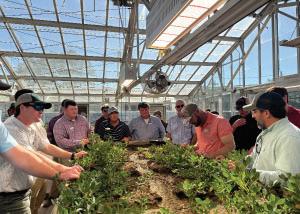
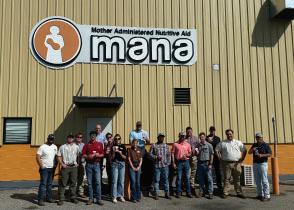
Class XIV of the Peanut Leadership Academy met in Tifton, Ga. for their second session of the two-year program where they learned more about the different aspects of the peanut industry.
20 | USPF SPRING FLY-IN
Peanut industry representatives advocated for the U.S. peanut industry priorities during a recent spring Wahsington fly-in in March.
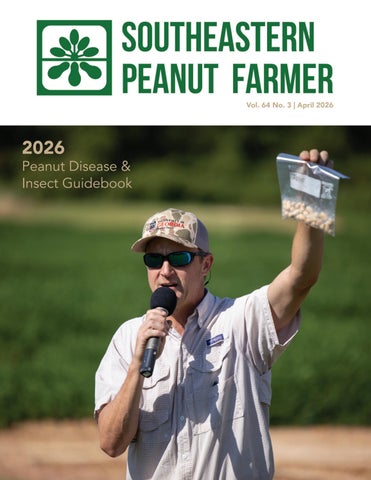
2026 PEANUT DISEASE & INSECT GUIDEBOOK
The Peanut Disease and Insect Guidebook provides disease management tips for 2026, updates to Peanut Rx, cotton jassid information for peanuts and information on a new path for rootworm control.
Abney,
Photo by Joy Crosby.
Editor’s thoughts Events
Seeds of a New Season
Spring always feels like a season of optimism across the Southeast. As the days grow longer and the soil warms, peanut growers across the Southeast begin the careful process of preparing for another crop. April is when the planning, patience and persistence that define our industry start to take shape in the field.
That same type of planning, patience and persistence took place 50 years ago when a group of farmers decided to form the Florida Peanut Producers Association. The association is still going strong and striving to work on behalf of Florida's peanut growers in research, education and promotion.
Even though farmers are facing difficult times right now, retired FPPA executive director Ken Barton encourages farmers to persevere, hold on and know that the difficult times will turn around. He also encourages farmers to trust in the Lord, believing that He will bring them through the difficult times.
Like Barton, the National Peanut Board chairman Neal Baxley from South Carolina, offers the same sentiment. He realizes the pressure farmers are facing with a low commodity prices and high input costs but says, "never underestimate the resilience and determination of the American farmer." In this issue's, Q&A with Baxley, he says, "it takes a lot of faith to plant a seed, and farmers need to keep their faith in the One who gives the increase."
For many farmers, this time of year represents both opportunity and uncertainty. Input costs remain top of mind, weather patterns are never fully predictable, and markets continue to shift. Yet peanut producers have always been resilient. The strength of our industry has never rested solely on favorable conditions, but rather on the commitment and adaptability of the growers who make their living from this crop.
Across the region, growers are finalizing planting plans, making equipment adjustments and watching the forecast with cautious optimism. This issue of the Southeastern Peanut Farmer highlights several areas that will be important for the 2026 growing season. From early-season disease management strategies to pest management updates, the information shared by our university researchers is designed to help growers make informed decisions as planting approaches.
As planters begin to roll across peanut country in the coming weeks, we wish all of our growers a safe and successful start to the season. Farming has never been easy, but it remains one of the most rewarding professions. With preparation, perseverance and a little cooperation from the weather, the 2026 crop is off to a promising start.
Here's to a strong planting season and the continued success of peanut farmers throughout the Southeast.
Joy Carter Crosby SEPF Editor
USA Peanut Congress
June 8-11, 2026, Amelia Island, Fla. For more info call 229-888-2508 or visit peanut-shellers.org.
American Peanut Research and Educational Society
July 14-16, 2026, San Juan, Puerto Rico. For more info visit apresinc.com.
Southern Peanut Growers Conference
July 21-23, 2026, Edgewater Beach Resort, Panama City Beach, Fla. For more info visit southernpeanutfarmers.org.
American Peanut Shellers Association and National Peanut Buying Points Association Pre-Harvest Meeting
Aug. 18-19, 2026, Albany, Ga. For more info call 229-888-2508 or visit peanut-shellers.org.
Brooklet Peanut Festival
Sept. 19, 2026, Brooklet, Ga. For more info visit the festival's website at brookletpeanutfestival.com.
Plains Peanut Festival
Sept. 26, 2026, Plains, Ga. For more info visit the festival's website at jimmycarterfriends.org.
Georgia National Fair
Oct. 8-18, 2026, Perry, Ga. For more info visit georgianationalfair.com.
Georgia Peanut Festival
Oct. 17, 2026, Sylvester, Ga. For more information call visit the festival's website at gapeanutfestival.org.
Sunbelt Ag Expo
Oct. 20-22, 2026, Moultrie, Ga. For more info visit sunbeltexpo.com.
Florida Farm Bureau Annual Meeting
Oct. 28-30, 2026, Hilton Daytona Beach Oceanfront Resort, Daytona Beach, Fla. For more info visit floridafarmbureau.org.
National Peanut Festival
Nov. 6-14, 2026, Dothan, Ala. For more info visit the festival's website at nationalpeanutfestival.com.
Let us know about your event. Please send details to the editor at joycrosby@gapeanuts.com.
Southern Peanut Growers Conference Set for July
Mark your calendars for the 27th Annual Southern Peanut Growers Conference, July 21-23, 2026, at the Edgewater Beach & Golf Resort, Panama City Beach, Florida. This year's conference offers farmers an opportunity to learn more about legislative issues, peanut promotions and production issues.
The registration fee for growers is $275 which includes all conference events and meals. The registration deadline is June 15. The registration fee increases by $75 on June 16.
The theme for this year's conference, "Farming is a Circus," plans to focus on the struggles farmers face with health, weather, mental health and a Washington update.
The conference schedule and registration information is available at www.southernpeanutfarmers.org.
Schedule of Events
Tuesday, July 21
3:00 - 5:00 p.m.
6:30 p.m.
7:00 p.m.
Wednesday, July 22
7:00 a.m.
8:30 a.m.
Conference Registration
Welcoming Reception
Welcome Dinner, Sponsored by Syngenta
Prayer Breakfast
Don Koehler, senior executive director of the Georgia Peanut Commission
General Session I
Juggling it All: Stress, Strength and Health in Farm Life
Dr. Marsha Davis, Dean of the University of Georgia College of Public Health
Dr. Lisa M. Renzi Hammond, Professor of Innovation in Public Health and Aging
Dr. Jenay Beer, Associate Professor at the UGA Institute of Gerontology
Dr. Christina Proctor, Clinical Associate Professor, UGA College of Public Health
10:00 a.m. Refreshment Break
10:30 a.m.
10:30 a.m.
Ladies Program
Circus of Flavors by Mallory's Munchies
Features a Charcuterie Board Demo with Mallory Thompson
General Session II
Under the Big Top of Uncertainty: Weather in Modern Farming
Dr. David Zierden, Florida State University
Dr. Simer Virk, Auburn University
Noon Luncheon
Under the Big Top: A Story of Pressure, Pride and Mental Health Marshal Sewell, Mind Your Melon
High-wire Dreams: Featuring young farmers in a panel discussion
Garrett Moore, Alabama Jeffery Pittman, Florida
Adam Curles, Georgia Mary Katherine Harrington, South Carolina
10:15 a.m. Refreshment Break
Conference concludes Have a safe trip home!
Five decades of peanuts
Florida Peanut Producers Association Celebrates 50 Years
By Peyton Woods
The Florida Peanut Producers Association funds a variety of research projects through their 50 years including research at the University of Florida. Barry Tillman, University of Florida peanut breeder, discusses peanut variety trials at a research field day in Florida.
For 50 years, the Florida Peanut Producers Association has worked on behalf of the state's peanut farmers, focusing on research, education and promotion to strengthen the industry. While the association proudly says it has been "working for peanuts," its efforts over the past five decades have played a vital role in supporting Florida's growers and ensuring the crop's continued success.
Founded to serve the needs of peanut farmers across the state, FPPA was established at a time when producers recognized the importance of having a unified voice to advocate for their industry. Over the years, the organization has remained committed to investing in research that improves peanut production, educating both growers and consumers, and promoting the many benefits of peanuts and peanut products.
One individual closely tied to the organization's beginnings is Richard Barber, a founding board member and the second president of FPPA. His involvement in the early days helped establish the strong foundation that continues to guide the association today.
The Florida Peanut Producers Association is one of the founding partners of the Southern Peanut Farmers Federation which organizes the Peanut Leadership Academy. Brittany Green (left), FPPA executive director, is pictured with Class XIV Florida members Jeffery Pittman, Bascom, Fla., and Jerod Jones, Jay, Fla.
"FPPA was founded with good people who wanted to see the Florida peanut industry thrive. It was an honor to be a part of the founding group," Barber says. "FPPA has done great things over the last 50 years and has represented the state to the highest standards. As a founding board member, I am proud."
Throughout its history, FPPA has supported research initiatives that help peanut growers remain productive and competitive. Partnerships with universities, Extension specialists, and agricultural researchers have contributed to advancements in peanut varieties, disease management and production practices, benefiting farmers across the region.
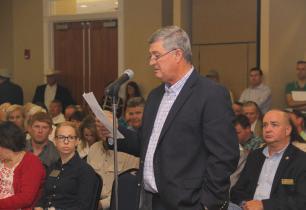
The Florida Peanut Producers Association represents farmers by being a voice on issues relating to the farm bill and policy issues. Ken Barton, former FPPA executive director, discusses issues impacting Florida's peanut farmers at a farm bill hearing in Gainesville, Fla.
Education has also remained a central focus of the organization. By providing growers with the latest information on research findings, market trends and best management practices, FPPA ensures that Florida peanut producers have the tools they need to succeed. These efforts extend beyond the farm, helping consumers better understand where their food comes from and the role peanuts play in a healthy diet.
In addition to research and education, FPPA has worked to promote peanuts and peanut products, highlighting their versatility, nutritional value and importance to agriculture in the Southeast. These promotion efforts help increase consumer awareness and support
“FPPA was founded with good people who wanted to see the Florida peanut industry thrive. It was an honor to be a part of the founding group. FPPA has done great things over the last 50 years and has represented the state to the highest standards. As a founding board member, I am proud."
Richard Barber
FPPA Founding Board Member Ocala, Fla.
demand for peanuts grown by farmers across Florida.
David DeFelix, who recently completed his sixth term with FPPA, reflected on his time with the organization.
“Serving with the board and working with great farmers has been a privilege. It has been a big responsibility handling the growers' money and making sure those dollars go to things that will turn around and benefit the farmers," DeFelix says. "I am proud of what FPPA has accomplished and the things the association has done to help Florida peanut growers."
Over the decades, the peanut industry has experienced many changes, from advancements in farming technology to evolving markets and consumer preferences. Through it all, FPPA has remained focused on serving its growers and strengthening the industry for future generations.
Today, Florida peanut producers continue to play an important role in supplying high-quality peanuts for both domestic and international markets. The work of organizations like FPPA helps ensure that success continues.
Looking ahead, the next 50 years hold great promise. Larry Ford believes that with FPPA continuing
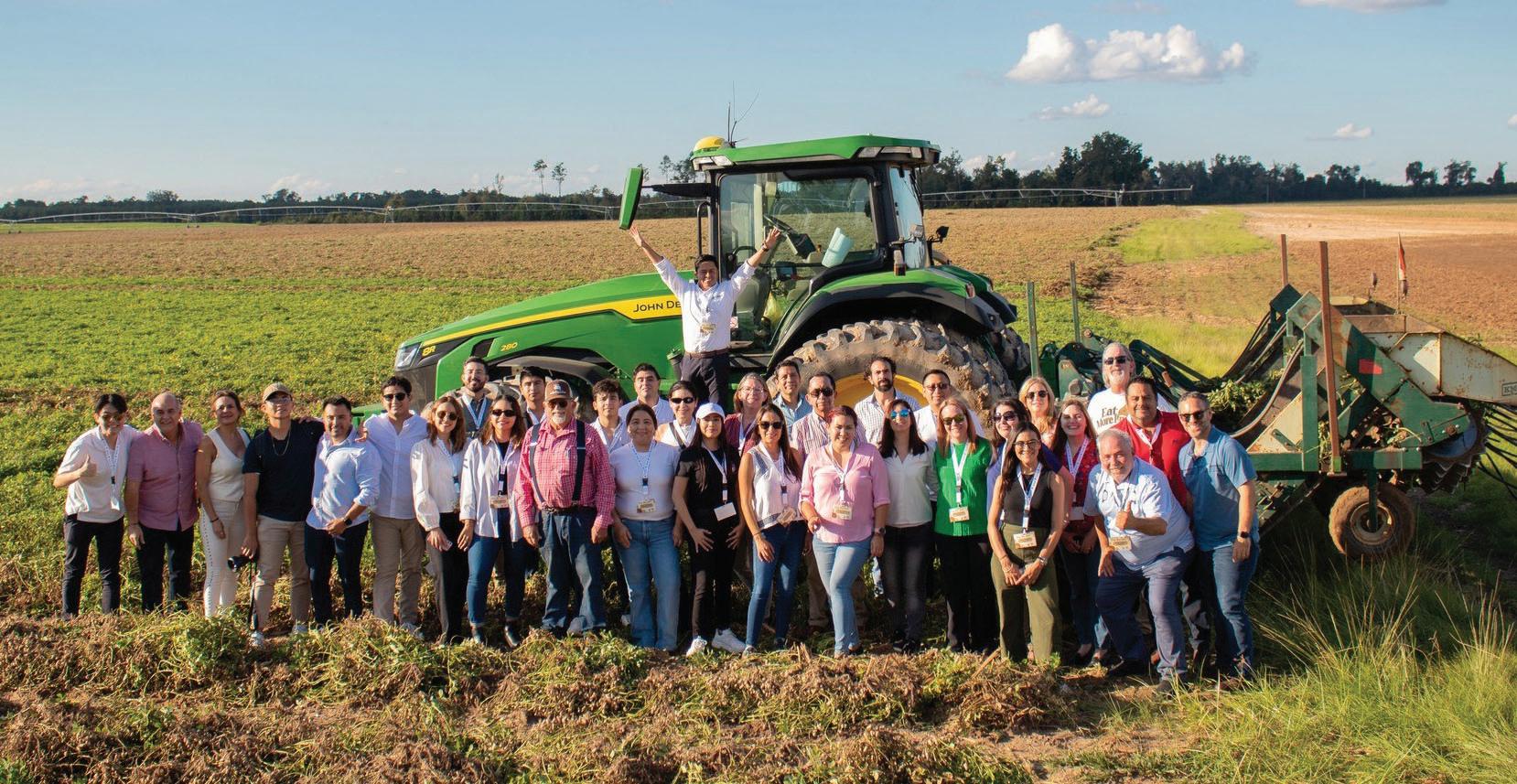
Georgia to learn more about the U.S. peanut industry. The group visited Ford Farms in Greenwood, Fla., and the University of Florida IFAS Research and Education Center in Marianna, Fla.
its work, the industry will see "higher yields, better quality and more consumption."
As the Florida Peanut Producers Association celebrates its 50th anniversary, this milestone offers an opportunity to reflect on the dedication of the farmers, leaders and supporters who have contributed to its success. Five decades of commitment to research, education and promotion have helped shape a strong and resilient peanut industry in Florida.
Retired Executive Director Ken Barton leaves Florida growers with
these words of encouragement.
"Persevere, hold on and know that the difficult times will turn around," Barton says. "Have faith in what you're doing, don't lose your love for the land and agriculture. Trust in the Lord that He will bring you through the difficult times."
Looking ahead, FPPA remains dedicated to continuing this important work—supporting peanut growers and ensuring that peanuts remain a vital part of Florida agriculture and history for many years to come.
The Florida Peanut Producers Association has hosted many groups on tours throughout their 50 years. In 2024, FPPA joined the American Peanut Council and the Alabama Peanut Producers Association in hosting the Mexico Reverse Trade Mission. The multi-day visit brought over 30 Mexican importers and manufacturers through Alabama, Florida and
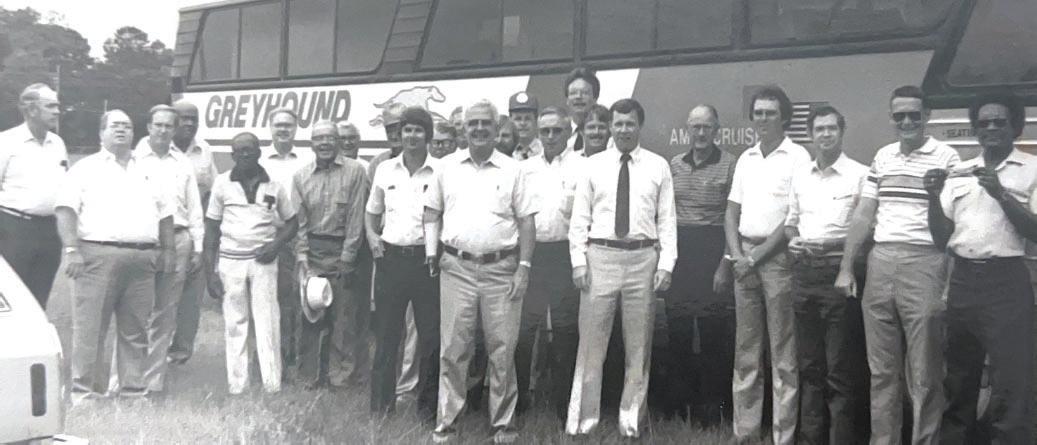
During the early years of the Florida Peanut Producers Association, farmers loaded a Greyhound bus to travel to the Florida state capitol in Tallahassee to visit legislators on topics that were important to the peanut industry.
Checkoff Report
Investments Made by Growers for the Future of the Peanut Industry
APPA connects with students at Baldwin County Ag Day
Peyton Woods with the Alabama Peanut Producers Association recently attended the Baldwin County Ag Career Day in Robertsdale, Alabama, where she spoke with more than 350 students about careers in Agricultural Communications and the importance of the peanut industry. Students had the opportunity to learn about how communication plays a role in agriculture while also testing their knowledge with peanut trivia for prizes. APPA also provided peanut samples, giving students a chance to enjoy one of Alabama's favorite crops while learning more about the industry behind it.
APPA showcases peanuts at legislative luncheon
On January 20, the Alabama Peanut Producers Association attended the Sweet Grown Alabama Legislative Luncheon in Montgomery, Alabama. Alongside many other sponsors, APPA had the opportunity to connect with legislators and highlight the quality and variety of agricultural products grown across the state. APPA shared chocolate-covered peanuts with attendees, offering a sweet way to showcase one of Alabama's favorite crops.
APPA promotes peanuts at Southeastern Livestock Expo
The Alabama Peanut Producers Association recently connected with thousands of visitors at the Southeastern Livestock Expo in Montgomery through its participation in the event's ag education area. Staff and volunteers welcomed families and rodeo attendees to the APPA booth, where they shared information about how peanuts are grown and the important role peanut farmers play in Alabama's agricultural economy. Educational displays highlighted the peanut plant and the journey from farm to food products enjoyed across the country. With more than 900 peanut farmers in the state, APPA used the event as an opportunity to promote Alabama-grown peanuts while helping visitors better understand where their food comes from.
APPA encourages peanut products in school cafeterias
The Alabama Peanut Producers Association recently participated in the Alabama School Nutrition Conference held Feb. 20-21, 2026, in Montgomery, Alabama. APPA's communications and marketing director Morgan Flowers connected with school nutrition directors, cafeteria managers and industry partners from across the state. Flowers highlighted the value of including peanuts and peanut butter in school menus, emphasizing their versatility, nutrition, affordability and shelf-stable qualities that make them a strong protein option for school meal programs.
"Peanuts and peanut butter are affordable, nutritious, and loved by many students," Flowers says. "By including peanut products on their menus, school nutrition directors are not only serving a healthy option but also supporting the farmers who grow this crop right here in Alabama."
FPPA sponsors Florida Row Crop Short Course
The 2026 Panhandle Row Crop Short Course took place in Washington County and approximately 115 farmers from across the region attended the event. Attendees had the opportunity to network with fellow growers and visit with industry representatives during the event. Educational sessions covered a range of important topics, including peanut and cotton varieties, fertility management, herbicide applications, and disease management. The Florida Peanut Producers Association was proud to sponsor the event and participate in the trade show, connecting with growers and industry partners during exhibit hours.
Mississippi Peanut Growers visit Mississippi State Capitol
The Mississippi Peanut Growers Association board members visited the Mississippi State Capitol on National Ag Day, March 24, 2026. The group met with the state legislature members and the House Agriculture Committee. Chairman Bill Pigott recognized the Mississippi farmers on the House floor. The group was also recognized from the gallery of the state Senate. Complimentary roasted peanuts were provided to the 174 members of the state legislature. A bill reducing taxes on the purchase of new farm equipment is making its way through the legislature and is supported by the peanut growers.
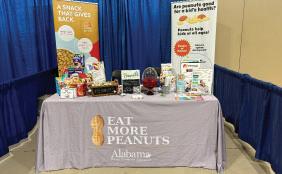
Alabama peanuts featured at the Sweet Grown Alabama Legislative Luncheon.
Alabama peanuts promoted at the Alabama School Nutrition Conference in February.
Mississippi peanut growers visit the state legislature on National Ag Day, March 24, 2026.
Georgia Peanut Commission hosts PB&J Day at State Capitol
representatives visit with the Georgia Governor Brian Kemp, state senators and representatives during the Georgia PB&J Day held March 3, 2026, in Atlanta, Ga.
The annual Georgia PB&J Day was held March 3, 2026, at the Georgia State Capitol in Atlanta. Exhibitors from the peanut industry served grilled PB&Js, country-fried peanuts, peanut candy and more. During the event, Sen. Russ Goodman and Rep. Robert Dickey presented resolutions highlighting the importance of peanuts to Georgia’s economy. Gov. Brian Kemp proclaimed the month of March as Georgia Peanut Month in the state with a proclamation. Exhibitors and sponsors of the event include the Georgia Peanut Commission, National Peanut Buying Points Association, Kroger, Georgia Farm Bureau, Peanut Proud, Atlanta Community Food Bank, The Peanut Insitute and the University of Georgia Peanut Team.
GPC donates peanut butter to Atlanta Community Food Bank
The Georgia Peanut Commission donated 10,080 jars of Peanut Proud peanut butter to the Atlanta Community Food Bank to celebrate National Peanut Month in March. The Atlanta Community Food Bank provides food and grocery products to more than 700 nonprofit partner agencies with hunger relief programs throughout 29 counties in metro Atlanta and north Georgia.
According to Kyle Waide, president & CEO of the Atlanta Community Food Bank, the need for food assistance is not going away.
"The Food Bank has seen a 60 percent increase in the need for food assistance over the past three years. We are distributing food in record volumes to 240,000 households each month," Waide says. "Peanut butter is a proteinrich food that can be a versatile pantry staple for a family or individual in need. We are grateful to the Georgia Peanut Commission and Peanut Proud for this generous donation that will help serve the 13 percent of the state's population and 1 in 5 Georgia children who are food insecure."
Georgia Peanuts promoted during National Peanut Month
The Georgia Peanut Commission promoted peanuts throughout the month of March through a variety of promotions. GPC sponsored a special series, "Proud to be a Georgia Farmer," with WALB-TV in Albany. The program featured a special 30-minute show about the Georgia peanut industry including farmer interviews and information on production, research, peanut nutrition and more. GPC provided peanuts and recipes to the state's 11 welcome centers for tourists. Throughout the month, GPC promoted peanuts through television and radio ads, social media influencer campaigns with Real Food with Gratitude and Parker's Plate, social media contests and more. GPC also ran a digital ad in Times Square that reached an estimated 11 million impressions in March.
GPC approves FY26-27 funding of research projects
The Georgia Peanut Commission board of directors has approved $789,776 in research project funding for the 2026-27 research budget year. The research projects approved include 40 project proposals submitted from the University of Georgia, Abraham Baldwin Agricultural College and USDA Agricultural Research Service. The research programs primarily focus on peanut breeding, conservation methods, irrigation and water management, as well as pests, weed and disease management. One new project is looking at development of a quick, non-destructive seed vigor and germination test. The GPC board of directors also approved additional projects focusing on non-food uses of peanuts. The new projects are looking at the utilization of whole-in-shell peanuts in poultry rations and other innovative non-food uses of peanut oil and shells.
Additionally, GPC manages funding for the Southeastern Peanut Research Initiative which includes research funding of $1,705,907 for projects in Alabama, Florida and Georgia. These projects are funded through the National Peanut Board checkoff dollars from farmers.
For a list of the research projects funded by GPC visit GaPeanuts.com.
Georgia peanut farmers and industry
The Georgia Peanut Commission donated 10,080 jars of peanut butter to the Atlanta Community Food Bank.
Tourists traveling through Georgia receive complimentary samples of Georgia Peanuts at the Visitor Information Center in Colombus, Ga., during National Peanut Month in March.
2026 Disease Outlook for 2026
Peanut Disease & Insect Guidebook
Experts urge peanut growers to focus on fundamentals
By Joy Crosby
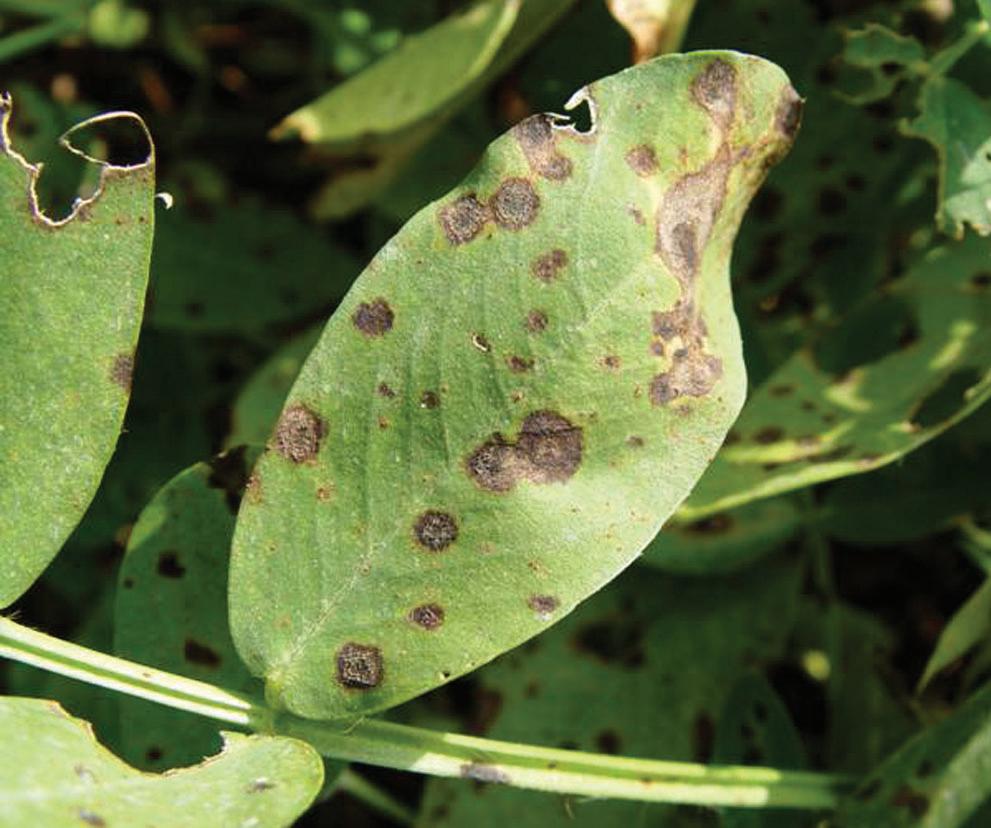
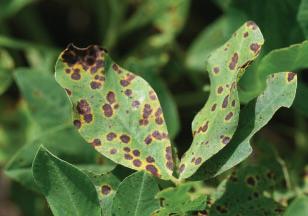
After a relatively mild disease year in 2025, peanut growers across the Southeast may face a different environment heading into 2026. While last season's dry conditions helped suppress several major diseases, experts warn that warmer temperatures and potentially wetter periods during key parts of the growing season could increase pressure from common peanut pathogens.
Plant pathologists Bob Kemerait with the University of Georgia and Amanda Scherer with Auburn University say the key to managing disease in the upcoming season will be combining good planning with careful attention to the details of crop management.
"Growers sometimes feel like they did everything right and still end up with disease problems," Kemerait says. "When that happens, the answer is usually in the details—how the program was applied, when it was applied, and what level of risk the field already had."
Both experts agree that variety choice remains one of the most
effective disease management tools available to growers.
Several modern peanut varieties offer improved resistance to multiple diseases, particularly tomato spotted wilt. Among the strongest options is Georgia-12Y, which consistently ranks among the most tolerant varieties in regional trials. A newer variety, Arnie, has shown similar tolerance levels in early evaluations.
Other varieties considered moderately tolerant include AU17, Georgia-06G and TifNV-HG. More susceptible varieties, such as FloRun 331 and Georgia-09B, carry significantly higher risk under heavy disease pressure, especially when planted early.
To help growers evaluate those risks, researchers recommend using Peanut Rx, a widely used decision tool that assigns risk points based on variety, planting date, row pattern, insecticide use and other management factors.
"It's a really valuable, unbiased tool for growers," Scherer says. "It helps them understand the level of disease risk they're starting with
before they ever plant the crop."
Tomato spotted wilt pressure varies widely from year to year, but planting date and insecticide choice can significantly influence risk.
Peanuts planted early—especially during peak thrips activity—are generally more susceptible to the virus. Using certain in-furrow insecticides can also affect risk.
Crop Rotation Still Critical
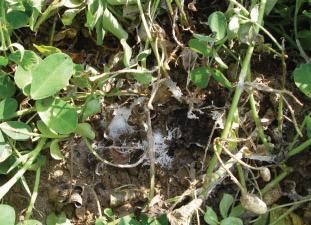
Kemerait stresses that despite advances in genetics and fungicides, basic crop rotation remains one of the most powerful disease management tools. Fields planted in peanuts consecutively often experience higher disease pressure, particularly from soilborne pathogens like white mold.
"If you've got a field that's had problems with white mold in the past, the best thing you can do is rotate away from peanuts for two or three years," Scherer says.
Non-host crops such as cotton, corn or grain sorghum can help reduce the survival structures of the white mold pathogen in the soil.
Timing and Application Details
Modern peanut fungicide programs are highly effective, but Kemerait warns they must be matched to the disease risk of each field.
"In peanuts, fungicides almost always pay when pressure is high," he said. "But the program has to reflect the risk you're under."
Under heavy white mold pressure, some fungicides consistently provide stronger control than others. However, Kemerait adds that even the best fungicide program can fail if application details are overlooked.
According to Kemerait, common problems include starting fungicide programs too late, falling behind schedule due to weather, poor spray coverage, excessive sprayer speed, applying fungicides to wet foliage and insufficient drying time.
White mold management requires precision because fungicides must reach the crown of the plant where infection occurs. Rainfall or irrigation shortly after application can improve control by washing fungicide into the canopy and soil.
Research has shown that rainfall within roughly 72 hours after application can help move fungicide into the soil where the pathogen is active.
For leaf spot diseases, Scherer says the fundamentals remain the same. Fungicide programs should begin 30 to 45 days after planting and continue a regular schedule. Preventative applications are far more effective than trying to control disease after it becomes established.
Varieties with improved tolerance can also reduce the number of fungicide applications needed, particularly in high-pressure areas. In some trials, simply planting a leaf spot-tolerant variety increased economic returns by more than $300 per acre, even before fungicides were considered.
Another issue growers should watch in 2026 involves potential changes to the widely used fungicide Chlorothalonil. Regulatory changes are expected to reduce the maximum seasonal use rate in peanuts by about 25 percent in the near future, limiting
growers to six applications at 1.5 pints per acre instead of the previous eight.
Keep Expectations Realistic
Finally, Kemerait reminds growers that a successful disease program does not mean eliminating every symptom in the field. Small, isolated infections late in the season may have little impact on yield. The real goal is to prevent disease from spreading across the field.
"We don't have to be perfect," Kemerait says. "What we want is a program that keeps disease from turning into something that hurts yield."
Growers may need to rely heavily on proven management strategies which means combining resistant varieties, crop rotation, risk assessment tools like Peanut Rx and well-timed fungicide programs.
"When growers feel like they threw everything at a problem and still had disease," Kemerait says, "a lot of times the answer is simply that the details mattered more than we realized."
2026 Peanut Rx Updates
By Joy Crosby
Researchers are urging farmers to utilize Peanut Rx as a tool to help guide their management decisions going into the 2026 planting season. Peanut Rx is designed to assist growers in modifying their production practices to effectively reduce risks to diseases in the field.
Having been developed in 1996, Peanut Rx was originally intended to combat increasing grower concern for tomato spotted wilt virus (TSWV). Today, Peanut Rx can be referenced for guidance concerning TSWV, leaf spot and white mold.
The 2026 Peanut Rx has been updated by researchers at the University of Georgia, University of Florida, Auburn University, Mississippi State University, Clemson University and North Carolina State University.
There have been a few updates to the 2026 Peanut Rx from the 2025 version. All changes that have been made can be found in the variety section of Peanut Rx with new varieties being added and adjustments made.
As in previous versions of the Disease Index, growers will note that attention to variety selection, planting date, plant population, good crop rotation, tillage and other factors, has a tremendous impact on the potential for diseases in a field.
"I encourage growers to stay on a timely, proven program because once the furrow is closed, the die is cast for management of spotted wilt," says Bob Kemerait, University of Georgia Extension plant pathologist. "Growers should continue to use Peanut Rx to develop strategies to reduce risk from spotted wilt, white mold and leaf spot in their peanut crop."
In 2025, losses to tomato spotted wilt across the peanut production region of the Southeastern United States were estimated to be 2 percent, down from an estimated 3 percent in 2024, 5 percent in 2023 and 7 percent in 2022. While the severity of tomato
1 Adequate research data is not available for all varieties with regards to all diseases. Additional varieties will be included as data to support the assignment of an index value are available.
2 High oleic variety.
3 TifNV-HiOL, TifNV-HG, Georgia-14N and Georgia-22MPR have excellent resistance to the peanut root-knot nematode.
4 Georgia-12Y appears to have increased risk to Rhizoctonia limb rot and precautions should be taken to protect against this disease.
5 These varieties are rarely grown commercially but remain embedded in Peanut Rx as historic examples of how resistance to tomato spotted wilt disease and other diseases have changed over time.
spotted wilt varies across the peanut production region of the Southeastern U.S., this disease has significant impact on the majority of acres in the region planted to peanuts.
"If a grower totals their points and are at high risk for tomato spotted wilt virus then they should consider altering their planting date
or using less susceptible varieties to help reduce their risk," says Scott Graham, Auburn University Extension entomologist.
To learn how Peanut Rx can help reduce disease risk during the 2026 growing season, visit the website at PeanutRx.org.
Peanut Rx
Variety1
Spotted Wilt Points Leaf Spot Points
Soilborne Disease Points White mold Resistance Root-knot Nematode
Cotton Jassid
New leafhopper pest raises questions for peanut growers
By Joy Crosby
Anew insect pest spreading across the Southeast has caught the attention of growers and researchers alike. The two-spot cotton leafhopper, commonly referred to as the cotton jassid, is not native to the United States but has quickly become a topic of discussion due to its rapid spread and its impact on cotton.
The pest was first detected in South Florida in 2024. In July 2025, the pest was detected on cotton in the Suwanee Valley area of Florida and quickly spread to Georgia where it was confirmed on okra. From there, populations increased rapidly, and by the end of the 2025 growing season, many cotton acres in Alabama, Florida, Georgia, Mississippi and South Carolina required treatment to control infestations.
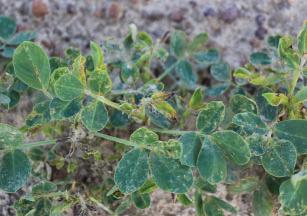
Because published host lists from overseas research include crops such as cotton, okra, sunflower, hibiscus, eggplant, and peanuts, the insect has raised concerns among peanut growers. Much of the available information comes from research conducted in India, where the pest is well established and known to be a major cotton pest.
During the past season, researchers and county agents across the Southeast closely monitored peanut fields for signs of damage. Although two-spot cotton leafhoppers were occasionally found in peanuts, they were typically present only in small numbers. In some cases, large populations temporarily moved into peanut fields after neighboring cotton fields were defoliated late in the season. These migrations generally lasted about a week before the insects moved on.
Despite those temporary increases in numbers, researchers observed no
clear signs of feeding injury or yield loss in peanuts. University of Georgia Extension entomologist Mark Abney conducted field studies to determine whether the insects could reproduce on peanut plants. Adult leafhoppers were confined on peanut plants in field cages for two weeks—the time required for eggs to develop into adults. While some insects survived during that period, Abney did not find evidence of egg-laying or developing nymphs.
Isaac Esquivel, University of Florida entomologist, had a peanut trial surrounded by cotton at the North Florida Research and Education Center in Quincy, Florida, and he didn't observe damage from the cotton jassid either.
"After jassids were detected, they mostly stayed on the cotton until late season once the cotton leaves began to show late-stage hopper burn or defoliation," Esquivel says. "We did see adult jassids in the peanut field but did not see any reproduction."
While literature suggests that peanuts are a host for the cotton jassid, those that report damage could also be referring to a different jassid species. While certain leafhoppers can damage peanuts, they are different
“If unusual leafhopper populations are observed in peanut fields, growers should contact their Extension agent before making a treatment decision. Proper identification and evaluation are important to determine whether management is truly needed."
Mark Abney University of Georgia
species than the cotton jassid currently spreading in the Southeast.
For now, Abney remains cautiously optimistic that the pest will not become a significant problem for peanut production. However, growers are encouraged to stay alert.
"If unusual leafhopper populations are observed in peanut fields, growers should contact their county Extension agent before making a treatment decision," Abney says. "Proper identification and evaluation are important to determine whether management is truly needed."
While the cotton jassid has already proven to be a serious pest in cotton, current observations suggest it may pose little risk to peanuts. Continued monitoring and communication between growers, agents, and researchers will help ensure any emerging issues are quickly identified and addressed.
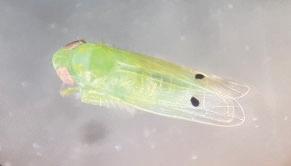
An adult two-spot cotton leafhopper or commonly referred to as an cotton jassid.
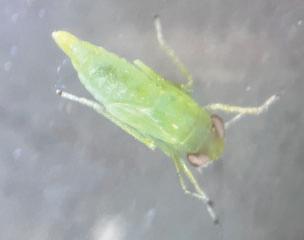
Cotton jassid nymphs are less than 1 mm in length and have oblong light-green bodies.
Photo credit: Justin Odom.
Photo credit: Justin Odom.
Vertento Offers New Tool for Peanut Insect Management
After Loss of Chlorpyrifos, Vertento Offers New Path for Rootworm Control
By Joy Crosby
Peanut growers across the Southeast have a new tool to help manage some of the most challenging insect pests in the crop. A new insecticide from Syngenta — marketed under the brand name Vertento — is showing strong potential, particularly for managing peanut rootworms.
The product contains the active ingredient isocycloseram, part of a new mode of action classified in IRAC Group 30, and will be marketed under Plinazolin technology. The insecticide works by both contact and ingestion, causing rapid feeding cessation in target pests.
Vertento is labeled as a foliar insecticide for several crops, including cotton, onions and peanuts. In peanuts, the foliar label targets pests such as thrips and spider mites. But the biggest development for Southeastern peanut producers centers on rootworm management.
Special Label Expands Options for Growers
While the original federal label allows Vertento to be applied through chemigation or as a foliar spray, researchers and industry groups worked to secure a Section 24(c) Special Local Needs (SLN) label that allows the product to be applied infurrow at planting.
Both Georgia and Alabama have approved the SLN label, allowing growers to apply 2.6 fluid ounces per acre in-furrow for the 2026 peanut growing season. Growers can also use Vertento as a foliar spray even when used in-furrow.
University researchers and
peanut organizations played a key role in making the label possible. Contributors included Mark Abney with the University of Georgia and Scott Graham with Auburn University, along with industry partners such as the Georgia Peanut Commission, Alabama Peanut Producers Association and American Peanut Shellers Association.
Other states across the Southeast, including Mississippi, Florida, South Carolina and North Carolina, have also expressed interest in similar registrations.
For growers, the in-furrow option is significant. Although chemigation treatments have proven effective in research trials, many farms lack irrigation systems set up for pesticide injection. Even among irrigated fields, many pivots are not equipped with the required backflow preventers, relief valves or other equipment needed for chemigation.
In-furrow application provides a simpler and more familiar option.
"It allows growers to apply the product at planting regardless of irrigation status," says Mark Abney, University of Georgia Extension entromologist. "That makes it much more practical across the peanut belt."
A Critical Tool After Loss of Chlorpyrifos
The introduction of Vertento comes at an important time for peanut growers. For decades, producers relied on chlorpyrifos products such as Lorsban to manage rootworms. With that option no longer available, growers have had limited tools to
protect pods from damage.
Rootworm larvae feed directly on peanut pods, chewing through the shell and reducing both yield and grade. When infestations are severe, yield losses can reach 1,000 pounds per acre.
Researchers say reducing rootworm injury can significantly improve both yield and grade.
"Whenever we reduce rootworm damage, we see increases in yield and grade," Abney says. "So, it's a very tangible benefit."
Strong Performance in Trials
University trials have shown promising results from in-furrow applications of Vertento.
Researchers report the treatment has been very consistent at reducing rootworm injury at harvest, even though the insecticide is applied at planting in-furrow. The product's long residual activity appears to protect
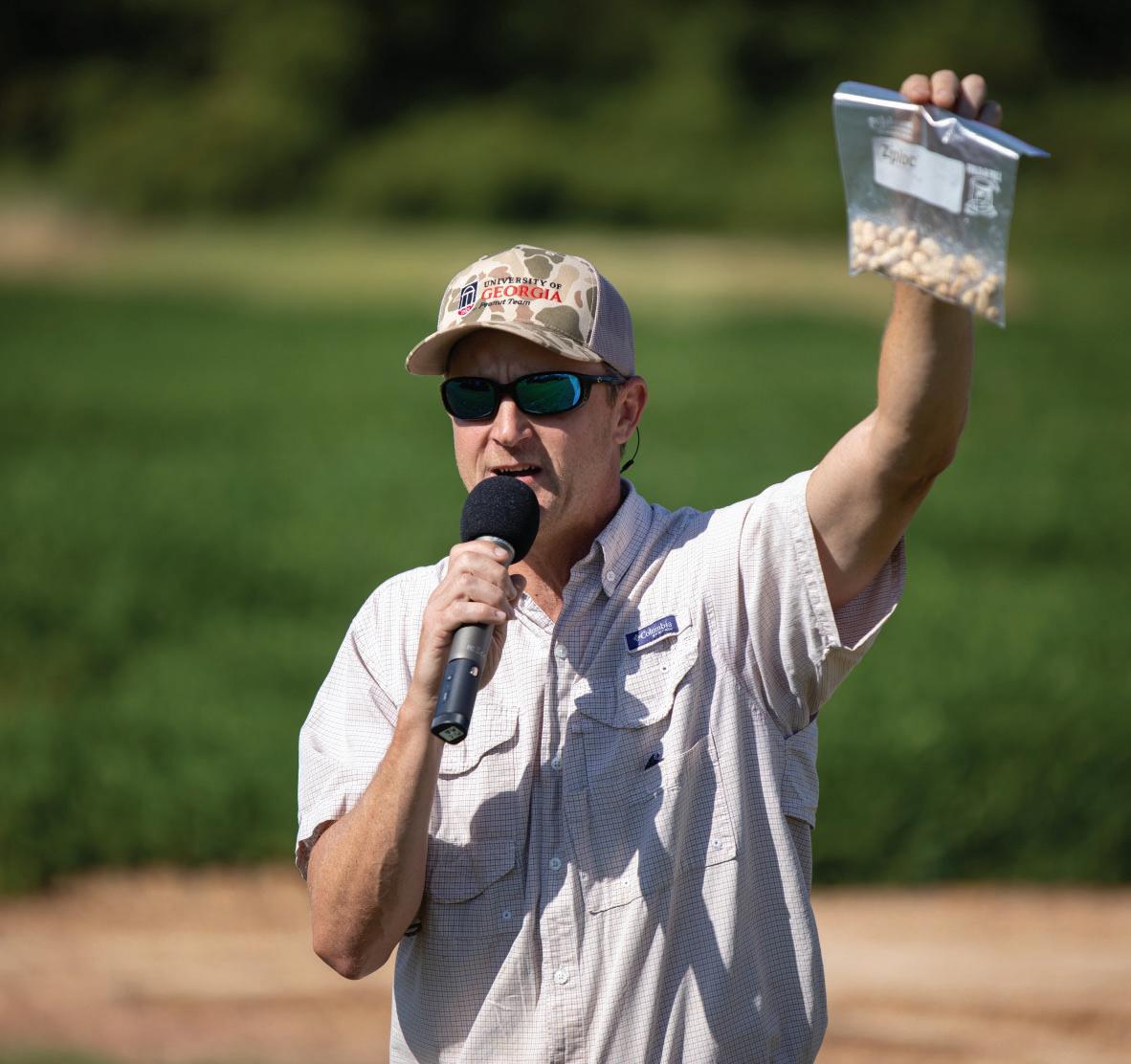
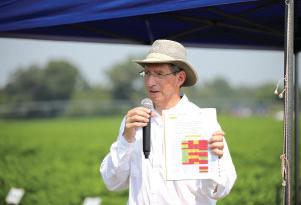
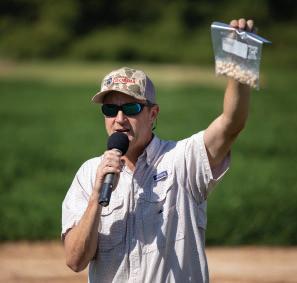
University of Georgia Extension peanut entomologist Mark Abney discusses peanut pod damage from rootworm at a field day. Reducing rootworm injury can significantly improve both yield and grade.
developing pods through much of the season.
"In many trials we're still seeing significant control even into August and September," Abney says.
Some late-season pod feeding may still occur, but researchers say it may not significantly impact yield if pods are already mature.
Other Pests on the Label
Vertento will have a broader insect management role in other crops, including cotton and vegetables. In peanuts, the label includes pests such as thrips, spider mites and potato leafhopper.
However, researchers note the product's primary value in peanuts will likely be rootworm management.
One important detail for growers is that in-furrow applications will not control thrips, because the product is not systemic. If used at planting for rootworms, growers will still need to apply a separate thrips management program.
More Research Ahead
Although the product shows strong potential, researchers emphasize that there is still much to learn about how to use Vertento most effectively.
Questions remain about optimal chemigation timing, potential benefits of combining application methods and possible activity against other pests such as peanut burrower bug.
Because burrower bugs spend most of their time underground, they are difficult to control and difficult to scout. Researchers hope future testing may determine whether Vertento's long residual activity could provide
Scouting is the key
University Extension specialists encourage farmers to scout and monitor their fields weekly for overall insect management in 2026. Scouting is the only way to know what insects are present and at what level. Correct identification of pests is also critical so farmers can determine a management plan for the specific pest in their field.
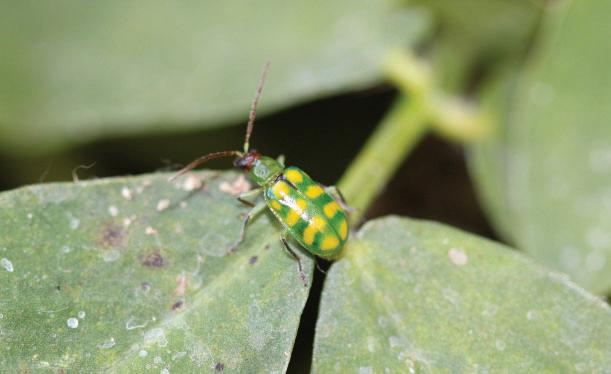
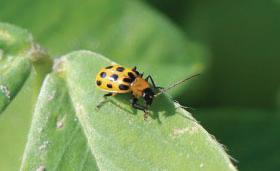
Historically, peanut rootworm injury was most often associated with the southern corn rootworm, sometimes called the 12-spotted cucumber beetle. But researchers say another species is becoming increasingly important.
The banded cucumber beetle has become far more abundant in recent years and is now the dominant species found in many peanut fields across Georgia and Alabama.
"In trapping programs, we often collect 100 banded cucumber beetles for every southern corn rootworm adult," says Mark Abney, University of Georgia Extension peanut entomologist.
The larvae of both insects look similar and cause the same type of damage by feeding on roots, pegs and developing pods. However, the banded cucumber beetle has expanded into areas where rootworms historically were not a major concern.
As a result, growers are now seeing pod injury in fields that previously had little or no rootworm history.
Researchers say scouting may become more important moving forward. If growers notice adult beetles in fields, it may be worth digging plants and checking pods for feeding injury.
some suppression.
For now, researchers advise growers to use the product strategically.
"If you have a history of rootworm problems, this could be a game changer," Abney says. "But if you don't have the pest, there's no reason to use it."
With a new mode of action and strong early results in field trials, Vertento may soon become an important addition to the insect management toolbox for Southeastern peanut growers.
Note: PLINAZOLIN® and Vertento® are trademarks of Syngenta Group Company.
Favorable conditions: Heavy-textured soils with good moisture increase risk. Larvae cannot survive in dry soil.
Scouting Tips: Rootworm larvae live entirely below ground. Dig adjacent to peanut rows or remove plants to examine pods for damage and check the soil for larvae.
Southern Corn Rootworm
Banded Cucumber Beetle
Florida Peanut Producers Association holds 50th Annual Meeting
by Joy Crosby
The Florida Peanut Producers Association held their 50th Annual Membership Meeting Feb. 26, 2026, in Marianna, Florida. During the meeting, farmers elected new board members and received a report on activities of FPPA and the National Peanut Board.
Two new members elected to serve on the FPPA Board of Directors are Kirk Brock of Monticello, Florida, and Jeff Fowler of Graceville, Florida. They are both eligible to serve two consecutive three-year terms. Brock replaces retiring director Rollin Hudson of Chiefland, Florida. Fowler replaces David DeFelix of Campbellton, Florida.
Officers elected during the meeting include Phillip Melvin from Altha, Florida, as president and Jeff Pittman from Dellwood, Florida, as vice president, and Jim McArthur of Malone, Florida, as secretary/ treasurer.
Brittany Peacock, FPPA executive director, provided a report highlighting some of the promotional and educational activities the association has been involved in over the past year, and presented a special 50th anniversary video to attendees. Ashton Pellom, marketing and communications associate of the
National Peanut Board, gave a report on national promotions and research funding.
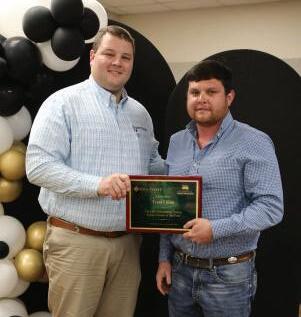
The highlight of the evening included the presentation of the Farm Credit/FPPA Young Peanut Farmer Award presentation. Logan Chappell, loan officer with Farm Credit of Northwest Florida, presented the award to Trent Childs of Grand Ridge, Florida.
Childs is a third-generation farmer and owner of Spanish Trail Farms. From an early age, Childs developed a deep interest in the family farming operation, learning the value of hard work, stewardship and commitment to the land.
Childs' farms specializes primarily in vegetable production, but peanuts have always held a special place in the family farm. Peanuts were one of his father's and grandfather's favorite crops to grow. Some of Childs' earliest memories are riding on the fender of
an open-cab 285 Massey Ferguson tractor, pulling a two-row Lilliston picker, covered in dust. That is where he fell in love with the peanut crop. Today, he continues that tradition by farming 150 to 250 acres of peanuts
Logan Chappell, loan officer with Farm Credit of Northwest Florida, presents the Farm Credit/ Florida Peanut Producers Association Young Peanut Farmer Award to Trent Childs of Grand Ridge, Fla.
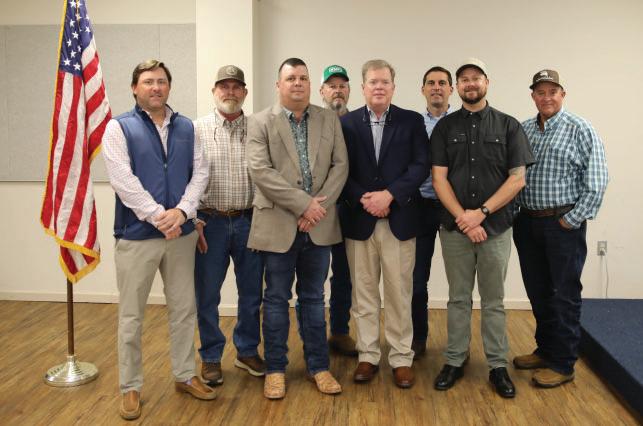
The FPPA board pictured left to right are Nick Marshall, Baker; Ernest Fulford, Monticello; Phillip Melvin, Altha; Jeff Fowler, Graceville; Jeff Pittman, Dellwood; Tyler Brown, Jay; Jim McArthur, Malone; and Scott Robinson, Williston, Fla. Not pictured is Kirk Brock, Monticello, Fla.
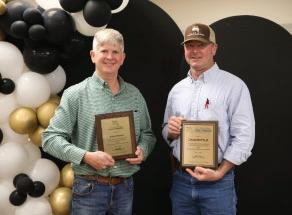
FPPA presented retirement plaques to Rollin Hudson, Chiefland; and David DeFelix, Campbellton, Fla., for their years of service on the board.
annually, using them as a key rotation crop to strengthen soil health and sustain the farm's vegetable program. While the equipment has changed — moving from open-cab tractors and Lilliston pickers to modern peanut combines and cab tractors — the appreciation for the crop and the memories tied to it remain deeply cherished.
In addition to peanuts and vegetables, Childs operates a beef cattle herd, a produce stand and provides land-clearing services. He has also assisted with FEMA disaster recovery projects.
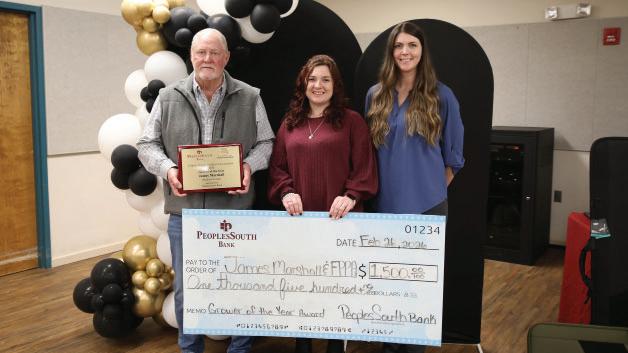
Also, during the annual meeting, PeopleSouth Bank and FPPA presented the Grower of the Year award to James Marshall of Baker, Florida.
Marshall is a third-generation farmer in Okaloosa County who grew up working on his family's peanut, corn and soybean operation and continues that legacy today with his own family. In addition to his work on the farm, Marshall has been a
dedicated leader in agriculture. Through the years, he has served on several boards including the Florida Peanut Producers Association, Farm Service Agency, Natural Resources Conservation Service and Farm Credit, that support and strengthen the agricultural industry. He also currently serves as president of the Florida Cotton Growers Association.
As part of the award, PeopleSouth Bank presents a donation to a non-profit organization of the winner's choice. Marshall selected The Rally Foundation in memory of Brooks Laney. The Rally Foundation is dedicated to funding childhood cancer research while providing critical support to families during treatment.
James Marshall of Baker, Fla. receives the Grower of the Year Award during the 50th FPPA annual meeting held Feb. 26, 2026, in Marianna, Fla. Pictured left to right: Marshall, Ashley Childs and Kristy Bennett with PeopleSouth Bank.
Peanut Leadership Academy Class XIV visits south georgia
by Jessie Bland
Participants of Class XIV of the Peanut Leadership Academy met March 9–11, in Tifton, Georgia, for the second session of the 18-month program. During this session, peanut growers and sheller representatives had the opportunity to learn more about the industry through speakers and tours, as well as discuss key issues the United States peanut industry faces.
On day one, Ryan Jenkins, PLA Class X graduate from Pace, Florida, spoke to the group about the importance of agricultural advocacy. Jenkins emphasized why telling the farm story in and outside of rural communities is critical and gave examples from his own life of how sharing his story has made a difference.
The group then heard from Miriam Crosby about the work The Peanut Institute is carrying out and the powerful nutrition message the peanut
industry has to share. Finally, Courtney Dorsett with Premium Peanut gave the group an overview of food safety in the peanut supply chain and the role all segments play in providing the highest quality product for market.
Day two of the session was made up of area tours. The group began with a tour of Kelley Manufacturing Co.'s facility, where they received the most up-to-date information from KMC and learned about the equipment fabrication process. Upon leaving KMC, the group traveled to the University of Georgia Tifton Campus and heard from Nino Brown about the work being done in peanut breeding and the process it takes to bring a new variety to market.
The group then visited Premium Peanut in Douglas for a tour of its shelling facility, followed by a visit to MANA Nutrition. Here, PLA participants learned about MANA's mission, expansion and how their
product is saving lives worldwide.
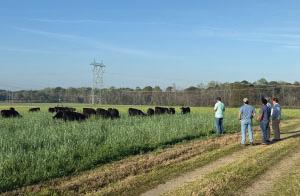
The group's final day together began with a tour of Abraham Baldwin Agricultural College's 4-D Farm. The PLA class learned about the latest precision agriculture technology being used to improve management practices on the farm. The class then traveled to Albany for a tour of Amadas Industries' facility and Thrush Aircraft. Both Albany stops provided a behind the scenes look at how allied sectors of the industry are working to help farmers be as efficient as possible on the farm with eagerness to learn more about the challenges farmers face.
The Peanut Leadership Academy is coordinated by the Southern Peanut Farmers Federation and sponsored by Syngenta Crop Protection and the American Peanut Shellers Association. For more information on the Peanut Leadership Academy, visit www.southernpeanutfarmers.org.
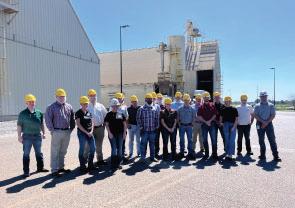
Peanut Leadership Academy Class XIV held their second session in Tifton, Ga. While in the area, participants learned more about the peanut industry through tours of the University of Georgia Tifton Campus, Premium Peanut, MANA Nutrition and others.
USPF Spring Washington Fly-In
Peanut Leaders Discuss Industry Concerns and Priorities on Capitol Hill
by Lorene Parker
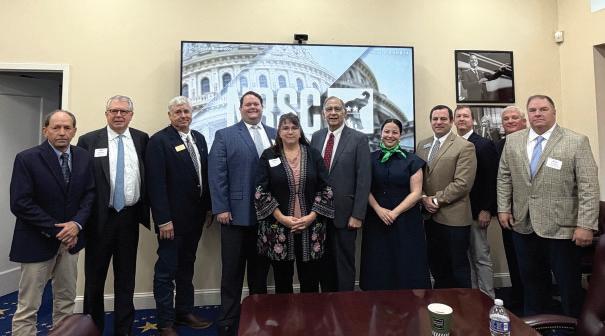
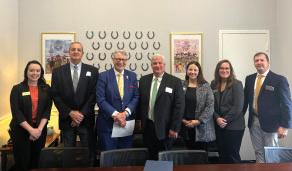
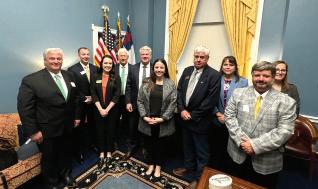
Representatives from the United States Peanut Federation traveled to Washington, D.C., March 24-26, 2026, to advocate for U.S. peanut industry priorities. During the trip, USPF representatives met with Members of the U.S. House of Representatives and U.S. Senate, as well as senior agricultural staff and Administration officials, to engage in discussions on current economic conditions, trade markets, and nutrition opportunities.
H.R. 7567, the Farm, Food and National Security Act of 2026, or commonly referred to as "Farm Bill 2.0," was recently approved by the U.S. House Agriculture Committee. This legislation builds upon the traditional Farm Bill provisions included in last year's final passage of H.R. 1, the One Big Beautiful Bill Act (OBBBA). USPF enjoyed meeting with the Members of Congress who were involved in securing key peanut priorities in these two legislative initiatives.
Additionally, USPF representatives shared updates on the state of the peanut farm economy, including current cost of production and estimated financial losses for the 2026 crop year. As the financial condition continues to be proven unsustainable for Southeast farms, USPF heard from Members of Congress on the potential for additional agricultural economic assistance payments this year. Although payments from the 2026 Farmer Bridge Assistance program have helped, there is still a significant gap to fill before and after the OBBBA safety net payments are disbursed this fall.
"Peanut producers are struggling during these challenging economic times and are in urgent need of support. We appreciate the conversations with leaders in Washington, D.C., who are willing to assist us in finding solutions for our farmers," says Taylor Arnold, executive director of the Georgia Peanut Commission. "We look forward to working with Congress and USDA to strengthen the U.S. peanut industry's future."
"We appreciate our friends in Congress listening to the concerns of the U.S. peanut industry and working with us to find solutions to our current
economic situation," says Chris Chammoun, executive director of the American Peanut Shellers Association.
"We once again appreciate the opportunity to meet with our representatives, and for their continued focus on supporting one of America's greatest assets- a secure and nutritious food supply," says Jamie Brown, USPF chairman. "We also are grateful in their listening to current economic challenges and future actions in keeping the U.S. agricultural supply chain viable for decades to come."
Peanut industry representatives visit with U.S. Senator John Boozman, R-Ark., chairman of the Senate Agriculture Committee during the U.S. Peanut Federation Spring Washington Fly-In in March.
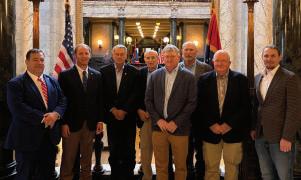
Peanut industry representatives visit with U.S. Representative Mike Collins, R-Ga., during their March visit to Washington, D.C.
Peanut industry representatives visit with U.S. Representative Rick Allen, R-Ga., during their March visit to Washington, D.C.
Hurricane Helene block grant Program opens in Florida, Georgia and South Carolina
By Joy Crosby
Farmers across the Southeast who were impacted by Hurricane Helene in 2024 can now apply for assistance through block grant programs in Florida, Georgia and South Carolina. The programs help to provide relief for commodities and losses that are not covered under preexisting United States Department of Agriculture programs.
The funding is part of the $30 billion disaster assistance relief effort authorized by the American Relief Act, 2025. USDA is working with 14 different states to develop and implement block grants to address disaster recovery needs.
Florida
Florida was the first state in the nation to finalize an agreement with USDA to implement the newly authorized disaster block grant program. More than $600 million in federal funding represents approximately 35 percent of Florida's total agricultural losses and damage from the 2023 and 2024 hurricane seasons. Through the Florida Block Grant Disaster Relief Program, eligible agricultural producers can apply for grant funding to assist with infrastructure damage, market loss, citrus loss, and timber damage from recent hurricanes.
"Florida's farmers, ranchers, and growers suffered billions of dollars in damages and losses during the 2023 and 2024 hurricane seasons, and this grant program offers them much-needed financial support," says Florida Agriculture Commissioner Wilton Simpson. "I want to thank President Donald Trump and U.S. Secretary of Agriculture Brooke Rollins for always putting America's farmers first. With their support, we've worked to get this funding to our producers as quickly as possible."
Florida applications must
be submitted by Aug. 25, 2026. Additional information on the program, including eligibility and documentation requirements, is available at FDACS.gov/BlockGrant.
Georgia
Aplications for Georgia's Hurricane Helene Block Grant Program opened March 16, 2026, and will close at midnight on April 27, 2026. The application, eligibility requirements, guidance documents and additional details for Georgia farmers are available online at farmrecovery.com
"While this relief will not make impacted producers 100 percent whole, it will go a long way to help farm families get back on their feet after the devastation of Hurricane Helene," says Georgia Agriculture Commissioner Tyler J Harper. "We invested thousands of hours into this process to ensure we brought the maximum amount of funding to Georgia while covering as many commodities and loss types as possible, and I want to thank the Trump Administration and USDA Secretary Brooke Rollins for understanding the critical need for financial relief following the devastation of Hurricane Helene."
South Carolina
The South Carolina Department of Agriculture will use federal funding to issue $38 million in targeted aid to South Carolina farmers and forest landowners who sustained certain losses and damage from Hurricane Helene in 2024. The South Carolina Disaster Relief Block Grant for Helene will apply to the 33 counties and one tribal area that received a Presidential Disaster Declaration for Hurricane Helene.
"South Carolina's farmers and forest landowners have worked tirelessly to recover from Helene's
devastation, and this funding will close crucial gaps to assure a future for their businesses," says South Carolina Commissioner of Agriculture Hugh Weathers. "A strong agriculture and forestry sector is essential to our state's economy and security, and we're committed to distributing this funding quickly. I'd like to thank South Carolina's farmers and forest landowners who offered information and feedback, and US Secretary of Agriculture Brooke Rollins and her staff for their collaboration as we work to get this critical aid into the right hands."
Information for South Carolina farmers is available online at agriculture.sc.gov/divisions/agencyoperations/grants/helene.
Q & A Neal Baxley
Mullins, South Carolina Chairman
National Peanut Board
Neal Baxley is the 2026 Chairman of the National Peanut Board and a proud seventh-generation farmer. He co-owns and operates Baxley Farms, LLC alongside his father, Steve, and brother, Gene Robert, where they grow Virginia and runner peanuts, corn, cotton, soybeans and tobacco, and manage a cattle and hog operation.
Where is the NPB checkoff money being invested for 2026?
We're continuing to be good stewards of the farmers' checkoff dollar by continuing to push peanut consumption through promotions, activations and our new brand rollout. We're also funding state research projects to help improve peanut production and we're looking for ways to multiply the impact of our growers'
checkoff dollars by partnering with organizations on allergy research.
What are the key priorities of NPB?
This year is going to be especially exciting because we are rolling out our new consumer brand campaign and logo that will include a peanut seal similar to the iconic cotton seal. We hope this will unify the peanut industry and ultimately increase peanut consumption.
What are the current research priorities for NPB?
We recently had our annual research meeting where we approved funding for research projects from all of the peanut growing states. These research projects range from variety and disease trials to new uses of peanuts and many different ways to
increase efficiency for farmers. We're also looking at ways to fund research to increase overall farmer profitability and sustainability. To me, the sustainability of the American farmer means that the farmer is making a profitable crop and their farm can prosper and be passed on to the next generation.
What advice do you have for fellow farmers who are struggling in 2026?
Times are hard right now. We have a large supply and poor prices on many of our crops. We've got international conflicts, high fuel and fertilizer prices, and drought. But never underestimate the resilience and the determination of the American peanut farmer and the American farmer in general. It takes a lot of faith to plant a seed, and we need to keep our faith in the One who gives the increase.
South Carolina Peanut Board Hires Kule
The South Carolina Peanut Board is pleased to welcome Michael Kule as its new executive director. Kule earned a degree in agricultural mechanization and business in 2019 from Clemson University. He spent the past several years with Blanchard Equipment, where he served as a sales manager from 2019 to 2025.
"I'm humbled and grateful to represent the South Carolina Peanut Board and look forward to advocating for our state's peanut growers. The farming world today is far from easy, but with each passing year the work of those fortunate enough to be involved in agriculture becomes more critical," Kule says. "I often think of Thomas Jefferson's words when he said, 'Agriculture is our wisest pursuit,' and
By Mary Katherine Harrington
I believe that suggestion is even more relevant today."
Kule's roots in agriculture run deep, having worked on row crop and livestock operations since the age of 14. He has hands-on experience growing cotton and peanuts and has raised beef cattle for commercial production.
In his new role, Kule will also direct the South Carolina Cotton Board.
"His combination of practical farming knowledge and industry experience makes him a valuable asset to the ag industry of South Carolina, and we look forward to his leadership in this new role,” says Richard Rentz, chairman of the South Carolina Peanut Board.
Kule began working in South
Michael Kule
Carolina on March 23 and can be contacted at 803-734-5229 or mkule@scda.sc.gov
Mental Health & Wellness
Trust the data, not the hype
By Lisa M. Renzi Hammond Institute of Gerontology | College of Public Health University of Georgia
Are eggs good or bad? What about alcohol, dark chocolate or red meat? How much protein do you really need? When it comes to nutrition, how do you know what to believe?
As a nutritional neuroscientist, I study how what we eat shapes brain health. In my work, people ask me oddly specific questions: "Should I eat coconut oil?" "Is 'fibermaxxing' (whatever that is) a good idea?" I get far fewer questions about overall dietary patterns—the fruit, vegetables, nuts, whole grains and other foods someone should eat. When I ask about the sudden interest in coconut oil, the answer is usually the same: someone on social media "swears by it."
Science has a lot to say about why we turn to non-expert influencers for nutrition help. Influencers are always available—no appointment needed— and a few curious clicks can lead to a feed full of advice. Influencers feel relatable and trustworthy, speaking in plain language from their kitchens rather than in technical terms from laboratories. Compared to that, scientific communication can feel out of touch and not "for us."
As trust in influencers has grown, trust in science and medicine has declined. Instead of reading dense research papers, we rely on influencers and reporters to interpret findings. At the same time, scientists are sharing results more openly than ever— posting full datasets and "preprints," or studies released before other scientists have scrutinized them— making it easier for early findings to
become headline news.
This transparency is valuable— science only works if it is shared—but it also allows unverified results to spread quickly through social and mainstream media. Claims that chocolate is "good" or "bad" for you may be based on a single study in a single group of people who are different from you. One paper is just one data point; scientific truth emerges only when findings are repeatedly tested, scrutinized and confirmed over time.
Think about it this way: you wouldn't choose a cultivar based on an influencer's insistence that planting it would change your life. Instead, you would examine years of data across different conditions—soil pH, weather patterns, yield consistency—before deciding what works best. Nutrition science works the same way.
We feel frustrated when "science" tells us that something that was good for us one day is suddenly bad for us on another day, but it helps to remember that "science" isn't telling us that. An influencer is. Social and mainstream media are powerful tools, but when it comes to what you put in your body, they shouldn't be your main source.
And the eggs and dark chocolate? It turns out they are healthy foods for most people, especially when we don't overdo them. Now, though, you know where to look to see if you agree.
Washington Outlook
By Robert L. Redding Jr.
U.S. House Agriculture Committee Passes the Farm Bill with Peanut Provisions
After a two-day markup held by the U.S. House Agriculture Committee, H.R. 7567, the Farm, Food and National Security Act of 2026 was officially passed by the Committee on March 6 by a 34-17 vote. The bill was supported by Republican members of the Committee, along with seven Democrat members. Democrats who joined the Republicans in voting to pass the bill were Reps. Jim Costa, California; Sharice Davids, Kansas; Don Davis, North Carolina; Gabe Vasquez, New Mexico; Adam Gray, California; Kristen McDonald Rivet, Michigan; and Josh Riley, New York.
The Farm, Food and National Security Act of 2026, or commonly referred to as "Farm Bill 2.0," builds upon the traditional Farm Bill provisions included in last year's final passage of H.R. 1, the One Big Beautiful Bill Act (OBBBA) in 2025.
Specifically, this legislation strengthens the operation of the Marketing Assistance Loan (MAL) program by clarifying program authority and ensuring that the program remains fully operational during any future lapses in federal government funding. These updates
reinforce the farm safety net and provide greater certainty for producers and market participants who rely on the MAL program for financial stability and market flexibility. The legislation also underscores continued support for agricultural export markets, which remain a top priority for the U.S. peanut industry.
In addition, the bill includes important provisions related to international and emergency food assistance programs—longstanding markets for U.S. peanut products. The allocation of $200 million annually to support emergency food assistance programs for the procurement and distribution of ready-to-use therapeutic foods will provide meaningful benefits to the entire U.S. peanut industry. Furthermore, transferring the authorities of the Food for Peace Act from the U.S. Agency for International Development to the U.S. Department of Agriculture will expand opportunities for program participation. The bill also reserves 50 percent of Food for Peace resources for U.S.-grown commodities, which will help ensure continued utilization of peanut products in these programs.
"The U.S. Peanut Federation
USDA's Value-Added Producer Grant Applications Open Until April 22
The U.S. Department of Agriculture recently opened applications for their Value-Added Producer Grants (VAPGs) program to help agricultural producers generate new products, create or expand marketing opportunities and increase producer income. These grants support either planning activities (feasibility studies, marketing plans) or working capital needs (processing, packaging, advertising, inventory and salaries).
The objective of this grant program is to assist for-profit Agricultural Producers, Agricultural Producer Groups, Farmer and Rancher Cooperatives, and Majority-Controlled Producer-Based Businesses in starting or expanding value-added activities related to the processing and/or marketing of viable Value-Added Agricultural Products. Grants will be awarded competitively for either planning or working capital projects directly related to the processing and/ or marketing of value-added products.
appreciates the hard work of the U.S. House Agriculture Committee in completing the Farm Bill and passing it out of committee," says USPF Chairman Jamie Brown. "The assurance of operations to the Marketing Assistance Loan program are significant for improving the process for all peanut industry participants. Additionally, new investments in food assistance programs will benefit the entire U.S. peanut industry. USPF thanks Charmain GT Thompson for his leadership and applauds the Members of Congress who supported farm communities by voting to advance this important legislation."
Additionally, USPF recently joined the American Soybean Association, National Milk Producers Federation, and U.S. Dairy Export Council in sending a letter to U.S. House Agriculture Committee Chairman GT Thompson and Ranking Member Angie Craig, supporting the inclusion of funding for Readyto-Use Therapeutic Foods (RUTF) in the bill text. U.S. House Agriculture Committee Vice Chair Rep. Austin Scott, R-Georgia, included this support in his opening remarks during the markup.
Generating new products, creating and expanding marketing opportunities and increasing producer income are the end goals of the program. All proposals must demonstrate economic viability and sustainability to compete for funding. Anyone interested in applying may contact their local USDA Rural Development state office and use the VAGP Self-Assessment Survey to check eligibility. Applications are due by April 22, 2026.
Trump's 2026 Trade Policy Agenda and 2025 Annual Report
U.S. Trade Representative Ambassador Jamieson Greer recently delivered President Trump's 2026 Trade Policy Agenda and 2025 Annual Report to Congress. In these documents, the Trump Administration outlined its "America First Trade Policy" priorities for 2026, to build upon their work in 2025. The 2025 Annual Report offers a comprehensive account of USTR's actions to support President Trump's trade agenda, including negotiations with key trading partners to protect U.S. jobs and expand market access for U.S. exporters.
"President Trump continues to flip the script on forty years of nonreciprocal trade practices and harmful globalist policies, eliminating longstanding barriers and strengthening our workers' competitiveness," says Ambassador Greer. "American farmers, ranchers and producers are already reaping the benefits
The U.S. Department of Agriculture (USDA) is seeking nominees for the Peanut Standards Board to fill seats for six producers and six industry representatives. Six seats will be appointed for two-year terms of office ending June 30, 2028, and six seats will be appointed for three-year terms of office ending June 30, 2029. Authorized by the 2002 Farm Bill, the board recommends updates to the minimum quality standards, food safety requirements, and aflatoxin screening for USDA consideration. Nominations will be accepted by mail and email, and nomination forms must be submitted to the board by April 17, 2026.
The board is seeking nominees for producers and industry representatives for the following areas:
of President Trump's America First approach, with domestic production scaling up and new markets opening for U.S. exports abroad. This year's Trade Policy Agenda outlines how the Administration will capitalize off the success from the past year, advancing the prosperity of Americans today and the generations to follow."
Specifically, the 2026 Trade Policy Agenda states: "The United States should produce more of what it consumes. Production—in manufacturing, agriculture and their attendant services—makes for an economy that has higher wages, more innovation and greater national security. In other words, creating wealth through production opens the door for consumption that grows the economy in a healthy and stable way. Financing our consumption of foreign imports with increasing debt does the opposite."
PRODUCERS
Southeast (Alabama, Florida, Georgia) – two members
Southwest (New Mexico, Oklahoma, Texas) – two members
Virginia/Carolina (Virginia, North Carolina, South Carolina) – two members
INDUSTRY REPRESENTATIVES
Southeast (Alabama, Florida, Georgia) – two members
Southwest (New Mexico, Oklahoma, Texas) – two members
Virginia/Carolina (Virginia, North Carolina, South Carolina) – two members
USPF Signs Letter Supporting Agricultural Economic Assistance Package
On March 19, the U.S. Peanut Federation joined over 50 agricultural organizations in sending a letter to President Trump, expressing the continued economic struggles nationwide and urging economic assistance for growers to be included in the potential defense appropriations supplemental legislation.
The letter recognizes progress made last year in enhancing farm risk management tools and securing much-needed tax relief for farmers, but says additional resources are needed during these turbulent times.
"As the administration considers a defense supplemental package in the coming weeks, we urge you to include much-needed market relief for America's farmers."
"This combination of sustained market pressures, weather-related challenges and geopolitical uncertainty poses a serious threat to the upcoming growing season and the long-term viability of U.S. agriculture. Food security is national security, and America's farmers call on you to support additional resources during this turbulent time to ensure a strong, reliable and affordable domestic food supply for communities across the country."
"We appreciate your longstanding commitment to rural America. Now is the time to ensure that American agriculture can weather this period of extraordinary strain. Without timely assistance, continued losses risk accelerating farm closures, reducing domestic production capacity and weakening the ability of farmers and ranchers across this great nation to provide food, clothes and fuel for the American people."
President
USDA Seeks Nominees for the Peanut Standards Board
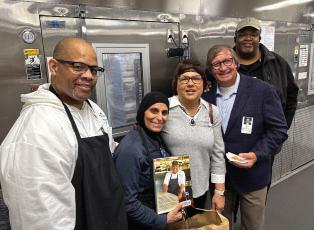
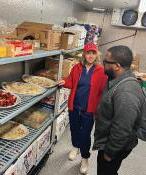
Southern Peanut Growers worked with Georgia Grown Chef Josh Swinney, executive chef at the main Northside Hospital Campus, to present Georgia Peanut Week, March 9-15, 2026. This campus serves 5,000 meals per day including the cafeteria, the coffee shop, the doctor's lounge and in-bed meals. The foodservice operations at all Northside campuses are run by Morrison Healthcare.
In February, all foodservice employees at Northside were invited to submit peanut and peanut butter recipes which represent their eating patterns, their family favorites and their cultural heritage. All recipes submitted were considered for flavor, appropriateness for different foodservice areas within the hospital and feasibility of producing in foodservice quantities during service.
The winners were announced during the "All-Hands" meeting on Wednesday morning, March 4. The winning staff members were presented with prizes including a Chef's Knife, cutting board and a copy of the new cookbook, "Cutting Up in the Kitchen." Chef Duane Nutter was on hand to sign the cookbooks and get photos with the winners. Georgia Peanut Commission representatives Don Koehler, Donald Chase and Michelle Chase were on hand to
Georgia Peanuts at Brooks County School Nutrition
Southern Peanut Growers worked with Georgia Grown Chef Josh Swinney to visit Brooks County K-12 School Nutrition program. During the visit, Chef Swinney learned about how a school system introduces new menu items and talked to School Nutrition Director Chynna Silverdale about incorporating Georgia Peanuts into her menus.
recognize the winners and commend the excellence of the Northside foodservice program.
Seven winners were selected to be featured during Georgia Peanut Week along with a few other peanut and peanut butter recipes:
• Reese's Cup Frappuccino
• Peanut Butter Blitz Frappe
• Thai Peanut Chicken & Gnocchi
• Sweet Potato Peanut Curry
• Miss PB Glazed Pork Loin & Chef's Garden Veggies
• Peanut Baklava Fingers
• PB&J Cupcake
All staff that submitted recipes received a canvas chef's apron with the Georgia Peanut Week logo and all foodservice staff received a beanie with the Georgia Peanut Week logo.
SPG and GPC exhibit at the Georgia Family, Career and Community Leaders Association conference
The Georgia Peanut Commission and Southern Peanut Growers exhibited at the Georgia Family, Career and Community Leaders Association's (FCCLA) state leadership conference, March 25-27, 2026, in Columbus, Georgia. Leslie Wagner manned the exhibit to distribute nutrition information, recipes, information on early introduction of peanuts to prevent peanut allergy, peanut samples and promotional items. Wagner also introduced a new fundraising opportunity for FCCLA members with Georgia Peanuts.
Chef Swinney will then work with SPG on developing training videos for K-12 School Nutrition on how to develop and introduce new menu items including peanuts and peanut butter, how to build flavor on the plate, how to create menu items that can include meat-based or vegetarian protein on demand during service, and how to prepare items ahead to warm for service the next day.
Northside Hospital hosts Georgia Peanut Week on campus and selects seven winners in a peanut recipe contest.
School Nutrition
Director Chynna Silverdale shows Chef Josh Swinney some new menu items.
Leslie Wagner exhibits at the Georgia Family, Career and Community Leaders Association's state leadership conference held March 25-27, 2026 in Columbus, Ga.