All rights reserved. No part of this publication may be reproduced, duplicated, stored in any retrieval system or transmitted in any form by any means without prior written permission of the Publishers.
The next issue of IPI will be published in Autumn 2026. ISSN No.International Pharmaceutical Industry ISSN 1755-4578.
The opinions and views expressed by the authors in this journal are not necessarily those of the Editor or the Publisher. Please note that although care is taken in the preparation of this publication, the Editor and the Publisher are not responsible for opinions, views, and inaccuracies in the articles. Great care is taken concerning artwork supplied, but the Publisher cannot be held responsible for any loss or damage incurred. This publication is protected by copyright.
06 Evolving Quality Risk Management: A Deep Dive into ICH Q9 (R1) with Kevin O'Donnell (HPRA) on the Pharma Conversations Podcast
Kevin O’Donnell discusses the evolution of Quality Risk Management following ICH Q9(R1) in this Pharma Conversations Podcast episode. The conversation examines how pharmaceutical companies can strengthen risk-based decisionmaking through improved knowledge management, scientific assessment and a more mature approach to quality systems.
09 Solstice Advanced Materials on Powering the Global Shift to Low-GWP Inhaler Propellants
An interview that considers the balance between sustainability and patient access and examines how manufacturers are preparing for a new generation of respiratory medicines. Andrew Van Deusen of Solstice Advanced Materials explores how the inhalation sector is navigating the transition to low-global-warming-potential propellants.
12 Terumo Pharmaceutical Solutions on Integrated CDMO Services
Michele Guasti of Terumo Pharmaceutical Solutions discusses the company's integrated CDMO approach for sterile injectable products, combining primary packaging, fill-finish services and device assembly. The interview examines trends including biosimilars, combination products, supply chain resilience and the increasing demand for strategic partnerships that support efficient development and manufacturing.
REGULATORY & MARKETPLACE
14 PFAS and Pharmaceuticals: Why the Industry Can No Longer Afford to Wait
Sorosh Ziarati of Global Product Compliance examines the growing impact of PFAS regulation on pharmaceutical manufacturing, including the challenges around supply chain visibility, material selection and substitution strategies as global regulatory expectations continue to evolve. This contribution from Chemspec Europe explores why organisations should begin preparing now for future PFAS requirements.
16 Differences Between US and EU Pre- and Post-Market Regulatory Obligations
The regulatory pathways for medicines in the US and EU differ significantly, particularly once products move beyond initial approval and into post-market oversight. Matthew Weinberg of ProPharma examines how these differences shape regulatory obligations, lifecycle management and the challenges companies face when navigating global product launches.
18 Why Predictive Analytics are Crucial for Effective EU-HTAR Implementation
The introduction of the EU Health Technology Assessment Regulation (EU-HTAR) is changing how evidence for new health technologies is generated and assessed across Europe. Billy Amzal from Phastar discusses how predictive analytics can help developers navigate evolving evidence requirements, support joint clinical assessments and demonstrate value in an increasingly complex HTA landscape.
CLINICAL & MEDICAL RESEARCH
20 Rethinking Clinical Trial Design: Making Patient Value Measurable with Net Treatment Benefit
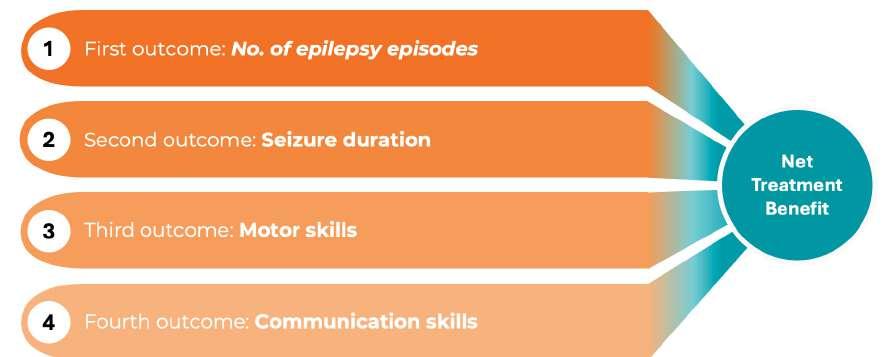
Traditional clinical trial endpoints do not always capture the full balance of benefits and risks experienced by patients. Tom Mann at One2Treat examines how Net Treatment Benefit and Generalised Pairwise Comparisons can provide a more holistic approach, integrating multiple outcomes to create evidence that better reflects patient priorities and treatment value.
22 Skin Modelling in Cosmetic Science: Tools for Evaluation and Innovation
Jon Lenn, Charles Evans and Jon Volmer of MedPharm explore how human-relevant models support research into areas including UV damage, pigmentation, aging,
inflammation and barrier function, helping improve product performance, safety and personalised skincare innovation.
SUBSECTION: CDMO
26 Insider Tips for a Right-the-First-Time Tech Transfer
Effective technology transfer goes beyond documentation, requiring a clear understanding of process knowledge, analytical readiness and manufacturing requirements. Jackie Klecker of Lifecore Biomedical examines the factors that can make or break a transfer, helping teams avoid delays and build a stronger foundation for commercial production.
30 After GLP-1: Can the Industry Keep Up with the Peptide Pipeline?
Sajeev Emmanuel Medikonda of Neuland Laboratories examines whether the pharmaceutical industry is prepared for the rapid expansion of the peptide pipeline beyond GLP-1 therapies. The article explores manufacturing challenges, including capacity constraints, complex synthesis approaches, evolving supply chains and the need for adaptable CDMO partnerships to support next-generation peptide medicines.
32 Designing Quality into the Process: Integrating QbD and PAT for Modern Drug Delivery
Quality by Design and Process Analytical Technology are helping manufacturers move from reactive testing towards a more proactive approach to pharmaceutical quality. Patrick McNally of Kindeva explores how these strategies can strengthen technology transfer, improve process understanding and support more reliable manufacturing outcomes across complex drug products.
34 Global Approaches to Oral Drug Administration Using Enteral Feeding Tubes: A Review of FDA and EMA Guidance
Nazim Kanji and Justin Holland of Quotient Sciences examine the challenges of developing oral medicines for enteral feeding tube administration, covering regulatory expectations, formulation considerations and testing strategies. The article and interview discuss how early, data-driven approaches can help improve dosing reliability, patient safety and regulatory readiness for paediatric and adult medicines.
SUBSECTION: INJECTABLES
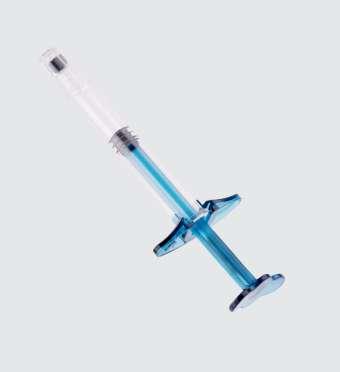
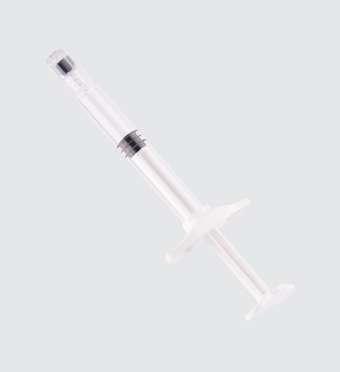
38 Plastic Pre-filled Syringes: Clinical Advantages, Technical Requirements, and Material Selection Criteria
The growing adoption of plastic pre-filled syringes is examined by Denise Contini of Althena Medical, who compares polypropylene, COC and COP materials and their suitability for injectable therapies. The article explains how particulate control, extractables and leachables, biocompatibility, sterilisation and stability assessments are essential when selecting packaging to ensure safety, performance and reliability.
40 What the Injectables Surge Is Really Asking of Pharmaceutical Packaging
The rapid growth of GLP-1 therapies is reshaping expectations for pharmaceutical packaging, placing new demands on speed to market, patient usability, product
security and sustainability. Patric Buck at MM Pharma examines how packaging manufacturers are responding to the rise of self-administered injectable therapies, and why secondary packaging is becoming an increasingly important part of the patient experience, supply chain and product lifecycle.
PACKAGING
42 From Clinical Waste to Clinical Grade: Validating Circularity in Healthcare Plastics
Dr. Jon Mitchell of Nextek Ltd examines how advanced recycling technologies and material science can support circularity in healthcare plastics. With expertise in polymer processing and sustainable materials, he explores the challenges of developing high-quality recycled plastics for regulated applications, highlighting the role of validation, innovation and practical solutions in creating more sustainable packaging systems.
44 Packaging as a Driver of Patient Adherence in Ophthalmic Therapy
Klervi Le Marre of Silgan Dispensing Healthcare examines how packaging is becoming a key factor in ophthalmic treatment success. From preservative-free multidose systems and dosing accuracy to usability and regulatory expectations, she examines how patient-focused design can improve adherence, confidence and the overall experience of self-administered eye-care therapies.
TECHNOLOGY
46 Why AI, Counterfeit Medicines, and Fake Trust Signals Are Creating a Clone Pharmacy Crisis
As online healthcare grows, cloned pharmacy websites, counterfeit medicines and AI-enabled deception are creating new challenges for patient trust and safety. Hira Malik of Oushk Pharmacy explores how digital fraud is exploiting demand for weight-management treatments, and why transparent processes, clinical governance and visible verification are essential to helping patients identify legitimate online care.
50 Why CMC Development Requires a Systems Re-think
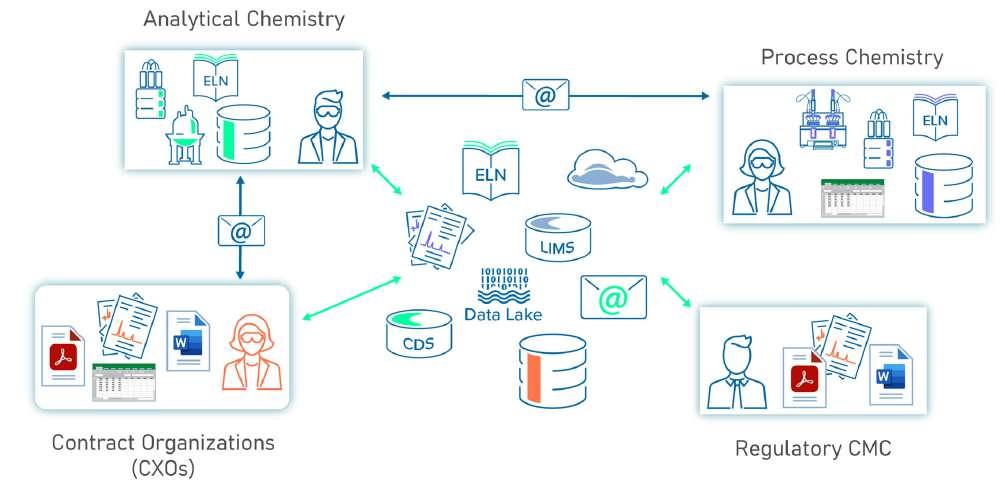
Joe DiMartino of ACD/Labs explores how fragmented data and disconnected laboratory systems can hinder effective CMC development. From impurity tracking and analytical workflows to cross-functional collaboration and data-driven decision-making, he examines why connected information environments are becoming essential for improving efficiency, scientific insight and development outcomes
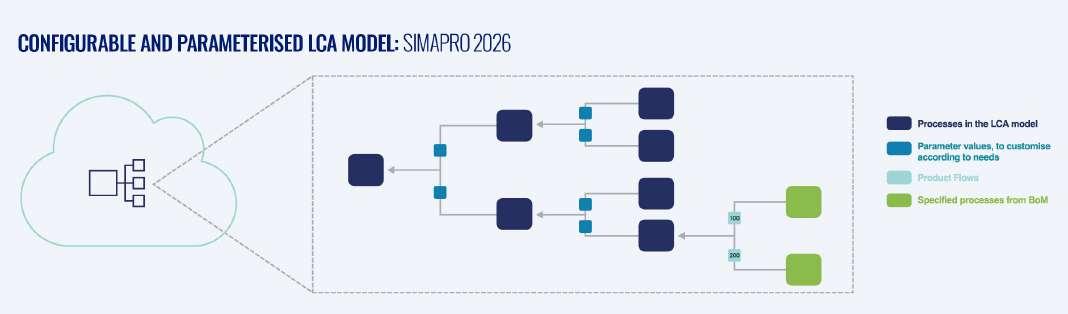
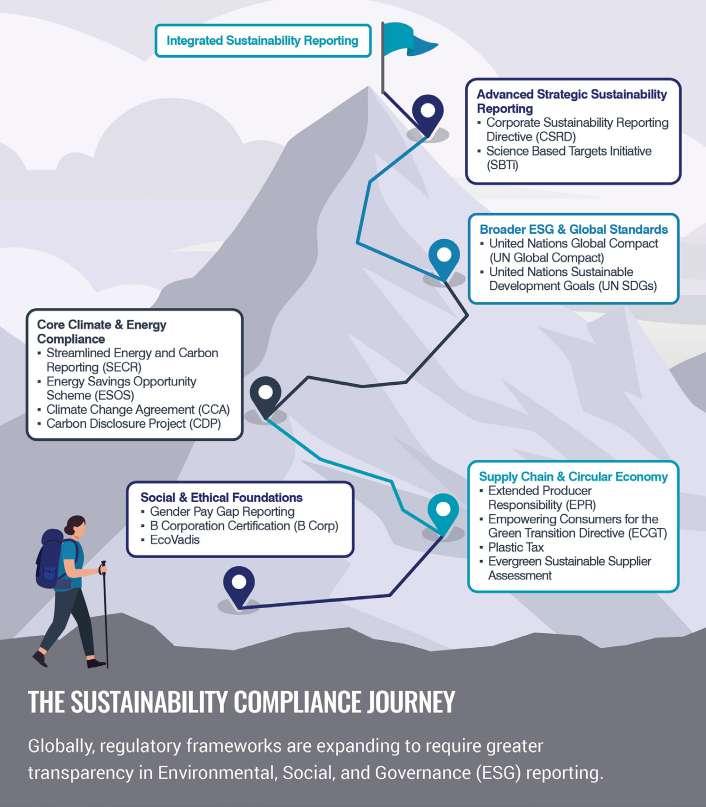
52 Real-Time LCA: From Sustainability Reporting to Sustainable Action
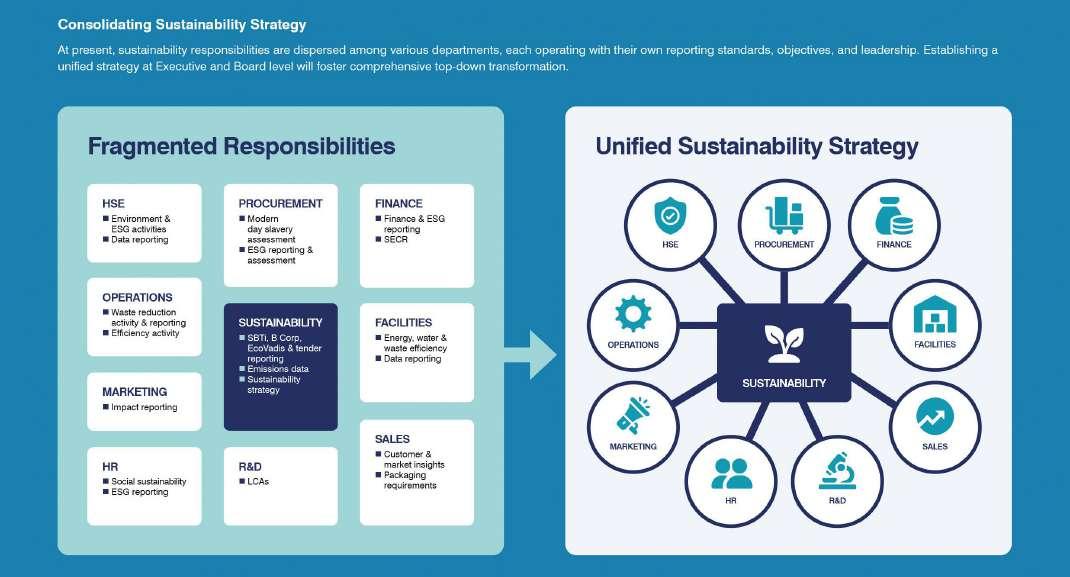
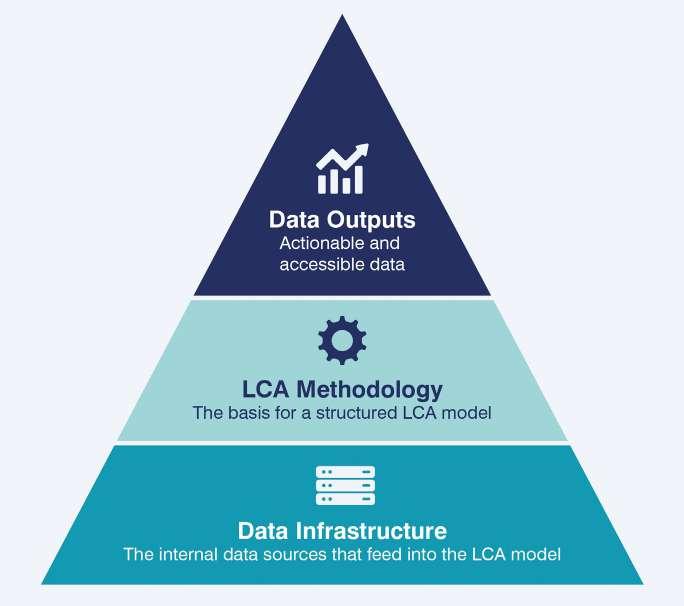
As sustainability reporting requirements become increasingly complex, organisations are seeking more effective ways to turn environmental data into meaningful action. Serena Grace of Owen Mumford and Marina Dumont at PRé Sustainability, examine how real-time life cycle assessment (LCA) can transform sustainability from a retrospective reporting exercise into a dynamic decisionmaking tool.
SUBSECTIONS: NASAL & PULMONARY
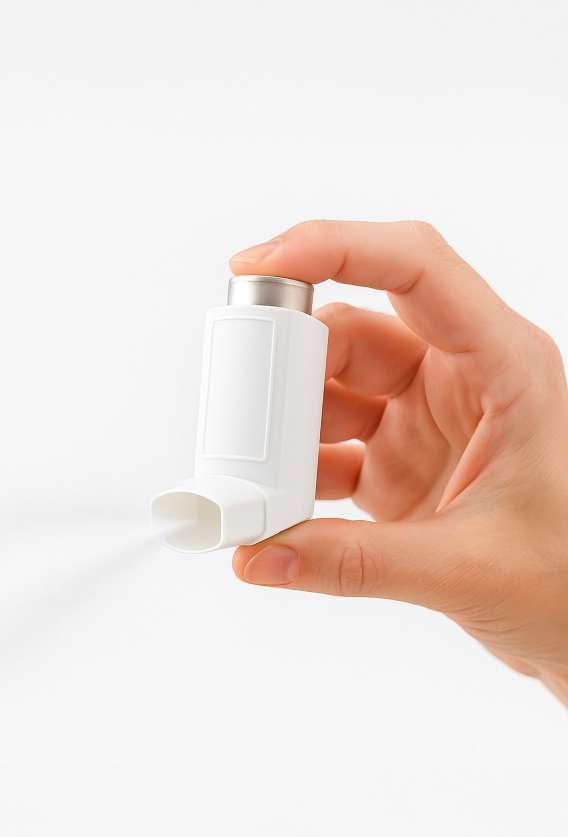
59 Expert Roundtable: Navigating the Next Phase of Low Carbon pMDI Development
The approval of the first low carbon pMDI has shifted the industry’s focus from possibility to implementation. In this expert roundtable, specialists from Bespak discuss the formulation, manufacturing, device and sustainability challenges shaping the transition, examining how the sector can balance carbon reduction goals with regulatory requirements, patient access and product performance.
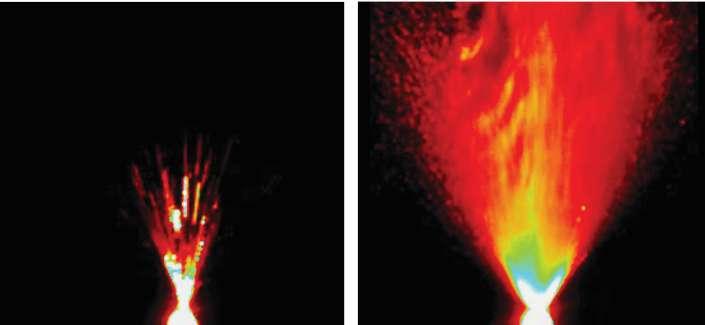
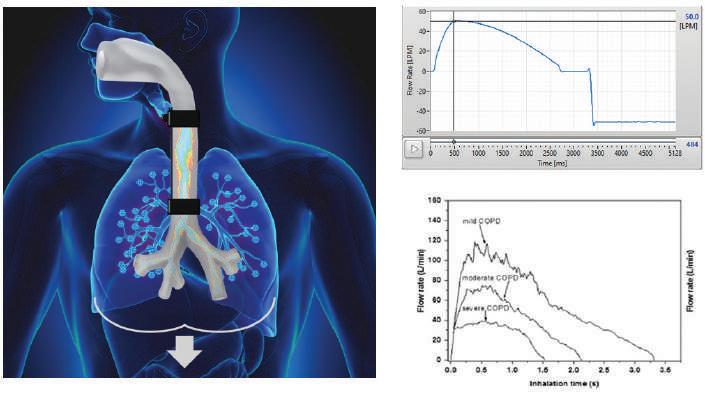
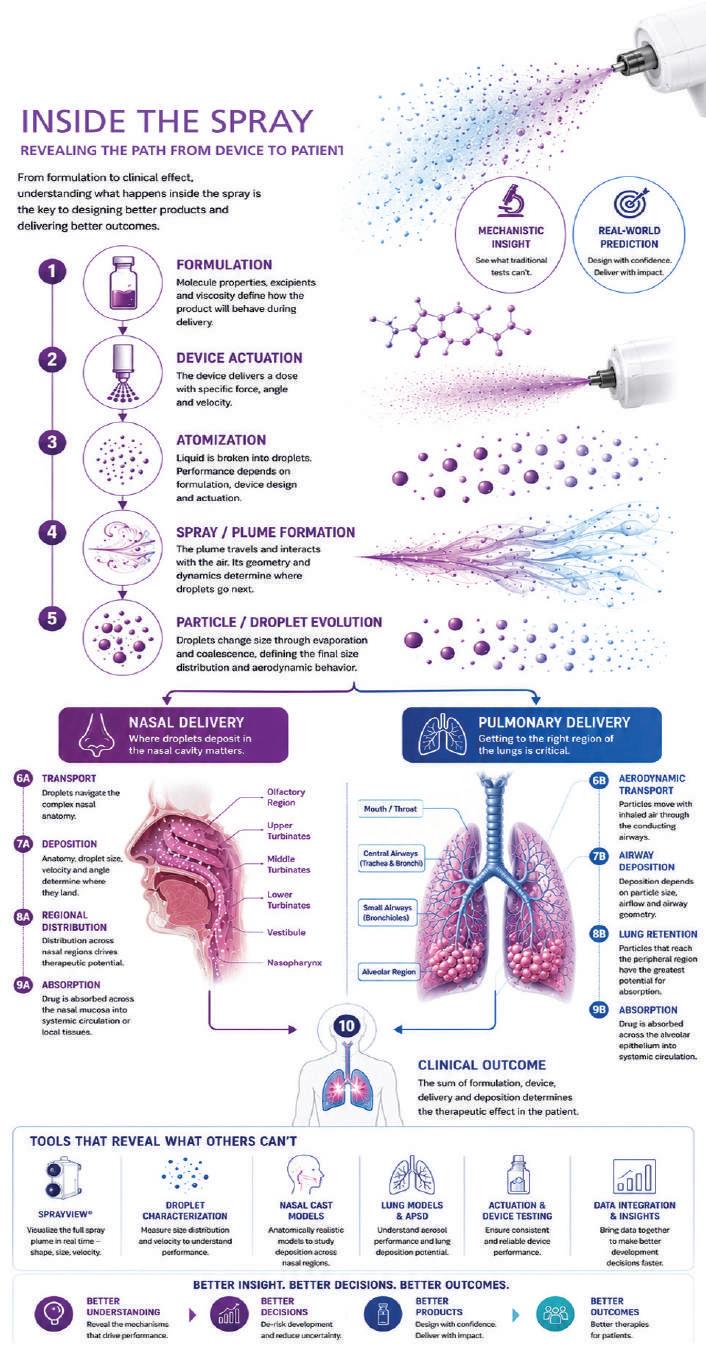
62 Inside the Spray: How In Vitro Tools Reveal What’s Really Happening When Your Product Meets a Patient
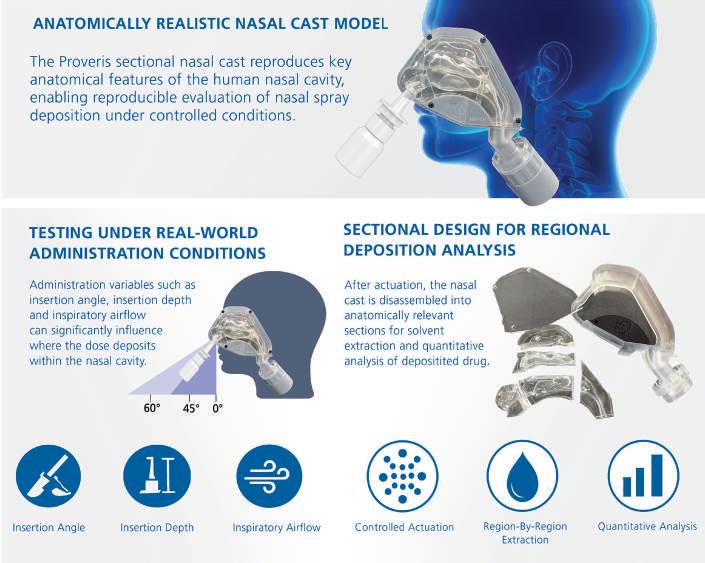
The performance of nasal sprays and inhalers depends on the interaction between formulation, device design and patient use. Joanne Mather and Grant Thurston of Proveris Scientific examine how advanced in vitro testing approaches are helping developers understand atomisation, deposition and variability, supporting more accurate predictions of real-world performance and stronger links between laboratory data and clinical outcomes.
Iridya® Multidose Preservative-Free
Eye Dropper
Precision
// Ease
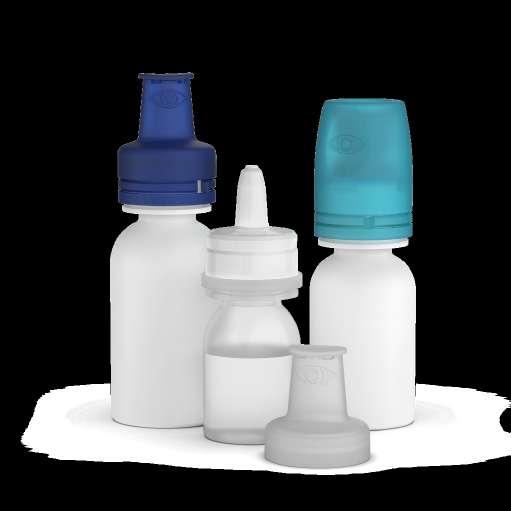
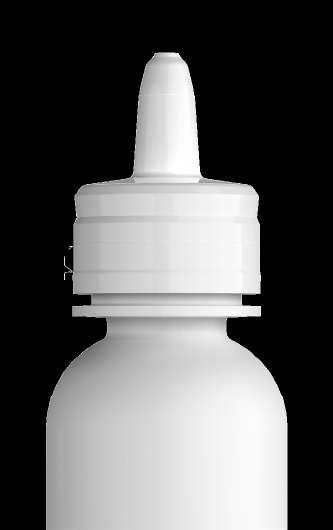
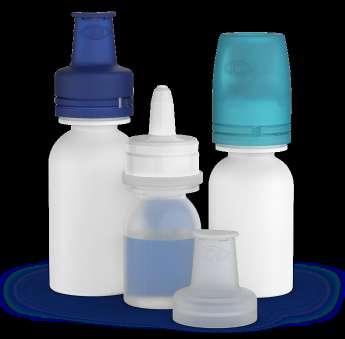
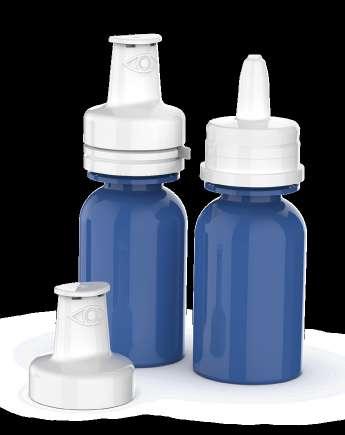
Iridya® is a breakthrough multidose eye dropper designed for the precise delivery of preservative-free formulations across a wide range of viscosities. Its advanced flow control system enables accurate dosing—even for challenging formulations such as gels and suspensions, while ensuring a consistent, patient-friendly experience with every drop.
• Precise dosing, drop after drop
• Compatible with low to high viscosities (including gels & suspensions)
• NO-JET technology for clean, controlled application
• Ergonomic design with low squeeze force
• Proven protection for preservative-free formulations
• Consumer-friendly design with elongated tip for ease of use
• Drug Master File DMF #34286
Give your patients accuracy down to the drop.
Learn More about Iridya® SilganDispensing.com/Iridya
Editor's Letter
The summer issue of IPI brings together a collection of insights from across the pharmaceutical and healthcare industries, exploring the expertise and collaboration that continue to support the development and delivery of medicines.
A key focus of this edition is the role of CDMOs and the value of strong industry partnerships in supporting complex pharmaceutical programmes. As companies work across increasingly specialised areas of development and manufacturing, the contributions in this issue highlight how expertise, flexibility and close collaboration remain central to successful outcomes.
We start this issue with two interview features. Solstice Advanced Materials discusses the transition towards low-global-warming-potential propellants for inhaled medicines, examining the balance between sustainability goals and maintaining patient access to essential respiratory therapies. Terumo Pharmaceutical Solutions discusses its approach to integrated CDMO services for sterile injectable products and how combining expertise across packaging, manufacturing and delivery can support pharmaceutical partners. Together, these interviews provide perspectives on two areas attracting considerable industry attention: the drive towards more sustainable healthcare solutions and the growing importance of integrated development and manufacturing models in supporting increasingly complex pharmaceutical products.
This issue also includes perspectives on several areas where innovation and expertise continue to influence pharmaceutical development.
One article I particularly enjoyed in this issue was the contribution from Jon Lenn, Charles Evans and Jon Volmer of MedPharm on skin modelling
Editorial Advisory Board
Bakhyt Sarymsakova, Head of Department of International Cooperation, National Research, Center of MCH, Astana, Kazakhstan
Catherine Lund, Vice Chairman, OnQ Consulting
Deborah A. Komlos, Principal STEM Content Analyst, Clarivate
Diana L. Anderson, Ph.D president and CEO of D. Anderson & Company
Franz Buchholzer, Director Regulatory Operations worldwide, PharmaNet development Group
Francis Crawley. Executive Director of the Good Clinical Practice Alliance – Europe (GCPA) and a World Health Organisation (WHO) Expert in ethics
in cosmetic science. The article explores how the growing demand for personalised and evidencebased skincare is increasing the need for robust biological models that can accurately evaluate product performance, safety and biological response. It provides an overview of how humanrelevant systems are being used to investigate key areas such as UV-induced damage, pigmentation, inflammation, skin barrier function, wound healing and the effects of ageing, helping researchers better understand how products interact with complex skin processes. As the cosmetic sector continues to expand through increased consumer interest, professional treatments and personalised approaches, the use of predictive models offers an important pathway for developing products supported by stronger scientific evidence rather than relying solely on consumer perception or claims.
I would also like to highlight the contribution from Nazim Kanji and Justin Holland of Quotient Sciences. The article provides an insightful examination of the challenges involved in delivering oral medicines through enteral feeding tubes, particularly for patients unable to swallow conventional dosage forms due to conditions such as dysphagia, neurological disorders or critical illness. I found the discussion particularly valuable as it highlights the importance of considering
enteral administration early in development, where formulation design, tube compatibility, dose recovery and administration procedures can have a significant impact on safety and treatment outcomes. The article also provides a useful perspective on evolving regulatory expectations, explaining how FDA and EMA guidance is driving a more structured, evidence-based approach to demonstrating that medicines can be administered reliably through feeding tubes.
Another article that stood out in this issue is the contribution from Patric Buck of MM Pharma & HC Packaging, which explores how the growth of GLP-1 therapies is placing new demands on pharmaceutical packaging. Readers may find this article particularly interesting because it looks beyond the therapy itself and examines the practical implications for packaging design, patient use and product delivery. It offers a clear perspective on how packaging is adapting to support the rapid expansion of self-administered injectable medicines and the wider changes taking place across the healthcare sector.
I hope you enjoy this summer issue of IPI and find the perspectives shared by our contributors both informative and valuable.
Alice Phillips, Editorial Manager
Rick Turner, Senior Scientific Director, Quintiles Cardiac Safety Services & Affiliate Clinical Associate Professor, University of Florida College of Pharmacy
Jagdish Unni, Vice President – Beroe Risk and Industry Delivery Lead – Healthcare, Beroe Inc.
Jeffrey W. Sherman, Chief Medical Officer and Senior Vice President, IDM Pharma
Jim James DeSantihas, Chief Executive Officer, PharmaVigilant
Mark Goldberg, Chief Operating Officer, PAREXEL International Corporation
Maha Al-Farhan, Chair of the GCC Chapter of the ACRP
Steve Heath, Head of EMEA – Medidata Solutions, Inc
Patrice Hugo, Chief Scientific Officer, Clearstone Central Laboratories
Heinrich Klech, Professor of Medicine, CEO and Executive Vice President, Vienna School of Clinical Research
Robert Reekie, Snr. Executive Vice President Operations, Europe, Asia-Pacific at PharmaNet Development Group
Stefan Astrom, Founder and CEO of Astrom Research International HB
Evolving Quality Risk Management: A Deep Dive into ICH Q9 (R1) with Kevin O'Donnell (HPRA) on the Pharma Conversations Podcast
In a recent episode of the Pharma Conversations podcast, Kevin O’Donnell of the Health Products Regulatory Authority (HPRA) offered a detailed and thought-provoking reflection on the evolution, implementation, and future direction of Quality Risk Management (QRM) within the pharmaceutical industry. Speaking in a personal capacity, he drew on decades of experience as a GMP inspector and contributor to international regulatory initiatives to examine both the persistent weaknesses he has observed in quality risk management practice and the opportunities created by the 2023 revision of International Council for Harmonisation of Technical Requirements for Pharmaceuticals for Human Use guideline ICH Q9. His central message was clear and consistent throughout the discussion: effective QRM is fundamentally dependent on the integration of knowledge management, scientific discipline, cultural maturity, and measurable risk reduction.
For O’Donnell, QRM cannot be reduced to a set of risk assessment templates or risk scoring tools. It is, rather, a way of thinking that must permeate an organisation’s Pharmaceutical Quality System (PQS). At its core lies the recognition that risk assessment without knowledge is inherently flawed. One cannot meaningfully assess probability, severity, or detectability without understanding the underlying process, the science behind the product, historical process performance data, and the effectiveness of existing GMP controls. Knowledge management, therefore, is not a peripheral concept but a prerequisite for robust QRM. Organisations must know where their knowledge resides, how it is curated, how it is updated, and how it informs risk assessment and risk-based decisionmaking. Without this structured approach, risk assessments becoming exercises in subjective judgment, driven more by opinion than by data and evidence.
He emphasised that effective QRM should ultimately demonstrate measurable risk reduction. The objective of risk assessment is not documentation, but improvement.
However, measuring risk reduction presents inherent challenges. Risk assessment is probabilistic by nature, and probability is not easily measured, particularly in complex manufacturing systems with limited failure data. Nevertheless, O’Donnell argued that other industries have addressed similar challenges. Fields such as nuclear power and aerospace have long employed probabilistic risk assessment methodologies, quantitative fault tree analyses, and simulation techniques to estimate system failure probabilities. While the pharmaceutical industry has historically relied on more qualitative and semiquantitative tools, the scientific foundation for more robust approaches already exists. The challenge is cultural and educational, rather than conceptual.
The impetus for revising ICH Q9 stemmed from repeated observations within the GMP inspectorate community that quality risk management practices were often not delivering on their promise. O’Donnell described encountering risk assessments characterised by high subjectivity, minimal use of empirical data, and a tendency toward predetermined conclusions. Brainstorming sessions were frequently used to estimate probabilities, yet little attention was paid to cognitive biases such as anchoring, confirmation bias, or groupthink. While subjectivity can never be fully eliminated, since human perception and judgement are intrinsic to risk evaluation, it can and should be systematically reduced. Over nearly two decades since the original publication of Q9 in 2005, GMP inspectors continued to observe similar shortcomings, suggesting that the industry had not sufficiently internalised the scientific underpinnings of quality risk management.
The discovery of nitrosamine impurities in pharmaceutical products in 2018 provided a powerful case study of systemic limitations within quality risk management activities by the pharmaceutical industry. These impurities, identified in a large range of medicinal products, highlighted weaknesses in hazard identification and cross-industry learning. The issue underscored the need for more anticipatory, science-driven approaches to hazard identification and risk evaluation. Against this backdrop, the HPRA initiated
discussions with the European Medicines Agency, which ultimately supported a formal proposal to revise ICH Q9 through the ICH process. Work commenced on revising the guideline in 2020, leading to the publication of Q9(R1) in early 2023.
The revised guideline focuses on six interrelated themes: managing subjectivity, applying appropriate levels of formality to QRM activities, strengthening hazard identification, improving risk-based decision-making, enhancing risk review, and addressing product availability risks, including drug shortages. O’Donnell explained that these areas were selected not to expand the scope of QRM, but to clarify and strengthen areas where implementation had proven weak. Subjectivity was perhaps the most complex topic to address. The revision acknowledges that human judgment plays an unavoidable role in risk assessment but encourages structured approaches to minimise bias. Techniques such as minimising subjectivity in the design of risk scoring tools, calibration of expert judgment, structured opinion elicitation methods, and transparent documentation of assumptions can enhance reliability.
Formality in QRM, another focal point of the revision, refers to proportionality rather than bureaucracy. The level of structure, documentation, and analytical depth applied to a risk assessment should correspond to the importance of the risk assessment and its decision outcomes, the degree of uncertainty that is involved, and the complexity of the process being risk assessed. Highly consequential decisions with significant uncertainty warrant greater rigor and effort in the associated risk assessments. Conversely, low-risk, well-understood issues may justify simpler QRM approaches, with lower levels of rigor and effort. O’Donnell noted that even the interpretation of “formality” can vary across cultural contexts, highlighting the importance of thoughtful and flexible implementation rather than rigid rule-making.
Hazard identification was repeatedly emphasised as foundational. If the wrong hazards are identified, or if significant hazards are overlooked, no amount of risk scoring or mathematical manipulation can
Regulatory & Marketplace Talking Point
correct the error. O’Donnell suggested that pharmaceutical quality professionals could learn from health and safety colleagues, who often excel in systematically identifying physical and behavioural hazards in workplaces and in manufacturing processes. Translating that mindset to product quality risks could strengthen QRM practices significantly. Without comprehensive hazard identification, risk assessments become disconnected from operational reality and may provide a false sense of security.
Risk-based decision-making, as addressed in the revision, acknowledges that decisions are multi-dimensional. Research referenced in the discussion illustrates how structured multi-criteria decision-making can improve clarity and defensibility. Pharmaceutical company decisions often balance product quality, patient safety, regulatory compliance, operational feasibility, and business continuity. Making these criteria explicitly and transparently enhances accountability and reduces the influence of hidden assumptions. Risk review, another critical element in the QRM process, may currently be one of the least developed areas in practice. But risk
review is highly important, because it is here that organisations have perhaps the most information and knowledge about risk assessment outcomes, unintended consequences, and control effectiveness. Embedding systematic review processes ensures that quality risk management evolves rather than stagnates and that prior decisions are evaluated against real-world knowledge and process performance data.
Product availability risks represent a further dimension of modern QRM. Drug shortages have become increasingly prevalent, and they reflect complex, multifactorial causes, including supply chain fragility, manufacturing capacity constraints, regulatory challenges, and economic pressures. This area has, for some time now, been characterised in the literature as what is called a ‘wicked problem’, and addressing it requires collaboration among many stakeholders, including manufacturers, regulators, and supply chain partners. The revised guideline encourages broader thinking about risk, beyond immediate product quality concerns, recognising that medicine availability itself is a public health
concern, and that decisions in one part of the system can have ripple effects across others.
Integration of QRM into the PQS was described as essential. Quality risk management should meaningfully underpin change control, deviation management, CAPA systems, training programs, process performance monitoring, management review processes, and many other areas of GMP. Inspectors frequently trace serious marketplace quality defects back to inadequately assessed changes, whether related to suppliers, equipment, raw materials, or process parameters. Effective change management requires robust hazard identification, evidence-based evaluation of impact and risk, and validation of controls before implementation. Organisational culture strongly influences how risks are surfaced and discussed. If leadership discourages the identification of high-risk findings, or if it implicitly favours risk registers with all entries showing ‘green’, transparency is compromised. A culture that supports open communication and does not penalise the reporting of significant risks is fundamental to a living QRM system.
O’Donnell also explored the implications of emerging technologies, particularly artificial intelligence (AI) and digitalisation. AIsupported manufacturing and data analytics introduce a wealth of new opportunities, but they also can introduce new hazards related to data integrity, cybersecurity, model bias, and lack of generalisability beyond training and testing datasets. Applying the Q9(R1) concepts of ‘importance’, ‘uncertainty’ and ‘complexity’ when determining how much formality to apply to a pending risk assessment or another kind of QRM activity provides a more proportionate way to assess and manage the related risks. AI systems with greater autonomy, or those directly influencing product quality decisions, warrant higher levels of scrutiny, control, human oversight and validation. Implementation should involve clear definition of AI or machine learning model boundaries, ongoing performance monitoring, and transparent documentation of assumptions and limitations. Risk communication will be increasingly important as stakeholders, including patients and regulators, seek assurance that such technologies are deployed responsibly and ethically.
Advanced Therapy Medicinal Products (ATMPs) offer another example of risk-based regulation in practice. The European GMP framework for ATMPs, introduced in 2017, embeds risk-based thinking throughout, including in decentralised or modular manufacturing contexts, which are starting to come to the fore now. While O’Donnell considers this framework largely fit for purpose, he acknowledges that continued adaptation will be required as scientific innovation accelerates and manufacturing models evolve.
A detailed discussion addressed the widespread use of Risk Priority Numbers (RPNs) in Failure Modes and Effects Analysis (FMEA). O’Donnell explained that RPNs are derived from ordinal scale numbers and therefore lack precise mathematical properties. Treating RPBs as exact quantitative measures and applying rigid thresholds to them, below which no risk controls are implemented, can lead to highly questionable risk acceptance decisions. RPN scores of 48 versus 52, in an FMEA exercise where an RPN threshold is set at 50, does not represent a meaningful mathematical distinction when both are derived from subjective ordinal scale risk rankings. He advocated recognising these limitations, avoiding strict RPN cut-offs, and focusing instead on relative prioritisation, on the clustering of risks, and on the evaluation of the robustness and validation status of all associated GMP controls. Embedding explicit consideration of control qualification, monitoring effectiveness, and evidence of performance within risk assessments can significantly enhance scientific rigour and strengthen the linkage between quality risk management and real-world process control.
Looking ahead, O’Donnell anticipates that the coming years will be defined by efforts to implement ICH Q9(R1) effectively, and to transition toward evidence-based risk reduction. This evolution may involve greater use of probabilistic modelling, structured expert calibration techniques, such as those developed in experimental psychology fields, and quantitative analysis methods such as Monte Carlo simulations. Cross-industry learning will likely play an important role, as pharmaceutical professionals draw insights from sectors
that have long managed high-consequence risks using advanced analytical tools. Education and training will also be critical to building capability in these areas.
Throughout the conversation, O’Donnell conveyed cautious optimism. While acknowledging persistent weaknesses in practice, he emphasised that the scientific knowledge required for improvement already exists and that the revised guideline provides a clear framework for progress. QRM must move beyond compliance-driven approaches toward a mature, evidenceinformed discipline that genuinely informs strategic and operational decisions. The integration of knowledge management, cultural openness, quantitative thinking, and transparent communication will determine whether QRM fulfils its potential as a cornerstone of pharmaceutical quality and patient safety. In an increasingly complex global environment marked by technological innovation, supply chain complexity and interdependence, and rising public expectations, robust and adaptive quality risk management will be indispensable to sustaining trust in medicines and in the organisations that manufacture and regulate them.
Kevin O'Donnell
Kevin O'Donnell, currently on secondment from the HPRA to PMDA Japan and the Tokyo University of Science.
Solstice Advanced Materials on Powering the Global Shift to Low-GWP Inhaler Propellants
Solstice Advanced Materials outlines its perspective on the transition to lowGWP propellants in an interview with International Pharmaceutical Industry Journal, focusing on regulatory change, manufacturing challenges, and sustainability in respiratory medicine.
How would you describe Solstice Advanced Materials' role in the global transition toward low-GWP potential propellants for inhalers?
Solstice's role is to help the pharmaceutical industry deliver on two priorities simultaneously. First, continued patient access to critical medications – the roughly 300 million people worldwide with asthma and Chronic Obstructive Pulmonary Disease (COPD) who depend on a pressurised metered-dose inhaler (pMDI) need that medication to remain available and effective.1 Second, environmental progress – pMDIs have historically been a significant contributor to healthcare's carbon footprint due to the use of high-GWP propellants HFA-134a and HFA-227ea.2
Solstice's medical propellant HFO-1234ze(E), GMP is the world's first low-GWP propellant in pMDIs approved for patient use in three countries and a region – UK, EU, AU and NZ.3,4,5,6 It has a GWP 99% less than hydrofluoroalkanes (HFAs). But our role isn't simply to supply a propellant. The pharmaceutical companies reformulating today are taking on complex, multi-year programmes that touch formulation, valve compatibility, manufacturing readiness, and regulatory submission. Much of the technical ground-work for the transition is already in place, and we are now approaching a period where regulatory clarity is expected to drive a significant wave of product transitions. Our focus is on supporting early adopters in the transition with consistent supply, technical support, and product samples, while also planning for the broader industry adoption of low-GWP propellants.
Although there are other options such as dry powder inhalers (DPIs), why do pMDIs remain an essential part of respiratory care for many patients?
DPIs require patients to generate a strong, deep inhalation to draw medication into
the lungs, and that is a physical capability many patients simply don't have. Young children, elderly patients, people in the acute phase of an asthma attack, and those with advanced COPD often cannot inhale forcefully enough for a DPI to deliver an effective dose.7
In rescue and emergency situations, when a patient needs medication quickly and reliably, the pMDI remains the primary go-to solution. So, while substitution to DPIs is part of the conversation, it is not a universal solution. For a significant share of the roughly 300 million patients worldwide who live with asthma or severe COPD, the pMDI is irreplaceable.
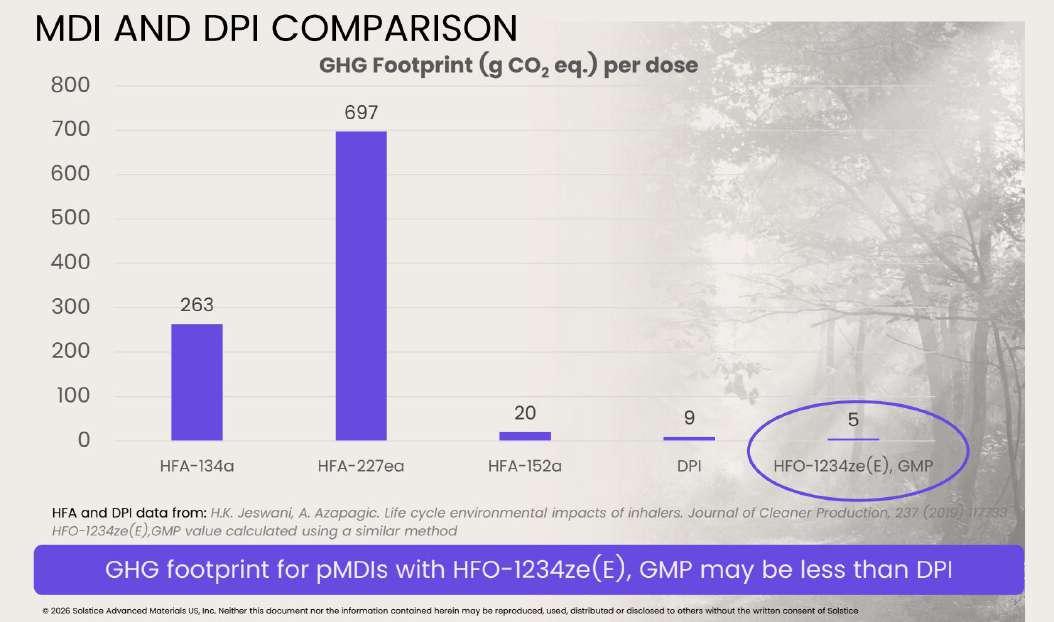
Additionally, the sustainability gap between DPIs and pMDIs is rapidly narrowing. With the introduction of Next Generation Propellants (NGPs), pMDIs are becoming capable of potentially delivering a lower carbon footprint than even DPIs (see Figure 1), while still maintaining the clinical advantages that many patients depend on.
Figure 1: Greenhouse Gas (GHG) footprint comparison of DPIs to pMDIs with HFA and HFO-1234ze(E), GMP propellants
Talking Point
With regulations tightening around legacy propellants such as HFA-134a and HFA227ea, what are the main implications for manufacturers as they prepare for compliance?
The Kigali Amendment to the Montreal Protocol established the international phasedown trajectory for hydrofluorocarbons (HFCs), and that is now being implemented through legislative and regulatory frameworks such as the EU F-Gas Regulation, the UK's F-Gas Regulation and the U.S. American Innovation and Manufacturing (AIM) Act.
Manufacturers still using HFA-134a or HFA227ea may experience shrinking supply, rising cost, and a closing window to complete a pMDI reformulation.
In the United States specifically, the FDA’s 505(b)(2) regulatory pathway, which allows applicants to reference existing safety data when bridging an approved product to a new formulation instead of having to generate new data, is emerging as the preferred route for many which will potentially accelerate the industry transition.
Beyond regulation, what are the main practical and commercial challenges being seen across the industry during the transition to low-GWP propellants?
The biggest practical challenge is the sheer complexity of an inhaler reformulation programme. At Solstice, we are working with customers to reduce the complexity and timeline of a transition to low-GWP propellant. HFO-1234ze(E), GMP itself is a non-flammable near-drop-in replacement which helps speed up the conversion process in two ways. First manufacturing equipment does not need to be modified to meet ATEX certifications.9 Second, Solstice has completed numerous compatibility
studies with various APIs demonstrating near-drop-in compatibility with existing pMDI formulations.10
Beyond complexity, there are two additional challenges that stand out. The first is supplier selection — manufacturers need to align early with the right propellant supplier, the right CDMO, and the right valve innovator, because the technical interdependencies are too high to navigate alone. The second is a strategic question we increasingly hear in conversations with customers: do you wait for the first FDA approvals to fully de-risk your decision, or do you move now and build first-mover advantage in your therapy area?
This is becoming a defining inflection point for the industry: waiting may reduce perceived risk in the short term, but it also increases the likelihood of being behind.
What are the key attributes that make HFO-1234ze(E), GMP well suited for nextgeneration sustainable pMDIs?
The environmental case is the headline: HFO-1234ze(E), GMP has an AR6 GWP of 1.37, which represents a greater than 99 percent reduction compared with HFA-134a.11,12 It is non-ozone-depleting and, importantly, nonflammable – which dramatically simplifies handling, manufacturing, and storage.
On the safety side, we have an established preclinical toxicology profile and clinical data supporting its use in pMDIs. As Nilesh Wagh, our Global Lead for Product Stewardship and Regulatory, often points out: “Given that HFO1234ze(E), GMP is proven to be safe for pMDIs , the conversation in the regulatory community has quickly shifted to how to get approved products with low-GWP propellant to market as quickly as possible”.13
In summary, HFO-1234ze(E), GMP combines an established regulatory profile, nonflammability, and near drop-in compatibility which enables companies to manage the technical, regulatory, and capital aspects of pMDI reformulation under a tight timeline.
How significant is the ability to use existing manufacturing infrastructure for pharmaceutical companies in practical terms?
Minimising required capital investment is one of the most underappreciated advantages of HFO-1234ze(E), GMP. For a pharmaceutical company reformulating a metered dosed inhaler, the propellant decision cascades into everything. HFO-1234ze(E), GMP functions as a near drop-in replacement for HFA-134a and HFA-227ea, which means manufacturers can use their existing pMDI filling and production infrastructure without major modifications. In addition, HFO-1234ze(E), GMP is non-flammable so ATEX certification is not required. There is a published case study by Recipharm, now Bespak, that expertly breaks this down in practice.14
Alternative propellants under development may be flammable, which means manufacturers face the choice of retrofitting existing lines with explosion-proof equipment or building new facilities altogether.
Solstice Advanced Materials is working with companies across innovator pharma, CDMOs and generics. What does that tell you about the current stage of the industry's transition?
It tells you that the transition is no longer hypothetical – it is broad, it is underway, and it now spans the full pharmaceutical ecosystem. Companies across the industry from innovator pharma to CDMOs and CROs have already announced that they are
working with Solstice HFO-1234ze(E), HFA and HFO-1234ze(E), GMP propellants, the next generation propellant.
We work with companies of very different sizes and business models because we believe sustainable respiratory care benefits from a wide range of options reaching patients. It also reflects our focus on engaging early, before final propellant and development decisions are locked-in, so that we can help shape the most efficient and scalable path forward.
With regulatory approvals expected to accelerate later this decade, what is Solstice doing to ensure propellant capacity keeps pace with demand?
The current understanding across the industry is that there will likely be a large cluster of approvals around the same time. To put the scale in context: in the UK alone, around 42 million pMDIs are prescribed every year with global volumes many times that figure.15 Many companies have publicly committed to transition to low-GWP propellants to support their sustainability commitments. The next step is to actually make it happen.
When approvals start landing in close sequence across that scale of demand, the propellant supply chain will need to be ready. Solstice is ready today with commercial supply.
Europe is currently ahead in adopting sustainable pMDIs. What factors will influence the pace of adoption in other regions?
The EU established a clear transition pathway earlier than other regions, and that gave manufacturers the confidence to commit to reformulation programmes. That is why we are seeing the first approved low-GWP inhaler product on the European market today.
In addition to regulatory clarity, much of the active development work and technical capability in inhalation continues to be concentrated in Europe and the UK, which has further accelerated progress in those regions.
In the United States, with the quota relief for HFA under the US AIM Act potentially expiring in 2030, we expect manufacturers to evaluate the 505(b)(2) regulatory pathway, which allows applicants to reference existing safety data when bridging an approved product to a new formulation.
Beyond Europe and the US, regulatory filings are already progressing in markets like
Regulatory & Marketplace Talking Point
China, and we expect other geographies will follow as their regulatory frameworks mature. Manufacturers planning for global launch are increasingly thinking about a sequenced approach: Europe first, then the US, then the rest of the world.
Looking ahead, what would a successful transition to sustainable pMDIs mean for patients, manufacturers and the wider healthcare sector?
For the roughly 300 million patients who depend on pMDIs worldwide, it means continued, uninterrupted access to a device they rely on every day – without compromise to clinical performance. For manufacturers, it means meeting regulatory obligations and sustainability commitments simultaneously, without rebuilding their supply chains or capital infrastructure. For the wider healthcare sector, it removes a significant source of high-GWP emissions from one of the most prevalent chronic disease categories in the world.
That last point matters strategically. Healthcare's own carbon footprint is increasingly under scrutiny – in the UK, the NHS has reported that pMDI inhalers account for approximately 3% of its total carbon footprint, making respiratory care one of the most visible decarbonisation in the system.16,17 A successful pMDI transition therefore sets a precedent for how the industry can decarbonise without disadvantaging the patients it serves.
Beyond decarbonisation, this transition also creates a foundation for continued innovation within respiratory care – from improved formulation approaches and more precise dose control to the potential expansion into more complex therapies over time.
That, ultimately, is what we are working toward at Solstice – and why we continue to innovate.
For more information: https://go.solstice.com/mdi_2026
REFERENCES
1. Global Initiative for Asthma (GINA). Global Strategy for Asthma Management and Prevention, 2024 Update.
2. Wilkinson AJ, Braggins R, Steinbach I, Smith J. Costs of switching to low global warming potential inhalers. An economic and carbon footprint analysis of NHS prescription data in England. BMJ Open. 2019;9(10):e028763.
3. AstraZeneca. Trixeo Aerosphere approved in the UK as first inhaled respiratory medicine using next-generation propellant with near-zero Global Warming Potential, May 2025.
4. AstraZeneca. Trixeo Aerosphere receives positive EU CHMP opinion as first inhaled medicine using next-generation propellant with near-zero Global Warming Potential.
5. Australian Government Department of Health, Disability and Aging.
6. New Zealand Breztri Aerosphere data sheet.
7. Avorini F, Magnan A, Dubus JC, et al. Effect of incorrect use of dry powder inhalers on management of patients with asthma and COPD. Respiratory Medicine. 2008;102(4):593-604.
8. Selecting the Best Inhaler Device: Not Always an Easy Task, Jun 3, 2010
9. HFO-1234ze(E) is A UN class 2.2 non-flammable liquified gas by GHS, DOT, IATA and IMDG
10. Studies available upon request and published through the RDD and DDL conferences
11. Greenhouse Gas Protocol. Global Warming Potential Values, August 2024
12. AstraZeneca. Trixeo Aerosphere approved in the UK, May 2025; Health Innovation East, NHS net zero ambitions advanced by MHRA approval of first low-carbon pMDI COPD inhaler, July 2025.
13. Full full toxicology package, including twospecies carcinogenicity studies available upon request
14. Atkinson H, et al. Considerations for Robust Clinical and Commercial Manufacturing of Next Generation Sustainable Metered Dose Inhalers. Respiratory Drug Delivery 2022.
15. Office of Health Economics, in partnership with Chiesi. Carbon Minimal pressurised Metered Dose Inhalers (pMDIs) could save up to 619,000 tonnes of emissions each year, representing up to 7–10% of NHS Net Zero targets, March 2025.
16. NHS Business Services Authority. Respiratory Carbon Impact Dashboard.
17. Tennison I, Roschnik S, Ashby B, et al. Health care's response to climate change: a carbon footprint assessment of the NHS in England. The Lancet Planetary Health. 2021;5(2):e84-e92.
Global General Manager of Inhaled Products at Solstice Advanced Materials, where he leads the global business behind HFO-1234ze(E), the company's breakthrough low-global-warming-potential propellant technology for respiratory medicines. A pharmacist by training and former Novartis leader, he has spent his career at the intersection of science, commercialisation, and healthcare innovation, with experience spanning respiratory disease, immunology, dermatology, and pharmaceutical product launches. Over the past four years, he has played a key leadership role in bringing HFO-1234ze(E) into GMP pharmaceutical manufacturing, helping advance the industry's transition toward more sustainable inhaled therapies.
Andrew Van Deusen
Terumo Pharmaceutical Solutions on Integrated CDMO Services
International Pharmaceutical Industry Journal speaks with Michele Guasti, Global Product Manager at Terumo Pharmaceutical Solutions Division. The discussion explores Terumo's approach to integrated CDMO services and the evolving needs of the sterile injectable market.
Can you start by introducing Terumo Pharmaceutical Solutions and the CDMO services the company provides?
Terumo is a global medical technology company that was founded more than 100 years ago in Japan and is now present in more than 160 countries and regions. The company provides a broad portfolio of products and services for healthcare professionals and the pharmaceutical industry.
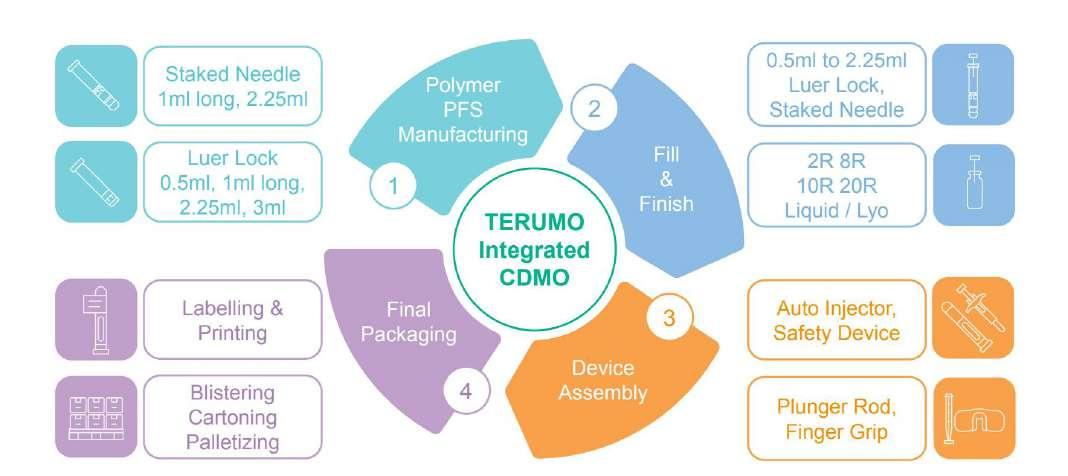
Within Terumo, the Pharmaceutical Solutions division supports pharmaceutical companies through a business-to-business model. The division combines expertise in CDMO services, primary containment and injection devices for parenteral products. This integrated model brings together polymer pre-filled syringe manufacturing and traditional CDMO services, such as fill-finish, through a single partner. As a result, we can support pharmaceutical companies in the development and manufacture of tailored solutions for sterile injectable products.
How is Terumo positioning its CDMO business within the increasingly competitive sterile injectable market?
The traditional CDMO model is to provide fill-finish services across a broad range of container types and materials. At Terumo, we take a more focused approach by processing our own proprietary primary packaging solutions. This is what we define as integrated CDMO services: the combination of primary packaging manufacturing (polymer PFS), aseptic filling, device assembly, such as autoinjectors, and final packaging within one coordinated offering. This model enables our partners to deliver drug substance to our facility and receive a finished product ready for market.
What are the benefits of combining primary container manufacturing, fill-finish services and device assembly within a single organisation?
The most immediate benefit is the reduction of supply chain complexity. Customers can work with a single point of contact instead of coordinating multiple suppliers, project teams, timelines and meetings. This simplifies project management, improves communication and can help reduce both costs and development timelines. This is particularly important in pharmaceutical development, where each stage is connected and delays in one area can affect the overall path to market. By integrating primary container manufacturing,
fill-finish services and device assembly within one organisation, customers can reduce handovers, align technical decisions earlier and avoid unnecessary waiting times between development steps. Shorter and more predictable timelines are especially valuable for products with competitive launch windows, such as biosimilars, and for innovative therapies where patients, healthcare systems and pharmaceutical companies all benefit from faster access to reliable treatment options.
What factors influenced the decision to invest in manufacturing facilities in both Japan and Germany, and what advantages do these locations provide for customers?
Our priority is to support pharmaceutical companies as effectively as possible. Customers increasingly want manufacturing partners located close to their own operations, not only to help reduce shipping costs and carbon footprint, but also to minimise supply chain risk.
Establishing facilities in both Japan and Germany allows us to be closer to key markets and customer locations. This proximity was an important factor in our investment decisions, as it strengthens collaboration, improves responsiveness and supports the development of long-term partnerships.
Who is the ideal customer for you to work with? Is it a particular phase of development, manufacturing or specialism?
Our ideal customers are biopharma and biosimilar companies developing injectable therapies, particularly those progressing through Phase I to Phase III clinical development. We are especially interested in programmes intended for delivery via prefilled syringes, whether for self-administration using autoinjectors or for use by healthcare professionals with safety devices. Many of these products involve challenges such as silicone sensitivity, high-viscosity formulations or large-volume injections. In these cases, selecting the right primary packaging and delivery system becomes particularly important. Our proprietary container and needle technologies are designed to help address these challenges while supporting both patient comfort and healthcare professional requirements.
What are the most significant changes currently taking place in the sterile injectable market, and how is Terumo responding to them?
One of the most significant trends in the sterile injectable market is the continued growth of biologics and biosimilars. In the biosimilar segment in particular, speed to market is a critical success factor, especially once originator product patents expire and several competitors target the same launch window. At the same time, quality, regulatory and technical expectations continue to increase, making it essential to accelerate development without compromising standards. This is where an integrated partner such as Terumo can play a meaningful role by helping customers reduce timelines, manage complexity and maintain robust quality performance.
Another important trend is the growing relevance of combination products. Pharmaceutical companies are becoming more cautious when selecting development partners and solutions, particularly where technical risk or uncertainty may affect project
timelines. If suitable primary packaging, fillfinish capabilities or device solutions are not readily available, companies may be reluctant to move forward with new programmes. To address this, Terumo is investing proactively in technologies and integrated solutions ahead of customer demand, helping to reduce risk and avoid unnecessary delays.
As the market continues to evolve, what do you believe pharmaceutical and biotechnology companies will be looking for most from their CDMO partners? While manufacturing capabilities, capacity and flexibility remain important, I believe pharmaceutical companies are increasingly looking for trusted long-term partners rather than transactional suppliers. Many CDMOs focus discussions on facility expansions, production capabilities and technical expertise. These factors are essential, but successful collaborations also depend on clear communication, long-term commitment and mutual trust.
Looking ahead, I believe companies will place greater value on CDMO partners that
combine technical excellence with genuine collaboration and long-term strategic support.
Michele Guasti is a Global Product Manager at the Pharmaceutical Solutions Division of Terumo Medical Care Solutions. He graduated from the University of Brescia (Italy) and holds a Master’s degree in Mechanical Engineering. Mr. Guasti has more than twelve years of experience in the pharmaceutical industry, combining expertise in primary packaging (developed during his time at Stevanato Group), drug delivery devices, and fill-finish processes. Mr. Guasti has extensive experience in building strong partnerships and collaborations between companies and in supporting pharma customers in addressing their daily challenges.
Michele Guasti
PFAS and Pharmaceuticals: Why the Industry Can No Longer Afford to Wait
Few regulatory issues have the potential to reshape pharmaceutical manufacturing as profoundly as PFAS. Often referred to as "forever chemicals", per- and polyfluoroalkyl substances have become one of the most significant environmental and regulatory challenges facing industry today.
PFAS are deeply embedded across modern industrial supply chains, including many areas of pharmaceutical production. Their exceptional resistance to heat, chemicals, and degradation has made them invaluable in applications ranging from manufacturing equipment and process-contact materials to medical devices and inhalation therapies. Yet those same characteristics have placed them firmly in regulators' sights.
As authorities around the world accelerate efforts to restrict PFAS use, pharmaceutical companies are entering a critical period of transition. The question is no longer whether PFAS regulation will affect the sector, but how prepared organisations are for what comes next.
A recently published industry whitepaper, PFAS: The Science, Regulation, and Road to Substitution, developed for Chemspec Europe 2026 by Global Product Compliance and S&P Global, provides a detailed assessment of the scientific, regulatory, and commercial landscape. It argues that organisations that begin planning now will be significantly better positioned than those waiting for regulatory deadlines to force action.
From Environmental Concern to Strategic Business Issue
PFAS encompass a vast family of synthetic fluorinated compounds, with more than 10,000
substances now estimated to fall within the category. For decades they have been used because of properties that are difficult to replicate elsewhere: chemical inertness, thermal stability, low surface tension, and resistance to water and oils.
For pharmaceutical manufacturers, these characteristics have delivered considerable operational advantages.
Fluoropolymer materials such as PTFE are widely used in tubing, seals, gaskets, vessel linings, filter systems, and other processcontact components because they can withstand aggressive solvents and demanding production environments. PFAS-derived materials are also present in a range of medical technologies, while fluorinated propellants remain critical for many metered-dose inhalers. This can create compliance challenges even when PFAS are not intentionally present in the finished medicine.
Regulators are increasingly focusing on persistence as much as toxicity. Unlike many chemicals, PFAS do not readily degrade in the environment and can remain present for decades or even centuries. Growing scientific evidence linking certain PFAS compounds to adverse health outcomes has intensified calls for broad restrictions rather than substanceby-substance regulation. This has transformed PFAS from a compliance challenge into a strategic business issue.
A Fast Moving Regulatory Landscape
The pharmaceutical sector has become accustomed to navigating complex regulatory frameworks. However, PFAS regulation presents an unusually dynamic challenge because developments are occurring simultaneously across multiple jurisdictions.
The European Union remains at the centre of this evolution. Its proposed universal PFAS
restriction under REACH would represent the most extensive chemical restriction in the history of the regulation, covering the entire PFAS class rather than targeting individual substances.
Although final decisions are still progressing through the regulatory process, implementation is widely expected between 2027 and 2028, with different transition periods depending on sector and application.
Importantly for pharmaceutical companies, regulators have recognised that certain uses currently lack viable alternatives. The latest proposals include extended derogation periods for some pharmaceutical and medical applications, potentially extending to 13.5 years in specific cases.
But that breathing space should not be mistaken for immunity.
Derogations are intended to support transition, not delay it indefinitely. Companies seeking continued use will likely need to demonstrate robust substitution planning, technical justification, and ongoing engagement with regulators.
Outside of Europe, regulatory momentum is building globally. The United States has introduced drinking water standards and expanded PFAS reporting obligations. Canada, Australia, the United Kingdom, and several Asia-Pacific markets are all reviewing or strengthening PFAS controls. Meanwhile, international agreements continue to add PFAS compounds to lists of restricted persistent pollutants.
For globally operating pharmaceutical businesses, this means managing a patchwork of requirements that is steadily converging toward tighter controls.
PFAS Beyond the Product
One of the most important insights highlighted in the whitepaper is that pharmaceutical exposure to PFAS often extends far beyond finished products.
Many organisations have already assessed whether PFAS are present in formulations, excipients, or delivery systems. Far fewer
Regulatory & Marketplace
have examined the infrastructure used to manufacture them.
As outlined before, PFAS-containing equipment components can be found throughout pharmaceutical facilities, including pipework, seals, membranes, filters, and process equipment. In some cases, these materials may introduce trace contamination risks despite not being part of the final product itself.
As regulatory scrutiny increases, companies may find themselves required to demonstrate not only what is in their products, but also where PFAS exist throughout their manufacturing ecosystem.
This creates a whole new level of complexity. Understanding PFAS exposure increasingly requires visibility across facilities, suppliers, equipment inventories, manufacturing processes, and procurement networks. For many organisations, that mapping exercise has not yet begun.
Why Short-Term Fixes Are Unlikely to Work
Another important message emerging from current regulatory discussions is that traditional substitution strategies may no longer be sufficient.
Historically, many industries responded to restrictions on long-chain PFAS compounds by switching to shorter-chain alternatives. However, regulators now view many of these substitutions as inadequate because the replacement substances retain similar persistence characteristics.
The result is a move towards class-wide regulation that seeks to address the broader family of PFAS chemicals rather than individual compounds.
For pharmaceutical manufacturers, this means that incremental substitutions may offer only temporary relief. Instead, organisations may need to evaluate more fundamental changes to materials, formulations, equipment design, and manufacturing approaches.
While this presents significant challenges, it also creates opportunities for innovation.
Companies investing early in alternative technologies, next-generation materials, and PFAS-free manufacturing solutions may ultimately gain competitive advantages as customer and regulatory expectations continue to evolve.
Four Practical Priorities for Pharmaceutical Companies
The whitepaper outlines several practical actions organisations should be considering now. For pharmaceutical manufacturers, four priorities stand out.
1. Build a Complete PFAS
Inventory
Before companies can manage risk, they need visibility.
This means identifying where PFAS exist across products, processes, equipment, packaging, and supply chains. It also means moving beyond supplier declarations where necessary and developing a more detailed understanding of underlying chemical compositions.
Without this baseline, effective transition planning becomes extremely difficult.
2. Treat PFAS as a Cross-Functional Programme
PFAS is not just a regulatory affairs issue.
Addressing it successfully requires collaboration between regulatory teams, R&D, procurement, engineering, manufacturing, quality, sustainability, and commercial functions. Decisions made in one part of the organisation can have significant implications elsewhere.
Companies treating PFAS as a strategic transformation programme rather than a compliance exercise are likely to make faster progress.
3. Begin Alternative Assessments Early Even where derogations are expected, organisations should not assume that current solutions will remain viable indefinitely.
Alternative materials often require extensive validation, qualification, testing, and regulatory review. In pharmaceutical environments, those timelines can be particularly long.
Starting evaluation work now provides valuable flexibility later.
4. Strengthen Supply Chain Transparency Customers, regulators, investors, and partners
are increasingly seeking evidence of chemical transparency throughout supply chains.
Organisations that establish stronger supplier disclosure requirements, verification processes, and traceability systems today will be better positioned to meet future expectations and respond quickly as requirements evolve.
A Defining Decade for the Industry
The period leading up to 2030 is shaping up to be one of the most significant transitions the chemical and life sciences sectors have faced in decades.
For pharmaceutical manufacturers, the challenge is nuanced. Unlike some industries, certain applications may continue under extended exemptions because of their critical role in healthcare. Yet those exemptions should be seen as transition windows rather than permanent solutions.
The organisations likely to emerge strongest will be those that use this period to build knowledge, strengthen supply chain visibility, invest in alternatives, and integrate PFAS considerations into long-term strategic planning.
The opportunity for companies is not simply to achieve compliance. It is to position themselves ahead of a transformation that is already underway.
To explore the findings in greater detail, including the science, regulatory developments, essential-use framework, and structured implementation roadmap, readers can access the full PFAS: The Science, Regulation, and Road to Substitution whitepaper via the Chemspec Europe website.
Sorosh Ziarati is a Regulatory Coordinator at Global Product Compliance (GPC), specialising in chemical regulatory compliance across the Middle East, Canada, and Australia. With a strong foundation in the Globally Harmonized System (GHS), and chemical inventory requirements, he supports industry clients in navigating complex and evolving regulatory landscapes across multiple jurisdictions.
Sorosh Ziarati
Differences Between US and EU Pre- and Post-Market Regulatory Obligations
Typically, global companies developing innovative therapies are familiar with the differences between regulatory systems in the United States and European Union. In the US, products are regulated by the Food and Drug Administration, which operates under a centralised review and approval framework. In Europe, a hybrid model is used, combining centralised scientific review with national implementation across the different Member States within the EU.
While pre-market pathways receive significant strategic focus, companies often underestimate the differences between the US and European/UK approach to post market regulation. In the US, post-market regulatory obligations continue to be centralised and are overseen by FDA. However, in the EU, regulatory oversight becomes more decentralised, with Member States playing a significant role in implementation and enforcement of their specific post-market requirements.
For regulatory teams supporting global product launches, understanding these structural differences is critical to successful market access. Compliance risk, operational complexity, and lifecycle management obligations can vary significantly depending on how regulatory responsibilities are distributed across jurisdictions.
Comparing Approval Pathways:
Centralised FDA Review vs. EU Multi-Route Authorisation
In the United States, the pathway to market for innovative medicines typically runs through a New Drug Application (NDA) or Biologics License Application (BLA), which is submitted to FDA for approval. Scientific review, approval decisions, and post-market oversight all reside within one regulatory agency: FDA. Once approved, the product may be marketed nationwide under one regulatory framework.
The EU offers several authorisation pathways. Innovative medicines are frequently reviewed through the centralised procedure administered by the European Medicines Agency (EMA). This pathway results
in a single marketing authorisation valid across all EU Member States (MS).
However, the EU framework also includes decentralised and mutual recognition procedures for certain products. Even under the centralised procedure, Member States maintain authority over various aspects of supervision, implementation, and enforcement following EMA approval.
The practical result is a dual-layer regulatory environment. While the scientific assessment of a product occurs centrally, post-approval regulatory oversight involves the national competent authorities located within each Member State where market access is sought.
This distinction becomes particularly important once products enter the market.
The EU’s Decentralised Post-Market Environment
Just because a product receives marketing authorisation from EMA, it does not translate into centralised market access across the EU. National competent authorities within each individual Member State retain responsibility for regulatory supervision within their jurisdictions. Accordingly, sponsors must interact with multiple regulatory stakeholders after launch to ensure their product is compliant with the specific regulations and requirements unique to each MS where their product is on the market.
Several areas illustrate the operational implications of this structure, particularly labelling governance, promotional oversight, and lifecycle regulatory maintenance.
Labelling: One Core Scientific Position, Multiple National Implementations
In the United States, labelling changes are submitted directly to FDA. Updated Prescribing Information applies uniformly once approved, and regulatory pathways for post-approval changes are well established. Sponsors manage labelling through a single regulatory process which is governed by FDA.
In the EU, labelling governance is more layered. The Summary of Product Characteristics serves as the core scientific document for
centrally authorised products. However, implementation requires translation and adaptation across applicable Member States.
This creates several operational realities for sponsors, including:
• Labelling must be translated into all relevant national languages
• Packaging components must comply with country-specific format requirements
• Local regulatory oversight may apply to labelling presentation and implementation
• Updates must be coordinated across multiple jurisdictions simultaneously
For global regulatory teams, this introduces version control challenges that are not typically faced in the US. A single labelling update that is agreed upon at the EU level may require coordinated implementation across more than two dozen markets, making it far more challenging to ensure compliance in all local jurisdictions.
The compliance risk in the EU is far more operational rather than scientific. Inconsistent timing or documentation across jurisdictions can lead to regulatory findings even when the core scientific position is aligned.
Promotional Oversight: Unified US Standards vs. Member State Enforcement
FDA provides centralised oversight of prescription drug promotion in the United States. Policy interpretation and enforcement are nationally consistent. Companies typically design Medical, Legal, and Regulatory (MLR) review processes around a single regulator and a unified set of expectations.
In the EU, the regulatory environment is structured differently. Promotional regulation is governed by EU directives, but enforcement occurs at the Member State level. National legislation and local authorities interpret and apply these rules within their jurisdictions.
In addition, industry self-regulatory organisations frequently play a role in monitoring promotional compliance.
For sponsors, this means that promotional claims acceptable in one EU
market may be challenged in another. Transparency require-ments, disclosure rules, and interpretations of comparative claims may vary.
Global promotional governance models must therefore incorporate local validation. A fully centralised review structure may overlook Member State expectations. Because of this, having local expertise in each geographic location where the product is being marketed is the best way to confirm compliance at a local level, ultimately ensuring your product’s success long term.
Lifecycle Management and Post-Approval Variations
Post-approval regulatory obligations also differ in lifecycle maintenance.
In the United States, FDA has outlined clearly defined pathways for post-approval changes. Manufacturing updates, labelling revisions, and supplemental indications are submitted to a single regulatory authority. Review timelines and regulatory categories are predictable.
In the EU, variations to centrally authorised products follow harmonised procedures, but individual Member States remain heavily involved in various aspects of implementation and regulatory oversight. Certain administrative processes continue to involve national authorities even after centralised review has been completed.
This layered system introduces additional coordination requirements for sponsors managing global product portfolios.
Lifecycle planning must consider:
• Administrative coordination across multiple jurisdictions
• Implementation timelines that may vary across markets
• Continued interaction with national competent authorities following centralised regulatory decisions have been made
The overall regulatory burden may not necessarily be greater than in the United States, but the coordination demands are often higher. It critical to have very organised project management team that is not only well versed in the differing regulatory requirements across the applicable Member States, but who is able to ensure all deadlines are met in accordance with the appropriate timelines as well.
Regulatory & Marketplace
Where Companies Often Underestimate Compliance Risk
Sponsors who have become accustomed to FDA’s model frequently encounter challenges when managing EU post-market obligations. The following three areas commonly generate compliance gaps among these sponsors:
1. Overreliance on Centralised Governance
Global regulatory structures sometimes mirror FDA’s model too closely. Without clear country-level oversight, Member State requirements may be insufficiently addressed.
2. Labelling Change Management
EU labelling updates require translation, packaging updates, and coordinated national implementation. Weak version control systems can lead to inconsistencies across markets.
3. Promotional Compliance
Validation
Global promotional approval processes may not fully account for national regulatory expectations. Additional local review is often necessary to ensure compliance.
In each case, the underlying issue is structural. The EU regulatory environment distributes responsibility across multiple authorities making the administrative and operational burden greater for the sponsor.
Operational Implications for Global Launch Planning
As global development programs grow in popularity, it is important for regulatory leaders to integrate post-market considerations earlier into their planning. Sponsors preparing for simultaneous US and EU launches should evaluate whether their internal governance structures reflect the differences between the regulatory frameworks in each region.
Sponsors must ensure their internal operational infrastructure is aligned with the applicable regulatory expectations. Practical steps to accomplish this alignment may include:
• Conducting comparative US and EU postmarket readiness assessments
• Defining regulatory ownership between global teams and local affiliates
• Implementing strong labelling version control systems across jurisdictions
• Establishing promotional review frameworks that incorporate Member State requirements
Planning for Structural Divergence
The differences between regulatory oversight
in the US compared to the EU are the direct result of two fundamentally different regulatory architectures.
In the US, having a centralised authority provides uniform regulatory interpretation and enforcement.
Across the EU, centralised approval is paired with decentralised supervision and regulatory oversight for post-market requirements.
For sponsors navigating global product launches, this distinction shapes how various critical aspects of a product’s regulation and compliance are both approached and managed. This includes the way labelling updates are implemented, how promotional materials are governed, and how lifecycle regulatory obligations are managed.
Understanding these differences early in the development lifecycle allows regulatory teams to design a truly global regulatory strategy that anticipates operational complexity rather than responding to it after approval.
As global regulatory expectations continue to evolve, companies that align their postmarket infrastructure with regional regulatory architecture will be better positioned to maintain compliance and support efficient commercialisation across markets.
Weinberg leads ProPharma’s Regulatory Sciences team, bringing more than 40 years of regulatory expertise in helping clients navigate complex global requirements for drugs, biologics, and medical devices. As former CEO of The Weinberg Group (acquired by ProPharma in 2019), he built a world-class regulatory consulting firm recognised for scientific rigor and strategic insight. A graduate of Carnegie Mellon University’s Tepper School of Business, Matthew also founded Building STEPS, a nonprofit dedicated to expanding access to science careers for underrepresented youth.
Email: matthew.weinberg@propharmagroup.com
Matthew Weinberg
Matthew
Regulatory & Marketplace
Why Predictive Analytics are Crucial for Effective EU-HTAR Implementation
The EU’s Health Technology Assessment Regulation (EU-HTAR) aims to introduce more harmonised, efficient and evidencebased assessments of new health technologies. However, with companies needing to generate evidence that meets the requirements of both Joint Clinical Assessments (JCAs) and national Health Technology Assessment (HTA) bodies, agile predictive analytics are crucial for success, especially regarding indirect comparisons and PICO simulations.
In this article, we explore the impact of EU-HTAR so far, the challenges of implementation and how advanced analytics can help health technology developers (HTDs) demonstrate value. We also explore what is on the horizon ahead of the rollout of EU-HTAR to orphan medicines in 2028 – and how the industry can prepare.
What is EU-HTAR?
EU-HTAR came into effect in January 2025. The aim was to reduce the burden of multiple submissions, remove barriers to innovation and accelerate access to the market across EU member states (MS). It marked the first permanent partnership between the European Medicines Agency (EMA) and national HTA bodies for joint evaluation. At the heart of this potentially transformative shift was JCAs. JCAs are a single assessment of the clinical effectiveness and added value of new health technologies conducted at an EU level, replacing the need for separate HTAs in each MS.
Initially, JCAs applied to eligible medicinal products with new active substances indicated for cancer treatment or medicinal products which are regulated as advanced therapy medicinal products (ATMPs). On 17 October 2025 the EC established the rules for JCAs of medical devices and in vitro diagnostic medical devices. In January 2028 JCAs will start for eligible orphan medicinal products. In January 2030 JCAs will begin for all remaining categories of eligible medicinal products.
In its 2025 Annual Work Programme, the HTA Coordination Group (HTACG) estimated it
would initiate 25 JCAs in 2025 – 17 for cancer treatments and eight for ATMPs.1 In April 2025 the first JCAs for melanoma and paediatric low-grade glioma (LGG) treatments were announced. There are currently 13 ongoing JCAs. At the time of writing, no JCAs have been completed. One has been discontinued due to withdrawal of the marketing authorisation application by the developer.2 This suggests the work programme was behind schedule in 2025.
Challenges in EU-HTAR Implementation for Developers
The hope is that JCAs will ultimately provide greater clarity, consistency and predictability concerning clinical evidence requirements for HTDs. Of course, this change comes with potential challenges which need to be addressed if the transformative potential of this regulation is to be unlocked.
The first is that EU-HTAR requires planning to start much earlier in the drug development cycle. Developers must also now build evidence packages that meet the needs of both JCAs and MS decision-making – often including the accommodation of languagespecific requirements – in a compressed timeframe. Once a letter of intent is submitted at the point of EMA submission for regulatory approval a PICO scoping exercise by the EU consortium, which is likely to include contributions from each country, finalises the scope of the JCA. Developers then have just 100 days to complete dossier preparation and submission once the finalised scope is available. This creates new challenges for HTDs and Integrated Evidence Planning (IEP) for sponsors and requires proactive planning, clear documentation and the ability to quickly adapt to evolving requests.
Concerns have also been raised about the availability of Joint Scientific Consultations (JSCs). JSCs are designed to offer recommendations to HTDs on their development plans for a medicinal product or medical device, ensuring evidence and methodologies meet all requirements ahead of a JCA. However, there is a striking gap between the number of JSCs compared to JCAs and a misalignment between the number of JSCs and the realities of product development.3 The HTACG estimates it will initiate around
50 JCAs in 2026 – 35 for cancer treatments and 15 for ATMPs.4 Yet it is only planning to initiate 8 to 12 joint scientific consultations on medicinal products and 2 to 5 joint scientific consultations on medical devices in the same period. The early advice provided by JSCs is critical to ensure HTDs can adapt trial designs, resolve misunderstandings and compile quality dossiers. Without this, there is a higher risk of delays threatening the key aims of EUHTAR – to reduce developer burden and speed up access.
Challenges in EU-HTAR Implementation for Member States
The Draghi report highlighted the importance of collaboration and coordination if the EU is to remain competitive when it comes to medicines innovation.5 EU-HTAR offers the opportunity to improve coordination, however, MS HTAs are struggling with the increased workload which has accompanied implementation.6 This has been compounded by the lack of experts available to conduct JCAs, particularly given the diverse assessment frameworks used by HTAs, and a need for investment to increase capacities.7
Unlocking the long-term gains of EUHTAR, particularly for smaller, less wellresourced countries, requires funding for new assessor training, the early and meaningful involvement of experts, greater financial and political support and clear guidance. In an evolving landscape, the EU HTA should act as a regulatory HTA interface, with position papers on evidence requirements providing much-needed clarity. There is also a need to work collaboratively to capture stakeholder feedback and rapidly address potential bottlenecks if the full potential of this regulation is to be unlocked and the EU is to remain competitive on the global stage.
Unlocking the Power of Predictive Analytics and AI
To maintain momentum and progress clinical development timelines, HTDs need to understand where synergies apply across JCAs and HTA requirements. Predictive analytics, which leverage modelling and simulation approaches, can enable HTDs to do this more effectively. By enhancing how evidence is analysed and interpreted, and by enabling simulation or robust extrapolation of relative
efficacy across treatments and population beyond what trials can demonstrate, they support efficiencies throughout the clinical trial lifecycle.
For example, while Network Meta-Analysis (NMA) integrates both direct and indirect evidence to compare multiple treatments simultaneously and provides a broader analysis of treatment efficacy, they can be limited in practice by trial data constraints including selected populations, limited number of comparators, and short-term endpoints. Predictive modelling leverages from external data, including real-world data (RWD), enables PICOs simulations to help HTDs and regulators make data-driven decisions. Bayesian statistics, which use observed events as a way of updating prior beliefs, have also shown to be a powerful and simulation-friendly inferential framework to integrate multiple and heterogeneous data sources.8 Benefits of Bayesian approaches identified by the EMA include combining knowledge from previous data with newly generated study data in small populations, interim analyses, adaptations, pooling and the ability to incorporate external controls data, and extrapolation from adults to paediatric populations.9
Generative AI (GAI) and large language models (LLMs) could also reduce the burden of HTAs by automating aspects of evidence synthesis, facilitating the processing and analysis of RWD and streamlining health economic modelling. However, the use of such AI-enabled evidence synthesis needs to comply with current national HTA regulations, which are also fast evolving.
Preparing for What Comes Next
It is never too early for HTDs to start preparing for the expansion of EU-HTAR. While 2028 may seem like a long way away, the introduction of JCA and JSC procedures takes cross-functional collaboration and planning. HTDs should be taking active steps now to implement effective change management, ensure evidence can meet multiple requirements and harness advanced analytics and AI to demonstrate value. For MS, a coordinated program of training and investment will be needed to unlock anticipated benefits around future simplification and economies of scale. It is also important to understand the wider environment, including the potential adoption of JCAs and collaborative approaches by nonEU countries. There is significant interest in JCAs both regionally, from the National Institute for Health and Care Excellence (NICE) and internationally by companies developing their own HTA frameworks.6 Non-EU countries
Regulatory & Marketplace
have cited reliability and scientific rigour as the most important reasons why they may use EU HTA reports in their local processes.10 Joint HTA collaboration frameworks are also seen as feasible outside of the EU despite challenges such as differing healthcare systems, inadequate resources and political resistance.
Conclusion
EU-HTAR offers the potential to overcome many of the challenges of a fragmented, nation-by-nation approach to HTAs. The rest of the world is watching to see whether an approach is effective and can offer methodological rigour. However, to be successful, it needs to work for both HTDs and HTAs. With the scope of EU-HTAR expanding, HTDs must ensure they have robust systems in place which allow them to demonstrate value and adapt to evolving requests. Effective planning, generation of high-quality evidence and the ability to maintain data integrity and quality will be crucial. For HTAs, collaboration is vital to avoid duplication and unlock promised efficiencies.
If implemented with proper analytical toolboxes and external data, EU-HTAR could set a new standard for efficient and harmonised assessments of new health technologies. As HTDs wait for greater predictability on clinical evidence requirements, advanced analytics are a vital way to demonstrate value and navigate this new and evolving landscape.
REFERENCES
1. https://health.ec.europa.eu/document/ download/9f1d2ac8-3515-4be1-9a29db3d9ffb5201_en?filename=hta_hatcg_awp_ en.pdf, visited on 2 April 2026.
2. https://health.ec.europa.eu/document/ d947533e-7e4e-4e82-a9c6-e06830d708f8_en, visited on 2 April 2026.
3. https://www.eucope.org/pharmaceuticalinnovators-are-concerned-over-not-enoughadvice-meetings-being-offered-in-2025for-discussing-trial-designs-and-evidencegeneration-plans-with-serious-ramificationson-the-ability-to-u/, visited on 2 April 2026.
4. https://health.ec.europa.eu/document/
download/81db097f-a9cb-4404-837c115b4289321d_en?filename=hta_hatcg_2026awp_en.pdf, visited on 2 April 2026.
5. https://commission.europa.eu/topics/ competitiveness/draghi-report_en, visited on 28 April, 2026.
6. https://www.rtihs.org/resource/insight/euhealth-technology-assessment-hta-regulation, visited on 2 April 2026.
7. Julian E et al. Avoiding Error and Finding the Right Balance in European Health Technology Assessments: Insights Generated by the European Access Academy. J Mark Access Health Policy.13(1), 6 (2025).
8. Partington G et al. Design and analysis features used in small population and rare disease trials: A targeted review. J Clin Epidemiol. 44, 93-101 (2022).
9. https://www.ema.europa.eu/en/documents/ scientific-guideline/concept-paperdevelopment-reflection-paper-use-bayesianmethods-clinical-development_en.pdf, visited 28 April 2026.
10. Garcia M. et al, The Global Impact of EU HTA: Insights From 13 Non-EU Countries. Value in Health. 27(12) (2024).
Billy Amzal, Head of Strategic Consulting at Phastar. Over the past 25 years, Billy has developed statistical methodologies to support strategic decision-making in healthcare. He previously led modelbased drug development at Novartis and worked on high-impact research for global health organisations including EFSA, the Global Fund, US NIH, EMA, WHO and the Gates Foundation. He has also held senior leadership roles at Certara and Quinten Health, specialising in data analytics, digital twins and disease modelling. He has led hundreds of clinical and modelling projects, authored over 100 publications, and contributed to regulatory and reimbursement submissions.
Billy Amzal
Rethinking Clinical Trial Design: Making Patient Value Measurable with Net Treatment Benefit
Patient centricity has become one of the most widely shared ambitions in clinical research. The industry increasingly recognises that engaging patients early in development leads to more meaningful therapies, more efficient trials, and ultimately better outcomes for all stakeholders. Translating this recognition into how trials are structured and how treatment effects are measured is an area where methodology continues to evolve, and where more innovative and structured approaches have a clear role to play.
Why Traditional Trial Design Can Fall Short Randomised trials are typically designed around a single primary endpoint, a structure well-suited to answering one confirmatory question with statistical robustness and efficiency. Secondary endpoints add supportive evidence but, by design, do not contribute to the primary evaluation of treatment effect. This is appropriate when a single dimension adequately captures what matters clinically but may not always reflect the multidimensional nature of patient experience. In many settings, and particularly in complex or chronic conditions where benefits and risks trade-off are inherent, the decision-relevant question is inherently heterogeneous. Addressing this gap requires a methodological framework that can systematically integrate several patient-relevant outcomes into a coherent assessment of treatment effect.
Patients may value improvements in symptoms, preservation of daily functioning, or avoidance of specific adverse effects differently than clinicians or regulators. A trial that focuses narrowly on one outcome risks missing these nuances, leading to results that are statistically significant but less informative for the decisions patients themselves face.
Regulatory initiatives have reinforced the importance of incorporating patient perspectives into drug development. Efforts such as the FDA’s patient-focused drug development series and recent guidance on the use of patient preference information
across the product lifecycle highlight a growing consensus that what patients value should inform decision-making throughout all clinical development.1 These developments create a context in which more structured approaches to integrating multiple outcomes are not only scientifically appealing but increasingly expected.
Incorporating Multiple Outcomes into a Single Assessment with Net Treatment Benefit
The Net Treatment Benefit (NTB) framework provides such an approach. It is based on Generalised Pairwise Comparisons (GPC), a statistical method applied to randomised clinical trials in which every patient in the experimental arm is compared with every patient in the control arm across a prioritised list of outcomes.2 These comparisons are performed sequentially across a prioritised list of outcomes. For each pair, the most important outcome is assessed first, and if a difference is observed, the comparison reflects whether the experimental treatment is better or worse. If no meaningful difference is observed, the comparison proceeds to the next outcome in the hierarchy. This process continues across all prioritised outcomes, allowing multiple dimensions of benefit and risk to be evaluated within a single framework. The overall result estimates the Net Treatment Benefit, a metric that reflects the net probability that a randomly selected patient on the experimental treatment did better than a randomly selected patient on control, according to the full hierarchy of outcomes.
A defining feature of this approach is that benefit and risk are assessed together rather than in isolation. Instead of reporting efficacy and safety separately and leaving their integration to post-hoc judgment, the framework integrates them based on their relative importance. This requires that outcomes are not only selected carefully but also prioritised in a way that reflects their clinical relevance. The prioritisation step is critical, as it determines how different aspects of treatment effect contribute to the overall evaluation. It also introduces a level of transparency that is often missing in traditional analyses, as stakeholders can understand how the structure of the endpoint influences the final result.
Selecting and prioritising outcomes is therefore central to the successful application of Net Treatment Benefit. This process could involve input from multiple stakeholders, including patients, advocates, clinicians, caregivers, and other experts. Each group brings a different perspective on what matters most. Patients provide insight into the daily impact of disease and treatment, clinicians contribute clinical expertise and understanding of disease progression, and caregivers may highlight aspects related to support and burden. Rather than focus on one perspective over another, the objective is to combine these inputs into a coherent hierarchy that reflects a collective view of meaningful treatment benefit.
In practice, prioritisation can be informed by structured elicitation methods, qualitative interviews, or consensus workshops. What matters is that the resulting hierarchy is justified, documented, and agreed upon at the earliest stages of trial design. This brings discipline to a step that, in traditional designs, is often handled implicitly through the choice of a primary endpoint.
The integration of patient and stakeholder input into outcome selection also strengthens the relevance of trial results. Clinical endpoints such as biomarkers or progression measures remain important, but they can be complemented by outcomes that reflect how patients feel and function. Bringing these elements together within a single prioritised framework ensures that the evaluation of treatment effect aligns more closely with the realities of living with a disease. This does not reduce scientific rigour; rather, it enhances it by ensuring that the endpoints being analysed are meaningful and interpretable in the clinical context in which results will be interpreted.
There are a number of examples illustrating the successful application of the Generalised Pairwise Comparisons methodology. In cardiology, tafamidis for transthyretin amyloid cardiomyopathy was evaluated using a methodology based on pairwise comparisons called the Win Ratio, which demonstrates that such approaches can support regulatory decision-making.3 More recently, acoramidis, another cardio-
Clinical & Medical Research
vascular treatment, was approved in the same therapeutic area based on the same pairwise comparisons methodology with also Win Ratio primary endpoint.4 Together, these examples establish regulatory precedent for GPC and demonstrate that such approaches can meet the rigour required for confirmatory trials.
The Win Ratio and the Net Treatment Benefit are two metrics of treatment effects that derive from the same underlying GPC framework. The Win Ratio expresses the ratio of favourable to unfavourable comparisons while the Net Treatment Benefit quantifies the same pairwise information as the difference of favourable to unfavourable comparisons. This makes the NTB directly interpretable on an absolute scale, and more transparent about how each outcome in the hierarchy contributes marginally to the overall treatment effect. This added transparency can facilitate discussions with clinical and regulatory stakeholders.
The value of this approach becomes particularly clear in situations where tradeoffs are unavoidable. Many therapies offer benefits in one domain while introducing risks in another: a cancer treatment that extends survival at the cost of significant toxicity, a cardiovascular therapy that reduces hospitalisation risk while increasing bleeding, a chronic disease treatment that improves function but adds daily burden. In conventional analyses, efficacy and safety are reported side by side and their integration is left to clinicians, regulators, or payers to perform informally after the trial concludes. The Net Treatment Benefit makes these trade-offs explicit by embedding them directly into the endpoint structure. The resulting assessment is more transparent, more consistent across decision-makers, and more closely aligned with the way patients
themselves experience treatment: not as a single dimension, but as a balance of benefits and burdens.
Adopting the Net Treatment Benefit into trial design also has practical implications for how studies are conducted. Integrating multiple outcomes into a single primary endpoint allows more of the information collected from each patient to contribute to the treatment effect estimate. This is particularly valuable in settings where recruitment is constrained, such as rare diseases or narrowly defined populations, where maximising the value of every observation is essential.
For HTA bodies and payers, evidence generated within this framework offers a clearer view on how a therapy performs across outcomes that influence quality of life and longer-term resource use. When outcome selection and prioritisation are defined early in development, the same framework used to evaluate efficacy in clinical trials can support regulatory submissions, value dossiers, and reimbursement discussions. This creates continuity between evidence generation and market access, reducing the disconnect that often exists between clinical and economic evaluation.
Ultimately, the adoption of Net Treatment Benefit represents a shift from measuring isolated outcomes to evaluating treatment value in a more holistic and structured way. It aligns methodological rigour with the growing emphasis on patient centricity, providing a practical means of translating patient input into trial design and analysis. By enabling the prioritisation and integration of outcomes that matter to patients, it supports the development of evidence that is not only statistically robust but also relevant and actionable.
REFERENCES
1. FDA, Patient Focused Drug Development Series – https://www.fda.gov/drugs/developmentapproval-process-drugs/fda-patient-focuseddrug-development-guidance-series-enhancingincorporation-patients-voice-medical
2. Buyse, M., Verbeeck, J., Saad, E.D., Backer, M.D., Deltuvaite-Thomas, V., & Molenberghs, G. (Eds.). (2025). Handbook of Generalized Pairwise Comparisons: Methods for PatientCentric Analysis (1st ed.). Chapman and Hall/ CRC https://doi.org/10.1201/9781003390855
Tom Mann, Clinical Solutions Engagement Lead at One2Treat brings over 15 years of experience in tech start-ups and scaleups, where he played a pivotal role in driving customer engagement, marketing initiatives, and strategic partnerships. At One2Treat, Tom's expertise and fresh perspective are invaluable as we continue to develop solutions that integrate key patient-relevant outcomes into a single holistic treatment assessment. With a strong background in SaaS companies, Tom has a deep understanding of customer needs. His ability to translate those needs into actionable solutions will be essential in expanding One2Treat’s reach and impact within the clinical research landscape. At the same time, he ensures that our approach remains both innovative and patient-focused.
Tom Mann
Skin Modelling in Cosmetic Science: Tools for
Evaluation and Innovation
The global skincare market represents a multi-hundred-billion-dollar industry, with continued growth projected over the coming decade. A significant portion of this growth is driven by physiciandispensed products, including those sold through plastic surgery centres, dermatology clinics and other professional channels. The surge in consumer demand is largely fuelled by social media, the rise in e-commerce, increased disposable incomes and a growing cultural focus on anti-aging treatments and natural products. It could also be argued that there is a genuine interest in ‘feeling good’ about one’s appearance and image, especially with growing access to self-treatment options that carry minimal safety risks.
Social media is helping to amplify unverified claims and pseudo-scientific marketing, leading to a decline in consumers’ confidence in the benefits of cosmetic treatments, especially given the high cost of many skincare products. At the same time, AI and digital skin diagnostics are giving rise to a new sector focused on hyperpersonalised product recommendations and real-time analysis of treatment outcomes. Many of these new, advanced technologies now enable early detection of issues such as dehydration, ultraviolet radiation (UV) damage, and even smartphone cameras can detect pigmentation. Skincare companies are increasingly recognising that a one-size-fitsall approach is increasingly ineffective, as skin types vary widely based on factors such as age, ethnicity, sun exposure and hydration. This has fuelled a demand for personalised skincare solutions. Emerging visualisation technologies are further enhancing this shift by offering users more sophisticated interaction with skincare brands.
In this increasingly complex landscape, robust biological and translational models are essential for objectively evaluating product performance and supporting the development of safe and effective skincare solutions. This article explores the range of models used to investigate key aspects of skin health and treatment.
Applications of Skin Modelling in Cosmetic Science: Understanding UV Damage and Sun Protection
Ultraviolet radiation (UV) has complex and mixed effects on human health. It benefits human health by mediating natural synthesis of vitamin D and endorphins in the skin, but too much UV exposure can lead to ageing, wrinkles, and skin cancer. UV radiation can be classified as a “complete carcinogen” as it can function as both a tumour initiator and a tumour promoter.
There are three different types of UV: UVA, UVB, and UVC. Most ultraviolet A rays (UVA) reach the earth’s surface, as the earth’s atmosphere provides little shielding. The atmosphere does shield most ultraviolet B rays (UVB), and it absorbs ultraviolet C rays (UVC) completely. Both UVA and UVB stimulate the skin’s melanocytes to produce the pigment called melanin, which darkens the skin or produces ‘a tan’. Tanning is your body's attempt to protect itself from being damaged by UV radiation. But too much exposure to UVA and/or UVB can result in premature aging, increased risk of skin cancer, damage to the immune system, and eye damage. Completely avoiding the sun is a very difficult task, which has created a huge industry in sun protection and treatments for overexposure.
A range of in vitro models can be used to evaluate UV-induced damage and the efficacy of protective or reparative products. Common systems include freshly excised human skin, reconstructed human epidermis (RHE), and primary keratinocyte cultures. These models can be exposed to defined UVA, UVB, or mixed spectrum UV to mimic real-world exposure scenarios. Following stimulation, tissues or cells are harvested and analysed for markers of damage, repair, and photoprotection. Typical analytical readouts include RT qPCR for targeted gene expression, RNA seq or gene panels for broader transcriptional profiling, Olink proteomics or ELISA for protein level changes, and histology to assess structural and architectural alterations in the epidermis.
Together, these systems provide robust platforms for assessing UV filter performance, validating repair mechanisms, and supporting
claims for sun protection or post exposure skincare products.
As UV exposure is also closely linked to changes in pigmentation and skin tone, photobiology forms an important foundation for many cosmetic treatments aimed at visible skin appearance.
Evaluating Skin Lightening and Darkening
Skin pigmentation carries significant cultural and cosmetic meaning. In some cultures, a tan is associated with health or outdoor activity, while in others, lighter skin has historically been linked to social status or ideals of beauty. Melanin, the primary component of skin pigmentation, which is secreted by melanocytes, protects the skin from harmful UV radiation, however, accumulation of melanin pigment in sun damaged skin results in various hyperpigmentation disorders, which can be a source of distress.
To investigate these processes, skinlightening and skin-darkening effects can be evaluated using several well-established ex vivo and in vitro systems including freshly excised human skin and reconstructed human epidermis (RHE) representing Fitzpatrick phototyping I–VI scales, a numerical classification for human skin colour (I-VI). These models allow controlled investigation of pigmentation pathways and the impact of test compounds.
The changes at the molecular level can be quantified by looking at tyrosinase activity, which is the enzyme responsible for melanin production, or by melanin quantification, which is the pigment responsible for skin, hair, and eye colour. The changes in skin colour can also be measured on the surface by colorimeters, which simultaneously provide accurate skin measurements for perceived colour, pigmentation, erythema, and gloss at the same location. Using melanin quantification, Fontana Masson staining, and CIELAB photometrics, both immediate effects and long-term impacts can be assessed.
While pigmentation research focuses primarily on cosmetic appearance and photobiology, many skin models are also used to investigate how the skin responds to injury, repair, and environmental stress.
Modelling Wound Healing and Tissue Repair
The skin functions as the protective barrier between the external environment and the inner workings of the human body, preventing entrance of foreign substances and pathogens while limiting the loss of endogenous fluids. The skin has been described as a twocompartment tissue comprising a stratified squamous epithelium (epidermis) and a matrix-rich connective tissue (dermis). It is also an active immune organ for both the innate and adaptive immune system. The skin is continually growing, renewing, and healing and this re-epithelisation is especially important after injury.
Wound care has traditionally relied on dressings to maintain a warm and moist wound environment while minimising the risk of bacterial infections. Earlier research has relied on developing antibiotics to address bacterial infections with the inclusion of antiinflammatory agents to reduce inflammation, speed up healing, and minimise scarring. The development of new treatments and pharmaceuticals for wound care is ongoing, with a focus on novel therapies that accelerate wound healing, reduce infection, and minimise scarring.
To study these processes, a series of biological models are used to study wounds to better understand the complex processes involved in wound healing, tissue regeneration, and the effects of various treatments and interventions. These models can range from relatively simple in vitro cell culture to animal models and are essential for advancing knowledge of wound healing. Each model has advantages and limitations, and the choice of model depends on the specific research question and the complexity of the wound healing process being studied. Researchers often use a combination of these models to gain a comprehensive understanding of wound healing and to develop new wound care strategies and products. Despite research efforts focused on improving existing models, preclinical models with significant clinical translation are still limited, especially for non-healing chronic wounds.
As the integrity of the skin barrier becomes compromised during injury, the risk of microbial invasion also increases, making infection models an important extension of wound-healing research.
Skin Microbiome and Infection
Models
The skin functions both as a physical
Clinical & Medical Research
barrier that prevents the invasion of foreign pathogens, and as a dynamic ecosystem that supports a diverse community of commensal microorganisms. Despite its challenging conditions, including dryness, limited nutrients, and an acidic pH, the skin sustains a remarkably diverse microbiota. For healthy adults, this skin microbiota remains stable over time, despite environmental changes. Skin infections develop when harmful microorganisms enter the skin through cuts, wounds, disrupted barriers, or moist areas. The risk of infection increases with poor hygiene, close contact with an infected person, or health conditions that weaken the immune system.
To replicate these conditions experimentally, skin and nail infection models can be created using freshly excised skin or human nails, which can be inoculated with microorganisms at controlled depths to replicate clinical infection scenarios. Drug efficacy and penetration can then be evaluated using a range of biological and analytical approaches, including measurement of microbial growth inhibition or quantification of viable organisms following treatment.
In addition to infectious conditions, many chronic skin disorders are driven by inflammatory and immune-mediated pathways, creating further demand for predictive and human-relevant skin models.
Investigating Inflammatory Dermatosis
Inflammatory dermatosis is a general medical term describing skin diseases in which the skin becomes red, swollen, irritated, or itchy due to an immune or inflammatory response. Common examples include atopic dermatitis, psoriasis, contact dermatitis, seborrheic dermatitis, lichen planus, and other autoimmune skin conditions. Cosmetic products such as barrier creams and emollients are often used as maintenance therapy to help manage symptoms and improve skin appearance.
To better understand these conditions, ex vivo human skin and in vitro cellular systems can be used to study inflammatory pathways and evaluate the effects of compounds on immune responses in the skin. These models allow mechanistic investigation of inflammatory signalling and support the screening of compounds or botanical extracts for potential therapeutic or cosmetic benefit.
Many inflammatory skin conditions are also associated with disruption of the skin
barrier, making barrier integrity and recovery important considerations in both cosmetic science and dermatological research.
Accessing Barrier Function and Repair
The stratum corneum, or skin barrier, is the body’s frontline defense that protects against environmental stressors while retaining moisture. This barrier is often described as a “brick-and-mortar” structure, where cells form the “bricks” and lipids form the “mortar.” Disruption of this barrier can lead to dryness, sensitivity, and increased susceptibility to damage.
Repairing the barrier involves restoring lipid composition, reducing inflammation, and minimising exposure to irritants. With appropriate care, the skin can regain hydration and resilience.
To quantify these effects, barrier integrity and recovery can be assessed using techniques that measure transepidermal water loss and other physiological parameters. These approaches can be applied to evaluate the effects of treatments on barrier disruption and repair over time.
As the skin barrier also controls how compounds move into and through the skin, understanding barrier function is closely linked to evaluating topical delivery and product performance.
In Vitro Penetration and Permeation Testing
In vitro penetration/permeation testing (IVPT) is a well-established method used to study the local absorption and distribution of topically applied compounds. These studies are widely used to support formulation development, product optimisation, and performance evaluation.
Diffusion cell systems and related methodologies are commonly used to assess how compounds distribute across and within the skin. These models can measure delivery to different skin layers and support evaluation of formulation performance, delivery efficiency, and comparative product analysis.
The ability of compounds to penetrate the skin is particularly important when developing products intended to target longer-term biological processes associated with aging and structural skin changes.
Aging, Senescence and Environmental Stress
Skin aging is a complex process influenced by intrinsic and extrinsic factors. Over time,
Clinical & Medical Research
the skin loses structural integrity, collagen production decreases, and cellular turnover slows. Environmental factors such as UV exposure and pollution further accelerate these changes.
Cellular senescence plays a key role in aging, as damaged cells enter a non-dividing state and secrete inflammatory mediators. This contributes to reduced skin resilience and increased signs of aging.
To investigate these biological changes, cellular and tissue-based models can be used to study aging processes, including senescence, repair mechanisms, and responses to environmental stressors. These models support the development of strategies aimed at preserving skin function and appearance.
Many of the biological processes involved in aging also overlap with tissue repair, collagen remodelling, and scar formation, particularly in relation to long-term structural changes within the skin.
Fibrosis, Scarring, and Collagen Remodelling
Fibrosis and scarring result from dyszregulated wound healing processes. Collagen plays a central role in tissue repair, but excessive or disorganised collagen deposition can lead to visible scarring and reduced tissue flexibility.
Human-relevant models can be used to investigate collagen synthesis, organisation, and remodelling during wound healing. These systems support the study of normal repair and pathological scarring.
In parallel with collagen remodelling research, increasing attention is also being
given to the role of subcutaneous fat and volume loss in visible skin aging.
Fat Loss, Adipocytes, Fillers, and GLP-1 Related Skin Changes
Subcutaneous adipose tissue plays a critical role in maintaining skin structure and function. Loss of this tissue contributes to visible aging, including reduced volume and increased skin laxity.
To better understand these structural changes, cellular and tissue-based models can be used to study adipocyte biology, lipid metabolism, and the impact of fat loss on skin structure and function.
While many cosmetic models focus on efficacy and visible outcomes, understanding how formulations interact with the skin over time is equally important for ensuring tolerability and long-term product use.
Irritation and Sensitivity Testing
Skin irritation results from damage that triggers an inflammatory response. Acute irritation is typically short-lived, while repeated exposure can lead to chronic inflammation and long-term skin changes.
To support product safety and tolerability assessment, in vitro and ex vivo models are used to assess irritation potential and inflammatory responses. These models support safety evaluation and formulation optimisation.
Conclusion: Advancing Innovation Through Human-Relevant
In an increasingly complex skincare market, reliable skin models play a central role in evaluating product performance and supporting innovation. Across areas such as
UV protection, pigmentation, wound healing, and aging, these systems provide practical, human-relevant insights that help guide formulation and claims. As demand grows for more personalised and evidence-based products, the continued development and application of these models will be essential to ensure cosmetic products are both effective and trustworthy.
Jon Lenn is Chief Scientific Officer at MedPharm, where he leads global research and development for complex topical and transepithelial drug products. With more than 20 years of pharmaceutical experience, Jon has helped advance innovative biological models, novel test systems, and formulation strategies supporting challenging routes of delivery and product development.
Charles Evans
Charles Evans is Senior Vice President of Pharmaceutical Development at MedPharm, with more than 20 years of experience advancing complex drug products across topical, inhalation, transepithelial, and injectable delivery platforms. He leads global formulation development strategy and has played a key role in the development of MedPharm's proprietary MedSpray® technology.
Jon Volmer is Senior Director of Research Biology at MedPharm, with more than 15 years of experience in biotechnology and preclinical drug development. He leads MedPharm's cross-functional Research Biology team, supporting the development of biological models, analytical approaches, and instrumentation for complex topical and transepithelial drug delivery applications.
Jon
Lenn
Jon
Volmer
CDMO FOR INNOVATORS
BSP IS THE STRATEGIC PARTNER FOR INNOVATORS, SEEKING A CDMO WHICH PROVIDES AN INTEGRATED FULL RANGE OF SERVICES IN FULL CONTAINMENT FROM DEVELOPMENT OF A PROOF OF CONCEPT TO COMMERCIAL SUPPLY OF CYTOTOXIC AND NON CYTOTOXIC CANDIDATES IN ONCOLOGY, IMMUNONCOLOGY AND IMMUNOTHERAPHY
CAPABILITIES
Integrated supply for DS, DP and QC testing
Single use, Stainless steel or Customized configuration
Cold chain management from -80°C to Room Temperature
Batch size from 10 mg to 15 Kg
Small and Large molecules
Liquid and Lyo vials
Isotechnology configurations (up to Oeb 6) in full containment for both categories
Batch size from 1.000 to 250.000 vials
BIOCONJUGATES LIPIDIC BULK SOLUTIONS CYTO & NON CYTO
Liposomes, LNP, Micelle, Nano emulsions
Small molecules, mRNA, siRNA, Oligonucleotides, Synthetic Peptides
Explosion Proof Equipment
Extrusion, Microfluidics, Mixing Technologies
HEADQUARTER and MANUFACTURING PLANT
BSP PHARMACEUTICALS S.p.A.
Via Appia km 65,561 04013 Latina Scalo (LT) – Italy
Phone: +39 0773 8221
Web: bsppharmaceuticals.com
Mail: business.development@bsppharmaceuticals.com
Insider Tips for a Right-the-First-Time Tech Transfer
Driven by complex modalities, global supply chains, and strategic partnerships, increased outsourcing makes tech transfer a critical process for both CDMOs and sponsors.
Tech transfer is an intricate undertaking–often a “you don’t know what you don’t know” situation for newcomers, and even a demanding data-gathering trial for those with experience. Working with an experienced CDMO can clarify the path forward.
What’s at Risk If Tech Transfer Goes Wrong
Every tech transfer is unique in some way, and the consequences of getting details wrong can be significant. The greatest risk would be the inability to produce a safe, high-quality product–something no sponsor or CDMO could accept as an outcome. On the path to ensuring safety, quality, and compliance, ineffective or inefficient tech transfers involve additional risks such as repeated development work, regulatory scrutiny, added time and expense, and increased stress on resources. All of the above can delay a programme’s next steps or even postpone a product launch. Getting tech transfer right matters in the long run.
Knowledge Transfer
Tech transfer is not simply moving a product from one organisation to another. It is transferring the full depth of knowledge that underpins how that product is made. This is where the real challenge lies. Batch records, methods, material specifications, and equipment lists are essential, but they don’t necessarily capture everything that is needed.
Just as important as formal documentation is the sponsor’s tribal knowledge–critical information and know-how that is essential for successful process and product transfer. Tribal knowledge is based on a combination of experience, intuition, and practical insights from individuals who have worked extensively with the product. This knowledge fills gaps that official documents sometimes do not cover. How were parameters chosen? Which risks were explored or ruled out? What had to be adjusted during development? These
details explain how the process evolved. Too often, formal documentation is solely relied upon, and the new CDMO must rediscover details on their own.
The Information Sweet-Spot
With documentation, there is also an information “sweet spot” for the receiving CDMO. Too little information forces the receiving team to make assumptions or do duplicate work. Conversely, too much detail, especially if it is not well-organised, leads to time lost sifting through documents to find the proverbial ‘needle in the haystack’. It can also force reviewers who are less familiar with the programme to judge the relevance of vital details versus extraneous information.
Essential elements, which sponsors are sometimes surprised to find out are needed, are a target product profile (TPP) and the product’s critical quality attributes (CQAs). To transfer a product, a CDMO needs to complete risk assessments based on this information. For example, risks can be very different when comparing something like acceptable particulate levels in a product that is administered via subcutaneous injection vs. an ophthalmic treatment that is injected into the eye.
Scale-Up Surprises
Often, the reason for a tech transfer is to scale up output in anticipation of a significant programme milestone. The optimism that sponsors begin with can shift to surprise once the realities of the required process steps
come to light. Moving from bench scale to commercial scale is rarely as simple as ‘bigger tanks and more product.’
Clinical & Commercial Alignment
One of the most impactful predictors of a smooth transfer is early collaboration between a sponsor’s clinical and commercial teams. Typically, clinical teams prioritise speed and trial supply continuity, while commercial teams focus on long-term efficiency and cost of goods. Unfortunately, these goals can be at odds when it comes to process development and scale-up.
Since the Phase 3 process is typically carried forward into commercialisation, optimisation should occur at or before Phase 3. Once a process is locked in and regulatory filings are complete, changes become costly and difficult. For example, a clinical team included a specific brand and model of equipment in their regulatory submission. When the project reached commercial stage, that specific model was not appropriate for the scaled-up batch size. What they should have done is include details on functionality instead of calling out a specific make and model. That allows the commercial team to, if needed, move to different equipment that is appropriate for the batch size but maintains the same technical functionality.
Budget Blind Spots and Material Constraints
Early programmes frequently arrive with limited budgets and minimal supply of raw
material, along with the hope that fewer pilot runs will be sufficient. But robust development requires multiple batches to explore the design space and stress-test processes. Inefficiencies can occur if there’s a lack of sufficient resources for thorough development work, including challenging the process repeatedly. In addition, understanding lot-to-lot variability enables the determination of raw material impact on the final product CQA.
Timelines Rarely Behave as Expected
Sponsors often underestimate the scope of work required to scale. Early-phase programmes move quickly, but later phases introduce layers of qualification, validation, equipment integration, and troubleshooting. Often, these steps are linear and a delay in one area affects others. Even with best-case planning, aggressive timelines leave little room for learning, iteration, or remediation. Programmes move faster and more reliably when they include a bit of breathing room for contingency plans.
Equipment – Not Always ‘Plug and Play’
Early in tech transfer discussions, sponsors and CDMOs must determine what equipment is available, what can be transferred, and what must be acquired. An experienced CDMO brings the perspective of numerous past transfers – insights that can be especially valuable to sponsor teams navigating their first programme or those unfamiliar with equipment transfer between facilities.
These early assessments shape everything that follows. They help determine whether equipment needs to be ordered well in advance, or whether existing assets will suffice through later programme phases. Thoughtful planning can prevent issues such as attempting to scale clinical-phase equipment beyond its designed capacity, which can lead to inefficiencies, repeated deviations, or late-stage equipment failures.
Factors for Consideration
Seemingly simple decisions – batch frequency, anticipated demand, and longevity of the process – can drastically change equipment needs.
• The demand on equipment running three times a day will be very different from a campaign approach with batches every six months.
• Early manual or semi-manual operations may have worked for clinical needs, but later stages often require greater
Subsection: CDMO
automation to ensure data integrity, reliability, throughput, and operator safety.
A well-defined manufacturing strategy also guides the CDMO’s planning for facility space, utilities, environmental controls, and cleanroom requirements. These considerations can represent significant behind-the-scenes work and are foundational to integrating equipment successfully.
New Operational Environments
Once equipment arrives at the CDMO, the process may have to begin again. The first question is not whether the equipment worked elsewhere – it is whether it works as intended within its new location. Before manufacturing can begin, the equipment must undergo installation qualification (IQ) and operational qualification (OQ). These steps verify that it performs reliably across its full operating range in the new environment.
After confirming operational performance, focus shifts to safety and compatibility. Equipment must integrate seamlessly with the facility’s cleaning, sterilisation, and containment practices and operate safely with all materials it will encounter. Only after these fundamentals are understood can the equipment be woven into the broader manufacturing workflow.
Equipment Documentation
Every piece of equipment must support well-defined, repeatable processes. Even a single batch can generate hundreds of pages of SOPs covering operation, cleaning, and maintenance. This may seem exhaustive, but it ensures that when the process is executed again – whether months or years later – it can be done with the same level of control. Going through these steps also helps guard against unknowns. It is
common for a CDMO to bring in equipment, read the previous instructions, and have something go wrong because of unwritten rules that the previous manufacturer “just knew.” Plus, regulators will expect detailed evidence that equipment is capable, consistent, and appropriate for its intended use.
Keeping In-Transit Testing Methods Intact
Analytical method transfer is the formal proof that a receiving laboratory can run a method reliably, reproducibly, and in alignment with the originating site. Method maturity directly determines how quickly a CDMO can scale, validate, and manufacture a GMP product. Analytical readiness is not optional; it dictates whether timelines hold, change controls multiply, or redevelopment emerges mid-programme. The earlier data, reports, and historical context are shared, the more smoothly the transfer proceeds.
CQAs First, or Everything Slows
Analytical methods define how a product is measured, controlled, and released. They establish how CQAs are assessed, how impurities are tracked, and how degradation and stability are interpreted. When CQAs are unclear or still evolving, methods tend to evolve alongside them, stretching timelines. While CDMOs bring execution expertise, sponsors remain the authority on what truly matters about their product.
What Transfer-Ready Actually Means
Transfer-ready methods are not perfect; they are clear, stable, and supported by sufficient historical data. Sponsors should be prepared to provide SOPs, development reports, validation or qualification documentation, representative chromatograms, forced degradation data, and records of trends or deviations. Together, these materials allow
Subsection: CDMO
assessment of method maturity and the appropriate transfer strategy.
A frequent pitfall is the assumption that a specification implies a standard method. In practice, many specifications mask noncompendial or heavily modified methods that emerge only after transfer begins. When the complete method surfaces later, project scope, cost, and timing may need to be reevaluated. Reviewing raw data – not just summary reports – often reveals issues that paper assessment alone fails to expose.
Analytics Drive Process, Not the Other Way Around
Analytical readiness directly shapes process transfer and scale-up. CQAs inform mixing strategies, hold times, filtration, and filling decisions. Methods such as assay, impurities, and viscosity provide critical feedback during engineering runs. If analytical precision is inadequate, process understanding inevitably suffers.
Process capability depends on method variability relative to specifications. Narrow limits combined with noisy methods increase the risk of ambiguous results. Early
evaluation of variability helps determine appropriate testing strategies and whether a method requires refinement. Strong control strategies link CQAs, process parameters, and analytical performance into a coherent whole.
How A CDMO Can Help
It is important to select a CDMO that understands how to transfer a project smoothly across different stages of development. They should work with the sponsor to ensure that everyone is aligned on the process, the product, and the longterm goals. Oftentimes, that involves sharing honest, initial assessments of programme risks and potential impacts to schedules. For sponsors, having eyes wide open to important tech transfer considerations as well as trusting their CDMO’s specific feedback can get everyone’s expectations aligned before moving forward.
Executive Vice President, Quality & Development Services, Lifecore Injectables CDMO
With a background in Biochemical Engineering, Jackie has helped shape Lifecore's quality culture for more than 17 years. During her tenure at Lifecore, she's held various roles in Quality as well as serving as General Manager for six years. Her life science industry experience also includes roles at Beckman Coulter and Sanofi Diagnostics Pasteur.
Jackie Klecker
After GLP-1: Can the Industry Keep Up with the Peptide Pipeline?
Understandably, much of the last few years – and the rise of peptides – has been completely dominated by one or two products, namely the now ubiquitous GLP-1 drugs from first Novo Nordisk and then Eli Lilly. Such has been the success of these products that they have captured the attention of much wider audiences even outside of pharma, but this success has caused huge ripples across the industry as we adapt to how to supply these drugs. From being unheard of at the beginning of the decade, Americans spent $72 billion on GLP-1 drugs in 2023, and as soon as 2030 the market could hit a staggering $130bn in global sales.
The immediate consequence has been the need to rapidly expand manufacturing capacity, not only within innovator companies but also throughout the wider CDMO ecosystem. And this is where the story has become much more interesting and nuanced in the last few years, as coupled with the unprecedented volumes of production needed to support the blockbuster drugs, we also have an expanding drug pipeline that has been encouraged by the low risk, tolerance and massive potential rewards of this drug class. So, dig below the surface of the GLP-1 drugs, and this is creating a great deal of bottlenecks in terms of access to contract services, and it’s no surprise you have seen many CDMOs invest in this opportunity.
The other complication is that much of the largest capacity expansions from CDMOs have been in direct response to the success of Ozempic, Wegovy, Mounjaro and Saxenda. Meaning, essentially, much of the large-scale capacity and interest in working with innovators has centred around securing massive contracts for already commercialised drugs. Therefore, we still have a shortage of capacity, and especially suitable capacity, to support the rapidly expanding pipeline of new peptide drugs coming through, which obviously need greater support, lower volumes and more contractual flexibility. Our strategy is to get in early with these partners and work with them on undertaking thorough process
development – and remember, these firms are 90% venture-backed – and I think we are unusual in also specialising in helping partners like these earlier with medicinal chemistry work.
In fact, setting aside GLP-1 drugs, peptides have been quietly gaining traction over the past 10 years, with a growing number of targets entering the discovery pipeline. This trend has accelerated rapidly following recent successes, and investors are now far more willing to advance these targets. As a result, the pipeline today is much larger than it was even a few years ago.
For example, a decade ago there were fewer than 100 peptides in various phases of development, and yet this year that has now jumped dramatically to more than 350+ (and there are more than 500+ trials underway – 80+ of which are for oncological peptides) – with approximately ~10 approved or approaching approval and about 50 in Phase III.
Not surprisingly, of the 50 in Phase III or later, a majority are for various metabolic indications [i.e. like the famed GLP-1s]. Yet when we go to Phase II, where there are around 150 targets, the story becomes much more mixed, and metabolic drugs account for only around half, with many peptides for indications like CNS, cardiovascular and oncology. Then in Phase I, where there are approximately a further 200 targets, we see a notably larger number of peptide drug conjugates – a class of drug we have yet to see any approval for, but one that is likely to be built on the last 20 years of successes seen with ADCs [antibody-drug conjugates]. The conclusion is, of course, that the next 10 years of peptide approvals will be for a much wider range of indications, with oncology likely to be the biggest category in the medium term.
Yet this widening of therapeutic scope is precisely where the manufacturing narrative begins to diverge from the GLP-1 story. Blockbuster metabolic peptides benefit from repetition, process standardisation and the economic efficiencies of enormous volume. The next generation of assets – particularly in oncology, CNS and peptide-drug conjugates
– look very different. They are often longer, structurally more complex, produced in far smaller batches and still evolving chemically as clinical data emerges. In other words, they require development agility rather than industrial repetition.
At the heart of this challenge is a deceptively simple question: how should the peptide be made? Solid-phase peptide synthesis (SPPS) remains the workhorse of the industry and is generally preferred for sequences longer than ten amino acids due to automation, efficient resin-based purification and its ability to deliver high purity for complex chains. However, as sequences extend beyond 30–40 residues, cumulative coupling inefficiencies, aggregation and yield loss become significant constraints. Liquidphase peptide synthesis (LPPS), by contrast, can offer cost and scalability advantages for short sequences but becomes purificationintensive and operationally cumbersome as chains lengthen.
For many early-stage oncology peptides and emerging conjugated formats, neither approach alone is ideal. Hybrid strategies – synthesising protected fragments via SPPS before coupling them in solution –are increasingly necessary to balance yield, purity and scalability. Selecting the correct pathway is therefore a strategic development decision that must also be reassessed as a molecule progresses. This requires modelling fragment strategies early, piloting at small scale, and understanding how impurity profiles and aggregation risks will behave at larger volumes. Facilities configured primarily for repetitive commercial campaigns are not always optimised for this level of iterative process design.
Scale-up introduces another layer of complexity. Peptide yields decline disproportionately with length because errors accumulate at each coupling step, meaning gram-scale success does not automatically translate to multi-kilogram robustness. Purification intensifies dramatically, with solvent use in traditional SPPS reaching double-digit litres per gram and process mass intensity far exceeding that of small molecules. So these are not yet the most efficient processes. At commercial scale,
mixing dynamics, temperature gradients and resin swelling characteristics change materially, often requiring significant reoptimisation. What appears straightforward in development can become a monthslong engineering exercise without the right experience.
Supply chain considerations further complicate the picture. Protected amino acids and specialist resins can represent the majority of cost of goods, and the surge in demand driven by commercial GLP-1 production has tightened availability for certain building blocks. Lead times of several months for critical raw materials are not uncommon during peak demand cycles. Managing this risk requires dual sourcing strategies, long-term supplier partnerships and, in some cases, the capability to custommanufacture key intermediates in-house to ensure both quality and continuity. And it’s here that API-focused CDMOs have an obvious advantage.
Overlaying all of this is a growing sustainability imperative. Traditional SPPS is solvent-intensive and heavily reliant on DMF or NMP. Advanced peptide manufacturers are now implementing continuous-flow systems, wash-minimised protocols, greener solvent substitution and fragment ligation approaches that materially reduce solvent consumption and overall process mass intensity. Embedding these efficiencies during early development not only improves environmental performance but can meaningfully lower long-term commercial costs.
Finally, many of the pipeline’s most promising peptides are no longer simple linear chains. Cyclisation, backbone modification, lipidation for albumin binding, PEGylation and peptide-drug conjugation are increasingly being introduced to enhance bioavailability and half-life. These modifications add further synthetic and analytical complexity, often bringing chemistry and formulation considerations together much earlier in development. Supporting such molecules demands integrated expertise that spans synthesis, purification, conjugation and stability assessment.
Taken together, this explains the structural tension emerging within the peptide CDMO market. While substantial capacity has been added to support high-volume commercial products, the bottleneck for the broader pipeline lies elsewhere: in specialised development
Subsection: CDMO
capability, flexible infrastructure and deep technical experience across diverse peptide architectures. As innovation expands beyond metabolic disease into oncology and other complex indications, the defining differentiator will not simply be scale, but the ability to guide molecules from early, uncertain chemistry through to robust, scalable manufacture.
That said, and not wishing to contradict myself, the sheer volumes needed for the GLP-1s have also necessitated that even large pharma reevaluate how they work –meaning more partners and more redundancy in their supply chains. So there are still very significant secondary, tertiary, regional and even component/fragment supply opportunities as well.
Sajeev Emmanuel Medikonda leads Corporate Planning & Strategy at Neuland, with over 15 years of pharmaceutical industry experience. Previously, he worked with Pfizer India and on strategic forecasting projects for Merck. Since joining Neuland in 2013, he has overseen corporate strategy, portfolio strategy, enterprise risk management, and investor relations. He holds degrees from IIM Indore and AI/ML studies.
Sajeev Emmanuel Medikonda
Subsection: CDMO
Designing Quality into the Process: Integrating QbD and PAT for Modern Drug Delivery
Pharmaceutical quality is built on the principle that medicines are manufactured to be consistent and released in accordance with defined specifications. And while that principle remains true today, what is changing is how manufacturers create evidence that this quality is present.
Traditional quality control has relied heavily on testing at defined points in the process, including final product testing before release. This approach remains essential, but it can leave manufacturers with limited visibility into what happened during production. By the time an issue is detected, the batch may already have consumed valuable materials, equipment time and capacity. In high-value or high-volume manufacturing, that delay can have significant operational and supply implications.
Process Analytical Technology (PAT) and Quality by Design (QbD) offer a more proactive model. Together, they help manufacturers understand the relationship between process inputs, process conditions and product quality before routine production begins. Instead of treating quality as something confirmed at the end, they design it into the process from the start.
This shift is especially relevant for contract development and manufacturing organisations (CDMOs), which are often responsible for transferring processes developed elsewhere into a new site or operating model. Applying a QbD framework during this stage helps define what needs to be controlled and how those controls will be monitored as the process moves into routine manufacturing.
Moving from Reactive Testing to Proactive Control
The value of PAT and QbD begins with knowing what has the greatest effect on product quality.
• Quality by Design (QbD) provides the structured methodology for identifying critical quality attributes (CQAs), critical process parameters (CPPs) and acceptable operating ranges.
• Process Analytical Technology (PAT) provides tools and data streams that can support real-time or near-real-time understanding of whether the process is operating as intended.
Using QbD and PAT together matters because data is only useful when it is linked to a defined quality objective.
In practical terms, that means the most important work often happens before a batch is manufactured. During technology transfer, the sponsor and CDMO need to align on the product’s CQAs, the process parameters that influence them and the site-specific considerations that may affect performance.
This early alignment can help move quality control upstream. Rather than discovering a deviation after the fact, teams can use the control strategy to understand whether the process is trending toward an issue before it becomes a release problem. This strengthens quality systems by giving the organisation better information at the point where decisions can still protect the batch.
Applying QbD During Technology Transfer
In an ideal development pathway, QbD principles would be embedded long before a product reaches a commercial manufacturing partner. However, CDMOs often receive processes under compressed timelines. A sponsor may be working toward a regulatory commitment, clinical milestone or supply deadline that leaves little room for additional development work.
This is one of the most common barriers to implementing QbD. The scientific rationale may be clear, but the project environment can make it difficult to pause and complete the activities needed to define the control strategy in detail. The role of the CDMO is therefore to make QbD practical by showing where the approach improves outcomes without creating unnecessary delays.1
However, this requires a pragmatic balance, since not every parameter needs the same level of monitoring, and not every process justifies significant automation. The
goal should be to focus time and investment where the connection to product quality, process robustness and supply reliability is strongest.
For a CDMO, this begins with a technology transfer protocol that provides a structured mechanism for capturing product knowledge, defining the manufacturing control strategy and identifying any gaps that must be closed before routine production.
When this is done well, QbD becomes a practical tool that helps the sponsor and CDMO agree on which controls matter most, which data will be reviewed, and which decisions can be made during the process rather than after it.
Extending QbD Beyond the Facility
A QbD approach should also account for variability that enters the process before manufacturing begins. Raw materials, components and supplier performance can all influence process outcomes.2 For parenteral products, this can include components where small defects or variations may have significant implications for manufacturability and product quality.
While incoming testing remains essential, it should not be the only line of defence. A stronger approach involves working closely with key suppliers, establishing meaningful quality agreements and creating visibility into ongoing supplier capability. This allows the manufacturer to understand whether suppliers can consistently deliver components that meet defined requirements.
Making PAT Data Actionable
Pharmaceutical manufacturers now have access to increasingly sophisticated data collection and automation capabilities. These tools are most useful when each data stream is linked to a specific process parameter or quality attribute. The information also needs to be available in a format that quality and manufacturing teams can interpret during the process.
This is why CQAs and CPPs must be clearly defined during technology transfer, with acceptable ranges that reflect the
transferred process and the receiving site’s capabilities. A range that worked in one facility may need to be evaluated against a different equipment train or operating environment. The underlying quality objective may be the same, but the way it is achieved and monitored must be appropriate for the site.
PAT data is only actionable when the organisation knows how it will respond to the information. If a parameter moves toward the edge of its acceptable range, the team needs to understand what that signal means and what action should follow. This response framework integrates monitoring into the control strategy.
Where Real-Time Monitoring Makes the Greatest Difference
The case for real-time PAT monitoring depends on the product, the process and the consequences of delayed detection. Traditional batch testing may remain appropriate for some products, while realtime monitoring can add greater value when process complexity or manufacturing volume increases the impact of an issue.
High-volume manufacturing is one area where the case can be especially compelling. When a product runs across multiple shifts or at significant scale, small process shifts can create meaningful quality costs. Automated monitoring of selected CPPs can help confirm that the process remains within the validated control space throughout production.
In higher-volume settings, stronger process data can also support longerterm discussions about more efficient release strategies. Where the process is well understood and the control strategy is robust, manufacturers may be able to reduce reliance on retrospective testing without compromising safety, identity, strength, purity or quality (SISPQ) of the drug product.
The ultimate question for CDMOs here is whether real-time insight will improve control, reduce quality-related cost or protect patient supply.
Aligning Innovation with Regulatory Expectations
Regulators have encouraged science-based, risk-based approaches to pharmaceutical development and manufacturing for many years. PAT and QbD fit naturally within this approach, provided they are implemented within a strong quality management system (QMS).
Subsection: CDMO
This approach also aligns with the International Council for Harmonisation (ICH) quality guidelines, which encourage manufacturers to understand how the process affects product quality and to manage risk systematically across the product lifecycle.2,3,4 For global manufacturers, that means the technology transfer process, control strategy and supporting evidence must show that the process can be controlled consistently across different regulatory environments.
A strong QbD framework can support more productive dialogue with regulators by giving the organisation a clear rationale for its control strategy. It helps explain why specific parameters are critical, how they are monitored and how those controls protect product quality.
Building the Right Foundation for Long-Term Value
Implementing PAT and QbD requires upfront investment, including time, cross-functional engagement and a willingness to define the process in more detail before routine manufacturing begins. This can be challenging in a compressed project environment, but the long-term value can be significant.
When CQAs and CPPs are well-defined, ranges are appropriate and selected parameters are monitored effectively, the manufacturing organisation gains stronger assurance of continuous product release. These improvements can reduce deviations and batch failures, while also supporting a more reliable process, faster investigations, more effective use of manufacturing capacity and greater confidence in supply continuity.
• For patients: A well-understood process is better positioned to deliver reliable product quality.
• For sponsors: The advantage lies in reducing avoidable quality risk and creating a manufacturing strategy that can support the product as demand grows.
• For CDMOs: The value is in building a more resilient operating model that supports both compliance and customer outcomes.
Quality as a Design Outcome
PAT and QbD provide a practical framework for controlling complex manufacturing processes. For CDMOs, success depends on defining the control strategy during technology transfer and applying monitoring where it adds value.
When done correctly, this approach supports consistent supply, gives regulators clear confidence in how product quality is achieved and allows manufacturers to reliably demonstrate control with evidence.
REFERENCES
1. “PAT – A framework for innovative pharmaceutical development, manufacturing, and quality assurance.” US Food & Drug Administration, 2024. https://www.fda.gov/media/ 71012/download
2. “Pharmaceutical development Q8(R2).” International Council for Harmonisation of Technical Requirements for Registration of Pharmaceuticals for Human Use, 2009. https:// database.ich.org/sites/default/files/Q8_R2_ Guideline.pdf
3. “Q9(R1) Quality Risk Management.” U.S. Food And Drug Administration, 2023. https://www.fda.gov/ regulatory-information/search-fda-guidancedocuments/q9r1-quality-risk-management
4. “Pharmaceutical quality system Q10.” International Council for Harmonisation of Technical Requirements for Registration of Pharmaceuticals for Human Use, 2008. https:// database.ich.org/sites/default/files/Q10%20 Guideline.pdf
Patrick McNally
Vice President Quality, Parenteral Technologies Business Unit, Kindeva
Subsection: CDMO
Global Approaches to Oral Drug Administration Using Enteral Feeding Tubes: A Review of FDA and EMA Guidance
Enteral feeding tubes (EFTs) are essential to use in cases where patients are unable to swallow oral dosage forms due to conditions such as dysphagia, neurological disorders, or critical illness. While this practice is common, it introduces significant formulation challenges that impact safety, efficacy, and outcomes in both adult and children patient populations.
An article published last year in Advanced Drug Delivery Reviews noted that medicines administered via EFTs to children, in particular, are often not licensed for use via EFTs and therefore subject to manipulation, such as crushing tablets or opening capsules, to administer.3 This leads to a greater risk of dosing errors, tube blockage, altered bioavailability, and safety issues due to agespecific physiological differences and narrow therapeutic windows. A lack of harmonised global regulatory guidance specific to paediatric EFT administration was also noted.
Pharma and biotech sponsors increasingly need early, data-driven in vitro testing to support EFT administration and avoid off-label use, making formulation design and testing strategy critical upstream activities. Draft guidance issued in 2021 from the US Food and Drug Administration (FDA) provided a framework for addressing these challenges, emphasising the importance of systematic testing and clear labelling.1 The FDA guidance was the first regulator-led attempt to formalise expectations for demonstrating whether oral drug products can be administered via EFTs using in vitro testing.
While it laid a foundation, the FDA guidance has left much to interpretation. More recently, the European Medicines Agency (EMA) have elaborated on requirements for studies that should be performed to demonstrate feasibility of EFT administration.2 The January 2026 guidance embeds EFT administration within broader quality and lifecycle management expectations. The EMA’s guidance is less exploratory and more operational, signalling that regulators will increasingly expect EFT feasibility to be designed in early drug
development and clinical testing, instead of retrofitted later.
As regulations evolve, thoughtful drug product formulation design, excipient choice, and dose flexibility must be built in early and supported by data that demonstrates real-world tube compatibility. In this article, we look at factors involved in properly administering drug products through EFTs, including factors such as:
• Chemical compatibility and integrity
• Interaction with enteral feeding tube materials
• Physical stability and enteral feeding tube patency
• Labelling and instructions for use
Drug Product Chemical Compatibility and Integrity
The administration of drug products can result in interactions with EFTs that lead to possible precipitation or degradation of the drug. To mitigate this, testing across a range of dispersion media, such as water or other vehicles, and pH conditions to confirm chemical stability is required. In addition, the number of flushes and volumes of fluid are also determined to ensure successful delivery of the oral drug product.
For modified release formulations, dissolution assessments may be necessary to ensure the release profile of the drug is as expected. Drug products requiring extended hold times once mixed in dispersion media prior to administration should have microbial assessments to support the intended shelf life; this is crucial in cases when products are held at room temperature for over four hours or refrigerated over 24 hours.
Drug Product Interactions with Enteral Feeding
Tube Materials
Adsorption of lipids or active ingredients to tube surfaces can reduce delivered dose. To mitigate this, EFTs are typically made from materials such as polyurethane (for nasogastric use) and silicone (for gastrostomy). These materials are highly resistant to reaction, degradation, and adhesion.
Appropriate testing is performed to confirm the potency, impurity profile and
delivered dose of the drug product. It is critical that these tests confirm the absence of interaction with EFT materials to ensure accurate dosing and prevents under-delivery of critical medications.
Quotient Sciences can formulate drug products including solutions, suspensions, minitablets, and sprinkles while considering the requirements to administer via EFTs. We support clients in selecting appropriate EFTs and developing a clear dosing regime for administration in adult, paediatric, or elderly patient populations.
Physical Stability and Enteral Feeding Tube Patency
EFT clogging remains one of the most frequent complications in enteral drug administration. High-viscosity formulations, poorly dispersed particles, or incomplete reconstitution can obstruct narrow tubes.
In vitro testing to evaluate dispersion of the drug product and flowability under “worst-case” conditions, such as small tube diameters across various tube materials, must be conducted. This ensures that oral drug products, when manipulated for enteral administration, maintain physical integrity and do not compromise EFT patency.
Labelling and Instructions for Use
An important aspect of the FDA guidance is its emphasis on labelling. The EMA’s latest guidance treats EFT administration as a routine quality consideration, with even clearer expectations for data generation, documentation, and labelling.
Clear, evidence-based instructions for preparation, dispersion, and administration via enteral feeding tubes must be included in product labelling. This reduces reliance on off-label practices and enhances patient safety. Instructions should cover the tube type and size compatibility, the required dilution or dispersion steps, and flushing protocols before and administration.
At Quotient Science, we adopt a risk-based approach, selecting relevant conditions that reflect clinical practice. Through in vitro experiments, we assess potency and impurity profiles, determine preparation steps, dilution
Subsection: CDMO
requirements, and any incompatibilities to prevent adverse interactions.
Conclusions
Oral drug product delivery via EFTs involves physical, chemical, and microbiological considerations. A regulatory convergence toward proactive, data-driven support of enteral feeding tube administration is happening. While the 2021 FDA guidance remains influential, the EMA has now set a more explicit benchmark, signalling where global regulatory expectations are heading.
Mitigating risks of EFT administration can be accomplished through rigorous in-vitro testing, transparent drug product labelling, and instructions for administration ensures the successful dosing of oral products via EFTs to patients. Sponsors that address challenges proactively, with support of a CDMO that is familiar in best practices in this area, are better positioned to reduce off-label use, improve patient safety, and strengthen regulatory and clinical acceptance of paediatric medicines.
Choosing a CDMO with expertise in risk-based in vitro testing, age-appropriate formulation strategies, and device–formulation co-development is critical. Quotient Sciences’ approach de-risks development and supports regulatory submissions, understanding that drug products that are supported by robust data enable clearer and differentiated labelling, strengthen our clients’ regulatory and commercial position, and ensure patient safety.
REFERENCES
1. Food and Drug Administration (FDA), “Oral Drug Products Administered Via Enteral Feeding Tube: In Vitro Testing and Labelling Recommendations” (June 2021)
2. European Medicines Agency (EMA), “Quality of Medicines Questions and Answers: Part 2” (Updated January 2026)
3. Hu S, Nieto González N, Walsh J, Hermans E, Rassu G, Salunke S. Paediatric formulation challenges for enteral feeding tube administration – Current understanding and future directions. Adv Drug Deliv Rev. 2025; 227: 1-17
International Pharmaceutical Industry Journal speaks with Quotient Sciences
How does Quotient Sciences support early-phase drug development when medicines may need to be given through EFT?
Quotient Sciences is a CRDMO integrating drug product formulation, manufacturing, and early clinical testing. We support EFT administration by designing suitable formulations, evaluating tube compatibility and dose clearance, and generating clinical data to meet regulatory expectations. Above all, we work with our customers to understand the goals for their programme, including the target age groups (paediatrics/neonates), dose volumes and the types of EFTs intended to be used in clinical practice, so that we can design relevant in vitro studies with the proposed EFTs to assure safe, effective dosing when oral administration is not feasible.
What makes enteral administration particularly challenging from a formulation development perspective?
Enteral administration is challenging because formulations must remain stable and safe when delivered via feeding tubes, avoiding clogging, dose loss, or altered absorption. Variability in tube types, patient physiology, and preparation methods further complicates achieving consistent, reliable drug delivery and regulatory compliance.
What advantages does an integrated CRO/CDMO model offer when developing medicines intended for enteral administration?
An integrated CRO/CDMO model enables seamless coordination between formulation, manufacturing, and early clinical studies. This allows us to greatly reduce risk and timelines for our clients.
In practice, what types of in vitro data are most valuable when assessing suitability for enteral administration?
It is important to ensure that the in vitro data collected demonstrates the suitability of a formulation to be adequately administered via EFTs. As such critical in vitro data includes confirming the potency of the drug being administered, determining the required number of flushes to deliver the full dose and ensure no blockages, and ensuring compatibility with the EFT from a drug chemical perspective.
Where do you typically see gaps between in vitro testing outcomes and real-world administration performance?
There are many variables between in vitro testing outcomes and real-world administration
Subsection: CDMO
performance which can lead to a sub optimal dosing procedure. Many formulations that are tablets require crushing prior to being used in conjunction with EFTs, and insufficient crushing may lead to blockages or clogging during administration. Changes in the syringe size and void volumes in the syringe tip can affect the accuracy of the dosing procedure, and unfortunately the risk of medication error is significantly higher in patients with EFTs compared to patients without, due to inadequate flushing of the tubes.
In addition, there may be a need to dose certain formulations with vehicles other than water which may not have been assessed as part of the stability and dose clearance in vitro studies.
How are evolving FDA and EMA expectations changing the way companies approach enteral administration studies?
Recently, we see that evolving FDA and EMA expectations are driving more rigorous, clinically relevant enteral administration studies. We expect to see other regulatory bodies follow suit in the years to come. Sponsors must now generate robust data earlier to demonstrate safe, reliable delivery through feeding tubes. This includes more attention being paid to in vitro compatibility, dose recovery, and in vivo performance.
What formulation characteristics are most difficult to optimise for administration via enteral feeding tubes?
Key challenges include maintaining solubility and physical stability, preventing tube blockage, ensuring accurate dose recovery, and controlling particle size and viscosity. Formulations must also withstand preparation and administration steps without altering bioavailability, making it difficult to balance performance, safety, and consistency for enteral delivery.
Looking ahead, how do you see approaches to enteral administration evolving within early-phase drug development?
methodologies to demonstrate drug product and bioequivalence after tube administration. Going forward harmonisation between the FDA and EMA and the testing requirements is likely.
Drug labels rarely mention tube material to be used or pharmacokinetic impact, therefore going forward risk-based frameworks are likely to be developed that take into account drug physicochemical properties, tube material and geometry, and clinical use scenarios. This would make the in vitro testing more efficient, targeted and clinically meaningful.
Finally, what do you think sponsors most value about working with Quotient Sciences?
We often hear that our clients value our ability to integrate formulation development, manufacturing, and early clinical testing within a single programme through our Translational Pharmaceutics® platform. We’ve applied Translational Pharmaceutics® across more than 500 programmes for nearly 20 years now, as a proven approach integrating activities that a sponsor would traditionally do through working with separate CDMO and CRO partners.
With Translational Pharmaceutics®, sponsors benefit from the ability to generate clinically-relevant data early that helps them make decisions about a programme with greater confidence. That’s particularly important for complex delivery routes and dosage forms, like enteral administration but also modified-release dosage forms and oral peptides, which we’ve often seen.
too. As a molecule progresses from the clinic to commercial, our focus always remains phase-appropriate and on what the customer needs to successfully achieve their next milestone.
Nazim Kanji, Executive Director, Pediatric Services, has more than 25 years of experience in the pharmaceutical and consumer healthcare sectors, spanning product development, formulation, and commercialisation. As a pediatric formulation expert at Quotient Sciences, he supports clients in designing pediatric development programs and advises internal teams. Previously, he co-owned Co-Formulate, acquired by Quotient Sciences in 2015. Nazim holds a Bachelor of Pharmacy from the University of Nottingham.
Justin
The FDA has already signalled a major shift with its draft guidance on “Oral Drug Products Administered via Enteral Feeding tubes”, which emphasises consistent testing
Generally, though, we are looking to understand and meet a customer wherever they are in development. We bring extensive expertise in drug product formulation, process development, scale-up, and GMP manufacturing as the client progresses into later clinical and commercial development,
Justin Holland, Executive Director, Analytical, has more than 20 years of experience in pharmaceutical testing across all stages of drug product development, from preclinical studies to commercial release. As Head of Analytical Development and Quality Control at Quotient Sciences' Nottingham site, he supports early phase clinical programs. His expertise includes poorly soluble molecules, modifiedrelease formulations, and pediatric drug products. Justin holds an MChem in Chemistry from Nottingham Trent University.
In the last decade, the use of plastic prefilled syringes for parenteral administration has been steadily growing. In fact, the compound annual growth rate (CAGR) specific to the plastic segment is estimated to be between 11.5% and 13.8%.
This is understandable when considering and analysing the numerous advantages offered by pre-fillable syringes.
Firstly, contamination risks are reduced because fewer steps are required for medication preparation. This allows for direct drug administration to the patient, avoiding the stages of solution reconstitution and inoculation, and proceeding instead directly with administration. Secondly, pre-fillable syringes allow the operator to inject a dose of medication with high precision, as it is possible to fill the syringe with the exact amount needed for the treatment. This provides advantages in terms of both administration and dosage, avoiding drug waste and facilitating delivery operations.
Glass vs. Plastic Syringes
For decades, glass was the material of choice for pre-fillable syringes due to its high transparency, high chemical resistance, low alkali content, and barrier properties suitable for the long-term storage of vaccines and other pharmaceutical products. On the other hand, glass exhibits high sensitivity to cracking and breakage, as well as the risk of delamination, which constitutes a source of chemical and physical contamination for the drug or substance it contacts.
Furthermore, glass syringes present high levels of tungsten residue near the needle at the Luer Cone connection, which can lead to aggregation phenomena in the case of protein-based drugs. To address these issues, plastic solutions have entered the syringe market – and specifically the pre-filled syringe market – over the last decade.
The most commonly used polymers are:
• Polypropylene (PP)
• Polycarbonates (PC)
• COC (Cyclo-olefin copolymer)
• COP (Cyclo-olefin polymer)
The choice of which plastic to use for a product is directly related to its intended purpose and final use, as well as the intrinsic characteristics of the material. To select the suitable plastic type, one must first consider the final use and the type of solution it will contact.
For a proper evaluation, it is first necessary to identify the "intended use" of the solution or drug the pre-filled syringe will contain. In this initial phase, the syringe is considered primary packaging, and it is then considered a medical device once pre-filled with the solution or drug. To establish the suitability of the plastic, it is necessary to understand how the solution enters into contact with blood or tissues and the duration of exposure.
Based on these characteristics, the plastic must be evaluated for:
• Particulate release
• Biocompatibility
This is to understand the type of interactions that may be triggered, which could lead to drug degradation, protein precipitation (especially for protein-based drugs), decreased shelf-life, and a reduction in the activity of the active ingredient or other components of the solution. For this assessment, various chemical, physical, and biocompatibility tests must be performed to identify the material and particle content in the primary packaging and ensure biological compatibility for enduser safety.
Foreign Particulate Matter Testing
Tests aimed at identifying particulates follow Pharmacopoeia directives. According to regulations, particles of the following sizes are evaluated:
• ≥ 10 µm;
• ≥ 25 µm;
• ≥ 50 µm
The ranges vary based on the drug's intended use. Specifically, the reference standards for identifying particulate content are:
• USP <788> – Particulate Matter in Injections: Evaluates the presence of mobile, undissolved substances (other than gas bubbles) that may derive from various sources like contamination. In this case, particulate levels must be minimised and controlled regardless of type.
• USP <790> – Visible Particulate Matter in Injections: Concerns visible particulate matter. Its primary purpose is to define what is meant by an injectable pharmaceutical product being "essentially free" of visible particles. This is a critical safety standard, as foreign particles (such as glass, metal, or fibres) can cause serious medical complications, including embolisms or inflammatory reactions.
• USP <789> – Particulate Matter in Ophthalmic Solutions: Unlike USP <790>, this focuses on sub-visible particulate matter – particles too small to be detected by the human eye but potentially dangerous for ophthalmic solutions. These solutions have stricter directives due to the potential for endophthalmitis and corneal lesions.
It is therefore necessary to entrust the analysis of the primary packaging (syringe) to specialised laboratories to evaluate whether the particulate matter present complies with regulations. To increase performance, particularly for ophthalmic solution production, it is advisable to mould plastic components in ISO 7 classified cleanrooms to further limit particulate contamination.
Extractables and Leachables Testing
A second aspect to evaluate, based on the material's intrinsic properties in contact with the solution, are:
• Extractables: Chemical compounds that can be released from a contact material under aggressive or exaggerated laboratory conditions.
• Leachables: Compounds that can migrate into the drug during normal use.
• Reference can be made to the ISO 10993-18 standard or, specifically for
plastic materials, to USP <661.2>: Plastic Packaging Systems for Pharmaceutical Use. As with particulates, the release of these materials could compromise the stability of the solution, potentially modifying the pH, the activity of the active principle, or other components, thereby reducing the drug's efficacy and shelf life.
Biocompatibility Testing
The chosen plastic must be biocompatible. Reference is made to the ISO 10993 standard, which describes the biological evaluation of medical devices within a risk management process. This includes assessing aspects such as haemolysis, cytotoxicity, skin irritation, and toxicity.
In light of the cases described, it is important to choose the appropriate type of plastic for the specific solution and intended use:
Polypropylene (PP)
Polypropylene is widely used for its chemical and physical properties, as it resists erosion from various materials. Its performance remains optimal even in high-temperature and high-humidity contexts, which helps ensure instrument safety. It is compatible with several sterilisation methods, such as:
• Autoclave (cycles at 121°C)
• Gamma radiation
• EtO (Ethylene Oxide)
The choice of PP for syringes is also supported by its biocompatibility and cytotoxicity characteristics. PP syringes commonly contain generic drugs such as saline solution (e.g., pre-fillable syringes for flushing operations), heparin, atropine, and epinephrine in small volumes, and electrolytes like sodium bicarbonate in larger volumes for hospital and emergency use.
Cyclic Olefins (COC and COP)
While polypropylene remains the material of choice for low-cost drugs, diluents, and electrolytes, cyclic olefins have become the preferred plastic for new drugs. These are divided into Cyclic Olefin Copolymers (COC) and Cyclic Olefin Polymers (COP).
COC are transparent amorphous copolymers based on cyclic and linear olefins. They exhibit a unique combination of properties, including high transparency, low density, excellent moisture barrier capabilities, and resistance to aqueous and polar organic media.
Subsection: Injectables
COP, is distinguished by:
• High transparency: Light transmission comparable to glass, essential for visualising the solution inside the primary packaging. This makes it preferable to polypropylene, which has lower light transmittance.
• High break resistance: Compared to glass, the breaking point is higher, and the failure mode is different (glass shatters into multiple pieces), making it safer for users.
• Greater resistance to low temperatures: Compared to PP, it resists temperatures as low as -194°C, allowing for lowtemperature storage.
• Low impurity levels.
• Low residual metal levels: Lower than PP and other plastics, and lower tungsten levels than glass, improving performance with protein-based drugs.
• Absence of delamination: Avoiding the critical phenomenon of microscopic flakes detaching from the internal surface.
• Sterilisation compatibility: Compatible with Gamma radiation, steam, EtO, and E-beam.
• High moisture barrier.
• Low levels of protein absorption and aggregation: Preventing the compromise of drug efficacy and stability.
In conclusion, plastic syringes are significantly increasing due to characteristics that allow for wide use in the pre-filled syringe field, providing notable advantages in clinical
and home settings. Therefore, the choice of the appropriate plastic type is decisive in meeting needs related to both cost and performance regarding drug interactions, as well as the ability to keep characteristics unchanged from the filling process to final use.
REFERENCES
1. Gregory Sacha, J. Aaron Rogers, and Reagan L. Miller - Pre-filled syringes: a review of the history, manufacturing and challenges
2. Michael N. Eakins, Ph.D. - Plastic Prefillable Syringes and Vials: Progress Towards a Wider Acceptance, https://www. americanpharmaceuticalreview.com/1429AuthorProfile/1906-Michael-N-Eakins-Ph-D/
3. Sagar Makwana, Biswajit Basu, Yogita Makasana, Abhay Dharamsi - Prefilled syringes: An innovation in parenteral packaging
4. Fortune Business Insights (2026)
5. Market Reports World (2026)
6. ISO 10993-1:2025 – Biological evaluation of medical devices
7. <788> Particulate matter in injections
8. <789> Particulate matter in ophthalmic solutions
9. <790> Visible particulates in injections
Denise Contini is a biotechnologist at Althena Medical, a center of excellence specialising in the design and manufacture of plastic syringes. As Quality Control Manager, Denise oversees compliance with production standards while contributing her technical expertise to strategic Research and Development (R&D) initiatives focused on continuous innovation and product optimisation.
Denise Contini
What the Injectables Surge Is Really Asking of Pharmaceutical Packaging
The scale of the GLP-1 market is well understood by anyone working in pharmaceutical manufacturing. Semaglutide and tirzepatide, at least in the context of weight loss, have moved from a clinical curiosity to global phenomenon in a remarkably short period. The pipeline behind them, including further obesity treatments, next-generation autoinjectors, and expanded indications, shows no sign of slowing. For packaging professionals, the interesting question is not whether this growth will continue, but what that growth is actually demanding in practical terms from secondary packaging design, production infrastructure and patient communication.
The answer, on close examination, is rather a lot, and much of it is genuinely new. This is not because injectables are new, but because the combination of speed-tomarket pressure, mass consumer adoption of self-administration, and tightening regulatory expectations around security and sustainability, has created a set of simultaneous demands that packaging has not previously had to meet all at once.
The market context reveals the stakes. The global biopharmaceutical market is projected to reach $856 billion by 2030 according to Precedence Research, expanding at a CAGR of 12.5%, and prefilled syringes represent one of the fastest-growing delivery segments within that. The figures illustrate a mainstream shift in how medicines are delivered, and one that places packaging at the centre of a very large commercial and clinical equation.
Speed to Market as the Primary Pressure
The pace at which GLP-1 therapies have reached market has been extraordinary. Commercial timelines have compressed what would previously have taken years of packaging development and line qualification into months. That compression has had real consequences: pharmaceutical manufacturers have had to adapt packaging lines rapidly, often before ideal specifications have been fully locked down, and in some cases before packaging suppliers have had adequate time to test and validate components against machine performance.
This is where the relationship between manufacturer and packaging partner becomes extremely consequential. A supplier that can test carton designs directly on machine suppliers' own infrastructure, validate performance at commercial speeds before launch, and iterate formats quickly in response to line feedback, is going beyond a commodity service. It is providing a development partnership that has direct bearing on when a product reaches patients. For the GLP-1 market specifically, where demand has consistently outpaced supply at various points, every week matters. Packaging that delays qualification or causes line stoppages is not acceptable.
The speed pressure is unlikely to ease. As competition intensifies and manufacturers race to establish solid market position for follow-on treatments, the expectation that packaging can be specified, validated and scaled quickly, will only increase.
Designing for Patients Who Are Not Patients in the Traditional Sense
GLP-1 therapies have introduced a population of self-injecting patients who are largely new to the experience.
Unlike patients managing chronic conditions such as diabetes or rheumatoid arthritis, who typically receive structured clinical training before self-administration begins, many GLP-1 users are initiating treatment with limited hands-on guidance and a high expectation of intuitive usability. The packaging is, in many cases, the primary interface between the product and the patient at the moment of first use.
This changes the overall design brief in a very meaningful way. Secondary packaging for autoinjectors must provide immediate, unambiguous access to the device and any required auxiliary components. Topopening carton designs have become increasingly important here: a pack that enables a patient to lift a flap and see all components clearly positioned, in the correct sequence, with the device oriented for immediate use, reduces the cognitive burden at a moment when errors carry clinical risk. The physical interaction with the pack is part of the treatment experience,
and poor design has consequences for adherence.
Protection during transport is equally important. Autoinjectors that activate within the packaging, whether due to compression, impact, or thermal stress in transit, represent a product integrity failure with direct patient safety implications. Carton engineering must account for the specific activation force thresholds of each device, and packaging must be validated against realistic distribution conditions, rather just static testing. As more GLP-1 treatments move into direct-to-patient delivery models, the range of transit environments that secondary packaging must survive is widening considerably.
Instructions for Use: The Case for Going Beyond the Leaflet
Self-administration places a heavier burden on instructions for use (IFU) than clinicadministered treatments. The patient leaflet remains a regulatory requirement, but its limitations for a population of first-time selfinjectors are real. Print instructions, however clearly written, cannot demonstrate injection technique, cannot update in response to revised guidance, and cannot confirm whether a patient has actually read and understood them.
This is where NFC-enabled (Near-Field Communication) secondary packaging offers a practical alternative. A tag embedded in a carton or label could deliver, for example, a video demonstration of injection techniques, step-by-step digital IFUs in the patient's language, dosing reminders, or direct links to support resources, all via a standard smartphone with no app required. For patients with visual impairments or low health literacy, audio-guided instructions delivered this way can be the difference between successful self-administration and a medication error.
The case for digital IFU integration is not purely patient-facing. As regulators in several markets move toward accepting or encouraging digital alternatives to printed leaflets, the ability to update guidance without a packaging change provides manufacturers with major flexibility. For products with
evolving usage guidance, that flexibility has real commercial and compliance value.
Security Demands for High-Value, HighVisibility Products
The commercial profile of GLP-1 therapies makes them a prime target for counterfeiters. High price points, strong consumer demand, and widespread media coverage have created exactly the conditions that attract counterfeit activity, and there is already evidence of falsified GLP-1 products entering markets where legitimate supply has been constrained. The World Health Organization estimates that around 10% of medical products in low- and middle-income countries are substandard or falsified, and high-demand branded injectables are disproportionately represented in that figure.
Effective product security for injectable packaging requires layered thinking. A single tamper-evident seal is a minimum standard, not a deterrent. The more robust approach combines, or better still layers, security features. This includes visual indicators such as tamper-evidence and holographic elements, semi-visible security printing and microtext that require specialist capability to reproduce, and covert features including serialised data matrix codes, RFID tags and encrypted NFC, which enable verification at any point in the supply chain. Each layer addresses a different attacker capability; the combination creates a defence substantially harder to replicate in its entirety than any individual feature.
Serialisation, mandated under the EU Falsified Medicines Directive and the US Drug Supply Chain Security Act, provides the foundational digital layer. Compliance with these frameworks should be understood as baseline for market entry, not the ceiling. For products with the risk profile of highdemand GLP-1 injectables, the business and patient safety case for going further is very strong.
Multi-Dose Formats and the Coming Returns Question
As GLP-1 therapies develop, multi-dose formats are becoming more prevalent. Weekly injection regimens delivered via multi-use pens require packaging that accommodates reclosure between doses, maintains product integrity across multiple openings, and remains patient-friendly throughout a treatment period that may span months.
Packaging that needs to repeatedly open and close securely, is a more challenging
Subsection: Injectables
specification than single-dose formats, and one that rewards close collaboration between the packaging design team and the device manufacturer.
Looking further ahead, the global sustainability agenda is raising questions about end-of-life responsibility for autoinjector devices and their packaging. Several European markets are moving toward requirements for device disassembly and component recycling, which will have implications for how secondary packaging supports the returns and disposal process.
Packaging that supports correct separation of device components, or that incorporates return instructions and mechanisms as part of its design, is likely to become a regulatory expectation rather than a voluntary commitment within the current decade. Manufacturers specifying packaging now for products with long commercial lives would be wise to consider how those packs will perform against future sustainability obligations.
The Sum of the Demands
Taken individually, none of the requirements explored here is without precedent. Speed-to-market pressure, patient-centric design, digital IFUs, product security and sustainability have all been on the pharmaceutical packaging agenda for years. What the GLP-1 wave has done is collapse them into a single, simultaneous specification challenge, at a scale and pace the industry has not previously encountered.
Meeting that challenge requires packaging partners who can engage across all of these
dimensions without treating any of them as secondary. A carton that protects the device, guides the patient, deters the counterfeiter, carries digital content and accommodates a future returns process is not a simple deliverable, but the result of genuine technical investment across multiple disciplines, tested against real production and distribution conditions, and developed in close collaboration with the manufacturer.
The GLP-1 market has been, in many respects, a stress test for pharmaceutical packaging. The industry has largely passed it, but the question now is whether the lessons learned at pace, and under pressure, will be applied more systematically as the next wave of high-demand self-injectable therapies follows.
Patric Buck
Patric Buck is Head of Technical & Innovation at MM Pharma & Healthcare Packaging, bringing more than 20 years of experience in pharmaceutical packaging development, innovation and technical support. Passionate about solving complex packaging challenges, he works closely with pharmaceutical manufacturers to improve line efficiency, enhance patient safety and develop sustainable packaging solutions.
Packaging
From Clinical Waste to Clinical Grade: Validating Circularity in Healthcare Plastics
One of the greatest barriers to circularity in healthcare plastics has not been collection or recycling alone, but proof. In regulated healthcare applications, it is not enough to demonstrate that plastic can technically be recycled. Recovered materials must also be shown to meet stringent standards for purity, consistency, and safety before they can be considered suitable for reuse in healthcare or pharmaceutical environments.
This requirement exists because healthcare plastics operate in an environment where failure is not an option. Packaging is directly or indirectly linked to patient safety, and materials must perform consistently under tightly controlled regulatory conditions. As a result, even trace levels of contamination, variability in polymer quality, or uncertainty in processing history can be sufficient to prevent reuse in high-value clinical applications.
Healthcare plastics are also inherently complex. Packaging often combines multilayer structures, adhesives, inks, additives, labels, and in many cases direct or indirect pharmaceutical contact residues. This complexity makes postuse separation and purification significantly more challenging than in conventional consumer packaging streams.
For these reasons, most recovered healthcare plastics have historically been directed away from closed-loop applications.
That is now beginning to change.
Moving Beyond Conventional Recycling
Historically, most healthcare plastics considered “recyclable” have ultimately been downcycled into lower-value applications such as construction products, transport packaging, or non-critical industrial items. While preferable to incineration or landfill, this approach falls short of true circularity.
The emerging ambition is fundamentally different: to recover healthcare plastics in a way that preserves material quality sufficiently for re-use in demanding, regulated applications.
This shift represents a move from “waste management” thinking to “material stewardship” thinking, where the goal is not simply diversion from disposal, but preservation of material value through multiple life cycles.
This means developing systems capable of:
• recovering high-purity polymer streams from complex healthcare waste
• removing contaminants to exceptionally low levels
• validating recovered materials through advanced analytical testing
• producing feedstocks with the consistency required for high-performance healthcare and pharmaceutical applications
Achieving this requires much more than conventional recycling. It requires a combination of advanced sorting, deep decontamination, scientific validation, and robust quality control systems capable of supporting confidence in recovered materials.
Advanced sorting technologies such as near-infrared identification, automated material recognition, and increasingly AIassisted classification are becoming critical enablers of this shift. These systems allow more precise separation of polymer types and reduce cross-contamination at the earliest stage of the recovery chain, which is essential for maintaining downstream quality.
However, even highly accurate sorting is only part of the solution.
The Importance of Chemical Characterisation
A key challenge in developing circular systems for healthcare plastics is demonstrating, through robust scientific assessment, that recovered materials are appropriately characterised, consistently processed, and suitable for their intended end use.
SusPack, an Innovate UK-backed collaborative project bringing together industry, research organisations, and universities, is exploring scalable and compliant recovery pathways for pharmaceutical and healthcare packaging. A major focus of the project is not
simply whether healthcare plastics can be recycled, but whether recovered materials can achieve the levels of quality, consistency, and purity required for high-value healthcare applications.
Within this context, chemical characterisation becomes a critical enabler of trust. It is not sufficient to show that a material has been processed; it must be demonstrated, through analytical science, that it meets defined thresholds for safety, stability, and performance.
This includes techniques such as chromatographic analysis, migration testing, and trace contaminant detection. Together, these methods provide a detailed understanding of material composition and help establish whether recovered polymers behave consistently across multiple processing cycles.
SusPack partners, including independent analytical organisations such as the National Physical Laboratory (NPL) and academic institutions such as the University of Nottingham, are helping to build a structured evidence base for what “clinicalgrade recycled material” actually means in practice.
A critical part of this work is reproducibility. Demonstrating a single successful recovery is not sufficient. Instead, systems must show that consistent quality can be achieved across multiple waste streams, processing conditions, and time periods. This is key if recycled healthcare plastics are to be considered viable within regulated supply chains, this is where process control, standardisation, and continuous monitoring become essential.
Through its combination of innovative sorting, decontamination and material assessment technologies, the project is generating the evidence base needed to advance circular solutions for pharmaceutical and healthcare packaging.
Demonstrating Circularity in Practice
The healthcare sector does not need further theoretical discussion around circularity; it needs evidence that these systems can function reliably in practice.
Encouragingly, early-stage results from advanced recovery and validation programmes indicate that:
• contaminant levels can be significantly reduced
• polymer streams can be effectively separated
• recovered materials can maintain key performance characteristics
• analytical verification can provide significantly improved understanding of material quality
This represents an important shift from theoretical circularity toward practical implementation.
It also requires alignment across the value chain, from hospitals and pharmaceutical manufacturers through to recyclers and regulators. Without this systemic alignment, even technically successful recovery processes may struggle to achieve adoption at scale.
Rethinking Sustainability in the Pharmaceutical Cold Chain
Beyond primary packaging, the pharmaceutical cold chain presents another major sustainability challenge.
Temperature-sensitive medicines, vaccines, and biologics rely heavily on insulated transport packaging, much of which remains difficult to recover or recycle effectively at end of life.
This creates a secondary but significant environmental burden, particularly where packaging is designed for single-use performance rather than circular recovery.
Within SusPack, attention is also being given to alternative insulation materials and lower-impact processing technologies capable of reducing environmental burden while maintaining thermal performance.
This includes exploration of:
• bio-derived materials
• natural polymer systems
• lightweight foam structures
• novel processing approaches such as supercritical CO₂ foaming
Importantly, these materials are being evaluated not only for technical performance, but also through Life Cycle Assessment (LCA) methodologies to assess wider environmental impacts across the supply chain.
This is a critical point: circularity alone does not automatically guarantee sustainability. A material that is technically recyclable may still have a higher overall environmental footprint depending on energy use, transport, or processing intensity. LCA therefore provides an essential systems-level perspective.
More broadly, this reflects an important evolution in healthcare sustainability thinking: circularity must be considered across the full packaging and logistics system, not solely within primary packaging formats.
It also reinforces the idea that sustainable design decisions must increasingly be made at the earliest stages of product development, rather than retrospectively at end of life.
Designing for Circularity and System Integration
As circular healthcare systems evolve, increasing attention is being placed on packaging design itself.
Future healthcare packaging will likely need to be designed with recovery in mind from the outset, rather than treated as a waste product after use. This includes considerations such as:
• mono-material structures to simplify recycling
• removable or compatible labels and adhesives
• reduced use of incompatible additives
• clearer polymer identification to support automated sorting
• improved disassembly pathways for composite packaging
Design for circularity is particularly important in healthcare because material complexity directly impacts both safety and recyclability. Small design choices at the manufacturing stage can significantly influence whether a material can later be recovered into a high-value stream.
Alongside design, infrastructure and collaboration are equally important. No single organisation can solve the challenge of healthcare plastics circularity alone. It requires coordinated action across manufacturers, hospitals, recyclers, research institutions, and regulators.
Initiatives such as SusPack therefore play a crucial role not only in technical innovation, but in building the collaborative frameworks needed to support system-wide change.
Packaging
Building Confidence in Circular Healthcare Plastics
The future of circular healthcare packaging will ultimately depend on confidence –confidence from regulators, healthcare providers, manufacturers, and patients that recovered materials can meet the demanding standards required for clinical applications.
What is now emerging through initiatives such as SusPack is the scientific evidence needed to build that confidence. Through advanced material characterisation, rigorous validation, reproducible processing, and demonstrable process control, healthcare plastics are beginning to move beyond theoretical recyclability toward genuinely validated circular systems.
This represents a fundamental shift in how the sector approaches material use: from linear consumption models toward evidencebased circular stewardship.
The significance of this shift should not be underestimated. For the first time, the sector is beginning to establish not only how healthcare plastics can be recycled, but how they can safely return to high-value healthcare applications once again.
Dr. Jon Mitchell is a materials engineer and polymer scientist specialising in advanced plastics recycling, polymer processing, and circular materials innovation. As Project Manager at Nextek Ltd, he leads R&D programmes focused on sustainable plastics systems, healthcare packaging circularity, and high-performance material recovery. With a PhD from Imperial College London and extensive industrial experience, Jon works to develop scalable solutions that support high-quality recycled plastics and circular economy objectives. His work focuses on helping industry adopt practical, evidence-based approaches to sustainable materials in regulated sectors.
Dr. Jon Mitchell
Packaging
Packaging as a Driver of Patient Adherence in Ophthalmic Therapy
Why usability, safety and evolving regulation are reshaping preservativefree eye care
In ophthalmic therapy, the package is no longer a passive container. It has become an integral part of treatment performance, patient experience and regulatory strategy. Across global markets, manufacturers are facing rising expectations not only to deliver effective formulations, but also to ensure that the therapies can be administered safely, consistently and conveniently by patients in real-world conditions. This is particularly true in eye care, where many treatments are self-administered, often over long periods of time, and where successful outcomes depend heavily on correct application of treatment. The EU Medical Device Regulation (MDR) reinforces this trend by placing greater emphasis on safety, performance, risk reduction, usability and information supplied with the device.
How Packaging Influences Patient Adherence
For companies with deep expertise in dispensing and drug-delivery systems like
Silgan Dispensing, this evolution confirms something long understood in practice: packaging design can directly influence adherence. In self-administered ophthalmic therapies, packaging affects whether patients can aim correctly, apply one drop at a time, generate sufficient squeeze force, avoid contamination and remain confident throughout treatment. When administration is difficult, inconsistent or stressful, the risk is not simply dissatisfaction: it is missed doses, incorrect dosing and ultimately poorer treatment adherence.
This point is especially important in ophthalmology because correct eye-drop instillation can be difficult outside controlled settings. Real-world studies suggest that correct eye-drop instillation is uncommon: in one observational study, only 3 % of users performed all administration steps correctly, while difficulties such as getting a drop into the eye, squeezing the bottle, or avoiding bottle-eye contact were frequently reported.1
Physical difficulties such as aiming, squeezing and visibility can lead patients to skip doses or delay use, especially in chronic conditions such as dry eye disease or glaucoma. These observations are aligned with broader industry recognition that poor usability in ophthalmic delivery systems can
contribute to unintentional non-adherence when medication is not administered correctly.
The Growing Shift Toward Preservative-free Multidose Systems
At the same time, the market is moving decisively toward preservative-free multidose solutions. This shift is driven by growing demand for preservative-free products, especially among patients with sensitive eyes or chronic conditions requiring prolonged use, combined with the convenience and costeffectiveness of multidose formats compared with unit-dose systems. This direction also reflects clinical concerns around prolonged exposure to preservatives in ophthalmic formulations and a corresponding need for safe multidose systems that protect the formulation without compromising patient usability.
However, moving to preservative-free multidose delivery introduces a new design challenge: the package must maintain sterility and microbiological safety while remaining easy to use. Silgan’s consumer research highlighted several recurring frustrations associated with some packaging formats: lack of dosage control with unit-dose vials, perceived waste, poor portability, aiming difficulties caused by short nozzles, inconsistent drop formation, jetting or streaming, and squeeze forces that interfere with control. These types of issues matter because the more effort patients must invest in using the package correctly, the greater the risk of use error and reduced adherence over time.
Four Ways Packaging can Improve Patient Adherence
This is where packaging can make a measurable difference. Well-designed ophthalmic packaging can support adherence through four main mechanisms:
1. Improving Dosing Accuracy
It can improve dosing accuracy. In eye-drop therapy, patients need confidence that they are administering a single, controlled drop. Packaging that produces jets, streams, multiple drops or highly variable actuation can create uncertainty, waste and frustration. By contrast, systems designed for one-drop
Packaging design plays a critical role in supporting accurate and convenient eye-drop instillation; an important factor in patient adherence, particularly in chronic ophthalmic
control support the consistency that chronic therapies require. Silgan’s Iridya® has an advanced flow-control system with “NO-JET” technology intended to deliver precise single drops, even across challenging formulations and a broad viscosity range.
2. Supporting Aiming and User Confidence
Packaging can improve aiming and user confidence. Eye-drop administration is a visual and motor task. If the nozzle is too short, difficult to see, or poorly aligned with typical patient habits, users may need to bring the bottle uncomfortably close to the eye or may miss the target altogether. Silgan’s qualitative testing found that users favoured designs with an elongated, familiar tip, reporting that it improved targeting and ease of application compared with competing systems. In a broader regulatory context, this type of design choice directly supports usability engineering objectives, which seek to minimise use error through ergonomics and intuitive user interfaces.
3. Reducing the Physical Burden of Administration
Packaging can reduce the physical burden of administration. Many ophthalmic patients are older adults or chronic users who may have reduced hand strength, dexterity limitations or simply less tolerance for complex administration routines. A bottle that requires excessive or inconsistent squeeze force can interfere with aiming, provoke overcompression and increase the likelihood of multiple-drop delivery. In practical terms, lower and more predictable actuation effort can make therapy easier to repeat correctly day after day: a key component of adherence in chronic treatment.
4. Building Trust through Safety and Tamper Evidence
Packaging can build trust through safety and tamper evidence. Patients are increasingly
aware of formulation sensitivity, contamination risk and the benefits of preservative-free products. A dispensing system that visibly supports microbiological protection, includes tamper-evident features and maintains ease of use over the product lifecycle can strengthen confidence in the treatment. Patients adhere better to therapies they trust and can use with confidence. Regulatory frameworks increasingly mirror this expectation by requiring manufacturers to consider the full user experience, from first opening to repeated daily use and post-market surveillance.
Packaging Strategy Should Begin Earlier in Development
The implications for pharmaceutical and device developers are significant. In ophthalmology, packaging selection should not be treated as a late-stage industrial decision. It should be integrated earlier into development strategy, especially for preservative-free therapies and products targeting chronic selfadministration. Packaging ergonomics, dropcontrol performance and compatibility with different formulation viscosities should all be assessed not only as technical specifications, but as contributors to adherence and realworld therapy success.
For companies active in healthcare dispensing, this represents both a challenge and an opportunity. The challenge is to design packaging systems that meet higher regulatory expectations while remaining intuitive for everyday use. The opportunity is to help pharmaceutical partners move beyond a narrow view of packaging as protection alone and toward a broader model in which packaging supports therapeutic effectiveness, brand trust and patient persistence over time. Silgan’s development approach for Iridya® was patient-centric, with research focused on squeeze force, first-use opening, overcap handling, drop behaviour and ease of instillation. That mindset reflects the direction the industry is heading: from packaging as a component to packaging as a contributor to adherence.
The Future of Ophthalmic Adherence
In conclusion, as ophthalmic therapies become more specialised and regulatory requirements more demanding, packaging will play an increasingly strategic role in treatment success. Ease of use, precise dosing, intuitive handling and microbiological protection are not isolated design features; together, they shape whether patients can and will use a therapy correctly. For chronic eye conditions in particular, the future of adherence may depend as much on how a
Packaging
product is delivered as on the formulation itself. Packaging that is designed with the patient in mind can therefore become a powerful enabler of better outcomes.
REFERENCES
1. Mehuys, E., Delaey, C., Christiaens, T. et al. Eye drop technique and patient-reported problems in a real-world population of eye drop users. Eye 34, 1392–1398 (2020).
Klervi Le Marre, Strategic Marketing Manager – Silgan Dispensing Healthcare, With over two decades of experience in the global packaging industry, combines strategic marketing expertise with international account management for leading healthcare, beauty, and home care brands. Based in Frankfurt, Klervi brings a cross-cultural perspective on innovation, sustainability, and Consumer/Patientdriven packaging solutions.
Klervi Le Marre
Silgan’s Iridya® range of preservative-free multi-dose eye droppers in 5, 10 and 15 ml.
Why AI, Counterfeit Medicines, and Fake Trust Signals Are Creating a Clone Pharmacy Crisis
These days, a patient searching online for weight management treatment might come across two websites that look equally legitimate. One may belong to a regulated pharmacy, while the other may be a criminal imitation. This is a real risk for people accessing healthcare online because many patients cannot easily tell the difference between a licensed provider and a cloned site designed to exploit their trust.
That risk is growing as criminals increasingly copy online pharmacy websites, social media accounts, regulator logos, and even health advice content in order to sell counterfeit weight loss medicines. The scale of the problem is significant, with the National Pharmacy Association (NPA) reporting that one in 10 online pharmacies has had its website or social media presence cloned to trick patients into buying counterfeit weight loss medication.1
It is important not to lose sight of what legitimate online pharmacies can offer when they are properly regulated. They can be safe, clinically governed, and accessible, and they play a vital role in widening access to care when they operate within the right regulatory and clinical frameworks. The challenge now is that the same digital environment that makes healthcare more convenient also makes it easier for criminals to mimic trusted providers. That leaves the sector with a clear question, which is how to make safe, regulated care easier for patients to recognise.
The Black Market Has Moved On The black market for medicines is increasingly presented through search results, social media posts, private messages, and websites designed to look professional, when they are in fact cloned.
This is also growing into public discourse around next-generation incretin medicines, including investigational treatments such as retatrutide – better understood as a triple hormone receptor agonist still under clinical investigation, rather than as a medicine currently available through routine prescribing.
As public awareness grows around future medicines before they are approved or legally available outside clinical trials, criminals may see an opportunity to exploit demand before patients understand what is legitimate.
One patient reportedly bought a counterfeit Mounjaro pen from a site posing as a pharmacy for a quarter of the market price.2 Another received a GLP-1 medicine labelled for another patient and sent without a needle. At the same time, interest in retatrutide shows how quickly demand can form around medicines before they are available through lawful, regulated routes.
From a pharmacist’s perspective, this is where the risk becomes acute. The website may look credible, the branding may appear familiar, and the advice may sound similar to regulated health information. However, none of that proves there is a pharmacist assessing suitability, monitoring dose progression, or taking responsibility for the patient’s care.
That makes this a trust issue for the whole online pharmacy sector. As demand spreads from current weight-management medicines to future treatments still under investigation, patients need clearer ways to distinguish regulated healthcare from criminal imitation.
AI Is Accelerating the Problem
The story of medical fraud existed long before generative AI. Counterfeiters and illegal sellers have always used moments of high demand to exploit vulnerable or hopeful patients. What has changed is the speed, scale, and sophistication with which imitation can now happen.
AI-enabled tools can make cloned websites, copied advice, and false identities faster, cheaper, and more convincing to produce. The National Cyber Security Centre (NCSC) has assessed that AI will almost certainly make cyber intrusion operations more effective and efficient.3 The NCSC has also said cyber threat actors are already using AI to enhance tactics, including reconnaissance, social engineering and exploitation.
For online pharmacies, this means a criminal can replicate the surface of a trusted
service – imitating visual identity, tone of voice, educational content, and trust markers – without any of the clinical governance behind it.
While a cloned site may look reassuring and safe, it does not have the prescribing checks, pharmacist oversight, patient records, or accountability that make online care safe. This risk is already present in the market, with the NPA reporting that one in 10 online pharmacies has seen its website or social media presence cloned by criminals.
As the fake front door becomes more convincing, it becomes more important that legitimate providers make verification, clinical process, and regulatory status clear.
Patients should not be expected to navigate this alone. If criminal sites are becoming more sophisticated, the response from regulated providers must also become clearer. Safety in our industry must be visible, understandable and easy for patients to verify.
Counterfeit Medicines Are Not Cheaper Versions of the Same Treatment
In a market where legitimate private weightmanagement treatment has faced price rises and supply pressures, unusually cheap offers can appear attractive to patients. Reuters reported that Eli Lilly increased the UK list price of Mounjaro from September 2025, with the highest monthly dose rising from £122 to £330.4 When demand is high and costs rise, patients may be more likely to search for cheaper routes. The problem is that illegally supplied medicines are medicines supplied outside the clinical, regulatory and safety framework that protects patients.
Patients have been warned that products sold illegally may be fake, contaminated, incorrectly dosed, or contain powerful undisclosed ingredients.5 People have also been advised not to buy prescription-only medicines without a prescription and to avoid weight-loss products promoted through social media, especially those offering quick fixes or unusually low prices.
A GLP-1 medicine can be used safely and appropriately when it sits within a clinical
framework, which includes suitability checks, medical history, contraindications, dose escalation, side-effect monitoring, storage conditions and follow-up.
The worry is the possibility that a medicine may be counterfeit and the absence of a clinical framework around it. Without those safeguards, patients may face risks they cannot see at the point of purchase.
A product may arrive in packaging that appears convincing, be described using familiar brand names, or be sold by a site that looks professional. But if it has not been supplied through a regulated clinical pathway, the patient cannot know whether the medicine is genuine, suitable, correctly dosed, or safe for them.
Price should never be the only signal a patient uses when making decisions about prescription-only medication. If an offer looks unusually cheap, the more important question is not how much money it saves, but what safety checks have been removed to make that price possible.
Safe Online Pharmacies Are Defined by Process
A legitimate online pharmacy should be judged by the safety processes behind the service.
Patients should expect registration checks, a proper face-to-face or video call consultation, identity verification, clinical eligibility review, and independent verification where required. They should also expect pharmacist oversight, clear prescribing records, safe supply, and accessible aftercare.
The General Pharmaceutical Council (GPhC) strengthened safeguards for online pharmacy services in 2025 to help prevent people from receiving medicines that are not clinically appropriate and could cause harm.6 This reflects a wider reality in digital healthcare, and convenience must not come at the expense of clinical judgement.
In pharmacy, safety often sits in the questions patients are asked before a medicine is supplied. Those questions may feel inconvenient, but they are there for a reason.
If a provider asks for the right information, declines treatment where appropriate or requires follow-up, it is not creating friction for its own sake; it is applying clinical governance.
This can be difficult in a consumer environment where speed is often treated as a measure of service quality, but healthcare is
different. The safest providers check whether treatment is appropriate, explain the risks, monitor the patient and have a clear route for support if something changes.
This is especially important for weightmanagement medicines, as treatment involves clinical assessment, ongoing monitoring and careful dose progression. If a provider does not ask meaningful questions, does not verify information or does not offer follow-up, that should raise concern rather than reassurance.
A Responsible Online Pharmacy Must Make Safety Easier to Recognise
The sector has a responsibility to move itself away from unsafe providers without implying that all online pharmacies are unsafe.
Criminals cloning online pharmacy websites and selling counterfeit medicines create a major patient safety risk. But that does not mean a regulated online pharmacy is the problem. Safe digital healthcare can improve access, support patients, and deliver clinically governed care when it operates transparently and responsibly.
The GPhC has described the sale of counterfeit medicines through fake online pharmacies or social media platforms as a
major threat to patient safety. The regulator has also called for collaboration across regulators, government and stakeholders to help people safely access legitimate online pharmacies.
Patients are interacting with pharmacy websites and encountering medicines through search, social platforms, paid advertising, private messages and shared content. The places where patients discover health information are often the same places where unsafe sellers can reach them.
Digital healthcare must be transparent, clinically led and easy to verify. Providers have to show how they operate, not simply state that they are safe. That means making regulatory status clear, explaining the clinical process, showing what checks patients should expect and being open about why some patients may not be suitable for treatment.
Trust cannot be built through reassurance alone; it has to be built through visible standards.
What Should Patients Check Before Buying Weight-Management Medicines Online?
Patients need practical, simple checks that help them pause before purchasing. No checklist can remove every risk, but there are clear warning signs that should prompt caution.
1. Check that the online pharmacy is registered with the GPhC.
2. Treat unusually low prices as a warning sign, particularly where prescription-
3. Avoid sellers operating through social media, private messages, or pressureled discounts. These routes can make it harder to verify who is supplying the medicine, whether the product is genuine and whether there is any clinical oversight.
4. Look for clear clinical information. A safe provider should explain who may be suitable, who may not be suitable, what checks are needed, what side effects may occur and how patients can access support.
5. Make sure there is a clear route to pharmacist support and follow-up. If a patient cannot easily understand who is responsible for their care after purchase, that should raise concern.
The safest online pharmacy experience is the one where the patient understands the process, the provider can verify suitability, and support is available throughout treatment.
The Future of Online Pharmacy Depends on Visible and Verifiable Trust
The next phase of online healthcare will be judged by how well it protects patients from both clinical risk and digital deception.
The image of the cloned pharmacy captures the challenge clearly. A website may look right, use the right language and borrow the right trust signals. But if it lacks clinical governance, regulatory accountability and patient safeguards, it is not safe care.
As online healthcare continues to grow, the sector must make legitimate care easier to identify. Regulators, platforms and pharmacy providers all have a role to play in helping patients understand what a safe supply looks like. Patients should be supported to ask better questions before purchasing, but they should not be left to solve digital deception alone.
Online pharmacies have an important role in modern healthcare. They can provide accessible, clinically governed services for patients who need support. But trust must be earned through transparent standards, responsible prescribing and ongoing patient care.
In a market where criminals can copy the appearance of safety, regulated providers need to make real safety impossible to miss.
Hira Malik is co-founder and superintendent pharmacist at Oushk Pharmacy, an accredited GPhC online pharmacy. With over a decade of experience across pharmacy, weight management, and facial aesthetics, she combines advanced prescribing expertise with a patientcentred approach to care. Hira holds a master's degree in pharmacy from the University of Central Lancashire and an Independent Prescribing master's qualification from Keele University.
Hira Malik
only medicines are being offered without a proper consultation.
Why CMC Development Requires a Systems Re-think
Pharmaceutical development generates huge amounts of analytical data and metadata, but volume is not the core problem. The real challenge is data fragmentation. The information needed for confident scientific decisions is spread across disconnected systems. Process details may sit in an electronic laboratory notebook (ELN), analytical results in multiple chromatography data systems (CDS), sample metadata in a laboratory information management system (LIMS), and critical supporting context in spreadsheets, slide decks, PDFs, and emails (Figure 1). By the time teams need clear answers on impurities, routes, or control strategies, the challenge is no longer limited to the science itself. They must also pull together the underlying data and context needed to evaluate it properly.
Excel – Where Data Loses Context & Connection
In many organisations, Microsoft Excel still serves as the practical bridge between disconnected systems. It is familiar, flexible, and easy to share. So, it becomes the place where reaction routes, impurity names, relative retention times, peak areas, registration numbers, and comments are pulled
together into one working view. However, this convenience comes with drawbacks. Once data is copied into a spreadsheet, the connection to the original analytical record is lost entirely. If a peak is reprocessed, structure assignment changes, or a name is corrected, the spreadsheet must be manually updated by a project team member. The burden of maintaining accuracy and alignment falls on the scientist.
This challenge is more significant than it first appears. Drug development teams track more than a single compound, including starting materials, intermediates, products, degradants, elemental impurities, and process impurities across multistep pathways, often while also comparing process variants. The dataset grows quickly as does the number of hand-offs between process chemists, analytical chemists, and structure elucidation groups. In this environment, multiple synthetic steps, data sources, and contributors must all be brought together into a form that supports process understanding and better scientific decisions. Progress is slowed not by the lack of data, but by the manual effort required to assemble data and make it interpretable with context.1
More Data Is Not the Answer: From Stored Data to Usable Knowledge That challenge becomes even more significant
when viewed through the broader lens of technical development. McKinsey’s perspective on the future of Pharmaceutical Development argues that chemistry, manufacturing and controls (CMC) have become more central to successful process and product development due to shrinking timelines, more complex products, rapid advancement of enabling technologies, and expanding data volumes.2 Drug substance and drug product teams are being asked to move faster, while also working across broader and more complex technical datasets.
This helps explain why siloed data is no longer a narrow informatics problem. It is a practical obstacle to how CMC groups operate day to day. The same data fragmentation that slows routine work also makes collaboration harder across teams, sites, and external partners. McKinsey describes a future state in which data is findable, accessible, interoperable, and reusable (FAIR), with systems and processes that allow information to move between departments rather than remaining trapped in local tools.2 That vision is useful because it frames the issue correctly. Storing more data is not enough. It must be usable at the point where scientific judgment is required. That need becomes especially clear when unknowns and genotoxic/ mutagenic impurities must be understood in context.
Figure 1: The state of data in pharmaceutical development
Fragmented Data, Fractured Decisions
An unknown peak is never just a peak. It triggers a chain of work involving dereplication, collection, and interpretation of additional analytical data, and eventual reassignment back into the broader process context. The structure elucidation group may need mass spectra, 1D and 2D NMR data, prior project knowledge, and route details to determine what they are looking at. Once that answer is found, it needs to be reflected in the broader project records. If the working system is mostly manual, each update creates another opportunity for inconsistency or simple transcription errors.
Impurity tracking creates the same kind of pressure. It is not enough to know that an impurity exists. Development teams need to know where it appears, whether it carries from one step to the next or from batch to batch, how process changes affect it, and whether the available data supports the proposed control strategy. Carryover calculations, method comparisons, mutagenic evaluations, and process-to-process review all depend on being able to see related information together and trust that it is current. When that information is managed with disconnected files and inconsistent, nonstandardised summaries created by multiple team members, the speed of decision-making drops and the risk of error rises.1 This is where the wider CMC context comes into play. Data driven technical development depends on real-time access to project data, interactive business intelligent (BI) tools, and infrastructure that connects an ELN, LIMS, and related platforms. This is important since impurity work is rarely linear. Chemists often need to move back and forth between process optimisation, analytical results, and method changes as part of the same investigation. If those links are siloed, even experienced teams spend unnecessary time searching, checking, and verifying information that should already be connected.
From Data Visibility to Scientific Judgement
Many pharmaceutical companies already have systems for storing meta and analytical data. They may use data lakes or data warehouses with visualisation tools to extract high-level trends. Those environments can be useful, but they often do not contain the live analytical data needed to interpret results with context. For example, a dashboard can show that a batch failed or an impurity profile changed; however, a scientist cannot go directly into the CDS to view why a particular development batch or GMP batch did not meet specifications, and that the
purge strategies may need to be altered for this outlier. This gap between visibility and interpretability causes a great deal of scientific time to be lost.
Chemists must bridge these gaps themselves. To answer a single question, they may need to pull together chemical reactions and sample physiochemical metadata, analytical results, and prior characterisation data from multiple places. McKinsey describes a future in which project data can be accessed instantly through a connected architecture, with interactive visualisation and knowledge sharing tools helping teams use current and previous project data.2 The same need shows up in day-to-day work. When chemical context, analytical results, and metadata can be reviewed together, scientists spend less time preparing data for discussion and more time interpreting what the data means.1
Scientists are being asked to do more within the lab, while also working across multiple projects at the same time. When route context, analytical results, and method information can be reviewed together in the same environment, project teams are in a better position to assess the control strategy for a drug. This allows them to focus more clearly on critical quality attributes, impurity specifications, and the analytical method of interest. Better connected information strengthens impurity control, improves communication between project team members, and increases confidence in development decisions.
The Value of Better Data Connectivity
A modern drug development workflow should do more than centralise files. It should enable easier comparison of process campaigns, batch history, degradation, and stability studies without rebuilding analyses each time a question changes. By linking specific methods, analytical profiles, and chemical context, teams can assess low-level impurities faster and revisit interpretations as new data emerges. This also makes impurity carryover easier to follow and supports fate and purge assessments with less reliance on manual Excel calculations.
Bringing together data across ELNs, LIMS, instrument systems, and project records keeps chemists aligned around the same set of results. It reduces the time spent chasing source files, checking spreadsheet versions, and relying on memory to answer basic questions about whether a peak has been seen before or how a process change affects impurity behaviour. It also gives project team
leaders clearer visibility into how process and material studies are progressing.
The real value of better-connected data goes beyond efficiency. Connected data creates a stronger foundation for the work that follows. It also enables batch comparison, impurity review, toxicity assessment, excipient compatibility, and report preparation without having to manually pull the underlying information together each time. With context preserved, curated data can be used in business intelligence (BI) software applications and artificial intelligence (AI) supported workflows, helping CMC teams make better decisions with greater development lifecycle efficiency.
REFERENCES
1. Moser A, Waked AE, DiMartino J. (2021). Consolidating and Managing Data for Drug Development within a Pharmaceutical Laboratory: Comparing the Mapping and Reporting Tools from Software Applications. Organic Process Research & Development. 25(10), 2177-2187.
2. Fontanillo M, Paulick K, Poda P, Silberzahn T. Out of the shadows: A brighter future for pharma technical development. McKinsey & Company. September 2022.
DiMartino is Luminata Solution Area Manager at ACD/Labs, Inc. Before this he worked in drug development at Apotex Pharmachem, Inc., where his responsibilities included the design of optimised procedures for the synthesis of active pharmaceutical drugs and synthesis of potential impurities. Joe earned his Bachelor of Science at the University of Winnipeg and his Graduate Degree in Chemistry at the University of Windsor.
Email: joe.dimartino@acdlabs.com
Joe DiMartino
Joe
Real-Time LCA: From Sustainability Reporting to Sustainable Action
Though pharmaceutical organisations have more sustainability data than ever before, the value of this data often remains limited to one-off reporting exercises, rather than informing daily decision-making. The notion of drawing from accurate, updated data to inform each operational decision and limit adverse environmental impact currently appears complex and out of reach. Real-time, or near real-time, life cycle assessment (LCA) has the potential to make this notion a reality, as LCA already provides reliable and credible intelligence on product carbon footprint and other environmental impact categories.
Real-time LCA for the pharmaceutical industry combines standard LCA methods with routinely updated operational data from manufacturing, procurement and logistics systems. The goal is decision-grade insight that teams can use during product, process and supply-chain decisions, not just after the fact. Operational changes (for example, in transport mode, energy mix, supplier or the bill of materials) are reflected in near real-time
product-level impact results, turning LCA into an ongoing decision support capability rather than a retrospective reporting exercise.
What Problem Does Real-Time LCA Solve?
As understanding of the climate crisis and urgency of action have evolved, so too have requirements for businesses and industry. The result is that sustainability action and its required data has emerged in a fragmented and uncoordinated manner, in response to evolving expectations. Environmental performance in a single organisation is expressed through multiple, disconnected data sets or certifications, whether product LCAs, B Corp certification, or data gathered for frameworks such as the Carbon Disclosure Project (CDP). The fact that different teams, as well as external consultants or specialist providers, manage distinct sustainability responsibilities further exacerbates the issue (see Figure 1).
• Duplicated data collection efforts, where similar information is requested multiple times.
• Inconsistent assumptions and methodologies, and inconsistent secondary databases (the databases converting kWh, kg or tonnekm into emission profiles, such as kg CO₂e), system boundaries (what the footprint includes/ excludes), and allocation rules (how shared impacts are split).
• Limited interoperability between systems, with sustainability data stored across spreadsheets, third-party platforms and internal databases.
• Minimal cross-functional visibility, meaning insights generated in one department are rarely accessible or actionable in another.
• Low reusability of results, where studies are difficult to update and quickly become out of date for operational decisions.
Technology companies refer to a ‘single source of truth’: a governed way to store and manage critical activity data so it is standardised, quality-checked and accessible across functions. To address the issues outlined above, pharma can learn from this approach by
Figure 1: Consolidating Sustainability Strategy
treating sustainability activity data (materials, energy, yields, transport, waste and supplier inputs) with the same discipline as financial or operational data. LCA offers a strong foundation for this, as a comprehensive method for quantifying product- or even companylevel environmental impact, underpinned by internationally recognised standards, including ISO 14040 and ISO 14044. Sector initiatives such as PAS 2090 are also emerging to improve consistency for pharmaceutical products specifically. However, for LCA to support fastmoving commercial environments, it must move beyond static, point-in-time studies and be integrated into organisational data systems so results can be refreshed when the underlying business data changes.
What Are the Steps to Enabling Real-Time LCA?
In collaboration with sustainability specialists and pharmaceutical manufacturers, work is underway to explore the development of a near real-time, product-level emissions model intended to serve as a ‘single source of truth’. The initiative aims to generate practical insights and establish a blueprint that other organisations can build upon. The project has identified three core building blocks (see Figure 2) to help transform static LCAs into decision-grade models.
1. Map and Optimise Internal Data Infrastructure
The first step is bringing available data together. This entails mapping out the data collected by each team, clarifying ownership and accountability, determining which datasets are needed for sustainability and LCA purposes, and then assessing how this information should be presented and integrated. Gathering this primary data for the LCA model may appear to be an overwhelming task for some organisations; the key is to take an iterative approach, perhaps prioritising the accuracy and detail of data in the areas that contribute most to greenhouse gas emissions (e.g. energy-intensive manufacturing steps, high-impact raw materials or solvents, cold-chain transport, or particularly wasteful or low-yield processes). Ultimately, though, the goal is to create a standardised system for organising and managing sustainability data.
2. Design a Sound LCA Methodology for Relevant, Comparable and Scientifically Credible Outputs
Creating an LCA system suitable for organisational decision-making rests on three principles:
• Methodological rigour
• Parameterised LCA modelling
• System integration.
To establish methodological rigour, organisations must first analyse relevant standards, regulations and frameworks. This includes: sector-agnostic standards such as ISO 14040 and ISO 14044, ISO 14067, and the Product Environmental Footprint (PEF); sector-specific frameworks, such as PAS 2090 and other pharma and medical-related methodologies and guidance documents; and lastly supply chain-specific requirements, to align as much as possible with supplier data structures and client expectations.
‘Parameterising’ the LCA model is the point where it becomes dynamic. Instead of fixed inputs, features that vary across the product portfolio are defined as parameters. These parameters can include material compositions, energy consumption profiles, yields, transport distances, packaging configurations, and more. To determine what these variables should be, the model must be developed with its intended use cases in mind, such as product development, scenario analysis, supplier information or external reporting. Next, the parameters which are most decision-relevant must be selected, while allowing for future additions or modifications.
Rather than rebuilding models for each assessment, users can input product-specific
data into these predefined parameter fields, ensuring that all results are generated within the same consistent modelling framework (see Figure 3). In an API-enabled environment, parameterised models can be directly connected to enterprise data systems so that product data, bill of materials, or process information flows directly into the LCA model. Once this is set up, changes in material sourcing or energy use, for instance, can be evaluated across an entire portfolio, supporting strategic decision-making and continuous improvement.
In the absence of integration with enterprise systems and user interfaces, LCA is a siloed activity, dependent on manual data collection and limited to expert users. Linking LCA models directly to internal data architectures ensures that sustainability calculations are based on the most current and consistent data available within the organisation, such as product specifications, procurement data or production metrics. Tailored user interfaces can be built on top of this integrated backend; R&D teams can explore designs through a dedicated interface, for instance, while procurement may use a separate portal focusing on supplier impacts.
Bringing these layers together not only transforms how LCAs are used by an
Figure 2: Building Blocks for Real-Time Life Cycle Assessment
organisation, it also shifts the roles of LCA experts. Rather than producing one-off assessments (a significant undertaking in its own right), they become cross-disciplinary specialists with a broader focus on building resilient systems that help to mitigate environmental impact in the long-term.
3. Make data outputs actionable
This third pillar for creating a real-time LCA model centres on usability. Without this piece, all efforts to collate and standardise data may be lost. Users across an organisation must be able to understand the system’s outputs to then make informed decisions. Even the least technical user should be able to look at the data and understand what they are looking at, why it matters, and how to implement change as a result.
One practical way to make emissions information usable is to embed it into systems that teams already recognise. Lean manufacturing principles, particularly value stream mapping, where each step from order to delivery is diagrammed, are well established in pharmaceutical manufacturing. Rather than introducing a separate “sustainability language”, organisations can overlay LCA results onto value stream maps so teams can see where emissions occur, what drives them, and which process changes are likely to matter most.1 This improves the chances that footprint insights translate into operational action, because they appear in the same context as time, cost, quality and throughput decisions. Over time, using a consistent underlying dataset and method also improves comparability for internal reporting and supplier/customer discussions.
Why Are Real-Time LCAs Especially Relevant Now?
Early sustainability frameworks were primarily voluntary. However, as described earlier, layers of Environmental, Social and Governance (ESG) reporting have increased
over time (see Figure 4). In parallel, there has been a shift towards mandatory, auditable compliance where each claim must stand up to scrutiny. This shift is reflected at both regional and national levels.
In the European Union, the Corporate Sustainability Reporting Directive (CSRD) substantially expands the scope and depth of sustainability reporting, demanding standardised ESG information, as well as forward-looking metrics. Meanwhile, under
the Empowering Consumers for the Green Transition (ECGT) Directive, vague or unsubstantiated claims such as ‘environmentally friendly’ or ‘carbon neutral’ are prohibited unless they can be supported by verifiable evidence. In the UK, procurement frameworks are taking a stricter view on sustainability. The Evergreen Sustainable Supplier Assessment began as the National Health Service’s voluntary self-assessment tool. Today, it is increasingly integrated into procurement processes, in support of the NHS’ net zero goals
Figure 4: The Sustainability Compliance Journey
Figure 3: Configurable and Parameterised LCA Model, Simapro 2026)
for 2045. Compliance is therefore a commercial necessity, not simply a ‘nice-to-have’.
Manufacturers in the pharmaceutical and medical device sectors cannot respond to this cumulative reporting burden in the same manner as before. This will simply exacerbate the existing issues of repeated data collection, reliance on external
consultants, and escalating costs. However, the alternative is regulatory, legal and reputational risk.
To facilitate the transition, and so that organisations can more easily respond to future sustainability requirements, the industry must transform its approach. This is the impetus for a real-time operational
Technology
model: an agile system capable of absorbing live updates and producing insights ready to be translated into immediate action. The approach outlined in this article aims to move from abstract, high-level metrics to insights that teams can engage with, from single-use data to repeated scenario testing, from disengaged teams to strengthened buy-in, and from disjointed sustainability effort between customers and partners to meaningful collaboration.
REFERENCES
1. Lean Enterprise Institute, Value Stream Mapping https://www.lean.org/lexicon-terms/ value-stream-mapping/
Serena Grace is Head of Sustainability at Owen Mumford, where she focuses on integrating sustainability into business decision-making. With a background in neuroscience, behavioural science and digital analytics, she specialises in translating complex sustainability and emissions data into practical insight. Her work supports product development, operations and supply chain strategy, and she holds postgraduate qualifications from the University of Oxford and University of Cambridge.
Email serena.grace@owenmumford.com
Marina Dumont is an LCA Consultant at PRé Sustainability, where she leads life cycle assessment (LCA) and methodological work for the pharmaceutical and medical device sectors. She specialises in environmental assessment, regulatory compliance and life cycle thinking, advising organisations on harmonising LCA methodologies and embedding them strategically. Her work also focuses on developments related to Product Environmental Footprint (PEF) and PEF Category Rules (PEFCR).
Linkedin: marinadumont
Serena Grace
Marina Dumont
Subsection: Nasal & Pulmonary
MEDICAL PROPELLANT HFO-1234ze(E), GMP USED IN pMDIs TODAY
The first ultra-low GWP medical propellant used in pressurized metered dose inhalers (pMDIs) that are approved for patient use today.*
Nasal & Pulmonary
Expert Roundtable: Navigating the Next Phase of Low Carbon pMDI Development
In May 2025, the Medicines and Healthcare products Regulatory Agency (MHRA) approved the world's first low carbon pressurised Metered Dose Inhaler (pMDI). For an industry that had been discussing the green transition for the better part of a decade, it was a meaningful moment. It was also just a start.
With the first approval in hand, attention has turned to what comes next. At Bespak, we are a specialist inhalation Contract Development and Manufacturing Organisation (CDMO) focused exclusively on inhaled and nasal drug delivery. In this expert roundtable, five of our specialists examine the formulation, manufacturing, hardware and sustainability challenges that stand between first approval and full industry transition.
Meet the panel
• Adam Kite, Commercial Director.
• Ross Errington, Head of Drug Product Development.
• Nick Atkinson, Portfolio Manager for Strategic Engineering Projects.
• Tony Mallett, Platform Development Group Manager.
• Benedicta A. Bakpa, Head of ESG.
THE VIEW FROM THE PANEL
The industry has been talking about the low carbon pMDI transition for years. From your point of view, what has changed, and what has taken longer than expected?
Adam Kite: Market forces are actively reshaping the competitive landscape –tightening HFC supply and rising costs make the direction clear. What has taken longer is commitment from companies at the midmarket level, despite major players already approaching approval.
Ross Errington: It has taken longer than expected for companies to decide. Propellant cost and uncertainty around per- and polyfluoroalkyl substances (PFAS) regulation remain top concerns even as some of the biggest players are already at or near market with their first low carbon products.
Nick Atkinson: Talk has given way to action. The MHRA’s approval of the first low carbon pMDI in May 2025 is the industry’s first real proof point. That further approvals haven’t followed quickly is its own indicator of the complexity involved.
Tony Mallett: The market is definitively starting to shift. What has taken longer is
the volume of new filings that still take the HFA-134a bridging route first, which adds time before a full transition is complete.
Benedicta A. Bakpa: The level of commitment has changed: investment has moved from pilots into real programmes. The transition is taking longer because it is a system change, not a component swap – customers increasingly want to understand the full product carbon footprint, not just whether a low GWP propellant has been adopted.
How can the industry ensure that the push for low carbon inhalers does not come at the expense of patient access, safety, or therapeutic efficacy?
AK: Patient access cannot be a casualty of the transition. Low GWP propellant supply chains need to be robust and diversified –any disruption is a clinical risk, not just a commercial one. The commercial case and the obligation to patients point the same way, but only if infrastructure is built early enough.
RE: We must continue to lobby on behalf of patients. The regulatory pathway must be proportionate, and early engagement with health authorities – with a clear narrative around patient equivalence – is critical.
NA: Sharing knowledge about the equipment and facility changes required for low carbon propellants is essential. The complexities of handling flammable propellants are real but manageable – if poorly understood across the industry, they risk becoming an unnecessary barrier to a transition that ultimately serves patients.
TM: Low carbon pMDIs are developed with the same rigour as any new product. Therapeutic equivalence must be demonstrated, quality requirements are unchanged, and safety is always the first consideration.
BB: At Bespak, Environmental, Social and Governance (ESG) performance operates within the same constraints as safety, quality, and supply. Supply risk is patient risk — dual sourcing and material continuity sit alongside emissions reduction, not beneath it. We track ESG performance alongside quality and manufacturing metrics, not separately.
Nasal & Pulmonary
Commercial Landscape and Propellant Strategy
With Adam Kite, Commercial Director
In some ways, market forces seem to be moving faster than regulation. How urgent is the pressure to transition right now, and what are the risks for companies that haven’t yet committed?
AK: The competitive dynamics are stark. Early movers are securing access to development expertise, manufacturing capacity, and supply chain partnerships that will become increasingly constrained as demand accelerates. Companies that delay risk not just higher costs but a structural loss of strategic flexibility. The revised EU F-gas Regulation tightens quotas for high-GWP propellants, and with long lead times for compliant equipment and limited specialist manufacturing capacity available, the ability to react quickly diminishes with every year that passes without commitment.
The regulatory direction is clear, but there are still big unknowns, especially around future regulations surrounding propellants. How should companies be making strategic decisions around propellant choice in that context?
AK: Propellant selection is a genuinely complex, multi-factorial decision. Significant uncertainties persist – including potential PFAS restrictions on HFO-1234ze and the pace at which those questions will be resolved. Active engagement with the International Pharmaceutical Aerosol Consortium (IPAC) and International Pharmaceutical Aerosol Consortium on Regulation & Science (IPACRS) provides access to real-time regulatory intelligence. Equally important is close alignment with CDMOs that have practical experience supporting these transitions –their insight is invaluable in managing both compliance risk and the strategic choice between HFA-152a and HFO-1234ze.
Formulation Science and Development Realities
With Ross Errington, Head of Drug Product Development
What are the biggest formulation challenges specific to the new low GWP propellants, and how does this transition compare to what the industry faced during the CFC-toHFA shift?
RE: The technical path should be more tractable than the CFC-to-HFA transition –
the required changes are already wellcharacterised. The bigger challenge is often internal. There is a tendency to apply a ‘change nothing’ approach until a formulation failure makes change unavoidable, and in many cases, it is senior management, rather than technical teams, who are the blocker. That instinct misses a real opportunity: the transition is a chance to improve products and reduce costs. Advanced modelling tools can significantly reduce physical iterations, and they become particularly important where patent activity limits the most straightforward routes to formulation stability.
The clinical and regulatory pathway for these new products is still being defined. What does that mean for development timelines in practice, and where do programmes most commonly underestimate what is required?
RE: The central uncertainty is what clinical data will be required and what in vitro bioequivalence (IVBE) evidence health authorities will accept. Differences of opinion can arise both within companies and between regulators, meaning the amount of testing required is frequently underestimated. In the worst cases, unanticipated clinical trials can add one to two years to a programme. Early engagement with health authorities –and a clear narrative demonstrating patient equivalence – is the most effective way to avoid that scenario.
Manufacturing
Infrastructure
and Scale-Up
With Nick Atkinson, Portfolio Manager for Strategic Engineering Projects
HFA-152a is flammable, which represents a genuine operational shift for pharma manufacturing. What does getting a site ready for this actually involve – and is the industry approaching it the right way?
NA: There is a common assumption that handling flammable propellants requires only ATEX-rated equipment – that is, equipment that cannot generate an ignition source. In reality it goes much further. Skills, training, culture, and ways of working must change across the whole manufacturing organisation: supply chain, production, labs, and development. Something as specific as who is permitted to carry out maintenance work – limiting it to those with the right ATEX training – is the kind of change that often gets underestimated. Beyond a certain inventory threshold, Control of Major Accident Hazards (COMAH) and Seveso regulations must also be addressed, and these can impose significant constraints on sites with inadequate
separation distances from neighbouring properties.
Manufacturing capacity for low carbon pMDIs is limited across the industry. How real is the risk of a bottleneck, and what should companies be doing now rather than waiting for regulatory deadlines to force the issue?
NA: The risk is very real. Existing filling equipment is unlikely to be suitable for flammable propellants, and equipment purpose-built for this is constrained across the industry. Companies that wait for regulatory deadlines will find themselves competing for limited capacity at precisely the moment demand peaks. Partnering early with a CDMO already investing in this infrastructure is the most practical way to ensure access to the capability that will be needed.
Valve Hardware and Device-Level Carbon Reduction
With Tony Mallett, Platform Development Group Manager
Adapting the BK357 valve for low GWP propellants is not a straightforward swap. What are the key technical decisions involved, and how do you validate that a new configuration performs as well as what it replaces?
TM: Low GWP propellants introduce material compatibility challenges with implications across the supply chain. We use physical test data and simulation to accelerate development, assessing device geometry changes virtually before committing to physical build. All functionality requirements are driven from the same specification as the original product, though depending on formulation route, shot weight adjustments may be needed. Fill and finish brings significant equipment investment – particularly where HFA-152a flammability must be managed. Final confirmation comes through Design Verification at sub-assembly level and Product Validation at system level.
Beyond switching propellants, where are the biggest opportunities to cut the carbon footprint through device design?
TM: Our Life Cycle Assessment (LCA) of the BK357 valve identified the aluminium ferrule as the most significant carbon hotspot –in both production and the finished product. Candidate replacement options are currently under test with positive early
results. Simulation enables redesign of other functional areas, delivering material reduction and process changes that each carry carbon benefits. For all New Product Introduction (NPI) programmes, LCA reviews are conducted at every development stage, keeping carbon footprint central to design decisions from the outset.
ESG Strategy and Accountability
With Benedicta A. Bakpa, Head of ESG
The propellant gets most of the attention, but it’s only part of the story. What does a truly sustainable pMDI look like — and where are the next significant levers beyond propellant choice?
BB: For a pMDI to be genuinely sustainable, it must be optimised across the full product lifecycle. Key decarbonisation levers include transitioning to lower-GWP propellants; improving operational efficiency and increasing renewable electricity sourcing to reduce Scope 1 and 2 emissions; lowering Scope 3 emissions through material selection, supplier engagement and logistics optimisation; and advancing device design to reduce overall lifecycle impact. This requires sustainability to be embedded in every New Product Introduction (NPI) programme. Further opportunities exist in packaging design and warehouse storage, including revised pallet configurations to reduce logistics-related emissions. Dose efficiency also matters: improved product performance reduces lifetime emissions per patient. End-of-life recovery of residual propellants remains an industry-wide challenge that requires greater collaboration across manufacturers, healthcare providers, waste management partners and regulators. While Bespak does not directly control end-of-life treatment, we recognise the role we can play in supporting industry-wide solutions.
Nasal & Pulmonary
ESG reporting in pharma is under increasing scrutiny. How does the industry ensure that sustainability commitments translate into meaningful, measurable action rather than just good intentions?
BB: At Bespak we approach this in structured phases. We begin by defining a credible baseline using Greenhouse Gas (GHG) Protocol methodology, committing to the Science Based Targets initiative (SBTi), and setting validated near- and long-term targets. We then make investment, procurement, and product design decisions with ESG impact in mind, while driving operational improvements across manufacturing, quality systems and supply chain operations, with progress measured through performance management tools. We also focus on transparent reporting of year-on-year progress against GHG targets, highlighting gaps and corrective actions, and assigning accountability at executive level with delivery linked to performance management.
Most pharma companies are working through or have completed these phases. The ones making real progress treat ESG not as a reporting exercise, but as something embedded in how the business makes decisions every day.
Looking Ahead
The first approval settled one question: the transition is technically achievable. What it leaves open is whether the rest of the industry will move quickly enough. Supply of existing propellants is already contracting ahead of any pharmaceutical mandate, regulatory deadlines are fixed, and the work still ahead demands significant investment of time and resource. At Bespak, we have been building that capability since 2018. For organisations earlier in the process, decisions made now will determine readiness when it matters.
Adam Kite
Commercial Director at Bespak with over five years’ experience in medical device commercial management, supporting product development, commercialisation and lifecycle management to help customers achieve market success.
Ross Errington
Head of Drug Product Development at Bespak with over 30 years’ experience in pharmaceutical development, specialising in inhaled delivery systems, pMDIs, and global product commercialisation and registration.
Nick Atkinson
Portfolio Manager for Strategic Engineering Projects at Bespak, specialising in manufacturing systems for inhaled and nasal drug products across clinical and commercial scales.
Tony Mallett
Platform Development Group Manager at Bespak with over 23 years’ experience in medical device CDMO, leading inhaled and nasal device development from concept to commercialisation.
Benedicta Bakpa
Head of ESG at Bespak with over 15 years’ experience in sustainability, leading ESG strategy, carbon reduction and environmental programmes across the EMEA region.
Inside the Spray: How In Vitro Tools Reveal What’s Really Happening When Your Product
Meets a Patient
When a nasal spray or inhaler works well in a patient, a lot of things must go right. The formulation must stay stable. The device must be atomised correctly. The resulting aerosol must travel to the right place in the airway. And all of that must happen under the unpredictable conditions of real-world use, including variable actuation, variable shaking, variable angle, a nose that might be congested, and lungs that breathe at different rates.
Performance is not a property of the formulation nor device. It emerges from the interaction between formulation, device, and how the patient uses it. That is a complex system, and complex systems can reveal their weaknesses late unless they are interrogated early.
This is what working inside the spray means: building development around the mechanisms that drive performance, not just the measurements that confirm a specification has been met.
Measurement and Understanding Are Not the Same Thing
The orally inhaled and nasal drug product (OINDP) field knows how to generate data. Spray pattern, plume geometry, aerodynamic particle size distribution, droplet size distribution, and delivered dose uniformity are described in general pharmacopeial chapters and supported by regulatory guidance, although the chapters themselves
do not prescribe detailed step-by-step methods in the way some other tests do.1–3
The harder question is whether the data being generated is the data needed to understand performance. All data provides information, but it only becomes useful when it captures the variables that matter for how the product behaves in use.
A product can pass every required test yet still fail to perform as intended in a real patient. The gap between passing a test and working clinically is where programmes get into trouble, often quietly, and often late.4
The scale of that gap is quantifiable. Orally inhaled drugs carry a clinical attrition rate of approximately 70% – seven out of ten candidates that enter trials do not reach the market.5 The cumulative probability of a respiratory drug achieving approval is just 3%, compared to 6–14% for drugs in other therapeutic areas.6 These are products that have already passed preclinical and in vitro testing. The failure is not happening before the data is generated. It is happening after.
What Drives Performance
To work within the spray, you begin with a fundamental question: What physical and chemical mechanisms govern how this product performs?
Rather than simply asking whether the spray pattern meets established acceptance criteria, ask instead what happens during atomisation, how the formulation breaks apart, what droplets are formed, where they
travel, and what state the drug is in when it arrives at the target tissue.
For conventional small molecule nasal sprays, those questions are answerable with established tools and methods. But the OINDP pipeline is changing. Biologic molecules, including proteins, peptides, and nucleic acid therapies, are entering inhaled and nasal development in increasing numbers. Existing drugs are also being reformulated for nasal delivery to avoid injection, improve onset, or reach the brain directly. These products are more sensitive and more complex than the formulations around which the field's standard frameworks were built.
Immunogenic and therapeutic payloads, including DNA, mRNA, peptides, and proteins, are increasingly formulated within nanoparticle carrier systems such as lipid nanoparticles (LNPs), liposomes, polymeric nanoparticles (PNPs), and virus-like particles (VLPs) for intranasal administration. Each carrier system introduces distinct physicochemical properties that influence how the formulation behaves during atomisation and what analytical approaches are required to characterise it.
For a biologic payload, the spray event itself can be a stability challenge. Shear forces during atomization can denature proteins and disrupt lipid-based systems under certain conditions.7 Stability data on the bulk formulation does not describe what comes out of the device. Whether the molecule survives the spray intact, and how that depends on device design and actuation conditions, is a question that needs to be asked deliberately and answered with the right tools.
Deposition and Delivery Are Not the Same Thing
One of the most consequential assumptions in nasal drug development is treating what leaves the device as equivalent to where it ends up. Delivery describes what comes out. Deposition describes where it goes. The difference between them is often the primary determinant of whether the product works.
In nasal delivery, deposition depends on droplet size, velocity, spray angle, insertion depth, and airway geometry, as well as the anatomy of the nasal cavity itself, which varies
THE SPECIALIST INHALATION CDMO
Development, clinical & commercial capability for low carbon pMDIs with HFA-152a & HFO-1234ze(E).
Reach out to uncover new possibilities.
Nasal & Pulmonary
significantly between individuals and with mucosal condition.6,7
One of the most persistent challenges in nasal drug delivery is anterior deposition. When a dose deposits in the nasal vestibule or the front of the nasal cavity, it is likely to drip out before it can be absorbed, producing no therapeutic effect. Getting the dose past the vestibule is the first requirement of effective
nasal delivery, and it is not guaranteed by standard spray configurations.
Published nasal cast deposition studies by De Bank et al. demonstrated that administration technique can significantly influence regional nasal deposition, with anterior deposition observed across multiple actuation angles under many test conditions condition.8
The challenge becomes significantly greater when targeted deposition is required. For products where the therapeutic outcome depends not just on clearing the vestibule, but on the dose arriving in a specific region of the nasal cavity – like the olfactory for nose-to-brain delivery or the lymphatic associated tissue in the back of the nasal cavity – inferring where the dose goes from traditional in vitro tests alone is not sufficient. Testing directly in an anatomically realistic nasal cast model is the only way to know early on in development.9,10
The Proveris sectional nasal cast allows the model to be tested under controlled administration conditions and then disassembled into anatomically relevant regions for extraction and quantitative analysis.
The Patient Is Part of the System
Human use is complex. Patients actuate devices with different forces and velocities. They breathe at different flow rates depending on age, disease state, and effort. They insert devices at different angles. None of this is controllable in the clinic but it can be studied, characterised, and incorporated into laboratory testing in ways that make in vitro results meaningfully more predictive of realworld performance.11
For nasal sprays, actuation velocity is one of the most consequential variables in the system. It directly governs atomisation, what droplet sizes are produced, and ultimately where the dose deposits. The figure below shows the range of actuation velocities measured across a real patient population. This is not a tight cluster around a single value. It is a distribution, and a product will encounter all of it.
That variability has visible consequences for spray behaviour. Atomisation characteristics change substantially across the range of velocities a product encounters in real patient use. The plume geometry images below show the same product actuated at low and high velocity.
This variability is not something to eliminate. It is part of the product’s operating environment, and understanding it is part of understanding performance. Proveris Vereo® automated actuators are designed around this reality. They can replicate the range of force, velocity, and profiles that represent real patient populations.
Closing the Loop: From In Vitro to In Vivo
Clinical studies are the ultimate test of an
Figure 1: The intranasal Biologics Pipeline: From Biologic payload selection and nanoplatform engineering to nasal delivery, tissue interaction, and therapeutic impact.
Figure 2. Anatomically realistic sectional nasal cast used to evaluate the impact of administration variables including insertion angle, airflow, and regional deposition analysis
Scientific expertise and testing strategies for innovator and generic OINDPs
• Hand Actuation Parameter Design Studies
• Device and Formulation Screening
• Method Development
• Spray Characterization Studies
• Regional Deposition Studies (Human Realistic)
• In Vitro Testing
• IVBE Studies
• Development Stability Testing & Storage
• Method Validation & Transfer
• Device Reliability Studies
• Device Robustness
• Root Cause Analysis
• OOS/OOT Investigations
• Product Consultation when Design, Supply Chain or Manufacturing Changes Occur LEARN MORE: www.proverislabs.com contactus@proveris.com
Nasal & Pulmonary
OINDP product, but they are expensive, slow, and offer limited mechanistic insight into why a product performs the way it does. The question for development is how to build confidence in clinical outcome before you get there.
For inhaled products, the variables that govern deposition, particle size, flow rate, and device resistance are measurable in vitro when the right conditions are applied. For nasal products, the same is true: actuation velocity, droplet characteristics, and anatomical deposition patterns can all be studied in the laboratory when testing is designed around human-realistic conditions rather than idealised ones. Proveris Laboratories offers human-realistic deposition studies using nasal cast models and INVIDA®, for orally inhaled drug products. This gives development teams direct, anatomically realistic deposition data earlier in the programme before formulation direction and device specifications are locked. The connection between in vitro results and expected in vivo behaviour is traceable, not assumed.
Building that connection early is not a late-stage validation exercise. It is a risk-reduction strategy. Programmes that understand deposition behaviour before committing to formulation direction and device specifications carry less uncertainty into clinical development and encounter fewer surprises when they get there.
The Floor and the Ceiling Regulatory frameworks provide the structure within which OINDP development operates. FDA and EMA guidance, pharmacopeial chapters including USP <601>, and bioequivalence requirements define what must be demonstrated. They are the floor.
What they do not define is the ceiling. The programmes best positioned at submission, at scale-up, and through post-approval change management are those that treated regulatory requirements as a starting point
for scientific investigation rather than its boundary. They know not just that the product meets specification, but why and what would cause it not to.
The OINDP pipeline now includes biologics, nose-to-brain therapeutics, and complex reformulations that the existing frameworks were not specifically designed for. Working inside the spray means applying those frameworks with enough rigor to know when they are sufficient and when additional understanding is required. The tools to do that work exist. Using them deliberately, from the performance drivers outward, is what responsible development in this space looks like.
REFERENCES
1. U.S. Food and Drug Administration (FDA). Guidance for Industry: Nasal Spray and Inhalation Solution, Suspension, and Spray Drug Products – Chemistry, Manufacturing, and Controls Documentation. Rockville, MD: FDA; 2002.
Figure 3. Consistent Control over actuation parameters with automated actuation (left) and variation observed with human actuation for pMDI devices (right)
Figure 4. Plume geometry for low (left) and high (right) actuation velocities.
Figure 5. INVIDA In vitro respiratory model with representative breathing profiles provides indication of in vivo performance in a targeted region
2. European Medicines Agency (EMA). Guideline on the Pharmaceutical Quality of Inhalation and Nasal Products (EMEA/CHMP/QWP/49313/2005 Rev. 1). London: EMA; 2006.
3. United States Pharmacopeia. General Chapter <601> Aerosols, Nasal Sprays, Metered-Dose
Nasal & Pulmonary
Inhalers, and Dry Powder Inhalers. In: USP–NF. Rockville, MD: United States Pharmacopeial Convention; current edition.
4. Byron PR, Dalby RN, Hickey AJ, et al., eds. Respiratory Drug Delivery (Proceedings of the Respiratory Drug Delivery Conference Series).
River Grove, IL: Davis Healthcare International; various years.
5. Priming P, Cavagnaro J, et al. Preclinical development of orally inhaled drugs (OIDs) –are animal models predictive or shall we move towards in vitro non-animal models? Animals (Basel). 2020;10(8):1259.
6. Prina E, Caram LMO, Soriano JB, et al. Barriers to new drug development in respiratory disease. Eur Respir J. 2015;45(5):1197–1207.
7. Maa YF, Hsu CC. Protein denaturation by combined effect of shear and air–liquid interface. Biotechnol Bioeng. 1997;54(6):503–512.
8. Maaz A, Blagbrough IS, De Bank PA. In vitro evaluation of nasal aerosol depositions: an insight for direct nose to brain drug delivery. Pharmaceutics. 2021;13(8):1079
9. Finlay WH. The Mechanics of Inhaled Pharmaceutical Aerosols. San Diego, CA: Academic Press; 2001.
10. Cheng YS. Aerosol deposition in the extrathoracic region. Aerosol Sci Technol. 2003;37(8):659–671.
11. Illum L. Nasal drug delivery – possibilities, problems and solutions. J Control Release. 2003;87(1–3):187–198
Joanne Mather
Joanne Mather is a scientific marketing leader with many years of experience in the analytical science space. As Senior Director of Marketing at Proveris Scientific, she focuses on translating complex scientific and regulatory challenges into practical solutions that help companies in the OINDP space accelerate development and ensure product quality. With a strong background in analytical science and a customercentric approach, she is dedicated to supporting the industry in bringing effective and reliable aerosolized drug products to market.
Grant
Thurston
Grant is responsible for overseeing the development and enhancement of Proveris product lines, ensuring the organisation continuously meets and exceeds customer expectations. Grant has a deep understanding of laboratory instrumentation and strong ability to communicate technical concepts effectively. Grant holds Bachelor and master’s degrees in biomedical sciences. He is fluent in English and Spanish.
Pharma’s biggest event is back.
Bigger, bolder, and more fun.
62,000+ Attendees
2,900+ Exhibitors 170+ Countries
Media and Communications
IPI
Peer Reviewed, IPI looks into the best practice in outsourcing management for the Pharmaceutical and BioPharmaceutical industry.
www.international-pharma.com
JCS
Peer Reviewed, JCS provides you with the best practice guidelines for conducting global Clinical Trials. JCS is the specialist journal providing you with relevant articles which will help you to navigate emerging markets.
www.journalforclinicalstudies.com
IAHJ
Peer Reviewed, IAHJ looks into the entire outsourcing management of the Veterinary Drug, Veterinary Devices & Animal Food Development Industry.
www.international-animalhealth.com
IBI
Peer reviewed, IBI provides the biopharmaceutical industry with practical advice on managing bioprocessing and technology, upstream and downstream processing, manufacturing, regulations, formulation, scale-up/technology transfer, drug delivery, analytical testing and more.
www.international-biopharma.com
PNP
Pharma Nature Positive, is a platform for all stakeholders in this industry to influence decision making by regulators, governments, investors and other service providers to achieve Nature Net Positive Results. This journal will enable pharma the ability to choose the right services to attain this goal.
www.pharmanaturepositive.com
PHARMA POD
‘Putting science into conversation, and conversation into science.’Join some of the most esteemed and integral members of the Drug Discovery & Development world as they give insights & introspect into the latest movements, discoveries and innovations within the industry.
senglobalcoms.com
Page 63
Page 25
Page 68
Page 56
Bespak Limited
BSP Pharmaceuticals S.p.A
CPHI
DDL
IFC EyeC GmbH
IBC Krutz Temax
Page 29
Lifecore Biomedical
BC Nipro
Page 49
Page 65
Page 69
Page 3
Page 58
Page 37
Page 5
PCI Pharma Services
Proveris
Senglobal Ltd.
Silgan Dispensing Systems
Solstice Advanced Materials
Terumo
Tjoapack
Subscribe today at www.international-pharma.com or email info@senglobalcoms.com
I hope this journal guides you progressively, through the maze of activities and changes taking place in the pharmaceutical industry
IPI is also now active on social media. Follow us on: