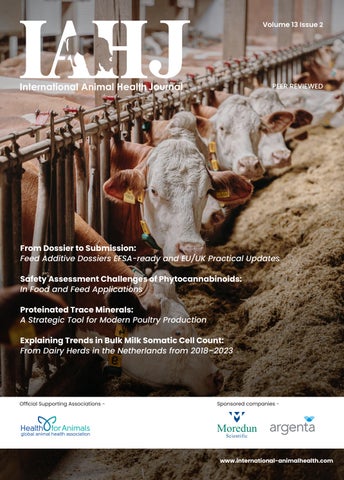
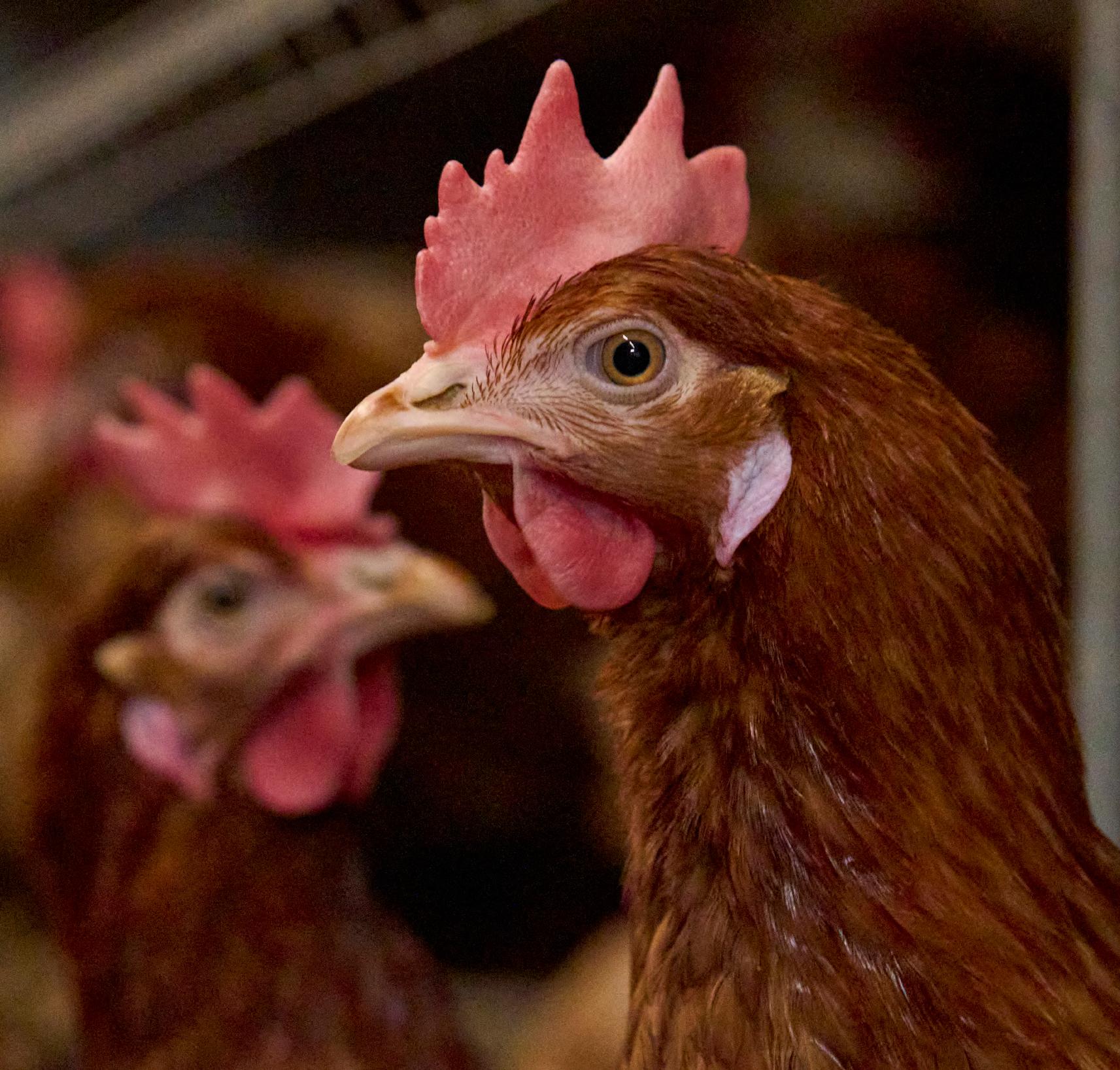
From Dossier to Submission: Feed Additive Dossiers EFSA-ready and EU/UK Practical Updates
Safety Assessment Challenges of Phytocannabinoids: In Food and Feed Applications
Proteinated Trace Minerals: A Strategic Tool for Modern Poultry Production
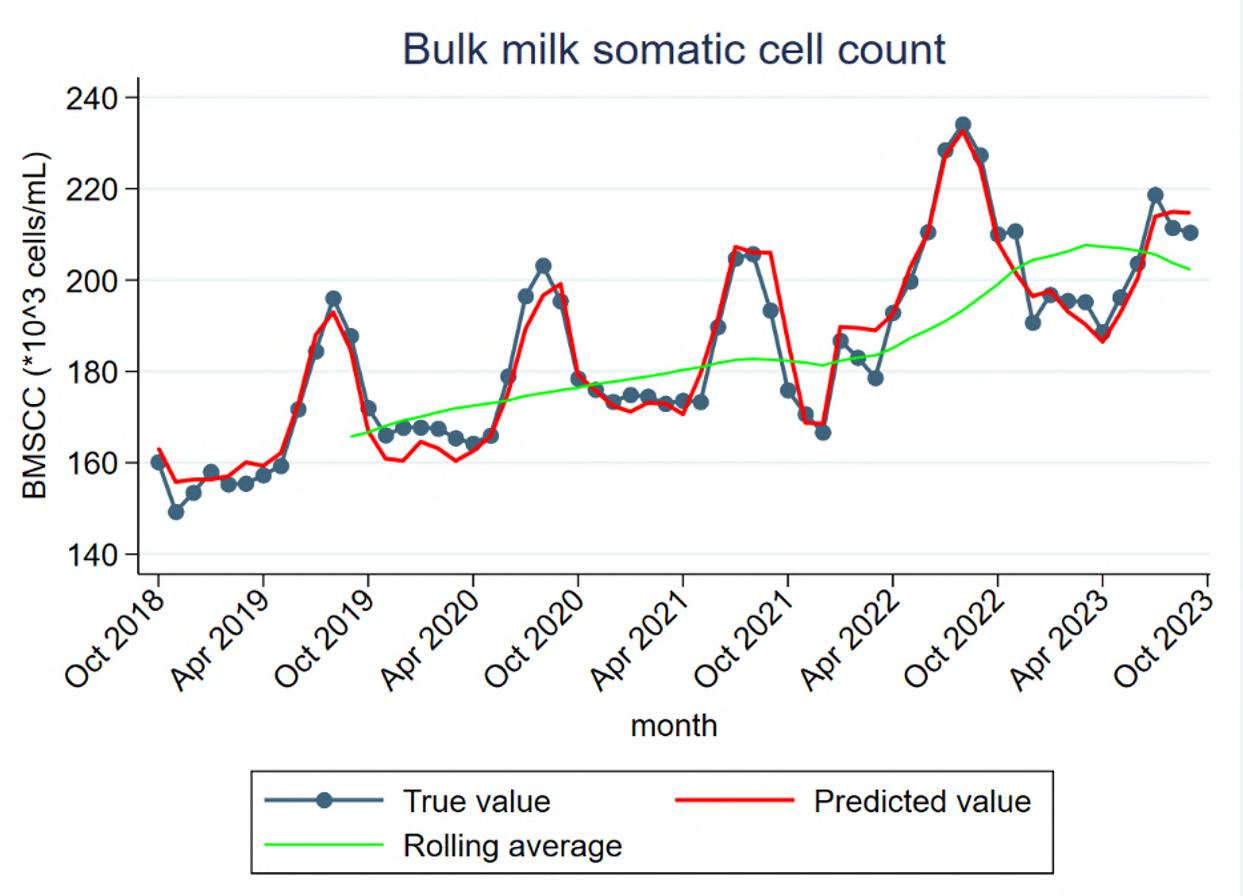
Explaining Trends in Bulk Milk Somatic Cell Count: From Dairy Herds in the Netherlands from 2018–2023
Official Supporting Associations - Sponsored companies -
Your partner in (pre)clinical development
Do you need a contract research organisation to support you throughout the pre-clinical and clinical development of you product? Then partner up with Royal GD!
With our advanced facilities and one of the largest veterinary laboratories in Europe, we are equipped to meet even the most complex research requirements. We excel in controlled environment studies involving poultry, pigs, cattle and small ruminants. We can run multi-country clinical trials in collaboration with our daughter companies throughout Europe, and in compliance with the VICH Good Clinical Practice (GCP) guidelines.
Animal models for infectious diseases Multi-country clinical field trials
04 EDITORS LETTER
REGULATORY & MARKETPLACE
06 From Dossier to Submission: Tips for Getting Feed Additive Dossiers EFSA-ready and EU/UK Practical Updates
International Animal Health Journal – ISSN 2752-7697 is published quarterly by Senglobal Ltd.
The opinions and views expressed by the authors in this journal are not necessarily those of the Editor or the Publisher. Please note that although care is taken in the preparation of this publication, the Editor and the Publisher are not responsible for opinions, views, and inaccuracies in the articles. Great care is taken concerning artwork supplied, but the Publisher cannot be held responsible for any loss or damage incurred. This publication is protected by copyright.
Volume 13 Issue 2 Summer 2026
Senglobal Ltd.
Securing authorisation for feed additives in the European Union may not be your ‘cup of tea’, since it remains one of the most scientifically rigorous and procedurally demanding regulatory pathways. Governed by Regulation (EC) No 1831/2003, the process requires applicants to submit well-structured comprehensive dossiers evaluated by EFSA’s Panel on Additives and Products or Substances used in Animal Feed (FEEDAP Panel). Loannis Kartanos of Argenta discusses some of the most common errors which can be easily avoided, leading to accelerated assessment of feed additive applications. This is a practical, experience based guide to preparing feed additive dossiers that are truly EFSAready.
10 Vitamin and Amino Acid Supply Matters to Feed and Animal Production
Animal nutrition and ingredient availability support efficient, profitable and sustainable livestock and poultry production. Yuan-Tai Hung of the Institute for Feed Education and Research (IFEEDER) and American Feed Industry Association (AFIA) discusses how additional supplementation of vitamins seems to support optimal reproduction and growth performance. Although levels of supplemental vitamins vary in commercial diets, animals are generally fed supplemental vitamins well above their requirement estimates. This approach helps nutritionists account for uncertainties, such as vitamin degradation in premixes, variability in bioavailability, genetic variation and increased needs in highperforming or stressed animals.
RESEARCH/INNOVATION/DEVELOPMENT
16 Artificial Intelligence is New Competitive Advantage in Animal Health
Artificial intelligence is now entering nearly every part of the animal health value chain and while much of the discussion around AI has focused on general productivity tools or headline grabbing consumer applications its most significant impact may ultimately be in how animal health companies operate behind the scenes. Aidan Connolly of AgriTech Capital and Camila Ulloa of Purdue University discuss how the animal health sector is particularly well suited for AI because few industries combine such large volumes of scientific, technical, operational and regulatory data with equally complex decision-making requirements.
19 Transcutol® V, a must-have, Safe and Versatile Excipient for Optimised Veterinary Medicines
In this article, Cécile Morin of Gattefosse focuses on Transcutol® V, a powerful solvent, solubiliser and penetration enhancer, largely used across major species and in a variety of dosage forms. The main properties of Transcutol® V will be described in comparison to other solvents used in veterinary medicines worldwide. Applications in oral, skin and injectable drug delivery will be illustrated through market references and case studies elaborated in our Technical Centres of Excellence.
CONTENTS
22 Proteinated Trace Minerals: A Strategic Tool for Modern Poultry Production
Trace mineral nutrition is no longer just about meeting minimum requirements. The form, stability and bioavailability of trace minerals fundamentally influence poultry performance, health, resilience and sustainability. Harriet Walker of Alltech discusses how the consistent findings from global meta-analyses confirm that strongly chelated, stable organic trace minerals represent a science-based strategy for modern poultry production, delivering measurable benefits in both layers and broilers while aligning with economic and sustainability goals.
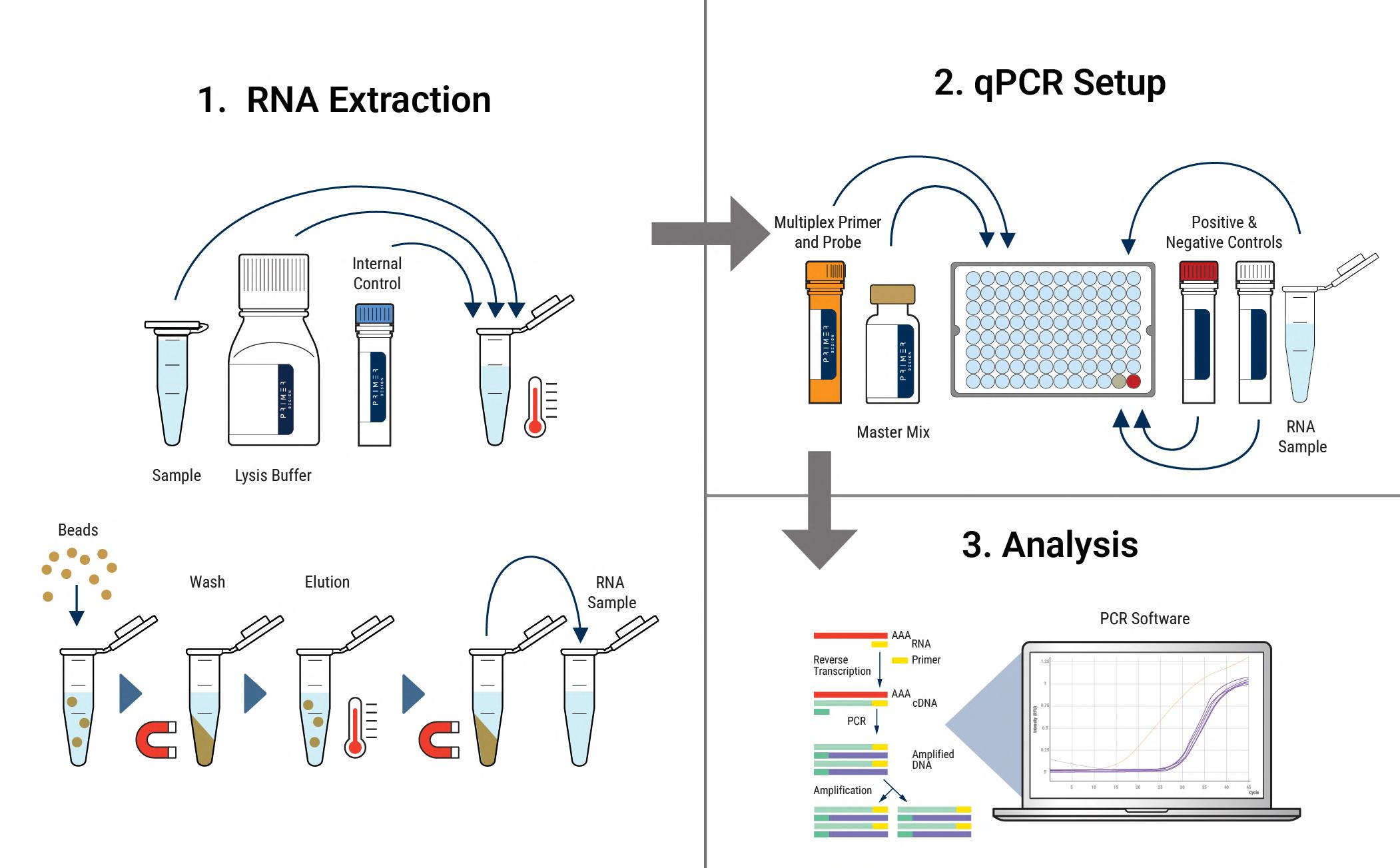
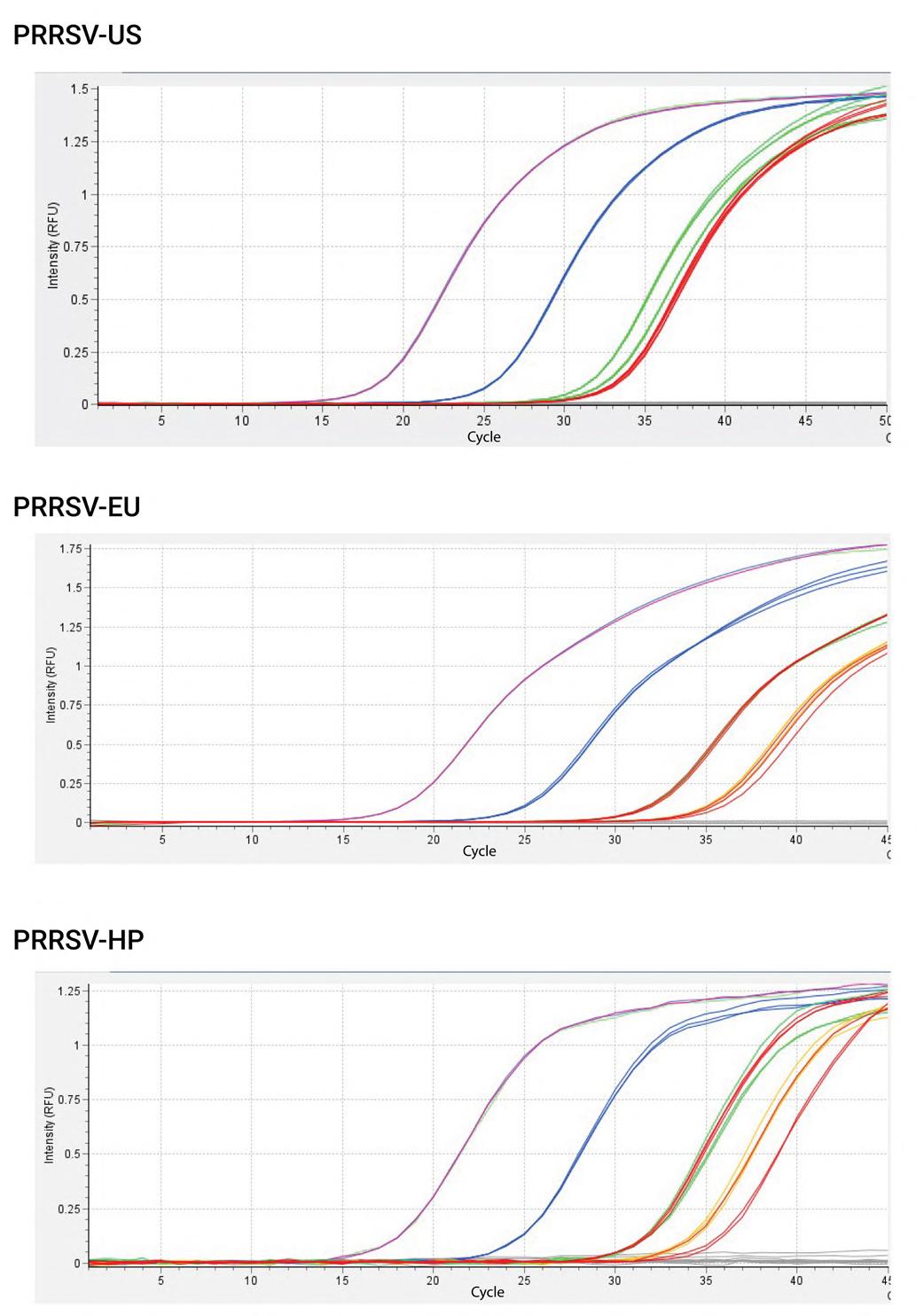
24 Current Challenges in PRRSV Strain Identification: The Importance of Differentiating Major Strains
PRRSV continues to pose a major challenge to the global swine industry due to its genetic diversity, evolving strains and complex transmission dynamics. The emergence of highly pathogenic variants and the limitations of existing vaccines further complicate control efforts. Saloni Sonawala and Sian McHugh of Primerdesign discuss how the continued investment in diagnostic innovation, combined with coordinated global surveillance efforts, will be essential in addressing the ongoing threat posed by PRRSV.
28 The Connected Cow: Turning Data into Dollars for U.S. Ranchers
For U.S. ranchers, every investment is judged the same way: does it return more than it costs? With connected livestock systems the answer is increasingly clear and in some cases, substantial. The economics of beef production are becoming increasingly precise. Margins are tighter, expectations are higher and the cost of missed decisions continues to rise. Shane White and David Smith of CERES discuss how the US Ranchers must move from reactive management to proactive decision-making. Replace assumption with insight. Turn everyday data into measurable profit.
30 Explaining Trends in Bulk Milk Somatic Cell Count from Dairy Herds in the Netherlands from 2018–2023
Christian Scherpenzeel and Nannet Fabri of Royal GD discuss the data analysis showing that the bulk milk somatic cell count (BMSCC) of dairy cattle has been rising slightly since 2020 and this increase accelerated from 2022 onwards). This is an unfavourable trend, as it is an indication of reduced udder health in dairy herds in the Netherlands. The objective of this study was to provide an explanation for the unfavourable trends in BMSCC of dairy cattle, and to estimate the influence of various explanatory variables on BMSCC.
COMPANION ANIMALS
32 Unlocking the Canine Microbiome: A Comprehensive Catalogue to Power Research
Canine gut microbiome research has generally been limited by bias towards human studies, creating a large knowledge gap, particularly regarding the bacterial species present and their potential role. Gregory C. A. Amos, Rachel Gilroy and Michaella J. Whittle of Mars Petcare discuss a significant advancement in
our understanding of the gut microbiome has arisen through the use of metagenomic data – the total microbial deoxyribonucleic acid (DNA) extracted from samples – which can provide a snapshot of all bacterial organisms present. These data are mapped onto known genes or genomes to gain clarity on the characteristics of gut bacterial environments in different species.
36 Hearing Health in Companion Animals: An Observational Study of 10,615 Behavioural Hearing Screening
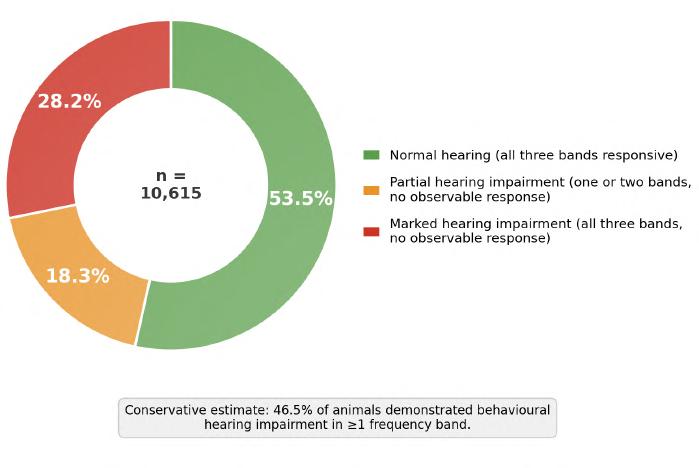
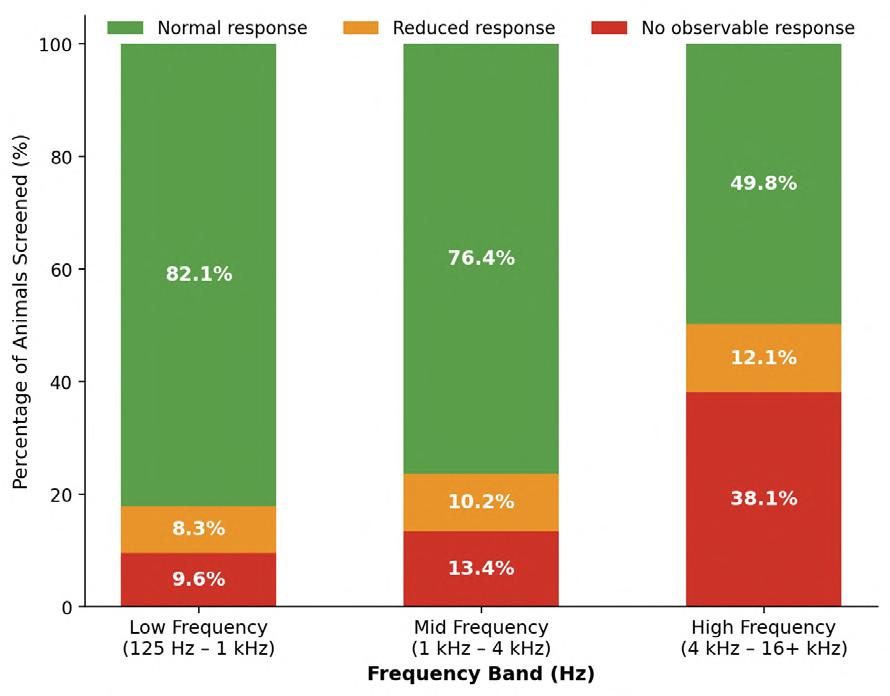
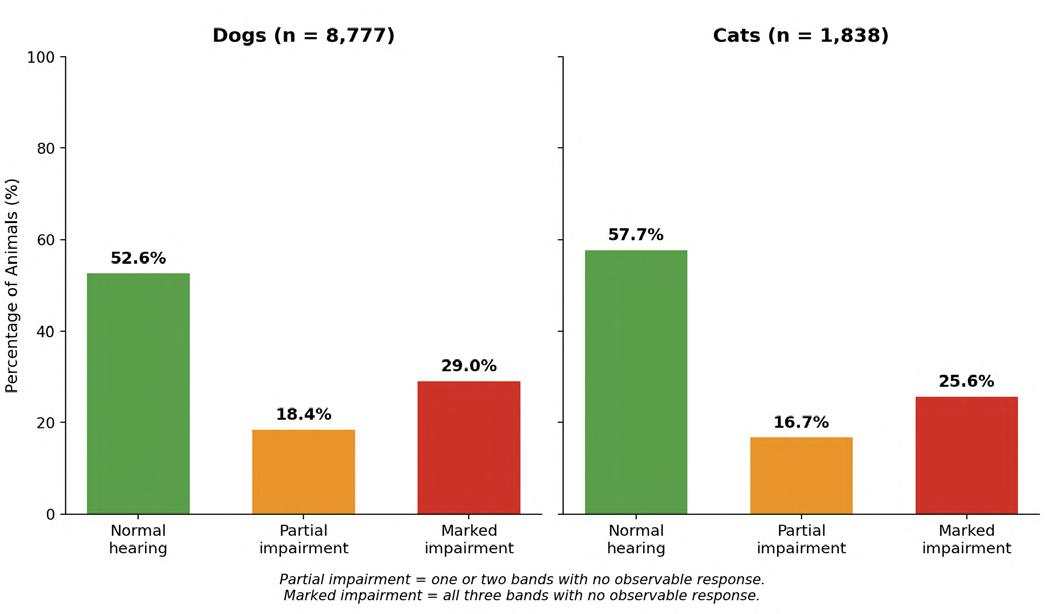
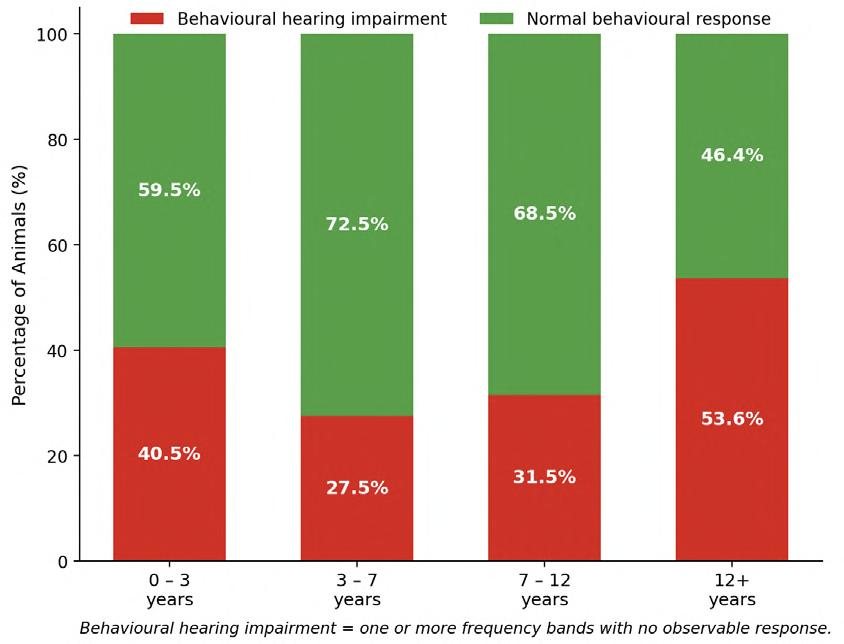
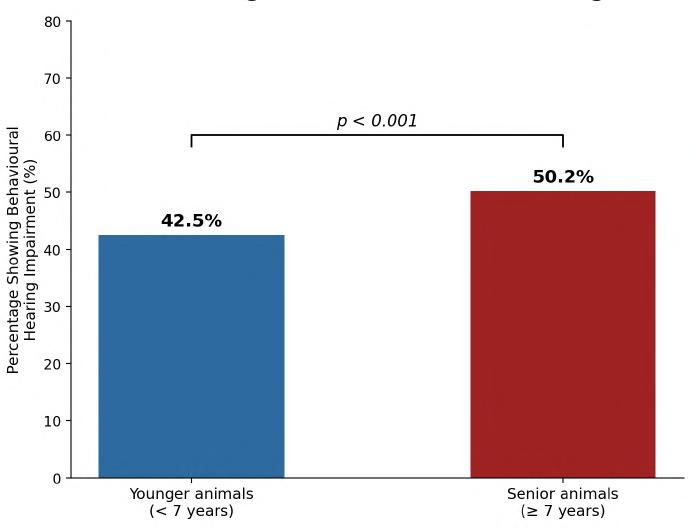
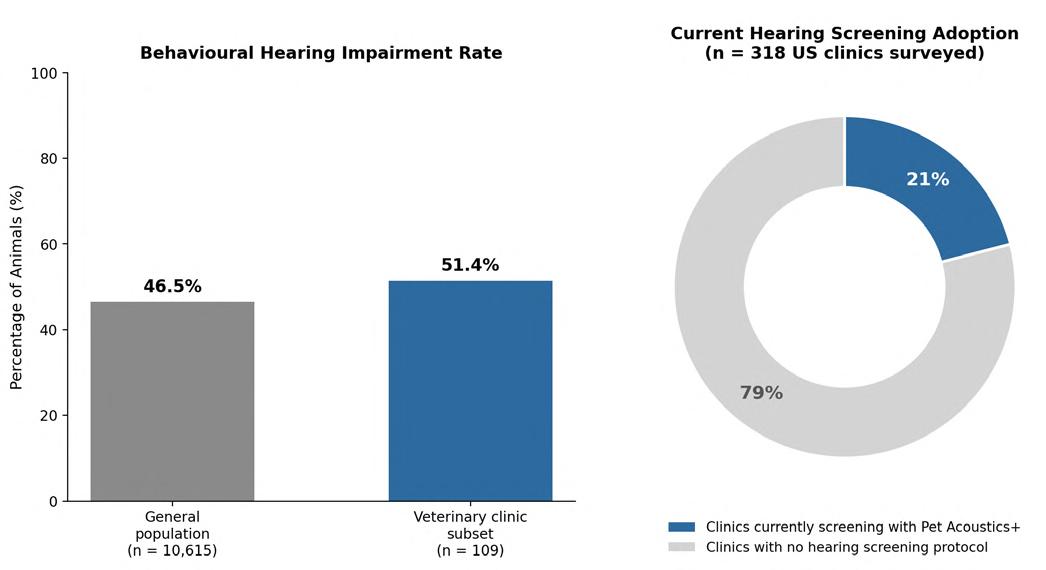
This observational study presents findings from 10,615 completed behavioural hearing screenings administered through the Pet Acoustics+ smartphone application across a multi-year data collection period. Janet Marlow of Pet Acoustics+ explains how screenings were conducted by pet owners, veterinary professionals and animal care organisations across 86 countries. The study examines the prevalence of hearing loss across three frequency bands in dogs and cats, the relationship between age and hearing impairment and the feasibility of smartphonebased behavioural hearing assessment as a first-line screening tool in companion animal care.
FOOD AND FEED
40 Feeding Dry Cows: The Goldilocks Approach
Overfeeding dry cows is an easy mistake to make and it often happens without any visible change in body condition score. However, this can trigger a range of metabolic disorders and ultimately reduce productivity. James Drackley of Mole Valley Feed Solutions discusses that that feeding maize gluten meals alongside rumenprotected amino acids for four days post-calving delivered lasting benefits. Over the following 12 weeks, treated cows achieved butterfat levels of 3.97% and protein levels of 3.26%, compared to 3.47% and 3.07% in control animals. They also gained 35.3kg in bodyweight, while the control group lost 5.1kg.
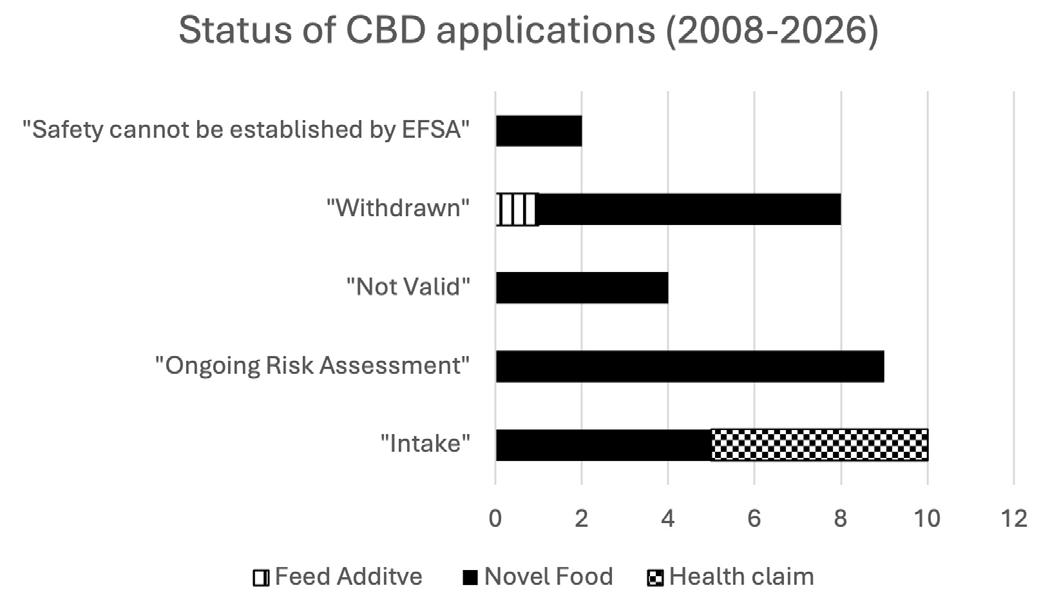
42 Safety Assessment Challenges of Phytocannabinoids in Food and Feed Applications
The regulatory framework governing hemp-derived products in the European Union (EU) is characterised by a functional differentiation between food and feed law, combined with substance-specific authorisation requirements. The legal assessment therefore depends not only on the botanical origin of the material, but primarily on its composition, intended use and regulatory classification. Dr. Regina Ohlmann of 4ReValue GmbH concludes that the future regulatory decisions concerning Phytocannaninoids within the European Union will depend on the availability of robust, GLP-compliant toxicological evidence capable of addressing the current scientific uncertainties.
Efficacy Studies
• Broad portfolio of infectious disease models in livestock and fish
• New model and protocol development
• VICH-GCP compliant studies
Target Animal Safety Testing
• GLP compliant studies
• All species of livestock
• Aquaculture species
• All types of biological & pharmaceutical products
Animal Health Facilities
• GLP accredited animal facilities
• Conventional farm animal accommodation
• Category 3 containment
• Specific Pathogen Free
• Gnotobiotic units
• GLP accredited lab facilities
Aquaculture Facilities
• Seawater
• Freshwater
• GLP compliant small scale
• Larger scale biocontainment
• Commercial scale
• Warm water for fish and shrimp
EDITORS LETTER
As the days become longer, we welcome you to our second edition of IAHJ in 2026. We hope you enjoy reading! In this Summer issue of IAHJ, it draws together all of the diligence and commitment carried out globally to maintain and share animal public health and welfare.
Loannis Kartanos of Argenta explores some of the most common errors which can be easily avoided, leading to accelerated assessment of feed additive applications. This is a practical, experience based guide to preparing feed additive dossiers that are truly EFSAready. Loannis explains that securing authorisation for feed additives in the European Union may not be your ‘cup of tea’, since it remains one of the most scientifically rigorous and procedurally demanding regulatory pathways. Governed by Regulation (EC) No 1831/2003, the process requires applicants to submit wellstructured comprehensive dossiers evaluated by EFSA’s Panel on Additives and Products or Substances used in Animal Feed (FEEDAP Panel).
In the Netherlands, bulk milk somatic cell count (BMSCC) has decreased from 2002 to 2018. However, since then it has risen with a sharp increase in 2022. Higher BMSCC
indicates poorer milk quality, thus posing a concern. Christian Scherpenzeel and Nannet Fabri of Royal GD suggest that the increase in BMSCC can be explained by an increase in the percentage of farms using automated milking systems, an increase in age of the cattle and a rise in average herd size in the Netherlands. The Veekijker from GD can support farmers and their veterinarians in interpreting results and implementing effective measures to reduce BMSCC. The Veekijker is a telephone helpdesk, where experienced and specialised veterinarians from GD provide expert advice and tailored support.
Our companion animal section opens with Janet Marlow’s of Pet Acoustics’+ study on behavioural hearing screenings administered through the Pet Acoustics+ smartphone application across a multi-year data collection period. Screenings were conducted by pet owners, veterinary professionals and animal care organisations across 86 countries. The study examines the prevalence of hearing loss across three frequency bands in dogs and cats, the relationship between age and hearing impairment and the feasibility of smartphone-based behavioural hearing assessment as a first-line screening tool in companion animal care.
Melissa
Cavner, Editor
EDITORIAL ADVISORY BOARD
Amanda Burkardt, MSc, MBA – CEO of Nutripeutics Consulting
Germán W. Graff – Principal, Graff Global Ltd
Fereshteh Barei – Health Economist & Strategy Advisor, Founder of BioNowin Santé Avenue Association
Carel du Marchie Sarvaas Executive Director Health For Animals
Kimberly H. Chappell – Senior Research Scientist & Companion Animal Product Development Elanco Animal Health
Dr. Sam Al-Murrani – Chief Executive Officer Babylon Bioconsulting & Managing Director at Bimini LLC
Sven Buckingham – Buckingham QA Consultancy Ltd.
Dawn Howard – Chief Executive of the National Office of Animal Health (NOAH)
Jean Szkotnicki – President of the Canadian Animal Health Institute (CAHI)
Dr. Kevin Woodward – Managing Director KNW Animal Health Consulting
Food & Feed Regulatory Event
Navigating the Feed and Food Regulatory Landscape
Barcelona, Spain | 29-30 September 2026
Join regulators, industry, academia, and associations for expert insights into key developments shaping the nutrition sector.
EU and global regulatory updates
Innovation and market access
Food chain applications
EFSA information booth
Scan to register
Connect with leading experts
Gain practical insights
Stay ahead of regulatory change
Food Chain Regulatory Services
Trusted partner in food chain regulatory compliance:
Feed Additives • PARNUTs
GRAS, FAP, AFIC, SRIS • Animal Health
End-to-end regulatory support from concept to market: Regulatory Strategy • Compliance
Market Access • Dossier Support
REGULATORY & MARKETPLACE
From Dossier to Submission: Tips for Getting Feed
Additive Dossiers EFSA-ready and EU/UK Practical Updates
Securing authorisation for feed additives in the European Union may not be your ‘cup of tea’, since it remains one of the most scientifically rigorous and procedurally demanding regulatory pathways. Governed by Regulation (EC) No 1831/2003, the process requires applicants to submit well-structured comprehensive dossiers evaluated by EFSA’s Panel on Additives and Products or Substances used in Animal Feed (FEEDAP Panel).
In practice, the majority of applications face delays and clock stops due to avoidable deficiencies in dossier preparation. Recent EFSA stakeholder discussions and evolving guidance indicate a clear trend: the success of a feed additives dossier depends as much on its structure, completeness and consistency as on its scientific content.
This article highlights some of the most common errors which can be easily avoided, leading to accelerated assessment of feed additive applications. This is a practical, experience based guide to preparing feed additive dossiers that are truly EFSA ready.
Feed Additives and EU Legislation
To begin with, it is important to clarify what feed additives are. As per Regulation (EC) No 1831/2003, feed additives are defined as ‘substances, micro-organisms or preparations, other than feed material and premixtures, which are intentionally added to feed or water in order to perform, in particular, one or more specific functions.’ Feed additive functions, as listed in this regulation, are: satisfying the nutritional needs of animals, having a coccidiostat or histomonostatic effect, or favourably affecting the characteristics of feed or animal products, the colour of ornamental fish and birds, the animal production performance or welfare (particularly, gastro-intestinal flora or digestibility of feedingstuffs), or the environmental consequences of animal production. Depending on their functions and properties, feed additives are allocated to one or more of the following categories: technological, nutritional, sensory (e.g. affects the flavour or colour of feed), zootechnical, coccidiostats and histomonostats.
Feed additives are regulated through EU regulations and official lists of permitted ingredients (e.g., Feed Additives Register (FAR)). Substances matching the EU feed additive definition, that are not listed therein do not have a legal ‘feed additive,’ status and cannot be sold and/or used as such in feed in the EU. In addition, there is a list of undesirable substances which should not be used in animal feed, or can be used under certain conditions or restrictions.
Overall, an EU feed additives authorisation constitutes a thorough process which involves the submission of a dossier (covering quality, safety and efficacy parameters) for evaluation by the European Food Safety Authorities (EFSA) and subsequent approval by the European Commission (EC). The information required for each dossier section is specified in Commission Regulation (EC) 429/2008 and further detailed by the relevant administrative and scientific guidance documents developed by EFSA. Failure to comply with these requirements
will end in a longer and more costly process for the applicant, so some tips to minimise slowing down the evaluation are provided in the following sections.
Quality
A surprising number of dossiers struggle with proper description of identity and complete characterisation of the feed additive, which eventually leads to delays and questions that could have been proactively addressed. It is essential that applicants consult the relevant EFSA guidance for feed additives and strictly comply with all requirements. Frequent errors observed include incomplete description of the active substance or the manufacturing process, lack of clarity on purity and impurities, missing or inconsistent batch-to-batch variation data, noncompliant specifications, incomplete certificates of analysis, non EFSA-compliant study designs and more.
It is therefore crucial to provide clear, unambiguous identity (chemical, microbiological, or enzymatic), include sufficient number of representative batches, justify all specification limits (not just report them), provide stability data and describe all information in a structured, comprehensive and consistent manner throughout section II and the rest of the dossier.
For microbial additives or additives produced by fermentation with microbial products, applicants will need to pay special attention to the species and strain identity and start by assessing antimicrobial resistance, toxigenic potential, and QPS status. EFSA has recently issued the updated guidance on the characterisation of microorganisms in support of the risk assessment of products used in the food chain, as well as the statement on the requirements for whole genome sequence analysis of microorganisms intentionally used in the food chain. These guidelines should be strictly followed by applicants, while missing or outdated information and raw data will be challenged by EFSA. Securing confidential treatment of sensitive information is also an important part of the negotiations with EFSA, where proper justification will make the difference.
Safety
EFSA has established clear expectations regarding the safety of feed additives for the target animal species, consumers, users/workers and the environment. These expectations are analytically described in the corresponding guidance documents which are regularly updated to match technological advancements and feedback received from the industry. For the target animal safety, applicants are expected to provide sufficient scientific evidence to support safety of the feed additive under the proposed use. Proper animal health monitoring and welfare, appropriate treatment groups, analytical validated methods and statistical design as well as testing of necessary endpoints, are among the key elements of success. It is also essential that if external testing is commissioned, only expert laboratories with necessary certification are contracted. A well-designed regulatory strategy is crucial for the assessment of safety, whilst evidence from the literature, data extrapolation from lab animal toxicity trials, or between physiologically relevant species, as well as combination of safety and efficacy studies can lead to time and cost-efficient dossiers, reducing animal testing while offering great benefits for the applicants.
REGULATORY & MARKETPLACE
Efficacy
Recent stakeholder communications have shown that deficiencies in efficacy studies are the main reason leading to requests for information and delays. EFSA has stated that gaps and limitations in efficacy data are common and has introduced several tools (e.g., for silage additives) to minimise requests for additional information and streamline assessments. The most common issues we have identified over the years are related to incomplete or missing raw data, poor statistical design, missing power calculations, inconsistent endpoints, inappropriate duration or overall design of studies and nonEFSA-compliant study reports. Importantly, applicants should always link study design to claimed effect and the target species, ensure minimum number of independent studies, test appropriate parameters and statistics and include all raw data in the right format. Successful dossiers include EFSA-compliant studies which are well designed, robust, reproducible and properly reported.
Practical Takeaways from Recent EFSA/ UK-FSA Updates and Industry Exchanges
2025–2026 EFSA Meetings with Stakeholders
Between October 2025 and March 2026, EFSA held several technical and stakeholder meetings with industry representatives, focusing primarily on silage additive efficacy and the upcoming revision of the Target Animal Safety (TAS) Guidance. While no immediate regulatory changes were adopted, EFSA’s messages across these meetings was consistent: applications must be complete, standardised, and methodologically robust from the outset. Together, these meetings provided a clear roadmap for how feed additive dossiers will be evaluated in the near future and are indicative of EFSA’s effort to keep up with technological improvements and the industry trends.
Ultimately, EFSA has reiterated that a large proportion of clock stops in feed additive assessments are not due to ‘’weak science’’, but mainly caused by incomplete dossiers. This conclusion has led EFSA to develop structured tools to assist applicants provide raw data for silage additive applications aimed at ensuring that dossiers are complete
before submission, reducing inefficiencies for both applicants and evaluators.
The March 2026 stakeholders meeting introduced three concrete tools for silage additive applications:
1. Checklist (per trial): Designed to replace the former protocol datasheet, this structured questionnaire ensures that: all mandatory data and certificates are included, and trial design and reporting align with the 2024 Efficacy Guidance.
2. Raw Data Excel Template: This Excel tool: includes the full raw dataset required and also provides formulas for certain calculations (where needed), such as dry matter loss and volatile correction.
3. Summary Table Template: EFSA also provided example summary tables illustrating what is expected in dossiers, including trial main characteristics and efficacy outcomes.
Practical Takeaway: Although not formally mandatory, EFSA made clear that these tools reflect how evaluators work. Dossiers which do not align with these formats, risk appearing incomplete, even when sufficient data exist.
Target Animal Safety: Preparing for the Next Guidance
In parallel, EFSA confirmed that a formal revision of the Target Animal Safety (TAS) Guidance is forthcoming. Key aspects include alignment with the updated 2024 Efficacy Guidance, better integration of new animal species (insects, crustaceans), expansion of categories where safety may be presumed and reduction of animal testing through extrapolation and New Approach Methodologies (NAMs). However, EFSA emphasised that case by case assessment will remain essential, particularly where species specific metabolism or exposure differs significantly.
What is Happening In the UK?
Food and feed regulatory landscape in the United Kingdom is changing. Legislators are negotiating an agreement with the European Union, taking drastic actions which will affect existing, ongoing and future applications. Following the UK-EU Summit in May 2025, formal negotiations are underway to establish a common Sanitary and Phytosanitary (SPS) Area between the UK and the EU. The UK Food Safety Authority (FSA) has already sent a formal letter to interested parties and stakeholders, informing them about the ongoing SPS negotiations and how these will impact market authorisations (pending and authorised).
REGULATORY & MARKETPLACE
The main objective of the SPS agreement is to remove the need for routine border checks, Export Health Certificates (EHCs) and Phytosanitary Certificates (PCs) for agri-food trade between UK and the EU. As part of this agreement, the UK has committed (in principle) to align with the EU food safety and animal health rules. In practice, this means that the FSA will follow EU legislation and will update its standards accordingly. It is therefore expected that the UK will no longer have its own independent feed market authorisation process, but will instead rely on the EU assessment and approval. Existing UK authorisations will cease to apply, ongoing assessments will be terminated immediately, and future applications will be submitted to the EC only. According to the draft agreement, some very specific exceptions may apply (yet to be agreed). The UK is also likely to be granted only "spectator/observe" status at the SCoPAFF meetings, and although its role is yet to be determined, voting rights may not be secured.
The UK government aims to have the agreement in place and in force by June/July 2027. This is an ambitious timetable, and the government has indicated that completing the agreement is prioritised over extended discussion on details.
What Applicants Should Do
Based on the rapidly changing regulatory landscape in the EU and the UK, applicants should constantly follow the updates and already be adjusting their regulatory strategies by integrating EFSA’s checklist and Excel tools into internal workflows, ensure safety and efficacy studies are methodologically aligned and EFSA-compliant, prepare robust justifications for presumed safety or extrapolation and engage as early as possible with EFSA ahead of public consultations. Interested parties should also closely monitor updates on the SPS agreement and be ready to adjust their regulatory strategy for the foreseeable future.
EFSA’s updated strategy is clear and focuses on reduction of assessment timelines, with less tolerance for avoidable deficiencies, greater reliance on standardised tools, and earlier scrutiny of dossier completeness.
Applicants who adapt now will benefit from faster assessments and rapid access to market, whilst those who fail to follow the latest regulatory updates risk falling behind a regulatory process that is already evolving in practice.
Ioannis Kartanos is Regulatory Affairs Manager, part of Argenta’s regulatory team since 2021. With a Master of Science (MSc) in engineering and materials science and background in medical devices, Ioannis’s journey is driven by passion for improving lives, both animal and human. Ioannis is dedicated to ensuring the safety of feed and food products, while guiding businesses to overcome regulatory hurdles and achieve a quick access to market.
REGULATORY & MARKETPLACE
Vitamin and Amino Acid Supply Matters to Feed and Animal Production
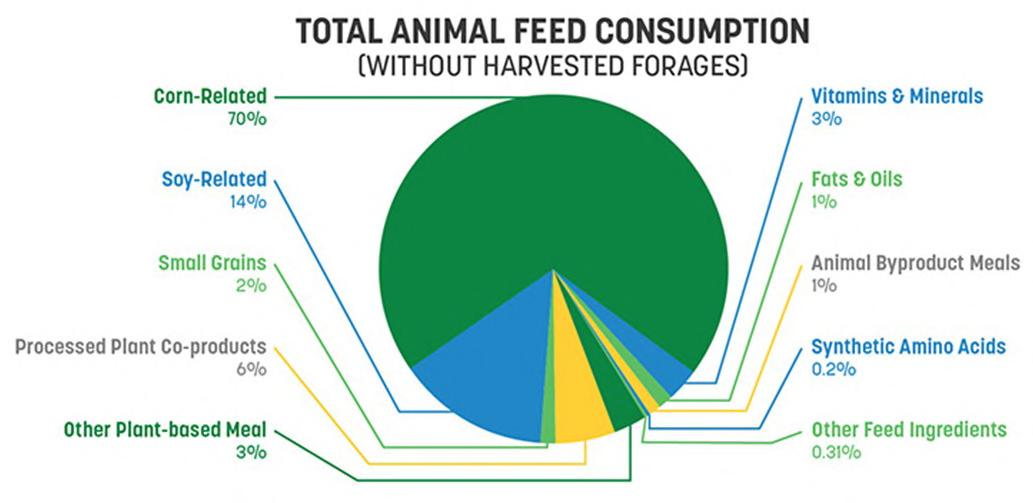
Animal nutrition and ingredient availability support efficient, profitable and sustainable livestock and poultry production. The livestock and poultry sectors in the United States consume approximately 257 million metric tons (MMT) of feed annually,1 reflecting the strong demand for feed ingredients and the scale of feed manufacturing. This supports the production of more than 25 MMT of red meat2 and 27 MMT of broilers in live weight,3 contributing significantly to global food supply. Animal feed in the U.S. mainly consists of corn- and soy-based ingredients, accounting for more than 80% by weight, while supplements like vitamin and mineral premixes and synthetic amino acids (AAs) represent less than 5% of total feed tonnage (Figure 1). Despite their small proportion in animal diets, these supplements are vital for animal health and production efficiency. Thus, a reliable, steady supply of vitamins and AAs is critical for feed and livestock industries.
Vitamins and Amino Acids in Nutrition
The discovery of vitamins began in the early nineteenth century with the observation of deficiency symptoms in humans and animals such as night blindness, rickets, beriberi and scurvy, which led to the identification of essential nutrients required to prevent those symptoms. Today, vitamins, often delivered through feed, must be provided in adequate quantities to ensure metabolic functions and prevent deficiency symptoms. Additional supplementation of vitamins seems to support optimal reproduction and growth performance.4,5 Although levels of supplemental vitamins vary in commercial diets, animals are generally fed supplemental vitamins well above their requirement estimates. This approach helps nutritionists account for uncertainties, such as vitamin degradation in premixes, variability in bioavailability, genetic variation and increased needs in high-performing or stressed animals.
Animals do not require proteins; rather, they require AAs as building blocks of proteins for various physiological functions (e.g., growth, reproduction, immunity, etc.). Requirements for AAs are typically met through a combination of major feed ingredients like corn and soybean meal, along with supplementation of synthetic AAs to achieve desirable AA balance. Methionine was the first synthetic AA introduced to animal feed, followed by lysine, threonine and tryptophan in the second half of the twentieth century.6 Advanced fermentation technology has enabled commercial availability of many synthetic AAs and it has fundamentally changed diet formulation, allowing nutritionists greater flexibility to optimise diet cost, animal health and production efficiency.
The functional and metabolic importance of vitamins and AAs in animals is well-studied and dietary supplementation of these nutrients is critical for animal maintenance and productivity. Therefore, the consistent availability of vitamins and AAs is essential to sustain U.S. livestock and poultry production, ensuring a stable supply of animalderived protein for food security. However, global supply of feed ingredients is vulnerable to disruptions. Trade wars, COVID-19 and the Russian-Ukrainian war are examples of geopolitical tensions that can negatively impact supplies
1. Feed composition based on consumption by livestock, poultry and aquaculture of essential commodities.7 Escalating conflicts in the Middle East have resulted in supply tightness of various chemicals, fuels and fertilizers in early 2026,8 which could further impact feed ingredients where their production requires petroleum derivatives, such as methionine, vitamin A and E. Vitamin and AA supplements are commodities and the uncertainty around geopolitical tensions underscores the need for a strategic assessment of their supply chains and impacts of supply disruptions on animal production to inform stakeholders and secure U.S. food supply.
Global Supply Chain for Vitamins and Amino Acids
Vitamin and AA production require sophisticated, proprietary chemical and fermentation processes.9,10 Unlike conventional feed ingredients, current vitamin and AA manufacturing is the result of long-term investment in specialised infrastructure, including regulatory frameworks, biochemical engineering expertise, access to raw materials and state-of-the-art manufacturing facilities. Therefore, global production of vitamins and AAs is highly concentrated.
Today, only ten countries produce vitamins (China, the EU-27, the U.S., Switzerland, United Kingdom, South Korea, India, Turkey, Vietnam, and Uruguay), while eleven countries produce AAs (China, the EU-27, the U.S., Brazil, Indonesia, Malaysia, Japan, South Korea, Singapore, Russia and Belarus).11 However, the share of global production capacity among these countries is largely disproportionate.
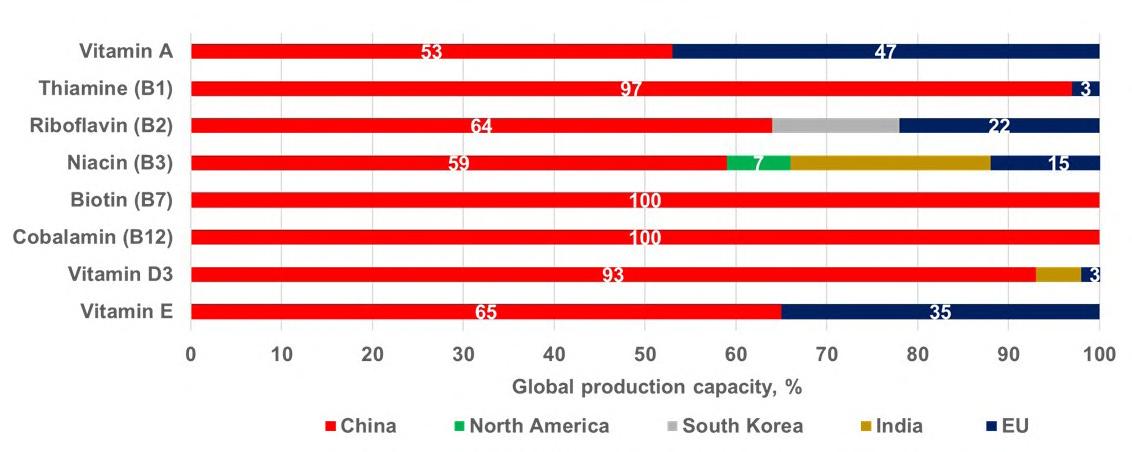
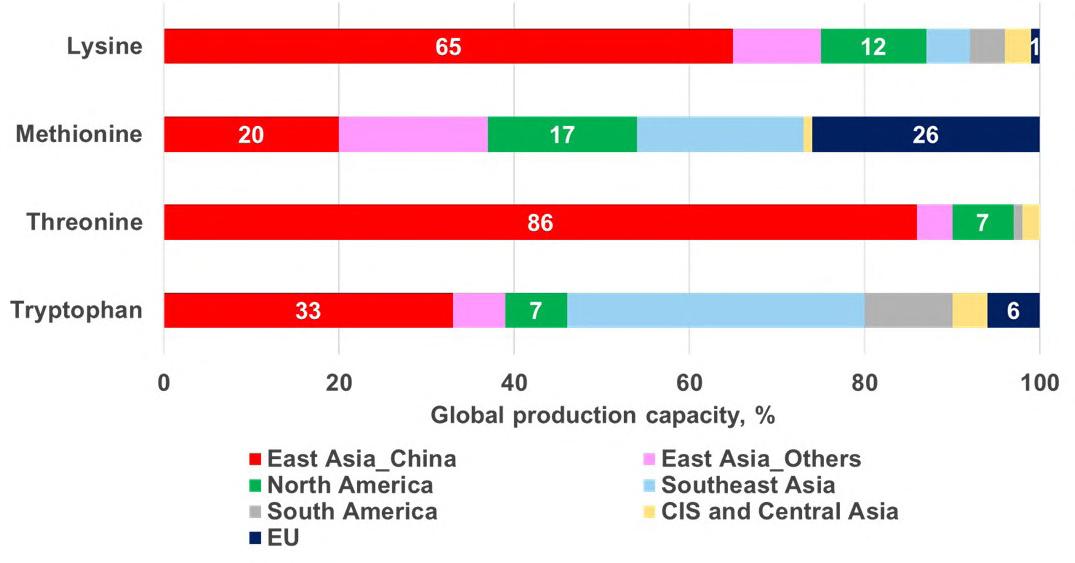
Data in 2023 indicated that East Asia, particularly China, dominates production of both global vitamins and AAs (Figure 2 and 3).12 China accounts for about 65%, 20%, 86% and 33% of global production capacity for lysine, methionine, threonine and tryptophan, respectively. For fat-soluble vitamins, China represented approximately 53%, 93% and 65% of global production capacity for vitamins A, D and E, respectively. For B vitamins, China has more than 90% of global production capacity for B1, B7 and B12, as well as 64% for B2 and 59% for B3. In contrast, Europe and North America have limited production of AAs, accounting for less than 20% of global capacity. Vitamin production has nearly vanished in North America and only limited production in Europe.
Without sufficient distribution of vitamin and AA production, the global feed industry relies on imports concentrated in one nation for the supply of these nutrients to sustain feed and livestock industries. Historical trade data indicated that
Figure
REGULATORY & MARKETPLACE
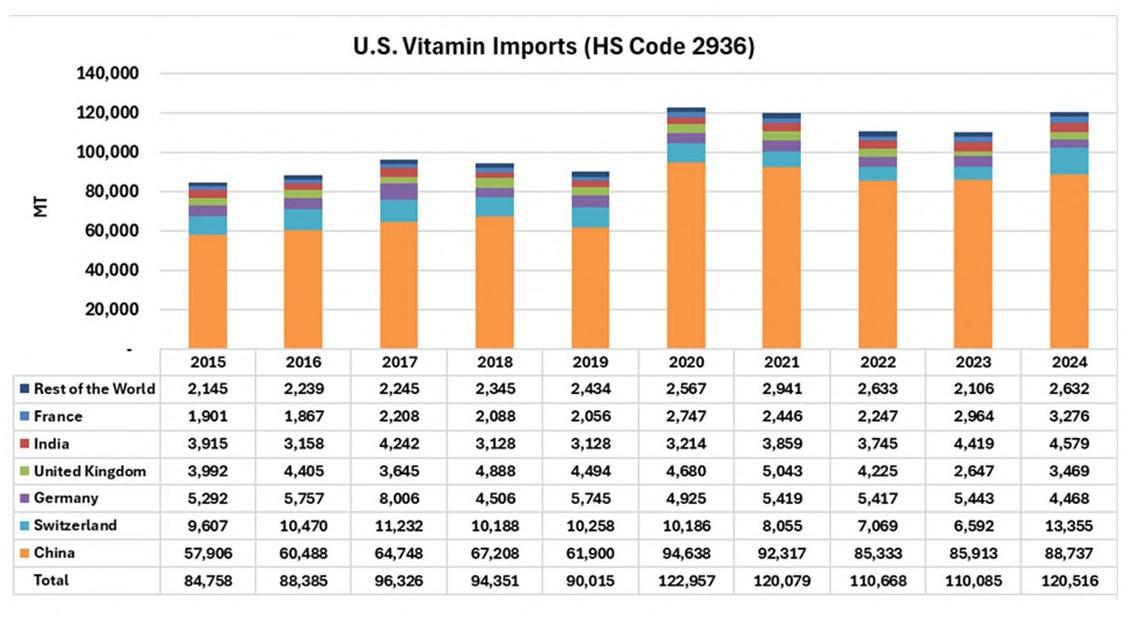
Figure 4. U.S. Vitamin imports, 2015–2024
cumulative U.S. vitamin imports range from 84,758 MT to 122,957 MT annually between 2015 and 2024, and Chinese shares of these imports has increased from 68.8% during 2015–2019 to 76.5% during 2020–2024 (Figure 4).12 Similarly, U.S. imports of key AAs have increased since 2023 while domestic lysine production has decreased over the past decade. In 2024, the U.S. imported a total 80,503 MT of lysine (99% from China) and 43,720 MT of threonine (89% from China).12
The U.S. is not the only nation dependent on imports for these supplements. Member states of the EU also depend
on imports of vitamins and AAs for domestic use and their dependency can be as high as 95% or 100% for the supply of vitamin B9, vitamin C, biotin, vitamin K3, lysine and threonine.11 These findings demonstrate that the U.S. and global feed industries are vulnerable to supply chain disruptions characterised by geographically concentrated production and supply for these supplements. The fragile structures of vitamin and AA supply chains can directly limit feed mill operation, impair animal performance, increase production costs and ultimately increase pressure on the stability and affordability of food.
Figure 2. Global production capacity – Vitamins
Figure 3. Global production capacity – Amino acids
REGULATORY & MARKETPLACE
Ripple Effects of Supply Disruptions Across Feed, Animals and Food Supply
The global vitamin supply chain has experienced significant disruptions in recent history, notably in late 2017 and late 2024, caused by manufacturing fires, explosions and tightening environmental regulations. These events caused rapid increases in vitamin prices, up to 10 times higher than previous prices. During the COVID-19 pandemic, temporary shutdowns of AA manufacturing facilities and port operations also constrained global AA supply in early 2020. Additionally, environmental regulations, high energy costs and shrinking margins have led to closures of AA production plants.
The feed industry responds to an imbalance between supply and demand by adjusting premix pricing, limiting production of compound feed, revising safety margins for vitamin supplementation and implementing alternative nutritional strategies. The supply instability and market volatility force feed mills to operate in a relatively conservative way. Ingredient shortages, for example, can cause a feed mill to operate at only 36% to 46% of their total production capacity.13 Given the critical role of vitamins and AAs in feed, any supply disruptions pose a significant risk to feed manufacturing and substantial economic losses.
To assess the impacts of vitamin and AA supply chain disruptions on animal production and ultimately food supply, representative industry diets (RIDs) were formulated for livestock and poultry. These RIDs serve as the baseline for establishing the use of supplemental vitamins and AAs and modelling the effect of reduced supplementation on animal key performance indicators (KPIs). As expected, restricting supplementation resulted in nutrient shortages across multiple species. Modelling results indicated that limiting supplemental
vitamins caused shortages in overall presence of vitamins A, B2, B3, B5, D and E in broiler RID; vitamins B2 and D in turkey RID; vitamins A, B2, B3, B9 and D in layer RID; vitamins B12 and D in market hog RID; vitamins A, B2, B5, B7, B9, B12, D and E in sow RID; vitamins D and E in beef cattle RID; and vitamin D in dairy cattle RID.12 When supplemental AAs were restricted, RIDs of monogastric animals were consistently short of lysine, methionine and threonine.12 However, restricting supplemental AAs would not immediately cause shortages in ruminant RIDs because most ruminant diets are formulated to meet the protein requirements to ensure needed AAs. Nevertheless, a recent meta-analysis supports the supplementation of rumenprotected lysine in multiparous dairy cows for milk yield (+1.51 kg/d),14 but similar research in beef cattle is relatively limited.
Table 1 shows the estimated impacts on KPIs under a given shortage of supplemental nutrients. Limiting supplemental lysine (27.8% dietary shortage) in market hog RID would decrease average daily gain from 957.08 to 476.27 g/day and require an additional 42 days to be marketed. Low growth rate and delay bring significant economic losses for pork producers, particularly during summer months when carcass value peaks but growth performance is already compromised due to heat stress.
Similarly, restricting methionine in broiler RID (38.31% dietary shortage) reduced breast yield from 29% to 18%, representing a huge loss in high-value cut. This reduction is approximately equal to a loss of three serving sizes of breast meat per bird (assuming 2.72 kg bird with 29% yield and 100 g per serving). In the case of vitamins, limiting vitamin A supplementation in poultry RIDs increased time to market and incidence of footpad lesions in broilers and turkeys, highlighting the link between nutrient supply, productivity and animal health.
of amino acid KPI impacts
Table 1. Estimated impacts on key performance indicators under a given shortage of supplemental nutrients1
1Data obtained from the Institute for Feed Education and Research (IFEEDER) Report “Strategic assessment of vitamin and amino acid supply chain disruptions on U.S. food security.”12
A FINGERPRINT FOR YOUR PRODUCTS
Visit cypheme.com/riskprotection to book a demo
Can be checked an unlimited number of times, by anyone along your distribution chain—from the distributor to the patient.
A patient harmed by a counterfeit medicine is a scandal waiting to happen. Give your patients the ability to verify that the product they buy is genuine and safe. Remove fakes before they ever reach the market.
In markets where fakes reach up to 70%, enabling buyers to check authenticity is an easy one-step solution to unlock untapped revenue.
REGULATORY & MARKETPLACE
Likewise, restricting dietary availability of vitamins A, D and E is expected to negatively affect immune function, reproduction and overall health and performance of dairy and beef cattle. The above findings are selective examples of how limiting a single nutrient can negatively affect animal KPIs. However, multiple supplemental nutrients may be short simultaneously during supply disruptions. Additive or synergistic effects of multiple nutrient insufficiencies create compounded impacts on animal health, performance and productivity that are complex and difficult to estimate, which threaten supply and affordability of animal-derived food.
Limitations on Formulations in Limited Supply
Performing diet formulations needs to consider multiple factors, including genetics, body weight, growth stage, health status, ingredient costs and ingredient availability. The main goal of diet formulation is to provide nutrients that animals require. While a portion of nutrient requirements can be met through common feedstuffs, certain vitamins and AAs are insufficient in these feedstuffs, and concentrations of naturally-occurring vitamins can vary widely.15 Thus, the addition of vitamin and AA supplements becomes important to ensure that dietary nutrient requirements are consistently met.
In the absence of adequate vitamin supplementation, there are likely no ideal alternative strategies to balance vitamins through diet modification alone. For example, there is no feasible solution to fully replace supplemental vitamin D across species raised in modern production systems.12 Studies have indicated that serum 25-hydroxyvitamin D varies seasonally and becomes insufficient in swine and beef cattle when compared with their reference levels.16,17 In other cases, alternative feedstuffs could balance supplemental vitamins in modified diets. Alfalfa meal can balance for vitamin A, while poultry byproduct meal, brewer’s products and fishmeal can provide B vitamins and oilseed co-products can supply vitamin E. However, these approaches raise concern regarding vitamin bioavailability in feedstuffs and consistency in diets. Naturally-occurring vitamins often present in bound forms that are not readily available to animals18 and plantderived vitamins are generally less bioavailable than those from animal-derived vitamins.19 Consequently, performance and productivity of animals on modified diets are unlikely to be comparable to those fed RIDs with adequate vitamin supplementations.
When the task is to fulfill essential AA requirements under limited availability of synthetic AAs, soybean meal remains the primary, preferred alternative ingredient. Indeed, U.S. poultry and swine diets are traditionally formulated with corn and soybean meal to meet their AA requirements. Additionally, biofuel coproducts like distillers dried grains with solubles and deoiled DDGS are another main alternative feedstuff due to its digestible AAs and cost-effectiveness.20 Animal-based ingredients, such as meat and bone meal, feather meal, blood meal and fishmeal can also balance essential AAs to a certain extent. Protein and AAs are the second largest cost component of diets and alternative feedstuffs for balancing greater shortage of synthetic AA often results in higher feed cost. It is worth noting that if domestic availability of alternative feedstuffs became limited, modified diets would become economically infeasible.
As the industry works toward precision nutrition, modern feeding and formulation strategies have focused on reducing dietary protein levels by using various synthetic AAs, benefiting in nutrient utilisation efficiency, gastrointestinal health and sustainability.21 However, in the absence of synthetic AAs, formulating diets for balanced AA ratio would increase dietary protein, which goes against the trend of lowering dietary protein
levels for reported positive outcomes. With a growing population and demand for animal protein, feed formulation must now achieve multiple objectives, including optimising animal performance and productivity and maintaining profitability while minimising environmental footprint through multiobjective feed formulation.22 In this context, diet modifications for balancing supplemental nutrients, especially in AAs might be impractical. Without consistent access to supplemental vitamins and AAs, the capability to formulate cost-effective and eco-friendly diets is fundamentally difficult.
Conclusions
The U.S. feed, livestock and poultry sectors play an important role in supporting food supply. However, their production relies on supplemental vitamins and AAs that are produced and supplied by a few countries, with China as the dominant player for both vitamins and AAs. The U.S dependence on imported vitamins and AAs creates vulnerability to supply disruptions due to limited diversification. Supply disruptions can impede feed manufacturing, impair animal outputs and increase operation costs that ultimately threaten food security.
REFERENCES
1. Institute for Feed Education and Research (IFEEDER). (2025). Feed ingredient consumption report. https://www.ifeeder. org/research/feed-ingredient-consumption-report/
3. USDA NASS. (2024). Poultry—production and value 2023 summary. https://esmis.nal.usda.gov/sites/default/releasefiles/m039k491c/b2775j31b/9k4213149/plva0424.pdf
4. Matte, J. J., Lauridsen, C. (2022). Vitamins and vitamin utilization in pigs. In L. L. Chiba (Ed.), Sustainable swine nutrition (2nd ed., pp. 195–230). Wiley-Blackwell. ISBN: 978-1-119-58399-8
5. McClellan, K. et al. (2025). Feeding a nutrient enriched diet to late gestating sows across consecutive cycles improves micronutrient status, farrowing duration, and prolificacy. Transl. Anim. Sci., 9, txaf155. https://doi.org/10.1093/tas/txaf155
6. Sturm, V., et al. (2022). Role of feed-grade amino acids in the bioeconomy. Clean. Environ. Syst., 4, 100073. https://doi. org/10.1016/j.cesys.2022.100073
7. Bednarski, L., et al. (2025). Geopolitical disruptions in global supply chains: A review. Prod. Plan. Control, 36(4), 536–562. https://doi.org/10.1080/09537287.2023.2286283
8. UN News. (2026). Middle East war shockwaves ripple through Asia-Pacific fuel and supply chains. United Nations. https:// news.un.org/en/story/2026/03/1167167
9. Survase, S. A., et al. (2006). Biotechnological production of vitamins. Food Technol. Biotechnol., 44(3), 381–396. https:// www.ftb.com.hr/archives/388-biotechnological-productionof-vitamins
10. D’Este, M., et al. (2018). Amino acid production via fermentation: A review. Biotechnol. Adv., 36(1), 14–25. https:// doi.org/10.1016/j.biotechadv.2017.09.001
11. European Feed Manufacturers' Federation (FEFAC). (2025). EU vulnerability for sourcing essential feed additives. https:// fefac.eu/wp-content/uploads/2025/09/COMPRESSED2_FEFACStudy_EU-vulnerability-for-the-sourcing-of-essential-feedadditives_100925.pdf
12. Institute for Feed Education and Research (IFEEDER). (2025). Strategic assessment of vitamin and amino acid supply chain disruptions on U.S. food security. https://www.ifeeder. org/research/analyzing-the-vitamin-and-amino-acidsupply-chain/
13. Ishag, K. H. M. (2024). Animal feed business risk assessment under COVID-19 supply disruptions. J. Math. Finance, 14(3), 337–355. https://doi.org/10.4236/jmf.2024.143019
14. Arshad, U., et al. (2024). Effects of rumen-protected lysine in dairy cows: A meta-analysis. J. Dairy Sci., 107(7), 4537–4557.
REGULATORY & MARKETPLACE
15. Chen, Y. F., et al. (2019). Concentrations of vitamins in the 13 feed ingredients used in pig diets. Anim. Feed Sci. Technol., 247, 1–8. https://doi.org/10.1016/j.anifeedsci.2018.10.011
16. Arnold, J., et al. (2015). Survey of serum vitamin D status across stage of swine production. J. Swine Health Prod. 23(1):28–34. https://doi.org/10.54846/jshap/862
17. Casas, E., et al. (2015). Seasonal variation in vitamin D status of beef cattle reared in the central U.S. Domest. Anim. Endocrinol., 52, 71–74. https://doi.org/10.1016/j.domaniend.2015.03.003
18. Bates, C. J., & Heseker, H. (1994). Human bioavailability of vitamins. Nutr. Res. Rev., 7(1), 93–127. https://doi.org/10.1079/ NRR19940008
19. Chungchunlam, S. M. S., & Moughan, P. J. (2024). Comparative bioavailability of vitamins in human foods sourced from animals and plants. Crit. Rev. Food Sci. Nutr., 64(31), 11590–11625. doi:10.1080/10408398.2023.2241541
20. Shurson, G. C. (2017). Role of biofuels coproducts in sustainable feeding. Annu. Rev. Anim. Biosci., 5, 229–254. https://doi.org/10.1146/annurev-animal-022516-022907
21. Adhikari, R., et al. (2025). Recent advances in protein and amino acid nutritional dynamics in relation to performance,
Yuan-Tai Hung, Ph.D., is senior manager of research at the Institute for Feed Education and Research (IFEEDER) and American Feed Industry Association (AFIA). He leads science-based research initiatives; collaborates with industry, academic and government partners; and translates research into practical insights. His work supports stakeholder engagement and advances innovation across the feed and agricultural value chain. https://doi.org/10.3168/jds.2023-24131
health, welfare, and cost of production. Poult. Sci., 104(3), 104852. https://doi.org/10.1016/j.psj.2025.104852
22. Shurson, G. C., Urriola, P. E. (2022). Sustainable swine feeding programs require the convergence of multiple dimensions of circular agriculture and food systems with One Health. Anim. Front., 12(6), 30–40. https://doi.org/10.1093/af/vfac077
Yuan-Tai Hung
Artificial Intelligence is New Competitive Advantage in Animal Health
Animal health has always been an industry built on scientific innovation. From vaccines and diagnostics to therapeutics and genomic technologies, progress has traditionally come from discovering better products and bringing them to market faster than competitors. That model is not changing, but the way innovation happens is beginning to shift.
Artificial intelligence is now entering nearly every part of the animal health value chain and while much of the discussion around AI has focused on general productivity tools or headline grabbing consumer applications (Stonehaven Cozmix Group, 2025; HealthforAnimals, 2025), its most significant impact may ultimately be in how animal health companies operate behind the scenes. This impact is not uniform across the sector. Companion animal health is increasingly shaped by consumer expectations and personalised care, while livestock systems are driven by scale, efficiency and biosecurity. Equine sits somewhere in between, combining high individual animal value with performance and welfare considerations (American Pet Products Association, 2025; HealthforAnimals, 2025). The companies that gain the greatest advantage from AI will not be those merely experimenting with the latest tools. They will be the ones using it to rethink how they discover, develop, regulate and commercialise products. Market demand is only adding to that pressure, with U.S. consumers spending approximately $158 billion on pets in 2024, including $41 billion on veterinary care and product sales (American Pet Products Association, 2025).
AI represents the industry’s bullet train moment. Once the infrastructure is in place and adoption begins at scale, the pace of change accelerates quickly. Businesses do not have the luxury of waiting for the technology to become ‘mature,’ before acting. By then, competitors that moved earlier may have already gained a meaningful advantage.
Digital Devices are Accumulating Health Insights
The use of Internet of Things (IoT), i.e. sensors and wearables, is exploding. Cow collars, smart ear tags and connected robotic milking machines have led the charge. Platforms such as DeLaval Plus combine milk data, behaviour and historical performance to provide continuous insight into health risks such as mastitis. In poultry, solutions such as SenseHub Poultry from Merck Animal Health use connected sensors to monitor environmental and production conditions, providing real time visibility into flock performance. Across the wider animal health sector, similar approaches are emerging.
DSM Firmenich’s Verax platform uses blood biomarkers and analytics to identify subclinical nutritional and health risks.
Together, these technologies have significantly improved how producers identify problems. They provide earlier visibility, more data and better decision support than ever before. The next challenge, however, is not detection. It is what happens after. The key is not the technology itself, but how it is integrated into decision-making systems.
Smaxtec (Austria) has introduced the next level of insights for milk producers through their smart rumen boluses, delivering information on cow movement, core body temperature
and even rumen pH in real time, allowing farmers to more accurately manage and feed their dairy cows precisely.
Xsights (Australia) approaches the problem from a different angle. Rather than focusing only on detecting health risks in pigs, it shifts attention to what happens after a decision is made. Its system combines continuous monitoring with a medication logging tool that captures treatments at the point of administration. Each intervention is linked to the individual animal, pig or sow, recording what was given, when it was administered and at what dosage. The process is integrated into existing workflows, allowing data to be captured as part of routine farm operations rather than as a separate task.
The key question is: with this tsunami of new information, how do we curate, clean, and process it holistically across the animal health chain to create the most accurate insights?
Data Will Determine Who Leads and Who Falls Behind
The animal health sector is particularly well suited for AI because few industries combine such large volumes of scientific, technical, operational and regulatory data with equally complex decision-making requirements. Every stage of the business generates substantial amounts of information, from research and regulatory documentation to commercial field data and surveillance systems (FAO, 2025; FAO, 2026b). Yet in many organisations, these functions still operate in silos, with data fragmented across departments and systems. As has been observed in practice, the future of farming and animal health systems increasingly starts with data, with AI acting as the integrating layer that enables real-time, informed decision-making across complex biological and operational environments (Li & Connolly, 2025).
That fragmentation has become a strategic weakness. AI is valuable not because it creates information, but because it helps organisations make better use of the information they already have. Companies that can connect and utilise their data effectively will make better decisions, move faster and improve productivity across the business.
The first step, therefore, is data. In our recent AI white paper, we argued that companies should approach adoption through the DRIVE framework (Power & Connolly, 2025): Data, Run Pilots, Internal Expertise, VIPs Not Excepted and Execute Now. For animal health organisations, this means first ensuring data is accessible, organised and usable; then testing practical applications through focused pilots; building internal teams capable of understanding and managing the technology; ensuring leadership engages directly rather than delegating AI strategy to technical teams; and, most importantly, moving with urgency rather than waiting for the market to mature. While this may seem straightforward, many businesses still focus on advanced AI applications before addressing a more fundamental issue: their information remains trapped in disconnected spreadsheets, databases and legacy systems. Without strong data foundations, AI simply scales inefficiency.
The Race to Accelerate Discovery Has Already Begun Once that foundation is in place, companies can begin identifying where AI creates the greatest operational leverage.
For many animal health organisations, one of the clearest opportunities lies in research and development. Drug discovery and product development remain long, expensive and uncertain processes, with new animal medicines often requiring 6.5 to 8.5 years to reach market depending on product type (Animal Health Institute, 2025). AI is increasingly being used to model biological interactions, identify promising compounds and accelerate candidate screening before resources are committed to laboratory and field validation (Hossein-Zadeh, 2025; Boehringer Ingelheim, n.d.). In practical terms, this means companies may be able to reduce time spent evaluating low probability candidates and focus resources more efficiently on promising development pathways.
Another area likely to see major impact is regulatory affairs. The regulatory burden in animal health continues to rise globally and documentation requirements grow more demanding each year. AI tools are already being explored to support literature review, automate document drafting, improve submission consistency and organise increasingly complex authorisation processes (Ohlmann, 2025). While AI will not replace regulatory expertise, it can reduce the administrative workload surrounding highly skilled teams and allow experts to focus on judgement rather than repetitive process.
From Disease Response to Disease Prediction
Beyond internal operations, AI is also improving decision making in disease prevention and diagnostics. Predictive disease modelling and biosecurity systems are advancing rapidly, with researchers exploring how AI can forecast outbreak risks and support earlier intervention strategies (FAO, 2026a). In veterinary diagnostics, algorithms are already demonstrating high performance in interpreting pathology and clinical data, including systems capable of detecting diseases such as canine Addison’s disease with reported accuracy above 99 percent (Warren, 2020). These developments suggest AI will increasingly influence not only how products are developed, but also how they are ultimately used in the field. These are not only improving individual decisions, but also pointing toward a broader shift in how those decisions are structured and evaluated across the system.
From Data to Simulation: Digital Twins as a Strategic Tool
The next phase of AI in animal health will not be defined by better dashboards or faster reporting, but by systems that allow organisations to simulate and test decisions before they are implemented. Digital twins are emerging as one of the most important tools in enabling this shift.
A digital twin is a data-driven virtual representation of a real system, such as a farm, a herd, a production facility, or even a supply chain, that can be used to model scenarios and evaluate outcomes before acting. In animal health, this creates the opportunity to move from reactive decisionmaking to a more predictive and experimental approach.
Digital twins, already widely used in engineering and manufacturing, are increasingly being explored in biological systems as tools for simulation, prediction and optimisation (Tao et al., 2019; Bruynseels et al., 2018). In practice, this could allow companies to model disease progression, test intervention strategies and evaluate trade-offs between cost, performance and animal welfare under different conditions.
As highlighted in recent work on AI in the agri-food sector, digital twins allow organisations to de-risk workflow redesign by testing changes virtually before committing resources,
while also shortening innovation cycles by enabling more rapid experimentation across scenarios (Power & Connolly, 2025).
This is particularly relevant in animal health, where decisions often carry biological, financial and regulatory consequences. Instead of relying solely on past data or field trials, companies can begin to simulate outcomes, compare alternatives and prioritise interventions based on expected impact.
From Insights to Action: The Rise of Agentic AI
While digital twins improve how decisions are evaluated, a second shift is emerging in how decisions are executed. Advances in large language models and multi-agent, or ‘agentic,’ AI systems are beginning to move AI beyond analysis toward action.
Traditional analytics tools provide insights that still require human interpretation and execution. By contrast, agentic systems can coordinate multiple tasks across workflows, integrating data, generating recommendations and increasingly automating routine decisions across functions (Bommasani et al., 2021).
In practical terms, this means moving from isolated AI tools toward systems that behave more like operational ‘co-pilots,’ supporting decision-making across research, regulatory and commercial environments. These systems can connect different sources of information, interpret goals and orchestrate actions across complex processes (Bommasani et al., 2021). As outlined in recent work on AI in the agri-food sector, the real advantage comes not from deploying individual tools, but from redesigning workflows so that AI becomes embedded in how decisions are made across the organisation (Power & Connolly, 2025).
The concept is similar to an assembly line but applied to decision-making. Rather than individual tools operating independently, AI agents act as coordinated components within a broader workflow, each contributing to a specific task while collectively executing a larger process (Power & Connolly, 2025). However, these systems only create value when workflows are redesigned around them. Simply layering AI onto existing processes leads to incremental gains at best. The organisations that benefit most will be those that rethink how decisions are made, who makes them and how information flows across the business.
The Biggest Mistake Companies Make With AI
Still, technology itself is not the hardest part. The greater challenge is organisational. Too many companies approach AI by running isolated pilots without thinking through how the technology changes broader workflows. They trial a software platform in one department, automate a report in another, or ask one team to test a chatbot. Those efforts may create useful learnings, but they rarely produce transformational value because the organisation itself has not changed.
That is why execution discipline matters so much. Companies must run pilots, but those pilots should be linked to practical business outcomes and designed with scaling in mind. At the same time, organisations need internal expertise. AI cannot remain outsourced entirely to consultants or technology vendors. The businesses that will succeed are those building internal champions who understand both the tools and the business problems they are solving.
Leadership engagement is equally critical. Too often executives treat AI as something technical teams should
RESEARCH/INNOVATION/DEVELOPMENT
‘handle.’ In reality, leadership teams need to understand and use the technology themselves. If senior management is not directly involved in adoption, AI remains an operational side project rather than a business transformation initiative. This is why one part of the DRIVE framework is ‘VIPs not excepted.’ No leader should assume AI is someone else’s responsibility.
The Winners Will Move Before the Market Feels Ready Most importantly, businesses need to execute now. Not recklessly, but decisively. Many organisations remain hesitant, waiting for clearer use cases, stronger proof, or a future point when the technology feels less new. That hesitation is understandable, but dangerous. Competitive advantage rarely comes from adopting transformative technologies after the market is comfortable with them. It comes from learning earlier than others and building organisational capability while peers are still evaluating.
Animal health remains one of the most innovative sectors in agriculture and life sciences, supported by sustained progress in biotechnology, diagnostics and therapeutics. Industry data continues to show strong long term investment in advanced animal health technologies and high R&D intensity across the sector (Brocker, 2025). The next phase of that innovation, however, will depend not only on better science, but on smarter systems.
AI will not replace scientific expertise, veterinary judgement, or strategic leadership. What it will do is amplify the organisations that know how to use those strengths effectively. In the coming years, the most successful animal health businesses may not simply be the ones with the best products. They may be the ones that learn, decide, and adapt faster than everyone else.
REFERENCES
1. American Pet Products Association. (2025). Industry trends and stats. https://americanpetproducts.org/industrytrends-and-stats
2. Animal Health Institute. (2025). Approval, regulation, and oversight of animal medicines. https://ahi.org/approvalregulation-oversight-of-animal-medicines/
3. Boehringer Ingelheim. (n.d.). Accelerating innovation in animal health with digital tools and artificial intelligence. Boehringer Ingelheim. https://www.boehringer-ingelheim.com/us/ partnering/animal-health-partnering/perspectives/ accelerating-animal-health-innovation-digital-science
4. Bommasani, R., Hudson, D. A., Adeli, E., Altman, R., Arora, S., von Arx, S., Bernstein, M. S., Bohg, J., Bosselut, A., Brunskill, E., Brynjolfsson, E., Buch, S., Card, D., Castellon, R., Chatterji, N. S., Chen, A., Creel, K., Davis, J. Q., Demszky, D., … Liang, P. (2021).
5. On the opportunities and risks of foundation models. arXiv.
6. https://arxiv.org/abs/2108.07258
7. Brocker, M. (2025). Animal health biotechnology in the US (IBISWorld Industry Report OD4023). IBISWorld. https:// www.ibisworld.com/united-states/industry/animal-healthbiotechnology/4023/
8. Bruynseels, K., Santoni de Sio, F., & van den Hoven, J. (2018).
9. Digital twins in health care: Ethical implications of an emerging engineering paradigm. Frontiers in Genetics, 9, 31. https://doi.org/10.3389/fgene.2018.00031
10. Connolly, A. (2026). 10 trends defining agri-food innovation in 2026. Forbes Technology Council. https://www.forbes.com
11. Food and Agriculture Organization of the United Nations (FAO). (2026a). Artificial intelligence and biosecurity: Bridging science and practice for predictive animal health. Progressive Management Pathway for Terrestrial Animal Biosecurity (PMP-TAB) Webinar Series, Episode 30. https:// www.fao.org/animal-health/news-events/events/detail/
12. Food and Agriculture Organization of the United Nations (FAO). (2026b). Surveillance and risk assessment and response. https://www.fao.org/animal-health/areas-ofwork/surveillance-and-risk-assessment-and-response/en
13. Food and Agriculture Organization of the United Nations (FAO). (2025). The role of information and communication technology in One Health intelligence. https://www.fao.org/ one-health/highlights/the-role-of-ict-for-one-health/en
14. HealthforAnimals. (2025). Digital revolution in animal health. https://healthforanimals.org/pages/digital-revolution-inanimal-health
15. Hossein-Zadeh, N. G. (2025). Artificial intelligence in veterinary and animal science: Applications, challenges, and future prospects. Computers and Electronics in Agriculture, 235, 110395. https://doi.org/10.1016/j.compag.2025.110395
16. Li, J. X., & Connolly, A. (2025, August 18). Could agentic AI design make farms 30% more productive? (RoAI with Jeff X. Li and Aidan Connolly). Medium. https://medium.com/@ roaiwithjeffxli/could-agentic-ai-design-make-farms-30more-productive-fa4c5d8b695e
17. Ohlmann, R. (2025). Artificial intelligence for authorisation processes: From collecting to connecting data. International Animal Health Journal, 11(2).
18. Power, J. W., & Connolly, A. J. (2025). Artificial intelligence in the agri-food world: How workflow redesign will decide on the winners. LSC International Inc. & AgriTech Capital. https://static1.squarespace.com/static/ 638905ad1bb9a602cece8711/t/695f2b4ff834701e22b69667/ 1767844687754/AI+in+Agri-Food+V3.pdf
19. Stonehaven Cozmix Group. (2025). From data to treatment: How AI is reshaping the animal health value chain. https:// sc.group/reports-and-white-papers/animal-health-aivalue-chain/
20. Tao, F., Zhang, H., Liu, A., & Nee, A. Y. C. (2019).
21. Digital twin in industry: State-of-the-art. IEEE Transactions on Industrial Informatics, 15(4), 2405–2415.
22. https://doi.org/10.1109/TII.2018.2873186
23. Topol, E. (2019).
24. High-performance medicine: The convergence of human and artificial intelligence. Nature Medicine, 25(1), 44–56. https://doi.org/10.1038/s41591-018-0300-7
25. Warren, R. (2020). Veterinarians use artificial intelligence to aid in the diagnosis of Addison’s disease. UC Davis School of Veterinary Medicine. https://www.vetmed.ucdavis. edu/news/veterinarians-use-artificial-intelligence-aiddiagnosis-addisons-disease
Aidan Connolly
Aidan Connolly, President, AgriTech Capital, is described by Forbes as ‘a food/feed/farm futurologist’ He is the author of the book ‘The Future of Agriculture’, now in 4 languages, and a recent White Paper on AI in Agri-Food systems.
Camila Ulloa
Camila Ulloa is a Market Research Analyst in agricultural economics. Her work combines industry analysis and applied research on innovation, sustainability, and emerging trends across agriculture and food systems.
Transcutol® V, A Must-Have, Safe and Versatile Excipient for Optimised Veterinary Medicines
Gattefossé is a leading supplier of functional excipients for veterinary industries worldwide, enabling to formulate any dosage form for any animal species. Our acknowledged technical and regulatory support makes Gattefossé a unique partner for developing safe and efficient veterinary medicines, from conventional dosage forms to innovative drug delivery systems. A recent in-depth review highlights Gattefossé’s excipients functionalities in veterinary dosage forms, showcases their history of use across species and provides insights to tackle modern veterinary challenges.1
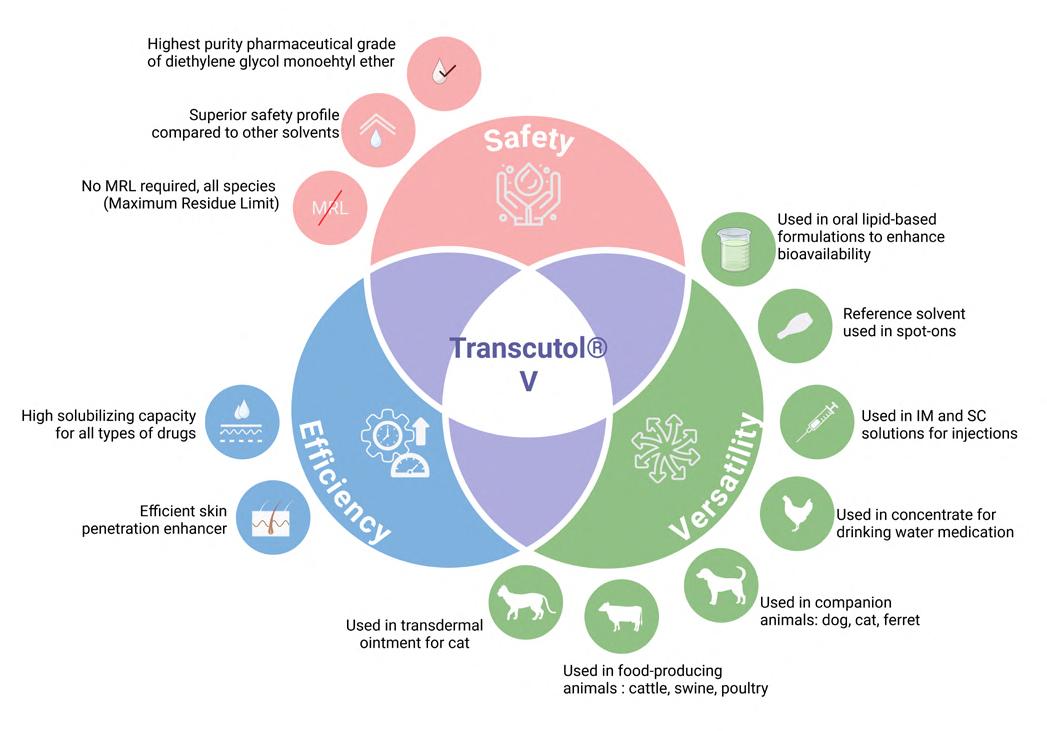
In this article, we will focus on Transcutol® V, a powerful solvent, solubiliser and penetration enhancer, largely used across major species and in a variety of dosage forms. The main properties of Transcutol® V will be described in comparison to other solvents used in veterinary medicines worldwide. Applications in oral, skin and injectable drug delivery will be illustrated through market references and case studies elaborated in our Technical Centres of Excellence.
Transcutol® V is Gattefossé’s tradename for diethylene glycol monoethyl ether (DEGEE), also named ethoxydiglycol. Chemically it belongs to the class of solvents and functionally it is a powerful drug solubiliser and skin permeation enhancer, widely used in human and veterinary medicines worldwide in oral, skin and injectable drug delivery.2
Transcutol® V, Efficacy Without Compromise on Safety
When selecting a solvent for veterinary medicine formulation, technical, quality and safety considerations should be taken into account.
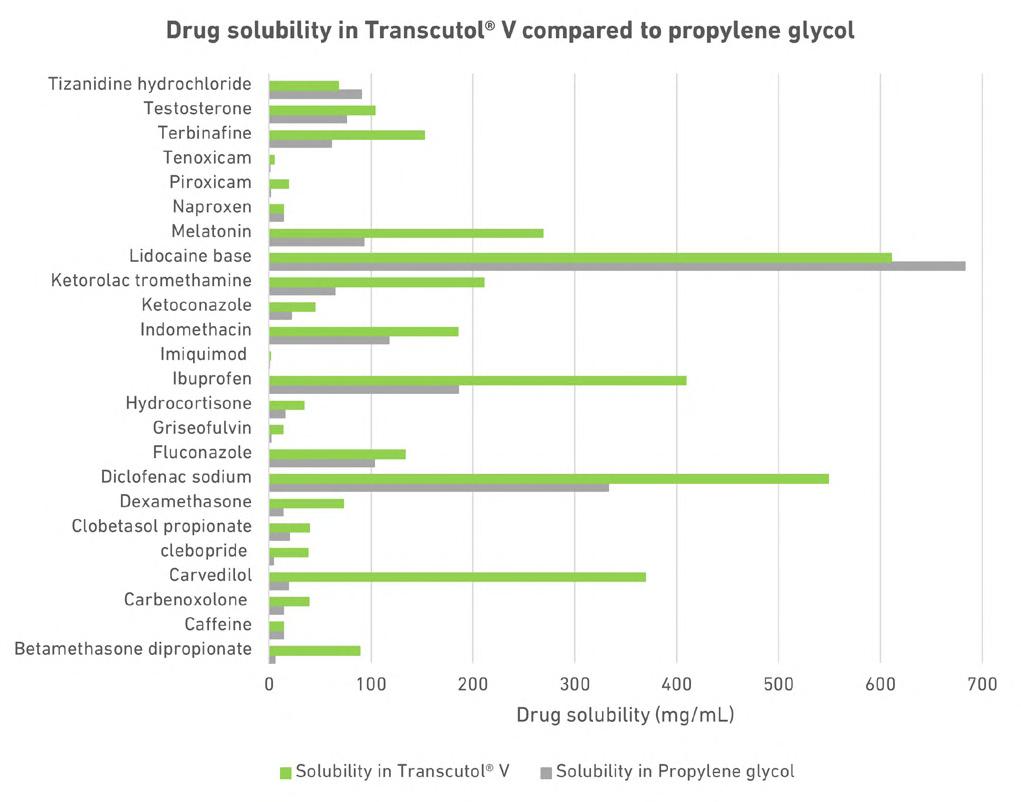
The solubilising capacity is the primary criterion as drug solubilisation is the first step for absorption and bioavailability. Transcutol® V has been used for decades in human and veterinary formulations for its exceptional solubilising capacity, as highlighted in Figure 1, providing drug solubility data compared to propylene glycol.
Main advantages of Transcutol® V compared to other solvents, are:
• Suitable for both lipophilic and hydrophilic APIs.
• Lower volumes of solvents are required for drug solubilisation, contributing to lower volume of injections and hence pain.
The quality of the excipient is also critical to minimise the risk of adverse reactions. Transcutol® is the highest purity diethylene glycol monoethyl ether available on the markets.3 Gattefossé is renowned worldwide for its high-quality pharmaceutical-grade excipients, aligned with the high level of safety needed in human and veterinary medicines.
The safety of the excipient for the target species and for the caregiver is also determinant when developing a formulation. DEGEE has been used in drug products approved by health authorities worldwide. The European Commission adopted a Regulation in 2015 establishing that no MRL (Maximum Residue Limits) is required for diethylene glycol monoethyl ether in all food producing species.4
Moreover, Gattefossé has carried out an extensive review and analysis of the safety of Transcutol® V in veterinary medicinal products and issued a certificate of toxicological assessment. Given the physicochemical and toxicological data available for Transcutol®, its bioavailability as well as the purity degree of Transcutol® V, a daily dose of Transcutol® V up to the Permitted Daily Exposure multiplied by the body weight of the target animal species should not present any reasonably foreseeable risk in case of its incorporation into a veterinary product without undergoing any chemical modification, whatever the route of administration of the product considered.5
The safety profile of Transcutol® V constitutes a tremendous advantage compared to other solvents used in veterinary medicines and enables to formulate medicines with minimum risk for the target animal and the caregiver. For instance, propylene glycol can provoke adverse reactions to cats and horses and should be used cautiously in these species. Another example is the use of N-methyl pyrrolidone which is classified as teratogen in Europe.7 Using this excipient is controverted both for the breed and the female caregivers.
Formulating veterinary medicines with Transcutol® V offers greater safety and wider possibilities. The safety of use of Transcutol® V in veterinary applications is clearly established and well documented in Gattefossé regulatory documentation , as well as by its history of use in numerous veterinary medicines worldwide (Table 1).
by species and routes of administration
Figure 1: Solubility data of various drugs in Transcutol® V compared to propylene glycol
Table 1: Precedence of use of DEGEE
Use of Transcutol® V in Oral Dosage Forms
Drug solubility is often the limiting factor for oral absorption and Transcutol® V can be used as solvent in the formulation to overcome this issue. To ensure that the drug remains in solubilised state in the formulation and upon digestion, lipidbased formulation (LBF) is a frequently used strategy. Lipidbased formulations consist in mixtures of oils, surfactants and solvents in different proportions. Depending on the nature of the components, they bring the following advantages: drug solubilisation throughout the gastro-intestinal tract, intestinal permeation enhancement, lymphatic absorption and mitigation of the food effect.9
LBF has been used in human and veterinary medicines wordwide for decades. The first historical commercial application is a ciclosporin formulation, which has been successfully transferred to veterinary use. An oral solution of ciclosporin for cats and dogs is commercially available and consists in the mixture of solvents (ethanol and diethylene glycol monoethyl ether, e.g. Transcutol® V), oleoyl macrogolglycerides (e.g. Labrafil® M 1944 CS) as selfemulsifying excipient, i.e. oil and surfactant. For companion animals this medicine is easily dispensed with a dosing syringe calibrated upon animal weight.
For poultry, it is more convenient to disperse the solution via the drinking water. In that case the solution needs to be stable in the concentrate form and when diluted in the drinking water. In our Technical Centre of Excellence, we showed that a combination of Transcutol® V and Tween® 80 enables the production of stable concentrates and dilutions of ivermectin, ponazuril, fluralaner or essential oils used in drinking water medication.11 For instance, a 0.56% ponazuril solution was stable in concentrate at 40°C and upon dilution in water at a ratio 1:1000. A lice treatment for chicken with fluralaner is commercially available and consists of similar formulation based on diethylene glycol monoethyl ether, e.g. Transcutol® V and polysorbate 80, eg Tween® 80.12
Use of Transcutol® V in Topical Formulations
Delivering medicinal products to animals for topical, transdermal, or mucosal use presents greater challenges than in humans. This complexity arises from the wide diversity of species and the substantial differences in skin thickness, composition, pH and sebum production. The presence of hair, fur, or feathers adds another layer of difficulty, as these features vary by body region, season, breed and by the density and diameter of hair follicles.
Animal behaviour further complicates administration. Many species may lick or groom the application site, potentially removing the product. In some cases, devices such as Elizabethan collars are required to prevent licking, although these options are not always animal friendly.
Despite these hurdles, effective and safe dermal drug delivery options are available, especially when using a safe
solvent and skin penetration enhancer such as Transcutol® V. By penetrating the stratum corneum, Transcutol® V modifies the skin’s solubility parameters and increases the drug’s solubility in the aqueous phase, thereby promoting its partitioning from the vehicle into the stratum corneum.13 Transcutol® V is used both in solutions and emulsion-based dosage forms.
Spot-on and pour-on formulations are widely used in animal health, primarily for antiparasitic treatments in companion animals and livestock. Both are solution-based dosage forms. Spot-ons are applied directly to the skin –typically between the shoulders in pets – while pour-ons are distributed along the back of larger animals. Spot-ons are easy for caregivers to administer and can provide long-lasting activity, such as monthly antiparasitic protection. Its use is also expanding into other therapeutic areas, including pain management and hormonal treatments. Diethylene glycol monoethyl ether (i.e. Transcutol® V) is the most used solvent in these products. It offers excellent solubilising properties, is non-irritating, safe and has an established history of use with antiparasitics such as fipronil, methoprene, pyriproxyfen and permethrin.
An amazing transdermal ointment is available for cat’s weight management, applying this dosage form on the ear pinna to prevent licking out while enabling systemic absorption. The product contains a high quantity of solvents/ penetration enhancers, in the form of a mixture of diethylene glycol monoethyl ether, e.g. Transcutol® V and caprylocaproyl polyoxylglycerides, e.g. Labrasol®.14 Incorporating a high proportion of solvents in an emulsion can be challenging, especially for long-term stability. In our Technical Centre of Excellence we developed a placebo formulation showing an equivalent rheological profile as the market reference (Figure 2) and containing 27% of solvents required to fully solubilise the drug and ensure skin penetration.
Figure 2: Rheological profile of a placebo transdermal ointment compared to the market reference
Use of
Transcutol® V
in Injectable Dosage Forms
Injectable products remain a predominant dosage form in veterinary medicines due to their ease of administration by veterinarians, the straightforward adjustment of dose to body weight and their rapid onset of action. They are extensively used across species, particularly for vaccines, antibiotics, anti-inflammatory agents and anesthetics.
Solubilisers play a crucial role in these formulations by preventing precipitation at the injection site, reducing product viscosity and minimising local irritation. Thanks to its strong solubilising capacity and excellent safety profile, Transcutol® V is an ideal solvent for injectable preparations and is widely employed in anti-inflammatory and antibiotic injections for cattle, swine, cats and dogs, for example with tolfenamic acid or florfenicol.17
In our Technical Centre of Excellence, we formulated a 1% ivermectin solution containing 60% Transcutol® V to replace the mixture of glycerol formal and propylene glycol used in the market reference and showing the same syringeability profile. Replacing propylene glycol is advantageous as this excipient shows limitations for some species like cats and horses. Using Transcutol® V instead provides a wider range of uses across species. The formulation is simpler as it contains only one solvent and exhibits a lower viscosity, associated with reduced pain at injection site.19
Conclusions
Transcutol® V stands out as a uniquely versatile, safe and efficient excipient for modern veterinary medicine. Its exceptional solubilising power, high purity and well-documented safety profile make it suitable for all major species and administration routes. Whether used to enhance oral bioavailability, enable effective dermal penetration, or improve the performance and tolerability of injectable formulations, Transcutol® V consistently delivers robust technical advantages without compromising safety (Figure 3).
Its long history of global use, combined with extensive regulatory acceptance and strong scientific evidence, positions Transcutol® V as a solvent of choice for formulators seeking to develop safe, effective and innovative veterinary
medicines. As veterinary therapeutics continue to evolve –addressing new species-specific needs, administration challenges and caregiver expectations – Transcutol® V provides a dependable foundation for next-generation drug delivery systems.
REFERENCES
1. Partnering with Gattefossé to tackle veterinary medicines challenges. Cecile Morin, 2025. https://www.gattefosse. com/download-our-white-paper-veterinary-medicineschallenges
3. Sullivan DW Jr, Gad SC, Julien M. A review of the nonclinical safety of Transcutol®, a highly purified form of diethylene glycol monoethyl ether (DEGEE) used as a pharmaceutical excipient. Food Chem Toxicol. 2014;72:40-50. doi:10.1016/j.fct.2014.06.028
4. EMA/CVMP/36933/2015
5. Gattefossé Certificate of toxicological assessment for Transcutol® V, December 2025, available upon request
6. Thomazini VC, da Cunha GM, Guimarães NM, et al. Impact of concerning excipients on animal safety: insights for veterinary pharmacotherapy and regulatory considerations. Daru. 2024;32(1):289-305. doi:10.1007/s40199-023-00486-8
19. Gattefossé Case study Aqueous veterinary injections, available upon request
Cécile Morin
Cécile Morin oversees scientific communication at Gattefossé and also serves as the Group’s Animal Health Program Manager. She drives the scientific visibility of Gattefossé’s animal health portfolio, leading the development of high value technical content and strengthening collaboration with veterinary stakeholders to amplify innovation and advance animal well being.
Figure 3: Transcutol® V, safe, efficient and versatile excipient for veterinary medicines
LIVESTOCK & DISEASES
Proteinated Trace Minerals: A Strategic Tool for Modern Poultry Production
Trace minerals are micronutrients delivered in small quantities, but with significant impacts on poultry health, productivity and resilience. Zinc, copper, manganese, iron and selenium function as cofactors for hundreds of enzymes and proteins involved in immunity, metabolism, reproduction, antioxidant defense, bone development and stress tolerance. In modern poultry systems, where birds are highly productive and exposed to nutritional, environmental and disease pressures, correct trace mineral nutrition is critical for sustaining performance and health.
Traditionally, inorganic trace minerals have been used to meet birds’ requirements. However, these sources are highly reactive, poorly absorbed and prone to antagonistic interactions in the premix, feed and digestive tract. Proteinated trace minerals offer a more stable and bioavailable alternative and have been shown to support immune competence, oxidative status, egg quality and broiler growth efficiency.
Bioavailability and Stability in the GI Tract
One of the most important factors affecting how well a trace mineral is utilised by the bird is its stability as it passes through the bird’s digestive tract, where a highly acidic environment can cause many mineral sources to break apart into free mineral ions. These free ions readily:
• Form insoluble compounds in the intestine that the bird cannot absorb.
• Trigger oxidative reactions that can damage the gut.
• Bind nutrients such as phytate, blocking phosphorus release.
Proteinated trace minerals, such as Bioplex® trace minerals, are produced by chelating metals to short-chain peptides. This creates strong, biologically stable bonds that protect the mineral during transit through the digestive tract and deliver it intact to the sites of intestinal absorption, resulting in higher mineral absorption, improved retention and lower mineral excretion. In contrast, weakly bonded amino acid complexes or inorganic salts often behave no differently from sulphates once exposed to low pH.
Proteinated Trace Minerals vs. Inorganic Sources
Inorganic trace minerals are inexpensive but highly reactive to other ingredients in a premix, especially vitamins, enzymes and antioxidants. In premixes and feeds, they:
• Destroy vitamins via oxidation.
• Inhibit exogenous enzymes such as phytase, protease and xylanase.
• Reduce antioxidant efficacy.
• Increase mineral excretion.
In contrast, proteinated trace minerals are less reactive due to strong chelation, which enhances their stability in feed and within the digestive tract. This lower reactivity is particularly relevant in modern diets containing high levels of exogenous enzymes and oxidant-sensitive vitamins, where it results in:
• Reduced oxidative stress.
• Improved mineral bioavailability at lower inclusion levels.
• Reduced antagonism with enzymes.
Immune Support
Trace minerals play a direct role in immunity. Zinc, copper and selenium are essential for lymphocyte proliferation, antibody production and antioxidant protection of immune cells. Proteinated trace minerals support the bird’s immune system by ensuring consistent mineral availability, particularly during periods of physiological stress.
Heat stress, a growing global challenge in poultry production, is one such stressor. Elevated temperatures increase oxidative stress, suppress feed intake and impair immune function, leading to losses in egg production and growth.
Proteinated trace minerals help mitigate heat stress through several mechanisms:
• Enhanced antioxidant defense: zinc, copper, manganese and selenium are cofactors for antioxidant enzymes.
• Support for gut integrity.
• Better thermoregulation: improved feathering, mineral balance and cellular protection.
Research consistently demonstrates that birds supplemented with Bioplex minerals and Sel-Plex® organic selenium yeast maintain performance, survivability and oxidative status compared with those fed inorganic minerals.
Layers vs. Broilers
Layers: Egg Production and Shell Quality
In laying hens, trace minerals directly influence henday egg production, eggshell thickness and strength, albumen quality, skeletal integrity and persistency of lay. A global meta-analysis by Byrne et al. (2023) showed that replacing inorganic trace minerals with Bioplex minerals resulted in positive effects on hen-day production, feed conversion, eggshell thickness and eggshell strength. These benefits are particularly important in extended lay cycles, where mineral depletion and shell quality issues are more pronounced.
LIVESTOCK & DISEASES
Broilers: Growth Efficiency and Survivability
Broilers have high requirements for trace minerals due to rapid growth, high feed intake and increased metabolic activity. Proteinated trace minerals support improved feed conversion ratio (FCR), bone strength and immune function.
A comprehensive broiler meta-analysis by Byrne et al. (2025) showed that when inorganic trace minerals were replaced with Bioplex trace minerals and inclusion levels were reduced by 40% for copper, 60% for iron, 40% for manganese and 35% for zinc, there were no negative effects on performance. Performance indicators such as average daily gain, final body weight, FCR and survivability were maintained or improved. A subset of trials with 50–80% reduced inclusion levels (compared to inorganics) showed even clearer benefits, demonstrating that improved bioavailability more than compensates for lower dietary concentrations.
Sustainability and Environmental Benefits
By improving mineral utilisation, proteinated trace minerals can indirectly contribute to sustainability goals. The broiler meta-analysis showed reductions in excreted copper (16%), iron (14%), manganese (21%) and zinc (15%).
In addition, life-cycle assessments were conducted for both the broiler and layer meta-analyses to better understand their overall sustainability benefits. These demonstrated that incorporating proteinated trace minerals into broiler and layer diets not only enhanced production performance and egg quality traits, but also reduced the carbon footprint. (It is important to note that the emission reduction effects are secondary to performance or production benefits and not achieved through a direct reduction in emissions.) Improved feed conversion, growth and survivability reduce the resources required per kilogram of meat or eggs.
Conclusions
Trace mineral nutrition is no longer just about meeting minimum requirements. The form, stability and bioavailability of trace minerals fundamentally influence poultry performance, health, resilience and sustainability. Consistent findings from global meta-analyses confirm that strongly chelated, stable organic trace minerals represent a science-based strategy for modern poultry production, delivering measurable benefits in both layers and broilers while aligning with economic and sustainability goals.
Dr. Harriet Walker, poultry specialist, Alltech, is a poultry specialist in Alltech’s Technology Group, providing technical sales support and translating poultry research into performance and efficiency solutions. Formerly a poultry nutritionist, she has extensive experience across farm sizes and bird types. She holds a Ph.D. from Nottingham Trent University (2013) and a B.Sc. in animal science from University of Nottingham.
Dr. Harriet Walker
LIVESTOCK & DISEASES
Current Challenges in PRRSV Strain Identification: The
Importance of Differentiating Major Strains
Over the past 30 years, Porcine reproductive and respiratory syndrome virus (PRRSV) has remained one of the most significant and persistent threats to the global swine industry. Since its emergence in the early 1990s, the virus has spread extensively and is now considered endemic in most pig-producing regions worldwide. The virus remains difficult to control and continues to spread at a fast rate, not only due to its ability to cause severe disease, but also by its remarkable genetic variability and ability to rapidly evolve.
PRRSV is an enveloped, positive-sense, single-stranded RNA virus belonging to the Arteriviridae family.1 It infects pigs across all stages of production, from piglets to breeding-age sows, leading to a wide variety of clinical manifestations. These range from mild or asymptomatic infections to severe disease with high morbidity and mortality, depending on the strain, host factors and co-infections.
Porcine reproductive and respiratory syndrome (PRRS) is characterised by two primary disease presentations: reproductive failure in breeding animals and respiratory disease in growing pigs.2 In breeding herds, infection can have devastating consequences. Pregnant sows infected with PRRSV may experience late-term abortions, stillbirths and the birth of weak or mummified foetuses (Figure 1). Additional symptoms include fever, anorexia, reduced conception rates and in severe cases, cyanosis of the ears, abdomen and vulva.
Figure 1. Clinical signs associated with PRRSV infection in piglets and sows. Common clinical manifestations observed in piglets include reduced appetite, fever, lethargy, stunted growth, pneumonia and respiratory distress. In sows, clinical signs may include fever, anorexia, late-term abortions, stillbirths, reduced conception rates and cyanosis.
A key challenge in managing PRRSV is that symptoms in adult pigs are often mild or inconsistent. Many infected sows do not display obvious or strong symptoms, allowing them to remain within the herd and act as reservoirs for ongoing viral transmission. This silent spread significantly complicates disease control efforts and highlights the need for robust surveillance strategies.
In piglets and growing pigs, the respiratory form of the disease is more prominent with more distinguishable symptoms. Infected animals may display high fever, lethargy, reduced appetite and respiratory distress, in some cases progressing to pneumonia. One of the most economically significant impact is reduced growth performance. Infected piglets frequently exhibit stunted growth, decreased weight gain and poor feed efficiency, all of which negatively affect production outcomes.
In addition to its direct symptoms, PRRSV is also known for its immunosuppressive properties. Infection with PRRSV can impair immune responses, meaning pigs are more susceptible to secondary infections. Co-infections with pathogens such as respiratory viruses and opportunistic bacteria are common and can exacerbate disease severity, leading to increased mortality rates. This compounding effect often leads to increased antibiotic use on farms, contributing to rising production costs and the broader global issue of antimicrobial resistance.1
Genetic Diversity and the Challenge of Strain Differentiation
One of the most notable features of PRRSV is its extraordinary genetic diversity, and this is an elemental reason that the virus remains difficult to control. PRRSV has adapted to diverse environments and immune pressures through variation and recombination events.3 The virus is broadly classified into two major genotypes: Type 1 (European or EU) and Type 2 (North American or US). These genotypes were first identified in the early 1990s and have since evolved independently.4
Despite causing similar clinical symptoms, the two genotypes share only approximately 60% nucleotide similarity across their genomes.5 This significant genetic divergence highlights the importance of accurate diagnostic methods capable of distinguishing between them, particularly for surveillance and biosecurity purposes.
The genetic variability of PRRSV is driven by a combination of high mutation rates, recombination events and selective pressures from host immune responses and vaccination. As a result, new variants continue to emerge, often with increased virulence, transmissibility, or antigenic properties.
There are two genomic regions that are particularly important in understanding PRRSV diversity, encoding the non-structural protein 2 (NSP2) and glycoprotein 5 (GP5). NSP2 is the largest non-structural protein and its encoding region is frequently used as a genetic marker due to its high variability. However, high mutation rates within this region can also complicate its use in strain classification. GP5 is a highly variable glycoprotein that plays a key role in virus-host interactions and immune recognition.
GP5 is highly immunogenic but also highly variable, limiting cross-protective immunity between strains. The variability of GP5 is particularly problematic for vaccine design and natural immunity. Pigs infected with one strain often do not develop effective immunity against other strains, making reinfection an ongoing risk complicating long-term control strategies.
Emergence and Impact of Highly Pathogenic PRRSV
The genetic variability of PRRSV has led to the emergence of
LIVESTOCK & DISEASES
highly pathogenic variants, most notably highly pathogenic PRRSV (HP-PRRSV). HP-PRRSV was first identified in China in 2006 as a derivative of the North American genotype and since has rapidly spread across the region and become the dominant epidemic strain.6
A defining feature of HP-PRRSV is a discontinuous 30-amino acid deletion in NSP2, although additional mutations across the genome also contribute to its phenotype. These genetic changes are believed to have conferred selective advantages, including increased virulence and transmissibility.
HP-PRRSV infections are associated with severe disease, including high fever, extensive lung pathology, and significant mortality rates in both piglets and adult pigs. The economic impact of these outbreaks has been substantial, particularly in regions with high pig production density.
The emergence of HP-PRRSV illustrates the virus’s capacity for rapid evolution and highlights the importance of continuous monitoring and accurate strain identification.
Transmission and Global Spread
PRRSV is transmitted through a variety of direct and indirect routes, contributing to its widespread distribution. Direct transmission occurs through contact with infected animals, while indirect transmission can occur via contaminated biological materials such as semen, nasal secretions and urine.
Indirect transmission via equipment, clothing and farm infrastructure also plays a significant role in disease spread, particularly in systems with inadequate biosecurity measures. The virus can also be spread vertically from pregnant sows to offspring, producing persistently infected piglets.
The global spread of PRRSV has been driven by international trade, animal movement and varying levels of biosecurity across regions. In Europe, PRRSV-1 strains predominate, while in Asia, both PRRSV-2 and HP-PRRSV are widely circulating. These regional differences further emphasise the need for diagnostic tools capable of precise strain differentiation.
Previous Advancements
Despite decades of research, there is currently no fully effective treatment for PRRSV.7 Vaccination remains the primary tool for disease control, with several vaccine types available, including modified live vaccines (MLVs), inactivated vaccines, subunit vaccines, DNA vaccines and viral vector vaccines.
While inactivated vaccines are generally safer, MLVs are the most widely used due to their ability to induce relatively strong immune responses. However, their use is associated with several challenges. MLVs provide limited protection against genetically diverse or heterologous strains, may revert to virulence, and impose a risk of recombination with circulating field strains.
There is growing evidence that MLV strains can recombine with field strains of PRRSV, particularly vaccines made against genotype II variants. This recombination can lead to the emergence of novel strains with enhanced fitness or virulence, potentially contributing to new outbreaks. Specifically, the JXA1 vaccine shares a high sequence similarity to a HP-PRRSV variant, and it is thought that recombination between the vaccine strain and wild type gave rise to this new strain, having gained selective advantages from both parental strains.4
Additionally, current vaccines primarily reduce disease severity rather than prevent infection or transmission.
Economic constraints also limit widespread vaccination, particularly in growing pigs, meaning that vaccination strategies are often focused on breeding herds.
Implications for Farmers, Veterinarians and Diagnostic Laboratories
The ongoing challenges associated with PRRSV have significant implications for all stakeholders in the swine industry. For farmers, the economic impact includes reduced productivity, increased mortality, higher veterinary costs and greater reliance on antibiotics. It is estimated that PRRSV caused $1.2B in losses in the US pork industry from 2016–2020.8 While vaccination and routine testing are widely recommended for farmers, their implementation is often hindered by high costs and limited labour availability. Key focus areas for PRRSV research include managing disease symptoms, understanding transmission pathways and working towards elimination at the herd and regional level.
Eradication of PRRSV from an infected herd is a complex and time-consuming process. Estimates suggest that it can take several years to eliminate the virus, even under controlled conditions without reintroduction.9 This highlights the importance of early detection, continuous monitoring and strict biosecurity measures.
In the UK, PRRSV is a reportable disease and surveillance programmes have been implemented to monitor its prevalence and spread. Strict import controls are in place to prevent the introduction of new strains, particularly PRRSV-2, which has not yet been detected in the UK. These regulations require testing of animals and semen prior to importation, emphasising the critical role of accurate detection.
For veterinarians and diagnostic laboratories, the ability to rapidly and accurately detect and differentiate PRRSV strains is essential for informed decision-making and effective disease management.
The Role of qPCR in PRRSV Detection
The overarching goal within the swine industry is to improve prevention and elimination efforts, and progress toward effective PRRSV control. Achieving this relies heavily on effective and reliable surveillance and diagnostics.
Differentiation of PRRSV from other swine pathogens can be a significant challenge due to overlapping clinical presentations. The virus shares similarities with other swine viruses which can complicate accurate diagnosis without laboratory confirmation. This is further complicated by the increasing movement of animals between herds, which facilitates transmission and makes containment more difficult.
Precise detection methods are critical for both surveillance and diagnosis of PRRSV, as undetected outbreaks can rapidly devastate herds. Fast and accurate detection enables early intervention, including isolation of infected animals, limiting transmission, protecting productivity and reducing the risk of significant economic losses.
Many different methods are available for PRRSV detection. These include molecular approaches such as quantitative PCR (qPCR), CRISPR-based assays, loop-mediated isothermal amplification (LAMP) and next-generation sequencing (NGS), as well as serological methods like enzyme-linked immunosorbent assay (ELISA) and indirect fluorescent antibody (IFA) assays.7 However, each method has limitations.
Serological assays are useful for monitoring herd exposure and immune response, but detection can be delayed as
LIVESTOCK & DISEASES
positive results only show after antibodies have formed. In addition, they cannot distinguish between prior exposure, vaccination and active infection, limiting their use in real-time decision making.
NGS provides detailed genetic insight and is valuable for strain characterisation and epidemiological investigations. However, it is cost intensive, has longer turnaround times and can be less sensitive in samples with low viral loads. It also requires specialised data analysis, making it less suitable for rapid, routine testing.
qPCR has become a cornerstone of PRRSV diagnostics due to its high sensitivity, specificity and speed. Most surveillance strategies recommend routine sampling and testing for PRRSV using qPCR across activities such as animal movement, herd monitoring and elimination efforts. By directly detecting viral RNA, qPCR enables the identification of active infections, often before clinical signs become apparent.
This is particularly important given that PRRSV can be detected as early as one day post-infection. Rapid detection allows for timely intervention, reducing the risk of widespread transmission within a herd. qPCR can also detect very low levels of the virus and results are available within hours of testing the sample. At a relatively low cost per sample, qPCR serves as the gold standard for high-throughput testing.
Establishing the true PRRSV status of a population remains challenging, as sensitivity can vary depending on sample type, such as serum, oral fluids and processing fluids. However, when paired with an effective extraction method, qPCR offers the flexibility to reliably test across a wide range of sample types, supporting more comprehensive and accurate surveillance programmes (Figure 2).
Advancements in Multiplex qPCR Testing
Advances in molecular diagnostics have led to the development of multiplex qPCR assays, which allow simultaneous detection and differentiation of multiple PRRSV strains within a single test.
Multiplex assays capable of simultaneous detection and differentiation of PRRSV-1, - 2, and highly pathogenic variants in a single test provide a complete, real-time PCR solution for veterinary diagnostic laboratories and swine producers (Figure 3). Rapid turnaround times and compatibility with open qPCR platforms also help to facilitate scalable and flexible deployment. Assays such as these offer significant advantages in terms of efficiency, cost-effectiveness, and accuracy, providing increased confidence in diagnostic outcomes.
These tools are particularly valuable in regions where multiple strains are circulating, providing clear strain-level insight to inform rapid decision-making, while maintaining gold-standard sensitivity. By supporting accurate strain identification, multiplex qPCR enhances herd health monitoring, strengthens biosecurity measures, and enables earlier intervention. This shift from reactive outbreak response to proactive disease management represents a critical step forward for the industry.
Next-Generation Swine Health Strategies
PRRSV continues to pose a major challenge to the global swine industry due to its genetic diversity, evolving strains and complex transmission dynamics. The emergence of highly pathogenic variants and the limitations of existing vaccines further complicate control efforts.
Accurate strain identification and differentiation is essential for effective surveillance, diagnosis and disease monitoring,
and (3) amplification analysis using PCR software for detection and interpretation of target nucleic acids.
Figure 2. Overview of the qPCR workflow for PRRSV detection. Schematic representation of the qPCR testing workflow, including (1) RNA extraction from samples using lysis buffer and magnetic bead purification, (2) qPCR reaction setup with master mix, multiplex primers and probes, controls and extracted RNA
LIVESTOCK & DISEASES
Figure 3. Amplification curves for PRRSV assays using synthetic template controls. Amplification curves demonstrating successful detection of synthetic PRRSV template controls across multiple target concentrations for PRRSV-US, PRRSV-EU, and PRRSV-HP assays. Representative curves show detection of 10^8 copies (blue), 10^4 copies (orange), 100 copies (red), and 10 copies (purple), with amplification efficiencies within the acceptable range of 90–110%.
yet remains difficult with traditional diagnostic approaches. Advances in molecular diagnostics, particularly qPCR and multiplex testing, are transforming the ability to detect and characterise PRRSV infections with speed and precision.
For swine breeders, farmers, veterinarians and diagnostic laboratories, adopting these advanced diagnostic tools offers a clear pathway to improved disease control, enhanced biosecurity and reduced economic impact. Continued investment in diagnostic innovation, combined with coordinated global surveillance efforts, will be essential in addressing the ongoing threat posed by PRRSV.
REFERENCES
1. Charpin, C., Mahé, S., Keranflech, A., Belloc, C., Cariolet, R., Le Potier, M. F. & Rose, N. Infectiousness of pigs infected by the Porcine Reproductive and Respiratory Syndrome virus (PRRSV) is time-dependent. Vet. Res. 43, 69 (2012).
2. https://www.pirbright.ac.uk/our-science/viruses/porcinereproductive-and-respiratory-syndrome-virus, visited on 1 May 2026.
3. Brethouwer, T., de Mendoza, A. & Bogdanovic, O. Non-CG DNA methylation in animal genomes. Nat. Genet. 57, 2395–2407 (2025).
4. Xia, Y., Zhang, T., Gong, D., Qi, J., Jiang, S., Yang, H., Zhu, X., Gan, Y., Zhang, Y., Han, Y. & Li, J. Recombination and mutation in a new HP-PRRSV strain (SD2020) from China. Viruses 15, 165 (2023).
5. Meng, X. J., Paul, P. S., Halbur, P. G. & Lum, M. A. Phylogenetic analyses of the putative M (ORF 6) and N (ORF 7) genes of porcine reproductive and respiratory syndrome virus (PRRSV): implication for the existence of two genotypes of PRRSV in the U.S.A. and Europe. Arch. Virol. 140, 745–755 (1995).
6. Schwarz, S., Silley, P., Simjee, S., Woodford, N., van Duijkeren, E., Johnson, A. P. & Gaastra, W. Assessing the antimicrobial susceptibility of bacteria obtained from animals. Vet. Microbiol. 141, 1–4 (2010).
7. Zhang, H., Luo, Q., He, Y., Zheng, Y., Sha, H., Li, G., Kong, W., Liao, J. & Zhao, M. Research progress on the development of porcine reproductive and respiratory syndrome vaccines. Vet. Sci. 10, 491 (2023).
8. https://research.iastate.edu/, visited on 1 May 2026.
9. Nodelijk, G., de Jong, M. C. M., van Nes, A., Vernooy, J. C. M., van Leengoed, L. A. M. G., Pol, J. M. A. & Verheijden, J. H. M. Dynamics of porcine reproductive and respiratory syndrome virus infection in Dutch breeding herds. Epidemiol. Infect. 123, 1–13 (1999).
Saloni Sonawala
Saloni Sonawala is a certified Product Manager at Primerdesign, a company focused on the design, manufacture, validation and supply of nucleic acid extraction and real-time PCR kits. With cross-industry experience supporting innovation and product development in molecular diagnostics, Saloni focuses on advancing accessible solutions that support infectious disease surveillance and life sciences research.
Email: enquiry@primerdesign.co.uk
Sian McHugh
Sian McHugh is a marketing specialist at Primerdesign specialising in molecular diagnostics, qPCR technologies, and microbiology-focused content within the life sciences sector. Her work focuses on communicating advances in infectious disease detection and diagnostic technologies for scientific and industry audiences.
LIVESTOCK & DISEASES
The Connected Cow: Turning Data into Dollars for U.S. Ranchers
Profit First: From Data to Dollars
For U.S. ranchers, every investment is judged the same way: does it return more than it costs? With connected livestock systems the answer is increasingly clear and in some cases, substantial. For a 200-head herd, the upfront investment sits at approximately $20,000 in year one, with ongoing annual costs around $12,000. What’s changing is the speed and scale at which that investment is returned. Across reproduction, feed efficiency and animal health, even conservative improvements deliver:
• 3–4x return on investment annually
• $31,000–$44,000 in net return per year
But in higher-impact operations, where producers fully leverage reproductive insights, reduce losses early and optimise feed utilisation, returns can climb significantly higher.
Real-world outcomes have shown returns of up to 10–13x ROI
This level of performance isn’t driven by a single breakthrough. It’s the compounding effect of multiple small gains, captured consistently across the operation and often realised within the first 12 months. This is not a cost of technology. It is a shift toward measurable, repeatable profit.
A New Era for Beef Production
The U.S. beef industry is entering a period of rapid transformation. Rising input costs, tightening margins and increasing expectations around traceability and sustainability are reshaping how producers operate. For ranchers managing large herds across expansive environments, efficiency is no longer optional, it is essential. At the centre of this shift is the emergence of the ‘connected cow.’ Instead of relying solely on observation and periodic handling, producers now have access to continuous, real-time data on individual animals. Behaviour, movement, reproductive activity and health signals are captured around the clock, turning what was once invisible into actionable insight. This isn’t about replacing stockmanship. It’s about strengthening it. It’s about making earlier decisions, with greater precision and backing experience with data.
From Data to Dollars: Where Profit Is Found
The financial return of connected livestock systems is not driven by a single factor. It is built through cumulative improvements across the entire operation.
Reproduction: The Fastest Path to ROI
Reproduction remains the most powerful lever in cowcalf profitability. Missed heats, extended calving intervals and undetected complications quietly erode returns each season. With continuous monitoring of estrus activity and calving patterns, producers can act at the right time, not after the opportunity has passed. In a 200-head herd, a five percent lift in calves weaned equates to: 10 additional calves × $2,000 = $20,000 annually. Small improvements here don’t just help, they fundamentally change the economics of the operation.
Feed Efficiency: Making Every Acre Work Harder
Feed is the largest input cost in most beef systems, yet in extensive environments, it is rarely measured at an individual level. By capturing behavioural data such as grazing, rumination, walking and resting, producers gain a clearer understanding of how animals convert pasture into performance.
The result is:
• Improved pasture utilisation
• Earlier identification of underperforming animals
• More informed feeding and supplementation decisions
Even a modest five percent improvement in feed efficiency can deliver: $10,000–$15,000 in annual value.
Animal Health: The Value of Early Intervention
Health challenges rarely begin with visible symptoms. Subtle behavioural changes often appear days earlier, but without continuous monitoring, they are easily missed. Connected systems surface these signals in real time, allowing producers to intervene earlier, reduce treatment costs and minimise productivity loss. The economics are straightforward. Preventing the loss of a single animal, valued at $4,000 for a cow or up to $7,000 for a bull, can offset a significant portion of annual system costs.
Beyond the Animal: Operational Gains That Add Up
The value of connected systems extends well beyond individual animal performance.
Traceability, Biosecurity and Pasture Management
With real-time visibility of animal movement and behaviour, producers can:
• Manage grazing pressure more effectively
• Avoid pasture overutilisation
• Respond rapidly to biosecurity risks
These improvements contribute to lower input costs, improved carrying capacity and stronger positioning in premium markets where traceability is increasingly required.
Labour Efficiency and Scale
Labour constraints remain one of the biggest challenges across the industry. By automating data collection, producers can reduce time spent locating and assessing animals, minimise
LIVESTOCK & DISEASES
unnecessary mustering and focus effort where it matters most. The result is a more efficient operation and the ability to manage larger herds with greater precision. These gains alone can conservatively represent: $5,000–$10,000 annually.
From Insight to Action: What It Looks Like on the Ground
The real value of connected livestock systems lies in their application. On a day-to-day basis, producers can:
• Identify animals requiring immediate attention.
• Act on real-time reproductive signals.
• Reduce unnecessary handling and mustering.
• Make data-informed culling and retention decisions.
• Optimise pasture allocation.
Instead of managing cattle as a single group, producers gain the ability to manage individuals at scale. And in an industry where margins are multiplied across every head, that shift is powerful.
Start Smart, Scale Strategically
Adoption doesn’t need to happen all at once. Many producers begin with high-impact groups such as:
• Bulls
• First-calving heifers
• Core breeding cows
These animals deliver the fastest and most measurable return. From there, scaling becomes a strategic decision:
• 100% adoption unlocks full herd visibility and maximum value.
At scale, the system moves beyond monitoring, it becomes a foundation for how the operation is run.
Driving Genetic Progress Through Data
One of the most powerful long-term benefits of connected systems is the ability to collect continuous phenotype data.
This provides:
• Objective, high-frequency performance insights.
• Greater accuracy in genetic evaluation.
• Deeper understanding of traits like fertility, efficiency and resilience.
For both commercial producers and seedstock operations, this represents a step change in how genetic progress is measured and achieved.
Strengthening
the Supply Chain
As consumer expectations evolve, traceability and transparency are becoming essential, not optional. Connected systems support verified animal histories, improved welfare reporting and greater supply chain confidence. For producers, this creates opportunities to access premium markets while meeting increasing regulatory and consumer demands.
The Bigger Picture: A More Connected Industry
The connected cow is more than a piece of technology, it represents a shift toward a more integrated, data-driven livestock industry. It connects what’s happening at the animal level to decisions across the entire operation and, ultimately, the supply chain. The result is:
• Reduced inefficiencies
• Improved consistency
• Increased profitability
Technology, in this context, becomes an enabler of better decision-making, supporting, not replacing, the expertise of the producer.
From Insight to Profitability
The economics of beef production are becoming increasingly precise. Margins are tighter, expectations are higher and the cost of missed decisions continues to rise. Connected livestock systems are demonstrating that even small, data-driven improvements, applied consistently, can deliver significant financial returns. From conservative 3–4x ROI to high-impact scenarios reaching up to 13x, the opportunity is no longer theoretical. For U.S. ranchers, the path forward is clear:
• Move from reactive management to proactive decisionmaking.
• Replace assumption with insight.
• Turn everyday data into measurable profit.
The connected cow isn’t the future of beef production. It’s already delivering results today.
Shane White
Shane White is a leader in livestock technology and data-driven production systems. As the National Sales Manager at CERES TAG, he works closely with producers to translate real-time animal insights into practical, profitable onfarm decisions, helping advance efficiency, welfare, and sustainability across the global beef industry.
David Smith
David Smith is the CEO and CoFounder of CERES TAG, a leader in direct-to-satellite livestock monitoring. With deep roots in agriculture and a passion for practical innovation, he has led the development of worldfirst smart ear tag technology, enabling animal insight, improved productivity, and data-driven decision-making across global livestock systems.
Explaining Trends in Bulk Milk Somatic Cell Count from Dairy Herds in the Netherlands from 2018–2023
In the Netherlands, bulk milk somatic cell count (BMSCC) has decreased from 2002 to 2018. However, since then it has risen with a sharp increase in 2022. Higher BMSCC indicates poorer milk quality, thus posing a concern. The gradual increase since 2018 was linked to automated milking systems, increasing age of the dairy herd and increasing herd size. However, these factors do not fully explain the peak in 2022. In addition, higher milk prices and changes in diagnostic standards were significant contributors. Understanding these factors help farmers and veterinarians take steps to reduce BMSCC and improve milk quality in their herds.
Objective
Since 2002, the Dutch Cattle Health Surveillance System (CHSS) has been carried out at Royal GD on behalf of the Dutch dairy sector and the Ministry of Agriculture, Nature and Food Quality. GD plays a central role in the CHSS, combining large-scale data collection with laboratory diagnostics and epidemiological analyses. Four times per year, cattle health indicators are analysed, including udder health parameters for dairy cattle. This data analysis has shown that the bulk milk somatic cell count (BMSCC) of dairy cattle has been rising slightly since 2020 and this increase accelerated from 2022 onwards (Figure 1). This is an unfavourable trend, as it is an indication of reduced udder health in dairy herds in the Netherlands. The objective of this study was to provide an explanation for the unfavourable trends in BMSCC of dairy cattle, and to estimate the influence of various explanatory variables on BMSCC.
Figure 1. Average bulk milk somatic cell count (BMSCC) in Dutch dairy herds per month (blue line), the rolling average BMSCC (green line) and the predicted value based on the best fitting (population averaged) regression model (red line), for the period October 2018 – September 2023.
Materials and Methods
For the analyses, variables that are routinely collected on dairy farms (e.g. herd size, milk production level) were available. In addition, variables related to weather conditions were included to estimate the influence of e.g. temperature and humidity on udder health indicators. In total, three udder health indicators were considered i.e. BMSCC, prevalence of
high somatic cell count (SCC) cows and herds with a >25% incidence of high SCC in primi- and multiparous cows during the start of the lactation (first 60 days). A high SCC is over 150.000 cells per ml for primiparous cows and over 250.000 cells per ml for multiparous cows. The association between these udder health indicators and the explanatory variables were analysed using population averaged multivariable regression with appropriate distributions (gaussian and binomial) and link functions (identity and logit).
Results
The average Dutch BMSCC is highest in the autumn and lowest in the spring. There is a clear increase in the period 2018 to 2023, with the increase in 2022 being particularly striking (Figure 1). The annual average BMSCC at the end of 2019 was around 170,000 cells per ml, while it was over 200,000 cells per ml at the end of 2023. Important factors associated with an increased BMSCC are the use of an automatic milking system (AMS; +22,000 cells/ml when using an AMS), a higher age of cows on the farm (+2,000 cells/ml per additional month of life) and a herd size over 181 adult cows (+19,000 cells/ml compared to an average Dutch farm). These explanatory variables increased gradually throughout the period analysed, making it likely that the increasing trend of the BMSCC in the period 20182023 is explained by these variables. However, these variables
LIVESTOCK & DISEASES
probably do not explain the additional increase in 2022. A higher milk price (+6,000 cells/ml for each increase in milk price by €10/100L) and the adjustment of the laboratory somatic cell reference to the European reference (+4,000 cells/ml) seem to explain this additional increase in 2022. The adjustment of the cell count reference took place on January 1st, 2022. The milk price sharply rose in 2022 from less than €40 per 100kg to more than €60 per 100kg, which explains +12,000 cells/ml. With a higher milk price, farmers may continue to milk cows with a slight increase in SCC for longer, because of economic advantage.
Conclusion
Our findings suggest that the increase in BMSCC can be explained by an increase in the percentage of farms using automated milking systems, an increase in age of the cattle and a rise in average herd size in the Netherlands. However, these factors have been risen steadily and do not account for the additional increase in BMSCC in 2022. This increase can be attributed to the rapid rise of milk prices, combined with the simultaneous change in the test calibration reference of the test for BMSCC to the European international calibration reference. Understanding the probable causes for the unfavourable trend in BMSCC, can provide entry points for farmers and veterinarians for improving udder health in their own herd. In addition, the Veekijker from GD can support farmers and their veterinarians in interpreting results and implementing effective measures to reduce BMSCC. The Veekijker is a telephone helpdesk, where experienced and specialised veterinarians from GD provide expert advice and tailored support.
About Royal GD
Since its foundation in 1919 Royal GD has been dedicated
to improving animal health. Today, we combine a century of expertise with state-of-the-art science, supporting sustainable livestock production worldwide.
GD operates national monitoring programmes and plays a key role in the Dutch Animal Health Surveillance System (AHSS), providing early detection and analysis of animal health signals across livestock sectors. Commissioned by the Dutch government and industry, this system ensures timely insights to support animal and public health.
As an independent Contract Research Organisation (CRO), we offer end-to-end support for product development, from concept to regulatory compliance. We are internationally recognised for bovine health research, particularly in udder health and mastitis. Our capabilities include clinical field trials, controlled on-site studies, and validated challenge models (e.g. E. coli and Staphylococcus aureus mastitis). Through advanced diagnostics and practical insights, we help partners develop effective interventions for animal health worldwide. More information: www.gdanimalhealth.com
Christian Scherpenzeel
Christian Scherpenzeel is a dairy veterinarian at Royal GD, the Netherlands and head of the bovine veterinary team. He worked in dairy practice and academia at Utrecht University where he also obtained his PhD. His expertise focuses on udder health management, antimicrobial stewardship and milk quality, bridging science and on-farm practice through research, consultancy and dedicated industry collaboration.
Nannet Fabri
Nannet Fabri is a veterinary epidemiologist at Royal GD, specialising in infectious disease transmission and One Health. Graduating from Utrecht University in 2016, she completed a Master's in Veterinary Epidemiology before earning a PhD with the Swedish University of Agricultural Sciences and Utrecht University, focusing on tick-borne diseases and the role of ungulate species.
Unlocking the Canine Microbiome: A Comprehensive Catalogue to Power Research
The role of the gastrointestinal (GI) microbiome in health and disease has become increasingly apparent in both humans and animals; it is central to many physiological processes and essential for host metabolism, immunity and protection from pathogens. In dogs, imbalances in the gut microbiome are associated with several GI disorders, but despite its importance, the gut microbiome in dogs is vastly understudied and knowledge is primarily based on research in humans. A clearer understanding of the microbial species at play would be beneficial, to enable us to monitor, support and influence gut health in dogs. Recently, we conducted the most comprehensive analysis of the canine microbiome to date, increasing understanding of its novelty through vast discovery of new bacterial taxa. This detailed catalogue uncovered the critical role the gut microbiome could play in dog health and now provides a key resource for researchers worldwide, expanding opportunities to optimise canine care and treatment.
Understanding of the Canine Gut Microbiome Prior to this Study
Canine gut microbiome research has generally been limited by bias towards human studies, creating a large knowledge gap, particularly regarding the bacterial species present and their potential role. Marked similarities between human and canine microbiomes were previously reported, but studies have often focused on linking bacterial organisms common to both species, rather than the function of the microbiome or how closely these relate to the health of the canine host.1, 2 Such an approach arguably restricts any wider application of insights drawn from research.
A significant advancement in our understanding of the gut microbiome has arisen through the use of metagenomic data – the total microbial deoxyribonucleic acid (DNA) extracted from samples – which can provide a snapshot of all bacterial organisms present. These data are mapped onto known genes or genomes to gain clarity on the characteristics of gut
bacterial environments in different species. However, while the microbiome of humans or animals used for food production (such as pigs, cattle and poultry) has been relatively wellresearched, metagenomic data for the gut microbiome of canines has been vastly understudied and, until recently, remained mostly unmapped. Only approximately 25% of DNA sequences from dogs could be previously cross-linked to known genomes, meaning that 75% were unknown. The extent of missing data has limited comprehensive understanding of the canine gut microbiome, or the description of unknown microbes that may be relevant to canine health.
Reconstructing the Canine Gut Microbiome in High Resolution
We place companion animals at the heart of our research, which is aimed at improving overall well-being and preventing disease. With growing recognition of the role of the microbiome as a major driver of health, we conducted groundbreaking research, which aimed to produce the most detailed analysis to date of the canine gut microbiome, including the key functions of identified strains. Our results were presented in a recently published paper.3
Our analysis was performed using 501 fecal samples from 107 healthy dogs of different breeds across the USA and Europe. Advances in shotgun metagenomic sequencing enabled untargeted, high-throughput sequencing of all DNA fragments within a sample. This allowed comprehensive profiling of microbes, even those that are rare and may have been missed in earlier studies. The sequenced fragments were pieced together using advanced computational methods to reconstruct bacterial metagenome-assembled genomes (MAGs) for each sample. This enabled us to catalogue existing microbial species and, importantly, uncover previously undescribed ones. Overall, 982 novel canine-specific draft candidate strains were identified.
Defining a Broad Catalogue of Species-level Groups and Newly Discovered Microbes
A key outcome of the MAG reconstruction process was the detection of 240 microbial species, of which 89 (approximately 37%) were new. This was an unprecedented discovery of novel taxa in the companion animal space. The identification of so many new strains and species strongly suggested that the
COMPANION ANIMALS
canine gut microbiome is highly distinct, and has presumably evolved to its host, diet and environment, likely over a period of several millennia. This justified our underlying rationale for attempting a comprehensive canine-specific analysis of gut microbiota, rather than relying on interspecies comparisons.
Validation of the Identified Genomes in Independent Samples
Once we had fully catalogued the canine gut microbiome, we sought to examine fecal samples from a separate group of 47 dogs and map their metagenomes to a database including MAGs that were already publicly available, together with those from our own MAG discovery process. Our objectives were to measure how abundant each genome was, and to check that our findings were applicable to other dogs (outside of the initial discovery sample).
We found that the most abundant microbial species was Prevotella copri (8.1%), followed by two species discovered as part of this work, being Candidatus Skylacomonas catulintestiniplasma (7.3%) and Candidatus Ileibacterium canenteradaptatus (5.7%). We also uncovered several other newly identified microbial species in dogs (i.e., Candidatus Allobaculum canaphodoplasma, Candidatus aelapomicrobium cynegerieisoma, Candidatus Allobaculum canexcrementisoma, Candidatus Blautia_A catulifaecisoma, Candidatus Laelapobacterium catulisplanchocola, and Candidatus Allobaculum catulistercoricola), which were present at levels above 1%, but had gone totally undetected in earlier studies. This suggests that several previously unknown species are relevant to the functioning of canine gut ecosystems.
Another key finding from the independent samples was that 240 species in the generated MAGs likely represented the core species, accounting for approximately 83% of mapped reads. This is a considerable step-change increase in the known resolution of the canine gut microbiome, particularly when considering previous mapping rates of close to 25% using standard methods.
Taken together, these results revealed that knowledge of the structure of the canine microbiome was greatly strengthened by our work, including recognition of several novel species that will likely contribute to how it influences health and disease.
Identification of Microbial Gene Functions
To further enrich the canine MAG catalogue, the next step of our research was to annotate genes within all discovered species, to generate an in-depth picture of how they might contribute to canine health. In particular, we aimed to understand the contribution the microbiome makes to dietary
metabolism in dogs and how this could be utilised to improve health in future.
As seen in other mammals, microbiomes play a critical role in food metabolism, such as the breakdown of diverse fiber sources, as well as the biosynthesis of vitamins and amino acids. It was fascinating to discover for the first time that more than 40% of microbial species recovered appeared to be contributing to the availability and production of essential amino acids in the canine gut. This included the synthesis of lysine, which is vital for protein synthesis, calcium absorption and immune system support in dogs.
Our catalogue also showed that many canine gut microbes – including newly identified species – carry genes for producing key short-chain fatty acids (such as acetate, propionate, and butyrate). Short-chain fatty acids from the breakdown of dietary fiber have anti-inflammatory properties and provide an energy source for colonocytes, while their disruption is linked to GI disorders (including canine chronic enteropathy).
Another unique discovery was of novel microbial species within the Peptacetobacter genus, which convert primary bile acids into secondary forms. The enrichment of these pathways in Peptacetobacter suggests their specific influence on host digestion, gut environment, and metabolic health through bile acid modification. Secondary bile acids also help to inhibit the growth of certain pathogenic species in dogs, such as E. coli and C. perfringens
1,031
A Valuable Resource for all With Implications for Personalised Care Interventions
The catalogue produced by our research spans multiple cohorts of healthy pet dogs across different countries, from a range of environments. This detailed dataset describes in unprecedented resolution the canine gut microbiome and has revealed how critical it is to have a host- or environment-specific taxa and gene catalogue to interpret studies from. The catalogue is available for use by all researchers, providing a valuable and previously untapped opportunity to further our understanding of the implications of microbiome constitution for canine health and disease. The unique insights we have gained on microbiome structure and function specific to dogs could better inform personalised and targeted companion animal care strategies in the future – such as dietary adjustments or precision nutrition (the development of tailored pet foods or supplements that positively impact gut microbiota) – with the ultimate goals of improving overall health and well-being, or treating GI diseases.4,5
from canine microbiome discovery to future impact
LIVESTOCK AND DISEASES COMPANION ANIMALS
Acknowledgments
This article is based on a previously published study: CastilloFernandez J, Gilroy R, Jones RB, Honaker RW, Whittle MJ, Watson P, Amos GCA. Waltham catalogue for the canine gut microbiome: a complete taxonomic and functional catalogue of the canine gut microbiome through novel metagenomic based genome discovery. Microbiome. 14(1), 25 (2026). doi: 10.1186/s40168-025-02265-w.
REFERENCES
1. Branck, T., Hu, Z., Nickols, W.A., Walsh, A.M., Bhosle, A., Short, M.I., et al., Comprehensive profile of the companion animal gut microbiome integrating reference-based and reference-free methods. ISME J. 18(1) (2024).
2. Swanson, K.S., Dowd, S.E., Suchodolski, J.S., Middelbos, I.S., Vester, B.M., Barry, K.A., et al., Phylogenetic and gene-centric metagenomics of the canine intestinal microbiome reveals similarities with humans and mice. ISME J. 5(4), 639-649 (2011).
3. Castillo-Fernandez, J., Gilroy, R., Jones, R.B., Honaker, R.W., Whittle, M.J., Watson, P., et al., Waltham catalogue for the canine gut microbiome: a complete taxonomic and functional catalogue of the canine gut microbiome through novel metagenomic based genome discovery. Microbiome. 14(1), 25 (2026).
4. Baritugo, K.A., Bakhsh, A., Kim, B., and Park, S., Perspectives on functional foods for improvement of canine health and treatment of diseases. J. Funct. Foods. 109, 105744 (2023).
5. Huang, Z., Pan, Z., Yang, R., Bi, Y., and Xiong, X., The canine gastrointestinal microbiota: early studies and research frontiers. Gut Microbes. 11(4), 635-654 (2020).
Gregory C. A. Amos
Greg completed his PhD at The University of Warwick, researching Antimicrobial Resistance and One Health, sparking a long-standing interest in the roles of microbes in health and disease. He has held research positions across government, academia and industry. His research has been published in a wide range of journals and contributed to clinical standards, regulatory policy and nutritional products. Greg is a Senior Research Manager at the Waltham Petcare Science Institute.
Michaella J. Whittle
Micky completed her PhD at the University of Nottingham within the Synthetic Biology Research Centre, studying bacterial and bacteriophage genetics. She has been a part of Waltham Petcare Science Institute for 7 years, working to understand microbial communities and their contributions to health and disease of pets, and is currently the Research Manager for Microbiome.
Rachel Gilroy
Rachel completed her PhD at the University of Liverpool, studying veterinary microbiology and immunology. Rachel undertook a postdoctoral position at the Quadram Institute in Norwich, uncovering novel aspects of the animal gut microbiome and linking these to function through bioinformatics. Rachel has spent 4 years at the Waltham Petcare Science Institute as a Senior Research Scientist, advancing understanding of microbial communities and their influence on pet health.
Media and Communications
IPI
Peer Reviewed, IPI looks into the best practice in outsourcing management for the Pharmaceutical and BioPharmaceutical industry.
www.international-pharma.com
JCS
Peer Reviewed, JCS provides you with the best practice guidelines for conducting global Clinical Trials. JCS is the specialist journal providing you with relevant articles which will help you to navigate emerging markets.
www.journalforclinicalstudies.com
IAHJ
Peer Reviewed, IAHJ looks into the entire outsourcing management of the Veterinary Drug, Veterinary Devices & Animal Food Development Industry.
www.international-animalhealth.com
IBI
Peer reviewed, IBI provides the biopharmaceutical industry with practical advice on managing bioprocessing and technology, upstream and downstream processing, manufacturing, regulations, formulation, scale-up/technology transfer, drug delivery, analytical testing and more.
www.international-biopharma.com
PNP
Pharma Nature Positive, is a platform for all stakeholders in this industry to influence decision making by regulators, governments, investors and other service providers to achieve Nature Net Positive Results. This journal will enable pharma the ability to choose the right services to attain this goal.
www.pharmanaturepositive.com
PHARMA POD
‘Putting science into conversation, and conversation into science.’Join some of the most esteemed and integral members of the Drug Discovery & Development world as they give insights & introspect into the latest movements, discoveries and innovations within the industry.
senglobalcoms.com
Hearing Health in Companion Animals: Observational
Study of 10,615 Behavioural Hearing Screenings
This study analysed 10,615 completed behavioural hearing screenings using the Pet Acoustics+ hearing wellness platform by pet owners, veterinary professionals and animal care organisations in 86 countries. The hearing responses across three frequency bands in dogs and cats examined the relationship between age and hearing impairment and explored the feasibility of smartphone-based behavioural hearing screening as a practical first-line wellness assessment. Overall, 46.5% of screened animals demonstrated reduced hearing in at least one frequency band. Senior pets (seven years and older) showed higher rates of hearing impairment than younger animals (50.2% vs. 42.5%), while dogs and cats demonstrated comparable overall patterns of hearing decline. High-frequency hearing loss was the most common finding, consistent with recognised patterns of age-related auditory degeneration.
These findings support the value of incorporating routine hearing screening into preventive companion animal healthcare. Behavioural screening is not intended to replace diagnostic audiological testing such as BAER, it offers a rapid, non-invasive method for identifying animals that may benefit from further evaluation, monitoring, or environmental adaptations. The scale and international diversity of this dataset demonstrate the feasibility of behavioural hearing screening as an accessible wellness tool and highlight hearing health as an important, overlooked, component of veterinary preventive care.
Hearing is a primary sensory pathway in companion animals, fundamental to environmental awareness, communication, behavioural regulation and the human-animal bond. Despite its clinical significance, auditory health remains among the least routinely assessed wellness parameters in companion animal practice. Standard wellness examinations typically include vision, dental, cardiac and musculoskeletal assessment, but no systematic hearing evaluation is widely adopted as a routine component of preventive care.
Age-related hearing loss progresses gradually and is frequently attributed by owners and clinicians to behavioural changes such as disobedience, reduced responsiveness, increased anxiety, or apparent cognitive decline. This misattribution delays appropriate clinical response and denies animals the adaptational support that early identification enables.
The gold standard for veterinary audiological assessment –the Brainstem Auditory Evoked Response (BAER) test –requires specialised equipment, trained operators and in many cases sedation. These requirements effectively limit its use to specialist referral contexts, rendering routine hearing surveillance impractical for general practice. The Pet Acoustics+ application was developed to address this gap by delivering a non-invasive, species-specific behavioural hearing screening on any standard smartphone or tablet.
Companion Animal Hearing Physiology
Dogs detect frequencies between approximately 40 Hz and
65 kHz, with peak sensitivity between 500 Hz and 16 kHz. Cats demonstrate an even broader range, from approximately 48 Hz to 79 kHz. Both species rely on hearing for threat detection, social communication and spatial orientation.
Age-related sensorineural hearing loss in dogs typically manifests progressively from approximately seven years of age, with high-frequency sensitivity declining first. Similar patterns are observed in cats. Congenital deafness is documented in specific breeds, particularly those carrying the piebald or merle gene.
The Screening Methodology
The Pet Acoustics+ app presents species-specific sounds across three frequency bands – low (125 Hz to 1 kHz), mid (1 kHz to 4 kHz), and high (4 kHz to 16+ kHz) – and records the human observer's assessment of the animal's behavioural response per band: clear reaction, partial reaction, or no reaction. Results produce a functional hearing profile suitable for baseline establishment, longitudinal monitoring and clinical triage.
STUDY DESIGN, METHODOLOGY AND LIMITATIONS
Data Sources
This study draws on two complementary datasets:
• Hearing screening results database: 10,615 completed behavioural hearing screenings recorded through the Pet Acoustics+ application, representing pet owners, veterinary professionals and animal care organisations across 86 countries.
• Veterinary sample request database: 318 veterinary clinics and animal care professionals who requested Pet Acoustics sample kits, spanning 48 US states and multiple international territories.
The Behavioural Observation Methodology
The Pet Acoustics+ screening tool presents species-specific sounds across three frequency bands and asks the human observer – whether a pet owner, veterinary professional, or animal care worker – to watch the animal and record its behavioural response. This methodology is by design accessible, non-invasive and scalable. It does not require specialist equipment, sedation, or clinical training.
However, it is essential to understand precisely what this methodology measures and what it does not. The result recorded in every test is the observer's perception of the animal's behavioural response – not a direct physiological measurement of auditory function. This distinction has specific implications for how findings should be interpreted.
What the Test Measures
The test measures functional behavioural response to sound at three frequency ranges. A positive result indicates that the animal produced a detectable behavioural reaction – ear rotation, head turn, eye shift, whisker movement, or body orientation – that the observer perceived and recorded. This is a meaningful clinical indicator: animals that consistently respond across all three bands are demonstrating functional hearing across those ranges.
COMPANION ANIMALS
SOURCES OF INACCURACY
Observer Variability –
The Primary Source of Inaccuracy
Different observers have different thresholds for what constitutes a 'reaction.' An experienced animal handler may detect a subtle ear twitch that a first-time pet owner does not notice.
Conversely, an observer may misinterpret a spontaneous movement unrelated to the sound as a hearing response. No blinding, standardisation, or inter-rater reliability protocol was applied across the 10,615 records in this dataset. This is the most significant methodological limitation of the study and should be weighed when interpreting all findings.
Animal Non-response does not Confirm Hearing Loss
A cat or dog may fail to produce an observable behavioural response to a sound it can hear. Animals that are sleeping, highly distracted, habituated to the sound, or simply disengaged may not react even when auditory detection has occurred. This means that 'no response' outcomes in the data likely include some animals with intact hearing who chose not to react –producing false negatives. The practical consequence is that the 46.5% hearing impairment rate reported in this study is more likely to be a conservative lower bound than an overestimate.
Observer Over-reporting is also Possible
In the opposite direction, an observer who expects a reaction may interpret a coincidental movement as a hearing response, producing a false positive. This risk is higher with animals that are naturally active or restless during testing. However, false positives of this kind would suppress the measured hearing loss rate, making them directionally less concerning from a clinical standpoint than false negatives.
Direction of Bias and Conservative Interpretation
Taken together, the two primary sources of inaccuracy – false negatives (animals that hear but do not react) and observer misses – both tend to reduce the measured hearing loss rate rather than inflate it. A test that requires a visible behavioural reaction to confirm hearing will systematically under-identify hearing loss in animals that are stoic, distracted, or habituated to the test sounds.
Methodological Interpretation Principle
The hearing impairment rates reported in this study (46.5% overall, 50.2% high-frequency loss) should be interpreted as conservative estimates of true prevalence. The actual proportion of companion animals carrying subclinical hearing impairment is likely equal to or greater than the figures reported here. This does not weaken the study's conclusions – it strengthens them.
This Is Not a Diagnostic Tool
The Pet Acoustics+ screening tool is designed as a firstline functional assessment, not a clinical diagnosis. A result showing absent response in one or more frequency bands indicates that the observer did not detect a behavioural reaction to that frequency range during that session. It does not constitute a diagnosis of sensorineural hearing loss conductive hearing loss, or any specific audiological
condition. Animals with abnormal screening results should be referred for formal audiological evaluation, including BAER testing where clinically indicated.
Comparison to Other Behavioural Screening Methodologies
The limitations described above are not unique to the Pet Acoustics methodology. All behavioural hearing screening approaches – including the commonly used techniques of hand-clapping, key-rattling, or calling the animal's name – carry equivalent or greater subjectivity. The Pet Acoustics protocol improves on informal behavioural tests by standardising the stimulus (species-specific sounds at defined frequency ranges), structuring the observation task (three defined bands, three defined outcomes), and recording results systematically across a large population. No informal behavioural test produces the kind of structured, frequencyspecific dataset presented in this study.
The BAER test, while more precise, requires sedation in many animals, specialist equipment, and trained operators – conditions that preclude its use as a population-level screening tool. The data presented here would not exist in any form without a behavioural screening approach, and its limitations should be understood in that context.
RESULTS
Dataset Overview
Geographic Distribution
Screenings were conducted across 86 countries. Among records with country data, the United States represented the largest single population (2,494 records), followed by the United Kingdom (405), Australia (229), and Canada (198). The 318 clinics in the veterinary sample request database spanned 48 US states, with the highest concentrations in Florida, Texas, Pennsylvania, California and North Carolina.
Hearing Screening Outcomes
The following outcomes are recorded behavioural observation results. As noted in Section 3, these figures are conservative estimates of true hearing impairment prevalence due to the inherent false-negative rate of behavioural observation methodology.
The 46.5% hearing impairment rate represents the proportion of animals for whom the human observer did not detect a behavioural response in at
Frequency Band Analysis
High-frequency absent response was the most prevalent finding (50.2%). Animals with preserved low and mid frequency response may still respond to verbal cues and household sounds while carrying significant high-frequency impairment – a pattern that causes owners and clinicians to underestimate the degree of hearing loss present.
Frequency-band-specific screening detects this pattern where gross behavioural tests such as clapping do not.
Species Comparison
Age and Hearing Loss
band. Due to the conservative nature of behavioural observation — where non-reaction does not confirm nondetection – the true prevalence of hearing impairment in this population is likely higher than reported.
Figure 2. Behavioural Response Across Hearing Frequency Bands (n = 10,615)
Figure 3. Hearing Screening Results by Species
Figure 4. Behavioural Hearing Impairment Rate by Age Group (n
COMPANION ANIMALS
Veterinary Clinic Engagement
Among 318 veterinary clinics requesting sample kits, 79.2% reported having no existing hearing assessment product or protocol. Qualitative responses include.
• "We are excited to try this in our office for patients with suspected hearing loss."
• "I am a hospice veterinarian and would love to see this used more – clients constantly mention their dogs’ hearing loss."
• "I usually just clap my hands loudly to see if a pet hears it or drop a heavy book."
DISCUSSION
Prevalence in Context
The 46.5% hearing impairment rate, interpreted in light of the observer variability and false-negative bias described in Section 3, suggests that subclinical hearing loss in companion animals is substantially more prevalent than current clinical practice reflects. Even a conservative adjustment for behavioural false negatives would leave a prevalence rate that warrants systemic clinical attention.
The clinical consequences of undetected hearing loss extend well beyond audiology: anxiety, startle-based aggression, misattributed behavioural problems, reduced training responsiveness and social withdrawal are all documented sequelae of sensory impairment in companion animals. Early identification enables owner education, environmental adaptation and appropriate referral – all of which improve welfare outcomes.
Why Behavioural Screening Remains Valuable Despite Its Limitations
The limitations of behavioural observation are real and have been addressed transparently in this study. However, they do not diminish the value of the approach – they contextualise it. No tool that could generate 10,615 hearing assessments across 86 countries without equipment, sedation, or clinical training would produce data free of observer variability. The question is not whether behavioural screening is perfect, but whether it is better than the current standard – which, for the vast majority of companion animals, is no screening at all.
The data presented here would not exist without a behavioural approach. The pattern of findings – high-frequency loss predominating, progressive increase with age, comparable rates across species – is internally consistent with known audiological science. This consistency across a large, diverse, independent dataset provides meaningful epidemiological signal even where individual observations carry uncertainty.
Recommendations
Routine hearing screening should be incorporated as a standard wellness parameter at annual examinations, beginning at middle age with baseline documentation from earlier visits. The two-to-three-minute duration and zeroequipment requirement make this integration practically feasible within existing consultation workflows.
Conclusions
1. 46.5% of screened pets showed observed hearing impairment – a conservative estimate given behavioural observation bias toward false negatives.
2. High-frequency loss was the most common pattern (50.2%), consistent with age-related sensorineural degeneration.
3. Senior pets (7+) showed a 50.2% loss rate versus 42.5% in younger animals.
4. Results represent human-observed behavioural response, not audiological diagnosis. BAER referral is indicated for animals with multi-band absent responses.
5. Hearing should be incorporated as a routine wellness parameter in companion animal care.
Acknowledgements
The author thanks the pet owners, veterinary professionals and animal care organisations who contributed screening data. Thanks also to the 318 veterinary clinics who participated in the companion sample request programme and provided qualitative clinical feedback.
Conflict of Interest Statement
The author is the founder of Pet Acoustics, Inc. No external funding was received for this study.
Janet Marlow
Janet Marlow is the founder and CEO of Pet Acoustics, Inc., a pioneer in animal hearing wellness and speciesspecific sound therapy. She developed the first behavioural hearing screening for dogs and cats and is the creator of the Certified Sound Behaviourist™ (CSB™) program. Her research focuses on advancing hearing wellness in veterinary medicine.
Figure 5. Hearing Impairment: Senior vs. Younger Animals (n = 9,626 with age data)
Figure 6. Veterinary Clinic Subset Findings
Feeding Dry Cows: The Goldilocks Approach
Overfeeding dry cows is an easy mistake to make and it often happens without any visible change in body condition score. However, this can trigger a range of metabolic disorders and ultimately reduce productivity. Striking the correct nutritional balance is therefore essential, particularly when margins are tight.
James Drackley, Professor of Animal Sciences at the University of Illinois, recently visited the UK for a nutritional masterclass.
Professor Drackley, known for developing the ‘Goldilocks,’ approach to dry cow nutrition, said the goal is to calve cows at a body condition score (BCS) of three while avoiding overfeeding at any stage before calving. ‘You want to provide 90-110% of cows’ energy requirements consistently, and with adequate other nutrients,’ he said.
Research trials compared cows fed 80%, 100% and 150% of their energy requirements during the far-off dry period. These groups calved at BCS 2.9, 3.0, and 3.2 respectively. The overfed group displayed signs of insulin resistance and, after calving, had lower dry matter intake (DMI) and poorer energy balance than the other groups. Milk yields in the first 10 days reflected this: Cows fed at 100% produced 29.7kg/ day, compared to 26kg/day in the overfed group and 26.4 litres in the 80% group.
Overfed cows also mobilised more body fat post-calving and recorded elevated levels of beta-hydroxybutyrate (BHBA), increasing their risk of subclinical ketosis. Further studies showed similar outcomes, with cows on a low-energy diet outperforming those switched to a high-energy diet for three weeks before calving.
Managing energy intake during the dry period has several clear benefits. These include a fivefold reduction in displaced abomasum risk, a 2.1-times lower likelihood of ketosis, and a reduction of 10 days to pregnancy – without negatively affecting milk yield or composition. ‘It’s a win-win,’ said James.
So, what explains these effects within the cow? Diets high in straw and low in energy promote rumen fill, which helps prevent displaced abomasum. Even when BCS remains unchanged, high-energy diets lead to increased fat deposition around vital organs like the stomach, intestines, kidneys, and reproductive tract. ‘Modest overfeeding could lead to a >75% increase in visceral adipose tissues that drain directly to the liver.’
This visceral fat is associated with higher levels of cytokines – compounds linked to inflammation. As a result, overfed cows are more prone to chronic inflammation, impaired liver function, and weakened immunity. ‘There is a normal level of inflammation after calving but it resolves quickly. If it doesn’t resolve, you get negative energy balance, metabolic diseases and infertility.’
Another key point is that cows do not naturally stop eating once their energy needs are met. If diets are energy-dense
but low in fibre, overconsumption is likely. Ensuring adequate neutral detergent fibre – for rumen fill - alongside appropriate nutrient levels is therefore essential.
‘Pushing our cows to have high pre-partum DMIs is misguided,’ James warned. While lower intakes have been linked to conditions like ketosis and metritis, reduced DMI is a symptom rather than a cause. ‘Restricting DMIs doesn’t cause more disease – intakes are an indicator of success, not the cause of it.’
Recent findings have prompted updated recommendations for protein feeding in transition cows. New guidelines from the National Academy of Sciences, Engineering and Medicine (NASEM) now include protein requirements for mammary function, in addition to maintenance, pregnancy, and growth. This increases recommended metabolisable protein (MP) intake from around 850g/day to approximately 1025g/day for close-up dry cows. However, the Cornell Net Carbohydrate and Protein System (CNCPS) suggests requirements may be higher, at 1200–1400g/day.
For far-off cows, an 11% crude protein diet (6.5% MP) at 12.3kg DMI may suffice, although James recommended increasing this slightly. ‘Close-up cows will need a 13% (7.8% MP) crude protein diet – but might need more. I’m pretty sure the recommendations are too low as they don’t account for a lot of other bodily functions like the immune system. And the cow will deplete her own body reserves to feed the calf.’
Protein and amino acids are vital for immune function and inflammation, so adequate intake is critical. First-lactation animals also require additional MP for growth. Research shows that each additional gram of MP fed pre-calving (up to around 1100g/day) results in a 0.6g increase in milk protein after calving.
In typical British diets, methionine and lysine are the primary limiting amino acids. Soyabean meal supplies lysine but is relatively low in methionine, while maize gluten meal and rapeseed meal are better methionine sources. Ideally, these amino acids should be fed at a ratio of 3:1 (lysine to methionine), equating to roughly 90g/day and 31g/day respectively, depending on cow size.
Supplementing with rumen-protected forms of these amino acids has consistently improved milk yield and quality, adding around 2kg/day of milk and increasing fat and protein percentages by approximately 0.1 points. Methionine plays a key role in milk protein production and can be converted into choline, aiding fat transport from the liver. ‘In high-risk herds it could be beneficial to feed both, but methionine is particularly important during the transition period and post-calving,’ said James.
Methionine also supports gene expression and antioxidant production, while lysine supplementation has been shown to increase DMI after calving and improve energy-corrected milk output in the first 28 days.
After calving, cows often break down muscle tissue to meet amino acid demands, leading to a negative protein balance
FOOD & FEED
similar to negative energy balance. Animals that mobilise protein reserves before calving are more susceptible to ketosis and may have reduced milk protein levels. ‘Thin cows mobilise more muscle than adequate ones – so do we need to feed thin cows more protein before calving?’
In well-conditioned cows, muscle levels follow a natural pattern: Declining after calving, stabilising during lactation, and rebuilding later. This suggests a need for higher MP intake during the dry period. Although increased MP feeding does not reduce muscle mobilisation, it does improve milk protein levels, as amino acids are prioritised for milk production. Supplementing lysine and methionine after calving therefore has a direct and measurable effect. ‘There’s a very strong relationship there.’
Providing these amino acids in the correct balance also enhances feed efficiency, assuming no other nutritional limitations. ‘Histidine is the third limiting amino acid after lysine and methionine, especially in grass-fed cows,’ James added. ‘To predict the cows’ nutritional needs look at her bodyweight and milk production – it’s very important to supply the right balance.’
Research commissioned by Professor Chris Reynolds at Reading University demonstrated that feeding maize gluten meal alongside rumen-protected amino acids for four days post-calving delivered lasting benefits. Over the following 12 weeks, treated cows achieved butterfat levels of 3.97% and protein levels of 3.26%, compared to 3.47% and 3.07% in control animals. They also gained 35.3kg in bodyweight, while the control group lost 5.1kg.
‘As a result of this research and work with James, we have developed a bespoke new feed range for feeding both pre and post calving,’ said Dr Chris Bartram. ‘TPi 90 Nuts are 28% protein and very high in DUP, with prairie meal and NovaPro protected rapeseed. They are available both with and without the protected amino acids lysine and methionine and are not mineralised so are easy to fit in existing feeding systems.’
Improving milk fat and protein levels can help offset falling milk prices, Chris noted. A 0.2 percentage point increase in both can add around 2ppl, based on a value of 5p per 1% fat and protein. Over 12 weeks, this equates to an additional £60 per cow (based on 35 litres/day). Investing £30 per cow in specialised transition feeds could therefore deliver a 2:1 return.
James Drackley
Prof James Drackley is Emeritus Professor at the University of Illinois' College of Agricultural, Consumer and Environmental Sciences. He works extensively with dairy and feed industry groups around the world to improve the health and productivity of dairy cattle. He focuses much of his nutrition and metabolism research on the transition period from pregnancy to lactation in cows and the transition from milk-feeding to solid feed intake in calves. In the UK he has been working closely with Mole Valley Feed Solutions to develop a balanced range of dairy cow diets.
FOOD & FEED
Safety Assessment Challenges of Phytocannabinoids in Food and Feed Applications
The regulatory framework governing hemp-derived products in the European Union (EU) is characterised by a functional differentiation between food and feed law, combined with substance-specific authorisation requirements. While certain parts of the hemp plant have a recognised history of safe use and are integrated into existing regulatory schemes, isolated phytocannabinoids are subject to a markedly stricter pre-market authorisation regime. The legal assessment therefore depends not only on the botanical origin of the material, but primarily on its composition, intended use and regulatory classification.
Within the EU, the regulatory status of hemp-derived products differs depending on their intended use and composition. Under Commission Regulation (EU) No. 68/2013 hemp seed, hemp seed oil and hemp expeller are expressly listed in the EU Catalogue of Feed Materials and may therefore be placed on the market for feed purposes, subject to the conditions specified therein.
In the food sector, hemp-derived products are assessed under the general framework of Regulation (EC) No. 178/2002 and must comply with the maximum levels for Δ9-tetrahydrocannabinol (THC) established in Commission Regulation (EU) No. 2023/915. Consequently, traditional hemp products such as hemp seeds and products derived therefrom may be lawfully marketed as food, provided that the applicable safety and contaminant requirements are met.
By contrast, phytocannabinoids derived from Cannabis sativa L., including cannabidiol (CBD), are currently considered novel foods and therefore require prior authorisation under Regulation (EU) No. 2015/2283 before they may be placed on the market within the European Union. According to the European Food Safety Authority’s (EFSA) public register (OpenEFSA),1 34 applications concerning hemp-derived products such as novel foods, feed additives, or subjects of specific health claims in human nutrition, have been submitted since 2008 (Figure 1).
Figure 1: Overview of CBD-related applications as listed in the EFSA public register (OpenEFSA), status as of May 2026.
Hemp as a Food and Feed Ingredient
Hemp (Cannabis sativa L.) is an annual crop cultivated for industrial and nutritional purposes. Hemp seeds and derived products, including hemp oil, are used in both human and animal nutrition and are characterised by high concentrations
of protein and oil, together with a lipid profile rich in polyunsaturated fatty acids, particularly linoleic and alphalinolenic acid. In feed applications, hemp seeds and oilseed by-products are of interest because of their nutrient density; however, their use in monogastric species is constrained by fibre content and amino acid composition.
The hemp plant has been reported to contain 483 natural constituents, of which more than 60 are classified as cannabinoids. Cannabinoids are terpenophenolic compounds synthesised in glandular trichomes, where they accumulate within a resinous matrix together with essential oils, phenolic compounds, terpenes and waxes. These trichomes are located predominantly on leaves, leaf veins, and inflorescences, resulting in the highest cannabinoid concentrations in flowering structures and leaves, whereas stems and roots contain only minor amounts. Seeds do not naturally contain cannabinoids; however, trace contamination may arise through contact with cannabinoid-rich plant material during harvesting or processing.2
Within the EU, only industrial hemp varieties containing a maximum THC concentration of 0.2% were authorised for cultivation for many years, thereby ensuring that authorised products remained non-psychoactive and clearly distinguishable from drug-type cannabis. On 15 February 2023, however, the German Federal Cabinet decided to increase the permitted THC threshold from 0.2% to 0.3%, with retroactive effect from 1 January 2023. This amendment aligned national provisions more closely with evolving EU regulatory approaches and formed part of a broader process of legal harmonisation under EU law through amendment of the Narcotics Act (Betäubungsmittelgesetz).3
Regulatory Status of Cannabidiol (CBD) in the EU Novel Food Framework
Compounds such as CBD are not natural constituents of hemp seeds or refined seed-derived products and are therefore assessed independently under the respective legislative frameworks governing novel foods and feed additives. To date, no authorisation has been granted, largely due to unresolved safety considerations and limitations in the available toxicological evidence. In several cases, applicants have withdrawn their applications or have not pursued the authorisation process further as safety-related questions remained unresolved (Figure 1).
Within this regulatory context, EFSA has repeatedly evaluated applications relating to cannabinoid-containing products since 2008 without reaching a positive conclusion. In 2025 EFSA issued an updated statement on the safety of cannabidiol (CBD),4 underscoring persistent uncertainties since the previous evaluation5 in the toxicological profile and reaffirming the need for additional data to establish safe intake levels and to inform future regulatory decision-making.
In particular, significant concerns remain regarding:
• pharmacokinetics of CBD,
• liver function,
• neurodevelopment,
• immune regulation, and
• the reproductive system
Of particular concern are potential effects on neurodevelopmental processes, which in humans continue until approximately 25 years of age. In addition, CBD has been shown to interact with drug-metabolising enzymes, indicating the potential for clinically relevant drug–drug interactions. Developmental neurotoxicity data suggest that prenatal exposure may give rise to adverse, persistent, and sex-specific neurodevelopmental outcomes. Limited evidence from animal studies, partially supported by human data, further indicates possible effects on liver function, metabolism, and cardiac cells following exposure during pregnancy or adolescence.
While gastrointestinal effects appear to occur only at higher doses, this does not allow a reliable margin of safety to be extrapolated to other endpoints. Nevertheless, oral exposure data remain insufficient, and targeted developmental toxicity studies are still lacking. Additional uncertainty pertains to genotoxicity. The Panel identifies data gaps across all relevant genetic endpoints, including gene mutations as well as structural and numerical chromosomal alterations. Moreover, potential genotoxic effects may be influenced by product-specific factors, such as impurities, production processes, and formulation characteristics. Accordingly, genotoxicity assessment is regarded as necessary for all CBD-containing novel food applications, particularly where small particle fractions or nanoparticles may be present. As these fractions have not yet been sufficiently characterised, it cannot currently be determined whether the available toxicological testing strategy is adequate for a comprehensive safety assessment.
Safety Assessment of CBD: EFSA Conclusions and International Regulatory Perspectives
Against this background, the Panel concludes that the safety of CBD as a novel food cannot be established for intake levels exceeding 0.0275 mg/kg body weight per day (approximately 2 mg/day for a 70 kg adult). This provisional safe level applies exclusively to highly purified CBD formulations (≥ 98% purity), without nanoparticle content, and only where genotoxicity concerns associated with the production process have
been adequately excluded. The Panel further concludes that the safety of CBD cannot currently be established for vulnerable populations, including individuals under 25 years of age, pregnant or lactating women, and consumers taking concomitant medications.
These comparatively conservative EU conclusions contrast markedly with regulatory approaches adopted in other jurisdictions, where substantially higher daily intake levels are permitted. This divergence in risk-assessment outcomes has become a central issue in scientific and regulatory debate. Stakeholders advocating the authorisation of CBD frequently criticise the comparatively restrictive EU position, arguing that it reflects conservative uncertainty factors and incomplete datasets, whereas other regulatory frameworks – such as those in the United Kingdom, Switzerland, Canada, and Australia –permit substantially higher provisional or approved daily intake levels on the basis of different interpretations of the available toxicological evidence and differing risk-management approaches.
Phytocannabinoids in Animal Feed: Regulatory and Safety Considerations
In addition to its relevance for human nutrition, regulatory considerations extend to the use of hemp-derived materials in animal feed. From a feed-safety perspective, the EFSA FEEDAP Panel6 has assessed the presence of THC in hemp seedderived feed materials and recommended an upper limit of 10 mg/kg for such products. This recommendation applies specifically to processed hemp seed, dehulled hemp seed, defatted hemp seed, hemp oil, and hemp protein concentrates, whereas other hemp-derived materials, such as whole plants, hurds, or leaf-based products, were considered unsuitable for unrestricted use in animal nutrition and should therefore be subject to restriction or prohibition under Article 6 of Regulation (EC) No. 767/2009.
Complementary risk assessments by national authorities, including the German Federal Institute for Risk Assessment
FOOD & FEED
(BfR), further indicate the potential transfer of THC into foods of animal origin. In particular, measurable transfer of THC into milk has been documented, with transfer rates estimated at approximately 0.15% on the basis of available residue data. The extent of transfer appears to depend strongly on feed composition, processing conditions, and the THC concentration of the hemp-derived feed material. For example, dehulled hemp seeds may result in substantially lower milk residues than whole seeds, whereas cold-pressed hemp cake may still contribute to dietary exposure owing to redistribution of lipophilic THC fractions during oil extraction.2
Available evidence further indicates that THC may accumulate in animal tissues following repeated exposure. Although the available livestock studies are limited, they suggest possible deposition in adipose tissue, followed by slow mobilisation over time, particularly in lactating animals. Consequently, prolonged feeding of hemp-containing diets may result in sustained low-level excretion of THC into milk. However, because comprehensive residue data across species and feed scenarios are lacking, reliable quantitative prediction of transfer into meat, milk, and eggs remains limited.2
The BfR further emphasises that interspecies differences in absorption, metabolism, and fat deposition substantially influence THC kinetics, thereby rendering extrapolation across livestock species uncertain. Accordingly, although the use of hemp-derived feed materials may be considered feasible under defined conditions, the absence of robust long-term exposure and residue studies precludes a full quantitative assessment of consumer exposure through animal-derived products.
Regulatory developments relating to cannabinoid-based feed additives have remained limited. An application for CBD as a feed additive for cats and dogs was withdrawn in 2025, and no authorised CBD-based feed additives are currently available in the European Union. Accordingly, THC remains the primary cannabinoid of regulatory relevance in animal nutrition, with existing assessments focusing predominantly on exposure control rather than on functional or nutritional benefits.
Future Perspectives on Regulatory Data Generation and Authorisation Pathways
Given that the generation of the extensive toxicological datasets required for regulatory approval entails considerable
financial and logistical demands, coordinated approaches among applicants may constitute a pragmatic strategy. Joint sponsorship of key studies – particularly in the areas of genotoxicity, developmental toxicity, pharmacokinetics, liver function, and long-term exposure – could reduce duplication of animal testing, improve resource efficiency, and expedite resolution of the data gaps identified by EFSA.
Such collaborative approaches would additionally facilitate harmonised study designs aligned with regulatory expectations. Where direct cooperation among applicants is not feasible, structured consortia or specialised datasharing organisations may provide alternative mechanisms for coordinated study generation. These models enable professionally managed joint research programmes without necessitating broader commercial integration among stakeholders.
Ultimately, future regulatory decisions concerning Phytocannaninoids within the European Union will depend on the availability of robust, GLP-compliant toxicological evidence capable of addressing the current scientific uncertainties. Whether generated through industry collaboration or structured third-party frameworks, progress towards authorisation will require substantial investment in targeted safety research consistent with EFSA’s prevailing risk-assessment standards.
REFERENCES
1. https://open.efsa.europa.eu/
2. Bundesinstitut für Risikobewertung (BfR) (2012): THC in Futtermitteln aus Hanf und Hanferzeugnissen im Hinblick auf die Tiergesundheit und den Carry-over in Lebensmittel tierischen Ursprungs. Stellungnahme Nr. 044/2012 des BfR vom 18. September 2012.
3. Regulation (EU) 2021/2115 of the European Parliament and of the Council, Article 4(4)
4. EFSA NDA Panel (EFSA Panel on Nutrition, Novel Foods and Food Allergens), Turck, D., Bohn, T., Cámara, M., Castenmiller, J., De Henauw, S., Jos, Á., Maciuk, A., Mangelsdorf, I., McNulty, B., Naska, A., Pentieva, K., Siani, A., Thies, F., Cubadda, F., Knutsen, H. K., McArdle, H. J., Moldeus, P., Neuhäuser-Berthold, M., … Hirsch-Ernst, K. I. (2026). Update of the statement on safety of cannabidiol as a novel food. EFSA Journal, 24(2), e9862. https://doi.org/10.2903/j.efsa.2026.9862
5. European Food Safety Authority (EFSA) Panel on Nutrition, Novel Foods and Food Allergens (NDA Panel). (2022). Statement on the safety of cannabidiol (CBD) as a novel food. EFSA Journal, 20(6), e07318. https://doi.org/10.2903/j.efsa.2022.7318
6. European Food Safety Authority (EFSA) Panel on Additives and Products or Substances used in Animal Feed (FEEDAP). (2011). Scientific Opinion on the safety of hemp (Cannabis genus) for use as animal feed. EFSA Journal, 9(3), 2011, 2011. https://doi. org/10.2903/j.efsa.2011.2011
Dr. Regina Ohlmann
Dr. Regina Ohlmann is a veterinarian with expertise in phytotherapeutics and their safety evaluation in food and feed. She advises and supports companies in establishing scientifically robust safety assessments through collaborative sponsorship frameworks and structured data-sharing strategies at 4ReValue GmbH.
Email: ohlmann@4revalue.com
Pharma’s biggest event is back.
Bigger, bolder, and more fun.
62,000+ Attendees
2,900+ Exhibitors
170+ Countries J o i n t h e e x p e r i e n c e
Alltech’s range of Bioplex® trace minerals delivers a stable, bioavailable mineral source that minimizes negative interactions in your premix while providing superior mineral nutrition to optimize growth and efficiency for your flock—and economic returns for you. Backed by Alltech’s rigorous quality system, every batch of Bioplex trace minerals is verified for consistent quality and dependable bioavailability.
Visit Alltech.com/Bioplex or contact your local Alltech representative to learn more about Bioplex trace minerals.