All rights reserved. No part of this publication may be reproduced, duplicated, stored in any retrieval system or transmitted in any form by any means without prior written permission of the Publishers.
The next issue of IBI will be published in Summer 2022.
ISSN No.International Biopharmaceutical Industry ISSN 1755-4578.
The opinions and views expressed by the authors in this magazine are not necessarily those of the Editor or the Publisher. Please note that although care is taken in preparation of this publication, the Editor and the Publisher are not responsible for opinions, views and inaccuracies in the articles. Great care is taken with regards to artwork supplied, the Publisher cannot be held responsible for any loss or damage incurred. This publication is protected by copyright.
06 Cost Savings- Discover Four Benefits of the Used Equipment Market for Your Company
The UK demand for good, late, low hours used equipment and machinery has burgeoned during the last 12 months with no sign of demand slowing down. Since the Covid lockdown and a slowdown in manufacturing, OEMs and main dealers have been running low on stock, with delivery times of new machines now stretching into 2022, driving interest in good used equipment, not just in the UK, but globally. Greg Feinberg at EquipNet explains some benefits of entering the used equipment market.
08 Supplement Sector Should Carve its Own Path Toward Innovation
Supplements are a class of commercially successful health consumer products, with an EU CAGR over 6% since 2014. Despite the supplements undisputed market success many of these struggles to clearly prove their efficacy. Currently the supplement sector is trying to carve its space between food and pharmaceuticals, providing its products with measurable and predictable efficacy, by adoption of pharmaceuticals quality standard and procedures. But is the mere adoption of pharmaceuticals standards the right answer to the supplements struggle to prove their efficacy? Francesco Montalbano founder of Technology Scientific S.r.l. explores more about the supplement sector.
REGULATORY & COMPLIANCE
10 Biotechs, Start as You Mean to Go on – Free from the Workaround Data Management Practices that Beset Big Pharma
As fresh new biopharma start-ups work up their product innovation and bring their developments to market, it seems logical that they should identify optimal processes and systems from the outset, learning from the inefficiencies that have hampered data management in Big Pharma. Frits Stulp and Duncan van Rijsbergen at Iperion, advise on what modern best practice might look like.
RESEARCH / INNOVATION / DEVELOPMENT
14 Overcoming the Challenges of Large-Scale Plasmid Production
Gene therapy involves inserting a new section of DNA into a patient’s cells, often encoding a healthy gene to replace a disease-causing copy. This DNA is delivered by viral vectors which are usually built from plasmids. Katie Roberts at OXGENE, examines how processes for the design and manufacturing of AAV and lentivirus plasmids can be constructed to meet the quality, regulatory and timescale challenges of bringing a new drug to market.
18 The Potential of IMS–MS for Clinical Applications of Untargeted Metabolomics
Metabolomics has expanded hugely in the last 10 years, as a result of the growing realisation of its value in driving advances in food and nutrition, agriculture, and especially healthcare. But with this has come the need to improve the ability of untargeted analytical methods to tackle the highly complex mixtures common in metabolomics. Prof. Zheng-Zhu Principal and Lucy Woods at Bruker Daltonics examine this challenge, and look at the potential offered by
Contents
the emerging technique of ion mobility spectrometry with mass spectrometry (IMS–MS).
22 Why it is Time to ‘Think Different’ about Nasal Delivery of Biologics
Whether it’s a case of the stars aligning or elements combining, there are plenty of phrases to summarise the power that is unleashed when separate forces unite in a single, shared purpose. These moments of confluence are fertile territory for creativity and innovation. Indeed, as Steve Jobs said, it’s when you connect the dots together that you can “synthesize new things”. Gemma Budd and Irene Rossi at Nanopharm, discuss the reasons why both biologics and nasal delivery are continuing to attract attention. In particular, we will look at the demand for prophylactic therapies to protect populations against the ongoing threat from SARS-CoV-2, and the benefits of targeting these therapies locally in the nasal cavity.
PRE-CLINICAL & CLINICAL RESEARCH
26 Human Factors Studies: Testing a Platform Device During the Pandemic
When creating drug delivery devices that are designed as a platform for use with multiple drugs, the approach to human factors studies becomes even more important. Since the specific user group is not yet defined any study must be designed to accommodate the needs of a broad range of both users and therapy areas. Finola Austin at Owen Mumford Pharmaceutical Services , outlines a user evaluation strategy for platform devices and explains we carried out a successful human factors study under pandemic restrictions.
MANUFACTURING & PROCESSING
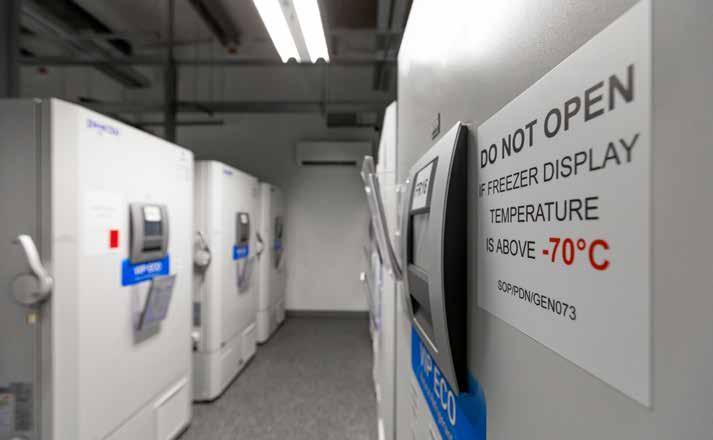
30 Secrets to Packaging Ultra Low Temperature Products: What Every Manufacturer Should Know Advanced Therapy Medicinal Products (ATMPs) offer groundbreaking opportunities for treating injuries and disease, for cases of severe, untreatable or chronic diseases that do not respond adequately to more conventional treatments. In many cases, these treatments are curative, making them life altering and even lifesaving. Rob O'Brien and Brian Duffin at Almac reveal some secrets to packaging ultra low temperature products.
34 Single-Use Technology in Cell and Gene Therapies: Transferable Lessons from the Bioprocessing Industry
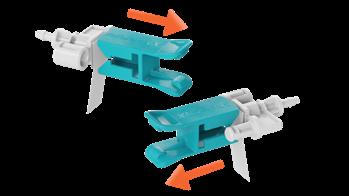
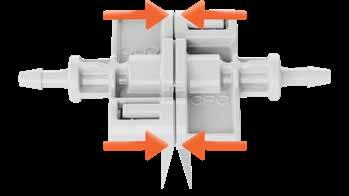
The biopharmaceutical industry has experienced significant diversification, innovation and breakthroughs in recent years. For instance, gene and cell therapies in development can both treat diseases in new, more effective ways and address rare diseases for which treatment options have not previously been available. The Office of Tissues and Advanced Therapies (OTAT), a branch of the U.S. Food and Drug Administration, has more than 20 gene and cell therapies listed as approved, with nearly 1,000 gene therapy molecules active in the pipeline. Amber Sherrick at CPC Biopharma will focus on one of the most important but often overlooked decisions when developing a single-use-based process – the correct connection technology.
APPLICATION NOTE
38 How to Speed Up Vaccine Development and Production with Genetic Vaccine Technology
The COVID-19 pandemic has been challenging and disruptive for societies globally, forcing us to adapt ways of working
and living to safeguard vulnerable people from infection. The outbreak has also fostered creativity and innovation when it comes to adapting to change, particularly in the pharmaceutical and healthcare spaces as we have sought out treatments and care approaches to save lives. Recipharm will explore the challenges and pitfalls in developing new genetic vaccines, and in manufacturing them following approval. In addition, we will discuss how strategic partnerships with expert contract development and manufacturing organisations (CDMOs) can support vaccine developers to bring their innovations to market.
42 Optimisation of a Quality Control Method for Identity, Purity and Quantity for Oligonucleotide Therapeutics
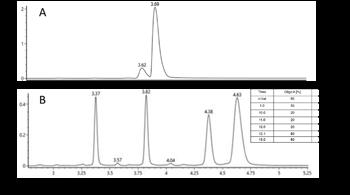
Full length messenger ribonucleic acid (mRNA) based vaccines came into fame in the aftermath of the 2019 corona virus outbreak, which has rapidly developed into a global pandemic. The two mRNA vaccines developed by Moderna and BioNTech/ Pfizer were the first mRNA therapeutics to be granted an Emergency Use Authorization by the EMA and US-FDA and proved to be a safe and efficacious treatments against COVID infection. In this application note A&M STABTEST wants to present an LC-MS based platform method for the determination of the identity, purity and quantity for oligonucleotides and which parameters are worth investigating to optimise the method in terms of chromatographic resolution of impurities.
THERAPEUTICS
46 Cancer Vaccines Getting Personal Cancer is a leading cause of death worldwide according to World Health Organization. Research is focusing on novel treatment options for cancer patients. Chemotherapy has been widely applied against various tumours, but it comes with severe side effects. Precision medicine, also known as personalised medicine, is a new way to fight cancer. It uses information about each individual’s tumours and the specific mechanisms that are driving the progress of disease, in order to apply a targeted therapy for cancer cells. Vaccines have been used for the prevention of infectious diseases. Panagiotis Parsonidis and Ioannis Papasotiriou at Research Genetic Cancer Centre (RGCC) S.A, discuss the development of neoantigen-based vaccines, their mechanism of action, the regulatory framework, the clinical landscape of personalised cancer vaccines and limitations in development.
SUPPLY CHAIN MANAGEMENT
48 Meeting Growing Demand: Fill-finish and Cold Chain Strategies and Tactics
The demand for contract development and manufacturing organisations (CDMOs) offering fill-finish and cold chain logistics services is on the rise. Driven by the COVID-19 pandemic, there is increasing need for external partners to produce and distribute treatments and vaccines. CDMOs also face the challenge of adapting to the development and manufacture of new and more complex biologics, such as cell and gene therapies (C>s) and mRNA technologies. David King at Samsung Biologics, discusses the challenges CDMOs face meeting the growing global demand for high-capacity fill-finish and cold chain capabilities. Explaining how careful organisation and effective communication can support more successful drug programs, David offers his perspective on the strategies and tactics it takes to deliver a better program and patient outcomes.
CONTAMINATION CONTROL
Your CCS should be a living set of documents, that drives continuous improvement throughout a facility’s entire manufacturing process
MATT COKELY
SENIOR GLOBAL TECHNICAL CONSULTANT
10+ years’ pharmaceutical experience specialising in microbiology
IRCA-accredited GMP Associate Auditor
Subject matter expert in regulations for cleaning, disinfection and residue management
Renowned speaker on cleanroom contamination control with best practice application technique expertise
Our international team of Global Technical Consultants know what they’re talking about
Request the eBook from ecolablifesciences.com/CCS for more information or speak to your Ecolab account manager to arrange an in-depth assessment of your Contamination Control Strategy.
Foreword
For pharmaceutical applications of plasmid DNA, either direct or indirect, certain quality standards are required. Whereas for direct gene transfer into human "Good Manufacturing Practice" (GMP) grade is mandatory, for GMP production of, e.g., viral vectors (AAV, etc.) the plasmid DNA used needs not necessarily be produced under GMP.
Gene therapy involves inserting a new section of DNA into a patient’s cells, often encoding a healthy gene to replace a disease-causing copy. This DNA is delivered by viral vectors which are usually built from plasmids. Katie Roberts at OXGENE examines how processes for the design and manufacturing of AAV and lentivirus plasmids can be constructed to meet the quality, regulatory and timescale challenges of bringing a new drug to market.
Metabolic disturbances have been associated with many human diseases, including cancer, diabetes, and cardiovascular disease. Metabolomics, a rapidly growing member of the –omics family, investigate cellular metabolism by quantifying metabolites on a large scale and provides a link between metabolic pathways and the upstream genome that governs them. With the advances in analytical technologies, metabolomics is becoming a powerful tool for identifying diagnostic biomarkers of diseases, elucidating the pathological mechanisms, discovering novel drug targets, predicting drug responses, interpreting the mechanisms of drug action, as well as enabling precision treatment of patients.
Metabolomics has expanded hugely in the last 10 years, as a result of the growing realisation of its value in driving advances in food and nutrition, agriculture, and especially healthcare. But with this has come the need to improve the ability of untargeted analytical methods to tackle the highly complex mixtures common in metabolomics. Prof. Zheng-Zhu Principal and Lucy Woods at Bruker Daltonics examine this challenge and look at the potential offered by the emerging technique of ion mobility spectrometry with mass spectrometry (IMS–MS).
IBI – Editorial Advisory Board
• Ashok K. Ghone, PhD, VP, Global Services MakroCare, USA
• Bakhyt Sarymsakova – Head of Department of International Cooperation, National Research Center of MCH, Astana, Kazakhstan
• Catherine Lund, Vice Chairman, OnQ Consulting
• Cellia K. Habita, President & CEO, Arianne Corporation
• Chris Tait, Life Science Account Manager, CHUBB Insurance Company of Europe
• Deborah A. Komlos, Senior Medical & Regulatory Writer, Clarivate Analytics
• Elizabeth Moench, President and CEO of Bioclinica – Patient Recruitment & Retention
• Francis Crawley, Executive Director of the Good Clinical Practice Alliance – Europe (GCPA) and a World Health Organization (WHO) Expert in ethics
• Hermann Schulz, MD, Founder, PresseKontext
• Jim James DeSantihas, Chief Executive Officer, PharmaVigilant
The biopharmaceutical industry has experienced significant diversification, innovation and breakthroughs in recent years. For instance, gene and cell therapies in development can both treat diseases in new, more effective ways and address rare diseases for which treatment options have not previously been available. The Office of Tissues and Advanced Therapies (OTAT), a branch of the U.S. Food and Drug Administration, has more than 20 gene and cell therapies listed as approved, with nearly 1,000 gene therapy molecules active in the pipeline. Amber Sherrick at CPC Biopharma will focus on one of the most important but often overlooked decisions when developing a single-use-based process – the correct connection technology
The COVID-19 pandemic has been challenging and disruptive for societies globally, forcing us to adapt ways of working and living to safeguard vulnerable people from infection. The outbreak has also fostered creativity and innovation when it comes to adapting to change, particularly in the pharmaceutical and healthcare spaces as we have sought out treatments and care approaches to save lives. Recipharm will explore the challenges and pitfalls in developing new genetic vaccines, and in manufacturing them following approval. In addition, we will discuss how strategic partnerships with expert contract development and manufacturing organisations (CDMOs) can support vaccine developers to bring their innovations to market.
I would like to thank all our authors and contributors for making this issue an exciting one. We are working relentlessly to bring you the most exciting and relevant topics through our journals.
Beatriz Romao, Editorial Manager
• Jeffrey W. Sherman, Chief Medical Officer and Senior Vice President, IDM Pharma.
• Mark Goldberg, Chief Operating Officer, PAREXEL International Corporation
• Maha Al-Farhan, Chair of the GCC Chapter of the ACRP
• Rick Turner, Senior Scientific Director, Quintiles Cardiac Safety Services & Affiliate Clinical Associate Professor, University of Florida College of Pharmacy
• Robert Reekie, Snr. Executive Vice President Operations, Europe, Asia-Pacific at PharmaNet Development Group
• Stanley Tam, General Manager, Eurofins MEDINET (Singapore, Shanghai)
• Stefan Astrom, Founder and CEO of Astrom Research International HB
• Steve Heath, Head of EMEA – Medidata Solutions, Inc
Cost Savings – Discover Four Benefits of the Used Equipment Market for Your Company
The UK demand for good, late, low-hours used equipment and machinery has burgeoned during the last 12 months with no sign of demand slowing down. Since the Covid lockdown and a slowdown in manufacturing, OEMs and main dealers have been running low on stock, with delivery times of new machines now stretching into 2022, driving interest in good used equipment, not just in the UK, but globally.
Across the globe, countries’ economies have been severely impacted by the arrival of the Covid-19 pandemic, and we still are seeing and feeling the consequences. Because of the uncertainties brought about, many companies have seen great economic losses and have adopted new strategies to overcome the situation. Cost reduction is an opportunity that can positively benefit companies in the midst of recovery, and can be a great ally in world of used goods. As many industries continue their journeys back from a challenging 2021, global demand for used equipment continues to increase. Many businesses remain wary of making big investments in new machinery, while supply chain issues have hit delivery levels for new equipment. This shift to used machinery purchases has coincided with several original equipment manufacturers (OEMs) reporting supply chain issues due to the pandemic. Moreover, the cost of purchasing new equipment has increased significantly.
Choosing to buy or sell used equipment can yield savings up to 75% for a company. “To remain active in the market and without losses, companies need to look for ways to meet these new needs,” says Roberta Bosignoli, Operations and Business Development Manager at EquipNet.
There are four main benefits of entering the used equipment market:
Reduced Maintenance Costs
Keeping equipment up and running generates maintenance costs, a need for additional labour, and additional expenses such as energy consumption. Selling equipment that no longer has functionality for a company can bring significant opportunities for cost reduction, in addition to profit from the value of the product.
Reduction in Depreciation Costs
Depreciation expense is the amount lost from general wear and the expected life of a piece of equipment. By selling a product that is unused and no longer contributes to revenue generation through lack of use, it is possible to eliminate depreciation and performance costs.
Tax Reduction and Insurance
Selling unused or unneeded equipment can reduce the cost of taxes on the piece of equipment itself. Also, it is possible to
achieve reduction in insurance costs. Often, unneeded pieces of equipment are still covered by insurance, so determining what needs to be covered and what can be removed can help save money as well.
Service and Warranty
When buying used equipment from a reliable company with a specialised focus, it is possible to verify, through a registration request, if a piece of equipment has received proper maintenance during its life. This serves as a guarantee that the asset is in good condition and will perform well for a company.
Sustainability
In 1987, the United Nations coined the term sustainable development. They said economic development that is ‘sustainable’ meets “the needs of present generations without compromising the needs of future generations.” A sustainable business, or a green business, is an enterprise that has minimal negative impact or potentially a positive effect on the global or local environment, community, society, or economy—a business that strives to meet the triple bottom line. Running an environmentally-friendly business helps to promote sustainability. Reducing the impact on the environment and preserving natural resources is an organisation’s responsibility, a concept that promotes sustainability and saves costs. By recycling and reusing surplus equipment, you reduce waste. Turn surplus assets into assets that drive sustainability within your organisation by selling your unwanted equipment. EquipNet has diverted 198,717 tons of waste from the landfill.
Benefits Through Sustainable Practices by Selling your Surplus Equipment:
Landfill Avoidance
Substantial metric tons of surplus equipment previously destined for landfill is diverted for Re-Use. Waste diversion means reusing or recycling materials that would otherwise be buried in the landfill. Diverting materials like metals, organic waste, electronic, and hazardous waste from the landfill helps stop the production of toxic leachate.
Environmental Recycling
Through our strategic partnership with a leader in electronic recycling, EquipNet provides an environmentally friendly, safe and secure recycling program that complies with local and federal EPA guidelines.
Financial
Surplus assets previously “hidden” across the enterprise are unlocked to be redeployed (internal) or remarketed (external). Redeployed surplus equipment extends its useful life, as well as delivers substantial cost avoidance to the enterprise.
Social
Serviceable surplus assets that lack residual value (internal
or external) can be donated to universities, school systems, non-profits, and developing regions.
“Sustainability” is more than just another trendy buzzword; it is a shift in thinking and behaviour that positively impacts our environment and even our lives. But everyone needs to do their part, which means that more businesses need to embrace and engage in sustainable practices wherever possible. According to the Center for Climate and Energy Solutions (C2ES), roughly an estimated 19 percent of domestic direct emissions that negatively affect the environment come from companies operating in the manufacturing space. For this reason, there is a tremendous push to get more of these companies to embrace sustainable manufacturing.
What Sustainable Manufacturing Means in a Modern-Day Society
Sustainable manufacturing refers to the creation of manufactured products via economically-sound processes that limit the potential for adverse environmental effects while, at the same time, helping to conserve energy and natural resources. Further, sustainable manufacturing aids in conserving energy and natural resources, all while enhancing employee, community, and product safety. Yes, it is that much of a win-win for the environment and everyone involved. One of the best ways to embrace sustainable manufacturing is by reusing equipment whenever possible. To help illustrate this point, imagine if an office worker used just one less staple each day, substituting it with a reusable paper clip, this simple act would reduce steel production by roughly 120 tons in one year.
How Reusing Equipment Can Improve Sustainability and Boost Profits
While a single office worker cutting back on how many staples they use in a day does improve sustainability, it is not nearly enough. Companies and individuals will have to think bigger and act bolder if the goal is to make real headway in maintaining or improving sustainability. One way to get the proverbial ball rolling is by reusing and recycling surplus equipment. That said, many of the machines critical to manufacturing are available second-hand, from the ones that assemble raw materials to the ones that produce the finished product to be sold to consumers and everything in between. Going this route keeps these machines out of landfills while improving sustainability and, in turn, making it easier for companies to stay within budget.
It is also worth noting that these lower-priced pieces of equipment generally come with a warranty of some kind. And from an insurance standpoint, used manufacturing equipment is also much cheaper to insure. What’s more, if you ever decide to sell, you stand to recover a significant percentage of your original investment. Studies show that used manufacturing equipment depreciates much slower than their new counterpart. All in all, with used manufacturing equipment, you will still be able to churn out the same volume of products in the same timeframe but with less overhead costs. You will also be doing your part to preserve the environment for future generations.
Reusing or repurposing equipment doesn’t always mean buying second-hand; redeployment falls under this umbrella as well. In the name of sustainability, some manufacturing businesses will redeploy equipment from a previous facility to a new one rather than starting from scratch by buying new equipment. While they can vary from one manufacturing business to the next, some of the equipment that is purchased second-hand or redeployed the most are as follows:
• Milling machines
• Moulding machines
• Spot welding machines
• Conveyor and assembly stations
• Bottom Line
• Laboratory Equipment
All in all, reusing or otherwise repurposing manufacturing equipment, irrespective of the business or industry you are in, can go a long way toward boosting sustainability, lowering your business expenses, and helping the environment.
Greg Feinberg
VP of Business Development at EquipNet with 12+ years of experience in asset management solutions for laboratories and research facilities
Email: gfeinberg@equipnet.com
Supplement Sector Should Carve its Own Path Toward Innovation
Supplements are a class of commercially successful health products able, in the latest 20 years, to generate a great excitement among scientists and the media. Positioned between food and pharmaceuticals, supplements promise to provide a variety of health benefits without the burden of ingesting synthetic chemicals. But after so many years have all of these been delivered? Not completely, many formulations often make use of synthetic excipients and/or adjuvants, and despite a common positive perception about their health benefits, they still struggle to validate their efficacy according to reliable pharmaceuticals standards.
What is Efficacy and How is Measured
Efficacy (Emax) is defined as the maximum biological response triggered by the administration of a dosed agent,1 and it is considered the most valuable metric to evaluate the health benefit of a medicine. Efficacy can be evaluated according to 3 study types:2 observational (epidemiology), mechanistic (laboratory) and interventional studies (clinical trials), and each have is own set of pro and cons (Table 1). Despite all of them equally contribute to unravel the physiological action of a substance, clinical studies are by far the most highly regarded. They are indeed able to isolate, from any other source of interference, the chain of events started by the administration of a substance, continued by the stimulation of the tracked biological target and terminated with a measurable health benefit. This isolation is what provides an unquestionable prove on how the health benefit is only the consequence of the administration of the given substance. This incontestable authority and reliability have lured the supplement sector to adopt pharmaceuticals trials as preferred procedure to validate the efficacy of their products. But, along these years such approach has led to a sharp contrast among epidemiology
and trials results.1,3 Two main factors must be considered to understand such discrepancy, the first is that trials were developed for pharmaceuticals, which physiological action is quite different from supplements, and secondly often supplement formulation lacks a proper delivery strategy.1,6
Pharmaceuticals and Supplements are Antithetical
Pharmaceuticals are mostly synthetic molecules not present in our body, designed and screened to narrow their activity to one or few biological targets, and intended to be present in the body for a limited time, which is the opposite of how most supplements work. Supplements instead are natural molecules mostly part of our diet, involved in many of the homeostasis processes, and which action mechanism often involve multiple targets that need to work additively or synergically in a complex biochemical network ultimately producing the physiological effect. These differences make difficult to apply pharmaceuticals trials to supplements. Clinical studies are designed to isolate the relationship between molecule dose and target response, excluding the complex biochemical network supplements usually use to carry out their action, leading, more often than not, to ambiguous clinical data. It is indeed mounting the idea that clinicals trials are not the ideal tool to measure supplement efficacy, especially when a lengthy observation time is required or rare diseases is involved.4 Supplements industry should not simply embrace pharmaceuticals standards and procedures, but instead should carve its own path toward an authoritative efficacy validation. Already in the early 1995 Gladys Block5 proposed as solution that a combination of epidemiology and laboratory study should be used to determine whether or not a supplement is affective or else.
The Importance of Delivery Strategy for Supplements
This is actually a major cause leading to inconsistent results even when the trial has been correctly designed.6 Indeed,
a poor dosage form design exposes a portion of the tested population to sub-therapeutic concentrations of the active compound, preventing to trigger any biological response. This happen because these formulations are unable to protect the active compound from unpredictable dispersion of its starting dosage, which is operated by: degrading agents (H3O+, digesting enzyme); off-target release; burst effect; poor water solubility preventing the active compound to enter in solution in the unstirred water of the glycocalyx. The extend these processes influence the efficacy of old-fashioned supplements, with no delivery strategy, differs in each individual, who possess unique gastric/enteric pH fluctuations and digesting enzymes kinetics, making effective for one what is ineffective for someone else. To maximise the success rate of an expansive interventional study, the dosage form should be designed either to minimise the dispersion of the initial dosage and to maximise the solubility of the poorly soluble actives in the absorption site. The pharmaceutical sector, from very long knows the importance of controlled release technologies to prevent efficacy fluctuations from patient to patient and achieve therapeutic consistency among large and heterogeneous patient cohorts. To solve this issue, the supplements industry has already started a transfer of pharmaceutical technologies to control the supplement delivery as for instance the additives E1205, E1206 and E1207, a family of synthetic methacrylate co-polymers mitigating some of the formulation related issues as: degrading agents (H3O+, digesting enzyme); off-target release; burst effect. These types of additives are pivotal for the nutraceutical innovation, enabling the manufacture of supplement delivery systems narrowing the variance of biological response to the same supplement. But the supplements formulated with these chemicals, certainly exhibit higher technological performances, but betray the costumer expectation for a cleaner product. Several market researches state as the growing public attention for the wellbeing and environmental issues push the customers toward the so called clean-label and/or all-natural products, generally defined on three consumer expectations: free from chemicals; simple ingredient list; minimally processed ingredients.7 Indeed, some 63% of consumers consider that a short and simple ingredient list is of great importance,8 39% of consumers would switch brand in favour of those providing clearer, more accurate product information and that 68% would pay more for products not containing ingredients that they perceive are bad for them.9
Conclusions
The growing demand for higher standard of life is driving up the number of people pursuing healthier life styles in cleaner
environments. To satisfy such demand the supplements sector needs to market green and effective products. Nowadays supplements with higher efficacy are formulated with synthetic adjuvants as methacrylate copolymers E1205, E1206, E1207, which despite safe to use are a treat to the environment and betray the costumer vision of supplements as green and clean alternative to synthetic pharmaceuticals. While formulating a supplement not only an effective delivery strategy should be designed to increases the bioavailability of the active compounds, but also should be avoided the use of synthetic molecules. Instead, the use of only green, clean and sustainable ingredients that do not harm the environment, should be considered, there are indeed a number of food derived proteins able to substitute synthetic adjuvant, the sector is thus responsible to invest in innovations that avoid synthetic ingredients in favour of natural ones.
REFERENCES
1. S. Holford, Understanding the dose-effect relationship: Clinical application of pharmacokinetic-pharmacodynamic models Clin. Pharmacokinetic, 1981.
2. McClements, Chapter 6, Nutraceuticals: Superfoods or Superfads?, in Future Foods, Springer Nature Switzerland AG, 2019, p. 189.
3. Peter H. Gann, Randomized Trials of Antioxidant Supplementation for Cancer Prevention, American Medical Association, January 7, 2009 – Vol 301, No. 1
4. Health Institute for Work & Health, At Work 83 (Winter 2016), Institute for Work & Health, 2016. Available: https://www.iwh. on.ca/newsletters/at-work/83. Page 2, in Cohort studies, case control studies & RCTs.
5. Block, Are clinical trials really the answer?, The American Journal of Clinical Nutrition, Volume 62, Issue 6, December 1995, Pages 1517S–1520S
6. Hardy G, Hardy I, McElroy B. Nutraceuticals: a pharmaceutical viewpoint: I. Curr Opin Clin Nutr Metab Care. 2002 Nov;5(6):671-7.
7. Ingredion, “Ingredion proprietary research Consumer Study,” MMR, USA, 2015.
8. Natural Market Institute, 2015.
9. Nielsen Company LLC., “It’s clear: transparency is winning in the u.s. retail market” 2017.
Montalbano, MSc, PhD, master degree in pharmacy, PhD in medicinal chemistry, founder of Technology Scientific S.r.l. green delivery system for supplements.
Email: f.montalbano@tecscien.com
Francesco Montalbano
Francesco
Biotechs, Start as You Mean to Go on –Free from the Workaround Data Management Practices that Beset Big Pharma Regulatory & Compliance
As fresh new biopharma start-ups work up their product innovation and bring their developments to market, it seems logical that they should identify optimal processes and systems from the outset, learning from the inefficiencies that have hampered data management in Big Pharma. Frits Stulp and Duncan van Rijsbergen of Iperion –a Deloitte company, advise on what modern best practice might look like.
The latest evidence – if we needed it – that the surging biopharma industry is big business can be seen in new plans to establish a major biotech hub in Amsterdam, in the orbit of the European Medicines Agency’s new base. The EU recognises the huge opportunity here, in transforming patient outcomes through cutting-edge therapies, and it wants European biotechs to play a dominant role.
Whether ambitious upcoming biotechs have their sights set on being the ‘world’s first’ in their field, or a lucrative exit through a strategic company sale, starting out as they mean to go on – with reliable 360-degree product and process visibility – will set them in good stead for the future they envisage. So what might all of this look like, practically?
Start with What Not to Do
Ordinarily, the temptation for any young and aspiring company would be to look to more established players for how to keep records and master regulatory rigour, yet in life sciences the big players are not the best model to follow when it comes to data management. These are companies which have brought in technology systems typically on a targeted, need-oriented basis, often behind the curve and under a series of restrictions including ‘what was available at the time’, and ‘what would work with the current siloed legacy IT estate’.
So, seeking to stand on the shoulders of giants is not particularly good advice in life sciences information management. Not unless it’s to gain a vantage point across all the difficulties they have experienced and thus avoid repeating them.
Rather, for these young, dynamic organisations which have the luxury of a clean slate to start from, it makes sense to capitalise on emerging best practice: being data-driven from day one.
If You Have to Do It, Do It Right
The first and immediate challenge biotechs have is that excelling scientifically has been their primary focus up to now. Any investment they have secured will be channelled into the 1–2 compounds they’re working on, and into successfully bringing them to market in the fastest and most efficient way possible. At such an early stage, they may not appreciate the need to capture information in a structured way or to invest in formal infrastructure.
Yet, even at an early investment stage or as an academic start-up, biotech teams will be generating and compiling information anyway, whether in the form of lab reports or some other record or output. If this activity is unstructured (informal manual notes, spreadsheet-based readings, Word documents), the biotech will only be storing up problems for later. When, eventually, they’re ready to go to market or collaborate with a large entity, they’ll need to find and collate all of that information to demonstrate that readiness and smooth the path to authorisation. And this is where they will begin to experience the first pains of poor information management.
Bring Science & IT Together in the Lab
Far better advice is to embrace information or data management considerations and appropriate technology right from the outset - which starts with appointing a ‘chief technology officer’ or information/data ‘evangelist’ and bringing them to the table for even the earliest scientific discussions.
This way, the biotech adopts a data-based mind-set and discipline from day one, understands the value and role of all of the information they capture, and maintains this in a way that will make their lives easier and help bring products to market in as frictionless a way as possible.
One of the important side-benefits of establishing data/ information management rigour from the start is that it promotes introspection: so that the team establishes and maintains a rich understanding of their product from every angle – something Regulators keenly encourage.
Make Data Management a Mind-Set, Not an IT System
In the old model, followed by Big Pharma, companies might have set out to internally develop or procure a specified IT system, but in reality the objective should be to develop a data-based mind-set and strategy which is intertwined with everything the company does.
Although capturing rich CMC data won’t necessarily speed up product approval, getting into the habit of recording everything in a standardised, accessible and combinable way will set the company in good stead for that 360-degree transparency all companies need to aim for. (And of course CMC records reflect a lot of the variation information that Regulators will need.)
Comprehensive clinical data, meanwhile, could support earlier review and approval of products – the Holy Grail for ambitious start-ups with important new advanced therapies under development.
Start with the Big Picture, Not the Immediate Use Case
Traditionally, Big Pharma has made information management the preserve of individual departments – e.g. Quality, CMC or Safety – in support of a targeted use case: most notably marketing authorisation holder (MAH) dossiers for regulatory submission.
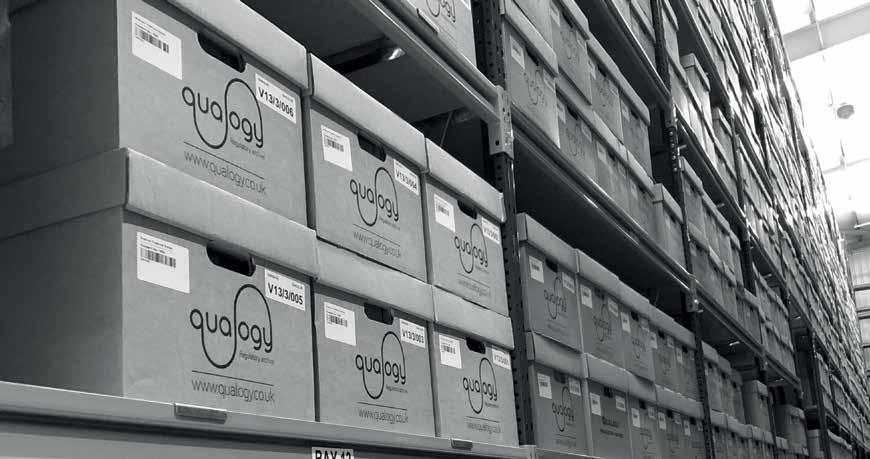
Qualogy is a GxP regulatory archive and is run by an experienced team whom together have over 35 years’ experience in the industry. We pride ourselves on our high-quality service creating a professional yet personalised approach to handlinig your data. At Qualogy we understand the importance of your data and therefore we do not just see a box - we value its importance.
Our stand-alone archives are designed for security and protection of your material, with temperature and humidity-control and fire protection. With multiple quality checks we ensure accuracy, professionalism and security every time.
Our experienced and trained Qualogy drivers o er a door-to-door courier service from anywhere in Europe. As a dedicated Regulatory Archive, Qualogy has exceptionally high standards and vast knowledge of the GxP regulations. We can adapt our services to support your business needs, providing a unique and e cient customer experience.
Regulatory & Compliance
Data flows in each silo to inform individual summaries, overlaid with a product description – when, logically, the information flow should be the other way round. Even then, the picture isn’t complete: information should be feeding in to this picture from the earliest research stages, from lab-based substance management at a cellular level. Capturing every insight in a structured way would enable biotechs to track and report on every aspect of what they do, at any point now or in the future.
Think Optimised ‘Architecture’, Not Definitive IT Solution
To lay the right foundations for this data-driven ideal, we advocate that these companies take an architecture-based approach to the way they capture and manage information, rather than trying to find the optimum software application to meet all of their needs today and tomorrow. This involves embracing data standards, and ensuring that information can be exported and combined easily without risk of overlap or error.
Keep Pace With – And Play an Active Role In – Evolving Data Standards
One of the huge advantages biotechs have today with their greenfield setups is that they can capitalise on the immense amount of work that has gone into setting new data standards and data exchange mechanisms, and start as they mean to go on. The latest data standards in pharma include CDISC1 and ISO IDMP as currently being implemented in the EU.2
Just as importantly, there are industry consortia working proactively to encourage standards-based data exchange to accelerate the safe delivery of product benefits to patients. One of the latest and most exciting examples of this, with direct relevance to biotechs, is Accumulus Synergy,3 which is developing a global information exchange platform to transform how drug innovators and health regulators interact, using comparable parcels of data that have been compiled in a standardized way. Another is Pistoia Alliance,4 which aims to promote life sciences collaboration and accelerate innovation.
The fact that biotech products, by their very nature, are more complex than more established pharma lines provides a compelling reason for biotechs to command a proactive role in these consortia and discussion forums about the future of data management and exchange.
Beware the Promises of Platforms & ‘Data Lakes’
Although individual software vendors are making the right noises about making it easier to combine and manage data, many promote systems that draw from data lakes – e.g. to generate dossiers on the fly. The trouble is, that often these platforms fail to make sufficient allowance for context/what the information will be used for. This is an oversight biotechs can overcome by taking more of an architectural view of how they’ll capture and use data, which in turn points back to the need to link their respective technology and data strategy with their scientific ambitions from day one.
Develop a Data Vision
In terms of ‘what good looks like’, the ultimate aim should be for biotechs (indeed, all pharma companies) to work towards a ‘living dossier’ – a live record of a product which tracks its
evolution from conception. Keeping this vision in mind will help ambitious young start-ups avoid investing in unwieldy Regulatory bureaucracy (the huge administrative overheads that have plagued Big Pharma), so that they can focus more of their time and energy on their products and the benefits for patients.
Rethinking the role of data as a young biotech isn’t so much a problem, as an opportunity to redefine what’s possible and get this right from the start, by appointing a data manager early on. The good news is that there is plenty of biotech-specific help out there to ensure teams set out on the right track.
Frits Stulp is Managing Director of Iperion, a Deloitte company, where he leads a team of regulatory/IDMP experts active in various projects to deliver value to both pharmaceutical companies as well as regulators. In addition to having more than two decades’ industry and consultancy experience, Frits is regarded internationally as a subject matter expert on IDMP and he proactively shares his rich knowledge and experience wherever he can.
Email: frits.stulp@iperion.com
Duncan van Rijsbergen
Duncan van Rijsbergen is a specialist in Regulatory Affairs Business Process Improvement, Structured Product Data, and Data Interoperability at Iperion, a Deloitte company. Iperion, now part of Deloitte, is a globally-operating life sciences consultancy firm which is paving the way to digital healthcare, by supporting standardisation and ensuring the right technology, systems and processes are in place to enable insightful business decision-making and innovation.
Email: duncan.vanrijsbergen@iperion.com
needlestick injuries
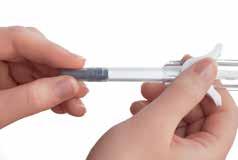
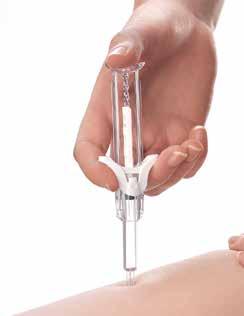
• An unobscured syringe barrel for full drug visibility to create user confidence
• A large, ergonomic plunger head and a smooth finger flange, resulting in an integrated look and feel which provides reassurance
• Optional extended finger flanges for patients with strength and dexterity impairment (applicable to 1mL only)
• The same injection technique as a pre-filled syringe making it intuitive to use
• It cannot be reused or prematurely activated
To find out more visit ompharmaservices.com/ibi-unisafe-march2022 or email pharmaservices@owenmumford.com
Research / Innovation / Development
Overcoming the Challenges of Large-Scale Plasmid Production
Gene therapy involves inserting a new section of DNA into a patient’s cells, often encoding a healthy gene to replace a disease-causing copy. This DNA is delivered by viral vectors which are usually built from plasmids. Plasmids are small sections of genetic material which can be combined to contain all the genes necessary to deliver the gene therapy. Adeno-associated virus (AAV) and lentiviral plasmids are commonly used for gene therapy delivery.
Many challenges associated with manufacturing therapies on a large scale are caused by difficulties in working with plasmids. When manufacturing a plasmid, the final product must be consistent across batches and must not have altered genetic material or other variations that affect quality. Often, small-scale manufacturing processes using adherent cells require significant expertise and process optimisation to adapt to suspension culture for clinical or commercial use.1 There are also regulatory and timescale challenges associated with plasmid production which delay drug development.
In this article, we will examine how processes for the design and manufacturing of AAV and lentiviral plasmids can be constructed to meet the quality, regulatory and timescale challenges of bringing a new drug to market.
Optimising Plasmid Design
To meet the challenge of large-scale production, a plasmid must be able to reliably produce a high yield of viral product. Technologies which make plasmid design easier and faster are beneficial for achieving this goal, facilitating rapid creation of custom constructs and streamlined optimisation of plasmid design for high viral yields. Modular approaches to plasmid design, for example, utilise huge catalogues of DNA elements and can make it simple to swap elements in and out of a plasmid. These approaches can be used for optimised design of AAV and lentiviral plasmids by allowing rapid generation of custom constructs.2
Improved AAV Packaging Plasmids
The adeno-associated virus (AAV) genome is a single strand of DNA comprised of a rep gene, which encodes four regulatory proteins involved in genome replication, and a cap gene, which is responsible for the production of three capsid proteins. AAV is not infectious by itself; it requires a co-infecting helper virus, like adenovirus or herpes simplex virus to infect a host cell, and then relies on the cell’s own DNA replication machinery to replicate its genome, since AAV does not encode its own polymerase. AAV plasmids can be designed with large-scale manufacturing and regulatory preferences in mind.
Most rAAV production systems retain the configuration of rep and cap genes found in the viral genome. However, since the
cytotoxic and cytostatic effects of rep are well documented,3,4 it can be beneficial to minimise rep expression by placing it under the control of a different promoter to cap.
Alongside the RepCap and gene of interest plasmid, AAV production also requires adenoviral help. This can be provided by co-transfection of the core adenoviral helper genes in a third plasmid or by adenoviral infection. The latter generally results in much higher AAV yield, but also significant adenoviral contamination, which then requires costly downstream processing to remove. Simplifying the Ad helper plasmid can improve helper-free AAV production. A reduced plasmid size can save costs as smaller plasmids often grow better than larger ones, giving higher yields and requiring fewer DNA preparations. The removal of additional adenoviral hexon gene sequences is also regarded favourably by regulators, a benefit when bringing a new drug to market.
Improved Lentiviral Packaging Plasmids
Lentiviral plasmids co-opt the ability of viruses to deliver their own genetic material into cells, utilising this function for the delivery of gene therapies. Originally derived from the human immunodeficiency virus, lentiviral plasmids have been optimised throughout the last 20 years. Multiple “third-generation” lentiviral plasmids have entered clinical trials.5 Like AAV plasmids, they can be designed with manufacturing and regulatory requirements in mind.
To deliver a gene therapy, a lentiviral system needs a combination of DNA elements with complementary functions. These include genes which encode Gag, a polyprotein that forms the viral core structure; Pol, the reverse transcriptase; Rev, which is essential for HIV-1 protein expression; and VSV-g, responsible for fusing the viral envelope to the host cell membrane. However, the system must be prevented from producing a virus capable of its own replication.
Third generation plasmids are safer than second generation systems because the genes required for a replication competent lentiviral, such as gag-pol and rev, are kept in different plasmids. This means that an extra recombination event would be required to bring these genes together. Third generation systems also eliminate tat, a gene that activates viral transcription. This means that when the viral DNA integrates into the host genome, it doesn’t activate transcription, so even if a recombination event were to occur, the provirus would still not be transcribed.
However, the enhanced safety features of a third-generation lentiviral packaging plasmid system often come at the cost of viral titre. Plasmids can be further optimised to counteract this problem and therefore to meet the demands of large-scale manufacturing.
GMP Grade AAV and Lentiviral Plasmid Manufacture and Supply Manufacturing plasmid DNA according to good manufacturing
Diagnostic qPCR assay for detection of SARS-CoV-2 and simultaneous detection of mutation variant in one reaction.
SARS-CoV-2 qPCR Analyses
Generic
U Up to 6 assays needed for variant determination
L Less throughput
Higher costs
M More PCR capacities are needed
SARS-CoV-2 qPCR assay including variant determination of Delta and Omicron = 99,9% of all positives*
* https://covariants.org/ ; Dez.08.2021
Direct determination of current VoCs in one qPCR reaction
Compatible with all standard qPCR machines
Easily adjustable to newly emerging variants
Save hours of hands-on time and halve your qPCR running time!
We offer free trial assay kits including the possibility of a digital meeting for training. Our production capacity is able to handle large volume orders on short notice. GenXPro assays are constantly reviewed and improved: Should a new VoC emerge, the kit will be adapted immidiately The assay is for Research Use Only, CE-validation is ongoing
Fon: +49(0)69-95739602
Fax: +49(0)69-95739706
Research / Innovation / Development
process (GMP) grade is required for clinical applications. As such, a number of companies manufacture and supply AAV and lentiviral plasmids at clinical and commercial GMP grades.
This requires careful planning from the beginning. For example, cell banks should be set up and downstream processes and analytical techniques assays should be confirmed before GMP manufacture. Antibiotic-free manufacturing processes are often advantageous; they are preferred by regulators for reducing the spread of antibiotic resistance and the risk of adverse reactions.6 Developers may find it beneficial to work with a contract development and manufacturing organisation (CDMO) with extensive process development and testing expertise, established quality management systems, flexibility in manufacturing scale, and antibiotic-free processes, and the ability to provide the required documentation for investigational new drug (IND) filing.
Plasmid supply is a recognised bottleneck within the cell and gene therapy industry, with long turnaround times causing substantial delays for the delivery of GMP products. To meet the industry need for rapid turnaround, CDMOs can keep reliable stocks of raw materials and combine their molecular biology expertise with investments in processes and facility development for shorter turnaround timescales.
Through a combination of novel plasmid design technologies and robust GMP manufacturing processes, the industry is working to address the challenges of large-scale plasmid production and helping to accelerate time to market for new therapeutics.
REFERENCES
1. Manceur AP et al. (2017). Scalable Lentiviral Vector Production Using Stable HEK293SF Producer Cell Lines. Hum Gene Ther Methods 28, 330–339.
2. Patent GB2496849.
3. Yang Q et al. (1994). Characterization of cell lines that inducibly express the adeno-associated virus Rep proteins. J Virol 68, 4847–4856.
4. Schmidt M et al. (2000). Adeno-associated virus type 2 Rep78 induces apoptosis through caspase activation independently of p53. J Virol 74, 9441–9450.
5. Milone MC and O’Doherty U (2018). Clinical use of lentiviral vectors. Leukemia 32, 1529–1541.
6. Hardee CL et al. (2017). Advances in Non-Viral DNA Vectors for Gene Therapy. Genes (Basel) 8, 65.
Dr. Katie Roberts
Dr. Katie Roberts is Content Manager at OXGENE, a WuXi Advanced Therapies company. WuXi Advanced Therapies, a global Contract Testing Development and Manufacturing Organization (CTDMO), is the advanced therapies business unit of WuXi AppTec and offers integrated platforms to transform the discovery, development, testing, manufacturing, and commercialization of cell and gene therapies for customers worldwide.
Web: www.oxgene.com www.advancedtherapies.com
Research / Innovation / Development
The Potential of IMS–MS for Clinical Applications of Untargeted Metabolomics
Metabolomics has expanded hugely in the last 10 years, as a result of the growing realisation of its value in driving advances in food and nutrition, agriculture, and especially healthcare. But with this has come the need to improve the ability of untargeted analytical methods to tackle the highly complex mixtures common in metabolomics. In this article, we examine this challenge, and look at the potential offered by the emerging technique of ion mobility spectrometry with mass spectrometry (IMS–MS).
Metabolomics – the study of the small molecules produced by cells, biofluids, tissues or organisms – is relatively new compared with its genomic and proteomic counterparts, with the concept being proposed in 1999.1 Untargeted workflows are proving to be a powerful way to probe the inner workings of cells and tissues because of the close link between phenotype and metabolites in a sample as well as upstream proteomic, genomic and environmental factors.
Of the various uses of metabolomics, clinical applications are attracting the most attention. In that field, metabolomics holds particular promise for the discovery of biomarkers for disease diagnosis, understanding disease pathogenesis and progression, developing models for personalised therapeutic interventions, and understanding the effect of genetic modification or environmental variation.
The Challenge of Metabolomic Diversity
Over 200,000 metabolites have been found in the human body, with just over 80,000 of these originating endogenously.2 They fulfil a diverse array of cellular roles, including, for example, intermediates and products of energy production, the synthesis of biomolecules, and signalling. Metabolites typically encompass molecules with masses of 50–1000 Daltons, and include chemical classes as diverse as sugars, lipids, amino acids, fatty acids, phenols and alkaloids.
This diversity presents a challenge to the analyst: finding an analytical technique that can identify and (ideally) quantify this full range of molecules. One method is to focus on particular metabolites of interest, and although this targeted approach has value – for example in pharmacokinetic studies of drug metabolism, and in studies of the effect of therapeutics or genetic modifications on a specific enzyme – the full value of metabolomics is only really revealed from untargeted studies.
Partnering Separation and Compound Identification
This need for complete, preferably unbiased, datasets covering such a broad compound range has placed tight constraints upon the techniques that are suitable for metabolomics studies, with compound identification techniques based on mass spectrometry (MS) being favoured for their high sensitivity and broad applicability.3 However, a key problem with MS is that
distinguishing between compounds with the same nominal mass but different formulae (‘isobars’), or compounds of the same formula but different structure (‘isomers’), is often very difficult and highly resource-intensive. To achieve reliable identifications, it is therefore necessary to pair MS with a separation technique, where liquid chromatography and gas chromatography are both well-established for this task.
Liquid chromatography-mass spectrometry (LC–MS) can cover the full range of human metabolites, and has high selectivity and broad dynamic range.4 It is the most popular technique for metabolomics, currently accounting for about 80% of published studies. Gas chromatography-mass spectrometry (GC–MS) is less well-used, in part because it is only suitable for volatile metabolites with masses below about 650 Daltons, but it does have the benefit of much larger spectral libraries than LC–MS, making automated, untargeted analysis much easier.5
The Emergence of Ion Mobility for Metabolomics
However, even advanced separations based on combining various innovative chromatographic and MS techniques have struggled to adequately resolve the complex mixtures that are a hallmark of metabolomics studies.
This is where techniques based on ion mobility spectrometry (IMS) are now showing promise. Although as a standalone technique it has been around for decades, the use of IMS for biological samples has only really increased since the first demonstration in the mid-1990s that coupling IMS with MS could allow protein conformations to be separated in the gas phase.6Then, the field expanded further after 2007, when the value of the newly-developed ‘travelling-wave’ IMS–MS configuration for biological applications was shown.7
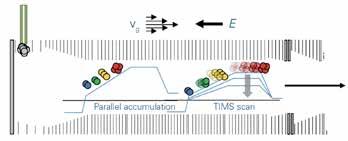
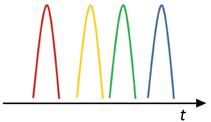
Figure 1: The ‘trapped ion’ configuration of ion mobility spectrometry–mass spectrometry (TIMS–MS). Ions are trapped according to their mobility by the opposing forces of gas flow and electrical field, and are then sequentially released by a decrease of the electrical field (blue lines).
Research / Innovation / Development
The tandem technique of IMS–MS works by separating molecules both according to their mass-to-charge ratio (m/z) and by their reduced mobility in a neutral buffer gas under an applied electric field. The results can be used to calculate the collision cross-section (CCS) of an analyte, which is closely related to its three-dimensional structure.8 There are numerous IMS–MS configurations, of which the type based on ion confinement and selective release (the ‘trapped ion’ method, Figure 1) benefits from a high resolving power that is independent of the path length the ions must travel. In addition, the latest configurations from Bruker also have a duty cycle approaching 100%, and have been shown to be able to decrease analysis times, offering the potential for high-throughput analyses.9
In untargeted metabolomics, the benefit of TIMS allows for the shortening of LC gradients by introducing the additional dimension of separation combined with the high duty cycle. Such a configuration is amenable to the broad range of analytes that can be separated in LC and has the additional capability of separating previously unresolvable isomers. Metabolite identification is also facilitated because it provides another ‘dimension’ of information to complement the existing metrics of retention time, m/z and fragmentation pattern.10 In addition, the CCS values generated by trapped-ion IMS–MS are highly reproducible,11 enabling easy cross-comparison against databases across different instruments and labs,12 and even the use of machine-learning tools to predict the CCS values of unstudied compounds.13
The Potential of Clinical Metabolomics
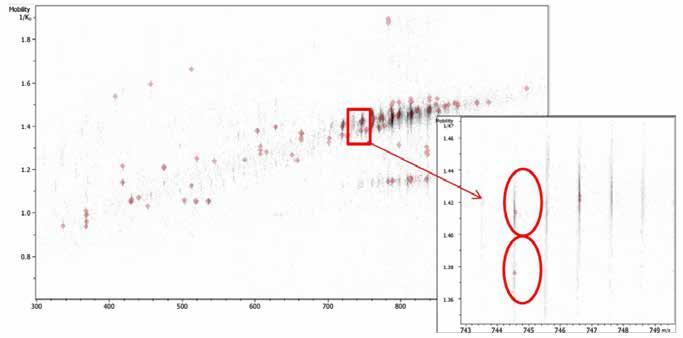
IMS–MS is used in labs worldwide, and although research into metabolomics applications is at an early stage, the technique promises to provide significant healthcare-relevant insights. Recent examples of IMS–MS-based approaches being used include its use to profile and quantify about 200 sterol lipids in the mouse brain,14 to increase the sample throughput for profiling of lipids (Figure 2),15 and to profile lipids in Caenorhabditis elegans 16
In addition, there is a possibility that in the future, metabolomics could be used in clinical settings. One area of study is using metabolomics to probe inter-organ communication. This is just one example, but the potential of TIMS–MS-based analysis is clear, and it is reasonable to predict that within 10 years, a much higher proportion of metabolomics research groups will be taking advantage of the added performance achievable using this analytical approach.
The Power of Progressing Technology
With modern analytical techniques, thousands of metabolites can now be quantitatively measured from minimal amounts of biological material. By performing global metabolite profiling, a deeper understanding of biological mechanisms is being obtained, which has the potential to shape our understanding of cell biology, physiology and medicine.
Trapped ion mobility spectrometry-mass spectrometry (TIMS–MS) has emerged as a powerful technology to address these questions, thanks to its ability to resolve previously inseparable mixtures of isobaric and isomeric compounds, and –by providing collision cross-section (CCS) data – to enhance the identification of small molecules. As a result, it has particular promise for untargeted high-throughput metabolomics, and combined with automated sample preparation and injection, offers the possibility of improving clinical treatments based on the patient’s metabolic profile.
REFERENCES
1. J.K. Nicholson, J.C. Lindon and E. Holmes, ‘Metabonomics’: Understanding the metabolic responses of living systems to pathophysiological stimuli via multivariate statistical analysis of biological NMR spectroscopic data, Xenobiotica, 1999, 29: 1181–1189.
2. The Human Metabolome Database (Version 5.0), HMDB, https:// hmdb.ca/statistics.
3. G.A. Nagana Gowda and D. Djukovic, Overview of mass spectrometrybased metabolomics: Opportunities and challenges, Methods in Molecular Biology, 2014, 1198: 3–12.
2: Analysis of lipids from NIST SRM 1950 reference plasma using LC with trapped-ion IMS–MS. The main image shows the detection of 102 precursors based on m/z and mobility data. The inset shows two co-eluting isobaric lipids that were separated on the basis of their ion mobility.
Figure
Research / Innovation / Development
4. B. Zhou, J.F. Xiao, L. Tuli and H.W. Ressom, LC-MS-Based metabolomics, Molecular Biosystems, 2012, 8: 470–481.
5. O. Fiehn, Metabolomics by gas chromatography-mass spectrometry: The combination of targeted and untargeted profiling, Current Protocols in Molecular Biology, 2016, 114: 30.4.1–30.4.32.
6. D.E. Clemmer, R.R. Hudgins and M.F. Jarrold, Naked protein conformations: Cytochrome c in the gas phase, Journal of the American Society for Mass Spectrometry, 1995, 117: 10141.
7. S.D. Pringle, K. Giles, J.L. Wildgoose, J.P. Williams, S.E. Slade, K. Thalassinos, R.H. Bateman, M.T. Bowers and J.H. Scrivens, An investigation of the mobility separation of some peptide and protein ions using a new hybrid quadrupole/travelling wave IMS/oa-ToF instrument, International Journal of Mass Spectrometry, 2007, 261: 1–12.
8. J.N. Dodds and E.S. Baker, Ion mobility spectrometry: Fundamental concepts, instrumentation, applications, and the road ahead, Journal of the American Society of Mass Spectrometry, 2019, 30: 2185–2195.
9. Bruker launches the timsTOF™ Pro mass spectrometer to enable the revolutionary PASEF method for next-generation proteomics, CSIon PR Newswire, 2017, https://www.prnewswire.com/news-releases/ bruker-launches-the-timstof-pro-mass-spectrometer-toenable-the-revolutionary-pasef-method-for-next-generationproteomics-300520791.html.
10. G. Paglia, J.P. Williams, L. Menikarachchi, J.W. Thompson, R. Tyldesley-Worster, S. Halldórsson, O. Rolfsson, A. Moseley, D. Grant, J. Langridge, B.Q. Palsson and G. Astarita, Ion mobility derived collision cross sections to support metabolomics applications, Analytical Chemistry, 2014, 86: 3985–3993.
11. U. Schweiger-Hufnagel, M. Szesny, A. Barsch, M. Gay, T. Kimhofer, J. Gummer, L. Whiley and J. Nicholson, Incorporating CCS values to enable 4-dimensional annotation of metabolic features [White Paper], Bruker Daltonics, 2021.
12. Z. Zhou, M. Luo, X. Chen, Y. Yin, X. Xiong, R. Wang and Z.-J. Zhu, Ion mobility collision cross-section atlas for known and unknown metabolite annotation in untargeted metabolomics, Nature Communications, 2020, 11: 4334.
13. Z. Zhou, X. Shen, J. Tu and Z.-J. Zhu, Large-scale prediction of collision cross-section values for metabolites in ion mobility-mass spectrometry, Analytical Chemistry, 2016, 88: 11084–11091.
14. T. Li, Y. Yin, Z. Zhou, J. Qiu, W. Liu, X. Zhang, K. He, Y. Cai and Z.-J. Zhu, Ion mobility-based sterolomics reveals spatially and temporally distinctive sterol lipids in the mouse brain, Nature Communications,
2021, 12: 4343.
15. S.W. Meyer, A. Barsch and U. Schweiger-Hufnagel, Using parallel accumulation serial fragmentation (PASEF) to speed up untargeted 4D lipidomics LC-MS/MS workflows [White Paper], Bruker Daltonics, 2021.
16. M. Witting, A. Barsch, S.W. Meyer, U. Schweiger-Hufnagel, N. Kessler, P. Schmitt-Kopplin, Investigating the increased lifespan in C. elegans daf-2 mutants by 4D-Lipidomics™ [White Paper], Bruker Daltonics, 2021.
Zheng-Zhu
Prof. Zheng-Zhu Principal Investigator and Director of Metabolomics Research Center, Interdisciplinary Research Center on Biology and Chemistry, Shanghai Institute of Organic Chemistry, Chinese Academy of Sciences, Shanghai, P. R. China
Lucy Woods
Lucy Woods has been working for Bruker Daltonics for six years, prior to which she worked for pharma companies GlaxoSmithKline & AstraZeneca developing workflows to identify unknown impurities using mass spectrometry. Lucy has a strong background in ion mobilitymass spectrometry, having completed her PhD under the supervision of last years’ Thomson medal winner, Professor Alison Ashcroft at the University of Leeds. This led Lucy to join Bruker and take the role of Product Manager for the timsTOF series, where she was responsible for launching the timsTOF Pro and timsTOF fleX platforms. Lucy is now leading the Global Business Unit focussing on Metabolomics, where she is responsible for the development and execution of new workflows for metabolomics and lipidomics using the timsTOF platforms.
CONTRACT DEVELOPMENT AND MANUFACTURING OF BIOPHARMACEUTICALS
Richter-Helm is a Germany-based GMP manufacturer specialized in products derived from bacteria and yeasts, with a proven 30-year track record.
Count on us to flexibly provide a comprehensive range of services and customized solutions. Clients worldwide have already benefited from our commitment to good manufacturing practice and total transparency. Our work focuses on recombinant proteins, plasmid DNA, antibody fragments, and vaccines.
Richter-Helm consistently works to the highest standards of pharmaceutical quality. Contact us
+49 40 55290-801 www.richter-helm.eu
LEARN MORE ABOUT OUR SERVICES AND
Why it is Time to ‘Think Different’ about Nasal Delivery of Biologics
Whether it’s a case of the stars aligning or elements combining, there are plenty of phrases to summarise the power that is unleashed when separate forces unite in a single, shared purpose.
These moments of confluence are fertile territory for creativity and innovation. Indeed, as Steve Jobs said, it’s when you connect the dots together that you can “synthesize new things”.
For pharmaceutical companies, there are two current market forces receiving greater attention considering the pandemic that have the potential to create such a frisson where they collide: the increasing emphasis on biologic entities and the growing appreciation for the benefits of nasal drug delivery.
Combining the two for the intranasal delivery of biologics, however, is a sweet spot that continues to evade many pharmaceutical firms thanks to a variety of challenges.
In this article we will discuss the reasons why both biologics and nasal delivery are continuing to attract attention. In particular, we will look at the demand for prophylactic therapies to protect populations against the ongoing threat from SARS-CoV-2, and the benefits of targeting these therapies locally in the nasal cavity.
We will also consider the various formulation difficulties associated with these complex proteins and macromolecules, as well as the breadth of physiological barriers presented by nasal delivery. We will then explore how formulation science and technology are enabling these challenges to be overcome, achieving maximum deposition and retention in the nasal cavity, and more promising outcomes for patients.
Finally, we will argue the importance of pharma partners aligning their efforts with drug and device delivery partners early in the process to accelerate and de-risk development at every stage, from formulation through to clinical trial and regulatory submission, while also considering how data and connectivity can be employed to optimise the product lifecycle and sustain ever better patient outcomes.
On January 30, 2020, the Director-General of the World Health Organization (WHO), Dr. Tedros Adhanom Ghebreyesus, declared the COVID-19 outbreak a public health emergency of international concern (PHEIC) – the organisation’s highest level of alarm.
At that point, there were just two antivirals in development to treat the novel coronavirus. Just 41 days later, when the WHO characterised the outbreak as a pandemic, the combined number of antivirals, vaccines and treatments in development had jumped to 74. According to the latest available data, that figure now stands at over 850 and continues to grow.1,2
Research / Innovation / Development
This dynamic rise provides evidence of the high level of activity that has been sustained within the pharma and biotech sector in response to the immediate global emergency of COVID-19. As such, it represents a notable spike on a graph that was already on an upward trajectory for many years prior to the pandemic. This growth been driven by the success of biologics in tackling the ongoing burden associated with chronic conditions, including cancer and autoimmune diseases, as well as an increased focus in biosimilars as patent expiration brings increased generic competition to the sector.
The rise of biologics is borne out by various data points. According to market analyst Frost & Sullivan, emerging biotechnology companies have grown their contribution to global drug discovery and early development outsourcing by more than 80% since 2018 – in a market worth $19.65 billion in 2020, and estimated to grow at a compound annual growth rate of 6.4% to 2026.3 Data from IQVIA confirms this trend, highlighting the fact that small molecules have declined 12% since 2014 on a real net per capita basis, while biologics have increased by 50%.4
Comparisons between small and large molecules in terms of market performance might provide helpful context, but it’s important to acknowledge that these are not like-for-like products in terms of their physical properties.
Chemically synthesized small-molecule APIs offer a more robust proposition while, in contrast, the delicate, complex proteins of large-molecule biologics must be produced in aseptic conditions and handled with extreme care to ensure they remain stable on their pathway to the patient. The difference in their nature means that different characterisation techniques are also required for chemical and biological entities, including the analytical methods used for quantification and in determining stability.
The properties of biologics also have implications for the method of drug delivery. Small molecules are predominantly delivered in oral forms because of their ability to withstand the uncompromisingly harsh conditions present in the gastrointestinal (GI) tract to deliver required levels of bioavailability. The same cannot be said of biologics, however,
whose sensitive properties make them prone to degradation in the GI tract, and whose size complicates the process of molecules passing through cells in the gut lining via intestinal permeability.
The result is that injection and infusion remain the preferred delivery routes for biologics to offer the necessary protection based on the pharmacokinetic properties of the API. It is acknowledged, however, that parenteral drug delivery is not preferred by arguably the most important stakeholder in the process: the patient.
As routes of self-administration go, having to self-inject or even using an auto-injector device present a much poorer patient experience compared with the convenience of other delivery mechanisms. And while the injection process might be managed on the patient’s behalf by a healthcare professional (HCP) within a clinical setting, for some (or many) patients, there is no escape from the discomfort of a needle-stick– something that can trigger anxiety and fainting in those affected by needle phobia – and indeed the risk of needle-stick injury for the HCP.
A further consideration of parenteral administration is that it results in systemic delivery. This may be desired, but it precludes situations where a topical and targeted pharmacodynamic effect would be beneficial. From a pharmacokinetic perspective, the direct and rapid nature of drug absorption also introduces the risk of systemic adverse effects as the formulation generates unwanted bioavailability beyond its intended location. Taken together, the combination of these factors has placed increasing focus on methods of drug delivery that are able to achieve the dual objectives of offering compliance with the pharmacological properties of biologics but also overcoming the downsides associated with oral and parenteral administration.
Nasal administration is an example of a drug delivery route that sits happily in both these camps, presenting biotechnology and pharmaceutical companies with a robust platform for patient-centric innovation with biologics. Its potential has been amplified over the course of the pandemic, with COVID-19 acting as a catalyst for interest in treatments targeting the nasal cavity.
For patients, nasal inhalation might not quite offer the convenience of oral administration routes, but it is far more readily accepted than injection or many other parenteral routes. It offers simple and pain-free administration, with the potential
for patients to self-manage their medication using portable devices.
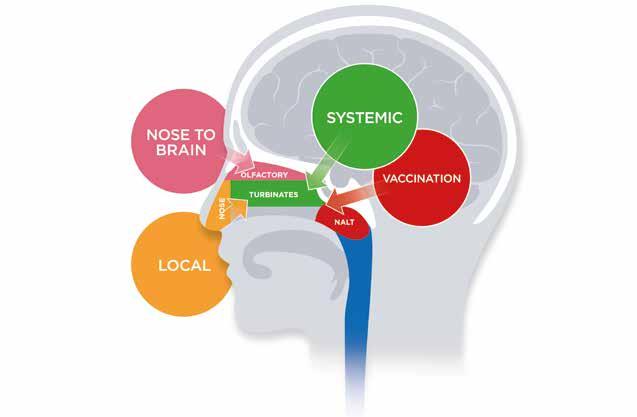
Because molecules are deposited in the highly vascularised nasal cavity, there are no concerns associated with the potency of a dose being reduced by first-pass metabolism in the GI tract, and the effects can be both local and systemic. In the case of tackling SARS-CoV-2, for example, nasal administration introduces the potential for vaccines to generate a local and mucosal immune response through targeting of the antigen-presenting cells situated in the nasopharynx-associated lymphoid tissue (NALT). It also provides an appealing route for the delivery of locally acting prophylactic therapies to neutralise the virus directly in the nasal cavity or for the convenient administration of vaccine therapies designed to introduce – or maintain – a level of immunity.
Employing nasal delivery for biologics brings various advantages, therefore, but it is not without its challenges and considerations. Indeed, there is a paradox at play in that the fundamental characteristics of proteins and peptides – their size and complex tertiary structure – are both the factors behind their success, in terms of improved potency and selectivity, and the factors behind some of their major weaknesses, such as poor absorption and stability.5
Not only susceptible to degradation at ambient temperature and adsorption into packaging materials, biologics also display sensitivity to in vivo conditions, reacting negatively to temperature and acidity as well as the presence of enzymes such as proteases and peptidases, which can impact on permeation.
This sensitivity extends to biologics’ relationship and interaction with the excipients that might be employed to address areas of stability. Preservatives and other excipients used as constituents in ‘typical’ formulations of nasally inhaled small-molecule APIs may, in the case of biologics, trigger difficulties such as protein agglomeration and precipitation. Consideration must also be given to the toxicology of the mucoadhesives and absorption enhancers necessary for achieving the desired exposure and transfer of large molecules at the nasal mucosa, and for defending against mucociliary clearance.
6
The superior molecular mass of proteins, in combination with their hydrophilic properties, also results in limited permeation across biological tissue in comparison with small molecules.
Research / Innovation / Development
The issue of scale also translates into formulations comprising biologics having a different sensitivity to aerosolization and shear stress, which carries implications for particle distribution and deposition.
For biotech and pharmaceutical companies, these various challenges in formulation and delivery must therefore be considered and addressed to deliver on the promise of intranasal biologic development. Looking at formulation science in particular, there are numerous strategies available to tackle and manage issues such as stability.
Lyophilization, for example, can address difficulties associated with macromolecular drugs in liquid form, with powder dosage forms not only offering greater chemical stability, but also extending the product’s shelf-life. Various methods are used to transform the drug into powder form, including freeze drying and the widely used spray drying. More recently, supercritical fluid-assisted spray drying has emerged as a promising alternative to conventional spray drying, since it facilitates the production of smaller particles that are dissolved more quickly by the nasal mucus, improving bioavailability and reducing the risk presented by mucociliary clearance.7
For scientists working in the pharma supply chain, it is crucial that they understand the importance of supporting biotech and pharmaceutical partners with deep expertise in areas such as this, providing access to technologies and development tools that optimise biologic API molecules for nasal delivery.
Through early-stage pre-formulation studies, assessment can be made of the drug product’s stability, with particular attention paid to the compatibility of excipients. This lays down essential foundations for further evaluation of stability and integrity in the formulation stage, ultimately influencing the level of efficacy achieved by the end product.
Using a combination of in vitro characterisation via nasal cast deposition and in silico physiological-based pharmacokinetic (PBPK) modelling, analysis can then be carried out on the predicted performance of the formulation regarding deposition, retention and absorption in the nasal cavity. These methods elicit data relating to factors such as spray pattern, plume geometry, droplet spray distribution and spray content, providing three-dimensional analysis to support regulatory submissions.
Many providers in the supply chain are already able to help partners look further down the product lifecycle, for example, drawing on advances in connected technology to consider the potential for ‘connected’ nasal devices to emerge over time. Particularly for patients managing chronic conditions, including mental health conditions affecting the Central Nervous System (CNS), such devices facilitate valuable communication via a smartphone interface, making data on medication use available to healthcare providers.
As we have shown, arriving at this point in the future is dependent on carefully navigating a complex and multi-layered development pathway when it comes to intranasal biologics.
This, again, underlines the importance of taking an integrated approach to formulation and device development, consolidating an appreciation of API and device characteristics as well as patient behaviour and necessities.
It is also clear, however, that significant potential exists within this relatively vacant space. Whether helping defend populations against the clear and present danger of COVID-19, tackling chronic autoimmune conditions or delivering molecules to the CNS to treat neurodegenerative diseases, it is only by thinking differently and exploring the potential that exists at the intersection of biologics and nasal drug delivery that those opportunities will be realised. Furthermore, it is only by taking an integrated approach that the development cycle can be kept to a minimum and the patient benefits can be felt as quickly as possible.
Gemma Budd is Business Development Director for Nanopharm, an Aptar Company, where she is primarily responsible for developing business and collaborative opportunities for Aptar Pharma’s services, solutions and technologies in the orally inhaled and nasal drug product (OINDP) sector. With a university degree in Biomedical Sciences, Gemma has over 10 years experience in the pharmaceutical industry in both research and commercial positions, from materials science and analytical services, to formulation technology and drug delivery devices, primarily for oral and inhaled dosage forms.
Irene Rossi
Irene Rossi is Head of New Modalities Pharmaceutical Development at Nanopharm, an Aptar Company where she leads a group focused on the development of new technologies and OINDP products for biologics and chemical entities. Having achieved a Masters in Pharmaceutical Chemistry and Technology, Irene spent 6 years at the University of Parma working on formulation development of nasal and inhalation products, particularly in particle engineering. She obtained her PhD in Drugs, Biomolecules and Health Products in 2019. To date, Irene has published six original papers, a patent application and has presented her work at over 20 international conferences.
Human Factors Studies: Testing a Platform Device During the Pandemic
When creating drug delivery devices that are designed as a platform for use with multiple drugs, the approach to human factors studies becomes even more important. Since the specific user group is not yet defined any study must be designed to accommodate the needs of a broad range of both users and therapy areas. As an experienced manufacturer of platform devices, Owen Mumford Pharmaceutical Services has developed an inclusive sampling strategy that serves as a useful framework that can be deployed each time human factors studies are needed to support device design and development. The COVID-19 pandemic introduced a new challenge to the testing process, as infection control practices needed to be factored into the study design and execution. The following article outlines a user evaluation strategy for platform devices and explains how we carried out a successful human factors study under pandemic restrictions.
A Critical Step in Device Development
Human factors studies are imperative for identifying and mitigating any risks posed by drug delivery devices while in use by the intended users. Devices that are as comfortable to hold and use, and as intuitive as possible for the user, are also more likely to encourage patient adherence to their treatment regimen. Human factors guidance recommends that testing is performed with intended users, highlighting the importance of having test participants that reflect the real end-users of a device and the therapy it contains. When dealing with platform devices this can encompass a range of patients with a variety of conditions and potential physical and cognitive limitations, so studies need to include representation from all these different groups. This inevitably increases the number and variety of participants needed for a study. This is even more challenging in the context of a pandemic. Lockdown measures and social distancing guidelines which were initially introduced in March 2020 threatened the timely completion of medical devices already in development. However, we were able to adapt the usual approach to complete their human factors studies and ensure that products progressed through development without compromising on this critical step.
Creating an Inclusive Study Sample
In the absence of a specific target patient group, an inclusive sampling strategy is needed for platform products, where device safety, effectiveness and risk management is assessed and tested across a larger range of potential users. Study samples must be carefully selected to cover a good range of prospective users. Product engineers can then make informed decisions about the design changes required to create the final device and assure pharmaceutical business partners that any issues around usability have been revealed and addressed during development. Prospective customers will seek confirmation that their intended user has been thoroughly examined throughout the design process and any iterative user testing.
First, human factors specialists must decide on an optimum sample size for demonstrating a thorough examination of the device in all its use environments. Wide representation is crucial early on to allow identification of use issues and relevant mitigations before device development has progressed too far in the design process . At the early stages of development, it is recommended to use 5 to 8 participants for each different group in usability tests.1 The number of different user groups for a platform device is likely to be higher than other devices intended for a single therapy since there is, by design, a broader range of potential users.
After testing five subjects in a given category any major usability issues should have been identified, and the amount of additional information starts to lessen if more subjects are added. In fact, one study showed that doubling the sample size from five to ten subjects only increased the mean percentage of usability problems identified from 85.6% to 94.7% (see Table 1).2 In the later stages of development, US and UK regulators recommend between fifteen and twenty participants per user group are used for validation testing. This sample size can help to account for differences within the user group.
Once the number of users is confirmed the next step is to determine how many user groups are needed to cover the range of user characteristics and needs. We have created a framework including seven different user groups (see Table 2) that covers
Pre-Clinical & Clinical Research
1. Adults Adult aged 18 years plus; no upper age limit
2. Juveniles Persons aged between 8 and 17 years
3. Caregivers Lay caregivers who help another person to administer their
4. Healthcare
5.
6. Cognitive ability
7. Action ability
Persons with a range of moderate cognitive impairment (e.g. ADHD, autism, dyslexia, learning disability)
Persons with a range of physical (upper limb) impairment (e.g. RA, Parkinson’s, MS)
the range of characteristics which could influence the usability of the device for end-users.
Four of the categories involve people who may use the device themselves or aid the patient in using the device, namely children, adults, caregivers, and healthcare professionals. The three remaining groups focus on users whose impairments are likely to impact their capabilities in interacting with the device, summarised as perception, cognition and action (PCA). For optimal results, it helps to make each use-impairment group mutually exclusive, to demonstrate the impact of different aspects of the device interface on each user group.
Breaking down the above groups further to include characteristics such as gender, ethnicity, and hand dominance can also be useful. In the seventh user group of the above table for example, people with biomechanical as well as neurological impairments could be added. Where difficulties are identified, these subcategories can help to identify the root cause of the problem.
The biggest challenges that come with user evaluation plans are determining the right number of studies, the most appropriate stage of development to carry out the studies, and the appropriate level of prototype fidelity. Platform devices
Table 2 – Human Factors Sampling Strategy
Pre-Clinical & Clinical Research
encounter greater challenges in these areas due to the fact that intended users are not yet defined. Sampling effectively is critical to cover all bases and assess the risk to any specific user across the range of possible user types. An additional option with easy to access participants, such as members of the device company, can be used prior to a user evaluation sampling plan but using a large number of representative participants is recommended as early as possible in the development stage.
A Human Factors Study During the Pandemic
We had conducted a formative study in January 2020 to test a platform autoinjector and needed to confirm that changes to the design after the study had created a more intuitive and patient centric product. In order to run a human factors study without compromising the model above we had to make a number of changes to the process, to create a safe environment for patients and professionals and still generate sufficient data to optimise our product for users.
There were numerous considerations to minimise risk to patients while still enabling collection of valid data. The study took place in a suburban area with ample parking to encourage participants to walk or drive rather than use public transport. Before each session could begin, testing rooms had to be thoroughly cleaned and ventilated. Prototypes were packed at least three days before the study by engineers wearing PPE and were sealed until required. As moderators could not hand out autoinjectors, each was numbered and placed into colour coded sections of a set of trays, so the moderator could easily guide participants during the test sequences. Moreover, moderators were unable to demonstrate the usage of products as they would normally do and instead had to reply on describing the necessary instructions to the participant.
Collecting participant feedback was another challenge we had to overcome. An important part of human factors studies is the building of rapport between participants and moderators so participants feel they can express any and all views about the products. Observers need to be able to see and hear first-hand feedback to allow for the most accurate results. Live video streaming from production-equivalent cameras allowed us to view the autoinjector up close as participants used the product, and to get clear immediate reactions. Microsoft Teams was used to stream content to Owen Mumford Pharmaceutical Services representatives, allowing them to communicate with the moderators and interact during the session. Additionally, these recordings were made available after the study so that they could be viewed and analysed at a later date.
Overall, the modified study was a great success. Participants contributed to the positive outcome due to their flexibility and willingness to adapt to the unusual conditions. Restrictions and changes put in place by the pandemic didn’t seem to impact the flow of the study, participant recruitment or how participants interacted with the autoinjectors. Even as we seem to be coming out of the worst of the pandemic, human factors studies are likely to require careful planning, as well as additional risk assessment for the study design set up. Thoughtful strategies will allow companies to conduct successful in-person studies and continue to bring new and innovative drug delivery devices to market.
Finola Austin, Human Factors Engineering Manager, Owen Mumford Pharmaceutical Services. A highly experienced Human Factors Engineering Manager, Finola Austin boasts 15 years’ experience in mentorship and management of human factors services in safety-critical industries. Finola has successfully planned and delivered Human Factors activities for hundreds of handheld medical devices, including auto injectors, emergency use devices, inhalers, injection pens, and lancets. A highly experienced Human Factors Engineering Manager, Finola Austin boasts 15 years’ experience in mentorship and management of human factors services in safety-critical industries. Her career began in Occupational Therapy within acute, long term and community settings, and her training in accessibility has given her special insight into the needs of impaired users. Since then, Finola has successfully planned and delivered Human Factors activities for hundreds of handheld medical devices, including auto injectors, emergency use devices, inhalers, injection pens, and lancets, and is proficient in the generation and review of documentation. She has executed numerous user evaluation studies in the UK and USA –including studies on safety engineered devices, injection pens, and colour differentiation.
Finola Austin
Health Science
Health Inspired, Quality Driven
Get to market quickly, safely & efficiently
SERVICES INCLUDE:
• Bi o a n a l y s i s
• Biologics Characterization
SGS Health Science enables the medical and health innovators to deliver life-changing solutions in the quickest, safest and most efficient way, helping improve the lives of many. Contact us
healthscience@sgs com
sgs com/healthscience
sgs com/healthcommunity
• B i o s a f e t y
• Extractables & Leachables
• Method Development & Validation
• M i c r o b i o l o g y
• Stability Studies
Secrets to Packaging Ultra Low Temperature Products: What Every Manufacturer Should Know
Advanced Therapy Medicinal Products (ATMPs) offer ground-breaking opportunities for treating injuries and disease, in particular for cases of severe, untreatable or chronic diseases that do not respond adequately to more conventional treatments. In many cases, these treatments are curative, making them life altering and even lifesaving.
These products, which include cell and gene therapies (CGT) and some COVID-19 vaccines, for example, typically have very rigid temperature requirements that pose unique challenges throughout the supply chain. Often, they must be held at ultra-low temperatures (ULT) between -20 and -80 degrees Celsius, with very little scope or time for deviation away from these target temperatures.
The risks of temperature excursions during shipping have been minimised successfully with special packaging and temperature tracking. However, steps must also be taken during labelling and packaging to ensure that ATMPs stay well within their acceptable temperature ranges. Appropriate processing requires careful planning, experimentation and validation, tight controls, and extreme caution.
While the onus is on Contract Development and Manufacturing Organizations (CDMOs), such as Almac Pharma Services, to handle these products correctly, drug manufacturers should be aware of the risks and complications involved in every step of the supply chain. They must ensure that their CDMO has the expertise to control for, and mitigate against, the risks.
High Stakes/Narrow Margins of Error
The production, delivery, and administration of ATMPs is complex and time-sensitive. Often, patients are hospitalised awaiting treatment, and any delay or product degradation could have devastating consequences for their health.
What’s more, personalised medicines can run into millions of dollars per individual pack, and the risks associated with handling them are magnified when several hundred packs are packaged as a batch. It’s not unheard of for the retail value of a batch to approach $200M, so the financial consequences of ruining a pack or batch can be catastrophic.
Thus, there are ample health and financial reasons to ensure that ATMPs are never out of their acceptable, ultra-low temperature range. Doing so takes extraordinary planning and care, as handling these products even for a few seconds can alter their temperature. A product can become unusable if out of frozen conditions for even a short period.
Additionally, many common labelling materials are not suitable for use under ULT conditions. Hence, all the primary and secondary packaging components must be challenged rigorously to ensure that they are fit for purpose when exposed to the temperature extremes of materials such as dry ice and to the various activities across the supply chain. This includes, for example, assessing the legibility of batch-specific variable information that has been overprinted onto packaging as well as the adhesive properties of product labels and tamper-evident labels applied to items in the packaging process.
All aspects of the production process need to be robustly challenged in the context of worst-case scenarios and then perfected so that results are repeatable based on clear, and usually tailored, operating procedures. All processing activities should be simulated during process validation batches to provide clear, precise data to support each work activity. These simulations and the corresponding temperature mapping of work activities provide evidence that the processes can be controlled within defined temperature limits, thus maintaining product quality.
Ultimately, every step involved in labelling and packaging must be performed in a consistent manner and under specific conditions, requiring that team members be trained and experienced in following special procedures.
What to Expect from a CDMO
Pharmaceutical companies that engage CDMOs, such as Almac, should understand the proposed packaging process and have a clear idea of what information their partner will need to work most efficiently and effectively. Our experience is that every ATMP requires a tailored process and a unique set of controls for each operation, developed collaboratively with the drug manufacturer. Consequently, manufacturers should be prepared to:
• Share all available information on the product’s temperature parameters and handling requirements as well as what materials are preferred.
• Contract with the CDMO to conduct proof-of-concept work, if the product’s temperature profile has not been assessed for labelling and packing activities. This work will assess any changes to the product’s temperature over the course of various handling steps, resulting in a detailed report. The defined packaging process will be exquisitely detailed... down to how each vial can be handled, when a supervisor must be called, etc.
• Allow sufficient time for process validation and, where applicable, equipment qualification. Once the product’s temperature parameters are established, the CDMO will be able to perform a many-phased exercise that includes:
• Developing a Validation Plan – outlining the validation approach which documents the packaging process is capable of consistently producing product that meets the required specifications.
• Conducting Engineering Studies – to provide evidence that the packaging materials and the equipment used are capable of producing product that meets the Critical Quality Attributes (CQAs) for the product type. These studies reveal the risk to the product temperature profile during various scenarios and secondary packing activities.
• Ensuring Performance Qualification – to demonstrate that acceptable product can be produced using a draft master batch record that mimics the intended commercial packing process while using the parameters established during the Engineering Study. This entails maintaining the product temperature
within the required range throughout all processing steps (including reprocessing) when running the operation under worst-case conditions.
• Performing Process Validation – which is, generally on three batches, with each being packed using a master batch record and packing components that are either commercial or commercially representative components. The batch processing will again challenge worst-case scenarios and will be performed in a time period that includes production breaks and shift handover. Challenges will be performed, ensuring that each operation produces product of consistent and acceptable quality.
Conducting all these activities and reporting the results takes time, therefore manufacturers should be prepared for a three to four-month window across the various validation steps.
Strategies for Success
Because the requirements for labelling and packaging ATMPs differ from those of products that don’t need to be held at low temperatures, it’s critical to work with a vendor who has experience in this area. While no two products and situations are exactly alike, a body of knowledge can gradually be amassed to circumvent much trial and error in developing the packaging process. This prior knowledge also helps to ensure that staff are trained properly and know how to work with precision in critical steps of the operation.
The best solutions will emerge when the manufacturer and CDMO are open to fresh approaches. Just because processes or materials work for products kept at even -20 degrees Celsius does not mean they’ll work for ULT products. Often, they don’t. Plus, undoubtedly situations/conditions will arise that even an experienced CDMO will not have faced, requiring new, creative ideas and methodologies.
Just-in-time processing is one technique that if used when appropriate can improve the CDMO’s responsiveness and speed the delivery of orders. This approach allows the product to be labelled and packed upon receipt of an order, in line with the specific patient’s dosing requirements.
Manufacturers should strive to stay closely involved as the packaging processes are being defined. They should be given access to the findings of all the process qualification and validation studies and should even be able to watch the studies being performed.
It is, of course, also important to ensure temperature stability throughout the entire supply chain; the packaging process is actually just a small part of the whole, but it takes just a few moments of inattention or one poorly conceived procedure to permit product degradation.
A Case in Point
For one gene therapy product that Almac packages, the treatment dose and the number of vials that need to be packed are based on the patient’s weight. The product is for the EU market, so the product needs to be placed in country-specific packaging with the patient’s information on the pack. Between
Manufacturing
the varying weights and the country information, there are over 420 SKUs for this one product.
To pack this product, Almac has dedicated a GMP footprint within its facility. When an order is received – which could be as small as one vial per batch – Almac’s specialist team picks the product from the client-dedicated freezers, and labels and packs it over dry ice. The product is then released by a Qualified Person in real time and ready for direct distribution to the patient for receipt within 24–48 hours.
Conclusion
The market for ATMPs is forecast to expand through the foreseeable future. Indeed, some industry analysists predict as much as 20 percent year-over-year growth through 2025.1 As these products become increasingly common, manufacturers will need to rely on CDMOs which have developed experience and expertise in labelling, packing, and shipping these products. The risks to patients and to the bottom line are too great to entrust the process to a vendor who is inexperience and unproven in this specialised area.
Rob O'Brien, Head of Technical Support (Packaging Operations), joined Almac in 2019 with 20+ years' experience in a various senior technical, operational and project management roles. Leading teams for national and international commercialisation launches, product & packaging design, development and validation projects, equipment procurement and installations. Primarily with within the soft drinks industry with Coca-Cola and Britvic plc, before moving into the pharmaceutical industry with Almac Pharma Services.
Brian Duffin
Brian Duffin, Process Design Manager, has close to 30 years' experience working in the Pharmaceutical industry in both manufacturing and packaging management roles. In recent times, his area of focus has switched to that of leading all packaging related activities in both Process Transfers, and New Product Introductions across Almac Pharma Services' growing global commercial business units. In this role Brian is involved from packaging concepts, through pack design in conjunction with our clients and packaging suppliers, and finally the internal qualification and validation activities ahead of packaging commercialisation.
Single-Use Technology in Cell and Gene Therapies: Transferable Lessons from the Bioprocessing Industry
The biopharmaceutical industry has experienced significant diversification, innovation and breakthroughs in recent years. For instance, gene and cell therapies in development can both treat diseases in new, more effective ways and address rare diseases for which treatment options have not previously been available. The Office of Tissues and Advanced Therapies (OTAT), a branch of the U.S. Food and Drug Administration, has more than 20 gene and cell therapies listed as approved, with nearly 1,000 gene therapy molecules active in the pipeline.
While these numbers hold much promise, it is important to evaluate manufacturing processes and gauge potential improvements to efficiencies, aseptic conditions and timelines. Even components such as connectors can have a big impact on productivity and quality.
Although gene and cell therapies have distinct needs, a great deal of knowledge can be transferred from the bioprocessing industry. As early adopters of single-use technologies and aseptic connectors, manufacturers of traditional biologics like vaccines and mAbs offer useful lessons. Some of the main benefits that led to the adoption of SUT in the bioprocessing industry include:
• Cost – Reduced manufacturing costs by elimination of cleaning and sterilisation steps
• Speed – Time and labour savings during set-up and between operational cycles
• Sterility – Reduction of cross-contamination risks between batches.
To explore all SUT products available on the market today would be outside of the scope of this article, therefore we will focus on one of the most important but often overlooked decisions when developing a single-use-based process – the correct connection technology. Without connection technology the various elements required to create a single-use process could not come together. Importantly, the right connection technology can also allow the aseptic connection of single-use to non-singleuse steps in the process while maintaining a fully closed system. Get it wrong, and the implications in terms of scalability, reproducibility and security of the process could be serious.
Where fluid connection technologies are concerned there are two basic categories, each based on how the connection is to be achieved. The first is a connection made by tube welding or fusing together two fluid paths. The second is achieved by mechanically coupling two components installed in the fluid pathway.
To select the appropriate technology for an application, it is essential to understand the critical technical differences both between the main technology types and between the subgroups within each technology group, plus the operational impacts those
differences would have on the process and the benefits of each technology.
Tube Welding or Aseptic Connection? What You Need to Know
Given these connection options, which should be used for gene and cell therapy processing? Tube welding equipment is commonly used in the laboratory and even the clinical environment where a small number of connections per day are required and where only one size and type of tubing is used. As your operations begin to scale up, tube welding becomes more time intensive and inflexible. Multiple welds require time to create. Perhaps more importantly, tube welding can only accommodate thermoplastic elastomer (TPE) tubing. Most biopharma companies use silicone tubing because of its advantages in terms of cost, chemical stability and low levels of particulates extractables.
In contrast, aseptic connectors work by simultaneously removing two porous sterile barriers, usually membranes, from the connector assembly, to open a sterile fluid pathway once the two components are connected. This process generally takes only seconds. The aseptic connector’s protective barrier (membrane) prevents bacteria and other contaminants from entering the fluid pathway while the barrier is in place, thus creating a sterile connection.
There is a wide range of processing technologies for connectors. They can be supplied as either discrete components or more often as pre-validated, pre-sterilised single-use
systems – ready to open and use. They are used to connect single-use fluid paths, which can either be welded together or mechanically coupled by components installed in the fluid pathway. Generally, a connector that is simple to use has few operational steps and works with a wide range of different tubing types and sizes, offering greater operational flexibility to the user.
MicroCNX™ Series Connectors
from CPC are specifically developed for small-volume bioprocessing (under 10L). The MicroCNX connector is the first in a new category of ultra-compact, aseptic micro-connectors for small-volume, closed system processing that eliminate the need for cumbersome multi-step tube welding. The genderless MicroCNX connector represents the first and only alternative to tube welding for creating sterile closed systems using small tubing sizes.
Delivering a consistent flow path with every connection using a simple three-step Pinch-Click-Pull connection, MicroCNX connectors are lightweight and help avoid tubing kinks that can affect flow rates. Their size, weight and geometry also fits well with the trend toward compact automated equipment for use in processes like cell expansion.
Genderless vs. Gendered Aseptic Connectors
Aseptic connectors are available in both gendered and genderless versions. Gendered connectors are composed of two different connectors (typically a male and a female component) connected together to create the fluid pathway. With genderless connectors, the two connecting components are identical. This design can help simplify single-use system design and eliminate any orientation, inventory planning and design issues associated with gendered connectors.
Genderless connectors offer time savings, greater process security, simplified inventory requirements and increased operational and design flexibility, as outlined below:
• Time savings. Genderless connectors can be activated with few steps and are intuitive and easy to use, creating a sterile connection in a very short timeframe. For example, an experienced operator can make a connection with push-fit aseptic connectors in less than 10 seconds. Operators using a tube welder, on the other hand, can take up to seven minutes to create a connection.
• Process security. If two components are supplied with the same gendered connector but need to be connected together, the end user must quickly make a bridging connector to link these two components. This type of issue is usually discovered only at the point of use when time is short and a solution is required immediately. The inability to make the connection when required can lead to delayed production, but in the worst cases can compromise an entire batch of product, leading to its loss. Genderless connectors eliminate the problem of having to create an adapter to connect parts that otherwise would not fit together.
• Simplified inventory. Use of gendered connectors requires inventory of male and female components. To ensure availability of components that fit, manufacturers would need three types of preassembled tubing sets in their inventories: male-to male, male-to-female and femaleto-female. With the connection flexibility of genderless connectors, only one type of component part or tubing set has to be inventoried.
• Improved operation and design flexibility. Genderless connectors typically offer a range of different hose barb sizes in the same connector family. Because all the connectors in the same family of products can be connected together, genderless connectors can also replace flow reducers or enlargers in a fluid stream. For example, a 3/4” genderless aseptic connector can connect to a 1/4” genderless aseptic connector to form a sterile connection while simultaneously serving as a flow reducer at this step in the process.
Manufacturing
Genderless aseptic connectors allow the connection of different size tubing on different size single-use components into a seamless system. Flexibility is added in a number of ways. Issues of not being able to connect are eliminated. Design of the assemblies is simplified and the more-flexible production platform can easily be changed or adapted to a new cell therapy process by simply replacing any of the bag components with either different size bags or a different processing step using the same connection technology.
Conclusion
It is important to evaluate your processes while you are in a smaller scale. The improvements you make today, even to aseptic connections, can make a big impact to efficiency and speed as you scale up. For CGT companies, the adoption of single-use connection technology within an operation drives a standardised approach to future components and platform designs. Two important benefits of this are: 1) reduced system complexity and production costs and, 2) the biopharmaceutical market overwhelmingly sees standardising connector compatibility as an important issue.
As the gene and cell therapy industries continue to develop and grow, bringing more cutting-edge technologies to the market, the opportunity to take advantage of the benefits SUTs have already demonstrated in protein, mAb, and vaccine manufacturing will only increase.
Given the product requirements and the personalised nature of autologous cell therapies, there is really no alternative to SUTs.
Tremendous knowledge of SUT applications and capabilities exists within biopharma manufacturers, SUT manufacturers, as well as in industry organisations such as PDA, ISPE, BPOG, and BPSA, and many lessons can be learned from the application of SUTs in these markets. In addition, the unique requirements of the cell and gene therapy markets will have a significant impact on the future development of SUTs, including connection technologies. As gene and cell therapy producers gain more knowledge and better understand the requirements and variability of their processes, SUT manufacturers will have an improved ability to address their specific needs.
Amber Sherrick
Amber Sherrick joined CPC as a Market Manager for Biopharma in April 2021. Amber has twenty years of experience in various marketing communications and market development roles. The last decade of her career has been dedicated to market development for single-use, cell culture, purification and pharma analytical product lines. An active member of the BioPhorum Operations Group (BPOG) and a member of the Risk & Business Continuity Management Workstream, Amber has a passion for the single-use segment of the industry. She believes it has a place in creating efficiencies, and mitigating risk in all bioprocessing applications, including cell and gene therapy.
Application Note
How to Speed Up Vaccine Development and Production with Genetic Vaccine Technology
The COVID-19 pandemic has been challenging and disruptive for societies globally, forcing us to adapt ways of working and living to safeguard vulnerable people from infection. The outbreak has also fostered creativity and innovation when it comes to adapting to change, particularly in the pharmaceutical and healthcare spaces as we have sought out treatments and care approaches to save lives.
Among the most important of these innovations was the development of a number of effective vaccines. These vaccines were developed, commercialised and delivered with remarkable and unprecedented speed, kick-starting the largest mass-vaccination campaign in history.
The secret to this incredible achievement is two-fold. It is a combination of existing work on coronaviruses, following previous SARS and MERS epidemics – caused by viruses related to the severe acute respiratory syndrome coronavirus 2 (SARS-Cov-2) that causes COVID-19 – and the harnessing of new technology, such as genetic vaccines (mRNA).
The technology behind genetic vaccines differs from that of traditional vaccine technology. Traditional vaccines are usually developed by using an attenuated or inactive version of that virus. A genetic vaccine works slightly differently – rather than injecting a weakened form of the virus into the body, these vaccines use part of the virus’s own genes to stimulate the creation of its proteins by cells in the body, which then stimulate an immune response.
It is this difference that makes genetic vaccines such an exciting new frontier. In this eBook, we will explore why the unique attributes of genetic vaccines makes them such an important tool not just in the global recovery from COVID-19, but in the fight against future pandemics as well.
We will explore the challenges and pitfalls in developing new genetic vaccines, and in manufacturing them following approval. In addition, we will discuss how strategic partnerships with expert contract development and manufacturing organisations (CDMOs) can support vaccine developers to bring their innovations to market.
UNDERSTANDING GENETIC VACCINES
A range of possible technologies can be used to create a vaccine. Traditional approaches involve the use of attenuated or inactivated viruses (or other pathogens, such as bacteria), designed to reduce the risk of illness while stimulating an immune response.
A few examples of traditional processes include: Attenuation as a process entails the cultivation of active
viruses under conditions that disable their virulent properties. Alternatively, a closely related virus that is less dangerous may be used. This approach can provoke more durable immunological responses, but such vaccines are not safe for use in immunocompromised individuals, and on rare occasions mutate to a virulent form and cause disease.
Inactivation involves the use of previously virulent micro-organisms that have been destroyed with chemicals, heat, or radiation – ”ghosts”, with intact but empty bacterial cell envelopes.
Toxoid vaccines contain inactivated toxic compounds that cause illness rather than the micro-organism.
A subunit vaccine uses a fragment of a virus to create an immune response.
This is not an exhaustive list, and other approaches are also commonly used.
Genetic vaccines are different. Instead of injecting the body with the pathogen – or fragments of the pathogen – to promote an immune response, genetic vaccines work by delivering one or more genes that encode proteins of the pathogen to stimulate the immune system.
There are several possible approaches that can be taken when developing genetic vaccines:
mRNA Vaccines
Messenger RNA (mRNA) vaccines use a synthetic RNA copy of a virus’ messenger RNA (mRNA) to produce an immune response. The vaccine transfects the modified mRNA into immunity cells, which then instructs the cells to build foreign protein that would normally be produced by the pathogen.
These protein molecules then stimulate an adaptive immune response, which teaches the body to identify and destroy the corresponding pathogen or cancer cells. The mRNA is delivered by a co formulation of the RNA into lipid nanoparticles which protect the RNA strands and help their absorption into the cells.
DNA Vaccines
A DNA vaccine works in a similar way to mRNA vaccines. However, rather than using RNA, it transfects a specific antigencoding DNA sequence onto a patient’s cells. DNA vaccines inject genetically engineered plasmid containing the DNA sequence encoding the antigen against which an immune response is sought. The infected cell then produces the antigen, thus causing a protective immunological response.
A History of Genetic Vaccines
The two COVID-19 vaccines developed by Pfizer and BioNTech, and by Moderna, were developed using the mRNA approach.
The Pfizer vaccine is the first such vaccine to be approved for widespread use by the US Food and Drug Administration (FDA), the EU’s European Medicines Agency (EMA), and other national regulatory bodies, such as the UK’s Medicines and Healthcare products Regulatory Agency (MHRA).
However, the genetic vaccine approach is not new. The first mRNA vaccines were initially developed in the early 1990s in an effort to design an approach that could allow the rapid creation of safe and effective vaccines in a pandemic situation.
In recent decades, mRNA vaccines have been studied for diseases including:
• Rabies
• Zika
• Cytomegalovirus (CMV)
In addition, a large-scale influenza trial was carried out in humans from 1993–1996,1 although currently used influenza vaccines use traditional inactivated, recombinant or attenuated platforms.
DNA vaccines have been explored for a number of decades, too. Several DNA-based vaccines have been approved by both the US FDA and the US Department of Agriculture (USDA) for veterinary use. These include:
• a vaccine against West Nile Virus in horses
• a melanoma vaccine for dogs
In addition, there are several human clinical trials on DNA vaccines in progress. The U.S. National Library of Medicine records more than 160 different DNA vaccines currently being tested in human clinical trials.2 Of these, 62% trials are devoted to cancer vaccines and 33% are against human immunodeficiency virus (HIV).
Several viral vector vaccines which, like DNA vaccines, carry DNA into a host cell, have also been approved for use. The Janssen Ebola vaccine, for example, was approved by the European Commission in 2020. It uses the company’s AdVac® viral vector technology to prompt an immune response.3
Advantages Over Standard Approaches
While still in their infancy, relatively speaking, genetic vaccines offer considerable benefits compared with other approaches that make them a highly attractive alternative for vaccine development:
Adaptability: the underlying technology behind mRNA vaccines is highly flexible and adaptable. This means that it can be used to develop vaccines for a wide array of pathogens. It also allows for rapid updates to existing and approved mRNA vaccines as new viral mutations (variants) evolve or whole new viruses are discovered. As mRNA vaccines are based on sequences of viral proteins, making a new vaccine could simply involve changing the mRNA sequence to reflect the genetic code of the new variant.
Cost-effectiveness and resource efficiency: due to the adaptability of the platform, genetic vaccines (and mRNA
vaccines in particular) are quicker to develop and manufacture than traditional vaccines.
For inactivated or attenuated virus vaccine platforms, the design, development and manufacturing process can take months or years. The manufacturing of a sufficient quantity of viruses to produce enough vaccine to inoculate a large population can be particularly cumbersome and require facilities that are designed to handle products with elevated biosafety levels. While these approaches are used to drive mass vaccination campaigns, such as seasonal influenza, they are not particularly efficient when it comes to delivering the kind of campaign needed to tackle a pandemic.
In contrast, mRNA vaccine development can be compressed into a matter of weeks. The Moderna COVID-19 vaccine development process – from vaccine design to manufacturing to shipment – took just seven weeks. This excludes the trial and testing timeline, which necessarily takes the same amount of time as it does with traditional vaccine technologies to ensure safety.
There are some disadvantages to genetic vaccines. For example, as they only allow a fragment of the pathogen to be made, they often produce a weaker protective immune response compared with attenuated virus technologies. Some also pose stability and storage challenges in contrast to other approaches, which reduce their shelf life.
However, solutions to these issues are being worked on. Moreover, the benefits of genetic vaccines with regards to speeding up the development and manufacturing process go a long way towards addressing any disadvantages. New boosters can be developed quickly to overcome poor immune responses, and additional batches can be manufactured rapidly to replace expired units.
TACKLING DEVELOPMENT CHALLENGES
With all of this in mind, it is no surprise that genetic vaccines are dominating the virotherapy agenda. Nevertheless, while offering considerable benefits to developers in creating effective new products for preventing infections or even fighting cancers, the development and manufacturing of genetic vaccines pose challenges for pharma companies. Failure to address them could delay or prevent the successful commercialisation of a new product.
Development Issues
Common development pitfalls that need to be overcome include:
Novelty of the technology: the small number of established approved genetic vaccines in widespread use either among human patients or animals means that there are few platforms or production processes for developing promising and scalable vaccine candidates quickly. This means that, for pharmaceutical companies exploring potential genetic vaccines for the first time, they have no existing approaches to use as a template to plan their own project, and therefore must design their own processes themselves.
Bringing vaccines to trial: Very few therapies – whether for vaccines or other treatments – make it to clinical trial.
Application Note
As an approach that is still at the cutting-edge of medical technology, genetic vaccines require considerable discovery and development work compared with traditional methods, which benefit from established understanding of how they work. This is crucial to ensure their viability and their safety for human test subjects.
Navigating regulatory approval: The novelty of genetic viruses means that regulators require considerable evidence garnered from unimpeachably performed trials before they will give approval. This is the case even for emergency use, as we have seen with COVID-19 vaccines. There are no established development pathways to speed approval, so every step of the approval process must be followed.
Manufacturing Barriers
In addition to development issues that must be addressed, there are obstacles at the manufacturing stage that need to be overcome to ensure successful commercialisation and delivery:
Dedicated manufacturing capacity: with genetic vaccines –and particularly DNA vaccines – still in their infancy, there are few pharma companies that have the capability, infrastructure and manufacturing capacity to deliver the vaccines efficiently and reliably. Many will need outside support from the limited number of partners with experience in this specialist area. Issues sourcing raw materials: again, with experience in genetic vaccines at a premium, it is a challenge for many pharma companies to find suppliers with the experience to provide the specialist raw materials in a sustainable and secure supply.
Transport and storage challenges: the nature of genetic vaccines means that they pose stability issues, requiring cold storage as low as -70° C. This poses challenges when it comes to transporting such vaccines to healthcare providers (HCPs) and to endpatients, particularly in emerging economies where the cold-chain logistical infrastructure may not exist. The short shelf life of genetic vaccines means that –in the event of a mass vaccination programme for a future pandemic – pharma companies must be able to manufacture and deliver new batches to where they are needed quickly and efficiently.
HOW OBSTACLES CAN BE OVERCOME
While these are significant challenges, they needn’t hinder
genetic vaccine development success. With the support of expert contract development and manufacturing organisation (CDMO) partners that specialise in supporting the development of genetic vaccines, pharma companies can be confident they have the experienced help they need to deliver their discovery to market.
CDMOs Can Help
Many CDMOs already specialise in specific manufacturing technologies that are already harnessed in traditional vaccine development and can also support in genetic vaccine development and manufacturing.
From aseptic filling to lyophilisation to extend the shelf life of vaccines and other pharmaceutical products, CDMOs have the dedicated infrastructure in place to support pharma companies in streamlining the development process for their new genetic vaccines.
Moreover, the expert teams employed by CDMOs have the experience and creativity to design and develop new processes for their existing manufacturing lines. They can leverage their experience from other, non-genetic vaccine projects, in general production issues, such as labelling, and apply it to developing new ways of working that fit the needs of genetic vaccine development and manufacturing. This can allow them to deliver specialist novel technologies, such as genetic vaccines, without the need to invest substantially in new equipment.
CDMOs can use their own supply networks to explore new sources for materials with long delivery times, such as vials. They can even offer customers the use of their own stock of materials to start production, when needed.
In addition, CDMOs can also use their knowledge of topics beyond manufacturing, such as cold-chain transport, global regulations and global shipping, to advise companies on navigating the approvals process and the complex global market.
Benefiting from Expert Help
Working with such partners, pharma companies can be confident they can embark on developing their discovery straight away, without having to invest in building new production facilities or lines from the ground up.
They can also benefit from the expert guidance and support they need to design and plan their projects to deliver a successful and commercially viable product in the shortest possible time frame.
HOW RECIPHARM CAN HELP
Recipharm’s experience, global footprint and array of specialist infrastructure makes it well placed to support pharma companies with their future genetic vaccine development and manufacturing needs.
A leading CDMO, Recipharm operates development and manufacturing facilities across the globe, making it an ideal partner for pharma companies seeking to deliver genetic vaccines internationally.
Our 9,000 strong team includes experts in delivering cutting-edge vaccine projects – using traditional approaches and genetic methods. They are focused on supporting pharmaceutical companies in taking new genetic vaccines from early development through to commercial production.
Our locations include:
• Portugal
• Spain
• Sweden
• UK
• US
• France
• Germany
• India
• Israel
• Italy
In addition, Recipharm uses its infrastructure and its people’s talents to offer full analytical service for release and stability testing. The company’s existing infrastructure allows it to extend its offered services to the formulation of the bulk vaccine product.
Its regulatory intelligence supports the customer in regulatory activities, accelerating and streamlining the filing process.
As a result, Recipharm can offer a full manufacturing and analytical service package starting with the pure mRNA and ending with the packaged vaccine products. Recipharm’s Quality Persons (QPs) are qualified to certify vaccines for the EU market.
Recipharm in Action
A pharmaceutical company developing a new genetic vaccine for clinical trial recently approached Recipharm to support in creating an effective lyophilisation cycle for their product that could save time and streamline manufacturing. This was crucial to maximise production line efficiency while also enhancing the stability and shelf life of the finished vaccine.
Following comprehensive study analysis and other processes, Recipharm’s experts identified a solution to shorten the lyophilisation cycle timeline by 30%. This effectively
accelerated production speeds for the vaccine, reducing throughput time, enlarging production capacity and reducing costs.
Recipharm’s procurement specialists were also able to source raw materials, including glass vials for primary packaging within a lead time of just three months, at a time when such packaging was in short supply globally.
Our efficient and diverse supply network also minimised the risk of delays to the customer’s project, enabling it to be delivered globally on time.
THE FUTURE OF VACCINE DEVELOPMENT
The COVID-19 pandemic has shown the world the value of genetic vaccines in delivering effective protection against serious disease. Both DNA and mRNA vaccines are highly promising fields, so it is no surprise that they are evolving quickly.
To take advantage of this exciting technology, developers need expert support in navigating the challenges inherent in the development process.
By working with expert partners, like Recipharm, developers can be confident they have the support and insight they need to deliver successful and effective genetic vaccines to market, transforming healthcare in the future.
To find out more about how Recipharm can support you on your vaccine development journey, contact us today.
Recipharm is a leading global pharmaceutical Contract Development and Manufacturing Organisation (CDMO). We provide pharmaceutical companies around the world with tailor-made development and manufacturing services, including a wide variety of drug dosage forms, and inhalation products and devices.
Optimisation of a Quality Control Method for Identity, Purity and Quantity for Oligonucleotide Therapeutics
Thomas Franz, Steven A. Watt, Rita Beel, Lejon
Introduction
Full length messenger ribonucleic acid (mRNA) based vaccines came into fame in the aftermath of the 2019 corona virus outbreak, which has rapidly developed into a global pandemic. The two mRNA vaccines developed by Moderna and BioNTech/Pfizer were the first mRNA therapeutics to be granted an Emergency Use Authorization by the EMA and US-FDA and proved to be a safe and efficacious treatments against COVID infection.
While full length mRNAs are a rather new class of therapeutic, shorter 18 to 40mer polynucleotide, so-called oligonucleotides, have been on the market for over two decades, with Fomivirsen being the first approved by the US-FDA in 1998. Since then (up to April 2021), a total of 13 oligonucleotide-based therapeutics have been approved by the US-FDA for several indication, most of them targeting the expression or translation of dysfunctional proteins.1
Natural RNAs however have a very limited therapeutic use as they have a very short half-life and their immunogenic properties limiting the maximum tolerated dose. These limitations are overcome by modifications of the oligonucleotides, some of which renders them resistant to nuclease degradation and reduce or inhibit immunogenicity.2 Different types of modifications are used for this purpose e.g., modifications of the phosphate backbone, the ribose and more complex modifications like peptide nucleic acids and phosphorodiamidate morpholin. As most oligonucleotides approved to date only use on type of modification, we can expect to see different type of modifications used within one molecule to capitalise on the different physicochemical properties these modifications may lend to the molecule to modify half-life, affinity or immunogenicity.1 What we can also expect to see are oligonucleotides conjugated to other molecules to achieve cell- or tissue-specific targeting.
Reliable analytical methods to display the quality (identity, purity and content) of an oligonucleotide is key throughout early development, preclinical and clinical phases and release testing. It is important to develop robust methods early on in a project, to have a history of critical quality attributes throughout product development, aids a data driven definition of meaningful acceptance criteria. The availability of platform methods with a good optimisation strategy enables the implementation of such methods early in new development programs without compromising time or costs.
In this application note we want to present an LC-MS based platform method for the determination of the identity, purity and quantity for oligonucleotides and which parameters are worth investigating to optimise the method in terms of chromatographic resolution of impurities, MS-parameter to minimise adduct formation to reduce the complexity of the mass spectra obtained.
Martens
Materials and Methods
Oligonucleotide standards were used to test the LC-MS system in terms of chromatographic and mass resolution as well as adduct formation and improving signal to noise; Oligo-T DNA by Waters MassPrep OST Standard (Waters cat.no.: 186004135-1), Agilent RNA resolution standard (Agilent cat.no.: 5190-3028). To optimise the parameters of the mass spectrometry system, in order to minimise adduct formation to monitor impurities and improve fragmentation to gain sequence information, a customised 40mer DNA oligonucleotide was designed (Thermo Fisher; Custom Standard DNA Oligos; ATG CCT TAA GCG ATG GAT TTT TTT CCA TCG CTT AAG GCA T). For chromatographic separation the Waters ACQUITY UPLC-Oligonucleotide BEH C18 (1.7 µm, 130 Å, 2.1 x 50 mm) (Water; cat.no. 186003949) and Waters ACQUITY Premier Oligonucleotide BEH C18 (1.7 µm, 1.2 x 50 mm) (Waters cat.no.: 186009484) were tested. The mobile phases were composed of LC-MS-grade water (Fisher Chemical W6-212; Fisher Scientific cat.no.: 10505904), as buffer we used Dibutylamine (DBA) (Merck KGaA cat.no.: 471232) and Hexafluoro-isopropanol (HFIP) (Merck KGaA cat. no.: 105228) was used as an ion pairing reagent. Analytical data was obtained from a Waters BioAccord System which includes ACQUITY I-class plus UPLC System (Binary Solvent Manager, Sample Manager FTN, ACQUITY Column Heater, TUV Detector) coupled to a Waters ACQUITY RDa Detector operated under the UNIFI Software (release version 1.9.9.3).
Setting up a Platform Method
As already pointed out, it is important to have a robust quality control method early on in development program to have a solid data set documenting product quality. In order to “afford” such a method early on in a development program, it is important to invest some initial work to identify a solid method setup, which can be readily adapted to suit the needs of other parallel or future oligonucleotide projects.
Therefore, we started with identifying a chromatographic setup able to resolve oligonucleotides in a suitable mass range for most anti-sense oligonucleotides (18 to 30 mer). Therefore, we selected the Waters Oligo-T standard which featured thymidine oligomers from 15 to 35 in 5mer intervals to test different chromatographic conditions. Looking at suggestions for oligonucleotides provided by the vendors of chromatography columns and other work groups, we investigated the combination of 15 mM DBA as a buffer and 25 mM HFIP as an ion pairing reagent in water for eluent A and in methanol for eluent B. We frequently observed droplets in the aqueous eluent due to the limited miscibility of HFIP in water. In an attempt to eliminate droplet formation, the HFIP was reduced to 15 mM, but this caused a broadening the chromatographic peaks of the of the thymidine oligomers. The addition of 5% (v/v) methanol to eluent A with 25 mM HFIP stabilised the solution and eliminated droplet formation with no adverse effect on the chromatographic resolution (Figure 1). This setup is compatible with mass spectrometric detection as
both, the ion pairing reagent and the buffer, evaporate and are removed in the first stages of the vacuum system.
Figure 1: Standard chromatographic conditions for the separation of 15 to 35 mer oligonucleotides. Eluent A: 95% (v/v) water, 5% (v/v) ethanol, 25mM HFIP, 15mM DBA. Eluent B: methanol 25mM HFIP, 15mM DBA. Column: ACQUITY Premier Oligonucleotide, BEH C18 column, 1.7µM; 1.2 x 50 mm. Column temperature: 60°C
The MS-System was setup according to the recommendation of the vendor for oligonucleotide analysis (polarity: negative; mass range: 400-5000 m/z; cone voltage: -30V). The resulting mass spectra were densely populated with signals. In case of the 25 oligomer, we could observe overlapping ion series belonging to DBA and sodium adducts. The DBA and sodium adduct ion series of the 25 oligomer make up the largest ion population, resulting in deconvolutet mass spectra in which the signal representing the free 25 oligomer is barely visible over the noise. The strong adduct formation and the densely populated mass spectra hinder the identification of low-level impurities which may not be resolved by chromatography and may interfere with the spectral deconvolution, leading
Figure 2: Mass spectra and the transformed masses obtained with different cone voltages to remove adducts from the 25 thymidine oligomer (25T). The mass spectrum A) was obtained with a standard cone voltage of -60V. The transformed masses in B) clearly show clusters of DBA and sodium (Na+) adducts. The Mass spectrum C) was obtained with a cone voltage of -80V which removed all DBA and most of the sodium adducts as can be seen in the transformed masses in D).
to inaccurate mass calculations. Therefore, different cone voltages (voltage offset applied between spray needle and MS-orifice) were tested to evaluate ionisation conditions capable of stripping adducts but keeping covalent bonds of the molecules intact. The optimal voltage is dependent on the different parameters e.g., the mass and charge state of the oligonucleotide or the nature of the adduct. In our case a cone voltage of -80V was sufficient to remove the DBA adducts (Figure 2).
Optimisation of the Chromatographic System for RNA Oligonucleotides
An RNA-based oligonucleotide mix (Agilent RNA resolution standard), which is in a similar mass range (14 to 21 mer) than the previously tested thymidine oligomer mix, was subjected to the chromatographic setup described above. Only two peaks out of the four expected peaks could be observed in the chromatogram. With slight changes to gradient program, it was possible to achieve full baseline resolution of all oligomer species, even of the 20 and 21 mer oligonucleotide (Figure 3). This indicates that the chromatographic setup, the combination of column and eluent system, can be utilised as a platform setup from which molecule-/project specific methods can be readily adapted.
Figure 3: Chromatograms of the Agilent resolution standard, a mix of four RNA oligonuclotides (14, 17 20, 21 mer). Chromatogram A was obtained with the standard gradient program. Chromatigram B was obtained with an optimized gradient while all other parameters remained unaltered.
Setup of the Mass Spectrometer to Obtain Sequence Information
Mass spectrometers are not only powerful tools to monitor compounds that cannot be resolved chromatographically (impurities under the main peak) or investigating the identity of unknown impurities, but especially fragmentation data of oligonucleotides can be used to confirm the sequence (identity). Depending on the mass spectrometer (mass separation technology) applied, the maximum length of an oligonucleotide, from which reliable sequence information can be derived, is about 40 nucleotides in length. Oligonucleotides can be readily sequenced by collision induced fragmentation in a mass spectrometer. The fragmentation mainly occurs at the phospho-diester bonds between the nucleotides and the fragmentation is more or less random, giving rise to ions that resulting from cleavages at each phosphate-diester. However, fragmentation occurs at four possible sites in each phosphate-diester link (see Figure 4), whereas the charge from cleavage may reside at the 5´ or the 3´ end, giving rise to 8 possible fragment ions describing one part of the sequence. When choosing
Application Note
suitable fragmentation settings, it is important to make sure, that there are sufficient fragments representing the full oligonucleotide sequence, while on the other hand not to induce too much fragmentation of the nucleobases which do not hold sequence information. Even though the oligonucleotides fragment in distinct units, it is still time-consuming for a skilled mass spectrometrist to manually piece together the full sequence, due the many fragments generated. There a very useful software tools available to support the sequence building process, however they rely on good quality fragmentation spectra and in doubt on skilled humans.
Figure 4: Fragmentation scheme of nucleotides. In an to d n the charge resides at the 5´-End of fragment ion; in wn to z n at the 3´-End. The fragments resulting from nucleobase cleavage are termed an -B or w n-B depending on where the charge resides.
In this example an unmodified 40mer DNA oligonucleotide was used to optimise the fragmentation. This represents, what experts perceive, as the maximum sequence length that can be readily sequenced by mass spectrometry. The fragmentation energy (fragmentation cone voltage) was subsequently increased to achieve maximum backbone (phosphate-diester) fragmentation, without inducing nucleobase sidechain fragmentation. The fragment spectrum gained only allowed the Spectrum Tools software (Waters) to determine 62% of the DNA sequence.
Conclusion
Reversed phase chromatography using a mass spectrometry compliant buffer system (DBA at 15mM) and ion pairing reagent (HFIP at 25mM) is a robust system to resolve oligonucleotides in a 14 to 40 mer length. The addition of 5% (v/v) to the aqueous eluent stabilised the poorly miscible HFIP without interfering with the chromatographic properties. An LC-method optimized for a DNA oligonucleotide mix was readily optimised to resolve a RNA Oligonucleotide mix by only slightly changing the gradient program. Since the parameter settings of MS-systems is highly dependent on the system used, recommendation of general settings cannot be given. But commonly ionisation or ion source settings should be identified that induce sufficient energy to strip off buffer and salt adducts and reduce the complexity of the mass spectra to enable monitoring and identification of low level impurities. The identity of an oligonucleotide is conferred from this nucleotide sequence. Most MS-systems should be able to produce quality fragmentation spectra to enable sequence analysis up to a 40mer oligonucleotide. Here it is important to find fragmentation energy settings that effectively fragments the phosphor-diester backbone by not inducing nucleobase fragmentation.
LC-MS is a robust readily adaptable quality control method for oligonucleotides. It can be implemented early on in projects to collect QC-data on the product throughout the development program and may be validated later on for release and stability testing.
REFERENCES
1. Xiong, H., Veedu, R.N. and Diermeier, D. 2021. „Recent Advances in Oligonucleotide Therapeutics in Oncology.” International Journal of Molecular Sciences 22, 3295: 1-27.
2. Kariko, K., Muramatsu, H., Welsh, FA., Ludwig, J., Kato, H., Akira, S., Weissman, D. 2008. “ Incorporation of preudouridine into mRNA yields superior nonimmunogenic vector with increased translational capacity and biological stability.” Molecular Therapy: The Journal of the American Society or Gene Therapy.” 16(11): 1833-1940.
A&M STABTEST a full service CRO for Biopharmaceuticals and ATMPs
A&M STABTEST is a full-service CRO for analytical development, stability and release testing of Biopharmaceuticals and ATMPs since 1995. Located in the heart of Europe, our team of 210 highly skilled staff take care of all aspects from sample logistics and storage, functional testing of devices, pharmaceutical testing incl. cell-based potency testing, to LC-MS based product characterization. With all Biopharma and ATMP services performed at one site, we truly offer a “Under-One-Roof-Shop” for highest quality pharmaceutical testing.
10TH - 12TH MAY ASTRAZENECA, GOTHENBURG
FIVE KEY FOCUS AREAS
• Enabling Advanced Cell Models in Profiling
• Towards a complete temporal and spatial understanding of cellular responses
• Designing cell profiling support for therapeutic OLIGO discovery
• The rise of high throughput protein MS in cellular profiling
• Using Biology for Fingerprinting Compounds (Nordic Chemical Biology infrastructures)
KEYNOTE SPEAKERS
• Janine Scholefield - Council for Scientific & Industrial Research, South Africa
• Marcus Bantscheff - GlaxoSmithKline
• Marcus Ralser - The Francis Crick Institute
• Ben Cravatt - The Scripps Research Institute
For more information and to register bit.ly/4thELRIG-ACBS
Free to attend! But spaces are limited, so register now. elrig @ELRIG_UK elrig.org
ELRIG’S DRUG DISCOVERY 2022
DRIVING THE NEXT LIFE SCIENCE REVOLUTION
4TH & 5TH OCTOBER EXCEL, LONDON
EIGHT KEY FOCUS AREAS
• Overcoming Challenges and New Directions in Medicinal Chemistry
• High Content Imaging in Drug Discovery
• Cell & Gene Therapy
• Drug Discovery and Development in COPD
• Innovation through partnership
• Green chemistry - Sustainable science, biocatalysts
• Developments in Preclinical Models
• Advancements in Screening and Automation
For more information and to register bit.ly/drugdiscovery22
Free to attend! But spaces are limited, so register now. elrig @ELRIG_UK elrig.org
Cancer Vaccines Getting Personal
Cancer is a leading cause of death worldwide according to World Health Organization. Research is focusing on novel treatment options for cancer patients. Chemotherapy has been widely applied against various tumours, but it comes with severe side effects. Precision medicine, also known as personalised medicine, is a new way to fight cancer. It uses information about each individual’s tumours and the specific mechanisms that are driving the progress of disease, in order to apply a targeted therapy for cancer cells.
Vaccines have been used for the prevention of infectious diseases. They have the ability to elicit antigen-specific immune responses and that makes them potentially valuable tools against cancer. Next-generation sequencing has provided opportunities to identify mutations in tumor cells that generate neoepitopes or neoantigens. Those antigens are highly specific to the individual patient and can be used in the generation of personalised therapeutic cancer vaccines.
In this mini review, we discuss the development of neoantigenbased vaccines, their mechanism of action, the regulatory framework, the clinical landscape of personalised cancer vaccines and limitations in development.
Tumour Neoantigens
A new approach to cancer immunotherapy is based on tumour neoantigens, which are produced by mutant proteins, they are entirely absent from normal human tissues or organs, they have tumour heterogeneity and they have strong immunogenicity.1–2 Various numbers and types of mutations can be present in different cancer types, including point mutations, insertions, deletions and gene fusions. Moreover, viruses might drive tumours and the viral proteins can be classified as neoantigens. The higher mutational burden of tumour the more likely to have antigens with potential for vaccine development.3
Tumour mutational burden cannot be used alone as a predictive marker for response to immunotherapy. Additional features are also important in order to estimate therapeutic efficiency, the ability of epitopes to be presented by antigenpresenting cells or to be expressed on tumor cells, infiltration of T cells in tumor site and immunosuppressive mechanisms. 4–5
Tumour heterogeneity has implications in the response to cancer therapy. Identification of tumour-specific mutations in each individual patient is crucial for directing T cells to eliminate tumour cells through vaccination. Heterogeneity can be present not only between tumours of different patients but also between or within tumors of the same patient. In that case, elimination of cells that express the specific neoantigen might result in outgrowth of cells not expressing the antigen. Targeting of multiple cells in a single vaccine might limit any chance of immune evasion and result in greater immune response.6
Recognition of neoepitopes is HLA restricted and for that reason HLA typing is required in order to predict epitope immunogenicity. Cytotoxic T cell (CD8) responses are triggered by MHC I- binding epitopes. Prediction of the specific epitopes is performed with computational approaches. Peptide binding affinity is one basic factor that is used for immunogenicity prediction and peptides with HLA-binding affinity and IC50 value<150nmol/I are considered highly immunogenic. Binding affinity is not adequate alone for accurate prediction. Algorithms should combine other characteristics of peptides in order to make improved predictions.7
Antigen-specific immune responses can be induced by tumour lysates. Antigen-presenting cells can be isolated from a patient, exposed to patient’s tumour lysates ex vivo, and then be injected back to the patient. It is a totally personalised approach and is characterised as autologous therapy. The limitation of the specific method is that non immunogenic self antigens of tumour cells might reduce immunogenicity of neoepitopes. Identification, characterisation and purification of neoepitopes in the cocktail of antigens might induce stronger immune responses.8
Mechanism of Action
Development of tumour vaccines is based on the mechanisms of action of cancer immunity. It includes antigen presentation, T cell activation and expansion, recognition of target cells (tumor cells) by effector cells (T cells) and elimination of target cells.9 Cancer vaccines engage innate and adaptive immunity with the use of antigens and adjuvants. Adaptive immune activation requires recognition, antigen processing and maturation of antigen-presenting cells (dendritic cells), expression of cytokines and T cell co-stimulatory signals by dendritic cells, priming and activation of CD8+ T cells by dendritic cells and tumour infiltration by activated CD8 Cytotoxic T lymphocytes. This process can lead to long-lasting immunological memory that can control tumour growth and metastasis.10
Regulatory Framework
Safety, sufficient quality and clinical efficiency are prerequisites for personalised cancer vaccines in order to fulfill approval standards. Classification and implementation of guidance documents is essential. In EU, these therapies are regulated by the Committee for Advanced Therapies (CAT) of the European Medicines Agency (EMA), while in the US, the Center for Biologics Evaluation and Research (CBER) within the FDA is the responsible agency. Vaccine manufactures should collaborate with regulators to evolve the regulatory landscape for personalised vaccines in order to establish new practices to solve any technical, clinical or regulatory problems and bring therapies to patients faster.11
Opportunities
Precision therapy has become more easily accessible to even more patients the recent years. Reduction of time and cost for genome sequencing has opened a new era in the development of personalised cancer vaccines. Autologous therapies have some
important features that reveal great potential. They keep low toxicity and side effects, as immune response is against to tumor epitopes and not to normal tissues. Moreover, they can turn a cold tumor into a hot immunogenic tumor that is responsive to immunotherapy.12
Limitations
Many trials for cancer vaccines have been completed without any successful result. The only approved therapy by FDA is Provenge (sipuleucel-T) that exhibits antigen-specific T cell responses and with overall survival in patients with metastatic castrationresistant prostate cancer. Most vaccines failed trials because they could not associate induced immunity with clinical benefit.13
Efficiency of therapeutic personalised cancer vaccines depends on many different factors, antigens, adjuvants, doses, frequency, way of administration, delivery platform, quality of materials for the production etc. Collaboration of different bodies should be planned in order to organise all the necessary tests that have to be performed in clinical trials to gain accurate data for the benefit of cancer patients.14 Cancer vaccines could be used in combined strategies with other agents to prolong overall survival of patients.15
REFERENCES
1. Zhang Z, Lu M, Qin Y, Gao W, Tao L, Su W and Zhong J (2021) Neoantigen: A New Breakthrough in Tumor Immunotherapy. Front. Immunol. 12:672356. doi: 10.3389/fimmu.2021.672356
2. Jiang, T., Shi, T., Zhang, H. et al. (2019) Tumor neoantigens: from basic research to clinical applications. J Hematol Oncol 12, 93. https://doi. org/10.1186/s13045-019-0787-5
3. Blass, E., Ott, P.A. (2021) Advances in the development of personalized neoantigen-based therapeutic cancer vaccines. Nat Rev Clin Oncol 18, 215–229. https://doi.org/10.1038/s41571-020-00460-2
4. Chan, T. A. et al. (2019) Development of tumor mutation burden as an immunotherapy biomarker: utility for the oncology clinic. Ann. Oncol. 30, 44–56.
5. Schumacher, T. N., Scheper, W. & Kvistborg, P. (2019) Cancer neoantigens. Annu. Rev. Immunol. 37, 173–200.
6. Dagogo-Jack, I. & Shaw, A. T. (2018) Tumour heterogeneity and resistance to cancer therapies. Nat. Rev. Clin. Oncol. 15, 81–94.
7. Fritsch, E. F. et al. (2014) HLA-binding properties of tumor neoepitopes in humans. Cancer Immunol. Res. 2, 522–529.
8. Harari, A., Graciotti, M., Bassani-Sternberg, M. & Kandalaft, L. E. (2020) Antitumour dendritic cell vaccination in a priming and boosting approach. Nat. Rev. Drug Discov. 19, 635–652.
9. Chen D.S. & Mellman I. (2013) Oncology meets immunology: the cancer-immunity cycle Immunity, 39, 1-10.
10. Romero P, Banchereau J, Bhardwaj N, Cockett M, Disis ML, Dranoff G, Gilboa E, Hammond SA, Hershberg R, Korman AJ, Kvistborg P, Melief C, Mellman I, Palucka AK, Redchenko I, Robins H, Sallusto F, Schenkelberg T, Schoenberger S, Sosman J, Türeci Ö, Van den Eynde B, Koff W, Coukos G. (2016) The Human Vaccines Project: A roadmap for cancer vaccine development. Sci Transl Med.13;8(334):334ps9. doi: 10.1126/scitranslmed.aaf0685. PMID: 27075624.
11. Halioua-Haubold CL, Peyer JG, Smith JA, Arshad Z, Scholz M, Brindley DA, MacLaren RE. (2017) Regulatory Considerations for Gene Therapy Products in the US, EU, and Japan. Yale J Biol Med. 19;90(4):683-693. PMID: 29259533; PMCID: PMC5733859.
12. Richard G, Princiotta MF, Bridon D, Martin WD, Steinberg GD & De Groot AS (2022) Neoantigen-based personalized cancer vaccines: the emergence of precision cancer immunotherapy, Expert Review of Vaccines, 21:2, 173-184, DOI: 10.1080/14760584.2022.2012456
13. Antonarakis ES, Small EJ, Petrylak DP, Quinn DI, Kibel AS, Chang NN, Dearstyne E, Harmon M, Campogan D, Haynes H, Vu T, Sheikh NA, Drake CG. (2018) Antigen-Specific CD8 Lytic Phenotype Induced by
Sipuleucel-T in Hormone-Sensitive or Castration-Resistant Prostate Cancer and Association with Overall Survival. Clin Cancer Res. 24(19):4662-4671. doi: 10.1158/1078-0432.CCR-18-0638. Epub 2018 Jun 1. PMID: 29858218; PMCID: PMC6481607.
14. Shemesh CS, Hsu JC, Hosseini I, Shen BQ, Rotte A, Twomey P, Girish S, Wu B. (2021) Personalized Cancer Vaccines: Clinical Landscape, Challenges, and Opportunities. Mol Ther. 29(2):555-570. doi: 10.1016/j.ymthe.2020.09.038. Epub 2020 Sep 30. PMID: 33038322; PMCID: PMC7854282.
15. Liao JY, Zhang S. (2021) Safety and Efficacy of Personalized Cancer Vaccines in Combination With Immune Checkpoint Inhibitors in Cancer Treatment. Front Oncol. 11:663264. doi: 10.3389/ fonc.2021.663264. PMID: 34123821; PMCID: PMC8193725.
Panagiotis Parsonidis
Panagiotis Parsonidis is a scientist at the Research and Development department of Research Genetic Cancer Centre (RGCC) S.A.. He has experience in cellular and molecular biology techniques that have application in Oncology and Immunology. His research interest is focusing on gene and protein expression of Circulating Tumour Cells and Cancer Stem Cells. Panagiotis is currently involved in the development of Adoptive Cellular Therapies for cancer treatment.
Ioannis Papasotiriou
Dr. Ioannis Papasotiriou was born in Munich, Germany. He graduated from Medical School of Thessaloniki University in 1997. He made his first specialty in Human Genetic (University of Zurich), and his second specialty in Hematology Oncology (MLU/UKH/Halle/Saale). He obtained two Master degrees, one in molecular biology in medicine from the Westminster University and one in Oncology from the University of Nottingham. He completed his promotion (MD, PhD) in MLU University in the area of TKIs in human cancer cells lines. Between 2001 and 2004 he established Arzt Genetik Zentrum in Thessaloniki where he was a director. Since 2015, Dr. Papasotiriou is a certified cytometris (Class A), qualified person for German authorities (Bundes Pharmazeutika), and Responsible Person (RP) for Swissmedic. Dr. Papasotiriou is certified consultant for ICH-GCP (EU, FDA), since 2018. Since May 2004 Dr. Papasotiriou is the medical director of R.G.C.C. INTERNATIONAL GmbH where the major field of expertise is molecular oncology with main interest in the entity of Cancer Stem Cell (CTCs) like.
Meeting Growing Demand: Fill-finish and Cold Chain Strategies and Tactics
The demand for contract development and manufacturing organisations (CDMOs) offering fill-finish and cold chain logistics services is on the rise. Driven by the COVID-19 pandemic, there is increasing need for external partners to produce and distribute treatments and vaccines. CDMOs also face the challenge of adapting to the development and manufacture of new and more complex biologics, such as cell and gene therapies (C>s) and mRNA technologies.
Prospective CDMO partners will need to offer not only significant dedicated capacity but specific expertise to successfully deliver contract fill-finish and cold chain services to meet market demands. They will need to carefully consider the sorts of containers and storage types used, as well as understand how their cold chain capabilities can be validated. Throughout fill-finish, CDMOs will also require a thorough understanding of how sterility of the final product can be ensured.
In this article, David King, Head of Drug Product Operations at Samsung Biologics, discusses the challenges CDMOs face meeting the growing global demand for high-capacity fill-finish and cold chain capabilities. Explaining how careful organisation and effective communication can support more successful drug programs, David offers his perspective on the strategies and tactics it takes to deliver a better program and patient outcomes.
The Increasing Importance of Cold Chain Capabilities and Effective Fill-Finish Processes
The biologic drug product market has seen significant growth in the last decade. This trend is set to continue in the next few years, with the global market predicted to reach $421.8 billion by 2025, at a compound annual growth rate (CAGR) of 8.1% from 2020.1
The need for vaccines and advances in drug technologies, such as mRNA, throughout the COVID-19 pandemic has fuelled the recent explosive rise in biologic drug development and manufacturing volume. As a result, there has been increased demand for cold chain capabilities and fill-finish processes to support these projects.
The COVID-19 pandemic has also contributed to the need for accelerated product development to enable biologic drugs to enter Phase I and Phase II clinical trials sooner. Consequently, rather than spending considerable time in formulation development, manufacturers are opting to rely on cold storage to maintain product stability over time.
Strain mutations and regular booster vaccinations are likely to continue for the foreseeable future, meaning demand for fill-finish will persist. Additionally, future biotechnological advances will result in more COVID-19 related and non-related biologics on the market that rely on these capabilities.
Recognising the above, many CDMOs have already begun adapting by expanding their capacity and cold chain offerings to meet their clients’ demands. However, manufacturers striving to adjust to these rising pressures must carefully consider the challenges they may face along the way and how they can be solved. By offering expertise, careful organisation, and effective communications, they will be well positioned to respond to the rising need for both cold chain and fill-finish capabilities.
Cold Chain Considerations: Offering a Range of Containers and Storage Types
The types of cold chain capabilities that biopharmaceutical companies require to manufacture biologics can vary greatly between projects. Therefore, there are many considerations and challenges that must be accounted for.
1) Container Selection
Deciding on the correct container for the biologic can be difficult, as there are many potential candidates: bags, bottles, vials, and cryovials. These can be made of various materials, such as different types of plastics or glass, so careful consideration will be needed as to the potential extractables and leachables expected for each type of container.
The decision also often relies on the product owner’s platform. The chosen container must be easy to work with and also must be aligned with how CDMO partners operate. Manufacturers that can offer flexibility to their clients by being able to work with an array of potential containers will therefore have a distinct advantage over others.
2) Storage Capabilities
Although there are common ranges for freezing products, CDMOs must be able to handle multiple types of storage capabilities. The necessary standard operating procedures (SOPs) will also need to be in place for each.
For many biologic drug substances (DS), freezing rate is of great importance. This is particularly true for vaccines relying on live attenuated viruses, as the rate of freezing can impact their viability.
Blast freezers have traditionally been used in the freezing of bulk biopharmaceuticals. These freezers tend to have slow freezing rates, despite the name, and generally produce variable freezing rates throughout the bulk of liquid products. As a result, the product slowly freezes from the outside in. This can cause compression of the core volume by the slowly advancing solid frozen phase and can damage sensitive products within the bulk, such as complex proteins.
Control rate freezers, where the cooling rate can be increased or decreased at different points of freezing, can minimise potential damage to the product resulting from freezing. They
Supply Chain Management
can also provide consistency in certain parameters, such as the degree of supercooling, between batches as compared with blast freezers. However, they are often more difficult to work with and require the manipulation of different containers and probes.
By offering a variety of storage capabilities, CDMOs will not have a single platform. This can be a further challenge, determining the most suitable conditions for storage for each individual project and optimising them throughout will take time.
3) Validation of Cold Chain Capabilities
Considerations need to be made to both static and dynamic handling validations of cold chain capabilities. Pharmacopeias globally provide guidance on cold chain storage and transport considerations. In particular, the U.S. Pharmacopeia (USP) <1079> Good Storage and Shipping Practices for Qualification describes procedures to maintain proper storage environments for products and to ensure a preparation’s integrity until it reaches the user.
Static validations are associated with handling of the DS on-site, where there tend to be better temperature controls and less expected variation. Examples of static handling include large cold rooms (-40°C to 2–8°C) and small -80°C units.
Dynamic validations are associated with DS handling off-site, or as the product is being transported. The complexity of the dynamic validation is high because the control systems and expected temperature exposures are within a greater range. For example, the product is more likely to be impacted by seasonal temperatures during transport as compared with storage on-site. As a result, these systems are gaining more regulatory attention.
Throughout manufacturing, storage, and transportation of the biologic drug product, it is important to consider how the temperature and humidity controls will be monitored in real-time. CDMOs will also need to employ risk management systems and continuity plans in the event of temperature control failure.
Preliminary measures to avoid temperature deviation are also essential. These could include control centres ready to respond to alarms 24/7 and access to alternative suitable storage areas in the event of deviations that could impact the product quality.
Fill-Finish Capabilities: The Need for Sterility and Adapting to New Technologies
When considering fill-finish challenges, maintaining sterility is of the highest concern. CDMOs must strive to achieve a perfect, pure product with no contaminant particles or risk negatively impacting patient safety.
Sterile filtration for biologics is often the only means of sterilisation without destroying the product. Most of the time the process is conducted with two filters in-line with the flow of the product to the container closure (such as vials or syringes) during fill-finish. These sterilising filters are placed
in grade A environments as close to the filling point (needles) as possible.
Filtration at this step is a critical part of the process and there are increasing expectations on companies to include a pre-use post sterilisation integrity test (PUPSIT) to detect any potential flaws in the filter. However, these in-place filter integrity tests require strong controls, as their performance has the potential to introduce contamination.
There must therefore be careful thought as to where potential contamination could come from. This includes raw materials, stoppers, and other equipment, meaning suppliers play a key role in reducing contamination risk.
The Challenges and Opportunities Created by New Technologies
With the COVID-19 pandemic highlighting the effectiveness and potential for mRNA technologies, more and more manufacturers strive to offer fill-finish capabilities to address its increasing popularity. However, mRNA technologies have also brought with them several new challenges.
Manufacturers that have previously predominantly worked with drugs that are water-soluble now work with unfamiliar mRNA products encapsulated with lipid nanoparticles. These technologies can be unpredictable and supporting these projects requires determination of the potential fill-finish conditions that could change the mRNA product characteristics.
Advances in technology have also come in the form of artificial intelligence (AI) and robots, which instead alleviate challenges, by minimising the potential of contamination throughout the fill-finish process. As humans provide the greatest risk of contamination, automated filling lines offer reduced risk. Visual inspection machines with AI capabilities can be further used to reduce human error and prevent contamination through manual procedures.
A Successful Project Needs More Than Just Capacity
It is not enough to be able to provide additional capacity for cold chain capabilities and fill-finish processes. The CDMO-sponsor relationship is critical too.
With a strong relationship and clear communication between the CDMO and biopharma company, a better understanding of the project and the potential challenges it may encounter can be built. Trust is key to sharing important information such as critical process parameters from the onset of the project. Having this information, as well as the right expertise available, will enable rapid understanding and optimisation of processes.
Taking ownership of the process also makes a big difference. CDMOs should be proactive in deciding how the product should be processed and launched, rather than acting passively. They must be disciplined and dedicated, ensuring that projects reach major milestones promptly on their way to commercialisation. This relies heavily on careful organisation by the CDMO to set and complete these milestones, including a date for the engineering batch and process performance
Supply Chain Management
qualification runs. Not taking these milestones seriously could result in significant financial loss by the client, further highlighting the importance of working with a partner who takes ownership of the process.
CDMOs that embrace projects and truly care about the commercialisation and success of the project will always perform better than others.
A Look to the Future of Cold Chain Capabilities and Fill-Finish Processes
The reliance on CDMOs offering cold chain capabilities and fill-finish processes is likely to continue, especially considering that regular booster vaccines for COVID-19 will be expected in future. As with vaccines, demand to produce products at high volume will likely keep rising. Making processes for high volume projects more efficient (by aiming to produce a high yield with minimum product loss) can ensure product quality is maintained while output is increased.
A greater need for CDMOs that can manufacture new and previously unfamiliar products such as C>s, which require finesse and smaller scale production, can also be expected as advances in these technologies progress. Making processes more efficient and paying attention to yield factors is especially important for products like C>s where production costs are typically high.
It is therefore essential that biopharmaceutical companies choose their CDMO partners carefully and identify those that can predict and solve challenges that may arise surrounding cold chain capabilities and fill-finish processes.
David King holds a bachelor’s in biology and has 29 years of experience in pharmaceutical and medical device industries. He was a microbiologist during first 5 years of his career at filter manufacturer Gelman Sciences and with a parenteral manufacture, Fuji-Sawa. He spent 7 years as a quality engineer with medical device manufacturers (Volcano and Tandem Diabetes) with a focus on sterilization (steam, gamma and ETO), leading the design/validation of a new sterilization process in-line with production. He has managed aseptic filling production facilities (Parke-Davis, Genentech, Jubilant HollisterStier, Samsung Biologics) for 18 years. He has extensive experience that include: complicated formulations, most container closure systems, tight project timelines, and leading manufacturing to profitability. David currently is the Director of Drug Product Operation at Samsung Biologics in South Korea, leading a team of 200+ employees in the introduction of biopharmaceuticals into established aseptic filling lines for both clinical and commercial markets.
ATMP Hybrid Conference – An Irish Perspective
The Parenteral Drug Association (PDA) is the leading global provider of science, technology and regulatory information and education for the pharmaceutical and biopharmaceutical community. Founded in 1946 as a non-profit organisation, PDA is committed to developing scientifically sound, practical technical information and resources to advance science and regulation through the expertise of its near 10,000 members worldwide. Conferences, meetings, and courses bring together pharmaceutical manufacturers, suppliers, users, academics, and regulatory officials to discuss and boost issues of mutual interest. These exchanges of technical knowledge, expertise, and best practices assist the advancement of pharmaceutical science and technology in the interest of public health.
Recently, the design and development of a modern health policy in the field of regenerative medicine leads to the formation of a new and integrated cognitive field, which requires systematic research and study to produce innovative answers and best practices. Advanced therapy medicinal products (ATMPs) are a new product category, which is at the heart of concern since it has to deal with diseases in which traditional medicine has proven to be ineffective so far.
The ATMPs consist of three basic categories of products: 1) gene therapy (gene therapy medicinal products (GTMPs)); 2) somatic cell therapies; and 3) tissue engineering products, as well as any combination of the above. These are products that use human cells and tissues which have undergone gene or other treatment or modification in the laboratory. The donor and the recipient of the cells/tissues may be the same individual (autologous use) or different (allogeneic use). Cell therapy and gene therapy are overlapping fields of biomedical research and treatment. Both therapies aim to treat, prevent, or potentially cure diseases, and both approaches have the potential to alleviate the underlying cause of genetic diseases and acquired diseases.
PDA’s Ireland Chapter organised the ATMP Hybrid Conference on the 26th of November 2021 in Dublin.
An attendance of more than 250 people both in-person & remotely, gathered to discuss the importance of ATMP as the next wave of therapeutics and enhance the contribution that the biopharma sector makes to the Irish economy as well as deliver solutions to unmet and existing medical needs.
“I believe Ireland is very well positioned and with a very strong pharmaceutical and biopharmaceutical industry worth around over €140B in exports. Most of the main companies in the world manufacture here (Ireland). I think we do have all the components of what a very successful sector in the future should be”, affirms Matt Moran, Director at BioPharmaChem Ireland. Moran adds: “The Covid-19 pandemic has had a
huge impact and we now have an mRNA vaccine, which is a new technology. And it is proven to be very successful in the treatment or prevention of Covid-19 through vaccination. And what I think is very encouraging about this new technology is that it has got huge potential to be used in other therapeutic areas as well as dealing with new variants of the Covid-19.”
The main aim of the event sponsored by renowned organisations like IPS, Bioquell, Koerber, Pharmalex, Steris & SteriTech was an ideal meeting ground to provide comprehensive information on ATMPs, which could be applied in various regenerative medicine and tissue engineering applications. Moreover, ATMPs could be a valuable tool for the physicians for the proper administration of life-threatening diseases, thus could be applied in personalized regenerative medicine.
The event gave us a sense of returning to normality after two years of disruption. Although the pharmaceutical industry has never stopped, social gatherings and face-to-face events which have been vital to knowledge sharing & key partnerships had come to an abrupt halt. This conference was vital to regenerate a sense of purpose in the drug discovery and development world. It was also vital to highlight the role which Ireland can play in a global setting.
“Bioquell Ecolab solutions are just delighted to be back here, to see people face-to-face again is just so important and we are so happy to support this industry. PDA Ireland events have always been brilliant events and always well attended. It’s just brilliant for us to get in front of these people again and to reconnect.” Says Kristen McKeown at Bioquell, one of the main sponsors of the event.
Valerie Mulholland, GMP Services Ltd, MC
PDA Ireland Chapter, Event Committee
True to PDA’s mission to promote the exchange of rapidly evolving information on the latest technology and regulations, the ATMP Hybrid Conference hosted topics like A Fully Integrated Ecosystem for Manufacturing Gene Therapies from Clinical through Commercialisation, mRNA Vaccines – An Overview of the Manufacturing Challenges & Bottlenecks, New Momentum for Advanced Therapies: How Regulators can help.
The event, moderated by Valerie Mulholland, started with a welcome speech from Ann McGee, PDA Ireland President, and Matt Moran, Director BioPharmaChem Ireland. Between face-to-face and online presentations, some important names of the industry gave their insights into some topics, like Bertie Daly at Takeda who talked more about the contamination control strategy for cell therapy manufacturing facility and Dr. Christian Schneider, who spoke about how regulators can help in advanced therapies, between others.
The event enabled attendees to:
• Discuss business-related questions with regulators, industry, and academic organisations
• Ignite conversation, collaboration, and change in how we improve access to innovative treatments by accelerating their way to the market and ultimately to patients
• Gain practical knowledge on how to best navigate the complex access landscape of advanced therapies
Name: Brian O’Connor, Director of Quality Assurance Company: MeiraGTx Ireland
Feedback: “Thank you Kevin, and all the PDA Ireland team, for the privilege to speak among such an esteemed panel of speakers. It is clear that the development of ATMP manufacturing in Ireland has great momentum and it was inspiring to hear first-hand the details on the projects happening across academia and industry.”
Name: Niall Barron, Principal Investigator, Cell Engineering Lab Company: NIBRT
Feedback: “Thank you Kevin and co at PDA Ireland. Great event and really looking forward to seeing Ireland go from strength to strength in the production and delivery of ATMPs!”
Name: Christian K. Schneider, M.D., Head of Biopharma Excellence/Chief Medical Officer (Biopharma) Company: Biopharma Excellence
Feedback: “Also from my side thank you so much for having me in the conference. Brilliant speakers, and the conference highlighted what power the Irish ATMP life sciences community has. I really hope to learn more in the future!”
Name: Bertie Daly, Manufacturing Head Cell Therapy Company: Takeda
Feedback: “It was my pleasure to present with Aidan at the prestigious PDA event. Great meeting with the SME’s on the panel sharing their knowledge and expertise on the various presentations. Special mention to the organizers, Aidan Harrington for providing the opportunity to present and of course Valerie Mulholland our moderator for making the event such a success.”
• Create solutions in various formats with plenary sessions and interactive sessions
By the end the event the feedback from all the attendees was excellent. “It’s a delight to be sponsoring the PDA event. There was a sense of joy from people, from seeing the familiar faces and some unfamiliar ones also. It was just great to be back “mentions Bernard Flynn at Elis Cleanroom. Brian O’Connor from MeiraGtx, exclaimed “It is Immediately clear from the interaction you get from before and after the presentation. People will come and chat with you. Something you can’t necessarily do online. You can’t be in person and get that face-to-face interaction”
Please find more at: www.pda.org/chapters/europe/Ireland
Name: Matt Moran – Director BioPharmaChem Ireland
Company: BioPharmaChem Ireland
Feedback: “Great presentation Bertie and Aidan – fascinating to see the challenges that you have overcome to deliver this product – a whole new ball game!”
Name: Kevin Smyth, IPS
Company: IPS-Integrated Project Services GmbH
Feedback: “IPS were delighted to be the main sponsor of the fantastic event. The PDA Ireland committee successfully managed to provide us with top class international ATMP expert speakers from Ireland, the UK and mainland Europe. In addition to the excellent speakers and presentations, the open floor Q&A sessions were very informative and highly interactive. Everybody who attended this conference established new contacts and learned more about the fascinating and rapidly developing ATMP Biopharma Industry . Well done to all the organisers, presenters and delegates.”
Name: Trevor Brett, Director, Business Development Company: PharmaLex UK
Feedback: “Thank you for PDA arranging such an insightful and enjoyable ATMP event: Scores 11 out of 10! The talks by Takeda and Meira were totally awesome.”
Name: Catherine Jomary, PhD., Technology Lead ATMPs
Company: IPS-Integrated Project Services GmbH
Feedback: “Thank you very much for your kind invitation to the meeting, for introducing me to the Dublin IPS Team and to Ireland experts in ATMPs. I really enjoyed the meeting, and congratulations for the organisation!”
Guest Speakers
Antibody Engineering: ONLINE
27 - 29 June 2022 | BST (UTC+1)
An intensive 3-day event that delves into the latest in antibody engineering and antibody-based therapeutics & a meeting place for experts working within engineering, computational tools and antibody-based therapeutics.
• Engineering antibody-based therapeutics with improved drug-like properties
• Designing and engineering of new and required antibodies.
• Cytokines engineering
• Linker technologies for ADC engineering
• Shortening production timelines with new methods: Microfluidics, Yeast display
TUESDAY 28 JUNE
Novel & Difficult Targets
• New strategies & methods in handling novel & difficult targets:
» Transforming targets for antibody-based therapeutics
» Innovative platforms
• Assessing target specificity
WEDNESDAY 29 JUNE
Antibody-Based Therapeutics
• Antibody gene therapy
• Developing antibody therapies aiding the treatment of Covid-19
• Case studies: Oncology / immuno-oncology & New disease applications of antibody therapeutics
Benefits to Attending
Hear from and meet with the leading figures in the antibody, ADC and bispecifics engineering antibody-based therapeutics; offering in-depth presentations and new inspiring ideas to advance your research.
Engage in in-depth panel discussions, roundtables and workshops brining together like-minded experts to address the pressing challenges & opportunities of the market.
Explore case studies in antibody-based therapeutics including antibody gene therapy and developing antibody therapies aiding the treatment of Covid-19.
Gene Therapy Development & Manufacturing: In-Person
Gene Therapy Development & Manufacturing: In-Person
Delivering in-depth discussion on optimised process strategies and technologies for the successful technical development and manufacture of advanced gene therapy products.
Delivering in-depth discussion on optimised process strategies and technologies for the successful technical development and manufacture of advanced gene therapy products.
Vector Development
Delivering in-depth discussion on optimised process strategies and technologies for the successful technical development and manufacture of advanced gene therapy products. 13