ON THE EDGE
Semperoper Ballett 2018 / 19

Welcome
Premieres
Tours
Repertoire Company
Artistic Director
Semperoper Dresden
Imprint

Semperoper Ballett 2018 / 19
Welcome
Premieres
Tours
Repertoire Company
Artistic Director
Semperoper Dresden
Imprint
TEXT BY MAGGIE FOYER PHOTOGRAPHY BY IAN WHALEN
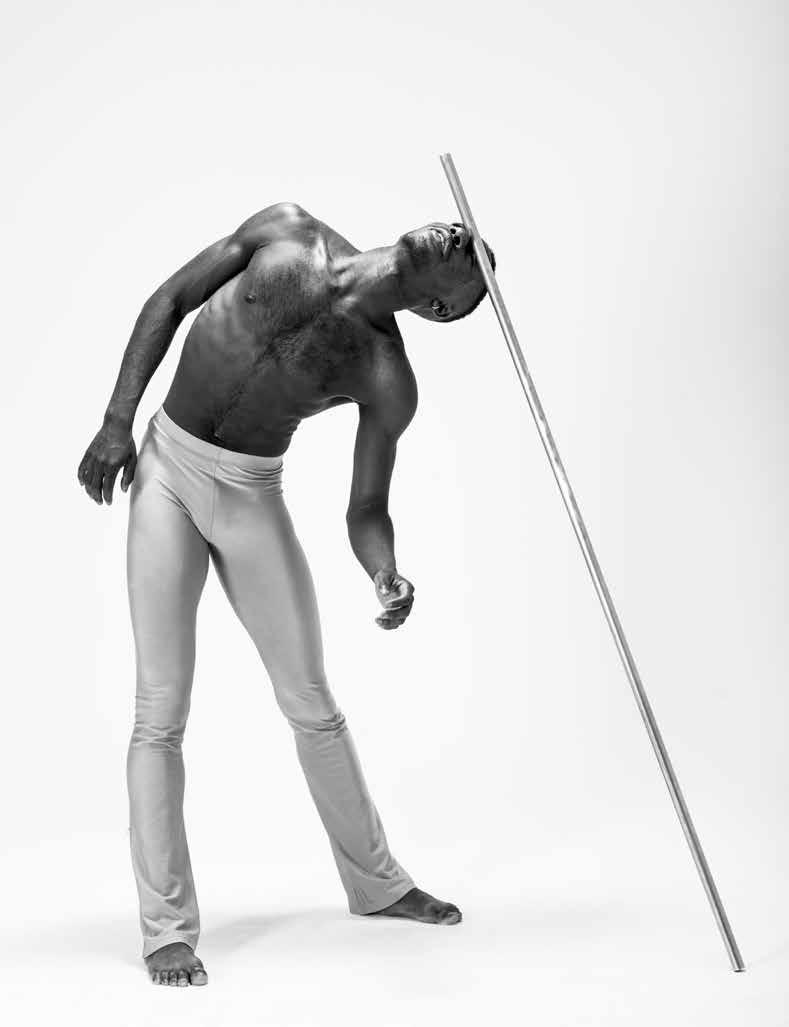
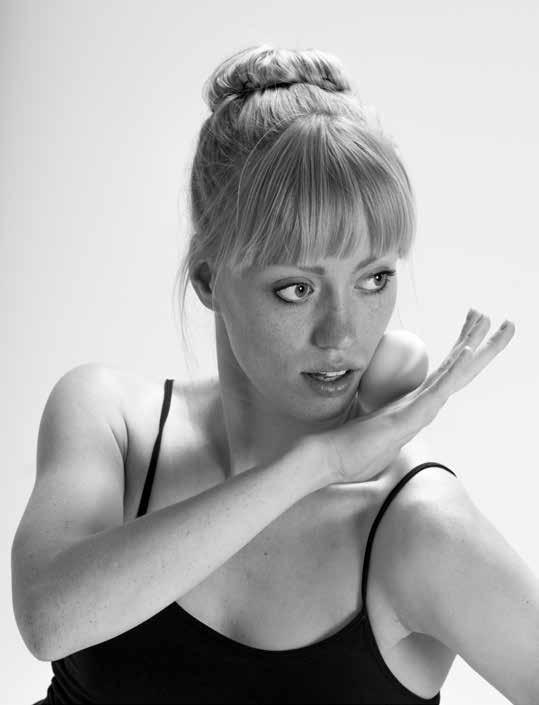
London is fortunate to be a magnet for dance, attracting a steady stream of great companies from across the world. In June 2018 it was the turn of Dresden Semperoper Ballett to come to Sadler’s Wells and they caused quite a stir. Even among jaded critics words like »fabulous« and »sensational« were bandied around and one reviewer declared it was like seeing William Forsythe’s work »for the very first time«. The few who travel to Dresden to see the company knew what to expect but even so, the dancers had pulled out all stops and were breath-taking in their clarity and speed. It was as though the lens had been polished, the focus attuned to the nth degree and they balanced on a cut-crystal edge.
What does it mean to be on the edge? You’re poised on a precipice about to launch into the unknown, praying you have the judgement to hold your course. It’s dangerous and thrilling. You need courage to explore a new trajectory and the self-belief to risk failure, trusting you’ll have the guts to try again. In the arts, it’s probably the only place to be.
You’re poised on a precipice about to launch into the unknown, praying you have the judgement to hold your course.
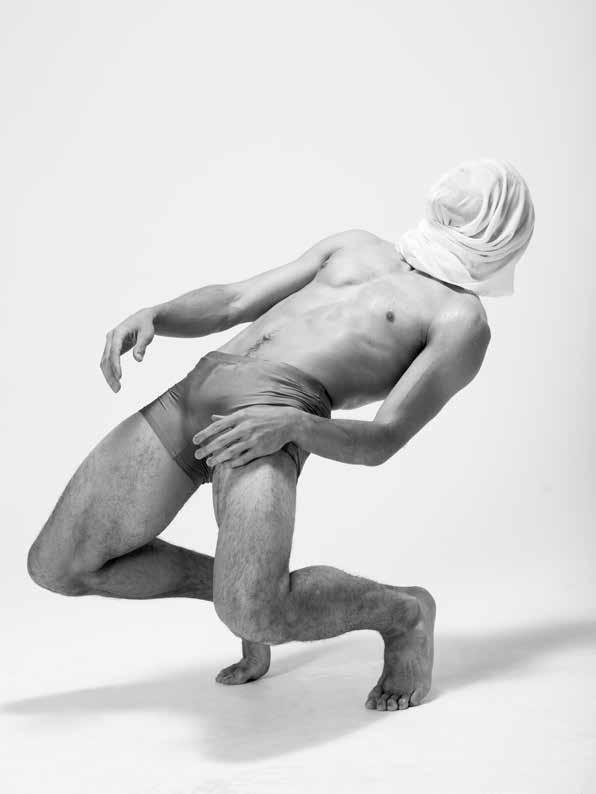
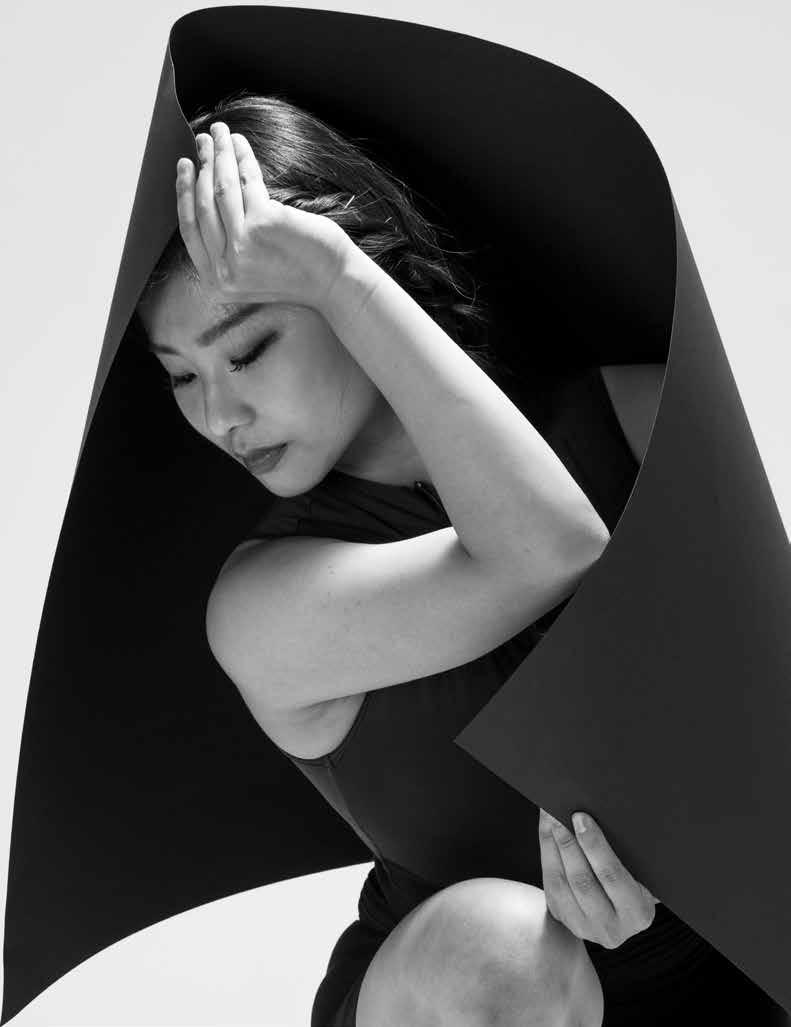
In a world so rich in dance talent what makes a company stand out in the crowd? Artistic Director Aaron S. Watkin seems to have the answer, »It’s about creating an internal company culture«, he told me. Since 2006, when he took on the directorship, he has been preparing the ground and planting the seeds to create this culture. He introduced an exciting and challenging repertoire and insisted this would be a company not satisfied with marking time but always prepared to break new ground. He asked for, and got, dancers of total commitment. Watching daily company class, the difference is palpable. Rather than going through the motions to prepare their bodies for the day’s rehearsals, these are dancers keen to push the boundaries, hone their skills and, when it comes to performance, to share generously with the audience. The result is supported by a recent audience survey where the ballet company were voted tops for delivering an »emotional experience«.
On the edge
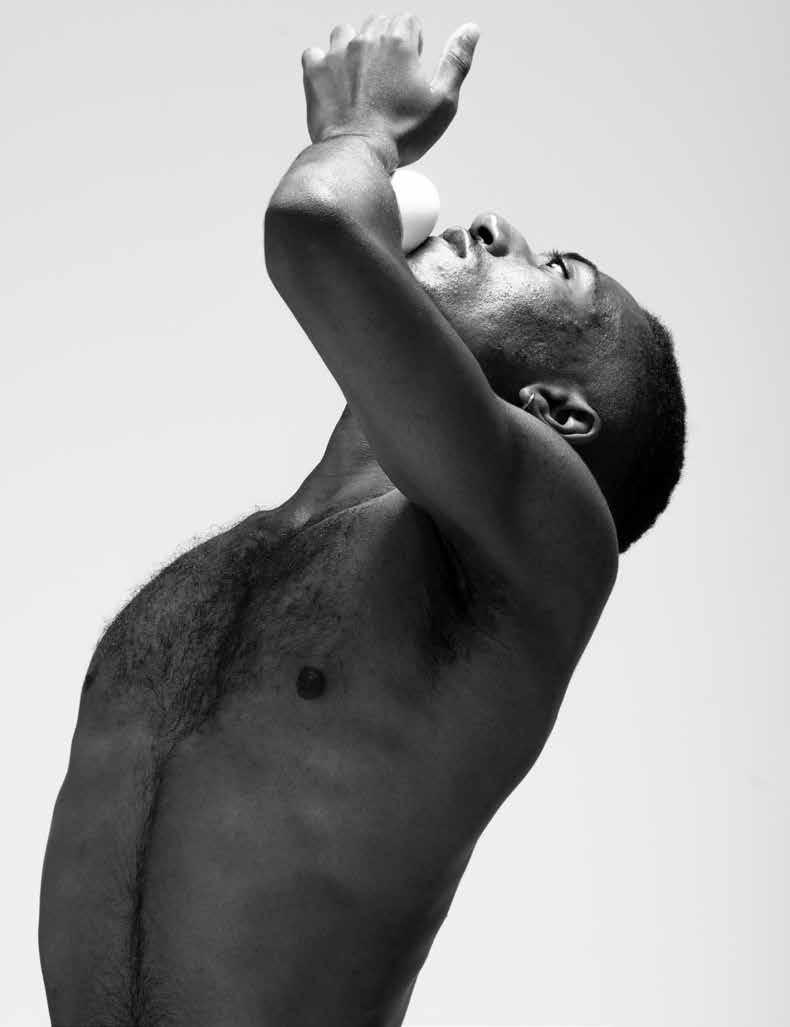
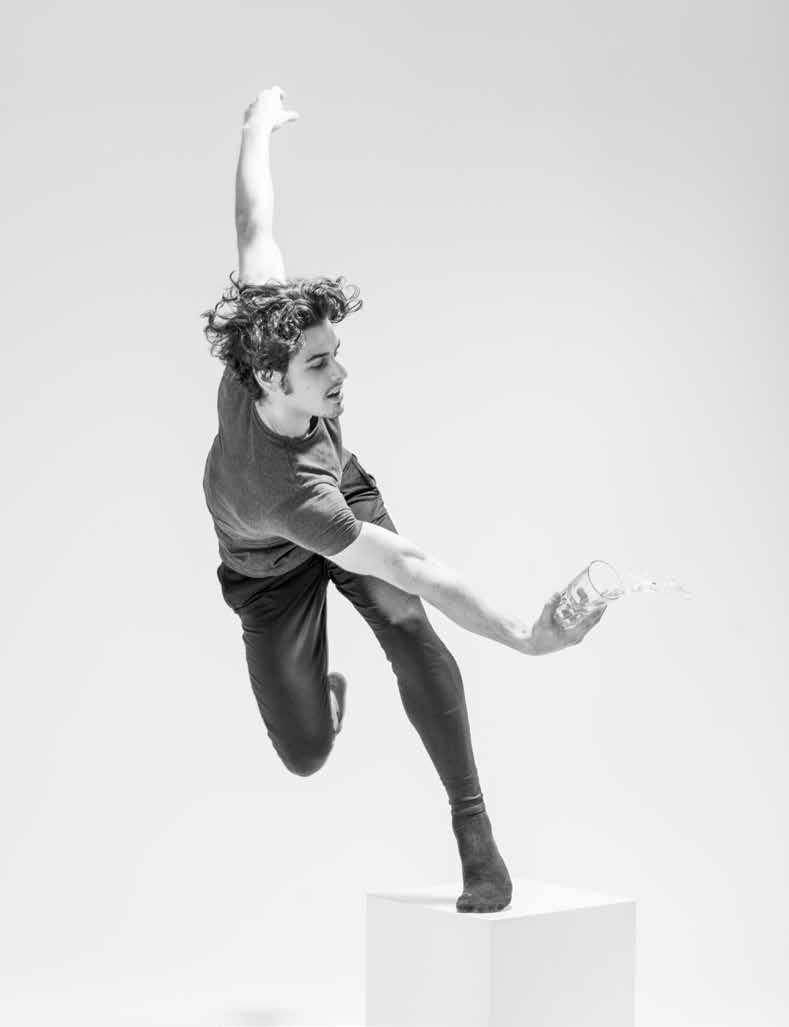
Watkin brought with him new talent and direction. Choreographer, David Dawson and dancers, Raphaël Coumes-Marquet and Yumiko Takeshima came from the Dutch National Ballet. They were joined by a bevy of Mariinsky ballerinas, including Natalia Sologub, Olga Melnikova and Elena Vostrotina, dancers who had been introduced to the works of Forsythe and Dawson and wanted more.
The Forsythe link runs like an indelible thread through Dresden Semperoper. Dawson and Watkin joined Forsythe’s Ballett Frankfurt after successful ballet careers and discovered a new way of moving and thinking. Watkin felt »physically at home, it was the perfect fit for my body« while Dawson said he couldn’t imagine dancing with any other company after the Forsythe experience. Laura Graham, now ballet master and Assistant Choreographer, had her classical years as a principal dancer with the Royal Winnipeg Ballet before joining the Forsythe’s company as a soloist. She is one of the very few authorised to stage his works, she brings to the studio her unique mix of high energy, humour and total dedication. The cultural codes that these three formative artists have brought from Forsythe involve more than just technical prowess, they go to the heart of the matter, the nurture of the dancers.
Forsythe requires that his dancers take ownership of the work, an attitude that is lightyears from the traditional do-as-you’re-told corps de ballet mentality. Dawson noted that it was from Forsythe that he learnt to be »an adult in dance« and to work in a studio where there is a constant exchange of artistic intention. Dawson is a choreographer who expects the impossible and often gets it. He says, »I need dancers who want to go with me on the journey«.
Watkin selects his dancers on coordination and musicality but also on their ability to develop and change, »what I am most interested to see in a dancer is their ability to process corrections.« Graham, whose work is at the chalk-face, in constant contact with the artists, notes, »you’re a human being first, before you’re a dancer.« She insists that dancers be critical thinkers and not just technicians. »Dancers are intelligent, they need to be given opportunities to think for themselves, to create and re-create themselves – they need to feel empowered in their skin.«
On the edge
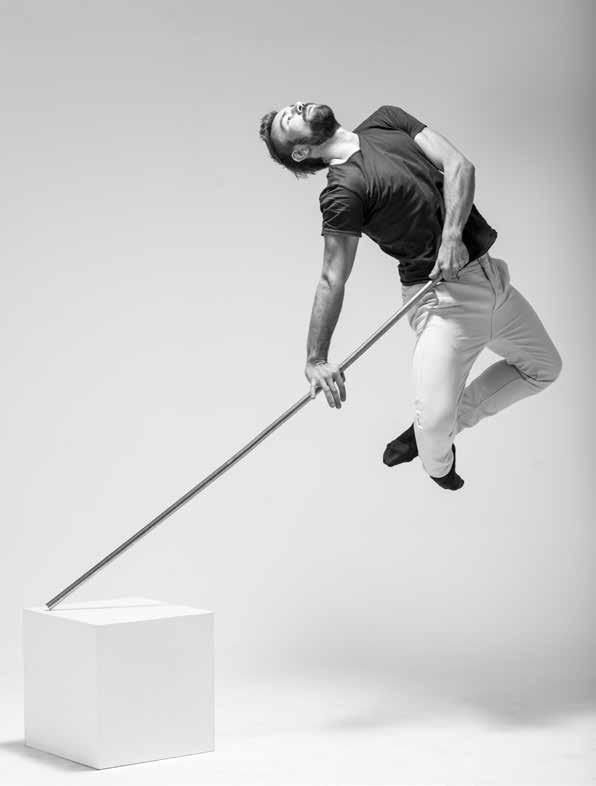
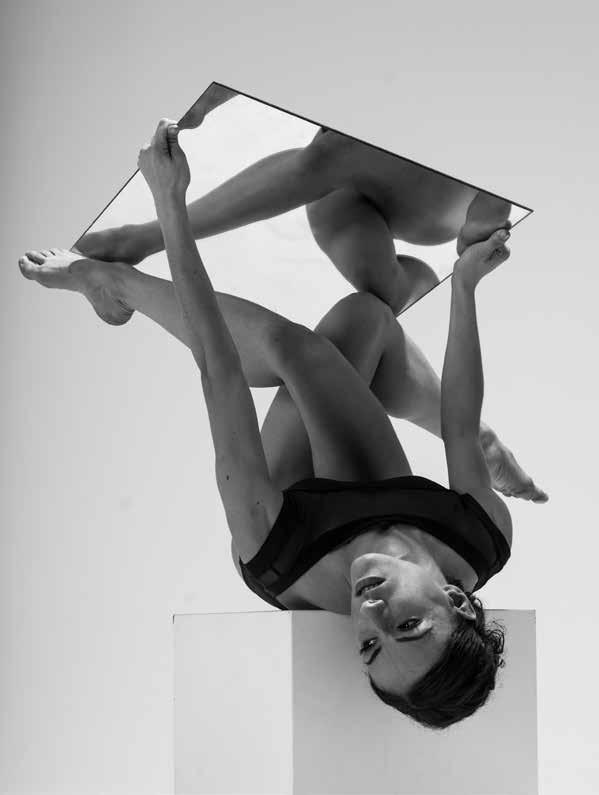
The city of Dresden is no stranger to bold innovation in art. The visionary painter Caspar David Friedrich immortalised Dresden in his works; Ernst Ludwig Kirchner founded the avant-garde group, »Die Brücke« (»The Bridge«) here in 1905 and Wassily Kandinsky sketched Gret Palucca at his studio in the city in the 1920s. Palucca’s school of new artistic dance opened in 1925 and despite the GDR’s focus on Vaganova technique, she continued to teach her »technical Improvisations« alongside the ballet. Palucca is today a University of Dance and remains a vibrant conservatoire.
Then, of course, there is Semperoper – one of Europe’s most magnificent opera houses. The current building, the third on the site was opened in 1985, loving reconstructed after the devastating bombing in 1945. It repeats the theme of maintaining tradition while encouraging innovation, preserving the original shape of the auditorium while updating the backstage area to conform to current technical standards and provide ample space for rehearsals and administration. It boasts a proscenium arch of extravagant height that showcases both traditional and new works. George Balanchine’s »Emeralds« with Peter Harvey’s original set design filled the arch with a misty gauze of sparkling green gems creating a magic that left other stages and productions wanting. The space adapted equally well to give mysterious intensity to the flowing white drapes in Johan Inger’s »Empty House« then morphed again to provide context to the expressionist austerity of Mats Ek’s »She was Black«, where the small cast and singular movement style was focused sharply in the vast space.
You need courage a new trajectory and to risk failure, trusting the guts to try
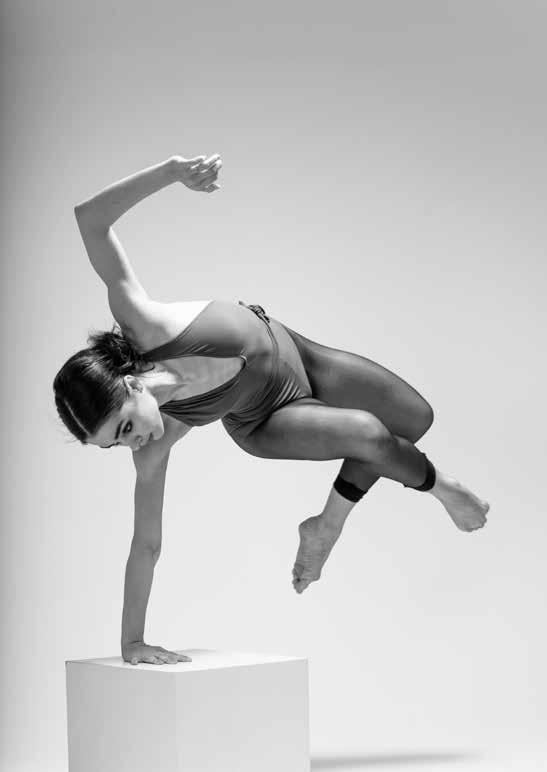
In the spirit of cutting edge creativity, productions have employed the best in contemporary theatre arts to rethink space and sound, introducing composers of the calibre of Thom Willems, Szymon Brzóska, Gavin Bryars and Mikael Karlsson and similarly set designers, Eno Henze and Patrick Kinmonth, (who gave the cliched »Don Quixote« a rebellious update to Franco’s Spain).
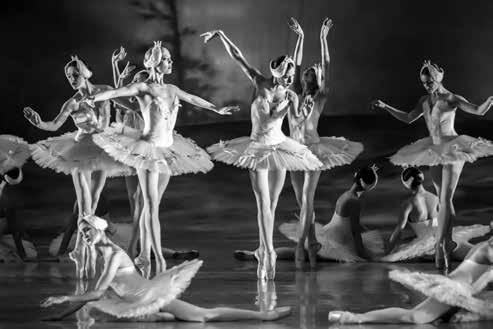
It is a tricky balance maintaining the classics while bringing in new works, especially in dance where performers are asked to adapt their bodies to techniques developed over a century or more. The classics are represented with Watkin’s productions of major works including »Swan Lake« and »The Sleeping Beauty«, but the foundation remains the postmodern ballets of Forsythe and Dawson. Dresden is the only company presenting Forsythe’s complete »Impressing the Czar« while Dawson’s full evening ballets, »Giselle« (2008) and »Tristan + Isolde« (2015), both premiered in Dresden.
In the arts, it’s probably the only place to be.

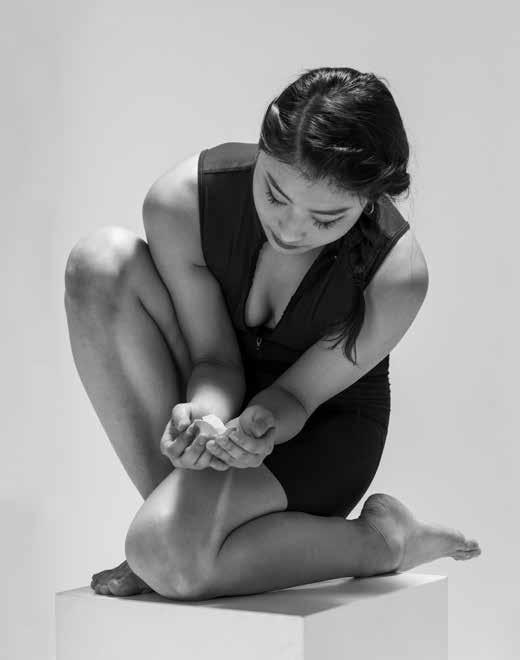
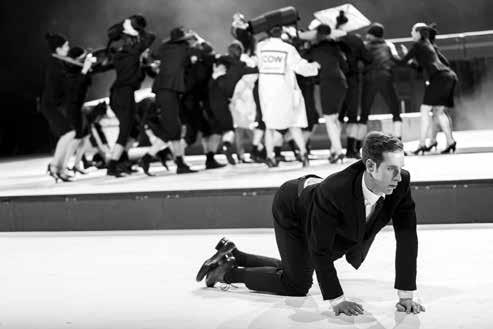
Alexander Ekman, one of the most creative thinkers on the dance scene, expanded the horizons with his production of »COW«. Film footage of the River Elbe flowed across the stage while a papier-mâché cow hovered expectantly above. The dancers’ ability to adapt across this wide range is predicated on their intelligence, skill and openness to change.
I have always believed that the single most important quality for a dancer is courage and working in the Forsythe / Dresden mould demands this. Aaron S. Watkin has assembled a company of technical proficiency still eager to learn, to try new ways and to take risks: a company living on the edge. Now, with more international tours lined up, this is a company ready to take on the world.
MAGGIE FOYER has been a dancer and dance teacher and is now a dance writer contributing to many outlets including The Dancing Times, Dance International, Danza and several websites. She also writes programme notes and contributes chapters to books on dance. She lectures in humanities at The Open University and has founded a charity helping village schools in the Middle East.
Welcome
Premieres
Tours
Repertoire
Ensemble Company
Artistic Director and
Semperoper Dresden
Imprint

Often we try to attain a perfect balance in our everyday lives; the idea of sitting on the edge, of losing our equilibrium, seems rather dangerous. Yet in dance such tipping points can also be used productively and creatively in every single performance as well as in the programmatic setting of an entire season. The creative ethos of ballet director Aaron S. Watkin is to ensure just the right mix of harmony and friction for a finely balanced programme, one that displays both variety and courage. Semperoper Ballett presents the full spectrum of dance in Dresden at the highest international level: From narrative ballet to multi-work evenings, from classical to modern dance, from beloved works of the past to premieres of contemporary avant-garde – this brilliant ensemble has mastered a great variety of styles with astonishing aplomb. Made up of almost sixty performers from over twenty countries, the company brings the world to Dresden, while its busy touring schedule cements its great reputation throughout the world. It is a real privilege for me to find this ensemble in such great shape. I am very much looking forward to working with Aaron S. Watkin as well as to unforgettable moments at the Semperoper, to perfection and humanity, to physical expression and poetry, to the gamut of our dancers’ skills –and, of course, to you, our dance- and opera-loving audience.
Sincerely, your

Peter Theiler Artistic Director Staatsoper Dresden

We begin our journey to another chapter of our existence under the direction of our new Intendant Peter Theiler. With fresh creative impulses and inspiration, we are currently building together an artistic plan for the Semperoper Ballett over the next three seasons. I will continue commissioning new creations for our company, introduce new choreographers – both from the past and present –and strengthen already existing relationships with choreographers well known to our house.
We have two exciting premieres, the first of which on November 3rd 2018 is »Labyrinth«. This is a diverse mixed bill opening with George Balanchine’s masterpiece to Hindemith’s electric score »The Four Temperaments«. Over the past twelve seasons under my direction we have built up a substantial Balanchine repertoire predominantly made up his more classical repertoire, and »The Four Temperaments« will be our first of his black & white abstract works. Created in 1946, this ballet has become known as the ancestor of all Balanchine ballets that now defines his signature style. The second part of this program is made up of two shorter works. We will, for the first time ever, premiere a work from the legendary pioneer of American contemporary dance, Martha Graham with her »Errand into the Maze«. Premiered in 1947, and set to the fifteen minute score of Gian Carlo Menotti, Graham based this duet on the famous Greek myth of Ariadne and the Minotaur in which she explores the fear of sexual intimacy. We close the second part with a familiar face to our house, world-renowned Israeli choreographer, Ohad Naharin and his »Black Milk«. Created in 1985 and danced to a score for a marimbaphone by Paul Smadbeck, this is a mesmerizing harsh ritual in which a quintet of all male dancers smear their bodies with black paint and are challenged with a juxtaposition of tempi, textures and energy. The connection between these first three works on this program range from period, the first two being from the 1940’s, to style as Graham after visiting Israel in the early 70’s invited Naharin to join her dance company in New York, consequently influencing his work. He then of course defined his unique style but in »Black Milk« one can clearly see the parallels between these two choreographers especially in the sense of renewal, which is a major Graham theme. To close the evening I have commissioned a world premiere by our own soloist Joseph Hernandez. I am always interested to promote internal talent wherever possible and I do believe Joseph has a very interesting and unique creative voice. After commissioning two successful smaller creations, one for our Semper Zwei and the other for a tour to the Joyce Theater last season, I am happy to offer Joseph the opportunity to create for our main stage. I have given Joseph a clean palette, free from constraint to realize his artistic vision for this premiere and we are all very excited to see what he will create!
Our second premiere on January 25th 2019 will be Johan Inger’s unique and vibrant »Carmen«, a title that I have long-awaited to introduce. Inger is also no stranger to our house as we currently have two other of his works in our repertoire and he is a choreographer that I want to maintain an artistic relationship with. In this narrative, originally created for Compañía Nacional de Danza in 2015, Inger decides to focus on the theme of passion and violence approaching it through the eyes of a child which in turn brings out undertones of youth and innocence only hinted at in the original material. Inger’s »Carmen« has become one of the most talked about ballets of this decade, the irresistible music of Bizet and Schtschedrin, accompanied live by our Sächsische Staatskapelle Dresden and Inger’s stunning choreography will make this an evening not be missed!
Under the direction of Manfred Weiß and Raphaël Coumes-Marquet, our second stage Semper Zwei will see a premiere of »Alice« based on »Alice in Wonderland«. This will be a collaboration of numerous choreographers, each in charge of a specific chapter of the story made up from a talent pool of our dancers.
I am very happy to announce that former Principal dancer of American Ballet Theatre and international ballet star Marcelo Gomes, will guest with us for the first time dancing three performances as Prince Siegfried in »Swan Lake« and two performances as Oberon in »The Dream«. I am excited to build an artistic relationship with Marcelo and our company and hope that this will be the beginning of many collaborations over the future seasons to come.
Our international presence continues to be another of my main points of focus. After three successful tours last season to New York, Ottawa and London, this season we see our first tour to Australia and Asia. We will present four performances of Johan Inger’s »Carmen« at Adelaide Festival of Arts on March 8th, 9th and 10th and two performances in Singapore on March 15th and 16th of William Forsythe’s »Impressing the Czar« at the Esplanade – Theatres on the Bay.
With over eighty performances, ten productions, three premieres programs, two world premieres and an international tour to Australia and Asia, this season proves to be very diverse and exciting. We welcome you to experience the Semperoper Ballett live if you have the chance.

Aaron S. Watkin
Artistic Director Semperoper
Ballett
Welcome
Premieres
Tours
Repertoire Ensemble Company
Artistic Director and
Semperoper Dresden
Imprint
Choreography George Balanchine
© The George Balanchine Trust
Music Paul Hindemith
Piano Alfredo Miglionico
Costume Design Frauke Schernau nach Kurt Seligmann
Lighting Design Fabio Antoci
Staged by Nanette Glushak
Choreography & Costume Design Martha Graham
Music Gian Carlo Menotti
Set Design Isamu Noguchi
Lighting Design Jean Rosenthal
Adaption
Lighting Design Beverly Emmons
Staged by Denise Vale, Ben Schultz, Blakeley White-McGuire
Choreography Ohad Naharin
Music Paul Smadbeck
Costume Design Rakefet Levy
Lighting Design Avi Yona Bueno (Bambi)
Staged by Shahar Biniamini
SONGS FOR A SIREN
World Premiere
Choreography Joseph Hernandez
Music Barret Anspach
Set & Costume Design Yannick Cosso, Jordan Pallagès
Lighting Design Christoph Schmädicke
Dramaturgy Juliane Schunke
Musical Director Nathan Fifield
Semperoper Ballett
Sächsische Staatskapelle Dresden
3, 5, 14, 16, 18 & 21 November 2018
Project Partner: Sparkassen-Finanzgruppe Sachsen / Ostsächsische Sparkasse Dresden / Sparkassen-Versicherung Sachsen / LBBW – Landesbank Baden-Württemberg
»Labyrinth« unites four different perspectives on the maze of human passions, temperaments, fantasies and emotions. Following George Balanchine’s work »The Four Temperaments«, an examination of the medieval concept of man’s four humours, Martha Graham vividly exposes the path into the labyrinth (»Errand into the Maze«) of human emotions and fears. Ohad Naharin, on the other hand, dedicates himself to the underlying archaic structures of human feeling in »Black Milk«, before Joseph Hernandez’s latest work creates an entrapped world of ancient symbolism.
The ballet »Carmen« by Swedish star choreographer Johan Inger fits seamlessly into the tradition of the great Carmen interpretations ranging from John Cranko and Mats Ek to Carlos Acosta. From a child’s perspective, he tells of the tragic entanglement between Carmen, Don José and Escamillo, of their passion, jealousy, revenge and hatred in gripping images of great clarity. »Carmen« was created in 2015 for the Compañía Nacional de Danza in Madrid to music by Bizet, Schtschedrin and Álvarez. In 2016, the choreographer received the Prix Benois de la Danse – the Oscar of the ballet world –in Moscow for his first fulllength ballet.
Choreography Johan Inger
Music Georges Bizet, Rodion Schtschedrin
Additional Composition Marc Álvarez
Set Design Curt Allen Wilmer
Costume Design David Delfín
Lighting Design Tom Visser
Staged by Urtzi Aranburu, Patricia Vázquez Iruretagoyena
Dramaturgy Gregor Acuña-Pohl, Johann Casimir Eule (Dresden)
Musical Director Manuel Coves
Semperoper Ballett
Sächsische Staatskapelle Dresden
Music from tape
25, 27 January & 10, 16, 24 February 2019
Generously supported by the Stiftung Semperoper – Förderstiftung
Premiere 8 June 2019
/
Idea & Staging Raphaël Coumes-Marquet
Choreography Raphaël Coumes-Marquet, Joseph Hernandez, James Potter, Houston Thomas, Michael Tucker
Music Marko Junghanß
Set Design TAPE OVER: Lamia Michna (LaMia), Robert König (ROB)
Costume Design Frauke Schernau
Video Projections Jacques André Dupont
Lighting Design Christoph Schmädicke
Dramaturgy Juliane Schunke
Semperoper Ballett
Pre-recorded musical accompaniment
Ballet for children and adults Scenario by Julie Stearns
8, 11, 14, 15, 17 & 21 June 2019
Semper Zwei
Who doesn’t know the crazy things that happen to little Alice after she has followed the White Rabbit down the rabbit-hole into a Wonderland of fantasy. Everything is topsy-turvy, and she, too, becomes someone different. Five choreographers from the company of the Semperoper Ballett explore various stages of Alice’s journey. Shaping and narrating the story with their individual physical language in a multi-layered stage design made of adhesive tape, they give »their piece« of the narrative a unique stylistic and musical character.
Welcome Tours
Repertoire
Ensemble Company
Artistic Director and
Semperoper Dresden
Imprint
8, 9 & 10 March 2019
15 & 16 March 2019
Welcome
Repertoire
Ensemble Company
Artistic Director and Semperoper Dresden
Imprint

Heatscape / Gods and Dogs / Corpse de Ballet 9, 13 & 17 September 2018
Project Partner: Sparkassen-Finanzgruppe Sachsen / Ostsächsische Sparkasse Dresden / Sparkassen-Versicherung Sachsen / LBBW – Landesbank Baden-Württemberg
by Ludwig Minkus
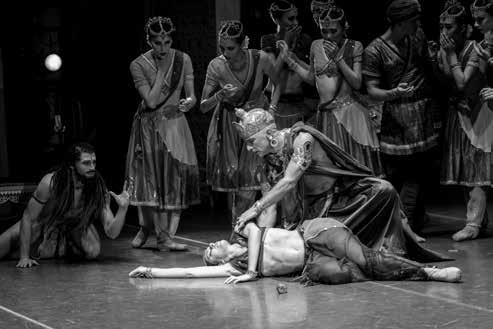
Repertoire 16, 19, 21, 26, 28 September & 2 October 2018
Generously supported by the Stiftung Semperoper – Förderstiftung
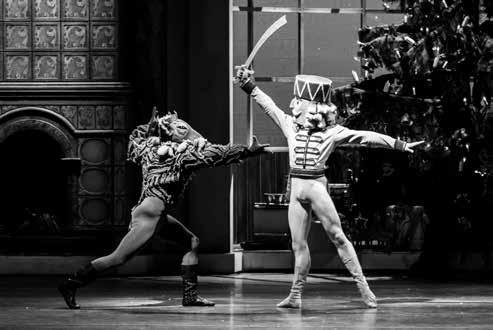
24, 28, 30 November & 4, 6, 9, 16, 19, 20, 23, 25 December 2018
In Cooperation with the Palucca Hochschule für Tanz Dresden
Generously supported by the Stiftung Semperoper – Förderstiftung
Ballet in eleven scenes
by Mikael Karlsson
Repertoire 3, 5, 7, 9, 12 & 17
April 2019
Project Partner: Sparkassen-Finanzgruppe Sachsen / Ostsächsische Sparkasse Dresden / Sparkassen-Versicherung Sachsen / LBBW – Landesbank Baden-Württemberg
Repertoire
26 April & 1, 3, 4, 12, 16, 18, 19, 24, 27, 29 May 2019
Generously supported by the Stiftung Semperoper – Förderstiftung
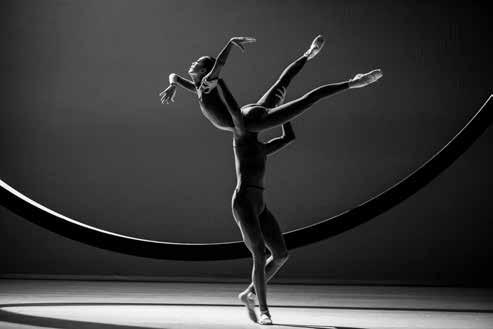
Ballet evening in two parts
Music by Felix Mendelssohn Bartholdy, Antonio Vivaldi –recomposed by
The Dream / The Four Seasons 22, 26, 28, 30 June & 11, 14 July 2019
Generously supported by the Stiftung Semperoper – Förderstiftung
David Dawson
A MIDSUMMER NIGHT’S DREAM
John Neumeier
A MILLION KISSES TO MY SKIN
David Dawson
A SWEET SPELL OF OBLIVION
David Dawson
ALICE –A JOURNEY TO WONDERLAND
Raphaël Coumes-Marquet / Joseph Hernandez / James Potter / Houston Thomas / Michael Tucker
APOLLO
George Balanchine
ARTIFACT SUITE
William Forsythe
BELLA FIGURA
Jiří Kylián
BLACK MILK
Ohad Naharin
CACTI
Alexander Ekman
CANON IN D MAJOR
Jiří Bubeníček
CARMEN
Johan Inger
CHOPINIANA
Aaron S. Watkin in the tradition of Michail Fokine
CINDERELLA
Stijn Celis
COPPÉLIA
George Balanchine & Alexandra Danilova after Marius Petipa
CORPSE DE BALLET
Hofesh Shechter
COW
Alexander Ekman
DON QUIXOTE
Aaron S. Watkin
EMPTY HOUSE
Johan Inger
ENEMY IN THE FIGURE
William Forsythe
ERRAND INTO THE MAZE
Martha Graham
FAUN
Jiří Bubeníček
FORGOTTEN LAND
Jiří Kylián
GANZ LEISE
KOMMT DIE NACHT / THE NIGHT FALLS QUIETLY
Joseph Hernandez
GISELLE
David Dawson
GODS AND DOGS
Jiří Kylián
GRAND PAS CLASSIQUE
Aaron S. Watkin in the tradition of Victor Gsovsky
HEATSCAPE
Justin Peck
ILLUSIONS –LIKE »SWAN LAKE«
John Neumeier
IM ANDEREN RAUM
Pontus Lidberg
IMPRESSING THE CZAR
William Forsythe
IN THE MIDDLE, SOMEWHAT ELEVATED
William Forsythe
INTIMATE
DISTANCE DUET
Jiří Bubeníček
JEWELS
George Balanchine
LA BAYADÈRE
Aaron S. Watkin after Marius Petipa
MANON
Kenneth MacMillan
MINUS 16
Ohad Naharin
MORNING GROUND
David Dawson
NEUE SUITE
William Forsythe
NOCES
Stijn Celis
NO THUMB
Pascal Touzeau
ON THE NATURE OF DAYLIGHT
David Dawson
OPUS.11
David Dawson
ORAKEL
Joseph Hernandez
PETITE MORT
Jiří Kylián
PETRUSHKA
Andris Liepa after Michail Fokine
QUINTETT
William Forsythe
REVERENCE
David Dawson
ROMEO AND JULIET
Stijn Celis
SACRE
Jacopo Godani
SECHS TÄNZE
Jiří Kylián
SELF PORTRAIT
François Chirpaz & Kristen Cere
SHE WAS BLACK Mats Ek
SINFONIETTA
Jiří Kylián
SONGS FOR A SIREN
Joseph Hernandez
SPAZIO-TEMPO
Jacopo Godani
STEPTEXT
William Forsythe
SWAN LAKE
Aaron S. Watkin after Marius Petipa & Lev Ivanov
SYMPHONY IN C
George Balanchine
SYMPHONY NO. 2
Uwe Scholz
TANZSUITE
Alexei Ratmansky
TARANTELLA PAS DE DEUX
George Balanchine
THE DISAPPEARED
David Dawson
THE DREAM
Frederick Ashton
THE FIREBIRD
Andris Liepa after Michail Fokine
THE FOUR SEASONS
David Dawson
THE FOUR TEMPERAMENTS
George Balanchine
THE GREY AREA
David Dawson
THE LEGEND OF JOSEPH
Stijn Celis
THE LOST DIARY
Michael Tucker
THE NUTCRACKER
John Neumeier
THE NUTCRACKER
Aaron S. Watkin & Jason Beechey
THE SECOND DETAIL
William Forsythe
THE SLEEPING BEAUTY
Aaron S. Watkin after Marius Petipa
THE TAMING OF THE SHREW
John Cranko
THE VERTIGINOUS THRILL OF EXACTITUDE
William Forsythe
THE WORLD
ACCORDING TO US
David Dawson
THEME AND VARIATIONS
George Balanchine
TRISTAN + ISOLDE
David Dawson
VERTIGO MAZE
Stijn Celis
VOLUNTARIES
Glen Tetley
WALKING MAD
Johan Inger
ZWISCHEN(T)RAUM »DAS VOKALTUCH DER KAMMERSÄNGERIN
ROSA SILBER«
Helen Pickett
ARTISTIC DIRECTOR
Aaron S. Watkin
COMPANY MANAGER
Adi Luick
PRINCIPAL
BALLET MASTER
Gamal Gouda
BALLET MASTER & CHOREOGRAPHIC ASSISTANT
Laura Graham
BALLET MASTER & SUPERVISOR
SEMPER ZWEI / DANCE
Raphaël Coumes-Marquet
BALLET MASTER
Carmen Piqueras
GUEST BALLET MASTER
Stephanie Arndt
Yannick Boquín
Olga Kostritzky
PRINCIPAL PIANIST
Yevgeny Feldmann
PIANISTS
Alfredo Miglionico
Svetlana Smolina
Thomas Weißbach
GUEST CONDUCTORS
Mikhail Agrest
David Coleman
Manuel Coves
Nathan Fifield
Eva Ollikainen
Benjamin Pope
Martin Yates
PRODUCTION & TOUR MANAGER
Frank Seifert
PRODUCTION ASSISTANT
Asmara Lechner
REHEARSAL COORDINATOR
Henry Kupka
COORDINATOR OF THE BALLET DIRECTION
Christina Zimmermann INTERN
Anastasia Hecht
DRAMATIC ADVISORS
Johann Casimir Eule
Juliane Schunke
PHYSIOTHERAPIST
Barbara Hohlfeld
PILATES INSTRUCTOR
Yevgeny Bondarenko
PHOTOGRAPHER & MULTIMEDIA
Ian Whalen
PRINCIPALS
Svetlana Gileva
Sangeun Lee
Anna Merkulova
Courtney Richardson
Dmitry Semionov 1
Jón Vallejo
Denis Veginy
PRINCIPAL
CHARACTER ARTISTS
Lilia Babina 1
Carola Schwab
Ralf Arndt
Hannes-Detlef Vogel
FIRST SOLOISTS
Kanako Fujimoto
Alice Mariani
Duosi Zhu
Christian Bauch
Francesco Pio Ricci
Michael Tucker
SECOND SOLOISTS
Aidan Gibson
Elena Karpuhina
Chantelle Kerr
Jenny Laudadio
Raquél Martínez
Gina Scott
Zarina Stahnke
Thomas Bieszka
Julian Amir Lacey
Houston Thomas
CORYPHÉES
Ilaria Ghironi
Susanna Santoro
Chiara Scarrone
Ayaha Tsunaki
Briony Viele
Joseph Gray
Gareth Haw
Joseph Hernandez
Václav Lamparter
Alejandro Martínez
Skyler Maxey-Wert
Casey Ouzounis
CORPS DE BALLET
Rio Anderson
Evelyn Bovo
Kaitlyn Casey
Giulia Frosi
Jennifer Hackbarth
Rebecca Haw
Mariavittoria Muscettola
Madeleine Pastor 3
Nastazia Philippou
Jia Sun
Mónica Tardáguila
Ella Vickerman
Simona Volpe
Natsuki Yamada
Madison Whiteley
Anthony Bachelier
Marco Giombelli
Johannes Goldbach
Kristóf Kovács
Rodrigo Pinto
James Potter
APPRENTICES
Chloe Ellis Yu Kawai
Molly Novak 4
Grace Rookstool 4
Hailey Stegemoller
Paula Tarragüel-Aguilar
Rachel Tranter 4
Lukas Bareman
Arieh Bates-Vinueza
SCHOLAR –
STIFTUNG SEMPEROPER –FÖRDERSTIFTUNG
Philippine Flahault
















































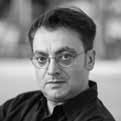















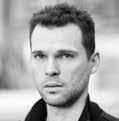







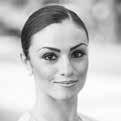


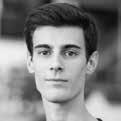









Born in the Cowichan Valley, B.C. Canada, Aaron Sean Watkin graduated from the National Ballet School of Canada in 1988 and enjoyed a full career in dancing with The National Ballet of Canada, The English National Ballet and The Dutch National Ballet. In 1997 he was invited by world-renowned choreographer William Forsythe to become a Principal Dancer with Ballett Frankfurt and later joined The National Dance Company of Spain under the directorship of Nacho Duato. Watkin was Associate Artistic Director to Victor Ullate Ballet. He was a personal choreographic assistant to William Forsythe, setting his ballets throughout the world and was a regular guest teacher to many of Europe’s leading dance companies. Watkin was the Artistic Associate Director of The Loft Dance Studio in Brussels, Belgium and was also Artistic Associate Director of the annual Dance For Life AIDS Benefit Galas in Brussels, Belgium. Watkin was appointed Artistic Director of the Semperoper Ballett in 2006 and in 2007 he choreographed his first full-length ballet production »The Sleeping Beauty« followed by »La Bayadère« in 2008, »Swan Lake« in 2009, »The Nutcracker«, together with Prof. Jason Beechey in 2011 and most recently »Don Quixote« in 2016.
The Semperoper rises majestically above the Theaterplatz beside the Elbe river, forming the heart of the historic old town. In late classicist style and borrowing from Renaissance architecture, the first opera house was completed in 1841 according to plans by Gottfried Semper. After a devastating fire in 1869, the citizens of Dresden immediately began the reconstruction process. The new building, also designed by Semper, was inaugurated in 1878. In 1945 the Semperoper was once again destroyed in the final months of the war. Following the successful completion of this second reconstruction effort in 1985, one of Europe’s most beautiful opera houses reopened on 13 February 1985 with a performance of Carl Maria von Weber’s »Der Freischütz«. The magnificent interiors were elaborately restored according to original models and plans, while the stage and auditorium were fitted with state-of-the-art technology.
World-renowned for its brilliant acoustics, the Semperoper attracts a large audience from all corners of the globe to enjoy unforgettable performances by a first-class ensemble and numerous international star guests.
This is the home of the Staatskapelle Dresden, founded over 470 years ago and steeped in tradition. Christian Thielemann has been principal conductor of the Staatskapelle Dresden since
the 2012 / 13 season. In 2007 the Staatskapelle was the first and as yet only orchestra to receive the »Prize of the European Cultural Foundation for the Preservation of the World’s Musical Heritage«.
Directly behind the Semperoper is the small Semper Zwei venue, offering space for a wide variety of musical theatre formats and experiments. It is also used for performances by the Semperoper youth programme Junge Szene. Since the 2018 / 19 season, Peter Theiler from Switzerland took over the helm of the Semperoper as artistic director.
The art of dance has strong roots in the Baroque city of Dresden. Carl Maria von Weber called for a permanent ballet ensemble, which was then founded in 1823. The ensemble enjoyed its first artistic heyday in the 1920s, since which time audiences have been thrilled by many great choreographies under company directors Tom Schilling, Harald Wandtke and Vladimir Derevianko. Since 2006 the artistic profile of Semperoper Ballett has been shaped by Canadian ballet director Aaron S. Watkin. Under his guidance, the company is setting new standards with an impressive repertoire based on traditional narrative ballets and modern dance, performed by outstanding soloists from all around the world.

Maggie Foyer
SEMPEROPER BALLETT:
AUF DEM SPRUNG!
London ist in der glücklichen Position, ein Magnet für den Tanz zu sein und zieht in beständigem Fluss große Kompanien aus der ganzen Welt an. Im Juni 2018 war das Semperoper Ballett aus Dresden an der Reihe und gastierte im Sadler's Wells Theatre –und sorgte für viel Aufsehen. Sogar unter übersättigten Kritikern machten Bemerkungen wie »fabelhaft« und »sensationell« die Runde, und ein Kunstkenner ließ verlauten, es sei, als würde man William Forsythes Werk »zum ersten Mal« sehen. Die wenigen, die bereits nach Dresden gereist waren, um die Company zu erleben, wussten zwar, was sie erwartet, aber dennoch: Die Tänzer zogen alle Register ihres Könnens, sie waren geradezu atemberaubend in ihrer Klarheit und Geschwindigkeit. Es war, als hätte jemand die Linse poliert, den Fokus auf unendlich eingestellt – und sie balancierten über einem kristallklaren Abgrund.
Was bedeutet es, über einem Abgrund zu balancieren? Du stehst an einem Rand, kurz davor, dich ins Unbekannte zu stürzen, und betest, dass du die Lage richtig bewertest, deinen Kurs hältst. Es ist gefährlich und spannend. Du brauchst Mut, um einer neuen Flugbahn zu folgen, und den Glauben an dich selbst, um Scheitern zu riskieren, und du vertraust darauf, dass du die Unerschrockenheit behältst, es noch einmal zu versuchen. In den Künsten ist dies wahrscheinlich der einzige Ort, an dem man sein muss.
Wie sticht eine Company heraus in dieser Welt, die so reich an Tanztalenten ist? Der künstlerische Leiter Aaron S. Watkin scheint die Antwort zu kennen: »Es geht darum, eine innere Kultur der Company zu schaffen«, sagte er mir. Seit 2006, als er die Leitung übernahm, bereitet er den Boden und pflanzt die Samen für diese Kultur. Er stellte ein spannendes und herausforderndes Repertoire vor und bestand darauf, dass dies eine Company werde, die sich nicht
damit zufrieden gibt, ihre Zeit abzusitzen, sondern immer bereit sein werde, neue Wege zu gehen. Er suchte – und fand – Tänzer, die mit vollem Einsatz dabei sind. Wenn man sich das tägliche Training der Company ansieht, ist der Unterschied spürbar. Anstatt die Bewegungen durchzugehen, um ihren Körper auf die Proben des Tages vorzubereiten, sind diese Tänzer daran interessiert, Grenzen zu überschreiten, Fähigkeiten zu verbessern und, wenn es um die Aufführung geht, großzügig mit dem Publikum zu teilen. Das Ergebnis wird durch eine aktuelle Publikumserhebung untermauert, bei der die Company die besten Ergebnisse in der Kategorie »emotionales Erlebnis« erhielt.
Watkin brachte neue Talente und Richtungen mit. Der Choreograf David Dawson und die Tänzer Raphaël Coumes-Marquet und Yumiko Takeshima kamen vom Dutch National Ballet. Zu ihnen gesellte sich eine Schar von Mariinsky-Ballerinas, darunter Natalia Sologub, Olga Melnikova und Elena Vostrotina, Tänzerinnen, die die Arbeit von Forsythe und Dawson kannten und mehr wollten.
Die Verbindung zu Forsythe hält wie ein unauflösbarer Faden zur Semperoper Dresden. Dawson und Watkin kamen nach erfolgreicher Ballettkarriere zu Forsythes Ballett Frankfurt und entdeckten eine neue Art des Bewegens und Denkens. Watkin fühlte sich »körperlich zu Hause, es war perfekt für meinen Körper«, während Dawson sagte, er könne sich nicht vorstellen, nach dem Forsythe-Erlebnis mit einer anderen Company zu tanzen. Laura Graham, heute Ballettmeisterin und Assistenzchoreografin in Dresden, absolvierte ihre klassischen Jahre als Solotänzerin beim Royal Winnipeg Ballet, bevor sie als Solistin in die Company von Forsythe wechselte. Sie ist eine der wenigen, die autorisiert ist, seine Werke einzustudieren, sie bringt ihren einzigartigen Mix aus Energie, Humor und völliger Hingabe mit ins Studio. Das Kapital, das diese drei prägenden Künstler von Forsythe mitgebracht haben, umfasst mehr als nur
technische Fähigkeiten, sie dringen zum Kern der Sache durch, zur Pflege der Tänzer.
Forsythe verlangt, dass seine Tänzer die Verantwortung für das Werk übernehmen, eine Haltung, die Lichtjahre von der traditionellen Doas-you’re-told-Corps-de-Ballet-Mentalität entfernt ist. Dawson bemerkte, dass er von Forsythe lernte, »ein Erwachsener im Tanz« zu sein und in einem Studio zu arbeiten, in dem es einen ständigen Austausch künstlerischer Intentionen gibt. Dawson ist ein Choreograf, der das Unmögliche erwartet und es oft bekommt. Er sagt: »Ich brauche Tänzer, die mit mir auf die Reise gehen wollen«.
Watkin wählt seine Tänzer nach Koordination und Musikalität aus, aber auch nach ihrer Fähigkeit, sich zu entwickeln und zu verändern: »Was mich an einem Tänzer am meisten interessiert, ist seine Fähigkeit, Korrekturen zu verarbeiten.« Graham, die täglich mit den Tänzern arbeitet und in ständigem Kontakt mit den Künstlern ist, bemerkt: »Du bist zuallererst Mensch, bevor du Tänzer bist.« Sie betont, dass Tänzer kritische Denker und nicht nur Techniker sein müssen. »Tänzer sind intelligent, sie müssen die Möglichkeit erhalten, selbstständig zu denken, sich selbst zu erschaffen und wiederherzustellen – sie müssen sich in ihrem Sein ermächtigt fühlen.«
Die Stadt Dresden ist keine Unbekannte wenn es um mutige Innovationen in der Kunst geht. Der visionäre Maler Caspar David Friedrich verewigte Dresden in seinen Werken; Ernst Ludwig Kirchner gründete hier 1905 die Avantgardegruppe »Die Brücke« und Wassily Kandinsky zeichnete hier in den 1920er Jahren in seinem Atelier Gret Palucca. Paluccas Schule für neuen künstlerischen Tanz wurde 1925 eröffnet, und trotz des Fokus der DDR auf die Vaganova-Technik unterrichtete sie weiter, neben Ballett, auch ihre »technischen Improvisationen«. Die Palucca Hochschule für Tanz Dresden ist heute ein Zentrum für Tanz und ein pulsierendes Konservatorium.
Dann gibt es, natürlich, auch noch die Semperoper – eines der prächtigsten Opernhäuser Europas. Das heutige Gebäude, das dritte auf dem Gelände, nach den verheerenden Bombenangriffen von 1945 wurde neu aufgebaut und 1985 wieder eröffnet. Hier wiederholt sich das Thema der Traditionspflege bei gleichzeitiger Förderung von Innovationen, der Bewahrung der ursprünglichen Form des Auditoriums bei gleichzeitiger Aktualisierung des Backstage-Bereichs, der den neuesten technischen Ansprüchen genügt und viel Platz für Proben und Verwaltung bietet. Sie kann stolz auf ein Proszeniumsportal von extravaganter Höhe verweisen, unter dem sowohl traditionelle als auch neue Werke präsentiert werden. George Balanchines »Smaragde« mit Peter Harveys originellem Bühnenbild füllten die Bühne mit einem nebelhaften Gewebe aus funkelnden grünen Edelsteinen, von solcher Magie, von der andere Bühnen und Produktionen nur träumen können. Den Raum füllten ebenso gut die fließenden weißen Tücher von Johan Ingers »Empty House« mit mysteriöser Intensität, dann verwandelte er sich wieder, um den Rahmen für die expressionistische Strenge von Mats Eks »She was Black« herzustellen, wofür die kleine Gruppe an Tänzern und ihre singulären Bewegungen in dem riesigen Raum scharf fokussiert wurde.
Im Sinne einer kreativen Vorreiterrolle haben die Produktionen sich des Besten der zeitgenössischen Theaterkunst bedient, um Raum und Klang neu zu denken; dafür wurden Komponisten vom Kaliber eines Thom Willems, Szymon Brzóska, Gavin Bryars und Mikael Karlssons sowie Set-Designer wie Eno Henze und Patrick Kinmonth verpflichtet (letztere gaben dem klischeehaften »Don Quixote« ein rebellisches Update im Stil eines Spaniens Francos).
Es ist eine schwierige Balanceaufgabe, die Klassiker beizubehalten und gleichzeitig neue Werke einzubringen, besonders im Tanz, wo die Performer aufgefordert werden, ihren Körper an die über ein
Jahrhundert oder länger entwickelten Techniken anzupassen. Die Klassiker sind mit Watkins Inszenierungen von Hauptwerken wie »Schwanensee« und »Dornröschen« vertreten, aber die Grundlage bilden weiterhin die postmodernen Ballette von Forsythe und Dawson. Das Semperoper Ballett ist die einzige Company, die Forsythes kompletten »Impressing the Czar« präsentiert, während Dawsons abendfüllende Ballette »Giselle« (2008) und »Tristan + Isolde« (2015) beide in Dresden uraufgeführt wurden.
Alexander Ekman, einer der kreativsten Denker der Tanzszene, weitete mit seiner Produktion »COW« den Horizont. Filmeinspielungen ließen die Elbe über die Bühne fließen, während eine Pappmaché-Kuh erwartungsvoll darüber hinweg schwebte. Die Fähigkeit der Tänzer, sich diesem breiten Spektrum anzupassen, beruht auf ihrer Intelligenz, ihrem Können und ihrer Offenheit Veränderungen gegenüber.
Ich habe immer geglaubt, dass die wichtigste Eigenschaft für einen Tänzer der Mut ist, und die Arbeit in der Forsythe / Dresden-Kombination erfordert dies. Aaron S. Watkin hat eine Company mit technischem Know-How aufgebaut, die immernoch wissbegierig lernen will, neue Wege austestet und Risiken eingeht: eine Company, die eine Gradwanderung wagt. Jetzt, wo immer mehr internationale Touren anstehen, ist dies eine Company, die bereit ist, die Welt zu erobern.
PETER THEILER
Während wir im Alltag oft auf der Suche nach der richtigen Balance sind und es uns geradezu gefährlich erscheint, aus dem Gleichgewicht zu geraten, können im Tanz auch Kippmomente produktiv und kreativ genutzt werden – in jeder einzelnen Vorstellung ebenso wie in der programmatischen Setzung einer ganzen Spielzeit. Die Handschrift von Ballettdirektor Aaron S. Watkin steht für diese Gratwanderung zwischen Harmonie und Reibung, für ein ausgewogenes, zugleich vielfältiges und mutiges Programm. Denn mit dem Semperoper Ballett präsentiert sich in Dresden Tanz in seiner ganzen Bandbreite auf hohem, internationalen Niveau: Vom Handlungsballett bis zum mehrteiligen Ballettabend, vom Klassischen zum Modernen Tanz, von den bekannten Dauerbrennern der Tanzgeschichte bis hin zu Uraufführungen zeitgenössischer Avantgarde – das hochkarätige Ensemble beherrscht eine große Stilvielfalt geradezu traumwandlerisch. Die Company, die fast sechzig individuelle Charaktere und über zwanzig Nationalitäten vereint, bringt die Welt nach Dresden und eine rege Tourneetätigkeit trägt den Ruf des Hauses in die Welt. Es ist ein besonderes Privileg, ein solches Ensemble in so formidablem Zustand anzutreffen, und ich freue mich außerordentlich auf die Zusammenarbeit mit Aaron S. Watkin. Und natürlich auf unvergessliche Momente in der Semperoper, auf Perfektion und Menschlichkeit, auf Formensprache und Poesie, auf die ganze Bandbreite des Könnens unserer Tänzerinnen und Tänzer – und ebenso auf Sie, unser tanz- und opernbegeistertes Publikum.
AARON S. WATKIN
Wir beginnen unsere Reise zu einem weiteren Kapitel der Geschichte des Semperoper Ballett unter unserem neuen Intendanten Peter Theiler. Mit kreativen Impulsen
und frischer Inspiration planen wir aktuell gemeinsam die künstlerische Ausrichtung der nächsten drei Spielzeiten. Ich werde weiterhin neue Kreationen für unsere Company in Auftrag geben und neue Choreografen vorstellen – Zeitgenossen sowie Vorreiter vergangener Epochen – und bestehende Beziehungen zu bereits bekannten Choreografen stärken.
Wir freuen uns auf zwei spannende Premieren: Am 3. November 2018 zeigen wir erstmals »Labyrinth«. Der abwechslungsreiche Abend beginnt mit George Balanchines Meisterwerk zu Hindemiths elektrisierender Partitur »Die vier Temperamente«. In den vergangenen 12 Spielzeiten haben wir unter meiner Leitung ein umfangreiches Balanchine-Repertoire aufgebaut, das überwiegend aus seinem eher klassischen Repertoire besteht, »Die vier Temperamente« ist die erste seiner abstrakten black & white-Arbeiten. Das 1946 kreierte Ballett wurde als stilprägender Vorläufer aller Balanchine-Ballette bekannt. Der zweite Teil dieses Programms besteht aus zwei kürzeren Werken. Mit »Errand into the Maze« präsentieren wir zum ersten Mal ein Werk der legendären Pionierin des US-amerikanischen zeitgenössischen Tanzes, Martha Graham. 1947 uraufgeführt und choreografiert auf eine 15-minütige Partitur von Gian Carlo Menotti, nahm Graham den berühmten griechischen Mythos von Ariadne und dem Minotaurus als Grundlage, von dem ausgehend sie die Angst vor sexueller Intimität erforscht. Den zweiten Teil schließen wir mit einem uns und dem Dresdner Publikum bereits gut vertrauten Künstler ab, dem weltberühmten israelischen Choreografen Ohad Naharin und seiner Choreografie »Black Milk«. Das 1985 kreierte Werk, das zur Musik für Marimbaphon von Paul Smadbeck getanzt wird, zeigt ein faszinierendes, archaisches Ritual, bei dem fünf männliche Tänzer ihre Körper mit schwarzer Farbe bemalen und durch die Gegenüberstellung von Tempi, Texturen und Energie herausgefordert
werden. Die ersten drei Werke dieses Programms verbindet einerseits ihre Zeitlichkeit – die ersten beiden stammen aus den 1940er Jahren –, andererseits ihr Stil, denn Graham lud nach einem Besuch in Israel Anfang der 1970er Jahre Ohad Naharin ein, sich ihrer Tanzkompanie in New York anzuschließen und beeinflusste somit sein Werk. Naharin hat dann seinen unverwechselbaren Stil entwickelt, aber in »Black Milk« kann man die Parallelen zwischen den Arbeiten der beiden Choreografen erkennen, vor allem mit Blick auf die Idee einer »Erneuerung«, die auch für Graham zentral war. Zum Abschluss des Abends habe ich eine Uraufführung bei unserem Tänzer Joseph Hernandez in Auftrag gegeben. Ich bin immer daran interessiert, Talente zu fördern, wo immer es möglich ist, und ich glaube, dass Joseph eine sehr interessante und einzigartige kreative Stimme hat. Nachdem er in den vergangenen Spielzeiten zwei erfolgreiche, kleinere Werke für mich kreierte, eine Choreografie für Semper Zwei und eine Arbeit für eine Tournee in das Joyce Theater, New York, freue ich mich, Joseph nun die Möglichkeit zu geben, für unsere Hauptbühne zu choreografieren. Ich habe ihm viel Freiraum gegeben, so dass er seine künstlerische Vision für diese Premiere verwirklichen kann – und wir sind alle sehr gespannt, was er erschaffen wird! Mit unserer zweiten Premiere am 25. Januar 2019 zeigen wir Johan Ingers einzigartige, aufrüttelnde »Carmen«, ein Titel, den ich schon lange im Repertoire haben will. Auch Inger ist kein Fremder mehr in Dresden, da wir derzeit zwei weitere seiner Werke in unserem Repertoire haben. Er ist ein Choreograf, mit dem ich die künstlerische Beziehung weiter vertiefen möchte. In »Carmen«, ursprünglich für die Compañía Nacional de Danza im Jahr 2015 entstanden, konzentriert sich Inger auf die Themen Leidenschaft und Gewalt, denen er sich durch die Augen eines Kindes nähert, wodurch Unterschwelliges wie Jugend und Unschuld herausgearbeitet
werden, die sich im Originalmaterial angedeutet finden. Ingers »Carmen« ist zu einem der meistbesprochenen Ballette dieses Jahrzehnts geworden; die unwiderstehliche Musik von Bizet und Schtschedrin, live gespielt von der Sächsischen Staatskapelle Dresden, und Ingers atemberaubende Choreografie werden diesen Abend unvergesslich machen!
Unter der Leitung von Manfred Weiß und Raphaël Coumes-Marquet wird in Semper Zwei die Premiere von »Alice – Eine Reise ins Wunderland« nach »Alice im Wunderland« ab dem 8. Juni 2019 zu erleben sein. Dabei handelt es sich um die Arbeit eines choreografischen Kollektivs, bestehend aus Talenten unserer Company, die jeweils für ein bestimmtes Kapitel der Geschichte verantwortlich sind.
Ich freue mich zudem sehr anzukündigen, dass der ehemalige Principal Dancer des American Ballet Theatre und internationale Ballettstar Marcelo Gomes zum ersten Mal als Prinz Siegfried in »Schwanensee« und als Oberon in »The Dream« in Dresden zu Gast sein wird. Ich hoffe, dass dies der Beginn einer Zusammenarbeit ist, die in den kommenden Jahren fortgesetzt werden kann.
Unsere internationale Sichtbarkeit ist nach wie vor ein weiterer Schwerpunkt meiner Tätigkeit. Nach drei erfolgreichen Tourneen in der vergangenen Saison nach New York, Ottawa und London, freuen wir uns in dieser Saison auf unsere erste Tournee nach Asien und Australien: Wir werden am 15. und 16. März 2019 in Singapur an zwei Abenden William Forsythes »Impressing the Czar« präsentieren. Am 8., 9. und 10. März präsentieren wir »Carmen« von Johan Inger in Adelaide. Mit über achtzig Vorstellungen, zehn Produktionen, drei Premierenprogrammen, zwei Uraufführungen und einer Tournee nach Asien und Australien verspricht auch diese Saison, abwechslungsreich und spannend zu werden. Wir laden Sie herzlich dazu ein, das Semperoper Ballett live zu erleben.
Premiere 3. November 2018
Balanchine / Graham / Naharin / Hernandez LABYRINTH
»Labyrinth« vereint vier verschiedene Sichtweisen auf das Labyrinth menschlicher Leidenschaften, Temperamente, Fantasien und Emotionen. Nach George Balanchines tänzerischer Assoziation zum Wesen der vier Charaktere des Menschen in »Die vier Temperamente«, legt Martha Graham in plastischer Weise den Weg ins Labyrinth (»Errand into the Maze«) menschlicher Emotionen und Ängste frei. Ohad Naharin widmet sich in »Black Milk« dagegen der archaischen Grundstruktur menschlichen Fühlens, bevor die Neukreation von Joseph Hernandez eine in sich gefangene Welt uralter Symbolik entstehen lässt.
Premiere 25. Januar 2019
Inger CARMEN
Das Ballett »Carmen« des schwedischen Starchoreografen Johan Inger reiht sich nahtlos in die Tradition der großen Carmen-Interpretationen von John Cranko über Mats Ek bis Carlos Akosta ein. Aus der Perspektive eines Kindes erzählt er in packenden, klaren Bildern die Liebestragödie um Carmen, Don José und Escamillo voller Leidenschaft, Eifersucht, Rache und Hass. »Carmen« entstand 2015 für die Compañía Nacional de Danza in Madrid zu Musik von Bizet, Schtschedrin und Álvares. 2016 erhielt der Choreograf für sein erstes abendfüllendes Ballett mit dem Prix Benois de la Danse in Moskau den Oscar der Ballettwelt.
Premiere 8. Juni 2019
Coumes-Marquet / Hernandez / Potter / Thomas / Tucker
ALICE – EINE REISE INS WUNDERLAND
Wer kennt sie nicht, die verrückten Geschichten, die die kleine Alice erlebt, nachdem sie dem weißen Kaninchen durch seine Höhle in ein Wunderland der Fantasie gefolgt ist. Alles
ist anders und auch sie wird eine Andere. Fünf Choreografen aus der Company des Semperoper Ballett nehmen sich unterschiedlichen Etappen von Alices Reise an, gestalten und erzählen sie in ihrer individuellen Tanzsprache in einem vielschichtigen Bühnenbild aus Klebebändern und verleihen »ihrem Stück« stilistisch und musikalisch einen ganz eigenen Charakter.
AARON S. WATKIN
Aaron Sean Watkin wurde im Cowichan Valley, B.C. Kanada, geboren und absolvierte 1988 die National Ballet School of Canada. Seine aktive Tanzkarriere führte ihn zum National Ballet of Canada, zum English National Ballet und zum Dutch National Ballet. 1997 wurde er vom weltberühmten Choreografen William Forsythe eingeladen, Principal Dancer des Ballett Frankfurt zu werden, bevor er später unter der Leitung von Nacho Duato zur Compañía Nacional de Danza kam. Watkin arbeitete als Associate Artistic Director des Victor Ullate Ballet. Er war zudem persönlicher choreografischer Assistent von William Forsythe, studierte dessen Ballette auf der ganzen Welt ein, und war regelmäßiger Gastlehrer bei vielen führenden europäischen Tanzkompanien. Er war stellvertretender Künstlerischer Direktor des Loft Dance Studio in Brüssel, Belgien und stellvertretender Künstlerischer Direktor der jährlichen Dance For Life AIDS Benefit Galas in Brüssel. 2006 wurde Watkin zum Künstlerischen Leiter des Semperoper Balletts ernannt und choreografierte 2007 seine erste abendfüllende Ballettproduktion »Dornröschen«, gefolgt von »La Bayadère« im Jahr 2008, »Schwanensee« im Jahr 2009, »Der Nussknacker«, zusammen mit Prof. Jason Beechey, im Jahr 2011 und zuletzt »Don Quixote« im Jahr 2016.
SEMPEROPER DRESDEN
Glanzvoll erhebt sich die Semperoper über dem Theaterplatz an der Elbe und bildet das Zentrum der historischen Altstadt. In spätklassizistischer, an die Renaissance anklingende Architektur wurde der erste Bau nach Plänen von Gottfried Semper errichtet und 1841 eröffnet. Nach einem verheerenden Brand im Jahre 1869 ließen die Dresdner ihr Theater sogleich wieder aufbauen. Der neue Bau, ebenfalls nach Plänen Sempers, wurde 1878 eingeweiht. 1945 wurde die Semperoper in den letzten Kriegsmonaten erneut zerstört. 1985 war
der zweite Wiederaufbau erfolgreich beendet, und eines der schönsten Opernhäuser Europas konnte am 13. Februar 1985 mit der Aufführung von Carl Maria von Webers »Der Freischütz« wiedereröffnet werden. Die prachtvolle Innenausstattung wurde aufwändig nach den verfügbaren Originalvorlagen und Plänen rekonstruiert, Bühne und Zuschauerraum mit neuester Technik ausgestattet.
Weltbekannt durch die grandiose Akustik und die unvergleichlichen Aufführungen zieht die Semperoper bis heute ein großes Publikum aus aller Welt an und verspricht unvergessliche Erlebnisse. Künstlerisch hochkarätig präsentiert sich das Ensemble des Hauses wie auch die zahlreichen internationalen Gäste.
Hier spielt die Sächsische Staatskapelle Dresden, seit über 470 Jahren eines der traditionsreichsten Orchester der Welt. Seit der Saison 2012 / 13 ist Christian Thielemann Chefdirigent der Sächsischen Staatskapelle. 2007 erhielt die Staatskapelle als bislang einziges Orchester weltweit den »Preis der Europäischen Kulturstiftung für die Bewahrung des musikalischen Weltkulturerbes«.
Direkt hinter der Semperoper befindet sich die kleine Spielstätte Semper Zwei, die Raum für verschiedenste Musiktheaterformate und -experimente bietet und auch Aufführungsort für Vorstellungen der Semperoper Junge Szene ist.
Seit der Spielzeit 2018 / 19 leitet der Schweizer Peter Theiler als Intendant die Geschicke der Semperoper. Getanzt wurde schon immer in der Barockstadt, und bereits Carl Maria von Weber setzte sich für ein fest engagiertes Ballettensemble ein. 1823 gegründet, kam dieses in den Zwanzigerjahren des vergangenen Jahrhunderts zur ersten künstlerischen Blüte. Seither fanden viele große Choreografien unter den Ballettdirektoren Tom Schilling, Harald Wandtke und Vladimir Derevianko ihr begeistertes Publikum. Seit 2006 prägt der kanadische Ballettdirektor Aaron S. Watkin das künstlerische Profil des Semperoper Ballett. Mit
einem eindrucksvollen Repertoire auf der Basis von traditionellen Handlungsballetten, modernem Tanz und mit erstrangigen Solisten aus der ganzen Welt setzt die Company unter ihm neue Maßstäbe.
PUBLISHER
Sächsische Staatstheater –Staatsoper Dresden Theaterplatz 2 01067 Dresden, Germany
ARTISTIC DIRECTOR SEMPEROPER DRESDEN
Peter Theiler
MANAGING DIRECTOR
Wolfgang Rothe
ARTISTIC DIRECTOR SEMPEROPER BALLETT
Aaron S. Watkin
EDITORS
Susanne Springer
Dorothea Volz
Juliane Schunke
Christina Zimmermann
Asmara Lechner
Adi Luick
PHOTOGRAPHY
Ian Whalen
Except Photo Semperoper Dresden: Jochen Quast
Special thanks to Houston Thomas, Aidan Gibson, Skyler Maxey-Wert, Ayaha Tsunaki, Jón Vallejo, Jenny Laudadio, Zarina Stahnke (in order of appearance in »On the edge«)
DESIGN, ART-DIRECTION
Bernd A. Hartwig
Druckerei Thieme Meißen GmbH
PRESS DATE
October 2018
TICKETS
T +49 351 49 11 705 bestellung@semperoper.de
CONTACT
T +49 351 49 11 469 info.ballett@semperoper.de
semperoper.de