Semex’s Reproductive Link M AY 2 0 1 1
In this issue: ai24™ Is Your Eyes, 24 Hours A Day Reproduction Impacted By Disease Managing Reproductive Performance During Times of Heat Stress ai24™ Working From Coast to Coast: Dueppengiesser Dairy
ai24™ Is Your Eyes, 24 Hours A Day
Chris Sheahan, ai24™ Program Manager
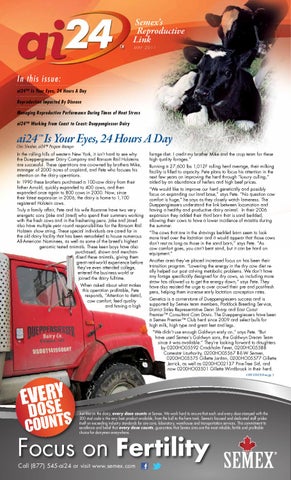
In the rolling hills of western New York, it isn’t hard to see why the Dueppengiesser Dairy Company and Ransom Rail Holsteins are successful. These operations are co-owned by brothers Mike, manager of 2000 acres of cropland, and Pete who focuses his attention on the dairy operations. In 1990 these brothers purchased a 100-cow dairy from their father Arnold, quickly expanded to 400 cows, and then expanded once again to 800 cows in 2000. Now, since their latest expansion in 2006, the dairy is home to 1,100 registered Holstein cows. Truly a family affair, Pete and his wife Roxanne have two very energetic sons (Jake and Jared) who spend their summers working with the fresh cows and in the freshening pens. Jake and Jared also have multiple year round responsibilities for the Ransom Rail Holstein show string. These special individuals are cared for in the old dairy facility that has been remodeled to house numerous All-American Nominees, as well as some of the breed’s highest genomic tested animals. These keen boys have also purchased, shown and merchandised these animals, giving them great real-world experience before they’ve even attended college, entered the business world or joined the dairy fulltime. When asked about what makes this operation profitable, Pete responds, “Attention to detail, cow comfort, feed quality and having a high
forage diet. I credit my brother Mike and the crop team for these high quality forages.” Running a 27,600 lbs 1,012F rolling herd average, their milking facility is filled to capacity. Pete plans to focus his attention in the next few years on improving the herd through “luxury culling,” aided by an abundance of heifers and high beef prices. “We would like to improve our herd genetically and possibly focus on expanding our land base,” says Pete. “No question cow comfort is huge,” he says as they closely watch lameness. The Dueppengiessers understand the link between locomotion and having a healthy and productive dairy animal. In their 2006 expansion they added their third barn that is sand bedded, allowing their cows to have a lower incidence of mastitis during the summer. “The cows that are in the shavings bedded barn seem to look more tired over the lactation and it would appear that those cows don’t rest as long as those in the sand barn,” says Pete. “As cow comfort goes, you can’t beat sand, but it can be hard on equipment.” Another area they’ve placed increased focus on has been their transition program. “Lowering the energy in the dry cow diet really helped our post calving metabolic problems. We don’t have any forage specifically designed for dry cows, so including more straw has allowed us to get the energy down,” says Pete. They have also resisted the urge to over crowd their pre and post-fresh pens, helping them increase early lactation conception rates. Genetics is a cornerstone of Dueppengiessers success and is supported by Semex team members, Paddock Breeding Service, District Sales Representative Dean Sharp and East Coast Premier™ Consultant Cam Davis. The Dueppengiessers have been a Semex Premier™ Club herd since 2009 and select bulls for high milk, high type and great feet and legs. “We didn’t use enough Goldwyn early on,” says Pete. “But have used Semex’s Goldwyn sons, the Goldwyn Dream Team since it was available.” They’re looking forward to daughters by 0200HO05592 Crackholm Fever, 0200HO05588 Comestar Lauthority, 0200HO05567 R-E-W Seaver, 0200HO05575 Gillette Jordan, 0200HO05577 Gillette Jerrick, as well as 0200HO02137 Pine-Tree Sid, and now 0200HO03501 Gillette Windbrook in their herd. CONTINUED on pg. 3
Just like on the dairy, every dose counts at Semex. We work hard to ensure that each and every dose stamped with the 200 stud code is the very best product available, from the bull to the farm tank. Semex’s focused and dedicated staff prides itself on exceeding industry standards for sire care, laboratory, warehouse and transportation services. This commitment to excellence and belief that every dose counts, guarantees that Semex sires are the most reliable, fertile and profitable choice for dairymen everywhere.
Focus on Fertility Call (877) 545-ai24 or visit www.semex.com
Mark Carson, MSc. BSc. (Agr)., Gencor Reproductive Specialist
Reproduction Impacted By Disease: Three Disorders That Will Derail Repro Success
All dairy producers know that having healthy cows is key to both maximizing reproductive performance and to making sure every semen dose counts. Following are the three most common disorders that dairy cows face during their lactations, and the reproductive impacts associated with each.
Mastitis Milk quality is getting a lot of attention these days, with a focus on reducing bulk tank somatic cell levels. Reducing bulk tank somatic cell levels can also have an impact on your herd’s reproductive performance. An interesting study published in the Journal of Dairy Science looked at the occurrence of clinical mastitis with the probability of conception in Holstein dairy cows. A Cornell University study looked at the results of 55,372 artificial inseminations from 14,148 cows in seven New York state herds over a period of three to five years, depending on the herd. The results showed cows with clinical mastitis (occurring anytime between 14 days before breeding until 35 days after insemination) had a reduced chance of getting pregnant. In the week prior to breeding, cows that developed mastitis were found to have a 50% reduction in the probability of conception. The greatest impact was seen in cows with gram-negative bacteria, (coliforms like E.coli) in the week after insemination. These cows saw an 80% reduction in the probability of becoming pregnant. Cows with gram-positive bacteria (Streptococcus spp. Staph. aureus, etc.) occurring in the week after insemination had a 47% reduction in conception, as well. When looking at individual herd records, this pattern can also be seen. Using records from a 2000 cow herd that uses timed AI for all first breedings that ensured all cows were bred at 75 DIM (±3 days), the association of mastitis with conception can be seen. Cows that had a case of mastitis from 50 to 90 days in milk, had a first service conception rate of 30%. Cows that were clean of any udder infections during this period had a 41% first service conception. This shows that on this particular dairy, mastitis reduced the chances of a cow getting pregnant by 11%. This highlights the importance of the cow’s udder health and her reproductive performance. To ensure mastitis is not significantly impacting your herd’s reproductive performance, focus on mastitis prevention. Environmental, milking and transition management are key components to any mastitis management program. This will not only improve your quality of milk, but it can also increase your reproductive performance.
Metritis Uterine diseases have the most direct impact on reproductive performance. Infection in the uterus in the early days after calving such as metritis can having lingering effects through the rest of a cow’s lactation. A study done by Overton and Fetrow in 2008 analyzed disease data from a single California dairy herd. They found cows that develop metritis in the first 10 days in milk, went on to be open for an average of 33 days longer and had a 4.5% reduction in pregnancy rates than cows without the condition. They estimated the cost of the reduction in reproductive performance was $109/case of metritis. When including the reduction of milk production and drug costs also associated with the disease, the total cost per case increases to approximately
$350/case. This shows if a producer milking 1,000 cows was able to reduce the herd’s incidence of metritis by just 5% from 10% to 5%, the dairy could yield an additional $17,500 per year. To reduce the number of cases of metritis, producers need to focus on their cows’ health and environment during the transition period. Cows need a healthy body condition score, proper nutrition and dry matter intake throughout the dry period. Also, appropriate bull selection in regards to calving ease and a clean calving environment will reduce the risk of developing the condition.
Metabolic Disease (Ketosis, Fatty Liver, DA) Metabolic disorders can be the most undetected, but costly problem for a dairy. Metabolic problems often start even before the beginning of lactation. An interesting University of Cornell study looked at the impact of dry cow performance by analyzing the Nonesterified fatty acids (NEFA) blood serum concentration of over 2,200 cows across 95 herds in New York state. NEFA concentrations in the blood are a way to measure the impact of a dry cow program. An elevated NEFA concentration indicates the amount of “fat coming off her back” during the transition period. If a cow’s concentrations get too high, cows are at risk of developing metabolic disorders such as subclinical ketosis, displaced abomasums and fatty liver disease. The Cornell study linked cows with high concentrations of NEFA in the weeks prior to calving were associated with a 19% reduction in conception on subsequent breedings in midlactation. This means if metabolic problems arise with your cows in the days prior to calving, it can impact your herd’s conception throughout lactation. To maximize dry cow performance and keep NEFA concentrations low in the herd, focus on dry matter intake and body condition scores. Make sure dry cows have easy access to quality feed by keeping stocking density at 80%. As well, watch body condition scores throughout the dry period to ensure cows are gaining or losing weight at the appropriate time. Estimated Costs of Metritis By Herd Size Herd Size
Metritis Incidence
Estimated Cost
Metritis Incidence
Estimated Cost
Estimated Savings
100 Cows
10%
$3,500
5%
$1,750
$1,750
500 Cows
10%
$17,500
5%
$8,750
$8,750
1,000 Cows
10%
$35,000
5%
$17,500
$17,500
2,000 Cows
10%
$70,000
5%
$35,000
$35,000
*All figures in US$ based on estimated $350/case.
CONTINUED from pg. 1
As a Premier™ Club herd, the Dueppengiessers are a 75% Semex customer with a 60% proven and 40% young sire split, utilizing both Semex’s Genomax™ and Premier™ young sires to their genetic advantage. “We (have) never seemed to be satisfied,” says Pete. “I have always had a way of changing the goals once we reached them and push them up higher. We knew to get a higher pregnancy rate, we would need to increase our heat detection rate.” Looking for higher pregnancy rates and for more information on Semex’s ai24™ program, Pete and son Jared traveled to World Ag Expo in February 2010 to get an up close viewing of ai24™ at work at Rancho Teresita Dairy in Tulare, CA. “We wanted to see it (ai24™) performing on a large dairy and see if it would work for us,” says Pete. “We left there convinced that ai24™ would deliver the same results as seen in California.” “Every single person we talked to had the same story about how reliable it was,” Pete says. “We saw the opportunity to pick up heats that we were missing with our shot program, and getting those cows rebred much sooner than being checked open on the herd health day.” ai24™ was installed on the dairy in May 2010, and the Dueppengiessers have seen reduced expenses in synch costs by almost 60% and labor by nearly three hours per week. “The herd seemed fairly quiet, and tail paint had been an improvement, but we were still missing on opportunities,” says Pete. Since installing ai24™ they see a minimum amount of cows being program bred. Though they initially purchased the system for the heat detection component, they have seen additional value in the low activity reports ai24™ provides to them every day. “We are able to check on cows before they go off feed and come down with mastitis. When I come in the morning, the system gives an accurate time and list of the cows that are in heat,” says Herdsman Ron Ikeler who has been with the Dueppengiesser Dairy Company for over 14 years, managing employees and dairy cattle care. “There is a place for it on every farm, especially if you would want to either enhance your shot program or take your reproductive program to the next level… ai24™ can do it.” Supported by Paddock Breeding Service, the high activity breeding list created by the ai24™ Heatime Data Flow systems, allows these breeders to know exactly which cows need to be inseminated on any given day. “We were never fully successful (before) with heat detection,” Pete adds. “The heats it (ai24™) gives us are 100% accurate. It’s there every minute of every day and is 100% reliable.” As a dairy always looking to put technology to their advantage Pete says, “ai24™ gives us best the possible reproductive strategy.” Ron adds that ai24™, “Is your eyes, 24 hours a day.“
Managing Reproductive Performance During Times of Heat Stress Dairy Cattle Reproduction Council
An Uphill Battle: For parts of the country commonly associated with mild weather, summer months can mean fighting the same battles herds in the southern portion of the country struggle with year ’round. The temperature-humidity index (THI) takes into account the combined effects of air temperature and humidity. Cattle will show signs of heat stress at a THI of 72; with summer THI readings creeping to these levels and beyond, dealing with heat stress is a common battle, regardless of location. Alongside things typically associated with heat stress, like less milk and component production and dry matter intake, heat stress can negatively influence: • Estrous detection: Both duration and intensity of estrus are negatively effected by heat stress. Cows attempting to reduce body heat production limit their physical activity, translating to fewer physical signs of estrus, which makes heat detection more difficult. • Fertility: Pregnancy rate is reduced by decreased fertility resulting from impeded development of mature follicles. Premature follicles emerge around 40 days prior to ovulation, making oocytes susceptible to heat-related damage, which can compromise quality almost immediately. • Follicle maturity: Heat stress during the estrous cycle causes earlier emergence of the dominant follicle in the second wave, more estrous cycles with three rather than two waves, and cycle extension in addition to negative changes in ovarian and follicular function. • Embryonic development: Embryonic development, especially through day 40, is vulnerable to heat stress. Elevating the cow’s internal temperature results in a reduction in the number of embryos that continue to develop.1 As the cow tries to thermo-regulate, her system will redistribute blood flow away from her core. This aids in dissipating heat, but reduces blood flow supporting fetal development and supplying the uterine body. How to Fight the Heat Producers can mitigate many negative effects of summer heat with proper cow comfort, nutrition and reproductive management. Combating the symptoms of heat stress requires focus on improving detection of estrus and managing heat-stress-related embryonic mortality. Here are recommendations for improving performance and reproduction during summer heat: • Keep cows comfortable. Shade, water availability, air movement
and sprinklers are key to cooling cows. By providing shade alone, cows have lower rectal temperature and respiration rates and can produce more milk. Shade does not influence air temperature, requiring producers in humid areas to provide additional methods of heat abatement. Several research studies have shown the combination of good ventilation, spray and fans to be most effective in free stall barns and along the feed bunk. The holding pen is where cows experience the most heat stress, making sprinklers and fans especially worthwhile and effective.To ensure highest milk quality, properly working sprinklers should wet the cow on her top and sides, leaving the udder dry. Dry cow and heifer housing also should be monitored as fetal development, milk production and fertility can be adversely affected by heat stress. • Focus on nutrition. Properly balanced rations provide adequate energy to reduce problems of herd health and reproduction associated with decreased DMI during heat stress. Feed ingredients given to buffer the rumen have been effective in lowering the incidence of acidosis, which is commonly seen during hot weather. Increasing ration energy density with additional grain or fat sources has been shown to be advantageous during summer months as well.
Preliminary research has shown fungal cultures can reduce body temperature and respiration rate, and beta-carotene has been successful in increasing fertility and pregnancy rate in cows calving during the summer.
• Embryo Transfer. Several studies have demonstrated the effectiveness of embryo transfer (ET) to bypass embryo loss due to reduced oocyte maturation, fertilization and early embryonic death caused by exposure to heat stress. Current research suggests fresh embryos are considerably more effective than frozen embryos or embryos flushed from heatstressed cattle. The latter is lower due to fewer oocytes, lower fertilization rates and reduced embryo quality. The high costs associated with ET and difficulty procuring quality, fresh embryos in a timely manner make it another area meriting continued research. Room for improvement exists in managing reproduction during heat stress. Research shows promising alternatives to make a reproductive program even more successful in hot weather. It has been proven that with adequate, consistent cow cooling many reproductive issues can be diminished. Others can be managed and their negative impact reduced using heat detection aids, dietary supplements, embryo transfer, timed artificial insemination, or any combination thereof.
ai24™: GLOBALLY PROVEN & WORKING COAST TO COAST
Proven Heat Detection Reliable & Accurate
WA OR
ID
MN WY
SD NE
CA
With Results You Can Count On 24 Hours A Day, 7 Days A Week, 365 Days A Year
CO
NM TX
Ron Ikeler, herdsman, and Pete Dueppengiesser, owner, of Dueppengiesser Dairy Company and Ransom Rail Holsteins, Perry, New York “ai24™ gives us the best possible reproductive strategy,” says Pete. “The heats that ai24™ gives us are 100% accurate. It’s there every minute of every day, and is 100% reliable. The support we’ve gotten from Semex and Micro is outstanding.” DuEppengiesser DAIRY • 1100 Cows PERRY, NEW YORK • ai24™ customer since MAY 2010
ANTICIPATE HOT WEATHER
www.coolcows.com.au In the hot season, one of the key roles a herd manager must play is that of weather forecaster! If you can roughly predict when an excessive heat load event is likely to occur you can be prepared... forewarned is forearmed. Effect On Heat Load
2+ days high daytime temps
Back-to-back hot days mean heat load accumulates, gradually rising each day of the heat wave
High overnight temperatures
Limits the amount of heat a cow can off load over night. (This is of greatest concern in high-production herds)
High relative humidity Recent rainfall Little or no cloud cover Little or no air movement Sudden change from cool, mild weather to hot conditions
Limits the effectiveness of a cow’s evaporative cooling Increases humidity Increases the amount of solar radiation that a cow is exposed to during the day Limits the effectiveness of evaporative cooling If this occurs in late spring/early summer cows with no previous exposure to heat are particularly vulnerable
2866 Agriculture Drive, Madison, WI 53718 1-877-545-ai24
Weather
VT WI
IA IL
NY
MI IN
OH
PA