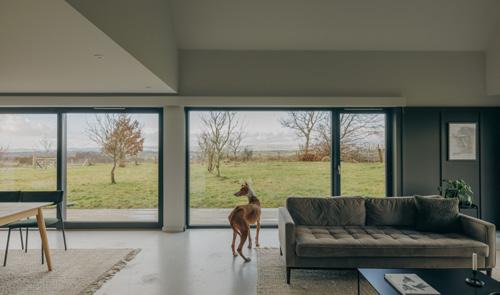
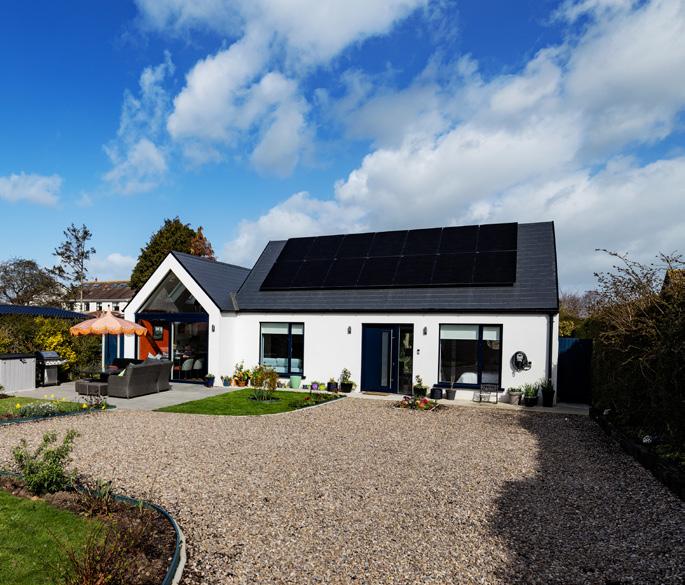
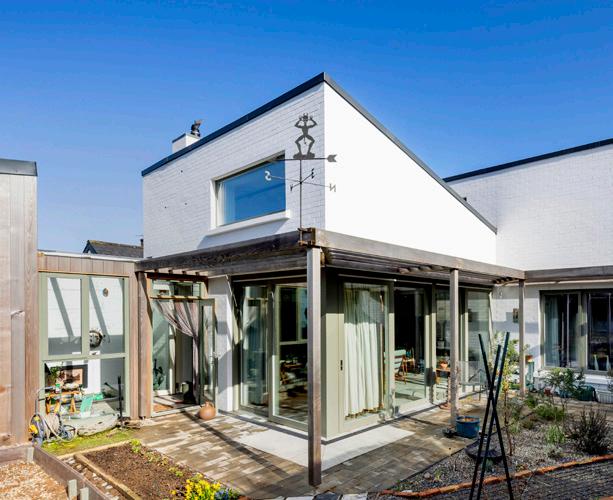
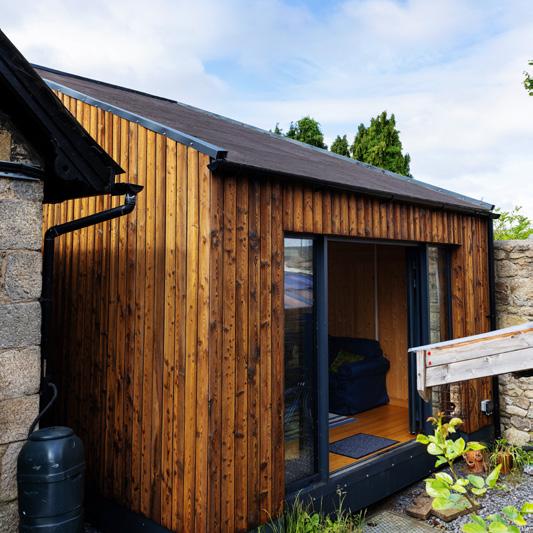
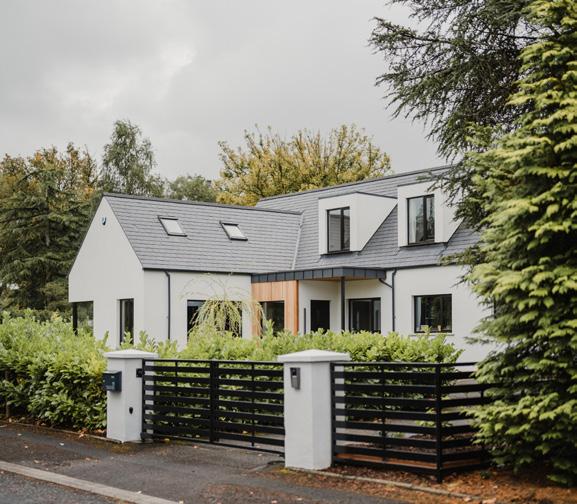
8 PROJECTS FROM ACROSS THE ISLAND OF IRELAND
Yes to one-offs in the Gaeltacht Paying builders upfront Is passive house worth it?

8 PROJECTS FROM ACROSS THE ISLAND OF IRELAND
Yes to one-offs in the Gaeltacht Paying builders upfront Is passive house worth it?
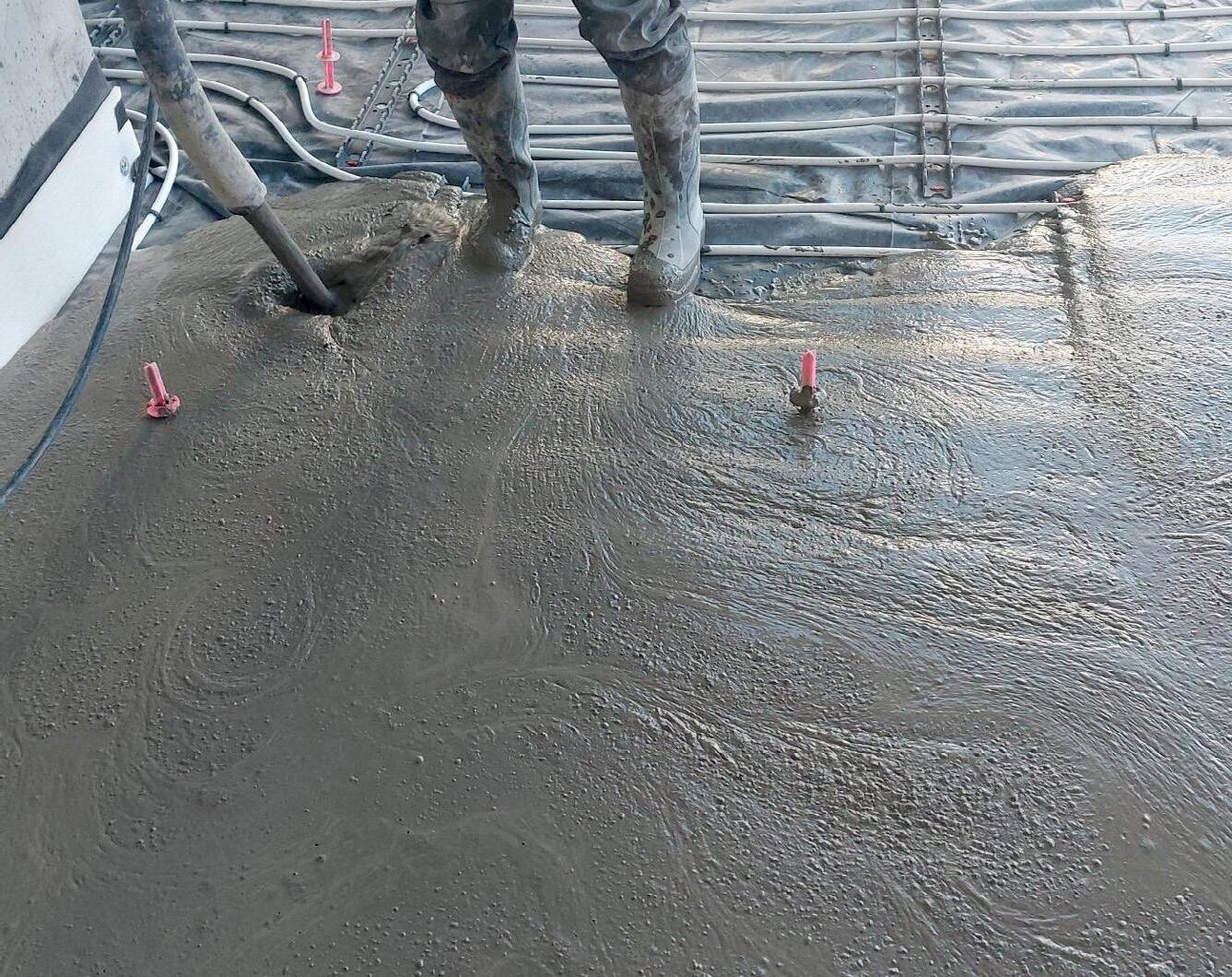
Roadstone FlowPlus is the next generation self-levelling cementitious screed developed in conjunction with the ARDEX Group.
Roadstone FlowPlus is the next generation self-levelling cementitious screed developed in conjunction with the ARDEX Group.
• Provides a quick, smooth and level surface with minimal leveling
• Ease and speed of installation
• Provides a quick, smooth and level surface with minimal leveling
• Suitable for all domestic and commercial applications
• Ease and speed of installation
• Suitable for all domestic and commercial applications

“Why not collect water that endlessly falls from the sky?”
The world of selfbuilding is abuzz with the news that it may finally become more straightforward to build in the Irish countryside (page 9). The promise is that the new rules will be clearer, simpler and will apply in the same way across all counties.
As we wait to see if these changes transpire, perhaps the government could revisit rainwater harvesting. It’s timely because, shockingly, we are still talking about diverting the River Shannon to meet Ireland’s fresh water needs.
Why not collect water that endlessly falls from the sky? It’s hard to understand how, in this day and age of scarce resources, rainwater harvesting isn’t part and parcel of our water strategy.
The major barrier to making it mandatory in new builds is likely cost, as the systems tend to run in the thousands to install. It wouldn’t be a great political move to add to the financial burden of building.
And, considering water is free from the tap, most people don’t bother. But one person in this magazine did (project from page 24), spending €3.5k for as simple a system he could get.
In fact you might have read Louis’ self-build diary entries

over the past year or so in the magazine, and in this issue we bring it to a conclusion. His main piece of advice is to share the basic things that motivate you, a Values Statement, with your architectural designer.
Telling your designer what you ‘need’ is helpful but can create unnecessary red lines if they doesn’t understand why that requirement is on the list.
And so a new chapter begins as we embark on two fresh journey projects this issue, one is a deep retrofit in Tyrone (from page 72), the other a new build in Meath (from page 78).
What is clear from all of these projects is that self-building is all about making choices that sit well with you. Case in point is also Margaret’s gorgeous house build, from page 34.
Of course one thing you won’t have much control over is how to deal with sewage, which is the theme of this issue’s Wastewater Special from page 99. Not the sexiest of topics but in Ireland, it’s make or break.

Til next time stay safe and happy
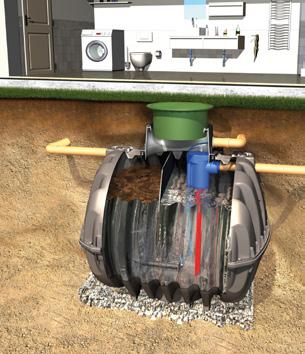
On-site wastewater treatment systems are a fact of life for many homes; how do they work, what system suits your site, what paperwork is involved and what do you need to know about replacement, certification and ongoing maintenance across Ireland today.

If you have a question, want to share some insights, or simply let us know how you’re getting on with your project, we’d love to hear from you for our Letters page. Email us at letters@selfbuild.ie
Astrid Madsen - Editor astrid.madsen@selfbuild.ie
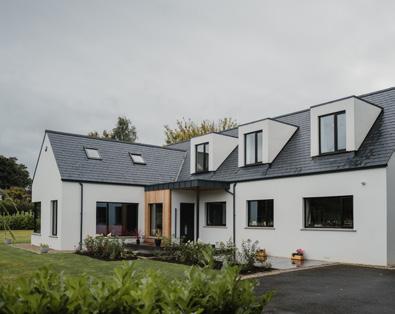
24 Energy positive new build
Louis Gunnigan of Co Dublin has managed to build an energy positive home on a budget; find out what the house is like to live in.
34 Futureproofed ecobungalow
How Margaret built her dream home to retire to in Co Down, all the while staying true to life, love and beliefs.
44 Low impact extension
A small mass timber extension in Co Dublin hits the ecofriendly notes Christina and Duncan Jones were after.
54 Rethinking a 1970s bungalow
Elaine Andrews’ strikingly modern and creative reinvention of a humble abode in Co Down.
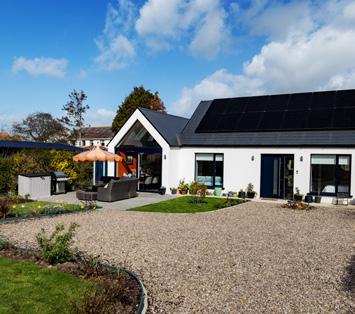
64 Contemporary barn house
Interior designer Robert Glynn’s home in Co Dublin was a labour of love; the result is a home for life.
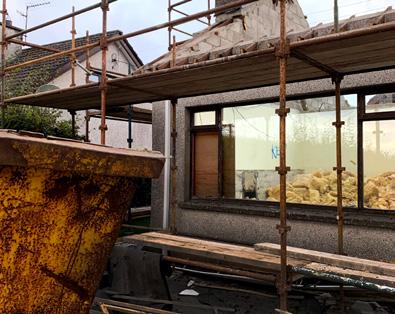
72 Deep retrofit in Co Tyrone
The first instalment of Paul Crowe’s self-build diary, who’s pouring blood, sweat and tears into his renovation project in Co Tyrone.
78 Building a home on family land
The first instalment of Simon McDermott’s new build journey in Co Meath starts with hitting it third time lucky.
82 Garden design for stone cottages
This Co Mayo garden design focuses on low maintenance plants and hard landscaping for outdoor living.
86 Letters
Architectural technologists as Assigned Certifiers, AI floorplans and self-build insurance.
88 When to pay upfront
Whether or not you should ever do it and how the process of retention works.
90 The case in favour of self-building
House by Luna’s reasons for undertaking a self-build.
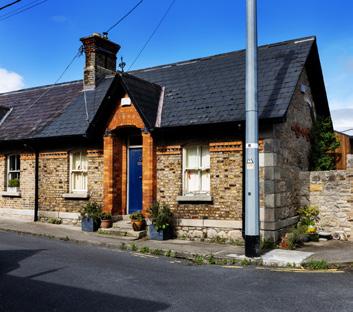
92 External wall insulation
The pros and cons of one of the most expensive ways to insulate.

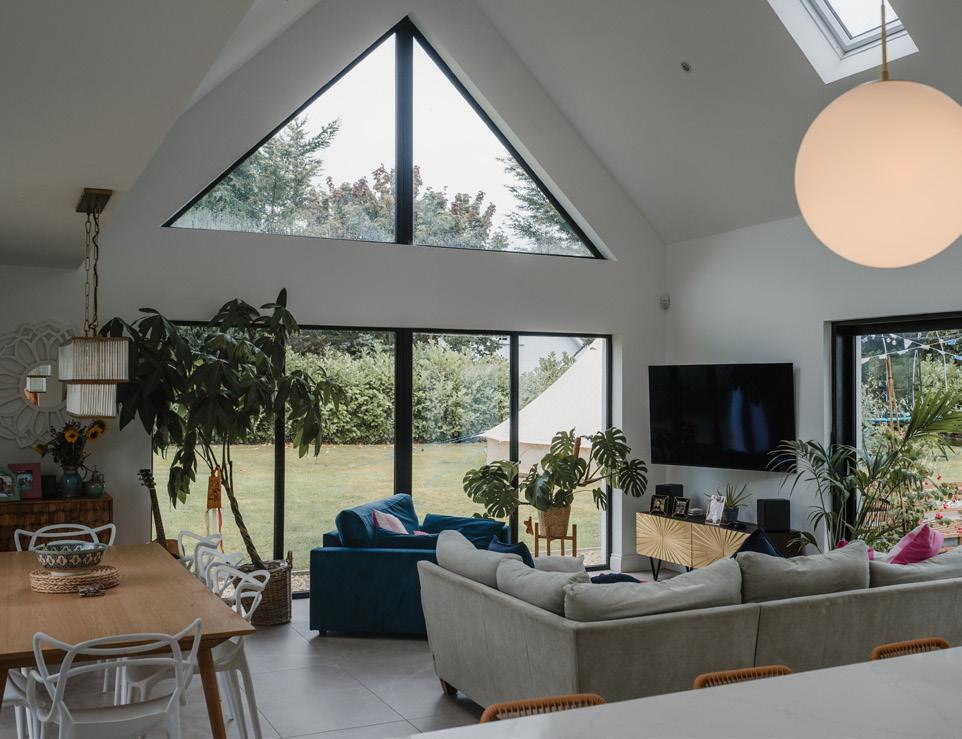
94 Vaulted ceilings
The drawbacks and what you need to know if you plan on designing for one.
96 Is passive house worth it?
With building regs so good at making homes energy efficient, what’s the point?
98 Why we should build in the Gaeltacht
The case for one-off housing in Ireland’s most scenic rural setting.
100 Wastewater 101
What’s it all about and what to know about the process in Ireland and Northern Ireland.
104 Site Investigation
How to go about determining what system suits your site.
107 System Types
An overview of the types of systems out there.
108 Tech Roundup
A curated selection of products on the Irish market.
111 Replacement
How to go about replacing your existing on-site wastewater treatment system.
112 Certification
What documents do you need and who signs off on what?
114 Maintenance
The most important part of owning an on-site treatment system.
CONTACT info@selfbuild.ie
EDITOR
Astrid Madsen astrid.madsen@selfbuild.ie
DEPUTY EDITOR
Heather Campbell heather.campbell@selfbuild.ie
DESIGN
Myles McCann myles.mccann@selfbuild.ie
Shannon Quinn shannon.quinn@selfbuild.ie
Megan Buckley megan.buckley@selfbuild.ie
MARKETING
Calum Lennon calum.lennon@selfbuild.ie
Rebecca Ferris rebecca.ferris@selfbuild.ie
Erin Mason erin.mason@selfbuild.ie
Rachel Caughers rachel.caughers@selfbuild.ie
SUBSCRIPTIONS
Becca Haslett becca.haslett@selfbuild.ie
ADVERTISING SALES
Ben Murphy ben.murphy@selfbuild.ie
Emma Phillips emma.phillips@selfbuild.ie
Joanna McConvey joanna.mcconvey@selfbuild.ie
Lisa Killen lisa.killen@selfbuild.ie
Maria Toland maria.toland@selfbuild.ie
Nicola Delacour-Dunne nicola.delacour@selfbuild.ie
ACCOUNTS
Karen McLeigh karen.mcleigh@selfbuild.ie
Leanne Rodgers leanne.rodgers@selfbuild.ie
SALES DIRECTOR
Mark Duffin mark.duffin@selfbuild.ie
MANAGING DIRECTOR
Brian Corry brian.corry@selfbuild.ie
CHAIRMAN
Clive Corry clive.corry@selfbuild.ie
DISTRIBUTION
Delivering windows and doors that are crafted to last generations.
Redefining quality and luxury for almost a century. Our windows and doors are not just built to last, but crafted to inspire.
For more information visit nordan.ie
NorDan’s Timber/Alu-Clad Windows combine the classic warmth and beauty of timber on the inside with a tough weather-resistant aluminium cladding on the outside.
Merging timeless elegance and enduring strength, NorDan’s Timber/Alu-Clad Doors are perfect for those seeking stylish yet practical modern living solutions.
The ideal solution for modern homes and commercial properties, offering a huge range of design possibilities, enhanced energy efficiency, and premium performance.
The perfect solution for the contemporary needs of residential and commercial properties that highlight energy efficiency, low maintenance, and versatile design options.
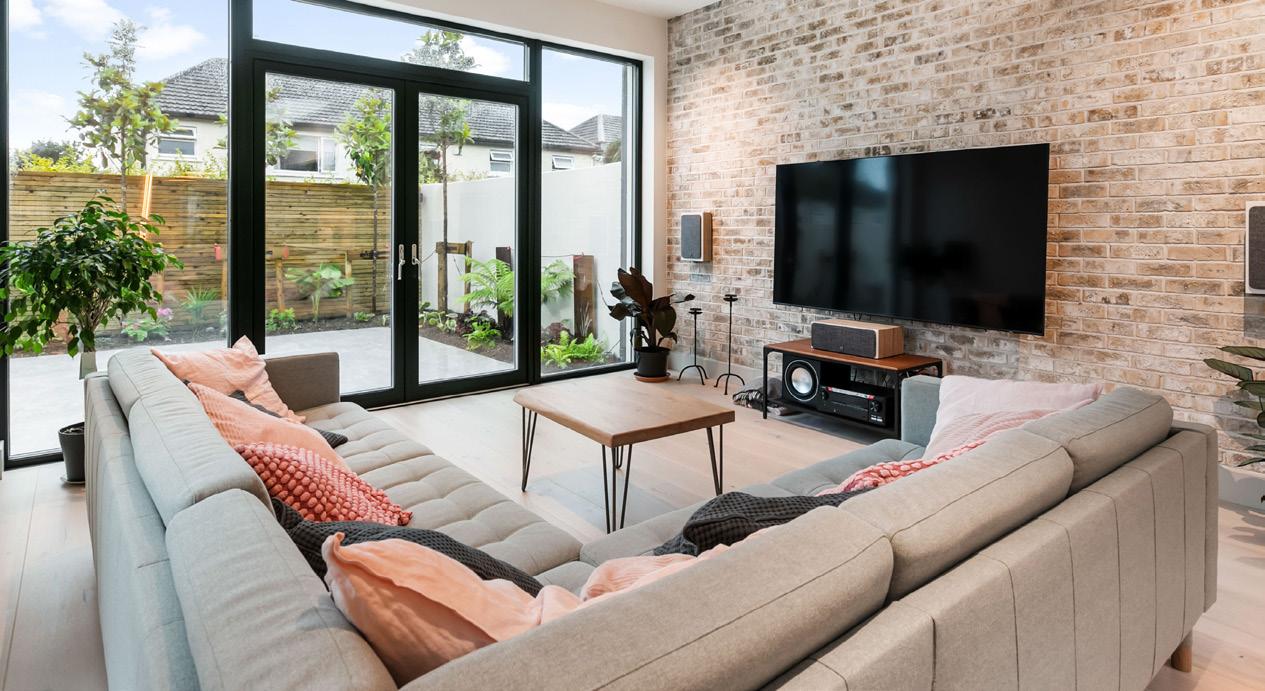
NorDan’s Entrance Doors have been designed with durability and energy efficiency at the core. With contemporary and traditional designs available, there is a perfect match available for your perfect welcome home.

Ireland’s Minister for Housing gives a summer date for rural housing guidelines that could make it easier to build one-off homes.
Minister for Housing James Browne said he would liberalise rural housing guidelines in a bid to help people build their own home in the countryside.
“Rural people who want to remain in their local communities, to live on their family’s land, in their local parish, near their own family, find it almost impossible to build,” he told the Sunday Independent.
“We have existing guidelines which have become quite outdated and have been interpreted and reinterpreted. Every local authority now has a different interpretation of what those are.”
“I want to bring a consistency back into it, to give people much greater freedom to live in their own local community. In a lot of areas, that has become almost impossible,” he said, adding that the guidelines would be published by this summer.
Each local authority has its own County Development Plan (CDP) which sets out zoning guidelines. These vary between counties and often require applicants to prove a strong local or family connection to the area to build in a rural setting.
The updated policy is intended to provide a more consistent national approach while still allowing councils to manage development in sensitive locations.
The forthcoming guidelines will form part of a broader review of rural housing

policy. Once introduced, they will require planning authorities to align their development plans and decision-making with the new national framework.
Successive governments have promised changes to the planning framework, the 2005 Sustainable Rural Development Housing Guidelines.
The guidelines are the basis for each local authority’s county development plan, which are updated every 10 years and revised halfway through that time period.
The Office of the Planning Regulator checks each development plan to make sure that it aligns with national or regional strategies.
New research commissioned by Focus Ireland and funded by Ireland’s Housing Agency shows that the uptake of modern methods of construction (MMC) has been “disappointing”. Modern methods of construction (MMC) include any new technology to build a home, oftentimes factory-built and assembled on site.
Negative preconceptions around terms such as ‘prefab’ and ‘rapid build housing’ are key reasons, others include the high cost of upfront investment and stakeholder wariness about new technology.
The Attitudes and Effective Communication on Modern Methods of Construction research suggests that stakeholders should instead focus on the benefits of MMC, from the speed of building to energy efficiency.
The research also said to promote language that steers clear of ‘prefab’ terminology which evokes “short-term, lowquality accommodation which is aesthetically unattractive and not a positive contribution to the urban environment”.
Stormont’s infrastructure minister Liz Kimmins announced plans to introduce a voluntary wastewater levy. The contribution would pay towards the cost of upgrading wastewater infrastructure in places where a developer wants to build.
It is part of a plan to improve a chronically underfunded water system which is holding back development and contributing to pollution across Northern Ireland.
Detractors say if the scheme is to become mandatory, it would turn into a ‘de facto water tax’. A voluntary contributions system will require a new law to be passed by the Stormont Assembly, BBC reports, and it is unclear how long that will take.

We provide an all-encompassing, customized service to ensure your system installation is hassle-free — adding value, not stress. With PIPELIFE, you collaborate with one supplier from conception and layout design through to installation. Whether you’re starting from scratch or planning to retrofit, we’ll find the optimal solution for your individual project requirements, saving you time and money every step of the way.
Energy efficiency grants for existing homes in Ireland received a major boost earlier this year for everything from installing a heat pump to standalone grants for windows.
The Sustainable Energy Authority of Ireland (SEAI) announced substantial grant increases for those carrying out an energy upgrade on their home.
Heat pump grants have almost doubled in value via the new combined fixed-rate approach, up to €12,500, compared with the old standalone heat pump grant of €6,500 for detached houses.
The new €12,500 grant includes the existing €6,500 for the heat pump plus €2,000 for upgrading radiators/pipework and €4,000 for what the SEAI calls a ‘renewable heating bonus.’
The good news for anyone who is currently in the process of applying for a grant is that the SEAI will apply this new maximum grant to existing applications that have not yet been processed for payment.
The new heat pump grant came into force in February.
New grants for windows and doors are a major addition: these were not separately funded under the old Better Energy Homes individual grants as they were only available if you availed of a One Stop Shop grant.
When the entire house is retrofitted, windows will receive a standalone grant support of €4,000 for a detached house and €800 for each external door.
To access the grant, the house will need to achieve
a minimum performance standard, i.e. needs to be reasonably insulated in the first place.
This grant became available in March.
Attic insulation support is also significantly higher across all home types, making this basic retrofit measure more financially attractive and reducing net homeowner costs.

The new grant amounts for insulation came into effect in February.
Exact grant amounts for detached homes, for cavity wall insulation, internal wall insulation and external wall insulation, haven’t been communicated yet but are expected to be higher than the current amounts. What we know so far:
The SEAI also announced it would introduce a grant to ensure first time buyers get to upgrade their attic insulation quickly and at the lowest possible cost.
The SEAI said that “in many cases the grant amount will cover most or even all the total cost.”
The SEAI also announced a ‘Second Wall’ measure which took effect in March. At the moment homeowners who already benefitted from a wall insulation grant do not qualify to upgrade their walls again;
the change to the grant system will allow those homeowners to apply again in order to further better their U-value and make their home ‘heat pump ready.’
Core grants in Ireland for other energy upgrades, such as heating controls, PV and solar water heating, remain unchanged.
The new SEAI grant amounts were announced on the back of the Irish government’s National Retrofit Plan 2026 published in January.
A Co Meath self-build that breached planning permission 20 years ago is demolished.
After years of court battles and failed appeals, contractors demolished a Co Meath selfbuild built in breach of its planning permission.
Demolition was completed in March, on a long-disputed unauthorised home in Co Meath, nearly 20 years after it was built without planning permission.
Chris and Rose Murray built the house in 2006 after being refused planning permission for a smaller dwelling on the site. Their 526sqm home –previously reported in court proceedings as substantially larger than the 283sqm house originally proposed – had been at the centre of a two decade long planning and legal battle involving Meath County Council, the High Court and the Supreme Court.
This development came after Meath County Council took possession of the property with help from An Garda Síochána, following a High Court order.
The council told the Irish Independent it worked with family and community representatives on site to help remove personal belongings and household items, as directed by the court. It added that it could not comment further at that time. The work also removed the driveway, septic tank and other site infrastructure, returning the land to an open field.
The Irish Independent also reported that the cost of the demolition operation, including security, could exceed €250,000, with security costs alone said to be just over €100,000. Rose Murray said that

she and her husband cannot pay for the demolition.
The Murray home has faced
repeated legal and planning challenges since 2006, when the couple were refused permission to build a 283sqm dormer bungalow. They went ahead and built a much larger fivebedroom home, then applied for retention permission, which both Meath County Council and An Coimisiún Pleanála refused. Later, the couple tried to keep part of the property by proposing to demolish sections and reduce its size, but these efforts were also rejected.
The planning authority and appeals body said that allowing retention would set an undesirable precedent for similar cases.
On
average 5,500 applications for retention a year were submitted to the planning authorities in Ireland,
Retention planning applications in Ireland have increased sharply, signalling a culture of ‘build first, ask later’, according to an investigation by the Irish Independent.
The newspaper reports 11,000 applications asking for planning permission after the fact were submitted to planning authorities from January 1st 2024 to December 31st 2025, over half of which have been approved.
That’s an average of 5,500
more than double the average in 2019-2023.
per year for 2024 and 2025 as compared to an average of 2,200 a year between 2019 and 2023, (a total of over 11,000 applications between 2019 and 2023, according to the newspaper).
In other words, the yearly average of those asking for planning permission for something that requires permission and has already been built or altered, more than doubled (150 per cent increase) from the 2019-2023 period to 2024-2025.
The newspaper estimates between 30 and 40 per cent of retention applications between 2024 and 2025 relate to large extensions, houses and agricultural sheds.
The majority of applications for retention (60 to 70 per cent) related to minor works such as small extensions, garden rooms, changes during construction to approved plans, boundary walls and the widening of driveways.
The Irish Independent said applications for log cabins built
in the back garden for leisure purposes were granted more often than not, while those built to live in were usually denied. There are plans underway to make it planning exempt to build modular homes in the back garden (see page 14).
Out of the 11,064 applications, the Irish Independent said 6,075 were granted, which translates into a 55 per cent approval rate. Meanwhile 884 applications were refused.

Recent
planning decisions show that councils are applying planning policy in very different ways for nontraditional homes in Ireland.
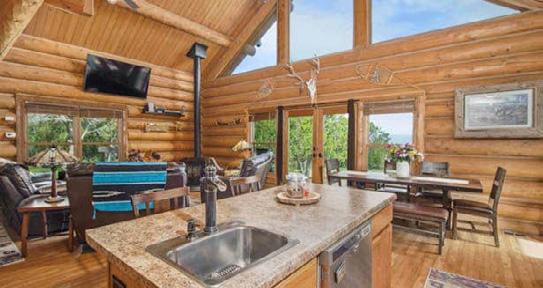
Self-builders continue to face inconsistent planning decisions for non-traditional homes, with outcomes varying sharply between counties.
The issue is particularly stark in Kerry, where every planning application for a log cabin-style dwelling has been refused over the past 20 years, according to analysis by The Kerryman. Most of those cases involved retention for homes already built without permission.
Planners in Kerry repeatedly cited concerns around impact on the rural landscape, incompatibility with local house types and finishes, conflict with the county’s rural housing guidelines, wastewater treatment and site suitability, as well as the risk of setting an undesirable precedent.
By contrast, Kilkenny County Council recently granted retention permission for a timber-clad home built without permission near Thomastown. The local
authority said the development “is considered acceptable in design and architectural quality, is in keeping with the pattern of development of the area and would not seriously injure the amenities of the area or of property in the vicinity”.
Minister of State (at that time) and Kerry TD Michael Healy-Rae said he “absolutely” supports allowing log cabin and modular-style homes, particularly for those unable to afford conventional housing. He said planners should assess such applications on the basis of need and suggested upcoming national guidelines could bring more consistency to council decisions.
Non-traditional homes can include log cabins, Scandinavian-style timber houses, modular and prefabricated homes, garden cabins and timber-clad dwellings outside standard block-and-render construction.
Ireland’s labour shortage could be fixed if the government adopted Australia’s apprenticeship model, says Cork builder Jim Ahern.
Cork builder Jim Ahern has urged the government to adopt an apprenticeship model similar to Australia’s Apprentice Connect Australia, which is specifically designed to meet the needs of both small contractors looking to hire an apprentice and those looking to enter the trades.
Ahern says his Shared Apprenticeship Scheme model, through his company TradePath, would remove red tape, allow employers more flexibility in hiring apprentices, and give young people a more steady stream of work.
A guaranteed income through work and social welfare payments, complemented by training, all through the one platform would make apprenticeships a viable prospect for young workers, Ahern says.
For employers the Shared Apprenticeship Scheme would mean being able to dip in and out of a pool of labour as they need it.
Currently, apprentices get training support with Solas but it is up to them to find an employer willing to take them on while they get their accreditations through the government body. Solas requires that the apprentice be in employment for four years but the reality is that many small contractors often cannot commit to taking on an apprentice for that long.
Ahern says the government would need to support the programme by tying it in with Solas, FÁS and social welfare payments.
A builder of 40 years, Ahern has witnessed fewer young people on building sites; his concern is that older skilled tradesmen won’t be replaced when they reach retirement age.
“Nowadays, you’ll mostly see guys in their 30s and 40s working on sites,” he said. “The other day, I was on site with four other men, and not one of them was under the age of 55. There are very few young people on sites now, and it shows the breakdown of the system.”
On Newstalk he pointed out that Solas has no training for roofers, tilers and glazers, meaning there is no official apprenticeship programme for these trades.
Stakeholders voice concerns over plans to allow planningfree garden homes to be rented out, as government seeks faster, smaller-scale housing solutions in Ireland.
Proposals first outlined last year would exempt back-garden homes of up to 45sqm from planning permission, though the measure has not yet come into force. It is understood that 25sqm of garden space would need to remain and side access to the property would be required.
The government is now considering whether these units could be included in the rent-a-room relief, which currently allows homeowners to earn up to €14,000 a year tax free from renting out a room in their home.
Threshold and Age Action said this would go beyond what was originally indicated, when it was suggested such homes were “not intended for the private rental sector”.
The debate comes as Housing Minister James Browne unveiled new grants to support the conversion of vacant aboveshop space and disused commercial buildings into homes, saying the State had to “pull every lever to unlock housing”.
Under that scheme, grants of up to €135,000 will be available for vacant above-shop conversions, rising to €140,000 with the Expert Advice Grant. Full vacant commercial-to-residential conversions could receive up to €115,000.
While those measures target empty property, Threshold and Age Action warned that bringing garden homes into the rent-a-room system could weaken tenant protections. The groups said they “strongly caution against the new proposals”, warning that renters are often “provided with little to no tenancy protections” and may end up in “substandard conditions, without recourse to tenant protections”.
They said the changes may “further compound this erosion of rights”, while planning exemptions “risks the delivery of poor-quality housing”.
Sinn Féin housing spokesperson Eoin Ó Broin also raised concern, saying: “It will be used by rogue landlords to rack and stack poor-quality cabins in back gardens, and charge thousands of euros to hard pressed renters.”
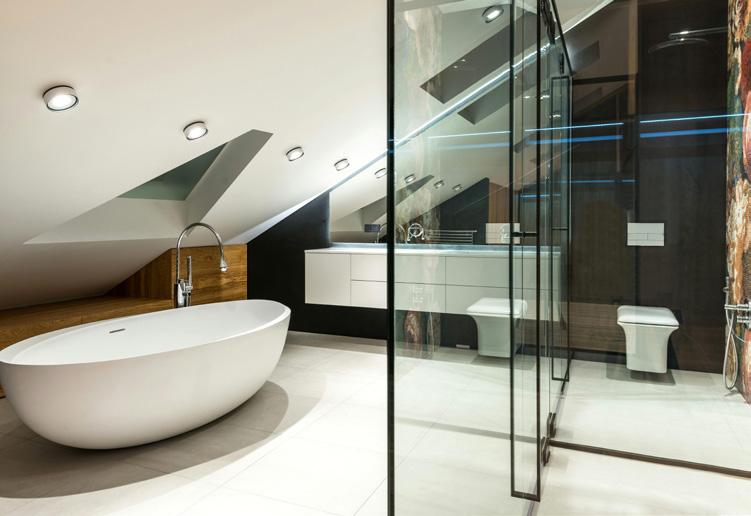
Homeowners could soon be allowed to build larger rear extensions without planning permission, with the exempted size limit expected to rise from 40sqm to 45sqm as part of a wider shake-up of Ireland’s planning rules for home improvements.
As reported in the Sunday Independent, Minister of State for Planning John Cummins is preparing a significant overhaul of exempted development rules that could make it easier for homeowners to carry out a broader range of renovation and retrofit works without needing full planning permission.
The changes would also include being allowed to build modular homes of up to 45sqm to the rear of existing houses. Attic conversions are slated to be planning exempt too.
The government had signalled it would make it easier to build in the back garden over a year ago, with further details published in June and the public consultation on planning exemptions published in August.
Cummins said the list of exemptions would be “significant”, including for windows. He is proposing to remove the need for planning permission for dormer windows and roof lights.
Bike storage in front gardens and external wall insulation upgrades will also be planning exempt as will the subdivision of existing homes, to allow for downsizing and to free up accommodation.
Solar panels have been planning exempt since October 2022.
If implemented, the reforms could remove the need for planning applications in many cases where homeowners are currently forced into a lengthy and costly approval process for works that are increasingly seen as routine upgrades, especially in the context of retrofit, energy efficiency and changing household needs.
Cummins said the plans aim to reduce workloads for local authority planning departments, so they can focus on housing delivery.
Ireland is unlikely to meet its carbon targets as Building Energy Ratings don’t correspond to how much homes actually consume.
As Ireland grapples with high retrofit costs and the so-called “comfort barrier”, the ESRI says “progress is lagging considerably behind” what is required under the Climate Action Plan.
One of the key issues identified is the BER system itself. BERs estimate annual energy use for space heating, hot water, lighting and ventilation based on how a home was designed and built. They are based on modelled demand rather than actual consumption data.
A BER is required for all new homes and when selling a property, among other cases. But because ratings are based on modelled rather than observed use, there can be a
gap between predicted and real savings after retrofit works.
One Irish study cited in the report found that A-rated dwellings consume an average of 10,569kWh/yr, while F and G-rated homes consume 10,964kWh/yr on average. UK studies show similar results.
The ESRI says behavioural factors are likely to play a role. Households in less efficient homes often heat them less, while those in more efficient homes may heat them more often or to higher temperatures. As a result, average consumption can end up being broadly similar across ratings.
The findings also tie into the ‘comfort barrier,’ identified by researchers as one reason heat pump uptake has been
slower than expected. Where homeowners already feel sufficiently comfortable in their homes - often in C-rated properties - they may be less inclined to invest in further energy upgrades.
Ireland is due to update its BER methodology, with changes expected in May 2026. Over time, observed data may be used to validate or calculate ratings.
The report also shows how far retrofit delivery is from government targets. By the end of 2024, deep retrofits had reached just 11.5 per cent of the 2030 target, while heat pump installations stood at only 3.5 per cent.
Cost remains a major barrier. Data from the SEAI One Stop
Shop scheme shows the median cost of a deep retrofit for a detached house is €66,503, of which the homeowner pays €42,900 and the SEAI covers the rest with the grant.
The ESRI says that if the full cost to the householder is borrowed over five years at a rate of 3 per cent, which is available under the Government-backed retrofit loans scheme, this equates to a monthly loan repayment of €770.06.
The retrofit costs are offset by an energy expenditure saving of just under €900 per annum for a detached house, assuming a pre-retrofit BER of D2.
More homeowners in Ireland planning to renovate, upgrade or convert an older property are now eligible for the €5k conservation advice grant.
The Department of Housing has expanded the Historic Structures Fund Conservation Advice Scheme for Traditional Houses to cover a much wider range of homes and projects.
Previously limited to vacant traditional houses eligible for the Vacant Property Refurbishment Grant, the scheme now includes owneroccupied homes, certain above-the-shop conversions and traditional farmhouses, including some without statutory protection.
The grant covers up to 67 per cent of the cost of a specialist
report, to a maximum of €5,000. Reports may relate to conservation works, fire safety improvements, energy upgrade assessments and pre-works risk assessments for retrofit projects.
The broadened scheme means more homeowners can access expert advice before carrying out works that affect a building’s character, performance or safety. That can be particularly important in older homes, where issues such as moisture, ventilation, insulation and materials often need a different approach to modern construction.

Eligible buildings now include Protected Structures, traditional homes in Architectural Conservation Areas, traditional farmhouses, some vernacular farmhouses without statutory protection,
former commercial buildings being converted for residential use and multiple-occupancy residential units above a shop.
The scheme will also work alongside the SEAI Traditional Homes Pilot, allowing homeowners to seek support for pre-works risk assessments linked to energy upgrades.
The Vacant Property Refurbishment Grant provides up to €50,000 for a vacant property and up to €70,000 for a derelict property. Applications for the Conservation Advice Scheme must be submitted by 5pm on May 8.
As was the case last year, there are now just 32 serviced sites available under Ireland’s Ready to Build scheme.
Selfbuild’s latest follow-up enquiries suggest delivery under the Ready to Build serviced sites scheme remains patchy, even as the government signals plans to expand it into a broader mixed-tenure model.
Responses from councils indicate that, to date, 32 serviced sites have been made available under the scheme, with fewer than 30 more identified for future development. That is a long way short of the 2,000 sites originally promised, with many local authorities still reporting that no serviced sites are currently available.
At the same time, Housing Minister James Browne has said the Delivering Homes, Building Communities 2025-2030 housing action plan commits to expanding the scheme so local authorities can service land in and around towns and villages “to enable construction of clusters of homes”.
Under that model, he said, “a mix of private, social and affordable homes can be delivered on the same site, creating new mixed tenure communities.”
Details of how the enhanced version will operate have yet to be set out.
Responding to Selfbuild, the minister said the Ready to Build Scheme, funded through the Croí Cónaithe Towns Fund, was launched in September 2022 to support vacancy measures in towns and villages. Under the scheme, local authorities can identify suitable vacant sites in their ownership, or acquire vacant sites, service them and then sell them to individual purchasers building their principal private residence.
Once serviced, the site is sold at a discount on market value, with that discount reflecting the cost incurred by the local authority, up to a maximum of €30,000.
The minister said the scheme is managed and administered by local authorities on behalf of the department. He confirmed that 32 sites have so far been made available for sale by four local authorities: five in Wicklow, 16 in Laois, four in Tipperary and seven in Kildare.
He also confirmed that “no funding has been drawdown as yet by local authorities”.
Looking ahead, Browne said the expanded version of the scheme is also intended “to support Small and Medium Enterprise homebuilders who have land appropriately located but are constrained by financing or infrastructure considerations”. But for now, he said, the department is still developing the enhanced scheme, with operational details to be confirmed later.
Selfbuild contacted all 31 local authorities for an update. Responses were received from seven councils.
Clare County Council said no serviced sites are currently available but confirmed two projects are in development in Lisdoonvarna and Feakle. It said 12 sites are expected in Lisdoonvarna in Q1 2027 and between six and 10 in Feakle in Q2 2027. A Part 8 planning application for Lisdoonvarna was lodged on 27 March 2026, while Feakle remains at design stage. The council said infrastructure constraints remain a barrier in some locations.
Current serviced sites
Future locations County-level future areas

Leitrim Sites under identification (2027-28)
Ballyroan
Monaghan 2 planned (locations TBD)
Leitrim County Council also reported no sites currently available. It said delivery is expected in late 2027 to 2028, with a land parcel now sale agreed and conveyancing under way. It identified wastewater capacity in South Leitrim as a key constraint.
Meath County Council said there are no
Wicklow County Council said the Ready to Build Scheme would launch in Kilcommon, Tinahely, in early April 2026, with five sites priced at €40,000 and €50,000. It said this is the only scheme planned for 2026.
Separately, the Kerryman has reported that three serviced sites are due to be made available in Cahersiveen later this year, with further sites hoped for in Waterville, Sneem and Farranfore, subject to Department approval.

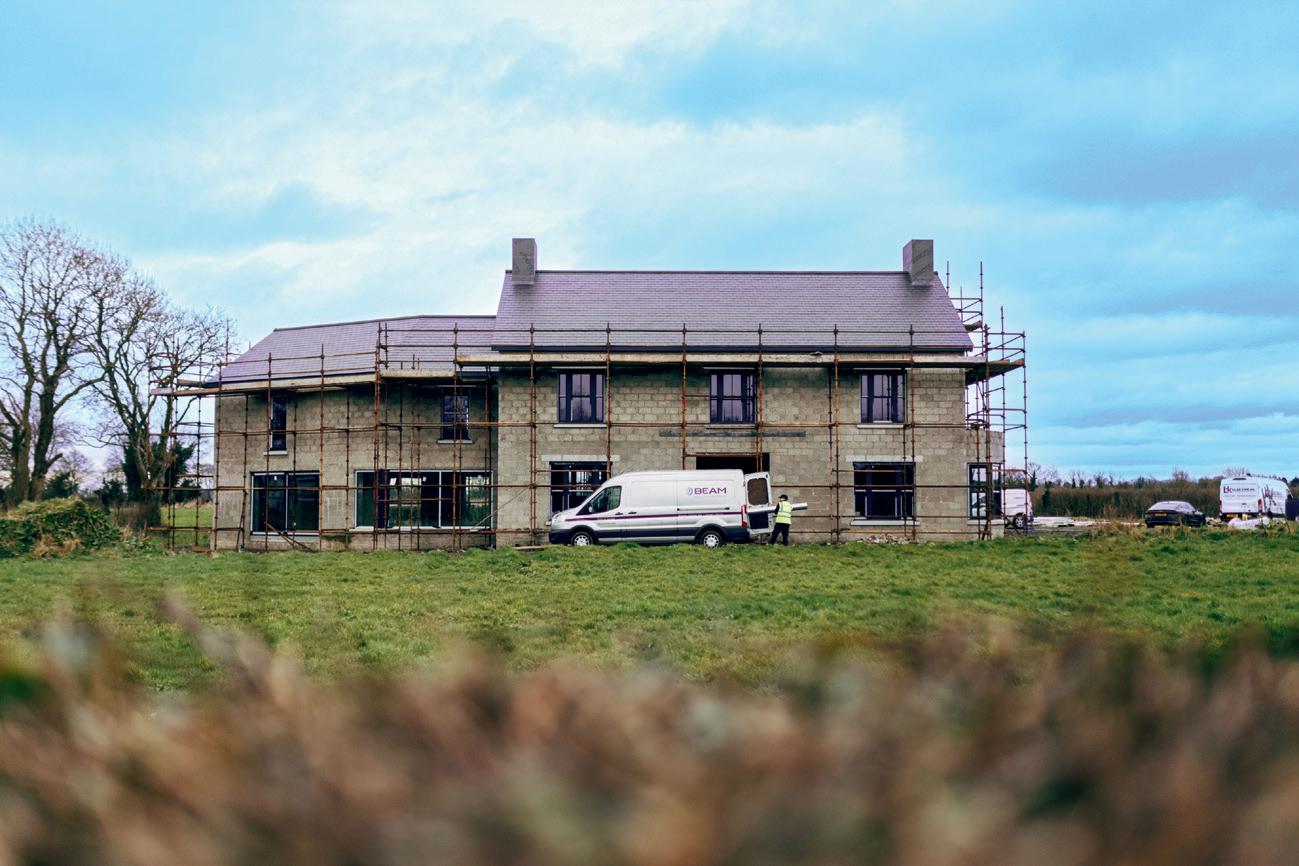





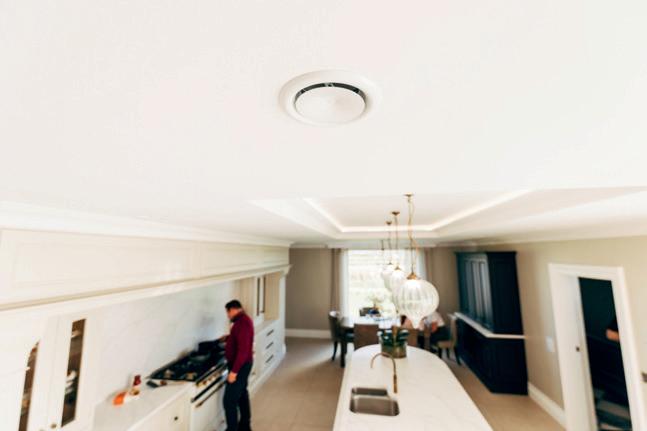
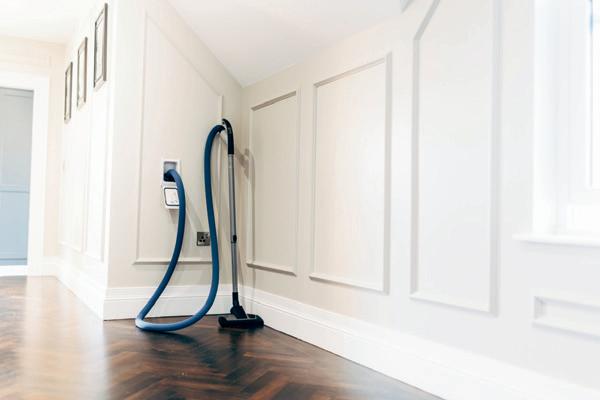

Ireland’s latest CSO planning figures show that while overall dwelling approvals increased in 2025, much of the activity was concentrated in projects linked to self-builders and homeowners.
One-off houses, extensions, and alterations or conversions accounted for 18,796 of the 29,574 planning permissions granted during the year, representing 63.6 per cent of the total.
Permissions for one-off houses rose by 3.9 per cent, from 4,906 in 2024 to 5,095 in 2025. In the final quarter of the year, they were also up slightly, increasing by 2.2 per cent to 1,258.
Extensions remained the largest homeowner-focused category. A total of 8,232 permissions were granted in 2025, up 6.3 per cent from 7,741 the previous year. That meant extensions accounted for 27.8 per cent of all permissions granted.
Alterations and conversions recorded the strongest growth, rising by 29.7 per cent from 4,218 in 2024 to 5,469 in 2025. They made up 18.5 per cent of all permissions granted last year.

Iran ceasefire calmed building cost fears but inflationary pressures remain for new build, extension and renovation projects.
Energy markets may have calmed, but the outlook for self-build and home improvement costs remains shaped by wider inflation, housing bottlenecks and contractor caut=ion.
At the time of writing, April’s provisional two-week ceasefire between the US and Iran may have helped settle some of the immediate concern around energy prices, but for self-builders and homeowners in Ireland and Northern Ireland it is still too early to say whether it will make much difference to building costs.
Construction firms in Ireland were already dealing with rising costs before the latest pause in hostilities. In its Q1 2026 Outlook Survey, the Construction Industry Federation said 79 per cent of firms reported year-on-year increases in raw-material costs in the final quarter of 2025, while 77 per cent expected raw-material costs to rise again in early 2026. More than half also said project prices had increased.
For self-builders and homeowners, the effect is usually indirect, feeding into transport, manufacturing and delivery costs and, in turn, quotes and project budgets.
The Economic & Social Research Institute (ESRI) makes a similar point in its latest Quarterly Economic Commentary for Ireland. It says energy prices have risen sharply and are likely to stay high for some time even if the conflict ends soon. It has revised its inflation forecast for 2026 from 2.1 per cent to 3.2 per cent, and says a longer conflict would mean higher prices across a broad range of goods and services.
Commenting on Ireland’s housing delivery plan, the ESRI says annual completions need to be approaching 50,000 homes if national targets are to be met. In reality, output reached 36,248 in 2025, up from just over 30,000 in 2024. But based on commencements and planning permissions, it says it is “difficult to see further upward momentum,” and expects housing output to remain in the mid30,000s in 2026 and 2027.
The ESRI also warns about the wider “capacity of the economy to deliver on so

many infrastructure needs in a limited timeframe,” and says that challenge becomes even more important if the Iran crisis feeds into construction inflation.
In Northern Ireland, recent figures from the Federation of Master Builders (FMB) suggest that while builders have remained busy, confidence about the next stretch of work is less clear-cut. Workloads stayed strong in the second half of 2025, but new enquiries fell sharply, pointing to a more uncertain pipeline of future work. Builders also reported rising material costs, wage pressures and project delays.
FMB Northern Ireland director Gavin McGuire said members were dealing with “a perfect storm of rising costs, economic uncertainty, and clients hesitating to commit to projects.”
Gavin McGuire also pointed to wider pressures on housing delivery, saying that more than 100 areas in Northern Ireland cannot support new development connections because of wastewater capacity constraints. That underlines the point that the challenge for housing is not simply cost, but the wider difficulty of increasing supply in an already stretched system.
Materials prices are hit with uncertainty and an upward spike in prices yet again, says DJ Rasdale.
As we enter another busy period for the building industry, (hello summer!), the war in the Middle East has reared its ugly head again – to the loud sighs of people starting or perhaps in the middle of their projects.
Whether this new war will be protracted or not, there is no doubt building material prices have been hit and there appears to be no immediate respite.
I’m hearing alarming reports from my network of contacts of almost weekly, if not daily, price rises, particularly in insulation and plastics, which make up quite a bit of the current composition of buildings.
Would I be wrong to call it out and say that this almost instant rise in materials prices is profiteering by some of the larger companies, seeing it as a chance to make a quick killing on an unfortunate opportunity? I say perhaps.
That said, the cost of fuel has gone up overnight, among other factors that support a genuine case of immediate price increases.
So what does all of this mean for build costs? It’s quite straightforward. We are, for the most part, going to pay more for materials across the board.
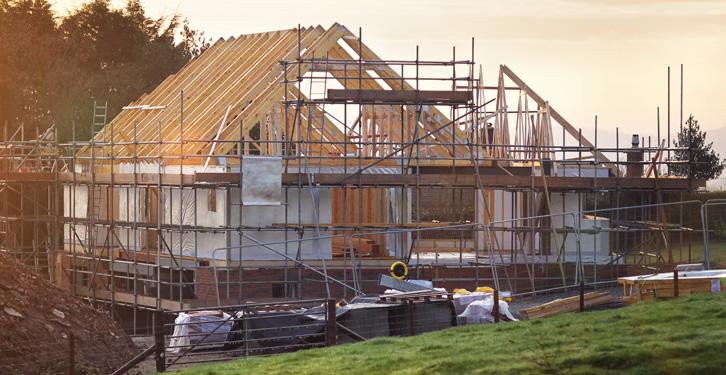
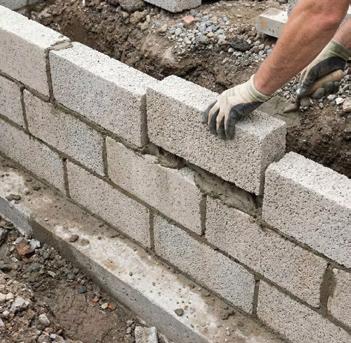
This is because almost everything we buy to build with, has either a large dependence on oil for its manufacture or production or at the very least, transportation, and thus everything will increase.
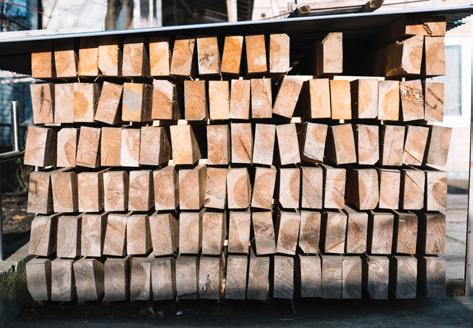
Oil price rises usually happen over a long period, but with the war it’s happening at a very accelerated rate.
So what can we do to offset this rise? There are things that can be done, but I feel on the whole it will have only a very limited effect. The truth of it is we are at the mercy of global oil prices; this has very much proven to be the case in the past six to eight weeks.
The knock-on effect on the
overall cost of building in the short term is an increase in a cost per square foot or square metre of approximately eight to 10 per cent on materials.
This pushes the cost per sqm for a new build in Ireland to around £2,000/€2,100 to £2,200/€2,300 per sqm for a builder’s finish. I stress this is a very rough guide as costs vary from region to region, on specification as well as design, and on many other factors besides.
Extensions and renovations will probably be around £2,300/€2,450 to £2,500/€2,600 per sqm, which again is a very blunt way of calculating costs, but the aim here is to give you an idea of what ballpark you’re in. Just be aware it’s a very big park.
Hopefully, as this goes to press, the war will please God be at an end soon. And things can get back to more of a normal situation.
Because if this war drags on much more, it will unfortunately start to affect not just materials and transportation costs, it will ultimately cause wages and labour costs to rise. Hopefully we won’t need to get into that just yet…

DJ Rasdale DJ Cost Estimations
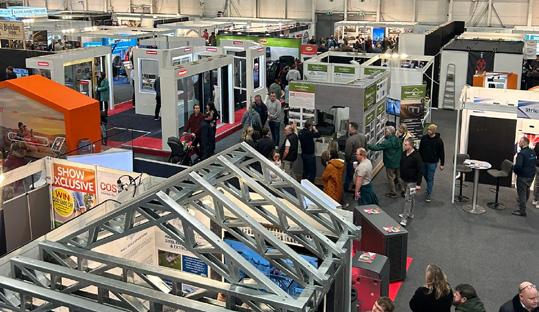
Here’s an overview of what went down at Selfbuild Extend & Renovate Live Leinster 2026.
The Selfbuild Extend & Renovate Live Leinster event was as action-packed as ever with thousands of visitors and hundreds of exhibitors.
Build costs, grants and solar technology featured prominently, alongside the stalwarts of wastewater treatment systems, roofing and building suppliers. Exhibitors spanned the entire journey, from insulation to kitchens and bathrooms.
The Sustainable Energy Authority of Ireland joined us once again to give firsthand advice to those upgrading the energy efficiency of their home with the help of government grants. Great timing too as the grant amounts recently increased (see page 11).
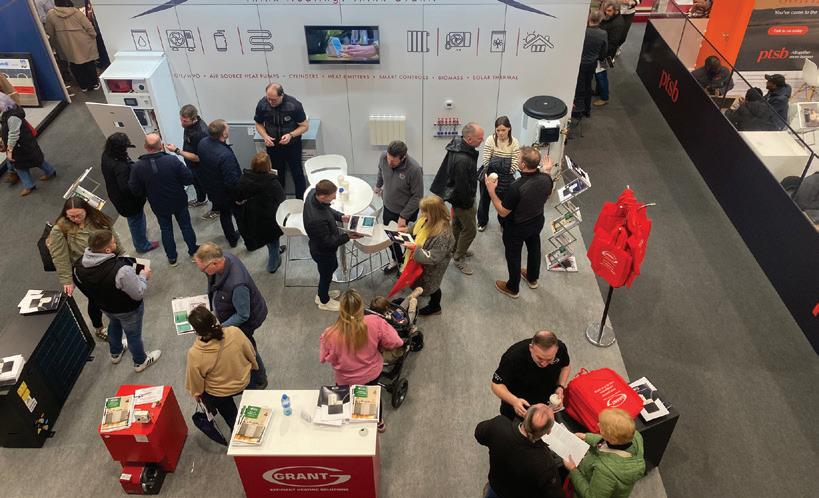
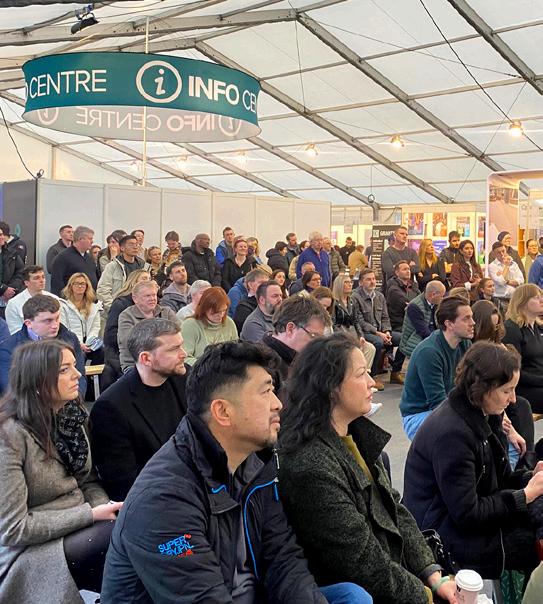
The Chartered Institute of Architectural Technologists was also on hand to chat face to face at the 1-2-1 clinics, providing architectural advice alongside regulars DJ Rasdale of DJ Build Cost Estimations for cost information and Seán McKenna of the Passive House Institute for everything in between.
On stage, John Corless hosted the Unilin Advice
theatre while quantity surveyor Keith Kelliher was in charge of the AIB Build Cost theatre. Talks ranged from how to approach your floor plans to what costs not to forget about.
For more information and to get FREE tickets to the next events, go to live.selfbuild.ie.
Irish homeowners planning a self-build, extension or renovation have a new learning option with DesignIY’s online course collection, aimed at helping novices build confidence before starting work on their homes.
The platform currently offers two flagship courses led by interior designer Karen Mackay: Design DIY 101, which is described as a stepby-step, confidence-building course, priced at
€297, and Project Management 102, positioned as a practical project delivery course, priced at €149.
DesignIY’s wider community offering includes message boards, updates, Q&As and events, adding an ongoing support layer beyond the courses themselves.
designiy.ie

SIG Ireland has raised the bar again with its fourth annual Women in Construction Lunch, bringing more than 85 senior female leaders and managers to The Westbury Hotel, Dublin for a standout industry event marking International Women in Construction Day.
Held in partnership with SIG Workplace, the lunch drew a heavyweight crowd from across the sector, including architects, directors, consultants, procurement specialists, suppliers and public agency representatives, in what SIG described as its most ambitious event to date.
Two panel discussions tackled the big issues shaping the sector, from leadership and career progression to allyship, workplace culture and the future of design. A live
performance from Mary Byrne rounded off the afternoon, giving the event real energy as well as impact.
sig.ie

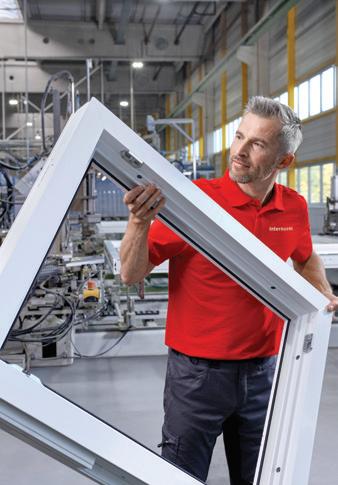
European high-quality window manufacturer Internorm is celebrating 95 years of innovation and craftsmanship. Since 1931, the Austrian family business has produced more than 30 million windows and doors, all manufactured in Austria and installed in homes around the world.
From renovations to new build homes, Internorm products are known for their exceptional energy efficiency, comfort and contemporary design. With many successful renovation, self-build and Passivhaus projects completed, the brand has helped homeowners improve insulation, security and everyday living.
As homes in the UK and Ireland increasingly prioritise sustainability and long-term performance, Internorm’s precision-engineered windows and doors continue to offer a premium, future-ready solution backed by nearly a century of expertise.
internorm.com
HebHomes presents an appealing alternative to traditional construction for Irish homeowners looking to build a sustainable, architect-designed house that celebrates its surroundings.
HebHomes combines thoughtful design, efficient building methods and a streamlined route from concept to completion, with a clear cost schedule.
A key advantage of the HebHomes system is its use advanced construction methods: structural insulated panels (SIPs) and CPS (Closed Panel System).
These precisionmanufactured components enable highly energy-efficient buildings that can be assembled much faster than conventional block construction.
The company has adapted its designs to meet Irish building regulations and partnered with Irish SIP manufacturer SIP Energy to streamline supply and delivery across the country. The CPS kits are imported from the UK, designed to Irish standards.
Hebhomes can either supply and erect the structural kit to wind and weathertight or offer a full turnkey service. hebhomes.ie

• Architect-designed kit homes for selfbuild projects
• Supply + Erect and Full Turnkey options available
• Eco-friendly, energy-efficient CPS timber frame and SIP construction systems
• 40+ pre-designed house models (1-5+ bedrooms)
• Custom design modifications to suit site and client requirements
• Off-site manufactured components for faster construction
• Cost planning tools: price calculator and estimate spreadsheets