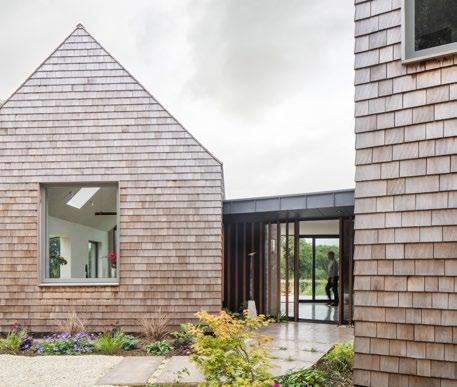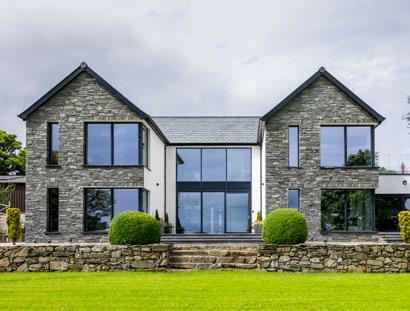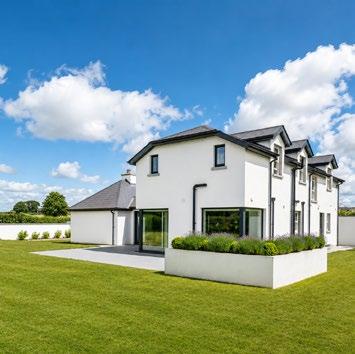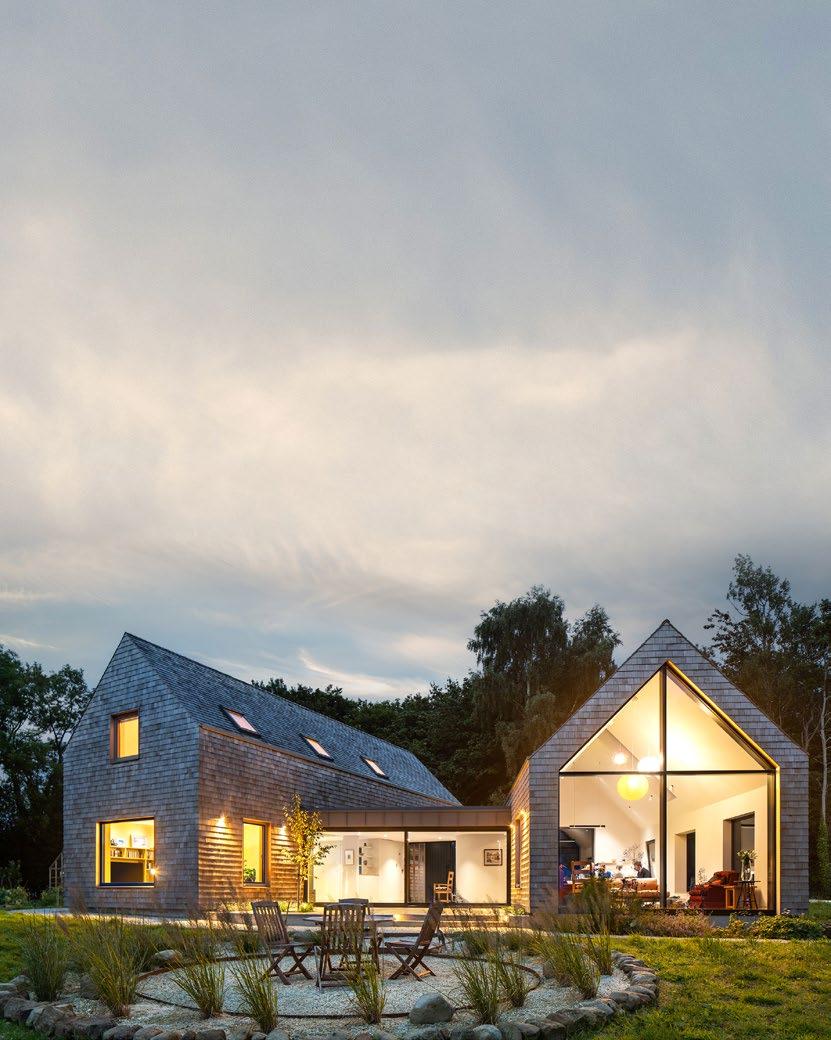

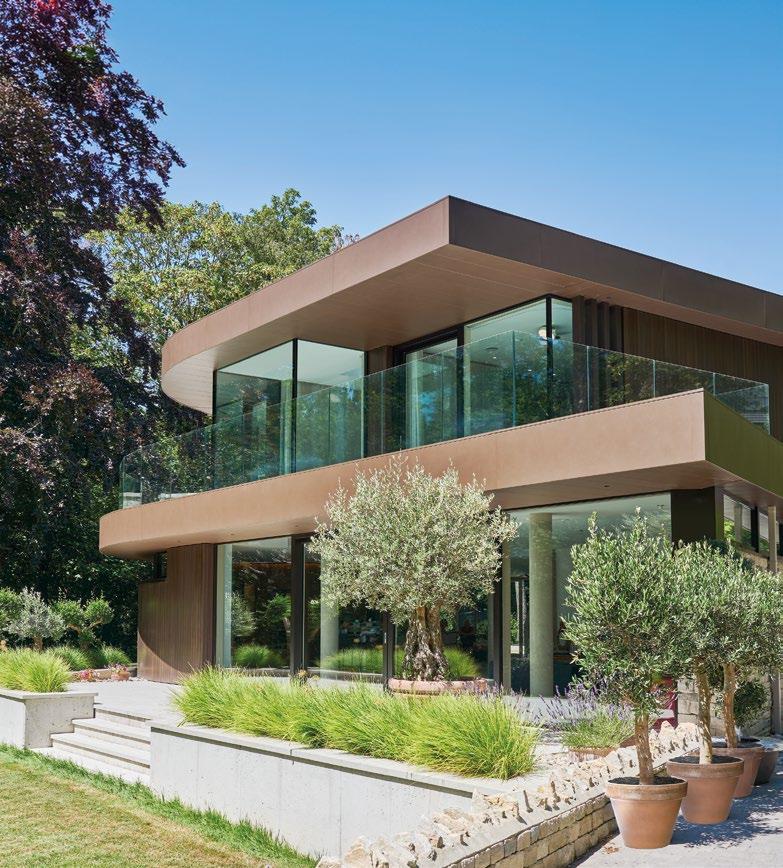
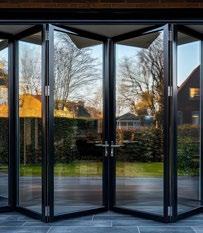
Europe’s leading, award-winning window brand for over 95 years. Innovative, high-performance architectural window and door systems for self-build, renovation and Passivhaus projects. Exceptional thermal performance, outstanding noise reduction and enhanced security. For further information, please visit uk.internorm.com.

“Cycle lanes that safely get kids to schools and sports grounds, will help reduce car dependence.”
It’s nice to bask in not just good weather but in some good news too. And this one is a biggie. Plans to change how local authorities will grant planning permission in Ireland are underway. In the not-so-distant future, it seems by early next year, anyone who’s lived for a prolonged period of time in a rural area will be eligible to get planning permission to build within a certain kilometre square radius (finer details on page 11).
It’s a welcome move as it will breathe new life into communities across Ireland that have struggled with dwindling numbers in schools. It may also see rural house prices continue their upward trend, which may or may not be a good thing.
Increased car use is likely to become an issue but if local authorities do their job and properly invest in cycle lanes, ones that safely get kids to schools and sports grounds, it doesn’t have to become endemic.
Staying with the good weather, from page 91, we’re focusing on windows and doors and it’s clear the buzz is around overheating. The main thing to remember is that with good design, and good workmanship when it comes to insulation and airtightness, your

home shouldn’t overheat.
How you angle the house will matter a lot, meaning a full north-south orientation is not necessarily ideal, as will how much glazing you install and where. So doing calculations early on to determine where the balance lies will pay off in the long run (see page 84).
Overhangs are a great solution if you insist on having a lot of glass on a mostly south-facing elevation. But for those who don’t have one, could shutters provide some relief?
Internal blinds are often cited as a good way to prevent overheating, but it makes more sense to prevent heat from getting into the house in the first place. Then again, is our climate too damp for external shutters? Would they fall foul of vernacular design guidelines?
Questions like these, asking yourself why you’re choosing to go one way as opposed to another, are what will make the home you end up building truly yours. For more about how to approach design, and what pitfalls to avoid, head to page 88.

Astrid Madsen - Editor astrid.madsen@selfbuild.ie
They don't have to cost a fortune but they can –check out how to get the look you're after without breaking the bank.

If you have a question, want to share some insights, or simply let us know how you’re getting on with your project, we’d love to hear from you for our Letters page. Email us at letters@selfbuild.ie
24 House in the woods
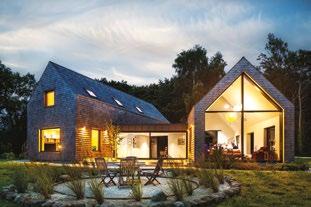
Joanne and Liam Behan’s Co Antrim new build was made for retirement: connected to nature, modern and functional.
34 A better house, hard won
Having to demolish a home you built due to crumbling blocks is heartbreaking, but that’s what Michael Doherty had to do in Co Donegal.
44 There’s life in the old home again
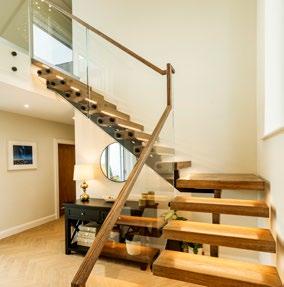
How Christine and Alan Brett transformed a long empty family cottage in Co Kilkenny into a spacious modern home.
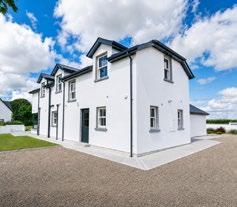
54 Gorgeous Georgian new build
64 In it for the long run
Self-build project manager Gavin Connolly shares how he went about building his home in Co Down on a budget.
72 Tropical vibes
A colourful garden design for a Galway city family.
74 Cottage renovation in Leitrim
In the first part of her self-build diary, Gaynor Ryan guides us through her DIY renovation on a shoestring and why she didn’t avail of any grants.
78 Great house revival
In the first part of her selfbuild diary, Grace Mc Donnell of Co Cork explains how she managed to get her hands on the dream doer upper.
local to design your house? And more reader questions answered.
84 Why Ireland leads the way Ireland is top of the class when it comes to passive house design.
86 Where to start with your project
An overview of how a typical self-build project evolves with tips on finding an engineer to sign off on the build.
88 Top 5 design mistakes
The pitfalls to avoid when designing your dream home.
90 Dealing with disputes
The most common scenarios and how to tackle them.
Selfbuild Extend & Renovate equally covers the 32 counties; both Ireland and Northern Ireland.
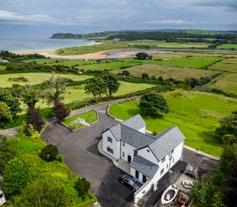
This Co Antrim new build was the culmination of a life of renovating properties for William and Thomasina Woodburn.
82 Letters
Can you build a house for €220k? Do you need someone
life in the old home again Cover Story
92 Overview
The basics of what you need to know, from building regs to grants.
94 Windows
An architect’s guide to design and installation, and where to make savings.
96 Doors
The different types and how much they cost.
98 Watchpoints
Checklist of what to look out for before you buy.
100 Bifold doors
Pros and cons of the popular glazing type.
102 Smart choices
Building on previous selfbuild experience, John Hughes chats about the process of choosing his windows and front door for his new home in Co Down.
108 The design solution to overheating
Vicki Elibank explains how she went about adding an overhang in her new build project in Co Cork.
110 Eyes of the house
Anna Bougharbel on how she saved money on her windows and doors in Co Cork.
112 House by Luna
Laura and Una Ryan Kearns of Co Limerick share their tips choosing windows and doors.
114 Design tips
Philip Joyce bought his home with the windows already installed and tells us what he would change.
CONTACT info@selfbuild.ie
EDITOR
Astrid Madsen astrid.madsen@selfbuild.ie
DEPUTY EDITOR
Heather Campbell heather.campbell@selfbuild.ie
DESIGN
Myles McCann myles.mccann@selfbuild.ie
Shannon Quinn shannon.quinn@selfbuild.ie
Megan Buckley megan.buckley@selfbuild.ie
MARKETING
Calum Lennon calum.lennon@selfbuild.ie
Rebecca Ferris rebecca.ferris@selfbuild.ie
Erin Mason erin.mason@selfbuild.ie
Rachel Caughers rachel.caughers@selfbuild.ie
SUBSCRIPTIONS
Becca Haslett becca.haslett@selfbuild.ie
ADVERTISING SALES
Ben Murphy ben.murphy@selfbuild.ie
Emma Phillips emma.phillips@selfbuild.ie
Joanna McConvey joanna.mcconvey@selfbuild.ie
Lisa Killen lisa.killen@selfbuild.ie
Maria Toland maria.toland@selfbuild.ie
Nicola Delacour-Dunne nicola.delacour@selfbuild.ie
ACCOUNTS
Karen McLeigh karen.mcleigh@selfbuild.ie
Leanne Rodgers leanne.rodgers@selfbuild.ie
SALES DIRECTOR
Mark Duffin mark.duffin@selfbuild.ie
MANAGING DIRECTOR
Brian Corry brian.corry@selfbuild.ie
CHAIRMAN
Clive Corry clive.corry@selfbuild.ie
DISTRIBUTION
Delivering premium windows & doors across Ireland.
Balancing aesthetics, function, and efficiency, our windows & doors are expertly chosen to align with the specific requirements of your project. Our commitment to excellence for over a century ensures that our products are not only built to endure but are designed to inspire. With a proven capacity to deliver on large-scale projects, we are proud to consistently deliver quality and reliability.
For more information, visit nordan.ie
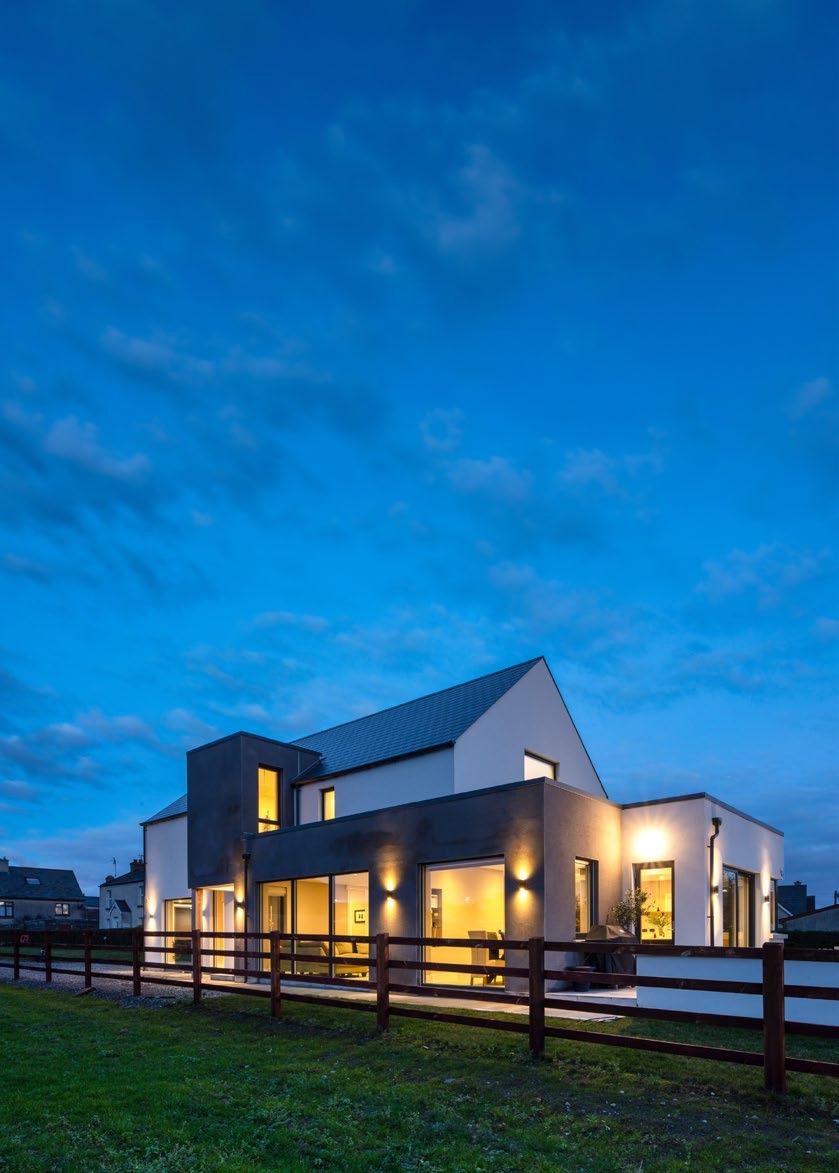
NorDan’s Timber/Alu-Clad Windows combine the classic warmth and beauty of timber on the inside with a tough weather-resistant aluminium cladding on the outside.
The ideal solution for modern homes and commercial properties, offering a huge range of design possibilities, enhanced energy efficiency, and premium performance.
Merging timeless elegance and enduring strength, NorDan’s Timber/ Alu-Clad Doors are perfect for those seeking stylish yet practical modern living solutions.
The perfect solution for the contemporary needs of residential and commercial properties that highlight energy efficiency, low maintenance, and versatile design options.
NorDan’s Entrance Doors have been designed with durability and energy efficiency at the core. With contemporary and traditional designs available, there is a perfect match available for your perfect welcome home.
You’ll be able to build your 45sqm back garden development this summer in Ireland, as rules make their way through the Dáil.
Plans to allow people to build in their back garden, and make attic conversions and 45sqm extensions planning exempt (from current 40sqm) are on track to become law by the end of July, Minister of State with responsibility for planning John Cummins said.
“We’ve completed the screening on that and we expect it to go to the Joint Oireachtas Committee in the next couple of weeks,” said Minister of state Cummins. “I would expect everything to be in place by the end of July.”
The rules will be reviewed 18 months after they come into effect.
The proposals, jointly brought forward by Housing Minister James Browne and Minister of State for Planning John Cummins, will apply to modular homes located in the rear gardens of existing owner-occupied homes.
All units will have to comply with all building regulations, including fire safety standards and other statutory requirements.
Under the proposed rules to be passed by the end of July, the homeowner will have to continue to occupy the main dwelling and the modular unit will need to have its own independent access.
The modular unit will have to be positioned an appropriate distance from the primary residence, with at least 25sqm of private garden space remaining after construction, alongside a minimum setback of 0.6m from boundary walls to facilitate access for emergency services.
The government has also confirmed its intention to extend the Rent-a-Room Relief scheme to cover these garden homes.
This would allow homeowners to earn up to €14,000 per year in tax-free rental
income from a qualifying modular unit, with income above that threshold subject to tax in full.
Homeowners who build modular homes in their back garden will be liable to pay a separate Local Property Tax on that home.
The package also includes exempted development for subdivision works, external insulation upgrades, and new exemptions for front and rear cycle and bin storage.
Tánaiste Simon Harris said the measures are intended to reduce unnecessary planning bureaucracy while allowing local authorities to focus resources on larger housing developments and critical infrastructure projects.
Concerns about the capacity of existing infrastructure have also been addressed by Government ministers and utility providers.
Both the Taoiseach and Uisce Éireann said they do not expect significant pressure on water or electricity networks, noting that projected population growth has already been factored into long-term infrastructure planning.
The changes were first mooted last year.
Majority of septic tanks failing inspection get fixed, as number of grant approvals grew by almost three-quarters
Nearly 60 per cent of the septic tanks inspected in Ireland last year failed the test, the Environmental Protection Agency (EPA) warns in its latest annual report on domestic waste management treatment systems, a situation that is putting private wells, rivers and streams at risk.
According to the report, since inspections began in 2013, a total of 7,212 septic tanks have failed inspection. However, by the end of 2025, 84 per cent of those had been fixed, up from 82 per cent at the end of 2024. The number of older unresolved cases also fell from 523 in 2024 to 442 in 2025. The EPA says this improvement is partly thanks to a higher uptake in grants.
Cork and Laois county councils rolled out vacant property clinics in May and June, as a growing number of local authorities engage in town regeneration campaigns aimed at bringing empty buildings back into use. Vacant property grants worth upwards of €70,000 are currently available from local councils.
At the clinics, county council staff from the planning, housing, regeneration, fire safety and enterprise sections advise on grants and redevelopment opportunities for vacant homes, upper-floor spaces over shops and disused commercial buildings. While Cork and Laois are currently leading the way with structured public roadshows and countywide clinic programmes, other councils including Donegal, Cavan, Monaghan, Longford and Galway are also intensifying vacancy initiatives through dedicated regeneration units, vacant homes offices and enforcement activity.

We provide an all-encompassing, customized service to ensure your system installation is hassle-free — adding value, not stress. With PIPELIFE, you collaborate with one supplier from conception and layout design through to installation. Whether you’re starting from scratch or planning to retrofit, we’ll find the optimal solution for your individual project requirements, saving you time and money every step of the way.
Changes to planning rules at the end of this year will represent the most significant overhaul of rural housing policy in over two decades.
Those wishing to return to their rural area to build a family home are set to benefit from the government’s plan to cut red tape and overhaul how one-off homes are granted planning permission in the Irish countryside.
The new guidelines, which will replace the 2005 Sustainable Rural Housing Development Guidelines, will allow people who have lived in a rural area, no matter how long ago that was, to get planning permission to build a home.
Minister for Housing, Local Government and Heritage James Browne said the new statement would replace the current guidelines with “a clearer, more consistent national approach” to rural and Gaeltacht housing, ending the “Eircode lottery” system currently in place.
For instance, some councils require it be your first home, others require it be your first build. With the new guidelines, neither of those requirements will apply.
All planning applications will continue to have to meet all planning criteria, such as site location, design, access, wastewater treatment, and environmental impact.
What the new guidelines are doing is redefining the topics of local need and housing need in rural areas.
Local need rules will no longer apply within rural settlements of less than 1,500 people.
Although local need rules will continue to apply in sensitive areas, they will be simplified and loosened. The local need criteria in those sensitive areas can be either social or economic, and the housing need criteria will continue to apply.
All of these criteria have been
amended to make it easier for people to get planning permission to build in the area they’re from or in the area they’re working in.
Special rules will apply to Gaeltacht areas, including provisions for those who speak Irish.
In areas that require that you prove a local need, you can either prove a social or economic need. Currently local authorities tend to require both.
Social need is demonstrated by proving residence within a specified distance of the proposed site for a minimum period. In rural areas under urban influence, applicants must have lived within a 10km radius for at least seven years.
In higher-pressure areas, including metropolitan areas and green belts, the requirement is stricter: residence within 3km for at least 10 years. Working remotely does not affect eligibility under the social need criteria.
Where social need cannot be demonstrated, applicants may qualify through economic need. This extends beyond farming to occupations tied to rural areas, including teachers, gardaí, and other rural businesses. However, remote working alone is not considered sufficient evidence of economic need.
Currently those trying to build on family land are often being told they cannot because they already own a home somewhere else, and as such have no housing need.
Under the new rules, as long as you have not already built a house near where you grew up or have been living or have a business in, you will be granted planning permission (as long as the other planning requirements are adhered to).
This regardless of whether you already own, or have built, a home elsewhere.
On ribbon development, the draft says applications should be judged on their merits rather than using fixed rules such as “no more than five houses in a row” or minimum frontage requirements.
It also says infill and backland development should be supported where services and access already exist, provided it does not block future infrastructure or settlement expansion.
Those granted permission will have to live in the home for at least 10 years and won’t be allowed to let the property, even on a short-term basis. The housing minister said local authorities have enforcement powers if these rules aren’t adhered to.
The Office of the Planning Regulator will ensure each local authority’s county development plans are brought in line with the new regulations. The OPR has enforcement powers.
County Development Plans will also now run for 10 years with a review at the five-year mark.
Here’s a roundup of what homes won the 2026 Architectural Association of Ireland (AAI), Royal Institute of the Architects of Ireland (RIAI) and Royal Society of Ulster Architects (RSUA) awards.
Two new builds and a renovation bagged the AAI Awards this year, with the first going to Cruit Island by Pasparakis Friel Architects, a new build on the eastern side of the island, overlooking a sheltered bay in County Donegal. The RIAI also commended Cruit Island at its awards ceremony.
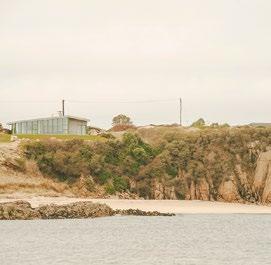
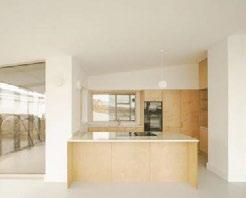
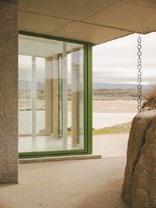
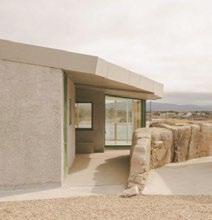
The site has been used by the same family for four generations, and that long connection to the place helped shape the design. The house sits low between two granite outcrops. Its roof follows the shape of the surrounding landscape, while roughcast walls and corrugated roof panels help it blend into the exposed setting.
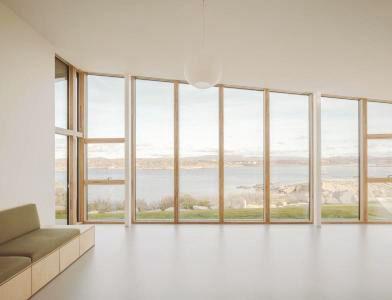
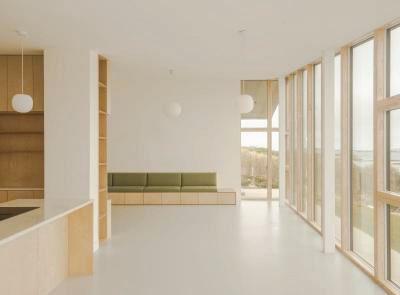
The western side, facing the road and Atlantic weather, is more solid and enclosed. The eastern side is much more open, with large areas of glazing looking towards the bay.
The main living spaces sit at the centre of the house, with the bedrooms arranged around them. The gaps between the building and the rocks also create sheltered outdoor areas.
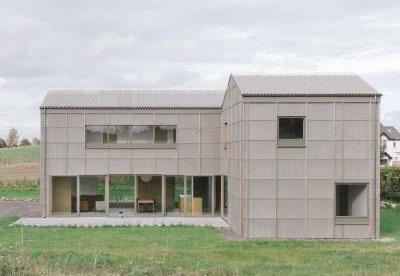
The second AAI Award went to Suburban Family House in Co Tipperary by t o b architect.
The 210sqm timber frame, contemporary family home was designed as a critique of standardised suburban housing.
It demonstrates how thoughtful architecture can deliver high-quality living without the premium price tag often associated with bespoke design.
The project was designed as a response to the growing challenge of providing affordable, sustainable housing while maintaining strong architectural standards.
The dwelling combines two simple pitched-roof volumes with a timber structure and carefully planned interiors that maximise natural
light, energy efficiency and connections to the surrounding landscape.
Rather than relying on expensive materials or complex forms, the design focuses on practical construction methods, generous living spaces and durable finishes, creating a home that is both functional and visually distinctive.
At the AAI Awards, special mention was given to Bellevue Heights by REIR Studio, the renovation of a
1975 bungalow in Greystones. The RIAI also highly commended this project in its awards.
The house sits at the foot of a dramatic hill, surrounded by a mature garden, but the original layout had lost much of its connection to the outdoors.
The redesign involved reworking the entire interior, removing the back section of the roof and reducing the overall floor area. A new bay window was then added to open the house back up to the garden.
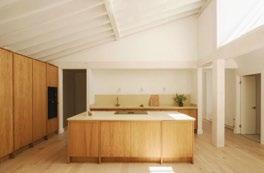
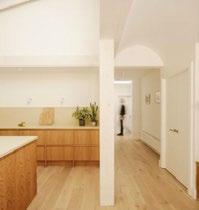
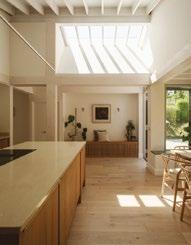
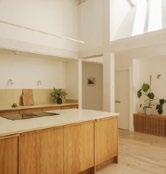
Six home renovation and new build projects were recognised in the Living categories of the 2026 RIAI Architecture Awards.
O-House by Lawrence and Long Architects won the House – New Build category, which was designed for a tight mews site in Rathmines, Dublin. Instead of placing the garden at the back, the architects put it in the middle of the house.
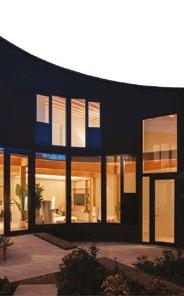
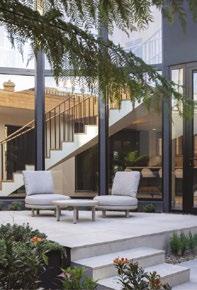
The solution was to dig down and create a lower ground floor, which made room for an extra storey while keeping the house below the original ridge line.
Bringing light into the middle of the terrace was one of the biggest challenges. Eight rooflights were added to draw daylight deep into the plan, while a large pivot door helps the study borrow light from the courtyard.
The finished house measures just 110sqm, but it includes more than 10 separate rooms and spaces. A clear view from the front window to the rear laneway also helps it feel more open than its size might suggest.
The project is a good example of how a small city house can be adapted for family life without losing its original character.
Pembroke Cottages by REIR Studio involved the renovation and extension of an 1880s cottage on Main Street in Dundrum, within an Architectural Conservation Area.
The new work includes a modest dormer extension, a kitchen and dining space, and a principal bedroom.
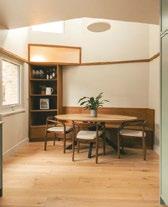
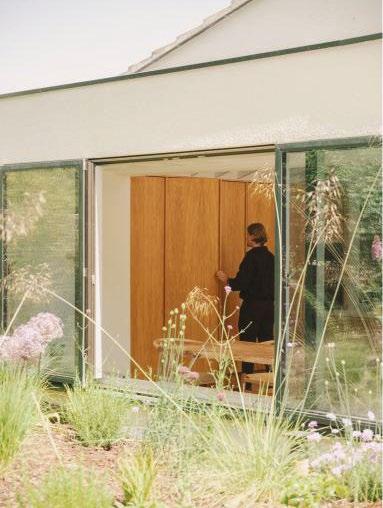
The square plan wraps around a circular courtyard, which gives the project its name. This central garden brings light, air and greenery into every part of the home.
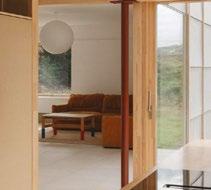
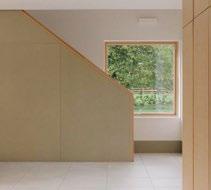
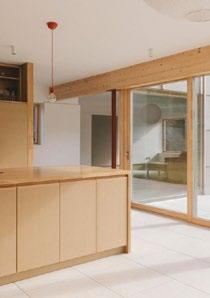
Full-height glazing surrounds the courtyard which creates a strong connection between the rooms and the outdoor space. The house was built using a prefabricated crosslaminated timber structure.
20 glulam columns frame the courtyard and support the upper floor, while the exposed timber gives the interior a warm, natural feel.
On the outside, white
brick, weathering steel and zinc cladding give the house a modern look while helping to protect privacy on the restricted site.
Meanwhile, Greenville Terrace and Pembroke Cottages were joint winners in the House – Adaptation category.
Greenville Terrace by Rachel Carmody Design started life as a derelict one-bedroom house. The brief was to turn it into a three-bedroom family home without extending beyond the existing footprint or raising the roof.
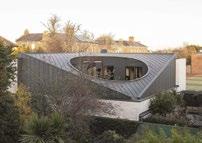
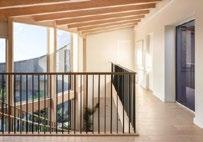
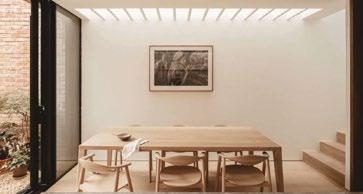
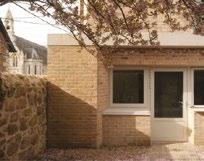
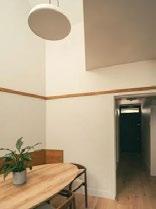
One of the standout features is a diamond-shaped opening between the two floors. It brings light into the centre of the house and adds a sense of space without overpowering the original cottage.
The result is a careful balance between old and new, with extra room added while the character of the historic house is kept intact.
The RIAI commended Havelock by Scullion Architects, a two-bedroom Victorian terrace in Dublin, redesigned to make a compact
A private home in County Down designed by architects McGonigle McGrath has been named RIBA Northern
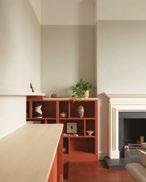
home feel richer and more spacious. A hidden route behind a bookcase leads past a small home office and builtin seating to the kitchen and garden.
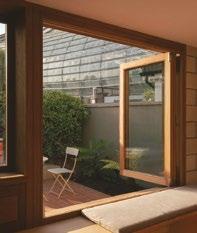
At the rear, the design works with the garden’s awkward angle rather than correcting it, allowing the floor tiles, fitted furniture and window seat to follow the shape of the site and give the house its distinctive character.
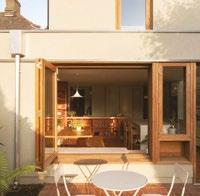
Ireland Building of the Year 2026 – hot on the heels of winning in 2025 and securing the hat trick in 2024.
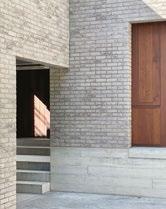
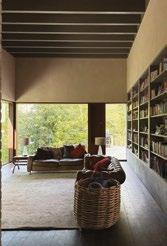
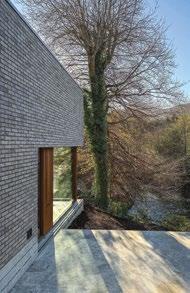
The riverside property that won the RIBA Award in 2026, known as Tollymore, received the 2026 RSUA Award. The judges praised the home for the way it blends architecture with its natural setting, describing it as an “exceptional” project that merges building and landscape.
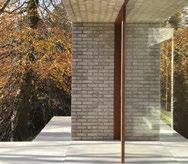
Located discreetly off a narrow country lane, the house sits on a steep riverside site. Rather than appearing as one large building, it is arranged as a series of six connected elements that step down from the road towards the river.
The jury said the design responds carefully to the landscape, using a sequence of linked courtyards and understated brick forms to frame views of the river while also addressing the access laneway.
“The respect for its landscape setting needs to be seen to be believed,” the RSUA said. “It is one of those exceptional homes which sublimates the inspirational with the practical.”
The house was designed for a private client and was first conceived in 2015. Its
completion was delayed in part by the Covid-19 pandemic, but the finished result was “more than worth the wait”.
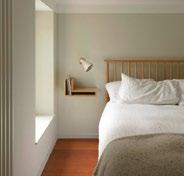
Materials were also singled out for praise. The judges noted the careful use of timber, lime-washed walls and strategically placed windows and rooflights, which help bring soft daylight into the different rooms.
The home was designed to support family life and long-term flexibility, with its separate volumes allowing the building to adapt over time. The jury described it as “distinctive and particular without being either boastful or inflexible”.
Environmental sensitivity was another key aspect of the project. The design team took care to limit the impact on the site’s delicate ecology, while also allowing for river flooding in a discreet way.
Former RIAI president Ciarán O’Connor described the house as a “remarkable riverside house for committed clients” and said it carried a “watermark of quality”.
Like a good poem it works on many levels,” he said. “It has poetic pragmatism.”
Ireland’s building energy rating (BER) certification system overhauled to include extra emissions data and a new A0 rating.
A new Building Energy Rating (BER) system for residential properties came into force in Ireland on May 24, 2026, as part of changes being introduced under the revised EU Energy Performance of Buildings Directive (EPBD).
The aim is to make BERs easier to understand and more consistent across Europe, with a simplified rating system that will apply across EU member states.
The most visible change is that the current BER structure, which rates homes on a 15-point scale from A1 to G, will be replaced by a more streamlined A to G scale, with the existing subcategories removed.
Alongside this, a new A0 category will be added for zero-emission homes with very high energy performance that do not use fossil fuels. The idea is to make certificates easier to read while also giving greater recognition to homes that meet the highest energy standards.
One of the key points is that existing BER certificates will remain valid for 10 years from their date of issue, unless major renovation works have taken place. The revised scale will only apply where a new BER certificate is issued on or after May 24, 2026.
The new BER certificate will also contain more information than the current version. As well as the simplified A to G rating, it will include additional indicators relating to zero-emission buildings, greenhouse gas emissions and renewable energy use.
It will also provide recommendations on costeffective ways to improve a home’s energy performance, along with steps that could help reduce operational emissions. A QR code will also feature on the new certificate, linking homeowners directly to BER and retrofit information relevant to their property.
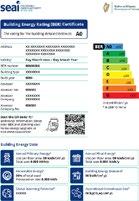
An A0-rated home is defined as a zero-emission building with very low energy demand, no on-site carbon emissions from fossil fuels and zero or very low operational greenhouse gas emissions.
The new Warm Healthy Homes Fund will replace the existing Affordable Warmth Scheme, to loosen eligibility criteria and bring in more supports.
Low-income households could receive whole-house energy upgrades, including solar PV and battery storage, under plans to replace Northern Ireland’s Affordable Warmth Scheme.
The proposed Warm Healthy Homes Fund is due to launch in 2027 and would support homeowners and private tenants to make homes warmer and cheaper to heat.
The current scheme funds measures including insulation, ventilation, draught-proofing, heating upgrades, replacement singleglazed windows and, in some cases, solid wall insulation. Applicants must have a
gross household income below £23,000. Grants of up to £7,500 are available, rising to £10,000 where solid wall insulation is needed.
Under consultation proposals, the income threshold would increase to the National Living Wage rate, currently £29,741.40 net of tax and National Insurance, and rise annually in line with it.
The new fund would take a “whole-house” and “fabric-first” approach. A home assessment would identify measures, with insulation, ventilation and draught-proofing addressed before heating upgrades or renewables.
Solar PV, battery storage
and low-carbon heating could be offered, subject to technical assessment.
The fund forms part of the Warm Healthy Homes Strategy 2026–36, launched in February to tackle fuel poverty in owner-occupied and private rented homes. The consultation seeks views on higher grant limits, consumer protections and quality standards.
It will not replace the boiler scheme axed in 2023; support for broken boiler repairs is instead identified under Discretionary Support.
Fuel poverty and disability organisations welcomed the proposals, highlighting the potential to cut bills and
improve health, particularly for households most at risk.
The consultation closes on 19 August 2026.
Meanwhile, the Northern Ireland Sustainable Energy Programme is offering grants until March 2027, or until funding runs out. Support includes fully funded heating and insulation upgrades for lower-income households, part-funded schemes for moderate-income households, and wider insulation cashback grants. Depending on the scheme, support may include central heating, loft and cavity wall insulation, smart controls, heat pumps, solar panels and batteries.

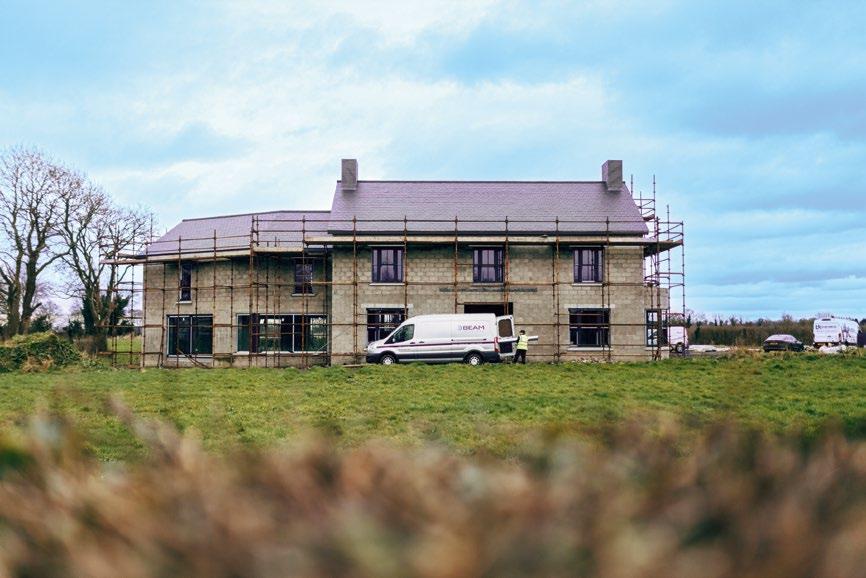






Rural families in Ireland are systematically being shut out of building new homes due to road objections from Transport Infrastructure Ireland, says TD Michael Fitzmaurice.
Self-builders trying to build on their own family land are being held back by increasingly strict objections along Ireland’s national secondary roads, according to Galway-Roscommon Independent TD Michael Fitzmaurice.
“We need TII to back off on national secondary road rules,” the TD told Selfbuild. According to Fitzmaurice, there has long been an
understanding that someone could build a home using a shared driveway onto a national secondary route, particularly where it made practical sense and did not create a new direct access point.
“Now they [TII] seem to love objecting every single time. It’s sickening what they’re doing, because people need to build in the rural areas.”
In his view, what should
be a case-by-case assessment has become far too rigid, leaving many rural applicants
facing what they see as nearautomatic opposition.
Kildare County Council says funding restrictions and rural housing rules have hampered the delivery of ready-to-build serviced sites, despite the government listing seven sites as available in the county.
Housing Minister James Browne said 32 sites had been offered for sale by four local authorities under the Ready to Build Scheme, including seven in Kildare. However, no funding has yet been drawn down by councils.
In a response to Selfbuild,
Kildare County Council outlined problems affecting seven sites in Clogherinkoe, which were placed on the market in 2024 for €45,000 each. The 0.13-hectare sites are council-owned and were left over from an earlier social housing development.
The council applied for support under the Ready to Build Scheme, which provides up to €30,000 per site, but was unsuccessful. The department found the proposal did not meet the criteria because there was no outstanding debt on the land and the scheme was intended for infill sites in towns and villages where servicing costs should be relatively low.
The sites are also subject to the rural housing policy in the Kildare County Development Plan 2023–2029 because the land is not zoned for residential development. At least one person living in each home must therefore show they have spent 16 years within 5km of the site.
The council said this significantly reduced the number of eligible buyers, with only one viable application received.
Proposed changes to the development plan would relax the rules for serviced sites. Applicants would instead need to have lived in rural Kildare for 10 consecutive years within 10km of the site.
The council warned that the lack of government funding could limit similar schemes in future. It has identified Ballitore and Kildangan as possible locations, although Ballitore may also be ineligible for funding because there is no debt on the land, while rural housing rules would apply in Kildangan.
One-off house completions rose by almost 28 percent in the first three months of 2026, marking a strong start to the year for self-built homes.
ew figures from the Central Statistics Office show that 1,419 single dwellings were completed between January and March, up 27.8 percent on the same period last year.
NOne-off houses made up 18 percent of all new homes completed in the quarter.
The rise in single dwellings highlights the continuing role of one-off housing in overall supply. Completions were up in every region of the country with the Border region recording the largest increase; completions the rose by 58 percent compared with the first quarter of 2025.
The West region meanwhile, covering Galway city, Galway county, Mayo and Roscommon, had the highest number
of completions, at 232. Cork County recorded the highest number among local authorities, with 146 one-off dwelling completions.
Bank of Ireland chief economist Conall Mac Coille said the strong rise in completions, including a sharp increase in one-off homes, means the bank now expects to revise up its forecast for overall completions in 2026 to around 40,000, from 37,500.
Housing completions usually pick up as the year progresses, with the first quarter typically accounting for between one-sixth and one-fifth of annual completions. The strong start to 2026 suggests the full-year figures could be significantly ahead of last year.
77 per cent of the new construction dwellings that were granted planning permission in the first quarter of 2026 were one-off homes, according to the latest Central Statistics Office (CSO) figures.
A total of 1,382 one-off homes received planning permission between January and March 2026, up 12.4 per cent from 1,230 during the same period in 2025. The increase came despite an overall 1 per cent decline in total dwelling units granted planning permission nationwide.
Of the 1,789 permissions granted for new construction dwellings in Q1 2026, 1,382 were for one-off houses. This means that 77 per cent – more than three in every four new homes granted
planning permission during the quarter – were one-off dwellings.
By contrast, permissions for multidevelopment houses fell by 4 per cent year-on-year, while apartment permissions declined by 2.7 per cent.
The figures also highlight continued strength in Ireland’s home improvement market. During the quarter, 2,060 permissions were granted for extensions and a further 1,595 for alterations and conversions.
Combined, more than 3,650 planning permissions were issued for renovation and improvement projects, reflecting continued investment by homeowners in upgrading existing properties through extensions, energy improvements, home offices and internal reconfigurations.
A new report from the Hardware Association Ireland (HAI) says planning restrictions are a major hindrance for one-off homes.
As one-off rural housing completions fell from more than 23,000 in 2006 to just 5,929 in 2025, the HAI believes planning reform could increase output to over 12,000 homes annually.
Its report, The Potential for Rural Family Homes – A Survey Review Spring 2026, surveyed 239 stakeholders, including architects, estate agents, councillors and local authority officials. It found that 92 per cent believe demand for one-off rural homes exceeds current supply.
Respondents identified government policy, planning complexity and housing need requirements as the main barriers to rural homebuilding.
More than half blamed government policy for the shortfall, while 46 per cent cited the housing need clause as the biggest obstacle.
HAI argues that restrictions introduced after the property crash are now contributing to rural decline and worsening housing shortages.
HAI president Tara Brennan said reforms could support sustainable rural growth, noting that advances in low-carbon construction and rising levels of remote working have strengthened the case for rural living.
Calls to reduce VAT on building materials and renovation works are growing as politicians and industry groups seek ways to lower housing costs.
The debate was revived in May 2026 when Aontú’s Dublin Central by-election candidate, architect Ian Noel Smyth, proposed removing VAT on building materials to reduce construction costs and boost housing supply.
Aontú leader Peadar Tóibín has also argued that if lower VAT rates can support apartment viability, similar measures should be considered for house building and selfbuilders. Other TDs, including Paul Lawless, Danny Healy-Rae and Gillian Toole, have highlighted the impact of VAT on smaller builders and rural housing projects.
The issue extends beyond new homes. In Northern Ireland, the Federation of Master Builders is campaigning to reduce VAT on renovation and repair work from 20 per cent to 5 per cent, arguing that the current system favours new build housing.
A Co Wicklow builder has been awarded almost €14,000 by Bray District Court following a dispute over payment for renovation works carried out at a family home in Bray, according to the Irish Independent.
Builder Aidan O’Connor brought civil proceedings against homeowners Stephen and Val McCann, claiming he had completed additional renovation and attic conversion works that remained unpaid.
The original contract, valued at €30,000, covered a rear extension, rooflights, steel supports, insulation and plastering. After this phase was paid in full, further attic conversion works were undertaken and an invoice for €13,981 was issued.
The homeowners disputed elements of the work, citing concerns about leaks, insulation and roofing issues, and questioned certification, regulatory compliance and the lack of detailed cost breakdowns.
The case highlights risks associated with residential renovation projects, including the importance of independent certification during construction as well as the need for detailed written contracts, staged payment schedules, and clearly defined scopes of work.

Despite a sharp slowdown in overall new home registrations across Northern Ireland, the latest figures from the National House Building Council suggest the one-off housing sector continues to show resilience.
According to the NHBC’s Q1 2026 housing statistics, detached homes were the only housing category across the UK not to record a decline in registrations during the first three months of the year.
It’s a significant signal for Northern Ireland, where one-off rural homes remain a major part of the residential market.
While overall registrations fell by 44 per cent year-on-year, much of the downward turn is concentrated in larger housing developments and multi-unit schemes, reflecting a broader caution amongst the larger housebuilders amid economic uncertainty.
For the self-build sector, however, the
latest data reflects the enduring appeal of detached and bespoke housing.
Northern Ireland has long had one of the strongest self-build cultures in the UK, with many homeowners continuing to favour building on family land, replacing older dwellings or developing single rural sites rather than purchasing within larger estates.
Industry professionals say self-builders often operate on longer timelines and are less influenced by short-term market fluctuations than speculative developers, helping the sector remain comparatively stable during uncertain periods.
The latest figures also show that detached homes remain popular, as buyers continue to look for more space, flexibility and long-term value.
Across the UK, the NHBC cited affordability pressures, economic uncertainty and higher borrowing costs as key factors affecting the wider market.
The event returns to the University of Galway Connacht GAA Air Dome this October.
The biggest show for self-builders and home improvers is back in Connacht, where suppliers, architects, and trade experts will be on hand to discuss your very own project.
Mark your calendar for October 3rd to 4th, 2026, when the event returns to the University of Galway Connacht GAA Air Dome in County Mayo.
Whether you're building in Galway, Mayo, Sligo, Roscommon, Leitrim, or further afield, connecting directly with local professionals and resources is key.

For free tickets scan the QR code or visit live selfbuild.ie

Grant has launched next-generation cylinders for modern heat pump homes. The new range of Quick Recovery Cylinders are designed to maximise the performance of modern heat pump systems and help homeowners get the most from low-temperature heating.
Designed and manufactured in Birr, Co Offaly, the range is backed by an €8 million investment in product development and expanded manufacturing facilities. Optimised for low-temperature heat pump operation, the cylinders feature high-performance heat exchange coils, advanced insulation and an innovative internal design to deliver faster heat-up times, improved recovery rates and a reliable supply of hot water.
Available in capacities from 150 to 300 litres, including slimline and pre-plumbed options, the range offers flexibility for a variety of home designs and utility room layouts.
Developed to work seamlessly with Grant’s Aerona R290 heat pumps and smart controller, the Quick Recovery Cylinder range forms part of an integrated heating system designed to improve efficiency, comfort and hot water performance in modern homes.
grant.ie / grantni.com

Renowned timber frame manufacturer Kudos has undergone a generational transition, moving away from one-off house building to focus exclusively on supplying and installing premium window and door systems.
Now trading as Kudos Window Systems, the Newtownabbey-based company is entering a new era under Managing Director Ben Orr, alongside founder Neil Orr, who remains fully involved in driving and growing the business.
Partnering with trusted European manufacturer Zyle Fenster, Kudos offers premium heritage timber windows, timber aluclad and aluminium window systems designed to meet a wide range of architectural and technical requirements. The company also supplies Reynaers and Schüco aluminium systems, combining slim sightlines with exceptional thermal performance.
With low Uw values across all products, Kudos Window Systems delivers outstanding energy efficiency, weather performance and modern design, backed by decades of industry
experience and a renewed focus on specialist glazing solutions.
kudoswindowsystems.com
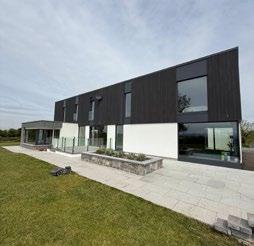
Flooring distributor, importer and wholesaler, specialising in the supply of wooden floors, Wood Innovations recently celebrated its 30th year in business.
From a small store and portacabins at its first home in Warrenpoint, the company is now based in Newry and Walsall and boasts a team of over 60 people with customers across the UK and Ireland.
woodinnovations.com
PTSB bank has partnered with Irish modular home builder BuildWright to provide green mortgages for its energy-efficient homes.
The agreement gives customers access to preferential mortgage rates for A2-rated modular homes, supporting faster, more sustainable housing delivery while expanding financing options for buyers, particularly in rural communities.
buildwright.ie / ptsb.ie
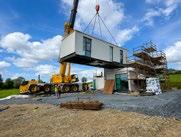
The internationally acclaimed Ice Box Challenge is taking place in Ireland for the first time this summer, with the big reveal in September, offering a powerful demonstration of the benefits of energyefficient building design.
Hosted at Trinity College Dublin as part of the lead-up to ZEB Summit 2026, the initiative is being delivered in collaboration with the Passive House Association of Ireland and MosArt.
Selfbuild Extend & Renovate Live exhibitors have partnered up to create the Ice Box Challenge, including iDomus, NorDan and Ecological Building Systems.
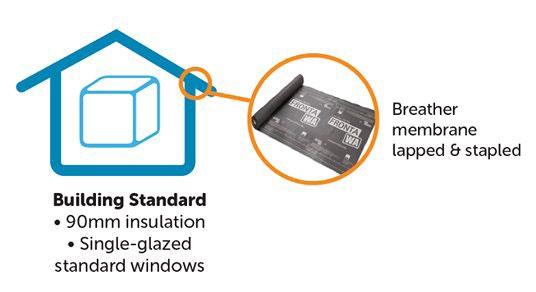
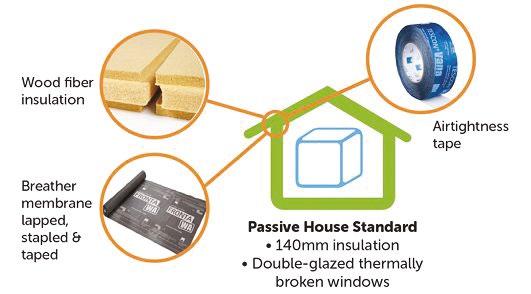
Two identical-looking demonstration structures, each containing a large block of ice, are placed outdoors. One is built to
conventional construction standards, while the other meets the rigorous Passive House standard, featuring superior insulation and airtightness.
Exposed to the same weather conditions, the challenge will reveal how building performance affects energy retention by comparing how much ice remains over time.
Live sensors will provide real-time temperature and performance data via the ZEB Summit website, with the final reveal scheduled during ZEB Summit 2026 September 23rd.
You can come meet the experts at Selfbuild Extend & Renovate Live; the next show is in Connacht on October 3rd and 4th.
zebsummit.com
GRAF UK has unveiled a new range of rainwater harvesting systems designed to maximise the use of free rainwater while reducing reliance on mains water.
The AA Eco-Plus and AA Silentio systems, which will also be available in Ireland, feature a design that feeds mains water directly into the property’s plumbing rather than topping up the underground storage tank. This preserves the tank’s full capacity for harvested rainwater while ensuring compliance with Water Supply (Water Fittings) Regulations through an integrated Type AA air gap.
graf.ie / graf.co.uk
Builders’ merchant JP Corry has opened a new purpose-built branch on Montgomery Road, Belfast, replacing its previous Castlereagh premises.
The upgraded facility features expanded warehousing, a modern trade counter, landscape centre and larger workwear department, strengthening support for tradespeople, contractors and commercial customers while providing greater capacity for future growth.
Opening hours are Monday to Friday 7.30am to 5pm and Saturday 8am until noon, jpcorry.com