L A U N A M G N I N I A R T T N E M H S I L B A T S E ON THE S N E D R A G N E H C T OF KI 2025
CONTENTS Contents �������������������������������������������������������������������������������������������������������������������������������������������������������������������������������3 1.0 Background Notes ����������������������������������������������������������������������������������������������������������������������������������������������� 4 Introduction �������������������������������������������������������������������������������������������������������������������������������������������������������������������������4 Users Of This Manual ���������������������������������������������������������������������������������������������������������������������������������������������������������4 Components Of The Manual ���������������������������������������������������������������������������������������������������������������������������������������������4 Guidelines For The Trainer ������������������������������������������������������������������������������������������������������������������������������������������������4 2.0 Nutrition And Health Training �������������������������������������������������������������������������������������������������������������������������� 7 2.1 Nutrition �������������������������������������������������������������������������������������������������������������������������������������������������������������������������7 2.2 Nutrition And Health Training & Mentorship ���������������������������������������������������������������������������������������������������������8 2.3 Water, Sanitation And Hygiene (Wash) ������������������������������������������������������������������������������������������������������������������9 3.0 Establishment Of A Nursery Bed �������������������������������������������������������������������������������������������������������������������� 10 3.2 Nursery Bed ���������������������������������������������������������������������������������������������������������������������������������������������������������������10 4.0 Introduction To Kitchen Gardens: ������������������������������������������������������������������������������������������������������������������ 12 4.1 What Is A Kitchen Garden? ���������������������������������������������������������������������������������������������������������������������������������������12 4.2 User Needs And Interests �����������������������������������������������������������������������������������������������������������������������������������������12 4.3 Good Agricultural Practices ��������������������������������������������������������������������������������������������������������������������������������������12 4.4 Types Of Kitchen Gardens ���������������������������������������������������������������������������������������������������������������������������������������15 5.0 Composting And Organic Feritizers ���������������������������������������������������������������������������������������������������������������� 17 Compost Manure Production �����������������������������������������������������������������������������������������������������������������������������������������17 Farm Yard Manure �������������������������������������������������������������������������������������������������������������������������������������������������������������19 Liquid Organic Fertilizer �����������������������������������������������������������������������������������������������������������������������������������������������������������20 Green Manure �������������������������������������������������������������������������������������������������������������������������������������������������������������������21 Organic Pesticides ������������������������������������������������������������������������������������������������������������������������������������������������������������21 Annexes ���������������������������������������������������������������������������������������������������������������������������������������������������������������������� 23 Annex 1 �������������������������������������������������������������������������������������������������������������������������������������������������������������������������������������������������������23 Annex 2 �������������������������������������������������������������������������������������������������������������������������������������������������������������������������������������������������������24
TRAINING MANUAL ON THE ESTABLISHMENT OF KITCHEN GARDENS
3
1.0 BACKGROUND NOTES INTRODUCTION
T
his training manual provides a structured approach for farmers seeking to help improve household level vegetable production for improved nutrition.
Although home vegetable gardening is nothing new to most rural households, the introduction of improved practices can make a big difference to the maintenance and productivity of vegetable gardens throughout the year. This is particularly important in the wake of climate change characterized by prolonged droughts. This is important for ensuring a family’s stable and fresh vegetable and fruits supply and for avoiding malnutrition that can be exacerbated by poor seasonal conditions.
USERS OF THIS MANUAL This training manual is intended for use by Community Based facilitators (CBTs), Lead Farmers as well as Community Health Workers (CHW) after undergoing Training. These field level workers who can train farmers/farm women are encouraged to practice their own training skills before they are able to train farmers. Government Extension workers with extensive rural training skills can also use the training manual. Other technical staff from different government departments, especially the ministry of health and maybe education, universities and colleges who are interested in community development through improved nutrition can also use the training manual.
COMPONENTS OF THE MANUAL This training manual can be used as a single training curriculum manual, or a series of individual training modules. Lesson plans should be altered to suit the needs of each group. The manual contains guidelines for trainers and other resource persons. It includes session plans, suggested training methodologies and participatory approaches. An experienced trainer is expected to use other training approaches deemed fit to meet the different framing needs and contexts. The training manual is divided into 4 brief training sessions: namely: •
Nutrition and Hygiene
•
Nursery Bed establishment
•
Kitchen Gardens establishment
•
Composting and Use of Organic Manure.
Each of these sessions should ideally be conducted in no more than two and half hours. The use of practical training materials and local examples and practices to enhance adoption is highly encouraged. To the extent possible, theoretical classroom settings should be avoided as these have proven less effective for the adoption of technologies.
GUIDELINES FOR THE TRAINER An effective trainer not only provides new information, but using adult learning principles also builds on the existing skills and understanding of those being trained and develops local resource persons who can train others. Most of our community group members have low literacy levels. This training guide is meant to stimulate them to get engaged in the training process. It is composed of short sessions that provide just enough information for the household to make their own kitchen gardens. The training process and structure of the guide uses an approach that helps families use existing farming experience to gain knowledge and skills that change their farming system to grow and consume vegetables and fruit trees while selling the surplus. Local language, basic tools and pictorial materials should be used as much as possible. Adult learning methods,
4
TRAINING MANUAL ON THE ESTABLISHMENT OF KITCHEN GARDENS
other than those proposed in this manual, can be used as trainers consider appropriate. It should be known that successful learning needs a motivated trainer and learner. It is important to create a setting that encourages learning for participants and build harmony with the trainers for effective learning. The trainer should value participants and acknowledge that they probably have more hands-on skills, which should be drawn from. A training programmes effectiveness mainly relies on the skills of the trainer, the training approaches used, and the support services provided. Its impact is shown in the changes in attitudes and practices leading to the adoption of technologies learnt.
The trainer needs to do the following: i.
Be well prepared for the training programme. He/she should be well equipped with a knowledge of adult learning principles.
ii.
Be aware of participatory methods to be used in the training.
iii. Know that an appropriate combination of teaching methods and good resource materials are needed. iv. Always design the training lesson plan well in advance. v.
Ensure that only a part of the lesson is provided theoretically through an interactive approach, and that this is balanced with practical field work.
vi. Organize seasonally appropriate demonstration activities on a primary stakeholder’s farm. If a proposed demonstration has no direct relationship with the season, such as the preparation of spray materials, conduct it in a convenient meeting place for the training participants. vii. Ensure that all the required materials and equipment are in place before the training starts. viii. Have sufficient copies of resource materials for all participants. ix. Encourage interaction and the sharing of experiences among the participants.
Expectations and objectives of the training: Start the training programme with an introduction of the participants, conduct the pre-test and seek the expectations of the participants about the programme, these will be re-checked at the end. Open up a discussion on seasonal vegetable growing by rural households and their home consumption. Analyze the reasons for differences in consumption, if any. Initiate a discussion on the consumption of vegetables during and after rains and flooding. Give practical ideas about communicating with farmers, which may likely include: As many farmers as possible must be involved during preparation of the Kitchen Gardens. The Kitchen gardens should be located where domestic animals cannot reach and spoil them but also where it is easy for other farmers to see the technique and results. The main purpose of Kitchen Gardens is so that household members have a ready source of vegetables for consumption throughout the year to prevent malnutrition. It is important that the vegetables are consumed at household level; and only when there is a surplus sold in the market. Feedback and queries from farmers must be noted down for later use or responses.
TRAINING MANUAL ON THE ESTABLISHMENT OF KITCHEN GARDENS
5
A Typical Training Session Flow Topic/Activity
Duration
Facilitator
Material/Method
Expected output
1
Introduction
5 min
Trainer (CBT, CHW or Lead Farmer)
Provide one or two sentences highlighting each person’s experiences
All participants are introduced to each other
2
Expectations from participants
10 min
Trainer (CBT, CHW or Lead Farmer)
List the expectations on the board and copy onto a chart to verify their fulfilment after the training programme
The Trainer will be able to modify the content to be covered to suit trainee’s expectations
3
Introduction to a Typical Training Session
50 min
Trainer (CBT, CHW or Lead Farmer)
Charts/posters/Tools/ Demonstration kits/ Equipment
Participants will obtain knowledge on the session being handled
4
Training feedback
20 min
Trainer (CBT, CHW or Lead Farmer)
Format
Future modifications in the training methodology will be possible
5
Wrap-up and summary
15 min
Trainer (CBT, CHW or Lead Farmer)
Action plan preparation
Participants will develop a plan to put their learning into practice
6
TRAINING MANUAL ON THE ESTABLISHMENT OF KITCHEN GARDENS
2.0 NUTRITION AND HEALTH TRAINING 2.1 Nutrition
N
utrition is the process by which food and drink is taken, digested, absorbed and used by the body for normal growth and development Why is it important for us to maintain good nutrition for ourselves and our families? • Good nutrition is our first defense against disease and our source of energy to live and be active (FAO)
2.1.1 Food nutrients The nutrients our body need are protein, carbohydrates, fat, minerals, vitamins and water. Nutrients are divided into two groups: macronutrients and micronutrients. Macronutrients Carbohydrates- (Starch and Sugars) Proteins- (Plant and Animal Protein) Fats- (Animal & Plant fats and
NOTE:
Water: Essential for Good Health • Drink at least 8 glasses (2 litres) fluids of clean water every day to keep your body healthy, strong and hydrated. • Water is the best drink, unlike tea, coffee, sodas or other soft drinks. It does not contain added sugar or caffeine and helps your body to work properly. Fresh juices without sugar
Problems faced if we don’t eat a well-balanced and nutritious diet (poor nutrition)? • Getting sick more often • Children failing to grow and develop normally • Children not doing well in school • Not having enough strength or energy to work well on the farm • Higher chance of becoming weak or malnourished Trans-fat-processed) Micronutrients Fruit - (major source of minerals and vitamins) Vegetables - (major source of minerals and vitamins) Minerals & Vitamins – All foods contain minerals and vitamins, but fruits and vegetables are a particularly important source. Their metabolism, food sources, functions, and related disorders (see Table Annex 1). can be a good source of vitamins. Hidden Hunger: A lack of essential vitamins and minerals (particularly vitamin A, zinc, iron, folic acid, and iodine) often goes unnoticed by people affected and is therefore called ‘hidden hunger’ (Ramakrishnan 2002). It is often only symptomatic in severe form and needs a blood test to be diagnosed therefore more difficult to diagnose.
Improving human nutrition through gardening first requires people to become aware of the problem, its causes and consequences, and possible solutions. TRAINING MANUAL ON THE ESTABLISHMENT OF KITCHEN GARDENS
7
2.2 NUTRITION AND HEALTH TRAINING & MENTORSHIP During nutrition and health awareness raising and training, it’s important to: • Enhance understanding of essential nutrients and their role in health. • Good food and nutrition practices, including tips for food storage and processing, food safety, and preserving the nutritive quality in meal preparations • Address existing misconceptions and possible socio-cultural barriers like taboos and food habits to increased fruit and vegetable consumption • Promote the importance of consuming at least five food groups daily, with fruits and vegetables making up half of the plate • Discourage daily consumption of foods and drinks high in fat, sugar and salt and recommend 5- 7 serving of fruits and vegetables a day (Food pyramid in Annex 2) • Target women in charge of meal preparation, but; to the extent possible, we must also include their husbands, grandmothers and children who have a major influence on the household’s food behaviour • Inspire and motivate household members to actively engage in household gardening to improve family health.
8
TRAINING MANUAL ON THE ESTABLISHMENT OF KITCHEN GARDENS
2.3 Water, Sanitation and Hygiene (WaSH) In addition to a balanced diet, ensure an organized, clean, healthy environment in the household and consumption of safe food and water for health and well-being of household members. How to keep a model home clean
Uganda Demographic and Health Survey (UDHS) 2022: The survey Showed poor Water, Sanitation and Hygiene conditions in Karamoja region, with more than half of people practicing open defection. Insufficient access to adequate hygiene, sanitation and safe drinking water are the major factors contributing to the high levels of diarrhea in Uganda. Therefore, addressing WaSH is fundamental to good health. 2.3.1 Important WaSH consideration when promoting nutrition through kitchen gardening and food consumption • Healthy eating does not necessarily lead to healthy people in the presence of disease. • Diarrhea is a leading cause of ill health, malnutrition and death especially among young children as chronic diarrhea, prevents the body from absorbing water and nutrients leading to malnutrition and poor health (reduced immunity). • Poor sanitation practices such as open defecation are an important cause of diarrhea as it leads to water contamination, transmission of disease by flies and animals etc. • Poor personal and household sanitation (i.e. handwashing) leads to the spread of disease from contaminated food, etc.
•
Other diseases are spread from poor drainage such as malaria from mosquito breeding in stagnant water Some ways to reduce the risk of illness: • Washing fruits and vegetables with clean water is important to reduce the risk of eating contaminated food • Promote good hygiene practices, such as regular handwashing with soap (especially before eating or preparing food and after using the toilet) • Special focus on children that they are in a clean space, faeces of children are disposed of properly (in the latrine) and regular handwashing etc. • Emphasize the safe management and disposal of human waste (excreta) and wastewater to prevent the spread of disease within the community • Rubish pit for the disposal of waste • Keep the compound clean and the area fenced so that animals don’t roam freely around the compound • Animals fenced in when close to the homestead for health and safety • Finally, in Kitchen Garden training, we must work closely and in collaboration with local health workers, District team, non-governmental organizations (NGOs) and international partners to ensure these issues are concurrently addressed.
TRAINING MANUAL ON THE ESTABLISHMENT OF KITCHEN GARDENS
9
3.0 ESTABLISHMENT OF A NURSERY BED 3.2 Nursery Bed
A
nursery bed is a prepared plot of land for raising seedlings. It acts as a temporary home for young plants until they are eventually planted in a main garden. Vegetables such as cabbages, onions, tomatoes, and eggplants are best raised in the nursery bed. This helps the young tender seedlings to become strong before they are planted in the main garden.
Site selection • Sunlight: Ensure the site receives adequate sunlight, considering factors like shade, orientation, and surrounding obstacles. • Wind protection: Select a site with natural or artificial wind protection to prevent damage to seedlings. • Water source • Accessibility • Soil fertility • Topography, gentle slope
Preparation of nursery bed Requirements: • Tape Measure • Panga • Hand and forked hoes
Procedures for Preparing a Nursery bed a. Clear the area using a panga or a slasher if there are plants growing there. b. Measure your nursery bed, preferably 1m by any length which is easily manageable. c. NB. North-South orientation allows for ample morning sun on the east side of the bed and sufficient evening sun on the west side. d. Dig the area you measured. e. Remove any stones and plant roots. f. Break any big stones and plant roots. g. Lift the soil to form a raised nursery bed. h. Add a compost manure and mix properly with the soil. i. Cut or make narrow furrows where seeds will be placed using a stick at spacing of 7cm and 2 inches deep
10
TRAINING MANUAL ON THE ESTABLISHMENT OF KITCHEN GARDENS
j.
After placing the seeds on furrows, you can drag the small plant leave on furrow to slowly bury the seeds. k.
l.
Cover the surface with grass, which is called mulching. You can use dry grass or green grass; you just use what is available. Apply water the nursery bed, especially in the mornings and evenings.
m. You can make a shade over the nursery bed. (1m-1.5m High) NB. Do not make a flat shade, the Eastern side should be higher than the Southern side to allow for rainwater to drain properly
TRAINING MANUAL ON THE ESTABLISHMENT OF KITCHEN GARDENS
11
4.0 INTRODUCTION TO KITCHEN GARDENS: 4.1 What is a Kitchen Garden?
K
itchen gardens are small plots of land that are used for growing fruits, vegetables, and herbs for use at home. They’re usually separate from the rest of a home garden. While you might picture gardens as large-scale, labor-intensive projects, these plots are more manageable. Their goal is to produce as much fruit, vegetables and herbs as you need for yourself and your family. However, surplus produce is often sold for cash. Objective of the training • To promote learnings and adoption of best agronomic practices for vegetable kitchen gardening for lead /small farmers and their households. Specific objectives • Demonstrate innovative and sustainable Kitchen Gardening practices • Showcase locally adapted crop varieties and gardening techniques (site selection, nursery bed management and transplanting) • Foster community engagement and knowledge sharing
4.2 User Needs and Interests The household garden intervention must build on the development needs articulated by the target population. Communication is important to identify these. This is best done through informal consultations and observation rather than a questionnaire survey. The purpose is to understand fruit and vegetable growing practices, what grows well in the geographical area, local/indigenous and exotic varieties, gender preferences and what types of vegetables and fruit normally grown for home consumption and selling, current resource constraints and knowledge gaps in garden management, nutrition and health. Examples of such information gathering include: • Visit existing gardens and talk with their caretakers about the challenges they encountered and the solutions they tried. • Talk to women in charge of meal preparation about what fruit and vegetables household members like to eat, where the produce is obtained, how it is prepared, and what they know about the nutritive value of the produce. • Talk to farmers and agricultural extension workers about which vegetable seeds are locally available and the quality of these. • Observe methods of sewage disposal and from what source water for household use and irrigation is supplied to the household. • Talk to schoolteachers and local health workers about the main health problems in the village, which micronutrient deficiencies are common in the community, and the likely causes of it. The Lead Farmers, CBTs and CHWs then discusses with the community members how household gardens could address identified constraints and gaps, and the feasibility of implementation. Local government officers are involved to create awareness about the project, to give them a voice in the project design, and to raise their interest. This exercise is repeated in other communities until a consistent pattern of information emerges.
4.3 Good Agricultural Practices Low productivity of existing gardens is often the result of poor management of soils, water and crops, and poorly performing varieties. The following list of topics for open-field vegetable gardens is to be covered in any household garden training: Garden location: Selection of the best location for the household garden should consider easy access to water for irrigation, soil conditions, adequate sunlight and effect of shade, safety, and protection from animals and theft. The garden can be established on land owned by the household or on communal land allocated by a village chief or other local authority and managed by a community group.
12
TRAINING MANUAL ON THE ESTABLISHMENT OF KITCHEN GARDENS
Garden size: The optimal size of a garden varies from household to household depending on the availability of space, water, and most importantly, labor. It is better to start small and expand later than to start big and then realize it is too much to handle. The used garden space can be variable, depending on available water. Soil preparation: The use of raised planting beds is advisable, particularly during the rainy season or in lowlying areas because it protects crops from waterlogging, reduces soil compaction, and makes weeding and other crop management practices easier. Mixing compost into these beds when they are first prepared is recommended. In dryland dig shallow holes and plant them (known as zai holes) and grass mulches can improve water use efficiency. Fencing: Domestic animals—goats, chickens, and cows—wandering freely can trample and eat plants and quickly destroy a garden. It is critical to establish barriers/fencing to keep them out. Raising healthy seedlings: Raising seedlings in nurseries before transplanting into the field reduces the amount of water needed in the first 3-4 weeks, making observations and control of pests easier. Traditional vegetables are usually well adapted to local conditions, well-liked by people, and often are highly nutritious. It is therefore important to maintain these in the garden and allocate space for them, even if these are not always the most productive. In some cases, plants are harvested by foraging in wild terrain, but they could be produced in greater quantity and quality by growing them in the garden. Soil fertility management: Best results are obtained by combining organic and mineral fertilizers, with organic fertilizers building soil health and mineral fertilizers addressing lack of nutrients, such as nitrogen. Organic fertilizers can be made from farmyard manure and organic household waste, both of which need composting before they can be used in a garden. Vermicomposting (the use of worms for composting) is also recommended (See section at end of document on different ways of making fertilizers and organic pesticides). Seed saving and sowing: Good quality seed is fundamental for a productive garden, as are the method and time of sowing. Seed saving can be practiced when quality seed cannot be bought (see Section 5.1). Staggered sowing and planting can spread maturation times. Thinning, pruning, staking and trellising: Thinning may be needed for all crops, but particularly for those that grow long shoots or vines such as tomatoes, cucurbits and beans. Staking and trellising enables plants to grow upwards, thereby optimizing garden space, improving yield quality and making harvesting easier. Irrigation and drainage: The location and size of the household garden is largely determined by access to water during the dry season. Household wastewater can be reused in the garden if it does not contain sewage water or excessive amounts of detergents. Mulch can make water use more efficient by reducing evaporation from the soil. Pest and disease management: Gaining an understanding of what is causing pest or disease problems will often help in finding a solution. A basic understanding of insect pests and beneficial insects is required
TRAINING MANUAL ON THE ESTABLISHMENT OF KITCHEN GARDENS
13
to make good production decisions. Chemical pesticides are not to be used in a household garden because the risk of pesticide residues to human health is too high, especially if the garden is located near the home. Instead, pests can be controlled by spraying a soap solution or botanical mixtures using neem, lemon grass, chili pepper or garlic. Some pests can be removed by hand. Rotation of crops reduces pathogens in the soil. Diseased plants need to be removed from the garden to prevent further spread. Mulching with straw or grass clippings can help suppress weeds, which compete with crops for essential nutrients and moisture. (see end of document with recipes of locally made pest management suggestions)
Step 1: Plan Your Garden Determine your goals: What do you want to achieve with your kitchen garden? (e.g., grow herbs, vegetables, or fruits) Assess your space: Evaluate the amount of space you have available for your garden. Choose a location: Select a spot that receives at least 6 hours of direct sunlight a day. Step 2: Prepare Your Soil Test your soil: Determine your soil type (clay, silt, sand, or loam) and pH level. Add organic matter: Mix in compost, manure, or peat moss to improve soil structure and fertility. Remove debris: Clear the area of rocks, weeds, and other debris. Step 3: Design Your Garden Decide on a layout: Choose a layout that suits your space and goals (e.g., raised beds, container garden, or vertical garden). Select plants: Choose plants that thrive in your climate and soil type Create a planting plan: Plan which plants to plant together and when to plant them. Step 4: Build Your Garden Build raised beds: Use wood, stone, or composite materials to create raised beds. Create a container garden: Use pots, planters, or tubs to create a container garden.
Install a trellis or support: Provide support for climbing plants like peas, beans, or tomatoes.
14
TRAINING MANUAL ON THE ESTABLISHMENT OF KITCHEN GARDENS
4.4 TYPES OF KITCHEN GARDENS
4.4.1 Raised Beds
4.4.2 Moist Bed Garden
Requirements: Hoes, panga, rope, tape measure
Procedures • Measure the area of your choice • Dig out the soil to form a raised bed • Fix sticks/stone/bottles around the demarcated area to hold the soil • Add manure and mix well • Transplant the seedlings at a recommended spacing • Water the garden • Monitor Pest and disease attack
Procedures a. Clear the area using a panga or a slasher if there are plants growing there. b. Plough the land using hand hoes/tractor/oxen c. Measure your bed preferably 2m in width by any length. d. Dig the area you measured while lifting the soil up. e. Remove any stones and plants roots. f. Break any big soil clods and plants roots. g. Add a compost manure and mix properly with the soil. h. Level the bed using a rake or customize your tool. i. Leave the bed to rest for 1 week j. Make holes for transplanting using a hoe at a recommended spacing depending on the crop. k. Water and transplant your seedlings at the recommended spacing l. Mulch your garden with dry grass to conserve moisture
4.4.3 Container Garden a) Bottle garden Requirement • 20l bottle, Soil, Manure, Water, Seedlings, Knife Procedures • Get a 20l bottle and cut in to two from the bottle at 20cm • Drill a hole on top • Pass a wick/cotton cloth through the hole • Hold the wick at an angle of 45 degree • Add water since it’s the first time • Plant your seedlings • Add soil + manure into the top container in the ratio of 1:1 • Bend the wick and add more soil • Put water in the lower container • Fix the upper part of the container into the lower one TRAINING MANUAL ON THE ESTABLISHMENT OF KITCHEN GARDENS
15
b) Sack garden Requirements • 20l bottle, Soil, Manure, Water, Seedlings, Knife Procedures • Fill the sack with soil and manure in the ratio of 1:1 • Water the soil • Plant the seedlings in the middle » Transplant the seedlings at a recommended spacing » Water the garden » Monitor pest and disease • Get a sack and make a hole depending on the spacing of the plants • Get a hole tin and place in the middle of the sack for passing stone • Put a mixture of soil and manure into the sack in the ratio of 1:1 while shaking the sack • Keep on adding the stones and soil • Shift the hole tin and add more stones until the sac is filled • Allow it to rest for one day so as the air within the soil escapes and the soil settles
c) Container garden • Use stick for creating holes for transplanting the seedlings at an angle of 45 degree • Plant your seedlings on the sides and top of the sack and water NB. Make a bed around the sack and plant seedlings to avoid wastage of water.
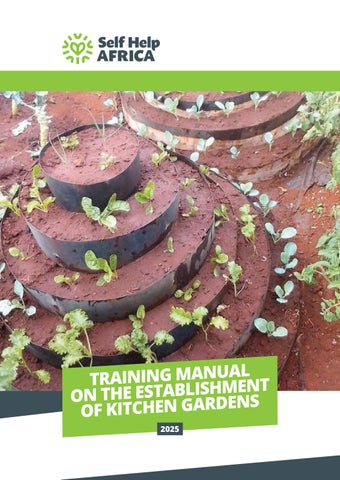
d) Vertical garden (various types) • Measure the area of interest with diameter of 180cm • Dig the soil while lifting up • Measure 90cm from the edge to the center to have the middle • Fix the stick/HDPE/bottle (20cm in width) in the 180cm and fill with soil and manure mixed in the ratio of 1:1 to form the first layer • Measure 15cm from the edge of the multistorey and fix sticks around to form the second layer • Add a mixture of soil and manure to form the second layer. • Continue watering when necessary.
16
TRAINING MANUAL ON THE ESTABLISHMENT OF KITCHEN GARDENS
5.0 COMPOSTING AND ORGANIC FERITIZERS: Definition: hese are natural substances that provide essential nutrients to plants, promoting healthy growth and development. They are derived from living organisms, such as plants, animals, and micro-organisms, and are free from synthetic chemicals.
T
Description: Compost is an organic fertilizer that can be made on the farm at a very low cost. The most important input is the farmer’s labour. Compost is decomposed organic matter, such as crop residues and/ or animal manure. Most of these ingredients can be easily found around the farm. The composting process “happens” without human intervention because microbes and soil animals are on the job 24 hours a day, decomposing plant and animal remains. Composting allows you to expedite this natural process to produce a regular supply of compost (a.k.a. “black gold”) for your garden. Finished compost contains major and minor nutrients necessary for plant growth and also improves soil structure. Using Organic Fertilizer The presence of organic matter in the soil is fundamental in maintaining the soil fertility and decreasing nutrient losses. Compost is an organic fertilizer, it adds organic matter and nutrients to the soil. In order to quickly supply a crop with the required nutrients, a chemical fertilizer may be needed. In contrast to organic fertilizers, chemical fertilizers help the plants immediately. Organic manures first have to be broken down into nutrients (by soil-organisms) before they can be utilized by the plants. However, chemical fertilizers are used up by the end of the season, whereas organic matter continues to enhance soil fertility, soil structure and water storage capacity. Moreover, the presence of organic material ensures that the chemical fertilizer is more efficiently utilized by the crop. Organic matter retains plant nutrients and thus prevents the fertilizer from being washed away. It is in fact a waste of money to apply chemical fertilizer on a soil that is poor in organic matter, if it is not done in combination with measures to increase the level of organic matter in the soil. Types of Organic Fertilizers: 1. Compost: A nutrient-rich soil amendment made from decomposed organic matter. 2. Farmyard Manure: Animal waste, such as cow, chicken, or horse manure that is rich in nutrients. 3. Green manure: Legume plants, such as beans, that are plowed into the soil to provide nutrients. Benefits of Organic Fertilizers: 1. Environmentally friendly: Organic fertilizers 2. are biodegradable and non-toxic. 3. Improved soil health: Organic fertilizers promote soil structure, fertility, and biodiversity 4. Increased crop yields: Organic fertilizers provide essential nutrients for plant growth. 5. Reduced soil erosion: Organic fertilizers help improve soil structure, reducing erosion 6. Cost-effective: Organic fertilizers can be made on-farm, thus reducing costs.
Compost Manure Production Materials Needed: • Organic waste like fruit and vegetable scraps, coffee grounds, eggshells, and yard trimmings. • Brown materials like dried leaves, • straw, or shredded newspaper. • Green materials like grass clippings, manure from herbivores, or blood meal. • Clean water.
TRAINING MANUAL ON THE ESTABLISHMENT OF KITCHEN GARDENS
17
Compost pit or pile: Choose a location for your compost bin or pile, ideally well-ventilated and accessible. Procedure 1. Dig a pit of 60cm-1m deep 2. Start by layering brown materials, green materials, and organic waste in your compost bin or pile. Aim for a mix of 2/3 brown materials and 1/3 green materials. 3. Adding water: Sprinkle water over the layers to maintain moisture, like a damp sponge. 4. Mixing: Use a pitchfork or shovel to mix the layers, ensuring everything is well combined. 5. Monitoring temperature: Check the compost pile’s temperature regularly, aiming for 130°F - 140°F (54°C - 60°C). This indicates the composting process is active. 6. Turning: Every 7-10 days, turn the compost pile to aerate it, speed up decomposition, and prevent matting. 7. Monitoring moisture: Ensure the compost pile remains moist, like a damp sponge. Excessive dryness can slow decomposition. 8. Waiting: Allow the composting process to complete, which can take anywhere from 2-6 months, depending on factors like temperature, moisture, and carbon-to-nitrogen ratio.
18
TRAINING MANUAL ON THE ESTABLISHMENT OF KITCHEN GARDENS
FARM YARD MANURE For many years, smallholder farmers have been using FYM as a natural and inexpensive fertilizer soil amendment for many years. FYM plays a very significant role in sustainable agriculture. It helps replenish soil nutrients, increase soil structure, increase water holding capacity and reduce over reliance on imported inorganic fertilizers. It is prepared mainly from cow dung, cow urine, waste grass, and other dairy products. Additionally, using FYM reduce the environmental impact of animal farming by reducing waste generation and prevention of the release of harmful gases in the atmosphere.
Materials • • • • • • • • •
Fresh or dried cow dung Cow urine. Dry bedding materials like straw, hay, or wood shavings. Household garbage Poultry droppings Crop residues Water Clean water
Composting Farm Yard Manure (FYM)
TRAINING MANUAL ON THE ESTABLISHMENT OF KITCHEN GARDENS
19
LIQUID ORGANIC FERTILIZER
Materials Needed: • Fresh or dried cow dung/ kitchen waste and • peelings. • Clean water. • A large bucket or container with a lid. • Stirring rod: A rod or stick for stirring. • cloth or a mesh bag for straining. Aerobic Fermentation 1. Collect fresh or dried cow dung/ kitchen residues and peelings 2. Mix 1 part cow (1/3) dung with 10 parts water in
20
TRAINING MANUAL ON THE ESTABLISHMENT OF KITCHEN GARDENS
a 20l bucket or container ( ¾) 3. Stir the mixture well and aerate it by leaving the lid slightly open. 4. Allow the mixture to ferment for 7-10 days, stirring daily. 5. Strain the liquid fertilizer through cloth or a mesh bag. 6. Dilute the liquid fertilizer with water (1:10 ratio) before use. 7. Apply to the plants 1 cup per plant every after 1month
GREEN MANURE
ORGANIC PESTICIDES:
These are mostly cover crops like beans, soya beans that offer soil cover while at the same time providing some nutrients for the soil.
1. GARLIC SPRAY Derived from: Garlic bulbs. Effective against: Aphids, spider mites, and other soft-bodied insects Mode of action: Repels insects and disrupts their feeding behavior
After they have reached flowering stage, these cover crops are usually ploughed down and mixed with the soil to provide nutrients. They now rot and release nitrogen into the soil
2. HOT PEPPER SPRAY: • Derived from: Hot peppers. • Effective against: Aphids, whiteflies, and other soft-bodied insects. • Mode of action: Repels insects and disrupts their feeding behavior Ingredients: • 2-3 hot peppers like chili peppers • 1 liter of clean water • 1 tablespoon of mild liquid soap: Optional but helps with emulsification. Instructions: a. Chop the peppers: Chop the hot peppers into small pieces, including seeds and membranes. b. Blend with water: Blend the chopped peppers
Ingredients: 1. 3-4 cloves of garlic: Peel and chop the garlic cloves. 2. 1 quart (1 liter) of clean water 3. 1 tablespoon of mild liquid soap: Optional, but helps with emulsification Instructions: 1. Blend the chopped garlic with 1 cup (250 ml) of water until you get a smooth, consistent mixture 2. Strain the garlic mixture through a cloth or a fine-mesh sieve into a bowl. Discard the solids. 3. Add the remaining 3 cups (750 ml) of water and 1 tablespoon of mild liquid soap (if using) to the garlic liquid. Stir well. 4. Transfer the garlic spray to a spray bottle and store it in the refrigerator. with 1 cup (250 ml) of water until you get a smooth, consistent mixture. c. Strain the mixture: Strain the pepper mixture through a cheesecloth or a finemesh sieve into a bowl. Discard the solids. d. Add water and soap: Add the remaining 3 cups (750 ml) of water and 1 tablespoon of mild liquid soap (if using) to the pepper liquid. Stir well.5. Mix and store: Transfer the pepper spray to a spray bottle and store it a cool place.
TRAINING MANUAL ON THE ESTABLISHMENT OF KITCHEN GARDENS
21
3. ASH SPRAY • Materials Needed: • Wood ash: Collect wood ash from a woodburning stove, fireplace, or campfire • Clean water Instructions: 1. Collect wood ash and sift it through a fine-mesh sieve to remove any large particles or debris. 2. Mix 1 cup (250 ml) of sifted wood ash with 4 liters of water in a bucket or container. 3. Stir the mixture well and let it settle for 24-48 hours. This allows the ash to dissolve and the mixture to become more effective. 4. Strain the mixture through cloth or a fine-mesh sieve into another container. Discard the solids. Store the ash solution in a labeled container. 5. Take to the field and spray with crops
22
TRAINING MANUAL ON THE ESTABLISHMENT OF KITCHEN GARDENS
How Ash Works as a Fungicide: i. pH level: Ash has a high pH level, which can help raise the pH of the soil or plant surfaces, making it less hospitable to fungal growth. ii. Potassium content: Ash contains potassium, which can help promote healthy plant growth and resistance to disease. iii. Antifungal compounds: Ash contains antifungal compounds like silica, which can help inhibit fungal growth
ANNEXES ANNEX 1 Table 1: Showing Common Micronutrient Disorders and Fruits and Vegetables rich in the Minerals
TRAINING MANUAL ON THE ESTABLISHMENT OF KITCHEN GARDENS
23
Annex 2 Food Pyramid
24
TRAINING MANUAL ON THE ESTABLISHMENT OF KITCHEN GARDENS
Self Help Africa 3rd Floor Kalamu House Plot 1B, Kira Road P.O.Box 34429 Kampala, Uganda Phone: +256 755 761 917 Web: www.selfhelpafrica.org