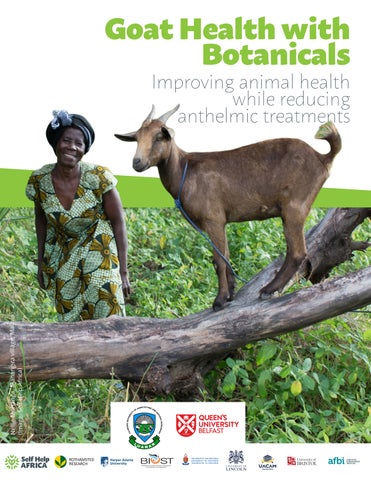
Goat Health with Botanicals
Nellie Mohanga, Manangira village, Malawi (Image: Self Help Africa)
Improving animal health while reducing anthelmic treatments
Scientific Reports ARTICLE | Article in Press
Targeted selective supplementation with local plants improves goat health and decreases anthelmintic treatment on Malawi smallholdings Javier Ventura-Cordero · Paul M. Airs · Andrews C. L. Safalaoh · Winchester Mvula · Andrew S. Cooke · Lovemore C. Gwiriri · Honest Machekano · Paul Wagstaff · Casper Nyamukondiwa · Michael R. F. Lee · Taro Takahashi · Jan van Wyk · Patson C. Nalivata · Eric R. Morgan Received: 15 March 2025 / Accepted: 24 August 2026 © The Author(s) 2026
Abstract Locally available botanical resources offer low-cost nature-based solutions to control gastrointestinal nematodes among resource-poor goat smallholdings. To evaluate the impact of botanical resources with veterinary tools for GIN monitoring, a smallholder-led targeted selective treatment (TST) regime was trialled in rural Malawi. TST was performed using the Five Point Check (FPC) to monitor goat health and provide interventions to goats with health scores indicative of GIN disease. Half the participants formed the plant-TST group, where ‘borderline’ or ‘sick’ goats were supplemented with 250 g per day of Commiphora africana, Ficus ingens, or Gmelina arborea for five days. Supplementation species were selected based on local awareness, availability, and anthelmintic activity. The control-TST group performed the FPC but performed feeding as normal. For both groups, ‘sick’ goats were provided anthelmintic, with GIN infections confirmed by faecal egg counts. The FPC-TST approach supported goat health, minimising misdiagnosis and ‘missed’ diagnosis of GINs. Plant-TST reduced anthelmintic need by 54% compared to control-TST, enhanced GIN clearance, and improved recovery time in sick goats. Plant-TST also reduced the harvesting of experimental plants by 86–97% compared to whole-herd approaches. These findings demonstrate the potential of integrative nature-based approaches for farmers and enhancing smallholding in low-resource areas. Keywords Gastrointestinal nematodes · Etnoveterinary · Nutraceuticals · Small ruminants · Targeted selective treatment
This Article in Press is shared early to give you faster access to new research. It is citable and carries a permanent DOI. The final edited version will replace it automatically. Javier Ventura-Cordero and Paul M. Airs have contributed equally to this work.
Scientific Reports
https://doi.org/10.1038/s41598-026-68869-w
Article in Press
https://doi.org/10.1038/s41598-026-68869-w
Introduction Goat smallholdings provide climate-resilient security in the face of crop failure and economic instability and act as a buffer against food insecurity1–3. However, goats suffer from a combination of parasitic disease burdens and nutritional feed gaps, leading to unsustainable losses1,4,5. In Malawi, seasonal nutritional feed gaps can be exacerbated by tethering goats during the growing season to avoid crop destruction, but when forage and browse plants are most abundant6–8. The practice of tethering limits time and space for grazing and browsing and can leave goats malnourished and at risk of parasitic disease9–11, not least because the provision of veterinary care is insufficient relative to the number of animals and smallholders12. While crops dominate rural economies, the loss of even a single goat to disease can have a devastating effect on a household’s financial security, which in turn can impact access to services such as education and healthcare6,7. Mitigating threats to goat husbandry is challenging; however, the control of gastrointestinal nematodes (GINs) is critical because these infections account for significant livestock production losses and are exacerbated in warmer regions and by poor nutrition13. Although the knowledge and awareness of GINs are low in rural Malawi, goat diseases are considered a primary limitation for production. Smallholdings affected by goat diseases are also more likely to suffer from food insecurity6. Controlling GINs in goats and promoting goat health is therefore an essential component of generating resilience within subsistence agriculture systems in food-insecure regions. Reliance on anthelmintics for GIN control in resource-poor areas, such as central Malawi, is therefore neither practical nor affordable for smallholders. Numerous solutions have been proposed to sustainably control GINs in ruminants in low-resource rural settings while minimizing the spread of anthelmintic resistance (AR). Targeted Selective Treatment (TST) is a precision farming approach appropriate for smallholder farms, whereby individual animals are treated based on thresholds, such as health changes or production loss14,15. A TST scheme based on the Five Point Check© (FPC) has been devised as a low-resource method for farmers to quantify five signs of parasitic disease in sheep and goats16. Using the FPC under a TST scheme can reduce anthelmintic use by 36–97% compared to whole herd treatment, while providing significant socio-economic, ecological, and production benefits17. However, there is limited data demonstrating the utilise of this approach when integrated with local practices or nature-based solutions. Forages are an essential component of goat production in Southern Africa and, if integrated effectively, can improve goat production and resilience, including in rural Malawi4,18. In Malawi, smallholders often provide a variety of local forages as supplements to tethered goats and numerous ethnoveterinary remedies for goat ailments6. Since awareness and use of beneficial forage exist as part of the culture of animal management in rural Malawi, there is potential to promote sustainable means of utilising natural resources as nature-based solutions. Although the principle of TST is well established, the targeting of feed supplementation by beneficial plants is yet to be resolved in smallholder settings19. Moreover, the potential gains from combining naturally available forages and anthelmintic treatment in a targeted way remain unexamined, but could be a promising strategy for smallholder farmers in Africa and elsewhere to apply self-reliant solutions to changing animal health constraints. We hypothesised that local plants may have nutraceutical properties and that, when applied in a TST approach, may improve goat health and reduce the negative impacts of GINs. This study aimed to determine whether targeted supplementation with locally available bioactive plants can support parasite management in goats on smallholder farms in Malawi.
Scientific Reports
https://doi.org/10.1038/s41598-026-68869-w
Article in Press
Materials and methods Study design The study was initiated through surveys to identify goat management practices, beneficial plant use, and the socioeconomic impacts of smallholdings (Fig. 1a). An analysis of goat management practices, plant use, and the livelihood impacts of goat smallholdings in the study area has been published elsewhere6. Molecular confirmation of GIN disease burden and identification of widespread Haemonchus contortus and Trichostrongylus colubriformis infections have also been previously reported in the study cohort20. Further details relating to the study area, recruitment, and baseline data collection are provided in the Supplementary Materials. The prevailing climate in the study area is wet tropical with an annual average temperature of 20.7 °C and rainfall from 1000 to 1500 mm21. Precipitation, minimum, and maximum temperature data were obtained from January 2020 to March 2021 from the NOAA/ESRL Physical Sciences Laboratory website (http://psl.noaa.gov/).
Fig. 1 Study design and targeted selective treatment (TST) regimes. (a) Experimental design to assess the impact of TST across two groups, one with anthelmintic intervention only (control-TST) and one with plant supplementation in addition to anthelmintics (plant-TST). FEC= faecal worm egg count, FPC= Five Point Check. (b) Malawi study area and TST group intervention definitions as detailed in part (N = smallholdings included per village). (c) Five Point Check treatment decision chart with thresholds set for TST interventions with plant supplementation (leaf symbol) and anthelmintics (syringe symbol). * Nasal discharge sufficient when combined with other treatments, or in extreme cases. Figure 1b was created using the Free and open-source QGIS version 3.18 (https://www.qgis.org)61. Scientific Reports
Article in Press
https://doi.org/10.1038/s41598-026-68869-w
A meeting was first arranged to explain the methodology and processes. Smallholders were invited to participate in the study according to the following criteria: if they kept at least one adult female goat, on the basis that this class of goat is more likely to be retained by farmers throughout the study, goats were considered an important income source of the family and willingness to participate in the study. Participating farmers were split into TST groups by village (Fig. 1b) using the simple random sampling (“randbetween” function, Microsoft Excel®) and provided training and background relating to GINs and goat health monitoring using the FPC alongside the TST concept. Research staff trained smallholders and local veterinary assistants using the FPC system in each goat: checking the nose, FAMACHA (checking the eye), body condition score (BCS), oedema submandibular and Dag scoring16. Whole village areas were allocated to one TST regime to minimise confusion and deviation from the intervention protocol arising from communication between farmers within villages. An initial 43 smallholders were recruited from Kamchezera (13 farmers, 58 adult goats, 29.13 ± 5.86 kg body weight (BW)), Mkwinda (8 farmers, 43 adult goats, 30.89 ± 5.90 kg BW), Chinkhowe (10 farmers, 41 adult goats, 28.59 ± 5.11 kg BW), and Mazinga (12 farmers, 55 adult goats, 30.28 ± 6.01 kg BW). A total of 197 Indigenous breed goats (194 females and three males) aged > one year up to > four years of age belonging to smallholders were included with age, breed, physiological status, initial weight, and sex recorded at the start of the study. All goats included in this study were provided with ear tags for identification.
Ethics declarations The study was conducted in accordance with the research ethics procedures of the Animal Science Department at LUANAR, as approved by the Animal Science Department Ethics Committee (approval no. ANS/2018/5). The authors declare they complied with the ARRIVE guidelines.
Informed consent Informed consent for study participation on site of data collected was performed prior to survey collection with the objectives of the study explained. All participants were informed that they were free to leave the study at any time and consent was obtained through signatures for literate participants or verbally declared in the presence of LUANAR team members for illiterate participants. Each participant was interviewed individually in their own language by a translator providing a written consent form that detailed the right to leave at any time, the right for destruction of information, confidentiality of information, consent to participate and consent to publish. All subjects involved consent to publish the information and images. All information about methodology, procedures and sampling moments was explained, and any questions were answered.
Accordance statement for human study All methods were performed in accordance with the Declaration of Helsinki. The collected survey responses were reviewed and approved by the Animal Science Department Ethics Committee at the Lilongwe University of Agriculture and Natural Resources (LUANAR), (approval no. ANS/2018/5) on August 16, 2019, and seconded by the Ethical Review Board of Rothamsted Research.
Health monitoring and targeted selective treatment (TST) To apply the TST (Fig. 1b), a treatment decision chart was designed based on the FPC scores of individual goats (Fig. 1c). Individual ‘sick’ goats with any score of FAMACHA ≥ 4, Dag score ≥ 4, body condition score (BCS) ≤ 1, or jaw score = 1 (submandibular oedema) indicative of seriously failing health were treated by trained staff with Scientific Reports
https://doi.org/10.1038/s41598-026-68869-w
Article in Press
anthelminthic using albendazole (Albendex 100, Alfavet®, Kenya) at a dose of 10 mg/kg of BW administered orally. Two TST regimens were followed, divided by location (Fig. 1b). The control TST (n = 101 goats) group included Kamchezera and Mkwinda, where TST was performed with anthelmintics alone. Goats in the controlTST group were fed a basal diet (grazing + supplement feed) and did not receive additional supplementation with experimental or common plants. The plant-TST group (n = 96) included Chinkhowe and Mazinga farmers, who followed the same system but were instructed to provide additional supplementation with specified local experimental plants (Fig. 2). PlantTST was provided to goats in both ‘sick’ (in addition to anthelmintic) and ‘borderline’ health conditions with FPC scores; borderline classification included FAMACHA = 3, Dag score = 3, or BCS = 1.5, and plant-TST supplementation was offered in addition to the basal diet (grazing + supplementary feeds normally offered). Finally, no intervention was required in the “healthy” goats, classified as having no submandibular oedema and nasal discharge, with a FAMACHA score of 1 or 2, a BCS of ≥ 2, or a Dag score of ≤ 2. During the first visit, branches of each selected experimental plant species were harvested, and ~ 250 g was weighed on a fresh basis in plastic
Fig. 2 Selection and implementation of plant-TST experimental beneficial plants. (a) Proportional use (percent of respondents feeding to goats) and seasonal availability of plants used for goat nutrition in the study area (N = 48 responses, plants shown have > 5 mentions across respondents). Highlighted are the three species selected for plant-TST with representative images. NA = not applicable. (b-d) representative images of plant identification and use for supplementation including (b) Ficus ingens tree next to participating farmer household, (c) weight determination of supplementation in plastic containers provided to farmers, and (d) example tethered goat provided with G. arborea leaves. Scientific Reports
Article in Press
https://doi.org/10.1038/s41598-026-68869-w
containers (Fig. 2c). Farmers used containers to estimate the number of branches needed for each animal during the TST. Supplemented goats received ~ 250 g of experimental plants daily for at least five consecutive days following FPC scoring (Fig. 2d). Further details are provided in the supplemental material. Goats that received anthelmintic treatment or plant supplementation were marked with a plastic tie around the lower leg, and a faecal sample was collected. Afterwards, the samples were stored in a refrigerated box at 4 °C for transport to the laboratory. Faecal nematode egg counts (FECs) were performed on each individual sample collected during FPC scoring, using the McMaster method to estimate egg density (eggs per gram of faeces, EPG). The multiplication factor was 50 per egg22.
Experimental plant selection For botanical nature-based solutions to be effective, resources used must be sufficiently abundant and accessible, with AH activity, nutritious and beneficial to goat health, readily identifiable, and ideally utilised as part of existing cultural practices of animal management. To identify plant species which fit these criteria, a survey was carried out in Mkwinda where respondents (N = 48) were asked to “name 5 readily available (frequent) and five less available plants in the area where the goats graze” for both ‘rainy’ and ‘dry/grazing’ seasons (Fig. 2a). Responses were collected as part of a wider socio-economic survey6 in which farmers detailed the use of local botanical resources to supplement goat health; however, the question above was separated from the published analysis and is presented here due to its relevance to the study. Commiphora africana (A. Rich) Engl. (common name=Kakhobo or African Myrrh), Ficus ingens Miq (Mtawa) and Gmelina arborea Roxb (Malayna) were selected for their current use by smallholders, size, year-round availability, and ease of identification. Plant samples were collected monthly in plastic bags for identification with the assistance of the chief technician from the Forestry Department (LUANAR). Permission to collect the plants was obtained from LUANAR and the village authorities. Being common and well known in the local area, no voucher specimens were deposited at the national herbarium, and CITES did not apply. Chemical analysis of forages and browsing across the study area were also analysed to identify G. arborea, C. africana, and F. ingens to provide sufficient protein and nutrition with minimal variation in nutrient quality between seasons and locations8. These species also have no reported toxicity, and their anthelmintic activity has been shown to vary from Commiphora. spp23, G. arborea24, and F. ingens25 so these plants are considered bioactive. All methods involving plants were performed following the IUCN Policy Statement on Research Involving Species at Risk of Extinction. Individual experimental trees selected for plant-TST were identified alongside the research staff and individual smallholders in the plant-TST group (Fig. 2b). Each smallholder was instructed to harvest a set amount of plantTST supplementation from a single specified tree for the duration of the study and to provide it only to goats receiving plant-TST treatment (Fig. 2c-d). The experimental tree selection did not change for any smallholder at any time throughout the study.
Statistical analyses & data presentation Collected data were collated into Microsoft Excel® with all analyses and graphical statistics performed using R software version 4.1.3 (2022-03-10). The body weight of female goats, kids’ birthweight, kids’ growth rate and nematode FEC were considered dependent variables and analysed using Shapiro-Wilk’s test of normality and homogeneity of variance using Levene’s test, respectively (Package “ggpubr”). The independent variables were FPC individual components (Nasal discharge, FAMACHA, jaw presence, BCS score, Dag score), TST-treatment (Plant and Drug), location (four GVHs), age (years), physiological status (pregnancy, lactating and dry), health status (Sick, Borderline and Healthy), time (sampling month), household (1–44), and plant species (F. ingens, C. africana and G. arborea). Interactions considering the combinations between TST and health status with the other components were evaluated.
Scientific Reports
https://doi.org/10.1038/s41598-026-68869-w
Article in Press
The analytical design was a generalised linear mixed model with repeated measurements (Package “GlmmTMB”). In addition, the individual goats were considered a random factor. Each goat was considered the experimental unit. We compared Gaussian, Poisson, Negative binomial, and Zero-Inflated binomial distributions and selected the best distribution according to the lowest Akaike Information Criterion value26. In addition, we used the Package “emmeans” to perform the least-squares mean, applying the function “response” on the significant variables to obtain the log-transformed values and “pairwise” for the means comparisons from the best model27. Only significant factors were kept in the final model. Kaplan-Meier curves were estimated as described by28 and analysed in R27. We checked the model’s proportional assumption of the individual covariates (Package “survminer, survival”). Additional analysis was undertaken to address the two-tailed hypothesis that, relative to drug-only interventions, prior plant supplementation altered the performance of the adult goats or their offspring; and affected parasite infection intensity as measured by FEC. The goats were grouped according to the TST regimen for data analysis. Two proportions Z-test was used to analyse the proportion of goats that needed a drug intervention (i.e., entered the defined sick state) between the experimental groups. The X2-square test was run to compare the proportion of goats that reach > 95% of reduction between experimental groups (independent variables). FECs were compared between goats receiving drug intervention in both TST-schemes using the Wilcoxon signed-rank test. A paired test was performed comparing FEC (pre-treatment) before the administration of the anthelmintic and the FEC at the next visit two weeks later (post-treatment). Only significant interactions were shown in the results section. Differences were considered significant at P-value < 0.05. The power of the tests was analysed using G*power 3.1 statistical software29. The power of the analysis was > 0.80. The code and raw data are available at: https://github.com/PaulAirs/Malawi_G IN_Targeted_selective_supplementation. No animals were excluded from the statistical analysis.
Results Parasite infections and goat health Throughout the study, 3050 FPCs were performed with 2625 faecal samples analysed by FEC. FPC, FAMACHA, and body condition score (BCS) were the most prevalent indicators of poor goat health, present in 86.8% of borderline goat scores and 98.9% of sick goat scores, whereas dag (scour) was present in 18.4% of sick goats. The relationship between goat health (as measured by the FPC) and GIN burden was assessed using a GLMM performed on raw data (Table 1). Overall, GINs were prevalent, with an average of 453 EPG among ‘healthy’ goats, although this varied substantially between individuals and across seasons. The FPC approach effectively estimated goats in need of anthelmintic interventions, with sick goats yielding significantly higher FECs than did borderline status goats (Table 1). Goats in ‘borderline’ condition also had significantly higher FECs than healthy goats when looking at FAMACHA and BCS indicators. Specifically, differences were found between FAMACHA scores of 2 vs. 3 (mean 383 vs. 623 EPG, respectively, p < 0.001), as well as between goats with a BCS of 1.5 vs. 2, 2.5, and 3 (p < 0.001).
Parasite infections under TST regimes Among the TST regimens, the median FEC was 275 EPG for plant-TST and 200 EPG for control-TST preanthelmintic intervention. When needed, anthelminthic interventions were effective, reducing the median FEC to 0 EPG in both groups two weeks after treatment (Wilcoxon, df = 1, p = 0.001). However, the impact of anthelmintic treatments differed between the groups, with the plant-TST group outperforming the control-TST group. At the group level, the plant-TST group had a mean FEC of 3010 EPG at the time of drug treatment, which reduced to 85 EPG two weeks after treatment, a reduction of 97.2%. Comparatively, the control TST group showed a reduction of 85.7% (1178 to 168 EPG). When accounting for goats that had a non-zero EPG FEC at Scientific Reports
Article in Press Table 1 Factors affecting faecal egg counts under control-TST (N = 101 goats) and plant-TST (96 goats) regimens.
https://doi.org/10.1038/s41598-026-68869-w Factor FAMACHA
Body condition score
On Field Health Status
Sampling points
a−h Different literals in the same column in each factor indicate statistical significance p < 0.05.
Level 1 2 3 4 1 1.5 2 2.5 3 3.5 Sick Healthy Borderline Jan-20 Feb-20 Mar-20 Apr-20 May-20 Jun-20 Jul-20 Aug-20 Sep-20 Oct-20 Nov-20 Dec-20 Jan-21 Feb-21 Mar-21
Mean 458ab 383a 623b 519ab 525abc 1162c 643b 514a 542ab 124abc 700a 453ab 366b 1139abcd 1773a 1156bc 925cd 292efg 211gh 166hi 123i 153hi 275fg 439e 344ef 669d 1085bc 1692ab
Lower CL 245 230 371 261 287 753 418 333 334 19 392 265 209 642 1049 682 544 173 124 97 71 90 161 257 202 393 634 941
Upper CL 855 636 1043 1032 960 1794 988 793 879 798 1248 776 642 2022 2998 1958 1573 493 357 283 213 262 469 750 587 1137 1855 3043
the time of treatment, the mean reduction following treatment was 94.8% (SD 17.2) in the plant-TST group compared with 84.0% (SD 28.3) in the control-TST group (one-tailed t = 1.748, p = 0.043). Anthelmintic clearance should ideally achieve > 95% reduction in FEC to minimize the risk of AR. Plant-TST improved the likelihood of reaching this benchmark with a > 95% decrease in FEC achieved in a significantly higher proportion of goats compared to control-TST (16/18 compared with 23/38, Χ2 = 4.933, 1 df, p = 0.026).
Seasonal shifts in goat health and GIN burdens under TST regimes November to April is regarded as austral summer and characterized as the rainy season in southern Malawi (Table 2), with the highest rainfall recorded in February and the driest months from June to September. The GIN burden was strongly seasonal, with a lower FEC during the dry season and peaks in February during the rainy season (Table 1; p < 0.001). The same pattern was observed for goat weight, with goats losing weight during the rainy season, likely a result of restricting goat diets owing to tethering combined with increased GIN burdens (Supplementary Table S1). Despite seasonal pressures, interventions were needed during both the rainy and dry seasons (Table 2). During the dry season, goats predominantly showed a healthy FAMACHA score of 1–2 (90–98% of scores taken from May to October) and BCS ≥ 2 (Supplementary Fig. S1). The highest proportion of ‘sick’ goats with a BCS of 1 was registered in the first three months of the study during the rainy season. Nasal discharge scores and dag (faecal staining consequent to scour = diarrhoea) varied throughout sampling points, but peaked at the beginning of the study in the plant-TST group prior to interventions (Supplementary Fig. S1). The presence
Scientific Reports
https://doi.org/10.1038/s41598-026-68869-w
Article in Press
Table 2 Seasonal parasite pressure over the study period under Plant TST (N = 96 goats) and Control-TST (N = 101 goats) regimes. Study Month
1 Jan 2 Feb 3 Mar 4 Apr 5 May 6 Jun 7 Jul 8 Aug 9 Sep 10 Oct 11 Nov 12 Dec 13 Jan 14 Feb 15 Mar Average Totals
Rainfall mm (Av + SD)
10.3 (4.1) 7.5 (10.4) 1.2 (3.2) 0.2 (1) 0.3 (1.4) 0 (0.1) 0 (0.2) 0 (0) 0 (0) 0.8 (2.6) 0.1 (0.4) 6.3 (7.2) 8.8 (12.3) 13.6 (21.4) 1.3 (1.5)
Strongyle Faecal Egg Counts (Av + SD)
1926 (1977) 2672 (3156) 1795 (2584) 1128 (1489) 281 (379) 158 (193) 124 (166) 64 (80) 103 (135) 219 (237) 452 (875) 316 (499) 847 (1391) 1357 (1780) 2205 (2680)
Control-TST group FPCs* Anthelmintic† % N 21 4 19.0 101 4 4.0 146 12 8.2 99 2 2.0 93 0 0.0 91 1 1.1 118 2 1.7 112 2 1.8 150 4 2.7 110 2 1.8 115 3 2.6 125 6 4.8 157 12 7.6 116 7 6.0 27 2 7.4 105.4 4.2 4.7 1581 63 4.0
Plant-TST group FPCs* Anthelmintic† % n 22 2 9.1 96 8 8.3 104 5 4.8 134 1 0.7 104 0 0.0 74 1 1.4 112 2 1.8 92 0 0.0 105 1 1.0 124 1 0.8 93 5 5.4 154 2 1.3 122 2 1.6 107 2 1.9 27 0 0.0 98.0 2.1 2.5 1470 32 2.2
Supplemented† % n 10 45.5 50 52.1 40 38.5 15 11.2 7 6.7 3 4.1 7 6.3 2 2.2 5 4.8 5 4.0 9 9.7 16 10.4 13 10.7 14 13.1 3 11.1 13.3 15.3 199 13.5
of submandibular oedema (bottle jaw) was rarely reported in either regime, with only one case in each group (control-TST 1/1582, plant-TST 1/1471) (Supplementary Fig. S1). Over the course of the study, there was a gradual decrease in the number of goats requiring anthelmintic interventions in both groups, which can be seen across months (Table 1), as well as when stratified to individual goat visits (Suplemmentary Figure S3).
Plant-TST improves on goat health and minimises anthelmintic need Plant-TST experimental plants utilized for supplementation showed good nutritional profiles across the study area (Supplementary Table S2). Principally, providing experimental plants to borderline and sick goats reduced the need for anthelmintic interventions compared with control-TST (plant-TST = 2.18% of FPCs vs. controlTST = 3.99%, X2 = 7.6823, df = 1, p = 0.005, Table 2). This reduction in the need for anthelmintics was associated with a reduced likelihood of poor body condition scores among plant-TST goats (BCS = 1, X2 = 9.8906, df = 1, p = 0.001). Plant-TST goats were also classified as marginally healthy more often than control-TST goats (median = 86.93% for control-TST vs. 90.45% for plant-TST, Χ2 = 3.2017, df = 1, p = 0.074). Under both TST schemes, it was clear that most of the goats were sufficiently healthy most of the time (Fig. 3ab). While control-TST goats spent longer periods in ill health compared to the plant-TST group (Fig. 3a), almost no goats failed to register as ‘healthy’ over at least one visit and demonstrated the capacity for Indigenous goats to improve in health score when provided interventions (Fig. 3b). The distribution of sick goats was spread across smallholders in both groups, with many smallholders not requiring any anthelmintic interventions for the entire study period. Improvements in plant-TST were due to supplementation provided to borderline goats. Under plant-TST, most borderline status goats receiving supplementation improved (47.37%) or stabilized (45.39%), with only 7.24% worsening health conditions while receiving targeted plant supplementation (Fig. 3c). Of the 7.24% of goats that worsened from a ‘borderline’ to ‘sick’ condition, 46.15% immediately returned to a healthy state. Comparatively,
Scientific Reports
Article in Press
https://doi.org/10.1038/s41598-026-68869-w
Fig. 3 Goat health scores under TST regimes (a) Proportion of visits whereby goats were classified as sick based on treatment decisions. (b) Health statuses experienced by individual goats over the study period. (c) Proportion of goat health statuses following interventions, including plant supplementation and/or anthelmintic drug interventions (letters indicate statistical significance, p = 0.005). (d-e) Anthelmintic interventions provided to individual sick goats, with (d) the total number of doses provided and (e) goats treated over consecutive visits. For parts a-b counts were made for goats with ≥ 3 visits (control-TST = 96 goats over 1571 visits, plant-TST = 86 goats over 1457 visits), for parts c-e all goats were included (control-TST = 101 goats, plant-TST = 96 goats).
in the control-TST group, treatments were significantly less effective, resulting in 29.55% of individuals failing to improve (Fig. 3c, χ2 = 7.581, df = 1, p = 0.005). Failure of anthelmintics to improve goat health conditions under control-TST resulted in more goats receiving multiple anthelmintic doses (Fig. 3d), and some required consecutive treatments (Fig. 3e). Because 100% of the plant-TST goats improved following treatment with anthelmintics, no consecutive treatments were needed.
TST monitoring maximises precision and minimises resource needs The resource use and accuracy of anthelmintic treatments were compared to simulated whole-group targeted treatments (TT) and annual whole-herd treatment strategies (Supplementary Table S3). For any given time point, whole group treatments would result in 86–100% of anthelmintic doses wasted on non-sick individuals (average 94.9%, SD 4.5). A single annual whole-herd intervention would, at best, treat 21.9% of sick goats in the same year (March 2020). A TT scheme based on pooled FEC thresholds of 500, 1000, or 2000 EPG would result in an 189–804% increase in anthelmintic use with 92.2–92.6% of doses provided to non-sick individuals, while missing 37.6–85.9% of sick individuals when FECs were low (Supplementary Table S3). When looking at botanical resource use, only 199/1471 visits (13.5%) resulted in supplementation, with the majority provided to goats in borderline condition (167/199, 83.9%). The need for supplementation was also Scientific Reports
https://doi.org/10.1038/s41598-026-68869-w
Article in Press
Table 3 Supplementation across plant-TST smallholdings (extended in Supplementary Table S4). Commiphora africana
Visits
Events*
Goats (n)
Harvest (kg)
Harvest per goat (kg)
Harvest per visit (kg)
Average harAvervest per day (g) age per goat per day (g) 48.2 14.0 18.6 4.4 34.5 6.9 27.1 6.8
363 77 18 96.3 5.3 0.265 927 89 63 111.3 1.8 0.120 Ficus ingens 400 33 15 41.3 2.8 0.103 Gmelina arborea Total 1471 199 96 248.8 2.6 0.169 Average per smallholder 73.5 8.7 4.2 10.8 2.7 0.194 SD 36.1 6.9 1.3 8.6 2.4 0.147 21.6 * Number of times individual goats were provided with supplementation, according to field decisions. SD standard deviation.
6.0
highest during the rainy season (Table 2). Of the 58.3% of goats receiving supplementation at least once, experimental plants were provided for an average of 2.9 out of 17.6 visits (16.9%). In toto 248.8 kg of plant material was harvested over 399 days from 23 farms. An average plant harvest of 2.7 kg per goat, 27.1 g per smallholder per day, or 6.8 g per goat per day was recorded (Table 3). Supplementing all goats over the study period would have required 9576 kg of plant material (a 3850% increase). Whole group treatments over the study period following the same supplementation regime (5-day periods checked every 2 weeks) would require 3420 kg of plant material (1374% increase), or 35.6 kg per goat. A hypothetical TT supplementation regime limited to the rainy season (November – April) when GINs burdens are highest would require 1851 kg of plant material (744% increase), or 19.28 kg per goat. Limiting plant use to TST under FPC massively reduced the botanical resources required while supporting goat health.
Plant species impact under plant-TST Comparison across plant species revealed no differences in the frequency of F. ingens and G. arborea use, but an increased use of C. africana (Table 3, Supplementary Figure S4) (X2 = 40.121, df = 2, p-value < 0.001). Conversely, C. africana showed the most favourable nutritional profile among the experimental plants (Supplementary Table S2). The majority of C. africana needs came from three farms with > 50 visits each, two in Chinkhowe and one in Mazinga (Supplementary Table S4). For all experimental plants, most harvesting occurred at the start of the study and during the second rainy season (Supplementary Figure S4c-d). To assess whether applying plant-TST delayed the need for anthelmintics, Kaplan-Meier survival curves were constructed using the first instance of anthelmintic intervention as the end event (Supplementary Fig. S2). Curves showed a tendency for plant supplementation to delay the need for initial anthelmintic treatment, but this was not statistically significant (p > 0.05) (Supplementary Fig. S2). Of the experimental species tested, F. ingens showed the best performance. After 225 days, time-to-first drug treatment probability was higher for F. ingens (87%) than C. africana (74%) and G. arborea (59%) (Supplementary Fig. S2, p = 0.039).
Effect of TST regimes on productive performance Nasal discharge, FAMACHA, BCS, health status, lactation, sampling month, age, and location all influenced goat weight (Supplementary Table S1). Goats with a FAMACHA score of 2 were significantly heavier than goats with a FAMACHA score of 3 (31.7 vs. 31.0 kg, p = 0.019). Animals with a BCS of 1.5 (28.7 kg) were lighter than animals with a BCS of 2 (29.6 kg, p = 0.005). However, there was no significant difference in weight between animals treated with BCS 1 and 1.5. In addition, pregnant goats were heavier than lactating and non-lactating goats (Supplementary Table S1; p = 0.001). From July (dry season) to December (beginning of rainy season), the highest BW was 32.0 to 32.9 kg, respectively. No significant differences in BW were found according to health status, although there was a tendency for Scientific Reports
Article in Press
https://doi.org/10.1038/s41598-026-68869-w
sick animals to be lighter (30.1 kg BW) than those with healthy (31.0 kg BW) or borderline status (31.0 kg BW, p = 0.09). Animals in Mkwinda were significantly heavier than goats from Mazinga and Kamchezera but not from Chinkhowe. The goats included in the trial, which were all adults, maintained their BW, showing negligible BW changes over the study of −6, −5, −4, and − 11 g BW for Mazinga, Chinkhowe, Kamchezera, and Mkwinda, respectively. During the study period, 122 kids were born: 31 in Chinkhowe, 27 in Kamchezera, 30 in Mazinga, and 34 in Mkwinda. There was no difference in kid birth weight between plant-TST and control-TST groups, 2.93 and 2.96 kg BW at birth, respectively (p > 0.05). Likewise, there was no difference in kids’s BWC from birth to the end of the study between TST-Plant and Control-TST 54 vs. 52 g DWG, respectively (p > 0.05). Therefore, at the aggregate level, goats performed similarly between plant-TST and control-TST groups, signalling that TST is an effective means of improving productivity by reducing GIN burden and that plant-TST can produce the same impact on goat performance with less anthelmintic use. Finally, there were some cases of unexplained goat death in both groups (as necropsies were not possible). In total, 12/96 (12.5%) goats in the plant-TST group died, and 11/101 (10.89%) in the control-TST group. In the plant-TST group, 11/12 goats that died had ‘healthy’ status prior to death compared to 2/11 for control-TST. As such, plant TST deaths may not have been attributable to health or the GIN burden.
Discussion This study aimed to determine whether targeted supplementation with locally available bioactive plants can support parasite management in goats on smallholder farms in Malawi, where income is largely dependent on agricultural exports and subsistence crops30,31 but goats provide a vital buffer against food insecurity. Goat diseases were managed through low-resource veterinary practices and locally available bioactive plants as no-cost nature-based solutions. Although many studies have investigated how plants can improve the health status of small ruminants directly and/or indirectly32–34, little has been reported on the application of local plant resources as potential nutraceuticals in a targeted manner using participatory farmer-led approaches. In doing so, this study aimed to improve goat health while reducing the need for anthelmintic drug treatment in resource-poor environments.
Effects of plant-TST on goat health High GIN pressure and limited access to forage prevent goats from selectively browsing to combat GIN infection35. Experimental plants were selected with potential nutraceutical benefits that can enhance livestock health using existing ethnobotanical knowledge and ‘cut and carry’ livestock management practices. The potential nutraceutical value of local plant resources was evaluated based on the extra nutrient supply (protein and energy) and, in some cases, specialized plant secondary metabolites (PSM) with proven activity against helminth infections19,36. Ample potential candidate beneficial plants exist in Malawi, and a survey of local smallholders resulted in three candidate tree species (C. africana, F. ingens, and G. arborea) being selected for inclusion in the plantTST. The use of these species under plant-TST resulted in 74% of goats not requiring anthelmintic intervention. Goats that required anthelmintic intervention more consistently and immediately improved in health compared to control-TST with anthelmintic alone (Fig. 3c-e), with health improvement being associated with greater reductions in parasite load following treatment. The improved response to anthelmintic treatment in goats offered plant supplementation suggests a synergistic effect on GIN infection. This agrees with recent in vitro studies showing synergistic effects between anthelmintics and PSM, improving the efficacy of drugs37,38. Therefore, there is a possibility that PSM enhance the effect of albendazole in goats. However, care is warranted when choosing the plant and anthelmintic drug combination, Scientific Reports
https://doi.org/10.1038/s41598-026-68869-w
Article in Press
as previously feeding sainfoin (Onobrychis viciifolia) pellets reduced parasite clearance in combination with ivermectin39. The fact that no such inhibitory effect was observed here supports the use of the chosen plants in combination with anthelmintics when needed. The lack of detectable effects of plant supplementation on FEC prior to anthelmintic treatment suggests that their positive effects on health cannot be ascribed to direct effects against the parasites; rather, they are generally supportive of health. The experimental plants used in this study showed a good nutritional profile with a high crude protein content (> 15%, Supplementary Table S2). A major effect of GIN infection is protein loss, as such a supplemental supply of crude protein in the diet via experimental plant supplementation could compensate for this loss and additionally increase postprandial amino acid supply to bolster the immune system40, leading to a positive effect on body condition and, in growing animals, live weight gain41, subsequently increasing resilience to biotic stress42. Plant supplements did not delay the requirement for anthelmintic treatment when assessed by Kaplan-Meier analysis, and multiple rounds of supplementation did not delay the first treatment. However, goats offered F. ingens were significantly more likely to delay the need for drug intervention than G. arborea and C. africana. Because F. ingens is readily available during the rainy season, it could be particularly helpful when a high GIN infection intensity is expected. However, F. ingens contained the lowest crude protein content of the experimental plants; therefore, its impact may be the result of PSMs, overall nutritional value, or physical properties of F. ingens in the gut. For instance, F. ingens was noticeably higher in fibres and may have had a lower digestibility, increasing roughage. Although targeted plant supplementation did not delay the need for a first anthelmintic treatment, the overall anthelmintic requirement to maintain good health was reduced in goats subjected to plant-TST compared to control-TST. The plant-TST regime enhanced goat health and lowered the number of single and repeated anthelmintic treatments needed (Fig. 3) we well as enhancing parasitological responses to treatment but plant supplementation alone did not reduce FEC or delay time until initial anthelmintic treatment. Together, these results suggest that plants have the capacity to enhance host resilience to GIN infections through physiological and/or immunological means, but more research is needed to determine the mechanisms of these effects and to further enhance their application. Finally, deaths were noted in both the control-TST (10.9%) and plant-TST (12.5%) groups (Supplementary Figure S3). Due to the nature of the study being in a rural area and with bi-weekly checks, the cause of death could not be determined accurately for most goats. However, predation is a known issue in the area and is second only to disease in smallholders’ perceived limitations in keeping goats6. Additionally, plastic and other anthropogenic pollution is frequently observed in the intestinal tracts of goats brought to slaughter throughout Malawi, including in the study area43. Such pollution can cause lethal effects and lesions44. Because death was predominantly not observed following a decline in goat health, we can assume that the TST regimens prevented death due to GINs. Plant-TST may also prevent malnutrition-related death.
Effects of plant-TST on productive performance The body weights recorded during our experiment at the four locations were similar to those previously reported by Banda et al45.. Adult male and female Malawian goats typically weigh 45 ± 6.0 kg and 32 ± 5.9 kg for males and females, respectively. A seasonal pattern in BW was observed during the sampling months, where the rainy season negatively affected goat weight through a combination of tethering to prevent crop destruction and GIN pressure46. Tethering drastically reduces feed resources because goats are likely to lose weight even when GIN pressures are low11. Farmers could take advantage of this knowledge and prepare for this period by accumulating hay or seed plants with an optimal nutritional profile, which can be utilised alongside the FPC to target goats based on performance and health. A direct effect on the birth weight of kids was not detected following beneficial plant supplementation of the dams. However, birthweight was higher than previously reported, at 1.9 ± 0.53 and 1.8 ± 0.48 kg for kid males Scientific Reports
Article in Press
https://doi.org/10.1038/s41598-026-68869-w
and females, respectively47. With no untreated group included for ethical reasons, anthelmintic interventions may have improved goat performance across the board in all four villages, as was found with the TST application in Botswana17. Higher birth weights compared with other local studies might alternatively be a result of the crossbreeding of goats and associated hybrid vigour. Karau and Banda47 reported higher kid birth weight and BWC in dams of Saanen × local breeds than in pure local breeds.
Effects of plant-based intervention on parasite infection Based on a study by Huttner et al48. helminthiasis, specifically infections caused by Haemonchus spp., is a major factor leading to goat and sheep mortality in Malawi. H. contortus is dominant in the study area, accounting for 51.3% of the nemabiome sequencing reads20. In general, parasite burdens are skewed towards the most heavily infected individuals49,50. Consequently, targeted interventions can be used to suppress onward parasite transmission when determined by the GIN load (as inferred from faecal egg density) or from the FPC (particularly the FAMACHA score). The FEC analyses showed that animals with FAMACHA 3 had a significantly higher egg load than those with FAMACHA 2. However, such differences did not occur between other scores (e.g., FAMACHA 4). This was possibly due to the inherent variability of the FEC in the animals, and the fact that FAMACHA indicates a combination of parasite load and an individual animal’s resilience to the effects of infection. Goats with > 1.5 BCS had a low FEC, suggesting that BCS is a good indicator of the GIN burden in goats. BCS is an indirect measurement of body reserves51, indicating that thin animals struggled to resist parasitic infections due to a malnourished state. However, a low BCS may be a consequence of impaired metabolism, supplying resources to repair the internal damage caused by GIN40. Other studies have also identified the use of BCS to identify small ruminants with high FEC52. When designing and implementing TST programs, especially in circumstances where diagnostic capabilities are limited, it is important to consider multiple measures and factors (e.g., BCS). Such factors include but are not limited to, season, weather, and other health indicators. The increase in FECs coincided with the start of the rainy season. This response appeared to be independent of the physiological status of animals. GIN epidemiology is driven by climatic conditions, especially H. contortus, which is considered the main GIN in small ruminants53. This seasonal effect can lead to the build-up of infective larvae that are released en masse onto pastures under the right conditions, as has been observed elsewhere under tropical conditions for sheep and goats54. Finally, it was expected that sick goats would show a high infection rate. The lack of discernible reductions in FEC from plant supplementation alone suggests that its epidemiological impact will be limited unless combined with direct antiparasitic effects, such as additional anthelmintic interventions or selective breeding of parasiteresistant animals. Albendazole effectiveness was tested in both TST regimes and both showed a significant reduction in FEC, although this was enhanced following plant supplementation. The latter is under the scenario where experimental animals received an extra supply of nutrients (energy and protein) that could help to improve the host response through the immune system indirectly, repairing damaged tissue and also directly affect the establishment of GIN due to PSM34. This finding emphasizes the potential of using plants as supplements along with strictly targeted drug administration to achieve better health outcomes and more sustainable anthelmintic use.
Botanical resources as nature-based solutions Ethnoveterinary medicines are a widely used low-cost and sustainable method of controlling parasites and diseases worldwide55. However, the use of ethnoveterinary medicines has been poorly documented. A recent study identified that ~ 80% of known plants used for cattle ailments in South Africa are yet to be assessed in a biological or veterinary context56. In the study area, available plants, such as forage and browse, were identified through smallholder surveys, local plant identification, and chemical analyses8. Scientific Reports
https://doi.org/10.1038/s41598-026-68869-w
Article in Press
Of the experimental plants F. ingens and G. arborea were tested against H. contortus and adult GINs from cattle, respectively57,58. Commiphora spp. have been used to treat diarrhoea and tick wounds in goats59,60. This is the first report assessing the nutraceutical properties of F. ingens, G. arborea and Commiphora spp. in goats using farmer-led approaches, and the findings suggest that they can play an important role in parasite management. However, much more work is needed to gain a better picture of ethnoveterinary knowledge and botanical natural resources to fully realise the potential sustainability of small ruminant health in rural and low-resource settings. Minimising costs and input requirements is critical for implementing sustainable GIN control in low-resource areas. Given that 66% of control-TST and 74% of plant-TST goats never required anthelmintics, any group-level treatment would inadvertently waste anthelmintics and reduce the refugia of susceptible GINs in healthy goats or goats with subclinical infections14,15. Group-level treatment estimates showed a dramatic increase in anthelmintic and botanical resource use but were less accurate (Supplementary Table S4). Group-level and even individual treatments based on FECs in these settings would be wasteful and inaccurate, as healthy goats can have high FECs in the rainy season, while a low-level infection can be clinically significant when individuals are malnourished (Supplementary Table S3). The balancing act between seasonal nutritional feed gaps and GIN burdens is exactly why monitoring approaches such as FPC are required in smallholder settings. Critically, the TST aims to minimize the over-harvesting or wasteful harvesting of botanical natural resources. Protecting the existing biodiversity of beneficial botanical natural resources is essential for sustainable naturebased solutions, but work is needed to delineate the value and care of natural resources. Through TST, it was found that plant harvesting was minimal and had significant health impacts. Through TST, plant harvesting was reduced by 97.4% compared to the continual whole group treatments, 92.72% compared to the periodic whole group treatments (5-day periods every 14-days), and 86.55% compared to the seasonal period for all treatment groups. As a result, TST prevents overharvesting and targets plant use for individuals in need, while preventing overharvesting to feed individuals in good health.
Limitations and future outlook The main limitation of the study was the lack of a ‘no intervention’ group. This decision was made because the disease impacts of GINs and malnutrition are well documented, and a lack of intervention would cause undue burdens and food security impacts on the study participants. Another limitation was the inability to track the nutritional uptake and movement of individual goats over time; therefore, the possible effects of other dietary elements were masked. Additionally, this design may also influence the nutritional potential impact on the individual’s response to the AH drug. However, because this is an applied study on real farm settings in remote areas, the goal was to demonstrate the integration of nature-based veterinary practices to limit GINs with local and lowresource practices performed by smallholders. The aim of this study was to demonstrate the hidden value of local practices and natural resources that can enhance the resilience of farming when integrated with veterinary techniques, such as TST. As a short-term study, it was not possible to monitor how smallholders managed using the TST and FPC scores after the study ended. As an improvement in the general health status of goats, plant-TST could be spread to other farmers in the region, but the time and resources to promote and assess its use at scale were limited. Future research should aim to determine long-term improvements in food security as a result of improved livestock management; however, both retrospective analyses of existing interventions and longer-term efforts to disseminate knowledge and tools that enable sustainable livestock practices in low-resource settings are needed. These data highlight the need for tools that farmers use to detect declining health throughout the year in individual goats, thereby preventing unnecessary losses due to GINs and malnutrition in smallholdings. Our results show that nature-based solutions using local plant resources, including F. ingens, G. arborea, and Commiphora species, can improve the productive performance of goats and reduce the need for antiparasitic treatment when applied in a farmer-led TST program utilizing FPC. The selective feeding of these plants reduced the need for drug intervention by 54% relative to TST using anthelmintic drugs alone, while reducing plant use by up to 97.4%. Scientific Reports
Article in Press
https://doi.org/10.1038/s41598-026-68869-w
Providing beneficial plant supplements helped goats avoid consecutive drug interventions, which facilitated the refugia of drug-susceptible GINs and reduced the financial and environmental costs associated with drug use. Supplementary Information The online version contains supplementary material available at https://doi.org/10.1038/ s41598-026-68869-w. Acknowledgements We would like to acknowledge Dr. Aranzazu Louro-Lopez for their assistance and guidance on nutritional analysis. We are also grateful for help from the staff at Lilongwe University of Agriculture and Natural Resources (LUANAR), animal health officers, and participating farmers, who were critically dependent on their work. Discussions within the EU Cooperation in Science and Technology network (CA16230, COMBAR), especially with Hervé Hoste, Felipe Torres-Acosta, Thomas Terrill, and Stig Thamsborg, helped to develop the methodology. Author contributions J.V.C., P.M.A. and E.R.M. wrote the original manuscript, P.M.A. prepared the figures, J.V.C., P.M.A., W.M., A.C.L.S., E.R.M., A.S.C., P.W., L.C.G., H.M., C.N., M.R.F.L., T.T., J.V.W., and P.C.N. were involved in the sampling. M.R.F.L., T.T., E.R.M., and J.V.W. were involved in conceptualising the study. All authors reviewed the manuscript. Funding This work was supported by the United Kingdom Research and Innovation (UKRI) through the Global Challenges Research Fund (grant number BB/S014748/1, 2018). For open access, the author has applied a Creative Commons Attribution (CC BY) licence to any Author Accepted Manuscript version. Data availability All anonymized raw data and codes for data analyses are available at [ h ttps://github.com/PaulAirs/Mala wi\_GIN\_Targeted\_selective\_supplementation].
Declarations Competing interests The authors declare no competing interests. Open Access This article is licensed under a Creative Commons Attribution 4.0 International License, which permits use, sharing, adaptation, distribution and reproduction in any medium or format, as long as you give appropriate credit to the original author(s) and the source, provide a link to the Creative Commons licence, and indicate if changes were made. The images or other third party material in this article are included in the article’s Creative Commons licence, unless indicated otherwise in a credit line to the material. If material is not included in the article’s Creative Commons licence and your intended use is not permitted by statutory regulation or exceeds the permitted use, you will need to obtain permission directly from the copyright holder. To view a copy of this licence, visit http://creativecommons.org/licenses/by/4.0/.
References 1. Lu, C. D. The role of goats in the world: Society, science, and sustainability. Small Rumin. Res. 227, 107056 (2023). 2. Monau, P., Raphaka, K., Zvinorova-Chimboza, P. & Gondwe, T. Sustainable utilization of indigenous goats in Southern Africa. Diversity https://doi.org/10.3390/d12010020 (2020). 3. Nair, M. R. R. et al. Goat as the ideal climate-resilient animal model in tropical environment: revisiting advantages over other livestock species. Int. J. Biometeorol. 65, 2229–2240 (2021). 4. Cooke, A. S. et al. The Nutritional Feed Gap: A Review of Seasonal Variation in Ruminant Forage Availability and Quality in Southern Africa. Available SSRN 4673336 (2023). 5. Fitzpatrick, J. L. Global food security: The impact of veterinary parasites and parasitologists. Vet. Parasitol. 195, 233– 248 (2013). 6. Airs, P. M. et al. Goat health and management for improved smallholders’ livelihoods in central Malawi – A socioeconomic analysis of rural households. Small Rumin. Res. 229, 107114 (2023). 7. Kaumbata, W. et al. Tangible and intangible benefits of local goats rearing in smallholder farms in Malawi. Small Rumin. Res. 187, 106095 (2020). 8. Cooke, A. S. et al. Seasonal dynamics of forage nutrition in smallholder goat production systems in Malawi. Afr. J. Range Forage Sci. https://doi.org/10.2989/10220119.2024.2428295 (2024). 9. Dahm, J. R. et al. Risk factors associated with Ctenocephalides felis flea infestation of peri-urban goats: a neglected parasite in an under-appreciated host. Trop. Anim. Health Prod. 53, 181 (2021). 10. Nampanzira, D. K., Kabasa, J. D., Nalule, S. A., Nakalembe, I. & Tabuti, J. R. S. Characterization of the goat feeding system among rural small holder farmers in the semi-arid regions of Uganda. Springerplus 4, 1–8 (2015). Scientific Reports
https://doi.org/10.1038/s41598-026-68869-w
Article in Press
11. Faftine, O., Muir, J. P. & Massaete, E. Dry season supplementation of goats tethered on range supplemented with cowpea or groundnut residues with or without fresh leucaena leaves. Anim. Feed Sci. Technol. 76, 1–8 (1998). 12. Leahy, E. et al. Proof of concept of faecal egg nematode counting as a practical means of veterinary engagement with planned livestock health management in a lower income country. Ir. Vet. J. 70, 16 (2017). 13. Oliveira Santos, F., Ponce Morais Cerqueira, A., Branco, A., José Moreira Batatinha, M. & Borges Botura, M. Anthelmintic activity of plants against gastrointestinal nematodes of goats: A review. Parasitology 146, 1233–1246 (2019). 14. van Wyk, J. A., Hoste, H., Kaplan, R. M. & Besier, R. B. Targeted selective treatment for worm management—How do we sell rational programs to farmers? Vet. Parasitol. 139, 336–346 (2006). 15. Greer, A. W., Van Wyk, J. A., Hamie, J. C., Byaruhanga, C. & Kenyon, F. Refugia-based strategies for parasite control in livestock. Vet. Clin. North Am. Food Anim. Pract. 36, 31–43 (2020). 16. Bath, G. F. & van Wyk, J. A. The five point check© for targeted selective treatment of internal parasites in small ruminants. Small Rumin. Res. 86, 6–13 (2009). 17. Walker, J. G. et al. Mixed methods evaluation of targeted selective anthelmintic treatment by resource-poor smallholder goat farmers in Botswana. Vet. Parasitol. 214, 80–88 (2015). 18. Cooke, A. S. et al. Opportunities to improve goat production and food security in Botswana through forage nutrition and the use of supplemental feeds. Food Secur. 16, 607–622 (2024). 19. Méndez-Ortiz, F. A. et al. Gymnopodium floribundum fodder as a model for the in vivo evaluation of nutraceutical value against Haemonchus contortus. Trop. Anim. Health Prod. 51, 1591–1599 (2019). 20. Airs, P. M. et al. Low-cost molecular methods to characterise gastrointestinal nematode co-infections of goats in Africa. Parasites Vectors 16, 216 (2023). 21. Gondwe, T. N. P. & Wollny, C. B. A. Traditional breeding systems in smallholder rural poultry in Malawi. in 7th World Congress on Genetics Applied to Livestock Production 1–3 (2002). 22. Bauer, B. U. et al. Comparison of the FLOTAC technique with the McMaster method and the Baermann technique to determine counts of Dictyocaulus eckerti L1 and strongylid eggs in faeces of red deer (Cervus elaphus). Parasitol. Res. 107, 555–560 (2010). 23. Nimbeshaho, F. et al. Antimycobacterial activities, cytotoxicity and phytochemical screening of extracts for three medicinal plants growing in Kenya. J. Med. Plants Res. 14, 129–143 (2020). 24. Amin, M. R., Mostofa, M., Hoque, M. E. & Sayed, M. A. In vitro anthelmintic efficacy of some indigenous medicinal plants against gastrointestinal nematodes of cattle. J. Bangladesh Agric. Univ. 7, 57–61 (1970). 25. Ahmed, M., Laing, M. D. & Nsahlai, I. V. In vitro anthelmintic activity of crude extracts of selected medicinal plants against Haemonchus contortus from sheep. J. Helminthol. 87, 174–179 (2012). 26. Liddell, C., Morgan, E. R., Bull, K. & Ioannou, C. C. Response to resources and parasites depends on health status in extensively grazed sheep. Proc. Biol. Sci. 287, 1–6 (2020). 27. R Core Team. R: A Language and Environment for Statistical Computing. Preprint at (2021). https://www.R-project.org/ 28. Kaplan, E. L. & Meier, P. Nonparametric Estimation from Incomplete Observations. J. Am. Stat. Assoc. 53, 457–481 (1958). 29. Faul, F., Erdfelder, E., Buchner, A. & Lang, A. G. Statistical power analyses using G*Power 3.1: Tests for correlation and regression analyses. Behav. Res. Methods. 41, 1149–1160 (2009). 30. Mkwambisi, D. D., Fraser, E. D. G. & Dougill, A. J. Urban agriculture and poverty reduction: Evaluating how food production in cities contributes to food security, employment and income in Malawi. J. Int. Dev. 23, 181–203 (2011). 31. Lencucha, R. et al. Shifting from tobacco growing to alternatives in Malawi? A qualitative analysis of policy and perspectives. Health Policy Plan. 35, 810–818 (2020). 32. Hoste, H., Torres-Acosta, J. F. J. & Aguilar-Caballero, A. J. Nutrition-parasite interactions in goats: Is immunoregulation involved in the control of gastrointestinal nematodes?. Parasite Immunol. 30, 79–88 (2008). 33. Torres-Acosta, J. F. J. et al. Nutritional manipulation of sheep and goats for the control of gastrointestinal nematodes under hot humid and subhumid tropical conditions. Small Ruminant Res. 103, 28–40 (2012). 34. Hoste, H. et al. Interactions between nutrition and infections with Haemonchus contortus and related gastrointestinal nematodes in small ruminants. Adv. Parasitol. 93, 239–351 (2016). 35. Ventura-Cordero, J., González-Pech, P. G., Torres-Acosta, J. F. J., Tun-Garrido, J. & Sandoval-Castro, C. A. Sheep and goat browsing a tropical deciduous forest during the rainy season: why does similar plant species consumption result in different nutrient intake? Anim. Prod. Sci. 59, 66–72 (2019). 36. Hoste, H. et al. Tannin containing legumes as a model for nutraceuticals against digestive parasites in livestock. Vet. Parasitol. 212, 5–17 (2015). 37. Silva, C. R. et al. Combination of synthetic anthelmintics and monoterpenes: Assessment of efficacy, and ultrastructural and biophysical properties of Haemonchus contortus using atomic force microscopy. Vet. Parasitol. 290, 109345 (2021). 38. Miró, M. V. et al. Combination of bioactive phytochemicals and synthetic anthelmintics: In vivo and in vitro assessment of the albendazole-thymol association. Vet. Parasitol. 281, 109121 (2020). 39. Gaudin, E. et al. Efficacy of sainfoin (Onobrychis viciifolia) pellets against multi resistant Haemonchus contortus and interaction with oral ivermectin: Implications for on-farm control. Vet. Parasitol. 227, 122–129 (2016). Scientific Reports
Article in Press
https://doi.org/10.1038/s41598-026-68869-w
40. Coop, R. L. & Kyriazakis, I. Influence of host nutrition on the development and consequences of nematode parasitism in ruminants. Trends Parasitol. 17, 325–330 (2001). 41. Méndez-Ortiz, F. A., Sandoval-Castro, C. A., Ventura-Cordero, J., Sarmiento-Franco, L. A. & Torres-Acosta, J. F. J. Condensed tannin intake and sheep performance: A meta-analysis on voluntary intake and live weight change. Anim. Feed Sci. Technol. 245, 67–76 (2018). 42. Marie-Magdeleine, C. et al. Evaluation of nutraceutical properties of Leucaena leucocephala leaf pellets fed to goat kids infected with Haemonchus contortus. BMC Vet. Res. 16, 280 (2020). 43. Airs, P. M. et al. Prevalence of plastic and hardware foreign bodies among goats at Malawi markets. Animals https://doi .org/10.3390/ani14010147 (2024). 44. Priyanka, M. & Dey, S. Ruminal impaction due to plastic materials-An increasing threat to ruminants and its impact on human health in developing countries. Vet. World. 11, 1307 (2018). 45. Banda, J. W., Ayoade, J. A., Karua, S. K. & Kamwanja, L. A. The local Malawi goat. World Anim. Review 74, 49 (1993). 46. Nandolo, W. et al. Identification of breeding objectives in communitybased goat breeding programmes in Malawi. Acta agriculturae Slovenica. Suplement Supplement, 103–108 (2016). 47. Karaua, S. K. & Banda, J. W. International Livestock Centre for Africa, Nairobi,. Dairy goat breeding in Malawi:Gestation lenght, birthweights and growth of the indigenous Malawi goats and their Saanen crosses. in Proceedings of the First Bienniel Conference of the African Small Ruminant Research Network (eds. Lebbie, R. B. & Reynolds, L.) 453–459 (1992). 48. Huttner, K., Leidl, K., Pfeiffer, D. U., Kasambara, D. & Jere, F. B. D. The effect of a community-based animal health service programme on livestock mortality, off-take and selected husbandry applications A field study in northern Malawi. Livest. Prod. Sci. 72, 263–278 (2001). 49. Lester, H. E. et al. Anthelmintic efficacy against cyathostomins in horses in southern England. Vet. Parasitol. 197, 189– 196 (2013). 50. Sargison, N. D. et al. Conjunctival mucous membrane colour as an indicator for the targeted selective treatment of haemonchosis and of the general health status of peri-urban smallholder goats in southern Malawi. Prev. Vet. Med.https: //doi.org/10.1016/j.prevetmed.2020.105225 (2021). 51. Honhold, N., Petit, H. & Halliwell, W. Condition scoring scheme for small east African goats in Zimbabwe. Trop. Anim. Health Prod. 21, 121–127 (1989). 52. Soto-Barrientos, N. et al. Comparing body condition score and FAMACHA© to identify hair-sheep ewes with high faecal egg counts of gastrointestinal nematodes in farms under hot tropical conditions. Small Ruminant Res. 167, 92–99 (2018). 53. Bolajoko, M. B. et al. The basic reproduction quotient (Q0) as a potential spatial predictor of the seasonality of ovine haemonchosis. Geospat Health. 9, 333–350 (2015). 54. Jaimez-Rodríguez, P. R. et al. The worm burden of tracer kids and lambs browsing heterogeneous vegetation is influenced by strata harvested and not total dry matter intake or plant life form. Trop. Anim. Health Prod. 51, 2243–2251 (2019). 55. Ndlela, S. Z., Mkwanazi, M. & Chimonyo, M. Characterisation of the indigenous knowledge used for gastrointestinal nematode control in smallholder farming areas of KwaZulu-Natal Province, South Africa. BMC Vet. Res. https://doi.org /10.1186/s12917-022-03172-0 (2021). 56. Chakale, M. V., Mwanza, M. & Aremu, A. O. Ethnoveterinary knowledge and biological evaluation of plants used for mitigating cattle diseases: A critical insight into the trends and patterns in South Africa. Front. Vet. Sci. https://doi.org/1 0.3389/fvets.2021.710884 (2021). 57. Ahmed, M., Laing, M. D. & Nsahlai, I. In vitro anthelmintic activity of crude extracts of selected medicinal plants against Haemonchus contortus from sheep. J. Helminthol. 87, 174–179 (2013). 58. Amin, M., Mostofa, M., Hoque, M. & Sayed, M. In vitro anthelmintic efficacy of some indigenous medicinal plants against gastrointestinal nematodes of cattle. J. Bangladesh Agricultural Univ. 7, 57–61 (2009). 59. McGaw, L. J. & Abdalla, M. A. Ethnoveterinary Medicine: Present and Future Concepts. Ethnoveterinary Medicine: Present and Future Concepts (Springer International Publishing, 2019). https://doi.org/10.1007/978-3-030-32270-0. 60. Bussmann, R. W., Paniagua-Zambrana, N. Y. & Njoroge, G. N. Commiphora africana (A. Rich.) Engl. Commiphora rostrata Engl. Commiphora schimperi (O. Bern.) Engl. Burseraceae. Ethnobotany Mountain Reg. Afr. https://doi.org/10. 1007/978-3-030-38386-2_48 (2021). 61. QGIS Development Team. QGIS Geographic Information System (version 3.18). Preprint at (2026). https://www.qgis.o rg Publisher’s note affiliations.
Springer Nature remains neutral with regard to jurisdictional claims in published maps and institutional
Scientific Reports
https://doi.org/10.1038/s41598-026-68869-w
Article in Press
Authors and Affiliations Javier Ventura-Cordero1,10 · Paul M. Airs1 · Andrews C. L. Safalaoh2 · Winchester Mvula2 · Andrew S. Cooke3,9 · Lovemore C. Gwiriri3 · Honest Machekano4 · Paul Wagstaff5 · Casper Nyamukondiwa4 · Michael R. F. Lee6 · Taro Takahashi7,11 · Jan van Wyk8 · Patson C. Nalivata2 · Eric R. Morgan1 Javier Ventura-Cordero venti19@hotmail.com 1
School of Biological Sciences, Queen’s University Belfast, Belfast, UK
2
Animal Science Department, Lilongwe University of Agriculture and Natural Resources (LUANAR), Lilongwe, Malawi
3
Net Zero and Resilient Agriculture, Rothamsted Research, Okehampton, Devon, UK
4
Department of Biological Sciences and Biotechnology, International University of Science and Technology, Palapye, Botswana
5
Self Help Africa, County Wicklow, Ireland
6
School of Sustainable Food and Farming, Harper Adams University, Newport, Shropshire, UK
7
Bristol Veterinary School, University of Bristol, Langford, Somerset, UK
8
Department of Veterinary Tropical Diseases, University of Pretoria, Pretoria, South Africa
9
School of Life Sciences, College of Science, University of Lincoln, Lincoln, UK
10
Faculty of Agricultural Sciences, Autonomous University of Campeche, Campeche, Mexico
11
Agri-Food & Biosciences Institute, Hillsborough, UK
Scientific Reports