For subscriptions and advertising enquires, or for further information on the magazine visit our website at: securitymiddleeastmagazine.com
UP FRONT
As security technologies evolve at pace, this issue of Security Middle East explores how integration, intelligence and strategic thinking are reshaping the industry.
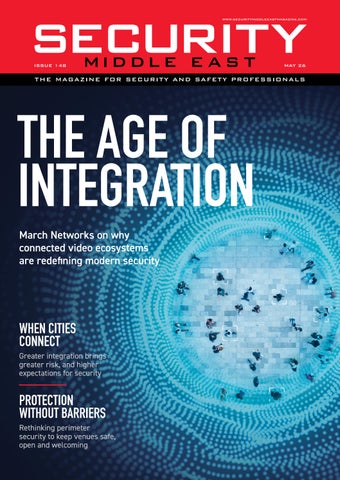
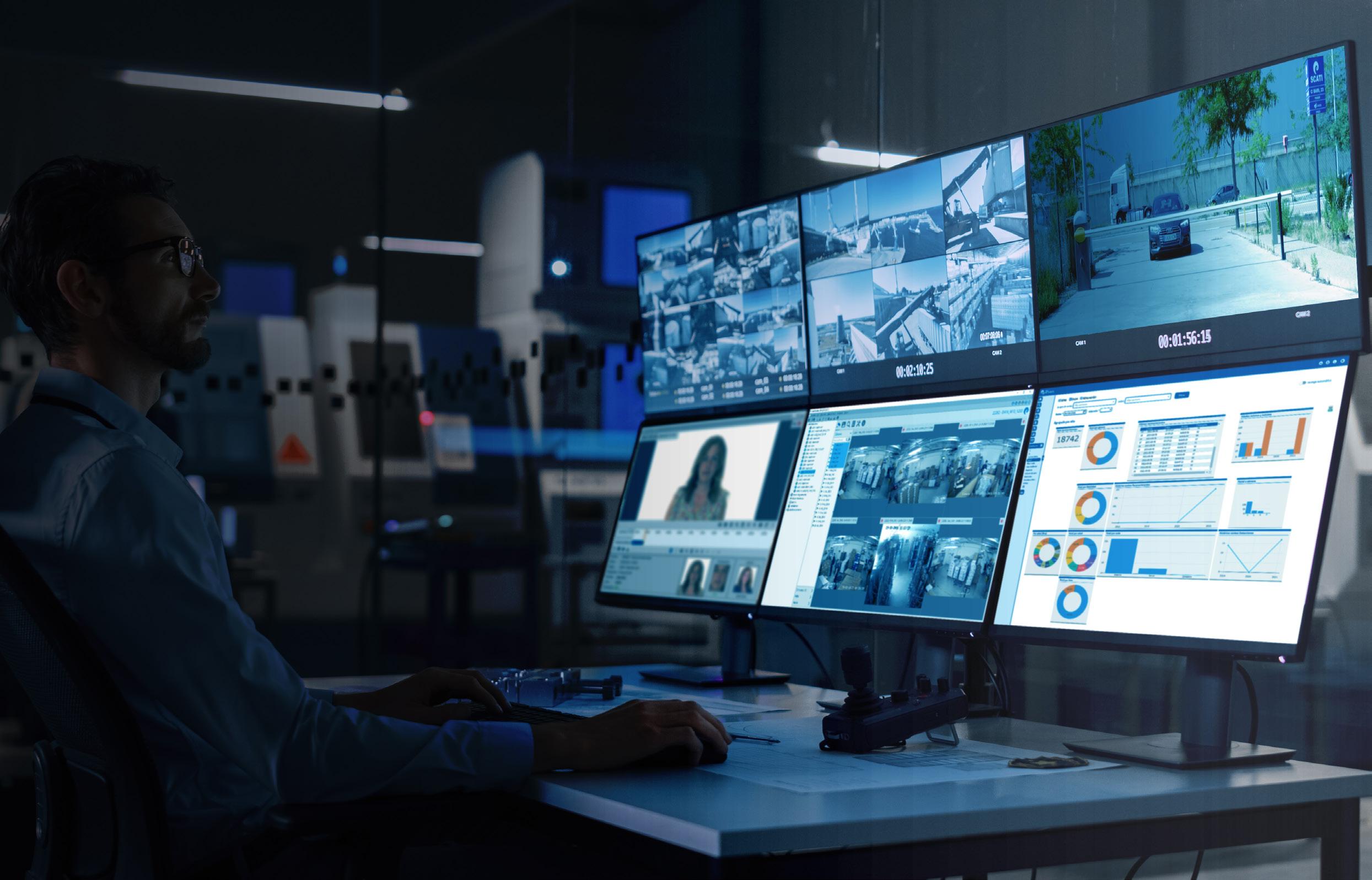
Our cover story with March Networks (page 12) examines the next era of video intelligence, where cloud connectivity, advanced analytics and AI are transforming video from a passive surveillance tool into a proactive source of operational insight. The company highlights how integration –bringing together video, data and broader security systems – will be key to unlocking this value, enabling organisations to move beyond monitoring towards real-time decision-making and measurable business outcomes.
This theme of integration continues with ATG Access, which challenges conventional approaches to perimeter protection, offering fresh thinking on hostile vehicle mitigation for stadiums and major events across the region (page 32).
Meanwhile, Mohammad Bin Humaidan, Meydan Free Zone, raises critical questions about how security is designed within
increasingly connected smart cities, highlighting the need to rethink resilience in complex digital environments (page 18). At the enterprise level, Qualys argues that it is no longer enough for leadership to simply recognise risk – today’s C-suite must develop true fluency to understand and navigate the full depth of organisational exposure (page 16).
Together, these perspectives underline a clear message: effective security is no longer siloed – it is integrated, intelligent and embedded at every level of strategy. We hope you can take away some great insight from this issue.
Cora
Lydon Editor
cora.lydon@securitymiddleeastonline.com
CONTENTS
ISSUE 148 MAY 2026
REGULARS
03 Up front
Foreword from the Editor
06 News Monitor
The latest regional and international security news
09 Market Monitor
A roundup of the latest security products and solutions
12 Cover story: March Networks
Defining the next era of video intelligence, March Networks looks at the true value of integrated systems to enhance security operations
FEATURES
14 Security Middle East Conference 2026
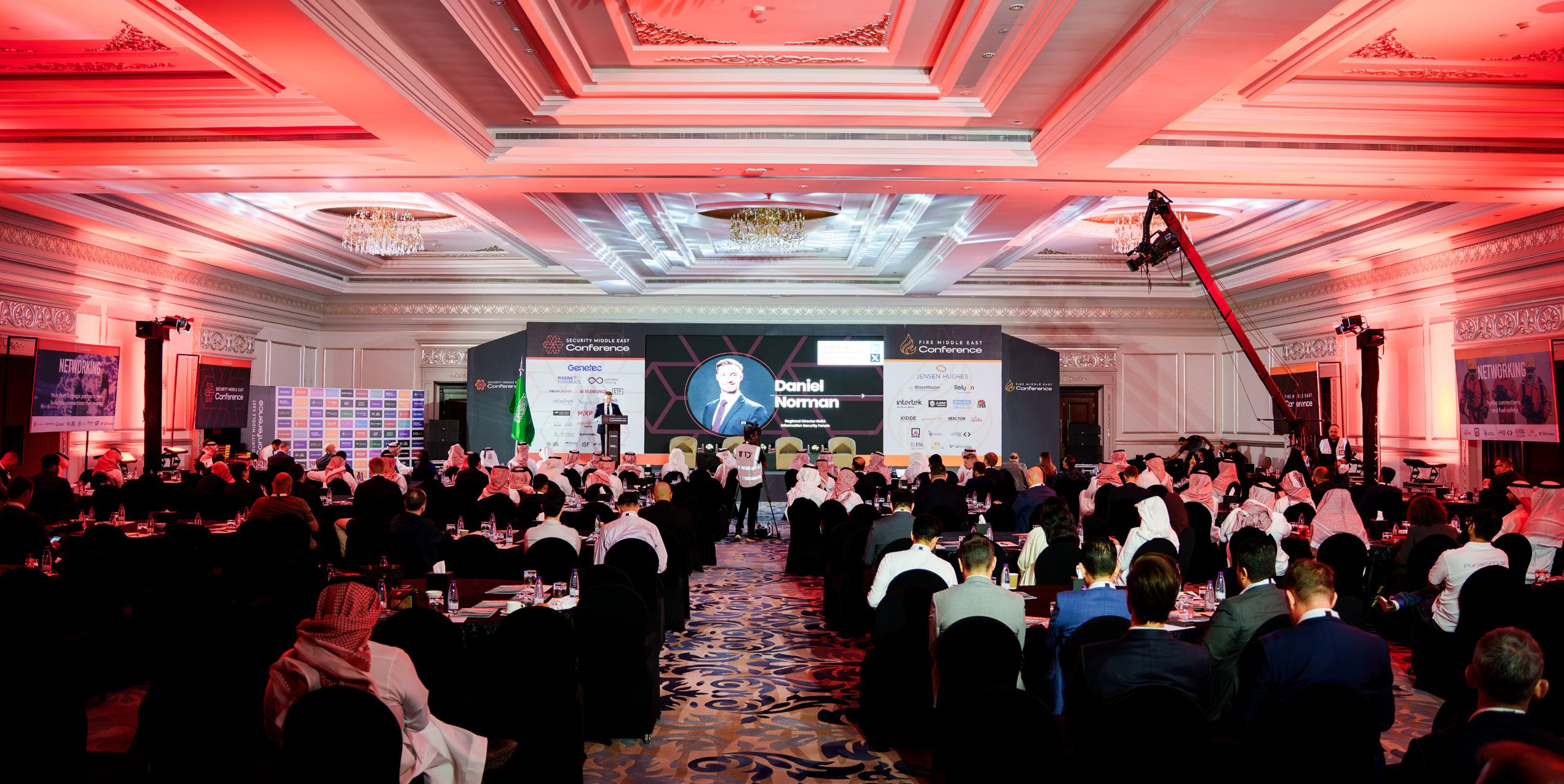
Returning to Riyadh this November, the Security Middle East Conference will bring together global expertise, high-level networking and sector-focused learning to the heart of one of the region’s fastestevolving security markets
16 The language of risk
Ivan Milenkovic, Vice President Risk Technology EMEA at Qualys, says it is time for the C-suite to be fluent in risk, moving beyond surface-level awareness to chart the real depths of business risk
18 Smarter cities, higher stakes
Smart cities are no longer a slide-deck concept but a lived urban reality across the GCC, according to Mohammad Bin Humaidan, Meydan Free Zone, raising urgent questions about how security is designed into these increasingly connected environments
28 From alerts to results
Tamer Mohannad, Regional Sales Manager, ME&A, SCATI, offers his thoughts on turning video analytics into quantifiable operational decisions
32 Designed to welcome. Engineered to protect
Richard Ellis, Managing Director of ATG Access rethinks perimeter safety and hostile vehicle mitigation for the Middle East’s stadiums and mega-events
36 From video streams to actionable data
As artificial intelligence transforms surveillance from passive observation to proactive insight, Walter Candelu, Vice President EMEA, Real Networks, explores how video analytics is reshaping security operations
45 Closing the loop
Larry Bowe, CEO at PureTech Systems, looks at why autonomous perimeter protection must close the loop from detect to deter to lockdown
CYBERSECURITY
24 Winning the AI security race
Alexandre Depret-Bixio, SVP of International, Anomali, explains why 95% of AI security initiatives fail and what Middle East leaders must fix first
41 Taming people and AI
Managing human behaviour and agentic AI will be key to cybersecurity in the Gulf in 2026, according to Dr Martin Kraemer, CISO Advisor at KnowBe4
INDUSTRY MONITOR
47 SSPN: The UAE model
The Security & Safety Professionals Network (SSPN), in collaboration with SIRA, looks at building national resilience through security partnerships
48 Case study: Ransomware
Rohith Rajan, Chief Information Security
Officer & Head of Global Research and Intelligence Division (GRID), DEF-X Cyber Intelligence, explains how rapid cyber intelligence prevented a ransomware deployment that could have resulted in financial exposure exceeding US$1 million
50 Intersec Global Pulse Studio
Find out more about the Security Middle East Pulse Studio – held at Intersec Global in Dubai this year – and who we got in front of the camera
53 Interview: Human connection
John Rodriguez, Founder, Empathic Security Cultures, LLC spoke with Meshal Aljohani, CPP, PSP, PCI, Security Operations Specialist about the importance of the human connection in the world of security
54 Diary Diary dates for forthcoming security exhibitions, conferences and events
THIS ISSUE’S PARTNERS & CONTRIBUTORS
Walter Candelu
Vice President EMEA, RealNetworks
Walter Candelu is an operating executive specialising in the design and scaling of go-to-market and organisational systems in technology and security businesses.
Rohith Rajan
CISO & Head of Global Research and Intelligence Division (GRID), DEF-X Cyber Intelligence
Rohith Rajan is a cybersecurity leader with over half a decade of experience in offensive security and cyber investigations.
Richard Ellis
Managing Director, ATG Access
Richard Ellis is a respected leader in the field of hostile vehicle mitigation (HVM) and intelligent physical security solutions and a Fellow of the Chartered Institute of Building.
Group-IB unveils Prevyn AI
Group-IB has launched Prevyn AI, a new ‘cognitive core’ for its Unified Risk Platform that aims to move enterprise security from reactive investigation to predictive cyber defence. Prevyn AI turns Group-IB’s adversary-focused data lake into rapid insights for threat intelligence and automated actions in Managed XDR, targeting what the company calls the “execution gap” facing modern security operations.
Within Group-IB Threat Intelligence, Prevyn AI runs in an agentic mode, orchestrating 11 specialised agents modelled on high-tech crime investigative logic to conduct complex, adversarycentric research, helping identify attacker intent and infrastructure staging before campaigns launch. Internal evaluations
cited by Group-IB indicate more than a 20% improvement in research quality across accuracy and analytical depth. In Managed XDR, Prevyn AI operates in an assistive mode, analysing alerts, generating incident reports and preparing structured remediation workflows so analysts can trigger complex responses at machine speed.
The platform uses a human-in-theloop governance model, requiring analyst approval before executing any AI-driven recommendation, in line with emerging regulatory expectations such as DORA and the EU AI Act. Prevyn AI is now available to all existing Group-IB Threat Intelligence and Managed XDR customers at no additional cost. group-ib.com/prevyn-ai/
QUALYS AND CONVERGE LAUNCH CYBER INSURANCE OFFERING
Qualys and Converge have launched a joint offering designed to help organisations with strong cyber hygiene potentially secure lower insurance premiums. The collaboration uses Qualys Enterprise TruRisk Management to generate a live Cyber Insurance Report, giving underwriters verified data on an organisation’s security posture rather than relying on manual questionnaires and self-reported answers.
The report is intended to streamline the insurance application process while reducing the risk of inaccurate reporting. It pulls together automated data on vulnerability management, patching, endpoint detection and related controls, allowing insurers to assess exposure more consistently and quickly. Qualys said the approach can help reward companies that actively reduce cyber risk, while giving them a clearer link between security performance and insurance cost.
The joint offering reflects a broader shift in cyber insurance toward evidencebased underwriting, as insurers look for better ways to price risk amid ransomware, breaches and supply chain incidents. For security leaders, the model adds a financial incentive to maintain strong cyber posture and improve remediation speed, compliance rates and asset visibility.
qualys.com
VITEC partners with EKOM to expand video solutions in Türkiye
VITEC has partnered with EKOM to strengthen the availability of advanced video streaming and IPTV solutions across Türkiye’s defence, aerospace and technology sectors.
Announced in Istanbul, the collaboration will see EKOM leverage its established presence in regional defence and aerospace supply chains to support the deployment of VITEC’s low-latency, high-performance video technologies. The partnership aims to enhance access to interoperable solutions designed for integration across ISR systems, communication networks, sensors and mission-critical platforms.
Ghassan Dadokh, Senior Business Development Manager and Regional Head of Security & Defense at VITEC, said the agreement
builds on existing regional activity while broadening EKOM’s offering with “field-tested video solutions” tailored to complex operational environments.
EKOM will provide local technical expertise and facilitate engagement with Turkish manufacturers and system integrators, supporting efficient implementation of advanced video capabilities. The companies will jointly target opportunities in strategic sectors and showcased their collaboration at SAHA Expo.
The partnership also aligns with Türkiye’s wider objectives around strengthening domestic capabilities and advancing technological independence. vitec.com
UAE steps up digital sovereignty
The UAE Cyber Security Council and CPX Holding have launched the UAE Cyber Factory, a national initiative designed to strengthen the country’s cyber sovereignty and digital leadership. Announced on 11 May, the programme aims to build and scale AI-powered cybersecurity capabilities that can help the UAE anticipate, detect and respond more quickly to increasingly sophisticated attacks.
According to the UAE Cyber Security Council, the initiative comes as the country records more than 800,000 cyberattacks a day, underscoring the need for more adaptive and locally controlled
defences. The Cyber Factory will operate as a fully sovereign integrated ecosystem, giving the UAE end-to-end ownership of strategic cybersecurity capabilities while supporting digital independence.
Dr Mohamed Al Kuwaiti, Head of Cyber Security for the UAE government, noted that the launch signals a new phase of leadership and positions the UAE as a global hub for advanced cybersecurity. CPX Chief Executive Hadi Anwar said the initiative brings together local talent, advanced engineering and innovation built in the UAE. cpx.net
CentaureAI has launched an AI platform in Abu Dhabi aimed at turning cameras, sensors and security systems into a real-time intelligence layer for physical environments. The start-up unveiled the technology at Make it in the Emirates 2026, following early deployments, and said it is designed to help operators detect abnormal behaviour, prioritise alerts and coordinate faster responses across complex sites.
Built on deep tech developed by the Technology Innovation Institute, the platform is targeted at public safety, critical infrastructure, smart cities, transport hubs, energy sites and large venues. It integrates with existing CCTV, access control, IoT devices and environmental sensors, allowing organisations to enhance current systems without a full replacement.
“The future of security will not be defined by how much footage is recorded, but by how quickly systems can recognise what is changing in the physical environment and help people decide what to do next,” said Dr. Chaouki Kasmi, speaking on behalf of CentaureAI. centaure.ai
Invixium Sets Up Middle East HQ in Saudi Arabia
Invixium has established its Middle East headquarters in Saudi Arabia, strengthening its regional presence and long-term commitment to the Kingdom. The move is designed to support closer engagement with customers and partners as demand grows for biometric access control, workforce management and visitor management solutions across the region.
The company said Saudi Arabia’s rise as a hub for technology and digital transformation made it a natural base for expansion. Invixium has also named Adeel Alvi as Senior Director, Sales – KSA & Levant to help drive growth from the new headquarters.
The Riyadh office is listed at Laysen Valley Business Park, reflecting Invixium’s deeper operational footprint in the Kingdom. invixium.com
CTM360 earns Gartner recognition
Bahrain-based cybersecurity firm
CTM360 has been named among 17 global vendors in Gartner’s Magic Quadrant for Cyber Threat Intelligence – the first-ever Arab World software technology to be named. The recognition gives the company a stronger international platform at a time when threat intelligence is becoming central to how organisations detect, contextualise and respond to advanced attacks.
Gartner published its CTI Magic Quadrant on 4 May 2026, placing CTM360 alongside established global players in the sector. The company’s inclusion has also drawn praise in Bahrain, where the National Cyber Security Centre said the achievement reflects the growing stature of Bahraini talent in the global cybersecurity landscape. ctm360.com
GENETEC CALLS FOR GOVERNANCE FIRST IDENTITY STRATEGY
Genetec is warning that AI driven credential attacks are exposing weak points in connected physical security environments and putting pressure on organisations in the Middle East to tighten identity and access governance across their systems.
The enterprise physical security software provider says AI tools are accelerating credential based attacks by increasing their speed, scale and precision, making it easier for adversaries to exploit poorly managed passwords and device credentials on cameras, access control systems, servers and cloud services. Genetec cautions that credentials used to connect directly to edge devices are often overlooked, yet can provide attackers with a direct route into sensitive operations if they are not centrally governed and regularly rotated.
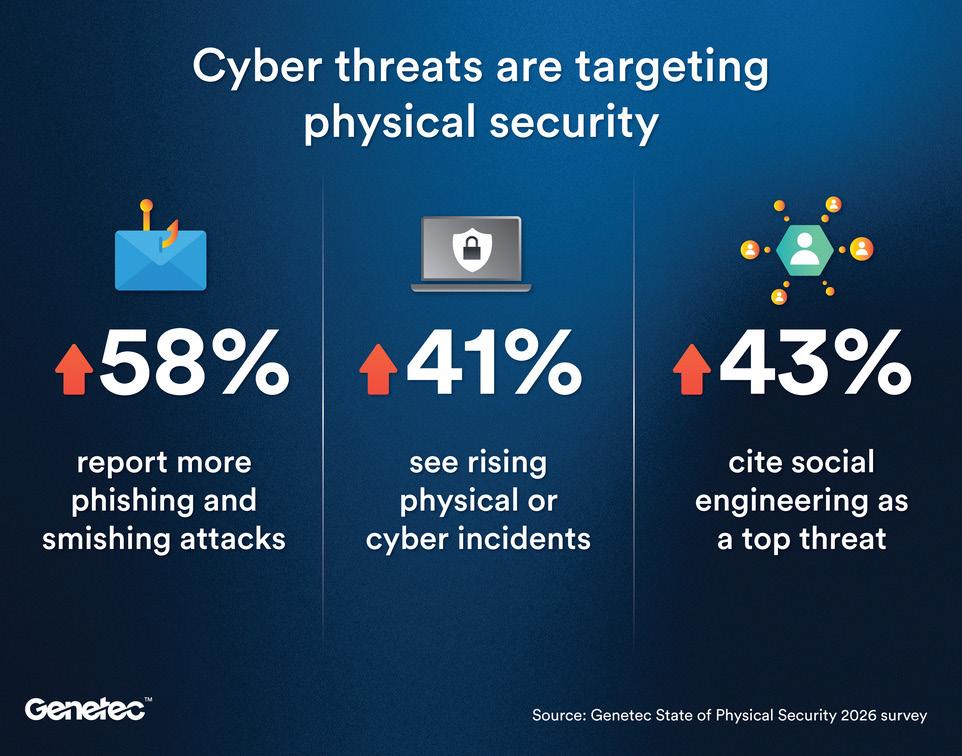
Findings from the Genetec Enterprise Physical Security in the Cloud Era research, based on insights from more than 7,300 physical security professionals worldwide, underline the scale of the problem. The study reports that 58.7% of organisations have seen an increase in phishing and smishing attempts, 41% have experienced a rise in overall physical or cyber incidents, and 43.5% identify social engineering as a leading attack vector. genetec.com
IN BRIEF
KUWAIT
Intersec has deployed a national public warning system for Kuwait in under 10 days. The system allows authorities to broadcast geo-targeted emergency notifications to all mobile phones in affected areas –with four alert levels.
BAHRAIN
At a meeting in May, HH the Crown Prince Sheikh Sabah Al-Khaled Al-Hamad Al-Sabah received Bahraini Interior Minister Sheikh Rashid bin Abdullah Al-Khalifa. The meeting underscored the security cooperation already in place and looked to advance ties between the two.
UAE
Cybrantech has officially been certified for Penetration Testing Services by the Dubai Electronic Security Center, joining around 30 companies who have been recognised as trusted providers under the Dubai CyberForce Program.
OMAN
The sixth edition of the Oman Cybersecurity Conference has urged the healthcare sector to strengthen its cyber defences as an urgent national priority. The event also saw the launch of the Cybersecurity Compliance Award in the Healthcare Sector, designed to prompt the adoption of advanced cyber measures.
KUWAIT
In a bid to strengthen the country’s security system, Kuwait’s Ministry of Interior has announced that it is using integrated technical and human support and advanced technologies to support security professionals in the field and enhance the ministry’s ability to respond effectively to security requirements.
ISG Middle East Sees Safety and Compliance Gains After innDex Rollout
ISG Middle East has recently reported significant improvements in site safety, workforce compliance and reporting after the organisation deployed innDex on a major UAE construction project. The firm has announced the platform has replaced manual, paper-based processes with a more controlled, data-driven approach, helping teams manage worker access, documentation and attendance in real time.
Before the rollout, site teams relied on induction checks, paper sign-in sheets and spreadsheet tracking, which created a heavy administrative burden. With innDex, workers can only access a site once key documents, including Emirates ID verification, have been uploaded and approved, while expiring certificates are flagged automatically. ISG said this has improved oversight and freed up HSE staff to focus on proactive safety work.
The platform also gives project leaders instant visibility of workforce numbers and supports emergency roll calls, asset tracking and compliance monitoring. Ross Hopwood, Head of HQSE, said: “Having the right controls in place gives us the knowledge and peace of mind by ensuring that the right people with the right competencies and the Right to Work checks are on our projects.”
Cloudforce One has warned that AI reasoning systems are becoming a new target for attackers, with its study across seven leading AI models showing how
subtle deception can steer model decisions. The research found that when safety lures (i.e. comments claiming the code is benign) made up less than 1% of a file, detection rates fell to 53%, while malicious code hidden inside large legitimate-looking bundles reduced detection to just 12%.
For Middle East organisations accelerating AI adoption in security, development and automation, the findings are a timely reminder that trust in AI outputs needs stronger testing and oversight. Cloudforce One said the threat is shifting from traditional network attacks to manipulation of the model’s reasoning itself, with language-based biases and structural obfuscation also affecting how code is assessed. The company urged enterprises to go beyond prompt safety and adopt adversarial testing and context-aware security frameworks. cloudflare.com
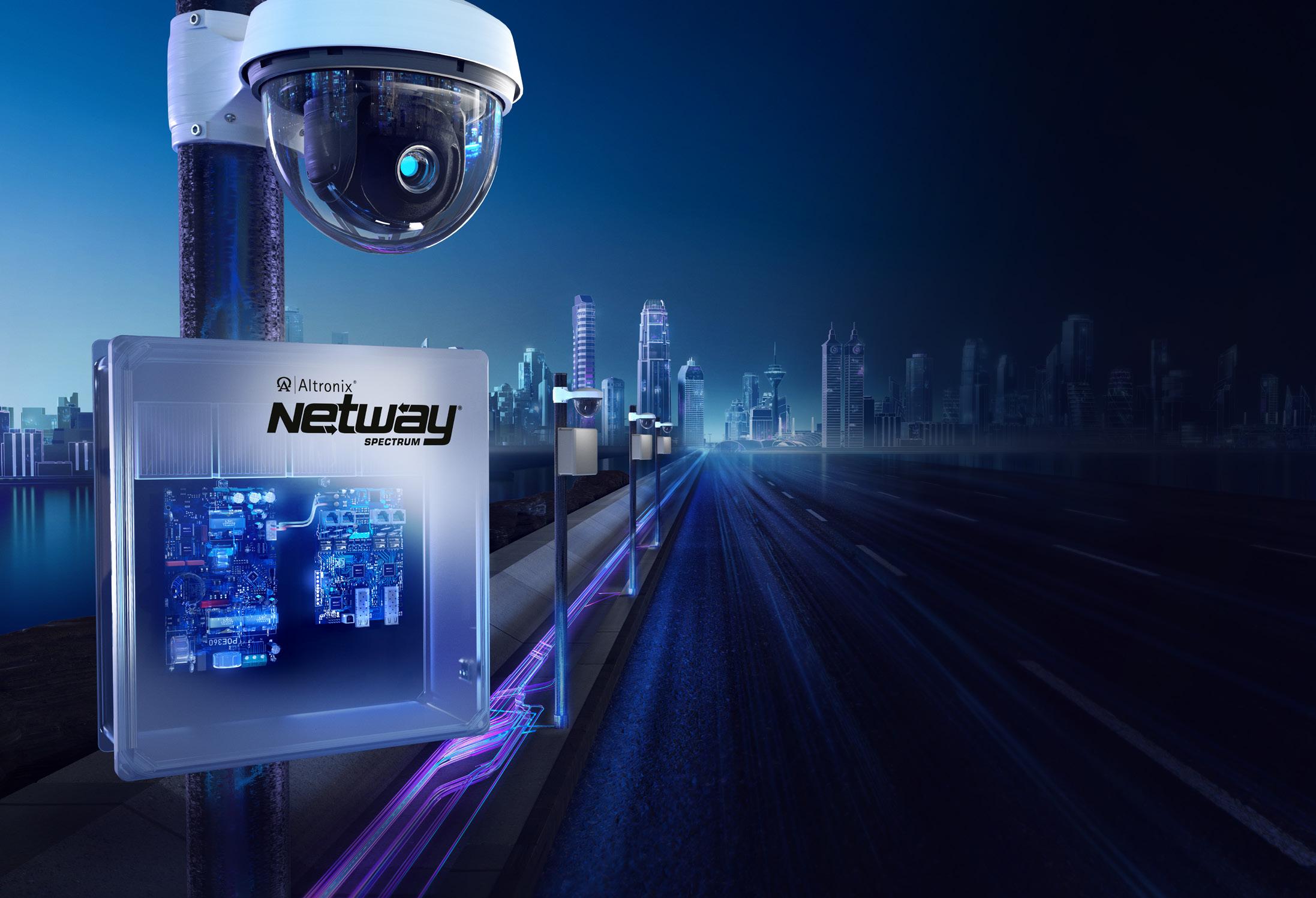
NETWAY SPECTRUM
Hardened PoE Switches & Fiber Media Converters
Deploy IP devices at remote locations with or without local power
Supports up to 90W per port
Rapid battery charging provides extended power backup
115/230VAC or 277VAC input
• Manage and reset devices remotely with LINQ™ Network Power Management
• Lifetime warranty
altronix.com
Identity attacks now the gateway for most ransomware, Sophos warns
Seven in ten organisations worldwide suffered at least one identity related breach in the past year, according to Sophos’ new State of Identity Security 2026 report. The vendor agnostic survey of 5,000 IT and cybersecurity leaders across 17 countries found affected organisations faced an average of three incidents each.
Sophos links most of these attacks to human error and weak non human identity (NHI) management, warning that agentic AI is accelerating credential abuse across APIs, service accounts and machine identities. Two thirds of ransomware victims said their incident began with an identity attack, driving mean recovery costs to US$1.64 million, with a median of US$750,000 and almost three quarters paying more than US$250,000. sophos.com
THE NEXT ERA OF VIDEO INTELLIGENCE STARTS WITH INTEGRATION
Net Payne, Chief Sales and Marketing Officer, March Networks, looks at the true value of integrated systems to enhance security operations
The video security industry is entering a period of significant transformation. What was once a fragmented ecosystem of cameras, software platforms and analytics tools is evolving into a more unified and intelligent environment. This shift is not only changing how video systems are built, but also how organisations define value from them.
For many years, video surveillance solutions were assembled in layers. Cameras came from one vendor, video management software from another, and analytics from a third. Integration was often left to the customer or system integrator. While this approach provided
flexibility, it also introduced complexity and slowed the ability to generate meaningful insights.
Today, that model is no longer sustainable.
Organisations across industries are demanding solutions that are easier to deploy, simpler to manage and capable of delivering real-time intelligence. At the same time, advances in artificial intelligence, cloud computing and analytics are raising both the expectations placed on video systems and the investment required to develop them.
These trends are reshaping the competitive landscape and accelerating the need for integration and scale.
A strategic industry shift
The merger between March Networks and VIVOTEK reflects a broader shift taking place across the video security industry. Announced in March 2026, the combination brings together March Networks, a global provider of intelligent video surveillance and business intelligence solutions, with VIVOTEK’s branded business, known for its IP cameras and cloud video technologies.
The goal is to create a stronger endto-end portfolio that spans cloud, hybrid and on-premise deployments while aligning complementary strengths across hardware, software and analytics.
This is not simply about expanding product lines. It is about responding to a clear change in customer expectations. Organisations are no longer looking for disconnected components. They are looking for integrated systems that can deliver measurable outcomes across security, operations and business performance.
By combining enterprise video management, AI powered analytics, advanced cameras and cloud services, the merged organisation aims to simplify complexity and accelerate the path from data capture to insight.
Integration as a requirement
Integration has become a defining requirement for modern video systems. In fragmented environments, organisations often face challenges with interoperability, longer deployment times and higher operational costs. These issues can limit the ability to respond quickly and make informed decisions.
A more integrated approach reduces this friction.
When cameras, analytics and video management platforms are designed to work together, organisations can move more quickly from capturing data to acting on it. This results in faster investigations, improved situational awareness and more efficient operations.
Integration also supports greater flexibility. Businesses can adopt cloud, hybrid or on-premise models based on their specific needs without sacrificing performance or scalability.
This is particularly relevant in regions such as the Middle East, where large scale infrastructure projects, smart city initiatives and distributed enterprises require solutions that can operate seamlessly across multiple locations.
The role of scale in innovation
Alongside integration, scale is becoming increasingly important. Developing advanced video technologies requires significant investment in research and development, engineering talent and infrastructure.
Artificial intelligence is a key driver of this trend. It is enabling video systems to move beyond recording and into continuous analysis, identifying patterns, detecting anomalies and delivering actionable insights. However, building and maintaining these capabilities requires resources that not all organisations can sustain.
“Integration also supports greater flexibility.”
The combined March Networks and VIVOTEK organisation expands its ability to invest in innovation. With operations across more than 70 countries, over 300 engineers in multiple research and development centres, and a global network of channel partners and distributors, the company is positioned to support customers at scale.
Scale in this context is not only about size. It is about the capacity to innovate consistently and deliver solutions that meet evolving market demands.
Video beyond security
One of the most important changes in the industry is the shift in how video is used. Traditionally, video systems were reactive. Footage was recorded and reviewed after an incident, and much of the data remained unused.
That is no longer the case.
Advances in analytics and artificial intelligence are transforming video into a source of continuous intelligence. Organisations are using video to gain insights into operations, customer behaviour, safety risks and compliance.
In retail environments, video can help analyse customer flow and store performance. In banking, it supports fraud detection and branch optimisation. In transportation, it contributes to safety monitoring and operational efficiency.
This evolution is changing the role of video from passive observation to active decision support. It enables organisations to not only see what is happening, but also understand why it is happening and how to respond.
Unlocking vertical value
While the underlying technology is becoming more consistent, the greatest opportunities lie in how it is applied across industries. Each sector has its own requirements and priorities, which shape how video solutions are deployed.
Retailers focus on reducing loss and improving customer experience. Financial institutions prioritise security and compliance. Transportation providers emphasise safety and efficiency.
The ability to tailor solutions to these specific needs is becoming a key differentiator. By combining their
capabilities, March Networks and VIVOTEK are better positioned to deliver applications that address these diverse use cases.
This approach supports the development of solutions that provide measurable value rather than generic functionality.
Continuity and confidence
For customers and partners, continuity is a critical consideration in any merger. In this case, existing products, support teams and partnerships remain in place. Customers continue to work with the same trusted brands while gaining access to a broader portfolio and expanded capabilities.
For channel partners, the benefits include a more integrated offering that is easier to position and deploy. This creates new opportunities to meet customer needs while maintaining flexibility across different environments.
Looking forward
The video security industry is moving towards a future defined by integration, intelligence and scale. Organisations are seeking solutions that deliver real value and support better decision making.
At the same time, the pace of innovation will continue to accelerate. Not every new technology will succeed, and not every trend will deliver meaningful results. The challenge for the industry is to focus on solutions that address real world problems.
The merger between March Networks and VIVOTEK reflects this focus. It is designed to align technology development with customer needs and to build a platform capable of supporting the next generation of video intelligence.
As video continues to evolve, its role will expand beyond security into a broader driver of operational and business performance. The organisations that succeed will be those that can integrate technology effectively, innovate at scale and deliver insights that matter.
For organisations in the region interested in learning more, please contact Trevor Sinden, Regional Sales Director, Middle East, Africa and India, or visit marchnetworks.com.
CONNECT, LEARN, LEAD
Returning this November, the Security Middle East
Conference brings together
global
expertise, high-level networking, and sector-focused learning — at the heart of one of the world’s fastest-evolving security markets
The conference returns at a time when the region’s security landscape is evolving faster than ever before – and when the value of coming together, in person, has never been clearer.
Following its rescheduling earlier this year, the conference will take place on 29 November 2026 in Riyadh, bringing together security professionals, technology leaders and decision-makers from across the Middle East and beyond. While full programme details will be announced in the coming months, what remains certain is the event’s core purpose: to provide a high-level forum for insight, collaboration and professional growth in one of the world’s most dynamic security markets.
A region driving change
Saudi Arabia continues to position itself at the forefront of global development, with Vision 2030 driving unprecedented
investment across infrastructure, tourism, entertainment and smart city initiatives. From the rapid progress of New Murabba and King Salman Park in Riyadh, to the opening of Red Sea International Airport and the continued expansion of gigaprojects such as Qiddiya, the scale and ambition of transformation is unmatched.
With this growth comes complexity. Security strategies must now account for larger populations, higher visitor volumes and increasingly sophisticated risks – all while maintaining seamless, user-friendly experiences. Upcoming global events, including the Asian Winter Games 2029, World Expo 2030 and FIFA World Cup 2034, will further raise expectations for safety, resilience and operational excellence.
Against this backdrop, the Security Middle East Conference offers a timely and essential platform to explore how the industry is responding.
Voice of an industry
One of the defining strengths of the conference is its ability to attract highcalibre speakers from across the global security ecosystem. While this year’s line-up is still being finalised, attendees can expect contributions from senior leaders, technology innovators, end users and global thought leaders who are shaping the future of security across critical infrastructure, smart cities, major events and more. These perspectives are invaluable – not only for understanding emerging trends, but for gaining practical insights that can be applied immediately within organisations.
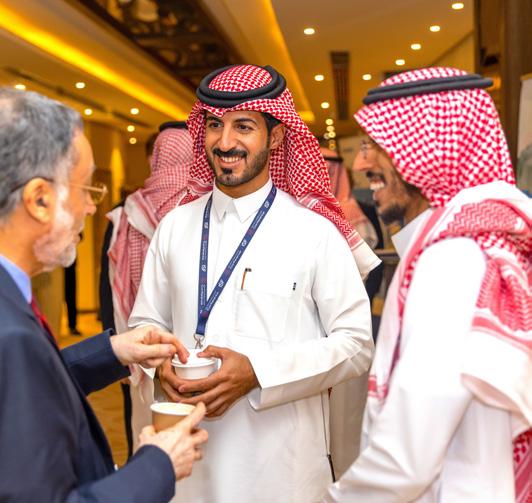
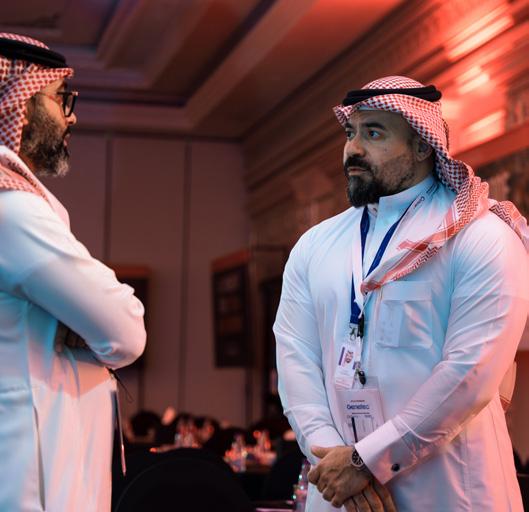
Equally important is the opportunity to connect with peers. In an increasingly digital world, the value of face-to-face interaction remains unmatched. The conference creates a space where meaningful conversations can take place, whether between integrators and end
users, consultants and regulators, or emerging professionals and experienced leaders. These interactions often lead to new partnerships, fresh ideas and a deeper understanding of shared challenges and are invaluable to anyone working in the sector.
Find your focus
Riyadh itself has become a focal point for these conversations. The city’s rapid development and growing portfolio of international events have firmly established it as a regional hub for safety and security. Major exhibitions such as Intersec Saudi Arabia continue to grow in scale and influence, reflecting both the demand for innovation and the Kingdom’s commitment to raising standards.
The Security Middle East Conference complements this wider ecosystem by offering a more focused, strategic environment, one designed for in-depth discussion and knowledge exchange. As a strategic partner of Intersec Saudi Arabia for the second consecutive year, the conference plays a key role in connecting large-scale industry showcases with targeted, high-level dialogue.
Advance your career
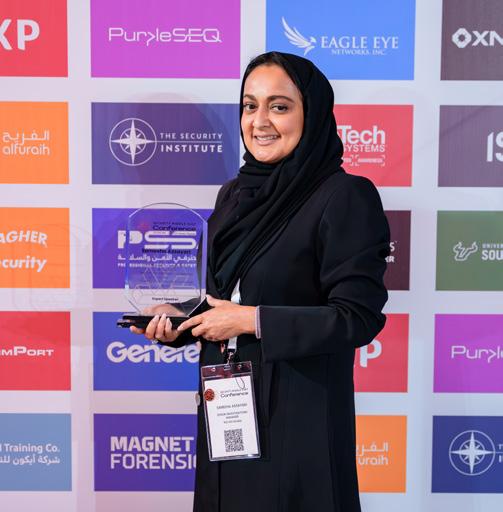
Professional development is another key driver for attendance. Delegates will have the opportunity to attend high level industry discussions and keynotes, supporting their ongoing learning and career progression. In partnership with the University of South Florida, the conference will also offer digital badges;
OUR SPONSORS
“For many attendees, this combination of knowledge and recognition provides a tangible return on investment.”
internationally recognised microcredentials that demonstrate engagement with industry-leading content and expertise.
For many attendees, this combination of knowledge and recognition provides a tangible return on investment. Whether looking to strengthen technical understanding, stay ahead of regulatory developments or build leadership capabilities, the conference offers a structured yet accessible way to advance professionally.
It also serves as an important meeting point for the next generation of industry leaders. As the security sector continues to evolve, there is a growing need to nurture talent, encourage innovation and create pathways for career development. By bringing together professionals at different stages of their careers, the event fosters mentorship, collaboration and the exchange of ideas that will shape the future of the industry.
Gain clarity
Ultimately, the value of the Security Middle East Conference lies in its ability
to bring clarity to complexity. In a region defined by rapid change and ambitious vision, staying informed is essential, but so too is staying connected.
As November approaches, the conference will once again provide a platform where ideas are tested, strategies are refined and relationships are built. For those working across security, safety and risk management, it represents not just an event, but an opportunity: to engage with the issues that matter, to learn from those leading the way, and to be part of the conversations shaping the future of the Middle East’s security landscape.
Registration details and programme updates will be released soon via the official website and Security Middle East Magazine channels. For more information and to register your interest in attending please visit: www. securitymiddleeastconference.com.
THE LANGUAGE OF RISK
Ivan Milenkovic, Vice President Risk Technology EMEA at Qualys, says it is time for the C-suite to be fluent in risk, moving beyond surface-level awareness to chart the real depths of business risk
We often hear that our scientific community knows more about the depths of space than about the depths of our own oceans. This is underpinned by the relatively small amount of submarine environment we have mapped when compared to the night sky. The same could be said of our software. The vulnerabilities that are most successfully exploited are those that have yet to be discovered due to lack of visibility, already forgotten, or lost in the sea of new ones. And for businesses, risks most commonly stem from an inability of technical staff to
communicate the dangers clearly, and in ways that are relatable for business executives.
The ideal way to deliver software vulnerability reports to non-technical audiences is through business-related terminology. Transparent metrics can more easily be weighed against risk appetite so leaders can balance agility and competitiveness against legal and technical safety. When we consider the extremes of risk-free operations and security-free operations, neither is sustainable. The former is prohibitively
expensive, and the latter is unlikely to be profitable over the long term. Balance is a must.
Sailing on the specific
The eventual goal is targeted investment: the right budget devoted to the right resources and the right actions. To that end, risk appetite should not be used as a phrase to explain away underinvestment in cybersecurity. CISOs must quantify consequences and present them as business impacts. This means risk appetite itself must be quantified.
The practices of issuing high-level declarations on unmeasured acceptable levels of risk must change. Organisations need to use more specific metrics that track risk levels over time and compare them against clearly stated tolerances, such as a maximum of four hours per quarter of unplanned downtime for a core system. Risk thresholds must also be established to trigger critical actions. For example, if downtime exceeds agreedupon limits, notify the CIO. If it exceeds them by more than an hour, the CIO should notify the board.
All stakeholders must agree to declare war on ambiguity. Where possible, teams should measure risks, impacts and outcomes in monetary terms. This leads to the formation of a common language for discussing risk and risk management. General discussions of comfort levels are replaced with specific questions like, “can we absorb an AED 5 million loss from a 24-hour downtime period?”
“CISOs must
quantify consequences and present them
as
business impacts”
Questions like this will emerge naturally from a risk audit, where the business and its most critical issues come under the microscope. Of course, some risks will be harder to convert into dirhams than others. By attempting to operationalise risk management, however, we take an important step towards guided action. As time goes on, we will improve accuracy as we gain more real-world experience.
See the ROC
As with all changes in business culture, it is advisable to form a single, central entity with the authority to promote new, databased conversations. Just as the Security Operations Centre (SOC) did this for IT intrusions, the Risk Operations Centre (ROC) will gather risk signals and present them in a common monetary language so that the best possible decisions can be made. The SOC performed a largely forensic role, identifying the sources of errors that led to damage. The ROC takes a data-led approach to prevent catastrophic incidents from occurring. Doing side-byside comparisons of monetary data and risk tolerance, the ROC is equipped to make meaningful recommendations when changes in risk levels are detected and exceed formally stated thresholds.
Data dominates
Data is critical. It must be used to provide a unified risk view that the board can easily use for strategic oversight. The three most important metrics are risk arrival, risk departure and risk survival. Risk arrival rate measures the volume of new material risks entering the environment over a given period. It exposes the effectiveness of preventive controls alongside business growth factors. Risk departure rate, or burndown velocity, is the volume of risks your team successfully closes or accepts over that same period. Crucially, departure is a rate of volume, not a measure of time.
If your arrival rate consistently outpaces your departure rate, your risk debt is compounding. Finally, risk survival is the persistence time of a specific risk; the lifespan from discovery to departure. Survival measures the actual efficacy and capacity of your remediation engine. If risks survive longer than your agreed business tolerance, you are operating outside your risk appetite.
If presented visually, accompanied by incident costs, the board will be able to see if the organisation is making real progress on risk. Where investments have been made, decision-makers will be able to visualise if they are bringing adequate returns. They will see if the remediation engine can deal with the volume of new arrivals and if critical issues are being addressed in a timely manner. Stakeholders will be able to participate constructively in the risk conversation. They will be able to make suggestions about the prioritisation of critical issues that may stand in the way of revenue generation. They may direct the security team to concentrate on those issues and allow lower-risk threats to be addressed by automation.
Je parle risk
The currency of risk is money. If the CISO can craft a narrative around profitability, impact, downtime, costs and benefits, they will attract more decision-makers to their corner. Managing risk is orders of magnitude more effective than managing technology in the current threat landscape. The security function must evolve to become a risk function; one that makes better decisions, faster decisions and decisions that can be readily defended. In an expat heavy region, it is not uncommon for people to want to learn a foreign language. Why don’t we all learn to speak risk? Let Cyber Risk Quantification be your Babel Fish. qualys.com
Smart cities are no longer a slide-deck concept but a lived urban reality across the GCC, writes Mohammad Bin Humaidan, Director of Free Zone Licensing, Meydan Free Zone, raising urgent questions about how security is designed into these increasingly connected environments
‘Smart cities’ used to be the kind of phrase that lived comfortably in keynote decks. You’d hear it, nod politely and move on.
In the UAE and across the GCC, that stage has passed. ‘Smart’ has become standard, and the systems behind it – sensors, platforms, integrations,
command centres, data exchanges –are increasingly the day-to-day reality of how cities operate. Masdar City and Expo City Dubai are obvious reference points, but the bigger story is that smartcity thinking is now baked into planning and procurement rather than treated as a novelty.
That matters, because at real scale the conversation stops being about cool technology and shifts to something less glamorous: reliability, resilience, accountability and security.
The smart cities market is rapidly expanding globally, with forecasts indicating around US$1.96 trillion
in 2026 and more than US$4 trillion by 2031. Big numbers are useful, but they obscure a fundamental truth: as cities become more connected, the ‘blast radius’ of failure grows. A standalone system going down is annoying. A connected ecosystem going down is a city problem.
And the more integrated the city becomes, the more security shifts from ‘important’ to ‘structural’.
The early mistake: building ‘smart’ in silos
A lot of first-wave smart-city work wasn’t bad – it was just fragmented. One department rolled out smart lighting. Another digitised traffic signals. Someone else deployed surveillance upgrades.
Utilities did their own thing. Public services ran on separate platforms. Every project had its own dashboard and logic. In isolation, many of those initiatives looked like wins.
But the gaps were hiding in between. Silos create blind spots, which slow response times, complicate decisionmaking, and make accountability harder to pin down when something goes wrong.
That’s why the smart city conversation has shifted toward ecosystems: platforms that pull in multiple data streams and allow systems to share information rather than sit apart like separate islands. Across the Middle East, major projects increasingly reflect this move toward integrated models rather than disconnected deployments.
For security teams, integration isn’t a nice-to-have – it fundamentally changes what’s possible. If access control data can’t speak to surveillance or connect to transport telemetry or crowd analytics, you’re effectively working with one eye closed.
Data is everywhere, but insight is a scarce resource. Smart cities produce data the way busy roads produce noise: constantly, and often with overwhelming volume. Traffic lights generate signals; sensors report conditions; cameras stream feeds; gates log access; utilities measure consumption; people and vehicles move; everything leaves a trail. But the uncomfortable reality is that more data doesn’t automatically mean better security. Often, it does the opposite:
“Smart cities produce data the way busy roads produce noise: constantly, and often with overwhelming volume”
alerts pile up, screens multiply, and ‘visibility’ increases – but understanding doesn’t.
What security operations actually need is context: the ability to quickly see what matters and what doesn’t. This is where analytics and AI earn their place, not as a buzzword layer but as a way to correlate signals across domains.
When security data is considered alongside operational data – traffic patterns, infrastructure loads, environmental triggers – the picture changes. You’re not just watching: you’re interpreting. In this way, abnormal behaviour stands out more clearly, and responses can be prioritised with confidence. It’s less smart city as an idea, and more smart city as a working organism.
Security is most effective when integrated early and discreetly
One of the most consistent lessons from digital transformation is that retrofitting security is expensive and usually incomplete.
It isn’t only the cost. It’s the disruption, the rework and the new failure modes introduced by patching controls on after the fact. You end up with security that’s bolted on rather than built in.
In the UAE, smart-city initiatives sit within broader digital transformation strategies, including programmes
associated with Smart Dubai and Abu Dhabi Smart City, with an emphasis on integrated ecosystems and quality of life. Whatever the branding label, the practical direction is clear: integration and governance are not afterthoughts.
For security, that shift changes the operating assumption. Security stops being a separate system and becomes part of the city’s baseline architecture – like roads, power, water and communications. Ideally, it operates in the background: present, active and mostly invisible until it’s needed.
This is also how cities avoid the always-being-watched problem. Safer environments don’t require oppressive surveillance, but they do require intelligently designed security models – properly governed and focused on outcomes rather than optics.
The capability gaps show up in the same places
Even in advanced deployments, familiar friction points keep resurfacing. Cities need integration layers that connect legacy infrastructure to newer platforms without fragile workarounds. They need security approaches that recognise context – transport hubs behave differently from public parks, and utilities present different risks to commercial districts. And they need analytics that prioritise clarity over complexity.
Scalability under stress remains a challenge. Platforms that function well on an ordinary day can struggle during major events or cascading system failures. Governance adds another layer of difficulty in environments involving multiple authorities, operators and partners.
Projects like Masdar City – where sustainability, infrastructure and digital systems intersect – highlight a modern reality: protecting physical assets now also means protecting data integrity and system availability.
What a secure smart city really means
There’s a temptation to define smart cities by the shininess of their technology. But most residents don’t care about that – they care about whether systems work, whether services are dependable, and whether safety is managed without making daily life feel tense. That comes down to trust: trust that systems won’t fail silently, that incidents are handled in a coordinated way, and that responsibility doesn’t disappear when something breaks.
Across the GCC, smart-city investment is tied to long-term national visions that go beyond infrastructure for infrastructure’s sake. In the UAE, the pace of execution has helped shape expectations for what connected urban environments should look like.
The next generation of smart cities won’t be judged by how advanced the technology sounds in a brochure. They’ll be judged by how systems hold up under real-world pressure – unexpected events, human behaviour, operational mistakes and hostile interference.
In that real world, security is not a layer. It’s the condition that makes everything else viable.
The ghost in the machine: Why static hardware identity is a liability
For the modern operative, diplomat or ultra-high-net-worth individual, standard encryption is no longer enough. We have spent the last decade obsessed with software security — end-to-end encryption and zerotrust architectures. At Braniff Enterprises, we recognise that while these technologies safeguard the content of your communications, they fail to protect the most critical asset of all: Context.
Your adversaries — whether foreign intelligence services, advanced persistent threats (APTs) or corporate espionage rings — no longer need to break your encryption to neutralise your operations. They simply need to track your Pattern of Life (POL). And the beacon broadcasting that pattern is the one variable you thought you couldn’t change: your International Mobile Equipment Identity (IMEI).
The metadata trap
Every mobile device has a unique fingerprint. The IMEI is a 15-digit serial number hardcoded into the deviceʼs cellular modem. Traditional OPSEC (Operational Security) suggests that simply swapping SIM cards protects your identity.
This is a fatal misconception. When an operative inserts a new SIM into a phone with a static IMEI, the cellular network — and any hostile International Mobile Subscriber Identity (IMSI) catcher or ‘Stingray’ in the vicinity — instantly links the new number to the old, tracked device. You have not become a new person; you have simply attached a new alias to the same targeted hardware.
True anonymity requires the ability to sever the digital tether between the user and the hardware. This is where Braniffʼs proprietary randomised IMEI rotation shifts the paradigm from defense to stealth.
Our latest secure architecture introduces Braniff Hyper-Cycling™ Technology. This feature allows the device to generate a cryptographically valid, randomised IMEI upon every reboot or at user-defined critical intervals. By spoofing the hardware identifier at the baseband level, the device presents itself to the network as a completely new, factoryfresh unit every time it connects.
Strategic advantages for high-value assets
1. Countering Pattern of Life (POL) analysis
Intelligence agencies build targets based on repetition. They map where a device sleeps, where it works and who it meets. By rotating the IMEI, Braniff technology shatters the continuity of data. The network sees a thousand different devices passing through a location once, rather than one device returning a thousand times. The pattern dissolves into noise.
2. Defeating IMSI catchers
Hostile entities deploy IMSI catchers in sensitive zones (embassies, conflict zones, financial districts) to harvest identifiers. A static phone is a sitting duck. A Braniff device with IMEI rotation
is a ghost — appearing and disappearing from the RF spectrum before an actionable profile can be built.
3. The ‘Burner’ without the waste
Historically, deep cover required physical ‘burner’ phones that were used once and destroyed. This is logistically heavy and a security risk if discarded improperly. With Braniffʼs IMEI spoofing capability, a single enterprise-grade device becomes an infinite supply of virtual burner phones. One piece of hardware, unlimited digital identities.
The new standard of privacy
In the high-stakes world of intelligence and enterprise security, a static identity is a vulnerability you cannot afford. To remain static is to be targeted. To rotate is to survive. Braniff Enterprises doesn’t just protect your data. We protect your existence.
Secure
your operations
Static defence is obsolete. Contact Braniff Enterprises today for a confidential briefing and demonstration of our dynamic hardware identity solutions. Seeking qualified customers and distributors with existing government contracts. Contact us for a demo with our Subject Matter Experts at sme@braniffenterprisesllc.com
Use with Authority: The capabilities described herein, specifically IMEI modification/spoofing, are powerful tools designed for sovereign, military, intelligence and authorised enterprise applications.
Restricted Sales: Braniff Enterprises restricts the sale of devices featuring Hyper-Cycling™ Technology strictly to vetted and authorised purchasers, including government agencies, military organisations and qualified corporate entities.
Legal Compliance: The use of IMEI changing technology may be regulated or prohibited in certain jurisdictions for general consumer use. It is the sole responsibility of the purchasing organisation to ensure that the deployment and use of Braniff devices comply with all applicable local, national and international laws and regulations relevant to their area of operation. Braniff Enterprises assumes no liability for the misuse of this technology contrary to local law.
Winning the AI security race
Alexandre Depret-Bixio, SVP of International, Anomali, explains why 95% of AI security initiatives fail and what Middle East leaders must fix first
Across the Middle East, artificial intelligence has moved from strategy decks into the heart of security operations centres. Governments are embedding AI into national visions. Enterprises are accelerating cloud migration. Critical sectors such as energy, finance, transport and government are digitising at unprecedented speed.
But beneath this momentum sits a quieter yet more dangerous reality: nearly 95% of AI initiatives fail to deliver meaningful impact not because of weak algorithms but because leaders are being asked to make high stakes security decisions using incomplete, unstructured and context-poor data. This alarming finding, from MIT, reflects research showing that while many organisations pilot AI, only about 5% achieve measurable outcomes beyond proof of concept.
At its core, AI failure is not a technology problem but an architecture and readiness problem because organisations are placing advanced systems next to data that is siloed, unindexed and lacking the classification AI needs to understand it.
What makes this moment different, however, is that AI is not simply another
technology wave. It represents a broader economic shift. Previous digital transformations, such as the rise of the gig economy, disrupted business models more than the underlying technology itself. AI is poised to do the same at far greater scale – fundamentally changing how revenue is generated, how value is perceived and what organisations ultimately sell. In effect, we are entering the early stages of an AI-native economy defined by dramatically higher productivity, but also new uncertainty around governance, labour and trust.
Why this matters now in the Middle East
Governments and enterprises across the Gulf and wider region are investing heavily in AI-driven security operations to manage expanding attack surfaces, meet regulatory expectations and support national cyber resilience goals. Yet many leaders are discovering that faster automation does not automatically mean better outcomes or safer ones.
The real challenge is ensuring that AI adoption is governed responsibly so its economic benefits are realised without introducing new systemic risks.
“Across the region, cybersecurity is no longer an IT issue – it is a boardlevel priority.”
The regional acceleration
The Middle East cybersecurity market is projected to grow from approximately US$16–17 billion in 2025 to more than US$26 billion by 2030, according to GlobeNewswire, driven by digital transformation and AI adoption across public and private sectors.
IBM’s Cost of a Data Breach Report 2023 found that the global average breach cost reached US $4.45 million. Meanwhile, Verizon’s 2023 Data Breach Investigations Report revealed that 74% of breaches involve the human element, including social engineering and stolen credentials, increasingly amplified by AIdriven phishing and deepfakes.
Governments and organisations across the GCC have responded decisively. The UAE’s National Cybersecurity Strategy emphasises governance and public–private collaboration. Saudi Arabia has strengthened regulatory oversight through the National Cybersecurity Authority. Across the region, cybersecurity is no longer an IT issue – it is a board-level priority.
Why speed alone is not enough Security teams today are flooded with telemetry from cloud platforms, endpoints, identity systems and operational technology. AI promises to triage alerts in seconds, identify anomalies and recommend remediation actions – but speed without explanatory context can be counterproductive.
CIOs and CISOs must be able to answer questions such as:
Why did the system prioritise this threat?
What intelligence informed the recommendation?
Could the outcome be reproduced or explained?
What data sources were involved?
If those answers are unclear, leaders cannot justify automated decisions to boards, regulators or national oversight bodies. In highly regulated sectors such as banking, energy and government services, defensible decisions matter more than merely faster alerts.
The real failure point: poor data quality and context deficiency
The root cause of AI failure in security is rarely model performance. It is context deficiency.
Organisations are not short of data. They are overwhelmed by it. Yet much of it is duplicated, poorly structured, inconsistently classified, disconnected from business impact and lacking enrichment with threat intelligence.
Putting AI next to bad data is like hiring a genius who doesn’t speak your language. Without structure, ontology and taxonomy – the blueprints that help AI interpret meaning – systems can access data but cannot truly understand it.
Most enterprises simply do not have AI-ready data.
Gartner has estimated that poor data quality costs organisations an average of US$12.9 million annually. When AI systems ingest incomplete or inconsistent data, they do not necessarily crash. They produce unreliable outputs.
In security operations, that may mean over-prioritising benign anomalies while missing coordinated lateral movement inside the network or automating responses that lack full context.
Many organisations also approach AI adoption incorrectly. Rather than architecting AI capabilities around clear business outcomes, teams often automate tasks from the bottom up, launching numerous proofs of concept without a coherent strategy for scale. In reality, AI at enterprise scale is not simply built – it is architected, requiring deliberate decisions about what to build internally, what to buy and where to partner.
This is why the architecture beneath AI matters. Many organisations still operate fragmented security stacks, where telemetry is stored in silos and analysed in isolation. AI built atop fragmented data interprets noise rather than intelligence.
A unified security data lake approach (one that standardises and enriches telemetry before analysis) improves signal quality and preserves data lineage, enabling leaders to trace decisions back to their source. In regulated environments, that traceability is foundational to trust.
AI should not sit on top of fragmented data. It must sit on structured, governed information.
Measuring decision quality, not just efficiency
One of the most common mistakes in AI security programmes is prioritising speed metrics, as mean time to detect or respond, without assessing decision quality. A faster wrong decision is not progress.
Instead, leaders should ask:
How often are AI-generated alerts validated as true positives?
How frequently are AI recommendations overridden by analysts… and why?
Are false positives decreasing without increasing false negatives?
Can every automated action be traced back to verifiable intelligence?
IBM’s 2023 research showed that organisations with mature AI and automation capabilities reduced breach lifecycles by 108 days on average. The differentiator was not automation alone but integration with trusted data, governance and skilled oversight.
Ultimately, enterprise readiness for AI should be measured in productivity gains, margin improvement and risk reduction –not the number of pilots launched. AI has become a boardroom conversation rather than a purely technical one, requiring new operating models, updated KPIs and roles designed for AI-augmented work.
Agentic AI and rising responsibility
The next evolution in cybersecurity AI is the rise of ‘agentic’ systems – AI capable of autonomously conducting multi-step investigations or triggering response actions.
More broadly, organisations are entering a new phase of AI adoption defined by autonomous decisioning. AI agents are increasingly operating with orchestration, interoperability and ecosystem integration across enterprise systems. The next stage will likely involve multi-agent environments – fleets of AI systems collaborating dynamically across business functions.
These systems can correlate events, gather additional context and recommend or initiate containment.
While capable, they also expand risk. Autonomous systems without clear guardrails can scale errors as quickly as they scale efficiency.
For this reason, agentic AI must be deployed within defined policy boundaries, transparent audit trails and explicit human oversight. The objective is not to remove humans from the loop but to elevate their role – shifting analysts from manual triage to supervisory decision-making.
Trust is the real competitive advantage
Middle East nations are positioning themselves as global digital leaders. AI is central to that ambition. But trust is what sustains it.
“The next evolution in cybersecurity AI is the rise of ‘agentic’ systems”
Deploying AI without reliable data foundations creates three risks: Operational risk – missed threats or analyst fatigue from poor-quality alerts.
Regulatory risk – inability to justify automated decisions.
Strategic risk – erosion of executive and board confidence in AI investments.
In a world where AI is reshaping business models and how value is created, trust in AI decisions becomes not just a security requirement but an economic imperative. This is not an argument against AI. Security AI works when it’s built on structured, contextualised and governed data. But AI cannot compensate for fragmented intelligence.
A disciplined path forward
Before scaling AI initiatives, leaders should audit data quality and lineage across security systems, invest in contextual intelligence that links threats to real-world campaigns, and embed explainability into AI workflows from the outset.
Governance models must preserve human accountability, and agentic AI must operate within policy guardrails that keep autonomous actions transparent, auditable and aligned with regulatory expectations.
As AI becomes central to enterprise operations, organisations must also rethink what it means to secure an AI-driven economy. The challenge is no longer simply deploying AI safely but ensuring organisations can secure their operations from AI-enabled threats, secure the AI systems they build and deploy, and harness AI itself as a defensive capability.
The three pillars of AI security
The answer lies in thinking about security across three distinct but interdependent dimensions.
1. Securing from AI means defending against the new class of threats that AI
itself enables, including highly targeted phishing, AI-generated deepfakes and attack patterns that evolve faster than traditional signature-based defences can track. This demands the highest fidelity threat intelligence and rapid sharing of emerging techniques, because attackers are already using AI to amplify their impact with precision.
2. Securing the AI means protecting the AI systems organisations are building for mission-critical operations. As these systems become central to revenue generation and public services, they also become high-value targets. This requires continuous threat modelling, hardening measures and a defensive strategy that evolves alongside the AI itself.
3. Securing with AI means deploying AI as an active force for defence, with systems that operate alongside analysts, automate response and leverage vast intelligence capabilities to protect at a speed and scale no human team can match alone.
Encouragingly, the UAE’s ability to detect and disrupt AI-driven attacks suggests progress on this third pillar. Defensive AI, enriched threat intelligence and coordinated response capabilities can tilt the balance back towards resilience but only when built on governed, highintegrity data and clear operational accountability.
Together, these three pillars define what mature AI security looks like. The Middle East’s digital ambitions are real, and so is the sophistication of the threats emerging alongside them. The organisations that lead will be those that build it on trusted data, govern it with clear accountability and secure it from every angle.
In critical infrastructure, finance and government services, making the right decision will always matter more than making it fast. But with the right foundations in place, leaders no longer have to choose between the two. anomali.com
FROM ALERTS TO RESULTS
Tamer Mohannad, Regional Sales Manager, ME&A, SCATI, offers his thoughts on turning video analytics into quantifiable operational decisions
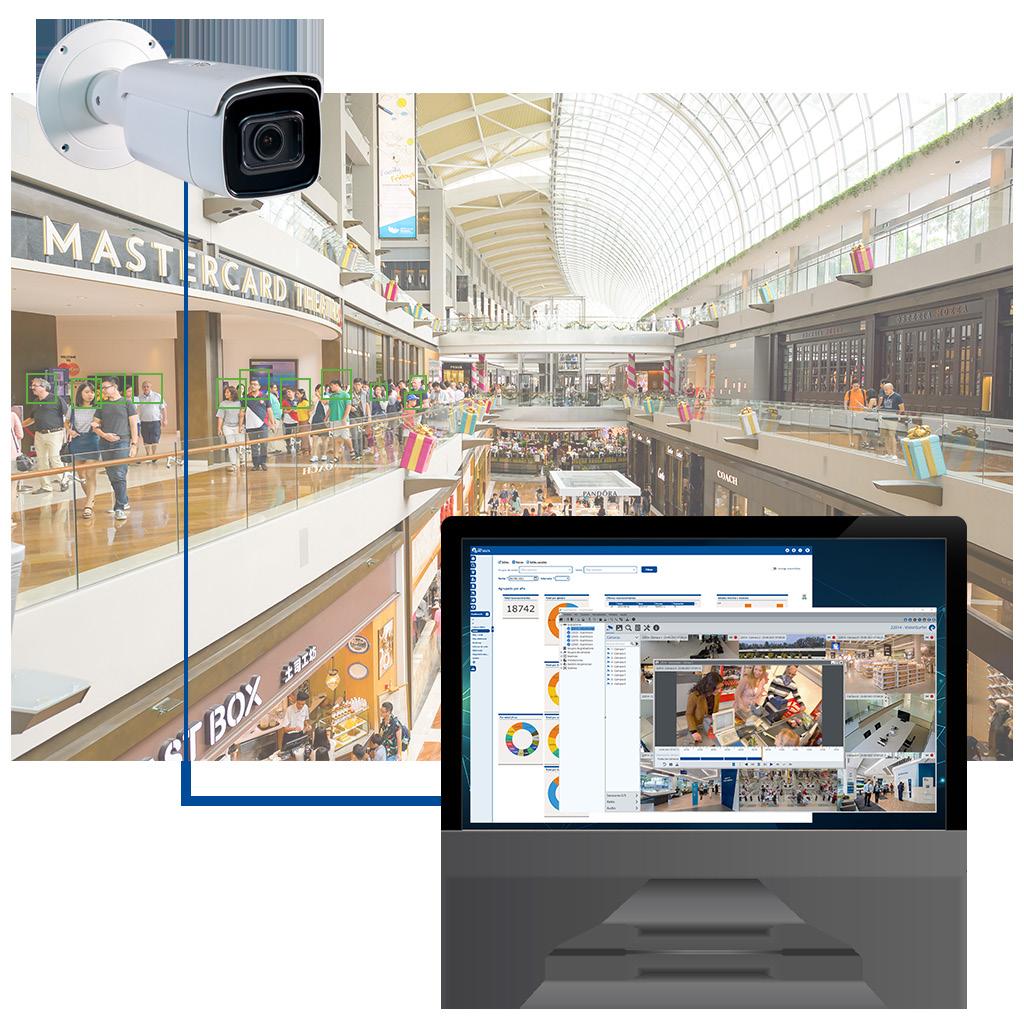
Control rooms do not fail because of a lack of technology, but when attention is wasted. Video analytics can be useful when designed around how decisions are actually made: quickly, consistently and with evidence that stands up to scrutiny. Many applications still behave like alert generators. They detect something, present it as an alarm, and leave it to the operator to determine whether it is important. The result is false alarm fatigue. The most useful approach is to treat analytics as another element of the operational workflow: detect,
verify, decide, act, audit. Each step has a specific purpose, and together they turn signals into measurable results.
1. Detect: designs focused on relevance, not coverage
Detection must begin with a clear definition of what ‘actionable’ means in the context of the site. A person appearing on camera is not an operational event. That same presence becomes actionable when linked to risk factors such as location, time, direction of movement or duration.
Without that framework, analytics tend to produce volume rather than value. Relevance is often improved by separating areas into risk levels and applying temporal logic. Public areas, controlled areas and sterile areas should not share the same rules. Similarly, daytime behaviour cannot be evaluated with the same threshold as after-hours activity.
This is where many false alarms are eliminated: not by demanding perfect AI, but by defining sensible operating conditions.
2. Verify: shorten the path between alert and context
Verification must be fast and repeatable. If the operator must search for a camera, align the playback and reconstruct the sequence manually, the cost of verification becomes too high. People compensate for this by delaying action or ignoring alerts.
Effective verification provides immediate context: the relevant point of view, a brief before and after interval and a clear explanation of why the alert was triggered. Where possible, associated context such as door status, schedules or access activity, should be visible alongside the images, as this often changes the interpretation. The goal is to quickly confirm whether the event warrants action or not.
3. Decide: prioritise with operational logic
Decision making in security operations is largely a matter of classification. The quality of classification depends on the system’s ability to distinguish urgency and impact.
In practice, prioritisation improves when it reflects four realities.
Time: behaviour that is acceptable at 2pm may be suspicious at 2am.
Location: activity at a public entrance is different from activity at the door to an engine room.
Persistence: brief appearances are common; prolonged presence is often more significant.
Correlation: two weak indicators can combine into a strong event when they occur together.
This is how analysis becomes a support for decision making rather than background noise.
4. Act: make the response consistent
After verification and classification, operators need a response that is simple and defensible. If actions are based on memory, personal judgement or informal practice, results will vary between shifts and sites.
A professional model links each class of alert to a brief response pathway: the immediate checks to be performed, the conditions for escalation and the actions to be logged. The goal is not to eliminate
human judgement, but to ensure that judgement is applied within a consistent framework, especially in fast-paced environments where every second counts.
5. Audit: incorporate evidence and learning into the process
Auditing is often viewed as a bureaucratic formality. It is better understood as an operational control. If the workflow captures what triggered the event, what was verified, the decision that was made and the actions that followed, the organisation gains defensible records and a basis for improvement.
This is important for investigations, regulatory compliance and internal assurance. It is also important for performance: reviewing results allows
teams to refine zones, thresholds and escalation criteria. Over time, this is how the proportion of actionable events improves without increasing workload.
Less control panel, more results
Analysis adds value when it aligns with the realities of security operations: limited attention, tight deadlines and the need to make justifiable decisions. The Detect-Verify-Decide-Act-Audit model keeps the focus where it should be: reducing noise, increasing actionability, and creating an evidence-based feedback loop. That’s what turns AI into operational performance rather than added complexity.
www.scati.com
Designed to welcome. Engineered to protect
Richard Ellis, Managing Director of ATG Access rethinks perimeter safety and hostile vehicle mitigation for the Middle East’s stadiums and mega-events
Over the past decade, the Middle East has rapidly expanded its role as a major host of global sport, entertainment and cultural events. Across the Gulf, stadiums and large-scale entertainment districts have been developed at pace and at scale, forming part of wider programmes of economic diversification and urban transformation. In Saudi Arabia in particular, the acceleration of development under Vision 2030 has
placed major venues and event precincts at the centre of a broader national shift.
These projects are ambitious in architectural terms and geopolitically visible. They signal openness, investment and long-term economic confidence. Ensuring they are secure is therefore fundamental to maintaining public trust and protecting reputation.
For those responsible for their design and operation, the challenge is no longer
simply how to prevent a vehicle from breaching a perimeter. It is how to achieve this in environments that are expansive, integrated into urban masterplans and expected to remain welcoming at all times.
A shifting vehicle threat landscape
Vehicle-borne threats remain among the most serious risks to crowded public
places. Deliberate vehicle attacks and vehicle-borne explosive devices are firmly embedded in contemporary security planning. In a region shaped by complex geopolitical dynamics, where events frequently attract international audiences and dignitaries, the consequences of such incidents would extend well beyond the immediate site.
However, risk is not limited to extreme scenarios. Accidental incursions, unauthorised access, protest activity or traffic management failures can disrupt events and place visitors at risk. The scale of venues across the region amplifies these consequences.
Meanwhile, venue design has changed. Modern Middle Eastern stadiums are rarely standalone structures. They are increasingly woven into mixed-
use districts combining retail, hospitality, residential and leisure functions. The perimeter is no longer a single hard line around a building, but a layered environment extending into plazas, fan zones and surrounding streets.
This demands a more disciplined approach to hostile vehicle mitigation (HVM). Security cannot rely solely on heavy infrastructure at a site boundary. It must be embedded within a wider strategy that considers architecture, operations and visitor experience from the outset.
Performance-led design from the outset
Effective projects begin with a clear understanding of risk rather than pre-determined solutions. Threat and vulnerability assessments, supported by vehicle dynamic assessments, should shape the mitigation strategy from the outset.
Protection should be proportionate. The wrong solutions can impede crowd flow, distort public space and inflate cost without improving safety or security. Under-specifying leaves unacceptable vulnerabilities. The aim is for balance, informed by evidence and with pragmatism and experience applied.
Early collaboration is central to achieving this. When developers, architects, security consultants and authorities work together at concept stage, mitigation can be integrated into the wider masterplan. This is particularly relevant in markets like Saudi Arabia, where entire entertainment districts are being delivered within compressed timeframes. Retrofitting security rarely achieves the same coherence.
When performance-led thinking is embedded early, impact-rated products can be incorporated into landscape schemes. Reinforced planters and seating can combine placemaking with protection. Road layouts can be designed to reduce vehicle speeds naturally before reaching sensitive zones. In this way, protective measures form part of the environment rather than additions to it.
Avoiding the fortress mentality
Event organisers must also consider perception. Visitors expect to feel safe and welcome, not contained.
Overt and improvised measures can create what is often described as a fortress mentality. Concrete blocks and ad hoc barriers may provide immediate reassurance, but they rarely align with the architectural ambition of world-class Middle Eastern venues. More importantly, they can alter the psychological tone of a space. Security should signal confidence, not defensiveness.
Modern HVM systems allow protective infrastructure to blend into the urban landscape. Street furniture, lighting columns and landscape features can be engineered to deliver certified impact performance while contributing to a cohesive public realm. The objective is not to conceal security, but to ensure it feels intentional, integrated and proportionate.
Intelligent access and operational integration
Stadiums and mega-event sites function as complex operational systems. They accommodate VIP convoys, team coaches, broadcast vehicles, service deliveries and emergency responders, often within tightly choreographed timeframes.
Intelligent barriers, rising road blockers and automated bollard systems enable authorised vehicles to pass through secure perimeters without undermining protection. Increasingly, these systems are integrated with access control and surveillance platforms, transforming the perimeter into an actively managed interface rather than a static defence.
Real-time monitoring and coordinated response protocols provide clarity during high-profile events where reputation and safety are equally critical.
Multi-functional spaces and scalable protection
Major events often extend beyond the stadium footprint. Fan zones, hospitality areas and media compounds transform surrounding civic spaces into high-capacity environments for defined periods.
The focus should not be on temporary security in isolation, but on designing multi-functional spaces capable of adapting to changing risk profiles. Well-planned districts can incorporate provision for certified HVM systems to be deployed when required and removed
when not. This enables protection to scale in response to event type, threat level or attendance without permanently hardening the public realm.
Such flexibility forms part of a longterm, holistic security strategy. Rather than relying on repeated short-term contracts or improvised installations, venues can introduce protection in a controlled, performance-led manner. Over time, this reduces disruption, improves consistency and delivers greater cost efficiency.
By designing for adaptability from the outset, precincts remain open in everyday use while retaining the ability to transition seamlessly into secure event environments when required.
Designing for climate, scale and high footfall
Environmental conditions in the Middle East directly influence perimeter design. Extreme heat, coastal humidity and winddriven sand place stress on mechanical and structural components. Systems must be engineered for thermal stability and protected against dust ingress, with corrosion-resistant finishes in marine environments. Reliability under these conditions is essential to operational continuity.
Scale is equally significant. Expansive plazas, multi-lane approach roads and broad pedestrian boulevards require mitigation capable of spanning large distances while maintaining consistent protection standards. Establishing appropriate exclusion zones and standoff distances demands careful modelling and stakeholder coordination.
High and diverse footfall further shapes decision making. Events attract families, international visitors and VIP delegations with varying mobility needs.
“The focus should not be on temporary security in isolation, but on designing multifunctional spaces”
Perimeter layouts must support inclusive access and efficient emergency access. HVM cannot be considered in isolation from crowd modelling, transport planning and response strategy.
From concept to completion: security integrated at scale
The redevelopment of Tottenham Hotspur Stadium in London illustrates these principles in practice. The 62,000-seat venue forms part of a wider regeneration masterplan and sits adjacent to a major arterial route.
Given its proximity to heavy traffic, stakeholders created significant standoff while maintaining pedestrian permeability for up to 68,000 spectators dispersing within short timeframes. Security specialists were engaged at concept stage, enabling shallow-foundation bollards to be integrated without compromising underground services or architectural intent. Lighting and traffic columns were incorporated into the protective line to reduce clutter, while road blockers secured controlled access routes beneath the stadium.
The result was a secure yet permeable environment where mitigation was embedded within the masterplan rather than applied retrospectively.
For Middle Eastern developments, often larger in scale and delivered within
ambitious schedules, the same principle applies. Early integration of HVM within architectural and infrastructure design ensures security enhances, rather than constrains, placemaking ambition.
Towards integrated, resilient event environments
Stadium and mega-event security across the Middle East is moving towards increasingly intelligent, integrated and proportionate perimeter strategies. Data-led risk assessments, system interoperability and early-stage collaboration are replacing reactive or purely defensive measures.
For a region positioning itself at the forefront of global sport and culture, protection must be robust yet adaptable, aligned with the experience promised to visitors. Success is measured not only in attendance or broadcast reach, but in how safe and seamless a venue feels.
Perimeter security is no longer simply a barrier at the edge of a site. When approached strategically and performance-led from the outset, HVM becomes part of the architectural and operational fabric of the event, enabling openness while managing risk and supporting celebration without compromising resilience.
atgaccess.com
Vision AI that delivers outcomes
Mustapha
Koaik,
Director of Sales, Saudi Arabia, Ipsotek, an Eviden business, looks at the shift in the Saudi market for AI innovation
In Saudi Arabia, we are witnessing unprecedented AI innovation. The Kingdom is rapidly moving towards advanced AI capable of reasoning and action. The investments we witness in infrastructure and talent reflect ambitions to lead not just regionally, but globally, in AI adoption and application.
A decade of signals: From big data to intelligent decisions
For Saudi businesses and institutions, AI has evolved from managing big data to enabling intelligent decisions that drive efficiency and resilience. Predictive models now help anticipate challenges and optimise resources, while advances in language and neural models provide more natural, integrated interaction with information.
For the past decade, AI technology has focused on classification and prediction. With GenAI, it is now possible to generate and interpret naturallanguage information. The next step we see is agentic AI; a technology capable of reasoning, acting and continuously learning to deliver outcomes that matter to the economy and society. We can better understand the market’s challenges by looking at the key stakeholders involved.
IT teams focus on integration, scalability, cybersecurity and cost. Executives demand ROI and risk reduction.
Compliance teams seek governance, privacy, and auditability. Customers want guidance on responsible and practical AI use, not just technology.
The Ipsotek view: A computer vision platform built for the long road
Ipsotek celebrates 25 years this year: Over two decades of building a resilient
“It is now possible to generate and interpret natural-language information”
computer vision platform, way before the AI buzz. The company’s focus was and continues to be on real-world value and customer guidance.
The VISuite platform transforms camera video streams into live alerts and AI-driven insights. Beyond AI capabilities alone, it reflects years of innovation, incorporating patented technologies like the scenario-based reasoning and deep learning to handle complex environments and advanced operational requirements.
Today Ipsotek’s VISuite also enables natural-language video search and integrates Vision Language models for contextual analysis. As models mature, vision platforms must move from detection to understanding and guidance.
Combining visual and language models gives operators natural interfaces and reliable systems.
Why platforms matter in the era of tech
The Saudi national AI strategy is backed by over $20 billion in investment through 2030. Saudi Arabia is training 20,000 specialists and aiming to rank among the world’s top 15 in AI. In 2023, Saudi Arabia’s AI market reached $135 million, with robust double-digit growth forecasted.
Saudi businesses, from NEOM to Aramco, are deploying AI-powered video monitoring and analytics to improve safety and efficiency. The Kingdom is also attracting innovators, demonstrating Saudi Arabia’s role as a launchpad for next-generation AI solutions. The challenge is to convert these capabilities into tangible outcomes, especially when visual data and rapid decision-making define success.
While early AI adoptions in Saudi Arabia have been impressive, the real
test is scaling these solutions across critical infrastructure. Saudi organisations demand platforms that deliver fewer disruptions, reduced risk and faster investigations, with tangible impact on the operational landscape.
What business and security leaders should do now?
Start with use cases that impact operations, safety and cost – not just pilots.
Design for governance and privacy from the start.
Choose platforms that integrate and scale as models evolve.
Measure outcomes – response time, fewer false alarms and efficiency gains – not just model accuracy.
Define ownership, incident response and continuous improvement.
The road ahead for Vision AI
The shift in AI will redefine how organisations interact with technology. In vision intelligence, cameras become active sources of insight, enabling faster, safer and more efficient operations. With a projected AI market size of $2 billion by 2030, Saudi Arabia’s commitment to AI is clear. Organisations that invest in scalable platforms and partnerships will turn innovation into real-world results. This is where Ipsotek’s focus on reliability, scalability and partnership becomes increasingly relevant, supporting organisations as they move from experimentation to practical, outcome-driven adoption.
linkedin.com/company/ipsotek-ltd/
From video streams to actionable security data
As artificial intelligence transforms surveillance from passive observation to proactive insight, Walter Candelu, Vice President EMEA, Real Networks, explores how video analytics is reshaping security operations
For decades, surveillance systems have operated as passive observers. Cameras captured vast amounts of footage, but their role was largely limited to recording events for later review. When an incident occurred, operators would rewind hours of video to reconstruct what happened. The system was reactive by design – useful for forensics, but limited in preventing incidents.
Video analytics fundamentally changes this model. By applying artificial intelligence – particularly computer vision and deep learning – video streams can now be transformed into structured data. Instead of raw footage, systems generate metadata: objects detected, behaviours identified, events flagged.
This transformation is not incremental; it is architectural. Video is no longer just content – it becomes a data source. Once in this form, it can be processed, correlated and integrated in ways traditional surveillance systems never allowed.
From
reactive
surveillance to proactive and predictive security
Turning video into data enables a shift in how security operations function.
In a proactive model, systems detect events in real time. Unauthorised access, loitering, wrong-way vehicle movement, or unusual crowd behaviour can trigger alerts instantly. Operators no longer need to monitor dozens of screens continuously; the system highlights what matters.
The next step is predictive security. By analysing patterns over time –movement trends, behavioural anomalies, recurring risks – systems begin to identify deviations before they escalate into incidents. While still evolving, this
represents the direction of travel: from monitoring events to anticipating them.
The real value of video analytics lies not only in detection accuracy, but in its ability to shift security operations from response to foresight.
Video analytics as a core sensor in the security ecosystem
As video becomes data, it naturally integrates into the broader security ecosystem.
Other systems – access control, intrusion detection, traffic management – have long operated on structured data. They generate events and logs that can be aggregated and analysed within command-and-control platforms. Video, by contrast, has traditionally been the most disconnected component.
Video analytics closes that gap. Camera systems can now produce events that correlate with other data sources.
A badge swipe can be matched with a detected face. A perimeter alert can be classified and filtered in real time.
In this model, cameras evolve from passive recorders into intelligent sensors within a connected system. They contribute to a unified operational picture, enabling faster decisions and more coordinated responses.
The reality of deployment: key challenges for video analytics
Despite clear technological progress, deploying video analytics at scale remains complex. While algorithms have improved significantly, the surrounding ecosystem –tools, infrastructure and standards – has not matured at the same pace.
Three challenges consistently emerge: a fragmented vendor landscape, limited
adaptability across use cases and the difficulty of handling large-scale data processing. These are not theoretical constraints, they are the main reasons many deployments stall after initial pilots.
Understanding these challenges is essential to moving from promising technology to operational reality.
A fragmented market and the challenge of fit
The rise of artificial intelligence has lowered the barrier to entry for video analytics, resulting in a crowded and fragmented market. Startups, software vendors, camera manufacturers and integrators now offer solutions that often appear similar, but vary widely in performance, scalability and robustness.
For security professionals, this makes selection increasingly complex. Evaluating solutions goes beyond feature comparison. It requires understanding how models are trained, how they perform in real-world conditions, how they scale and how they integrate within existing systems while meeting data governance and privacy requirements.
At the same time, no single solution fits all use cases. Security needs vary significantly across industries; from crowd analytics in transportation to perimeter protection in logistics or loss prevention in retail. Each environment requires different models, thresholds and operational logic, yet many platforms still offer generic capabilities that only partially address these needs.
Customisation is possible, but often introduces complexity, longer deployment cycles and higher integration effort. Organisations must therefore navigate both a fragmented vendor landscape and
“Today, different manufacturers implement analytics capabilities in different ways.”
a persistent gap between standardised solutions and real-world requirements.
From proof of concept to real deployment: when systems break at scale
Scale remains the most significant challenge. Video analytics generate large volumes of data that must be processed, transmitted and analysed in real time.
While small deployments can perform efficiently, scaling to hundreds or thousands of cameras – producing tens of millions of events – quickly strains bandwidth, processing power and system latency. Centralised architectures often struggle under this load, becoming complex and costly to maintain.
The challenge is not only video, but the volume of events and metadata that must be managed and correlated effectively. Many solutions perform well in proof-of-concept environments, but realworld conditions expose weaknesses. Variability in lighting, weather and camera placement, combined with network limitations and increasing data volumes, can significantly impact performance.
This gap between pilot and full deployment is where many projects fail. The technology may work, but the system is not designed for scale. Bridging that gap requires a focus on efficiency,
robustness and realistic deployment conditions from the outset.
Edge processing and the rise of smarter cameras
One of the most promising developments addressing scalability is the shift toward edge computing. Instead of processing video centrally, analytics can be performed directly on cameras or nearby devices.
Advances in hardware have enabled this shift. Camera manufacturers are integrating more powerful chipsets capable of running AI models locally. This reduces the need to transmit high-resolution video streams, lowering bandwidth usage and improving response times.
Edge processing enables more scalable architectures by distributing computational load. It also improves system resilience, allowing analytics to continue functioning even when network connectivity is limited.
This trend marks a critical step towards making video analytics practical at scale.
The industry’s opportunity: Standardisation and interoperability
As systems evolve, the next major opportunity lies in standardisation and interoperability.
Today, different manufacturers implement analytics capabilities in different ways. Data formats, APIs and integration methods vary across platforms, making it difficult to build cohesive, multi-vendor systems. This fragmentation increases complexity and creates the risk of vendor lock-in.
Standardisation offers a clear path forward. Interoperable systems would allow organisations to integrate technologies more easily, adapt to changing requirements and scale without rebuilding infrastructure.
The opportunity now is for the industry to align around common frameworks; enabling more open, flexible architectures and unlocking the full potential of video analytics within a unified security ecosystem.
What comes next for video analytics
Video analytics has moved beyond experimentation. The core technology is real, and its capabilities continue to improve. The trajectory points towards increased edge processing and more robust, scalable and adaptable systems. The question is no longer whether video analytics works – it clearly does.
The challenge now is turning that capability into an interoperable and reliable source of data that can operate effectively in complex, real-world environments.
That transition – from innovation to operational reality – is where the future of video analytics will be defined, and where camera systems will fully take their place within broader situational intelligence platforms. safr.com
The growth of the Security Middle East Conference has been driven by the huge appetite for learning, development and innovation being rolled out across the region’s security industry.
CUT THROUGH THE NOISE
Attending and sponsoring the conference gives you the opportunity to connect directly with the key decision makers in Saudi Arabia today. For the past three years, the Security Middle East Conference has been the highest-quality forum for security professionals from across the Middle East.
Organized by:
Taming people and AI
Managing human behaviour and agentic AI will be key to cybersecurity in the Gulf in 2026, according to Dr Martin Kraemer, CISO Advisor at KnowBe4
Today’s organisations are not short on security technology, yet the number of successful attacks keeps growing. As we head further into 2026, reducing the likelihood of a major cyber incident requires a clear focus on two key areas: understanding and controlling human behaviour, and establishing proper frameworks for agentic AI.
This focus on human behaviour is increasingly echoed across cybersecurity dialogues in the Middle East. At recent forums like the Hili Cybersecurity Summit in Abu Dhabi, senior officials including Dr Mohamed Al Kuwaiti, Head of the UAE’s Cybersecurity Council, emphasised that “people are the first line of defence” and that cyber resilience must be embedded into national education, policy and operations.
From deepfakes to supply chain breaches, the region is confronting threats not just through technology but through awareness, training and cross-sector collaboration.
Deployment of AI agents necessary, but not without frameworks
The shortage of experienced security specialists is structural, while organisations are increasingly under pressure and facing cyberattacks. Therefore, a faster and demonstrable response is essential. While Security Operations Centres were designed for years around human analysis, we are seeing autonomous AI agents increasingly taking over operational tasks. Think of triage, enrichment of reports and initiating initial responses and measures.
In the Middle East, where AI is rapidly being embedded into national infrastructure, from 5G-enabled smart cities to digital government platforms, the question is no longer when, but how
deeply automation should be trusted. As OT and IT systems converge and AI-driven attacks grow more targeted, security teams must rethink the boundaries between human oversight and autonomous response.
In organisations with mature processes, this demonstrably leads to a 30 to 50 percent reduction in mean time to respond. This is not an optimisation, but a necessary adjustment. The question is no longer whether AI agents will be deployed, but how far their autonomy extends. Security teams must explicitly determine which decisions can be automated and where human oversight remains mandatory. If these frameworks are lacking, the risks only increase. AI agents operate based on assumptions, context and training data. Employees increasingly rely on automated decisions, sometimes without full insight into the underlying considerations. Consequently, errors arise not from a single weak link, but from unclear role divisions and a lack of governance.
Reducing the impact with a good incident response plan
In the Middle East, where ports, energy systems and digital platforms form the backbone of economic and national services, incident preparedness is quickly becoming a boardroom priority. This position also makes organisations in this country vulnerable. Cyberattacks on ports, energy supplies and transport systems are no longer a distant concern. By 2026, these types of attacks will increasingly have a direct impact on business continuity and society.
This also changes the focus of security teams. Prevention remains important, but we must be realistic: every organisation will sooner or later face the consequences of a cyberattack. A well-prepared
response to the question of what steps your organisation should take if it is hit by an attack is important. A well-thoughtout incident response plan, regularly practised by all relevant stakeholders, ensures that your organisation can mitigate the impact of a cyberattack.
Securing digital identity is becoming crucial
Across the Middle East, governments are rapidly advancing digital identity systems that integrate directly into national platforms as seen in healthcare, education, financial services and citizen portals. In countries like the UAE and Saudi Arabia, digital ID is becoming the access point for everything from government benefits to private sector transactions.
As digital identities become more deeply embedded into daily life, the stakes rise. Identity is no longer just a login, it is the key to services, trust and control. Securing it is now a critical priority for both public and private sector leaders.
This fundamentally changes the role of digital identity. Identity is no longer just a means of logging in, but forms the gateway to services, transactions and trust relationships. As more processes and interactions become dependent on digital identity, the impact of misuse also increases. Identity security is becoming more critical than ever, both technically and organisationally.
The focus of cybersecurity in 2026 will shift from preventing incidents, to managing their impact. Organisations that systematically incorporate risk management around human behaviour and agentic AI into their security strategy will demonstrably increase their resilience.
knowbe4.com
CLOSING THE LOOP
Larry Bowe, CEO at PureTech Systems, looks at why autonomous perimeter protection must close the loop from detect to deter to lockdown
Advances in sensors and AI have transformed what is technically possible at the perimeter, yet conventional outdoor systems still fail in three documented ways: false alarm rates that bury real events in noise, no automated deterrence so intruders act faster than operators can respond, and poor geospatial awareness that leaves response teams chasing camera views. The consequences are measurable: alert fatigue, missed events, response times in minutes when seconds decide. Outdoor perimeters have been treated as a detection problem; in reality they are an autonomous response problem. The answer is to close the entire detect to deter to lockdown loop with autonomous workflows under operator command authority.
Three weaknesses of conventional perimeter systems
High false alarm rates are the first weakness. Basic motion detection and entry-level video analytics generate frequent false triggers outdoors, producing alert fatigue: operators dismiss alarms, and genuine incidents are buried in noise. Autonomous platforms using patented geospatial AIboosted video analytics classify objects against real-world size, speed and motion, achieving 99+ percent false alarm reduction. No automated deterrence is the second weakness. When detection ends the workflow, every event waits on human assessment before any response begins. By the time an operator locates the right
camera view and reaches a responder, the intruder has reached the asset. Autonomous perimeter protection inverts this: the platform classifies, locates and initiates response in one continuous workflow slewing PTZ cameras, activating deterrents, notifying responders and locking down affected zones all within site policy and operator command authority. Poor geospatial situational awareness is the third weakness, and it compounds the first two. Camera grids show what is happening within each field of view but not where on the site the event is occurring or where the subject is heading. Operators must translate camera frames into ground locations under time pressure, lengthening response and amplifying the cost of every false alarm.
“The real intrusion is buried in nuisance alarms. The deterrent waits on an operator who never sees it. The intrusion completes.”
The outdoor environment: A different problem class
Outdoor perimeters are a fundamentally different problem class. Long ranges, shallow angles, moving vegetation, animals, weather and rapid lighting changes all degrade analytics tuned for controlled conditions. Security managers should insist on performance data from comparable outdoor deployments, not controlled lab tests.
Autonomous detect to deter to lockdown
The compound failure of conventional perimeters is plain. The real intrusion is buried in nuisance alarms. The deterrent waits on an operator who never sees it. The intrusion completes. Autonomous perimeter protection breaks this chain: detection, classification, geospatial location, PTZ slew, deterrent activation, responder notification and zone lockdown all execute autonomously within seconds, under site policy and SOPs. Operators retain command and override authority, but no step waits on a manual command to fire.
The operational impact is substantial. When the platform autonomously classifies, locates and engages the threat with the response already underway, the operator commands the response rather than racing to assemble it.
Geospatial command and control
Geospatial command and control is the architectural answer to the third weakness. A live, geo-referenced map displays every detection in real time with real-world position, heading and speed – not camera frames. Without precise ground locations, operators at airports, borders, utilities and military bases cannot coordinate a response before the intruder reaches the asset. Sensoragnostic fusion allows the platform to incorporate any detection technology to meet site requirements.
Sensor design: matching technology to mission
For many outdoor perimeter applications, fixed thermal cameras alone are a capable and cost-effective design. Thermal sees in zero light, through smoke and most weather, providing geospatial AI-boosted analytics sufficient to detect, geolocate and classify at fenceline with 99+ percent false alarm reduction achievable. Treating that as the baseline avoids overengineering the perimeter. Other applications need more. Mission-specific drivers include costeffective wide-area coverage, resilience against single-sensor failure or defeat at nuclear and military sites, and specialized threats such as small UAS or tunnelling. The architecture is layered: detection can come from any geolocated sensor (radar, fibre, ground sensors, fixed cameras and others), and PTZ cameras autonomously slew to classify. The design is an engineering decision against site requirements, not a generic checklist.
Air gap and certification requirements
Government, defence, nuclear and certain critical infrastructure sites operate under regulations that constrain or prohibit cloud connectivity. For these environments, any platform must be proven capable of fully air-gapped operation detecting, classifying, deterring and locking down on-premise without external dependencies. This is an explicit procurement requirement, not a marketing assumption.
Force multiplication, not replacement
Workforce pressures are a constant: skilled operators are hard to recruit, costs are rising and high-alert roles carry real psychological burden. Autonomous perimeter protection changes how people are used, not whether they are used. By filtering noise, presenting only verified events with full geospatial context, and handling mechanics such as PTZ slew
and responder notification, the platform focuses operators on command decisions. Smaller teams can safely manage larger sites workforce efficiencies that belong in the ROI calculation.
Key considerations for design and engineering
For security professionals specifying or upgrading outdoor perimeter systems, several questions should be central:
What happens after detection? Does the platform autonomously close the loop classify, locate, track, deter, lock down or does every event require manual intervention?
How is geospatial awareness delivered? Does the platform plot confirmed threats on a live georeferenced map, or must operators translate camera views into ground locations?
Does the system support configurable autonomous zones reflecting different risk levels and response requirements across the site?
What is the measured false alarm reduction in real outdoor deployments? Mature autonomous platforms deliver 99+ percent alarm accuracy.
Is the platform sensor-agnostic, architected to incorporate emerging detection technologies, or tied to a closed hardware ecosystem?
Can it operate fully air gapped where regulations or policy demand it?
The outdoor perimeter is one of the most demanding environments in physical security. The gap between what is technically possible and what is routinely deployed remains too wide. Security professionals have both the opportunity and the responsibility to demand autonomous platforms that close the entire loop, from detect to deter to lockdown. puretechsystems.com
THE UAE MODEL
The Security & Safety Professionals Network (SSPN),
in collaboration with SIRA, looks at building national resilience through security partnerships
In today’s changing world, strong security is not built by government alone. It depends on cooperation between regulators, private security professionals and the wider community. This is one of the UAE’s greatest strengths. It is a model based on preparation, partnership and public trust. That model continues to evolve and offers valuable lessons for the wider industry.
As highlighted by H.E. Khalifa Ibrahim Al Saleis, CEO of SIRA, national resilience depends on more than infrastructure. It depends on people, planning and trust. This philosophy has shaped a system where security is not seen as the responsibility of one sector alone, but as a shared commitment. For the Security and Safety Professionals Network (SSPN), formerly known as PSSA, this principle remains central to our work in 2026.
A major lesson in recent years is that preparedness must be proactive. Security today is not only about responding to incidents. It is about readiness before incidents happen. From emergency awareness to business continuity planning, the focus is on resilience.
For private security professionals, this means turning national strategy into practical action. Well trained officers in hotels, residential communities, retail centres and critical infrastructure are an important part of that system. Their role is not only to respond, but to guide, reassure and support people during uncertainty.
Adapting to a changing world
This is especially important as risks continue to evolve. New technologies, including unmanned aerial systems, have created new security considerations. Through SIRA-aligned guidance, SSPN supports awareness, response readiness and practical understanding so professionals can respond calmly and effectively when needed.
Information also plays an important security role. In a digital environment,
clear and verified communication supports public confidence. Security professionals must rely on trusted sources, avoid misinformation and help maintain calm through accurate communication. This is now an essential part of modern security practice.
Technology is also strengthening how security is delivered. Advanced surveillance, intelligent detection systems and stronger cyber protections are improving prevention and response. But technology alone is never enough. Systems are only effective when supported by trained people, proper procedures and continuous oversight.
That is why professional development remains central to SSPN. Security standards are not maintained by equipment alone, but by competent people applying those standards every day. Training, awareness and operational discipline remain the foundation of effective security.
Knowledge is power
Education remains central to this progress. Through partnerships such
as the International Foundation for Protection Officers access to recognised certification and professional development continues to grow. These initiatives strengthen competence while reinforcing security as a respected professional discipline.
At the heart of the UAE model is trust. Trust between regulators and industry. Trust between security professionals and the communities they serve. Trust is built through readiness, communication and shared responsibility. That cooperation is what makes resilience sustainable.
This is what resilience looks like in practice. Not simply reacting to risk, but building systems strong enough to withstand it.
As 2026 progresses, SSPN remains committed to supporting this model through professional development, regulatory alignment and industry collaboration. The goal is simple: support a safer, stronger and more prepared security sector for the UAE and beyond. We encourage professionals across the sector to engage in, participate and contribute to this shared mission.
CASE STUDY
Ransomware
Rohith Rajan, Chief Information Security Officer & Head of Global Research and Intelligence Division (GRID), DEF-X Cyber Intelligence, explains how rapid cyber intelligence prevented a ransomware deployment that could have resulted in financial exposure exceeding US$1 million.
The Incident
In late 2025, during the November–December period, a Middle East enterprise began noticing unusual behaviour within its corporate email environment. Several external partners reported receiving unexpected messages from legitimate employee email accounts. At first glance, the messages appeared routine – they came from valid corporate addresses and followed familiar communication patterns. What initially appeared to be a minor irregularity soon raised deeper concerns. The timing and volume of the messages did not match normal user behaviour. Employees whose accounts were sending the emails confirmed that they had not written them.
This small anomaly became the first indication of a cyber intrusion. Further examination revealed that multiple user credentials had been compromised through a phishing campaign. Attackers had created a deceptive login page closely resembling a legitimate authentication portal. When employees later entered their credentials, the information was captured and transmitted directly to the threat actors.
Using the stolen credentials, the attackers authenticated into the organisation’s cloud email environment and began operating under the guise of authorised users. Because their access relied on legitimate authentication, the activity initially blended into normal system operations. What appeared to be an isolated email misuse was, in fact, the early stage of a much larger attack chain.
The Challenge
One of the most difficult aspects of this incident was distinguishing malicious activity from legitimate user behaviour. Because attackers were using valid credentials, their activity initially appeared normal within authentication logs. Identity-based attacks allow adversaries to operate inside systems while appearing indistinguishable from authorised users – a tactic that has become increasingly common in cloud-centric environments.
The phishing campaign used in this case was carefully designed to mimic a legitimate authentication portal. Once users entered their login credentials, the attackers were able to access the organisation’s cloud email system.
Meanwhile, the compromised accounts were being used to distribute messages to external contacts and business partners. Some organisations began blocking the company’s domain due to the suspicious email activity, creating reputational concerns alongside the security incident.
The Investigation
To determine the extent of the intrusion, investigators initiated a structured digital forensics and incident response process. The first priority was reconstructing the timeline of the attack. Authentication logs from cloud identity systems, email platforms, and the DEF-X ECHO security monitoring platform were analysed to identify abnormal login behaviour.
About DEF-X Cyber Intelligence
DEF-X Cyber Intelligence is a cybersecurity organisation working across offensive security testing, digital forensics and incident response, security operations and governance and compliance advisory. Its Global Research and Intelligence Division (GRID) focuses on studying emerging attack techniques, adversary behaviour and evolving threat patterns. DEF-X supports organisations in understanding cyber risks, responding effectively to incidents, and strengthening their overall security posture.
Several suspicious patterns were identified. Some login sessions originated from geographic locations unrelated to the organisation’s operations – triggering impossible-travel analysis – while others displayed irregular activity patterns such as rapid access across multiple accounts within compressed time windows.
Once the compromised accounts were confirmed, containment measures were implemented immediately. Passwords for affected users were reset, authentication tokens were revoked, and all active sessions were terminated. These actions ensured that the attackers could no longer maintain access using previously issued credentials.
Additional monitoring controls were introduced across the environment to detect further suspicious behaviour. Email security policies were adjusted to prevent compromised accounts from sending additional messages externally. Throughout the investigation, analysts collected indicators of compromise and analysed them against global threat intelligence sources to determine whether the attack infrastructure had been associated with previously observed cybercrime activity.
The Results
The investigation confirmed that attackers had successfully obtained user credentials and had begun earlystage reconnaissance, but had not yet established deeper persistence within the organisation’s infrastructure. No privilege escalation was achieved, no ransomware payloads were staged or deployed, and no critical systems were disrupted.
Rapid containment measures removed all unauthorised access and prevented the attackers from expanding their foothold. Once the compromised accounts were secured, the organisation was able to restore normal communications with external partners whose systems had previously blocked the company’s email domain.
From an operational perspective, early detection proved decisive. By interrupting the attack chain at the reconnaissance and lateral movement probing stage –before privilege escalation or ransomware staging could occur – the organisation avoided what could have escalated into a prolonged and costly cyber incident.
The Future
Although the immediate threat was contained, the incident provided valuable insight into how modern cloud-targeted attacks unfold. The organisation introduced additional identity monitoring capabilities to detect suspicious authentication behaviour, directory enumeration activity and impossibletravel signals. These improvements allow security teams to identify compromised accounts and attacker reconnaissance at an earlier stage.
Phishing-resistant MFA –specifically FIDO2/hardware token-based authentication – was recommended as a priority upgrade to address the session token harvesting vector. Unlike push-based or TOTP multi-factor authentication, FIDO2 credentials are cryptographically bound to the origin domain, rendering AiTM reverseproxy phishing kits ineffective.
Employee awareness programmes were expanded to help staff recognise AiTM phishing pages, which are visually indistinguishable from legitimate portals. Indicators such as unexpected MFA prompts, unfamiliar redirect URLs, and login requests arriving outside normal working hours were incorporated into awareness training scenarios.
Finally, incident response procedures were refined to codify the classification criteria distinguishing BEC activity from ransomware precursor activity – ensuring that future investigations escalate appropriately when enumeration, lateral movement probing or threat actor infrastructure matches are observed.
Key Defensive Recommendations
Deploy FIDO2/hardware-bound MFA to eliminate session token harvesting via AiTM phishing.
Enable Continuous Access Evaluation (CAE) and token binding in cloud identity platforms to reduce the validity window of stolen tokens.
Implement impossible-travel alerts and anomalous directory enumeration detection in SIEM/XDR platforms. Deploy DMARC enforcement (p=reject) and DKIM signing across all mail domains.
Maintain current IOC subscriptions to threat actor infrastructure clusters, enabling rapid classification of novel phishing infrastructure.
Session token hijacking Vs. MFA bypass
Although the organisation had implemented multi-factor authentication, the phishing infrastructure employed an adversaryin-the-middle (AiTM) technique. The deceptive portal acted as a reverse proxy: it relayed the victim’s credentials and MFA response to the legitimate service in real time, then captured the resulting authenticated session token. This means MFA was technically satisfied – the attacker never bypassed MFA but instead harvested a post-MFA session token that was fully trusted by the cloud platform. Once in possession of these tokens, attackers could re-use them to access the environment without triggering additional authentication prompts. This distinction is critical: the presence of MFA did not fail as a technology – the attack circumvented it at the token layer, which requires a different class of defensive control (token binding, continuous access evaluation and impossible-travel policies).
The Technology
The investigation utilised cloud authentication telemetry, email security monitoring and digital forensic log analysis. DEF-X ECHO (Enhanced Cyber Heuristic Observatory) – the organisation’s security monitoring platform – was central to identifying abnormal login behaviour, flagging impossible-travel events, and correlating attacker session activity across cloud workloads. ECHO’s integration with global threat intelligence feeds enabled the rapid infrastructure cross-match that confirmed the NEON GHOST actor attribution and justified the ransomware precursor classification.
By combining these technologies with structured forensic investigation techniques, analysts were able to reconstruct the full intrusion path, attribute the activity with confidence, and secure the environment before the attack could escalate to its intended final stage.
PULSE STUDIOS
The next set of Intersec Pulse interviews from Security Middle East were recorded in the Intersec Pulse Studio at Intersec Global in Dubai, continuing the editorial-led series of short, high-impact conversations filmed at the show. These latest sessions feature Geoff Warr of CTF, Leo Levit of ONVIF and Carsten Hoersch of ELATEC, each offering a sharp preview of the themes shaping the security sector in 2026.
The Pulse Studio format is built around concise, expert-led interviews that turn show-floor discussion into accessible insight. These three conversations continue that approach, with each guest tackling a different part of the security ecosystem, from control room design and interoperability to standards, cloud security and access control.
In conversation with Geoff Warr
Geoff Warr’s conversation with Security Middle East focuses on one of the less visible but most crucial parts of the security ecosystem: control room furniture. He explained how CTF was founded out of frustration with long lead times and the need for a faster, more locally responsive solution. That origin story sets the tone for a discussion that is as much about practical problem-solving as it is about product design.
He shared what really differentiates CTF in a crowded market, highlighting speed, responsiveness and local presence, but also made clear that the company’s advantage lies in its ability to manufacture in-house and keep quality tightly controlled. For customers working to demanding project timelines, that combination can be the difference between delays and delivery.
The conversation also gives viewers a glimpse of where control room design is heading. Warr touched on ergonomics, operator wellbeing and the way AI is changing the role of the control room
itself, creating a stronger focus on comfort, performance and human factors.
In conversation with Leo Levit
Leo Levit’s session turns to a subject that is becoming increasingly central to the security conversation: how to protect investment as systems move deeper into the cloud. He discussed the risks of vendor lock-in and why standards remain essential if organisations want security platforms that can grow and adapt over time.
The interview also explored the close relationship between cloud adoption and cybersecurity. Levit explained that as technology evolves, security expectations rise with it, and that standards bodies have a role to play in supporting cyber-secure approaches and more resilient interoperability. He also referenced ONVIF’s move toward newer profiles, hinting at the pace at which the organisation is adapting to current best practice.
Beyond the technical detail, Levit gave a useful sense of ONVIF’s role in the Middle East and why the region matters to the organisation. He talked about membership, engagement and the importance of supporting a growing market that is investing heavily in the future of digital security. He finished by looking ahead to themes such as AI, cloud connectivity, media authenticity and network audio.
In conversation with Carsten Hoersch
Carsten Hoersch offered a concise but thought-provoking look at where access control is headed in the Middle East. He discussed ELATEC’s focus on open standards and open credentials, making the case that customers should not be trapped inside proprietary ecosystems if they want systems that are scalable and future-ready.
The conversation then moved into the practical realities facing organisations today. Hoersch outlined how ELATEC helps customers bridge old and new technologies, supporting migration from legacy card systems to mobile credentials while also meeting regional compliance requirements. He also pointed to the challenge of data hosting, particularly in markets such as the UAE, Saudi Arabia and Qatar, where local hosting expectations are increasingly shaping technology choices.
What makes the interview especially useful is the way it broadens the idea of access control beyond simply opening doors. Hoersch described a more unified approach, where the same credential can be used across multiple RFID applications and deliver greater value across the enterprise.
Find the Intersec Global Pulse Studio recorded interviews at www.securitymiddleeastmag.com
FEBRUARY ISSUE
The Integrated Security Landscape: A forward-looking piece on the convergence of systems.
The Future of Access Control: The latest in biometric technology, mobile credentials, and unified platforms.
Perimeter Security in a Digital Age: How is technology enhancing the security of borders and critical infrastructure?
APRIL ISSUE
AI in Action: A deep dive into the realworld applications of AI and machine learning in security.
Beyond the Camera: Advanced video analytics and how data is being used for actionable intelligence.
Protecting the Connected City: The security challenges of smart city infrastructure.
JULY ISSUE
Securing the Cloud: The challenges and best practices for cloud-based security solutions.
The Evolving Threat: A look at the latest cybersecurity threats targeting physical security systems.
The Human Element: The importance of training and human-led security in a tech-driven world.
2026 FEATURES
OCTOBER/NOVEMBER ISSUE
The Critical Infrastructure Focus: A detailed exploration of securing energy, water and transportation assets.
Data Security for Security Systems: A technical look at how security data is protected from breach and manipulation.
The Rise of Thermal and Radar: Advanced sensor technologies and their applications.
Intersec Saudi Arabia
Security Middle East Conference Preview
DECEMBER/JANUARY ISSUE
The Year in Review: A summary of the biggest security trends and developments from the past year.
Top Trends for the Year Ahead: Industry leaders on their predictions for the coming year.
Integrated Security: The convergence of physical and cybersecurity, building management and IT.
Regulatory Watch: Summarises new regulations, accreditations, or changes to standards across key Middle Eastern markets – both already implemented and those still in the works.
Intersec Dubai
Security Middle East Conference Review
PLUS
Access Control: From biometrics and smart credentials to integrated physical access and identity management.
Video Surveillance: Beyond CCTV to cover video analytics, facial recognition, thermal imaging and cloud-based VMS.
Perimeter & Physical Security: Focus on fencing, sensors, barriers and drone/UAV detection.
Cybersecurity & Data: Protecting security systems from cyber threats, with a focus on IoT devices and the cloud.
Tech deep dive – A regular technical feature that unpicks a single technology, such as a new standard in encryption, a type of sensor, or a specific software platform.
Protecting society in the AI era
Haitham Baba, Head of Mission Critical Enterprise – MEA, Nokia, considers why
public safety networks need a new digital foundation
Public safety organisations are entering a new era. Their mission – delivering secure and reliable communications during emergencies – remains unchanged, but the environment in which they operate is becoming more complex. At the same time, artificial intelligence (AI), distributed computing, secure optical infrastructure and autonomous network operations are redefining what is possible in emergency response. To benefit from these advances, public safety organisations must rethink the digital foundation that supports their operations. Data centres, edge computing, network security and automation are becoming as mission critical as radios and command centres.
Bringing intelligence closer to the incident
Relying solely on centralised data centres introduces latency that can slow situational awareness and decision making. Distributed data centre architectures address this by placing compute and AI inference capabilities closer to the field, local command centres or network edge locations, so critical intelligence is generated where it is needed most.
Take AI assisted video analytics, for example: edge based AI can immediately detect wildfire spread, crowd movements or trapped individuals, without sending massive volumes of raw data to a distant cloud. This delivers near real-time insight for incident commanders, reduces network congestion during crises and supports continued operation even if connectivity to centralised systems is degraded.
Protecting the data that protects society
Greater intelligence also means greater responsibility. Public safety operations generate highly sensitive data, including body camera footage, drone imagery, location information, dispatch records and inter-agency communications. Physical infrastructure protection is therefore essential. Fibre networks are increasingly vulnerable to covert attacks such as signal tapping. Fibre sensing technologies are transforming optical networks into active security assets, capable of detecting tampering or suspicious activity early.
Cybersecurity risks are evolving too. While current encryption remains effective
against classical attacks, the emergence of quantum computing introduces long term risks, including ‘harvest now, decrypt later’. Multi layer quantum safe networking helps mitigate this risk by securing communications across IP and optical layers, while quantum safe cryptography protects sensitive data flows between distributed sites and field personnel.
Towards autonomous networks
As public safety networks grow more complex, autonomous operations become equally important. AI driven orchestration can simplify cross domain network management, enabling operators to express intent in natural language while automation coordinates actions across wireless, IP, optical, cloud, satellite and edge environments.
By deploying distributed, dynamic and automated cloud platforms, public safety agencies can ensure their networks are not merely AI compatible, but AI enabled – laying the foundation for faster decisions, better coordination and safer outcomes for responders and the communities they serve. nokia.com/industries/public-safety/
Industry Interview
John Rodriguez, Founder, Empathic Security Cultures, LLC, talks with Meshal Aljohani, CPP, PSP, PCI, Security Operations Specialist
Can you tell us about your journey in security and what interested you to work in this field?
I graduated from the University of North Texas in 1982, and I was fortunate to get hired with General Motors Corporation where they had a proprietary security department and a university degree was a requirement to be a security officer. That was the start of a 43-year career in pure corporate security. I was fortunate to work with some fantastic companies including Levi Strauss & Co. (Sr. Manager), Kimberly-Clark (Director), Cardinal Health (Director) and was the CSO for Temple-Inland in Austin, TX. I also had a consulting firm for 10 years when the North American Free Trade Agreement was approved in the ‘90s supporting over 100 Fortune 500 companies.
I’m a security generalist in all areas except cybersecurity and throughout my career I focused on observing how people interact to resolve day-to-day issues, conflict and what made the best leaders and teams. Throughout my career I continued educating myself in psychology, social psychology and neuroscience to better understand myself and others.
Three years ago, after an incredible career I decided to transition back to consulting to focus on my passion for security cultures and especially what I call the Art of Human Connection and this included mental health.
How does employee mental health influence organisational resilience and overall security performance?
Mental health is critical and can impact a career positively or negatively. We are all on a mental health spectrum and every day we experience positive and negative things in our personal and professional lives. How we react to those experiences
in the moment and how they shape our perspectives on people, places and things should be understood and managed. Not understanding and embracing mental health and self-care (and care for others), can, over time, lead to a lowering of performance and engagement, or worse –foment negative career-impacting physical and emotional responses.
Security teams face sustained pressure from shift work, remote deployments and critical incidents. What leadership responsibilities are essential in addressing these risks?
C-suite leaders establish their culture related to mental health. All will state it is important, but the true measure is what actions are taken related to the workforce’s mental wellbeing: Is it comprehensively talked about? Is it mandated up and down the company’s leadership structure? Without mental health being a foundational part of the company’s culture, then the security department leader can do a range of things in this area on their own. And the first step is focusing on understanding stigma.
What actions can senior leaders take to normalise mental health as a professional and organisational priority within security environments?
It starts with the senior-most security leader where he or she first learns everything they can about mental health. They don’t have to be clinicians to have this journey of education and enlightenment on mental health as there are so many resources a leader has access to. Next, the security leader must assess their beliefs and biases about their own mental health and that requires vulnerability and humility. This is not easy
for some CSOs that may have come from a family upbringing or previous career in the military or law enforcement where mental health was considered an unacceptable weakness. There are numerous articles and discussions in security associations and LinkedIn about what the modern security leader’s professional profile and preparation for future risk are, and often mental health is minimally mentioned or not at all.
Looking ahead, what mindset shift is required to build and sustain mentally resilient security teams?
Just that – an overall mindset shift to embrace and prioritise all things mental health. And to expand this concept, understanding how physical health, mental health, emotional health and spiritual health (having a purpose in life greater than me), are all equally impactful and interdependent. When members of the security department make this part of their lives – and it’s not an easy linear journey – then the individual and team will strive personally and professionally. My closing advice is: don’t wait for your company, your department leader, or anyone else to do this work for you –you can start your journey on your own today and be the change.
16–18 June CRITICAL COMMUNICATIONS WORLD
Excel London, UK
critical-communicationsworld.com September
29–30 June
GLOBAL AI SHOW –RIYADH EDITION Riyadh, Saudi Arabia
globalaishow.com
9–12 September SECUTECH
Hanoi, Vietnam
secutechvietnam.tw. messefrankfurt.com
10–12 September
AEROSPACE & DEFENCE EXPO
Yashobhoomi, IICC, Dwarka, New Delhi, India
aedexandairportexpo.com
21–23 September GISEC GLOBAL
Dubai Exhibition Centre, Expo City, Dubai gisec.ae
19–20 October OFSEC
Oman Convention & Exhibition Centre, Muscat, Omans
ofsecevent.com
16–18 November
INTERSEC SAUDI ARABIA Riyadh, KSA
intersec-ksa.ae. messefrankfurt.com 12–14 January 2027 INTERSEC GLOBAL Dubai, UAE
Queen Sirikit National Convention Center, Bangkok secutechthailand.tw.messefrankfurt.com/bangkok/ en.html
29 November
SECURITY MIDDLE EAST CONFERENCE
Voco Hotel, Riyadh
securitymiddleeastconference.com
30 November
FIRE MIDDLE EAST CONFERENCE
Voco Hotel, Riyadh
firemiddleeastconference.com
Please check the event websites for the most up-to-date details as dates can change all the time.
The Zebra FR55 First Responder Mobile Computer
Mission-critical communications, purpose-built for first responders
When every second counts, the FR55 puts mission-critical voice and data in the hands of your team. Built for police, fire, ambulance, and emergency services, it bridges narrowband and broadband to keep everyone empowered and connected.
5G + Wi-Fi 6E for future-ready connectivity
AI-driven voice clarity and programmable duress/PTT buttons
Hot-swappable batteries: zero downtime in the field
LMR interoperability with TETRA, DMR and TETRAPOL *license required
Secure Android™ platform with 8-year lifecycle support
Equip your responders with the intelligence, speed, and safety they need. Learn more: www.zebra.com/fr55
eMBMS ready*. Get the word out to the whole incident response team by broadcasting onsite video, building layouts, maps, photos and other intelligence to everyone, all at once.