Stablecoins: Quietly going live · Merchant cash advance: Lessons from Poland and what other markets can learn · Eric Grover: 15 Years of MPE and counting · MPE 2026 news · MPE 2026 Awards · Why does it pay to submit your nomination to the MPE Awards? · MPE 2025 Awards winners interviews · Industry insights
MPE 2026 Awards
Hailed as the next PayPal, Securely are redefining payments from downunder.
Some innovations follow the market. Others force it to catch up.
The MPE 2025 Best Startup Innovation Award recognises exactly that kind of breakthrough — and in 2025, it was awarded to Securely Group, for redefining how identity and payments converge at the infrastructure level.
In the conversation that follows, Securely’s founder reflects on the journey behind the award, the pivotal decisions that shaped the company, and why identity, trust, and payments can no longer be treated as separate challenges. It’s a story of conviction, global validation, and building foundational technology for a future that is arriving faster than most expected.
Founder
& Director Securely Group Rob Neely
Securely Group. Awards are meaningful, but this one carried a particular weight because it validated on a European stage, that what we have built is not only novel, but globally necessary. It confirmed to the industry that Securely is not another incremental fintech; we are defining an entirely new category of identity-linked payment infrastructure.
The impact was immediate. Before I had even landed back in Australia, we were receiving inbound calls from banks and payment institutions across the world, South Africa, the UK, the US, Europe. Winning in Europe, just weeks after receiving a prestigious innovation award in New York, created a one-two punch of international recognition. It signalled that Securely’s technology wasn’t regional, theoretical, or experimental, it was ready, validated, and resonating with global markets facing the exact trust and fraud challenges we are solving.
1. Winning the Best Startup Innovation Award is a huge milestone! How has this recognition influenced Securely Group so far, and what doors is it opening for the future?
Winning the Best Startup Innovation Award at MPE 2025 has been transformative for
One moment that truly underscored this shift was being contacted by one of the largest fintech M&A firms in the world. They told us candidly that while we were still early and “too small” for their usual multi-billiondollar transactions, they wanted to meet now, because they believed Securely would eventually become large enough to be a client of theirs. That kind of outreach doesn’t happen unless the industry sees something rare: genuine, defensible, first-mover IP with global scaling potential.
The award has accelerated partnership discussions that would typically take years to form. It has increased the confidence of banks evaluating exclusive licensing. It has cast a spotlight on our broader IP suite, from SMIS/SMIPO to PVDN and DKYC, reinforcing that Securely is building core infrastructure the world has been waiting for.
Most importantly, it has positioned Securely as a credible, globally relevant technology company at a pivotal moment in the
MPE 2026 Awards
evolution of digital identity and payments.
This recognition has also propelled us into a completely new phase of commercial and strategic discussions: our evolution into a third-party PSP through Securely Pay. The award has given global institutions the confidence that our patented identity-linked payment rail is not only technically sound but commercially inevitable. As a result, we are now in advanced conversations about licensing, co-development, and territorylevel exclusivity with partners who previously would have taken years to engage.
It has strengthened our platform as we prepare for our Series B raise, which will fund the global-scale engineering required to launch Securely Pay - a fully verified, fraudresistant payment layer designed for the 20 billion marketplace transactions each year that currently go unfulfilled. Banks, PSPs, and digital platforms increasingly see that Securely’s model offers something the market has never had: real-time payments where both parties are pre-verified, authenticated, and protected before a cent moves.
In many ways, the award signalled to the world that identity-trust and payments are no longer separate problems, they are converging into a single infrastructure challenge. Winning at MPE has placed Securely at the centre of that convergence. It has opened doors at the highest levels of the industry, accelerated our PSP conversations, and positioned Securely Pay as one of the most anticipated new payment infrastructures in the global fintech ecosystem.
2. Every award has a story behind it. What was Securely Group’s journey to this recognition like—what challenges did you overcome, and which moments stood out as particularly rewarding?
Securely is a five-year “overnight success.” We started in 2020, at the height of COVID, trying to solve a very different payments problem.
Back then, we weren’t setting out to reinvent social commerce or identity — we were simply focused on making certain peer-topeer payments safer and smoother.
Then something interesting happened.
As lockdowns pushed more people online, peer-to-peer marketplaces exploded. We started noticing a pattern: people were using our early app to make payments for Facebook Marketplace transactions. They were effectively “hacking” our product to solve a problem that Facebook itself hadn’t addressed — there was no native payment facility sitting inside the social platform where the deal was actually being done.
That was our first sliding-door moment.
We dug into the behaviour and realised the real problem wasn’t just the absence of a payment button, it was the total lack of verified identity between two strangers trying to transact in a very low-trust environment. The risk wasn’t just “Will the payment go through?” but “Is this person even real? Will they disappear with my money or never send the goods?”
So we pivoted. Quietly, on the other side of the world, we started building what would become a new kind of infrastructure: linking a user’s social media profile to a bank-grade, KYC-verified identity and then orchestrating the payment on top of that. Payments became the last step — identity was now the foundation.
Our second big sliding-door moment came when Australia’s largest payments player approached us and offered to help. By then it was 2023, and we’d already done the hard, lonely years of bootstrapping: no big funding rounds, no safety net, just a small team, long days, and a conviction that the scam and fraud problem on social commerce was going to become a trillion-dollar issue. When a major industry incumbent effectively said,
MPE 2026 Awards
“We see what you’re doing, and it matters,” that was huge validation.
It was around this time that we had a realisation: we hadn’t just built a niche tool; we had created a social media identity solution with a new payment rail attached to it. And when we looked around, we couldn’t find anyone — not banks, not big tech, not PSPs, who had actually contemplated this combination of verified identity + social profile + real-time payment orchestration in the way we had.
That’s when the founder survival instinct kicked in. We moved fast to file our patent and lock in protection for what we’d built. Even today, almost three years on, not a single bank has fully implemented the kind of orchestration we described. Patent offices have now confirmed what we suspected in those early nights: the system is completely novel, and we expect the patent to be fully granted in mid to late 2026.
It hasn’t been a straight line. We’ve bootstrapped for years, navigated scepticism, and built deep infrastructure from a regional coastal town rather than a global financial hub. There were moments when it felt like we were too early — trying to convince the world of a problem it hadn’t yet fully admitted it had. But as scams exploded, as regulators woke up, and as marketplaces struggled with trust, the world moved towards the problem we had already spent years solving.
The most rewarding moments have been those small but pivotal confirmations along the way:
• Seeing the first live transactions flow through a system where both parties were truly verified.
• Hearing from banks that had independently concluded, “Identity has to sit at the centre of payments” - and realising we’d built exactly that.
• Watching our internal paper valuation grow from effectively zero to hundreds of millions of dollars on the strength of the IP and infrastructure alone.
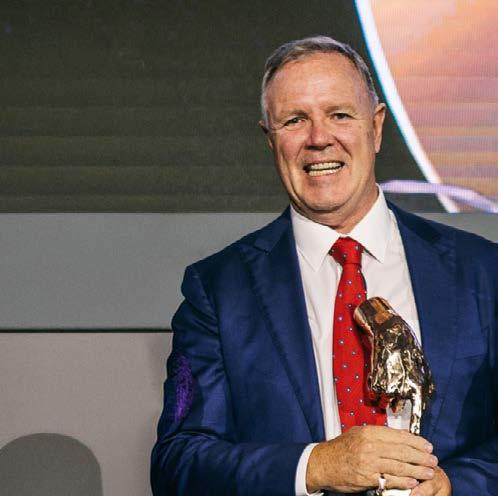
By the time I walked onto the stage at MPE to receive the Best Startup Innovation Award in Berlin, it truly felt like global acknowledgement of a journey that started in a very different place: a bootstrapped team on the far side of the world, chasing an idea that most people couldn’t see yet.
That journey, the pivots, the sliding doors, the long nights, and the decision to bet everything on identity-linked payments — is what makes this recognition so meaningful.
3. For start-ups aiming to shine in the MPE Awards, what tips or lessons would you share from your experience?
My best advice? Just do it. Jump on the plane, even if you have no idea what you’re walking into. That’s literally what I did, I dropped everything and flew to Germany with barely a week’s notice. At that point, my strategy was basically: turn up and hope for the best.
And honestly, it worked out brilliantly.
Being an Aussie founder on the opposite side of the planet, I half-expected to be sitting alone in a corner eating schnitzel. Instead, everyone at MPE was incredibly welcoming, it felt like walking into a fintech family reunion I didn’t know I was invited to.
Then came the pitch. I made it into the final 12 and thought, “Great, at least I can say we gave it a go.” But after watching the other contestants, I went back to my hotel room genuinely convinced we were done. Their tech was unbelievable — polished, powerful, futuristic. I messaged my team in Australia saying, “We’ve got no chance. These folks are on another planet.”
One hour later, I get the email: we’re in the final on the big stage tomorrow.
MPE
We also spend around 40 weeks a year on the road at global conferences: identity, fintech, paytech, AI, sovereign data, quantum computing. Some days you sit through eight hours and think, “Well, this was a write-off.”
And then suddenly someone on a panel drops a single sentence about an emerging technology, and a pearl falls straight into your lap. Those moments — the unexpected collisions — are where some of our biggest leaps have come from.
But our real superpower is structural: we have a board meeting every Saturday morning.
Every seven days, we re-align, re-assess, and, if necessary, pivot. No bureaucracy. No waiting for quarterly reviews. No “let’s revisit this next financial year.” If something matters, we can turn the entire ship in a week. That rhythm creates a culture where big ideas don’t wither, they get oxygen immediately.
We believe in moving fast, breaking things, and rebuilding them stronger. Innovation happens when you compress the distance between insight and action. That’s the energy we’ve built at Securely — part Steve Jobs’ obsession with simplicity, part Zuckerbergera velocity, and part good old Australian grit.
And at the centre of it all is one belief: the future belongs to teams who learn faster than the problem evolves. That’s what drives us every day.
5. Looking forward, which emerging trends or technologies excite you most, and how are they shaping Securely Group’s next wave of solutions?
The trend that excites me most is actually very simple to describe and incredibly complex to execute: we are moving from anonymous digital profiles to verified digital identities as the foundation of the internet.
Right now there’s a fundamental asymmetry: banks apply intense KYC, AML and risk controls to every customer, while most large
tech and social platforms apply almost none. That identity “gap” between the heavily regulated banking system and the lightly regulated digital world is exactly where scammers and bad actors live.
Over the next decade, that gap will close.
Regulators, banks, platforms and consumers are all converging on the same conclusion: we cannot have one part of the system doing all the identity heavy lifting, while another part – where the scams actually start – does almost nothing. The identity of digital profiles will need to be anchored to something real, and in most countries the most robust, continuously updated identity infrastructure already exists inside the banking system.
That’s the first big shift that shapes everything we do at Securely: binding digital profiles to bank-grade identity, in a privacyrespecting way, and then orchestrating payments on top of that.
The second major trend is agentic AI – not just AI that scores risk or flags anomalies, but AI agents that can act across systems on your behalf. I think agentic AI will reshape KYC, fraud, and payments for at least the next two decades.
Instead of static, one-time KYC at onboarding, we’ll move to continuous, contextual KYC:
• AI agents watching for behavioural changes that don’t fit a user’s normal patterns.
• Real-time checks across identity, device, location, transaction history and social graph.
• Dynamic risk profiles that adapt secondby-second, not year-by-year.
The same technology that scammers are starting to use to automate attacks will be used by banks, PSPs and platforms to defend users in real time. At Securely, we’re baking
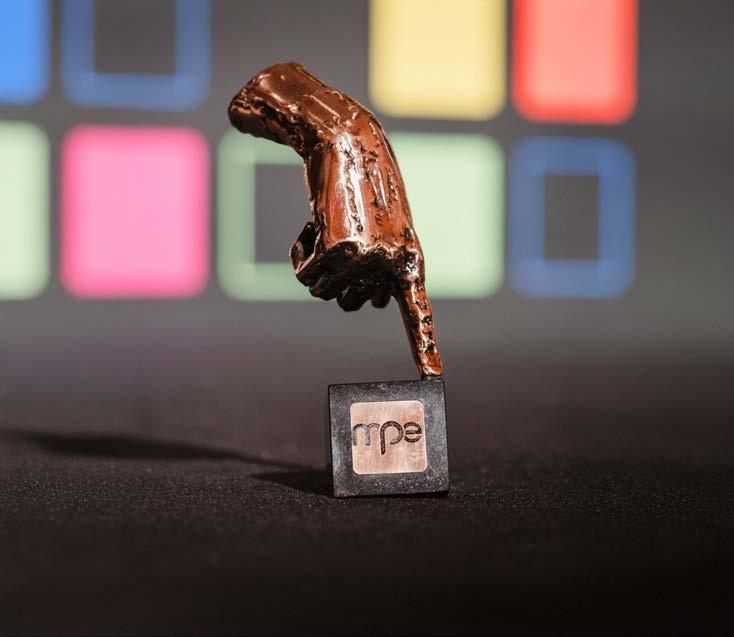
The guiding hand
A symbol of excellence.
Winners receive the prestigious “Guiding Hand” statuette —crafted by renowned artists as a lasting symbol of leadership and innovation in payments. It’s more than an award; it’s a mark of industry excellence. Submit your nominations now — be
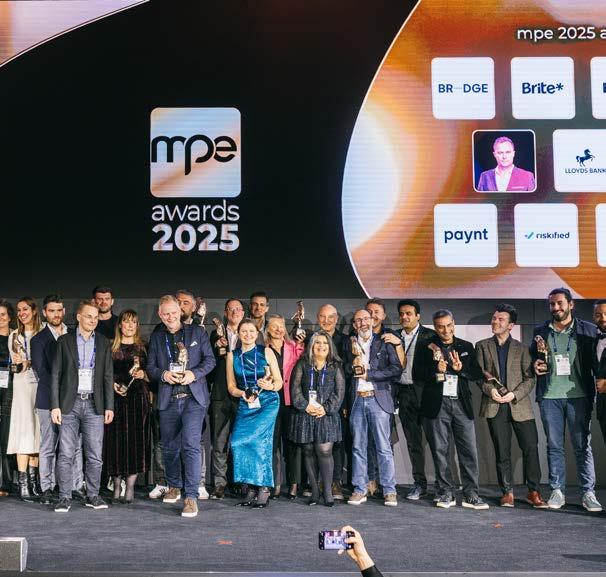
Up. Stand Out. Shape Payments. The MPE Awards are the stage where bold leaders, trailblazing startups, and forward-thinking investors collide — celebrating progress and rewriting the rules of merchant payments.