Jacqueline Surdell
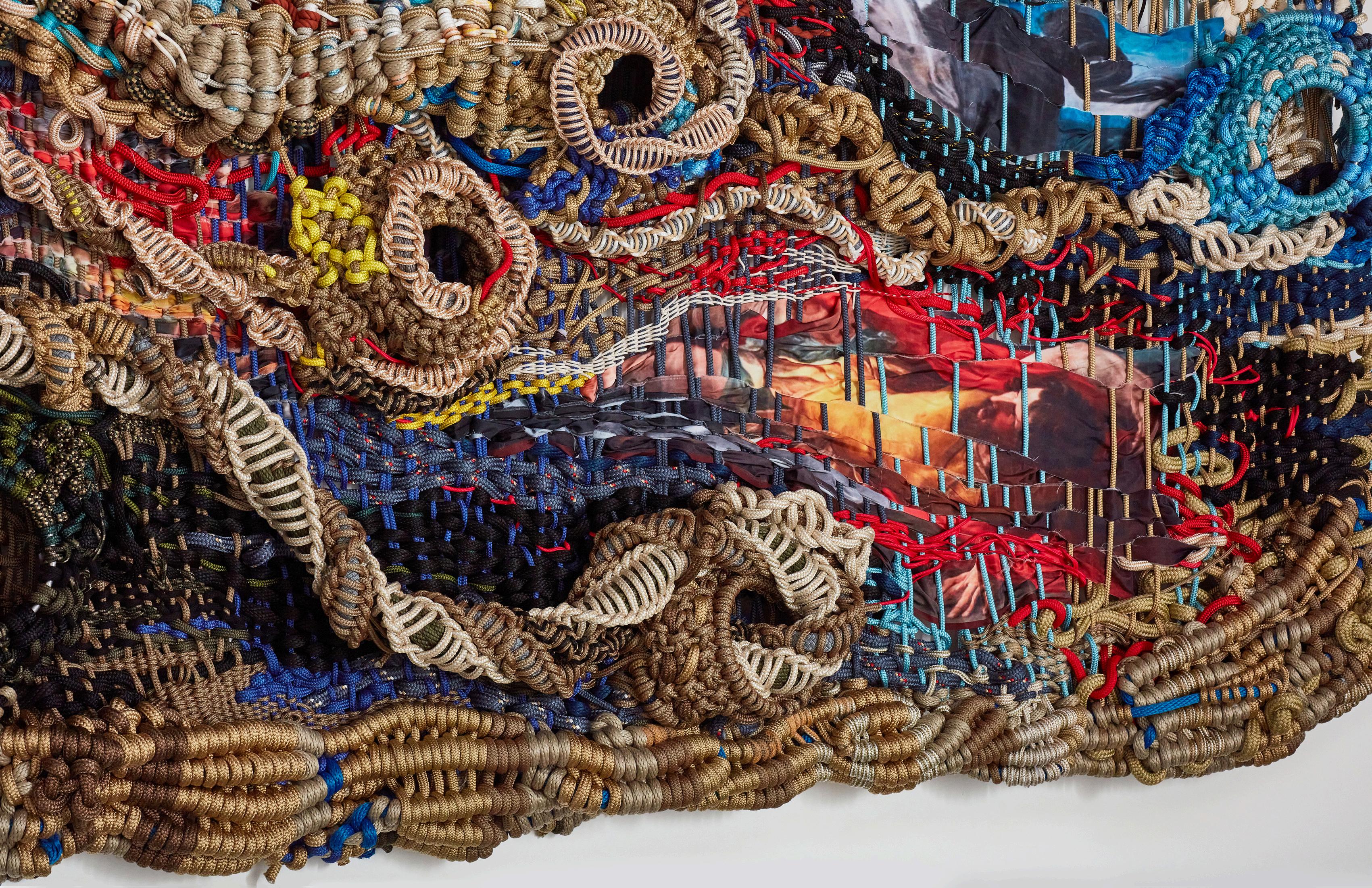
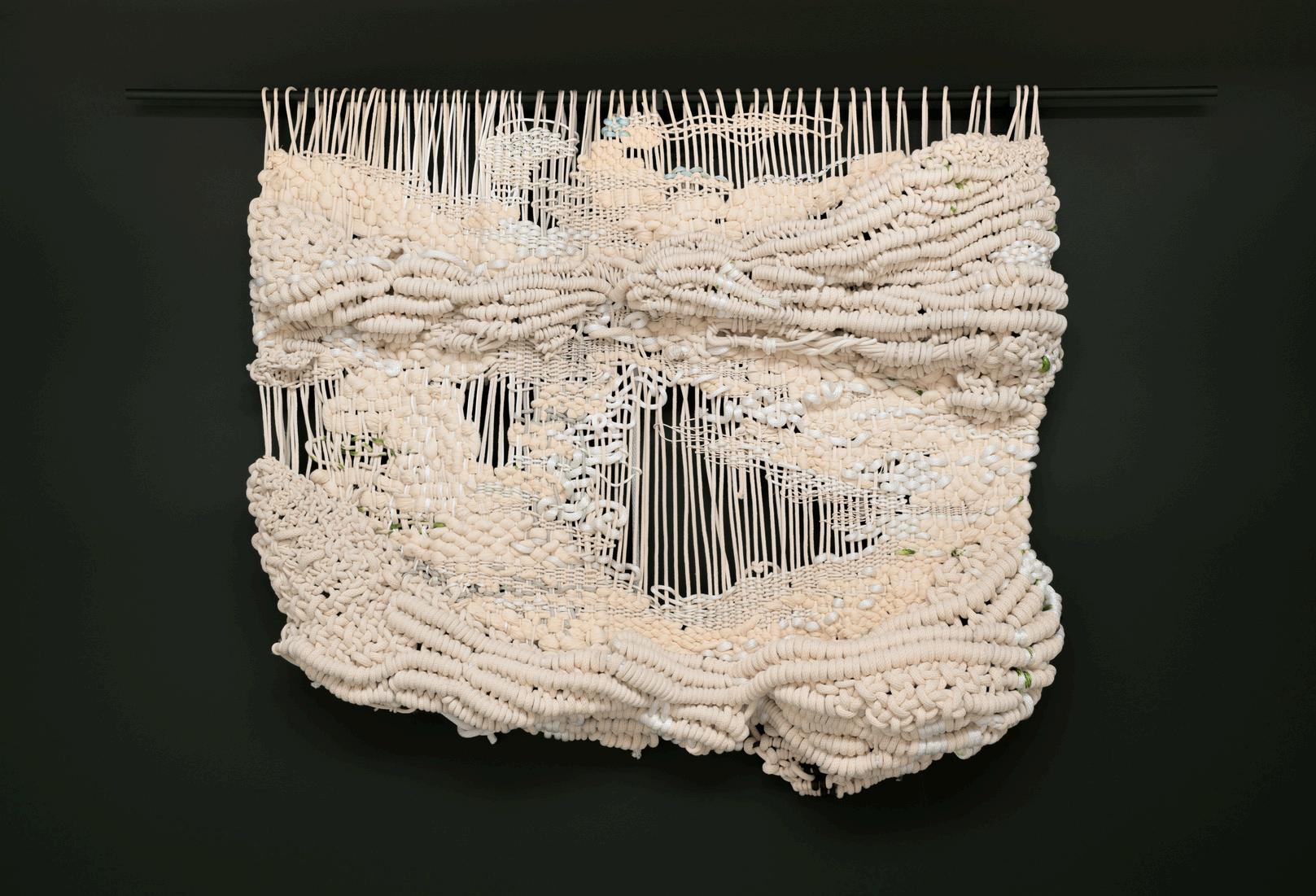
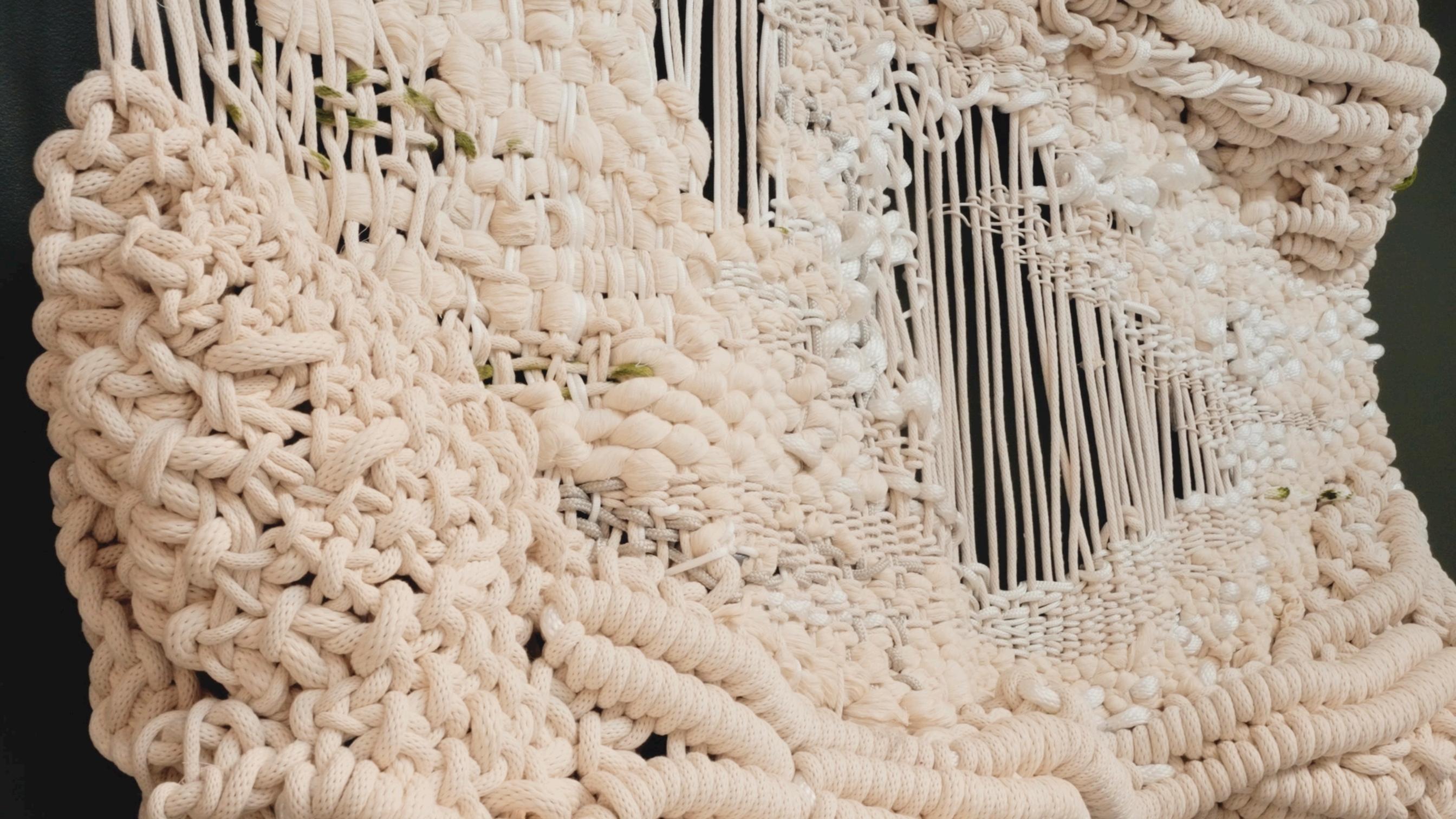
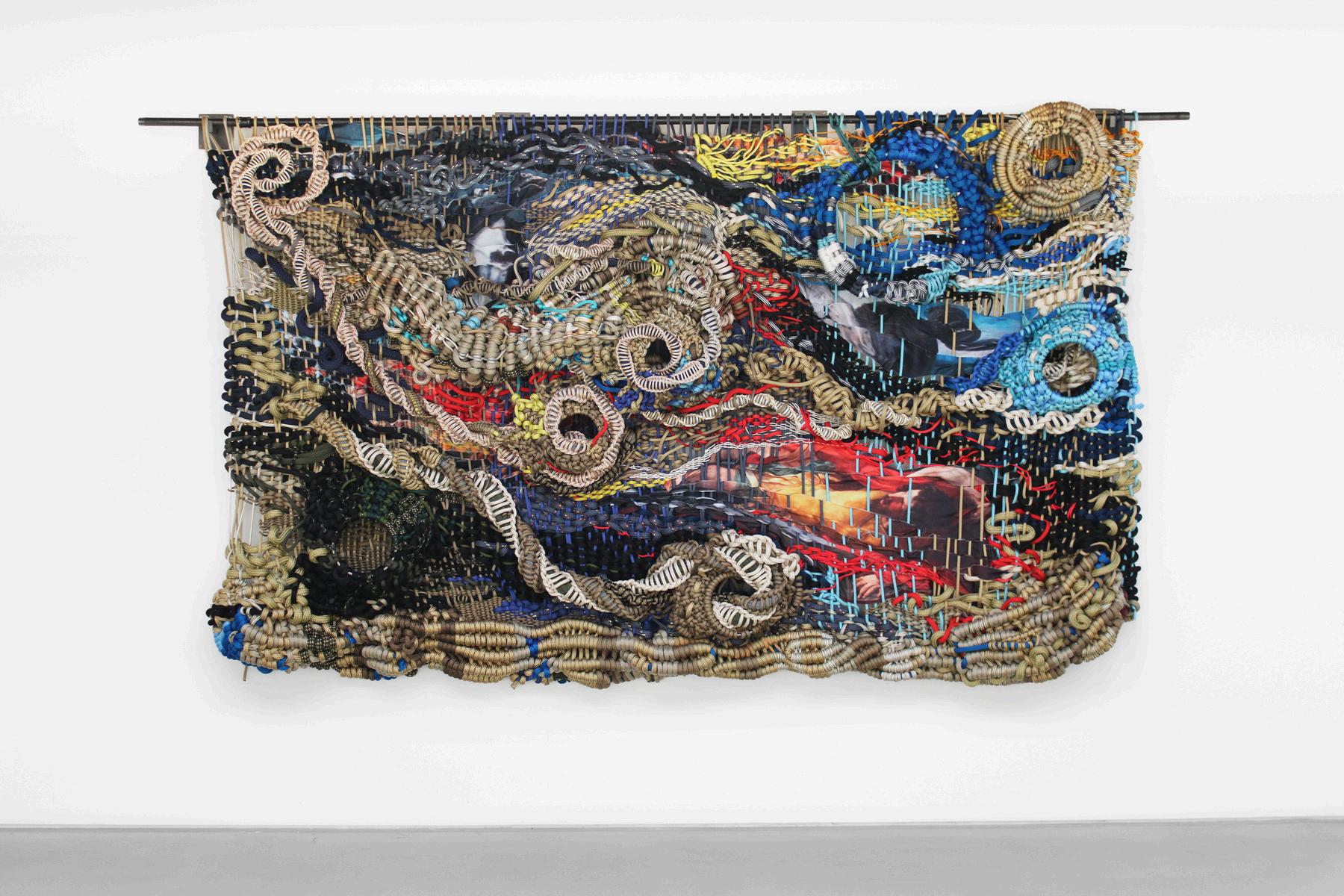
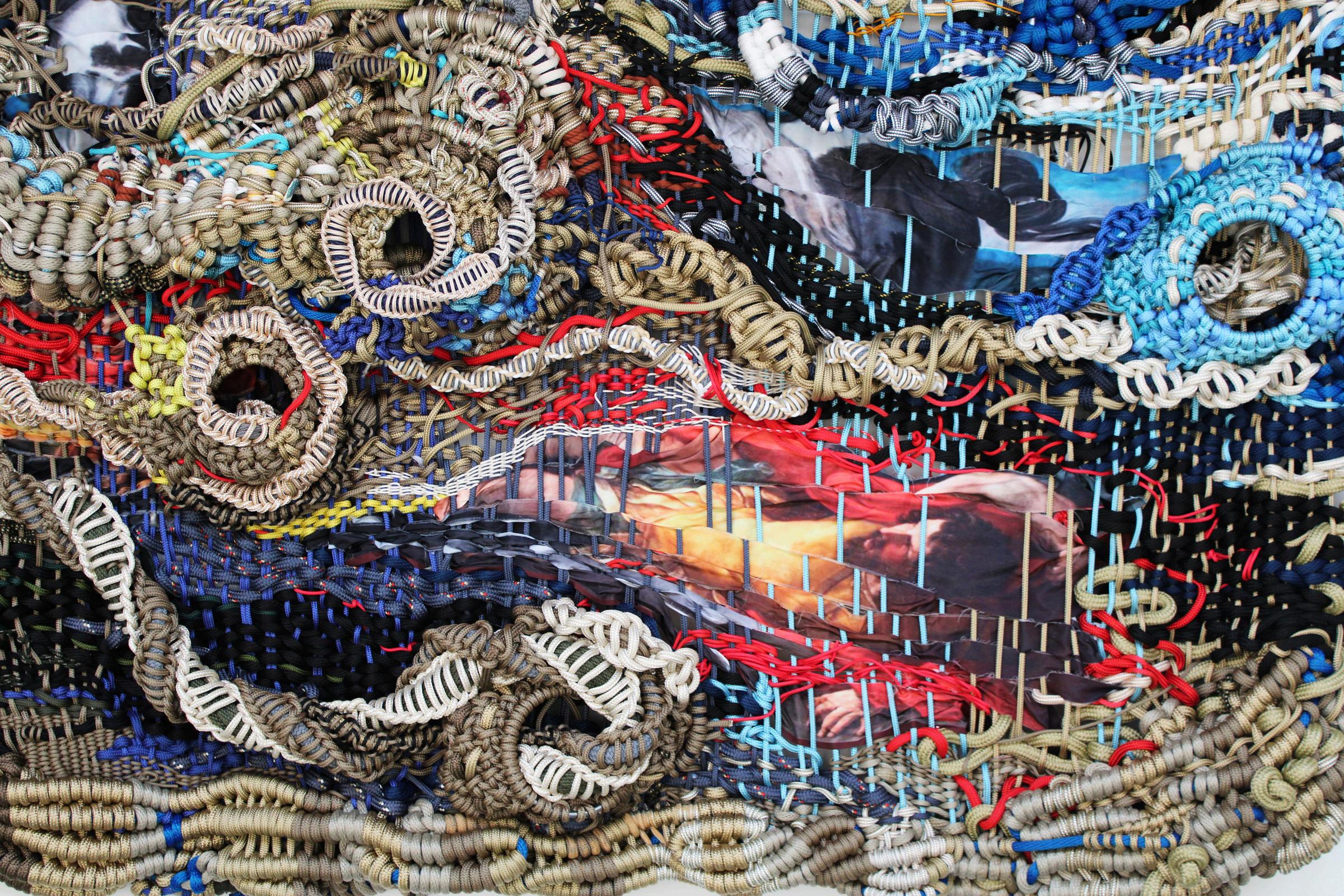
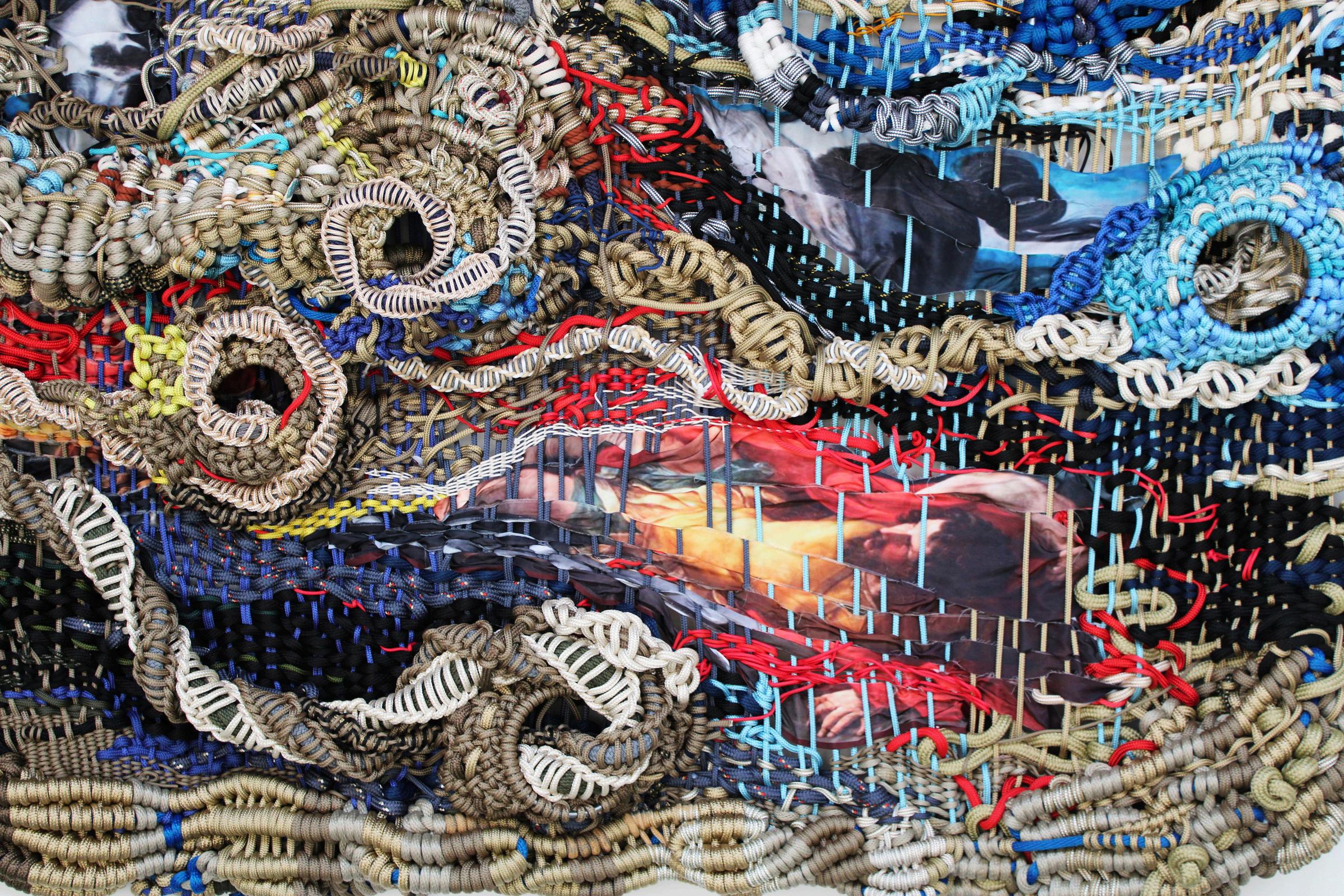
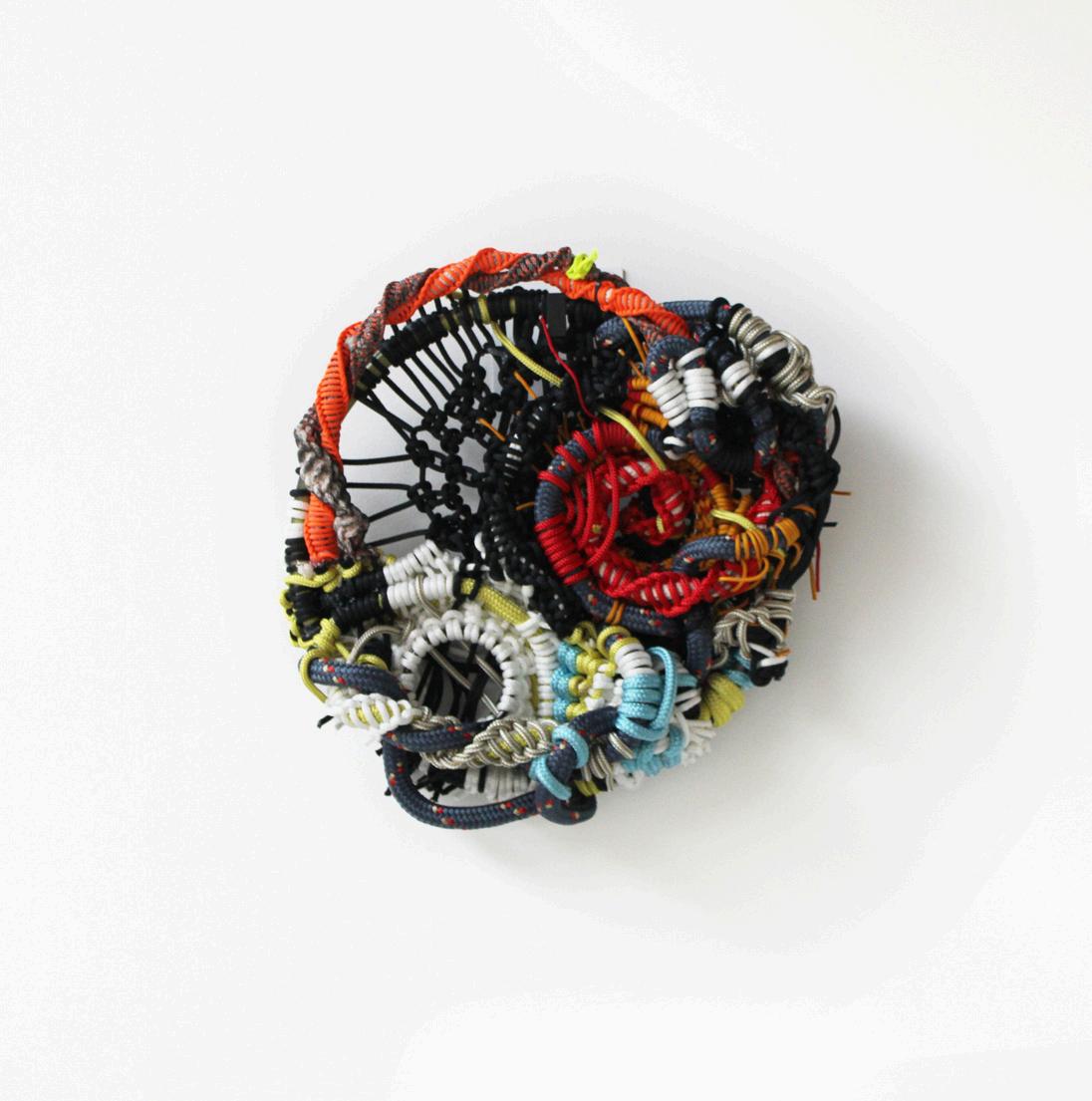
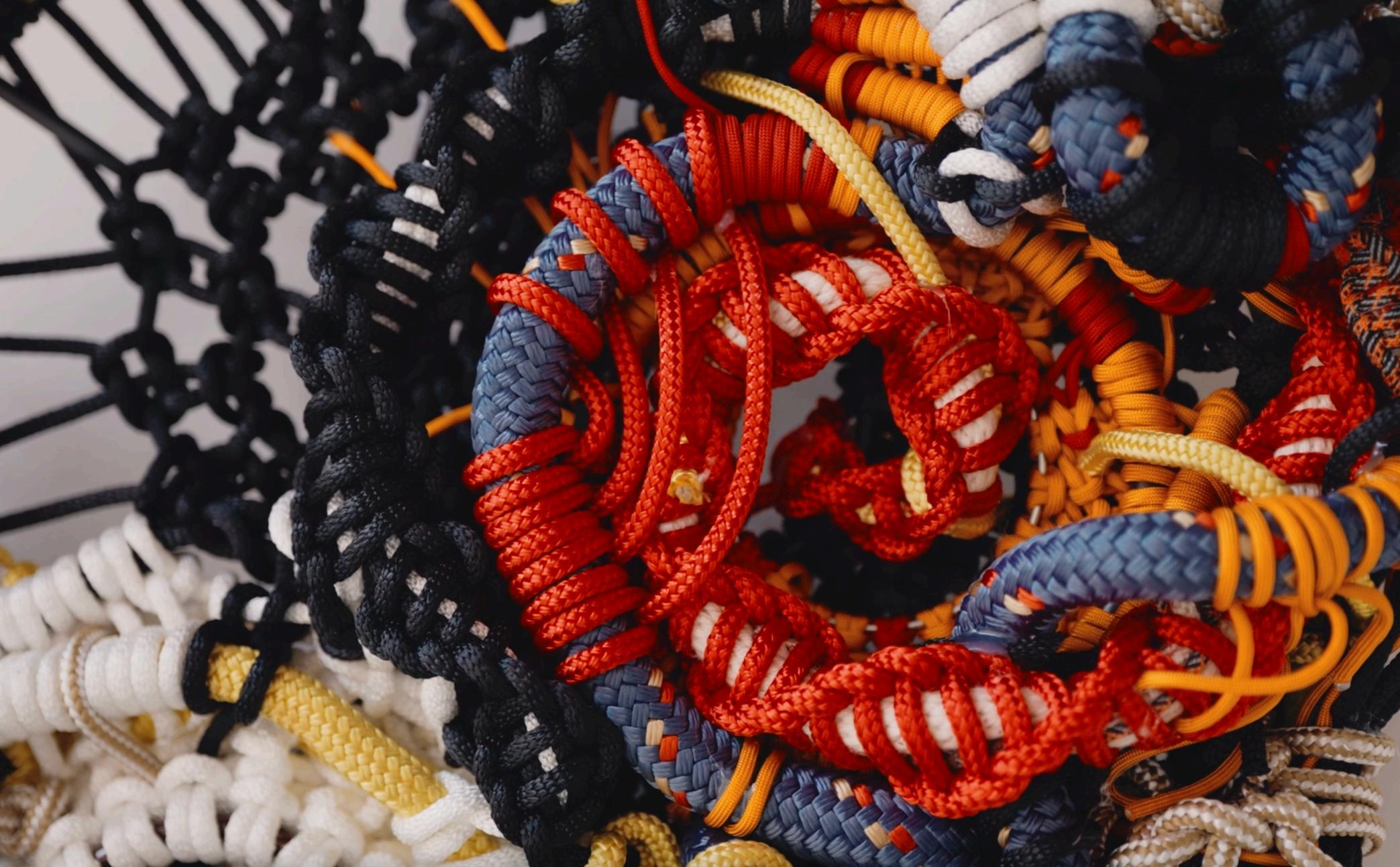
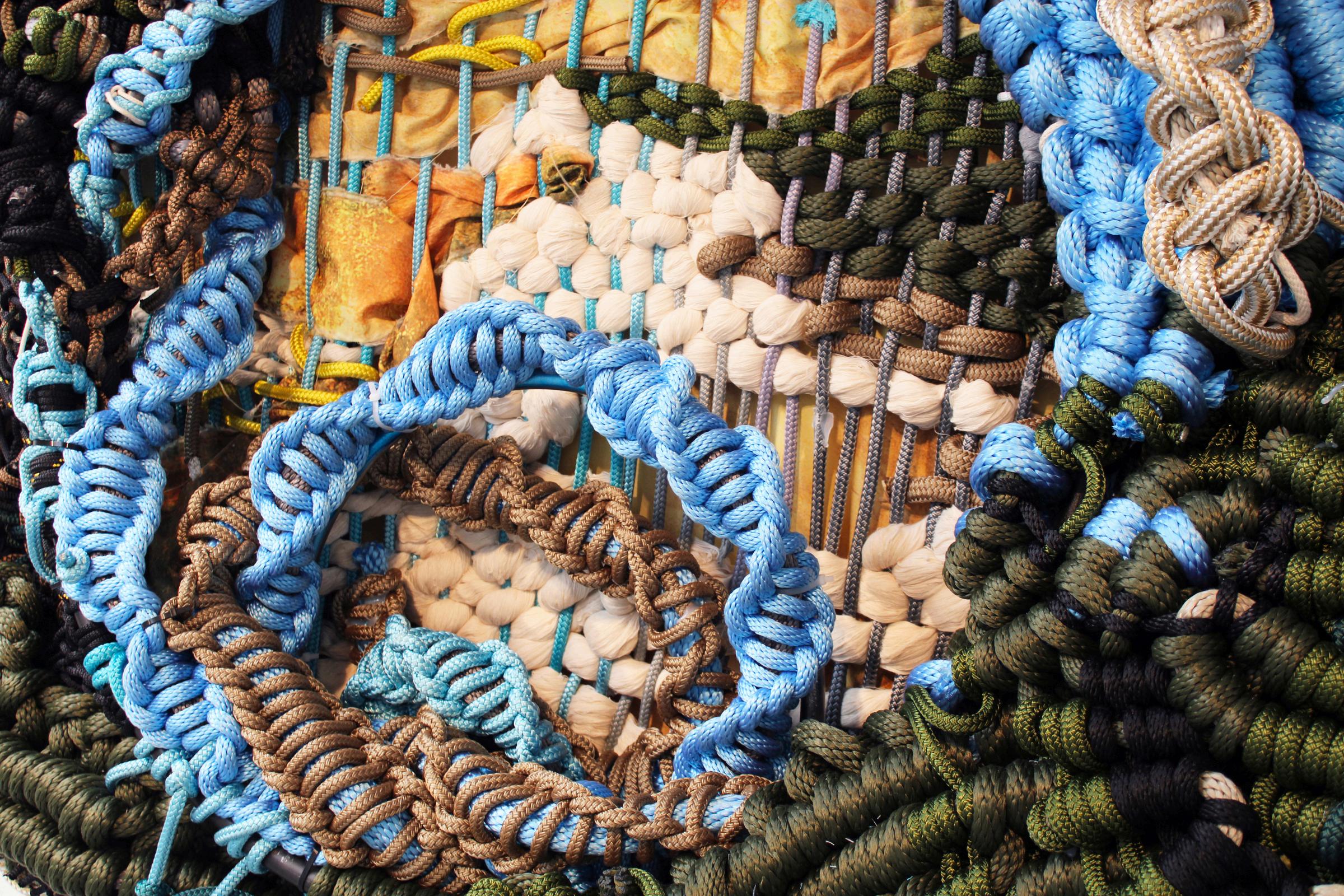
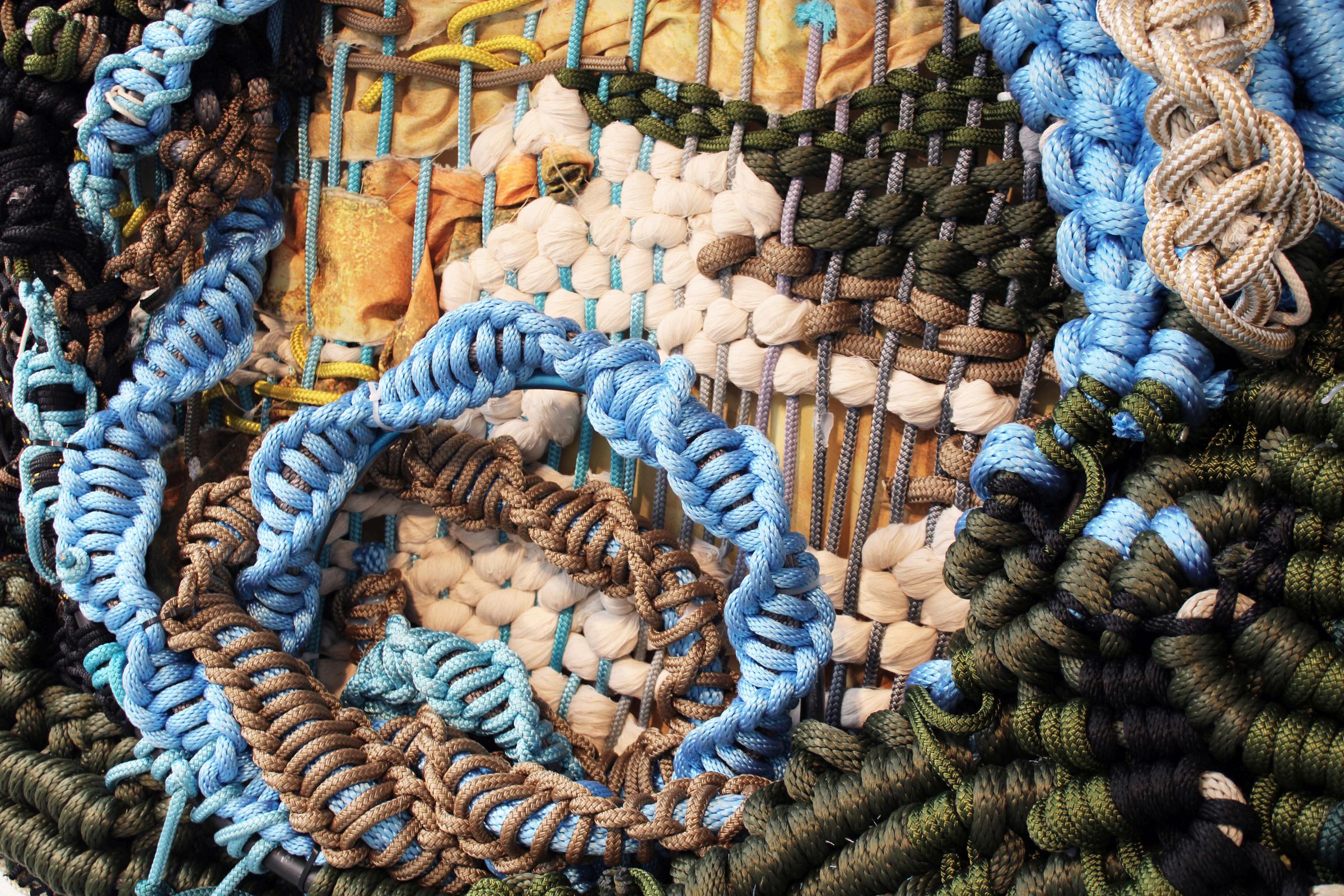
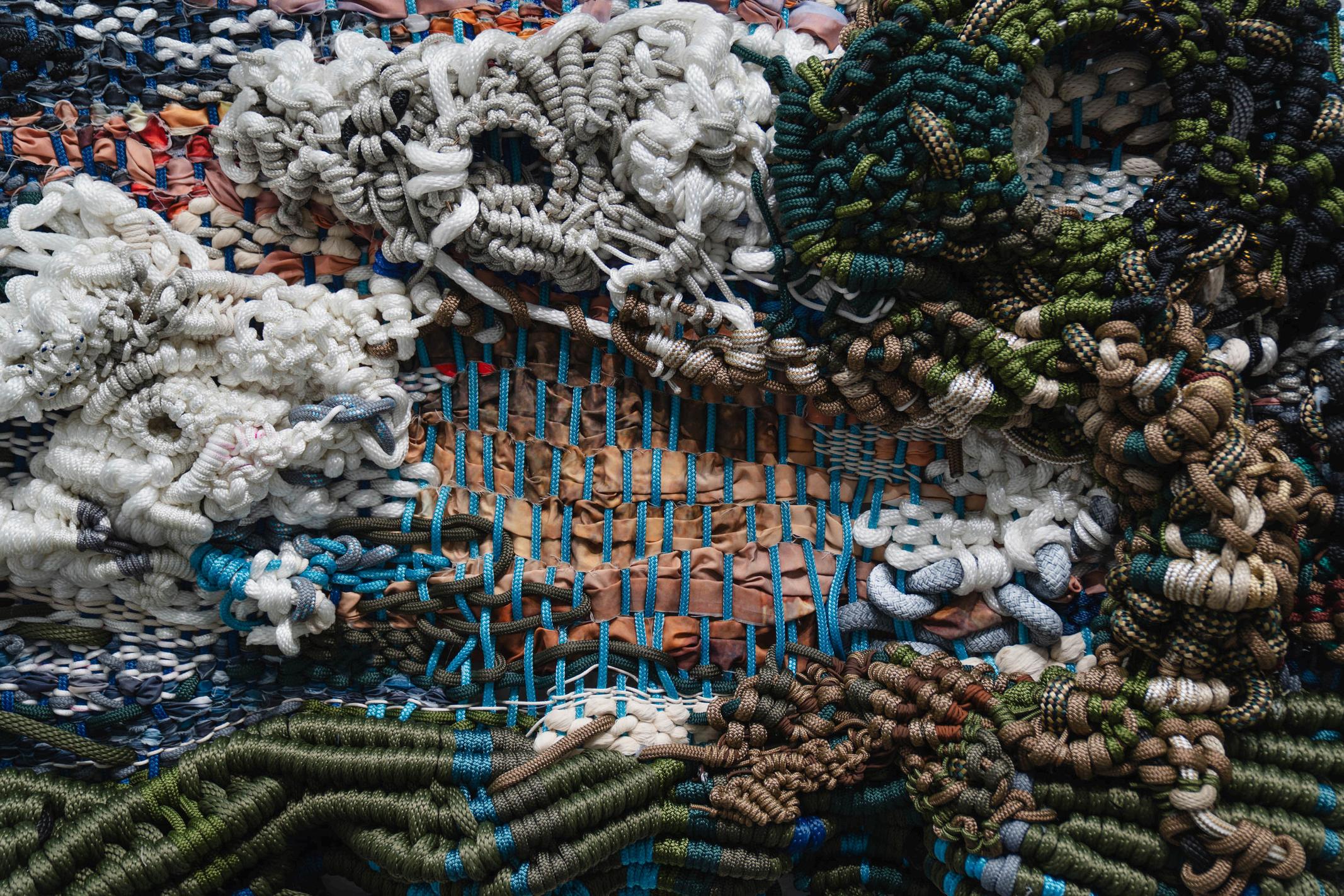
Cover image: Paul (detail), 2025
Photo by Ian Ace
September 19 - November 15, 2025


By Britton
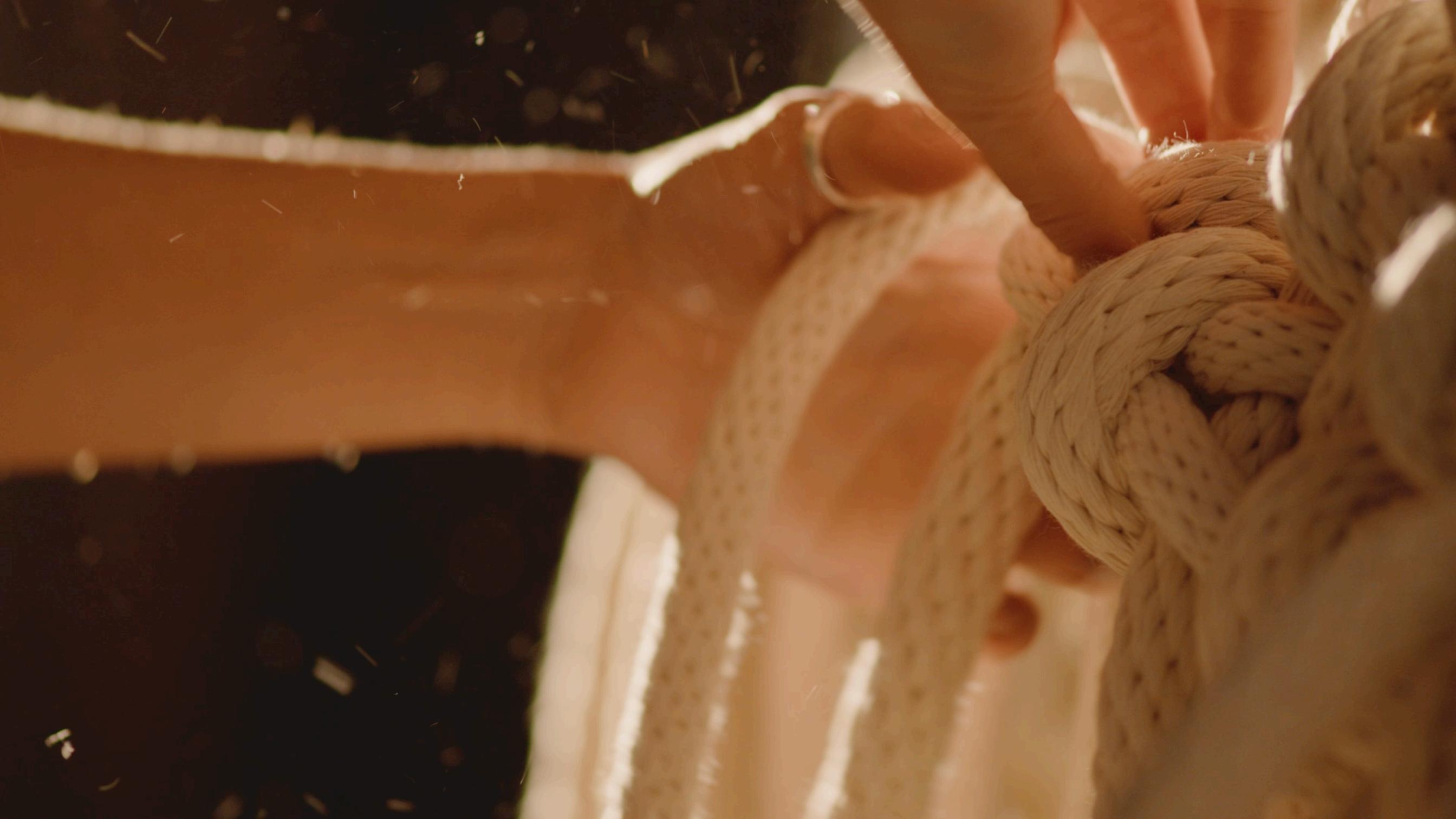
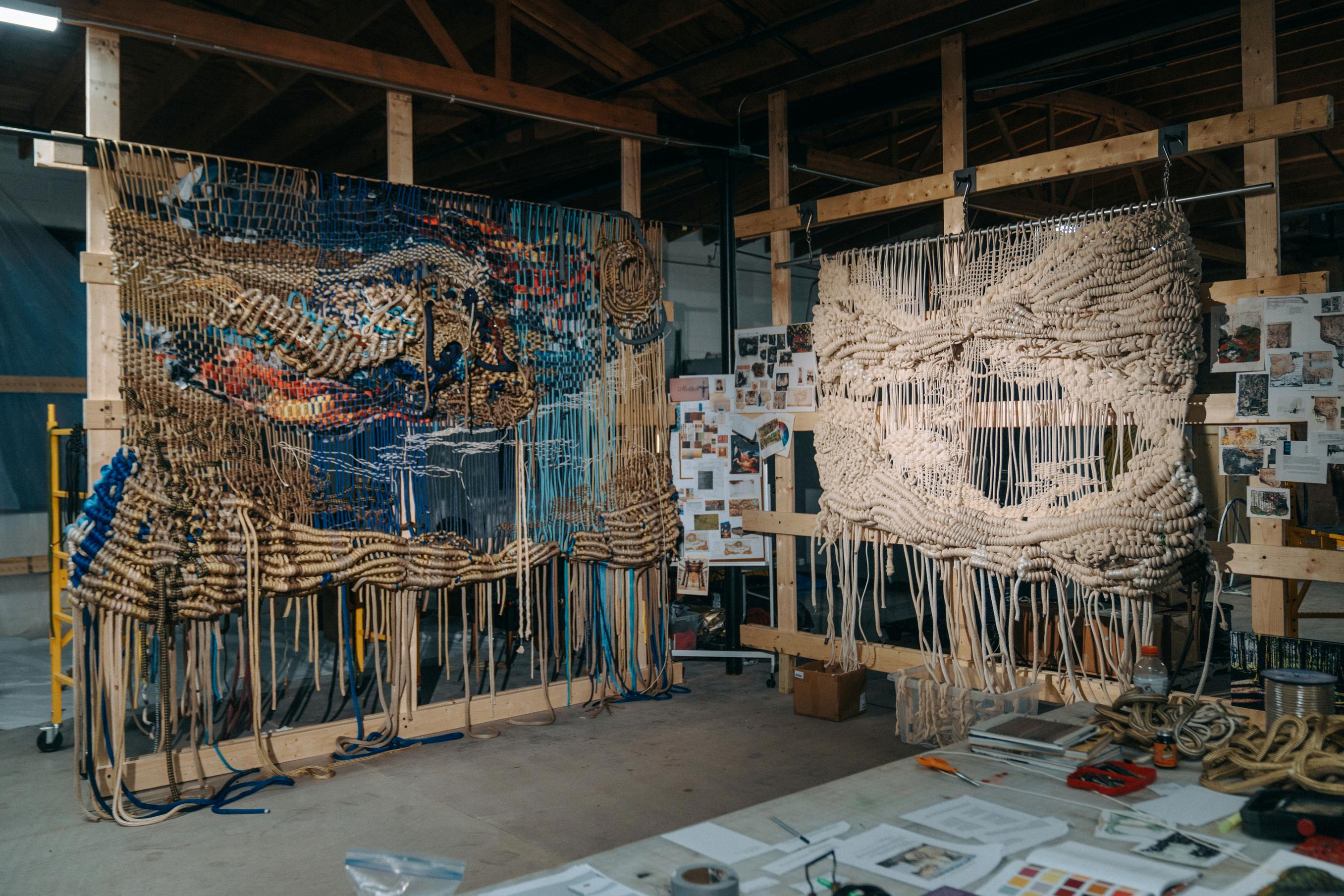
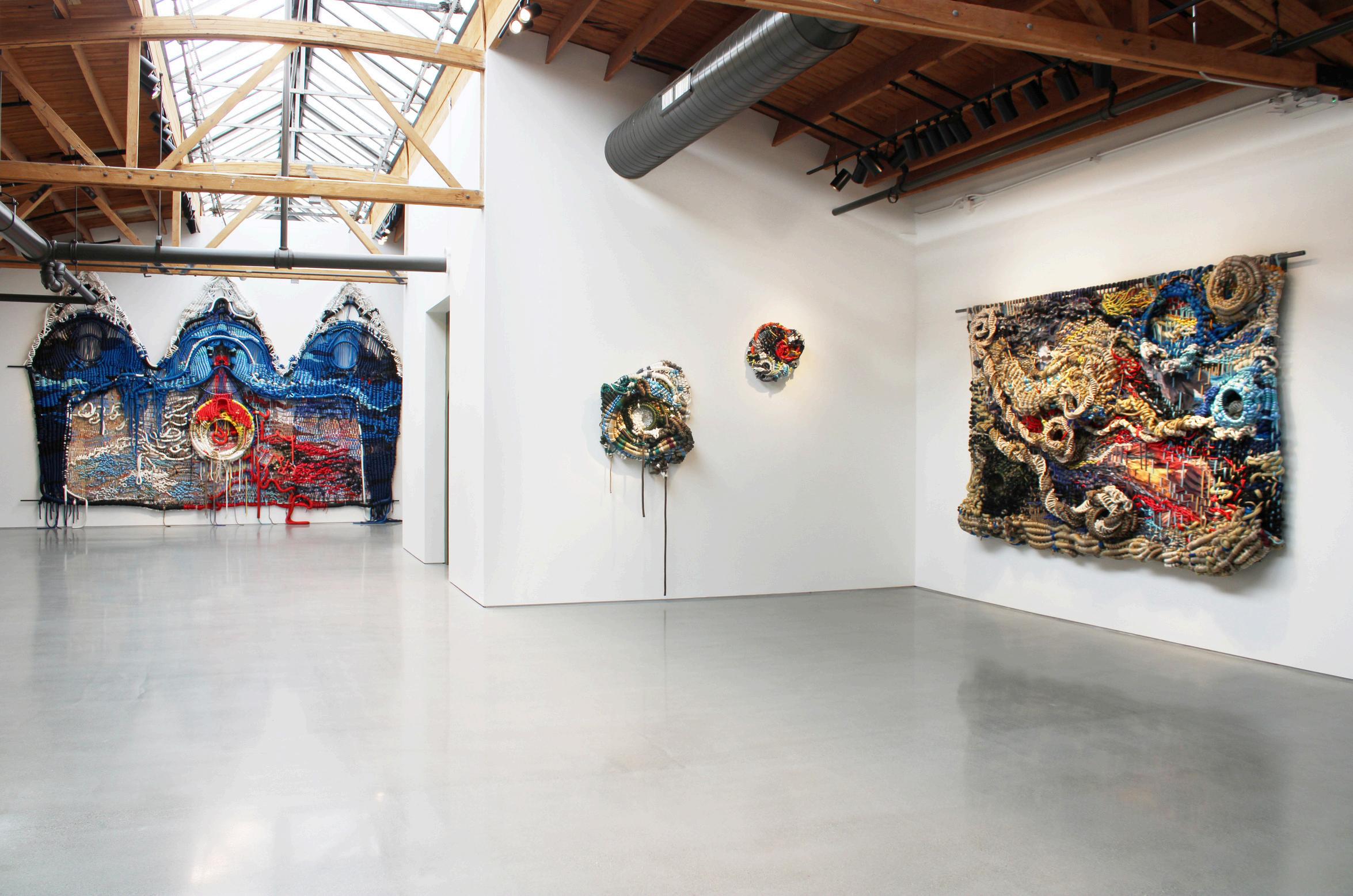
SECRIST | BEACH is pleased to announce its debut solo presentation with Chicago-based artist Jacqueline Surdell: The Conversion: Rings, Rupture, and the Forest Archive On view will be a suite of new monumental wall-based fiber landscapes created through knotted textile forms. This exhibition is presented in conjunction with Natura Non Constristatur, an invitational survey featuring 11 artists co-organized with Jacqueline Surdell In addition, the gallery’s salon space features a site specific installation, titled Lumen Reliquary, created by Andee Hess of Osmose Design (Portland, OR) inspired by the concurrent exhibitions.
The Conversion: Rings, Rupture, and the Forest Archive is a deeply personal ode to the mystical, visceral and illusory nature of forests In tracing the psychic and physical imprints of history, memory, and myth within this environment, the forest is presented not as a backdrop, but a contemporaneous reliquary. Influenced by Jungian archetypes, feminist storytelling, and environmental histories, her landscapes suggest the invisible threads that link generations through blood, myth, trauma, and resilience. In this space, memory is not fixed; it mutates, deepens, and expands
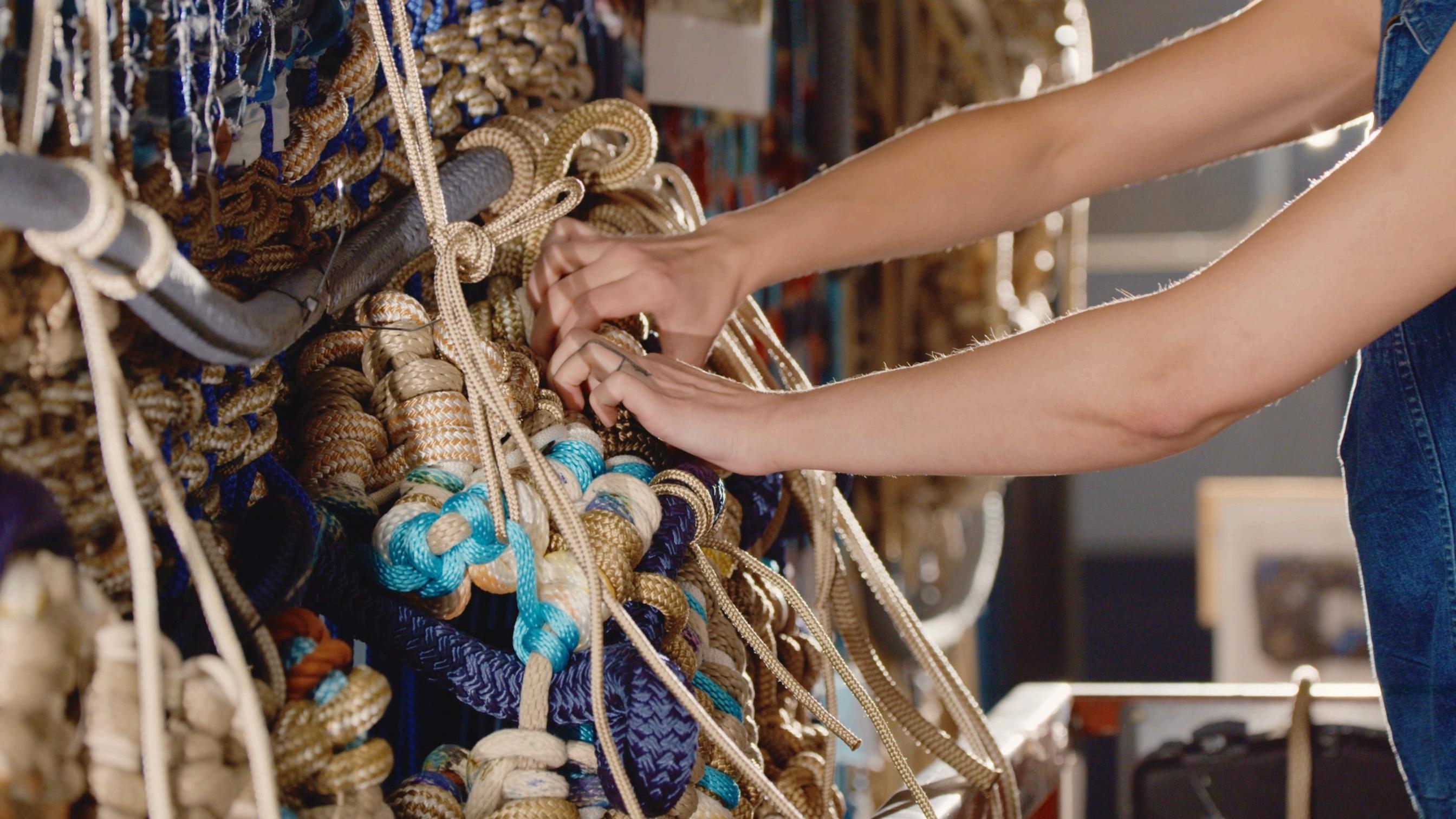
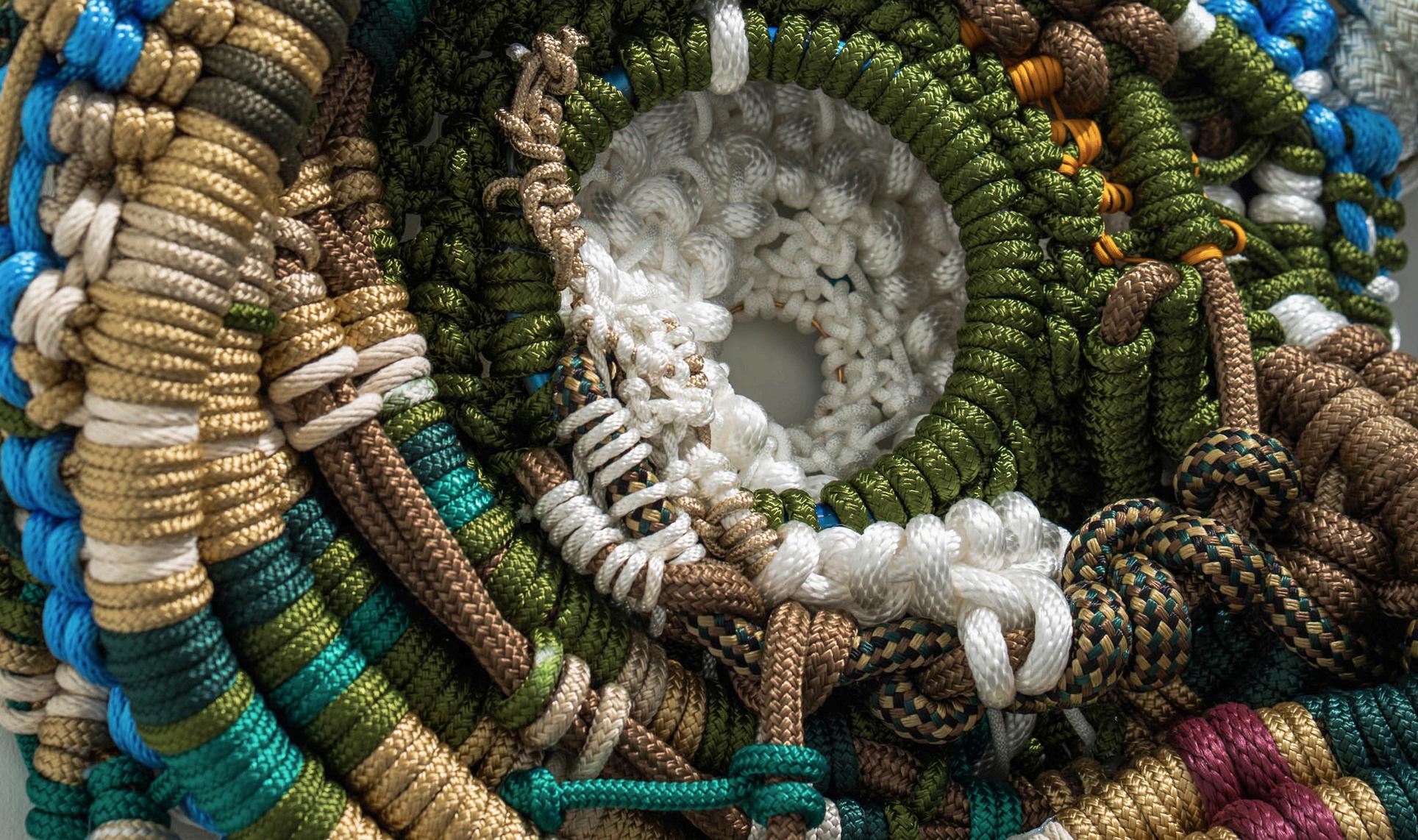
Jacqueline Surdell engages the forest as both witness and participant in human history. Industrial materials rope, netting, and mesh are twisted and suspended into dense, sprawling configurations that evoke wounds, altars, ecosystems and topographies Techniques inspired by friendship bracelets infuse the work with intimacy and care, transforming utilitarian tools of labor and survival into gestures of connection and devotion.
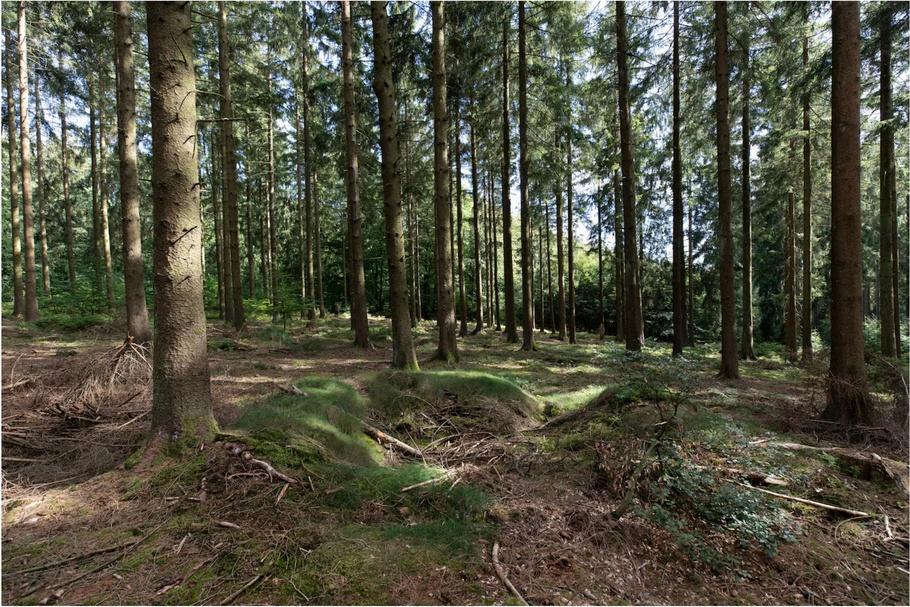
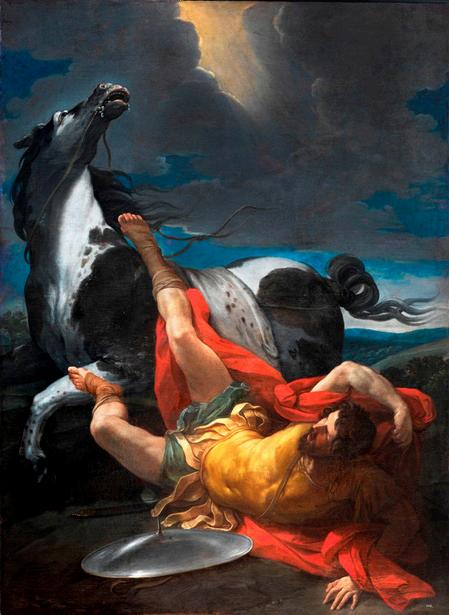
Through woven images drawn from historically relevant paintings, Surdell engages a legacy of painting in a contemporary exercise of reference, reflection, and an openness to metamorphosis The Garden of Eden by Jan Brueghel the Elder (1610-1612) and Thomas Cole (1828) and renditions of The Conversion of Saul (the biblical transformation of Saul into Paul) by Guido Reni, Jérôme Cartellier and Luca Giordano all grant Surdell aesthetic archetypes of cataclysmic change, spiritual vision, and pastoral sensibilities Archival images of the Battle of the Bulge and the Ardennes Forest, its location during World War II, ground an inherited connection between the artist and her great uncle Paul.
Drawing from Catholic ritual, ancestral honoring, childhood storytelling and mythic structures, Surdell reimagines the forest not as a resolved metaphor but as a site of transformation and transcendence Each artwork represents a complex moment representing both exile and of vision, where the sacred and the haunted coexist. They hold space for contradiction grief and joy, violence and tenderness, play and survival all in flux. This exhibition offers no conclusion. Instead, it invites witnessing without conclusion: a practice of staying with complexity, holding what cannot be solved, and allowing meaning to shift, contradict, and slowly unfold over time
To write a story of Surdell’s exhibition is to explore the concept of syzygy Syzygy, Greek for ‘yoked together,’ marks a rare convergence of distinct or even opposing forces, where their separateness collapses, producing a singular, irreducible, and charged whole. In The Conversion, the site of this conflation is the forest, where forces of cataclysm fuse, and the whole is a spirit that emanates from the work
In Surdell’s first solo exhibition with Secrist | Beach, one enters the forest. Within this forest, the personal, mythical, and spiritual merge as archetypal encounters with the unknown. To enter this forest is to leave markedly different than who one was, the stories they understood to be true, and their belief in chance
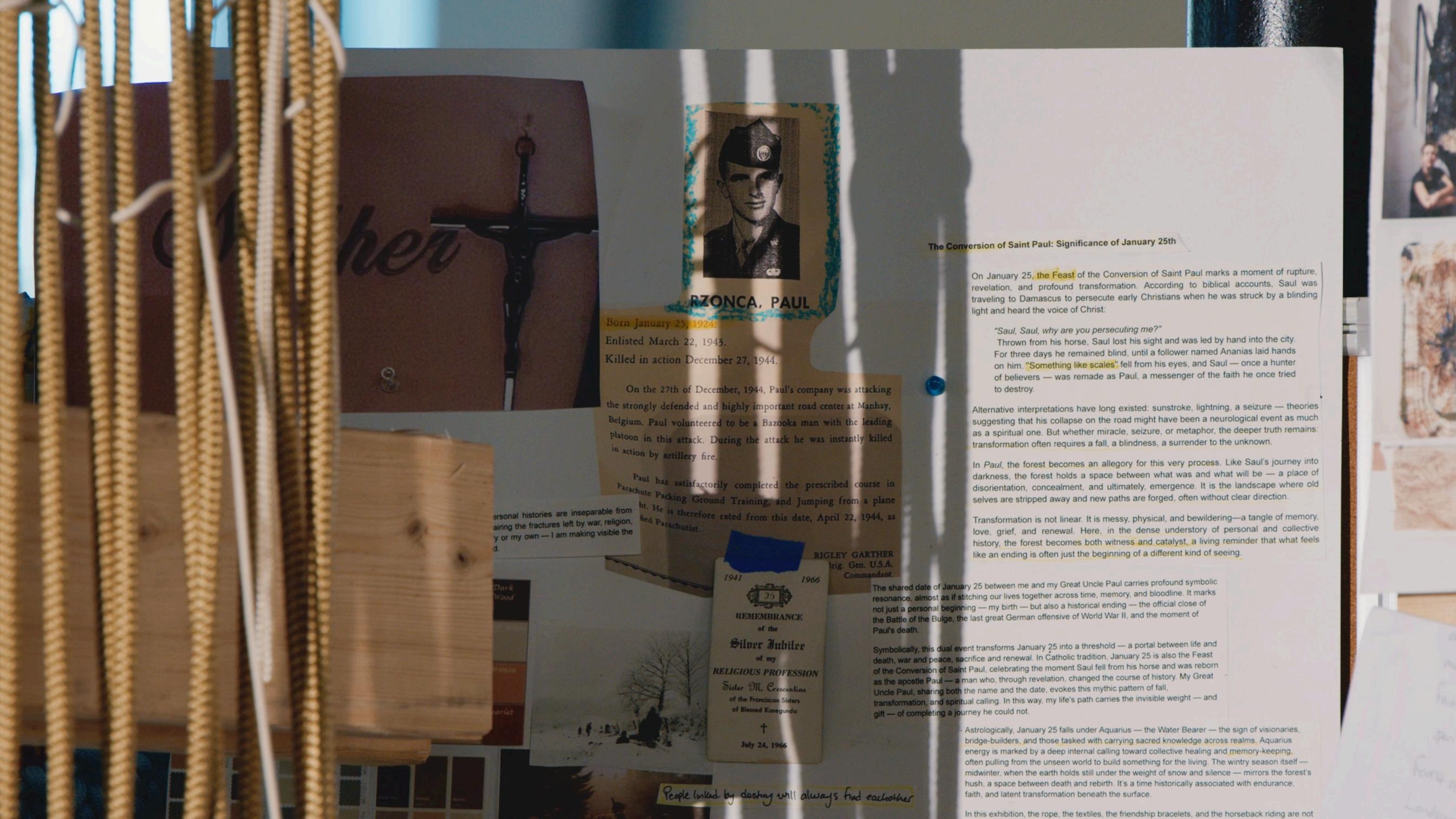
Raised Catholic, Surdell brings into her work a biblical story, the Conversion of Saint Paul, grounded in a surrender to enlightenment. Saul, a persecutor of Christians, is thrown from his horse on the road to Damascus and sees the light of God As Jesus speaks to pagan Saul, in that instant, in a divine alignment, Saul becomes Saint Paul, irrevocably transformed Her great uncle Paul, named after the Saint, perished in the Battle of the Bulge during World War II. Deep within the forest, his fate could only be known at the conclusion of the last German offensive on January 25, 1945, the date of the artist and her great uncle’s shared birthday, along with that of Saint Paul’s conversion, a piece of family lore within the mythology of the forest
The forest is a source of potent allegory, representing foreboding fears, precipices of immense change, and confrontations with the self. Surdell’s mother recited fairytales of the forest, the secrets and stories recorded by these wooded areas, memory kept by the trees
If syzygy is an unprecedented alignment of disparate elements into singularity, the forest provides an opaque canopy for the unexpected. In the forest, Surdell is reminded of her great uncle, embodied in her intrigue, on the cusp of conversion, and empoweringly blind. The Conversion is born of these legacies and births a spirit of transformation, an enduring force of succumbing to the unknown that originates long prior to Surdell’s birth and does not seem to end a moment before humanity’s demise.
Syzygy, scientifically, is used to describe astronomical phenomena such as solar eclipses, where distinct systems fall into a rare balance, or synchrony That moment of suspension cannot be understated as anything ordinary, but rather quite extraordinary. In The Conversion, somewhere in the corners of the forest, Surdell finds a fragile harmony, and shares with us mere fragments of that experience, something quite indefinable, but which the audience revels to find themselves.
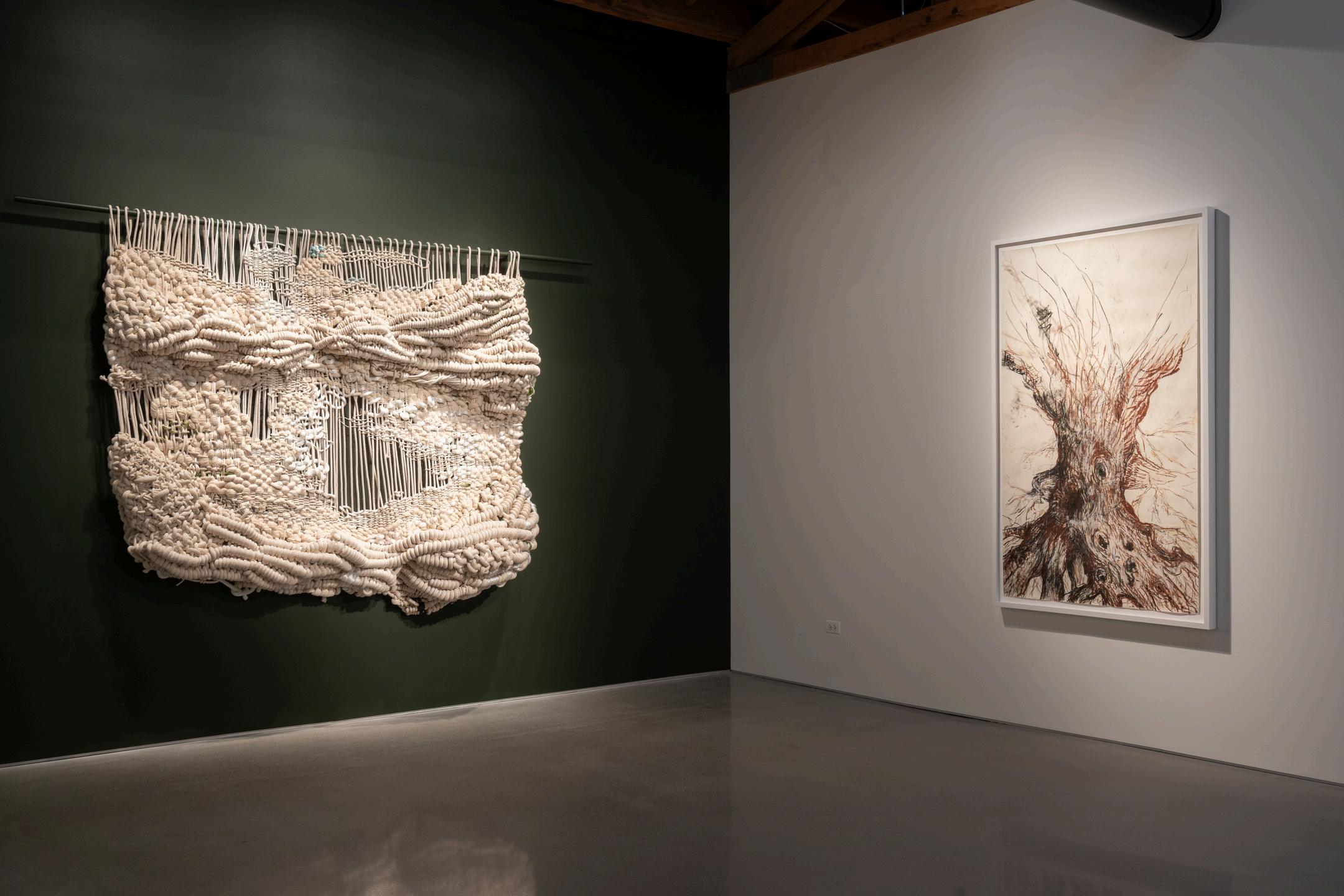
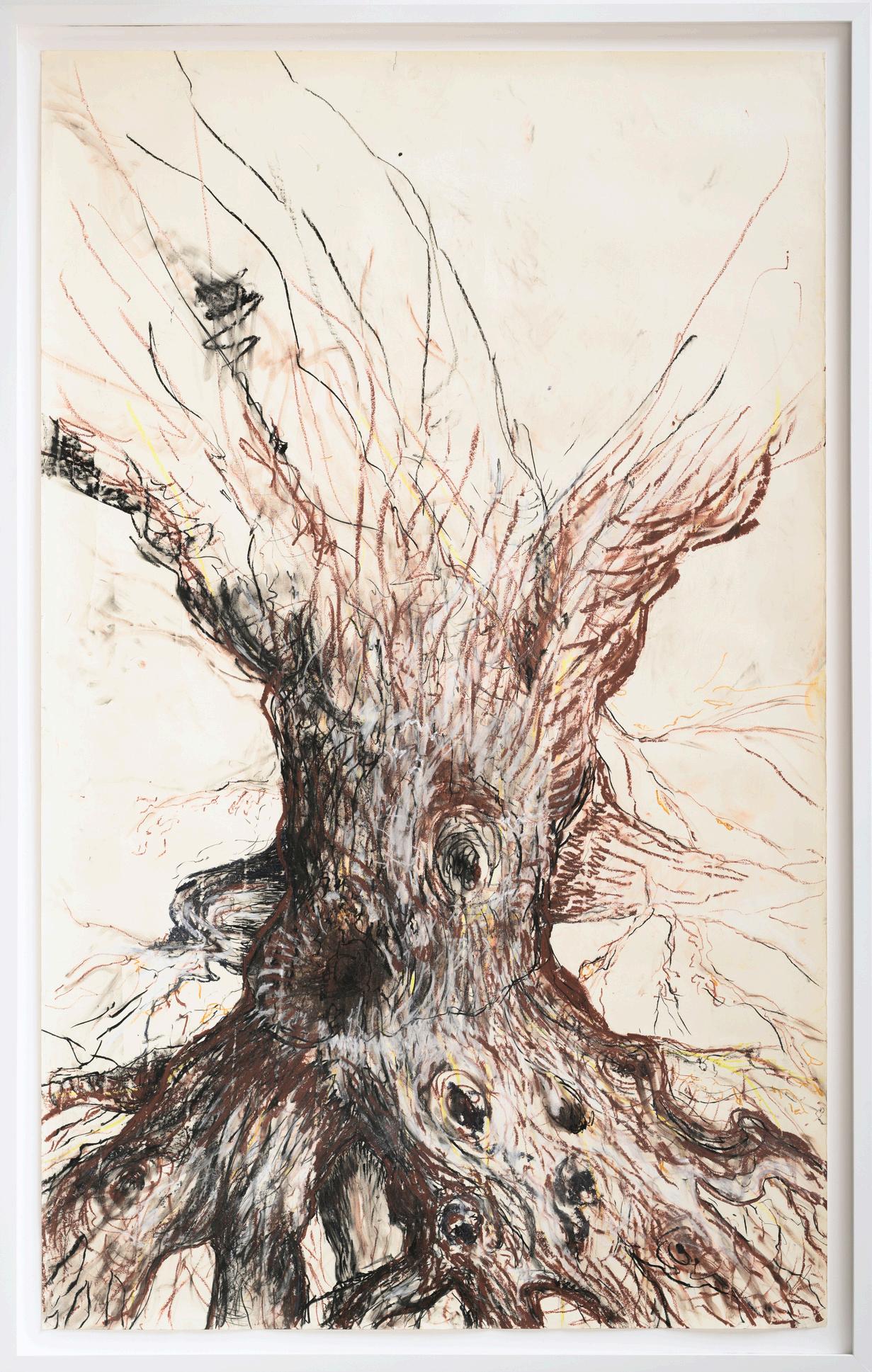
Origin Study (Human Measurements) 2, 2017-2025 Ink, oil pastel, body paint, and charcoal on paper 73 x 46 5 inches, framed
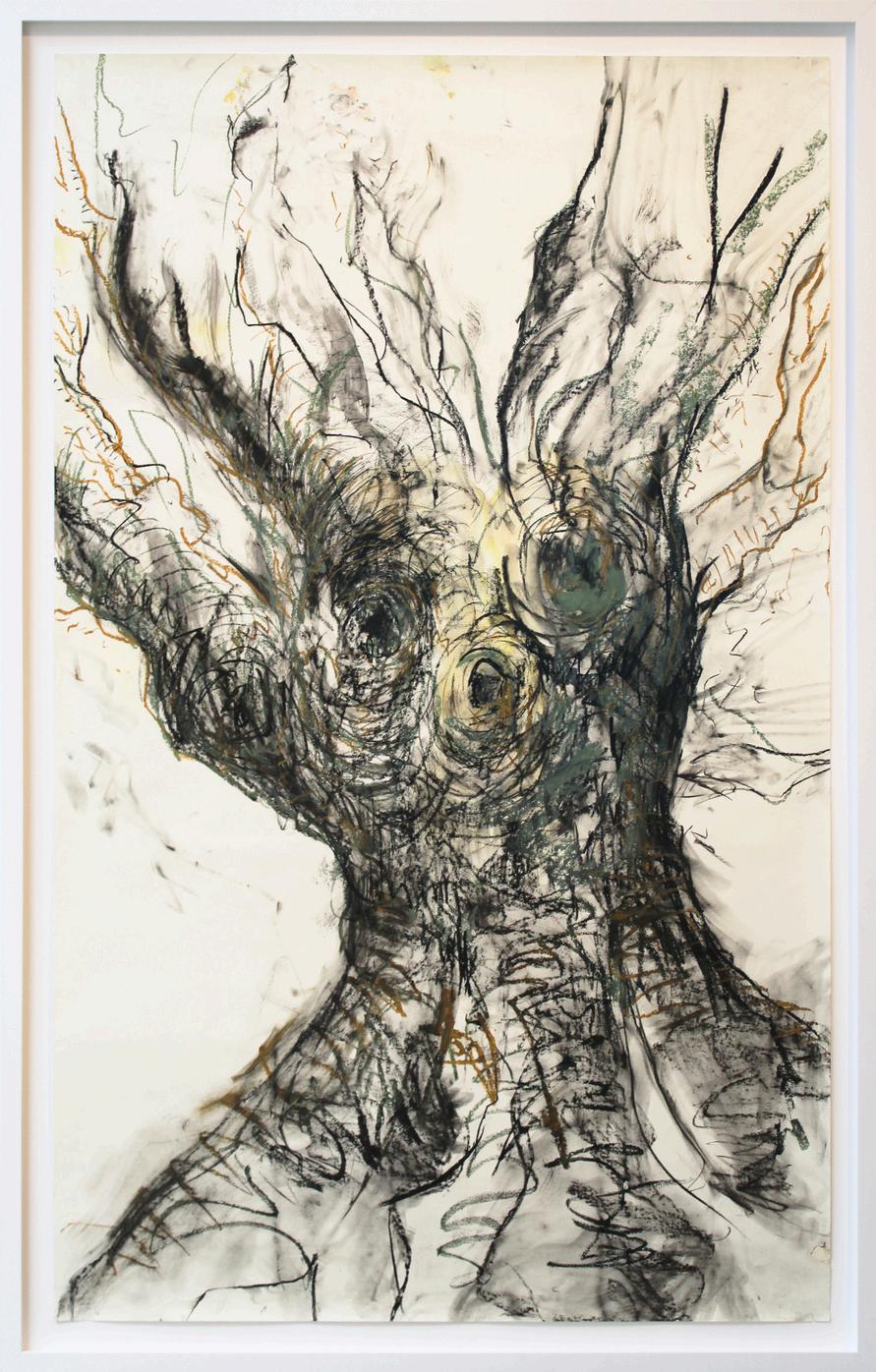
Origin Study (Human Measurements) 3, 2017-2025
Ink, oil pastel, body paint, and charcoal on paper
63 5 x 40 5 inches, framed
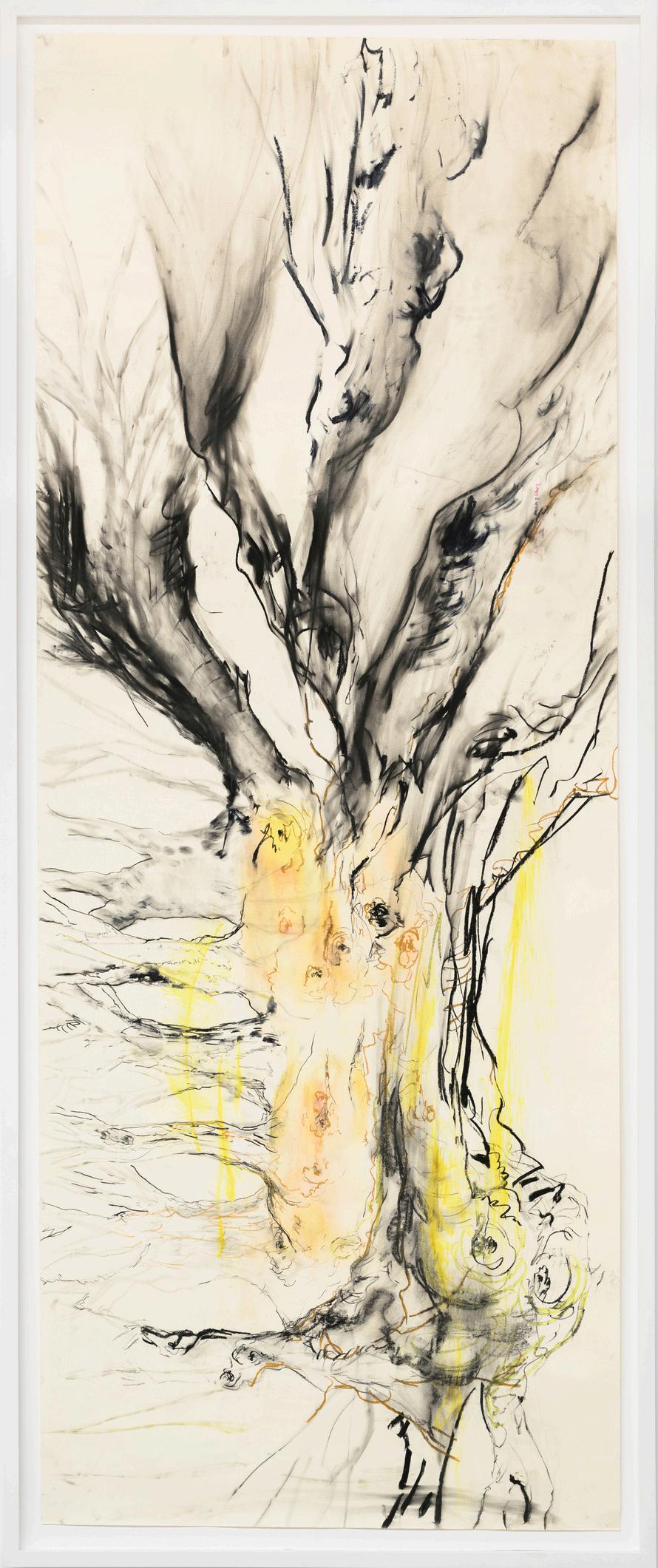
Origin Study (Human Measurements) 1, 2017-2025 Ink, oil pastel, body paint, and charcoal on paper 97 x 40 25 inches, framed
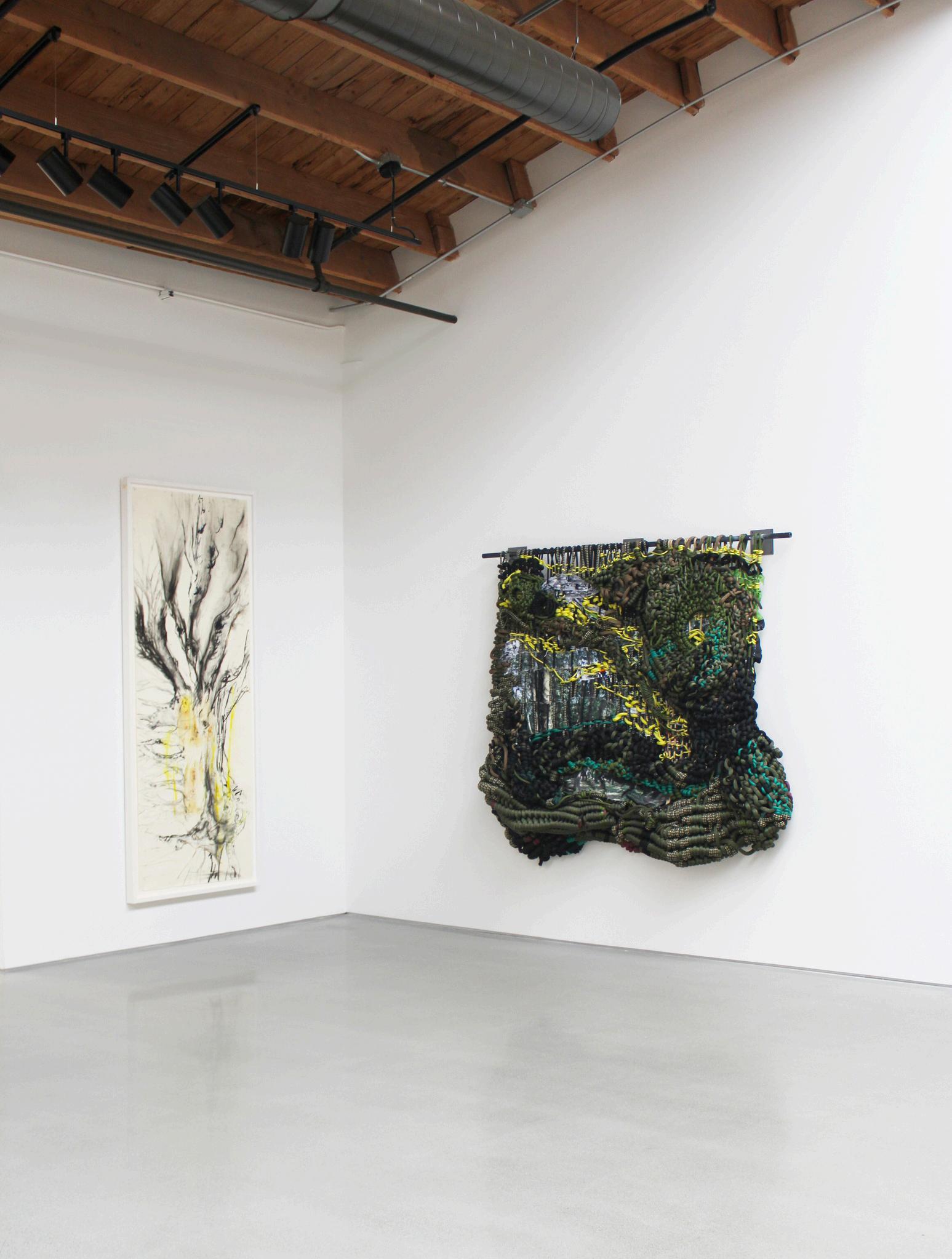
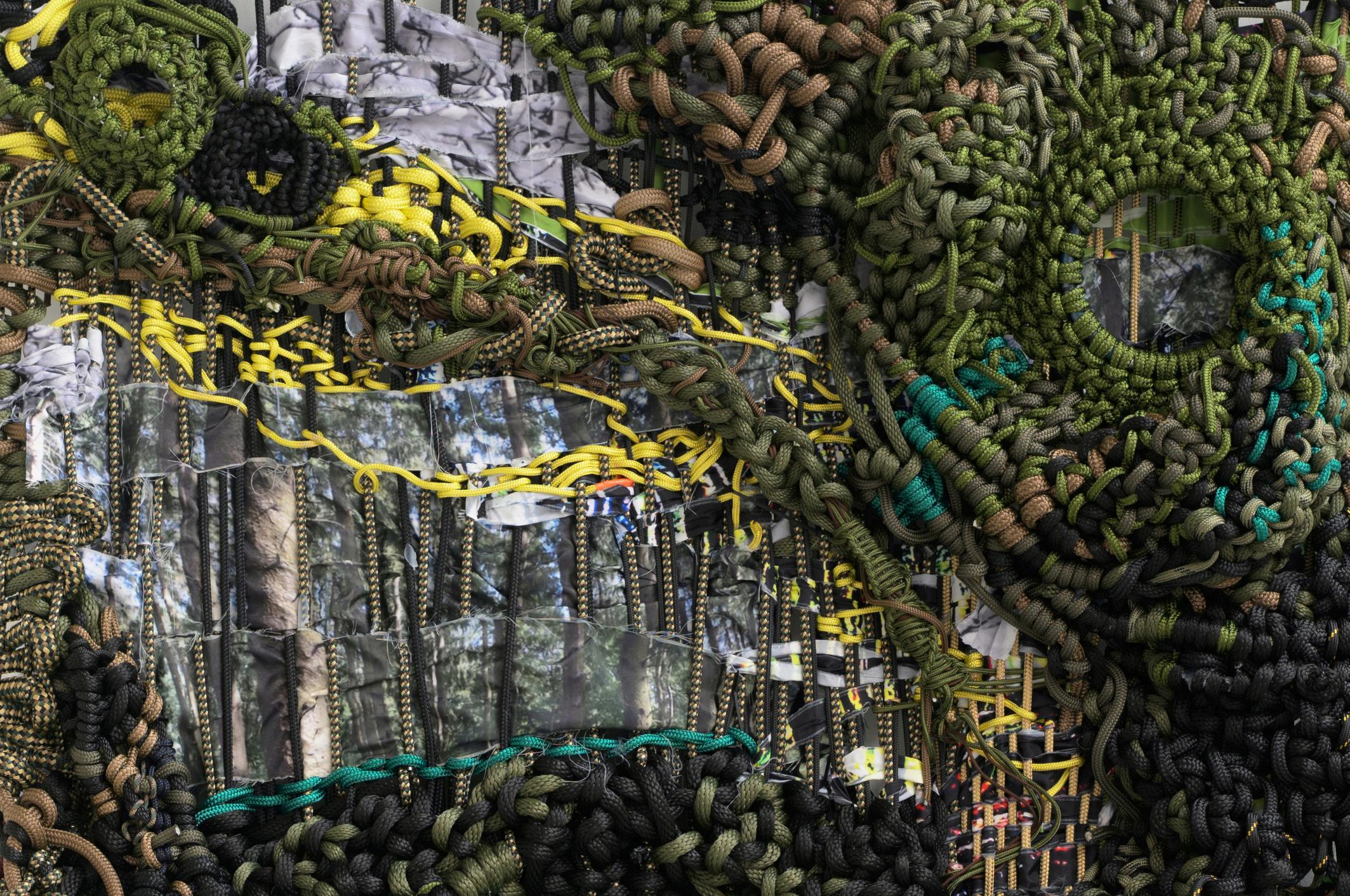
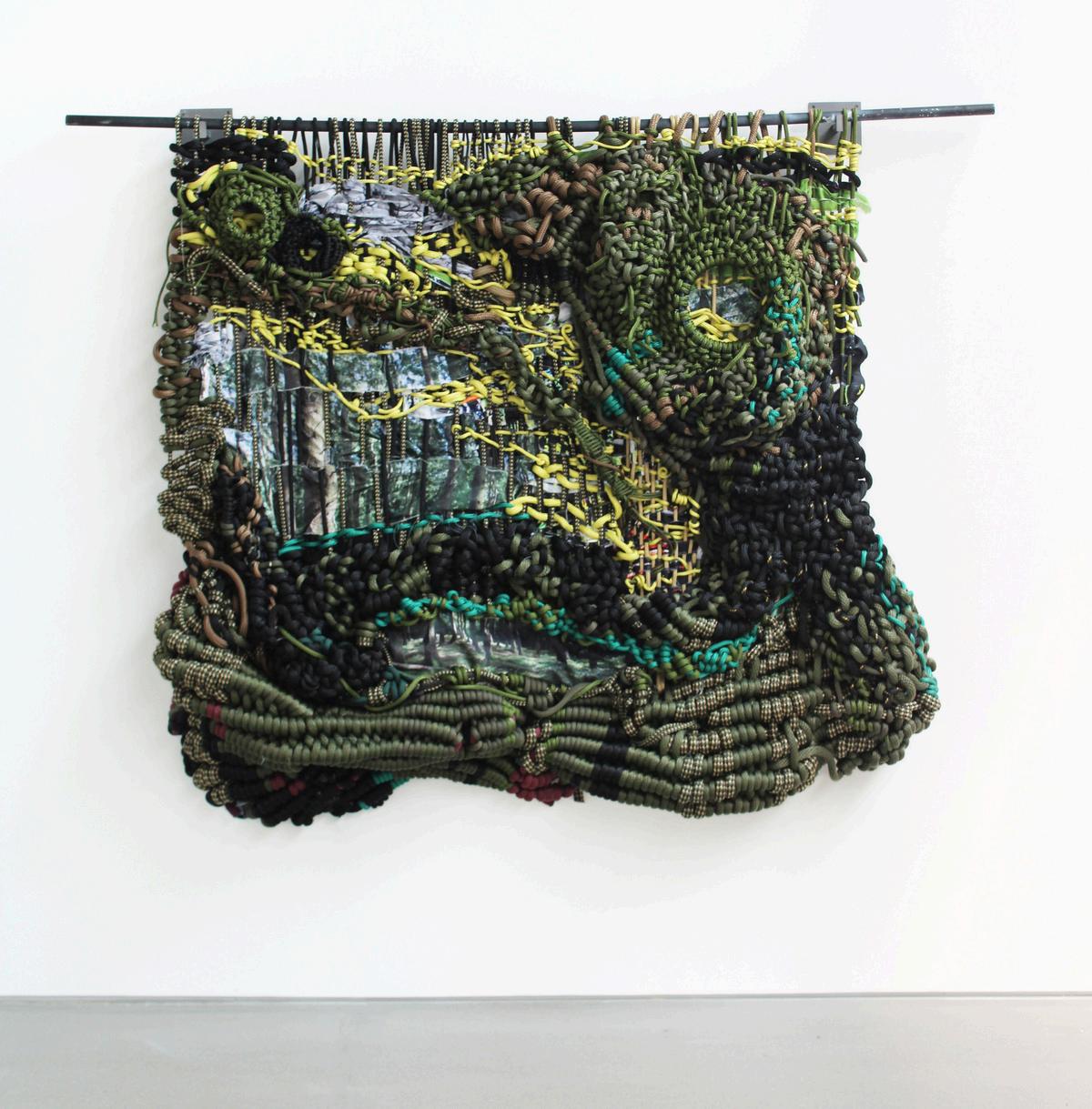
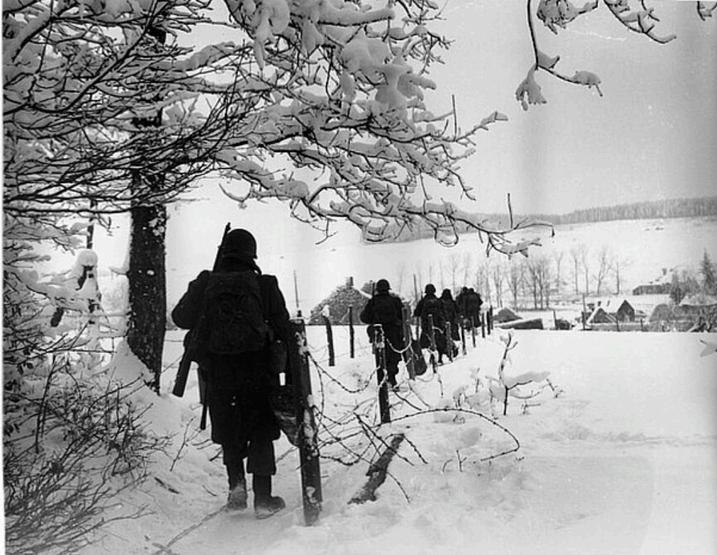
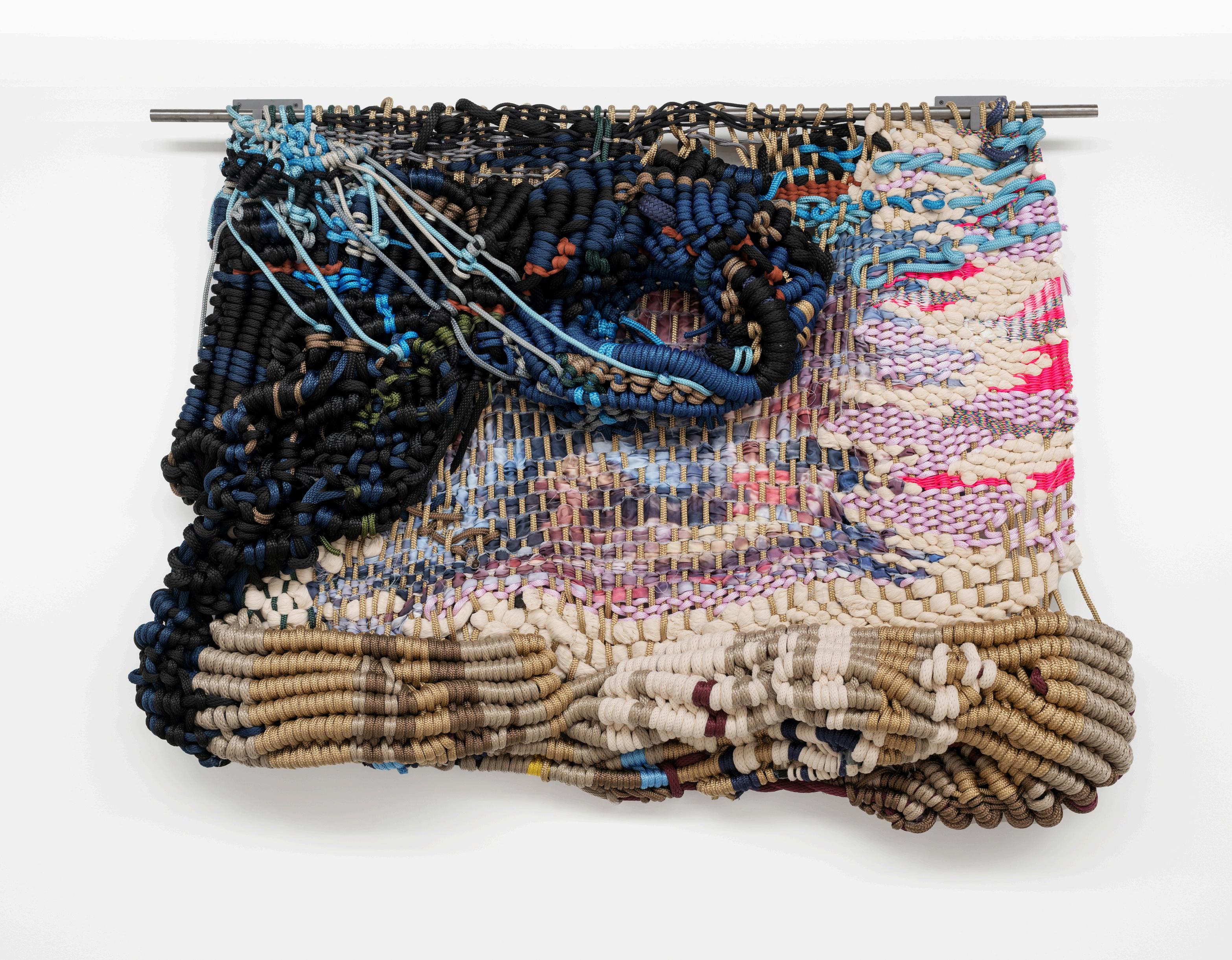
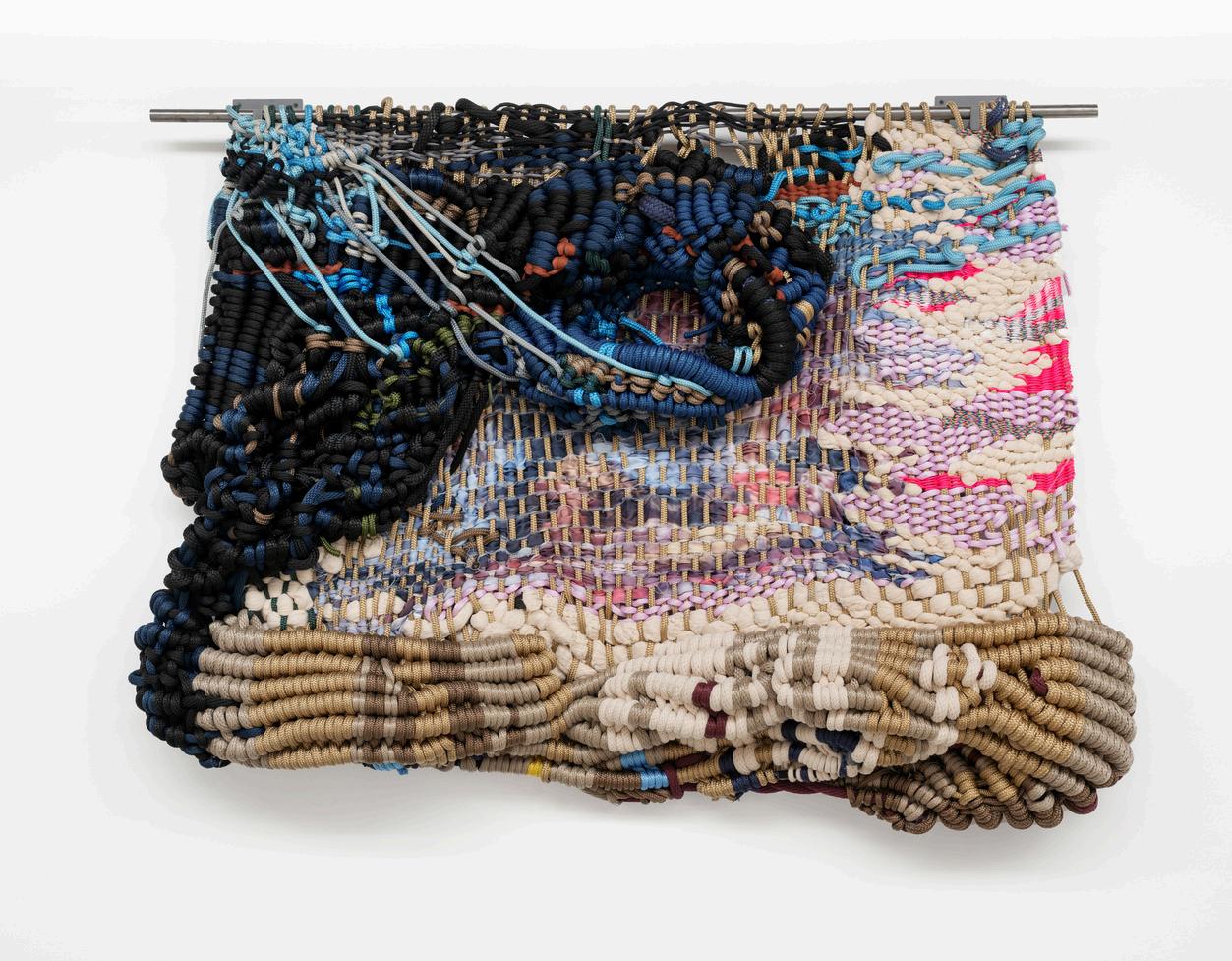
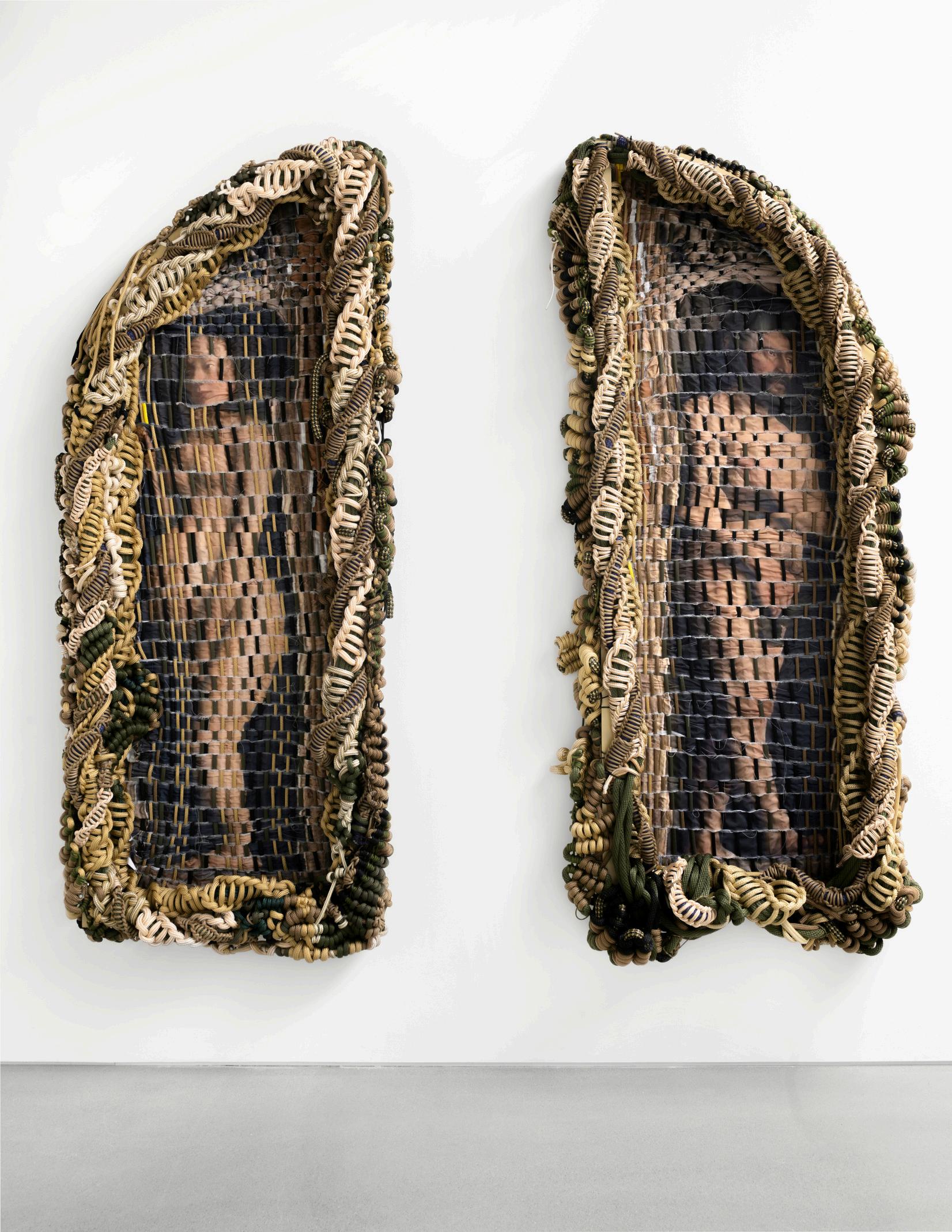
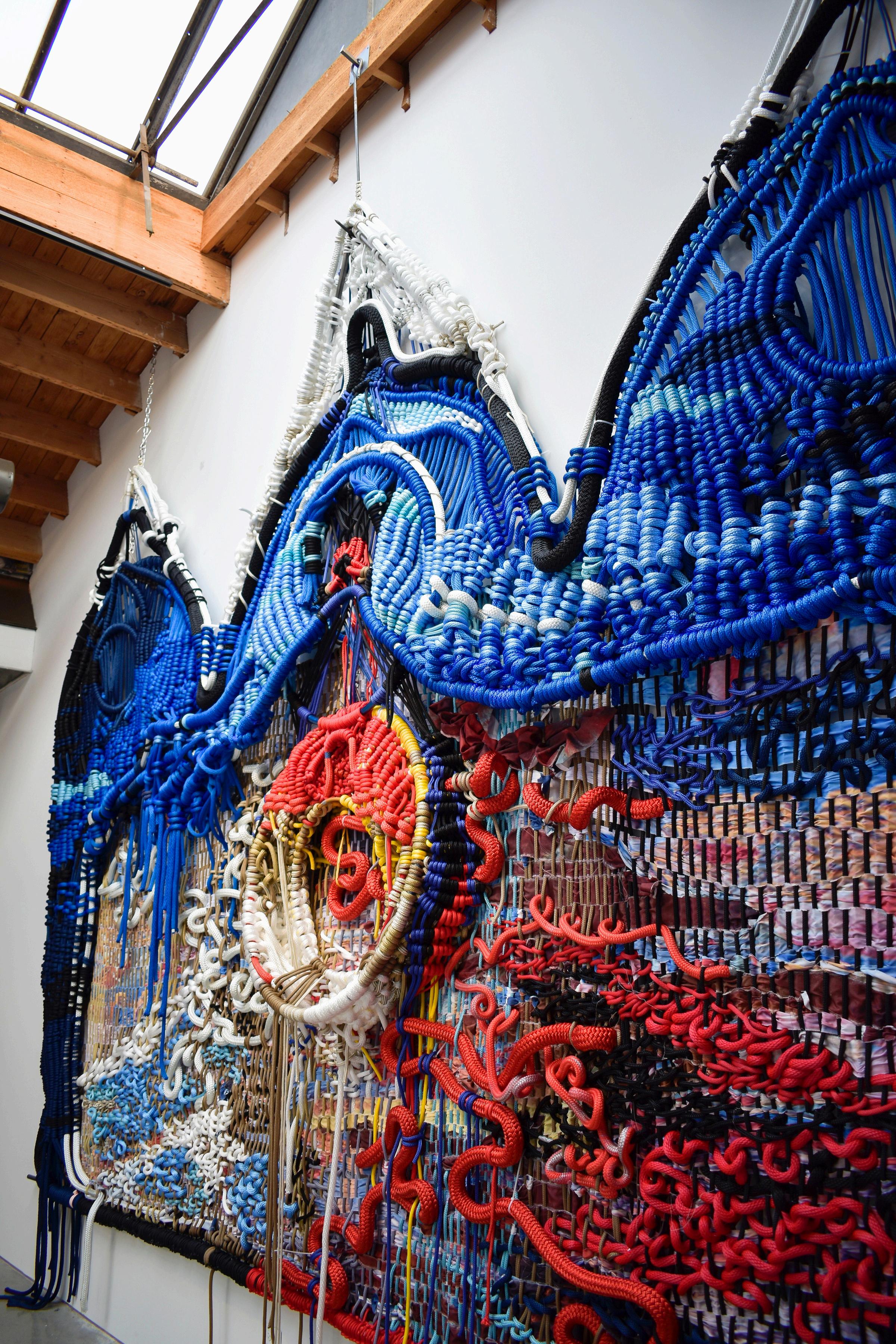
Surdell weaves two images into this work, one archival photograph of the Battle of the Bulge and a second contemporary image of the Ardennes forest into a dense form with knots The grit of battle here appears in deep tones and rough textures Surdell’s drawings and textile works fuse here, a nexus of painting, drawing, and weaving
by Dayson
Paul hinges on the multiple modes in The Conversion, rooted in the name ‘Paul ’ This piece is a memorial to the artist’s great uncle Paul, who perished in the Battle of the Bulge in the Ardennes Forest The two share a birthday, the charged date of January 25th, which is also the date the battle concluded in 1945. This piece also details a biblical story: the moment of transformation where the pagan Saul fell from a horse, saw the light of God, and became Saint Paul. Within this knotted work are stories personal, historical, and spiritual all with a fulcrum of what was and what is now
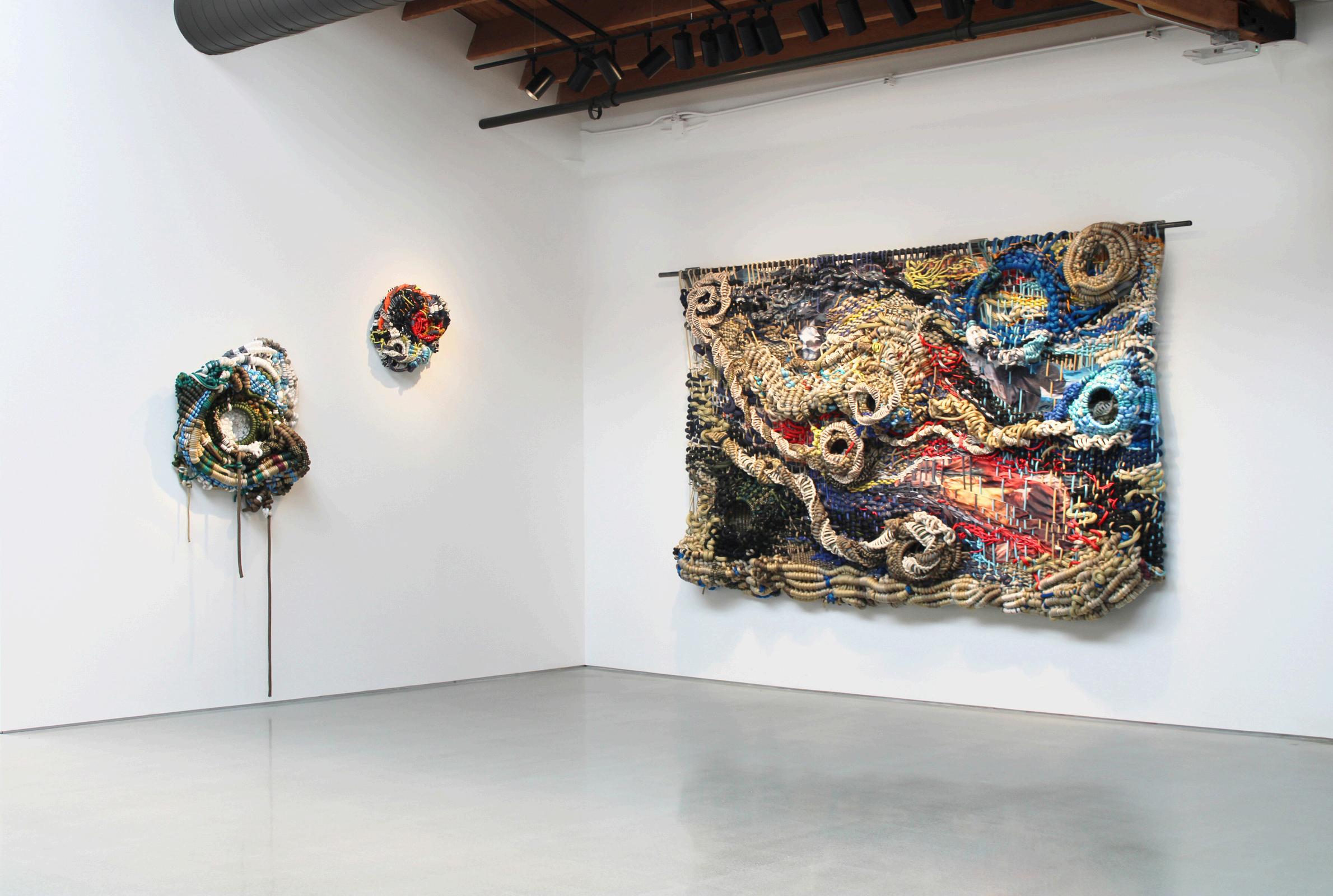
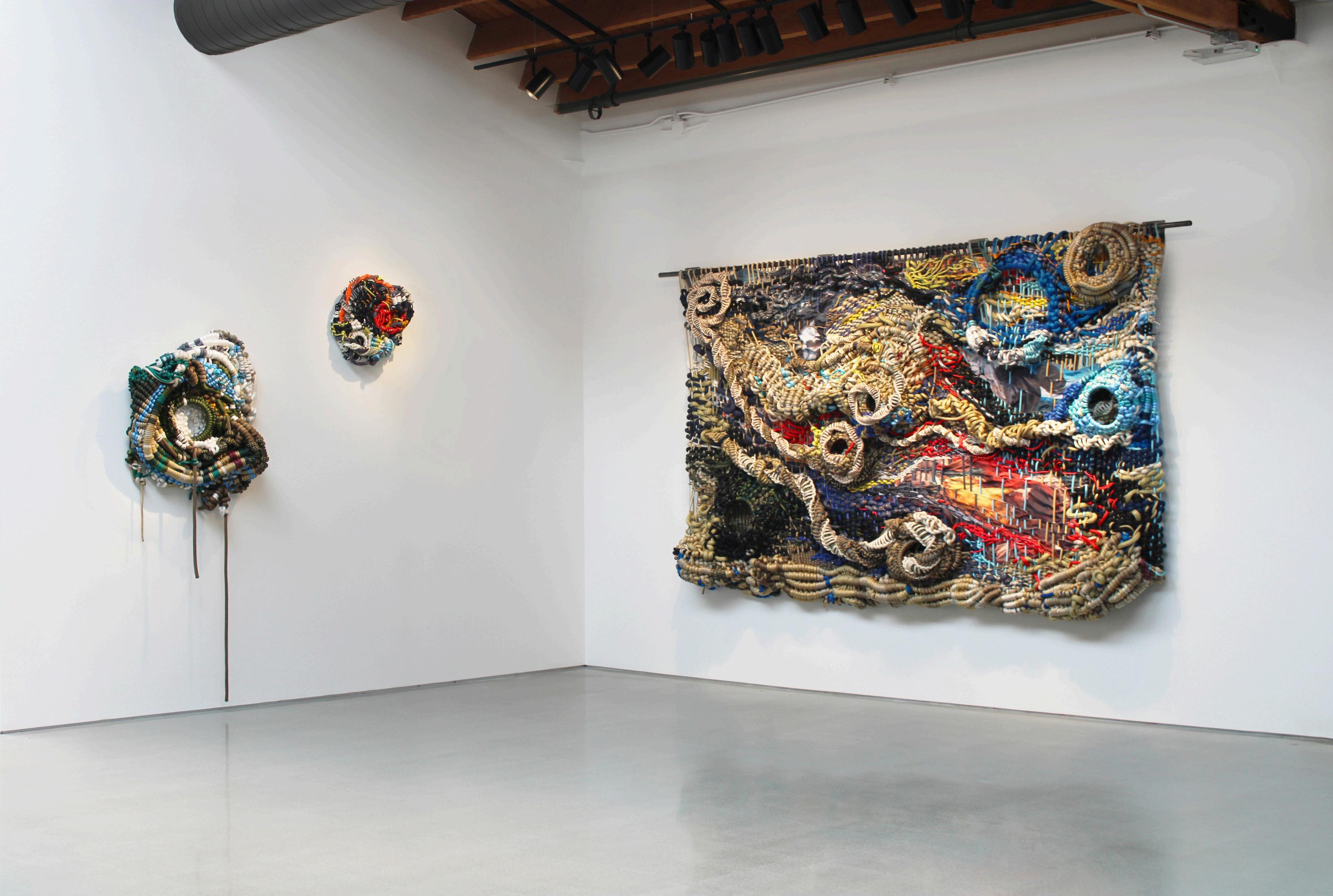
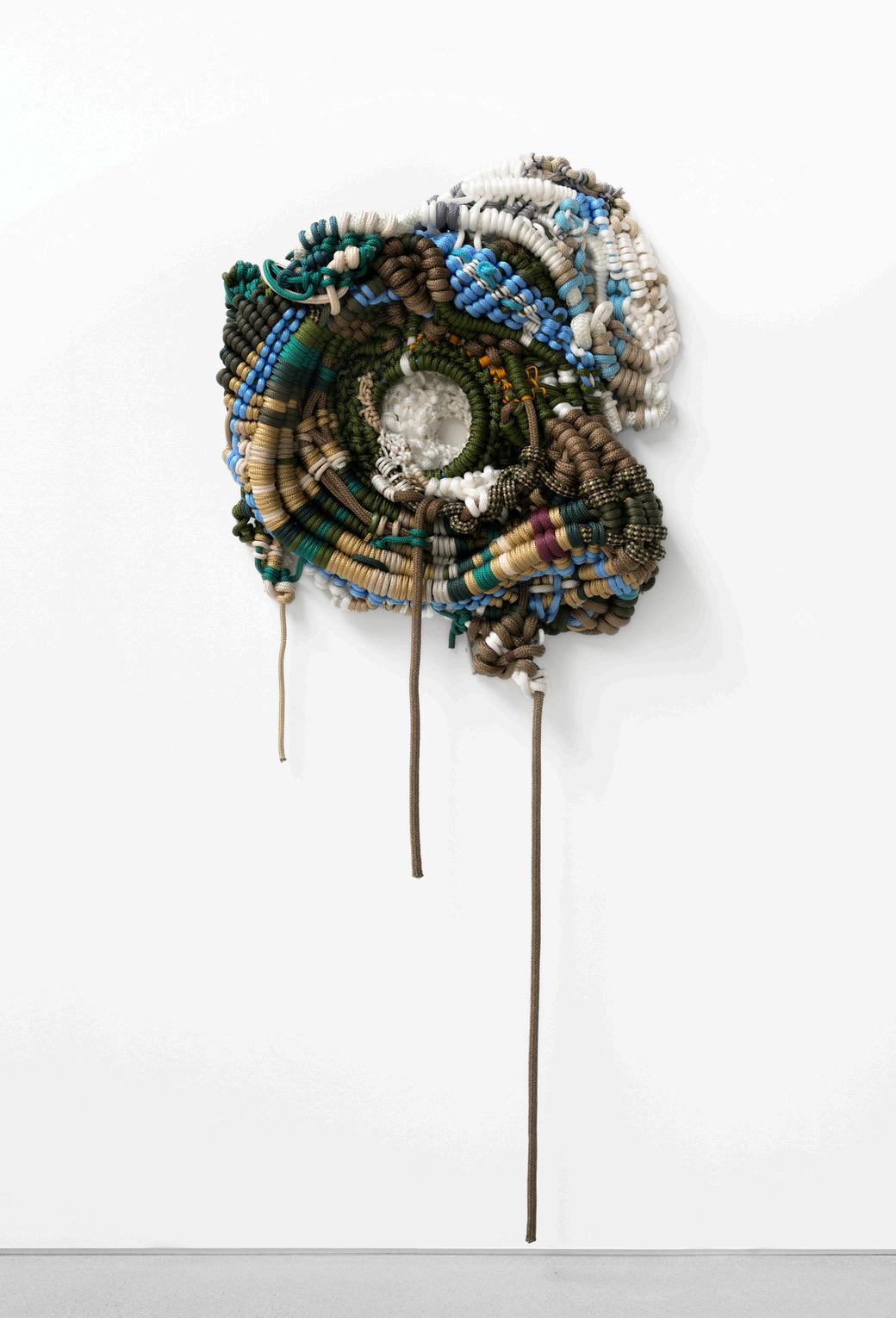
In her tondo series, the artist returns to the material engagement crucial to her practice, a devotional labor of making abstract portals, evocative of transformation In tandem with Surdell’s conceptual weavings exploring time, space, and memory, the abstraction of her tondo series is a tribute to her calibration to the material’s properties and potential
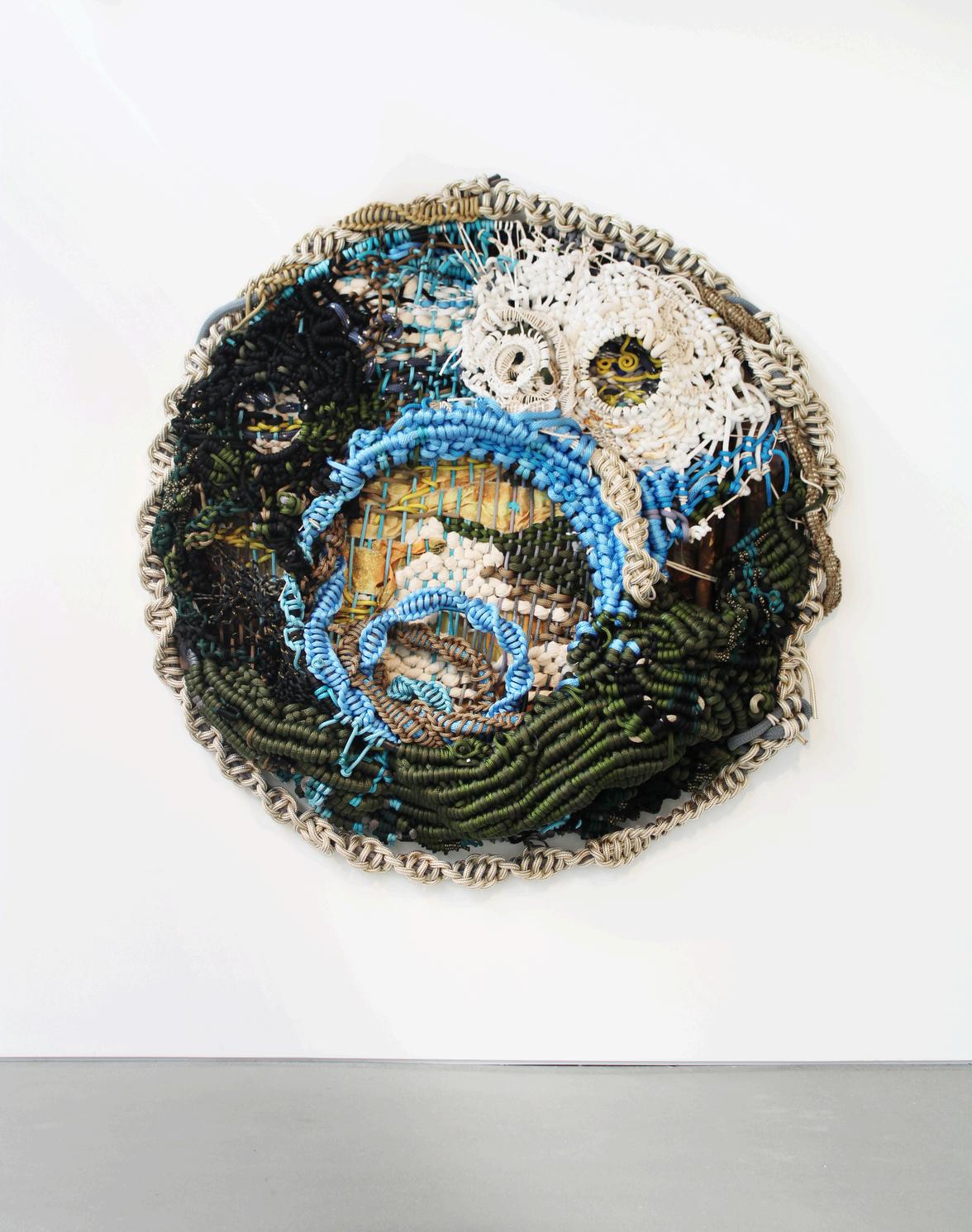
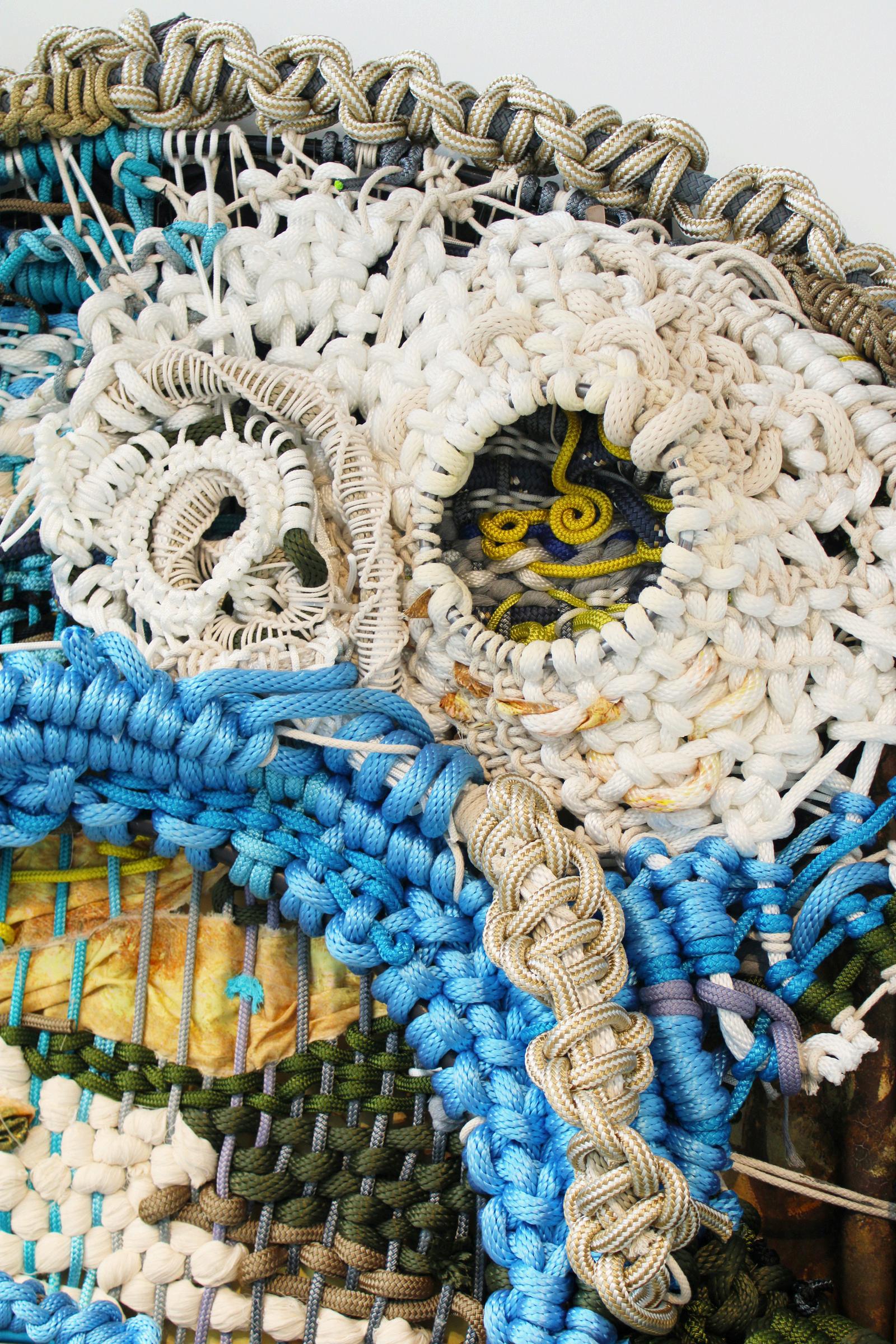
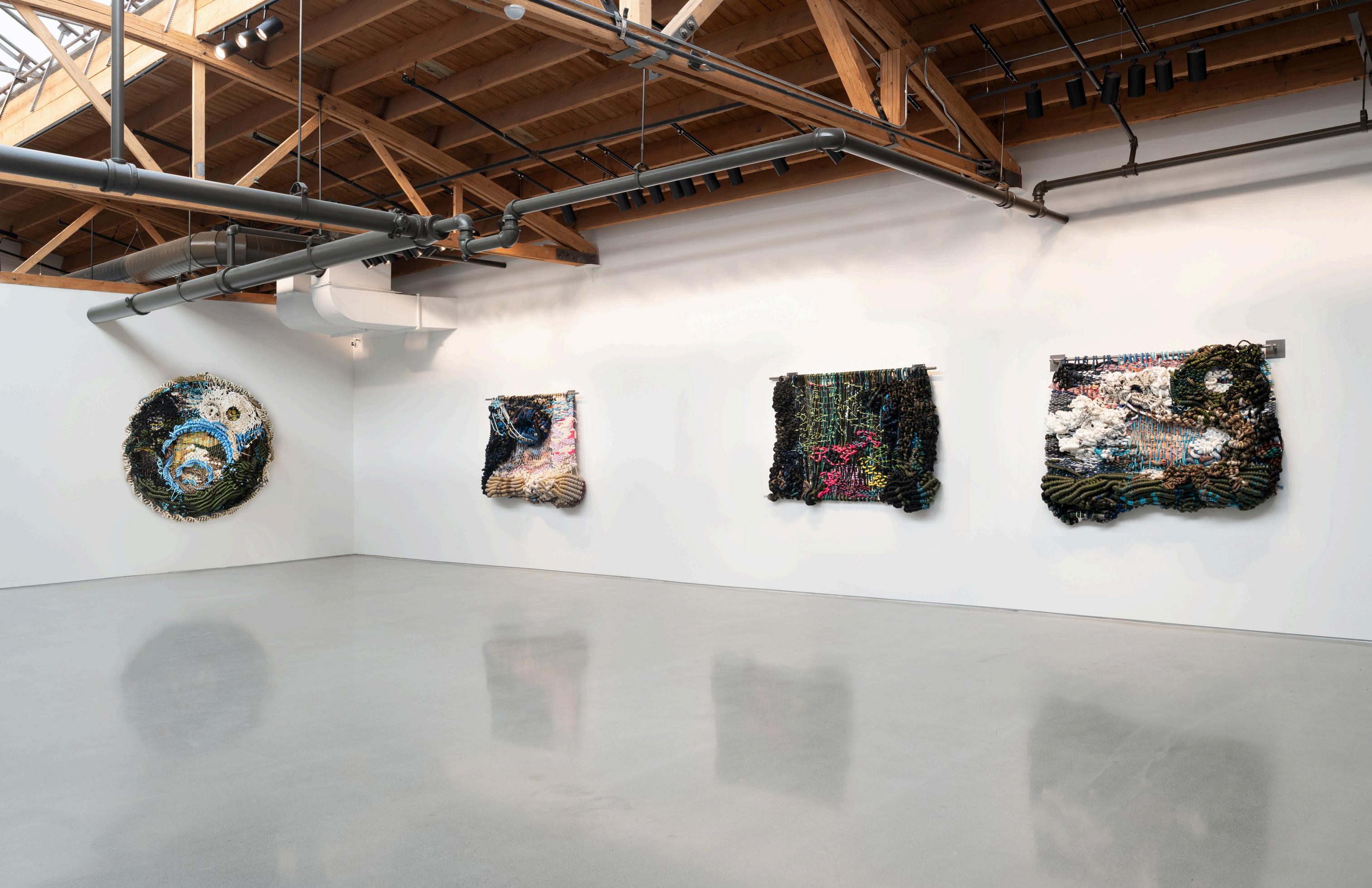
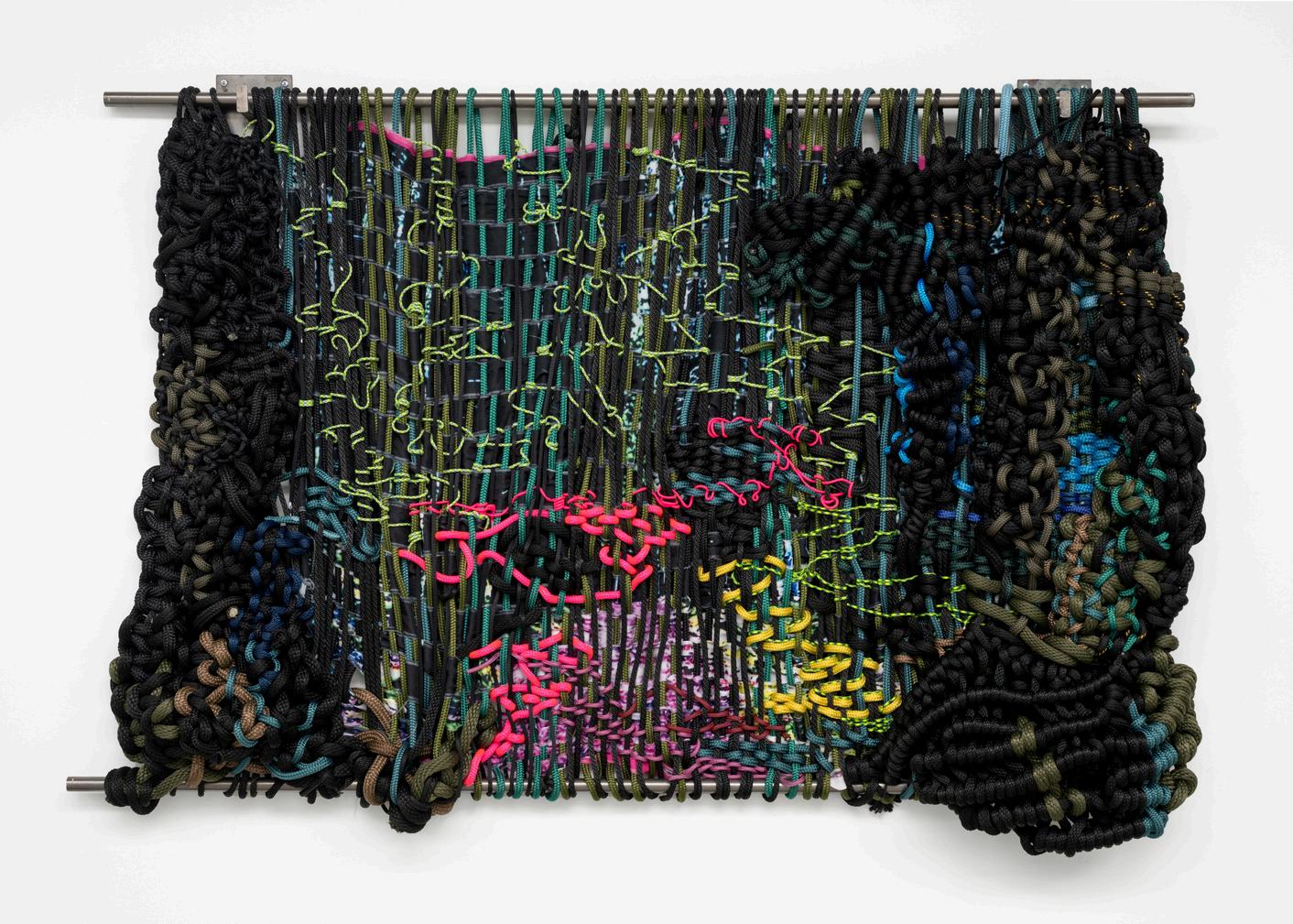
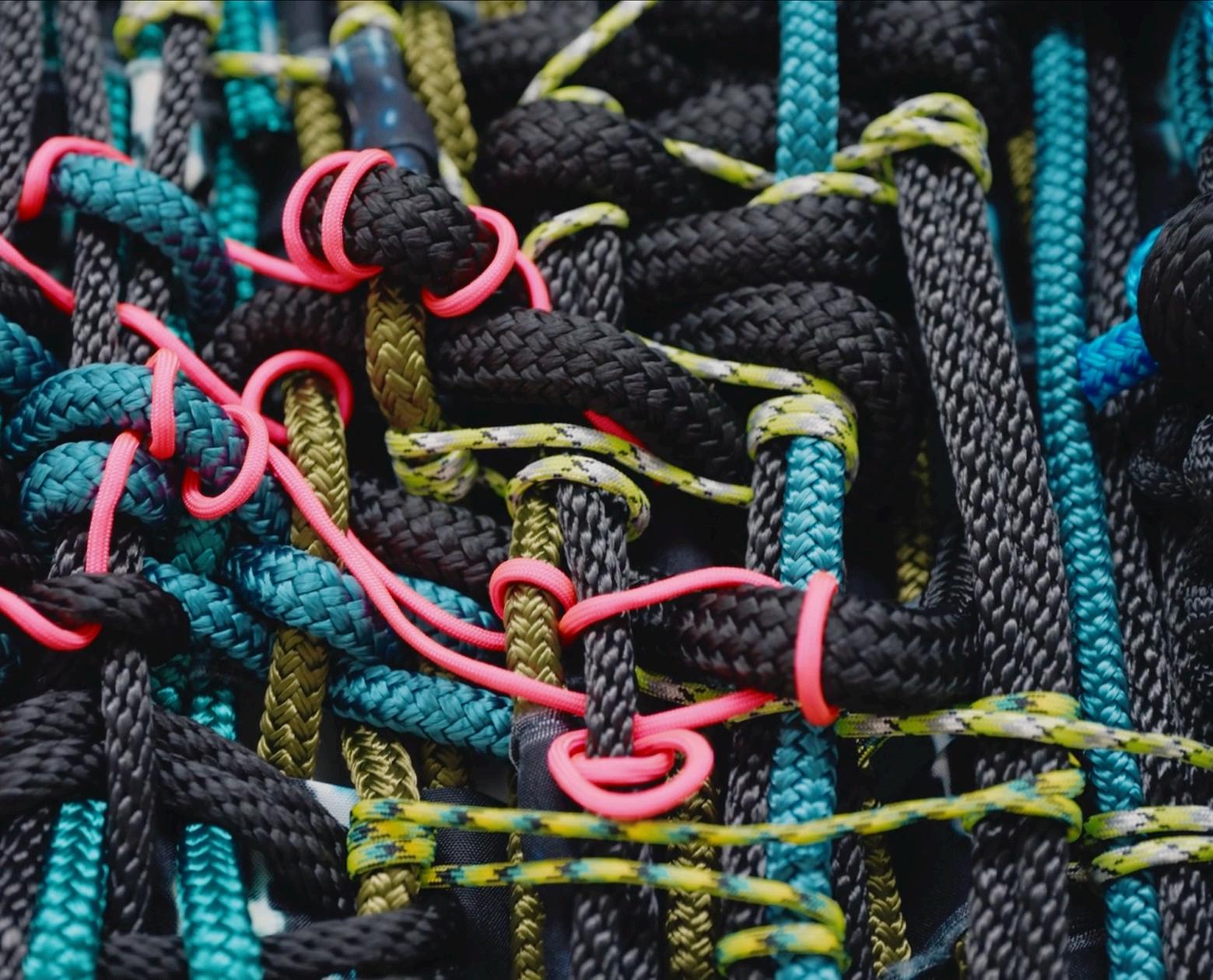
Desire Path weaves a neon-tinged edited image of the Ardennes Forest with a tight stroke, breeding a stimulating mix of fear, curiosity, mystery, and intrigue With deep tones with flashes of bright paracord, a material that was developed during WWII, Surdell evokes the danger of the forest, particularly during the military offensive in which her great uncle took part.
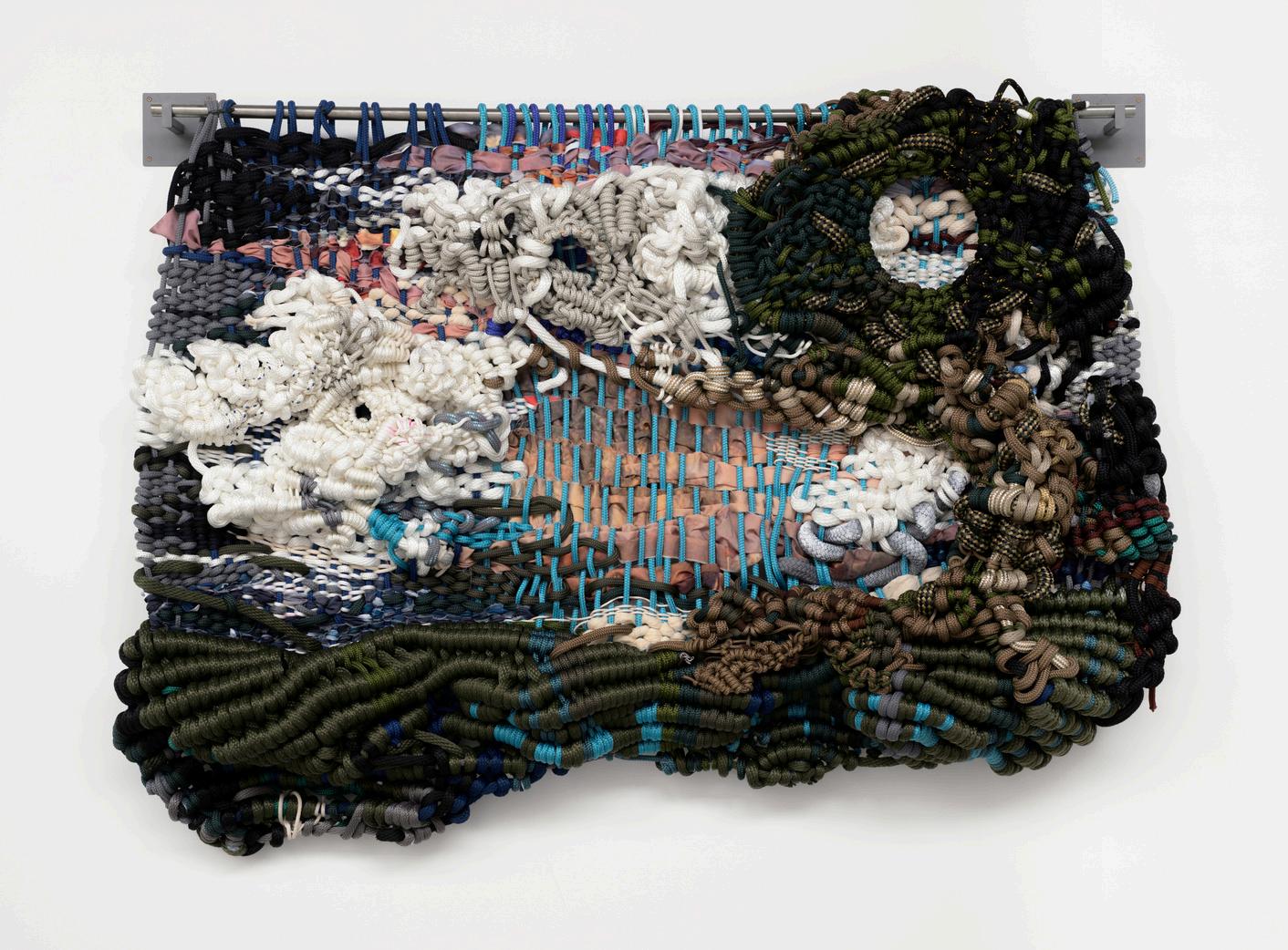
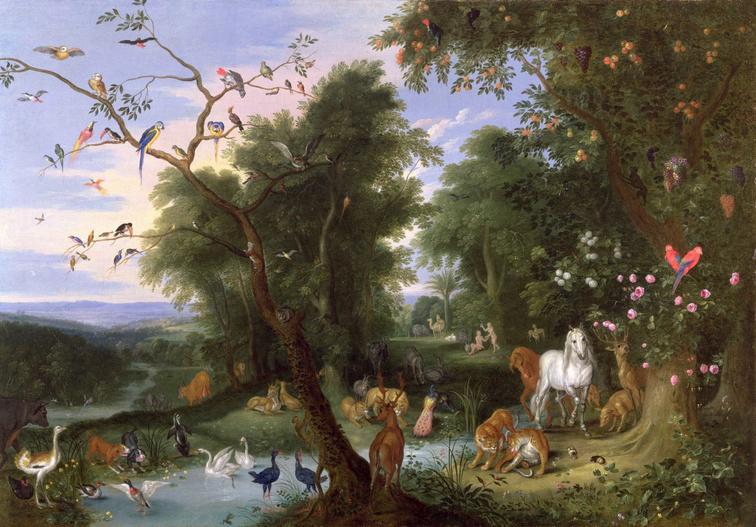
Exploring the pastoral, Surdell evokes spirituality through the landscape, with an almost magical touch, weaving luminosity into the piece. In this piece, the disciplines of painting and textile fuse through color and density, with the artist miming the landscape imagery through novel material engagement
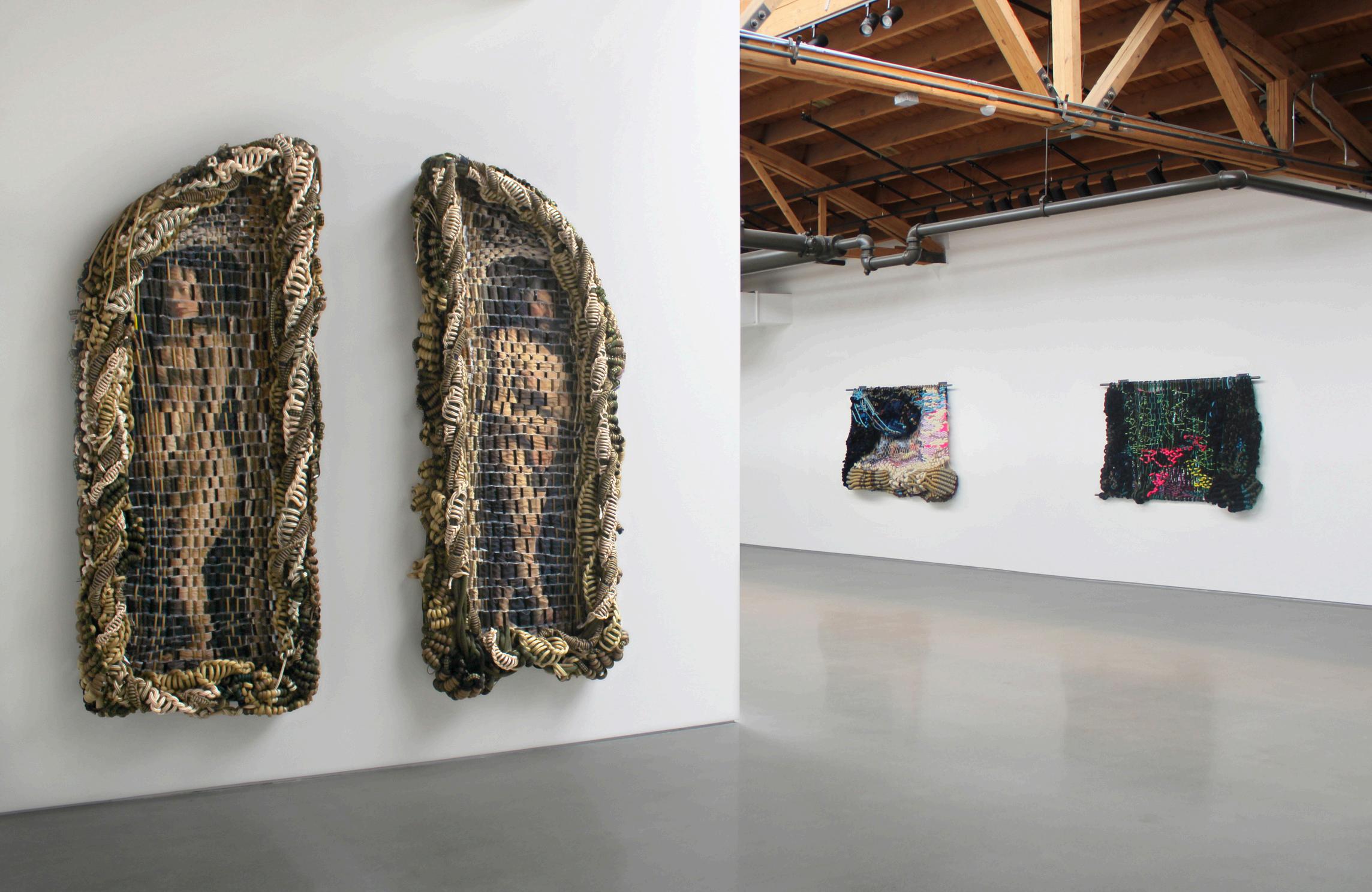
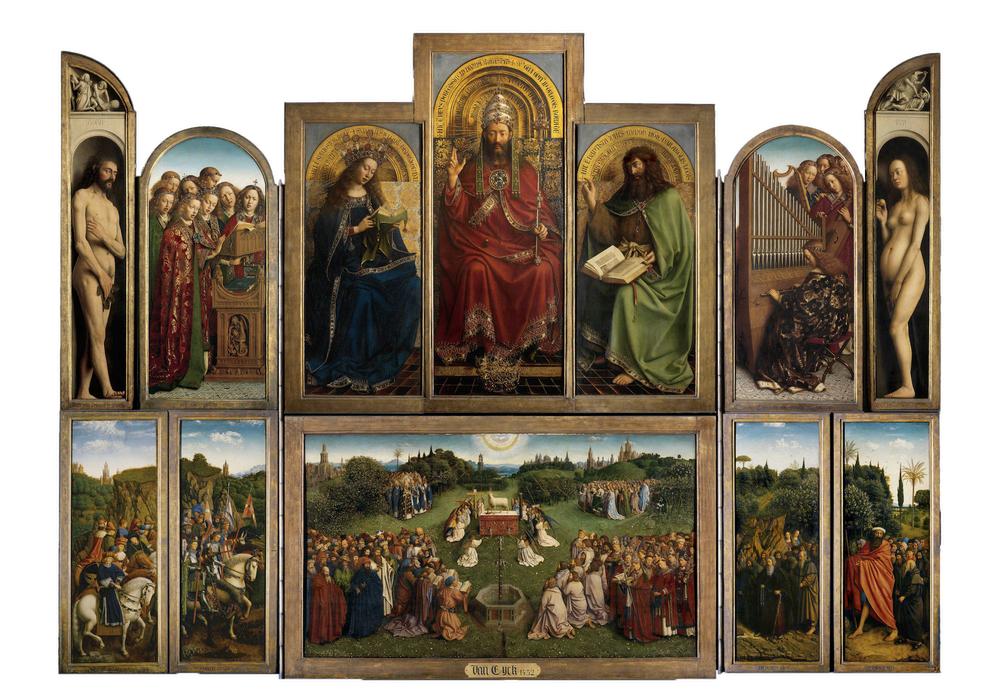
Adam and Eve draw from Jan van Eyck's The Ghent Altarpiece, alluding to beginnings The images are woven into therelief structure within a dense, knotted border, fusing a reliquary-esque form with the aesthetics of an ornate door.
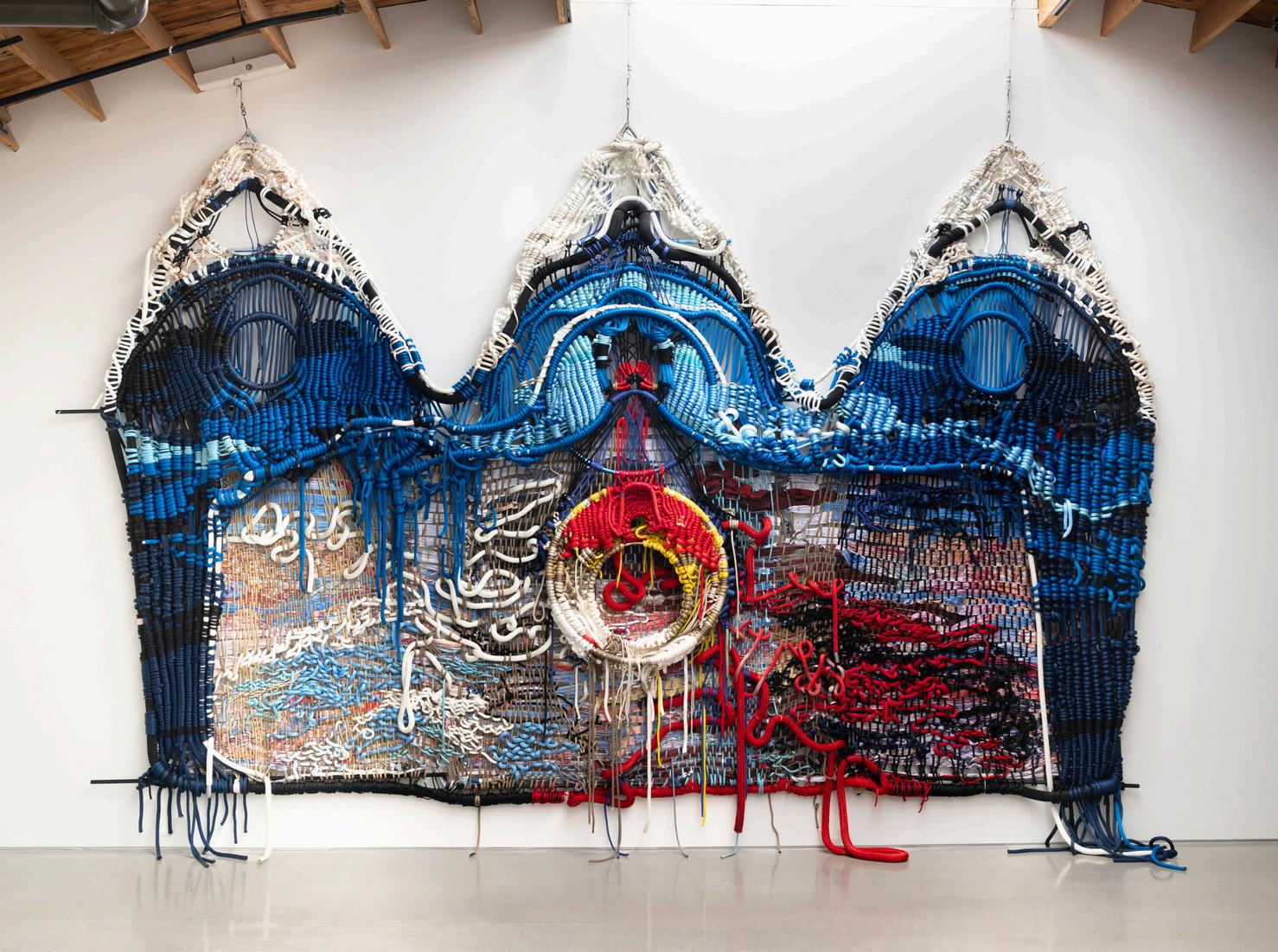
Suddenly, she was hell-bent and ravenous (after
, 2024
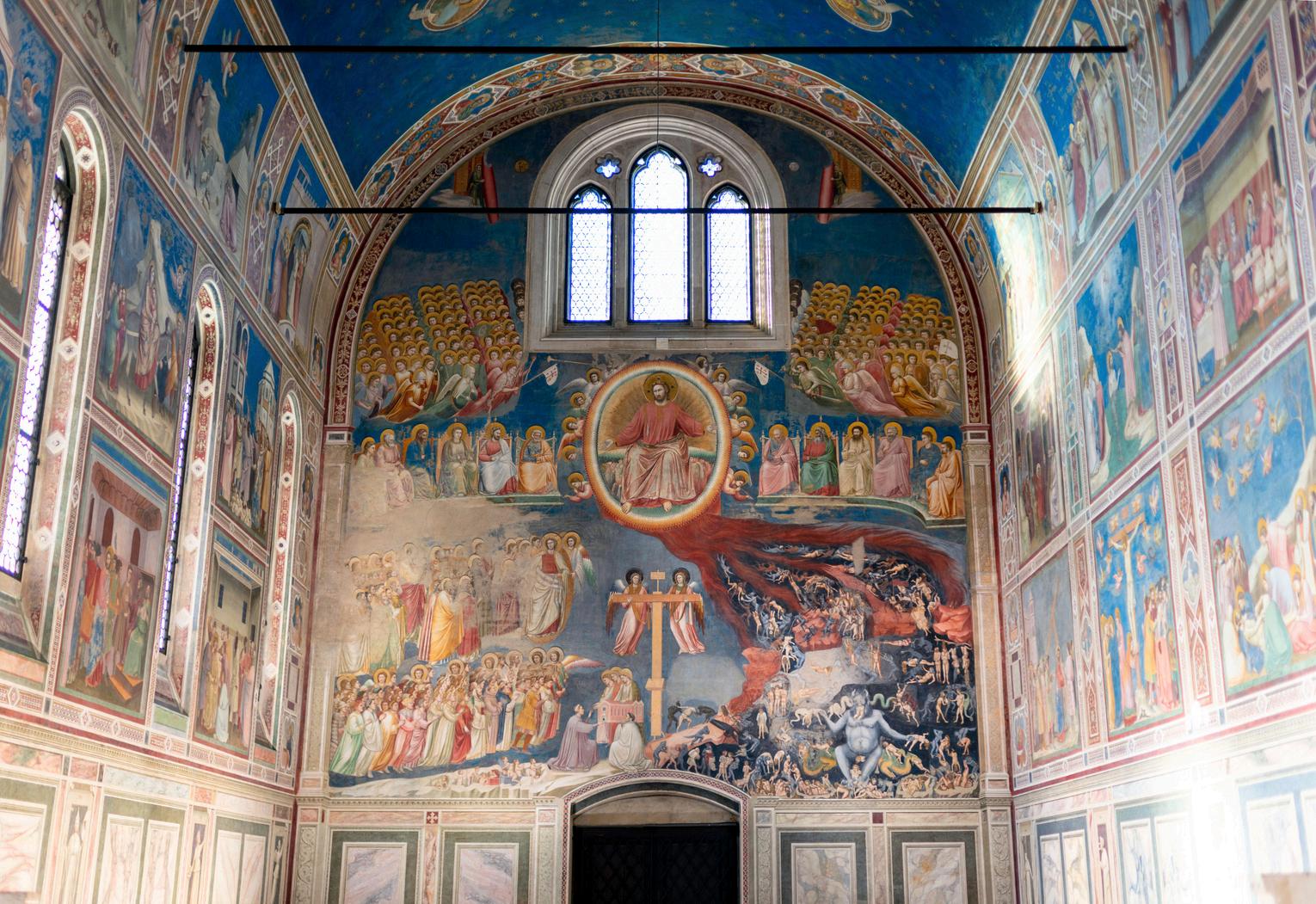
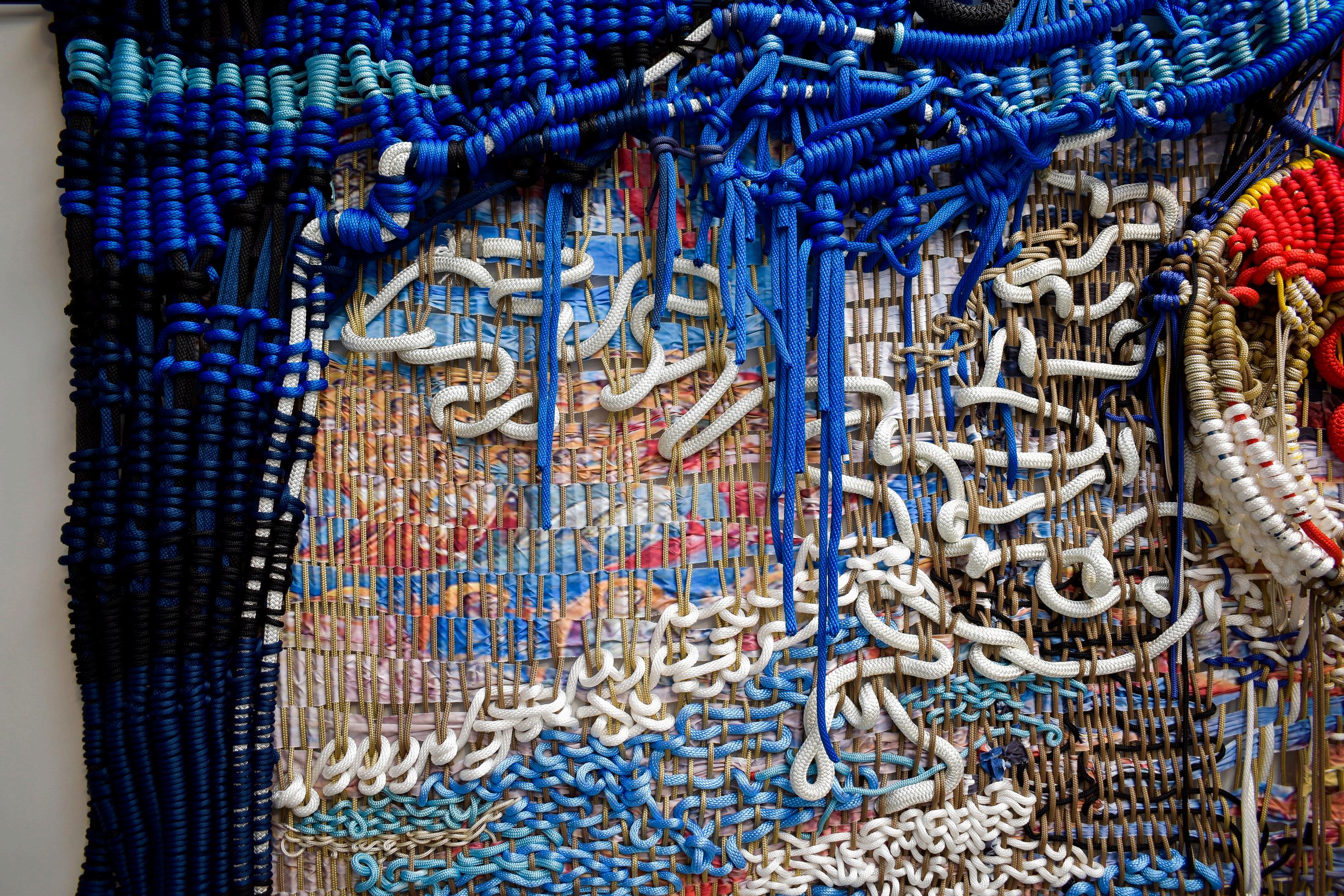
Suddenly, she was hell-bent and ravenous (after Giotto) draws on Giotto’s 14th century fresco of The Last Judgement in the Scrovegni Chapel in Padua, Italy. Here, Surdell probes the question of who has authority and power in art historical discourse to mark the beginning of an artistic movement. The title, pulling from the creation story, offers the artist herself or, more generally the self as a new protagonist of transformative narratives
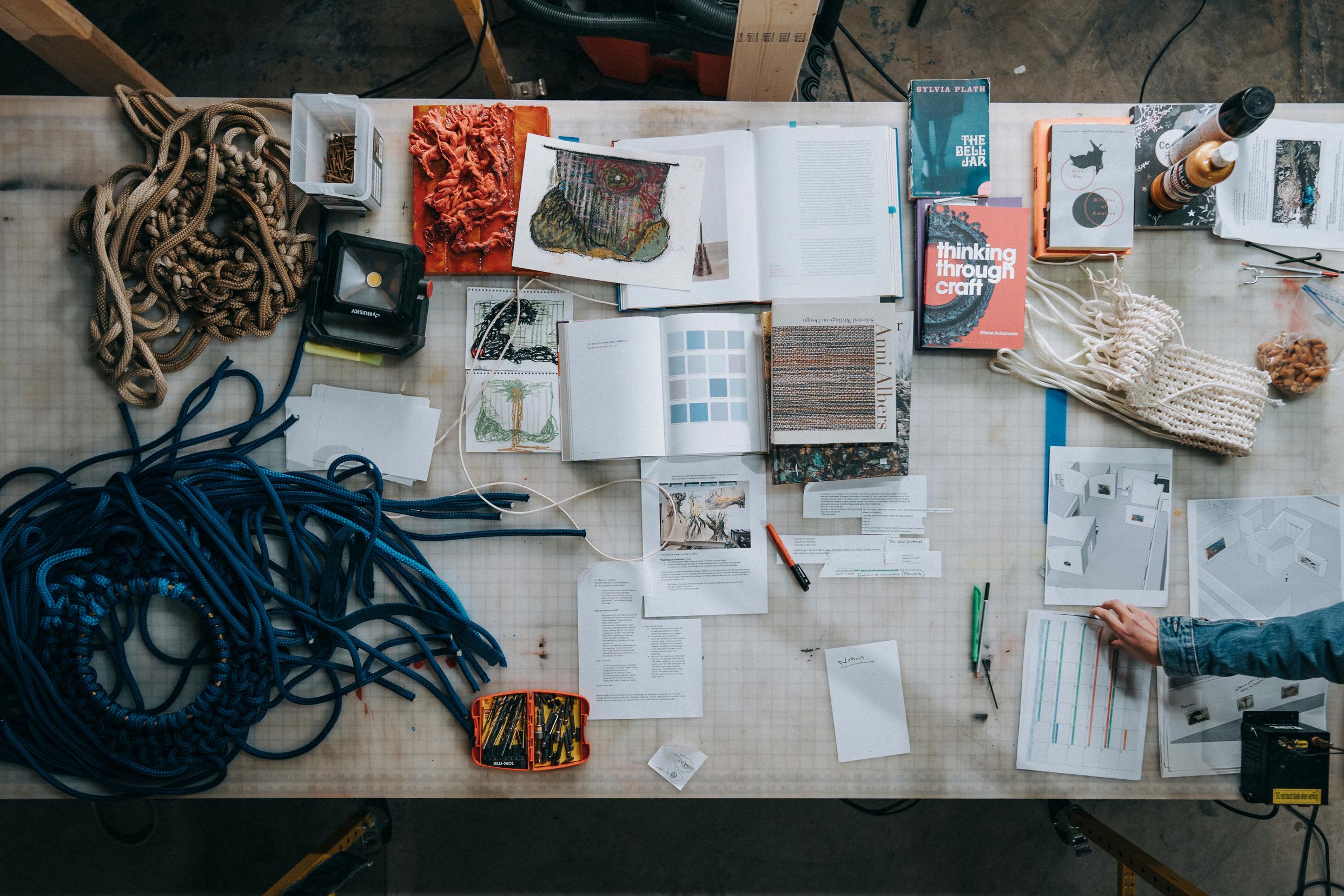
Adamson, Glenn. Thinking through Craft. Bloomsbury Publishing, 2018.
Anni Albers: Selected Writings on Design. Wesleyan University Press, 2000.
Arnold, Leigh A., et al. Groundswell: Women of Land Art. Nasher Sculpture Center; Del Monico Books D.A.P, 2023.
Bachelard, Gaston, and Mark Danielewski Z The Poetcis of Space Penguin Classics, 2014
DeLue, Rachael Ziady, and James Elkins. Landscape Theory. Lightning Source UK Ltd.: Routledge, 2011
Fanning, Leesa, and Ladan Akbarnia. Encountering the Spiritual in Contemporary Art. The NelsonAtkins Museum of Art, 2018.
Horn, Eva, and Valentine A. Pakis. The Future as Catastrophe: Imagining Disaster in the Modern Age. Columbia University Press, 2018.
Itō, Hiromi, and Jon L Pitt Tree Spirits Grass Spirits Nightboat Books, 2023
Kiefer, Anselm, and Arturo Galansino. Anselm Kiefer: Fallen Angels. Marsilio Arte, 2024.
Mishima, Yukio. Sun and Steel. Lyle Stuart, 1970.
Pinkola Estés, Clarissa. Women Who Run With the Wolves: Myths and Stories of the Wild Woman Archetype GD Publishing, 2025
Wark, McKenzie. Raving. Duke University Press, 2023.
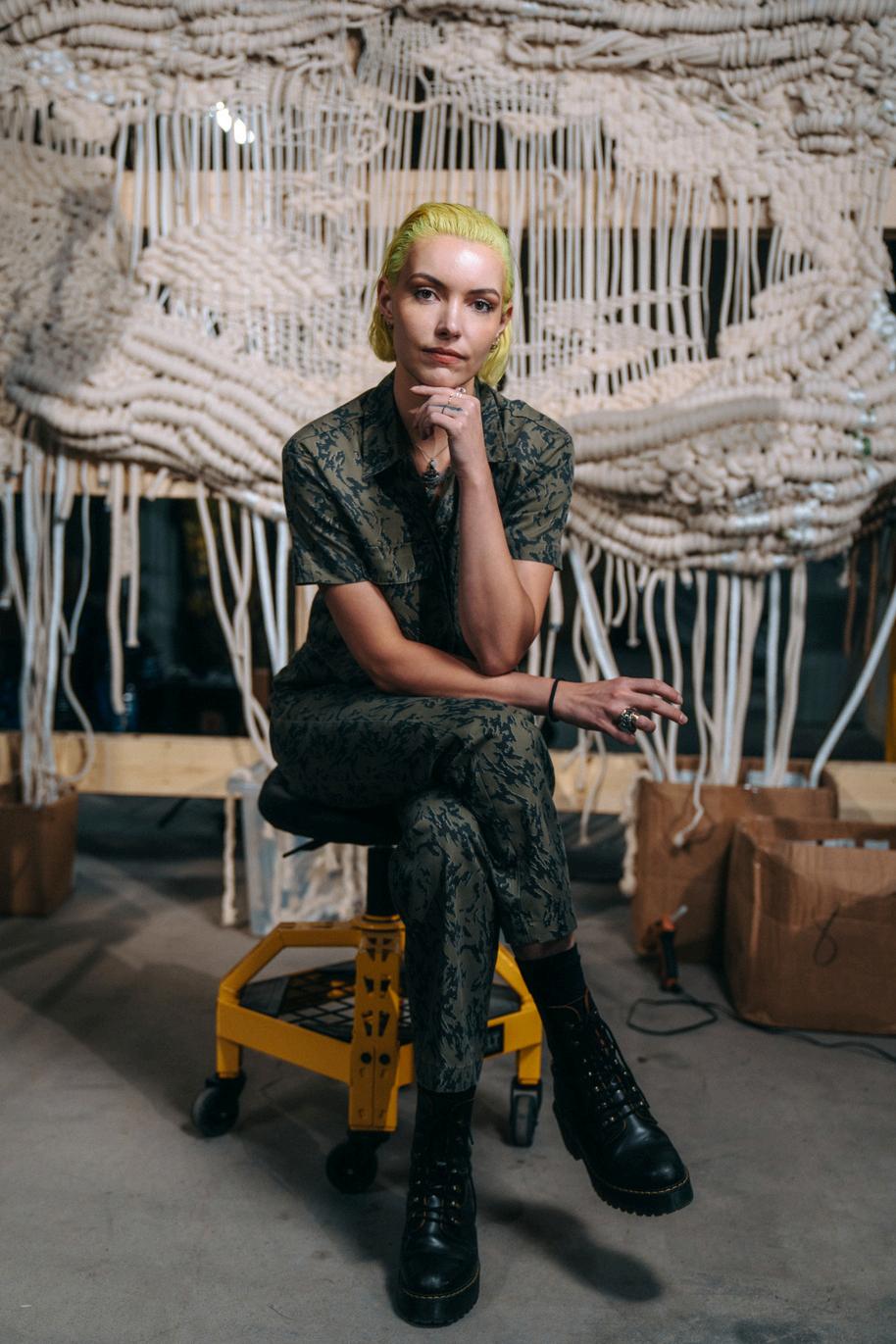
Jacqueline Surdell is a Chicago-based interdisciplinary artist whose practice explores landscape as a site of memory, transformation, and witness. On large-scale looms, she weaves sculptural topographies that investigate material, space, and time. Constructed from industrial cordage, textiles, and steel armatures, her reliefs move fluidly between painting, sculpture, and fiber, simultaneously invoking and disrupting traditions of landscape representation. Through processes of weaving, knotting, wrapping, and suspension, Surdell constructs topographical forms that oscillate between abstraction and representation, drawing on histories of landscape painting, material culture, and craft
Recent bodies of work examine forests, waterways, and constructed environments as archives of lived experience Investigating the tension between the natural and built worlds, Surdell considers how places absorb histories of devotion, conflict, grief, labor, and change Drawing from Midwestern geographies, Catholic visual culture, and histories of landscape painting, her work explores the relationship between the natural and the constructed, the sacred and the everyday. Her sculptures challenge romanticized notions of the pastoral, positioning nature not as a passive backdrop but as an active witness to intervention, memory, and transformation. Material becomes both subject and metaphor, carrying traces of accumulation, erosion, and time.
Operating as forms of soft architecture, Surdell’s sculptures hold together competing forces of control and collapse, permanence and change. Through these tensions, her work considers how memory is embedded within both landscape and material, and how places become archives of myth, ritual, loss, and transformation.
Surdell received an MFA in Fiber and Material Studies from the School of the Art Institute of Chicago and a BFA from Occidental College Recent solo exhibitions include Bliss! at Gallery COMMON, Tokyo; Adoration Garden at the Abroms-Engel Institute for the Visual Arts, Birmingham, Alabama; and Score! at Devening Projects, Chicago Her work has been exhibited nationally and internationally at venues including The Armory Show, New York; The Hole, New York; BravinLee Programs, New York; Library Street Collective, Detroit; Peeler Art Center at DePauw University; Fondation Thalie, Brussels; Kunsthal KAdE, Amersfoort; Devening Projects, and the Hyde Park Art Center, Chicago. Surdell has participated in residencies at Fountainhead, Miami; Millay Arts, New York; and Vermont Studio Center, Vermont, and was selected for the 2026–27 cohort of Silver Art Projects in New York. She has been awarded a Pollock-Krasner Foundation Fellowship in Sculpture and a Chicago DCASE Individual Artists Program Grant. Her work is held in public and private collections.