The Cape Horners annual lunch will again be held
in the PRINCESS ROYAL GALLERY
At Portsmouth Dockyard
See enclosed Flyer
for all detail It promises to be a good one
There will be much to discuss at the meeting notwithstanding the need for a new Journal Editor and the way forward for that post.
BRING A FRIEND
There will be much to discuss over lunch please come
The committee is in urgent need of new blood and in this anyone who would like to apply should do so, there must be many who can offer something to the association. We are trialling meetings by email and skype so it is possible for members of the committee to be remote and perhaps not even in the British Isles.
You will find with this Journal a membership card; It is in the form of a credit card which only needs to be signed by yourself, perhaps you will add the date of rounding and vessel all in your own fair hand.
It is a tangible memento of your membership and we hope you will show it to demonstrate your pride of membership and encourage others who are eligible to join us.
As ever, we are open to ideas about where future lunches are held; or, indeed whether members would prefer an evening function?
REQUIRED FOR THE JOURNAL
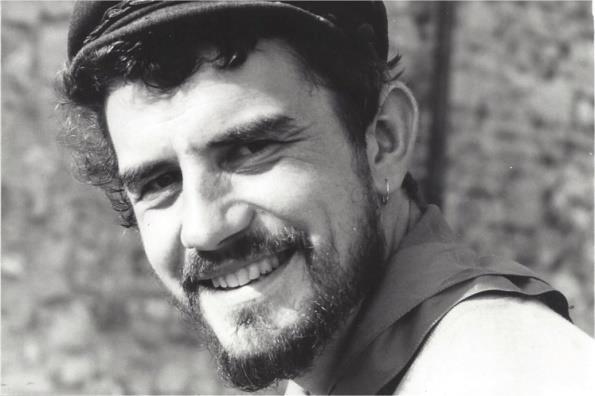
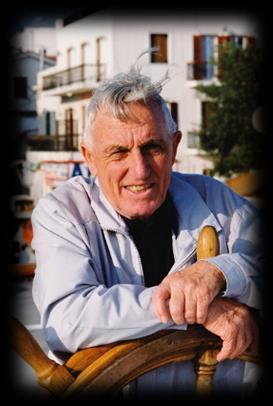
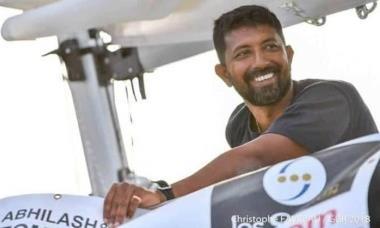
By the end of this year I will have written and produced my 74th Journal for the Cape Horners, when I took over from the late Molly Bartlett and David James in 1983 - I had black hair as in the photograph it is now greying and I had not expected the job to last this long. I asked for the second time to be allowed to retire from editorship before I was 74 that was two years ago, as of today there is no offer to take on the Job which has been hugely interesting during my time of tenure.
I have regularly canvassed for stories from our members and more widely. Firstly from the old school of Cape Horner`s, and it has been my privilege to have known the last of the men who sailed the great wind ships and recount theirs and other stories of that period. Now increasingly it is yachting stories.
I am finding that although retired I cannot handle the IT well enough or give the time to learn it sufficiently well, how I managed while working full time for much of the 37 years I just don`t know but I did.
Perhaps more than one Editor is needed.
Time for change A NEW EDITOR must come forward and preferably from the membership, it is a job that will need help and that I will willingly give if asked.
To now I have written, edited, done the layout, had the finalised work printed, bought the stamps stuck them on and then stuffed the envelopes and trotted off in the early hours to post them out to you the membership.
So that is what I do. Probably the most difficult part for me has been the IT. When I started a typewriter was used, the paste ups were glued together after photo reduction and in those days 340 labels were handwritten twice a year.
New Members: We are delighted to welcome the following new members to our midst –
Mr Charles Boy Tenacious 2018
Ms Margaret Campbell Tenacious 2018
Dr Catherine Dent Tenacious 2018
Mr Teddy Meiners-Edwards Tenacious 2018
Ms Elizabeth Pacey Tenacious 2018
Mr Phil Tassicker Tenacious 2018
Mrs Ruth Tayler Tenacious 2018
We are always happy to welcome new members, so if you are aware of eligible crewmates or friends who have not yet joined, please ask them to contact us. Also, in order to ensure that we maintain contact with existing members, please remember to let us know if you change name or address. All communications should be sent to memsec@capehorners.org
Subscriptions: Please can you check if the renewal for this year has got the same name that you have, because there are now 7 names that I cannot place, maybe married names? If the name is different, e-mail me at memsec@capehorners.org – Thanks Liz
Yachting News by Ashley
Manton
The Clipper Race 2017/2018
The 40,000 mile Round the World Clipper Race that went round the world via the Panama Canal, returned to Liverpool at the end of July 18.
The winning yacht was skippered by Wendy Tuck who was the first lady ever to have won a round the world yacht race. Nikki Henderson (25) (GB) came second and was the youngest person to have skippered such a race, taking the title from Alex Thomson.
Following a number of incidents in the last race, including the grounding and loss of one of the yachts, Clipper Ventures have accepted the recommendations of the MCA after an MAIB review and will now increase the manning levels of qualified/experienced professional sailors on board each yacht for future such events.
The Golden Globe Race (GGR) started from Les Sables d’Olonne on 1 Jul 2018 with 17 starters including one lady, Susie Goodhall (British). To date (Sep 24) 9 are remaining and the leader, Jean-Luc Van Den Heede, has a 9 day lead on the field, Susie currently 4th .
Plans for a GGR in 2022 is gathering momentum.
Maiden Relaunch
Maiden, the Farr-designed maxi which Tracy Edwards raced in the 1989 Whitbread Round the World Race with an all-female crew, has been refitted, re-launched and has a new crew ready for a new adventure. This has been the brain child of Tracy Edwards (IACH member) who is planning a 3 year around the world tour, raising funds and awareness of girls’ education under a new banner of The Maiden Factor. She plans to visit 20 countries and 30 stopovers raising funds for 6 partner charities.
The yacht has been financed by Princess Haya Bint Al Hussain the daughter of King Hussain of Jordan.
Vendée Globe 2020
Britain’s Alex Thomson who finished second in the 2017 race aboard Hugo Boss, intends to race in the next Vendée Globe race in 2020. His new hi-tech IMOCA 60 yacht of the same name is now being built.
Volvo Ocean Round the World Yacht Race – The Future
There is a strong likelihood that the next Volvo Series in 2021-22 will be raced in 2 types of yachts, namely the hi-tech version of the IMOCA 60s equipped with foils which will be newly built for the series, and the VO65s that were used in the last two series of races.
It is planned that the race will start again in Alicante in Oct/Nov 2021 and finish in a European port probably around Jun 2022.
America’s Cup Series in 2021
As reported in the previous journal, the series are expected to be raced in ‘flying’ monohulls. GB has signed up for the race series under the sponsorship of Team INEOS and sailing under the flag of the RYS. A small-scale prototype has been built and trialled in the Solent by Sir Ben Ainslie. Ben and other crew members of the INEOS Team UK are currently competing in the GC32 ‘flying’ catamaran International Racing series.
The London Boat Show
The Excel boat show that takes place every January in East London has been cancelled for 2019. No decision has yet been made as to whether it will be held in 2020.
Obit Nancie Villiers 29 July 1915 -9 July 2018
Nancie the widow of the late Alan Villiers passed away peacefully at home on the 9th July 2018 just short of 103 she had supported her late husband in all his maritime endeavours for all of her time together. Her funeral took place a day after what would have been her 103rd birthday, in attendance for the Cape Horners were Captain Adrian Small and David Thorpe both had sailed with Alan in the Mayflower replica 1957/8 and your editor.
Obit – Michael Roderick (Roddy) Ainslie
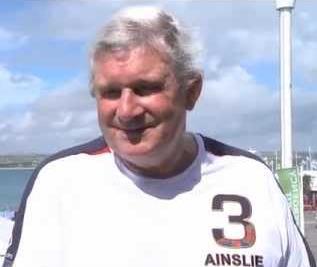
Roddy although a well-qualified Cape Horner he never joined the association has died aged 76 peacefully on the 21st of July after a funeral at St Anthony-in-Meneage parish church, Cornwall on the 28th July, there was a wake at the Royal Cornwall Yacht Club, Falmouth. He was the Skipper of Second Life in the first Whitbread Round the World Race 1973/74. The journal published the story of that race in CHJ…. After the race he went back to his business, he owned several cruising yachts and cruised the Irish Sea, Brittany and Scilly`s with his family. When he sold the business he became involved with Optimist training, then Lasers; he became Chairman of the UK Laser Association, and then involved with Finns. This all meant a lot of travel as his son Ben later Sir Ben was sailing in those classes; his son is currently leading the challenge for the Americas Cup. Roddy did not do a lot of serious racing but continued to cruise; He did the two handed Round Britain and Ireland race. I was the other hand.
Roddy may be remembered by donating to the RNLI either directly or at www.justgiving.com/fundraising/RoddyAinslie
Peter Visick
Obit: Peter Patchett
Peter was the secretary of the Liverpool and North West section of the Cape Horners for many years but sadly he is the last of that section to go across the bar. Peter was a Cape Horners Friend. Peter died in hospital in Liverpool following complications of an operation, he was 92. His whole working career was spent with Cunard in administration which included overseas postings to places such as Ghana. He joined the navy in WW2 and served in a cruiser. The cruiser took part in the D Day bombardment and here is an interesting story. Peter’s father was also at D Day as captain of a large Cunard transport so both father and son were at the same historical event. His father continued to ferry supplies to Normandy for 3 months when his ship was mined and sunk. His father could not swim but stepped off the sinking ship onto a rescue boat without getting his feet wet. After the war he was given command of the Cunard transatlantic liner Britannic 28,000 tons until his retirement. ED
Meanwhile Peter while still in the navy visited Cairo where he met his wife Joyce who was originally Lebanese. They had 2 sons and a daughter (the daughter predeceased Peter) and they have several grandchildren.
Philip Wood
John Harford Harland (1923-2018)
8 May 1923 – 11 May 2018
Dr John Harland was born in Belfast. At an early age, he developed an intense interest in ships and sailors, enjoying visits to the Belfast docklands as a boy and making ship models. He was educated at Methodist College and Queen's University, Belfast, entering Medical School in September 1940. In December 1942, he interrupted medical studies to join the Royal Navy as a "Hostilities only" volunteer. Following basic training at HMS Raleigh, mandatory sea-time aboard HMS Pangbourne, a WW1 vintage coal-burning fleet minesweeper, he underwent officer training at HMS King Alfred and additional torpedo and gunnery training in preparation for service in Coastal Forces. In early 1944, he was posted to the 123rd coastal force flotilla in Freetown, skippering motor launch HDML 1106 and B-class Fairmile ML 256. In early 1945 he was posted to Cape Town, where his first task was ferrying a series of 60 foot Motor Fishing Vessels from the Cape to Durban. These craft were propelled by a small diesel but also equipped with sails. While working at the
Sea Transport Office he was involved in the return of several whale-catchers to the Tønsberg Whaling Company. These had been requisitioned for naval service early in the War. After a further year as Transport Officer at the Naval Air Station, Cape Town, he returned to the UK for demobilization and resumption of medical school, graduating in December 1949. He emigrated to Canada in January 1951, later undergoing training as an anaesthesiologist. Dr Harland retired from practice in 1986.
During naval service he developed a special interest in sailing warships and steam whale catchers, and in the course of research he became familiar with several foreign languages particularly German and Norwegian. After the Navy, he retained an interest in maritime history and authored five books on the subject. The first two in the list were inspired by experience in South Africa:
John Harland was a Fellow of the Society for Nautical Research. In 2017, he was awarded a Beaver medal by the Maritime Museum of British Columbia. In 2015, Dr Harland donated his entire library of books to the Naval Marine Archive; The Canadian Collection in Picton, Ontario.
His writing credits are: Seamanship in the Age of Sail, with Mark Myers (1984) Catchers and Corvettes: The Steam Whale Catcher in Peace & War 1860-1960 (with John McKay 1992)
The Flower Class Corvette HMCS Agassiz with John McKay (1993) Ships & Seamanship: The Maritime Prints of JJ Baugean (2000) Capstans & Windlasses: An Illustrated History of their use at Sea (2003)
He also translated Dr Peter Kirsch's Fireship: The Terror Weapon of the Age of Sail (2009) from German to English, and contributed many articles to nautical journals, notably the Mariner's Mirror and the Nautical Research Journal
By Kind permission of Naval and Maritime Archive Canada.
Obit: Tony Bullimore
Aged 79, 31st July 2018
Tony born in Southend moved to Bristol after serving in the Royal Marines in the 1960`s where he met and married Lalel, the pair suffered racism and became lifelong fighters against inequality due to their mixed race marriage.
The then 57 year old during the 1996/7 Vendee Globe race became something of a celebrity after his yacht Global Exide Challenger which he had financed himself being a self-made millionaire capsized when the keel fell off on the 5th January 1997 when 1500 miles off the Australian coast and 900 miles above Antarctica, he had got into serious trouble as did another competitor, the Frenchman Thierry Dubois in the same patch of Southern Ocean in the most horrendous weather conditions. Thierry was picked out of his life raft by a helicopter flying from HMAS Adelaide, by the time Tony was found he had been in the upturned hull of his yacht for four days stoically surviving on water until it ran out and nibbling at a bar of chocolate all in complete darkness, when rescued he was suffering from hypothermia and frostbite which caused him to lose a part of a finger. He later wrote the story up in the book `Saved’ the incident made him world famous so much so that in 2000 he was the subject of a documentary crossing the Atlantic with Lenny Henry the comedian for company.
Of his rescue he said: “I started shouting `I’m coming, I'm coming.' It took a few seconds to get from one end of the boat to the other. Then I took a few deep breaths and I dived out of the boat. When I saw the ship standing there and the plane going overhead and a couple of guys peering over the top of the upturned hull, it was heaven, absolute heaven. I really, really never thought I had had it. I was starting to look back over my life and was thinking, 'Well, I've had a good life, I've done most of the things I had wanted to.' If I was picking words to describe it, it would be a miracle, an absolute bloody miracle.”
Back in Bristol Lalel said “Tony is a survivor - he'll never give in. He's courageous, he's genuine. He's like a bulldog. He's a beautiful bulldog.”
Tony later rounded successfully in the Oryx Quest race organized by Tracy Edwards starting and finishing in Qatar 2005 there were only four entries all multihulls. Doha 2006 skipper Brian Thompson GB – Daedalus skipper Tony Bullimore GB – Cheyenne skipper David Scully USA – Geronimo skipper Oliver de Kersauson Fr, only the British entries finished the race. ED
Tony was remembered on the BBC`s “Last Post” programme which can be downloaded as a podcast if you missed it. ED
Thuriya a Suhaili replica©CF
Day 85 of the GGR (Golden Globe)
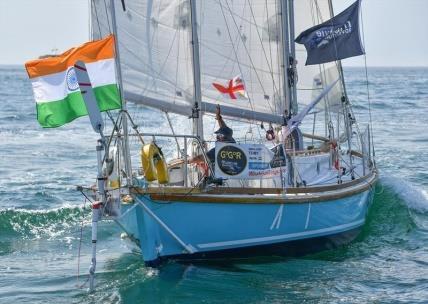
This saw Cdr Tomy one of our members and the first Indian to circumnavigate nonstop and single handed rescued from Thuriya, he was picked of his stricken vessel by officers and men of the French fisheries patrol vessel Osiris which reached Tomy’s yacht at 05:30 UTC today. Australian and Indian long range P8 Orion reconnaissance aircraft were circling overhead at the extreme end of their range. Thuriya’s position was 39° 32.79S and 78° 3.29E 1900 miles off Freemantle, the Cdr had been confined to his bunk with a severe back injury and chest pains unable to move since the incident 4 days before when in 70 knot winds and 50 foot seas his yacht was rolled 360 degrees making a clean sweep of the deck, there is a poor photo of the wreck lying in the swells afloat but an utter wreck. The text message sent by an emergency com aboard said:
“Rolled, Dismasted, Sever back injury cannot get up”.
Long range P8 Orion reconnaissance aircraft from Australia and India were location markers for the French ship seas by now had dropped to 12-20 knots and 6ft swells
The rescue was made following a radio briefing held between the Maritime Rescue Co-ordination Centre on Reunion Island, a doctor located on Amsterdam Island, and the master of Osiris before the French crew boarded Thuriya from Zodiac inflatable boats to administer immediate first-aid and assess the commander’s condition.
Fellow GGR skipper Gregor Mcguckin whose yacht Hanley Energy
Endurance was also dismasted in the same storm last week, was making 2.2 knots towards Thuriya’s position, sailing under jury rig. The 32-year old Irishman was still 25 miles to the West and in radio contact with the reconnaissance aircraft. He was not in distress but asked for a controlled evacuation from his yacht.
Faced with a 1,900 mile sail across the Southern Ocean to Western Australia under a small jury rig and without an engine (his fuel was contaminated when the yacht capsized), this was a responsible decision taken by a professional sailor when all the rescue assets were close by. The alternative would have been to continue sailing singlehanded without the aid of self-steering (also smashed in the capsize) and risking having to call on the Rescue Services
again should he be disabled further in another storm. Gregor`s jury rig comprised a single spinnaker pole
With the two solo yachtsmen safely aboard Osiris the French fisheries patrol ship sailed for Amsterdam Island where the rescued sailors were to be given a full medical examination. The hospital on Amsterdam Island is well equipped with X-ray and ultrasound equipment.
Race organisers continue to work closely with The Australian Joint Rescue Co-ordination Centre and are extremely grateful for the efforts made by all involved.
Tomy in happier times©
Shortly before losing his main when rolled the Irishman reported:
“Rough night, Knocked down, Mizzen gone, all else good”
“Massive sea and wind from the SW. Now struggling to keep the boat facing downwind. We took a really bad knock when we lost the mizzen mast. It went off like a bomb and also hit the wind vane and the main backstay, I wanted to keep the mizzen but was forced to cut it free, Now sailing under bare poles and towing warps, and still making over 6kts. Getting knocked hard by waves. This sustained force 9 is incredible. The barometer dropped off the scale from 1015 in just a few hours. There is no real water below since the hatch was shut but there is crap everywhere. My AIS went with the mast. I will need 36hrs to regroup and sort the boat properly in good weather after the blow.” Then at 11:00 UTC McGuckin called the GGR Hotline to say:
“Rolled and dismasted. Cut mast away…no hull damage…no water below…safety gear and sat comms secure…hatches and ports secure… towing warps.”
Don McIntyre, who took the call, said at the time “Gregor had not asked for any assistance. He planned to ride out the rest of the storm which was expected to recede around 19:00 UTC, and then reassess his options. He now has only one spinnaker pole because the second one was carried away with the mast, so setting up a jury rig will be more challenging.”
Dutchman Mark Slats in 2nd place, reported at 10:55 UTC: ‘WINDS DROPPED FROM 60KT TO 0 IN 15MIN. HORRIBLE SEA. 2 KNOCKDOWNS IN NO WIND’
barry@goldengloberace.com - www.goldengloberace.com Report courtesy race organisers
Cape Horner Journal CHJ73 13
Cdr
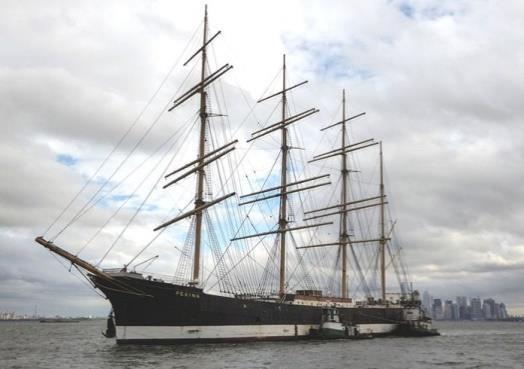
Peking the Laeisz P liner afloat again:
Yes, Peking is afloat again, I have no photograph of this historic cape Horner in the grey livery she has left dry dock in Hamburg but suffice to say that she has had her underwater plates attended to up to the water line where about a third have been renewed she now has a sound bottom. It is being said that the concrete ballast is not a problem and will remain in her. It will be a lot less costly for the owning association having the old girl alongside than in Dry Dock where she has been for most of the past year.
Reports say that the restoration cost will now be 32-35 million euros this will no doubt come from the government grant that will make her the centrepiece of the new and ambitious Port Museum.
Uwe a regular correspondent of Mariners International in Germany is keeping a close eye on the restoration he also says that the cleaning of the hull was somewhat fraught there being Lead paints and paints containing asbestos to contend with, he says that she will certainly have to go into dry dock at least once more to have plating above the water line attended to and some replaced.
Regards
Uwe
A First Experience of Cape Horn: Tenacious 2018
By: Chris Smith
Whenever large groups of people congregate differences are apparent. Yet seldom can variation have been as conspicuous as was evident in the group that gathered in Auckland early in January 2018 to sign on as voyage crew on board Tenacious for her passage to the Falkland Islands. There were representatives of both hemispheres, of the ‘old’ and the ‘new’ worlds and of at least three generations. For some this would be almost their first time on a sailing vessel, others had spent most of their working lives at sea in various capacities. There was a spectrum of small boat sailors ranging from a world title-winning blind dingy match racer to owners of cruising yachts who wanted something more substantial than the deck of a sub-40 footer under their feet before undertaking such a passage (I include myself in this latter group). As well as this wide-range of abilities and backgrounds the crew included people with physical impairments or long-term health conditions as well as those without. It is this rich variety that makes sailing such a passage on a Jubilee Sailing Trust ship so much of an adventure, as everyone on board participates to his or her best ability. For all of us the specific attraction of this trip was the
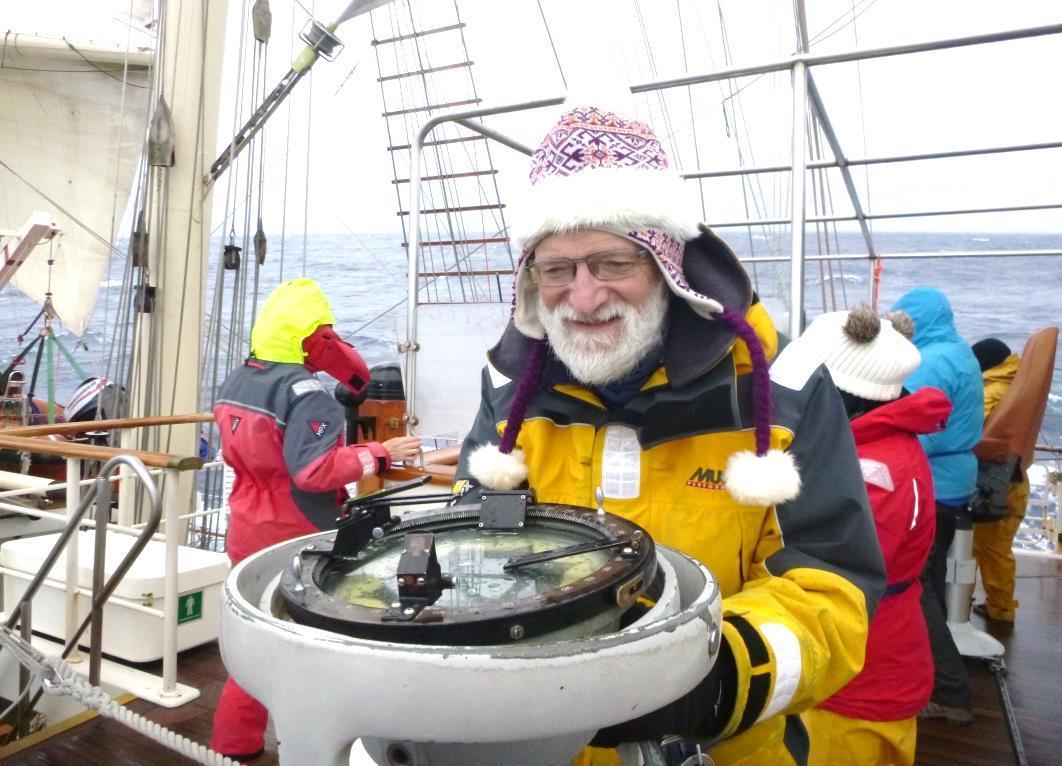
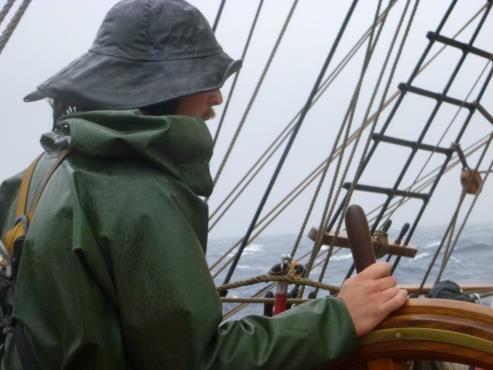
Author at the gyro compass ©CR
opportunity to experience the drama of the Southern Ocean and the near mystical lure of rounding Cape Horn under sail.
Maintenance issues have been known to cause delays to sailing plans since the days ships first put to sea – many yachtsmen have found the start their summer cruise postponed by an unexpected breakage, despite weeks of preparation, and even ocean racers have on occasion been held up for periods in port when some unforeseen problem comes to light hours before a start time (Francesco Cappelletti’s entry in the Golden Globe Race 2018, being a topical example). Our departure was similarly delayed as problems manifested themselves in one of the generators and one of the radar sets. This caused great frustration, but a few days of enforced idleness in Auckland provided an opportunity for us to get to know each other in benign conditions and also to undertake some along-side training (mast-climbing, use of immersion suits, evacuation training etc). An unexpected bonus was that we were able to see something of a city and its surroundings, with trips out generously funded by JST. Of course most of us have experienced the rise in availability and quality of New Zealand wines in our home countries during the last couple of decades, but we were also able to thoroughly check out the winery and micro-brewery scene first hand!
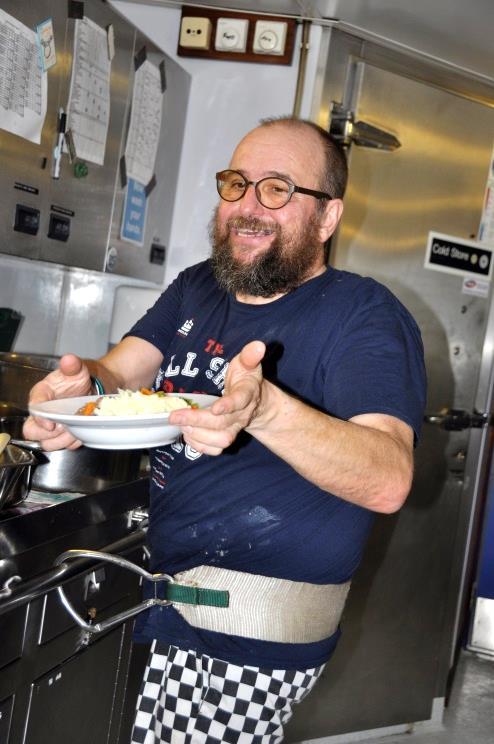
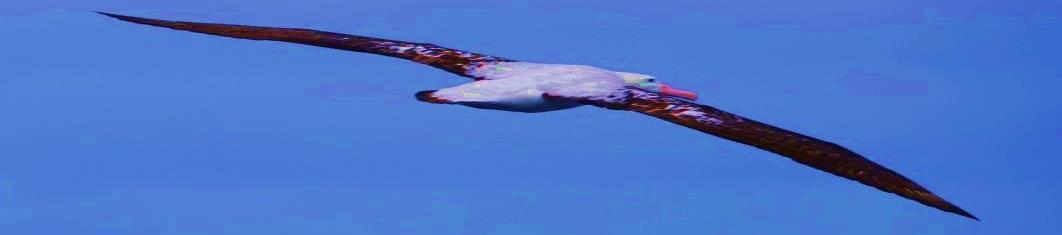
Over a week behind schedule we finally departed on Sunday 21st January, in light northeasterly winds that gave little justification for sail-setting. Motorsailing was necessary for most of the first week of our passage – there was a need to maintain boat speed in fickle winds if we were to make our scheduled arrival date in Port Stanley with its associated crew changes. But during that time the enormity of the Southern Pacific began to become apparent to those who had never undertaken an ocean passage before, watches began the meld into cohesive, functional units (well, most of them did!) and those for whom tall-ship sailing was a new experience developed a familiarity with rope-work. We were treated to our first sights of petrels, mollymawks and albatrosses, that were to become our almost constant Ian McColm the cook it is never easy so he is all harnessed in his horse rig © CR
companions on the voyage, but disappointingly sightings of marine mammals proved few and far between.
Around 48 degrees south we picked up significant westerlies and the sailing began in earnest. For those of us used to modern yacht sail-plans the different challenge of keeping the wind abaft the beam at all times became apparent. The weather-wisdom of previous generations of seamen who had crossed the oceans in tall-ships without modern weather forecasts was brought home. I had previously crossed the Atlantic in Tenacious with helpful NE trade winds making things easy, but now close attention to forecasts for many days ahead was required to maximize drive from each of the succeeding weather systems. Our charted course therefore deviated significantly from the rhumb-line, with an occasional apparent cul-de-sac. Wind angles were often close to the beam and we were well heeled for periods of multiple days – a fatiguing challenge for all, but particularly those with physical impairments and a constant source
of ‘entertainment’ in the galley and the mess. Mess duty days, undertaken on a rota by all members of the voyage crew, gave us insight into how hard it was to provide hot, nourishing food on a regular basis for a crew of 52 and it is a testament to the skill of our cook and cook’s assistant that this was achieved in all the conditions we encountered – though some of the crew probably have yet to recover from their sense of outrage when the stores of morning porridge ran out well before the end of the voyage!
Both sides looked similar their cap rails disappearing into the southern oceans, repaired in Stanley by RN workshops they gave problems again on the way to Cape Town © CR
Sail setting and furling, frequent bracing and regular ‘tweaking’ of the rig represented the main work on deck. The third mate, who was generally OOW of the forenoon watch, seemed to take particular delight in calling all available hands for work on deck before breakfast had settled and sometimes, it seemed, before the meal had finished. The routine of getting on deck to stand watch became ingrained in all of us, but in heavy weather this was quite a challenge for some of the disabled crew members. Four non-disabled crew were sometimes
needed to help guide a wheelchair user needing to get up to the bridge via the main deck at the beginning and end of a watch, but there were always willing volunteers. Generally we encountered fewer gales than some of us expected, but a deep low mid-February, when we were beginning to close on the Coast of South America, gave us all a taste of true Southern Ocean conditions and did some damage to the ship, with both main deck entry gates stove in by big seas. However our rounding of Cape Horn a few days later was made in benign conditions with sunshine and gentle winds allowing an extended photo session on deck. With some assistance from the iron topsails we subsequently made our landfall in Stanley on the day that had been appointed for our disembarkation so many months previously.
This was the second time a JST ship had completed this passage S.V. Lord Nelson had successfully rounded Cape Horn on her return from New Zealand in 2014. Both of these vessels were designed and built with the needs of disabled crew members fully in mind, enabling all too fully participate in the sailing of a tall ship in open waters. As such both craft were somewhat experimental as well as pioneering, and naturally some of the more experimental features have proved to be associated with problems as well as benefits. Certainly the roller-reefing sails, from upper topsail and above on both fore and main masts, needed very careful handling and were a frequent source of problems. MCA requirements have also inevitably altered the experience of tall-ship sailing, as they have impacted on all commercial seafaring. It will never again be possible to experience the thrills, the risks or the frank dangers of tall ship sailing, as in the ‘golden-age’ of sail, although voyages such as ours still represent a major physical and mental challenge for all members of the crew. The teams, largely made up of the bosun and his mates, that went aloft to send down torn sails and subsequently re-bent them on once repaired found the task no less arduous just because they were spared to worst consequences of a fall by their harnesses and safety lines.
This voyage will live long in the memories of all who were on board. Many of us discovered reserves of stamina and tolerance that we did not know that we possessed and most of the minor obstacles that presented them-selves were negotiated with great good-humour. This was frequently celebrated in the weekly onboard
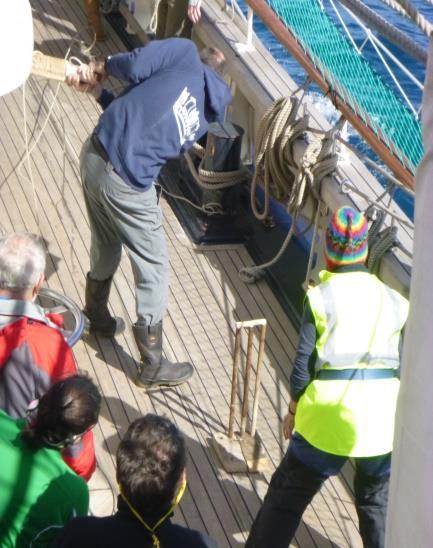
Captain Philips at the crease © CR
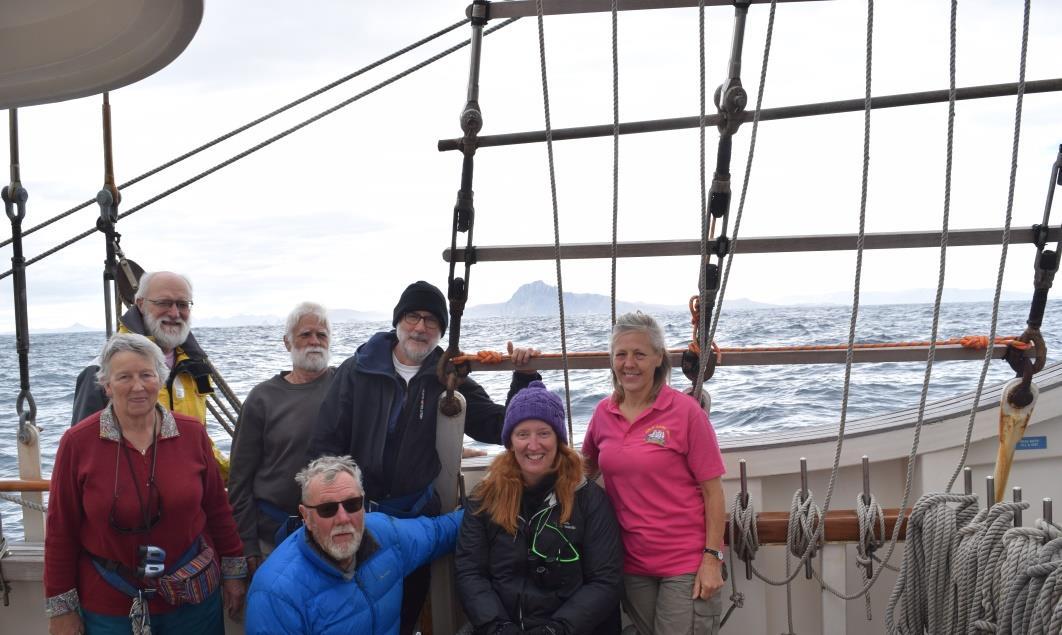
newspaper (the Tenacious Times), which was regularly edited and produced by one of our watch leaders. There were many notable high points on the voyage – the due celebration of Burns night despite the lack of easy access to many of necessary trimmings; an England vs Australia cricket ‘test’ match played on the starboard side of the main deck in celebration of Australia day; an eclipse of the moon witnessed mid-ocean, to name but a few. The combined photographic talents of the crew have produced a fantastic visual record, including some evocative shots that capture the experience of heavy weather – so often flattened to insignificance by a camera lens. However, for me, the spirit of the voyage is encapsulated in a photograph on my phone –our diverse crew on deck with smiles of achievement all round and Cape Horn, bathed in sunshine, in the background. I doubt many of us will sail these particular waters again, but a large number will sign up for further voyages with this unique organization.
Chris took the plunge to write so why not you it is you all wrote logs on voyage. ED
Front: Jane Orr, Tony Christensen, Kate Hirst, Sally Spencer, Back Chris Smith, Peter Mc Gibbon, Chris Hooper, Cape Horn in the distance Missing men from Forward Port watch are Paul Betney and Chris Roche
Review Wind in my Wings
By Fran Taylor albatrosspress104@yahoo.com
mailto:phrangipani@hotmail.com]
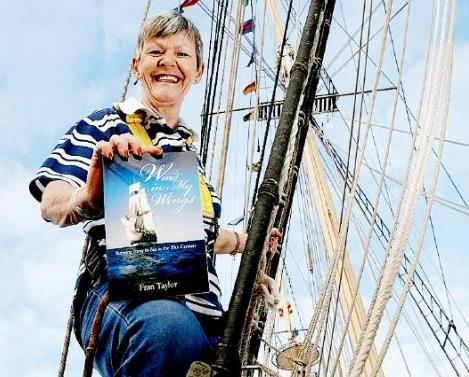
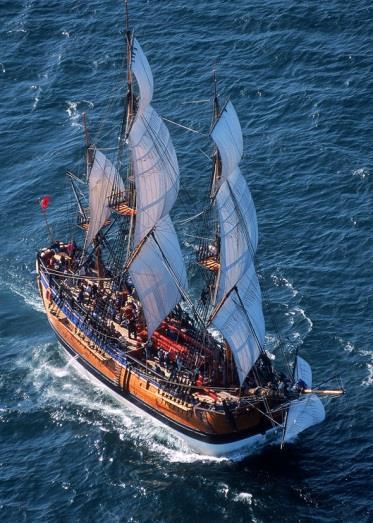
I sailed with this lady in Tenacious Auckland to Cape Town by way of Cape Horn earlier this year; born and raised on the banks of the River Clyde in Scotland she immigrated to Australia in 1966 but speaks as if she left Scotland only yesterday such is the twang of the old country in her voice now a resident of Perth. Fran relates not only the day-to-day events of the seagoing life of a diminutive but lion-hearted Lady who will not say "No" to the challenges in her life, but also the deeper thoughts and feelings that occur to her as she joins other men and women in the precarious business of crewing square-riggers across half the known world a keen observer of what goes on around her. Frans book in particular deals with the dramatic voyage of the Australian replica of HM Bark Endeavour from England to Australia in 2004-2005. She knows and loves Endeavour, and, as the ship wends her way homeward after three years of wandering to a more sedate existence at the Sydney National Maritime Museum dock, one can feel her empathy for the ship and a sense that her sailor's heart beats in parallel along with the heart of the vessel herself.
In 1989, Fran first started sailing on the Tall Ships, and became a sailing enthusiast. Fran has articles published in sailing and other magazines. Invited in 2010 to be guest speaker on the Atlantic voyage that year in one of the Star Clipper ships Fran was up for the challenge when it came in 2013 to crew in the. 3-month voyage from Cape Town to Fremantle in the Dutch barque Europa via East London, Durban, Reunion and Mauritius which followed the old Dutch trade routes to WA and beyond, via the famous Roaring Forties.
Our new Cape Horner Fran Taylor has done what generations of boys dreamed of and never achieved: she ran away to sea on square-riggers. A lot harder to achieve than in the days when you only needed to hang around a waterfront bar to get knocked on the head and shanghaied aboard an outward bounder.
Fran's book "Wind in My Wings" tells the fascinating story of her time in sail, from her first trip on Leeuwin to several voyages in Endeavour and other square- rigged vessels around the world.
Where the Magic Happens
By Caspar Craven
This is not one of those books with endless descriptions of par-buckling the futtocks, and extracts from the ship's log. This is a story about the fun - and occasional panic - and companionship on the voyages, with plenty of intriguing anecdotes to boot.
Fran has just recently finished her second book, “Ships That Pass in the Night – Titanic and the Past Revisited” which shares her experiences during the Titanic Memorial Cruise held in 2012 to commemorate 100 years since the sinking.
Both books were aboard during our voyage drawing much attention, well worth adding to any library: ED
A book entitled 'Where The Magic Happens’ has just been published by Bloomsbury Publishing; ISBN No. 978-1-4729-4991-2. Caspar, the author writes with considerable skill and precise details of his second circumnavigation of the globe, this time with his wife and three small children. Caspar is a Cape Horner having been a watch Leader aboard the yacht ‘Quadstone’ in the BT Global Challenge yacht race around the world in 2000/2001; his first circumnavigation. I was also a crew aboard Quadstone for this epic circumnavigation against the prevailing winds and currents.
I had the privilege of sailing with the Cravens on two legs of their family round the world voyage aboard ‘Aretha’ a 53ft. Oyster. Firstly, sailing from the Canary Islands to St Lucia in the famous ARC Rally and then from Cape Town to San Salvador in Brazil via St Helena, the remote island in the Atlantic. With three young children, the youngest being two on board we had to be adept at changing nappies and clearing away toys as well as pulling halyards, sheets and handling sails.
It is an inspirational book and gives excellent tips for people seeking adventure. It is not just about the voyage but the essential preparation and planning to ensure success. ‘Where The Magic Happens’ takes you on a journey with the Craven family as they devise an idea to radically shake up their lives. Join them as they spend five years putting in place everything needed to sail their family around the world.
The book with its descriptive twenty chapters is comfortable reading and well indexed; so it is easy to return to chapters of special appeal. There are some lovely colour photographs highlighting the fabulous islands and countries they visited. Dramas such as storms, breakages and medical emergencies are all documented and valuable suggestions for others embarking on a family adventure
The book is available on Amazon and I thoroughly recommend it to our members; not just for the details of this incredible adventure, but also to be inspired to set goals and make them happen.
Paul Covell
RECORDED IN SWANSEA 31/8/1973..... BROADCAST DURING SUNDAY BEST 3/9/1973
Every now and then we hear of some fearless yachtsman rounding Cape Horn and returning in triumph: last time, you’ll remember, it was a family in a catamaran. Good luck to them I say and well done.
But what about the men that rounded the horn not once for fun, but again and again.to earn a pitiful wage'? Seventy years ago, hundreds of ships set out yearly from Europe bound for the west coast of South America. There were many Welshmen and Welsh ships in this business of shipping out coal and steel and bringing back Chilean nitrate for use as fertiliser. The park in Fishguard is called Lota Park after one of those benighted little Chilean ports.
Not long ago I had the chance of reading the personal log books of a Welshman, Captain Thomas of Swansea, master of the barque Falstaff. In front of me was a pile of what looked like old school exercise books - books full of spidery, elegant scrolly Victorian writing, their pages smudged with seawater and edged with prayers and mental arithmetic. Read them and you follow the windjammer as she slogged close hauled down the channel:
swayed and rolled before the clean blue winds of the Trades: lolled in the tropical doldrums: battled and clawed her way to windward against the cruel gales and seas of Cape Horn.
SLV Brodie/Latrobe Coll LTFBN218
For Cape Horn in those days the crossroads of the world's trade, was also the worst place in the world: Winds mostly westerly and mostly of gale force or more. Seas sometimes sixty feet high and half a mile long, ice and huge bergs and smaller but deadly growlers: And always the bitter cold. In 1895 a terrible hurricane struck Falstaff as she rounded, and only twenty-four hours of continuous pouring of oil on the waters saved her. One man died, flung to the deck from a topsoil yard, and the ship was left a floating wreck, a listing shambles without a rag of canvas.
As I read his log the captain's character seemed to come through - a dogged, cautious, rather unlucky man. He seldom made a smart passage and grieved constantly over this: “Light airs and very hot sun…. I cannot understand how I cannot get a chance to make a fair passage. I am doing my very best but I cannot get a wind:” And a week later: "This passage beats all as I have seen yet. It is something heartbreaking."
Voyages were often maddeningly long - 96 days Cardiff to Valparaiso – and when they were over a fresh crop of problems arose. The labour and monotony of cargo work caused endless discipline troubles, At Carrizal Bay a drunken liberty man got the support of boatswain McKay who refused to put him in irons.
“The boatswain offered to fight the officers or captain if he was on board. To this the sailors came up from their work and T. Marshall, supposed AB., he cried out; `well done’ boatswain. All seemed to be in a mutinous desperate mood and prepared to attack the officers…., boatswain threatened Stewards life repeatedly and used most obscene language. This must be settled at home:”
Continued on page 26…….
Aland Museum and 4m bk Pommern 1903
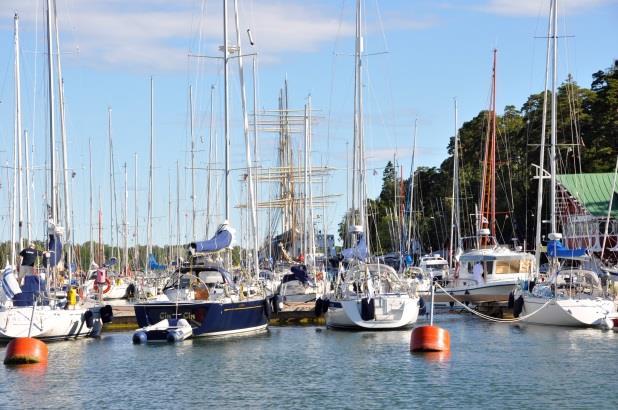
A visit was made to Mariehamn in June to see the finest survivor of a past era Cape Horners you should all go, stay at the Cikada Hotel or on your yacht in the marina, this Baltic backwater it cannot be stressed enough is worth every moment you are there:
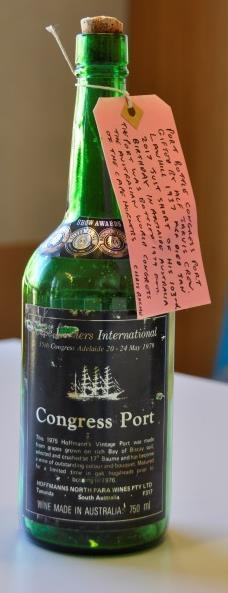
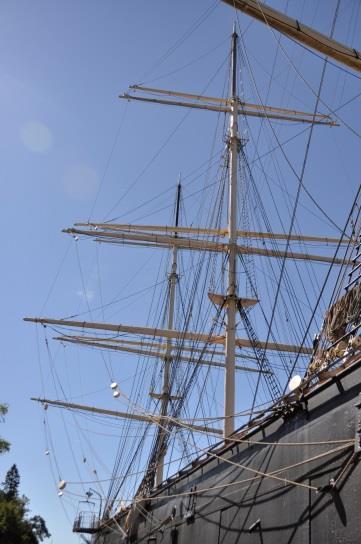
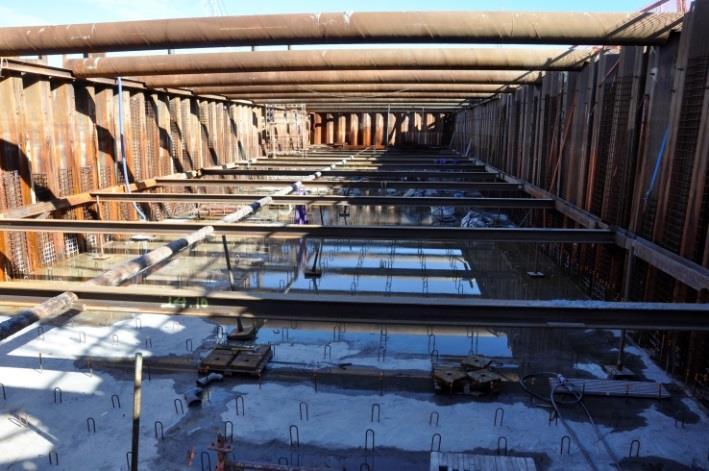
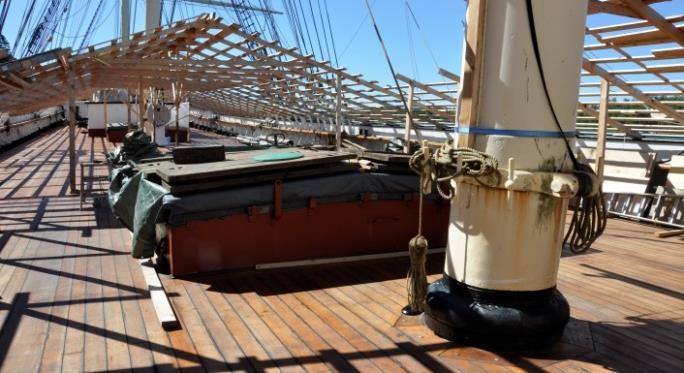
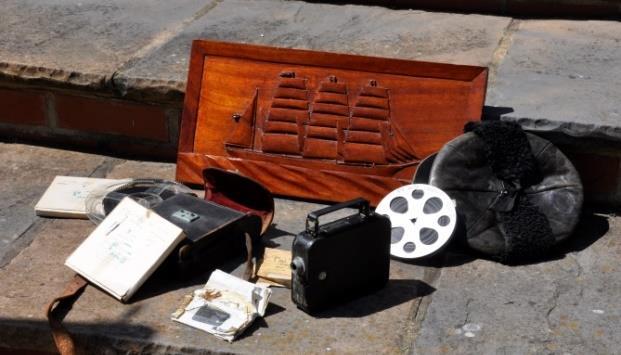
I was there to sing at the Baltic Shanty Festival and to leave gifts from the Dewhurst family of Film, the wind up clockwork camera a Kodak 20 (still working) that shot it in 1935 on Johns round the world voyage in the 4m bk Viking, a carving by Captain Hagerstrand the captain on that voyage and John`s hat last seen off cape horn when I was there in STV Tenacious February 20th this year. I also had the Port bottle from the 1979 Australian Cape Horners congress, titled congress Port, given me by the late Alf Jarvis ex of 4m bk Lawhill 1937, we had drunk the bottle dry back in 2008 and I kept the bottle, The curator was most surprised it had survived she has also added that to the collections. Here are some photos of the visit including the new purpose built dry/wet dock costing 6 million euro now under construction for Pommern, so that she can be properly maintained in Aland where she has been since September 1939. I have probably said so before but she is the only sailing ship of Iron or Steel anywhere in the world kept with all her original equipment and in original configuration fully open down below, to stand in her hold and look through from her curved stern frames all the way to her collision bulkhead it is easy to see why so many sailing ships were lost, it is a massive cargo space. ED
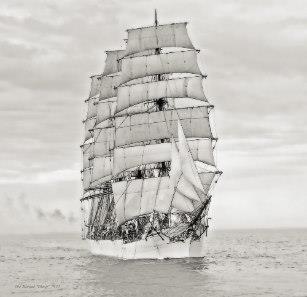
Viking is in Gothenburg these days where she is used as a Hotel ship, long lived she was built 1906 by Burmeister & Wain in Copenhagen, Denmark. And was the largest sailing ship built in Scandinavia.
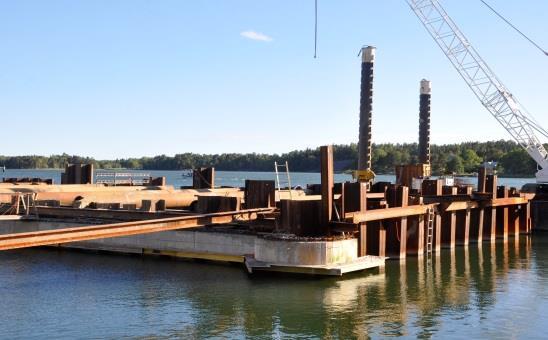
Two photos of the new dock under construction. While Pommern was at her temporary berth she has had the wasted metal under the deck replaced and a complete new Oregon pine deck laid by the friends of the ship. She was roofed over for the winter to allow work to proceed. The creation of the dock is a massive undertaking by this small and independently minded community. She will be open for visitors’ again next year 2019 safe in her new home.
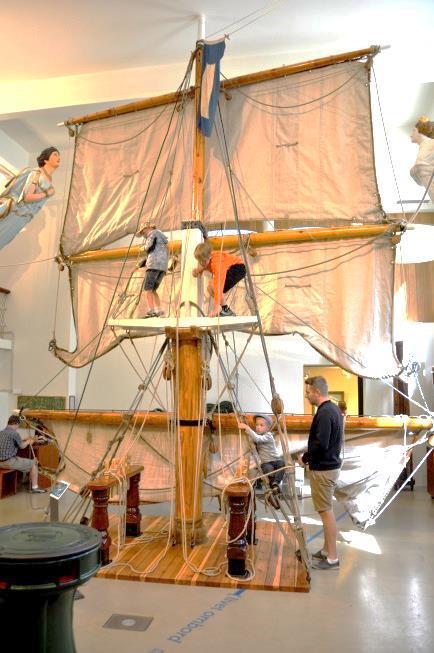
The mast in the museum which like the capstan is there to be used by children who visit: Where children of all ages may clamber aloft at will. The Marina has visitors’ berths and a waterfront lined with restaurants and bars. The museums are only a short walk away.
Cape Horner Journal CHJ73
Continued from page 23……
Fifteen years later, while unloading at Antofagasta. Captain Thomas had a stand-up row with his Mate:
"I told him I had already put up with too much of his insolence and if he didn't mind I would give him a good shaking. He stood out in a fighting attitude and told me to try it. I therefore gave him a slap in the face….. He then with all of the insolence that a foul mouth could speak said that he had me now and wanted to see the Consul:”
However life was not all work and trouble. The Welsh sailors took their faith with them and every Sunday one ship nominated the Bethel ship, holding a simple service on board. One can imagine CaIon Lan and Cwm Rhondda rolling across the glittering alien waters.
And there was sometimes a lighter side to his problems; the cook he signed in Middlesbrough proved too drunk to perform any duty. So the captain shrewdly…..
”Took another man out to get something to eat for which I paid £1, which will be deducted from cook's wages'" As for the carpenter…...the fellow has no notion whatever about carpentering. I intend to reduce his wages from £4 (per month) to….. £2 -10 -0, which is then too much for him”
For the next fourteen days the wretched imposter is noted as "chipping rust"a task more suited to his skill.
They are history. these pages - pictures of a way of life now vanishing for ever; harsh, dull and dangerous, yet still memorable so many years later.
Cape Horn is the cape that everyone has heard of: that everyone thinks of as a place of dread. But what was it really like to round the Horn under sail? Only those who did it as part of their bread and butter trade could describe it without romance or rhetoric. At the turn of the century hundreds of ships did it every year. Many of them bound from South Wales ports to the tiny nitrate ports of the Chile coast – TaItaI, Pisagua, Caleta Buena, Talcahuano, - unheard of places now; but household words in many Welsh homes in those days. They went to W.C.S.A., as they called that coast for a cargo which the more expensive steam ship could not be bothered with – Chile nitrate. The factories and fertiliser plants of Europe needed it; men dug it from the rainless Atacama desert, and sent it down narrow gauge railways to the savage harbourless coast, where in a score of tiny ports between twenty and forty degrees south.
It was loaded slowly and laboriously by lighters into the ships. Often the weather, the surf, or a fiesta ashore stopped the lighters, and a ship may lay there sixty days discharging and loading.
One of the shellbacks who sailed in this hardest of all trades was Captain Thomas of Swansea. Not long ago, his grand-daughter lent me five of his personal log-books, and all winter I have been following his journeys through their yellowing pages – pages smudged with sea water. And edged with mental arithmetic, prayers, complaints and prophecies: Day after day he sat down in his cabin and wrote down the record of his struggles, his worries, and his problems; in black, beautifully spidery copperplate.
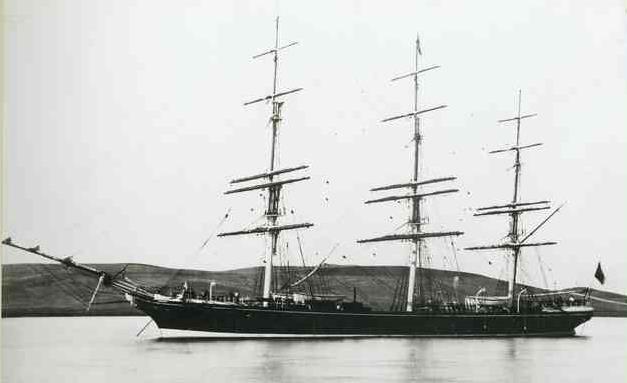
And what a crop of problems a captain had: stranded without a crew in Newcastle NSW: bedevilled by lawsuits in Puget Sound: driven crazy by tropical calms and by fiestas ashore when no Dockers worked: two men dead of yellow fever at Bahia, Brazil: a drunken mutiny at Carrizal Bay, and a fight with the mate at Antofagasta. But overshadowing all these was the worst problem of all! Cape Horn, an ogre to be faced twice each voyage: the busiest place in the windjammer's world. And worst of all an archipelago of black rock fangs thrusting down into the Roaring Forties. Where the huge winds and seas race unchecked round the globe, and where deadly ice bergs and growlers from the Antarctic lurk in the fog and rain. Here the ships homeward bound to Europe from Chile, British Columbia, New Caledonia and Australia all converged, running under as much canvas as they dared carry before the massive Cape Horn greybeards. They would be reeling off perhaps as much as fifteen knots, but one false move at the helm, one sail kept on too long and a ship might join the endless ranks of those listed at Lloyd's `overdue presumed lost’. And as they swooped, rolled and raced eastwards, they met the outward bounders, the real victim of Cape Horn, plugging grimly away to windward under a few scraps of canvas, lower topsails and a staysail or two or hove to drifting helplessly back to where they had been days or weeks before.
Sometimes of course it let them off lightly, but this is what it could be like. Listen to Captain Thomas's own words as he sits in his cabin, the lamp swinging in its gimbals, the water still running off his oilskins.
SLSA Edwards Coll
On this voyage, I had better explain. He had left Roath Basin, Cardiff on March 16th 1895 with 1,996 tons of coal in the form of patent fuel blocks under the hatches. Sixty-two days out after a maddeningly slow passage his ship. The three masted barque Falstaff was off Staten Island for Cape Horn, and now began the worst of all her recorded passages. For days on end she slogged wearily to windward wearing ship this way and that in hope of a better slant of wind. And then on May 23rd with the glass down to below 28 inches. She was struck by a terrible storm from the west. And this was what it was like in the words of the man who was facing it as he wrote:
Thursday May 23rd hove to: Wind West by South…..4pm: blowing a whole gale with high sea. Wore ship to WNW to head to sea better; Sea very high and confused. 8pm: Blowing a whole hurricane and dangerous high sea. Shipping very heavy seas; midnight, fearful weather, put two oil bags out, one forward and one in main rigging. Sea dangerous; 12.30am: Ship listed right over - lee rail under water and down much by the head. Call all hands out to trim cargo. Sounded pumps, – fourteen inches (of water). Kept ship before wind and sea and hands below to trim cargo; pouring oil over in large quantities. About 1.30 shipped a tremendous sea. Filling herself fore and aft, flooding cabin and lazarette, bursting in windows in front of cabin and doing much damage about decks washing everything out from under Forecastle smashing in oil-room door and Carpenter's shop door. Found ship cannot run called hands up from hold to bring her to, again using oil in large quantity. Most dangerous sea running; 2am: Main lower topsail sheet gave way, sail flapping dangerously. Main lift carried away. Sent a hand aloft to cut the sail adrift to save the yards; in flapping knocked the upper topsail adrift and blowed away to pieces. Blowing now a most terrific storm; soon after main topgallant sail blowed out of the gaskets (being well stowed) and blowed to rags. Ship now would not lay-to under fore lower topsail, laying in a trough of the sea and shipping heavy seas: Sent a hand aloft to cut sail for safety of ship and lives. Impossible now to describe the force of the wind and sea mountainous high: pouring oil in large quantity all the time which indeed is the only means of saving the ship. Got two boat covers in mizzen rigging to try to keep ship to the wind. Both blowed away to pieces then got a coil of three-inch rope. Lashed reefed spanker halfway up and hauled out five feet of the foot. Sail flapping dangerously: Got three lines round the sail to keep it quiet: Ship now keeping to a little better, 7am: All oil finished in oil room the rest in fore hold: dangerous to open hatch. 7.30am: shipped a most dangerous sea forward, filling herself fore and aft, and indeed all thought her going down. Knocked both light screens and lamps overboard, Pig-sty gone, Boat smashed to, pieces. Henhouse aft with ten hens and five pigeons gone, and everything moveable about the decks washed overboard, handspikes, buckets, blocks, tackles, galley funnel, ventilator all and much water gone down on top of
cargo. Cooking utensils smashed in galley - everything gone. As soon as decks cleared a little took off fore hatch and got a cask of oil up and used it in large quantity which indeed is the only means of saving ship and lives. 8am: Daylight. We look in a tearful state - all ropes out through ports chafed and cut to pieces, pieces of saiI foul of ropes aloft and blocks, ropes and everything attached to sail is blown away, gone and washed through ports. Cannot go on main deck to clear anything; Lee side most time under water.
Wednesday May 29th: While stowing topsail `James Coe AB’ fell from topsail yard on deck and was killed on the spot. Carried him into the cabin found his neck broke, never breathed poor fellow. 8am: Sewed `J. Coe’ in new canvas read funeral service and buried the poor man in the deep.”
By Lai fong of Calcutta attributed to;
These logs bring out the desperate loneliness of command - the terrible duty of making the irreversible decisions that might mean men's lives, and not merely profit or loss to his owners.
After the storm Captain Thomas found his ship leaking badly through a strained deck and listing to starboard. He put every man in the ship below hatches, and in one day they shifted 150 tons of blocks and shored up the rest. A few days after the storm he wrote:
"Indeed on examination (of the cargo) I thought to go back from the Falklands to secure cargo and for sails and for repairs, but now with the wind coming
from south-east I have decided to proceed to Valparaiso. Hoping to have a fair chance from here as I have no sails only fine weather sails.”
For another fortnight the poor Falstaff plugged on. Her cargo shifting constantly, her decks awash and leaking, her old worn sails fit only for the tropics and the trade winds, turning gradually to ribbons in the bitter grey gusts from the Antarctic ice. Not until June 16th did Falstaff come to anchor in 25 fathoms in Valparaiso Bay.
“4pm: All hands got anchors over and chains bent.
5pm: Passed lnglis Point. Calm in Valparaiso Bay, not a breath of wind: took steam to tow to anchorage.
Paid £4. 6pm: Let go anchor in 25 fathoms of water and veered to about 50 fathoms of cable……. Stowed sails.”
Out of the careful spidery pages come the most magic of sounds:
“The sullen splash of the anchor hitting the oily water: The long metallic rattles of chain cable in the hawse-pipe. The dry flakes of rust dancing up off the hurrying links. And the ship quiet at last.”
"This ends our passage of most tiresome weather I ever experienced. A passage I shall never forget:”
Wrote Captain Thomas that night:
“The bitter victory was won: Falstaff lay in 25 fathoms of water in the calm of Valparaiso Bay. And `James Coe, Able Seaman’, lay so many fathoms deeper in his shroud of new canvas in Latitude 57°26’ South. Longitude 77°20’ West.”
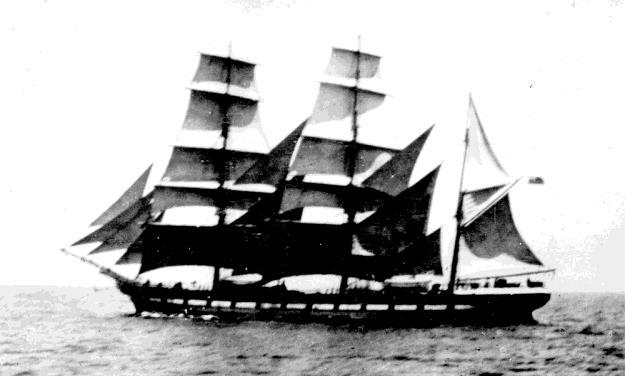
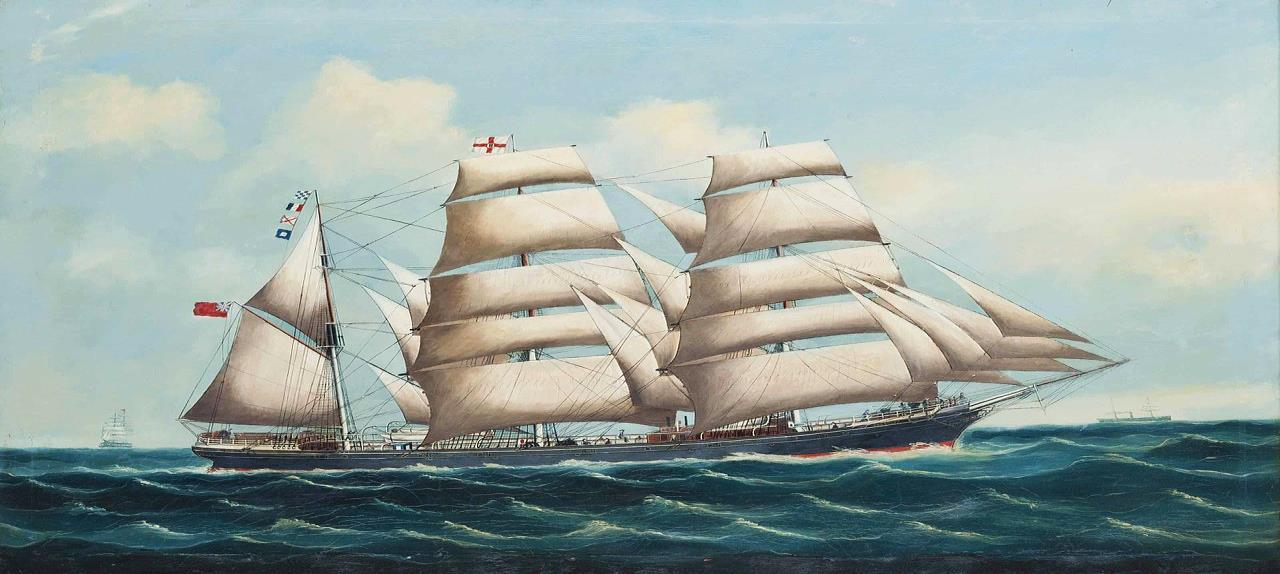
The photographs in the above article are from the State Library of Victoria in the Edwards Collection: and show Falstaff in both rigs first as a barque and later as a ship, she is anchored in an unidentified harbour her official number was ON70923, dimensions were 238.0 x 38.0 x 23.5. 1465 tons built in 1875, by Barrow Ship Building Co. Owners: J Beazley, registered at Liverpool, she was reduced to a 3 mast barque around the time she was owned by W. B. Jones at Swansea.

I have as friends various shanty singers one such is a group of singers calling themselves `Swinging the Lead’ they may be found monthly singing on the clipper Cutty Sark at Greenwich, one of their members Dave`s wife Chrisie had a grandfather who was master of this old ship Falstaff which today is grounded as part of a pontoon of old ships at Punta Arenas in Chile. The story came to me when in 2015 I was going to be in the town after a sailing trip mentioned Falstaff and was told of the ancestors’ connection as Captain of her. www.swingingtheleadshantyband ED
Trading by the Wind
Advance notice of review: I have had in a flyer for the long awaited book “Trading By The Wind” it is Godfrey Wicksteed`s sea diaries in square riggers 1919-1923 edited by his niece Brenda Tyler I have seen some pages but suffice to say it is worthy of any bookshelf, Godfrey was for thirty years and some the rigging advisor at the Cutty Sark. In Hardback it is £18.99 including postage within UK Send email request to tomtecards@btinternet.com ED
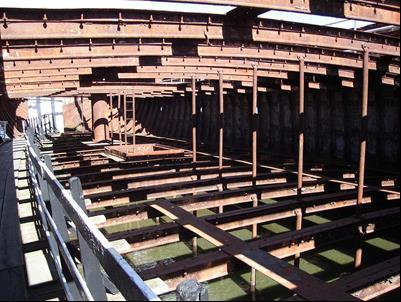
Inside the Falstaff Hull at Punta Arenas December 2015 © C Roche
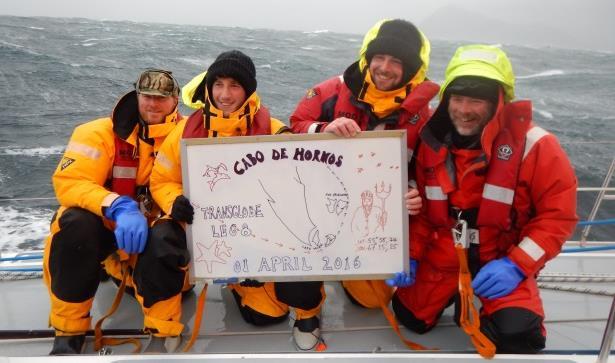
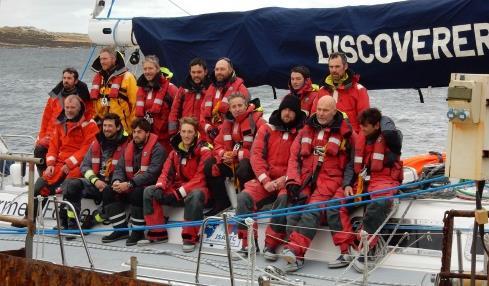
HMSTV Discoverer at Cabo de Hornos 2016
"The article which follows is an extract from the blogs of various crew members of the Joint Services Sail Training Vessel Discovery during her passage around Cape Horn during Exercise TRANSGLOBE in 2016. The article is relevant because Joint Services staff skipper Becky Walford informs us that planning is afoot to conduct another similar circumnavigation. We shall keep you informed as their plans develop and look forward to hearing of the expedition's progress as the voyage progresses before welcoming another influx of new members in due course."
Daily Blog: Day 28 - Friday 1st April 2016
If one is to use the long lost (Victorian?) art of “reading a book” to find out about rounding Cape Horn, one might look at “Admiralty Ocean Passages for the World” from the UK Hydrographic office. This bestselling tome is a little dry at best, but in the finest British traditions of understatement to the point of lunacy, gives us two salient pieces of advice:
1. “Rounding Cabo de Hornos from W to E is a comparatively easy matter”
2. “A vessel in difficulty should run boldly through the straight and round up under land if necessary”
Capt Phil Caswell REME, first mate©
In layman’s terms then, the instructions are clear: it’s pretty easy anyway, but if things get sticky, bags of smoke and straight up the middle (and if you must wimp out, hang a left).
In our haste to leave Auckland (and the exorbitant data roaming charges) we didn’t get round to “asking Siri”, Googling, or querying on online forums as to the accuracy of the above directions, and were therefore unable to fuel our skittish imaginations. So Admiralty Ocean Passages had to do, and we prepared ourselves thoroughly based on its advice: procuring a few decent bottles of champagne, suitable tobacco supplies (only a bubble pipe for me, mum!), and rehearsing our fail-safe fall back plan: enthusiastically preparing to remain cheerful in the face of adversity.
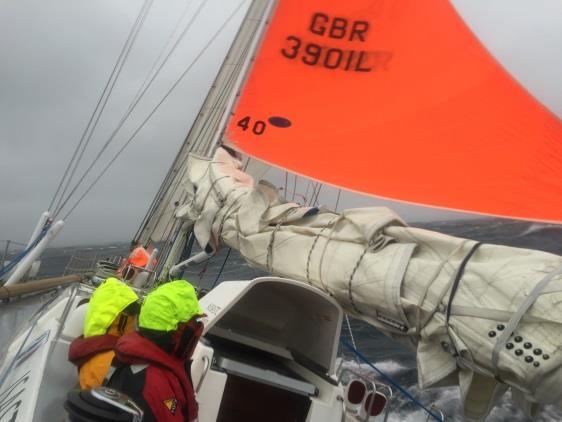
Sometime then passed…. and as the day dawned we found ourselves approaching it: the mighty Cape Horn itself. With a healthy gale blowing and the seas building to sea state “frisky” on the steeply shelving sea bed, we trundled closer, with excitement and trepidation mounting. A gust of 60 knots true was recorded on the approach, and we surfed in at up to 20 knots. We eagerly peered into the drizzling murk to catch a glimpse … and finally there it was. At exactly 1837 UTC we passed Cape Horn two miles to port. The grey shape was a strangely majestic sight; the harsh weather adding to the atmosphere of this feared and legendary place.
Appropriate celebrations followed – photos, champagne (first toast to good old Neptune), and cigars, hearty back slapping. But at some point all of us took a quiet moment to ourselves to let it all sink in. We have been thoroughly tested by a taste of the hardship, fatigue, treacherous and freezing weather from which legends have been made - Shackleton’s open boat journey, and the pioneering round the world racers for example. This remarkable experience is also only possible by the goodwill and sacrifice of our nearest and dearest. And it’s not over yet – we have a long 1400 nm to Montevideo – I suppose my irksome nickname of “Captain Cautious” lives up to its reputation as I and the skipper prepare to get the morale hoover out and revert back to business as usual.
I’ll sign off now before tonight’s activities: official DIY tattoos, and ear piercings for the Cape Horner’s gold earrings.
On a tragic note, the shocking news of a fatality, Sarah Young, on board Ichor Coal (part of the RKJ Clipper fleet) has reached us this afternoon. Our thoughts are with her family and friends, and her teammates on Ichor Coal
Phil Caswell 3Bn REME - 1st Mate.
I am promised by Tor Peebles, that this the final Discoverer blog dated Day 37 – Monday 11th April is written in as pure a matter of fact as can be giving the end of voyage feelings by the Skipper Col Tim Hill 3BN REME: ED Tor says: On a personal note, the journey of crossing the pacific and rounding the horn, have had a most profound and positive effect on me. It is often that one forgets the rounding effect of any passage at sea. In particular, I have drawn strength and confidence from the example set to me by Tim, in his qualities as a leader and person, this has allowed me to overcome challenges in my home, work and reservist life.
And so to that last blog
We’ve arrived! 6733 miles later (although only 6104 planned), including a 48 hour pit-stop in the Falkland Islands at the 5578 nm mark, we finally pulled into the beautiful marina at Punta Del Este at 1800Z. As skipper, I have the distinct pleasure and honour of signing off Disco’s final blog of Leg 8. Some of my fellow crewmen have written terrific accounts of their time at sea, capturing every essence of our great adventure, but in recognition that my own style is perhaps more ‘Enid Blyton’ and in order to spare my own blushes, I thought I’d stick to some basic stats, JWDs (Jolly Well Done`s) and TYs (Thank-you`s) that mark our journey.
Red watch left to right: Tor Peebles, Tom Simons, J Toner and Andy Pritchard. ©
Stats first………
- Total distance planned: 6104 nm.
- Total distance sailed: 6733 nm.
- Average speed: 7.94 knots.
- Total distance from NZ to FIs (i.e. non-stop): 5578 nm.
- Total distance from FIs to Montevideo: 1155 nm.
- Best 24 hr run: 233 nm at an average speed of 9.71 knots.
- Days at sea since departing NZ: 37 (41 if you include island hopping around NZ).
- Litres of diesel consumed for engine & generator: 1019 ltr.
- Fresh water made: 17.5 tonnes.
- Food consumed: 922.5kg.
- Miles spun on Spinney by the skipper: 320m.
For each and every one of us, Leg 8 has meant many different things. I can put my hand on my heart and say that this crew has been the most professional, tough and laid back that I have ever had the pleasure of sailing with. Despite the 41 days cooped up together, time has flown by; conversation and humour has never dried up; there hasn’t been a single cross word (save the occasional ‘hurumph!’ from the skipper) and the effort and motivation has never once waned. Every crewman has risen to the challenge and they can all proudly call themselves Ocean going sailors. And at times the going has been tough – extremely tough and if I was to single out one common theme, it would be the wet and the cold and not the 60-knot winds and mountainous seas which we took in our stride. Sure, we’ve all stood atop a mountain in the snow and admired the view and some of us have been wet and cold on ops, but nothing quite prepared us for the relentless and grim conditions in the Southern Ocean, where hands on the wheel (in the most expensive and luxurious of Gore-Tex mitts) don’t last more than 30 minutes. But there were no complaints, but bags of quiet, understated, neverin-your-face teamwork. Here there are no weaknesses on board, but instead people just have individual strengths that mark them out in that particular area. If I am permitted to single out one crewman, it would be Phil Caswell, my first mate and fellow Challenge 72 skipper and SydneyHobart race veteran. Phil’s humour, patience and advice have been second to none. And despite his rather diminutive size (I have no idea of his crew nickname –honest!), he is the toughest and most fearless on board.
And finally TYs (in no particular order lest I offend): First the crew – thanks for being such brilliant
Bowling along under trysail just after the horn is spotted©
company; Nick Trundle and the staff (Jon, Mike, Glyn, Geoff et al) at the Joint Services’ Adventurous Sail Training Centre for enabling these fantastic yachts to sail around the World; my Boss (Brig Colin) for allowing me time off; Adventure Training Group (Army), the UK Armed Forces Sports Control Board and Army Sailing Association for providing the financial wherewithal; our countless number of fans (!) who have emailed with words of encouragement and congratulations and last, but not least, our families and loved ones for allowing us to indulge in these particular pleasures.
So now that we’re safely alongside after completing this adventure of lifetime, we have the next 5 days to prepare the yacht for handover to the next crew. Stand fast some minor wear and tear and gear failure (most noticeably our heater’s water pump), we haven’t damaged anything or anyone. And if we’re quick and efficient, we might get a day or two to explore Montevideo and the local surrounds.
Tim
Trip video; https://www.youtube.com/watch?v=wuhGeSU_9h8
Tied up alongside the pontoons with the Lady Elizabeth hulk distant ©
Tor said it was here that they had a fine splurge of a breakfast at the Port Hostel on the morning after their arrival in Port Stanley.
Before sailing onwards the crew paid their respects where troops had landed in 1982 at San Carlos.
Texting at sea
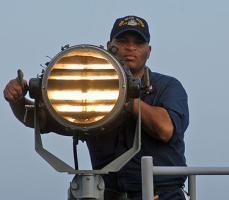
In 1867, Royal Navy Captain, and later Admiral, Philip Colomb, worked out a system to send signals by a code of dots and dashes using signal lamps. Since then, navies around the world have used only slightly improved versions of signal lamps to send secure messages over short distances between ships. The system has lasted because it was relatively simple and effective. Nevertheless, signaling with light is not without its problems. The technique is fairly slow. My father could do 12 WPM as a radio Ham with a Morse key although Naval Telegraphers could do 24 WPM. Trained personnel skilled in the use of Morse code were needed to make the system work.
Now, the US Navy is testing a high-tech version of the old signal lamps which use computer operated lights to flash signals, potentially much faster and more accurately than the old manual lamps. Sailors will be able to send messages over the updated signal lamp systems in the same way they send text messages over their smart phones. The devices being tested are referred to as Flashing Light to Text Converter (FLTC) systems.
When on the Atlantic crossing out of Halifax Nova Scotia 1981 Jim Cottier Greenpeace skipper and at the time mate in Sørlandet when we were being passed by a tanker said we will have a conversation with the lamp, out came the Aldis lamp I assume we sent CQ the reply came back VHF so it was we found that they were out of Sullom Voe Shetlands, bound for Houston, were some 560 + thousand tons, their bridge was 150 feet above sea level, and they had encountered moderate gales up to 12. Jim replied by radio that it would have been good practice with the lamp, and added we are the Norwegian sail training ship Sørlandet bound for Southampton England, we are 500 tons and comfortably fit into you first three figures, our main mast is 115 feet, our bridge is 15 feet above sea level, and what is moderate weather to you is a howling gale to us. I have sailed with many very good seamen some excellent, but I have never been at sea with a better more consummate seaman that Captain Jim Cottier his attempts at interaction with the old ways was something he was always up for. I have never seen anyone else attempt a call with the lamp at sea. CR
Stranger things happen at sea: Floating reporter records a scoop: SV Tenacious deep into the Southern Ocean on the Cape Horn road:
It was between 2 and 3 am., on the 9 February when called to the men`s focs`le down the starboard side there was found a great distress, for some days a dam of towels had been building only to have burst. When Peter on rising from his bunk put his foot in it so to speak, what I saw could be likened to Niagara Falls, there were the guys up to their necks in it? Well ankles anyhow, as a Vac at full throttle sucked like hell. Intrepidly I spotted Pete and Chris only in their budgie smugglers standing shivering a little, since there was no heating in the foc`sle. Pete in fetching rainbow coloured stripes while Chris wore perfect black. Chris said he thought he was in a dream when woken by Nial the engineer, what he thought he saw as he rubbed and blinked his eyes were gnomes or at least mermaids. But No! It was now his locker that was of interest and on opening it the contents were washed out in spite of being on a shelf four inches above the deck shirts, trousers, socks, boots and even thermals plus other of his clobber was taken away in buckets for an impromptu wash and dry. “I have been to Cape Horn before, twice before but nothing like this happened on either occasion” he said.
Nial has since reported all’s well and the fractured drain pipe in the laundry that had been discharging dirty water into the focs`le unknown for some days, has now been fixed. Chris say`s. I already had the bunk from Hell!! Now I have to add the locker from Hell!!
R Herring.
Written for the on board newspaper but unpublished at the time describing the flood; those who were aboard speculated endlessly on what happened.
On the subject of wakeups it was in the traditions of the Royal Navy that every day at 0730 in Tenacious it was common practice for the whole ship to be woken up that is except the afterguard, this being done by Tannoy that most annoying of apparatus. For those who had been on the 12-4 graveyard particularly galling, in other ships I have sailed in, the 12-4 always were left alone to sleep in until 10am., most of these shouts were nothing to speak of: I did not give a shanty wakeup call on account of my watch leader asking me to sing her what I intended, I told her No it will be a surprise! I saw no reason to audition for the 30 second blast. The best to my mind was when the American Jay gave;
“Time to get out of that bed roll and mosey down to the chuck wagon, `we’re burning daylight”
Horn Again PT6 And Further South in the bark Europa 2015
By Chris Roche
Diary Entry Tuesday 17th November:
Noon position 34° 02.0s - 048° 58.1w
I was the last to come up through the forward companionway as the watertight doors were now closed and in anticipation steel shutters were put up across all the windows turning the on deck internal spaces into darkened caves. Richard could not see why the charthouse door had to be closed; he was used to seeing the radar mark his course, taking my turn at lookout from aft just at the top of the companionway down to the waist/main deck; I watched water come over the rail and wash in deep swathes across the deck until it eased its way out through the clanging wash-ports, the sound of the clanging wash-ports made the need for ear plugs when sleeping even more necessary, I had brought with me this time wax plugs that shut out 99% of everything about as good as it gets. I went down to coil some loose lines and put them back on their pins before they could trail out through these ports an get in a tangled mess. I did two tricks at the helm in these difficult conditions with Laurence looking on making WSW 250°. I noticed that Laurence even in these rising conditions sat on the wheel box which we VC are told not to do.
Jean Pierre has a jacket with a 2 meter yacht harness/tether built in, he has a habit of attaching it to any piece of standing rigging, and of course it is far too long. Coming off watch I asked to put my wet gear in the space up under the focs`le with the Ginny to help them dry off, I was told by Megan PC not allowed. Down below all the rails in the corridor are festooned with wet gear, it is not allowed in the cabins, and although wet gear must be worn on deck in the down periods it is frowned upon to be seen in it in the deckhouse. PC seem to ignore a rule others must follow, so guess what happens, all ignore it and we get wet seating as a result. There are not enough full harnesses to go round the result is that every time I need one it has to be readjusted. There should be sufficient so that it is yours for the voyage. The same is true of the belt safety lines, I am only glad that I have my own.
Diary Entry Wednesday 18th November:
Noon position 36° 20.0s - 051° 04.1w
On watch Wim Bolk or Wim 2 tells me he has sailed in StadAmsterdam and has his own yacht. We expect that by morning we will be off Rio de Plata in the Argentine but with the weather as it is we do not expect to see any discolouration in the surface of the sea. Due to the conditions and trying to run square it has been decided that for now only PC will be helming so most of the watches are stood down lookouts only being required. I spoke to captain about the A/c problems in my cabin; he was non plussed in his response. My waterproofs are a problem and I am not the only one, a couple of crew have Gill a good make and they are leaking so mine stand no chance. I had reproofed my jacket before leaving home it leaks, the leggings are faring better, the calves on my boots are a bit on the tight side while the socks I have are on the light side. Otherwise I am doing OK, (the £99 Panasonic waterproof camera is a brilliant piece of kit, waterproof down to 50m, and although a compact is so much better than the Olympus XA11 and OM1 neither water proof carried in 1991 on Søren Larsen, I have to add that the Nikon D90 is no more waterproof than the OM1 was and at that time in 1991 waterproof cameras were horrendously expensive, I used to slip the XA11 up my sleeve and hope, my how times have changed). Some PC have PVC gear particularly Matt who has a green PVC Tasmanian fisherman`s suit. I would have expected a ship such as Europa tohaveadryingroomgiventhatshespendssomuchtimein thefarsouthandcolderwetterclimes,italwayssurprisesthatnothoughtis giventodryingoutwetgearinthetraditionalshipsIsail,butIsupposethatis tradition!!
Much of the first part of this graveyard shift was spent assisting the captain who had been on deck all day, we did bracing from aft working together, and the in the waist taking in the mizzen topmast staysail and furling same, there was much water on deck all the time, access to the deck is again through the forward companionway and up through the chart room only. Comment is made about my sitting on the floors writing, this achieves two things. I am stable being low down braced against a pillar and a wall and do not have to remove my waterproofs so am ready at a moment’s notice appreciated by PC but not understood by most VC. I just wish I was not so wet on the inside. Outside we
Sirius in not only a star ©CR
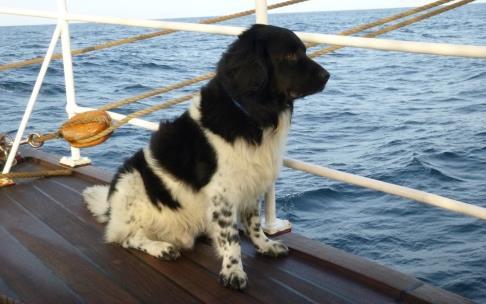
have a gale force 8 and are making 11kts, I did another hour on lookout in between reducing sail and taking in the main royal and fore t`gallant, we now set main course, tops, upper tops, and fore t`gallant a main stays`le, mizzen stays`le and spanker. I swung the thermometer for Klaas to take the air temp which is falling and took the water temp which is 19.1c. Sirius is let out to attend his bodily functions if only being led around the deck on a lead by Arran giving a new meaning to walkies.
I stand by Dan the bosun who is on helm he has come from the barque Kaskalot now owned by a Port House the owners of which have spent a couple of million on her he assures me. As the weather does not improve lunch when it comes round is a gumbo style soup and bread, as it is best kept simple. Coming off watch again; I towelled down the inside of my waterproofs Ha, Ha!! Washed off the compact camera in fresh water and sat down in a corner for lunch to which had now been added shepherd’s pie from a day or two ago. When coming back on watch at four in the afternoon we face 30 knots of wind accompanied by 6 meter seas with lots of birds in the troughs. I have turned the A/c off shut the bathroom door, left the cabin door open, and moved all the shoes scattered over the floor by my two cabin mates into the corridor.
Klaas 1400 Daily Briefing; we have made 173 miles on a course of 216° at 7.2kts, at an average of 5.2kts, made good 1687 miles now 1287 miles to Lemaire. There is a low over South America and a high in mid Atlantic, we are on the edge of a ridge going south, we should be having a wind of 20kts but we have been getting at times 40kts and have had one 6 hour run at 10kts, the wind is expected to go round to South or South East. We have now passed Rio de la Plata.
There are reports from base in Holland regards the attack on Paris that flights are cancelled, police are hunting the attackers one of whom blew herself up in a raid while another siege is ongoing.
Down below I catch Roger in the cabin putting on his wet gear and politely asked him to put his footwear at least in a corner but preferably in the Not uncommon occurrence as we made south ©CR
bottom of his cupboard, he said he did put them in a corner and did not know how the books and other belongings got all over the floor, he did not like being spoken too and said that perhaps the ship rolled; `my point exactly’. Day 15: We divided our watch into one hour stints on lookout as VC; have been taken totally off helming duties. I did mine with Laure and after I stayed out for a further two and one half hours.
Down below I catch Roger in the cabin putting on his wet gear and politely asked him to put his footwear at least in a corner but preferably in the bottom of his cupboard, he said he did put them in a corner and did not know how the books and other belongings got all over the floor, he did not like being spoken too and said that perhaps the ship rolled; `my point exactly’. Day 15; We divided our watch into one hour stints on lookout as VC; have been taken totally off helming duties. I did mine with Laure and after I stayed out for a further two and one half hours. I put a message in a bottle but before casting it adrift showed it in the deck house, after I had thrown it overboard the lookout said he had seen it go by and guessed it was Chris, who else would do that he said!! Nothing of note happened during the watch except that Laure and I were with Elliot on the helm when we surfed at 13kts. Megan was down on the main deck in the waist lashing coils of line taken from the pins up on the shearpoles to stop them washing around and off their pins such was the amount of water we had on deck along with some pretty violent rolling of the ship. Meg was at helm when I said to her sure beats Adventuress the 1913 schooner she was in before coming here this is her first time in square rig at 36. Gijs stuck his head up put his thumbs up and said 12.7. It is difficult to figure why VC are not helming as we have done in bigger seas than this.
Back in the deckhouse David Stark holds court with a beer as usual, he does very little on watch so it is said; he was born in NZ but became OZ later on and lives up on the Gold Coast. I told where I would be if needed and went down below to a small lounge off the longitudinal corridor known as Poker Corner it is not much used for anything except as a laundry collection point; I sit with my feet up and write up my notes.
Diary Entry Thursday 19th November:
Noon position 39° 11.8s - 050° 27.7w
Watch is up for 04.00; our leader Ali is last up and late again. I had not been on deck very long when a call is made by Klaas to tighten
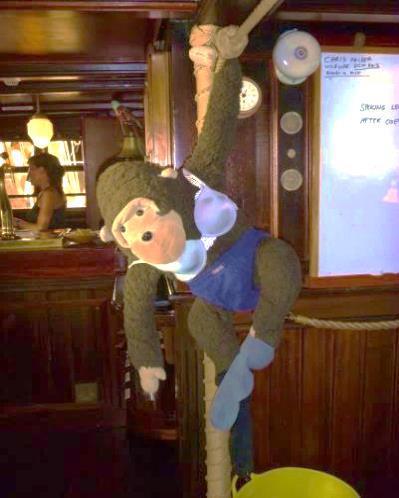
Desmond the mascot ©CR
up the sheet on the sail that they call Desmond, but is actually a monkey a sail carried on Dutch ships of long ago. In the deckhouse there is a cuddly toy ape called Desmond.
Thesailislargerthanastay’slweuseitasastorm`slmuchofthetime,it fastenstoacleatonthedeckjustbehindtherailleadingdowntothemain deck.KlaashadtakentheleadpartwithWimbehindhimandthenmebeing thelookoutontheportsideasthethirdhand.Ihadsteadiedmyselfagainst thelife-raftpodtheshiptookalurchaswehauledandfromnomorethan3 feetWimslippedonthewetdeckandfellheavilyonhisrightside,clearlyin painhecouldnotstandunaidedandneededthecaptainshelptograspthe gutteringroundthechartroomroof.Icoileddownthelinewhilethedoctor wascalled,Mechelienhadjustgoneoffwatch,astretcherwasbroughtupfor Wimandhewaspreparedtobetakenbelow,ittookeighttogetthatstretcher downthecompanionwaystepsthroughthenowopenwatertightdoorandinto thecabinwiththepilotsberth.IimmediatelysaidthatIwoulddoWim`sshift whileourwatchleaderworkedoutanewrota,Iwassurprisedthatcaptain tookthisthewrongwayandhesaidIwasbeinggivenawarning!!Why?AllI wasdoingwasgivingourwatchleaderabreathingspacebyvolunteering,Iwas awarethatthewatchwasoneshortaswehadonethatdidnotturntofor nightwatchesandanothertwopronetoseasickness.AsitwasIwastheonly onewhostooddeckfortheentirewatchgoingdownonlyattheendtoaskafter Wim…... Mary Anne says that the patient is sleeping and should not be disturbedandthankyouforasking…..Itakeabreakfastofbacon,egg,bread andlimemarmalade.BeforeIturnedincaptaincalledthewatchandallwho wereinthelowersaloontosayasheputit……“nothingatallreally - forat themomentthereisnothingtosay,wewillcallshoreinHollandformedical advice today We may haveto interruptourvoyage ifas wethinkWim has brokenhisrightfemur,weare350milesoffMardelPlatamaking6ktsonthe wind in a southerly direction”….. Blue and Red watch are called out with anyoneelseavailabletowearshipround.Igatherthatduringthenightthe mizzenroyalwasheldontoina40ktblow.Thereisnowcontinuouslymuch wateracrossthedeckandthewashportseventhoughdampenedwithrubber buffersclangloudlywitheveryroll.Isleepforanhourandahalf,outlikea light `boywasItired’.Davidwhileonlookoutsawwhathethoughttobea medium sized Sun Fish go by on the starboard side. More albatross are wheelingaroundustheirundersidesshowingbrilliantandbeautifulinthe sunlight.
Rumours abound about Wim and his injury all speculative, a helicopter is spokenof;allaboardseemtohaveseenWimfallsavethat;Iwastheonlyone thereotherthanthecaptainandevenhedidnotseethefall.Lunchiswarm raisinbreadasatreatIhadthatwithcheeseasasandwichwithbutterand sourkrautsoup.AlehandrahasworkedoutanewwatchrotaandInowpair withDynamiteBossRichardasmybuddy.Weare8onthewatchwithsome fiddlingbutinreality7asJanicedoesnotstandwatchesandthreeareprone toseasicknessandattimesdonotshowupforwatch.
Klaas 1400 Daily Briefing; 04.10 Wim on White watch was hurt when he fell during a sail tightening exercise, he has a fractured femur and is now splinted and the leg tensioned, he is in the Mates Cabin and may be visited with care please. He has to leave the ship and options are being pursued, we have contact with a radio/med net 24/7, the nearest port is 350 miles off in Argentina we will wear ship and steer more west to try and put us within helicopter range. Once before when in these waters the RAF on the Falklands have undertaken an evacuation from a Dutch sailing ship so that may be an option.
We have made 175 miles on a course of 170° we are 1100 miles to Lemaire, and have made 1862 miles in 345 hours at averaging 5.4kts.
AfterthebriefingIwenttoseeWimnowrestingmorecomfortably,andtooka photographofhimreclining,thecarpenterArranhasscrewedaplastictubeto thefootofthebunkandtheleghasbeentensionedwithashackleweightona lineofabout8lbledthroughthetubetotakethepressureoffthefracture.I wenttogetWimateaandhomemadecookies,onreturnIfoundwatchleader Aliattendingwhichwasgood.IwillkeepWiminformedwhatthewatchisup to,hemaynotbeoncallbutisstilloneofus.
OndeckImanageaphotoofabeakedwhaleclosebyandunderthesurface, wewearshipagainontotheporttackalthoughnotonwatchIvolunteeredin what was a good manoeuvre, save that Rian got shouted at but due to his deafnessdidnothear,hewascastingoffthemain`slclewwhichheletgoof,I caughtitjustintimeandbelayedittoitspin.
DiaryEntryFriday20th November; Noonposition39°55.7s- 052°24.9w
Newpartnersinthedanceonthe12-4inthegraveyard,Aliistolookinon Wimfromtimetotime,MattistheseniorVCondeckwithusthiswatchhe hassailedin Rona aTasmanianownedketchandhasdoneseveraltoursin Europa now,wehave25ktsofwindandgoforwardtosettheouterjibafter captaincameondeck,ItooktheleadonthesheetandgotmyfeetwetbutIwas wearing Tevas, (Tevas go everywhere is my slogan) it did not matter and anyhowthewaterwaswarmaroundmytoes.IdidhelmwithJPlookingon and only the wind indicator as my guide. JP who had done an Atlantic crossing in the French barque and ex Dukeof Westminster’s yacht built in 1896 as the commercial sailer Belem thought I did ok. Toby is the other permanentcrewonourwatchthisday,hecamehereafterdoingatallships raceinEuropaandwantedtogotosea,heistheyoungestPCat18andlucky to beinvitedback particularlyforthis voyagehehadbeen studying at `A’ levels English, Geography, Biology and Classics, he comes to the ship from Cornwall,Mattis20,Krista22andMegan36.
Iturnedintobewokenat08.30whenRogercameinafireduptheA/cand opened the bathroom doorbathing the cabin in obtrusive light, why do we havebunklightsIwonder.Igotupandrathernoisilyrolledupmybedding andmadeforthelibraryunderthesternforsomepeacewhereIwokeat10.15 andwentbacktofindtheA/coffsosettledinformoresleepuntilwokenfor watchat11.50.SawlotsofMotherCareysChickensthiswatchbirdsbetween thesizeofaPigeonandaDuckwhizzingaroundorsittinginthetroughs.I talkedwithKatelyn whohas been withtheshipsinceAugust, shesays her mentorisWayneClimenteofWashingtonStatewhomaybeabletofind Bill Curryforme,shehasalsosailedin Adventuressandinthereplicabrigofthe warofindependenceera Niagara aswell as coasting up the east coast in the schooner Amistad and only a week in the historic and also east coast 3m schoonerVictoryChimesharboursailing.
Klaas 1400 Daily Briefing; We have made 104 miles on a course of 245° at 4.6kts, last night’s wearing ship operation went really well, it was done in 2 ship lengths or 4 cables, we have
Matt ©CR
done 1966 miles in 372 hours an average of 5.3kts, 1015 miles to Lemaire, 250 miles to Mar del Plata, 730 miles to the Falklands, 1600 miles since engine was turned off, the water maker is also off for maintenance so be careful with water. Wind coming more northerly and then westerly. We expect an explicit reply to our message about Wim today.
Idozedoffafterwatchuntil5.25itisnoticeablycoldernowaswenear40° southlatitude,wehavebracedmoresquaresincelastwatchandtheearlier questionarisesagain!!.WhatifweuseenginestogetWimashore?Wellcaptain says;“thecommitteewillhaveourlogandwillbeabletoseewhatwehave doneandwhy,sowewillhavetomakeacase.Butifwecangetincloseand anchorthenthereisnoissueatall.”IspeakfortheCapeHorners theIACH,the importantwordsare“inthespiritofStMaloandINTENT”.Dinnerthisday wasagoodsausageandmash;lunchhadbeenbakedbeansoupwithbrown bread. We have a message from the Argentine Navy regards Wim, they are rathernoplussedandsayasheisstablethereisnomedicalemergency,weare requiredtomakeportwithhimourselves.WeareponderingPuertoMadryn, thereisasmallbutefficienthospitalthere Oosterschelde hasbeenthereinthe past,orMardelPlataandtheFalklands,thelatteris3daysawayandatthe momentwearebecalmed,oneofthecompany’sdirectorsisinSouthAmerica at the moment and we are in contact with him we will know more in the morning.LauraourArgentine/Dutchpurserandbargirlisthepointofcontact withArgentinaasshespeaksSouthAmericanSpanish;AlileftSAwhenvery youngwithhermotherandwasbroughtupinHollandandisnotfluent.Ihad allourwatchsignacardforWim andagainstAli`swishesgaveittohimto cheer him up, he cannot feel so good trapped in abunk below decksRian thoughtitagreatideaWimisstillonWhitewatchevenifnotondeck.We havebeenaskedbytheFalklandsnottogothereastheyhaveenoughtrouble atthemomentwithaFrenchcruiselinerbeingtowedinonfireand350to find accommodation for and then evacuate. JP says he thinks her name is Boreal…….andthatshehadbeenonaruntoSouthGeorgia.Captainisaftin his Darth Vader kit waving the air temp thermometer like a good`un. The watchstandsbythehalyardsincasetheapproachingsquallhitsandwehave toshortensailinahurry,thesquallpassesusby.
DiaryEntrySaturday21stNovember: Noonposition40°20.8s- 054°24.1w
Day 18; despite light airs at the end of our last watch we at least had a little wind missing the big storm and the lightning around us that we were pleased kept its distance, at sunset we were steering 240° at 4kts, today in the 08.12 we
have wind and are on a course of 55° on the wind with no stb`d helm watching the royals don’t luff in 22-25kts of wind at 5.8-7.2kts steady but NWL`y more towards the Argentine coast. We would have preferred to make Puerto Madryn further south but are ordered to Mar del Plata. Breakfast was Kiwi Fruit, eggs bread and coffee.
Elliot I understand was in the brigantine Søren Larsen for four years and in her when in his words she was close to being lost on the Tasman when she was struck and lost her deck house, he says that saving her then was a challenge. Krista he says was in her for a coastal passage up to Brisbane and that is her square rig experience. Elliot was also in the ketch Coral Trecker with James Parbery who was a shipmate on the 1991 Cape Horn voyage I made in Søren Larsen. It is a shame that Elliot was not in Europa for her Cape Horn voyage he joined her at some point in 2011/12. He like me sees the perennial if basic problem of line handling. I ask how many times do members of VC have to be told that the lines they are coiling down are not tangled they are just not understanding the way a rope is laid up and that there is only one way to coil down a line. I get told not to interfere when in reality I am trying to help. The same can be said of helming, most stand in front of the wheel with it to their back, to be fair with hydraulics there is less pressure felt coming from the rudder unlike when a parallel steering gear is used and the job is a lot tougher and every wave hitting the rudder keeps the helmsman alert. Tradition dictates that the wheel is held from the weather side always, it is difficult getting this across to people who do not regularly sail and or understand sailing tradition.
The outer Jib was taken in this watch and we now fly all squares except main sky’sl, main topmast stay’sl and mizzen ditto, mizzen and main stay’sl, fore topmast stay’sl and spanker. I had a surprise when a large albatross flew by me at the height of the rail less than 20 feet away when I was on lookout. I later stopped and leaning on a rail listened to Katelyn and Megan playing fiddle together up under the focs`le. Kate is classically trained whilst Meg picked up a fiddle a year ago for the first time, the two are playing folk tunes that neither they nor me can recall the names of. The course becomes 295° I gather we may hit the Falkland current before long. I was on lookout when I spotted a loose downhaul slatting on the middle topmast stay’sl, well spotted shouted Gijs as I went to haul it in. Coming off watch Rian and I were the only ones of our watch still in gear when an all available hands call went out Ali and Laure were already eating their way through what looked like several lunches, to my mind it is the watch leader who should be first out and last in!! Sloopy the gig had to be brought inboard again as water boiled all along the main deck
filling the scupper and up to the rail hands were needed for that and to reduce sail in the blow that had now struck us. Megan`s tan pants showed a fair turn of bilge in this 36 year old as she bent over putting covers on the vents under the weather rail. Still in Tevas I am one of the last hold outs not yet in boots, `Tevas don’t slip they grip’. It sure is lively when the call goes out more crew outside; the fore course had split a seam top to bottom and has to be taken in, the deckswabber another old Dutch term for a sail that sweeps the deck in this case our deckswabber which is set above the deckhouse has to be taken in. It is Rian and me that go out from our watch.
Klaas 1400 Daily Briefing; going west but wind going round to NNW seas will be building in the coming hours, please, please be very careful especially when getting up after sleeping, a further message from the Falklands says that they have two cruise liners in Austral and Boreal the latter had the engine room fire, 350 passengers taken off at Port Stanley giving the services there hell!!
On watch again gloves no use at all when hailing on lines and feet got so cold resorted to boots, the fore course has been changed outer jib handed and we are now standing by the Royals then back to the helm to relieve the old man 60 on the wind that’s SxW of NW 3° of Port Helm he says as he hands the wheel to me. The spare course has been bent onto the fore yard and the wind rising, when I came back on after my dinner break at 7pm. I was given the lee lookout which meant that the chart room wall gave me some shelter. Captain took sea temp which is now 10°, he is now swinging his thing to get the air temperature, and he says it looks like we are in the Falklands current now. I ask about the present prognosis for our voyage? He says “not good” and smiles broadly. At Dinner the Tiramisu was not quite ready so I said to Katelyn you could save one for me or else bring it up to me. I had not intended that she did but that is what happened, wow what a service from the American lass. I went off watch with the certainty that we now go to Mar del Plata.
To be continued………