SUBSCRIPTIONS: Our standing order subscription is £12 per annum. We would prefer all UK residents to pay by Paypal subscription as this saves us time spent chasing payments and also saves you having to remember whether or not you have paid – as well as being cheaper. As an alternative, a standing order form is attached to the application form available on our website (http://capehorners.org/join.html) and should be printed and returned to the Membership Secretary. Should you wish to resign from the IACH, please inform the Membership Secretary and remember to cancel your subscription or standing order, as only you can do so? Membership payment by cheque is £15 per annum, to be received by the second week of January each year at the latest. Cheques, made payable to IACH, should be sent to the Membership Secretary (see below).
We offer a discount to overseas members who pay five years in advance: £60 paid in January. Send a sterling cheque to the Membership Secretary in the form of a banker’s draft, made out to IACH. The Membership Secretary will acknowledge that this has been banked and will remind you when your subscription is next due. This will save you £15 and you will only have to pay one bank charge. You may also pay by Paypal, by prior arrangement with the membership secretary
ALL subscriptions, changes of address and membership enquiries MUST go to the Membership Secretary: Email: memsec@caperhorners.org
All written requests should be sent to the Editorial address for forwarding please.
Officers of the IACH:
Vice President: Captain Adrian Small. S.V. Passat 1948
Chairman: Andrew Bristow. Email chairman@capehorners.org
Secretary & Deputy Chairman: Email secretary@capehorners.org
Treasurer: Email treasurer@capehorners.org
Membership Secretary: Liz Eaton. Email memsec@caperhorners.org
Regalia/Events Secretary: Peter Waring. Email events@capehorners.org
Web Master: Andrew Edsor. Email webmaster@capehorners.org
Journal and Correspondence: Chris Roche, 74 Stanley Road, Carshalton, Surrey SM5 4LF. Tel. 020 8647 1396. Email journal@capehorners.org
Yachting News: Ashley Manton. Email overseas@capehorners.org
Committee Members: Ian Worley, Trixie Gadd,
Further information is on our web site at www.capehorners.org
Queries about our site and any suggestions should be sent to the Web Master. We are also found on Facebook: @CapeHorners You Tube: @CapeHorners and Twitter #CapeHorners
Editors Notes:
I am sorry for the extremely late appearance of the Journal. I had been at sea for three months in the southern oceans for one last time. We also had problems regarding the Warrior Lunch when the Dockyard changed the way things run and cancelled our November booking at an unreasonably short notice. We were able to reschedule within the yard for March, but in the longer term will have to find a new and easily accessible venue so thing caps on please.
I have back issues of many of our Journals which can be had by asking. Either in hard copy or digital form;
It would be useful if there is a member who can offer the time to do a digital scan copy of all our back issues volunteers please…….
As always please send me your stories and photos, I need them all long or short. I cannot produce a Journal without the memberships help.
New Members:
We are delighted to welcome the following new members to our midst:-
Mr Fernando Ardouin Oosterschelde 2013
Capt. Ross Berkman Europa 2013
Mr Sebastian Blechingberg Martela.O.F. 1990
Mr Andrew Halcrow Elsi Arrub 2014
Mr John Baldwin Tenacious 2018
Mr Paul Betney Tenacious 2018
Mr Niall Crawford Tenacious 2018
Dr Tineke Dixon Tenacious 2018
Mr Laurence Green Tenacious 2018
Capt John Hanbidge Tenacious 2018
Ms Kate Hirst Tenacious 2018
Mr Christopher Lambert Tenacious 2018
Mr Jay Lundgren Tenacious 2018
Mr Jeffrey Melancon Tenacious 2018
Mr Michael Newman Tenacious 2018
Dr Jane Orr Tenacious 2018
Ms Frances Parris Tenacious 2018
Mr Adam Pritchard Tenacious 2018
Dr Christopher Smith Tenacious 2018
Mrs Sally Spencer Tenacious 2018
Ms Frances Taylor Tenacious 2018
Mr Peter Terroux Tenacious 2018
Mr Phil Todkill Tenacious 2018
Mr Mike Tozer Tenacious 2018
We are always happy to welcome new members, so if you are aware of eligible crewmates or friends or indeed anyone at all you hear of who qualify and who have not yet joined, please ask them to contact us. Also, in order to ensure that we maintain contact with existing members, please remember to let us know if you change address. All communications should be sent to memsec@capehorners.org
Subscriptions: Please can you check if the renewal for this year has got the same name that you have, because there are 9 names that I cannot place, maybe married names? If the name is different on the mailing then email me at address above.
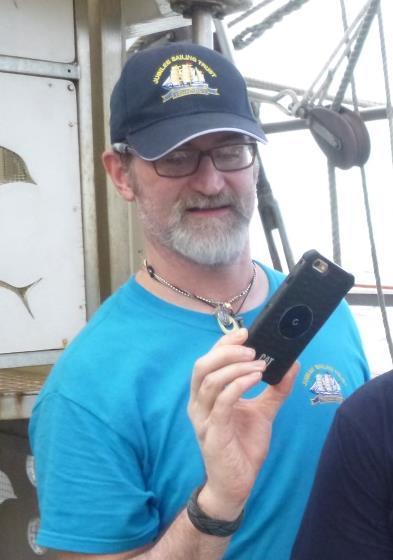
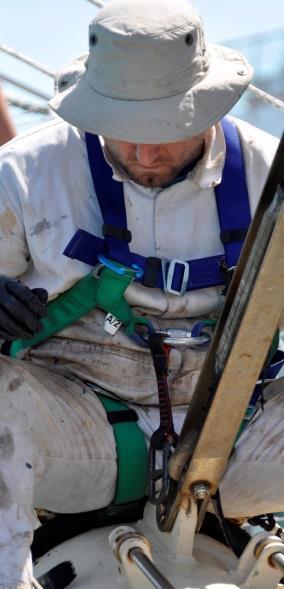
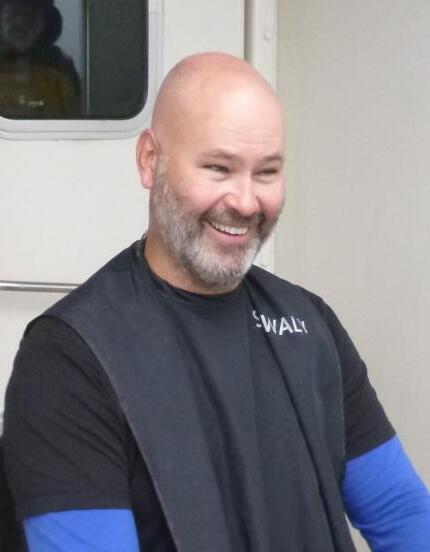
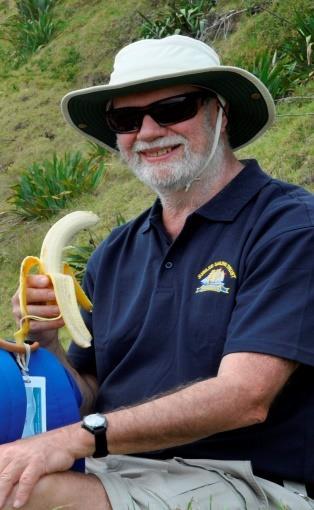
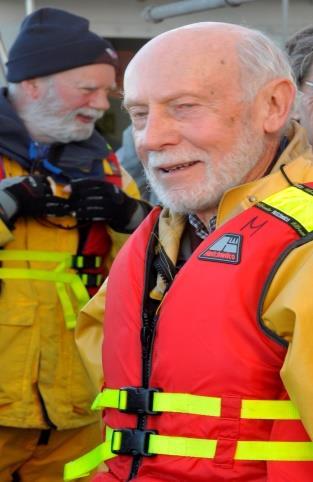
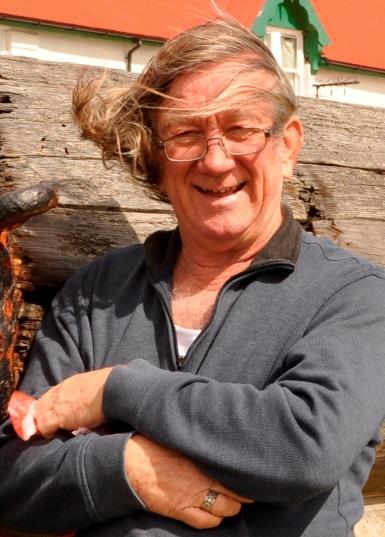
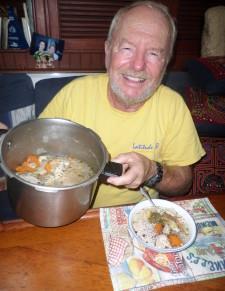
Some new members from the recent SV Tenacious voyage: left to right, top to bottom, Paul Betney, Adam Pritchard, Fran Taylor, Peter Terroux, Mike Newman, Chris Lambert, John Baldwin. We hope for their stories for Journals yet to come……….
Horner
Yachting News by Ashley Manton
America’s Cup Series in 2021
The series are expected to be raced in ‘flying’ monohulls that will have foils and no keels. Those interested may wish to see a video by the GB Sponsor showing what is expected:
http://www.ineosteamgb.com/en/articles/2_Video-AC75-Find-out-more.html
Vendée Globe
Britain’s Alex Thomson who finished second in the 2017 race has declared his intention to race in the next 2020 race which will be his fifth Vendée Globe. He is planning to build another Hugo Boss IMOCA 60 yacht.
Volvo Ocean Round the World Yacht Race 2017/2018
An update on the Volvo Ocean Round the World Yacht Race (VOR):
Seven yachts departed Italjai on 22 Apr on the 8th leg to Newport Rhodes Island. Leg 9 starts on 20 May to Cardiff, leg 10 to Gothenburg on 10 Jun and finally Leg 11 starting Gothenburg on 21 Jun for the finish at the Hague.
The Future of the VOR
The future of the VOR as envisaged by the then CEO Mark Turner and as outlined in the previous Journal, is now being re-assessed by his successor CEO Richard Brisius of Atlant Ocean Racing.
2018 Golden Globe Race
The Golden Globe Race will start from Les Sables d’Olonne on 1 Jul 2018. As outlined in the last journal, this year will be the 50th Anniversary of the Sunday Times Golden Globe Race which was won by Sir Robin Knox-Johnson’s in 1968/9. To mark the occasion there will be a Parade of Sail on 11-14 Jun in Falmouth Harbour it will be headed by Sir Robin’s Suhaili.
There are currently 19 provisionally registered and paid-up entrants. The 19 sailors from 13 countries: France (4), Britain (3), Australia (2), and one each from Estonia, Finland, Ireland, India, Italy, Netherlands, Norway, Palestine, Russia and USA. boats must first meet the strict entry conditions, which include 8,000 sailing miles and 2,000 miles solo.
Profile of a Skipper
Jean-Luc Van Den Heede, is a five-time solo circumnavigator who attended a meeting recently was positive. "Discussions happened in a calm atmosphere of cordiality and I am delighted. The FFV understood that the GGR was first and foremost an adventure that will comply with International anti-collision rules but will not apply regulations specific to regattas. They agreed that we would leave 'In the footsteps of History'.
Jean-Luc van den Heede at 72 is the father figure of French solo sailing. The 5-time circumnavigator already holds the record for the fastest solo westabout non-stop circumnavigation against the prevailing winds and currents, and has been a podium finisher in four previous solo round the world races. He finished 2nd in the 1986 BOC Challenge Around Alone Race, 3rd in the 1990 Vendée Globe Race, 2nd in the 1993 Vendée Globe, and 3rd in the 1995 BOC Challenge Around Alone Race. He bought a Rustler 36 class yacht in August 2015 and spent the first few months test sailing her out in the Atlantic before commencing a complete refit in his homeport of La Sables d’Olonne. He has won sponsorship from the French insurance group Matmut. Jean-Luc says of the GGR: “From all my experiences, I am well aware of the difficulties this race poses. The slow speeds of these classic old boats with their long keels, the absence of weather information, the loss of all electronics and reliance on a sextant to plot positions, the lack of terrestrial contact, and the replacement of an electric pilot with wind vane self-steering, will make this test even more random and difficult than the Vendée Globe. But this is good. I want to re-live the conditions and challenges that my sailing predecessors enjoyed and to this end I have optimised my Rustler 36: New mast, new rigging, new engine, new sails, watertight bulkheads, and new winches. I am very conscious of the problems that are likely to occur during our 8 or 9 months of sea and have done everything to make Matmut safer. I am also trying to get myself in the best physical condition with the assistance of a physio, a coach – and my bicycle! I have also rediscovered the environment and comradeship I loved so much during the first of these races. We are all conscious that this will be a difficult adventure and that engenders a strong bond between us that I have not seen since the first Mini Transat 6.50 and Vendée Globe race back in the early ‘90s. My goal is to be in good health at the start with a top boat, then, take each day in turn, absorbing the emotions and thoughts of those who preceded us: Slocum, Moitessier, Alain
Gerbault, Vito Dumas and of course, my good friend Sir Robin Knox-Johnston who set such an example for us all 50 years ago.”
Clipper Race
The 40,000 mile Round the World Clipper Race set off from Liverpool on 20 Aug 2017 with twelve 70 foot yachts and over 700 international crew taking part. Leg 7 started on 29 Apr from Seattle and is racing south down the USA coast to the Panama Canal and then north to New York. Leg 8 is due to start from NY on 25 Jun to Londonderry and departing from there on 22 Jul, and arriving Liverpool on 28 Jul 2018.
Reviews:
Solo Around the Horn
Geoffrey Hartjoy Pub 2014
"Having raced twice around the world myself, I can appreciate the stresses and trials that Jeff has endured traversing the Southern Ocean and rounding iconic Cape Horn. His writing conveys a great Corinthian spirit of adventure, and is a tribute to all the sailors that have dared this passage. In human history it wasn't so long ago that rounding Cape Horn was akin to going to the moon, and many never returned. Jeff brings that spirit of adventure to the pages of this book." - Bruce Schwab, Around Alone Racer "Sailing around Cape Horn alone is not everyone’s “Milk shake.” I had decided to do it because after 60,000 miles of sailing ocean passages they were becoming too familiar. My wife Debbie and I had sailed clear of Ecuador and down to Peru. It was on that passage that I realized just how close to the Horn I was and realized I just needed to give it a “Shot”. Debbie felt no need to try it so she volunteered to become my shore side support. Now most people don’t realize the problems of going West to East around the “Horn”, and I was one of them. With nearly 45-years of sailing experience under my keels and Sailors Run a 40ft. Baba Ketch, I felt confident that the 5,000 NM passage was doable. What I did not know is that the worst storms occur in the summer season. I also learned that the Humboldt Current runs up the coast of Chile at nearly two-knots. The wind also comes up from the south, so you must set sail from Peru heading SW and eventually you will end up 1,000 NM off of Chile (at 45° South) before you can start your run in towards the “Horn”. You experience a severe low just about every three days with storm force winds.
Anyone who thinks going West to East is easy, best try it before they make that claim. In this book, you will not only experience what it takes to sail in the Southern Ocean, but you will get an in-depth look into the life of a sailor who had to overcome insurmountable "road blocks” to live out his dream, a life of freedom upon the sea. Anon
Storm Passage around Cape Horn
Webb Chiles
Pub 2011
A sometimes chilling, for more than one reason, matter-of-fact account of how Chiles made choices for Egregious, how Egregious made choices for Chiles and how the sea chose for them both, in the fulfilment of Chiles' youthful dream. Sacrifices were made, love was lost and a way of life and sometimes near death gained, `fearless foolish or both’? It's worthy of discussion, an honest account of a life at sea - alone.
Julia Son
Solo Around Cape Horn and Beyond
Edward Allcard
Pub 2016
“Solo around Cape Horn” is a record of 4000-mile-long voyage carried out over 50 years ago by one of the pioneers of single-handed cruising, Edward Allcard. In his 36-foot wooden ketch, Sea Wanderer, Allcard sailed in January 1966 from Buenos Aires, down the Argentine coast through the Roaring Forties, to Tierra del Fuego. Although he was pushed back several times by heavy gales, he finally succeeded in doubling Cape Horn in fine weather. His voyage continued west through the Beagle Channel, past Ushuaia, and then northwards along the coast of Chile through the Patagonian Channels. He supplemented his meagre rations with fish and crabs from local fishermen, sides of lamb from friendly ranchers, as well as mussels and geese he harvested himself. After 12 months and 26 days, beyond the reach of icebergs, he finally reached Valparaiso, Chile, at nearly the same latitude from where he started his voyage on the other side of South America.
Not only is Allcard a competent sailor and navigator, he also writes well about his voyages. Despite the gap of several decades between the voyage and the publication of this book, he describes events with a directness and enthusiasm as if he had just experienced them. He has a keen eye both for the people he meets and for his natural surroundings. I have read many books on singlehanded sailing cruises, starting from R. T. McMullen’s “Down Channel” 1869,
to James Baldwin’s “Bound for distant seas” 2015. However, Edward Allcard’s books are among my favourites, along with Bernard Moitessier’s “The long way”, Jacques-Yves Le Toumelin’s “Kurun around the world”, and Vito Dumas “Alone through the roaring forties”.
Earlier books by Allcard are “Single-handed passage” and “Temptress returns”, about voyages from England to New York and back in the 34-foot yawl Temptress. Later he wrote “Voyage alone”, about a single-handed cruise from Plymouth, England, to Montevideo, Uruguay, in his second yacht, Sea Wanderer. In that book, Allcard wrote about his future plans: “When I sailed from England my aim was to visit South America, starting with the region around the River Plate ... After a time there I would equip the boat for the main project of reaching the higher latitudes of the South Atlantic.” Now, 52 years later, Allcard finally tells us how his plans turned out, and what he experienced when sailing alone around the most notorious cape in the world.
Anon
John Fisher lost from Scallywag while Vestas loses mast
Found as a post from Rick Spilman old salt blog on 23rd April
Years ago, when I sailed briefly on tall ships, I heard that the two most at-risk groups when going aloft were total novices and the most experienced old hands. The novices knew little, while the experienced sailors grew complacent. This came to mind in reading new details which have emerged related to the tragic death of John Fisher, a sailor on the Volvo Ocean 65 Sun Hung Kai-Scallywag, who was lost at sea after being knocked overboard in the Southern Ocean last month.
This wasn’t the first time that a crew on Scallywag went overboard. In January, the youngest member of Scallywag‘s crew, Alex Gough, 24, fell overboard during Leg 4. He was clearing a sheet while hanging over the side without wearing a harness. Gough was recovered without injury, that incident may have suggested a lax attitude toward safety on the boat. John Fisher, who was lost overboard, was the boat’s safety officer.
Fisher was wearing a safety harness when he was knocked overboard but had unclipped to move forward to clear a sheet. Scallywag was reportedly sailing
at 20 to 30 knots, surfing down a wave when it accidentally jibed and Fisher was thrown over the side. Apparently, no deck-lines were rigged at the time.
When he was knocked overboard, the helmsman pushed the man-over-board button at the wheel to record the GPS position. Unfortunately, the button must be held down for four seconds, which in the confusion of the moment, did not happen. Although wearing an inflatable harness with an Automatic Identification System (AIS) Personal Locator Beacon (PLB) attached. These should have allowed Scallywag to located Fisher electronically. The problem, however was that the AIS system didn’t work. The AIS antenna on Scallywag had been damaged two days out of Auckland in high winds.
The `New York Times’ quotes Scallywag`s skipper, David Witt as saying, “If we had our A.I.S., we would have found him. I’ve learned that redundancies in this system are an example of change, like a second antenna.”
He added that he believed the race’s safety procedures worked well but that “we waste an awful lot of time and money” on safety equipment that is not as useful as a second antenna would be.
We heard of the incident while Tenacious was on voyage to South Georgia, Skip Novak who was with us as our environmental guide for South Georgia said Scallywag had diverted to Puerto Mont 1200 miles north, he questioned why not the obvious Punta Arenas. He had also had a conversation over email with Volvo about the likelihood of hiring his little Pelagic which was then in the Falklands to act as an escort for Vestas she had lost her mast on the way to the Horn and was then in Port Stanley and would motor north to a point where a new mast could be flown out and fitted. In the event she left on her own under power. We had heard on the Cape Horn leg of our voyage that a Volvo yacht Vestas had run down a fishing boat off Hong Kong killing a fisherman. ED
Mike Horn had once written
For most of what we want we have to walk through the door of fear
Søren Larsen 1991
By: Ed Slaughter
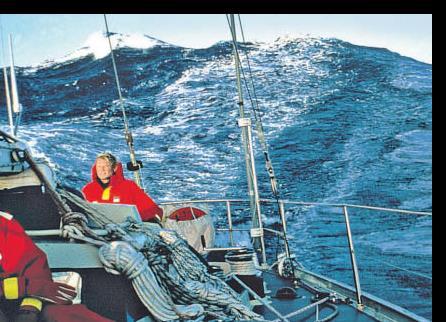
In the Southern Ocean, preparing for a storm: After taking three successive reefs in the main, all hands furled the big 54 ft gaff main. Jim Cottier the Mate said the sail and its spars weighed 2400 pounds, so it took co-ordinated muscle to gather it up in the wind and motion. In a blow Søren still ran at hull speed with only a fore-topmast staysail and the lower topsail.
The morning after the Force 10 storm, with things subsiding.
Around the World in 1,880 Days
By James Parbery, first published in ‘Varsity’ newspaper, Cambridge, England, 16th June 1993
Scientific expeditions of the type that Charles Darwin embarked on when he left Cambridge University in 1831 are not such a thing of the past. James Parbery has returned to his studies after taking part in a five-year voyage around the world aboard the British sailing ship Søren Larsen.
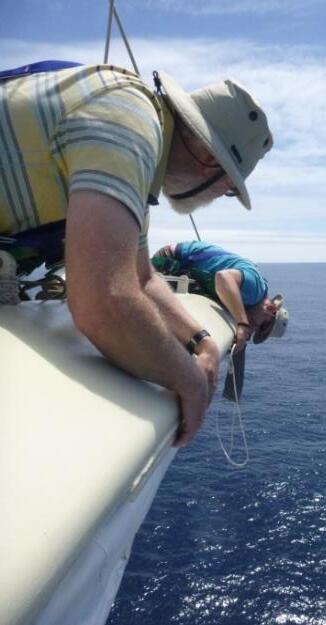
Wearing ridiculous white plastic suits, and looking like deflated Michelin Men, we were perched on the end of a salt-caked bowsprit, clutching a high-tech bucket and tangled coils of orange and blue rope.
A pyramid of canvas towered above us, three thousand miles of water stretched before us, and our little wooden ship was being driven eastward, towards the notorious Cape Horn. Our job, in this instance, was to take samples for recording the iron content of the water. I had to remind myself that it was all for the noble cause of science, as yet another icy-cold wave broke over us.
Søren Larsen had been away from England since 1987, when she led a fleet of sailing ships on the eight month voyage to Australia by way of Cape of Good Hope. Once there she explored the Great Barrier Reef and then went on alone to see New Zealand and the other Polynesian Islands of the South Pacific.
I sailed with her for two years before signing up for the return voyage from Australia to England. During this time we made numerous scientific studies, particularly on the passage across the Southern Ocean and through Drake’s Passage, where very few vessels have plied since early this century. Being a slow-moving, wooden vessel; with a pollution-free method of propulsion, made Søren Larsen ideal for various oceanographic, meteorological, and atmospheric studies. She also made a suitable platform for observing the whales, dolphins and prolific bird life, which included the great wandering albatross with a wing span of up to twelve feet. We had various encounters with the whales and dolphins. One sperm whale came close enough for all
Cape Horner Journal CHJ72
thirty-five of us to observe every hair on its nostrils as water pooled over it. When the whale suddenly realized it was only inches away from a collision, it dived suddenly, swamping us with a final flick of its tail, and in its anxiety, left a quarter of a ton of brown matter bubbling to the surface.
Making detailed study of the fauna, and other methodical investigations, was not the sole purpose of the voyage. The redbearded owner of the vessel, Captain Tony Davies, has been driven by a mad passion to sail around the world; an ambition of his since the age of fourteen. To keep the ship afloat financially he seduces similarly-minded romantics to pay for the privilege of helping us, a crew of twelve, sail her between each port of call. Some join for a fortnight, others for six months or more. There is always a colourful array of characters, from all English-speaking corners of the globe. Most have never sailed before but soon become an integral part of the crew.
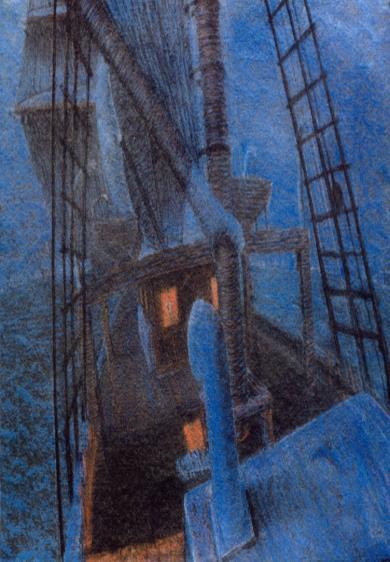
All on board helped to collect the data and many absorbed themselves in their own projects as well. Several of us were eager to learn celestial navigation, and were given lessons by the First Mate Jim Cottier, who demonstrated with his nineteenth century sextant. One American girl called Mabel regularly practiced her belly dancing and re-invented the art; upon a rolling deck. The bosun, when not up to his elbows in tar, was either on his bunk reading books on photography or up the mast looking for the perfect composition. An eccentric gallery owner from Sydney was frequently engaged in taking notes and collecting material for her sixth novel, I used my time to sketch and draw, and many of the others preferred just to relax and get acquainted with their fellow travellers.
The sea is a tremendous source of inspiration and one tends to see the world from a different perspective. It struck me when we were half way between New Zealand and South America, that we were the most isolated group of people in the world. We had created a sub-culture of our own, living quite harmoniously in this old, tossing timber shell, as far away as possible from land.
©JP
The sea is a tremendous source of inspiration and one tends to see the world from a different perspective. It struck me when we were half way between New Zealand and South America, that we were the most isolated group of people in the world. We had created a sub-culture of our own, living quite harmoniously in this old, tossing timber shell, as far away as possible from land.
After nearly two months of empty horizons we were suddenly brought back to reality a day before arriving in the Falkland Islands. The Royal Air Force greeted us with their Phantom Fighters, appearing suddenly and swooping low over our rigging. The exhilarating roar they made brought people rushing on deck; thinking perhaps there had been an explosion in the galley. The fighters returned several times, flying so low we thought they would hit us, and we were reminded that the ‘civilized world’ did exist, even at this far end of the globe.
Cape Horn 2018
By: Chris Roche.
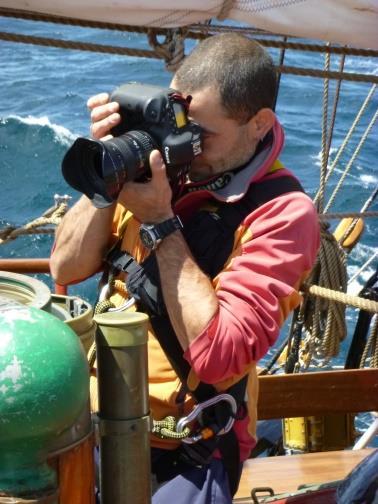
The recent voyage in Tenacious to Cape Horn for me was not memorable for much except the overprotective nature of safety and security as applied to the voyage crew, full body harnesses, prohibition of going aloft most of the time and never in rough weather conditions, and even in calmer conditions working aloft was restricted. There were opportunities to climb up to the platforms (usually the lower one) to admire the view but no going out on yards without a BM (bosun`s mate) in attendance. So photo opportunities were very limited. Of course with the rig being so yacht like with roller furling into yards above the lower top’sl there are fewer climbing opportunities. The Spanker is handled traditionally but no voyage crew was allowed up on the deck house roof at sea and the spanker added so little that it was rarely set. Up forward the head gear was all roller furled except the fore topmast staysail which was handled traditionally, except that the gasket was not as it should have been kept at the sail coiled away tied on the bottom of
Cape Horner Journal CHJ72
the stay, but was fetched from a rail in the waist of the ship, I questioned this and much else and was usually told we don`t do it that way here!!
On the matter of roller furling yards they give problems when setting and furling, if the sail does not get taken in or hauled down evenly, what will happen if the furling line is hauled too quickly is that the sail goes up one side more than the other and so sticks. When setting the BM`s are sent up when the sail refuses to pop out the yard if the sheets are hauled down unevenly, and spend quite some time tugging this way and that until its centre pops out.
There were four moments during the course of the two voyages Auckland to Cape Horn and the Falklands, and Falklands to South Georgia and Cape Town:
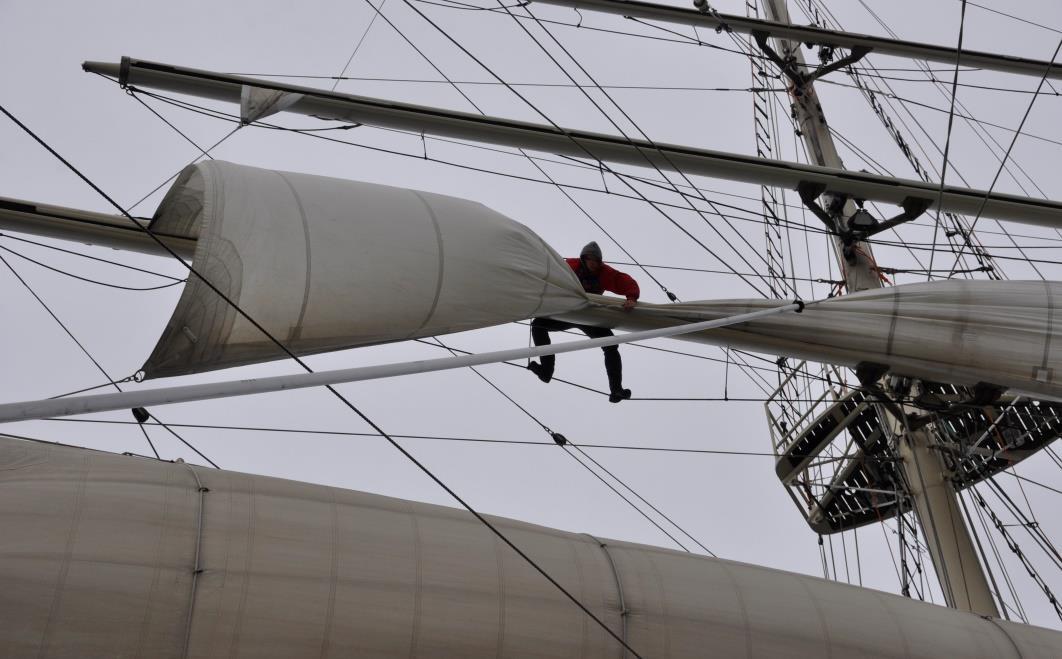
Firstly: When the fore t`gallant had slipped to far off its centre line within the yard and had to be hauled back to its centre line by tugging it taught out towards port, the call went out that morning for confident capable and experienced climbers, as this was out of the ordinary - I volunteered to go.
©CR
©CR
I had in truth been up a great deal higher than the 100 feet we were to work at and in all weather conditions some extremely fierce and in many and at times much bigger ships. I made sure that the ship knew it, I had to as after 40 years sailing in traditional ships I had so much to offer that was not called for. I detected a fear of knowledge among the permanent crew and the BM`s who were only former voyage crew invited back.
I found myself up there with the Bosun Stu, Chris Lambert, Chris Smith and Chris Hooper, all Chris by coincidence; so when Stu called Chris we all answered; his next shout was for Cape Horn Chris (that was me about to go three times round).
Secondly: When I was caught on deck in the waist at the end of a watch having come down from the poop, I was just about to open the watertight door to the after deck house when a big sea rushed across the deck behind me and took away my legs bowling me over, there was so much water that I had a soft landing and was washed into one of the life jacket boxes. As I landed softly on my back my oily`s and boots filled, I felt the water come up and into my suit and so was thoroughly soaked inside and out. I then had the rather difficult task of convincing our purser who had the keys to the Laundry, washer and the dryer to dry out my kit. It was he who on the voyage down to South Georgia told one of the girls thus - “we are a perfect match your face and my arse” - had he chosen one of the guy`s he would have been flattened `so rude he was not liked by many in the voyage crew’.
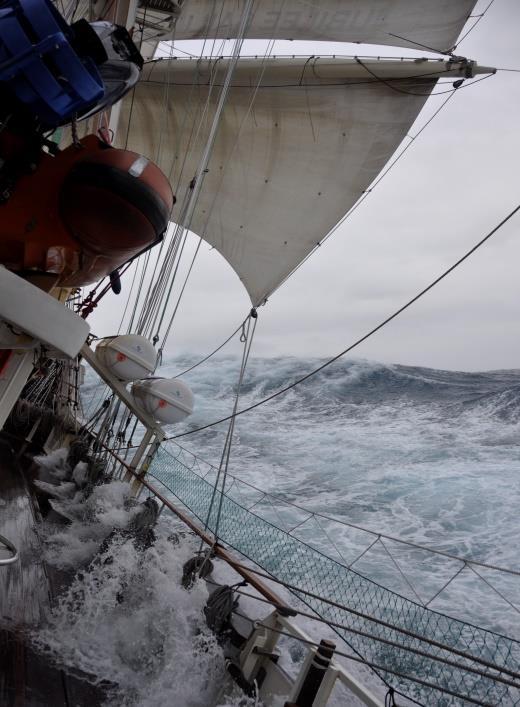
Thirdly: when I was on watch and captain Simon called for the Stb’d lee fore brace on the course to be hauled taught. Myself, Ben the Mate, Cadet tall Matt, Bosun Stu and I went down to the waist the ship rolling heavily at the time and taking much water on deck, no one said not you on this occasion – We were leaning into the rail when a chest high sea came over the top of the strainer nets. I was facing the others as we coiled down; the boiling white foaming ran fore and aft pushing us up more tightly against the bulwark rail. So drowned yet again water coming up under the
oily`s (I had not been wearing chest high waders) and trickling down into the boots before heading upwards under my jacket. What did we gain - `just a half meter’ A little later Ben and Matt were emptying out their boots up on the poop deck:
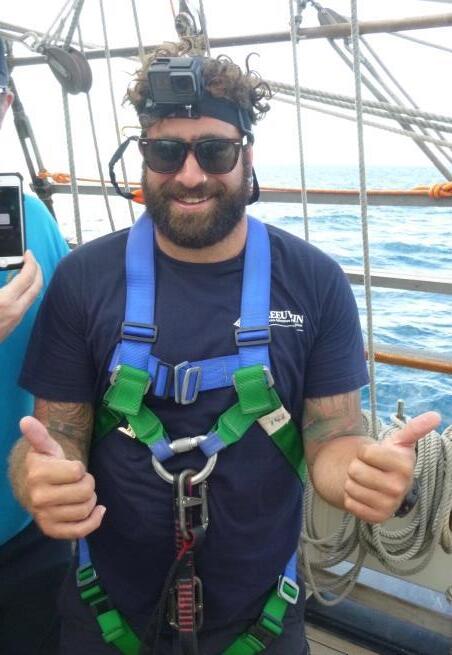
Fourthly: We had been at sea for a week following the South Georgia visit, when in a bad fall across the open wastes of the lower mess deck, my watch leader Bridget had slid the full width to clout a leg so heavily on a metal table leg, we thought it had been fractured such was the pain she was suffering, `an x-ray at Cape Town showed a bone chip’. Bridget asked me to take the watch for her. It was the rule that one member of the watch on deck would have to wear a harness in case of a MOB, `man over board’. I said at the watch meeting that as I had not since the Falklands worn the Harness, (I had not been asked to and it did not concern me overmuch to ask why as going aloft was such a palaver). I would not ask anyone to do anything that I would not do myself so I would wear it, Bridget said “you can`t do that” Why I asked” “you are not approved” “not approved!” “No you are blue” well the way of it was that to be allowed to climb unaided by a BM or member of permanent crew you had to be green; I was green on the leg out of Auckland I said. I challenged the Mate Ben on this issue he said “you did not complete the training”, I did all that on the Cape Horn voyage I said, he said but you did not do it for this voyage mate, and we do not know what you can do, you might have forgotten, Bloody Garbage I said ask the Bosun with who I was aloft on the last voyage. “No! You did not do the training for this voyage so you must be assisted” I made one other comment. - “I do not need a shepherd to go up there”.
The training involved the following first you are issued with a harness on joining ship and then you have to go up the shrouds to the lower top and step out onto a yard, that is the training along with using the tethers to clip on as you go and using the fall arrester as you climb the shrouds.
I commented lastly that a crew who got onto the course yard last in the group and was next to the mast might if they had to go out on the end of the yard be
Ted Meiners ©CR
terrified and even more so if up on the lower top`sl the only other traditionally rigged yard.
My own square rig experience was easily equal to that of all the BM`s aboard added together and the ship knew it so why so much apprehension. While we were in Auckland I was taken aside by the then Mate Ali and told I could be left on the dockside if I talked to her bosun`s mates as I had again! What had I said? When practicing bracing alongside the dock wall. I had been at the royal brace with a BM and had commented as she explained the process, - “I have done this before” - that was all. The ship treats and expects all aboard to know nothing and starts from that extremely low base.
I sailed with a crew of boys and girls who had been ocean racers, crossed oceans alone a few by no means the majority had been in other square riggers and had experience, others were yachtsmen and women and had been in dinghies. One had climbed Everest and flown a light aircraft across the Atlantic, another had been with Ranulph Fiennes support team in the Antarctic for 8 months, two were master mariners with over 40 years in command between them Roy and John, Roy ran a navigation course which was well attended and included handling a sextant. No one in the permanent crew was seen to use a sextant in my whole time aboard; if you don’t use it you lose it comes to mind. We also had those who had never been to sea before one lad Ryan blind from birth was an inspiration to all aboard and I guess all he met, there was nothing he would not tackle, another Kate was in a wheel chair following a gliding accident that had broken her back. Tracy, Captain Chris, Stu, Skip and me had been through the Horn before.
It is accepted that safety is an important issue and so life raft use was explained and we all had to practice with Life jackets and immersion suits along with the use of safety belts that had to be worn at all times on deck unless you were a BM it seems that they will not suffer mishaps? There were also fire drills led by the permanent crew. Who also did a MOB drill with a dummy after we had put to sea, and a rescue from aloft drill; It was a new experience for me to see parts of the deck roped off with signs saying working aloft prohibited entry. This was at sea in a sailing ship and not on a pavement in a town or city.
There was so little involvement in maintenance or a wish to involve the voyage crew in that in any way, would I recommend this ship to other would be sailors, I am afraid the answer has to be no. I am so grateful that I was at sea in sail twenty years ago before things changed and took all the fun out of it for those of us who knew another way………
All Photos by CR© except head photo of ship courtesy JST
A fortuitous meeting:
This from Ian Worley by email……….
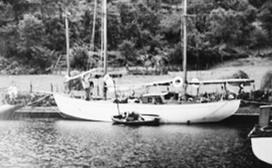
Andy, your mention of Miles Smeeton and Tzu Hang evokes memories, may I reminisce for a moment.
Many years ago, before many of the current Cape Horners were born, I was sailing my then yacht Ocean Minx, a 35ft double ended sloop, in 1968, prior to an Atlantic crossing later that year, and ventured single-handed into Yarmouth harbour. In those days there were no pontoons, just piles to which we moored fore and aft, often six or more abreast. On this particular day I was directed by the harbour master to go alongside Tzu Hang I remember the day so well. The harbour master must have misinterpreted my expression of incredulity for ignorance as he pointed her out to me.
There on the deck, awaiting my arrival was a tall man, who I immediately recognised as Miles Smeeton. He took my lines and was most helpful and friendly. I was in shock, having read his book, “Once is enough” several times. He appeared quietly pleased that this young man (those were the days) appeared to know all about his epic voyage and the events that assailed them. He was gracious enough to show me around Tzu Hang when I immediately asked to see the packet of face powder: `which he did’.
For those who have not read his book and I thoroughly recommend that you do, without delay, Tzu Hang, a 46ft ketch, was sailing from Melbourne to England, south of New Zealand and crewed by Miles himself, his wife Beryl, their daughter Clio, a friend John Guzwell, and Pwe their Siamese cat. (Are they still known as Siamese cats or Thai cats?)
Tzu Hang passed south of New Zealand and on towards the Horn and on 14th February 1957 was ‘pitch-poled’ by an enormous wave. Chaos ensued. Tzu Hang was knocked right over and dismasted at deck level; at least, that was the fate of her main mast. Clio and Pwe were swept overboard and we do not need to remember the fate of many who have suffered such an accident. But, they were both safely recovered and all on board started the urgent job of saving the boat. We do not need to be told of the situation, we have all been there. With the main hatchway swept away, the boat wallowing half filled with water, with enormous seas threatening all the time to finish the job. There was no time for rest.
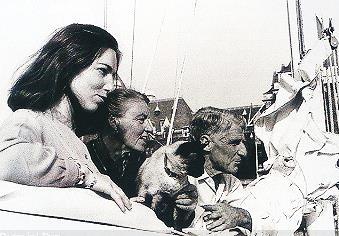
Whilst knocked down, there was a time when she was completely upside down. How do we know this? What is the evidence? Well the evidence is the packet of face powder, which had fallen to the ‘floor’, the now upside down deck and slid underneath a deck beam temporarily parted from the deck by what must have been the significant stresses imposed on the wooden hull during this time. These stresses reverted to something near normal when Tzu Hang staggered back up to her usual near upright position. The deck beam and the deck came back together and there, jammed between the two, was the packet of face powder (Beryl’s not Miles!)
That was the face powder I asked to see and there it was. Miles had never removed it. It was now 1968, nearly 11 years since that first knock down (there was another but that is another story, which included a falling out between me and Ann Worth, daughter in law of Claude Worth, on her yacht moored at the bottom of the garden of Admiral’s Inn in English Harbour, Antigua the following year. Is anyone still reading this? I’ve started so I will finish!)
Back to Yarmouth 1968, which is what started this email, and I was bereft to know that my copy of “Once is enough” was at home. So I rowed ashore, no pontoons then and no water taxis, and was fortunate to be able to buy another copy which Miles autographed. It reads “Miles Smeeton Yarmouth Aug 68, with Beryl, Pwe and Tzu Hang”. Clio was by then married and living in Canada and although Pwe had died several years earlier, Miles included her in his autograph. The book is one of my treasured possessions.
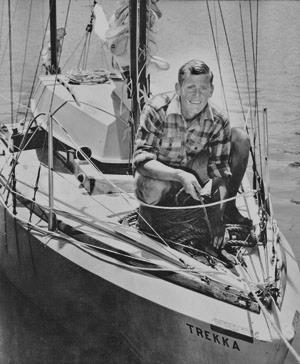
Another is a book entitled “Trekka round the world”, by John Guzwell. It was john who left Trekka (at 21ft thought to be the smallest yacht to have made the circumnavigation)in New Zealand and joined the Smeeton`s in their eventful sail referred to above. John was a professional marine carpenter and had built Trekka from scr.atch. It was largely John’s presence on board Tzu Hang and his undoubted skills that helped the crew to survive that knock down and limp into Chile for repairs.
John returned to Trekka and completed his circumnavigation and is believed to have been the first Englishman to sail single-handed around the world, returning to his home port Victoria, in Canada, on 12th September 1959.
With kind regards and thanks if you got this far,
Ian
Yes we did. ED
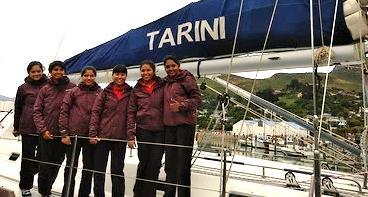
Tarini has an all-women crew of six officers of the Indian Navy led by Lieutenant Commander Vartika Josh; and includes Lieutenant Commander Pratibha Jamwal, Lieutenant Aishwarya Boddapati, Lieutenant Patarapalli Swathi, Lieutenant Shougrakpam Vijaya Devi and Lieutenant Payal Gupta.
INSV Tarani is the second sailing vessel for the Indian Navy; she is very similar to her illustrious predecessor, INSV Mhadei, which has sailed over 115,000 nautical miles in the past eight years since 2009 and known for her legendary voyages such as the first Indian solo circumnavigation undertaken by Captain Dilip Donde (Retired) in 2009 and the first solo, non-stop and unassisted circumnavigation by Commander Abhilash Tomy in 2013; (one of our AICH members now signed up for the upcoming Golden Globe Race in 2018).
Tarini will promote ocean sailing and encourage the empowerment of women in what has hitherto been a man’s world. 12th December 2017 INSV Tarani and her all girl crew left Lyttleton New Zealand, the next intended stop being the Falklands by way of Cape Horn.
From Times of India alerted to look at the web by Andrew Edsor`s twitter feed.
We heard of their passing through Port Stanley on our arrival in Tenacious at the end of February. The ladies made it home to India successfully, well done them, perhaps with the help of our Indian member Cdr Tomy who is preparing his Suhali replica for the GGR at the end of June they will join us as Cape Horners. We would like to hear of more of their voyage. ED
Report on the IACH reunion lunch held in the Princess Royal Gallery at the National Museum of the Royal Navy. From Peter Waring – IACH Committee member
As many of you will know the scheduled 2017 IACH annual reunion lunch was due to be held last November on HMS Warrior, Portsmouth. However, just prior to November the IACH were advised that the ships hiring costs would be greatly increased due to a change in policy following the transfer of the ships management to the Royal Navy Museum at Portsmouth.
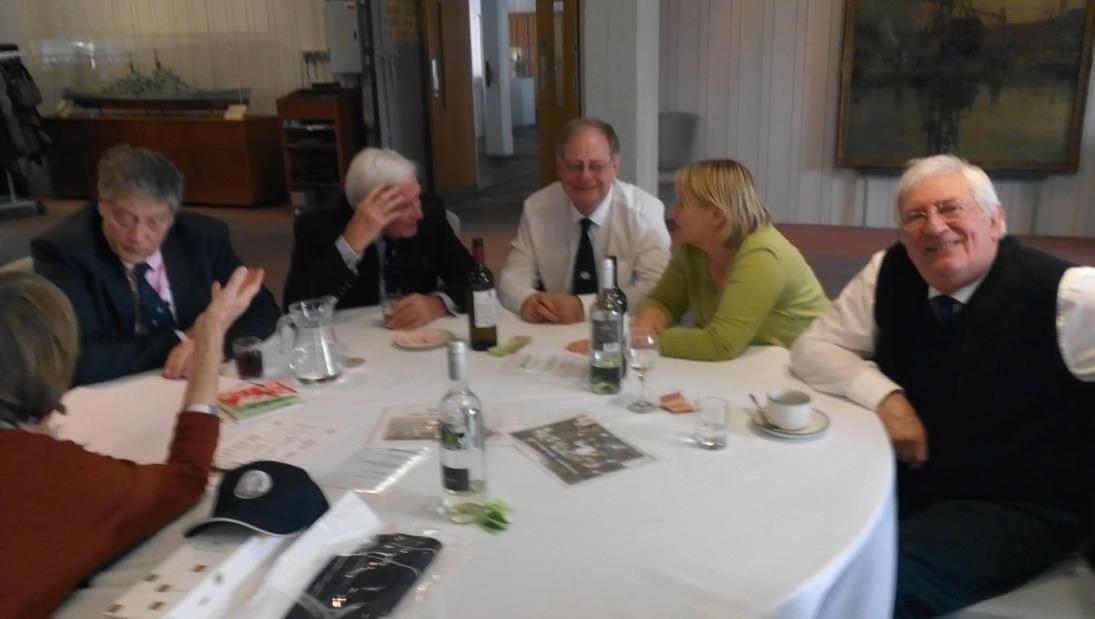
Your Association were unfortunately left with no alternative but to seek another venue for our Annual Reunion lunch. Happily, the National Museum of the Royal Navy were then able to offer an alternative venue and as a result we held a very successful postponed 2017 reunion lunch in March at the Princess Royal Gallery within the Portsmouth Royal Navy Museum. Set in the heart of the Royal Navy dockyard guests were able to visit, before and after lunch, all current museum attractions including HMS Victory and The Mary Rose. Entry to all exhibits were provided free of charge by the Royal Navy museum as part of the luncheon package. Most guests took advantage of this added attraction and commented favourably.
One of the many positive features of the day was the excellent lunch prepared, once again, by locally based Bezani Catering who had successfully provide our lunch at the last IACH reunion on HMS Warrior
Those attending in March largely agreed that the Princess Royal Gallery felt welcoming, spacious and appropriately nautical. One of the very best and closest views of HMS Victory is from the Galleries large dining room windows. Attending the replacement 2017 reunion lunch in March were 46 crew members from 14 different craft representing over 60 years of rounding Cape Horn under sail. Members were once again delighted to see the Associations Vice President, Captain Adrian Small (Passat 1948) who, along with Chairman Andy Bristow, addressed and thanked guests for attending. Guests were also reminded that the International Association of Cape Horners continues to be committed to providing its members with the means of communication for reunion whilst effectively maintaining and promoting the spirit and fellowship of Cape Horn.
A good time was had by all. We hope to see you at our next Reunion. By the time you read this report your Committee will have met to discuss venue options and dates for our next Annual Reunion lunch.
Next
Lunch Meeting Portsmouth Dockyard Sunday 25th November 2018
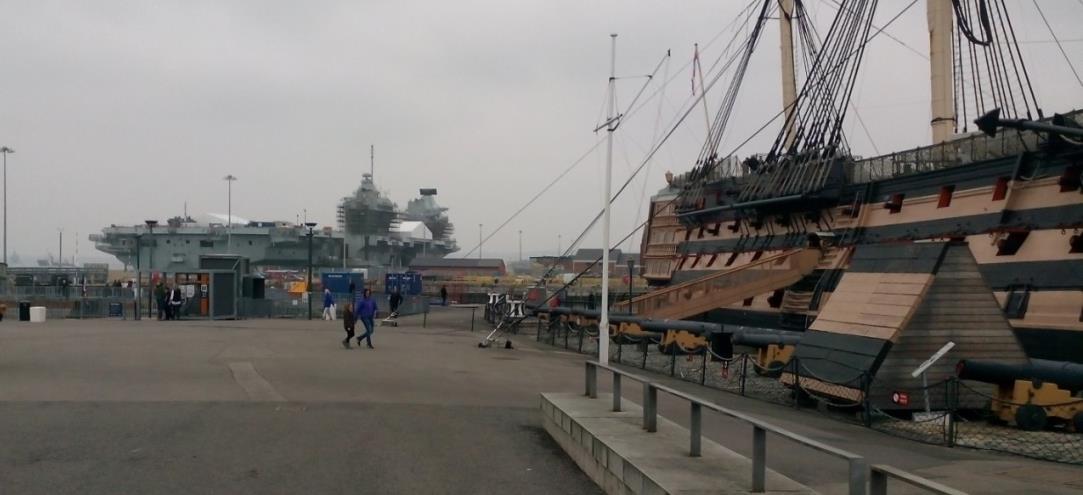
The Royal Navies past and present ships at their home in the Portsmouth Royal Naval Dockyard, HMS Victory and HMS Queen Elizabeth
Crew from Great Britain II celebrating their 40th anniversary of rounding Cape Horn during the 1977/78 Whitbread round the World Race
Next Lunch Meeting Portsmouth Dockyard Sunday 25th November 2018
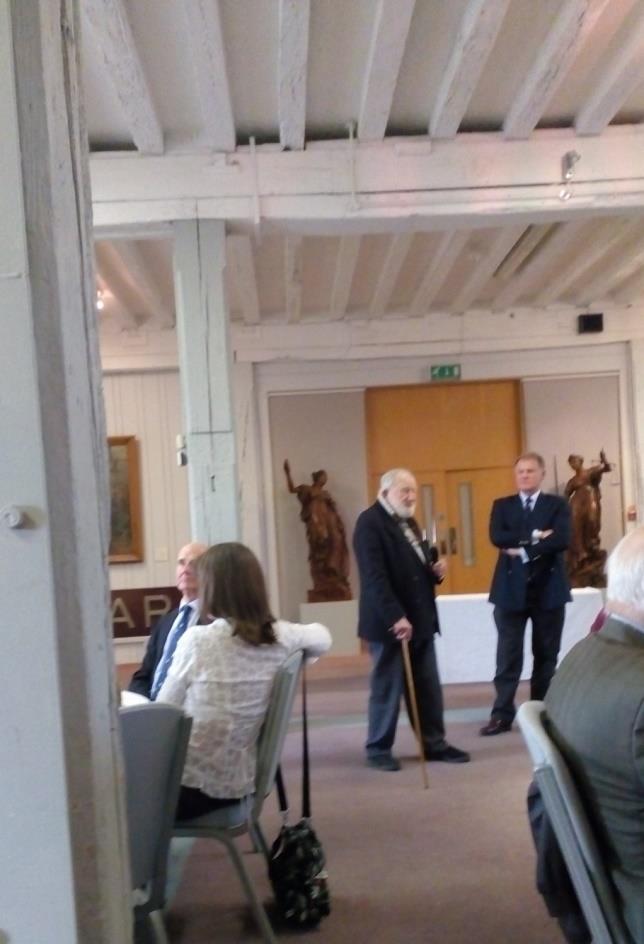
Vice President Captain Adrian Small, and Chairman Andy Bristow thanking the attending guests at the end of lunch.
The Association has booked the Princess suite for the 2018 lunch on Sunday the 25th November 2018.
It is open for discussion whether we should be meeting elsewhere somewhere that might just be better situated, please give it thought and let any committee member know your thoughts we are open for Ideas.
Do any of you have a skill or even a wish to help the Cape Horners in any way at all we are all ears many jobs can be done remotely with the new technologies. We really do need some new blood to help out.
Obituaries
Simon Speirs Clipper Race 2017
I saw a first comment from our senior member and chairman of the - Clipper Race - he founded two decades ago; Robin Knox Johnson on TV was taken to task by someone who appeared to say if there was a second professional aboard this incident could/would have been avoided. Robin replied "it would have made no difference" he had to repeat himself twice more to the interviewer, who seemed oblivious to the fact that accidents happen, and that one has to at some time take responsibility for oneself. I depart for the Southern Oceans at the end of December, in JST Tenacious and am fully aware of the dangers on what I hope to be my third rounding of Cape Horn, this time on the way to Cape Town. I quite unreservedly offer condolences on behalf of all Cape Horners to the family of Simon who died doing something he believed in. I only hope there is not too much impact on the Clipper Race as a whole.
Simon was a retired solicitor aged 60 with a lifetimes experience of sailing when while handling sails on the foredeck of the Clipper CV30 Great Britain, while sailing in rough seas in the Southern Ocean he was swept overboard, he had his safety line attached and was wearing a life vest at the time and although recovered never regained consciousness. Simon was later buried at sea. The accident happened on day 18 of the third leg of 13 en-route Cape Town for Australia and 1500 miles from the intended finishing line. A member of crew since the Race Start in the UK on August 20th, 2017, Simon had both a RYA - Coastal Skipper`s and Race Cox`s license.
This is the third death in the last two Clipper Round the World races. In the 2015-2016 race, two sailors, Andrew Ashman, 49, and Sarah Young, 40, both died in separate incidents on the same boat, Ichor Coal Andrew died after being struck by rigging during a gybe and Sarah who was buried at sea in the North Pacific had died after being washed overboard. The Clipper Round the World Race had no prior fatalities in the almost two decades that the race has been sailed since 1996. ED
It is sad when it happens but there has been a further incident involving Team Greenings yacht CV24 she grounded within the boundary of a sensitive National park at the Olifantsbospunt between Cape Town and Cape Point and has had to be cut up in order to remove her towing off the reef not being an option permitted. ED
Obit: Cornelis van Rietschoten Originally printed in The Times. 18th December 2013
By Barry Pickthall
Born: 23rd March 1926, Rotterdam, Holland Died: 17th December 2013 aged 87
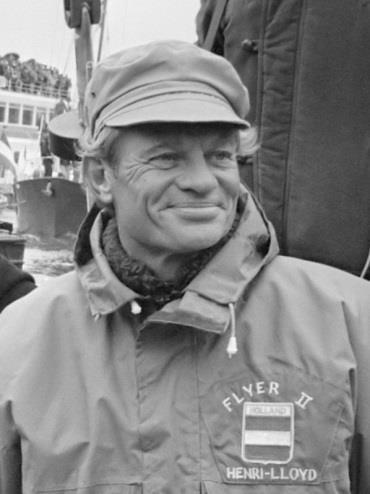
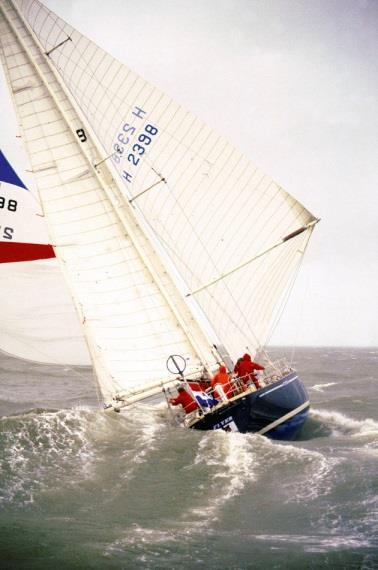
Cornelis van Rietschoten, better known as Conny, was Holland’s most famous yachtsman who dominated ocean racing during the late 1970s and early 1980s. Where he really made his mark was in the British run Whitbread Round the World yacht race, forerunner to today’s Volvo Ocean Race, becoming the only person not only to win the event twice in 1977/8 an 1981/2, but capture both line and handicap honours with his 76ft maxi yacht Flyer in 1982. In doing so, the Dutchman and his crew also set two world records: The fastest Noon to Noon run of 327 miles, and the fastest circumnavigation of 120 days
He was first introduced to sailing at the age of 3, joining his Father Jan Jacob aboard the family’s 12-metre yacht Copeja, in races run by the Royal Maas Yacht Club in Rotterdam.
His childhood was fractured by the 2nd World War when, as the youngest of three children, he spent much of it hidden by his mother in a secret room within the attic of the family home in Rotterdam. His Father was held, like many prominent business people, as a hostage in the hope of forestalling attempts by the Dutch resistance movement to sabotage vessels being fitted out at the family’s shipyard. Jan Jacob was spared, but his great friend, Willem Ruys, head of the shipping line Rotterdam Lloyd, was taken out and shot after the cruise ship Van Rietschoten’s company was completing, was sabotaged. Conny’s two brothers were also killed, one while being parachuted back into Holland from England as part of the resistance movement, the other while attempting to rescue the skipper of a Rhine barge he was crewing on during the first Allied thousand-bomber raid on Duisburg.
These experiences had a major impact in shaping Conny’s character and instilling burning desire to succeed with every challenge. A keen field sportsman, he enjoyed shooting and fishing, and also played golf at scratch level with equal exuberance.
Once the war ended, Conny moved to England to study engineering. It was here that a win on the football pools gave him the funds to buy the Dragon
class keelboat Gerda with a friend, and it was on board this small keelboat that he developed a taste for long-distance sailing. Their first voyage was to sail from the Clyde to Cowes. Their second, undertaken in 1948, was from Cowes, across the North Sea to Arendal, Norway, to compete in that year’s Dragon Gold Cup world championship. They didn’t win, but Crown Prince Olaf of Norway proclaimed the two Gerda crew-members the best sailors at the regatta for sailing by far the furthest distance.
Later, while developing a successful business career, first in pharmaceuticals, and later transforming the family electrical engineering business into a major multinational, Conny continued sailing, competing in in several North Sea: Fastnet and Santander races.
But it was not until 1977 that the world of sailing really got to know about this shy, but fiercely competitive Dutchman. Then 45, he had retired from active business and was looking for fresh challenges. Intrigued by newspaper reports about the first Whitbread Race in 1973, and seeing the event as the opportunity of a lifetime, he grabbed it with both hands.
What set Van Rietschoten ahead of established sailing names at the time was first, he had the money to fund a full-on campaign, but just as importantly, he brought a level of professional management that was far ahead of the amateur gung-ho ocean racing entries at the time, which changed the sport for ever. He still saw himself as an amateur, but in raising the bar so high, his achievements were not matched until New Zealand hero Peter Blake also swept all before him around the world with Steinlager 2 a full decade later.
Rolling down the Solent homeward in a force 10, 1977/78
It is all commonplace now, but Van Rietschoten was the first skipper to undertake extensive trialling and crew training before the race, and invested his money wisely, funding research to improve crew clothing, rigs and the first computerised forecasting techniques. Before his first Whitbread race in 1976, Van Rietschoten and his crew embarked on a double Atlantic crossing, and won the returning Transatlantic race before racing round the world from Portsmouth and back to win on handicap by a massive 59 hour margin.
Van Rietschoten returned for the 1981/2 Whitbread with the second of his Flyer yachts, this time a 76ft maxi sloop purpose built to win line honours. She was matched against Peter Blake’s Ceramco New Zealand, a lightweight down-wind flyer designed to excel in the Southern Ocean. The Kiwi yacht was dismasted during the first leg, handing Flyer a run-away victory on the first stage to Cape Town, but from there on, the two yachts raced neck-and-neck around the rest of the world.
It was at the height of this competition that Conny displayed to his crew at least, the steely side of his character. He suffered a heart attack and swore his crew to secrecy, even though Ceramco had a cardiologist within her crew and was just a few miles behind. “The critical period after a heart attack is always the first 24-36 hours, and the nearest port (Fremantle, Australia) was 10 days away”, Conny recounted later. “Ceramco was already breathing down our necks. If they had known that I had a health problem, they would have pushed their boat even harder. When you die at sea, you are buried over the side. If that happened, the Ceramco boys might then have spotted me drifting by… and that, I was determined would be the only thing they would see or hear from Flyer on the matter!”
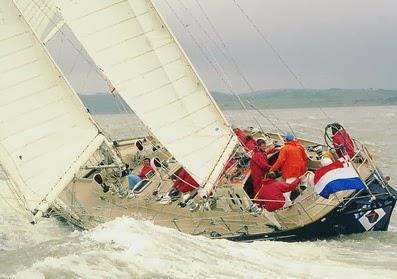
Flyer’s crew went on to win that stage by 9 hours, but from there on, the two yachts were constantly trading places. Half way across the Pacific the crews were within sight of each other, and rounded Cape Horn in close company. Ceramco’s skipper liked to bet van Rietschoten on almost any outcome within the race, and being better at setting wagers, would invariably collect countless bottles of champagne at the end of each leg. But Conny eventually got even, saying over the radio as the pair closed on Cape Horn: “Peter, would you like me to report to the World that Ceramco beat Flyer round?” “That would be very nice:” Came the reply.
“Well, that will cost you 25 bottles of Bubbly” Conny chuckled. There was no reply, and to this day, Flyer and Ceramco crews still argue over which boat was first.”
Conny and his crew finished first again back at Portsmouth, to take line honours for the Race, and when the French yacht Charles Heidsieck III, their nearest rival on handicap, fell into calms near the Azores, Flyer became the first and only yacht in the history of the race to scoop both line and handicap honours.
Grant Dalton, the head of New Zealand’s America’s Cup campaign, who began his sailing career as a sailmaker aboard the second Flyer, summed up the feelings of all Conny’s crew, saying:
“Nearly all of us can track our careers to Conny. We were all young, restless, most of us totally unproven, and yet Conny took a chance on us. He allowed us to be ourselves, sometimes guiding us, sometimes coming down hard on us. He taught us how it was going to be done in the future and he introduced a professional business approach to offshore sailing. He was a pioneer. We have lost a person that, to a man, we looked up to with respect and thanks.”
Before these exploits, Conny, whose politics were always a little to the right of Genghis Khan, developed a championship golf course near Faro, only to have the land confiscated when Portugal fell to a Communist coup in the early 1970s. Convinced from the outset that the regime would fail, he bought out his partners, and waited with some impatience for his prophesy to manifest. When the regime did collapse in 1974, her recouped his money and used some of it to fund his first Whitbread campaign.
He was even luckier when he and his party of hunters were captured by left wing authorities during a safari shoot in Zaire. Tied up for three days, Van Rietschoten was lucky to have left his passport at their camp and could not be identified and was eventually released with his shooting friends. Six other hunters were less fortunate. They were found in shallow graves only the week before. He never went on safari again, and gave his guns away.
Conny’s wife Inger died in 2004, he is survived by their four children, Marianne, Jan Jacob, Diederick & Cornelis.
Ref; Whitbread Round the World Race
In November of 2015 when I was on my way to Cape Horn in Europa remembering when Cornelis van Schouten named the rock he then thought was a headland 400 years earlier, I heard Dutchman aboard talking about the Flying Dutchman and that in his memory his yacht Flyer a race winner had been returned to Holland renamed Flyer from Alaska Eagle and a trust set up in the great man`s name; I promised to do an obit for him in the Cape Horner. ED
Edward Allcard
Solo Sailor on the High Seas, Dies at 102
By: Richard Sandomir Aug, 2017
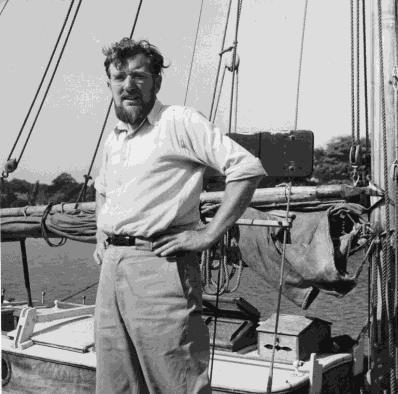
Edward was said to be the first person to sail both ways across the Atlantic Ocean single-handedly, save for a stretch with a young woman who stowed away on his return home to England, died on July 28 in Andorra, a principality in the Pyrenees Mountains, where he lived. He was 102.
His wife, Clare said the cause was complications from a broken leg. A bearded adventurer who loved life alone at sea, he also circumnavigated the globe on his own; he was a child in England when he first thought of sailing to America. When that opportunity came, in 1948, he chose to do so aboard Temptress, a 34 foot yawl, built in 1910, that had not sailed for a decade. To test the craft, he sailed first to Gibraltar via Spain. On the way, a storm sent water pouring into the belly of the boat, it did not faze him.
“There was no escape,” he wrote in “Single-Handed Passage” 1950, his account of his trans-Atlantic voyage. As he braced himself in his galley seat, stirring porridge with a wooden spoon, anxious thoughts began to overwhelm him.
“The boat was untested and not ready for a gale,” he recalled thinking. “Were the fastenings all right? Would a plank spring? Would she spew her caulking? And so it went on. At each heavy lurch, I whispered, `Damn.’ ”
After reaching Gibraltar, he spent the winter making repairs to Temptress before setting off for America. During the crossing, which took 81 days, he survived fierce gales and squalls, one of which capsized his boat, a near collision with a whale, and encounters with sharks.
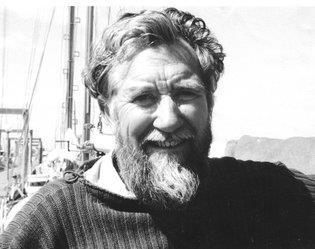
Edward in an undated photograph. Courtesy of Clare Allcard
“Sharks never came too near me when I was bathing,” he wrote. “However, several times in calms, a shark came to scratch its back on the topsides, whereupon I would hold my revolver to its head and fire.” A thousand miles before reaching Sandy Hook, N.J., he began to feel joy about soon reaching his goal. But he also wondered if leaving the comfort of great waters would not suit his loner personality. What was there to celebrate? He remembered thinking. “Getting near to the artificialities and impurities of civilization, where money was God?”
The voyage from Gibraltar ended in the Bronx, at City Island, on Aug. 9, 1949. His brown hair had been bleached white. He had lost about 20 pounds. And without a visa, he was temporarily detained by the immigration authorities.
Edward stayed in the United States for about a year as he made more repairs to his Temptress. On his lengthy return to England, he wrote in his log: “Hurricane, impossible to differentiate between wind and, water 60 feet high. Boat vibrating on beam ends rolled over 100 degrees.”
Six weeks later, on Oct. 21, 1950, he wrote:
“Overwhelmed by gigantic sea, upside down, mizzen and stern mast dismantled.”
After leaving Fayal, in the Azores, where the boat again needed repairs, and he himself needed to heal from broken toes and cracked ribs, he found a young woman, Otilia Frayao, stowed away in his cabin. They had met ashore several times, and she had been on the boat in the company of others. Miss Frayao, who was described as a poet, told reporters that she had been bored and was seeking a more intellectually stimulating life, and that after reading “Single-Handed Passage,” which he had lent to her, it had inspired her to sneak onto his boat. She became, in effect, his crew for a few weeks before they parted in Casablanca, where he denied rumors of a romance between the two. He continued on to Plymouth, England.
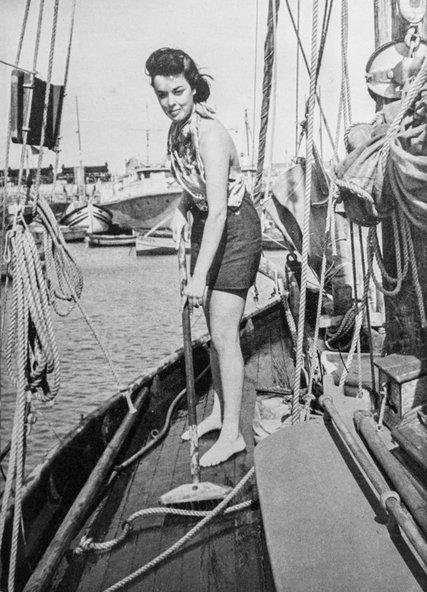
Otilia Frayao aboard Temptress
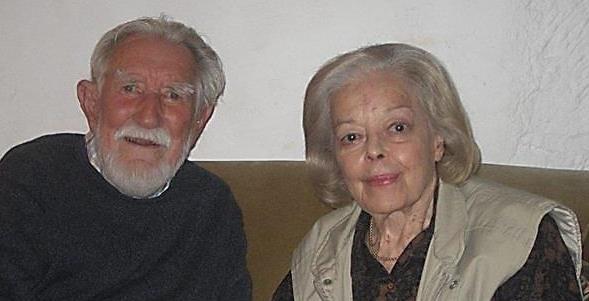
Edward and Otilia were reunited on his 95th birthday in 2009 when she was then living in Zaragoza Spain only hours from his home in Andorra,
When his book about the voyage home “Temptress Returns” was published in 1953, the marine engineer and author William McFee wrote in The New York Times: “Mr. Allcard should not be disappointed if his readers show more interest in his stowaway than in his struggles with the elements. It is no reflection on his storytelling talent.”
Edward Cecil Allcard was born on Oct. 31, 1914, in Walton-on Thames, London. His father, Rupert, was a stockbroker; his mother, the former Helen Whitmore, was a homemaker. By age 6, Edward was sailing; when he was 12, his grandfather gave him a 15-foot sailing dinghy, with which he plied the length of the tidal Thames two years later. He graduated from Eton College and later, continued his studies at Chillon College, on Lake Geneva, Switzerland, where he was coxswain of a winning racing boat.
After apprenticeships in shipbuilding yards, he became a naval architect. Poor eyesight disqualified him from serving in the Royal Navy during World War II, so he went to work at the Air Ministry, supervising the building and testing of air-sea-sea rescue craft. He seriously injured a leg during bombing in London.
He began his seafaring life in earnest after the war, setting sail whenever he pleased, earning money over the years as a writer, charter skipper, hotel maintenance manager and rehabilitator of old wooden boats, which he sold for a profit.
“I’m not looking for something,” he told The Sunday Express in the late 1960s. “I’m just living. In fact, I’m a steady, home-loving type. My boat is my home. I’ve been at home longer than most people stay in one house.”
He began his solo around the world odyssey in 1961, a leisurely adventure that took him about a dozen years, in a 36 foot ketch called Sea Wanderer. The trip included a 2,800 mile race against his friend Peter Tangvald from the Canary Islands to Antigua in the Caribbean he lost and paid Peter a $1 prize this and a long trip around Cape Horn, became the subject of his final book, “Solo Around Cape Horn,” published in 2016.
Edward and Otilia at his 95th birthday
“He was out to see the planet,” his wife, the Clare, said in a telephone interview. “He wasn’t out to prove anything. He was living on the boat. If he liked a place, he’d stop there. “He stopped for six months near Cape Horn. He stayed for a year in New Zealand. He didn’t want to break or make any records.” Indeed, he had stopped his trip to meet and marry her. Clare had been a patient in a psychiatric hospital when she read The Sunday Express article about Edward Allcard, taking particular note when he was quoted as saying that “the ideal” for him would be to find a woman who would sail with him. She wrote to him; they met in 1967 in Hove, on the south coast of England, started traveling together soon after and married in 1973.
He continued his solo journeys. On one, in the Indian Ocean, he had been heading for Mombasa, Kenya, on the East Coast of Africa when he went off course and landed in the Seychelles instead. For three months he lost contact with his family. (He and wife had a year-old daughter by then.) A belated telegram told her, “Delete Mombasa substitute Seychelles have found love nest come soonest.” They bought 17 acres on a coconut plantation and lived there for several years.
Later, after hiring a small crew that agreed to only room and board in exchange for their work, he and his wife wandered the world in a 69-foot trading vessel named Johanne Regina. Edward stopped sailing, at 91, when he realized he could no longer perform strenuous onboard tasks.
In addition to his wife, he is survived by his daughters, Kate Krabel and Dona Mackereth; four grandchildren; and one great-grandchild. A previous marriage ended in divorce.
In “Single-Handed Passage,” he wrote about leaving Gibraltar. “My last line with the shore was severed - at least for the rest of the summer and possibly for all time. Only the final reckoning would prevent me from reaching the other side of the Atlantic.”
That Final reckoning has now arrived. * * * * * * * * *
Please Cape Horners be on the lookout for anything Cape Horn or otherwise that would help make the Journal great and send it to me in whatever form. I will do my best to knock it into shape…………………
Obituary: Oswald Longfield Brett marine artist: 1st January 1921 – 1 January 2017
Our vice president Captain Adrian Small alerted me;
Os Brett as he was often known was born at Cheltenham NSW Australia and died on Long Island in the country he came to call home; he was 96 and died following complications after a fall at his home on Long Island. As a youngster in Sydney he spent much of his time around Sydney Harbour sketching and drawing his artistic aspirations were encouraged by his mother and sister he was an admirer of the noted and authoritative marine artist John Allcot 1888-1973 who in part worked as a pier-head artist at one time painting ships for £2.00 a time. One of his works is in the Duke of Edinburgh’s collection and is of Cutty Sark. The two men became great and lifelong friends and John mentored Os who knew he wanted to be a marine artist above all else.
Before the outbreak of war Os had served in coastal steamers on the Australian coast. During the war years he was in RMS Queen Elizabeth crossing the Atlantic many times mainly on the run NY to the Clyde with troops, in his off duty moments he sketched many on board scenes, episodes from this period some are to be found in `The book Queen Elizabeth at War by Chris Konings (1985, Patrick Stephens)’.
He married Gertrude in 1944 with her he had two children Walter and Elizabeth who survive him.
After the war he perfected his seas making them live around his subjects, the famed British marine artist John Stobart wrote of Brett's first-hand knowledge of ships and the sea:
"The result is that Brett has developed a wonderful facility for accurately portraying sea states and in placing his ships in those seas with such realism that they always look as if they're ready to sail right off the canvas. Oswald Brett is one of the finest marine artists of the 20th century. His historic ship portraits are always meticulously researched and technically accurate to the nth degree, but they also capture another quality that speaks of the painter's long and often arduous experience at sea."
He made his living by working on private and corporate commissions. From 1971 to 2002 he travelled the world as ships artist aboard Columbus Line vessels making some 20 plus voyages. He has work hanging in the Australian War Memorial, the US Naval Academy at Annapolis, and even the White House, Washington DC, as well as in maritime museums across the world.
The IACH had as it`s Christmas card some years ago his painting of the ship Joseph Conrad off Cape Horn a magnificent work done for Gordon Chapman who had been crew aboard at the time.
His biography was published in 2014 by Halstead Press Sydney, is titled; `Ships and the Sea - The Art and Life of Oswald Brett’.
Illustrations included celebrated vessels like Golden Hind, James Craig, Endeavour, and the First Fleet, RMS Queen Elizabeth, Cutty Sark, HMAV Bounty, Bismarck and more. It also includes paintings and anecdotes from other great artists whom Oswald met along his way through life such as John Stoppard, John Allcot, Charles Pears, Anton Otto Fischer and Charles Robert Patterson, all of which he is on a par with in regard to the excellence of his work, always well researched and accurate in every detail.
I understand that Os has left his 6000 volume library and other materials as a bequest to Hobarts Maritime museum. He had a particular affinity with Tasmania, his ashes will be spread on Sydney Harbour. ED
Joseph Conrad was used as a Cape Horner Christmas card she is pictured at 40° 37’s – 158° 47’w, the painting is owned by Norman Kjeldsen in New York.
Horn Again PT5 – And further into the south
Diary Entry Saturday 13th November: Noon position 20° 03.0s - 043° 38.6w
I tell Gijs who at times wears a straw hat he looks just like an Arthur Daly, I have to explain this George Cole TV character to him and how the term came to be used.
We put up the main deck awning as the sun has become fierce, the wind slight and sailing with stuns`ls downwind catching every catspaw of breath a tremendous challenge to the helm, Sloopy our longboat in put over the side and some go out to take photos of the ship on a mirror calm sea with only the swell to be wary of, I missed that trip being asleep at the time the call was made mid-morning. I will have to ask someone for a photo later. Wrote a card home to Pat although it won`t be posted for a month, I have a stock of 50 Europa ship postcards bought from Laura by arrangement, nothing is done easily aboard.
Klaas 1400 Daily Briefing: 62 miles in last 24 hours, we make 5kts with all 6 stuns`ls up, wind is NW and coming round there is a new low pressure system developing off Rio de Plata 25kts of wind expected. On 15th November Van Schouten was at 36°s and in his previous 24 hrs the wind had gone round through 360° so fickle was it. We have a 6kt current pushing us sideways in a SE direction.
Dog watch, Richard and me on helm in these light airs we were able to keep ship within 5° of the 200° course, we consider this an achievement worth noting.
I have been surprised that there is so little interest and knowledge of sailing history aboard ship, something I have often encountered at sea, it is the same with the shanty singing, so few singers go to sea to find out how it works, and so few ships allow you to give it a go here it was no different, the crew are wedded to the ubiquitous 2-6 heave of Royal Naval origins. It would be so much better to try to use the old ways, often it is we do not know the songs, with good will I say much
can be achieved.
Being in a Dutch ship is very different to a British ship, language, attitude, just about everything. I did not do the `Lime Juice ceremony’ on this leg as the Dutch who are in the majority aboard and the couple of Frenchmen do not seem to understand tradition. I hate to think what they would have made of the Dead Horse ceremony, were I to have sat scavenged the material and made the horse effigy of the ceremony`s name. With some encouragement I am always up for any sailor tradition starting with giving Neptune a drink when starting out on a voyage. I hate to see these traditions dying. There is still a place for it all in our watery world of traditional sailing ships, sticks and string sailing.
The permanent crew (PC) work a watch system of four on and four off and working in between on various maintenance jobs with the help of any voyage crew (VC) who want to learn and help out, a square rigger or any traditionally rigged vessel needs continual maintenance. So at night it is at first odd to see crew with head lamps like gnomes in the dark working on splicing wire and rope, whipping rope ends, greasing and oiling, all tasks that can be better done in daylight. The downside of the headlamps and their excessively bright LED white light is that they blind and at a stroke destroy night vision obtained; such light can be bloody annoying. There are also flood lights which light up everything from time to time!
This afternoon I saw some of Rian`s clips, film he shot in the Antarctic when down there in Europa on another voyage in 2005 ice being chipped off with hammers just as I had seen being done on the British Arctic trawler fleet Brrbrr. I try for an hours nap before dinner but even with the air con off, I hear that of cabin 2 through the walls. I made it up to the deck house to see the watch cleaning seed from the smallest chili peppers I have ever seen; I guess that means curry tomorrow YUK!
Diary Entry Saturday 14th November:
Noon position 29° 51.9s – 045° 19.0w
On watch at midnight in the graveyard a breeze is up, we were drifting becalmed most of yesterday south-easterly now we are sailing again making 9.4kts, just arrived at lookout and the PC are up on the amidships deck house roof
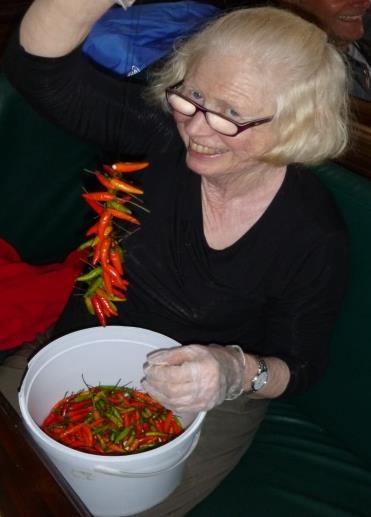
Janice threading Chili ©CR
swinging Sloopy the gig inboard, I am called to give a hand fastening her down to the deck, chocked and fastened down she is now secure for the time being. Richard and I are on helm and he explains how to read the radar in conjunction with the iPad when both are turned on at the same time. We chatter about our diving experiences both having done scuba, we note the old girl steers more easily in a blow. Coming off helm we go to the deck house for a night lunch which tonight is tomato soup brown bread and peanut butter, coffee and tea is always available. I get into trouble with a Dutchman for putting a spoon I stirred my coffee with back in the spoons cup, “it is dirty he said” Bloody hell I said!! It is only a spoon to stir with”; Some people? Up on the foredeck our red and green riding lights illuminate the white of the stanchions with their glow which dim as it may be show on the white crests around our bow wave, further out white caps break through the darkness showing themselves to us. Matt turns up needing help to set up the safety/lifelines on the foredeck, gradually preparing for the far south. We have a sea state 6 or 7 right now. I continue with trying to memorise the words of Bob Watson`s song “Mollymauk”, it is what I do to amuse myself on watch when my mind is not otherwise occupied others listen to music on their ear phones. The air temp is surprisingly and generally warm, but still there is a chill in the air as dawn approaches. We now have life lines rigged on all the ships decks, substantial lines guaranteed to hold you if clipped on. I am on deck again at 10.15 A.M. and take a few snaps even though overcast and no sun can be seen. It has been decided that the lifeline up on the foredeck is set too high so it will have to be lowered. The downside of all these lifelines crisscrossing the decks is that movement when working around the deck becomes restricted. Strainers are also being prepared for the waist to fit above the bulwarks, you certainly won`t get washed through this spiders web of rope and wire now surrounding our time capsule. Down below the battle with the air con continues. I turn it off Roger or Sam turn it on again, it is warmer up on deck than in our cabin, so I leave the door open and am told it won’t cool if you do that, what do I care. I am still going on deck in shorts and sandals and mums Arran Jumper (my mother when arthritis was getting to her knitted three of these beautiful woolly jumpers worn at sea in an age before the lightweight fleece came along), I always take one to sea with me mum never
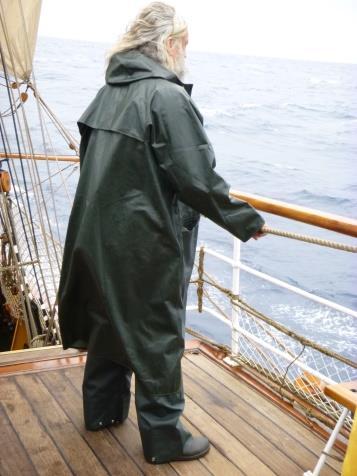
Captain Klaas ©CR
went to sea other than on a cruise it is like having her there with me. I think Roger is the first to use his rubber boots and as he is already in thermal long johns it surprises me that he wants our cabin so `not cool’ - but cold very, very cold. I ran new lanyards to the bridle of the inner jib assisting the bosun Dan.
Klaas 1400 Daily Briefing; 140 miles average 5.8kts speeds of up to 9.8kts until wind weakened after 10-12 hours in the A.M. ship was worn to other tack off the latitude of Porto Allegro, we will be off Uruguay by morning be careful of yourselves, be very careful of everything.
In the only serious news we have had from shore and that from Holland by satellite we hear there has been a suicide gun and bomb attack in Paris 180 thought dead, it sounds pretty dramatic a state of emergency being declared, public places and museums all closed up to 10 attacker’s dead. In a bit of a blow after lunch we took in the outer jib, gaff top’sl and most of the stay’sl’s and for a time stood by the royals and t`gallants while the sky`sl was taken in and stowed. I slept a while in the Library which is right aft under the poop; it is quiet and comfortable on the long padded seating, waking up at 4.40 P.M. It was all happening on deck so I stayed up with red watch who were putting up t`gallants and royals and bracing ship. Captain appears in black waterproofs a long black coat and boots as much an apparition from the past as it was possible to be, taking command of the operation from where he stood gripping the poop handrail. We now have to wear a safety line on deck a 3 inch thick buckled belt with a meter of line and a carabiner spliced on. I ask if I may use my own which is similar but only a length of line and carabiner in which I tie a bowline it also holds my knife and spike, it was made aboard Sørlandet in 1981 I tell him; “yes he says but keep it short”. We are on the edge of a low and are now flying t`gallants, inner jib, and foretopmast stay`sl, we have a 1720 degree lean and sea state about 8 with spume being blown off the angry crests, the decks are wet and we ship the odd one over the rail. Matt is fitting canvas covers over deck vents which are under the pin rails. Captain is on watch continuously, all look outs are hooked onto lifelines and do the duty from aft on the poop, wash ports are open and clang as we yaw all the steel watertight doors are closed except for the one up under the focs`le head and access to the deck is only through the most forward of the watertight doors under the focs’le head or up through the chart
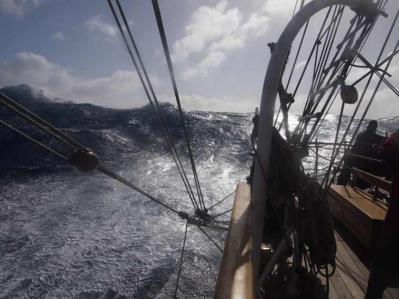
room. Washboards a half meter deep have been dropped into the entrance at all doors opening onto the main deck. Janice meanwhile oblivious to all this in sitting in the deck house threading chilli’s onto strings so they can be hung up to dry. Sam was up too early perhaps, since he stood his coffee mug on a table and let go, YUP he got the lot and so did the furniture and the person next to him. Captain has us standing by to set the royals for a half hour but in 30 kts of wind thinks better of it, the ship could not stand that, not old school enough. And yet we still have Elliot and Megan working on deck in bare feet.
Diary Entry Sunday 15th November:
Noon position 31° 44.3s – 045° 01.4w 04.10 and a set to with Roger about the A/c no I don`t want to move bunks, the offer of his would have been no better a placement, he said he was not cold and I that I did not enjoy having the A/c unit drip tray overflowing condensed water onto my clothing. I had of course come down to the cabin after watch only to slip arse over tit on the unexpected wet floor and Roger and Sam`s clothes scattered around on it, bashing my arm rather hard on a bunk edge, the bruise when it came out was huge and black, `what a beauty that was’. Kees came and woke me for watch at 08.00 a little late, in truth I was already awake when he shook me No wet gear in the lounge, do not use toilet (properly heads) no explanation as to why. We are being thrown about in 30kt`s of wind and taking a bashing but only making 6.6kts into it. In the lower lounge I took a breakfast of 2 boiled eggs bread and coffee, at least I held onto that tightly so it went down my gullet and not all over my neighbours. The head up forward under the focs`le is ok. It takes for ever to undress to go for a shit and then put it all on again.
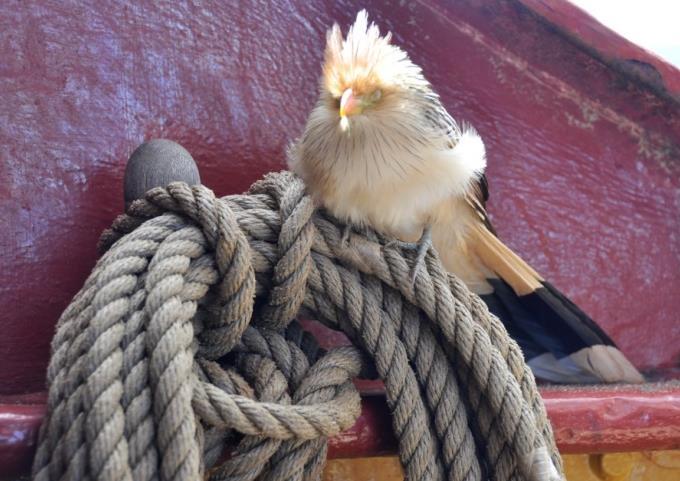
In all this weather we have a beauty of a land bird black and grey colour, something between a blackbird and a pigeon in size sitting in a coil of line wrapped round a pin on the pin rail. This bird that we tried to feed with all sorts eventually died.
Gaia Cuckoo a Brazilian forest bird ©CR
I took a half decent photograph of it which my friend Derek known as Giff to his friends saw months later, Giff is a birder and after going through his books of Brazilian forest birds told me it was a Gaia Cuckoo.
Klaas 1400 Daily Briefing; Wind has not come round as yet we have lost some latitude, we have made 113 miles in 172 hours and are 1555 miles from Lemaire, food is only to be had in the Deck House, watertight doors to be kept closed and all access to deck to be for the moment through the chart room with only those essential to ships running to be on deck, do not go down into the waist unless sent on a task. We have two Wim`s on board and one down Wim de Ritter is injured, he has struck his hand and lost the use of his right hand, we are not sure why, please help him if you can. Also Rian as you know is hearing impaired, he is deaf has been since birth he does not hear the bells, shouts and calls etcetera, so help him out. We will now wear ship go to your stations…..
We are now setting sail up to t`gallants in an estimated 28kt`s of wind and standing by yet again.
Ship is worn round, it is noticed the watch is short as neither Laure the French Girl or Alehandra our Chilean/ Dutch watch leader are on deck, they are seasick below. Ship is again heading for Brazil on the port tack, later saw Laure being unwell after gamely coming on deck, I told Ali who went and found the doctor to help her, but she would not stand down. Laure had been working in the French financial quarter until the downturn in banking and came on this voyage being at a loose end joining at Texel.
Jordi is a Catalan and an ornithologist; he has made a number of voyages as the zoologist aboard Europa, he tells us in a workshop talk that we are now seeing several types of Petrel including the Speckled and White Chinned Petrel and Brown Albatross.
The motion of the ship has become a little easier but is very tiring nonetheless. Wim`s right hand is useless to him, he had taken a bad fall across the deck, a man in his sixties and not the most steady on his feet at best he can wriggle his fingers but cannot raise his wrist to help himself at all. The damage appears to be of a nervous nature. I have noticed that Klaas our captain is left handed considered by many to be
Jordi ©CR
a handicap, but then so was my father. I remember dad saying that when he was growing up he was forced to write right handed, he also said of being in the army that they did not make rifles for the left handed, I often wonder why dad did not join the Navy as he grew up just above Folkestone Harbour and on his military record under useful information it said - “knows how to handle a twenty foot sailing cutter and marine engines attached thereto”, - as a boy he went to sea with a particular local fisherman on a regular basis.
In the Deckhouse there is an eerie quiet, the off watch are on the beer it is called (Chin) `Shin’ some sort of lager we loaded up on in Brazil while at Salvador. The music machine which only plays USB sticks is mercifully off as the choice is mostly pretty dire. Eight are reading some on `E’ readers, none read anything of a maritime nature which is a pity. I go out for my trick at the helm with Richard who is already a Cape Horner from the 2013 voyage, he like I will come out of this voyage as one of the few to have made a rounding in both directions. Richard is explaining the system as he understands it, we have at our disposal a helm indicator which in the dark I cannot see properly, I have the same problem with degrees on the compass so have to go by points, those black diamonds and half diamonds, we are making 55 degrees which means the `d’ of indicator is where I have the helm, I am colour blind and do not see the colour red at night. Richard was now trying to explain why we were using the iPad as well as Radar, so you see we had a whole array of devices to confuse us, I still prefer a wheel box with a helm indicator usually brass and with a dart shaped head that can be felt in the dark. Laure although on deck was unwell so I took her turn on lookout; the sea was all foam, spume and spray being blown off the wave tops, big south Atlantic seas being pushed away from us by our bow up to where the horizon once was, birds wheel and fly around us seen in the light of the wave crests. Below I have now wedged draws so they do not fly out of their runners as the ship pitches this way and that.
Captain was about the deck this night taking slack out of lines to stop sail edges flapping and luffing. Something that could have been done earlier had the then watch leader been more alert. At lunch Mary Anne finds out that I do not eat hot spicy food on account of the type of hernia that I have, they did not tell me she says of the ships office, I say that I do not ask for anything special just the opportunity to say no please. Tracy Chapman is on the music machine I like some of what she does but not this pretty unintelligible sound.
Diary Entry Sunday 15th November:
On watch for the 4-8 a.m.
The seas have calmed as the front has now passed us by, the wind has eased to such an extent we now have only a 7.5kt breeze and make only 4.5kts over the
ground. We spent much of the watch setting up stun`sl gear, we did not set them as we were then detailed to do a deck scrub, I was taught to scrub across the grain but here there seems to be no way preferred, (with the grain I was taught scours the grain), due to the problems I have with colour I have again suggested to our watch leader that I am put on helm in the daylight and into dusk and out of the dark at dawn, that is the first of the evening watches 8-12 p.m. and the last of the 4-8 a.m. watches. I am again suffering Roger and Sam`s dictates in the cabin. When I came down off watch last evening it was bloody cold at 15° this all leaves a bad taste particularly as the engineer says that our cabin is easily the coldest on the ship, good practice for the Horn no doubt, Engineer Joss says that he will soon be firing up the heating system so then those two can complain. I slept with A/c off as the duo were on watch together, and then Krista came in to clean the bathroom, I said that I could do that for her, she was in the way of leaving the occupied cabin, I told her not to mind me and to continue which she did. It is sheet change day today, I have asked that the new are left and I will do my own to make it easier on the crew. Up on deck with the Nikon I think I got a good shot of an albatross right off the stern where they hang in the disturbed air. I talked with Canadian John who tells me he worked in health and safety mostly but had also worked in Fibre Optics, John has no thumb on his left hand lost it in a block he said, while sailing, but not this ship he laughed. Okie John who is on my watch had his head stuck through the strainer netting where it had been triced up to get at the braces, “making an escape plan” I said as he laughed it off. I was talking with Jesper our Danish 2nd engineer he was looking over the side at our discharging waste, he said it takes 2.5 hours to pump the grey tank and the same roughly to do the black water some 30 cubic meters in all, in the Antarctic the ship must keep all waste aboard, pump-outs must only be done in the Drake Strait on leaving the Antarctic peninsula. We have had large pods of dolphins with us and whale parallel with us but too far off to properly identify.
Klaas 1400 Daily Briefing; we have made 95 miles at course 255° 3.9kts 1356 miles done in 276 hours our average is 4.9kts and we are 1555 miles off Strait Lemaire. We are 200 miles off the coast and expect more westerly winds around a coming high, the stuns`ls will be set and should give us a bit more push but with the wind from aft and light airs steering will need absolute concentration. When more wind comes it is expected to be 15-20kts for two days. At this point the Carracks of Schouten and Le Maire Eendracht and Hoorn which were capable of 10kts were coping with a 17° magnetic variation and making 9kts.
There will be one minutes silence at dusk for those killed and injured in the Paris attacks, which goes some way to compensate for the refusal of our captain to remember the 11th of the 11th with a similar silence that I had requested.
During my trick at the helm this afternoon a large green turtle was seen to glide by down our starboard side on the surface, and more whale were seen a long way off on the port side. Watch leader Alehandra said the whales were 8 points off the beam that could not be so someone said! Our poorly bird is still with us, it will die, but it`s memory will live in photographs taken of it, we have tried it on milk, water, crushed biscuit and bread, fruit (Kiwi and Orange), all to no effect. 1st mate Gijs gave a talk on the effect of Pamperos, rolling clouds, lightening and sudden wind shifts, and how we all need to be aware of the slightest changes in the weather. Engineer Joss then gave a short talk on capacities: Our black tank holds 6 tons some 11.500ltr, grey around 3 tons half that of the black tank. We have 12,000ltr of fresh water, which the water maker can generally make up so there is usually no water rationing. 5055kw of power can be made aboard; our diesel tanks hold 12.700ltr.
©CR
Dinner this night was steak which is always done by Klaas who gets in this case the South African Roebuck steaks perfect just perfect, along with veg and baked potato followed by apple crumble. I tell captain that he always does steak just perfect; Klaas says he tries his best always.
At sundown the flag is half masted for the remembrance of the Paris atrocity and to support the French contingent we have aboard, Francois, Laure and Jean Pierre. At that moment I saw an albatross fly across low below the setting sun, I wrote about that in a short shipboard blog on the ship computer.
Yards are trimmed and braces hauled taught, then time for a talk with the Dane Laurence who later had a fall down a companionway that tore a shoulder muscle that almost scuppered his going on the Antarctic voyages out of Punta Arenas. Laurence was he says so lucky to get two years sea training in the Danish sail training ship Danmark built in 1933, he was 16 when as a cadet he had the opportunity to the much oversubscribed course, and he obtained a bosun and then quartermaster’s ticket. So many are sent to Maersk
ships to train he said. After training in the sailing ship he did time in rig supply vessels offshore, this is his second time in bark Europa
I have made a simple modification to the compass binnacle to rectify a problem it has long had, at night the door on its left side lets out light where it does not fit tightly. The simple answer I adopted was to slip a piece of card into the gap and thus seal it, - `why was it not thought of before’ - there are more permanent ways to stop this light interference with night vision. We are making 7kts and wow touching 9kts at times. With all the spaghetti of loose coils of line running across the deck you would think that crew would have learnt by now not to stand on or in loose coils but no there is more to learn yet, very much it is learning on the job as loose lines pop out through wash ports and jamb. PC seems to have the same problem as the voyage crew (VC). Captain came on deck all in black topped by a black waterproof long coat such as I have seen in very old photographs, gripping the rail he was every inch the commander he is. When I came up at 10.30 this morning late, I found a bowl of eggs so had two and a tea before going aft to the library where I found Ozzie Bill stretched out asleep and Mechelien our soon to be busy doctor being shown navigation by Canadian Peter.
Out on deck on a canvas like some sort of primitive artwork were spread around from their sacks our Brazilian potatoes being sorted yet again, this is becoming a daily routine now, what looked good ashore is proving to be not so. The suspicion is duff dated stock and we will be getting yet more spuds daily and with everything. There are many rotten walking spuds going awol while others still good are sorted into boxes to be used in order. Oh to be on spud patrol. It makes me think of Tiger Timbs master and owner of Eye of the Wind as we transited Panama, I was with him on the deckhouse sorting grapefruit, “why do you buy so many just to throw them away Tiger” “only three dollars a sack” he said as he laughed. Much later at Fatua Hiva we were given sacks of a type of grapefruit grown on the island called pamplemousse the size of a rugby ball with skins as thick as a thumb.
I did a trick at Helm in pleasant enough conditions steering close to 240°; we are down sailing downwind at around 8kts,
Elliot ©CR
Gijs tells me a little about his ketch Tecla, now a century old and going strong he says there is another by the same builder also built for the herring fishing, she is presently in England but may go to Dutch owners, Tecla`s name is like Maria the saint and is named for his mother the vessel is family owned. Gijs is he says 33 and although it is a struggle to run the vessel substantially owned by the bank it is all he wants to do; `sail his own boat’.
It is a shame that my town does not see the ambassadorial value of the vessel we had to buy a town flag for €350 whereas Europa has no such problems she is a much bigger operation, I say that I will send him a Cape Horner burgee later which I did when I got home, he is more appreciative of that than Europa who did not say thank you for theirs.
Regards Europa I was asking about feathering props which Klaas thought would give an extra knot and a half, he said those who captain the ship would like them but to replace both of the props with feathering props would cost €150,000 which the partnership are not keen to fund, at refits usually a full cabin is stripped out back to the shell plating which is then inspected it is a rolling programme, of course paints are so much better than they used to be so everything lasts for longer. The ship is run by a partnership of shareholders who manage to maintain and sail her but make nothing out of the ship. I recall once talking with Tiger about the Eye of the Wind and him saying that the partners (there were five) made nothing out of the ship except that they could sail with her, but he as her master had at that time had twenty years sailing, His wife Debbie once told me it was better than working in a factory.
I read a bit of the Schouten Hoorn story from a book loaned by Gijs and then sleep a while; I am now on deck to see Captain Klaas dressed in an HH suit jacket down to the floor, leggings up to chest and boots. Klaas calls a shit alert as Sirius the ships dog is on the wander, we all look out for this Friesian sea dog and clean up after him.
We speak about South Georgia and a namesake of mine English born captain Anthony de la Roche a London merchant who had a French Huguenot father and an English mother, and who was in a ship he had bought in Hamburg of some 350 tons when he had been blown from the Horn to what was then named `Roches Island’ but later became South Georgia
Drygalski Fjord
(re-named by Cook in 1775) he anchored there for 14 days in April 1675 probably in what is now Drygalski Fjord, the glacier behind it is now known as Roche Glacier, as was customary with early discoveries captain de la Roche published a report of his voyage in London in 1678, describing the new land. After which cartographers started to mark `Roche Island’ on their charts, honouring the discoverer. All that survives of the report is the 1690 summary. The highest point on Bird Island is also named after Roche as Roches Peak he being the first to land there, it was here that he replenished his water, wood and fish supplies? (I would have thought there would not be much wood available but that is what the record shows. I would like to know the name of Captain De La Roche`s ship).
We continued talking about whalers and the sealers who preceded them and what a tough life the sealers must have had when they were put down to be picked up later and how they sometimes were forgotten. Often living in caves on isolated islands and how if lucky to survive, much money could be made. Just then a pod of 15-30 dolphins zoomed by while birds sat on patches of oily calm water, Klaas says it is building again, we are still running before it making good distance with a gentle roll, just rolling along literally. We are now in waters where in 2010 the school at sea ship the barquentine Concordia was lost in a Pampero a distant shipmate of mine who was 4th officer in the fourmasted barque Sea Cloud when I was in her in 1982. Bill Curry from America`s west coast was master at the time of the knockdown and loss…….
To be continued………
When Enda O`Coineen was dumped out the Vendee Globe with a broken mast he vowed to complete it even though it was to be a year later, his boat Team Ireland was literally covered with quotes from Yeats, Shaw and Beckett what a guy with the never give up spirit, he left NZ with that determination a few days before us.
Photos ©CR