
Year 3 Report
Year 3 Report
December 31, 2025
Jacqueline B. Helfgott, PhD, Principal Investigator
Matt Hickman, PhD, Co-Investigator
Alison Davis, Research Analyst
Benjimen Whiteaker, Research Analyst

This project was made possible by the Seattle Police Department (SPD) in collaboration with the Washington State Criminal Justice Training Commission (WSCJTC). Our research team would like to thank SPD Chief Shon Barnes, Dr. Jameelah Cage, Dr. Lee Hunt, Dr. Loren Atherley, Sergeant Aaron Lucas, Kajhyla Washington, Katie Johansen, Victoria Beach, and SPD personnel and staff who are part of the SPD "Before the Badge" program. Thanks to WSCJTC Executive Director Monica Alexander and Deputy Director of WSCJTC Jerrell Wills. Special thanks to the recruits who took time from their extremely busy schedules to volunteer to participate in this study. This research would not have been possible without the SPD BTB and BLEA recruits who took the time to participate in this study to assist in improving law enforcement training.

This document presents the Year 3 Report of the longitudinal evaluation of the Seattle Police Department’s Before the Badge (BTB) Training Program, detailing findings from the first three years of data collection. The purpose of this evaluation is to assess the effectiveness of BTB in shaping early officer development, inform training practices within the Seattle Police Department (SPD) and Washington State, and contribute to the academic literature on guardian-oriented policing, de-escalation and crisis intervention training, officer wellness, and alternative law enforcement training models.
The evaluation uses a mixed-method, longitudinal design involving multiple data collection points and a comparison group. Data were collected from SPD recruits participating in BTB and recruits from other law enforcement agencies across Washington State enrolled in the Washington State Criminal Justice Training Commission (WSCJTC) Basic Law Enforcement Academy (BLEA). Quantitative and qualitative data include surveys and interviews conducted pre- and post-BTB (SPD recruits), as well as pre-BLEA, post-BLEA, one-year post-BLEA, and ongoing three-year post-BLEA follow-ups for both SPD and non-SPD recruits.
Findings reported in this Year 3 Report are based on data collected between September 1, 2022, and November 30, 2025, encompassing BLEA cohorts 851 through 928. Data from new recruits ended August 31, 2025. The dataset includes 315 pre-training surveys (218 SPD BTB recruits and 97 non-SPD recruits), 73 post-training surveys (48 SPD BTB and 25 non-SPD recruits), and 21 one-year post-training surveys (9 SPD and 12 non-SPD recruits). Qualitative data include pre-training interviews with 180 recruits (144 SPD and 36 non-SPD), post-BTB interviews with 62 SPD recruits, post-BLEA interviews with 33 SPD and 8 non-SPD recruits, and one-year post-BLEA interviews with 3 SPD and 6 non-SPD recruits.
Survey instruments collected demographic information (gender, race/ethnicity, education, age, and years of law enforcement experience) and measured attitudes across seven key scales: Burnout/Emotional Intelligence, Negative Police Subculture, Organizational Support, Guardianship–Empathy, Guardianship–Respect, Crisis Intervention Team (CIT) Support, and CIT Organizational Value. Recruits also responded to questions related to behavioral crisis response and completed three scenario-based assessments involving depression, schizophrenia, and dementia/Alzheimer’s disease.
Key Findings
• SPD BTB recruits were significantly more racially and ethnically diverse, with 54.6% identifying as non-white compared to 37.1% of non-SPD recruits.
• A significantly greater proportion of SPD BTB recruits identified as male (87.2%) compared to non-SPD recruits (73.2%).
• SPD BTB recruits reported less prior law enforcement experience (M=0.4 years) than non-SPD recruits (M = 1.5 years).
• The proportion of recruits holding a college degree was lower among SPD BTB recruits (49.1%) compared to non-SPD recruits (73.2%).
• SPD recruits came from more geographically diverse backgrounds, including a higher proportion of out-of-state origins, whereas non-SPD recruits more frequently reported longstanding local or regional ties to Washington State.
• At baseline, SPD BTB recruits scored lower on Negative Police Subculture and Organizational Support, but higher on Guardianship–Respect, compared to non-SPD recruits.

• SPD BTB recruits expressed lower agreement with the statement that calls involving people experiencing behavioral crisis are inherently dangerous, indicating a more differentiated view of crisis response at entry.
• Awareness of guardian policing among SPD recruits increased substantially over time, from 22.0% pre-BTB to 60.2% post-BTB, 71.7% post-BLEA, and 83.3% at one-year post-BLEA.
• By post-BLEA, SPD recruits’ guardian policing awareness was comparable to non-SPD recruits (71.7% vs. 84.2%), indicating convergence across groups as training and experience progressed.
• SPD recruits consistently identified communication as the most important skill for a career in law enforcement, with increasing nuance over time emphasizing human-centered policing, active listening, empathy, de-escalation, adaptability, and accountability.
• The wellness component emerged as a distinctive and influential element of BTB training, with many recruits expressing surprise at both its scope and quality and reporting practical benefits related to stress management, self-awareness, and sustaining a long-term career.
Qualitative interviews provide insight into recruits’ backgrounds, motivations, and evolving professional identities. SPD recruits often described motivations centered on contributing to organizational improvement, serving Seattle communities, and engaging with contemporary challenges in policing. Across SPD and non-SPD groups, recruits’ understanding of effective policing evolved over time from discrete interpersonal skills toward integrated adaptive capacities emphasizing reflection, communication, wellness, and community engagement.
The wellness component of BTB was repeatedly identified as meaningful and actionable, reinforcing the importance of self-regulation, mental health awareness, and resilience as foundational to ethical and effective policing. Participants linked wellness directly to improved decision-making, emotional regulation, and legitimacy in community interactions.
At Year 3, 21 recruits (9 SPD and 12 non-SPD) completed one-year follow-up surveys. Most respondents identified as male (71.4%) and White (71.4%), with approximately three-quarters holding a college degree (76.2%). The average age was 35 years, and respondents reported approximately 2.5 years of law enforcement experience. Due to the small sample size at this follow-up point, additional quantitative analyses are not yet feasible; however, qualitative interviews suggest continued integration of guardian principles, increased adaptability, and greater emphasis on reflective practice.
Year 3 findings provide consistent evidence that the Before the Badge program contributes to sustained, positive shifts in recruits’ understanding of guardian policing, wellness, and community engagement, particularly during the early stages of professional socialization. The results suggest that BTB functions as an effective complementary training model embedded within a broader system of academy instruction, field training, and organizational culture. While training alone cannot produce systemic change, evidence from this longitudinal evaluation indicates that BTB accelerates the integration of relational, wellness-centered, and legitimacy-oriented approaches to policing that are critical to long-term officer effectiveness and community trust.
This report is the fourth in a series of reports produced reporting results of a longitudinal study of the Seattle Police Department’s (BPD)’s Before the Badge (BTB) Training Program. The study began in September 1, 2022. Data was collected from new recruits through August 31, 2025, and data collection continues through August 2028 following recruits for three years post Basic Law Enforcement Academy (BLEA) training. Prior results were reported in Helfgott et al. (2022); Helfgott et al. (2023); Helfgott et al. (2024), and Helfgott & Hickman (2025).
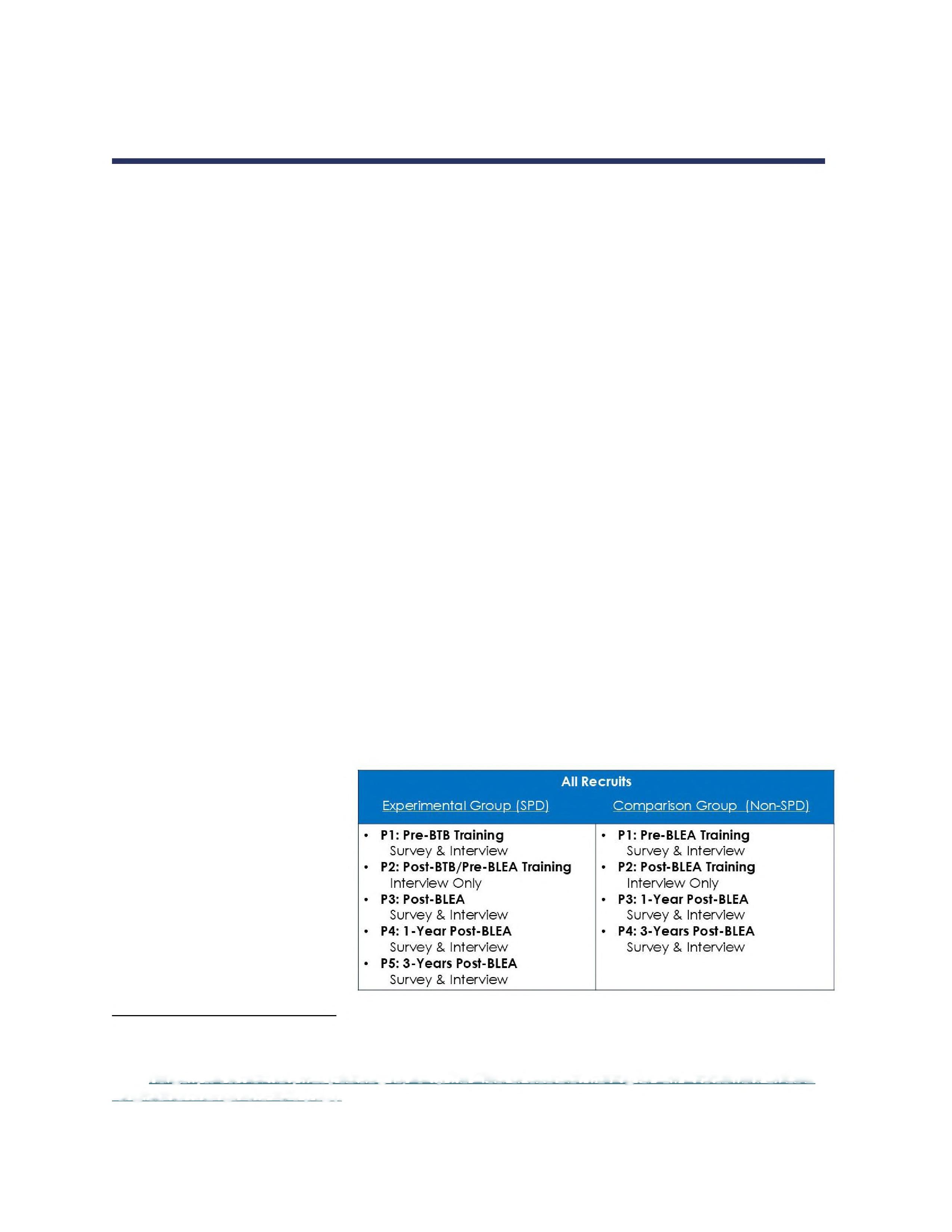
This project seeks to evaluate the effectiveness of SPD’s BTB training program and the impact of the BTB training on recruits over time, post-BTB training, post-BLEA, and 1 and 3 years post-BLEA. The SPD BTB program is a 30-day training experience implemented May 2022 1 The BTB training is required for all new SPD recruits and is completed prior to the start of the 720-hour WSCJTC BLEA. In collaboration with a diverse group of community partners, and under the professional guidance of Seattle-based educators, the BTB curricula provides opportunities for recruits to immerse themselves in “community-based, peer-based, and introspective experiences that will provide them both a lens through which to receive their BLEA training and, reinforced through post-BLEA field training, a foundation upon which to build their careers as Seattle Police Officers” (Seattle Police Department, n.d.) The goal of this research is to conduct a longitudinal evaluation of the SPD BTB training program to generate findings that: 1) Assess program content; 2) Inform program development, and 3) Are actionable for recruitment, retention, and policecommunity engagement.
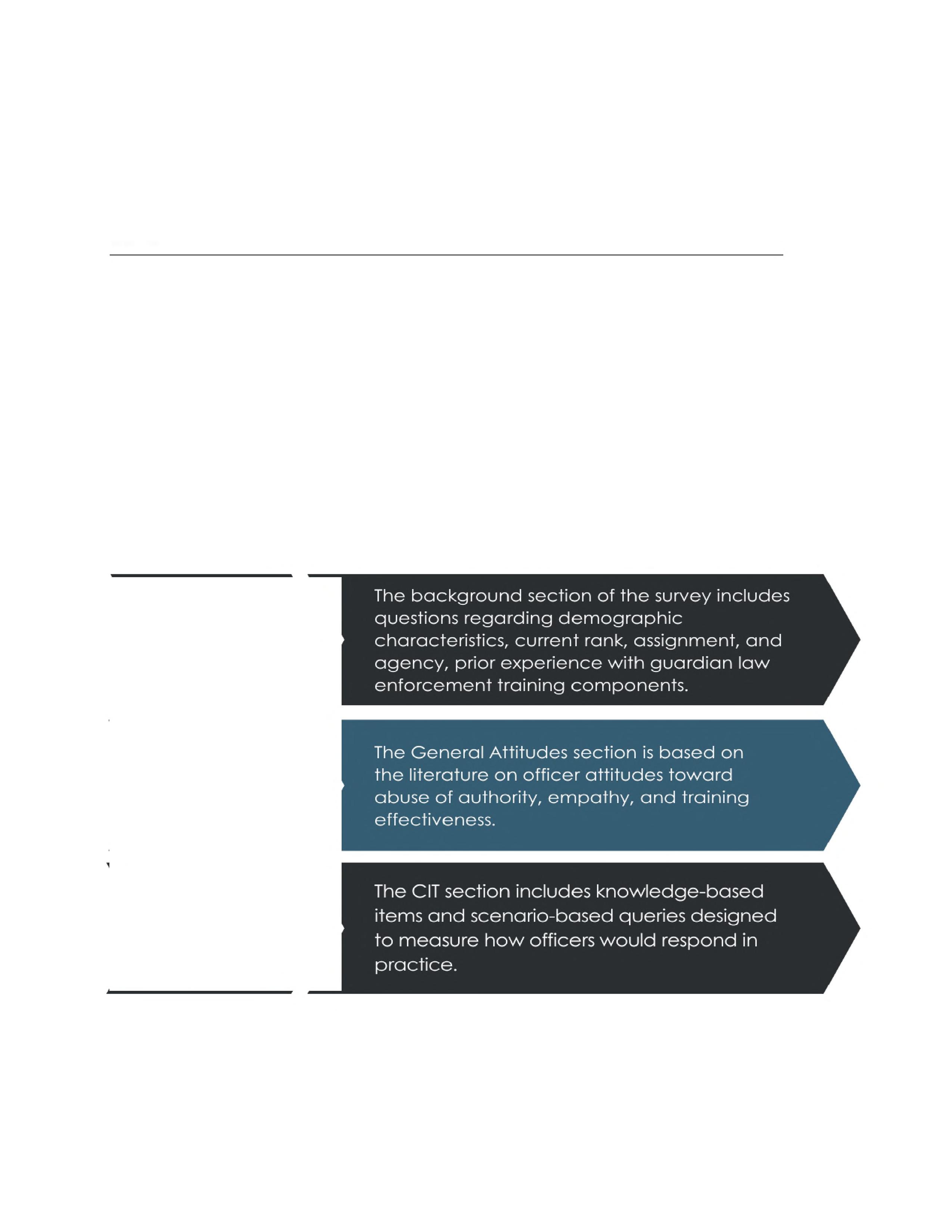
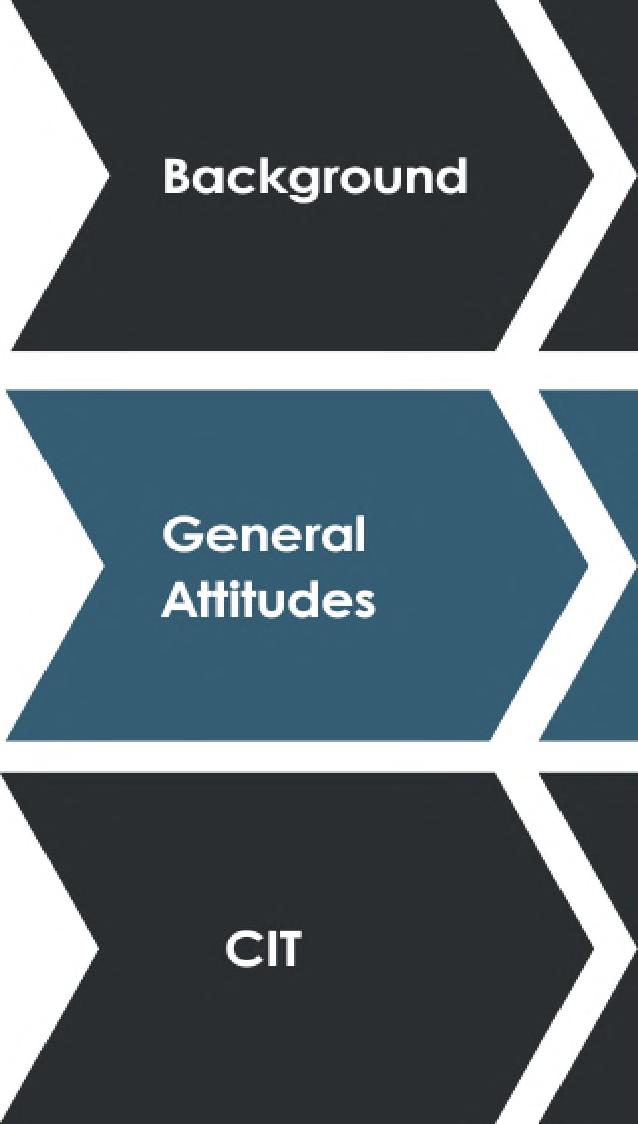
The SPD BTB longitudinal evaluation employs a mixed-method research design. Data are collected at multiple points over a three-year period from surveys and interviews administered to new Seattle Police recruits and a comparison group of WSCJTC recruits from law enforcement agencies across Washington State. Quantitative data is collected through the administration of a survey instrument developed from a prior project evaluating the guardian law enforcement training delivered at WSCJTC BLEA 2 The survey is comprised of three sections: 1) Background, 2) General attitudes, and 3) Crisis Intervention Team Training.
1 The BTB Training Program was originally a 45-day program at the onset of the BTB Training. In 2024, the BTB Training Program was shortened to 30-days to increase efficiency in program content delivery.
2 See: Helfgott, J.B. & Hickman, M.J. (February 10, 2021). The Effect of Guardian Training for Law Enforcement Officers: Longitudinal Findings 2015-2020 (70p.).

Additionally, quantitative and qualitative data are collected through a multi-phase interview process conducted over Zoom.
The SPD BTB training program seeks to provide recruits with community-immersive training that is often shortchanged in lieu of tactical training. The BTB training framework is centered around three primary tenets: 1) Relational Policing, 2) Wellness, and 3) Growth Mindset. The training components that reinforce these tenets consist of opportunities for police-community engagement in the form of police ride-a-longs, community events, interactions with formerly incarcerated individuals, geographical and demographic community-police dialogues, and training modules on topics including systemic racism, de-escalation, and wellness 3
Figure 1. BTB Curriculum
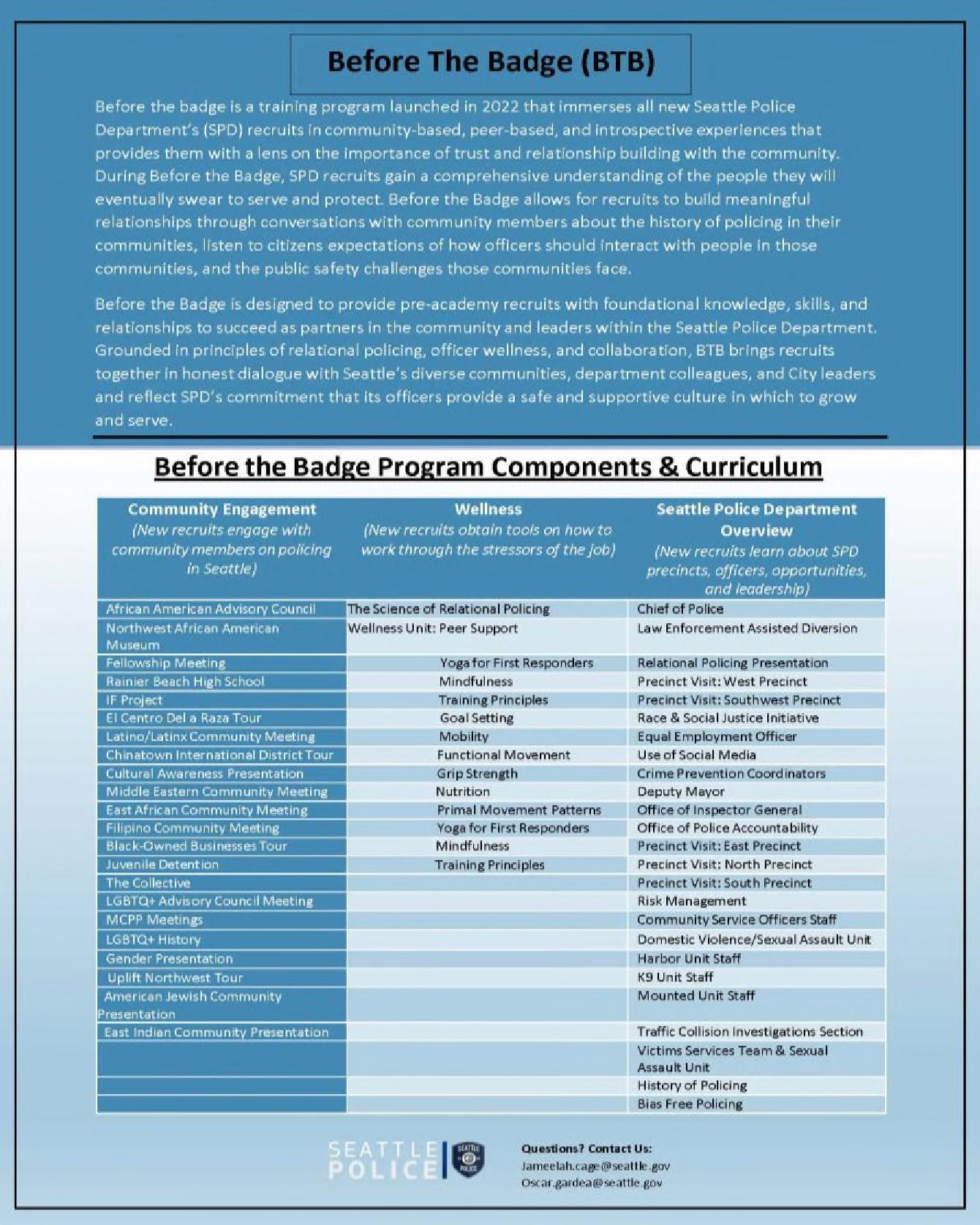
3 The BTB curriculum was revised in 2025 adding additional community engagement (Uplift Northwest Tour, American Jewish Community Presentation, East Indian Community Presentation) and wellness (Yoga for First Responders, Mindfulness, Training Principles) components.

This module is built on the central tenets of relational policing: transparency, honesty, acknowledging mistakes and challenges, and collaboratively identifying areas for improvement and opportunities for growth. Recruits will learn that every encounter is an opportunity to build trust and develop skills to engage respectfully in difficult conversations. The curriculum encompasses a wide range of community engagement activities, including interactions with various advisory councils (African American, LGBTQ+, Latino/Latinx, Middle Eastern, East African, Jewish, East Indian, and Filipino), cultural institutions (Northwest African American Museum, Suquamish Museum), and educational facilities (Rainier Beach High School).
Recruits participate in diverse community experiences including: The IF Project, facility fellowship meetings, cultural awareness presentations, Micro-Community Policing Plans Community-Police Dialogues, and tours of the Chinatown International District and Black-owned businesses. They will engage with communities most impacted by policing, including currently and formerly incarcerated persons, youth in juvenile detention, persons who have experienced violence, immigrant and refugee communities, local business communities, and students.
Paired with Community Service Officers or members of the Collaborative Policing Bureau, recruits will walk beats in each of the precincts, meet with demographic and precinct advisory councils, participate in volunteer opportunities, and learn about expectations, priorities, and challenges that may be unique to each precinct. This hands-on approach includes participation in Micro-Community Policing Plan (MCPP) meetings and engagement with the LGBTQ+ community through dedicated meetings and history lessons.
The module also covers topics relating to the history of policing in America and Seattle, as well as learning about brain development and the impact of childhood trauma, poverty, addiction, and other societal stressors on many with whom officers will come into contact. Through these varied interactions and learning experiences, recruits are prepared to serve Seattle's diverse communities with understanding and respect (Seattle Police Department, n.d.).
This module includes training on the neurophysiology of stress, identifying early warning signs, and tools to build resilience. Using tools such as the enneagram, recruits will learn about their own personality types and gain an understanding as to how their own experiences may shape how they perceive and react to others. The curriculum encompasses a comprehensive approach to officer well-being, including the science of relational policing, growth mindset, and outward mindset. Through the Wellness Unit's Peer Support program, recruits will be introduced to various practices such as yoga for first responders, mindfulness, functional movement, and nutrition. Recruits will also learn about Active Bystander for Law Enforcement training, equipping them with skills to intervene with themselves and others before their behavior may take them down a negative path. To ease their transition into the department and the law enforcement profession, recruits will be paired with volunteer "mentor" officers, fostering a supportive environment for their personal and professional growth (Seattle Police Department, n.d.).
In this module, recruits are introduced to the administration and structure of the SPD and others in the public safety system. Recruits will meet members of both sworn and civilian command,

including the Chief of Police and Deputy Mayor, and will learn about different units within the department such as the Domestic Violence/Sexual Assault Unit, Harbor Unit, K9 Unit, Mounted Unit, and Traffic Collision Investigations Section. They will have opportunities for ride-alongs and visits to each of the precincts (West, Southwest, East, North, and South). Recruits will hear from public safety partners and learn about various initiatives and departments, including the Office of Police Accountability, Law Enforcement Assisted Diversion, Race & Social Justice Initiative, Office of Inspector General, Office of Police Accountability, and Community Service Officers. The curriculum also covers topics such as the history of policing, bias-free policing, and the use of social media. Particularly as public safety is re-examined, the goal of this module is to provide a welcome to the department and a baseline understanding of recruits' roles in a more holistic model of public safety in Seattle, emphasizing aspects like risk management, victim services, and community-oriented policing strategies.
Participants were Seattle Police recruits and recruits from other agencies in Washington State who volunteered to participate in the study. The findings in the Year 3 Report include quantitative results collected from surveys and qualitative data from interviews with Seattle Police recruits and recruits from other agencies enrolled in WSCJTC BLEA from September 01, 2022, through December 1, 2025, beginning with BLEA cohort 851 through 928. Results are drawn from 315 pre-training surveys (218 SPD BTB and 97 non-SPD recruits), 73 post-training surveys (48 SPD BTB and 25 non-SPD recruits), and qualitative data from participants who completed interviews at pre/post/1-year - pre-training interview data from 247 recruits (209 SPD and 38 nonSPD), post-BTB training interview data from 78 SPD recruits, post-BLEA interview data from 46 SPD recruits and 19 non-SPD recruits, and 1-Year Post-BLEA interview data from 6 SPD recruits and 9 non-SPD recruits.
The study began on September 1, 2022, with data collected from initial pre-training interviews with new recruits through August 31, 2025. This three-year recruitment window for data collection follows each cohort of recruits for three years, creating a total project span of six years. Pre-BTB and pre-BLEA interviews and surveys concluded on August 31, 2025, follow-up interviews and surveys will continue through August 31, 2028, with a final project report scheduled for December 31, 2028.
The following sections provide an overview of the procedure for data collection P1 as it corresponds to the analyses conducted thus far. See Appendix C for the procedure.
Researchers were provided with email contact information for all SPD-BTB (treatment) from the Seattle Police Department and Non-SPD (comparison) recruits from WSCJTC administrative staff before the recruits entered training (BTB training for SPD recruits and BLEA for non-SPD recruits).

Upon receiving recruit contact information, an individualized introductory email was distributed to all recruits inviting them to participate in the study (see Appendix D for email templates for all outreach solicitation points). Individual identifiers (first/last names, WSCJTC BLEA cohort # and emails) were necessary for the purpose of matching longitudinal data. However, individual identifiers are not presented in the results. In the introductory email to recruits, the purpose of the project was explained with an attachment outlining the study's consent process (Appendix E) for participation. Data collection methods (i.e., surveys and interviews at multiple stages) were explained with a direct link to the online survey. Standing interview dates/times were provided to schedule the initial 30-minute interview prior to training start date. Those interested in participating were prompted to reply to the email disclosing their availability within the provided timeframe. Once an interview date/time was established, a calendar invite was sent to recruit volunteers via email with a corresponding Zoom link. All invitations included a $10 digital Starbucks gift card offered as part of the invitation to participate as a welcome gesture, regardless of whether the recruit chooses to participate in the study.
At the beginning of each recruit's scheduled interview, researchers introduced themselves and explained the purpose of the study with consent requirements for participation. Upon receiving verbal consent from the participant, researchers initiated the interview, recorded the session, and asked the 10 pre-training interview questions tailored specifically to SPD- BTB and Non-SPD recruits. Following the completion of the interview, participants are provided with the opportunity to ask questions and prompted to complete the corresponding survey (if not already completed) prior to their training start date. All interviews were conducted by the Principal Investigator or co-investigator with a student research assistant serving as note-taker.
Following the initial interview, those interested in participating are prompted to reply to the email, letting them know their availability within the timeframe. This was done by coordinating with the training entities (i.e., the BLEA training administrators and BTB staff) to compile a recruit cohort list used to contact recruits at their current stage in their training— post-BTB, pre-BLEA, and post-BLEA. These initial contacts are via email and are preferably sent out within five days of recruits approaching their next training threshold. Recruits that elect to continue participating undergo subsequent interviews.
The data collected for each interview was uploaded onto a secure digital storage system accessible only by the research team. All interview related content is archived into individualized folders based on whether the individual is an SPD-BTB or Non-SPD recruit. An Excel spreadsheet is maintained by research analysts tracking each participant's training trajectory and each cohort's 1-year and 3-year post graduation dates.
Video interviews were transcribed and edited using Descript—an AI-powered audio and video editing software. Transcribed interviews were uploaded into ATLAS.ti, analyzed identifying themes using an interpretivist phenomenology approach (Saksikumar, 2021) and visualized through various graphics including word clouds, word trees and the base of other graphics created in ATLAS.ti and Canva 4
The longitudinal evaluation employs a mixed-method research design comprised of quantitative and qualitative data collection over a three-year period from entry into the SPD BTB training
4 Descript is an AI-powered video and audio editing software: https://web.descript.com/. ATLAS.ti is qualitative data analysis software: https://atlasti.com/ . Canva is an online visual content design tool: https://www.canva.com/.
(SPD recruits) and entry into BLEA (non-SPD recruits). Quantitative data presented in this report was collected through a survey instrument previously used to measure guardian components of law enforcement training at the WSCJTC BLEA and a structured interview guides created specifically for this study for initial and follow-up data collection over the three-year longitudinal data collection period.
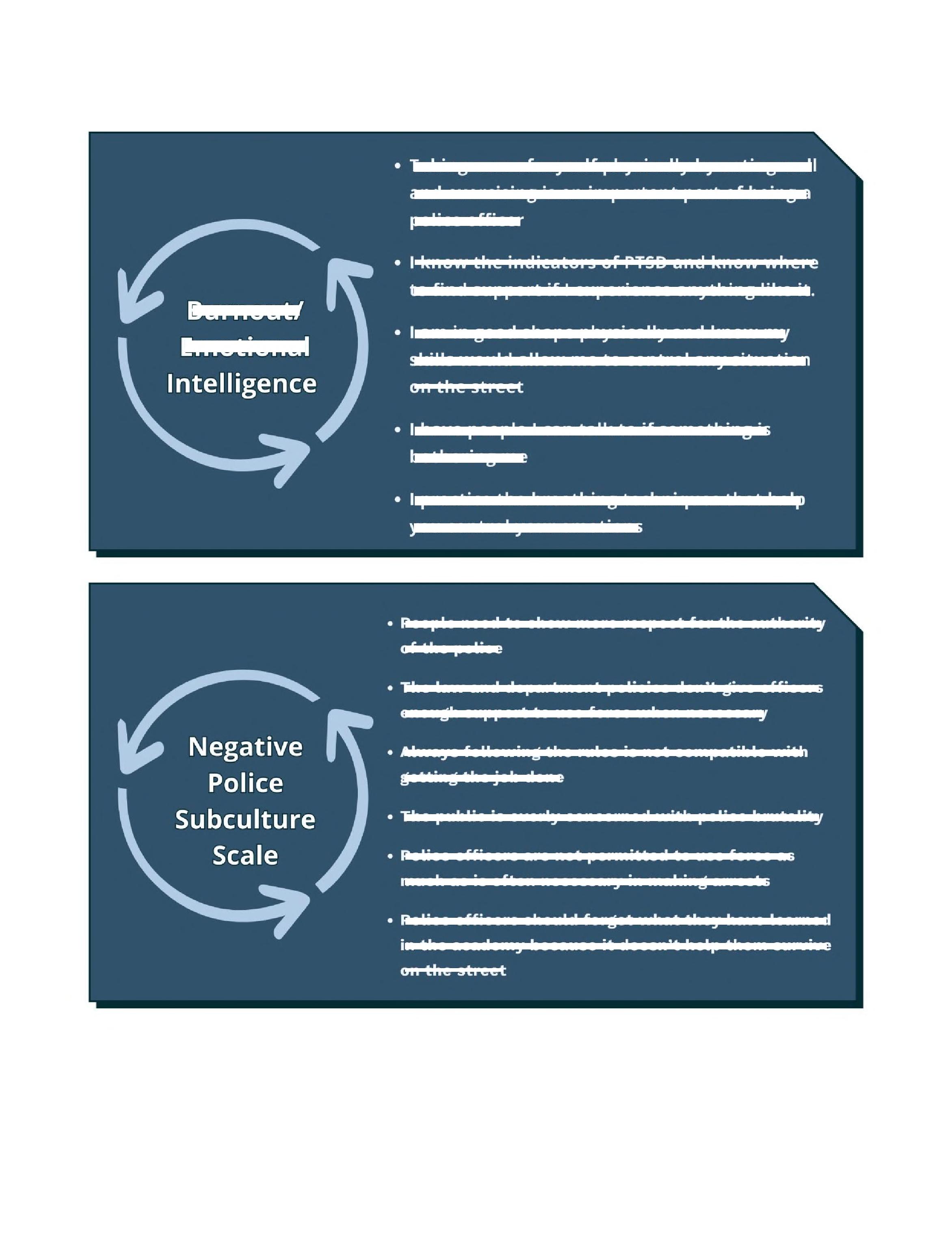
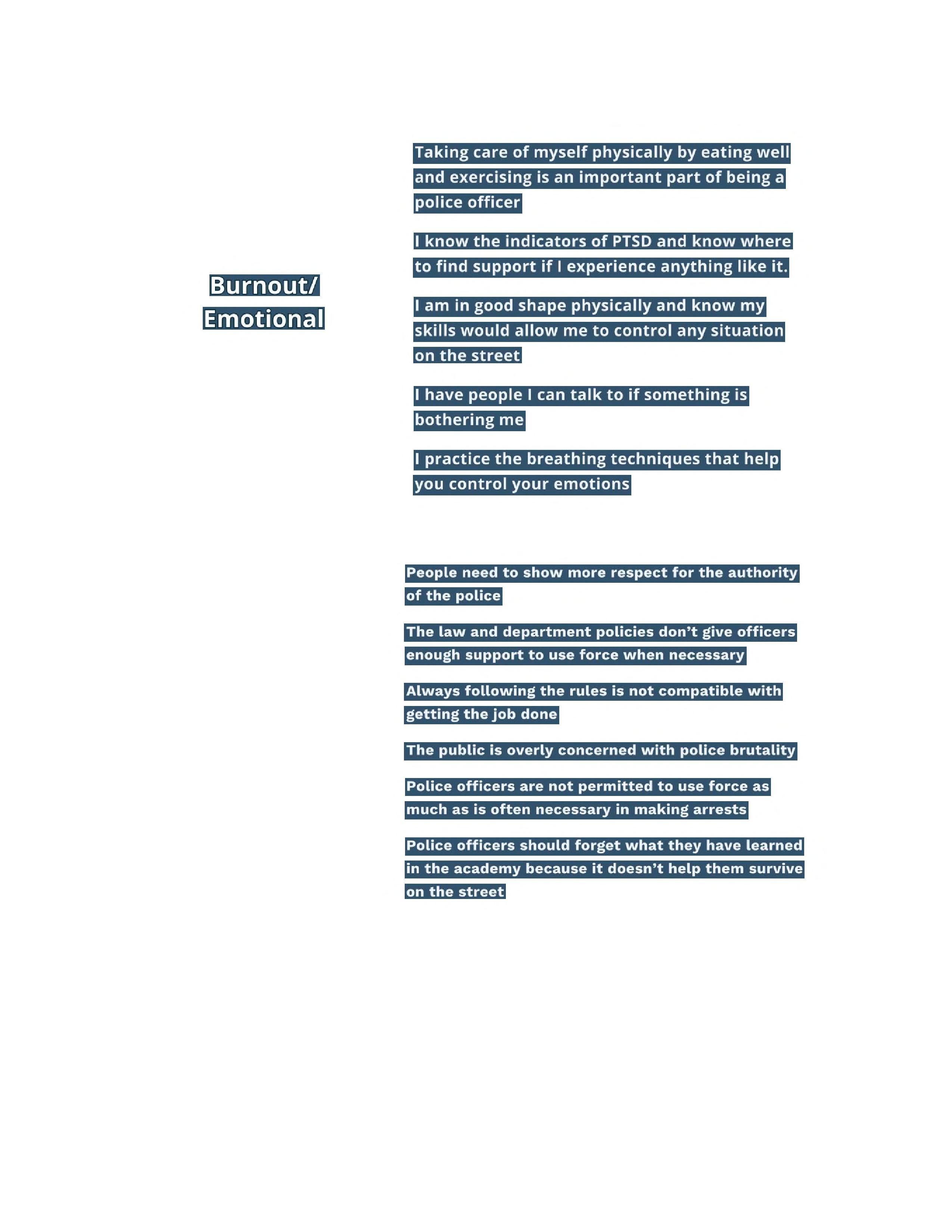
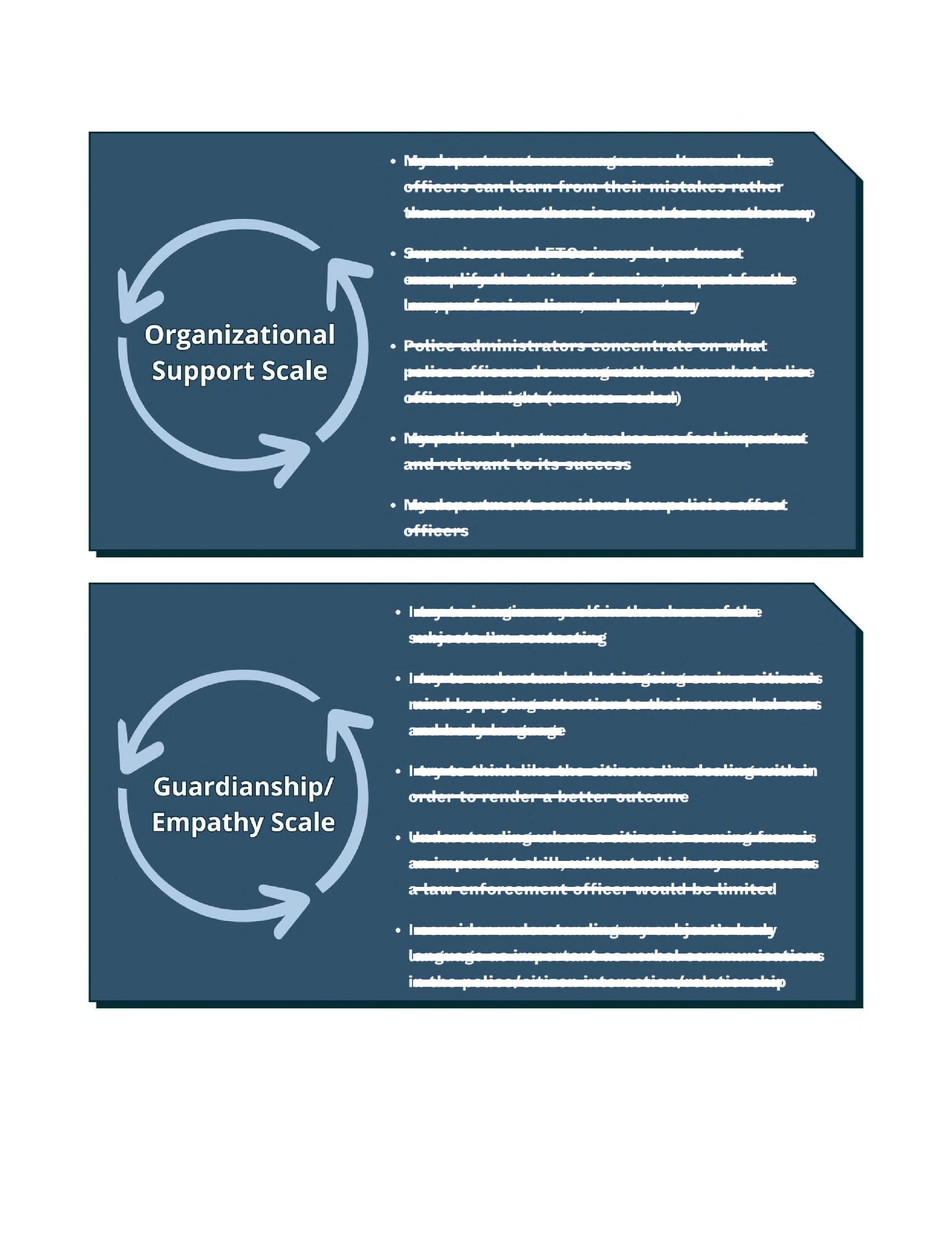
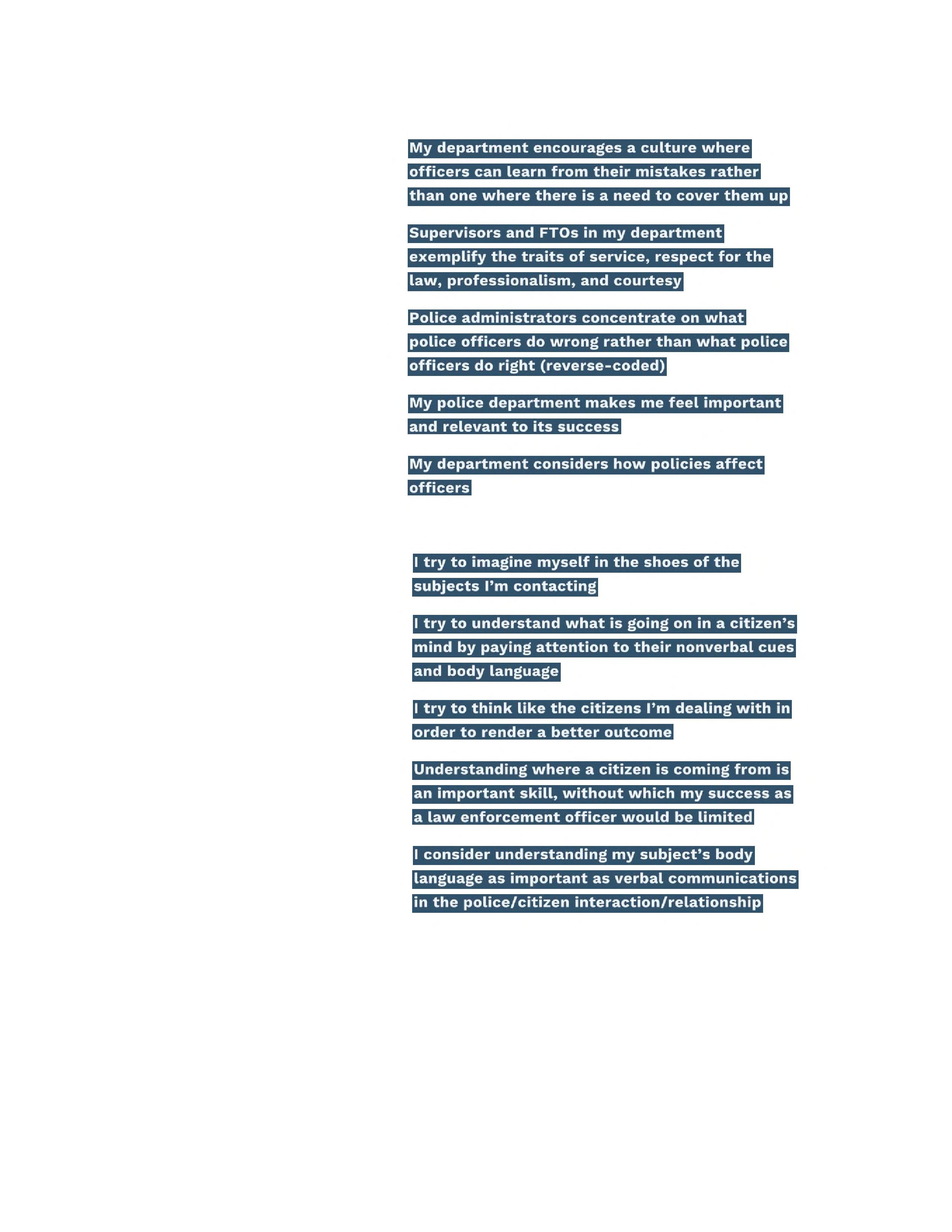
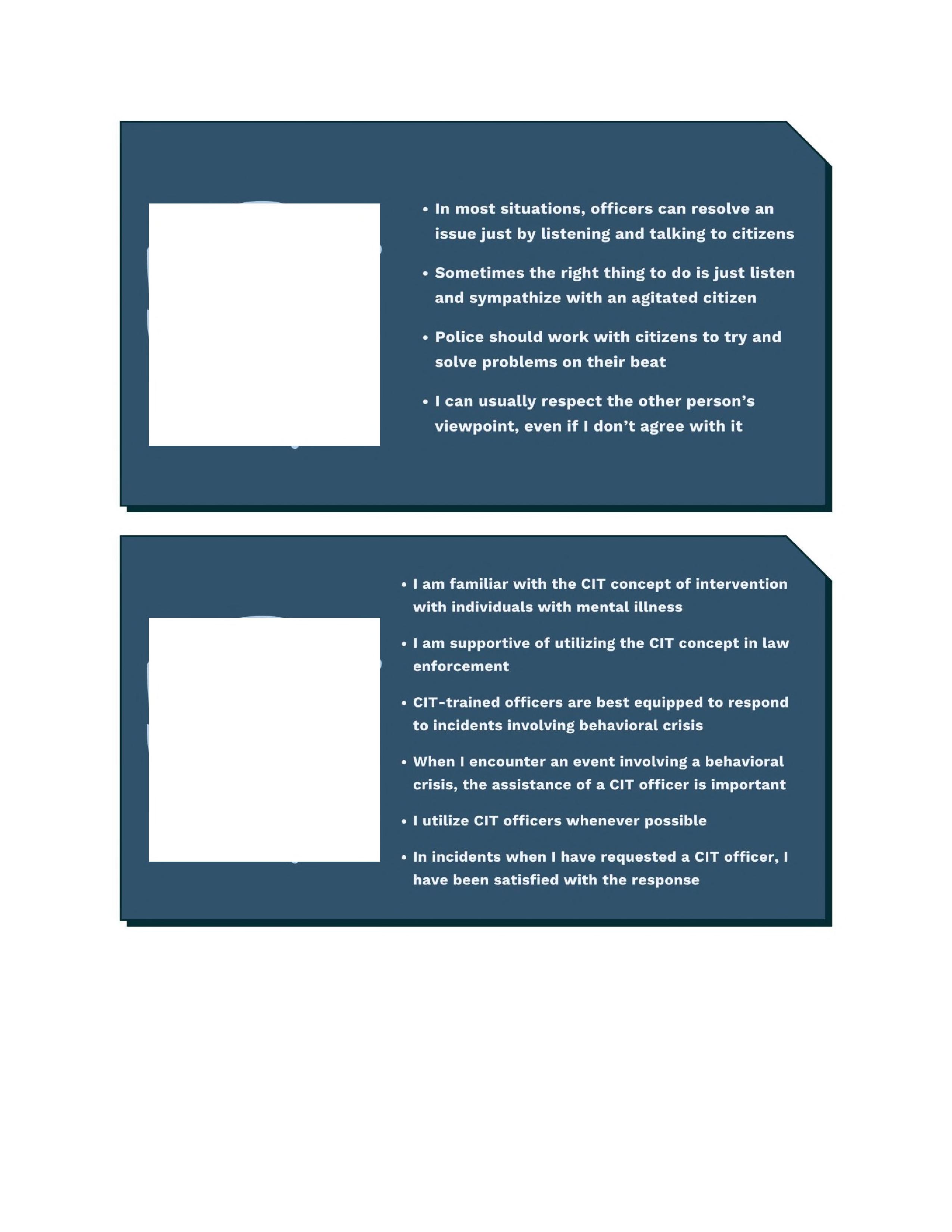
The survey instrument was created for a prior longitudinal evaluation conducted at the WSCJTC (Helfgott et al., 2017, 2018, 2019, 2021, 2022) (See Appendix A). The instrument is comprised of three sections: 1) Background, 2) General attitudes, and 3) Crisis Intervention Team Training designed to measure guardian components of law enforcement training through scales comprised of question sets to measure “Burnout/Emotional Intelligence, “Negative Police Subculture,” “Organizational Support,” “Guardianship/Empathy,” “Guardianship/Respect,” “CIT Support,” “CIT Organizational Value.” The General Attitude portion of the survey is based on the literature on officer attitudes toward abuse of authority Weisburd & Greenspan, 2000; Weisburd, Greenspan, Hamilton, Bryant & Williams, 2001), empathy, and training effectiveness (Kirkpatrick, 1967; Dionne, 1996; Hung, 2010; Phillips, 1997; Smidt, Balandin, Sigafoos & Reed, 2009). The CIT portion of the survey was adapted from a prior project that measured the effect of CIT training for the Seattle Police Department (Helfgott, Conn-Johnson, & Wood, 2015). The survey is administered to SPD BTB recruits pre/post BTB training, post-BLEA, and 1-Year and 3-Years postBLEA. The survey is administered to the non-SPD recruits pre/post, 1-Year, and 3-Years post-BLEA.
The interview guides for data collection P1 are comprised of 6 components: 1) Personal and professional background, 2) Motivations for pursuing a career in law enforcement, 3) Expectations for training, 4) Goals for their career in law enforcement, 5) Most important skill for a law enforcement officer to possess, and 6) Understanding the concept of “guardian policing.” P2 consists of SPD recruits’ feedback from the Before the Badge training. Focusing on 3 components: 1) Personal experience of training and BTB training, 2) Biggest and most important takeaways from BTB training, and 3) Recommendations for improving the BTB curriculum. P3 compares recruits' experiences post-BLEA, seeking to identify the effectiveness of BTB training on SPD recruits compared to the WSCJTC control group. P3 consists of 4 main components: 1) Level of satisfaction that WSCJTC BLEA has prepared recruits for their position in LE, 2) Whether SPD BTB training complemented WSCJTC BLEA, 3) Most important training component learned in SPD BTB that has prepared them to date, 4) Understanding the concept of “guardian policing.”
The interview guides for the initial pre-training (Pre-BTB and Pre-BLEA) and follow-up (Post-BTB and Post-BLEA, 1-Year Post-BLEA, and 3-Year Post-BLEA) interviews are included in Appendix B.
The results presented in the sections below show the demographic characteristics of the recruits who completed the initial survey administered prior to training. Tables 1-6 show the responses for the SPD BTB recruits and the non-SPD recruits who participated in the pre-survey administered to SPD recruits prior to entering BTB training and non-SPD recruits prior to entering BLEA.
Table 1 presents demographic characteristics for all pre-survey respondents (n = 315) as well as the subgroups of SPD BTB recruitss (n = 218) and other recruitss (n = 97). Overall, the respondents are majority Male (82.9%), Caucasian (50.8%), and nearly 6 in 10 held a college degree of some type (56.6%). The average age was 30 years old, and they reported an average of about 1 year of law enforcement experience.
Table 1. Pre-Survey respondent demographic information (as of December 1, 2025) Demographic Variables

Although most recruits identified as Male (82.9%), the proportion was higher in the SPD BTB group (87.2%) as compared to the other recruits (73.2%), and this difference was statistically significant, z = 3.046, p = .002. In addition, the percentage of recruits who identified as Caucasian was lower in the SPD BTB group (45.4%) as compared to the other recruits (62.9%), and this difference was statistically significant, z = -2.868, p = .004. The percentage of recruits holding a college degree of some type was lower in the BTB group (49.1%) as compared to the other recruits (73.2%), and this difference was statistically significant, z = -3.983, p < .001. Finally, the SPD BTB group had a lower average number of years in law enforcement (0.4 years) as compared to the other recruits (1.5 years), and this difference was statistically significant, t(111.202) = -3.241, p = .002.
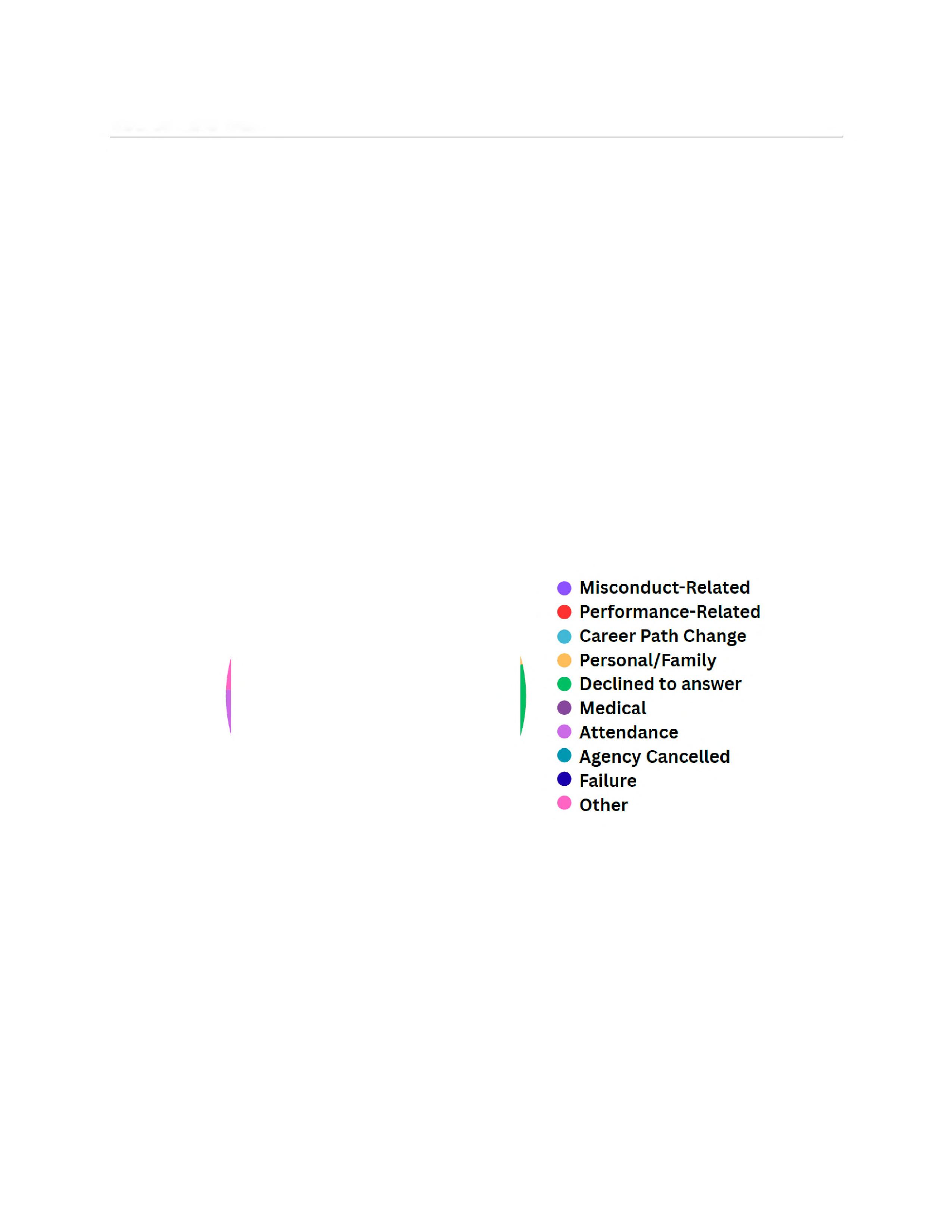
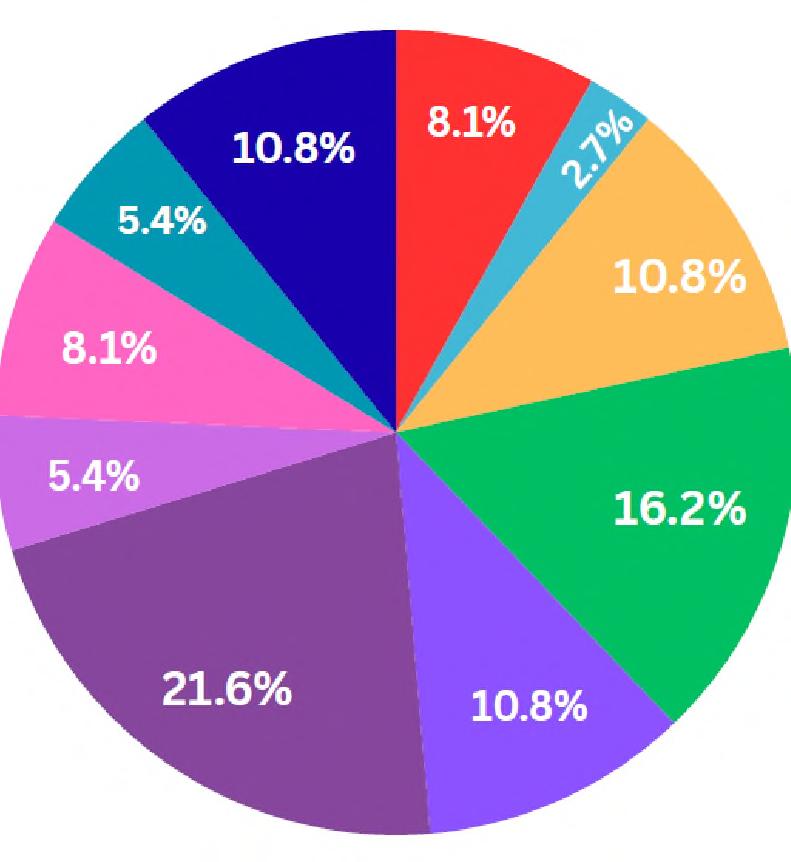
Analysis of recruit separations during this study reveals distinct patterns that vary between SPD and non-SPD recruits. According to WSCJTC and SPD data, between September 1, 2022, and November 30, 2025, 228 recruits separated from their respective agencies. Seattle Police Department saw 37 separations during this time (See Figure 2, Recruit Retention- SPD). The most common reasoning being temporary medical departures (21.6% or 8 departures). WSCJTC data classifies this group as “Returning,” and includes those who have sustained an injury on or off duty that has caused or will cause them to miss more than the maximum number of hours allowed. With 6 separations, the second largest group was those who did not provide a reason for their departure (16.2%). Misconduct-related, failure-related, and personal circumstance separations were the next largest groups, each containing four separations (10.8%). Misconductrelation separations included investigations and failure to comply with departmental policies; failure departures included recruits who failed tests in the academy and were terminated. Personal circumstances included family obligations and mental health. Performance-related separations and all other reasons had three recruits each (8.1%). At 5.4%, separations due to attendance issues and agency cancellations were the second smallest groups with two recruits each. The smallest reason for separation was 1 career-change departure (2.7%). The career path change included a recruit returning to higher education to switch fields.
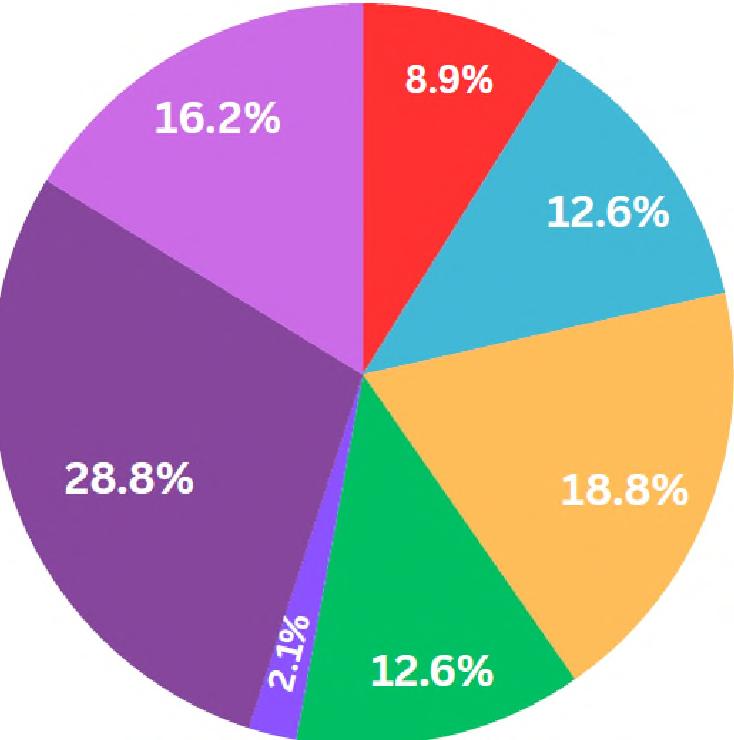
Regarding the non-SPD date provided by WSCJTC, there are few nuances in the spectrum of separation reasons (See Figure 3. Recruit Retention- Non-SPD). 55 separations are categorized as “other,” which makes it the largest group at 28.8%. The second largest group for non-SPD agencies is agency cancellations with 36 separations (18.8%). What constitutes an agency cancellation is when a police department pulls a recruit from BLEA training often due to termination or separation from the agency. With 31 separations, medical-related reasons account for the third largest group in the data (16.2%). All but two of these departures have certain return dates. Suspensions/misconduct-related separations and failure-related separations come in fourth with 24 recruits in each group (12.6%). Suspensions include emergency suspensions and “for cause” suspensions, while the failures included failing firearms tests, mock scene tests, and other written exams. Personal-related departures make up the fifth largest group with 17 recruits (8.9%). Personal reasons include self-confidence in one’s ability to
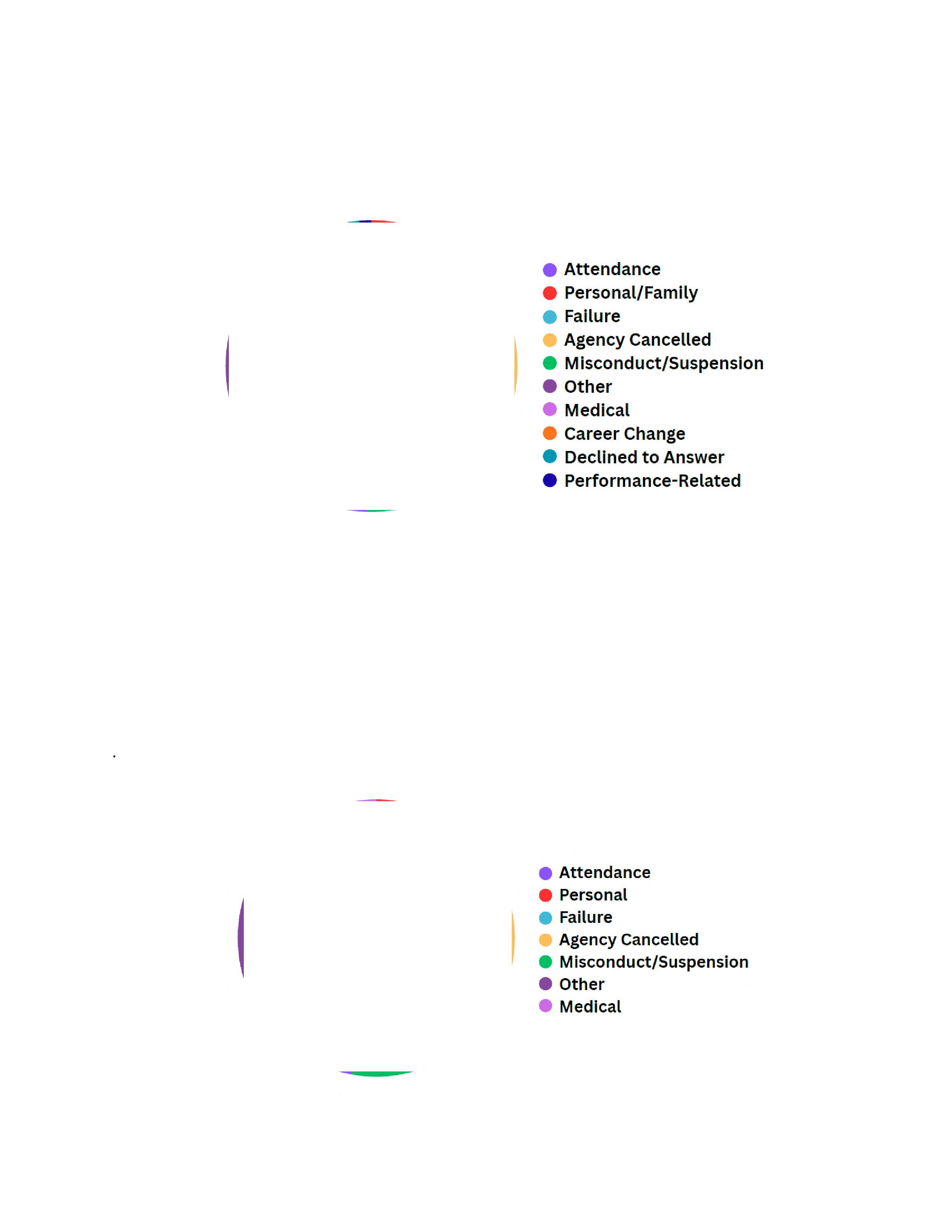
carry out police work and safety concerns. The smallest category, with just 4 cited cases, was attendance at 2.1%.
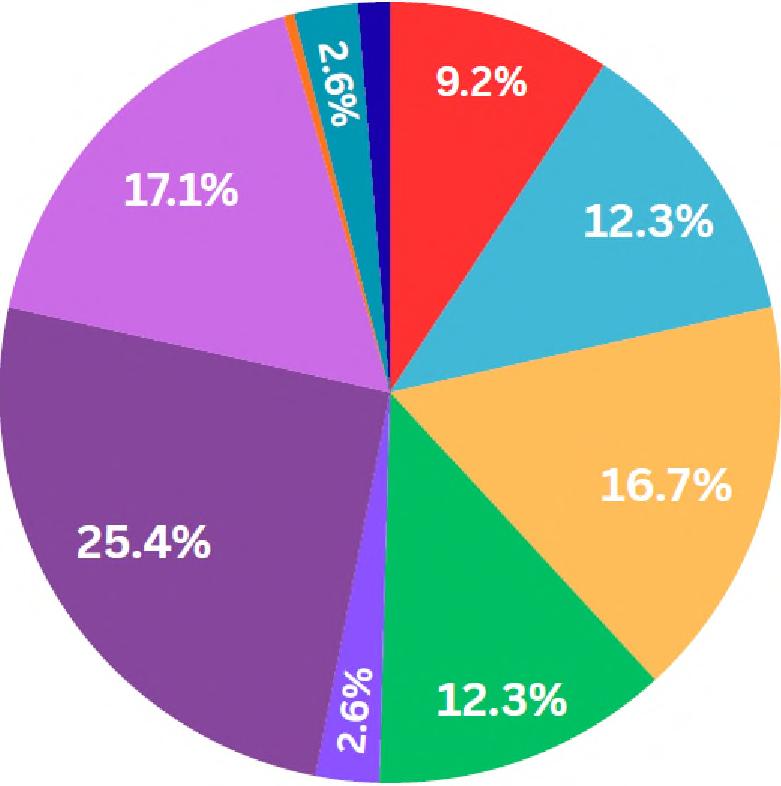
When looking at the overall recruit retention data, reasons for separation are mostly evenly distributed, though some have few real cases (See Figure 4. Recruit Retention- All). Combining both SPD retention and non-SPD retention, the following patterns emerge in order from most popular to least popular reason: Other (58; 25.4%), Medical (39; 17.1%), Agency Cancellation (38; 16.7%), Failure (28; 12.3%), Misconduct/Suspension (28; 12.3%), Personal/Family (21; 9.2%), Declined to answer (6; 2.6%), Attendance (6; 2.6%), Performance-Related (3; 1.3%), and Career Change (1; 0.4%). Some reasons are more favored than others, such as medical departures and agency cancellations, and others are quoted far and few, such as career changes and attendance. Nevertheless, these findings highlight the importance of both performance support systems during training process and the need to ensure proper job fit during recruitment and early training phases.
Components
Table 2 presents mean scores for the various attitudinal scales for all pre-survey respondents as well as the subgroups of SPD BTB recruits and other recruits. Sample sizes vary based upon scale item completeness. Statistically significant differences were noted in the average scores for the Negative Police Subculture, Organizational Support, and Guardianship – Respect scales. Specifically, the SPD BTB recruits had a lower average score on the Negative Police Subculture scale (30.0 vs. 37.0), t(133) = -2.311, p = .022, and the Organizational Support scale (70.5 vs. 78.1), t(180.510) = -3.670, p < .001, but a higher average score on the Guardianship – Respect scale (87.6 vs. 84.2), t(290) = 2.131, p = .034, as compared to the other recruits.
Table 2. Attitudinal scale scores
Scales

Table 3 presents responses to survey items related to incidents involving behavioral crisis. Samples sizes vary based upon item responsiveness. SPD BTB recruits had a lower average level of agreement with the second item (“Calls involving persons who are experiencing behavioral crisis are dangerous,” 58.1 vs. 66.6), t(275) = -2.902, p = .004, as compared to the other recruits.
Table 3. Response to incidents involving behavioral crisis
Items
Incidents involving individuals in behavioral
Calls involving persons who are experiencing behavioral crisis are dangerous.
I am confident in my ability to handle calls involving persons in behavioral crisis.
I feel recognition and respect from the department for my skills in de-escalating behavioral
My training indicates that it is

important to resolve incidents involving persons in a behavioral crisis quickly.
Most supervisors expect patrol officers to resolve incidents involving persons in a behavioral crisis quickly.
My agency expects officers to resolve incidents involving persons in a behavioral crisis quickly.
Tables 4-6 show recruit responses to scenario questions regarding incidents involving behavioral crisis. On Scenario 1 (Table 4), results show no statistical difference between the samples of recruits on all items except the item asking recruits how they would respond to Mr. N. SPD recruits had a higher level of agreement with the eighth response item to Scenario 1 (“In speaking with Mr. N, it would be best not to ask him very directly if he was having thoughts about killing himself,” 59.7 vs. 46.7), t(214) = 2.344, p = .020, as compared to the other recruits.
On Scenario 2 (Table 5), SPD recruits had a higher level of agreement with the sixth response item (“In speaking with Ms. S, it is best practice if both you and your partner engage in conversation with her,” 60.5 vs. 47.9), t(92.419) = 2.221, p = .029, as compared to the other recruits.
On Scenario 3 (Table 6), results show no statistical difference between the samples of recruits on all items.
Table 4. Responses to Scenario 1
You are dispatched to a residence with the following information. Mr. N is a 30-year-old male. His wife states that he has locked himself in the garage and won't come out. Mr. N's wife called the police because she does not know what he is going to do in there and she is concerned for his well-being. Mr. N has a collection of guns that he uses for hunting which are stored in the garage. The wife states that Mr. N has been feeling unusually sad and miserable for the past few months. Even though he is tired all the time, he has had great difficulty sleeping. He hasn't been eating much and has lost weight. He couldn't keep his mind on his work and put off doing important client projects and as a result he was let go from his job today. The wife states she has also just discovered he hasn't been paying household bills and she found a pile of collection letters and foreclosure warnings in his office.
Items
Mr. N is exhibiting symptoms most associated with Dementia or Alzheimer's.
Mr. N is exhibiting symptoms most associated with Depression.
Mr. N is exhibiting symptoms most associated with Schizophrenia.
You determine there is no increased risk that Mr. N might attempt suicide.
You determine that there is an increased risk that Mr. N might become aggressive and potentially attempt suicide-bycop.

Your first priority upon arriving would be to gain entry to the garage in order to secure any weapons and to restrain Mr. N for his own safety.
Your first priority would be to attempt to engage with Mr. N through the garage door to assess the situation and his current mental state.
In speaking with Mr. N, it would be best not to ask him very directly if he was having thoughts about killing himself.
You would attempt to get Mr. N to open to door and step outside the garage so you can talk face to face.
Once you assess that Mr. N is not in imminent danger of self-harm, you give him the number for the Crisis Clinic 24 hour Crisis Line and suggest that it might be helpful for him to talk to someone.
Table 5. Responses to Scenario 2
You and a partner are dispatched to an apartment residence with the following information. Building manager has called the police because tenant Ms. S, age 23 has been throwing things against the walls and will not answer the door. Upon arrival at the building, you contact the manager who informs you that Ms. S lives alone and is unemployed. Over the past several months, she has rarely been seen other than to occasionally look out her door. It is apparent that she has lost considerable weight and her appearance is disheveled and unclean. She rarely seems to go anywhere or see anyone. Neighbors have been complaining because they hear her walking around her room late at night and even though they know she is alone, they have heard her shouting and arguing as if someone else is in there. She has been heard yelling about people spying on her through the vents. The manager does not want her arrested, just wants her to quiet down.
Items
Ms. S is exhibiting symptoms most associated with PostTraumatic Stress Disorder (PTSD).
Ms. S is exhibiting symptoms most associated with Depression.
Ms. S is exhibiting symptoms most associated with Schizophrenia.
The voices Ms. S hears in her head suggest she is experiencing hallucinations.
Ms. S's belief that people are spying on her through the air vents suggest she is experiencing delusions.
In speaking with Ms. S, it is best practice if both you and your

partner engage in conversation with her.
In speaking with Ms. S, you should keep a safe distance, physically and emotionally, keeping a blade stance and informing her what you are doing there and why.
If Ms. S asks you if you hear the voices you should say yes in order to build a rapport with her.
Paraphrasing what Ms. S is saying back to her may help deescalate the situation
You determine that Ms. S is not an imminent danger to herself or others and call the Mobile Crisis Team (MCT) to respond to do a mental health evaluation.
Table 6. Responses to Scenario 3
You are dispatched to a residence with the following information. Mr. B is an 88-year-old male who has called police to report that his home has been burglarized. When you arrive at the residence, Mr. B lets you in and you can't help but notice that his clothing is stained and smells of urine. Walking through the kitchen you see spoiled food on the counter and there are numerous empty alcohol bottles and broken glass on the floor and the gas stove burner is on. The living room is cluttered with piles of papers. It seems evident that there is no one else living there. When you ask Mr. B what was stolen from his home, he grows confused and says nothing was stolen and asks why would anything be stolen. You tell him that you are at his house because he called to report a burglary, however he denies doing this.
All respondents (n = 315)

Items
Mr. B is exhibiting symptoms most associated with Post-Traumatic Stress Disorder (PTSD).
Mr. B is exhibiting symptoms most associated with Dementia or Alzheimer's.
Mr. B is exhibiting symptoms most associated with Schizophrenia.
You ask Mr. B if you can sit down and ask permission before moving any items.
You engage Mr. B in conversation, asking short questions to ascertain if he is oriented to time, place, and person.
Paraphrasing Mr. B's statements helps to confirm that you understand them.
You determine that most likely there has been no burglary and you close the case and leave.
You determine that most likely there has been no burglary and you arrest Mr. B for filing a false police report.
You determine that most likely there has been no burglary but Mr. B may need some outside help. You ask him if there is a friend or family member you can call for him.
You call the Geriatric Regional Assessment Team (GRAT) or the Mobile Crisis Team (MCT) to see if they are available to do an evaluation.
The results presented in the sections below show responses for the SPD BTB recruits and the nonSPD recruits who participated in the post-BLEA survey administered to SPD recruits after graduation from BLEA.
Table 7 presents demographic characteristics for all post-survey respondents (n = 73) as well as the subgroups of SPD BTB recruits (n = 48) and other recruits (n = 25). Overall, the respondents are majority Male (87.7%), Caucasian (54.2%), and about 3 in 4 held a college degree of some type (75.4%). The average age was 33 years old, and they reported an average of1.5 years of law enforcement experience.
While most of the post-survey respondents identified as Male (87.7%), the proportion was higher in the SPD BTB group (93.8%) as compared to the other recruits (76.0%), and this difference was statistically significant, z = 2.198, p = .028. In addition, the SPD BTB group had a lower average number of years in law enforcement (0.8 years) as compared to the other recruits (2.8 years), and this difference was statistically significant, t(27.033) = -2.140, p = .042.
Table 7. Post-Survey respondent demographic information (as of December 1, 2025)
Demographic Variables

Age – mean (sd), n
(9.2), 73 33.8 (9.4), 48
(8.9), 25 Years in LE – mean (sd), n
(3.2), 71 0.8 (1.6), 46 2.8 (4.7), 25
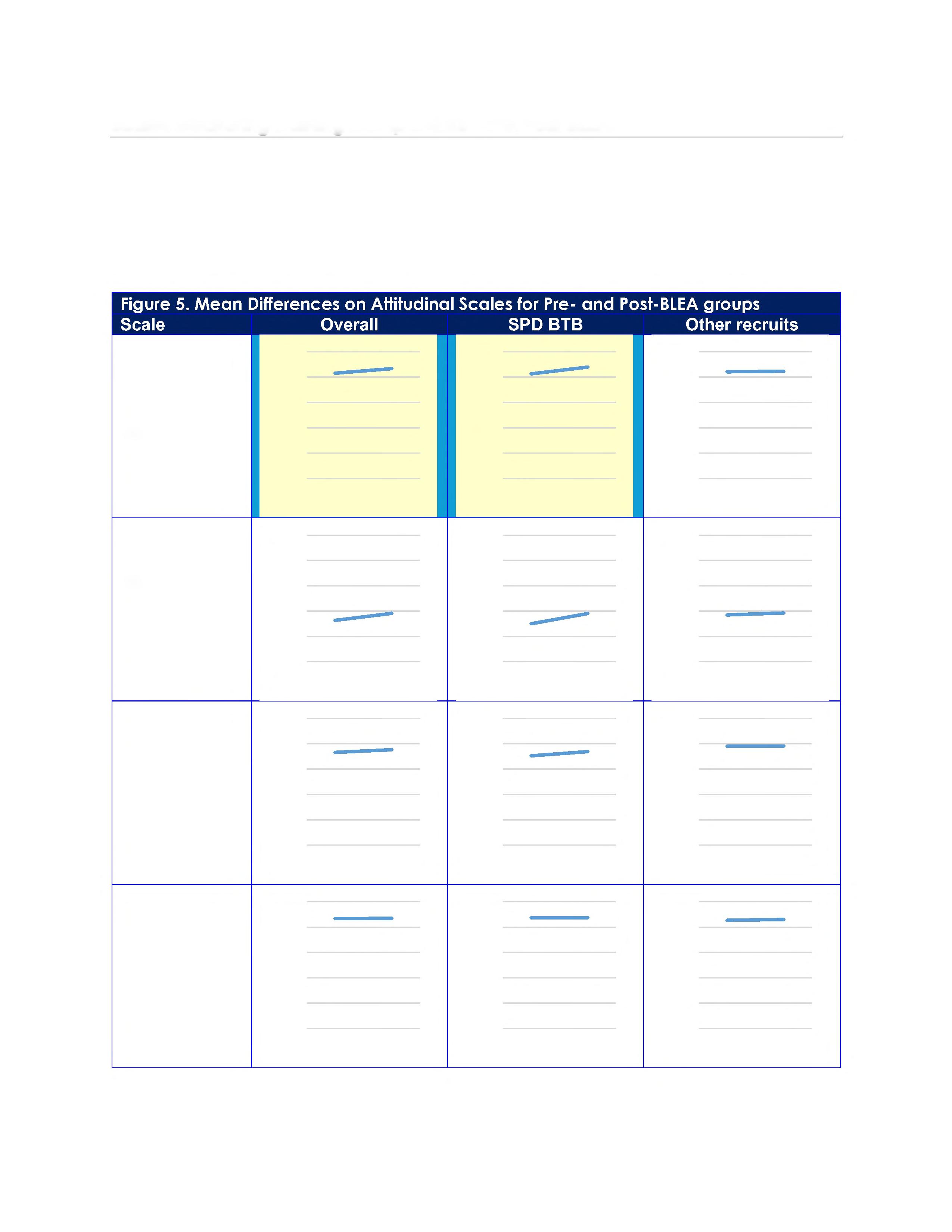
Figure 5 displays the average scores on all attitudinal scales at pre- and post-BLEA measurement (cross-sectionally), for (1) all recruits, (2) SPD BTB recruits, and (3) non-SPD recruits. The Burnout / Emotional Intelligence scale (t[340] = -2.290, p = .023) and CIT Support scale (t[123.453] = -5.229, p < .001) showed statistically significant change overall. These changes were also detectable within the SPD BTB groups, (t[229] = -2.588, p = .010; t[82.379] = -5.011, p < .001), but only the CIT Support scale was significant for the other recruit groups (t[40.021] = -2.063, p = .046).

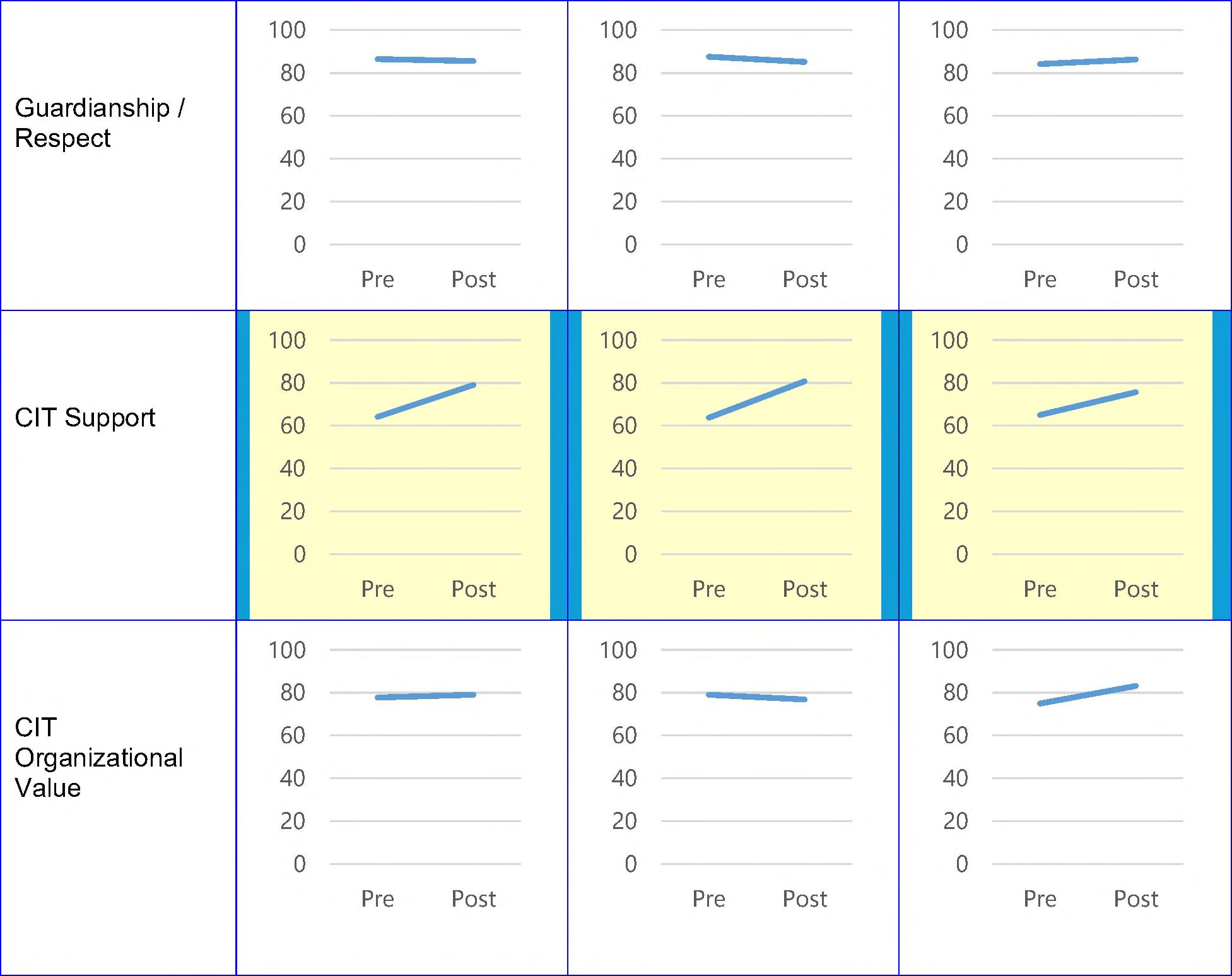
Figure 6 displays the average scores on items related to incidents involving behavioral crisis at pre- and post-BLEA measurement (cross-sectionally), for (1) all recruits, (2) SPD BTB recruits, and (3) non-SPD recruits. The mean score on the item, “Calls involving persons who are experiencing behavioral crisis are dangerous,” increased from pre- to post-measurement across all recruits, t(342) = -2.631, p = .009. The mean score on the item, “My training indicates that it is important to resolve incidents involving persons in a behavioral crisis quickly,” decreased from pre- to postmeasurement across all recruits, t(309) = 2.148, p = .032.
Within the SPD BTB groups, there were statistically significant increases in the mean scores on the following items:
• “Incidents involving individuals in behavioral crisis are a standard part of patrol work,” t(241) = -2.115, p = .035
• “Calls involving persons who are experiencing behavioral crisis are dangerous,” t(232) =2.658, p = .008
In addition, within the SPD BTB groups, there were statistically significant decreases in the mean scores on the following items:
• “My training indicates that it is important to resolve incidents involving persons in a behavioral crisis quickly,” t(206) = 2.140, p = .034
• “Most supervisors expect patrol officers to resolve incidents involving persons in a behavioral crisis quickly,” t(195) = 2.150, p = .033
• “My agency expects patrol officers to resolve incidents involving persons in a behavioral crisis quickly,” t(188) = 2.241, p = .026

part of patrol work.
I
my
I feel recognition and respect from the department for my skills in deescalating behavioral crisis events.
My training indicates that it is important to resolve incidents involving persons in a behavioral crisis quickly.

Most supervisors expect patrol officers to resolve incidents involving persons in a behavioral crisis quickly.
My agency expects patrol officers to resolve incidents involving persons in a behavioral crisis quickly.
Figure 7 displays the average scores on all response items to the first scenario (Depression) at pre- and post-BLEA measurement (cross-sectionally), for (1) all recruits, (2) SPD BTB recruits, and (3) non-SPD recruits. The mean score on the item, “You determine that there is no increased risk that Mr. N might attempt suicide,” increased from pre- to post-measurement across all recruits, t(29.660) = -2.065, p = .048. The mean score on the item, “In speaking with Mr. N, it would be best not to ask him very directly if he was having thoughts about killing himself,” decreased from preto post-measurement across all recruits, t(248) = 2.221, p = .027.
Figure 7. Mean Differences on Scenario 1 Items (Depression) for Pre- and Post-BLEA groups

Your first priority would be to attempt to engage with Mr. N through the garage door to assess the situation and his current mental state.

In speaking with Mr. N, it would be best not to ask him very directly if he was having thoughts about killing himself.
You would attempt to get Mr. N to open the door and step outside the garage so you can talk face to face.
Once you assess that Mr. N is not in imminent danger of self-harm, you give him the number for the Crisis Clinic 24hour Crisis Line and suggest that it might be helpful for him to talk to someone.
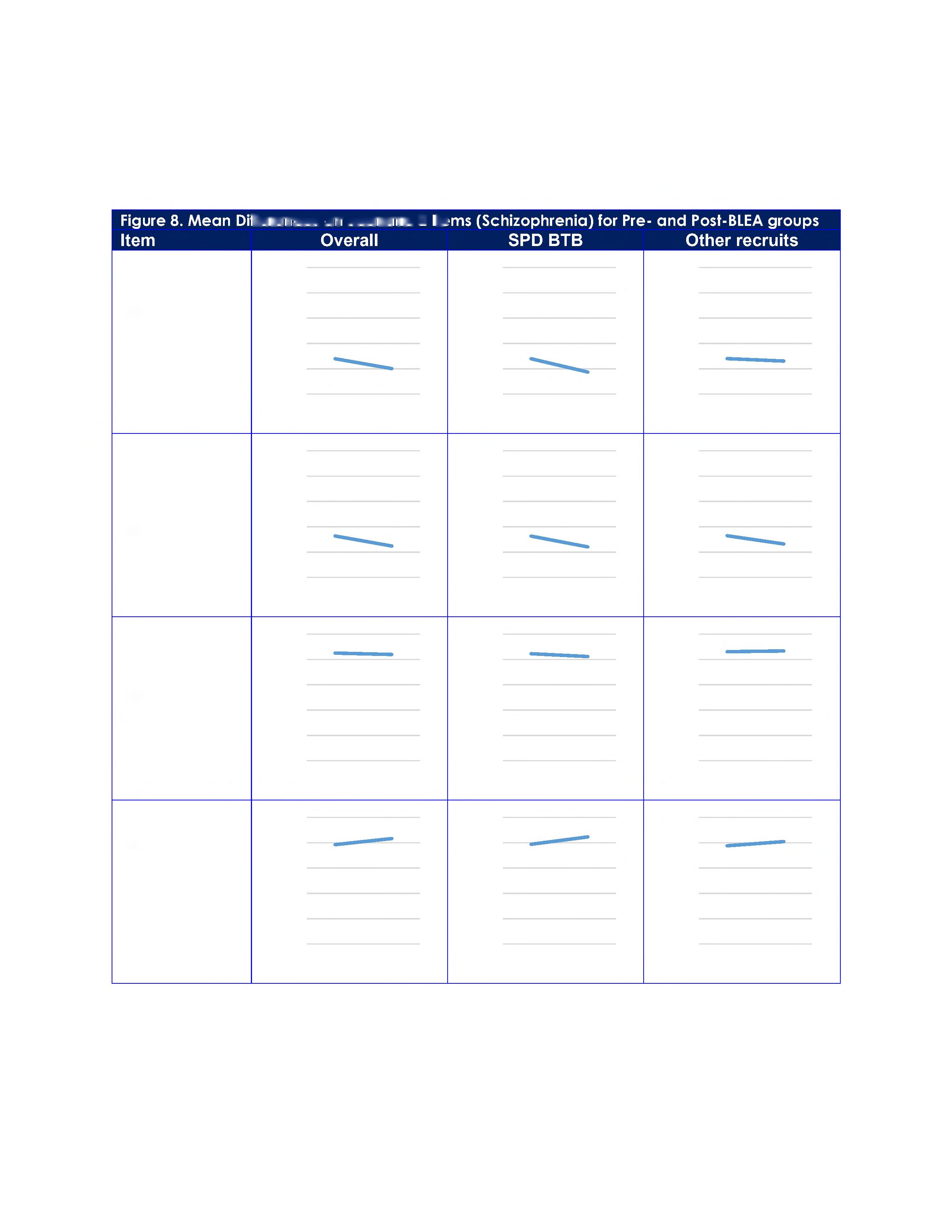
Figure 8 displays the average scores on all response items to the second scenario (Schizophrenia) at pre- and post-BLEA measurement (cross-sectionally), for (1) all recruits, (2) SPD BTB recruits, and (3) non-SPD recruits. The mean score on the item, “In speaking with Ms. S, it is best practice if both you and your partner engage in conversation with her,” decreased from pre- to post-measurement across all recruits, t(246) = 2.408, p = .017. This change was also detectable within the SPD BTB groups, t(19.289) = 2.263, p = .035, but not in the other recruit groups.
The mean score on the item, “Paraphrasing what Ms. S is saying back to her may help deescalate the situation,” increased from pre- to post-measurement across all recruits, t(308) =2.238, p = .026.
Ms. S is exhibiting symptoms most associated with Post-Traumatic Stress Disorder (PTSD).
Ms. S is exhibiting symptoms associated with depression.
Ms. S is exhibiting symptoms associated with Schizophrenia.
The voices Ms. S hears in her head suggest she is experiencing hallucinations.
Ms. S’ belief that people are spying on her through the air vents suggest she is experiencing delusions.

In speaking with Ms. S, it is best practice if both you and your partner engage in conversation with her.
In speaking with Ms. S, you should keep a safe distance physically and emotionally, keeping a blade stance and informing her what you are doing there and why.
If Ms. S asks you if you hear the voices, you should say yes in order to build rapport with her.
Paraphrasing what Ms. S is saying back to her may help deescalate the situation.
You determine that Ms. S is not
an imminent
danger to herself
or others and call the Mobile Crisis
Team (MCT) to
respond to do a mental health
evaluation.

Figure 9 displays the average scores on all response items to the third scenario (Dementia or Alzheimer’s) at pre- and post-BLEA measurement (cross-sectionally), for (1) all recruits, (2) SPD BTB recruits, and (3) non-SPD recruits. The mean score on the item, “Paraphrasing Mr. B’s statements help to confirm that you understand them,” increased from pre- to post-measurement across all recruits, t(111.318) = -2.659, p = .009. This change was also detectable within the other recruit groups, t(90.124) = -3.477, p < .001, but not in the SPD BTB groups.
In addition, among SPD BTB recruits, the mean score on the item, “You ask Mr. B if you can sit down and ask permission before moving any items,” decreased from pre- to post-measurement, t(41.291) = 2.216, p = .032.
Figure 9. Mean Differences on Scenario 3 Items (Dementia or Alzheimer’s) for Pre- and PostBLEA groups
Mr. B is exhibiting symptoms most associated with Schizophrenia.

You ask Mr. B if you can sit down and ask permission before moving any items.
You engage Mr. B in conversation, asking short questions to ascertain if he is oriented to time, place, and person.
Mr. B’s statements help to confirm that you understand them.
You determine that most likely there has been no burglary and you close the case and leave.
and you arrest Mr. B for
filing a false
report.

You determine
that most likely there has been
no burglary, but
Mr. B may need some outside
help. You ask him
if there is a friend or family member
you can call for
him
You call GRAT
(Geriatric
or MCT
Team) to see if
they are available to do
an evaluation.
At present, there are 21 completed one-year follow-up surveys. Most respondents identify as Male (71.4%), Caucasian (71.4%), and about 3 in 4 held a college degree of some type (76.2%). The average age was 35 years old, and they reported about 2.5 years of law enforcement experience. A little less than half (42.9%) are from the SPD BTB group. Due to the low sample size, we do not present any additional analysis of the one-year follow-up surveys here but look forward to continued data collection.
Qualitative data collected through interviews with recruits were analyzed to identify the most prominent themes. The analysis presented here focuses on selected pre-training interview responses that provide insight into recruits' backgrounds and decision-making processes.
Key areas highlighted in this report include recruits' previous employment and geographical origins, their motivations for entering law enforcement, their understanding of guardian policing

concepts, and their motivations for participating in this research study. These selected topics help establish a foundation for understanding the backgrounds and perspectives recruits bring to their training.
Key themes are supported by representative quotes from both SPD-BTB and Non-SPD recruits to provide context and deeper insight into recruits' perspectives. For readers interested in reviewing additional recruit responses from the pre-training interviews, additional representative quotations can be found in Appendix F.
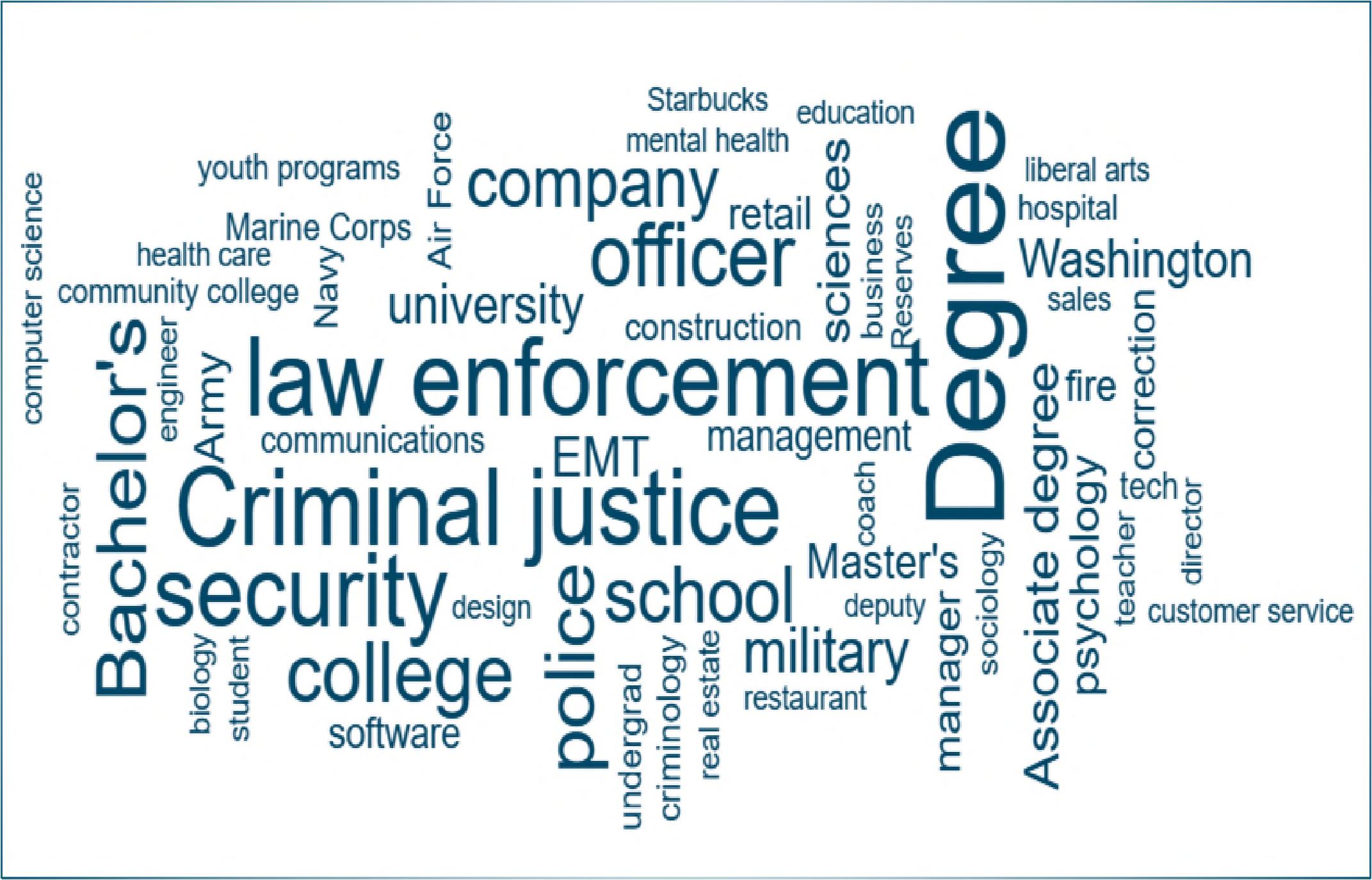
The first question the recruits were asked in the pre-BTB/BLEA interview was: "What is your background? What job did you have/what were you doing before you decided to apply for the position in Law Enforcement?" Figure 10 shows a visual representation of the most frequent responses, offering a glimpse into the diverse backgrounds and experiences our new recruits bring to law enforcement. Following the word cloud, the specific themes identified are presented in Figure 10.

The second question: Are you from Seattle? If not, where are you from? Do you currently live in Seattle? If so, where do you live? How long have you lived in Seattle? If not, where do you live? The pre-training interview explored recruits' geographical backgrounds and connections to the Seattle area through questions about their origins and current residence. The resulting data reveals that: Seattle Police Department recruits often come from more geographically diverse locations, including out-of-state origins, while recruits from other agencies tend to have stronger local ties to the region. Figures 11 and 12 illustrate these geographical patterns through word frequency visualizations, comparing SPD and non-SPD recruits' places of origin respectively. This geographical diversity offers insight into recruitment patterns and the varying spheres from which different law enforcement agencies draw their candidates.
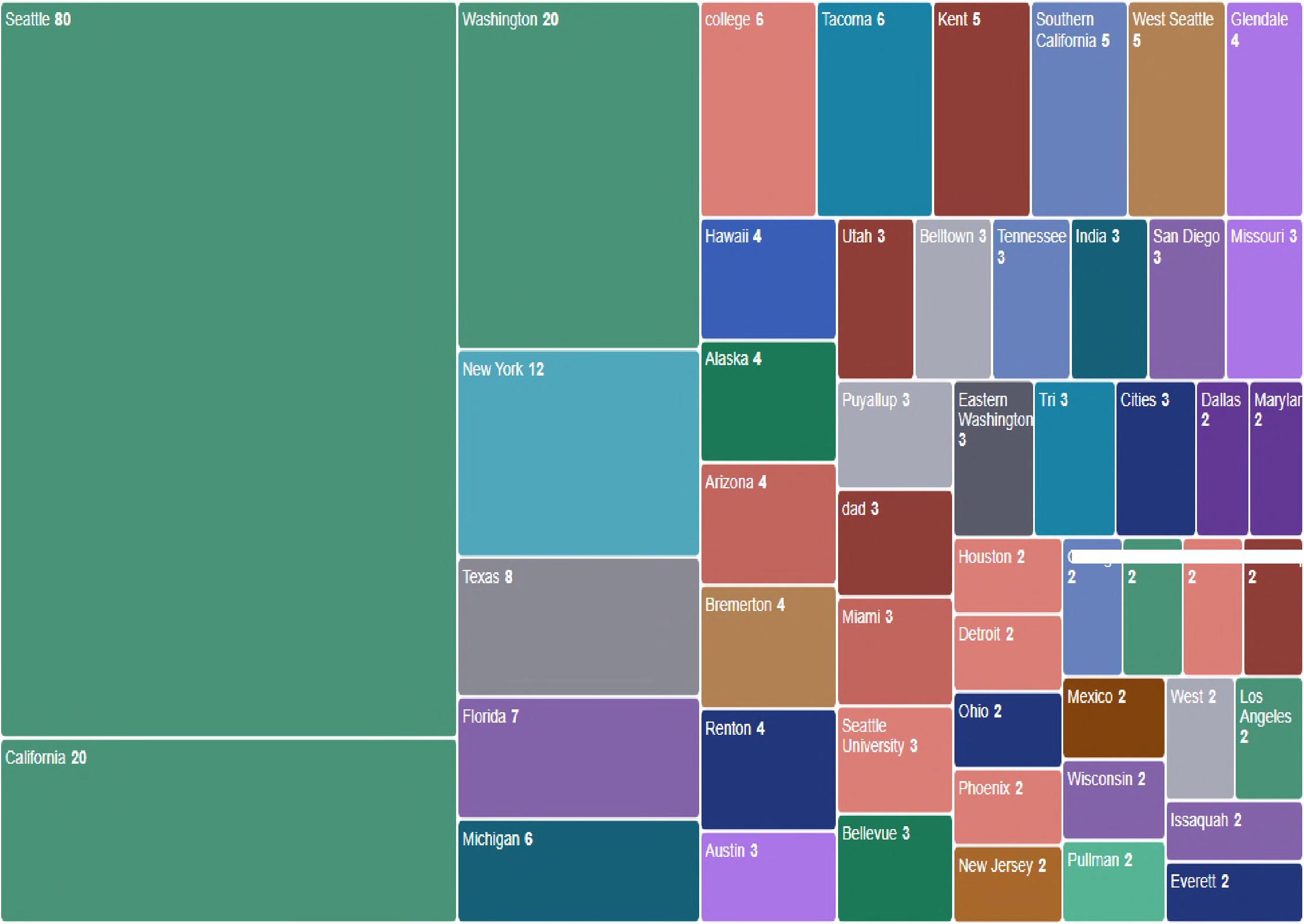

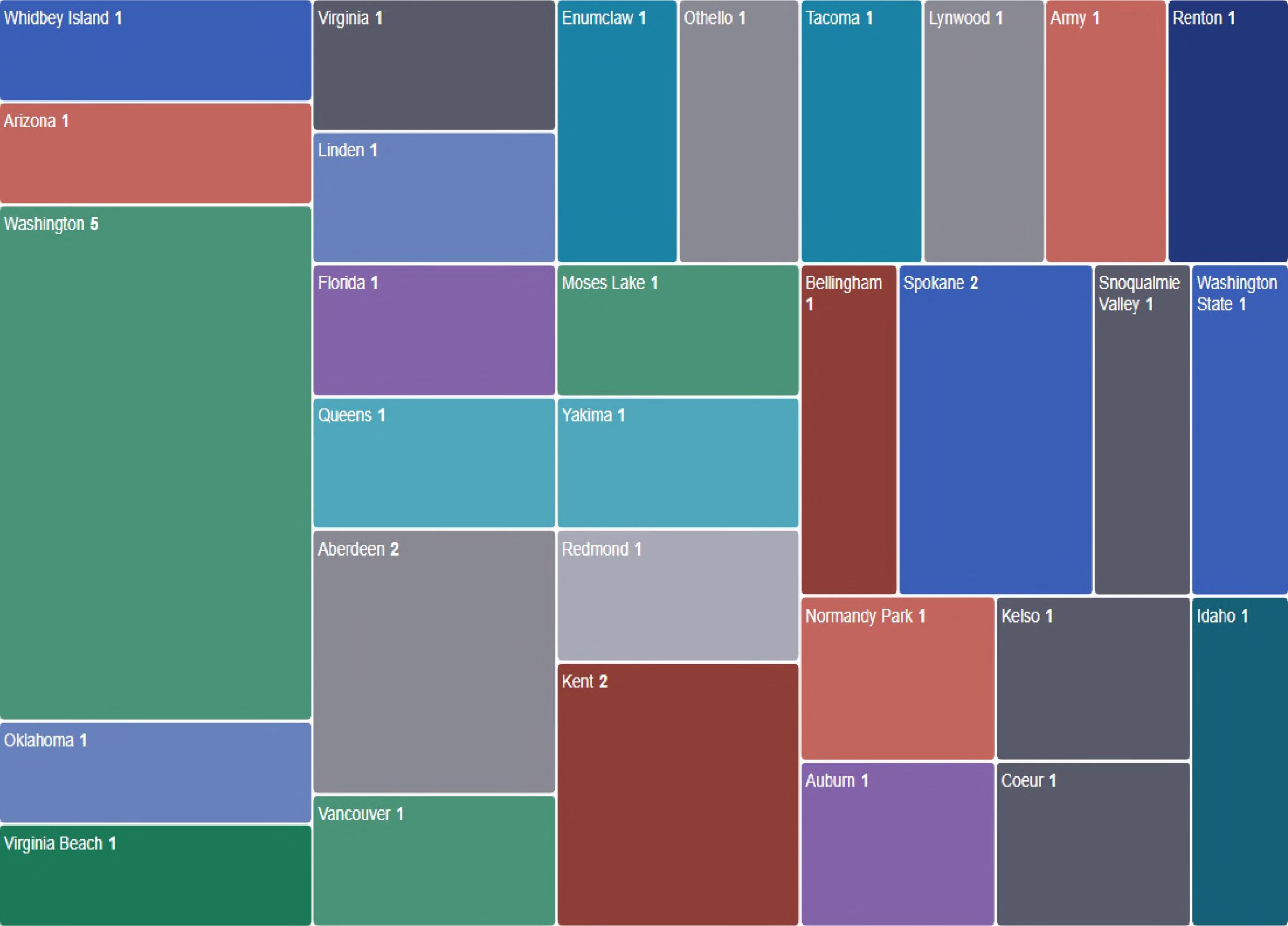
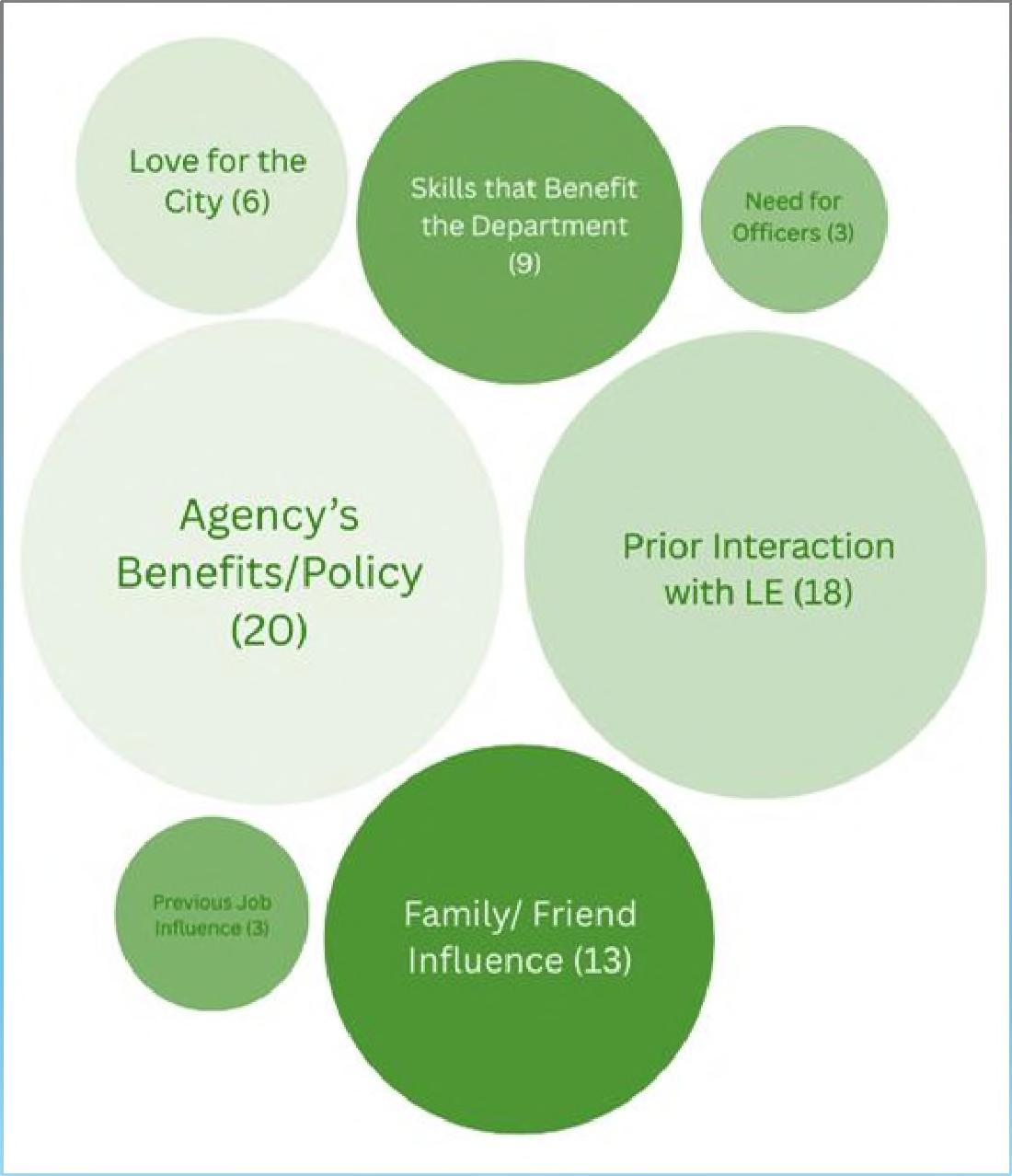
Understanding what draws candidates to law enforcement provides valuable insights into recruit motivations. During the pre-training interviews, recruits were asked to share their reasons for applying to their respective law enforcement agencies - Why did you apply for a position with the Seattle Police Department or other agency? Figures 13 and 14 present word frequency visualizations that capture the most common themes in their responses, comparing the motivations of SPD and non-SPD recruits respectively. The patterns that emerge from these responses offer a window into the aspirations, values, and career goals that attract individuals to law enforcement careers.
Figure 13. Why SPD?
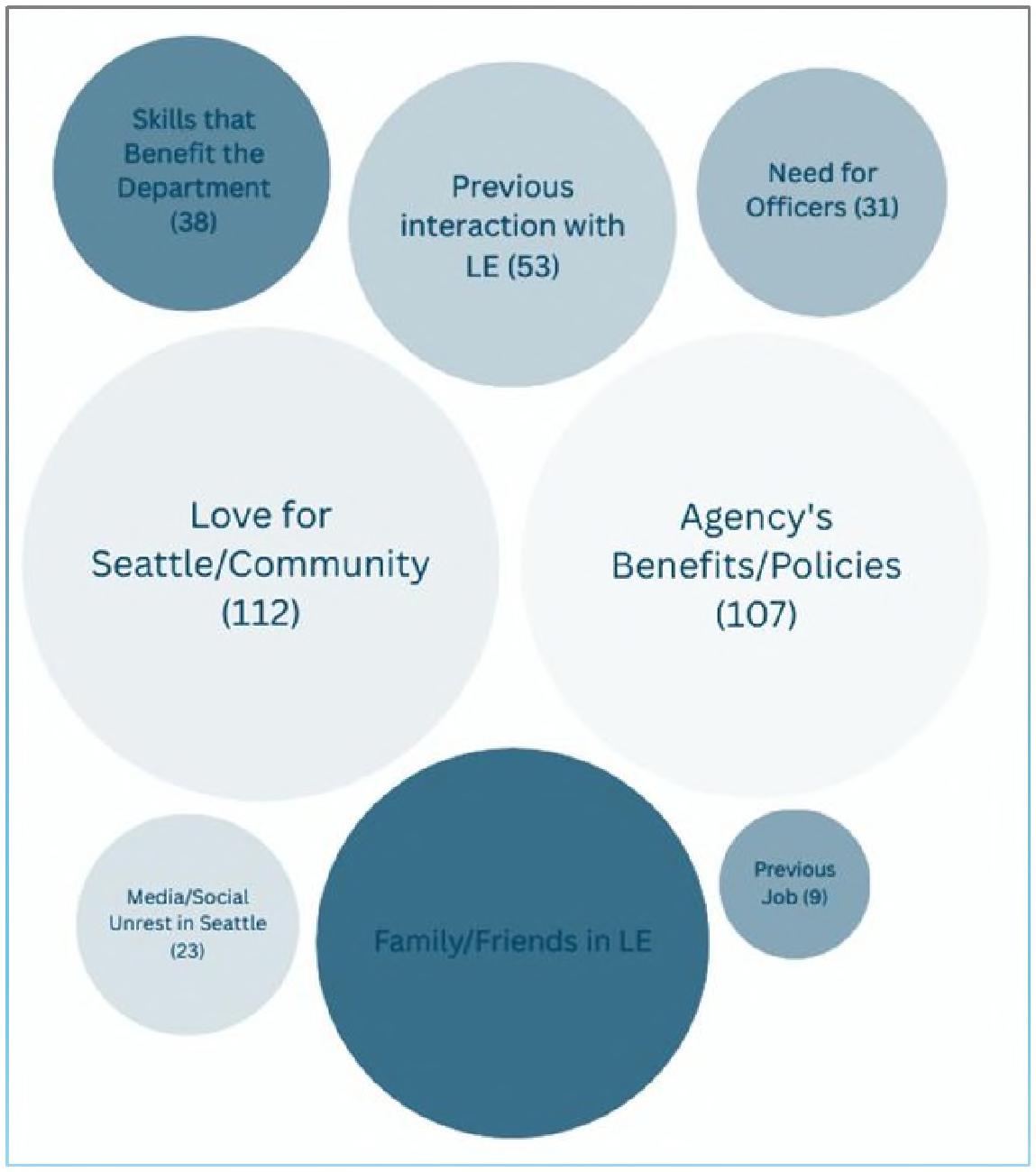

Figure 14. Non-SPD - Why Your Agency?
SPD Recruits
Building on recruits' geographical connections and agency preferences, we explored their deeper motivations for entering law enforcement as a career. Question 4: Why did you apply for a position in Law Enforcement? And specifically with the Seattle Police Department? delved beyond agency selection to understand the fundamental drivers that led individuals to pursue law enforcement work. Here we highlighted five primary themes that influence individuals' decisions to enter law enforcement: being motivated to help and give back to the community, recognition of the need for law enforcement officers, belief in having skills that would benefit the department, the impact of media influence and social unrest, and motivation stemming from prior interactions with law enforcement. Understanding these core motivations provides valuable insight for recruitment strategies and helps identify how candidates align their personal goals with departmental missions, regardless of their chosen jurisdiction.
Figure 15 illustrates these motivational themes through the responses of SPD recruits, highlighting how these factors influenced their specific decision to join the Seattle Police Department.
Figure 15. Why apply for a job in Law Enforcement – SPD Recruits
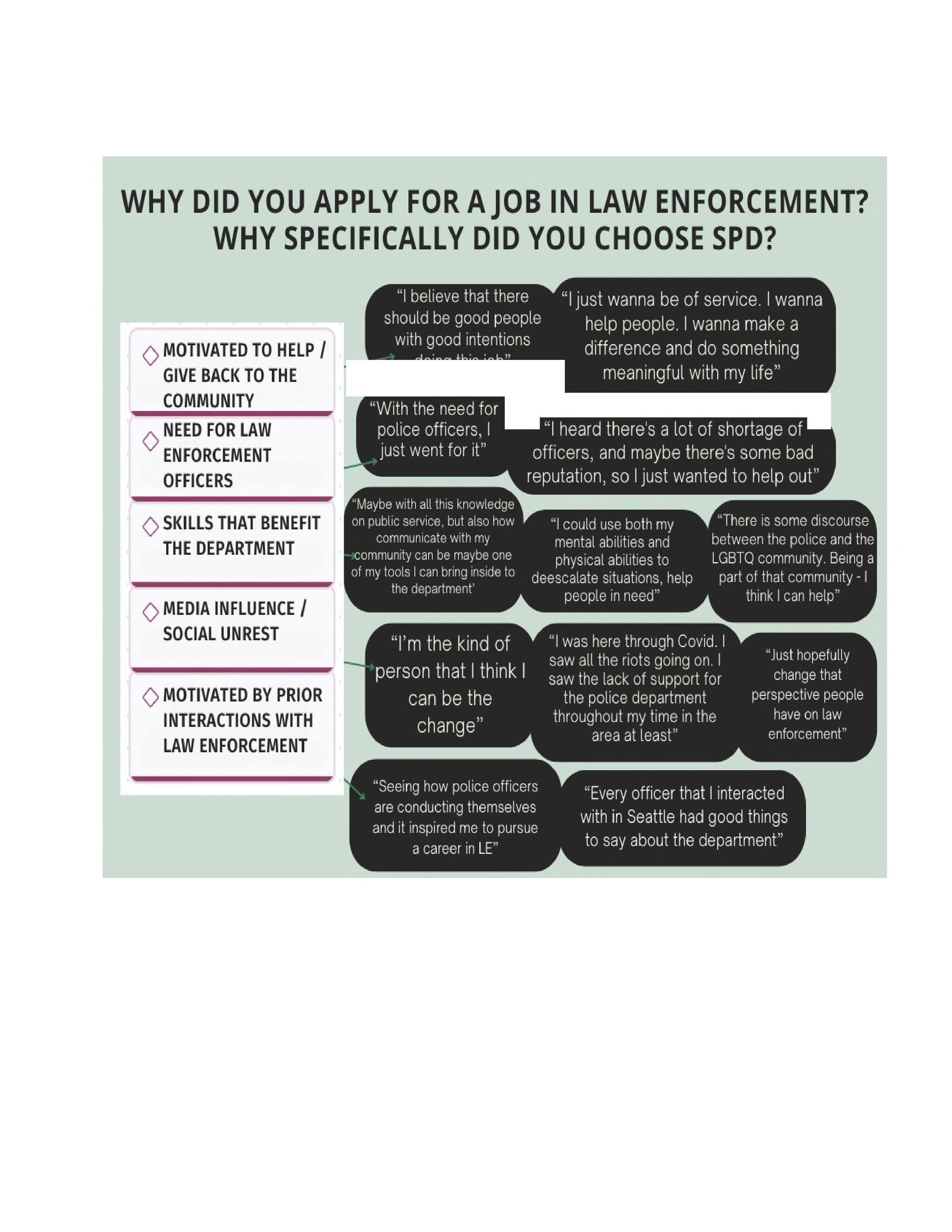

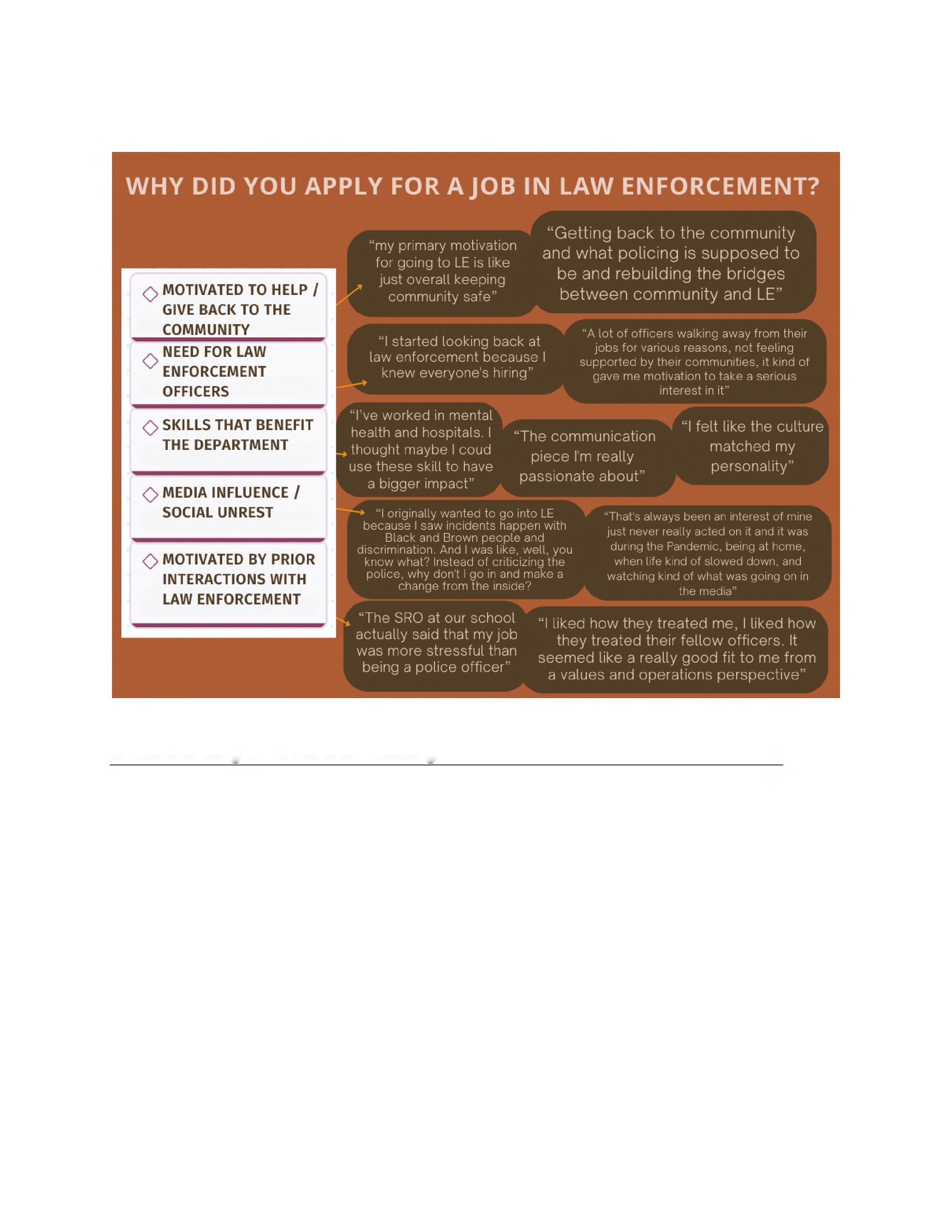
Figure 16 presents how the same motivational themes appeared in the responses of recruits from other agencies across Washington State, providing insight into what draws candidates to law enforcement in different jurisdictions.
Figure 16. Why apply for a job in Law Enforcement – Non-SPD Recruits
Recruits were asked - Have you ever heard of ‘guardian policing’? If so, what is your understanding of ‘guardian policing’? This question sought to elicit recruits' understanding of the concept of 'guardian policing,' where they heard it, and what they knew about it. Figure 17 illustrates the progression of SPD recruits' awareness of guardian policing across three critical phases of their training journey. Initially, 46 out of 209 recruits (22%) reported that they had heard of guardian policing during their first interviews. After completing Before the Badge (BTB) training, this awareness increased significantly, with 47 out of 78 recruits interviewed Post-BTB (60.2%) demonstrating familiarity with the concept. The post-BLEA assessment revealed a further increase, with 33 out of 46 recruits (71.7%) demonstrating awareness of guardian policing. The final 1-year post BLEA, though with only a few participants, with 5 out of 6 (83.3%), shows a further increase in familiarity with the concept. This progressive improvement in awareness through both BTB and BLEA training programs highlights the transformative impact of SPD's comprehensive training approach. The visualization reveals not only the significant initial knowledge gap among incoming recruits but also demonstrates how each phase of training contributes to building understanding of this key policing philosophy.

While the data show a significant increase in understanding of guardian policing, many recruits noted that the term “guardian policing” was not often explicitly used in BTB or BLEA training. However, the notion of guardian policing as a philosophy or approach to policing was embedded in the training with focus on community engagement, shared humanity, service, and kindness. In addition, many recruits noted that they saw the words “Guardians of Democracy” and related quotes on the walls at BLEA during the graduation ceremony, though some non-SPD BLEA recruits indicated that they noticed the words, but had not received explicit training regarding guardian policing, though some TAC officers mentioned the concept in passing.
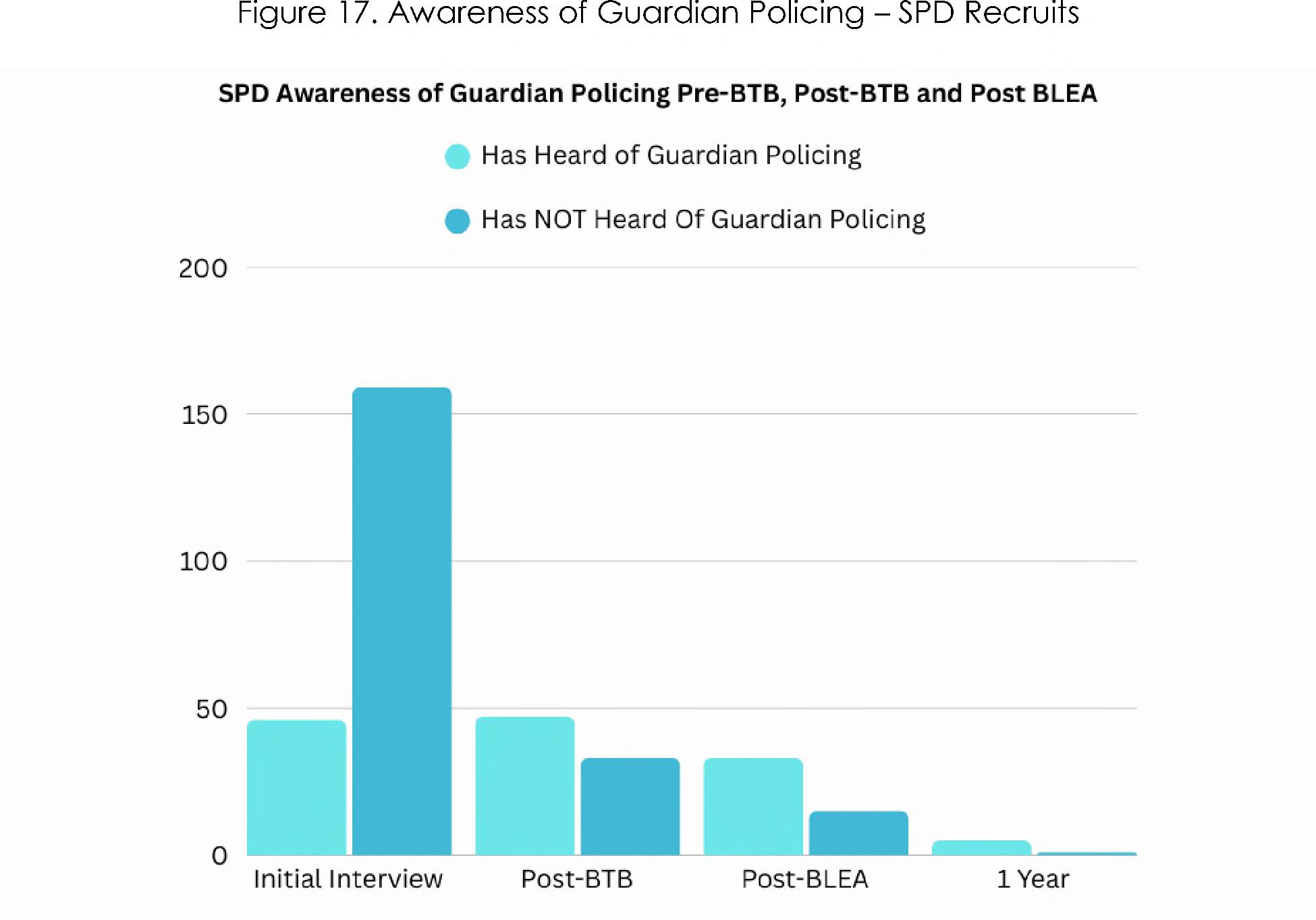
• Initial awareness was low with only 46 out of 209 participants (22%) having heard of Guardian Policing
• Post-BTB training showed substantial improvement with 47 out of 78 participants (60.2%) demonstrating awareness of Guardian Policing
• Post-BLEA assessment revealed further improvement with 33 out of 46 participants (71.7%) aware of Guardian Policing
• 1 Year post-BLEA assessment showed further awareness with 5 out of 6 participants (83.3%)
• Overall awareness increased by 61.3 percentage points from initial interviews to 1-year post-BLEA training, with BTB playing a crucial intermediate role in this progression.

Figure 18 presents the awareness levels of guardian policing among non-SPD recruits before and after BLEA training. The initial baseline shows that about half (47.3%) of non-SPD recruits were already familiar with guardian policing concepts during their first interviews, with 18 out of 38 recruits indicating prior awareness. Following BLEA training, this awareness increased substantially, with 16 out of 19 recruits (84.2%) demonstrating knowledge of guardian policing. This data reveals a higher initial awareness among non-SPD recruits compared to their SPD counterparts (47.3% vs 22%), though both groups achieved similarly high levels of awareness following their respective training programs at 1-year Post-BLEA (77.8% for non-SPD and 83.3% for SPD recruits). While non-SPD recruits started from a higher baseline of awareness, both groups showed significant positive impact from their training experiences, ultimately reaching comparable levels of understanding of guardian policing principles.
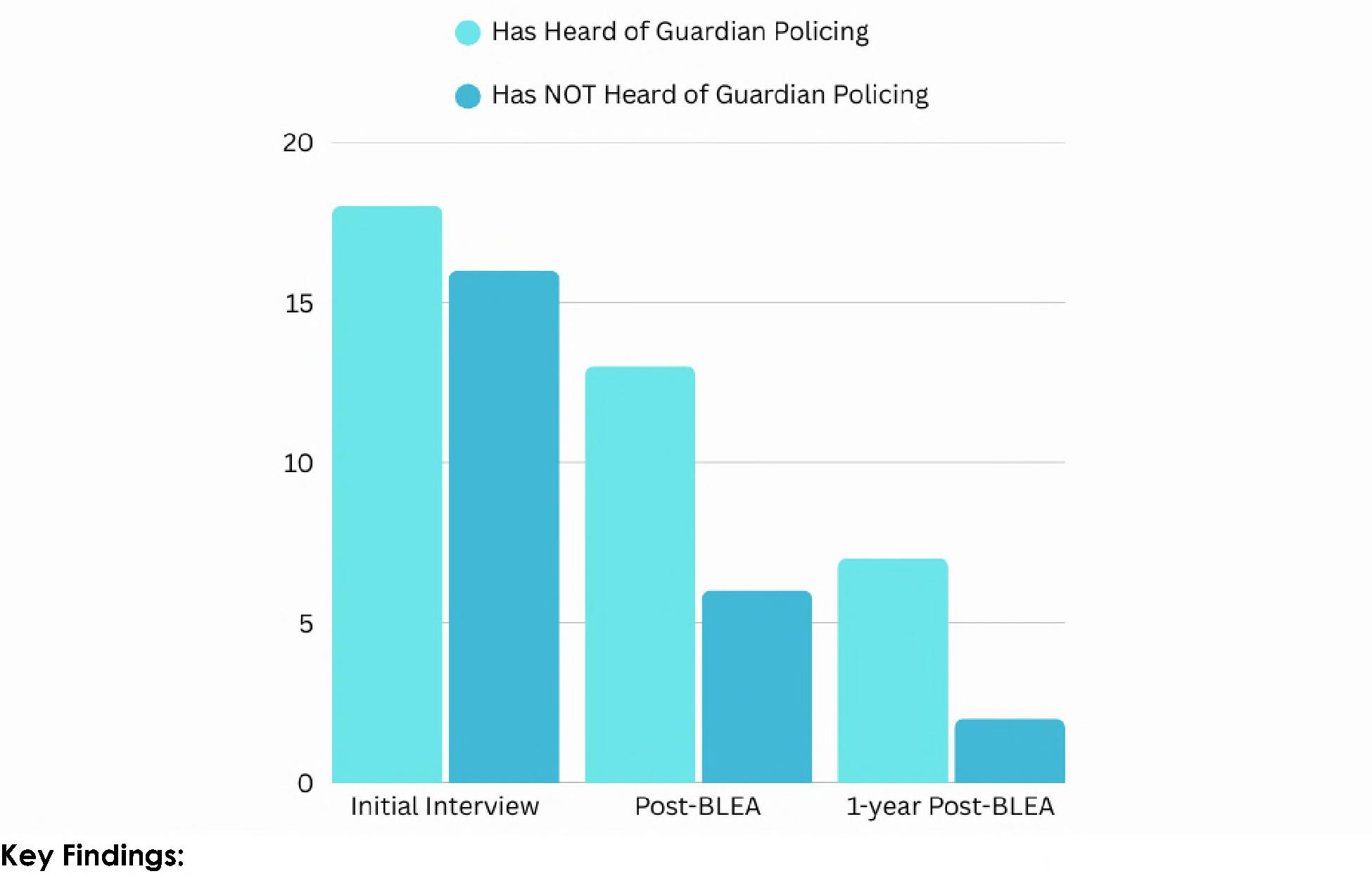
• Initial awareness was higher among non-SPD recruits with 18 out of 38 participants (47.3%) having heard of Guardian Policing
• Post-BLEA shows further improvement with 16 out of 19 recruits (84.2%) aware of Guardian Policing
• 1-year Post-BLEA saw another increase in awareness of Guardian Policing with 7 out of 9 participants (77.8%).
• Overall awareness increased by 23.7 percentage points after BLEA training
“Guardian Policing” Awareness Among Law Enforcement Recruits
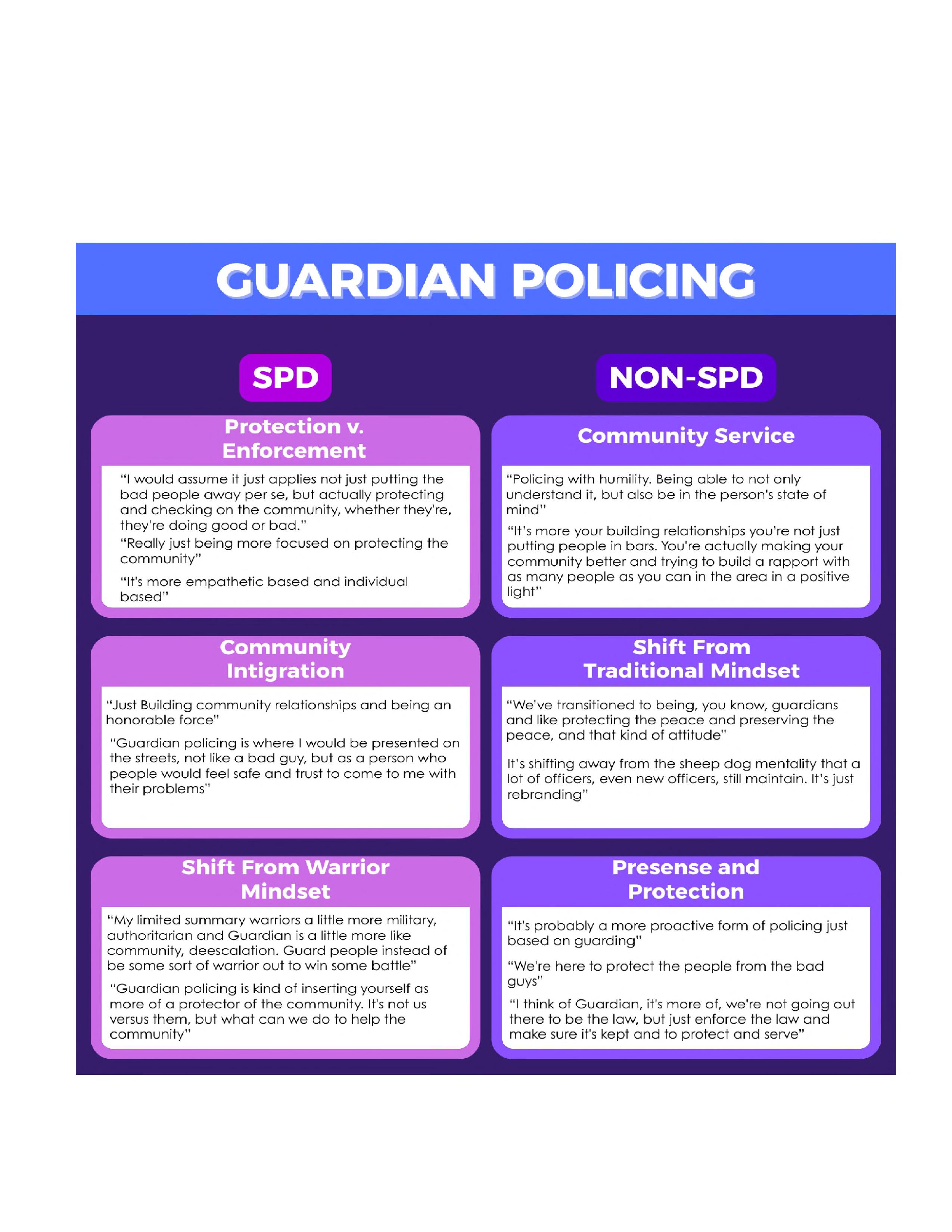
Analysis of interview responses from both Seattle Police Department (SPD) and non-SPD recruits regarding awareness of guardian policing pre and post BLEA reveal differences in baseline awareness between SPD and non-SPD recruits. Figure 19 shows how SPD and Non-SPD recruits conceptualize guardian policing.
Figure 19. SPD and Non-SPD Recruit Understanding of Guardian Policing
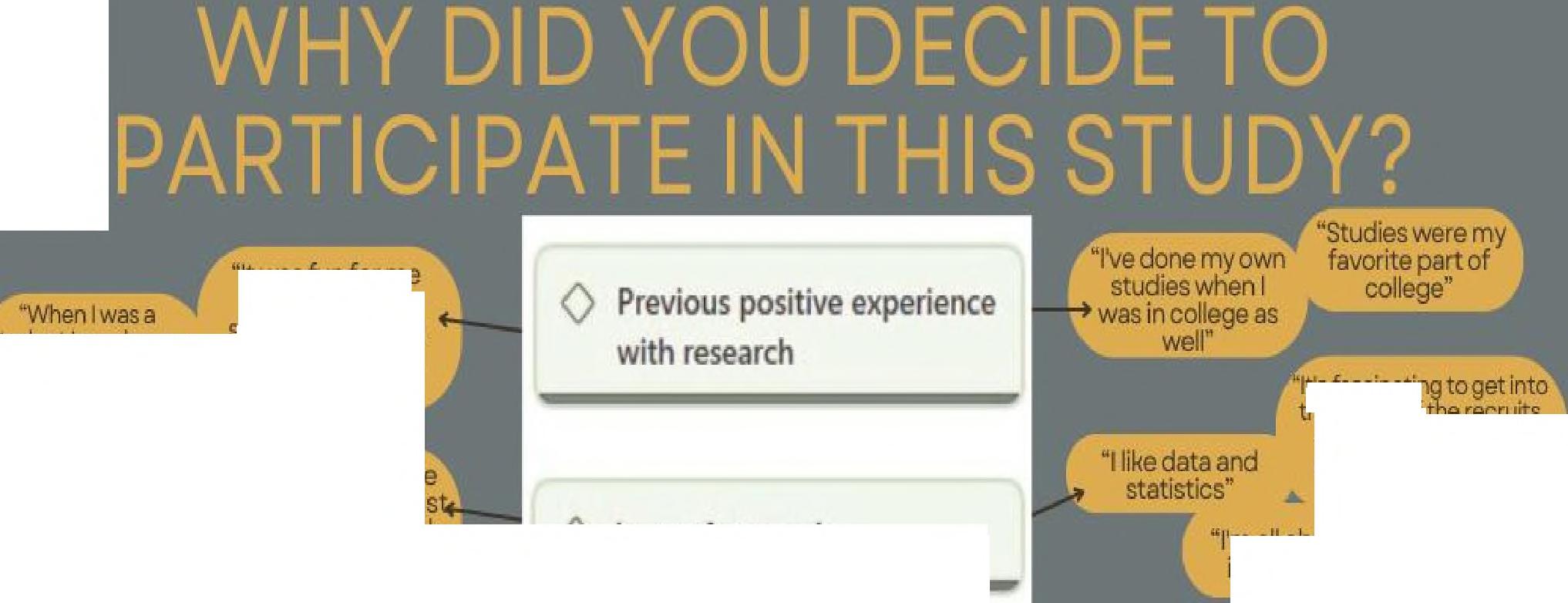
At the end of the pre-training interview, recruits were asked - Why did you volunteer to participate in the study? Figure 20 illustrates the thematic analysis of interview responses regarding recruits' motivations for participating in the longitudinal evaluation. The visualization organizes responses into six primary categories: Previous positive experience with research, Love of research, Improve Law Enforcement, Encouraged to participate, Believe research is important, and Other.
Figure 20. Recruit Motivations for Participating in the Research Study.
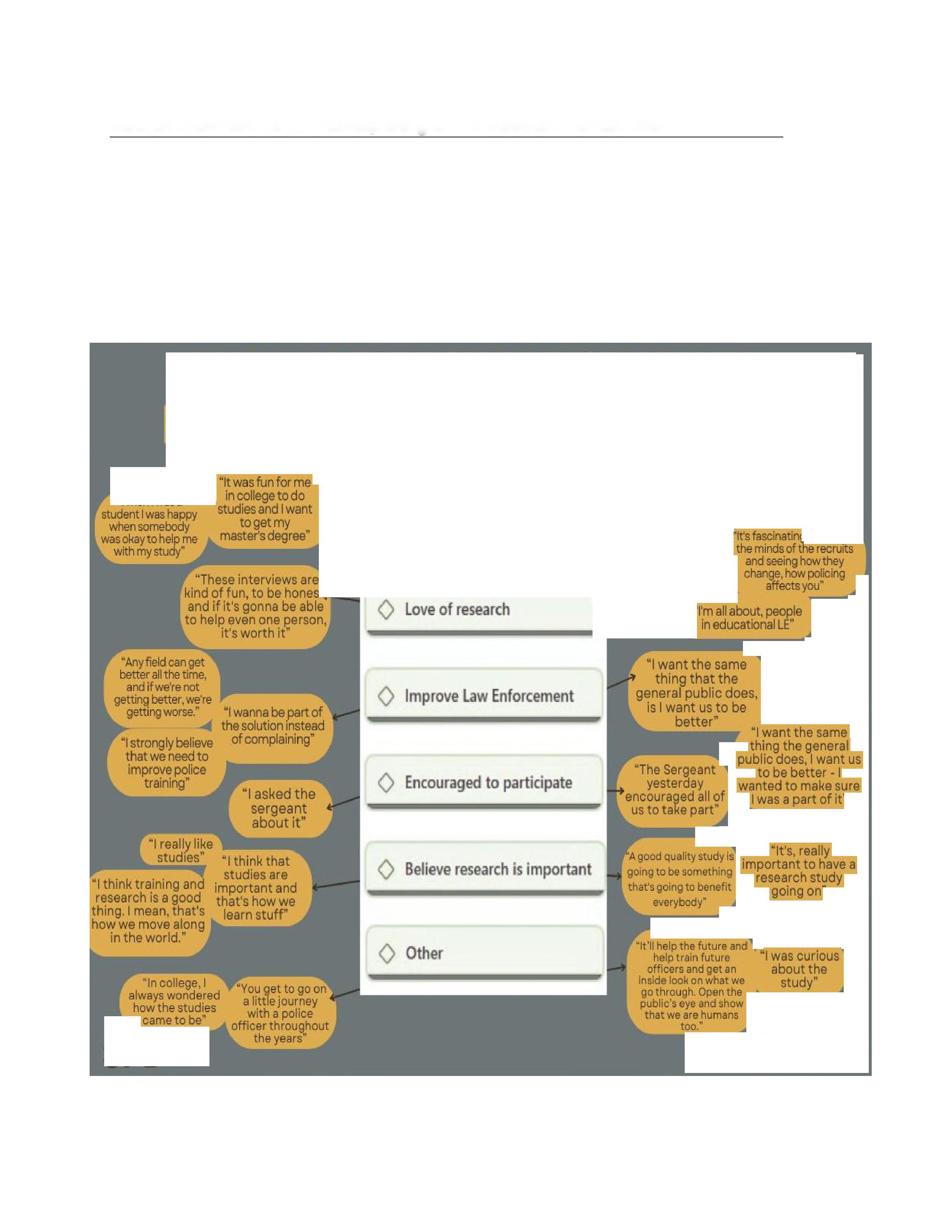


Qualitative responses to the post-dialogue survey indicate that participants were motivated to take part in the 2025 Before the Badge (BTB) Community–Police Dialogues for a range of interconnected reasons centered on learning, civic responsibility, and a desire to contribute to institutional improvement. Across both community members and SPD participants, responses reflected a strong belief in the value of research, dialogue, and evidence-based approaches to improving policing and public safety.
Many participants cited prior positive experiences with research or academic inquiry as a motivating factor. Several community members referenced earlier exposure to research during their college years or graduate studies, noting that these experiences shaped a lasting appreciation for data, inquiry, and structured learning. For some, participation represented a continuation of that interest, described as both intellectually engaging and personally meaningful. As one participant explained, engaging in studies had previously been “the best part of college,” while another emphasized a long-standing interest in “how studies are done and how they shape real-world outcomes.”
A closely related theme was a general love of research and data, with participants expressing curiosity about how information is collected, analyzed, and translated into practice. Responses highlighted interest in statistics, training evaluation, and understanding how attitudes and perspectives evolve over time, particularly among police recruits. Several participants emphasized that participation allowed them to better understand “how people change” and how policing practices are influenced by training and experience.
Another prominent motivation involved a desire to improve law enforcement and public safety outcomes. Participants frequently framed their involvement as an opportunity to be part of the solution rather than passive observers or critics. This included a belief that policing, like any institution, must continually improve, and that research and dialogue are essential mechanisms for that improvement. Participants expressed a commitment to helping law enforcement “get better over time,” improving training practices, and contributing to outcomes that benefit both officers and the broader public.
Encouragement from colleagues, supervisors, or peers also played a role in participation, particularly among SPD personnel. Some recruits noted that they were encouraged to take part by sergeants or training staff, framing participation as an expected and valued component of professional development. Others emphasized the importance of contributing to something larger than themselves, describing participation as a way to ensure they were “part of” broader efforts to shape the future of policing.
Finally, many respondents emphasized a belief in the importance of research itself. Participants described research as essential for learning, progress, and institutional accountability. Several articulated the view that high-quality research benefits everyone—not only law enforcement, but also communities, future officers, and the public at large. For some, participation was explicitly framed as an investment in future generations of officers and an opportunity to support transparency and mutual understanding between police and community members.
Taken together, these responses suggest that participation in the 2025 BTB Community–Police Dialogues was driven less by singular incentives and more by a shared commitment to learning, improvement, and constructive engagement. Participants viewed the dialogues not only as a forum for discussion, but as a meaningful contribution to ongoing efforts to strengthen police–community relationships through research-informed practice.
This section presents the most prominent themes identified from SPD recruits' responses to postBTB training interview questions. The analysis focuses on recruits' key takeaways from the BTB program, with particular attention to the impact of the wellness component, as well as their suggestions for program improvement.
The themes presented are illustrated through frequency analysis and supported by representative quotes from SPD recruits to provide context and deeper understanding of their experiences. Word frequency analysis highlights the most common recommendations for program enhancement, offering insight into potential areas for curriculum development. These selected topics help evaluate the immediate impact of BTB training from the recruits' perspective. Additional thematic analysis and representative quotations can be found in Appendix G.
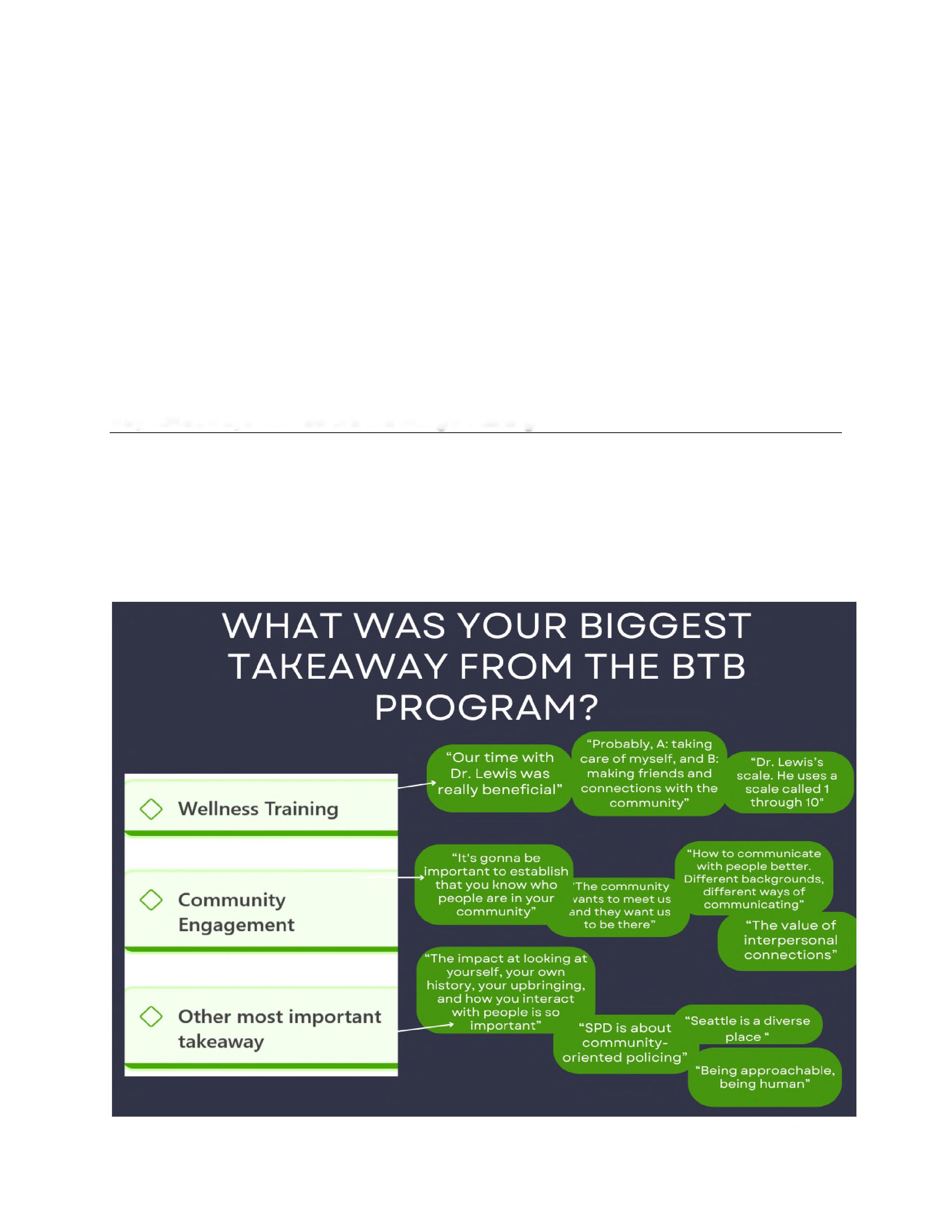
Post BTB Training Question 6 - What was your biggest takeaway from the BTB training? When asked about their biggest takeaways from the BTB training program, SPD recruits' responses clustered into three main categories: Wellness Training, Community Engagement, and Other Important Takeaways. The visualization in Figure 21 illustrates these key themes through representative quotes from the recruits.
Figure 21. Biggest Takeaway from BTB Training.

Qualitative responses regarding participants’ biggest takeaways from the Before the Badge (BTB) program reveal a strong emphasis on wellness, community engagement, interpersonal communication, and reflective self-awareness. Across responses, participants described the program as shaping not only their understanding of policing, but also their approach to relationships, community presence, and personal well-being.
A prominent theme across responses was the importance of wellness and self-care. Participants highlighted wellness training as a meaningful component of the program, noting the value of learning strategies to take care of themselves while navigating the emotional and psychological demands of policing. Several respondents referenced structured wellness tools and frameworks introduced during training, describing them as practical, memorable, and applicable beyond the academy. These reflections suggest that wellness training was not viewed as ancillary, but as foundational to long-term effectiveness and sustainability in policing.
Another central takeaway involved community engagement and relationship-building. Participants emphasized the importance of knowing the people and neighborhoods they serve, recognizing that effective policing depends on familiarity, trust, and presence within the community. Responses underscored that communities want officers to be visible, approachable, and engaged, and that meaningful connections are built through consistent interaction rather than solely through enforcement. This theme reinforces the program’s emphasis on relational and community-oriented policing.
Closely tied to community engagement was a focus on communication across difference. Participants noted learning how to communicate more effectively with individuals from diverse backgrounds and with varying communication styles. These responses reflect an appreciation for adaptability, listening, and interpersonal awareness as core policing skills. Participants also highlighted the value of interpersonal connections more broadly, framing communication as essential to de-escalation, trust-building, and legitimacy.
Several participants identified self-reflection and personal awareness as their most significant takeaway. Responses pointed to the importance of examining one’s own history, upbringing, biases, and interactions with others. This reflective dimension suggests that the BTB program encouraged recruits to see policing as relational and contextual, requiring ongoing selfexamination rather than a fixed set of technical skills.
Finally, participants emphasized themes related to humanization and approachability. Comments reflected an understanding of policing as inherently human work—centered on being approachable, empathetic, and responsive to the lived realities of a diverse city. References to Seattle’s diversity and to policing as community-oriented further illustrate how participants internalized the program’s emphasis on legitimacy grounded in relationships rather than authority alone.
These findings indicate that participants’ biggest takeaways from the BTB program extend beyond procedural knowledge to encompass wellness, communication, self-awareness, and community connection. The responses suggest that the program plays a meaningful role in shaping recruits’ orientation toward policing as relational, reflective, and grounded in human interaction—core principles aligned with the goals of the Before the Badge initiative.
The recruits' responses regarding wellness training were particularly notable, warranting deeper examination through follow-up questions about their takeaways from this specific component.
Figure 22 illustrates recruits' reflections on the wellness component, which clustered into four main categories: Learned Something New, Didn't Expect It, Found Beneficial, and Already Familiar.
Figure 22. Biggest Takeaway from the Wellness Component of the BTB Training.
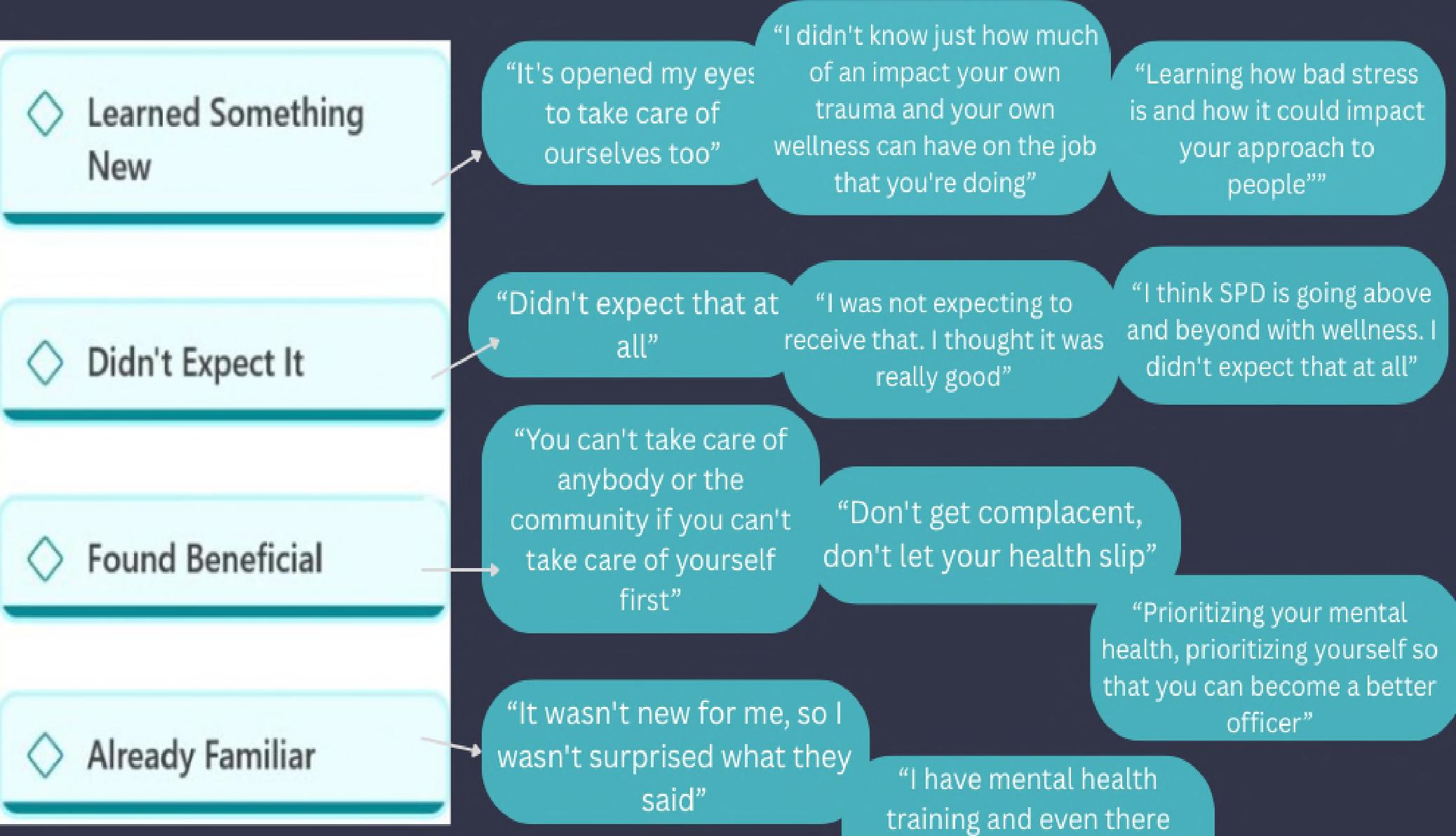
Qualitative responses regarding participants’ biggest takeaways from the wellness component of the Before the Badge (BTB) program indicate that wellness training was experienced as impactful, unexpected, and highly relevant to both personal well-being and professional effectiveness. Participants consistently emphasized increased awareness of mental health, stress, and trauma, as well as the importance of prioritizing self-care as foundational to policing.
Many participants reported that the wellness component led them to learn something new, particularly regarding the cumulative effects of stress and personal trauma on job performance

and interactions with others. Several responses reflected heightened awareness of how unmanaged stress can influence decision-making, emotional regulation, and approaches to community members. Participants described the training as “eye-opening,” noting that it reframed wellness not as an individual concern, but as an occupational necessity tied directly to public safety outcomes.
A notable portion of respondents emphasized that the wellness training was unexpected, both in its depth and its institutional prioritization. Participants expressed surprise that wellness was addressed so directly and substantively within police training, with some characterizing the experience as exceeding expectations. Comments suggested that the inclusion of wellness content signaled an organizational commitment to officer health that participants did not initially anticipate, reinforcing perceptions of the program as progressive and responsive to the realities of modern policing.
Participants also described the wellness component as beneficial and actionable. Responses highlighted the importance of recognizing that officers cannot effectively care for others or serve the community without first attending to their own physical and mental health. Several participants emphasized practical takeaways related to maintaining wellness over time, avoiding complacency, and actively prioritizing mental health as a means of becoming a better, more effective officer.
For some participants, elements of the wellness training were already familiar, particularly among those with prior mental health training or related experience. However, even these respondents noted that the BTB wellness component reinforced key concepts and introduced additional perspectives or tools that they found valuable. This suggests that the training functioned both as an introduction for some and as a meaningful reinforcement and expansion of existing knowledge for others.
Overall, responses indicate that the wellness component of the BTB program was not perceived as ancillary or supplemental, but as a core element of officer preparation. Participants’ reflections underscore a growing recognition that wellness, trauma awareness, and self-care are integral to ethical, effective, and community-centered policing. The findings suggest that the wellness component contributes to shaping recruits’ understanding of policing as work that requires sustained personal reflection, resilience, and intentional care—benefiting both officers and the communities they serve.
Post BTB, recruits were asked - If you were responsible for designing/improving the BTB training for the next group of recruits, what would you recommend?" This question sought to elicit feedback from the recruits for their recommendations for improving the Before the Badge training program. Figure 23 illustrates recruits' specific recommendations through a quote map showing the five main categories that emerged from responses.
Figure 23. Recruit Recommendations for Improving BTB Training.
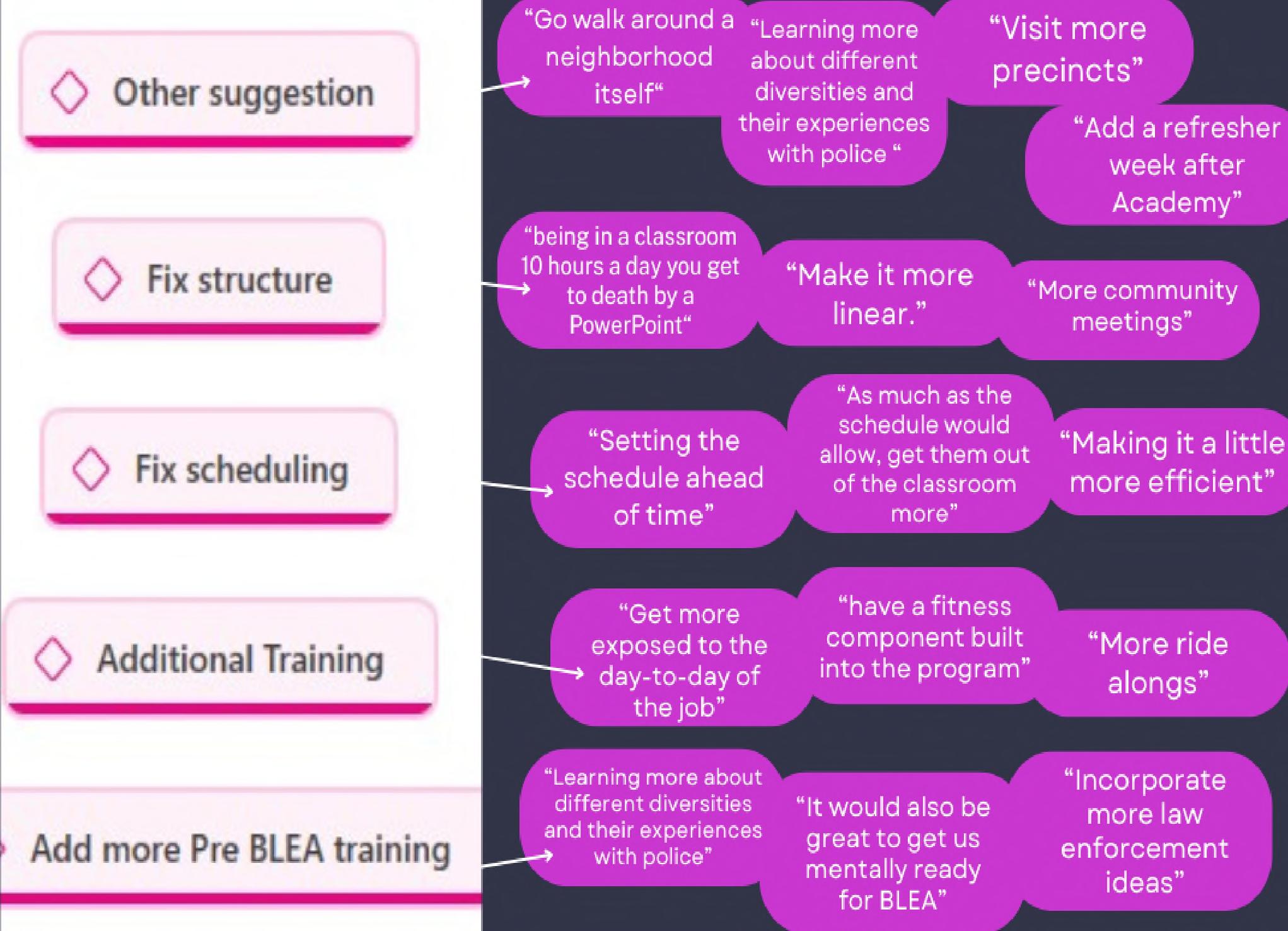
When asked what they would recommend if responsible for designing or improving the Before the Badge (BTB) training for future cohorts, participants offered concrete, pragmatic suggestions focused on structure, scheduling, experiential learning, and deeper community immersion. Overall, responses reflect a desire to make the program more applied, better organized, and more closely aligned with the realities of policing and community engagement.
A common set of recommendations centered on increasing experiential, place-based learning. Participants emphasized the value of getting recruits out of the classroom and into neighborhoods, suggesting activities such as walking through communities, visiting multiple precincts, and spending more time learning directly from residents. These responses indicate that participants view firsthand exposure to neighborhoods—and to diverse community
experiences with policing—as critical for building contextual understanding, empathy, and legitimacy.
Another prominent theme involved structural improvements to the training format. Participants expressed concern about prolonged classroom instruction, noting fatigue associated with extended lecture-based learning and an overreliance on presentation formats. Suggestions included making the curriculum more linear, streamlined, and efficient, as well as balancing classroom instruction with interactive and applied components. These comments suggest a preference for training designs that are cognitively engaging and responsive to learning fatigue.
Scheduling and logistical clarity also emerged as an area for improvement. Participants recommended setting schedules further in advance, improving coordination, and ensuring that training components are sequenced in a way that feels intentional rather than compressed or reactive. Several responses emphasized efficiency—not in reducing content, but in organizing it in a way that respects recruits’ time and cognitive load.
Participants also identified the need for additional and expanded training content, particularly related to real-world policing experiences. Suggestions included greater exposure to the day-today realities of the job, more ride-alongs, and the incorporation of fitness and wellness components into the training structure. These recommendations reinforce earlier findings that recruits value preparation that integrates physical, mental, and operational readiness.
Finally, several participants recommended expanding pre-BLEA preparation, including additional training focused on diversity, community experiences with policing, and mental readiness for academy demands. These responses suggest that recruits view the BTB program as an important bridge into BLEA and see value in strengthening that transition through earlier and more comprehensive preparation.
Participant recommendations indicate strong support for the BTB program coupled with a clear desire to refine its delivery. The feedback emphasizes a shift toward more experiential learning, improved structure and scheduling, and deeper community engagement, while maintaining a focus on readiness, wellness, and real-world application. These suggestions provide actionable guidance for the continued evolution of the BTB program to better prepare future recruits for the complexities of policing in Seattle.
Figure 24 illustrates the most frequently mentioned individual suggestions across all categories, showing that increasing community involvement (26 responses), additional training needs (24 responses), and changing the schedule to avoid down time and long lectures (21 responses) were the top priorities among recruits.

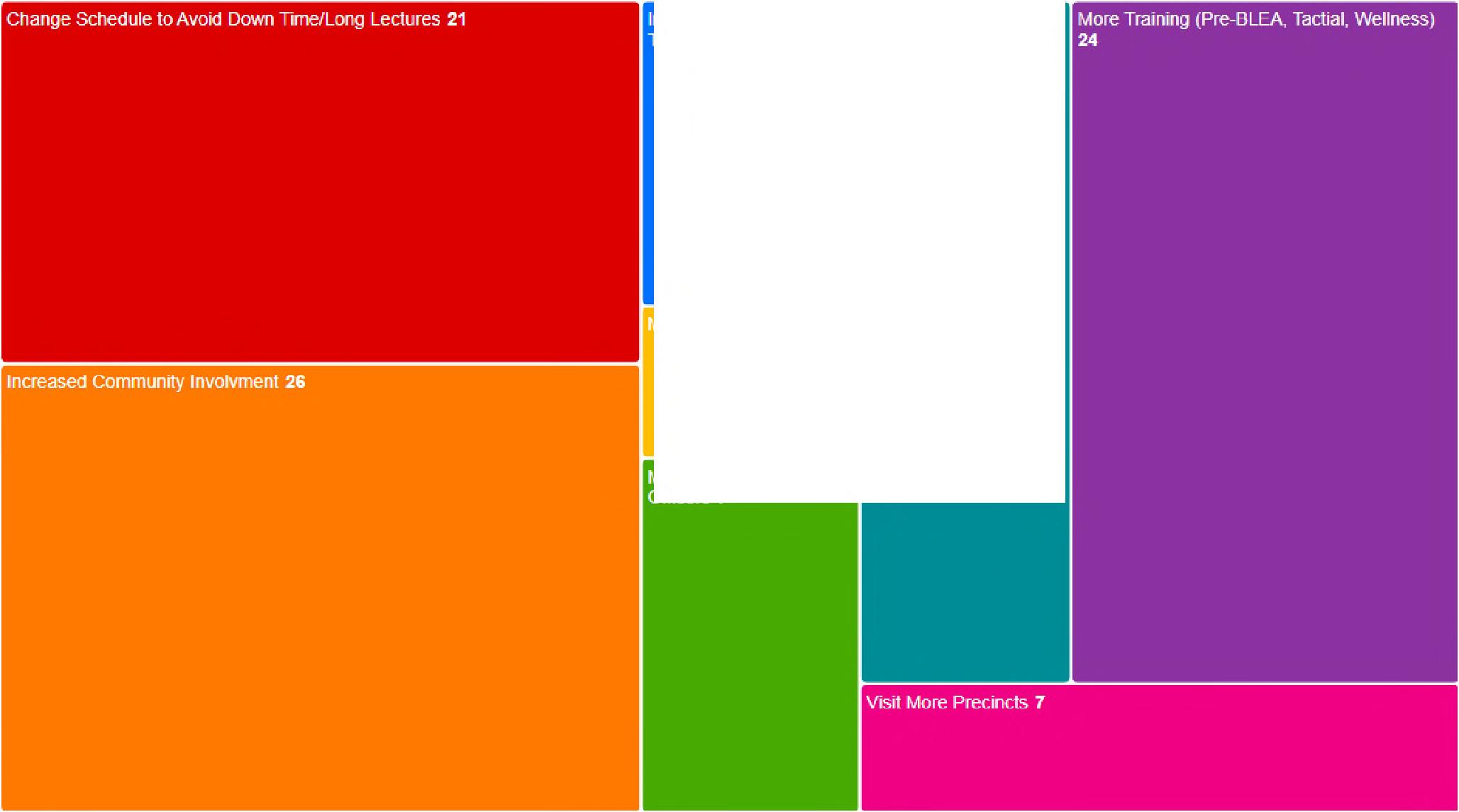
These recommendations provide valuable insight for potential improvements to the BTB program, with particular emphasis on expanding community engagement opportunities, enhancing training content, and improving the program's structural organization.
This section presents qualitative results showing the most prominent themes identified from PostBLEA training interview responses. The analysis focuses particularly on recruits' satisfaction with how BLEA prepared them for their law enforcement careers. For SPD recruits, we also examine their perspectives on how BTB training complemented their BLEA experience.
The themes are illustrated through representative quotes from both SPD and non-SPD recruits, providing insight into their assessment of training effectiveness and preparation for field work. The analysis highlights key differences and similarities in how recruits from different agencies evaluated their readiness for law enforcement duties following BLEA completion. Additional recruit responses and themes from the post-BLEA interviews can be found in Appendix H.
In the Poast-BLEA interview, recruits were asked - How satisfied are you with the experience you had in the WSCJTC BLEA in terms of preparing you for your position in law enforcement? This question sought to elicit how satisfied recruits felt that WSCJTC BLEA prepared them for their future careers in law enforcement. To quantify this satisfaction, recruits were asked to rate their BLEA training experience as a percentage grade. A notable difference emerged between SPD and non-SPD recruits' satisfaction levels. SPD recruits generally expressed higher satisfaction, averaging just under 73%, while non-SPD recruits reported lower overall satisfaction, averaging

approximately 63%. As illustrated in Figure 25, this disparity in satisfaction rates provides context for the varying perspectives captured in recruit interviews. The following quotes highlight key themes that emerged as recruits reflected on their BLEA training experience and its role in preparing them for their law enforcement careers.
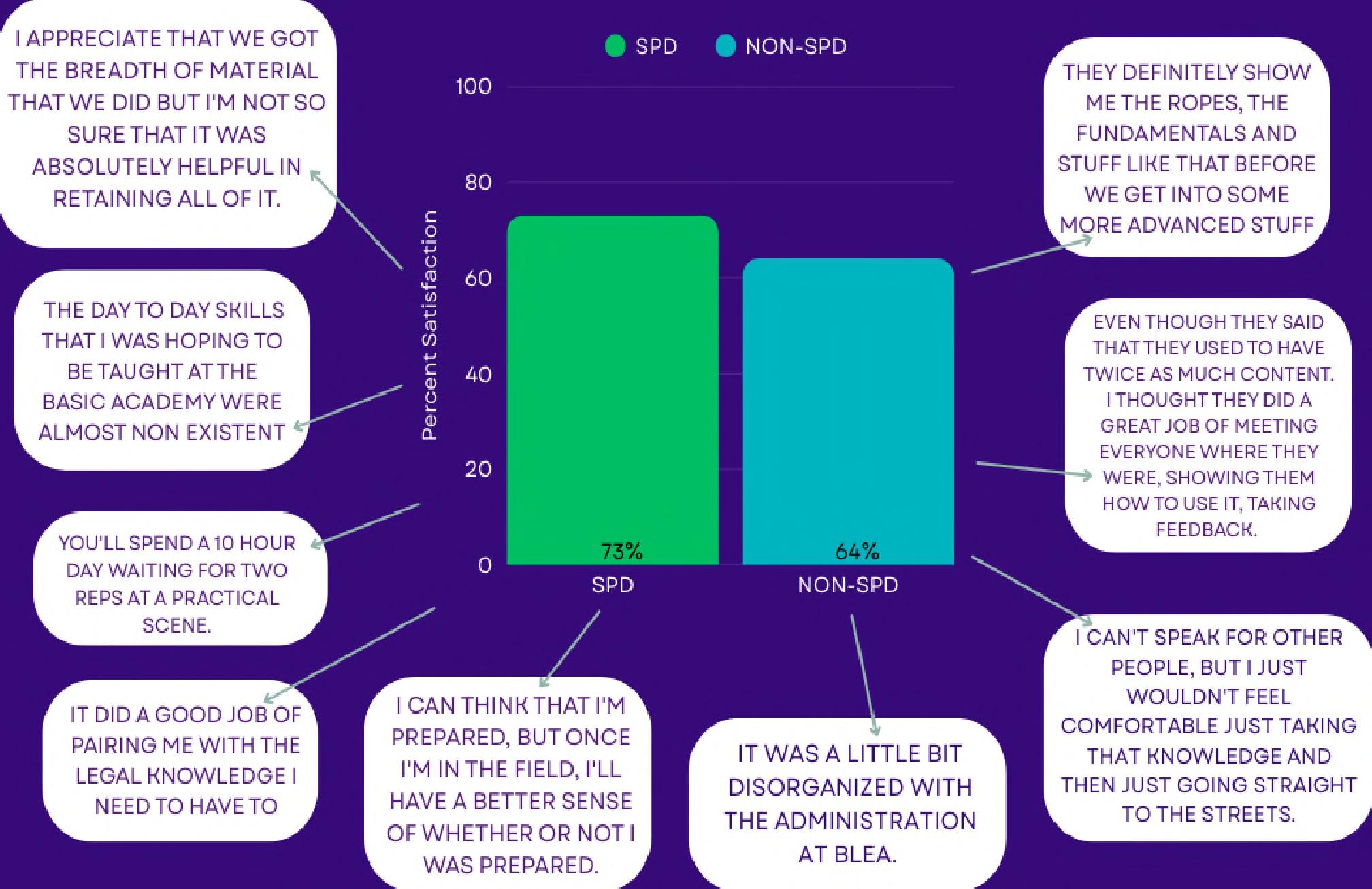
Participants were asked to rate their satisfaction with their experience in the Washington State Criminal Justice Training Commission (WSCJTC) Basic Law Enforcement Academy (BLEA) in terms of how well it prepared them for a position in law enforcement. Quantitative results indicate moderate to moderately high satisfaction overall, with Seattle Police Department (SPD) participants reporting higher satisfaction (73%) than non-SPD participants (64%). Qualitative responses provide important context for these ratings, highlighting both perceived strengths and notable limitations of the BLEA experience.
Across both groups, participants frequently acknowledged the breadth and foundational nature of the training. Several respondents emphasized that BLEA effectively introduced the fundamentals of law enforcement, including legal knowledge, core procedures, and basic

operational concepts. Participants described the academy as providing “the ropes” and a solid grounding before progressing to more advanced or field-based learning. For some, this foundational preparation was viewed as appropriate for an entry-level academy setting.
At the same time, many participants expressed concerns about the limited emphasis on day-today practical skills. Several comments reflected frustration with the balance between classroom instruction and applied training, with participants noting long periods of waiting or observation for relatively brief hands-on practice. These responses suggest that while the academy provides conceptual knowledge, some participants felt underprepared for the immediate realities of fieldwork upon graduation.
Participants also described variability in instructional effectiveness and organization. Some respondents praised instructors for their engagement, responsiveness to feedback, and efforts to ensure recruits understood how to apply what they were learning. Others, however, characterized aspects of BLEA as disorganized, particularly with respect to administration, scheduling, and content flow. This inconsistency appears to have influenced overall satisfaction and perceptions of preparedness.
Several participants emphasized that true preparedness could only be assessed once in the field. These respondents expressed cautious optimism—indicating they believed the academy had prepared them adequately in theory, but that real-world policing would ultimately determine how well the training translated into practice. This sentiment reflects a common understanding of academy training as a starting point rather than comprehensive preparation for all aspects of policing.
Notably, some participants expressed discomfort with the transition from academy training directly to street-level policing, suggesting that additional applied experience or transitional support could strengthen readiness. These reflections align with earlier feedback emphasizing the value of experiential learning, ride-alongs, and real-world exposure prior to or alongside formal academy instruction.
Overall, findings suggest that while participants generally viewed the BLEA experience as providing essential foundational knowledge, satisfaction was tempered by concerns about practical skill development, organization, and the immediacy of field readiness. Differences between SPD and non-SPD satisfaction levels underscore the importance of agency-specific context and expectations in shaping perceptions of preparedness. Together, these results highlight opportunities to better align academy training with the applied demands of policing and to strengthen the bridge between formal instruction and field deployment.
In the Post-BLEA interview, SPD recruits were asked - "Have you used any of the specific SPD BTB training components in your work/training so far? If so, what specifically?" This question sought to help understand how recruits were applying their BTB training experiences in their daily work and ongoing development as law enforcement officers. Responses clustered into three main categories: Wellness Training, Community Engagement, and Other Training. SPD recruits provided particularly detailed feedback about the wellness component, frequently citing Dr. Lewis's instruction and its practical applications in both their professional and personal lives. As illustrated in Figure 26, recruits' responses demonstrate the lasting impact of BTB training components across multiple aspects of their work. The quotes highlighted in the visualization reveal how recruits have integrated various elements of their training, from nutrition and self-care
practices to community engagement approaches and tactical mindset development. These reflections provide valuable insight into which aspects of BTB training have proven most applicable and memorable in real-world law enforcement contexts.
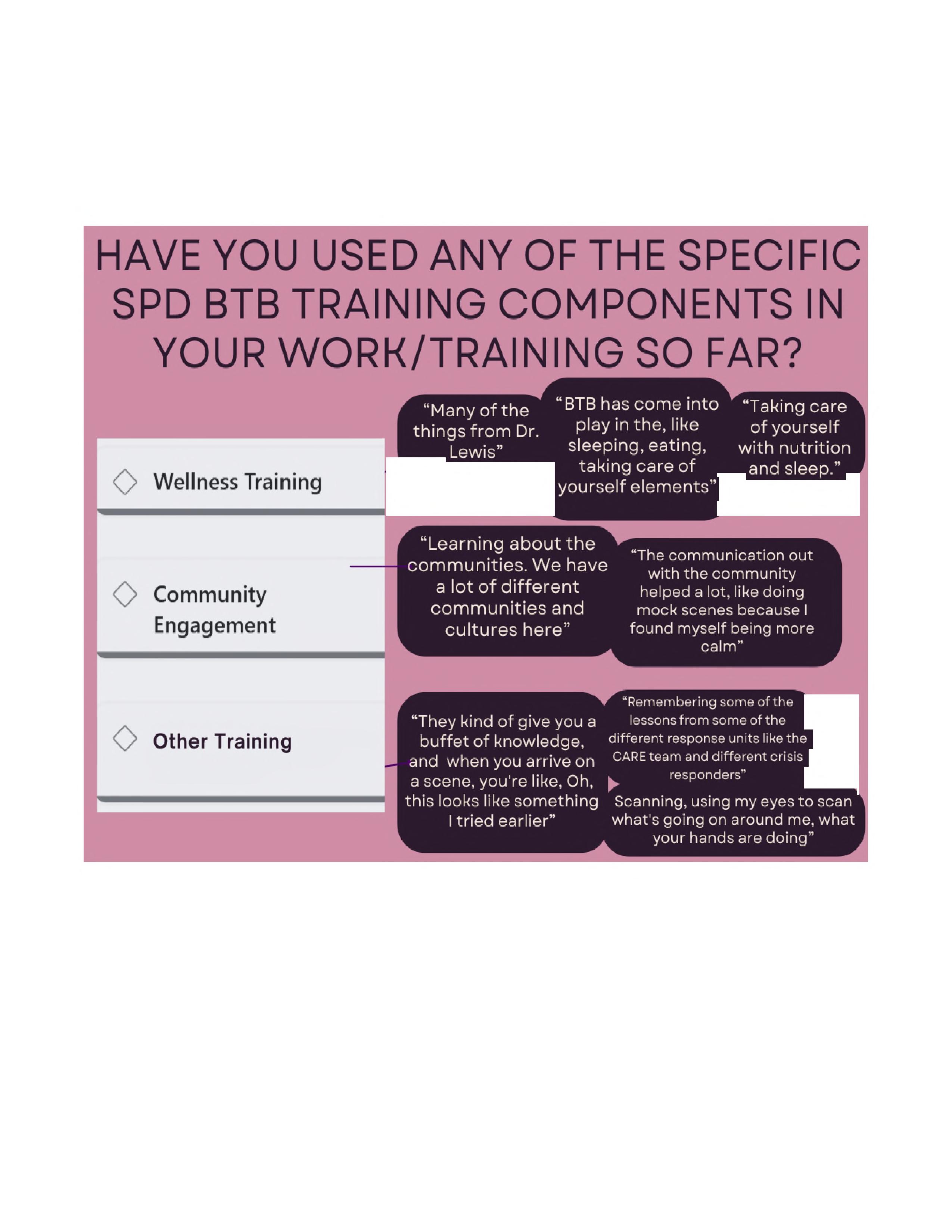


When asked whether they had used specific Seattle Police Department (SPD) Before the Badge (BTB) training components in their work or training to date, participants reported clear, concrete examples of applying BTB concepts in real-world and training contexts. Responses indicate that BTB training was not experienced as abstract or theoretical, but as immediately usable, particularly in the areas of wellness, community engagement, and situational awareness.
A prominent area of application involved wellness training. Participants described actively using strategies related to sleep, nutrition, and self-care introduced during BTB, often referencing wellness content delivered by Dr. Lewis. Several respondents noted that BTB training influenced their daily routines and stress management, highlighting how attention to personal wellness is carried over into both training environments and operational settings. These responses suggest


that wellness concepts were internalized as practical tools rather than one-time instructional content.
Participants also described applying community engagement principles in their interactions with the public. Responses emphasized increased awareness of Seattle’s diverse communities and cultures, as well as improved communication during encounters. Several participants specifically noted that BTB training helped them remain calmer and more intentional during mock scenarios and community interactions, indicating that communication and engagement skills learned through BTB translated into greater confidence and composure in practice.
In addition, participants referenced applying other BTB training elements related to situational awareness and decision-making. Respondents described drawing on lessons learned about scanning environments, assessing scenes, and recalling prior training experiences when encountering real or simulated incidents. Some participants explicitly connected BTB training to their understanding of alternative response models, such as CARE teams and crisis responders, suggesting that BTB reinforced an awareness of broader public safety resources beyond traditional enforcement roles.
Overall, participant responses indicate that BTB training components were actively used and integrated into recruits’ work and training experiences. The findings suggest that BTB functions not only as preparatory training, but as a framework that recruits continue to reference as they navigate new situations. The ability to apply wellness strategies, communication skills, and situational awareness in practice underscores the program’s role in shaping how recruits approach both policing tasks and community interactions early in their careers.
This section presents preliminary insights from the first cohort of recruits interviewed one year after completing BLEA. While there were too few one-year post-BLEA surveys to draw quantitative conclusions, these initial one-year Post-BLEA interviews offer valuable qualitative insights into how officers' views and understanding evolve through their first year of service. The experiences and reflections shared by these early participants provide a window into potential patterns and themes that may emerge as more officers reach this milestone.
Recruit (now officer) responses on the One-Year Post-BLEA interviews help understand how their perspectives on critical skills shift from their initial training through their first year of field experience, we begin to see intriguing developments in their professional understanding. While these early findings should be interpreted cautiously due to the small sample size, they suggest promising directions for future research as more officers complete their first year of service. The following analysis explores these emerging patterns, with particular attention to Question 1, which examines officers' views on the most important skill needed for a law enforcement career. To review additional interview questions, see Appendix I.
Recruits were asked, What is the #1 most important skill you think a person needs for a career in law enforcement? This explores recruits' evolving perspectives on the most critical skill needed for a law enforcement career, tracking their responses at key points in their training and early career. For SPD recruits, these checkpoints span from pre-BTB through one year of field experience, while non-SPD recruits were followed from pre-BLEA through their first year of service.
This analysis focuses on the subset of recruits who have completed their first year post-BLEA, offering initial insights into how perspectives shift with field experience.
The data reveals distinct patterns in how officers' views evolve through training and real-world experience. SPD recruits show progression from initially emphasizing basic communication skills through to a more nuanced understanding that incorporates officer safety, professional development, and the ability to accept criticism. Non-SPD recruits demonstrate a broader range of initial focuses - including empathy, integrity, and flexibility - that eventually converge on themes of patience, adaptability, and professional courage after a year of field experience.
This longitudinal view suggests that while training programs effectively establish foundational skills, the first year of field experience leads officers to recognize the importance of more complex, adaptive competencies. The contrast between initial perspectives and one-year reflections highlights how direct experience shapes officers' understanding of what skills are most crucial for effective law enforcement.
Figure 27 illustrates how SPD recruits' perspectives on critical law enforcement skills evolve through four key phases: initial recruitment, post-BTB, post-BLEA, and after one year of service. Figure 28 shows the progression of non-SPD recruits' views on essential skills across three stages: from their initial perspectives through BLEA completion and their first year of service.
Figures 27 and 28.
Most Important Skill Needed for Law Enforcement -SPD Recruits and Non-SPD Recruits
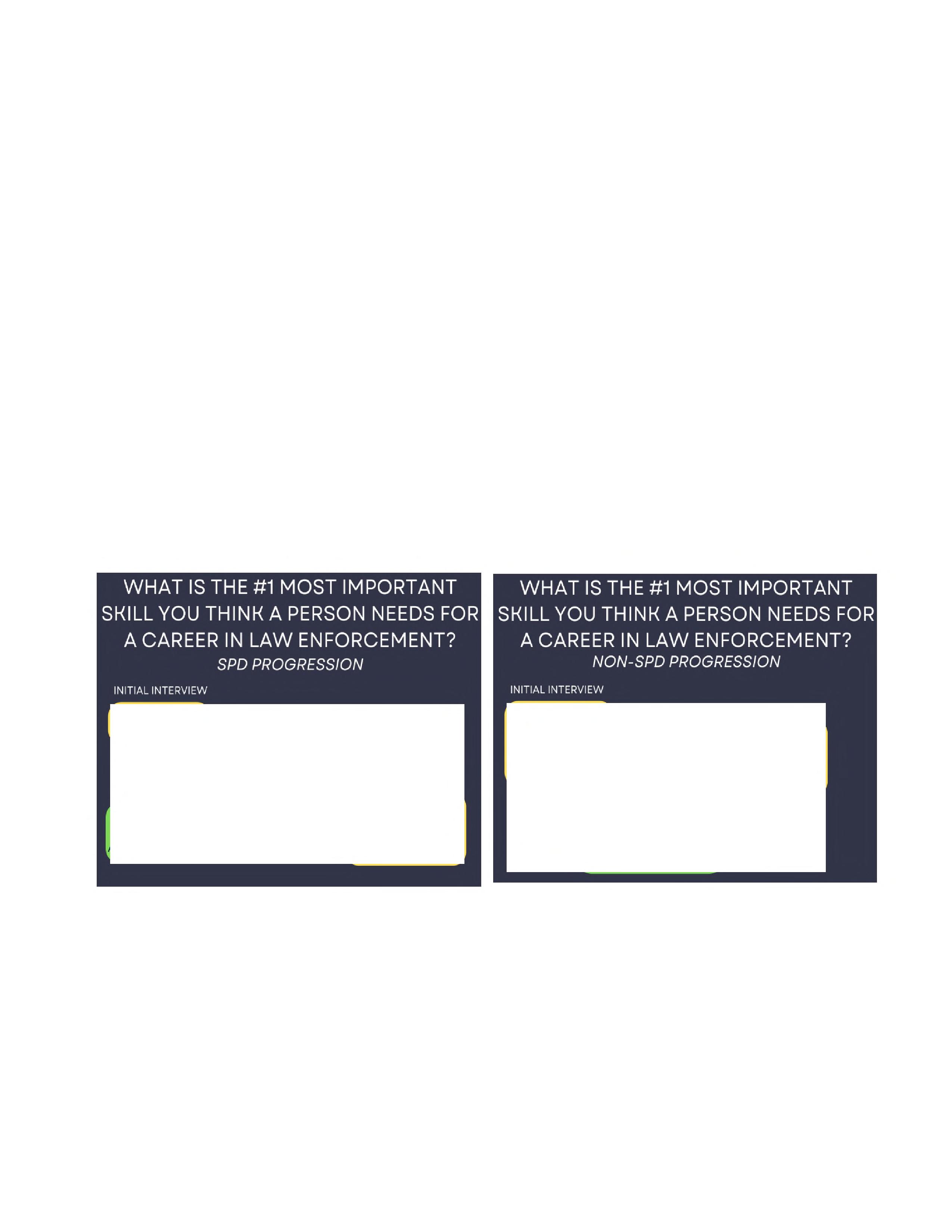
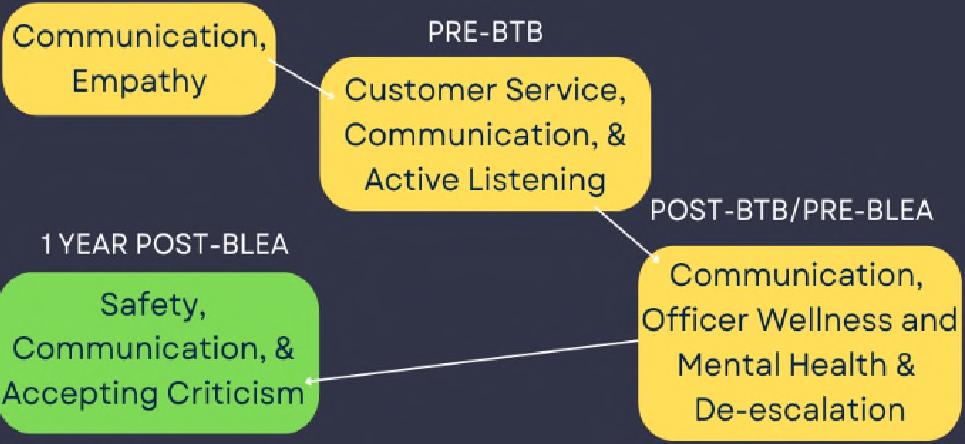
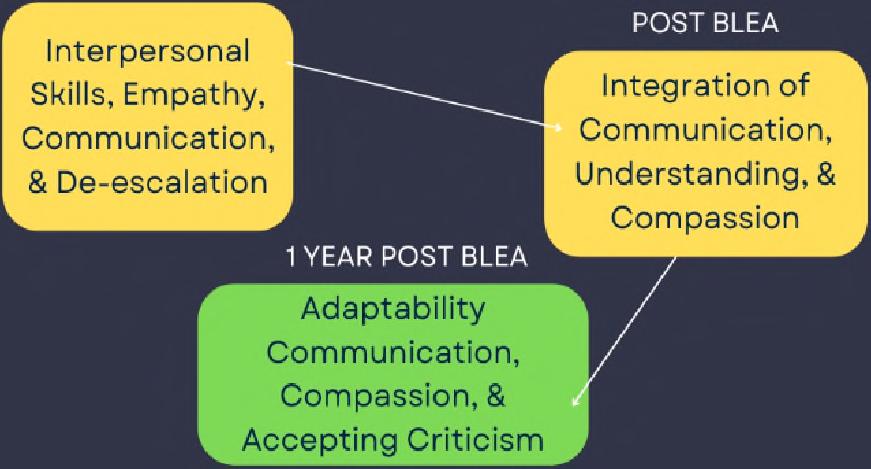
When asked to identify the single most important skill needed for a career in law enforcement, both SPD and non-SPD participants demonstrated clear developmental progression over time, with notable similarities in trajectory alongside meaningful differences shaped by training sequence, organizational context, and early field exposure. Rather than remaining static, perceptions evolved as participants moved through pre-academy, academy, and postacademy stages.
Among SPD participants, responses at the initial interview stage emphasized communication and empathy, reflecting an early understanding of policing as interpersonal and relational work.
Prior to participating in the Before the Badge (BTB) program (pre-BTB), this understanding became more applied, with participants highlighting customer service, communication, and active listening—suggesting an emerging orientation toward public-facing service and responsiveness to community needs.
Following participation in BTB and prior to or alongside BLEA (post-BTB/pre-BLEA), SPD participants’ responses expanded to include officer wellness, mental health, de-escalation, and communication, indicating a broader and more integrated view of policing. At this stage, participants appeared to recognize that effective communication and safety are inseparable from emotional regulation, wellness, and the ability to manage stress in high-stakes encounters.
By one-year post-BLEA, SPD participants emphasized safety, communication, and accepting criticism as the most important skills for long-term success. This shift reflects an increased focus on officer survival, accountability, and reflective practice—suggesting that lived experience reinforced the importance of adaptability, feedback, and continual learning within the profession.
A parallel but distinct progression emerged among non-SPD participants. At the initial interview stage, non-SPD respondents emphasized interpersonal skills, empathy, communication, and deescalation, closely aligning with early SPD responses. After completing BLEA, participants moved toward a more integrated framing, identifying communication, understanding, and compassion as interconnected and essential skills rather than isolated competencies.
By one-year post-BLEA, non-SPD participants’ responses further evolved to emphasize adaptability, communication, compassion, and accepting criticism. This progression highlights a growing recognition that policing requires flexibility, openness to critique, and the ability to adjust to changing community expectations, organizational demands, and real-world complexity.
Taken together, the SPD and non-SPD progressions reveal a shared developmental arc: participants begin with an emphasis on interpersonal communication and empathy, then move toward integration, adaptability, wellness, and reflective practice as experience accumulates. Differences between the two groups appear less about direction and more about timing and emphasis, with SPD participants incorporating wellness and safety earlier—likely reflecting BTB exposure—while non-SPD participants arrive at similar conclusions through academy and field experience.
Overall, these findings suggest that perceptions of essential policing skills become more holistic, self-regulatory, and adaptive over time, reinforcing the value of training approaches—such as Before the Badge—that foreground communication, wellness, reflection, and communityoriented practice early in officers’ professional development.
Figure 29 presents a comparative view of how both SPD and non-SPD recruits' understanding of critical law enforcement skills develop through training and their first year in the field, highlighting distinct departmental patterns while revealing shared themes in professional growth.
29. SPD And Non-SPD Recruits' Understanding of Critical Law Enforcement Skills
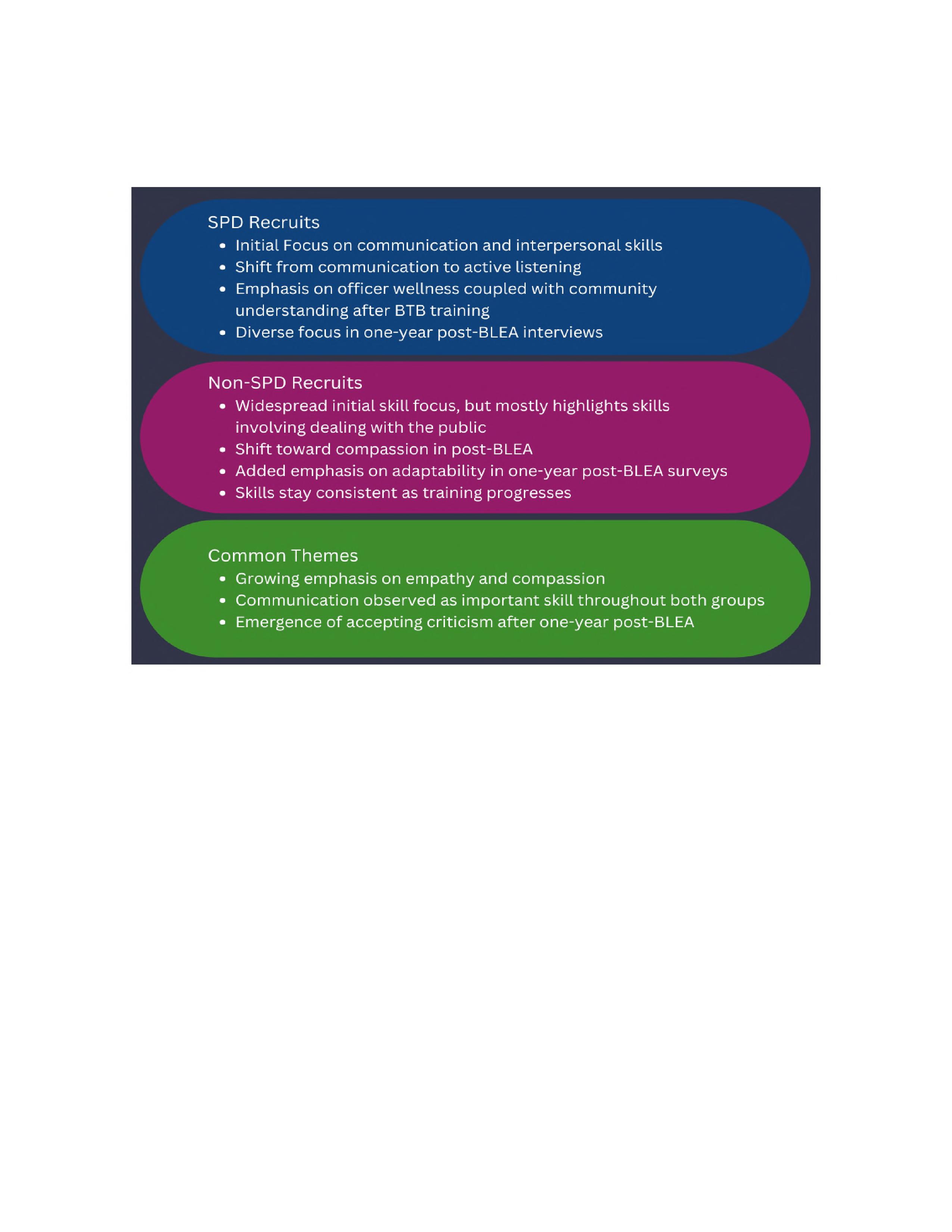
The findings illustrate both convergence and divergence in how SPD and non-SPD recruits conceptualize the most important skills for a career in law enforcement as training and experience progress. While both groups begin with a strong emphasis on interpersonal competence, their trajectories reflect differences in sequencing, emphasis, and exposure to specialized training such as Before the Badge (BTB).
Among SPD recruits, early responses demonstrate a clear focus on communication and interpersonal skills, which then sharpen into active listening and customer-service–oriented communication prior to BTB participation. Following BTB training, SPD recruits show a notable expansion in perspective, emphasizing officer wellness alongside community understanding, suggesting that BTB accelerates the integration of self-regulation, mental health, and relational policing. By one-year post-BLEA, SPD recruits’ responses become more diverse, reflecting a broader and more nuanced understanding of policing that incorporates safety, feedback, and adaptability shaped by field experience.
In contrast, non-SPD recruits display a more diffuse initial skill focus, though still largely centered on dealing effectively with the public. As training progresses through BLEA, non-SPD participants increasingly emphasize compassion and integrated communication, and by one-year postBLEA, they place additional weight on adaptability and accepting criticism. Compared to SPD recruits, non-SPD respondents demonstrate greater consistency in skill framing across time points, suggesting a more gradual evolution rather than an early inflection point tied to a specific program.

Despite these differences, several common themes emerge across both groups. There is a clear and growing emphasis on empathy and compassion as central to effective policing, sustained recognition of communication as a foundational skill at every stage, and a shared acknowledgment—particularly at the one-year post-BLEA point—that accepting criticism and engaging in reflective practice are essential for long-term success in law enforcement.
Overall, these patterns suggest that while recruits enter policing with a baseline understanding of interpersonal competence, training and experience deepen and integrate these skills over time, shifting emphasis from discrete abilities to adaptive, reflective, and relational capacities. The findings further suggest that programs such as Before the Badge may play an important role in accelerating this developmental shift, particularly by foregrounding wellness, community understanding, and self-awareness earlier in officers’ professional trajectories.
In the One-Year Post-BLEA interview, recruits (now officers) were asked - What is the biggest difference between your experiences on the street so far and what you thought it would be like? Are there things you were taught in BTB and BLEA that don’t work or did not adequately prepare you for your interactions on the street? As interviews are continued from the first cohort of officers to reach one-year post-BLEA, this question examines the gap between training expectations and field reality. While this small sample of officers cannot provide definitive conclusions about the broader recruit experience, their candid reflections offer valuable preliminary insights into how new officers reconcile their training with real-world challenges (Figure 30). Their responses, organized below by theme, highlight both common experiences and unique perspectives on the transition from academy to active duty. These early narratives may help inform our understanding of how officers process and adapt to their first year of service, though more comprehensive patterns will emerge as additional recruits reach this milestone.
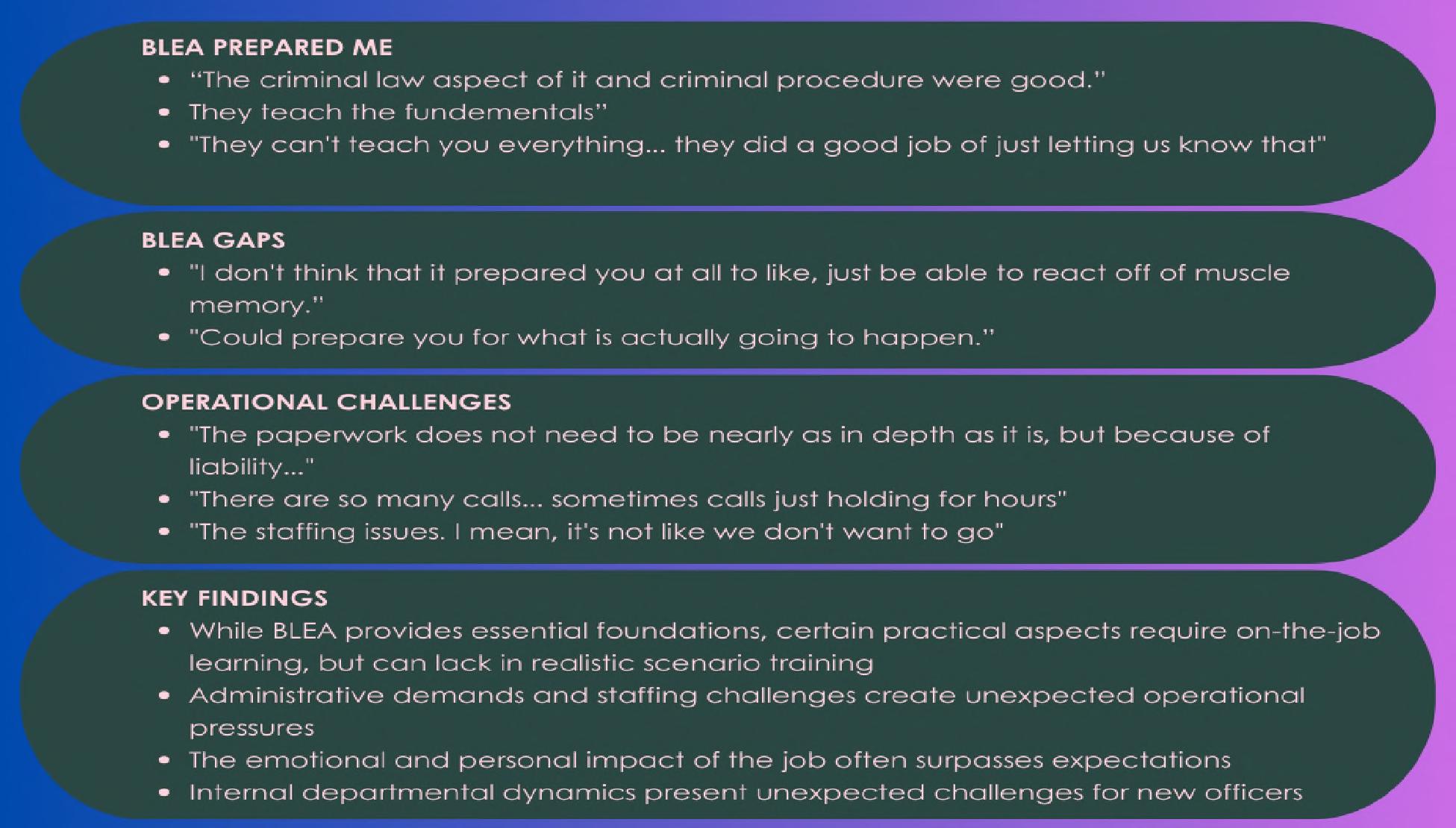

Participant reflections on the Basic Law Enforcement Academy (BLEA) experience reveal a balanced assessment of the academy’s role in preparing new officers, highlighting both its foundational strengths and its limitations once recruits enter operational settings.
Participants consistently acknowledged that BLEA effectively provides core legal and procedural foundations. Respondents described the academy as strong in criminal law and criminal procedure and viewed its emphasis on fundamentals as appropriate for an entry-level training environment. Several participants recognized that BLEA explicitly communicates its own limits, reinforcing the understanding that not all aspects of policing can be fully taught in an academy setting.
At the same time, participants identified notable gaps between academy training and realworld policing demands. Respondents emphasized that BLEA does not fully prepare officers for rapid, instinctive decision-making or the unpredictable nature of on-the-job encounters. Several comments suggested that academy instruction could better approximate what officers face in the field, especially in terms of realistic scenario-based training and muscle-memory development.
Beyond training content, participants highlighted a range of operational and organizational challenges encountered early in their careers. These included administrative burdens driven by liability concerns, high call volumes that strain response capacity, and persistent staffing shortages. Importantly, respondents framed these challenges not as a lack of motivation or commitment, but as systemic constraints that shape daily policing practice in ways that are difficult to anticipate during academy training.
Taken together, these findings suggest that while BLEA provides essential foundational knowledge, much of what defines officer readiness emerges through on-the-job learning within complex organizational environments. The transition from academy to field exposes recruits to emotional, administrative, and structural pressures that often exceed expectations and require adaptability, resilience, and support beyond formal training.
Overall, participant feedback underscores the importance of viewing BLEA as a starting point rather than a complete preparation, reinforcing the value of complementary training programs, field mentoring, and ongoing professional development to address the practical and emotional realities of policing.
This Year 3 longitudinal evaluation of the Seattle Police Department’s Before the Badge (BTB) Training Program examines recruit development across multiple stages of the law enforcement training pipeline. Using a mixed-method design and a comparison group of non-SPD recruits enrolled in the Washington State Criminal Justice Commission (WSCJTC) Basic Law Enforcement Academy (BLEA), the findings provide insight into recruit backgrounds, motivations, and the evolution of understanding regarding guardian-oriented policing principles over time.
The results presented in this report draw on data collected between September 1, 2022, and August 31, 2025, including 315 pre-training surveys (218 SPD BTB and 97 non-SPD recruits), 73 posttraining surveys (48 SPD BTB and 25 non-SPD recruits), and 21 one-year post-BLEA surveys (9 SPD and 12 non-SPD recruits), along with qualitative interview data collected at pre-training, post-

BTB, post-BLEA, and one-year post-BLEA milestones. This expanded dataset provides deeper insight into recruits’ backgrounds and the developmental nature of training effects across time.
Pre-training results reveal meaningful differences between SPD BTB recruits and recruits from other Washington State agencies entering BLEA. SPD recruits were more racially and ethnically diverse, reported less prior law enforcement experience, and were less likely to hold a college degree compared to non-SPD recruits. SPD recruits also came from more geographically diverse backgrounds, including a higher proportion of out-of-state origins, while non-SPD recruits more often reported longstanding local or regional ties to Washington State.
These contextual differences are important for understanding how recruits enter training and how they may experience early professional socialization. For SPD recruits, greater geographic diversity and fewer preexisting local ties may heighten the importance of early community immersion, historical grounding, and structured opportunities to learn about Seattle neighborhoods and residents prior to academy training.
At baseline, SPD BTB recruits demonstrated lower endorsement of negative police subculture attitudes and higher scores on the Guardianship–Respect scale compared to non-SPD recruits, suggesting that SPD recruitment may attract candidates aligned with guardian-oriented values. However, explicit awareness of guardian policing concepts remained limited at entry, underscoring the need for structured training to translate values into articulated professional frameworks.
Across training milestones, SPD recruits demonstrated a clear developmental trajectory in guardian policing awareness, increasing from 22.0% pre-BTB to 60.2% post-BTB, 71.7% post-BLEA, and 83.3% at one-year post-BLEA. By post-BLEA, SPD recruits’ awareness levels were comparable to those of non-SPD recruits, indicating convergence across groups as academy training and early field experience progressed. These findings suggest that BTB functions as an early, accelerative intervention, shaping recruits’ understanding of guardian policing earlier in the training process.
Qualitative findings reveal important patterns in how recruits’ understanding of critical law enforcement skills develop over time. Communication consistently emerged as the most important skill for a career in law enforcement; however, recruits’ conceptualization of communication became increasingly nuanced across training stages. Early emphasis on basic interpersonal communication expanded to include active listening, empathy, de-escalation, adaptability, accountability, and the ability to accept criticism.
By post-BLEA and one-year post-BLEA milestones, recruits described policing less as the application of discrete techniques and more as an integrated, reflective practice shaped by situational awareness, judgment, and emotional regulation. This evolution reflects professional maturation and suggests the cumulative influence of BTB, BLEA, and early field experience.

The wellness component of BTB emerged as a distinctive and influential element of the program. Many recruits expressed surprise at both the scope and quality of the wellness training and highlighted its practical relevance to stress management, self-awareness, and sustaining a longterm career. Recruits frequently linked wellness skills to improved decision-making, professionalism, and effective community engagement.
Participants also emphasized the limits of academy-based training. While BLEA was consistently described as providing essential legal and procedural foundations, recruits noted that real-world policing requires rapid decision-making, adaptability, and navigation of organizational constraints such as staffing shortages and administrative demands. These findings reinforce the importance of complementary training, mentoring, and organizational support beyond the academy.
Within a broader national context, the Seattle Police Department’s Before the Badge program differs from many pre-academy initiatives that primarily emphasize physical conditioning, administrative orientation, or tactical preparation. Nationally, some agencies—including the Los Angeles Police Department and the Jacksonville Sheriff’s Office—have incorporated mindfulness-based and wellness-focused training into pre-academy programs, with research indicating statistically significant improvements in empathy, emotional awareness, and stress regulation (Calhoun, 2022a; 2022b).
Before the Badge builds on this emerging evidence by embedding wellness practices within a community-immersive and historically grounded curriculum. Evaluation findings from this study indicate that SPD recruits enter BLEA with higher Guardianship – Respect scores and lower endorsement of negative police subculture attitudes compared to recruits from other agencies. By engaging recruits in structured community–police dialogues and critical examination of the historical role of policing prior to academy training, BTB reflects a broader national shift— documented by the Council on Criminal Justice Task Force on Policing (2021)—toward humanizing the profession, prioritizing officer wellness, and mitigating the development of “us versus them” orientations during early training.
Key findings from the Year 3 evaluation include:
• SPD BTB recruits enter training with greater racial/ethnic and geographic diversity and less prior law enforcement experience than non-SPD recruits.
• BTB is associated with accelerated development of guardian policing awareness among SPD recruits, with effects persisting through post-BLEA and one-year post-BLEA milestones.
• Recruits’ understanding of core skills, particularly communication—becomes increasingly integrated and reflective over time.
• Wellness training is a central and influential component of BTB, contributing to emotional regulation, decision-making, and career sustainability.
• Academy training provides essential foundations, but officer readiness continues to develop through field experience within complex organizational environments.

This report represents the third year of a multi-year longitudinal evaluation of the Before the Badge program. The inclusion of the first cohort to reach the one-year post-BLEA milestone provides preliminary insight into how training principles extend beyond the academy into early field experience. While quantitative analyses at this stage remain limited by sample size, qualitative findings suggest continued integration of guardian-oriented, wellness-centered, and reflective approaches to policing.
Before the Badge is best understood as a complementary, early-stage intervention embedded within a broader ecosystem of academy training, field supervision, and organizational culture. While training alone cannot drive institutional change, evidence from this evaluation indicates that BTB meaningfully shapes how recruits understand their role, their relationship to the community, and the importance of wellness and communication during a critical formative stage of professional socialization.
The next steps of the evaluation include:
• Continued longitudinal follow-up at post-BLEA, one-year post-BLEA, and three-year postBLEA milestones.
• Prioritization of participant retention to strengthen longitudinal analyses.
• Examination of how training principles translate into field-based decision-making and professional practice.
As additional cohorts reach later milestones, future analyses will provide a more comprehensive assessment of BTB’s long-term influence on officer development and professional performance. The final report, scheduled for December 31, 2028, will synthesize findings across the full evaluation period.

Calhoun, S. (2022a). POWER Training Program Los Angeles Police Department Cohorts Final Evaluation Report (pp. 1–17). Los Angeles, CA: University of California.
Calhoun, S. (2022b, July 22). POWER Training Program Jacksonville Sheriff’s Office: Final Evaluation Report. Los Angeles, CA; University of California.
Council on Criminal Justice Task Force on Policing. (2021, March). Effectiveness of Police Training. Dionne, P. (1996). The evaluation of training activities: A complex issue involving different stakes. Human Resource Development Quarterly, 7(3), 279.
Flynn, D., van Schaik, P., & van Wersch, A. (2004). A Comparison of Multi-Item Likert and Visual Analogue Scales for the Assessment of Transactionally Defined Coping Function. European Journal of Psychological Assessment, 20(1), 49.
Guyatt, G. H., Townsend, M., Berman, L. B., & Keller, J. L. (1987). A comparison of Likert and visual analogue scales for measuring change in function. Journal of chronic diseases, 40(12), 1129-1133.
Helfgott, J.B., Atherley, L., Pollock, J., Vinson, J., Strah, B., Neidhart, E., Conn-Johnson, C., Hickman, M., & Wood, N. (June 30, 2015). Evaluation of the Washington State Criminal Justice Training Commission’s “Warriors to Guardians” Cultural Shift and Crisis Intervention (CIT) Training Final Report.
Helfgott, J.B., Conn-Johnson, C., & Wood, N. (May 21, 2015). Seattle Police Department CIT Culture Survey Final Report.
Helfgott, J.B. & Hickman, M.J. (2025, September 26). Seattle police recruits’ training takes them beyond warrior-vs.-guardian. The Seattle Times https://www.seattletimes.com/opinion/seattle-police-recruits-training-takes-thembeyond-warrior-vs-guardian/
Helfgott, J.B. & Hickman, M.J. (February 10, 2021). The Effect of Guardian Training for Law Enforcement Officers: Longitudinal Findings 2015-2020 (70p.).
Helfgott, J.B. & Hickman, M.J. (February 10, 2021). The Effect of Guardian Training for Law Enforcement Officers: Longitudinal Findings 2015-2020 (70p.).
Helfgott, J.B., Hickman, M.J., Calcagno, H., Shinchi, S., & Tanaka, B. (2022). Seattle Police Department’s Before the Badge Longitudinal Evaluation - Interim Report(65p.)
Helfgott, J.B., Hickman, M.J., & Malterud, E.M. (June 30, 2017). The Effect of Guardian-Focused Training for Law Enforcement Officers (99p.)
Helfgott, J.B., Hickman, M.J., Stein, J., Zakhary, E., Priebe, Q., & Dieckmann, E. (2023). Seattle Police Department’s Before the Badge Longitudinal Evaluation – One Year Report (104p.)
Helfgott, J.B., Hickman, M.J., Strah, B.M., Atherley, L.T., Kosson, D.S., & Dorsher, E. (2022). The Relationship between Personality Traits and the Effectiveness of Guardian Law Enforcement Training, Journal of Forensic Psychology Research and Practice. 1-29. https://doi.org/10.1080/24732850.2022.2028392
Helfgott, J.B., Strah, B.M, Atherley, L, & Neidhart, E. (2021). Evaluation of CIT components of guardian law enforcement training. Journal of Police and Criminal Psychology, 36(1), 403-422.
Helfgott, J.B., Strah, B.M., Pollock, J., Atherley, L.T., & Vinson, J. (2018). A qualitative approach to understanding guardian models of policing. Journal of Qualitative Criminal Justice and Criminology, 6(1), 93-120.
Hung, T. K. (2010). An empirical study of the training evaluation decision-making model to measure training outcome. Social Behavior and Personality: an international journal, 38(1), 87-101. Kirkpatrick, D. (1979). Techniques for Evaluating Training. Training & Development Journal, 78-92.
Kirkpatrick, D. L. (1967). Evaluation of training. In R. L. Craig & L. R. Bittel (Eds.), Training and Development Handbook (pp. 87-112). New York: McGraw Hill.
Phillips, J. J. (1997). Handbook of training evaluation and measurement methods. Routledge. Reips, U. D., & Funke, F. (2008). Interval-level measurement with visual analogue scales in Internet-based research: VAS Generator. Behavior Research Methods, 40(3), 699-704. Sasikumar, P.K.R. (2021). Application of Colaizzi’s Method of data analysis in phenomenological research. Medico-legal Update, 21(2), 914-918. https://doi.org/10.37506/mlu.v21i2.2800 Seattle Police Department (n.d). Operationalizing and measuring relational policing: A proposal for identifying key components, creating a community of practice, and producing measures of success.
https://www.seattle.gov/documents/Departments/Police/PDF/Relational%20Policing%20 Model%20Concept%20Paper%20SPD.pdf
Smidt, A., Balandin, S., Sigafoos, J., & Reed, V. A. (2009). The Kirkpatrick model: A useful tool for evaluating training outcomes. Journal of Intellectual and Developmental Disability, 34(3), 266-274.
Weisburd, D. & Greenspan, R. (2000). Police Attitudes Toward Abuse of Authority. NIJ: Research in Brief. Available via https://www.ncjrs.gov/pdffiles1/nij/181312.pdf
Weisburd, D., Greenspan, R., Hamilton, E. E., Bryant, K. A., & Williams, H. (2001). The abuse of police authority: A national study of police officers’ attitudes. Washington, DC: Police Foundation.

Q1.1
CONSENT TO PARTICIPATE IN EVALUATION OF LAW ENFORCEMENT TRAINING
You are invited to participate in a project evaluating the effectiveness of law enforcement training. The survey will take approximately 20 minutes to complete. Your answers will be collected electronically and analyzed by an independent research team. A final report will be made public, though none of your answers will be identified, individually, ever. Your participation will assist in improving the quality of training for future law enforcement officers in the State of Washington.
RISKS
There are questions in the survey instrument that inquire about personal information, behaviors, and social interactions. Reading and responding to these questions may discomfort
BENEFITS
The results will be used to improve law enforcement curriculum and training.
CONFIDENTIALITY
The data in this study will be confidential. Though you will be asked to provide details about yourself and your experience as a law enforcement recruit/officer/personnel, those responses will be held confidential.
PARTICIPATION
Your participation is voluntary, and you may withdraw from the study at any time and for any reason. If you decide not to participate or if you withdraw from the study, there is no penalty. There are no costs to you or any other party.
CONTACT
This research is being conducted by a research team directed by Dr. Jacqueline Helfgott (Principal Investigator) and is monitored by the Institutional Review Board (IRB) at Seattle University. Should you have any research-related questions, you may contact Dr. Helfgott at (jhelfgot@seattleu.edu) or the review board at (irb@seattleu.edu).
Participant Signature/Date
Skip To: End of Survey If If CONSENT TO PARTICIPATE IN E... Is Equal to, Then Skip To End of Survey
End of Block: CONSENT
Start of Block: BACKGROUND
Q2.1 Name:

Q2.2 Student ID:
Q2.3 Class Number:
Q2.4 Age:
Q2.5 Sex:
o Male (1)
o Female (2)
o Other (4)
Q2.6 Race/Ethnicity:
o Caucasian (1)
o African American (2)
o Hispanic (3)
o Asian/Pacific Islander (4)
o Native American (5)
o Multiple Race/Ethnicity (6)
o Other (7)
Q2.7 Education:
o HS/GED (1)
o Some College (2)
o AA/AS (3)
o BA/BS (4)
o MA/MS (5)
o PhD/EdD (6)
o JD (7)

Q2.8 Total Years in Law Enforcement:
Q30 What agency are you employed with?

Q2.9 Date Employed:
Q2.10 Current Rank:
o Recruit (1)
o Student Officer in Field Training (2)
o Officer (3)
o Detective (4)
o Sergeant (5)
o Lieutenant (6)
o Captain (7)
o Chief (Assistant, Deputy, Chief) (8)
o Community Service Officer (9)
o Crime Prevention Coordinator (10)
o Other (11)
Q2.11 Please indicate by sliding the bar your level of familiarity with the concepts and ideas associated with the following law enforcement training components. Please move the slider bar to the right or click the slider bar to the desired position to indicate your level of familiarity with the concepts and ideas associated with each of the training components. 0 25 50
Crisis Intervention Team Training ()

Q2.12 Have you previously received Crisis Intervention Team (CIT) Training?
o Yes (1)
o No (2)

Skip To: Q2.13 If Have you previously received Crisis Intervention Team (CIT) Training? = Yes
Display This Question:
If Have you previously received Crisis Intervention Team (CIT) Training? = Yes Q2.13 What type of Crisis Intervention Training did you previously complete?
40-hour training (4)
Basic 8-hour CIT training (7)
Other (6)
Skip To: Q2.14 If What type of Crisis Intervention Training did you previously complete? = 40-hour training
Skip To: Q2.14 If What type of Crisis Intervention Training did you previously complete? = Basic 8hour CIT training
Skip To: Q2.14 If What type of Crisis Intervention Training did you previously complete? = Other
Skip To: Q2.15 If What type of Crisis Intervention Training did you previously complete? = 40-hour training
Skip To: Q2.15 If What type of Crisis Intervention Training did you previously complete? = 40-hour
Display This Question:
If Have you previously received Crisis Intervention Team (CIT) Training? = Yes
Q2.14 Please indicate the location of CIT training you previously completed.

Display This Question:
If What type of Crisis Intervention Training did you previously complete? = 40-hour trainin
Q2.15 I volunteered for the 40-hour CIT training:
o Yes, I volunteered. (1)
o No, I was required to attend. (2)
Q2.16 Would you be interested in attending CIT training beyond what is included in BTB and BLEA in the future?
o Yes (1)
o No (2)
o Maybe (3)
End of Block: BACKGROUND
Start of Block: LE OPERATIONS
Below is a series of statements regarding day-to-day law enforcement operations. Please move the slider bar to the right or click the slider bar at the desired position to indicate the strength of your agreement with each statement. The degree to which you move the slider bar to the right indicates how strongly you agree with each statement.
Taking care of myself physically by eating well and exercising is an important part of being a police officer. ()
I know the indicators of PTSD and know where to find support if I experience anything like it. ()
I am in good shape physically and know my skills would allow me to control any situation on the street. ()
I have people I can talk to if something is bothering me. ()
I generally know when I'm upset and can control it when interacting with the public. ()
I practice the breathing techniques that help you control your emotions. ()
People need to show more respect for the authority of the police. ()
The law and departmental policies don't give officers enough support to use force when necessary. ()
Always following the rules is not compatible with getting the job done. ()
The public is overly concerned with police brutality. ()
Police officers are not permitted to use as much force as is often necessary in making arrests. ()
Police officers should forget what they learned in the academy because it doesn't help them survive on the street. ()
My department encourages a culture where officers can learn from their mistakes rather than one where there is a need to cover them up. ()
Supervisors and FTOs in my department exemplify the traits of service, respect for the law, professionalism, and courtesy. ()
Police administrators concentrate on what police officers do wrong rather than what police officers do right. ()
My police department takes a tough stance on improper behavior by police. ()
My department makes me feel important and relevant to its success. ()
My department considers how policies affect officers. ()
I try to imagine myself in the shoes of the subjects I'm contacting. ()
I try to understand what is going on in a citizen's mind by paying attention to their nonverbal cues and body language. ()
I try to think like the citizens I'm dealing with in order to render a better outcome. ()
Understanding where the citizen is coming from is an important skill without which my success as a law enforcement officer would be limited. ()
I consider understanding my subject's body language as important as verbal communication in the police/citizen interaction/relationship. ()
In most situations, officers can resolve an issue just by listening and talking to citizens. ()
Sometimes the right thing to do is just listen and sympathize with an agitated citizen. ()
Police should work with citizens to try and solve problems on their beat. ()
I can usually respect the other person's viewpoint, even if I don't agree with it. ()
Pretty much everything I do and who I socialize with is related to law enforcement and other police officers. ()
End of Block: LE OPERATIONS
Start of Block: BEHAVIORAL CRISIS INCIDENTS
Below is a series of questions regarding day-to-day operations involving incidents involving individuals in behavioral crisis. If you are not currently in a position where you regularly respond to calls, please answer to the best of your ability based on your background and experience. Please move the slider bar to the right or click the slider bar at the desired position to indicate the strength of your agreement with each statement. The degree to which you move the slider bar to the right indicates how strongly you agree with each statement.
Incidents involving individuals in behavioral crisis are a standard part of patrol work. ()
Calls involving persons who are experiencing behavioral crisis are dangerous. ()
I am confident in my ability to handle calls involving persons in behavioral crisis. ()
I feel recognition and respect from the department for my skills in de-escalating behavioral crisis events. ()
My training indicates that it is important to resolve incidents involving persons in a behavioral crisis quickly. ()
Most supervisors expect patrol officers to resolve incidents involving persons in a behavioral crisis quickly. ()
My agency expects patrol officers to resolve incidents involving persons in a behavioral crisis quickly. ()
Start of Block: CIT PERCEPTIONS AND ORG VALUE
Q5.1
Below are a series of questions regarding your perceptions of CIT. These questions are important even if you have not taken CIT Training. Please move the slider bar to the right or click the slider bar at the desired position to indicate the strength of your agreement with each statement. The degree to which you move the slider bar to the right indicates how strongly you agree with each statement.
I am familiar with the CIT concept of intervention with individuals with mental illness. ()
I am supportive of utilizing the CIT concept in law enforcement. ()
CIT-trained officers are best equipped to respond to incidents involving behavioral crisis. ()
When I encounter an event involving a behavioral crisis the assistance of a CIT officer is important. ()
I utilize CIT officers whenever possible. ()
In incidents when I have requested a CIT officer, I have been satisfied with the response. ()
The Basic Law Enforcement Academy Training (BLEA) that all officers receive is adequate to prepare officers to respond to incidents involving behavioral crisis. ()

Below is a list of different organizational levels within law enforcement agencies. Please move the slider bar to the right or click the slider bar at the desired position to indicate the value you believe is placed on the CIT concept in your agency for each level of your organization. The degree to which you move the slider bar to the right indicates the value you believe is placed on the CIT concept.
Department Leadership (i.e., Command Staff) ()
My individual chain of command (i.e. Lieutenants, precinct leadership). ()
My immediate supervisor (i.e. patrol sergeants). ()
Patrol officers. ()

Q5.3 What is your general perception of CIT?
of Block:
Start of Block: SCENARIOS
Q6.1
SCENARIOS
The following three scenarios involve individuals who you may come into contact with when responding to routine calls for service. Please read the scenarios and use the slider to rate the strength of your agreement with the subsequent statements associated with each. Please move the slider bar to the right or click the slider bar at the desired position to indicate the strength of your agreement with each statement. The degree to which you move the slider bar to the right indicates how strongly you agree with each statement.
(1)You are dispatched to a residence with the following information. Mr. N is a 30 year old male. His wife states that he has locked himself in the garage and won't come out. Mr. N's wife called the police because she does not know what he is going to do in there and she is concerned for his well-being. Mr. N has a collection of guns that he uses for hunting which are stored in the garage. The wife states that Mr. N has been feeling unusually sad and miserable for the past few months. Even though he is tired all the time, he has had great difficulty sleeping. He hasn't been eating much and has lost weight. He couldn't keep his mind on his work and put off doing important client projects and as a result he was let go from his job today. The wife states she has also just discovered he hasn't been paying household bills and she found a pile of collection letters and foreclosure warnings in his office.
From an assessment of the facts you are given, please rate the strength of your agreement with the following statements.
Mr. N is exhibiting symptoms most associated with Dementia or Alzheimer's. ()
Mr. N is exhibiting symptoms most associated with Depression. ()
Mr. N is exhibiting symptoms most associated with Schizophrenia. ()
You determine there is no increased risk that Mr. N might attempt suicide. ()
You determine that there is an increased risk that Mr. N might become aggressive and potentially attempt suicide-by-cop. ()
Your first priority upon arriving would be to gain entry to the garage in order to secure any weapons and to restrain Mr. N for his own safety. ()
Your first priority would be to attempt to engage with Mr. N through the garage door to assess the situation and his current mental state. ()
In speaking with Mr. N, it would be best not to ask him very directly if he was having thoughts about killing himself. ()
You would attempt to get Mr. N to open to door and step outside the garage so you can talk face to face. ()
Once you assess that Mr. N is not in imminent danger of self-harm. You give him the number for the Crisis Clinic 24 hour Crisis Line and suggest that it might be helpful for him to talk to someone. ()
Q6.2 (2) You and a partner are dispatched to an apartment residence with the following information. Building manager has called the police because tenant Ms. S, age 23 has been throwing things against the walls and will not answer the door. Upon arrival at the building you contact the manager who informs you that Ms. S lives alone and is unemployed. Over the past several months, she has rarely been seen other than to occasionally look out her door. It is apparent that she has lost considerable weight and her appearance is disheveled and unclean. She rarely seems to go anywhere or see anyone. Neighbors have been complaining because they hear her walking around her room late at night and even though they know she is alone, they have heard her shouting and arguing as if someone else is in there. She has been heard yelling about people spying on her through the vents. The manager does not want her arrested, just wants her to quiet down.
From an assessment of the facts you are given, please rate the strength of your agreement with the following statements.
Ms. S is exhibiting symptoms most associated with Post-Traumatic Stress Disorder (PTSD). ()
Ms. S is exhibiting symptoms most associated with Depression. ()
Ms. S is exhibiting symptoms most associated with Schizophrenia. ()
The voices Ms. S hears in her head suggest she is experiencing hallucinations. ()
Ms. S's belief that people are spying on her through the air vents suggest she is experiencing delusions. ()
In speaking with Ms. S, it is best practice if both you and your partner engage in conversation with her. ()
In speaking with Ms. S, you should keep a safe distance, physically and emotionally, keeping a blade stance and informing her what you are doing there and why. ()
If Ms. S asks you if you hear the voices you should say yes in order to build a rapport with her. ()
Paraphrasing what Ms. S is saying back to her may help deescalate the situation. ()
You determine that since Ms. S is not an imminent danger to herself of others and call the Mobile Crisis Team (MCT) to respond to do a mental health evaluation. ()
Q6.3 (3) You are dispatched to a residence with the following information. Mr. B is an 88 year old male who has called police to report that his home has been burglarized. When you arrive at the residence, Mr. B lets you in and you can't help but notice that his clothing is stained and smells of urine. Walking through the kitchen you see spoiled food on the counter and there are numerous empty alcohol bottles and broken glass on the floor and the gas stove burner is on. The living room is cluttered with piles of papers. It seems evident that there is no one else living there. When you ask Mr. B what was stolen from his home, he grows confused and says nothing was stolen, and asks why would anything be stolen. You tell him that you are at his
house because he called to report a burglary, however he denies doing this.
From an assessment of the facts you are given, please rate the strength of your agreement with the following statements.
Mr. B is exhibiting symptoms most associated with Post-Traumatic Stress Disorder (PTSD). ()
Mr. B is exhibiting symptoms most associated with Dementia or Alzheimer's. ()
Mr. B is exhibiting symptoms most associated with Schizophrenia. ()
You ask Mr. B if you can sit down and ask permission before moving any items. ()
You engage Mr. B in conversation, asking short questions to ascertain if he is oriented to time, place, and person. ()
Paraphrasing Mr. B's statements helps to confirm that you understand them. ()
You determine that most likely there has been no burglary and you close the case and leave. ()
You determine that most likely there has been no burglary and you arrest Mr. B for filing a false police report. ()
You determine that most likely there has been no burglary but Mr. B may need some outside help. You ask him if there is a friend or family member you can call for him. ()
You call the Geriatric Regional Assessment Team (GRAT) or the Mobile Crisis Team (MCT) to see if they are available to do an evaluation. ()
End of Block: SCENARIOS
Start of Block: STATEMENTS

Q7.1 Please rate the degree to which you agree with the following statements. Disagree Strongly (1) Disagree (2) Neutral (3) Agree (4) Agree Strongly (5)
I’m a rebellious person. (1)
I have never been involved in delinquent gang activity. (2)
Most people are wimps. (3)
I’ve often done something dangerous just for the thrill of it. (4)
I have tricked someone into giving me money. (5)
I have assaulted a law enforcement official or social worker. (6)
I have pretended to be someone else in order to get something. (7)
I like to see fistfights. (8) o o o o o
I would get a kick out of ‘scamming’ o o
o someone. (9)

It's fun to see how far you can push people before they get upset. (10)
I enjoy doing wild things. (11)
I have broken into a building or vehicle in order to steal something or vandalize. (12)
I don’t bother to keep in touch with my family any more. (13)
I rarely follow the rules. (14) o
You should take advantage of other people before they do it to you. (15)
People sometimes say that I’m cold-hearted. (16)
I like to have sex with people I barely know. (17)
I love violent sports and movies. (18)

Sometimes you have to pretend you like people to get something out of them. (19)
I was convicted of a serious crime. (20)
I keep getting in trouble for the same things over and over. (21)
Every now and then I carry a weapon (knife or gun) for protection. (22)
You can get what you want by telling people what they want to hear. (23)
I never feel guilty over hurting others. (24)
I have threatened people into giving me money, clothes, or makeup. (31)
A lot of people are “suckers” and
can easily be fooled. (26)
I admit that I often “mouth off” without thinking. (27)
I sometimes dump friends that I don’t need any more. (28)
I purposely tried to hit someone with the vehicle I was driving. (29)

End of Block: STATEMENTS
Start of Block: COMMENTS
Q8.1 COMMENTS
We appreciate your feedback on this survey. Please provide any additional comments related to the survey you would like to offer.

Longitudinal Evaluation of Seattle Police Department’s “Before the Badge” Training Program Recruit Interview Questions
SPD Recruits Only
PRE-BTB Training
1. What is your background? What job did you have/what were you doing before you decided to apply for the position with the Seattle Police Department?
2. Are you from Seattle? If not, where are you from? Do you currently live in Seattle? If so, where do you live? How long have you lived in Seattle? If not, where do you live?
3. Do you have a background in law enforcement? Do you have friends/family who are police officers?
4. Why did you apply for a position with the Seattle Police Department?
5. What are your expectations about the training you will receive in BTB?
6. What are your expectations about the training you will receive in BLEA?
7. What are your expectations about your future career in law enforcement?
8. Have you everheard of “guardian policing”? If so, what is your understanding guardian policing?
9. Since you have been hired by SPD, what has the response been to you from your friends/family regarding your employment with the Seattle Police Department?
10. What is the #1 most important skill you think a person needs for a career in law enforcement?
11. Why did you volunteer to participate in this study?
1. Are you still employed with SPD? If not, are you/where are you currently employed?
2. Do you currently live in Seattle? If so/not, where do you live?
3. At this stage of your training and development as a Seattle Police recruit/officer/CSO, how has the experience been for you so far?
4. Since you have been hired by SPD, what has the response been to you from your friends/family regarding your employment with the Seattle Police Department?
5. How was your experience in the BTB Training Program? Were you satisfied with the BTB training?
6. What was your biggest takeaway from the BTB training? What would you say is the most important thing you learned in the SPD BTB program?
7. What is the #1 most important skill you think a person needs for a career in law enforcement?
8. How did you experience the wellness component of the BTB training? Did you expect to receive this type of training? What was your biggest take away from this component of the BTB training?

9. How do you think the BTB training will prepare you for your role in law enforcement as you progress through your career?
10. What are your expectations about the training you will receive in BLEA?
11. Have you ever heard of “guardian policing”? If so, what is your understanding guardian policing?
12. If you were responsible for designing/improving the BTB training for the next group of recruits, what would you recommend?
1. What is your background? What job did you have/what were you doing before you decided to apply for the position in Law Enforcement?
2. What department are you with? Are you from that area? If not, where are you from? Do you currently live in the area you are working in? If so, where do you live? How long have you lived in this area? If not, where do you live?
3. Do you have a background in law enforcement? Do you have friends/family who are police officers?
4. Why did you apply for a position with your department?
5. Have you received any pre-BLEA training in your department?
6. What are your expectations about the training you will receive in BLEA?
7. What are your expectations about your future career in law enforcement?
8. Have you ever heard of “guardian policing”? If so, what is your understanding guardian policing?
9. Since you have been hired by your agency, what has the response been to you from your friends/family regarding your employment in law enforcement?
10. What is the #1 most important skill you think a person needs for a career in law enforcement?
11. Why did you volunteer to participate in this study?
1. Are you still employed with the agency you were hired with prior to BLEA? If not, are you/where are you currently employed?
2. Do you currently live in the city of your jurisdiction? If so/not, where do you live?
3. At this stage of your training and development recruit/officer/CSO, how has the experience been for you so far?
4. Since you have been hired in law enforcement, what has the response been to you from your friends/family regarding your employment with your agency?
5. How satisfied are you with the experience you had in the WSCJTC BLEA in terms of preparing you for your position in law enforcement?
6. If you had training in your agency prior to BLEA, how did that training complement the WSCJTC BLEA? (For SPD Recruits - How did the SPD BTB training complement the WSCJTC BLEA?)
7. What would you say is the most important thing you learned in the BLEA to prepare you for where you are in your career and training to date?
8. Have you used any of the specific pre-BLEA training components your agency may have offered in your work/training so far? If so, what specifically?
9. Have you used any of the specific WSCJTC BLEA training components in your work so far? If so, what specifically?
10. What is the #1 most important skill you think a person needs for a career in law enforcement?
11. Have you ever heard of “guardian policing”? If so, what is your understanding guardian policing?
One-Year Post-BLEA
1. Are you still employed with your original agency? If not, are you/where are you currently employed?
2. Do you currently live in the city of your jurisdiction? If so/not, where do you live?
3. At this stage of your training and development recruit/officer/CSO, how has the experience been for you so far?
4. Since you have been hired in law enforcement, what has the response been to you from your friends/family regarding your employment with your agency?
5. How satisfied are you with the experience you had in the WSCJTC BLEA in terms of preparing you for your position in law enforcement?
6. If you had training in your agency prior to BLEA, how did that training complement the WSCJTC BLEA?
7. What would you say is the most important thing you learned in the BLEA to prepare you for where you are in your career and training to date?
8. Have you used any of the specific pre-BLEA training components your agency may have offered in your work/training so far? If so, what specifically?
9. Have you used any of the specific WSCJTC BLEA training components (and SPD BTB for SPD recruits) in your work so far? If so, what specifically?
10. What is the #1 most important skill you think a person needs for a career in law enforcement?
11. Have you ever heard of “guardian policing”? If so, what is your understanding guardian policing? Do you follow those principles in your day-to-day interactions with the public? Examples?
12. How did what you learned in training compare to what you learned and are continuing to learn post-BLEA now that you have been in your position for one year?
13. What is the biggest difference between your experiences on the street so far and what you thought it would be like? Are there things you were taught by your agency prior to BLEA and/or in BLEA that don’t work or did not adequately prepare you for your interactions on the street? Examples?
14. What is your experience of being a police officer officer/CSO now one-year post BLEA?
3-Years Post-BLEA
1. Are you still employed with your original agency? If not, are you/where are you currently employed?
2. Do you currently live in the city of your jurisdiction? If so/not, where do you live?
3. At this stage of your training and development recruit/officer/CSO, how has the experience been for you so far?
4. Since you have been hired in law enforcement, what has the response been to you from your friends/family regarding your employment with your agency?
5. How satisfied are you with the experience you had in the WSCJTC BLEA in terms of preparing you for your position in law enforcement?
6. If you had training in your agency prior to BLEA, how did that training complement the WSCJTC BLEA?
7. What would you say is the most important thing you learned in the BLEA to prepare you for where you are in your career and training to date?
8. Have you used any of the specific pre-BLEA training components (and SPD BTB for SPD recruits) your agency may have offered in your work/training so far? If so, what specifically?
9. Have you used any of the specific WSCJTC BLEA training components in your work so far? If so, what specifically?
10. What is the #1 most important skill you think a person needs for a career in law enforcement?
11. Have you ever heard of “guardian policing”? If so, what is your understanding guardian policing? Do you follow those principles in your day-to-day interactions with the public? Examples?
12. How did what you learned in training compare to what you learned and are continuing to learn post-BLEA now that you have been in your position for one year?
13. What is the biggest difference between your experiences on the street so far and what you thought it would be like? Are there things you were taught by your agency prior to BLEA and/or in BLEA that don’t work or did not adequately prepare you for your interactions on the street? Examples?
14. What is your experience of being a police officer officer/CSO now three-years post BLEA?

Data Collection Procedure Points 1-5
1) An email invitation will be sent to all Seattle Police BTB (experimental) and to WSCJTC BLEA (comparison) recruits by the researchers soon after they are hired (after their contact information is relayed to the researchers from the BTB and WSCJTC staff). At this time, the recruits will be invited to participate In the study. The potential participants will be sent a link to a $10 Starbucks gift card. The Invitation will explain the purpose or the study and data collection methods including the online survey and follow-up interviews that will be conducted via Zoom. The BTB participants who completed training prior the commencement or the study will be sent an email explaining the study, a link to the gift card, and inviting them to participate at the stage in which they are currently training,
2) All recruits will be emailed a link to the pre---survey instrument which Includes consent to participate.
3) Upon completion of the 45-day 8TB training, the post-survey link will be sent to the BTB Recruits.
4) Following completion of the post-survey, participants will be contacted for the post-BTB training interview and sent the follow-up interview consent form.
5) Post-BTB Interviews will be scheduled and completed for those who complete the follow-up interview consent form. All interviews will be recorded for transcription purposes via Zoom.
6) Following completion of BLEA, the post-survey link will be sent to the BTB and WSCJTC Recruits.
7) One year after completion of BlEA, participants will be emailed a link inviting them to participate in the one-year post-survey and sent the follow-up interview consent form.
8) Following completion of the one-year post-survey, B'TB participants will be contacted for the one-year follow-up interview.
9) One year follow-up interview will be scheduled and completed for those BTB participants who complete the follow-up interview consent form. All interviews will be recorded for transcription purposes via Zoom.
10) Three years after completion of BLEA BTB and WSCJTC participants will be emailed a link inviting them to participate in the three. year post-survey and sent the follow-up Interview consent form.
11) Following completion of the three-year post-survey, participants 8TB and WSCJTC Participants will be contacted for the three-year follow-up interview for those who complete the follow-up interview, consent form.
12) Three-year follow-up Interview will be scheduled and completed. All interviews will be recorded for transcription purposes via Zoom.
13) Pre/post/one-year/three-year survey data will be analyzed using SPSS. ANOVA' s will be conducted to compare the results from the participants over time and across experimental and comparison groups. T-Tests will be conducted to compare results of experimental and comparison participants at the post BLEA, one-year. and three-year data collection points.
14) Pre/ post/one-year/three-year interview data will be analyzed using Atlas.ti. Qualitative data will be analyzed for themes at the pre/post/one-year/three-year data collection point using an interpretive phenomenological approach.
15) A final report presenting the findings will be completed.
SPD-BTB Invitation E-Mail
Dear____:

You are invited to participate in a research study evaluating the effectiveness of law enforcement training. Participation in the research study involves completion of a survey and interview at 5 points:
• Pre-Before the Badge (BTB) training (Survey & Interview)
• Post-BTB training (Interview ONLY)
• Post-Basic Law Enforcement Academy (BLEA) training (Survey & Interview)
• 1-Year post-BLEA (Survey & Interview)
• 3-Years post-BLEA (Survey & Interview)
Your feedback is important to shaping the future of law enforcement training. Participation is completely voluntary. However, your participation is valuable and would be greatly appreciated. As a thank you for considering participating in this study, please accept this $10 Starbucks card which can be redeemed by clicking the card below available for your use until 12/31/2024.
The data in this study will be
confidential. You will be asked to provide personal details about yourself and your experience in law enforcement. This information will be kept confidential and will not be available to the Criminal Justice Training Commission or to your agency with any personal identifiers attached. Any identifiers linking your responses to you individually will be kept confidential and will be accessed by members of the research team who are ethically obligated to keep your responses confidential under the purview of the Seattle University Institutional Review Board. If you choose to participate in the survey, you will find an informed consent page at the beginning of the survey. Please read and sign the consent form -- You will not be able to move forward to complete the survey without signing and consenting to participate. If you have any questions about the survey, please contact the lead researcher Dr. Jacqueline Helfgott whose information is on the consent form.
Before beginning the survey, please note that after the consent page, you will find a page that asks questions regarding your current position within your department. First, please use your initials where it asks for an ID number. Next, one of the questions requests information about your current assignment. If you are unsure about your current assignment, please feel free to put “unassigned.” Most of you will begin with a patrol assignment so you can list “patrol.” If you have a different assignment that you are aware of, please put that as your answer. One final clarification for this page is the inclusion of all law enforcement experience in the prompt “Years in Law Enforcement.” Please include all training and experience from any previous law enforcement positions you have had (whether in WA or elsewhere at local, state, private, or federal level) including reserve experience and any experience in military policing. The following pages ask for a response using a slider to measure your level of agreement with the statement. When using the sliders, please slide the cursor toward the right to indicate your level of agreement with each item by sliding and clicking on the bar when you get it to the spot you want it. The final section of the survey includes a set of questions designed to measure personality style. This question set has historically been used within non-law enforcement populations, and therefore some of the questions may not seem relevant to you as a law enforcement officer. Please answer the questions honestly and if any of the questions make you uncomfortable you are of course free to omit that question and/or exit the survey. This survey takes approximately 30 minutes to complete. If you have any issues with the survey, please feel free to contact me at this email address and I will do my best to help you. This survey must be completed no later than the
day of your interview to be included in our research project. Any surveys completed after that date will be purged from the final report. Thank you for your participation.
To participate in the survey go to: https://seattleux.qualtrics.com/jfe/form/SV_b89PIefdljtlbPo
Please let us know what 30-minute time slot within the available times will work for you when you reply. We have a lot of availability for this Friday the [x] or next Friday the [x]!
Thank you!

Jacqueline Helfgott, Ph.D Principal Investigator +1 (206) 296-5477 jhelfgot@seattleu.edu
Matthew Hickman, Ph.D Co-Principal Investigator +1 (206) 296-2484 hickmanm@seattleu.edu
Alison Davis Research Analyst Adavis9@seattleu.edu
Benjimen Whiteaker Research Analyst bwhiteaker@seattle.gov
Crime & Justice Research Center Department of Criminal Justice, Criminology & Forensics Seattle University Seattle, Washington 98122-1090
Dear____:
You are invited to participate in a research study evaluating the effectiveness of law enforcement training. Participation in the research study involves completion of a survey and interview at 5 points:
• Pre-Before the Badge (BTB) training (Survey & Interview)
• Post-BTB training (Interview ONLY)
• Post-Basic Law Enforcement Academy (BLEA) training (Survey & Interview)
• 1-Year post-BLEA(Survey & Interview)
• 3-Years post-BLEA (Survey & Interview)
Your feedback is important to shaping the future of law enforcement training. Participation is completely voluntary. However, your participation is valuable and would be greatly appreciated. As a thank you for considering participating in this study, please accept this $10 Starbucks card which can be redeemed by clicking the card below available for your use until 12/31/2024.

The data in this study will be provide personal details about confidential. You will be asked to yourself and your experience in law enforcement. This information will be kept confidential and will not be available to the Criminal Justice Training Commission or to your agency with any personal identifiers attached. Any identifiers linking your responses to you individually will be kept confidential and will be accessed by members of the research team who are ethically obligated to keep your responses confidential under the purview of the Seattle University Institutional Review Board. If you choose to participate in the survey, you will find an informed consent page at the beginning of the survey. Please read and sign the consent form -- You will not be able
to move forward to complete the survey without signing and consenting to participate. If you have any questions about the survey, please contact the lead researcher Dr. Jacqueline Helfgott whose information is on the consent form.
Before beginning the survey, please note that after the consent page, you will find a page that asks questions regarding your current position within your department. First, please use your initials where it asks for an ID number. Next, one of the questions requests information about your current assignment. If you are unsure about your current assignment, please feel free to put “unassigned.” Most of you will begin with a patrol assignment so you can list “patrol.” If you have a different assignment that you are aware of, please put that as your answer. One final clarification for this page is the inclusion of all law enforcement experience in the prompt “Years in Law Enforcement.” Please include all training and experience from any previous law enforcement positions you have had (whether in WA or elsewhere at local, state, private, or federal level) including reserve experience and any experience in military policing. The following pages ask for a response using a slider to measure your level of agreement with the statement. When using the sliders, please slide the cursor toward the right to indicate your level of agreement with each item by sliding and clicking on the bar when you get it to the spot you want it. The final section of the survey includes a set of questions designed to measure personality style. This question set has historically been used within non-law enforcement populations, and therefore some of the questions may not seem relevant to you as a law enforcement officer. Please answer the questions honestly and if any of the questions make you uncomfortable you are of course free to omit that question and/or exit the survey. This survey takes approximately 30 minutes to complete. If you have any issues with the survey, please feel free to contact me at this email address and I will do my best to help you. This survey must be completed no later than the day of your interview to be included in our research project. Any surveys completed after that date will be purged from the final report. Thank you for your participation.
To participate in the survey go to: https://seattleux.qualtrics.com/jfe/form/SV_b89PIefdljtlbPo
To participate in your interview scheduled for, Friday the [x] at [x]-[x], click this link: [x]
Thank you!

Jacqueline Helfgott, Ph.D Principal Investigator +1 (206) 296-5477 jhelfgot@seattleu.edu
Matthew Hickman, Ph.D Co-Principal Investigator +1 (206) 296-2484 hickmanm@seattleu.edu
Alison Davis Research Analyst Adavis9@seattleu.edu
Benjimen Whiteaker Research Analyst bwhiteaker@seattle.gov
Crime & Justice Research Center Department of Criminal Justice, Criminology & Forensics Seattle University Seattle, Washington 98122-1090
You are invited to participate in a research study evaluating the effectiveness of law enforcement training. As mentioned in the email you received on [x], participation in the research study involves completion of a survey and interview at five points:
• Pre-Basic Law Enforcement (BLEA) Training (Survey & Interview)
• Post-Basic Law Enforcement Academy (BLEA) Training (Survey & Interview)
• 1-Year post-BLEA (Survey & Interview)
• 3-Years post-BLEA (Survey & Interview)
I hope this email finds you well. We are reaching out to you to invite you to schedule your post-BLEA interview with us! We deeply appreciate your willingness to participate in our study of the effectiveness of Law Enforcement Training. Your continuous participation in this study is of utmost importance as it will provide valuable insights into the current state of law enforcement training and how it can be improved to better serve and protect communities. Thank you for your time and consideration. Please REPLY ALL to set up a date and time for your post-BLEA interview. Our availability is Fridays from 9AM-12PM. If you have any questions or concerns, please do not hesitate to reach out to us. I have attached the consent form with our contact information. Please fill out this survey before or on the day of your interview: https://seattleux.qualtrics.com/jfe/form/SV_b89PIefdljtlbPo
Please make sure to complete this survey before your interview, use this link: LE Evaluation Pre-BLEA-Survey
We encourage you to contact us at your earliest convenience and thank you again for your contribution to this research study. We have a lot of availability this Friday the [x] or Friday the [x]!
Sincerely,

Dear ,
Jacqueline Helfgott, Ph.D
Principal Investigator +1 (206) 296-5477 jhelfgot@seattleu.edu
Matthew Hickman, Ph.D
Co-Principal Investigator +1 (206) 296-2484 hickmanm@seattleu.edu
Crime & Justice Research Center
Alison Davis Research Analyst Adavis9@seattleu.edu
Benjimen Whiteaker Research Analyst bwhiteaker@seattle.gov
Department of Criminal Justice, Criminology & Forensics Seattle University Seattle, Washington 98122-1090
Thank you for scheduling an interview with us for tomorrow at [Time]. We look forward to seeing you! As a Reminder: Please make sure to complete this survey before your interview, use this link: LE Evaluation Pre-BLEA-Survey
If you have any need to reschedule, please let us know as soon as possible. Thank you again for your contribution to this research study.
Sincerely,
Jacqueline Helfgott, Ph.D
Principal Investigator +1 (206) 296-5477 jhelfgot@seattleu.edu
Matthew Hickman, Ph.D
Co-Principal Investigator +1 (206) 296-2484 hickmanm@seattleu.edu
Crime & Justice Research Center
Alison Davis Research Analyst Adavis9@seattleu.edu
Benjimen Whiteaker Research Analyst bwhiteaker@seattle.gov
Department of Criminal Justice, Criminology & Forensics
Seattle University
Seattle, Washington 98122-1090

Dear ____:
Congratulations on finishing your Before the Badge training! We sincerely appreciate you taking the time to participate in our research study that evaluates the effectiveness of law enforcement training. We hope that you are still interested in continuing to be a part of this important project.
As previously mentioned, participation involves a survey and interviews administered at five points:
• Pre-Before the Badge (BTB) training (survey & interview) – Completed!
• Post-BTB training (interview ONLY) – Need to schedule!
• Post-Basic Law Enforcement Academy (BLEA) training (survey & interview)
• 1-Year post-BLEA(survey & interview)
• 3-Years post-BLEA (survey & interview)
We invite you to schedule your Post-BTB training interview. If you decide to continue, please review the attached consent form, and REPLY ALL to this email. We will follow up with a Zoom link. The interview should take no longer than-30 minutes and will need to take place on Fridays between the hours of 9AM-12PM. Please let us know which 30-minute time slot within that time frame works best or let us know if you need us to accommodate an alternative day/time for you.
We encourage you to contact us at your earliest convenience and thank you again for your contribution to this research study. We have a lot of availability for this Friday the [x] or next Friday the [x]!
Sincerely,
Jacqueline Helfgott, Ph.D Principal Investigator +1 (206) 296-5477 jhelfgot@seattleu.edu
Matthew Hickman, Ph.D Co-Principal Investigator +1 (206) 296-2484 hickmanm@seattleu.edu
Alison Davis Research Analyst Adavis9@seattleu.edu
Benjimen Whiteaker Research Analyst bwhiteaker@seattle.gov
Crime & Justice Research Center Department of Criminal Justice, Criminology & Forensics Seattle University Seattle, Washington 98122-1090
Second Post BTB Email
Dear ____:
We sincerely appreciate you taking the time to participate in our research study that evaluates the effectiveness of law enforcement training. We hope that you are still interested in continuing to be a part of this important project.
As mentioned in the email you received on [x], participation in the research study involves completion of a survey and interview at five points:
• Pre-Before the Badge (BTB) training (survey & interview) – Completed!
• Post-BTB training (interview ONLY) – Need to schedule!
• Post-Basic Law Enforcement Academy (BLEA) training (survey & interview)
• 1-Year post-BLEA(survey & interview)
• 3-Years post-BLEA (survey & interview)
We invite you to schedule your Post-BTB training interview; preferably sometime before your start of BLEA. If you decide to continue, please review the attached consent form, and REPLY ALL to this email. We will follow up with a Zoom link. The interview should take no longer than-30 minutes and will need to take place on Fridays between the hours of 9AM-12PM. Please let us know which 30-minute time slot within that time frame works best or let us know if you need us to accommodate an alternative day/time for you.
We encourage you to contact us at your earliest convenience and thank you again for your contribution to this research study.
Sincerely,

Jacqueline Helfgott, Ph.D
Principal Investigator +1 (206) 296-5477 jhelfgot@seattleu.edu
Matthew Hickman, Ph.D
Co-Principal Investigator +1 (206) 296-2484 hickmanm@seattleu.edu
Crime & Justice Research Center
Alison Davis Research Analyst Adavis9@seattleu.edu
Benjimen Whiteaker Research Analyst bwhiteaker@seattle.gov
Department of Criminal Justice, Criminology & Forensics Seattle University Seattle, Washington 98122-1090
Post BLEA Email
Dear ____:
Congratulations on graduating from the Basic Law Enforcement Academy! We sincerely appreciate you taking the time to participate in our research study that evaluates the effectiveness of law enforcement training. We hope that you are still interested in continuing to be a part of this important project.
As previously mentioned, participation involves a survey and interviews administered at five points:
• Pre-Before the Badge (BTB) training (survey & interview) – Completed!
• Post-BTB training (interview ONLY) – Completed!
• Post-Basic Law Enforcement Academy (BLEA) training (survey & interview) – Need to schedule!
• 1-Year post-BLEA(survey & interview)
• 3-Years post-BLEA (survey & interview)
I hope this email finds you well. We are reaching out to you to invite you to schedule your post-BLEA interview with us! We deeply appreciate your willingness to participate in our study of the effectiveness of Law Enforcement Training. Your continuous participation in this study is of utmost importance as it will provide valuable insights into the current state of law enforcement training and how it can be improved to better serve and protect communities. Thank you for your time and consideration. Please REPLY ALL to set up a date and time for your post-BLEA interview. Our availability is Fridays from 9AM-12PM. If you have any questions or concerns, please do not hesitate to reach out to us. I have attached the consent form with our contact information. Please fill out this survey before or on the day of your interview: https://seattleux.qualtrics.com/jfe/form/SV_6LOBlIKSocjNF9Y
Please make sure to complete this survey before your interview, use this link: LE Evaluation POST-Survey
We encourage you to contact us at your earliest convenience and thank you again for your contribution to this research study. We have a lot of availability this Friday the [x] or the Friday the [x]!
Sincerely,

Dear ____:
Jacqueline Helfgott, Ph.D
Principal Investigator +1 (206) 296-5477 jhelfgot@seattleu.edu
Matthew Hickman, Ph.D
Co-Principal Investigator +1 (206) 296-2484 hickmanm@seattleu.edu
Crime & Justice Research Center
Alison Davis Research Analyst Adavis9@seattleu.edu
Benjimen Whiteaker Research Analyst bwhiteaker@seattle.gov
Department of Criminal Justice, Criminology & Forensics Seattle University Seattle, Washington 98122-1090
New Post BLEA Email
Congratulations on graduating from the Basic Law Enforcement Academy! We sincerely appreciate you taking the time to participate in our research study that evaluates the effectiveness of law enforcement training. We hope that you are still interested in continuing to be a part of this important project.
As previously mentioned, participation involves a survey and interviews administered at five points:
• Pre-Before the Badge (BTB) training (survey & interview) – Completed!
• Post-BTB training (interview ONLY) – Completed!
• Post-Basic Law Enforcement Academy (BLEA) training (survey & interview) – Need to schedule!
• 1-Year post-BLEA(survey & interview)
• 3-Years post-BLEA (survey & interview)
Your feedback is important to shaping the future of law enforcement training. Participation is completely voluntary. However, your participation is valuable and would be greatly appreciated. As a thank you for considering participating in this study, please accept this $10 Starbucks card which can be redeemed by clicking the card below available for your use until 12/31/2024.
I hope this email finds you well.
We are reaching out to you to invite you to schedule your post-BLEA interview with us! We deeply appreciate your willingness to participate in our study of the effectiveness of Law Enforcement Training. Your continuous participation in this study is of utmost importance as it will provide valuable insights into the current state of law enforcement training and how it can be improved to better serve and protect communities. Thank you for your time and consideration. Please REPLY ALL to set up a date and time for your post-BLEA interview. Our availability is Fridays from 9AM-12PM. If you have any questions or concerns, please do not hesitate to reach out to us. I have attached the consent form with our contact information. Please fill out this survey before or on the day of your interview: https://seattleux.qualtrics.com/jfe/form/SV_6LOBlIKSocjNF9Y
Please make sure to complete this survey before your interview, use this link: LE Evaluation POST-Survey
We encourage you to contact us at your earliest convenience and thank you again for your contribution to this research study. We have a lot of availability this Friday the [x] or the Friday the [x]!
Sincerely,

Dear ____:
Jacqueline Helfgott, Ph.D Principal Investigator +1 (206) 296-5477 jhelfgot@seattleu.edu
Matthew Hickman, Ph.D Co-Principal Investigator +1 (206) 296-2484 hickmanm@seattleu.edu
Crime & Justice Research Center
Alison Davis Research Analyst Adavis9@seattleu.edu
Benjimen Whiteaker Research Analyst bwhiteaker@seattle.gov
Department of Criminal Justice, Criminology & Forensics Seattle University Seattle, Washington 98122-1090
Congratulations on graduating from the Basic Law Enforcement Academy! We sincerely appreciate you taking the time to participate in our research study that evaluates the effectiveness of law enforcement training. We hope that you are still interested in continuing to be a part of this important project.
As mentioned in the email you received on [x], participation in the research study involves completion of a survey and interview at five points:
• Pre-Before the Badge (BTB) training (survey & interview) – Completed!
• Post-BTB training (interview ONLY) – Completed!
• Post-Basic Law Enforcement Academy (BLEA) training (survey & interview) – Need to schedule!
• 1-Year post-BLEA(survey & interview)
• 3-Years post-BLEA (survey & interview)
I hope this email finds you well. We are reaching out to you to invite you to schedule your post-BLEA interview with us! We deeply appreciate your willingness to participate in our study of the effectiveness of Law Enforcement Training. Your continuous participation in this study is of utmost importance as it will provide valuable insights into the current state of law enforcement training and how it can be improved to better serve and protect communities. Thank you for your time and consideration. Please REPLY ALL to set up a date and time for your post-BLEA interview. Our availability is Fridays from 9AM-12PM. If you have any questions or concerns, please do not hesitate to reach out to us. I have attached the consent form with our contact information. Please fill out this survey before or on the day of your interview: https://seattleux.qualtrics.com/jfe/form/SV_6LOBlIKSocjNF9Y
Please make sure to complete this survey before your interview, use this link: LE Evaluation POST-Survey
We encourage you to contact us at your earliest convenience and thank you again for your contribution to this research study. We have a lot of availability this Friday the [x] or the Friday the [x]!
Sincerely,
Jacqueline Helfgott, Ph.D
Alison Davis Principal Investigator Research Analyst
+1 (206) 296-5477
jhelfgot@seattleu.edu
Adavis9@seattleu.edu
Matthew Hickman, Ph.D
Co-Principal Investigator +1 (206) 296-2484 hickmanm@seattleu.edu
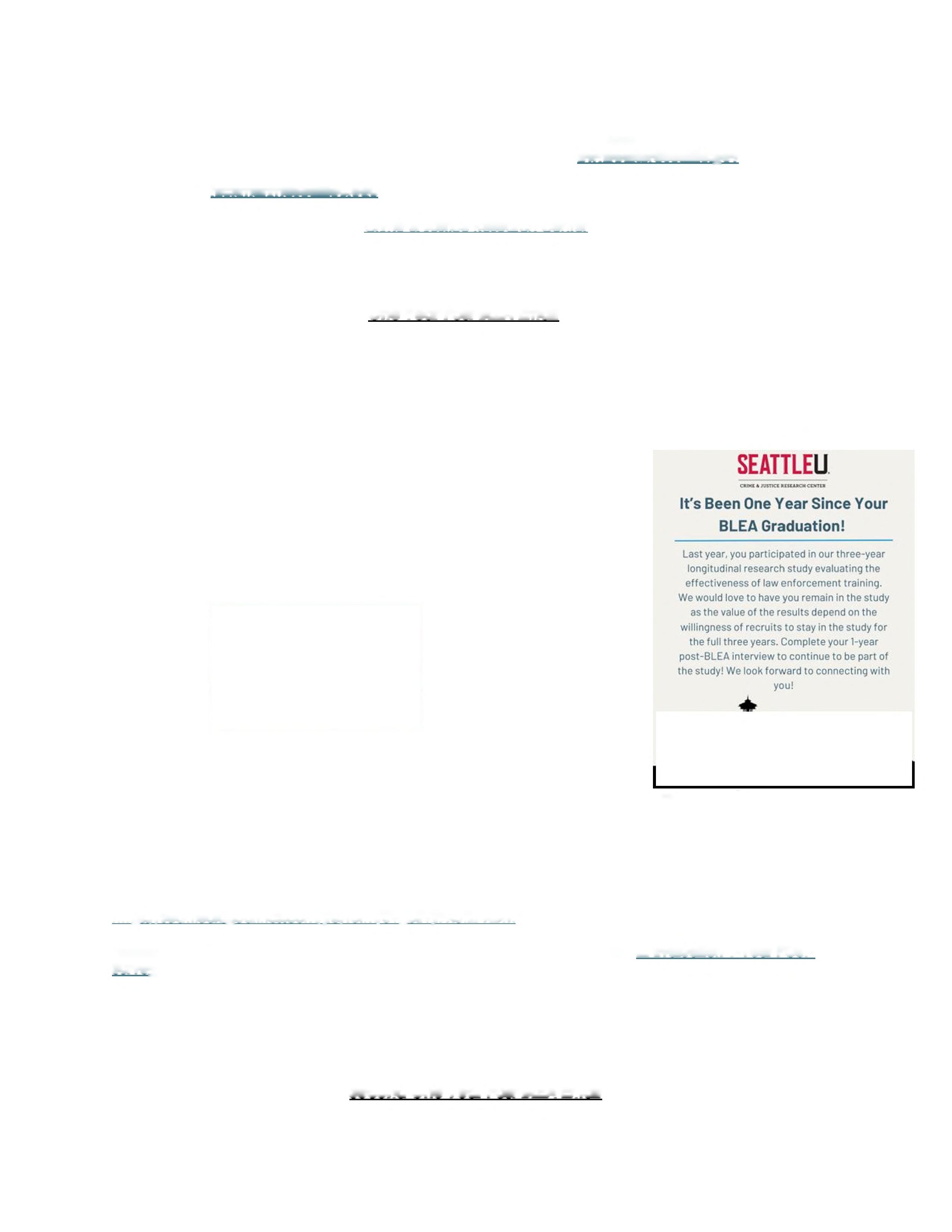
Benjimen Whiteaker Research Analyst bwhiteaker@seattle.gov
Crime & Justice Research Center Department of Criminal Justice, Criminology & Forensics Seattle University Seattle, Washington 98122-1090
Dear [x],
We sincerely appreciate you taking the time to participate in our research study last year that evaluates the effectiveness of law enforcement training. We are reaching out again as it's been a year since your BLEA training, and we would like to schedule a 1-Year post-BLEA survey/interview with you. We hope that you are still interested in continuing +!
• 1-Year post-BLEA (survey & interview) – Need to schedule!
• 3-Years post-BLEA (survey & interview)
Your feedback is important to shaping the future of law enforcement training. Participation is completely voluntary. However, your participation is valuable and would be greatly appreciated. As a thank you for considering participating in this study, please accept this $10 Starbucks card which can be redeemed by clicking the card below available for your use until 12/31/2024.

I hope this reaching out to you to invite you to schedule your 1-Year post-BLEA interview with us! We deeply appreciate your willingness to participate in our study of the effectiveness of Law Enforcement Training. Your continuous participation email finds you well. We are in this study is of utmost importance as it will provide valuable insights into the current state of law enforcement training and how it can be improved to better serve and protect communities. Thank you for your time and consideration. Please REPLY ALL to set up a date and time for your 1-Year post-BLEA interview. Our availability is Fridays from 9AM-12PM. If you have any questions or concerns, please do not hesitate to reach out to us. I have attached the consent form with our contact information. Please fill out this survey before or on the day of your interview: https://seattleux.qualtrics.com/jfe/form/SV_blIVjI9Xuf2PXDM

Please make sure to complete this survey before your interview, use this link: LE Evaluation 1-Year POSTSurvey
We encourage you to contact us at your earliest convenience and thank you again for your contribution to this research study. We have a lot of availability this Friday the [x] or next Friday the [x]!
Sincerely,
We sincerely appreciate you taking the time to participate in our research study last year that evaluates the effectiveness of law enforcement training. We are reaching out again as it's been a year since your BLEA training, and we would like to schedule a 1-Year post-BLEA survey/interview with you. We hope that you are still interested in continuing to be a part of this important project. As mentioned in the email you received on [x], participation in the research study involves completion of a survey and interview at five points:
• Pre-Before the Badge (BTB) training (survey & interview) – Completed!
• Post-BTB training (interview ONLY) – Completed!
• Post-Basic Law Enforcement Academy (BLEA) training (survey & interview) – Completed!
• 1-Year post-BLEA(survey & interview) – Need to schedule!
• 3-Years post-BLEA (survey & interview)
I hope this email finds you well. We are reaching out to you to invite you to schedule your 1-Year post-BLEA interview with us! We deeply appreciate your willingness to participate in our study of the effectiveness of Law Enforcement Training. Your continuous participation in this study is of utmost importance as it will provide valuable insights into the current state of law enforcement training and how it can be improved to better serve and protect communities. Thank you for your time and consideration. Please REPLY ALL to set up a date and time for your 1-Year post-BLEA interview. Our availability is Fridays from 9AM12PM. If you have any questions or concerns, please do not hesitate to reach out to us. I have attached the consent form with our contact information.
Please make sure to complete this survey before your interview, use this link: LE Evaluation 1-Year-POST-Survey

We encourage you to contact us at your earliest convenience and thank you again for your contribution to this research study. We have a lot of availability this Friday the [x] or next Friday the [x]!
Sincerely,
Dear [x],
We sincerely appreciated you taking the time to participate in our research study that evaluates the effectiveness of law enforcement training. We are reaching out again as it's been three years since your BLEA training, and we would like to schedule a 3-Year post-BLEA survey/interview with you. We hope that you are still interested in continuing to be a part of this important project.
As previously mentioned, participation involves a survey and interviews administered at six points:
• Pre-Before the Badge (BTB) training (survey & interview) – Completed!
• Post-BTB training (interview ONLY) – Completed!
• Post-Basic Law Enforcement Academy (BLEA) training (survey & interview) – Completed!
• 1-Year post-BLEA(survey & interview) – Completed!
• 3-Years post-BLEA (survey & interview)
Your feedback is important to shaping the future of law enforcement training. Participation is completely voluntary. However, your participation is valuable and would be greatly appreciated. As a thank you for considering participating in this study, please accept this $10 Starbucks card which can be redeemed by clicking the card below available for your use until 12/31/2024.

I hope this email finds you well. you to schedule your 3-Year

We are reaching out to you to invite post-BLEA interview with us! We deeply appreciate your willingness to participate in our study of the effectiveness of Law Enforcement Training. As you might be able to imagine, retaining interest in a multi-year study can be very difficult, which means what we greatly value your input. Your continuous participation in this study is of utmost importance as it will provide valuable insights into the current state of law enforcement training and how it can be improved to better serve and protect communities.
Thank you for your time and consideration. Please REPLY ALL to set up a date and time for your 3-Year postBLEA interview. Our availability is Fridays from 9AM-12PM. If you have any questions or concerns, please do not hesitate to reach out to us. I have attached the consent form with our contact information. Please fill out this survey before or on the day of your interview:
https://seattleux.qualtrics.com/jfe/form/SV_eFp2QZVCOBl4zn8
Please make sure to complete this survey before your interview, use this link: LE Evaluation 3-Year POSTSurvey
We encourage you to contact us at your earliest convenience and thank you again for your contribution to this research study. We have a lot of availability this Friday the [x] or next Friday the [x]!
Sincerely,
Jacqueline Helfgott, Ph.D Principal Investigator +1 (206) 296-5477 jhelfgot@seattleu.edu
Matthew Hickman, Ph.D Co-Principal Investigator +1 (206) 296-2484 hickmanm@seattleu.edu
Crime & Justice Research Center
Alison Davis Research Analyst Adavis9@seattleu.edu
Benjimen Whiteaker Research Analyst bwhiteaker@seattle.gov
Department of Criminal Justice, Criminology & Forensics Seattle University Seattle, Washington 98122-1090 New Second 3 Year Post BLEA Email
Dear ____:
We sincerely appreciate you taking the time to participate in our research study that evaluates the effectiveness of law enforcement training. We are reaching out again as it's been three years since your BLEA training, and we would like to schedule a 3-Year post-BLEA survey/interview with you. We hope that you are still interested in continuing to be a part of this important project.
As previously mentioned, participation involves a survey and interviews administered at six points:
• Pre-Before the Badge (BTB) training (survey & interview) – Completed!
• Post-BTB training (interview ONLY) – Completed!
• Post-Basic Law Enforcement Academy (BLEA) training (survey & interview) – Completed!
• 1-Year post-BLEA(survey & interview) – Completed!
• 3-Years post-BLEA (survey & interview) - Need to Schedule!
I hope this email finds you well. We are reaching out to you to invite you to schedule your 3-Year post-BLEA interview with us! We deeply appreciate your willingness to participate in our study of the effectiveness of Law Enforcement Training. As you might be able to imagine, retaining interest in a multi-year study can be very difficult, which means what we greatly value your input. Your continuous participation in this study is of utmost importance as it will provide valuable insights into the current state of law enforcement training and how it can be improved to better serve and protect communities.
Thank you for your time and consideration. Please REPLY ALL to set up a date and time for your 3-Year postBLEA interview. Our availability is Fridays from 9AM-12PM. If you have any questions or concerns, please do not hesitate to reach out to us. I have attached the consent form with our contact information. Please fill out this survey before or on the day of your interview:
https://seattleux.qualtrics.com/jfe/form/SV_eFp2QZVCOBl4zn8
Please make sure to complete this survey before your interview, use this link: LE Evaluation 3-Year POSTSurvey
We encourage you to contact us at your earliest convenience and thank you again for your contribution to this research study. We have a lot of availability this Friday the [x]th or next Friday the [x]th!
Sincerely,

Jacqueline Helfgott, Ph.D Principal Investigator +1 (206) 296-5477 jhelfgot@seattleu.edu
Matthew Hickman, Ph.D Co-Principal Investigator +1 (206) 296-2484 hickmanm@seattleu.edu
Alison Davis Research Analyst Adavis9@seattleu.edu
Benjimen Whiteaker Research Analyst bwhiteaker@seattle.gov
Crime & Justice Research Center Department of Criminal Justice, Criminology & Forensics Seattle University Seattle, Washington 98122-1090

Dear ___:
Congratulations on finishing your Basic Law Enforcement Academy training! We sincerely appreciate you taking the time to participate in our research study that evaluates the effectiveness of law enforcement training. We hope that you are still interested in continuing to be a part of this important project. As mentioned in the email you received on December 16th, participation involves a survey and interviews administered at four points:
• Pre-BLEA training (interview & survey) – Completed!
• Post-Basic Law Enforcement Academy (BLEA) training (survey & interview) – Need to schedule!
• 1-Year post-BLEA(survey & interview)
• 3-Years post-BLEA (survey & interview)
We invite you to schedule your Post-BLEA training interview. If you decide to continue, please review the attached consent form, and REPLY ALL to this email. We will follow up with a Zoom link. The interview should take no longer than-30 minutes and will need to take place on Fridays between the hours of 9AM-12PM. Please let us know which 30-minute time slot within that time frame works best or let us know if you need us to accommodate an alternative day/time for you.
To participate in the survey go to: https://seattleux.qualtrics.com/jfe/form/SV_6LOBlIKSocjNF9Y
We encourage you to contact us at your earliest convenience and thank you again for your contribution to this research study. We have a lot of availability this Friday the 26th or next Friday the 2nd!
Sincerely,
Jacqueline Helfgott, Ph.D
Principal Investigator +1 (206) 296-5477 jhelfgot@seattleu.edu
Matthew Hickman, Ph.D Co-Principal Investigator +1 (206) 296-2484 hickmanm@seattleu.edu
Crime & Justice Research Center
Alison Davis Research Analyst Adavis9@seattleu.edu
Benjimen Whiteaker Research Analyst bwhiteaker@seattle.gov
Department of Criminal Justice, Criminology & Forensics Seattle University Seattle, Washington 98122-1090

Consent Process Document Attachment
Participant Information Sheet: Follow-up Interviews Research Study:
Jacqueline B. Helfgott & Matthew J. Hickman Department of Criminal Justice, Criminology & Forensics
Seattle University 901 12th Ave.
Seattle, WA 98122-1090
jhelfgot@seattleu.edu (206) 296-5477
We would like to invite you to take part in a follow-up interview that further explores your law enforcement training experiences. Before you decide if you would like to consent to be interviewed, you need to understand why the research is being conducted and what it would involve for you. Please take time to read the following information carefully. Feel free to ask questions if anything you read is not clear or if you would like more information. Take time to decide whether or not to take part. Upon reviewing this information sheet, your decision to participate in the interview will represent your consent.
Purpose:
The purpose of this study is to evaluate the effects of law enforcement training. Results of the interviews will be published in a technical report and academic peer-reviewed articles.
Participants:
All participants in this study are law enforcement recruits in Washington State.
Participation:
As part of your participation in the study, we will be video recording your responses. Your participation in the study is entirely voluntary. You may withdraw at any time. There is no compensation for participation. If you do not want to have your interview videotaped, the interview can be conducted with notetaking and without videotaping.
Disadvantages and risks of taking part:
As part of this study, we will be asking you about experiences that may be stressful. Also, though your name will not be used in the reporting of the results, there is a chance that readers of the text may be able to figure out that the responses being reported are yours.
Confidentiality:
The researchers (the Principal Investigator, Co-Investigator, and two student research assistants) will collect information from participants including their names, place of employment, and current professional title. A pseudonym will be used when reporting participant responses in the technical report and publications and specific professional titles will not be utilized unless the researchers are granted permission to from subject to use them.
Benefits of your participation:
The societal benefits of this study include contributing to the scant literature on innovative police training programs. Additionally, you will be offered the opportunity to provide recommendations for improving law enforcement training in Washington State.
Results:
A summary of the results of this research will be supplied to you, at no cost, upon request.
Concerns:
I understand that should I have any concerns about my participation in this study, I may call Dr. Jacqueline B. Helfgott, who are asking me to participate, at (206) 296-5477 / jhelfgot@seattleu.edu. If I have any concerns that my rights are being violated, I may contact Dr Michael Spinetta, Chair of the Seattle University Institutional Review Board at (206) 296-5951/ spinetta@seattleu.edu.2
Illustrative Quotes in response to Question 1 – What is your background? What job did you have/what were you doing before you decided to apply for the position in Law Enforcement? What is your primary motivation for joining Law Enforcement?
Other/ Various

Education
Military
Prior LE
Private Security
Customer Service
“I was working in a factory.”
“I worked for a shipyard as a shipyard HSSE manager for, uh, two and a half years before joining SPD”.
“I've been a stay-at-home mom”
“[I] got undergrad in Criminal Justice”
“I started my AA in criminal justice”
“I got my undergrad is sociology with an emphasis in social deviance and then a minor in criminal justice”
”I just revved up six years in the Navy.”
“I spent the last five years as a military firefighter”
“I was in the Army for the last almost 11 years”
“I've been a police officer for about six and a half years”
“I worked at another prior police department”
“Most recently I was a corrections officer”
“I was working security. I moved on to Transit Security”
“I was a private security contractor in Seattle”
“I used to do private protection”
“I was a waiter at some restaurants.”
“I started working at a car dealership where I then became a car sales person”
“I worked at a retirement home”
Medical Service/EMT
Technology
“I got in as a volunteer firefighter with the Lacey Fire District 3… then I transferred to a full-time job as an EMT for Olympic Ambulance.”
“I actually worked at Harborview Medical Center.”
“For the last 5 years I worked as an EMT and FTO with the American Medical Response”
“I was an aerospace engineer.”
“I was a software engineer”
“I’ve been in I.T.”
Illustrative Quotes in response to Question 2 – Are you from Seattle? If not, where are you from? Do you currently live in Seattle? If so, where do you live? How long have you lived in Seattle? If not, where do you live? Do you want to live where you work? Why or why not?
Born and raised in WA

“I grew up in Seattle”
“I was born and raised in the greater Seattle area”
“I grew up in Eastern Washington”
Moved to WA “I got stationed out here and I just like it, so I wanna stay.”
“I always wanted to move out to Seattle”
“I recently moved up here from down south”
Moved for Job “I am, yes. I moved officially two weeks ago. I'm a new resident.
“I moved just last week Tuesday”
“I moved here about five days ago”
Lives Where They Work
Does Not Live Where They Work
“I have no problem living in the city in which I work, but I wouldn't necessarily wanna work in the precinct where I live, if that makes sense, right? But I do believe it's important to live in the city.”
“I live in the city, so I'll, because I have a stake in the city.”
“I think it makes the most sense for police officers to live where they police for accountability”
“I think for now, trying to stay financially stable as possible, I'll probably live outside of the city.”
“It’s a good way to have a good work-life balance”
“I’d prefer not to work in the city that I live in”
Illustrative Quotes in response to Question 3 - Do you have a background in law enforcement?
Do you have friends/family who are police officers?
Personal Background
Family Background
Friends Background
Other Various Backgrounds
“I volunteered with the sheriff department there a couple times”
”I did three years of criminal justice in high school”
“I will be the first one in my family”
“Not at all”
“I have family that were police officers.”
“My dad was a police officer for 35 years in the town that I grew up.”
“My Mom’s side is all firefighters”
“I have friends in the federal government”
“I have a good friend that he is in SPD”
“I have four friends that are LE in Wisconsin”
“I have a degree in criminal justice”
“I did a internship with the sheriff’s department”
“We had a work study day and I shadowed a police officer”
Illustrative Quotes in response to Questions 5 & 6 – What are your expectations about the training you will receive in BTB? What are your expectations about the training you will receive in BLEA?
Community Engagement

No Expectations
CIT/De-escalation Training
Laws, Rules, and Policy
Skill/Tactical Training
Other Expectation
“It will allow me to have a unique perspective and actually have real conversations with real people about how the community see the department”
“I will want to get to meet a lot of the members of the community that we will be serving”
“Learn more about the community itself and less about the actual logistics of being an officer”
“Honestly, I don’t really know what to expect”
“I have no idea”
“I am looking forward to BLEA, but I'm not expecting to have that million dollar level of training that I've been used to up until now.”
“Basically, I want to learn about de-escalation”
“Learning that de-escalation skill to help build on that”
“A lot of state-wide radio code, RCW, very much legal stuff”
“Making sure that we all understand the policies, procedures, the laws, and stuff like that”
“I’m ganna be learning about the different laws in Washington State that I’ll be needing to enforce”
“Being able to do a pit maneuver”
“ I think my expectation is just a good foundation across interpersonal skills, physical skills and safety skills”
“My expectations are that it will be thorough and prepare me for the job that I'm entering into as a whole”
“ I expect it to be kind of busy work”
“My understanding is it's like a statewide, uh, curriculum, so I think it's gonna be a good foundation”
“I'm hoping to learn new things, things other than how military does things”
Illustrative Quotes in response to Question 7 – What are your expectations about your future career in law enforcement?
Detective “I do hope to relatively quickly be able to move up to detective specifically within human trafficking or domestic violence victims”
“I do want to become a detective”
“I would love to see myself being a detective one day, we'll see” FTO “With my background in education, I was thinking of possibly being a FTO trainer”
“To be a field training officer is appealing to me.”
“I would love to teach defensive tactics”

K-9 Unit
Move Up the Ranks
Other Specialized Units
Personal and Department Satisfaction
Unsure
“I've been intrigued in doing like K9 officer”
“I want to be able to move into a K-9 unit”
“I would like to just stay patrol. I would like to get into the K9 unit.”
“I've been thinking about either staying on patrol in five years, or, maybe becoming a sergeant or detective”
“As high as I am able to go within this department”
“Hopefully in five years, I think sergeant would be a reasonable goal.”
“Eventually, I’ll look towards leadership opportunities.”
“I always wanted to be on Harbor patrol”
“Maybe SWAT ‘cause I have medical experience and the medical unit as well”
“ Crisis negotiation”
“I really want to go into Seattle's ABS program”
“ My expectation for myself is to be the best version as an officer and myself”
“I want to be looked upon as a great officer”
“My overall goal, career wise, is to go for as long as I can”
“I just want to do my job responsibly and fairly”
“Right now I still haven't thought about like all the specialty units because I know Seattle has so many”
“I would hope that my career is filled with learning opportunies”
Illustrative Quotes in response to Question 8 - Have you ever heard of “guardian policing”? If so, what is your understanding guardian policing?
No, has not heard of Gurdian Policing
Yes, has heard of Guardian Policing
“No, I have not heard that term.”
“Guardian police? No, this is the first time.”
“I’ve never heard of that”
“I actually looked it up prior to this interview”
“They talked about a guardian mindset, and I think as opposed to, like, maybe opposed to like militaristic kind of us versus them mentality”
“It rings a bell, but I couldn't give you a definition.”
“Like the type of like soldiering policing to more of like a community guardian, like a guardian of democracy and, and, and all this stuff”
Illustrative Quotes in response to Question 9 - Since you have been hired by SPD, what has the response been to you from your friends/family regarding your employment with the Seattle Police Department?
Friends/Family are Supportive

“They've been very supportive”
“They're really excited, and my friends are really excited about it.”
“My spouse is really excited. Everybody's kind of really excited
“ they're very happy that I'm into a very prestigious and very know good agency that I started working as my career”
Mixed Support My family's worried, of course, but, you know, and – but they're mainly really supportive”
My, some of my family are more concerned with my safety. And others are excited to see me just trying something very new”
“ I mean, my mom especially and my girlfriend were definitely worried 'cause just the stuff that you see on the news”
Safety Concerns
Anti-Police
“My sister had a little bit of concerns about safety”
“My wife, uh, obviously was a little bit scared of it 'cause we have kids and everything and you know, you read the headlines”
“They’ve also worried saying that, ‘Seattle doesn’t like cops, and that it can be more dangerous for me.’”
“I do think there is a little bit of anti-policing”
“A lot of 'em weren't for police departments. There weren't a lot of that, um, especially after like 2020 with the, the George Floyd case. A lot of 'em kind of had this really twisted perception on police officers”
Illustrative Quotes in response to Question 10 - What is the #1 most important skill you think a person needs for a career in law enforcement?
Adaptability/Flexibility
Communication and Interpersonal Skills
Compassion/Empathy /Emotional Intelligence
De-escalation
Integrity
Other Skills
“The ability to overcome making mistakes because things change. Society changes”
“Being able to adapt to different scenarios”
“Not rush to judgment, not rush to do one thing because you think something's going on”
“Empathy or just learning, knowing how to talk with people”
“Being able to communicate clearly with coworkers, chain of command, but also who you're dealing with on a day-to-day basis”
“I would probably say you have to be very outgoing”
“First and foremost, you have to treat everyone like a person”
“I think just that attitude of humility”
“I think it's emotional awareness”
“It for sure is communication. And with communication there comes deescalation”
“De-escalation and stress management”
De-escalation skills and just being able to have emotional intelligence those conversational skills essentially”
“Having empathy and also saying, this is how it’s going to be.”
“I would say integrity.”
“It's important to be just a super understanding, moral based, confident, you know, trustworthy type of person”
“Patience, I think is the biggest one.”
“I'd say attention to detail would be the most important”
“I would say like truthfulness and a sense of helping others.”
“Just being a regular person”
Illustrative Quotes in response to Question 11 - Why did you volunteer to participate in the study?
Believe Research is important
Improve Law Enforcement

Love of Research
Other
“I love training and I think that Seattle doing this program is like a trendsetting deal and like being able to help”
“I understand the impact that research can have”
“I'm a pretty firm believer in data and numbers”
“I really hope that something comes of this study and being part of it and helping out maybe people down the line or policing in general, why not?
“If the research helps improve the city or improve Seattle PD, I figure I'd do my part and try to help that.”
“I want to be the next step for improvement for our community for our city, for my kids, you know. You can't make change unless you push forward”
“I love longitudinal data”
“I think it's fascinating to get into the minds of, of the recruits and seeing how, how they change, how policing affects you”
“I definitely want to see the outcome. I think training and research is a good thing. I mean, that's how we move along in the world.
“It's an opportunity to participate in something see the growth over time”
“I wanted to see how it played out, you know see the impact of it”
“I just think it's cool what you guys are doing.”
Post-BTB Interviews
Illustrative Quotes in response to Question 2 - Do you currently live in Seattle? If so/not, where do you live?
No, does not live in the city
Cost of living

Safety
Family
Yes, does live in the city
“I will stay living in Monroe.”
“It doesn’t make sense to live in the city right now.”
“It wasn’t really in my budget to live in Seattle as of now.”
“Unless, like, Seattle gets pretty cheap, then I’d move, but for now, I don’t see that happening.”
“And living in the city is very expensive still.”
“It would depend on the precinct.”
“I would like to live in the same city that I work in, but it’s just more logistical for me.”
“I didn’t want to live in the city that I’m patrolling.”
“Just a better decision for the family.”
“My wife wants to be close to her parents.”
“It was important to me to, like, do it within the community that I live in.”
“If I’m ultimately assigned to a precinct that I’m currently residing at, in that same neighborhood, I have a good understanding of all the business.”
Illustrative Quotes in response to Question 3 - At this stage of your training and development as a Seattle Police recruit/officer/CSO, how has the experience been for you so far?
Positive
Mixed
Negative
“I think it’s very valuable to teach recruits this before they go into serious aspects of the training.”
“It’s been really good.”
“I’ve been really impressed.”
“Honestly, BTB was great.”
“I think it was good and bad.”
“I would say challenging, but rewarding, and, um, definitely eyeopening.”
“I wish there was more continuity and more connection.”
“There were times where it was boring.”
“We didn’t have a lot of communication with the agency.”
Illustrative Quotes in response to Question 4 - Since you have been hired by SPD, what has the response been to you from your friends/family regarding your employment with the Seattle Police Department?
Friends/Family are Supportive
Mixed Support

Safety Concerns
“Actually, they’re more supportive because they know where the stress is coming from. They kind of understand.”
“Everyone’s happy for me.”
“She’s still very supportive and, you know, very loving. But no, no one is, I guess, actively against what I’m doing.”
“They are getting nervous because what we are living right now in, in the country and, and in the city.”
“The people that were supportive are still supportive. The people that were not are still not. Nothing has changed.”
“My family has been a bit apprehensive.”
“My mom is still a little worried.”
“Some people in my family have certain reservations just because they’re worried about my safety.”
“They’re just hesitant in the fact because it’s a dangerous job.”
Anti-Police
“Some people have very strong biases against the police, and it will take some time for them to work their own biases.”
“Things are fine. It’s just, um, as long as we don’t bring up the topic of the Seattle P.D.”
Illustrative Quotes in response to Question 5 - How was your experience in the BTB Training Program? Were you satisfied with the BTB training?
Satisfied
Not Satisfied
Positive Experience
Other Experience
“It is probably my favorite thing I’ve gone through so far.”
“Yeah, definitely satisfied for sure.”
“It was overall a valuable experience, I believe.”
“The program is lacking some resources, um, because there was a lot of times where we just didn’t know what we were doing.”
“Some of the things I found pretty boring.”
“It was also really nice to get to, like, interact with community members and go to, like, different community centers.”
“I thought it was really good. I liked getting to rediscover some of Seattle.”
“Dr. Lewis was fantastic. I felt like I’d connected with everybody that, um, was teaching a course.”
“It’s just the organization side of things could’ve been, I think, a little better.”
“I think the content is really good, but the scheduling was not.”
Illustrative Quotes in response to Question 6 - What was your biggest takeaway from the BTB training? What would you say is the most important thing you learned in the SPD BTB program?
Community Engagement

Wellness Training
Other Most Important
“SPD’s desire to work with the community”
“People need to know police officers personally in order for their opinion on policing to change.”
“It’s not just about putting people in prison. It’s not just arresting people.”
“I would say the biggest thing is stress management.”
“Dr. Lewis’ scale. He uses a scale called 1 through 10.”
“Really taking care of yourself and your health.”
“It’s the preparation of understanding that it’s a journey, being a police officer.”
“It’s nice to see that the city of Seattle is invested in our success.”
Illustrative Quotes in response to Question 7 - What is the #1 most important skill you think a person needs for a career in law enforcement?
Adaptability/Flexibility
Communication and Interpersonal Skills
Compassion/Empathy/Emotional Intelligence
De-escalation
Other Skills
“There’s gonna be way more components that get put in place, but it just shows you the amount of work that these people have to put in in order to do this job.”
“I would say patience.”
“Being levelheaded”
“It’s being yourself and communicating are the most important things.”
“I’ll probably say proper communication.”
“I think creating a good connection or just really good at talking to people.”
“Empathy, knowing how to connect with people.”
“I still think being empathetic is the best thing you could have.”
“I think just, like, emotional intelligence.”
“I said deescalation before, and I’d probably still say deescalation.”
“Managing your mental and physical capabilities, managing your breathing”
“I think being patient definitely is, is one.”
“Dr. Lewis”
Illustrative Quotes in response to Question 8- How did you experience the wellness component of the BTB training? Did you expect to receive this type of training? What was your biggest take away from this component of the BTB training?
Didn’t expect it

Found Beneficial
Learned Something New
“I didn’t originally, uh, when coming into the department, um expect to receive it, to answer that question specifically. I liked it.”
“I think the biggest curve ball was the dietician.”
“I think SPD is going above and beyond with wellness.”
“I thought this was really helpful because you want to get ahead of these things before they become a problem.”
“Dr. Lewis, he had a lot of stuff on, like, stress and trauma.
That was, I found that very valuable.”
“It is the, you know, the sleep, the workout, the diet, the stress, or, you know, just how to maintain your social circle. So, that’s a surprise.”
“AI quiz which tells you about your personality, who you actually are.”
Other
“Regulating your emotions.”
“I would say just being present.”
Illustrative Quotes in response to Question 9- How do you think the BTB training will prepare you for your role in law enforcement as you progress through your career?
Learning wellness skills
“It added a lot of, a lot of resources that I need.”
“Maybe In some cases in terms of policing, but more so in terms of personal health and in general to ensure the longevity of your career.”
“I liked the exposure we had to that crisis center.”
Knowing the community
“It’s such a diverse place.”
“I have the cards of people that are in, you know, running those programs and I have different things. So I have the information to use later on down the line of my career.”
Understanding different perspectives
Other
“I do want to be part of the positive changing of opinions toward police and policing.”
“It gave me a different optic. Gave a different optic from how relational policing works.”
“The exposure was really fantastic”
“It helps me knowing the area, like, a geography.”
“It opened my eyes to how different, uh, parts of Seattle are and just, uh, things to expect and what people expect from you.”
Illustrative Quotes in response to Question 10- What are your expectations about the training you will receive in BLEA?
No Expectations
Laws, Rules, and Policy

Skill/Tactical Training
Other Expectation
“I went into it having no idea what it was gonna be like.”
“I feel like it’s gonna be a lot more, it’s gonna be a lot more serious.”
“I think just comprehensive kind of overarching principles of law enforcement and basic law.”
“I expect to learn all the fundamentals of the job.”
“Like following the laws or the spirit of the laws.”
“My expectation would be I should be able to leave the Academy and then the next week go right into policing with, like, on the job training and be able to effectively do my job.”
“I thought BLEA was gonna be like Army training.”
“My standard is pretty low for the academy since it’s, like, Basic Law Enforcement Academy.”
“Officer safety.”
“Some like emotional I.Q. Courses”
Illustrative Quotes in response to Question 11 - Have you ever heard of “guardian policing”? If so, what is your understanding guardian policing?
Yes, has heard of Guardian Policing
Understanding of Guardian Policing
No, has not heard of Gurdian Policing
“Chief Ruhr came to our class.”
“I think the term maybe came up once or twice.”
“We’ve heard it a few times now. Um, you know, you’ll hear a few officers refer to, you know, we’re not warriors, we’re guardians now.”
“So there was a lot of emphasis on how you’re going to need to be a community caretaker versus a law enforcer.”
“Serve the community or guardians. We protect people rather than we’re the headhunters.”
“Probably just protecting the people.
“It’s not ringing any bells.”
“Not that term, no”
“I vaguely remember it being mentioned.”
Illustrative Quotes in response to Question 12- If you were responsible for designing/improving the BTB training for the next group of recruits, what would you recommend?
Add more Pre BLEA training “Incorporate more law enforcement ideas to prepare you better for the post or the pre-BLEA.”
Additional Training
Fix scheduling
“Like maybe a day of – we did visit the Academy”
“I think there should have been a fitness component built into the program.”
“I’d say more ride alongside, more, maybe two or a precinct or something to see how the inner workings are.”
“I would recommend more, um, sessions with Dr. Lewis. I think that was really good.”
“I think it was lacking for a little bit in the organization
Other suggestion

department.”
“Not cutting it short.”
“I would, as much as scheduling would allow for it, I would get them out of the classroom a little bit more.”
“We need to create more resources for internal and external communications so people understand.”
“We didn’t have a clear understanding of what the program was or what we would be doing till about a week and a half into it.”
“A little bit more time with, uh, community members. Uh, but also I think it would be helpful if there was a little bit more geography taught.”
Illustrative Quotes in response to Question 3 - At this stage of your training and development as a Seattle Police recruit/officer/CSO, how has the experience been for you so far?
Positive

Mixed
Other
“I enjoyed the things where we actually met and talked with people from the community and people that had postincarceration experiences.”
“I think it’s been great. I can definitely see how the training standards are getting higher.”
“I feel like they’re doing a good job of preparing you and letting you make mistakes before you’re on the streets so you can get that experience.”
“Some content would’ve been better to get more in depth.”
“They did the best they can given the resources that they have and the fact that they’re training the entire state.”
“I think it’s insane to think they go from BLEA to the streets without much extra training because they’re not ready with what BLEA gives them.”
“The Academy was horrible. Probably one of the worst experiences I’ve had in my life.”
“The Academy does not have enough people for the thing they are trying to do. And they have too many recruits. So, the quality of instruction tends to be pretty bad.”
Illustrative Quotes in response to Question 4 - Since you have been hired by SPD, what has the response been to you from your friends/family regarding your employment with the Seattle Police Department?
Friends/Family are Supportive
Mixed Support
Safety Concerns
“My family’s still really supportive. They were really proud of me at graduation.”
“More supportive than before.”
“Everyone’s still very supportive. They still check in on me, see what I’m doing.”
“I think they’re still a little worried for me, but as time goes on, I think they’ll be okay.”
“It significantly changed when I graduated. I was educating my friends and my family about how policing works.”
“When he saw my badge and he got to pin me, it was like, ‘I need you to be safe.’ And it really started to hit home.”
“He was mostly concerned about the safety and all that.”
Illustrative Quotes in response to Questions 5 – How satisfied are you with the experience you had in the WSCJTC BLEA in terms of preparing you for your position in law enforcement?
Satisfied –Covered basics

Satisfied –Additional training
“From where I came from, not knowing anything about law, I think I am very satisfied with what I got from BLEA.”
“They call is Basic Academy for a reason, right? Because you learn the basics of law enforcement, the basics of how to enforce laws. The basics of everything.”
“They did a really good job at preparing us for what it takes to be an officer as far as Washington State.”
“It set a good foundation.”
“I know they would definitely appreciate just having a little more time to do scenarios.”
“I feel like we would need a little bit more on crisis intervention.”
Satisfied - Other “They were there to make sure we are succeeding. They are not there to fail us. They’re actually there to help us. And my experience with my TAC officer was great.”
Dissatisfied – Does not feel prepared
“A lot of good instructors out there.”
“The scenes they gave us to work through were very generic and missed a ton of social cues you would pick up, like if you were going to react to someone in crisis.”
“I don’t see any physical aspect. And I think police work does need a physical aspect.”
“When we were doing mock scenes in Post-BLEA, there were things they were telling us, that the way we were taught in BLEA was either insufficient or was incorrect.”
Dissatisfied - Other “If somebody failed one scene, they’re gonna retest them, which is good. But they’re retesting on the exact same scene. I feel like it’s cheating. Like, they’re just there to check a box.”
“Every once in a while there was some contradictory information. Like certain TACs would say ‘Do this this way’ and ‘this is the way you have to do it.’ And then someone else ten minutes later would say ‘you have to do it this way and this is the only way to do it.’”
Illustrative Quotes in response to Question 6 – “How did the SPD BTB training complement the WSCJTC BLEA?
Helped –Community Engagement
Helped – Mental wellness

Helped - Other
“BTB did a good job of explaining the policing goals of Seattle and it’s presence in the community.”
“Actually knowing the people within the community and having them know you right will just aid in your ability to be effective.”
“We did a lot of training with Dr. Lewis and with Grant Levitt, who was our wellness officer. I think a lot of that has stuck with me through the academy and post academy, just leaning how to take care of myself mentally and physically.”
“We also got a talk about basic health and wellness, Like, some growth mindset video. But that stuff was good, like ‘you’ll get through this. We wanna see you succeed.’”
“I think it helped get me and my classmates in the right mindset for thinking about some of the complexities of being a law enforcement officer.”
“I even saw some of the same concepts in the first parts of BLEA, so it was kind of like being ahead of the curve and thinking about different things before entering.
Didn’t HelpOther
“BTB didn’t do much for the BLEA experience, but I think it set me up very well for being a member of Seattle PD.”
“I don’t think it did, no.”
“I don’t think you could merge the two.”
Illustrative Quotes in response to Question 7 - What would you say is the most important thing you learned in the SPD BTB program to prepare you for where you are in your career and training to date?
Community Engagement
Wellness Training
Other Training
“The most important thing, I believe, was how we can help the community in different ways.”
“It kind of solidified my want to be at Seattle because you go out to meet the communities and see where you’re going to serve, and that helps.”
“It’s all about stress management.”
“You have to be conscious of your sleep.”
“Dr. Lewis talked about how the brain works and how people react in stressful situations. Very informative, very useful.”
“Understanding my legal authority and my purpose for being in whatever situation I’m in.”
“How big deescalation is and how having empathy helps that.”
Illustrative Quotes in response to Question 8 - Have you used any of the specific SPD BTB training components in your work/training so far? If so, what specifically?
Yes – community engagement

Yes - Officer Wellness
Yes – Other Skills
No - Other
“I found myself being more calm and not nervous and just, you know, being myself when I was in those scenes.”
“It’s the getting to know the community out there, and the, the um, understanding why they’re not feeling comfortable approaching LE.”
“Many of the things from Dr. Lewis helped. How we think, how do we approach situations like hard situations, and breathing techniques.”
“Stress management and how you approach situations. To not approach ‘em at the ten scale of stress, you know, because that’s just gonna make everything worse.”
“Just thinking about how we’re interacting with people in crisis. Those have been kind of my guide, my talking points when I’m in those kind of scenarios. Like, thinking about what resources we can provide on those sort of calls.”
“They would have us do, like, these online trainings of your senses.”
“We haven’t gotten to that level yet.”
“Not yet. And the reason is because we are not out on the streets yet.”
“Not that I can recall.”
Illustrative Quotes in response to Question 9 - Have you used any of the specific WSCJTC BLEA training components in your work so far? If so, what specifically?
Yes – Laws, rules, and policies
“Speeding, failure to stop on a stop sign, DV cases, those things.”
“Set a good foundation on how to be safe and articulate what we’re doing safely, if that encroaches on people’s rights. Like saying they’re free to leave and whatnot.”
“BLEA is really big on legal authority, making sure you know your legal authority, which sandbox you’re standing on.”
Yes – Skill/tactical Training
Yes - Other
No - Other
“The articulation of scene safety, risk factors, gram factors, stuff like that.”
“One of the programs they do is called Reflex and it teaches you to look for threat zones and look for cover and for concealment and for an escape route, and, you know, things like that.”
“We did some mock scenes at one of the facilities in Seattle about search and seizure.”
“Interviewing a victim or a witness”
“Officer safety”
“We literally just had our first day yesterday, so.”
“Not specifically. I haven’t been able to get out there and copy it.”
Illustrative Quotes in response to Question 10 - What is the #1 most important skill you think a person needs for a career in law enforcement?
Adaptability/Flexibility
Communication and Interpersonal Skills

Compassion/Empathy/Emotional Intelligence
“I guess being able to keep calm under pressure”
“Being able to think on your feet, and, um, be able to make those important decisions.”
“Don’t be judgmental or overly prescriptive, right? Just treating other people like humans will get you a long way.”
“I would say the number one skill, it’s being open to communicate.”
“They teach that every person that you’re interacting with, you’re interacting with them on their worst day. And how can we, you know, listen, explain, have empathy and dignity? I think that’s super important.”
“Emotional awareness and control and social skills are pretty much the most important thing we’ll be dealing with.”
De-escalation
Other Skills
“I think deescalation is also important because as a part of the police, you deescalate if it’s, like, a crisis call, if it’s other calls, you still deescalate.”
“Diffuse situations”
“Confidence in decision making is really important.”
“Gonna have to go with integrity.”

Illustrative Quotes in response to Questions 2 – Do you currently live in Seattle? If so/not, where do you live?
Lives Where They Work
Does Not Live Where They Work
“Yeah, still in the same spot”
“Yes, I do.”
“Me personally, I don't mind, I only moved out because I got some roommates, and it was a little cheaper”
“I live probably half a mile outside of town”
Illustrative Quotes in response to Questions 3 – At this stage of your training and development as a Seattle Police recruit/officer/CSO, how has the experience been for you so far?
Positive “I think it’s a good schedule for me, for my family life.”
“I’d say it’s a very positive experience. It’s a really unique experience to be able to have so much agency to do something.”
Mixed “There was room for things to be presented better.”
“I didn’t have any big issues or anything like that.”
Negative “BTB needs a lot of work in that there’s still reluctance from even new officers.”
Illustrative Quotes in response to Question 4 – Since you have been hired by SPD, what has the response been to you from your friends/family regarding your employment with the Seattle Police Department?
Family/Friends are supportive
Mixed Support
“My, um, immediate family is very supportive still.”
“Everyone says, you know, I’m glad you’re doing what you’re doing. I think you found your calling. They’ve been very supportive, so it’s been wonderful.”
“Everyone’s been super supportive and understanding.”
“It’s more in those casual interactions that we have that some of them express that concern, but only because they just seem to have an unreal, you know, what the job is actually like day to day.”
“My brother and his, uh, wife, they were not super police friendly, but they've gotten better”
Illustrative Quotes in response to Question 5 - How satisfied are you with the experience you had in the WSCJTC BLEA in terms of preparing you for your position in law enforcement?
Satisfied – Covered basics / Fundamentals
“I would be lost in them or really, really behind without that foundational introductory work by BLEA.”
Satisfied – Additional training

“BLEA was good just to get a baseline.”
“I think it was a fantastic foundation for me to actually set the forms before the concrete’s poured.”
“BLEA got you a good understanding of what’s legal.”
“Working through a scenarios all the way to write the report on that scenario, you know, instead of being fragmented, being able to pull those pieces together”
Dissatisfied - unorganized “I’m just not that impressed with BLEA.”
“I don’t think there’s anything that can prepare you for the actual thing. Like hands-on doing the job.”
Illustrative Quotes in response to Question 6 - How did the SPD BTB training complement the WSCJTC BLEA?
Helped – Wellness
Helped – Community engagement
“Pillars of your life, your family, your career, your friends, your hobbies, and just keeping them healthy to have these positive things that help you through the negative and traumatic moments”
“The mental. The mental was amazing” “how to identify other people's stress levels”
“Understanding people and understanding what's going on in the community”
“The value of interpersonal connections”
“The direct meetings with people in the system – you’ll never replace that”
Illustrative Quotes in response to Question 8 - Have you used any of the specific SPD BTB training components in your work/training so far? If so, what specifically?
Yes – Community Engagement
Yes – Skills/Tactical
Yes - Other
“The community meetings that we went to, learning a little bit about different parts of Seattle and how those communities interact, especially with police.”
“I've already built multiple adult connections and then building rapport with a lot of the kids”
“I think going through all of the mock scenes that we did and just learning how to start”
“The Dr. Lewis classes”
“Mental health and dealing with people in crisis situations, I use that.”
Illustrative Quotes in response to Question 10 - What is the #1 most important skill you think a person needs for a career in law enforcement?
Adaptability/Flexibility
Communication and Interpersonal Skills
Integrity
“Just being quick to act, or quick to think on your feet.”
“Getting to the scene and being able to figure out what's going on and adapt to changing circumstances”
“Sometimes, you’re just there to be the ear. You’re not gonna fix anything. You’re just listening.”
“The human perspective”
“Morals are very important to us.”
Other Skills

“Stress management”
“I’ll take all the training they’ll give me ‘cause it makes me feel more safe safe and comfortable.”
“Training in recognizing manipulation, evasiveness, dishonesty.”
Illustrative Quotes in response to Question 11 - Have you ever heard of “guardian policing”? If so, what is your understanding guardian policing?
No, has not heard of Gurdian Policing since BTB/BLEA
Yes, has heard of Guardian Policing
“I still have not heard of guardian policing. That term has not come up since, and I still don’t know what it is.”
“It was touched on at a high level, but it was one speech. I don’t remember what guardian policing is.”
“It’s definitely more of the guardian of like, recognizing this person’s experience, what situation they’re in, explaining to them what you’re doing, why you’re doing it.”
“I heard of guardian policing the day before we graduated.”
Illustrative Quotes in response to Question 12 - How did what you learned in training compare to what you learned and are continuing to learn post-BLEA not that you have been in your position for one year?
Prepared me well
Gave me basic understanding
Training at BLEA was very different than 1st year
Other
“I use it all.”
“Something to build off like when we do building clearing, I have some understanding of that”
“Now, it’s a lot of that refinement about what I touched on earlier.”
“In BLEA and Post-BLEA, we learn the science of this is why what you do. And once you get on the field, you learn the art of how to institute what you do, how to apply it.”
“I’ve talked to some of my friends that have graduated from the Academy with me who are at different agencies and we compare notes. And it’s interesting because they got out of the Academy, went right into FTO, and every one of them has told me they were not prepared for what their going through.”
“They taught us some really interesting tactics that just wouldn't work in Seattle”
Illustrative Quotes in response to Question 13 - What is the biggest difference between your experiences on the street so far and what you thought it would be like? Are there things you were taught in BTB and BLEA that don’t work or did not adequately prepare you for your interactions on the street?
BLEA did prepare me
BLEA did not prepare me
“I felt like I could do the job.”
“I don’t think that they taught me anything that didn’t really help on the street.”
“You don’t get the training you really need. You’re not really set up for complete success.”
Other differences

“I felt like it gives you sort of, like, an unreal expectation because when you go out on FTO and you go to a person in crisis, it’s not your friend dressed up in a dress or something.”
“There was room for things to be presented better. Maybe having more interactions with, like, the prosecutor’s office so that they can explain to us, when we get your report, this is how we read it.”
Illustrative Quotes in response to Question 14 - What is your experience of being a police officer officer/CSO now one-year post BLEA?
Better than I expected
Other than I expected
“So the, yeah, like, going to, waking up and knowing that every day at work’s gonna be a little different is gonna be really nice.”
“In this job, you never stop learning. So, I’m thankful.”
“Unbelievably way above and beyond what I expected.”
“The role that I thought police played was different. I’m, while we do help the public a lot, and there are lots of situations where we are asked to help a lot, that’s not my role. My role, I’m finding, is not to save people; my role is to enforce the law.”