

Final state budget includes PAY INCREASE, TRUE COLA
The House and Senate passed a compromise budget in late June that includes a $1,000 pay increase for state employees and a 1-percent true cost-ofliving adjustment for retirees.
The $1,000 increase and 1-percent true COLA are steps in the right direction, but we know they will not alleviate the strain put on state employees and retirees who have lost 10 percent of their buying power since 2010. We will continue to press upon legislators this fact.
Flat-rate pay increases have a greater impact on lower-paid workers’ lives than percentage raises. The $1,000 base pay raise equates to an increase of around 2.2 percent of the current average state salary of $45,505. For a worker making $30,000 per year, it equates to a raise of more than 3.3 percent.
The budget also includes three days of bonus vacation leave for state employees. These are valid throughout the worker’s continuous employment with the state. They have no value, meaning they cannot be cashed in or paid out at retirement.
The budget took effect with the start of the 2017-18 fiscal year on July 1. Members will see the increase in paychecks beginning in late July.

The House had proposed a $1,000 pay raise in its budget, while the Senate had proposed a $750 increase. Gov. Roy Cooper proposed an $800 pay increase and a $500 bonus. The House also added in five bonus days in its proposal.
The true COLA was a welcome surprise for state retirees given that the House’s proposal included a 1.6-percent one-time bonus and the Senate’s proposal had nothing at all for retirees. A true COLA is better than a one-time bonus for retirees because it increases their pension checks for years to come.
The budget also includes step
increases for State Highway Patrol, clerks and magistrates, funds for a total compensation study for state employees and full funding of the state retirement system and State Health Plan. Another provision will end health care coverage at retirement for all new hires after 2021, which will make working for the state even less enticing for the best and brightest in the state. The House and Senate passed the budget proposal with little debate. Gov. Roy Cooper vetoed it, but the Republicans own veto-proof majorities in both the House and Senate. His veto is largely a symbolic gesture.
Budget Highlights
The final budget includes:
• A base pay increase of $1,000 for state employees
• Three additional bonus leave days for employees
• 1-percent true cost-of-living adjustment (COLA) for retirees
• Step-movement for State Highway Patrol, clerks and magistrates
• $18.4 million to complete the third and final phase of custody-level pay adjustments for correc tional officers, custody supervisors and prison administrators
• A provision to end health care coverage at retirement for future hires who start after January, 2021
• The creation of a study of state employee total compensation
• Full funding of the state retirement system and State Health Plan
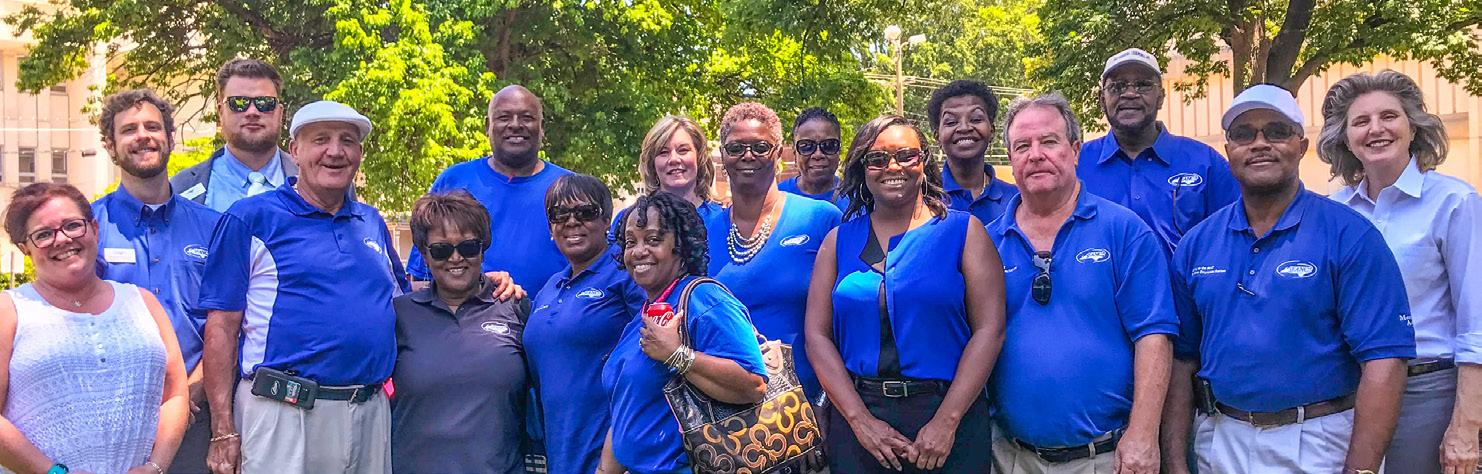
Members from across the state consistently showed a strong SEANC presence while the legislature was negotiating their budget proposal.
Senate votes to take away your right to payroll deduction
The bill to take away your right to have dues and other payments to SEANC deducted from your paycheck each month, Senate Bill 375, moved through the Senate just before the crossover deadline in late May.
Sponsored by Sen. Ralph Hise, the bill passed through both the Senate’s State and Local Government and Rules committees and then the full body quickly. If it passes the House and withstands a likely veto from Gov. Roy Cooper, your right to have SEANC dues, insurance payments, PAC donations, Purchasing Power payments and other expenses deducted from your paycheck each month would be taken away.
Payroll deduction is YOUR RIGHT, not SEANC’s right. Taking it away is just another attempt to silence state

employees so legislators don’t have to answer for the lack of meaningful raises and cost-of-living adjustments for which we have been fighting. It would also put you at risk of losing access to SEANC’s popular insurance plans and Purchasing Power.
SEANC Government Relations Director Ardis Watkins spoke out against the bill in both committee meetings, and in both it seemed that the bill failed voice votes. But the chairperson ruled in both cases that it passed, and no one called for a revote. Senate leadership was committed enough to passing the bill that it was approved even after a vigorous floor debate. Thank you to Sen. Warren Daniel (R-Burke) and Sen. Shirley Randleman (R-Wilkes) for having the courage to buck the party line to vote
with us and stand up for free speech of employees. And thank you to the 15 Senate Democrats who held firm in their support of public services by voting against the bill as well.
NOW is the time to switch your method of payment to SEANC from payroll deduction to an alternative payment option like bank draft. Just visit apo.seanc.org to make the switch.

Change Your Plan,
WIN A GRAND!
With Senate Bill 375 passing the Senate, your right to have SEANC dues, insurance premiums and other payments easily deducted from your paycheck is under direct threat. SEANC is asking all members to consider switching over to bank draft, where payments are pulled from members’ bank accounts each month instead of their paychecks.
SEANC has launched a contest to incentivize members to make the switch! We will give away 25 prizes of $1,000 to randomly selected members who have made the switch to bank draft or annual pay by the SEANC Convention.
Five winners will be selected from each region. Anyone who has switched to bank draft or annual pay by the convention will be entered into the drawing. The 25 winners will be selected at the convention on stage.
If you haven’t already, please visit apo.seanc.org to switch over to bank draft today!

SEANC will give away 25 prizes of $1,000 to randomly selected members who have made the switch to bank draft or annual pay by the annual convention in September.
Taking payroll deduction away is just another attempt to silence state employees.
State Health Plan: Dependent audit serves members' best interests
State Health Plan members who cover dependents under the age of 75 should have received a letter informing them that a Dependent Eligibility Verification Audit is currently underway.
Why an Audit is Needed
The audit is being conducted to ensure that those dependents on the plan, are actually eligible to participate. This is not only a legal requirement, but part of an effort to reduce waste, fraud and abuse. With healthcare and drug prices continuing to rise, the plan must address cost concerns in order to provide quality coverage at a reasonable rate without constantly adjusting deductibles and copays. The plan not only wants you to have benefits, but to be able to afford to use it.
This audit addresses several important issues:
• Every dollar spent on someone receiving plan coverage who is ineligible is money out of the plan’s pocket.
• The state has an unfunded healthcare liability of about $42 billion. Any unnecessary expenditures from ineligible dependents adds to that liability.
• Ineligible individuals using plan coverage threaten affordable copays and deductibles and increases unnecessary spending.
• Freezing family premiums so younger state employees and their families can afford coverage. Right now, a starting teacher, trooper or firefighter must work five days out of every month to afford family coverage.
Correcting the Past
In 2010, the plan conducted an audit that found thousands of ineligible individuals who were receiving coverage. Their removal from the plan saved taxpayers millions of dollars.
Unfortunately, during past audits, verification documents were collected but never saved digitally; nor were they permanently linked with each member, so subsequent audits were necessary. This time, however, state Treasurer Dale R. Folwell, CPA, is changing that.
“There should be a way, once I tell how old my son is, for the State Health Plan to determine his eligibility,” Folwell said in a recent interview. “But right now, that isn’t always possible. So we’re doing this audit now, and getting this information digitally, so we don’t have to ask for the same document in the future.”
The plan partnered with Benefitfocus, the plan’s eligibility and enrollment vendor that conducts Open Enrollment, to ensure all uploaded documents are handled securely.
How to Comply
The letter members received explains the documentation needed for each dependent. This information must be submitted by July 31, 2017. Only members who have dependents under the age of 75 as of April 19, 2017, must comply with the audit.
Resources Available
Visit the State Health Plan (https://shp.nctreasurer.com/ Pages/Dependent-Eligibility-Verification-Audit-Information. aspx) for more information including Frequently Asked Questions, step-by-step instructions and a video tutorial to guide you through the process. Members with questions should call the Eligibility and Enrollment Support Center at 855-859-0966, Monday through Friday, from 8 a.m. – 5 p.m.
From the Office of the State Treasurer
Businesses that support state employees' pay and retirees' COLA increases
Earlier this year, SEANC challenged members to recruit small businesses throughout North Carolina to stand up for pay raises and cost-of-living increases, because they understood that putting more money in state employees’ and retirees’ pockets puts more money in North Carolina businesses’ pockets. The following businesses chose to stand with us.
Audit Committee Nominations
The SEANC Audit Committee is seeking candidates for election to a 3-year term, to be decided at the Annual Convention in September. Candidates shall have financial experience that includes accounting principles, serving as the treasurer for SEANC or other organizations, business operations/ reimbursement and compliance officer responsibilities or similar related experience. Candidates must submit a resume of relevant experience to be screened by the Audit Committee with a report made to the Board of Governors. This will ensure the professional financial experience necessary to serve on the Audit Committee.
Please email resumes to SEANC Director of Operations Chuck Stone at cstone@seanc.org or Audit Committee Chairman Keith Renner at vrkeithr@yahoo.com or send to the SEANC Central Office to Chuck Stone’s attention no later than August 1, 2017. All resumes received after August 1, 2017 will not be considered.

REPORTER THE
Jonathan owens, Editor-In-Chief Beth Dew, Managing Editor amanDa wise, Associate Editor sara Cowell CoBurn, Associate Editor State Employees Association of North Carolina 1621 Midtown Place • Raleigh, NC 27609 Telephone 919-833-6436, 800-222-2758 www.seanc.org
Advertising Policy
SEANC accepts advertising material from companies and persons seeking to communicate with SEANC members. Acceptance of this advertising does not indicate SEANC approval or endorsement of any representation that the message, product or service is as represented by the advertiser. SEANC accepts no responsibility and shall not be liable for any use of or reliance on any such information, product or service. SEANC is a private entity and is under no obligation to carry advertisements of any nature, political or otherwise, that may be viewed as contrary to the interests of the association and its membership.
Reimbursements possible after judge sides with retirees in Lake Lawsuit
A trial judge issued a ruling in late May in the so-called “Lake Lawsuit,” ordering the state to reimburse retirees for premium payments they made to retain the PPO 80/20 plan and offer that plan as it existed in 2011 premium-free for the rest of their lives.
The ruling, if it withstands appeal, would affect state employees and retirees who were vested in the system as of 2011, which could total more than 220,000 people.
The state should honor the promise it made to these retirees, but remember that it comes at a cost, estimated at more than $100 million by state Treasurer Dale Folwell. This will lessen
the funds available for COLAs and pay raises.
State employees and retirees did not make this mess and they shouldn’t have to clean it up. We should not be penalized because state leaders made a mistake. There are ways for the state to save enough money, by curtailing over payments and sweetheart deals with businesses with whom it contracts, for example, to pay for this promise.
The state is likely to appeal this decision, so the reimbursements will not be paid anytime soon.
For more information on the lawsuit and who is affected by the judgment, visit www.thelakecasefund.com
SEANC distributes $22,000 to members affected by Hurricane Matthew
SEANC announced in May that it had distributed $22,000 in relief grants to 61 members and their families who suffered losses as a result of Hurricane Matthew’s landfall last fall.
The funds were raised solely from generous contributions from individual members, SEANC districts, and members of other locals of Service Employees International Union, SEANC’s national affiliate.
Members submitted an application for a grant from SEANC, then a committee of members evaluated
each and distributed funds according to need. Awards ranged from $100$500 each.
Recipients live in areas all over eastern North Carolina, including Wilson, Goldsboro, New Bern, Greenville, Kinston, Fayetteville and Lumberton.
“We are grateful to have generous members who are willing to help our brothers and sisters in this time of need,” said SEANC President Stanley Drewery, who resides in Eastern N.C. “Hurricane Matthew devastated much of the east, but it did not break our spirit.”
The Reporter, USPS 009-852 (ISSN 1069 2142), is published six times a year in the months of November, February, April, May, July and September for $2.50 per year, per member, by the State Employees Association of North Carolina, Inc., 1621 Midtown Place, Raleigh, N.C. 27609. Periodicals postage paid at Raleigh and additional offices. POSTMASTER, Please send address changes to: THE REPORTER ● 1621 Midtown Place ● Raleigh, NC 27609

SEANC District 65 participated in its 23rd year in the Pitt County Relay for Life that was held on April 28-29 at Boyd Lee Park in Winterville. The team was made up of SEANC members, their families and friends. Together they raised approximately $3,600 doing various fund raisers throughout the year that will go to the American Cancer Society. Pictured left to right: District 65 members Fred Austin, Lynn Tuthill, Debbie Austin, Neichelle Bell, Linda Schadler, First Vice President Gloria Evans, District 65 members DeAnne Smith, Martha Latham, Melinda Sawyer, Linda Sawyer, Joanie Tyson, Tonga Wilder, Inga Jones, Dwayne Mackey, Adorian Bell, District 65 Chairwoman Alicia Simpson, District 65 members Haley Clayborne, Alice Yan, Seth Tuthill, Travis Mewborn, Cynthia Brown, Stasia Austin, Ava Hunt, Laranda Boone, Dorothy Andrews, Cynthia Hart and Tiasia Andrews. Team members not pictured: District 65 members Kathryn Kittrell, Linda Nelson, Cathy Collins, Marquerite Latham and Lina Johnson.

District 65 joined with District 64 to host a retiree forum on April 25 at the ECU Willis Building in Greenville. More than 50 state employees enjoyed a sub sandwich lunch and had their questions about the state health plan and other topics answered by SEANC Executive Director Mitch Leonard (not pictured) and SEANC Retiree Council Chairman Benny Brigman (second from left). Also pictured from left are District 65 member Shirley Williams, District 65 Chairwoman Alicia Simpson, District 65 member Cynthia Brown, Retiree Member Relations Representative Dennis Hartley, District 65 members Bill Dawson, Dwayne Mackey and Doris Whitaker, Member Relations Assistant Director Tiffany Woodard, District 65 members Cynthia Hart, Debbie Austin and Donna Poe.
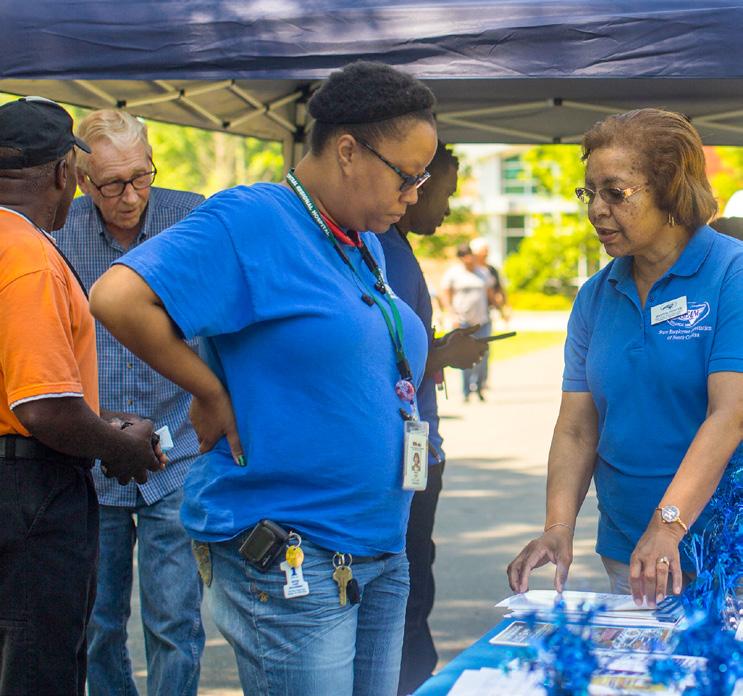
21 held a member appreciation event on May 16

46 held an employee appreciation and recruitment event on May 11 at the Department of Revenue office in Raleigh.
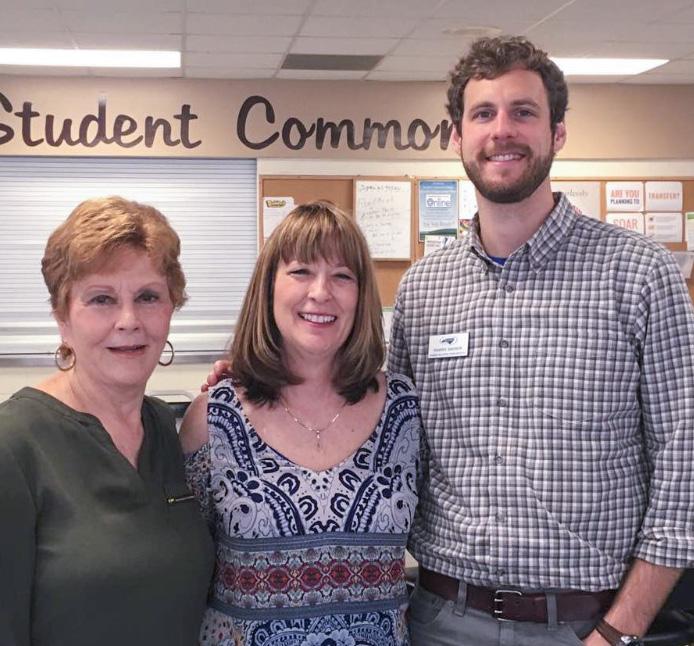
3

District
held an event at Mayland Community College on Tuesday, April 25. Pictured from left: District 3 members Kay Royer and Rhonda Robinson and Member Relations Representative Johnny Davison.
District
at the Gazebo Park in Butner. Hundreds of Chick-Fil-A sandwiches were given out, and 17 new members were recruited!
District 67 Chairwoman Patricia Moore (left) and District 67 member Carlton Jarmon (right) on June 6 presented District 67 member Cleve Woolard with a donation to the Sudan Shriners.
DEBORAH GRZESLO
District
SARA COWELL COBURN

PERSONNEL CASES: PROTECTING STATE EMPLOYEE RIGHTS
Representing
■
■
■
■
■


■
■
State employees are good people. But even good people make mistakesmistakes that violate your rights as a career employee, discriminate against you, or cost you a promotion or job.
My practice is restricted to state personnel disciplinary and licensing matters. I have litigated personnel cases in the Office of Administrative Hearings since the 1990s.
If you have a grievance, disciplinary appeal, or any state employment matter, call (919) 865-2572 or email me at michael@mbyrnelawnc.com.
Learn how I put 20 years of experience and consistent success in state personnel cases to work for you - when your rights are on the line.


75
Join the State Employees Association of North Carolina Scholarship Foundation as we host a bowl-a-thon to benefit our scholarship program.
Silent Auction
Saturday, July 22
WHERE: Buffaloe Lanes North 5900 Oak Forest Drive Raleigh, NC 27616
1-3 p.m. or 3-5 p.m. Buffaloe Lanes North 5900 Oak Forest Drive ● Raleigh, NC
WHEN: February 28 from 1-3 p.m. or 3-5 p.m.
HOW MUCH: $20 per person or $100 per team of six (shoes are included)
Proceeds from the event will be used to award thousands of dollars in educational scholarships to SEANC members, their spouses and their dependent children.
REGISTER: Complete a registration form today! Payments can be made via registration form online at www.seanc.org/bowl-a-thon with a credit card (Visa, Mastercard and Discover accepted) or checks made payable to SEANC Scholarship Foundation. Deadline to register is February 6.
Tickets: $20 per person or $100 per team of six To register, sponsor a lane or for more information visit seanc.org/seanc-bowl-a-thon
For more information contact Alicia Miller or Beth Dew at 800-222-2758. Awards






1621 Midtown Place Raleigh, NC 27609
SEANC donates to family of fallen officer
SEANC’s Board of Governors presented Wendy Callahan, the mother of the late Sgt. Meggan Callahan, with a check from donations to the fund SEANC set up in honor of her daughter, at its May meeting.
Sgt. Meggan Callahan, 29, was killed in an attack by an inmate at Bertie Correctional Institution on April 26. She was a member of SEANC’s District 63.SEANC collected more than $4,000 from individual member donations and SEANC districts all over the state. All proceeds collected were given to her family.
In accepting the check, Callahan’s mother said Meggan “loved her job and she was very good at her job. She was a leader and she trained people well. We are very proud as a family of what Meggan did.”
SEANC President Stanley Drewery presented the check, saying, “We just wanted to show our support as
a SEANC family. I know we cannot give her enough to bring her daughter back, but we want to give her love and show her support for the sacrifices her daughter made for each and every one of us.”
Callahan’s death has called attention to the dangers facing the people who work in our prisons every day. Attacks on officers are routine in N.C. prisons and yet officers do not receive the benefits a law enforcement officer does.
SEANC says Enough is Enough!
The Charlotte Observer reports that a correctional officer is assaulted approximately once every eight hours in this state, and there were 1,160 assaults on prison staff in 2016.
All aspects of law enforcement are dangerous, but arguably, no one is at greater risk than correctional officers. Correctional officers deal not with suspected criminals, but convicted criminals for an entire 12-hour shift.
Often one correctional officer can be assigned to as many as 80 inmates.
Worse yet, some of these inmates (such as the one who attacked Sgt. Callahan) are serving life sentences for violent crimes and have literally nothing to lose by harming an officer.
SEANC is pressing lawmakers to support granting the same full benefits to correctional officers that are guaranteed by statute to officers with full arrest powers. This would provide eligibility for certain disability and death benefits, and allow them to retire earlier.
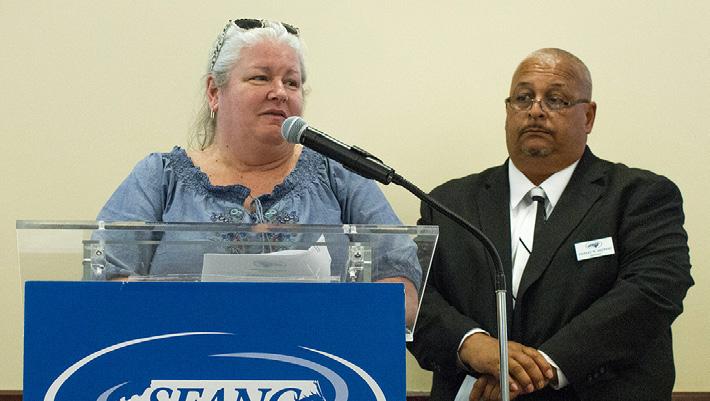
President Stanley Drewery presents Wendy Callahan with a check from donations for the fund SEANC set up in honor of her daughter.