POR TUGAL
Iberian Peninsula
Idanha-A-Nova Municipality in context
Halfway between Lisbon and Madrid, the Municipality of Idanha-a-Nova could not be better located. With the highway da Beira Interior (A23) and IC31 to the border of Monfortinho, currently has good access, just 286 km from Lisbon. By car, Coria / Navalmoral de la Mata and Caceres are only 320km to Madrid and much less to Cรกceres, Badajoz and Salamanca. Inside, it has a network of national and municipal roads in good repair. Today, as then, Idanha-a-Nova is at the center of the Iberian Peninsula.
A Idanha-A-Nova
B
Porto
C Lisbon
D Madrid
North Atlantic Ocean
546.9 Square Miles 10,929 Residents 20 People Per Square Mile 150 Square Miles 1.3m Residents 14,856 People Per Square Mile 370Square Miles 3m+ Residents 16,726 People Per Square Mile 233.89 Square Miles (City) 3.3m Residents 14,000 People Per Square Mile
C
B
D A
Mediterranean Sea
A Idanha-A-Nova
B Lisbon
C Badajoz
162.3 miles
B
A
126.2 miless
C 140.3 miles
A C
D
B
A Idanha-A-Velha B Penha Garcia C Albufeira da Barragem de Marechal Carmona D Idanha-A-Nova
Idanha-A-Nova The Physical Make up
The municipality of Idanha-A-Nova is located in the district of Castelo Branco. This district is situated on the Eastern coast of Portugal and boarders with Spain. The municipality of Idanha-A-Nova itself consists of 17 small parishes. The municipality is very scarcely populated with only 10,929 residents over the area of 547 square miles. This is put into perspective when comparing it to one of our major cities such as Lodnon which has a density of 13,466 people per square mile. Castelo Branco gets its name from the prior existence of a Luso-Roman castrum or fortified settlement called Castra Leuca, on the summit of the hill of Colina da Cardosa. The population grew on the slopes of this hill. Around 1215 the walls to the castle were built. In 1510 a new foral was conceded by Manuel I and in 1642 the town acquired the status of Vila de Castelo Branco. In 1771 Castelo Branco became a city and Pope Clement XIV created the diocese of Castelo Branco in 1881. The most important monument in Castelo Branco is the Jardim do Paรงo Episcopal (Garden of the Episcopal Palace). It is one of the most beautiful baroque gardens in Portugal and contains statues of allegories, kings and zodiacal signs, arranged around ponds, terraces and staircases.
Castelo Branco
Idanha-A-Nova
Map illustrating the geographical position of the municipality within the Castelo Branco district.
Idanha-A-Nova The Parishes within
Parishes are small administrative areas which typically have their own church and a priest or pastor.
A
Alcafozes
I
Oledo
B
Aldeia de Santa Margarida
J
Penha Garcia
C
Idanha-A-Nova
K
Proença-a-Velha
D Idanha-a-Velha
L
Rosmaninhal
E
Ladoeiro
M
Salvaterra do Extremo
F
Medelim
N
São Miguel de Acha
G
Monfortinho
O
Segura (Idanha-a-Nova)|Segura
H
Monsanto
P
Toulões
Q
Zebreira
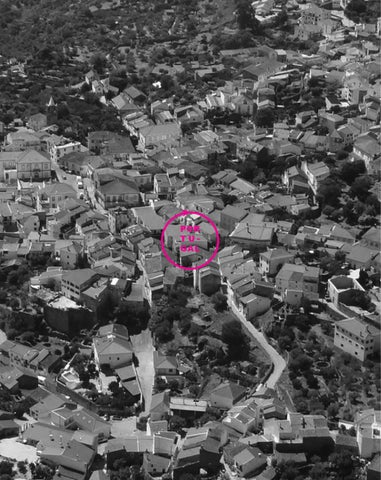
Idanha-a-Velha The small village in the Idanha-a-Nova municipality we are focusing on.
B F K N
D I A C
E
J H
G P M
Q O
L
“A
land
blessed by
nature.
As
unspoilt
you
can
get it.”
“Probably
the most portugese
municipality in
Portugal”
as
Portugal Idanha-A-Velha
Against alland Attempts odds Opportunities Idanha-a-Velha Numerous pre-Roman is a village peoples whichofrelies the Iberian heavily upon the Peninsula practiceinhabited of agricultural the territory farmingwhen to produce the staple foods Roman and invasion goods for occurred the community. in the 3rd century BC. The Romanization of Hispania took several The centuries, village and has the a rich provinces agricultural that history coveredwhich at the today’s peakPortugal of its period werewas Lusitania producing in the wheat, southolive and oil, rye Gallaecia and even in the wildnorth. asparagus. The farming tradition is still echoed throughout the village in this modern era, Numerous but isn’tRoman currently sites producing are scattered any income, aroundtourism or present-day interest, it is Portugal, purely for some personal urbanuse remains and gain. Any are quite produce large, thatlike is passed Conimbriga on isand usually Mirobriga. done so by Several tradingworks amongst of engineering, the residents, such never as baths, sold with a monetary temples, bridges, value. roads, circus, theatres and layman’s homes are preserved throughout the The country. village has already undergone a small amount of regeneration and an attempt has been made to rectify some Coins,ofsome the ancient of which ruins, coined turning in Portuguese them into desirable monuments land, sarcophagus and places and of ceramics rich geological are numerous. history.
REGENERATION PROCESS
S
LOCAL AGRICULTURE The village has already undergone a small amount of regeneration and an attempt has been made to rectify some of the ancient ruins, turning them into desirable monuments and places of rich geological history. An emphasis has been placed on the geological content of the site itself and the agricultural history of the area. ATELIER 15 have already been commissioned to design a space which will hopefully attract visitors and tourists from around the globe. The space which was created was the result of an intelligent discission to use the geological content as sculpture and art. Visitors can now be educated on the historical value of the ancient roman architecture, all under one roof at the villages museum. The olive press has also been beautifully revamped and equipped with educational plaques to inform the visitor of the importance of this to the local residents.
Idanha-A-Velha Urban Circuit 1. NORTHERN GATE 2. SEE 3. OIL PRESS 4.ROMAN DWELLING 5. ROCKS TO CROSS RIVER PONSUL
11
6. TOURIST OFFICE 7. PILLORY 8. MERCY CHURCH
14
8 9
7 6
1 14
2 16
9. COMMUNAL OVEN 10. “TEMPLARIOS” TOWER 11. “SAO DAMASO” CHAPEL
13
12. SAO DAMASO” STREET LOVES 13. ROMAN BRIDGE 14. HOLY GHOST CHAPEL 15. ROMAN NECROPOLES
12
16. “SAO SEBASTIAO” CHAPEL
10
3 4
5
Idanha-A-Nova Primary School
History - Idanha-a-Velha Culture and Society
“The official symbol of the municipality and the most traditional past time. [Adufe]” Figure 1 The Adufe - A cultural icon
“On the fertile river banks we can see the village vegetable plots, which are very important for the peoples survival.” Figure 2 River banks Idanha-A-Velha
“Small picturesque village which holds a position of high standing among the archeological works.” Figure 3 View from our CRIB
“Women baking in the community oven to create some form of commerce.” Figure 4 Local women baking in the communal ovens
Hand crafting musical instruments
Geology
A geologically rich environment “The area of Castelo Branco houses a network of geoparks which are governed by Taejo International.”
Folds of Schist rock on the peak of Penha Garcia village
“The main types of rock found within the landscape are Granite, Schist and Quartzite.”
A mixed palette of materials used on a dwelling in Penha Garcia.
Oleiros Castelo Branco
Proenca-a-Nova
V.V. de Rodao Spain
Idanha-a-Nova
Spain
Borders group - schists and greywackes Neoproterozic (610-542 Million Years)
Tardi-orogenic Variscan Granites (315-300 Million Years)
Armorican quartzite and shists Ordovican (488-444 Million Years)
Basic Rocks, Alpites, Pegamitites
Conglomerates and breccias Arkoses Eocene-Pilocene (50-1.8 Million Years)
Quartz
Pre-Variscan granodiorites (490-480 Million Years)
Topography
Terrain model indicating how the majority of the municipality finds itself nested in a topographic bowl.