How Perth Businesses Can Strengthen Cargo Security Across Long-Distance Freight Routes?
Moving cargo across Western Australia presents challenges that are very different from short metropolitan deliveries. Freight may travel hundreds or even thousands of kilometres, pass through multiple depots and remain unattended at different stages of its journey. Each handover or stop creates another point where cargo integrity needs to be maintained. For businesses using security seals Perth solutions, effective cargo protection involves more than simply attaching a seal before a truck leaves the warehouse. A reliable approach combines suitable security seals with container inspections, recorded seal numbers, controlled handovers, appropriate load restraint and clear procedures for dealing with damaged or mismatched seals.
Why Long-Distance Freight Needs Additional Security? Perth's geographic position means freight travelling to regional Western Australia or interstate can spend considerable time in transit. Depending on the route, goods may move between warehouses, freight terminals, trucks and other transport infrastructure before reaching their final destination. These additional touchpoints can make maintaining a clear chain of custody more difficult. Businesses therefore need a layered approach that addresses:
unauthorised access to cargo tampering during transit incorrect or undocumented handovers damaged containers or closures missing or mismatched seals poor shipment identification
No single security measure can address every risk. Instead, physical security and operational procedures should work together throughout the freight journey.
How Security Seals Support Cargo Integrity? Security seals are designed to provide visible evidence that a secured access point may have been opened or interfered with. They can be applied to shipping containers, vehicle doors, cages, bags and other freight applications, depending on the type of seal being used. For long-distance freight, numbered or barcoded seals can provide an additional operational benefit. Their unique identifiers can be recorded against shipment documentation and checked whenever custody changes. This means the seal becomes more than a physical barrier or tamper indicator. It becomes part of the shipment's traceability process.
Choose the Right Seal for the Application Different freight operations require different types of security seals. Selecting a product simply because it appears strong may not provide the most appropriate solution.
Bolt Seals
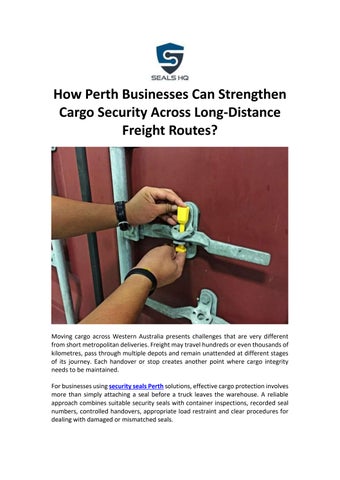
Bolt seals are commonly used with shipping containers and other applications where greater physical resistance and clear tamper evidence are required. Individually numbered bolt seals can also help businesses verify that the seal fitted at dispatch is still present when the container reaches another depot or its final destination.
Cable Seals Cable seals provide greater flexibility because the cable can pass through different locking points. They can be useful for certain transport doors, cages, equipment and freight applications where a fixed-length locking mechanism may not be suitable.
Plastic Security Seals Plastic security seals are often used when tamper evidence, identification and operational control are more important than high physical resistance. Depending on their design, they may suit bags, roll cages, equipment and other logistics applications. Numbered and barcoded versions can also make them easier to incorporate into inventory and dispatch procedures.
Record Seal Numbers Before Freight Leaves One of the simplest ways to strengthen a sealing procedure is to record the unique seal identifier before dispatch. A shipment record can include:
seal number container or vehicle identification consignment number date and time of sealing dispatch location destination person responsible for sealing photographs where appropriate
When the shipment reaches another facility, staff can compare the physical seal number against the original record. If the numbers do not match, the seal is missing or there are visible signs of interference, the discrepancy can be investigated before the cargo continues through the supply chain.
Inspect Containers Before Applying Security Seals
A security seal should never be used as a substitute for inspecting the equipment it is protecting. Before loading or dispatch, businesses should check relevant access points, including container doors, locking mechanisms, hinges and other closure components. The Australian Border Force provides guidance and compliance information relevant to goods moving through Australia's international trade and border environment. Reviewing official requirements is particularly important for businesses involved in international container movements. If the underlying container or locking point is compromised, placing a new seal over it does not resolve the underlying security issue. A short pre-dispatch inspection can therefore form an important part of a broader cargo security procedure.
Security Seals and Load Restraint Serve Different Purposes Cargo security and load restraint are closely related operational considerations, but they should not be confused. A security seal is primarily intended to provide tamper evidence or help control access. It does not prevent cargo from shifting inside a vehicle or container during transport. The National Heavy Vehicle Regulator provides guidance on load restraint and the responsibilities associated with keeping loads secure during road transport. Depending on the freight and vehicle, suitable restraint methods may include:
straps chains blocking vehicle structures twistlocks other purpose-designed restraint systems
Businesses should therefore treat load restraint and security sealing as complementary controls rather than alternatives.
Pay Attention to Transfer and Rest Points A freight journey does not only need protection while the vehicle is moving.
Warehouses, distribution centres, freight terminals, loading areas and overnight stopping locations can all become important points in the cargo security process. Where custody changes, businesses should have a simple verification procedure: 1. 2. 3. 4. 5.
Check the seal before opening the load. Compare its number with the shipment documentation. Inspect it for visible damage or interference. Record the time and location of the handover. Report discrepancies before normal unloading continues.
Consistent checks make it easier to determine when and where a problem may have occurred.
Establish a Procedure for Broken or Mismatched Seals Finding a damaged seal should not automatically mean replacing it and continuing with the shipment. Businesses should establish an exception procedure so employees and transport partners know exactly what to do. Depending on internal policies, this may involve photographing the seal, checking the recorded identifier, inspecting relevant closure points, notifying a supervisor and documenting why the seal was broken. If a seal legitimately needs to be removed during transit, the replacement seal number should also be recorded along with who authorised the change. These records help maintain continuity in the chain of custody.
Make Cargo Security Part of Daily Operations Security procedures are most effective when they become part of normal freight operations rather than an additional task employees perform only for particularly valuable shipments. Warehouse teams, drivers and receiving personnel should understand:
which seals are appropriate for different loads how seals should be applied where seal numbers should be recorded when seals need to be checked what visible tampering may look like how discrepancies should be reported
Businesses can also periodically review shipment records for recurring issues. Repeated seal damage on a particular route, for example, may justify reviewing handling procedures, transport equipment or custody arrangements.
Building a Stronger Chain of Custody Effective freight security depends on maintaining visibility and accountability from dispatch through to delivery. Businesses can strengthen this process by combining documented handovers, container inspections, appropriate load restraint and tamper-evident sealing practices. For Perth organisations managing interstate or regional containerised freight, it can also be useful to understand how high-security seals for container transport support cargo protection. Bolt seals, for example, are commonly associated with containerised freight where stronger physical security and clear evidence of interference are required.
Conclusion Long-distance freight creates multiple points where cargo can change hands, remain stationary or encounter unexpected handling conditions. A strong cargo security strategy therefore needs to extend beyond the warehouse door. By selecting appropriate seals, documenting unique identifiers, inspecting containers, verifying seals during handovers and maintaining proper load-restraint procedures, Perth businesses can create a more traceable and controlled freight process. The key is to match the seal to the application and support it with consistent operational procedures from dispatch through to delivery.
Frequently Asked Questions What are security seals used for in freight transport? Security seals provide visible evidence of possible unauthorised access or tampering. Unique identification numbers can also support shipment tracking and chain-ofcustody procedures.
Which security seals are suitable for shipping containers? Bolt seals are commonly used for shipping containers, particularly where stronger physical resistance and clear tamper evidence are required. Selection should consider the container, freight route and applicable security requirements.
Should businesses record security seal numbers?
Yes. Recording the seal number at dispatch and verifying it at handover and receiving points can help identify discrepancies and maintain shipment traceability.
What should happen if a security seal is damaged? The damage should be documented and investigated according to the organisation's cargo security procedure. Staff should verify the seal number, inspect the closure and record any authorised replacement seal.
Are security seals enough to protect long-distance freight? No. Security seals should form part of a broader cargo security process that includes container inspections, controlled access, shipment documentation, appropriate load restraint and documented custody transfers.
Resource: How Perth Businesses Can Strengthen Cargo Security Across Long-Distance Freight Routes?