Lowcountry
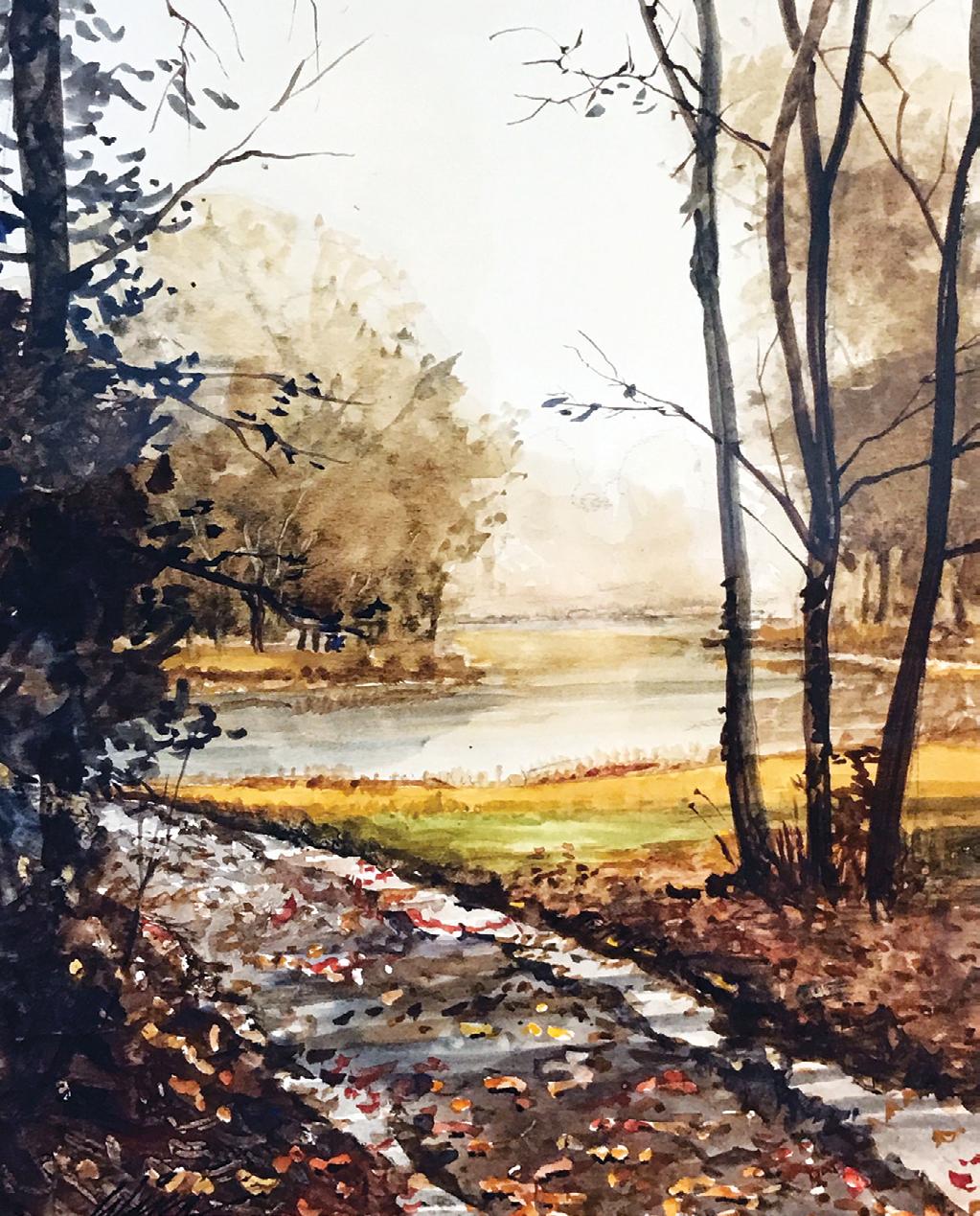


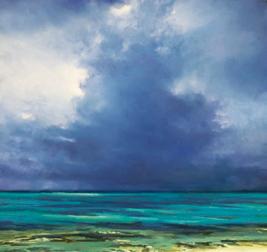
The watercolor painting on our cover is "Autumn" by Bill Winn, one of seven artists who show their work at La Petite Gallerie in Bluffton. For more information on the gallery, see page 5.
August 19 – September 1, 2020
Publisher: Jeff Evans — Jeff@LCWeekly.com
Editor: Margaret Evans — Editor@LCWeekly.com
Staff Writer: Mindy Lucas — Mindy@LCWeekly.com
Editor at Large: Mark Shaffer — BackyardTourist@gmail.com
Sales & Marketing Director: Amanda Hanna — 843-343-8483 or Amanda@LCWeekly.com
Digital Marketing & PR Director: Kim Sullivan — 803-606-1530 or kim.theislandnews@gmail.com
Advertising Sales: Betty Davis — 843-252-9076 or Betty.IslandNews@Gmail.com
Art Director: Lydia Inglett
Layout & Design: Amalgamated Sprinkle Works
Contributing Writers: Will Balk Jr., Tommy Baysden, Vivian Bikulege, Katherine Tandy Brown, Debbi Covington, Sandra Educate, David Murray, Laura Lee Rose, Sutty Suddeth, Donald Wright, and Jake Zadik
What’s Happening Calendar: Staff – Editor@LCWeekly.com
Letters to the Editor, comments or suggestions can be addressed to: Lowcountry Weekly 106 West Street Extension, Beaufort, SC 29902 Call: 843-986-9059 or Email: editor@lcweekly.com
Lowcountry Weekly is published every other Wednesday and distributed throughout Beaufort County at various restaurants, retail locations, hotels and visitor’s centers. The entire contents of Lowcountry Weekly is copyrighted 2020 by P. Podd Press, LLC. No part may be reproduced without permission from the publisher. The publisher assumes no responsibility for unsolicited material. A stamped, selfaddressed envelope must accompany all submissions expected to be returned. L o w c o unt r y


For generations, American parents have been tutoring their children in some version of the following concept: “It doesn't matter what people look like on the outside; it's the inside that counts.”
My mother said this to me, her mother said it to her, and I have said it, ad nauseam, to my own daughter. Trust me, this is just something mothers say.
It has always been a somewhat dubious doctrine, to be taken with a grain of salt, because the same mother who preached it might also look at you as you were walking out the door and ask, "Are you wearing that?” or “Have you put on some weight?” or "Couldn't you use a little lipstick?"
Nevertheless, it was a deeply encouraging thought, this notion that the inside you was full of glorious, lovable potential, no matter the state of the outside you. And, judging others according to their insides, not their outsides, seemed a wholly commendable goal. It’s the same ideal we celebrate when we trot out that other worthy cliché, “Don’t judge a book by its cover.” Granted, none of us is consistently good at living out that ideal, but we all agree we should try.
wrote, "Kindness means to not look at someone from the outside, but look at their personality, and be open to their friendship. No matter what people look like, you look on the inside . . ."
volves around concepts like “white privilege,” “white fragility,” and “white supremacy,” which no longer refers to evil men in white hoods – as it did in my youth – but to…everything. American society in toto. They tell us

Sara’s little girl words and little girl drawing moved me to tears. Even the title of her Doodle – “Together As One” – choked me up. It seems the children still believe in the dream. What has happened to the grown-ups?
that “racism” isn’t something we do or don’t do – feel or don’t feel – but something we’re born into. Something we can’t deny or denounce, but must acknowledge. Or better yet, confess. Like sin.
Or, at least, we did agree, for as long as I can remember.
But I’ve been worried about that ideal lately. In this era of enhanced race consciousness – when everyone's talking about "black bodies" and "brown bodies" and "white fragility" and such – I have wondered how we could possibly continue to uphold it. I have worried that nobody even wants to anymore.
I worry, because I still believe in the ideal. I still believe in MLK’s dream of a country where people are judged by the content of their character, not the color of their skin . . . or any other immutable trait. I still believe in a future where race is irrelevant, so in our increasingly racialized nation – where every issue is now viewed through that lens, and people seem to want it that way – I often feel discouraged.
So I was overcome with emotion when this year's Doodle for Google winner appeared on my computer screen last week. The annual prize went to fourth grader Sharon Sara, who drew the picture you see here, and
I’m still trying to figure out how we, as a society, lost faith in this vision. How did the Civil Rights Movement of the 1960s – and all the progress over the intervening decades –lead directly to the angry, riotous, streetscorched summer of 2020?
Grappling with this question back in June, when it was still early days, I wrote:
As an early GenXer born in the mid-60s, I have no real memory of the Civil Rights era, but my own youthful nostalgia orbits around its cultural fruits – phenomena like Sesame Street, All In The Family, United Colors of Benetton ads, Stevie Wonder singing “Ebony & Ivory” with Paul McCartney. I grew up in the age that blossomed from the Civil Rights Movement, and it was beautiful. By the time I was a teenager, “racist” had become the worst epithet you could hurl at a person, and everybody I knew was earnestly devoted to rejecting racial prejudice, in thought, word and deed. Should one occasionally harbor such an unseemly emotion, one surely didn’t say so out loud. To my generation, racism wasn’t just shameful, it was seriously uncool.
So now we’ve entered a new era, and the late GenXers and Millennials are steering the conversation. Much of that conversation re-
Since I wrote those words, like almost everybody I know, I’ve been trying to re-educate myself. By now, I’m well-versed in the ideas of best-selling authors Ibram X Kendi (How to Be an Antiracist) and Robin DiAngelo (White Fragility), and have read dozens of essays by other scholars, as well.
One of those scholars is John McWhorter of Columbia University, who doesn’t think much of Kendi’s work and thinks even less of DiAngelo’s. He takes issue not with her intentions, or even her diagnoses, but with her prescription – lifelong self-reflection and atonement for white people – and her hyper-focus on race as the determining factor in a person’s life. Writing in The Atlantic, he says of White Fragility:
“Her assumption that all people have a racist bias is reasonable—science has demonstrated it. The problem is what DiAngelo thinks must follow as the result of it . . . DiAngelo does not see fit to address why all of this agonizing soul-searching is necessary to forging change in society. One might ask just how a people can be poised for making change when they have been taught that pretty much anything they say or think is racist and thus antithetical to the good. What end does all
& RAVES Margaret Evans
this self-mortification serve? Impatient with such questions, DiAngelo insists that ‘wanting to jump over the hard, personal work and get to ‘solutions’ is a ‘foundation of white fragility.’ In other words, for DiAngelo, the whole point is the suffering. And note the scare quotes around solutions, as if wanting such a thing were somehow ridiculous.”
McWhorter continues: “In 2020—as opposed to 1920—I neither need nor want anyone to muse on how whiteness privileges them over me. Nor do I need wider society to undergo teachings in how to be exquisitely sensitive about my feelings. I see no connection between DiAngelo’s brand of reeducation and vigorous, constructive activism in the real world on issues of import to the Black community. And I cannot imagine that any Black readers could willingly submit themselves to DiAngelo’s ideas while considering themselves adults of ordinary self-regard and strength. Few books about race have more openly infantilized Black people than this supposedly authoritative tome. Or simply dehumanized us.”
I’m not going to lie. Having my own gut reaction to the book so eloquently expressed by a thinker of McWhorter’s stature – who also happens to be Black – gave my confirmation bias a good stroking. But I’m well aware that McWhorter’s analysis (and mine) is a minority opinion. Maybe we’re wrong. Maybe these books, both informed by Critical Race Theory – which has burst from the ivory tower and now propels pop culture – are just what the doctor ordered to help heal a 400-year-old wound. Perhaps this summer of our discontent was just a Covid-driven aberration, or a necessary storm before the coming calm. Only time will tell.
For now, I’m just trying to focus on the simple, profound message in a little girl’s Google Doodle. And praying.
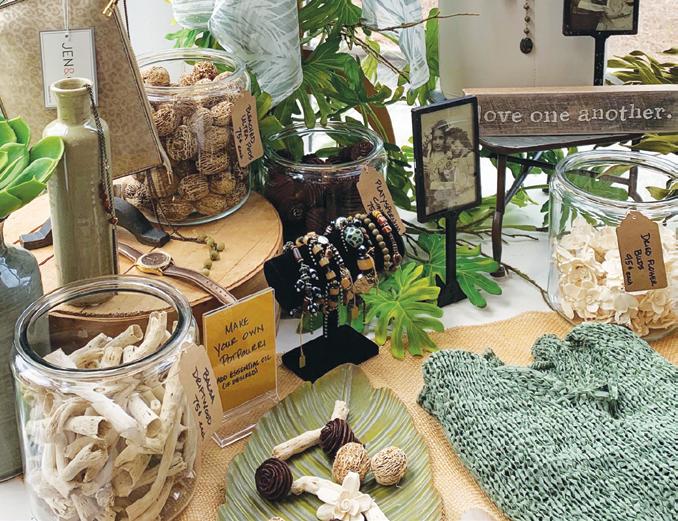
La Petite Gallerie is located in a lovely historic space on Calhoun Street in old town Bluffton.
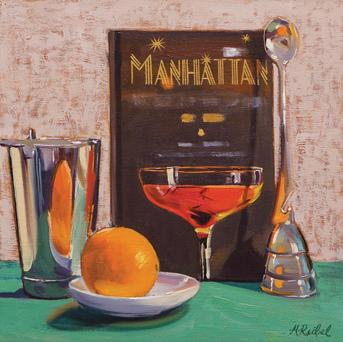
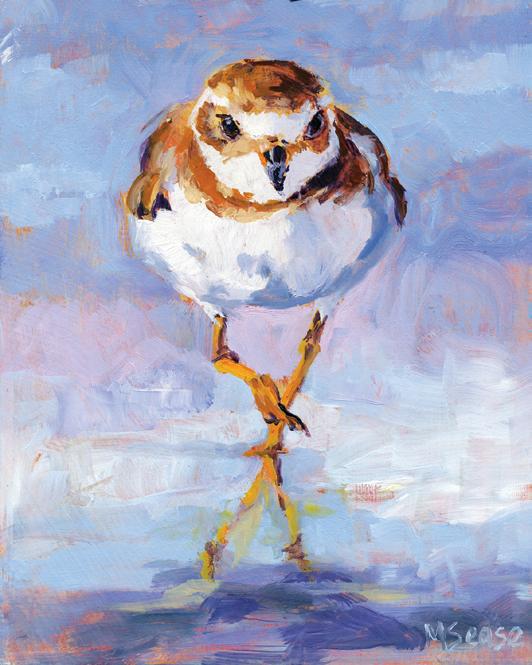
Featuring five of the area’s favorite painters and two talented sculptors, this special collection of art is an ever-changing delight, with many pieces spilling out into the adjacent garden. The gallery’s artists include Rose Cofield, Don Nagel, Kevin Palmer, Wally Palmer, Murray Sease, Lauren Terrett, and Bill Winn.
In July, the gallery artists were happy to donate a portion of their sales to Bluffton Self Help, a wonderful local organization that helps those in the community in need of food, clothing, educational and financial assistance. They provide programs that promote self-worth, dignity, and create a pathway to personal success. In August, the artists joined together for another “giving back” project. Kathy Oda, their garden glass artist, organized them to paint on glass for an online and in-person auction with proceeds going to charity. The project raised $350 Bluffton Self Help.
In addition to the pastel, acrylic, oil and watercolor paintings you’ll find blown and fused glass, whimsical and soulful clay pieces, wonderful copper “spinners,” fish, turtles, birds and other fun garden art at La Petite Gallerie. When you visit, you’re likely to catch one of the artists on duty sketching or painting on the shady garden deck!
La Petite Gallerie is located at 56 Calhoun Street in downtown Bluffton. For more information, visit www.lapetitegallerie.com


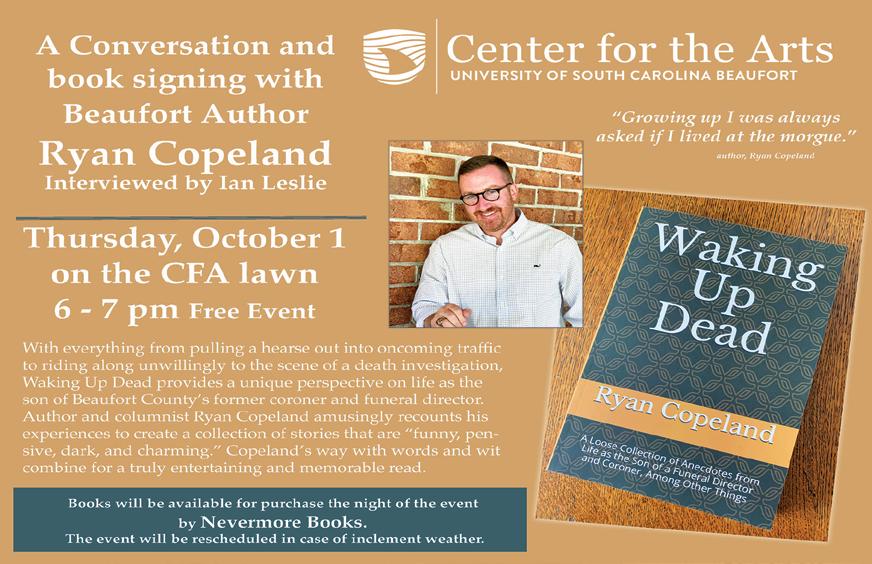
USCB Center for the Arts is stepping outside with a new series called Conversations on the Lawn. ‘Conversations’ will begin on Thursday, October 1 from 6 pm to 7 pm, and will feature local author Ryan Copeland and his good friend Ian Leslie. Copeland’s new book Waking up Dead showcases his unique perspective as the son of Beaufort County’s former coroner and funeral director. Writing about everything from pulling a hearse into oncoming traffic to riding along unwillingly to the scene of a death investigation, Copeland has created a collection of stories that are funny, pensive, dark and charming. His way with words and wit combine for a truly entertaining and memorable read.
When lifelong friend Ian Leslie was asked if he would join in the conversation, he responded, “I would love to make Ryan feel as uncomfortable as possible! Seriously, it would be an honor.”
Bring your lawn chair, wear your mask and social distance for a delightful and fun conversation. Nevermore Books will be on hand for book purchases, and Ryan will be signing books following the event.
The series is free and open to the public. Is case of inclement weather, the event will be postponed. Save the date for out next conversation with Dr. Nijmah Thomas and Arnette and Kwaku Adobili about their book’s African Folk Tales and Lifeline.
Ryan Copeland, a Beaufort native, is a librarian and regular columnist with the Beaufort Gazette and Island Packet since 2014. In addition to his column, he is the author of The Beauty of Beaufort and Hilton Head Island: Discover the Treasures of One of America’s Most Cherished Towns and a contributor to Along Southern Roads. He lives in Beaufort with his wife, Leigh and their sons Lukas and Reames.

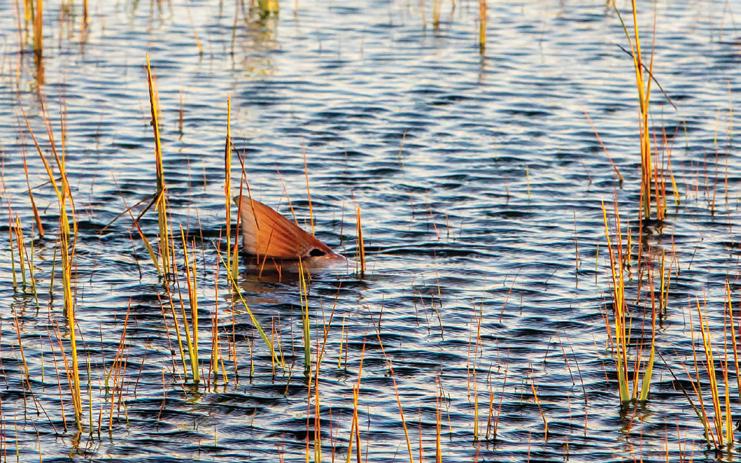
October is an excellent time for fly fishing some of the spring tides. If you are new to the Lowcountry you may have heard the term “a spring tide” and assumed it occurs seasonally. Actually, spring tides occur every month for several days around each full moon and new moon. That’s when the high tides are higher and the lows are lower. Except for some of the extreme cases, these tides often create special fly fishing opportunities: sight casting for tailing redfish. But that’s more like the end of the story. Let’s back up and see just where, when and why in the world redfish occasionally want to stick their little tails plumb up out of the water and sometimes even vigorously wave them back and forth, noisily sloshing water all around as though beckoning any nearby predator. And this is only done by certain reds, and they only do it at certain times. And it doesn’t happen just anywhere, but only in certain types of marsh. If you think that’s a rather oddball thing for a fish to do, I did too the first time I saw it some forty years ago. “Doggone,” I thought. “Better look into this.”
With just a casual glance all the marsh looks pretty much the same. I mean, there’s a lot of grass, a lot of mud at low tide, lots of water at high tide and miles of channels among the hummocks and islands. Many of these waterways are deep enough for a shallow draft boat at low tide, so let’s take a virtual fishing trip during one six-hour tide change, from low water to high, and find out a little more about what’s going on.
It’s first light and we’ve quietly brought our boat to a stop in a small channel along the edge of a low tide flat, a broad expanse of bare mud appearing essentially flat but actually rising ever so subtly in the direction away from the water and toward the land. The tree line is about a half mile distant.
As the light comes on we see there’s a lot more to it. Across the flat we see mounds of oyster beds forming a barrier-like line. Directly behind the oysters we see rather tall, thick-bladed marsh grass. This grass grows in the soft mud. In many, maybe even most areas this tall, thick grass and soft mud extend from the oyster beds all the way back to land. But not here. Here is different. Here is special. Here is redfish Nirvana because beyond this tall grass we see a very large area of shorter, finer grass all the way to the line of oaks at high ground. This grass grows in firmer, sandier soil and that is where tons of fiddler
crabs live. And this short grass area only floods on spring tides. We’re looking at a “Goldilocks” high tide flat. Here, when the high tide is not too much and not too little, but when it’s just right, more or less knee deep, redfish will do just about anything, including pirouettes on their noses to eat a bunch of fiddler crabs. As the tide comes in over this short grass flat the reds will come with it. So will we.
The tide starts in. As it covers the low tide mud flat we see schools of reds cruising for shrimp and baitfish. As the water gets deeper the schools often break out into smaller groups and prowl around the oyster beds and along the tall grass edge. We may see flashes of sunlight reflected off their sides as they twist and turn. As we pole through the tall grass we notice that the bird life which began with the big wading birds on the mud flat is changing to the redwing black birds and the more secretive green herons and clapper rails and, in my experience, the much less common little black rails. We’re just going with the flow. We’re caravanning with the reds to their fiddler’s picnic.
We expect to find juvenile reds on the short grass high tide flats, about twenty to thirty inches and up to maybe ten pounds. The yearlings are more secure in schools around the cover of deeper structure and most of the adults have gone to the spawning grounds and typically stayed offshore. Reasonable expectations are about three to five pound fish.
About four hours into the flood there’s enough water for the reds to start hunting.
There’s enough for us to do the same. We quietly pole the boat into position and just watch for a while. It’s about two hours until high water. We’ll have a three to four hour window, about two hours either side of high. We’re looking for singles. As they come up onto the shallow, high tide flat they usually spread out. Comparing this scene to when we started, about six acres of water is turning into about six hundred acres in about six hours. The sun is bright. The wind is light. A fine day even if the reds don’t cooperate.
But they will. Optimism springs eternal in the souls of fly fishers.
Redfish have a severe overbite with thick, tough lips. They have three powerful constrictor muscles in their throats with bone-like ribbing. They half swallow their prey and then crush it.
They can crush any crab they can get their mouths around, even a stone crab, but they consider the little fiddler crabs a special delicacy.
When a fiddler senses one of these crab eating machines has come into its domain, the music stops. The crab starts digging to China. The red will plant its mouth over the burrow and start twisting, turning and digging, trying to suck the crab out of the sand, head down and tail up, vigorously waving that broad tail for better traction: a tailing redfish. Sometimes you hear it before you see it, like someone just turned on a washing machine.
We quietly pole the boat within range and cast a crab-like pattern a little beyond the fish, and then let it sink and strip it back in short, fiddler crab crawly motions close enough for the red to see it in all the commotion and cloudy water he’s stirred up. It doesn’t always work. If we see a few, manage to cast to half of them and catch and release one or two we’ve done well.
Good luck. And I hope you’ll send me a picture of your next tailing redfish.
Tight lines,
Dave Murray
Dave Murray helped pioneer salt water fly fishing in the Lowcountry. He is a retired Orvis endorsed guide and currently teaches Orvis and Bay Street Outfitters’ fly fishing schools. He lives in Beaufort with his wife, Terry. He can be reached at davemurray1033@gmail.com



Though it has existed since the beginning of time, this particular word is way too prevalent these days. It’s likely touched your life in some way that you may – or may not – be aware of. The word is “loss.” A number of losses that are obvious can result in feelings of grief, overwhelming sadness, and physical maladies. They may even spark major life changes. Others are not necessarily recognized as such and though insidious, can evoke the same responses.
Heading the list of obvious creators of loss in 2020 is, of course, the Covid pandemic, which still surrounds us, often governing at least parts of our days. The fat lady has not even begun warming up for an end to this virus and probably won’t for some time yet, despite pie-in-the-sky promises of a vaccine next month.
So far, Corona counts among its human numbers people of all ages from babies to great-grandparents, family members, friends, coworkers, medical and emergency workers, et al. Its overall devastation includes jobs and the job market, counted-upon income, trust that there will be enough time for life to be lived to your planned fullest; the freedom to do what you want, when you want, and with whom you want; concerts, choirs and in-person church services; greatly-anticipated vacations, college and college years abroad; baby showers and weddings; graduation, festivals, and birthday celebrations; non-virtual meetings, in-person USCB OLLI classes, girlfriend getaways, seeing folks’ entire faces, being with a loved one at their end-of-life for
comfort and final good-byes, and alas, even funerals. Those last two are so sad.
As can be a loss of innocence. If you adhere to Christian beliefs, Eve’s eating the apple of knowledge was one example. And what can a cross symbolize? Loss. Good Friday still represents a mourning of that loss. One followed by an Easter rebirth. Many people are using Covid, especially when sheltering-in-place (some still are isolating) as an opportunity for rebirth, for a clean slate, a do-over. Maybe you’ve already addressed this. What a remarkable time for reflection this can be. Does your life look as you’d like for it to? If not, consider changes – no matter how small – that you might make now.
Tongue-in-cheek I’ll add to that list of loss-generators, not knowing what day of the week, month, or year it is. Rumor has it I’m not alone in that issue.
As for the not-so-obvious losses . . . oddly enough, a number of situations that create those feelings may be lodged in your mind and your heart, aren’t necessarily thought of in that light, and consequently, may be overlooked as such.
Do you listen to the news? You don’t have to think too hard about that blast of “information” to realize that daily news is a constant retelling of loss, a reminder that all is not well. As if we needed one. But you might not have been cognizant of the details. Of a rise in the latest Covid numbers, fatal accidents, terrorist bombings, issues of global warming. The news makes sure you stay fearfully informed, to some degree.

And there’s the political situation, which seems to change from hour to hour, usually not in a positive direction. I’d so rather listen to a candidate for office talk about how he or she will improve a town, state or country if elected, rather than my having to withstand interminable mudslinging aimed at an opponent. As a visualizer, I tend to “watch the movie” in my head for way longer than one reporting if I listen to the news, most of which these days is downright depressing.
New York Times bestselling author Pam Grout’s words of wisdom resonate for me: “Watching the news is like pinning a ‘Please Kick Me’ sign on your back!”
As does a quote from New Thought minister and author Michael Beckwith: “If you’re watching the news more than praying, you’re in trouble.”
Whether or not you concur, I challenge you to turn off the news for 24 hours. Focus on your own life and uplifting ways to spend your time. For a whole day and night. Just try it. If those tiny red-or-blue-light-producing, cool tech toys happen to be in your bedroom, unplug those pups. They’ll still be there the next day and chances are, you’ll get a more peaceful night’s sleep. You might go even farther by putting your phone in a different room and not by your bedside. Oooh . . . that’s a big one!
A wise friend of mine who served in Special Forces in Vietnam says that PTSD is always about loss of some kind, whether of innocence, trust, a limb or limbs, the life of one or more buddies while in-country. Or all of those issues. Loss, he says, is like a bomb goes off in your brain and the memory itself spreads across all regions of the mind, coloring many events that follow, especially those that are fearprovoking. Though he’s had good help with PTSD, he can still be triggered when driving a car in heavy traffic, when in a crowd, when there’s a loud noise, or if a situational memory pops up. Feelings of fear, anger and/or loss can roll right back in. Loss, he says, is the key to PTSD, which can become an ingrained habit that can take time and work to dispel.
Those reactions can apply to a survivor of any type of situation that might cause PTSD, such as the passing of a loved one, a violent crime, a crippling accident, a

by Katherine Tandy Brown WHOLLY HOLISTICS
natural disaster, sexual trauma, and physical, emotional or verbal abuse.
While taking a walk in the cooler autumn sunshine this afternoon, I happened to tune in to a podcast of an exceptional NPR show called “On Being,” which airs from 7 to 8 a.m. on Sundays. As the Universe would have it, this particular episode centered on loss, and featured a musical group called Craig Minowa and Cloud Cult. Turns out that talented songwriter Craig and his wife Connie lost their first child to crib death when the boy was but two. That horrendous loss inspired Craig’s lyrics to go deep. He used “music as medicine” for his grief. Ever since, his words have become inspiring, highly-intentioned, life-affirming truths – blended with a lot of quantum physics – that speak to universal experiences in understandable ways. Those verbal images allow Cloud Cult to connect with their fan base in ways that speak personally to loss, to hope, to healing, to recovery. Here’s an example.
“I’m done being stupid and worried and dramatic.
I lay down my every disguise. So if ever I can’t see the magic around me, Please take my hands off my eyes.”
– Craig Minowa
The musician himself admits that the type of music his band produces is tough to pigeonhole. It seems part Native American, part rock, part folk, while the singer’s voice comes across as plaintive, a bit scratchy in a kind of “this man’s been around” way, and full of messages that bring deep thought and comfort. They can grow on you quickly and just might take an edge off your own loss.
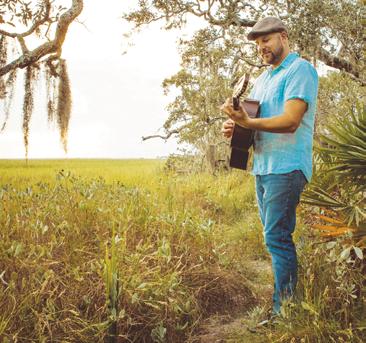
Continually inspired by the shifting waves of his life, the Lowcountry and the coast he calls home, Matt Eckstine’s evolution as a songwriter has reached a new peak on his second solo album Lil’ Blue.
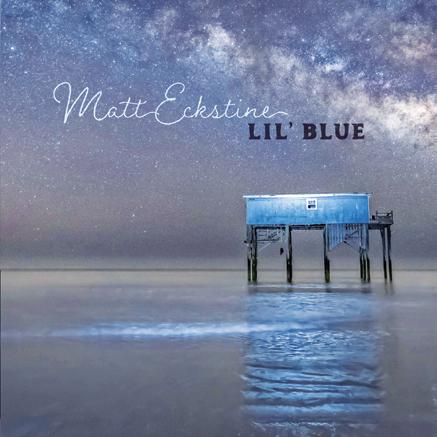
Anchored in the sand, all alone between the devil and the deep blue sea, the “celebrity” cabin Little Blue on Hunting Island in Beaufort County became a focal point for Eckstine while putting together this new batch of songs. A photo by Delk Haigler made for the perfect cover.
The cabin withstood a frontal assault from Hurricane Matthew in 2016, only later to be torn down by the government due to erosion. Here grows the unifying theme from Eckstine’s work: hold fast and roll with the tide, finding peace in where you are between the crashing waves of life.
For years, Eckstine has developed as a songwriter and performer due to the overwhelming support from his local fanbase that encompasses Savannah, Beaufort and Hilton Head. His old band, The Accomplices hit a peak regionally, selling out music halls and earning major support. He now rightfully claims the Lowcountry as his home and his performance space. His second solo album came to life thanks to the very ground he stomps with his guitar every week.
Harnessing a wide range of influences from Laurel Canyon and Jack Johnson to Steve Earle and James Taylor, and straining them through an easy-going filter that embodies life on Coastal Georgia and South Carolina, coupled with imagery invoking that coast, Eckstine has grown from his John Prine influenced roots into a singular singer/
songwriter inspired heavily by his home of nearly twenty years.
This year’s mandatory quarantine provided Eckstine with an opportunity. Moving to a home studio opened new possibilities for him to slow down and work on his craft, fine tuning unresolved songs and penning new ones.
“The making of this record is where I found the most joy with my home recording setup. I love working in professional studios, but waking up everyday and working in the home has a freedom that I really found to be inspiring.”
The result was seven brand new tracks that vary in sound and feel but are grounded in their influence—plus one track, “This Heaven,” which was previously recorded and released as a single. All of the new songs were penned by Eckstine with the exception of “Mahi-mahi and Rice” which was written by Mike Harris and Jim Basso. The writing on the new album spans over seven years. Eckstine’s method to song craft has developed over time and is now defined clearly within his mind: he does not write the song, the song writes him.
“This method can take much longer to be fruitful, but for me personally it has yielded the best results over my career as a song craftsman. I believe that the universe is full of melodies and songs. I like to think of an instrument or the brain as an antenna reaching into the stratosphere. Every now and then if conditions are right you can metaphorically dial in to the frequency like a radio station and hear the tune.”
For more information, visit www.matteckstinemusic.com
By Jake Zadik
As we approach autumn and our dreams of cooler days begin to become reality, an amazing shift begins to occur. As the winds and temperature change, so do the birds. Some of our debonair feathered friends we’ve spent all summer long with will trade out the fine dress they’ve sported during breeding season for an attire of a more practical nature. Territories that were once ruthlessly defended become a bit less important and songs, a bit less prevalent. The new priority is to eat as much food as possible because migration season is now underway! For the birds, this season is all about building up fat stores, paying attention to weather patterns, and then, when the time is right, traveling thousands of miles to over-wintering grounds.
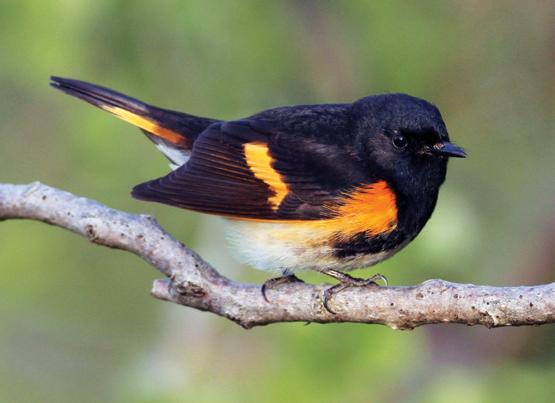
gentleman redstarts are black above with a white belly and deep orange accents on the wings, flanks, and tail. The ladies and understudies (young males) are dressed in a gray and white suit, with pale yellow accents. Together, they are often accompanied by other migrant passerines because the insects that the redstarts spook and fail to catch are fair game for the tag-along flycatchers and kingbirds perched amongst the treetops.
And for the birders, this season is somewhat the same . . . well, give or take five thousand miles. For birders, the season means eating hearty dinners, paying attention to weather patterns, and hitting the trails early in the morning for a chance to see perhaps the most magnificent bird diversity of the year! Fascinating shorebirds will scour our beaches and marshes, songbirds will decorate our trees, and the warblers – oh my the warblers –they will offer the challenge of first sighting and then identifying for even the most advanced birders. But the reward of observing their plumage and behaviors is well worth the chase! Every year, fall migration renews for every birder the same eager excitement they felt when they were just new fledgling birders.
For me, a fall favorite is the American Redstart. Achieving an executive size of no-larger than the standard business card, these birds make their living actively dancing in the trees and fanning their tails. The goal is to dance so marvelously that they spook insects out of hiding into a more consumable location. The
Beaufort county, with its proximity to the coast and plethora of unique habitats, is a wondrous place to observe the full majesty of this migration season. As you spend time outdoors this fall, listen closely for faint chirps and be sure to look twice at the curious movements in your periphery. Leaving the house with binoculars in hand is always helpful to look closer at the birds, but also a great spark for conversation with other birders that might be around you. Here’s hoping you see a new bird, learn a new call, meet a new friend, but above all, I hope experience a renewed joy of birding this migration season!
Jake Zadik is a local naturalist and longtime birder. He is works for the Brays Island Nature Center and his passions include anything that helps him better comprehend this beautiful chaotic mess we call nature. You can contact Jake through his nature photography website www.jakezadik.com.






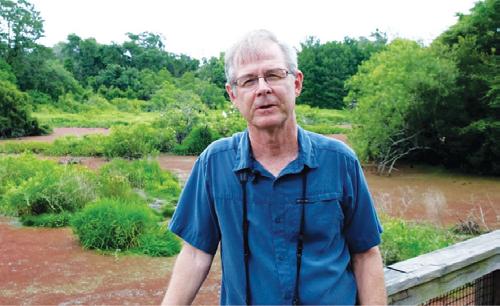
The Friends of Port Royal Cypress Wetlands in conjunction with the Town of Port Royal are pleased to announce the production of the Rookery Roots Video Series. Discover and learn the treasures of the Cypress Wetlands with host Dr. Chris Marsh. This sequence of short videos begins with four episodes filmed on location at the Rookery in Port Royal.
Dr. Chris Marsh, Executive Director of the LowCountry Institute Spring Island Trust since 1998, completed his B.S. in Zoology from N.C. State University and earned a PhD in Zoology from Oregon State. He went on to be a biology professor at Coastal Carolina University where he taught ornithology, ecology and animal behavior, until he moved to Port Royal, SC. Now the Director of the Spring Island Trust, he coordinates the management and education programs for both the Trust and LowCountry Institute. Dr. Chris Marsh was one of the originators who created Port Royal’s Cypress Wetlands.
Beautifully filmed on location at the wetlands by SK Designs owner Shawn Hill, this is a can’t-miss series for all who want to learn about the wetlands and the Lowcountry wildlife that live there. Watch on the Port Royal website or the Friends of Port Royal Cypress Wetland Facebook Page, and don’t forget to share these entertaining and educational videos through social media.


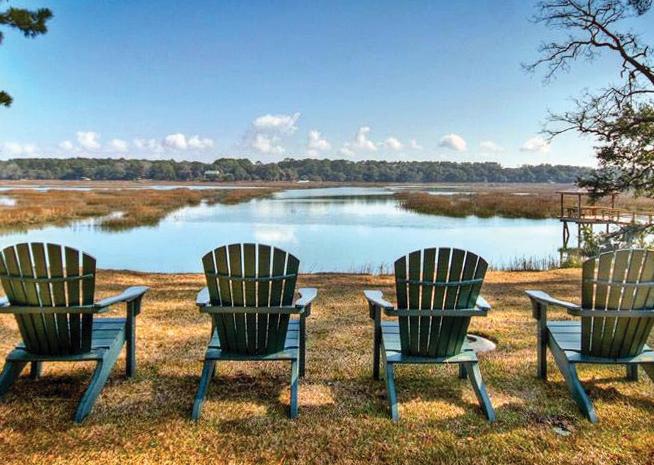
The first episode of Rookery Roots is “Welcome to the Rookery!” where Chris will introduce us to the Cypress Wetlands and explain its history as attraction for many who want to enhance their appreciation of wildlife. Future videos will include “Life in the Wetlands” and others.
The Town of Port Royal and the Friends of the Cypress Wetlands Committee are committed to educating everybody about the Cypress Wetlands. The Rookery is not only a community treasure, but a southeast educational destination for all who like learning and experiencing Lowcountry wildlife.
Follow us on Facebook and thank you for supporting the Rookery Roots video series while we all discover the treasures of the Cypress Wetlands.

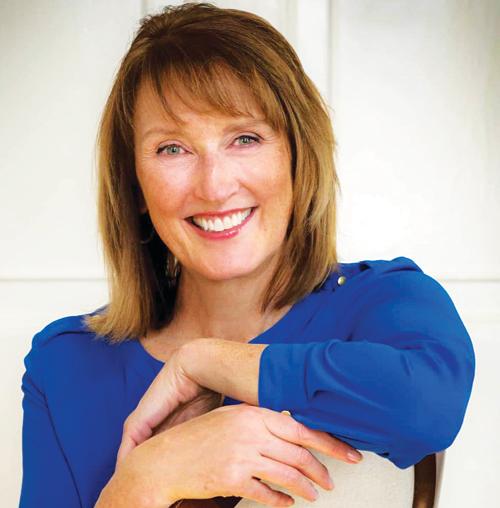
Live-streamed Author Programs, Online Writers Workshops, Virtual Tour & Art Exhibition
The annual Pat Conroy Literary Festival began as Pat Conroy’s 70th birthday celebration in October 2015. Hosted by the nonprofit Pat Conroy Literary Center, this year’s festival will be held as a series livestreamed author presentations and panel discussions, online writing workshops, exhibits, and virtual tours on November 5-8. The 2020 festival will be highlighted by appearances by Brad Taylor, former U.S. Army Special Forces officer and now the New York Times best-selling author of the Pike Logan thriller series; Elizabeth O’Neill Verner Award-winning artist Mary Whyte, author of We the People: Portraits of Veterans in America; and, from A Measure of Belonging: Twenty-One Writers of Color on the New American South, editor Cinelle Barnes and contributing writers Latria Graham and Gary Jackson. Registration for festival programs and workshops is now open through the festival’s
Artist Mary Whyte
Facebook page (Facebook.com/PatConroyFestival), website (PatConroyLiteraryFestival. org), and—for workshops—Eventbrite page (PatConroyLiteraryCenter.Eventbrite.com).
The Pat Conroy Literary Festival is made possible by the generous support of the Estate of Robert S. Handler and is presented in partnership with ETV Lowcountry, the Crescendo arts festival of Hilton Head Island, the University of South Carolina Beaufort, the Beaufort chapter of the South Carolina Writers Association, the Friends of South Carolina Libraries, the National Association of Women Artists, and the Coastal Discovery Museum of Hilton Head Island.
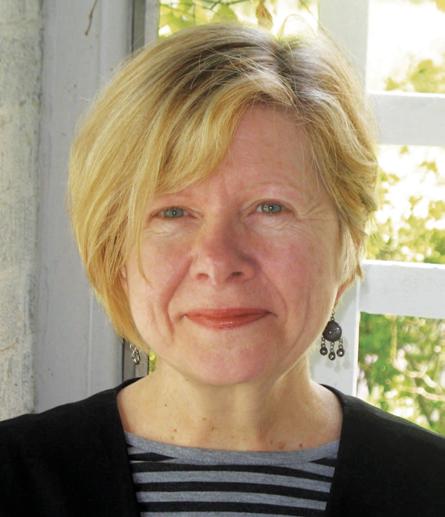
Author Valerie Sayers
Also scheduled to appear: student writers from the Conroy Center’s Camp Conroy and the Ann Head Literary Prize for Short Fiction at Beaufort High School; South Carolina Academy of Authors honorees Pam Durban, Andrew Geyer, and Beaufort native Valerie Sayers; poets Emily Davis-Fletcher, Gary Jackson, Len Lawson, and Elizabeth Robin; novelists Stephanie Austin Edwards, Dana Ridenour, Dorothy St. James, Rebecca Dwight Bruff,
Joe Palmer, and Susan Diamond Riley; memoirist and travel writer Donna Keel Armer; ETV Lowcountry director and By the River host Holly Jackson, USC Beaufort writer-in-residence Ellen Malphrus; and Conroy Center staff members
Jonathan Haupt, Brooke McKinney, and Holland Perryman.
The Literary Festival will also feature a half-dozen online workshops for writers of all levels of experience, held on November 6 and 7 and led by Pam Durban, Connie May Fowler, Andrew Geyer, Len Lawson, Valerie Sayers, and Dorothy St. James; and the Pat Conroy-inspired Small Chapters exhibition of original artwork crafted by members of the National Association of Women Artists, on display from October 15 through November 30 at the Coastal Discovery Museum of Hilton Head Island (CoastalDiscovery.org). In addition to the Conroy Center’s regularly scheduled hours for in-person tours, the Center will also host a free virtual tour, accessible from anywhere, on Sunday, November 8.

The nonprofit Pat Conroy Literary Center is open to the public noon to 4:00 p.m. Thursday through Sunday at 905 Port Republic Street in historic downtown Beaufort. The Conroy Center is South Carolina’s first affiliate of the American Writers Museum, second American Library Association Literary Landmark, and Tripadvisor’s top-rated destination in Beaufort. Learn more at PatConroyLiteraryCenter.org.
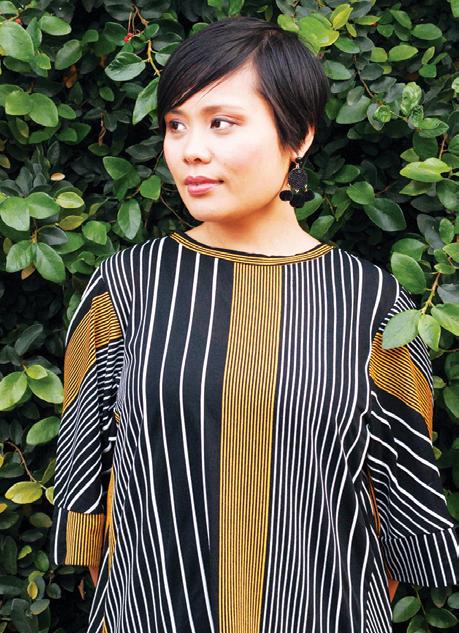
By Margaret Evans
For over a year now, 16-year-old Holland Perryman has enjoyed the distinction of being the Pat Conroy Literary Center’s first intern. During that tenure she has served as a counselor at Camp Conroy, worked as an associate producer on SCETV’s ‘By the River,’ taught several writing workshops, publicized numerous literary events, conducted on-camera interviews with authors, and had her book review of a YA novel published in the Charleston Post & Courier. I’ve known Holland since she was a little girl – her father is the pastor of my church –and it’s been a delight to watch her blossom in her role at the Conroy Center, a place so dear to my own heart. Recently, we discussed her experience via email . . .
Margaret Evans: Holland, you’ve been interning with the Conroy Center for over a year now. What inspired you to pursue that position?
Holland Perryman: This adventure actually began partly with you! In eighth grade, we shadowed someone with a career that we thought we might want to pursue. I chose to shadow an author or journalist. I got paired with you and with Stephanie Austin Edwards, author of What We Set in Motion and volunteer for the Pat Conroy Literary Center. Both of you shared your own stories about knowing Mr. Conroy and working with him, and I was immediately intrigued. I’ve come to find that Conroy stories have a particular brand of magic about them. A year later, I interviewed to be the first Conroy Center intern, which was uncharted territory for all of us. Lucky for me, it has turned out wonderfully.
ME: You’re a junior at Beaufort High and VP of the BHS student body. Is it difficult balancing your internship with your studies and other responsibilities? How do you handle it?
HP: I am a full-time student, but I like to stay busy. Internship obligations are always incredibly gratifying and it is a welcome break to fulfill my internship duties. The balance is made easy because our director, Mr. Haupt, and the people at the Center, are always checking in with me about school
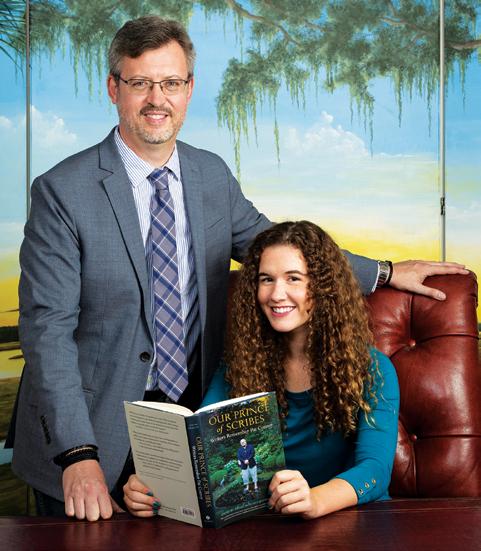
and
and my workload. Mr. Haupt has made the interning a bright spot on my schedule. I am constantly trying new things, like being interviewed for a newspaper! While it can be challenging at times, the challenges are helping me grow.
ME: Speaking of your boss, the Center’s director Jonathan Haupt . . . he so often sings your praises. I suspect he’s become a mentor to you in the same way that Pat Conroy was a mentor to him, and to so many of us. Would you agree?
HP: Every time I work an event or meet anyone through the Conroy Center, I hear some incredible story about how Mr. Conroy influenced them or directly mentored them. Mr. Conroy was famous for being a mentor to as many people as he could reach, and the Conroy Center and Mr. Haupt embody that spirit of generosity. I’ve learned through example that any piece of knowledge we have is most valuable when it’s passed on to someone else and when it can help someone else. Mr. Haupt is always teaching me something, whether it be an obscure Batman reference or advice about my writing.
Because of my internship, I am always meeting new people and trying new things. Mr. Haupt gives me every opportunity to listen in and absorb the knowledge that is shared by the incredible people that work with the Center. He is also giving me tools to discover things for myself. He is helping me learn how to develop my own opinions, my own craft, and my own understanding of the literary world. I am so fortunate to have Mr. Haupt as a mentor, just like Mr. Conroy was a mentor to him.
ME: I know that you’re an aspiring writer –congratulations on being a finalist in the inaugural Ann Head Literary Prize competition! – but you are also a theater artist. It seems to me that your job at the Conroy Center has allowed you to stretch both those muscles, among others. Am I right?
HP: Thank you so much! Everyone I’ve met through the Center has encouraged me to keep writing and working on my craft. I’ve also learned about how to write articles and press releases. Whether through workshops or casual conversation, I am constantly learning about writing, publishing, and the literary community. I’ve been blessed with this opportunity to dive into the literary world through this internship. I do love to read and write, but I’ve been enjoying theater all of my life, and I’ve been a part of the USCB Children’s Theater for about 9 years. Some of my internship endeavors have helped me hone my theater skills. A little over a year ago, I was interviewed for North of the Broad about one of the Center’s events. I was incredibly nervous and scared and I had basically memorized my answers to the questions I was going to be asked. I had the opportunity to come on the show again, a couple months ago. Only a year had passed, but I felt so
much more comfortable, and I was able to enjoy it. This summer, I also got to go behind the scenes of SCETV’s author interview show, By the River. I loved learning about the production of the show and meeting the crew and the host.
ME: What are some of your favorite Conroy Center memories thus far?
HP: I’ve many wonderful experiences working at the Conroy Center, but a few definitely do stand out for me. One of my favorite memories took place this summer. I had the pleasure of visiting Daufuskie Island and taking a tour led by one of Pat Conroy’s students, Sallie Ann Robinson. I really enjoyed getting to see, firsthand, the scene and location of The Water is Wide. Another favorite memory of mine is counseling for Camp Conroy. The goal of Camp Conroy was to assemble a book of poems, stories, and art created by the campers. I got to know the campers through Zoom. I was floored by how smart, funny, thoughtful, and wise they were. I’m sure that I learned more from them then I ever could’ve taught them. Laughing and smiling with them during this difficult and exhausting time rejuvenated my spirit.
ME: How do you think your work at the Conroy Center is preparing you for your future, whatever you dream it to be?
HP: Learning about writing, editing, publishing, publicizing and more has been invaluable, but I’ve learned something even more important than that. The Conroy Center has shown me that amazing things can happen when passionate people share a vision. It gives me hope that I will find something that I can be incredibly passionate about to share with the world. The Center has given me so many opportunities already, and has also given me an incredible support system for my aspirations, whether they lie within the literary world or not. I am so grateful for my internship and for all of the people who have helped me grow.
For more information about the Pat Conroy Literary Center visit www.patconroyliterarycenter.org
Margaret Evans is the editor of Lowcountry Weekly, editor@lcweekly.com and blogs at www.memargaret.com
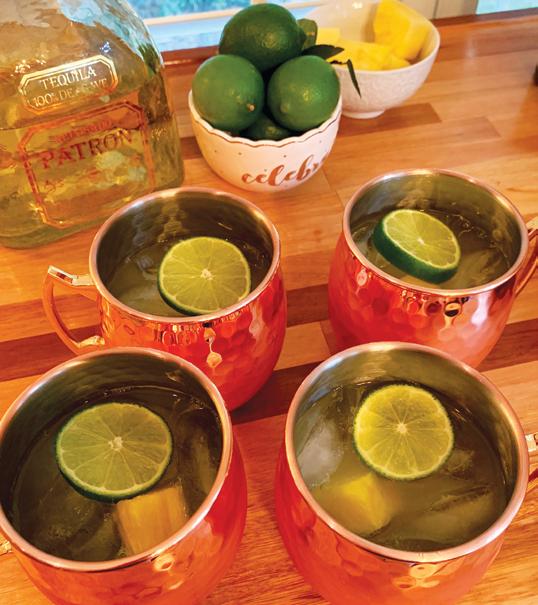
Afew weeks ago, Vince and I invited two dear friends over to our house for an old-fashioned family supper and game night. Vince found a board game called Smart A** almost a year ago and the four of us had been talking about playing it for months. Smart A** is a “Who am I?” “What am I?” “Where am I?” question and answer game for ages 12 and up. It's very fun and very kid friendly. I must admit however, some of the questions, aka Hard A** questions, were kind of tough. Since the game had a donkey/burro on the box cover, and since I like to always have an event motif, I opted for a Mexican themed menu. We began our evening with Mexican Mules, ended with Un-Fried Ice Cream Cake and ate lots of yummy offerings throughout the evening. We enjoyed several rounds of Smart A** and still have a pile of question cards that we didn't get to play. I'm thinking we'll have to host a rematch very soon.
P.S. We practiced social distancing, washed our hands multiple times – and we're all four safe and healthy more than a month later. Life goes on.
Simple and delicious, this Mexican Mule will give your favorite margarita a run for its money!
½ cup Tequila (I used Reposada)
1 tablespoon freshly squeezed lime juice
16 ounces pineapple juice
4 ounces ginger beer
Fresh pineapple, cubed
Fresh lime slices, to garnish
Mix all ingredients in a small pitcher. Serve over ice. Garnish with pineapple and lime. Serves 4.
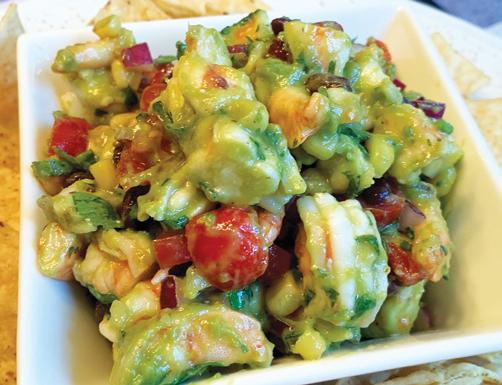
This salad is very easy to make, light and refreshing in flavor, and can be made in minutes. It's the perfect low-calorie meal or side dish if you're looking for something simple and quick.
For the dressing:
¼ cup freshly squeezed lime juice
2 tablespoons extra-virgin olive oil
2 cloves garlic, minced
¼ teaspoon sea salt
¼ teaspoon freshly ground black pepper
¼ cup chopped fresh cilantro
For the salad:
1 pound medium shrimp, cooked, peeled and deveined
½ cup cooked corn kernels
½ cup black beans, rinsed and drained
1 cup grape tomatoes, diced ¼ cup diced red onion
1 avocado, pitted and mashed Salt and pepper, to taste
Tortilla chips
Place dressing ingredients in a small bowl and whisk together until combined. Cut shrimp into bite-sized pieces. In a large bowl, combine all of the salad ingredients, adding the shrimp and avocado last. Add the dressing. Toss to coat. Season with salt and pepper, if needed. Serve with tortilla chips. Serves 4 to 6.
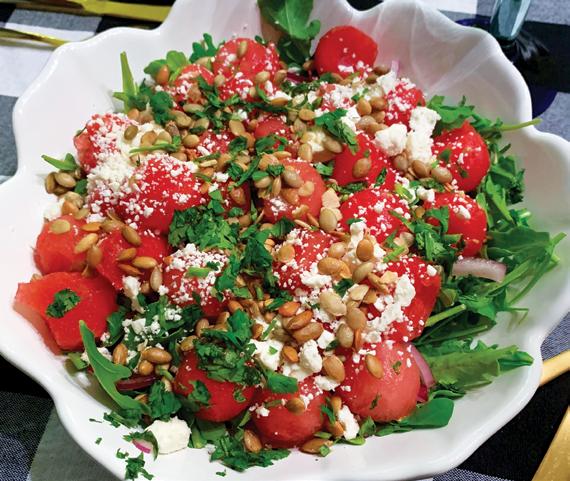
Fresh watermelon salad gets a makeover with crunchy pepitas, salty queso fresco, fresh cilantro and a tangy lime vinaigrette. Perfect for any Mexican fiesta!
By

For the vinaigrette:
2 tablespoons white wine vinegar
1 tablespoon freshly squeezed lime juice
2 tablespoons olive oil
1 teaspoon honey
Salt and pepper, to taste
For the salad:
3 cups arugula
¼ cup thinly sliced red onion
2 cups fresh watermelon (balls or cubes)
½ cup queso fresco or feta cheese, crumbled
¼ cup chopped fresh cilantro
½ cup roasted pepitas
In a small bowl, whisk together vinaigrette ingredients. Place arugula in a serving bowl.
Top with onion, watermelon, queso fresco, cilantro and pepitas. Drizzle with vinaigrette before serving. Serves 4.
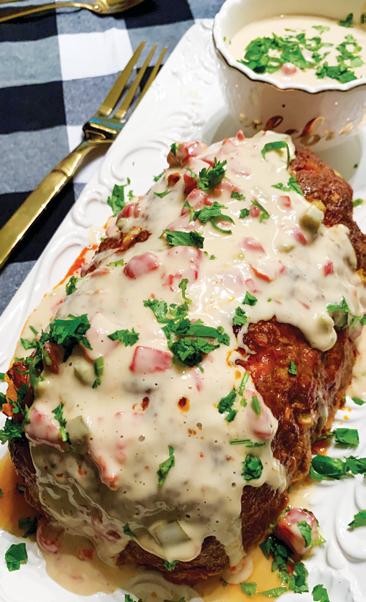
For the meatloaf:
coverage and content at LowcountryWeekly.com
1 pound lean ground beef (85/15)
1 pound Mexican ground chorizo
½ medium sweet onion, diced
3 cloves garlic, minced
1 teaspoon ground cumin
1 egg
2/3 cup panko bread crumbs
½ (10oz) can diced tomatoes with green chiles
For the queso:
1 (15-ounce) jar queso blanco
½ (10-ounce) can diced tomatoes with green chiles, drained
Chopped fresh cilantro, to garnish
Preheat oven to 350 degrees. In a large bowl, mix all of the meatloaf ingredients together. Mix well. Place mixture on a baking sheet lined with aluminum foil and form into a loaf. Bake in preheated oven for 60 to 75 minutes or until a thermometer inserted in the center reaches 165 degrees. Heat queso in a small saucepan. Stir in drained tomatoes with green chiles and cook until heated through. When meatloaf is through cooking, transfer to a serving platter. Spoon queso over the top and sprinkle with chopped cilantro. Slice meatloaf and serve with remaining queso on the side. Serves 6 to 8.

Yummy! Yummy! Yummy!
4 ears fresh corn
4 tablespoons butter, melted
½ cup grated Parmesan
Zest of 1 lime
Salt and pepper, to taste
Fresh lime wedges
Grill or roast corn until cooked through. Brush hot corn liberally with melted butter and roll each ear in grated Parmesan cheese. Place on a serving platter. Top with fresh lime zest and season with salt and pepper. Squeeze fresh lime over corn just before serving. Serves 4.
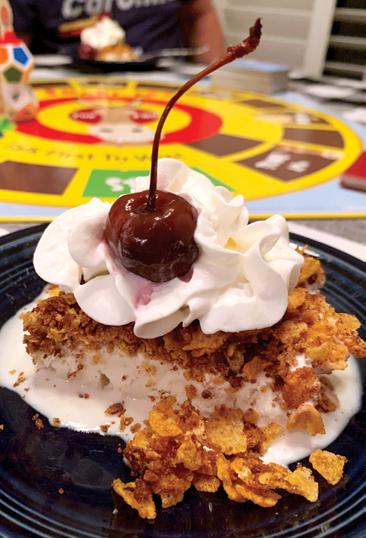
All the flavor of fried ice cream without the mess. Be sure to let it freeze for at least five hours before serving.
1 quart vanilla ice cream
3 cups corn flakes
2 tablespoons salted butter, melted 2 tablespoons light brown sugar, firmly packed
¾ teaspoon ground cinnamon
4 tablespoons honey, divided Whipped cream, for serving
Preheat oven to 350 degrees. Set out ice cream to soften at room temperature. Have an 8x8inch pan ready. Place cornflakes on a baking sheet, crush lightly. Add melted butter, brown sugar and cinnamon. Toss to combine. Bake cornflake mixture until toasted, 7 to 8 minutes. Remove from oven and let cool completely. Spread softened ice cream in 8x8-inch pan. Spread the cooled cornflake mixture onto the ice cream in a even layer. Gently pat topping down with your hand. Drizzle with 2 tablespoons of honey. Cover pan tightly with saran wrap or aluminum foil and freeze for a least 5 hours. Remove ice cream cake from freezer at least 10 minutes before ready to serve. Cut into slices. Drizzle with remaining honey. Top with whipped cream. Serves 6.




The writer owns Catering by Debbi Covington and is the author of three cookbooks, Celebrate Beaufort, Celebrate Everything! and Dining Under the Carolina Moon. Debbi’s website address is www.cateringbydebbicovington.com. She may be reached at 525-0350 or by email at dbc@cateringbydebbicovington.com.
By whom or by what had I been impelled to disrupt the normal course of my existence?” the globe-trotting French anthropologist Clause Lévi-Strauss asked in his 1955 memoir, Tristes Tropiques. I asked myself the same question every few days over a ten-month period in the mid-1970s when I was trekking around a small chunk of West Africa, cassette recorder in hand, seeking professional story-tellers (generically, griots) and village elders to recite what they knew of family, village, or state history. My intention was to use the information for a study of a small, Gambia-River slave-trading state that existed for half a millennium before the British took over in 1893 and put it out of existence. This isn’t the place to go into how I got involved in studying African history; the truth doesn’t put me in a grand light, anyway.
I did what I intended in Africa, got my degree, and had a full-enough career afterwards. Leaving The Gambia when I’d finished my work, now forty-five years ago, was an experience full of emotion, none more poignant than my last encounter with an African friend. I had always exercised and, with heart disease thinning out both sides of my family, had early bought into ideas about how aerobic exercise could improve one’s cardiovascular health. I, thus, came to The Gambia in August 1974 “a runner.” But I had never run in the same heat and humidity that I encountered in rainy-season West Africa. T-shirts I washed, wrung out by hand, and hung on a line to dry were still damp a week later. And the insects! At night, when I sat below an exposed bulb, writing air letters to my parents with my K-Mart typewriter, I rolled up


mosquitoes in the platen when I threw the carriage to start a new line. (I still have the letters, which still hold the squashed critters.) Also, I wasn’t comfortable heading out in public wearing shorts and sneakers (never mind the Cleveland Browns t-shirt) in this Muslim society where men wore long gowns and women were not to show arms and legs. But around the first of November, when the rains ended and the humidity broke, foreshadowing months with dry winds off the Sahara, I sucked it up and went running. It was on one of those early runs that I met a new friend.
I didn’t need to run through the heart of town, since my flat was at one end of a sandspit where a raised road, constructed to control flooding, headed through the marsh and out of town. My first couple of runs were uneventful, but on about the third one, as I was returning past a squat building that housed a pump, a Gambian man suddenly appeared in front of me as if he’d popped up out of a ditch. He was maybe fifty years old, had the ubiquitous stocking cap on his head and was wearing a knee-length, tan gown that reminded me of a maternity dress. In his left hand he carried a bucket. As I approached, not judging him unfriendly, I stuck out my hand to shake; he offered his calloused hand and a toothless smile, making what I took to be pantomime gestures of my running; I grinned, nodded, waved, and ran on.


From then on, when I ran the road and approached the building, he would often be in eyesight and come scurrying up to shake my hand. This probably happened thirty or forty times over five months. We shared no common language, so never spoke an intelligible word between us. He always wore what appeared to be the same clothing (as did I, come to think of it). I never knew what he used his bucket for—my guess was he ei-


Wright By
ther collected oysters off the roots of the mangroves that lined the road (though he never had any in the bucket) or was involved in keeping the pump in operation. We just shook, nodded, grinned, waved, and enjoyed a cross-cultural friendship that didn’t require speech.
A day before my departure from Gambia, my work done and bags packed, I took a final run and, as usual, on my way back my pal appeared. After we shook hands, I did my best to convey that I wouldn’t be out that way again. A British Caledonian 707 had just taken off from the national airport and was flying low overhead on it’s way to London, so I pointed to the plane, then to myself, held out my arms as wings, mugged a sad expression, and waved good-bye. He nodded, looking equally sad, bowed at the waist, and that was the last time I would ever see him.
I have often asked myself how a person can be so fond of another about whom he knows so little. But that’s the way it was with me and that part of the world. I developed the deepest fondness for the place, but there was always a level of knowledge about it that I knew I wouldn’t be able to crack.
I still haven’t, but sometimes I act as if I have. And I press on.
Donald Wright retired from SUNY-Cortland after 31 years as a professor of African history. He has authored of half a dozen books, held Fulbright, Rockefeller Foundation, and NEH Fellowships, and lectured in South Africa, China, and cruises along Africa's Atlantic coast. He lives with his wife, Doris, in Beaufort.
Fresh garden fruits and vegetables and colorful swaths of blooms are only part of the impulse for the gardener to dig in the dirt. The temptations and rewards are as individual as the gardener. I’ve confessed to a collector’s impulse (hey! I did NOT say “a hoarder’s impulse”), which moves me to acquire many—indeed, sometimes way too many—species and varieties of a plant type in order to experience with my own hands its range of peculiarities, requirements and rewards. It provides an avenue for pursuing new knowledge and experience, and frequently introduces us to new people with similar pursuits and impulses.
Gardeners often describe our joy at watching the many forms of wildlife which visit any given garden. Birds in particular bring color, movement, and pleasure to the gardener’s experience. I, too, succumbed to actually trying to attract birds and wildlife to my garden, having experienced a constant flow of creatures since creating it.
Since my elderly mother hasn’t been able to walk in the garden, I’ve taken to trying to bring the wildlife and birds to her outside her window. My brother’s partner gave Mama a bird feeder several years ago, which I’ve hung beneath a weeping yaupon (Ilex vomitoria) at the corner of the big screened porch across the back of her house. I rigged a fountain/bird bath nearby, using an old hose, an old cake pan and an old plant stand. I think the effect is “rustic.” It tends to drip a bit, so I put another dish right on the ground to catch the overflow. Nearby we’ve hung an ancient hummingbird feeder, the red plastic parts having faded to pinkish grey after many years of use.
All three of these seem to do the trick. We can sit at the table on the porch and watch a constant stream of activity. The siting of the feeder beneath the yaupon holly is fortuitous: the weeping branches provide resting spots between feedings for all avian visitors, and cover for smaller birds who need to hide out from the bullying cardinals. The masses of red berries in the fall, winter, and early spring are like caviar to hungry migrating birds. The orioles go crazy as they head south for the winter. This summer, we were entertained with two pairs of painted buntings, a pair of indigo buntings, two pairs of blue grosbeaks, goldfinches, Carolina wrens, towhees, kingbirds, purple finches. The cardinals, of course, rule the roost; they pretty much police the area, with the juvenile males constantly chasing each other away and the adults trying to ignore them.
The rustic bird bath has become the bird spa resort as the weather switches from diluvian monsoon to hot and dry.
We did get a wonderful pair of quail, which I spotted once they emerged from the wide field beyond the pine windbreak. To get to the edge of the yard, they’d crossed some 500 feet of fallow field. They then picked their way across another couple of hundred feet of lawn, heading directly for the bird bath —actually the drip-catcher on the ground below the bath. Clearly, the quail (once common, now rarely seen or heard) knew exactly where they were going. They spent ten minutes at the oasis taking sips, catching insects among the ground covers, and splashing in the dish. Then they made their way back across the lawn, across the field, to the woodland edge where they nest.
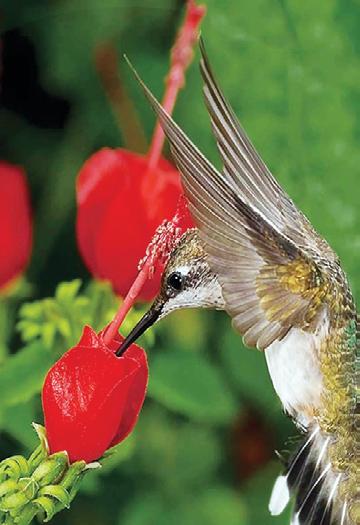
The old hummingbird feeder does bring the hummers in. At first, the numbers were fairly small; later the raucous mid-air fights for control pitted a dozen or more against each other. To provide some sustenance for the poor birds on the losing end of these fights, I have a Turks Cap shrub (Malvaviscus arboreus) close by. It begins blooming about the time the hordes of hummingbirds arrive from South America, and they really love going for the nectar hidden deep in the folded-up blooms. I was surprised to spot one hummer sipping nectar from one of the flowering Crinum lilies. I’d never seen that before, but I suppose it isn’t that unusual: we sometimes see gigantic sphinx moths ganging up around dusk on the Crinum asiaticum blooms.
Another source of delight and impetus actually to get out and garden is to maintain
treasures shared from other gardeners. These pass-along plants often are the old-fashioned ones that seem no longer to be fashionable among commercial sources; a fellow gardener may be the only way to get one of them.
The huge mop-head hydrangeas that grow along the side of my farmhouse all derive from cuttings provided by a neighbor a quarter century ago, whose own plants had been taken from an old churchyard near the Edisto River.
The briefly-flowering white “cemetery iris” (Iris albicans) that grows here beneath some oak trees, and in the middle of the lawn, and out by the old wood pile, is hardly rare. But it is rarely seen for sale. It is ancient in origin, having been planted by graves in Muslim cemeteries since 1400 at least. Mine at the farmstead were retrieved from the ruined site of my great-great-great grandfather’s house near the Savannah River; they’re identical, of course, to those found in countless churchyards throughout the South, but these are special and unique in my eyes.
Gardeners are often the fortunate recipients of gifts of plants. My mother has been given a number of orchid plants, and I do my best to keep them going after their show. My friend Alice gave me a cutting from her orchid cactus years ago, as well as an amazing variegated hibiscus relative, and numerous seedling amaryllis. This year, the orchid cactus (Epiphyllum sp.) almost covered itself in huge glowing fiery red cactus flowers—spectacular!

My friend Chris gave me a small potted “Carolina Sapphire” – actually, it’s Cupressus arizonica, var. glabra “Carolina Sapphire,” an Arizona cypress despite the popular name. It was about two and a half feet tall, but distinctly silvery-blue in foliage. I planted it in the side yard where the chicken coop had been a half century ago, and it has thrived since. Now getting near twenty feet in height, its lower branches reach out some six or seven feet from the trunk, making for a really handsome, living, silver Christmas tree come winter time.
Just because I love it, maybe run the pic of the tree trunk with woodpecker holes here
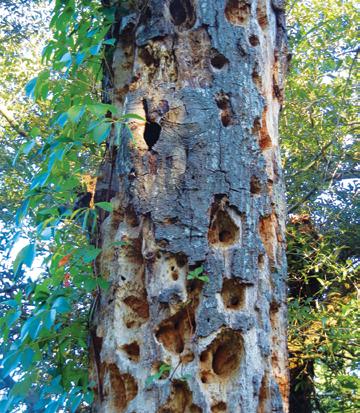
Gardeners will easily find good reason to head back out to the garden, even if the work demanded seems, on occasion, overwhelming. Edifying strolls and hands in the soil; celebrating shared gifts; recalling good friends and good times—the garden provides far more than visual and gustatory pleasure.
At a time like the one we are all living through, such a source of delight may even be a life saver.
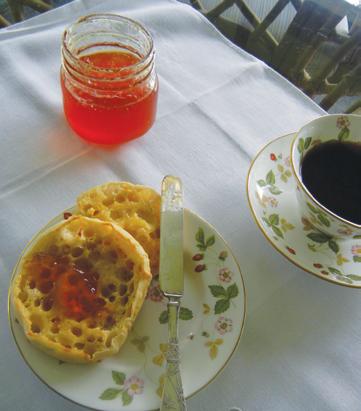
The photo of breakfast and woodpecker-drilled tree trunk is by the author. The photo of the hummingbird on the Turk’s Cap is from the the Wilson Brothers Gardens of McDonough, GA.
Will Balk, Jr., is a Master Gardener who grew up as the son, grandson, and great-grandson of accomplished gardeners. He is a past president of the Lowcountry Master Gardener Association. Currently he gardens on the family homestead in Barnwell County and tries to fight back the jungle in Northern Beaufort County. Will is also an occasional contributor to the online journal Weekly Hubris (www.weeklyhubris.com)




“This is a work of fiction, However, with a single exception (and as outrageous as some of them may sound) all the incidents described here really happened” . . . Thus begins the Author’s Note introducing The Chronicles of Willow Point, a new novel by Beaufort’s E.T. “Tommy” Baysden. The following is an excerpt from that novel.
Liz dropped Susan off at the train the following week. She was taking Fran to a horse show in Aiken, and Yemassee was right on the way. They were hauling a borrowed one-horse trailer with a four door pickup because the Captain’s old Chevy was on its last legs and there just wasn’t money to spring for new one. Aiken was a charming upcountry horse lover’s paradise right on the Savannah River, which they would be paralleling the whole way. But to get there, they would have to traverse a stretch of road that Liz had only heard about. But she had heard plenty.
The Savannah River site was built in the 1950s, to refine materials for use in nuclear weapons. It covers almost 310 square miles and employs more than 10,000 people. Because it creates nuclear bombs, in the vernacular of the rural south it became known as “The Bum Plant.”
To develop the massive site and its several giant plants, the Department of Energy had to purchase and destroy the incorporated South Carolina towns of Ellenton and Dunbarton, plus three smaller settlements. Ellenton, the largest, was actually moved fourteen miles to the north. A hand painted sign left on the original site says:
It is hard to understand why our town must be destroyed to make a bomb that will destroy someone else’s town who love it just as much as we love ours. But we feel that they picked not only the best spot in the U.S., but in the world. We love these “dear hearts and gentle people” who live in our hometown. Given the enormous weapons build-up of the two superpowers and the expected consequence of Armageddon having been avoided so far, the town’s epitaph has been proven: they gave their town so that civilization could survive.
The town was renamed New Ellenton.
South Carolina Highway 125 runs directly through the Savannah River site, and it may be one of the few roads anywhere that tells you not to slow down. The cardboard pass Liz and Fran were given at the gated entry on the Allendale side read: Do Not Leave Main Road, No Slowing Down or Stopping on Road, Do Not Exit Vehicle, No Photos.
They were slightly puzzled at first, but it was not hard to figure out. The pass had been stamped with the exact time of entry. A guard at the out-gate could instantly determine whether they had gone faster or slower than the prescribed 50 mph, or if they had made any stops. As they traveled through the Bum Plant, they began to get the feeling they were living in a James Bond movie.
The first bridge they came to crossed a creek bed about a hundred feet wide, but there was no creek – the canal was completely dry but for a tiny rivulet standing in the middle that indicated something had once been there and would be again.
In a few miles, they crossed another such bridge, but flowing under this one was a torrent of water, bank to bank, and the water was boiling! Rolling bubbles were bursting on the surface under a cloud of thick steam. “My God,” Liz said, “what on earth is going on there?”
About a mile down a road that ran beside the canal, they glimpsed an enormous factory with huge chimneys, also belching steam.
“They’re trying to hide something,” Fran said, glorying in the obvious, but permissible in a twelve year old.
A few miles down the road they crossed another canal. This one also held water, but it was covered in amazing vegetation: giant cat tails ten inches in diameter, lily pads the size of trash can covers, bamboo thickets twice the normal size. “I’ve heard about this,” Liz said. “Dad says there are reports of 20-foot alligators living in this swamp, catfish of a hundred pounds, deer with 20-point racks – all bred from the radioactive effluent the plant puts out.”
“This place was spooky enough already, without knowing that,” Fran said. “And we haven’t seen another car on this road. Can you imagine being a teenager coming home to hear not just that you were going to move, but that your whole town was being destroyed?! Gives me the creeps!”
Going out the other gate, the guard indeed calculated their speed, and they were waved through and on their way to Aiken. The little town itself was an unlikely sort of place. Founded in 1835, it was an oasis of hills and hardwoods amidst a very flat and unappealing surrounding terrain. It had won a rare battle
against Sherman’s invaders in 1865. After the war, it became a fashionable “sporting retreat” for wealthy northerners. This began when Mr. Thomas Hitchcock, a New York industrialist, bought land and began inviting down his northern friends.
They were all avid equestrians and soon Aiken had a reputation as one of the South’s horse capitals. And soon after, it was one of the leading Polo venues on the east coast. Pete Bostwick, known for years as the best player in the world, built an enormous home there, thus establishing little Aiken as an equestrian magnet for the well-to-do.
After the Horse Show (Fran failed to post, but she would do so many times in the years to come), Liz had reserved a table and guest room at the Wilcox Inn, a beautiful and historic hostelry managed with European flair by a Swedish chef named Nils Jorganson. The next morning, when the truck was packed and the horse and trailer collected from the boarding stable, Fran said to Liz, “Mom, can we go home a different way?” Memories of the Bum Plant would stay with her a good, long while.
E.T. Baysden has spent most of the last half century in the SC Lowcountry, where he served as chief marketing officer for Sea Pines Resort, Callawassie Island, Spring Island, Oldfield Club, and Palmetto Bluff. He is also the author of The Rock Jaw Ladies Club: A Memoir of the Other Vietnam. He is a fly fisherman, an Episcopalian, and an avid Tar Heels fan. To learn more about his latest novel, visit www.baysdenbooks.com

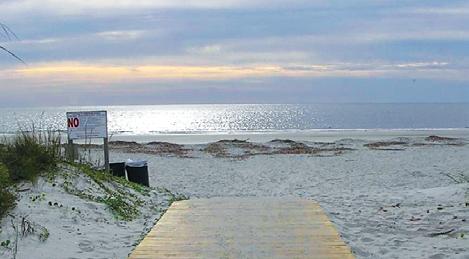

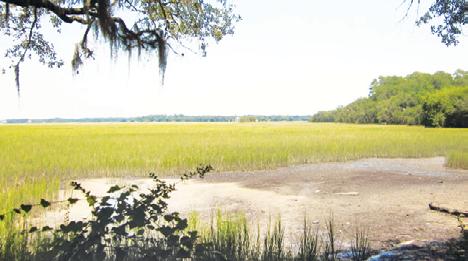

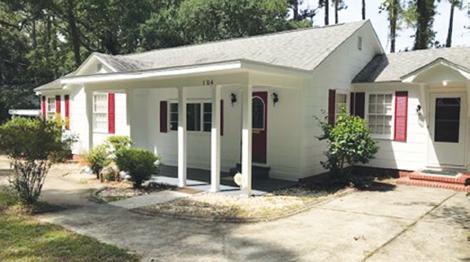

IN THE HEART OF BEAUFORT. Whether you're vacationing, moving to Beaufort, or working for an extended period, the suites at Magnolia Court are your ideal home away from home. Choose from our 1- and 2- BR apartments in our Tabby Townhome or our 3-BR Craftsman Cottage next-door. Weekly & Monthly rates. https:// MagnoliaCourtSuites.com. Call 843-812-5175
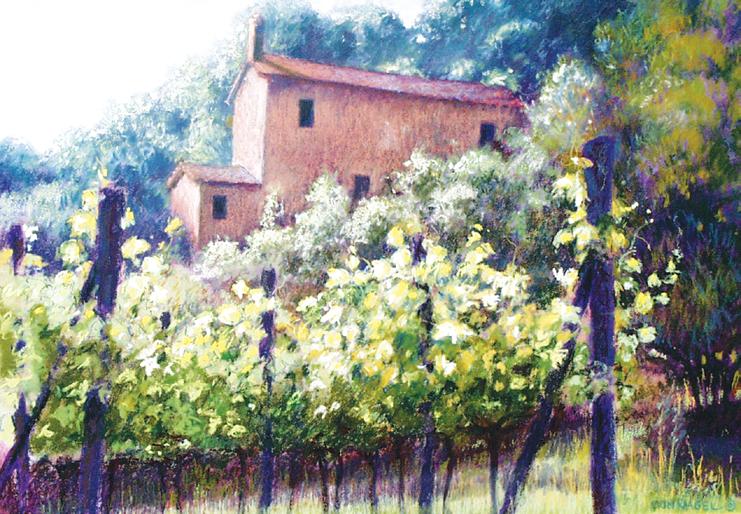
FRANCE OR ITALY IN 2020? Locally-owned vacation rentals in villages near Bordeaux, France and Montalcino, Italy. Romantic, historic places, close to vineyards, walk to restaurants and shops. Visit www.cozyholidayrentals.com for photos and pricing or call 401-862-2377.
FURNISHED LUXURY APT Heart of downtown Beaufort. 2BR, 2BA, W/D, Housewares. $600/ wk. $2200/mo. 522-9003.
SCREENWRITERS CALL FOR MEMBERS Lowcountry Screenwriters is a new group in Beaufort looking for committed individuals with either screenwriting experience, prior film or prose experience, or have an interest in film writing. Not a class, but a workshop to critique and provide feedback to the group. For interest in attending email a little about yourself. emilydfj@gmail.com bakerjef@hotmail.com
FRIDAY SOCIAL DANCES The Hilton Head Carolina Shag Club hosts Friday dances from 6-9:30 pm at Dolphin Head Golf Club, 59 High Bluff Rd, Hilton Head Plantation. Open to the public. Shag, ballroom, swing, country, or line. Singles welcome. Cash bar and light dinners available. $5 floor fee. HHICSC also teaches beginner Shag lessons Tuesday nights. www.hiltonheadshagclub.com, or www.facebook.com/HHICSC
STAINED GLASS CLASSES IN BEAUFORT Pinto Bean Studio forming morning, afternoon and evening classes for adults 18 or older. Beginning & advanced classes. Marty Nash at 614-260-6668 or pintobeanstudio@hotmail.com
ART LEAGUE OF HH ACADEMY KIDS CLASSES Tuesdays, 9/12-9/26. Ages 5-10, 4:30-6pm; Ages 11+, 6:30-8pm. $40 per child/session. Debi West has 24 years teaching art to children and has national leadership advocating for art education.
POTTERY CLASSES IN BEAUFORT McSweeney Clay Studio is offering morning, afternoon and evening classes for children and adults. Pottery dates and parties available as well. Classes are on going. Beginner or advanced welcome. mcsweeneyclaystudio.com or call 843-694-2049.
LOWCOUNTRY SHAGGERS Mondays at the Moose Lodge, 350 Broad River Blvd. 6-9pm. Carolina Shag
Lessons with Tommy & Sheri O'Brien and others. Occasional Ballroom Dance and once a month a Line Dance is taught. Beginners, Intermediate and Advanced lessons. Open dancing after lessons. Visit www.lowcountryshaggers.com or lowcountryshaggers@aol.com
BEAUFORT ART ASSOCIATION offers classes for artists at all levels. For info visit www.beaufortartassociation.com. or 913 Bay St.
WEDNESDAYS, BEAUFORT SHAG CLUB founded '02, meets Wed evenings at AMVETS on Ribaut Rd., Port Royal. Free lessons to members. The club is an ACSC, SOS, and the National Fastdance Association member. For info visit www.beaufortshagclub.com
VOLUNTEERS NEEDED for HELP of Beaufort, 1810 Ribaut Road. Looking for committed volunteers for clothes sorting, pantry help, front desk help and Mobile Meals drivers. We are open M-F from 9:30-12:30, Mobile Meals delivers to home bound seniors 5 days/ week, routes takes about 30-45 mins. Email Lori at helpbeaufort@gmail.com, or call 843-524-1223, or stop in and fill out an application.
SNOWBIRDS! Wondering what to do with unopened, non-perishable food items at the end of your stay? Drop them off at the YMCA and we’ll deliver them to a local food bank on your behalf. Conveniently located in Port Royal at; 1801 Richmond Ave., 843-522-9622, beaufort-jasperymca.org
PARKINSON’S SUPPORT GROUP - First Thursday of the month at Beaufort Memorial LifeFit Wellness Center, from 1:30-2:45pm, 900 Ribaut Rd. Beaufort. We are individuals with Parkinson’s care partners of those with Parkinson’s, and individuals or companies providing products or services for Parkinson’s patients. For more info: Rick Ostrander at pdawaresc@gmail.com or Facebook at Parkinson’s Support Group Of Beaufort SC Port Royal & Lady’s Island.
US COAST GUARD AUXILIARY, Flotilla 07-10-01, Port Royal Sound, a uniformed, all volunteer component of the U.S. Coast Guard. We conduct safety patrols, assist search & rescue, teach boat safety, conduct free vessel safety checks and other boating activities. Monthly meetings are open to all and held on the 2nd Tuesday of the month at the Port Royal Sound Foundation classroom at 7pm. For info call Flotilla Commander Pattie McGowan (706-6336192) and visit us on Facebook - USCGA Beaufort.
PASTEL ART CLASSES IN BEAUFORT now forming by artist Randall Messina. Beginner to advanced. Max class size 5 students. At Atelier on Bay, 203 West Street. Supplies provided. Classes fill quickly so call or email to reserve. One on one classes also available. 843-321-3281 or e-mail: randallmessina@gmail.com
PORT ROYAL MUSEUM now open to the public by The Historic Port Royal Foundation every Saturday at 1634 Paris Ave., from 10 - 2 or upon request. New exhibits added weekly; historian on hand 10 - 12. Free admission! Call 843-524-4333 or email unionchurch1004@gmail.com to request a special opening.
VOLUNTEERS NEEDED for a few hours each week at St. Francis Thrift Shop. Open Tuesday thru Saturday. Call 843-689-6563 or come in to speak with Mr. Hal. Definitely shop.
COMMUNITY ACUPUNCTURE Safe & effective centuries old healing system treats and prevents a wide range of health-related conditions. Experience individualized treatment in a peaceful group setting. Sliding scale fee. Beaufort Acupuncture, 12 Fairfield Rd, 5B, Lady’s Island. For info and to schedule: (843) 694-0050 or www.BeaufortAcupuncture.com
SECOND HELPINGS seeking Day Captains and other volunteers to crew our trucks distributing food to local charities. Flexible schedule at your convenience. Email officeadmin@secondhelpingslc.org
AGAPE HOSPICE seeks volunteers to spend time bringing joy to our patients and families during a difficult time. Activities include playing music, baking, arts and crafts, pet therapy, manicures, listening to stories, holding hands, etc. Provide companionship to the elderly who often feel lonely and unappreciated. Contact Ashlee Powers at 843592-8453 or apowers@agapehospice.com
VOLUNTEERS NEEDED for HELP of Beaufort. Come join the team providing food, mobile meals, clothing and emergency financial assistance to those in need in our community. Open Mon-Fri 9:30-12:30. 2 Ice House Rd., Beaufort. Call or email Jennifer 843-524-1223 or info@helpofbeaufort.org
TIDEWATER HOSPICE SUPPORT GROUP: Last Wed. and Thurs. of the month. Weds. 10-11am at Sun City; Thurs. 12-1pm Brookdale Hilton Head Ct., Hilton Head; for those who provide physical, emotional or practical support to a family member or friend. Jodi Johnson, LMSW. Bereavement Group: 5-6 pm., Thursdays, 10 Buckingham Plantation Drive, Suite A, Bluffton; for those who have experienced a loss and would like support and info associated with grief and bereavement. Corrie VanDyke, LMSW or Marie James, MA. 843-757-9388
THE SANTA ELENA HISTORY CENTER in downtown Beaufort hosts regular lectures, presentations, exhibits and programs about history, culture, science and archaeology. For more info visit www. Santa-Elena.org or 843-379-1550.
INTERESTED IN HEALTHY EATING? Second
Helpings, of Beaufort, Hampton, and Jasper counties, seeks committee members and chairperson for Healthy Food Program. Funding available to procure fresh produce and protein for the 60 food pantries and soup kitchens served by Second Helpings. Contact Exec. Dir. Lili Coleman, 843-6893616 or execdirector@secondhelpingslc.org
BORN TO READ working for early childhood literacy, needs volunteers to deliver books and materials to new mothers at Coastal Community Hosp., HH Hosp., and BMH. Visits are from 10am – noon. More info at borntoread.org. Interested volunteers call 843-379-3350.
ALZHEIMER’S FAMILY SERVICES OF GREATER BEAUFORT, Support groups and Respite Pro-
or
grams: Caregiver - Weds., 12:30pm, Helena Place Assisted Living, 1624 Paris Ave., Port Royal; Living with Alzheimer's - for those diagnosed and still in early stages - Mondays 1pm, Parsons Parlor, Carteret Street Methodist Church, 408 Carteret, Beaufort; Social Day Program- 10am-1:45pm $40 Day Fee, Mon. & Wed., Port Royal United Methodist, 1602 Columbia Ave., Port Royal, Weds. at Cornerstone Christian Church, 2301 First Blvd., Beaufort; In Home - Respite Aides available for 2 hr. minimum, $12-$24 sliding scale; Maintain Your Brain2nd & 4th Thursday, 10-11:30am, $10/person, $15 couple, Port Royal United Methodist, 1602 Columbia Ave., Port Royal; Free Memory Screenings available. (843) 521-9190 or (843) 263-2062.
A choir to ease and comfort people at bedside by offering gentle voices and sacred songs, with sincere kindness. Two to four singers go to bedside when asked and sing a cappella and in harmony. Practice at St. John's Lutheran Church the 2nd & 4th Sundays of the month from 2:304:00 pm. Our songs are our gift of service for no charge. Call Pat Keown at 843-476-6073 to either join or ask us to sing for a loved one.
THE LITERACY CENTER is seeking volunteers to tutor adults in reading, writing, math and ESL. Students hope to acquire skills to pursue life goals, support families, and contribute to our community. Daytime and evenings in Bluffton and HHI. Call 843-815-6616 (Bluffton); 843-681-6655 (HHI). No teaching, tutoring or other language knowledge necessary. www.theliteracycenter.org
THE SANDALWOOD COMMUNITY FOOD PANTRY. Volunteer-based, non-profit provides groceries, clothing and basic needs items to ANYONE in need. Open Tues & Fri 11:30am-1pm. Located at 114 Beach City Rd., Hilton Head. Donations of food and funds are needed. For info contact Rev. Dr. Nannette Pierson at 843-715-3583 or email sandalwoodpantry@gmail.com
PARRIS ISLAND MUSEUM. The legacy of the Marine Corps and the history of the Port Royal region. Thousands of artifacts, images, and other materials illustrate the stories in exhibit galleries from Native American to modern Marines. FREE admission. Mon-Sat 10am4:30pm and 8am on Family Graduation Days. Closed New Year’s Day, Easter, Thanksgiving, and Christmas. Info at parrisislandmuseum.com or 843-228-2166.
MEDICAL SERVICES OF AMERICA SEEKS VOLUNTEERS - Volunteers needed to provide companionship or skills like yard work, music, and crafts to patients and their families or assist in the office with admin tasks. Volunteers needed in Beaufort, Hampton, and Jasper counties. For info contact 843-322-0063
CHRIST CENTERED RECOVERY MEETINGS Join Shell Point Baptist Church Saturdays for “Celebrate Recovery”, addressing life’s problems and looking to scripture for solutions. Meal at 6pm; Praise and Worship at 6:30pm followed by Small Groups at 7:15pm. 871 Parris Island Gateway, Beaufort. Info at 843-592-1046.
Listing Homes for 4.5% (1.5% to my company, 3% to selling company)
• Low overhead
• No 40% referral fees from a franchise broker
• No commission split
• No other agents to manage
My MLS fees Pay to have my listings on:
• Zillow • Realtor.com •Move • Trulia
•Homes.com • Listhub • Redfin
And, I pay a small fee to distribute listings on the IDX system allowing the public search of your property on hundreds of websites.
“I grew up in Beaufort, SC. I had a boat & motor when I was ten. By age 13, I had 50 crab pots in Battery Creek that I pulled twice daily, taking my catch to Blue Channel for 6 cents a pound. Growing up here prepared me well to become a Navy Pilot & to sell real estate in the Lowcountry.”
• Retired Navy Captain • Author of “The Legend of the
• Navy Pilot Putter Frog of Frogmore, SC”
• 25 Years Experience
• Extensive experience selling in real estate waterfront properties
Member: Charleston Trident Association of Realtors MLS and Lowcountry Regional MLS
Broker in Charge



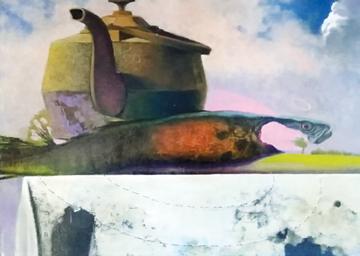
Phone: (843) 524-4000 • Fax: (843) 524-4006 Over Fifteen Years Experience Serving the Lowcountry’s Buyers & Sellers with Closings, Deeds & Contracts
2 Professional Village Circle, Beaufort, SC 29907
Derek C. Gilbert - derek@dcgilbert.com
Melissa R. Wicker - melissa@dcgilbert.com
Alisha Doud - alisha@dcgilbert.com • Bobbi Tealey - bobbi@dcgilbert.com
Bonnie Hart - bonnie@dcgilbert.com • Daun Schouten - daun@dcgilbert.com
Dawn Shipsey - dawn@dcgilbert.com • Emily Dixon - emily@dcgilbert.com
Joy McConnell - joy@dcgilbert.com • Kathy Crowley - kathy@dcgilbert.com
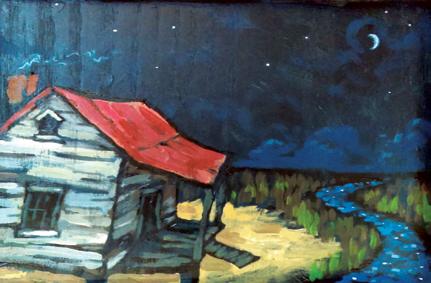
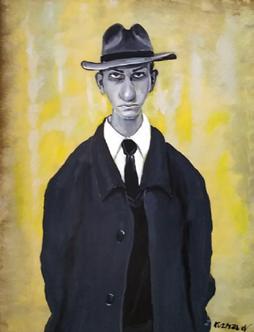
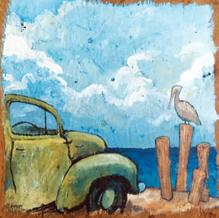
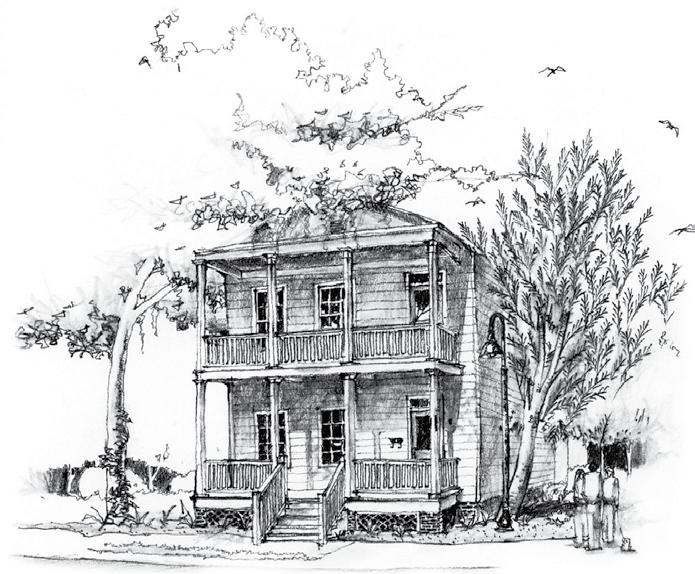
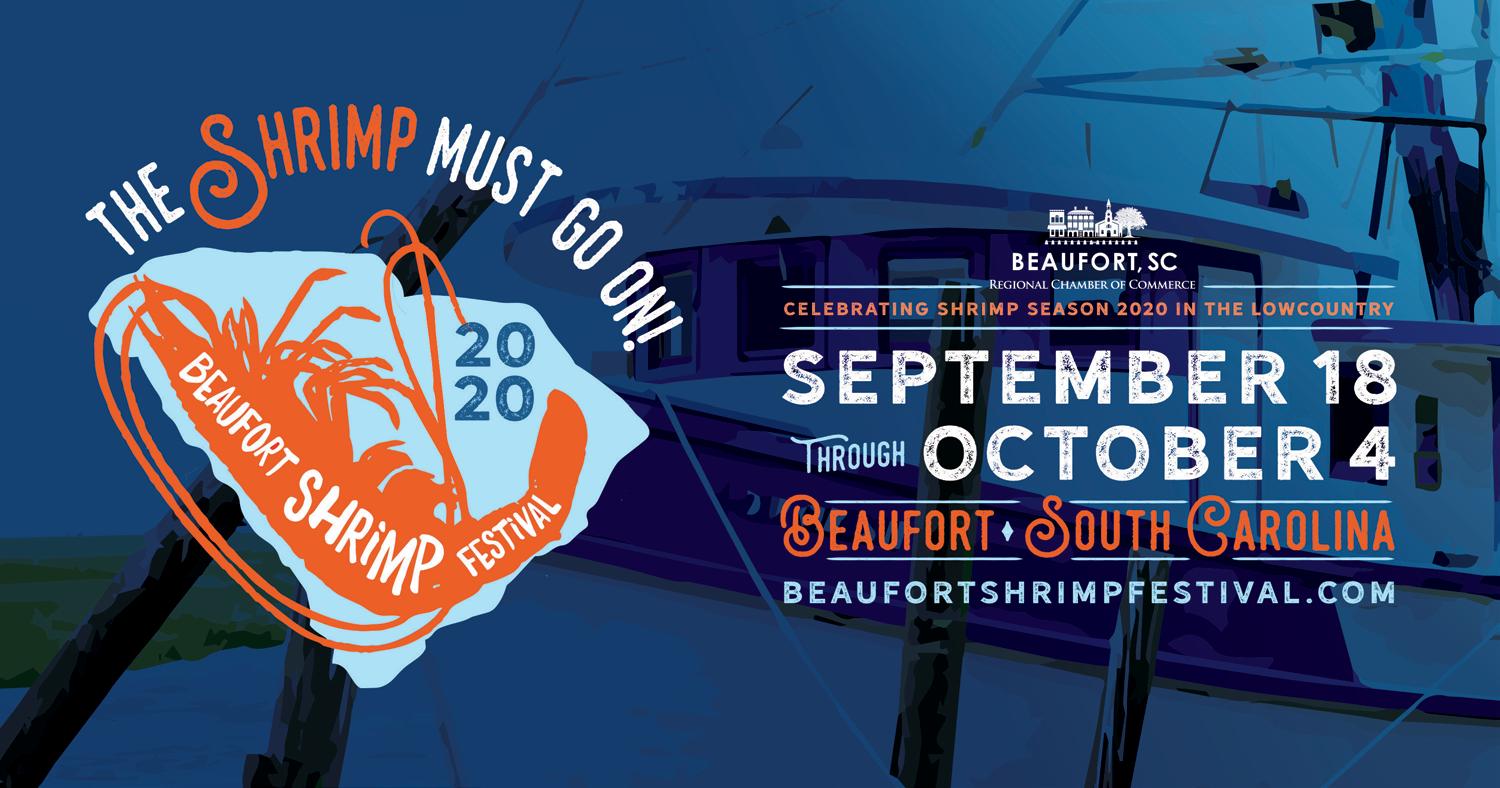

Foolish Frog, 846 Sea Island Pkwy, St. Helena Island. (843) 838-9300. thefoolishfrog.com
Luther’s Rare & Well Done, 910 Bay Street. (843) 521-1888 or www.luthersrareandwelldone. com
Q on Bay, 822 Bay St, Beaufort. (843) 524-7771 or www.qonbay.com
Rosie O’Gradys Irish Pub, in Beaufort Town center adjacent K-Mart. Karaoke Wednesdays, Fridays & Saturdays with Eric and the Girls9pm. Open daily for Rock N Roll Lunch 11:30am. Best Reubens, Phillys, Fish & Chips and Now a Great Shrimp Burger. (843) 379-7676 or Rosie O'Grady's on Facebook.
Saltus River Grill, 802 Bay St, Beaufort. (843) 379-3474 or www.saltusrivergrill.com
Big Bamboo, Coligny Plaza. (843) 686-3443 or www.bigbamboocafe.com
Captain Woody’s, 6 Target Rd., Hilton Head or 17 State of Mind St., Bluffton. www. captainwoodys.com
The Jazz Corner, Village at Wexf1ord, Hilton Head. Sundays - Deas Guyz; MondaysMartin Lesch Band; Tuesdays - Fat Tuesdays - a Swinging Celebration of New Orleans & Beyond; Thursdays - Lavon Stevens with Louise Spencer. 9/30 Grammy Winner Quiana Parler with Lavon Stevens Trio, 10/2 & 10/3 Rodney Jordan Quintet, 10/7 Bobby Ryder, 10/9 & 10/10 Reggie Deas & Deas Guyz, 10/14 Grammy Winner Quiana Parler with Lavon Stevens Trio, 10/16 & 10/17 Nicki Parrott, Justin James & Taylor Roberts. (843) 842-8620 or www.TheJazzCorner.com
Omni Hilton Head Ocean Front in Palmetto Dunes. Buoy Bar - HH Prime - (843) 842-8000 or www.omnihotels.com
The Music Farm, 32 Ann Street, Charleston. 843-577-6969 or www.musicfarm.com
The Pour House, 1977 Maybank Hwy, Charleston. Performances on the Deck Stage until further notice. Wednesdays - Grateful Dead Wednesday with Reckoning. 10/1 9 to 5 Magazine Issue #10 Party, 10/2 & 10/3 Brandon 'Taz' Niederauer, 10/4 Cosmic Charlie, 10/6 Eric Lindell, 10/8 The Orange Constant, 10/9 Harvest Moon - Neil Young tribute, 10/10 Acoustic Syndicate, 10/11 Come Together with Cory with Schema, 10/15 Of Good Nature; Big Yen, 10/16 & 10/17 Keller Williams. (843) 571-4343 or www. charlestonpourhouse.com
Windjammer, 1008 Ocean Blvd, Isle of Palms. Thursdays - Karaoke. 10/2 David Higgins Band on the Beach Stage, 10/3 Easy Honey; Daddy's Bimmer on the Beach Stage, 10/6 Yonder Mountain String Band on the Beach Stage, 10/09 Mitchell Lee on the Beach Stage, 10/10 Trial by Fire - Journey tribute on the Beach Stage, 10/16 Jupiter Coyote on the Beach Stage, 10/17 Page Mackenzie on the Beach Stage. (843) 886-8596 or www.the-windjammer.com

Editors Note:
Events listed here may be subject to postponement or cancellation. Please check for further information.
Now - 10/31, Seeking Solace, the work of artist Beth Tokey Williams and her poet daughter Hailey Morgan Williams will be featured at the Beaufort Art Association Gallery. This work was created during an Artist in Residence stint in the Dry Tortugas National Park. Opening reception Fri9/4 from 5-8pm at 913 Bay Street in Beaufort on Friday, September 4, from 5 to 8 pm.
Now - 11/2, 'Art Speaks' Exhibit at USCB Center for the Arts. www.uscbcenterforthearts.com
10/1, Got Art? Art League of Hilton Head’s annual fundraising benefit. Each $100 ticket provides participation in the live Zoom drawing and guarantees one original piece of art. Only 100 tickets will be sold. Tickets available at www.artleaguehhi.org/gotart
10/4 - 10/30, USA from Sea to Shining Sea. Penny Healy has captured all 50 state flowers and seascapes for her upcoming art exhibit at The Society of Bluffton Artists (SOBA) gallery in Old Town Bluffton. For more information visit www.sobagallery.com or call 843-757-6586.
of fishing, a chance to win prize money, and to help impact kids’ lives in Beaufort! Beaufort Yacht & Sailing Club. For details, visit www.ylfishingderby.com
Saturdays, 10/3, 10/17, 11/14, Bluffton Artisan Market, an open-air shopping event with live music that features local makers from 1-6 pm. Southern Barrel parking lot in Buckwalter Plaza in Bluffton.
Wed 10/14, Beaufort Candidate Forum sponsored by USCB Center for the Arts and Beaufort Regional Chamber of Commerce. 6-6:45 pm, Mayoral Race Forum. 7 - 8 pm, City Council Candidates Forum. Three ways to watch: Online at Beaufort County Channel (beaufortcountysc.gov/ the-county-channel); Chamber of Commerce Facebook page (facebook.com/beaufortsc.chamber); Outdoor Screening on the Lawn at USCB (801 Carteret St, Beaufort SC).
10/24 and 11/21, CPR Classes at The Wardle Family YMCA, located at 1801 Richmond Ave in Port Royal. 8am-12:00 pm. Cost is $35 for this YMCA certified course and those interested need to register at the Y as space is limited and filled on a first come, first serve basis. Questions? Contact Lou Bergen, Aquatics Director to register for this class. Call the Y: 843522-9622 or visit: beaufort-jasperymca.org
Sat 10/31, Truckin' It Virtual 5K, 10K & Fun Run. The Junior Service League of Beaufort is sponsoring this fun family event. For more information, visit www.touchatruckbeaufort.com
First & Third Tuesday, Beaufort Toastmasters Club meets from 5:30 pm - 6:45 pm in the Beaufort College Building, Rm. 103 (USC-Beaufort Campus), 801 Carteret Street, Beaufort. To learn more visit www.beauforttoastmastersclub.toastmastersclubs.org
First & Third Wednesday, FREE Acupuncture for Veterans – Veterans, Active Duty, Transition, Their Families and First Responders are Eligible) 46pm. Walk In Clinic. No Need to Pre-Register or Call. Nourishing Health Acupuncture and Herbs Clinic. 1214 Prince Street, Downtown Beaufort


10/6 - 10/31, CraftHiltonHead2020, Art League's 7th National Juried Fine Art Craft Exhibition, Art League Gallery, 14 Shelter Cove Lane, Hilton Head Island. A virtual awards reception will be held Wednesday, 10/7, 5-6pm via Facebook Live. 843-681-5060.
11/5 - 11/8, Annual Pat Conroy Literary Festival goes virtual, as a series live-streamed author presentations and panel discussions, online writing workshops, exhibits, and virtual tours. Highlights included by appearances by Brad Taylor, former U.S. Army Special Forces officer and now the New York Times best-selling author of the Pike Logan thriller series; Elizabeth O’Neill Verner Award-winning artist Mary Whyte, author of We the People: Portraits of Veterans in America; and, from A Measure of Belonging: Twenty-One Writers of Color on the New American South, editor Cinelle Barnes and contributing writers Latria Graham and Gary Jackson. Registration for programs and workshops is now open through the festival’s Facebook page (Facebook. com/PatConroyFestival), website (PatConroyLiteraryFestival.org), and—for workshops—Eventbrite page (PatConroyLiteraryCenter.Eventbrite.com).
10/2 &
Thursdays and some Tuesdays, Tours of the Historic Hunting Island Lighthouse sponsored by the Friends of Hunting Island. Keeper Ted and his team will tell you all about the history of the Lighthouse which was built in 1875 and is the only Lighthouse in South Carolina open to visitors. If you are at least 44 inches tall you may also climb the 167 steps to the top of the Lighthouse for a 360 degree view. Reservations are recommended by calling the Nature Center at 843-838-7437. Tours are $2 a person and park entry fees apply.
Third Thursday, TECHconnect is a monthly networking event for professionals working in and around technology. Come and join on the for the conversation at BASEcamp 500 Carteret 5:307:30pm. 843-470-3506. www.beaufortdigital.com
Thursdays, History Tours of Fort Mitchel by the Heritage Library, 10am. $12/Adult $7/Child. 843-686-6560.
1st Saturday of Every Month, Maye River Quilters meeting at Palmetto Electric Cooperative, 1 Cooperative Way, Hardeeville. Members meet at 9:30am for social exchange. The meeting starts at 10 am. We welcome new members. Please call 843-707-6034.
4th Saturday of Every Month, While Fort Fremont is closed during the construction of an Interpretive Center, the Friends of Fort Fremont is presenting historical lectures at 10am at the St. Helena Library. The first lecture will be “Bringing History to Life, Fort Fremont Dioramas" by Dennis Cannady, Master Modeler. For more information call the Library at 843-255-6487.