Wildlife to Spot this Summer – Gannet Research – New Era for Bass Rock
Our 25th anniversary year has now come to an end, and what a joy it has been to look back and celebrate the journey we have been on with members and volunteers, old and new. We started all those years ago as a bright idea in the minds of a few passionate members of our community. Then came the construction of our visitor centre at the turn of the millennium, and since then we have developed into the nature charity that we are today.
Over that time, we have welcomed more than 4 million visitors - giving them the chance to both learn about and be inspired by Scotland’s incredible seabirds. What’s more, in excess of 60,000 children and young people have taken part in our education programme. SOS Puffin has grown into a shining example of successful, communityled conservation, quadrupling the population of puffins on Craigleith. Our conservation programme has grown to support the management of other islands in the Forth, and to deliver wider restoration efforts.
This work has only become more urgent. Scotland might be globally important for seabirds, but most species are in decline. Driven by ever increasing pressures like unsustainable fishing, pollution, climate change, invasive species, and poorly located development. That’s why we have published a new strategic plan that sets out how the
Scottish Seabird Centre will rise to this challenge and play its part in the collective effort required to halt and reverse nature loss.
Our new strategy is called Saving Seabirds, Restoring Seas, Inspiring Change. It will see us build upon the successes over the last twenty-five years to grow our impact. Working collaboratively to reverse the decline of seabirds and be an influential voice for nature, it aims to engage and inspire even more peopleyoung and old - to treasure and care for seabirds and our seas.
We are looking forward to working with staff, volunteers, members, funders and partners to turn this ambition into action, and to ensure that the Scottish Seabird Centre continues to be a force for positive change for seabirds, seas and people.
Harry Huyton CEO
AND THE WINNER IS…
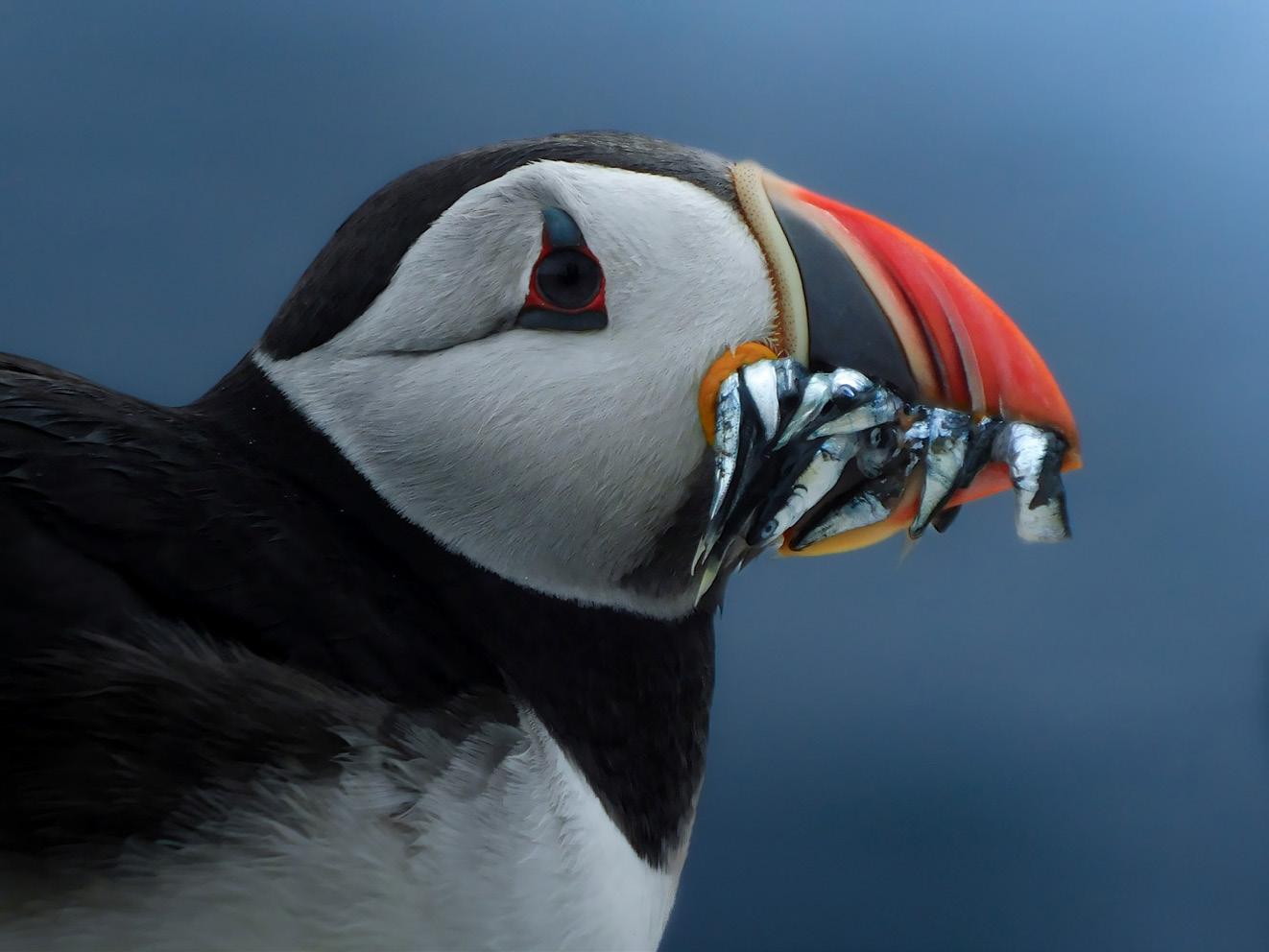
We’re delighted to announce that the overall winner of our Scottish Seabird Photography Competition, as voted for by you, is Olivia Murphy with this classic shot of a puffin posing with some sandeels. Olivia wins an Isle of May Landing Trip and £200 worth of Opticron vouchers. Congratulations, Olivia!
Thank you to everyone who entered the competition, visited the exhibition, or voted for their favourite image. And thank you to Opticron for supporting the competition and providing some amazing prizes. A huge thanks again too to our judges, Megan McCubbin and Rachel Bigsby, who helped select the judges’ winners as well as the exhibition and calendar images.
As spring yields to summer, it’s not just human day-trippers who are migrating to the seaside.
SPECTACULAR SEABIRDS
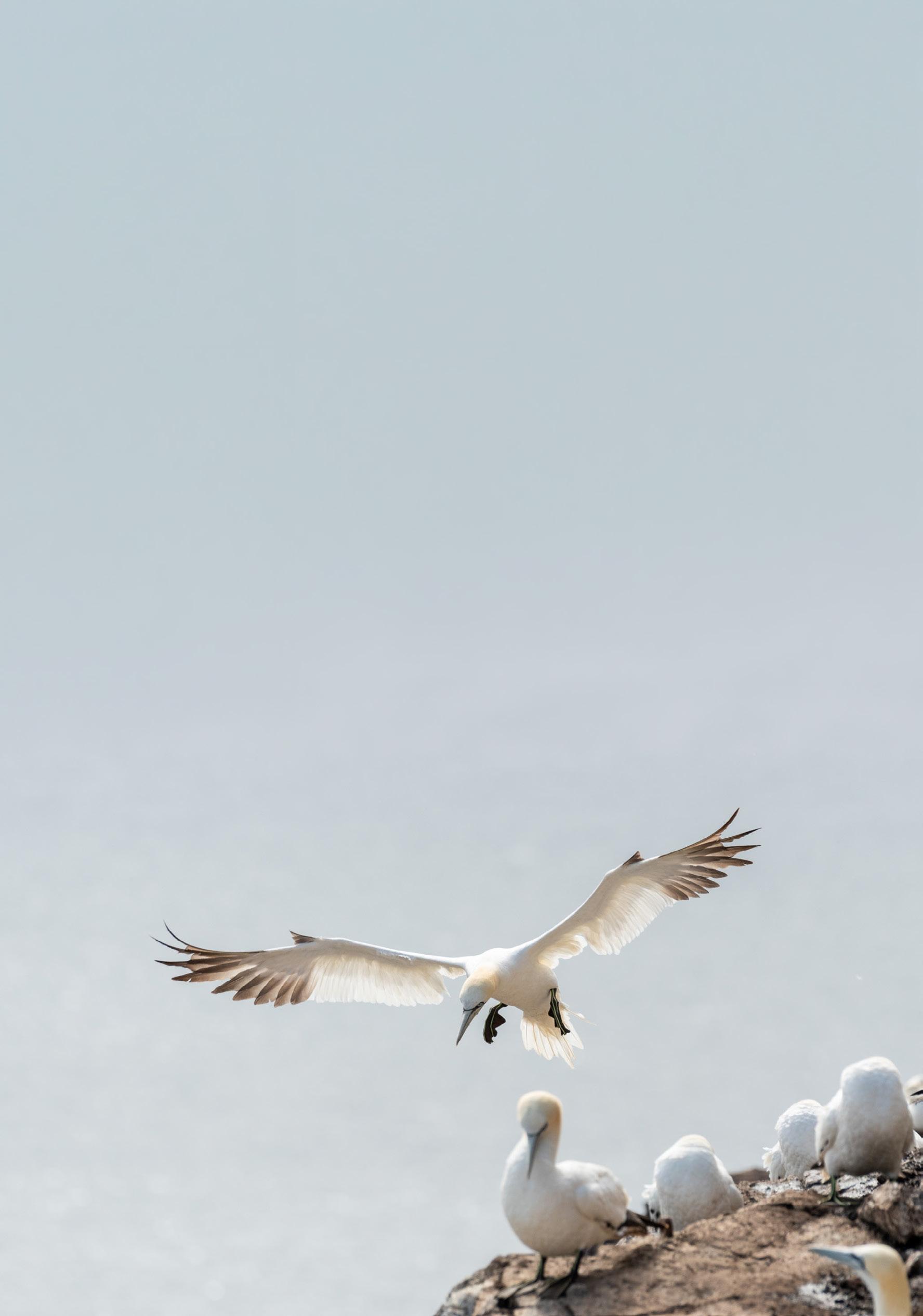
During the breeding season, many of Scotland’s coasts and islands are transformed into seabird cities. The Bass Rock, in the Firth of Forth, is among the best known, with over 100,000 Northern gannets taking up residence on its rocky slopes and cliffs each year. Puffins huddle in a patchwork of burrows on the slopes of grassier islands, like the Isle of May. Guillemots and razorbills— cousins to the colourful puffin— prefer to nest on rocky outcrops and could be mistaken for miniature penguins with their upright posture, black and white colouration and signature waddle.
Scan coastal cliff faces and you might spot cackling, smoky-eyed fulmars tucked into niches or soaring on stiff grey wings. Listen too, for the squeaky cries of ‘kittee-waake!’ from the appropriately named kittiwake, a small and short-legged gull with a preference for sandeels rather than battered fish suppers.
WONDERFUL WHALES AND DOLPHINS
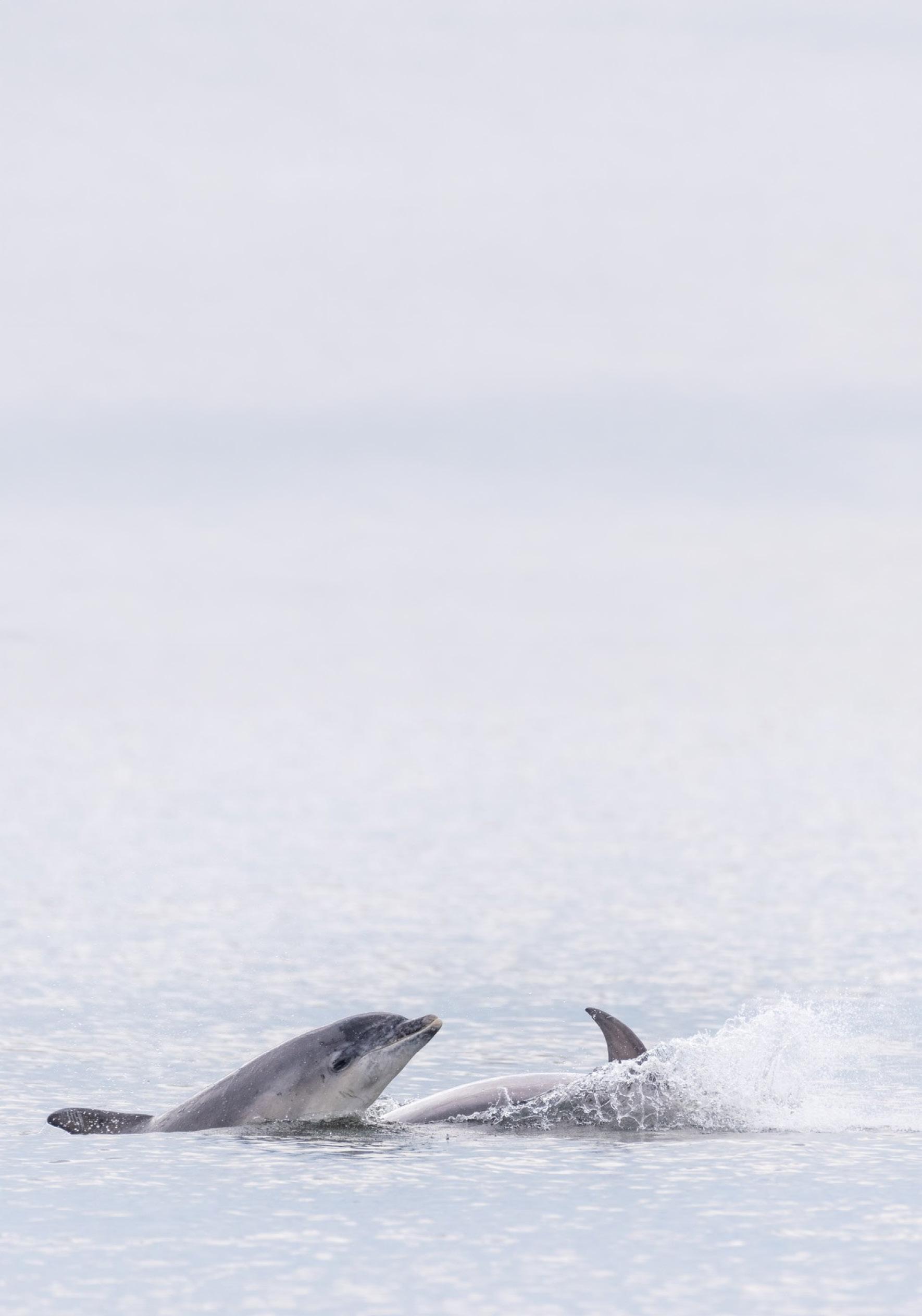
On a calm day by the coast, look for one of Scotland’s most iconic cetacean visitors: the bottlenose dolphin. They have a dark, curved dorsal fin and playful demeanour. Scottish bottlenose dolphins are the biggest around and can grow to nearly 4 metres long!
Minke whales can be spotted in Scotland’s seas from spring to autumn. Relatively small for a whale (but still up to 9 metres long!), look for a long, smooth, grey back breaking the water’s surface, followed by a small, hooked dorsal fin (similar to the bottlenose dolphin’s) that quickly disappears beneath the waves.
Want to Learn More?
Take a Wildlife Wander along the beach with our Conservation Team and learn about the birds, marine mammals and seashore finds we spot along the way. Prefer to stay seated? We also run seabird identification sessions throughout the summer, based in our Learning Hub.