ZOONOOZ
DINING FALL EVENTS
ALBERT’S FALL BREWMASTER DINNER
FEATURING SIERRA NEVADA BREWING COMPANY
Saturday, September 17, 2016
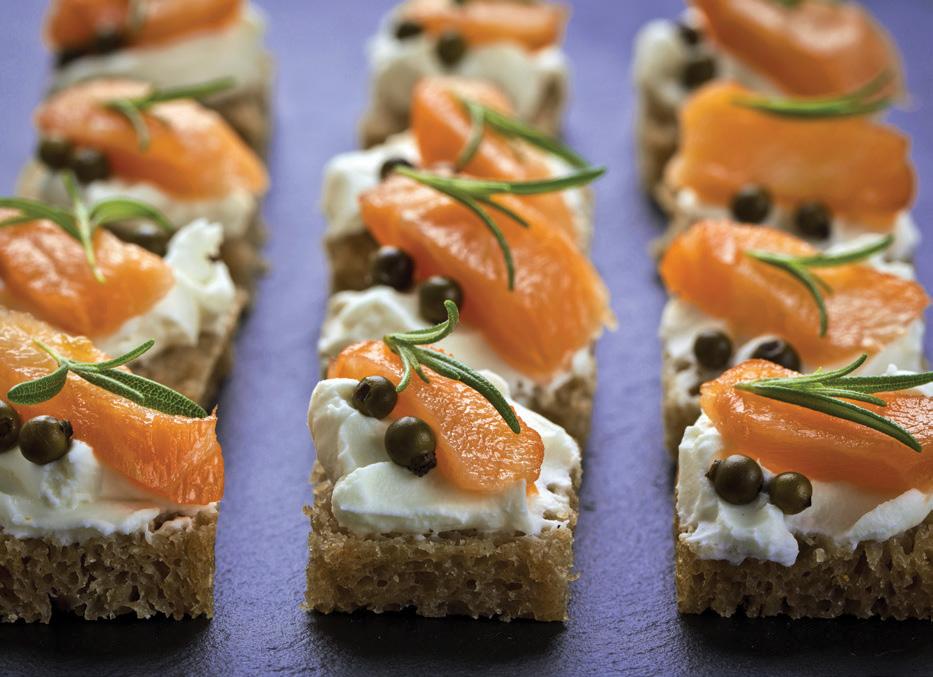
6 p.m. Reception in Treetops Banquet Room with appetizers and animal ambassadors
6:45 p.m. Dinner at Albert’s Restaurant
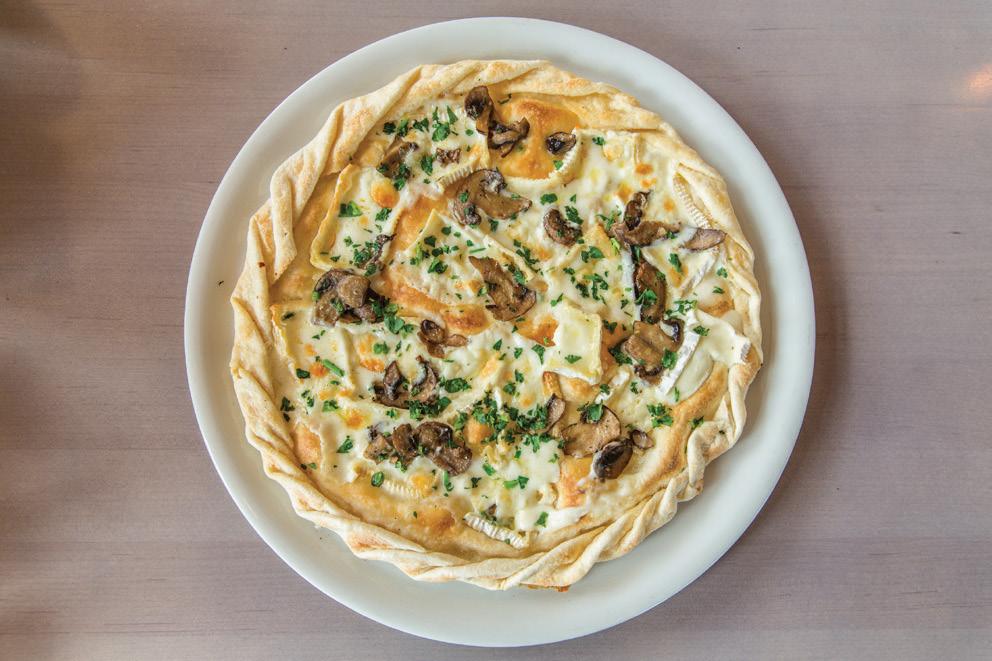
Celebrate the changing of the seasons by raising a refreshing glass of beer at Albert’s Fall Brewmaster Dinner, featuring Sierra Nevada Brewing Company. San Diego Zoo Executive Chef Chris Mirguet and Albert’s Chef Charles Boukas pair their culinary artistry with excellent craft beer selections from Sierra Nevada Brewing Company. Join us for a fun evening of unique brews and fantastic food.
$72 per person, plus tax and gratuity
ANIMAL AMBASSADOR DINNER
Saturday, October 15, 2016
5 p.m. Reception in Treetops Banquet Room with appetizers and animal ambassadors
5:30 p.m. Dinner at Albert’s Restaurant
Join us for an evening of fascinating animals and fantastic food! Experience up-close animal encounters with some of our favorite ambassadors while you enjoy a reception with appetizers, then relax over a three-course meal prepared by our top chefs as your animal encounters continue throughout the evening. A choice of Wild or Tame Jungle Juice will be available at the reception, and a no-host bar will be available for the dinner portion of the evening.
$72 per person, plus tax and gratuity Event ticket must be presented to gain access into the San Diego Zoo for these events. Guests will be seated at tables of eight. Must be 21 years old to attend. Menu substitutions are not available.
The Best Nest Cup-shaped, platform, pendulous, or excavated, bird nests are fascinating architectural wonders.
V Is for Vulture
There is much to learn and admire about vultures. But all is not well in the carrion-eating world. Discover what San Diego Zoo Global is doing to help.
KARYL CARMIGNANI
Flying the Coop
Raising the chicks of a wide variety of bird species to adulthood is the mission of the Bird Breeding Center at the Safari Park.
Altering the Flight Plan
From Tony Hawk to Rusty the kestrel, San Diego Zoo Global is lucky to have some amazing birds as animal ambassadors.
Once you see a male kori bustard strutting his stuff, you won’t forget this striking bird species.
100 Years of the San Diego Zoo, Part 8
The decade from 1987 to 1996 saw the San Diego Zoo growing and expanding in remarkable ways.
WHAT’S IN STORE?
Colorful Centennial
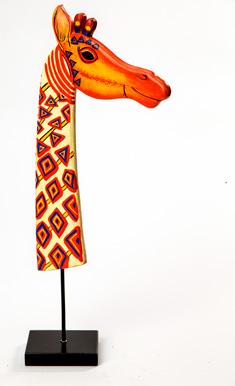
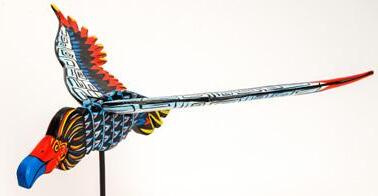
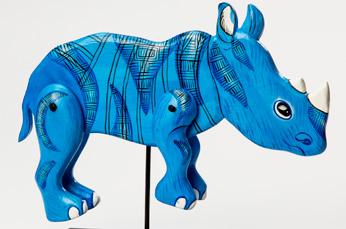
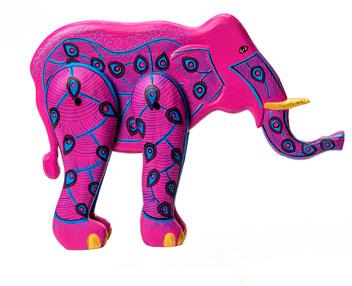
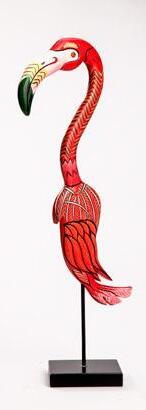
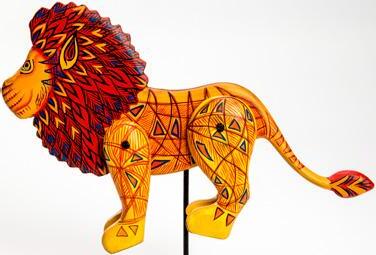
The spectacular, larger-than-life puppets that helped bring our Centennial Celebration to life are commemorated in these beautiful, hand-carved wooden figures. These unique, custom pieces are made by Bali artisans, using wood from Albizia falcata backer, a fast-growing, renewable, and eco-friendy tree species. To shop our entire collection of San Diego Zoo Centennial items, visit our main gift shops at both the Zoo and Safari Park.
SHOP ONLINE
Find these and other gift items at our new online store shopzoo.com.
Giraffe and flamingo, $19.95 each; condor, rhino, elephant, and lion,
CHAIRMAN’S NOTE
ROBERT B. HORSMAN
True Spirit of Philanthropy: Remembering Conrad Prebys
Once in a lifetime, you meet a remarkable person—one who impacts your life or your organization and leaves an indelible mark on the world around him. Conrad Prebys was that person for San Diego Zoo Global (SDZG). It is the generosity of philanthropists that allows organizations like ours to grow. Not only did Conrad’s generosity help us grow and thrive, it ushered in a new era of philanthropy at SDZG.
Conrad was a humble man with a deep, heartfelt laugh that was contagious. One of his most endearing qualities was his ability to captivate people with his stories. During a breakfast meeting, he regaled me with memories of the joy he found in the animals at the Zoo during his early years in San Diego, before he’d hit his stride. He said this with such exuberance and sincerity that I knew we shared a common passion. So, it wasn’t too long before we invited Conrad to be a donor. His first question was, “what is the largest gift the Zoo has received to date?” Once we told him, he responded that his goal was to give the largest gift ever received. He did. And he kept on giving, along with his partner, Debbie Turner.
As a self-made man from modest beginnings, it delighted Conrad to have the opportunity and the wherewithal to give to something that meant so much to him. This spirit of philanthropy—giving from the heart—has benefited tens of millions of visitors to SDZG, as well as the animals that gave Conrad so much enjoyment. It also inspired others to give. Conrad taught us that it doesn’t matter how large or small a gift is—it is the spirit with which it is given that matters. We feel a great loss at Conrad’s passing on July 24, 2016. When you visit Polar Bear Plunge, Elephant Odyssey, or Australian Outback, take a moment to remember Conrad and the incredible legacy he has left for our children, our children’s children, and the animals he adored.
FALL DININ G AT THEPARK
Oktoberfest Celebration
Sunday, October 16, 2016
5 p.m., Hunte Nairobi Pavilion


It’s time to strike up the band and celebrate fall with the Park’s annual Oktoberfest feast! Enjoy a bountiful buffet of traditional German-inspired favorites and special dishes prepared by Safari Park chef Joshua Mireles, accompanied by live German music. One complimentary glass of beer comes with your meal, and other beers will be available for purchase. Put on your lederhosen and join the party!
Guests will be seated at their own reserved table. Cost is $47.95 for adults and $21.95 for children (ages 3 to 11), plus tax and parking.
Brewmaster Dinner Featuring Ballast Point Brewing & Spirits
Saturday, November 19, 2016 5:30 p.m., Hunte Nairobi Pavilion
The evening starts with a visit from our animal ambassadors, followed by a four-course gourmet meal prepared by Safari Park chef Joshua Mireles. A representative from Ballast Point Brewing & Spirits will be on hand to present the beers selected for each course. For adults 21 and older.
Guests will be seated at tables of eight. Cost is $89 per person, plus tax and parking.



Save the Date
What’s happening at the Zoo and Park this month and next (Z) Zoo events (P) Park events
THROUGH SEPTEMBER 5
Nighttime Zoo presented by Cymer
Special activities and live entertainment 9 a.m. to 8 p.m. through September 1; 9 a.m. to 9 p.m. September 2–5. (Z)
SEPTEMBER 3
Breakfast with Tigers
Watch our tigers start their day—then start yours with a buffet breakfast. For reservations, call 619-718-3000. (P)
SEPTEMBER 3, 4, 24; OCTOBER 1, 15, 22
All Ages Roar & Snore Safari
Spend the night at the Safari Park! Our camping sleepovers have something for everyone. Call 619-718-3000. (P)
SEPTEMBER 10, 17, 24; OCTOBER 8, 15, 22
KinderTots
Learning fun for the little ones! Children ages 18 months to 3 years, with
an adult companion, discover animals up close. For reservations, call 619-557-3962 or visit sandiegozoo.org. (Z)
SEPTEMBER 11, 16; OCTOBER 21
Plant Day & Orchid Odyssey
Self-guided walking tours of the Zoo’s botanical garden; Botanical Bus Tours; a rare look at Zoo’s Orchid House. (Z)
SEPTEMBER 17, 24
Photo Workshop:
Beginning Photography
Join our professional photographers at this two-session class. Reservations: 619-718-3000 or visit sandiegozoo.org. (Z)
SEPTEMBER 18
Animal Ambassador Dinner Event
Meet Safari Park animal ambassadors, and enjoy a delicious gourmet meal. For reservations, call 619-718-3000. (P)
PRESIDENT/CEO’S NOTE
DOUGLAS G. MYERS
Welcoming Autumn
FSEPTEMBER 24
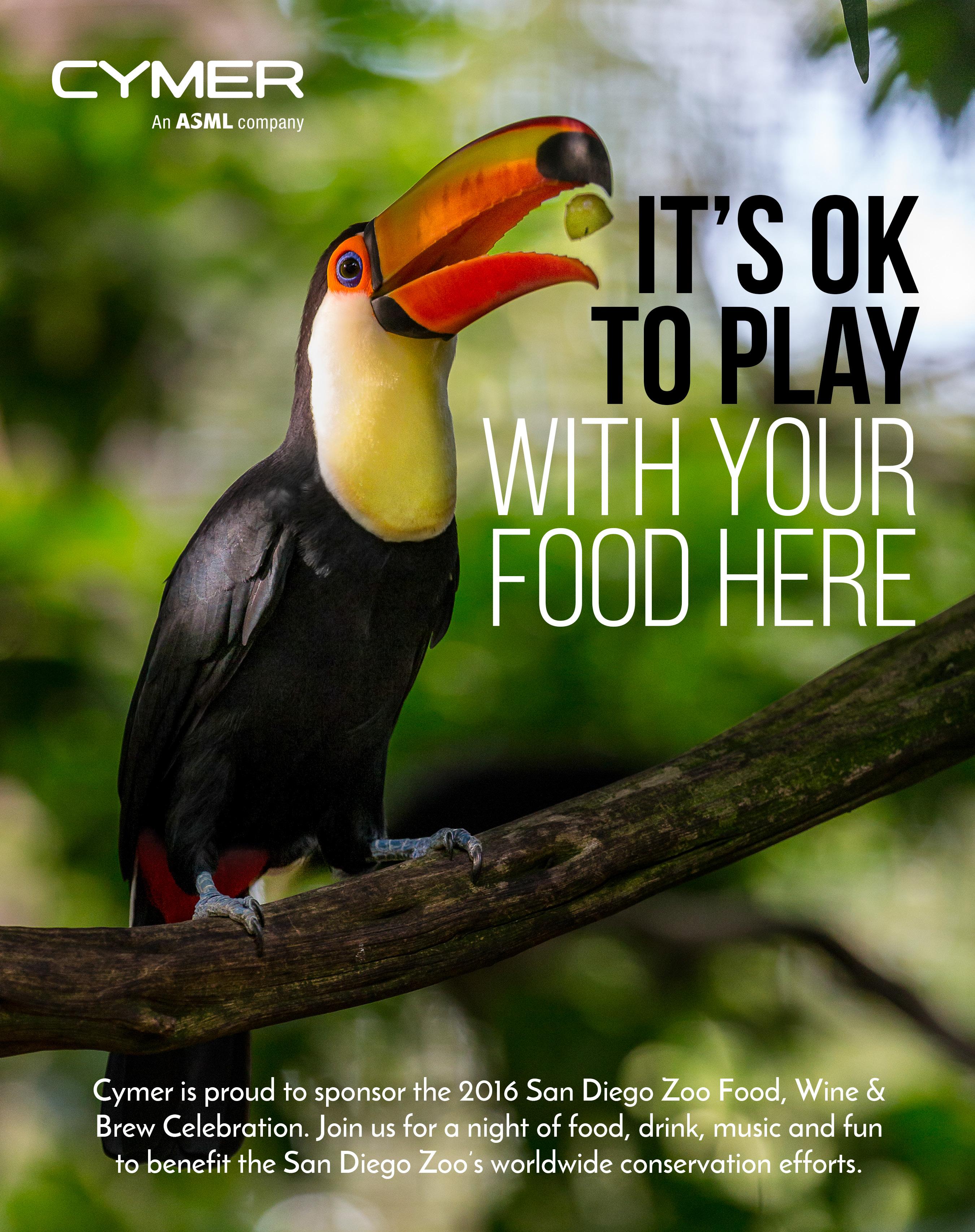
Food, Wine & Brew Celebration presented by Cymer
This annual fund-raiser for SDZG Wildlife Conservancy provides a wild evening of food and beverages from more than 150 restaurants, wineries, and breweries. Dance to live music, meet exotic animals, and more! Visit zoofoodandwine. sandiegozoo.org. (Z)
OCTOBER 1-31
Kids Free month presented by Mission Fed October is Kids Free month at the Zoo and Safari Park, with free admission for children 11 and younger accompanied by an adult. For the complete schedule of special activities and events, visit sandiegozoo.org and sdzsafaripark.org. (Z)(P)
OCTOBER 2
San Diego Zoo
100th Birthday Party!
October 2 is the Zoo’s official birthday, and you’re invited to a party at Centennial Plaza with fun for the whole family! For information, visit sandiegozoo.org. (Z)
OCTOBER 15
Albert’s Animal Ambassador Dinner
Meet animal ambassa-
dors up close—and enjoy appetizers, beverages, and a gourmet meal. Must be 21 years or older. For reservations, call 619-718-3000. (Z)
OCTOBER 16
Oktoberfest Celebration Celebrate with a dinner buffet, live music, and a cash bar. Families welcome. Reservations: 619-718-3000. (P)

Let’s Talk
all is one of my favorite times of the year at the Zoo and the Safari Park, and we have much to look forward to during these next couple of months. If you have family or friends in town for the Labor Day weekend, or if you’re just looking for a fun outing, we are concluding our Nighttime Zoo presented by Cymer on September 5, which celebrates our centennial with a variety of entertainment and a performance by the colorful and larger-than-life puppets that helped make our community celebration in May so spectacular. On September 24, our San Diego Zoo Food, Wine & Brew Celebration presented by Cymer brings more than 150 of San Diego’s best restaurants, wineries, and breweries together for a lively night benefiting San Diego Zoo Global’s worldwide conservation projects. October brings Kids Free month presented by Mission Fed, when kids 11 and younger receive free admission to the Zoo and Park, with family activities on the weekends. We’re also having a very special event: the San Diego Zoo’s official birthday is October 2, when Dr. Harry founded the Zoo, and since this is our centennial year, we’re throwing a party to celebrate. I’d like to personally invite you, our members and supporters, to join us on Sunday, October 2 at the Zoo’s Centennial Plaza, starting at 9 a.m., for a memorable look at all the San Diego Zoo has become in its 100 years. After all, the Zoo wouldn’t be what it is today without you!
Follow @sandiegozoo & @sdzsafaripark.
Share your #SanDiegoZoo & #SDZSafariPark memories on Twitter & Instagram.


If you enjoy wildlife photography, learning from experts, and having the opportunity to get the perfect shot, our photography classes at the Zoo are designed to build your confidence and improve your photographic techniques.
Each two-class session covers a different topic: Beginning Photography on September 17 and 24, Intermediate Photography on October 15 and 22, and Advanced Photography on November 5 and 19. The workshops are taught by our expert instructors, who are enthusiastic about sharing their more than 25 years of experience. You’ll be photographing animals at the Zoo, and keepers will assist in getting the perfect shots. Before you know it, you’ll be taking photos you never thought possible!
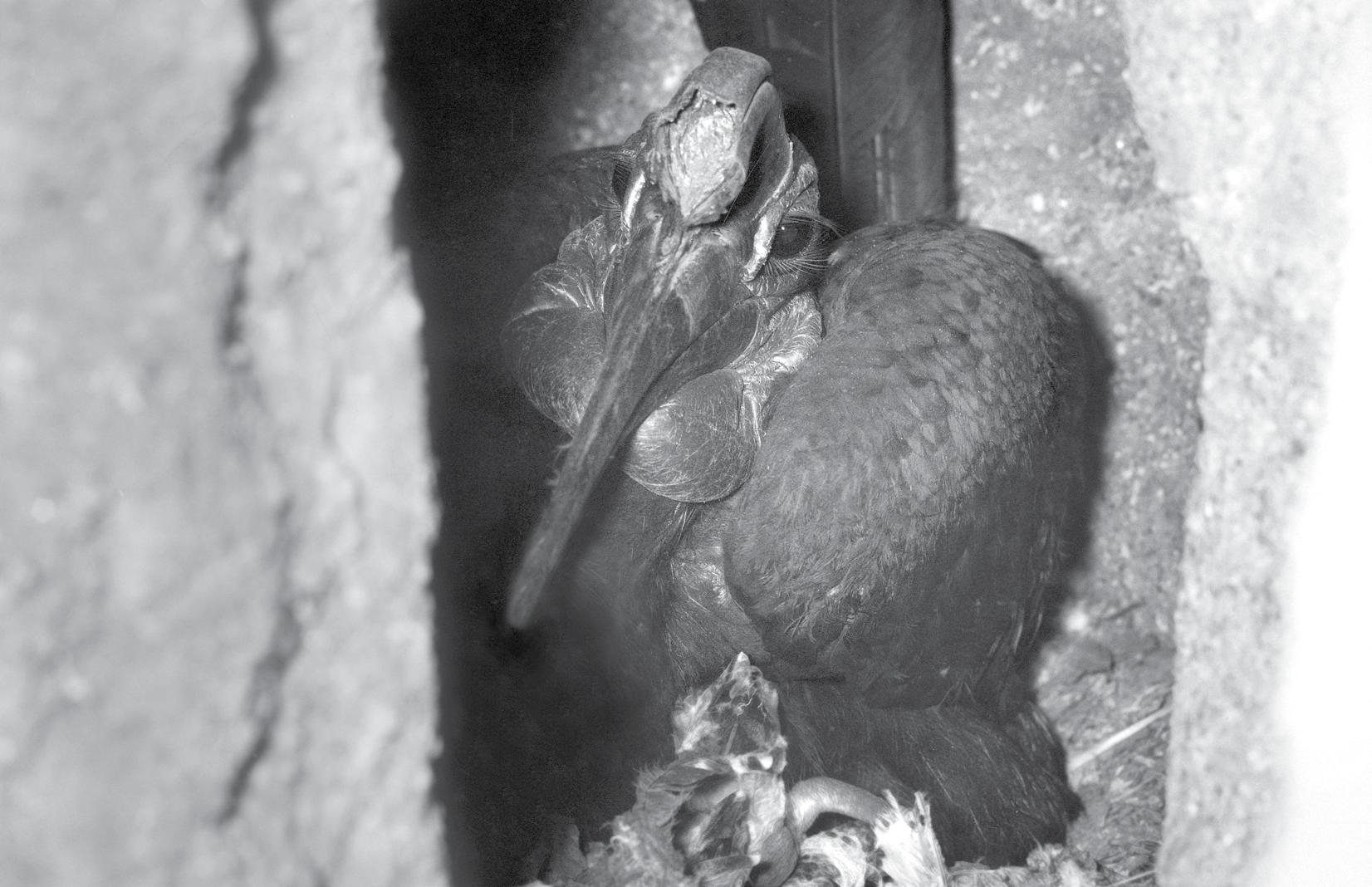
Susie, a “shy and timid” Abyssinian ground hornbill, arrived on September 14, 1970, and met her mate, Charlie, a longtime Zoo favorite who was famous for his gregarious personality. Opposites apparently DO attract!
It’s only a number
San Diego Zoo Global considers it a feather in our cap that we have celebrated the arrival and raising of many bird species—and some remarkable winged wonders have come home to roost in September.
1923
At 95 feet in height and 115 feet long, the Scripps Flight Cage for shore and wading birds was the largest aviary in the world when it opened on September 8.
ZOONOOZ ®
PUBLISHED SINCE 1926
SEPTEMBER 2016 | VOL. LXXXIX–NO. 05
MANAGING EDITOR
KAREN E. WORLEY
ASSOCIATE EDITOR
PEGGY SCOTT
STAFF WRITERS
WENDY PERKINS
KARYL CARMIGNANI
DONNA PARHAM
COPY EDITOR
ESTON ELLIS
DESIGNER
KERRI ABRAMS
SAN DIEGO ZOO GLOBAL
PHOTOGRAPHERS
KEN BOHN
TAMMY SPRATT
DIGITAL IMAGING TECHNICIAN
TAMMY SPRATT
DESIGN AND PRODUCTION
KAMBIZ MEHRAFSHANI
KIM TURNER
AMY BLANDFORD
HEIDI SCHMID-ROMERO
LISA BISSI
JENNIFER MACEWEN
PREPRESS AND PRINTING
QUAD GRAPHICS
1938
A monkey-eating eagle, also called the Philippine eagle, debuted at the Zoo on September 3, the first of this species exhibited in the United States.
1953
The Zoo received a trio of Australian bustards on September 9, the first of this species at the Zoo and a rare import from the Land Down Under.
The Zoological Society of San Diego was founded in October 1916 by Harry M. Wegeforth, M.D., as a private, nonprofit corporation that now does business as San Diego Zoo Global.
The printed ZOONOOZ® magazine (ISSN 0044-5282) is currently published bimonthly, in January, March, May, July, September, and November. Publisher is San Diego Zoo Global, at 2920 Zoo Drive, San Diego, CA 92103, 619-231-1515. Periodicals postage paid at San Diego, California, USA, and at additional mailing offices.
ADDRESS CHANGES: Please send to Membership Department, P.O. Box 120271, San Diego, CA 92112.
Copyright® 2016 San Diego Zoo Global. All rights reserved. “ZOONOOZ” Reg. U.S. Pat. Office. All column and program titles are trademarks of San Diego Zoo Global.
Annual Memberships: Dual $135, new; $120, renewal. Single $111, new; $99, renewal. Each membership includes unlimited entrance to the San Diego Zoo and the San Diego Zoo Safari Park.
Subscription to ZOONOOZ magazine: $25 per year, $65 for 3 years. Foreign, including Canada and Mexico, $30 per year, $81 for 3 years. Contact Membership Department, P.O. Box 120271, San Diego, CA 92112, for subscription information.
As part of San Diego Zoo Global’s commitment to conservation, ZOONOOZ is printed on recycled paper that is at least 10% post-consumer waste, chlorine free, and is Forest Stewardship Council ® (FSC®) certified.
SAN DIEGO ZOO GLOBAL
OFFICERS
Robert B. Horsman, Chairman
Steven G. Tappan, Vice Chairman
Judith A. Wheatley, Secretary
Richard B. Gulley, Treasurer
BOARD OF TRUSTEES
Sandra A. Brue
Javade Chaudhri
Berit N. Durler
Clifford W. Hague
Linda Lowenstine, D.V.M., Ph.D.
Patricia L. Roscoe
Steven S. Simpson
TRUSTEES EMERITI
Frank C. Alexander
Kurt Benirschke, M.D.
Thompson Fetter
Bill L. Fox
Frederick A. Frye, M.D.
George L. Gildred
Yvonne W. Larsen
John M. Thornton
Albert Eugene Trepte
Betty Jo F. Williams
James Lauth, General Counsel
1966
On September 8, the first thick-billed parrot to hatch in any zoo made avicultural history at the San Diego Zoo, a cause for much celebration.
SAN DIEGO ZOO HOURS
September 1: 9 a.m. to 8 p.m.
September 2–5: 9 a.m. to 9 p.m.
September 6–23: 9 a.m. to 6 p.m.
September 24: 9 a.m. to 5 p.m.
September 25–October 31: 9 a.m. to 6 p.m.
SAFARI PARK HOURS
September 1: 9 a.m. to 5 p.m.
September 2–4: 9 a.m. to 6 p.m.
September 5–October 31: 9 a.m. to 5 p.m.
WEBSITE sandiegozoo.org
PHONE 619-231-1515
ZOONOOZ® Online web publication zoonooz.sandiegozoo.org
FSC® is not responsible for any calculations on saving resources by choosing this paper.
Douglas G. Myers, President/CEO
Charles L. Bieler, Executive Director Emeritus
THE FOUNDATION OF SAN DIEGO
ZOO GLOBAL
OFFICERS
Murray H. Hutchison, Chair
Maryanne C. Pfister, Vice Chair
Susan N. McClellan, Secretary
Richard M. Hills, Treasurer
Mark A. Stuart, President
Amy B. Parrott, Vice President
Robert B. Horsman, Ex officio
Douglas G. Myers, Ex officio
BOARD OF DIRECTORS
Christine L. Andrews
Joye D. Blount
Rick Bregman
Lisa S. Casey
Douglas Dawson
Berit N. Durler, Ex officio
Chris L. Eddy
U. Bertram Ellis, Jr.
Arthur E. Engel
Craig L. Grosvenor
Michael N. Hammes
Judith C. Harris
Michael E. Kassan
Susan B. Major
Michael D. McKinnon
Joshua Pack
Philip C. Seeger
Ryan Sullivan
Thomas Tull
Margie Warner
Ed Wilson
The Best Nest
Where’s the best place for an egg to hatch? That depends on the bird.
ILLUSTRATIONS BY
AMY BLANDFORD SDZG ILLUSTRATOR
TEXT BY DONNA PARHAM STAFF WRITER
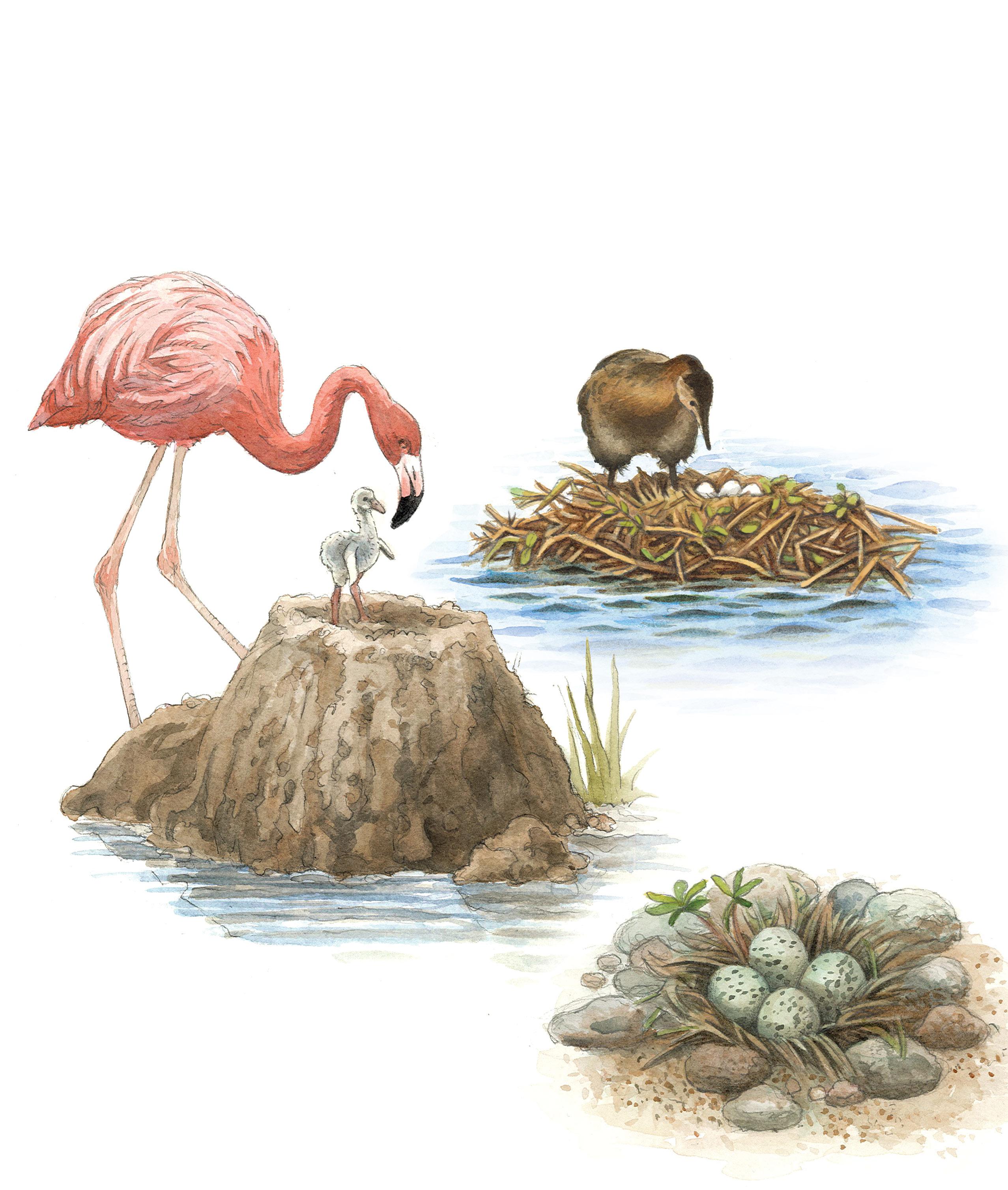
BOBBING ALONG
A floating mass of aquatic plants provides the perfect platform for a pair of red-necked grebes. Anchored to nearby vegetation, the nest is situated to protect eggs and chicks from mammalian predators.
HIGH AND DRY
A flamingo’s single, chalky white egg hatches atop a pile of mud. Both male and female construct the tall nest, heaping and packing soft mud into a volcano-shaped mound. The high nest protects the precious egg from changes in water level.
GROUNDED
For the semipalmated plover, the best nest is little more than a shallow depression in sand, among rocks, or in sparse vegetation. A female lays three or four mottled eggs that are pointed at one end. This pyriform shape keeps the eggs from rolling away.
HANDYMAN
Using strips of palm, rice plants, or grass, a male baya weaver knits together a hanging nest with an entrance tunnel.
SOFT AND STRETCHY
With spider webs, a female hummingbird binds together twigs, moss, soft plant fibers, and bits of leaves and lichens. The tiny, cup-shaped nest is soft and spongy, stretching and expanding as chicks grow.
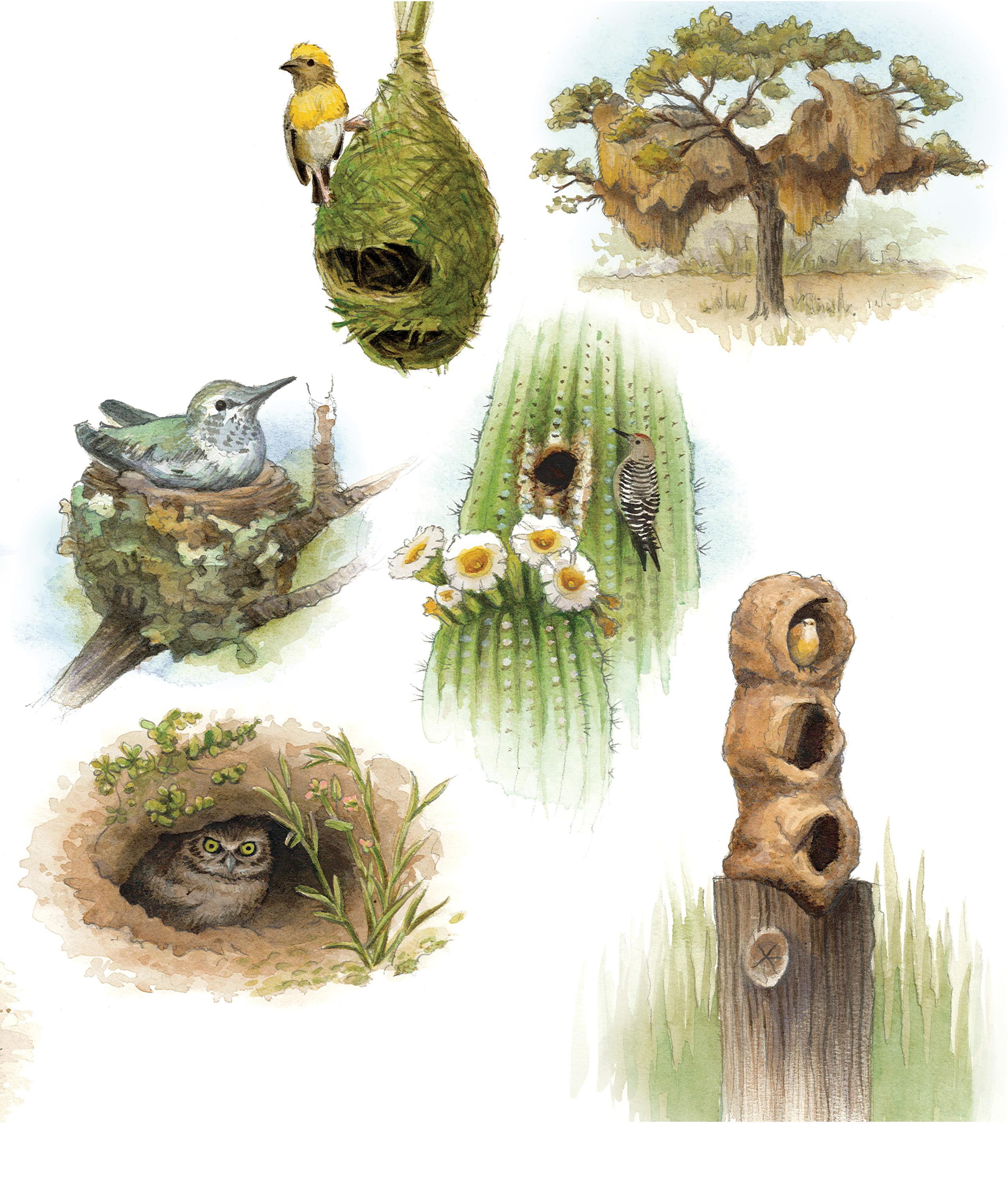
REUSERS
In some places, burrowing owls dig their own burrows, but they more commonly settle into a burrow abandoned by a ground squirrel or other rodent, badger, skunk, armadillo, or tortoise. The female owl stays underground with her eggs and chicks, while the male hunts and feeds the family.
COOL AND DRY
A monogamous pair of Gila woodpeckers work together to excavate a nest cavity in a dry cactus or palm. The pair reuse the same nest for several years.
APARTMENT COMPLEX
A sociable weaver nest is a busy place as year-round shelter and warmth for up to 200 birds, with separate entrances and chambers for each family unit.
ADOBE
Ovenbirds build a sturdy, enclosed nest of mud mixed with plant matter.
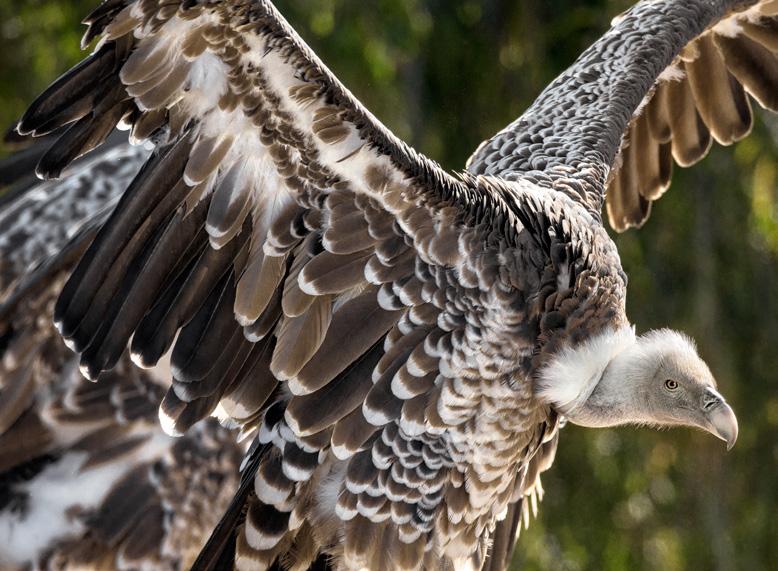
The Ruppell’s vulture is the highest-flying bird ever recorded, reaching heights of 37,000 feet.
Vis for Vulture
Vultures play a vital role in the environment: they are part of the all-important cleanup crew.
BY KARYL CARMIGNANI | STAFF WRITER
PHOTOS BY KEN BOHN | SDZG PHOTOGRAPHER
They are not acclaimed for a dulcet song or vibrant plumage. They don’t mimic voices or build fancy nests. They don’t snatch their meals from roiling rivers or hover like helicopters in front of flower blossoms. They have a significant “ick factor” attached to their smelly diet of carrion, and just the word “vulture” engenders fear or revulsion in the hearts of many. In short, vultures don’t get much love.
But vultures do plenty to earn their keep in their respective ecosystems, from much-needed tidying up of dead stuff to actually removing pathogens from the environment in ways no other animal can. As the ultimate low-impact consumer, vultures soar thousands of feet above the Earth in search of a tasty carcass. They form strong pair bonds, and both parents help raise the young. Some have wingspans wider than a bus. Many species have colorful faces and beautiful feathers. Looking at them with fresh eyes, there’s a lot to love about vultures!
Unfortunately, “mass poisoning events” in Africa are sounding a death knell for many of these big-bodied scavengers. “People’s perceptions can be a roadblock to saving less ‘cute’ species,” said Jenny Tibbott, senior bird keeper at the San Diego Zoo Safari Park. “But without enough vultures around, who’s going to ‘do the dishes’?”
SOAP OF THE SAVANNA
Vultures have earned the term “soap of the savanna” due to their critical role in maintaining healthy ecosystems. By consuming about 70 percent of all available carrion, vultures prevent the spread of diseases like rabies, anthrax, tuberculosis, and botulism. They are immune to the toxins, and their stomach acids are unrivaled! Water sources and soil are less prone to contamination with vultures around, and both wildlife and humans reap health benefits from their “service.”
PATTERN OF POISON
Yet over half of the 23 vulture species—which include California and Andean condors—are threatened or endangered. Africa is home to 11 vulture species, and 7 species are on the brink of extinction. As social birds, vultures are prone to rapid decline from mass poisonings, because a large group of birds can be killed at one time from the same poisoned carcass.
The current crisis is not the first time vultures have been under siege from poisons in their environment. In the 1980s, the California condor had dwindled to just 22 birds, largely due to ingesting toxic lead bullet fragments in carcasses left behind by hunters. It has taken decades of collaborative conservation efforts to help this
species rebound, along with hunters using alternative ammunition. San Diego Zoo Global has worked with other organizations to gradually coax this species back from the edge of extinction.
In the 1990s, India experienced a dramatic decline in vulture populations, which was eventually attributed to diclofenac, an anti-inflammatory drug used by veterinarians to treat pain in cattle. Hundreds of vultures would descend on a single cow carcass, and cattle recently treated with diclofenac proved fatal for the birds. Without these scavengers cleaning up the carcasses, opportunistic scavengers like crows, rats, and dogs took up the slack, which led to an increase in disease-carrying feral dogs—up to 7 million by some estimates.
Since dogs came into much closer contact with humans than vultures ever would, the natural disease
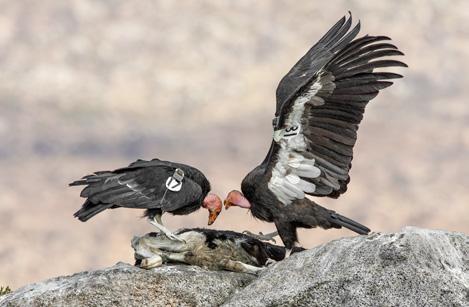
California condors are a conservation success story, despite ongoing hazards to free-flying birds like ingesting microtrash (inset) and lead bullet fragments in their food sources.
SHOUT OUT
International Vulture Awareness Day will be celebrated at the Safari Park September 3 to 5, 2016, with special keeper talks and animal encounters. Soar on over!
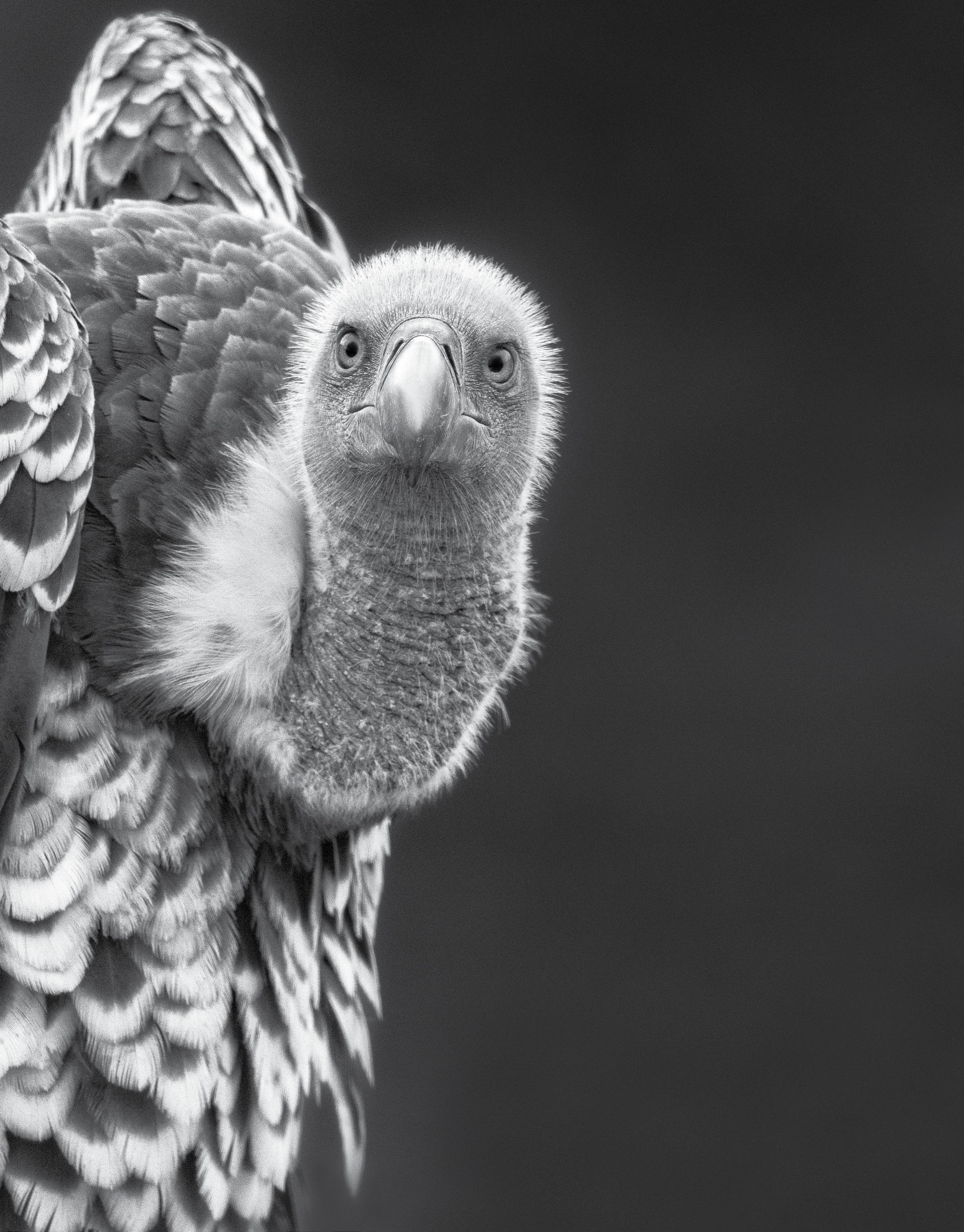
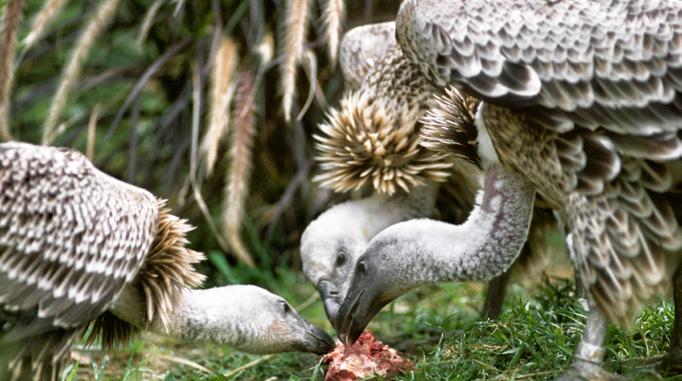
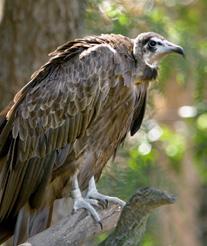
Ruppell’s vultures are large-bodied birds that can weigh up to 20 pounds. Below: Hooded vultures are smaller than other African vultures and soar higher than most, often spotting a carcass first.
barrier was compromised. It is thought that dogs feeding on disease-ridden carcasses were at least partly to blame for the rabies outbreak estimated to have killed 48,000 people between 1992 and 2006 in India. Fortunately, the country has banned the use of veterinary diclofenac, and it is hoped vulture populations there will stabilize.
The recent rapid vulture decline in Africa is tied to the poaching epidemic. Known as the “ranger’s best friend,” the vultures’ circling flight, which is visible for miles, indicates a fresh carcass on the ground below. Vultures are the harbingers of the latest slaughtered elephant or rhino, thus giving rangers a valuable clue. Unfortunately, poachers are also privy to this, and many have started poisoning animal carcasses after they have taken the tusks, horns, and body parts they want. When vultures then descend to feed, dozens of birds are destroyed at a time—along with other scavengers like hyenas and jackals—leaving fewer to “announce” the poachers’ presence.
Another threat to vultures is indiscriminant poisoning by farmers. In retribution for livestock being taken by carnivores like lions, farmers leave a poisoned carcass to kill the returning predator. But that tainted cow carcass also attracts
scavengers, and it is just as deadly to vultures as a poisoned elephant corpse left by poachers.
Other threats to vultures include habitat loss, collisions with power lines and wind turbines, and the use of their body parts in religious rituals. Additionally, large vulture species have a slow reproductive rate. They reach sexual maturity at five to six years of age, and once they find a suitable mate, the pair only raises one chick every one to two years.
VULTURE CULTURE
Over the years, San Diego Zoo Global has worked with 18 of the 23 vulture species. California condors are perhaps the best-known success story, with 207 chicks hatched at the Park and 136 birds released in California, Arizona, Utah, and Baja California, Mexico. San Diego Zoo Global has also played a key role in the breeding and reintroduction of the Andean condor. The first hatching of this species in the US took place at the Zoo in 1942; since then, 29 chicks have hatched at the Zoo and 42 have hatched at the Park. We have collaborated with other zoos to release 80 birds into the wild, mostly in Colombia. Safari Park visitors can see breeding pairs of the critically endangered Ruppell’s vulture and hooded
BY THE NUMBERS
Number of years some vultures can live
207 California condor chicks hatched at the Safari Park and San Diego Zoo
25 Ruppell’s vulture chicks hatched at the Safari Park
22 King vulture chicks hatched at the Safari Park and San Diego Zoo
10 Hooded vulture chicks hatched at the Safari Park
9 American black vulture chicks hatched at the Safari Park and San Diego Zoo
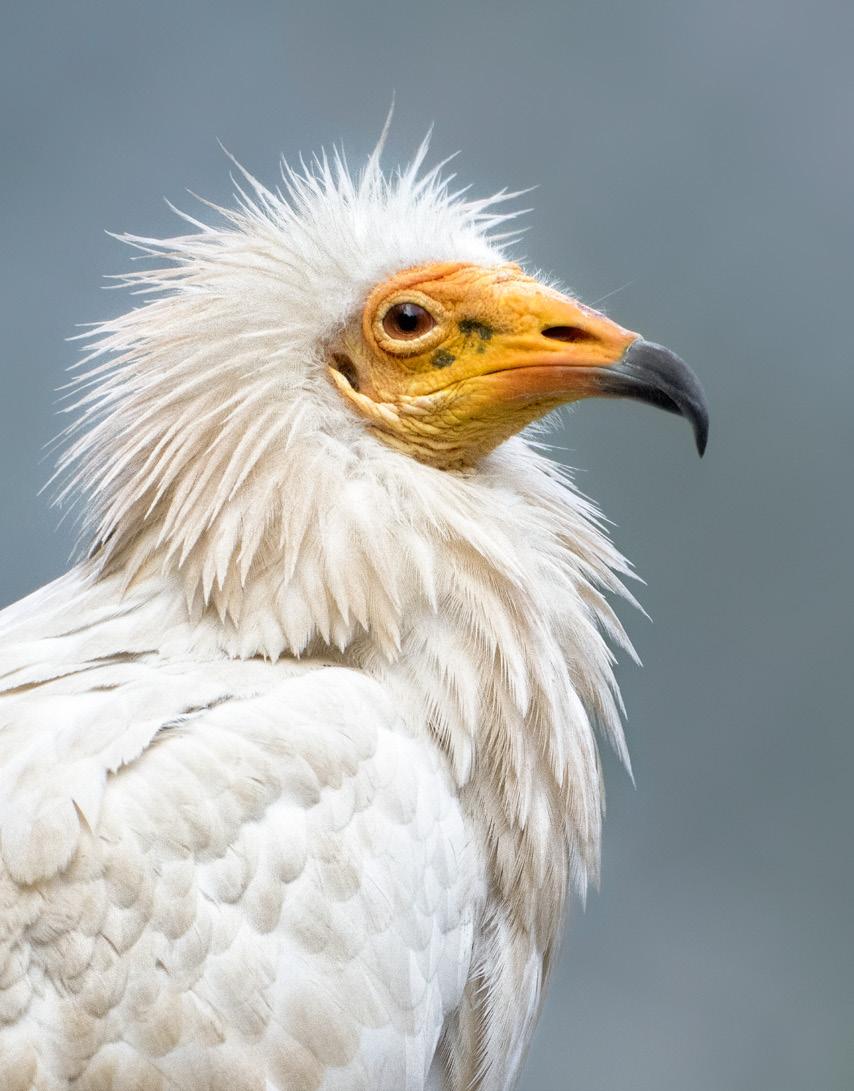
vulture, as well as the endangered lappetfaced and Egyptian vultures. Breeding these birds in zoos helps to study the species while creating assurance populations that could potentially be reintroduced. Researching and monitoring vultures is a vital step in finding solutions to the current population declines. San Diego Zoo Global supports Ruppell’s vulture research in East Africa; and we are working on wind turbine mitigation in Baja California for the California condor program. Unintentional vulture poisoning by ranchers or farmers is a complicated issue, but that too is being addressed with the help of community conservation groups. San Diego Zoo Global works to combat wildlife trafficking and assists the U.S. Fish and Wildlife Service with communication efforts concerning these crimes, which take a terrible, far-reaching toll on all kinds of wildlife, including vultures.
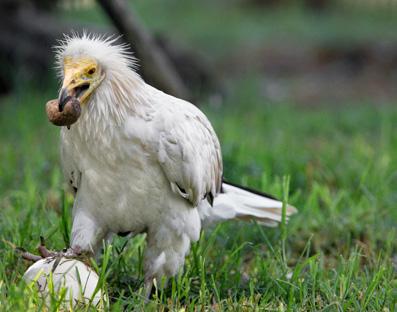
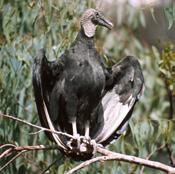
An Egyptian vulture uses a rock to crack open an egg. Below: The American black vulture patrols highways for easy roadkill meals, but can also fall victim to vehicle strikes.
“Vultures play a key role in maintaining balanced ecosystems,” said Jenny. “As more people become aware of the threats vultures are facing, we can hopefully turn the tide on this crisis.” Without vultures as part of a thriving cleanup crew, ecosystems would become disease-ridden and unstable. And that’s not healthy for any of us.

PART OF THE PRIDE
CELEBRATING ANIMALS & NATURE IN BALBOA PARK!
Inspired by the San Diego Zoo’s 100th birthday celebration, five prominent Balboa Park institutions are collaborating to bring you a menagerie of animal-themed exhibitions. Come celebrate with us!
San Diego History Center
San Diego Natural History Museum
San Diego Museum of Art
Timken Museum of Art
Museum of Photographic Arts
Exhibition schedules and descriptions are available at: sandiegozoo100.org/events


Put summer’s long , sunny days to work—and start saving on your electric bills—with a SunPower® home solar system. SunPower panels have world record efficiency 1 , are ranked #1 in durability 2, and come with a 25-year Combined Power and Product Warranty. That means more energy, more savings, and more peace-of-mind for years to come. Get a $500 mail-in rebate3 when you go solar with SunPower. Visit sunpower.com/SDZoo to learn more.

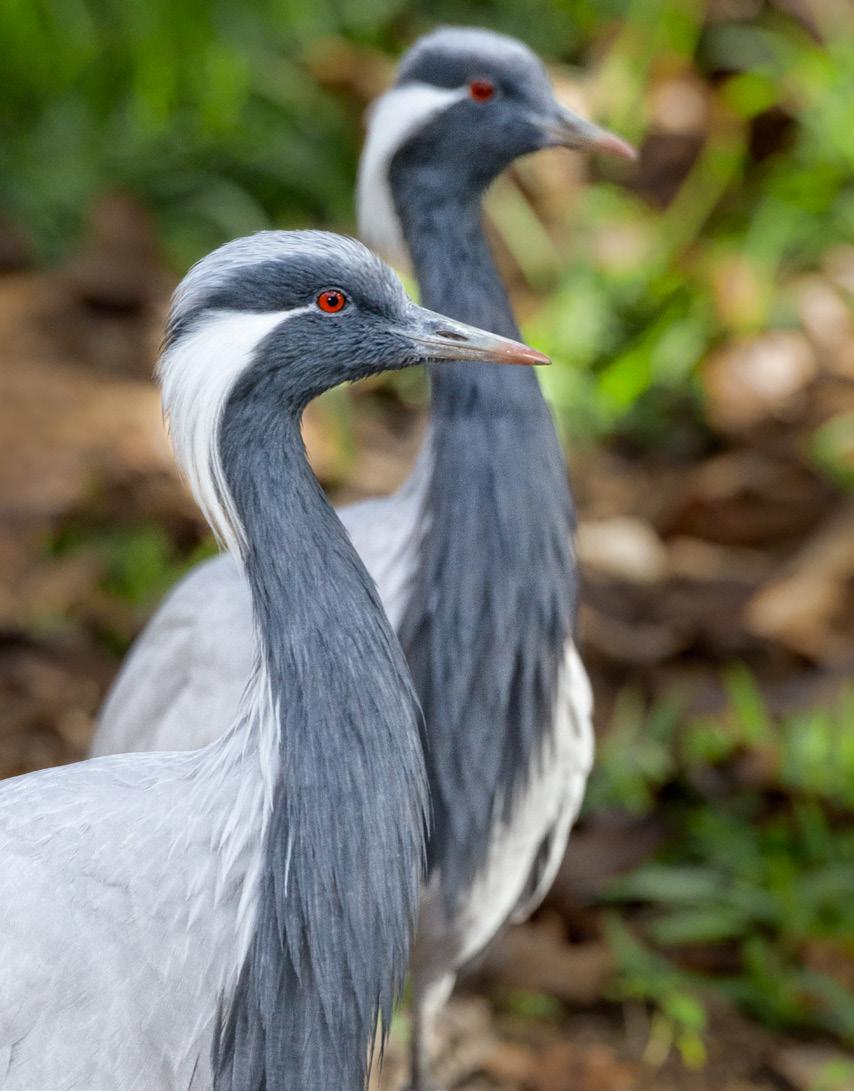
Demoiselle cranes Anthropoides virgo at the Safari Park’s BBC are part of an innovative program to implement artificial insemination protocols for birds.
FLYING THE COOP
Successful fledging is the goal for baby birds at the Bird Breeding Center.
BY DONNA PARHAM | STAFF WRITER
PHOTOS BY KEN BOHN | SDZG PHOTOGRAPHER
Prominently displayed signs mark the area as a “Quiet Zone,” but the boisterous calls of exotic species sporadically pierce the peaceful surroundings. A blue-bellied roller Coracias cyanogaster breaks into what sounds like raucous laughter. The adamant call of a long-toed lapwing Vanellus crassirostris prompts Andrew Stehly, an animal care supervisor at the San Diego Zoo Safari Park, to interpret: “He’s telling us to ‘keep moving.’” It’s a good sign; the pair inside gets protective when incubating eggs. They have successfully raised three chicks this year, and keepers are hoping for another clutch.
The Safari Park’s Bird Breeding Center (BBC) spreads across nearly four remote acres of Safari Park property. Michael Mace, curator of birds at the Safari Park, explains the goals of the BBC: “This is a place where our dedicated keeper staff conducts behavioral research, assists other zoos around the world with bird information, and raises birds for release into the wild.” Currently, the BBC team breeds 77 species, including 16 endangered species, with 3 of those critically endangered. One, the Guam kingfisher Todiramphus cinnamominus, is extinct in the wild.
SENSITIVE SPECIES
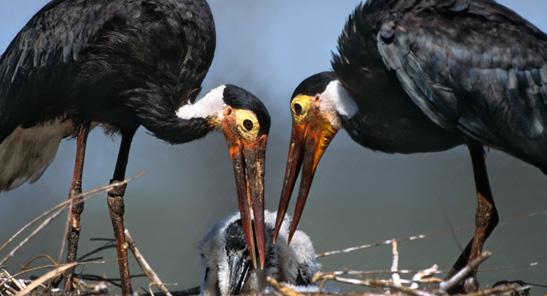
“We work with some rare and sensitive species,” says Michael, including birds that haven’t reproduced well in managed care, such as the Storm’s stork Ciconia stormi. This second-rarest stork in the world isn’t well understood, and the BBC is the only place it has successfully reproduced outside of Asia. The BBC’s adaptable breeding enclosures help create successes like these—keepers can reconfigure enclosures to be as large or small as the birds need.
“This gives us the flexibility to
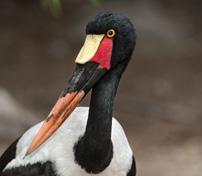
work with a wide variety of species, from tiny finches to saddlebill storks that are five feet tall,” says Michael. Enclosures are furnished with water features, live plants, secluded areas for nesting, and a variety of nesting materials—whatever it takes for the birds to feel comfortable.
FINDING SOLUTIONS
Creativity plays a role in the success, too. It can be a challenge to figure out just what a species needs, but it’s one that Andrew is always up for. “The more rare and challenging the bird, the more I like it. Anytime we can breed something for the first time, that is something big for us.” It’s often a big deal for other organizations, too.
Accredited zoos around the world send birds—especially species that haven’t been successful reproducing elsewhere—to breed at the BBC.
In fact, 47 of the species breeding at the BBC represent cooperative efforts managed by both North American and European zoos.
“Many of the birds raised here will go to other zoos around the world,” says Andrew. “The protocols we’ve developed for raising these species go with them to other institutions.”
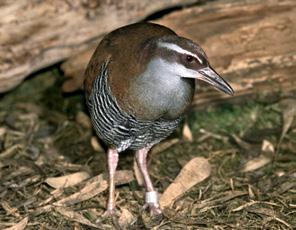
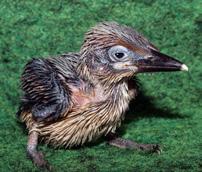
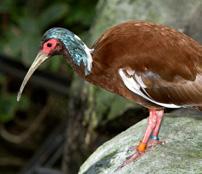
This page, from top left: The BBC has been home to the only Storm’s stork chicks to hatch outside of Asia. BBC-hatched Guam rails, extinct on their native island, are part of a USFWS release program on nearby Rota Island. The BBC is home to the most prolific pair of saddlebilled storks in the US. A Guam kingfisher chick is a success in the fight to end extinction. The BBC has hatched 21 Madagascar ibis Lophotibis cristata
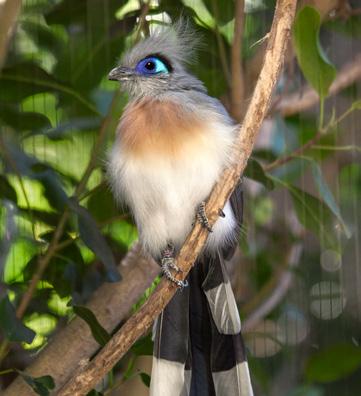
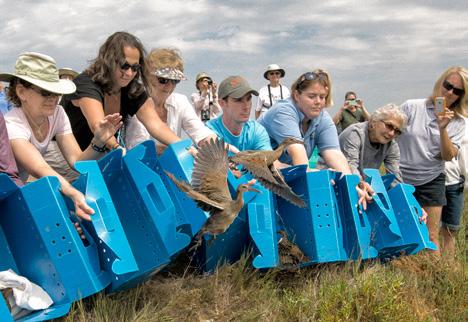
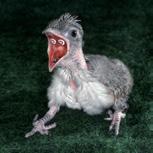
Opposite page from top: BBChatched lightfooted Ridgway’s rails find a new home at a local marsh. The BBC hatched the first crested coua in North America. “Bull’s-eye” spots in a coua chick’s mouth show parent birds just where the food goes (inset).
BBC: THE STATS
258
Bird parents and chicks currently living at the BBC
134
Enclosures dedicated to bird breeding at the BBC
16
Endangered species that breed at the BBC
PRECIOUS EGGS
“Sometimes we get really genetically valuable individuals—birds that have never bred,” says Andrew. As much as possible, the keepers manage breeding according to the best genetic matches. But, like people, some birds are pickier than others. The Guam kingfisher has proven to be a challenge. “They’re territorial, so we have to be protective when we put them together,” explains Andrew. So how do you play matchmaker to birds? First, keepers place the birds in side-by-side enclosures and observe them. “We look for positive interactions between them before we put them together,” says Michael. “If a pair isn’t compatible, we rematch them.”
Once a pair has bred, and the female lays eggs, keepers hope the parents will incubate them and care for the chicks. Unfortunately, inexperienced parents sometimes aren’t quite sure what to do with an egg or a cheeping chick. Andrew says, “Sometimes we have to intervene, but we try to return the chicks to their parents.”
Another option is cross-fostering: placing a precious egg in the nest of experienced parents—even a different species—that will incubate it and care for the chick.
LEAVING THE NEST
The next hurdle is the fledging period, as a chick becomes independent. Some human parents welcome their grown children living at home, but the parenting style of species like the crested coua Coua cristata could be described as “tough love.” Although attentive when their chicks are young, once they decide they’ve done their part, says Andrew, “Coua parents encourage their fledglings to leave the nest, so they can lay another clutch of eggs.” That’s a nice way of saying that the parents forcefully chase their chicks out.
Coua chicks fledge after just 10 to 12 days, so according to Andrew, “The challenge is that it happens so suddenly.” Keepers found a solution by relocating chicks to a “howdy enclosure” attached to but separate from the parent’s enclosure. Here, the parents can continue to feed and care for their chicks until they reach that potentially risky farewell stage—and then just stop. Using this approach, keepers were able to produce the first crested coua raised in North America, and provide crested couas to other AZA-accredited zoos.
CHALLENGES BRING REWARDS
Where habitat is secure, BBC-bred birds like Guam rails and light-footed Ridgway’s rails (for-
merly clapper rails) Rallus obsoletus levipes have been released into the wild. Lead keeper Kristina Heston has participated in releases of the light-footed Ridgway’s rails. “Some of the chicks we’ve raised here have even reproduced in the wild,” she says. In fact, the population of the local wetland species has tripled, in large part due to the efforts of the BBC team.
Kristina admits to a special fondness for this species. Endangered and particularly shy by nature, they are difficult to observe, but Kristina keeps close tabs on her charges. Discreet monitoring cameras allow her to observe the natural behavior of the bashful birds without disturbing them. “We see more natural behavior on the video monitors than when the birds see us watching them,” she says. “We get to watch them grow up and then release them locally in marshes— which is very cool,” she says.
“One of the most significant benefits of having this off-exhibit collection is that the experience we’ve gained has translated directly into success with endangered species,” says Michael. As one of the most comprehensive off-exhibit bird breeding facilities in North America—and one of the largest in the world—the BBC contributes greatly to San Diego Zoo Global’s vision to lead the fight against extinction.
ALTERING THE FLIGHT PLAN
The New Course for Bird Ambassadors at the San Diego Zoo and Safari Park
BY PEGGY SCOTT | ASSOCIATE EDITOR PHOTOS BY KEN BOHN | SDZG PHOTOGRAPHER
For a wild bird, even the friendliest skies can suddenly turn turbulent. Obstacles such as injury, illness, or human interference can cause an unexpected change in life’s route—and it’s often not in the right direction. But for some fortunate fliers, like the rescued ambassadors at the San Diego Zoo and Safari Park, plotting a new course can help their wild brethren by deepening the understanding and respect that people have for nature.
GOOD AS GOLD(EN)
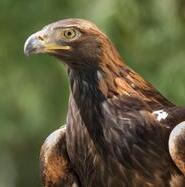
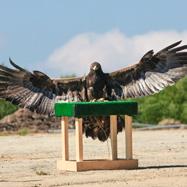
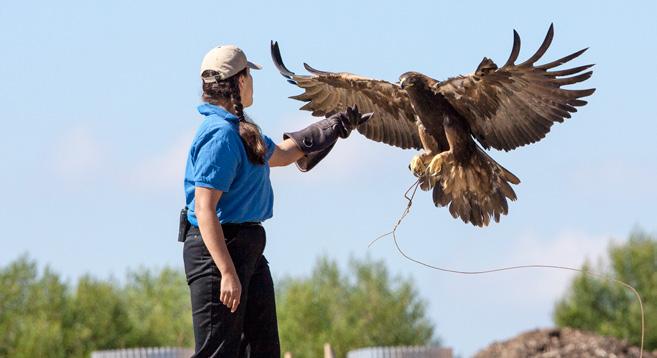
With her 6-foot wingspan, intense gaze, and confident personality, Tonka, the Safari Park’s 18-year-old golden eagle, is worth her weight (9 pounds!) in gold when it comes to impressing visitors. Her story was almost over before it started, however. She was found injured as a fledgling near a trail in the Angeles National Forest in 1998. “We believe she fell out of a cliffside nest,” says Janet RoseHinostroza, an animal training supervisor at the Safari Park. “She was found with a broken hip, and her immature plumage meant she was young.” The hiker who discovered her contacted a park ranger, and Tonka was
taken to a wildlife rehabilitation center. She recovered completely from her injury, but became imprinted on humans in the process, making her unsuitable for rerelease into the wild. “She considers people ‘mouse dispensers,’” Janet explains. “She can’t be returned to the forest, because if she got too hungry or thirsty, she would seek out people for help. That’s not a good situation.”
Due to her status as a protected native species, the California Department of Fish and Wildlife keeps close tabs on Tonka. They check in each year to see what she is contributing as an ambassador for her species, and to ensure she has a great quality of life.
THE MINISCULE FALCON
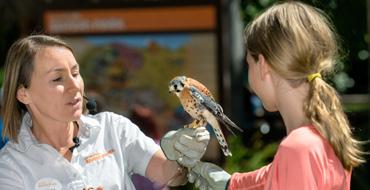
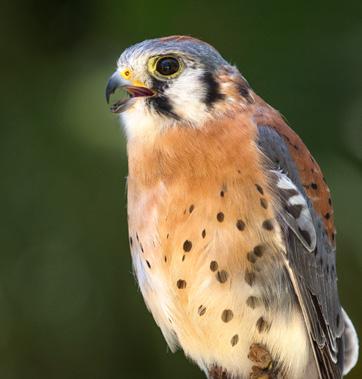
The kestrel, or sparrow hawk, is the smallest falcon in the US—but don’t tell that to Safari Park ambassador Rusty. As far as he’s concerned, he’s large and in charge. In 2013, Rusty landed on the shoulder of a horseback rider in Julian, and proceeded to accompany her all the way back to her home. Representatives from the U.S. Fish and Wildlife Service were contacted, and once it was clear how imprinted the little bird was, they contacted the Safari Park.
Annette Russell, a lead animal trainer at the Park, works with Rusty and believes his species was a clue to his potential origins. “Kestrels are usually the first type of bird a beginning falconer will use,” Annette says. “They may be small, less than one-quarter of a pound, but they’re strong little hunters— they go after bugs, mice, and lizards.”
Rusty is calm and collected during his appearances at the Safari Park, fluffing his
feathers comfortably, and vocalizing oc casionally to let people know he’s watching them—and, as Annette says, to ask for his favorite bite-size treat, “meese’s pieces.” That’s exactly what it sounds like, and Rusty thinks they’re delicious.
TENACIOUS TONY
Not only is Tony Hawk strong-willed, he’s also incredibly lucky. After fledging in the wild in 2009, the young red-tailed hawk contracted West Nile virus; and when a passerby discovered him, he was assumed to be dead. As workers at a wildlife rehab center prepared to put him in the freezer to await a necropsy, Tony Hawk’s eyelids fluttered. Staff realized he was still alive and rushed him to treatment. “It’s amazing he survived,” says Kim Caldwell, an animal training supervisor at the Safari Park. “He was so sick. He lived at the clinic for months until he got stronger.”
But West Nile virus, along with causing weakness and neurological damage, can affect eyesight. Tony’s depth perception was compromised, and he has vision problems. He is otherwise healthy, but not suited for life in the wild. “He wouldn’t be able to hunt, so releasing him wasn’t an option. He wouldn’t have survived,” Kim says. Because of his initial interactions with humans, Tony wasn’t all that excited about his early training. “For him, being handled meant medical treatment,” Kim explains. “Initially, he would just play dead. We had to build up trust with him.” Tony Hawk now takes part in the Safari Park’s Frequent Flyers bird show, where he proudly sits on his trainer’s gloved hand, letting guests appreciate just how majestic hawks are. Kim notes that Tony Hawk’s story is an important conservation lesson. “He’s living proof that West Nile virus is a serious threat. He’s lucky he was found. He helps us educate people about the virus,” Kim says.
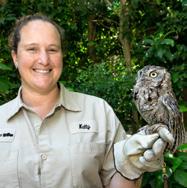
in 1998,” explains Athena Wilson, a senior keeper at the Zoo. “Being unable to fly, a small bird of prey becomes prey for larger birds and other animals.” At first, Ojos was wary of hopping onto a keeper’s glove, and an audience made her nervous. “Once we formed a bond and she realized she could choose to participate and receive tasty crickets, she was fine,” Athena explains. “She takes part in behind-the-scenes experiences, animal presentations, our summer camp programs, and special events.”
DID YOU KNOW?
In the US, kestrels are found in a range of habitats, including urban centers. Watch for them in your neighborhood.
With Ojos, as with all our ambassadors, the the most important factor is the animal’s comfort. “We’re very sensitive to their need to feel safe. She’s a small bird of prey; she feels like she has to always watch her back,” Athena says. “If she gets uncomfortable, we take her inside.”
SOMETHING IN COMMON
THE “EYES” HAVE IT
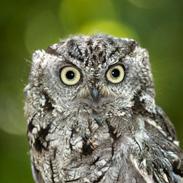
For a western screech owl like the Zoo’s Ojos, a wing injury means you’re grounded. “She came to us from Project Wildlife
Fortunately, all of these avian ambassadors were discovered by people who knew what to do when finding a wild animal in distress. “They contacted a qualified rehabilitation organization,” Janet says. “The animals’ special—and sometimes specific—needs make it vital that they get appropriate attention.” Kim couldn’t agree more. “If someone tries to keep and raise a hawk, for example, the bird can suffer. The wrong diet can give them rickets. You need to let the experts handle it.”
These birds also share an important
role in spreading the word about conservation. “When we’re presenting Tony Hawk, people get an up-close look at what can happen when standing water attracts mosquitoes, which carry and transmit West Nile virus,” Kim says. And by sharing Ojos’ story, Athena notes, they can explain how it’s possible for humans to be indirectly responsible for injuries. “When you toss even biodegradable ‘trash,’ like an apple core, out the car window, it can attract small rodents to a roadside area,” Athena says. “Then any birds hunting those rodents can get hit. Roadkill left on the side of the road can cause the same problems.”
Previous page, clockwise from top left: Tonka the golden eagle; Ojos the western screech owl; Rusty the kestrel; Ojos strikes a dignified pose; Tonka reveals her impressive wingspan; Rusty’s calm demeanor allows guests to experience this small but mighty species. This page: Tonka makes an impression on Park guests, both through her flight prowess and inspirational story.
Athena adds that meeting these charismatic creatures helps people develop better conservation habits of their own. “Someone might use pesticides or insecticides in their yards, but then birds eat those poisoned bugs,” she says. “The same can happen with the use of rodent poison. By putting up owl boxes, you can attract owls to your yard, and you’ll have your own safe, natural rodent control. It’s better for everyone.” With that type of insight, and a little effort, we can help put wildlife—winged and otherwise— back on the right path.
BIG BIRD
For the quirky kori bustard, there’s no business like “show” business.
BY ESTON ELLIS | STAFF WRITER
They are big. They can also be loud— and they will not be ignored. They are kori bustards Ardeotis kori, the heaviest flying birds in Africa.
Kori bustards are an iconic species in southern and eastern Africa, explained Michael Mace, curator of birds at the San Diego Zoo Safari Park. “This is a species people will often see if they are on safari there.” However, if you live in the United States, you are less likely to see one. The Safari Park has had kori bustards since the 1970s, but few other zoos do.
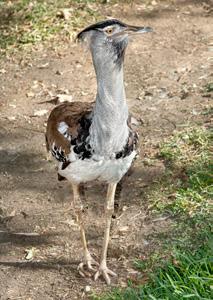
Weighing as much as 42 pounds, standing nearly 5 feet tall, and boasting a wingspan of up to 9 feet, kori bustards are easy to spot. Males are about 30 percent larger than females, but both have a brown back and tail, with white and black spots near the front underside of their wings. Kori bustards are omnivores, feeding on insects, seeds, berries, snakes, mice, and lizards—and they sometimes snack on acacia tree gum.
WALK ON
In their native habitat, kori bustards live in grasslands and wooded savanna. They have long legs and surprisingly small feet, with three forward-facing toes that are built for walking and running. Their elongated legs carry them effortlessly through tall grass—and they prefer to walk rather than fly. “They are very terrestrial, spending most of their time on the ground,” said Andrew Stehly, an animal care supervisor at the Park. “Flying is used more as a means of escape.”
BY KEN BOHN | SDZG PHOTOGRAPHER
When they do choose to fly, it’s an impressive sight. “Getting into the air takes so much power,” said Jenny Tibbott, a senior keeper at the Park. Kori bustards have remarkable strength, and their long flight feathers have huge shafts to provide the lift needed to keep this big bird airborne.
YOU CAN’T LOOK AWAY
Kori bustards are eye-catching when they aren’t trying to attract a mate, but during mating season, the males put on a remarkable show. In the wild, males gather in a loosely formed group called a lek, competing with each other for the best display to attract a female. The male inflates his esophagus until it balloons to
four times its size, puffs up the feathers on his chest, raises his crest of head feathers, lifts his tail feathers to reveal the white feathers underneath, points his wings to the ground, and struts. “It looks as if he has just been turned inside out,” Michael said. The resulting display is visible to birds more than one-half mile away.
Even if you missed that display, you couldn’t ignore the male kori bustard’s mating vocalization. It’s a low, deeply resonating bass sound, called booming. “Our birds start booming in November and December,” Jenny said. “You can feel it in your whole body, down to your core—it carries quite a distance.”
LADIES’ CHOICE
Females show no obvious interest in the males’ displays, until one coyly decides to lie down near her chosen one. The male will peck gently at her head for a few minutes, followed by mating, and then the two go their separate ways.
“It’s the female’s choice, all the way,” Jenny said. “When it comes to mating, the males have to wait for her to decide.” Kori bustards do not form pair bonds, and a male that has just mated may try to interest another female with his elaborate display.
Males do not participate in chick rearing. For nesting, the female makes a shallow scrape in the ground, and lays one to two large, blotchy, tan-to-olivecolored eggs. They hatch after about four weeks, and the precocial chicks fledge in about five weeks.
PHOTOS
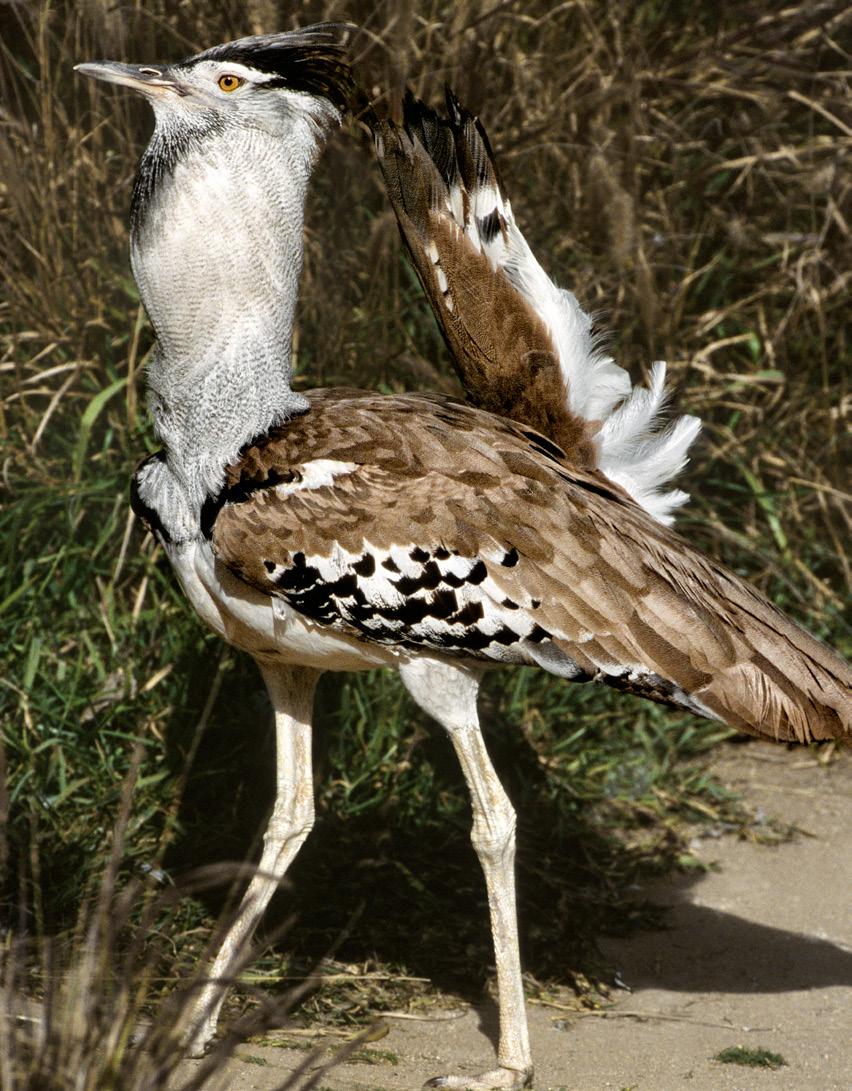
The strutting male kori bustard puts on an impressive mating display. But even when they aren’t trying to attract a mate, big kori bustards are eye-catching birds.
WHEN 585 MET 588
At the Safari Park, kori bustards share an exhibit in Okavango Outpost with secretary birds and storks. There are currently two adult bustards in the exhibit: female 588 and male 585. “He’s been in our collection for 20 years, but in a subordinate role, until now,” Jenny explained.
Kori bustards have been illegally hunted for their feathers, used to make fly-fishing lures for salmon anglers. However, a conservation program that provides anglers with molted feathers from birds at zoos has helped decrease poaching in the wild. DID YOU KNOW?
In the past, when the males were in lek mode, 585’s role was that of a “wingman”—his display only served to get the other males excited enough to compete with displays. When it came to romance, 585 always came on too strong and was quickly rejected. “If the female is submitting, the male responds with gentle head pecks; but his were a little too hard,” Jenny said.
However, when 585 met 588, a 13-year-old female that arrived at the Park in 2014, it seemed to be a match made in heaven—or at least in the kori bustard studbook. “When we brought in this female, I thought this is really the one for him,” Jenny said. “She’s a boss: she’s the dominant animal in this whole enclosure. She’ll challenge anyone, from one of the big storks to a secretary bird.”
There was instant kori chemistry! “She’s more confident, more tolerant, and can handle his assertiveness,” Jenny said. After they met and mated, 588 laid her first fertile eggs ever, and these were the first eggs 585 had ever sired. “He’s a wild-collected male, with a lot to add to kori bustard genetics, so we are super excited,” Jenny said.
KORI SURVIVAL
It’s uncertain how many kori bustards still exist in the wild. They are listed as Near Threatened on the International Union for Conservation of Nature (IUCN) Red List. But “Wild kori bustards are continuing to decline at an alarming rate,” Michael said. One major contributor to their population decrease is collisions with high-voltage power lines. Despite their protected status, they are hunted as meat, and increased urban development has also affected their numbers. “Koris don’t do well in disturbed areas,” Jenny said. “They don’t like people, and they don’t do well with heavy equipment. They need undisturbed grasslands.”
While adult kori bustards can be prey for predators like leopards, cheetahs, hyenas, and jackals, eggs and chicks are even more vulnerable. One study estimated that 82 percent of kori bustard chicks do not survive their first year.
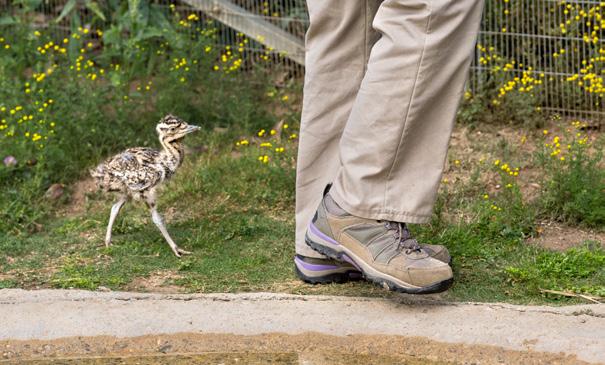
The Safari Park participates in the Association of Zoos and Aquariums’ Species Survival Plan (SSP) program for kori bustards and has hatched 15 chicks since 2002. As part of the breeding program, when a kori bustard female lays an egg in the Safari Park exhibit, it is replaced with a dummy egg, and the real egg is taken to an off-exhibit area for hatching. The hatched chicks are hand raised, taking bits of watermelon, crickets, vegetables, and pellets from tweezers. Not long after hatching, kori bustards start walking. Keepers take the chicks on walks six times a day, and the koris closely follow the keepers’ moving legs.
As the chicks grow, they are taken to the Park’s Bird Breeding Center (BBC) until they are almost full grown. There, they meet an adult mentor: a female kori bustard that teaches them what they need to know as adults.
“She plays a crucial role in raising chicks,” Jenny said. As adults, the birds are paired by the SSP with potential mates at other facilities.
Not many zoos care for kori bustards, because they require a lot of space and specialized care.
“Koris need an area free of obstructions, because they frighten easily and may collide with objects and get hurt,” Jenny said. “I wish more facilities exhibited kori bustards, so more people could get to know and appreciate these remarkable birds.”
Soon after chicks hatch from incubated eggs at the Safari Park, they go on walks with keepers— six times a day.


©
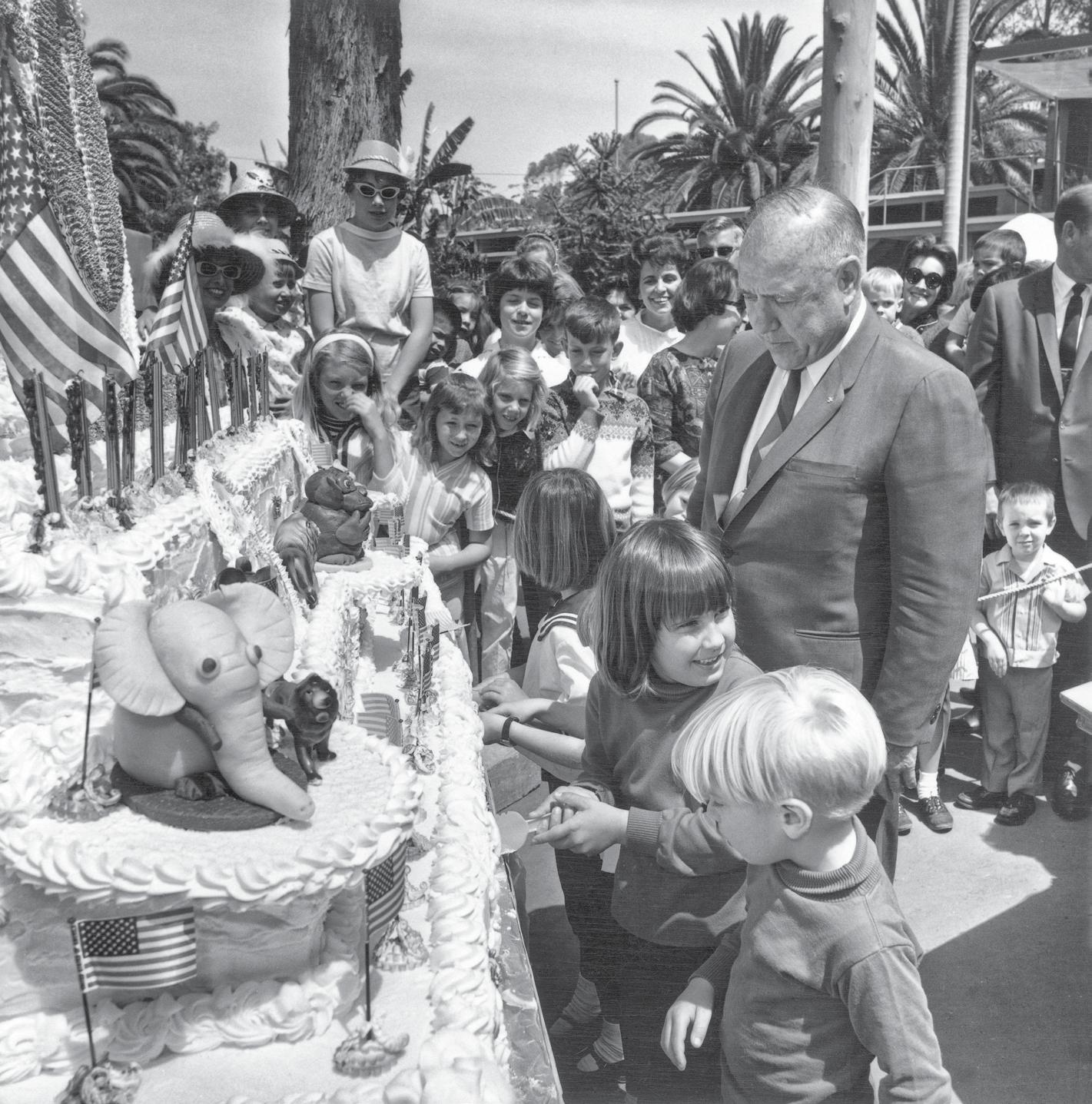
Happy Birthday, San Diego Zoo!
October 2 is the San Diego Zoo’s official birthday, the day that Dr. Harry Wegeforth and four colleagues met and founded what would become an icon of San Diego. To celebrate that momentous day during our centennial year, you are invited to a birthday party event at the Zoo’s Centennial Plaza SUNDAY, OCTOBER 2, 2016. Dr. Harry originally dedicated the Zoo to the children of San Diego, and this year we are following the tradition and dedicating San Diego Zoo Global to the children of the world. There will be fun birthday activities on CENTENNIAL PLAZA STARTING AT 9 A.M., a very special presentation in WEGEFORTH BOWL AT 10 A.M., chances to meet animal ambassadors and costumed characters, and, of course, a spectacular birthday cake and cupcakes (while they last!). Join us for a wonderful commemoration of 100 years of the San Diego Zoo!
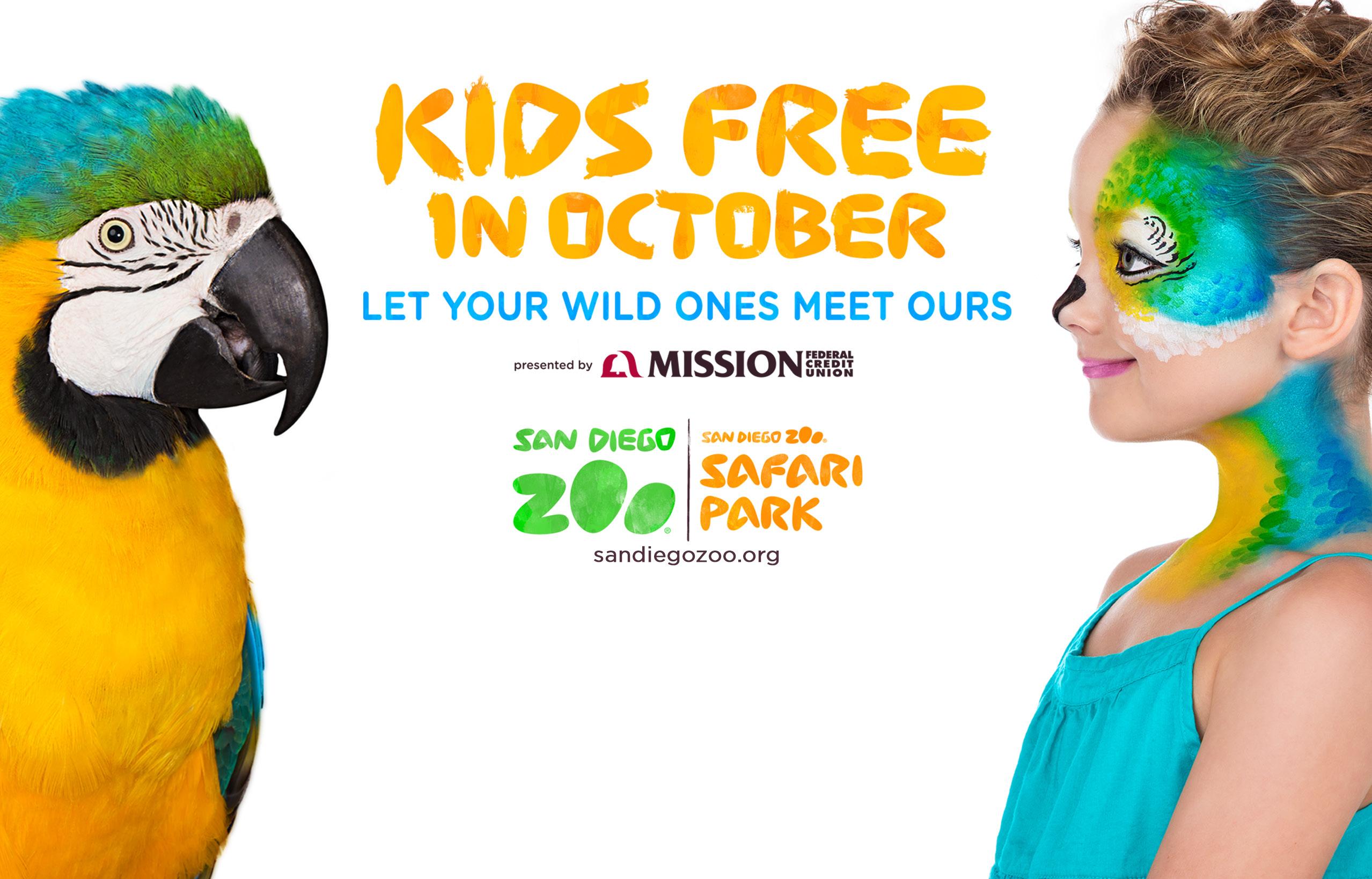
The month of October is that great time of year when kids enjoy free admission all month long at the San Diego Zoo and the San Diego Zoo Safari Park! During Kids Free presented by Mission Fed, children 11 years and younger can explore their wild side by meeting our wildlife, with no admission charge, from October 1 to 31, 2016. And on weekends, there will be even more kid-focused fun with special activities.
100 YEARS OF THE SAN
Part 8: Expansion, 1987-1996
BY KAREN E. WORLEY MANAGING EDITOR
PHOTOS BY SDZG
When giant pandas Basi and Yuan Yuan came to the San Diego Zoo in 1987 on a six-month loan from China, it was a monumental event for the Zoo—and for San Diego. Two exhibit spaces were constructed side by side for them, in the area that is now at the base of the Zoo’s Sun Bear Forest. It was standing room only as visitors flocked to see the black-and-white bears, and Basi and Yuan Yuan’s visit was extended because they were so popular. By the time they returned to China, they had won the hearts of more than two million visitors.
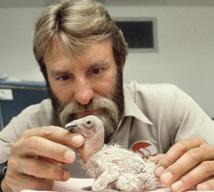
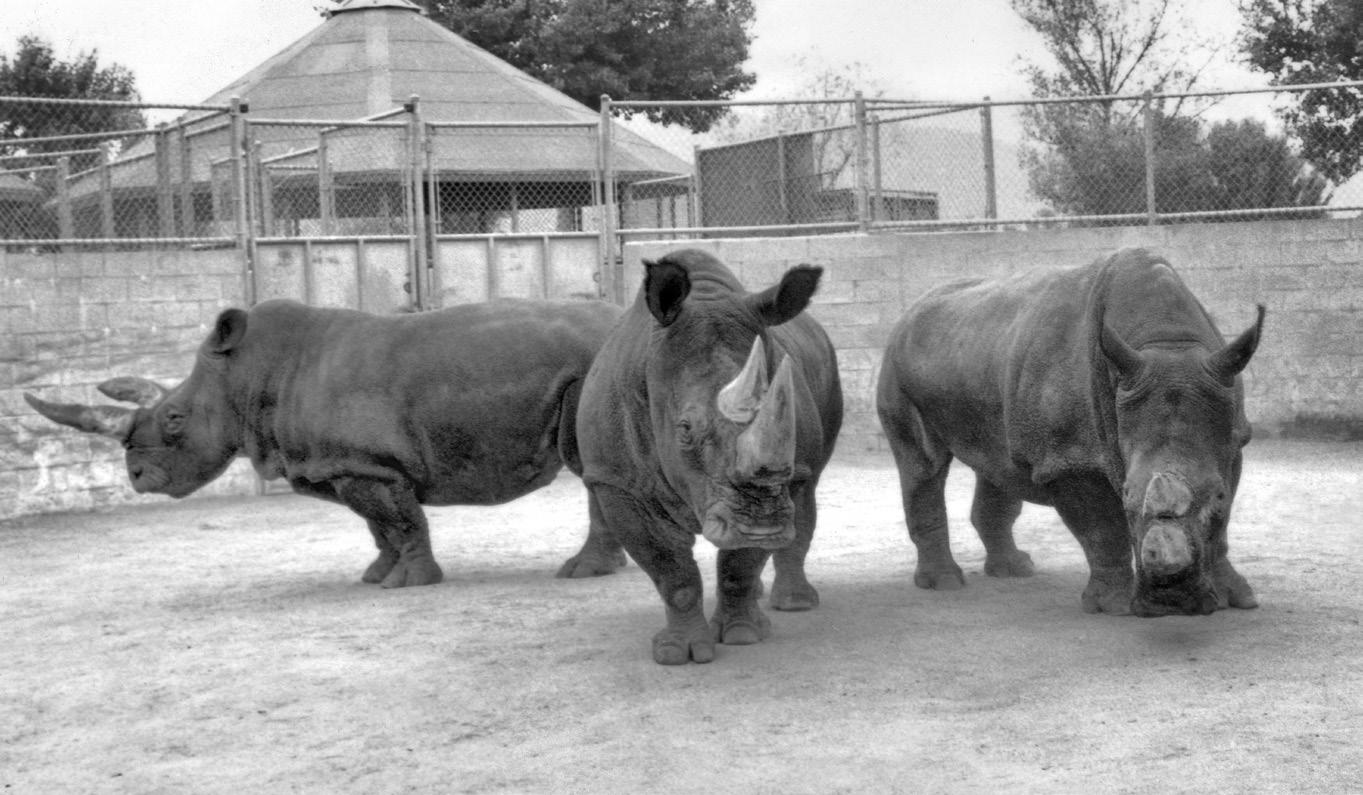
A major milestone was reached at the Wild Animal Park (now Safari Park) in 1988: a California condor chick named Molloko hatched at the Park’s off-exhibit “Condorminium” on April 29. He was the first California condor conceived, hatched, and raised in a zoo setting, an important step forward for the California Condor Recovery Program. Then in 1989, the Park welcomed three members of another endangered species that would also come to symbolize the urgent need for conservation: northern white rhinos Saut, Nadi, and Nola.
During the late 1980s and 1990s, the
Zoo began a transformation in exhibit planning and design. The new exhibit complexes were termed “bioclimatic zones”: they represented an area of the world and types of habitat, featuring animal and plant species native to that area. Moving away from organizing the zoo by showing one type of animal, like cats or bears, in the same area, the new exhibits sought to depict the diversity of life that makes up a particular habitat, and to provide visitors with a better understanding of the connections between the varied species that live there.
The first bioclimatic zone exhibit to open at the Zoo was the Kopje, in 1986. It simulated the boulder-strewn areas found on the African plains, where a variety of plants, smaller mammals, and birds flourish. Tiger River then opened in 1988, representing a tropical Asian forest where tigers, fishing cats, pythons, and storks lived. Tiger River also expanded the concept of an immersive habitat experience, with innovative and interactive interpretation elements. Environmental details were a focus, with walls along walkways that looked like eroded banks with embedded tree roots, and misters that provided a humid, tropical experience.
Sun Bear Forest opened in 1989, following the design concepts from Tiger River to create an Asian forest for sun bears, binturongs, and a troop of lion-tailed macaques. On opening day, the energetic sun bears had a field day, showing off just how agile, clever, and strong they were. They made short work of stripping the bark off the carefully chosen tree branches and uprooting and moving the strategically placed logs. They also dug up the square patches of sod that had not taken root yet—much to the dismay of the exhibit and horticulture staff!
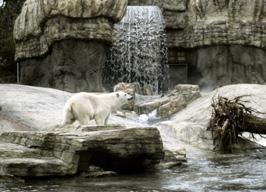
Zoo news (from top): The panda visit in 1987 was a sensation; keeper Don Sterner checks on condor chick Molloko; Polar Bear Plunge created a new home for the bears; Nola, Saut, and Nadi arrived in 1989.
DIEGO ZOO
Gorilla Tropics opened in 1991, and it included a stream and waterfall, and a lush variety of African plants for shade, browsing, and hiding. Alvila, Memba, Jessica, Kimba Kumba, Milt, and Penny were the first to live in the new gorilla habitat. Apparently it suited them, because Jessica gave birth to a baby boy, Mike, nine months after the exhibit opened. As part of the San Diego Zoo’s 80th birthday celebration in 1996, another bioclimatic habitat was added: Polar Bear Plunge, which represented a summer tundra environment for the Zoo’s polar bears, as well as exhibits for Arctic foxes, reindeer, and Arctic ducks. The polar bear habitat included a waterfall, rocky and sandy areas, fallen logs, and a large, deep pool for swimming, chilled to 55 degrees Fahrenheit.
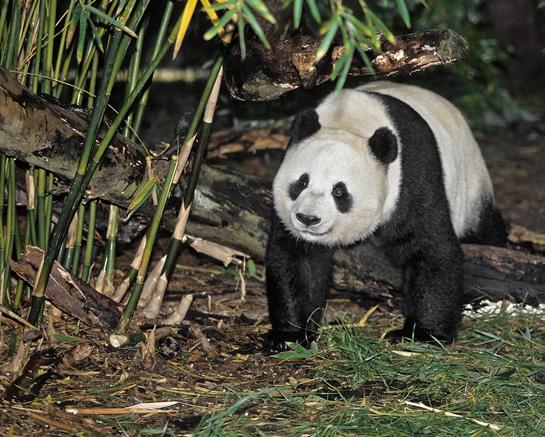
visitors couldn’t wait to welcome them. The Giant Panda Research Station was constructed to provide flexibility and comfort in managing the bears and workspace for the researchers and animal care staff. The Horticulture Department developed a browse program for the bamboo the pandas would need, and playful and energetic Bai Yun and stately and gentle Shi Shi settled right into their new home.
BACK IN TIME
Discover much more about the San Diego Zoo’s 100 years of history on our centennial website: sandiegozoo100.org
Work began on several conservation research projects to study the physiology, behavior, and reproduction of giant pandas.
With fewer than 1,600 pandas left in the wild at the time, the species was critically endangered. But panda reproductive biology was not well understood, and scientists needed to know more to successfully increase the population.
Shi would not breed naturally, was artificial insemination possible with giant pandas? It would take a good deal of time, energy, and determination to find the answer.
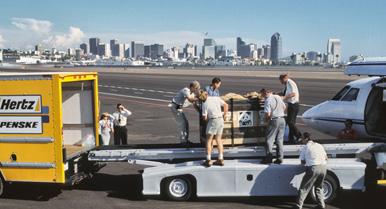
“Pandamonium”: From the moment Bai Yun (above) and Shi Shi arrived at the San Diego airport (left) in 1996, panda fans worldwide were ecstatic about the Zoo’s new residents.
It had now been 10 years since Basi and Yuan Yuan had visited the Zoo— and in 1996, giant pandas were back! After extensive negotiations and planning, a 12-year breeding and research loan agreement was signed with the Chinese government to bring two giant pandas to the San Diego Zoo: Bai Yun and Shi Shi. Their arrival in September 1996 made news around the world, and
As it turned out, however, Shi Shi would not breed. Bai Yun did her best to get his attention, but to no avail. Shi Shi had been rescued in the wild when he was found injured and debilitated from fighting with other bears. It was determined that he was quite a bit older than originally thought, and apparently reproducing was not on his agenda. This was a conundrum that our re-
In addition to success with California condors, new bioclimatic zone exhibits, and the arrival of giant pandas, the Zoological Society of San Diego was expanding in another way during the 1990s: through technology. By now the advent of the personal computer was making sweeping changes in communication worldwide, and the Zoo delved into creating its first website. This provided opportunities to reach a much broader audience with animal information and conservation messages—to communicate nationally and internationally with those who might never have been to San Diego, but might be interested in supporting the Zoological Society of San Diego’s growing worldwide conservation efforts.
Coming in November: the conclusion of 100 Years of the San Diego Zoo—Part 9: Vision (1997 to 2006) and Part 10: Ending Extinction (2007 to 2016).
CONRAD PREBYS
A TRIBUTE TO A BIGHEARTED FRIEND
BY MARK STUART | CHIEF DEVELOPMENT OFFICER
The San Diego Zoo lost a dear friend with the passing of Conrad Prebys on July 24, 2016. As perhaps our most bighearted donor, he touched every part of the Zoo. Conrad’s generosity made possible the engaging renovations to Polar Bear Plunge, created the world’s greatest elephant care center, and allowed us to build and endow the largest koala exhibit outside of Australia. He was also the first donor to invest in Africa Rocks, our biggest exhibit project ever.
Conrad loved coming to the Zoo. It was a home for him a long time ago when “life wasn’t at its best,” in his words. Conrad said he would watch the polar bears frolic in their exhibit and laugh, and laugh, and laugh. His first major Zoo investment was a large polar bear plush animal that he had to convince the store clerk to sell to him. Later, that polar bear would accompany him on trips around town, seated in his car, especially during the holidays when he traveled throughout the area to deliver Christmas bonus checks to his apartment managers.
Conrad loved a good time. His first gift to the Zoo was to secure the best table possible for the Rendezvous In The Zoo (R•I•T•Z) gala in 2007. Debbie Turner and Conrad became R•I•T•Z gala mainstays. Debbie and Clarice Perkins chaired one of our most memorable R•I•T•Z galas— with its own improvised moon!— that provided significantly for the Safari Park’s future tiger exhibit.
One of my favorite memories with Conrad was in October
2012 when he hosted “Breakfast at Conrad’s” at the Conrad Prebys Elephant Care Center. Conrad invited a group of friends to breakfast at the Zoo. We started by unveiling a neon sign that read “Conrad’s” and featured three fluorescent pachyderms. Before the breakfast, Conrad asked me what he should talk about. I responded, “How about telling people why you love the Zoo?” He did so brilliantly. He ended his remarks by exclaiming the Zoo was the “happiest 100 acres for people and animals on Earth.” Of course, he was right. At the end of that breakfast, Ernest Rady turned to Douglas Myers, the Zoo’s president/CEO, and said, “If Conrad Prebys loves you this much, I should get to know you better.”
From Conrad’s introduction, Ernest Rady joined the Zoo family, contributing one of our largest gifts ever. In short, Conrad Prebys left the San Diego Zoo a much more remarkable place, and an even more world-famous institution, than he found it. He will be profoundly missed but proudly—and lovingly— remembered.
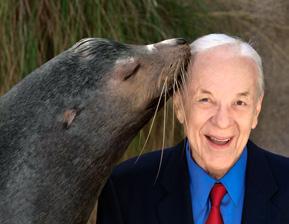
Who wouldn’t love a kiss from Cabo the sea lion?
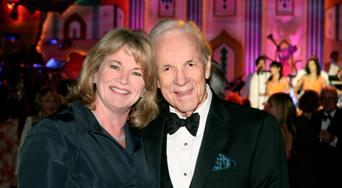
Debbie and Conrad enjoyed R•I•T•Z galas and the opportunity to raise funds for their favorite animals.
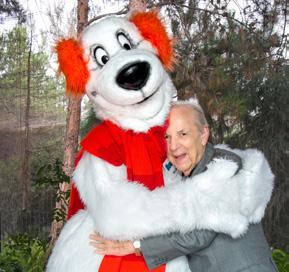
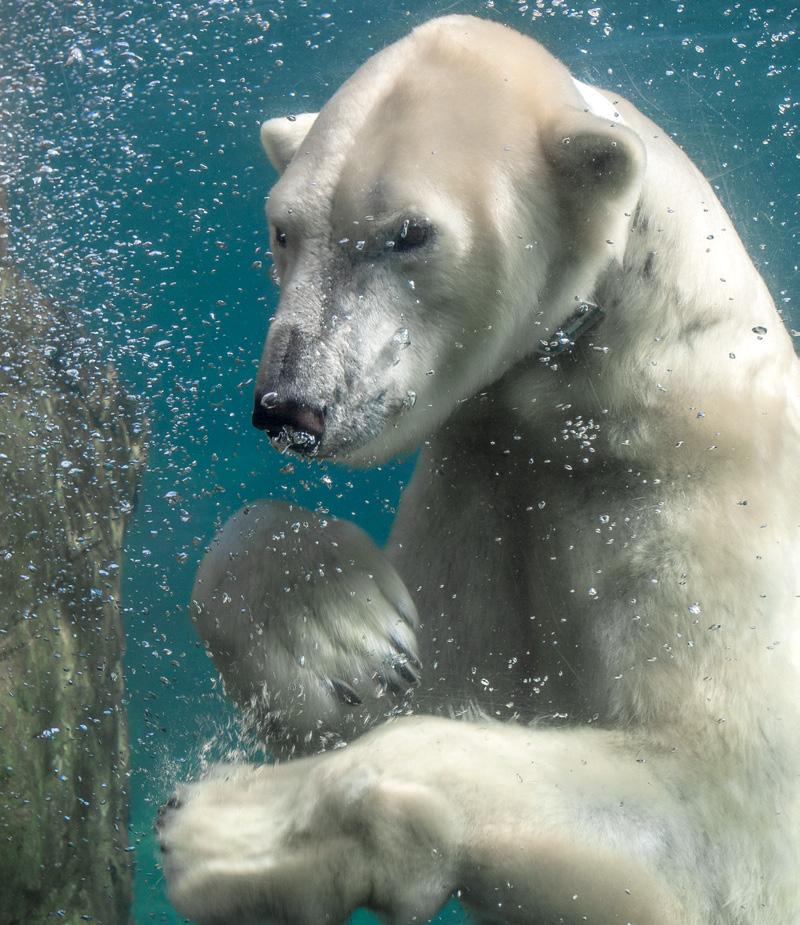
Conrad welcomed hugs from Churchill the polar bear.
Kagu Curiosity
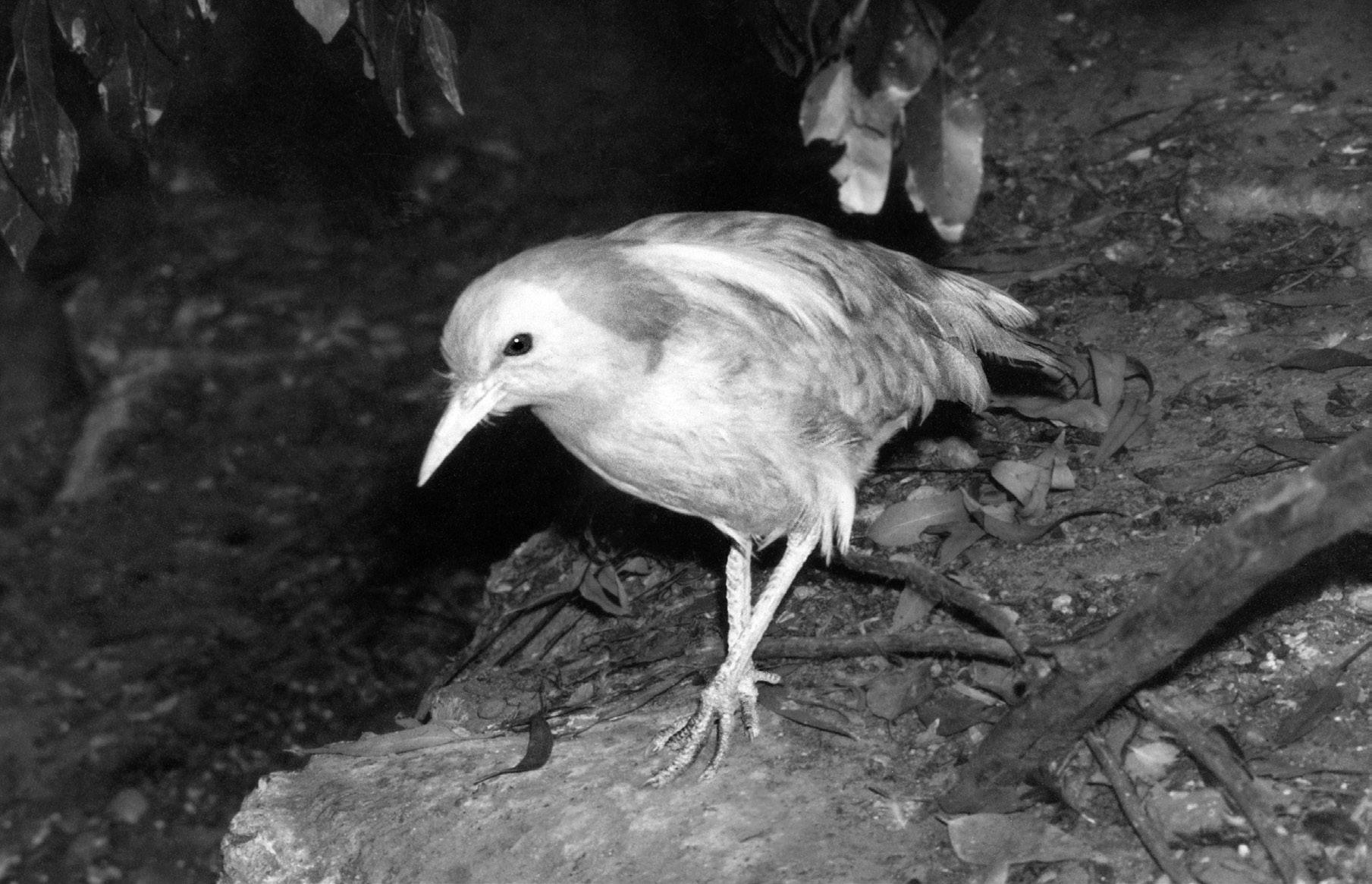
In 1942, a rare kagu came to the San Diego Zoo via the U.S. Navy—a gift from New Caledonia. A Navy chief and two WAVES personally escorted the bird to its new home.
TODAY AT THE ZOO
Still unusual in zoos, the kagu continues to be part of the San Diego Zoo. You can see a pair of these endangered birds in the aviary next to the Bus Tour loading zone. Look for a flash of their beautiful blue-gray color!
A KAGU ARRIVES —by
Belle Benchley
We are sure that many of our readers will recall a news item that was broadcast rather recently to the effect that the government of New Caledonia had presented to our famous Admiral William H. Halsey in command of the Fleet in the South Pacific, a bird called a Kagu. Perhaps this meant little to the average person, for, if anyone knew it was a bird from the news reports, it probably was to them “just another bird” and its real significance remained vague. But to anyone connected with the bird department or the administration of a zoological garden the story was most significant. Such a person would immediately realize that as a mark of their appreciation and esteem the officials of New Caledonia were presenting Admiral Halsey one of the rarest gifts and the most precious in their estimation that they could bestow upon anyone....
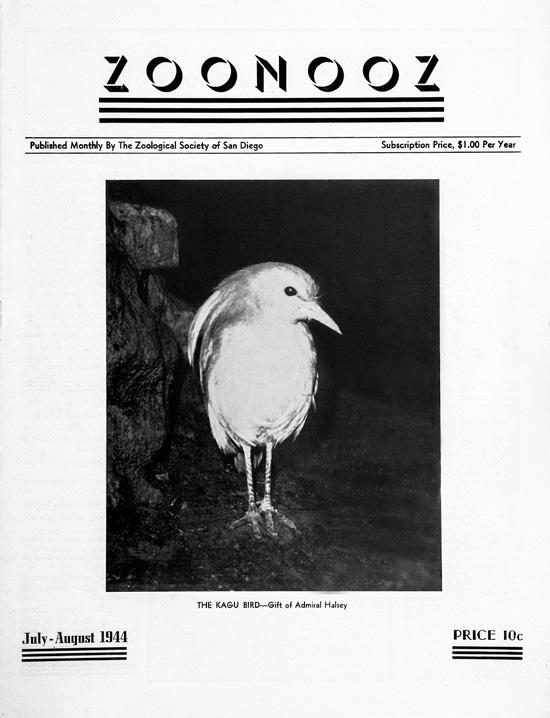
So when I received a letter from my friend Lt. John Burke with copies of notes from Admiral Carney saying that he had forwarded the Kagu to Burke to be relayed to us here at the zoo in San Diego as soon as possible, our first feeling was that of jubilation and very sincere and deep gratitude to Admiral Halsey.
POPCORN REFILL
Receive a free popcorn refill when a souvenir popcorn bucket is purchased at the San Diego Zoo (excludes kettle corn).
Valid September 1–30, 2016, at the Zoo.
Member must provide membership card at time of purchase to receive discount. Supporting ID may be required. Not valid with any other offer, promotion, or discount. Coupon not required.
Discount available at any Safari Park restaurant location. Members also receive free refills of soft drinks or iced tea all day on date of purchase. Not valid for alcoholic beverages.
Valid October 1–31, 2016, at the Safari Park.
Member must provide membership card at time of purchase to receive discount. Supporting ID may be required. Not valid with any other offer, promotion, or discount. Coupon not required.
Looking for a gift that goes beyond the ordinary? Give a gift of hope: adopt an animal online! Adoptions support our wildlife conservation efforts here and around the globe. Visit our website at sandiegozoo.org/adopt for a full list of our animal adoptions.
Valid September 1–December 31, 2016.
Enter promotion code ASZW0916 at online checkout. No limit. Not valid with any other offer, promotion, or discount; not valid at on-grounds adoption booths.
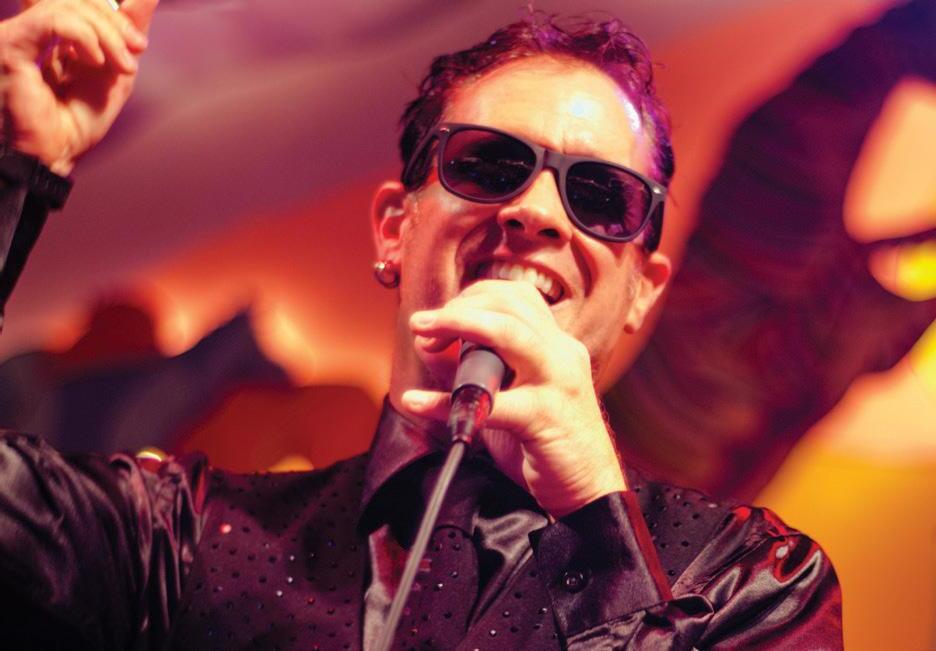
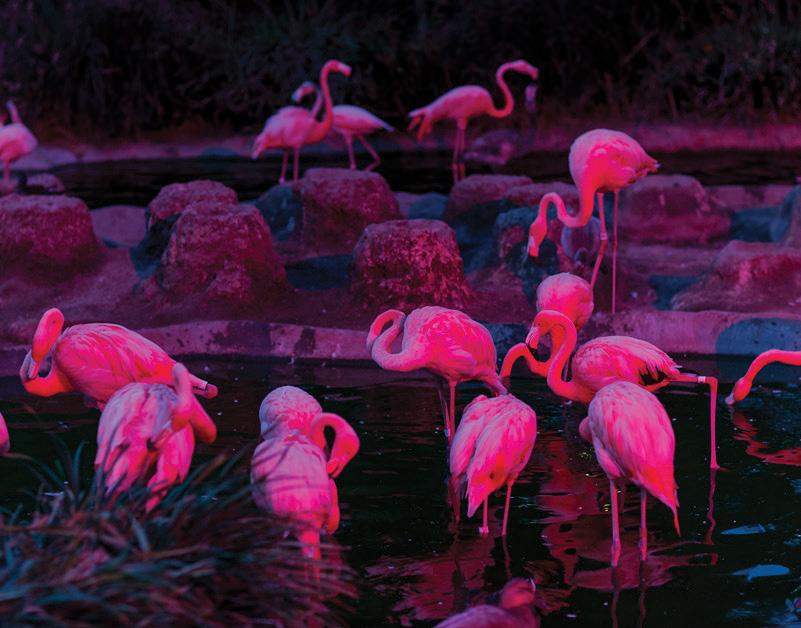
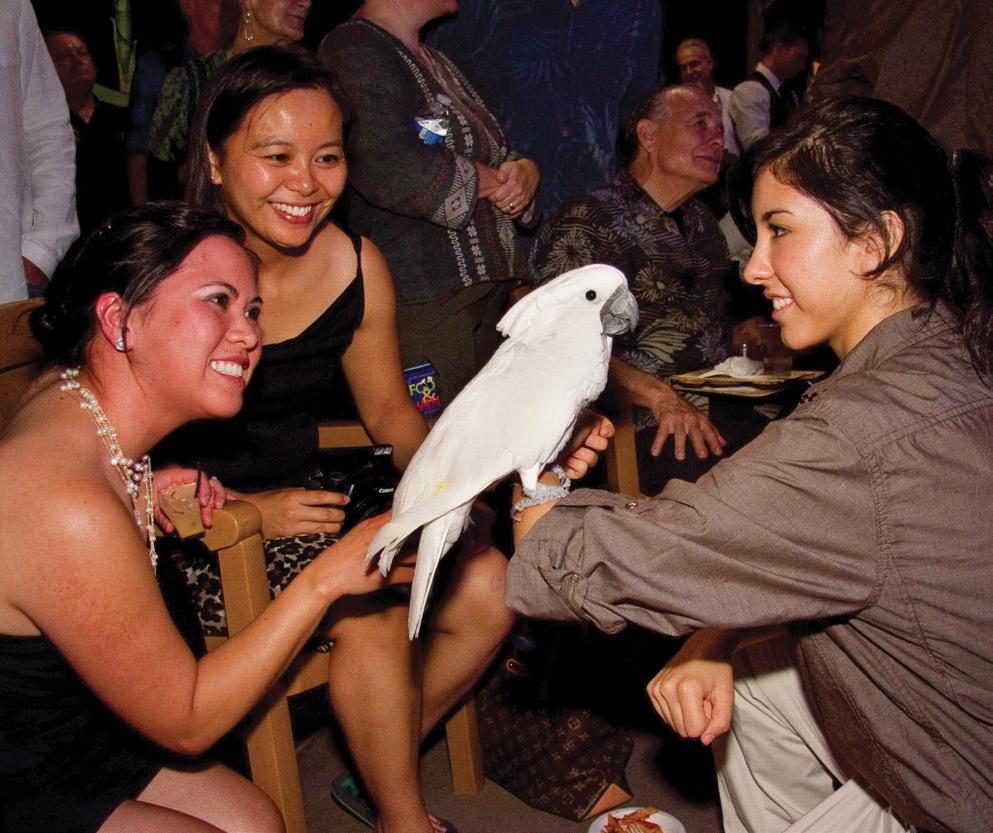
Party from 6:30 to 11 p.m. with live music, animal presentations, and tastings at the San Diego Zoo!
Now offering two ticket levels: VIP 6:30-11 p.m. with access to multiple lounges. General Admission 7:30-11 p.m.
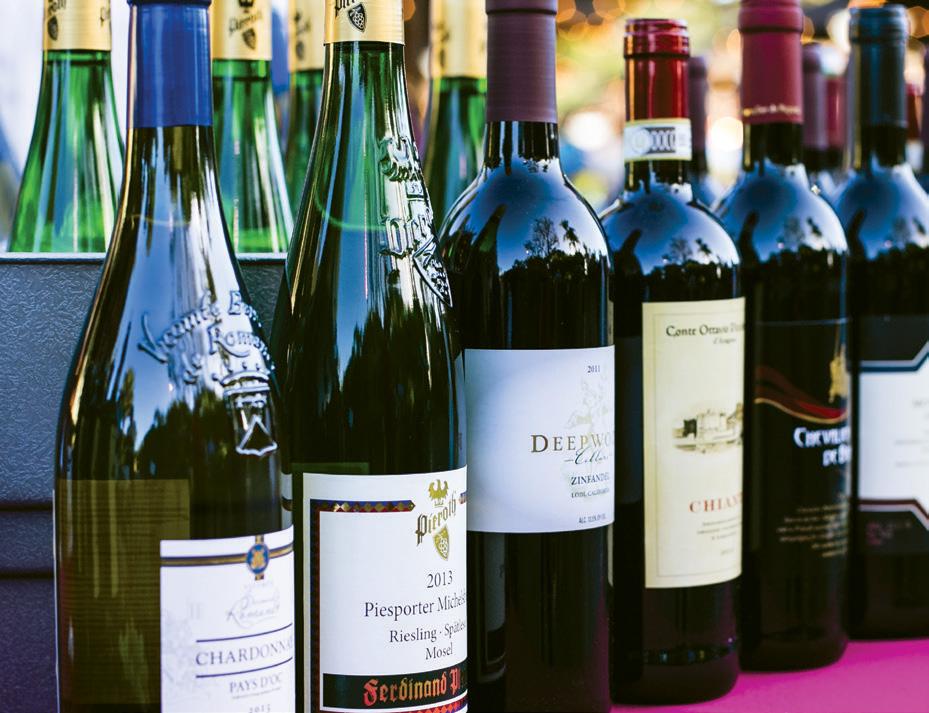
Savor delicious bites from popular restaurants like Jake’s Del Mar & Seasons 52. Sip fantastic wines from Ferrari-Carano, LMA Wines, and more. Try brews from favorite local spots like Stone Brewing & Coronado Brewing Company. And come nose to nose with exotic animals!