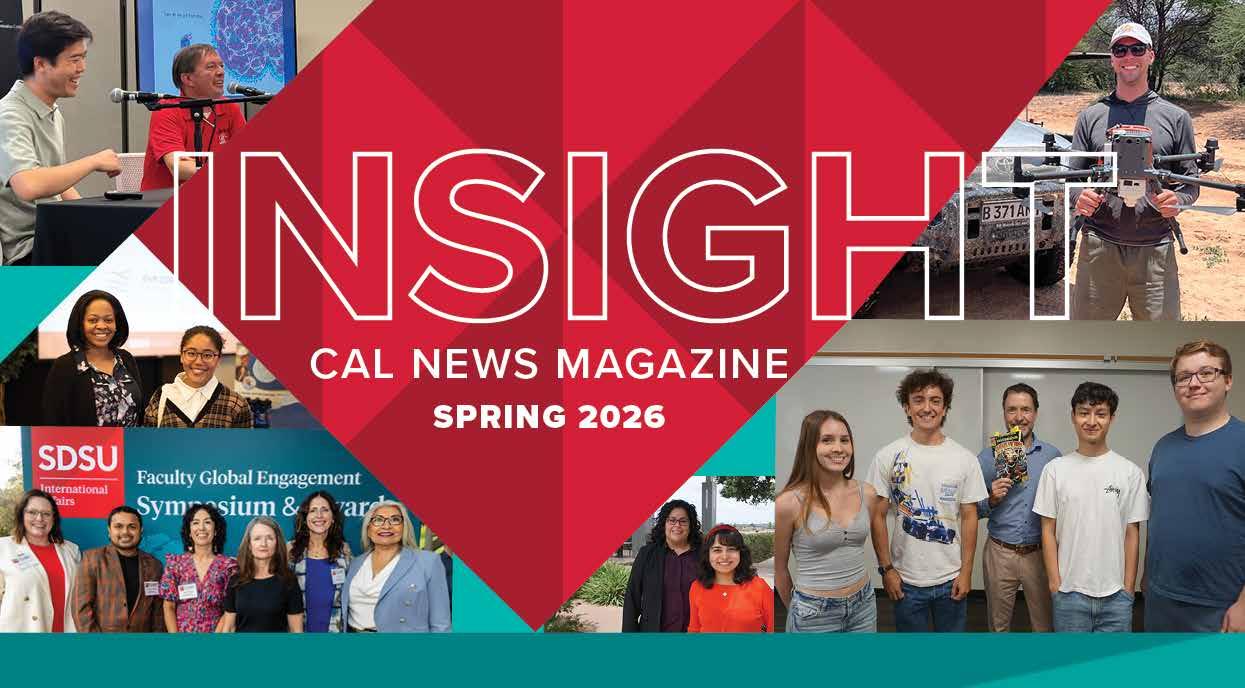

Throughout 2025-26, CAL continued to engage directly with some of today’s greatest challenges. Together, CAL enables “community impact” precisely because we build relationships and speak to the full range of what human beings need to flourish.
Along with the work detailed in the stories below, this commitment lies at the heart of our new R-Next initiative, which is designed to support collaborative faculty teams pursuing socially impactful research. Through this initiative, three faculty received funding to lead research that collectively encompasses at least six SDSU colleges and a host of local, national, and international partners, all of which you’ll hear more about in future CAL communications:
● Africana Research & Cultural Renaissance Center | Taharka Adé leads the new research home for Africana cultural restoration, cultural rectification, and cultural propert.
● Documenting Data Center Development | Dustin Edwards will create a repository for data and research associated with ongoing AI data centers across the U.S.
● Global Border Nexus Initiative | Haley Ciborowski leads this interdisciplinary project designed to connect, amplify, and expand border-related research taking place across San Diego State University.
CAL faculty and students are also leading our campus in critically examining the impact of new technologies in learning and society. Along with our new B.S. in Artificial Intelligence and Human Responsibility (which is SDSU’s only undergraduate AI degree), CAL through its HŪMTECH series hosted lectures and workshops on topics including the tech workforce, new pathways for medicine, AI data centers, and the history and future of digital literature. Together these programs gave audiences a glimpse at how real-world issues in sciences and technology involve deeply human questions and demand human-centered solutions.
Our greatest strength in all this work lies in our students. On May 15, more than 1,500 undergraduate students, more than 200 master’s students, and five Ph.D.s graduated from CAL ready to put their knowledge in service to others. They join more than 70,000 CAL alumni who represent the good that those engaged in humanities and social sciences can bring to the world.
Congratulations to them all, and happy reading!
Warm Regards,

Todd Butler Dean, College of Arts and Letters



3 | Outstanding Graduating Seniors
4 | CAL politial science student Jasmin Zeis-Khalil wins SDSU Quest for the Best Award
5 | IB student selected for congressional internship in Washington, D.C.
7 | Double happiness: Mother and son earn matching sociology degrees
9 | Ted Adams, co-founder of IDW Publishing, brings comic industry experience to SDSU classroom
11 | CAL Faculty Excellence awards
12 | CAL Faculty Global Engagement awards
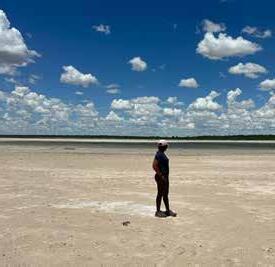
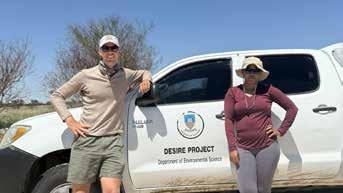
13 | SDSU geography students track how fire alters ecosystems, rainfall and climate through field research in Botswana
PHILANTHROPY
15 | SDSU alumnus Paul Yett expands opportunities for IB students ALUMNI
17 | Sociology and MALAS alumnus
CAL IN THE NEWS
19 | CAL faculty, alumni, donors, and student featured in a variety of media outlets
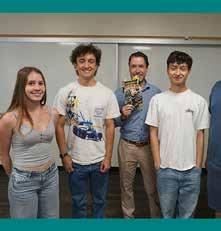
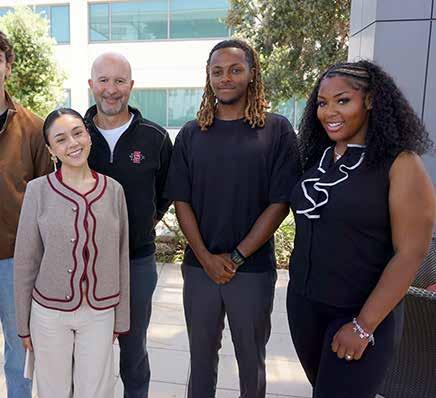


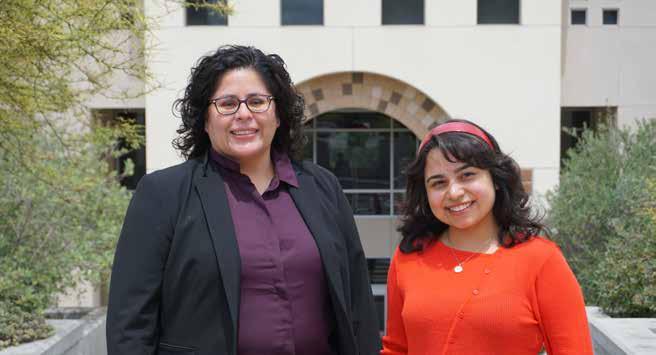
The CAL overall Outstanding Graduating Senior is Isabella Victoria Marine, a rhetoric and writing student who chose Assistant Professor Consuelo Salas as her Most Influential Faculty.
To learn about other Outstanding Graduating Seniors, visit the CAL OGS webpage or SDSU CAL Instagram @sdsucal.
“In my time at SDSU, I’ve repeatedly been faced with the passion that makes up the RWS program. I’ve had the opportunity to learn from so many dedicated and intelligent professors in my time as a student and a Writing Mentor for the program, which in turn has only made me even more enthusiastic about pursuing my own rhetorical work further through the master’s program. Rhetoric can be found and analyzed anywhere and in anything, but I couldn’t imagine continuing my studies anywhere but here.”
— Isabella Victoria Marine, RWS
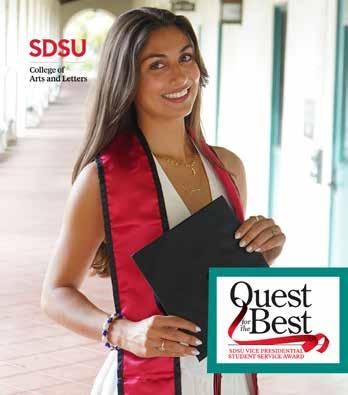
Ten honorees were recognized for exceptional academics and community service, along with impactful mentors.
Read about the Quest for the Best student awardees >>

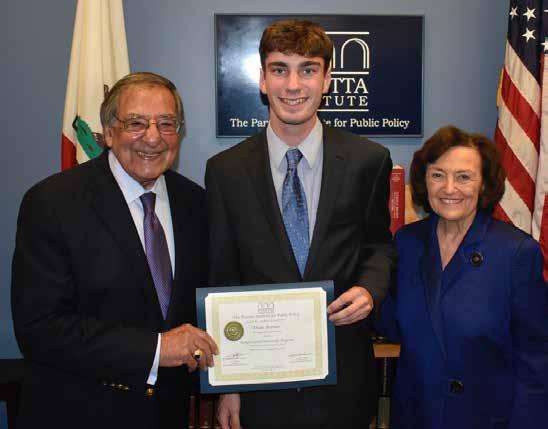
By Leslie L.J. Reilly
During his first week working in Congress, his assignment was to write a letter to a constituent — it was something he’d never done before. He received a crash course on how to do it. He had to get it done.
Dean Benner, fourth-year international business major (with emphasis in Western European history/Spanish), and Weber Honors College interdisciplinary studies minor, was the San Diego State University awardee for the 2025 Panetta Institute for Public Policy Congressional Internship where he quickly discovered he would learn by doing.
The annual program sends to Washington, D.C. 25 students from all the CSUs, St. Mary’s College, Dominican University of California, and Santa Clara University where they work with representatives of the California delegation in a life-changing internship experience.
Benner spent nearly three months working for Congressman Jim Costa, of the 21st Congressional District who represents the San Joaquin Valley in the United States House of Representatives.
Benner’s internship work involved hosting tours, pulling press clippings, sorting mail, attending briefings and giving summaries of bills coming up for vote. “It’s balancing all that, and while being in session — so everything’s moving very fast,” Benner said.
Here he shares the highlights of his internship journey.
What was your impetus to apply for this internship?
I was always interested in working in public policy, especially in foreign affairs, hence my international business focus.
The experience of going to CSU Monterey Bay at the start, and to meet all these public policy experts and learn so much from them, and then to get to live in Washington, D.C. for three months — to completely be immersed in the culture of living in Washington, D.C. was great. I found out what it’s like to be a cog of the machine that is Capitol Hill. I really wanted to see what’s behind the curtain.
What are key takeaways from your time in D.C.?
I think what I took away is that people are more willing to work across the aisle than what’s shown in the media. I think everyone on Capitol Hill really is working for the same team at the end of the day.
One of my concerns going in was the political temperature, but I think everyone is trying their best, at least in the House of Representatives, to really represent their constituency, despite which side of the political spectrum you’re on, and I think that’s what connects everyone.
Did any experience stick with you from your time on Capitol Hill?
I went to an event hosted by the Progressive Policy Institute, during a government shutdown and I attended a briefing on the RussianUkrainian war, where I was able to meet the ambassador of Estonia to the United States, one-on-one, and have a little chat with him. I thought that was very interesting.
My goals are to hopefully end up working in foreign affairs — public policy adjacent. And, then maybe, hopefully, going back to D.C. in the future, whether that’s working in Foreign Affairs, like the Department of State, or a different agency. I keep chasing public policy wherever I may be able to fit in.
What’s great about my internship is now I have a portfolio that I can show future employers. I have multiple letters I’ve written to constituents and multiple summaries of briefings.
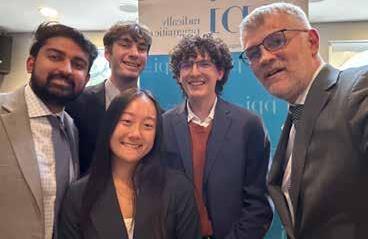
(L to R): Inderpal Sivia, Dean Benner, Clayton Manassero, Estonian Ambassador Kristjan Prikk. (Front row): Rylee Jue gather at the Progressive Policy Institute during a government shutdown in 2025.
Favorite senators, or somebody that you really wanted to meet while interning?
I never expected to meet any representatives other than mine, because it’s really hard to get face-to-face with them. But I’m really glad I did get to see Bernie Sanders in person! One day I was going on a random errand in the Capitol building, maybe dropping off some mail and I saw Bernie Sanders walk by. Growing up, I always saw him on TV, when he was running for president back in 2016. Almost 10 years later, seeing him working on the same campus — it was surreal.
Why would you recommend the international business program at SDSU?
I think international business is a good background for working in Congress, because it is an interdisciplinary degree. In international business, you have marketing classes, finance, European history, Spanish — all these different subjects that you’ll encounter in Congress.
One day you’ll be working on a bill on foreign affairs, and then the next day you’re doing housing policy, and then the next is healthcare, and then the next is just jumping from subject to subject all the time, so it’s very important to be multifaceted — to be able to understand a little bit about everything and bring it all together comprehensively.
I think it is very valuable to have knowledge that is as broad as possible. You don’t need to be an expert on one subject, but it’s very important to know a little bit about everything — which is what international business and interdisciplinary studies in the Honors College helped me prepare for. n
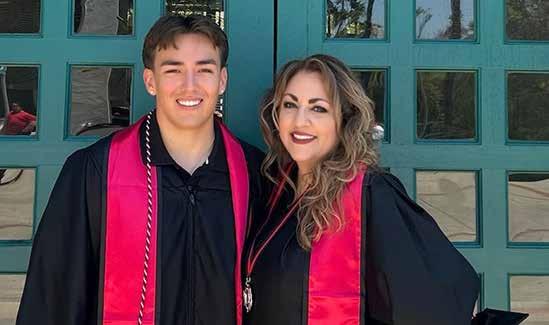

Second and third generation SDSU grads excelled in their studies and supported one another to foster growth and academic achievement.
On Mother’s Day 2026, this mother and son posed on the steps of Hepner Hall for graduation photos — in matching academic regalia. Carina Hernandez-Carrillo and Matthew Carrillo both graduated from San Diego State University College of Arts and Letters with degrees in sociology on May 15.
Hernandez-Carrillo began her SDSU journey some 24 years ago, but was sidetracked by her pregnancy with Carrillo. She had to postpone her academic aspirations due to being put on bed rest — this was before there were online options to complete a degree. As time went on, family life, work life, and single motherhood all sidelined her education goals — until her son
transferred to SDSU. “I kept thinking, I’ve gotta get there. I felt a sense of urgency to get there,” she said.
In 2024, Carrillo transferred from Southwestern College to SDSU where his mom was already on her path in women’s studies. His mom extended her stay to add a sociology major and two minors (one in Chicana and Chicano studies and one in social work) in order to continue with her son.
⊲ WATCH THE NBC7 NEWS FEATURE ABOUT CARINA & MATTHEW
At Viejas Arena, together their degrees were conferred where Hernandez-Carrillo was honored as the Outstanding Graduating Senior in women’s studies. Instead of sitting next to her son during commencement, she was seated onstage with her Most Influential Faculty Irene Lara, associate professor of women’s,
gender, and sexuality studies.
After the ceremony, they celebrated their academic achievements with their extended family of more than 34. “We have three generations of SDSU graduates — my father, my sister, my brother, and three nieces and nephews in our immediate family.”
Carrillo’s grandfather and Hernandez-Carrillo’s father, Nicholas Hernandez, a labor leader and founder, with wife Connie, of the Ronald McDonald House Charities, graduated from SDSU with a bachelor’s degree in history in 1981.
His encouragement to seek continued learning is a beacon for the family. “Education is the great equalizer,” was the message Hernandez imparted on his children and grandchildren.
For the past two years Hernandez-Carrillo and Carrillo have enjoyed the ability to talk about their sociology coursework across the dinner table. Both have been “each other’s biggest fans,” according to Hernandez-Carrillo. Because of their busy schedules, though, they only had three classes together during their time at SDSU — which could have been awkward, yet the close connection between mother and son helped them overcome any uncomfortable moments. “We’re super close — it’s been the two of us, we’re a pair, and as Matthew gets older, the dynamic between us evolves,” Hernandez-Carrillo said.
bridge communication gaps with him. “It helped our relationship grow, because I had a different understanding of this generation, and I’m so thankful for that, and grateful for the acceptance of my peers,” Hernandez-Carrillo said. She didn’t feel like the “old lady” in class. “I’d come home and I’d say, ‘Matt, they’re so nice to me, they’re letting me be in their group’ And he’d say, ‘It’s because you’re a mom.’” Hernandez-Carrillo jokingly said, “I thought it was because I was cool.”
Class discussions at home helped further their knowledge of the material, and created a “symbiotic learning environment.”
“It’s been an amazing experience,” Hernandez-Carrillo said. “And I love seeing him evolve into, not just my son, but my peer in school, and to watch us both grow in our knowledge and to do it together is just amazing. It’s been super helpful, because I found that I held myself to a higher standard, because I felt like I needed to lead and set the best example I could.”
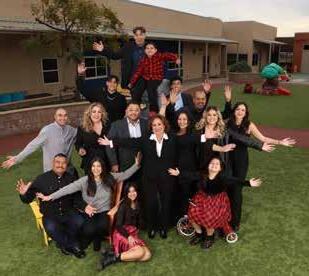
Hernandez-Carrillo said that when Carrillo was a child he told her that he wanted to go to school where his Tata went to college, so when he was accepted to UCSD, UCLA, UC Berkeley, UC Riverside and UC Irvine, he already knew the deal was sealed — he would wear red and black to become an Aztec for Life.
It was helpful to have her son’s guidance in navigating the generational divide in regard to technology, she said. Being in class with students who were Carrillo’s age helped her
Now both mother and son can inspire the next generation to lead by example and shine a light on social justice issues. And, they might even head back to SDSU to earn their master’s degrees — however this time they will take separate paths of study — one in sociology and the other in women’s, gender, and sexuality studies. n

of
Ted Adams understands comics. He’s been a voracious reader of books since he was a child. His introduction to comics took place in a barbershop in Grants Pass, Oregon, where the eight-year-old Adams picked up a copy of “Spider-Man” — and the rest is history. His lifelong love of the genre was piqued.
Adams is the spring 2026 Visiting Comics Professional-in-Residence for the Center
for Comics Studies and teaches History of Comics (HIST157) in the College of Arts and Letters.
He is co-founder and former CEO of Idea and Design Works (IDW) Publishing, known for publishing licensed comic book adaptations of films, TV shows, video games and cartoons that cover a diverse range of titles including “Transformers,” “Teenage Mutant Ninja Turtles,” “Star Trek,” and more. Founded in
1999, it is known as the fifth largest comic book publisher in the U.S.
Besides being a business founder, Adams has also written several graphic novels, including adaptations of Richard Matheson’s “The Shrinking Man” and H.G. Wells’ “The Island of Dr. Moreau” and he co-created “Diablo House” with artist Santipérez. He has been an executive producer for films and TV shows, such as “30
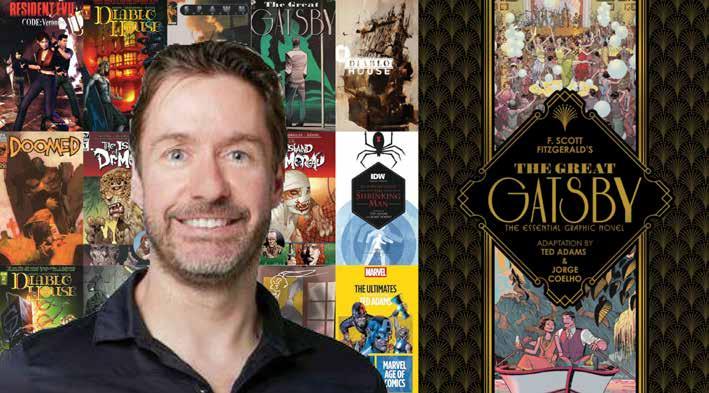
Days of Night,” “Wynonna Earp,” and “Locke & Key.”
His latest graphic novel, “The Great Gatsby: The Essential Graphic Novel,” published in 2023, is one that fills him with pride. He notes that a lifetime of learning about comics and publishing comics was poured into his adaptation of F. Scott Fitzgerald’s magnum opus. “I worked with a really phenomenal artist Jorge Coehlo from Portugal,” Adams said, “I’m really happy with the way it turned out.”
In class, Adams often brings comic book gifts for his students. Adams and his co-founder at IDW donated the IDW Founders Collection of 20,000 comics to the SDSU Library Special Collections and University Archives in 2023, so students and the general public have access to the complete catalog of comics published by IDW. The collection houses rare and limited edition comics and even a scratch-and-sniff issue of “Strawberry Shortcake.”
perspective, but from someone who has actively shaped the medium through publishing, storytelling, and industry leadership.”
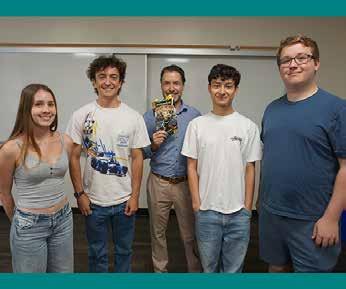
“Comics are a reflection of our history and what’s going on in the world at the time,” Adams said. “In the 1960s it was ‘Green Lantern’ and ‘Green Arrow’ that addressed civil rights and in the 1970s ‘Spider-Man’ comics addressed drug abuse.”
With a wealth of information to share, Adams hopes to introduce students to comics that they may not have known before. One student said, “You gave me a lifetime reading list.”
“What makes Ted Adams teaching this course especially significant is his expertise within the comics publishing industry,” said Pamela Jackson, SDSU comic arts librarian in Special Collections & University Archives, and co-director of the Center for Comics Studies. “Students are not just learning from an academic
Adams’ History of Comics course covers the modern history of the comic book medium, from the mid-19th century through today.
“‘Action Comics’ #1 was a pop culture phenomenon,” Adams said. “It is the first appearance of Superman and it sold millions of copies and launched the industry in 1938.” An edition of that original comic recently sold for $15 million — far surpassing its original bookstand cost in 1938 of 10¢. It is deemed the most valuable comic in existence.
He also leans into how U.S. history has informed comic publishing. He points to “Captain America” comics and the controversy surrounding a 1940 issue.
“And that’s another goal of bringing someone with Adams’ experiences to campus to teach HIST 157, the one required course of the Certificate in Comics Studies,” said Elizabeth Pollard, professor and chair of history, co-director of the Center for Comics Studies and, advisor of the four-course certificate program.
“Students get excited about the study of comics from an academic perspective and can then pursue that interest with any of SDSU’s wide range of comics courses that are taught across the curriculum,” she added.
Adams is an inspiration to students — he demonstrates that comics is really a living, evolving industry — not a static subject. n
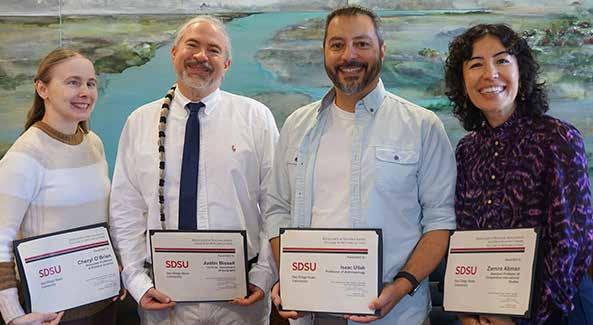
These annual awards honor outstanding contributions from faculty members in research, teaching, and service and recognize the dedication and achievements of tenure-track, tenured faculty, and lecturers who enhance CAL’s academic community through their innovative scholarship and engaging teaching methods. Read the bio of each award winner, here.
Research, Scholarship, and Creative Activity

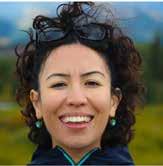
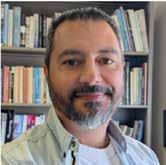

Service
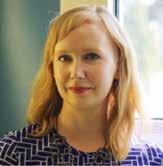
TENURED ISAAC ULLAH ANTHROPOLOGY
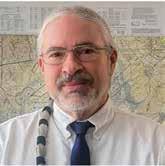
NON-TENURED JUSTIN BISSELL GEOGRAPHY

MARIE DRAZ WOMEN’S, GENDER, AND SEXUALITY STUDIES
CHERYL O’BRIEN POLITICAL SCIENCE
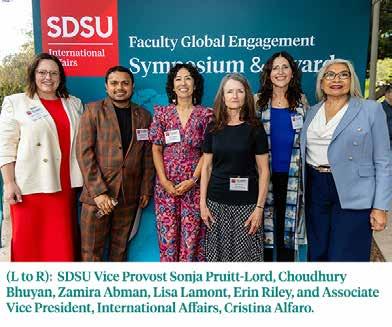
Zamira Abman, assistant professor of history and European studies and Erin Riley, anthropology professor receivedthe award that celebrates faculty and international scholars whose work advances SDSU’s global mission.

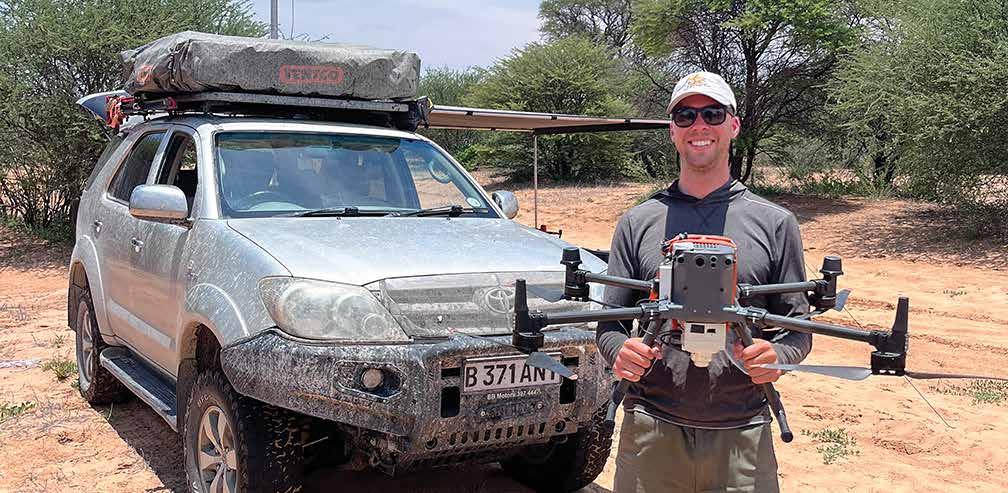
Robert Collins operates the
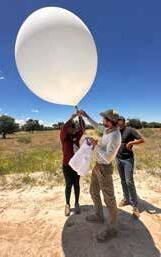
Geography master’s student Robert Collins and Ph.D. candidate Ibisia Jack give a first-person birdseye view of their field research in Botswana.
On
the savannas of Botswana, fire is a constant presence, and understanding its impact has brought Robert Collins, a San Diego State University master’s student, to the country for a third time as part of a NASA-supported grant.
Led by geography Associate Professor Fernando De Sales, the research team includes Ibisia Jack, an SDSU doctoral student in geography, and collaborators from UCLA, UC Berkeley and the University of Virginia. Together, they’re studying how fire reshapes savanna vegetation and rainfall through land-atmosphere interactions.
While Jack conducted interviews with locals, farmers and University of Botswana students to better understand their perspectives on fire and climate change, Collins focused on field data.
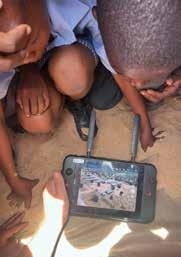
“My personal goals were to become more familiar with drones,” Collins says, “and how to fly them, how to use them, how to process the data.”
“
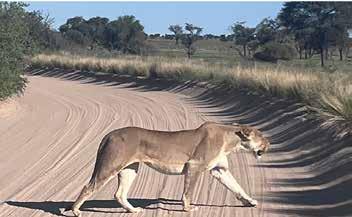
Sometimes we cross paths with lions, giraffes, leopard tortoises and other creatures.
This story follows a day in Collins’ fieldwork, where drone flights, data challenges and unpredictable weather define life as a climate researcher.
6:30 A.M. With an early start to the day, we build a campfire to boil water for coffee and make breakfast, which is usually oatmeal or granola.
7:30 A.M. We assemble fieldwork equipment, including drones, generator, pyranometer/ pyrgeometer, weather balloons, helium tanks and data stations. Pack personal bags with necessary items like food and laptops.
8 A.M. Every day is a different field site. The shortest drive is about 45 minutes, and the longest is four hours. Sometimes we cross paths with lions, giraffes, leopard tortoises and other creatures.
9 A.M. Time for fieldwork. Emphasis on work. We set up an awning for shade to combat temperatures of 100 degrees-plus, assemble the tower configuration for incoming radiation measurements and ready the drones. We wait for the best opportunity to launch. This depends heavily on cloud cover, as clouds obscure incoming radiation, cause shadows and throw off our measurements.
3 P.M. Before we break down the equipment and drive back to base camp, we ensure data from the drone and tower station are properly offloaded.
4 P.M. This is our time to take care of any logistical issues such as auto repairs or picking up tools we might need. Running a field campaign in a foreign country is tricky, and sourcing the right tools, materials and labor can be challenging. We also enjoy interacting with the locals. One day we showed students from Ngwatle Primary School how to fly drones.
6 P.M. Back at camp, instruments sometimes break and need creative repairs. We’ve used soldering and electrical tape to fix broken wires and jimmied solar panels to power our Wi-Fi unit. It’s also a good time for Zoom calls and to review data collected from the day. Sometimes we drive into the village to refill our water barrel for drinking, cooking and bathing.
7 P.M. On good days, we’ll have steak for dinner, or if we’re really lucky, our colleagues from the University of Botswana display their culinary prowess and prepare some traditional meals for us. Beef seswaa, which I often buy from roadside vendors, is my favorite.
9 P.M. We have to make sure all our food is stored properly to avoid unwanted animal guests. Once that’s done, we wind down and enjoy some conversation around the campfire or watch a rugby match with the help of our Starlink unit. It’s also free time to wander and admire nocturnal geckos.
10:30 P.M. It’s bedtime at last — and we all hope it doesn’t rain. It is the rainy season, and I’d already lost a couple of books when water found its way into my tent through a big hole — another creative fix needed.
article
track fire-related atmospheric anomalies.


By Tobin Vaughn
Most days after school, Paul Yett’s (’92, finance) aunt would ask about his day. His response often leaned toward the negative. “Stop right there,” she would say. “You need to tell me three positive things.” Her words brought Yett a valuable course correction.
“She exposed me to a great way of thinking,” Yett says. “I try to live by the philosophy of finding the positive: What’s the silver lining in your life?”
Yett considers his SDSU finance degree a major silver lining. He’s a member of the advisory board for the university’s international business program and recently pledged $1 million to establish the Paul Yett International Business Internship Endowment in the College of Arts and Letters. Student recipients will be named Yett Global Fellows and receive stipend support.
The endowment allows students to choose career-launching internships over a paycheck. By covering expenses associated with unpaid
or underpaid internships, it removes the financial pressure that often forces students to pass up transformative experiences.
Hisham Foad, an associate professor in economics and director of SDSU’s international business program, says Yett’s endowment will help give more students greater opportunities for success.
“These experiences can make unbelievable differences in people’s lives with results seen not just today but going decades forward,” Foad says.
The inaugural cohort of Yett Global Fellows for 2026 includes 10 students. Seven will pursue internships, and three will attend a weeklong student leadership conference this summer in Colombia.
Now living in the Bay Area, Yett is a managing director at Hamilton Lane, an investment management company where he enjoys “singing the praises of private equity” and helping clients build financial portfolios.
Yett credits much of his success to his time at SDSU. He says navigating the challenges of a large university — crashing closed classes and circling crowded parking lots — made him more intrepid by honing coping skills he still relies on.
As a student, Yett thought he would graduate and work at a Wall Street firm. The reality? He had a lot of interviews — and a lot of rejection, he says. He has the letters to prove it.
Yett’s advice to students is to manage their expectations and remain flexible. He is grateful to give back to SDSU through philanthropy and by sharing his 30-plus years of experience.
“I want to share the journey with others and help expose them to whatever career path or area of finance they’re interested in,” he says.
Ultimately, he hopes they find their own silver linings. n
To make a gift to SDSU, contact Mary Darling at mdarling@sdsu.edu or Karena Sara at ksara@sdsu.edu.

Yett pledged $1 million to establish the Paul Yett International Business Internship Endowment in the College of Arts and Letters.
Student recipients will be named Yett Global Fellows and receive stipend support.
Paul Yett’s $1 million gift creates an endowment that provides San Diego State University international business students with opportunities that might otherwise be out of reach. This article first appeared in the spring edition of SDSU Magazine

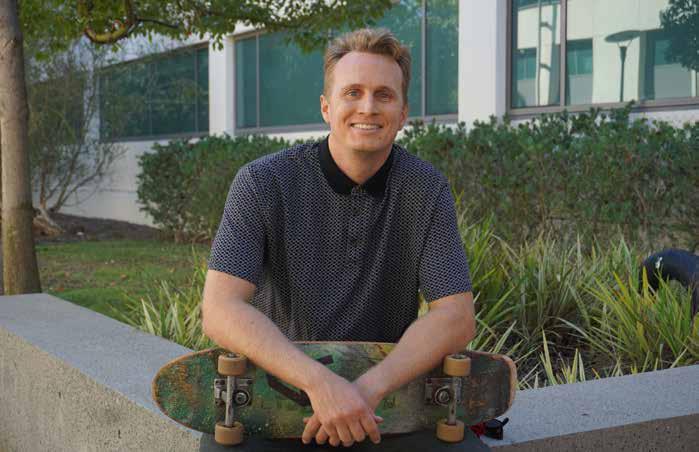
Declan Halloran (‘16 sociology, ‘24 MALAS) wears many hats.
On any given week in San Diego, you might find him suspended in the grid of Viejas Arena or the CAL Coast Credit Union concert venue rigging lights and trusses for a national tour. He might be scanning the horizon from a lifeguard tower, watching a set roll in, or sitting behind a drum kit at the Casbah — keeping time in a city that thrives on music.
Declan Halloran (‘16 sociology, ‘24 MALAS) wears many hats. He is a production rigger for SDSU and various production companies and he’s an ocean-qualified lifeguard for the City of San Diego. For more than 20 years, he’s been a drummer in a variety of bands, playing venues from Tijuana, Mexico to Bellingham, Washington.
But beneath the cables, currents, and cymbals
is something deeper: a sociologist shaped by San Diego State University’s College of Arts and Letters — and the Master of Arts in Liberal Arts and Sciences (MALAS) program.
SDSU isn’t only where he studied; it’s where he built a creative life.
As an undergraduate, he didn’t begin as a sociology major. It took one class — Sociology 101 with Associate Professor Jung Choi — to change his trajectory. The course was transformative enough that he switched majors from music and political science to sociology.
That decision would define the way he sees the world.
“He is dedicated, motivated, and passionate about making sure that voices that are not typically included — are included. He wants to make change,” said Charlene HolkenbrinkMonk, lecturer in sociology. ”He represents what CAL is. It’s critical thinking; it’s humanity.”
Halloran engaged with The Dignified Learning Project, the nonprofit organization that Holkenbrink-Monk and Choi co-founded in 2015. Holkenbrink-Monk said in 2018, that Halloran single-handedly organized a fundraiser called Bands Against Bigotry — an all-day music festival with the intention of bringing the community together.
When it came time for graduate school, he looked for something that reflected his wide-ranging interests. MALAS offered exactly that. “I like to think of MALAS as an interdisciplinary master’s program,” he said. “It was the best way for me to gain as much academic experience as possible.”
He describes liberal arts as a “Swiss Army Knife” — versatile, adaptable, endlessly applicable. MALAS allowed him to pick his own adventure, guided by mentors like William Nericcio, Charlene HolkenbrinkMonk, Tom Semm, Mike Roberts, and Pierre Asselin.
Because MALAS has no rigid limits on areas of study, he was able to explore everything from education to digital literature to the sociology of surfing and skateboarding. For Halloran, MALAS was transformation in action.
“Declan was one of the first MALAS students whose work was so valued by an associated department, sociology, that he was hired as a graduate teaching assistant for that department,” William Nericcio, director of the MALAS program said. “Halloran is affable, clever, funny, and gifted. Moreover, his commitment to MALAS led to other students joining our program. He is an able and gifted surfer of waves interdisciplinary, and one of our most outstanding recent graduates.”
Halloran’s scholarship is inseparable from his lived experience. During the summer
of 2021, when concerts were shuttered and music paused, he lifeguarded. What began as a practical decision became a sociological inquiry. He began examining drowning statistics documented by the United States Lifesaving Association and other agencies.
The data was stark: he learned there were higher drowning rates in low-income communities and lower access to swim education. He researched the generational ripple effects tied to segregation and systemic racism that historically restricted access to public pools and beaches.
“When we segregate who can swim in public areas, it has consequences that span generations,” he said. Halloran presented his research, “Drowning and Inequalities,” at The Stoke Sessions 2.0 in October 2025. Now, he hopes to help develop a course at SDSU in collaboration with the Surf/Skate Studies Collaborative to bridge sociology, recreation, and public health.
Another emerging focus for Halloran is the music industry in the age of social media and AI.
A digital literature course with Jessica Pressman, professor of English, sparked his interest in how streaming platforms reshape artistic labor and economic equity. As a working musician, he sees firsthand how algorithms and monetization models affect creators.
“I believe there needs to be stronger regulations to help maintain a more equitable field that puts musicians, songwriters, and artists first,” he said. For Halloran, sociology isn’t abstract. It’s in the pit at a show. It’s in the water. It’s in the code behind a playlist.
He’s currently working with SDSU student organizations Aztec Music Group, and KCR College Radio, to advocate for a live events venue in SDSU Mission Valley. n


Highlights of CAL student, faculty, alumni and donors featured in a variety of media outlets.
Better Food Futures and SAGE // Pascale Joassart-Marcelli, professor of geography, director of the Urban Studies and Food Studies programs and the BFF Center’s co-director, was featured in “Earth Day at SDSU.”
Economics // Lecturer Cristina Pintado’s economics course goes beyond monetary theory to prepare students with career-ready communication skills.
Geography // Doctoral student Megan Ward-Baranyay and Associate Professor Daniel Sousa were featured in, “Doctoral student, NASA JPL collaborators take orbital view of L.A. wildfire landscape conditions.”
ISCOR // ISCOR student credits international conference with fostering different perspectives and student connection.
Center for Latin American Studies // Professor Ramona Pérez was featured in a Q&A: “The hidden links to Aztec culture in the new Padres City Connect uniforms.”
Linguistics // Graduating linguistics major Jaime Antoshak won a Graduate Research Fellowships Program (GRFP) award from the National Science Foundation. The GRFP will fund her first three years in the SDSU/UCSD Joint Doctoral Program in Language and Communicative Disorders, where she will conduct research on grammatical processing in heritage Spanish speakers.
Political Science // Alumnus John Fiske was honored as an SDSU Alumni Award of Distinction. And he was featured in an article, “John Fiske, political science alumnus, is changemaker in the community.”
Center for Skateboarding, Action Sports, and Social Change // Legendary photographer Atiba Jefferson visits SDSU for Black History Month. Shaping the past, present, and future of skateboarding and media, Jefferson’s retrospective talk highlights Black excellence, creative impact and career trajectories.
Sustainability // Alumna McKenna Avery, founder of Hempress Hygienics, was featured in an article with other students who are business founders.