Building Domain Specific AI Models:
Challenges, Strategies, and Real-World

Executive Summary
Generic AI models often fail when applied to real-world industry problems. Whether it's healthcare, logistics, or finance, every sector has unique data, terminology, and operational constraints. This calls for domain-specific AI models systems trained and optimized for a specific industry or use case.
This whitepaper explores the growing need for domain-focused AI, the technical and strategic challenges involved in building such models, and how enterprises can overcome these hurdles. Key issues include lack of annotated data, compliance requirements, and the need for continuous updates.
The paper outlines proven strategies like transfer learning, human-inthe-loop systems, and MLOps best practices that help teams create reliable, adaptable, and explainable AI models. It also shows how top AI development companies enable organizations to integrate custom AI into their existing systems while ensuring long-term maintainability.
Finally, the paper provides real-world applications across healthcare, logistics, finance, legal, and manufacturing to demonstrate how domain-specific AI is already delivering value. For companies seeking to implement AI effectively, the conclusion is clear: investing in AI development services that understand both technology and industry specifics is essential for achieving practical, measurable results.

- WhitePaper
Introduction
Artificial Intelligence (AI) has evolved beyond general-purpose use. Today, businesses need AI models that understand their specific data, language, and workflows—known as domain-specific AI models.
These models are trained on industry-specific data and rules, delivering better accuracy, relevance, and compliance than generic systems. Whether in healthcare, finance, or logistics, domain-focused AI can adapt to real-world complexities that general models often miss.
However, developing such models presents challenges limited data, compliance demands, and the need for constant updates. This whitepaper explores those challenges, offers practical strategies, and highlights realworld applications.
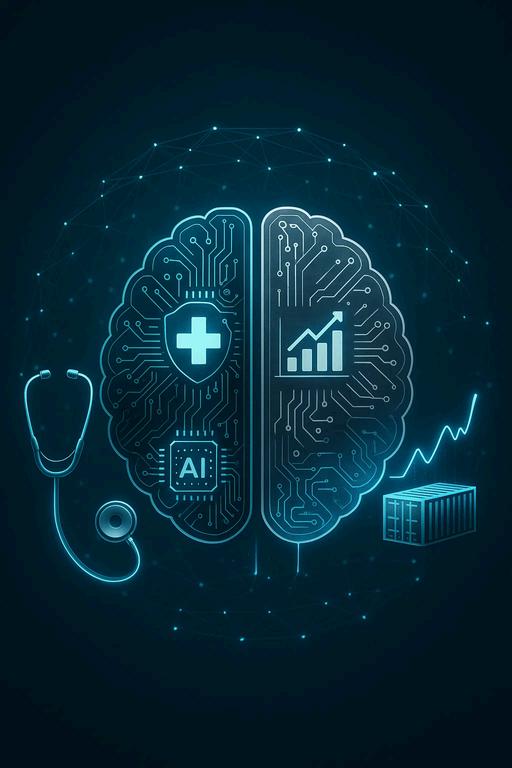
As more organizations seek specialized solutions, the role of experienced AI development companies becomes critical to building scalable, reliable, and efficient domain-specific AI systems.
Why Domain-Specific AI Matters
Generic AI tools often fail to meet the precision, contextawareness, and compliance needs of industries like healthcare, logistics, finance, and manufacturing. By contrast, domain-specific models:
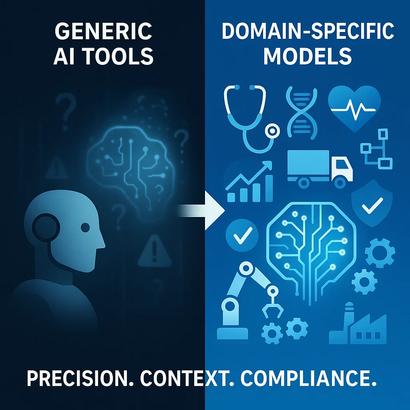
Understand niche terminology (e.g., legal, medical, technical)
Deliver more accurate results on small, custom datasets
Handle domain-specific constraints like compliance and workflows
This shift in need is more than a technical preference it’s a strategic move. Businesses are no longer satisfied with one-size-fits-all models that overlook key industry nuances. They want AI systems that align with their goals, constraints, and operating environments.
As a result, more enterprises are turning to AI development services that specialize in building custom models. These services bring together domain expertise, advanced tooling, and proven processes to deliver AI solutions that work reliably in production solving real problems, not just running demos.

Core Challenges in Building DomainSpecific AI
Developing an industry-focused AI system isn’t just about fine-tuning a model. It requires deep domain knowledge, quality data, and an understanding of real operational constraints. Below are the key challenges:
of High-Quality, Labeled
Many industries do not have large, annotated datasets. Medical images, legal contracts, or industrial logs require domain experts to annotate, which is time-consuming and expensive
Training models on a narrow dataset increases the risk of overfitting. This leads to inaccurate predictions when the model encounters edge cases or unseen scenarios Domain Knowledge Gap
Developers often lack real-world experience in the target industry. This disconnect leads to models that underperform due to misunderstood requirements or poor feature selection
Sectors like finance and healthcare must follow strict regulations (e.g., HIPAA, GDPR). AI models must be explainable and auditable, adding extra constraints during development
Domain-specific AI systems need regular updates. Industry data evolves, rules change, and input formats vary over time A static model degrades quickly without retraining pipelines
Strategies to Overcome
Development Challenges
To build robust domain-specific AI, AI development companies must follow disciplined, industry-aware processes. Here’s how leading firms approach it:
a. Data-Centric Development
Rather than just tweaking algorithms, focus on improving dataset quality: Use data augmentation for small datasets
Employ semi-supervised learning when labels are scarce Collaborate with subject matter experts to improve annotation accuracy
b.
Transfer Learning with Pretrained Models
Start with a pretrained model (e.g., BERT, GPT, ResNet), then fine-tune on domain-specific data. This reduces compute cost and improves performance with limited training samples.
c. Active Learning Pipelines
Let the model highlight uncertain predictions. These are then prioritized for expert labeling, which improves accuracy without labeling entire datasets.
d.
Human-in-the-Loop (HITL) Systems
AI systems don’t replace experts they assist them. Incorporating feedback loops where professionals validate or correct model predictions helps refine accuracy over time.
e. Compliance-Aware Model Design
AI models should be explainable. Use interpretable frameworks like LIME or SHAP to make predictions transparent. Ensure traceability of training data and model decisions for audits.
f. MLOps for Domain AI
Treat AI deployment like software engineering:
Automate version control for models and datasets
Set up CI/CD for training pipelines
Monitor for data drift and automate retraining triggers
Role of AI Development Companies
Leading AI development companies are moving beyond generic NLP and computer vision to offer verticalized AI platforms. They do more than coding they align models with domain KPIs, user workflows, and compliance goals.
A mature AI development partner brings:
Cross-functional teams (data scientists, domain experts, software engineers)
Secure infrastructure for handling sensitive data
Model lifecycle tools for long-term management
Audit trails for explain ability and compliance
Whether it’s diagnosing diseases with medical AI or predicting supply chain delays in logistics, custom AI models now require deep industry embedding
Real-World Applications
by Industry
Below are use cases showing how domain-specific AI is transforming operations:
a. Healthcare
AI models trained on anonymized radiology scans now detect abnormalities with precision comparable to specialists. NLP tools parse patient records to recommend treatments and identify risk factors.
c. Finance
AI systems flag suspicious transactions using bank-specific behavior patterns. They can also automate document parsing for loan approvals and regulatory checks.
e. Manufacturing
Predictive maintenance models detect machine failure patterns from factory logs, sensor data, and operator feedback. They reduce unplanned downtime significantly.
b. Logistics
Routing algorithms trained on company-specific delivery data adapt to vehicle types, road constraints, and timing windows. AI optimizes last-mile delivery and reduces fuel use.
d. Legal
Document review models trained on contracts and case law can highlight clauses, extract key obligations, and flag compliance issues—speeding up due diligence by 70%.
Choosing the Right AI
De
velopment Partner
Building effective, domain-specific AI requires more than writing code. It demands a development partner who understands your industry, your goals, and the realities of implementation.
When assessing AI development services, look beyond technical skills. Ask these key questions:
Do they understand your industry’s language, processes, and regulations?
Can they translate technical models into business outcomes?
Do they offer long-term support, including retraining, updates, and monitoring?
Can they integrate seamlessly with your current systems and infrastructure?
A capable AI development company acts as a strategic partner not just a vendor. They combine deep technical expertise with domain fluency, ensuring your AI solution delivers measurable value and stays relevant
Conclusion
Generic AI can’t handle the complexity of real-world industries. From healthcare to logistics, success today depends on domain-specific AI models that understand your data, your rules, and your outcomes.
Building these systems is hard. It requires strategy, expertise, and ongoing support. But with the right approach and partner, domain AI can drive measurable impact.
For enterprises looking to adopt custom solutions, partnering with an experienced AI development company is no longer optional it's essential.