



This case study shows how a large global retail company faced chronic warehouse challenges by using advanced AI-based supply-cutting solutions For increasing operating complexity due to the sale of multiple channels, diverse regional demand and sometimes changed consumer behavior, the brand demanded a smart approach to inventory management that could score globally and work in real time.
Transformation journey - There has been an increase in remarkable reforms in demand for power compliance, inventory, turnover rate and logistics efficiency in transformation journeyprepaid analysis, machine learning and automation. By embracing the AI-operated retail trade, the company not only improved its operational agility, but also strengthened the flexibility of market disorders, seasonal demand and supplier variability With strategic support in line with a special AI development company and AI advisory services, the retailer modernized the infrastructure of his legacy in a wise, computer-driven ecosystem. This change enabled the organization to estimate the demand pattern with accuracy, automate the repayment of shares, reduce the stock imbalance and reduce operating costs in stock and store
In addition, this AI production amendment allowed decision strategies from the reactive scheme to infection deposits from TEJI, Lean Inventory Models, improvement in customers' satisfaction and permanent growth in a very competitive market.
In today’s hypercompetitive retail environment, managing supply chains across continents is increasingly complex Traditional inventory systems are often reactive, leading to overstocking, understocking, and missed revenue opportunities The global retail brand at the center of this case recognized that AI could bridge the gap between fragmented systems and market responsiveness
By partnering with a dedicated AI development company offering integrated AI consulting services, they began a trip to restore its supply chain at the forecast for the prognosis of the last mile supply. Changes aimed at uniting quiet data sources, competent in decisions on real time and regional trends and distribute forecast units that transfer consumer behavior.
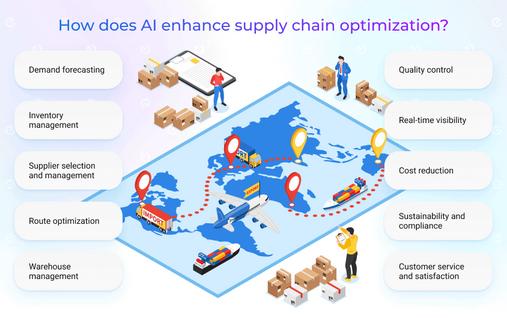
The company required a stable forecast model to go away and embrace the adaptive intelligence run by machine learning and dynamic analysis The AI-based demand forecast models were designed to make historical sales, weather patterns, promotional calendars and macroeconomic indicators making forecasting more precise and contextual Inventory decisions that once relied on monthly cycles were replaced with daily, even hourly, recommendations through automation. The result improved not only the availability of the stock and a reduction in holding costs, but also a smooth supply chain that can bend with instability, disturbance and new trends laying the foundation for scalable growth in new markets.

1.Low Forecast Accuracy
Reliance on historical averages and manual planning led to frequent forecasting errors
2.Stockouts and Overstock
Popular items went out of stock quickly, while others piled up in warehouses or stores.
3.High Inventory Holding Costs
Overstocking led to higher warehousing and markdown costs.
4.Disjointed Systems
ERP, e-commerce, and POS systems operated in silos with limited visibility
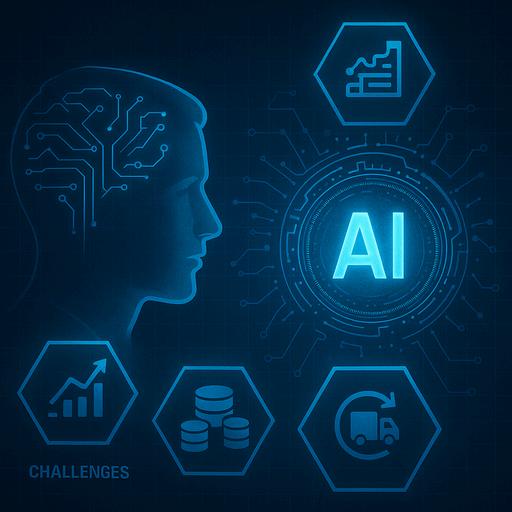
5.Manual and Slow Replenishment
Staff spent excessive time analyzing data, placing orders, and managing stock manually.
6.Inefficient Logistics
Distribution planning lacked route optimization and real-time tracking.
A comprehensive solution was implemented with the help of expert AI consulting company and a forward-thinking AI development company The goal was to bring intelligence and automation to every layer of the supply chain
AI-Based Demand Forecasting Engine
Integrated ML models were trained on sales trends, holidays, weather data, events, and marketing campaigns. This improved weekly and seasonal demand planning.
Automated stock reordering and warehouse-to-store allocation based on real-time sales and demand forecasts
AI-Powered Logistics Optimization
Introduced dynamic delivery planning, route optimization, and real-time fleet tracking to reduce transit times and fuel consumption.
Role-specific dashboards offered predictive alerts, KPI tracking, and actionable insights to store managers, warehouse leads, and supply chain planners.
Early warnings for potential stockouts or supplier delays helped mitigate risk.
Category
Technologies Used
AI/ML Frameworks Python, TensorFlow, Prophet, Scikit-learn
Data Engineering Snowflake, PostgreSQL, Apache Spark, Kafka
Automation UiPath, Apache Airflow
Visualization Power BI, Tableau
Cloud Infrastructure AWS EC2, S3, Lambda, Kubernetes
Integrations REST APIs, WMS/ERP connectors (SAP, Oracle)
The AI components were modular and scalable. Using microservices architecture, the platform was futureproofed to handle expanding product lines and international markets.
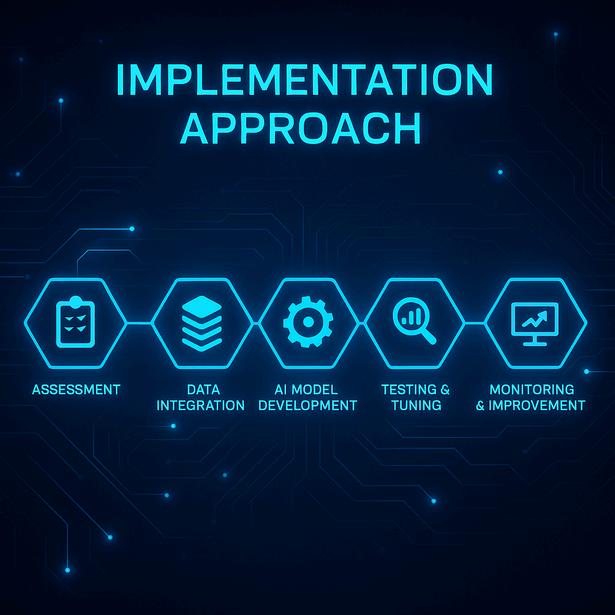
1.Discovery and Data Audit
Deep dive into legacy systems, historical sales data, warehouse capacity, and regional trends
2.Proof of Concept (PoC)
Launched in 2 highvariance markets (Asia and Europe) to validate AI models and test automation logic.
3.Model Training and Refinement
4.Integration & Automation
Seamlessly connected AI models with existing ERP, e-commerce, and POS platforms
5.User Training and Adoption
Teams were trained to interpret AI insights and trust systemgenerated decisions
Used supervised learning to continuously improve demand predictions.
6.Ongoing Monitoring and Optimization
Weekly performance reviews and model adjustments were conducted
Throughout the process, AI consulting services ensured domain alignment, compliance with data privacy norms, and smooth change management.
4.Sustainability through reduced markdowns and waste
Smarter demand forecasting led to better inventory turnover, which reduced overstocking and markdowns. Less unsold inventory translated to less waste and improved alignment with sustainability goals, making operations more environmentally and economically responsible.
5.Scalability for future expansion into new regions and SKUs
The AI infrastructure established a scalable foundation so that the company can originally originally the new product lines and enter new markets. The adaptability of the system supported rapid expansion without proportional increase in costs or complexity.

The use of the AI supply chain solutions resulted in a strong alignment between
This change shows how strategic AI implementation - when a skilled AI is combined with the development company and is supported by experienced AI consultant services - the most complex global supply chains can also modernize. The initiative went beyond the distribution of equipment; This included intelligence information in each layer of decision -making processes, from forecasts and repetition to warehouse and logistics management. The success of this initiative was not just about technology. This was about coordinating people, processes and future insights to unlock the end to the end of the supply chain agility. Cross-functional teams were strengthened with real-time data and AI-related recommendations, which were able to make more informed decisions in departments
This case demonstrates that with the right data architecture, strategic guidance, and a future-focused mindset, retail operations can move from reactive chaos to predictive control at scale Moreover, the transformation unlocked not only operational efficiency and customer satisfaction, but also a roadmap for sustainable growth in a fast-evolving marketplace.
As global supply chains face rising complexity and demand volatility, this approach serves as a blueprint for retailers seeking resilience, scalability, and smarter inventory decisions through AI. Contact