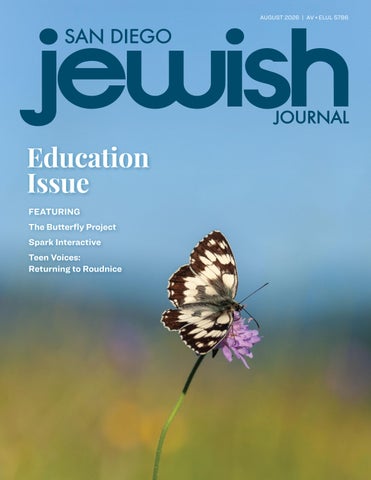

Education Issue
FEATURING
The Butterfly Project Spark Interactive Teen Voices: Returning to Roudnice


We have locations all over San Diego! Scripps Ranch (Chabad S. Diego HQ), Bonita, Carlsbad North, Carmel Valley, Coronado, Downtown, East County, Encinitas, Escondido, La Costa, La Jolla, North County Inland, Oceanside/Vista, Pacific Beach, Penasquitos, Rancho S. Fe, SDSU, Tierra Santa, UCSD, University City
JEWISH IDENTITY AND LEADERSHIP HOLIDAYS AND CULTURE BAR AND BAT MITZVAH
HEBREW
EXPERIENTIAL LEARNING




SAN DIEGO
Kick-Off Off Kick-Off
Torrey Hills Park 4260 Calle Mejillones San Diego, CA 92130 - Carnival Games & prizes- Lunch- Bubbles- Bunny Party! -
August 23 11:00-1:00 PM

PUBLISHERS
Mark Edelstein and Dr. Mark Moss
EDITOR
Susan Edelstein
ASSISTANT EDITOR
Makayla Hoppe
CREATIVE DIRECTOR
Donna D’Angelo
ARTS & ENTERTAINMENT EDITOR
Eileen Sondak
CONTRIBUTING WRITERS
Emily Bartell, Linda Bennett, Andrea Simantov, Trevor James McNeil, Marnie Macauley, Rabbi Yeruchem Eilfort, Galia Miller Sprung, Micah Siva Lisa McGuigan
CONTRIBUTING ILLUSTRATOR
Pepe Fainberg
ADVERTISING REPRESENTATIVES
Alan Moss | Palm Springs
EDITORIAL editor@sdjewishjournal.com
ADVERTISING marke@sdjewishjournal.com
CIRCULATION & SUBSCRIPTIONS ronniew@sdjewishjournal.com
ART DEPARTMENT art@sdjewishjournal.com
LISTINGS & CALENDAR assistant@sdjewishjournal.com
SDJJ is published monthly by San Diego Jewish Journal, LLC. Subscription rate is $24 for one year (12 issues). Send subscription requests to SDJJ, 122 15th Street, PO Box 421, Del Mar Ca 92014. The San Diego Jewish Journal is a free and open forum for the expression of opinions. The opinions expressed herein are solely the opinion of the author and in no way reflect the opinions of the publishers, staff or advertisers. The San Diego Jewish Journal is not responsible for the accuracy of any and all information within advertisements. The San Diego Jewish Journal reserves the right to edit all submitted materials, including press releases, letters to the editor, articles and calendar listings for brevity and clarity. The Journal is not legally responsible for the accuracy of calendar or directory listings, nor is it responsible for possible postponements, cancellations or changes in venue. Manuscripts, letters, documents and photographs sent to the Journal become the physical property of the publication, which is not responsible for the return or loss of such material. All contents ©2026 by San Diego Jewish Journal. The San Diego Jewish Journal is a member of the American Jewish Press Association and the Jewish Telegraphic Agency. San Diego Jewish Journal (858) 442 9922








She Didn’t Face It Alone
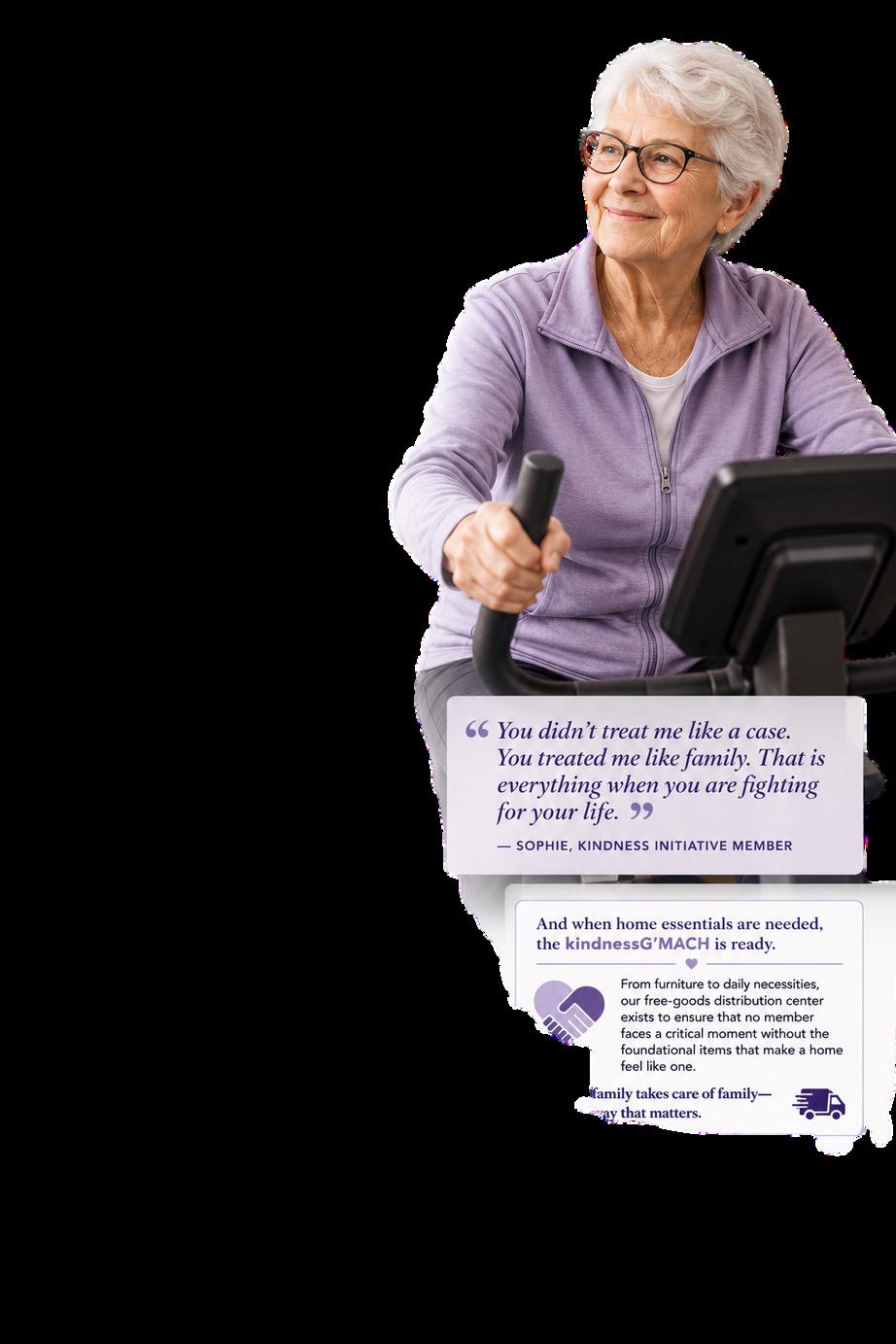
We Sophie needed her community most, Kindness Initiative was already there.
Sophie, 73, had already experienced what Kindness Initiative was built to do When she moved to a new apartment, our team was there not because a crisis demanded it, but because concierge-level case management means showing up for the full picture of someone ’ s life, not just the emergencies Sophie felt that difference, and she never forgot it
Then came the diagnosis Then came the chemotherapy And with it, the exhaustion, the isolation, and the quiet fear of losing ground physically, emotionally, in every direction at once Her doctor had been direct: exercise wasn’t optional It was essential But leaving home safely wasn’t possible, and the walls of her apartment were getting closer
Sophie reached out to Kindness Initiative And everything moved The team coordinated exercise equipment delivered directly to her door A KI case manager came to assemble it, stayed to talk, and made sure she felt ready not rushed, not managed, but genuinely supported An afternoon that could have felt clinical and cold became something warm, something Sophie will carry with her through every hard day ahead
“You didn’t treat me like a case. You treated me like family. That is everything when you are fighting for your life.”
Sophie, KI Member
Sophie is exercising now, in her own home, building strength on her own schedule The diagnosis hasn’t changed But what surrounds her has a team that doesn’t disappear when things get hard, and a community that holds her close every step of the way

9372 Cabot Drive, San Diego, CA 92126
OPEN 5 DAYS A WEEK
Scan the QR code to visit our website kindnessSd.org & learn how you can donate, volunteer and/or become a Member.
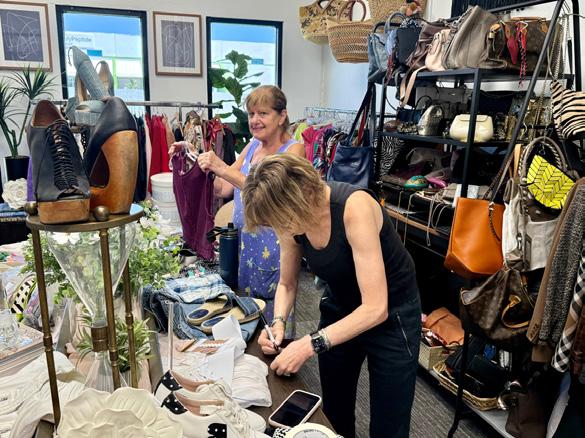
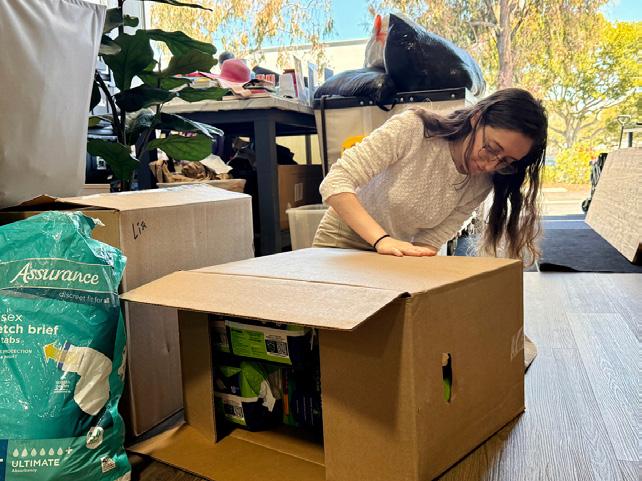
When home essentials are needed, the kindnessG’MACH is ready. From furniture to daily necessities, our free-goods distribution center exists to ensure that no member faces a critical moment without the foundational items that make a home feel like one. Because family takes care of family, in every way that matters. Looking after our own in the Jewish community isn’t just something we believe in. It is exactly what we do!



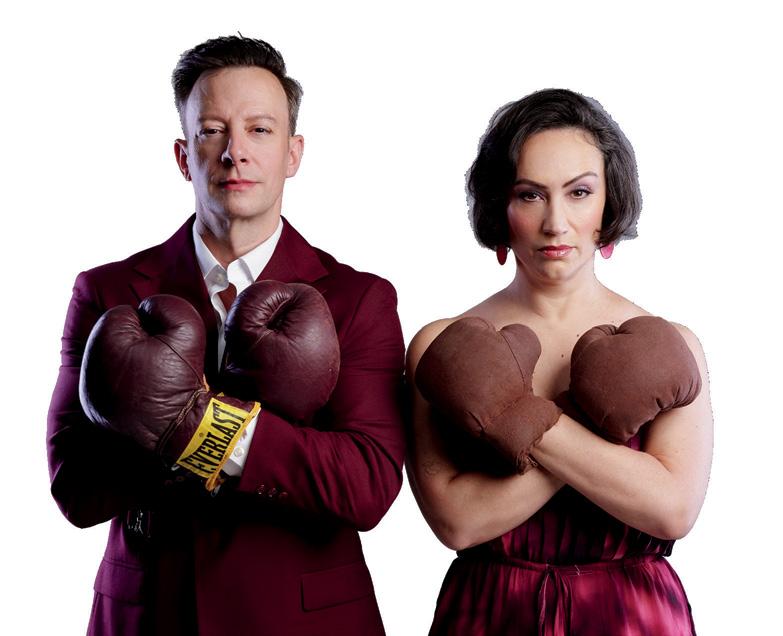
SUSAN EDELSTEIN
Educating the Children
Those lazy, hazy, crazy days of summer are almost gone. It’s August, the wind down of summer, the onset of fall, and for many of us, the start of a new school year. In San Diego, especially coastally, summer seems so short because it takes so long to begin; it doesn’t feel like summer until July. But even though summer feels shortchanged, fall is usually glorious and lasts through Thanksgiving. As a famous person recently said, “We do have spring in southern California, it comes right after summer.” Enjoy your August.
Our August issue is our Education Issue and we have a lot to offer our readers this month in that vein. Education is the bedrock of civilization and civility. In today’s environment, it is crucially important to teach and to learn the history of the Jewish people, especially the lessons of the Holocaust. In order to combat antisemitism and promote the love and joy to be found in Judaism, the dark, simmering vat of misinformation and falsehoods needs to be exposed for what it is and put to rest.
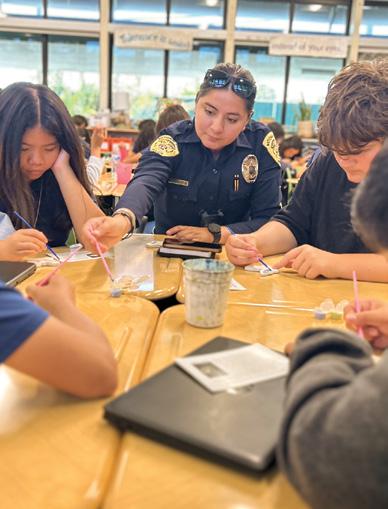
The Butterfly Project began at the San Diego Jewish Academy in 2006, as an age-appropriate, hands-on way to teach children the history of the Holocaust with the students each painting one ceramic butterfly to represent one of the 1.5 million children killed in the Holocaust. This gentle form of teaching has spread to all parts of the U.S. and beyond, and to date, 470,000 butterflies have been created.
San Diego, again in the forefront of Holocaust education, has launched Spark Interactive, a traveling state-of-the-art museum connecting middle and high school students with the voices and stories of our Holocaust survivors. Lee Goldberg, San Diego’s beloved philanthropist and founder of Legacy of Light Goldberg Institute for Holocaust Education, believes Spark Interactive will teach more than Holocaust history, it will teach our students ethical responsibility and social justice.
Our Teen Voices writers, from Torrey Pines High School and San Diego Jewish Academy, share their remarkable journey to Roudnice, Czech Republic, and their connection to the once-thriving Jewish community that existed there before the Holocaust. They and their Czech counterparts shared traditions, painted butterflies and lit the Hanukkah menorah at the New Jewish Cemetery, reforging lost connections.
Please also enjoy the wonderful writing of our regular contributors. Shalom. A
Our Town
BY LINDA BENNETT & EMILY BARTELL

The 33rd Annual Lipinsky Family San Diego Jewish Arts Festival, “JFest 2026,” was a highly entertaining and successful event, offering extraordinary programming at a variety of locations throughout San Diego May 12-July 14.
On opening night, we were treated to comedy and conversation with the Emmy and Tony Award-winning creator of “Just for Us,” Alex Edelman. Another program we enjoyed was a “Tribute to Leonard Cohen,” performed by Broadway star Patrick Page and Grammy-nominated singer Perla Batalla.
A real highlight of this year’s festival was a performance of “And the Angels Swing: From Berlin to Bacharach,” featuring California vocalists Mara Kaye, Elizabeth Schwartz and Whitney Shay. Accompanied by Yale Strom and Hot Pstromi, they performed songs by influential Jewish composers of the 20th century. At the many different programs we attended, a few of those enjoying the programs along with us were Jane and Colin Scher, Audrey and Steve Levine, Sue and Ed Cherlin, Sharon and Rich Leib, Dale and Jerry Spector, Paula Park, Zachary Haubenstock, Toni Benner, Diane Shapp, and Jody Bartlett
Always an uplifting experience, we were delighted to attend the 17th annual Women of Valor presentation, honoring six remarkable San Diego Jewish women through stories, songs and images.
USC Epstein Family Alzheimer’s Therapeutic Research Institute welcomed the Seacrest Foundation for an event featuring the institute’s founder, Dr. Paul Aisen, and a team of clinical researchers who discussed the latest breakthroughs in Alzheimer’s disease research. The panel covered several topics, including progress in developing routine annual blood tests that can detect Alzheimer’s decades before clinical symptoms appear, research into daily preventative pills aimed at stopping the disease from developing entirely, and innovative strategies and trials testing emerging treatments to slow or halt cognitive decline. During an exhilarating discussion and Q&A session, some of those we ran into were Linda Platt, Andi Oster, Lois and Marty Ehrlich, Janice and Steve Boner, Deena and Michael Swidler, Paul Nestor, Ann and Richard Jaffe, Susan and Richard Ulevitch, and Karen Helrich and Bertram Edelstein
Mazel Tov to Shari and Fred Schenk on the marriage of their daughter, Michaela, to David Wise on June 28. The wedding was officiated in the lovely setting of the Schenk backyard by Rabbi Kornberg. David is the son of Janice and Howard Wise of Newberry Park, CA.
Mazel Tov to Shai Cohen on becoming a Bat Mitzvah on May 9 at Congregation Beth Am. Happy parents are Shalev and Moriel Cohen. Thrilled grandparents, Joe and Hanna Fox and Leah and Eitan Cohen, looked on with pride.
Yom Huledets Sameach to...
Richard Borevitz celebrating his 85th birthday.
CELEBRATING
Wedding
Anniversaries
with infinite love & happiness, Mazel Tov to…
Marty & Roz Freedman, 68 years.
Ann & Ronald Simon, 66 years.
Norma & Richard Erth, 61 years.
Lois & David Goldman, 60 years.
Sheila & Jeff Lipinsky, 58 years.
Susan & Paul Zlotnik, 55 years.

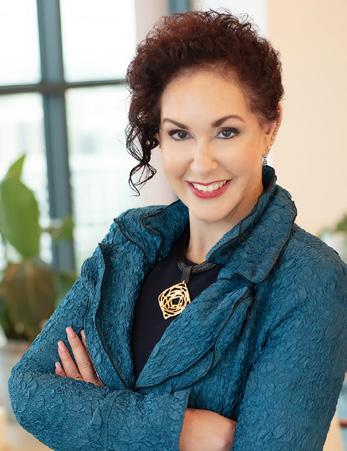
Making critically important family decisions in the aftermath of emotional life changes can be extremely difficult. Our dedicated family law attorneys can help you navigate the complex divorce process with clarity.
Divorce, high conflict child custody, alternative dispute resolution, and more.
For more infomation, call 858-720-8250 or visit https://www.msmfamilylaw.com/attorneys/myra-chack-fleischer/ Legal Experts with Humanity

Founder Myra Chack Fleischer
News & Notes
COMPILED BY SUSAN EDELSTEIN

NYC Teens Turn Stickers Into a New Form of Jewish Activism
by Maya Bab, JTA News
At a workshop led by the Hatikvah Collective, Jewish middle schoolers design stickers meant to counter antisemitism and spread messages of pride and remembrance.
One of the 35 7th graders participating in the sticker-making workshop, displayed his 4x6 sticker featuring a Star of David and the text, “Israel is not committing a genocide, Hitler did. Stand up for what is right, not what is easy.”
The workshop taught students how to design stickers, and translate their artworks into a form of public advocacy that is easy, cheap, safe and can reach a wide audience. Hatikvah Collective posts their stickers on lampposts and crosswalks in New York City aiming to combat antisemitism and anti-Zionism with creativity. The organization began as a response to people who began tearing down hostage posters in the wake of the Oct. 7 attack.
Europe’s Smallest Jewish Community Gets a Home of its Own
by Jenna Gottlieb, JTA News
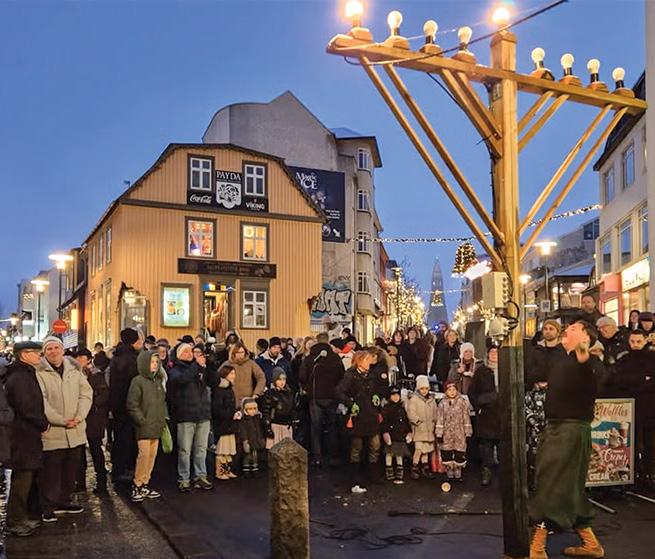
REYKJAVIK, Iceland — Until recently, this city located near the Arctic Circle was one of the few places in Europe where organized Jewish life did not exist — no synagogue, no ritual bath, no communal building. That changed as the Jewish community in Iceland opened the Beit Shvidler Jewish Center of Iceland, the country’s firstever Jewish center.
It sits just minutes from where the husband-and-wife team of Rabbi Avraham and Mushky Feldman have lived and worked since arriving on the island in 2018. The Feldmans relocated from the United States to Reykjavik to establish a ChabadLubavitch presence, becoming Iceland’s first permanently stationed rabbi and his wife in the country’s documented history of a thousand years. Estimates of the community’s size hover around 300 self-identified Jews, out of Iceland’s total population of about 400,000.
A Hanukkah celebration in downtown Reykjavik, Iceland. Photo courtesy of Mushky Feldman.
Stickers created by members of the Hatikvah Collective are intended to combat antisemitism and advocate for Jewish civil rights through street art. JTA design by Grace Yagel.

The
Iconic Crest Worn by Messi and Argentina’s Soccer Team Was Designed by a Jewish Superfan 50 Years Ago
by Juan Melamed, JTA News
BUENOS AIRES — Soccer fans around the world are familiar with the crest worn by Argentina and its star Lionel Messi: a vertical shield with
laurel branches symbolizing victory and glory at the bottom and three stars at the top representing the team’s three World Cup titles.
But few are aware that the crest has its roots in Argentina’s close-knit world of Jewish sports clubs, where its designer developed his affinity for soccer.
Norberto “Toto” Rud was in his late 20s and a member of Club Náutico Hacoaj, a Jewish club, when he proposed the crest in 1976, drawing on the branding acumen and graphic design skills he would use throughout his career as a businessman and soccer aficionado in Buenos Aires.
Rud has long been credited with developing the crest after observing that while many European soccer teams wore distinctive emblems, his own beloved Argentina’s jerseys were notable only for their sky blue-andwhite colors.
Fifty years later, the crest is basically unchanged and is one of the most widely worn team logos in the world.
A Massive Mah Jongg Festival at New York’s Museum of Jewish Heritage
by 70 Faces Media, JTA News
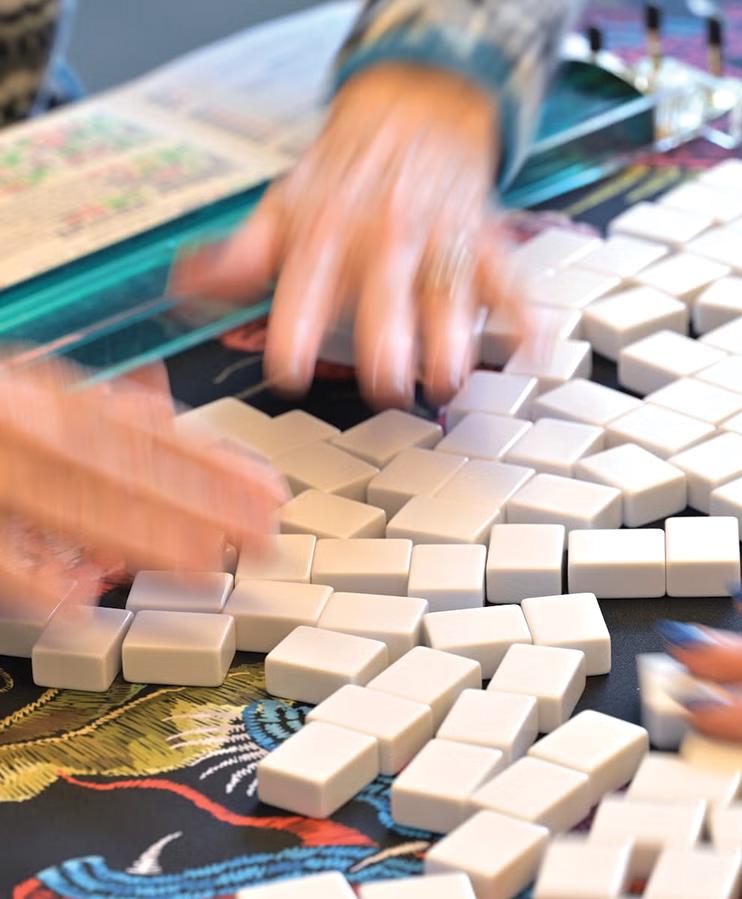
Mah jongg is experiencing a major resurgence. The Chinese tile game, introduced to America over a century ago and later embraced by Jewish women from World War II onward, is now more widely played than ever. Once seen as a pastime for grandmothers, it has found a devoted following among younger players. Social media is flooded with mah jongg content, dedicated clubs
are opening across U.S. cities, and Hallmark Channel released a movie centered on the game this past spring.
Reflecting this boom, New York City recently held its first Jewish Mah Jongg Festival at the Museum of Jewish Heritage. Organizer Gabe Friedman described it as honoring the game’s deep ties to Jewish American culture.
Photo: Paul Ellis, AFP via Getty Images
Photo: Hyoung Chang/The Denver Post
LIVING ON THE FRONT PAGE
by Andrea Simantov | andreasimantov@gmail.com
Beware the Ides of August
Now that I have your attention, let me state that, aside from the literary license I shamelessly employed — and with my sincerest apologies to Bill Shakespeare — there is something to be said about the lazy days of late summer and where seemingly endless sloth can lead in the Spirituality Department.
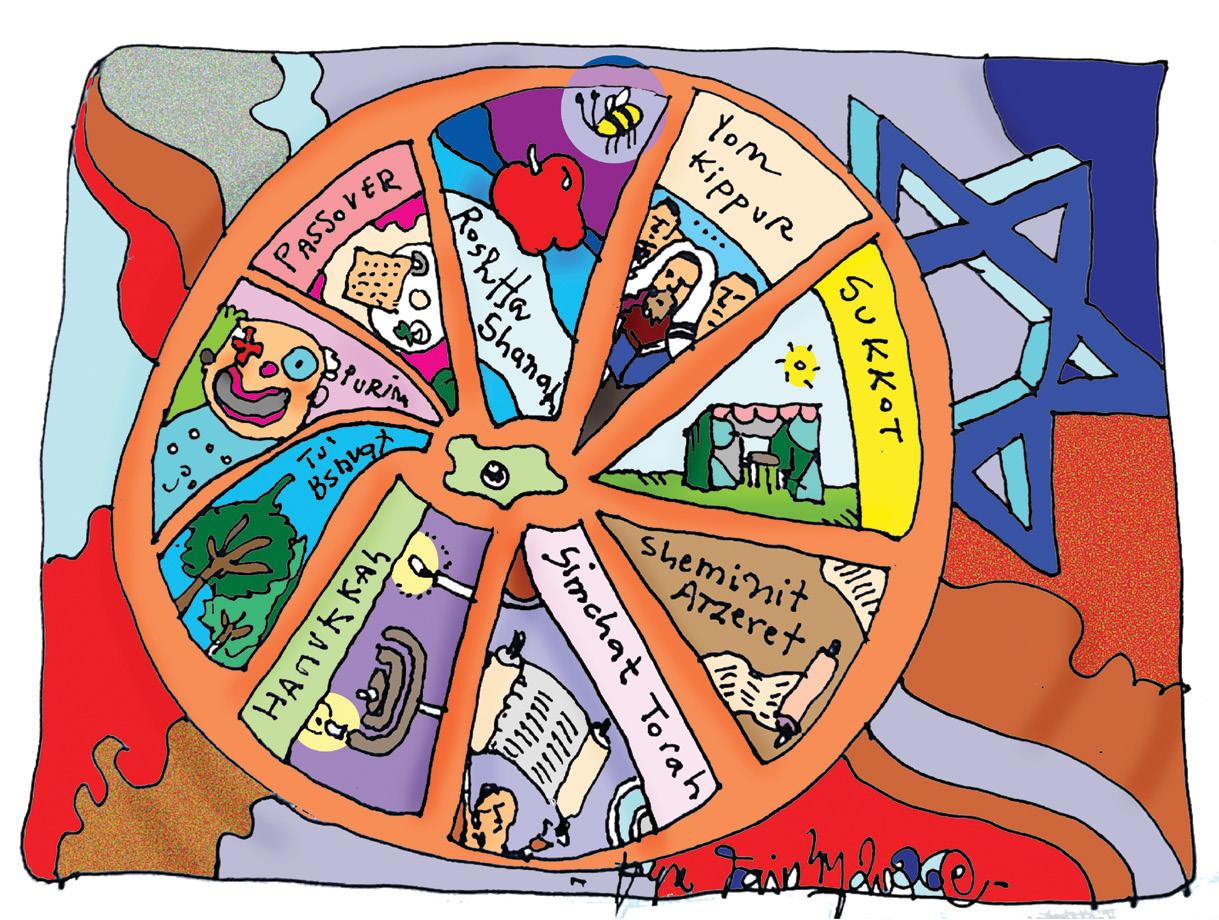
The Jewish calendar is rife with ritual and is designed to give identifiable shape to the year. FYI, in approximately six weeks we’ll don our holiday raiment and ask G-d for all good things. And that is exactly what we are supposed to do.
the term “Judeo-Christian tradition” originated.
Tu B’Shvat, Purim, Pesach (Passover) and Shavuot flesh out the first half of the secular calendar. So what does summer offer?
Not making light of our turbulent history (no less turbulent today), weddings and other joyous simchas halt — with myriad modifications according to various customs. This period is called the Three Weeks, and it serves as a reminder of the destruction of our Holy Temple, a catastrophic event that hurled our entire nation out of the Land of Israel and into the Diaspora.
On Rosh HaShanah, we pray for one another, we pray for our communities, we “log in” and announce, Hineni — I am here. The food is special, the music is special, even the weather is special.
Immediately afterward, we wend our way into Yom Kippur, raising our voices and asking for abundant blessings and G-d’s grace, despite the shabby behavior we’ve displayed since last year’s prayer marathon. No matter. We know the script and, most important, HaShem is waiting. Lovingly waiting.
Sukkot, Shemini Atzeret and Simchat Torah round out the Iditarod of Tefillah (Prayer) Season. Then we enjoy a brief respite before hauling out the menorahs and dreidels and filling the house with the cloying — but delicious — aromas of fried latkes and oil-soaked doughnuts. Hanukkah clearly coincides with the non-Jewish custom of making (Gregorian) New Year’s resolutions. Jew and non-Jew alike sign up for gym memberships at about the same time. This must be where
The last nine days of this three-week period are cleverly called the Nine Days. It is a national period of mourning and, in addition to the aforementioned cessation of partying, we eschew meat, don’t swim, refrain from purchasing new items for our homes or ourselves, and tone down the personal adornment. Without our Temple, we are a dispersed people. And without one another, we cannot fulfill our Heavenly obligations.
Still, between Shavuot and Rosh HaShanah, it is not unusual to grow a little/lot laxer in our observance as we try to cram in as much beach-going, outdoor camping, barbecuing, sports and visits with friends and family as possible. Remember the rhyme, “No more pencils, no more books, no more teachers’ dirty looks!”? (Have I dated myself?) Try getting your seventh grader to crack open a teenfriendly novel or watch a National Geographic special on the Galápagos Islands. Talk about a recipe for failure.
Israeli Lifestyle continued
Imagine, however, that instead of letting Jewish learning fall by the wayside during this typical period of sloth, we found a way to ready ourselves for the powerful season that awaits. Picture yourself sipping iced tea on the patio and jotting down a few volunteer opportunities that will not only enhance someone else’s life but also make your own immediate orbit richer and more meaningful. Or registering for a Gemora class or kosher cooking seminar? I could go on and on, but you get the drift.
August is so much more than relaxation and recharging one’s batteries. With less pressure from wearying obligations, we are afforded an opportunity to map out a more connected and g-dly life — one that will have an immediate impact on the holiest season waiting just beyond the horizon.
Wishing everyone a lovely remainder of the summer. And remember: Use sunscreen! A
New York-born Andrea Simantov moved to Israel 29 years ago. She is a small-business owner and both a print and media journalist. Her popular podcast, “Pull Up a Chair,” is produced by Israel News Talk Radio. She can be reached at andrea@israelnewstalkradio.com.










Personalized Care For Enhancing Quality Of Life
Specializing in:
• Companionship
• In Home Support Services & Maintenance
• Meal Preparation
• Assistance with Activities of Daily Living
• Transportation Assistance
• Medication Administration Assistance
• After Surgery Care
• Respite and Relief for Caregivers
We pride ourselves in pairing the highest quality caregivers with our clients. Our care team will work with you to develop a client-specific care plan, tailored to meet your needs.
Ben Barth Owner/Director of Operations
CA State Certified HCO & RCFE Administrator (619) 788-4459 | ben nonashomecare.com

WRITTEN IN FIRE
by Trevor James McNeil tremcneil1980@gmail.com
The Heretic of Montreal: Part I
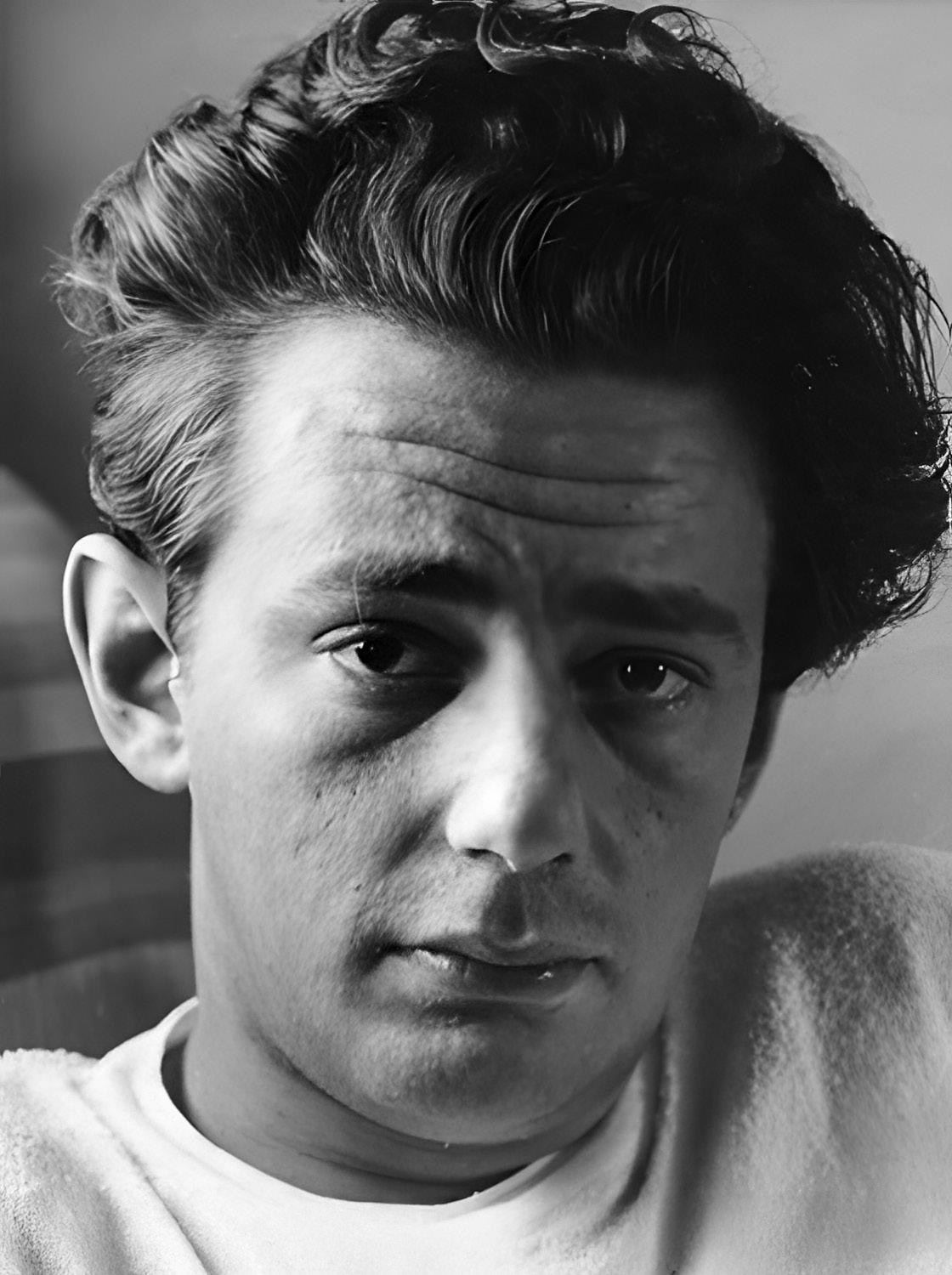
Sometimes rebels are made; other times they are born. Being born an English-speaking Jewish subject of the British Empire in the French-dominant Canadian province of Quebec in 1931, Mordecai Richler was firmly in the former camp.
Blending fluent English and Yiddish skills with very poor French, Richler navigated the thorny terrain of mid-20th century French Canada with wit, nerve and a sense of contrarianism that usually comes from being in both the dominant group and a minority at the same time. Something Albert Camus knew all too well, living as a working-class white Frenchman in French-occupied Algeria a generation before.
Richler’s relationship with organized religion was no more straightforward. His maternal grandfather, Yudel Rosenberg, was a celebrated rabbi and chief rabbi of Montreal, Richler’s hometown, and an accomplished author who published volumes of religious texts and nonfiction books on science and history geared for religious communities. Young Richler had no such convictions despite this lineage and the direct influence of his father, Moses Issac Richler. Insisting he was a secularist, though not an outright atheist, Richler nonetheless engaged with themes of religion and Jewish culture in many of his most noted works. His famously sardonic critical eye tempered with the inherent affection of the insider.
College, now Concordia University, an institution now most famous for raucous clashes between Jewish and Muslim students, earning the nickname Discordia as a result.
Quickly growing bored with academics and frustrated with his sometimes difficult relationship with his ultra-religious mother, Richler quit college and moved to Paris in 1950 at age 19, partly inspired by the rebels and misfits of the Lost Generation in the interwar period who managed to make living broke and desperate in a tiny garrison apartment sound romantic.
Studying, writing, skiving and surviving in one of Europe’s major cultural capitals served as an equivalent to the university experience, teaching him more not only about writing, but about life than a lecture hall ever could.
Driven by forces unnamed, Richler briefly returned to native shores in 1952 and took a job at the Canadian Broadcasting Corporation. It was not to last, and Richler soon remembered what he fundamentally could not stand about Québécois culture and was gone again, that time to England, in 1954.
A major shift came when Richler was 15, when separate Canadian citizenship was officially recognized, shifting his national and cultural identity from British to Canadian without any particular action or desire on his part.
As clever as he was iconoclastic, Richler graduated from Baron Byng High School before attending Sir George Williams
It was London that truly unlocked Richler’s literary potential; his first novel, “The Acrobats,” was published the year he arrived. Riding the wave of inspiration, it was followed in short order by the notably gritty realism of “Son of a Smaller Hero” in 1955, making Richler a twice-published novelist before the age of 30.
While not fully explored in his first two novels, Richler’s sharp satire and righteous indignation was put on full display in “A Choice of Enemies.” Published in 1957, the plot follows a community of creatives who flee to England to avoid the
Literature continued
blacklist at the height of the McCarthy era, only to find an even worse sort of tribalism and back-stabbing amongst their own ranks.
Two years later came Richler’s best-known novel, “The Apprenticeship of Duddy Kravitz” (1959). Adapted into a film featuring a very young Richard Dreyfuss in the title role, the subversive plot follows the various scams and cons of a young Jewish Montrealer so he can buy land and be a “someone” in the eyes of his grandfather who grew up in an age of aggressive Jewish displacement.
Richler’s best-known novel, “The Apprenticeship of Duddy Kravitz” was adapted into a film featuring a very young Richard Dreyfuss in the title role.
In full rebel mode by 1963, Richler shocked polite English Canada with “The Incomparable Atuk,” a scathing takedown of growing Canadian nationalism, which he saw as crass, and the horrifically cynical exploitation and commercialization of Canada’s native population and their traditional art forms. The title character is an Inuit soapstone carver who is tempted “down south” to sell his art to blithe liberals with disastrous results.
Past the point of pulling punches, Richler’s 1968 followup, “Cocksure,” caused a firestorm, many calling it “obscene” as well as culturally iconoclastic, many glossing over the fact that Richler was Jewish himself, burning the rule book on English language literature in Canada and delivering a Molotov cocktail of the most hot-button elements of the 1960s including racism, anti-semitism, sexuality and the complexities of early affirmative action, written with a bluntness and cynicism to make Anthony Burgess blush. Following Mortimer Griffin, a successful and slightly sexmad Anglican Canadian publisher, the plot explores the possibilities of not being Jewish in the context of the late1960s entertainment industry.
While in London, Richler worked as a journalist for London- area newspapers, resulting in his first collection of nonfiction, “Hunting Tigers Under Glass: Essays and Reports,” also in 1968. Both “Cocksure” and “Hunting Tigers Under Glass” won the Governor General’s Award in Canada, even though Richler no longer lived there. Despite this, many critics disregarded “Cocksure” as a jape or provocation, and it was banned from certain stores in England like WH Smith. With Canada, particularly Montreal, still very much on his mind, Richler wrote two books set on St. Urbain street where he grew up. First came the short-story collection “The Street”
in 1969. Largely returning to the grit-lit realism of earlier work like “Son of A Smaller Hero” and even “Duddy Kravitz,” it largely lacks the overt satirical venom of some of his more incendiary work. He then returned to form with “St. Urbain’s Horseman” in 1971. A spiritual successor to “Duddy Kravitz,” the plot follows Duddy’s schoolmate, Jake Hersh, 20 years after the events of the first novel, when Hersh, now a married filmmaker, is caught up in a sex scandal and the mystery of his Nazi-hunting cousin Joey.
After nearly 20 years in Europe, Richler returned with his wife, Florence, and their children to Montreal and, as Richler once put it, “the roots of my discontent.” Little did he know just how much discontent he was about to walk into... (To be continued.) A
Growing up in the far north, Trevor James McNeil had little to do other than read when the temperature went below 40 Celsius, and he developed an affinity for stories of all sorts. Graduating from the University of Victoria in 2009, he has been reading and writing in a professional capacity since. He lives in a cabin in the woods with his dog, and firmly believes The Smiths would have been better as a trio.

Your Ride to High Holy Days Services is a Phone Call Away
Free door-to-door transportation for older adults 60+ from your home to your synagogue and back!
Serving 51 zip codes.
RSVP by September 7 for Rosh Hashanah services.
RSVP by September 15 for Yom Kippur services.
(858) 637-7320 | www.jfssd.org/OTG

Empowering San Diego Students with Interest-Free Loans
High school seniors across San Diego are preparing to don their caps and gowns, and the excitement of college admissions is in the air. However, with tuition costs rising and interest rates compounding, the dream of higher education can feel daunting for many local families.
At Hebrew Free Loan of San Diego (HFLSD), we believe financial barriers should never stand in the way of a student’s potential. Our mission is rooted in the Jewish value of Tzedakah — providing interest-free loans to members of the San Diego Jewish
community who need a “hand-up”. By offering interest-free student loans for undergraduate, graduate and vocational school, we allow our community’s future leaders to focus on their studies rather than mounting debt.
One local student, Sarah, shared how HFLSD changed her trajectory: “I was working two jobs and still coming up short for my final year of nursing school.
HFLSD gave me the peace of mind to finish my degree without the weight of interest. I graduated knowing I could start my career helping others, rather than just serving a debt.”
If you or a loved one are navigating financial challenges, visit hflsd.org. Together, let’s make sure every student can accomplish their dreams.
Glickman Galinson Early Childhood Center
Nierman Preschool & Shalom Baby Infant Care Center
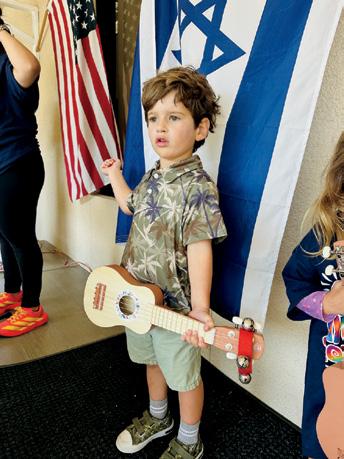
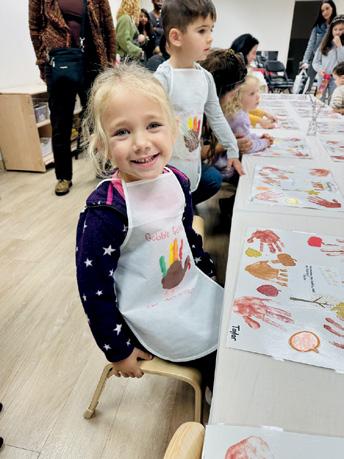
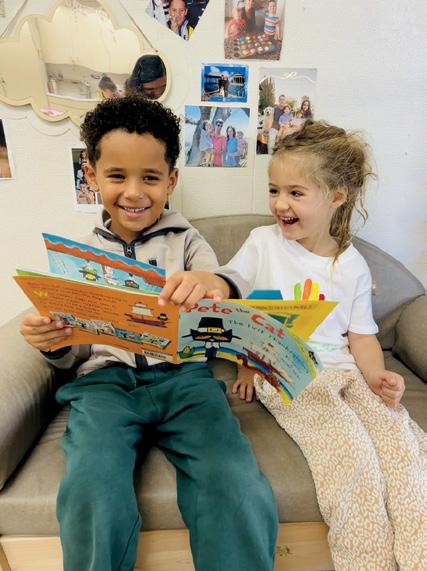
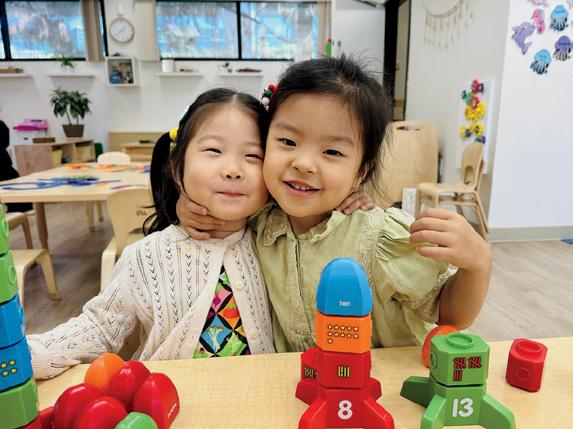
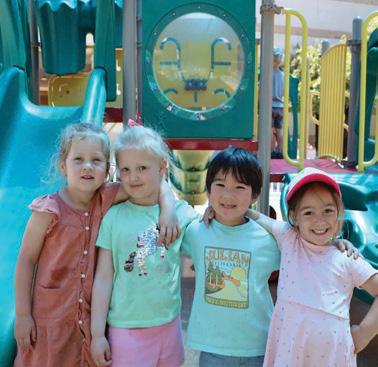
In our Glickman Galison Early Childhood Center, Jewish learning is alive in language, celebration, and friendship Children thrive in Spanish immersion, mark our holidays with joy, and learn welcome through cultural exchange.
Why Choose Nierman?
Integrated learning approach, balancing child-led exploration with teacher-guided activities
Screen-free classrooms for hands-on learning and exploration
Weekly Havdalah & Shabbat, Jewish holidays & values Strong family-school partnership
JCC Membership included access to gym, pool, family events & more

What We Can Learn From Butterflies
by Makayla Hoppe
Pavel Friedmann wrote “The Butterfly” when he was 17 years old. Two years later, he was killed at Auschwitz. Over 80 years later, his writing fills museums, classrooms, books and more with his haunting search for color amidst the darkness. It is this poem that helped inspire The Butterfly Project, a nonprofit organization from San Diego that strives to educate kids today about the children killed in the Holocaust.
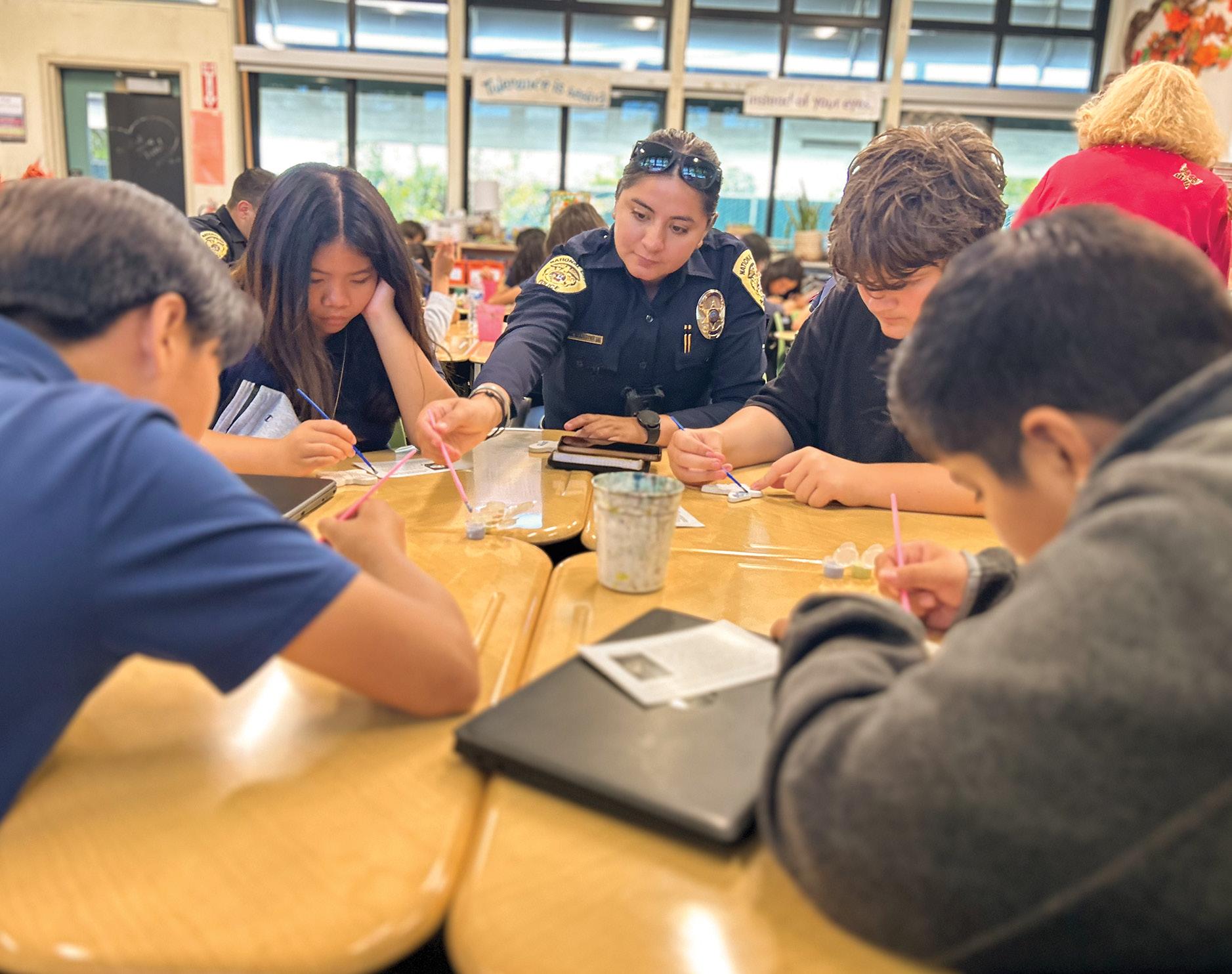
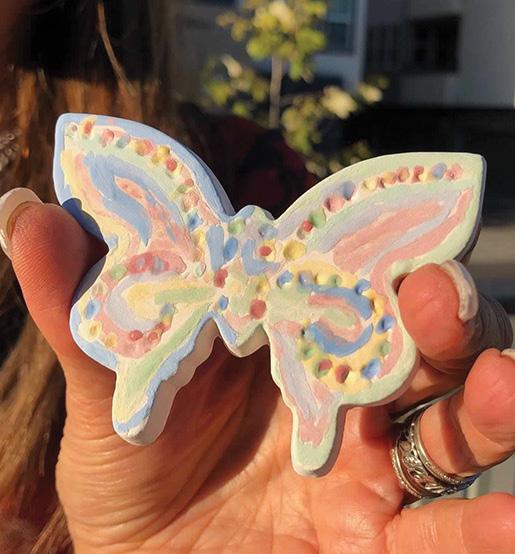
San Diego Jewish Academy educator Jan Landau and artist Cheryl Rattner Price were searching for a way to deliver a “gentle and effective approach to teaching a difficult topic.” Children of all ages are given ceramic butterflies to paint, with the goal of making 1.5 million. “The Butterfly Project’s lessons are based
on oral histories, film, literature and the expressive arts designed to cultivate empathy and resilience.”
Spreading the Word
The organization was launched in 2006 and has reached all corners of the globe with its messages, memorialization and honoring of survivors. Since its inception, kids have painted almost 470,000 butterflies, and the program has traveled to all 50 states and 27 countries.
“I happily stepped in to coordinate The Butterfly Project in Germany,” said Nicole Nocon, a journalist and TBP Ambassador in Cottbus, Germany. She stated in a blog post: “I bought clay and cookie cutters and started making butterflies at my kitchen table.
Volunteers offered their help and soon, with The Butterfly Project’s guidance, we could send butterfly kits, including glazes, brushes and biography cards, to other schools in Germany so that they could become member schools of The Butterfly Project.”
A Lasting Impression
The kits available for purchase include all necessary items; you just need a kiln. Prices range from $80 to $600, depending on group size and whether it is a school or community activity. Subsidies are available for educators who need financial assistance. The organization offers resources to find local kilns, including pottery studios, community colleges and more.
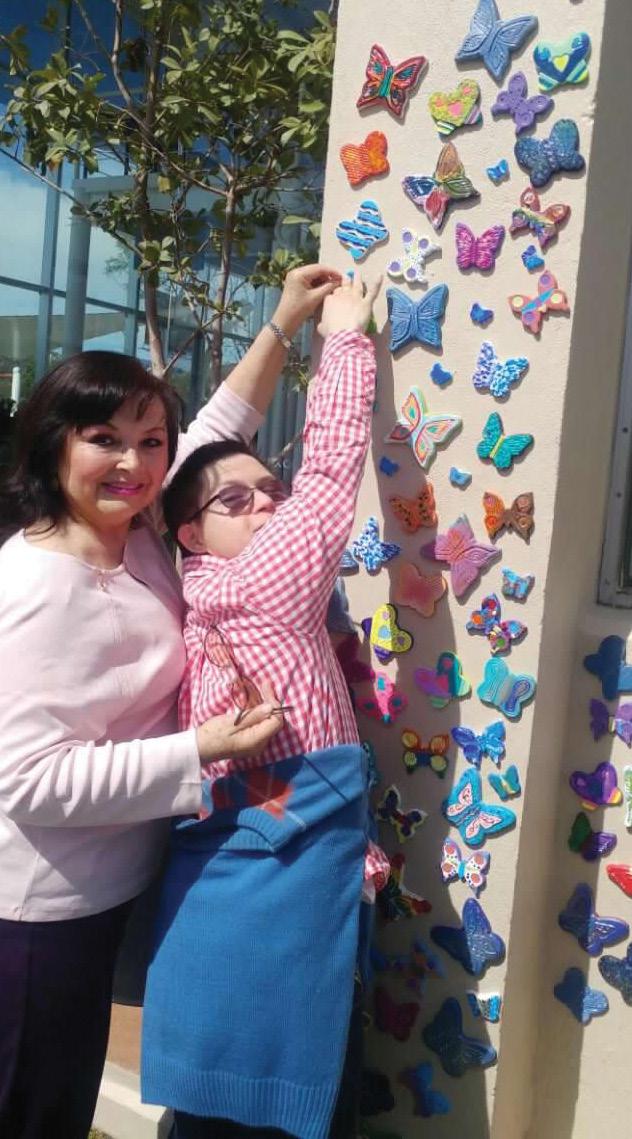
TBP encourages creating permanent installations to continue conversation about the Holocaust.
“When individuals share a common artistic journey, as in this program, collective responsibility can be gained, helping the community to more effectively stand up to injustice, hatred and racism,” it says on the website.
“We are here to coach you through the process, and the memorial installations are a permanent legacy for a more peaceful world.”
The Big Screen
In 2012, the project began to work on a documentary. “NOT The Last Butterfly” follows survivor Ela Weissberger z”l as she recounts her time at Terezin, a ghetto in the Czech Republic. She was given strength during her time at the Terezin thanks to secret art classes taught by Friedl Dicker-Brandeis, who managed to hide 4,500 children’s drawings in two suitcases.
The film was co-produced and co-directed by Cheryl Rattner Price and Joe Fab. TBP was inspired in part by Joe’s previous film, “Paper Clips,” which documented a Tennessee school’s effort to collect 6 million paper clips to represent every person killed.
“The essence of The Butterfly Project is to teach and connect us all while creating something of lasting beauty and dignity,” said Cheryl in an interview with BroadwayWorld. “It has been a dream come true to see how the magic of film can create an even bigger ripple effect of remembrance and hope.”
The Power of Art
It’s not just about 470,000 butterflies being painted. It’s 470,000 children learning about the Holocaust through art education. The Butterfly Project will continue to teach kids for many more years through a powerful yet gentle approach to history, giving meaningful installations, murals and more to the world. A
Visit thebutterflyprojectnow.org to learn more about bringing butterflies to your community.
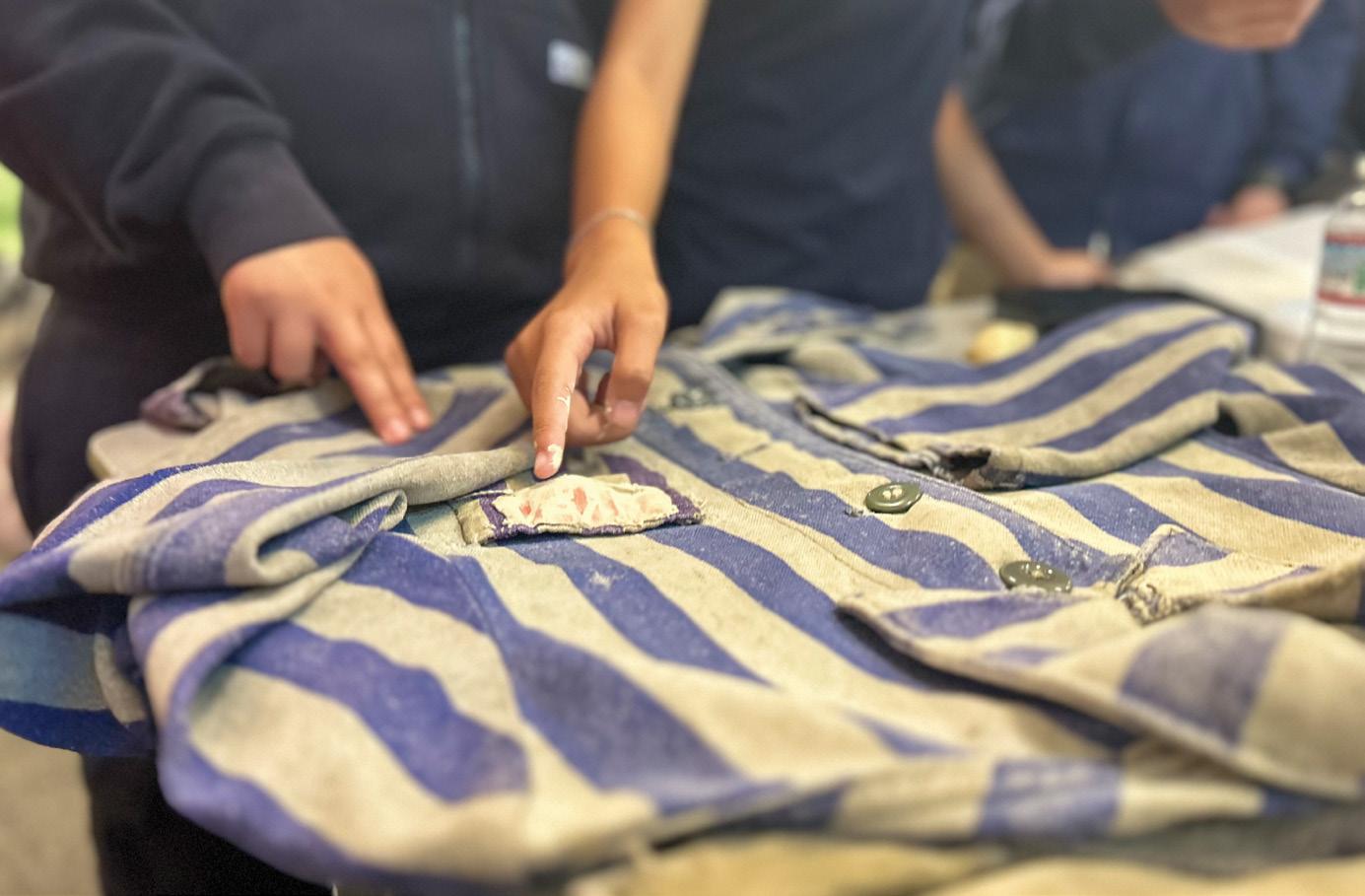

The Butterfly
by Pavel Friedmann June 4, 1942
The last, the very last, So richly, brightly, dazzlingly yellow. Perhaps if the sun’s tears would sing against a white stone...
Such, such a yellow Is carried lightly ‘way up high. It went away I’m sure because it wished to kiss the world goodbye.
For seven weeks I’ve lived in here, Penned up inside this ghetto But I have found my people here. The dandelions call to me And the white chestnut candles in the court. Only I never saw another butterfly.
That butterfly was the last one. Butterflies don’t live in here, In the ghetto.


Sparking Social Justice
by Susan Edelstein
Encountering, dealing with, thinking about antisemitism is difficult for everyone, but especially so for kids. And what is the best way to deal with misinformation, false tropes, hostility? Through education. Many of those espousing antisemitic sentiments lack history, understanding, truth. To educate those uninformed and misinformed is to give them the tools to think clearly, separate fact from falsehood, and communicate with honesty. To teach the history of the Holocaust to children is to enlighten them to the dangers of antisemitism, and more importantly, how to respond to it.
A brand new way to learn about the Holocaust is through Spark Interactive.
This is a mobile classroom that brings the lessons of the Holocaust directly to San Diego schools. Launched just this year, it is an immersive, interactive experience with lessons geared to middle and high school students that will travel to schools in the San Diego, Poway, Carlsbad, Sweetwater and San Dieguito Unified School Districts. The Spark Interactive is a museum on wheels traveling to meet the kids where they are and offering state of the art, interactive technology and digital artifacts connecting the students with the voices and stories of San Diego’s Holocaust survivors. Engaging in these 90 minute classes or all day “field trips” goes beyond books; students are immersed in history
that becomes relevant and personal. Spark Interactive has the potential to build young citizens who feel empathy and moral conviction, who have the skills to recognize both truth and false information.
Spark Interactive is being launched by San Diego philanthropist Lee Goldberg through her Legacy of Light Goldberg Institute for Holocaust Education. Lee remembers experiencing painful antisemitism while growing up while at the same time the stories of the survivors were an integral part of her childhood. Lee believes in “...the importance of Holocaust education especially in light of all that’s happening today. Only by learning from the past can we inform


the present and the future.” The lessons of Spark Interactive teach ethical responsibility and social justice.
“It’s never been done in San Diego — this is a first,” said Lee. “As the firsthand voices of the Holocaust begin to fade, this work becomes more important than ever. We have a responsibility to ensure young people understand this history — not only so they remember it, but so they can recognize injustice and have the courage to stand up for what is right. My hope is that others will join us in this effort, and together, we can begin to change the course of what we are seeing in the world today.”
Spark Interactive will begin traveling to schools this September reaching more than half of the county’s middle and high school students, and as it grows, tens of thousands of students will have access to this learning experience. “When I talk to students — especially high school students — they consistently tell me
As the firsthand voices of the Holocaust begin to fade, this work becomes more important than ever.
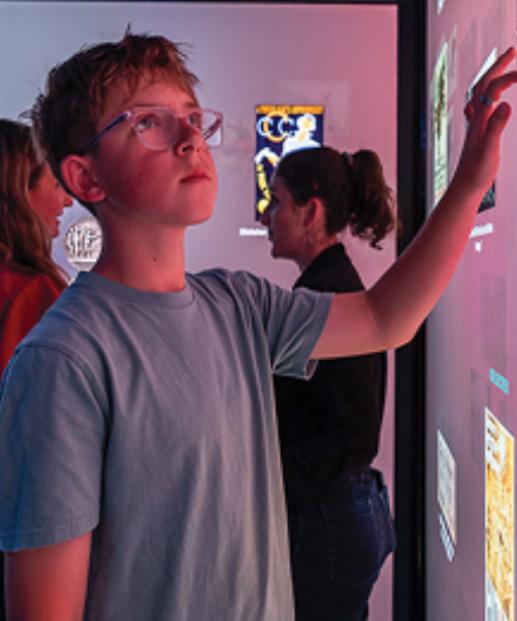
they want learning to feel relevant,” said Dr. Fabi Bagula, superintendent of the San Diego Unified School District. “They understand the importance of history, but they also want to connect it to the world they’re living in now. Experiences like this take learning beyond the classroom. Instead of sitting with a textbook, students are able to move, engage and interact. That’s what makes it meaningful and memorable.”
The goal is that Spark Interactive will lead to “deeper understanding via testimony and truth, critical thinking skills including the ability to recognize misinformation and examine moral choices, and the responsibility and action required to challenge bias and stand against antisemitism and all forms of hate.” A
Schools and community partners interested in hosting Spark Interactive can learn more at legacyoflightsd.org.
Photo: Alejandro Tamayo
Explore Jewish Education
AT BETH ISRAEL
To learn more, visit: cbisd.org/lifelong/learning • 858–535–1111
BILL & SID RUBIN PRESCHOOL INFANT/TODDLER CENTER
3 months – 5 years
LEE & FRANK GOLDBERG FAMILY RELIGIOUS SCHOOL
Pre-Kindergarten through Grade 12
ADULT EDUCATION
Explore our wide range of adult Jewish learning opportunities open to everyone!
9001 Towne Centre Dr., San Diego, CA 92122 www.cbisd.org
RSVP by September 7 for Rosh Hashanah services.
RSVP by September 15 for Yom Kippur services.
(858) 637-7320 | www.jfssd.org/OTG


Free door-to-door transportation for older adults 60+ from your home to your synagogue and back! Serving 51 zip codes.
A Timeless Love Story: Our Relationship With the Creator
by Rabbi Yeruchem Eilfort
The conclusion of the Jewish calendar year coincides with the conclusion of our yearly cycle of reading the Torah. Lessons found in the Book of Deuteronomy (Devarim), the fifth and final installment of the Five Books of Moses, known as the Chumash in Hebrew, are the perfect messages we need to hear and learn as we prepare to stand before the Almighty in judgment during the impending High Holidays.
The Book of Devarim is unique. While it certainly rehashes some of the most important parts previously mentioned in the Torah, it also adds a lot of new information. Students of Torah will point out that the ‘tone’ of this book differs from the previous books, in that the voice of Moshe Rabbeinu, Moses our teacher, is more emphasized and keenly felt. There is more of a ‘human element’ in Deuteronomy. Moses refers to himself in the first person, as opposed to the third person references previously encountered.
Many scholars view this book as Moses’ last will and testament to his beloved people, the Children of Israel.
What messages were conveyed?
It is certainly true that the Jewish failures during their journey through the desert are alluded to and used as learning tools (teaching us what NOT to do). To me, the most dramatic lesson is the powerful love G-d expresses for the Jewish people. Moses, the ultimate prophet, teacher and leader of the Jewish people, continually reminds his people to love and stay true to G-d, while he continually reminds them that G-d loves them. The expression of this love is powerful, beautiful, and inspiring.
In the beginning of the Book of Deuteronomy (Chapter 1 Verse 11) we read, “May G-d, G-d of your forefathers, add to you a thousand times as many as you are! May He bless you as He spoke concerning you.”
Think about it. If that is not a strong testament of G-d’s love for His people, I don’t know what is. G-d loves us so much that he wants more of us. Imagine telling one’s spouse, “I love you just the way you are.”
What are we to do with this love?
Human nature dictates that we reflect love. When someone loves us, we love them back. When we contemplate the message of this particular passage, it will cause the naturally occurring love for the Almighty within us to flourish and grow exponentially. We will find ourselves meditating upon the Creator’s involvement in our lives, which of course enhances that involvement.
When the G-dly love quotient rises to such a level, it helps us achieve more in every aspect of our divine service. Much like a newly married couple who are (almost) completely focused on their spouse, our conscious thought becomes immersed and enveloped by the Divine Presence. Occasionally, we are blessed to see such a person, who clearly “Walks with G-d.” An aura is exuded that lights up his surroundings and uplifts all around him.
Can there possibly be a better way to enter the High Holidays, the Days of Judgment?
This process allows us to enter the High Holidays filled with anticipation and terrific confidence. At the beginning of Deuteronomy, this emotional development starts; it then grows as we progress throughout the last several weeks leading to the High Holidays. Let us all resolve to internalize these teachings and make the most of our potential! A
Rabbi Yeruchem Eilfort co-directs, with his wife Rebbetzin Nechama Eilfort, Coastal Chabads, Chabad at La Costa, Encinitas, and Carlsbad North where everyone, regardless of level of knowledge or observance, feels cherished and loved. Rabbi Eilfort welcomes and encourages comments and questions: rabbie@chabadatlacosta.com.

The Instinct to Gather
by Galia Miller Sprung
We were exhausted. Hot. Waiting for our tour leader and the bus from Granada back to the ship. We sat down on a bench where a woman and her teenage daughter were already sitting. The woman turned to my husband, David. “Hi. So where are you from?”
“Israel,” David answered.
“Israel! I went to high school there one year. I loved it.”
“The Muss High School?” we asked, sure of the answer.
“I taught there,” David said.
The woman took a longer look at the man beside her and said, “What’s your name?”
He answered.
“OMG. You were my teacher!” Another Jewish geography moment.
The Instinct to Find Each Other
Why do we play “Jewish Geography” with strangers we meet on a park bench or waiting in line at passport control or to board a cruise?
What is it that drives us to find that Am Yisrael connection? There must be something. It’s more than coincidence; it’s instinct — a pull toward familiarity, toward peoplehood. Israelis who never set foot in a synagogue at home, gather at Chabad in far-away places, and it’s not for the Kosher food. Or they gather in the meeting room of a ship because the daily schedule cryptically announces “Self-led Sabbath services...”
On one cruise during Hanukkah, my friends and I strolled on the pool deck, looking for Israelis. We let them know about the ship’s preparations for a
Hanukkah celebration — announced in English — in the daily schedule. Over 60 Jews/Israelis showed up for the event. We ate freshly baked soufganiyot, latkes and “lit” a battery-operated menorah.
“You light from the left to right,” one man insisted.
“No. From the right!”
“We add from the right and light from the left.”
Same argument every Hanukkah gathering no matter where we are!
We sang the popular Hanukkah songs in Hebrew and in English and stumbled over lesser-known ones — and played more Jewish Geography. On the following Friday’s “self-led” services, so many people crammed into the small meeting room that the ship moved us to the observation lounge. Did we
have actual services? Probably not. We had community. We had familiarity. Yet within that familiarity, we had Jews singing and praying in variations reflecting their backgrounds. We blessed the kosher wine that one woman bought at one of the bars and freshly baked challot.
A Different Kind of Game, 8,000 Strong
This instinct to gather doesn’t only happen on cruise ships — it happens on a global scale. While we were playing the game of Jewish Geography on our latest cruise, 8,000 Jews from 55 countries were gathering in Israel for a different kind of game: the 22nd Maccabiah. Again, why? What compels these athletes to leave their homes, travel thousands of miles, spend thousands of dollars to come to a country in a state of war? The Games aren’t even covered internationally. Yet here they were. And I had been there too, in the 14th and 15th Games, as a tennis umpire. As I made my way to the different courts at the tennis center back then, I heard Hebrew layered with English, French, Spanish and languages I couldn’t place. I was immersed in Am Yisrael, in the warmth of a Friday night family dinner
with relatives you hadn’t seen in years. That first degree of awkwardness was skipped over. We jumped right into the beginnings of friendship, communicating in a hybrid Hebrew–English, sprinkled with words from songs or prayers.
This year, when I saw video clips of these participants marching in the opening ceremony at Teddy Stadium in Jerusalem waving the Israeli flag, I wondered if some of their proud visibility — wearing Jewish symbols, a kippa, Hebrew names on their backs, draping themselves with the Israeli flag — was their only chance to feel safe in their wide-open visibility. I wondered what restrictions they place on themselves when at home, whether that be in the United States, France, Great Britain, Australia, almost any country. I hear from friends and family in the States that they are less open with their Judaism, with their symbols, with attending Jewish or Israel events. I know this could be regional. But it shouldn’t be at all. One of my granddaughters who is studying in New York, wears a large “Chai” necklace. I was talking with her on the phone one day and heard a passerby swear at her. She was unfazed and even more determined to be visible.

We in Israel obviously don’t have that dilemma, but we travel. Choosing itineraries has become a serious business. We rejected every Mediterranean cruise that visited Egypt and Turkey, which eliminated quite a few options. When I looked for a getaway with my daughters recently, we used AI to find countries “friendly” to Israelis. Now there are dedicated websites that rate countries. Despite our vigilance in choosing our destinations, friends warned us: “Don’t wear your Magen David!”
“Don’t say you’re Israeli when people ask where you’re from.”
But I am from Israel, and I’ve been wearing my gold Magen David necklace since Oct. 7. I had no intention of removing my visible identity. But that’s me. My husband wasn’t happy with my necklace and wanted me to wear it inside or turn it around in Barcelona. So, we exercise some caution and continue to travel.
Still Looking for Each Other
Even if we hide our symbols, the part that makes us recognizable to one another doesn’t disappear. We find our fellow Jews even without outer symbols. Our Jewish connection isn’t about what we wear; it’s something we’ve been carrying inside for thousands of years. We seem to gravitate to each other, whether it’s an inner pull to sit on a particular park bench in Granada, or find a meeting room on a ship, or the desire to travel hundreds or thousands of miles to participate in sporting events. Am Yisrael is not just an ideology, it’s a shared, lived experience. We are one People but so spread out around the world that subconsciously we keep searching for the rest of our Family. Wherever we go, we’re still looking for each other. A
Galia Miller Sprung moved to Israel from Palm Springs, California in 1970 to become a pioneer farmer and was a founding member of a moshav in the Jordan Rift Valley. Today, she is a retired high school teacher, a writer and editor. She lives with her husband in Tzur Yitzhak.
AM ISRAEL MORTUARY
✡ Proudly Serving Jewish Families For Over 40 Years.
✡ Family Owned and Operated for Three Generations.
✡ Serving all Jewish Families, Orthodox, Conservative, Reform.
✡ Affiliated or Unaffiliated with a Synagogue.
✡ We can assist with At-need or Pre-need funeral planning. Purchasing cemetery plots or burial arrangements anywhere.
✡ We are here to help, call or email with any questions.
We Are San Diego’s ONLY All-Jewish Mortuary Serving the community for over 40 years. (619)583-8850 6316 El Cajon Blvd., San Diego
Post 385 | San Diego
JOIN JWV
• Connect with Jewish Veterans
• Support Veterans and Active Duty
• Advocate for Veterans Rights
• Combat Antisemitism & Support Israel
• Serve the Community
Proudly
Eleanor Levi – Las Vegas, NV
Ruthlee Rose – San Diego
Nisson Pearl – Encinitas
David Torum – Chula Vista
Robert Artman – La Jolla
Sylvia Rosenberg – Encinitas
Ralph Lazar – San Diego
Marci Sorokin – Bryant, AR
Richard Markson – Santee
Yefim Imas – San Diego
Dora Rothman – San Diego
Samuel Vizgart – Escondido
Rena Zakinova – San Diego
Edith Eger – La Jolla
Alain Avigdor – San Diego
Rosalind Plishner – San Diego
Ella Ginzburg – San Diego
Jeffrey Spiegelman – San Diego
On behalf of AM Israel Mortuary, We extend our condolences to the families of all those who have recently passed. The families of those listed above would like to inform the community of their passing.
AM ISRAEL MORTUARY
We Are San Diego’s ONLY All-Jewish Mortuary Serving the community for over 40 years.
Returning to Roudnice: A Journey to Reclaim a Lost Jewish Community
by Romy Zemer, Sophie Herman, Kiva Saitowitz and Maya Skolnik
A Trip 80 Years in the Making
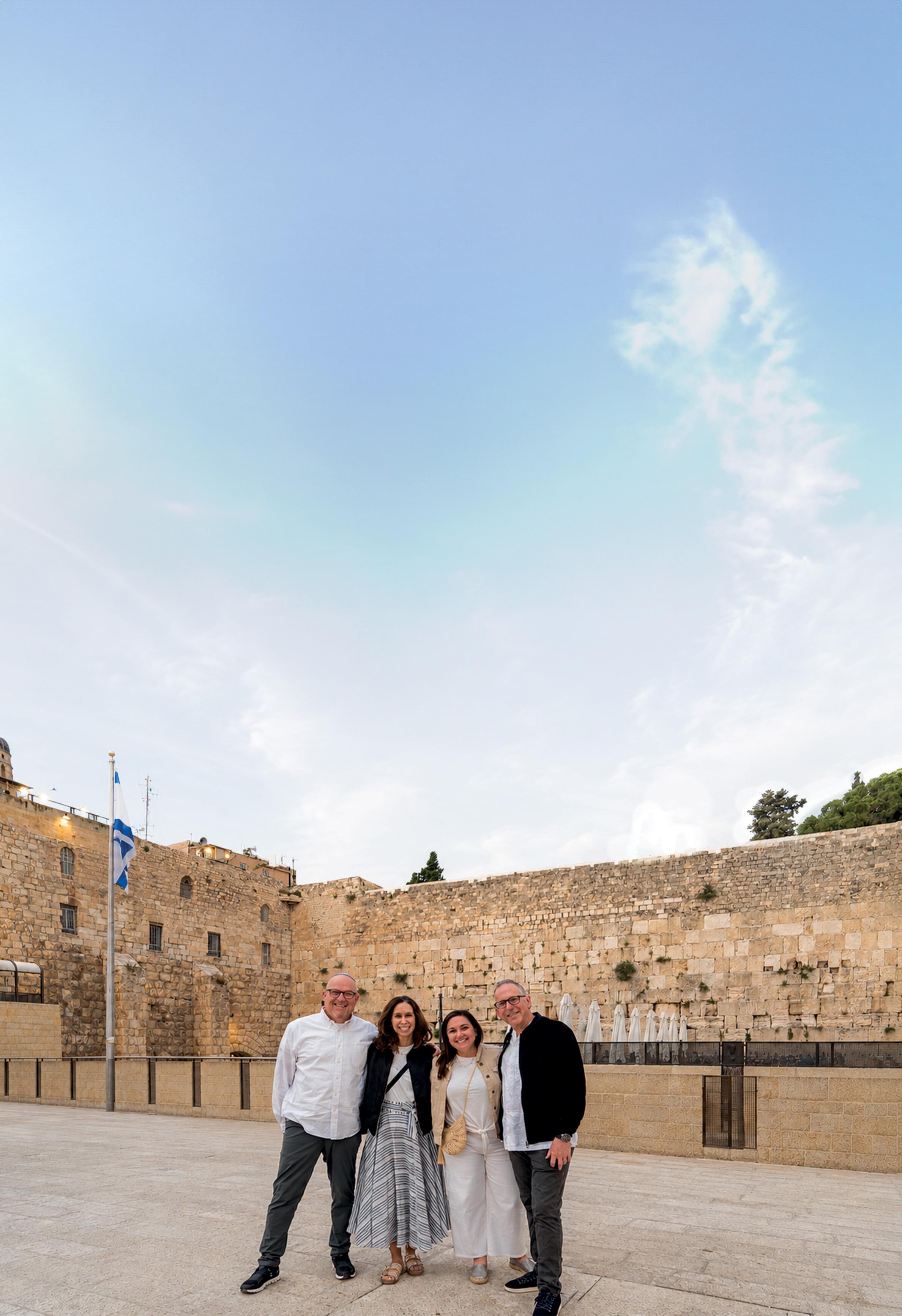
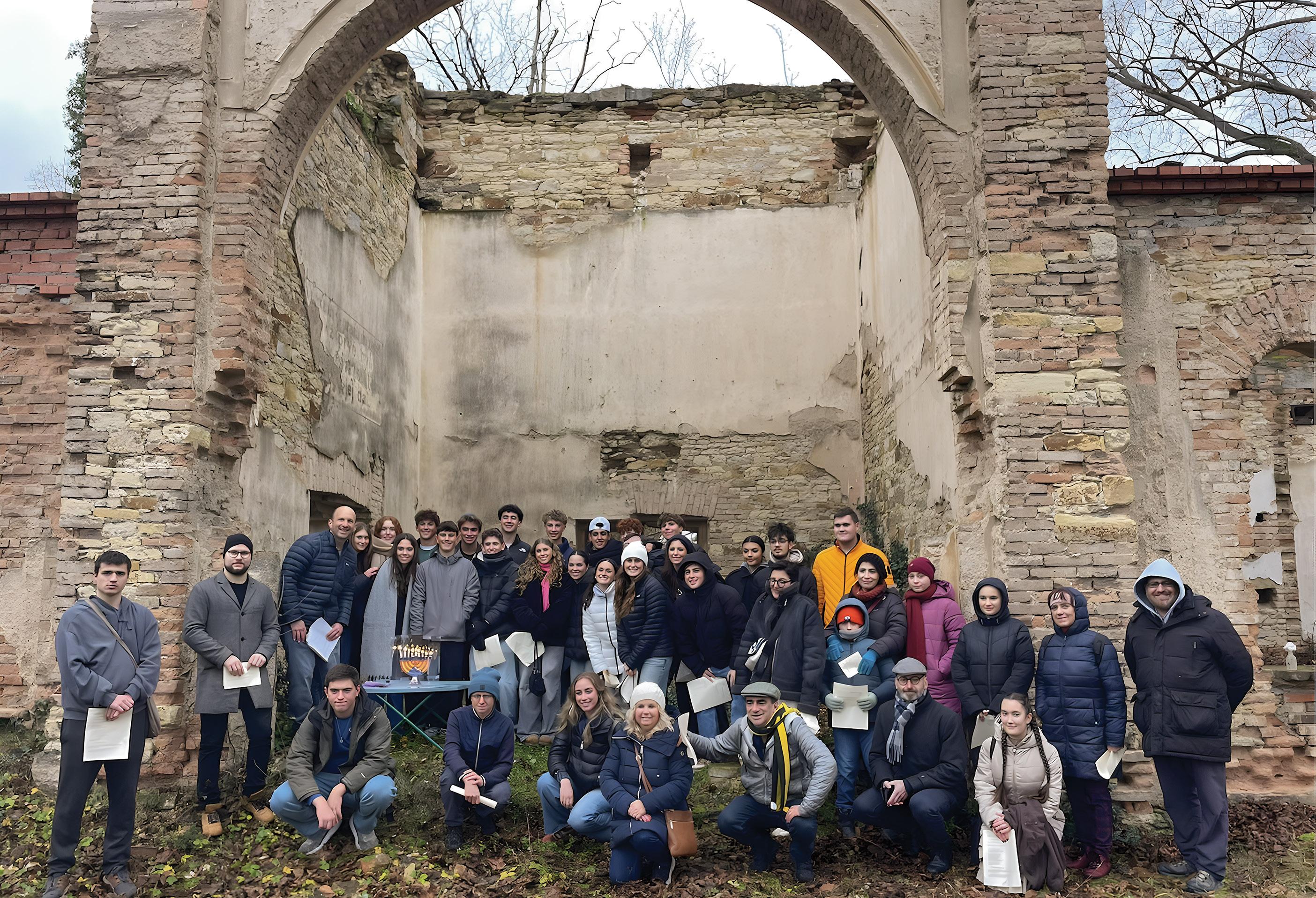
In December 2025, 20 high school students from Congregation Beth Am (CBA), along with Rabbi Matthew Earne and members and staff of CBA, visited Roudnice nad Labem (Roudnice) in the Czech Republic to celebrate Hanukkah. We were the first group of Jewish teenagers to visit the area in over 80 years.
Every other year, our synagogue’s tradition is for upperclassmen to visit Israel during winter break. This year, we were the inaugural group to visit
Roudnice as a stop during the trip. Roudnice is a historically important location for the Jewish Community of CBA as our Holocaust Torah comes from there.
Eager to learn more, a group of nine students created the Roudnice Torah High School Honors Society (RTHSHS), dedicated to learning about the lost Jews of Roudnice. After months of researching, we discovered more about the once-lively and thriving Jewish community that existed before the Holocaust and how CBA was bound
to this town — one of the 14 Torahs from Roudnice is on permanent loan to our synagogue from the Memorial Scrolls Trust (MST) based at the Westminster Synagogue in London. The MST was responsible for rescuing 1564 Holocaust Torahs from the Czech Republic. Additionally, the arch standing outside our sanctuary is a replica of the entryway to the New Jewish Cemetery in Roudnice.
The RTHSHS formed three separate committees: the Memorial Committee,
on next page
working to create a project to honor those who were killed during the Holocaust; the Outreach Committee, focused on connecting our San Diego community with peers from Roudnice; and our Research Committee, focused on discovering information about the lost Jews who once lived there.
Building a Bridge Across the Ocean
To further our connection with the students in Roudnice, we met with teens from the Gymnázium School in Roudnice via zoom to share more about ourselves in advance of our trip. After researching for four months, our group traveled almost 6,000 miles.
In Roudnice, we were able to connect with students at the Gymnázium, their middle and high school, and form connections while exchanging traditions. We played basketball, listened to them play Czech and Klezmer music, and danced together, learning their traditional dances. Comparing our lives in San Diego to those in Roudnice, we reflected that although we had a different way of life, it felt existential to be at their school with them and understand their traditions.
We felt that we had to make an impact, as we were likely the first Jews these high schoolers had ever met. The Memorial Committee focused on the Butterfly Project, which consisted of painting ceramic butterflies with the Gymnázium students where each butterfly represented a Jewish child from Roudnice lost in the Holocaust. Those butterflies now form a display in the Gymnázium hallways as a way to honor and remember the Jewish community that once existed in Roudnice before the Holocaust.
Among the Tombstones
Afterward, we walked around town and visited both the Old Jewish Cemetery and the New Jewish Cemetery. The Old Jewish Cemetery was extremely overgrown, with tombstones covered in moss and dirt. We felt that it was very sad that the cemetery was not kept
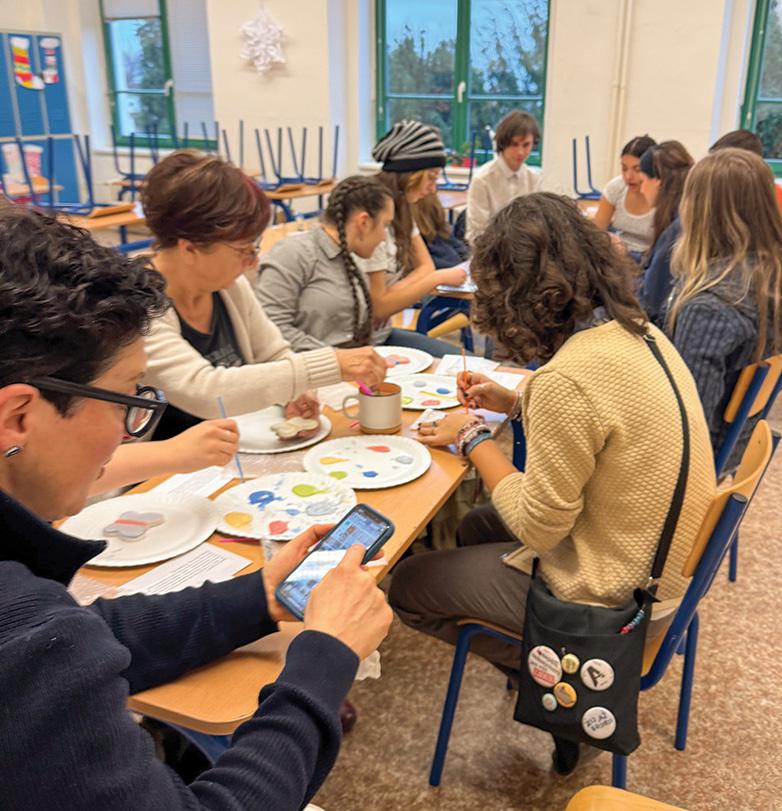
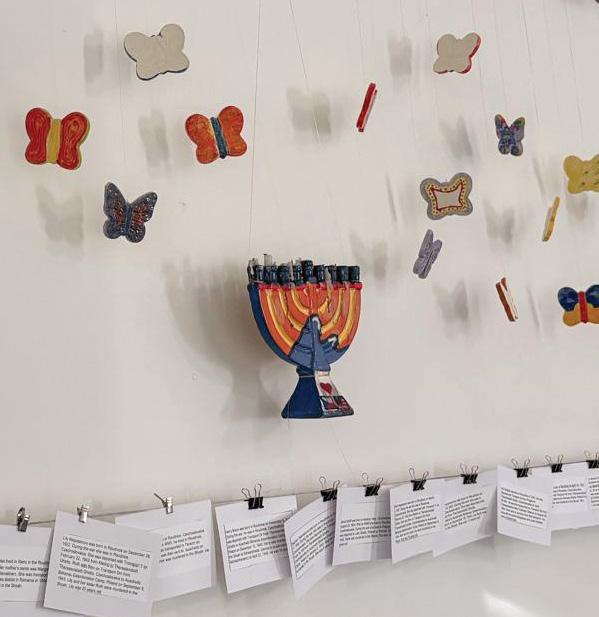
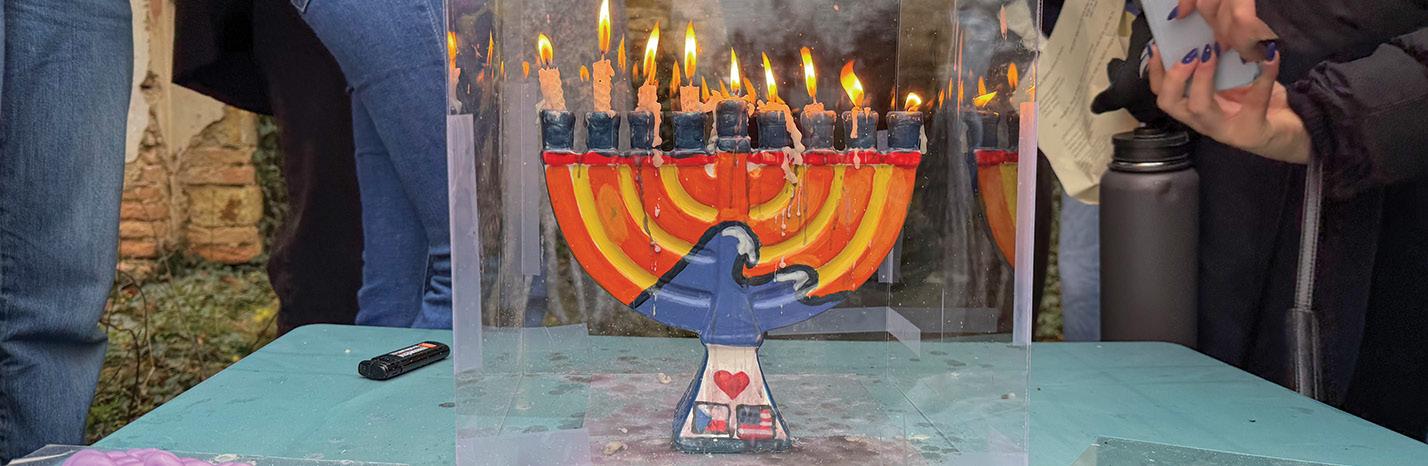
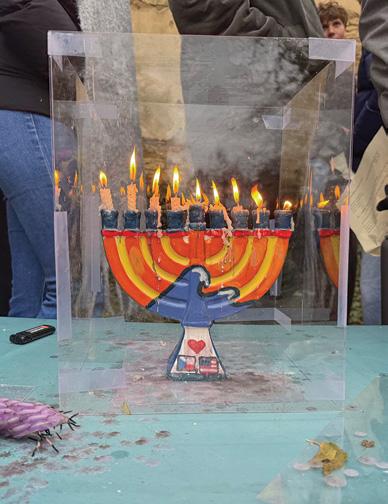
and maintained because we honor the dead very much in Judaism. At the New Jewish Cemetery, the RTHSHS held a Hanukkah menorah lighting service to honor the lost Jews of Roudnice. Being able to light all eight candles on the last day of Hanukkah beneath the original archway that our synagogue commemorates was truly a special moment for all of us. One student shared, “It made me feel more connected to my synagogue and the origins of a very important part of our community.”
Terezín: Confronting the Past
Later that day, we stopped at Terezín, the ghetto where the Jewish people from Roudnice were forced to live in terrible conditions before being sent to concentration camps during the Holocaust. Terezin was created as a form of propaganda, purporting to show what the Nazi camps looked like, but without showing the harsh realities of what actually occurred there. While walking through Terezín, we felt devastated, conflicted and emotional — it was a place that held the memories from our people.
We continued our journey to Eretz Israel to learn more about the Jewish homeland.
From Loss to Living Legacy
Upon our return, the RTHSHS planned to continue to commemorate the lives of the Jews who were lost during the Holocaust. Whether this is researching the lost Jews of Roudnice or continuing to create more services to honor those individuals who did not have the chance to read from the Roudnice Torah. In reflection, many students experienced a contrast visiting both Roudnice and Israel — Roudnice was a place where the Jewish community had been wiped out and forgotten, while Israel is a place where Jewry thrives to this day.
Our journey doesn’t end with us visiting Roudnice; that’s just where it begins. A
Sophie Herman, Romy Zemer and Kiva Saitowitz are all rising seniors at Torrey Pines High School in San Diego. Maya Skolnik is a rising senior at San Diego Jewish Academy. All plan to study at a four-year university after they graduate from high school.



Children ages 9 months to 6 years
Proven Montessori Method and Philosophy
Bilingual Program: English & Spanish
Learning through hands-on experience
Integrated secular and Judaic curriculum
Skilled teachers, trained in early childhood development
Secured, state-of-the-art facilities


As Nolan Revives ‘The Odyssey,’ a Scholar Links Homer and the Hebrew Bible
by Andrew Silow-Carroll
Even before its release, buzz over Christopher Nolan’s film adaptation, “The Odyssey,” is introducing a new generation to Homer’s tale of shipwrecks, monsters, gods and the long road home. But what does an ancient Greek epic have to do with Jewish readers — or with the Hebrew Bible?
Quite a bit, says Jacob Howland, a philosopher and classicist who has spent much of his career exploring what has been called the conversation between Athens and Jerusalem. Howland has written extensively on the Greeks, the Hebrew Bible and the Talmud for Mosaic, the online magazine of the conservative Jewish think tank and educational philanthropy Tikvah.
In the first of a recent series of essays on the “Odyssey” for Mosaic, Howland asks, “Should Jews Read Homer?” His answer, no surprise, is “yes”: The “Odyssey” and the Hebrew Bible, he writes, “illuminate the enduring questions of human life, including how to bring order and common purpose to the otherwise chaotic relationships between men and women, fathers and sons, familiars and strangers, clans and nations.”
To recap: The “Odyssey” follows the Greek hero Odysseus (Matt Damon in the film) on his 10-year journey home after the Trojan War. Delayed by storms, nymphs, temptations and the whims of the gods, he survives encounters with
the Cyclops, the Sirens and the sorceress Circe before finally returning to Ithaca. There, disguised as a beggar, he reunites with his faithful wife, Penelope (Anne Hathaway), and son, Telemachus (Tom Holland), and (spoiler alert) reclaims his kingdom from the suitors who have overrun his household.
As Nolan’s blockbuster brings Odysseus back into the cultural conversation, we spoke with Howland about what Homer and the Bible have in common, how they differ and why both epics are at the center of the conservative discourse around “Western civilization.”
The following is condensed and excerpted from Silow-Carroll’s conversation with Jacob Howland.
Matt Damon plays Odysseus in Christopher Nolan’s film adaptation of Homer’s “Odyssey.” (PHOTO: Melinda Sue Gordon/Universal Pictures)
Abraham & Odysseus
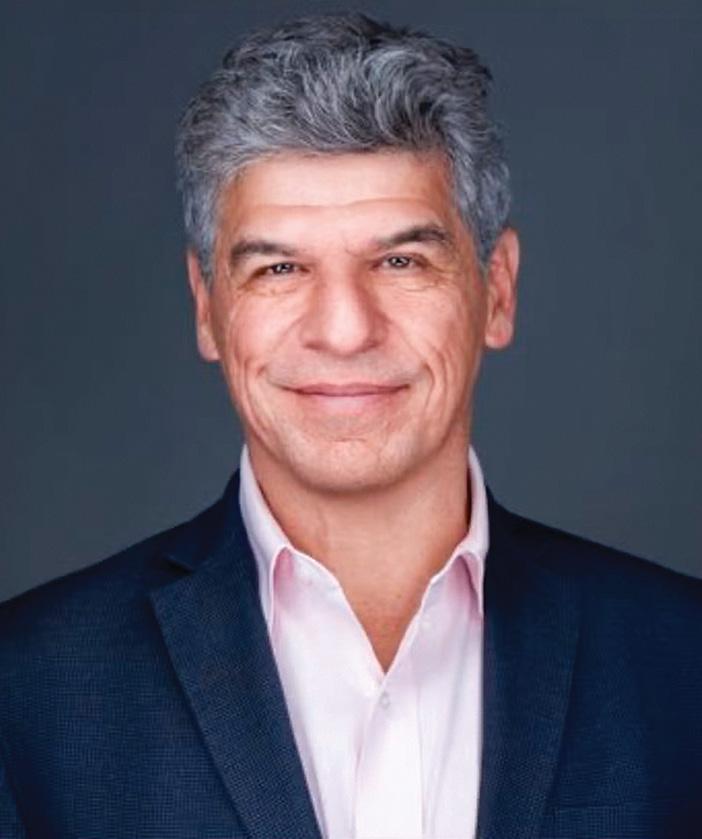
Jacob Howland, currently a distinguished visiting professor in the School of Civic Leadership at the University of Texas, is the author of “Plato and the Talmud” and numerous articles about rabbinic Judaism and Greek philosophy.
(Photo courtesy Jacob Howland)
Athens and Jerusalem are the two oldest, greatest roots of Western civilization. Those two are a coiled spring, a tension from which the West itself grows. These texts, if we look at their fundamental view of the world, pose a question we have to decide for ourselves — and in some sense the future of our civilization depends on how we decide it.
Fundamentally, trust in G-d — trust that there is an Almighty Creator who has fashioned a world habitable and suitable for human beings, and who will support them if they trust in Him. It’s not that the Hebrews didn’t know reality is wounding — it’s that there’s something above that wounding reality. It’s not that the Jewish tradition doesn’t understand realpolitik. Abraham is a great warrior as well as a man of G-d. They understand it. But the starting point is trust. Odysseus does not trust. Odysseus is a man of disguises, cunning, cleverness — leveraging every trick.
Now, this begins to get at the real difference between the “Odyssey” and the Bible. After the universal history of Genesis 1 through 11, we get to the patriarchs. G-d is, in effect, saying: All right, I’m going with this guy Abraham — and remarkably, astonishingly, He says, “Come with me, leave your ways and customs behind, leave your gods, leave your family — we’re just going to go.” At that point, you’re dealing with G-d’s desire to form community, starting
with a family, and it builds from there. Odysseus, by contrast, wants to get back home, but he’s a loner, a man of pain who must endure the world’s harsh reality to find fulfillment. So Odysseus has two competing desires. One is to make his name — to achieve glory and fame through his exploits. The other becomes: I have to get home.
Goliath & The Cyclops
The David and Goliath scene is fantastic, because Goliath is a Philistine, and the Philistines came from the Aegean — probably Greek speakers, though some think Crete. So Goliath, in effect, is a Greek. He’s described as enormous, fantastic — and he’s bested by David. David killing Goliath is a version of what scholars of myth call the “wily lad” story — another version is Odysseus with the Cyclops, another big, bad opponent. Interestingly, David hits Goliath right in the middle of the forehead, which is where, on Greek vases, the Cyclops’ eye is depicted.
So Goliath is big and bad, and Saul says, “You have to wear my armor.” David says, “No, I’m not going to do that.” David trusts in the Lord. When Odysseus defeats the Cyclops, he says, in effect, “I did this — I am Odysseus.” David says, “No — I trust in the Lord; the Lord protects me.”
So to sum this up: The Jewish hero is vulnerable and trusts in G-d; the Greek hero can show no vulnerability and can
only trust in himself. And yes, there’s Athena and the other gods, but the Greek gods are fickle.
Jerusalem & Athens
So — is the Jewish tradition superior? I think so, and especially for today, because of our circumstances. The United States was at its height after World War II, and now our institutions are collapsing. What do we need? Trust. We need to rebuild. So if you ask which tradition is better, here’s one criterion: What’s the advantage of trust? It’s a kind of youthfulness, a kind of fertility, a kind of generativity — the capacity of the Jews to rebuild what’s been broken, to regrow, to reestablish themselves at every civilizational crisis, is unparalleled in history. The Greeks have a parallel of sorts — there’s a capacity to find a new way forward there too. But it seems to me what we need today is trust — because people are withdrawing their energy from the task of mending the world, because they don’t want to invest their time, energy and hope in something they believe might fail.
If we’re going to save Western civilization, which I do think is in crisis, we need to renew ourselves by looking to the Jewish tradition in particular. I’m horrified by the antisemitism I’ve seen building on the left, now mirrored on the right. Young people in particular are being memed into antisemitism.
It does seem to me that the only way forward is to keep having these conversations — to say, here’s what we’ve inherited, here’s how these texts have shaped who we are as Americans, how we understand things, even if you’re a staunch atheist, the Bible has shaped your thinking about all of this. Only then can we get to a point where more people than just the Jews might say, “Your Christian nationalism, which imagines Christianity came out of nowhere with no real relationship to the Jews except rejection, is fundamentally ill-informed and destructive.” A
Andrew Silow-Carroll writes for JTA News and SDJJ.
Local Arts
BY EILEEN SONDAK
SAN DIEGO JUNIOR THEATRE
juniortheatre.com
San Diego Junior Theatre is showing off its theatrical prowess with “Les Misérables School Edition.” This version of one of Broadway’s most memorable musicals is challenging the talented young thespians with its brilliant story of compassion and redemption and its magnificent score. Don’t miss this theatrical treasure during its stay in Balboa Park through Aug. 9.
NORTH COAST REPERTORY THEATRE
northcoastrep.org
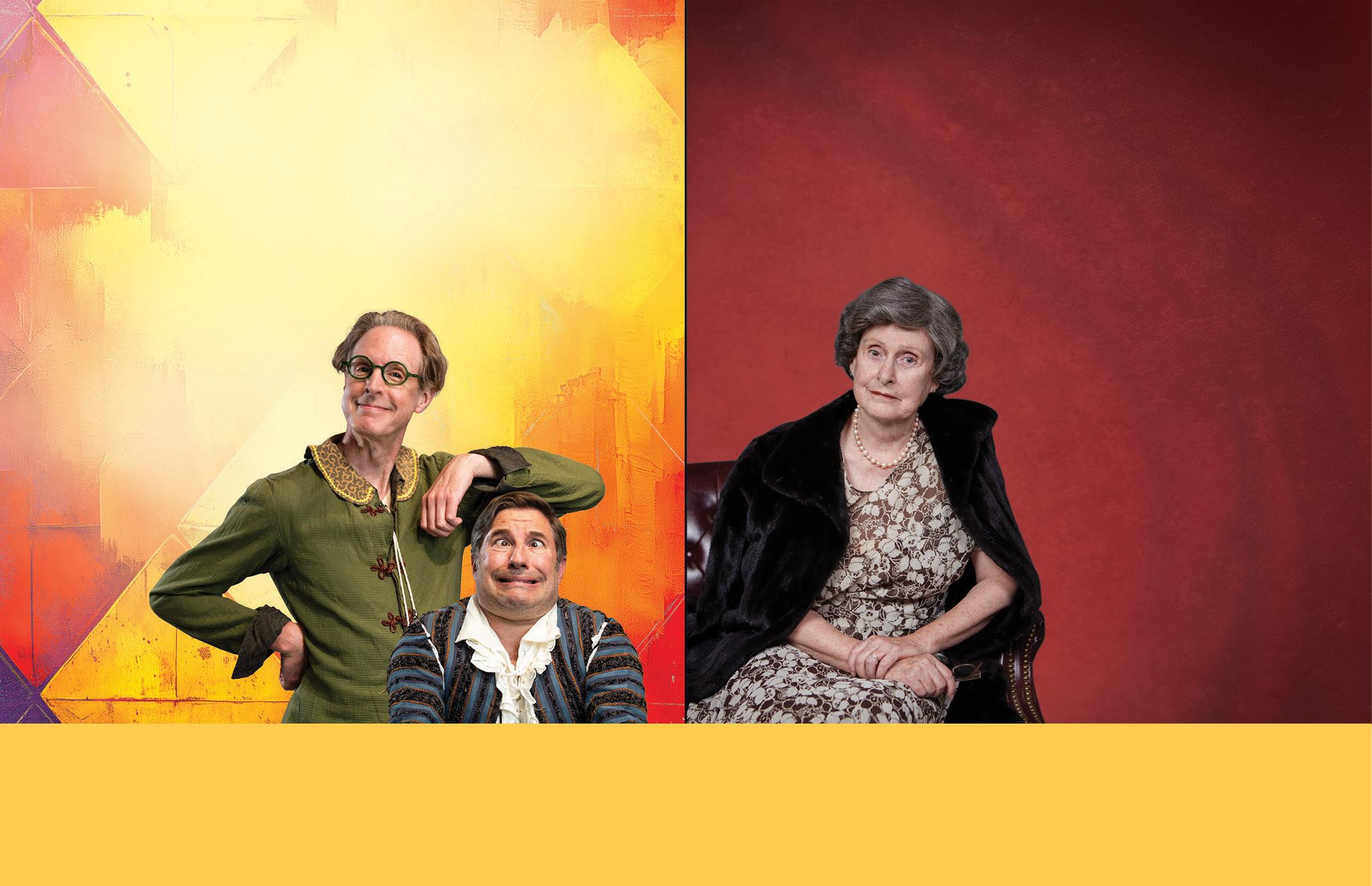
North Coast Repertory Theatre is ending its season on a high note with “Scapin,” a play co-written by the talented Bill Irwin. Adapted from Moliere’s classic, this modern take on the commedia dell’arte is a ribtickling crowd-pleaser with theatrical surprises galore. The show will be on stage through Aug. 23
Fortunately, NCR has one more treat in store for local audiences. “Eleanor,” an exploration of the public and private side of this amazing First Lady, will be on the boards Aug. 27 through Sept. 6
LAMB’S PLAYERS THEATRE
lambsplayers.org
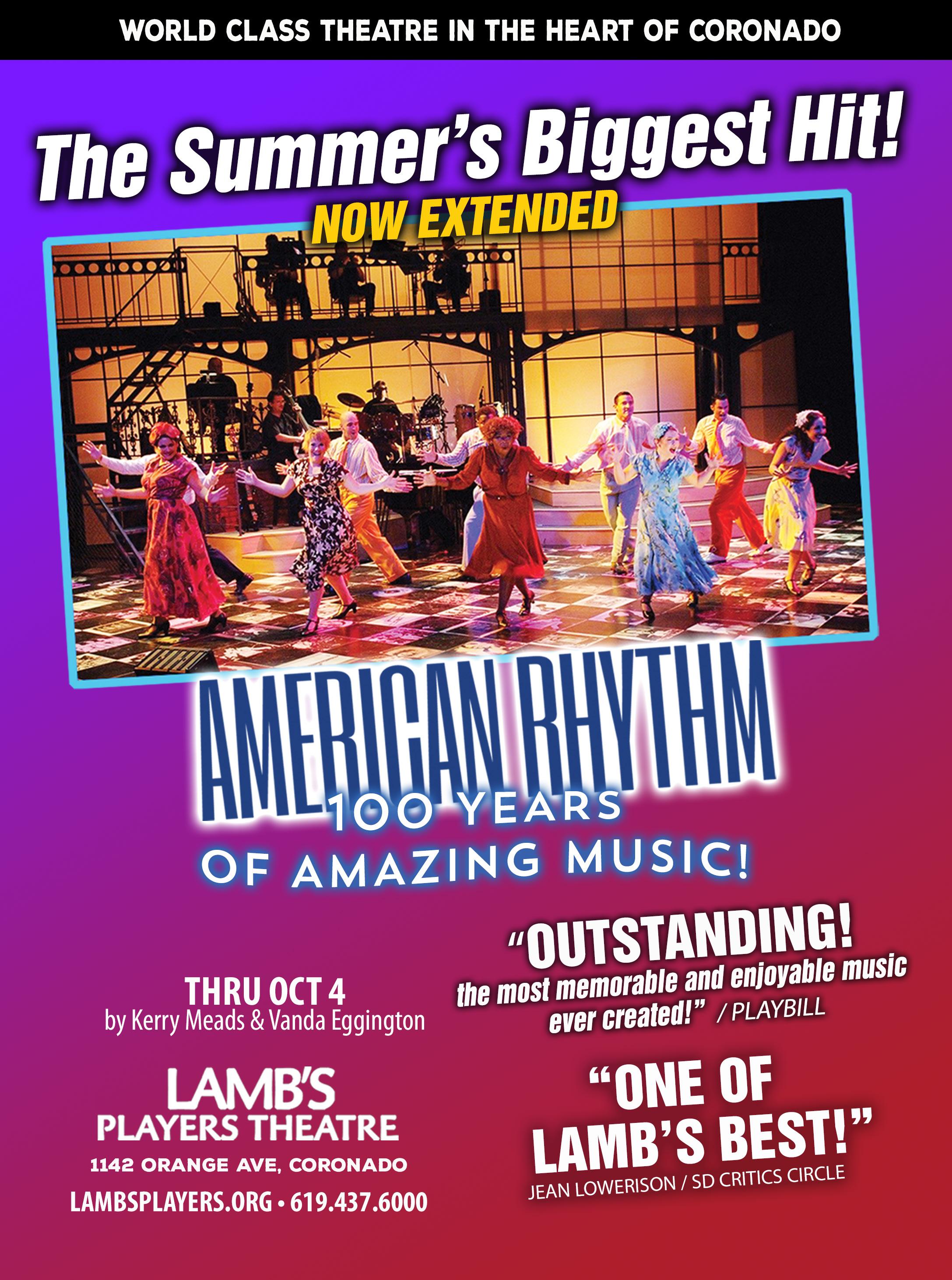
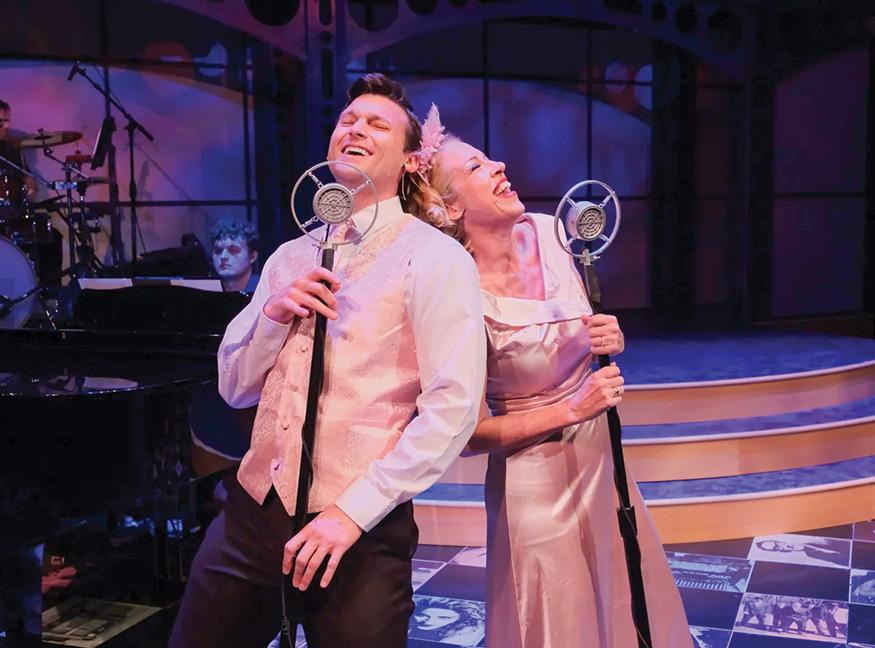
Lamb’s Players are turning up the volume this month with a production that pays homage to 100 years of amazing music, aptly dubbed “American Rhythm.” The home-grown show takes audiences on a musical journey from Ragtime and Swing to Jazz and Rock-and-Roll. A large cast and live band will help you feel the beat through Sept. 27
THE OLD GLOBE THEATRE
theoldglobe.org
The Old Globe’s Festival Stage will bring “Much Ado About Nothing,” one of the most popular romantic comedies ever performed on stage, back for local audiences to enjoy under the stars Aug. 2-30. This little gem is chock full of colorful characters and mistaken identities, not to mention the funniest bumbling policemen Shakespeare ever conjured up. Fortunately, the direction is in the capable hands of Barry Edelstein.
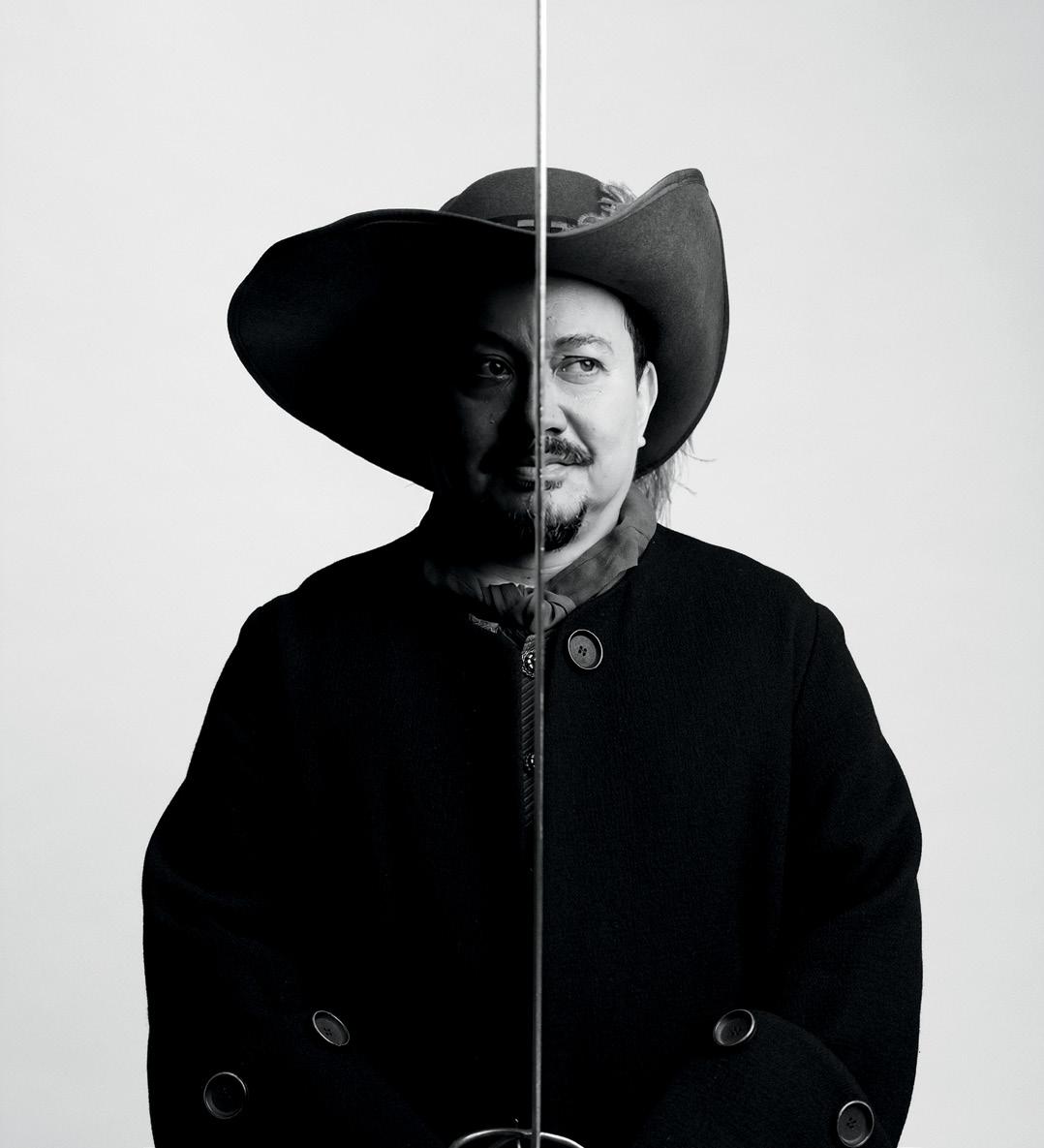
The Globe’s White Theatre’s staging of “Cyrano” will play on through Aug. 9. Based on the unforgettable character who was a hopeless romantic, an amazing poet, and a swaggering swordsman, “Cyrano” will charm audiences with its celebration of love and its window into a bygone age.
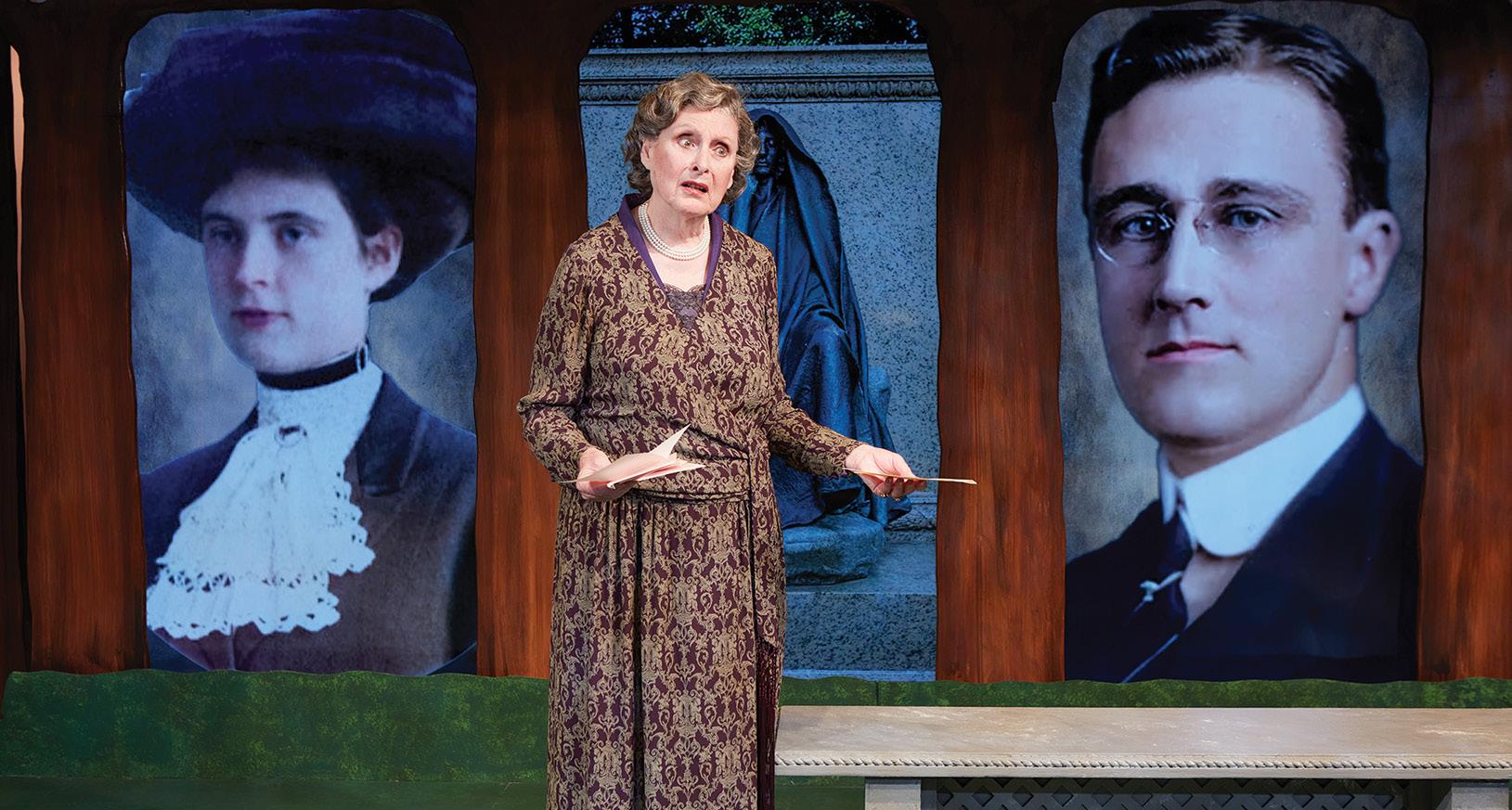
NORTH COAST REP: Kandis Chappell in “Eleanor.” Photo by Aaron Rumley.
LA JOLLA MUSIC SOCIETY
theconrad.org
La Jolla Music Society has a full slate of SummerFest 2026 this month.
“Reshaping the Past” explores the reimagining of classic musical forms on Aug. 5, followed on the 7th by “Eastern Visions,” where Western composers deal with the sounds of Eastern music.
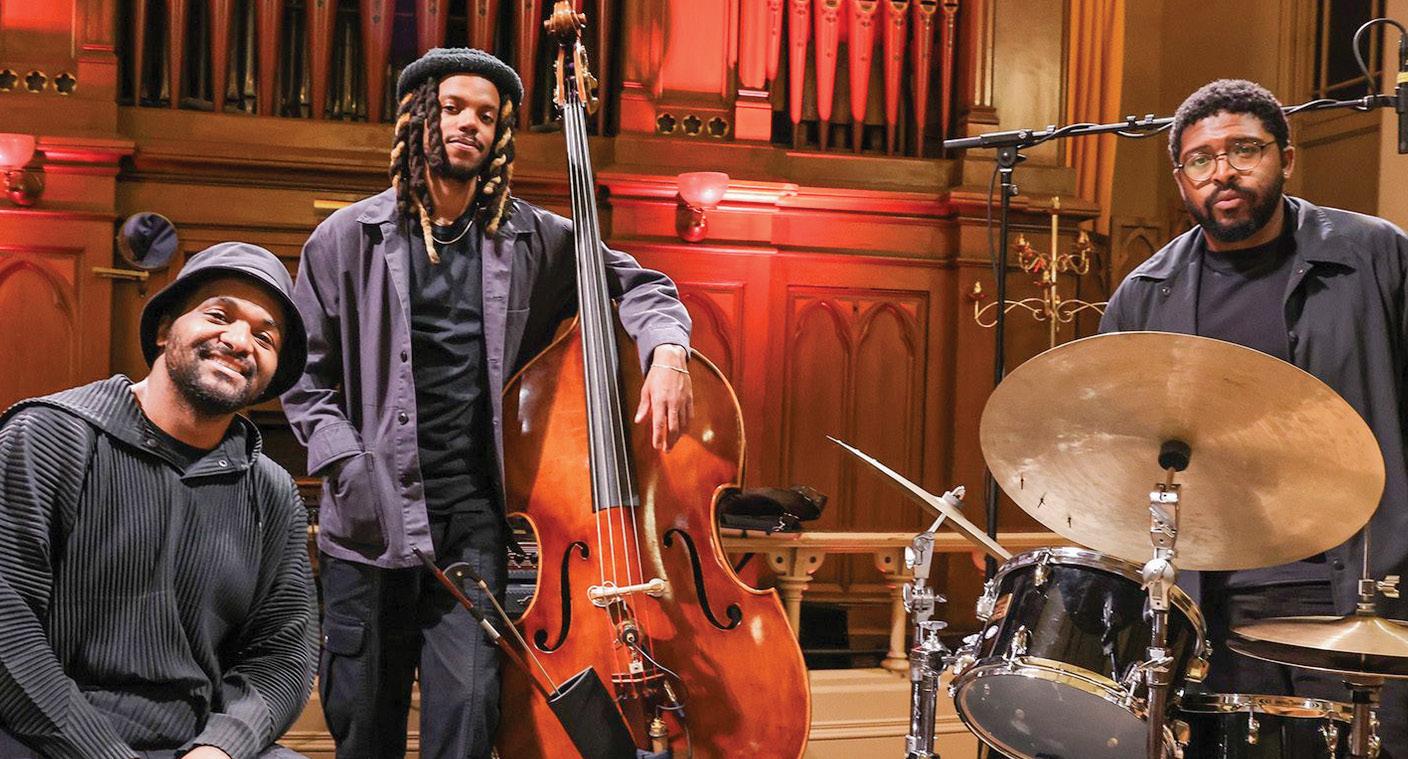
“Roots” on Aug. 8 focuses on folk music channeled into new music, and on Aug. 9, “Lost and Found” brings us works uncovered from the past. “American Legacy” includes music by American composers on Aug. 12, and on the 13th “Jazz @ The Jai” stars the Sullivan Fortner Trio. “Out of the Shadows” is slated for Aug. 14 and on the 15th and 16th, Summerfest will deliver “The Complete Brandenburgs” in two concerts.
Also on the slate for Aug. 16 is “Takeover@The Jai” with Paul Wiancko. “Remade/Reborn” is coming Aug. 19 to celebrate reinvention as a creative force, and on the 21st, “SummerFest at 40!” will include all-time favorites. Aug. 23 brings “Old Country, New Age,” with its focus on works from English composers. “Schubertiade,” on Aug. 26, features works by Schubert, and on Aug. 27, “Brad Mehldau: Ride into the SunThe Music of Elliott Smith” gets the spotlight. “Conversations Across Centuries” is on tap for Aug. 28, and “Finale: The Rule Three,” featuring a trio of soloists, rounds out the month on the 29th
NEW VILLAGE ARTS
newvillagearts.org
New Village Arts Theatre launches its 25th season with “We Will Rock You,” featuring more than 20 iconic Queen songs. The show will open on Aug. 7 and stay on through Sept. 20
LA JOLLA PLAYHOUSE
lajollaplayhouse.org
La Jolla Playhouse has a new musical at the Potiker Theatre — “The Family Album” zeroes in on a singer-songwriter desperate to make it in show business. The show is humorous, poignant and powerfully uplifting. You can check out this world premiere Aug. 7-23
BROADWAY SAN DIEGO
broadwaysd.com
Broadway San Diego has two shows on tap this month. Alicia Keys’ “Hell’s Kitchen” will be cooking up some musical mayhem at the Civic Theatre Aug. 11-16. Following is “Water for Elephants,” an acclaimed musical based on the hit movie, that will run Aug. 18-23.

LA JOLLA MUSIC SOCIETY: Sullivan Fortner Trio stars in “Jazz @ The Jai.”

I love tahini in any form. What makes this cake so special is that not only is there tahini in the cake, but there is also a crumb topping that’s chockfull of halva. This cake is super moist and so easy that it’s as if your favorite boxed cake mix got a major upgrade.
Chocolate Tahini Cake with Halva Crumb Topping
INGREDIENTS:
For the crumble
• ¾ cup (105g) all-purpose flour
• ½ cup (50g) firmly packed light brown sugar
• 1 teaspoon ground cinnamon
• ½ teaspoon kosher salt
• ½ stick (55g) cold unsalted butter, cut into cubes
• 2 tablespoon well-stirred tahini
• 1 teaspoon pure vanilla extract
• ½ cup crumbled halva
For the cake
• Nonstick cooking spray
• 1 ½ cups (210g) all-purpose flour
• ½ cup (40g) unsweetened cocoa powder
• ½ teaspoon baking powder
• ½ teaspoon kosher salt
• ½ teaspoon baking soda
• ¾ cup (150g) granulated sugar
• 2 large eggs, at room temperature
• ¼ cup (60g) whole milk
• ¼ cup (60g) sour cream
• ½ cup (105g) vegetable oil
• ¼ cup (70g) well-stirred tahini
• 1 teaspoon pure vanilla extract
• ½ cup (118g) boiling water
For serving (optional)
• ½ cup chopped dark chocolate
• 1 tablespoon sesame seeds
PREPARATION:
1. To make the crumble: Combine the flour, brown sugar, cinnamon and salt in a medium bowl. Mix until well blended. Add the butter and, using clean fingers, work the butter into the flour mixture until large clumps form. Add the tahini and vanilla and stir with a spoon until incorporated. Add the crumbled halva, stirring to combine, and set aside in the refrigerator.
2. To make the cake: Preheat the oven to 350 degrees Fahrenheit. Line an 8-inch springform pan with parchment paper and coat it with cooking spray.
3. In a large bowl, sift together the flour, cocoa powder, baking powder, salt, and baking soda. Add the granulated sugar and whisk until well combined.
4. In a separate medium bowl, whisk together the eggs, milk, sour cream, vegetable oil, tahini and vanilla. Add the wet ingredients to the dry ones and whisk until blended and no streaks of flour remain. Whisk in the boiling water, stirring until smooth.
5. Scrape the batter into the pan, smooth the top, and bake for 20 minutes. Scatter the crumble on top of the cake and continue to bake until a cake tester inserted in the center comes out clean, an additional 20 to 25 minutes.
6. Let the cake cool for at least 30 minutes, then remove it from the pan. If you’re making the melted chocolate, 5 to 10 minutes before serving, place the chopped chocolate in a microwave-safe bowl and microwave on high in 30-second intervals, stirring in between, until the chocolate is fully melted. Drizzle the chocolate over the top and sprinkle with sesame seeds before serving, if desired.
EITAN BERNATH VIA THE NOSHER

Phil Bresnick
Portfolio Manager
Senior Vice President
Wealth Advisor
101 West Broadway
San Diego, CA 92101
619 668-4334
Philip.Bresnick@morganstanley.com
www.morganstanleyfa.com/bresnickbresnick
CA Insurance Lic #0A05261
NMLS #1401662
© 2025 Morgan Stanley Smith Barney LLC.
Member SIPC. BC007 CRC 4044509 11/24







Last Word
CONTRIBUTED


Giving Back: San
Diego County Fair programs help nourish and support communities across the region
Fair-for-All Ticket Donation Program donated a total of 17,258 tickets this year to organizations representing underserved San Diegans who otherwise might not be able to attend the Fair.
Care ‘n Share Toy Drive has, to date, distributed over 122,000 new and gently used stuffed animals. This year, the program collected 4,211 stuffed animals that will benefit military children and families of hospitalized children on both sides of the United States-Mexico border.
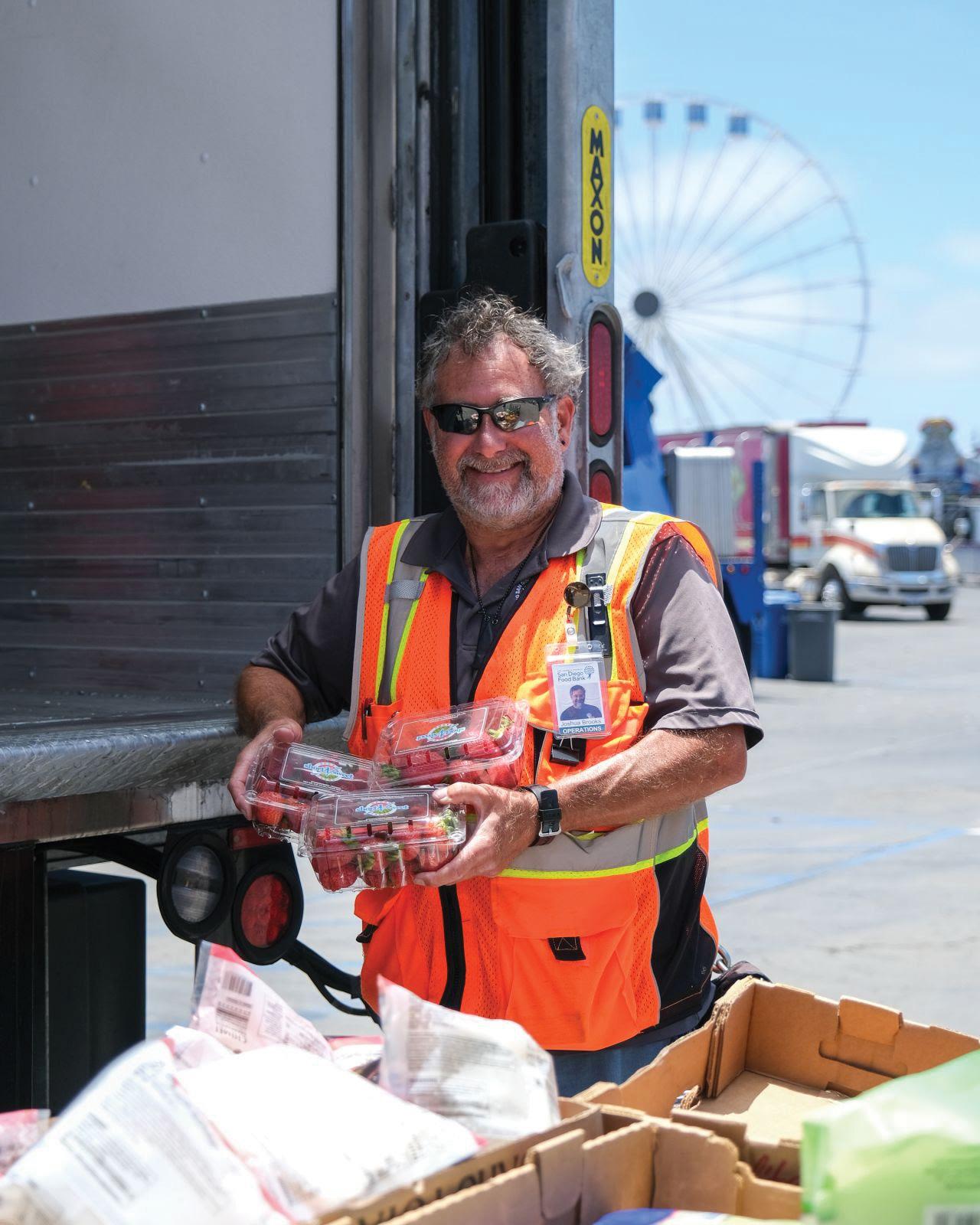
In the second year of the Fair’s Food Recovery Program, the Jacobs & Cushman San Diego Food Bank recovered enough food from fair vendors to provide approximately 993 meals.
The Once Upon A Fair theme exhibit hosted a Scholastic Book Fair throughout the Fair’s run. Title I Schools in San Diego will directly benefit from the $12,000 in proceeds generated from book sales at the Fair. A