Adventure Venturing the



This resource is an aid for Venture Scouts and Venture Scouters so that they can understand the key components of their Sectional Programme.
It is presented in two parts - Part One presents an overview of the ONE Programme and how it is designed to work across all Sections in a Group.
Part Two presents the programme as it relates to the Venture Scout Section in particular.
This resource is not a replacement for formal training sessions or practical hands on experience. Each Section will be different and the interaction between Scouters and young people will depend on local conditions and personalities.
This resource should be read in conjunction with the Scouters Manual that provides more in –depth detail on some of the elements presented in this resource. Our website www.scouts.ie also contains a number of additional programme resources and supports, which again, should be reviewed and consulted as part of your interaction with this resource.
Scouting is a movement for young people SUPPORTED by adults. What happens as part of the programme of Scouting is determined by young people, across all age sections. To support young people in their quest might sound easy to do, but in fact, it is perhaps the hardest job that an adult working with young people will practice.
There is a tendency among all adult to direct and control – particularly when working with younger Scouts. There is, of course, the need to protect and apply the wisdom of adulthood, and this is most important but in the context of Scouting we need to create an environment where young people can explore, make mistakes and learn from these experiences.
Supporting young people within Scouting means allowing them the space to learn and grow; to empower them, by allowing them to make decisions and determine their direction; and to be there to help, advise and coach. Baden Powell, our founder
once said ‘Scouting is a game for young people and a job for adults’ so the notion of supporting is not an easy task.
This resource will outline the key principles and tools that are available to enable this to happen in your Section and we will explore these and provide guidance and wisdom as to their use.
Some key principles must be understood before this resource makes sense and these include the following
The Scout Principles – these relate to the educational objectives
The Aims of Scouting – these again relate to the educational objectives
The Scout Method – these relate to the way we do things in Scouting
Scouting is an non-formal educational experience and is firmly rooted in the ‘experiential educational model’ which is that by ‘learning by doing’ and examining and internalising that learning through a review process we gain knowledge about the task completed but also about ourselves leading to the personal growth of the individual.
In Scouting we undertake this process in small teams so that the experience is both individual and team based. This process enables an extended learning process and results in higher personal realisations and inter-personal skills.
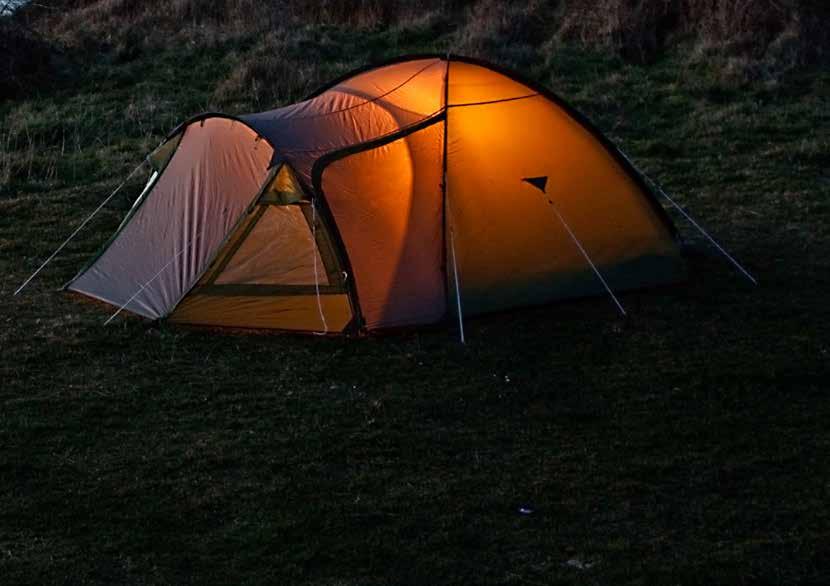
What is important to understand is that the ‘task’- the Team is expected to completeis of least importance, it is the interaction of the team and the dynamics of that team that are of crucially importance. Camping therefore is a key learning space as it is within this environment that the intensity of the Scouting experience is witnessed. The small working teams (Lodges, Sixes, Patrols, Units, Crews) have to live, eat, sleep and get on with each other for the period of the event. Camping is a micro-society as such and young people get to ‘play’ the game of life. Solving problems, organising the routine, getting on with others and getting things done are some of the great advantages for young people.
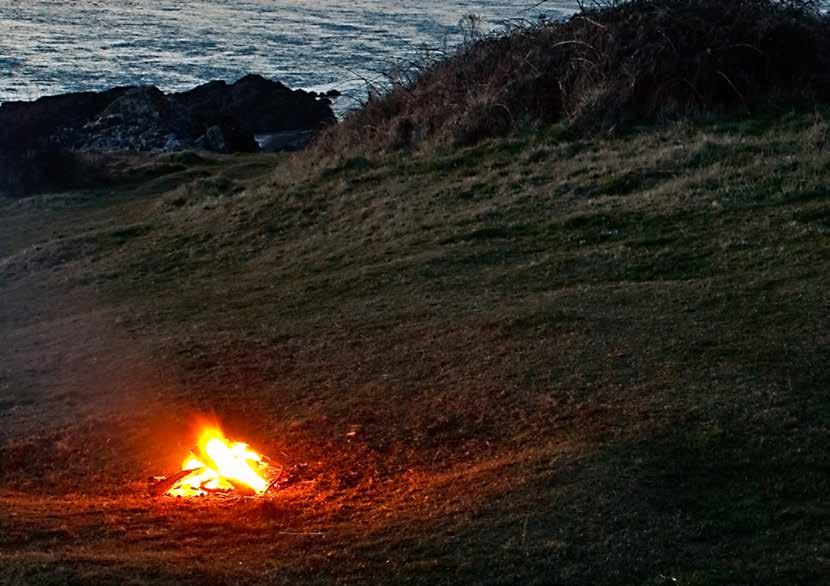
The Scouting environment is the outdoors. This is our number one learning space and the place where the game of Scouting is played. The ideal suggested mix in this regard is 70% outdoors and 30% indoors – giving our Irish climate. Camping, in particular, has a special place as it is here that teams interact in a social and skills based environment in close contact with nature. Challenge and adventure are also present in an outdoor setting.
Other essential elements encapsulated in the Scout Principles and Law are the spirit of and development of the Duty to Others aspect of our programme – the ideal of the daily good deed and service to our communities. Scouting exists in communities and it is vitally important that Scouting interacts with their local community. Service to others is a tangible element of our programme dealing with this commitment.
The Sectional identity and spirit work to create a sense of belonging and friendship open to all. The team system is the method used to establish and maintain this aspect.
Creating a value system based on living the values expressed in the Scout Law and Promise. This value system becomes the method by which a Scout lives and works with other people within the team system and their attitude to Scouting.
Ceremonies are another essential feature of Scouting and help to reinforce every aspect of the programme. Through ceremony we reward progress, create wonder and celebrate achievements.
Educational objectives are a series of statements that state the personal growth that we expect to observe in young people who interact with the Scout programme. There are 36 statements and they are grouped under each of the ‘SPICES’ – social, physical, intellectual, character, emotional, spiritual. We use an underlining principle, which is, that we expect all young people who interact with Scouting to take ‘one step forward’ in everything that they do. A young person should never be at a disadvantage for being a Scout.
The educational objectives therefore are a reference to determine the progress of a Scout along their personal journey to adulthood. Within the ONE Programme they are used in the ‘review process’ to determine progress and understanding.
Within the creation of the programme of the Section they are also identified and built into the content and objectives of activities that form the steps to an adventure within the programme cycle.
A Section is a collection of small teams and not a collection of individual Scouts. Each team has a leadership structure with a young person assuming the role as team leader (Lodge Leader, Sixer, Patrol Leader, Crew Leader). Leaders are not born but created and this is the principle in operation within the team structure. Scouting is in fact an apprenticeship in leadership. From the very first day a young person joins Scouting they embark on a journey to leadership. This process is a layered on experience starting in a simply way and building bit by bit so that a young person, in time, can assume the leadership of their team. The team are the unit used for all
activities in Scouting, games at meetings are inter – team, the team camp together and work together, the team determine programme and contribute to other meetings and forums via their team leader.
The review process is undertaken in teams and the individual and collective knowledge and learning is acknowledged.
It is against these key elements that the Scout programme is created and presented to young people. We will now take a look at how a programme is created and how each of the elements above take their place in this process and how the various tools and resources are used in these contexts.
The ONE Programme is the processes we use to create the Scouting experience. The word ONE means that the key elements of the programme are present in all Sections and are used in an age appropriate way.
If you consider that a young person is on a personal journey of discovery then the experiences, methods and skills gained are carried forward on that journey through the various sections.
Five key elements are the same across all sections
The Programme Planning Process
The Plan, Do. Review process
The Scout Skills levels
The Special Interest badges
Another consideration is the support model – adults and young people working together. In the younger sections the adult support role will be greater whereas in the older sections the adult support role will be more at a partnership or coaching level.
In all Sections the adults works with teams and with individuals to ensure their advancement in all aspects of Scouting.
The team system exploits the natural gang instincts of young people and is the natural medium for learning –both in terms of inter-personal skills development and
Scouting skills expertise. The team work together and learn for each other in the process. Older members of the team will usually have more experience and this is passed on in a natural way to younger members.
Each member has a say in what the team will do and the leader of the team also acts as a representative of these views at other meetings and forums within the Section.
Within this structure all is not as ‘rosy’ as it might seem and the role of the adult supporting this process is two-fold…working with the leader of the team and working with the team as a whole. It is important that young people assume the role as leader of the team and exercise this role to the best of their abilities, having a positive impact on its members. This is a big consideration for young people who often do not possess the skill-set to undertake such a role.
The role of the adult is therefore to ‘coach’ the young leader in their role, suggesting actions and offering assistance from a far or at other forums or training sessions. In working with the team the adult should ensure that they work together to the best of their ability and recognise any successes.
A good team structure or system needs time to be developed and it is not automatic. A Scouter working in an established Section will find a system already in place and working over many years. In a new section this system needs to be developed and fostered. Of course, this does not say that all systems and structures are correctly functioning and
often a Scouter team will have to rework or recreate a working structure. Young people are, of course, always moving forward so the makeup of a team will change as young people advance to other Sections. If a good natural system of leadership is in place a new person will take up the leadership position but the dynamic of the team may change and the Scouter will be involved in this process.
Team spirit and identity are very important. They are not team A,B,C,D but rather the Fox Patrol, the Lion Patrol or whatever name they choose to call themselves. The collective history and experience of the team is valuable in bonding the team together plus the mixture of characters that make up that team. Friendship and loyalty are key features to be observed. The team will also have its own space within a meeting place where they can talk, discuss and plan actions. This area may also have its own identity determined by flags, notice boards and suitable branding…it is their ‘gang den’ or ‘hideaway’
• It is a natural learning space of young people
• It is a natural place to learn inter-personal skills
• It is the natural place to gain and learn leadership skills
• It builds friendship and mutual support structures
• It is the natural operational unit of a section
• It allow democratic interactions and representations the team advance in team knowledge and individual development
• It take time to become established correctly
• It needs constant support and guidance
• It needs on-the-job training and support of its leadership
• Teams need to formed correctly to ensure success
• Lack of leadership can cause the team to stumble
• Task management needs to learned by experience

Scouting as we have stated above is an ‘apprenticeship in leadership’. This happens from the very first time a young person steps into their first meeting or activity. The method employed is based upon a ‘layering on of responsibility’ model. In real terms a Scout is given responsibility – starting at simple tasks and building to more complex undertakings. Initially the Scout will be part of a team or a sub team and through a series of tasks and experiences gained the young person will gather and refine their leadership skills. Creating a budget for a weekend camp for example is a leadership skill as is planning how to build a pioneering project. Managing the process of completing the ‘tasks’ during a meeting or activity is a management and leadership achievement. So at all levels within the team, from the Scout who looks after the notice board to the Scout with an expertise in first aid each is on an apprenticeship journey in gaining valuable life skills and leadership skills.
The job of the Scouter is to support this process. This is done by working very closely with the team leaders in an on-the job role and also ensuring that the layering process is achieved in each team. The Scouter should be able to see this in action and observe it at first hand. From time to time the Scouter might suggest to the leader of the team that some individual Scout might need more responsibility or be ready to take on more responsibility. This interaction or advise and coaching would happen via one – one conversations with the team leader or at council meetings within the Section – team leaders and Scouters meeting.


• Leadership skills take time to build and get ‘good at’.
• Mistakes will always happen and young people have to learn from these.
• Giving power to young people to make their own decisions in a safe environment.
• Builds a solid base of responsibility, confidence and ‘we can do that’ attitude.
• It fosters growth with a young Scout and enables them to do things they did not think they had the capability to do.
• It takes time and commitment to get it working correctly there will be many failures and mistakes but they must be seen as learning opportunities.
• It requires a lot of patience and perseverance by Scouters to support this process.
• It requires observation and listening skills to determine what is happening and the opportunities that exist.
• It requires the scouter to back off a little and let it happen even though they want to jump in and solve the problem for them.
• Supporting this process is hard but the most rewarding when it works.

The above considerations form the backdrop to what and how adults work with and support the programme of Scouting. All adults are part of the Scouter team and they are not alone in this work. The Scouter team will have a wealth of experience within it ranks and together they achieve the objectives of the Section. This Section Scouter team are again members of the Group Scouter team and are equally supported across the Scout Group structure. So, each Scouter is unique and each has a valuable role to play in the development of young people within their Section. It is the collective responsibility of the Group and in turn the Section to ensure that every young person experiences Scouting of a type and quality that they wish to enjoy and that we would wish them to have on their journey along the Scouting trail.
Scouting’s model and methods are tried and tested and have proven their worth and value as a youth development process for more than a century. They are scientifically sound and while simple they do have the power to change the lives of young people and aid towards their personal development as the adults of the future. The work you do as a Scouter is influential in the lives of each of your Scouts.
Each of the elements described above in simple terms can be expanded on in various other resources which explain these concepts further and in more details. The purpose of this resource is to highlight these elements so that they are foremost in your mind and resulting behaviour and attitude. The practical tools and methodology that we will now go on to explore are useless unless we fully embrace the key concepts of ‘supporting young people’ on their personal journeys through Scouting. The Scout Law and Promise (an element of the Scout Method) is another key element that binds the whole experience together. Every Scout takes the Promise and seeks to live by the Scout Law. This indeed is a common aspect of every Scouts life and it provides the rule book for the game of Scouting.


The activity of a Section is expressed through the programme it offers to it members. Each Section will have its own approach and indeed every Group, across the country, will offer their unique blend of elements making every Sectional programme exciting and special.
Throughout all the Sections in a Group the programme is presented through what is called a ‘Programme Cycle’. This programme cycle can have any time-line but it contains three crucial features – Plan, Do, Review.
Each programme cycle is built around an adventure or series of adventures leading to a key highlight within the yearly programme.
Normally, a programme cycle will last around 4 weeks (but can be shorter or longer) so in theory a Section will experience 12 adventures (programme cycles) during a yearly programme with a highlight activity such as an annual camping experience or expedition.
Plan, Do, Review – our key learning model
Programme Cycle – the time necessary to complete the Plan, Do, Review process
Adventure – the highlight of a Programme Cycle
Highlight event - the key annual event or focus of the yearly programme
The ‘adventure’ is the main highlight of the Programme cycle – the weekend camp, for example, and the meetings or associated activities are the ‘learning spaces’ to enable the successful completion of the adventure. So, for example, the Scouts will need to be able to build an oven on the camp so that they can bake a cake. The
weekly meeting or a special day activity might be created for the Scouts to learn how to do this so it can be completed with success on the weekend camp.
Within this process all of the Scouts will be involved in the creation of the adventure, the weekly meetings and activities. The team system will be used at all times and all the interactions associated with this process will be focused on the programme cycle and the planned adventure.
The Plan, Do, Review method is used….so the adventure is planned, it takes place and finally the programme cycle is reviewed and learning is determined.

The first step in the creation of a Programme Cycle or series of cycles is an ideas creation or generation brainstorm or buzz session. This is where the ideas for adventures are created and selected for the forthcoming months.
Scouts will talk among themselves for weeks in advance of this session. Team leaders will also have discussions on the matter and will fine tune ideas to be brought to the session. Individual Scouts will of course have their own dreams and ideas.
The Scouter team may have a few ideas also that they want to present or perhaps some research on ideas that might have been suggested at chat sessions or team leader and Scouter meetings.
A brain storming session is organised and all the Scouts of the Section are in attendance.
A number of brainstorming techniques can be used but the following method is preferred and works well.
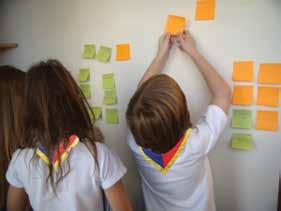
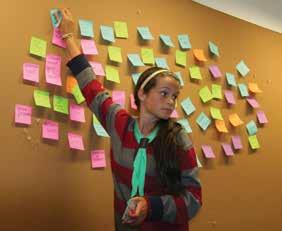
Each participant is provided with a number of ‘Post its’ on which to write their ideas ( usually 3- 5 ‘post its’ but more if the participant numbers are low – Venture and Rover Scout Sections).
Each Scout is invited to write their ideas on the ‘post its’ provided – one idea on each ‘post it’. Teams can also present ideas, if these have been discussed at previous meetings, and Scouters can also add ideas. In all cases the rules are the same – 3-5 ‘post its’ for everyone, team, Scouters.
All of the ideas are placed on the wall of the meeting place and everyone is invited to look at them and explore their contents.
The Scouter leading the session might start grouping ideas…for example if a lot of people suggest ‘cycle hike’ he would move the idea ‘post its’ together on the wall.

Once everyone has had a look - the Scouter will explore each of the ideas in turn with the participants. For example he might ask a Scout to present the cycle hike idea. The Scout is then asked to explain his/her idea further so that everyone has a better picture of the idea suggested.
In a small gathering all ideas can be explored but in a larger gathering the more unusual ideas may only be explored in detail. Collective ideas such as camps can be discussed to determine the feel and shape of that activity. Once the ideas are determined the ideas are auctioned off in turn to the Section. Those ideas that reach the required number of votes are placed on another wall in the meeting space.
The agreed ideas are then discussed from the point of view of two aspects – what is the adventure activity and when will it happen. The purpose of this period is to create a worthy adventure to become the highlight of a programme cycle. The second consideration is when the event will happen. Once this is decided the ‘post it’ or series of ‘post its’ are placed on a calendar sheet.
Next step is to create a series of flip chart pages. Each page represents and programme cycle with an adventure at its core. Normally it will be about 4 programme cycles, so 4 flip charts sheets will be presented. Each team is given one of the sheets to start and they have approx. 5 minutes to add onto the sheet all of the items they need to know to undertake the adventure. The team are also asked to consider the SPICES and the possibilities for scout skills and special interest badges. In relation to the SPICES - can they determine each of the elements within the ideas suggested and make suggestions for any shortfalls. After 5 minutes the sheets are passed to the next team and when the cycle is finished a full sheet of ideas and suggestions related to the programme cycle are present on the flip charts.
The session is now finished. This type of brain storming session may happen 3-4 times a year. From these sessions a yearly programme can be compiled around a series of programme cycles.
Don’t forget the yearly highlight event. Some Sections chose this event as a first step with all other adventures leading to this highlight. Others create a whole adventure and programme cycle around this event. All of this is decided by the Scouts within that Section.
The Scouters role is one of managing the process. The physical management of the meeting space is one thing but the careful interaction with the Section is another. The Scouter needs to tease out ideas, make sure everyone has a say and discussions are fair to all. Not every idea will be picked and the Scouter should be aware that every idea is an idea from a Scouts head. The camps and outdoor activities will always be popular but other ideas such as drama or chess playing might have limited appeal. The Scouter has to be clever to get balance between all of these factors, variety is the spice of life and a mixture of activities is often more exciting than the usual stuff.
The Scouter should also be seeking to push the capabilities within the suggested ideas beyond the normal to create new challenges and experiences. Also at the back of their heads they should have the SPICES in mind and the ‘roundness’ of the programme, so that the final product can be exciting, challenging and enabling for all young people.
This process will be different in each Section but this is the basic format. There are a collection of suggested adventures available for each section (36 suggestions for reach Section). These adventures have been balanced so that over the collection of ideas all aspects of the programme will be covered. Some Sections use the open model suggested above and others use the selection of the adventure via the adventure sheets as their starting point.
The Beaver Scout Section has suggestions for adventures in the Beaver Scout handbook.
The Cub Scout Section use their Lands of adventure map to determine their starting point.
So, a Section can have an open session or have a starting point via a suggested adventure. In all cases the choice is determined by the Scouts in that Section and the idea of the whole process is to create an adventure highlight and a journey to that adventure….collectively the programme cycle.

The ideas have to be transformed into the weekly meeting and activity plan. This is a job for the Scouter team and team leaders. Through follow on meeting the detail of the programme can be laid out. During this process it is important that Scouters do not take control remember our key word SUPPORT… items within the programme plan can be undertaken by the Scouts in the Section. For example, the planning of a menu, or the contacting of people. Some items will best be done by a Scouter but there are many big and small jobs that can be passed to teams or members of the Section to complete or organise. Remember also the ‘apprenticeship to leadership’ ideal – many opportunities exist to layer on responsibility to everyone.
During the process it needs to be determined what the objectives of the programme cycle are. What elements are special, what elements relate to a particular SPICE and what elements involve learning and application of knowledge. These objectives need to be listed by the Scouter team and shared with the Team leaders as they will form the basis of the Review element of the programme cycle.
Each Section has a method to log progress – the Beaver Scout map, the Cub Scout travel cards and bead system, the polar maps of the Scout Section. Each of these devices enables a young person to see their progress over the period of the yearly programme. The review process allows the individual Scout to determine their progress, the Scouter to observe and monitor this progress and for the other members of the team to applaud and contribute to the progress of all their members and the collective team knowledge and experience.
On the association website a number of addition resources are available to support various aspects of the programme. These include sets of suggested adventures for each section. Specialised material related to special interest badges and scout skills. Support materials related to leadership training, meeting structures etc. is also available.
The Scouter Handbook and the Adventure skills Handbooks should be referenced also to provide detailed information related to what is presented in this resource. Formal training course and conversations with other Scouters are also very helpful to get a global perspective of how things are done.
Let’s look at the tools provided in each section in turn.
36 suggested adventures in Beaver Scout Handbook – these are graded by a SPICES value points
36 supporting sheets related to each adventure presented in the handbook for Scouters
the memory bag for each Beaver to collect items to aid memory in the review session.
the memory bags of each Beaver Scouts and the Beaver Scout map for recording progress.
Reviewing games
The Cub Scout ‘Lands of Adventure’ map used to focus on adventures that can be planned
The Cub Scout ‘Lands of Adventure’ map and chapters within the handbooks
The ‘Travel Cards’ selected by each Cub Scouts to gain SPICES points– in the Cub Scout Handbook.
36 suggested adventures on the website
Travel cards as selected by the Cub Scouts
Reviewing games
Progress beads
Planning
Chadburn device – to discover the personal ideas of a Scout based on interests that can then be shared with the team.
36 suggested adventures on the website
Doing
Polar Antarctic maps to illustrate personal journey and by the order of steps in the stage badges.
Map records the progress of the Scouts and next stepping stones to take.
‘Food dumps’ identify experiences of Scouts and show possible future steps
Reviewing games

Planning
SPICES handbook and SPICE wheel to be used to determine a Scouts personal direction and personal challenges. This will aid towards the issues that a Venture Scout might consider to be important to them to build ideas for adventures.
Venture handbook
Suggested ideas and explorations
Suggested adventures on the website
SPICE wheel Reviewing games
Planning
Rover handbook
36 adventure suggestions on the website
Doing

The experience model used in Scouting – the Plan, Do, Review process has at its core the review element. This element is critical to the learning process. Until a Scout or anyone for that manner takes time to internalise and access what they have learned through an experience it serves no real value bar entertainment.
As Scouting is in the business of assisting young people in their development the review process is a vital component of the Scout programme. There are many ways of conducting the review – it can be done as the activity progresses or at the end of each day or in a sit down discussion at the end of the programme cycle.
In practical terms all of the methods are used or a mixture depending on circumstances. Reviewing is a process of learning from the experience, or enabling other to do so. It helps a Scout to get more from their interaction with others, life and recreation – especially if the Scout knows how to review an experience and can then match their learning to their dreams and ambitions.
The four key areas of the review process are :-
This review process is best managed under the four suggested headings and they become the agenda. A review session should not last too long (depending on Section) and can be undertaken in a fun way using games and devices (see separate resource). Scouts need to be comfortable so pick a place that is warm and allows Scouts to sit down and chat. It does not have to be indoors…a summer’s day under a tree or sitting around a campfire are also good locations.


1.
2.
Initial contact with Programme Unit in National Office.
The Scout Group Leader contacts the Programme Unit in National Office (+353 1 495 6300 / oneprogramme@scouts.ie) to express their interest in setting up a Venture Scout Unit. A Venture Scouter is identified and contact details provided. A date is agreed for a member of the Programme Scout Unit and a GSF (Group Support Facilitator) to meet with the Venture Scouts and the Venture Scouter(s) who will be working together in this Section.
3.
‘ Venturing the Adventure’ booklet forwarded to Venture Scout Unit.
The Programme Unit will then send the booklet ‘Venturing the Adventure’ to the Unit Scouter.
Programme Unit and GSF meets with Venture Scout Unit.
On the agreed date, a member of the Programme Unit and the GSF meets with the Venture Scout Unit.

4. 5. 6.
• At this meeting a discussion will take place about setting up a Venture Scout Unit.
• The Venture Scout Unit will be given an Introduction to the Venture Scout Programme and Venture Scout Unit Structure.
• The Unit will also be given advice on the location of resources that are available to help them on their Venture Scout Journey.
• The Venture Scout Unit members have the opportunity to ask any questions and discuss aspects of Venture Scouting.
• A date will be agreed for training on the ONE Programme for Venture Scouts.
Following the meeting with the Venture Scout Unit, the Venture Scouter is given an opportunity to discuss their role within the Venture Scout Unit.
On a date agreed a ONE Programme Training Session for the Venture Scout Unit will take place.
Once a Venture Scout Unit has completed their ONE Programme training session they may purchase the Venture Scout handbooks.


Venture Scouting is for youth members aged 15 to 17 inclusive. As per the age ranges of Scouting Ireland, a 15 year old has the choice to remain in the Scout Troop for an extra year if they so wish. However, both the Scout and Venture Scout Programmes are designed to be three year programmes and as such the recommendation is that 15 year old should become members of the Venture Scout Programme Section.
It is not necessary for a Scouts to transfer to Venture Scouts on the date of their 15th birthday. Ideally, it is recommended that there should only be one movement of Scouts to Venture Scouts per year. This means starting a link process in April/May, with the Scouts becoming members of the Venture Scout Unit at the beginning of September.
The Venture Scout should take time to discuss the options open to the older Venture Scouts who are hoping to move to Rover Scouting. Some Venture Scouts may decide to take the Scouter/Rover route. Other Venture Scouts may decide that they would like to become members of the Rover Scout Section.
It should also be noted that some Venture Scouts may decide that their time in Scouting is at an end, or that they may need a break to pursue other avenues in life. It is important that these Venture Scouts are made comfortable with this decision and that they are aware that the Scouting door is always open to them to return in the future.
When a Venture Scout reaches the age of 17 and a half they will receive a letter and a Garda Vetting Form from Scouting Ireland. They will also receive a Parental Permission Form. It will be necessary to complete this form and return it to Scouting Ireland as soon as possible. (National Office 014956300)
Ideally a Venture Scout Unit should have between twelve and twenty-four members. While there is nothing to stop a Scout Group establishing a smaller Unit, it is very difficult to operate the Crew and Executive systems with smaller numbers. If there are less than twelve members the Scout Group should look to form a Combined Unit with another Scout Group. Likewise, Units can of course be bigger than twenty-four, but the bigger the Unit the more difficult it will be for the Executive to run the Unit. It will also be more difficult to monitor the personal progression of each Venture Scout. For a Unit of between twelve and twenty four Venture Scouts there should be a minimum of two Venture Scouters, with three being preferred. Where there are male and female Venture Scouts this should be reflected in the make-up of the Venture Scouter Team.
In keeping with the Scout Method - the small team system is used with the Venture Scout Unit. There are two types of Crews - ‘Fiontar’ Crews and ‘Activity’ Crews.
Fiontar Crews
Suas Crews and Trasna Crews
This is a Crew made up of Venture Scouts who are at the same stage of their Personal Journey. Suas Crews are generally Venture Scouts in the first phase of the Venture Programme.
Trasna Crews are Venture Scouts who are within the final phase of the Venture Programme. The size of the Crew should be no more than four Venture Scouts.
The purpose of the Crew system is to provide a space for Venture Scouts to share ideas in relation to the challenges required for the Venture Programme. The Crews do not have Crew Leaders but should have mentors
to assist them. Suas Crews should be mentored by Venture Scouts who are working towards achieving Trasna. Trasna Crews should be mentored either by a Venture Scouter or a Venture Scout who has already achieved Trasna.
The Crew system is not as rigid as the small group system used in the younger Programme Sections (Beaver Scout Lodges, Cub Scout Sixes and Scout Patrols). Venture Scouts will belong to one of two Fiontar Crews during their time in the Unit, depending on whether they are working on Suas or Trasna. However they will be a member of many different Activity Crews during their time in the Unit.
The Activity Crew plan and run the Units activities. Activity Crews will be a mixture of Suas and Trasna Venture Scouts. The size of the crew will vary greatly depending on the programme activity being undertaken by the Unit at any given time. The Venture Scout Executive will appoint a Activity Crew(s) leader(s) who will ensure that task and activities happen as planned
The Venture Scout Executive coordinates the running of the Unit. It consists primarily of three people, a Chairperson, Secretary and Treasurer. Other members can be appointed with specific roles, for example a Unit Quarter Master.
1 & 2
The Venture Scout Executive coordinates the running of the Venture Scout Unit and it should consist of a Chairperson, Secretary and Treasurer. A Venture Scout Unit can also appoint a Quartermaster and a Programme Coordinator if required. Because a certain amount of experience is required to run a Venture Scout Executive - Venture Scouts in the first year of Venturing should not be members of the executive. (The exception to this advice is in the case of a new Unit being established)
Responsibilities of the Executive can be as follows:
- To organise the calendar of activities and meetings.
- To coordinate the Activity Crews and ensure that the Unit’s programme is delivered by the Crews.
- To coordinate the creation of a Venture Scout Unit Charter.
- To determine all celebration ceremonies.
- To administer the funds and equipment of the Venture Unit.
- To send a delegate to Group Council to represent the Unit.
- To work in partnership with the Venture Scouters.
- To ensure a balanced programme which caters for the individual Venture Scout learning idea are catered for.
Some Units will also give the Executive formal decision-making responsibilities when it comes to matters of discipline and conflict within the Unit.
Where there are smaller numbers in a Unit (less than eight) it may make sense for all members to attend Unit Executive meetings and be involved in the decision making process.
The following are the roles of the three standard members of the Venture Scout Executive:
Chairperson:
- Chairs meeting.
- Only casts vote in the event of a tie during discussions.
- Liaises with Venture Scouters.
- Decides the frequency and duration of meetings.
- Reports to the Unit.
Secretary:
- Takes & distributes minutes of meetings.
- Receives and sends communications when necessary
Treasurer:
- Manages Unit funds.
- Allocates funds for activities
- Liaises with Activity Crew Leaders regarding budgets for activities.
Other appointments may be as follows:
- Programme Co-ordinator … makes sure that activities happen with the Crew leaders.
- Quartermaster … looks after the Unit’s equipment.
- Crew Leaders … where there are a large number of Crews in the Unit.
The structures of the Unit (the Executive and Crew systems) have been designed to encourage as much involvement as possible in the running of the Unit by the Venture Scouts themselves. However, depending on the life cycle of the Unit it must be recognised that the Venture Scout Unit structures will not work automatically. It may take time for the Venture Scouts to become comfortable with the level of responsibility involved.
The Venture Unit Scouters must recognise the life cycle of the Unit and adapt accordingly. The level of involvement will depend very much on the maturity of the Unit. Units with inexperienced Venture Scouts will require a much greater involvement by the Venture Scouter. When a Unit has become established, less direct involvement can be achieved.
The Venture Scouter should attend all meetings and activities of the Unit where possible.
Venture Scouts can take on ‘lone’ activities and should be encouraged to do so. The Venture Scout Unit should be aware of Scouting Ireland policies and guidelines in this regard (Camping and Adventures in the Out of Doors)
The Venture Scouter’s role is as follows:
- To encourage and motivate the Venture Scouts within the Unit
- To assist in the running of activities where required
- Where necessary to sit in on Executive meetings to ensure that their work progresses.
- To ensure the safety and well being of the Unit members.

Venture Scouting is a three year programme (15 to 17 inclusive) consisting of two phases - Suas & Trasna
Suas - which means UP is the first phase of the programme and is completed within the first 18 months.
Trasna- which means ACROSS is completed within the second phase of the Venture Programme in the final 18 months.
The Venture Scout programme is still planned on a year to year basis. The programme recognises that this age group have a considerable number of pressures and formal exams to be undertaken and provides the space for them to complete their personal journey in Venture Scouting within these time-frames.




The highlight of the Venture Scout year should be the Unit Expedition. This traditionally takes place in the summer months, but it can also take place in the Winter months if the Unit wish to try a winter-sports based expedition abroad.
The expedition should last from between 7 to 14 days. The key is to start planning early. The expedition should be in line with the Youth Programme
Abroad Policy and associated guidelines and procedures. Where possible, camping is preferred over indoor accommodation, and the Crew system should be used as much as possible.
The decision about when and where to go on Unit Expedition should be made by the Unit as a whole. Once that decision has been made a special Expedition Activity Crew should be formed for the purposes of planning and organising the expedition.
Some Units may undertake the Expedition as part of the Scouts of the World Award. The scouts of the world award ia an international award. Further details can be had here http://scout.org/node/6339
Everything we do in the Venture Scout Programme relates to the Scout Method and ultimately helps a Venture Scout to reach their potential.
The Venture Symbolic Framework is Fiontar
Personal progression
Setting your Venture Journey - The Venture SPICE Wheel
Small team system - Suas and Trana Crews
Learning by doing
Try it yourself and achieve by activities and projects run within the Venture Unit
Nature and outdoors
The activities of the Venture Scout Unit
Promise and Law
A Promise and Law inviting Ventures to make a commitment concerning his/her own personal development.
Young people and adult working together
The Venture Scouter advising and mentoring the Venture Executive, Crews and Venture Scouts.
Service and Commitment
Ventures provided with opportunities to lead and take responsibility in Crews, Venture Executive and Activity Leaders. Also to reach out and serve other people internally and in our communities.

and Commitment Symbolic Framework
Promise and Law
and Adults
The Scout Method - comprising eight interlinking elements
Review the activity as a Venture Unit
Review key idea with Suas &Trasna crews - update your Venture Handbook as a Venture Unit
Executive combines ideas and decides on Venture Activity Programme
Crews generate activity ideas. Ideas that support each of the Venture Key ideas


Venture Scouts choose 18 key ideas for personal journey and record ideas in Venture handbook.
ONE Programme provides the basic building blocks for the Unit’s programme, which are the Personal Journey - Suas & Trasna, the Special Interest Badges and the Adventure Skills. The key to a successful Venture Scout Programme is to combine all three of these elements.
From the outset it is important to look at the big picture of what your Unit wants to achieve over a period of time. This means generating an outline plan for the programme initially and then planning in detail for each programme cycle as you progress along.

- Each Venture Scout in the Crew creates a SPICES Map using the SPICES Questionnaire.
- From their Map the Venture Scout selects the 18 key ideas of personal growth that most need to be developed.
- They then try to think of an activity that will allow them to explore each of those 18 key ideas. It is not essential however that they come up with a full set of 18 activities.
- The Crew members then share their ideas for activities. In doing so they may find that there are duplicate ideas. They may also find that another member of the Crew has come up with a good activity for one of the key ideas on their own list.
- A Crew list of activities is then compiled, with duplicate or similar activities being combined.
- Each member of the Crew should be happy that the list of activities compiled will allow them to explore all of their selected 18 key ideas. Step 02

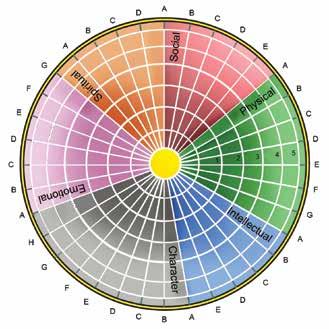
The SPICE Wheel is a TOOL that provides a Venture Scout with key ideas that will assist them in their personal development and growth. The SPICE Wheel ask 36 questions under the SPICES headings to determine a ‘discovery profile’ for that Venture Scout. From this process the Venture Scout chooses key ideas and actions that will help them along their Personal Journey.
1. Have a look at the SPICES Questionnaire.
2. Consider each question in turn, and rate yourself in terms of each question from 5 to 1.
3. A rating of 5 means that you can answer an unconditional yes to the question, a rating of 1 means that you would answer an unconditional no to the question.
4. As you rate yourself for each question, plot your answer on to the SPICES Map.
5. When the map is complete it will define a shape. Areas where you are well developed are shown where the shape hits the outside circle on the map.
6. Areas where you have most room for development are shown where the shape hits the inner circle on the map.
Remember when completing the questionnaire and plotting the map ...
1. To answer the questions as honestly as possible ... this is your own map and it is not a question of comparing yourself to others.
2. That the questions are not quite black and white, so don’t think that you have to give yourself a rating of 1 or 5 ... more often than not your rating will lie somewhere in between.
3. That the aim is to ‘expand’ and ‘smooth’ the circle on the map during your time in the Unit. ... however, it would be most unusual if you ended up with a complete circle ... what is important is that you make the effort.
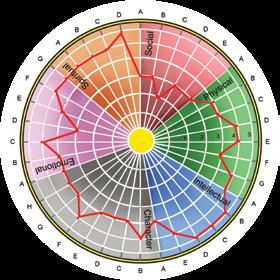
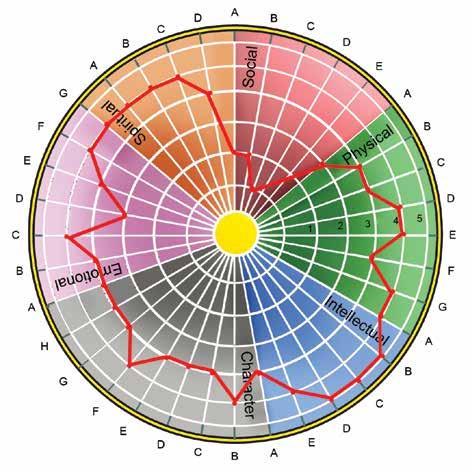
If we take a look at this worked example you will see that this Venture Scout discovers that the area they are most developed in is Intellectual (at this stage in their life), while the area that needs attention is Social.
1. I an going to overcome my shyness. On a County activity I will make a real effort to talk to other Ventures in other groups.
2. Other than Facebook and Instagram I do not communicate well with others. At our weekly meeting and at school I am going to make sure I chat with people face to face.
3 Understanding other cultures. Something I have not thought about. I will contact someone from our local Polish community and find out about their traditions and history.
4. Community. I am going to get involved with the Tidy Towns project with my Venture Group.
5. I am going to try and stop skipping breakfast. I am going to find out what foods are good for me.
6. I need to do more physical activity. I am going to attend all the Venture hikes and activities
7. I will find out about the effect of bad diet and alcohol and drug abuse and what they can do to me.
8. I would like to find out about yoga and attend a few classes.
9. I will be a crew Leader for an activity.
10. I will find out about reviewing activities. I will talk to other Venture Units to see how they do this.
11. Law and Promise
_ I need to understand that this is not just during Ventures - I need to live it.
I need to remind myself to do this regularly. Simple things each day. Help people out or even just smile to someone who needs it.
12. I need to learn to appreciate the small things and large things that happen in my life. So I will take time to stop and appreciate things more.
13 I will not shy away from topics I do not feel comfortable talking about. I have strong views on certain things and I will do my best to discuss them.
14. I will find out about medical health issues and the best ways to deal with them.
15. I will make a conscious effort to listen to my friends and try to help them if I can. Listening is a skill I need to develop.
16. I would like to explore this area a bit more. I would like to fully understand the difference between religious and spirituality.
17. I will find out about Leave No Trace
18. I will talk other Venturers and find out what ceremonies and rituals they use in their Groups
Social 3. I will contact the local Polish Group and ask them to help us build the city in the trees. I can then chat to them about their culture
Idea: Build a City in the Trees
Build and spend the weekend in a tree house
Social
• Can you communicate with others?
Intellectual
• Can you plan, carry out and review a project.
Adventure Skills:
• Pioneering
• Emergencies
• Camping
• Backwoods
Special Interest Badge
• Personal skills
Intellectual 9. I will be the Crew Leader on an Activity.
Build
the
Social
• Can you communicate with others?
Intellectual
• Can you plan, carry out and review a project.
Adventure Skills:
• Pioneering
• Emergencies
• Camping
• Backwoods
Special Interest Badge
• Personal skills
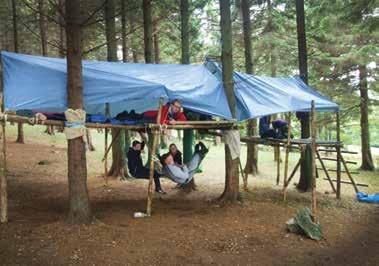
Venture Scouts at SUAS phase:
• Contact another Venture Unit and suggest doing the project together.
• Working with your Crews design a city in the trees layout.
• Organise to meet the other Venture Executive and agree a design that suits both Crews.
• Decide the time-line for this project and dates to carry it out.
• Book the location.
• Decide if any Adventure Skills that can be incorporated.
• Book the equipment that is necessary to carry out this project.
• Assign tasks to members of the crew
- Food & equipment.
- Transport.
- Budget.
• Build the city in the trees. Carry out a review when you are finished.
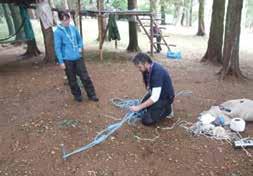
• Make sure to introduce yourself to the members of the other unit
• Find out about their interests, school, bands etc.
• Express your views on the design of the city.
• Listen and except the views of all members of the crew.
• Perform your task set by the crew leader.
• Decide on an Adventure Skill you would like to advance to.
• Actively build the city in the trees. Carry out a review when you are finished.
• Encourage, motivate and keep the crews focused on the task at hand when necessary.
• Assist with the clarification or elaboration of the task or help in finding a consensus or a compromise.
• Listen and encourage each Venture Scout to achieve their goals.
• Oversee, monitor resources and Venture Scout Unit funds
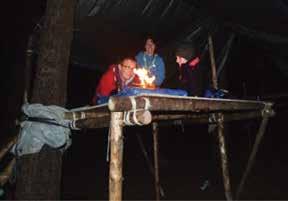
Book a site for ‘City in the Trees Build’
Draw up design of our ‘City in the trees’ List equipment, assign jobs, organise logistics. Decide adventure skill level
Meeting with other Venture Scout Unit. Team building games. Discuss logistics and small pioneering projects.
Build our ‘City in the trees’

The Venture Executive take all the lists of ideas and generate a plan that incorporates all Crew ideas. The activities should where possible meet the personal objectives (Fiontar), Adventure Skills, Special interest Badges, Nautical Badges, if desired, and assist where possible anyone completing the Chief Scout Award. The planning cycle is determined by each Venture Scout Unit. In general Venture Scout Units operate 4 month cycles September to December. January to April, May to August. June is an exam month an May can often be a study month and this is important to bear in mind when planning.
Venture Scouters should ensure that the plan can be achieved by the Fiontar Crews and that activities are realistic and within the capabilities of the Unit.


- Activity Crews are then selected to organise and lead the activities on the programme.
- Each activity Crew should have a mixture of Venture Scouts working on Suas and Trasna, with those on Trasna leading the Crews to plan and organise the activities.
It should be noted that when we speak of activities that these come in all shapes and sizes, whether that is an activity undertaken during a Unit meeting, an activity that lasts for an entire weekend or a project undertaken over a number of months.

This should be done in Fiontar Crews. With reference to the 18 key ideas and objectives the Venture Scout has set for themselves they should consider and discuss how they have progressed so far. This review should also help the Venture Scout discover what they have achieved.
At the end of each year the Venture Scout should re-do the SPICE wheel exercise. This will help to confirm progress on key ideas that have been attained.
At the end of the activity do a review as a Venture Unit
Note: The Venture Scouter should chat with the Venture Scouts on a regular basis and review objectives in their Handbooks. Together they should confirm that the objectives are/have been met through the participation within the activity/programme. The nominated Trasna Venture Scout should also carry out this review process with their Suas Crews.
Venture Scouts should from time to time help out on activities run within the lower age range sections within the Group or County. They should however not attend Beaver, Cub and Scout meetings on a regular basis. Venture Scouts should never be considered Youth Member Supervisors.
The exception this rule is Venture Scouts who are undertaking the leadership section of the The Chief Scout Award and Gaisce - the Presidents Award.
Involvement in community projects by Venture Scouts promotes personal growth and self - esteem and helps to foster empathy and self awareness. Community projects offer the opportunity to learn new skills and discover hidden talents and encourages civic responsibility.
Venture Scouts should be encouraged to undertake projects in local communities. this can be tidy towns projects, social projects, Peace light of Bethlehem, Walk In My Shoes or afternoon tea for the elderly.
The Mission or Aim of Scouting Ireland is to encourage the physical, intellectual, emotional, social, and spiritual development of young people so that they may achieve their full potential and, as responsible citizens, to improve society.
Throughout the Venture Structure and Venture Programme, Ventures are provided the opportunity to take ownership of their personal journey. They then work within a small group system to achieve their objectives.
Youth Empowerment does not mean Ventures make all the rules and decisions for the Unit. It means young people working with Adult Scouters to choose the right path and decision together.
• Scouters encourage discussion and debate.
• The Venture Charter - Agree a list of regulations.
• Allowing Ventures to choose their Personal Journey using Fiontar.
• Provide the opportunity to be a crew leader.
• Provide the opportunity to be a member of the Venture Executive.
• Become a delegate to attend Group Council.
• Become a delegate to attend County Forum.
• Become a delegate to attend Provincial Forum.
Within each Scout County there should be a support system for Venture Units. This will include a County Programme Coordinator (CPC) for Ventures.
The role of the County Programme Coordinator (CPC) Ventures is to:
• Coordinate the Scout County Venture Team.
• Establish a Scout County Venture Forum.
• Assists and support Units with the implementation of the Venture Scout Programme.
• Act as a mentor to Venture Scout Units.
• Coordinate County Venture Events, with the assistance of all Venture Units.
• Assist Venture Units will small numbers to Venture Scout within the County (Combined Venture Groups).
The Scout County Forum for Ventures is a platform for Venture Scouts to meet, exchange ideas, express their views and formulate recommendations. Each Scout County must hold a forum in line with the suggested method endorsed by the National Management Committee and the World Organisation of Scout Movement WOSM
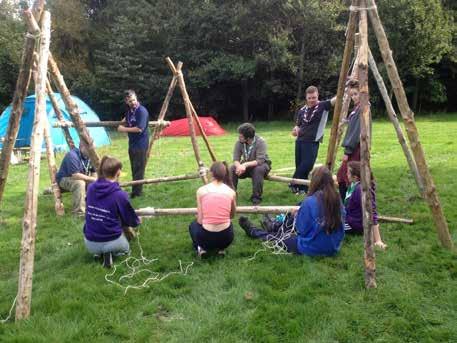
The forum should take place at least once a year. All Venture Scouts in the Scout County are entitled to attend. The forum will then select representatives who are entitled to attend the Scout County Board Meeting throughout the year.
These representatives will also represent the Scout County at the Provincial Youth Forum for Venture Scouts in the Scout County and the level of programme being implemented by each Unit.
As stated earlier the Mission or Aim of Scouting Ireland is to encourage the physical, intellectual, emotional, social, and spiritual development of young people so that they may achieve their full potential and, as responsible citizens, to improve society.
Within the Venture Section this is achieved through the Personal Journey using Key Ideas (Fiontar), Special Interest Badges, Adventure Skills and the Chief Scouts Award.
Venture Scouting has a vital role to play in the progression of a Scout. Although the very basis of the One Programme in all 5 sections is that the youth member is involved in the designing of their own programme, it is in the Venture Unit that they really begin to shape their own experience. Venture Scouts work in partnership with Venture Scouters and assume a greater level of responsibility.
Benefits of participation in the Venture Scout Programme for a Venture Scout
• Increased opportunity for leadership skills. Operation of the Executive and Crew systems will provide many such opportunities
• The opportunity to learn to be a team player, but also the opportunity to learn to work on their own initiative.
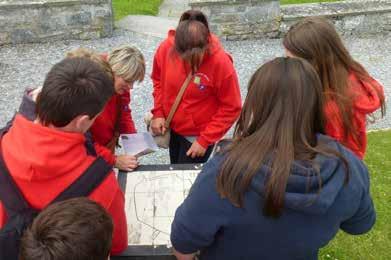
• The ability to pursue personal interests. While personal development and personal interests are build into the entire Venture Programme, the nature of the Crew system in Venture Scouts allows for special interest groupings to form to much greater degree.
• The opportunity to specialise in their chosen Adventure Skill
• Networking with people of similar age. Networking between Venture Scout Units from around the country is very much a part of the Venture Scout experience.
While the Venture Scout Unit is vital to the development of the Venture Scout, it also has much to offer the Scout Group itself. Benefits include ...
• The Venture Unit will take on more challenging and adventurous activities than the younger programme sections, brining a range of new skills to the Scout Group.
• The Venture Unit provides a target for Scouts to strive for. This will lead to a better retention of Scouts .
• The Venture Unit could be a source of Specialist skills to assist in the implementation of Adventure Skills Badge in the younger sections.


Sea Scouting is operated in many Scout Groups around the island and in most Scouting organisations around the world. Sea Scouting is an approach to the Scout Method which applies nautical traditions and teaches seamanship skills throughout a young person’s journey through Scouting. It has its roots as far back as 1912 and has a varied and rich history. It’s not unusual for Sea Scout Groups to have very large membership and strong retention of members. This shows that young people continue to be drawn to fun on the water, immersed in a nautical environment.
Adults and young people should be aware that prior to starting on water activities they must be familiar with Scouting Ireland’s Boating Guidelines which can be found at scouts.ie.
The Nautical Training Scheme can be undertaken as an addition to the programme in each Section. It allows for the maritime ethos essential to a progressive nautical symbolic framework to be successfully implemented. This training scheme is open to all members of Scouting Ireland wishing to further their maritime knowledge. The badges are progressive and lay out the steps that the young person will take on their journey.
The Nautical Training Scheme for Venture Scouts is called the Navigator Badges and it allows the Venture Scouts to develop their maritime skills. It follows on from the Scout Section but can be completed by a Venture Scout who was not in the Scout Section, or did not pursue the Helmsman Badges at the time.
There are four stages to be completed, each stage being centered on the eight areas of competency of;
• Core Skills
• Water Safety
• Technical Skills
• Navigation and chart work
• Signaling
• Nautical Heritage
• Maintenance
• Weather and Tides
The scheme is designed to work with the programme cycle in the Venture Scout Section and may be undertaken by an individual Venture Scout, or indeed by the entire Venture Scout Unit. To meet the requirements a Venture Scout must get afloat several times.
This may be achieved using equipment belonging to the Scout Group, through the SI Water Activities Centre in Killaloe and Lough Dan or a recognised commercial adventure center.
Some Sea Scout Groups have been awarded ICU (Irish Canoe Union) and ISA (Irish Sailing Association) Instructor Certification and can offer training courses to the Venture Scouts at a fraction of the commercial rates. Sail Training Ireland, Ocean Youth Trust Ireland and the Inland Waterways
Association of Ireland offer various opportunities for young people in this age group. See the Sea Scouting Facebook page or seascouts.ie for further details.
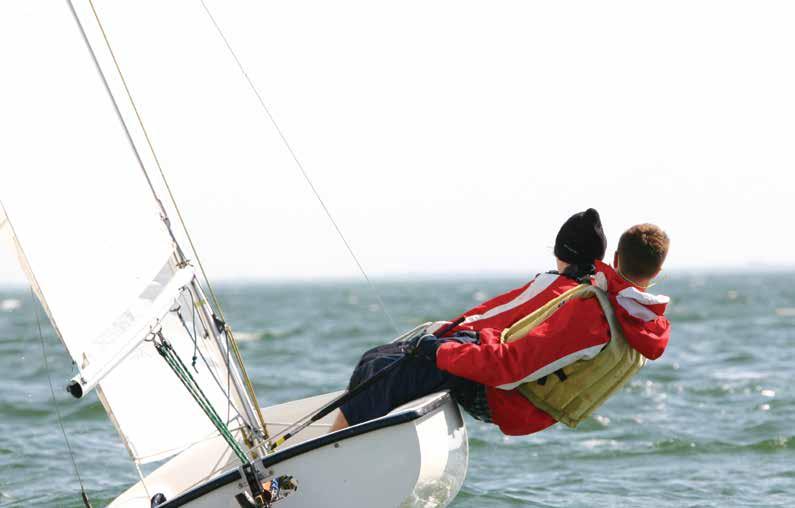
It is important for all Scouters to understand that at all times the association’s Safety Guidelines and Boating Guidelines must be adhered to when undertaking Adventure Skills.
Please note that the term ‘Scout’ refers to all youth members, be they Beaver Scouts, Cub Scouts, Scouts, Venture Scouts or Rover Scouts.
The preferred method of assessment is Peer Assessment. This is where one Scout assesses another for an Adventure Skills stage badge. At all times however the ‘Two-up’ rule must be observed, which means that the Scout must hold a stage two higher than that being assessed.
So for example, a Venture Scout who holds the Stage 5 Air Activities can only assess another Scout up to Stage 3 Air Activities. Peer Assessment is to be encouraged at all times. Scouters can assess the majority of stages for each of the Adventure Skills, so long as they have the relevant knowledge and experience to do so. It should be remembered that the competency statements in each of the Adventure Skills are specific, and a Scout must be able to demonstrate their ability to complete all competencies in a stage before being awarded the badge. Therefore it follows that the Scouter must have the appropriate knowledge and experience if they are to assess a Scout.
A number of Scouting Ireland Programme Centers and Campsites offer courses for different stages of different Adventure Skills. Typically these will be Stages 4 through to 7. Scouters should note however that in most cases a single weekend course will not be sufficient to attain a stage. It is most likely than a certain amount of preparation work will need to be done before the event and further experience will need to be gained after the course.
Despite having the best of intentions it is inevitable that Scouters will assess to different standards. This could well lead to problems for the higher stages where the Adventure Skills are linked to external qualifications, or involve the organising of activities and events where there is a high degree of responsibility for others. With this in mind a system of using the Expert Panels to assess the Advanced Stages has been adopted to moderate the standard of the Adventure Skills within Scouting Ireland.
There are a number of stages in each Adventure Skill that will need to be assessed by a member of the relevant Adventure Skill Expert Panel (or an approved external expert who’s qualifications have been verified by Team Lead). These stages are referred to as the Advanced Stages.
The Adventure Skills have been grouped into two for the purpose of setting out who can assess each of the stages.
Adventure Skill
Stage 1
Stage 2
Stage 3
Stage 4
Stage 5
Stage 6
Stage 7
Stage 8
Stage 9
Camping, Backwoods, Pioneering
Peers/2 up and Scouters can assess
Hillwalking, Paddling, Sailing, Rowing, Emergencies, Air Activities
Peers/2 up and Scouters can assess
Peers/2 up and Scouters can assess Peers/2 up and Scouters can assess
Peers/2 up and Scouters can assess Peers/2 up and Scouters can assess
Peers/2 up and Scouters can assess Peers/2 up and Scouters can assess
Peers/2 up and Scouters can assess
Peers/2 up and Scouters can assess
Holders of stages 8 or 9 can assess
Two holders of Stage 9 must assess jointly.
Two holders of Stage 9 (different to those who assessed Stage 8) must assess jointly.
Once a Scout has been assessed for a stage by any of those mentioned above, there should be a simple decision taken to award the badge by the following:
Venture Scouts and The Venture Scout Executive
Peers/2 up and Scouters can assess
Holders of stages 8 or 9 (or external experts) can assess
Two holders of Stage 9 (or external experts) must assess jointly.
Holders of stage 9 (or external experts) can assess
Two holders of Stage 9 (different to those who assessed Stage 8 - (or external expert) must assess jointly.
It is important that they confirm that the assessment has indeed taken place and that they then ‘sign off’ on that assessment, allowing the Scout to be awarded the badge.
All stage badges are available from the Scout Shop.
A GSF is a member of the professional staff based in a particular Scout Province who provides direct support to Scout Groups.
ONE Programme is the youth programme of Scouting Ireland, and it offers a consistent approach to programme for all youth members from Beaver Scouts through to Rover Scouts.
The Programme Unit is a team of professional staff based in National Office who both develop programme resources and provide direct programme support to the National Youth Programme Committee and Scout Groups.
Rover Scouts is the fifth and final Programme Section of ONE Programme. Rover Scouting is for 18 to 20 years of age inclusive.
The World Organization of the Scout Movement (WOSM) is an independent, worldwide, non-profit and non-partisan organisation which serves the Scout Movement. Its purpose is to promote unity and the understanding of Scouting’s purpose and principles; while facilitating its expansion and development.