
The
Adventure begins... The Adventure

begins...

ONE Programme
This resource is an aid for Scouters so that they can understand the key components of their Sectional Programme.
It is presented in two parts - Part One presents an overview of the ONE Programme and how it is designed to work across all Sections in a Group.
Part Two presents the programme as it relates to the Beaver Scout Section in particular.
This resource is not a replacement for formal training sessions or practical hands on experience. Each Section will be different and the interaction between Scouters and young people will depend on local conditions and personalities.
This resource should be read in conjunction with the Scouters Manual that provides more in –depth detail on some of the elements presented in this resource. Our website www.scouts.ie also contains a number of additional programme resources and supports, which again, should be reviewed and consulted as part of your interaction with this resource.
Scouting is a movement for young people SUPPORTED by adults. What happens as part of the programme of Scouting is determined by young people, across all age sections. To support young people in their quest might sound easy to do, but in fact, it is perhaps the hardest job that an adult working with young people will practice.
There is a tendency among all adult to direct and control – particularly when working with younger scouts. There is, of course, the need to protect and apply the wisdom of adulthood, and this is most important but in the context of Scouting we need to create an environment where young people can explore, make mistakes and learn from these experiences.
Supporting young people within Scouting means allowing them the space to learn and grow; to empower them, by allowing them to make decisions and determine their direction; and to be there to help, advise and coach. Baden Powell, our founder once said ‘Scouting is a game for young people and a job for adults’ so the notion of supporting is not an easy task.
This resource will outline the key principles and tools that are available to enable this to happen in your Section and we will explore these and provide guidance and wisdom as to their use.
Some key principles must be understood before this resource makes sense and these include the following
The Scout Principles – these relate to the educational objectives
The Aims of Scouting – these again relate to the educational objectives
The Scout Method – these relate to the way we do things in Scouting
Education
Scouting is an non-formal educational experience and is firmly rooted in the ‘experiential educational model’ which is that by ‘learning by doing’ and examining and internalising that learning through a review process we gain knowledge about the task completed but also about ourselves leading to the personal growth of the individual.
In Scouting we undertake this process in small teams so that the experience is both individual and team based. This process enables an extended learning process and results in higher personal realisations and inter-personal skills.
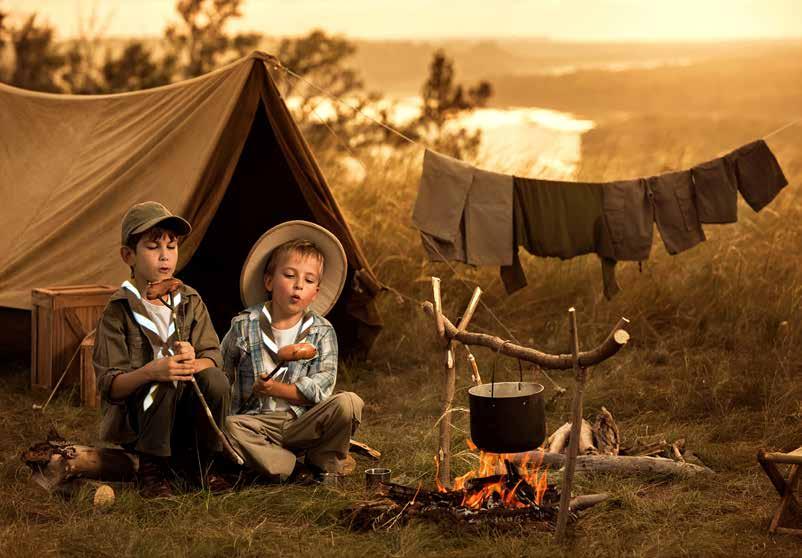
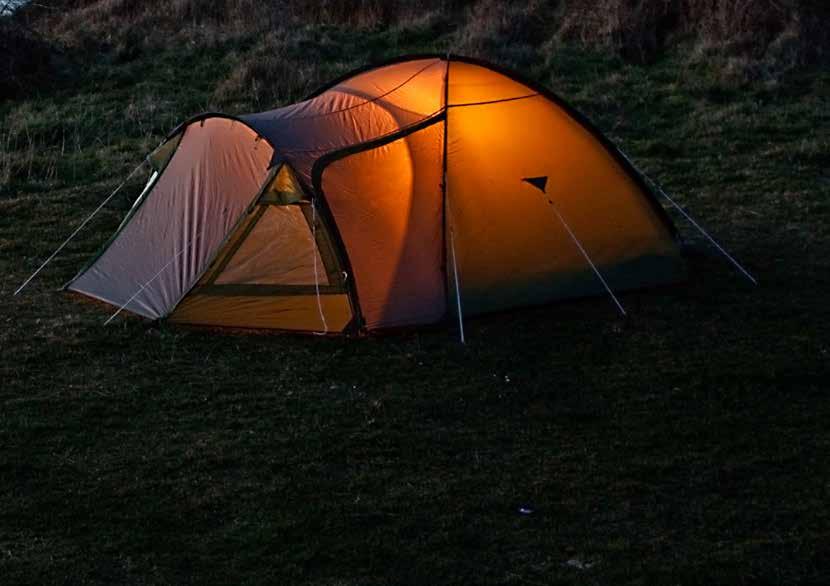
What is important to understand is that the ‘task’- the Team is expected to completeis of least importance, it is the interaction of the team and the dynamics of that team that are of crucially importance. Camping therefore is a key learning space as it is within this environment that the intensity of the Scouting experience is witnessed. The small working teams (Lodges, Sixes, Patrols, Units, Crews) have to live, eat, sleep and get on with each other for the period of the event. Camping is a micro-society as such and young people get to ‘play’ the game of life. Solving problems, organising the routine, getting on with others and getting things done are some of the great advantages for young people.
The Scouting Environment
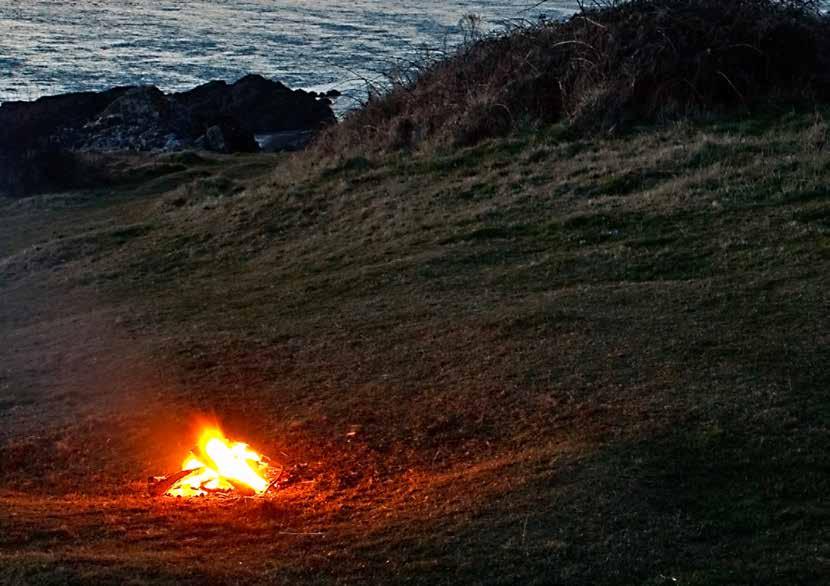
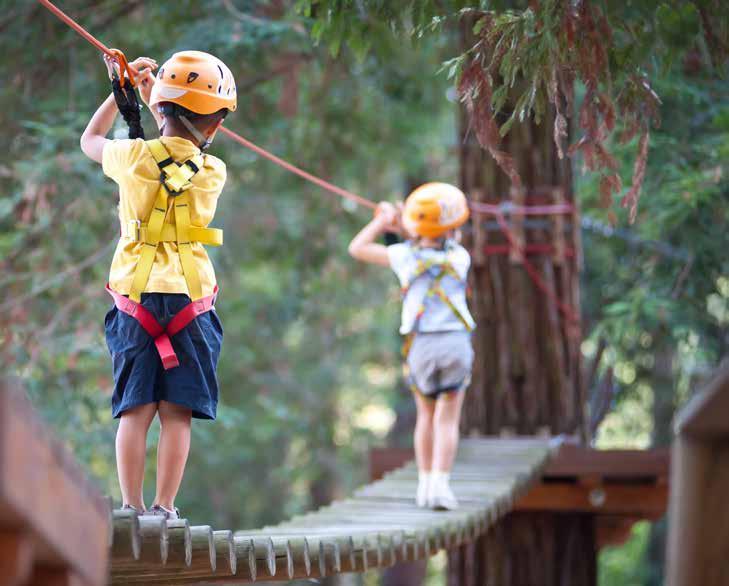
The Scouting environment is the outdoors. This is our number one learning space and the place where the game of Scouting is played. The ideal suggested mix in this regard is 70% outdoors and 30% indoors – giving our Irish climate. Camping, in particular, has a special place as it is here that teams interact in a social and skills based environment in close contact with nature. Challenge and adventure are also present in an outdoor setting.
Other essential elements encapsulated in the Scout Principles and Law are the spirit of and development of the Duty to Others aspect of our programme – the ideal of the daily good deed and service to our communities. Scouting exists in communities and it is vitally important that Scouting interacts with their local community. Service to others is a tangible element of our programme dealing with this commitment.
The Sectional identity and spirit work to create a sense of belonging and friendship open to all. The team system is the method used to establish and maintain this aspect.
Creating a value system based on living the values expressed in the Scout Law and Promise. This value system becomes the method by which a Scout lives and works with other people within the team system and their attitude to Scouting.
Ceremonies are another essential feature of Scouting and help to reinforce every aspect of the programme. Through ceremony we reward progress, create wonder and celebrate achievements.
Educational objectives
Educational objectives are a series of statements that state the personal growth that we expect to observe in young people who interact with the Scout programme. There are 36 statements and they are grouped under each of the ‘SPICES’ – social, physical, intellectual, character, emotional, spiritual. We use an underlining principle, which is, that we expect all young people who interact with Scouting to take ‘one step forward’ in everything that they do. A young person should never be at a disadvantage for being a Scout. The educational objectives therefore are a reference to determine the progress of a Scout along their personal journey to adulthood. Within the ONE Programme they are used in the ‘review process’ to determine progress and understanding.
Within the creation of the programme of the Section they are also identified and built into the content and objectives of activities that form the steps to an adventure within the programme cycle.
Small team structure
A Section is a collection of small teams and not a collection of individual Scouts. Each team has a leadership structure with a young person assuming the role as team leader (Lodge Leader, Sixer, Patrol Leader, Crew Leader). Leaders are not born but created and this is the principle in operation within the team structure. Scouting is in fact an apprenticeship in leadership. From the very first day a young person joins Scouting they embark on a journey to leadership. This process is a layered on experience starting in a simply way and building bit by bit so that a young person, in time, can assume the leadership of their team. The team are the unit used for all
activities in Scouting, games at meetings are inter – team, the team camp together and work together, the team determine programme and contribute to other meetings and forums via their team leader.
The review process is undertaken in teams and the individual and collective knowledge and learning is acknowledged.
It is against these key elements that the Scout programme is created and presented to young people. We will now take a look at how a programme is created and how each of the elements above take their place in this process and how the various tools and resources are used in these contexts.
ONE Programme
The ONE Programme is the processes we use to create the Scouting experience. The word ONE means that the key elements of the programme are present in all Sections and are used in an age appropriate way.
If you consider that a young person is on a personal journey of discovery then the experiences, methods and skills gained are carried forward on that journey through the various sections.
Five key elements are the same across all sections
The team system
The programme planning process
The Plan, Do. Review process
The Scout Skills levels
The Special Interest badges
Another consideration is the support model – adults and young people working together. In the younger sections the adult support role will be greater whereas in the older sections the adult support role will be more at a partnership or coaching level.
In all sections the adults works with teams and with individuals to ensure their advancement in all aspects of Scouting.
The Team system
The team system exploits the natural gang instincts of young people and is the natural medium for learning –both in terms of inter-personal skills development and
scouting skills expertise. The team work together and learn for each other in the process. Older members of the team will usually have more experience and this is passed on in a natural way to younger members.
Each member has a say in what the team will do and the leader of the team also acts as a representative of these views at other meetings and forums within the Section.
Within this structure all is not as ‘rosy’ as it might seem and the role of the adult supporting this process is two-fold…working with the leader of the team and working with the team as a whole. It is important that young people assume the role as leader of the team and exercise this role to the best of their abilities, having a positive impact on its members. This is a big consideration for young people who often do not possess the skill-set to undertake such a role. The role of the adult is therefore to ‘coach’ the young leader in their role, suggesting actions and offering assistance from a far or at other forums or training sessions. In working with the team the adult should ensure that they work together to the best of their ability and recognise any successes.
A good team structure or system needs time to be developed and it is not automatic. A Scouter working in an established Section will find a system already in place and working over many years. In a new section this system needs to be developed and fostered. Of course, this does not say that all systems and structures are correctly functioning and often a Scouter team will have to rework or recreate a working
structure. Young people are, of course, always moving forward so the makeup of a team will change as young people advance to other Sections. If a good natural system of leadership is in place a new person will take up the leadership position but the dynamic of the team may change and the Scouter will be involved in this process.
Team spirit
Team spirit and identity are very important. They are not team A,B,C,D but rather the Fox Patrol, the Lion Patrol or whatever name they choose to call themselves. The collective history and experience of the team is valuable in bonding the team together plus the mixture of characters that make up that team. Friendship and loyalty are key features to be observed. The team will also have its own space within a meeting place where they can talk, discuss and plan actions. This area may also have its own identity determined by flags, notice boards and suitable branding…it is their ‘gang den’ or ‘hideaway’
Considerations
• It is a natural learning space of young people
• It is a natural place to learn inter-personal skills
• It is the natural place to gain and learn leadership skills
• It builds friendship and mutual support structures
• It is the natural operational unit of a section
• It allow democratic interactions and representations the team advance in team knowledge and individual development
• It take time to become established correctly
• It needs constant support and guidance
• It needs on-the-job training and support of its leadership
• Teams need to formed correctly to ensure success
• Lack of leadership can cause the team to stumble
• Task management needs to learned by experience

Leadership Training
Scouting as we have stated above is an ‘apprenticeship in leadership’. This happens from the very first time a young person steps into their first meeting or activity. The method employed is based upon a ‘layering on of responsibility’ model. In real terms a Scout is given responsibility – starting at simple tasks and building to more complex undertakings. Initially the Scout will be part of a team or a sub team and through a series of tasks and experiences gained the young person will gather and refine their leadership skills. Creating a budget for a weekend camp for example is a leadership skill as is planning how to build a pioneering project. Managing the process of completing the ‘tasks’ during a meeting or activity is a management and leadership achievement. So at all levels within the team, from the Scout who looks after the notice board to the Scout with an expertise in first aid each is on an apprenticeship journey in gaining valuable life skills and leadership skills.
The job of the Scouter is to support this process. This is done by working very closely with the team leaders in an on-the job role and also ensuring that the layering process is achieved in each team. The Scouter should be able to see this in action and observe it at first hand. From time to time the Scouter might suggest to the leader of the team that some individual Scout might need more responsibility or be ready to take on more responsibility. This interaction or advise and coaching would happen via one – one conversations with the team leader or at council meetings within the Section – team leaders and Scouters meeting.


Individual Group
Considerations
• Leadership skills take time to build and get ‘good at’
• Mistakes will always happen and young people have to learn from these
• Giving power to young people to make their own decisions in a safe environment
• Builds a solid base of responsibility, confidence and ‘we can do that’ attitude
• It fosters growth with a young Scout and enables them to do things they did not think they had the capability to do
• It takes time and commitment to get it working correctly there will be many failures and mistakes but they must be seen as learning opportunities
• It requires a lot of patience and perseverance by Scouters to support this process
• It requires observation and listening skills to determine what is happening and the opportunities that exist.
• It requires the scouter to back off a little and let it happen even though they want to jump in and solve the problem for them
• Supporting this process is hard but the most rewarding when it works

One to One Relationship
A Section, as we have presented, is comprised of teams and of course within the team structure are our individual Scouts. Each with their own dreams, character, expectations and skills; a Scouter need to get to know them all. Certainly, the skill required is the ability to talk and listen to young people not in a parental, judgmental, rules and regulations way but in a friendly and supportive way. Some Scouters will have this as a natural skill and others will have to learn this skill over time.
First steps are the building of a relationship – trust, friendship, support, guidance, listening, responding. It will be a two way process, of course, as Scouts will see the Scouter as ‘being in charge’ or in a ‘teacher’ role as their experience to date - in a school environment - will be such. In Scouting the Scouter /young person relationship is more a big brother/big sister relationship. The Scouter is approachable, friendly, fun to be with and a partner in the fun and activity of Scouting.
We have mentioned above the role of the Scouter in interacting with the team and the team leader and the one-one relationship stems from this. Firstly getting to know the Scout in a general context within the teams and as time goes by to understand the needs and expectations of the individual as they reveal themselves in review sessions. Child safety and protection are to the fore and one to one relationships are built in that context via group discussions and in the presence of other Scouters and Scouts.


Personal progress of the young person is important and every Scout should have the wherewithal to identify their personal journey direction. The Scouter therefore needs to be in a position to understand where every Scout is in relationship to these goals. The review process, conducted as part of the programme cycle, will allow these insights. Collective sharing of information among the Scouter team will also provide insights.
The Scouter team is an ‘on-the job’ learning space for Scouters, watching others do it via an experienced Scouter is a good way to pick up tips. We each have our own personality so learn by observation but do not become a ‘clone’, young people will see right through this, be yourself and find your way of supporting each Scouts.
• You need to know your Scouts so you can fully support them on their personal journey
• You need to develop your way/style of talking to and listening to young people
• You need to find the ‘big brother/big sister’ element in your personality
• The needs of young people come first – you are supporting them not directing them consider child protection at all times and adhere to all recommendations
• The job is to empower young people and facilitate this
• It is a skill that has to be learned
• One to one in a ‘group context’ not one to one in a ‘alone together context’ personality clashes can sometimes occur
• Be careful of favouritism and treat everyone equally
• Share all observations and conversations with other Scouters
• Watch more experienced Scouters and adapt best and good practice models of behaviour
Overview
The above considerations form the backdrop to what and how adults work with and support the programme of Scouting. All adults are part of the Scouter team and they are not alone in this work. The Scouter team will have a wealth of experience within it ranks and together they achieve the objectives of the Section. This Section Scouter team are again members of the Group Scouter team and are equally supported across the Scout Group structure. So, each Scouter is unique and each has a valuable role to play in the development of young people within their Section. It is the collective responsibility of the Group and in turn the Section to ensure that every young person experiences Scouting of a type and quality that they wish to enjoy and that we would wish them to have on their journey along the Scouting trail.
Scouting’s model and methods are tried and tested and have proven their worth and value as a youth development process for more than a century. They are scientifically sound and while simple they do have the power to change the lives of young people and aid towards their personal development as the adults of the future. The work you do as a Scouter is influential in the lives of each of your Scouts.
Each of the elements described above in simple terms can be expanded on in various other resources which explain these concepts further and in more details. The purpose of this resource is to highlight these elements so that they are foremost in your mind and resulting behaviour and attitude. The practical tools and methodology that we will now go on to explore are useless unless we fully embrace the key concepts of ‘supporting young people’ on their personal journeys through Scouting. The Scout Law and Promise (an element of the Scout Method) is another key element that binds the whole experience together. Every Scout takes the Promise and seeks to live by the Scout Law. This indeed is a common aspect of every Scouts life and it provides the rule book for the game of Scouting.

Service and Commitment
Symbolic Framework

Building adventures
The activity of a Section is expressed through the programme it offers to it members. Each Section will have its own approach and indeed every group, across the country, will offer their unique blend of elements making every Sectional programme exciting and special.
Throughout all the Sections in a Group the programme is presented through what is called a ‘Programme Cycle’. This programme cycle can have any time-line but it contains three crucial features – Plan, Do, Review.
Each programme cycle is built around an adventure or series of adventures leading to a key highlight within the yearly programme.
Normally, a programme cycle will last around 4 weeks (but can be shorter or longer) so in theory a Section will experience 12 adventures (programme cycles) during a yearly programme with a highlight activity such as an annual camping experience or expedition.
So some key words
Plan, Do, Review – our key learning model
Programme Cycle – the time necessary to complete the Plan, Do, Review process
Adventure – the highlight of a Programme Cycle
Highlight event - the key annual event or focus of the yearly programme
The ‘adventure’ is the main highlight of the Programme cycle – the weekend camp, for example, and the meetings or associated activities are the ‘learning spaces’ to enable the successful completion of the adventure. So, for example, the Scouts will need to be able to build an oven on the camp so that they can bake a cake. The
weekly meeting or a special day activity might be created for the Scouts to learn how to do this so it can be completed with success on the weekend camp.
Within this process all of the Scouts will be involved in the creation of the adventure, the weekly meetings and activities. The team system will be used at all times and all the interactions associated with this process will be focused on the programme cycle and the planned adventure.
The Plan, Do, Review method is used….so the adventure is planned, it takes place and finally the programme cycle is reviewed and learning is determined.

The process
The first step in the creation of a Programme Cycle or series of cycles is an ideas creation or generation brainstorm or buzz session. This is where the ideas for adventures are created and selected for the forthcoming months.
Let’s look at this process
Scouts will talk among themselves for weeks in advance of this session. Team leaders will also have discussions on the matter and will fine tune ideas to be brought to the session. Individual Scouts will of course have their own dreams and ideas.
The Scouter team may have a few ideas also that they want to present or perhaps some research on ideas that might have been suggested at chat sessions or team leader and Scouter meetings.
A brain storming session is organised and all the Scouts of the Section are in attendance.
A number of brainstorming techniques can be used but the following method is preferred and works well.
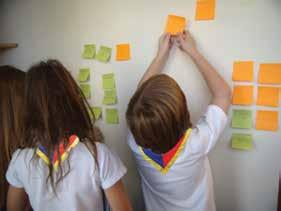
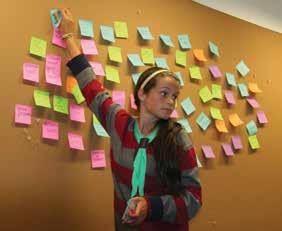
Each participant is provided with a number of ‘Post its’ on which to write their ideas ( usually 3- 5 ‘post its’ but more if the participant numbers are low – Venture and Rover Scout Sections).
Each Scout is invited to write their ideas on the ‘post its’ provided – one idea on each ‘post it’. Teams can also present ideas, if these have been discussed at previous meetings, and Scouters can also add ideas. In all cases the rules are the same – 3-5 ‘post its’ for everyone, team, Scouters.
All of the ideas are placed on the wall of the meeting place and everyone is invited to look at them and explore their contents.
The Scouter leading the session might start grouping ideas…for example if a lot of people suggest ‘cycle hike’ he would move the idea ‘post its’ together on the wall.

Once everyone has had a look - the Scouter will explore each of the ideas in turn with the participants. For example he might ask a scout to present the cycle hike idea. The Scout is then asked to explain his/her idea further so that everyone has a better picture of the idea suggested.
In a small gathering all ideas can be explored but in a larger gathering the more unusual ideas may only be explored in detail. Collective ideas such as camps can be discussed to determine the feel and shape of that activity. Once the ideas are determined the ideas are auctioned off in turn to the Section. Those ideas that reach the required number of votes are placed on another wall in the meeting space.
The agreed ideas are then discussed from the point of view of two aspects – what is the adventure activity and when will it happen. The purpose of this period is to create a worthy adventure to become the highlight of a programme cycle. The second consideration is when the event will happen. Once this is decided the ‘post it’ or series of ‘post its’ are placed on a calendar sheet.
Next step is to create a series of flip chart pages. Each page represents and programme cycle with an adventure at its core. Normally it will be about 4 programme cycles, so 4 flip charts sheets will be presented. Each team is given one of the sheets to start and they have approx. 5 minutes to add onto the sheet all of the items they need to know to undertake the adventure. The team are also asked to consider the SPICES and the possibilities for scout skills and special interest badges. In relation to the SPICES - can they determine each of the elements within the ideas suggested and make suggestions for any shortfalls. After 5 minutes the sheets are passed to the next team and when the cycle is finished a full sheet of ideas and suggestions related to the programme cycle are present on the flip charts.
The session is now finished. This type of brain storming session may happen 3-4 times a year. From these sessions a yearly programme can be compiled around a series of programme cycles.
Don’t forget the yearly highlight event. Some Sections chose this event as a first step with all other adventures leading to this highlight. Others create a whole adventure and programme cycle around this event. All of this is decided by the Scouts within that Section.
The Scouter Role
The Scouters role is one of managing the process. The physical management of the meeting space is one thing but the careful interaction with the Section is another. The Scouter needs to tease out ideas, make sure everyone has a say and discussions are fair to all. Not every idea will be picked and the Scouter should be aware that every idea is an idea from a Scouts head. The camps and outdoor activities will always be popular but other ideas such as drama or chess playing might have limited appeal. The Scouter has to be clever to get balance between all of these factors, variety is the spice of life and a mixture of activities is often more exciting than the usual stuff.
The Scouter should also be seeking to push the capabilities within the suggested ideas beyond the normal to create new challenges and experiences. Also at the back of their heads they should have the SPICES in mind and the ‘roundness’ of the programme, so that the final product can be exciting, challenging and enabling for all young people.
This process will be different in each Section but this is the basic format. There are a collection of suggested adventures available for each section (36 suggestions for reach Section). These adventures have been balanced so that over the collection of ideas all aspects of the programme will be covered. Some Sections use the open model suggested above and others use the selection of the adventure via the adventure sheets as their starting point.
The Beaver Scout Section has suggestions for adventures in the Beaver Scout handbook.
The Cub Scout Section use their Lands of adventure map to determine their starting point.
So, a Section can have an open session or have a starting point via a suggested adventure. In all cases the choice is determined by the Scouts in that Section and the idea of the whole process is to create an adventure highlight and a journey to that adventure….collectively the programme cycle.

Next steps…
The ideas have to be transformed into the weekly meeting and activity plan. This is a job for the Scouter team and team leaders. Through follow on meeting the detail of the programme can be laid out. During this process it is important that Scouters do not take control remember our key word SUPPORT… items within the programme plan can be undertaken by the Scouts in the Section. For example, the planning of a menu, or the contacting of people. Some items will best be done by a Scouter but there are many big and small jobs that can be passed to teams or members of the Section to complete or organise. Remember also the ‘apprenticeship to leadership’ ideal – many opportunities exist to layer on responsibility to everyone.
During the process it needs to be determined what the objectives of the programme cycle are. What elements are special, what elements relate to a particular SPICE and what elements involve learning and application of knowledge. These objectives need to be listed by the Scouter team and shared with the Team leaders as they will form the basis of the Review element of the programme cycle.
Each section has a method to log progress – the Beaver Scout map, the Cub Scout travel cards and bead system, the polar maps of the Scout Section. Each of these devices enables a young person to see their progress over the period of the yearly programme. The review process allows the individual Scout to determine their progress, the Scouter to observe and monitor this progress and for the other members of the team to applaud and contribute to the progress of all their members and the collective team knowledge and experience.
The tools that support the implementation of the programme
On the association website a number of addition resources are available to support various aspects of the programme. These include sets of suggested adventures for each section. Specialised material related to special interest badges and scout skills. Support materials related to leadership training, meeting structures etc. is also available.
The Scouter Handbook and the Adventure skills Handbooks should be referenced also to provide detailed information related to what is presented in this resource. Formal training course and conversations with other Scouters are also very helpful to get a global perspective of how things are done.
Let’s look at the tools provided in each section in turn.
Beaver Scout Section
Planning
36 suggested adventures in Beaver Scout Handbook – these are graded by a SPICES value points
36 supporting sheets related to each adventure presented in the handbook for Scouters
Doing
the memory bag for each Beaver to collect items to aid memory in the review session.
Reviewing
the memory bags of each Beaver Scouts and the Beaver Scout map for recording progress.
Reviewing games
Cub Scout Section
Planning
The Cub Scout ‘Lands of Adventure’ map used to focus on adventures that can be planned
The Cub Scout ‘Lands of Adventure’ map and chapters within the handbooks
The ‘Travel Cards’ selected by each Cub Scouts to gain SPICES points– in the Cub Scout Handbook.
36 suggested adventures on the website
Doing
Reviewing
Travel cards as selected by the Cub Scouts
Reviewing games
Progress beads
Scout Section
Planning
Chadburn device – to discover the personal ideas of a Scout based on interests that can then be shared with the team.
36 suggested adventures on the website
Doing
Reviewing
Polar Antarctic maps to illustrate personal journey and by the order of steps in the stage badges.
Map records the progress of the Scouts and next stepping stones to take.
‘Food dumps’ identify experiences of Scouts and show possible future steps
Reviewing games

Venture Scouts
Planning
SPICES handbook and SPICE wheel to be used to determine a Scouts personal direction and personal challenges. This will aid towards the issues that a Venture Scout might consider to be important to them to build ideas for adventures.
Venture handbook
suggested ideas and explorations
Suggested adventures on the website
Doing
Reviewing
SPICE wheel Reviewing games
Rover Scouts
Planning
Rover handbook
36 adventure suggestions on the website
Doing
Reviewing games
Reviewing
The experience model used in Scouting – the Plan, Do, Review process has at its core the review element. This element is critical to the learning process. Until a Scout or anyone for that manner takes time to internalise and access what they have learned through an experience it serves no real value bar entertainment.
As Scouting is in the business of assisting young people in their development the review process is a vital component of the Scout programme. There are many ways of conducting the review – it can be done as the activity progresses or at the end of each day or in a sit down discussion at the end of the programme cycle.
In practical terms all of the methods are used or a mixture depending on circumstances. Reviewing is a process of learning from the experience, or enabling other to do so. It helps a Scout to get more from their interaction with others, life and recreation – especially if the Scout knows how to review an experience and can then match their learning to their dreams and ambitions.
The four key areas of the review process are :-
Facts
Feelings
Findings
Future (actions)
Conducting a review.
This review process is best managed under the four suggested headings and they become the agenda. A review session should not last too long (depending on Section) and can be undertaken in a fun way using games and devices (see separate resource). Scouts need to be comfortable so pick a place that is warm and allows Scouts to sit down and chat. It does not have to be indoors…a summer’s day under a tree or sitting around a campfire are also good locations.

Introduction to the Beaver Scout Programme
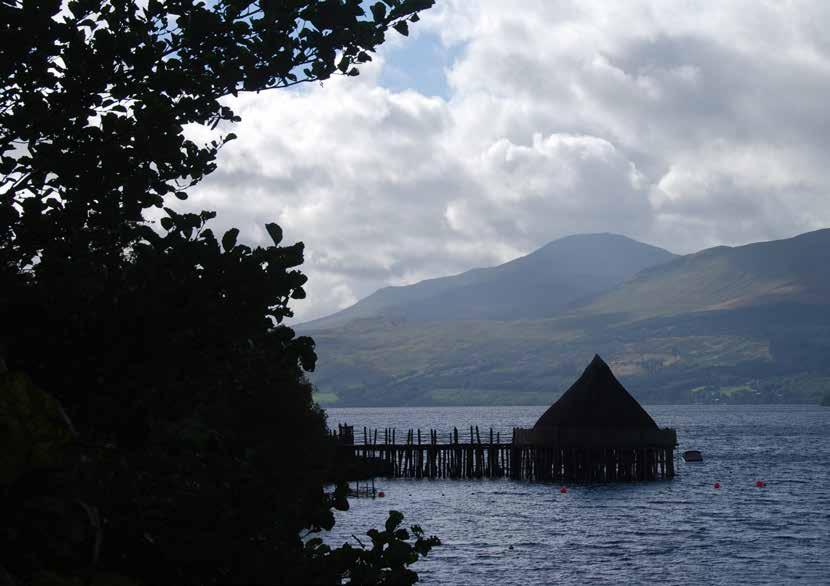
The Beaver Scout programme is built around the idea/concept of a small tribal village. In an Irish context this is a crannog. Within the crannog the tribe lives in close harmony - like a big family. The family is protected by the location of the crannog with its barrier of water to the outside world. Nearby on the land their is the protection of the forest which is also a source of food and materials for the tribe. Over the distant hills there are other tribes and bigger communities and towns.
The use of the tribal context is a metaphor for young people of Beaver Scout age. In reality they still live in a protected home environment with limited access to places further from their home. Often they will visit such places with older children or accompanied by adults. Towns and city environments (can of course be home to a lot of children) but generally they are places to go to. They are big, busy, exciting and interesting.
The home environment is therefore very important and the local Beaver Colony is the home of the Beaver Scouts - it is in fact their ‘crannog’. The forest and places away from the ‘crannog’ are interesting places to visit and play in and are in reality play and adventure spaces.
Towns, cities are also adventure spaces but are often ‘unknown’ and perhaps considered ‘dangerous’, ‘strange’, even scary to some young people. Towns and cities are also great places to visit and there are lots of things to see and do - always done with a safety of an adult/parent nearby.
The Beaver Scout programme is a transition in a child’s life from the safety and security of a home environment to a moving out and exploring phase in their lives, building new friendships, learning new things and finding out about the world around them.
The Beaver Scout Section typically consists of about 24 Beaver Scouts and a number of Beaver Scouters. This group of Beaver Scouts called a ‘Colony’ is divided into a number of ‘Lodges’, each Lodge consisting of six Beaver Scouts. Ideally four Lodges with a Beaver Scout Colony.
The Beaver Scout Section is firmly built around the Lodge (team system) and it is its key component. The Beaver Colony therefore consists of a collection of Lodges rather than a collection of individuals. A Scouter working in this Section will be directly working with Lodges as well as individual Beaver Scouts. The Lodge is a strong structural unit within the Colony and most of the programme interactions/challenges and activities will be Lodge based.
It is within this context that we will now look at how a Programme cycle is created with the Beaver Scout Colony. The tools available for creating the programme cycle are:- the Beaver Scout Handbook, the online adventure resources – for scouters , the Scouting Trail handbook, the Adventure Scout Skills handbook, the Beaver Scout Memory Bag, the Stage Awards – via the Beaver Scout cloth map and the reviewing resource on the website – scouts. ie. Each resource should be seen as an aid rather than a complete ‘how to’ resource.


Lodge Lodge
Lodge Lodge
Scouters
Crannog Tribe Forest life
Ways of the Tribe
Forces of Nature
Home
Community
Wider world
Creating the Programme
Firstly, we will outline the key steps in creating a programme cycle in the Beaver Scout Section then we will present the process through a practical situation to illustrate the process in action.
Step One – gathering ideas
The planning of a programme cycle or cycles is best done about twice a year in the Beaver Scout Section. It is possible to have more planning sessions as required. The first part of the creation process is gathering ideas for what can be done.
A programme cycle is the period of time it takes to complete an adventure. This includes the Planning, Doing and Review of the adventure.
An adventure is the key highlight within the programme cycle – the camp for example and all other activities, meetings etc. focus towards the adventure.
The gathering ideas step is a ‘catch all’ of ideas of what can be done in the programme over a period of time. Some ideas will be adventures and others will be smaller elements. For example – ‘let’s go on a camp’ – could be selected as a Colony adventure whereas ‘let’s learn how to light a fire’ might be selected as a step or skill required to take part in the camping adventure and becomes a meeting activity perhaps)
The best method for gathering ideas is via Lodge discussions with a Scouter helping the process.
A special meeting is created to do the planning process. This should be a fun meeting interspersed with games rather than a sit down and talk meeting. In fact it might take two meeting to complete depending on how it might be approached.
Lodge discussion – a Scouter sits down with the lodge and explores the ideas they have for the coming period…it might be spring, summer, autumn, winter for example.
The key role of the Scouter is to allow every Beaver an opportunity to present ideas. Ideally, the Scouter is looking for about three ideas from every Beaver. The discussion should be free and every idea should be explored and expanded by the Lodge. The aim is to have a collection of ideas that can be rounded and conceived and able to be presented to the wider Colony. So, a Lodge might have 18 – 20 initial ideas but these might be rounded to 10 ideas that are brought back to the large Colony meeting.
The process used can include direct discussion, compiling them boards based on pictures, drawing and painting. Often a visual will be easier for a Beaver to imagine an activity. If a Beaver sees a picture of other young people building a tree house or perhaps have seen an activity on a television programme or film they may easily want to live the same adventure – so a visual will be a prompt to what they would like to do
The Beaver Scout handbook - ( back to front) – presents 36 adventure ideas that are firmly based in the context of the Beaver Scout Programme. They are essentially visual cartoons with a simple title. They allow the Beaver to use their imagination to create the idea for the programme. Along the side of the pages the SPICES symbols can be seen and these indicate the ‘weight’ of each Spice within the context of the adventure idea. Those SPICES with a white background are generally not as obvious in this activity.
If the Beaver Scout Handbook is used as the start off of a discussion with the Lodge, the Scouter has available to them the backup resource sheets on the web to provide additional information about the idea presented.
The adventures in the handbook are also devised in such a way that every part of the Beaver Programme will be presented through the undertaking of these adventures. No adventure is fully formed so there is loads of space to include whatever ideas the Lodges dream up within the context of the adventure.
The discussion period should be about 20 minutes long. However, it can be longer if you include activities such as visual boards, painting and other activities related to finding ideas.
Within the lodge discussions the Scouter should also discuss the SPICES elements in the context of ideas presented. For example –‘ Scout Olympics is a good idea with a lot of physical action in it, what about the other SPICES where do you think they are in this idea’ and ask the Beaver Scouts to explore the idea in this context.


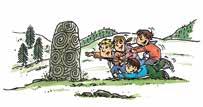

Ways of
Step Two – Presenting the ideas
Each Lodge now presents their ideas to the Colony. It is best if this is done via the Lodge Leader or a nominated Beaver Scout rather than the Scouter who has worked with this Lodge in the gathering ideas session.
The Scouter in Charge of the planning session will then seeking agreement of the Colony for the suggested ideas by way of a show of hands majority.
Adventures should be selected or decided on first and then ‘smaller ideas’ attached to the adventures. Dates should also be decided on and placed on the calendar.
Step three – putting it all together
Step three is basically a job for the Scouter team – how to translate the ideas from the ‘idea gathering’ session and create the programme cycle for the Colony.
Let’s look at this process
An adventure is selected – this adventure represents the highlight of the programme cycle. Around the idea of the adventure there will be many possibilities to explore and it is within these possibilities that the Beaver Scout meetings and additional activities are created.
A programme cycle can last as long as the Section wishes…normally it will be 3 - 6 weeks but it can be longer or shorter or only relate to an event such as a weekend camp. In the steps below we will consider it as a month long process.
You will see below a ‘spider diagram’. In the center is the adventure and stemming from this central point will be ideas associated with the adventure. Each of the associated ideas can become a weekly meeting challenge or an outdoor activity or part of the adventure programme. Also connected to this programme cycle we have the individual achievements and challenges presented via the ‘Special Interest’ badge considerations, ‘Adventure Skills’ levels and Nautical badges (if you use this programme).
So, the overall perspective for the programme will be great and expansive.
The job of the Scouter team is to drill down through all the possible elements and create the meeting and challenge structure.
There will be many jobs to do and Beaver Scouts can do some of them within the Lodges. The job of the Scouter is to support this process and not do all the jobs themselves.
Camouflage
Stalking
Tracking and trailing
Fossil hunting
National History Museum
Sculpture
Animals in danger
Extinction
Fossils
Models
Different types
Cartoon film ‘Jurassic Park’
Dinosaurs
Finding dinosaurs
Crawling
Sneaking
Stone age tools
The Dinosaur Hunt
Basketry
Weaving
Skins
Pottery
Eating Utensils
Leathercraft
Making Spoons
Clothing
Jewellery
Making shelter
The village
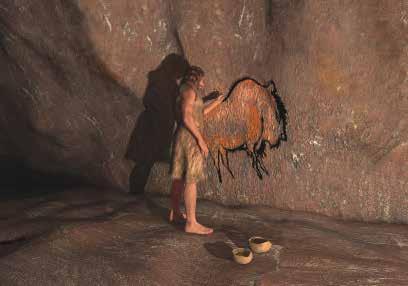
Cave painting
Cavemen
Catching a dinosaur
Making nets
Knives
Bones Axes
Furs
Clothing
Leatherwork
Traps
Spears
Hunting
Food
Talking
Finger painting
Caveman language
Cooking on a spit
Fishing
Firelighting
Bow and arrows
Fire by friction
Making flour
Natural dyes
Making bread/twists
Body painting
Signing
Fishing spear
Planked fish
Objectives
When the plan is created the Scouter team and Lodge Leaders need to have a short meeting and agreed on the final plan.
The Lodge Leaders should be easily able to see how their ideas will become a reality in the programme presented. This meeting it is also the place to agree some objectives for the programme cycle. Decide on some objectives for the Colony, Lodges, and as individuals.
What are we trying to achieve by this adventure, what do we hope to learn,
what are the key programme ideas that have been inserted in the programme to achieve certain outcomes – for example the Beaver Scouts might need to learn how assist in the lighting of a fire and cook a sausage on a stick because there will be a challenge on the adventure related to this. Likewise there could be provision for discovery time – finding out about nature -during the adventure and it needs to be defined what is to be achieved by this activity.
Objectives are important for the review process because they can be focused on and measured. Without objectives the review process has a less focused function.
Lodges should also be given jobs to do, for example organising equipment or making a simple menu. It is vitally important that Beaver Scouts are involved in creating their own adventure and are responsible for its creation (within reason given age considerations). By ‘passing on’ small jobs and tasks to the Lodges to complete we are actually training the Lodge Leaders in leadership skills and responsibility as well as layering on responsibility to individual Beaver Scouts in the process.
Step four – let’s do it
The Colony collectively live the adventure through the meetings, other activities, Lodge life and interactions and finally undertaking the adventure. During this time there will be small review sessions and many new things will be learned.
Scouters also have to be observant and watch what is going on in the Lodges and with individual Beaver Scouts. Everyone will benefit from the experience and a Scouter will quickly spot progress within the Colony at all levels. This information will prove very useful in the review process.
The memory bag is a tool for Beaver Scouts to collect physical items to aid in their learning and memory process. Beaver Scouts should be encouraged throughout the programme cycle to place items in their Memory bags to be explored later at the review sessions.
Step five – The review (the reviewing handbook – Beaver Scout handbook –Memory Bags – Beaver Scout maps, skills handbooks)
The review is the place where all the collective learning of the Colony is assessed. The review process has a number of steps. Firstly, small ‘on the spot’ reviews can take place at any stage in the programme cycle. These might be in the Lodge setting at the end of each challenge undertaken or as a collective ‘straw poll’ at the end of a meeting perhaps.
The formal review session takes place at the end of the programme cycle and it should be with reference to the objectives that have been agreed before the programme cycle began in step three.
The object of the review session is to understand what has happened, what we learned along the way and to ‘mark up’ and acknowledge how every Beaver Scout has progressed.
The reviewing handbook has suggested games that can be used in this process.
The review session should be short and by using the review games –interactive and fun.
At the end of this session Beaver Scouts progress should be recognised.
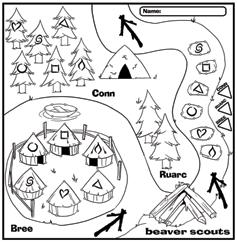
The Beaver Scout maps are used in this process and agreement to plot an ‘achievement point’ on a Beavers Scouts map is normally agreed with their Lodge Leader during this process.
Scouters should direct a Beaver Scout to mark up an achievement dot on the map based on learning and achievement during the Programme cycle.
The Beaver Scout Map relates directly with the Stage Badges and the progress of a Beaver Scout on their personal journey related to the SPICES.
The achievements regarding skills and learning are also acknowledged with the awarding of skills badges or special interest badges.
Once the review is completed it is now time for the next adventure to begin. There is usually a bit of an overlap to ensure that there is no ‘downtime’ or lull in the programme of the Section.









Beaver Scout Resources
Beaver Scout Handbook
Beaver Scout Memory bag
Beaver Scout Map
The Scouters Handbook
Website supports for Beaver Scout Adventures
Beaver Scout Slumbernight resource
Beaver Scouter Facebook page