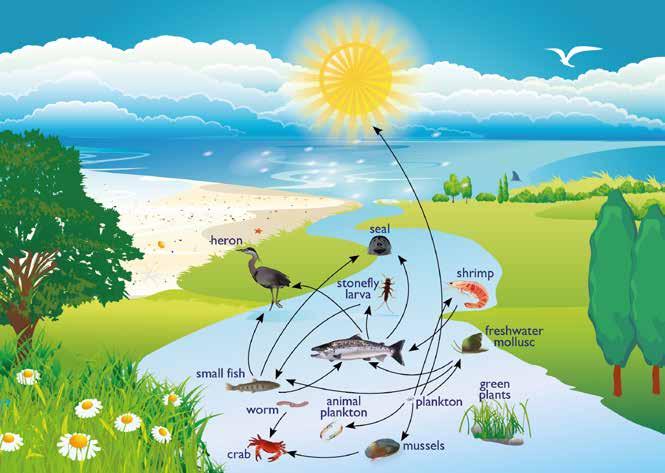

A food web shows the inter-connection between different food sources.
It shows ‘what is eating what’ - in a fresh water environment this first happens at the microscopic level. Plants release small nutrients into the water on which the smallest animals, plankton,eat them.
These plankton are in turn eaten by larger plankton, worms, larva and mollusc’s. Flies are also attracted to the water surface by this food source as it floats to the surface.
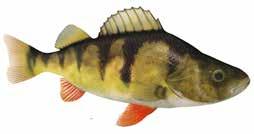
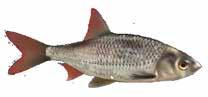
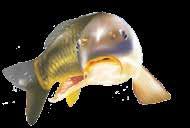
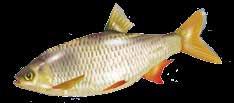
The smallest fish eat larva, worms, animal plankton and flies. Larger fish then eat smaller fish, mollusc, worms.
Birds, otters, kingfishers and other land based animals are attracted to the waterway by seeking to catch fish.
Food webs such as these are common in many habitats and are maintained by a careful balance of nature. If any part of the web or chain is broken then this special place is in danger. Pollution, for example or over fishing can kill off the various forms of life within the water source and affect the balance. Larger fish, for example, can also dominate a food web or chain and clear a water source of smaller fish. Likewise a number of heron nesting near a pond can have a big affect on fish stocks within the pond.
Understanding the food web or chain of a water source can help to determine the type of bait to use when fishing. By observation of a water course you can quickly spot the flies, and smaller water borne insects that are attractive to fish.

Fish hide behind rocks, logs, weeds and plants in slow flowing water.
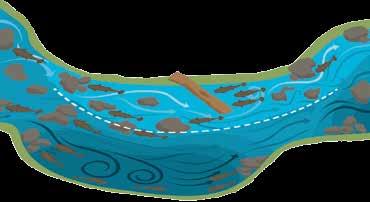
Some fish seek deeper water
Watch for the drop area off of the current current
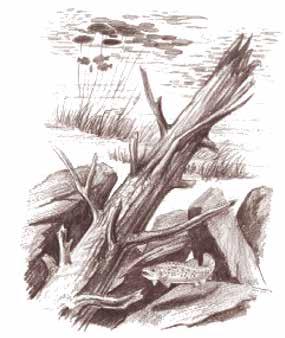
Each fishing habitat is different and by knowing how fish live in these habitats it will be easier to direct your bait to these areas and catch a fish.
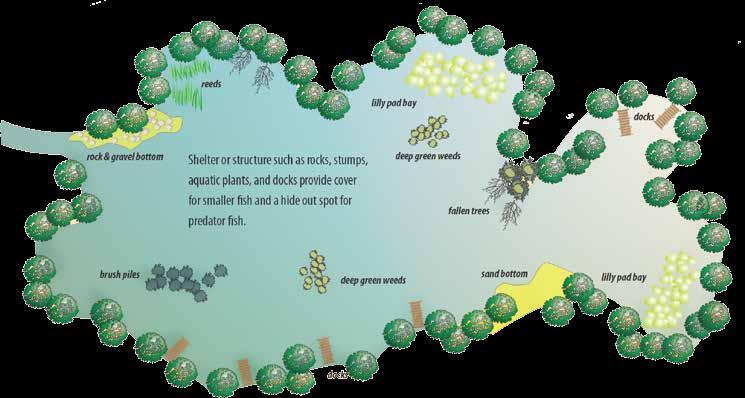
Fish like cover of all kinds and places were food is easy to get. Fallen branches, weed cover, lily pod plants, deep pools and shaded areas are all place that fish like to be.
Bigger predator fish will cruise around a wide area, whereas smaller fish we gather around underwater plants and rocks out of the eye of the predator.
Fishing is as much about observation, knowledge of an area, as it is about casting a line into the water. Can you see fish popping up to catch flies on the surface? Can you see small fish near the bank? Are there trees hanging over a water providing shade?
Take a while before you cast your line to ‘take it all in’ get to know and become an expert about your fishing location.

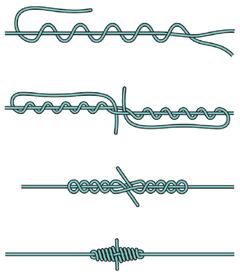
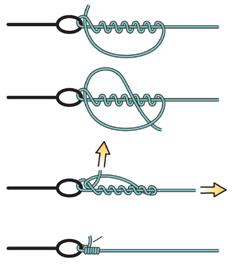
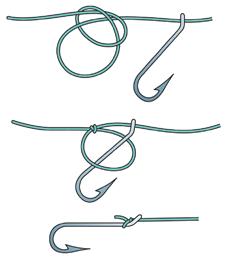
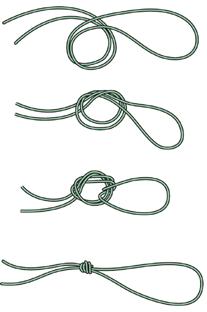
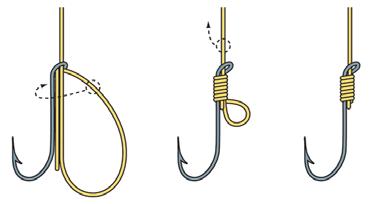
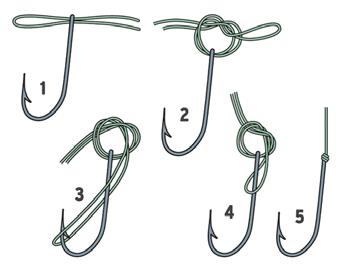
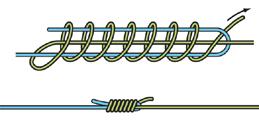
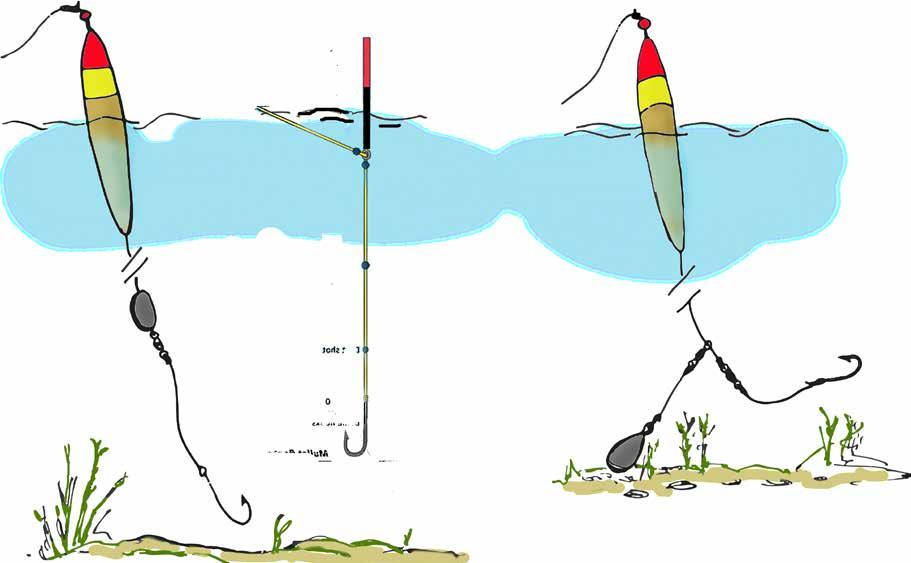


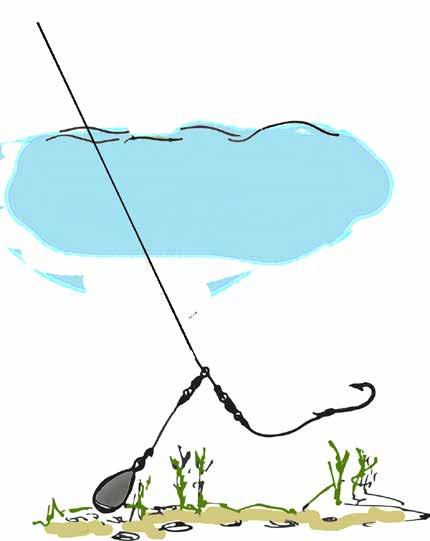
When sea fishing a bite is normally detected by a pull on the rod tip rather than by the bob of a float due to wave conditions and distance from casting point.
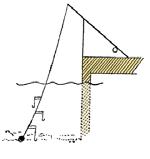
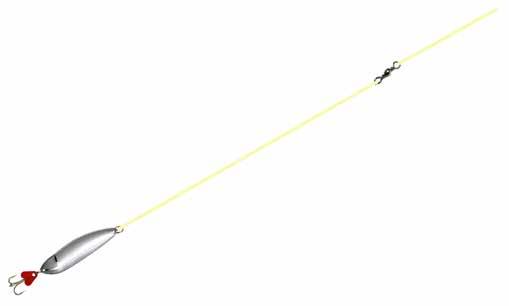

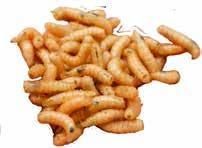
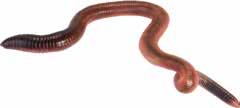
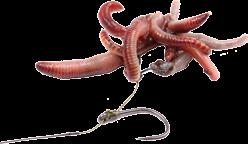
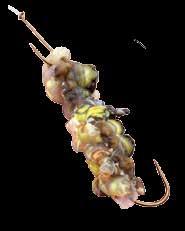
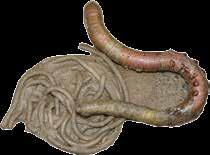
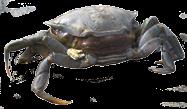
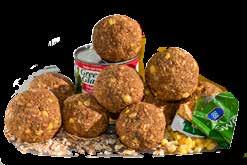
Groundbait balls are created by mixing groundbait with water and adding in some sweetcorn and some hemp seeds.

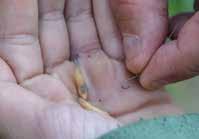
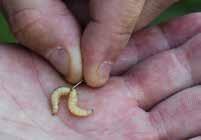
Baiting a hook with maggot for a wabbler rig
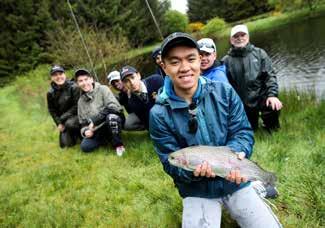
When the fish takes your bait and you have it on the line - play the fish and bring it in slowly.
Have a friend give you a hand to net the fish as it comes near the bank
Take a picture of your catch.
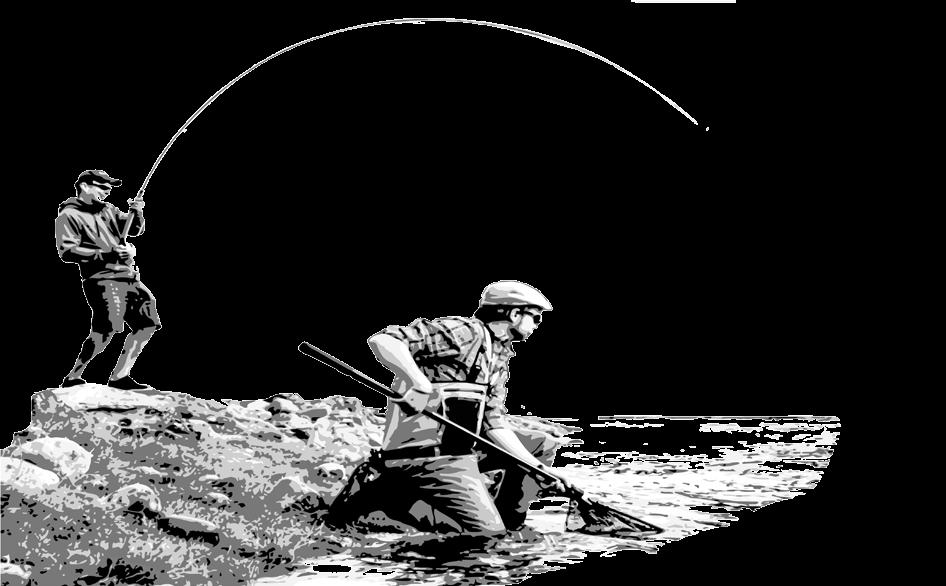
The landing and returning process needs to be completed as quickly as possible so as not to damage or place the fish under unnecessary stress.
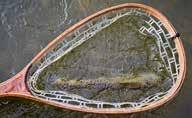
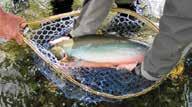
Step 1
Hold the fish firmly on the ground and remove the hook carefully from the fish
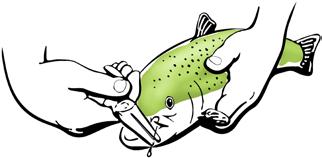
Step 2
Hold the fish firmly but gentle and place it back in the water. Let the fish become aware of its surrounding then let it swim away.
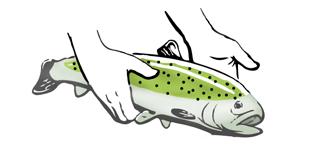
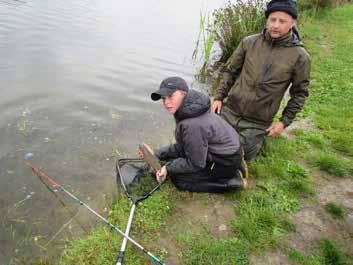
Fish can only survive out of water for a short time. When fish are being returned to the water they need to be placed in the water carefully to allow water to flow through their gills, resume breathing and recover from their ordeal before they are released.
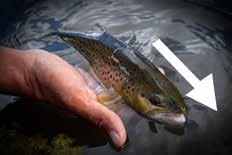
In moving water, gently hold the fish facing the current to allow water to flow through its gills. Release the fish when they are able to swim away.
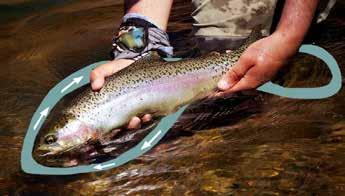
If a fish is slow to respond - In still water, gently hold the fish with two hands, and move the fish in a figure of eight motion to help the fish move water through its gills. Release the fish when they are capable of swimming away.
• Respects other anglers’ rights
• Buys a fishing license/permit where appropriate
• Is aware of fishing regulations
• Respects the rights of property owners
• Catches, photographs and releases (CPR)
• Releases unwanted fish quickly and unharmed
• Keeps fish only to eat
• Never litters or pollutes and observes ‘Leave no Trace’ principles
• Knows and follows boating and fishing regulations
• Shares his/her knowledge with others
• Learns about the different species of fish in their area
• Gives back by getting involved in conservation programmes or activities
When fishing away from direct contact with civilization, we enter an area that is unspoiled and beautiful - a natural environment. Leave No Trace principles state that we should pass through an area and leave no trace of our presence. While fishing you may wish to stay overnight in a location. Where we camp, light fires, cook and dispose of waste of all kinds is an important consideration.
All shelters (tents, fishing shelters, bivouacs) should be placed in locations that minimise damage to the surface of the ground. Ideally cooking should be done on stoves. If a small fire is to be used then mound fires are the suggested method of fire setting and use.
Waste, whether from food or humans, needs to be disposed of properly. Carry in - carry out is the simple principle for food and other produces however for human waste a small cat hole is best practice.
Carry a small trowel in your kit for this purpose along with some toilet paper and hand sanitizer.
Cat holes should be dug at least 80 paces from waterways and trails and to a depth of 150 mm. When used fill in and ‘repair’ the hole so no evidence appears of your action.
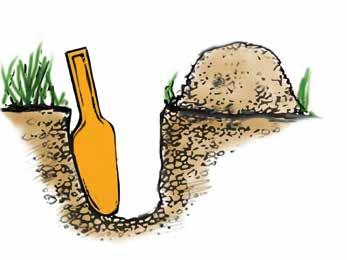
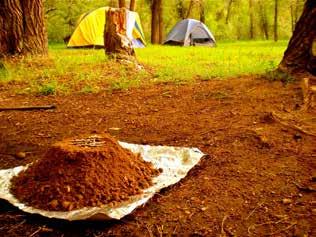
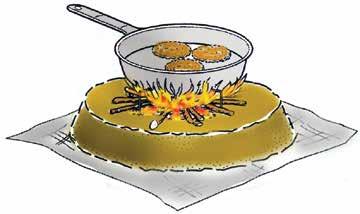
Mound fires can be constructed on many durable surfaces without destroying the earth beneath it. A covering made of a fire blanket or heavy duty tin foil is placed on the surface. Then a mound of clay is placed on top, on which the fire is built. Ideally, when travelling on the trail or in a backwoods situation you will bring with you ,in your kit, a trowel, some heavy duty tinfoil or flame proof cloth and a few small plastic bags. The fire is easy to construct - first choose a location, what you are looking for is a durable or scrub surface free of vegetation. The sandy or pebble banks beside a river are ideal.
Collect the clay, sand for the mound in the plastic bags and build a mound at least 150 mm high, this thick layer of clay will insulate the ground from the heat of the fire. The tin foil or cloth gives extra protect both to the direct heat and from sparks and stray embers that might fall to the ground.
The size of the mound circle should be wide enough to allow for cooking utensils and the spread of coals from the fire. When you no longer need the fire the clay and embers can be returned to the source and spread around so that no trace exists of your presence.
Fish is an excellent food for cooking over a fire or bar-b-que. It needs some preparation first, if caught in the wild, and is easy to cook. You can buy some fish in your local supermarket and bring it with you, but it is so much better to catch your own.
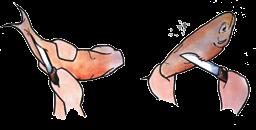
It will be necessary to clean and gut any fish before you cook it. The fish should be cleaned as follows:-
Wash the fish thoroughly in clean water. Remove the scales by scraping with the back of a knife( that is, not the sharp edge), working from the tail towards the head.
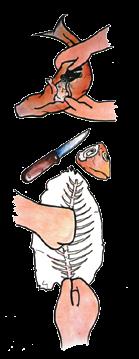
Cut the spine at a point just behind the gills and tear the head off with a steady, slow, forward motion. If you are careful, the fish innards will come out with it. ( Dispose of carefully)
Slice the belly open from tail to gills and thoroughly wash the inside.
Finally, cut off the fins and tail and cook as desired.
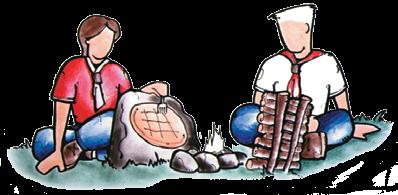
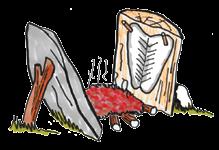
Planked method - Pin the fish, flesh side forward, on a plank or piece of flat board and cook by reflected heat. Place a knob of butter on the fish when it is cooking and later a splash of lemon - delicious!
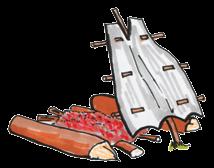
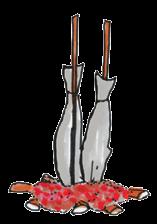
Wrap method - wrap fish in grass and cover in mud and place on the fire, or wrap fish in cabbage leaf and pin together with small twigs and place on the fire.
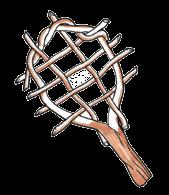
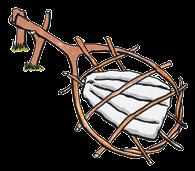
Broiling method - Construct a broiler as shown and place your fish in it. Cook over hot embers turning regularly.
Fish cook very quickly so be careful you do not burn them.
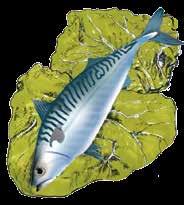
Note: Cabbage leaves can replace tin foil in most instances when using backwoods cooking recipes. It is important that at no time should rhubarb leaves be used, as they contain a highly toxic substance.
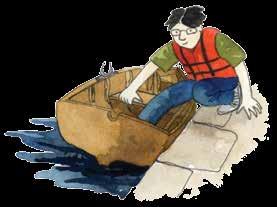
Step into a boat with care. Do not undo any mooring ropes until you are inside the boat.
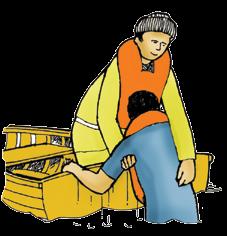
If someone falls overboard retrieve them from the water via the stern of the boat and not by the side. Use an oar or rope to reach out to assist them.

If you get into difficulties be aware of how you can summon help. Shouting and waving arms at people on the bank is a good basic action.
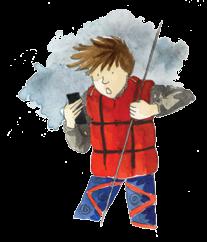
Do not rely on mobile phone as an emergency measure. There maybe no signal in your location or it may not work if it get’s wet. Keep it in a waterproof bag.
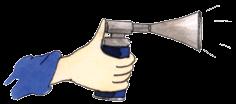
Have an alternative signal method available in the boat.
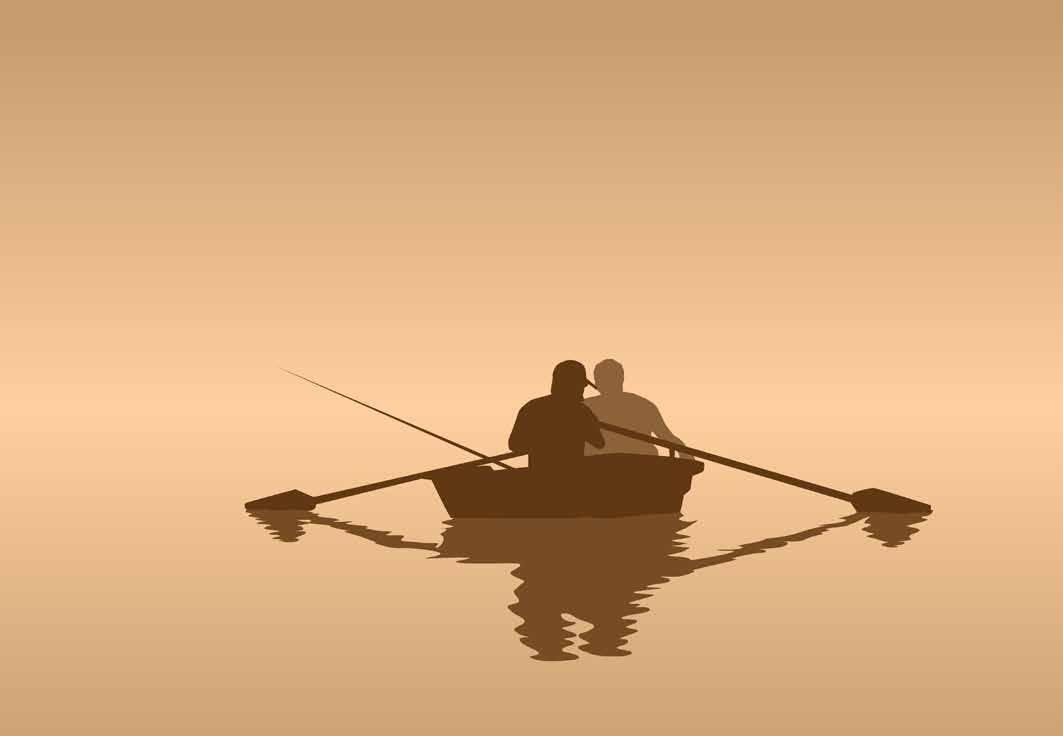
Do not go out in a boat alone and always be safety aware and prepared. Ensure the boat is sound and everyone on board has life jackets. Take care when moving around a boat, think about it first, then move to where you need to go. Be constantly aware of your surroundings, tides, current and drift of the waters.
When fishing along a river or canal bank you will be away from immediate help so it is a good idea to have a small first aid kit with you and know how to deal with basis first aid incidents that may occur. Catching a hook in your finger, or cutting your arm or finger are common as you move about, get caught on thorns and such like.
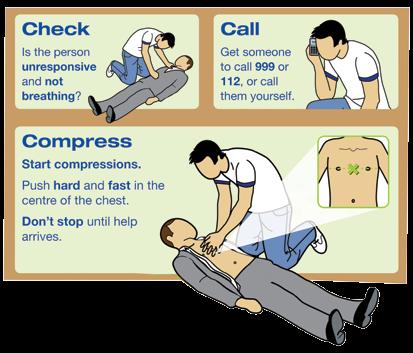
Being able to administer first aid and treat a victim for shock and hypothermia is also valuable.
Weil’s Disease
As fisher-folk we need to be aware of Weil’s disease. Weil’s Disease is spread in the urine of infected animals in water or soil. Slow moving rivers, ponds and canal are key areas of concern.
The infection enters through broken, grazed or cut skin especially on the hands and feet and sometimes through the lining of the mouth, nose and eyes.
Adhere to a rigid hygiene policy. Cover all cuts, scratches and abrasions with a waterproof dressing. Dry your hands if wet and use hand sanitizer from time to time. Avoid touching mouth and nose when hands are wet.
Step 1
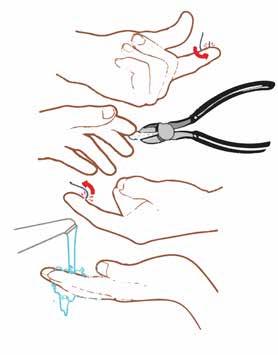
Clean your hands.
Removal of a hook is a painful experience so prepare the victim and be careful as you treat the wound.
If the hook is stuck in the skin it will have to be pushed through soft tissue to reveal the barb on the hook.
Next using a wire snips you remove the bard.
Once completed the hook is then reversed through the skin to remove it.
Wash the wound and apply antiseptic cream or TCP to the wound. Dry carefully and apply a bandage.
Step 2
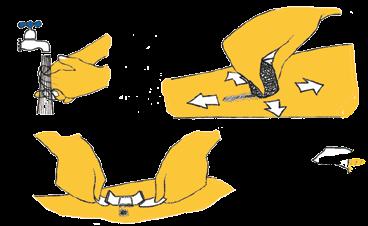
Clean the wound using a mild mixture of TCP and water pulling away from the wound and not across it.
Step 3
Place a bandage over the wound
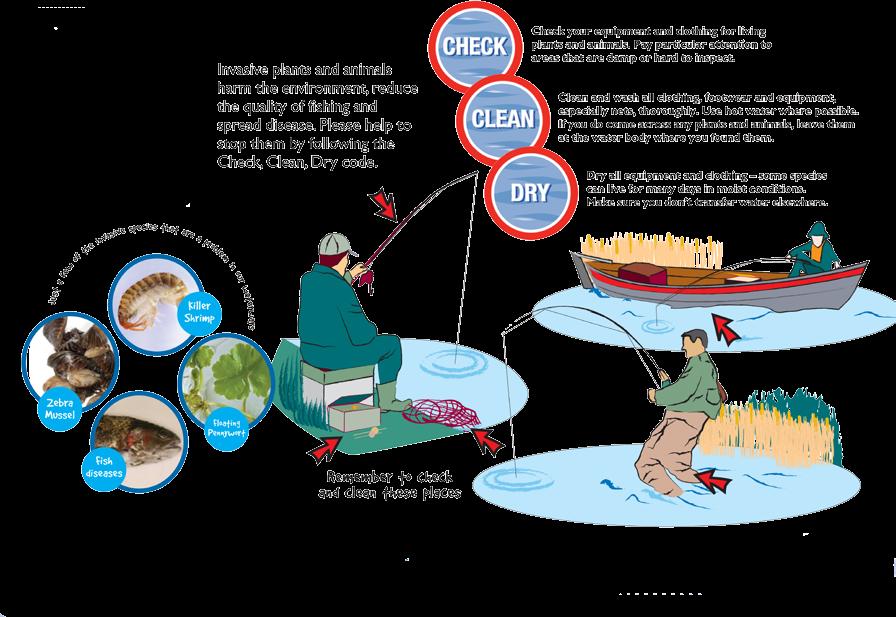
Water ways and watercourses have their own unique eco-systems that have evolved overtime. While water in a waterway may look the same as any other, under a microscope, many tiny microbes are present. Transferring water, plants, dirt and grit from one location to another can have devastating effects on fish species and microscopic life in a watercourse. Invasive plants like knotweed, rhododendron and others are also a key concern, so seeds and leafs can also be carried on equipment.
Fishing at a location has a number of responsibilities:- care for the environment, practicing Leave no Trace principles, care for the fish we catch and release but at the end of a days fishing our responsibilities rest in cleaning our equipment and protecting the fishing location.
Its everyone’s responsibility don’t leave it to your fishing buddy.
Prior to leaving any watercourse following a fishing trip, the angler should routinely visually inspect all equipment that has been used in or exposed to the water. Remove and safely dispose of all attached plant or animal material. Clean and disinfect the equipment at the water’s edge or later, as appropriate.