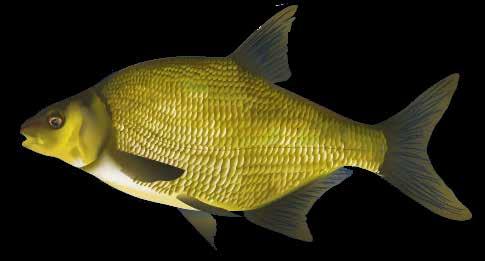
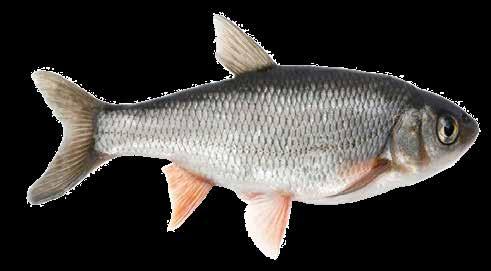
The Common Bream inhabits slow-flowing rivers, lowland lakes, canals and ponds. It feeds, usually in schools on the river bed, swimming slowly over the bottom in a head-down oblique stance, using its protrusile mouth to pick up insect larvae,worms, and molluscs. There average length is 40-50cm. Best fished between May - June and SeptemberOctober bait options include worms, maggots and fish balls.
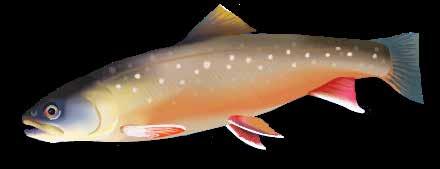
Char
Salvelinus fontinalis
Char are closely related to our trout and salmon and have a similar appearance. Irish char are small compared to anadromous char, but their size range is typical of other lake populations. Char live in cool, well oxygenated streams and lakes. They feed on insects, insect larvae, crustaceans, and small fish mainly; but are unselective in their feeding habits.
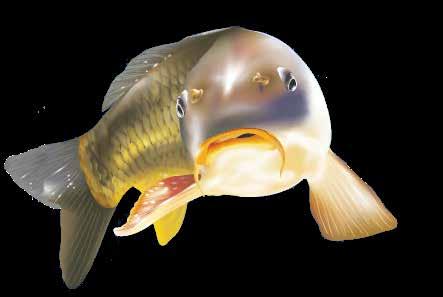
Carp
Cyprinus carpio
Common Carp are found in lowland lakes and rivers where there is abundant vegetation to provide food and shelter. Carp growth is variable with local conditions and generally smaller in Irish conditions.
Common Carp feed mainly on bottom-living insect larvae, small snails, crustaceans, and some vegetable matter. They favour baits such as homemade dough baits and mass-produced soft baits.
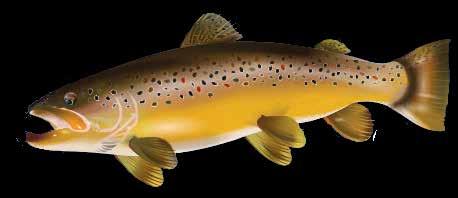
Brown Trout
Trout require cool water of relatively high quality to thrive, and consequently have suffered from pollution and water quality. Trout are fished from February- October. Maximum size is variable according to habitat. Trout feed on small crustaceans and insect larvae when young. They are a popular fly fishing species. Traditional baits are live earthworms, salmon roe, and canned corn kernels. Small spinners, spoons and other lures can also be used.
Salmo trutta
Dace
Leuciscus leuciscus
Dace (all year but March - May best) generally attains a length of 15-25 cm. The Dace is typically found in the middle reaches of rivers and in brooks, although it also occurs in lakes and lowland rivers but never numerously. It feeds on insects, both larvae and flying adults, and will take quantities of arthropods which fall on to the water. Crustaceans and some vegetation are also eaten. The best baits to catch dace are maggots, worms or casters.
Eel
Anguilla anguilla
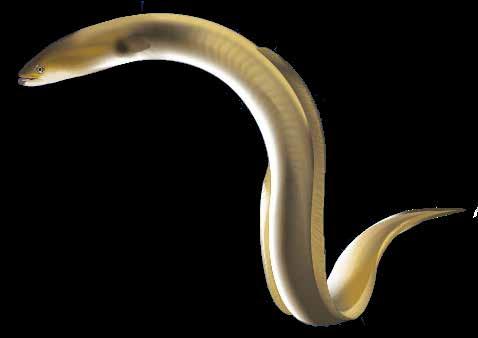
The European eel is a critically endangered species and it is illegal to fish them. An eel travels from their spawing ground at sea to enter estuaries. During its life span it transforms from a transparent larval stage called “glass eel” when entering estuaries, and start migrating upstream. After entering their habitat, the glass eels metamorphose into elvers, miniature versions of the adult eels. As the eel grows, it becomes known as a “yellow eel” due to the brownish-yellow colour of their sides and belly. Later as Silver eels they return to the Atlantic to mate.
Gudgeon
Gobio gobio
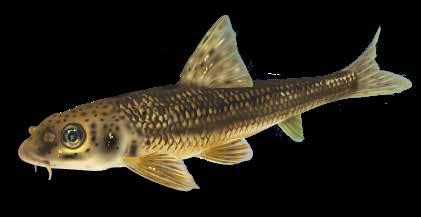
Gudgeon are small fish usually around 10-15 cm, but can attain 20 cm in length. Widely distributed in a variety of habitats from lakes and slow-flowing lowland rivers to moderately fast-running rivers well upstream. It feeds on bottom-living insect larvae, crustaceans, and molluscs. It is often extremely abundant in suitable rivers and makes an important contribution to the food-chain of fresh waters.
Minnow
Phoxinus phoxinus
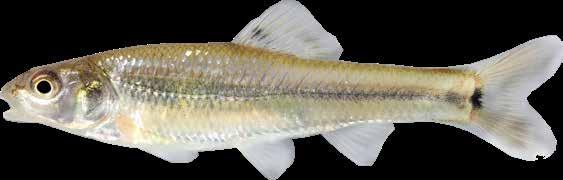
A small slender-bodied fish with short-based, rounded dorsal and anal fins. Rarely more than 8 cm in length. The Minnow feeds on a wide range of aquatic animals, principally insect larvae and crustaceans. It is often extremely abundant in suitable rivers and makes an important contribution to the food-chain of fresh waters.
Perch
Perca fluviatilis
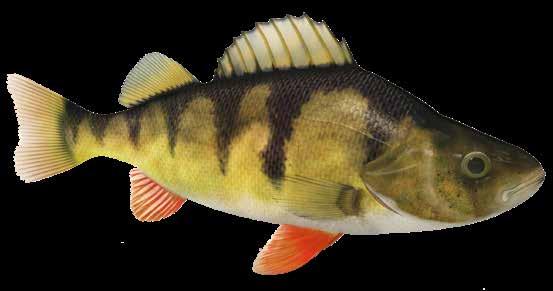
The Perch is a common fish in lowland lakes, ponds, and rivers where the current is slow. Perch favour worms, live bait, and other perch (if food is scarce), crayfish, small spinner lures.
Best time to fish perch is April /September)
Attains a maximum length of 51 cm.
Esox lucius
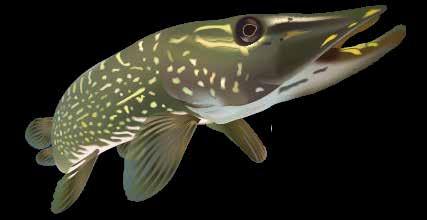
The Pike is typically an inhabitant of lowland rivers and lakes, especially those which contain submerged marginal vegetation. As it grows it begins to feed on larger prey and, when well grown, there are few fishes it will not eat. They will also take waterfowl, amphibians and small aquatic mammals. Pike can be fished all year round.
In Britain and Ireland Pike can attain a weight of 24 kg and a length of 1.3 m.
River lamprey
Lampetra fluviatilis
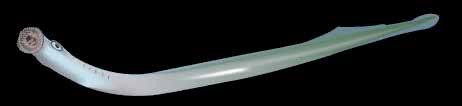
River lamprey enter Irish rivers every year to spawn. They migrate upriver from the sea/estuary until they find suitable spawning habitat. River lamprey are an eel-like fish which can be up to 35cms long and mottled brown/grey in colour on their upper side. They are characterised by having a sucker like mouth instead of jaws. They can use their sucker mouth to lift and move stones and pebbles. They can also attach on to larger stones, leaving the tail free to swish about and loosen material and brush away sand.
Rudd
Scardinius erthrophthalmus
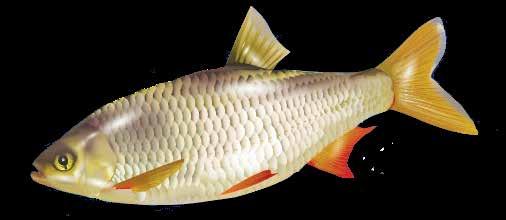
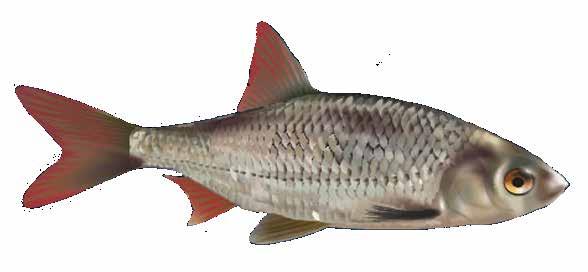
Rudd are best fished between June and August. They have an average length of 25 cm. The Rudd is typically an inhabitant of lakes and backwaters of rivers in shallow weedy areas. They eat considerable quantities of surface-living and even aerial insects, as well as crustaceans and insect larvae.
Roach
Rutilus rutilus
The Roach lives in lowland rivers and lakes, being possibly more common where the current is slow. It is an adaptable fish and it can live in canals, ponds, and in mildly polluted water. Roach are best fished from March-May and favour maggots,insect larvae,crustaceans and snails. Roach can attain an average length of 35 cm. Best baitsworms, maggots, sweetcorn and casters.
Salmon
Salmo salar
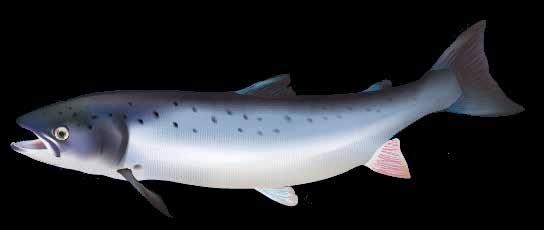
Salmon are anadromous: they hatch in fresh water, migrate to the ocean, then return to fresh water to reproduce. They feed on aquatic insects, amphipods, and other crustaceans while young, and primarily on other fish when older.
Salmon can be caught in Irish waters from January through to October. They are a good angling fish and are swift, acrobatic and ready takers of a well presented fly or lure. They weigh from 3 to 6 pounds and are widely found throughout the country.
Stickleback
Gasterosteus aculeatus
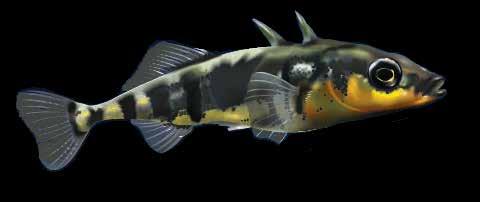
Stickleback are small fish around 4 - 8 cm long. They are widelydistributed and often abundant fish in lakes, rivers. Its normal habitat is in shallows of 0-1 m usually in open areas but with cover near by. It is often extremely abundant in suitable rivers and makes an important contribution to the food-chain of fresh waters.
Stoneloach
Barbatula barbatula
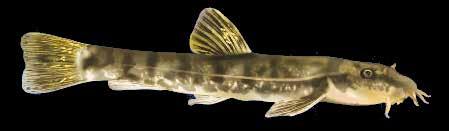
Stoneloach are small fish and are generally about 10 cm long. They can be found in running water, most commonly in small rivers, but occurring in lowland reaches and in upland streams. They are active at night and in dull light, but usually spends the daytime hidden under stones or in dense weed-beds. It feeds on bottom living invertebrates, mainly crustaceans, insect larvae, and worms. They are an important fish in the food chain.
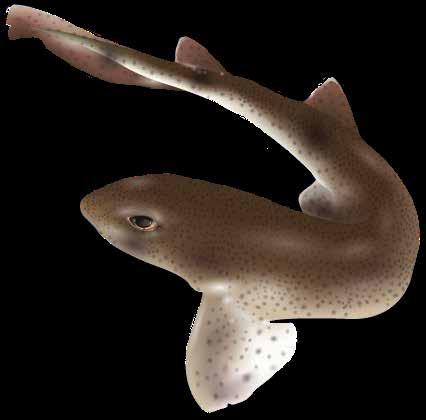
Dogfish
Scyliorhinus canicula
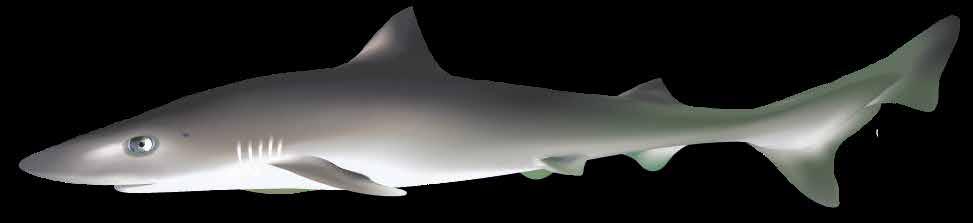
Dogfish are the smallest shark in Irish waters. Typically caught from a boat but can also be caught from the shore in relatively shallow waters. They often move around at low water, even in a foot of water or less, scavenging especially close or in harbours and around piers.
Dogfish bait - sand eels, crab, mackerel strip, squid-tied with bait elastic. They are a famously unfussy species which will take almost any bait an angler offers. Average length 45 - 65 cm.
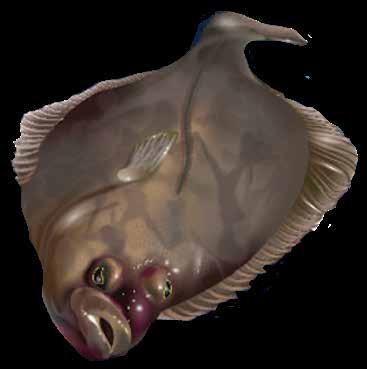
Flounder
Platichthys flesus
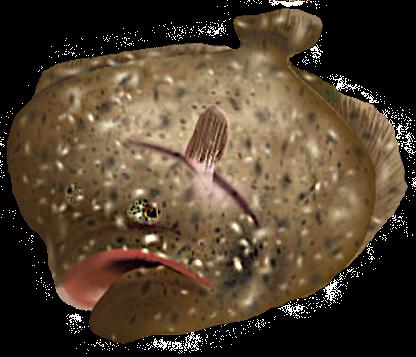
A widespread fish living from the tide line to 55 m, and also penetrating into fresh water so that it is found in rivers and lakes in communication with the sea. It lives on sandy and muddy bottoms. It feeds on a wide range of bottom-living invertebrates, especially molluscs such as cockles, worms, and crustaceans, brown shrimps particularly. Good Flounder baitRagworm, Lugworm, mussel, and crab. Usually 20 - 50 cm in length.
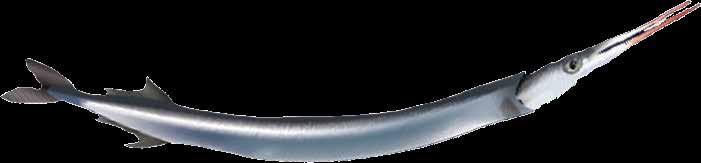
Garfish
Belone Belonidae
A surface-living mainly offshore species which comes into shallow coastal waters in late spring and can be found close inshore throughout summer and autumn. It is a fine sporting fish on light tackle, often leaping out of the water and skittering along the surface when hooked. Mackerel – especially a silvery belly strip – is a good bait, but a strip of herring or squid are also worth a try. Usually length of 40 - 80cm.
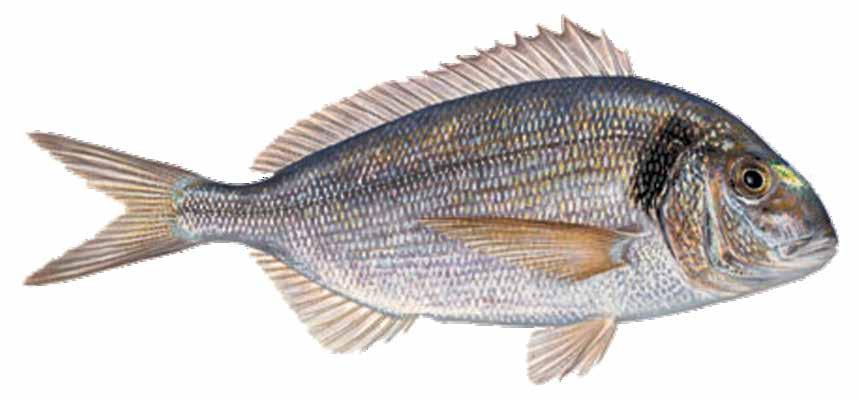
Gilthead Bream
Sparus aurata
The Gilthead is a shallow water species which lives in schools over sand or mud in depths of 30 m. The young fish live in shallower water. Its food preference is heavily biased in favour of molluscs, especially mussels and oysters, and crustaceans. Most of the standard estuary baits will catch gilts: ragworm, lugworm, razors, peeler, mussels. It commonly reaches 30-35cms in length.
Haddock
Melanogrammus aeglefinus
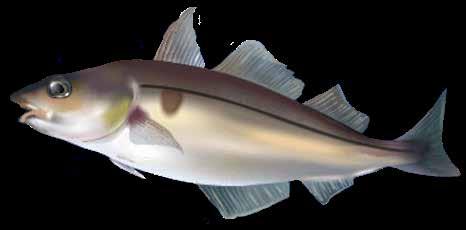
The Haddock lives close to the sea bed in depths of 40 - 300 m; it feeds almost exclusively on bottom-living animals, chiefly brittlestars, worms, and molluscs. Occasionally it eats small fish and sandeels. They take cut bait such as herring, squid, mackerel, sand eels, and whiting as well as worm or shellfish baits.
Usual length from 50 - 76 cm
John Dory
Zeus faber
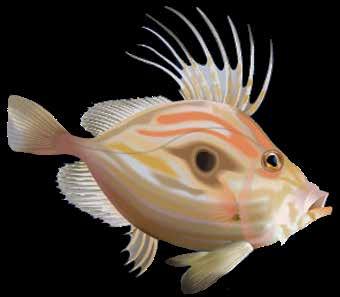
The John Dory is an inshore fish living mainly in 10-50 m. It usually lives a solitary life or in a small school. John dory is a rare catch and are best caught using small whole fish, particularly herring, or sprat. Fish strips such as squid, herring, mackerel, prawns, shrimps or sandeels are also effective.
Length usually up to 40 cm
Ling
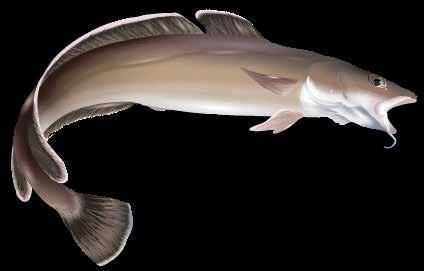
The Ling is essentially a deep-water fish, although large numbers live in shallower water where the bottom is suitable, on open ocean coasts. It is most common on rocky grounds, but also can be found in inshore waters around wreaks. Most ling are caught from a boat; the Ling is strong, so use the same tackle as for conger.
Bait - Whole or fillet mackerel, herring, small pollack,sprats and large sand eels. Length usually 1-1.5 m in inshore waters.
Molva molva
Mackerel
Scomber scombrus
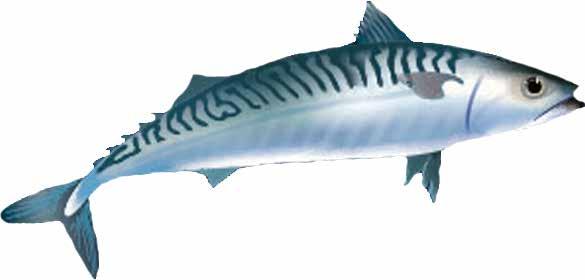
A common fish living near the surface of the sea in huge schools. It is found seasonally close inshore, as well as over offshore banks and is a fine sporting fish. The most effective way of catching mackerel is to use a string of feathers or spinners mimicking small bait fish, such as sandeels, which is the staple diet of mackerel. Mackerel get into a feeding frenzy and are oblivious to lures, snatching at anything that moves in their competition to feed.
Monkfish
Squatinidae
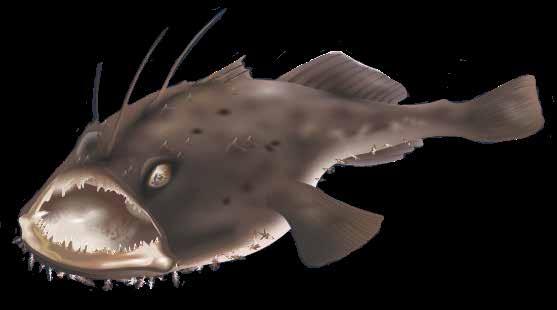
Monkfish a bottom-living fish found on sand or mud in depths of 5 - 150 m. It lies in perfect concealment usually partially buried, although it can swim powerfully and for relatively long distances off the bottom. The monk fish feeds very extensively on bottom-living fishes, particularly flatfish such as dab, plaice, and sole, and other fish. Some crustaceans, especially crabs,and molluscs are eaten.
Mullet
Chelon labrosus
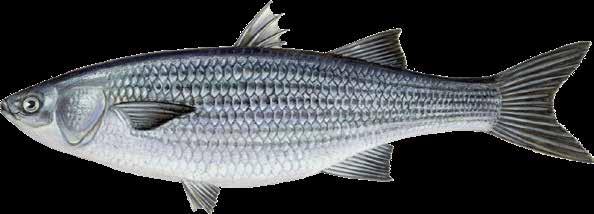
The Mullet is particularly common close inshore in harbour mouths, estuaries, and in sandy bays. In calm water it can be seen cruising in schools at the surface with its snout almost breaking through. It is also a good sport fish even if hard to hook and capture. Mullet bait must be small for mullet to take the bait into their mouth - maggots, meal worms, bread bait, crab and other small larvae are good. Reduce the hook size slightly, so the hook will not overpower the bait. Lengths from 30 -75 cm
Plaice
Pleuronectes platessa
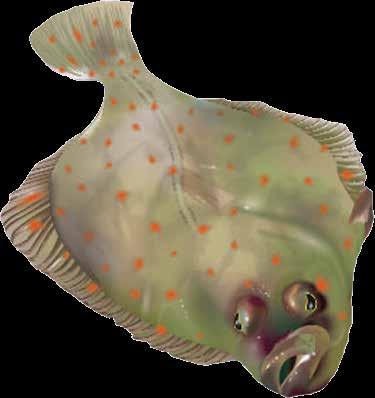
The Plaice is a bottom-living fish, most abundant on sandy bottoms, but also found on muddy bottoms and gravel in depths of 0 - 200 m. It is most common in 10-50 m. Large fish also come into the tidal zone to feed at high tide on sand and mud flats. Plaice eat a wide range of bottom living animals, especially molluscs.
Plaice bait - Ragworm, Lugworm, mussel, and crab Adults sizes usually around 50 cm and 1.1kg.
Pollock
Pollachius pollachius
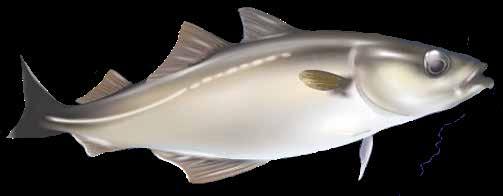
The Pollack is widely distributed particularly in inshore areas. Large fish are most abundant near rocks or on rough ground, swimming in schools; smaller specimens tend to be less restricted and occur over sandy shores and even in estuaries. Pollack bait - crab,rag worm, sand eels, and spinners. Usually around 50 cm and 4 kg.
Thornback Ray
Raja clavata
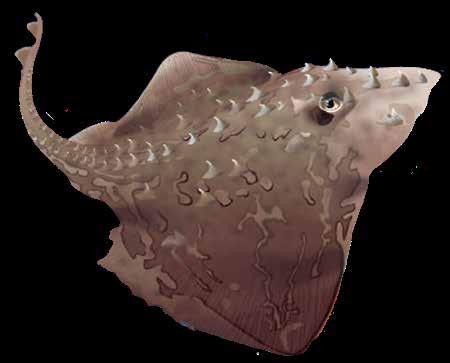
Thornback ray are a highly prized catch for the shore angler. In summer they will come into shallower inshore water and within the range of the sea angler. Thornback rays feed once the sun has started to set, spending daylight hours partially buried in the sand. Usual length of 60 cm.
Good bait includes shore crabs, swimming crabs, and brown shrimps. They also eat fish, chiefly sandeels, herring, sprat, and small flatfishes.
Red Gurnard
Aspitrigla cuculus
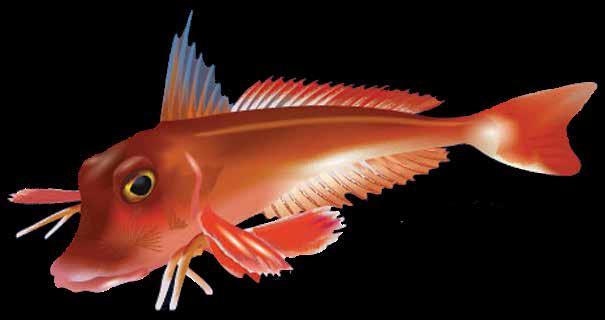
The Red Gunard is a relatively uncommon fish caught from the shore; they are mainly caught by boat. They are typically caught in relatively shallow water over sand and mud. Good baits includes mackerel strip and ragworm used as a cocktail has good results. Attains a length of 50 cm.
Porbeagle Shark
Lamna nasus
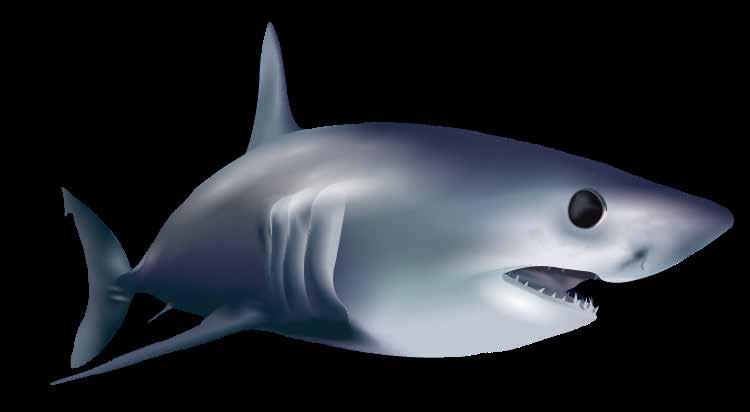
The porbeagle shark can be found all around the British Isles in the warm summer months. It generally stays way out to sea, where it actively hunts for mackerel, herring and squid. Occasionally porbeagle shark may come close to shore if prey is abundant. Shark fishing is common during the summer season from boats. The average length for British and Irish waters is around 1.8 - 2.4 m.
Skate
Dipturus batis
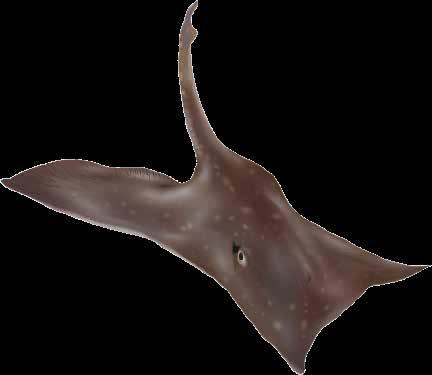
The Common Skate is the largest and heaviest European ray. It is listed on the IUCN list of endangered fish species, so tagging and catch & release is mandatory, Skate bait includesand eels, squid,mackerel strip,herring strips or whole. More commonly caught from boats. Sizes up to 2 m.
Tope
Galeorhinus galeus
Tope are an extremely fast and sleek fish and much prized as a angler fish. Usually caught by boat but can also be caught from the beach but requires large casting rods. Its feeds on fish so mackerel, pollack, herring, flounder strips or whole are good baits. Usual length of 1.2 m.
Turbet
Psetta maxima
The Turbot lives in shallow inshore waters from just below the shoreline to about 80 m on shellgravel, gravel, and sandy bottoms. The Turbot feeds very heavily on fish. It is an active predator capturing large quantities of sandeels, Sprat, Herring, and less often other flatfish species.
Usual lengths are between 50-80 cm. Best baits are fish such as herring, strips of mackerel, sandeels.
Wrasse
Labrus bergylta
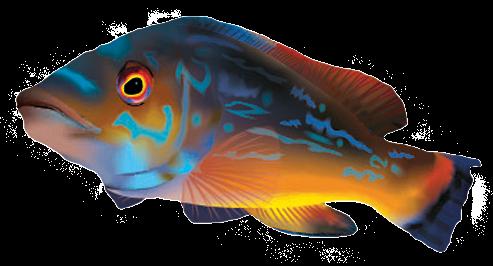
Wrasse are big and powerful fish with strong and sharp teeth, so take care. They are resident around our coasts throughout the year but do tend to be caught more during the summer months.
Wrasse bait include - Rag worm, crab, limpets, shell fish and mackerel strip Maximum length of 66 cm. Its common close to rocks and around reefs from 2-3 m to about 20 m,
Whiting
Merlangius merlangus
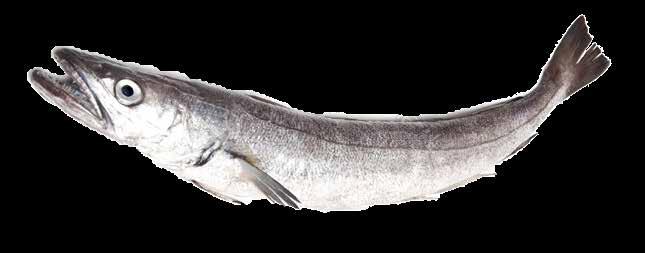
The Whiting is a very common fish in shallow inshore waters. All Irish coastal waters hold Whiting but they tend to come to prominence from late autumn to early spring. Baiting for whiting includes - rag worm, lug worm razor fish, squid, crab. They are usually around 30-40 cm in length, but occasionally reaches a length of 70 cm.