You are a group of Town planners employed by a local county council to design a new town. In designing the town you are limited to the restrictions imposed by the County Council
You must design the Ideal “Newtown” which will allow for as many traffic free and safe areas for all its residents.
Housing Types:
2 x Blocks of Luxury apartments (20 units)
1 x Council Housing Estate (200 families)
1 x Private owed Housing Estate (500 families)
1 x itinerant site (10 families)
2 x Blocks of council flats (50 families)
1 x Luxury Bungalow Estate (50 units)
1 x Block of old folks flats (30 units)
Cumpulsory:
Train station
Bus station
Factory
Dump Cemetery
Community Resources (Choose only 9):
Roman Catholic Church
Church of Ireland Church
Post Office
Shopping Centre
Take away Shop
Hairdresser
Health Clinic
Doctor’s Surgery
Other Services (Choose only 3):
G.A.A Club (with bar)
Rugby Club
Youth Club
Scout Hall
Community Centre (also a drop in center)
Golf Club
Financial Services (Choose only 2):
Credit Union
Building Society Bank
ATM location
Town Planning **
You are a group of Town planners employed by a local county council to design a new town. In designing the town you are limited to the restrictions imposed by the County Council
You must design the Ideal “Newtown” which will allow for as many traffic free and safe areas for all its residents. You also have to consider an idea traffic and road structure.
Housing Types:
2 x Blocks of Luxury apartments (20 units)
1 x Council Housing Estate (200 families)
1 x Private owed Housing Estate (500 families)
1 x itinerant site (10 families)
2 x Blocks of council flats (50 families)
1 x Luxury Bungalow Estate (50 units)
1 x Block of old folks flats (30 units)
Cumpulsory:
Train station
Bus station
Factory
Dump
Cemetery
Community Resources (Choose only 9):
Roman Catholic Church
Church of Ireland Church
Post Office
Shopping Centre
Take away Shop
Hairdresser
Health Clinic
Doctor’s Surgery
Other Services (Choose only 3):
G.A.A Club (with bar)
Rugby Club
Youth Club
Scout Hall
Community Centre (also a drop in center)
Golf Club
Financial Services (Choose only 2):
Credit Union
Building Society Bank
ATM location
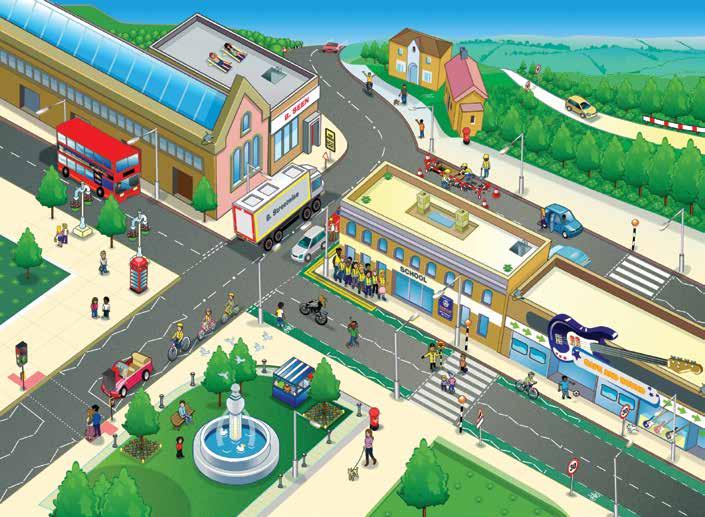
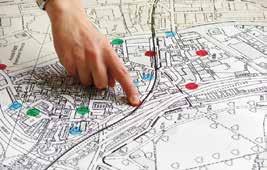
Map of town
Map of proposed area to be used for Newtown development
Pond
Boggy Area
Carriage way between Dublin and Limerick
Wood
River Clear
Castle Ruin
Observation *
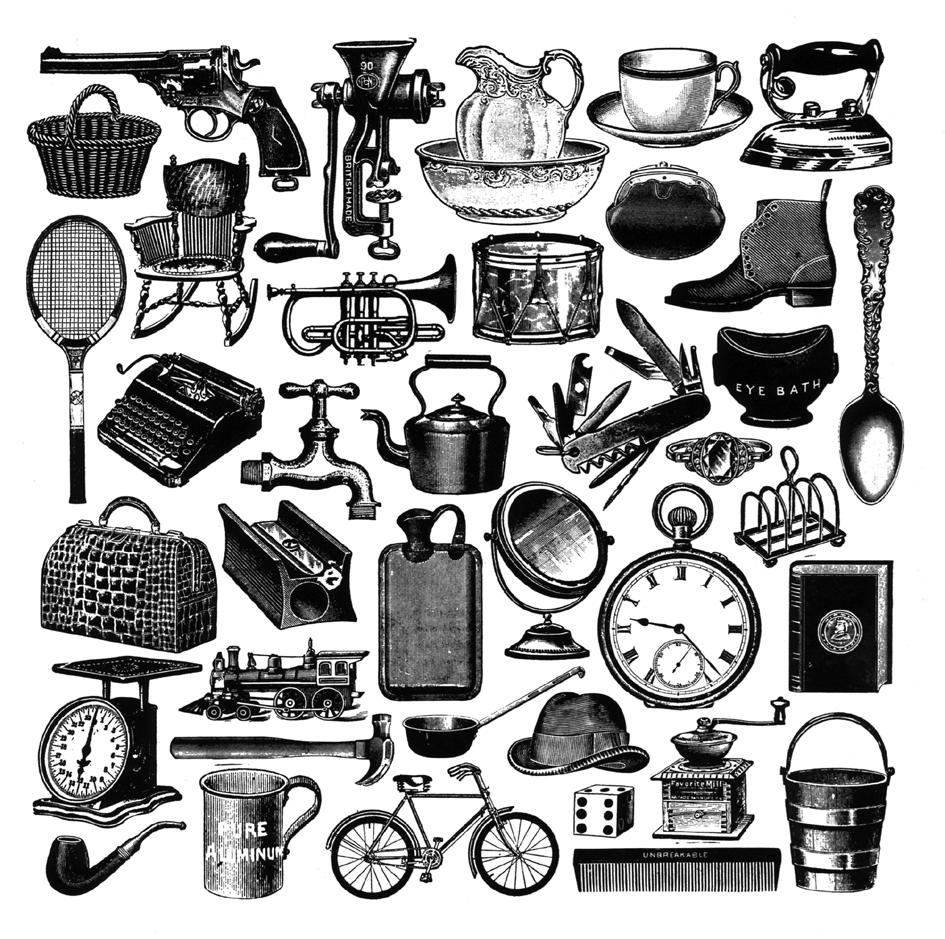
Look at the objects for 40 seconds.
Then take a pen and paper and list down as many as you can in 90 seconds.
Alternatively
Place 40 objects on a table and allow participants to observe the objects for 30 seconds.
The objects are then covered.
Then the participants must list them on tell you the objects they observed.
Observation **
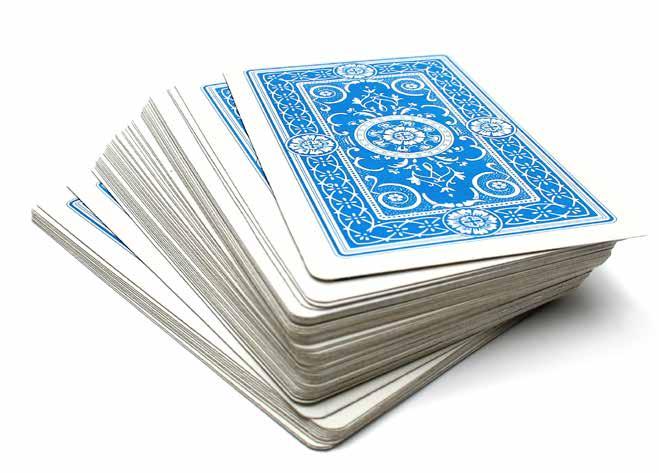
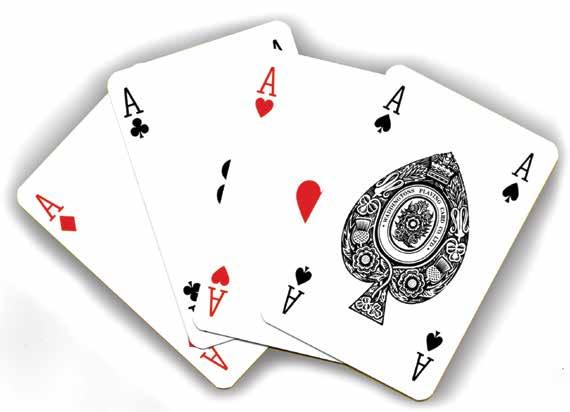
Place the cards, spread out, on a table for 40 seconds.
Allow participants to observe the cards for 30 seconds.
The cards are then covered.
Then the participants must list down on paper as many as they can in 90 seconds or tell you the objects they observed with 90 seconds.
Variation
Small objects are placed on cards and participants have to remember the card and the object on top of the card.
These exercises can also be team based - pooling observations.
Safe Routes
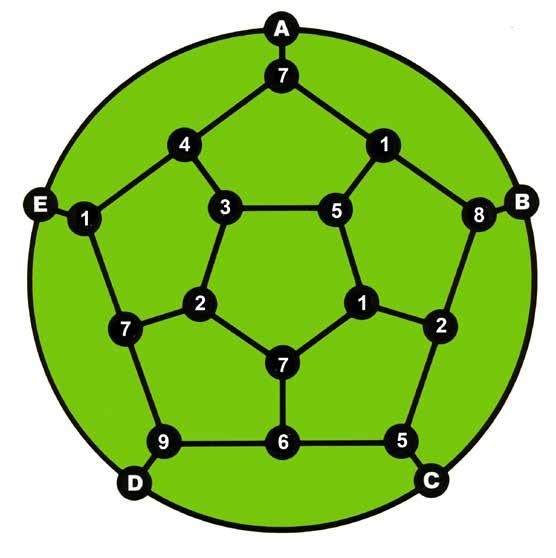
The sketch map shows a series of safe routes around a town for pedestrians. There are four destinations and the starting point is at location A
Safe crossing points are indicated by numbers.
The play space is created using chalk on a play space. Participants, act in teams, move in turn to the start point A. The Leader of the game then calls out a location and the participants as a team work out the route by adding up the numbers to create their route. A member of the team is selected and they move around the route to the destination as quickly as possible.
Example
Leader calls out command - Travel to C in 22 moves.
The participant then selects the best route and moves to location C by following that route as quickly as possible.
The leader takes a note of the time it takes to complete with a stopwatch.
The route must match the number so if the number is not correct it must be restarted.
This is repeated for other participants.
The winner is the team that has the collective quickest time.
Points on the page indicate distance also - so far away sounds are further from your location on the edge of the page.
Sound map
The objective of this exercise is to heighten the awareness of the participant to the sounds that exist around them.
Participants should be spaced apart from each other so that they can listen undisturbed but at the same time experience the same sounds in an area.
Each participant has a piece of paper and they should place an X in the middle of the page. The X represents themselves. Each participant is invited to listen to the sounds around them. These sounds will include traffic, people, nature. As each sound is heard the participant places a mark on the page relative to themselves and also a note of what they think the sound is.
Give participants a few minutes to find their observation spot then begin and allow 10 minutes for sound collection.
When the participants are gathered together and sound maps are compared it should be possible to match sounds on everyone’s collection page to create a sound map of the area.
The facilitator should discuss the array of sounds that exist around us and how we pick up messages from these sounds - loudness, near and far, acceleration noise in the case of traffic, motor bikes, cars and trucks. Plus the sounds of nature. This is also a good time to explore the use of headphones and how they reduce the information available to our ears
Traffic hum
barking Door closing
Truck reversing
Children playing Bicycle bell
Children playing
ringing me
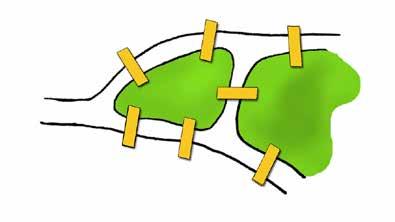
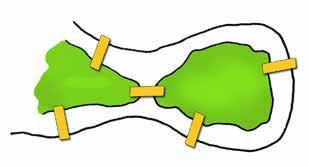
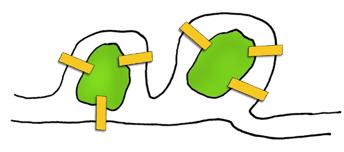
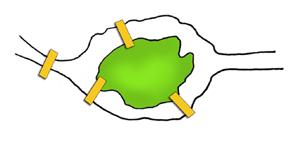
In a small Russian town called Kaliningrad, there are seven bridges over the river Pregel that connects the two islands that make up the city. There is a long tradition, in the town, to try and walk across each of the seven bridges only once. No one was able to complete the challenge and a famous mathematician by the name of Leonard Euler was called in to see if the puzzle could be solved. He proved that, in fact it was impossible to do.
This challenge presents a series of bridge crossing combinations, including the famous bridges of Kaliningrad. The challenge is simply to cross each of the bridges only once as you navigate around the towns (maps) presented.
When the exercise is completed the participants should try and navigate a route around their town using pedestrian crossings. Participants can also be asked to create their own bridge based puzzle using the presented bridges as examples.
Bridge Crossing
Other examples to explore
Kaliningrad Bridges
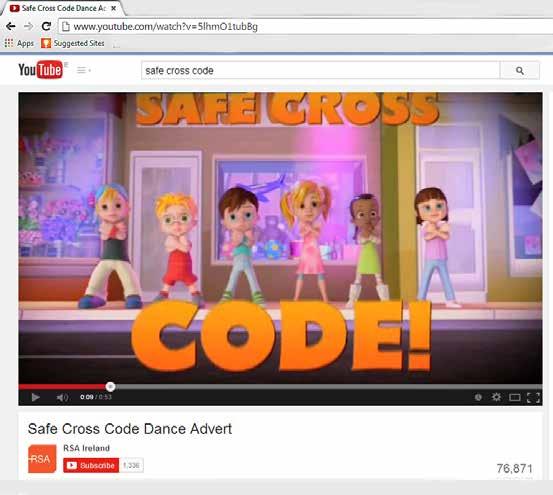
Safe Cross Code
The Safe Cross code - we probably know the song but can you perform the dance routine.
This is a fun based competition between teams - highlighting and reminding everyone of the Safe cross code.
This is an exercise for all ages however the facilitator should use the opportunity to highlight a need for constant awareness and observation. For older participants it is a good opportunity for them to pass on the Safe cross code to siblings or younger people.
Scan with your phone to see video
http://www.youtube.com/watch?v=5lhmO1tubBg
Design your own road signs
The object of this exercise is to allow participants to think about the road signs and the position of these signs around their community.
The exercise is one of creating new road safety signs that reflect the real dangers/warnings required in your community based on community survey exercise.
In creating the signs the participants should also consider location, simplicity of the sign design and the use of colour and text to convey a message to a road user in a few seconds as they approach the sign.
Teams should be asked to design 10 signs - 6 can be serious and allow the team to inject some humour in the remaining 4.
Puzzle Solutions
Safe Routes
A-B 30 24 28
A-C 32 23 21
A-D 32 28 36
A-E 26 21 24
Giving Directions
Turn left at each junction
Engineers and Cannibals
A-B 30 (7- 4 - 3 - 5 - 1 - 2 - 8)
A-B 24 (7 - 1 - 5 - 1 - 2 - 8)
A-B 28 (7- 4 - 3 - 5 - 1 - 8)
A-C 32 (7 -1 - 5 - 1 - 7 - 6 - 5)
A-C 23 (7 -1 - 8 - 2 - 5)
A-C 21 (7- 1 - 5 - 1 - 2 - 5)
A-D 32 (7 - 4 - 3 - 2 - 7 -9)
A-D 28 (7 - 4 -1 -7 - 9
A-D 36 (7 -1- 5 - 1 - 7 - 6 - 9)
A-E 26 (7 -1 - 5 - 3 - 2 - 7 -1)
A-E 21 (7- 1- 5- 3- 4 -1)
A-E 24 (7- 4 - 3 - 2 - 7 -1)
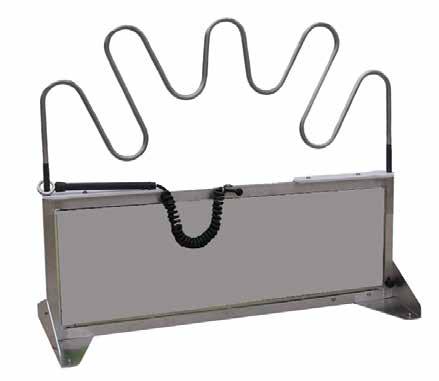
Buzz - wire
The buzz - wire exercise is related to risk and danger.
Participants are asked to complete the route without touching the wire and causing it to buzz.
This exercise will be great fun but the purpose of the exercise is to allow participants to experience risk and the control they have over this risk. The facilitator - in the review session - will seek to discover how people felt during their experience. Nervousness, trying to stay in control, concentration level, planning ahead (turning hands to right position), looking for end point and safety.
Buzz-wire devices can be bought in large toy shops or they can be constructed with some basic electrical knowledge. Basically, you require a battery, a buzzer/bell some wiring and some heavy wire such as a wire coat hanger.
Battery
Buzzer
Screw fixing wire to a board
Insulating
Quick reaction games
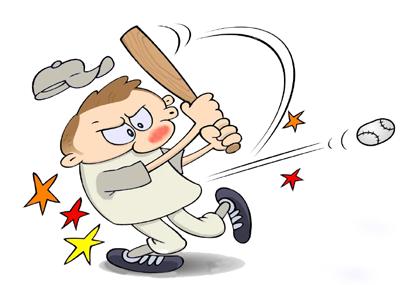
Swat the Rat
To prepare for this game you need tennis balls, a water down pipe and a bat.
The pipe is presented to the bat person at a suitable heightrest it on the back of a chair. One person rolls the ball down the pipe. When the ball appears out of the pipe the bat person tries to hit it.
This is a reaction game so the bat person should be given an indicator that the ball is travelling (to give them a chance to anticipate when it might arrive). The bat person can not hit the ball if it lands on the ground.
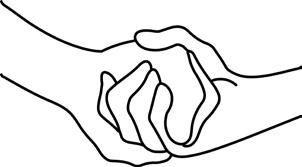
Electric hands
The electric hand game is a pulse reaction game. Each team line up opposite each other and hold hands in a line.
At the end of the line there is a small ball/ object that must be picked up. At the start of the line is the games master joining the two teams with his hands.
Scan with your phone to see video
The games master squeezes the hands of the lead member of each team and they have to pass the pulse along the team members by squeezing hands. When the last person gets the impulse they have topick up the object. it can also be played by passing an object along the line - hand to hand and placing it in a target area. http://www.youtube.com/watch?v=UK9UmrMr_4A
Snap
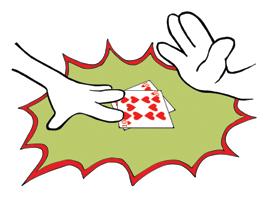
It is the traditional card game of snap. The deck of cards is dealt out to the team members and they in turn place cards on the pile. When two cards match a player calls ‘SNAP’ and places their hand on the pile - thereby winning that pile of cards.
Quick reaction games
Reaction test game - scan with phone to bring you to website
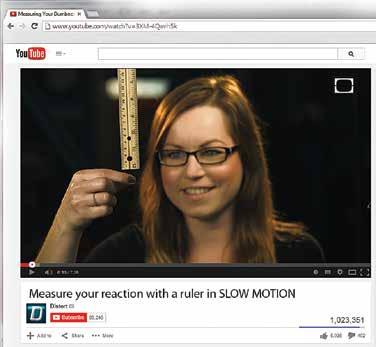
Scan with your phone to see video Ruler drop test
A simple exercise to test your reactions. You are tasked with catching a ruler as it drops between your fingers.
Participants will discover how quick they are by the distance the ruler passes between their fingers before it is caught. With practice they should try and improve their score.
Facilitators should draw the attention of the participants to the reaction time a driver has to stop a vehicle or for a pedestrian to jump out of the way of danger. They should also explore the possibility of distraction as a result of poor visibility, weather, bad road conditions and substances (drink and drugs).
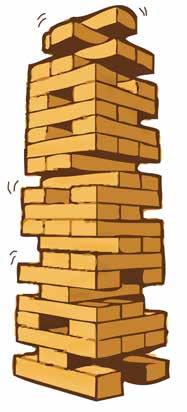
To prepare for this game you need a number of tables and some Jenka games. Jenka games can be bought from large toy shops.
The game consists of a collection of wooden blocks that are stacked on top of each other. The object of the game is to remove a piece and place it on top of the pile/tower without causing the tower to collapse. As the game progresses the risk of collapse is forever present so great care and skill is required to release a block and place it on top.
The object of these two games is for participants to experience risk and also how to overcome risk by skill, practice, concentration, logic and carefulness. The facilitator should explore how the participants feel when risk is present, the relief when it has passed and they are safe. Also how confidence increases as skill levels increase with practice.
Roll the ball
Scan with your phone to see video
http://www.youtube.com/watch?v=sW0OAMY6CT8
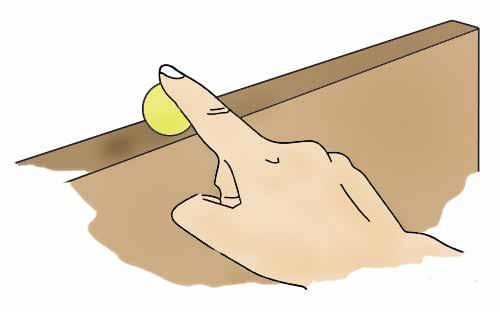
To prepare for this game you need a plank of wood 1200mm long and 50mm thick. The plank can be placed on a table or trestle frames so that there is ‘clean’ space to play the game and for the player to move along the plank. The plank should be level. You also need a number of marbles. A start and end zone should be marked on the plank of a distance of 150mm to allow a fair start to the challenge.
Participants (or a team) are given a number of marble to transport down the edge of the plank. One finger only can be used and it must remain in contact with the marble at all times as it moves down the level plank. The finger gently moving the marble along the plank to the safe zone. if the marble drops off the edge the player most return to the beginning to start again.
Small mirrors can be bought from glass cutting workshops from mirror off-cuts often at little or no cost - if you explain why you want them and how they will be used.
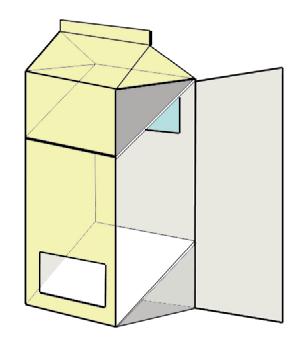
Vision/viewing holes are cut in the bottom and reverse top of the carton
Cut side of carton to allow assembly and seal again when completed
Periscope
Before this exercise can be started the teams need to create periscopes using mirrors and milk/juice cartons. When periscopes are ready the participants are presented with a course they must travel just using the periscope as the only means of vision. Any number of obstacles can be created for the participant to avoid. It will be necessary to change the course elements each time as other take their turn.
Small mirrors are taped to the inside of the carton with some tape at 45 degree angles
The object of this exercise is for participant to experience restricted vision - such as is experienced by drivers. Some obstacles can be approached with ease with time to work out how to avoid/overcome them. Others such as people stepping into the road are difficult or traffic cutting across your path.
Minefield
This is a risk, listening, and reliance on others game.
To prepare, a minefield is created using duct tape as markers. Small mines are also created of rolled up duct tape and placed randomly in the minefield area. Blindfolds are required and best to use (although the video shows participants just closing their eyes).
The team chooses a number of experts (2) who direct the team members to safety initially. Once participants are safe (gone through the minefield) they can also help. If a participant touches a mine they have to return to the start gate.
Scan with your phone to see video
http://www.youtube.com/watch?v=nLXa1f0mTC0
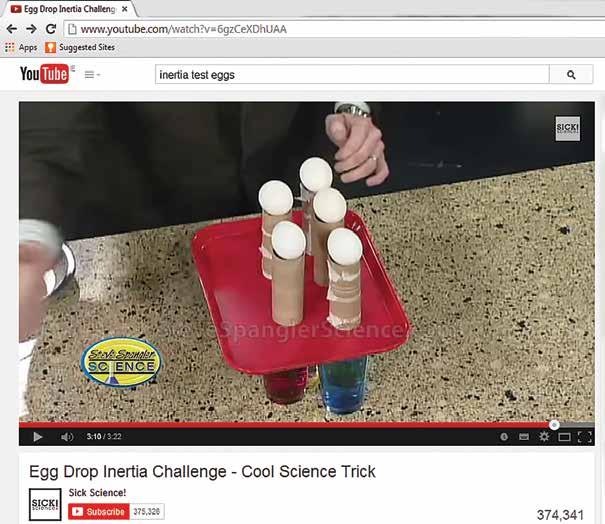
Inertia test
This is a fun experiment that teams can explore.
It is important for participants to understand inertia in the context of road accidents and as a passenger within a vehicle.
Understanding basis science concepts is most important to understanding the damage caused by speed, impact, and the relationship between a closed environment such as in inside of a vehicle and the outside environment that the vehicle is travelling at speed.
Scan with your phone to see video
http://www.youtube.com/watch?v=6gzCeXDhUAA
Cat and Mouse
A “game master” is selected and all participants walk around the playing area. Each person will choose one person to protect and one person to fear, without saying anything to the others. Whilst walking, each person will get closer to the person they wish to protect and walk away from the one they fear. This will be done with great concentration, in honesty and without a word. There will obviously be many possibilities.
The important thing is that all members of the group carefully ‘attach’ to each other. You cannot change the chosen persons at a later stage. The “game master” has to observe everyone and find out who is feared and who is protected by whom. After the first 5 minutes, the game master shares his thoughts and finds out whether he was right or wrong. The group starts again from the beginning with a new game master.
A natural pattern of behaviour and movement will be observed during the game. The facilitator might draw attention to road usage, rules of the road, driving on either side of the road.
Face-off
This game is a distraction game. Participants line up in two lines facing each other. Participants then number off on each side 1...10. The facilitator then calls a number and the participant from each side step forward and move to the end of the ‘corridor’ of participants, one each end. The object of the game is for each player to move from one end to the other maintaining eye contact (stare) as they move forward, turn around each other and move backwards to their new position - without smiling at each other.
All other participants can do all sorts of funny distractions to try and make them smile. First to smile is the loser and points are awarded to the other side.
Chaos
This is a distraction and order game.
The participants form a large circle which will become the play area. The basic idea is that each participant moves within the play space under the following rules. You must have ‘personal space’ around you (arm’s length), and you can only move into free space and you have to keep moving. You cannot partner with other participants.
Once the game is played a few times participants will notice an ‘order’ of movement that the group adopts – this can be linked to roadways and rules of the road. Now for the next part introduce extra elements – ask certain participants to send text messages to other participants taking part. The receivers then have to read the text messages and reply. This takes place by also trying to maintain the ‘moving into space game’.
Facilitator should discuss the results and outcomes of the game.
Interference
This is a distraction game.
Preparation - prepare the play space with duct tape lines. Three teams are formedone the senders, one the receivers and the other the ‘interference’.
The game master shows a short message to the senders. Their job is to transmit that message to the receivers on the other side of the play area. The ‘interference’ group do all in their power by waving, shouting and causing interference between the message senders and receivers.
Scan with your phone to see video
http://www.youtube.com/watch?v=ZZj-Lksl4yM
Problems on the Safe Route Home Puzzle
This is a fun puzzle game - the scenario is not directly related to a roadway but can be used to illustrate the need for responsible and respectful behaviour in our road use.
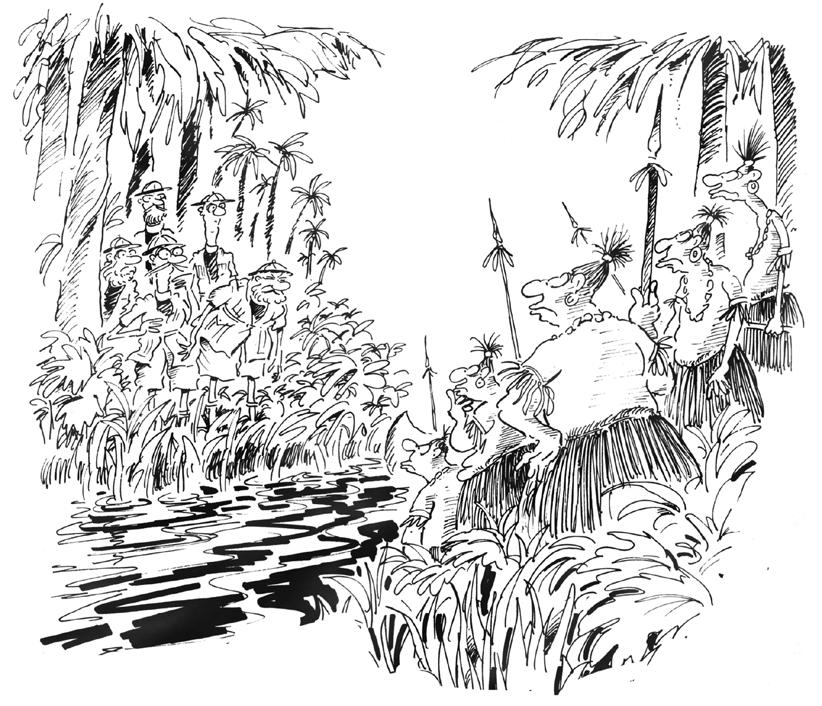
Five engineers are exploring a possible route for a railway through the jungle regions of Brazil. They find themselves on the bank of a river with five cannibals on the other side. They agree to help it other but both parties are cautious.
The only method of crossing is a canoe and only one engineer and one cannibal can paddle. The boat can hold three men.
The engineers do not trust the cannibals, and are unwilling to be outnumbered either in the boat or on either shore for the time it takes the boat to cross.
What is more, the cannibals feel exactly the same way about the engineers!
Is it possible for both groups to cross safety.
Each team will need some equipment
I No. Elastic Band (power source), Cling film, newspaper, sellotape, pipe cleaners, milk cartons, paperclips, odds and ends
Projects
Move an egg from one position to another 10 metres away. Without breaking it, or touching the ground
Lift an egg 1 metre off the ground over a barrier and onto the other side, without breaking it.
Construct a devise that will package an egg, this devise must be capable of travelling a distance of at least 3 metres ( off the end of a plank) and survive a freefall from the top of the hall or den - a decent fall.
Time limit
Write out the projects and seal in an envelope. Give each team at least 1 hour to make the craft or devise. Allow half an hour for testing.
Contest Rules
Only one egg will be given for testing purposes, and one egg for final test.
Eggs may not be taped or cast in a solid
Scan with your phone to see video
Egg drop experiment
This exercise experiment is designed to enable participants to understand the nature of impact both on the vehicle and the passengers. Participants can explore different ideas and concepts as there is no best way of doing it.
Each team are set a constructive task, whereby they have to design and build a gadget from miscellaneous bits and pieces of no real value. The teams must then complete the objective against each other and the clock.
The craft / devise must be easily opened to display, insert and remove the egg.
A streamer maybe attached to the freefall craft but it can be no longer than 3 metres
In the construction of the craft / devise you may not use padding of any type to protect the egg. You can however employ shock absorbers but they can only be activated on impact - something like an air bag in a car or crumple panels in cars that collapse on impact. The craft / devise must be self propelled - once it is set up to go it must travel by its self.
Rules can be changed at short notice to circumvent the’ benders -of- rules’ and ( heaven forbid ) ‘cheaters’
Hints for experiment and practice
In designing your craft/devise, first consider the basics you have to work with - a one litre milk carton, an egg, some sort of shock absorber, bits and pieces and perhaps a streamer. As you experiment, consider what you can change, here are a few suggestions:Change the shape of the carton, its weight, surface. Add nose cones, bumpers, cushioners.
Change the egg position
Change the shock absorber, size,shape, weight,
material. Try elasticity, crush-ability, padding, and cradling.
Change the streamer, size, shape, weight, material.
Changes to the fins and flaps for guidance.
Okay you say but you can try out a lot of eggs trying out different designs and modifications. You don’t need to waste fresh eggs. You could use hard boiled eggs and eat them later, but where is the danger in that!!
Marking the contest
Suggested marking system
Design 25
Teamwork 25
Result 40 ( Does it work)
Effort 10
The Mess
It is an excellent idea to cover the floor of your test area with a sheet of plastic taped to the floor. Each team is responsible for cleaning up their mess (the best part of it at least). When the challenge is over, the plastic can be rolled up and placed in the bin.
The game is played with two or possibly three decks of cards depending on group size.
Cards are spread out on the floor upside down with now information on display.
Teams form a circle around the play space and each team is numbered off 1 to....6,7,8
The facilitator then outlines the card values.
To stay alive you mush turn up a ‘heart’ card
If you turn up a ‘spade’ card you ‘die’ instantly and must drop and lie on the ground where you are on top of whatever cards are in that space.
If you turn up a ‘club card’ you are ‘injured’ and must hop on the spot until brought to safety.
If you turn up a diamond card you can help an injured person out of the play area and they can recover from injury.
The Facilitator then starts the game by calling out numbered players to enter the play space.
A game of luck and chance
The purpose of this game is to highlight the fact that death and injury are not predetermined. They can strike at any minute and awareness and safety precautions can reduce but never eliminate the possibilities.
As deaths and injuries increase less and less cards will be available to view.
The facilitator can introduce another round based on selecting two cards - pick up one card then try to get a matching suit or take the consequences of the second card. (a heart followed by a spade would be death, a club followed by a heart would mean you could go back to your team).
A third round - players might have a pick of three or four cards - last card determining the outcome.
The facilitator should spend some time in review to discover the feelings of the group to chance and luck. They should also discuss ‘strategy’ in the game, how the team learned as the game continued - what cards to turn , what cards to avoid etc. all discussion should be placed in context to real life situations, past behaviour/mistakes and future behaviour.
Suits games ROAD SENSE
This is a review game and is used in the final programme session to test or assess knowledge gained over the series of sessions.
It is a simple game to set up as it only needs two lines of duct tape (or chalk lines) on the play space.
A series of questions/statements need to be prepared to ask the participants. The questions can be from any area of the programmeposters, handouts, web based material, training/ programme sessions. There can be fun based as well as serious questions included.
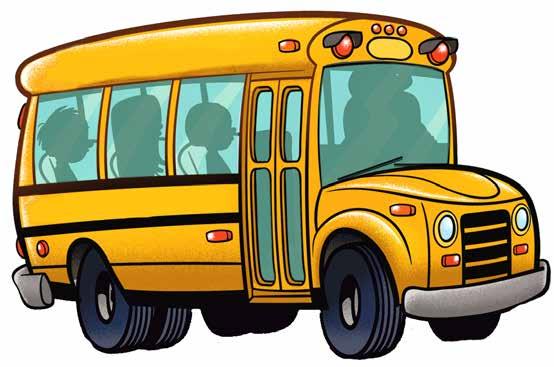
Participants start the game by standing on the ‘bus’ - inside of the lines. The question is asked with two options to chose from. If you agree with either you step off the bus to either side.
If you don’t know or are undecided you stay on the bus.
The facilitator should concentrate on those who don’t know and explore why they think this way. If the participant has an interesting answer or reason then this can be put to those ‘at the bus stop’ to see if they change their mind and ‘get on the bus’.
The object, is to have everyone make choices. Hopefully, based on changed behaviour as a result of the programme sessions and new knowledge learned.
The facilitator can develop the initial question so as to dig deeper into the understanding of the group and to whittle out ‘herd thinking’. ‘Herd thinking or follower behaviour will occur by
those who perhaps don’t fully understand their thinking and will guess based on what most of the group are thinking. They will also usually be the last to ‘Step on’ or ‘off the bus’.
Scan with your phone to see video
Bus stop games ROAD SENSE
http://www.youtube.com/watch?v=rJHbFCDJuyE
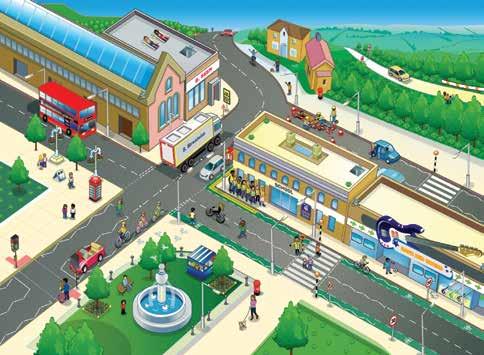
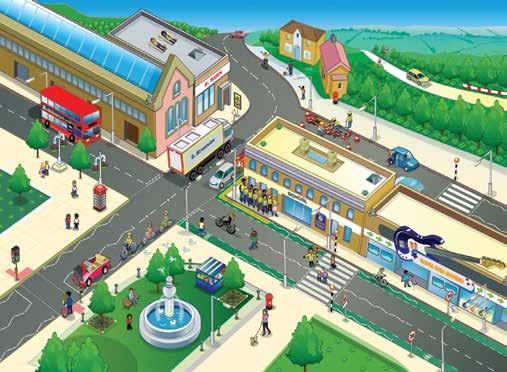
Spot the difference
There are 18 differences between the images.
Spot the difference locations
Danger map
The purpose of this exercise is to highlight the potential danger areas and spots that exist with a local community. In order to create such a map teams of participants are dispatched to ‘map’ the danger spots. On their return a ‘master’ map can be created from the results of each team. When teams are on their discovery mission they should be requested to consider the identified spots at different times of the year and at different times of the day. Outside a school for example, or a traffic junction at peak times and off-peak times.
straight line map
The straight line map is an information map that plots each part of a journey with reference to the ‘danger’ coming from left or right. The blue line represents the journey as the shortest distance between the two points.
Participants should be asked to create a number of straight line maps - ones related to the most common journeys they make each day. Others related to the community danger map for a given journey from point a - b.
In all cases the purposes of these mapping exercises is to make participants aware of the things to watch out for as they travel about.
Cross a busy road
Trucks backing from factory
Traffic from small laneway
Cross a busy road
School Pedestrian crossing
Railway level crossing
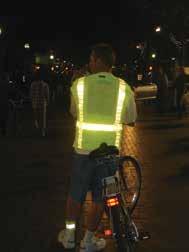
Both of these games/exercise concern the participant in games of hid and seek. There purpose is to highlight the fact that unless a pedestrian or cyclist actively goes about making themselves visible to other road users they are in fact invisible to others.
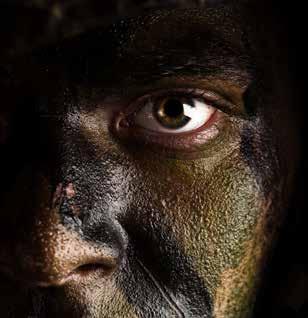
Camouflage
In this exercise participants are brought to an open space with some cover by way of high grass, scrub and some trees. Each participant is given some time to disguise or camouflage themselves. When ready a ‘viewer’ is selected to observe and spot participants as they try and creep up to the viewer unseen.
The viewer should have a score card and note how many times a participant is spotted as they creep forward. The score is revealed once they reach the ‘viewer’
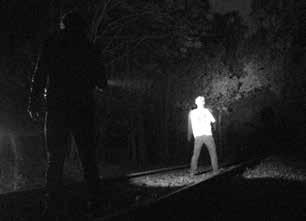
Torch game
In this exercise teams are created and they must travel through the play area without been spotted by the other team. You will need a large play area - ideally a local wood with some scrub ground.
The play area is set out so that teams have to visit a number of spots to collect a clue answer such as
Visability
a number or letter or if orienteering punches are available a punch stamp on a card.
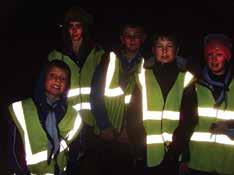
One or two members of each team have to wear hi-vis vests and it is the job of the rest of the team to keep them in cover as they negotiate the course. They cannot dirty up, disguise or take off the hi -vis vests.
When the exercises are completed the facilitator should draw attention of the group to the difficulties that exist to see someone in dark clothing or without any recognisable markings. Also the fact that it is hard to hide a Hi-vis jacket from any light source. If a person is easy to see and is visible to other road users it protects them from danger.
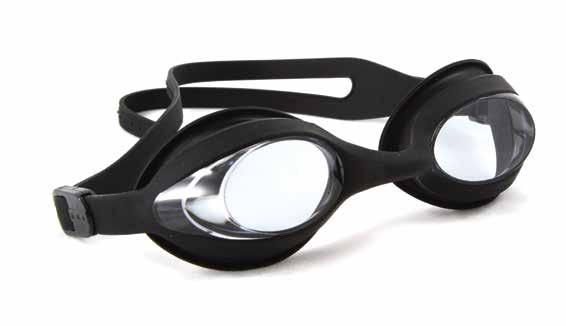
The purpose of the goggles is to demonstrate to participants that using alcohol and other substances distorts their perceptions, upsets their balance, makes ordinary activities difficult, and can make some activities (like driving a car or riding a bike) deadly.
Special purpose made vision distrotion goggles are available but are very expensive. Using this simple method can achieve some of the key results and outcomes.
Obtain some cheap swimming googles and apply a thin layer of petrolum jelly (Vasoline) to the lens. A thin layer will create a blur effect, however a slightly thicker layer will work best at distorting the vision. A wearer can still distinqish light and shade and outlines of shapes but distance vision is impaired. You may need to experiement to get the correct thickness.
A number of exercises need to be set up before hand and perhaps in another room or out of sight of participants so that the experience is new.
All sorts of challenges can be created, some of the more popular ones to try are:-
Throw a ball to each other
Throw a ball into a bucket
Fill a glass or container with water
Walk the ‘plank’ or line - the line maybe straight or curved
Pick up keys from the floor
Give someone a ‘High 5’
Facilitator needs to manage this activity closely and be sure nobody causes injury to themselves. Wearing the google for a long period of time can cause headaches due to the fact that your eyes are constantly trying to focus.
Swimming Goggles
There is also the possibility of some fun and laughter but it should never be allowed to get out of control. At the review the facilatator should draw attention to the experience. Perhaps how the wearer thinks they are still in control and can do even the simpliest of tasks.
The Facilitator should also discuss sensible drinking and no drinking habits.
AWARE
Caterpillar traverse game
This is a teamwork based game. The object is to get your team to the other side of a ‘river’ using stepping stones. The problem is that all the team’s ankles are tied together so they need to think and act to think and act as a ‘whole’.
The Challenge is further complicated by the fact that another team are tying to reach your side of the river by the same stepping stones.
The play space is created using duct tape or chalk. You need to create the river - two strips and a number of ‘large’ stepping stones (squares) within the river at various distances apart.
Shoes can be secured together by using duct tape or tying ankles together.
If a team steps off the ‘stepping stones’ or a member ‘falls in’ they must start again.
A time limit is also imposed.
http://www.youtube.com/watch?v=xn6r-fAJNcw
The scene of an accident is not a nice place to be but you never know when you might happen upon an accident or be involved in an accident.
This exercise centres around a first aid scenario. The scene is set - away from public eyes -and each team of participants have to react to the situation presented.
The complexity of the scene can be determined by the knowledge and experience of the participants in the field of first aid. Our objective here however is first response and seeking help rather than applying first aid treatment.
A key feature of the actions will be assessment of the situation - what has happened, what are the immediate dangers, what are the injuries, getting help, caring until help arrives.
Before you begin the exercise it can be a valuable input to look at how you contact the emergency services. It is not as simple as ringing the number. The operator will need details, location etc. and in a panic situation it can be difficult to compose oneself.
Other useful inputs would be around assessing danger. Can the situation be contained, is there a possibility of other accidents as a result of this accident. (consider a car crash on a motorway).
Multi injuries at a scene and the possibility that the person with the least injuries is dealt with first over more serious injuries.
Ideally, the local civil defence or first aid group should be asked to assist and they will have setup similar situations as part of their training.
Our purpose here however, is to prepare, explore and provide a confidence that young people will
have the key skills to seek help and care for an injured person until help arrives.
Possible scenarios can include:-
A cyclist falling off a bicycle
A cyclist crashing into an old person on a cycle path
- injuries to cyclist and old person
A motor bike crash into a wall or tree
A car crash with a pedestrian knocked down.
A car crash with multi injuries
Dealing with a crying and distraught person at the scene of an incident.
Role playing a call to the emergency services
Setting up the incidents will take time so planning is required to get some willing ‘actors’ and set up the scenes.
Facilitators role is to prepare the participants in some key points before the exercise but not to
Scene of an accident
reveal everything - there needs to be an element of surprise.
Facilitators should observe how the teams react, what they do and the sequence and thought process of how they act.
The review session should include everybody - actors, outside groups such as first aid group or civil defence and the participants. It should not be dominated by showing up faults but rather how participants reacted, and providing key pointers if they ever find themselves in such situations in the future.