We are delighted to bring you our eight-step ‘Camping with the Stars’ resource. This resource aims to help you and your Colony have a fun-filled, youth-centred camping experience by building your capacity and confidence in camping step-by-step. You can start to complete these steeps up to five months before your camping experience- it’s up to you!
Step 1: First Pitch Plan for camp in small groups; roles for Scouters.
Step 2: Gearing Up Clothing, layers, personal first aid kit, packing an overnight bag, hygiene.
Step 3: Out and About Day activity with the correct gear.
Step 4: Site and Oversight Leave No Trace, risk management, site layout.
Step 5: Food for Thought Overnight with food hygiene and prep in small groups.
Step 6: Spars and Sparks Tent pitching, gadget construction, fire-lighting.
Step 7: Adding the Magic Campfire, Scouts’ Own, flag ceremony, gear check, revision.
Step 8: Camping with the Stars Revision, get out and camp, review.
We hope you find this resource helpful and informative. If your Cub Scout Pack or Scout Troop also wish to use ‘Camping with the Stars’ resources, these can be found in the section-specific pages of scouts.ie.
Wishing you and your Colony the best of success in the adventures ahead. Happy camping!
Ian Feighery Programme Commissioner (Beaver Scouts)
First Pitch
Year Plan
Beaver Scouts’ confidence to camp should be built from early in the Scouting year. It is a big deal for Beaver Scouts to stay away from home- many stay away from home for their very first time when they go on a camp or sleepover with their Colony.
Beaver Scouts should be encouraged to attend all day activities such as hikes, backwoods activities, visits to the park, etc from September onwards. Not only will this give Beaver Scouts independence and help with skills such as packing a bag, it will also allow friendships to form.
If your Colony has the facilities, consider holding a sleepover in October or November.Allow the Bree Beaver Scouts to attend the daytime component of the activity; hopefully they will leave the activity excited for their opportunity to have an overnight with the Colony later in the year. (Bree Beaver Scouts should not complete an overnight until they are invested.)
An overnight indoors should take place in spring, with all Beaver Scouts invited.This is an essential step before an ‘annual camp’ taking place in May or June; it would be a big ask for new Beaver Scouts to camp without prior experience of staying overnight with the Colony. More information and tips around such an preparatory overnight can be found in the third resource pack of this series.
The camp in May or June of the Scouting year should see a ‘coming together’ of preparations that have been taking place throughout the year. The first camp is a big ‘make-or-break’ moment for Beaver Scouts and as such the Scouter team should take it seriously by putting a proper plan together to ensure everyone leave with fantastic memories. Camping is one of the most exciting activities Beaver Scouts can do- let’s do it right!
First Pitch
Camp Plan- Basic Details
In January and February, a rough plan for annual camp should be drawn up. Basic details that should be included in the plan are:
Location
In Beaver Scouts, the Scouter has a big role to play in terms of organising a campsite. However, that is not to say that Beaver Scouts cannot have an input. Perhaps Conn Bevaer Scouts visited somewhere when they were in Bree and would like to return… perhaps a Beaver Scout has been somewhere with their school… perhaps a Beaver Scout has heard of an amazing campsite from theirVenture Scout sister. Log Chews and Lodge Discussions could be held to ascertain what type of campsite the Beaver Scouts would like (for example, one near a beach to do a litter clean-up, one near a river to make mini boats, one in the hills to go on a night hike..) and the Scouters can do their best to facilitate this when looking at options.
Estimated cost
Transport, food, camp fees and activity resources should all be factored in to an overall cost. The Colony must make their own decisions regarding Scouter contributions, money from their programme/ Group budget, fundraising, etc.
First Pitch
Programme
A good-quality programme is necessary to ensure that the purpose and goals of the camp are achieved and that the camp is conducted in a worthwhile and safe manner for the Beaver Scouts attending.
The programme for camp is dependent on factors such as site, the time of year, the purpose of the camp, and the length of the camp.
The programme should be decided on with appropriate input by Beaver Scouts, who can plan activities through Lodge Discussion and Log Chews (see separate resources for advise on these).
By catering for all areas of the SPICES, the camp should be an immersive experience which allows all young people to learn, grow and have fun.
The camp should include a campfire and a Scouts’ Own.
The programme timings should be structured so as not to interrupt mealtimes and bedtime. Programme ‘overload’ prevents Beaver Scouts from experiencing some basic camp fun. Beaver Scouts should, for example, assist where possible in preparing meals and washing up their dishes.
Similarly, structured free time should be provided within the programme to allow for Beaver Scouts to explore nature and socialise, utilising Conn Beaver Scouts to assist where appropriate.
A Log Chew can draft a set of Camp Rules for approval.
Plan B – make a provision for a wet weather programme in case the weather conditions are unfavourable for your original planned programme.
There should be opportunities for progression in Personal Journey Badges Bree, Ruarc and Conn awards as well as the advancement of Adventure Skills.
First Pitch
Lodges in Action
Beaver Scouts should carry out simple activities in Lodges. Examples: games rotations, making dessert, washing up.
Conn Beaver Scouts should be given extra responsibilities such as helping to look after equipment and helping to buy ice-creams for the Colony.
Meals should be eaten in Lodges as much as possible.
Beaver Scouts should share a tent with members of their Lodge if possible.
The Buddy system should be used to help Beaver Scouts look out for each other especially for new Beaver Scouts or those who are new to camping.
Support
Encouragement from Scouters; Conns encouraging Brees and Ruarcs.
Support provided by Scouts and/ orVenture Scouts if help is need with camping skills.
Our campsites provide excellent programme centres for your camp. Each site has a team who will help you with programme ideas including on-site activities, potential day trips and details of local shops and transport and wet weather shelters for wet days.The campsites are also available for pre-visits where you will be able to see your campsite and view programme areas and any discuss access issues.
First Pitch
Roles for Scouters
Camp Chief: Responsible for coordinating, organizing and ensuring documentation is completed and filed with the relevant bodies. Acts as the first point of contact for the whole camp. Makes sure that all role holders, both adults and youth members, are supported and know what is expected of them. Ensures that timings are kept and that back up plans are put in place in case of adverse weather, illness or other issues which may affect the planned schedule of activities.
Quartermaster: Responsible for the Colony’s Equipment including the preparation, during and after the camp.
Camp Chef/Cook: Responsible for the food including purchase, storage of food and involving Beaver Scouts in the meal preparation process where possible.
First Aider: the lead First Aider who is responsible for ensuring consent forms are up to date and holds the managing medications forms as well as any medications; ensures that the First Aid kit is complete and performs the primary delivery of First Aid on camp.
Programme Coordinator: Coordinates the programme material and ensures there are Scouters assigned to the different challenges/ bases/ activities.
Treasurer: Ensures that camp is kept within budget. Holder of petty cash on site. Keeps pocket money for Beaver Scouts, if applicable.
Scouts Own Lead: Assists the Beaver Scouts in preparing material for and organising the Scouts’ Own.
Campfire Lead: Plans and leads the campfire.
Gearing Up
Packing
To make camping a more organized and enjoyable experience, Beaver Scouts should be encouraged to be properly equipped and they should always pack their own rucksack, with assistance from their parents/ guardians. Building self-sufficiency is an important part of Scouting.
Parents usually help their Beaver Scouts lay out their gear and ensure that everything is there and should help their child put the gear into the rucksack.The Beaver Scout needs to know where something is packed so that they can find it on camp, and they may not be able to pack their gear as tightly as their parents can, leading to the usual problem of when it comes time to repack at the end of camp that not all the gear fits back into the rucksack. Beaver Scouts who are unfamiliar with their packed gear may become anxious and upset on camp.
Another common problem for Beaver Scouts is trying to squeeze their sleeping bag back into its stuff sack. A Scouter should help perform this task otherwise the Beaver Scout may try to pack the loose sleeping bag into their rucksack at the cost leaving the clothing out of the bag. Rucksacks are never waterproof, so it’s recommended to put a plastic bin liner inside the rucksack.
The following are some tips on packing:
-Assemble all the items being brought on camp, on the bedroom floor, checking them off one by one as they are placed into the rucksack
-Work on the principle of ‘Last In, First Out’
-Remember, it’s easier to roll clothes than to fold them
-Pack a complete outfit together – pants,T-shirt, socks, underwear
-Pack the daily outfits in a plastic bag. Place the previous day’s dirty outfit into the next day’s plastic bag and put it back into the rucksack
-ALWAYS BRING EXTRA SOCKS
-Don’t pack a bath towel if a hand towel will suffice
-Make sure that the batteries in the torch or headlight are working
-Make it compulsory for Beaver Scouts to bring a teddy bear- that way, older Beaver Scouts will not be embarrassed about having one.Teddy bears give Beaver Scouts great comfort away from home.
-Do not bring unnecessary outfits
-LABEL EVERYTHING INCLUDING THE RUCKSACK
Gearing Up
The following is a printable suggested gear list for a weekend camp:
NECKERCHIEF (must be worn at all times)
Full Uniform (should be worn travelling to and from the camp)
Sleeping bag
Ground Mat
Hiking boots
Sneakers or comfortable shoes
At least 5 changes of clothes
Fleece/hoody/warm jumper
Underwear
Several pairs of socks
More socks
Waterproof pants and jacket
Sleep Wear (warm pyjamas or Track Suit)
Sun Protection (sunscreen, sunglasses, lip balm and a hat)
Gloves
Hat
Hand towel
Wash bag
Mug, plate, bowl,
Knife, fork, spoon
Drinks bottle (lightweight, unbreakable container with a secure lid)
Plastic bags (for keeping wet clothes / laundry / muddy boots separate from clean clothes)
Costume (each Beaver must have a costume reflecting the theme)
Day bag or small rucksack
Pillow (optional - compact camping version)
Torch (and extra Batteries)
Gearing Up
Points to Note
This is an all-season list.What the Beaver Scout actually brings will depend on the seasonal weather and the type of activity.
Some points to note:
A Rucksack: 65 litre capacity is large enough for Beaver Scouts and will last them into Cub Scouts.
All gear must be labelled and each Beaver must be able to identify their own gear. Remember that the Beaver Scouts must carry their own gear where possible.
Dishes: Beaver Scouts are required to bring their own dishes to camps. A melamine or other unbreakable type plate, bowl, and mug are recommended as they are durable and will not transfer heat near as fast as enamel or metal dining kits.A knife, fork and spoon will complete the set. Keep it all stored together. (We suggest using a mesh bag for washing delicate items –available in the discount shops).
Suggested List of Personal
Hygiene Items
Toothbrush & container
Toothpaste
Soap & container
Shampoo
Washcloth
Comb/hairbrush
Waterless hand sanitizer
Small Hand towel
Suggested List of Optional Items
Compass
Notebook
Pen or pencil
Sunglasses
Small musical instrument
Swimsuit
Whistle
Hiking stick
Binoculars
Wetsuit (for water activities)
Water shoes (for water activities)
Adventure Quest – Lands of Adventure Beaver Scout
Handbook
Campfire Blanket
Insect repellent (in season)
Tick
Gearing Up
Dressing in Layers
Proper clothing is essential for keeping warm, dry, and comfortable in the cold weather. Wearing multiple layers is both warm and allows Beaver Scouts to take layers off and on so that they always have enough to be warm, but not so much that they sweat.The layers should be something like this:
1. Base layers: Long sleeved T-shirts, long underwear if possible, thin socks
2. Insulation layers: Jumper or hoody, warm pants (fleece is best; track suit pants also work), heavy socks (fleece or wool)
3. Waterproof jacket, rain pants, hiking boots
4. Hat and scarf or buff, gloves or mittens
Bring extra clothes, particularly socks, to change out of wet clothing.
Personal First Aid Kit
Every Beaver Scout should have their own personal First Aid kit.This kit is packed into an old pencil case or small Tupperware container.The kit does not need to be very big so that it can be packed in a day bag or rucksack for each outing.
The following are suggested items for a personal First Aid kit: a selection of different sized plasters, plastic bag, Savlon Cream, small scissors, roll of elastic bandage, surgical tape, tweezers, steri-wipes, safety pins, heel blister plasters.
Gearing Up
Keeping Clean and Healthy on Camp
Keeping clean and hygienic will result in happy campers.
Everyone on camp should wash themselves every morning when they get up.This should be the same routine as would be practiced at home - face, hands, teeth and the combing of hair. If showers are available on the campsite, encourage to the Beaver Scouts to use them.
Erect a clothes line to dry out wet towels.
Beaver Scouts should have it explained why it is vital to wash their hands after going to the toilet, giving first aid or handling materials that may carry germs. Hands should be washed before and after handling food or drinking water.
Shake shoes or boots and socks out to remove any stones or materials that may cause blisters; change socks throughout the day where required.
Insist on a full change of clothes at night. Clothes worn to bed must be completely dry. Anything worn during the day will be at least slightly damp from sweat. Clothes and sleeping bags should also be kept as clean as possible. Beaver Scouts should put on clean underwear and socks each day. Sleeping bags should be turned inside out after using it then shaken to air it.
Out and About
Outdoor Activity
As with your Scouting programme overall, it is important that there is an outdoor programme in the run-up to camp.
Organise a day activity in the out-of-doors. It may be a backwoods experience, a hiking expedition, a day on the water.The most important aspect of this activity is that Beaver Scouts be given the responsibility of packing their own personal gear, as well as Group gear.
Beaver Scouts can be given a checklist-style list of requirements for the outing. It is their responsibility to prepare and pack at home!
Organising an outdoor expedition is also ideal for putting into place Beaver Scout-friendly plan-do-review process. Giving Conn extra responsibilities during the outing can test their leadership skills in a safe way- carrying the Colony’s first aid kit, etc.
The outdoor activity, whatever format it takes, should, most importantly, be FUN! Beaver Scouts are gearing up for their camp- this outing is a perfect opportunity to put their skills into practice!
Site and Oversight
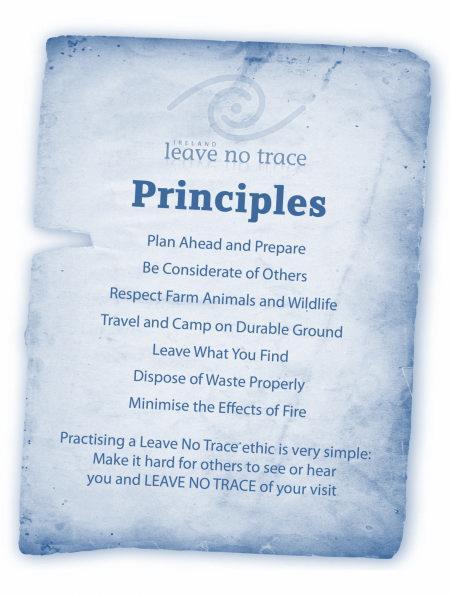
Leave No Trace
Knowing how to deal with waste when on camp is critical for cleanliness, environmental responsibility and the opportunity to return to the same site in the future.
Ensure that food debris is not left lying around.Always clean tables before and after use.Take all unused foods back to the store tent and store correctly and safely.All refuse containers must be emptied and cleaned regularly. In particular, all refuse and waste food material must be removed from inside any preparation area at the end of each meal.This is most important at camp to deter vermin.
Why not give each of your Beaver Scouts one of the principles of ‘Leave No Trace’ (below).When it comes to camp planning, each of the Beaver Scouts will be able to contribute as to how to be as environmentally-friendly as possible, using their principle as a discussion starter.
Site and Oversight
Risk Management
Careful thought must be given to identifying and managing any risks that are associated with camping.
A Scouter who holds a current First Aider certificate must accompany the Beaver Scouts on camp.Your Scouter team may wish to have this person in charge of medicines- ensure medical consent forms are filled out completely.
Always ensure that if the Beaver Scout Colony is undertaking extra programme activities provided by an outside provider, that this activity is covered by Scouting Ireland insurance.
If you are green field camping, make sure that you provide the landowner with a copy of the Scouting Ireland letter of indemnity.
It is a good idea to pre-visit the camping site two weeks before the camp is due to take place.You and your Scouter team should do a ‘walk-about’ and discuss and note any issues or problems you can foresee.After this site visit, discuss with your Scouters how you might going about tackling each risk or issue. For example, you may realise that the toilets for the Beaver Scouts to use is a quite a trek away- are there any portaloos the campsites have access to that can be put in your field for the weekend?
Site and Oversight
Campsite and Tentage
In a Beaver Scout-only camp, camp features may be at a minimum; perhaps your Colony has an indoor kitchen area, or there are dining areas already on site. If your Colony is camping with your Beaver Scout Colony, your site layout may be Beaver Scouts should be made aware of why a site layout is important.
The earlier in the day that the Beaver Scouts reach the campsite, the easier it will be to set up the camp and settle in. The practice of sending an advance party to pitch the tents is not be encouraged, as the Beaver Scouts lose out on valuable camping adventure skills training.
Tentage should be placed towards the outer edge of the site if possible (not in the middle of the field!). Do not place tents right next to trees (especially solitary trees that will attract any lightning!), and be sure to look above as well as around on the ground. Common sense says that no tentage should be placed near the campfire/ chopping area/ toilets.
Scouters tents should be positioned fairly near to Beaver Scouts.The Scouters’ tents should be pointed out to Beaver Scouts during daylight hours so that Beaver Scouts know where to go if there is a problem in the middle of the night.
Beaver Scouts’ tents should be at least 2 metres apart. Where possible, pitch with the back/ tail end pointing into the prevailing wind.
Also during the day, if you have room and the weather permits, pull your groundsheet out of Icelandic tents and store to one side to let your tent air, and the ground 'recover'.
Care should be taken in the relative positions of the tents. No tents should be placed immediately next to the site entrance or exit.
Food for Thought
Menu
The Beaver Scouts can assist with planning a balanced menu by using print-outs of the Food Pyramid.
It is important when developing a menu to remember programme so that meals fit into the time available. Cooked breakfasts alongside familiar cereals are a great way to ensure the Beaver Scouts have a good start to the day and helps in avoiding snacking.
While heathy eating is very important and using the food pyramid to plan menus, remember that the Beaver Scouts will be outside all day, moving about and active for longer days than they would be at home, so the combination of fresh air and exercise will make for increased appetites.
Meals
Menu planning should be done as part of Lodge Discussions/ Log Chews as the tastes and food intolerances or allergies change from year to year in the Colony.
Menus should be drawn up by Scouters using the suggestions and ideas of the Beaver Scouts.
Simple one pot wonders i.e. spaghetti Bolognese, curry, sweet-and-sour chicken or stew are usually main course favourites with this age range and a simple recipe should be provided so that Lodges can participate where possible and where appropriate. .
Food for Thought
Involving Beaver Scouts front-and-centre
You Scouter team may be wary of getting the Beaver Scouts involved in cooking on camp, but remember this is where some of the best camp fun can be had! Here are some ‘jobs’ your Beaver Scouts may enjoy doing- don’t forget to challenge the Conn!
Washing the vegetables
Laying out the ingredients for preparation
Preparing the different chopping boards
Acting as the ‘hygiene inspector’, making sure everyone has washed their hands
Peeling and/or chopping fruits and vegetables with suitable utentils
Watching and stirring the pots
Stirring-in the sauces
Setting places on the table
Dishing out food onto plates
Lining up the members of the Lodge to receive the food
Washing up and drying
Spars and Sparks
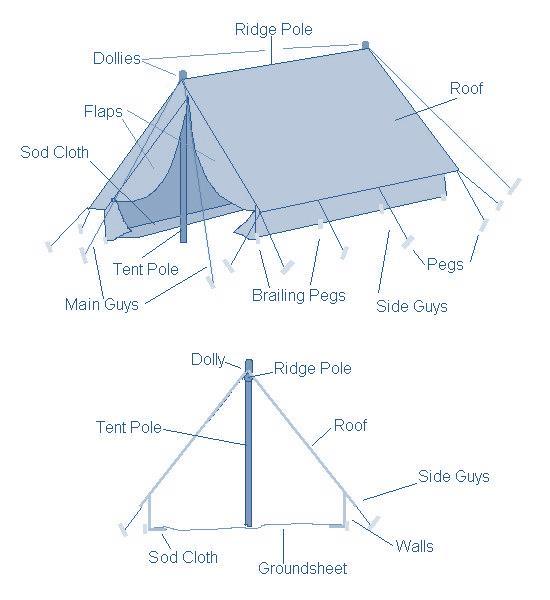
Tent Pitching
Beaver Scouts will benefit from practise of pitching tents in the weeks preceding their camp.Their should be one Scouter per tent with half a Lodge being given the responsibility of pitching the tent. Conn Beaver Scouts, by their third stage of programme should be familiar enough with pitching tent that they can act as the Scouter’s ‘assistant’ when pitching tents.
For Beaver Scouts who are struggling to get involved, simple tasks such as inserting pegs, straightening poles, etc. can give them a confidence boost.They needn’t be perfect pitchers on their first camp- if they try their bestm are respectful of the tents and contribute in some way, they are on their way to be excellent campers as their progress on their Scouting journey.
Things to bear in mind:
Remove shoes and boots before entering a lightweight tent.
Do not use any SPRAYS (ie spray deodorant) inside or near tent, it can destroy the waterproofing.
Keep all the tent parts together at all times.
Spars and Sparks
Pitching (putting up) tents
Clear area of sharp objects like stones, sticks, etc. Look up. See what is overhead. Avoid pitching under large trees. Make sure that the surrounding area is well drained and level ground. Keep away from clay soil (puddles and mud when it rains) if possible.
Striking (taking down) tents
Striking and packing away is a reversal of the pitching process. Sweep out floors to remove any dirt and debris from the tent. Loosen guy lines. Pull out the pegs and wipe the mud off on rag. Remove poles and allow tent to come down. Fold, roll up or stuff tent depending on manufactures directions.
Try not to pack a wet tent. In some instances this is unavoidable. Wet tents that need to be transported should be packed loosely and set up to dry as soon as possible on return to the Scout Den. Damp tent fabric and guy lines are soon affected by mildew and will start to rot.
Mark and report any damage to the Scout Group Quartermaster so that the tent can be repaired before it is required for the camp.
Spars and Sparks
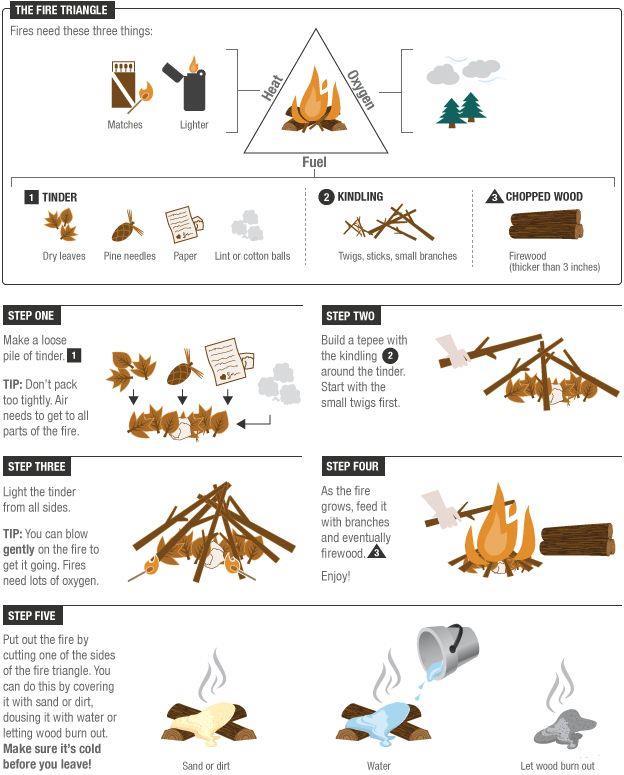
. Fire Lighting- for Scouters
Adding the Magic
. Campfire
The campfire is probably the most loved of camping traditions. It’s a place to create memories and dreams. For Beaver Scouts, a campfire of 20-40 minutes keeps attention and is not so long that Beaver Scouts become restless.
A good campfire should be structured with a formal opening, a loud animated and enthusiastic middle, and a defined closing. A good rule of thumb is to "follow the flame." When the flames are high, the energy should match.As the fire dies down, things get calmer. The campfire might also be a suitable venue for sketches and stories.
The campfire should be hosted by a Scouter with the assistance of Conn Beaver Scouts who has been given the role of helping with the planning. Each Lodge could prepare a song or silly skit for performance at the campfire and could be given ten minutes before the ceremony to practise!
The Campfire Leader should keep the pace rolling along and make sure that all Beaver Scouts are involved and that there is a good mix of song types such as songs with lots of movement, while “repeat after me” songs are always hugely popular.You can practise some songs at the weekly meetings in the lead-up to the camp so that everyone feels involved.
To close out the campfire, choose something appropriately quieter and reflective. Traditionally, the first verse of ‘Taps’ is the most common closing to all Scouting campfires:
Day is done. Gone the sun
From the lake, from the hills, from the sky. All is well.
Safely rest. God is nigh.
Adding the Magic
. Extinguishing the fire, preserving the spirit
After the closing, the Beaver Scouts should head back quietly to the mess tent for supper before lights out and bedtime.The campfire lead should always make sure that the fire is safely extinguished before bedtime.
The next morning after the campfire, you may like to collect the ashes from the pit and put these into small individual tubs to be given out to each Beaver Scout at the Scouts’ Own.The next time the Beaver Scout attends a camp with a campfire, they can add their ashes to the fire and again collect the cooled ashes of this new fire, doing likewise for every campfire they attend.This creates a spiritual link between their Scouting experiences.
Campfire songs
There is a vast array of campfire songs and these have been passed down via oral tradition for generations. For those who are new to scouting, or to widen your knowledge base of campfire songs, try the Scouting Ireland Campfire Songs App which has an impressive collection of songs loved by scouts of all ages. Having over 150 songs available on your smartphone will allow you to learn and practice new songs in the scout den with the Beaver Scouts in preparation for camp.
Check out and download the Scouting Ireland Campfire Songs App from the links below:
Android devices
goo.gl/53w7ob
Apple devices
goo.gl/rwg8dy
Adding the Magic
Scouts’ Own
A Scouts' Own is a short inspirational ceremony usually built around a theme such as friendship or giving thanks.
For Beaver Scouts, keep the ceremony short and simple- no longer than 15 minutes.The ceremony should ideally take place outside of where the tents are pitched- is there a quiet field with a stream or river somewhere on site that would be appropriate. Sit or stand Beaver Scouts in a circular formation. Let them know that this part of camp is intended as a moment of reflection- a time of calmness and thinking after all the hustle and bustle of Scouting activities.
Is there anything the Beaver Scouts are thankful for? Perhaps go around the circle and get each Beaver Scout to list one thing they are thankful for in their lives/ their favourite memory of camp/ an aspect of Scouting they really enjoy.
You may wish to give Conn Beaver Scouts the extra challenge of reading out their favourite memory of camp or simple prayers or reflections.The Scouter team too should have a role to play- perhaps a Scouter could read a short and simple fable and all Scouters contribute to the circular discussion.
You could choose to end the Scouts’ Own with a recital of the Beaver Scout prayer, call or promise, with a short explanation about how you are all living the prayer or promise on camp!
Adding the Magic
Flag Ceremony
Some Colonies choose to have flag ceremony at camp- it may be a tradition within your Scout Group. The flag ceremony is usually conducted at the opening of a camp, as well as every morning at camp. Flag lowering is done at the closing of camp as well as every evening. It is a nice way to ‘book-end’ a two-night camp for your Colony.
At camp, the flag ceremony is best held before breakfast.This is a good way to get everyone up and going before the start of the morning's activities.
A flag on land should not fly at night unless it is fully illuminated.The flag should be lowered at sunset. In the summer, this can be after dinner as part of gathering for the evening's activities.
A recitation of the Beaver Scout Promise or Law can happen at the ceremony. When these are recited, everyone must be at alert, making the Scout Sign, and facing forward.
These ceremonies are normally led by the Camp Chief. They can be assisted in raising or lowering the flag by the Conn Beaver Scouts/ Lodge Leaders on a rota basis.
NB: If you choose to fly the Irish tricolour flag on your camp, don’t forget the expected protocols/ etiquette around this. More information can be found here: goo.gl/aAJRjn
Adding the Magic
Gear Check
Good practice dictates that a gear check precedes the camp, with enough time between the check and the camp for parents to purchase any required items.
Apart from these small ‘forgotten’ items which the parents may need to purchase at the last minute, the Beaver Scout should be familiar with all items in their kit. Camping clothes- and especially boots- should be ‘worn in’ in the weeks leading up to the camp to prevent problems such as blisters from occurring.
The gear check should be completed by a Scouter with the Beaver Scout; the Beaver Scout should be able to sort through their kit and know where each piece of personal gear goes. Ensure that parents are aware that Beaver Scouts should pack their gear with them at home. Beaver Scouts may be upset on camp if they are unable to find their equipment in their rucksacks and this can be prevented by Beaver Scouts being familiar with the contents of their bags.
In order for the Beaver Scout to prepare for this gear check, a gear list (an adaptation of one listed in the previous resource) should be provided.The Beaver Scouts should be able to ‘check off’ each item as they pack at home with their parent or guardian.
Camping with the Stars
. Administration
All camps must adhere to Scouting Ireland’s Camping and Adventures in the Out of Doors Policy (SID 77-11). Refer to the most up-to-date version of this document.
Make sure that all of your paperwork is in order well in advance of the camp. Insist that where there is no consent form or medication form (where applicable), the Beaver Scout will not be able to partake in the camp.
It is good practice to have copies of the Accident/ Incident Report Form printed out for the weekend.
Links to the forms required for camp are listed below:
Activity Consent Form (SIF 11/05)
goo.gl/qG9uGc
Managing Medications Form (SIF 11a/10)
goo.gl/6RxKx8 Accident/Incident Report Form (SIF 10/05) goo.gl/g3Jj4P
Camping with the Stars
Revision
As the Camp Chief, you may like to have your own checklist ready to tick off by the time the week of the camp comes around, for example:
Parents informed of drop-off and collection times
All activities consent forms completed and collated
All relevant medication forms completed and collated
Medicines kept/ stored in agreed manner
Copies of accident report form
List of Beaver Scouts attending
List of parental and emergency contacts
Phone and phone charger
First Aid kits
Group gear sorted and dropped to site in time for camp
Activity equipment packed
Money/ signed cheque for campsite
Spare personal equipment (you may like to have a spare sleeping bag, etc. in case of accidents)
Suncream, insect repellent, etc.
Risk assessment carried out
Outline of Camp programme and times; washing and cooking rotas
With your checklist all ticked off, all that is left is to ensure your Beaver Scout Colony has a camp to remember!
Camping with the Stars
Review
Following the return from your camp, it is time to review with the Scouters and the Beaver Scouts.These reviews should be done through Lodge Discussion and Lod Chews. See separate resource on advice on how to organise these: goo.gl/yvAhsf and goo.gl/Giq3Zk
It is important to take on board reviews of the Beaver Scouts when planning the next adventure or camp.Are there areas that could have been improved or unforeseen circumstances that you might be better equipped for next time? A sitdown with the Scouter team allows a more in-depth discussion and this review should also greatly inform planning for future camps.
Remember, it is not a true camping experience if everything goes exactly to plan! The plan is there to guide your Scouters and Beaver Scouts, but it is not the end of the world if one or two things didn’t happen due to running out of time, etc. Oftentimes, the most memorable parts of camp are the unexpected moments nobody could have planned! As long as everyone got back in one piece, had a fantastic time and- most importantly- are eagerly awaiting their next camp, chalk that down as a success! Know what can be improved, but don’t forget to celebrate the successes too!
Extra support
We hope you have found this resource useful and that it has inspired you to help provide a fantastic camp for your Beaver Scout Colony.
As we know from the Scout Method,‘learning by doing’ is best! If, however, you would like extra support, there are a number of different sources you can turn to.
The Scout Shop- with outlets in Bray, Dublin and Limerick as well as an online store- have many printed publications such as Adventure Skills books, campfire lyrics and handbooks with programme ideas. There are a number of Scouting Ireland-produced printable online resources that may assist you.Visit https://www.scouts.ie/BeaverScout for Beaver Scout-specific programme ideas.You may also find resources from different sections useful too- have a browse around scouts.ie and keep an eye on the national mailings released every Wednesday!
Finally, our National Scout Centres have a wealth of experience helping Packs to have great camping experiences. Do not hesitate contacting them before your camp with queries or requests for advicethat’s what they are there for and they are the experts!
All contacts for Camp Chiefs and other Scouting Ireland staff and volunteers can be found in the ‘Contact Us’ section of scouts.ie.