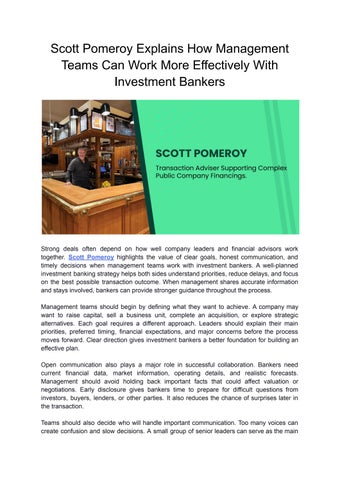
Scott Pomeroy Explains How Management Teams Can Work More Effectively With Investment Bankers
Strong deals often depend on how well company leaders and financial advisors work together. Scott Pomeroy highlights the value of clear goals, honest communication, and timely decisions when management teams work with investment bankers. A well-planned investment banking strategy helps both sides understand priorities, reduce delays, and focus on the best possible transaction outcome. When management shares accurate information and stays involved, bankers can provide stronger guidance throughout the process. Management teams should begin by defining what they want to achieve. A company may want to raise capital, sell a business unit, complete an acquisition, or explore strategic alternatives. Each goal requires a different approach. Leaders should explain their main priorities, preferred timing, financial expectations, and major concerns before the process moves forward. Clear direction gives investment bankers a better foundation for building an effective plan. Open communication also plays a major role in successful collaboration. Bankers need current financial data, market information, operating details, and realistic forecasts. Management should avoid holding back important facts that could affect valuation or negotiations. Early disclosure gives bankers time to prepare for difficult questions from investors, buyers, lenders, or other parties. It also reduces the chance of surprises later in the transaction. Teams should also decide who will handle important communication. Too many voices can create confusion and slow decisions. A small group of senior leaders can serve as the main
contact point for the banking team. These leaders can gather information from finance, legal, operations, and other departments. They can then provide consistent answers while keeping the wider organization informed. Preparation becomes especially important before meetings with potential investors or buyers. Management teams should understand their company’s financial story, growth plans, risks, and competitive strengths. Investment bankers can help prepare presentations and likely questions, but executives must know the business in detail. Clear and confident answers can strengthen credibility and help outside parties understand the opportunity. Leaders should also respect the banker’s knowledge of markets and transaction processes. Investment bankers often see how investors respond to pricing, financial performance, industry trends, and deal structures. Management does not need to accept every recommendation, but it should consider the reasoning behind each suggestion. Productive discussion often leads to better decisions than either side working alone. At the same time, management should remain actively involved. Bankers can guide negotiations and manage the process, but company leaders still own the final business decisions. Regular updates can help executives track interest, review feedback, and adjust plans when conditions change. Fast responses are especially valuable when a transaction enters a competitive stage. A strong management banker relationship depends on trust, preparation, and shared responsibility. Management teams that communicate clearly, provide reliable information, and stay engaged make it easier for bankers to represent the company effectively. When both sides understand their roles and work toward the same goals, the transaction process becomes more organized, efficient, and focused on long-term business value.