Wildlife
Number 115 | March 2025
Number 115 | March 2025
Haring

Each year, spring sees the reawakening of nature. With it comes the ever more pressing need to preserve and restore Scotland’s threatened wildlife and fragile ecosystems.
To reverse nature’s decline, we need to be ambitious in the scope of our conservation efforts: ecological restoration at a landscape scale is key. That’s why I’m thrilled to share the news of a very special place coming into the Trust’s ownership this March.
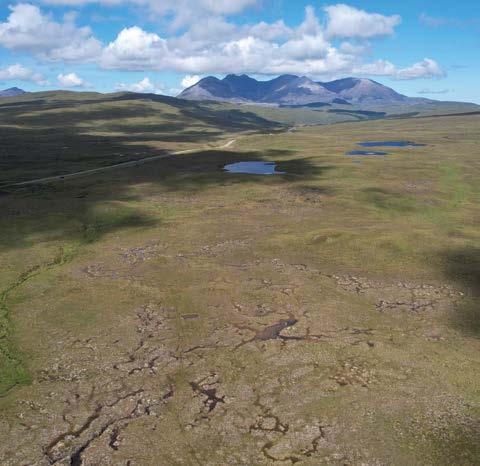
At over 7,500 hectares, Inverbroom, eight miles south of Ullapool, will become our largest ever reserve. Some of you may know

Inverbroom will join a portfolio of more than 100 wildlife reserves across Scotland where we lead on action for wildlife.
this site, which begins at the head of Loch Broom and extends down the picturesque Strath More valley towards the Corrieshalloch Gorge and has two Munros (A’ Chailleach and Sgùrr Breac) along the southeastern edge.
Having well-managed wildlife reserves that directly contribute to nature’s recovery
is a key goal of our Strategy 2030 and the acquisition of Inverbroom will allow us to take the next step towards achieving this. Wildlife reserves have been at the heart of our work since we were established in 1964. Inverbroom joins a portfolio of more than 100 other reserves across Scotland (such as Carstramon Wood, on page 30) where we lead on action for wildlife. You can read more about the principles we apply to this important work in the article on page 16, which also sets out how our reserves are a fundamental part of our 60-year legacy of building healthy, resilient ecosystems.
Over the past year, we have been privileged to have the opportunity to celebrate this legacy and I am hopeful that, by the time our 60th anniversary time capsule is opened on the Trust’s centenary in 40 years’ time, Scotland’s natural world will have recovered significantly. As we look towards building this future, Inverbroom represents a wonderful example of the potential that lies ahead. We are incredibly grateful to the generous donor that has enabled us to take this important step towards ecological restoration at scale. You can read more about Inverbroom on page 6.
I find it heartening to witness the growing desire to take action for nature. It highlights that we can all play a part in restoring our natural world and preserving it for future generations.
As we come close to completing our 61st year of championing the cause of wildlife, and delivering real change on the ground, there is much to look forward to. By cherishing the lessons and achievements of our first six decades, we will build toward the resilient natural world of Scotland’s future. Thank you for coming on this journey with us. ■
Big picture
Barrel jellyfish (and passenger), by Ross McLaren News
News round-up from the Trust and the world of conservation Pioneers
Bruce Wilson on Scotland’s ‘30x30’ commitment to biodiversity Viewpoint
Keri Wallace on her love of solo runs above the snowline
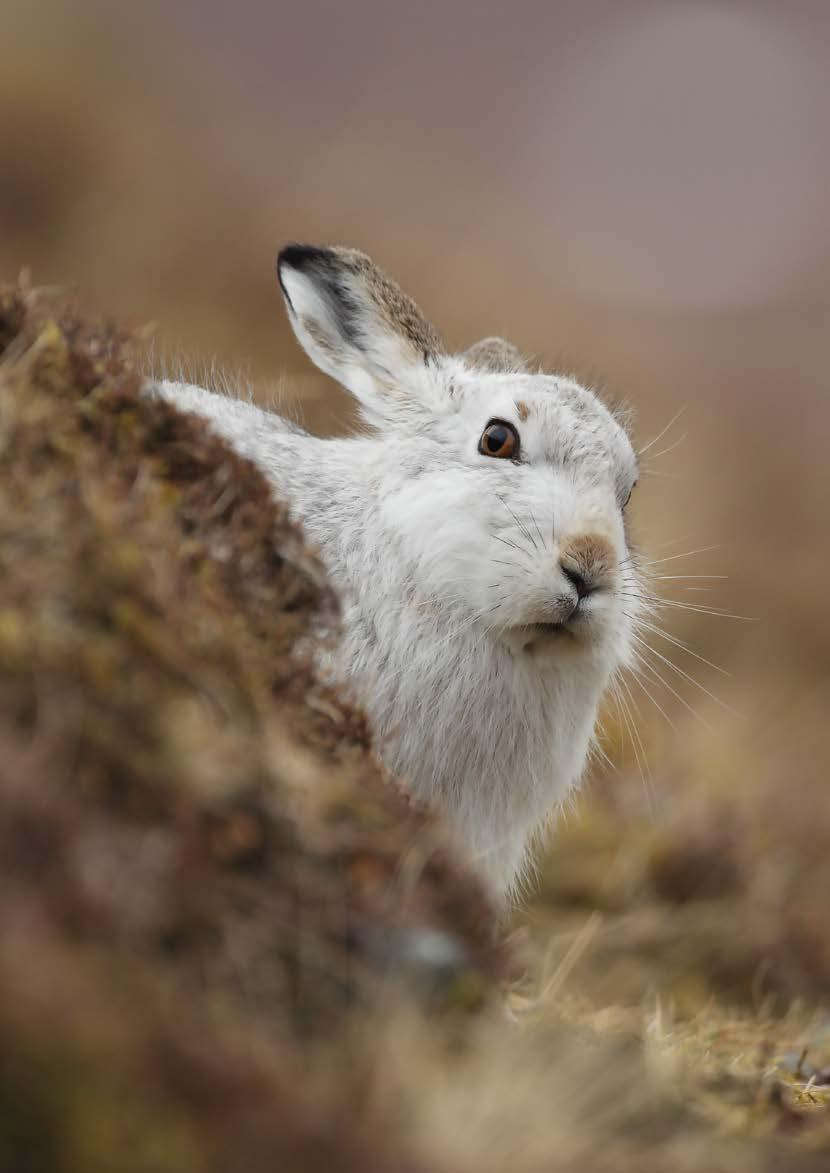
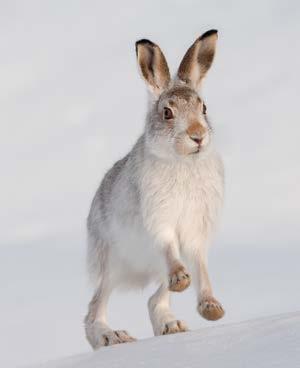
Front cover: Mountain hare in winter coat © Luke Massey/2020VISION
Seasons
Natural spectacles and how to help wildlife this spring
05 14 28 30 32 16 22 06 26 34
Species spotlight
Natterjack toad – Scotland’s rarest (and loudest) amphibian
Reserve portrait
Carstramon Wood –a timeless woodland
Watch out for Things to enjoy in the coming months PLUS competition
Scottish Wildlife is published by the Scottish Wildlife Trust, a Scottish registered charity (no. SC005792) and company limited by guarantee (no. SC040247). Registered office: Harbourside House, 110 Commercial Street, Edinburgh EH6 6NF. Tel: 0131 312 7765.
Patron: King Charles III. Chair: Kenny Taylor. Vice-Chairs: Ian Jardine, Bill Lambert, Stephen Metcalfe. Chief Executive: Jo Pike.
The Scottish Wildlife Trust accepts no liability for omissions or incorrect data in advertisements and letters. Views expressed in Scottish Wildlife are not necessarily those of the Scottish Wildlife Trust. ISSN: 0143 1234.

The Scottish Wildlife Trust is affiliated to The Wildlife Trusts, a UK-wide network of 46 Trusts with more than 2,000 wildlife reserves. 22
Nature first
Rich Rowe examines the Trust’s priority actions for its Scotlandwide network of reserves – and why delivering for nature is more important than ever Haring around
Lindsay Quayle explores the challenging lives of Scotland’s hares – animals of open ground that rely on excellent eyesight, camouflage and sheer speed to survive
Scottish Wildlife is published three times a year –March, July and November – and is free to members of the Scottish Wildlife Trust.
Managing Editor: Pete Haskell – editor@scottishwildlifetrust.org.uk
Contributing Editor: Rich Rowe
Design: Connect – connectcommunications.co.uk
Advertising: Elliot Whitehead – 0131 561 0021
Printing: InkMark – inkmarkltd.com

Ross McLaren
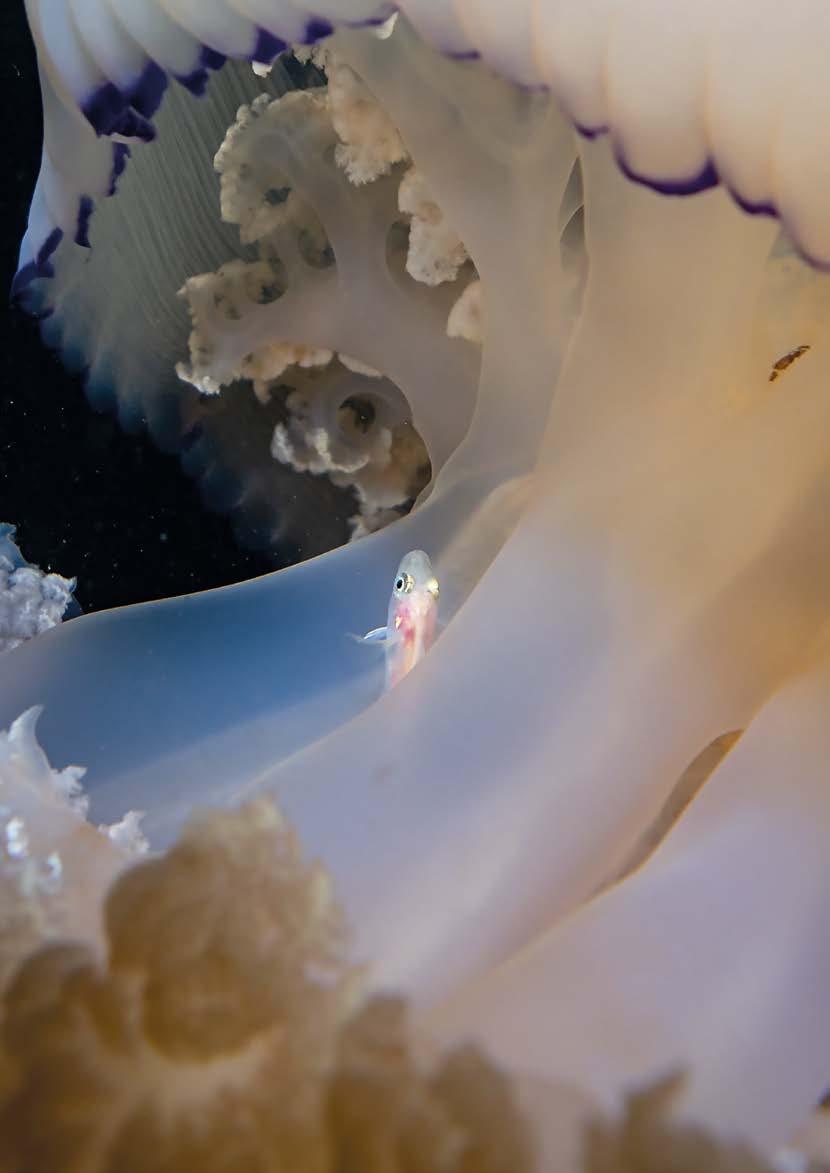
I got into scuba diving in Scotland by accident. I’d planned to learn to dive here before heading to Australia the following summer. Unfortunately, the trip never happened, but instead it opened another side of our incredible country that I had no idea existed.
Scotland is famed for its epic mountains and rugged scenery but what can be found beneath the often dreich waterline is just as awe-inspiring.
Quickly, one expensive hobby spawned another: photography. My fascination with underwater images began
as an attempt to show friends and family what lies beneath the waves and really just spiralled from there.
The biggest draw to Scottish diving is you’re never sure what you’ll find. I love taking photos of jellyfish from a distance, but when I spotted this one and its ‘hitch hiker’, I couldn’t resist getting a little closer.
Ross McLaren
Camera: Olympus EM1 MKII; Lens: Olympus 30mm f/3.5 Macro; Shutter Speed: 1/160sec; Aperture: f/7.1; ISO: 200
rsmclarenphotography.com
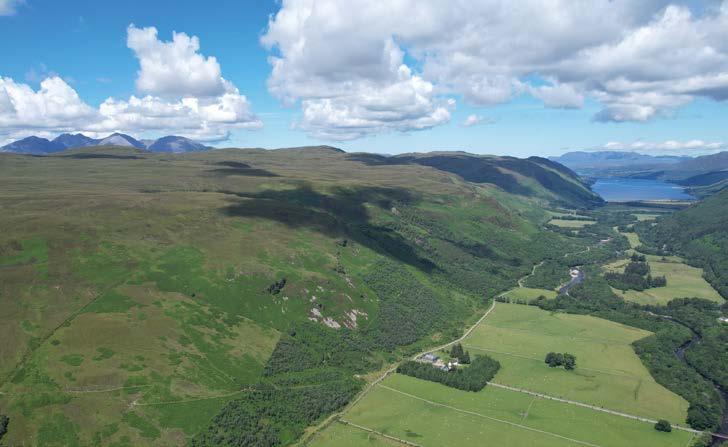
AT the beginning of March, the Trust took ownership of its largest ever site with the purchase of Inverbroom Estate, near Ullapool, in the North West Highlands.
Situated in a landscape of epic scale, it is bordered by the rivers Broom and Cuileig to the east and two Munros (Scottish hills over 3,000ft in height) – Sgùrr Breach and A’ Chailleach – to the south. The most westerly summit of the Fannichs, the latter has fine views over the Fisherfield Forest and to the fabled mountain of An Teallach (The Forge) to the west.
There is huge potential for nature restoration on the site across a variety of vitally important habitats. Through the natural regeneration of woodlands, we can create, expand and improve river woodland areas, delivering on our Riverwoods initiative and benefitting species such as otters, ospreys and Atlantic salmon.
As Inverbroom sits in Scotland’s temperate rainforest zone, we also have an opportunity
to help restore this rare habitat, home to red squirrels, wood warblers and many other species. And by restoring Inverbroom’s peatlands – which cover approximately 70% of the estate – we can play an even greater role in Scotland’s fight against climate change. Together, these actions will make an important contribution to Scotland’s ambitions of protecting 30% of its land and sea for nature by 2030 (see page 26).
To help achieve these long-term goals, our first priority is to develop a clear picture of the habitats and species within this landscape. Once we have established the existing ecological condition, we can develop a plan to conserve, regenerate and restore ecosystems at scale.
As with the Trust’s wider work in the North West, the acquisition of Inverbroom is an opportunity to demonstrate that managing a landscape for nature can go hand in hand with managing it for people. We are ensuring
engagement with local communities, businesses and other stakeholders, and will support sustainable, nature-friendly farming practices. We will also give consideration to how deer are being managed to ensure that native woodlands can expand while providing healthy, locally sourced food. And we will continue to provide affordable housing on site, as well as new opportunities for employment, training and volunteering.
The purchase of Inverbroom has been made possible thanks to the generosity of an anonymous private donor, with funding provided specifically for this acquisition.
We look forward to sharing updates on this incredibly exciting new venture as we get to know the site better. To keep you up to date with the story as it unfolds, we’ll be posting a series of blog articles on our website over the coming weeks and months. Sign up to our mailing list to hear news first: scottishwildlifetrust.org.uk/subscribe
LAST summer, we ran our inaugural Words of the Wild nature writing competition, inviting people to tell stories of Scotland’s wildlife and wild places in up to 1,000 words.
With more than 500 entries, including poetry, prose, songs and letters in English, Scots and Gaelic, we were blown away by the response. Our judging panel had the difficult task of selecting six finalists who were invited to the Trust’s 60th anniversary celebration at the Scottish Parliament in November.
On what was a hugely successful evening, we heard from our Chief Executive, Jo Pike; Presiding Officer for the Scottish Parliament, Alison Johnstone MSP; and Acting Minister for Climate Action, Dr Alasdair Allan MSP. Finally, our Chair, Dr Kenny Taylor, who was one of the competition judges, announced the Adult and Junior winners.
Hannah Murphy from Aberdeen was the winner of the Adult category with Into the Stillness, an account of a retired man’s journey to realise his dream of photographing a kingfisher.
The two runners up were Marcas Mac an Tuairneir with his Gaelic song Òran an Fhèidh (Deersong) and Anne V McClure, whose story A Walk in the Wild celebrated her hometown of Cumbernauld.
In the Junior category, the winner was Alexandra Yates, 16, from Devon. Alexandra’s story, Motherhood, tells of a personal experience with a pine marten encountered while exploring a Scottish forest. The runners up were Olivia Phillips, 10, with Into the Wild and 15-year-old Eileen Page with her entry, Wild with Grief Hannah and Alexandra each received a selection of prizes generously donated by
SINCE 2019, the Great Scottish Squirrel Survey has inspired thousands of people to get outside and support squirrel conservation efforts by reporting sightings of both red and grey squirrels.
The 2024 survey was the second most successful yet, with 1,802 participants reporting more than 2,500 squirrel sightings in just a single week last autumn. Diving deeper into the results revealed some fascinating insights into the work of Saving Scotland’s Red Squirrels, a partnership project led by the Trust and supported by the Scottish Government’s Nature Restoration Fund, managed by NatureScot.
There were numerous red sightings but no reports of grey squirrels in Aberdeen, an area in which the project is actively working to eradicate the last few greys.
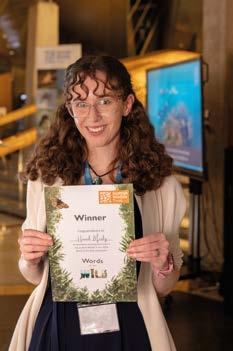
Viking Optical, NHBS and The Mainstreet Trading Company.
After the great success of the competition, we’re already planning another for this year, so keep an eye on our channels for more information in the coming weeks and months.
To enjoy all of the shortlisted entries, visit bit.ly/2024 shortlist or scan the QR code.
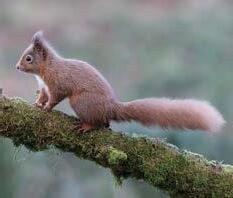
The survey results also alerted project staff to small-scale incursions by greys in northern Perthshire, aiding conservation efforts to protect the red-only population in the Highlands.
For more, and to report sightings all year round, visit scottishsquirrels.org.uk/ squirrel-sightings
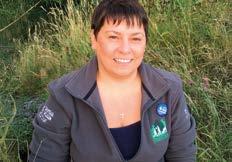
A GROUNDBREAKING conservation initiative is set to transform Cumbernauld’s urban greenspaces, restore vital habitats for wildlife and engage the local community in environmental stewardship.
The Nurturing Natural Connections partnership project will deliver large-scale urban wildlife restoration, covering more than 100ha of native woodland. Our ambitious plans include planting 2,125 trees, creating and enhancing 20ha of species-rich grassland, reviving 6.2kms of waterways, and tackling invasive nonnative species and garden escapees.
These efforts will provide improved habitats and food sources for an array of native species, including pine martens, red squirrels, common blue butterflies and native bluebells, among many others. More than conservation work alone, the project seeks to foster a lasting connection between residents and their local green spaces.
By providing hands-on opportunities in environmental management and embedding citizen science initiatives, Nurturing Natural Connections will empower local communities to monitor and sustain wildlife recovery efforts. The initiative not only restores nature but also strengthens Cumbernauld’s collective commitment to protecting and enhancing its biodiversity for future generations.
After working alongside the Cumbernauld Living Landscape initiative since it was first launched in 2013, I have seen at first-hand how collective action is making a tangible difference throughout the town. By coming together in this way, the people of Cumbernauld are securing a brighter future for their town’s wildlife, green spaces and wider community.
To learn more about this vital work in Cumbernauld, and how a similar approach could be adopted elsewhere, please visit scottishwildlifetrust.org.uk/ NNC or scan the QR code.
Tracy Lambert, Cumbernauld Living Landscape Project Manager
IN October, our Ayrshire Community Engagement Officer, Harry Richards, helped volunteers plant 100 trees at our Lawthorn Wood reserve in Irvine. Currently, the woodland is dominated by ash trees, most of which are falling victim to ash dieback. The spaces opening up in the canopy as trees die provide excellent conditions for a broader mix of new trees, making the woodland more resilient to future diseases and climate change.
THE Trust is donating a 20 x 20m section of our Ben Mor Coigach reserve to local charity, Coigach Heritage, to support the creation of an exciting new art installation. Designed by Will Maclean RSA and Marian Leven RSA, Lorg na Còigich (Find the Five) will commemorate the land struggles of the 1850s when the community, led by local women, successfully repelled attempts at eviction during the Clearances.
IN spring and summer, the wildflower meadow at the Trust’s Keltneyburn reserve in Perthshire bursts into life, attracting a wide range of moths and butterflies. However, the habitat is under threat from blackthorn bushes which have been encroaching further onto the meadow. This past autumn, we hired a contractor to remove the blackthorn, providing space for this pollinator-friendly habitat to flourish once more. Supported by Perth and Kinross Council Nature Restoration Fund.
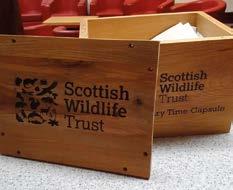
AS part of our 60th anniversary celebrations, we created a special time capsule containing items that bring together our past, present and ambitions for the future. They include a previous edition of this magazine, images of Scotland’s most iconic wildlife and mementos of some of our biggest projects. The capsule is currently on display at Loch of the Lowes and will remain unopened until the Trust’s centenary anniversary in 2064.
ENSURING the health of our seas for the benefit of wildlife and people is a key element of the Trust’s vision and, in recent years, we’ve worked towards that goal with our Oceans of Value project and the wider work of our Living Seas programme.
Such work has brought many positives such as a strong relationship with the fishing industry in Orkney, as captured in our Oceans of Value film, and our now-completed network of 13 snorkel trails across Scotland.
Following in those footsteps, we’re delighted to launch our latest marine project, Sea the Connection. Understanding that many people are passionate about protecting Scotland’s marine environment but don’t always know where to start, the project will empower coastal communities to speak up on issues such as marine planning and aquaculture through a series of workshops, specially designed programmes and a handy online toolkit.
We’ll be delivering this work for and in partnership with up to 14 communities, representing a diverse range of audiences.
Running until October 2027, Sea the Connection aims to increase ‘ocean literacy’ throughout Scotland, enabling people to
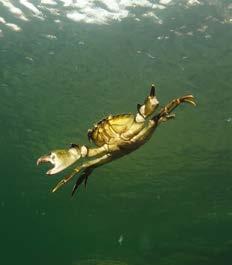
participate in discussions about the way the marine environment is managed. The project has been generously funded by the Esmée Fairbairn Foundation.
Keep an eye on our channels in the coming months for opportunities to get involved as the project develops.
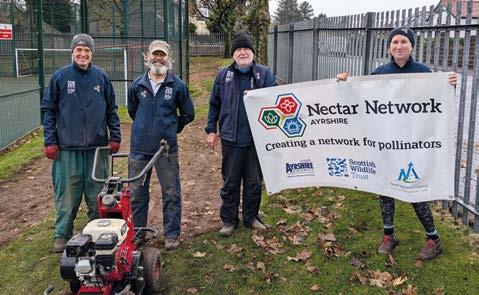
THE Ayrshire Nectar Network team has been working with West Kilbride Primary School to create a new wildflower meadow in the school grounds.
With the support of Trust volunteers, pupils from P3 and P4 have been sowing seeds and planting bulbs for species such as Scottish bluebell, red clover and white campion.
Once the flowers bloom in spring, they will provide a vital habitat and food source for pollinators such as emerging queen
bumblebees, night flying moths and solitary bees.
The school’s wildflower meadow is the latest link in a series of pollinator highways that the Nectar Network is establishing across Ayrshire. Led by the Trust, the current phase of work is supported by North Ayrshire and South Ayrshire Councils.
See a map of all the sites on the Ayrshire Nectar Network by visiting scottishwildlifetrust.org.uk/nectar-network
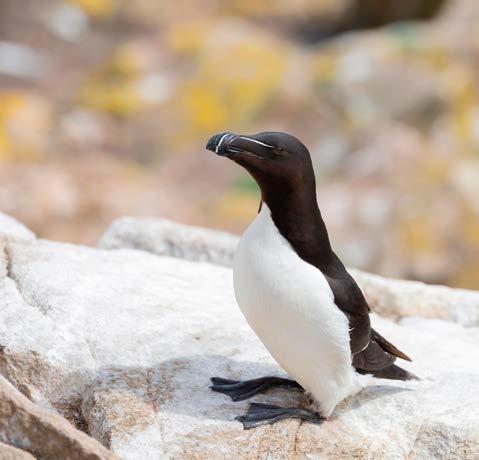
AFTER a stormy start to the year, staff and volunteers enjoyed a successful season on Handa in 2024. Even with high winds causing ferry disruption at times, the reserve welcomed 8,000 visitors throughout the summer, bringing us almost back to pre-Covid numbers.
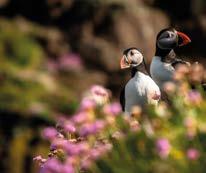
The focus of the year’s seabird monitoring was razorbills, with the team counting more than 11,000 individuals – a record for the island. They also undertook vital tasks such as footpath maintenance and control of the rat population which, if left unchecked, could have a devastating impact on Handa’s seabirds.
Kirsty Cox, who returned for a second season of volunteering in 2024, commented: “Handa is a beautiful island with amazing bird and marine life and the opportunity to learn practical conservation skills as well as general life skills. It was such a good placement that I have done it twice!”
Recruitment for a new Handa Island Ranger and Volunteer Assistant Rangers has been ongoing throughout the winter, with the new team set to start on-site in March.
ROBUST and openly accessible data is vital in making informed decisions that will help us tackle the climate and nature emergencies. The Trust is therefore proud to have launched an Open Data Hub, where anyone can freely view and download our publicly available spatial datasets and make use of our various applications.
This one-stop shop contains a wealth of information, such as maps of our wildlife reserves and the locations of specific conservation action. This will help ensure other organisations include our data in their decision making and allow easier sharing of knowledge to support more work for nature across Scotland.
More information about the Open Data Hub is available at scottish-wildlife-trust-swt.opendata.arcgis.com
SUPPORT from members is vital in enabling everything that we do to protect Scotland’s wildlife for the future.
After six years of frozen subscription rates despite ever increasing overheads, we now need to make some small changes to remain sustainable. A motion to increase membership rates by a minimal amount was therefore approved at last year’s AGM.
We recognise that this might not be an option for all our supporters and we want our membership programme to remain as accessible as possible. To better reflect this, we’ve expanded our Concession category to include full-time students, those of statutory retirement age, unwaged and those who self-identify as low-waged.
Starting 1 April 2025, updated minimum subscription rates will take effect, as outlined in the table here. There will be no changes for members already contributing above these minimum rates, nor will life membership prices be affected.
If these updates apply to you, we’ll be in touch in the coming months. Thank you for your continued support in protecting Scotland’s wildlife.
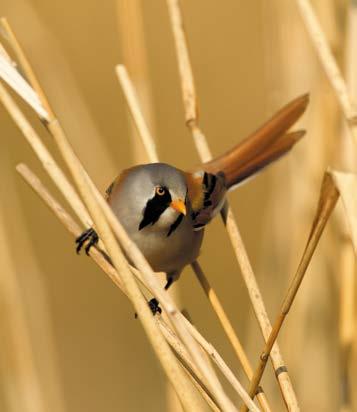
FOR the first time in 15 years, bearded reedlings have been recorded at Montrose Basin. If the name doesn’t ring a bell, it may be that you know them better as bearded tits. The term ‘reedling’ is becoming increasingly common as, despite superficial similarities with long-tailed tits, these reedbed specialists are the only species in the genus Panurus. Their full scientific name is Panurus biarmicus
Two individuals (one male and one female) have been spotted in the Lurgies and Millburn reedbed areas of the reserve. The latter has been subject to restoration work by the Trust and Angus Council in recent years. This work
was only concluded last spring, so to see bearded reedlings return so soon is a hugely positive sign.
Reedbeds are a UK Priority Habitat due to their increasing rarity and are home to other secretive species such as reed buntings and water rails.
The team at Montrose Basin, who are supported by players of People’s Postcode Lottery, will be keeping a close eye on the habitat in the coming months to see what else might show up.
Montrose Basin Visitor Centre is open seven days a week, from 10:30am-5pm.
Plan your trip by visiting bit.ly/MontroseBasin

THE Trust was well represented at the 2024 Nature of Scotland Awards, with three shortlisted nominations.
While we may not have taken home any trophies at the awards
ceremony in November, just seeing the range of work people are doing for Scotland’s wildlife was truly an inspiration.
A huge congratulations to all the winners and other finalists.
WE are seeking a new trustee to help reinforce our governing body’s knowledge, expertise and diversity. This year we especially welcome applications from individuals with governance or legal experience, as well as anyone who can help the Trust further strengthen equality, diversity and inclusion across all of our activities.
We invite and encourage applicants from across Scotland and from all backgrounds. We are open, welcoming and committed to being a diverse, equal and inclusive organisation.
An elected trustee will take office for an initial term of three years beginning from this year’s Annual General Meeting, which will take place on Saturday 20 September (see full details in the July issue of Scottish Wildlife). For more information, including questions about the work of trustees, please contact Martin Cullen, Company Secretary, by email at mcullen@ scottishwildlifetrust.org.uk
The closing date for this year’s trustee nominations is 26 May. Please note that this is an unpaid position.
IN our previous issue we reported that, with the support of the Common Grazings Committee and Grazing shareholders, we had secured funding from Scottish Government’s Peatland ACTION Fund to restore 136ha of damaged peatland across An t-Sàil and Dùbhrach Choire drinking water catchment on our Ben Mor Coigach reserve. Between October and February, contractors Albamontane have been out in all weathers reprofiling almost 125,000m
of blanket bog, installing 2,931 dams and 189 bunds to reduce the loss of water and stop peat erosion on site.
The restoration works have recreated bog pools which will provide homes for dragonflies, damselflies and other peatland specialists including peat-forming sphagnum mosses.
But it’s not only biodiversity that benefits. The work will also reduce the amount of organic carbon being washed into the water supply and halt the loss of carbon into the
atmosphere from exposed peat, helping in the fight against climate change.
Later this spring, we will continue to work with Peatland ACTION to pilot a small number of willow dams on site. Locally sourced native willow will be twisted and wrapped into tight bundles to help slow the flow of water and pin the waterlogged peat in place. In time, the willow will sprout and provide a source of scrub vegetation, a natural part of upland habitat mosaics in the UK.

THE Royal Society of Wildlife Trusts, in partnership with Northumberland Wildlife Trust, has purchased part of the Rothbury Estate in Northern England and is hoping to acquire the rest of the estate in the future.
The 3,800ha estate is the largest contiguous area of land to come up for sale in England in the past 30 years and the charities hope it can be used as a positive example of landscape-scale conservation work.
Furthermore, purchasing the whole estate would prevent it from being split among multiple landowners which would make public access more difficult.
Home to wildlife such as mountain bumblebees, curlews and red squirrels, the estate’s woodlands and rivers attract visitors from throughout Tyneside, Northumberland and the wider region.
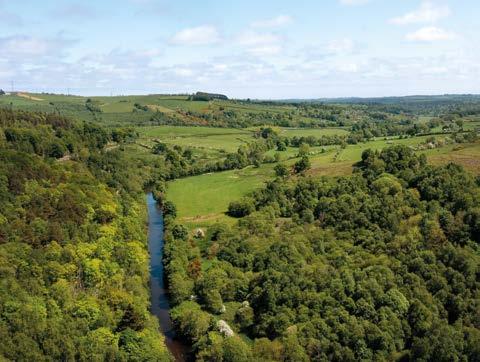
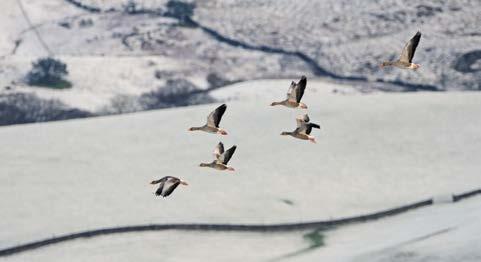
A FIELD near Perth has seen bumblebee numbers increase more than 100-fold, thanks to a project run by the Bumblebee Conservation Trust.
In 2021, a survey of Denmarkfield, which until recently was a monoculture barley field, counted just 35 bumblebees. Since then, the Bumblebee Conservation Trust has rewilded the site and in 2023 surveyors recorded 84 different plant species and 4,056 bumblebees.
The overall number of bee species has also doubled from five to 10, while butterflies and other invertebrates have also seen significant increases.
NATURESCOT has begun processes which could lead to the creation of a new National Park in Galloway, East Ayrshire and South Ayrshire. A public consultation ran from November-February seeking opinions on the proposed park itself and details such as boundaries, governance and potential names. NatureScot will now compile its findings and submit a report to the Scottish Government, which will decide whether to proceed to the next stage. This would involve discussion in the Scottish Parliament and more opportunities for the public to voice their opinion.
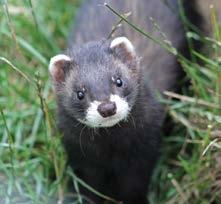
Have you seen a polecat
VINCENT Wildlife Trust (VWT) is halfway through its fourth National Polecat Survey, appealing for public sightings of polecats with the aim of updating current knowledge of their distribution.
Polecats are slowly recovering after a long history of persecution. In Scotland, populations were confined to northerly areas and they remain endangered today. More than 800 sightings have been verified by the survey so far, with only 35 from Scotland.
Sightings of a polecat-type animal can be reported on the VWT website at vwt.org.uk or via the Mammal Mapper App. VWT is also appealing for hair and whisker samples from dead polecats for research.
We explore some of the natural spectacles and animal behaviours that can be enjoyed this spring and how we can all help wildlife in the coming months
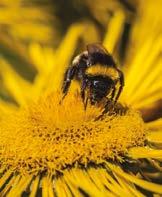
Spring can be a tricky time for bees, butterflies, moths and hoverflies as they emerge from hibernation in search of nectar (for energy) and pollen (for protein). Such insects play a vital role in helping plants to set seed, flower and reproduce. Without one, there cannot be the other.
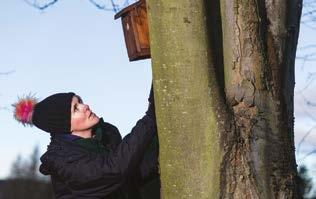
With many pollinators suffering a sharp decline in numbers, we can all help by ensuring that our gardens (or window boxes) are in bloom from March all the way until October, when many pollinators are preparing to hibernate.
One trick is to choose plants with single flowers rather than double blooms, which can
be harder for pollinators to access and may not always contain any nectar or pollen. It’s also good to have a mix of plants that ensure availability of nectar and pollen for months on end.
Flowering almost constantly from February through to the end of summer, perennial wallflowers (try bowles’s mauve and apricot delight) are among the very best pollinator plants available. Lower to the ground, primrose, crocus and bugle are ideal for long-tongued insects such as bees and butterflies. Before they find a nest site, some bumblebee queens are known to sleep in crocus flowers overnight.
Blooming even earlier, hellebores are an important source of nectar for bumblebees and other pollinators. And think vertical space as well as ground cover, with a host of pollinator-friendly climbers available, including some species of clematis that flower in winter.
Other early flowering favourites such as daffodils look fantastic but offer little for pollinators; it’s good to supplement them with more pollinator-friendly bulbs, such as snowdrops, grape hyacinth and alliums.
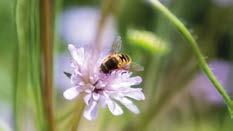
Finally, consider how some pollinators feed. Unlike bees and butterflies that have long ‘tongues’ for accessing and sucking up nectar, hoverflies have simple, fly-like mouthparts – like a sponge on a stick – that they use to dab when feeding.
These often-overlooked pollinators seek out flat, open flowers – think coreopsis, anemones, fennel and knapweeds – that offer plate-like loads of pollen and nectar to feed from.
Providing a banquet for hoverflies also comes with fringe benefits: the larvae that emerge from eggs laid on aphid-infested plants in spring quickly go to work on eating those and many other garden pests.
To find out more about planting for pollinators, scan the QR code or visit scottishwildlife trust.org.uk/ activity/how-toattract-bumblebees
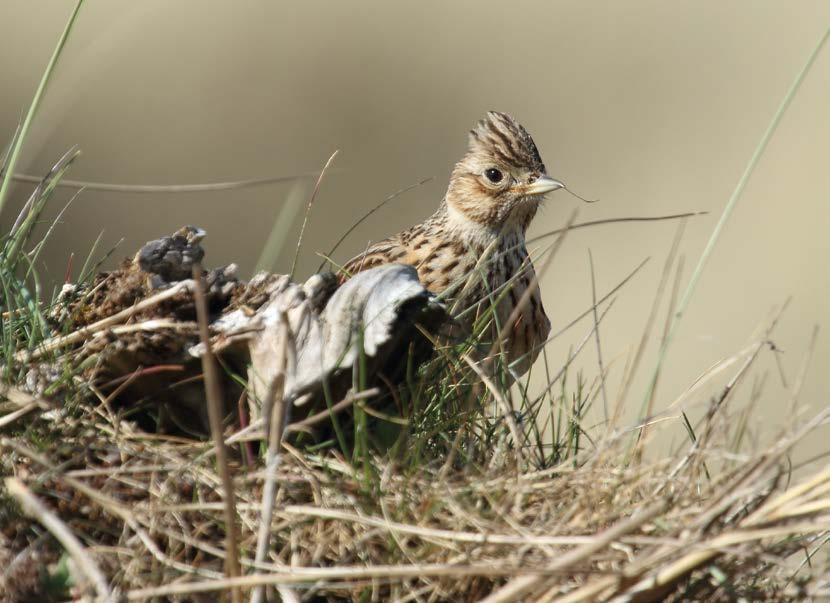
A feast for the eyes and ears, there is perhaps nothing that says spring more than the glorious song-flight of a displaying skylark – an evocative sound that has long been celebrated in literature, poetry, art and music.
A streaky brown bird – larger than a sparrow but smaller than a starling – with a stubby crest that can be raised when the bird is excited or alarmed, it is the male that sings with such gusto in spring and into summer.
Rising almost vertically above farmland, grassland and moorland, the male birds hover and sing from great heights before parachuting back down into cover. These warbling song-flights can last for up to an hour. But it’s not all high-altitude singing; skylarks will also sing from fence posts and other prominent perches.
Unsurprisingly, the vocal gymnastics are designed in large part to attract females, with the birds pairing up and then nesting in cover on the ground. The nests themselves are little more than hollows in the ground lined with leaves and plant stems.
Typically, they lay a clutch of three to five eggs which then hatch after around 10 days. The emerging chicks are able to fly at less than three weeks old. With such a speedy turnaround, skylarks can have up to four broods in a single breeding season.
Keep watch · Scottish primrose
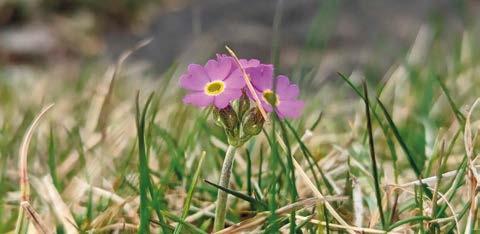
Late spring is the time when a special Scottish flower makes its reappearance, although you’ll have to be in very specific parts of the country to see it.
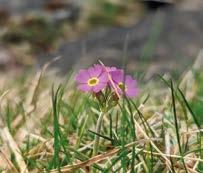
Found on exposed coastal promontories, the Scottish primrose is endemic to a small area around Caithness, Sutherland and parts of Orkney. It favours moist but well-drained and grazed grassland, often right on the edge of storm-battered cliffs where strong winds help suppress taller competitors.
It’s a real Goldilocks species: the amount of grazing of surrounding heath and grassland has to be just so – too much or too little can be equally damaging.
Losses of these plants have been attributed to the construction of fences that exclude livestock, tree planting, house building and other developments.
Growing to just 4cm in height, this tiny plant features clusters of dark purple flowers with yellow centres that can be seen from May until June. Each flower has five heart-shaped petals, while the base of the plant has deeply veined, oval leaves.
The county flower of Caithness, the Scottish primrose was also originally the emblem of the Scottish Wildlife Trust and still features in the Trust’s logo today.
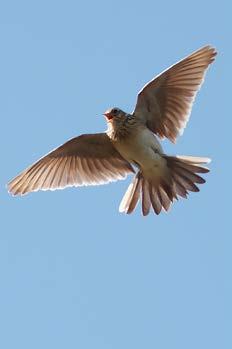
Although it has experienced a sharp fall in numbers in recent years, often due to agricultural intensification, the skylark remains quite a common bird – and always a treat to see and hear.
Sites to visit
Good for skylarks:
A Linn Dean
B Feoch Meadows
C Shewalton Wood
D Grey Hill Grasslands
Good for Scottish primrose:
E Hill of White Hamars
Rich Rowe examines the Trust’s priority actions for its Scotland-wide network of reserves – and why delivering for nature at each has become even more important than ever
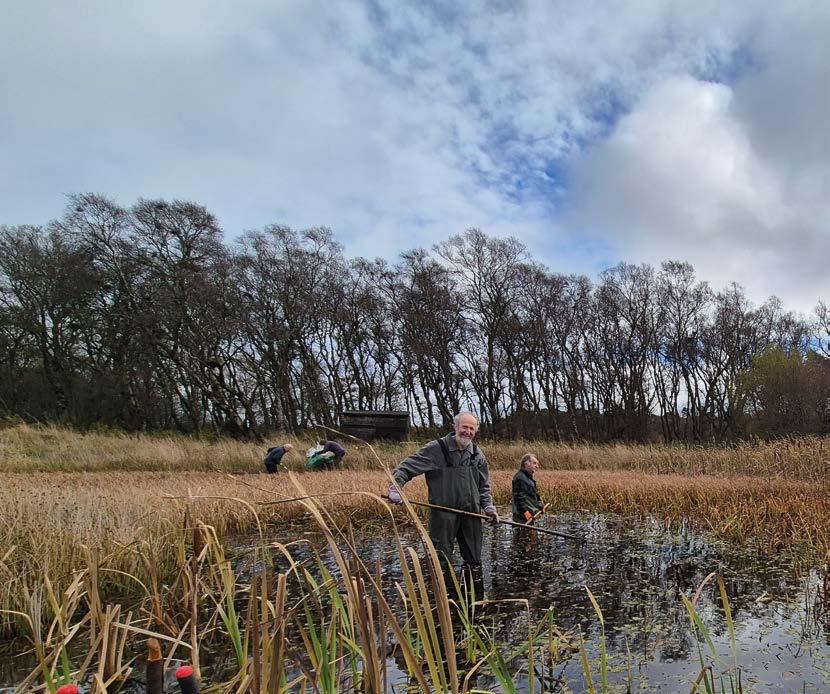
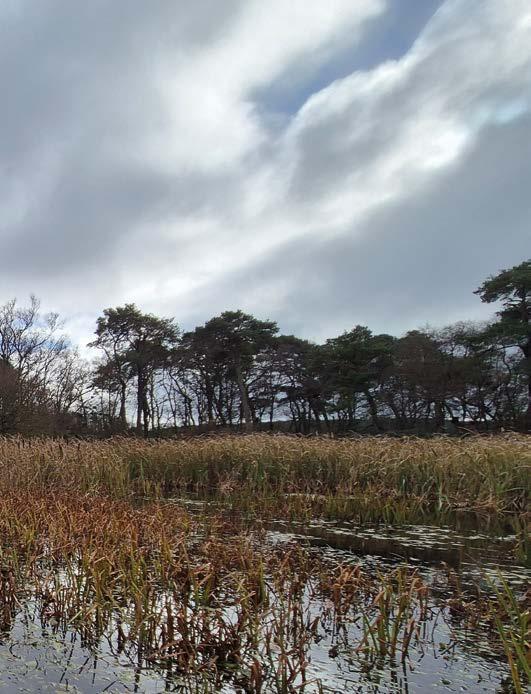
With 112 wildlife reserves currently under its management, stretching from the Solway Coast to Orkney, the Trust cares for more sites than any other environmental charity in Scotland. It’s a portfolio that includes some of the most treasured sites in the country – Handa Island, Loch of the Lowes and Montrose Basin, to name a few. It’s a holding that the Trust regularly assesses to ensure that it’s delivering maximum impact for wildlife at a time of immense pressure on both the natural world and environmental organisations.
Over its 60-year history, the Trust has acquired sites for many different reasons, from being gifted parcels of land by members of the public to purchasing sites for the protection of rare and valuable habitats such as lowland raised bog. Today, a total of 67 reserves are owned outright, 18 are part-owned and the remainder are managed under agreement with other landowners.
Guiding the Trust’s ownership and management of its landholding is a set of principles that outline the why, what and how of its work at these sites. While no two reserves are the same – with each having its own unique diversity of species as well as different opportunities for wildlife restoration and public engagement – the primary focus remains constant: to protect and enhance nature.
“It’s about where we can make the biggest difference for biodiversity,” explains Sarah Robinson, the Trust’s Director of Conservation. “Setting out clear principles for our reserves helps to direct resources and support what can be difficult decisions about how and where we focus our work.”
Fundamentally, the Trust believes there needs to be more space for nature. But while any patch of land has the potential to support wildlife, it’s important to view sites such as the Trust’s reserves not in isolation, but as pieces within a landscape-sized jigsaw.
Underpinning the Trust’s approach to landscape-scale restoration are what are referred to as the ‘Lawton Principles’. In 2010, following an examination of wildlife sites in England, Professor Sir John Lawton and team made four recommendations that would help to boost wildlife across the country in the long term. Firstly, sites needed to be bigger. Secondly, the quality of habitat needed to be improved. Thirdly, there needed to be more sites being managed for nature. Finally, there needed to be better connectivity between sites. These four things – bigger, better, more and joined – are now widely accepted as the underlying principles for creating an ecological network and are just as applicable in Scotland as they are south of the border.
“It’s only when looking at our reserves in the context of the wider landscape they exist in that we can understand the full picture,” explains Sarah. “To address
habitat fragmentation and increase the resilience of each of our sites, they need to be part of a wider network of land being managed for nature.”
Today, the Trust continues to explore how it can better connect reserves, where they can be expanded and where there might be opportunities to acquire new sites. At the beginning of March, the Trust announced the exciting acquisition of a major new landholding in the North West Highlands that will add significantly to its ability to make a difference for nature at a landscape scale (see news item on page six for more).
Elsewhere, at one reserve in East Ayrshire, the Trust is in discussion with a neighbour about purchasing a small area of adjacent land that would enable it to enhance a wider area of riverbank woodland. There are similar expansion plans also being discussed in Aberdeenshire.
Equally, however, there must be pragmatism when it comes to the use of finite resources. The Trust, as with all of society, is facing increases in the costs of materials and contractors, while at the same time needing to deal with an increase in occurrences of
storm damage, diseases such as ash dieback, and anti-social behaviour. The impacts of all these variables are now measured not just in frustration but in many thousands of pounds.
And there appears to be a significant disconnect between the awareness of just how serious an issue nature loss has become and the amount of support available to tackle it. The grant sphere is incredibly competitive and despite all the concern about the biodiversity crisis, that has not translated to more funding being available.
In the midst of a nature emergency and as a charity reliant on donations, legacies and grants, it’s more important than ever that the Trust achieves maximum positive impact for wildlife in every aspect of its work.
In line with a usual cycle of reviews of the reserves in its care, the Trust recently
completed a comprehensive analysis of its landholding – albeit with even more urgency this time around.
“The main driver for this most recent review is the need for an even greater response to the biodiversity crisis,” explains Sarah. “It is more important than ever to identify what we are doing well and what we can do more of.”
Following this latest review, the Trust has made the difficult decision to step away from a handful of sites to focus resources on where it can achieve the greatest outcome for biodiversity.
“We are very conscious that Trust members and volunteers put in years of time and effort at so many of our sites and often forge a real connection with them,” notes Sarah. “This contribution has, and will continue to play, a vital role in our reserve management efforts but we’ve been required
The main driver for this most recent review is the need for an even greater response to the biodiversity crisis.
to make some difficult decisions to ensure that we’re using supporters’ money to the best possible effect.”
Most of the reserves are sites that the Trust manages on behalf of others, with final decisions due to be made as management agreements come up for renewal. In each case, the Trust will give careful consideration to whether renewing makes sense within the wider suite of reserves.
To an extent, the Trust’s stance is also about encouraging other landowners to be part of the collective effort to boost biodiversity throughout Scotland.
“Many of the sites that we manage on behalf of other individuals and organisations have national conservation designations attached to them so have certain legal obligations – both for biodiversity and access – regardless of who manages the site,” notes Sarah.
The toughest decisions have been around reserves owned outright by the Trust but, again, a clear-eyed focus has been needed.
A site that the Trust currently owns that
is likely to be passed on is Black Devon in Clackmannanshire.
At half the size of a football pitch, the site is one of the Trust’s smallest reserves and a place that most people have probably not come across. Gifted in 1989, the reserve is
not publicly accessible due to an unsafe access bridge, the responsibility for which could not be determined despite exhaustive enquiries. With the Trust neither owning nor having legal right of access over the bridge, it has been closed to the public for many years.
The site itself lies in the nook of a bend on the left bank of the River Devon, 1.5 km northeast of Clackmannan. Consisting of scrub woodland and tiny clearings, approximately half of the reserve is within the Linn Mill Site of Special Scientific Interest (SSSI), designated for its upland mixed ash woodland habitat.
“Given its designation as a SSSI, Black Devon is and will remain an important site for wildlife,” stresses Sarah. “Here, and elsewhere in the future, we will pass on a management plan to whoever the new land manager is to help take the site forward.”
Of course, there is a recent precedent of the Trust stepping away from a site to refocus efforts elsewhere. In April 2024, faced with the need for significant investment in ageing infrastructure, the Trust ended its running of Jupiter Urban Wildlife Centre near Grangemouth – a site that had been managed on behalf of various chemical companies for 30 years.
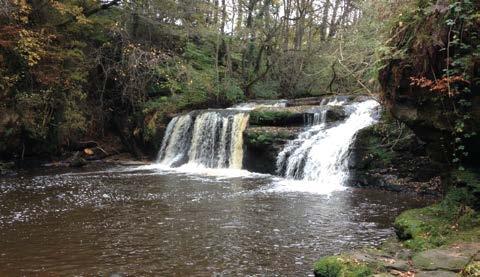
“We built an amazing history at Jupiter and oversaw an incredible transformation of that site over three decades,” reflects Clare Toner, the Trust’s East Central Reserves Manager. “But the amount of investment required to upgrade there was beyond our means and the site took a disproportionate amount of our capacity.”
Jupiter was one of 18 reserves managed by Clare and her team, with the site taking up not only a significant amount of her own time but also that of three other staff: a ranger, a seasonal ranger and a reserves project officer.
While incredibly proud of what was achieved at Jupiter under the Trust’s management, staff have been freed up to work in a more balanced way across
the other regional reserves scattered between Carron Valley in the west to the East Neuk of Fife.
“There’s just greater flexibility for the whole team to spend more time across the entire network,” notes Clare. “In the last year the East Central Ranger has been able to support all three of the Trust’s local groups in our area – Falkirk, Fife and Stirling & Clacks – providing talks and volunteer workday opportunities.
“The ranger has also been able to carry out vegetation monitoring at Carlingnose Point, Cullaloe and Fleecefaulds Meadow in Fife as well as Bo’mains Meadow in Falkirk. Previously, the ranger would have been much more restricted in terms of the time available to carry out this breadth of activities throughout the whole of the East Central region.”
This delicate shuffling of the pack is all part of identifying how to work smarter in the years ahead. “We are on a journey with this,” reflects Sarah. “Stepping away from some sites helps but doesn’t resolve everything.”
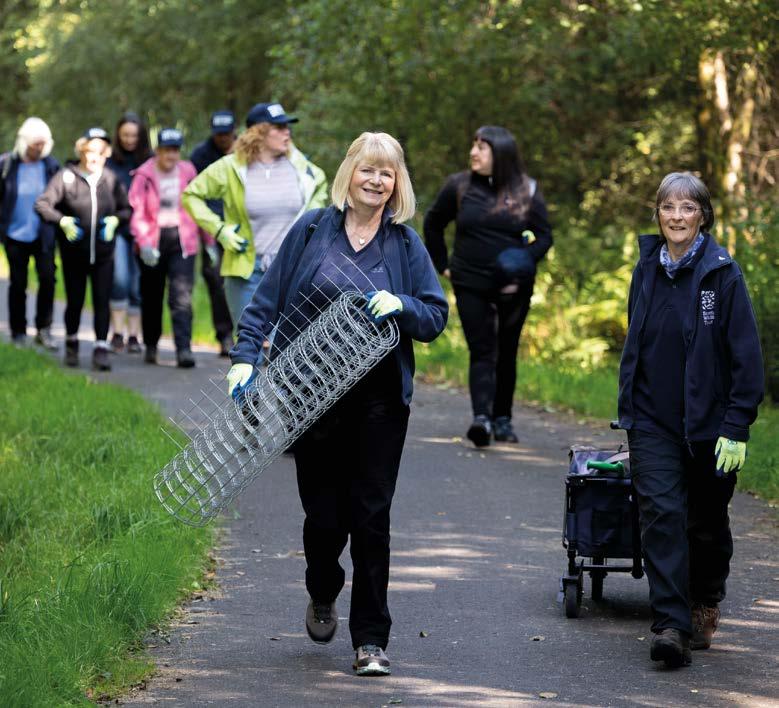
Working better and making a difference will likely have many faces. It could be about managing volunteers more efficiently,
connecting with local communities more closely or making wider use of key resources such as the Trust’s Flying Flock of conservation grazing sheep.
“As much as anything, it’s about giving ourselves some breathing room – that space to be able to think strategically,” says Sarah. “We want to genuinely deliver across our suite of reserves and enable others to see what we are doing there too. It’s all about the tangibles.”
For the Trust, the decision at Jupiter and any stepping away elsewhere over the coming years is not seen as any kind of retreat but rather as a recalibration that will result in significant steps forward in the future.
“Ultimately, it all goes back to our reason for existing – to protect and restore Scotland’s wildlife for the benefit of present and future generations,” emphasises Sarah. “We’ve been very careful in seeing where and how we can make the biggest positive difference and that’s exactly what we intend to do.” ■
Rich
Rowe is Contributing Editor for Scottish Wildlife




Lindsay Quayle explores the challenging lives of Scotland’s brown and mountain hares and explains why spring is the ideal season to spot these charismatic animals
As spring heralds an awakening in the natural world and many of us venture out again, it is the perfect time to catch a glimpse of animals that have kept a low profile over the Scottish winter, including two of our most characterful herbivores: brown and mountain hares.
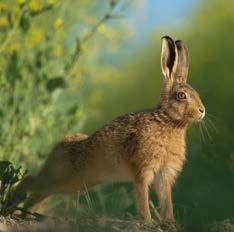
Found throughout much of mainland Scotland, the larger brown hare with its russet coat, pale belly and long, black-tipped ears and tail is characterfully ‘mad’ in March – the peak of its early breeding season.
Bounding into life, these lithe members of the Lagomorpha family – to which rabbits also belong – are commonly spotted zigzagging across open fields and woodland edges.
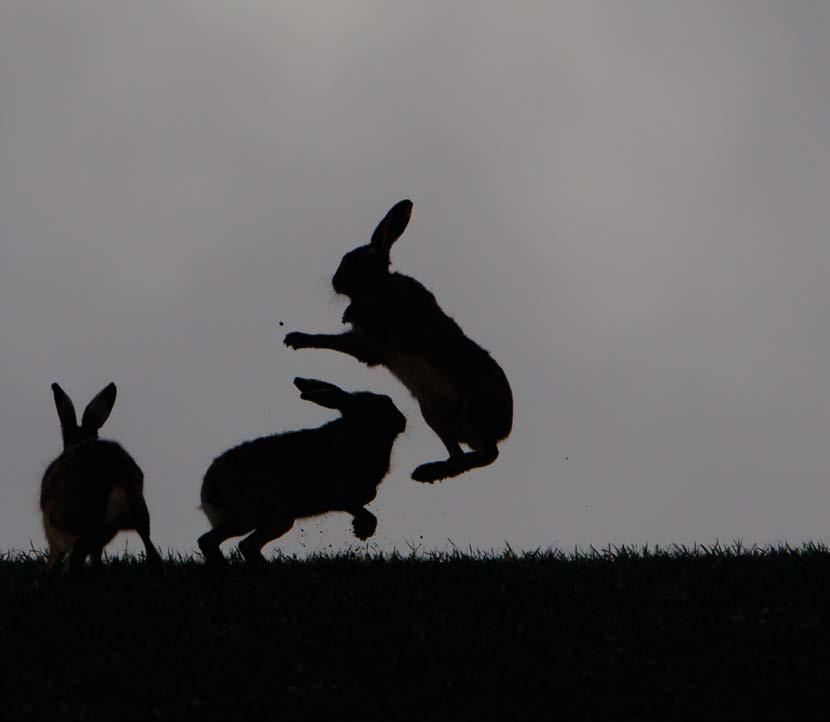
Their elaborate courtship makes brown hares especially visible in springtime. Leaping and chasing, kicking and biting are all part of the romance ritual for these male jacks and female jills. Farmland and moors become arenas for brief but dramatic ‘boxing’ matches in which sparring hares stand tall on their powerful hind legs, using their front paws to pull at their opponent’s fur.
Although skirmishes do break out between
Leaping and chasing, kicking and biting are all part of the romance ritual for these male jacks and female jills.
competing jacks, it’s typically females rebuffing the advances of amorous males at the centre of these spring contests. Slightly larger and heavier than the males, jills use these vigorous challenges to test a potential mate’s endurance; those with stamina and strength stand a greater chance of being accepted as a mate.
Once the courtship is complete, brown hares, like their mountain cousins, withdraw to the comfort of their solitary scrapes or ‘forms’ – shallow depressions made in the bare earth, grass or heather. Females gestate for around 50 days, giving birth to between one and four young (leverets) in each of her
annual litters – up to four for browns and three for the smaller mountain species.
But maternal attention is very light touch for the leverets which are born fully furred, mobile and with their eyes wide open. Once leverets have been deposited into the safety of a form, their mother deflects any attention from lurking predators by returning just once daily at dusk to feed her young. And after just four weeks, they’re on their own in the world to contend with the many challenges posed by nature and humans.
For the brown hare, fortunes have changed dramatically over the centuries. When first introduced by the Celts in the Iron Age, they were held in the highest regard –revered as gods even, together with rabbits and chickens. Historical evidence shows they were buried delicately and intact, their religious associations deeming them far too special to eat.
Over time, however, perceptions changed. Hare populations expanded, they were farmed as livestock by the Romans and hunted more
widely for sport and meat in the centuries to follow, most notably by the Victorians and Edwardians.
Despite their impressive survival instincts, which include their trademark ‘freezing’ when under threat and ability to escape on giant paws at speeds of up to 45mph, their numbers began to plummet.
The demise of brown hares over the past century is linked closely with changes in farming practices too, with intensive and specialised crop production – and a focus on livestock and dairy farming – creating a landscape far less biodiverse for these yearround browsers. The reduction in seasonal cover for a species reliant on camouflage also left hares more exposed to the predatory attention of foxes, stoats and birds of prey.
Thankfully, falling numbers did not go unnoticed. Brown hares were classified as a Priority Species in the UK Biodiversity Action Plan in the late 1990s, with further intervention making it illegal in Scotland from 2011 to kill, injure or take a brown hare without a licence during the closed season (1 February to 30 September).
While brown hare numbers now appear to have stabilised, the same cannot be said for Scotland’s native mountain hare population, which continues to see a downward curve.
Our only true Arctic mammal, it is estimated that 99% of the UK’s mountain hares are found
in Scotland, typically on heather moorland at 300-400m above sea level. Like their larger relatives at lower altitudes, they live a mostly solitary life above ground, only gathering on leeward slopes to shelter or feed when conditions are at their harshest.
Hardy, timid and, some may say, spiritual, this species has captivated generations of wildlife enthusiasts. “Spending time with mountain hares is a real privilege,” explains wildlife photographer Karen Miller, whose time spent photographing the animals throughout the Highlands was documented in a recent short film, Finding Bo
“I have so much respect for them having to withstand all that the Scottish weather throws at them with little in the way of protection. When I find a hare I can approach and sit with, it is such a thrill – even when it doesn’t do very much, just sharing its space is incredible.”
Mostly sedentary during daytime, mountain hares, like browns, are primarily crepuscular, becoming more active at dusk. They feast on heather and grasses, or nibble the bark of young trees and shrubs. And when all that feels too much, they have
the fallback of what Miller calls the “lazy meal” option: highly nutritious, partly digested food in the form of cecotropes – their own droppings at the first stage of digestion.
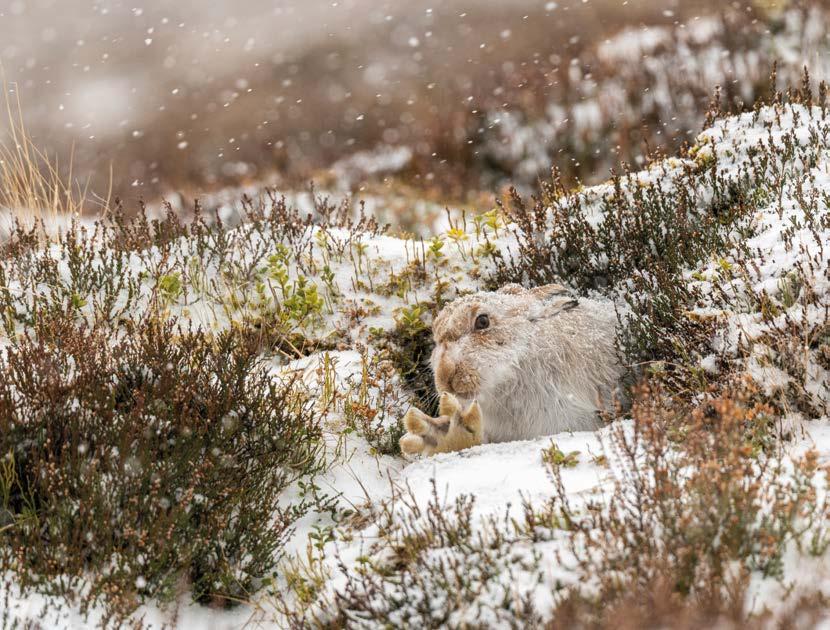
Renowned in Celtic folklore as one of only a few animals that shapeshifting females (or witches) could transform into, this iconic species is celebrated today for its own seasonal trickery: the transformation of their coat from mousey brown to fluffy, bright white. Mountain hares respond to falling temperatures and waning sunlight by moulting in late autumn. The greyish-brown fur that allows them to roam inconspicuously through moorland vegetation in the summer is replaced with a thicker, more insulated white fleece – only their distinctive, black-tipped ears remain unaltered.
Such a transformation offers ideal protection from the elements and camouflage against the snowy, mountain landscape. Or so you would think. “Warm, wet winters mean the hare’s thick winter pelages, designed for staying warm, become water-logged and can lead to hypothermia and illness,” notes Miller. Temperamental Scottish winters with fewer days of snow cover also mean that bright white hares become more, rather than less,
visible to predators, especially on gloomy upland days. Catching a glimpse of a white mountain hare once the snow has melted in the spring is a moment to treasure – but spotting them easily through the winter months is a double-edged sword given the wider context of climate change.
Fluctuating temperatures aside, habitat loss, the shooting of mountain hares for sport and, more latterly, intensive culling by land managers for disease control has undoubtedly taken its toll.
With mountain hares playing a vital role in Scotland’s upland ecosystem – not least as a key prey species for golden eagles – the Scottish Wildlife Trust, together with a host of other nature conservation organisations, has long called for a ban on the unlicenced culling of mountain hares. But while greater legal protection in Scotland was eventually introduced in 2021, making it illegal to intentionally kill or injure mountain hares at any time without a licence, large scale mountain hare culls continue on some grouse moors, leading to renewed calls to further safeguard populations.
Although now enjoying a degree of protection across Scotland, capturing data to understand population numbers is not an easy task.
Mountain hares are almost all confined to remote upland areas of the Highlands and Islands – including the Trust’s Ben Mor Coigach estate – where monitoring their abundance and distribution with real accuracy is a significant challenge.
A long-term project involving volunteer nature enthusiasts and citizen scientists, however, could be part of the solution. Walkers exploring the Scottish uplands are being asked to participate in a volunteer mountain hare survey, recording any hare sightings via a free Mammal Mapper app developed by The Mammal Society.
For a species whose population naturally fluctuates in nine-year cycles, this vital monitoring will help the Trust and others track Scotland’s mountain hare communities, helping to secure a positive future for this most cherished inhabitant of our mountains. ■
For more on the Mammal Mapper app, visit mammal.org.uk/current-research/ mammal-mapper-freeapp or scan the QR code.
Lindsay Quayle is a freelance writer based in the Scottish Borders




Bruce Wilson explores Scotland’s approach to the ‘30x30’ global target for nature – and the necessity of moving from aspiration to meaningful action
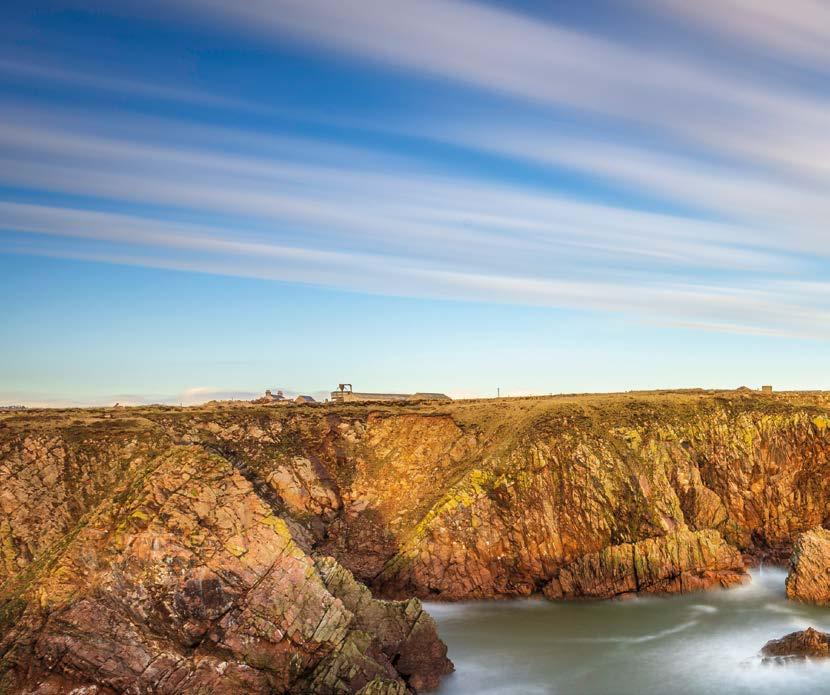
As humanity faces the highest extinction rate in its history –with a million animal and plant species under threat of disappearing altogether – the world is at a critical point when it comes to reversing biodiversity loss.
One of the most encouraging commitments to emerge in recent years is ‘30x30’. Shorthand for a global target to protect 30% of the planet’s land and sea by 2030, it is a flagship target of the KunmingMontreal Global Biodiversity Framework agreed at the COP15 of the UN Convention on Biological Diversity in 2022.
Here in Scotland, this target provides an opportunity to demonstrate global leadership and a chance to transform the health of our natural environment for the benefit of wildlife, people and the economy.
The Dasgupta Review – an independent report on the economics of biodiversity commissioned by HM Treasury – highlighted how the benefits of achieving 30x30 would far outweigh the costs of doing so: it would, said the report, provide stronger financial and higher non-monetary benefits than the status quo and deliver significant social benefits.
Set against our own work to create a network of healthy and resilient ecosystems across Scotland’s land and seas, the Trust believes that if 30x30 is to be genuinely achieved then it needs urgent, collaborative action. It also requires the establishment of robust nature networks to support ecological connectivity between sites.
Crucially, of course, achieving the goals of 30x30 also needs strong political commitment – the rhetoric of which is certainly reflected in the Scottish Government’s recently published Scottish Biodiversity Strategy.
We must, however, be realistic about the scale of the task. From our own internal sums, and looking just at Scotland’s land, if we were to combine all areas that currently see protective designation then that would correspond with just 18% of the country’s total land mass. Adding meaningful protection to a further 12% in just five years will be far from straightforward.
It should also be noted that current protections are no guarantee of biodiversity and ecological quality; many existing protections are simply not delivering, with some sites in poor condition and others under threat from development. As such, the
amount of quality, meaningfully protected land today is actually less than 18%.
It is for this reason that nature networks must sit hand in glove with the broader 30x30 vision. Without well-designed and wellmanaged networks linking protected sites, we run the risk of isolated pockets of biodiversity becoming ecological ‘islands’ that are unable to sustain resilient populations over time. We like to think of protected areas as ‘nodes’ that support the foundations of these nature networks.
In Scotland, the creation of nature networks aligns closely with the principle of ecological connectivity. Restoring links between habitats through landscape-scale restoration projects, restoring peatlands and creating green corridors can enhance biodiversity and boost Scotland’s resilience to the impacts of climate change.
Urban areas, too, have a role to play: the integration, for example, of green roofs, parks and naturalised riverbanks into towns and cities can extend the reach of nature networks, bringing benefits for wildlife and people.
It is encouraging that the Scottish Biodiversity Strategy positions 30x30
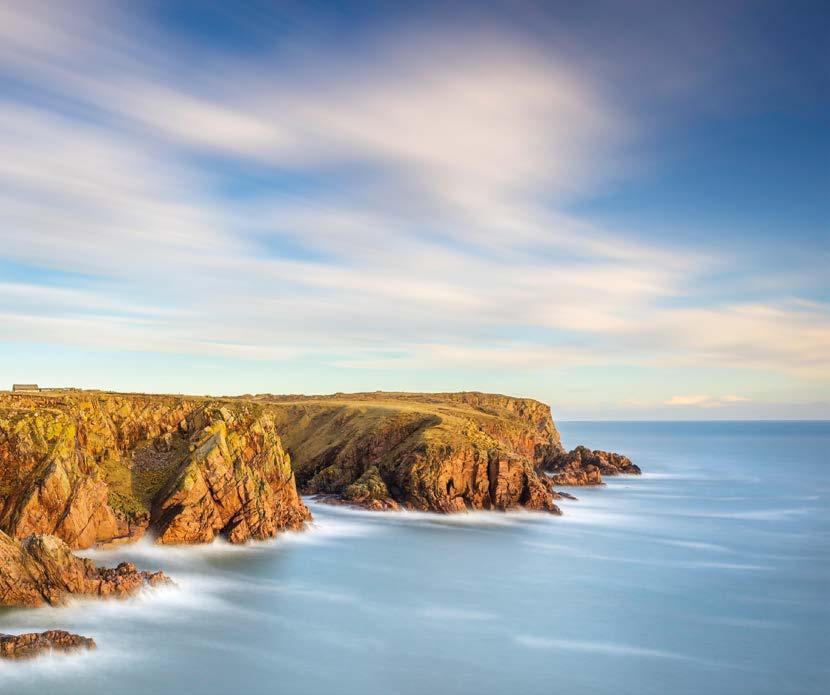
In Scotland, the creation of nature networks aligns closely with the principle of ecological connectivity.
as key to reversing biodiversity loss. The strategy highlights that achieving this target demands a multi-faceted approach and also acknowledges that protected areas must be effectively managed and monitored to ensure that they deliver tangible outcomes for nature.
But if 30x30 is to be achieved in Scotland, there are significant challenges that cannot be ducked. As a recent report by Scottish Environment LINK has highlighted, delivering effective protection for 30% of Scotland’s land and sea will require appropriate investment to support management, monitoring and restoration efforts.
Inclusivity and community buy-in are also essential. Many rural communities depend on the land and sea for their livelihoods and so must be involved from the beginning. Transparent communication and co-designed initiatives can foster trust and ensure that local needs are respected. Recent history
regarding Highly Protect Marine Areas demonstrates how badly things can go if this is not taken into account.
Monitoring and enforcement also present difficulties. In the past, simply designating areas as protected has proven to be insufficient without robust systems in place to prevent damaging activities and to track progress toward biodiversity targets.
But where there is challenge, there is also opportunity. The creation of nature networks offers a chance to enhance ecological connectivity, delivering multiple benefits for biodiversity, climate resilience and human wellbeing. Meanwhile, innovative funding mechanisms, such as payments for ecosystem services and biodiversity credits, could unlock new resources for conservation.
In addition, the 30x30 goal can drive a broader cultural shift toward recognising the value of nature. By integrating biodiversity goals into economic planning and land
management, Scotland can become a genuine global leader in nature recovery.
From the Trust side, our reserves provide living examples of how protected areas can support biodiversity and engage local communities. However, it would be a mistake to believe that all Trust-managed land should automatically become designated: some of that land is at the beginning of its ecological restoration and we must focus protection on areas of the highest ecological value.
The 30x30 target is not merely a governmental goal, it needs widespread and urgent buy-in from all to succeed and the decisions we make now will shape the future of Scotland’s land and seas. We must act quickly if we are to meet international targets and, even more importantly, reverse the current desperate decline in biodiversity. ■
Scottish Environment LINK’s report on making 30x30 meaningful can be read at scotlink.org/publication/protecting30-of-scotlands-land-for-nature-2024report/
Bruce Wilson is the Scottish Wildlife Trust’s Head of Policy and Advocacy.
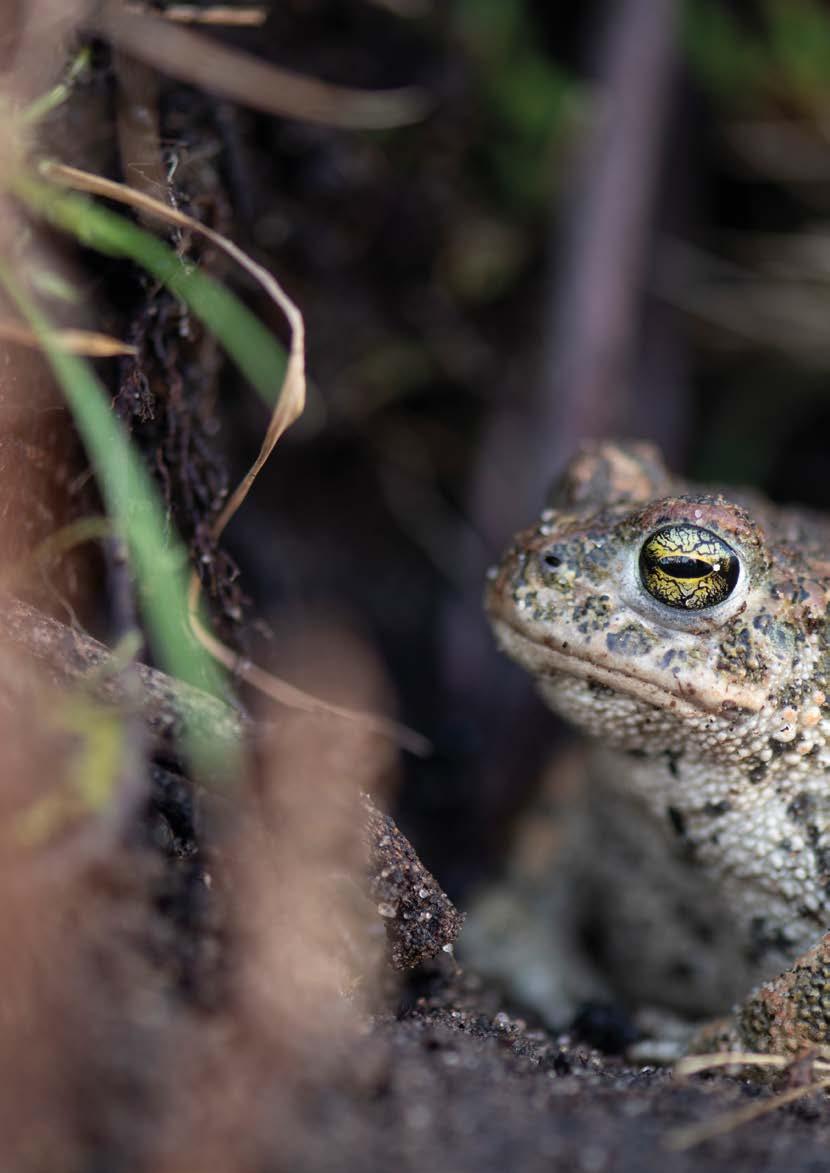
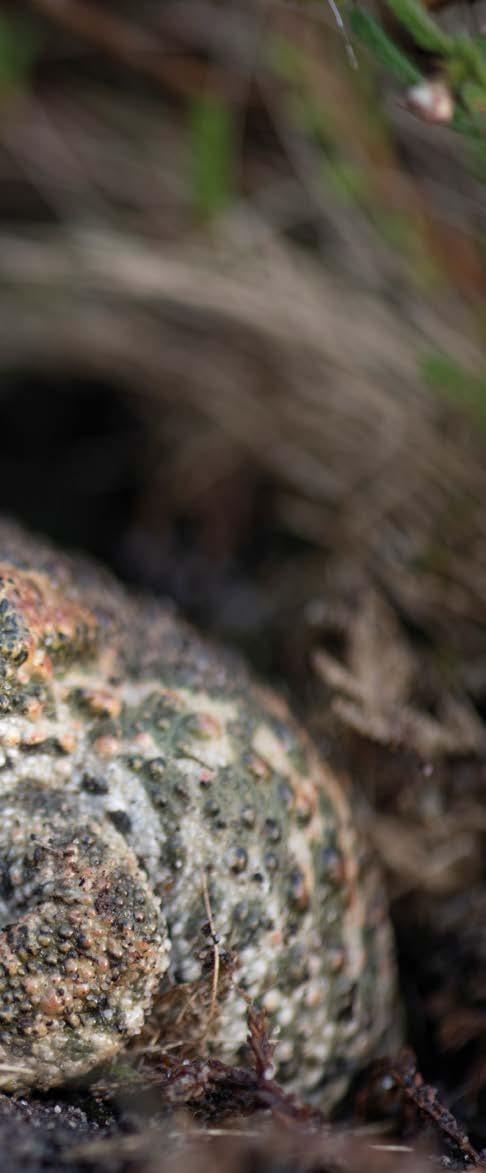
Once widespread, natterjack toads are now a protected species found only at around 60 sites across the UK – with Caerlaverock on the Solway Firth home to the most northerly population of what is Scotland’s rarest amphibian.
Smaller than common toads – the only other native UK toad species – natterjacks are more olive-green in colour and have a distinctive yellow stripe along the centre of their backs.
Equipped with short, strong legs, natterjacks run in bursts rather than hop or walk – giving them the nickname of the ‘running toad’. Nocturnal hunters, they can be surprisingly speedy as they forage over open ground for invertebrate prey such as woodlice and moths, which they catch using a long, sticky tongue. By contrast, once in water, they are quite poor swimmers.
Confined mostly to coastal habitat – pockets of sandy heath, sand dune systems and saltmarsh – natterjacks are often associated with shallow, freshwater ponds as they need warmer water in which to breed successfully. They also favour bodies of water with minimal aquatic and border vegetation.
After spending the winter sheltering from the cold, often using their powerful legs to bury themselves deep in soft mud and sand, adult natterjacks emerge in the spring ready to mate.
It is at this time of year that natterjacks demonstrate why they are so called, with males congregating along the edge of breeding ponds at night and emitting a rasping, rolling croak. Once one starts up, the others join in, all trying to drown each other out in an attempt to attract females. With the sound amplified by a balloon-like throat pouch, their calls can be heard several miles away on still nights.
Unlike common toads that lay spawn in double strings, female natterjacks lay in single strings of 1-2 metres in length – with a single clutch often containing more than 7,000 eggs. The tadpoles that emerge are slightly smaller than that of common toads and have a grey spot on the throat.
In good conditions, the spawn can mature into young toadlets in as little as six weeks, with the natterjack’s distinctive yellow stripe clearly visible. This rapid development is an evolutionary advantage both for avoiding predation and water loss in what are often temporary ponds.
Rather than breeding rapidly over a short period, natterjacks tend to stagger their breeding efforts from April to July, with some individuals breeding early in the season, while others breed late.
Such tactics help a species that is under continued threat from loss of coastal habitat – with changes in land use, drought and sea level rise as a result of climate change all having a significant impact. ■
While there are no confirmed records of natterjack toads on Trust reserves, our Southwick Coast and Drummains Reedbed reserves on the Solway Firth are the most likely to have them. Bonus points to whoever can get the first confirmed record!
Chris
Archbold,
Wood, reveals some of the magic of this timeless area of woodland
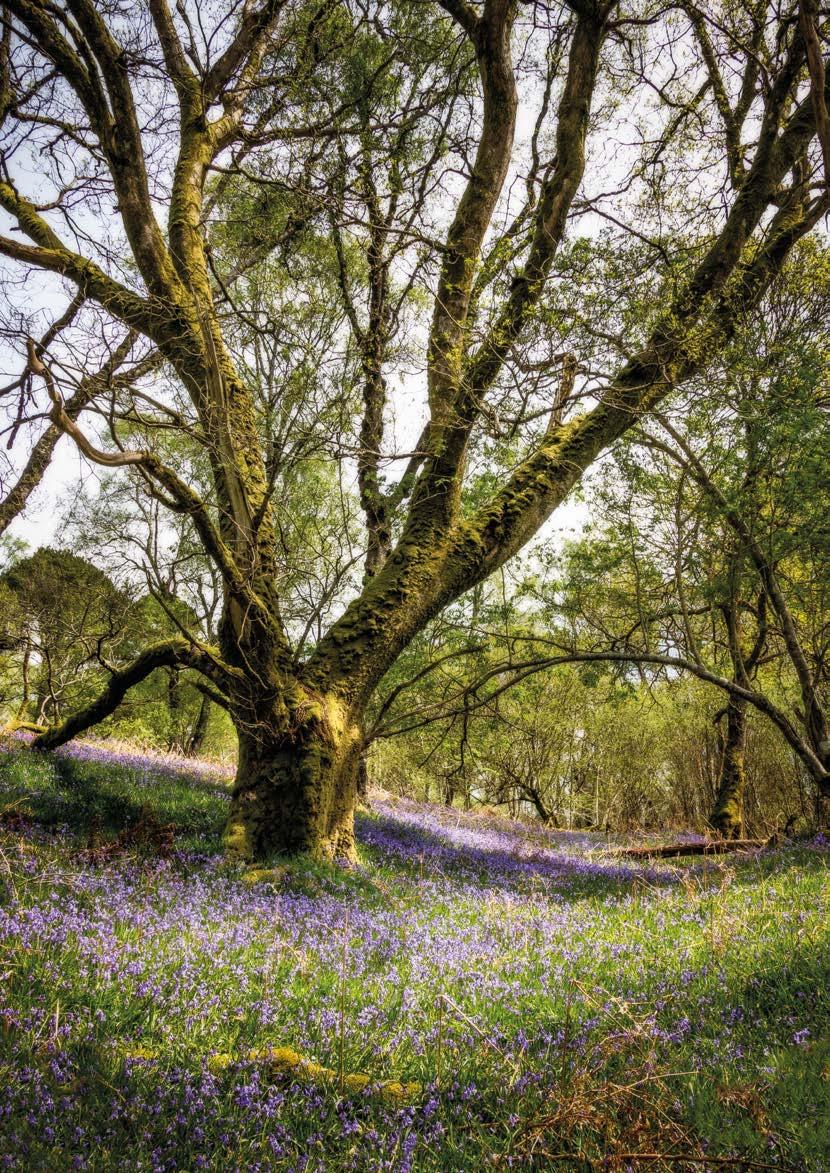
It’s often the little details that make a woodland special: the patterns made by ice on the remaining leaves in winter, subtle changes of light, the sighting of a rare beetle among the leaf litter, or the emergence of spring flowers. All can be enjoyed in the lush confines of Carstramon Wood.
I have worked here for almost 13 years, undertaking practical management tasks from strimming paths to installing and maintaining infrastructure such as the small bridges throughout the wood.
During that time, I’ve been lucky to work with a host of young volunteers, many of whom are studying to begin a conservation career. It has been one of my greatest pleasures to help show them how to identify trees, plants and wildlife signs. Occasionally that experience has encouraged them to change the direction of their studies towards a more practical career.
Today, Carstramon Wood is a peaceful place, with hidden nooks and craggy areas that feel rarely visited. There is potential to see red squirrels, pine martens and, in summer, butterflies such as small pearlbordered fritillary and purple hairstreak.
But these woods were not always quite so peaceful. The site is what we call semi-
natural ancient woodland, with one important component being large stands of multistemmed oaks that hint at an ‘industrial’ past – a time when the trees were coppiced on rotation, the bark peeled for tanning and the wood made into charcoal or turned into bobbins for the cotton industry.
During this time, the woods would have been alive with the song of the crosscut saw and axe, with working horses plying the paths through the wood, snigging (pulling) logs and hauling charcoal.
Although this might seem rather destructive, this traditional practice actually opened the woodland up into a mosaic of ‘cants’ with differing ages of regrowing trees. Once the area was coppiced it would be left alone for many years until there were stems of commercial value again.
It was a time of regrowth that allowed wildflowers to flourish in open glades, providing nectar, pollen and often food plants for caterpillars of some of our rarest butterflies, many of which now struggle due to the loss of this kind of woodland management.
There is no doubt that spring is the most spectacular time of all at Carstramon Wood. It is then that the ferns and lichens are joined by waves of bluebells that emerge as
Today, Carstramon Wood is a peaceful place, with hidden nooks and craggy areas that feel rarely visited.
green leaves and turn to a sea of nodding flowers.
It is also when migratory birds – pied flycatchers, redstarts, wood warblers and more – return to fill the trees with s ong and movement while claiming territory and searching among the fresh leaves for newly emerged caterpillars on which to feed.
As ever, there is much work to do this year. Sadly, ash dieback has reached the reserve, so we need to make those trees safe. There are positives here too, however, with potential change in the woodland management regime to benefit invertebrates.
We also plan to replace two old bridges and extend another more recent one built using larch and oak milled from the wood. ■
Plan your visit
Located off a minor road a few miles north of Gatehouse-ofFleet, Carstramon
Wood has a network of paths that continue onto the hill beyond. The main entrance is at a layby with very limited parking. It can get busy during the main bluebell season, at which time we always suggest that visitors arrive early, park considerately and if there isn’t a space to come back another day. Learn more by scanning the QR code or visit bit.ly/Carstramon
6-8 June
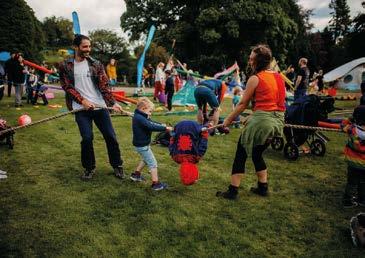
Although not entirely about nature, we love the look of and thinking behind the Wildhood Festival – an event aimed specifically at families with children aged 12 and under, set in the glorious surroundings of Tullibole Castle near Kinross.
When it comes to outdoor fun and activities, festival goers are spoilt for choice with nature walks, forest school sessions, tree climbing and bug hunting in addition to a host of other outdoor adventures: survival science, slacklining, tomahawk throwing, outdoor games, live music, a hidden maze and more.
And with on-site camping, deluxe showers and an array of street food stalls, there’s no need to leave the site for the whole weekend – a chance to be feral and free, but with a bit of luxury where needed! Discover more at wildhoodfestival.com
21-28 June
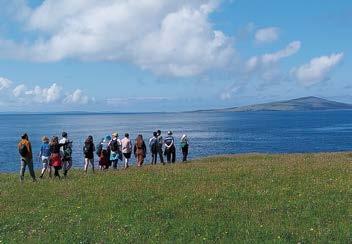
Head over the sea this summer to enjoy a community-led celebration of the habitats and species that make the Outer Hebrides such a special place for nature. Running for just over a week in June, and with a Fringe festival throughout July, it’s a great way to get to experience the wildlife that calls these islands home – from otters and minke whales to seabirds and eagles.
The festival is coordinated by the Bumblebee Conservation Trust as part of Species on the Edge, a major nature conservation programme that works with communities across Scotland’s coasts and islands to save our most rare and vulnerable species from extinction.
Although the full 2025 programme has yet to be announced, expect snorkelling adventures, photography and nature writing workshops, surfing safaris, guided walks and more. Keep an eye out for the full programme at outerhebrideswildlifefestival.co.uk
As an award-winning novelist and nature writer who has penned the Nature Notebook column for The Times for more than a decade, it’s safe to say that Melissa Harrison knows a thing or two about noting down interesting observations of nature.
Recently, Melissa has turned her attention to developing a guided nature journaling app to encourage others to take more notice of the natural world around them. A beta version of the app was launched in December.
But this app is far more than just a personal nature diary. While it’s very easy for a user to create their own diary entry with information, photos, location, weather and tags, the home feed is like nature’s very own social media account.
Full of seasonal tips, ideas and inspiration which can be targeted to a user’s location, it provides a wide range of interesting and timely content that will make you want to head straight to your nearest wild spot to see what you can encounter.
Reviews and competition
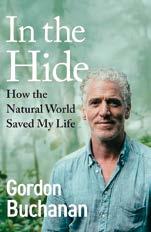
Gordon
Buchanan
Published by Witness Books
ISBN 978-1529144260
Hardback £22
As Scotland’s best-known wildlife cameraman (and a Scottish Wildlife Trust Ambassador!) many of us will be familiar with Gordon Buchanan’s skill at on-screen storytelling. From close encounters with
Svalbard’s polar bears to capturing intimate moments with the big cats of the Okavango, Gordon has filmed around the world for more than 30 years.
Given his wealth of experience and the number of interesting stories he must surely have, it’s somewhat surprising that this is Gordon’s first book, but safe to say that it’s well worth the wait.
From his often humorous accounts of a childhood spent initially in Dumbarton and then on Mull, several things become clear: that Gordon has always sought immersion in nature, that adventure and risk-taking are hard-baked into his character, and that he would give anything for Harry Potter’s invisibility cloak so that he can get even closer to wildlife!
Other chapters cover a wide range of insightful content. Raw, personal accounts of some of the harder times he has experienced are balanced with absorbing behavioural observations of the animals that he’s got to know through hours of patient watching and filming.
This honest, inspiring and highly
readable book provides a fascinating insight into the dedication it takes to get the extraordinary shots that millions of us are able to enjoy from the sofa thanks to people like Gordon.
Hear Gordon Buchanan recount some of his incredible stories on his Lions and Tigers and Bears tour, finishing at the end of March in Scotland. For more, visit gordon-buchanan.co.uk
To be in with a chance of winning a copy of In the Hide signed by Gordon, head to scottishwildlifetrust.org.uk/ magazine-competition or scan the QR code.
The closing date for entries is 30 April 2025. Full terms and conditions can be found on our website.

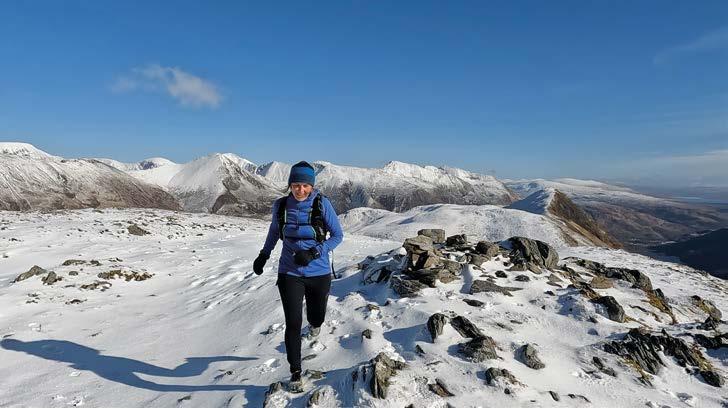
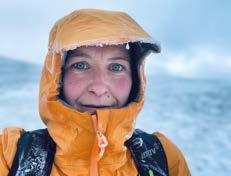
Mountain run guide and author Keri Wallace reflects on her love of solo winter runs above the snowline – fleeting visits to high places that can lead to joyful encounters
What I love about the Scottish mountains in winter is that you can’t take them for granted. The conditions are variable and ephemeral; they can be hostile, dramatic and beautiful all at the same time. The snow and ice are different every day of the week and you never know what extraordinary wildlife you might encounter.
Sometimes a Scottish winter creates conditions that are uniquely hazardous, while other times it hardly graces us with its presence at all. I think the best way to enjoy our winter is to be an optimist and most importantly an opportunist – which is how I enjoy so many days running above the snowline at home in Glencoe.
My favourite days are those when I can run in a pristine winter landscape and make
first footprints in new snow; when all noise is dampened and there is a special kind of fuzzy silence. It feels like I have the mountain all to myself – but, of course, I don’t. These are the days I’m most likely to see the tracks of animals that make this unforgiving landscape their home.
It’s always exhilarating to spot the distinctive prints of mountain hare in the snow. I usually photograph their trail and sometimes follow it, hoping for a brief glimpse. I rarely see them at other times of year when there is more cover but, in winter, the snow reveals their stealthy movement.
On one occasion, while climbing a steep slope of snowy ledges, I popped up to find myself quite literally face to face with one such creature. The hare froze, as did I, and motionless we stared into each other’s eyes for what seemed a long time. I desperately wanted to take a photograph but knew that if I so much as blinked, it would be gone in a flash of white. A rare, surprise encounter that would not be captured.
There are high places locally where I see mountain hare year upon year and I love that they are native to the Highlands. I’m acutely aware that I’m vulnerable in their natural environment. Ice axe in hand, I’m wearing warm layers, gloves and running crampons on my feet – tools of my trade that allow me to travel fast and light through their mountains, when the weather permits.
But I can’t stay long. They belong up here and I am merely passing through.
Encounters with ptarmigan in winter are different again: often a sudden riot of croaking, an explosion of feathers and a wink of red. My hammering heart takes a moment to settle as I spy their new location; usually a pair, sharing life together in this harsh place.
The deer aren’t up here. They have moved lower down in search of food and shelter and I should do the same. But as I do, I’m already looking forward to my next foray into these spectacular winter mountains – and my next surprise encounter. ■
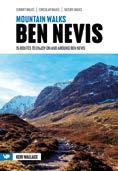
Keri Wallace is a run guide, author and founder of Girls on Hills, which offers a range of womenonly adventure retreats in the Scottish Highlands. She is author of guidebooks Running Challenges and Mountain Walks Ben Nevis (published March 2025 by Vertebrate Publishing). girlsonhills.com