managing Handa Island.
• Free entry to all our visitor centres
• Subscription to Scottish Wildlife magazine
• A copy of the Exploring Reserves guide
• Invitations to exclusive talks and events Visit scottishwildlifetrust.org.uk/join for more information or call 0131 312 4765
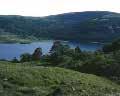
Loch of the Lowes Visitor Centre
Lochside hides offer stunning views of ospreys rearing their chicks in spring, whilst beavers and waterfowl may be spotted all year round. The centre’s woodland observation window gives close-up views of red squirrels and a wealth of other wildlife.
A Dunkeld PH8 0HH T 01350 727 337 E lochofthelowes@scottishwildlifetrust.org.uk
Ben Mor Coigach Wildlife Reserve
Ben Mor Coigach dominates the landscape north of Ullapool. Covering over 6,000 hectares, it is one of the Trust’s largest reserves and combines a mixture of high peaks and spectacular coastline with crofted land, blanket bog and heather moorland.
A Highlands OS Landranger 15, NC075065 T 0131 312 7765 E enquiries@scottishwildlifetrust.org.uk
Rahoy Hills Wildlife Reserve
The Rahoy Hills encompass a diverse range of habitats from windswept grasslands, mires and heaths to cliffs, lochans and oak woodlands. The cliffs support tallherb and arctic-alpine plants. If you are lucky, you will be able to see golden and sea eagles.
A Highlands OS Landranger 49, NM690535 T 0131 312 7765
E enquiries@scottishwildlifetrust.org.uk
For information on places to see near you, visit our website:
Help us to protect the wildlife of Handa Island by making a donation today. Scan the QR code, or visit scottishwildlifetrust.org.uk/donate
Health & safety
Please read the following information carefully before setting out.
In an emergency, please call the emergency services on 112.
In the event of any problems, please phone the ranger on 07920 468 572.
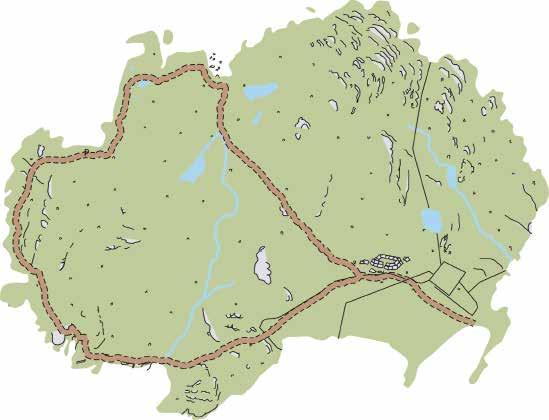
Please keep to the footpath for your safety and for the benefit of the nesting birds.
The boardwalk and grass path can become slippery when wet. Take care!
Stay away from the edge due to crumbling cliffs, slippery grass and high winds.
The ferry is independently operated – for details visit scottishwildlifetrust.org.uk/handa-island
Wilfully or recklessly disturbing wildlife is a criminal offence and we will report all incidents to the police.
Wildlife sightings
Please report all wildlife sightings on your return to the visitor shelter. You can also send pictures and sightings to the ranger by emailing handaranger@scottishwildlifetrust.org.uk
Handa Island
Wildlife Reserve
Visitor information
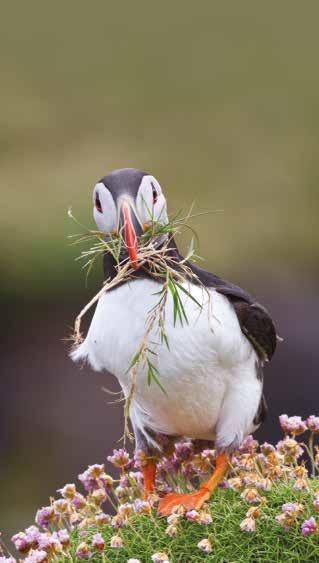
PUFFINS are best seen around the Great Stack from May to July.
GUILLEMOTS, FULMARS, RAZORBILLS AND KITTIWAKES reside here in their thousands, making the cliffs of Handa one of the most important colonies in the UK and Europe.
DOLPHINS, WHALES AND BASKING SHARKS are often seen off the coast.
TORRIDONIAN SANDSTONE is the bedrock of the island. Over 1,000 million years old, it provides good ledges for nesting birds. For more information, search online for North West Highlands Geopark.
HANDA is owned by the Scourie Estate and managed in partnership with the Scottish Wildlife Trust.