NORMAN GILBERT CENTENARY EXHIBITION

1. Personal and Resonant p2
2. My Father by Mark Gilbert p4
3. Artwork 1959-2018 p11
4. Illustrated Biography p78
5. Credits p82
Norman Gilbert’s legacy continues to resonate powerfully in his centenary year. Born in 1926 in Trinidad to Scottish parents, Gilbert returned to Scotland as a child and would go on to live and work on Glasgow’s southside for over sixty-five years. From his home and studio on Shields Road, he painted the world closest to him with extraordinary sensitivity and invention - his wife Pat, their four sons, and an extended circle of family, friends and neighbours who enriched and shaped their lives. These scenes of domestic life, at once ordinary and profound, form the enduring subject of a remarkable seventy-year career.
The Scottish Gallery is honoured to present this exhibition, our first dedicated to Norman Gilbert, marking his centenary and introducing his work to a wider audience. Although Gilbert’s commitment to painting never wavered, wider recognition came comparatively late. In his final years, this renewed attention brought him great fulfilment, culminating in a major five-month retrospective at Tramway in Glasgow, his home city and community, which offered a long overdue celebration of his
life’s work. That exhibition, presenting paintings alongside drawings, textiles and objects from his studio, revealed the full richness of a practice deeply rooted in lived experience. At the same time, the BBC produced the dedicated arts film The Unteachable Artist, which recorded more than seven million views, creating a new worldwide audience for his work.
Gilbert’s artistic independence was evident from the outset. After serving four years in the Royal Navy as a radar operator, he enrolled at Glasgow School of Art in 1948 on an ex-serviceman’s grant, determined to pursue what he described as “a vocation that would last a lifetime.” Yet his resistance to convention led to his being dismissed in his final year as “unteachable”, a judgement that, in retrospect, speaks less to limitation than to a fiercely individual vision. Undeterred, he forged his own path, supporting his young family through varied work while continuing to paint with quiet resolve. Early recognition came in the 1950s, including exhibitions in London alongside figures such as Jacob Epstein and David Bomberg, followed by solo presentations in London and Edinburgh and a BBC
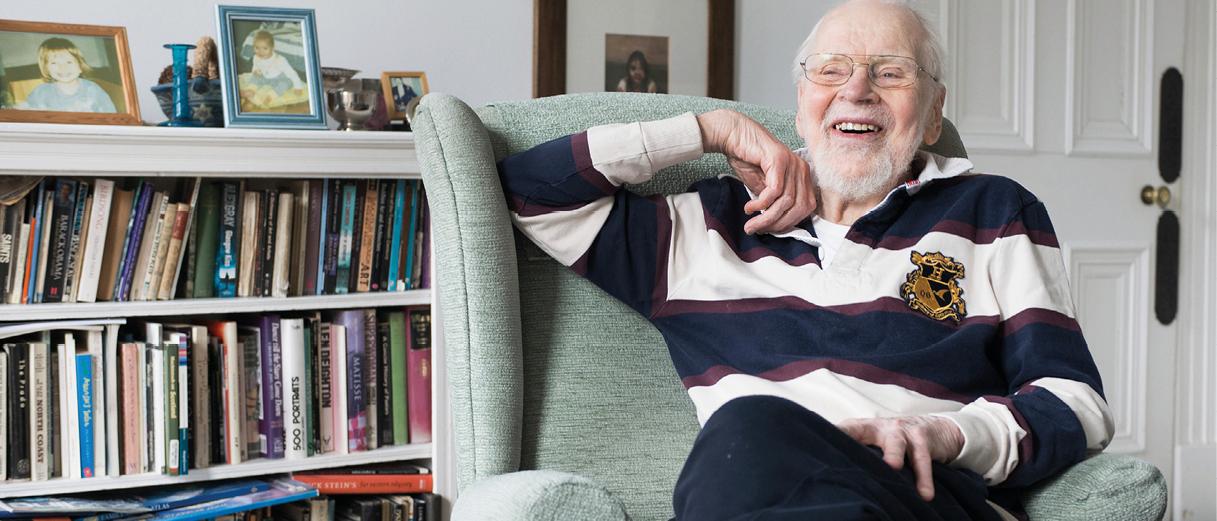
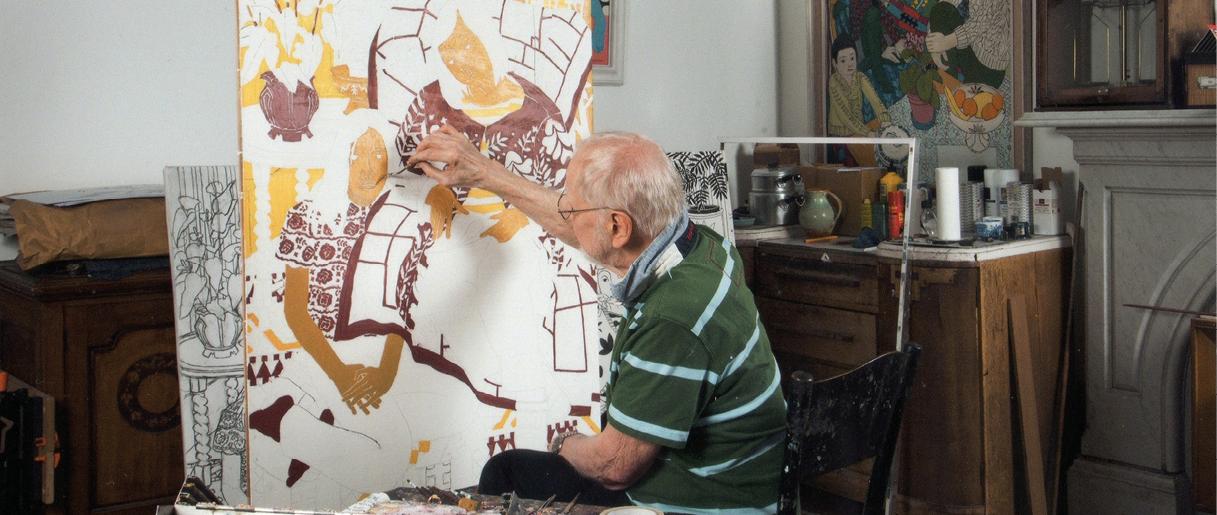
documentary in 1974 directed by W. Gordon Smith. Yet it was the sustained, private development of his work that would ultimately define his achievement.
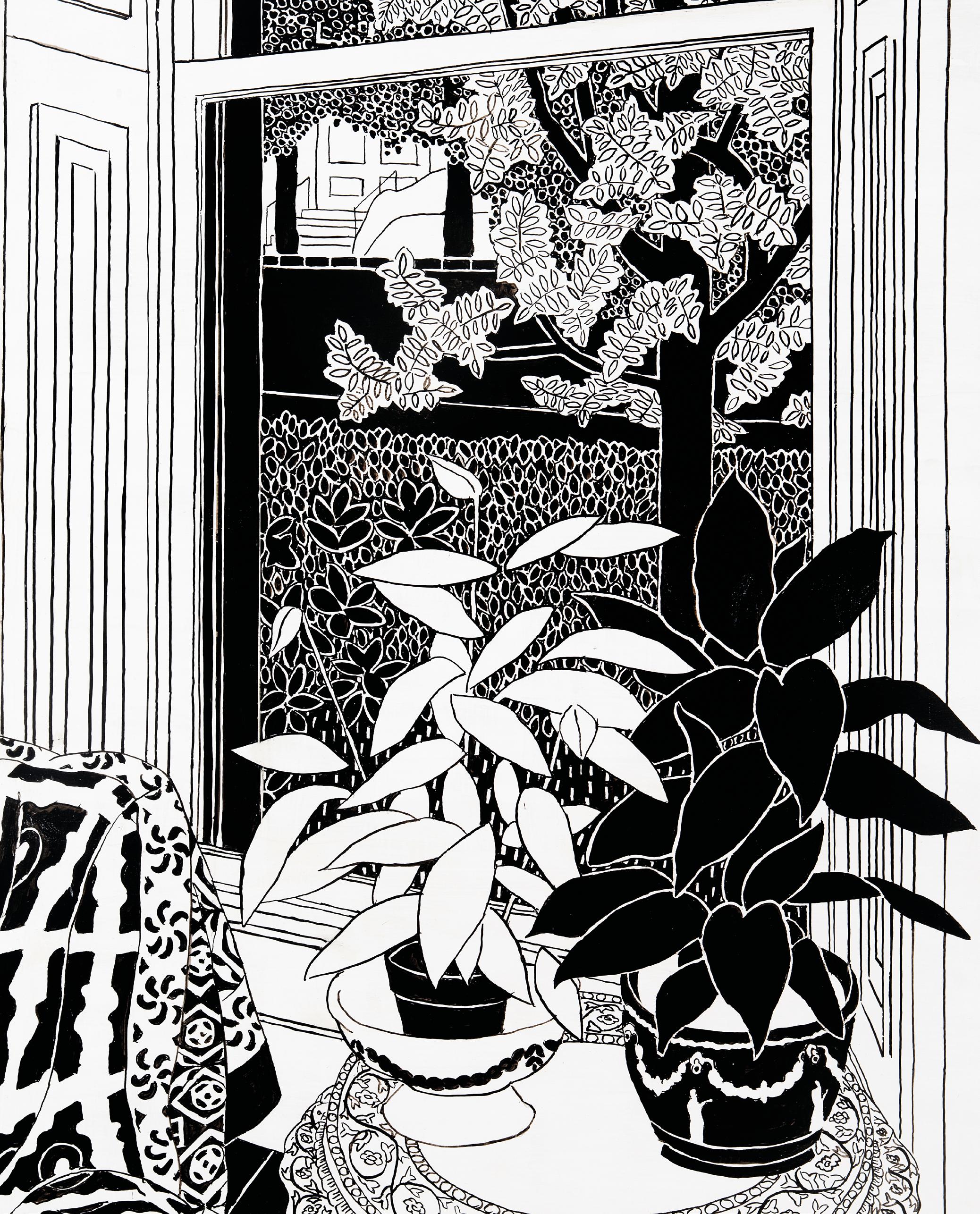
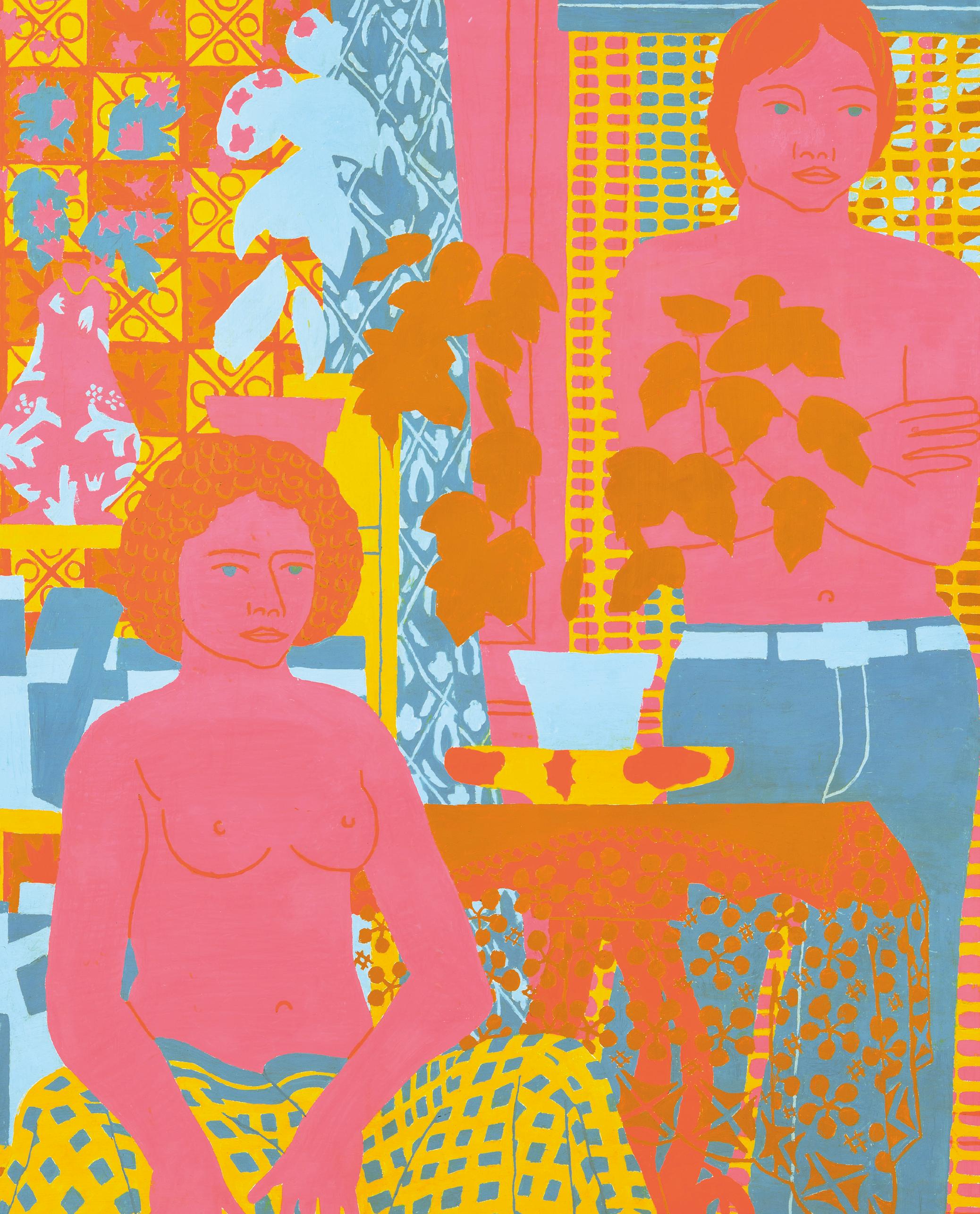
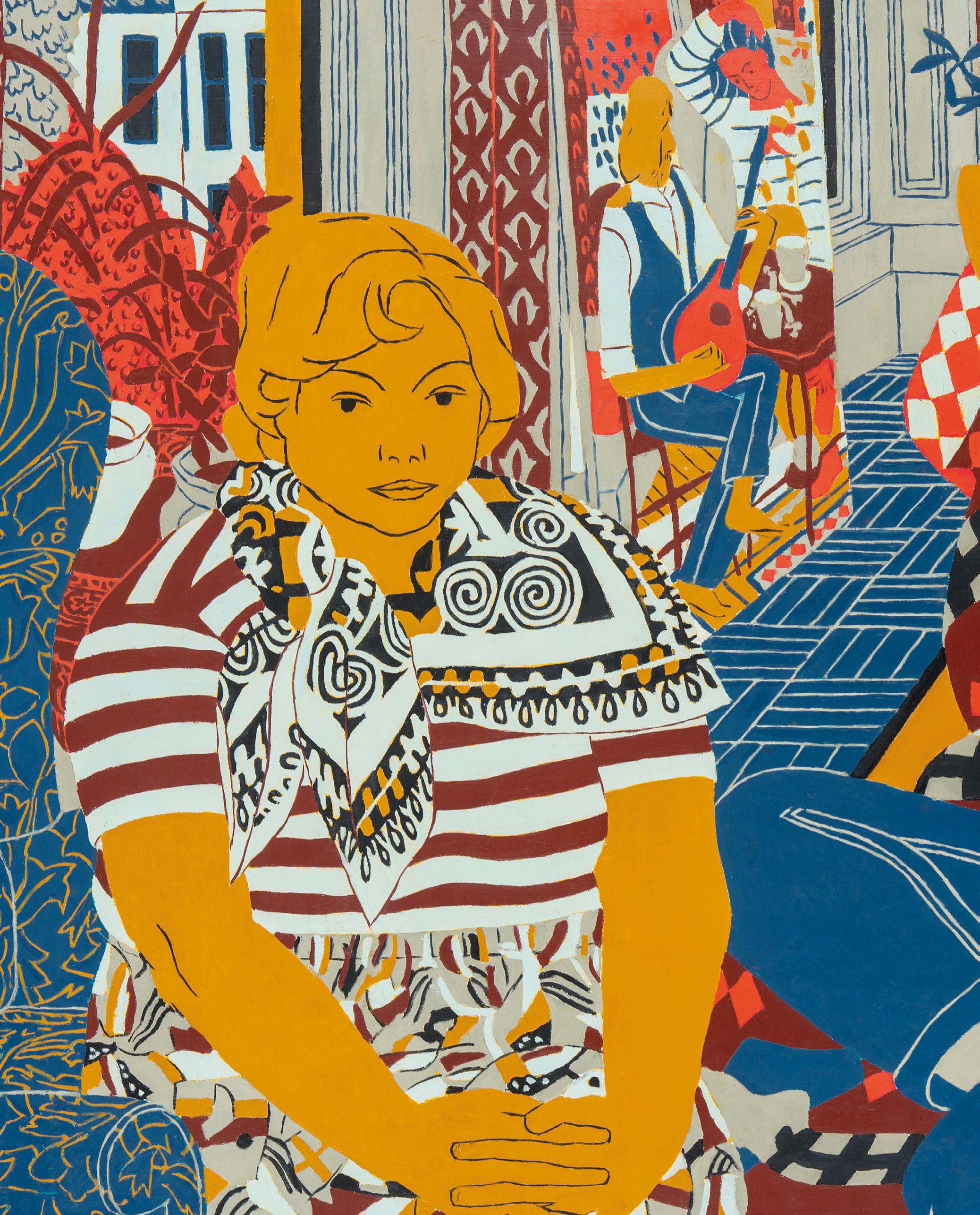
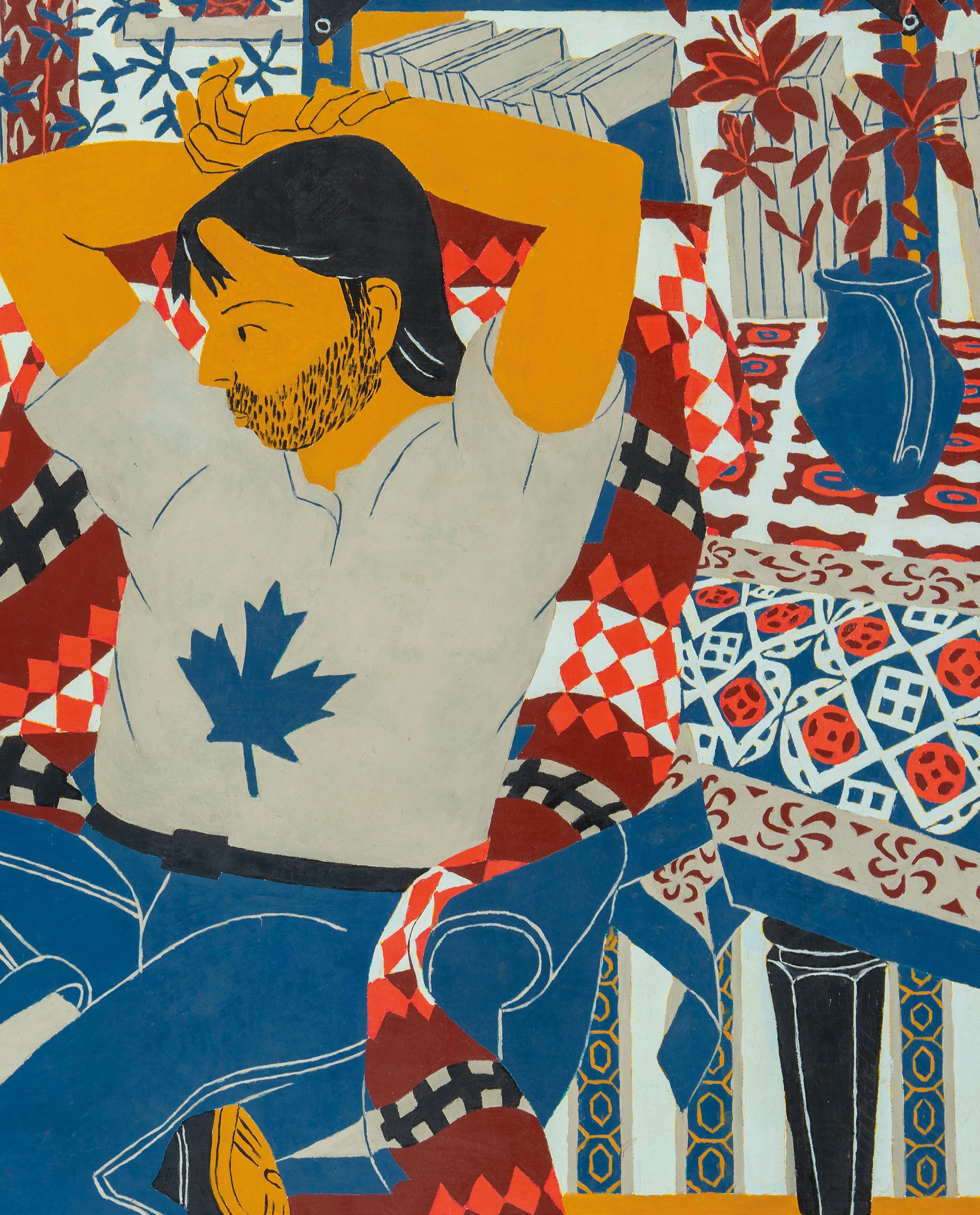
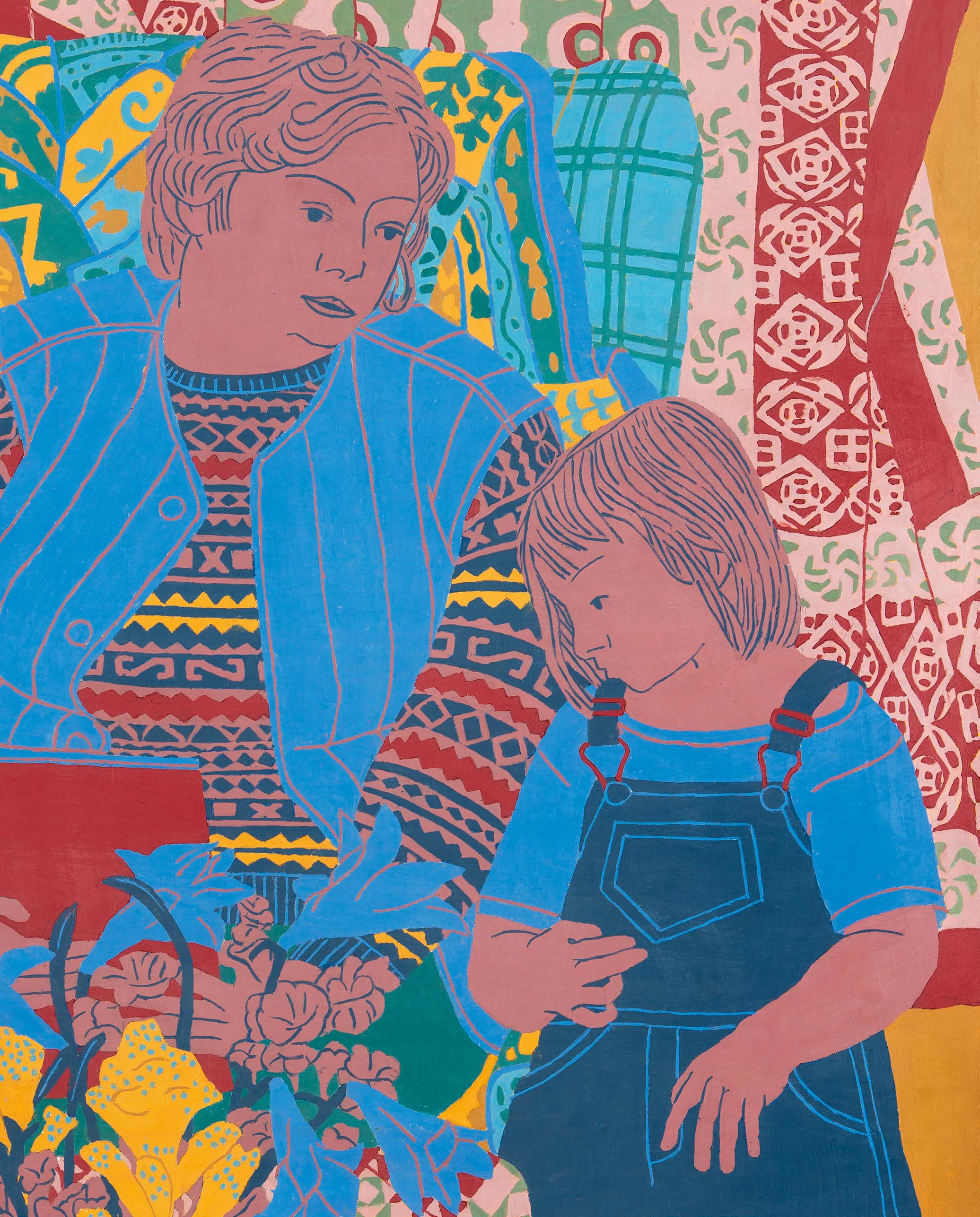
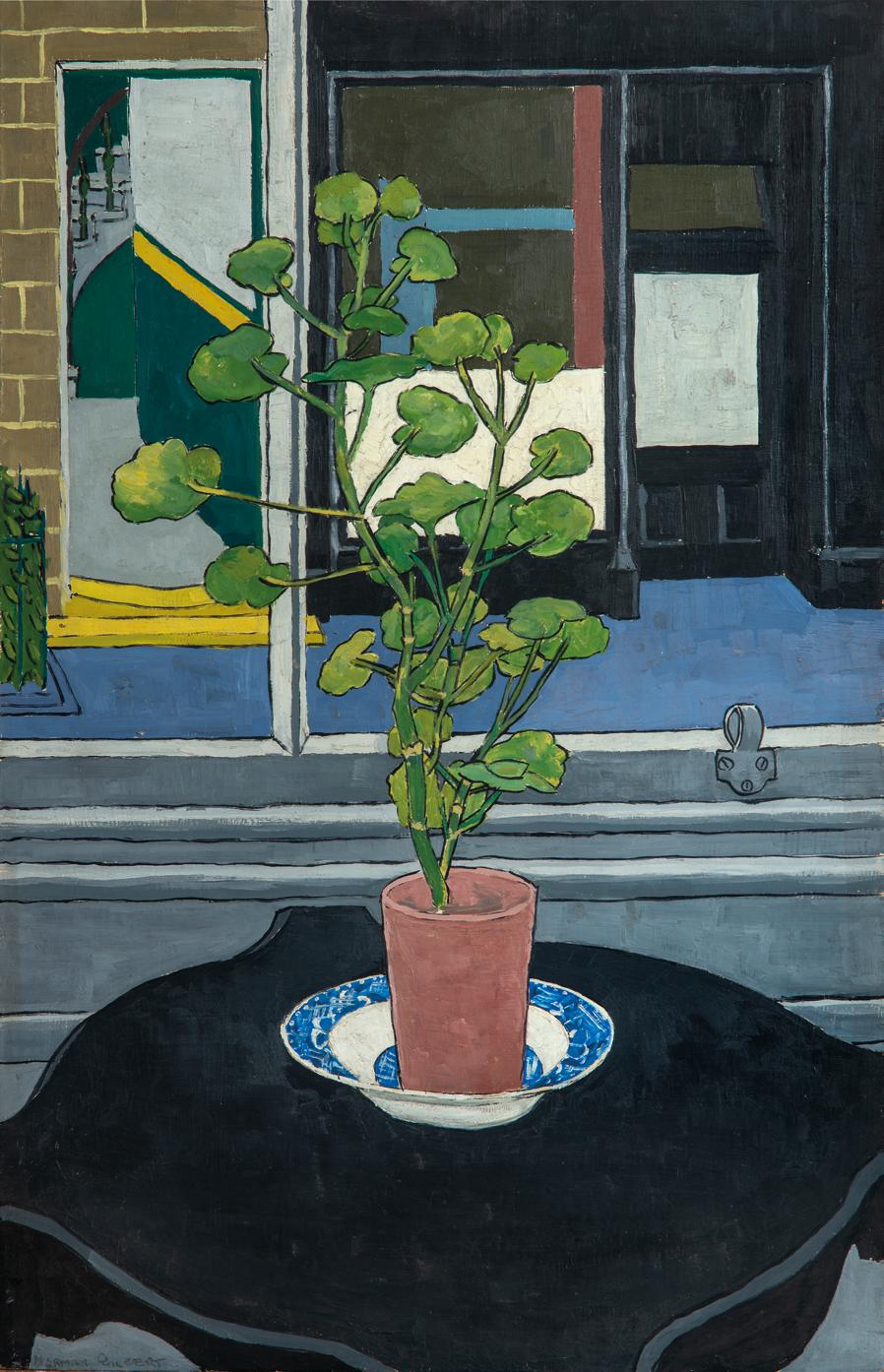
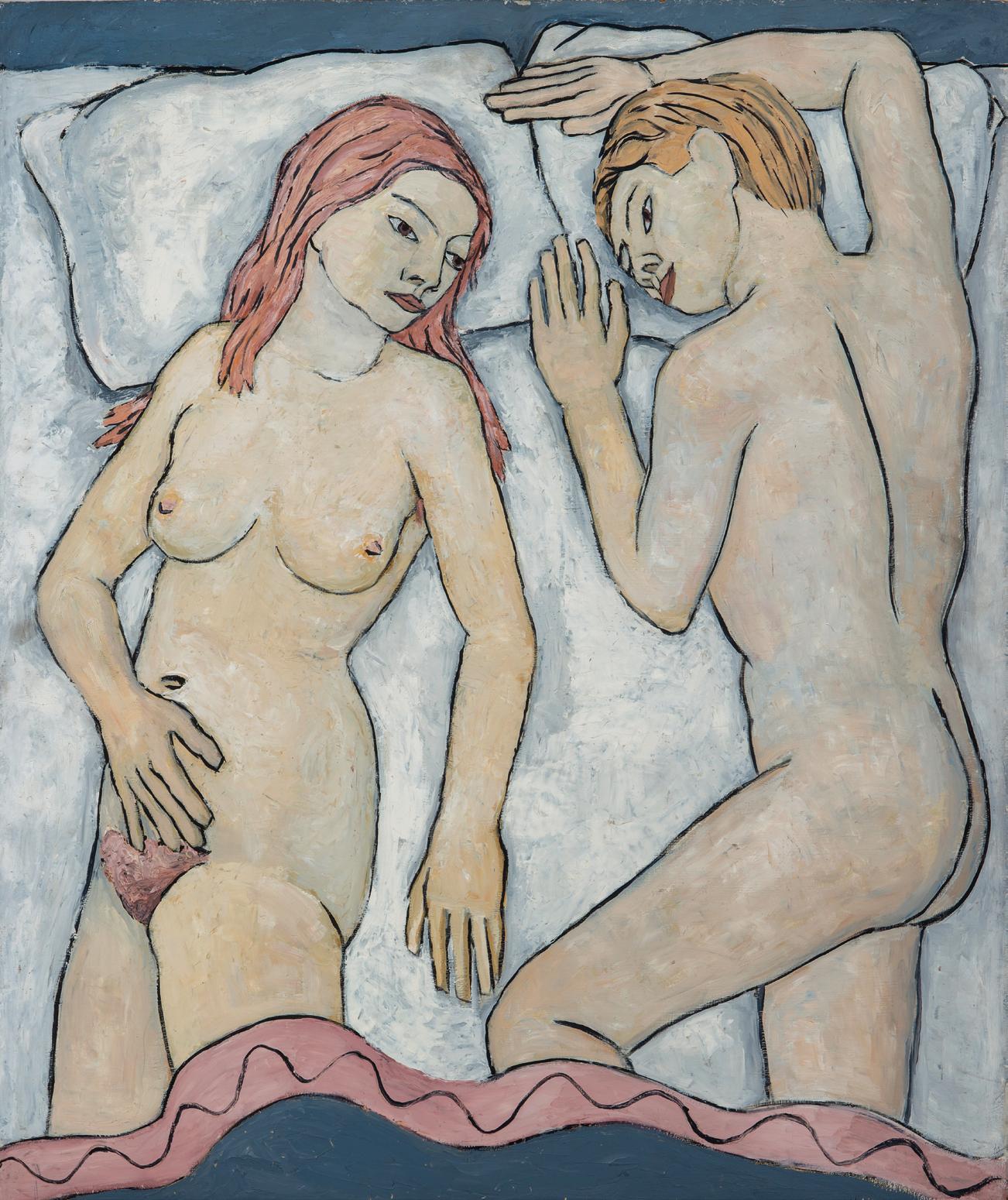
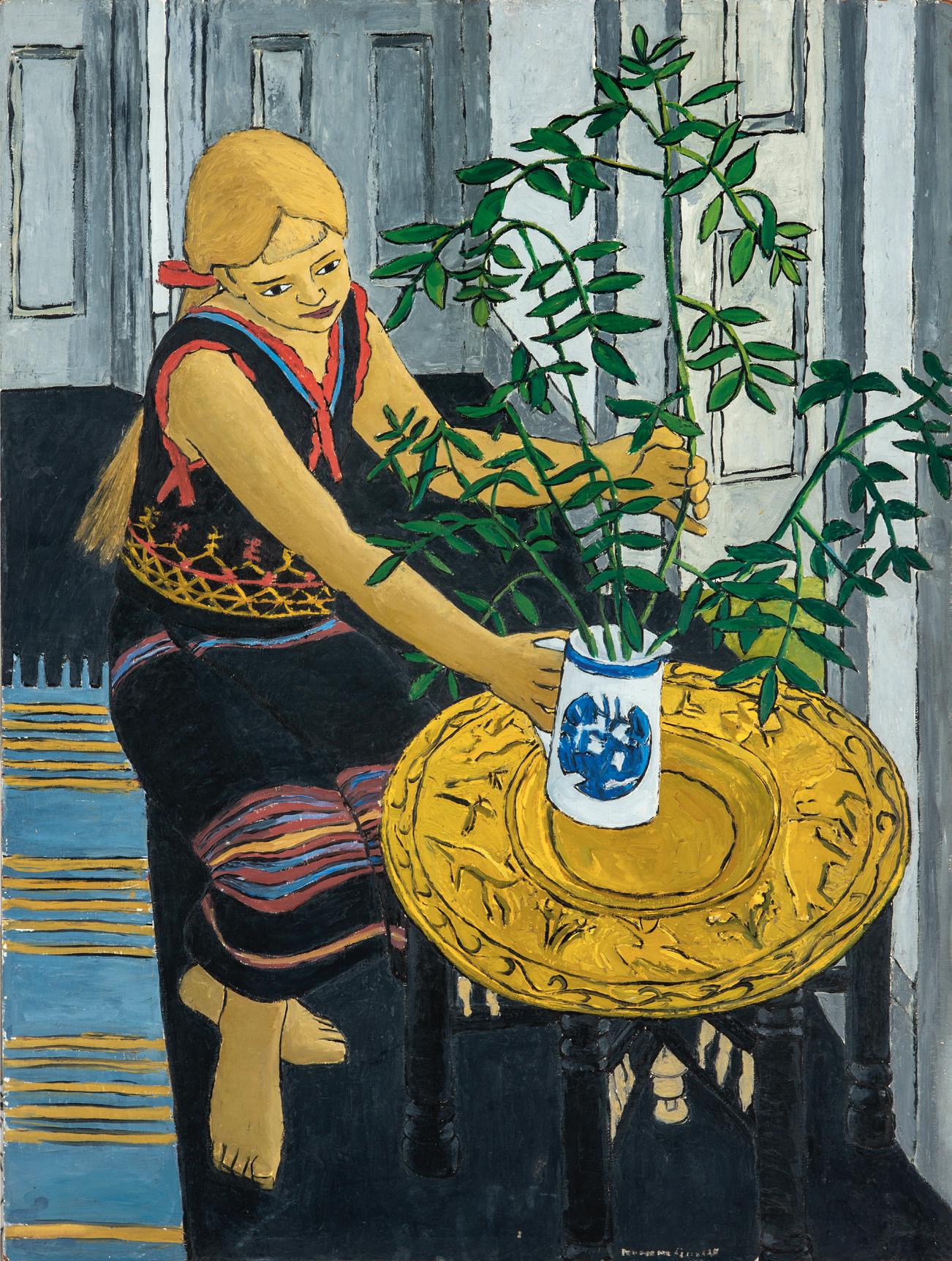
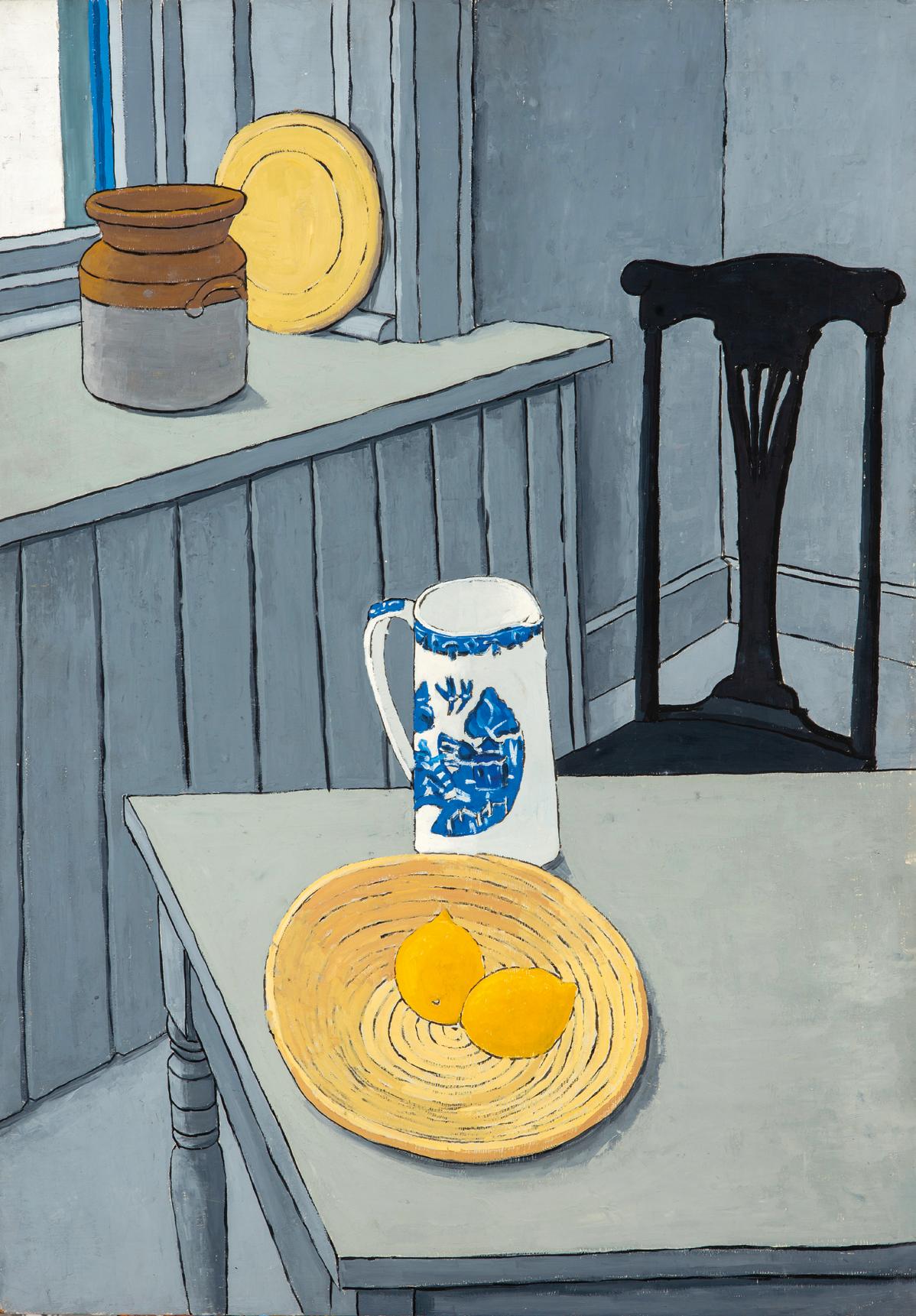
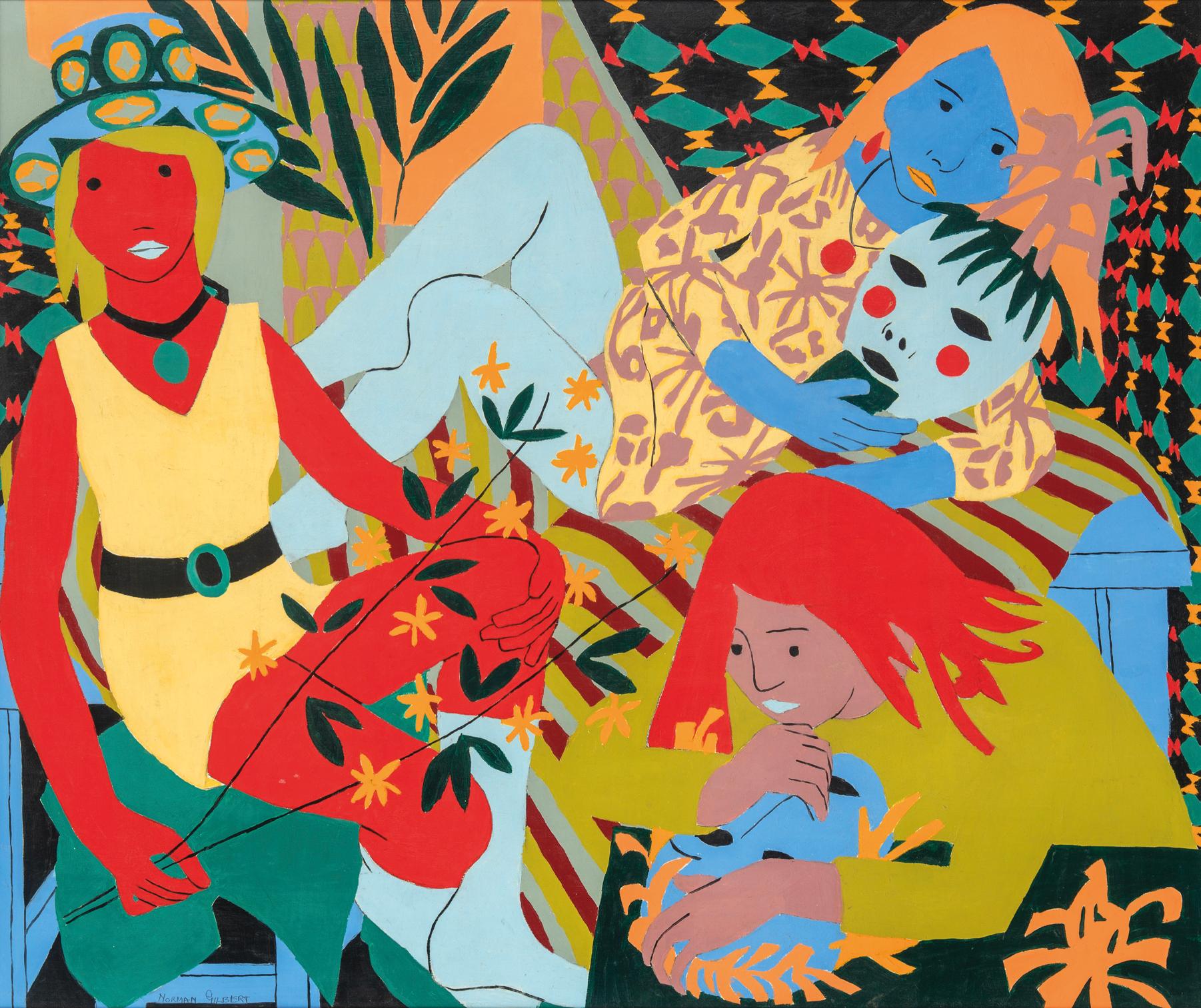
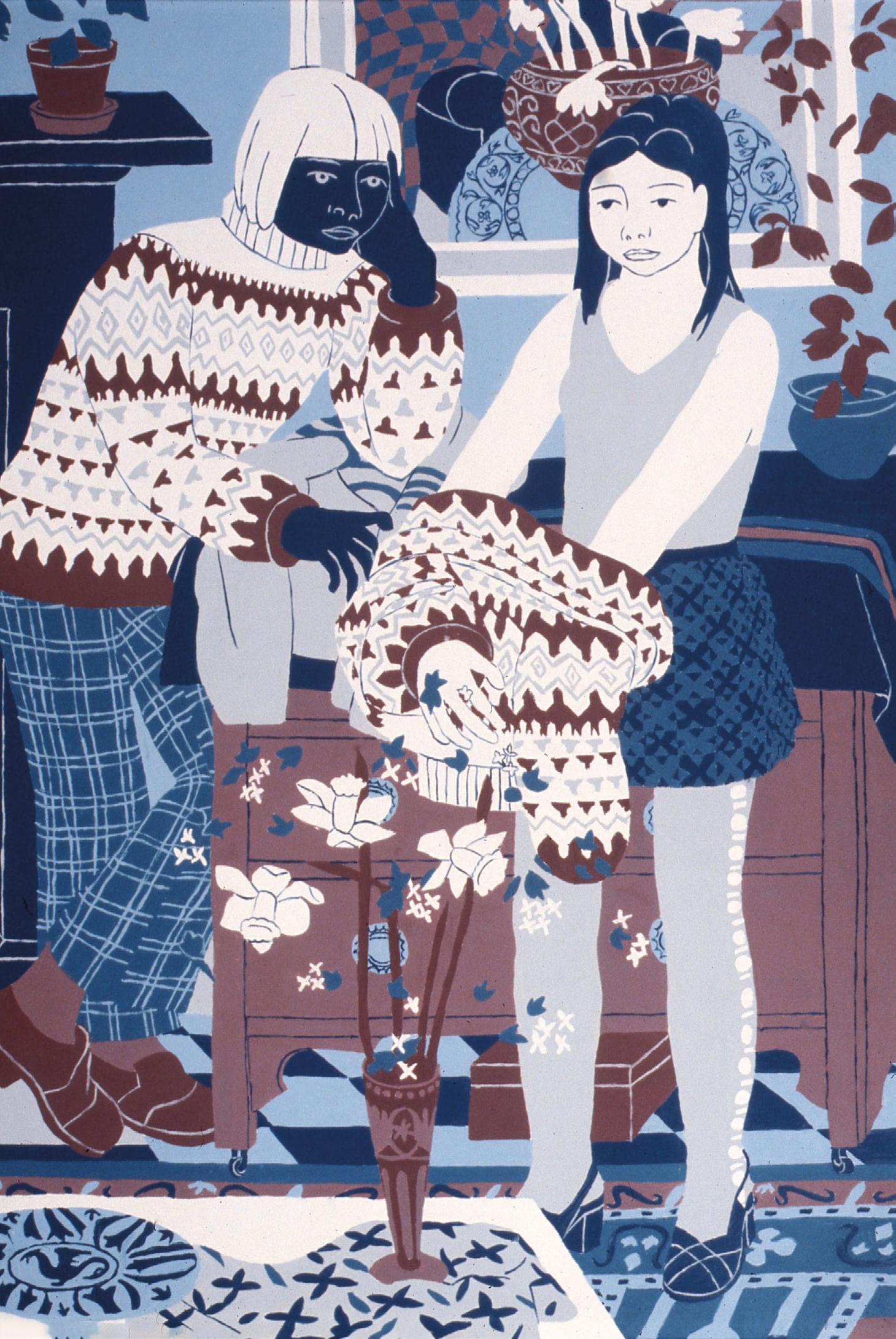
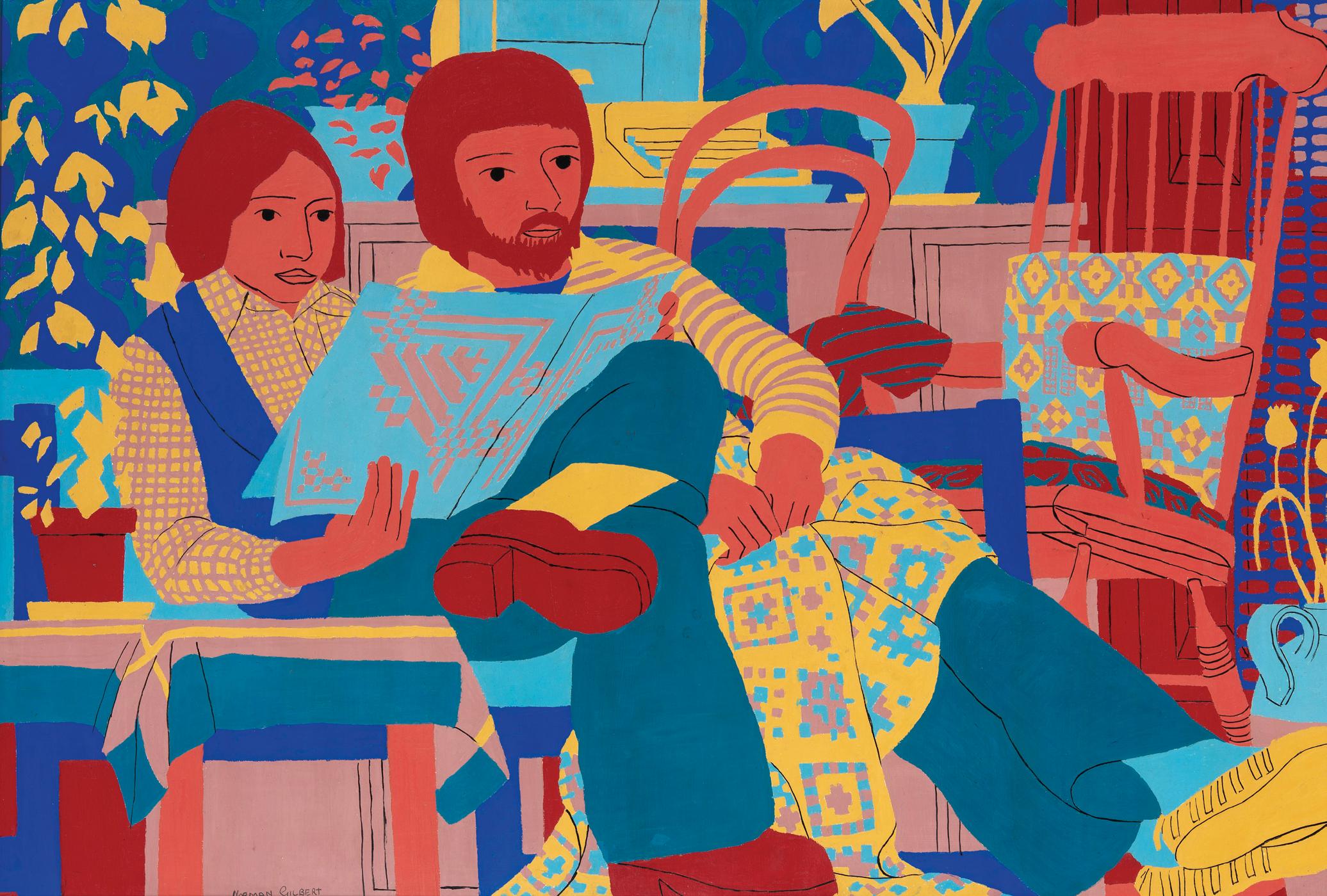
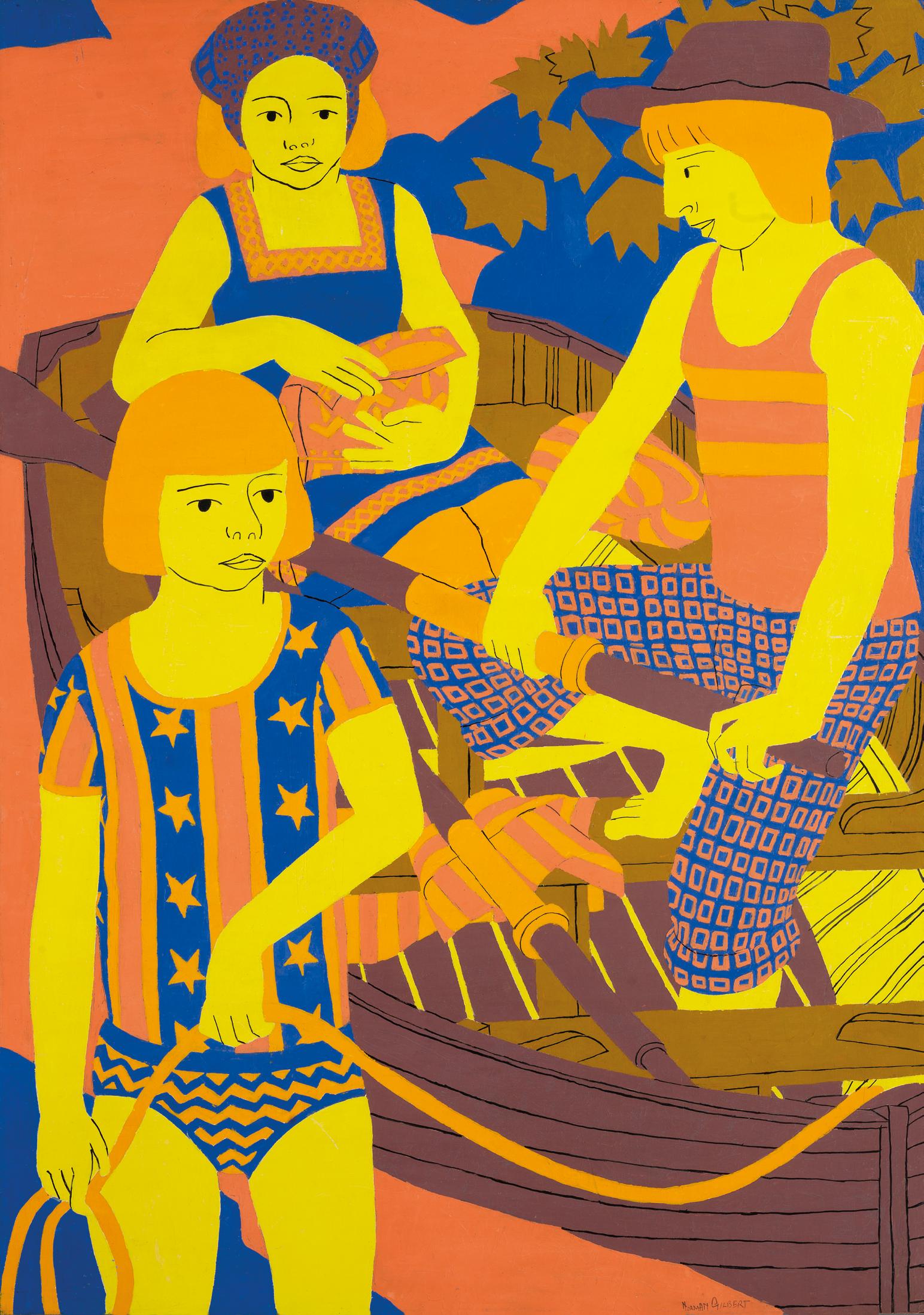
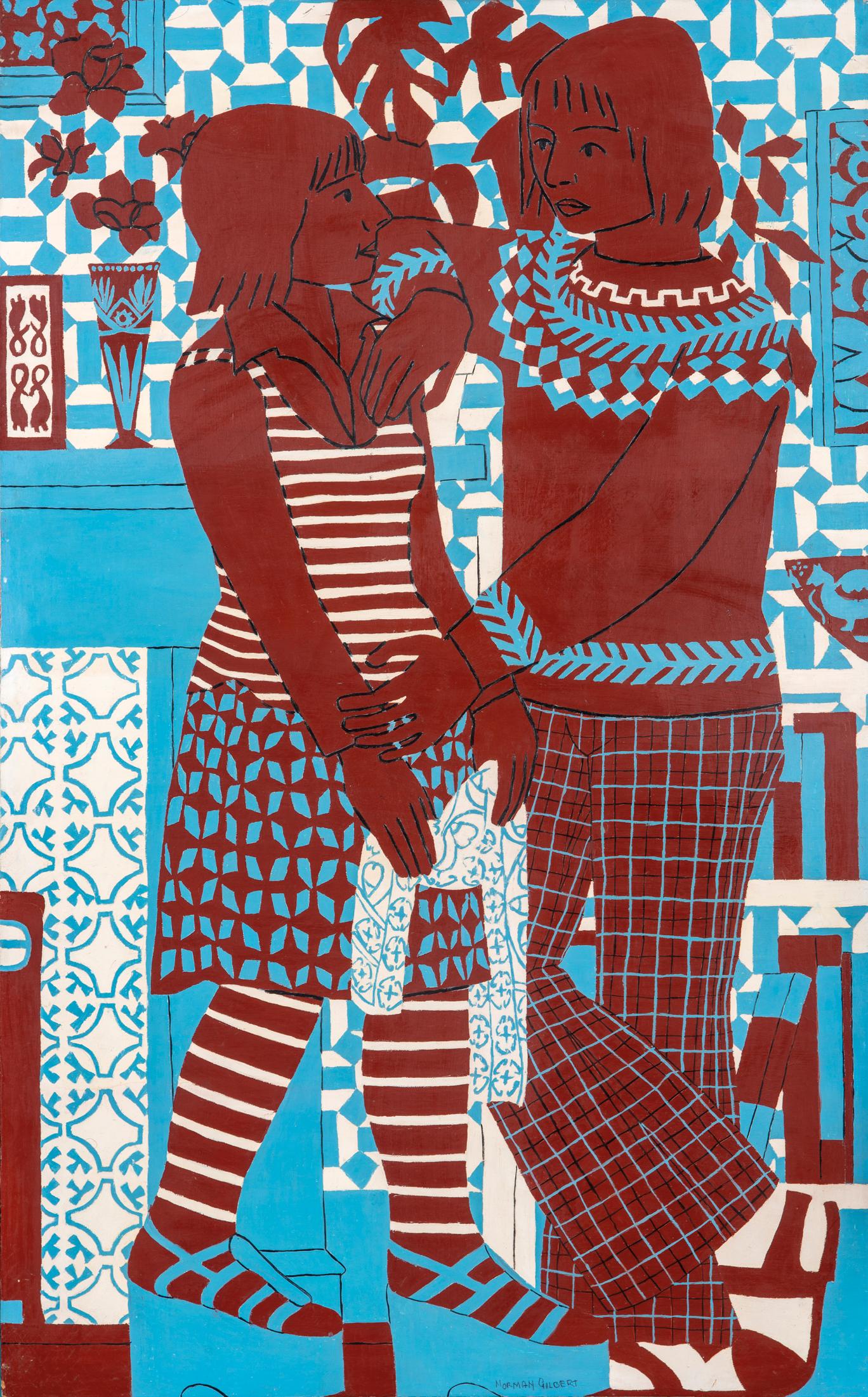
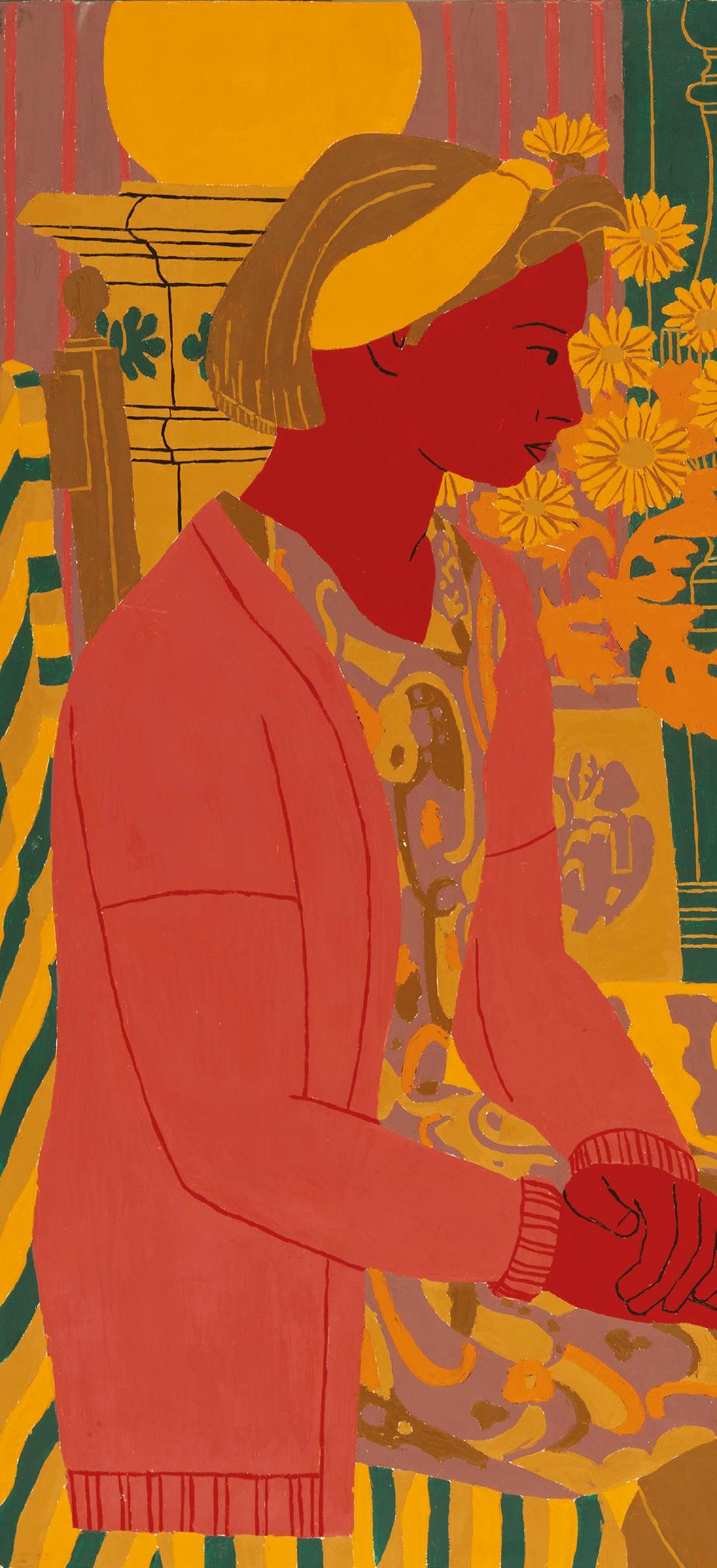
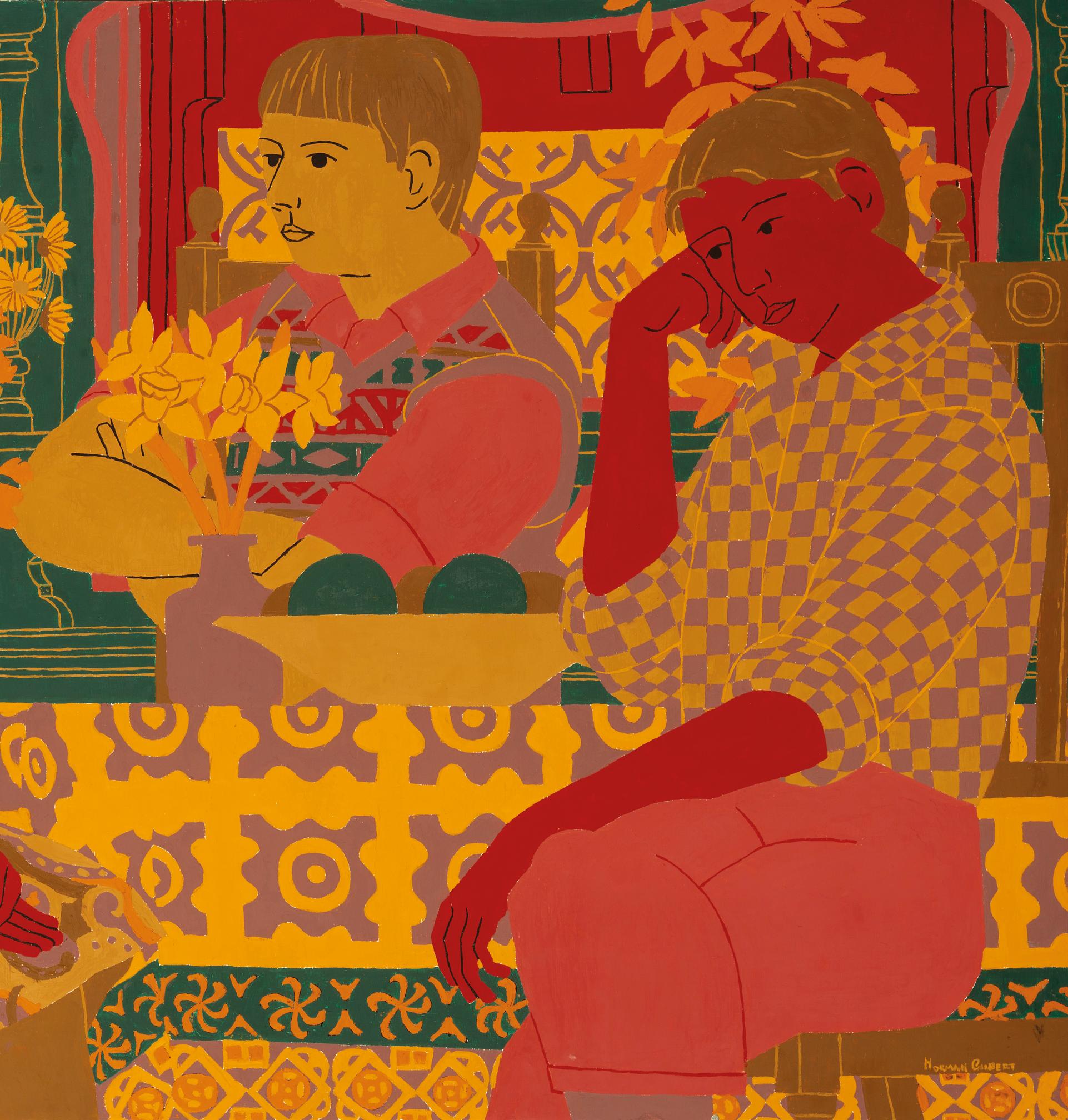
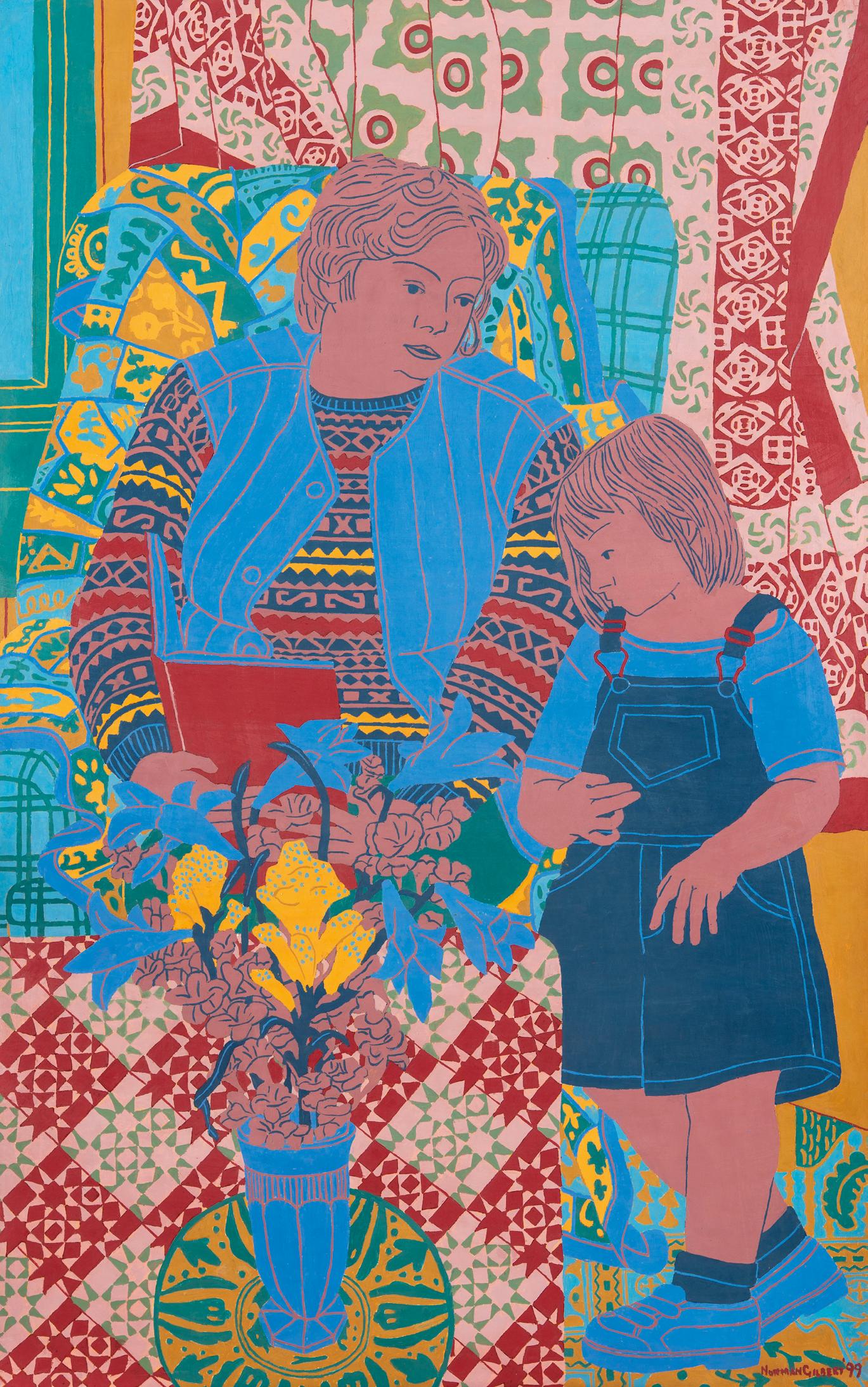
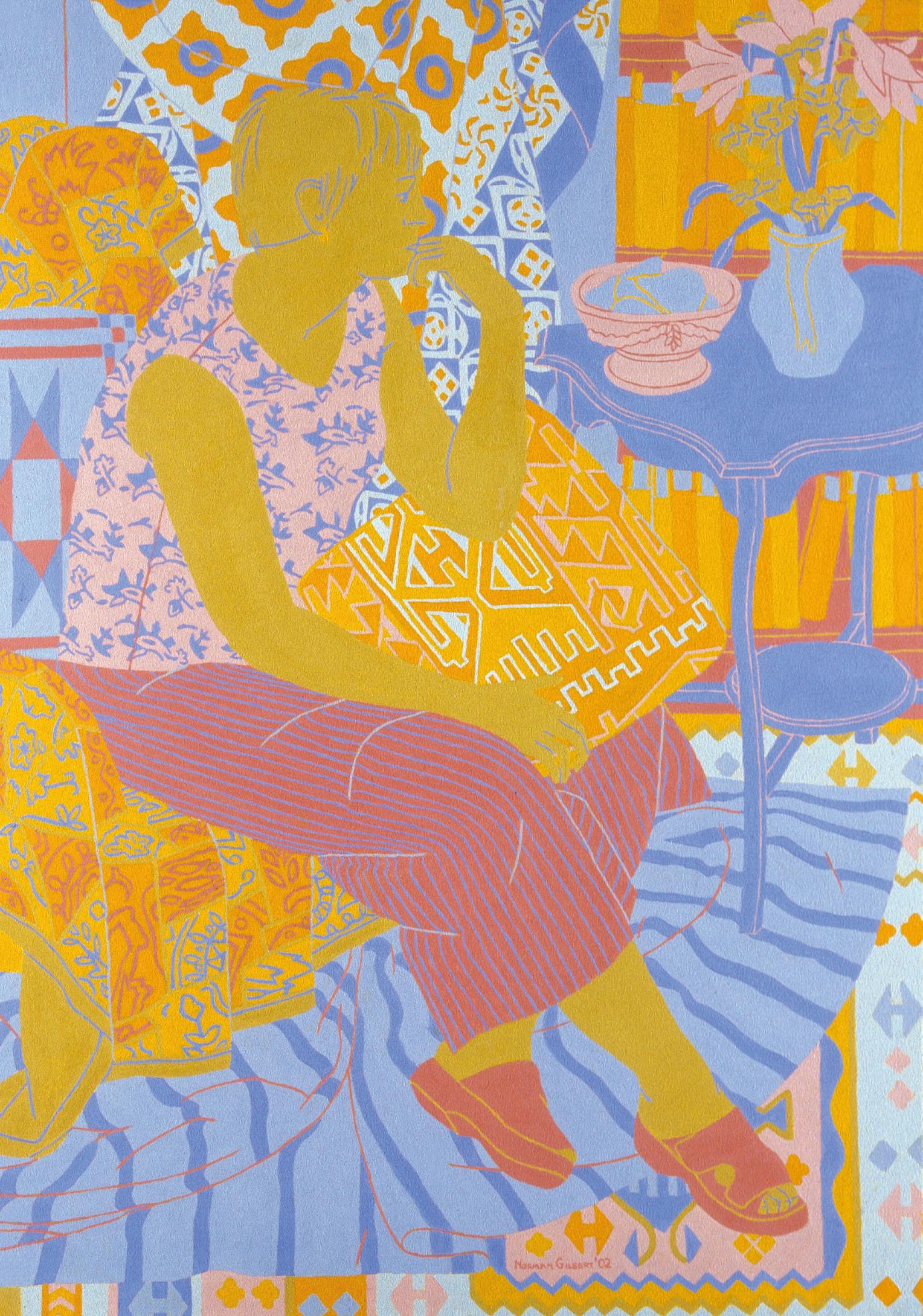
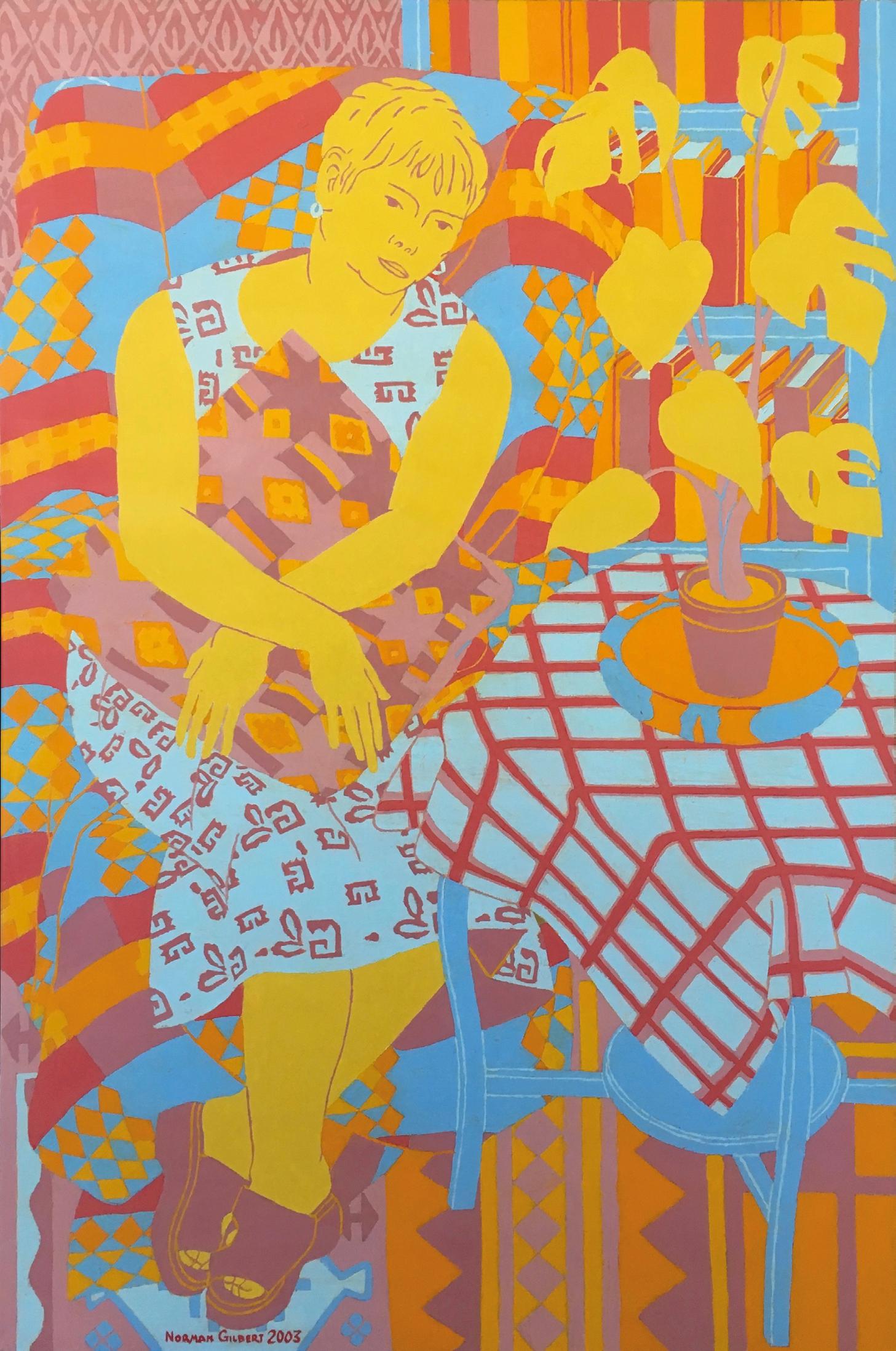
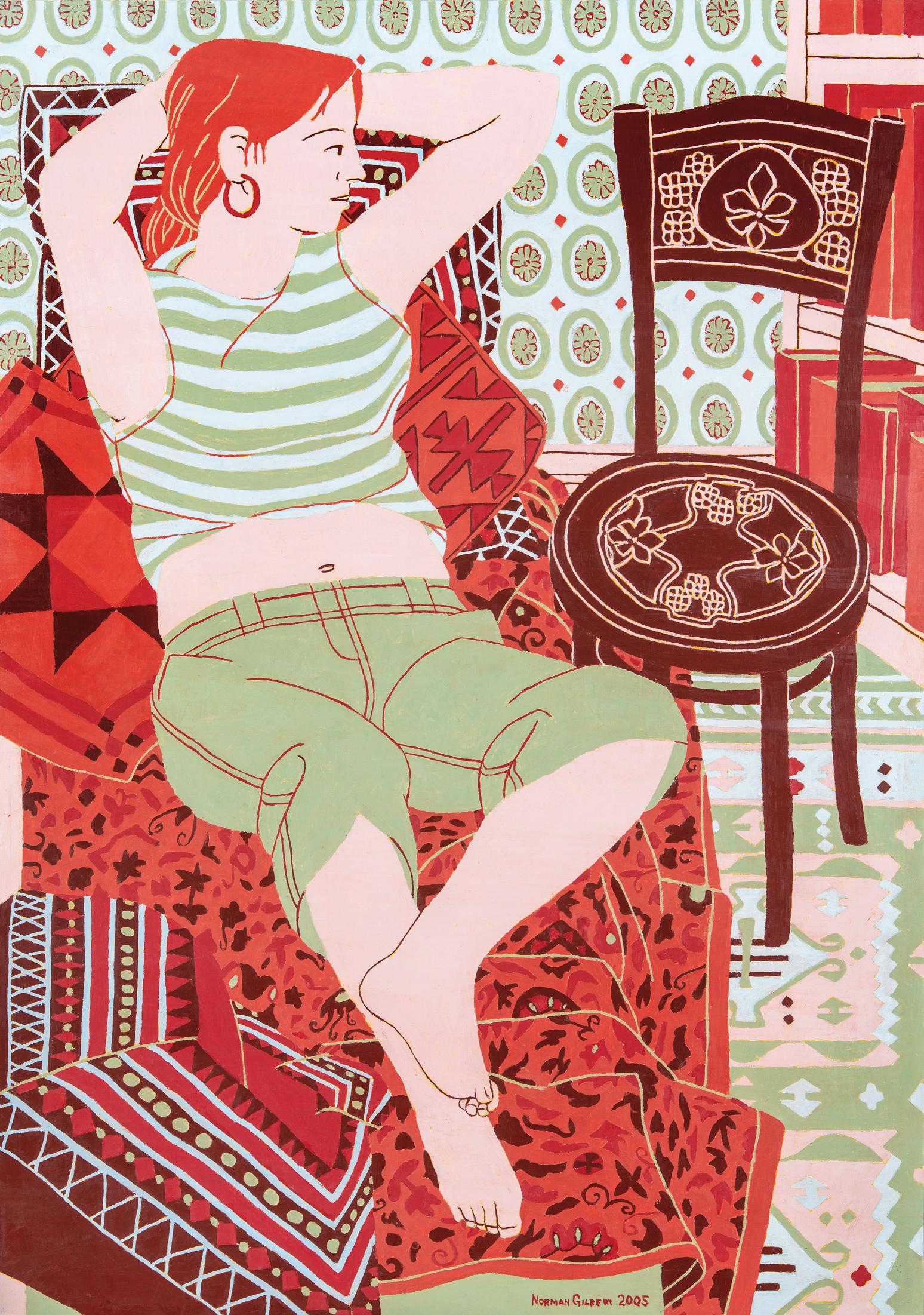
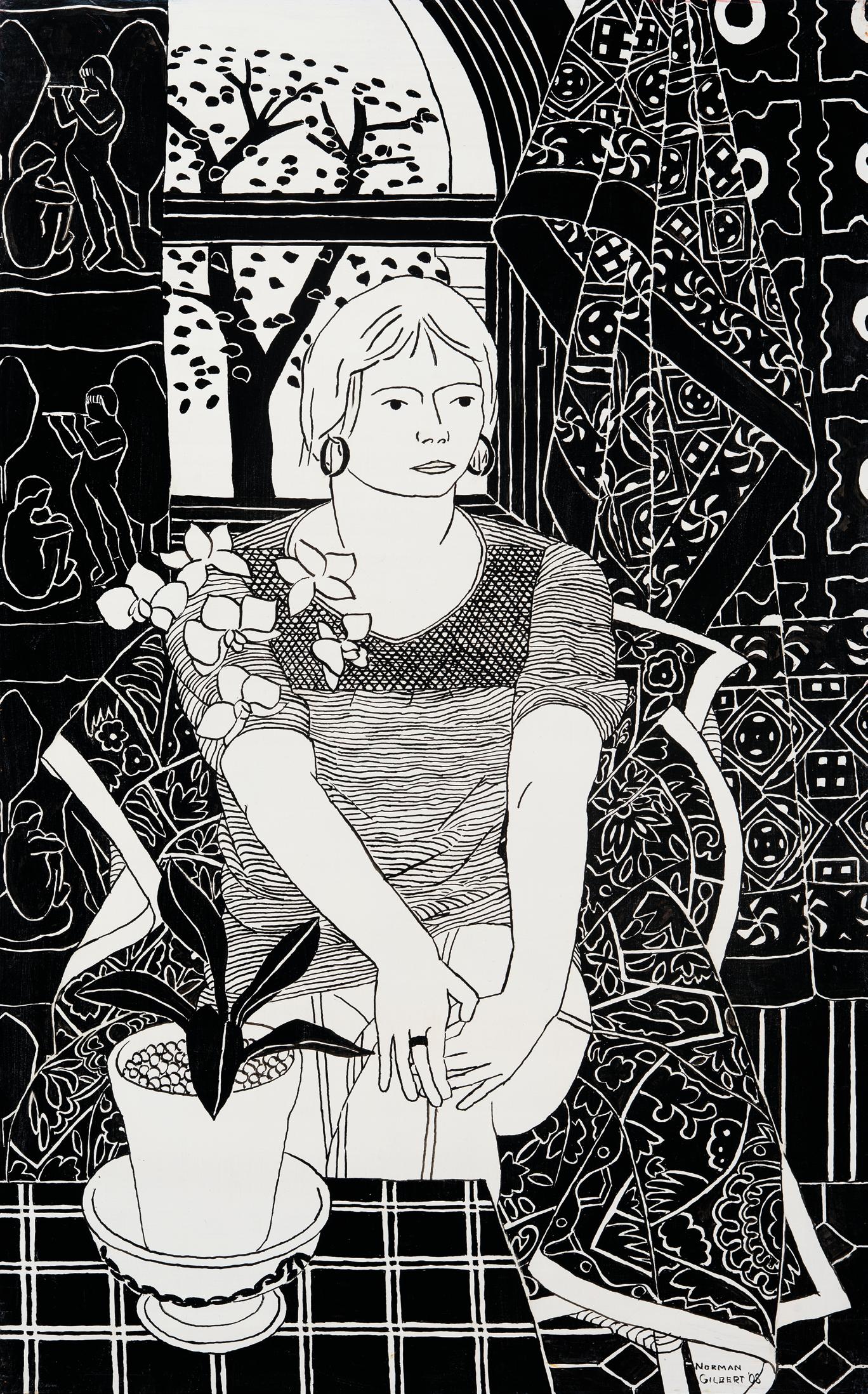
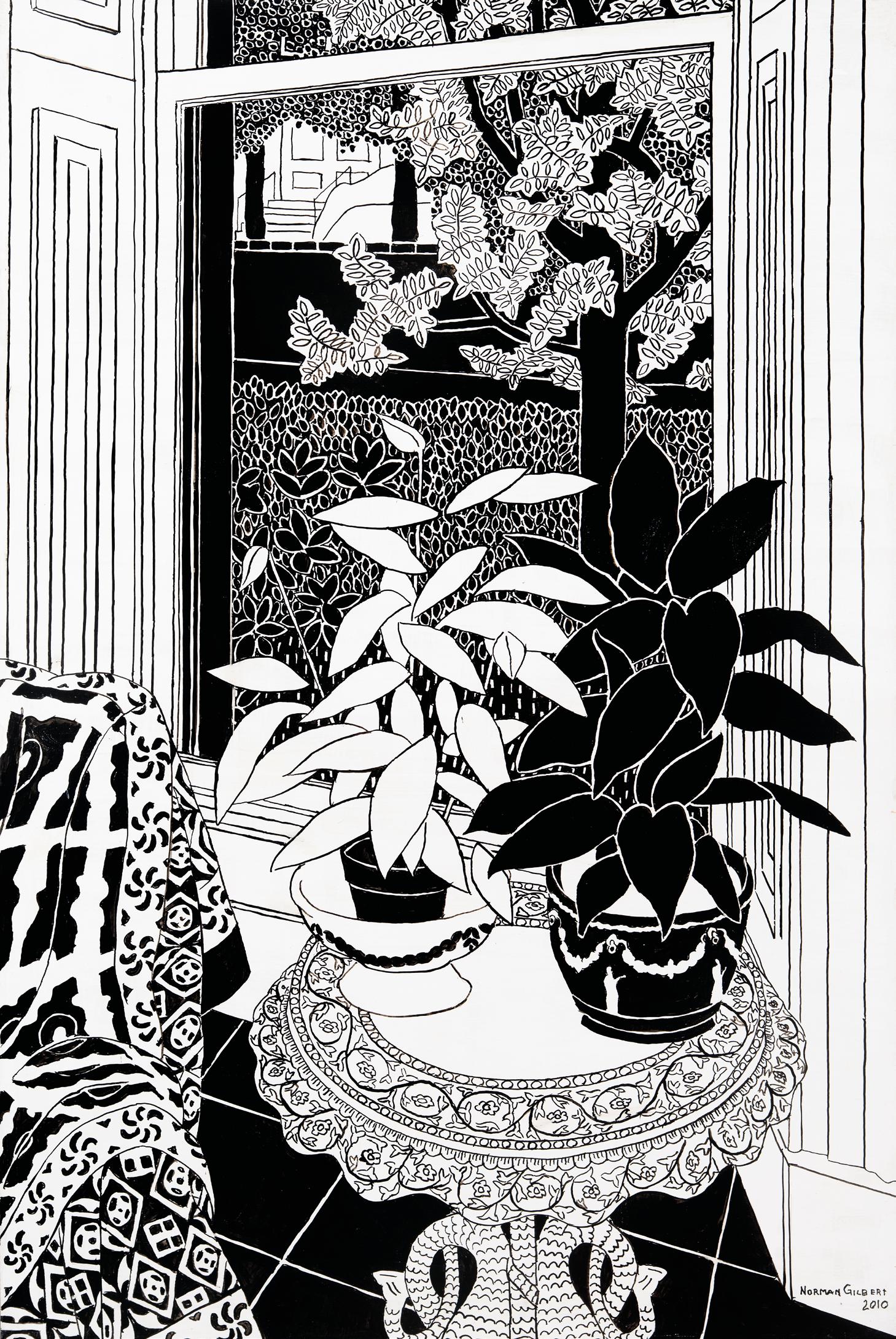
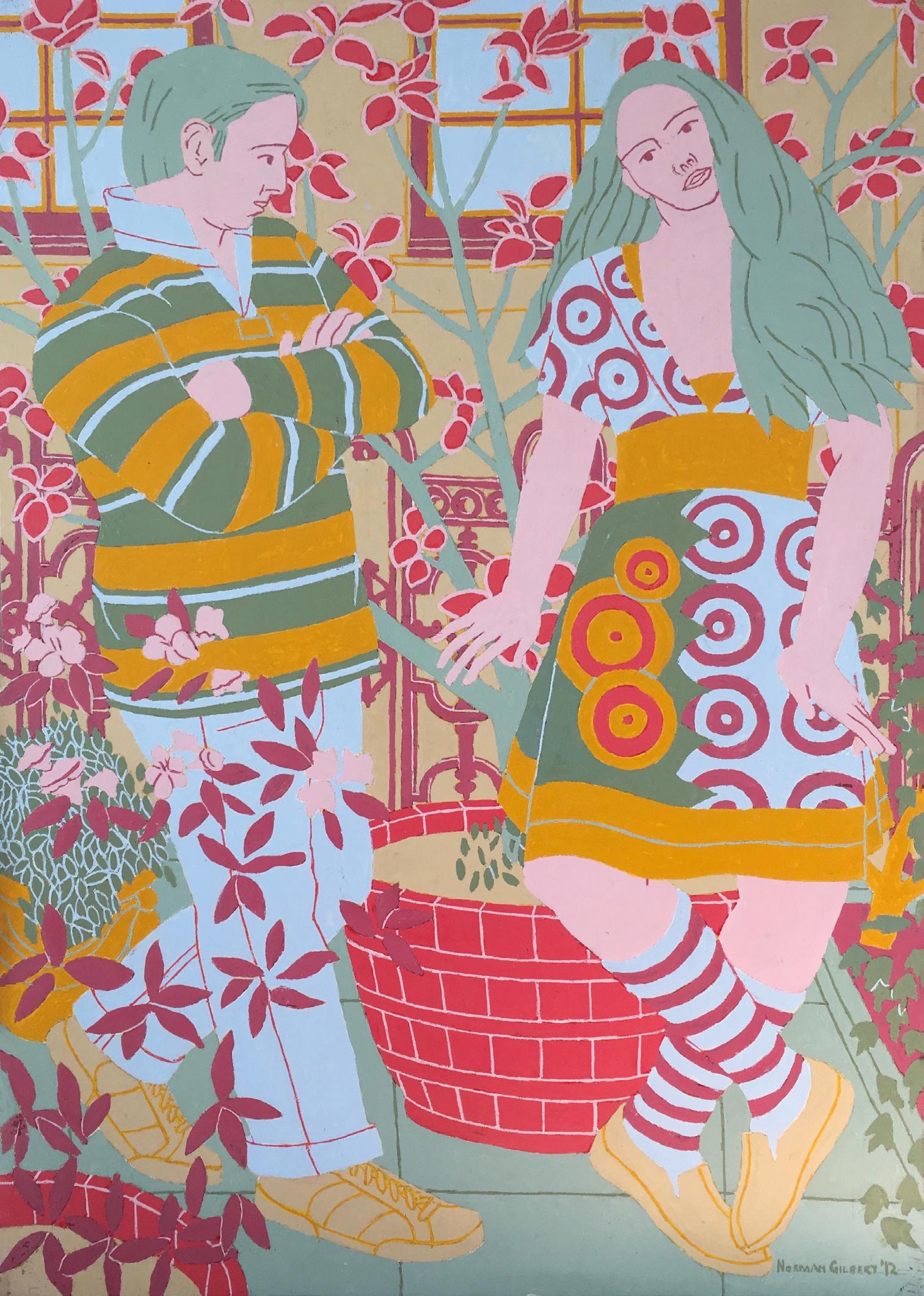
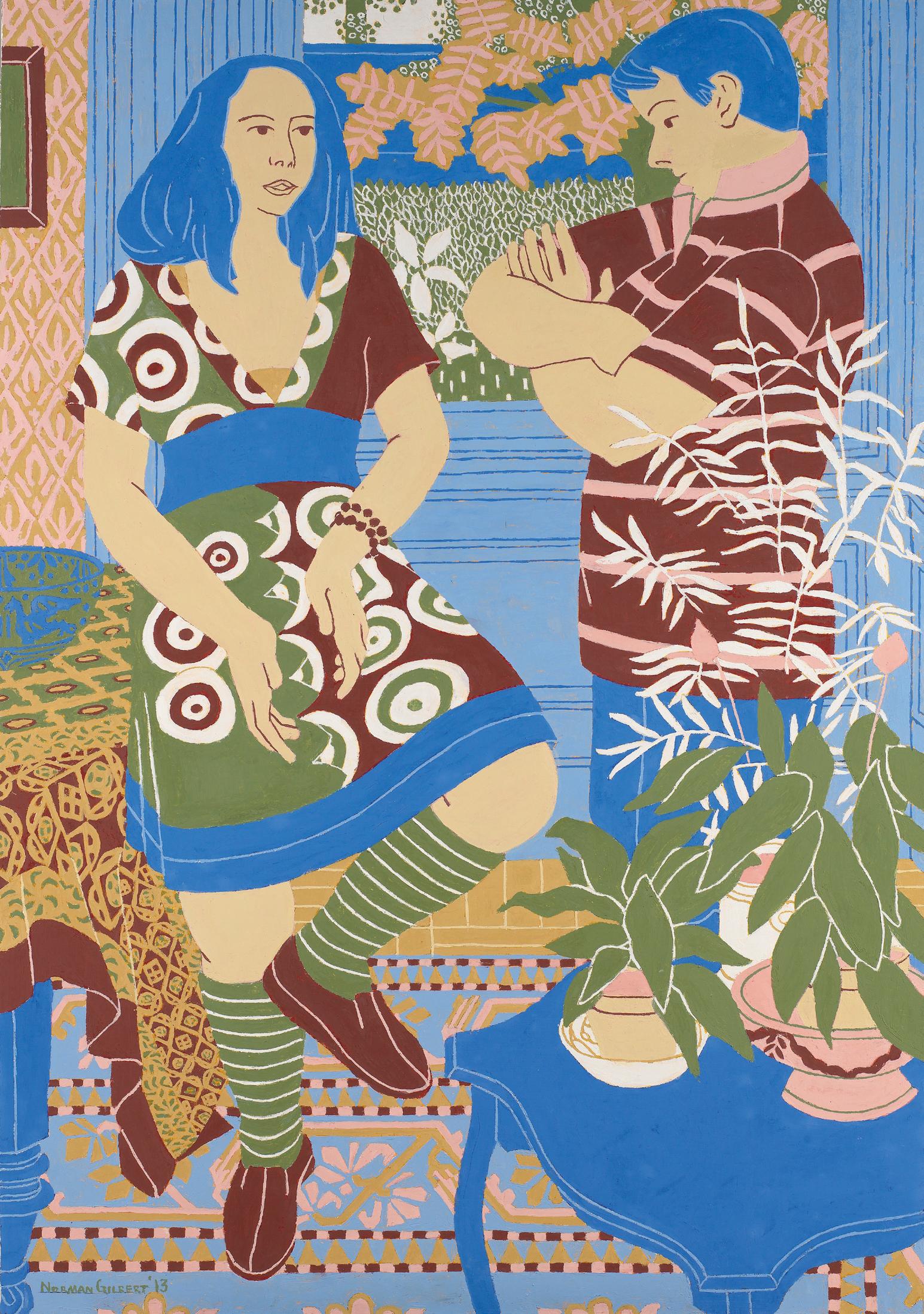
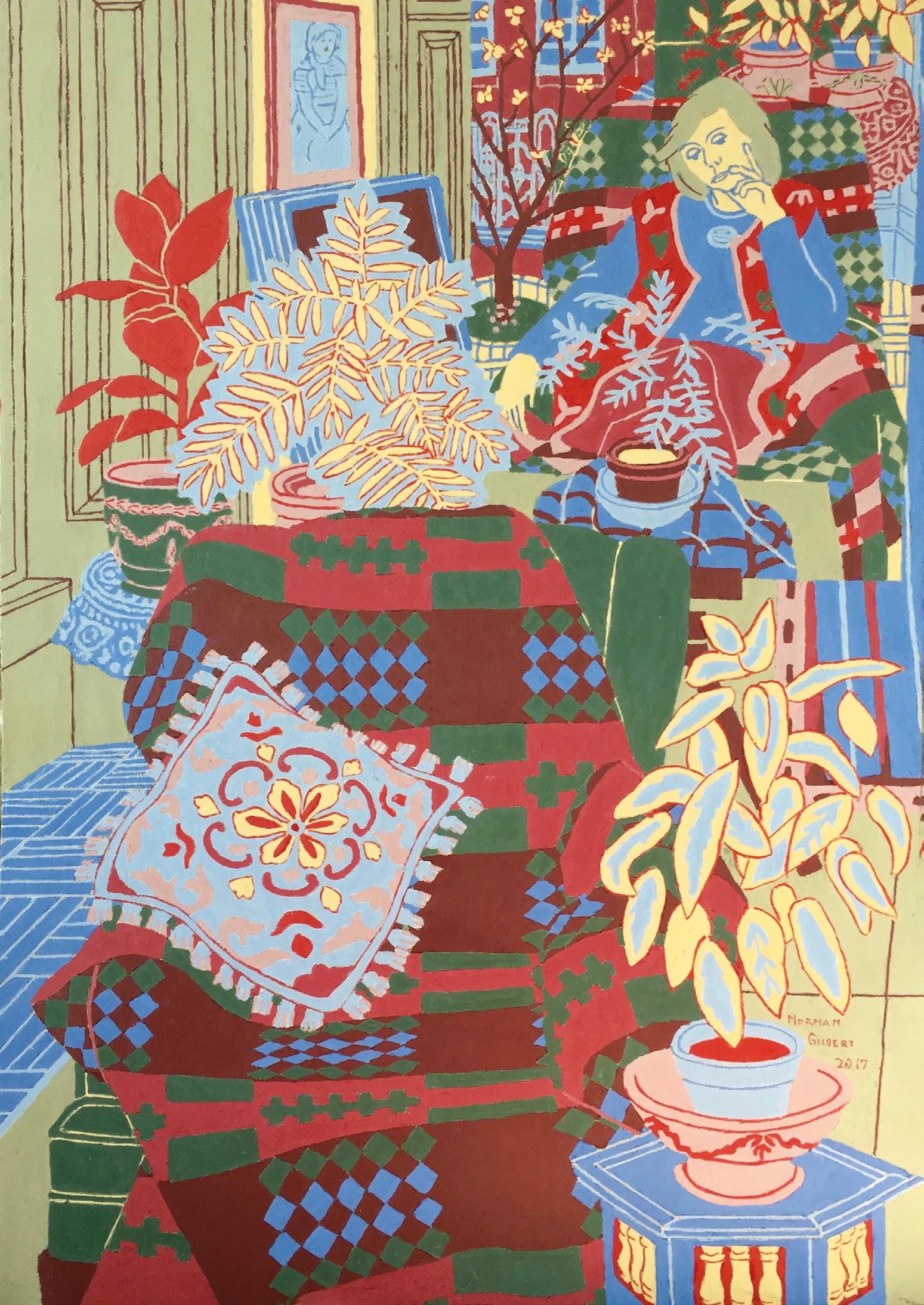
Gilbert’s paintings are distinguished by their bold and instinctive use of colour and pattern. Vivid, inventive palettes and flat, decorative passages of paint sit in dynamic relation, creating compositions of remarkable intricacy and vitality. Figures, objects and interiors are woven together in a fluid synthesis of space, forming a sense of wholeness in which every element is held in balance. As Gilbert reflected, “each colour and shape enhances every other colour and shape, so it’s entirely satisfactory, so it’s at peace.” This pursuit of harmony, achieved through both rigour and intuition, lies at the heart of his work.
Working from within the rhythms of family life, Gilbert’s studio was inseparable from his home. The textiles, furniture, clothing and everyday objects that populate his paintings are drawn directly from his surroundings, imbued with memory and meaning. His work charts the passage of time with particular poignancy, children growing, relationships evolving, and the quiet intimacies of ageing. Portraits of his wife Pat and their sons recur across decades,
forming a deeply personal visual record. In later years, as the presence of sitters diminished, he turned increasingly to still life and to his garden, continuing to find renewal in familiar forms and motifs.
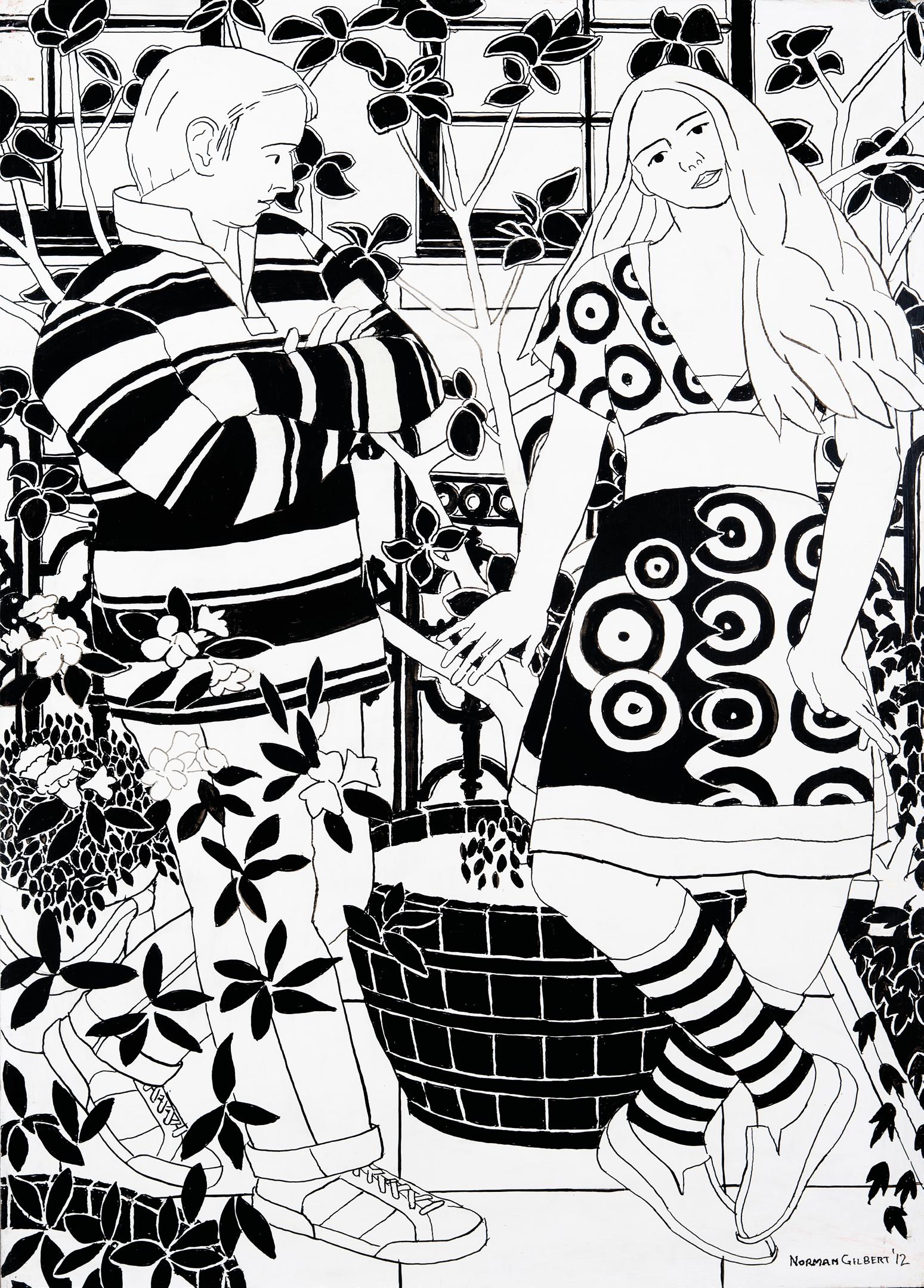
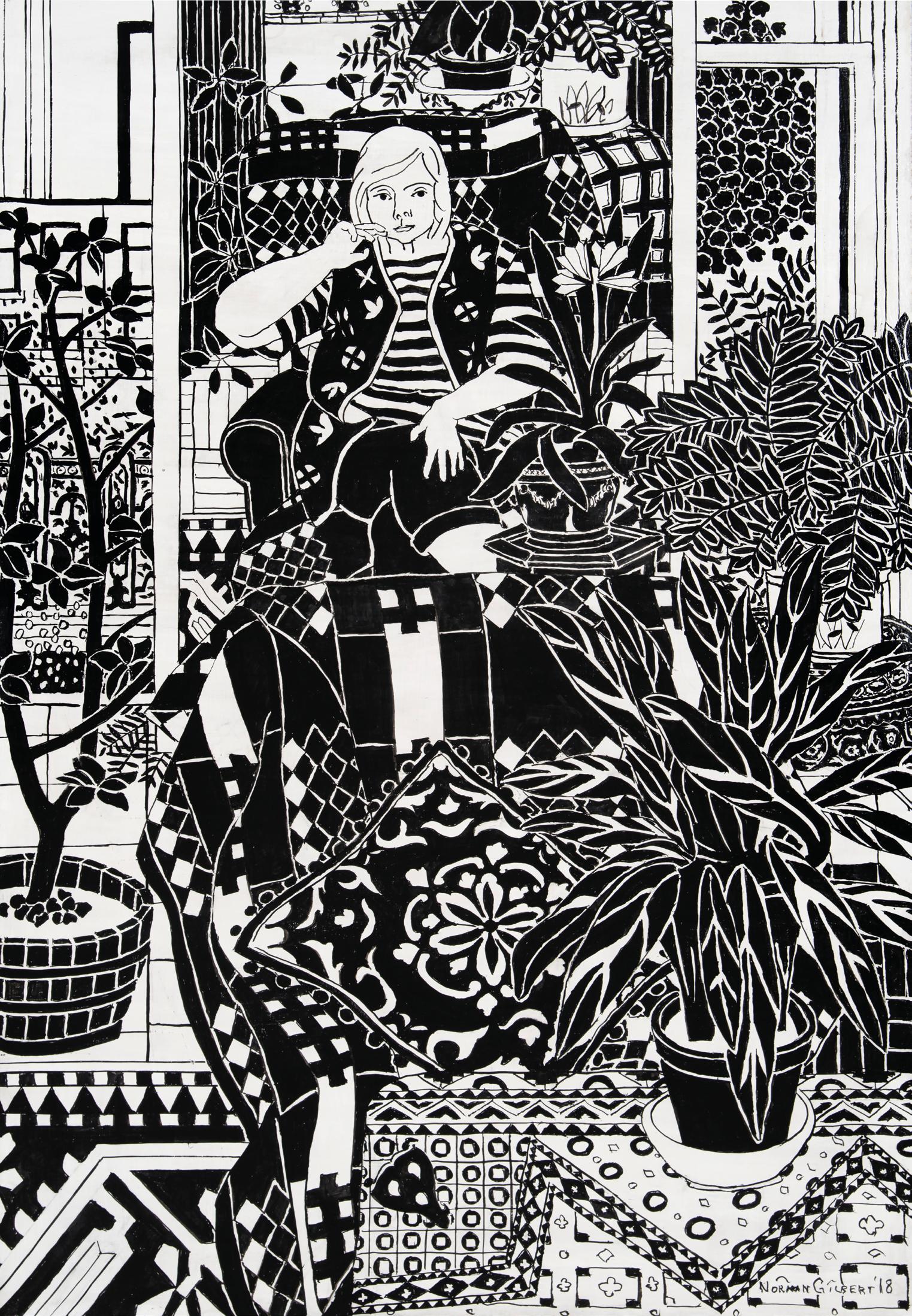
Gilbert’s dedication to painting remained constant across seven decades. His practice was methodical and sustained, often beginning with detailed drawings and monochrome studies before arriving at fully realised compositions in colour. Even into his nineties, he continued to paint with clarity and purpose, producing works of remarkable vitality. His final paintings, completed at the age of 93, affirm an enduring commitment to the act of making.
To encounter Gilbert’s work is to enter a world that is both deeply personal and universally resonant. His paintings reward close attention, revealing the richness of everyday life through colour, pattern and composition. In presenting this exhibition, we celebrate Norman Gilbert not only in his centenary year, but as an artist of singular vision and integrity. His work stands as a testament to independence of spirit, to a lifelong devotion to painting, and to the profound possibilities of observing and shaping the world through art.
THE SCOTTISH GALLERY
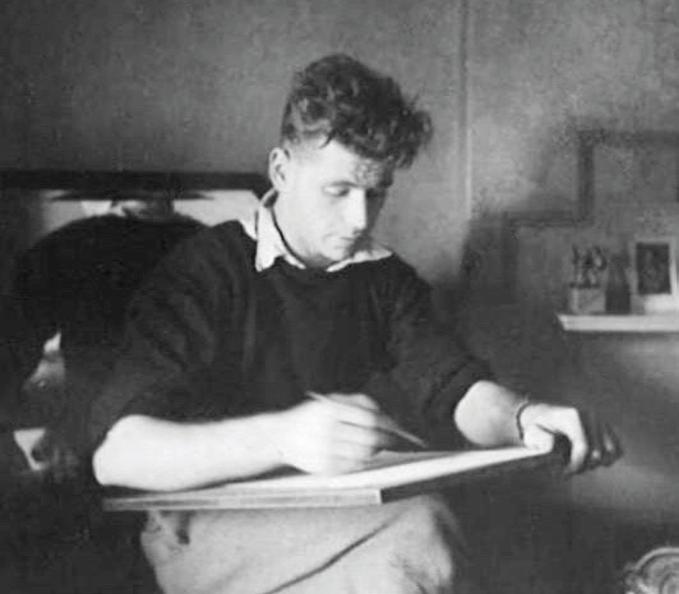
My father, the Scottish artist Norman Gilbert (1926-2019), was born 100 years ago. In his centenary year, my brothers and I are delighted that this exhibition offers a timely celebration of his life’s work. Dad died six years ago. The exhibitions of his work since his passing have often been bittersweet. However, we take great comfort from our belief that he’d be delighted for his work to be showcased here at The Scottish Gallery. This exhibition presents a broad overview of paintings selected from his seventy year career, many of which are being exhibited for the first time.
As I reflect on the works included in this exhibition, I am struck by the memories they arouse. For instance, my siblings and I were accustomed from infancy to the constraints of posing for Dad. However, as a child, I was less tolerant of this task and impatient. I would count the minutes while holding a pose, closely watching Dad, and mentally urging him to finish. When I was older and attended Glasgow School of Art, where Mum and Dad had met as students, my time sitting for him changed. I developed a greater appreciation for what he was doing and watched his working process.
Many of the pictures evoke memories of my own experiences of the people, places, and times they depict. A constant presence in his pictures is his studio, which was littered with different garments, patterned fabrics, ceramics, ornate artefacts, and carved wooden furniture. These decorative and patterned items would continue to populate his pictures even in his last years when finding willing models became more of a challenge.
After graduating, I worked in my own Glasgow studio for nine years. Dad would often sit for me in the mornings, and I would sit for him in the afternoons. During these sessions, we would discuss our pictures and puzzle over each other’s working methods. He would often question my liberal use of paint and the chaotic studio. However, I gained a greater understanding of Dad’s aspirations for his work, which seemed the antithesis of my own. He was fascinated by how one
colour can impact the next and how layering one seemingly opaque colour over another can generate subtle relationships. This knowledge allowed him to find his own “painterly” language.
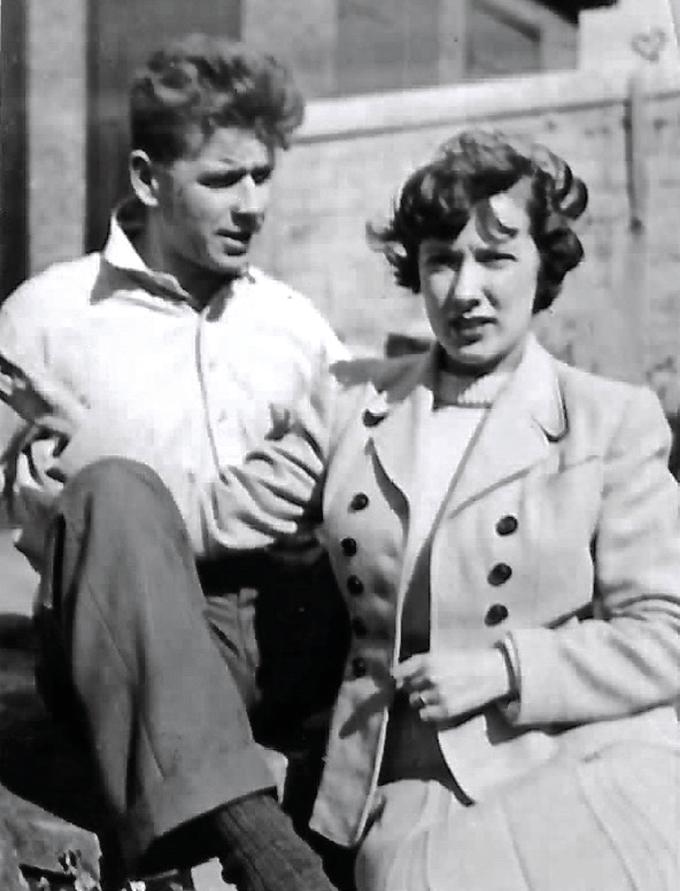
During breaks in these drawing sessions, Dad often reminisced about his childhood in Trinidad, where he was born to Scottish parents. At the age of nine, his family relocated to Troon, where he attended Marr College. It was there that he discovered his passion for art. His early subjects included drawings of Troon Marina boats and jetties, which he drew perched on a crane. Later, during the final days of World War II, he enlisted in the Royal Navy, serving as a radar operator on the cruiser HMS Liverpool, the flagship of the Mediterranean Fleet. It was during his naval service that his interest in art transformed into a commitment to dedicate himself to painting, firmly believing this was a vocation that would “last a lifetime”. And so, at the age of 21 in 1948, against his parents’ wishes, he enrolled at Glasgow School of Art with an ex-serviceman’s grant. It was here that he met my Mum, Pat Jordan, who was a fellow student.
became a significant source of distress, even after he eventually received his diploma from Glasgow School of Art in 1963. He later admitted that the emotional impact it had on him was probably disproportionate to its importance. Despite this, he never fully reconciled himself to the feelings of hurt these events engendered.
Although there is little doubt how much he cherished the Art School and working in “The Mack”, we were all too aware of the challenges he had faced as a GSA student, where he grew increasingly frustrated with the prevailing Academic Impressionism style taught by his tutors.
In 1952, he was deemed “unteachable” and left without a diploma. This rejection
In spite – or perhaps because – of the immense pain and self-doubt this episode seems to have caused him, he persevered and continued to create intimate paintings during the post-war austerity period. These more subdued paintings reflected the challenges of raising a young family in a caravan while working as a pigman. It undoubtedly boosted his confidence when, in 1957, his paintings were showcased in an exhibition titled Artists of Fame and Promise at London’s Leicester Galleries, alongside renowned artists such as Jacob Epstein and David Bomberg.
The family’s move to a tenement flat in Glasgow marked a turning point for Dad’s paintings, leading to the development of
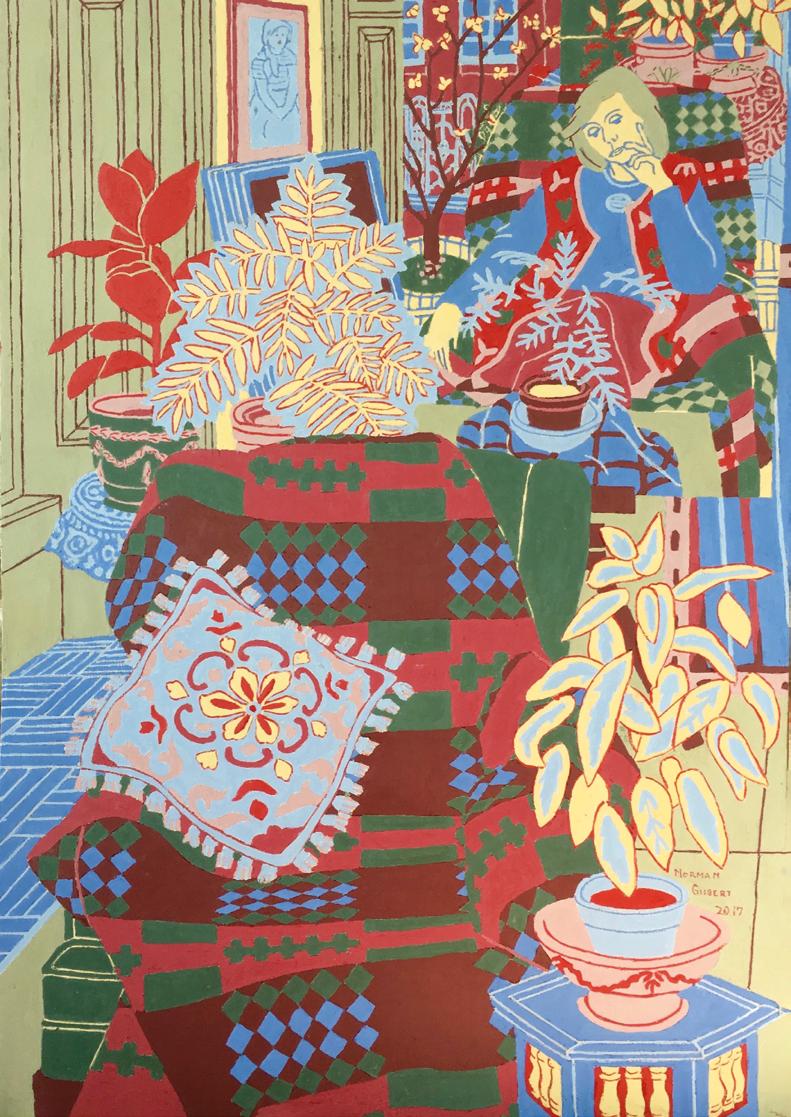
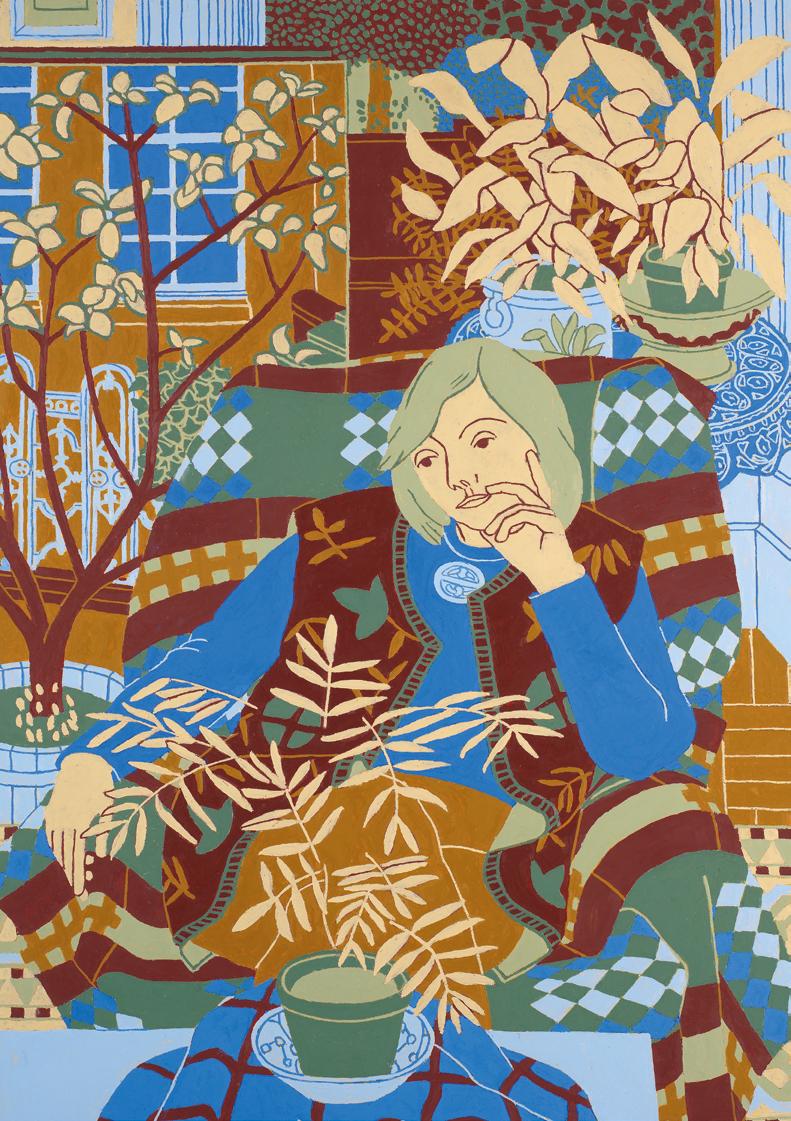
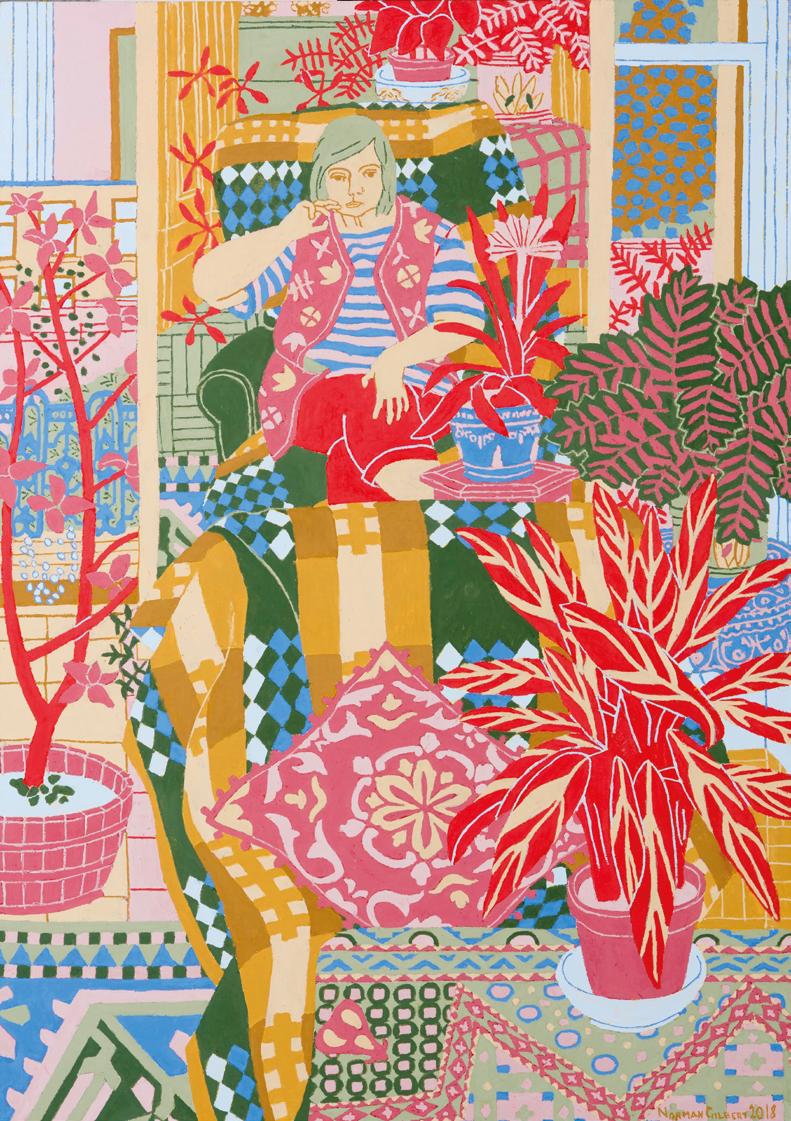
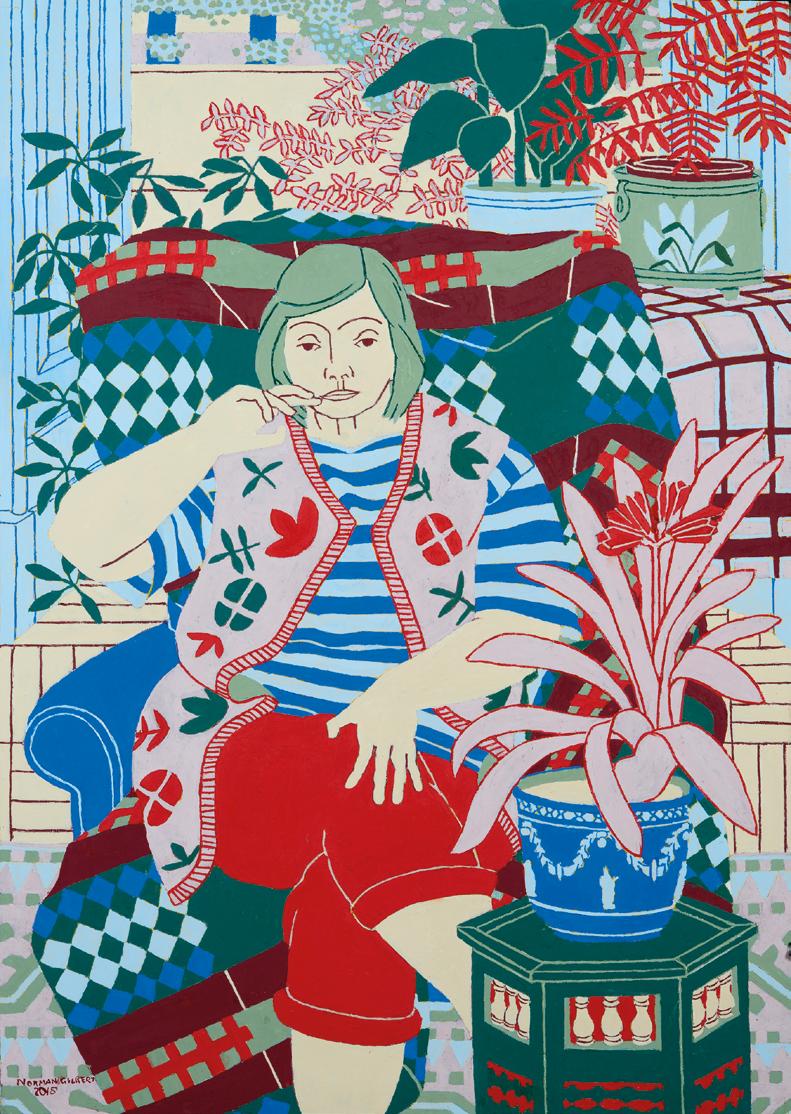
his most recognisable style as his paintings evolved into larger, vivid compositions with contrasting and merging colours within linear, patterned, and decorative elements, which were informed with an obsessive dedication to his craft. In the late 60s into the 70s, his efforts were rewarded with increased media attention and a number of solo shows, including in London and Edinburgh.
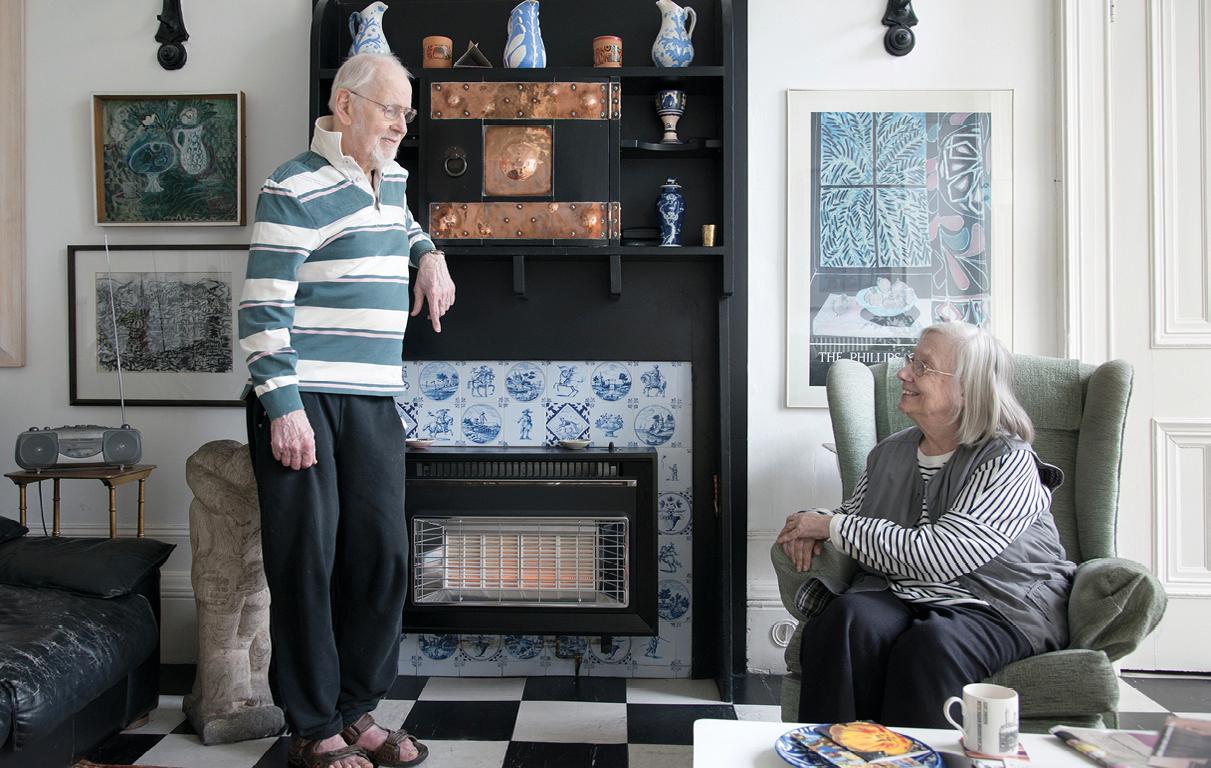
His paintings beautifully capture intimate moments of the people he knew and loved and the surroundings he was familiar with; often domestic settings of his home and studio, but also holiday destinations such as the Scottish Highlands and the South of France. Looking at the works now, they are a wonderful visual record of the people and places that nourished and inspired him. Through these sources of inspiration, he created a vibrant world of colour and beauty. His family, especially, fuelled his paintings, capturing the love and compassion he knew. He said, “I try to make each colour and shape enhance every other so it’s entirely satisfactory, so it’s at peace.”
He continued to explore his own highly coloured figures intricately woven into vivid patterned spaces. The people in his pictures are easily discernible, but they are rendered with the same weight of line, colour, and flat texture as the setting. This rigorous evenness of attention can be unsettling for some, but it results in complex yet coherent compositions
where every element finds harmony.
Dad painted Mum more than anyone. In 2010, she was diagnosed with Alzheimer’s Disease, and Dad became her devoted caregiver. After her dementia diagnosis, Dad painted her alone again, in vibrant oil paintings created from drawings he made while she sat with him. These drawings show her growing frailty but also their ability to carry on as before. These post-diagnosis portrayals establish them as a powerful visual record of an artistsitter or husband-wife relationship and a testament to an evolving patient-caregiver relationship. They sustain the optimism and pleasure in colour and pattern that saturates Dad’s work and testify to the fluid roles we play when caring for loved ones and falling ill ourselves.
In 2016, Mum suffered a severe stroke. At this time, I lived and worked in Canada. It was my brother, Danny, who informed me that as Dad kept vigil by Mum’s bedside, he was also drawing her. When she died, he created one final drawing moments after. The final collection of nearly 30 drawings allows me — and all who view them — to create a shared picture of what
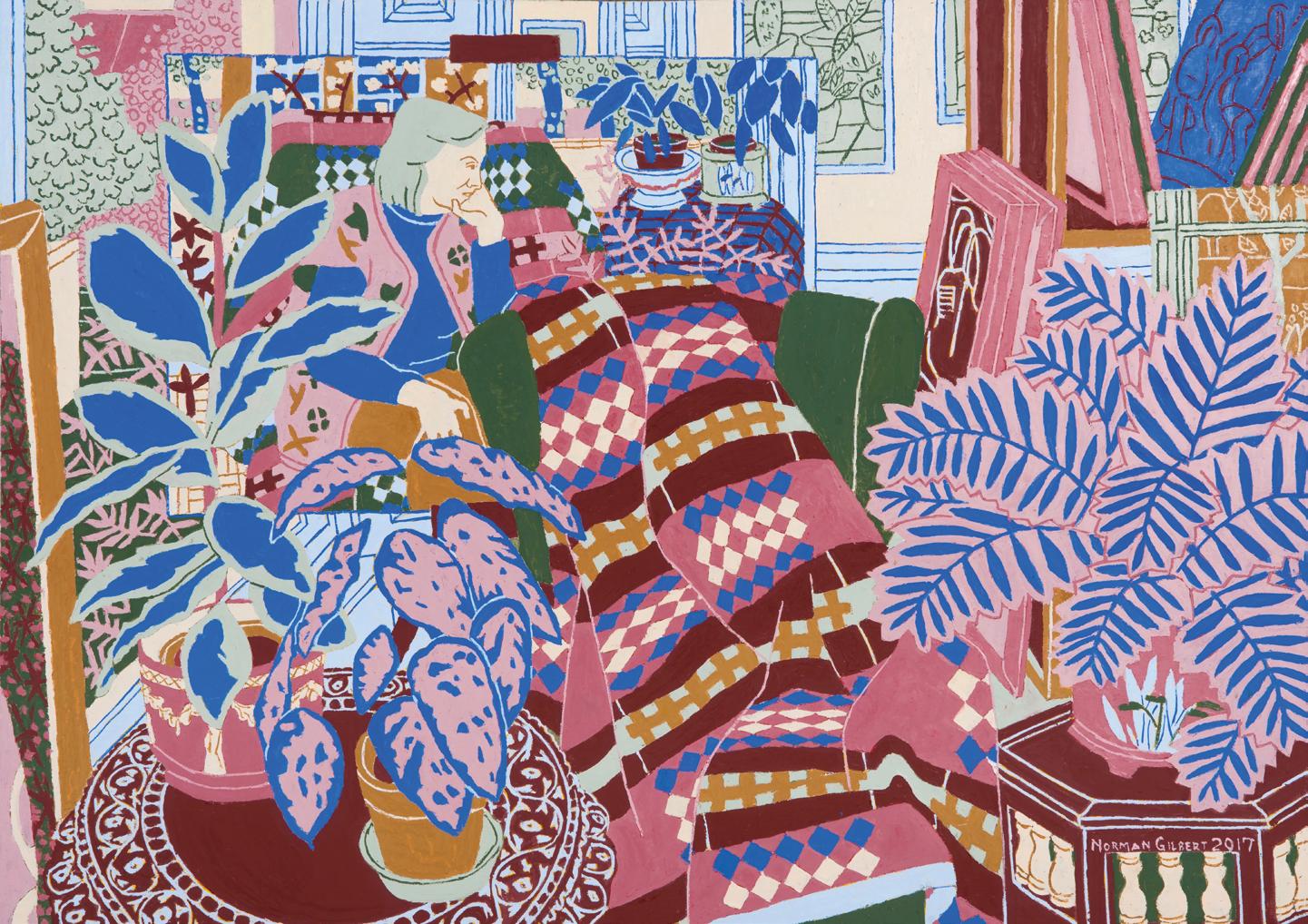
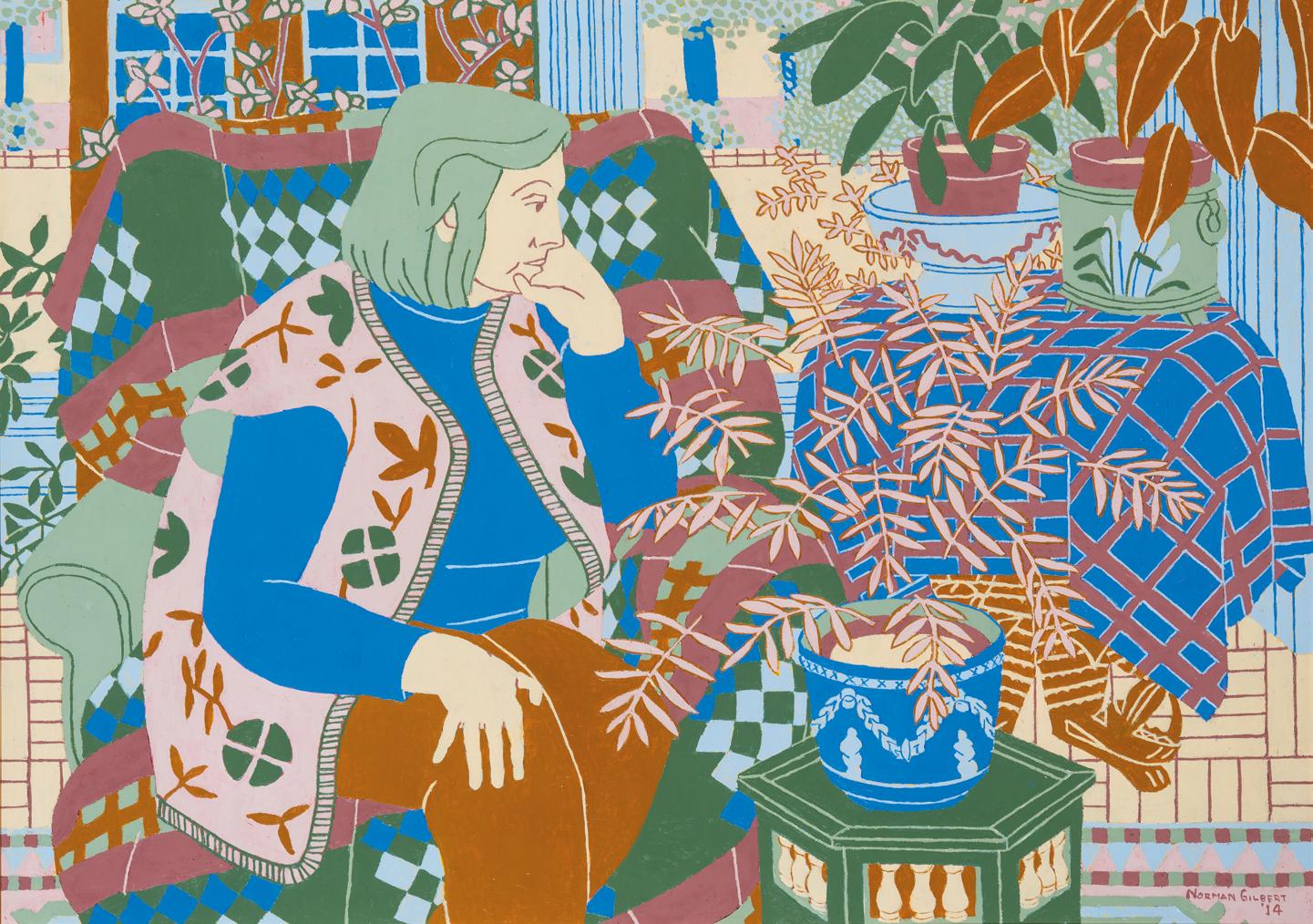
happened that week. As an artist who has spent the past 30 years using the medium of portraiture to explore the experiences of patients and their caregivers, these drawings taught me more about the healing power of art, as they transform the most intimate and private experiences into opportunities for reflection and growth. What I did as a job working in improvised studios in hospitals and clinics, he did out of necessity, to make sense of and bear witness to what he was seeing and feeling. Commenting on his need to make the drawings, he said, “It’s what I do. I didn’t see anything unusual about creating [the drawings]. I’ve dedicated my life to drawing Pat.” However, he did note a distinct difference. “I believe they are separate from [the other work]. I can’t ask her what she thinks of them.” He cherished the drawings and the memories they evoked of my supportive mother.
After Mum’s passing, Dad returned to the studio with the same quiet determination as before. The trio of paintings — Chair, Chair II, and Chair III — depict the Parker Knoll chair Mum was often photographed in. However, in these poignant works, the chair is empty, draped in the same patterned blanket that first appeared in his pictures from the 1960s. While these works evoke some of the later portraits of Mum, they also possess a unique pathos and poignancy.
It was around this time that Dad’s work began to garner significant attention. Two near sell-out exhibitions prompted a BBC Loop film that brought him international recognition with more than seven million views. The drawings he made of my Mum also received extensive media coverage, which led to numerous messages from people thanking him for sharing his experience and these drawings. They also took the opportunity to share their own
stories of grief and how they used art as a means of expressing it and helping others.
Dad’s ‘sudden’ success was both gratifying for him and somewhat perplexing. On the other hand, his later success allowed him to re-evaluate his earlier works and his entire lifetime’s work. Over seven decades, he created over 300 vibrant paintings, 94 black and white compositions, and many more drawings. His intention was to make every picture better than the last one. Even as his eyesight deteriorated, his later work became increasingly intricate, complex, and “at peace”.
The artist who envisioned a lifelong painting career completed his last painting in the month before he passed away at the age of 93. He had just begun a large preparatory drawing for his next painting, which would remain resting on his easel for many months after his death.
Since his passing, Dad’s work has been celebrated in numerous shows, both domestically and internationally. Notable highlights include a major retrospective of his work at Glasgow’s Tramway and a selection of his work displayed at The Armory Show in New York. Furthermore, the City of Glasgow acquired a series of his drawings and paintings. All these events would have brought Dad immense pleasure and quiet satisfaction. However, there’s little doubt that he’d continue to find his greatest joy in experiencing the peace and familiarity of his studio and working on his next painting.
MARK GILBERT
Mark Gilbert is the youngest son of Norman and Pat Gilbert. He is Professor of Art and Art History at the University of Nebraska Omaha and contributes to its medical humanities programme.
Cézanne once said, He who follows is always behind. If you want to do it, then do it. If you don’t want to do it, then don’t. I wouldn’t have changed a thing.
Norman Gilbert
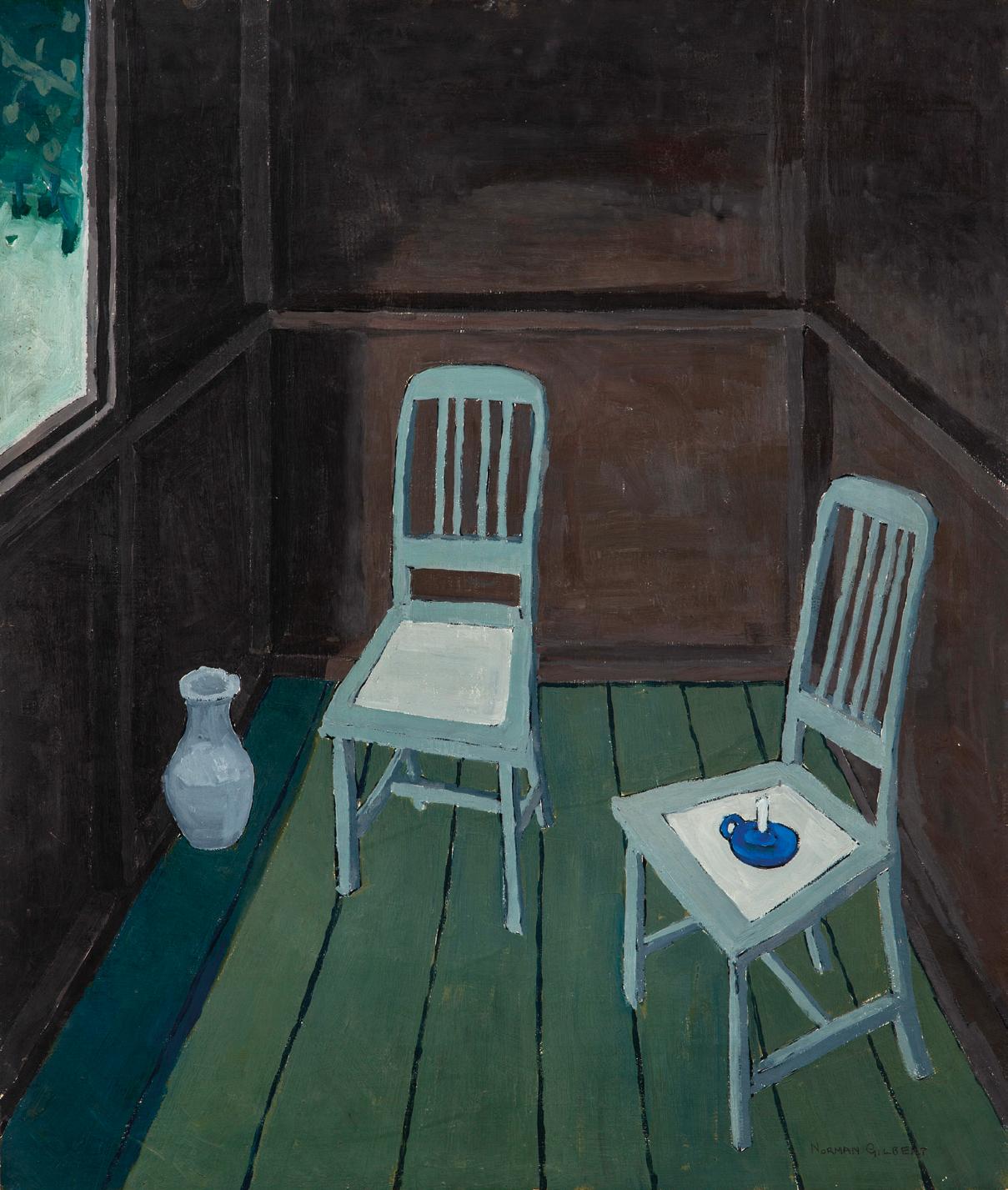
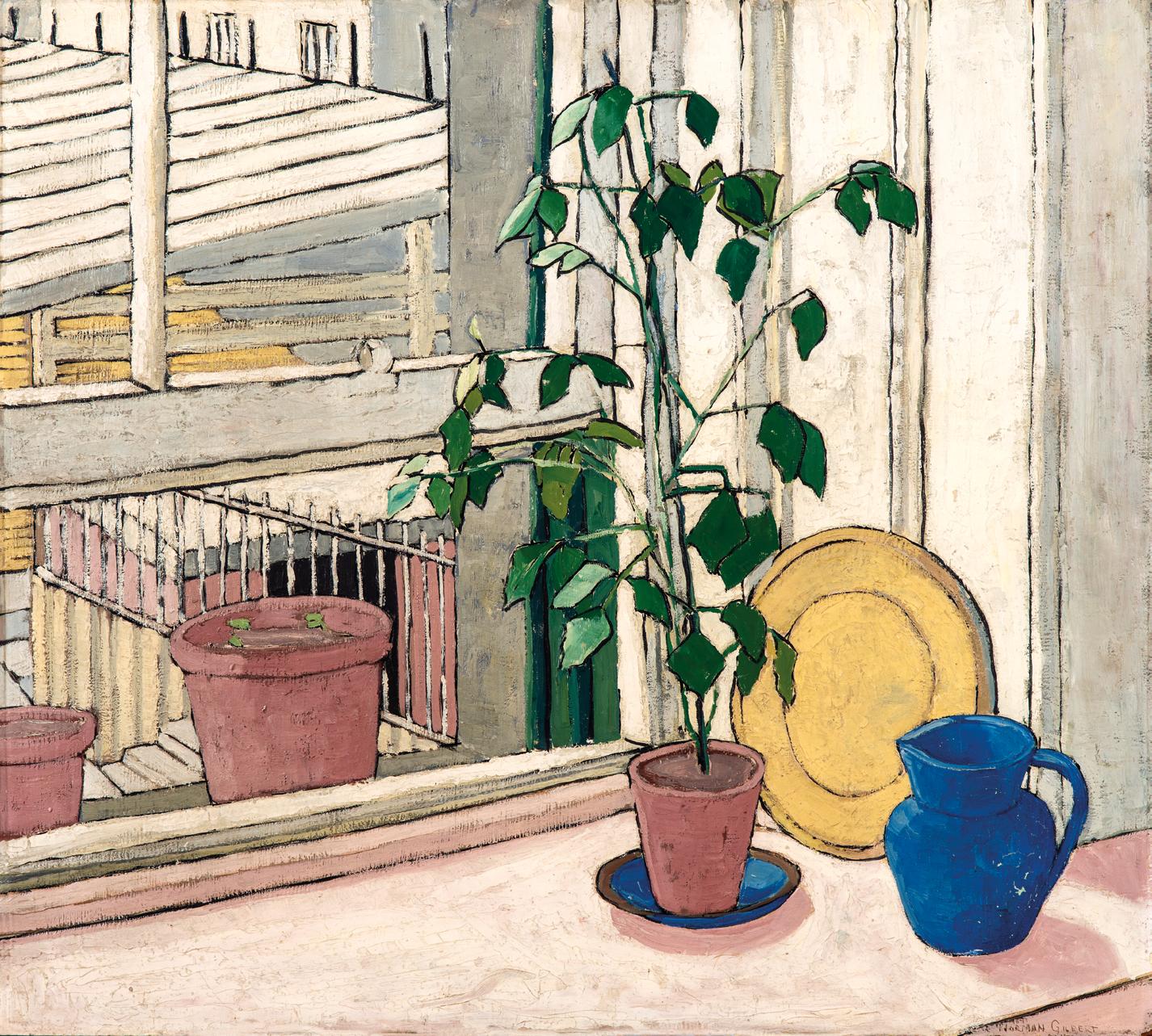
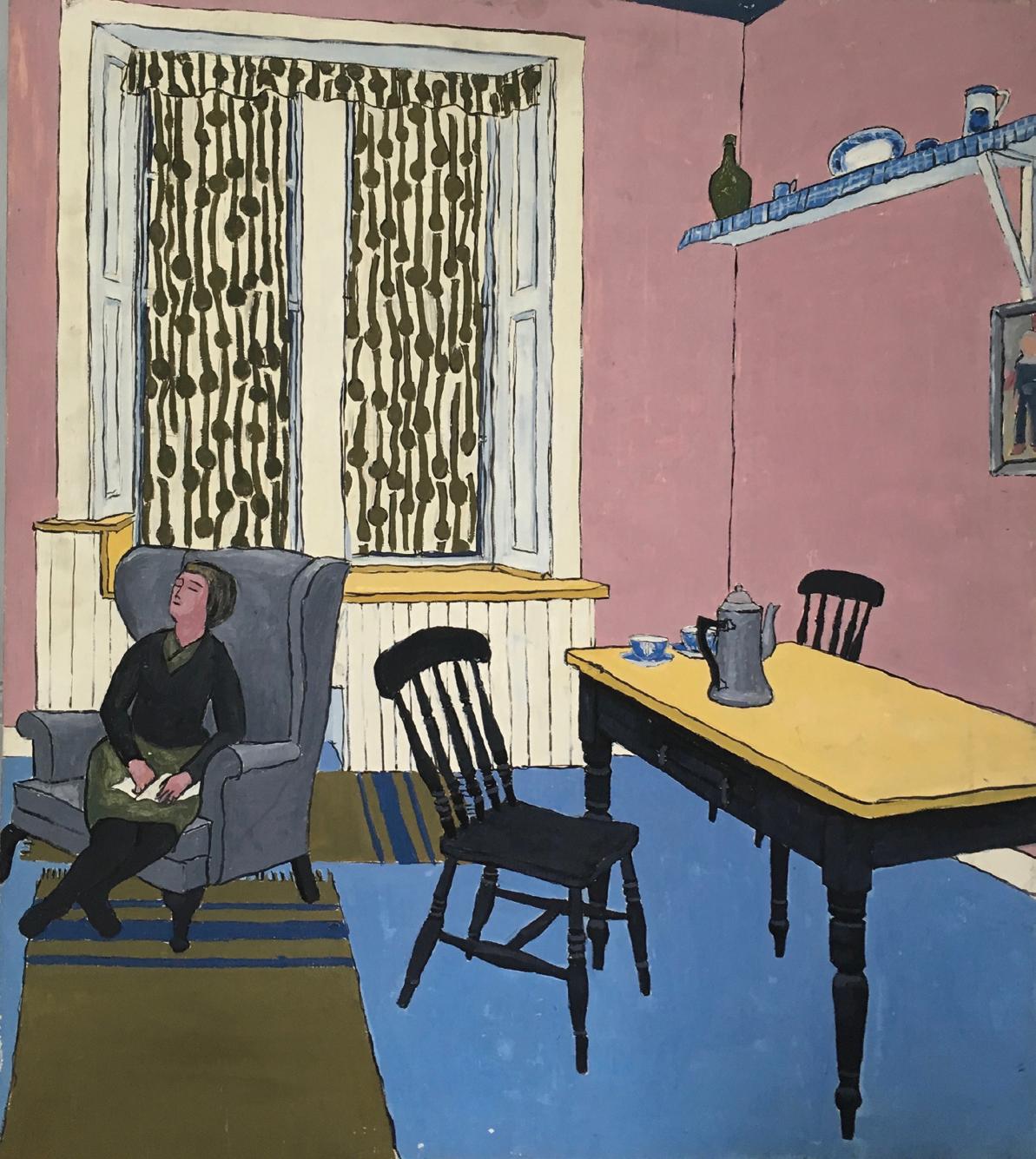
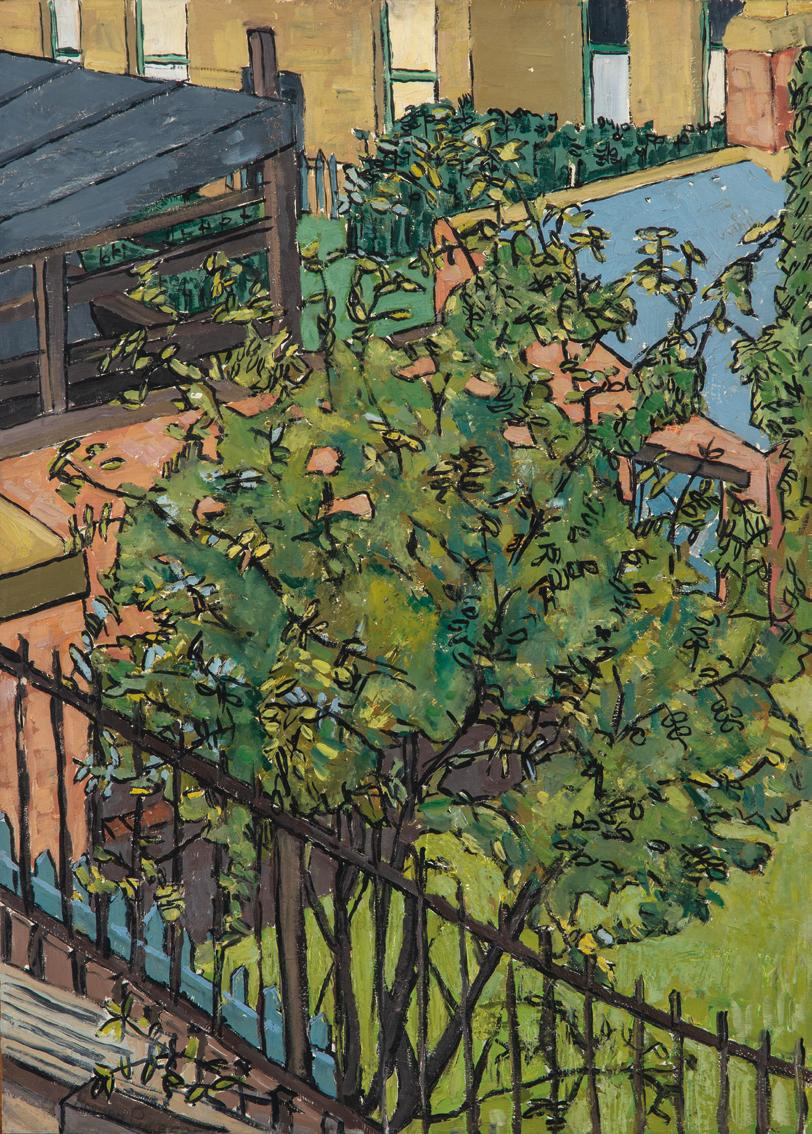
I didn’t go straight to art school, but I got an ex-service grant which allowed me to attend Glasgow School of Art. The tutors there used to do demonstration paintings, and the students were judged on how closely they could imitate what the tutor had done. I wasn’t interested in that. I thought, I don’t want to come out as a sort of clone of my tutors.
At one point, Edinburgh Art School said they didn’t want Glasgow’s rejects and that I would be a dangerous influence to have around. I wish I had asked them what exactly they meant by a dangerous influence.
Norman Gilbert
9
14 Reflections in a Mirror, 1978 oil on board, 122 x 81 cm
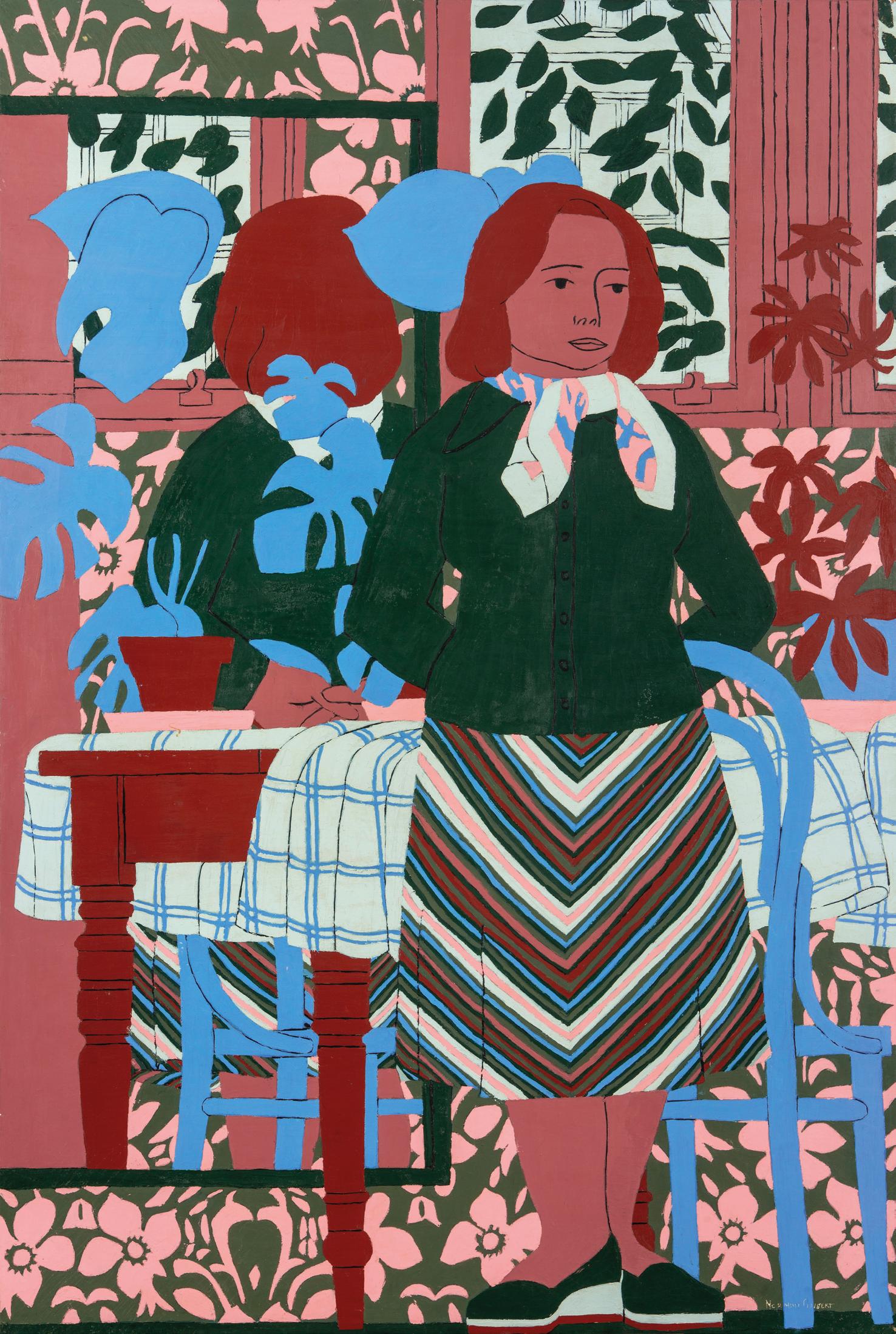
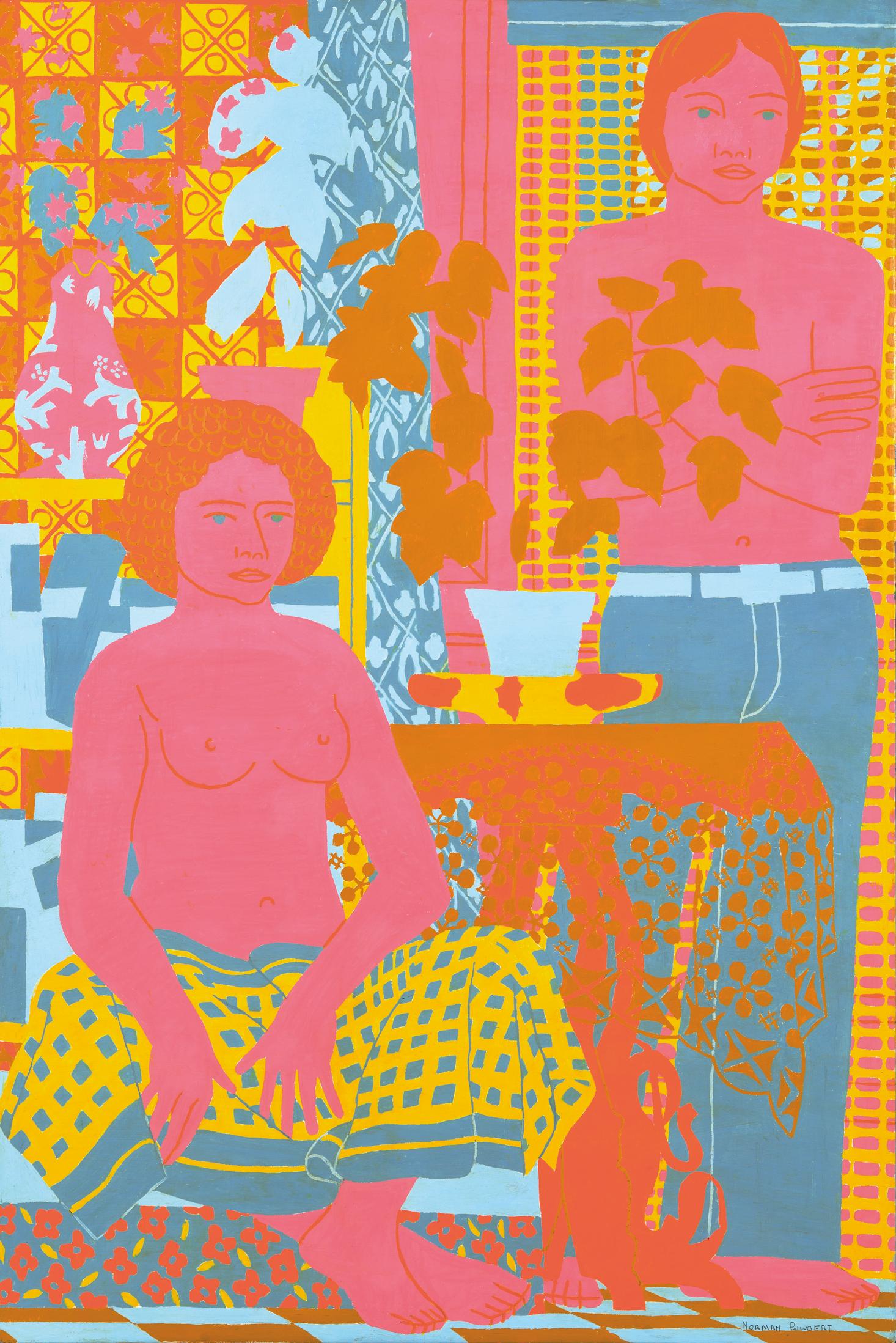
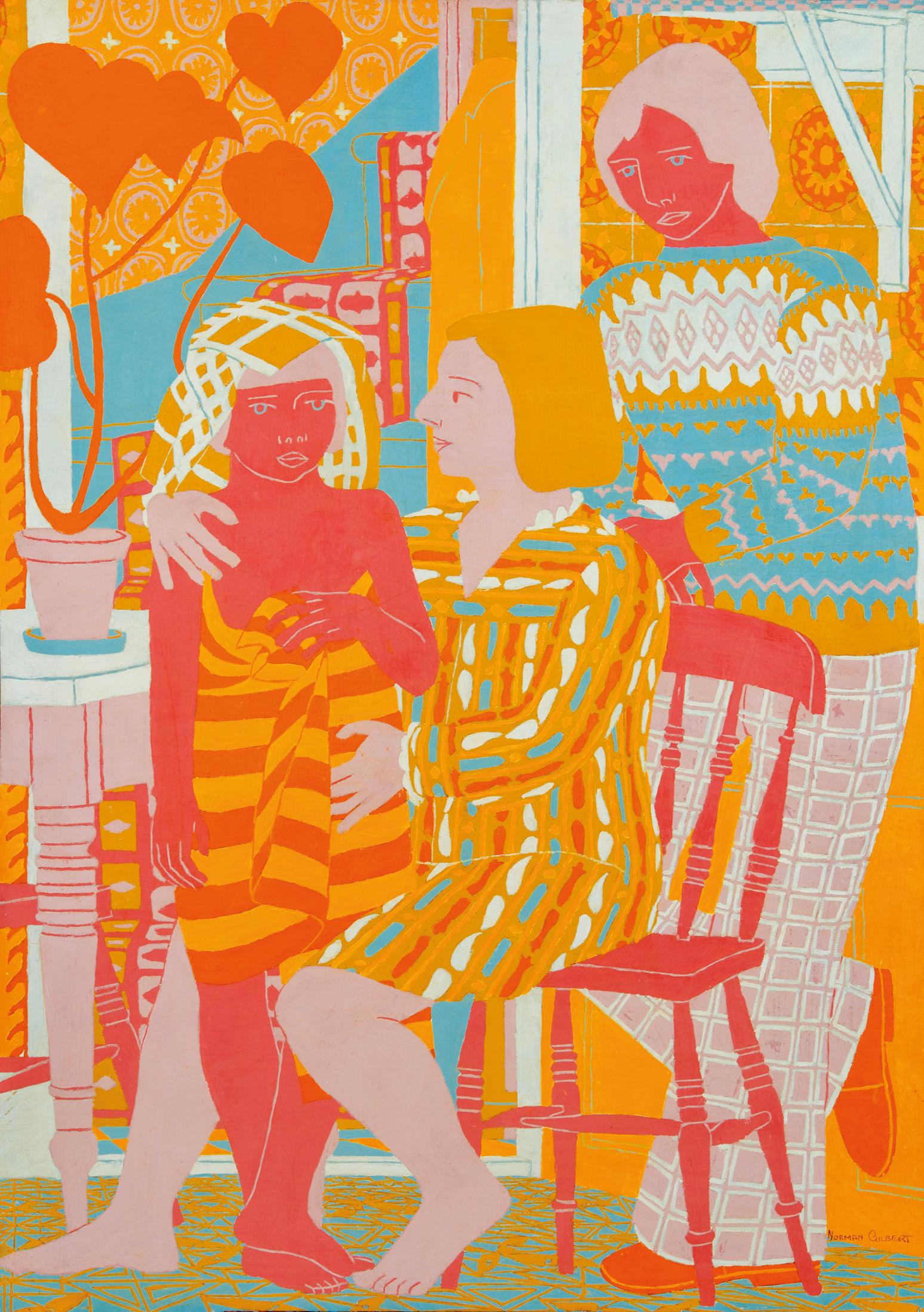
The themes that run through my paintings I’ve described as plants, patterns, and people. For a long time, I didn’t paint a single picture that didn’t include people. It’s only within the last ten years that I’ve made pictures without them. Mostly I painted my family, because they were willing to pose for me.
At one point, my wife said she liked me painting the children because it gave them a sort of immortality.
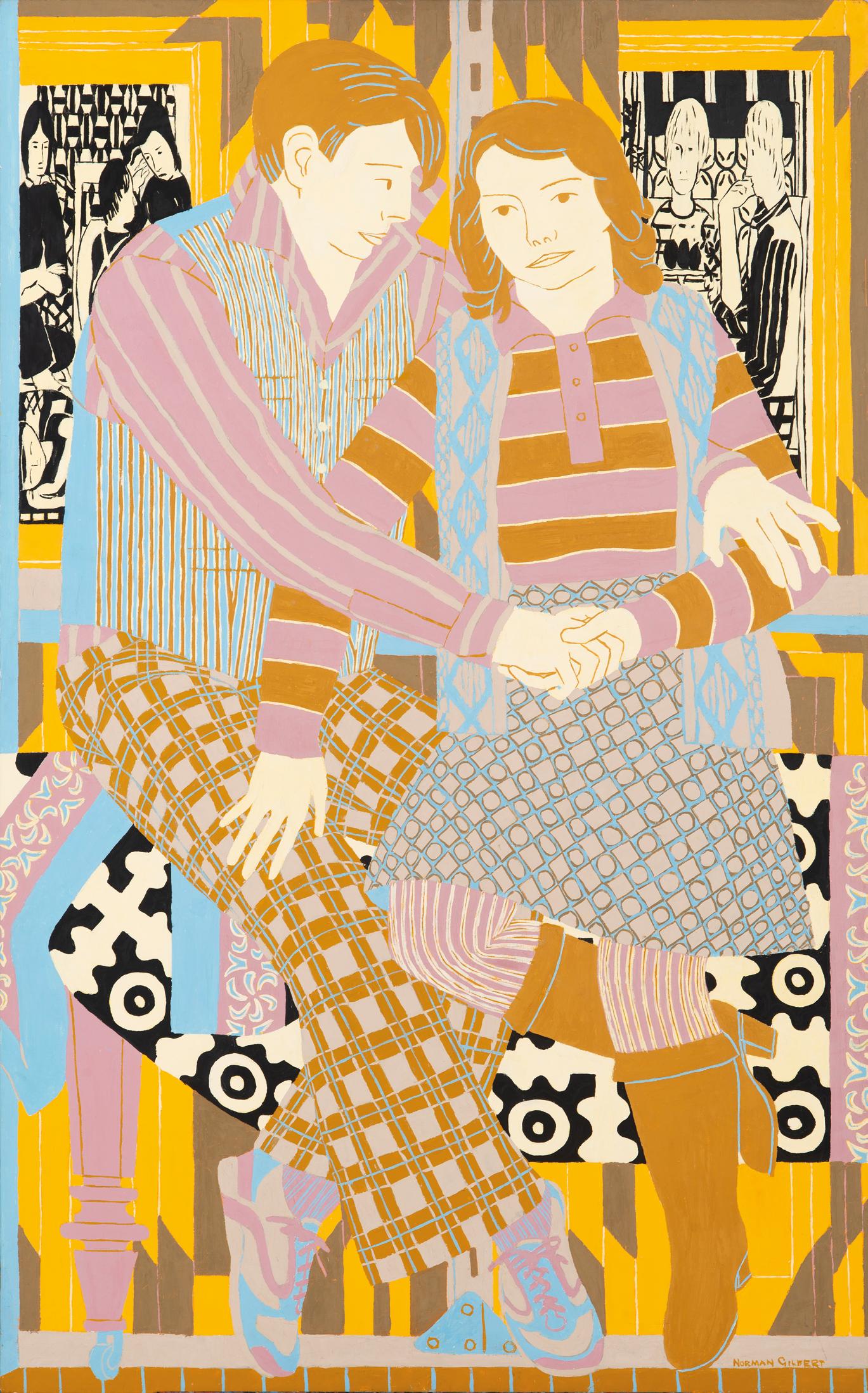
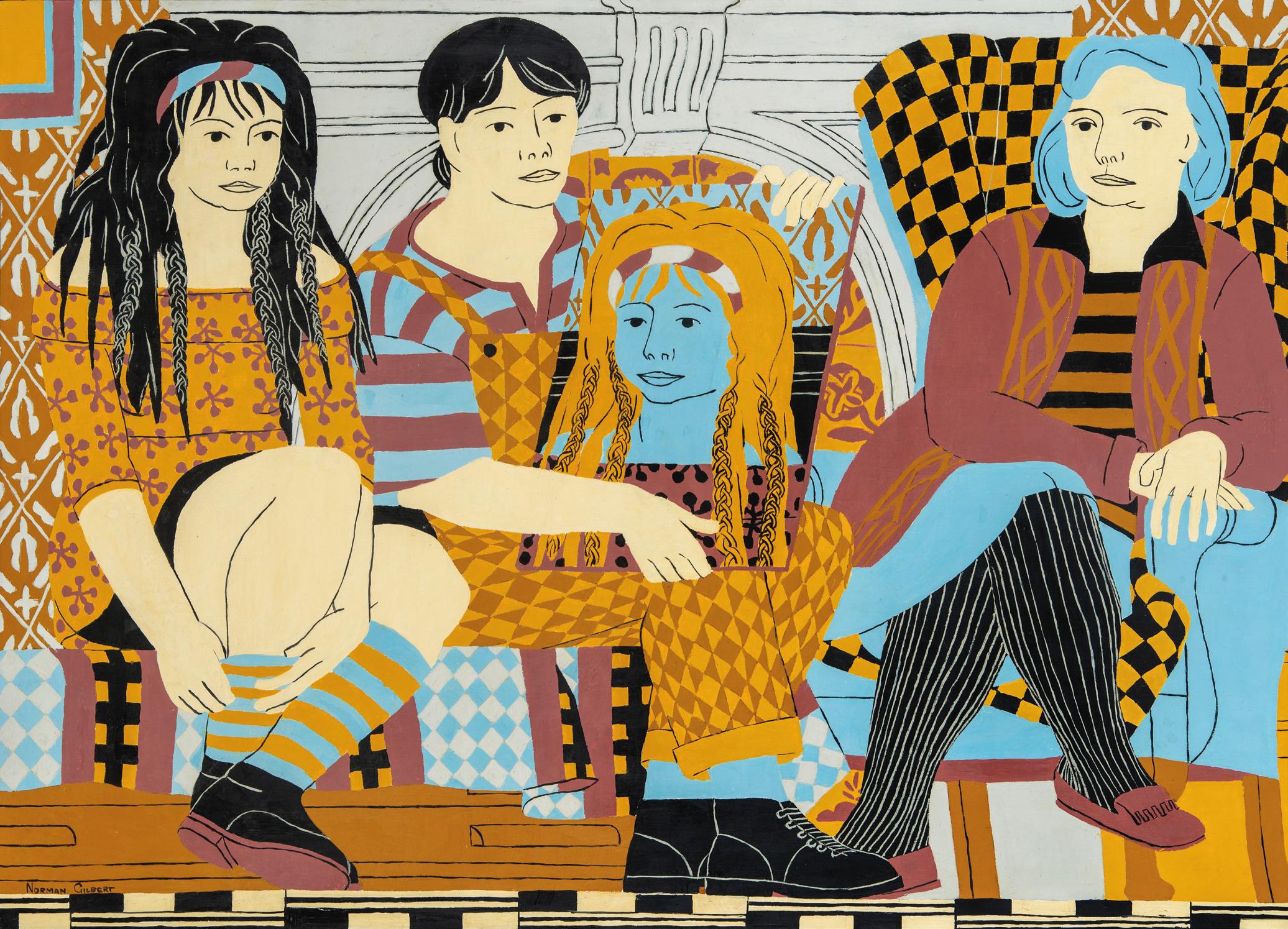
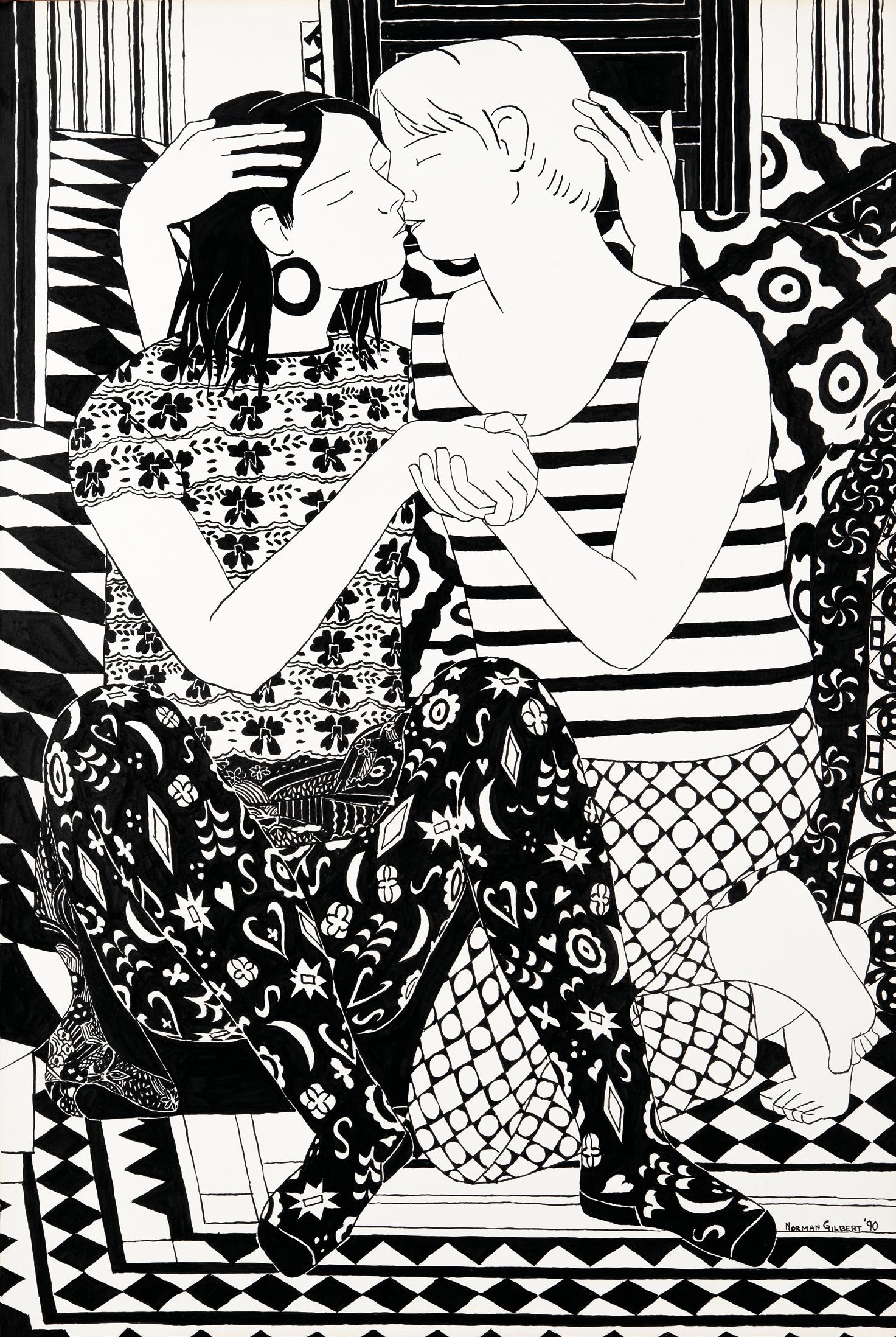
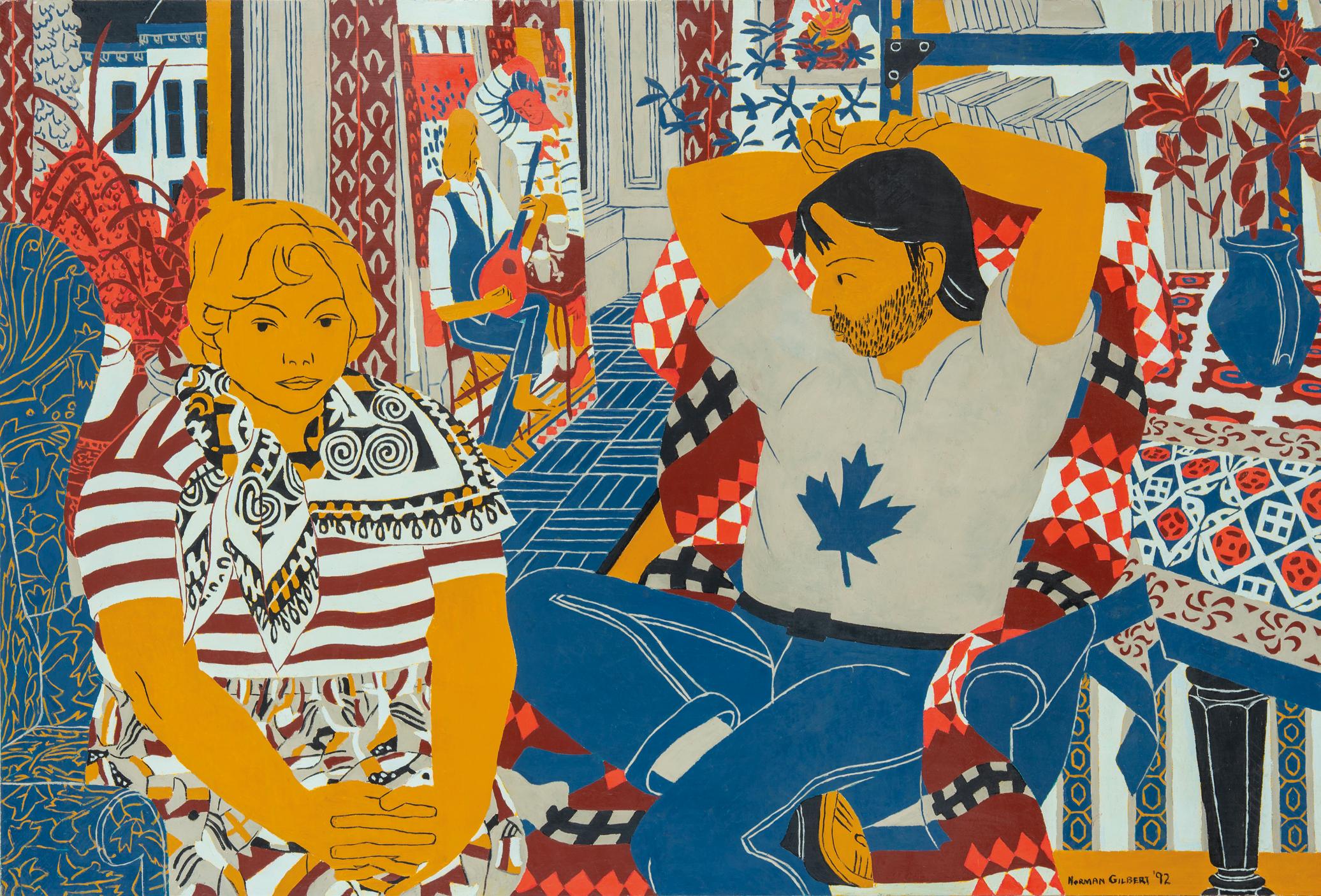
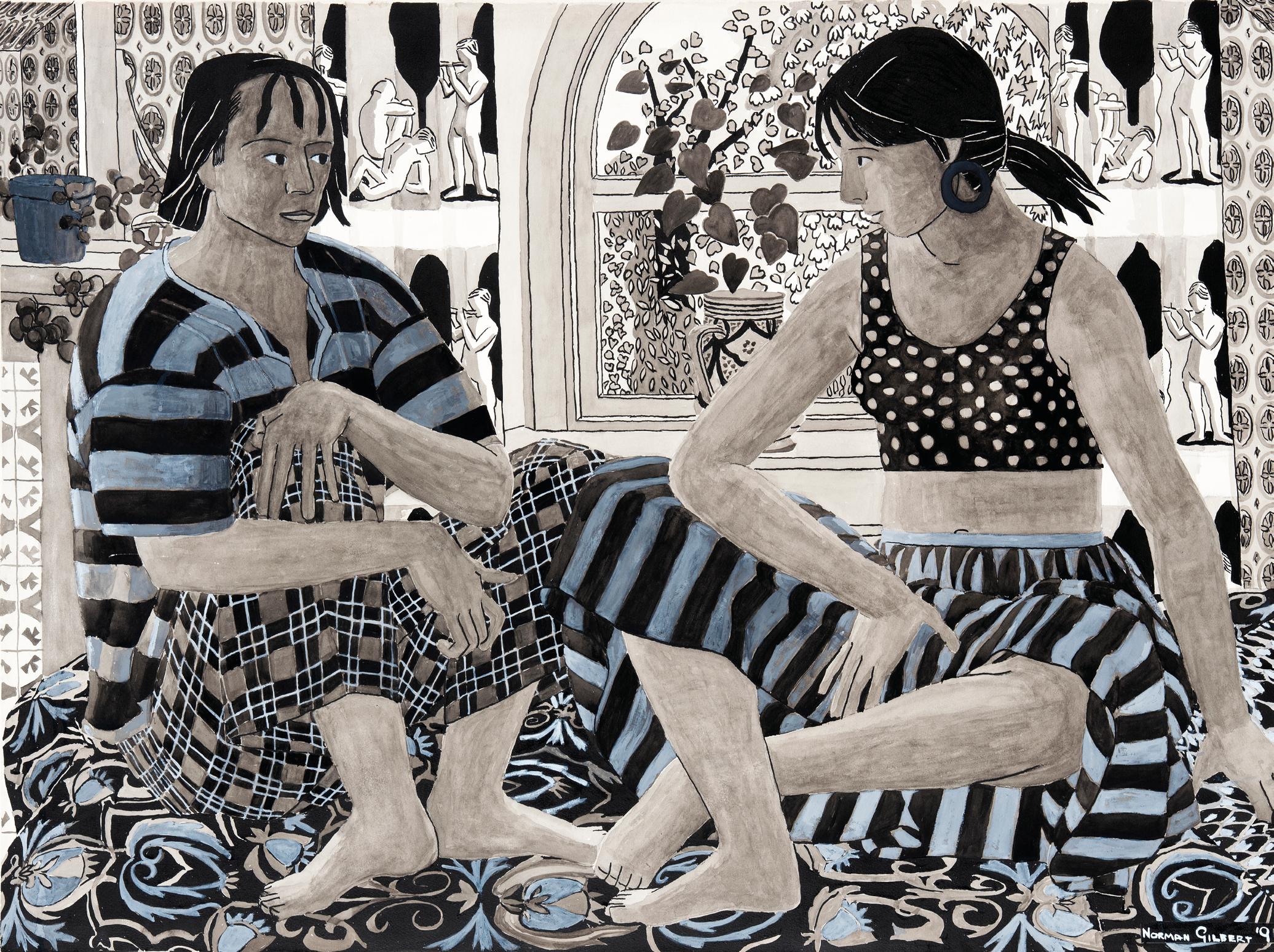
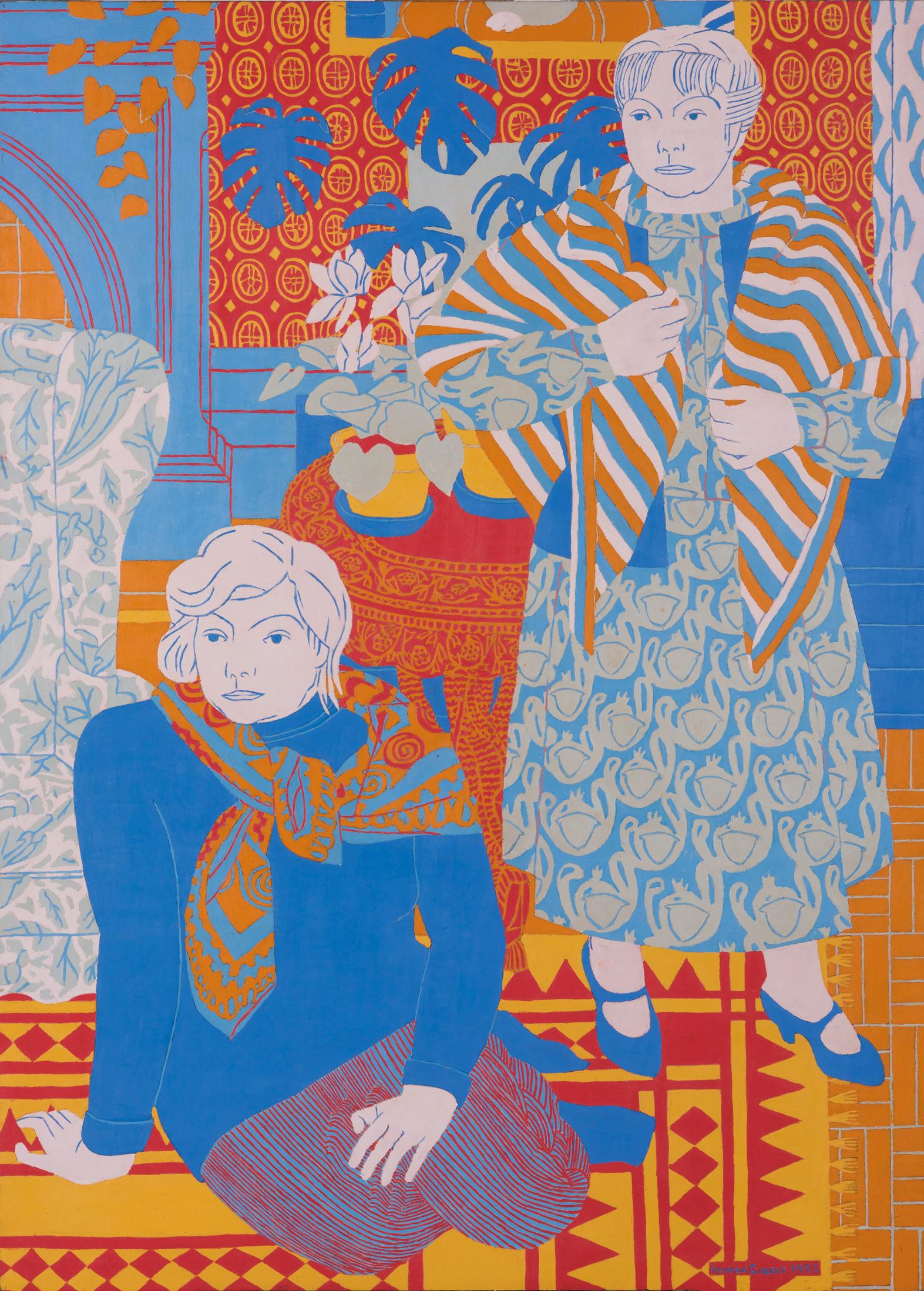
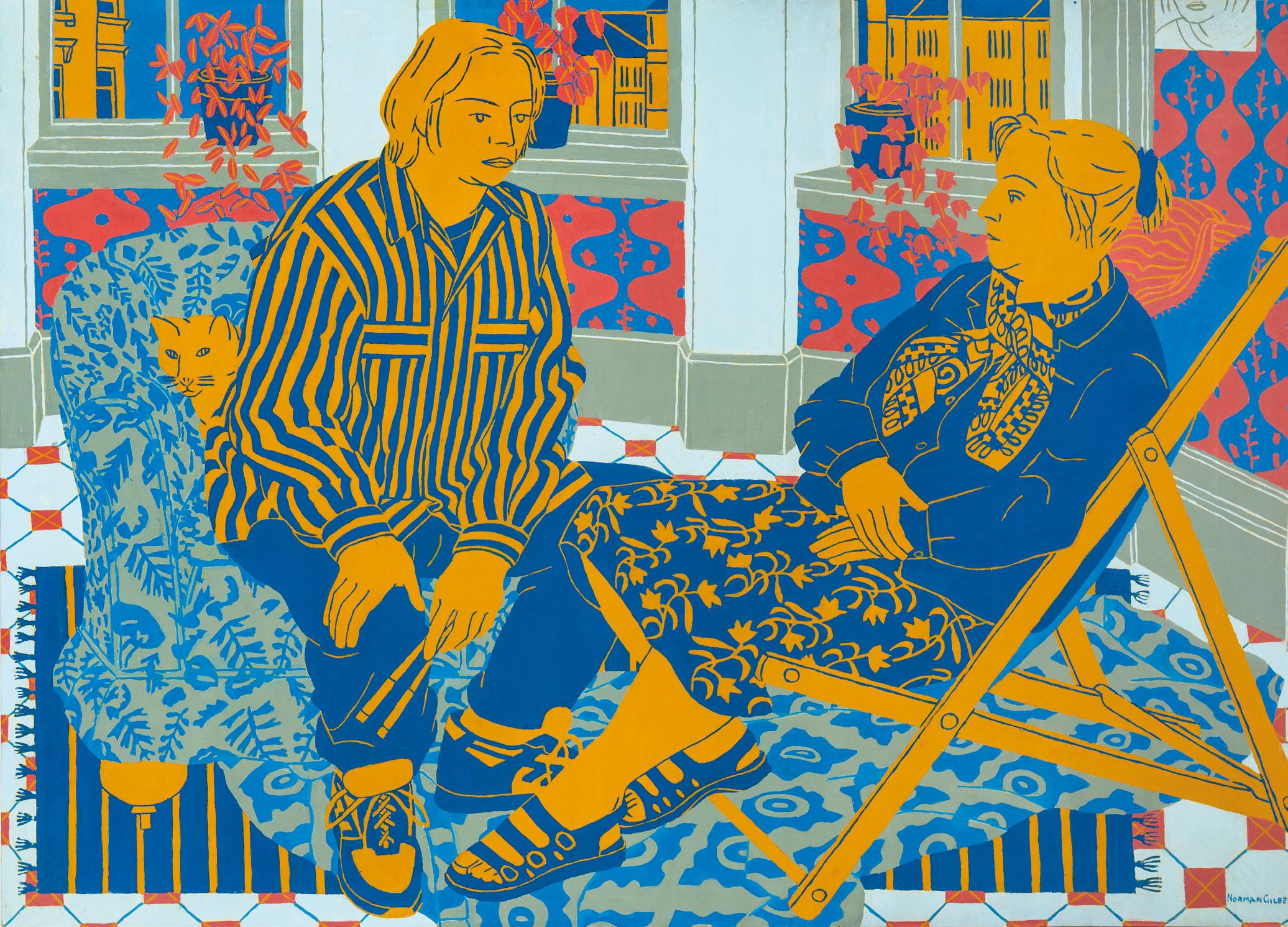
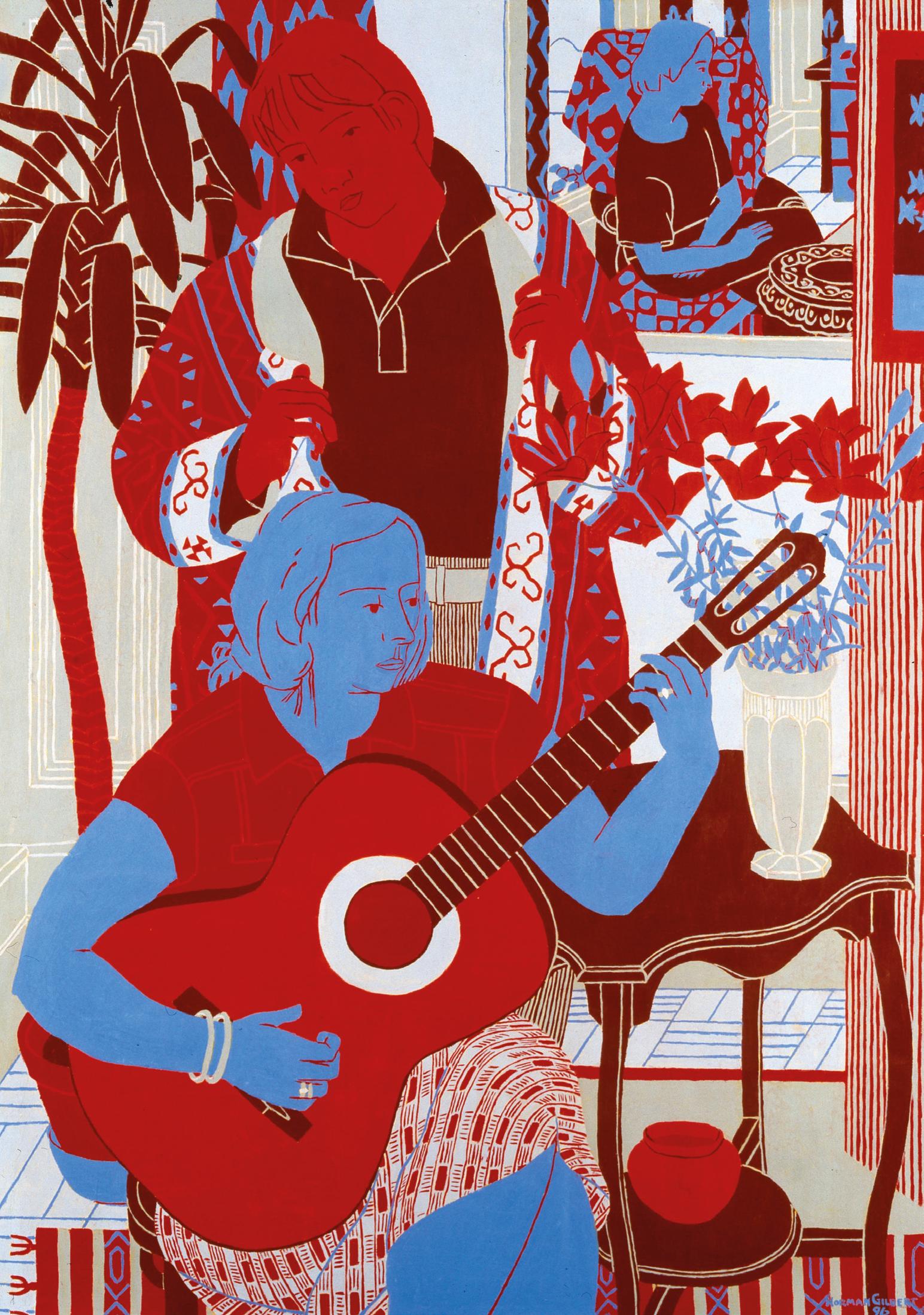
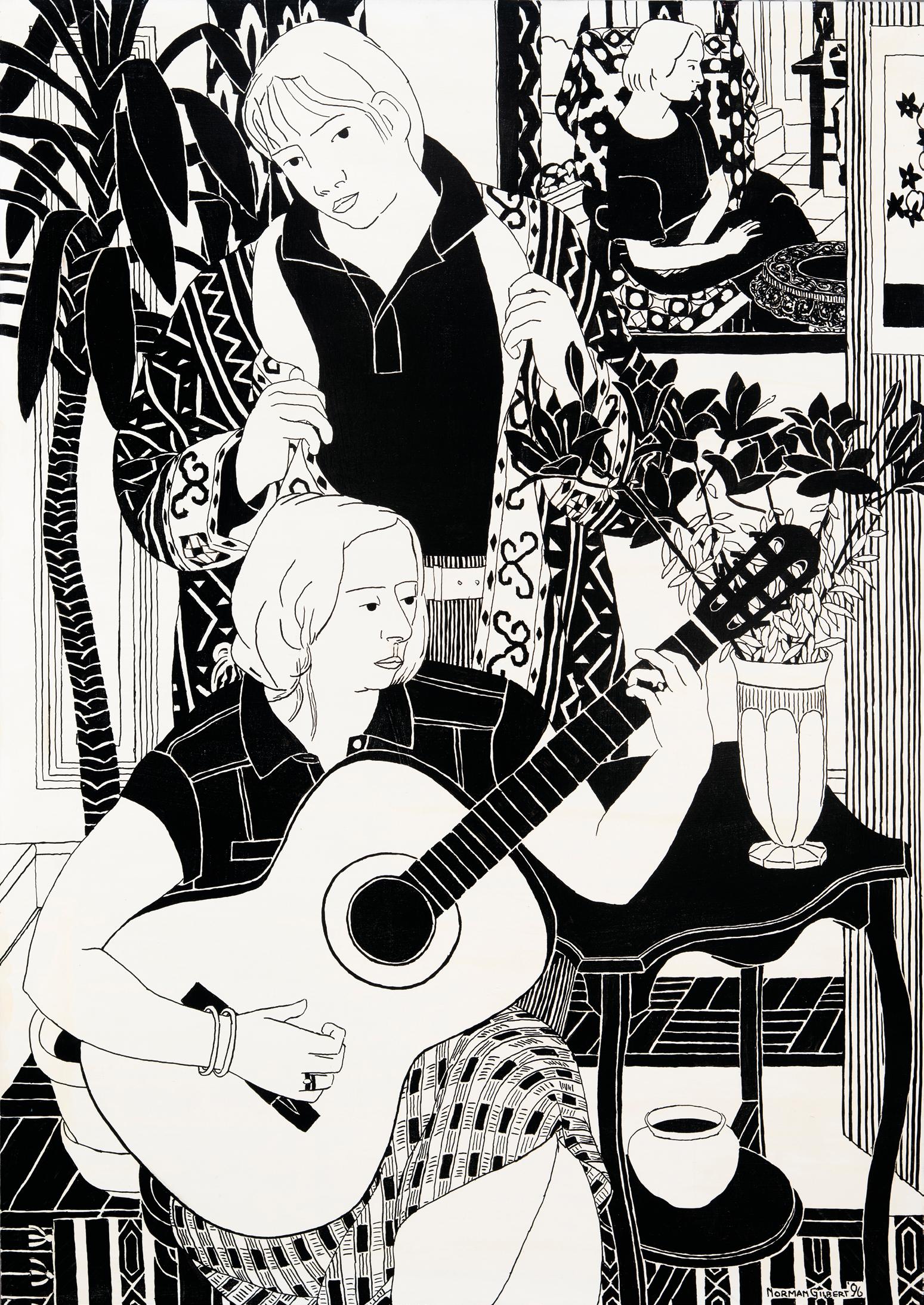
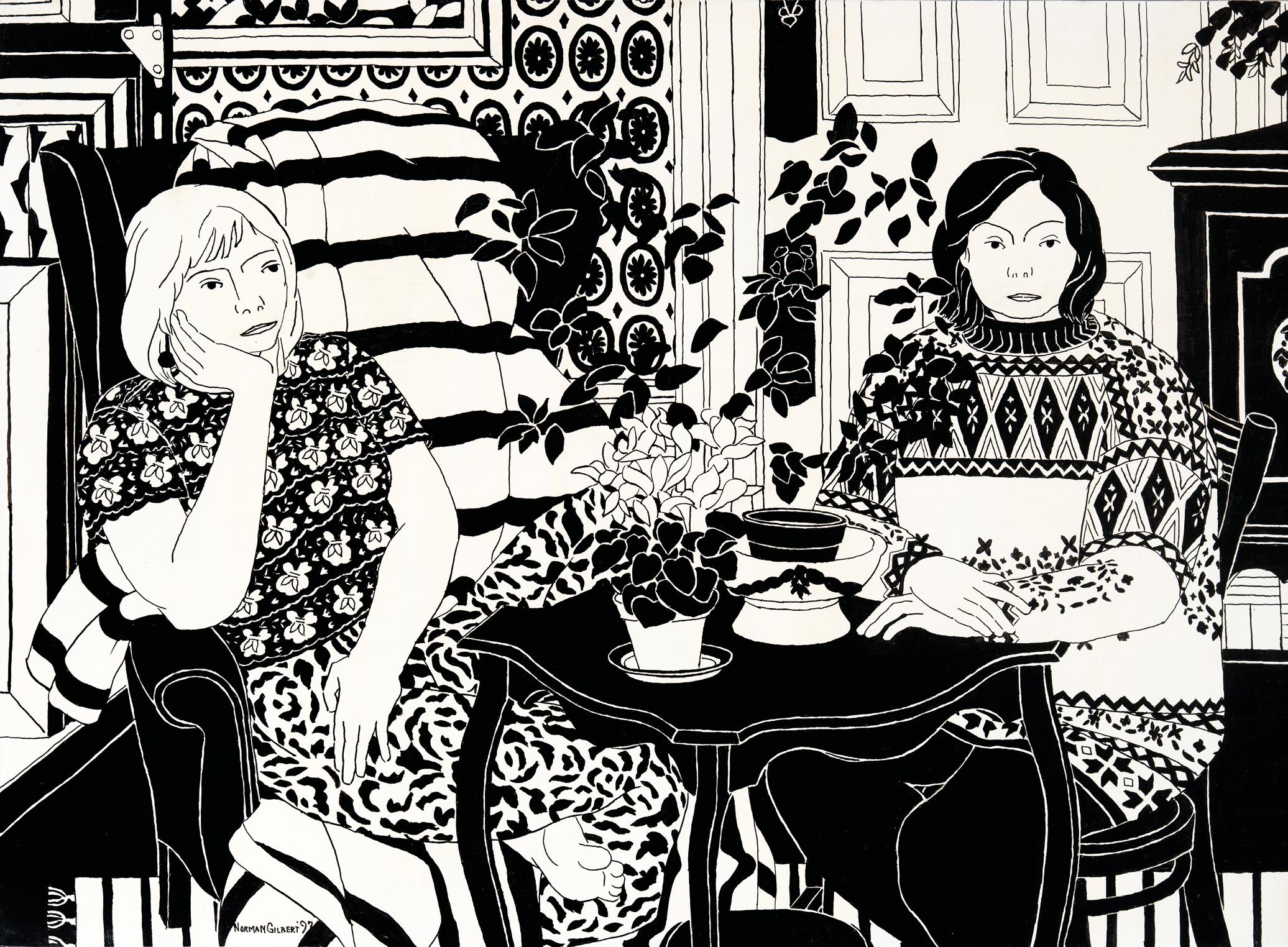
His paintings beautifully capture intimate moments of the people he knew and loved and the surroundings he was familiar with; often domestic settings of his home and studio, but also holiday destinations such as the Scottish Highlands and the South of France. Looking at the works now, they are a wonderful visual record of the people and places that nourished and inspired him. Through these sources of inspiration, he created a vibrant world of colour and beauty. His family, especially, fuelled his paintings, capturing the love and compassion he knew. He said, I try to make each colour and shape enhance every other so it’s entirely satisfactory, so it’s at peace.
Mark Gilbert
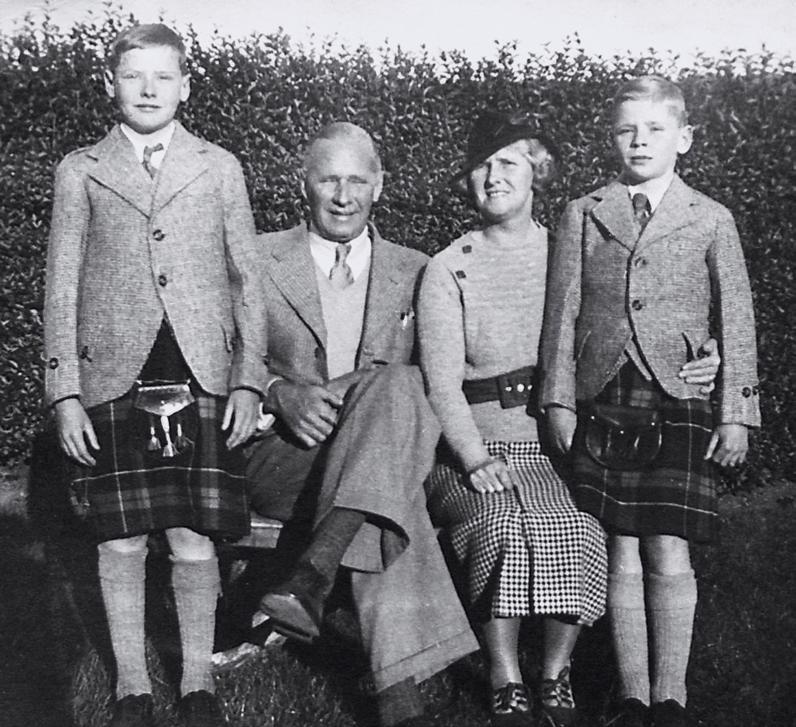
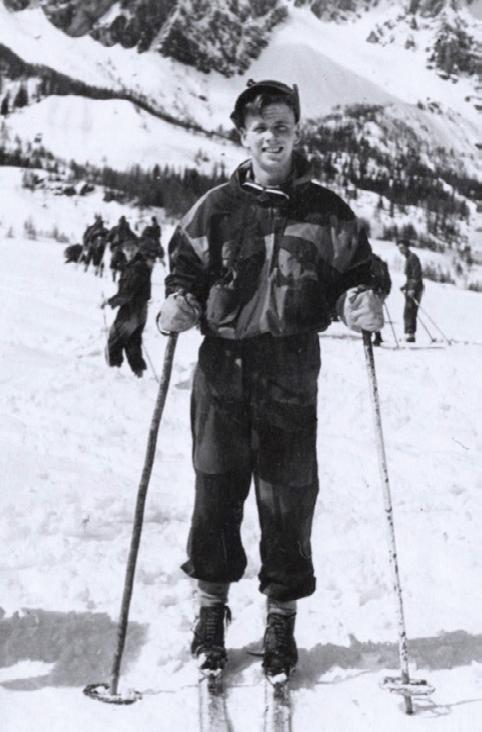
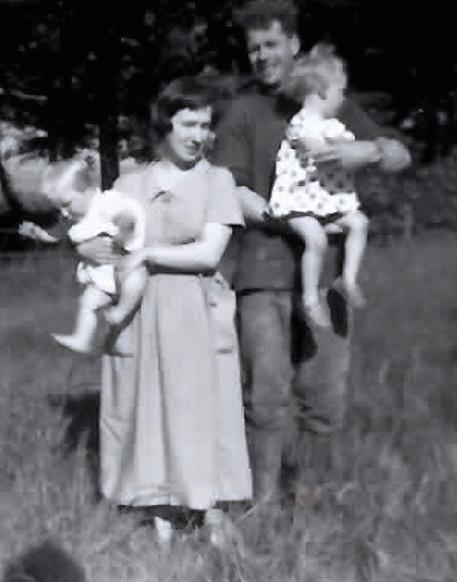
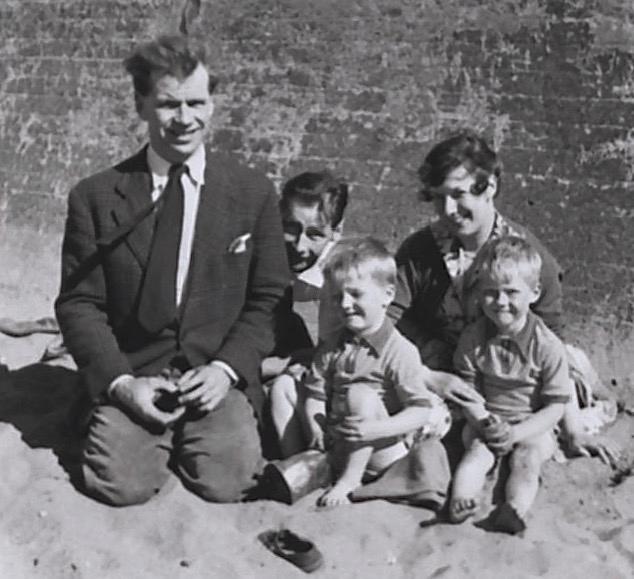
1926 Born 6 October in Trinidad of Scottish parents, Duncan and Isabella. Duncan is an engineer on a sugar plantation. They also have another son, Jim, Norman’s older brother.
1936 Having already crossed the Atlantic umpteen times, he finally returns to Scotland permanently.
Norman attends Marr College, Troon, where he is captain of the rugby team.
1944 Norman joins the Navy at 17.
He serves for four years as a radar operator on HMS Liverpool, stationed mainly in the Mediterranean.
1948 Believing painting would be a vocation that would last a lifetime, Norman enrolls as a student at Glasgow School of Art on an ex-serviceman’s grant, studying Drawing and Painting. His parents are not in favour, but he placates them by saying he intends to be a commercial artist.
1951 Marries fellow GSA student, Pat Jordan.
1952 Birth of first son, Paul.
Dismissed in final year at Glasgow School of Art as “unteachable”.
Works as scenic artist at The Citizens Theatre and other venues, Glasgow.
1953 Birth of second son, Bruno.
Works as a pigman while living in a caravan, the irregular hours left time to paint.
1954 Norman gets his first break as his work is included in a mixed exhibit at The Piccadilly Gallery, London.
1957 Selected to exhibit in Artists of Fame and Promise alongside Jacob Epstein, David Bomberg and Christopher Nevinson at The Leicester Gallery, London.
Teaching art as an uncertified teacher in Dunbartonshire.
1962 Birth of third son, Daniel.
Begins teacher training.
1963 “Grudgingly” granted Diploma by Glasgow School of Art.
1967 Trips to London hawking his pictures around the galleries pay off, as he celebrates the first of two solo shows at The Upper Grosvenor Gallery, London.
The first of two solo shows at The Traverse Theatre Gallery, Edinburgh.
Vogue publishes a feature on his work, The Loneliness of the Long Distance Painter.
1969 Birth of fourth son, Mark.
Second Edinburgh Festival show at The Traverse Gallery, Edinburgh.
1970 Second solo show at The Upper Grosvenor Galleries, London.
1973 Solo exhibition at Ansdell Gallery, London.
1974 Scope: Norman Gilbert, BBC TV Documentary produced and directed by W. Gordon Smith is broadcast, 5th March.
Solo exhibition at Talbot Rice Centre, Edinburgh University.
Artwork taken into the collection of Stirling University.
1975 Solo exhibition at Macrobert Arts Centre, Stirling University.
1976 Solo exhibition at City Art Gallery, Leeds.
Artwork taken into the collection of Kelvingrove Art Galleries, Glasgow.
1981 Solo exhibition at Drian Galleries, London.
1985 Family move to the large Victorian terrace house where Pat grew up, in Pollokshields, Glasgow. Norman was to live and work here for the next 34 years.
1989 Solo exhibition at Drian Galleries, London.
Artwork taken into the collection of Hertfordshire Education Authority.
1992 Retrospective exhibition at Eden Court Theatre Gallery, Inverness.
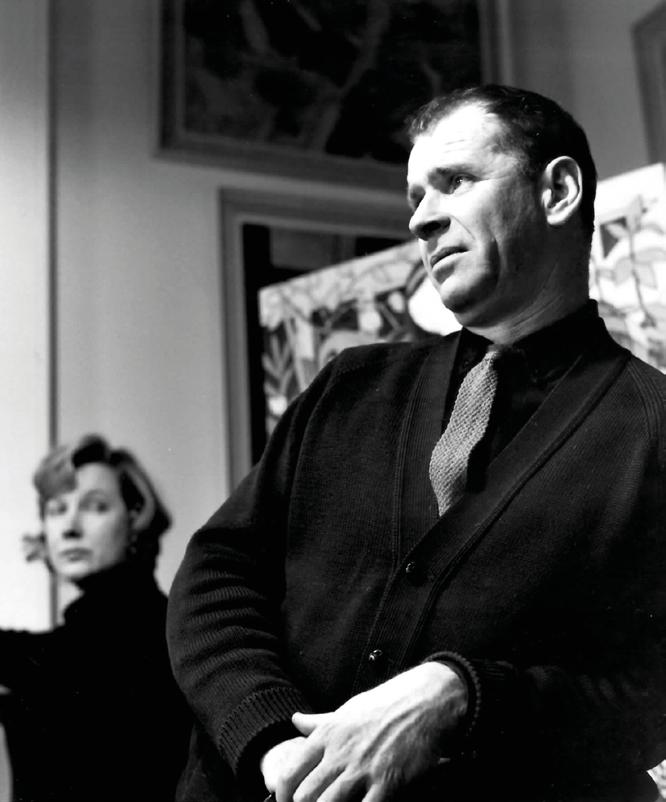
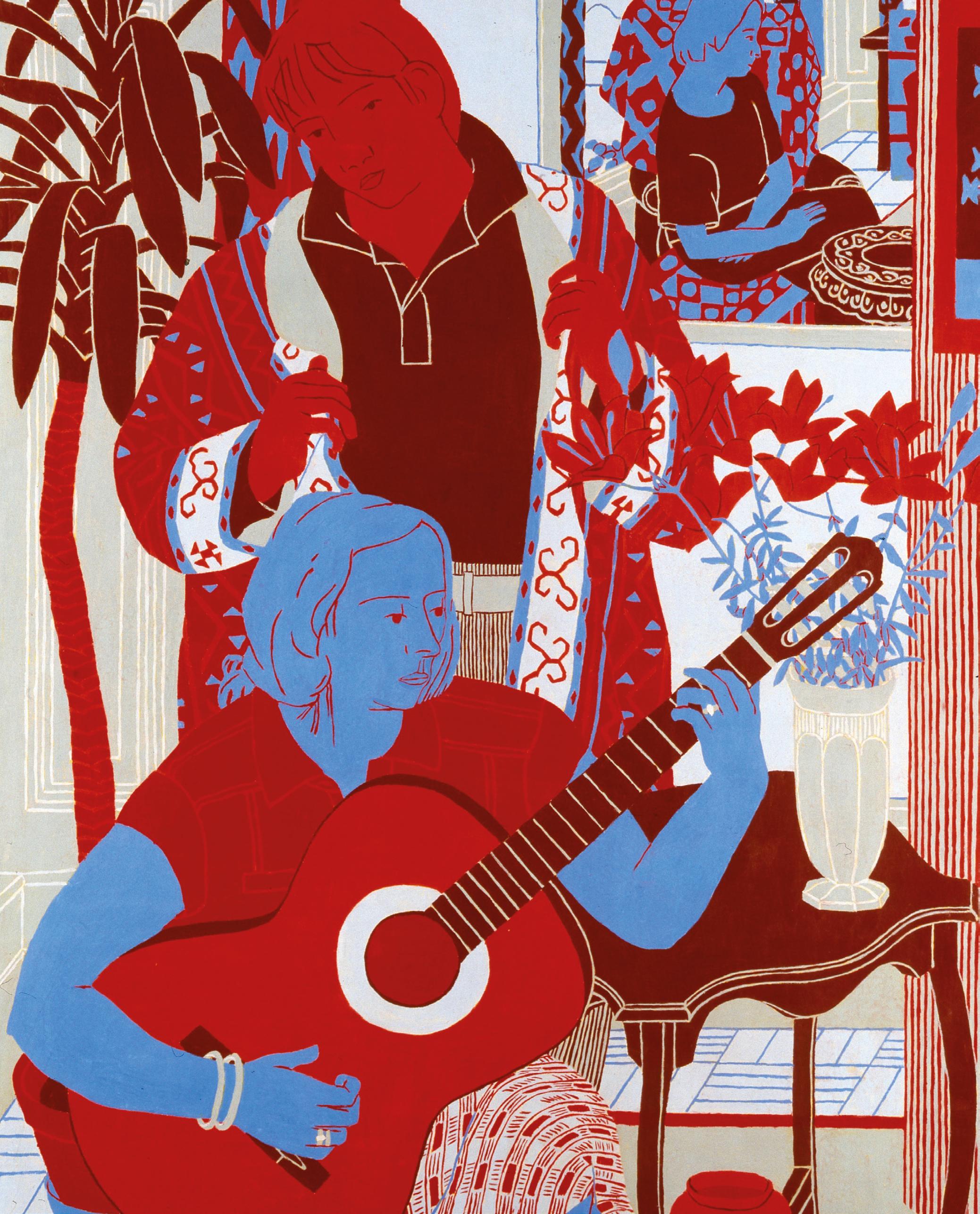
1998 Solo exhibition at Lloyd Jerome Gallery, Glasgow.
1999 Works exhibited at Richmond Hill Gallery, London.
2001 Work selected for Art for Europe, Scotland House, Brussels.
Participates in Fresh Art Fair at the Business Design Centre, Islington, London.
2003 Participates again in Fresh Art Fair, Business Design Centre, London.
2006 Solo exhibition at Gallery Gora, Montreal, Quebec.
2010 Solo exhibition at Howden Park Centre, Livingston. Norman’s wife, Pat, is diagnosed with Alzheimer’s Disease.
2013 As he continues to care for Pat, Norman begins a trio of works entitled Pat. These images picture Pat on her own, echoing earlier pictures created when they were first married.
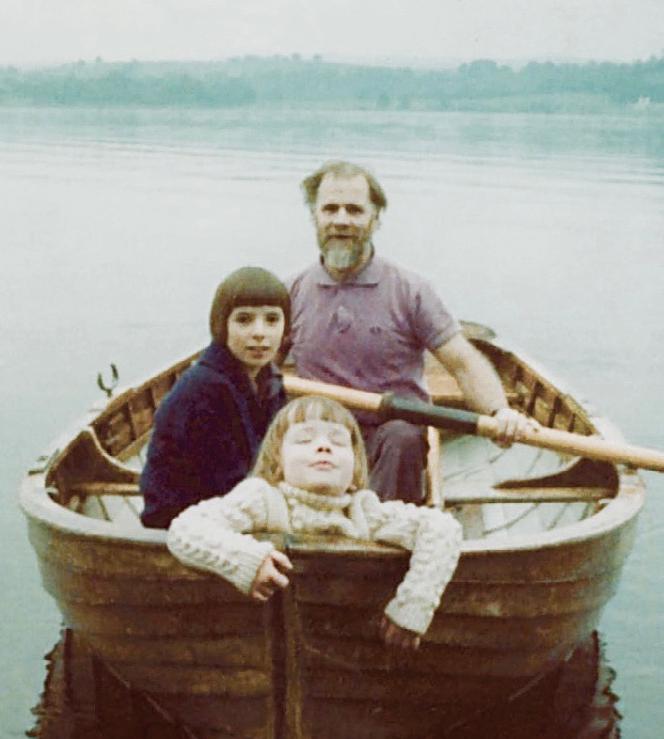
2017 Included in the annual Royal Glasgow Institute exhibition, Glasgow, as an invited artist.
2018 Solo exhibition Passion, Vision & Spirit held at Tatha Gallery in Newport on Tay. Amid the publicity, the BBC produces a short film as part of their online Loop arts strand. The Unteachable Artist is viewed more than 7 million times creating a new worldwide audience for his work. Norman’s hospital drawings of Pat are exhibited for the first time in Drawing to a Close: End of Life Drawings by Norman Gilbert, Yellow Door Gallery; a collaboration with the End of Life Studies Dept at Glasgow University. The exhibition which receives national news coverage is part of the UK-wide Being Human Festival.
2019 Solo exhibition Passion, Vision & Spirit II at Tatha Gallery, Newport on Tay. Norman dies on 19 December, at QEII Hospital, Glasgow, of complications following a fall in which he broke his hip.
2020 Book entitled Pat: End of Life Drawings by Norman Gilbert is published, with the support of Dalhousie University, Halifax, Nova Scotia; and the Dementia Services Development Trust, Scotland.
Solo exhibition Norman Gilbert 1982-2018 at Koppe Astner, Glasgow.
Solo exhibition: Norman Gilbert: A Life in Colour, Tatha Gallery, Newport on Tay.
2021 Joint exhibition: The Armory Show, New York’s Art Fair, New York, USA
2022 Norman Gilbert Retrospective, a five-month solo exhibition at Tramway Gallery, Glasgow. Memory Serves: Drawing Others Close, Two-Person Exhibition with Mark Gilbert at School of the Arts Art Gallery, University of Nebraska at Omaha, USA.
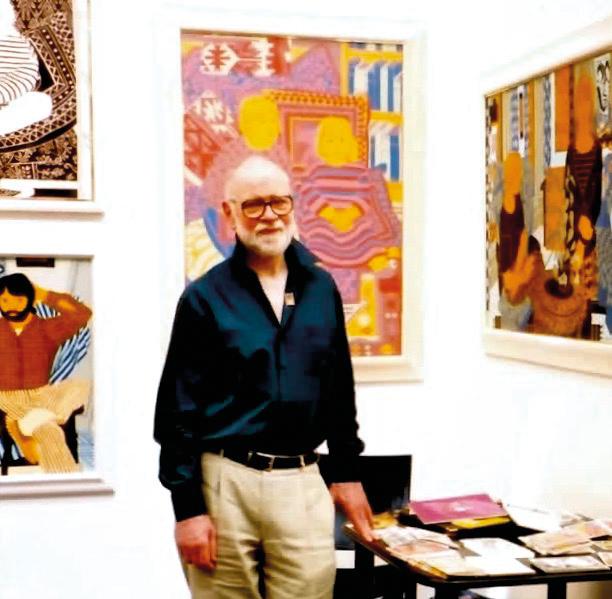
2023 The Kaleidoscope Turns, ARUSHA Gallery, Dundas Street, Edinburgh.
2024 Gallery of Modern Art (GoMA) purchase three Norman Gilbert oil paintings, including his last completed painting, and one black and white artwork for the permanent art collection of Glasgow City Council (GCC) with the kind assistance of Art Fund, London.
2025 Solo exhibition: A Rich and Colourful Life, Tatha Gallery, Newport on Tay.
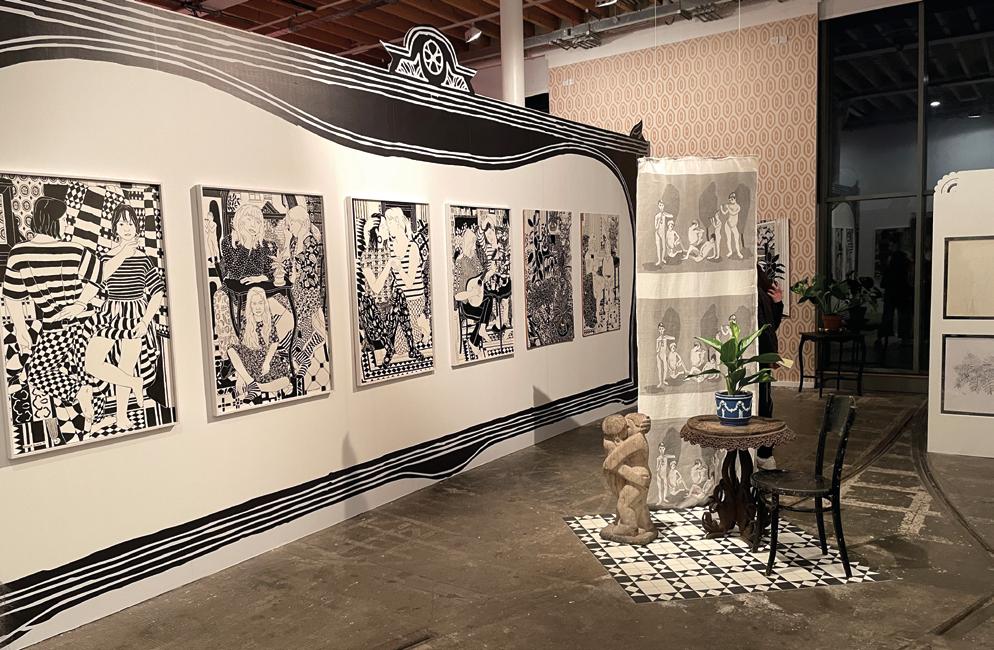
ABOVE: Norman, Daniel and Mark on Loch Lomond c.1973
LEFT: Fresh Art Fair at the Business Design Centre, London 2001 Norman Gilbert, Chair, 2017, oil on board, 122 x 86 cm
Published by The Scottish Gallery to coincide with the exhibition:
Norman Gilbert
Centenary Exhibition
2 - 24 June 2026
Exhibition can be viewed online at: scottish-gallery.co.uk/norman-gilbert
ISBN: 978-1-917803-21-2
Designed and Produced by The Scottish Gallery
Printed by Pure Print cover: Norman Gilbert, Girl and Boy with Orange Hair, 1979 (Cat. 15) right: Norman Gilbert, Plants at Window, 2010 (Cat. 33)
All rights reserved. No part of this catalogue may be reproduced in any form by print, photocopy or by any other means, without the permission of the copyright holders.
16 Dundas Street | Edinburgh | EH3 6HZ | 0131 558 1200 | scottish-gallery.co.uk