Modern Masters XX
All our Modern Masters exhibitions begin with the artist...
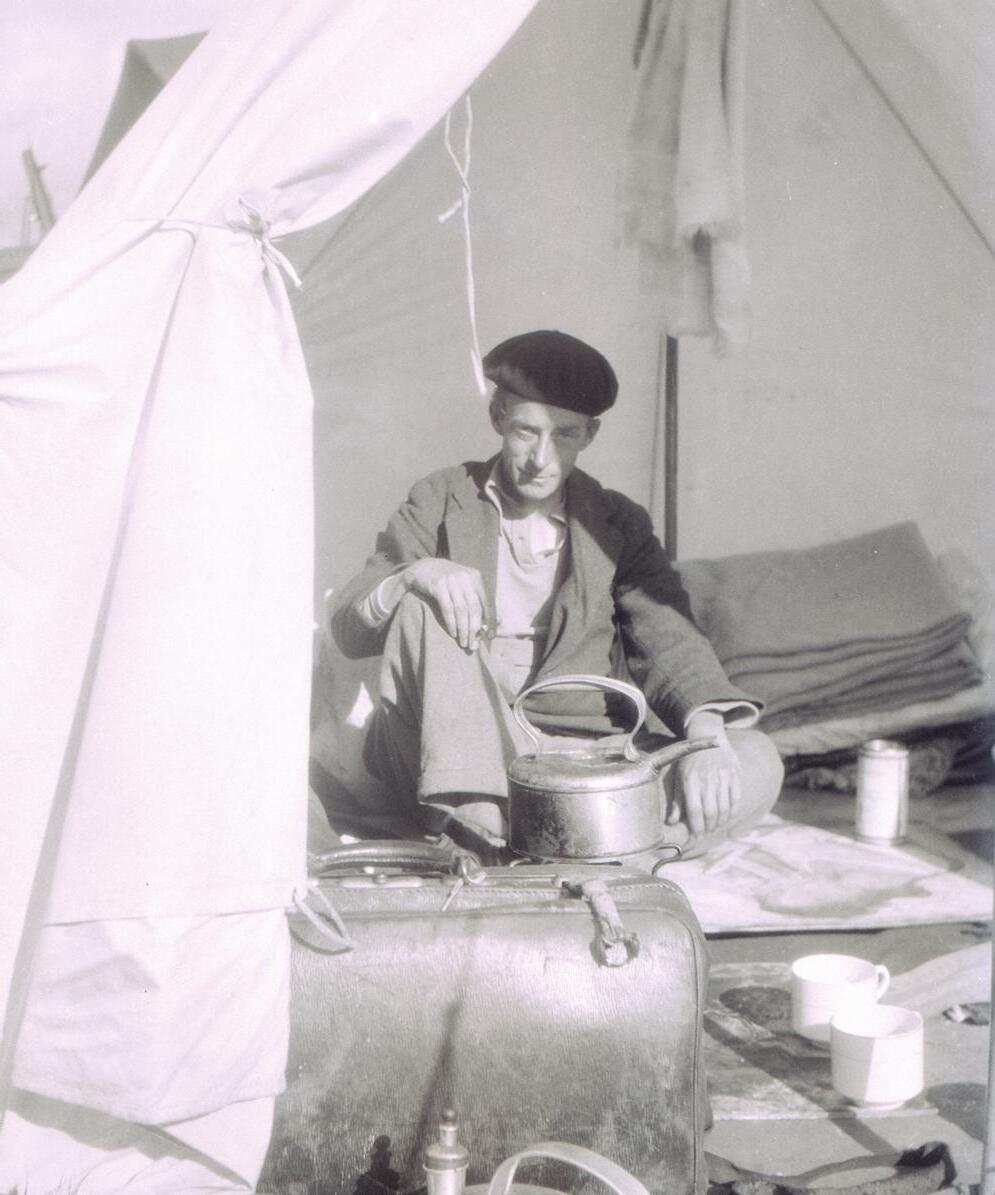
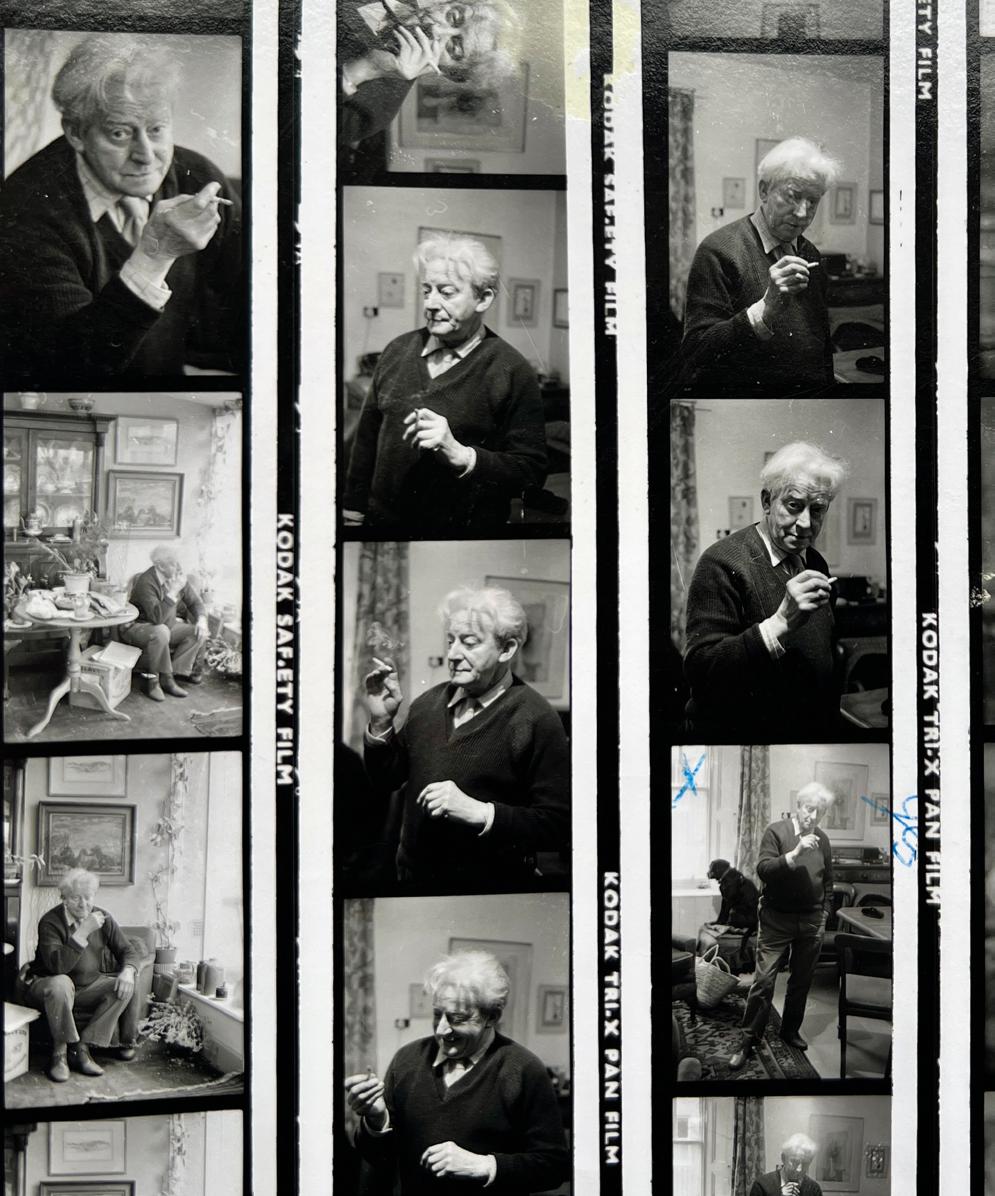
William Gillies camping at Durisdeer, Dumfries and Galloway, 1933. Image courtesy of the RSA
We are delighted to present the 20th edition of Modern Masters, a series that gives us the opportunity to pause, look back and celebrate the remarkable range of artists whose work has passed through The Scottish Gallery over the decades.
This year's exhibition brings together paintings, works on paper and objects by artists who continue to shape the story of Scottish art. The enduring passion for Joan Eardley remains, and we present several important paintings and works on paper spanning her early and late career. These sit alongside beautiful examples from the Edinburgh School, including the master painter Sir William Gillies, who believed that you had to look every day, draw every day and paint every day in order to develop the discipline and skill required to describe the world around you. Alongside Gillies are examples by some of his most distinguished students, among them Elizabeth Blackadder, John Houston and David Michie. A special group of Koji Hatakeyama bronze boxes from Lord Howarth's Collection reminds us of the gallery friendships, trust and shared enthusiasm that lie at the heart of collecting.
All our exhibitions begin with the artist. Months, and often years, of work in the studio are brought towards a single moment when ideas, experiments, risks and achievements are gathered together and presented to the public. The exhibition is both milestone and deadline, demanding the very best of an artist's creative focus at a particular point in time.
The Gallery's role does not end there. For over a century we have worked to place important works into collections, build audiences for artists and create opportunities for their work to be seen, discussed and valued. In doing so, exhibitions become more than temporary events. They help shape collections, inform taste and contribute to the market for Scottish art. The acquisition of a work marks the beginning of another journey, as paintings and objects enter homes and become part of the lives of those who live with them. Whatever motivates a collector, each acquisition reflects a personal instinct and connection; a recognition of something that feels made especially for them.
Many years later, these works often return to us. Collectors and artists may have passed on, but the works remain, carrying with them histories, associations and new questions. Drawing on our archive, our relationships and our long experience of handling these artists' work, we have the opportunity to look again. Sometimes a fresh discovery emerges; sometimes a work finds a new place within the history of an artist's career. In this way, the conversation continues.
That is what Modern Masters has always been about. It is not simply an exhibition of great works of art, but a reflection of the relationships between artists, collectors and gallery that have shaped Scottish art over generations. Twenty exhibitions on, we remain as excited by that conversation as ever.
CHRISTINA JANSEN
Modern Masters XX
John Bellany (1942-2013)
Dame Elizabeth Blackadder (1931-2021)
James Cowie (1886-1956)
John Gardiner Crawford (b.1941)
Victoria Crowe (b.1945)
Pat Douthwaite (1934-2002)
Joan Eardley (1921-1963)
Henri Gaudier-Brzeska (1891-1915)
Sir William Gillies (1898-1973)
Earl Haig (1918-2009)
Koji Hatakeyama (b.1956)
John Houston (1930-2008)
Sir William MacTaggart (1903-1981)
David Michie (1928-2015)
James Morrison (1932-2020)
Alberto Morrocco (1917-1998)
Lilian Neilson (1938-1998)
Duncan Shanks (b.1937)
Julian Trevelyan (1910-1988)
Sylvia Wishart (1936-2008)
John Bellany (1942-2013)
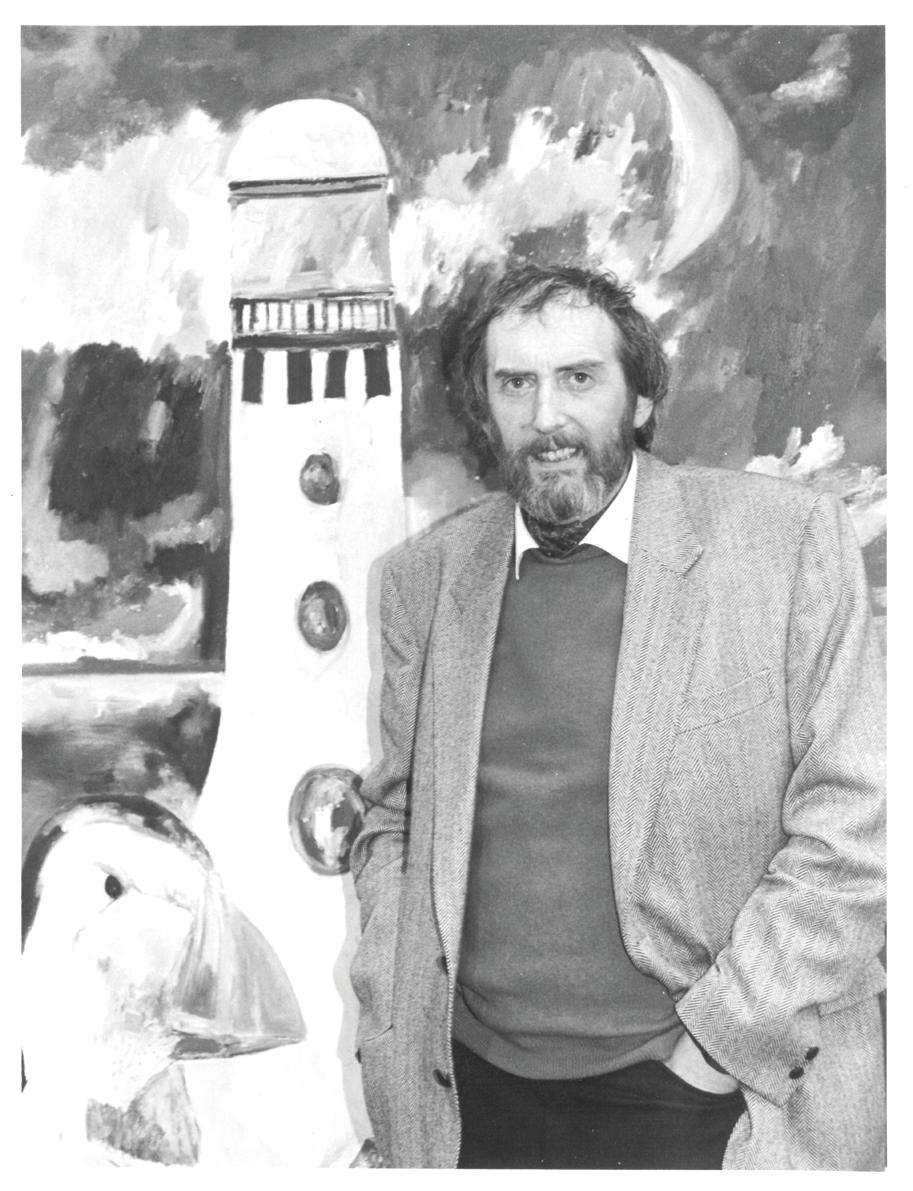
John Bellany CBE, RA, HRSA was born in 1942 in the fishing village of Port Seton on the East Lothian coast, a community whose traditions, religious intensity and maritime culture would remain central to his art throughout his life. He studied at Edinburgh College of Art from 1960 to 1965, where he developed a highly distinctive figurative language rooted in the Northern European Expressionist tradition and shaped by personal symbolism, autobiography, and the visual memory of Scotland’s fishing communities.
From the outset, Bellany’s work explored themes of mortality, faith, sexuality, guilt, and redemption. Drawing on his family’s seafaring background, he created images populated by fishermen, harbours, boats, seabirds and symbolic self-portraits which transformed lived experience into powerful psychological drama. Bellany believed that art should reflect the realities of life in all its complexity, and his paintings often confront both personal triumph and human vulnerability with emotional honesty.
By the 1970s and 1980s, Bellany had emerged as one of the most important painters of his generation, helping to lead the revival of expressive figurative painting in Britain. His work was exhibited widely throughout the UK and internationally, including major exhibitions at the Hayward Gallery, the Royal Academy of Arts, the Scottish National Gallery of Modern Art and the Museum of Modern Art, Oxford. In 1986 he represented Britain at the Venice Biennale, confirming his international reputation as one of the leading voices in contemporary British painting.
A defining moment came in 1988 when Bellany underwent a life-saving liver
transplant at Addenbrooke’s Hospital, Cambridge. The experience transformed both his life and art. During his recovery he began producing a remarkable series of drawings and self-portraits using paper and pencil supplied by hospital staff. These moving works confront mortality directly, depicting the artist attached to life-support systems yet continuing to draw with fierce determination. Bellany later described the transplant as both a physical and spiritual rebirth.
Following his recovery, Bellany’s palette became more colourful and celebratory, filled with renewed energy, while continuing to address the existential themes that had always underpinned his work. Throughout the final decades of his career, he remained intensely productive, creating paintings, drawings, prints, and sculpture distinguished by their emotional force and symbolic richness.
Bellany was elected Royal Academician in 1991 and was appointed CBE in 1994. Major retrospectives of his work were held during his lifetime, including significant exhibitions at the Scottish National Gallery of Modern Art and City Art Centre, Edinburgh. Today his work is held in numerous public collections including Tate, the National Galleries of Scotland, the British Museum, the Royal Academy of Arts and museums throughout Europe and North America.
The Scottish Gallery held an important exhibition of Bellany’s work in 1985, part of a long tradition of supporting artists whose work combines technical brilliance with human insight. Bellany remains one of the most significant and uncompromising figures in post-war Scottish art, an artist whose work continues to resonate through its humanity, honesty, and imaginative power.
John Bellany,
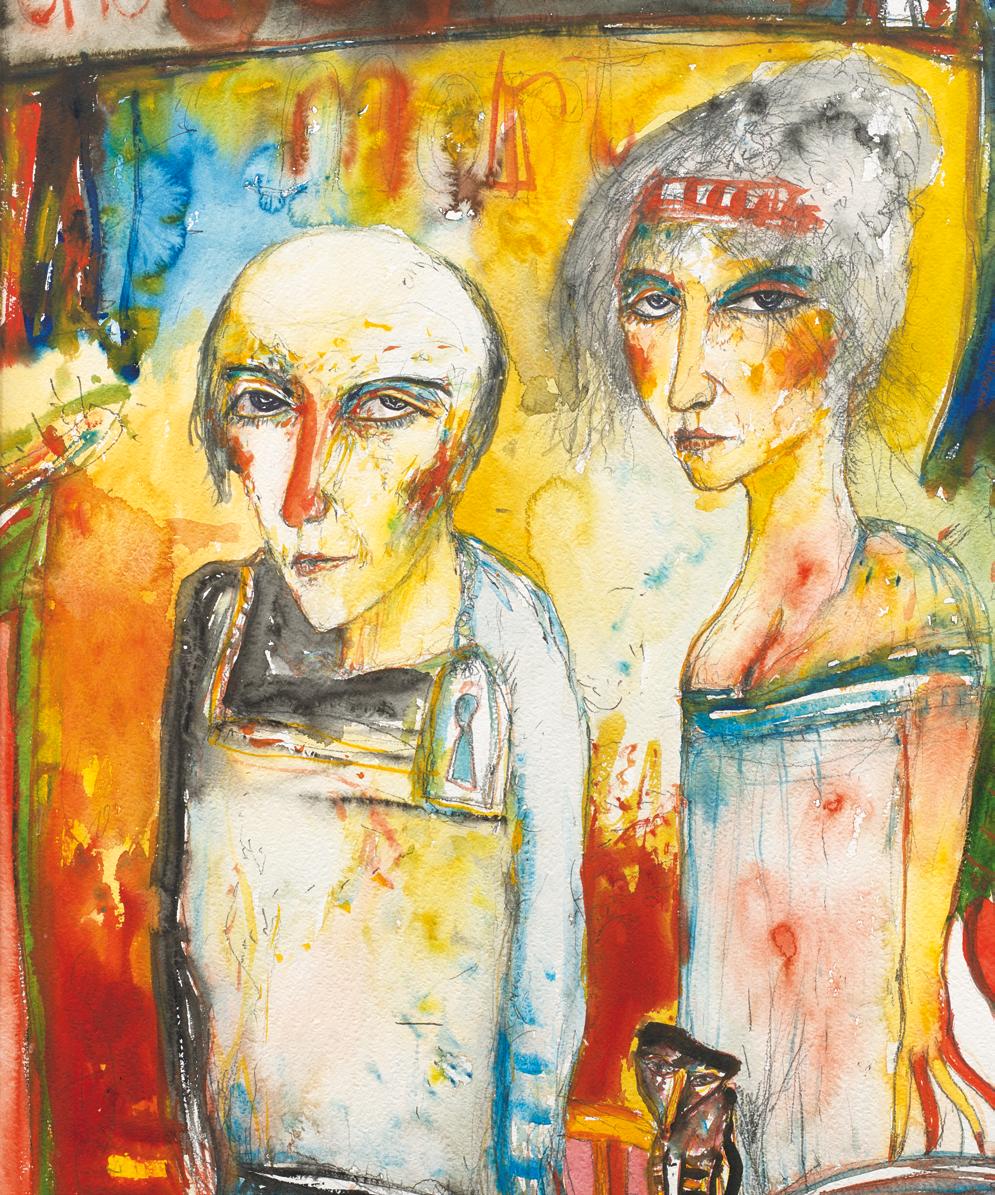
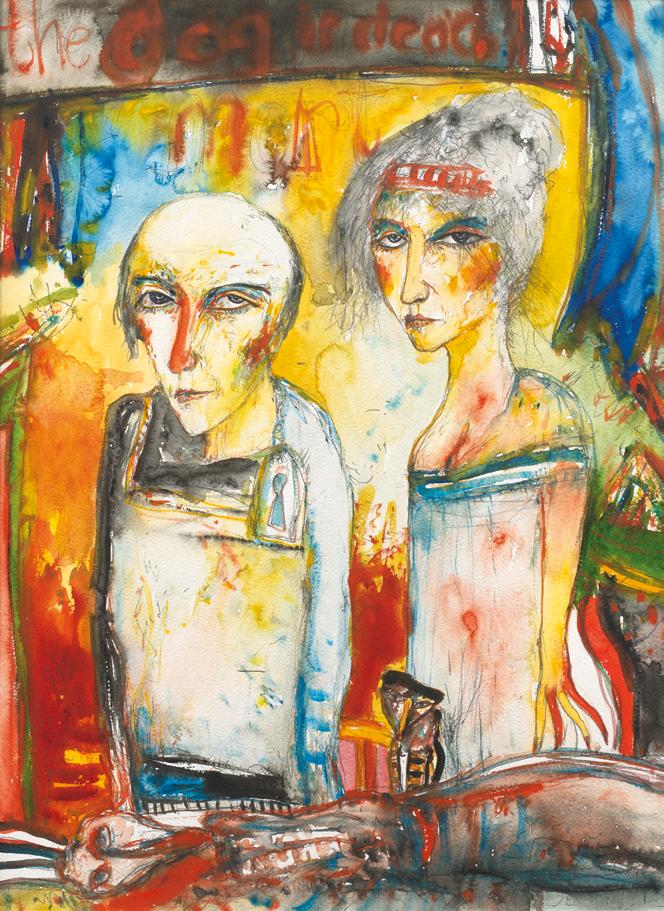
The Mystery of Life is a symbolic later work by John Bellany, drawing upon the folklore, superstitions and lived realities of Scotland’s east coast fishing communities. Two fisherfolk figures, a man and a woman, appear to be dressed in working aprons and stare directly at us, occupying the foreground with an unsettling yet compelling intensity. Behind them is a looming vessel bearing the words The Dog is Dead, beneath which the word mort, meaning death, is inscribed like a fragment of warning or remembered tale.
Across the lower edge of the composition lies a strange crocodilian creature clutching a lifeless animal, while an owl-like form emerges nearby; motifs Bellany frequently used as symbols of omen, memory, and spiritual
witness. The female figure’s reddened hands, the asymmetrical eyes, and the dreamlike compression of boat, beast and figure create the atmosphere of a visual folk ballad, part harbour story, part allegory, part fevered recollection.
Rather than illustrating a single narrative, Bellany evokes the psychological world of the fisher communities of Port Seton, where myth, religion, labour, and superstition were deeply entwined. Yet for all its dark symbolism, the painting is animated by Bellany’s characteristic vitality. Glowing colour, theatrical presence, and mordant humour transform mortality and mystery into something profoundly human.
John Bellany (1942-2013)
1. The Mystery of Life, 1986 watercolour on paper, 74 x 54.5 cm signed lower right
EXHIBITED
The Open Eye Gallery, Edinburgh
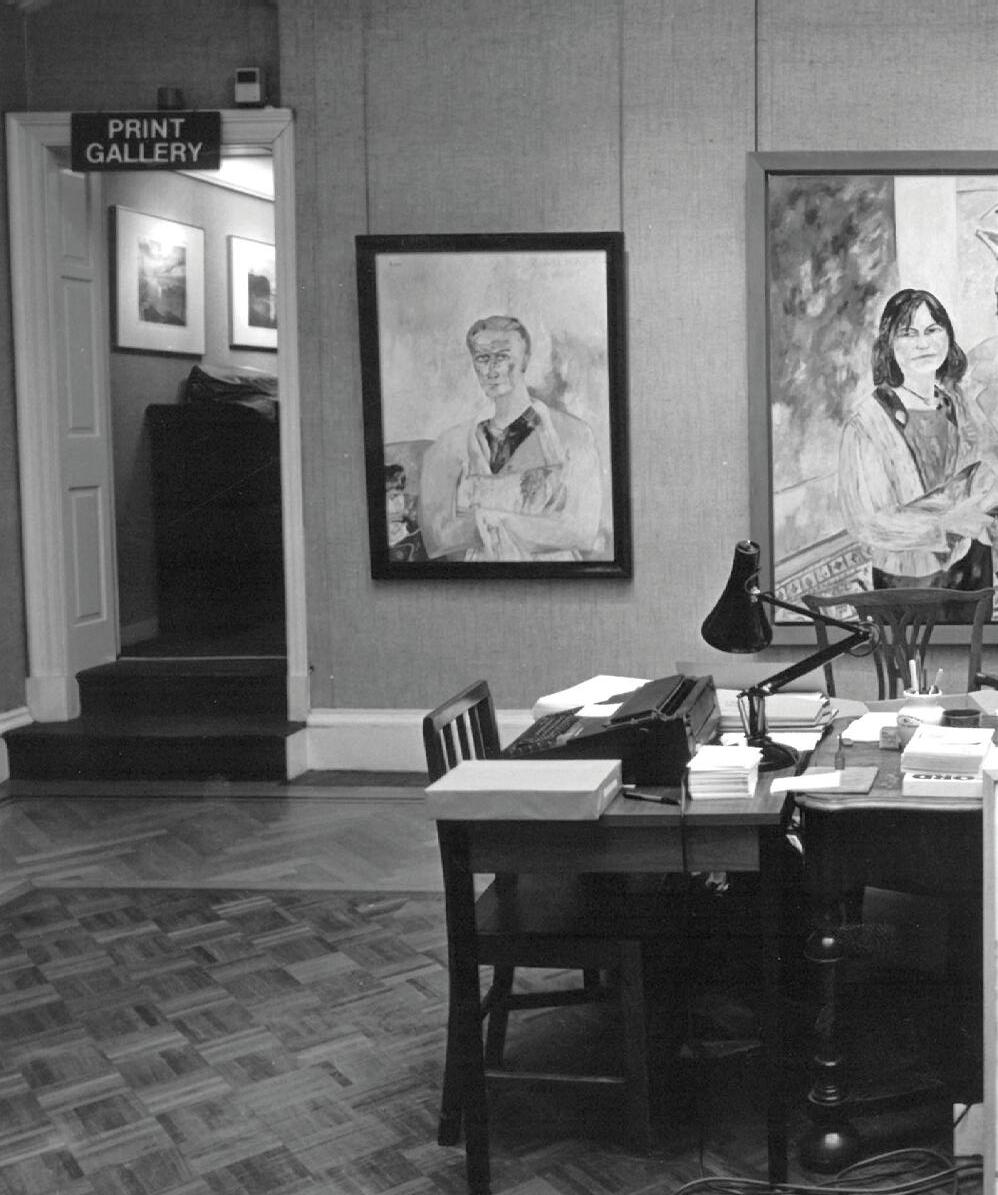
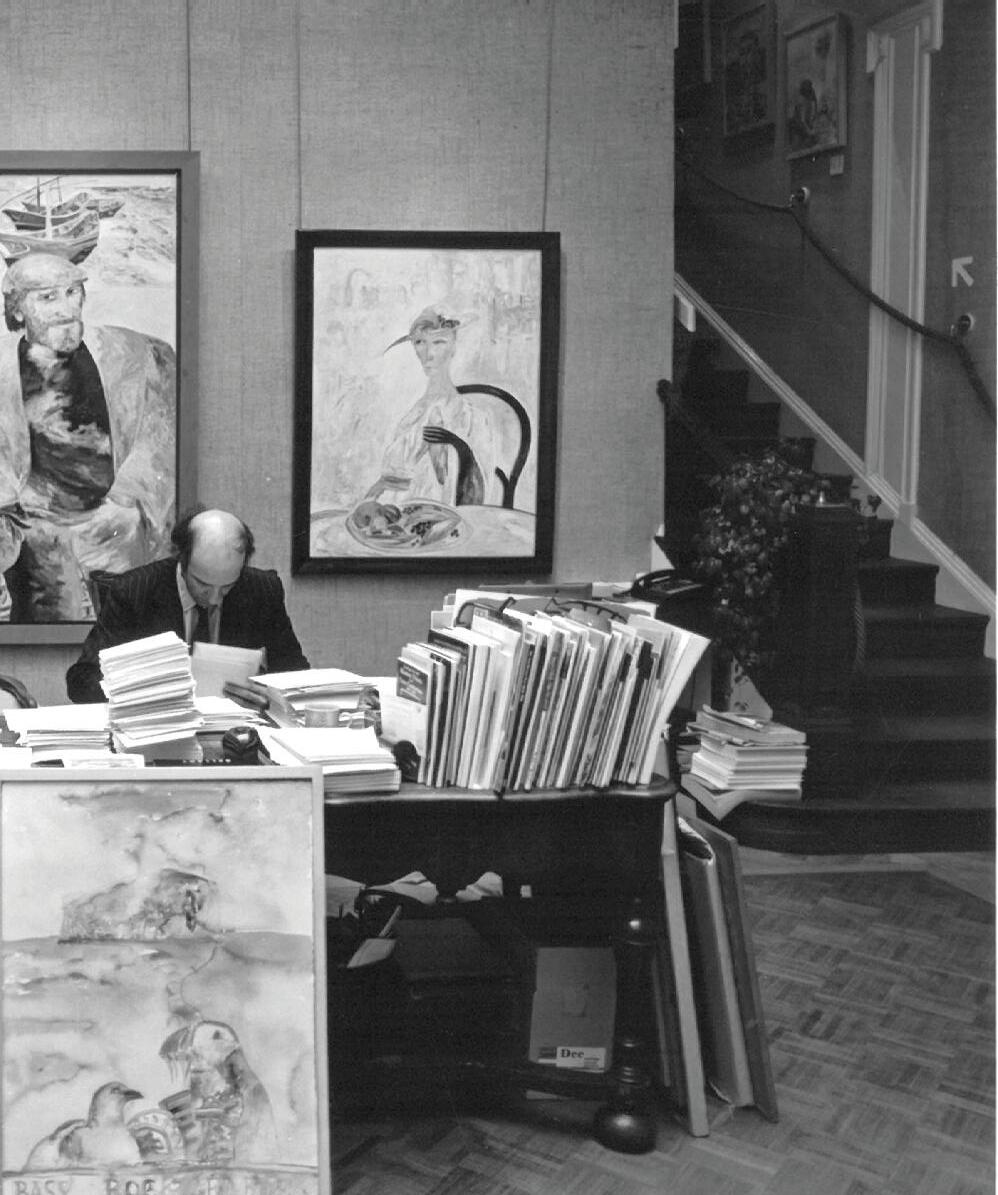
John Bellany exhibition at The Scottish Gallery, 1986
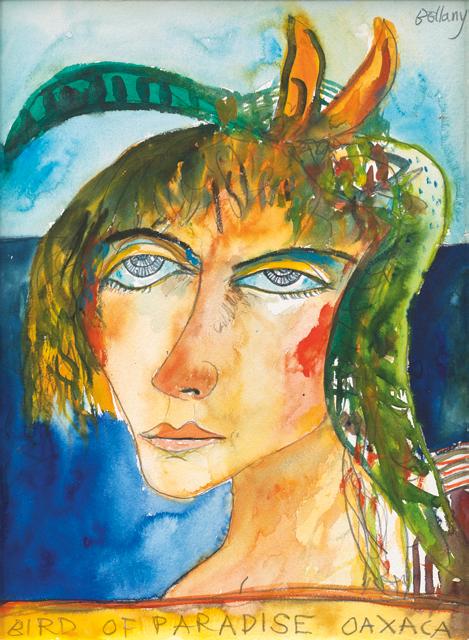
Bird of Paradise, Oaxaca reflects John Bellany’s fascination with transformation, mythology, and symbolic portraiture. The title references Oaxaca in southern Mexico, and the work relates to Bellany’s time in Mexico during the 1990s.
Set against an intense azure blue ground, the female figure emerges with a direct and enigmatic gaze, her masklike features framed by vivid plumage and curling green forms that suggest both exotic bird life and ceremonial headdress. Bellany merges human and animal forms in a way that recalls folk art and theatrical costume, creating an otherworldly portrait. The bird motif suggests freedom, transformation, and spiritual vitality, while the fluid watercolour technique gives the painting a sense of immediacy and spontaneity. The result is a vivid and imaginative work that celebrates Bellany’s lifelong engagement with myth, travel, and the expressive power of colour.
John Bellany (1942-2013)
2.Bird of Paradise, Oaxaca, 1997 watercolour on paper, 37 x 27 cm signed upper right
EXHIBITED
The Open Eye Gallery, Edinburgh
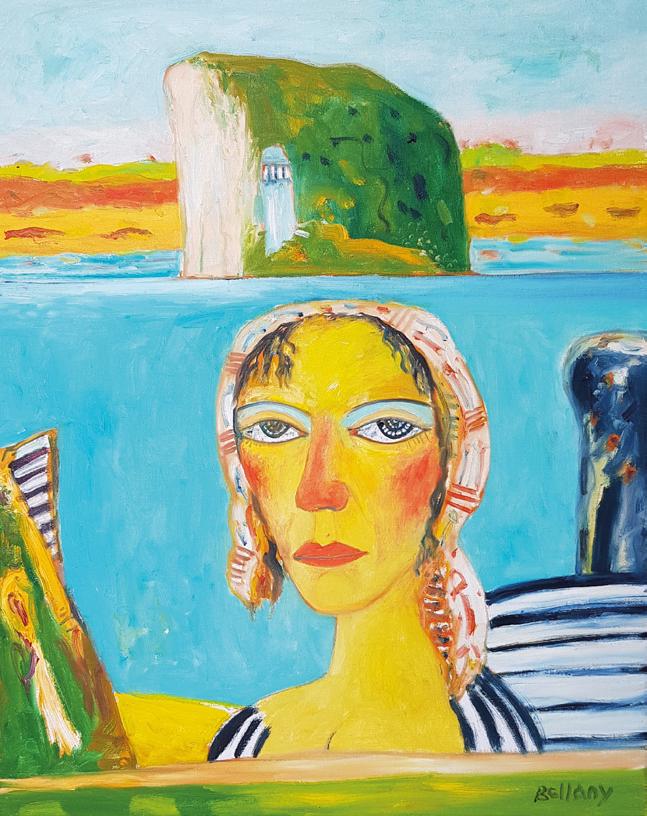
The Bass Rock rises dramatically from the Firth of Forth, its white volcanic cliffs visible for miles along Scotland's east coast. Home to the world's largest colony of northern gannets, it has long occupied a special place in Scotland's imagination. Through the centuries it has served as a royal fortress, a notorious prison for Covenanters and Jacobites, and today remains one of the country's most recognisable natural landmarks. Steeped in folklore and history, the island has inspired generations of artists, writers and visitors drawn to its commanding presence.
For Bellany, the Bass Rock became far more than a distinctive feature of the East Lothian coastline. Painted on numerous occasions during his later career, it emerges as a powerful symbol of permanence, memory, and spiritual refuge. Like the sea that surrounds it, the Rock became part of Bellany's own visual language, a place where landscape and human experience meet. Dominating the
foreground is a striking female figure whose calm, unwavering gaze lends the composition an almost iconic quality. Her patterned headscarf recalls the women of Scotland's east coast fishing communities, so familiar to Bellany from his upbringing in Port Seton. Throughout his career he returned to these figures, not as portraits of specific individuals, but as enduring symbols of resilience, family and the enduring relationship between people and the sea.
Around her, Bellany weaves together fragments of the maritime world. Striped forms and vertical structures evoke the language of boats, harbour architecture and fishing equipment, although they remain deliberately ambiguous, balancing the composition while hinting at the traditions that shaped both the artist's life and imagination. As in much of Bellany's mature work, recognisable forms dissolve into a richly symbolic visual vocabulary.
John Bellany (1942-2013)
3. Fisherwoman and The Bass Rock, c.1999 oil on canvas, 76 x 61 cm signed lower right
Elizabeth Blackadder (1931-2021)
Dame Elizabeth Blackadder remains one of the defining figures of modern Scottish art.
Born in Falkirk, she studied at Edinburgh College of Art from 1949–1954 under William Gillies and Robert Henderson Blyth, before embarking on a career that would quietly reshape the language of still life painting in Britain. Early travels to southern Europe introduced her to the effects of light, atmosphere, and architectural space, while later encounters with Japanese art and aesthetics profoundly shaped her approach to composition, surface and looking itself.
Her still life practice of the late 1970s and early 1980s marked development in her practice. Following her first visits to Japan in 1978, her painting absorbed the influence of Japanese screens, prints and ceramics, visible in flattened spatial arrangements, heightened pattern, delicate asymmetry, and an increased sense of contemplative space. Everyday objects including flowers, bowls, lacquerware, fabrics, and treasured domestic possessions became vehicles for a more distilled and meditative form of painting. The paintings from this period reveal an artist committed to sustained observation and the discipline of practice, each composition carefully balanced, endlessly refined, and alive to the quiet poetry of ordinary things.
Working across painting, watercolour, printmaking and drawing, Blackadder developed a visual language that was both personal and internationally informed.
Although associated with the Edinburgh School, her art moved beyond its traditions, drawing equally upon European modernism, botanical illustration, and Japanese aesthetics. Beneath the apparent delicacy of her work lies considerable formal intelligence and technical control.
Blackadder taught at Edinburgh College of Art from 1962–1986, influencing generations of younger artists through her example of rigorous daily practice and lifelong dedication to making art. Her achievements included election to both the Royal Scottish Academy and Royal Academy, becoming the first woman to hold membership in both institutions, and appointment as Her Majesty’s Painter and Limner in Scotland in 2001.
The Scottish Gallery shared a close relationship with Blackadder for more than sixty years, presenting sixteen solo exhibitions in her lifetime. Her work remains celebrated for its elegance, restraint and attentiveness, paintings shaped by travel and experience, and a lifelong commitment to looking closely, working continuously, and finding lasting beauty within the everyday. Few artist-gallery relationships in Scottish art history have been as longstanding, collaborative or significant.
The Scottish Gallery exhibitions: 1961, 1966, 1972, 1974 (Festival), 1994 (Festival), 1998, 2003, 2004, 2008 (Festival), 2011, 2013, 2015, 2016 (Festival), 2020, 2023 (Memorial)
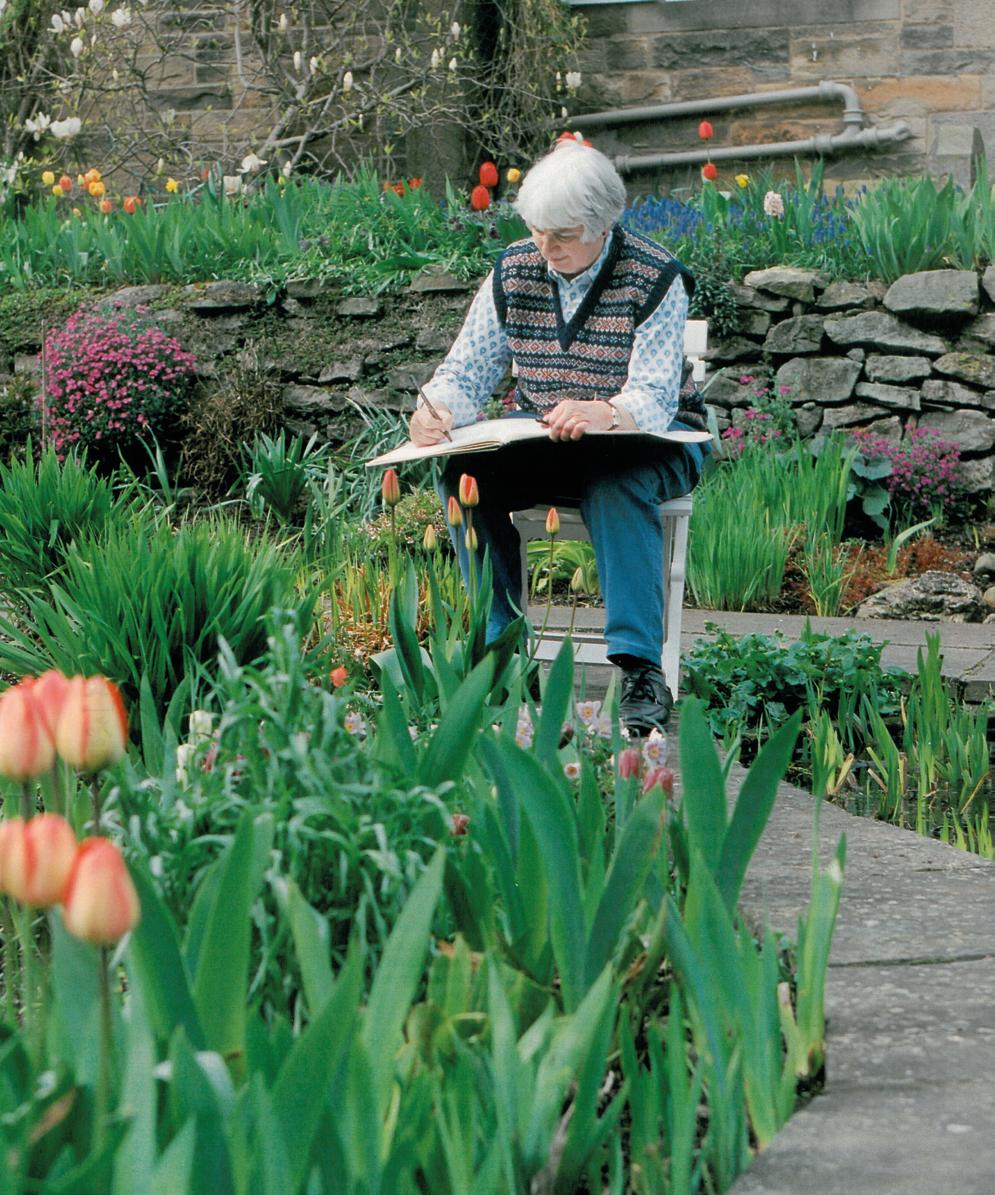
Elizabeth Blackadder in her garden, 1989
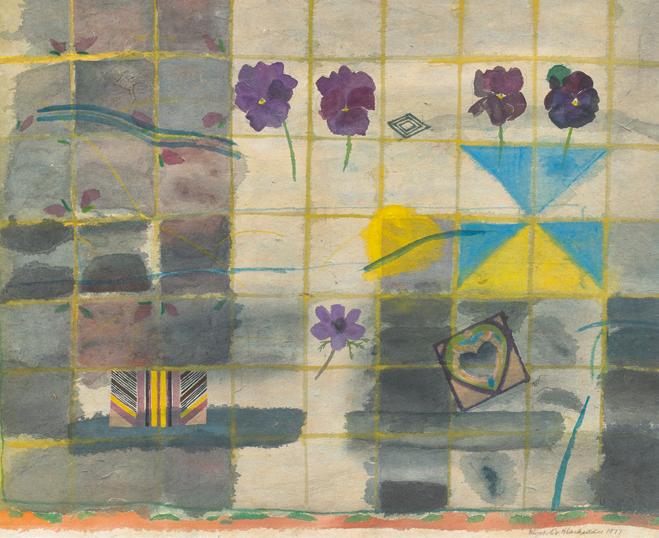
Elizabeth Blackadder demonstrates her distinctive approach to pattern, space, and arrangement. Structured around a delicate grid, the composition recalls the surface of a Japanese screen, with motifs suspended across a flattened pictorial field rather than arranged within a conventional still-life interior.
Four deep purple pansies with a single lilac bloom appear alongside geometric forms, fragments resembling a Japanese postcard or folded patterned paper, and a small heart enclosed within a box-like outline. Rather than functioning as objects, these elements read as tokens or emblems, creating an
intimate atmosphere. Soft washes of grey, blue, and violet suggest glimpses of landscape and cascading water beneath the latticelike structure, while the transparency of watercolour allows forms to dissolve gently into one another.
Painted before her first visit to Japan in 1978, Still Life with Pansies anticipates many qualities associated with her later engagement with Eastern aesthetics, particularly the emphasis on asymmetry, negative space, and the contemplative relationship between image and emptiness.
Blackadder (1931-2021)
4. Still Life with Pansies, 1977 watercolour on paper, 44 x 54 cm signed and dated lower right
Elizabeth
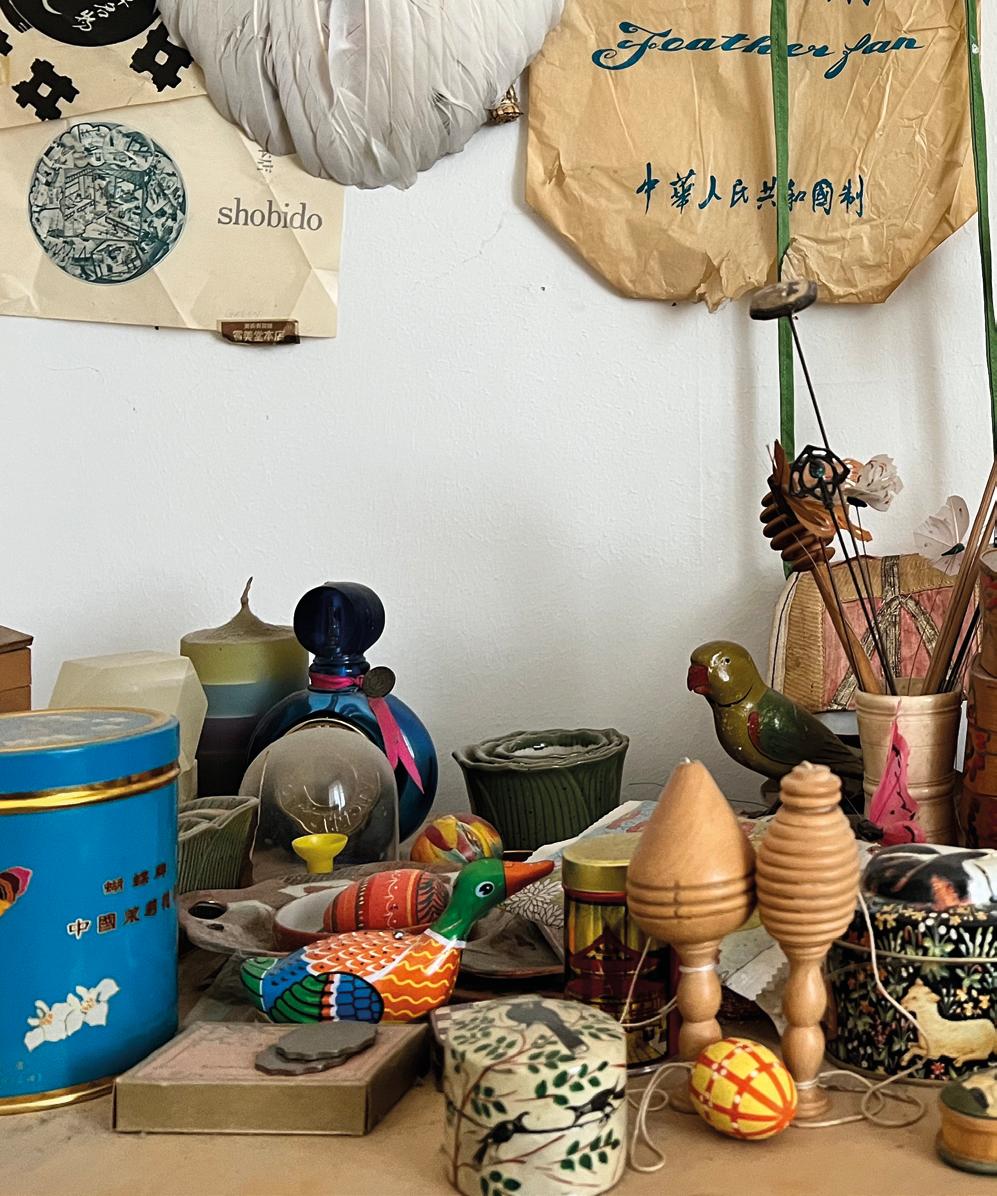
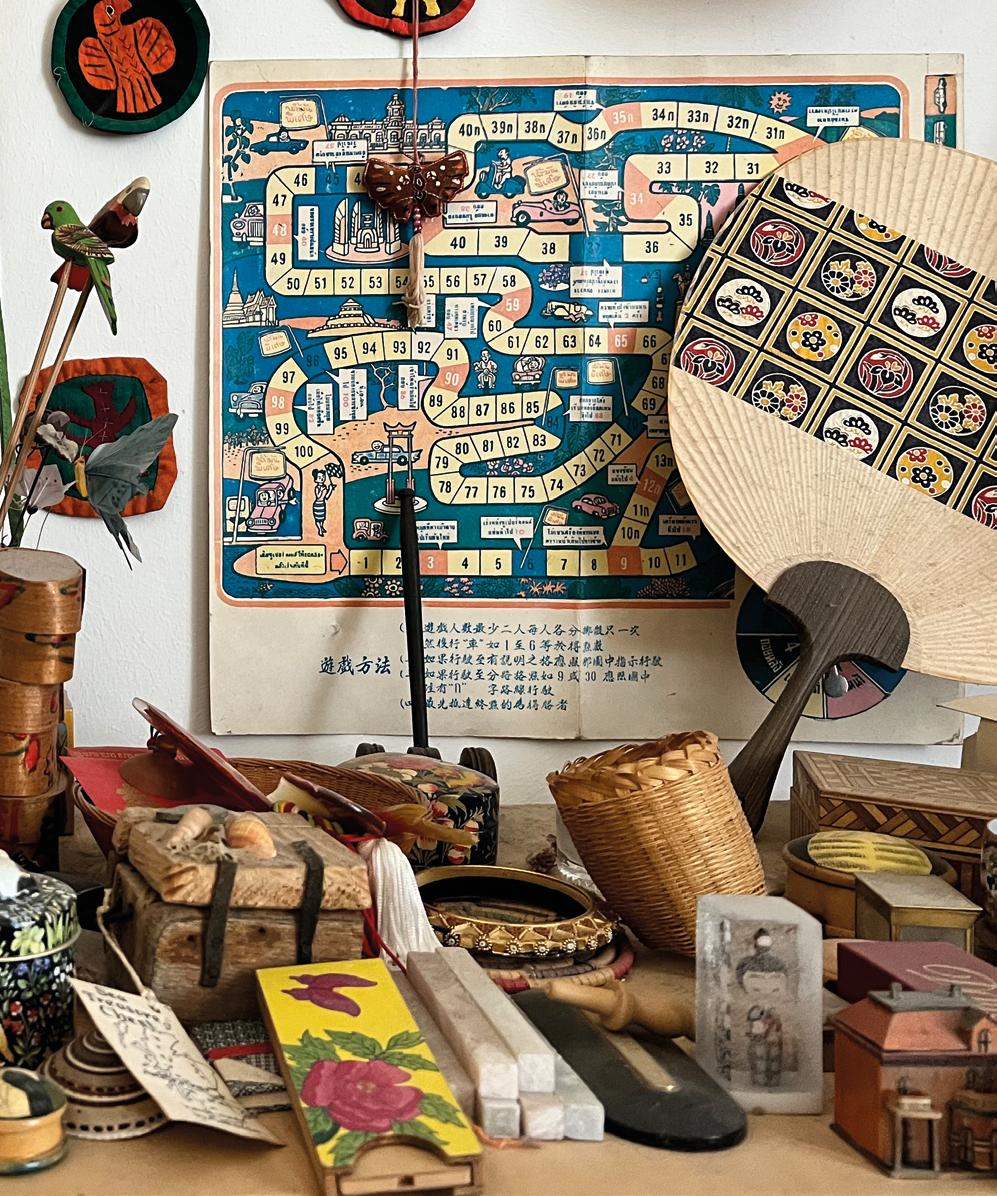
Elizabeth Blackadder's studio
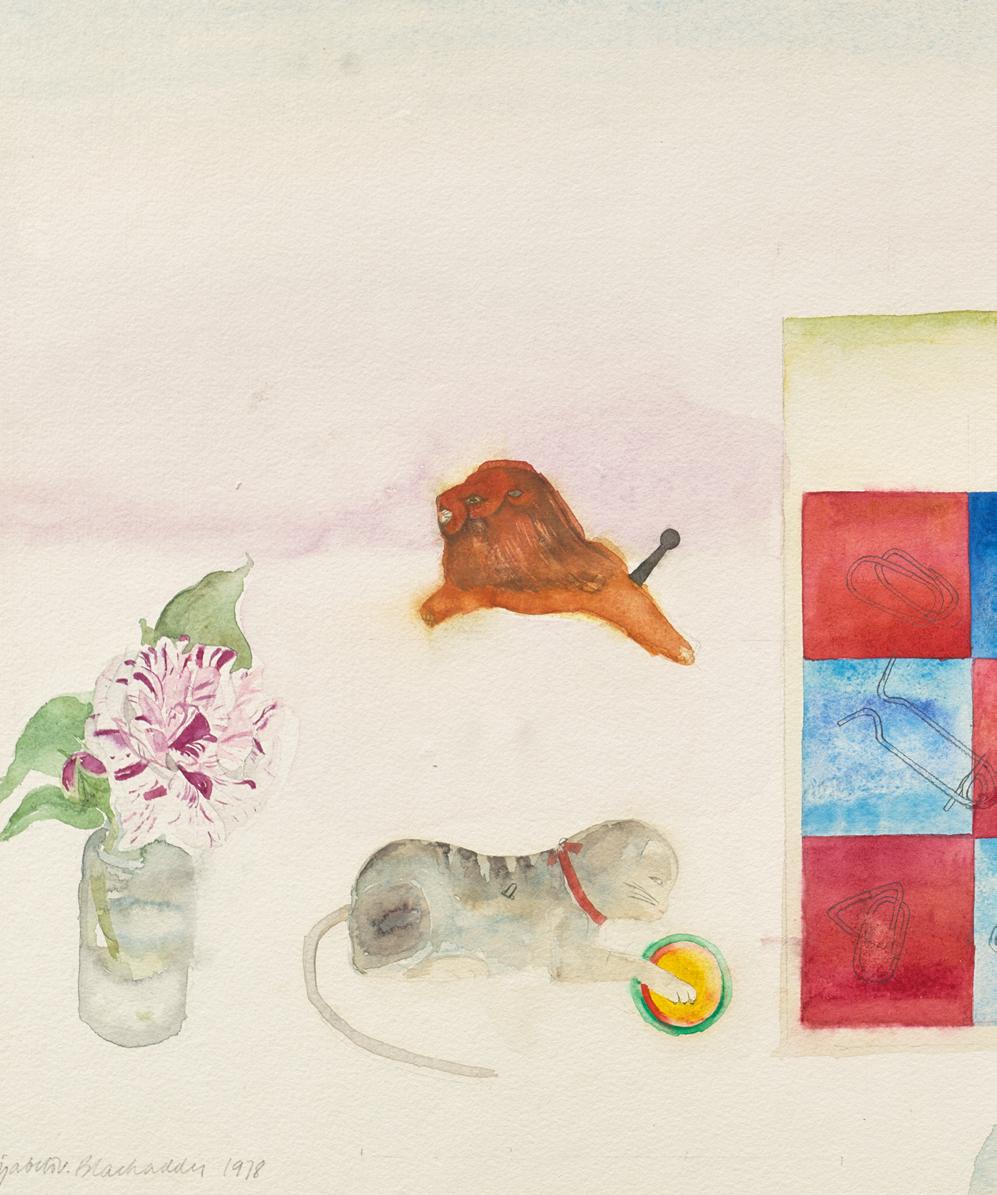
Blackadder and her husband, the painter John Houston, surrounded themselves with collected objects gathered over decades. Their home and studios in the southside of Edinburgh was filled with ephemera, flowers, toys, vessels, ornaments, and small keepsakes from Scotland and travels together. These objects were not displayed as a formal collection but existed as part of the disciplined and continuous process of making pictures. Blackadder would carefully select and arrange items in the studio until she was ready to start on a painting.
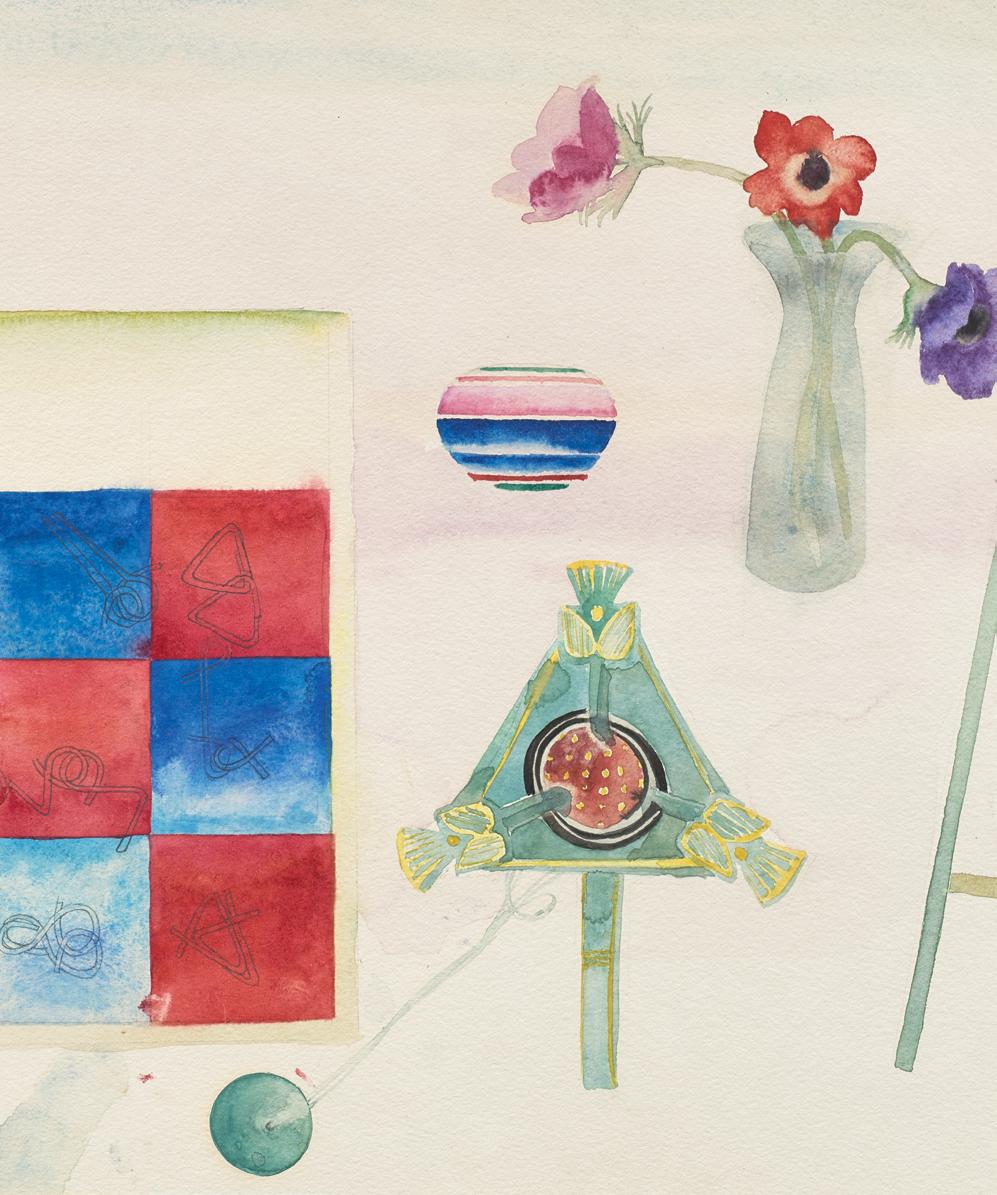
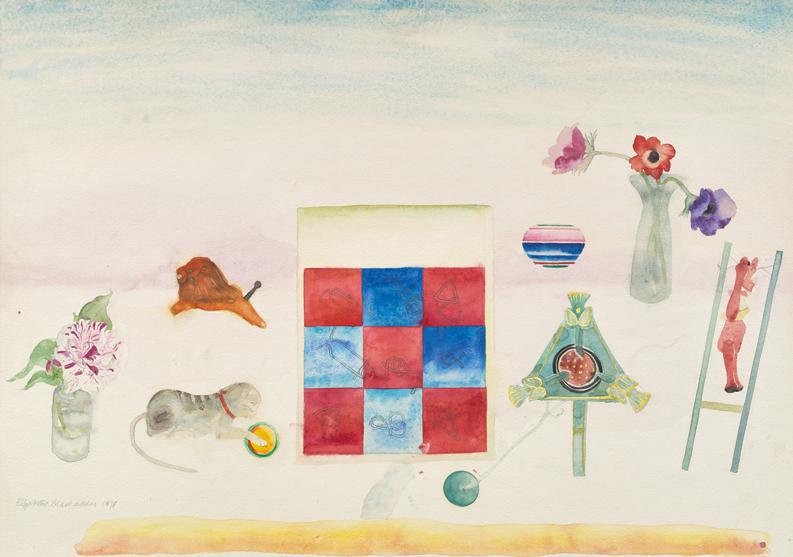
In Still Life with Toys, Blackadder has assembled two wind-up toys, a small striped hand drum, a suspended circus acrobat, delicate flowers, and a mysterious chequered box containing metal puzzles. The circus figure, poised on its tiny trapeze, recalls a child’s toy activated by touch, while the chequered box invites recognition through
memory rather than explanation. These are objects made to be handled, spun, squeezed, and played with. Rather than constructing a traditional still life, Blackadder creates a spacious and theatrical arrangement in which intervals between objects become as important as the objects themselves. The pale washes of watercolour and the openness of the composition allow each form to exist both as a real thing and as an element within a carefully orchestrated visual rhythm.
By making a picture about toys, Blackadder gently invites the viewer into a world shaped by curiosity, collecting, and play. The work evokes childhood memories and the pleasures of handling treasured objects, while also reflecting upon the playful nature of picture making itself. The still life becomes an imaginative space in which observation, memory, and invention quietly unfold together.
Elizabeth Blackadder (1931-2021)
5. Still Life with Toys, 1978 watercolour on paper, 51.5 x 73.5 cm signed and dated lower left
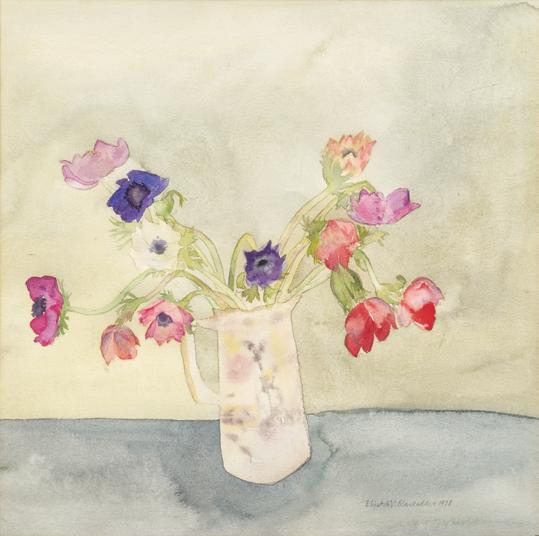
Anemones in a Jug is a tender and contemplative still life that reflects Elizabeth Blackadder’s sensitivity to colour, balance, and observation. Delicate pink and violet anemones drift lightly across the paper, their fragile stems and soft petals seeming almost to dissolve into the pale surrounding space.
From the late 1970s, Blackadder increasingly made work in watercolour, ultimately becoming one of Britain’s great masters of the medium. The transparency and fluidity
of watercolour allowed her to work with remarkable immediacy and delicacy, capturing fleeting impressions with an economy of touch that became central to her practice.
Together with her husband, the artist John Houston, she maintained a rigorous daily routine, working in the studio before and after teaching at Edinburgh College of Art. For Blackadder, painting was not simply inspiration, but a daily practice rooted in looking, arranging, and making.
Elizabeth Blackadder (1931-2021)
6. Anemones in a Jug, 1979 watercolour on paper, 40 x 40 cm signed and dated lower right
EXHIBITED
Mercury Gallery, London, 1979
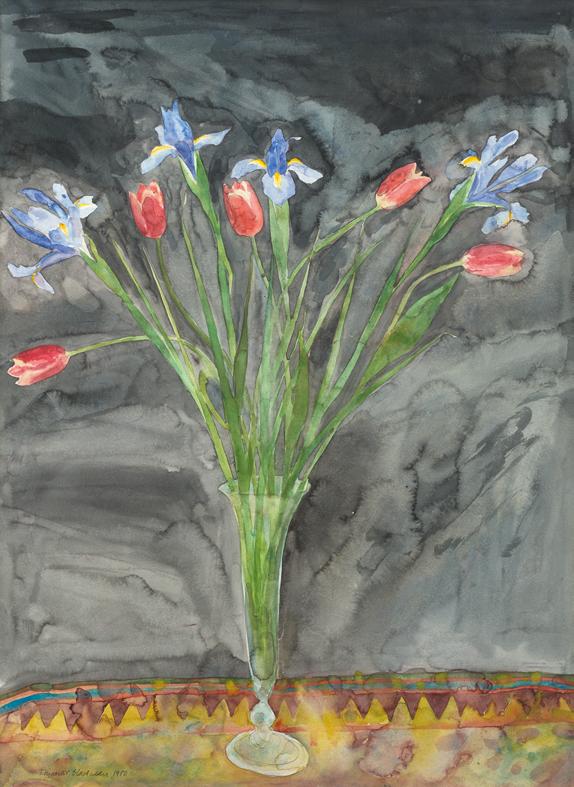
Rising from a simple glass vessel, tulips and irises spread delicately across the sheet, their pinks, blues, and greens illuminated against a dark atmospheric ground. The flowers were almost certainly gathered from the garden Blackadder cultivated with her husband, the painter John Houston. Still Life with Tulips and Irises is carefully orchestrated through colour. The decorated tablecloth at the base of the composition echoes the vivid pinks and blues of the tulips and irises above, creating a subtle visual rhythm that draws the eye across the surface. Blackadder uses pigment freely across the entire sheet, allowing washes of colour to animate not only the flowers themselves but the surrounding space, so that the painting feels unified through tone and atmosphere rather than strict outline. Irises were among Blackadder’s favourite flowers, and she returned to them repeatedly throughout her career, exploring their many shades, structures, and seasonal variations.
7. Still Life with Tulips and Irises, 1980 watercolour on paper, 78 x 58 cm signed and dated lower left
Elizabeth Blackadder (1931-2021)
James Cowie (1886-1956)
James Cowie was one of the most distinctive and intellectually rigorous figures in twentieth-century Scottish art. Born at Netherton of Dalgety near Cuminestown, Aberdeenshire, he brought to painting and drawing a rare combination of technical precision, poetic imagination and psychological intensity. Although often associated with Scottish realism, Cowie developed a visual language which fused Renaissance discipline with elements of symbolism and surrealism.
Initially training as a teacher in Aberdeen before studying at Glasgow School of Art between 1912 and 1914, Cowie’s early career was shaped by education, observation and an iron clad discipline. He taught for many years at Bellshill Academy before becoming Head of Painting at Gray’s School of Art and later Warden of Hospitalfield House in Arbroath, where he influenced a younger generation of Scottish artists including Robert Colquhoun, Robert MacBryde, and Joan Eardley.
Drawing lay at the centre of Cowie’s practice. Working slowly and methodically, he developed compositions through countless preparatory studies, believing that painting should move beyond direct transcription towards something more imagined and constructed. As Duncan Macmillan observed, Cowie regarded a picture as an idea, a concept built of much that in its total combination it would never be possible to see and to copy. His mastery of line and tonal control gave even the simplest studies an extraordinary sense of stillness and concentration.
Cowie’s subjects often emerged from everyday surroundings: students in classrooms, figures in interiors, the rolling farmland of Aberdeenshire or carefully arranged still life objects. Beneath their apparent calm lies an atmosphere of ambiguity and psychological tension. During the 1930s and 1940s especially, his work absorbed aspects of Surrealism and metaphysical painting. Classical casts, mirrors, glass panels, books, and drapery recur as motifs within compositions that deliberately disrupt perspective and scale, creating dreamlike spaces charged with symbolic possibility. Hospitalfield proved particularly important to Cowie’s mature work. The house, its collections and surrounding landscape became the setting for some of his most enigmatic compositions, where memory, observation and imagination coexist.
Cowie exhibited widely throughout his lifetime, including at the Royal Scottish Academy, the Royal Glasgow Institute and in major Arts Council exhibitions. The Scottish Gallery has played a significant role in preserving and championing his legacy through a series of important exhibitions spanning seven decades.
Cowie’s work is held in major public collections including the Scottish National Gallery of Modern Art, Tate Britain, Aberdeen Art Gallery and the Hunterian Art Gallery. His art continues to captivate through its combination of restraint, mystery, and formal intelligence. Quietly radical in spirit, Cowie transformed observed reality into images of haunting stillness and psychological power.
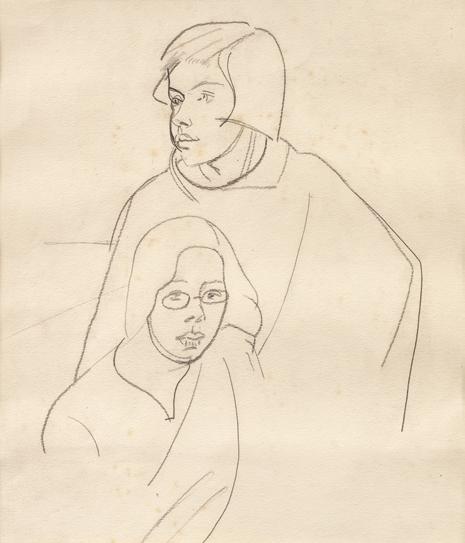
8. Schoolgirls, c.1926 pencil on paper, 35 x 31 cm signed, titled and dated verso
James Cowie (1886-1956)
John Gardiner Crawford (b.1941)
John Gardiner Crawford RSW, RBA, RI (b.1941) is one of Scotland’s most respected contemporary watercolourists, celebrated for his evocative depictions of the northeast coast and its elemental landscapes. Born in Broadsea, near Fraserburgh, where his father and forefathers were all Broadsea fishermen, Crawford’s personal connection to the sea and coastal life has remained central to his artistic vision throughout his career.
After attending Fraserburgh Academy, Crawford studied at Gray’s School of Art between 1959 and 1964, including a postgraduate year, before continuing his studies at the Patrick Allan-Fraser School of Art at Hospitalfield, Arbroath. The influence of the Angus coastline and the austere beauty of the North Sea became defining subjects in his work.
There is no shortage of subjects within a few miles of Crawford’s home in Arbroath. He is attracted to the marchlands where sea meets land, where low buildings are scoured by wind and sand, where a lighthouse gives succour to a seafarer’s eye, where the chance order of a row of seagulls or reflection on a cottage
window makes us pause, think and wonder. He paints the wilderness of the North Sea, lent significance by the fisherman’s blood that runs in his veins. Guy Peploe, 1998
Working primarily in watercolour, Crawford developed a highly individual style characterised by subtle tonal harmonies, sparse composition, and an extraordinary sensitivity to light and weather. His paintings often capture quiet, liminal moments, snowcovered limekilns, harbours shrouded in mist, isolated cottages, or windswept shoreline structures, rendered with a restrained poetic atmosphere.
Crawford was elected a member of the Royal Scottish Society of Painters in Watercolour (RSW) in 1974, the Royal Society of British Artists (RBA) in 1983, and the Royal Institute of Painters in Water Colours (RI) in 1984. He exhibited with The Scottish Gallery from 1982 and was a contracted artist with The Gallery, holding several solo exhibitions throughout his career. His exhibitions with The Scottish Gallery include 1982, 1985, 1987, 2003, and 2006. His work is represented in numerous public collections across the UK.
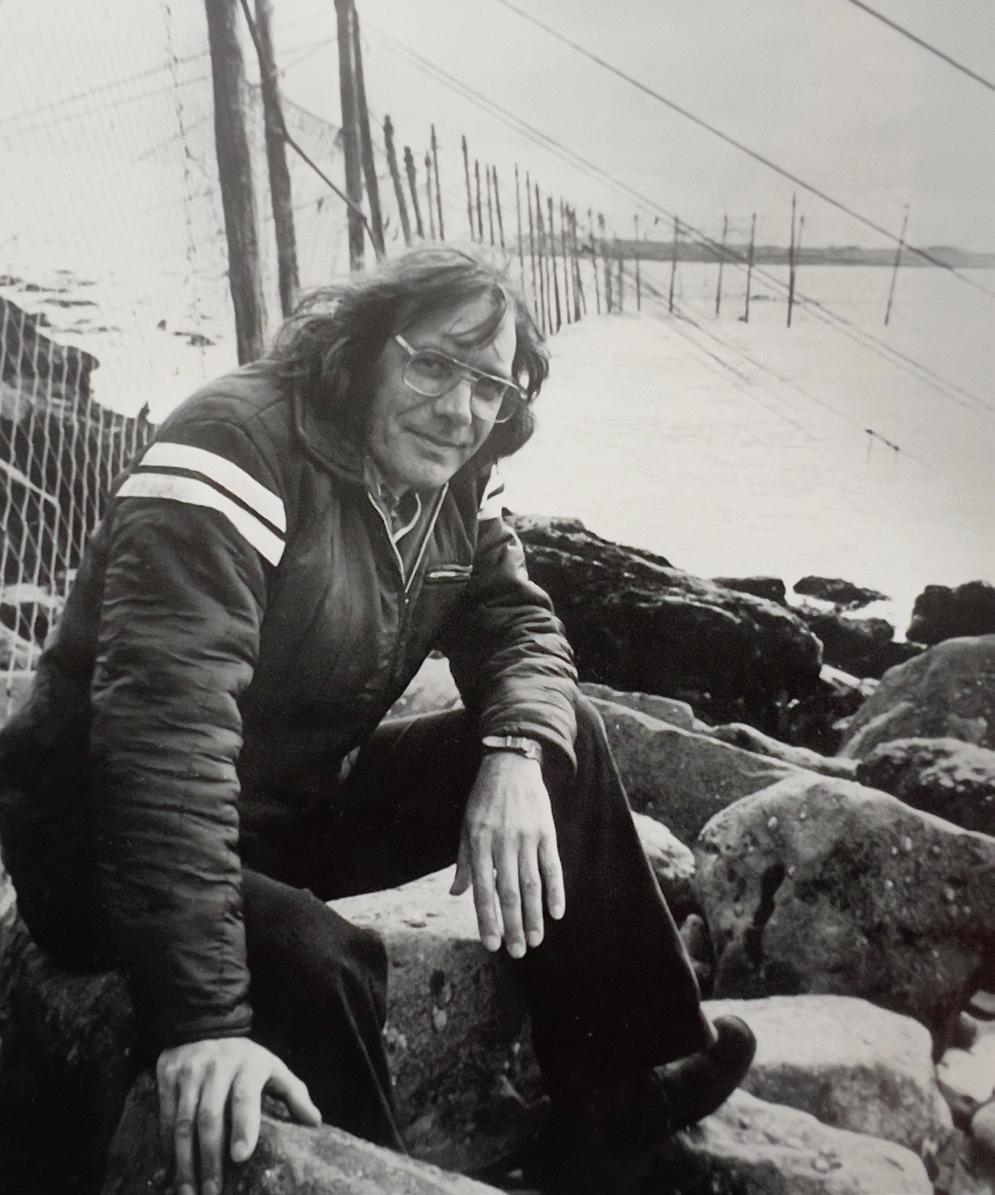
John Gardiner Crawford, c.1980
Photograph by Jessie Ann Matthew
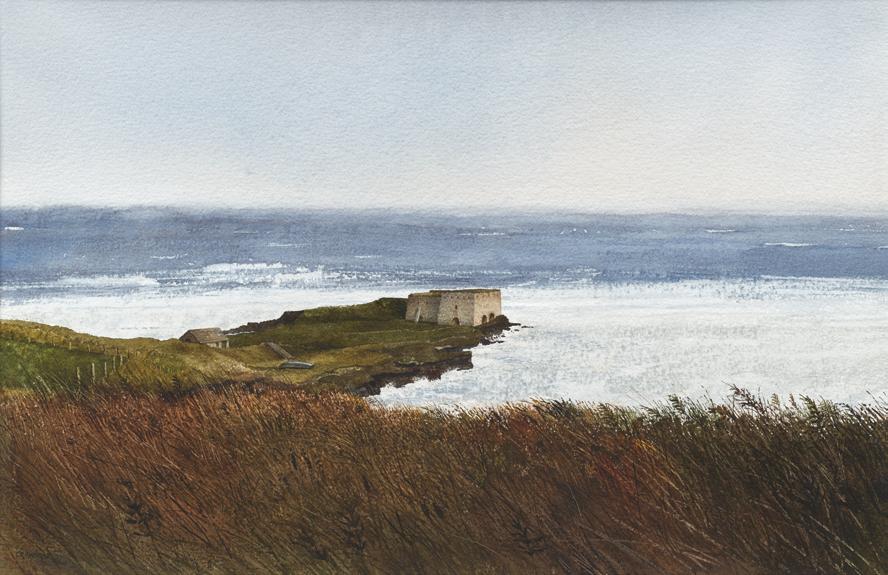
Over Boddin is one of John Gardiner Crawford’s most compelling works on the meeting of land, sea, weather, and human history along the northeast coast of Scotland. The subject of the painting is the old limekilns at Boddin Point, south of Montrose, where the North Sea presses relentlessly against the narrow headland. Crawford returned repeatedly to this subject, drawn to the exposed geography of the place and to the tension between permanence and erosion that defines the coastline.
The limekilns themselves were once part of a small industrial settlement serving the agricultural communities of Angus and Kincardineshire. Built to process limestone into quicklime for fertiliser and building purposes, the structures stand as remnants of an earlier working landscape shaped by labour, fishing, and coastal trade. A small croft, tracks, and man-made boundaries remain partially visible, though increasingly vulnerable to the force of the sea.
In early 2026, part of the Boddin coastline suffered significant collapse following severe winter storms, and the limekiln was also partially destroyed, underlining the fragility of this historic edge between land and water.
Crawford makes no attempt to soften the demands of the composition. The viewer looks across dense grasses and coastal scrub towards the isolated limekiln, dwarfed by the immense weight of sea and sky beyond. The horizontal sweep of the North Sea dominates the painting, its pale foaming surface pressing against the dark landmass with immense quiet force. The smallness of the building against the expanse of water creates a powerful sense of exposure and endurance.
Painted in watercolour, the work demonstrates extraordinary technical control. Crawford exploits the medium’s transparency and fluidity to convey shifting weather, sea mist, and the cool northern light of the coast, while the foreground grasses are built through layers of precise linear marks that anchor the composition physically and emotionally.
John Gardiner Crawford (b.1941)
9. Over Boddin, 1990 watercolour on paper, 34 x 52.5 cm signed lower left
EXHIBITED: William Hardie Gallery, Glasgow
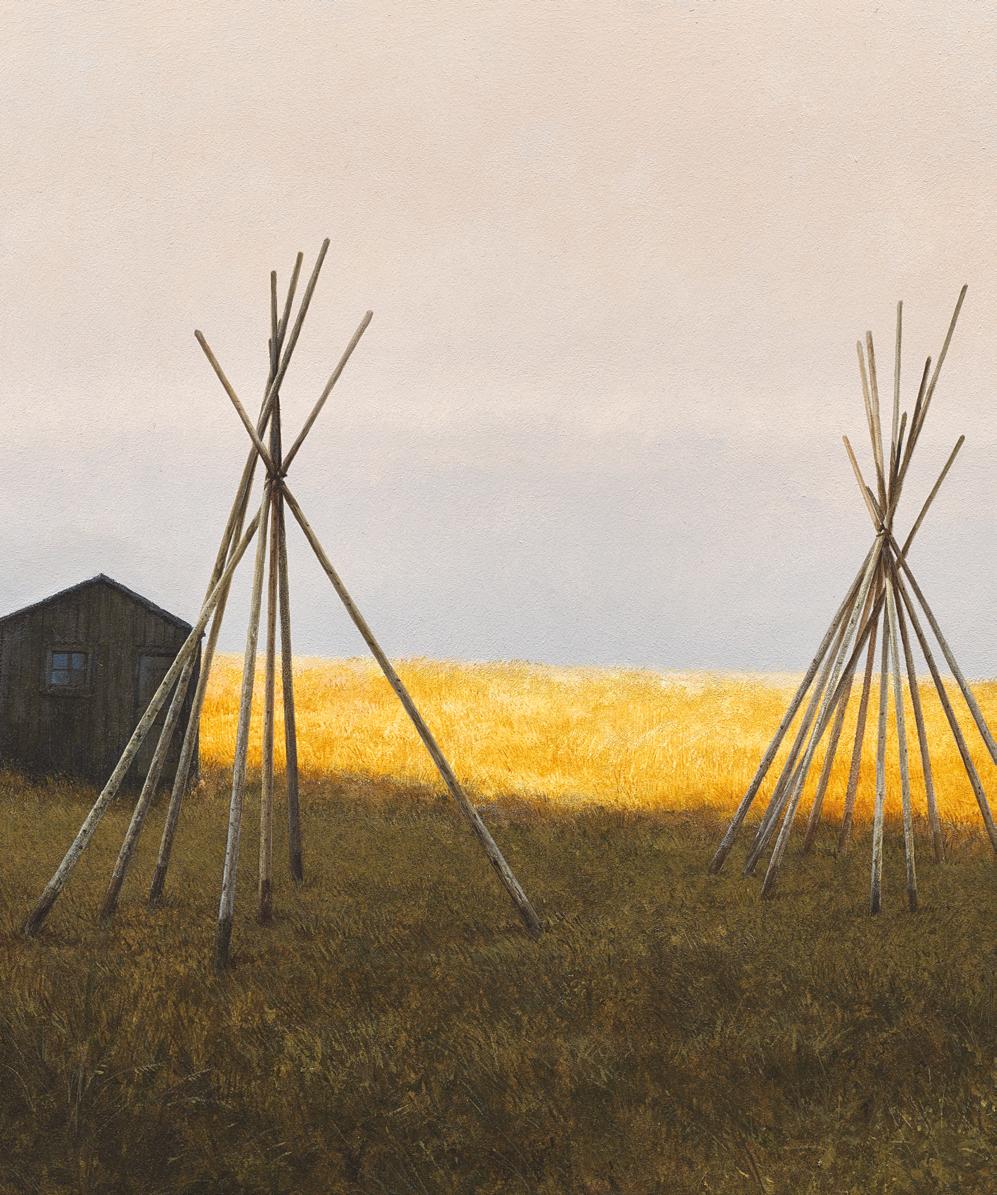
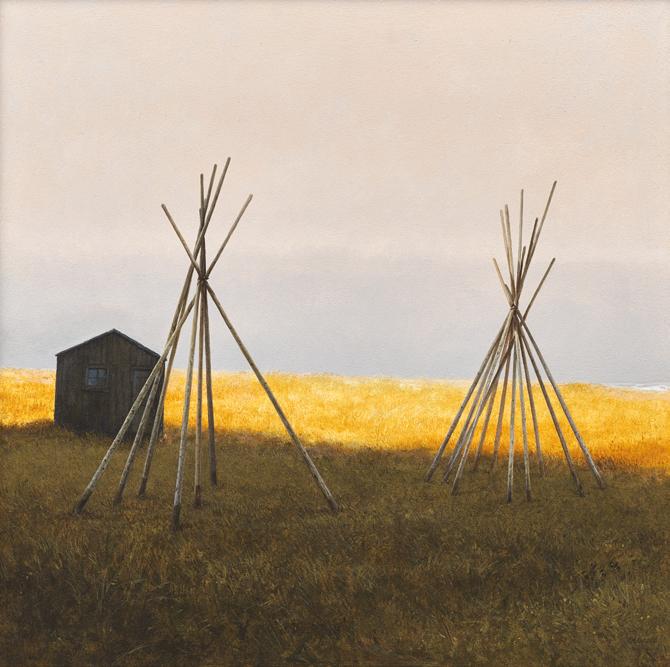
Evening Shadow is a haunting meditation on the agricultural landscape of north-east Scotland. Set beneath a vast pale sky, two tall wooden drying frames rise from rough grassland beside a small dark shed, while a golden strip of harvested field glimmers across the horizon.
The tripod-like structures are traditional drying frames, once commonly used across Scotland’s northern farming regions to dry harvested grain or hay in wet and windy conditions. Built from long saplings, often birch or other slender local woods, they allowed air to circulate through tied sheaves of oats or barley before storage. Their skeletal forms, both practical and sculptural, were part of the visual identity of the Scottish rural landscape, particularly in regions where harvesting demanded ingenuity in difficult climates.
Crawford transforms these humble agricultural structures into something ceremonial. Their resemblance to temporary shelters lends the scene a quiet monumentality, while the small shed nearby introduces another fragile sign of human occupation within the exposed landscape. The glowing band of wheatfield beyond suggests the close of harvest and the fading light of evening, creating a sense of seasonal transition and rural continuity.
Evening Shadow balances precision with atmosphere. It is not simply a record of agricultural life; it is a quiet elegy to labour, landscape, and the fragile structures through which people have historically inhabited and worked the land.
John Gardiner Crawford (b.1941)
10.
Shadow,
EXHIBITED: William Hardie Gallery, Glasgow
Evening
1991 acrylic on board, 60 x 60 cm signed lower right
Victoria Crowe OBE is one of Britain’s most respected painters, celebrated for practice that brings together landscape, memory, observation and imagination. Born in Kingston-on-Thames in 1945, she studied at Kingston School of Art and later at the Royal College of Art in London, graduating in 1968. Soon afterwards she moved to Scotland, settling first in the Borders before also making Edinburgh her home. The experience of living and working in Scotland has shaped her vision and provided the foundation for a career that has spanned more than five decades.
Crowe’s practice is rooted in close observation of the world around her, yet they move beyond direct description. She is interested in how places, objects and people gather meaning over time, and how memory alters what we see. Her work often develops slowly through drawing, reflection, and repeated visits to a subject, allowing atmosphere and emotional resonance to emerge alongside physical detail.
In the 1970s Crowe became widely known through a series of paintings inspired by the shepherd Jenny Armstrong, whom she encountered when she lived at Kittleyknowe in the Scottish Borders. These paintings explored the relationship between figure and landscape and established themes that would continue throughout her career: solitude, endurance, the seasons, and the passage of time. Rather than presenting landscape as scenery, Crowe approaches it as a lived and remembered space shaped by human presence. Alongside landscape, still life has remained central to her practice. Studio objects, vessels, textiles, flowers, and fragments collected over many years appear repeatedly in her paintings. These arrangements become reflections on memory, creativity, and the quiet significance of everyday things. Crowe often combines different moments, viewpoints, and seasons within a single composition, creating paintings that combine the real and imagined.
Colour and light play an important role in her work. Whether painting the snow-covered hills in Scotland, Venetian interiors or the changing light of Italy, Crowe uses tonal contrast and layered colour to build mood and structure.
Travel has been an important influence throughout her career. Extended visits to Italy, particularly Venice where she kept a studio for several years, introduced new architectural forms, light and colour into her practice, while maintaining her long-standing interest in history and atmosphere. More recent paintings have explored themes of migration, climate, and environmental fragility, widening the emotional and intellectual range of her practice.
Victoria Crowe has exhibited internationally, and her work is held in major public collections including the Scottish National Gallery of Modern Art, the City Art Centre, Edinburgh, the Fleming Collection and the Royal Scottish Academy. She was elected a Royal Scottish Academician in 1997, received an OBE for services to art in 2004 and was appointed Fellow of the Royal Society of Edinburgh in 2024.
The Scottish Gallery has represented Victoria Crowe for many years and has presented numerous important solo exhibitions celebrating the breadth and evolution of her work. Across painting, drawing and printmaking, her art continues to engage audiences through its balance of observation, poetry, and thoughtful reflection on the experience of place and time.
The Scottish Gallery exhibitions: 1970, 1973, 1977, 1982, 1995, 1998, 2001 (Festival), 2004, 2006, 2008, 2010 (Festival), 2012, 2014 (Festival), 2016, 2018 (Festival), 2019, 2021, 2023, 2025 (Festival, 80th)
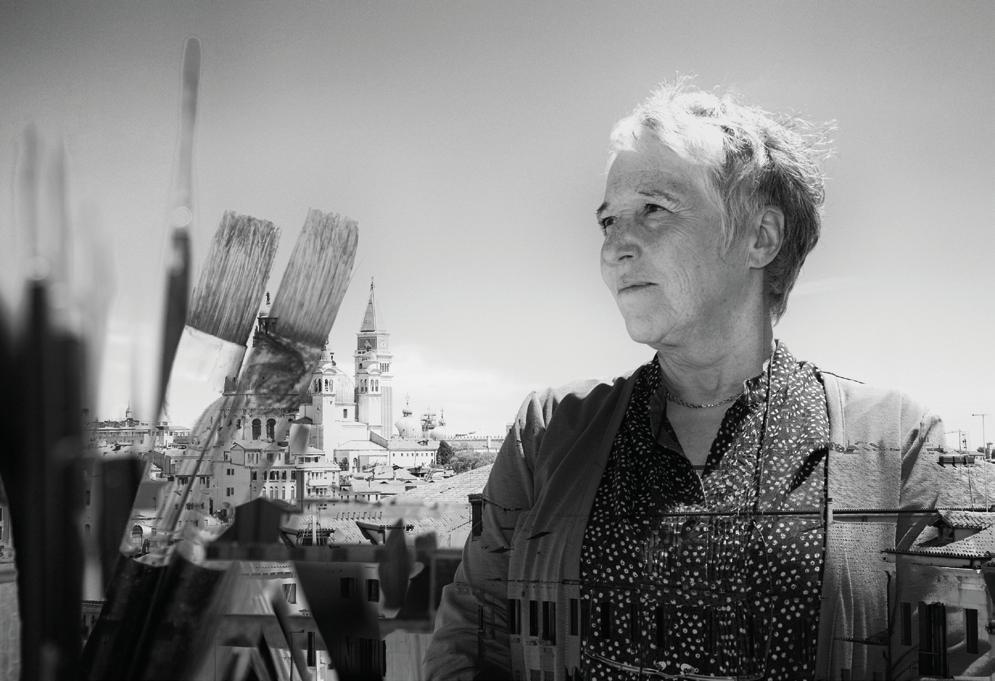
Victoria Crowe (b.1945)
Victoria Crow in Venice, 2014
Photograph by Andy Philipson
Venice is a great place for survivors. That medieval city which had survived among all these ravages… the creep of lichen, the flaking of paint, the fading of colour, the rubbing away of gold… graffiti adds its message to all this too…The process of change made visible.
Victoria Crowe
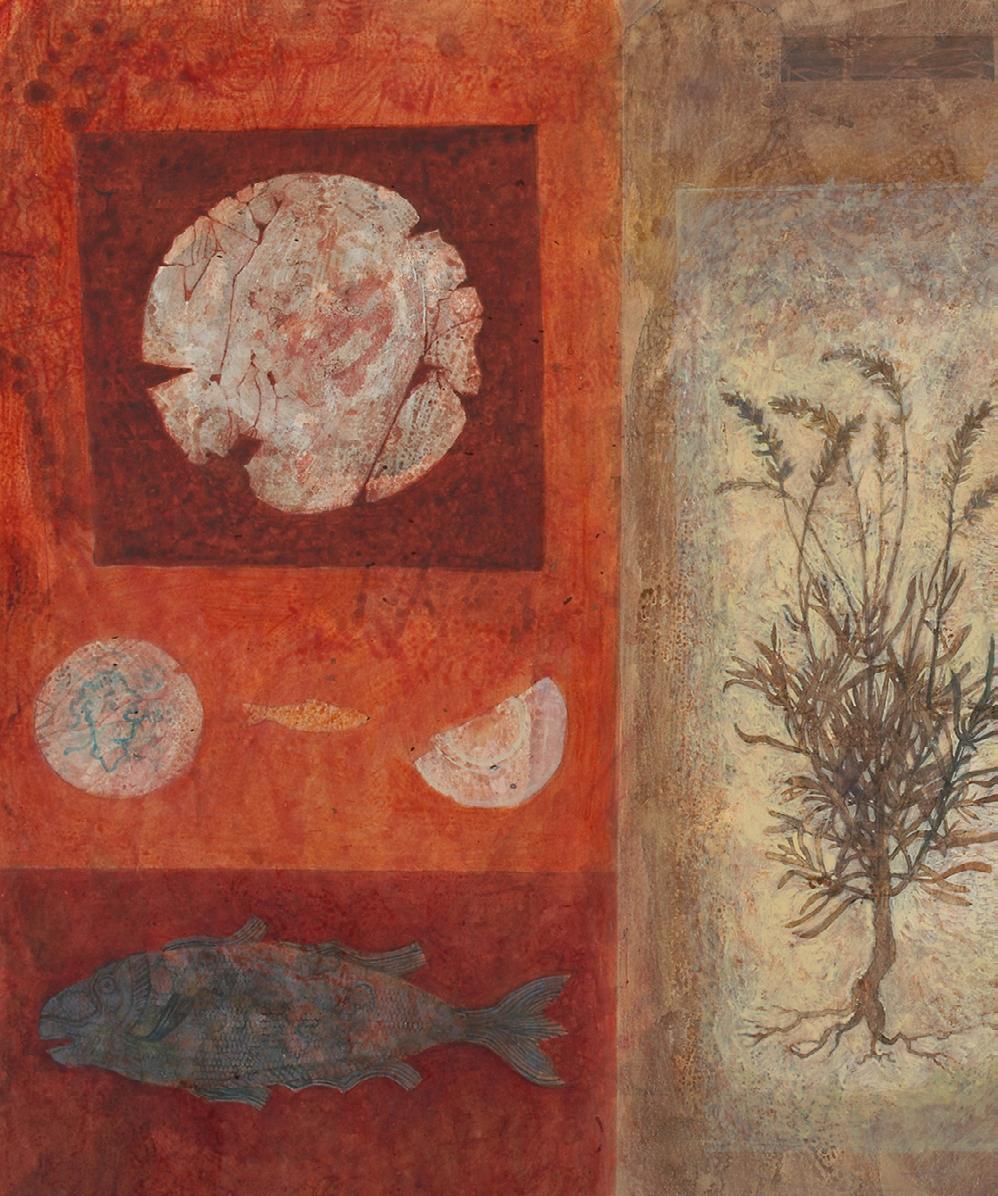
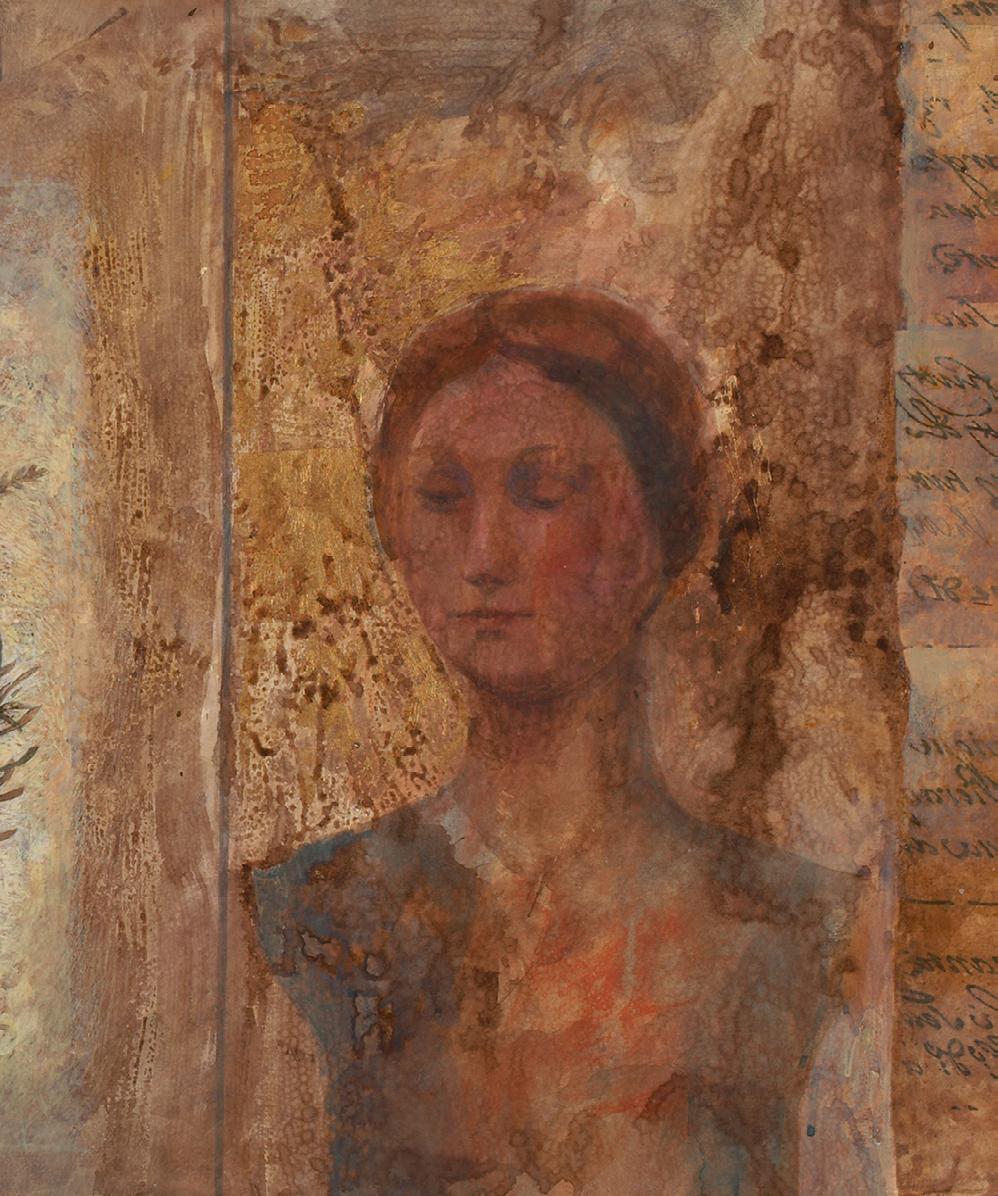
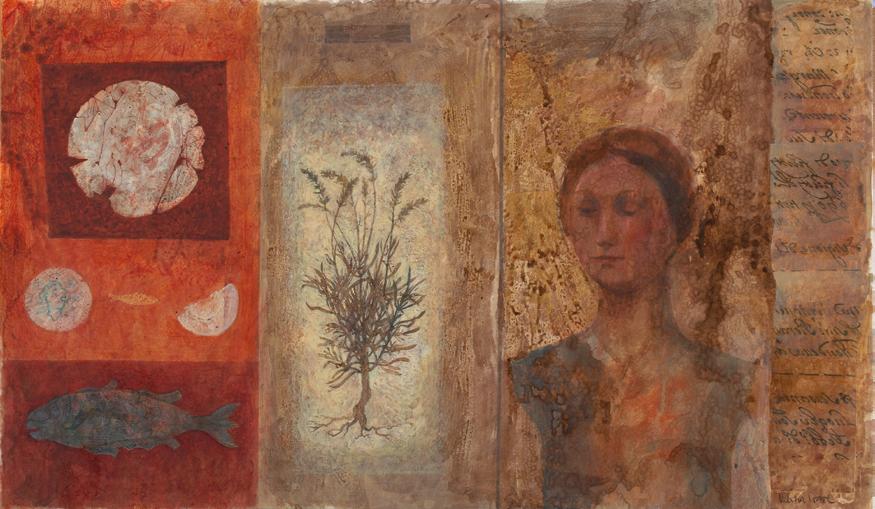
Marriage Piece is a richly layered and contemplative work from Victoria Crowe’s Venetian period, painted at a time when the artist worked between Scotland and her studio in Venice where she absorbed the atmosphere, textures, and symbolic language of the city. Structured across four vertical bands, the composition unfolds like a sequence of fragments or memories, each section holding traces of image, text, and symbolic form.
The painting combines elements associated with Renaissance devotional painting and Venetian decorative tradition. A downcast female figure, reminiscent of a Madonna or faded fresco fragment, emerges through translucent layers of paint. Nearby is a fish, botanical imagery, and fragments resembling a worn ceramic dish, shell, and Fortuny fabric patterns. Ancient script or partially obscured writing runs vertically along the right-hand edge, suggesting messages half-preserved through time.
Crowe has built the painting slowly through layers, allowing surfaces to be concealed and revealed simultaneously. Images appear to hover between material presence and disappearance, as though uncovered from walls weathered by heat, salt, and time. The dry, earth-rich palette evokes the sunlit plaster and crumbling surfaces of Venice, while
the banded structure gives the composition the rhythm of panels, pages, or devotional compartments.
The title Marriage Piece invites multiple readings. It may suggest union and partnership, but also the joining together of memory, place, image, and time. Throughout Crowe’s work, objects and symbols rarely function literally. Instead, they accumulate emotional and psychological resonance through association and repetition. Here, the fish and fragments carry echoes of ancient symbolism and spiritual transformation, while the plant forms suggest preservation, growth, and the persistence of memory.
Painted shortly before Crowe’s appointment as Senior Visiting Scholar at St Catharine’s College, Cambridge in 2004, the painting also anticipates her growing interest in layered histories, botanical forms, and the idea of plant memory that would emerge more fully in a later series. As in much of Crowe’s practice, the painting moves between observation and meditation, balancing delicacy with material depth. What emerges is a painting of remarkable quietness and complexity. The viewer is invited to look and dwell within the image, moving slowly between surface and depth, between what is seen clearly and what remains partially concealed.
EXHIBITED
Victoria Crowe (b.1945)
11. Marriage Piece, c.2004 mixed media on board, 58.5 x 100 cm signed lower right
Victoria Crowe - New Work, The Scottish Gallery, Edinburgh, 2004, cat. 29
Pat Douthwaite (1934-2002)
Pat Douthwaite was one of the most original and uncompromising voices in post-war Scottish art. Born in Glasgow in 1934, she followed an unconventional path into art. She studied mime and modern dance with Margaret Morris, whose husband, J.D. Fergusson, recognised her instinctive talent and encouraged her to paint. Aside from this formative influence, Douthwaite remained self-taught throughout her life, developing a visual language that resisted convention, categorisation and artistic fashion.
In 1958 Douthwaite moved to Suffolk, where she became part of a circle of painters that included Robert Colquhoun, Robert MacBryde and William Crozier. From 1959 onwards she travelled extensively through North Africa, India, Peru, Venezuela, Europe, the United States, Kashmir, Nepal, Pakistan, and Ecuador. These experiences broadened the imaginative and emotional range of her work, feeding an art shaped as much by encounter, memory and instinct as by direct observation. From 1969 she spent periods living in Majorca, later returning to Scotland where she lived in the Borders and south-west Scotland before her death in Broughty Ferry in 2002.
Her work is immediately recognisable for its emotional intensity, theatrical imagination, and psychological charge. Women, animals, skeletal figures, and hybrid beings populate her paintings and drawings that move between humour, melancholy, fantasy, and unease. Douthwaite painted instinctively and with remarkable freedom, often allowing line and gesture to carry emotional meaning as much as subject matter itself. Her figures perform on an imagined stage, their exaggerated poses and expressive distortions creating images
that are both intimate and unsettling.
Douthwaite’s paintings and drawings belongs to no movement other than her own. As the critic Cordelia Oliver observed in 1981: Douthwaite seems to find it necessary, like a method actress, to inhabit the idea, to get inside the skin of the role, as it were. Her paintings, often grotesque for all their elegance, can range in mood from tragicomic frenzy to angst-ridden melancholy, but they usually have a certain exciting theatricality in common.
The Scottish Gallery has played a central role in championing, preserving and reassessing Douthwaite’s legacy over nearly five decades. Beginning with Amy Johnson, Aviator in 1977, The Gallery established one of the artist’s only enduring professional relationships. In the years that followed, The Gallery presented a sequence of important exhibitions which charted the breadth and originality of her career.
Guy Peploe's monograph on Pat Douthwaite, was published in 2016 to coincide with The Gallery's The Outsider exhibition, which drew upon unpublished archives, letters, and previously unseen works, becoming the definitive study of the artist to date. Today Douthwaite is increasingly recognised as one of the great individualists of twentiethcentury British art, an artist whose fiercely independent vision, emotional honesty and singular imagination continue to fascinate contemporary audiences.
The Scottish Gallery exhibitions: 1977, 1993, 1995, 1998, 2000 (Retrospective), 2005 (Memorial), 2011 (Retrospective), 2014, 2016, 2020 (London), 2021
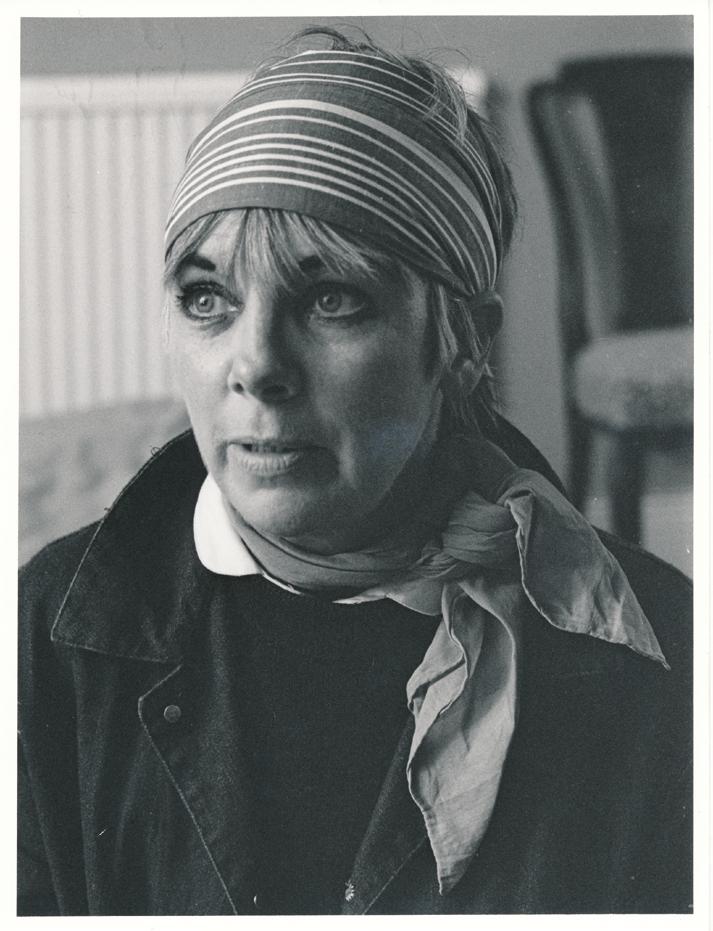
Pat Douthwaite, 1987
Photograph by George Oliver
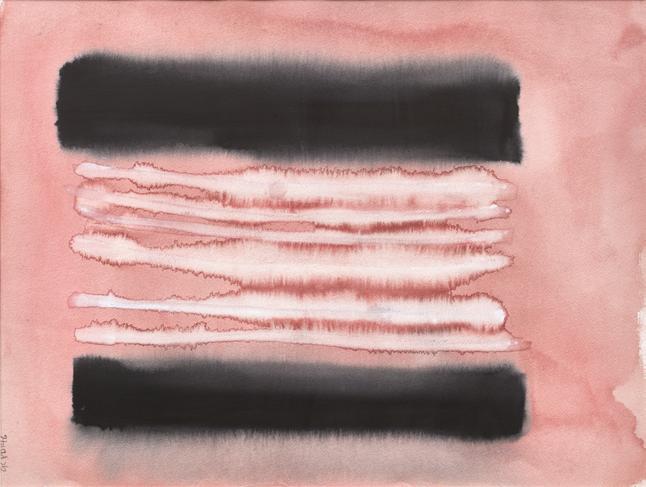
In this pared-back composition, Douthwaite reduces the landscape to bands of tone and atmosphere. Broad passages of black anchor the composition above and below, while the pale central forms suggest sea mist, distant horizon lines or light breaking through weather. Painted in watercolour, the surface retains a softness and fluidity, allowing pigment to bleed and settle in ways that echo the shifting conditions of Orkney. Douthwaite visited friends on the island in 1999, and this watercolour may have been painted from the inside looking out – this is how she sees the landscape in poor weather.
Pat Douthwaite (1934-2002)
12. Orkney, 1999 watercolour on paper, 45 x 59.5 cm signed and dated lower left with a charcoal drawing verso
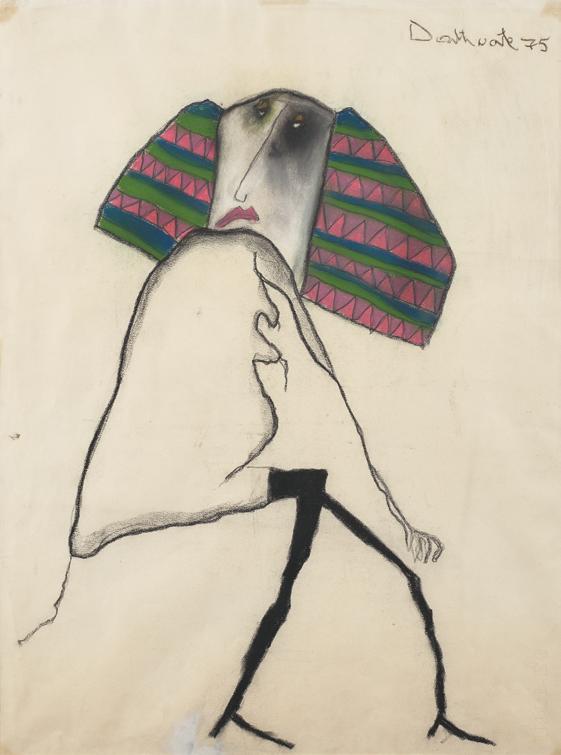
Pat Douthwaite’s Circe, Goddess of Witchcraft belongs to a powerful series from the 1970s in which mythology, theatre and female archetypes became central to her practice. She held a lifelong fascination for female figures drawn from literature, art, music, film, dance, and performance, using them less as illustrations than as theatrical extensions of herself. Her women are actors, witches, muses, and outsiders, psychologically charged presences staged upon the paper.
Circe also reflects the intellectual atmosphere surrounding Douthwaite’s connection to Robert Graves and the artistic circle at Deià, Mallorca where she lived from the late 1960s into the mid 1970s. Graves had settled in Deià following the Second World War and became fascinated in mythology, ritual and poetic symbolism, themes which culminated in his influential book The White Goddess (1948), an exploration of the eternal feminine in poetry and myth. In 1982, Graves wrote the introduction to Douthwaite’s Edinburgh Festival exhibition Worshipped Women at the 369 Gallery, a group of twenty-six drawings exploring related themes of female power, transformation, and performance.
Circe turns sharply over her right shoulder, confronting the viewer with a haunted expression. Her downturned mouth and slightly bruised face suggest injury, exhaustion, or psychic burden, complicating the traditional image of Circe as triumphant seductress. Douthwaite’s women are rarely passive or decorative. Rather, they inhabit states of tension and emotional extremity. Nude except for black stockings, the Goddess hovers in an uncertain space, seemingly suspended mid-air; a site of emotional and symbolic complexity. Her small profile breasts, curved belly, and angular limbs retain a tenderness even as the figure assumes the role of goddess or sorceress. Her elaborate headdress intensifies the ritualistic quality of the composition. Constructed from pink geometric patterns divided by black and green bands, it sits tightly around her head like ceremonial armour.
As throughout Douthwaite’s mature work, Circe, Goddess of Witchcraft sustains a tension between beauty and discomfort, tenderness, and unease. Pat Douthwaite’s practice stands as something wholly unique within Scottish art history.
Pat Douthwaite (1934-2002)
13. Circe, Goddess of Witchcraft, 1975 pastel on paper, 65 x 49 cm signed and dated upper right
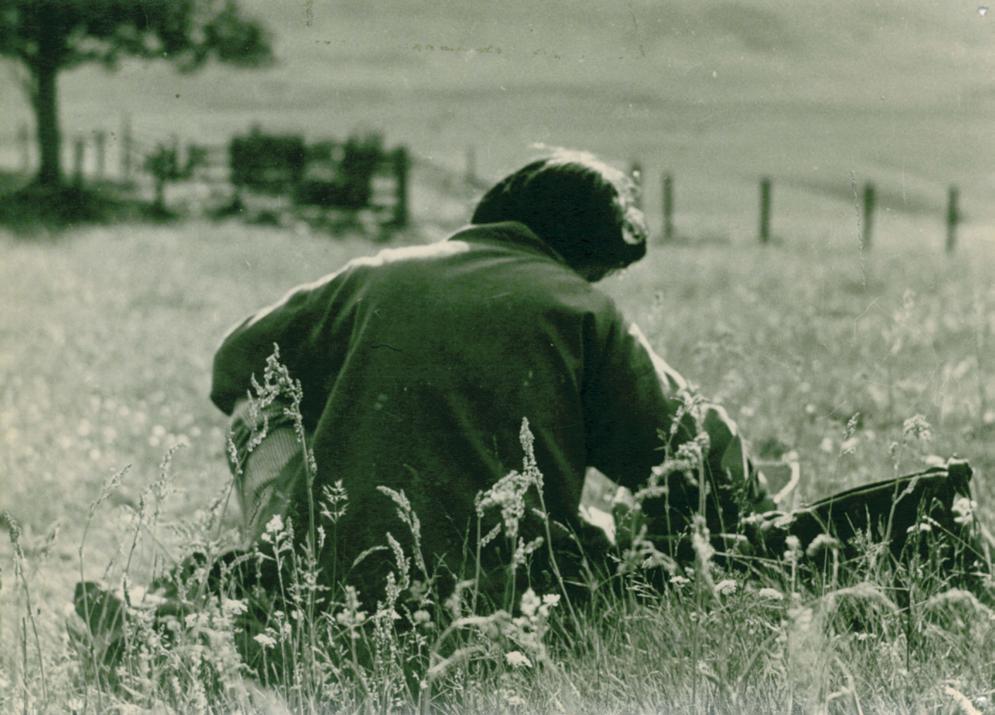
Joan Eardley, Caverslea, 1956
Photograph by Audrey Walker
Joan Eardley (1921-1963)
Joan Eardley occupies a singular place in twentieth-century British art. Born in Sussex in 1921, she moved to Glasgow with her family at the outbreak of the Second World War, enrolling at The Glasgow School of Art in 1940 and quickly distinguished herself as a formidable draughtswoman. Early scholarship travel to Italy and France sharpened her understanding of European painting, but her own artistic language emerged through an intense engagement with the people and places around her in Scotland.
In Glasgow, Eardley gravitated towards the streets of Townhead and Rottenrow, then among the city’s poorest districts. The tenements, chalked walls and street life around her studio became the foundation of a body of work unlike anything else being made in Britain at the time. Her paintings and drawings of children are neither sentimental nor documentary. Instead, they possess an extraordinary directness and psychological force, combining restless mark-making with deep empathy for her subjects. Eardley was fascinated by the energy and resilience of the children who crowded her studio and streets, and by the texture of the city itself, its weathered walls, improvised graffiti, and sense of community.
During the 1950s Eardley increasingly divided her life between Glasgow and the fishing village of Catterline on the Kincardineshire coast. There, the focus of her work shifted towards landscape and weather. The sea, fields and cliff edges around the village offered her a new subject, one rooted less in human
presence than in atmosphere, movement, and elemental force. She worked outdoors in all conditions, often battling wind and rain, and developed a highly physical approach to painting, building surfaces with thick impasto, collage, sand, and even pressed grasses. Her late Catterline paintings remain among the most powerful responses to landscape in modern British art, charged with tension, immediacy, and an almost visceral sense of place.
Eardley died in 1963 at the age of forty-two, just as wider recognition beyond Scotland seemed inevitable. Yet her reputation has continued to grow steadily in the decades since. What remains striking is how contemporary the work still feels. Whether depicting the children of Townhead or the turbulent skies above Catterline, Eardley painted with a rare combination of urgency, honesty, and emotional clarity. Her work resists nostalgia and continues instead to feel vividly alive.
The Scottish Gallery has played a central role in championing Joan Eardley’s work throughout her career and beyond, holding important exhibitions in 1955, 1958, 1961 and the memorial exhibition of 1964, followed by subsequent exhibitions in 1981, 1983, 1984, 1988, 1990, 1992, 1996, 2007, 2013, 2015, 2017 and our major Centenary exhibition of 2021. The Scottish Gallery Press will publish a new Joan Eardley volume later this year, centred on the artist’s history with The Gallery and informed by our extensive archive.
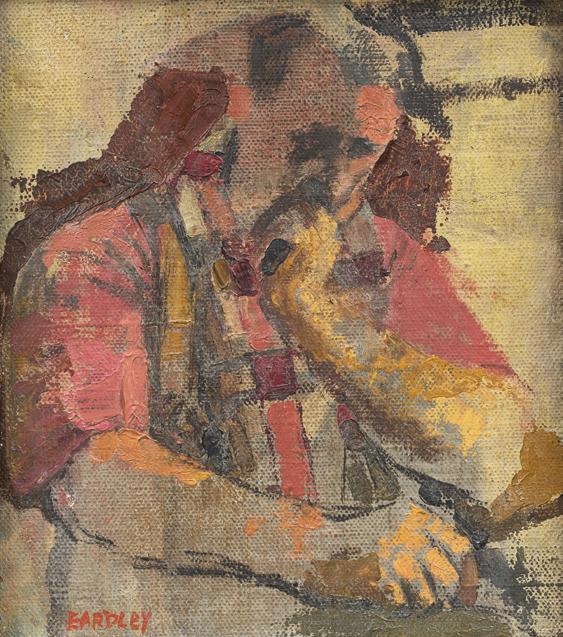
Study of a Man is an early work likely painted during Joan Eardley’s post diploma at Glasgow School of Art. Using thin passages of brushwork and broken planes of colour, the male figure emerges through layers of ochre, pink, grey, and brown, revealing Eardley’s instinctive approach to structure and observation even at this formative stage.
The sitter leans heavily against a chair, his hand resting against his face as his gaze falls downwards in a moment of quiet introspection. In the foreground, his broad forearm and rough working hands become
a central focus of the composition. Tonal shifts and fragmented brushwork animate the thick chequered shirt, possibly worn beneath overalls, giving the figure both physical weight and emotional presence.
Although Eardley produced relatively few portraits during this early period, the fragmented handling and expressive structure relate closely to works such as her self-portrait of 1943. Even at this stage, the painting possesses the directness, psychological intensity, and physical immediacy that would later define her most celebrated work.
Joan Eardley (1921-1963)
14. Study of a Man, c.1947 oil on canvas, laid on board, 30 x 25 cm signed lower left
EXHIBITED Browse and Darby Ltd, London
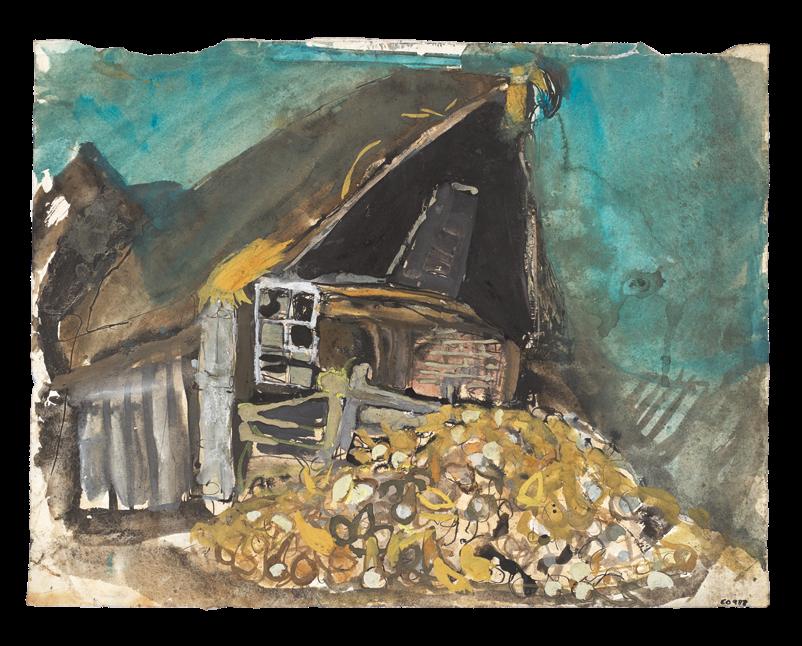
Suffolk Barn with Sugar Beet is a rare and atmospheric work from Joan Eardley’s visit to Suffolk with her close friend Dorothy Steel and her family. Dorothy Steel and Eardley met in 1947 in Glasgow and remained close friends throughout Eardley’s life. Eardley was born in Warnham in Sussex and spent part of her early childhood on a dairy farm. Her visit to Suffolk therefore may have carried personal resonances, reconnecting the artist with the agricultural landscapes and working rural life of southern England.
The distinctive structure of the barn belongs to Suffolk’s vernacular agricultural tradition. Its dramatic oversailing roof, sometimes known as a pentice roof, extends beyond the walls to protect the fragile timber and wattleand-daub construction from the wet maritime climate of East Anglia. Eardley responds instinctively to the building’s irregular geometry, tilting planes, and weathered surfaces, almost animating the structure.
In the foreground, a mound of harvested sugar beet spills outward in pale ochres, whites, and
yellows, contrasting with the dark timber of the barn and the vivid turquoise sky beyond. Executed in ink and gouache on paper, the work possesses the immediacy of something observed directly and rapidly, with Eardley using vigorous line and broad passages of colour to capture the physical character of the place rather than its precise detail.
Eardley visited Suffolk with Dorothy in 1954, staying with Dorothy's sister and her family.
Suffolk Barn with Sugar Beet reveals many of the qualities that define Eardley’s work: an attraction to weathered structures, working landscapes, and the expressive potential of paint itself. The barn appears battered yet resilient, bedded within the landscape and shaped by the same forces of climate and labour that fascinated Eardley throughout her career. The painting has never previously been exhibited and comes directly from the Eardley Estate, offering a glimpse into a lesser-known strand of the artist’s practice during the mid1950s.
Joan Eardley (1921-1963)
15. Suffolk Barn with Sugar Beet, 1954 ink and gouache on paper, 30 x 39 cm
PROVENANCE:
The artist’s studio, inventory no. ED988
Joan Eardley (1921-1963)
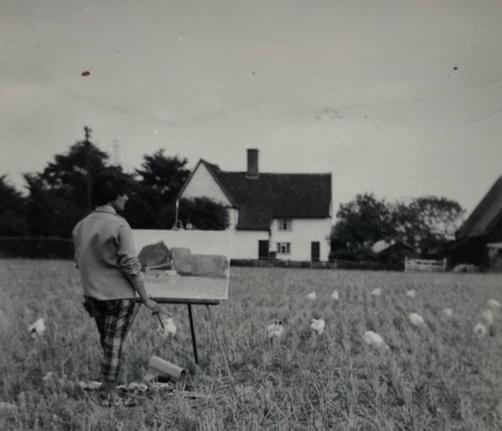
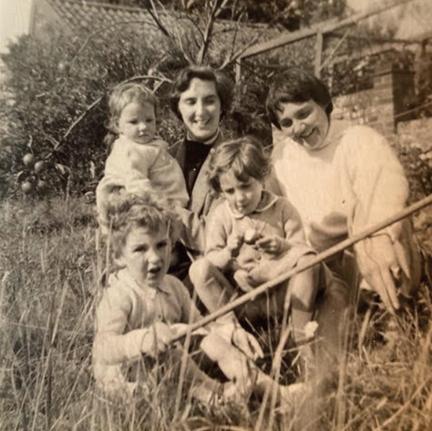
Joan Eardley in Suffolk
By kind permission of Shona Cant, niece of Dorothy Steel
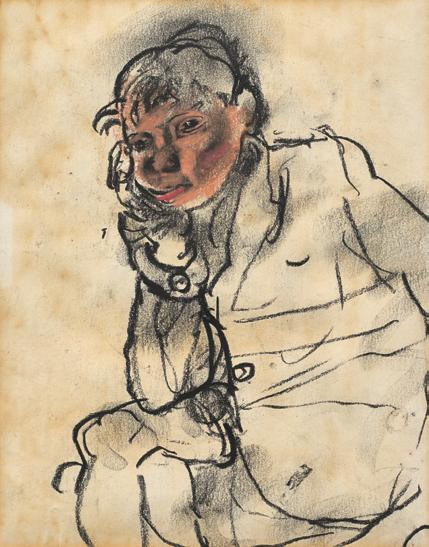
Seated Boy sits in his school blazer and shorts, crossed legs and one gloved hand resting against his chin, his posture conveying the restlessness and fatigue of after-school. There is no attempt to idealise the sitter. His face is dirty from the street and weather, and it is precisely these roughened, human details which animate the drawing.
Eardley first came to Townhead drawn by the weathered tenements and urban fabric of the area, but the children were drawn to Eardley and in turn became a vital and enduring subject. They knocked constantly at the door of her studio on St James Road, asking to be drawn, to warm themselves by her stove or simply to spend time in the refuge she created there.
Seated Boy may have arrived directly from school, seeking warmth, company or escape from the overcrowded realities of home life. Eardley understood these children
instinctively and painted them not as social types, but as individuals possessed of dignity, humour, and resilience.
Eardley allows much of the figure to dissolve into rapid, searching black lines and abbreviated marks, while the face emerges as the centre of the composition. Smudged pastel creates a dark halo around the head and shoulders, intensifying the atmosphere and drawing the viewer inward toward the boy’s flushed cheeks and watchful, dark expression. The heavy outlines of the coat and angular limbs contrast with the softness of the face.
This drawing possesses the immediacy characteristic of Eardley’s Glasgow portraits, where children rarely sat still for long and observation had to be swift, instinctive, and psychologically alert. Every mark carries purpose. The result is a portrait of remarkable vitality in which the whole personality of the sitter leaps directly from the paper.
16. Seated Boy, c.1955 pastel on paper, 24 x 16 cm
Joan Eardley (1921-1963)
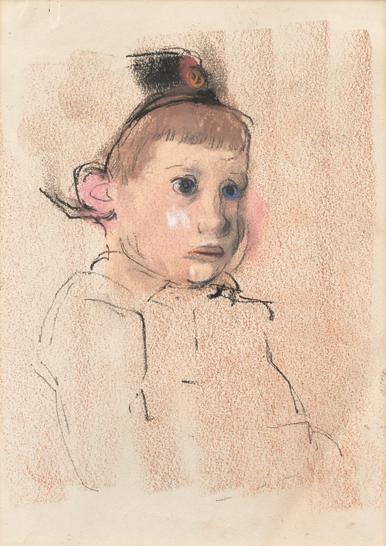
Head of Wide-Eyed Little Girl demonstrates Joan Eardley’s ability to evoke presence and character through the most economical means. The title itself directs our attention to the child’s gaze and it is the blue eyes which hold the composition together, drawing the viewer into the portrait. Against a largely monochromatic surface of pale pinks, greys and warm paper tones, Eardley isolates small but potent accents of colour: the luminous blue eye, touches of rose on the lips and ears, and the tiny coloured button pinned to the girl’s felted wool hat.
The girl sits upright and slightly turned to the right, her expression poised somewhere between attentiveness and uncertainty.
Eardley captures the severe geometry of the girl’s bowl-cut hairstyle, the sharp fringe and close sides contrasting with the softness of her features. The outline of the coat is rendered with beautiful restraint, little more than searching linear marks.
The rubbed pastel surface and dragged vertical marks, made using the side of the pastel crayon, creates texture and atmosphere while preserving the immediacy of the encounter. The drawing possesses the tenderness and psychological acuity that define Eardley’s finest depictions of Glasgow children, where empathy and painterly instinct are inseparable.
Joan Eardley (1921-1963)
17. Head of Wide-Eyed Little Girl, c.1957 pastel on paper, 23.5 x 17 cm
PROVENANCE Artist's Estate, inventory no. ED903
EXHIBITED Roland, Browse and Delbanco, London
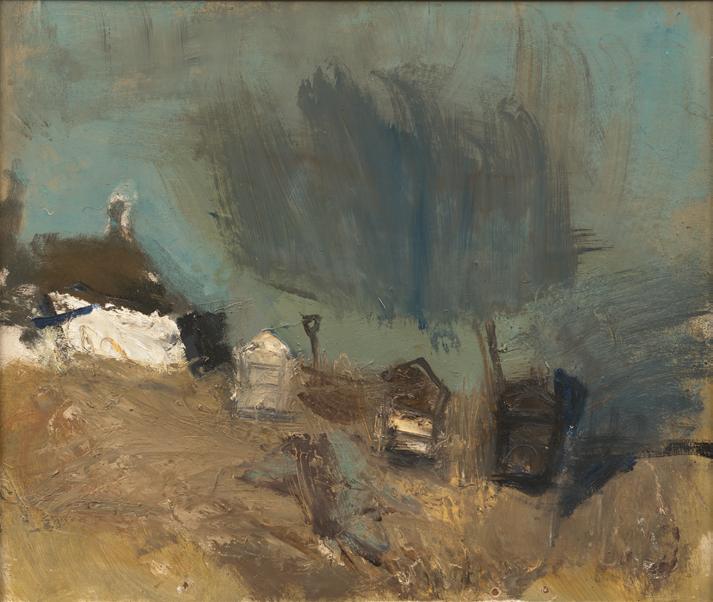
The Raincloud is set in tension. The storm has not yet broken: the dark mass of raincloud looms ominously offshore, suspended in that charged stillness familiar to coastal weather before a sea squall finally releases itself.
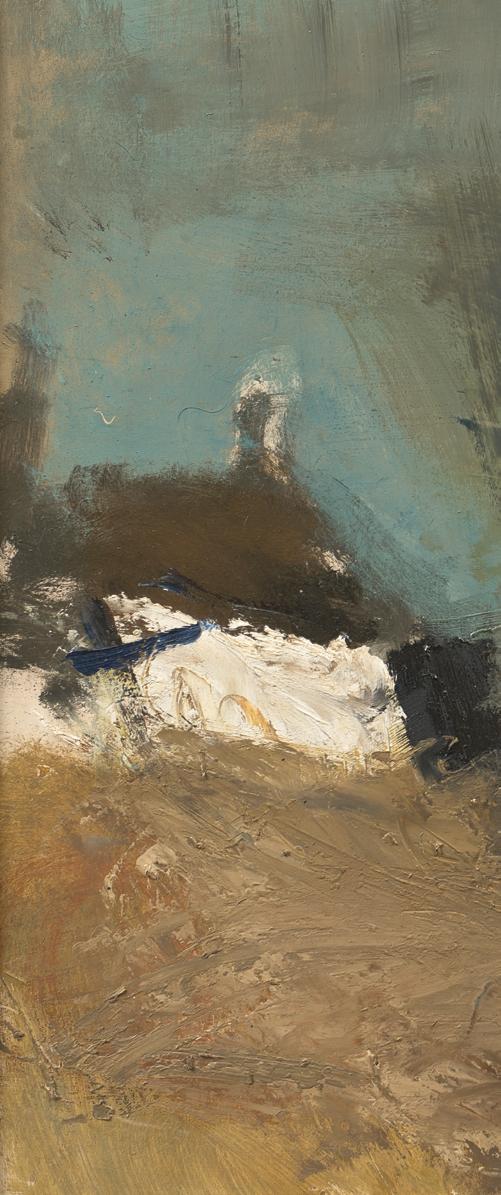
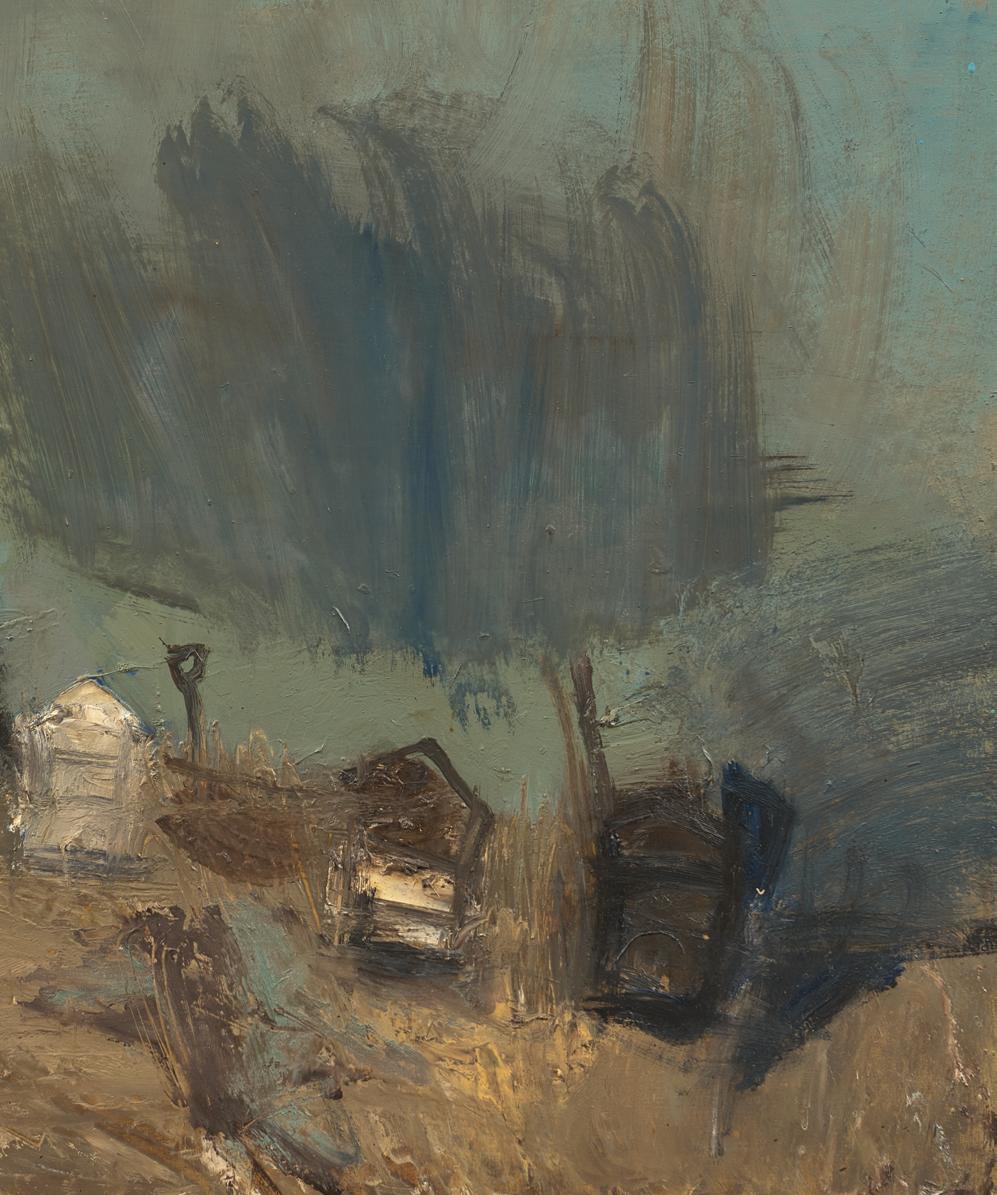
The Raincloud is a painting set in tension. The storm has not yet broken: the dark mass of raincloud looms ominously offshore, suspended in that charged stillness familiar to coastal weather before a sea squall finally releases itself. Behind Joan Eardley’s first cottage at No. 1 South Row, Catterline, three beehives sit exposed within a landscape that feels simultaneously observed and destabilised. There is something topsy-turvy in the composition, the abrupt edge of the gable end, the whitewashed stone wall against the black painted privy, the protruding spade, and stark cross-like form, where the architecture of the rural village become vehicles for graphic gesture as much as description.
Texture and movement animate the surface. Although the image appears spontaneous, every line, brushstroke and loaded passage of pigment is intensely considered. Eardley’s mark-making carries the urgency of direct experience while remaining wholly controlled. We are almost ambushed by the image, by its compression, its immediacy and by the psychological weight of the advancing weather. The subdued palette and raw earth tones suggest winter or early spring, when the Catterline landscape is stripped back and exposed to the full force of sea and sky.
Joan Eardley (1921-1963)
18. The Raincloud, c.1961 oil on board, 51 x 61 cm
EXHIBITED Roland, Browse and Delbanco, London
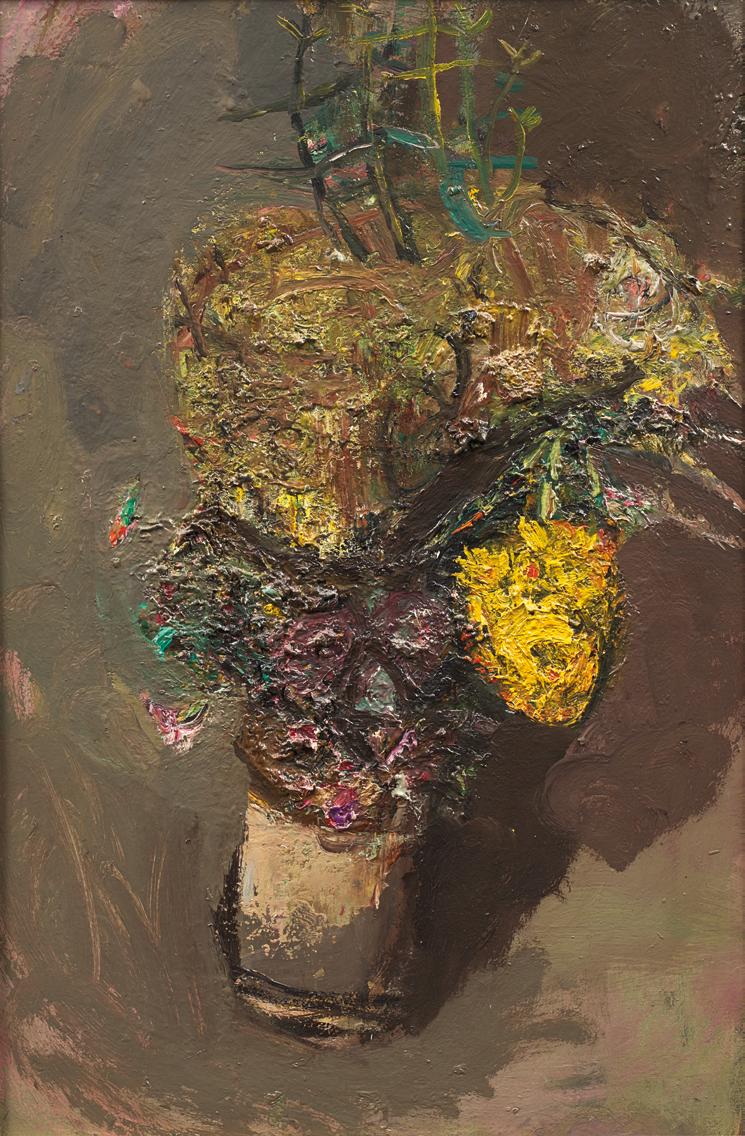
As with all of Joan Eardley’s work, there is an intensity to the subject which far exceeds its apparent simplicity. Pot of Wild Flowers belongs to a group of paintings made at Catterline when illness increasingly confined the artist indoors and the landscape itself migrated into the studio. Rather than a composed still life, this arrangement has been gathered from the field edges and coastal paths around the village: wild flowers and drying seed heads brought inside, perhaps during a period when Eardley no longer had the strength to work for long outdoors.
The arrangement refuses stillness. The vase tilts at an awkward angle, destabilising the composition and giving the impression that the artist is standing over the subject, working quickly and directly. The flowers rise upwards
in dense, sculptural masses of impasto, their forms twisting and spreading like windswept hedgerow growth. Purple blooms, perhaps knapweed or wild scabious emerge amongst ochres, browns, various greens, and flashes of yellow, suggesting the late summer landscape of the east coast of Scotland in July or August, when flowers begin to dry at the edges and the fields are heavy with seed and pollen. Thickened pigment, dragged brushwork and scraped passages of paint create a surface alive with movement and texture. Like her late seascapes and field paintings, the work is less a still life than an arrangement than an attempt to capture something fleeting and unstable: weather, season, atmosphere, and the fragile persistence of life itself.
Joan Eardley (1921-1963)
19. Pot of Wild Flowers, c.1962 oil on canvas, 61 x 41 cm
EXHIBITED
Joan Eardley, RSA - Paintings and Drawings, The Scottish Gallery, Edinburgh, 2007
PROVENANCE
The artist's studio, inventory no. EE92
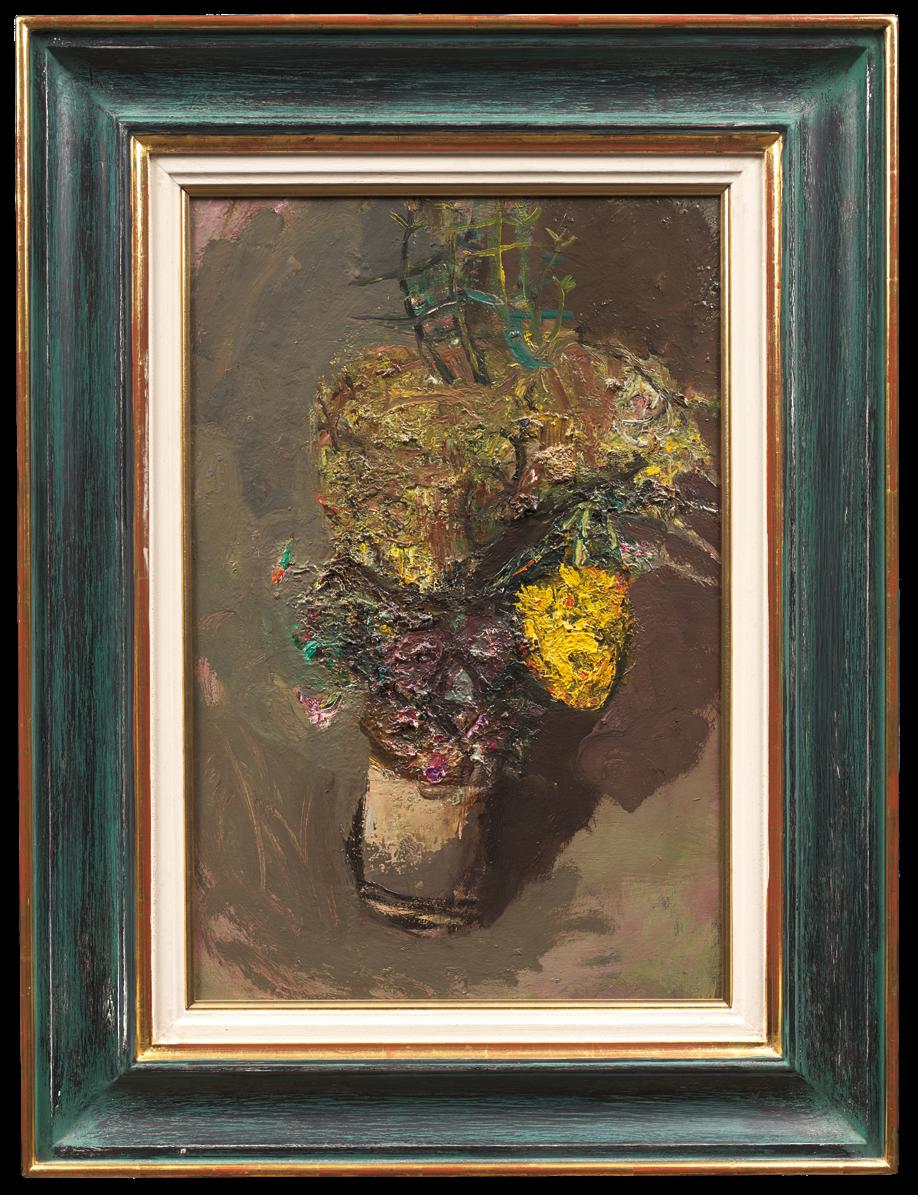
Like the late seascapes and field paintings, Pot of Wild Flowers is less a still life than an attempt to capture something fleeting and unstable: weather, season, atmosphere, and the fragile persistence of life itself.
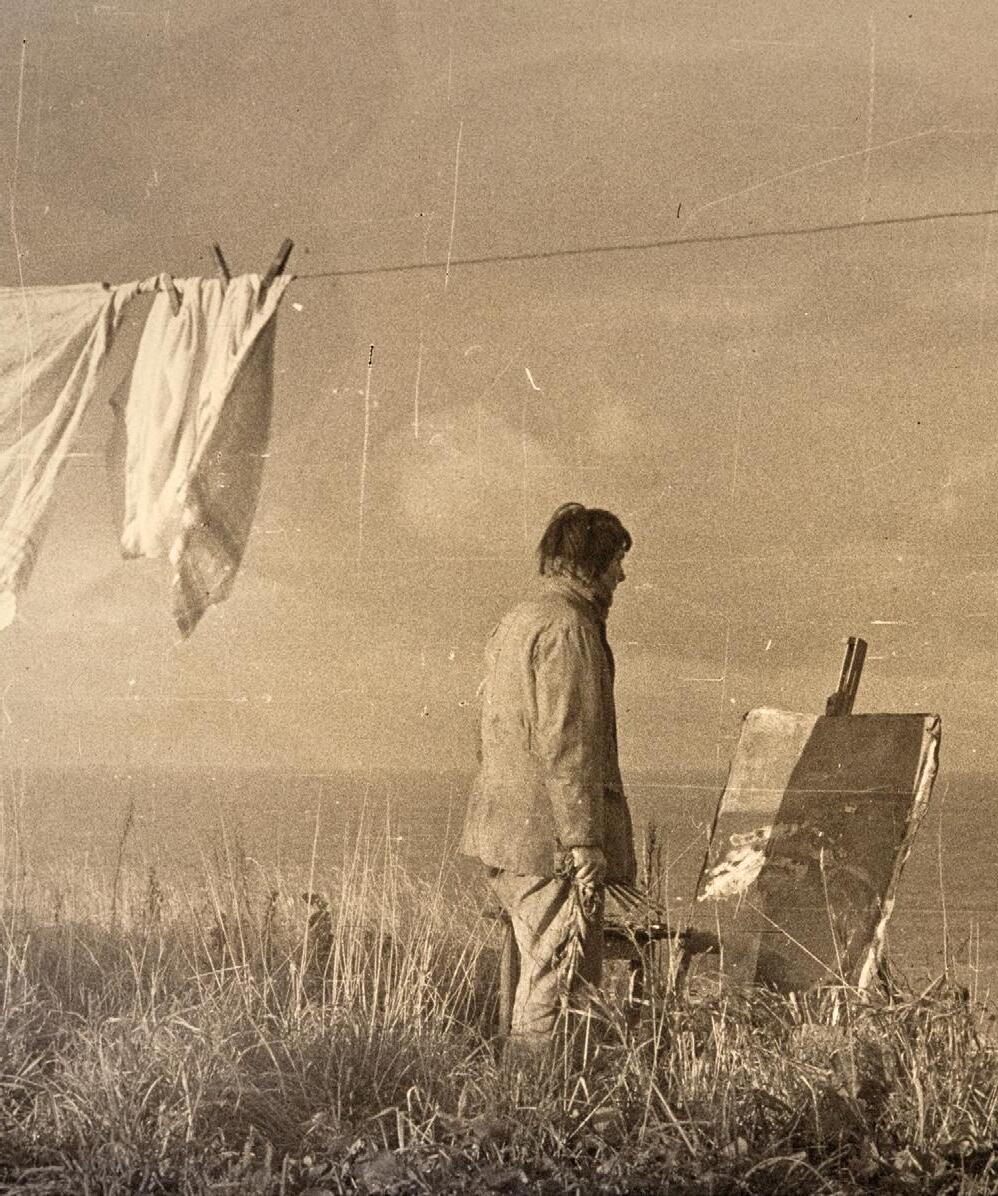
Joan Eardley painting under a Washing line, Catterline
Photograph by Audrey Walker
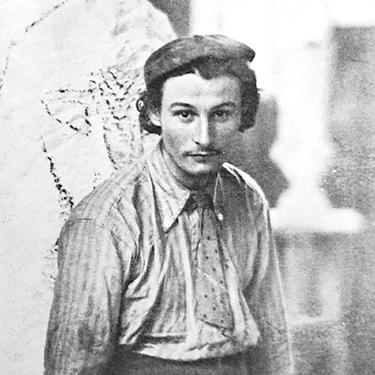
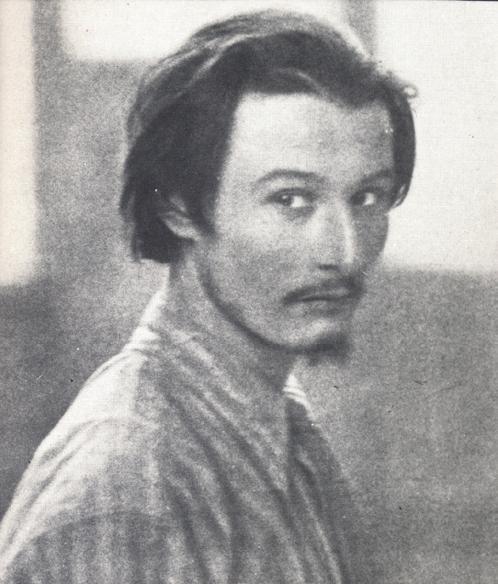
Henri Gaudier-Brzeska (1891-1915)
Henri Gaudier-Brzeska was one of the most original and dynamic artists working in Europe before the First World War. Born in Saint-Jean-de-Braye near Orléans in France, he arrived in London in 1911 and quickly became associated with the most radical artistic circles of the period. Although his career lasted only a few years before his death at the age of twenty-three during the First World War, his influence on modern British sculpture proved profound and enduring.
Largely self-taught, Gaudier-Brzeska rejected academic tradition in favour of direct carving and a more instinctive approach to form. His sculpture drew upon a wide range of influences including African and Oceanic carving, medieval sculpture, Egyptian art, and the emerging language of European modernism. Through these varied sources he developed a highly personal sculptural style defined by vitality, compression, and expressive force.
Soon after arriving in London, GaudierBrzeska became closely associated with the writer Sophie Brzeska, whose surname he adopted. Their intense and unconventional partnership shaped much of his brief life and career. He also became a central figure within the Vorticist movement led by Wyndham Lewis and Ezra Pound, contributing drawings and writings to the journal BLAST. GaudierBrzeska shared the Vorticists’ fascination with energy, movement, and the machine age, yet his work retained connected to the human body and natural form.
Working across sculpture, drawing and printmaking, Gaudier-Brzeska produced portraits, heads, animal subjects, and abstracted carvings remarkable for their immediacy and structural intelligence. His
drawings possess the same restless fluency found in his sculpture, combining rapid observation with powerful simplification of form. Whether carving stone directly or sketching figures with swift economical line, he sought an art stripped of convention and alive with physical energy. Among his most celebrated works are the carved Red Stone Dancer, the monumental Hieratic Head of Ezra Pound and a series of animal studies which reveal his ability to balance abstraction with observation. His sculpture was admired by contemporaries for its raw vitality and directness, qualities that anticipated many later developments in twentieth-century British sculpture.
In 1914, despite living and working in London, Gaudier-Brzeska returned to France to serve in the French Army following the outbreak of war. He continued to draw whilst at the front, producing works that retained their concentration and force even amidst the devastation of conflict. In June 1915 he was killed in action at Neuville-Saint-Vaast.
Although his life was tragically short, GaudierBrzeska’s achievement remains central to the development of modern sculpture in Britain. His work bridged the energy of the European avant-garde with a new sculptural language based on direct carving, structural clarity, and expressive intensity. Today his work is held in major collections including Tate, the Victoria & Albert Museum, the Centre Pompidou and the Museum of Modern Art, New York. His reputation continues to rest upon a body of work remarkable not only for its innovation, but for the sense of urgency and creative freedom that runs throughout it.
The Scottish Gallery exhibitions: 1947, 1987 2005
Movement is the translation of life and if art depicts life, movement should come into art, since we are only aware of life, because it moves.
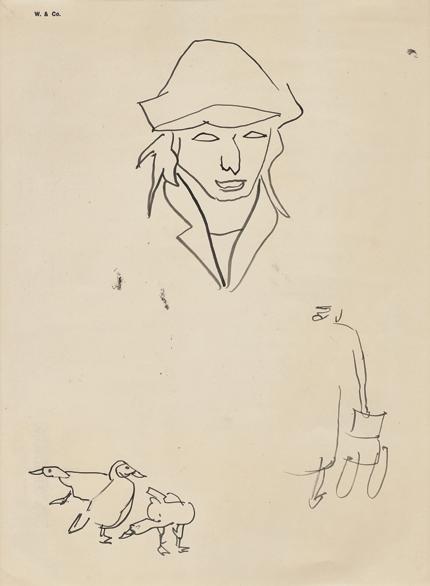
Woman in a Hat with Geese is characteristic of Henri Gaudier-Brzeska’s rapid observational drawings from the years immediately before the First World War. Dating to around 1913, this ink on paper belongs to the period in which the artist was developing the direct, abbreviated graphic language which would underpin both his sculpture and his involvement with the emerging Vorticist movement.
The woman’s face, hat and sharply angled collar are described with only a handful of fluid pen strokes, while the geese below are reduced almost to calligraphic signs whilst a female figure on the right is carrying a bowl. Gaudier-Brzeska possessed an extraordinary ability to imply character and movement with the barest means. The subject recalls the anonymous figures, street observations and rural memories that populate the artist’s sketchbooks of this period.
Henri Gaudier-Brzeska (1891-1915)
20. Woman in a Hat with Geese, c.1913 ink on paper, 30.5 x 23 cm
EXHIBITED Mercury Gallery, London; Cyril Gerber Fine Art, Glasgow
Sir William Gillies (1898-1973)
William Gillies was one of the most influential figures in twentieth-century Scottish art. Born in Haddington, East Lothian, he studied and later taught at Edinburgh College of Art, where he became Head of Painting and eventually Principal. A leading figure of the Edinburgh School, Gillies developed a distinctive modern approach rooted in the Scottish landscape, domestic interiors and still life. His quiet yet innovative style combined structure, subtle colour and emotional depth, while his teaching, leadership and artistic practice shaped generations of painters and left a profound legacy on post-war Scottish art. A lifelong exhibiting artist and supporter of The Scottish Gallery, Gillies remains one of the defining figures of Scottish painting.
William Gillies exercised an influence that stemmed as much from example as from instruction. At Edinburgh College of Art he encouraged students to experiment, but always from a firm grounding in observation, drawing and practice. He assembled a staff who shared this ethos of independence, discipline and hard work, what William MacTaggart described as the good habit. For Gillies and his colleagues, teaching and professional practice were inseparable; working, exhibiting and maintaining an active artistic life were understood as essential to the reputation and vitality of the School. Artists including Robin Philipson, Elizabeth
Blackadder, John Houston, David Michie and James Cumming benefited from this approach, which Gillies quietly instilled over more than fifty years.
I have been trying to pin down my thoughts on the great man. I do not find it easy. In a way he remains an enigma. I was a student for five years while Gillies was Head of Painting and yet I had only three or four lessons from him in all that time. The first was when MacTaggart called for Bill Gillies to come and see a painting I had done. He admired it generously and commended it for its tonal values. I had on the easel a much more freely painted thing with apples and a jug. He looked at it and said, 'Apples are not tennis balls. They have planes.' He then proceeded to push the wet paint around with his horny thumb, making the apples truly three-dimensional, and expressed in planes. On another occasion I was propounding a theory I had come across about Organic Colour Values. I asked him if he did not agree with this. His response was typically anti-intellectual. 'No. Nature always gets the colour wrong, so you have to try to improve it'.
David McClure, quoted in W.G. Gillies by W. Gordon Smith, Atelier Books, 1991
The Scottish Gallery exhibitions: 1945, 1949, 1952, 1958 (Festival), 1963 (Festival), 1968, 1971, 1986, 1989, 1991 (Festival), 2011, 2012, 2013, 2016, 2017, 2020, 2023 (Anniversary)
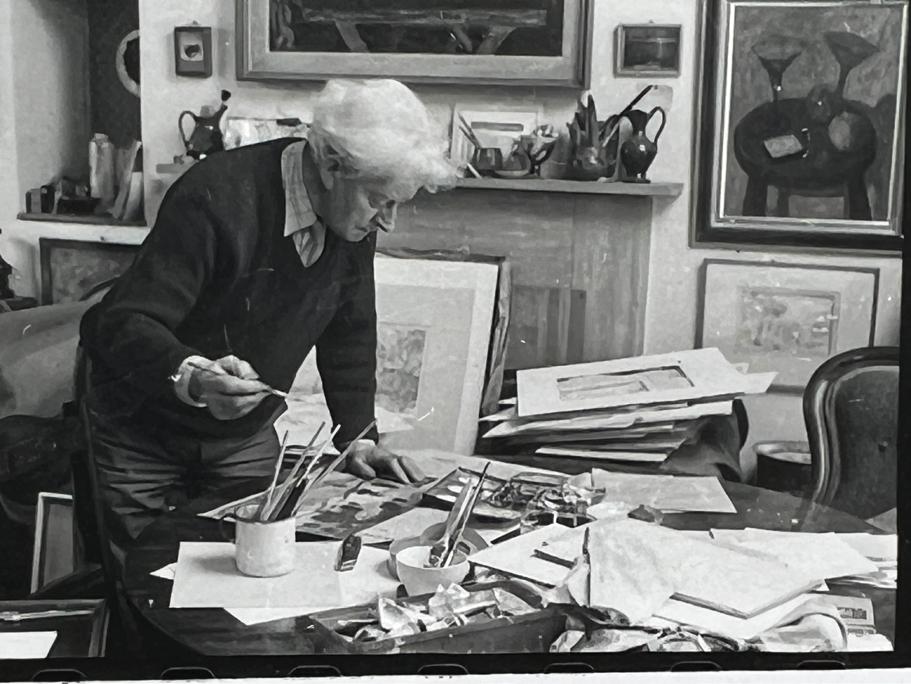
William Gillies, Temple, 1972
Photograph by Jessie Ann Matthew
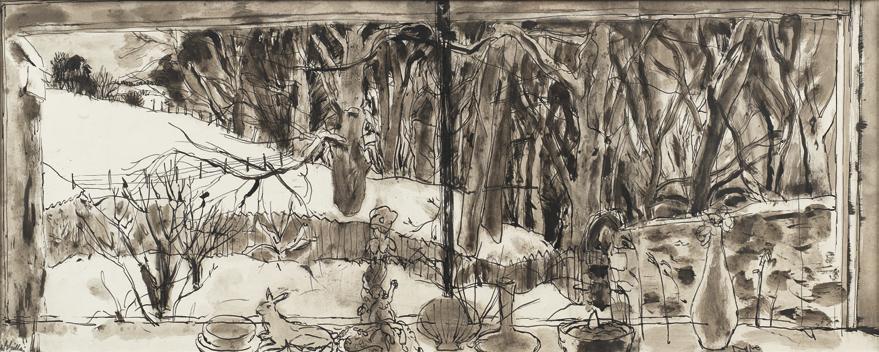
The Garden, Temple belongs to the period soon after Gillies moved to Temple in 1939, a decisive turning point in his life and work. By the early 1940s he was by now firmly established within Scottish painting, elected an Associate of the Royal Scottish Academy in 1940 and soon to assume a leading role at Edinburgh College of Art as Head of the School of Drawing and Painting.
The village of Temple and its surrounding gardens, cottages, trees, and fields gave Gillies the proximity to landscape he needed and here the subject is framed from within the house itself, looking outward into the garden beyond. The window ledge, crowded with familiar objects, including pottery made by his sister
Emma, anchors the foreground and reminds us that this is an interior view.
The garden is not presented as picturesque or orderly but as a living, shifting place. Every scribble, wash and searching line records something quickly observed by a purposeful and intensely responsive eye.
The bare trees suggest winter or early spring when the underlying structure of the landscape reveals itself most clearly. Gillies was a master of monochromatic tonal paintings. Like many of Gillies’s finest works on paper, this is not a preparatory study for a larger painting but a complete response to the scene before him.
William Gillies (1898-1973)
21. The Garden, Temple, 1941 pen and wash on paper, 33.5 x 83.5 cm signed lower left
EXHIBITED
William Gillies - Festival Exhibition, The Scottish Gallery, Edinburgh, 1963
He was an exciting colourist and his paintings were full of light and poetry. Dedicated as he was to the gravity of his work which ever contained an original quality of Scottish character, Bill Gillies, an inveterate maker of wines and jam, regarded life with an air of detached amusement.
William MacTaggart, 1973 (RSA Obituary)
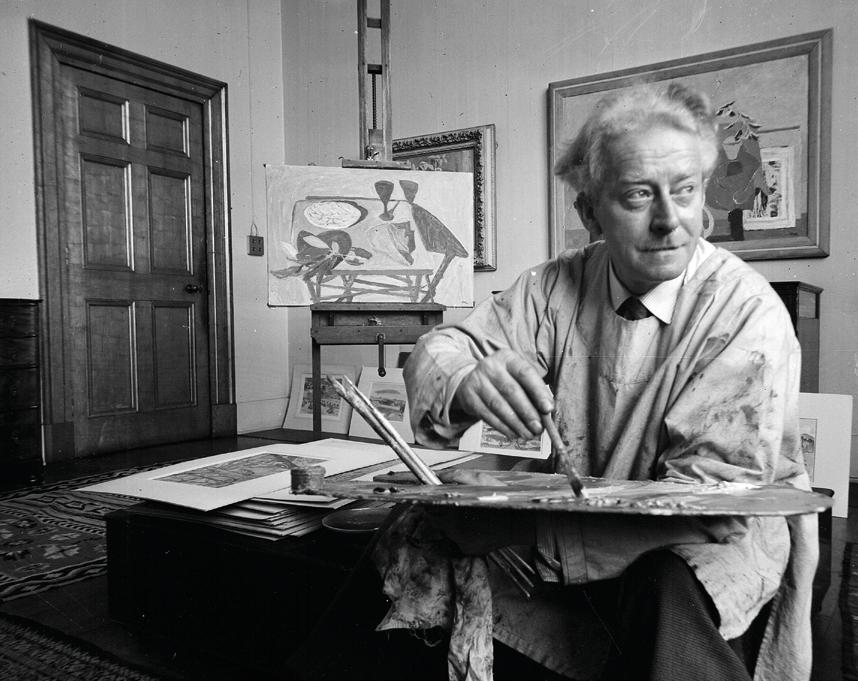
William Gillies in his Edinburgh College of Art studio, c.1960
Right: William Gillies, Temple, 1972. Photograph by Jessie Ann Matthew
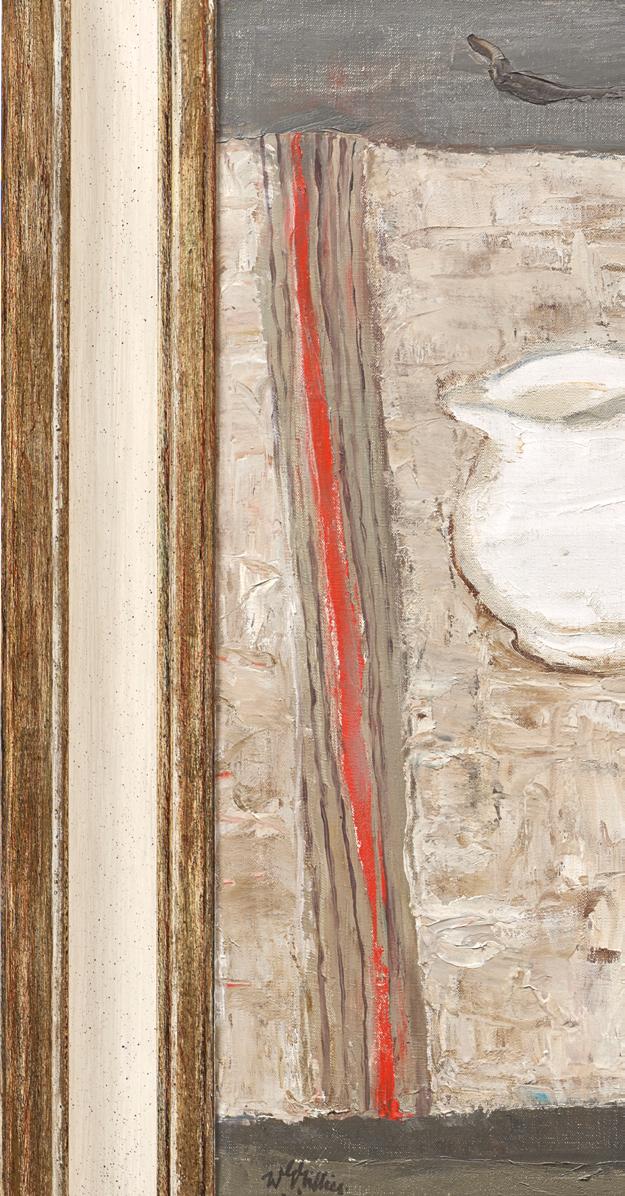
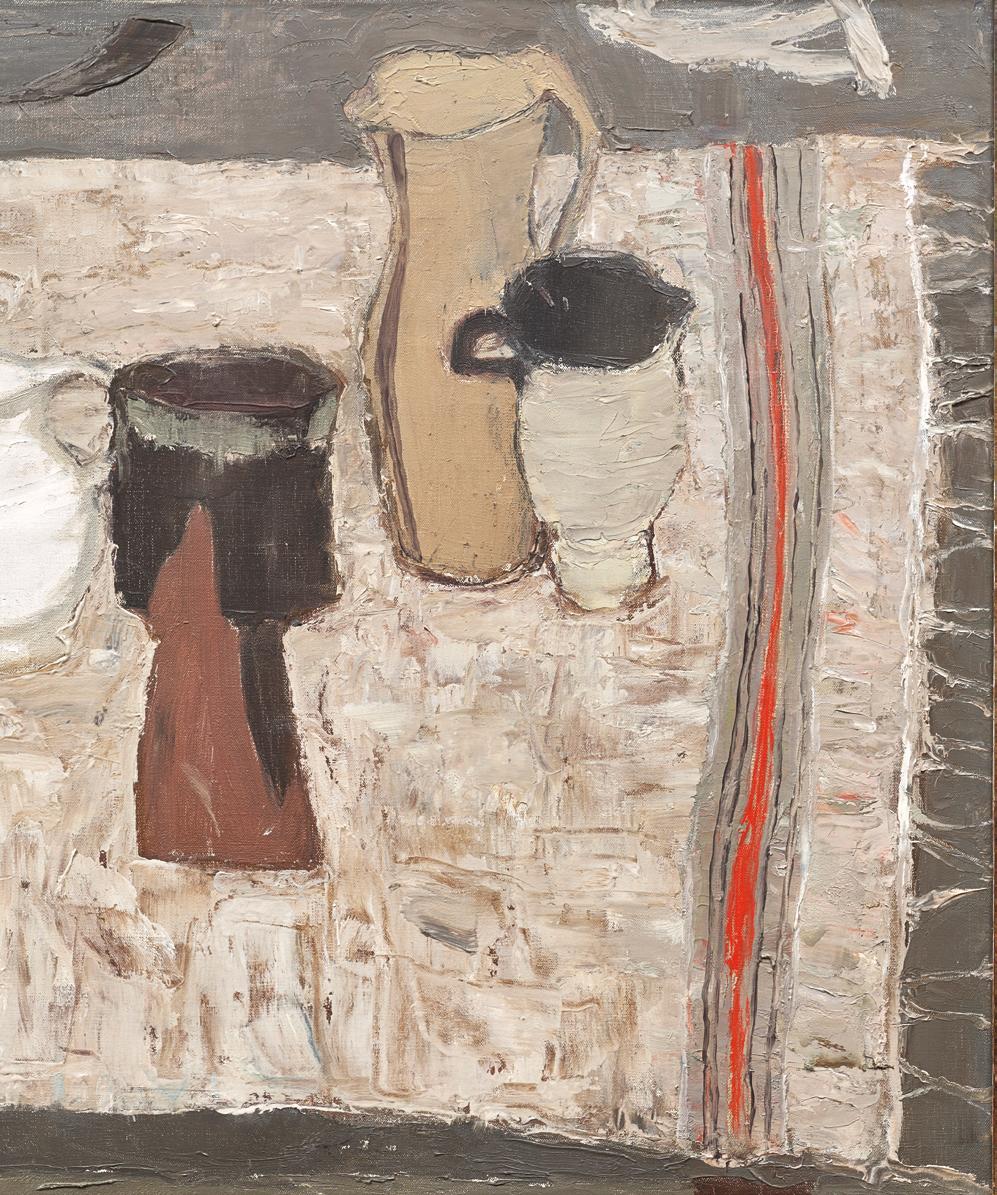
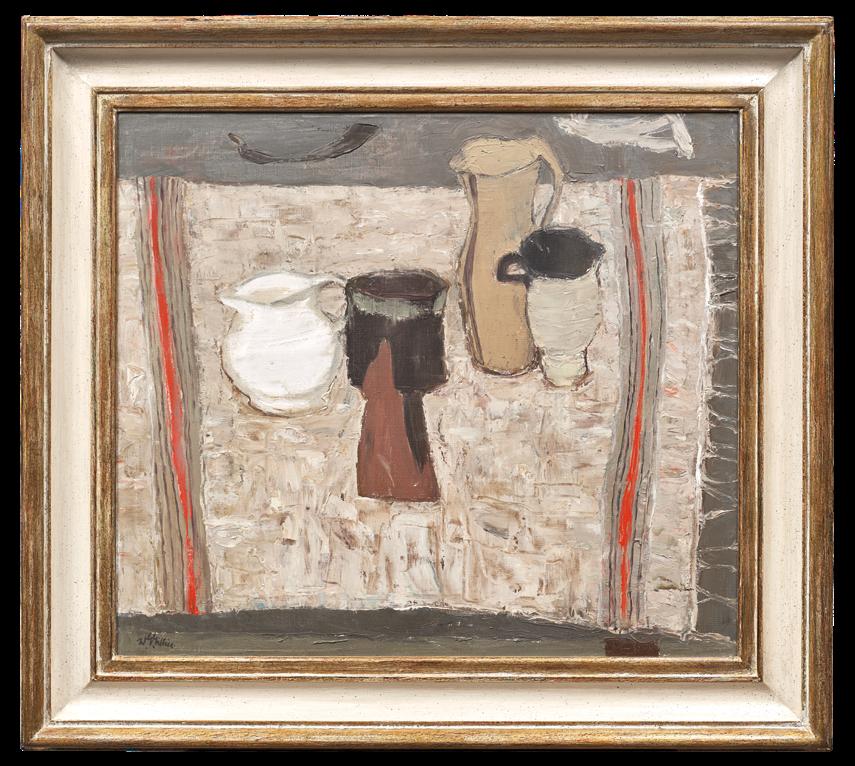
Painted around 1959, Four Pots contains familiar objects from his Temple home and studio in the Borders. The pots in this painting would almost certainly include examples made by his sister Emma and by students from Edinburgh College of Art, objects which recur throughout his still life practice. Gillies is in comfortable territory here. The muted yet distinctive palette, the patterned cloth and carefully balanced vessels create a composition of great harmony and intimacy. The upturned tabletop, a classic French and Edinburgh School modernist device, allows him to make
the most of the painted surface, while the darker band above suggests a distant sky or horizon. The rough linen cloth with its red and blue bands and fringe becomes as important as the pots themselves, while the play between forms, surfaces and tones feels both robust and delicate. Every object is perfectly placed. Quietly modern, modest, and brilliant, this is a beautiful, poetic painting and a perfect example of Gillies’s ability to transform everyday studio objects into something extraordinary.
William Gillies (1898-1973)
22. Four Pots, c.1959 oil on canvas, 53 x 61 cm signed lower left
EXHIBITED
William Gillies Retrospective, The Scottish Arts Council, 1970, cat. 104; Edinburgh Festival Exhibition, The Scottish Gallery, Edinburgh, 1991, cat. 6
PROVENANCE
Sir Basil Spence OM, RA
Earl Haig (1918-2009)
Dawyck Haig RSA RSW was one of Scotland’s most distinguished post-war painters, celebrated for his richly expressive landscapes and deeply personal response to the natural world. Born into the historic Haig family at Bemersyde in the Scottish Borders, he developed a lifelong connection to the landscape around the River Tweed, the Eildon Hills, and the woods and fields surrounding his home. These places became enduring subjects throughout a career that spanned more than six decades.
Haig’s artistic career began under extraordinary circumstances. During the Second World War he was held as a prisoner of war at Colditz Castle, where painting became more than a pastime and ultimately led him towards professional artistic training. After the war he studied at Camberwell School of Art in London, where he encountered the influence of the Euston Road School and developed the observational foundations that would underpin his work.
Although rooted in direct observation, Haig’s paintings gradually evolved into increasingly abstracted and lyrical interpretations of landscape. Working in oil, watercolour, and pastel, he created compositions that balanced structure with spontaneity, often using bold colour, gestural line, and flattened forms to evoke memory, atmosphere, and the rhythm of place. While much of his work focused on the Scottish Borders between the late 1940s and 1980, later paintings drew inspiration from extensive travels in Italy, France, Switzerland, and South Africa.
Douglas Hall described Haig as a painter of nature in whom the observation of nature and the creative process of art are so completely one and the same, writing for Haig at Ninety at The Scottish Gallery in 2008, Hall reflected on the remarkable consistency and vitality of Haig’s achievement across decades of work, noting the extraordinary synthesis between direct experience, memory, and painterly invention that characterised his art.
Haig exhibited regularly with The Scottish Gallery throughout his career. His first exhibition with the Gallery featured works made during his wartime captivity, and he went on to become one of its most important exhibiting artists. By Haig at Ninety in 2008, he had held fifteen exhibitions with The Scottish Gallery, including shows in 1945, 1947, 1952, 1955, 1960, 1967, 1973, 1978, 1983, 1988, 1993, 1998, and 2003.
The Gallery has continued to celebrate Haig’s work in subsequent exhibitions, including a major exhibition in 2014, a centenary exhibition in 2018, and a further exhibition in 2020.
A member of both the Royal Scottish Academy (RSA) and the Royal Scottish Society of Painters in Watercolour (RSW), Haig is recognised as one of the defining voices in twentieth-century Scottish painting. His work is held in numerous public and private collections.
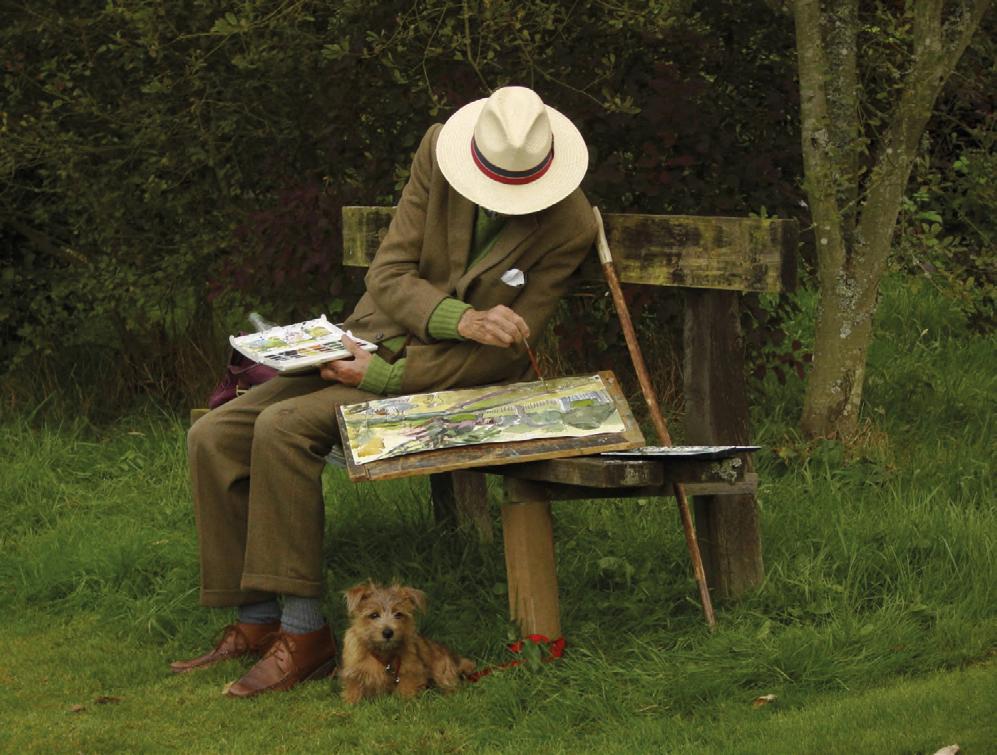
Earl Haig at Bemersyde, 2007
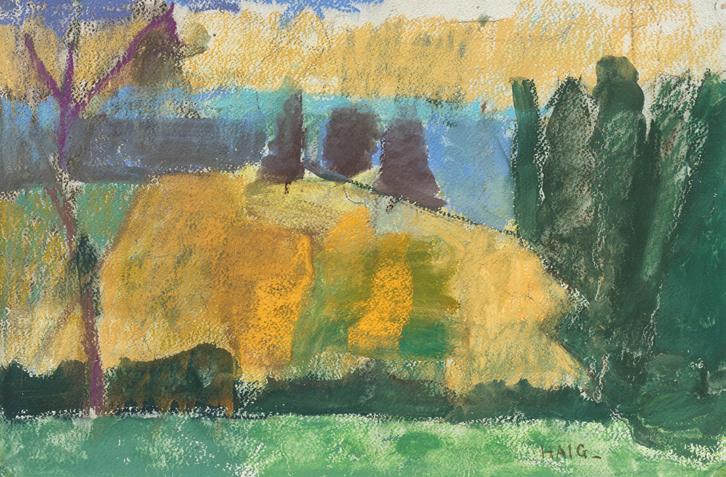
Landscape near Bemersyde, Scottish Borders captures the rolling hills, woods, and river valleys that provided Haig with an enduring source of inspiration throughout his life, changing constantly with the seasons. Here, Haig evokes the freshness of early spring when the landscape begins to emerge from winter into light and colour.
Executed in pastel and gouache on paper, the work possesses the immediacy and spontaneity of a painting made directly out of doors. The fluid handling and freshness of touch suggest that Haig worked en plein air, responding instinctively to shifting
light, weather, and atmosphere. There is no sense of overworking or revision. Instead, the image feels immediate, honest, and assured. The composition is organised into broad horizontal bands that guide the eye gently into depth. Varied greens describe the rolling fields, while a cool blue strip beyond suggests the River Tweed, which runs through the Bemersyde estate and forms one of the defining features of the Borders landscape. Bemersyde House itself stands above a bend in the river near Dryburgh and Melrose, and the Tweed remained central to both the identity of the estate and Haig’s experience of the surrounding landscape.
Earl Haig (1918-2009)
23. Landscape near Bemersyde, Scottish Borders, c.1985 pastel and gouache on paper, 37 x 55 cm signed lower right
Koji Hatakeyama (b.1956)
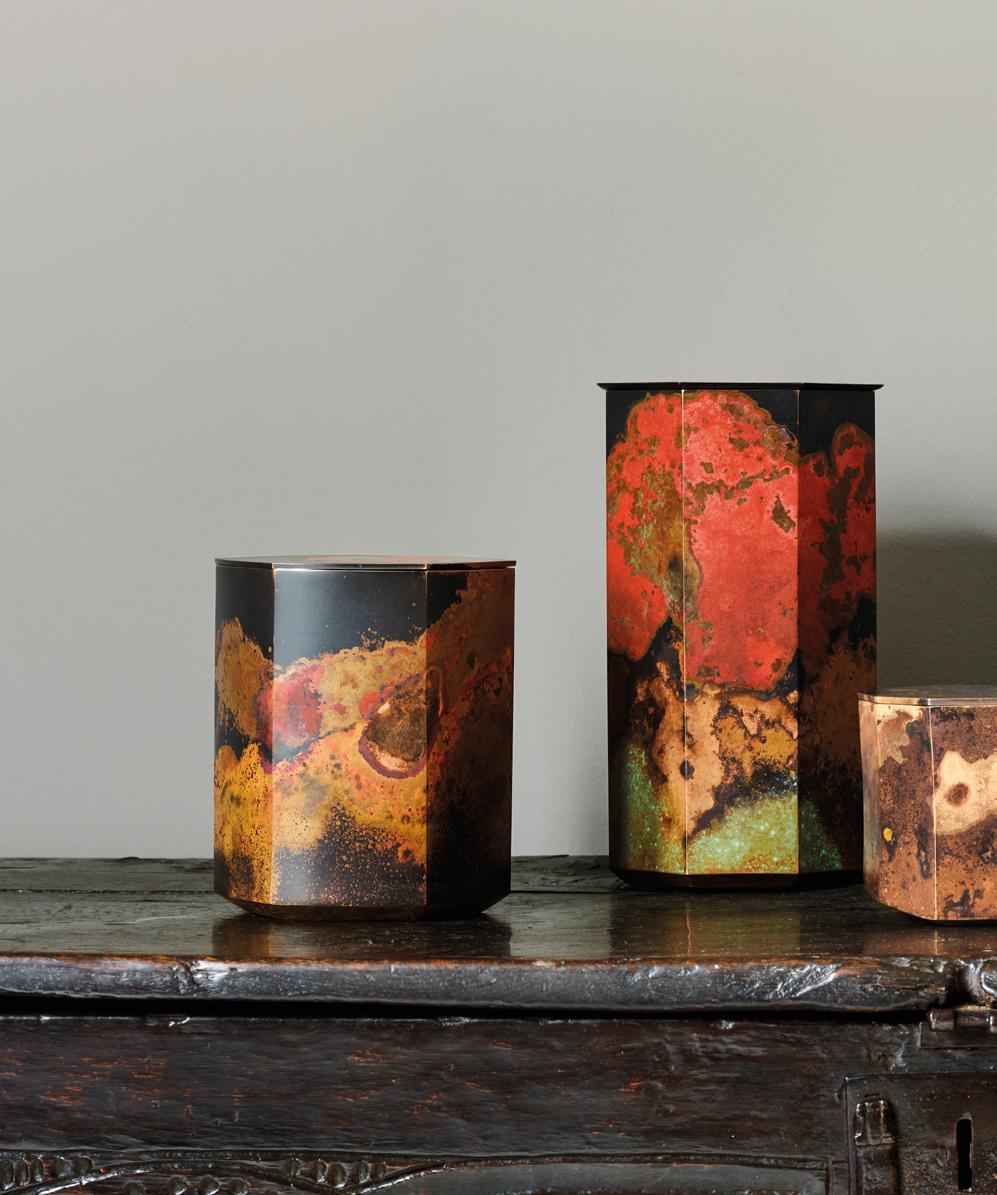
I suppose you could say that the artist is one who lives in a threecornered world, in which the corner that the average person would call “common sense” has been sheared off from the ordinary four-square world that the normal inhabit.
Natsume Sōseki, The Three-Cornered World (Kusamakura), 1906
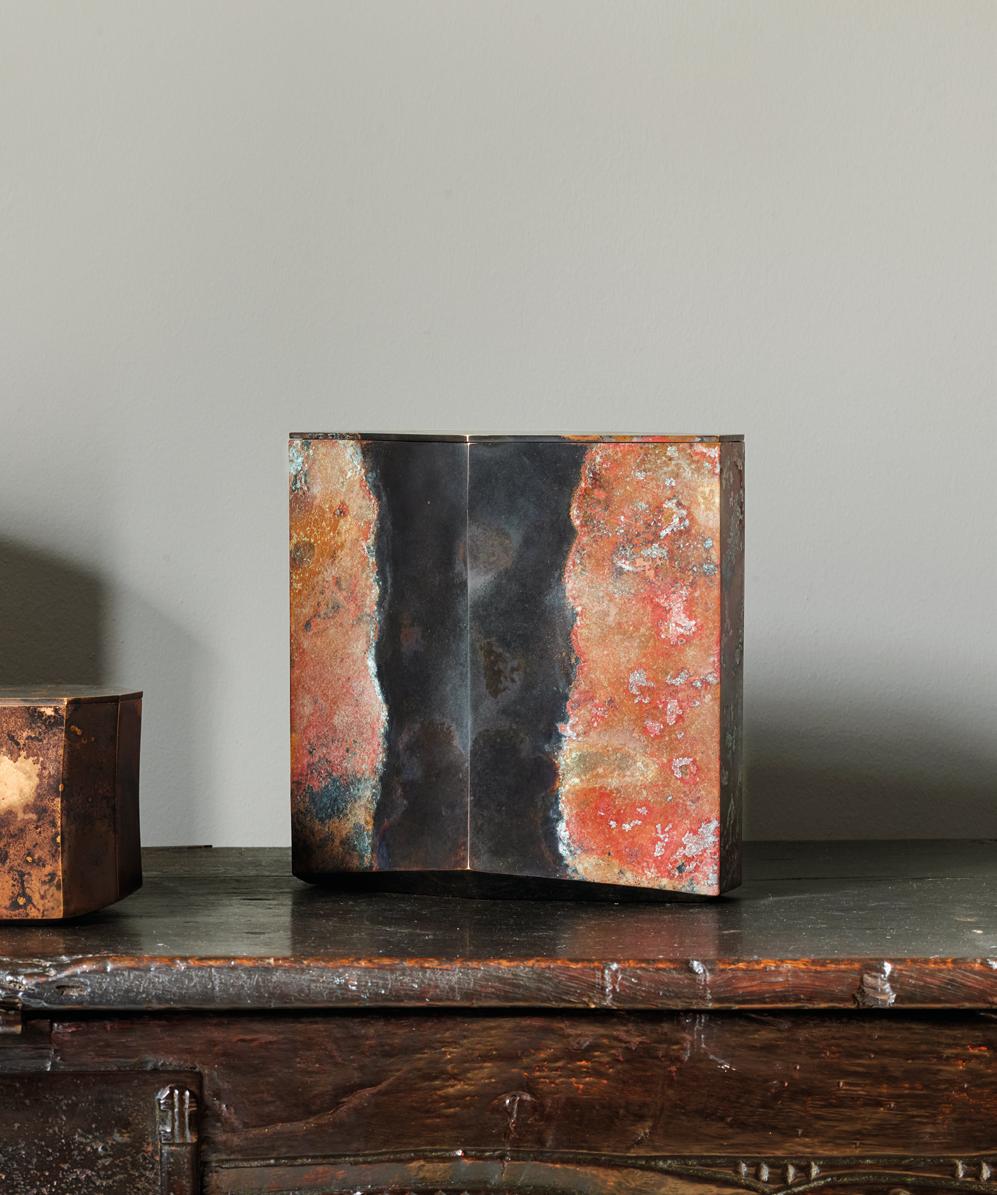
A Collector’s Eye | Lord Howarth of Newport’s
Koji Hatakeyama Collection
Alan Howarth, Baron Howarth of Newport (1944–2025), brought the same intellectual curiosity and sensitivity to collecting art that characterised his lifelong engagement with literature, music, and public life. Educated at the University of Cambridge, where he read history, he entered Parliament in 1983 and went on to serve in a number of ministerial roles, including Minister for the Arts from 1998 to 2001 under Tony Blair. Throughout his parliamentary career and later as a life peer, he remained a committed advocate for culture, heritage, and education within public life. He was widely respected for his thoughtful engagement with museums, architecture, and the role of the arts within civic society, believing strongly that visual culture formed an essential part of intellectual and human experience.
Alongside his political life, Lord Howarth maintained a lifelong engagement with literature and writing. Shortly before his death, he completed and self-published his memoir, Begun, Continued: A Personal and Political Memoir, a reflective account of public life, culture, and personal conviction. During the final years of his life, he also became a leading advocate for the relationship between creativity, health, and wellbeing, helping to shape the emerging field of creative health through his work with the All-Party Parliamentary Group on Arts, Health and Wellbeing and the National Centre for Creative Health. He believed that engagement with the arts was not a luxury but an essential part of a healthy and flourishing society.
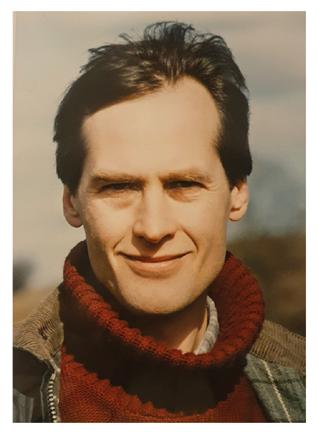
Beyond politics, Lord Howarth possessed an instinctive and deeply personal relationship with art. He collected widely and eclectically, with an eye that moved effortlessly across centuries, cultures, and materials. Paintings, ceramics, textiles, flowers, and decorative objects all formed part of the carefully considered environments in which he lived.
His life was defined by curiosity, generosity and an enduring respect for artists, craftsmanship and the creative spirit.
His main home in Dulwich was filled with artworks of every kind. Some rooms were vividly coloured and expressive, while others
were subtle and restrained. What united these interiors was not period or style, but the emotional and visual response they provoked. His interests extended far beyond paintings and sculpture into ceramics, textiles, and decorative objects, each contributing to an atmosphere that was personal, intellectual, and visually alive. Formerly the home of Queen Victoria's solicitor, the house provided an evocative setting for a collection assembled over decades. Beautiful rugs, carefully balanced colour relationships and thoughtfully arranged objects created interiors where every available surface carried paintings, ceramics, books, and objects that formed part of a wider visual conversation.
This breadth of visual understanding shaped his appreciation of Japanese art in particular. Over many years he assembled an important collection of Japanese prints, alongside paintings and decorative objects that reflected a sustained engagement with Japanese aesthetics and craftsmanship. Within this wider interest he developed a fascination for the bronze boxes of Koji Hatakeyama, assembling a considered group of works acquired through The Scottish Gallery over several years. Although he never met the artist personally, he responded deeply to the meditative stillness and material complexity of Hatakeyama's vessels, describing them as bronze landscapes. Several boxes were delivered directly to him at Parliament before finding their place within his home, where they became part of his daily routines of looking, thought and reflection.
Hatakeyama's boxes are objects that reward prolonged looking. Their surfaces shift between geological landscape, corrosion, and abstraction, while their luminous interiors, lined with gold or silver leaf, transform the simple act of opening into something contemplative and ceremonial. For Lord Howarth, these were not simply sculptural objects to admire but companions within a larger visual and intellectual world. Displayed together on the mantelpiece within his study, the boxes created quiet conversations between material, light and memory. What distinguished his collection was not its scale or ambition, but the intensity of attention he gave to the objects he chose to live with. He looked slowly, returned often and collected with patience and conviction.
Lord Howarth's passion for art was never entirely private. Alongside his work in public life, he actively encouraged others to engage with exhibitions, museums and collections, organising cultural visits for parliamentary colleagues over many years and championing the importance of visual culture within civic life. Art was never separate from intellectual or daily life but woven deeply into both. This special group of bronze boxes by Koji Hatakeyama offers a glimpse into that sensibility: a collector's eye shaped by curiosity, reflection and an appreciation for objects made with care, precision, and spiritual depth.
Koji Hatakeyama (b.1956)
Koji Hatakeyama (b.1956) is one of Japan’s most celebrated contemporary metal artists, internationally recognised for his enigmatic cast bronze boxes whose richly patinated surfaces remind us of geological formations, weather systems and vast Japanese landscapes. Born in Takaoka, Toyama Prefecture, a region that has been a centre for bronze casting and lacquerware production since the early seventeenth century, Hatakeyama works within one of Japan’s most revered craft traditions.
Hatakeyama graduated from the Department of Metalwork at Kanazawa College of Arts and Crafts in 1980 and later served as Professor of Metal Casting at Kanazawa College of Art between 2017 and 2022. Throughout his career, he has remained committed to the ancient process of bronze casting, using traditional sand-casting methods before subjecting each work to months of complex patination using chemical compounds including miso paste and vinegar. These painstaking surface treatments create shifting fields of colour resembling erosion, mineral deposits, volcanic terrain, or distant aerial landscapes.
The surfaces of Hatakeyama’s works are never merely decorative. Rooted in Buddhist philosophy and the aesthetics of the Japanese tea ceremony, his vessels explore ideas of emptiness, consciousness, and spiritual awakening. The exterior often appears darkened, weathered, or ancient, while the interiors are lined with gold, silver, or platinum leaf, transforming the act of opening the box into a contemplative and almost ceremonial experience. Hatakeyama has described bronze as a material with memories of a thousand years, believing that the
consciousness of the maker and the material itself become fused through the casting process.
Within his work, there is often a striking tension between monumentality and intimacy. Although modest in scale, the boxes possess an extraordinary physical presence. Their carefully faceted forms recall reliquaries or architectural structures, while the patinated surfaces suggest landscapes viewed from above, corroded metals, celestial bodies or ancient walls marked by time. Each object rewards prolonged looking, revealing subtle shifts of colour, texture, and reflected light.
Hatakeyama’s work is held in major international public collections including the Victoria & Albert Museum, London; The British Museum, London; The Metropolitan Museum of Art, New York; Musée des Arts Décoratifs, Paris; National Museums Scotland, Edinburgh; the Ashmolean Museum, Oxford; Philadelphia Museum of Art; and the National Museum of Modern Art, Tokyo, amongst many others worldwide. A work from his 2024 exhibition Scenes in Bronze at The Scottish Gallery was acquired for the collection of National Museums Scotland.
In 2022, a major retrospective of his work was held at Musée Tomo in Tokyo and a major new monograph on the artist’s work was published in 2026, further cementing his reputation as one of the most important contemporary metal artists working internationally today.
He has exhibited extensively in Japan, Europe and Australia and has enjoyed a longstanding relationship with The Scottish Gallery, with solo exhibitions in 2009, 2011, 2014, 2018 and 2024.
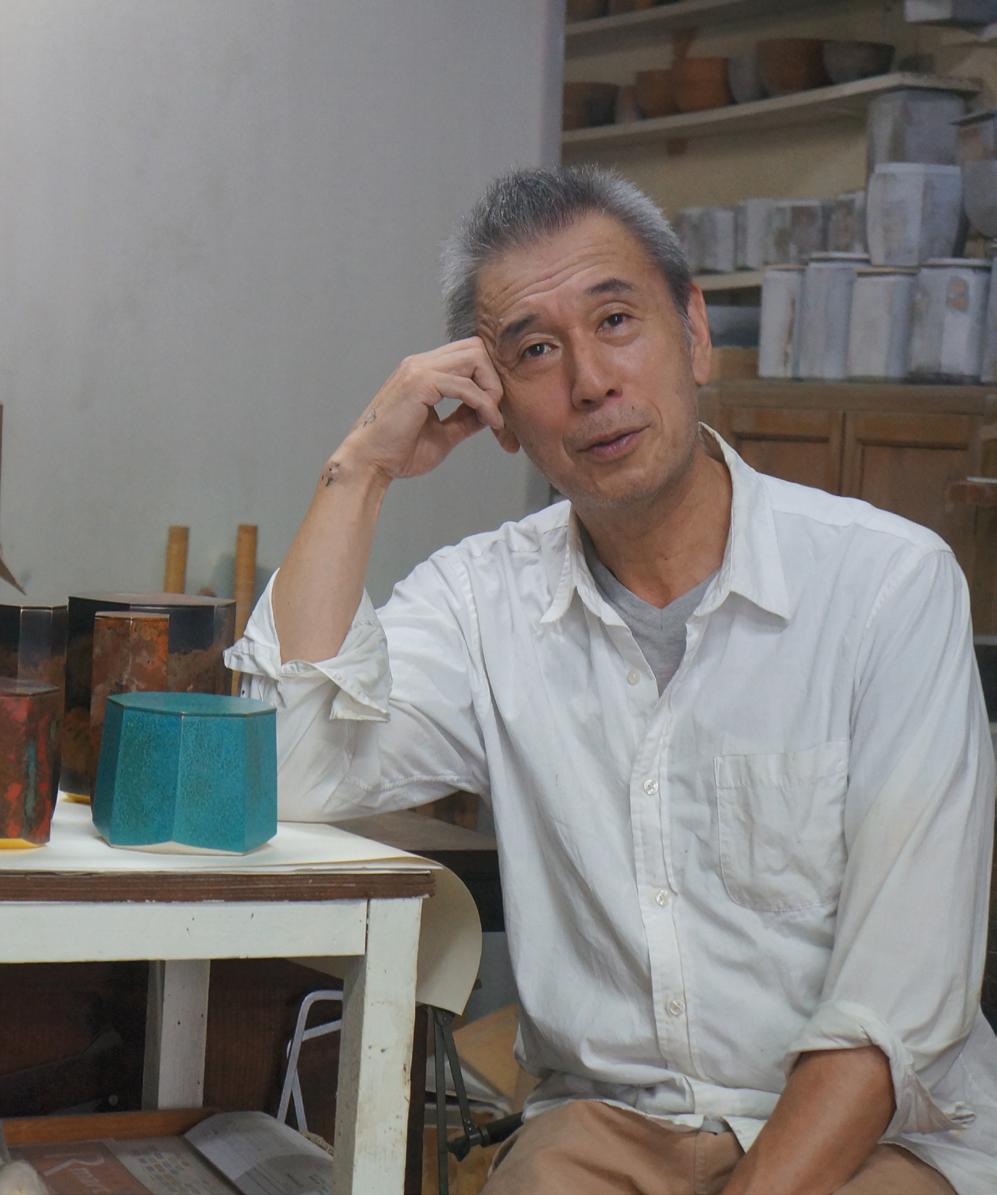
Koji Hatakeyama in his studio, Takaoka, Japan, 2018
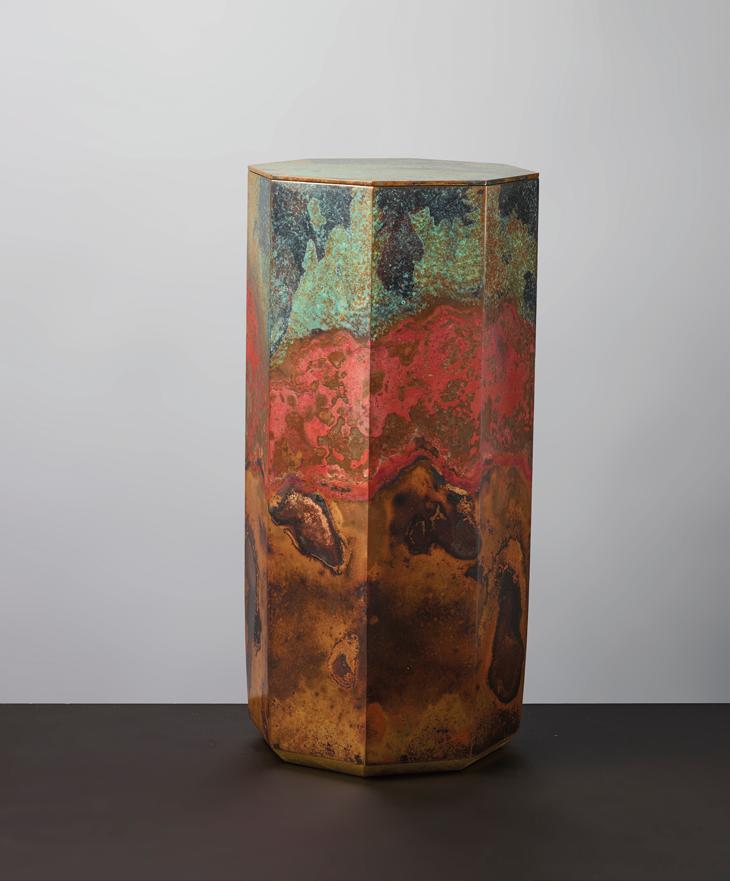
Koji Hatakeyama (b.1956)
24. Eight Faces I, 2018
cast bronze with gold leaf interior
H33.5 x W15.5 x D15.5 cm
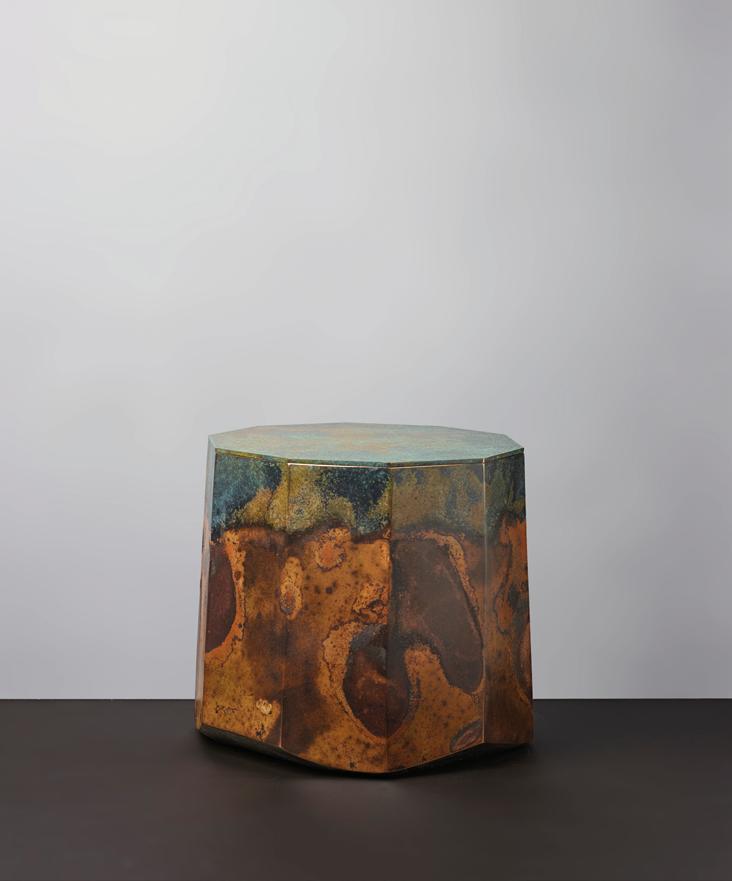
Koji Hatakeyama (b.1956)
25. Ten Faces I, 2018 cast bronze with silver leaf interior and platinum leaf H18.3 x W18.5 x D19 cm
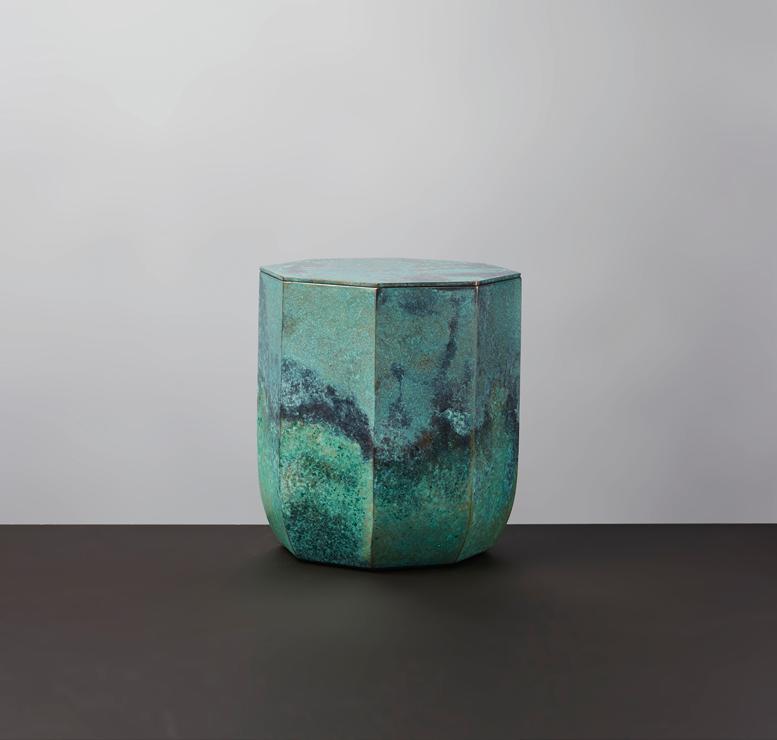
Koji Hatakeyama (b.1956)
26. Eight Faces IV, 2018 cast bronze with silver leaf interior H17.3 x W15 x D15 cm
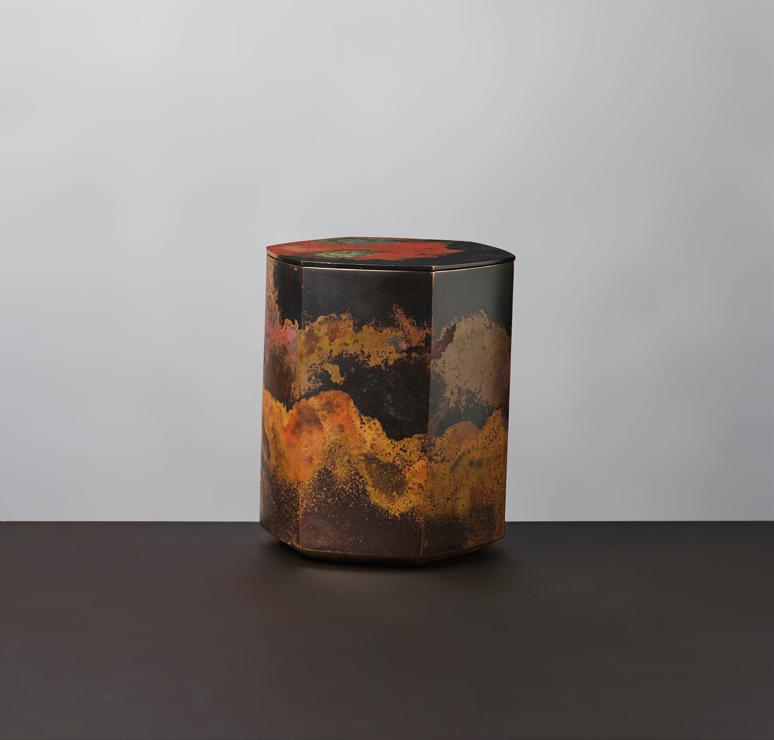
Koji Hatakeyama (b.1956)
27. Six Faces III, 2018 cast bronze with gold leaf interior H15.8 x W13.5 x D12.5 cm
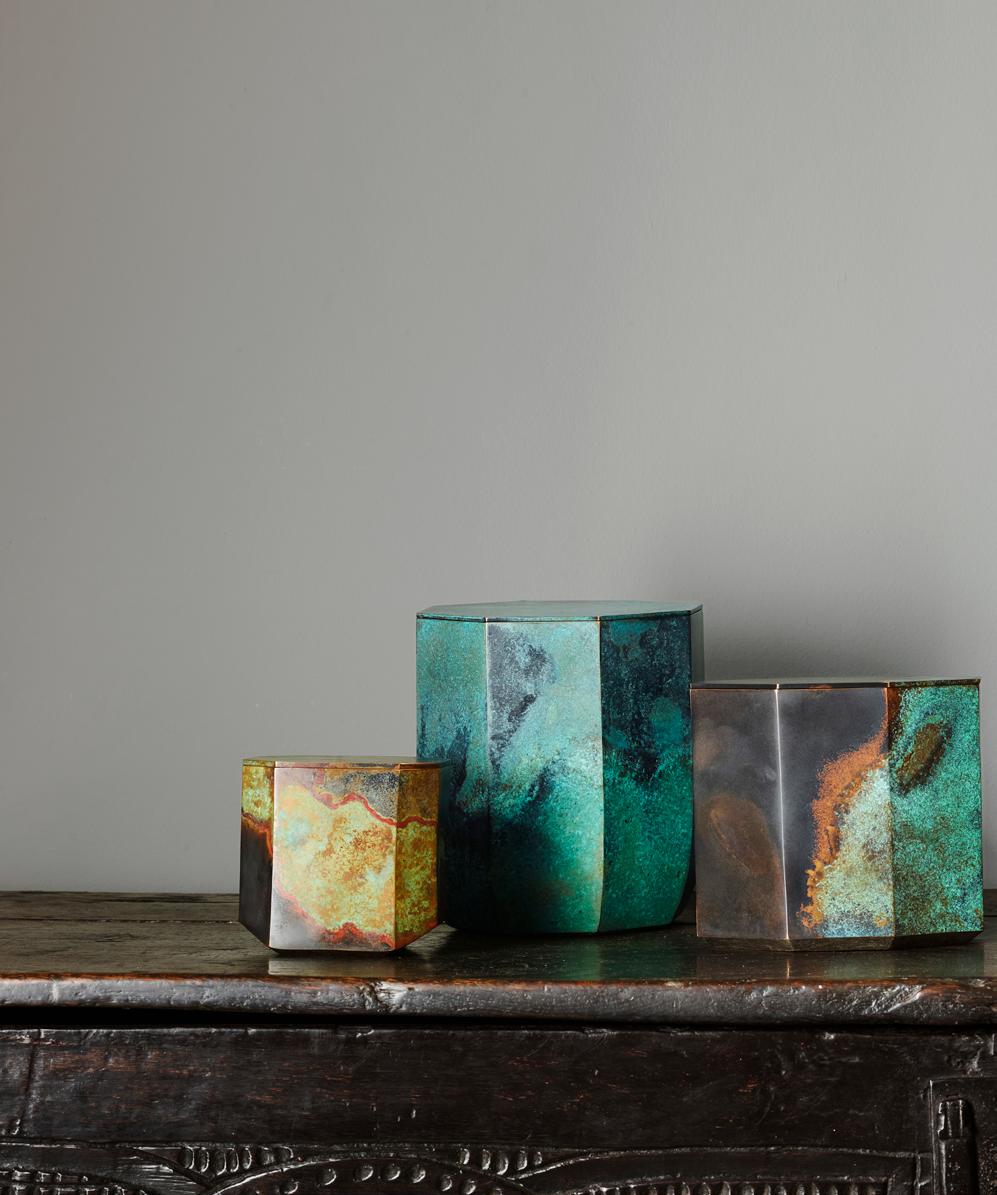
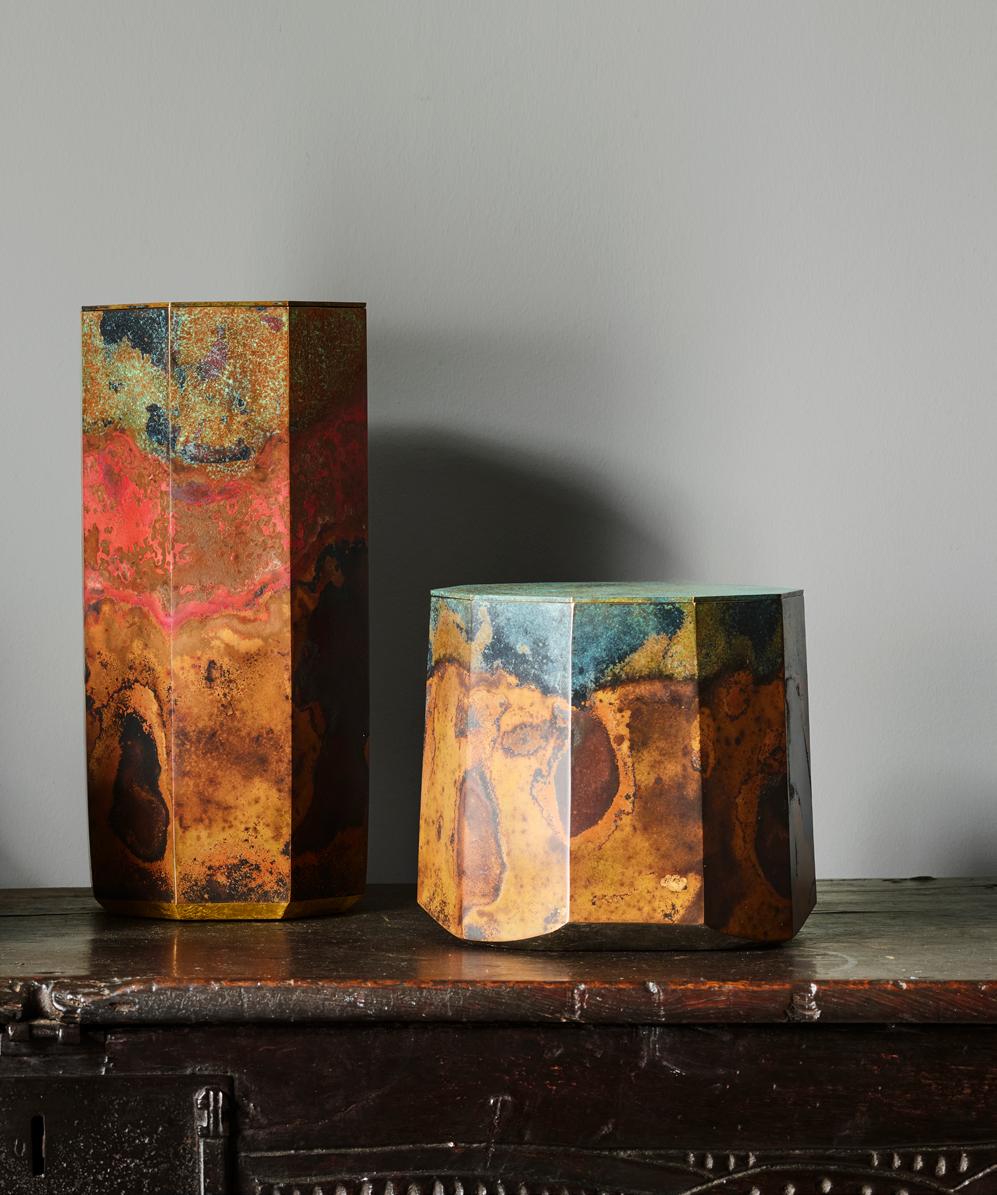
John Houston (1930-2008)
John Houston RSA OBE (1930–2008) was born in Buckhaven, Fife and studied at Edinburgh College of Art, where he met the artist Elizabeth Blackadder. The two married in 1956 and shared an lifelong partnership centred around art, travel, and daily studio practice. Although their visual languages remained distinct, both artists sustained a commitment to observation, discipline, and the transformative possibilities of painting. Together they travelled widely throughout Europe and Asia, experiences which continually expanded Houston’s painting practice.
The sea remained one of Houston’s deepest and most enduring subjects. The coastline of Fife, with its shifting tides, harbours, beaches, and changing weather, provided him with a lifelong source of inspiration. Returning repeatedly to the same stretches of coast, Houston developed a highly personal painterly language through which landscape became both observed reality and emotional experience.
Houston exhibited regularly with The Scottish Gallery and his work remains closely associated with The Gallery’s commitment to modern Scottish painting and to artists whose practice was rooted in sustained engagement with landscape, travel, and the material language of paint itself.
Working with vigorous brushwork and tactile surfaces, Houston sought not simply to describe landscape, but to convey its energy, instability, and emotional power. Today he is recognised as one of the defining figures of modern Scottish painting, combining
painterly freedom with an enduring attachment to the Scottish landscape and to the daily practice of art. In 2005 Houston was honoured with a major retrospective at the Scottish National Gallery of Modern Art, recognising a lifetime devoted to painting and his position as one of Scotland’s most important modern artists.
His work is held in numerous public collections including the National Galleries of Scotland, Tate, and the Royal Scottish Academy.
The Scottish Gallery exhibitions: 1960, 1962 Festival Exhibition, 1965, 1967 Festival Exhibition, 1971 Festival Exhibition, 1975, 1980, 1990, 1993, 1997, 2003 Festival Exhibition, 2007 Festival Exhibition, John Houston Memorial Exhibition in 2009, and further exhibitions celebrating his work in 2012 and 2013.
Modern Masters
The paintings in Modern Masters XX trace Houston’s development from early landscape painting in the 1950s through to increasingly abstract and gestural interpretations of landscape in later decades. Travel formed an important part of Houston’s practice. Journeys to places including Lake Constance and Kyoto introduced new ideas, light, colour, and spatial sensibilities into his work, yet even abroad he remained fundamentally a painter of atmosphere and place. Whether depicting the coastline of Fife, European lakes, or Japanese gardens and temples, Houston approached painting as an immediate, physical encounter with the world around him.
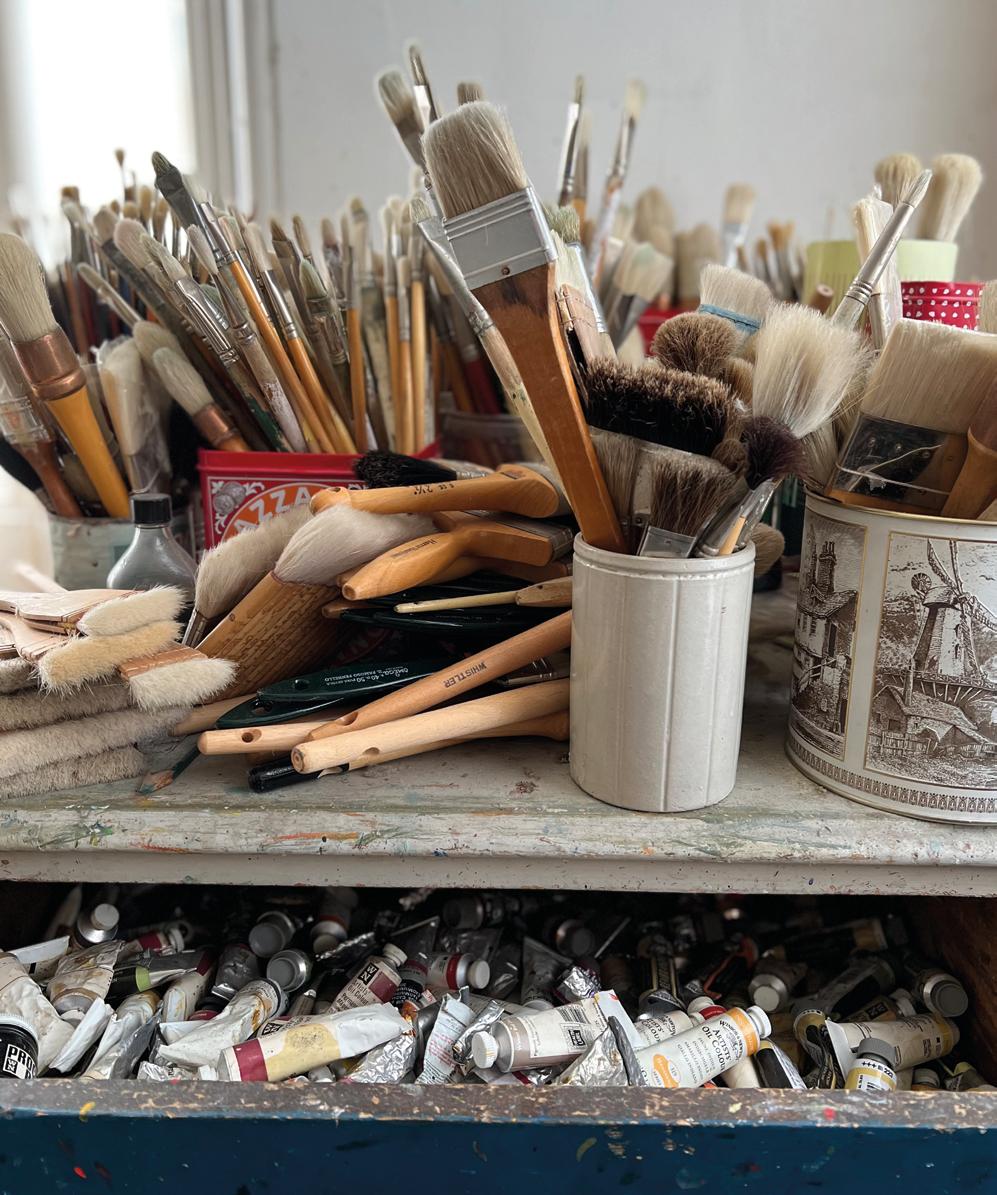
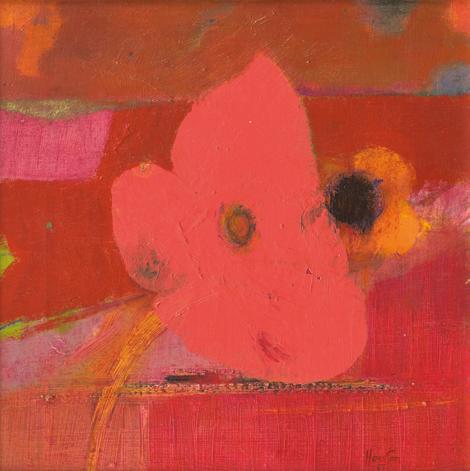
John Houston (1930-2008)
28. Flower in a Landscape, c.1967 oil on canvas, 30.5 x 30.5 cm signed lower right
EXHIBITED
John Houston - Festival Exhibition, The Scottish Gallery, Edinburgh, 1967, cat. 35
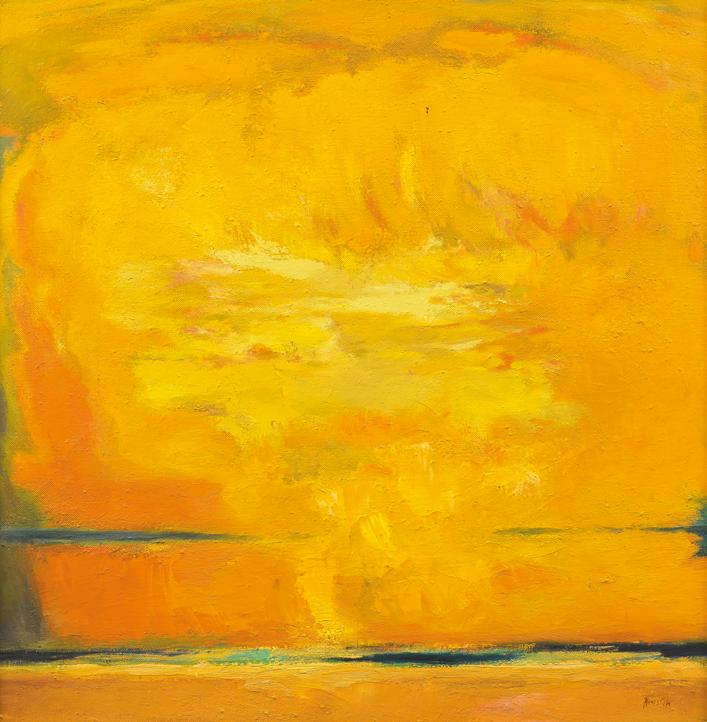
29. Sunset over the Sea, 1970-71 oil on canvas, 75 x 75 cm signed lower right; titled and dated verso
John Houston (1930-2008)
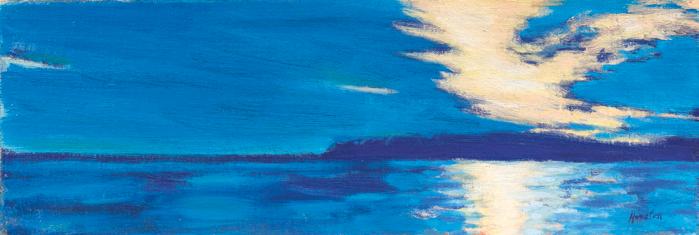
John Houston (1930-2008)
30. Lake Constance, 1971 oil on canvas board, 13.5 x 43 cm signed lower right; titled and dated verso
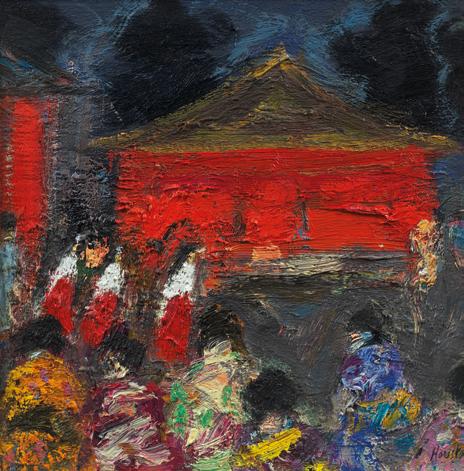
John Houston (1930-2008)
31. Shrine, Kyoto, 1998-99 oil on board, 34 x 34 cm signed lower right; signed, titled and dated verso
EXHIBITED
The Scottish Gallery at The Glasgow Art Fair, 2001
The Bass Rock became Houston's lifelong muse, a familiar landmark whose permanence contrasted with the endlessly changing conditions of sea, sky and light. In returning to it throughout his career, he demonstrated that the deepest understanding of a place comes not from a single observation but from a lifetime of looking.
John Houston (1930-2008)
signed and dated lower right
EXHIBITED
John Houston, The Forth, The Scottish Gallery, Edinburgh, 2012
32. Rainstorm over the Bass Rock, 1982 pastel on paper, 60 x 60.5 cm
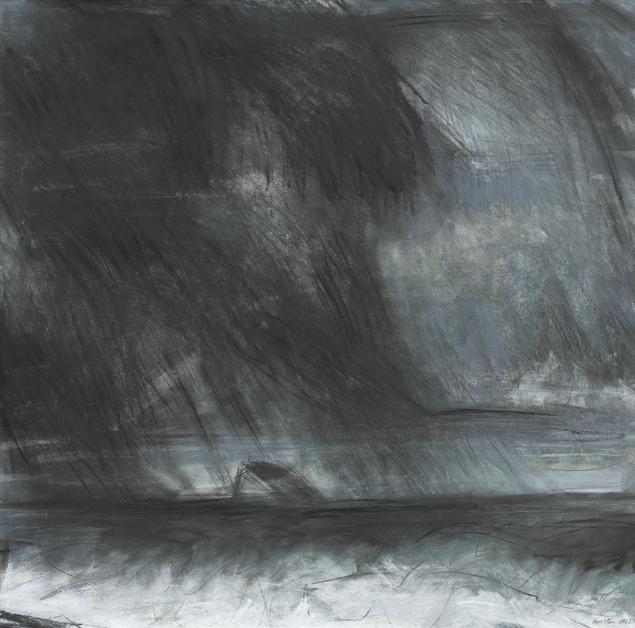
William MacTaggart (1903-1981)
The Beeches was painted around 1958, when Sir William MacTaggart’s landscapes had become increasingly expressionist in colour and handling. Born in Loanhead in 1903, the grandson of the celebrated Scottish painter William McTaggart, he studied at Edinburgh College of Art alongside William Gillies and John Maxwell, forming part of what later became known as the Edinburgh School. MacTaggart and Gillies remained close friends and colleagues throughout their careers, sharing a studio in the early 1930s before both later taught at Edinburgh College of Art, where they influenced generations of younger Scottish artists.
Although the setting is not precisely identifiable, the intimate woodland subject recalls the Borders and East Lothian landscapes favoured by both artists. By the 1950s, MacTaggart’s work had absorbed the influence of European Expressionism, particularly Edvard Munch and Georges Rouault, visible here in the vigorous brushwork and heightened, almost psychological colour. Beeches have long been associated with memory and contemplation, and the trees become less a topographical record than an emotional landscape of light, atmosphere and mood.
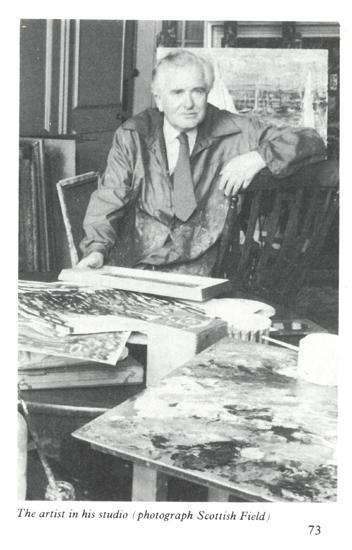
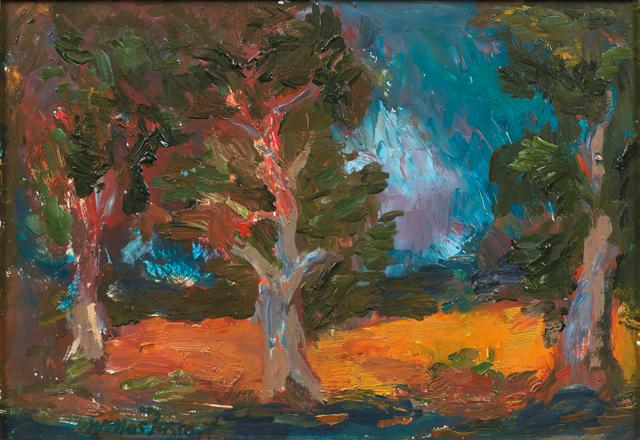
William MacTaggart (1903-1981)
33. The Beeches, c.1958 oil on board, 25 x 35 cm signed lower left
EXHIBITED Sir William MacTaggart Centenary Exhibition, The Scottish Gallery, Edinburgh, 2003
David Michie (1928-2015)
David Michie OBE RSA FRSA RGI was one of the leading Scottish painters of the post-war generation, celebrated for his vibrant colour, lyrical compositions, and deeply personal response to the world around him. Born in St Raphael in the South of France, he was the youngest son of the painter Anne Redpath OBE RSA ARA (1895–1965) and the architect James Michie. His early childhood in France left a lasting impression on his imagination, particularly the intense Mediterranean light and colour that would later become hallmarks of his painting.
After returning to Scotland in the 1930s, Michie grew up in Hawick and later studied at Edinburgh College of Art, where he became part of a remarkable post-war generation alongside artists such as John Houston, Elizabeth Blackadder and David McClure. A direct contemporary of Denis Peploe, he inherited the rich colourism and painterly confidence associated with the Edinburgh School tradition, while developing a distinctly individual visual language shaped as much by French modernism as by Scottish painting. Critics often noted affinities with Matisse and Raoul Dufy in his use of flattened colour, decorative rhythm, and joyful observation of everyday life.
Although Anne Redpath’s influence provided an early example of painting as a way of
life, Michie quickly established his own artistic identity. Rather than traditional still life or formal portraiture, he found inspiration in fleeting visual experiences: beach umbrellas, harbour scenes, gardens, musicians, dancers, birds, market stalls, and the theatre of ordinary human behaviour. His paintings balance humour, elegance and acute observation, transforming familiar subjects into vivid explorations of shape, colour, and movement.
Alongside his career as a painter, Michie was an influential teacher at Edinburgh College of Art, where he taught from 1961 until his retirement in 1990, eventually serving as Head of Drawing and Painting. Generations of Scottish artists remembered him as a generous and inspiring figure, admired for encouraging individuality and sensitivity in painting.
David Michie enjoyed a long relationship with The Scottish Gallery, exhibiting regularly throughout his career in 1980, 1994, 1998, 2003, 2008 and 2012. In 2017, The Scottish Gallery held a major David Michie Memorial Exhibition, celebrating his life, work, and enduring contribution to Scottish painting.
The Scottish Gallery exhibitions: 1980, 1994, 2003, 2008, 2012, 2017 (Memorial), 2021, 2023
David Michie in his studio, 1995. Photographs by Eric Thorburn
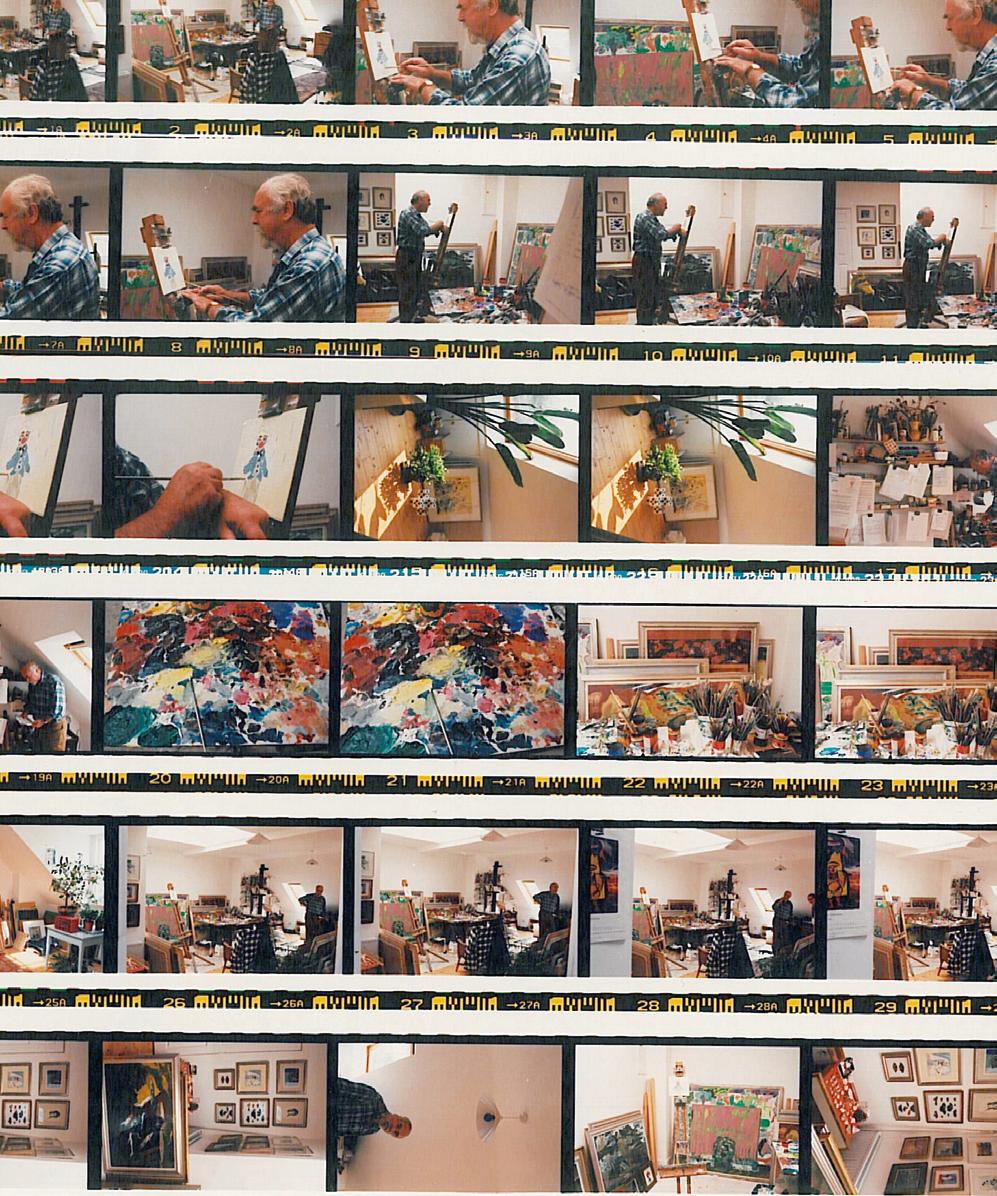
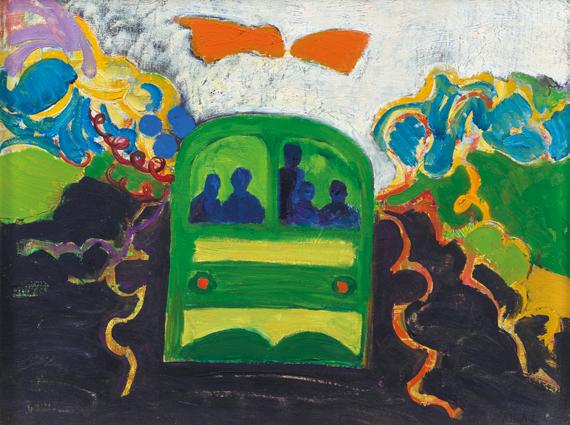
David Michie (1928-2015)
34. Primary III Go on an Outing, 1960 oil on canvas, 35.5 x 45.5 cm signed lower right; signed and titled verso
EXHIBITED
David Michie - Paintings from the Artist's Studio, The Scottish Gallery, Edinburgh, 2008, cat. 40
PROVENANCE
The Artist’s Estate
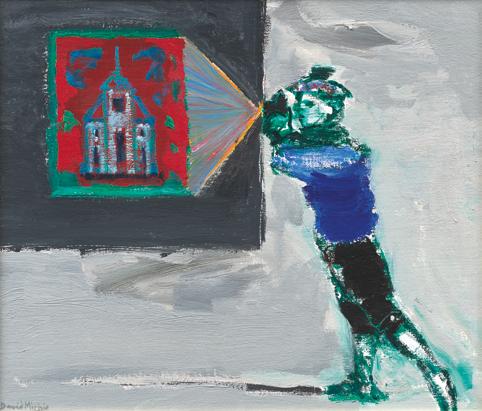
David Michie (1928-2015)
35. The Photographer, 1966 oil on linen on board, 31 x 36 cm signed lower left; title inscribed on label verso
EXHIBITED Modern Masters II, The Scottish Gallery, Edinburgh, 2014, cat. 20
Travel and coastal life were enduring sources of inspiration for Michie, and this expansive harbour scene captures the warmth and movement of the French fishing port of Les Sables d’Olonne. Rather than focusing on detailed description, he constructs the composition through flattened planes of colour and animated figures dispersed across the harbour edge. The painting conveys the bustle and atmosphere of the port with a lyrical eye.
David Michie (1928-2015)
37. Fishing in the Old Port, Les Sables d'Olonne, c.1979 oil on canvas, 93 x 129.5 cm signed lower left
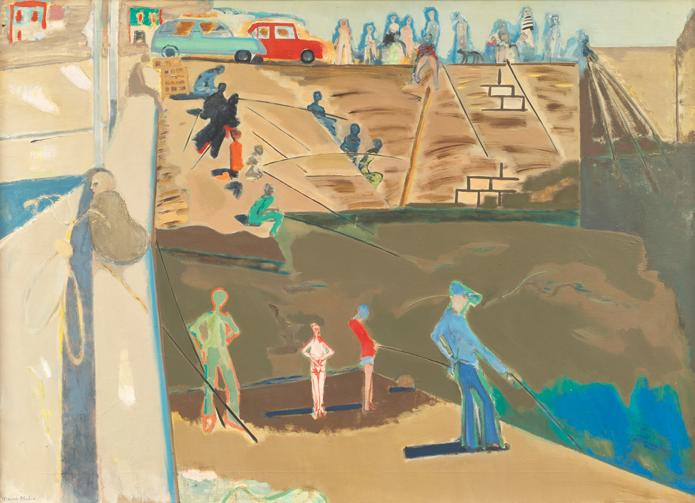
Set against the intense blue of the Mediterranean, the sleek white boat appears suspended between sea and sky, while the dark silhouette of the coastline anchors the composition. Here he celebrates the dazzling light, warmth and colour of the French Riviera.
David Michie (1928-2015)
38. Big Boat at Beaulieu Alpes Maritimes, 2008 oil on canvas, 35.5 x 40.5 cm signed lower left; signed and title inscribed on label verso
EXHIBITED
David Michie - Paintings from the Artist's Studio, The Scottish Gallery, Edinburgh, 2008, ex.cat.
Provenance
The Artist’s Estate
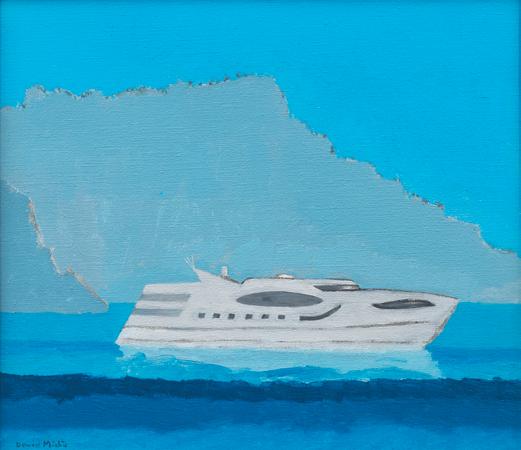
PROVENANCE
The Artist’s Estate
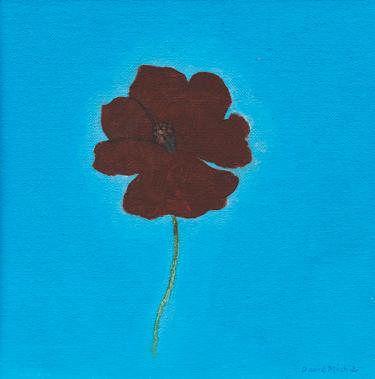
David Michie (1928-2015)
39. Cosmos, c.2005 oil on board, 20 x 20 cm signed lower right
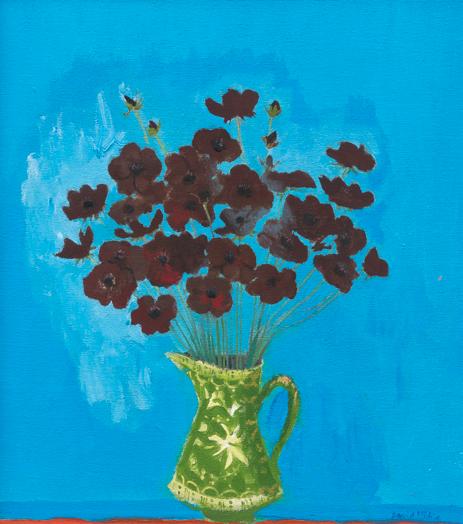
David Michie (1928-2015)
40. Cosmos in a Green Jug, 2005 oil on canvas, 30.5 x 40.5 cm signed lower right; signed and title inscribed on label verso
PROVENANCE
The Artist’s Estate
James Morrison (1932-2020)
James Morrison was one of Scotland’s most distinguished landscape painters, celebrated for his understanding of place, atmosphere and light. Born and raised in Glasgow, he studied at Glasgow School of Art between 1950 and 1954 before establishing himself as an independent artist. His early paintings recorded the changing urban landscape of post-war Glasgow, capturing the city’s tenements, streets and architectural character with remarkable sensitivity.
A decisive turning point came in 1958 when Morrison and his wife Dorothy moved to the fishing village of Catterline on the Kincardineshire coast. There he discovered the subjects that would sustain him for the rest of his life. The sea, cliffs and farmland of the Mearns, together with the rhythms of the fishing community, led him away from urban subject matter towards landscape painting. From Catterline his attention expanded inland to Denhead Farm and the surrounding countryside, where the structure of fields, horizons and weather became central to his work.
In 1965 the family moved to Montrose. The landscapes of Angus became his enduring subject. He painted the farmland around Farnell, Kinnell, Bonnyton, Carcary, Fithie and Balgove, as well as the tidal waters and wide skies of the Montrose Basin. From his home near Usan he developed a daily practice of working directly from observation, often choosing his painting locations according to the weather forecast. The changing seasons, winter
snow, distant Grampian hills and vast cloud formations all became hallmarks of his mature style.
Morrison also found inspiration in Glen Esk and Montreathmont Forest, where woodland subjects provided a counterpoint to the open agricultural landscapes of Angus.
From the 1980s onwards he spent increasing amounts of time on Scotland’s west coast, particularly around Achiltibuie and Assynt. The dramatic mountains of Suilven, Quinag, Canisp and Stac Pollaidh, together with the islands and beaches of the Summer Isles, Achnahaird Bay and Loch Assynt, provided some of his most celebrated late works. He was drawn to the extraordinary clarity of light and the sense of scale found in the northwest Highlands, describing the landscape as a place where one could glimpse “something quite profound.”
Throughout a career spanning more than six decades, Morrison remained committed to painting directly from nature. Whether working on the Angus coast, in the forests of Montreathmont, beside the Montrose Basin or under the vast skies of Assynt, he sought to capture not simply the appearance of a landscape but its spirit. His paintings combine careful observation with an emotional response to the Scottish environment, securing his reputation as one of the most important Scotland’s landscape painters in the modern era.
The Scottish Gallery exhibitions: 1959, 1964, 1967, 1975, 1978 (Festival), 1981, 1984 (Festival), 1987, 1988 (Festival), 1989, 1990, 1991, 1992, 1994, 1997, 1999 (Festival), 2000, 2001, 2002, 2005, 2007, 2009 (Festival), 2012, 2013, 2015, 2017, 2020, 2022 (Memorial), 2024, 2026
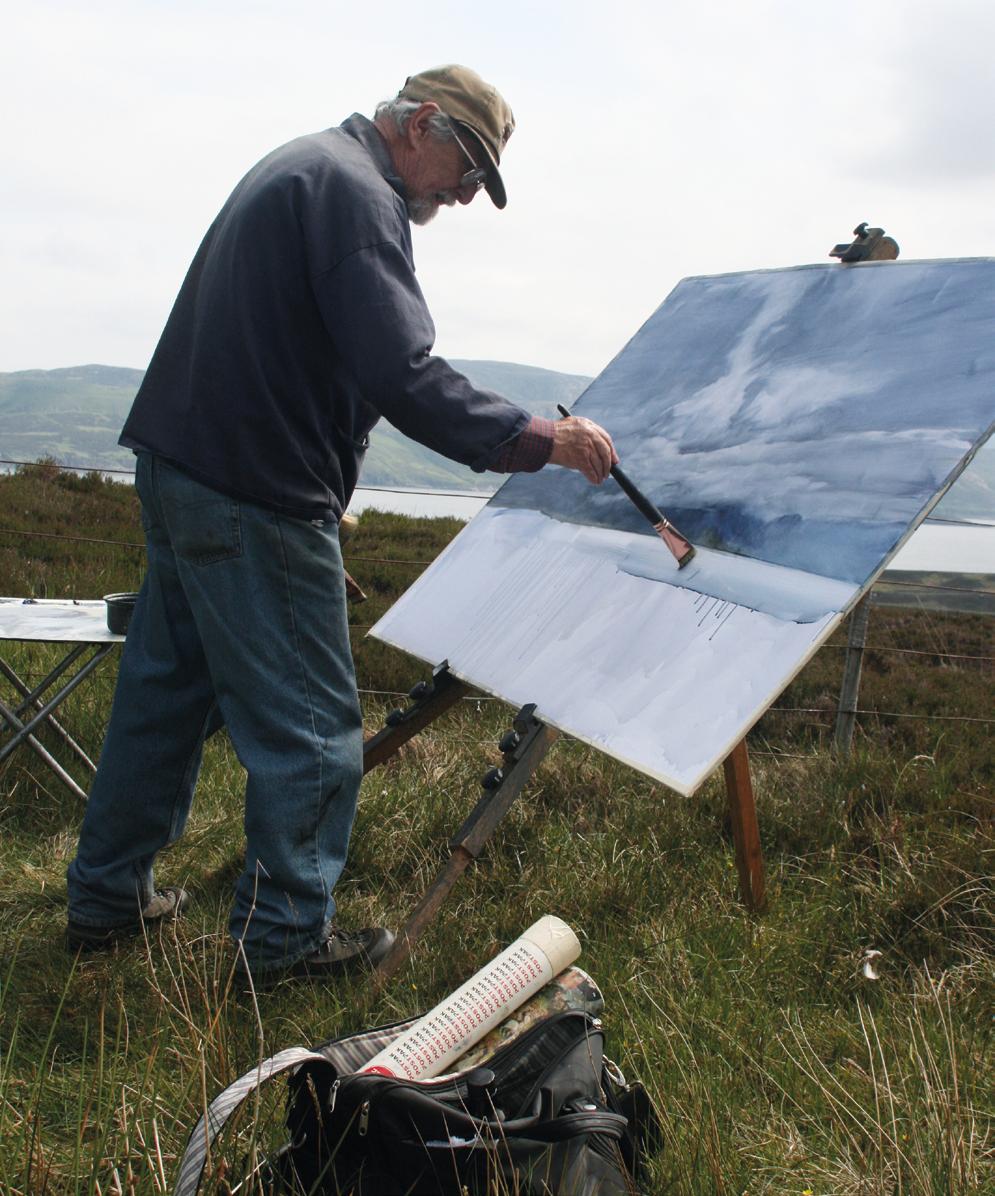
I find the world about my home so beautiful and absorbing that I have no desire to change it in my paintings, only to rejoice in it.
James Morrison
James Morrison painting at Balnakeil Bay, 2007
James Morrison (1932-2020)
Painted just two years after James and his wife Dorothy Morrison arrived in Catterline, Drying the Fishing Nets, Catterline belongs to one of the most significant periods in the artist's development. In 1958 the young couple left Glasgow after securing teaching posts in the northeast and settled in the small fishing village overlooking the North Sea. For Morrison, who had been born, educated and established as a painter in Glasgow, the move represented an encounter with a world entirely unfamiliar to him.
His first mature subject had been the tenements of Glasgow. The sandstone terraces and streets of the city provided both structure and human presence, allowing him to explore the relationship between people and place. Arriving in Catterline, he found himself confronted by an altogether different landscape, shaped by weather, farming, fishing and the sea. Morrison instinctively sought points of connection. He befriended the local fishermen, immersed himself in the rhythms of village life and began painting the boats, cottages, harbour and drying nets that surrounded him. These became the human anchors through which he could begin to understand the landscape itself. As Morrison later recalled, landscape was not simply something seen but something lived and worked.
In Drying the Fishing Nets, Catterline the village is viewed from below, looking up from the beach towards the row of cottages that crown the hillside. The composition is organised through a sequence of dark vertical poles and fence posts which draw the eye into the painting before carrying it upwards towards the houses above. Suspended between them, the great arcs of drying salmon nets sweep
across the surface, creating a complex web of lines that binds together land, sea and sky. The nets are both subject and structure: traces of human labour that provide the framework through which the landscape is understood.
The cottages along the skyline are equally important. Morrison was fascinated by the relationship between the working community and the terrain it inhabited, and here the village appears almost as an extension of the hillside itself. At the left-hand end of the row stands No.1 South Row, the cottage and store associated with Joan Eardley, whose presence in Catterline was just another neighbour who was part of village life.
Of all Morrison's early paintings, this one is closely aligned to Joan Eardley's vision of the village whilst the painting remains unmistakably Morrison's. Where Eardley often confronted the elemental drama of sea and storm directly, Morrison was already searching for the underlying order of the landscape. The vertical poles, the tension of the netting and the measured placement of the cottages reveal an artist increasingly concerned with structure, rhythm, and spatial relationships. The painting records Morrison's first reckoning with the sea, the land and the people of the northeast. More importantly, it reveals the beginnings of the visual language that would sustain him for the rest of his career. The nets, poles and cottages perform the same role that the Glasgow tenements once had: they provide a human framework through which a larger understanding of landscape can emerge. Beyond them lies the subject that would occupy Morrison for the next six decades - the enduring relationship between land, light and atmosphere under a northern sky.
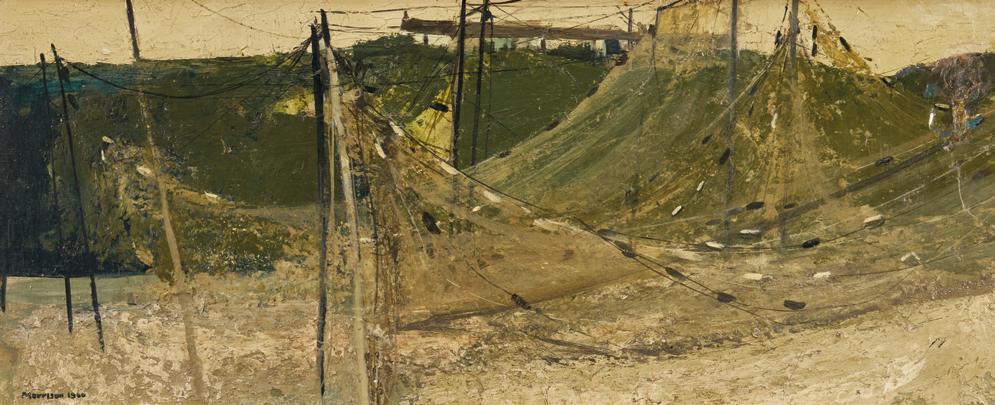
Morrison (1932-2020)
41. Drying the Fishing Nets, Catterline, 1960 oil on board, 39 x 97 cm signed and dated lower left
James
Painted on 7th June 1993, this panoramic view captures the drama of Assynt in the north-west Highlands, one of the most geologically distinctive landscapes in Scotland. The Sutherland landscape is famous for its isolated mountains rising abruptly from sweeping moorland, giving the terrain an ancient, almost primordial character. Here, Morrison is looking across the open expanse towards the Assynt peaks, with the unmistakable profile of Suilven at the centre, with neighbouring landforms dissolving into bands of weather and light. Weather in Assynt changes at speed, as Atlantic systems sweep in from the west, and Morrison has captured that sensation of constant transition: rain clouds breaking apart and sunlight moving across the land.
James Morrison (1932-2020)
42. Moving Weather, Assynt, 7.VI.1993 oil on board, 44 x 147 cm signed and dated lower right
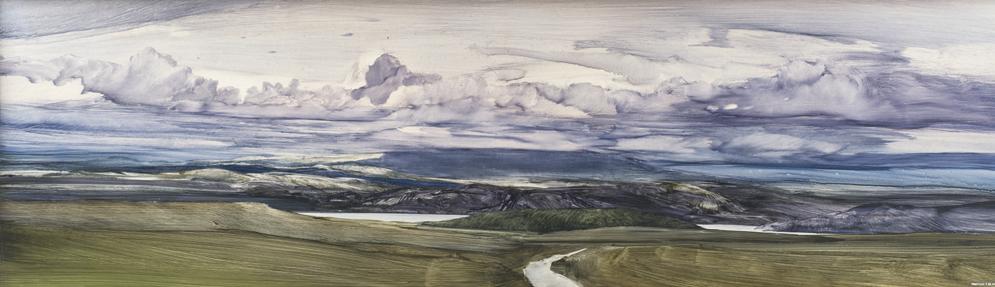
Painted on 8th February 2001, this painting captures a cold, clear winter landscape around Farnell in Angus, a rural area near Brechin in the east of Scotland. This part of the country is characterised by its openness: broad agricultural fields, low horizons and immense skies stretching across the fertile plains between the Grampians and the North Sea.
Morrison returned frequently to this landscape, close to his home near Montrose, particularly in winter, when the land is stripped back to its essential forms. February offered him a season of clarity and atmosphere, when pale sunlight, frost and low cloud transformed familiar farmland into
something more expansive. Here, the fields appear quiet and dormant, their muted ochres and earth tones suggesting the stillness of late winter before the arrival of spring.
The eye is drawn towards the sky, where towering cloud formations rise above the dark horizontal band of distant woodland. Morrison paints the clouds with a sculptor’s eye, allowing light to gather and dissolve across their surface. The contrast between the vast sky and the flatness of the land below emphasises the openness of eastern Scotland’s agricultural landscape and conveys the immense scale and quiet beauty of this winter scene.
James Morrison (1932-2020)
43. Farnell, 8.II.2001 oil on board, 37 x 98 cm
EXHIBITED
James Morrison – New Paintings, The Scottish Gallery, Edinburgh, 2002
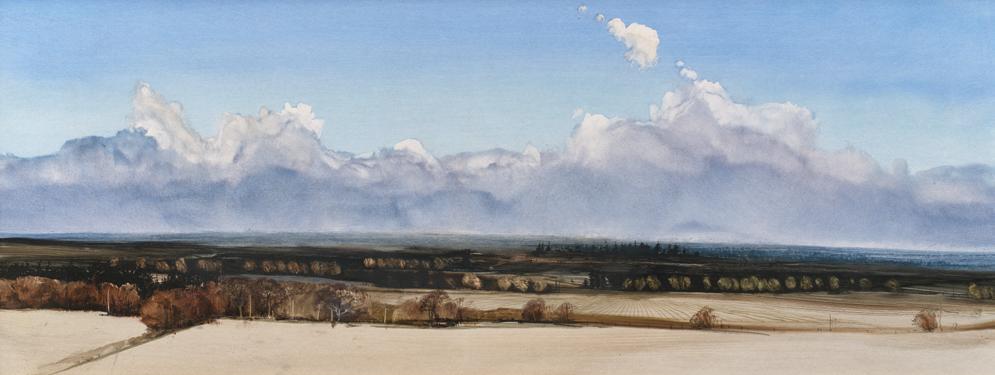
Alberto Morrocco (1917-1998)
Alberto Morrocco OBE RSA RSW RP RGI LLD (1917–1998) was one of the most celebrated and influential Scottish painters of the twentieth century. Born in Aberdeen to Italian parents, he studied at Gray’s School of Art from the age of fourteen under James Cowie and Robert Sivell, developing the strong draughtsmanship and structured compositions that remained central to his practice throughout his life.
Following military service during the Second World War, Morrocco travelled extensively in France, Italy and Spain, experiences that transformed his use of colour and subject matter. Mediterranean light, beaches, domestic interiors and still life became enduring themes in his work,
painted with increasing freedom, warmth, and decorative brilliance. He often cited Matisse as an important influence, and in later years developed his distinctive palette and expressive brushwork for which he is best known.
In 1950 Morrocco was appointed Head of Painting at Duncan of Jordanstone College of Art in Dundee, a position he held for more than three decades. A charismatic and generous teacher, he shaped a generation of Scottish artists and maintained close friendships with many leading figures of the post-war Scottish art world, including James McIntosh Patrick, David McClure, and James Morrison.
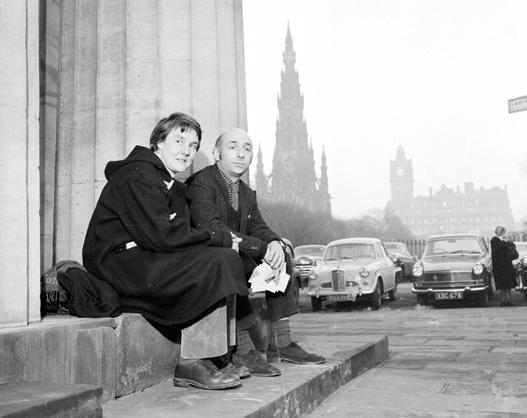
Morrocco enjoyed a long and significant relationship with The Scottish Gallery, holding his first exhibition with us in 1957 and exhibiting regularly throughout his career. Major Festival exhibitions followed in 1989, 1990 and 1996, and in 2017 The Scottish Gallery marked the centenary of his birth with a major retrospective exhibition celebrating his life and work.
RSA new Academicians Joan Eardley and Alberto Morrocco sit outside RSA after their election, 1959
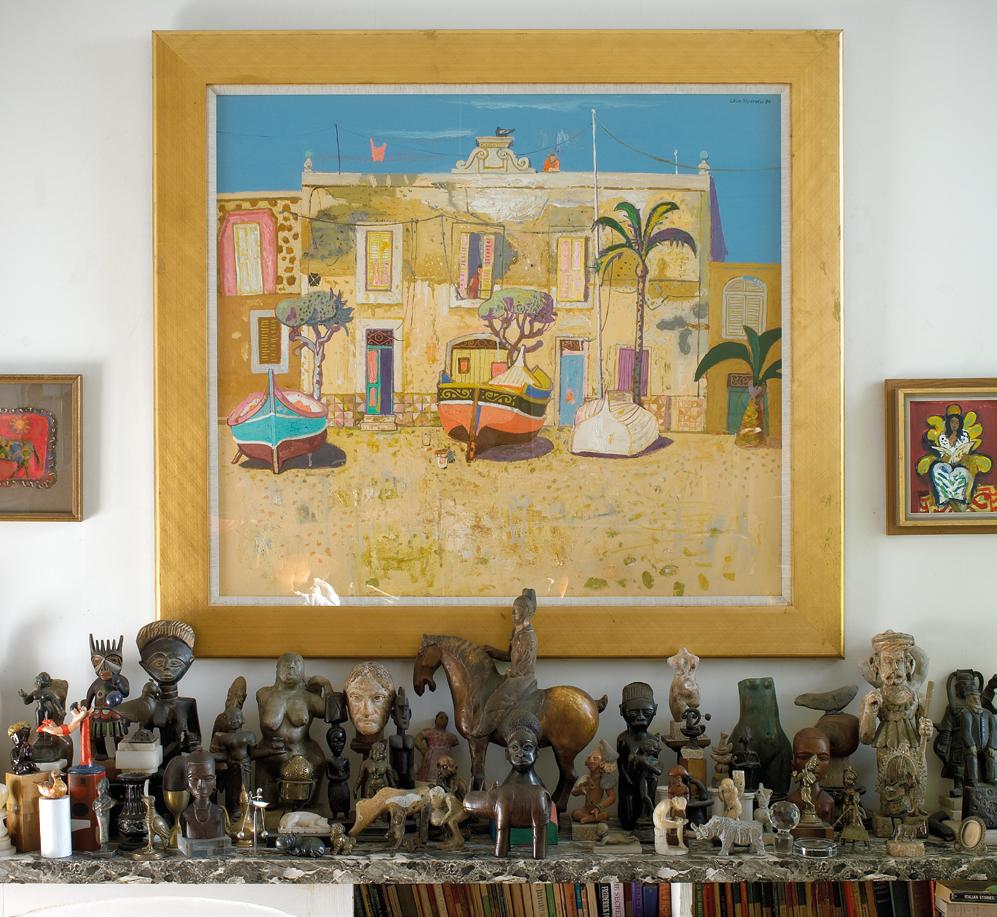
Alberto Morrocco's studio. Photograph by John McKenzie
Alberto Morrocco (1917-1998)
Ludo captures an intimate domestic moment transformed by Alberto Morrocco’s instinct for pattern, colour, and everyday theatre. Seen from above, a young boy sits absorbed in a game of Ludo, while surrounding objects, including a lantern, cups, dice, clothing, and the brightly coloured board itself, become part of a carefully balanced composition. The compressed viewpoint and cropped arrangement give the painting an immediacy and informality, as though we have entered quietly into the scene mid-game.
Throughout his career, Morrocco returned to scenes of everyday life, believing that
casual observation could provide rich material for painting. Domestic interiors and family subjects were central to his practice from the 1950s onwards, often drawing comparisons with the French Intimistes Bonnard and Vuillard. In Ludo, however, the emphasis is less on narrative than on the formal relationships between shape, colour, decorative pattern, and surface. Morrocco often spoke of painting the good things in life and finding beauty in familiar pleasures, and Ludo reflects that generosity of spirit, transforming an ordinary game game into a richly observed image.
Alberto Morrocco (1917-1998)
44. Ludo, 1975 oil on board, 29 x 29 cm signed and dated upper left; signed and title inscribed on label verso
EXHIBITED
The Scottish Gallery, Edinburgh
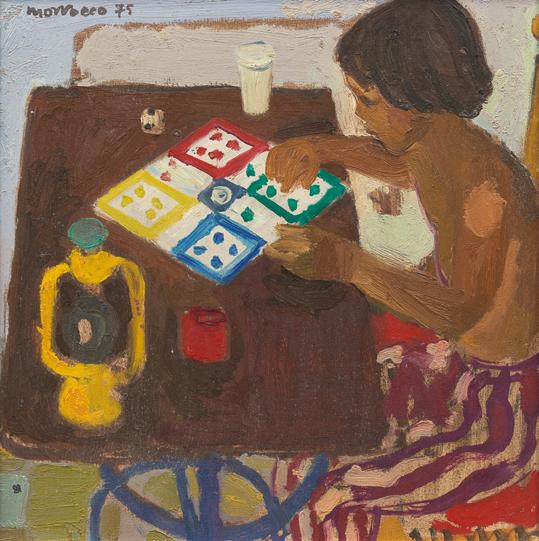
In Still Life with Knife and Lemon, Morrocco demonstrates his freedom of handling, using gouache with a fluidity that moves beyond the conventions of watercolour. Forms dissolve into washes of colour and gesture, allowing the composition to emerge through instinctive brushwork rather than careful definition. The knife, lemon and tomatoes are reduced to their essential shapes, suspended within broad sweeps of blue and white that give the painting a sense of movement and immediacy. Morrocco’s understanding of tonal balance and arrangement anchors the image, with the dark horizontal of the knife stabilising the lighter, dissolving forms beneath it.
Alberto Morrocco (1917-1998)
45. Still Life with Knife and Lemon, c.1985 gouache on paper, 48 x 61 cm signed upper left
EXHIBITED
John Martin Gallery, London
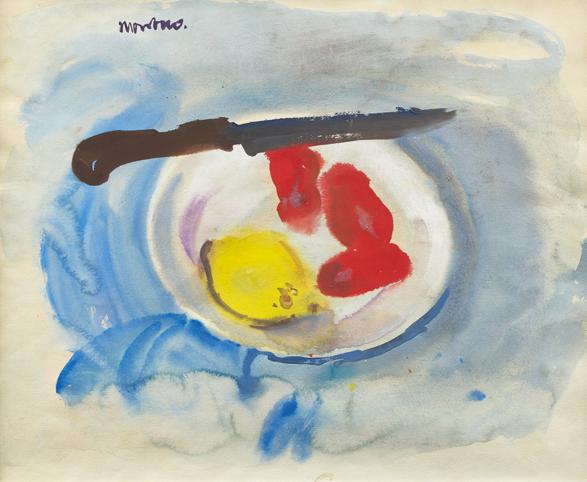
Lilian Neilson (1938-1998)
Born in Kirkcaldy, Scotland, in 1938, Lilian Strang Neilson was a painter and printmaker whose life and work were closely intertwined with the dramatic coastline of northeast Scotland. She studied at Duncan of Jordanstone College of Art in Dundee from 1955 to 1960, followed by a brief period at Hospitalfield House in Arbroath, where she became friends with Joan Eardley. She completed a post-diploma year under Hugh Crawford and Alberto Morrocco in 1960–61 and was awarded a travelling scholarship that took her to France and Italy from 1961 to 1962.
After this formative period in Europe, Neilson joined Eardley in the cliff-top village of Catterline in the northeast. She responded powerfully to the raw, elemental landscape, creating atmospheric paintings filled with brooding energy. In 1962, she returned to help care for Eardley following her cancer diagnosis. Neilson soon purchased one of
the village’s small fishing cottages, No. 2 South Side, with her home on one side and her studio on the other, choosing a modest, secluded life much like Eardley’s.
In 1986, she moved to the village permanently, carrying out monthly surveys of the coast and studying printmaking at Dundee. Her work in this medium, showcased in a 1986 exhibition organised by Dundee Printmakers Workshop, Seagate Gallery, and Aberdeen Art Gallery, featured inventive and expressive screenprints marked by spontaneity and a refusal of perfectionism.
Her final exhibition, Certain Days and Other Seasons, held at the Seagate Gallery in Dundee and Aberdeen Art Gallery, was a testament to her mature style and artistic legacy. Though private and often overlooked in her lifetime, Neilson’s art stands as a vital contribution to Scottish modern art.
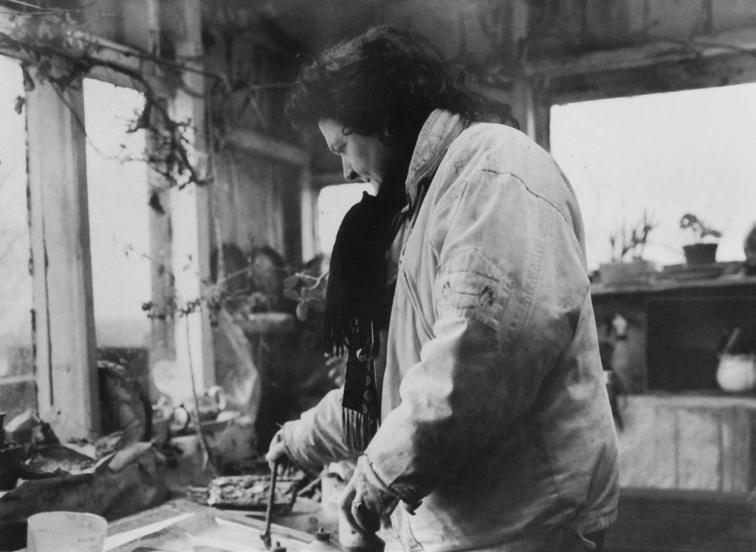
Lilian Neilson painting in Catterline, c.1990. Photograph by Jenny Rutlidge
Fife Fishing Village reflects Lilian Neilson’s fascination with the seascape and fishing communities that shaped Scotland’s east coast. Born in Kirkcaldy, the artist remained closely connected to the Fife landscape throughout her life, returning frequently to visit family and friends from the home she later made in Catterline. Living and working in the small coastal village south of Stonehaven that had also inspired Joan Eardley, Neilson became absorbed by the relationship between land, sea and weather. Her paintings reveal an awareness of the physical structure of the coastline, its geology, shifting light and elemental atmosphere.
Here, the artist has returned to her home territory of Fife, where the fishing village emerges from the landmass. The horizon line is low and dark, anchoring the composition beneath a vast, turbulent sky. Rather than painting individual buildings or boats in detail, Neilson evokes the experience of the fishing village through texture and movement, allowing paint to describe changing weather and the worn surfaces of the coastal terrain. The painting feels shaped by wind and tide. A tender beauty emerges amongst the heavily worked paint surfaces, which echo the erosion and layering of the landscape itself.
Lilian Neilson (1938-1998)
46. Fife Fishing Village, 1970 oil on board, 32 x 54.5 cm signed, title and date inscribed verso
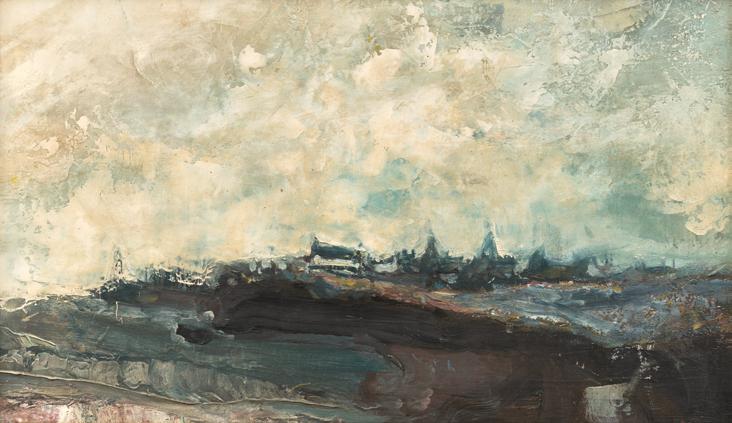
Duncan Shanks (b.1937)
Duncan Shanks was born in Airdrie in 1937 and studied at Glasgow School of Art from 1955–1960, later receiving a travelling scholarship that enabled him to visit Italy during his Post Diploma year. Returning to Glasgow, he joined the staff of the School of Art, where he lectured until 1979 before dedicating himself fully to painting.
For more than six decades, Shanks has developed a visual language anchored in the landscape surrounding his home in Crossford, in the Clyde Valley. Working from direct observation, his practice begins outdoors through walking, drawing and recording fleeting moments in nature. These experiences are later transformed in the studio into richly layered and expressive paintings. Rivers, wooded glens, storms, hedgerows, moonlight and shifting weather become catalysts for works that balance abstraction and representation with extraordinary vitality and sensitivity. Shanks has described painting as a journey through a landscape of self, where memory, movement, poetry and music merge with the experience of the natural world.
The Falls of Clyde, Tinto Hill and the surrounding valley have remained enduring
sources of inspiration throughout his career. His paintings capture the force and rhythm of nature through sweeping gesture, intricate mark-making and luminous colour, creating works that feel both elemental and intensely lyrical. Whether evoking cascading water, storm clouds gathering over distant hills, or the tangled vitality of winter hedgerows, Shanks conveys landscape as something alive, constantly changing and emotionally charged.
Shanks has exhibited internationally and has been the subject of major exhibitions including Falling Water at Talbot Rice Gallery, Edinburgh (1988), Patterns of Flight at Wrexham Art Centre (1991), and Poetry of Place at The Hunterian Art Gallery, Glasgow (2013), which coincided with the bequest of his complete sketchbook archive to the Hunterian collection. His work is held in numerous public and private collections throughout the UK. In December 2026, Duncan Shanks's work will once again be celebrated in a major presentation at The Hunterian Art Gallery, recognising one of Scotland's most distinctive and enduring artistic voices.
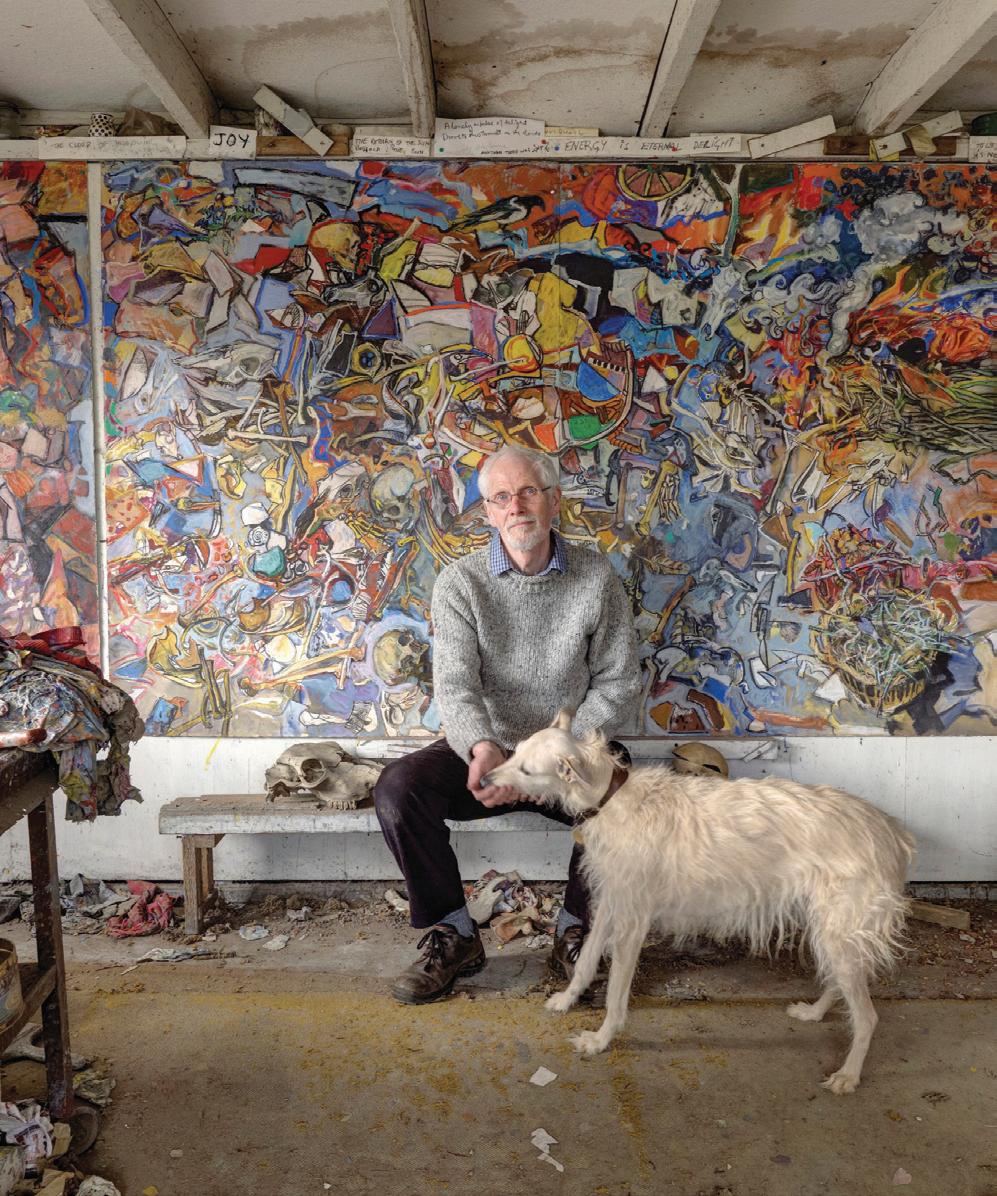
Duncan Shanks in his studio, 2012. Photograph by John McKeznie
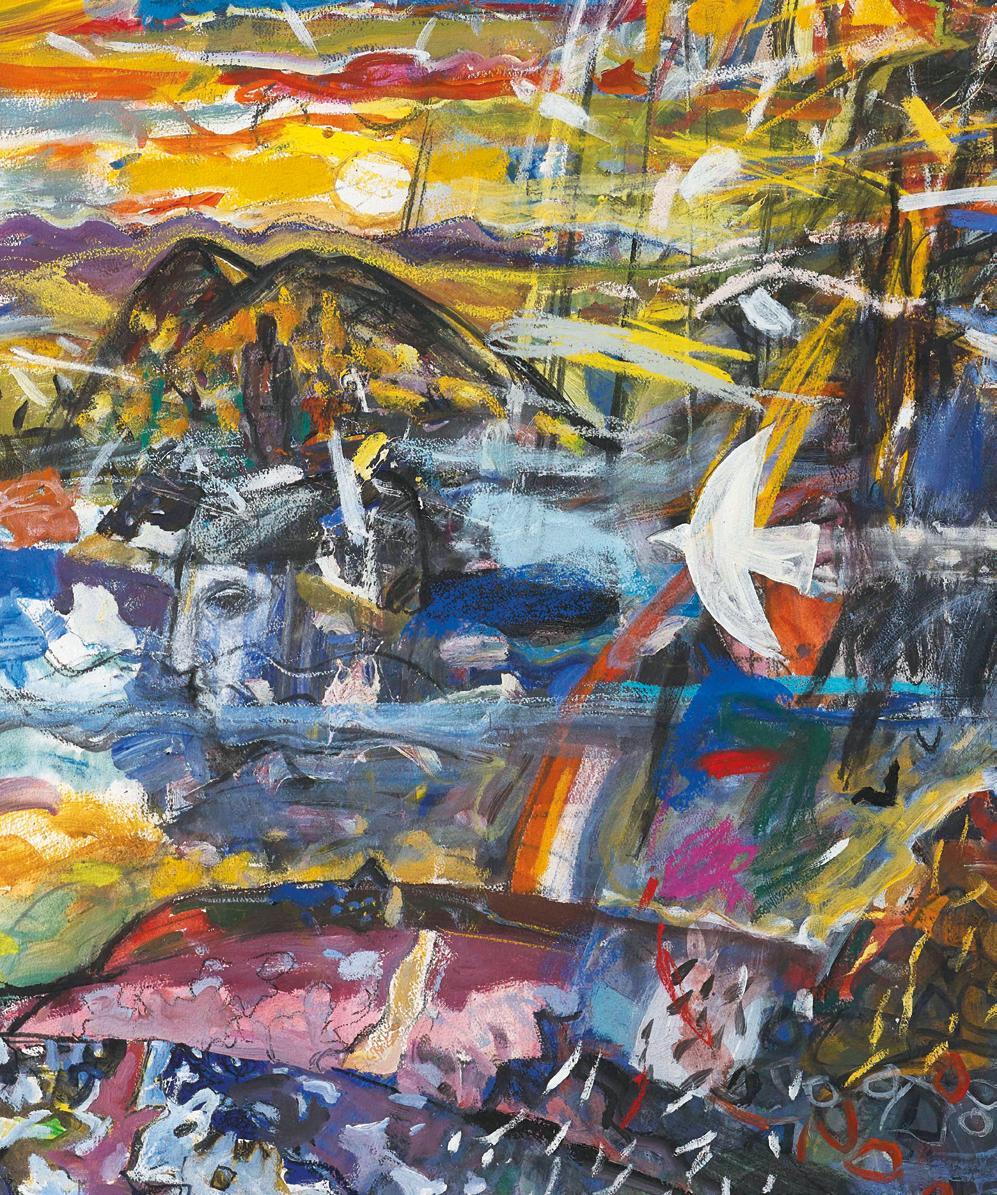
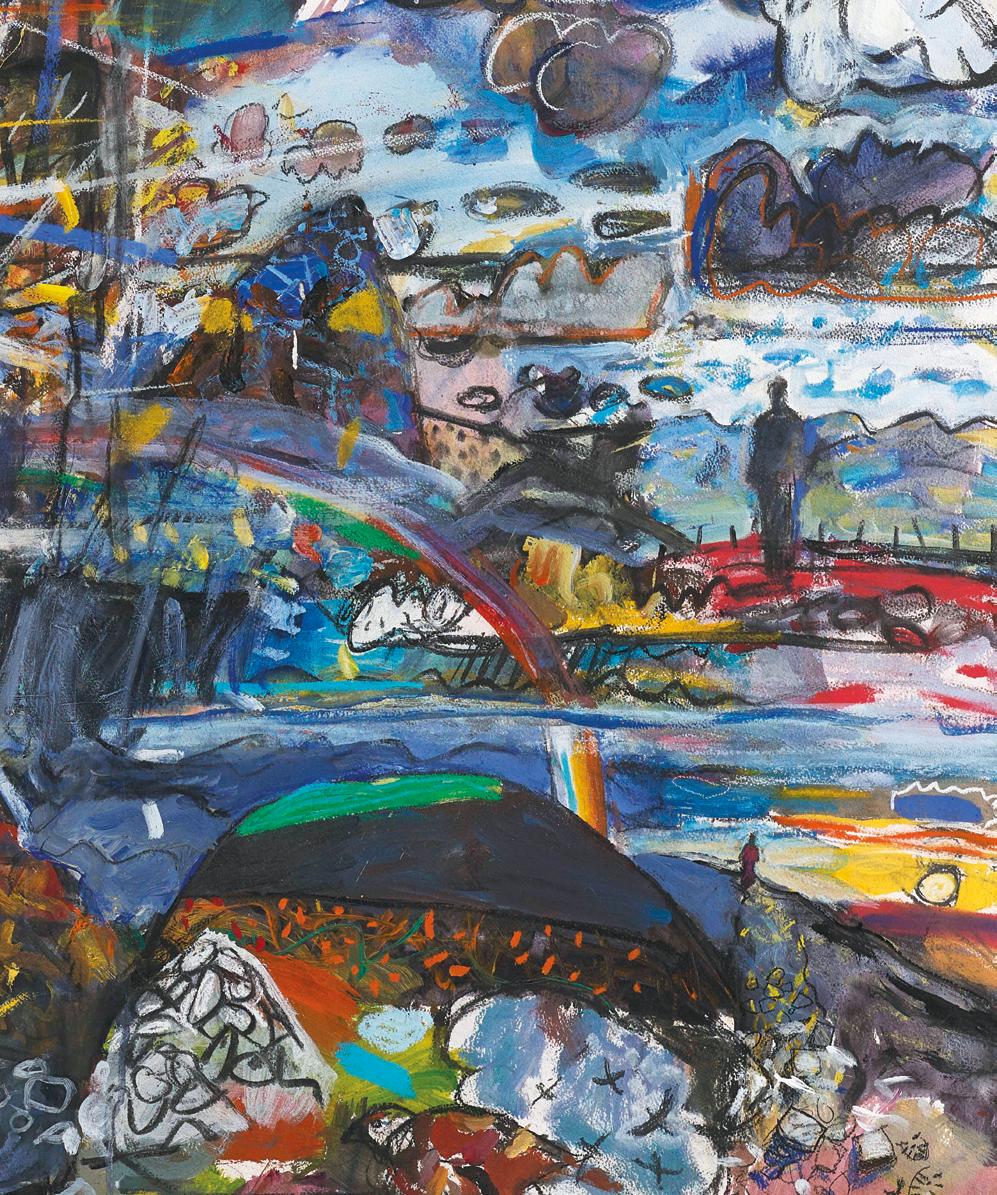
My painting is a journey through a landscape of self discovery which starts in the real world, searching for the moment when thought stops and the paint itself opens up the mind's eye to another hidden world.
Duncan Shanks
Duncan Shanks (b.1937)
47. Plum Tree, Sun Rising, 2001 mixed media on board, 21 x 30 cm signed lower right
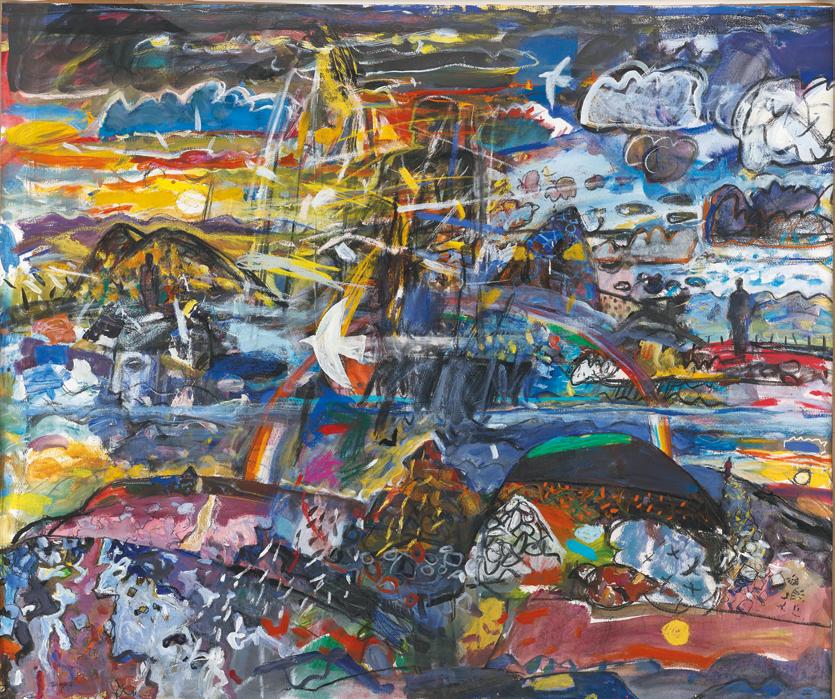
48. Visions and Dreams, c.2005 acrylic on paper, 122 x 142.5 cm signed lower left
Duncan Shanks (b.1937)
Julian Trevelyn (1910-1988)
Julian Trevelyan’s Yachts of 1963 belongs to a particularly exciting moment in British modernism, when artists were increasingly balancing direct observation with abstraction, pattern, and design. The subject may be sailing boats, but Trevelyan is far less interested in recording maritime detail than in orchestrating shapes across the picture surface. What makes Yachts so compelling is the freshness of its picture-making. The composition is spontaneous and buoyant: sails become clouds, clouds become abstract patches of paint, and the entire image operates as a kind of visual pattern. Like much of Trevelyan’s best work from the 1960s, the painting hovers between observed reality and imaginative construction; the pleasure of looking itself.
Trevelyan was born into an intellectually distinguished family, initially reading English at Cambridge before leaving for Paris in the early 1930s, where he studied printmaking at Stanley William Hayter’s influential Atelier 17. There he encountered many of the leading figures of European modernism and Surrealism, including Joan Miró, Max Ernst and Pablo Picasso, while absorbing the experimental atmosphere that defined the Paris avant-garde. Those formative years immersed him in Surrealism and European modernism, influences that never entirely left his work. In 1936 his work was included in the landmark International Surrealist Exhibition
in London, confirming his place within the emerging British Surrealist movement. Even when painting recognisable landscapes or harbours, he approached composition as a process of visual invention rather than transcription.
By the mid-1930s he had settled at Durham Wharf in Hammersmith, a Thames-side studio that remained central to his imagination for the rest of his life. Rivers, boats, bridges, and harbours became recurring motifs across both his paintings and celebrated etchings. During the Second World War Trevelyan served as a camouflage officer with the Royal Engineers in North Africa, working on elaborate strategies of concealment and visual deception. The experience deepened his understanding of illusion, surface and constructed space, qualities that seem to echo through paintings such as Yachts, where sails, clouds and colour fields continually shift between representation and abstraction.
Trevelyan was also an enormously influential teacher. At the Royal College of Art, he taught a generation including David Hockney and R.B. Kitaj, helping to revitalise printmaking in Britain during the 1950s and 60s. The Tate holds a substantial collection of his work and more recent reassessments, including Julian Trevelyan: The Artist and his World at Pallant House Gallery, have emphasised the originality and breadth of his achievement.
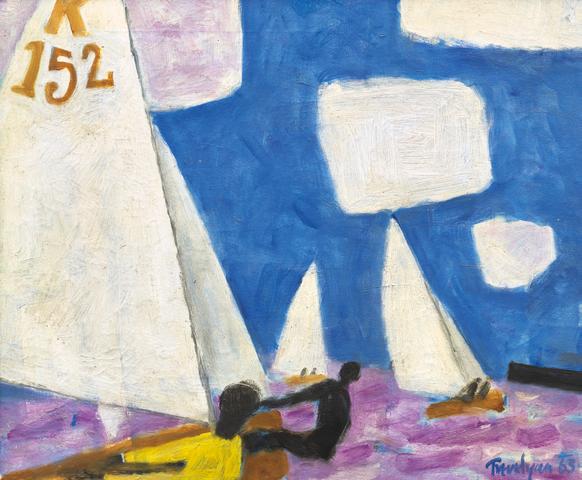
Julian Trevelyan (1910-1988)
49. Yachts, 1963 oil on canvas, 49 x 59 cm signed and dated lower right
EXHIBITED
The Scottish Gallery 150th Anniversary Exhibition, Edinburgh, 1992, cat. 115
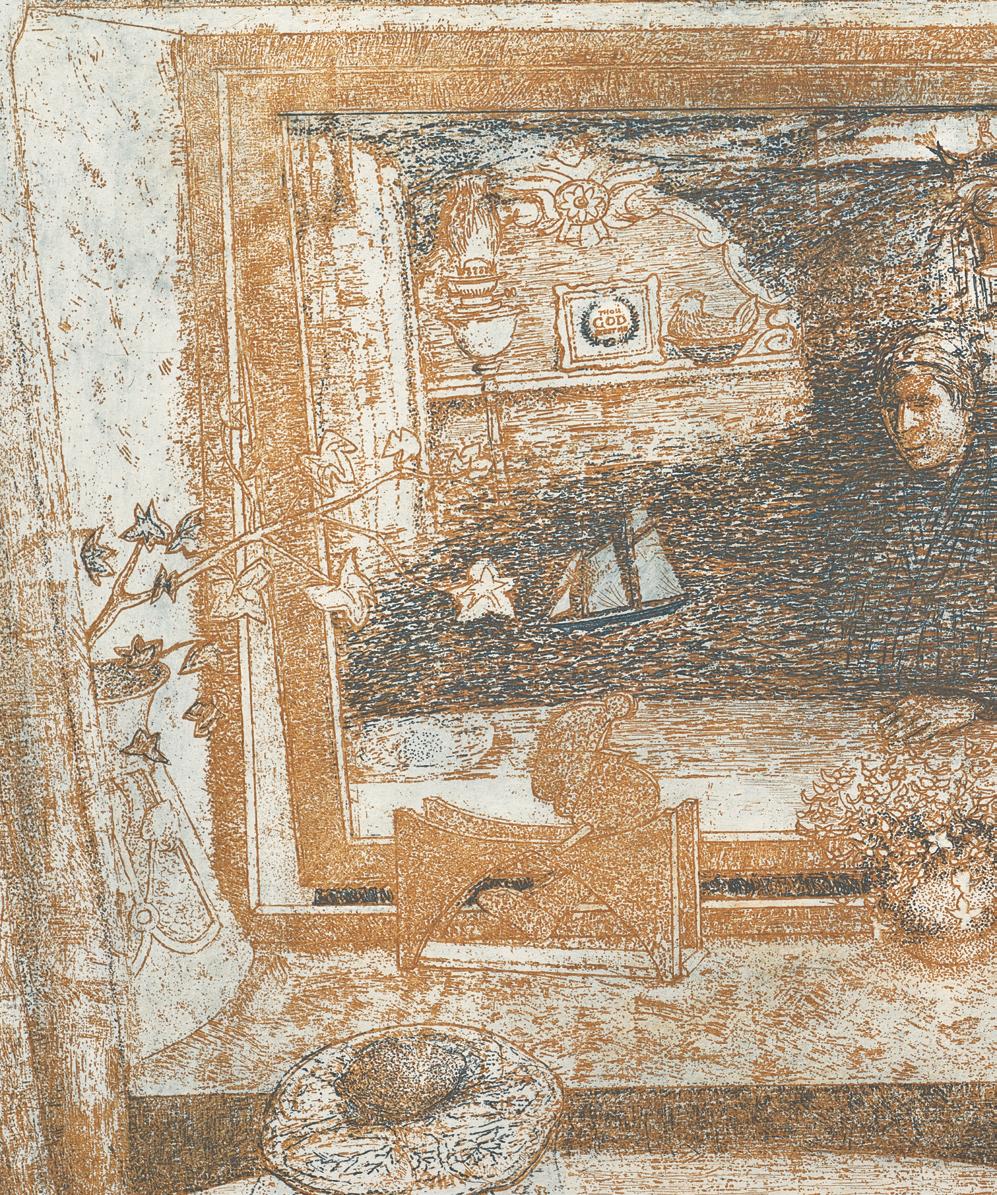
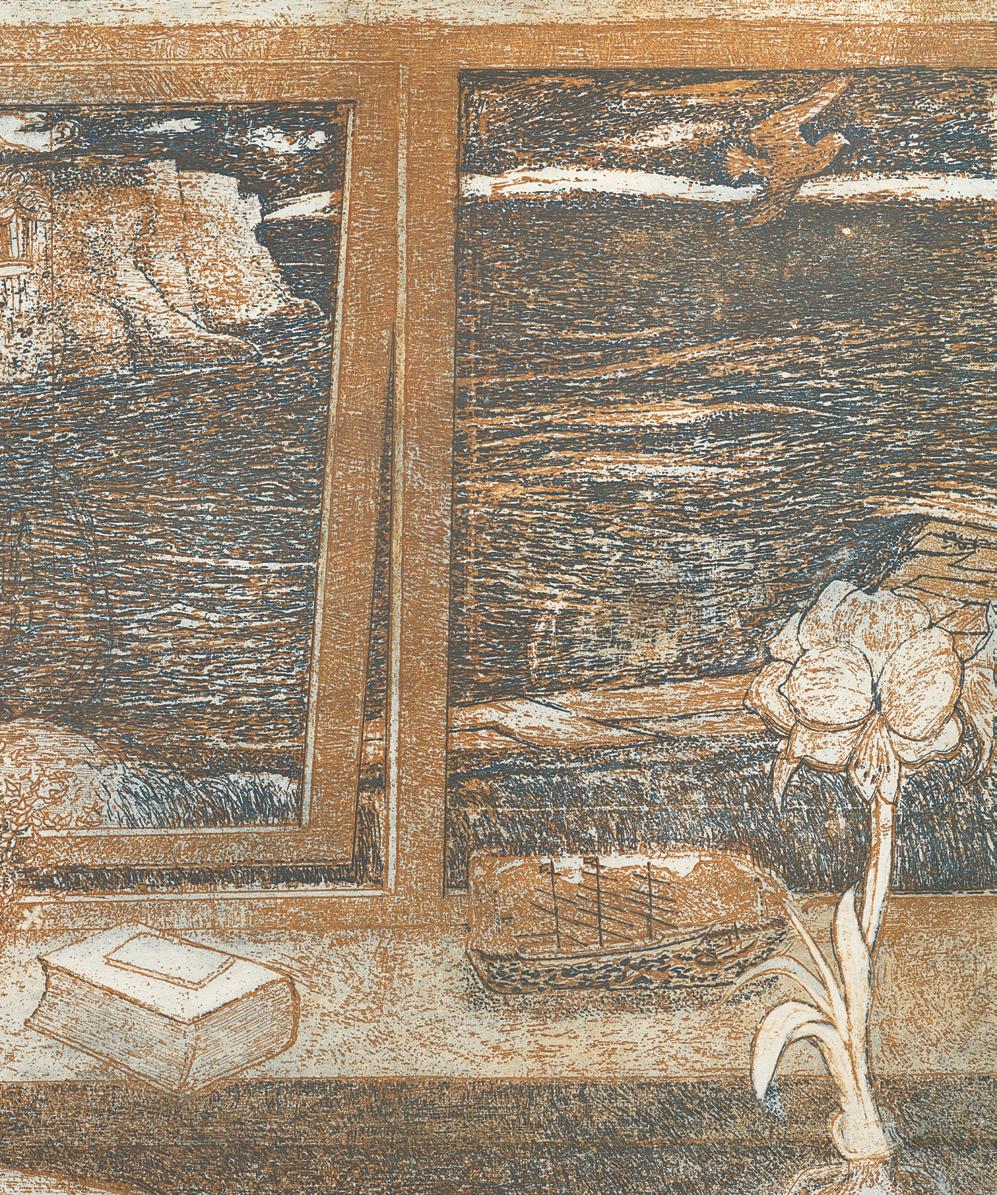
Sylvia Wishart's work is inseparable from the Orkney landscape that defined her life and imagination.
Sylvia Wishart (1936-2008)
Printed in 1998, Reflections is a poignant, late work by Sylvia Wishart, which brings together many of the themes that had shaped her life and practice in Orkney. Born in Stromness, Orkney, in 1936, Wishart studied at Gray’s School of Art in Aberdeen before returning home, where she became one of Orkney’s most distinctive artistic voices. Working as both a painter and later in her practice as a printmaker, she developed a visual language rooted in the Orcadian landscape, archaeology, and spiritual atmosphere of island life. She died in 2008.
Wishart understood the expressive possibilities of etching intimately. In Reflections, the etched surface allows her to layer memory, observation, and symbolism into a beautifully constructed composition, where interior and exterior worlds dissolve into one another. As with the William Gillies monochromatic interior painting (cat. 21), the composition is structured around the view from a window, using domestic objects, reflected light and carefully balanced space to create an electric atmosphere. Wishart has transformed this familiar device into something more metaphysical. Sylvia's
reflection appears within the glass, merging with the landscape and seascape beyond. Objects placed on the windowsill, ships in bottles, dried flowers, a book and scattered possessions drift into the outside world, collapsing distinctions between the private interior and the vast elemental environment beyond.
The open window is symbolic: a threshold between one state of being and another, between lived experience and memory, the physical and the spiritual. The ships within the room echo the ships at sea beyond the glass, suggesting journeys both real and imagined, while the dried flowers evoke mortality and the passing of time. Throughout the composition, Wishart creates echoes and repetitions that give the work the quality of a meditation or poem. Reflections captures something essential about Orkney itself, a place shaped by ritual, weather, archaeology and the continual cycles of light and darkness. Wishart is weaving a narrative of existence within landscape and time. The result is an intensely personal work which speaks to universal themes of memory, isolation, spirituality and belonging.
Sylvia Wishart (1936-2008)
50. Reflections, 1998 etching on paper, 70.4 x 91.2 cm, edition 32 of 40 signed and dated lower right
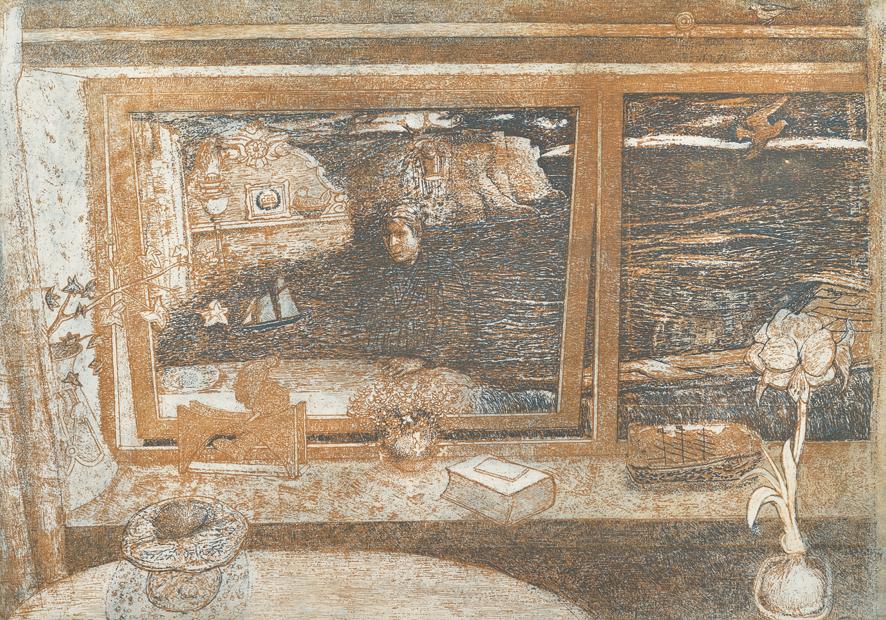
I have perhaps opened many people's eyes to some unexpected, some subtle beauties in our daily surroundings. This has been, I hope, a by-product of my own enjoyment of what I perceive and my great delight in the very act of handling the paint.
William Gillies
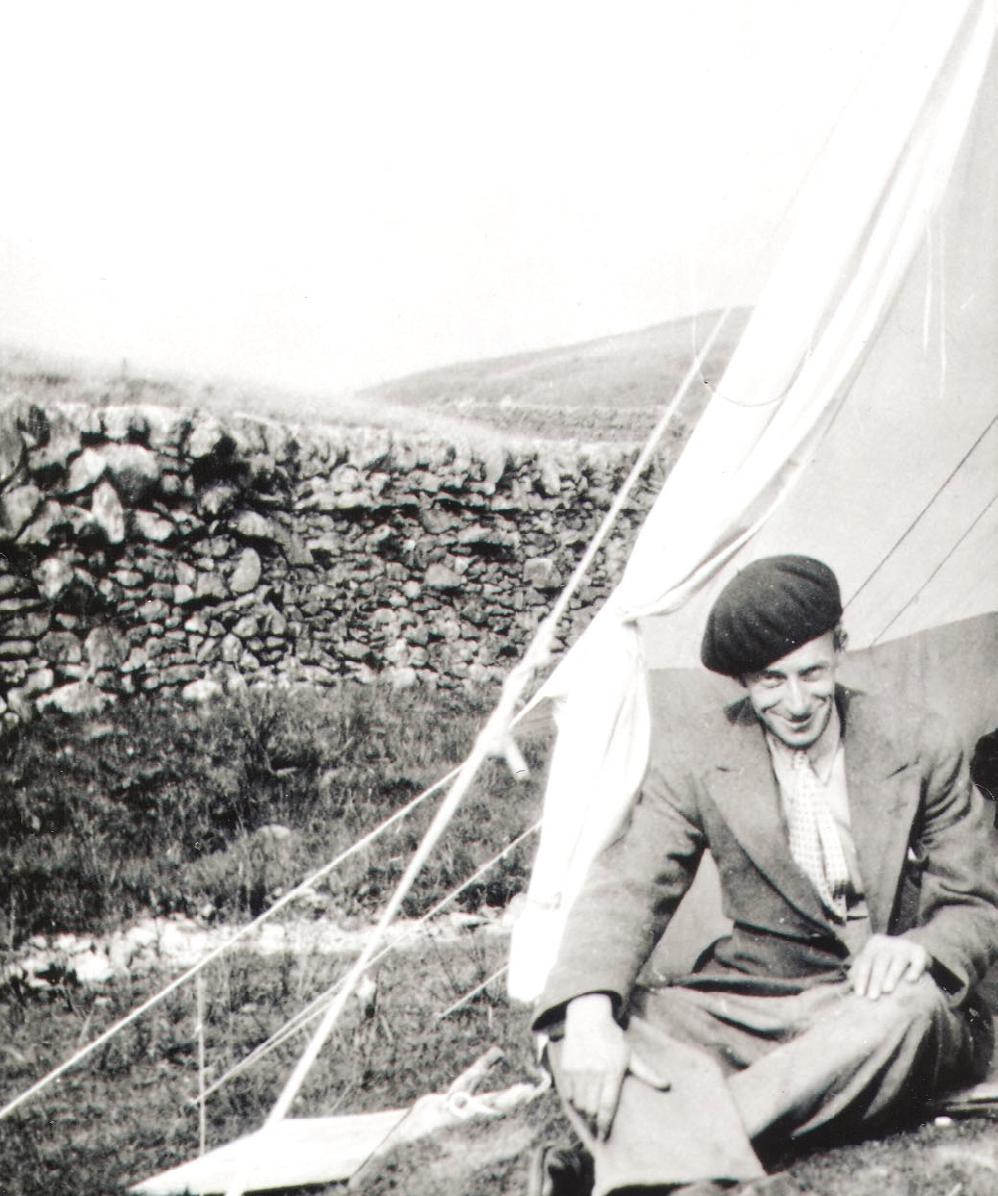
William Gillies camping at Durisdeer, Dumfries and Galloway, 1933. Image courtesy of the RSA
Published by The Scottish Gallery to coincide with the exhibitions:
Modern Masters XX
August 2026
Exhibition can be viewed online at: scottish-gallery.co.uk/modernmastersxx
ISBN: 978-1-917803-30-4
Designed and Produced by The Scottish Gallery
Photography by John McKenzie
Front cover: William Gillies, Four Pots, c.1959, oil on canvas, 53 x 61 cm (cat. 22)
Inside front cover: John Gardiner Crawford, Evening Shadow, 1991, acrylic, 60 x 60 cm (cat. 10)
Inside back cover: John Bellany, The Mystery of Life, watercolour on paper, 74 x 54.5 cm (cat. 1)
All rights reserved. No part of this catalogue may be reproduced in any form by print, photocopy or by any other means, without the permission of the copyright holders and of the publishers.