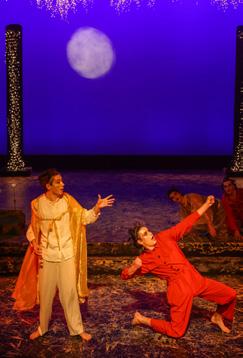
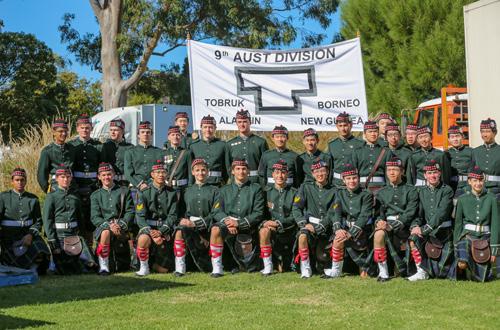
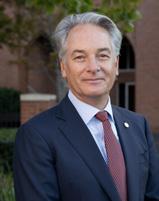
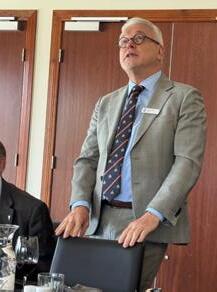
Hear from our Chairman Mr Hamish Tadgell, Principal Dr Scott Marsh and School Chaplain Rev David Assender.
Catch up on our 175th anniversary celebrations, hear from our 2026 School Captains, and learn about our upcoming Character Education Framework.
Explore daily life on and off campus, and hear from some of our great staff members.
Learn about our international boarding students and how they blend two cultures. 48
Take a look at the impactful work of the Scotch Foundation.
Catch up with our Old Boys and find out where they are now.
Discover what the OSCA Clubs have been up to this year. 72
Revisit some of the great events held for the Scotch Family during 2025.
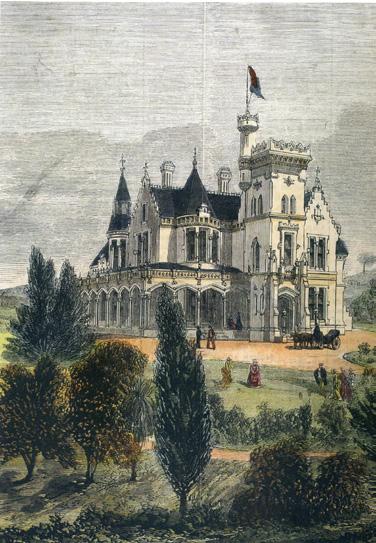
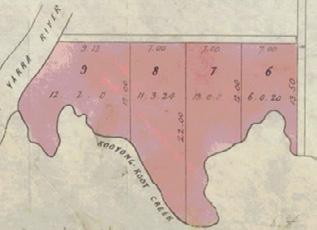
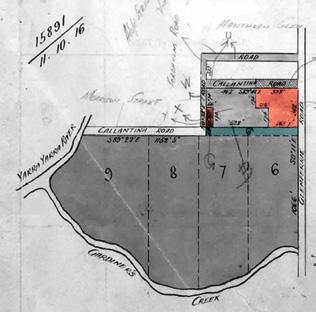
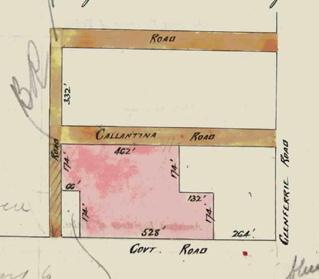
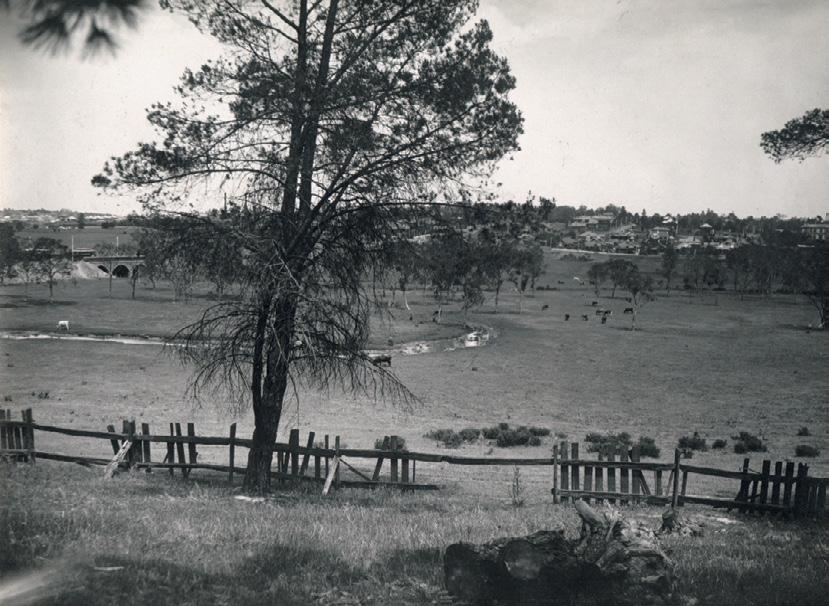
Learn more about the history of how Scotch College moved to Hawthorn, and why it almost never happened.
Committed to educating men of good character
Mr Hamish Tadgell (‘85) SCHOOL COUNCIL CHAIRMAN
A Scotch education has never been confined to the acquisition of knowledge alone.
From its earliest days, the College has sought to provide a holistic education to shape young men who contribute meaningfully to their communities and live purposeful lives. Today, that commitment finds renewed expression in our focus to form enlightened learners of good character committed to shaping a better future.
In an increasingly secular society, a profound challenge for schools has been the increased importance given to standardised testing. This has resulted in educational success often being measured narrowly through metrics such as ATAR scores and the university courses or professional pathways they provide, and material security and comforts of life they can deliver.
In contemporary educational circles, we have also seen education, philosophy and theology increasingly separated from each other. This has seen a rise in expressing personal freedoms and individual rights, relativising truth, and avoiding judging what is right and wrong. This has created confusion and scepticism about moral questions of life.
Academic excellence remains a cornerstone of a Scotch education, but it is only one part of what it means to educate a boy well. A comprehensive education is far more than just learning practical skills, capacities and competencies.
It must prepare boys for life and educate the whole person, as we are physical, social, rational and emotional beings, comprising bodies and souls.
If we claim that the purpose of education is to prepare human beings for life, then it follows that we need to have a view about the purpose of life and what it means to live a good life.
Education at its best helps boys grapple with these questions. It encourages them not only to understand the world intellectually and physically, but also cultivate sound judgement, moral understanding and the character required to act wisely, not just for their own sake, but for those around them.
The College’s focus on developing boys of good character is a deliberate effort to teach and cultivate the habits, virtues and moral understanding that allow young people to flourish.
To bring this to life, under our Principal, Dr Marsh, Scotch is developing a comprehensive character framework inspired by our Christian tradition and Scottish heritage focused on developing the whole boy — in mind, body and spirit.
The character framework is a key initiative under the Lighting the Way strategic plan. Respect, Responsibility and Reverence – the 3Rs – are our guiding core values. They will be complimented by intellectual, moral and civic virtues to equip boys in developing good character traits and the practical and moral wisdom required to navigate life well.
Through this approach, boys will, amongst other things, acquire the capacity to investigate and pursue truth and appreciate beauty and goodness, so they can engage positively in the world around them, while being grateful for what they have and serving others where they can.
These virtues are not merely abstract ideals. They are characteristics and habits that will develop and be reinforced through practice, reflection and community interaction. In this sense, character formation will be embedded across the school experience - from the classroom to the playing field, from service programs to camps and through leadership opportunities.
Character formation cannot occur in isolation. It requires the active participation of teachers, parents and the wider school community. Teachers and school leaders will play a particularly important role as mentors in modelling the virtues we seek to cultivate in our students.
To support this work, we are engaging with leading educators and scholars in character education, including the Jubilee Centre for Character and Virtues. In November, Scotch is hosting the Australian Character Education Summit and we have plans to undertake research dedicated to advancing practical scholarship in character education and improving educational outcomes for boys.
Ultimately, Scotch’s focus on character education reflects a conviction that schooling must prepare our boys for more than examinations or careers. It must prepare them for everything they will encounter in life.
A fully educated Scotch boy is one who thinks and acts with integrity, serves others with humility and strives for excellence in all that he does. He understands that knowledge and leadership carry responsibility, and that the true measure of success is not determined by wealth and power, but a lifelong commitment to learning and strength of one’s character through acceptance and generosity towards others, and a life lived with meaning and purpose.
A rich and intentional heritage
Dr Scott Marsh PRINCIPAL
A few years back I came across a poster advertising the benefits of state education. What struck me the most was the statement “secular and proudly neutral”.
I had a few thoughts at the time. Firstly, how times have changed since I attended a state school in New South Wales. We would start the day with morning prayers (and a song to the Queen). Today, the foundations of our country have largely been removed to accommodate everyone and perhaps the old saying ‘stand for nothing, fall for everything’, best reflects our country’s present state.
Secondly, the statement in my view reflects a significant narrowing in what it means to educate children. Where education was once conceptualised holistically and young people were challenged to grow mentally, physically and spiritually, today so many children are treated as mere brains on a stick due to the overarching dogma of secularism in our schools. Furthermore, whilst I do not have the space to argue this in full, given the removal of religion from so many of our schools, is it reasonable to claim that secularism equals neutrality?
According to Edlin (2014), the use of the term ‘secular’ was never meant to be used to represent something non-religious. Even in the establishment of state-based School Educational Acts in Australia, the use of the word ‘secular’ was meant to provide a framework for non-denominational schooling. Given the strong tradition in Australia of church-run Catholic or
Protestant schools, non-denominational schooling meant that neither the Catholic nor Protestant faith would be dominant in the introduction of universal public schooling. It was never meant to mean that schooling should be non-religious.
Everything we do in schools is value laden. The texts we choose, the songs we sing, the standards we seek to uphold all come from some worldview. Going back to Aristotle, education was once grounded firmly in the pursuit of ‘the good life’.
Indeed, throughout history, scholars have written about education as fundamentally a moral activity that ultimately seeks to understand what it means to be human. Themes such as beauty, goodness and truth guided the curriculum and those things worthy of investigation. Today, in an age characterised by ‘expressive individualism’, one can be excused for wondering if we have lost our north star. Where once school education pursued what it means to live a good life and schools had the freedom to explore the most important questions in life - ‘what am I here for’, ‘what do I believe’, today, the secularist agenda has replaced such profound pursuits with narrow, utilitarian, means to an end learning and the ATAR has become the ultimate purpose.
To
claim that secularism equates with neutrality is ignorant at best.
Worse still, this now pervasive ideology simply renders questions of ultimate meaning and purpose redundant.
Is it any wonder mental health statistics for our young people are spiralling as they are?
At Scotch we do not pretend for one moment that we are neutral. We agree with Levin (2020) that schools are formative institutions in that we intentionally uphold an ethos that shapes the habits, dispositions and character of our students. As a Christian school in the Presbyterian tradition, we believe that we are uniquely created by God for a purpose and that each one of us are precious in God’s eyes. With this as our north star, we seek to uphold the teachings of the Christian faith whilst embracing people of all beliefs.
In defining a Christian school to the boys, I like to reference the New Testament book of Mark, Chapter 12. In this chapter, the Pharisees are asking Jesus to tell them about the most important commandment in the law. Jesus replies with the following:
‘Love the Lord your God with all your heart and with all your soul and with all your mind and with all your strength.’ The second is this: ‘Love your neighbour as yourself.’ There is no commandment greater than these.
The verses are incredibly profound yet so simple. They effectively shape everything we do. How we love God is our own personal journey. Whilst at Scotch we believe in the God of the Bible, ultimately it is up to each boy to think about their life and what makes sense to them. However, isn’t it tremendous that Scotch boys have the space to explore questions of meaning and purpose in a safe and supportive community? I think this reflects the greatest strength of a faith-based school. Each boy is given the opportunity to explore life’s greatest questions. It is such a personal yet profound part of life for us all to reach an understanding that explains why we are here and what I will live for. We know for many this is a lifelong pursuit and mystery. Importantly, whilst we will never pretend to be neutral on this topic, we will respect and support the journey of each member of our community and will always cherish the richness that our holistic curriculum offers each boy as they navigate their own spiritual path.
In speaking to the boys about the second component of Jesus’ command, I make it clear that within our school it is an unconditional
expectation to show love. This is how we show we are a Christian school by forgiving, showing kindness, sacrificing something for others, and being patient with each other. We are interested in what type of man our boys will become and unapologetically state that we are in the business of formation.
It is disingenuous to claim anything otherwise and this is why our focus on character remains at the foundation of a
Scotch education.
As we strive to form men of good character, we look to the person of Jesus Christ, his life and teachings as the exemplar for goodness. In this way, being good or living ‘a good life’ is grounded in something other than ‘what is good for me’ and in this way significantly draws on over 2000 years of history and examples of truly living a good life. Whilst the Church as an institution may have erred at times throughout history, the Church is not Christianity, and we must remain focused on the life of Christ for our exemplar of the good life.
Under the banner of secularism, ideals of inclusion and tolerance have risen to prominence. However, untethered from any coherent belief system, they are vulnerable to contradiction. As Carson suggests “the new tolerance is the social commitment to treat all ideas and people as equally right,
save for those people who disagree with this view of tolerance” (Carson, 2012, p.98). It is difficult to see how these values provide the necessary platform by which schools can wrestle with big ideas and matters of truth.
We are close to finalising our Character Education Framework. This will provide us with a clear framework by which we can wrestle with matters of formation at Scotch. You will read about our exciting work within this edition of Great Scot. I do believe this and many other efforts currently underway reflect our passionate and intentional commitment to the formation of good men.
At Scotch, we see schooling first and foremost as a moral endeavour. In this way, true education is about formation and equipping boys to become good men. Through our character program, we will intentionally seek to explore qualities of excellence or virtues with our boys so that ultimately, they will come to value wisdom and go on to flourish and live a good life. This is not neutral and we stand ready to continue Scotch’s rich history of service and contribution – For God, For Country, For Learning.
References
Edlin, R.J. (2014). The Cause of Christian Education. Dordt College Press. Iowa.
Levin, Y. (2020). A time to build: From family and community to congress and the campus, how recommitting to our institutions can revive the American Dream. Basic Books.
Carson, D. (2012). The Intolerance of Tolerance. Grand Rapids: Eerdmans.
Driving away fear
Rev David Assender CHAPLAIN
One of the reasons starting at a new school can be hard is not just in the daunting task of making new friends, but that it also takes time to get to know your teachers.
Especially for younger students, the idea of a teacher can be scary when they have power over you, and you don’t really know them. Perhaps most simply because you aren’t quite sure what they are going to do with that power.
In the Bible, it is the same when we experience God, but on a larger scale. However, just like at school where the key to understanding your teachers is in realising that all of Scotch exists for your benefit, the key to understanding the Bible is in how everything God does also comes from a motivation of love.
We see this in the book of Exodus when Moses brings the Israelites out of Egypt to meet God at Mt Sinai – and they freak out. They are absolutely petrified as they come to terms with God’s imminence. Ironically, the very reason that Moses gave Pharoah to set the Israelites free was so they could go and worship God. But now the Israelites have arrived at Mt Sinai, they discover that to be inescapably confronted with God’s powerful presence is to not just feel dwarfed by him, but to also sense an overwhelming unworthiness. But
Moses knew better because he had already met with God on several occasions, and slowly his feelings of fear gave way to a relationship.
We also see this combination of love and power in the Chronicles of Narnia. It’s an allegory by C.S. Lewis, and at one point Susan and Lucy are getting ready to meet Aslan, who in the story represents Jesus. Two talking animals, Mr. and Mrs. Beaver, prepare the children for the encounter and explain that Aslan is a lion.
“Ooh,” said Susan, “I thought he was a man. Is he quite safe? I shall feel rather nervous about meeting a lion.” “That you will, dearie.” said Mrs. Beaver. “And make no mistake, if there’s anyone who can appear before Aslan without their knees knocking, they’re either braver than most or else just silly.”
“Then isn’t he safe?” said Lucy. “Safe?” said Mr. Beaver. “Don’t you hear what Mrs. Beaver tells you? Who said anything about safe? Of course he isn’t safe. But he’s good. He’s the king, I tell you!”
As C S Lewis then reveals in the character of Aslan, when it comes to God, relationships precede power. There is a Bible verse in 1 John 4:18 that explains this in a nutshell: “There is no fear in love. But perfect love drives out fear, because fear has to do with punishment. The one who fears is not made perfect in love.” Of course, the Bible explains we are made perfect in love through Jesus (John 3:16-17, Romans 5:1 & Philippians 3:12). And as we have just celebrated over Easter, we see Jesus giving up his power – even to death on a cross – so we can have a relationship with him.
If we take the time to get to know people, like teachers who have our best interests at heart, feelings of fear will give way to a relationship. And it’s the same with our heavenly father, where a relationship with him through his son Jesus drives away all fear.
Scan here to watch the video
Capturing
The lyrics behind the video the magic
To kick off celebrations of this milestone year, Scotch has released a moving musical tribute, The College (175 Year Anniversary Version); an adaptation of the Scottish folk song Caledonia by Dougie MacLean.
“This song gets to the heart of what Scotch is about”, says Principal Dr Scott Marsh. “It is about coming home and understanding how our identity is shaped by the people, the landscape and the culture we come from.”
For more than 175 years, Scotch has been a place of lifelong connection and belonging for generations of boys, staff and families.
“We are a community that nurtures, instils values, imparts knowledge and prepares boys to explore the world with enthusiasm, awe and wonder,” says Dr Marsh. “And when their school days are done, Scotch remains with them. It is a lifelong home—a source of belonging that continues well beyond the gates.”
Led by the Communications & Marketing team, but with the crucial involvement of many, this production exemplifies what is possible when people across the Scotch community bring their talents together.
“It showcases the best of who we are,” says Elizabeth Briggs, Director of Communications and Marketing. “What struck me most throughout this project was the sheer generosity of talent across the school.
Every time we turned a corner, someone new stepped forward with the expertise we needed to bring this to life.”
The song was arranged and its soundtrack produced by legendary Scotch instrumental teacher Jeremy Alsop, former bassist of Men at Work, together with choral teacher Ned Dixon. Special thanks to Georgia Maley, whose skilled coordination supported the process, and to Jo Blankfield, Emma Macrae and Mark Saul for their expertise in helping the boys prepare for the performance. The piece was shaped alongside many of our talented students: Kane (Year 12), Jeevantha (Year 10) and Chris (Year 7), the Pipes and Drums, Junior School’s Glenn House Choir, Senior Chamber Choir and gifted student instrumentalists Wells (Year 12), Allexzo (Year 11), David (Year 9), Joshua (Year 12) and Freddie (Year 8).
Old Boys Charlie Howcroft (’15), Tom Sutherland (’16) and their team at Good One Creative provided the final expertise needed to complete the production on screen.
“
Together with last year’s What is Success video, this portrayal of life at Scotch aims to showcase the values, ethos and heart of Scotch”, says Elizabeth. “I hope this film captures a little of that magic.
The College (175 Year Anniversary Version)
I don’t know if you can see, The changes that have come over me. In these last few days, I’ve been afraid, That I might drift away.
So I’ve been telling old stories, singing songs, That make me think about where I came from. That’s the reason, why I seem, So far away today.
Let me tell you that I love you, That I think about you all the time, My mates are calling me, and now I’m going home.
For if I should become a stranger, Know that it would make me more than sad. The College has been everything I’ve ever had.
I have moved, and I’ve kept on moving, Proved the points that I needed proving. Left the friends, that needed leaving, Found others on the way.
I have tried and I’ve kept on trying, Lived my dreams, yes there’s no denying. I have travelled far, with flaws and failings, Somewhere in the wind.
Let me tell you that I love you, That I think about you all the time, My mates are calling me, and now I’m going home.
* Adapted from “Caledonia” by Dougie MacLean
A fresh spin on captaincy
Charlie and
Will
chat about their first term in the captain’s chairs
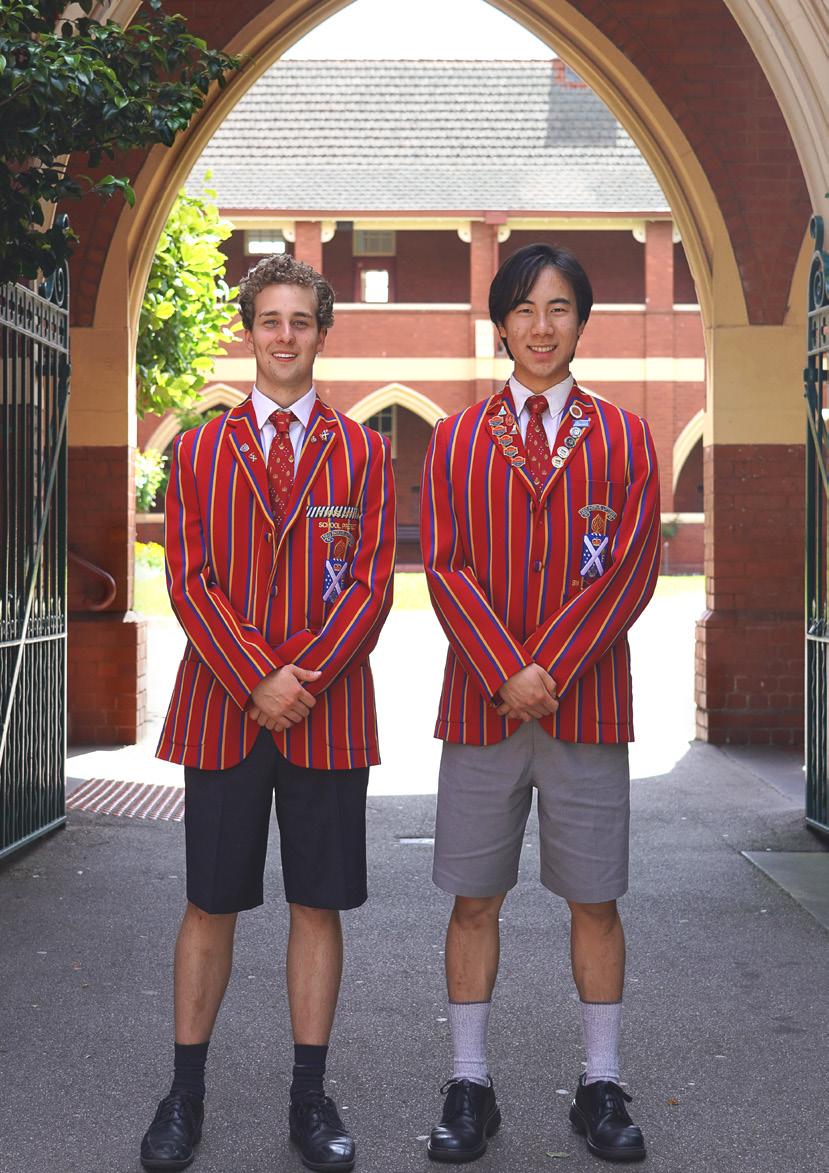
Stepping into a leadership role at Scotch lends itself to shaping the culture, supporting peers, and leaving a mark on the school community. Merely ten weeks into 2026, Charlie and Will have already embraced that challenge with energy, new ideas, and a commitment to leaving their mark.
Charlie first considered applying for the School Captain role almost on a whim. “I saw it as a chance to push myself and help others in the school,” he reflects. “When I got the call, I immediately started thinking about all the ways I could actively contribute to the community at Scotch. It’s only been one term so far, but it’s been really exciting to start bringing everyone together, seeing what we can achieve as a team, and taking on board the Prefects’ ideas and energy.”
For Will, the Vice Captain role presented an opportunity he was eager to seize. “One of the things I wanted to bring in was the Unity portfolio,” he explains. “Scotch has so many different groups, sport, music, academics, drama, and I wanted to help connect them. My hope for this portfolio is that one day, no matter what you’re involved in, everyone can feel united as a Scotchie.”
Unity is just one in a range of six portfolios available for Prefects to work within. Another fresh portfolio for 2026 is Scotch Expectations. “It’s about addressing what it means to be a student at a male school head on, while also working with our neighbouring girls’ schools on initiatives like International Women’s Day,” says Charlie, “It’s really exciting to work on these new areas and keep things fresh”.
Speaking on their own journeys at Scotch, both Will and Charlie have taken very different paths, but one thing is clear: opportunity has been everywhere.
For Will, it all started unexpectedly in Year 6, when a maths competition led to a connection with the school. From the moment he arrived, he threw himself into everything: Symphony Orchestra, maths programs, badminton and swimming.
Now, having already completed his ATAR, Will is exploring new challenges, including taking the lead in the school musical and hoping to encourage others to make the most of Scotch’s breadth of opportunities.
“What has always stood out is how easy it is to try different things,” he says. “There’s very little red tape, and the staff support almost anything you’re interested in.”
Charlie agrees, “The passion staff show here is a key factor in my opinion, they genuinely want students to try things and explore different interests, and that makes a big difference.”
Charlie’s journey began in Year 4, and over the past ten years he’s also engaged in a wide range of experiences including choir, plays, and cadets. He even took part in an Italian exchange. “Living with a host family for two months was a highlight”, he says, “It gave me a much broader and valued perspective on the world”.
However, it was a strong interest in media and visual arts that developed a passion for filmmaking in his senior years, culminating in a documentary for his Unit 3/4 Media class. This year, he’s already putting his filming and editing skills to work again, helping capture and share more of life at Scotch with our community.
For both captains, leadership, they agree, is about more than visibility. Charlie describes it in terms of character: “A good man knows his values and stands by them, even when it’s difficult. It’s about integrity, doing the right thing even when no one’s watching.”
In his opening speech to the cohort at the beginning of Term 1 Charlie shared a poignant film analogy:
“In moments of struggle and challenge, when things may go wrong this year.
It’s important to recognise that failure is often seen in a negative light. We need to remind ourselves as we begin this 2026 journey that not being the best doesn’t mean you aren’t your best.
If a film doesn’t win an Oscar, does that make it a bad film? No. It may still inspire people, move them, or stay with them long after the credits roll.
After making short films for a while, what I’ve come to appreciate most is not the finished product, it’s the process. The tireless journey from an idea to the screen. Because films are never made by one person. They rely on teams: lighting, sound, costume, camera crews.
Every boy and every staff member here play a role in making this community what it is. Some roles are visible. Others are quieter. But all of them matter”.
Will builds on this notion, emphasising respect:
“
It’s about giving respect first. Small gestures such as checking in on someone, saying hello, supporting someone, these things all build mutual respect”.
”
As they navigate this year, both leaders are conscious that the journey is as much about personal growth as it is about guiding others. “Every Captain brings something different,” says Charlie. “You make it your own. I’m excited to see where we take it.”
A night
to remember
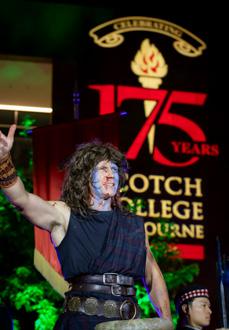
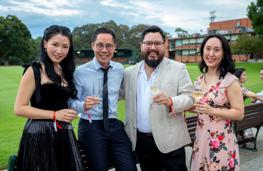
On Saturday 28 February, our community gathered in spectacular style to launch perhaps one of the largest celebrations of our 175th anniversary year. Bringing together more than 1,200 members of the Scotch Family, it was a Gala evening for the history books.
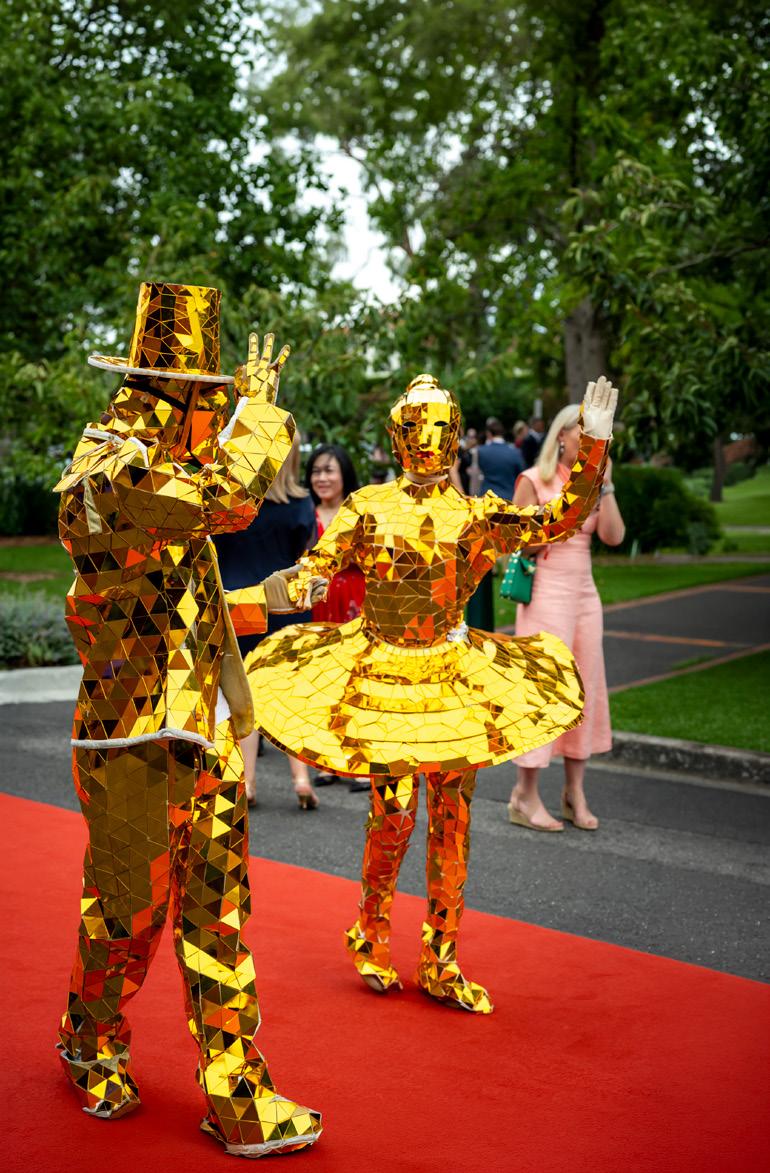
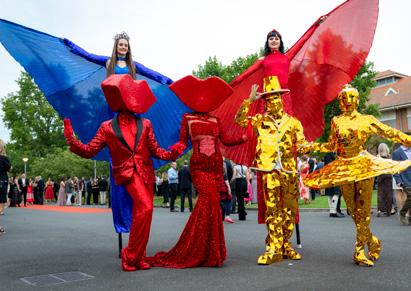
Staff, parents and the wider Scotch Family arrived in Old Scotch Square to drinks and canapés, welcomed by the ever-inspiring sound of the Pipes and Drums performing by the iconic Burning Bush. Roving entertainers added colour and theatre to the evening, including a golden couple, a red lips duo and stilt walkers in red, blue and gold.
Many experienced a true sense of energy and excitement at the beginning of the evening.
“Our award-winning Pipes and Drums Band set the musical tone for the evening as guests arrived. Old acquaintances were reunited, parents chatted with friends and staff, whilst entertainers on foot and stilts mingled with the crowd and created a carnival-like atmosphere” said Tim Rayner, Director of Years 11-12.
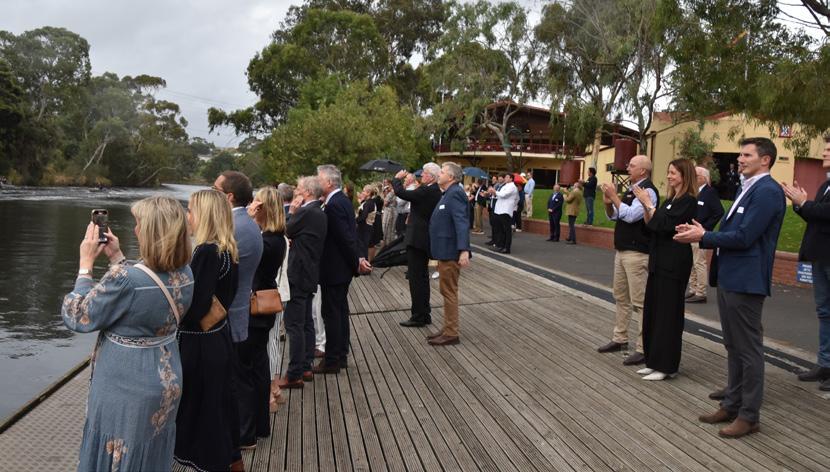
To top off the visual entertainment, three planes were spotted overhead in a surprise flyover. With red, blue and gold undersides, they performed a breathtaking aerial display for guests to watch from the comfort of Old Scotch Square.
“The entertainment was outstanding with the flyover being a particular highlight and such a spectacular touch. Every element felt thoughtfully curated and perfectly timed,” one parent shared after the event.
From the square, pipers led guests into the Quad, where Scotch Strings performed a beautiful soirée set as the welcome continued. The celebration then moved to St Andrews Square, where main formalities took place.
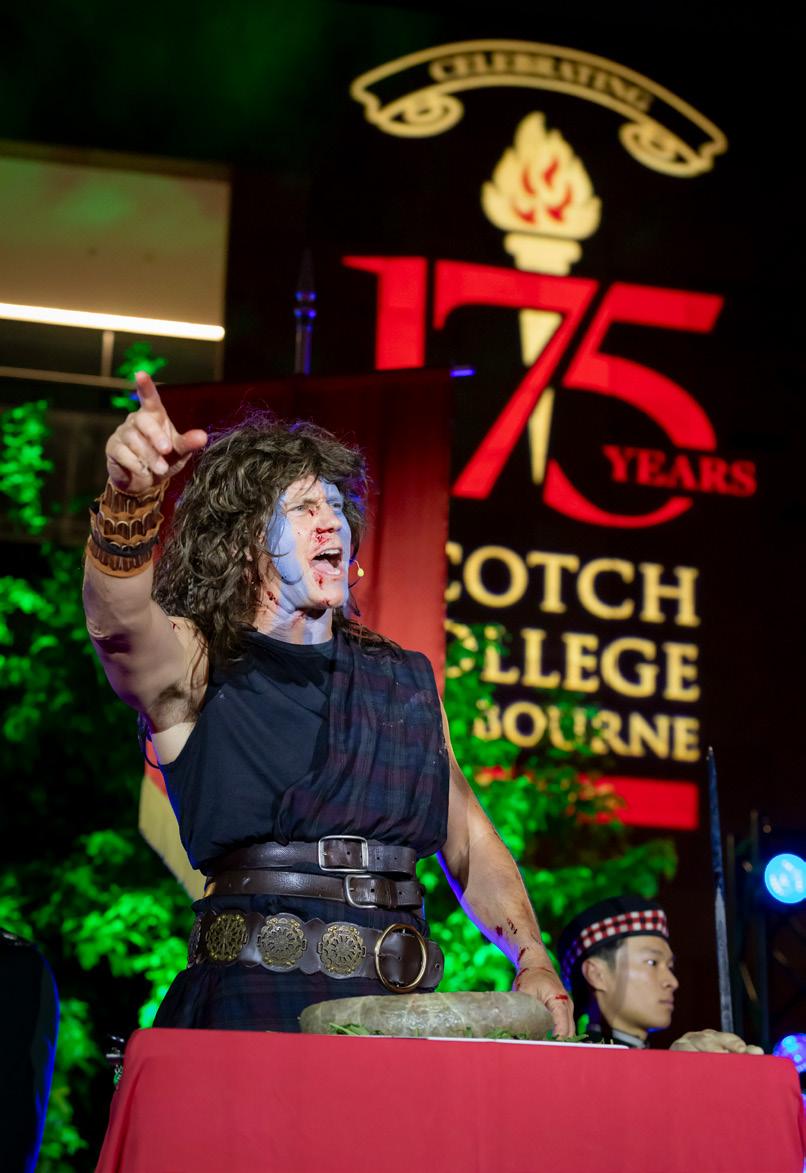
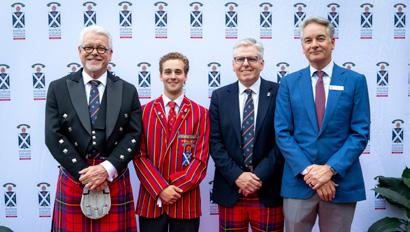
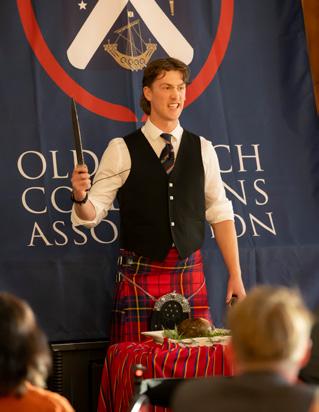
A highlight of the program was the traditional Haggis ceremony, led by Peter Montgomery (’87), honouring the School’s Scottish heritage. Principal Dr Scott Marsh, Chair of Council Hamish Tadgell, and Foundation President Paul Aberdeen (’86) were also invited to speak.
Aptly uniting past and present, 2026 School Captain Charlie Zelouf (’25) concluded the formalities with a stirring toast to the school.
“ It was a special evening celebrating the incredible history of the school. To
see staff, parents and alumni
come together demonstrated
the
closeknit community that exists here at Scotch, ”
says Jack Edwards, Head of Forbes House
“The atmosphere was of great celebration and the parents who attended were delighted to be sharing in the long term success of the School”, Ed Smithers, Head of Littlejohn House, adds.
Throughout the evening, guests enjoyed roving food and a generous grazing table in Keon-Cohen.
One Year 7 mother said “It was beautifully executed from start to finish. The food was delicious and there was plenty of it!”.
But the most fun was found on the dancefloor as Lulu’s Band took to the stage. The Scotch Family were seen belting out AC/DC’s “Long Way to the Top” and John Farnham’s “You’re the Voice”, complete with a bagpipe harmony by Year 12 piper Nick. It was a fittingly spirited end to the night.
Events of this scale and significance are only possible through the dedication of many. Our sincere thanks go to all staff and parents who helped bring the evening to life, particularly:
• Charlotte Barnaby (Lead Organiser)
• Beck Cattermole
• Emily O’Sullivan
• Michelle Lindeman
• Diana Murase
• Erin Hunt
• Rebekka Mellor
We also extend our gratitude to the Scotch College Foundation for its generous support.
A step forward in character education
TOM SAVILL VICE PRINCIPAL/ HEAD OF JUNIOR SCHOOL
A cornerstone of a Scotch education has always been the development of the whole child—not simply academic success, but the formation of character.
Our Strategic Plan, Lighting the Way, reaffirms this commitment through the aspiration to form men of good character.
For 175 years, Scotch has shaped boys’ character through both intentional programs and the rich experiences of school life. At the heart of this is the distinctive signature of a Scotch education, characterised by strong
relationships between staff and students, meaningful opportunities for service and leadership, and deep engagement in cocurricular and community life. Through these experiences, boys are encouraged to take responsibility, consider others, and contribute beyond themselves, developing sound judgement as they navigate challenges and competing demands.
As we look ahead, we seek to build on these strengths by bringing greater clarity and consistency to this work, making more visible and intentional what has long been valued and embedded, so that character formation is further strengthened across the school through character education.
The College has begun a thoughtful and research-informed process to strengthen our approach to character education. This work is guided by implementation science—a practical, evidence-based approach used by schools to evolve and improve practice over time. The process includes four key steps:
• Understanding why and where – learning about our current context.
• Clarifying what – agreeing on what best practice looks like.
• Designing how – developing an achievable and sustainable framework.
• Reflecting – evaluating and refining our approach over time.
This article offers a snapshot of where this journey has taken us so far.
Understanding why and where
Our work began by deepening staff expertise. Three staff members— David Brown (Dean of Students), David Assender (School Chaplain) and Tremaine Pavlovski (Head of Junior School Drama) - are completing a Master of Arts in Character Education through the internationally respected Jubilee Centre for Character and Virtues at the University of Birmingham.
Alongside Caitlin Munday (Head of People and Professional Growth) and myself, this team formed a working party to lead the early stages of our work. The Jubilee Centre has since become a valued partner, supporting Scotch as we shape our approach.
The Centre recommended that our first major step be a whole-community audit of character education at Scotch. The goal was to understand what we are already doing well, where character development is happening naturally, and where there may be gaps.
Influenced by a research-informed evaluation framework, we gathered insights from across the Scotch community—students, parents, staff, alumni, and council members— through surveys and workshops.
Participants reflected on questions such as:
• Why is character formation important at Scotch?
• What role do you play in supporting a boy’s character development?
This rich feedback was analysed with the assistance of Professors James Arthur OBE and Andrew Peterson, leaders from the Jubilee Centre. They identified three important strengths:
• There is a strong, shared commitment to character formation across the Scotch community.
• The school’s core values— Respect, Responsibility, and Reverence—provide a solid foundation for this work.
• Developing a shared language around character and virtues will further strengthen our impact.
These insights gave us confidence that Scotch is well placed to build a clearer and more intentional approach.
Clarifying what we mean by Character Education Schools and families work collaboratively to help each child form their character. At Scotch we consider Character Education as the means by which we contribute. The Jubilee Centre defines it as:
“ All explicit and implicit educational activities that help young people develop positive personal strengths called virtues.
”
To help deepen understanding, Professors Arthur and Peterson visited Scotch, working with students, staff, and council members. Through workshops, presentations, and community forums, they explored what character education is, why it matters, and how it can be nurtured in schools.
Key ideas included:
• Character is fundamental to personal wellbeing and societal flourishing.
• Character can be developed— it is not fixed.
• Schools play an important role in teaching, modelling, and reinforcing virtues.
• Virtues include moral, intellectual, civic, performance, and spiritual qualities.
• Developing practical wisdom helps young people make good decisions when virtues come into tension and collide.
• Practical wisdom leads to personal flourishing.
These ideas motivated further learning, including voluntary professional development by staff keen to deepen their understanding.
As part of our ongoing commitment to learning we will host the annual Australian Character Education Summit later this year. An opportunity for the school to network nationally and globally in Character Education.
Designing the way forward
While our learning continues, we are now beginning the next phase: designing a Character Formation Framework for Scotch. This framework will provide clear structure and shared language, while allowing flexibility for character to be developed through classroom learning, co-curricular activities, service, relationships, and everyday school life.
We look forward to sharing more about this journey as it unfolds. We are grateful to all members of the Scotch community who have contributed so thoughtfully to this important work.
Together, we continue to honour our past while shaping a future of character, purpose, and flourishing for every boy.
FAST FACTS
1. Scotch boys have hailed from approximately 109 unique countries and territories, and at least four were born at sea.
2. At least 242 Old Boys have taught at Scotch.
3. Geoffrey Samuel Tolson (SC 1930-39) was the inaugural Archivist, setting up the first Archives and Museum from 1985 until his retirement in 1992.
4. The original Archives had to advertise in newspapers for records and artefacts that the school did not have.
5. An army of up to a dozen volunteers comprising OId Boys and other members of the Scotch Family currently assists the work of the Archives.
6. Records include more than 38,000 files on boys and Old Boys, staff, Council members, benefactors, and many others who have created Scotch’s story.
7. At least 39,240 boys have attended Scotch since 6 October 1851: the exact number cannot be known due to gaps in the records, but the figure is correct to within a few hundred boys.
8. 91 girls have attended Scotch.
9. At least eight Old Boys are the sons of Old Girls, with three of them having both parents as Scotchies.
10. In 2026 the youngest Scotchie will turn five in April; the oldest Old Boy will hopefully turn 111 in October.
With 175 years of history, Scotch has gathered more than its fair share of stories and curiosities.
We’ve selected just 175 to share with you: half of which you will find in this edition of Great Scot, with the remainder to follow in Edition 176, later in 2026. We hope you enjoy this first instalment!
11. At least 5,058 Old Boys have sent a son or sons to Scotch.
12. At least 7,902 Scotchies are the sons of Old Boys; 3,725 are grandsons of Old Boys, 1,381 are great grandsons of Old Boys; 335 are great-great grandsons of Old Boys; 52 are great-great-great grandsons of Old Boys and one boy is the great-great-great-great grandson of an Old Boy.
13. Since 1916 there have been 111 Captains of the Junior School.
14. 73 are living, including the Captains of 1944, 1954 and 1956: the oldest is 94
15. Six Junior School Captains have also been School Captain: David Evan Price (1952 and 1958), Graeme Surrey Blanch (1963 and 1969), Finlay Alistair Macrae (1961 and 1967, Timothy Charles Collie Downing (1992 and 1999), Lachlan Michael Strathmore (2009 and 2016) and Nicholas Daniel Marks (2012 and 2019).
16. Since 1904 there have been 120 School Captains.
17. Five boys captained the school over two consecutive years. Norman Charles Harris, (1905-06 Henry Herbert Bowden (1906-07), Robert McCracken (1909-10), Cecil Newton McKay (1918-19), Colin Wallace Ross (1922-23) and Alexander Thomas Dix (1944-45).
18. The seating around the Main Oval comes from the MCG and dates from at least 1906.It was saved from the demolition of the Grey Smith Stand by Hector Ralston (Hec) Ingram (SC 1923-26), who helped install them at Scotch in 1967.
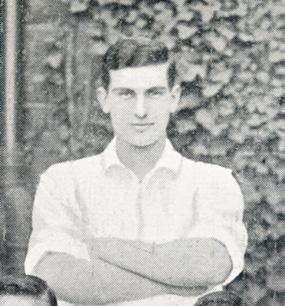
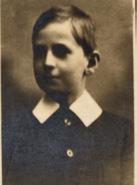
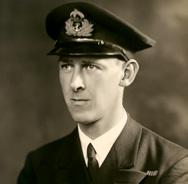
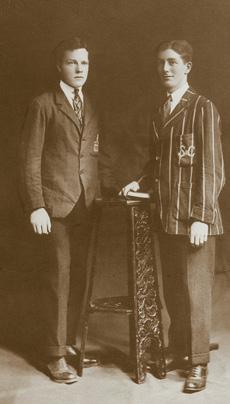
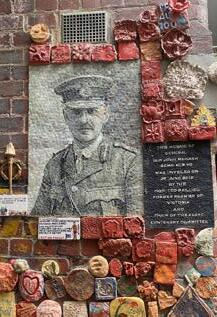
19. The inaugural School Captain, William Johnstone Knox (grandfather of former Premier Ted Ballieu) died in WWI on 20 August 1917 (pictured above). Two greatgreat-grandsons currently attend Scotch.
20. At least 12 captains have been awarded Australian honours or military medals.
21. John Andrew Blanch (1938) and Graeme Surrey Blanch (1969); William Euan lronside Littlejohn (1939) and Euan William Robert Littlejohn (1970); and Peter Graham Hey (1949) and Murray Peter Hey (1976) were father and son School Captains.
22. Boys from Carey Baptist Grammar School (1), Geelong College (1), Geelong Grammar School (1), Haileybury College (1), Melbourne Grammar School (3), St Kevin’s College (2), Wesley College (3) and Xavier College (1) have produced Scotch School Captains.
23. Since 1867 there have been 257 boys who have been Dux of Scotch.
24. Of School Duces at least 37 became medical practitioners, three became judges, 20 became lawyers, 14 became engineers, 18 became teachers (six at Scotch), 6 became headmasters, 20 became professors, 2 became mayors, one became a cartoonist, and two were declared insane.
25. 11 School Duces have become Rhodes Scholars.
26. Six School Duces have become School Captain.
27. The oldest surviving Dux is 95-year-old John Arthur Fuller, who was Dux of the Senior School in 1947.
28. Sir Walter Logie Forbes Murdoch KCMG (SC 1891), professor of English and chancellor of the University of Western Australia is the eponym of Murdoch University, Perth.
29. Sir George Hodges Knox CMG VD (SC 1898-99), Minister for the Legislative Assembly for Upper Yarra (1927-45) and Scoresby (1945-60) is the eponym of the City of Knox.
30. Edwin Fullarton Borrie MC (SC 190811), chief engineer of sewerage at the Melbourne and Metropolitan Board of Works, is the eponym of Lake Borrie near Werribee.
31. Robert Timms (SC 1918) is the eponym of The House of Robert Timms (coffee), which he founded.
32. David Frederick Maxwell Bradshaw (SC 192O-24), principal of Haileybury College (1954-73) is the eponym of its Bradshaw House.
33. Charles Francis Northcott (SC 1904) is the eponym of Haileybury’s main quadrangle.
34. Robert Causton Foyster (SC 1898-99) is the eponym of Haileybury’s Foyster Building.
35. Sir John Monash GCMG KCB VD (SC 1877-81) is the eponym of Monash University, Monash, ACT; Monash, South Australia; the Federal division of Monash in Gippsland, and the Monash Freeway, among many others.
36. Edward Norman Row (entered Scotch in 1868), auctioneer and gentleman, is the eponym of his property, Rowville, which gave the suburb its name.
37. John Victor Denholm (SC 1948-51), a physicist at Wilkes Station in 1959, is the eponym of Mount Denholm in Antarctica.
38. While opinions differ about its importance to the origin of the sport, the game played between Scotch and Melbourne Grammar School commencing on 7 August 1858 (and completed over two further days) is generally considered to be the first recorded and recognisable game of football.
39. Scotch scored the first goal, but MGS quickly retaliated, with neither side able to score the pre-agreed second goal required for victory, despite two days’ further play.
40. Teachers played alongside boys for both schools.
41. Several Scotch staff and boys involved in the first game were prominent in the early development of the new sport: Thomas Henry Smith (teacher) was involved in writing the first rules in 1859 and was Melbourne Football Club’s second captain.
42. John Conway (SC 1858) left Scotch to become a foundation MGS boy and later an inspirational captain of Carlton and was acknowledged for helping ‘make the game of football’.
43. George Frederick ‘Olympus’ Bowen (SC 1858-59) was a founder of the Carlton Football Club, an early Carlton player (1864-66) and sports journalist.
44. ln a record unlikely to be beaten, eight boys from the same school (Scotch) debuted in one round: the first ever round of VFL (now AFL) football, on 8 May 1897.
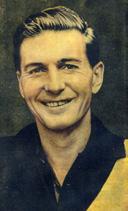
45. James William McLaren ‘Bill’ Morris (SC 1934-38) (pictured below) is Scotch’s only Brownlow Medal winner to date, winning it in 1948 as a Richmond player.
46. ln the days when players were strictly tied to clubs by geographical zones, many Scotch boys naturally played for Hawthorn.
47. Darcy Montgomery Byrne-Jones (SC 2008-13) is the Scotchie who has played the most VFL/AFL games with 228 games for Port Adelaide to date
48. Terence Campbell Waites (SC 1945-52) and Cyril Rioli (SC 2004-07) have the rare distinction of winning VFL/AFL premierships in their first year after school: Terry for Collingwood in 1953, and Cyril for Hawthorn in 2008.
49. Cyril Rioli is the Scotchie who has won the most VFL/AFL premierships, with four (2008, 2013-15).
50. More Scotch boys have played in the VFL (now AFL) than have come from any other school, with 185 to date.
51. When Scotch was at East Melbourne, the Fitzroy Gardens across the road were used by Scotch boys during recess and lunchtimes.
52. Scotch’s only oval before acquiring Hawthorn Glen was the former Civil Service Cricket Club Ground at Yarra Park. It is now the site of Melbourne Park, the home of the Australian Open.
53. The Main Oval was built in a place where many deemed it impossible to create a decent ground. Groundsman Robert Horne excavated the northern side and built up the southern side to create an oval rated by some Test cricketers as better than a few Test ovals
54. The first Public School match played on the Main Oval was against Scots College, Sydney, on 15 December 1922.
55. Scotch’s grounds are preserved largely due to collaboration with St Kevin’s College, whose joint plan rerouted the originally more invasive, costly Monash Freeway, saving parks, homes, and over $1.6 million.
56. 71 school captains are still living, including all but one Captain since 1961: the oldest is the 1935 School Captain, William ‘Bill’ Morgan, who is 110.
57. The House system was introduced to Scotch in 1917 by Principal William Still Littlejohn, at a time when many Victorian schools were also starting House systems for the first time.
58. The original Houses were unimaginatively called North, South and Boarders, and comprised boys living north and south of the Yarra, and boarders.
59. To reduce the boarders’ disadvantage, four Houses were created on the East Melbourne campus in 1921: Lawson, Monash, Morrison and School House (for boarders, renamed Littlejohn in 1933).
60. From 1933 to 1988, all boarders were in Littlejohn House.
61. Day boys were allocated to Houses based on the first letter of their surname. From 1933 these were Morrison (A, E, M, O, Q, U), Monash (B, H, J, N), Lawson (C, D, G, K), MacFarland (F, L, T, W) and Gardiner (I, P, R, S, V, X, Y, Z).
62. By 1988 there was an unwieldy system of six Major and 18 Minor Houses, which was ultimately scrapped at the end of that year and replaced in 1989 with the current system of 12 Houses.
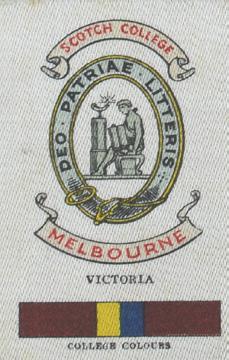
63. Scotch opened as the Melbourne Academy on 6 October 1851 without school colours, motto, uniform or a coat of arms.
64. Although unclear whether this had been adopted as a motto for the young school, an 1854 medal for Dux is said to have had a Greek motto that meant ‘Education is the Mother of Wisdom and Virtue’.
65. The earliest record of Scotch being identified by any colours comes from 1874, when the colours were recorded as being the royal blue and white of the Cross of St Andrew.
66. In 1886, a change was made to Scotch’s colours to make them more distinctive: they became cardinal and blue.
67. ln 1924, following the failure of a competition to produce a successful Scotch coat of arms, the-then Old Scotch Collegians’ Association President, Sir Arthur Robinson, asked his friend and heraldry expert Sir Edward Mackenzie Mackenzie [sic] to design one. The design has been used ever since.
68. The basis for Scotch’s current motto was ‘Deo et Literis’ (for God and Learning), which began appearing on prize books in 1862.
69. With the outbreak of World War I in 1914 the School Prefects asked that year that Patriae be added to the Scotch motto which since then has been Deo Patriae Litteris (For God and Learning).
70. Purpose-built Junior School buildings were constructed at Scotch in 1917 and first used from 12 February 1918, but so popular was the Junior School at Hawthorn that additional classrooms were built and being used by Term 3, 1918.
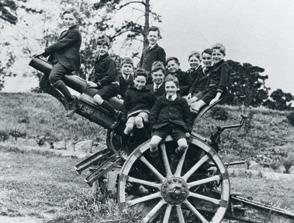
71. ln 1921, a captured German Howitzer (cannon) from World War I was presented by the Australian War Memorial to Scotch and positioned outside the Junior School.
72. School caps, which became optional in the Senior School in 1968 (and consequently were not worn), lingered on in the Junior School into the 1970s.
73. For many years, the Junior School ran up to Year 7, while new boys entered the Senior School in Year 7, with the two groups only joining together in Year 8.
74. From 1988 to 1990 the Junior School underwent an enormous expansion and renovation, with the original buildings so cleverly copied that it is hard to tell the new sections from the old.
75. Although knighthoods are no longer bestowed in Australia, Scotch has produced at least 72 Old Boys who have been knighted.
76. Scotch’s first site was at what was then 155 Spring Street, Melbourne. It was known as the “Green Door School” according to one Old Boy.
77. The first boarders did not board at Scotch, but at 198 Stephen Street (formally renamed Exhibition Street in 1898).
78. When Old Boys returned to Scotch at East Melbourne for Scotch’s Diamond Jubilee in 1911, they were dismayed by the crowded site. The school thought that building a bigger hall would solve the problem. The majority of Old Boys said they would not give money for a hall, but that they would for a new site.
79. When the Hawthorn site was purchased, it was understood to be 51 acres (20.64 hectares), but surveying revealed it was actually 65 acres (26.3 hectares)!
80. An interim solution to Scotch’s shortage of space was to lease Parkville High School. It contained both boys and girls and continued to receive girls while Scotch ran it from 1915 to 1918 as a campus of Scotch.
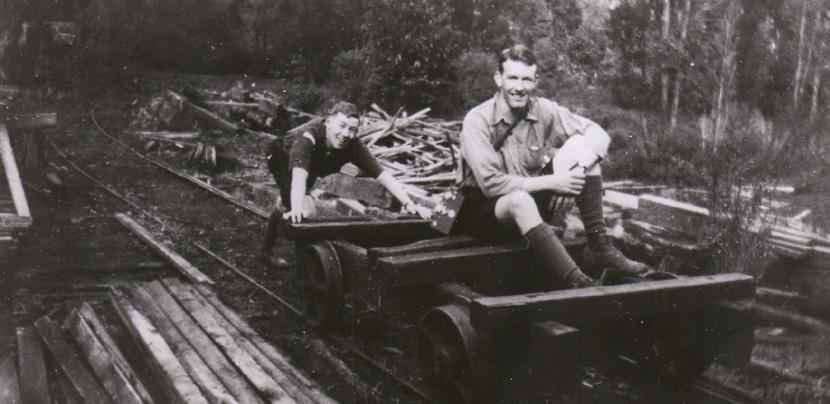
81. ln 1928 Harold Edward ‘Pompey’ Elliott, father of Scotch boy and Scout Neil Campbell Elliott (SC 1925-30), generously donated five acres of his sister’s land at Healesville for the use of Scotch’s Scouts.
82. The first Elliott Lodge was opened on 8 March 1930, burned down in the Black Friday bushfires of 13 January 1939, and was rebuilt and reopened on 11 May 1940.
83. The University Public Schools’ Camp began at Barwon Heads in 1911 for Public School boys preparing to enter Melbourne University. It was designed to help break down barriers between students from different APS schools.
84. In 1926, the University Public Schools’ Camp moved from Barwon Heads to a newly purchased site at Cowes.
85. During World War II, the Cowes camp site was used by Public School boys, including Scotch students, to harvest chicory for the war effort.
86. After the war, the Cowes camp site was no longer used and fell into disrepair. Scotch later held an experimental camp at the Cowes site, which led to annual Scotch camps beginning in 1955.
87. Scotch eventually purchased the Cowes property, which is now known as Scotch at Cowes.
88. While still a Scotch staff member, Murray Ross (Ross) Campbell played the bagpipes in the recording of a well known crowd anthem… stick around for our next edition of Great Scot and another 87.5 facts to find out which song!
If you think you know which song Murray Ross Campbell can be heard in, submit your answer here and go in the draw to win a $50 Scotch Shop voucher!
Pictured: Construction of Elliott Lodge in 1929
Keeper of our stories
What makes a school more than buildings, blazers and honour boards? In a recent interview, our School Archivist, Paul Mishura, reflected on the moments, memories and lives that form the living history of Scotch College. He shared our stories and explained why they matter.
Service as a way of life
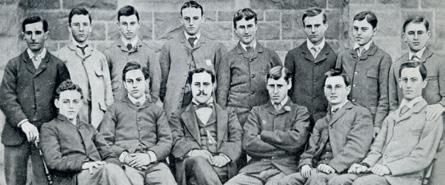
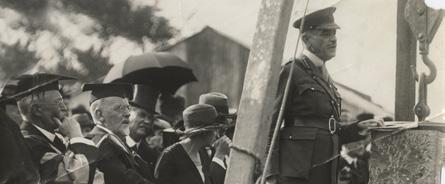
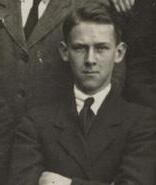
“Many Old Boys do more than simply perform their professions. They lead associations, chair school boards, become captains of CFA brigades, serve as mayors and volunteer in their communities. A fine example is Sir John Monash (pictured above, seated second from the left, in his 1881 Matriculation class, and speaking at Scotch in 1920). After distinguished leadership in World War I, Monash, who was in extremely strong demand for his leadership ability, became inaugural chairman and general manager of the State Electricity Commission of Victoria, transforming the state’s power network. Despite his national stature, in 1919 he lent his name to the fundraising campaign to build Scotch’s new Senior School at Hawthorn, and he was 1927 President of the Old Scotch Collegians’ Association. He identified proudly as a Scotch boy and never forgot where he came from.”
A Son Meets His Father
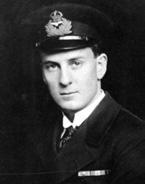
“An unexpected visitor arrived from the United Kingdom in 2014. His father had been a Scotch boy and unfortunately was killed in the Battle of Britain only six weeks before the birth of his twin sons. Their mother remarried and never spoke about his father, Latham Carr Withall. The sons grew up knowing almost nothing about their father.
Somehow, he discovered his father had attended Scotch.
He arrived unannounced. I showed him his father’s name on the wall in Memorial Hall before showing him the white cross bearing his father’s name, date of death and age that is put out in the Quadrangle along with others from both World Wars by Year 7 boys every Remembrance Day. He stood there and cried for five minutes. In that moment, history became personal and the past was no longer abstract.”
Scotch values in action
“In July 1990, four boys aged between 12 and 14 were lost in heavy snow on a Scotch ski trip. Darkness fell. Instead of panicking, they remembered a safety video watched on the bus and built a snow cave. The two older boys formed a protective cocoon around the younger pair throughout the freezing night. By morning, all four survived. The two older boys unselfishly realised they had a duty to protect the two smaller boys, suffered more for it, and the younger boys walked out to raise the alarm.
Woomera Rocket Range Native Patrol Officer Walter Batchelor MacDougall was a constant thorn in the side of the government and the scientists who put developing atomic bombs and rockets ahead of welfare of the First Nations people that Walter passionately protected.
Other stories are marked by global conflict. Robert Alexander Little couldn’t get into Point Cook’s training school, so he paid to sail to England then paid to learn to fly. He became Australia’s top World War I fighter pilot, shooting down 47 aircraft before being shot down and bleeding to death in France in 1918. He famously flew Scotch-coloured streamers from his plane, and inside his leather flying helmet, discovered in 2012 at a Queensland rubbish tip, were the words of the Scotch motto, Deo Patriae Litteris.
In World War II, Hugh Randall Syme defused bombs and mines across Britain, often chest-deep in mud, facing unseen mechanisms and booby traps. Awarded the George Cross and George Medal twice, he was then the British Empire’s most decorated man for non-combat bravery.
Courage takes different forms. In the 2000s, Simon John Illingworth exposed corruption within Victoria Police at great personal risk after asking himself what being a Scotch boy meant he was bound to do.
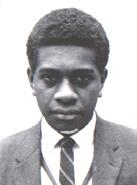
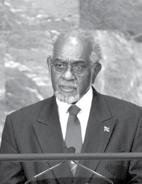
Kalkot Mataskelekele, who boarded from Vanuatu in the 1960s and played rugby at Scotch became a lawyer who helped lead Vanuatu’s push for independence. He was not only involved in writing Vanuatu’s first constitution but also became its President!”
The guardian of stories
As archivist, Paul Mishura is our keeper of stories but sees himself as more than a recordkeeper.
“So many boys pass through the school fully immersed in the moment. I think part of my role is to make them aware of what they are part of, so they not only have a greater appreciation but also realise their own potential.
I tell Year 7 students about Drew Ginn, a Gippsland boarder. A teacher encouraged him to try rowing at Scotch. He did and won three Olympic gold medals and one silver. The message is simple: seize opportunities. You have a lifetime to regret the chances not taken”.
Why
our stories matter
Loyalty and identity
“One story involves David Cuthbert Bruce Lorimer, a Camberwell Grammar School boy whose Camberwell classmate and best mate for life was Mariannus ‘Mac’ Cuming, the son of James Cuming, a wealthy Old Melburnian. Mac left to attend Melbourne Grammar School in 1917. After his Old Boy father died, David’s family could not afford to send him to Scotch. However, James Cuming offered to pay David’s fees to attend Melbourne Grammar with Mac. David’s mother declined: “We’re a Scotch family”. To his credit, James Cuming magnanimously paid the fees for David to attend Scotch.”
One day, today’s students will appear in the archives. Their photographs will be studied. Their decisions will be interpreted. The question is not whether they will become part of Scotch history. The question is: what story will they leave behind?
Undeterred by difficulty
ANDREW O’CONNOR DIRECTOR OF TEACHING AND LEARNING YEARS 7-12
Last week in class, a student asked me how best to prepare for a test. My answer was reflexive. “Of all the things you can do right now, do whatever is most difficult.”
The idea is not mine. Nor is it new. In 1885 – around the time Alexander Morrison was approaching thirty years’ service to Scotch College – the psychologist Hermann Ebbinghaus published his “curve of forgetting”. For those unfamiliar with Ebbinghaus’ curve, or for those who have forgotten it, I’ll save you Googling. The curve depicts the pernicious effect of transience. Ebbinghaus, experimenting on himself, discovered that we lose access to memories in mere days. Our brains, it turns out, are exceptionally good at deleting.
By the time Scotch was comfortably into its William Littlejohn era, another psychologist, Edward Thorndike, had articulated a counterweight to Ebbinghaus’ sobering curve. Usage. Test recall, or find a purposeful application for a given memory, especially over a span of time, and we increase the quality and likelihood of retaining access to this memory. This is why dragging a highlighter across vast swathes of supposedly salient text rarely helps us long-term. Effective usage should always feel more like the mental equivalent of a push-up, and who likes push-ups?
Fast forward through a few World Wars and a Cold War, to Gordon Donaldson taking the helm at Scotch, and we encounter a third contribution to psychology worth noting here. In the early 1990s Distinguished Professor of Psychology, Robert A. Bjork, coined the term “desirable difficulties”. He writes: “‘Difficulties’… pose challenges for learners and slow the rate of apparent learning. [But some difficulties] are ‘desirable’ because contending with them – successfully – can engage the very encoding and retrieval processes that support long-term retention and transfer.”
Academics often define learning as a change to long-term memory, and there has always been a lot for students to memorise at Scotch. Morrison’s Scotch – yet to move to Hawthorn, and yet to benefit from the findings of Ebbinghaus, Thorndike or Bjork – looked to provide a rounded, “useful” curriculum. The foundation was English. Morrison was the first in Australia to introduce Literature, but he never lost sight of the need for fundamental skills. “Throughout the whole school the spelling [was] generally very good… mainly due to the constant practice”. Science’s “importance [could] scarcely be over-estimated because it
cultivate[d] beyond all other studies the faculty of observation and the love of truth”. Geography’s maps and globes prepared boys for the outside world, and taught the beauty of Darwin’s Origin of the Species soon after it was published. Mathematics had more time than at Eton, always with a set of rules to be mastered and built upon. And then there were the languages. Latin, Greek, French and German, all with teachers who understood how to leverage a good mnemonic. As early as 1857, Scotch was awarding prizes for what would now be called Commerce.
As we celebrate our 175th year, we continue to advance a knowledge-rich curriculum that appreciates beauty, pursues goodness and discerns truth. Such a curriculum paces our students as they close in on their strengths and passions, and ensures they arrive at niche pathways with foundational knowledge and skills firmly in place as vast frameworks in their long-term memories. There is a quote featured at the front of James Mitchell’s A Deepening Roar which captures this process at Scotch in 1915, and it applies just as well today. “In history he [the student] is urged to summarise more, and to connect History with Geography… He must
References:
Bjork, R. A. (2018). Being suspicious of the sense of ease and undeterred by the sense of difficulty: Looking back at Schmidt and Bjork (1992). Perspectives on Psychological Science, 13(2), 146–148. https://doi.org/10.1177/1745691617690642
Ebbinghaus, H. (1885). Über das Gedächtnis: Untersuchungen zur experimentellen Psychologie. Leipzig: Duncker & Humblot.
Mitchell, J. (2001). A deepening roar: Scotch College, Melbourne, 1851–2001. Allen & Unwin.
Thorndike, E. L. (1914). Educational psychology, Vol. 3: Mental work and fatigue and individual differences and their causes. Teachers College. https://doi.org/10.1037/13796-000
master the leading events, group others round these, fix them all with a date or two (taught in class by mnemonics) and thus get a grip on the whole.”
Much has been written in Great Scot about Scotch’s prioritisation of relational learning, and it is true that knowing the boys and building trust in the classroom is the keystone of all that we do. Without it, effective teaching is impossible. But in this era of ephemeral, flick-or-you’ll-miss-it social media, where entertainment masquerades as education, Scotch teachers find permission in the school’s core values and rich 175-year history to remain suspicious of ease. Teachers at Scotch do not build student trust so they can betray it with facile time-fillers and empty praise, but instead remain undeterred by difficulty. Now, as in Morrison’s day, our staff build relationships and trust with the boys to gently push them towards the challenging work required for deep conceptual knowledge. This is teaching that lights the way, and it ensures Scotch will long continue to form enlightened learners of good character, committed to shaping a better future.
Building character through drama
HAYLEY SANDPEARL HEAD OF DRAMA
Across the world, schools are being challenged to define what it truly means to educate the whole person. Research into character education, particularly from the Jubilee Centre for Character and Virtues at the University of Birmingham, reminds us that education must nurture not only intellect, but spiritual, moral and civic virtue. In 2025, Scotch College was fortunate to welcome Professor Andrew Peterson and Professor James Arthur OBE, whose work with staff and leadership affirmed something long embedded within the life of the College: education is not only about achievement, but about formation.
As Professor James Arthur observes, “Character is both caught and taught.” It develops through what we practise, experience and model each day. At Scotch, Drama has long provided one of the clearest expressions of this philosophy.
This is part of our story, Scotch in the past, present and future, a story of adapting to the needs and standards of different eras while remaining committed to forming men of good character.
Our story in the Past
Scotch Drama was formally founded in 1916, with the first record of student performances being staged in the modest surroundings of the Scout Hall. These early productions were resourceful and communal. Staff and parents constructed sets, students rehearsed in shared spaces and learned the essentials of performance through collaboration and ingenuity.
Even then, Drama was more than entertainment. It demanded confidence, responsibility and teamwork. Students relied on one another, spoke publicly, solved problems collectively and worked toward a shared outcome. These experiences reflected the educational priorities of the time: developing discipline, courage and fellowship. While spaces and technologies have changed, the formative experience of performance, learning by doing together, has remained constant.
A significant chapter in our story came with the opening of the Geoffrey McComas Theatre (GMT) in 2005. Under the watchful eye of past Head of Drama, Stephen Ritche, this purpose-built theatre represented not simply an investment in the Arts, but a recognition that creativity, storytelling and collaboration are central to a Scotch education.
The GMT enabled students to engage with theatre technologies and production processes aligned with professional practice. Yet, despite the sophistication of the space, the essential learning remained unchanged from those Scout Hall beginnings: students must work together, communicate clearly, solve problems and take responsibility for their role within the ensemble. The building elevated the scale of our productions; it did not alter their purpose.
Our story in the present
Today, Scotch students “strut the boards” across three annual co-curricular performances, including a biennial musical, alongside a rich program of curriculumbased presentations embedded within classroom learning.
These productions are formative journeys. Whether performing in ensemble-driven plays, collaborating on technically complex musicals, or presenting curriculum performances for assessment, students experience the demands of sustained rehearsal, collective responsibility and creative problem-solving.
Curriculum explorations include works such as Lord of the Flies (Nigel Williams’ adaptation of William Golding’s novel) and Dario Fo’s Accidental Death of an Anarchist. These texts ask students to interrogate leadership, morality, justice and group behaviour, themes that resonate deeply with the aims of character education. Students are encouraged to write and perform from social and political standpoints, drawing inspiration from contemporary issues. This process develops not only theatrical skill but critical thinkers who recognise the role of art in shaping public discourse.
Our department balances scripted work with student-devised performance, ensuring that each student develops and expresses their own voice. Through reinterpretations of classic texts and original work, students learn that their stories and perspectives matter.
The formation of character within Drama is therefore not left to chance. It is embedded in practice and reinforced through reflection.
Drama, service and immersion: Learning beyond the stage
Drama at Scotch is closely connected to the College’s service ethos and the Year 11 Immersion experience, where students encounter social realities that call for empathy, responsibility and reflection. These programs invite students to engage with issues of wellbeing, justice and community, and Drama provides a language through which those experiences can be explored and understood.
Performance-making becomes a means of processing human experience, not simply observing it. Artistic practice and service learning reinforce one another, helping students recognise their responsibility to others and their place within a broader community.
Looking ahead: Drama in education and the formation of character
As we prepare students for an uncertain and rapidly changing world, the role of the Arts becomes increasingly significant. In an age shaped by technology and automation, the distinctly human capacities of empathy, creativity, ethical judgement and collaboration are those most needed.
Drama in Education uniquely integrates these capacities. It brings together reflection and action, knowledge and experience, thinking and doing. Students learn not only to interpret stories, but to listen carefully, lead responsibly, persevere through challenge and contribute meaningfully to collective work.
The skills required to make theatre are the same qualities required to live well with others.
Continuity through performance
From the Scout Hall of 1916 to the Geoffrey McComas Theatre of today, Scotch Drama tells a story of growth grounded in purpose. Facilities have improved, productions have expanded and expectations have evolved, yet the central aim has endured.
Each rehearsal, each co-curricular production, each curriculum presentation and each moment of service-connected learning contributes to forming young men who can engage with the world thoughtfully and act within it with integrity.
Drama at Scotch is therefore not simply about staging plays or musicals. It is an enduring expression of Drama in Education, shaping understanding through experience and forming character through shared creative endeavour.
Our story continues to unfold, adapting to new times, meeting new standards, and remaining steadfast in the belief that a Drama Education grounded in truth, beauty and goodness, lies at the heart of meaningful storytelling and learning, and is central to the formation of character.
References
Arthur, J. (2019). Character Education: Origins, Concepts and Current Approaches. Jubilee Centre for Character and Virtues.
Berkowitz, M., & Bier, M. (2005). What Works in Character Education. University of Missouri–St. Louis.
Eisner, E. (2002). The Arts and the Creation of Mind. Yale University Press.
Gardner, H. (2006). Five Minds for the Future. Harvard Business Press.
Noddings, N. (2012). The Ethics of Care. University of California Press.
Robinson, K. (2011). Out of Our Minds. Capstone Publishing.
UNESCO. (2021). Reimagining Our Futures Together. UNESCO Publishing.
What is it about Cadets?
A look in on one of Scotch’s most thriving co-curricular activities
Tucked quietly beneath the Lithgow building, out of sight for many who pass through the school each day, one of Scotch’s most transformative programs is steadily shaping the next generation of leaders.
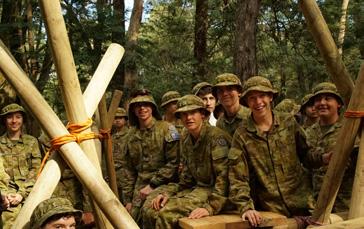
The Cadet Unit, once among the largest in the country, has rebounded strongly in recent years, growing from around 100 students following COVID disruptions to nearly 300 today. But numbers alone tell only part of the story.
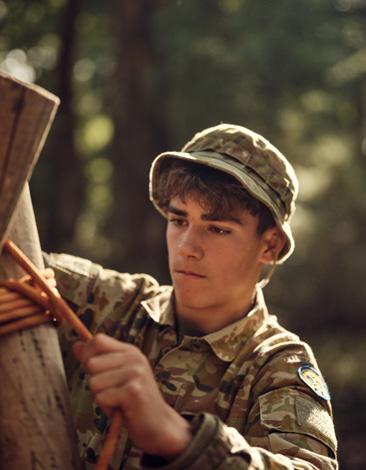
At its core, cadets is a youth development program built on the values and structure of the Australian Defence Force but not a direct branch of it, and not a pathway into military service. Rather, it is a framework through which students develop leadership, discipline and resilience alongside their peers, and often well beyond their comfort zones.
Each Wednesday afternoon, cadets gather for weekly parades, building skills that will later be put to the test in real-world conditions.
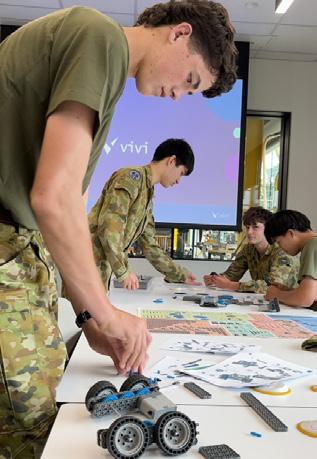
Between radio communication, first aid, campcraft and field navigation, the program focuses on blending life skills with practical skills. These experiences culminate in key moments across the year, including a Term 1 bivouac and the major camp at Puckapunyal in Term 3.
It is here, immersed in unfamiliar environments and away from the routines of daily life, that the purpose of cadets becomes clear.
“Main camp is when everything clicks,” Samuel (Year 12), our 2026 Regimental Sergeant Major explains. “You see how all the weekly training fits together, it becomes something much bigger.”
For many, the journey is not without its challenges. Year 9 cadets are immediately introduced to a new and often confronting environment, yet it is precisely this extension of their comfort zone that lays the foundation for growth.
“It’s pretty common to hear people say they didn’t enjoy it at first,” Senior Cadet Under Officer Barlow (Year 12), reflects. “But looking back, that’s the point. It pushes you to do things you wouldn’t otherwise do.”
As students progress, so too does their role. What begins as learning to follow soon evolves into learning to lead.
In Year 9, students begin as recruits until they are inducted officially into Cadets during their first bivouac. By Year 10, cadets take on responsibility for small teams. In Year 11, they lead entire platoons overseeing the development, wellbeing and coordination of dozens of younger students. By Year 12, the focus shifts again, this time to the leadership and administration of the unit as a whole.
“It stops being about your own experience,” Samuel says. “It becomes about giving back and making sure the next group gets the most out of it.”
This progression is what sets cadets apart. Students move from being led to leading others, taking on real responsibility for people, decisions, and team dynamics.
“You’re responsible for someone’s learning, and to an extent, their wellbeing,” Barlow explains. “There aren’t many opportunities like that at school where you really get to build connections in this way”.
Beyond the field, the impact is far-reaching. Students speak of cadets as a foundation that supports all areas of school life— from public speaking and organisation to teamwork and self-discipline.
“I look at it like a catalyst for maturity,” Samuel reflects.
“ You develop skills that carry into everything, whether that’s leadership roles at school, sport, or life beyond. ”
“It’s truly a credit to Major Dunn,” Barlow adds, “he runs Scotch Cadets like a proper organisation, so you get that experience before even leaving school.”
Rather than directing students into a specific career, the cadet program develops transferable skills. Students build confidence, learn to communicate clearly, manage responsibilities and lead others, skills that apply well beyond the program itself.
Cadets is, at its heart, a grassroots leadership program where students are not only participants, but custodians of the experience itself. They are challenged to step forward, to take responsibility, and to lead with intention.
And while it may sit quietly underneath the English department, its impact and consistent growth in recent years proves it is anything but.
Creepy,crawly and completely captivating
Minibeasts move into the Junior School
In the early years, learning is often shaped through immersive, topic-based units that encourage curiosity, observation and hands-on discovery. By connecting subjects through a central theme, students are able to explore ideas in a meaningful and engaging way, building both knowledge and confidence as they go.
There was plenty of all the above happening in our Year 1 classrooms throughout Term 1, as students turned their attention to the small but fascinating world of minibeasts.
As part of their Integrated Studies unit, Schoolyard Safari, the boys explored insect classification and the life cycle of a caterpillar. Throughout the term, they learned how to classify different creatures, examined key features of insects, and studied how caterpillars change and grow. Students developed skills in identifying characteristics, producing scientific drawings, and recording their observations in increasing detail.
A highlight of the unit, and now something of a tradition in the Scotch minibeasts program, was bringing caterpillars into the classroom to observe up close and witness the full life cycle of a butterfly. Day by day, the boys watched them grow, form a chrysalis, and eventually emerge as butterflies. Alongside this, each student kept a caterpillar diary, recording observations through labelled drawings and written reflections.
The life cycle of a butterfly involves four distinct stages—egg, larva (caterpillar), pupa (chrysalis), and adult—a process known as complete metamorphosis. A caterpillar hatches and eats to grow, forms a chrysalis to transform, and finally emerges as a winged adult after 10-14 days in their cocoon.
Over one weekend all the chrysalides hatched, and the boys were able to release them into the Scotch gardens.
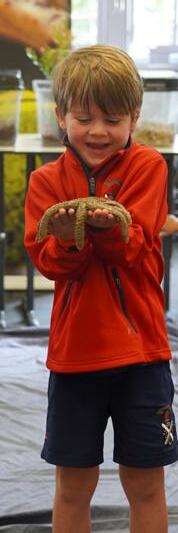
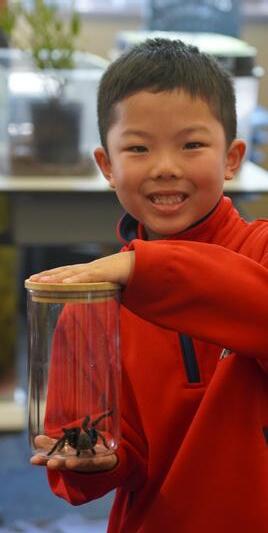
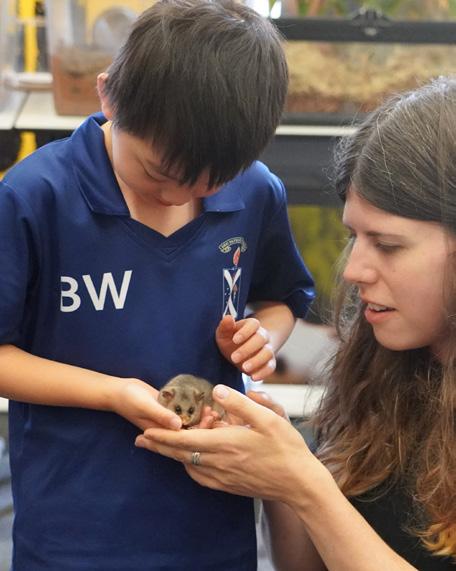
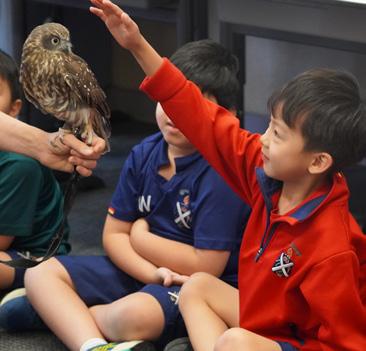
Later in the unit, the boys also had the opportunity to get hands-on with a range of fascinating creatures. An incursion presented by Wild Action brought an entire menagerie into Scotch classrooms. Between marine life, insects, owls, and even a tiny Pygmy Possum, the experience presented a chance for the boys to be brave and get up close and personal with some of these creatures.
“I liked getting to hold the sea star. It was a bit sticky and gooey but the top of their legs were spikey,
said Edward (Year 1). For William (Year 1), it was the strength of insects that stood out: “I learned that a rhino beetle can hold the weight of a double decker bus!”
Meanwhile, Alexander (Year 1) embraced the more daring encounters. “I got to hold the scorpion. The scorpion can glow in the dark. I also loved looking at the blueringed octopus,” he said.
The development of early scientific thinking, encouraging students to slow down, observe closely, ask questions and describe what they see with increasing precision is an essential learning building block. We look forward to seeing what our Year 1s investigate next!
All in,
all summer
The 2025 summer sport season at Scotch has once again showcased the depth, energy and spirit of the school’s sporting community.
Strong performances across a wide range of programs, combined with a clear commitment to participation and development, made for another standout summer of sport at Scotch. Acting Director of Sport, Jay Baker, acknowledged the collective effort behind the season. “I would like to sincerely thank all boys, teaching staff, coaches and parents for their ongoing commitment, time and support throughout the season,” he said. “Their contribution is vital in creating positive and meaningful sporting experiences for our students.”
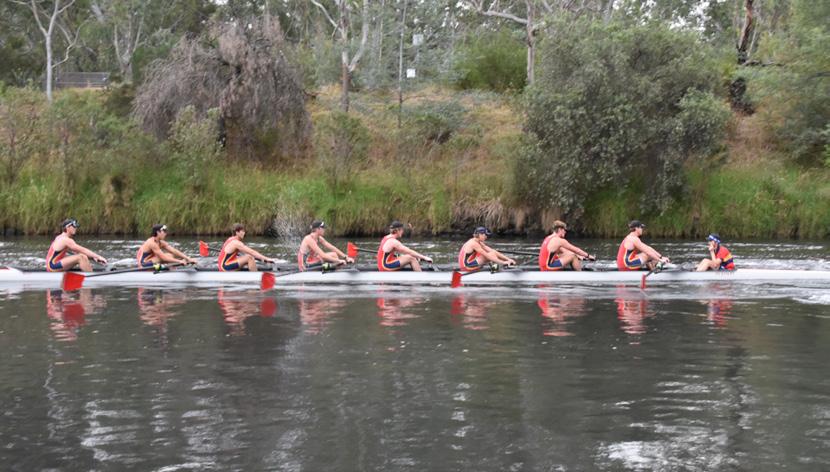
A defining highlight of the summer was the extraordinary success of the rowing program, with Scotch claiming victory at the Head of the River for the 50th time in the event’s 158-year history. The milestone reflects not only the talent and determination of the boys, but also the strength of leadership within the program. “This is an extraordinary achievement,” Jay says, crediting the guidance of Director of Rowing Tom Woodruff and Teacher in Charge Charlie Dixon in maintaining a benchmark of excellence.
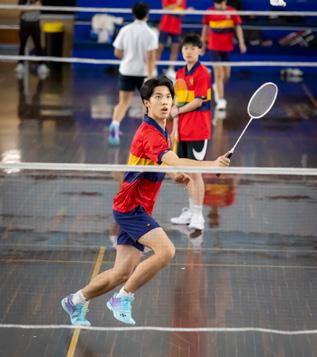
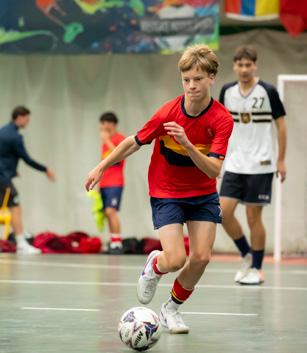
Across APS competitions, several teams delivered impressive results. Badminton enjoyed a standout season, finishing second overall after qualifying for the inaugural APS Grand Final, while Swimming and Diving both placed fourth at the APS Finals. “A highlight came from Leo (Year 10), who set a new APS record in the 50m Freestyle with a time of 23.52 seconds”, Jay shared. Squash progressed through the season undefeated, and Futsal secured a strong third-place finish.
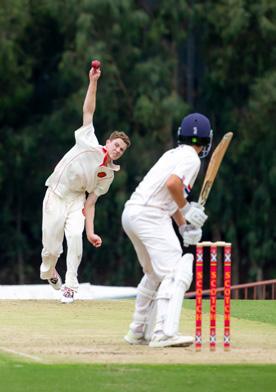
Cricket continued to thrive, with Scotch fielding the highest number of teams in the APS competition.
The First XI finished fourth overall, recording several notable wins and demonstrating the program’s depth. Elsewhere, Orienteering claimed victory in its annual competition against Camberwell Grammar, while Sailing impressed against a strong statewide competition, with a seventh-place finish at the State Championships.
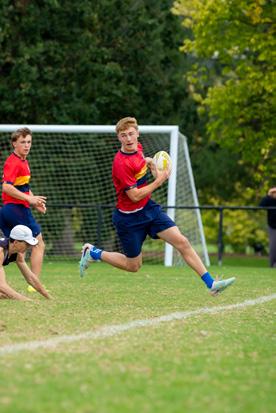
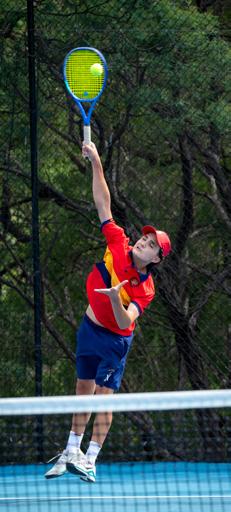
Tennis closed the season with a series of powerful performances, with many players set to return to the Firsts next year. Volleyball faced a number of tightly contested matches, but the resilience and development across all teams was a clear positive. Touch Rugby also continues to grow, with increasing participation and evident improvements in skill and teamwork.
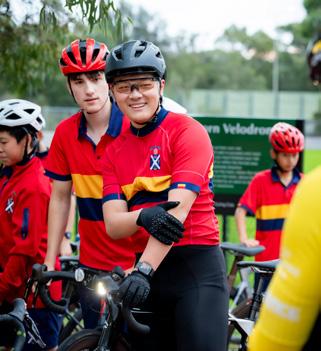
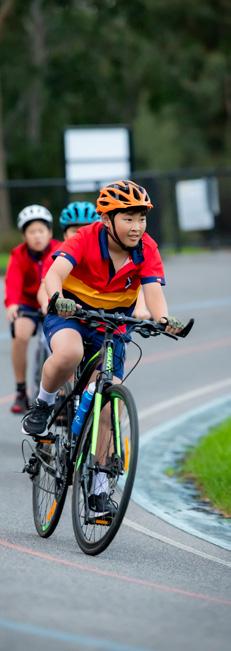
Programs such as Cycling and Golf are also gaining momentum, with Cycling, training under former professional Tom Leaper, seeing 26 boys regularly competing. Golf, led by Teacher in Charge Ed Smithers, continues to provide high-quality opportunities for students to develop and excel.
Meanwhile, Old Scotch athletes maintained a strong presence in Athletics competitions following last year’s APS premiership success.
Reflecting on the season, Jay emphasised the broader purpose of sport at Scotch. “We remain committed to striving for excellence while developing young men of strong character, integrity and sportsmanship, both on and off the field.”
Next-gen
athletes
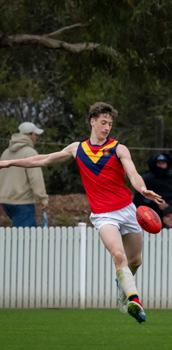
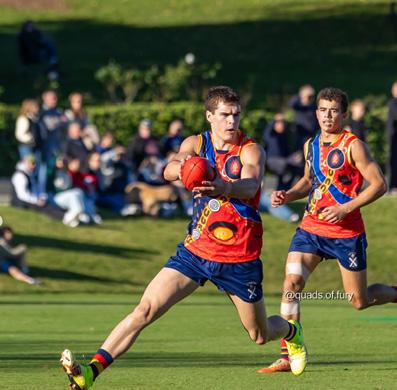
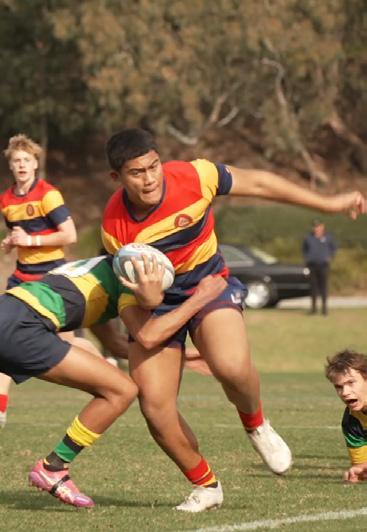
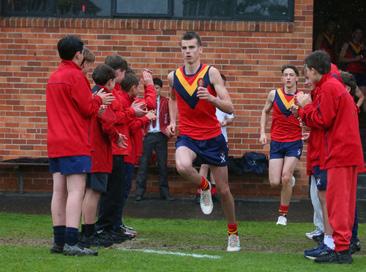
The next chapter starts here for six talented Scotch sportsmen
The end of 2025 was a remarkable period for Scotch sport, marked by a number of individual sporting achievements on the national stage. Between global rugby and a record-breaking AFL Draft, Scotch students continue to demonstrate what it means to pursue excellence with purpose.
Rugby Representative
One of these boys is Liku (Year 12), whose selection in the 2025 Global Youth Sevens Tournament and inclusion in the Australian Under 18 Sevens extended squad signals a significant step in an already impressive rugby journey. Liku joined Scotch as a boarder in 2025 after representing Australia at Under 16 level. He quickly established himself not only as a talented athlete, but as a young man of discipline and intent.
“Liku is humble and meticulous in his preparation,” says Claire Jones, Head of Liku’s Arthur Robinson Boarding House, “His room is consistently immaculate, which is testament to his approach. Whatever rugby jersey he pulls on, he wears it with pride.”
That pride is visible in the small details, including a carefully displayed Scotch First XV jersey and cap from his debut, and motivational reminders that reflect a mindset grounded in consistency and care.
“Rugby has always been the backbone of my life,” he says. “I take pride in the hard work that often goes unnoticed, like my recovery, mental preparation, and staying disciplined with nutrition, because I believe these things set great players apart.”
His selection in the Australian Under 18 Sevens program is made even more impressive by the fact that he is competing a year above his age group, with another year still to come at this level. Already, his rugby résumé spans Victorian representative teams from Under 13 through to Under 18, the Melbourne Rebels Under 16 side, Victorian Schoolboys, and national honours at both Under 16 and Under 18 level.
AFL Draft 2025
Alongside Liku, five boys from the Class of 2025 are to be congratulated on their success in the AFL world. It’s a recordbreaking number, the highest number of Scotch draftees in a single year in the school’s history.
Louis Emmett (Western Bulldogs, Pick 27), Sam Allen (West Coast Eagles, Pick 29), Jack Ison (Carlton, Pick 47), Will Darcy (Western Bulldogs, Pick 60), and Riley Onley (Melbourne, Rookie Draft Pick 3) each leave behind a distinct legacy, which 2025 Scotch Football Coach James Gerstman was quick to share with us:
“Few players have had as profound an influence on the program as Sam. We are immensely proud of the leadership he demonstrated, consistently setting the standard with his professionalism and performance. While injury limited the on-field impact he had long been building towards in 2025, his role as captain and leader never wavered and his influence extended well beyond the field.
Will’s contribution to the program has also been significant, and we are incredibly proud of all he has achieved.
An exceptional reader of the play with a strong aerial presence, he brought consistency and class whenever he took the field. His dedication to improvement was clear, rarely seen without a football in hand, as he continually worked on his game. His commitment has left a lasting impression both on and off the field.
Riley’s journey has been one of genuine growth and development. Initially quiet and reserved, he developed into a far more confident and assured young man. We are very proud of the way he has evolved, both as a footballer and a person. His confidence and versatility allowed him to influence games in a variety of ways, while his commitment to the team and wider community has been highly valued.
Louis’ season was defined by resilience and determination. While injuries limited the continuity and impact he would have liked, his importance was clear whenever he took the field. We are extremely proud of his contribution, with his contested marking strength and forward presence key features of his game, and his impact felt both on and off the field.
Last but certainly not least, Jack’s development has been outstanding, and we are very proud of the player and person he has become. He showed significant growth, particularly in embracing leadership during a season impacted by injury. Combining consistency with natural flair, he became a highly influential and team-oriented player.”
We congratulate all our boys who have made great strides in their sporting careers and look forward to seeing them perform in future games.
Once upon a Year 8 stage
There’s a particular kind of energy that only comes from a cast discovering just how much they’re capable of, and this year’s Year 8 production, The Brothers Grimm Spectaculathon, has it in abundance.
The show was held over two nights in March and featured a number of Scotch students alongside girls from MLC in Kew.
Described by Drama teacher and co-director Rejane Filippini as a “fastpaced comedy play that retells 209 fairytales,” the production is anything but traditional. Rather than following a single storyline, the play cleverly weaves together a whirlwind of familiar tales, Rapunzel, Cinderella, Little Red Riding Hood, and Snow White among them, into one chaotic, hilarious narrative. With narrators and actors leaping between roles and stories, the result is a lively and unpredictable performance that kept audiences on their toes.
“It mixes the stories together,” Rejane explains, “with narrators and actors jumping between tales.” It creates a theatrical experience that feels as dynamic as it is entertaining. The production also leans into comedy, breaking the fourth wall and embracing playful theatrical conventions that invite the audience in on the joke.
Auditions for the show took place at the end of 2025, giving students the opportunity to begin learning their lines over the summer break. By the time rehearsals officially commenced at the start of Term 1, the mixed cast of Scotch boys and MLC girls had already lain much of the groundwork.
“One of the best parts of doing the play, whether being part of cast or crew, is making a lot of connections and forging new friendships. It was a pleasure to work with everyone at MLC and as well as this you end up spending more time with people at Scotch that you would not normally spend time with” says Peter (Year 8), who performed as one of the Narrators.
For Rejane, one of the most rewarding aspects of the process has been watching the students evolve.
“They have shown real grit and determination,” she says. “It has been a pleasure to see them develop their theatrical skills and bring their own unique interpretations to their characters.”
That sense of ownership is evident on stage, where each student contributes something distinctive to the production. Rejane notes the cast’s “strong sense of ensemble,” highlighting the way students have worked together to support one another and bring the production to life.
Backstage moments had their moments too. Peter says one of his highlights came during the “Devil’s grandmother” scene, during which there is a moment where an audience member is chosen by one of the Narrators and labelled “so old he can’t even speak”.
“As I was watching this backstage, the spotlight came on and the man picked out was none other than the father of the Assistant Stage Manager. I was standing next to him at the time and remember us both looking at each other and mouthing “That’s your dad!” followed by “Yeah that’s my dad!” It was quite funny and is a good example of the small memorable moments that come from doing a play”.
Theatre, by its nature, is unpredictable, and this production has been no exception. It’s a reminder that live performance is as much about adaptability as it is about preparation.
“The beauty of theatre is that every show is different,” Rejane reflects.
“There will always be challenges, but it’s exciting to watch the cast and crew think on their feet to overcome problems.”
As the curtain falls on The Brothers Grimm Spectaculathon, we congratulate the creativity, collaboration, and the confidence that comes from stepping outside one’s comfort zone.
Surrounded by unfamiliar faces, Year 8 student Scot could not have known he was stepping into something that would later shape a pivotal part of his final school year.
“I
started playing CSO in Year 8 at the back of the violin twos,” Scot recalls.
“And then in Year 9, I managed to sneak my way into violin ones.
That promotion was just a stepping stone, bringing him to lead the Combined Schools Orchestra (CSO) in 2026, where in his final year at Scotch, Scot balances music, leadership, and an entire orchestral section of the student music community.
“It’s truly been a fulfilling responsibility and endeavour,” he says.
The CSO is a unique, student-led ensemble based at Scotch College that this year alone is bringing together more than 80 young musicians from 21 Melbourne schools to perform and raise money for charity. Scot, along with fellow Year 12 students, Albert, Brendan, Kane and Josh, have been working steadily on this project since the end of 2025. Under the guidance of the staff mentor and Dean of Students at Scotch, David Brown, CSO has been supported by many of the Music Department staff, who have donated their time on Sundays to ensure everything runs smoothly. In addition to this, Scotch staff assisted with the procurement of music, ticketing, and advertising for the event.
“We really do appreciate the staff who give their time and guidance to help us with the finer details of putting on a concert,” says Scot.
Beyond administration, Scot sees CSO as a rare leadership incubator for young musicians.
“It provides an opportunity for young adolescents to explore their musicality, perform as part of an ensemble and take on independent endeavours,” he says. “These are opportunities which perhaps wouldn’t otherwise be available to them at their school.”
This year’s conductor, for example, is a Year 11 student from Westbourne Grammar School whom Scot first met through the orchestra in earlier years and has since come to know well.
“There’s a really nice circular idea here: we’re nurturing students to become the leaders of the next generation.”
Students have been gathering for rehearsals every Sunday afternoon for over two months as they prepared for their concert at the Ian Roach Hall at Scotch College on Sunday 15 March.
Back when Scot was in Year 8, the magic of CSO was immediate.
“I realised by the end of the concert in Year 9 that this was something that I wanted to do next year as well. It was a great opportunity for me to develop new friendships with students from other schools”.
“In CSO, everyone has voluntarily signed up to contribute to a great cause and concert. ”
The cause Scot is referring to this year raised money for the Royal Children’s Hospital through the Good Friday Appeal.
“Generally, the funds raised go towards healthcare in different capacities each year, because unfortunately, many people struggle with the financial pressures of everyday life, and this is a small way in which we can help our local community”.
The orchestra’s repertoire for 2026 was ambitious, featuring major orchestral works that challenge and inspire its players.
And, in a bold move, the orchestra tackled a modern classic.
“This year, we performed Rhapsody in Blue, which is an extremely challenging jazz inspired classical fusion piece for orchestras. Scot says.
The program also included symphonic staples and audience favourites; pieces Scot himself has grown to love.
“We played Danzón No. 2 which I’ve personally performed four times. I might have a little favouritism towards it!”
“We also performed part of a Dvorak symphony, No. 8, which was quite the challenge but incredibly rewarding.”
CSO is about more than technical achievement, however. It is about sharing music with one another and connecting through shared passion.
“A lot of people often come a little earlier to rehearsal, talk to their friends, slowly set up the orchestra. I think it’s really nice watching all those interactions happen,” he says.
“I also think a really underrated impact CSO has had is on non-musical youth. There’s a sense that they’re losing interest in classical music, but often it’s simply because they haven’t been given enough exposure to engage with it,” Scot says.
At its heart, the Combined Schools Orchestra is about growth as musicians, as people, and as a team. Scot describes it simply:
“Everyone has signed up, and we’re all committed to putting on a great performance. Music teachers don’t expect every one of their students to reach the world stage, but every music teacher can rest assured that these students have put their time towards something they find meaningful. It’s kind of like an internship into the professional world of music”
As his final CSO performance comes to an end, Scot can certainly be proud of the work he has put into this community. From the back of the violin section to leading one of Melbourne’s largest student orchestras, his experiences reflect the very spirit of the program he now leads.
And somewhere in the orchestra, another Year 8 student will be sitting quietly at the back, not yet knowing how it might shape their path a few years from now.
at HEAD OF THE RIVER
The Scotch College Boat Club has completed a strong season that has seen 240 students involved in the sport.
The 158th running of the Head of the River was held on Saturday 21 March, with all Scotch College crews competing to the best of their ability during what was an enjoyable day of outdoor activity, and our First VIII securing our 50th Head of the River win.
Over the last two decades alone, Scotch crews have won 16 of the last 20 Heads of the River, supported by dedicated coaches, athletes and families who show up rain, hail or shine. This year’s victory also places First Eight Coach and Director of Rowing Tom Woodruff as the equal most successful Head of the River coach in history.
“It has been pleasing to see such high levels of participation from students during the 2026 rowing season,” says Tom, “There have been strong performances at regattas across the entire Boat Club. It has been encouraging to see all athletes compete to the best of their ability. The Boat Club is very appreciative of teaching staff Charlie Dixon (Teacher in Charge), Andrew O’Connor and Gary Butcher, and especially Katie Isles, Jamie Nguyen and Owain Taylor who offered to assist in the staffing of the camps.
Our gratitude is also extended to the Cardinal Club, led by Ken Richards and Anna Campbell-Findlay, and to parents who volunteered their time and effort to support the student rowers, and help make all of the events such a success. Thank you to all coaches, staff, boatmen, parents, the school and the Cardinal Club for their immense effort, support and passion, all of which ensures the Boat Club continues to function productively”.
The entire day was a strong showing from the Scotch College Boat Club, winning two of the four Senior Eight divisions, placing second in the other two, and the Fifth Eight beating the other fifth crews while racing in Division Four. The Year 10 Eights were able to place first in two of the four divisions: the 10A and 10C competitions. The 10B crew were third in Year 10 Division 3, the 10D crew second in the Year 10 Division 4, with the 10E crew fourth in the same division. In addition, the Year 9 quad sculls finished the season strongly, taking first place in six of the 12 divisions.
In the 158th staging of the Head of the River, Scotch College won the race by approximately a length from Melbourne Grammar, with Xavier College a further half length behind in third place. It continues Scotch’s long-held position as the most successful school in the event’s history.
The early part of the race had Melbourne Grammar slightly ahead of Scotch and Xavier College close behind. The Scotch crew gained a small lead of around a canvas as the crews approached the 500-metre mark. Over the second 500-metres all crews made pushes, and by the 1000-metre mark the Scotch crew had established a half length over Melbourne Grammar with Xavier pressing up, and the other crews not far behind. Around the 1250-metre mark the Scotch Eight was able to push out to around a length advantage, and were able to hold the field until the finish with this margin.
The Scotch College time, rowed in a 18.5 km/h cross headwind, was 6:10.13. The Scotch First crew also rowed well to finish second at the National Championships, and placed first at the Victorian and NSW State Championships.
The Scotch College First Eight consisted of: Sebastian Pagnin, Year 12 (Coxswain), Clancy Jelbart, Year 11 (Stroke), Clancy McLaughlin, Year 12 (7), Thomas Simpson, Year 11 (6), Lewis Lamont, Year 11 (5), James Temple, Year 11 (4), Will Richards, Year 12 (3), Ezekiel Roufail, Year 12 (2), Auguste Baudens, Year 11 (Bow).
Captain of Boats, Will Richards, added “The 2026 season has been full of memorable moments, from training on the Huon River to competing at our second home, Nagambie. We never took our opponents lightly and were pleased to have a successful season leading up the NSW Championships.
What
a great season it was. I have so many memories of life in the boatshed to reflect on. Thanks, Woody, it was tough, but I loved it!”
Reframing a vision
An interview with Jacob Vuk (’11), Scotch Art Teacher
For Jacob Vuk, the move from student to teacher wasn’t a straight line, but it never strayed far from the art room. After graduating from Scotch in 2011, Jacob was among the first to return through the Young Old Boy (YOB) Tutor Program, supporting teachers while gaining classroom experience. He later returned once again as a student teacher during his Master of Education studies, undertaking one of his teaching rounds under the guidance of Head of Art, Yudha Scholes.
Jacob is now a beloved Senior Years Teacher of Art and Visual Communications, passing on his love of art, illustration and design to the next generation of Art students at Scotch.
Tell us a bit about your path into teaching – what led you to the classroom?
“My goals have always been quite simple. I’ve always loved making art and being creative. From a young age, I was drawn to human-made expression—pouring over illustrated books, becoming captivated by animated films, and exploring sculpture, which I first fell in love with through action figures and similar objects.
After high school, I studied design and animation at RMIT. While I gained many valuable skills, I came to realise that working as a commercial artist in the modern world wasn’t all that different from the desk jobs I had hoped to avoid. With the rise of digital animation, design, and modelling, much of the work had shifted to screens, and I felt that something tactile and human was being lost.
After university, I worked as a freelance artist, mostly on the computer. During this time, I continued to develop my fundamental art skills—painting, drawing, sculpting, and more. It was then that
I realised schools were one of the few places where hands-on artmaking still thrived.
This inspired me to change direction and pursue a Master of Education. Interestingly, my digital skills ended up giving me an advantage in the workforce, but I’m especially grateful for the opportunity to teach younger generations the skills and traditions that are becoming less common in today’s industry”.
What do you find most rewarding about working with students?
“The most rewarding part of working with students is the inspiration I draw from their imagination. I particularly enjoy seeing how they respond to classical artworks, often engaging with them outside the context of galleries or traditional interpretations. This frequently leads to fresh and insightful perspectives.
I’ve noticed that my youngest students, my Year 7s, are often the most creative. While I aim to nurture and sustain that creativity, I also value how much I learn from them in the process. It is a privilege to gain insight into the culture and values of the next generation.
At times, this can be challenging, but I strongly believe that learning is mutual. As educators, we have just as much to learn from our students as they do from us”.
What are some of the key projects or themes your classes are exploring at the moment?
“In Year 7, we’re exploring the theme of “Fantastic Imagination.” Students are designing VHS covers for imaginary films of their own creation.
It’s the first time I’ve run this project, and it’s been a great way for students to think big—developing entire film ideas without the pressure of actually producing them.
The idea was inspired by filmmaker Roger Corman, who was known for starting with a movie poster to attract interest before writing a script. I wouldn’t be surprised if some of our students’ ideas could one day inspire real projects!
In Year 9 Digital Art, students have been creating dioramas to photograph scenes they’ve designed themselves. Similar to building a stage set, they construct a three-walled box and carefully arrange a scene based on their initial sketches. This project helps students understand the creative control involved in photography— not just capturing a moment, but creating one”.
How do you encourage creativity and confidence in students who might not see themselves as artistic?
“This is something I feel strongly about. I make it clear that everyone deserves respect when sharing their work, and I don’t tolerate students putting down others—or themselves.
Unfortunately, this kind of discouragement isn’t limited to the classroom. I’ve seen it happen among adults too, even within families.
“
I believe everyone is an artist, and that we should all feel comfortable embracing that identity. When we support one another and recognise creativity in others, we make it easier for everyone to believe in themselves. ”
If you’re reading this, I believe you are an artist”.
What do you hope students take away from your classes?
“I want students to see knowledge and skills for what they are: tools. Useful and important, yes, but ultimately in service of creativity. Their greatest value lies in what they allow students to express, not in the techniques alone.
On a practical level, I hope students reflect on how value is often assigned in contemporary culture. It can sometimes feel as though artworks are treated almost like currency, where even a simple scribble can take on significance based on context, reputation, or market forces. I think it’s important to gently question that perspective, and to instead develop a sense of personal value”.
What do you like to fill your spare time with?
I enjoy making art, running, exercising, reading, and trying to find a good sense of focus and flow. Most importantly, I value spending time with friends and family.
Crossing borders, becoming boarders
A quiet Sunday afternoon in the boarding house can mean many things. For some, it implies relaxing with mates; for others, a game of pool is on the cards, or perhaps a chance to get ahead on assignments. Then there are those for whom it means a moment on the phone, catching up with family in another country entirely.
When you become an international boarder, your life is suddenly defined by two cultures, new routines, and the reality that many months may pass before you plant your feet on home ground again.
Over the years, Scotch has been home to boarding students from more than 40 different countries, and it is from these places that a rich combination of culture, ideas, and unique experiences arrives on Scotch grounds.
How our international boarding students bridge the gap between two cultures
Elijah (Year 12)
For Elijah, home is Papua New Guinea. “I do miss my family, friends, culture and the familiarity,” he says, “I always tell people how much I love the cultural diversity back home”.
His deep love for Papua New Guinea is evident in his encouragement to adventurous tourists to visit for a holiday. “They will get their money’s worth”, he guarantees.
Papua New Guinea, located just north of Australia’s tip, is a land defined by its immense cultural tapestry and untouched beauty. As one of the most diverse nations on Earth, it is home to over 800 indigenous languages and a landscape that shifts dramatically from misty highland peaks to vibrant coastal reefs.
However, Elijah has found life down under enjoyable over the past two years as well. “I love the city here in Melbourne and the different cultures that resonate within Australia. There’s a unique cultural difference in boarding here.”
Over time in a boarding environment, belonging comes through people as much as place. Elijah’s advice for settling in is simple: “Make good friends who you can trust and be vulnerable with.”
Hamish (Year 11)
Hailing from Hong Kong, a high-energy metropolis on China’s southern coast known for its iconic skyline and relentless pace, Hamish points to the contrast in lifestyle. “There was a lot more studying and much less fun,” he says of his previous school experience. “People here at Scotch are much more interactive. “There is always somebody who is willing to have fun together, you just have to ask.”
Human connection sits at the core of a good life, and it is clear boarding can play a powerful role in teaching independence, empathy, and community. “I feel like I have a home away from home here, though I miss the food and my family the most,” he says, “and I love telling people about my dogs back home”.
It can be nerve-wracking leaving the comfort of home to study in another country, but new students are encouraged to dive into the boarding lifestyle. “I would advise any new boy to make as many friends as possible and try as many things as they can to make their school life more enjoyable”, Hamish says.
Top left to right, then down: Tiff on campus at Scotch, Hong Kong fireworks, Elijah and his father in PNG, Hong Kong skyline, Quinton (centre) and brother Matthias (Year 10) enjoying down time after a hard days work in the Tongan sun, Quinton collecting coconuts, Hamish with his family, Rugby training at school in Tonga.
Tiff (Year 12)
When Tiff, another Hong Kong local, began at Scotch, he found that Australians were easier-going than expected. “Australians are not as reserved as some cultures. People are more passionate here. They’re more welcoming. It feels more like a hopeful community here where everyone’s taking care of each other”.
But just as a sense of kinship is vital, there is also something deeply reassuring about a simple, nostalgic meal. For many international boarders, food is an integral part of maintaining wellbeing.
“I really enjoy wonton noodles and Siu Mai (Chinese steamed dumplings) which are a rare find here in Melbourne, and they can be quite pricey when you do find them. But the boarding house offers some Asian cuisines for meals and it does help us feel more at home sometimes when we get homesick”, Tiff says.
Quinton (Year 12)
Quinton hails from Tonga, and he is eager to share about the slower rhythm of life back home. “In a world of development and advancing technology, I miss the simplicity of Tonga. The nice beaches and beautiful sunsets. The blowholes near the ocean. The caves with freshwater pools. The satisfaction of eating in the bush after a hard day of work in the sun,” he reflects. “Particularly on Sundays, I love that the entire country is quiet, as it is the Sabath. It’s the only time you will see more people than cars on the roads.”
Tonga, situated roughly 4,000 kilometres from Australia’s south-eastern coastline, can take anywhere from 5 to 11 hours to reach from Melbourne, often involving a stopover in Fiji or Sydney.
Back home, school days were long, but they were fun. “Inter-college Sports day would be one of the best days of the year. Schools from all over the main island and the outer island would all come to compete in athletics. The atmosphere was vibrant, colourful, loud and alive,” he shares, “It would run for 3 to 4 days, and every day got more intense and more exciting. The crowds are huge and there is barely enough space for people to sit. The cheering and chants are hard to ignore and fill the stadium.”
Something Quinton thoroughly enjoys about Melbourne—which may come as a surprise to native Melburnians—is the weather. “I love that there’s the chance of four-season weather every day. In Tonga summer runs from January to December”.
Surface differences are one thing, but being able to share cultures and participate in two ways of life is an exceptional experience. His advice to new boarders reflects that: “Hang on to your culture, embrace your culture and embrace others. People are interested in other cultures so learn from others and allow them to learn from you.”
From the President
Paul Aberdeen (‘86) FOUNDATION PRESIDENT
The 175th anniversary of Scotch College has offered our community a rare opportunity to pause, reflect, and celebrate the remarkable legacy entrusted to us.
As President of the Scotch College Foundation, I have been deeply moved by the spirit of connection, gratitude, and shared purpose that has defined the opening months of this milestone year.
The Foundation is proud to sponsor the 175th anniversary celebrations as this milestone embodies everything the College community has built together across generations—vision, generosity, and a shared belief in the transformative power of education. Supporting these events allows the Foundation to honour those who laid the school’s early foundations, celebrate the achievements made possible through philanthropic partnership, and reaffirm its commitment to ensuring Scotch continues to thrive for the next 175 years. By investing in these celebrations, the Foundation is not only recognising the past but strengthening the sense of connection, gratitude, and stewardship that will guide the College’s future.
As we look ahead to the remainder of this anniversary year, the Foundation remains focused on its core mission: strengthening the College’s future through philanthropy. Our work—whether supporting scholarships, enhancing facilities, or investing in programs that enrich the Scotch experience—is made possible only through the commitment of our community. I extend my heartfelt thanks to all who have contributed, in ways large and small, to the life of the College.
A 175th anniversary is not simply a celebration of longevity. It is a testament to the vision of those who came before us and a call to action for those who will shape the next chapter. The Foundation is proud to play its part in this ongoing story, and I look forward to sharing more about our initiatives and achievements as the year unfolds.
An address to our community
“One hundred and seventy-five years. Just let that sink in for a moment. What an incredible milestone for our school. Scotch is the oldest continuing school in Victoria. We were here before the University of Melbourne, before the Supreme Court, before the Victorian Parliament. We are all part of something truly historic, and incredibly special.
You know, there’s a line from Tolkien that always sticks with me: “Old which is strong does not wither.” And looking around tonight, it’s clear that Scotch isn’t just strong; it is thriving.
I think that’s because we’ve always known who we are. We’re a school for boys, from the little guys in Prep all the way to the young men in Year 12, all here together on one amazing campus. We’re proud of our Christian faith, and our whole purpose is to help your sons become good men. Men who live by respect, responsibility, and a sense of reverence for the world around them.
Our ‘Lighting the Way ’ vision gives us that North Star to follow. And when you know who you are, you attract people who believe in that same vision. That clarity is what got this school through depressions and world wars. It’s what has allowed us to hold onto our Scottish Presbyterian roots, while still having the courage and the wisdom to look forward and embrace the future.
And there’s no better example of that foresight than the very ground we’re standing on right now. Back in 1915, the school was bursting at the seams over in East Melbourne. So, Sir Arthur Robinson— who’s great-grandson Charlie was actually in my Grade 1 class—went out and negotiated the purchase of these 67 acres, the Glen Estate, from the Baillieu family.
It was an incredibly bold move. In those days, the cable tram from St Kilda Rd stopped at Kooyong Road. Everything beyond that was
From the Foundation President at the 175th Gala Event
just orchards and farmland. Sir Arthur was right there from the beginning, fundraising for the land, then for buildings like the Memorial Hall and the Chapel. He started that culture of giving that literally built the school we’re celebrating today.
That spirit of giving is what led to the creation of the Scotch College Foundation in 1973— the very first school foundation of its kind in Australia. All these years later, it’s seen as the most successful in the country. Today, that work is carried on by a board of 14 volunteers, like me, and a small but mighty office of four staff—soon to be six—who work tirelessly for this school.
We now have nearly 2,000 members in our Foundation family. To every single person who has given—whether you’ve been supporting us for decades or you’re just starting your journey with us—thank you.
It’s your donations that build the future. Donations build the new classrooms and facilities, and they fund the scholarships that absolutely change boys’ lives.
Just look at what we’ve built together since 1973. The Lithgow Centre, the Language and Culture Centre, the magnificent James Forbes Academy, the Sir Zelman Cowen Centre for Science, the Spencer Centre for Design and Technology, and most recently, the Keon-Cohen Dining Hall. Every single one of those was made possible because of you.
Through the Foundation, we’re also able to give scholarships to over 200 boys, with 115 of those being completely funded. And we’re growing our endowment—think of it as a rainy-day fund for the school. It’s there to protect us from future shocks, like that surprise payroll tax the government just hit us with. It’s what will keep Scotch strong and independent for generations to come.
So, what’s next? The School Council is deep in the work of creating a new Masterplan for the Hawthorn Campus.
This is a 50-year vision, making sure the physical school keeps up with our ambitions and the very best ways of teaching. We’ve had fantastic input from staff and parent groups, and now we’ve got the architects and consultants on board.
Now, I don’t know exactly what projects will get the final green light, or in what order— but it’s fun to dream, isn’t it? We could be talking about new grandstands and sporting facilities. New buildings. Finally bringing the Hambledon Road area to life, after patiently buying up those 25 houses over the years. We’re even dreaming of new institutes and facilities you’d normally only find at a university.
And then there’s Fairhaven. Our incredible new 270-acre property in Mallacoota. This is going to be our Timbertop—but with an ocean view.
This is where our Year 9 boys will spend half a year in the wild—hiking, camping, fishing, swimming. Building resilience, finding their independence, and getting a much-needed break from their screens. Fairhaven is going to be a gamechanger for this school. It will redefine the Scotch experience, and we will absolutely need everyone in this community to help us make it happen.
I loved every one of my 13 years here. This school helped make me who I am, just like it did for my father, my son, and my brother-inlaw. That love, and that feeling of just being so grateful for what this place has given my family, that is why I’ve been a volunteer on the Foundation board for the last 14 years.
Ladies and gentlemen, a very happy 175th birthday to Scotch College.”
Tim Shearer (‘85) EXECUTIVE DIRECTOR
From the Executive Director
The beginning of 2026 has been a remarkable period for Scotch College, marked by celebration, reflection, and a deep sense of continuity as we honour the school’s 175th anniversary.
For the Foundation, these early months have provided a meaningful reminder of the role philanthropy plays in sustaining the life of the College and ensuring that future generations of Scotch boys inherit the same opportunities enjoyed today.
The anniversary year commenced with a full school assembly that brought the entire College community together in a moment of unity. This was followed by the 175th Anniversary Church Service at Scots’ Church on 15 February—a return to the spiritual birthplace of the College and a powerful acknowledgement of the vision of Reverend James Forbes. Later in the month, the Three Councils Cocktail Party on 25 February offered an opportunity for the School Council, the Old Scotch Collegians’ Association, and the Foundation to come together in celebration of shared stewardship. Each of these events highlighted the strength of the Scotch community and the enduring values that have shaped the College for 175 years.
Throughout these celebrations, the Foundation has been proud to support the school in marking this milestone. The generosity of our community—past and present—has been central to Scotch’s story, and it has been heartening to see families, Old Boys, and friends of the College continue to give in ways that strengthen the school’s future. Recent gifts have supported scholarships, facilities, and programs that enrich the
Scotch experience, and we remain deeply grateful for every contribution, whether large or small.
At the same time, 2026 represents a strategic pause for the Foundation as the College finalises its new Master Plan. This plan will guide the next phase of campus development and educational investment, and it is essential that the Foundation’s future fundraising priorities align closely with the school’s long-term vision. While we remain active in donor engagement, stewardship, and community building, we are deliberately holding major campaigns in reserve until the Master Plan is complete. This ensures that when we do launch the next phase of philanthropic initiatives, they will be targeted, timely, and transformative.
The 2026 Community Giving Program invites members of the Scotch Family to give a 175th birthday present to the School in its special anniversary year to support a number of legacy – or heritage – projects, while getting a tax deduction in return! Donations via the School’s ArchiveMuseum Fund are tax deductible, and the Community Giving donation form is included as an insert with this edition of Great Scot.
As we continue through this anniversary year, the Foundation remains committed to honouring the legacy of those who built Scotch College and to preparing for the opportunities that lie ahead. The strength of our community—its generosity, loyalty, and belief in the value of a Scotch education— remains our greatest asset. We look forward to sharing more as the Master Plan progresses and as we prepare for the next chapter in the College’s story.
EMG Christmas Luncheon
The East Melbourne Glen Chapter gathered for its annual Christmas Luncheon on Friday 12 December in high spirits, celebrating another year of fellowship, shared history, and community connection.
Chapter President Ken Jasper (’55) delivered a warm welcome, reflecting on the chapter’s activities throughout the year and acknowledging the enduring bonds formed through the Scotch College community. Special recognition was given to longstanding members, volunteers, and those who had travelled significant distances to attend.
Peter Hudson—one of the most celebrated full-forwards in VFL/AFL history—captivated the audience with stories from his extraordinary career. He spoke with trademark humility about his early days in Tasmania and the path that led him to Hawthorn, the discipline and mindset required to perform at the highest level and some memorable moments from his playing years, including the challenges of injury and the camaraderie of the sport. He also shared some amusing stories from his playing days; each delivered with typical warmth and humour, offering both nostalgia and insight.
Thank you
Cyclone Fina Helping Hands fundraiser
In the wake of Cyclone Fina in late 2025, the Scotch College community has rallied to support our partner school, Tiwi College, raising more than $500,000 during the Tiwi College Cyclone Fina Helping Hands Fundraiser on 15 December.
The cyclone caused significant damage to buildings and resources at the independent Tiwi Islands school, which receives no government funding and, like many small remote schools, cannot afford insurance due to prohibitive premiums.
Located at Pickataramoor on Melville Island, Tiwi College is a dynamic secondary boarding school, initiated and governed by the Tiwi people to provide quality education for the young Tiwi.
Established as a vital pathway to meaningful, healthy lives for Tiwi children, the College has doubled its enrolments in the past 12 months alone and remains focused on helping as many students as possible complete Year 12 or equivalent qualifications.
The 24-hour giving appeal saw parents, students, staff, alumni and the wider Scotch community unite to ensure the momentum Tiwi College has worked so hard to build was not lost.
The college released a post on their website stating “We extend our deepest thanks to Scotch College, a long-time and treasured friend, and to all the generous donors who went above and beyond.
Your dedication and hard work in raising the vital funds needed to repair the College will ensure Tiwi College is ready to welcome students back for the 2026 school year. This generosity has meant more to us than words can express.
Funds raised through the appeal will go directly towards rebuilding classrooms, restoring resources and supporting the school’s recovery. From Scotch to Tiwi College: you are not alone, and your future matters. To our community, thank you for your generosity and care.
The story of our Indigenous Scholarship Program
The trip that sparked a vision
The story begins in 1996, when Dr Rob Smith, Head of Indigenous Education, travelled to Darwin and the Tiwi Islands for a footy trip. Rob’s reaction was quite visceral: “Growing up in the Eastern Suburbs, I was a Melbourne boy who never had anything to do with Indigenous people. And it was like, wow, this is like a third world country. Is this part of Australia? That was the starting point.”
During this time, Rob met Michael Long, a proud Tiwi Islander and AFL legend whose leadership both on and off the field inspired many. With the support of then Principal Gordon Donaldson, Rob welcomed two of Michael’s nephews, one of them being none other than Cyril Rioli (’07), to Scotch on scholarship. By 2004, the program had grown to 12 boys.
In its early years, funding was uncertain. That changed through the tireless efforts of Head of Advancement Tim Shearer (’85) and the Foundation, who raised $10 million to secure the program’s future.
Those funds are now perpetual, ensuring that the Indigenous Scholarship Program will endure throughout future leadership changes.
This financial stability has allowed the program to remain focused on its core purpose: selecting students with both the ability and the support structures to complete Year 12 and thrive beyond school. To this day, 43 students have graduated through this program.
Clockwise from above: Cyril Rioli and 2024 First Nations scholarship students; Dion Whitfield, past School Captain; 2025 scholarship students, Ned (Year 12), Jack (Year 12) and Misha (Year 12); Cyril Rioli playing for Scotch in 2007; Cyril tosses the coin at the 2026 Corder-Eggleston match
More than a scholarship
The primary aim of the program is clear: see students successfully complete Year 12 and move into meaningful employment or further study. In this respect, the results speak for themselves.
Graduates have gone on to careers in Indigenous youth work, professional sport, tertiary study, and the arts. Some have excelled in AFL pathways. Others have earned tennis scholarships. One has established himself as a professional artist. Many return home to their communities, contributing as leaders and role models; whilst others build careers across Australia. One particularly powerful story is that of Maurice O’Leary, who overcame early academic challenges to complete his schooling and later excel in social work.
A defining feature of the program is the depth of care surrounding each student. What began as an additional responsibility for Rob has evolved into a full-time commitment. Today, he oversees the program’s operations, teaches Year 9, and works closely with each scholar.
Young Old Boys serve as tutors, providing relatable academic and personal support. Their presence builds trust and strengthens the sense of belonging.
Cultural connection is also central. Mentor AJ Williams leads cultural activities including dance and painting, ensuring students maintain pride in identity while living and studying away from home. Dion Whitfield (’22), our former school captain, in addition to being such an inspiration and role model, kindly acts as an Indigenous Mentor and frequently spends time around the school helping out, in many different roles. Former student Joel Garner (’17) also returns fortnightly to mentor current scholars, offering guidance grounded in lived experience.
Within the College, the Aboriginal and Torres Strait Islander flags are flown with pride. The program has been warmly embraced by the wider school community, enriching cultural understanding for all students.
Growth and reconciliation
The future of the Indigenous Partnership Program is both ambitious and hopeful. Plans are under way to grow additional support structures to ensure each boy continues to receive individual attention.
The College is also advancing its Reconciliation Action Strategy. Practical initiatives include installing Wurundjeri language signage with artwork and explanations across campus to increase cultural visibility and learning. Scholars are set to play a more prominent role in Foundation Day through dance and performance, strengthening the visibility of Indigenous culture within College life.
Beyond the campus, partnerships continue to deepen. One exciting initiative involves exploring solar power support for Tiwi College, an investment
that would significantly strengthen infrastructure and sustainability in the community where the journey began.
And in time, a reunion dinner will bring together alumni of the program: a celebration not only of individuals, but of a partnership that has stood the test of time.
From two boys in 1996 to a well-established, permanently funded scholarship program today, the Indigenous Partnership Program stands as a testament to what vision, generosity and sustained commitment can achieve.
Delivering value
From the OSCA President
Set against the backdrop of 175 years of history, Scotch College gathered its community of current parents in February to celebrate its milestone anniversary under the stars. I had the pleasure of attending the event and commend the School and the Foundation for hosting a wonderful evening.
Many parents who attended remarked on how vibrant and dynamic the School feels today –energised by clear leadership, strong purpose, and a well-defined strategy for the future. It was a powerful reminder that the Cardinal Thread extends well beyond the student experience; it is equally woven through families, friendships, and the broader Scotch community. Consequently, OSCA will do more to engage past parents through our events and clubs in the years ahead.
OSCA will also support the School’s 175th celebrations throughout 2026 and, like the School, has made a strong start to the year.
In March, OSCA Executive Director Scott Montgomery (’85) and Principal Dr Scott Marsh welcomed members of the Scotch community in Singapore and Hong Kong for memorable Scotch Family dinners, bringing together Old Boys, their partners, and friends of the School living abroad.
With Asia in mind, the Year of the Horse speaks to pace, clarity, and purposeful movement –choosing action over hesitation and progress over comfort. OSCA will bring this mindset to its efforts in 2026: to move forward with confidence, to accelerate where it matters, and to do so together as one Scotch Family.
OSCA’s refreshed strategic plan, Towards 2030, sets a clear ambition: to be one of the most-valued school alumni organisations. To achieve this, OSCA is now focused on delivering tangible initiatives across its key focus areas – ensuring that strategy translates into meaningful outcomes for Old Boys, the School and the wider Scotch Family.
Across its events program, OSCA will continue to invest in flagship experiences that bring the community together, while expanding the breadth of reunions and Scotch Family gatherings. The 2026 Annual Dinner in May will honour the School’s 175th anniversary, while delivering the high-quality experience that Old Boys have come to expect. The popular Business Breakfast and Valedictory Dinner will return, and we look forward to introducing a regular event for past parents. In total, OSCA will host more than 40 events across Victoria, interstate, and overseas this year. These moments remain central to strengthening connection – creating opportunities for Old Boys and their families to reconnect, celebrate shared history, and build new relationships.
A key focus of OSCA’s strategy is an increased emphasis on digital engagement and more personalised alumni experiences. Through social media, digital platforms, and enhanced alumni data and communications, OSCA is working to create more consistent and accessible ways for Old Boys and families to stay connected – wherever they are in the world.
Supporting the careers and development of Young Old Boys (YOBs) remains a priority. Expanded mentoring and transition programs, industry networking opportunities, and the development of internship pathways will help young Old Boys navigate the early stages of their careers with confidence. Alongside this, OSCA continues to support initiatives focused on mental health and wellbeing, recognising
Matthew Guthridge (‘91) OSCA PRESIDENT
the importance of equipping young men with the resilience and support networks they need.
Community also sits at the heart of the strategy. OSCA will deepen its support for Clubs and Auxiliaries, strengthen engagement with the School, and continue to build meaningful connections across the Scotch Family. A particular focus will be on ensuring YOBs remain actively connected in the years immediately following graduation – helping to sustain lifelong engagement. The YOBs Committee, led by Angus Bodon (’20), continues to be a vital driver of this engagement.
Finally, underpinning all of this is a commitment to strong governance, financial stewardship, and leadership renewal. Through thoughtful stakeholder engagement, succession planning, and a continued focus on risk and sustainability, OSCA is ensuring it remains well-positioned to deliver long-term value to its members and to the School.
Together, these initiatives reflect a clear intent: to build a more connected, engaged, and supportive Scotch Family –one that honours its past while continuing to evolve with purpose and momentum.
Top to bottom: OSCA Council 2026 - Standing: Peter Lam (‘99), Ed Meggitt (‘86), John Jeffreys (‘69), Mark Tolson (‘73), Rob Bruce (‘88), Nick Schiffer (‘88). Seated: Scott Montgomery (‘85), Matt Guthridge (‘91), Alistair Macrae (‘94), Phil Wright (‘69). Absent: Charles Blennerhassett (‘96); Matt and HLM recipient Phil Wright (‘69); Matt and wife Emma Guthridge
A conversation with Bruce Brown (‘60)
Old Boy, Former Scotch Teacher, Historian and Beloved Scotchie
Scott Montgomery (‘85) OSCA EXECUTIVE DIRECTOR
Few figures embody the spirit of Scotch College like Bruce Brown (’60), longserving teacher, historian, and former President of OSCA. Over a coffee in OSCA House, Bruce reflected on his school days, his decades on staff, the history he has helped preserve, and the people who shaped his life at Scotch.
Q: Bruce, take us back to your school days. What sort of Scotch boy were you?
A: I wasn’t a star athlete or the captain of anything. I like to say I represent the “everyman” at Scotch, an ordinary person who made the most of the opportunities. I was a late developer, but I threw myself into school life: Drama Society, Library Committee, Scouts, Football umpiring, Cricket, and the old Geography Club.
What Scotch gave me was breadth and belonging. I still meet many of my classmates for pub lunches. The small memories endure, like Ron Bond a larger-than-life master of the school and the walk from the tram and down Callantina road.
Q: Were there particular teachers who influenced you?
A: Absolutely. Ron Bond was one of the most formidable figures of my school life. He taught me Latin in 1954 in what is now Year 7. There were two Browns in the class, so he renamed us: Alan became Primus, and I was Secundus. I thought I’d made it! The boys still remember it. Bond was tough. He wanted you to learn, and you did. When I came back to teach in 1985, it was his final year as Vice Principal. Life has a way of circling back.
Others were important too: Gordon “Ginner” Davidson, a mighty athlete and head of sport, and Alec Lyne, who taught Geography and directed drama productions.
“
They
were giants of their era, and they helped form the culture of the school. When I was a student in the late 50s, many of the greats from the 1920s were at the height of their careers, powerful influences on generations of boys.
”
Q: You were integral to the formation of the 1858 Club. How did that come about?
A: In the late ’90s, Rob Smith, Barry Price, and I wondered how football could build a support group like rowing had with the Cardinal Club. At a dinner in 1997 in the Cardinal Pavilion, we were tossing around names. I said, “Well, we own one thing, 1858, the year the game was founded at Scotch.” And that was it.
The club grew quickly, helped by characters like Mel Brown. Because of his media connections, our breakfasts became enormous events. We hosted James Hird, Andrew Demetriou, Jeff Kennett and Neil Daniher. One year we had almost 600 people.
I also launched the Two Flags newsletter. The aim was simple: every team, all the way down to the 10Cs, deserved recognition. It still goes out every Friday, and I’m proud of that.
Bruce featured in
Q: You went on to co-write three major history books, the OSCA Centenary History (2013) the Old Scotch Football Club history (2021), and the 50 Year Foundation History (2023). How did you approach those?
A: The OSCA book was a scramble, but a very fulfilling one. My role was the narrative; Tim Shearer, Scott Montgomery and School Archivist Paul Mishura gathered the mountain of material that made it rich. The “Men of Influence, Men of Weight” section was important, and people like Michael Robinson AO (55) and Brian Randall OAM (’51) were essential in shaping it.
The football club book was, in truth, Geoff McCracken’s (’65) book. His life has revolved around the club, and I loved working with him. My job was to tell the story of how amateur football evolved, especially the controversial but necessary decision to allow non-Old Boys to play, which ultimately strengthened the club.
Q: Looking at the history of the school, are there particular eras you’re most drawn to?
A: I’ve been thinking a lot about 1926, exactly 100 years ago, after the East Melbourne campus closed and Scotch consolidated at Hawthorn. That was a defining moment as it unified the school.
The 1920s and ‘30s were a golden era. The Head of the River drew thousands along the Yarra; it was the place to be. The boys from that era became household names at Scotch, Davidson, McLennan, Fleming and Glenn. When I was a student in the 50s, they were at their professional peak. You felt the weight of their legacy.
Q: You were OSCA President in OSCA’s centenary year of 2013. What did that year teach you about the Association?
A: I learned how profoundly important OSCA is in protecting the school’s identity. Many people don’t realise that in the 1970s, Scotch was at risk of being controlled by a conservative faction of the continuing Presbyterian Church during the Uniting Church formation.
OSCA fought, successfully, to ensure Scotch didn’t become controlled by any church body. That decision preserved the culture generations of boys loved.
Today, OSCA’s governance role remains vital. The principal and chair of the School Council attend OSCA Council meetings, discussions are open and honest, and it keeps the school connected to its past while helping shape its future.
Q: You’ve known the last three OSCA Executive Directors, Leigh McGregor (’55), Tim Shearer (’85) and now me. What makes us tick?
A: You’re all genuine Scotch people, good communicators, grounded, not up yourselves. You build relationships across generations, from the oldest Old Boy to the newest graduate. You read the room well. Leigh could do that, and Tim could too. It’s essential in this role.
Q: Final Thoughts?
A: I’ve seen Scotch from every angle, as a student, teacher, outsider in the state system, and now through OSCA. It’s a special place. I’m grateful for the role it has played in my life, and I’m optimistic about what it continues to offer young people.
Above:
the College’s “What is Success” video filmed in 2024.
President’s Dinner 2025
The highlights of the very enjoyable 2025 OSCA President’s Dinner, held in the Cardinal Pavilion’s Boykett Room on the evening of 12 November, included the awarding of OSCA Honorary Life Membership to Philip Wright (‘69), and the presentation of OSCA Merit Awards to four stalwart OSCA club members.
At the dinner, which followed the 2025 Annual General Meeting, OSCA President Matthew Guthridge (‘91) gave an insight into OSCA’s revised strategy and vision for the future.
John Jeffreys (‘69) was master of ceremonies at the dinner, which featured performances by cast members of the Old Scotch Music and Drama Club’s 2025 production, Come From Away. Grace was ably delivered by OSCA Chaplain, Graham Bradbeer, and Jack Armstrong (‘23) performed the Haggis Ceremony with character. Zack Hutchings (‘22) was the piper. Oldest Old Boys present at the dinner were Ian Manson (‘51), Graeme McRae (‘54) and Ken Jasper AM (‘55). Eleven former OSCA Presidents attended the dinner.
OSCA Honorary Life Membership - Philip Wright (’69)
Philip Wright has been awarded the prestigious OSCA Honorary Life Membership in recognition of his exceptional and substantial contributions to OSCA and its affiliated clubs over more than five decades. His involvement spans a diverse array of OSCA entities, including YOBS, OSCA Collegians, Old Scotch Football Club, the Cardinal Club and Koomerang Ski Club. This breadth of engagement is matched by the depth of his commitment, with long-term, active participation in each club.
Philip’s contributions have never been merely titular; he has consistently attended functions and events, is a valued member of the Alexander Morrison Circle and has served as a trusted advisor to OSCA Council and its clubs, particularly in accounting and commercial matters. His recent joint carriage of the insurance portfolio exemplifies his ongoing dedication.
Beyond his formal roles, Philip has been a regular attendee at branch dinners, including those in London and Bellarine, often as a guest rather than in an official capacity, underscoring his genuine commitment to the OSCA community. In 2015, he was honoured with the OSCA Merit Award for his services to the Cardinal Club.
Philip’s service has been sacrificial, consistent and widely recognised within OSCA circles.
The OSCA Council is proud to bestow this highest honour upon Philip Wright, acknowledging his outstanding service and the positive influence he has had on the School, OSCA and the broader community.
Philip was a member of the Scotch College Foundation Board from 1995 to 2015. During 2022 he was acting Executive Director of OSCA whilst Scott Montgomery was away due to health.
OSCA MERIT AWARDS
Brendan Herron (’96) Old Scotch Food & Wine Club
Brendan Herron has demonstrated exceptional commitment and leadership within the Old Scotch Wine and Food Club (OSWFC) for 13 years. In 2017, he assumed the role of President, a position he has held with distinction. Under his leadership, the Club has flourished, boasting a robust membership and hosting a diverse array of engaging events. His efforts have also extended to supporting numerous Scotch vignerons, further enriching the Club’s offerings and strengthening its community ties.
Ian Manson (’51)
Ian Manson’s involvement began in the 1950s, when he and his father, Don Manson (’26), helped establish the East Gippsland Branch—pioneering rural representation within OSCA. Ian served as Treasurer of the branch and played a key role in organising annual dinners that became a model for other regional branches.
Ian joined the OSCA council on 8 December 1975 (AGM) and left it on 27 November 1995 (AGM). He was OSCA Vice President 1982-85, 1986 OSCA President and 1987-94 OSCA Past President. Ian’s leadership helped OSCA expand its reach and deepen its connection with rural communities. He hosted multiple Scotch College principals at his property, Wanrua, offering valuable insights into the needs of country students and alumni.
Ken Jasper AM (’55)
Ken exemplifies the spirit of service and leadership that the OSCA Merit Award seeks to honour. Ken’s contributions to OSCA have been both exceptional and sustained. He has chaired the OSCA North East Branch for many years, providing leadership and fostering community among Old Boys in the region. In 2019, he was appointed President of the EMG, further demonstrating his commitment to OSCA’s mission.
Ken is also a Forbes Society member of the Scotch College Foundation, a testament to his outstanding financial support and belief in the school’s future. His contributions have significantly advanced the goals of OSCA and Scotch College, and his leadership and service are widely recognised and deeply appreciated.
Mark Griffiths (‘80) – Old Scotch Cricket Club
Mark has been a cornerstone of the Old Scotch Cricket Club (OSCC) for nearly two decades. A humble and quiet achiever, Mark’s reserved yet highly effective leadership has made him indispensable to the Club’s operations and growth.
Since joining OSCC in 2006, Mark has played over 200 games and served in leadership roles for more than 14 years. As Treasurer from 2011 to 2019, and as President since 2019, Mark has led the Club’s expansion from two teams to four, making the OSCC the first club in the MCC Club XI Competition to field a team in each division. In 2024, during the OSCC’s 75th Anniversary celebrations, Mark was inducted as a Life Member of the club.
Clockwise from top left: Jack Armstrong (’23), Address to the haggis; Scott Montgomery (’85), John Jeffreys (’69), Philip Wright (’69), Matthew Guthridge (’91), Dr Scott Marsh; Brendan Herron (’96) Merit Award recipient and family; Ken Jasper AM (’55) Merit Award recipient and family; Mark Griffiths (’80) Merit Award recipient and family; Philip Wright (’69) OSCA Honorary Life Membership recipient and family Above left: Matt Guthridge (‘91) and Philip Wright (’69) OSCA Honorary Life Membership recipient Above right: Ian Manson (’51) Merit Award recipient and family
Don Macmillan Cocktail Party
The Cardinal Club held its annual Don Macmillan Head of the River Cocktail Party on 11 March 2026, with a full house in the Boykett Room.
The event has been held for more than 20 years and honours one of the great figures of Scotch rowing - and Australian athletics more broadly. Before an outstanding coaching career at Scotch, Don represented Australia as a middle-distance runner at the 1952 and 1956 Olympic Games, as well as the 1950 and 1954 Commonwealth Games. He taught at Scotch from 1959 to 1987.
The evening commenced with the traditional ‘row past’ by the 1st and 2nd VIIIs, giving parents and Old Boys a closeup view of the crews. Commentary was provided by Charlie Dixon (’12), stroke of the 2012 crew and Captain of Boats that year. Charlie returned to Scotch last year as a teacher and is now TIC of Rowing.
Each year, the Cardinal Club recognises decade crews— from 2016 through to 1956—and was pleased to welcome 12 rowers representing those eras.
A highlight of the evening was the unveiling of a 20-minute documentary called “A Length Clear – The History of Scotch College Rowing”. The project was initiated by Cardinal Club co-president Ken Richards (father of Will, 2026 Captain of Boats) and produced by Old Boy Nick Finster (‘20), a former rower and current coach. The video also benefited from significant input from school archivist Paul Mishura and the Club is grateful to the School for access to his expertise and resources.
The voice-over was provided by Drew Ginn (’92), four-time Olympian, triple gold medallist, silver medallist and multiple world champion.
The video is the Cardinal Club’s gift to the School in its 175th year. It is intended to be expanded over time, with additional chapters contributing to an enduring digital record of rowing at Scotch.
The evening concluded with a toast to the 2026 1st VIII, proposed by 2025 Vice Captain of Boats, Hugo Pernell.
The Club thanks Ann Gaeth, mother of James Simpson (’23) Captain of Boats, Tom Simpson (2026 1st VIII) and Henry Simpson (Yr8) and her team for their significant effort in organising the evening.
Follow us on instagram for more
In December of 2025, OSMaD presented Come From Away in the Geoffrey McComas Theatre. A production so finetuned they completed all nine shows with a standing ovation.
It all begins with the vision
The vision for the show centered on the way September 11, 2001 is etched in our collective memory – through screens. Those famed images form the backdrop to the story of Come From Away, a true story where 38 planes were diverted to the remote town of Gander, Newfoundland when the US airspace closed at 8:46am. Screens enhanced the storytelling of OSMaD’s production where the historical and social context which framed the events of that day could showcase the personal stories which were played out on the stage. Images of US President George W. Bush’s address, crowds at candlelit vigils in the days following 9/11, and messages of love and prayer in languages that represented the cultural heritage of players behind this production, each served a role to unite the various threads of this story.
The rehearsal room
Lead by Daragh Wills (Director/Choreographer) and David Barrell (‘11, Music Director), the ensemble of 12 cast and eight onstage musicians worked on perfecting their craft to bring this one-act 90-minute musical to life. Daragh, whose commitment was unwavering, visited Gander and various other locations mentioned in the show. They were even invited to stay with Gander locals whom Come From Away characters are based on.
There was more than one occasion where cast came to rehearsal early to help do line runs, or go over steps, or to play with some new ideas in a scene. Supported by OSMaD’s famed hospitality, friendships were formed over cups of tea and many, many biscuits (Arnott’s Cheds being the current favourite).
The 130 strong team
It never ceases to amaze the required people power to put on an OSMaD production. While the audience will only see 20 onstage, the 110 who volunteer in other roles are indispensable.
“At OSMaD, we are very proud of our volunteer base and the number of people who keep coming back for more” Caitlin Lamont, OSMaD President noted.
“To reiterate, it’s all about community. There is a running joke in the Melbourne theatre community that OSMaD is actually an IT company. We have organisational charts, governance structures, digital databases, and a custom-made ticket sales data visualisation tool”.
Whilst all these things are valuable to maintain a healthy company, it is the artists, technicians, graphic designers, content creators, costumers, door greeters, and washers of dishes that maintain a healthy
community. The hive of activity that was backstage and Front of House of Come From Away felt a little bit like The Legion, Gander’s pub where merriment and bad Jamaican rum was shared.
The show’s reception
Come From Away received a standing ovation from all nine of its audiences and glowing feedback was shared in the foyer after the show.
“One audience member told a long standing OSMaD Committee member that Come From Away was the best show that OSMaD had done, which was interesting because this person previously told us that our 2024 production of The Addams Family was the best show we had ever done, and before that the 2023 production of The Hunchback of Notre Dame was the best show we had ever done. There appears to be a theme here!”, Caitlin said.
Various reviews noted the thoughtful staging of this production where no single cast member was showcased above another. This show was truly an ensemble piece where it took the entire onstage team to bring the characters from pages in a script to stories on a stage. Aided by Merinda Gallagher’s set, David Brown’s lighting design, Laura de Longh’s costuming, Chris Anderson’s AV, Erica Moffat and Lucy Mason’s props, and Emily Begg’s stage management, the unison achieved in this show was spectacular.
“It would be remiss not to take this opportunity congratulate Peter Verhagen (Best Lighting), Demetrius Kiriakidis (Best Performer in a Lead Male Role – Musical), and Ashton Turner (Best Music Direction) on their recent wins at the Lyrebird Awards for their roles in OSMaD’s 2024 production of The Addams Family“, said Caitlin, “It was wonderful, over a year on, to have a chance to come together as a community and reminisce about a story with heart and a whole lot of personality!”
And so the next show begins
In December 2026, OSMaD is proud to be bringing Titanic to the Geoffrey McComas Theatre. This infamous tale is an auditory spectacle with a combined cast and orchestra of 60 people. Keep an eye on our website for special group and Scotch community rates when tickets go on sale later in the year.
Content for this article was provided by Caitlin Lamont, OSMaD President. Visit osmad.com.au or find @osmad.theatre on socials for more information about upcoming shows.
Shaping the game at Hawthorn
Old Scotch Collegian recognised with AFL scholarship
Old Scotch Collegian Michael Lin (’03) has been awarded the prestigious Graeme Samuel Scholarship for 2025, recognising his leadership and contribution to the growth of Australian Rules Football.
Presented annually by the Australian Football League, the scholarship supports an outstanding senior club administrator with $20,000 to further their professional development and career within the industry.
Since joining the Hawthorn Football Club in 2019, Lin has played a key role in shaping the club’s longterm strategy and infrastructure. In his current role as General Manager – Strategy and Infrastructure, he has led a number of complex, large-scale projects, most notably the development of the $113 million Kennedy Community Centre. The project brought together stakeholders across government and the AFL and was delivered on time and on budget.
Beyond infrastructure, Lin’s work has extended into community engagement and the expansion of the game. His involvement in initiatives such as partnerships with local organisations, including support for community programs in Dingley Village, and the growth of AFLW pathways in emerging regions such as Cairns, reflects a broader commitment to inclusion and opportunity within the sport.
He has also led the establishment of the Hawthorn College of Sport, creating an alternative pathway for young people to pursue careers in the sports industry through a blend of education and practical experience.
Speaking on the recognition, Lin said he was honoured to receive the scholarship. “It’s an incredible privilege to be awarded a scholarship in Graeme Samuel’s name,” he said. “I’m grateful for the support of the club and the opportunity to contribute to work that has a positive impact on the community.”
Named in honour of Graeme Samuel, a former AFL Commissioner who played a significant role in the strategic development of the game, the scholarship has been awarded since 2004 to individuals demonstrating outstanding leadership and potential within the industry.
Lin’s selection reflects both his achievements to date and his ongoing contribution to the future of Australian football.
A record row in Penrith
A thick fog hung over the Sydney International Regatta Centre on Day 4 of the Australian Masters Rowing Championships 2025, reducing visibility and adding to the fatigue of a long regatta schedule. It was in these conditions that a Scotch crew found themselves quickly adapting.
Competing in the D-grade (average 50-54 years) masters quad, the crew faced a late change when one rower was forced to withdraw. Greg O’Nians (’89) currently holder of ten Australian ‘ergo’ records stepped in at short notice, joining Nick Inglis (’90), past staff member Joshua Frichot and Justin Negri (’84). With little time together, the crew had just a brief row to settle into rhythm before racing.
Negri, who rowed in Scotch’s First VIII back in 1984 and represented Australia at Under 23 level, said “It was a quick turnaround. We kept it simple and focused on rowing clean.”
That approach proved effective in the heat, where the crew worked well together to secure a place in the final.
Heading into the final, the plan was straightforward: a strong start and consistent execution. Off the line, they settled quickly and held position with the leading crews through the first half of the race. At the 500-metre mark,
they remained close to the favourites before lifting their rate in the second half.
“
We knew if we stayed connected and pushed when it mattered, we’d be in it,” Negri said. ”
The move paid off. Increasing their pace, the crew moved through the field in the closing stages to cross the line first in 3:03.48.
To add further weight to the result, it was later confirmed that the crew’s time stands as the fastest ever recorded by a D-grade masters quad in Australia, an outstanding benchmark for a crew brought together at short notice.
Neither feeble foot nor rheumatic of shoulder, the fearless fight on, twenty and thirty and forty years later!
Andrew Shearer appointed AmbassadorAustralian to Japan
When Andrew Shearer (‘83) walked through the gates of Scotch College as a student, few could have predicted the global stage on which he would one day serve. This year, Andrew was appointed Australia’s Ambassador to Japan, a role that places him at the heart of one of our nation’s most significant diplomatic relationships. For the Scotch community, his appointment is both a moment of pride and a reminder of the far-reaching paths our alumni continue to forge.
Andrew’s journey from Scotch to the international arena reflects a lifelong commitment to public service, strategic thinking, and global engagement. After graduating, he pursued political science and international relations, eventually carving out a distinguished career in national security and foreign policy.
His roles have included senior positions within the Australian Government, advisory roles to prime ministers, and leadership at the Office of National Intelligence.
Japan is one of Australia’s closest and most trusted partners; economically, strategically, and culturally. As Ambassador, Andrew will play a central role in advancing cooperation on defence, trade, energy, and emerging technologies, while also fostering the people-to-people ties that underpin the relationship.
Those who knew him at Scotch may recall a student with a sharp intellect, a quiet confidence, and a curiosity about the world beyond the classroom. These qualities have remained hallmarks of his professional life. His new role demands
not only diplomatic skill but also the ability to anticipate and shape regional dynamics, a challenge he is uniquely equipped to meet.
Andrew has often spoken about the formative influence of his schooling: the teachers who encouraged him to think critically, the opportunities to debate and lead, and the values that Scotch instilled; integrity, service, and a sense of responsibility to something larger than oneself.
As Scotch continues to prepare young people for a rapidly changing world, Andrew’s career stands as a testament to the impact one individual can have on national and international affairs.
“It’s a great honour to be Australia’s Ambassador-designate to Japan and I’m looking forward to taking up my posting,” says Andrew, “I’m encouraged that political and business leaders I’ve been meeting in Australia before I head to Tokyo share my commitment to further strengthening our critically important relationship with Japan.
The Australia-Japan Special Strategic Partnership is underpinned by shared values and aligned economic, diplomatic and security interests - particularly in a free and open Indo-Pacific. I very much look forward to working closely with our Japanese partners across government, business and civil society.’
Congratulations to Andrew on this significant appointment. We look forward to watching his contributions to Australia’s relationship with Japan in the years ahead.
A King’s Scout
Jordan Yu (’24)
The 1st Hawthorn (Scotch College) Scout Group has a long and active history at Scotch, peaking in the mid-1970s with six Scout Troops of around fifty Scouts each, two Senior Scout (now Venturer Scout) Units, and a Sea Scout Troop. At that time, it was the largest and most active Scout Group in Victoria, and likely Australia.
The King’s (or Queen’s, depending on the current British Monarch) Scout Award is the highest award that can be achieved in the Venturer Section of the Scout Movement. It represents a culmination of countless trials, progressions, and experiences that aim to develop a young person’s leadership, service, and skills.
The King’s and Queen’s Scout Honour Board in Kennon Hall Hawthorn stands as a testament to generations of dedication by Scotch boys. Between 1931 and 1950, thirty-nine King’s Scouts were awarded, followed by 234 Queen’s Scouts between 1952 and 2023. More recently, Lee Zhuang (’23) achieved his King’s Scout Award in 2024, the first under King Charles III—followed by Jordan Yu (’24) in 2025, who has since continued his involvement as a member of the Rover Crew. Michael Bell (’25) and Alex Arthur (’25) are also set to receive their King’s Scout Awards.
“If you have heard about this Award before,” says Jordan Yu, “You are probably thinking that it means a prestigious prize and that the recipient is an honourable, determined young person who has put in an insurmountable amount of work. And on the surface, you would be correct.
But, like life, the King’s Scout Award is much deeper than that.
“
Its true value lies in the journey of gaining the award, not the actual award itself.”
”For Jordan, the significance of the Award lies in the process of achieving it.
“In my eyes, the Award, complete with a badge and a title, comes second to what one learns and does to achieve it. Throughout the three or four years that a Venturer goes through to achieve the King’s Scout Award, there are so many skills to learn and work to put in. Venturers offered a safe environment outside of school to learn and apply different skills and new experiences. It was actually through Venturers that I learned to cook. And surviving a freezing night outside with only a tarpaulin and four other Venturers is one of my most memorable experiences. Not my favourite, mind you. But memorable, nonetheless.”
Mistakes, too, form an important part of the journey. “While going through Venturers and life in general, there are many mistakes that I’ve made that still make me cringe at times. Like how I got capsized twice when I was learning to canoe. Or how I led my hiking team six kilometres in the wrong direction and caused us to grumpily arrive at our destination two hours late. However, I have come to learn that mistakes are not something to grieve about, but rather something to learn from.”
These experiences have shaped his resilience and perspective. “Capsizing my canoe reminded me to always pay attention. And the wrong direction on the hike taught me to persevere back onto the right track, no matter how futile it may seem. The world doesn’t end just because you made one little mistake. I know because I can now canoe with ease and I got my entire hiking team home safely. Failure should make one more determined than ever to improve themselves.”
Through these challenges and achievements, Jordan has developed both character and confidence. The King’s Scout Award, he notes, demands not only capability but humility.
“The King’s Scout Award is an arduous accomplishment, one that requires an individual who’s confident enough to take the helm, but humble enough to acknowledge when they need help. Venturers choose to spend more than 300 hours just to achieve the Award. And that is a testament to how strong and resilient King’s and Queen’s Scouts are. Those who only see the finish line will never cross it”.
1ST HAWTHORN SCOUT GROUP Celebrating 100 Years
All current and former youth, leaders, teachers, parents and committee members are invited to our 100th Celebration Dinner
July 31, 2026 | 6-10pm Kooyong Lawn Tennis Club
Book tickets here
Clubs
OLD SCOTCH FOOTBALL CLUB
Following on from more premiership success in 2025, 2026 has started in fine style.
Our Golf Day at Kew Golf Club on Monday 23 February was a wonderful day out. OSCA Executive Director Scott Montgomery was joined by Hugo Boreham (‘20), Harry Hume (‘25) and Ned Macmillan (‘24).
OLD SCOTCH RUGBY CLUB
Old Scotch Rugby Club has welcomed all 2025 players finishing school into the club, and hopes they have found senior clubs to play with in Under 20s competitions, wherever they go this year.
94 years after Scotch College initiated schools rugby in Victoria, we are blessed to still have the 1935 Caption of Rugby, the Reverand Bill Morgan, in our “pack”. We also congratulate Gus McAndrew, the winner of the W Morgan Spirit of Scotch Rugby Medal for 2025.
This year, OSRC plans a pre-match lunch with SKC, bringing the two schools and their supporters together on July 31, as part of our supporting Scotch Rugby.
The Club acknowledges the valued support for the club and its dinners by past committee member Jimmy Mentor (’04), a great rugby friend. We also recognise young old boys following their rugby dreams: with Max Pendlebury (’20) from Melbourne University who competed in the Australian Universities World Cup 7s team in France, and Alex Jones, Olie Kune, Max Andrew and Ed Hills, playing for Powerhouse Colts and U85kg teams.
We held a BBQ at Bunnings Hawthorn on Saturday 7 March at the start of the long weekend and had a terrific time supporting our local community.
Our Men’s U19s played the Scotch College APS squad on Sunday 29 March on the Meares Oval in a practice match.
A pre-game BBQ was followed by the announcement of the inaugural winner of the ‘Montgomery Medal’ for the best player afield, commemorating the Montgomery family’s contribution to both the school and the football club.
We look forward to our Premiership Flag Unfurling and our all at Scotch Day, when eight teams will play at Scotch on the same day for the first time, on Saturday 27 June, headlined by the Senior Men playing on the main oval at 2:00pm against St. Bernards.
Andrew Toop
General Manager, Old Scotch Football Club
The club also plans to host a Young Old Boys Friendly match mid year, and looks to celebrate 95 years in 2027, when the Rugby World Cup is in Australia!
Rick
Boykett
Hon Sec Jason Andrew President
Below: L-R: 1st XV: Gus McAndrew (VC), Rev. Bill Morgan (‘35), Alex Jones (C) with the Colin Bell Cup win vs MGS.
OLD SCOTCH WINE AND FOOD CLUB
On a cold winter’s night in June, over 50 members of the Old Scotch Wine & Food Club gathered at the Toorak RSL to enjoy the wines of Ian “Bomber” Rathjen (‘75) and Daryl Rathjen (‘81), from Whistling Eagle Estate and Hennings Winery.
Daryl and Bomber regaled us with old stories from the boarding house and their times at Scotch, while guests tasted magnificent Grenache and Shiraz from their wineries.
OLD SCOTCH ATHLETIC CLUB
The 2025–26 track and field season has been a standout year for the Old Scotch Athletics Club, with our male and female athletes delivering outstanding performances across state, national, and even international levels.
Our men’s and women’s squads successfully maintained our position in Division 4 of the AV Shield League. Old Scotch AC athletes were competitive across specialist meets, including the Victorian Milers Club series, Rare Air Club (Pole Vault) competitions and High Velocity Club sprinting meets.
State Championship Success
At the Victorian State Championships, our junior athletes brought home an impressive collection of medals across sprints, hurdles, middle distance, field events and relays. These podium finishes highlighted the depth of talent within the club and underscored the commitment shown by athletes and coaches throughout the season.
National Qualification and Representation
At the time of writing, several OSAC competitors achieved the coveted National Qualifying standards, earning the honour of representing Victoria at the Australian Track & Field Championships.
National Qualifiers:
U14 James (Year 7); U15 Jayden (Year 8), Mike Simm, John (Year 8); U16 Phoebe Grant , Matthias Foliaki; U17 Josh (Year 10); U18 Oscar (Year 11), Lachlan (Year 12), Hugo (Year 12); U20 Luke (Year 12), Will Katic, Pat Kroschel (’25), Bart (Year 12), Tom (Year 12); Open Ed Beischer (’17).
The Wine and Food club has regular dinners and tastings that cater for all members of the Scotch family by providing food and wines experiences in a convivial atmosphere. For more information about the club, please contact the President Brendan Herron: oswfc@outlook.com
International Selection – World University Cross Country
We are incredibly proud of Tom Bowers whose performances this season led to selection for the Australian team competing at the World University Cross Country Championships. Representing Australia on the world stage is an exceptional achievement rarely earned, and it demonstrates the high calibre of endurance athletes within the OSAC ranks. Sadly, due to world events and their impact on flights through the Middle East, Tom was unable to attend the games.
The Old Scotch Athletics Club congratulates all athletes, coaches, and supporters on an inspiring season. This year marks the 100th anniversary of Old Scotch Athletics Club. The club will welcome past and present members to a centenary dinner in the Cardinal Club on Saturday 24 October.
OLD SCOTCH BUSHWALKING CLUB
On 25 February, 17 Old Scotch Bushwalking Club members gathered opposite Parliament House on a warm summer day to begin a walk of discovery of Melbourne’s street art.
Melbourne has gained international acclaim for its diverse range of street art and associated subcultures. Melbourne was also a major city in which stencil art developed at an early stage and was the location for the first stencil festival in the world in 2004, featuring many international artists.
After walking through Meyers Place we arrived at Duckboard Place that loops around to AC/DC Lane. These sites and nearby Hosier Lane are the best known and attract plenty of tourists. A highlight for me was locating two Banksy Parachuting Rats on the left-hand corner of Duckboard Place. I had believed that all Banksys in Melbourne had been lost.
AC/DC Lane still seems to be a pretty original tribute to rock ‘n’ roll, including a huge portrait of Malcolm Young and a 3D sculpture of Bon Scott bursting out from a wall.
Hosier Lane, probably the first Melbourne street art lane, was transformed from a neglected, run-down area in the early 2000s and is now an ever-changing vibrant street art hub. There are many current political ‘artworks’ about various issues, and artists can often be seen at work here.
Other notable sites were Presgrave Place (smallscale street art and mixed-media works), Drewery Lane outside Legacy House (mosaics created by families and friends of war veterans), and Guildford Lane (a former industrial area that is now a beautiful green oasis with plants and cafes).
We finished up at Blender Lane near the Victoria Market for a coffee and discussion about what we had seen. Everyone seemed to have found a new side to Melbourne city that they had not known existed.
Julie Walpole Old Scotch Bushwalking Club
Top: This mosaic of illustrious Old Scotch Collegian Sir John Monash is in Drewery Lane; Above: Street art in AC/DC lane; Left: Old Scotch Bushwalking Club members gather in Bourke Street at the start of the street art walk
OSCA COLLEGIANS
Scotch’s 10th Principal, Dr Scott Marsh, was an informative and entertaining guest speaker at the OSCA Collegians’ annual Presidents’ Luncheon, held at Kooyong Lawn Tennis Club on Wednesday 18 February.
Dr Marsh, at the time embarking on his fourth year as Scotch Principal, spoke in detail about developments at the school, including the Strategic Plan, introduced last year, which has been an important step in the next chapter of Scotch’s commitment to maintaining and enhancing its preeminent role in boys’ education.
Dr Marsh spoke about Fairhaven at Mallacoota, and what it will mean for Year 9 boys who will spend time at the school’s magnificent country property. He also mentioned the increase in the number of boys participating in Cadets at Scotch, and the important role he believes the Cadet Unit plays in the boys’ development. Dr Marsh then answered several questions from luncheon attendees.
The other guest speaker at the luncheon was OSCA President, Matthew Guthridge (’91). Matthew said OSCA’s own Strategic Plan had been devised in concert with the School’s Strategic Plan, clearly pointing the way for the Association’s future.
As in the past, the President’s Luncheon was a wonderful opportunity for a get-together of former OSCA Presidents and members of the OSCA Collegians. Ten past OSCA Presidents attended the 2026 event.
OSCA Collegians is an OSCA-affiliated club which exists to support OSCA itself, helping to ensure that OSCA can continue and improve upon its important work. The club raises funds for OSCA through its annual membership subscription and passes 100 per cent of those subscriptions to OSCA itself, enabling the Association to fund strategic initiatives without depleting its reserves.
OSCA Collegians always warmly welcomes new members. For more information, please visit our webpage:
OLD SCOTCH SOCCER CLUB
Old Scotch Soccer Club is delighted to kickoff 2026, especially with another significant milestone in the club’s history: the launch of a second Women’s team.
The 2026 season marks another chapter in what has been a remarkable period of growth for Old Scotch Soccer Club. This year, the club will field its Men’s Seniors and Reserves in Football Victoria State League 1, the Women’s Seniors team in Football Victoria State League 5, Friday and Sunday Men’s teams (including, once again, the Over 35s), and several Junior’s teams.
The Men’s Seniors have hit the ground running under the continued leadership of coach Joe Reed. The pre-season has been characterised by steady, tangible improvement across the squad. The group is growing in both cohesion and confidence with each passing week. This momentum has already translated into results on the pitch, most notably a dominant 2-0 victory over Casey Comets in Round 3 of the Dockerty Cup. It was a commanding performance that speaks to the progress the team has made and offers a strong indication of what this group is capable of in the season ahead.
The Women’s Seniors enter 2026 in exceptional shape. Under coach Jon Beamish, the team enjoyed a truly outstanding 2025 season; doubling their points tally, finishing 3rd on the ladder, and registering as the second-highest scoring team in the league. Expect this team to be a force to be reckoned with in 2026.
Equally thrilling is the launch of the club’s second Women’s team. This is a direct product of the extraordinary rise of the women’s program, and the new team embraces its inaugural season with enthusiasm and ambition. The club warmly welcomes all the players who have joined this new side.
The club extends its thanks to all its continuing and new sponsors. From maintaining our facilities and funding our teams, to enabling us to grow programs like the new Women’s team, none of this would be possible without your critical and generous support for Old Scotch Soccer Club. We are proud to partner with you and look forward to what we will achieve together.
Finally, the club thanks every single player, supporter, volunteer, and coterie member. Your unwavering passion and support are the foundation on which everything the club does is built. The club is committed to making 2026 a successful and memorable season for you all.
As always, the club welcomes current and past students, and their families and friends, to join the club as supporters or players.
For any Scotch Old Boys interested in joining as players - the Old Scotch Collegians Association will subsidise your registration fees by 50% for your first year at the club.
For any questions regarding supporting, joining or sponsoring the club, please contact us at committee@ossc.com.au.
Jason Choi (‘07)
OLD SCOTCH CRICKET CLUB
The past year stands as one of the most successful and well-rounded seasons in the history of Old Scotch Cricket Club, highlighted by achievements across every XI. The standout triumph came from the 2nd XI led by Andrew Callaghan, which capped off a superb campaign with a Grand Final victory, a reward for its consistency, resilience, and collective belief. Tom Fish starred with the bat and Ben McMahon with the ball. The premiership success was a defining moment of the season and a proud reflection of the club’s depth and culture.
At the top level, the 1st XI, led by Will Clark, once again demonstrated remarkable excellence, finishing runners-up after reaching an extraordinary 11th successive Grand Final. Competing year after year on the biggest stage is no small feat, and this sustained run speaks volumes about the standards, leadership, and commitment within the group. The 3rd XI, led by Nic Bennett, mirrored that achievement, also
finishing runnersup after a strong and disciplined season that showcased both growth and unity.
Adding further promise to the year was the performance of the 4th XI, led by Tom Lindholm, which in its first season came agonisingly close to finals qualification. Narrowly missing out on a spot in the finals, the side exceeded expectations and laid strong foundations for the future.
We sincerely thank our sponsors, The Elgin Inn, Bendigo Bank - Canterbury, Ashburton, Surrey Hills & Balwyn Community Bank, Crestwood Group, The London Tavern Hotel, Fish Electrical, Balot-Reilly Criminal Lawyers” and the wonderful Scotch ground staff.
Taken together—a premiership, two runner-up finishes, a historic Grand Final streak, and a debut team pushing deep into the season—this was a year that truly celebrated the strength, spirit, and bright future of Old Scotch Cricket Club.
Scotch Weddings
Congratulations to Jai Chua-Huggins (’11) and Lucy Lewis who married at the Scotch Chapel on 28 February 2026.
The photo below was taken in a magical moment as they left the chapel and current Scotch boys who were mid-cricket match on the oval stopped play to applaud the newlyweds. Lucy is pictured waving back at the boys.
1. Alan Robison, Keith Olver, Ted Nixon, David Grieson
2. John Sinclair, John McFarlane, Keith Oliver, Ian Thompson, Alan Robison
3. Scott Marsh, Ken Jasper, Trevor Steer
4. Gregor Dougall, Bill Hughes, Jack McKaige
5. Stuart Bales, Peter Joyce, Jim Derham
6. Ken Jasper, Leigh McGregor, Rob Rouch, Lloyd Mawson
30 Year Reunion
21 NOVEMBER 2025
1. Thomas Petrakos, Stuart Connell, Sant-Rayn Pasricha, Sameer Jatkar
2. Nick Jefferson, Andrew Cohen, Charlie Ross, Simon Connor, Martin Bell, Scott Panton, Trent Roberts, Andrew Parker
3. Ross Thomson, Matt Paine, Tom Sutherland Alex Bond, David Stanley, Charles Humphries, Stuart Thompson
4. Andrew Hudson, Guy Sigley, Bruce Brown, Scott Holbrow
5. Nicholas Brooks, Lachlan Armstrong, Mark Tierney, Trent Roberts
6. Andrew McNaughton, Nick Thompson, Dylan Johnson, Nick Jefferson, Rob Silverwood
1 Year
A big thank-you to everyone who joined us at the Elgin Inn in Hawthorn for the Class of 2025’s inaugural reunion. The YOBs Committee was thrilled to welcome over 125 attendees—wonderful to see the community reconnecting.
60 Year Reunion
28 NOVEMBER 2025
1.
3.
4.
5. Hugh Taylor
6.
40 Year
13 FEBRUARY 2026
1. Mat Evans, Ian Taylor, Stuart Lindsay
2. Scott Crozier (Past Staff), Ed Meggitt, Russell Kilroe-Smith
3. Charles Parry-Okeden, Stuart Redman, Peter Montgomery, Peter Cullen
4. Baden Taylor, Graham Bradbeer (Past Staff), Bruce Brown (Past Staff)
5. John Selleck, Tom McDonell, Greg Steel, Craig Parsons
6. Andrew Cox, Darren Kerr, Baden Taylor, Danny Sullivan
The class of 1965 in Memorial Hall
2. Bruce Charles, Bruce Pollack, Wes Jame, Hugh Taylor
Cris Smith, Leigh Dawborn, Joshua Pitt, Dave Norris
John Collins, Ian Nesbitt, Harvey Lierberman, Pip Colclough, Keith Collins
and Jeff Kennett
Richard Dillon and John White in their Candy Coats
20 Year Reunion
20 FEBRUARY 2026
1. Matthew Ng, Nicholas Tam, Mond Qu, Nick Trowbridge, Bill Darby, Aynsley Green, Nicholas Wolstenholme, Ben Andrews, Peter Jacobs, David Donnoli
2. William Lim, Bryan Lim, Ken Margo, Samuel Lee
3. Altan Haksoz, Christopher Woo, Evan Vlassopoulos, David King
4. Woody Whitelaw, Will Carter
5. Tom Sanft, Ben Dunlop, Ashish Sharma
6. Ben Kunstler, Tim McPherson, William Marshall, Richard Scott
5 Year Reunion
27 FEBRUARY 2026
1. Archie Abbott, Henry Brown, Edward Ritchie, Ned Brown, Edward Findlay, Lachie Phillips
2. Charlie Lines-Perrier, Lachlan Mackinnon, Zhengcong Shao, Xander Taylor, Thomas law
3. Ryan Griffiths, Harrison Kent, Ben Garson, Finn Hodder
4. Tom Fish, Hugh Knights, Emma Gates
Adam Pai, Scott Beilby
5. Mitchell Chang, Jordan Haratsis, Xavier Joyce, Nik Tsourvakas, Finn Hodder, Max Marro
(Staff),
Scotch Family
Hong Kong & Singapore
HONG KONG – 12 MARCH 2026
SINGAPORE – 17 MARCH 2026
Over two evenings in Hong Kong and Singapore, OSCA brought together Old Scotch Collegians, their partners, prospective families, and members of the broader Scotch Family for two memorable Scotch Family Dinners.
At both events, School Principal Dr Scott Marsh shared updates on Scotch’s strategic direction, including reflections on character formation and key elements of the Masterplan as the School celebrates its 175th anniversary this year.
Hong Kong
OSCA Executive Director, Scott Montgomery (‘85), hosted the gatherings and provided insights into OSCA’s current initiatives and the ongoing work to strengthen Scotch’s global alumni network.
Ahead of each dinner, Director of Boarding, Lawson Waser, met with prospective families to discuss boarding life at Scotch, offering valuable perspectives on the unique experiences and opportunities available to boarders. Together, the Hong Kong and Singapore events highlighted the strong international bonds within the Scotch community and created meaningful opportunities for connection, conversation, and engagement abroad.
Singapore
How Scotch moved to Hawthorn,
and why it almost didn’t happen…
100 years of Scotch at Hawthorn
A hundred years ago Scotch became exclusively a Hawthorn school. It had two sites on Spring Street, Melbourne (1851-53) then was solely at East Melbourne (1854-1914). Scotch was then simultaneously at three locations: Parkville (1915-18), the existing East Melbourne site (1916-25) and Hawthorn (1916-25).
Why did Scotch move to Hawthorn?
Scotch is on Wurundjeri land, where its people had enjoyed abundant food from the Yarra and its grassy valley.
Appointed by Governor Philip Gidley King, on 2 February 1803 Charles Grimes was the first European to see the Yarra. He navigated past Scotch’s future site but his negative assessment delayed interest in the area until John Batman’s 1835 arrival and favourable comments.
Pastoralist John Gardiner visited in 1836, went to Sydney, and, with other men, drove 400 cattle to Kooyong Koot Creek. It became Gardiner’s Creek. Gardiner’s original house existed when few landmarks helped pinpoint it. It was probably near the junction of the Yarra and Gardiner’s Creek on the Fairview Park bend, but wildly speculated locations include Church Street or Toorak Road (formerly Gardiner’s Creek Road). A cairn near Scotch’s Monash Gates commemorates Gardiner, as did Gardiner House at Scotch from 1923 until 1953, when it was renamed Gilray House.
William and Sarah Head, who arrived on 1 January 1839, were the first settlers known to have lived on the Scotch site. Memorials near the Cardinal Pavilion commemorate them: they had four great-great grandsons attend Scotch.
Gardiners Creek, 1914
Major Alexander Davidson arrived in Melbourne in 1843 with indentured Indian labourers, deer and Arab horses. From 1844 to 1850 he had a cattle run called Callitini including part of the future Botanical Gardens. Davidson received land grants on 18 December 1845, 18 July 1846 and 29 April 1847 that comprise most of Scotch. Land west of Fordholm Road bought from Davidson by Thomas Payne included a house named Callantina – hence Callantina Road, one of Hawthorn’s earliest roads.
Remember Governor Philip Gidley King? On 28 June 1864 his grandsons William Essington King and Arthur Septimus King bought 43 acres, two roods and four perches (17.6 hectares) of former Davidson land, now Scotch’s land south of Morrison Street.
Arthur took over his brother’s share on 13 January 1866 and at 11:25am on 28 September 1867 Arthur’s land was transferred to William Henderson Glen, beginning land buying that would shape Scotch.
Born at Edinburgh on 19 February 1826, William Henderson Glen was a wealthy music store proprietor. He has been confused as the eponym of Glenferrie Road but it was Peter Ferrie who bought a property in 1840 and called it Glen Ferrie. Glen has also been confused with Scotch’s Glenn Centre: Sir Archibald Glenn is its eponym.
The image above shows Callantina Road (now Morrison Street) running due east from the Yarra to Glenferrie Road – something it no longer does. In the 1860s a deep cutting was dug for Glenferrie Road, making Callantina Road terminate at a sheer drop. Glen requested the unusable road be closed – and for £65, the section of road between the current Fordholm and Glenferrie Roads was transferred to him on 2 March 1869.
Glen acquired a sliver of land on Fordholm Road (now part of the Junior School Oval) on 28 June 1870 and that year he bought the land that became Scotch’s boarding precinct. In 1873 Glen bought the last part of what became the original Scotch site that (except for the small 1870 purchase) now comprises the Junior School. Having bought all the land required to complete the future Junior School/boarding rectangle, in 1873 Glen began building Glen House, a magnificent mansion on top of the Hill, completing it in 1875. He died at home at ‘Dalmeny ’, Heyington Road, Toorak, on 6 February 1892.
A lengthy legal limbo tied up the Hawthorn Glen property due to Glen’s complicated Will, wealth and the many titles comprising Hawthorn Glen. Over time, numerous trustees were named on the certificates of title, among themfrom 27 April 1897 - the Rev. Alexander Marshall.
Above: 1875 Glen House coloured etching Left: Old Callantina Road
Scotch’s third Principal, William Still Littlejohn, believed that big schools were good schools: they enhanced competition with more subjects, sports and activities. Inheriting a school in 1904 that had 289 boys by year’s end, by 1911 there were 532 crammed into two acres of buildings and bitumen at East Melbourne. The April 1911 Scotch Collegian, referring to No. 1 – the largest classroom, used for assemblies and overfilled with boys - suggested a new assembly hall was needed. On 6 October 1911 Scotch turned 60 and many Old Boys returned for its Diamond Jubilee celebrations. They loved their old school but recognised its crowded two-acre site was untenable.
At the School Council meeting on 18 October 1911, an Old Scotch Collegians’ Club (OSCC - a predecessor of the Old Scotch Collegians’ Association) deputation suggested that ‘the council should consider the question of the removal of the College to a more suitable site’.
Their suggestion was not unique. On 21 September 1911 The Argus reported that Geelong Grammar School had bought 262 acres of farmland at Corio to replace its small Geelong site. The timing of the OSCC’s proposal therefore seems more than coincidental. The Scotch Council appreciated ‘the action of the Old Collegians and undertook to seriously consider the proposal and to make enquiries re possible sites’ – and yet contradicted that by urging more active fundraising for a Jubilee Hall at East Melbourne.
From February 1911, William Lawrence ‘WL’ Baillieu, the older brother of Norman Horace Baillieu (SC 1894-96) and Maurice Howard Lawrence Baillieu (SC 1894-99), advertised that a subdivisional sale of the Hawthorn Glen estate - a ‘charming site for villas’ - would occur on 29 April 1911. However, the following month WL was advised that ‘We have had the most extraordinary rains. “Hawthorn Glen” in all the low parts is under water… it would detract…from the sale of blocks on the high lands’. The sale was cancelled.
On 5 April 1913 Hawthorn Glen Proprietary Limited became the proprietor of Hawthorn Glen. The Herald announced on 10 October 1913 that ‘this magnificent property’ is to be placed on the market in allotments by Messrs Baillieu Patterson and Allard as auctioneers for the owners’. The owners and the auctioneer were both registered at 360-66 Collins Street, Melbourne. Despite The Herald ’s claim, no advertisements appeared.
However, the Scotch Council was finally sparked into action at its meeting on 3 February 1914. Its Convenor (President), the Rev. Alexander l noted the belief that Scotch’s cricket ground might be taken over by the ‘Railway department’ and that it would be desirable ‘to revive the proposal to remove the College premises to a more commodious site … now that the electric trams were running along Glenferrie Rd. the Glen Estate would be suitable as regards size and situation’ and that he had ‘seen Mr. T. A. Patterson, of Messrs. Baillieu, Patterson & Allard Pty. Ltd’.
Top: Davidson’s land acquired in 1867
Middle: The section of road between the current Fordholm and Glenferrie roads (blue) was transferred in 1869, followed by a small sliver of land and what is now the boarding precinct purchased in 1870 (pink).
Bottom: The final piece of the puzzle was purchased in 1873 and now comprises the current day Junior School.
Marshall, as a trustee of the property, had known Hawthorn Glen since the 19th century. While Marshall’s inaction may have been because he believed he had a conflict of interest, the Council was not recorded as doing anything since 1911 to find a property.
Council rejected the agents’ offer of £300 per acre. At its 5 November 1914 meeting it considered an offer of £250 per acre for 51 acres, or else £13,000. At the 27 November 1914 meeting, the Presbyterian Church’s approval of the purchase was confirmed ‘at a certain price’ subject to General Assembly approval in May 1915. However, about £5000 needed to be raised, with Marshall having ‘little doubt that the donors’ of the unenthusiastic £1500-2000 raised for the Jubilee Hall ‘would be willing to transfer their gifts’ towards the purchase.
The Scotch Family was galvanised and raised £4921 and 13 shillings. When the new Certificate of Title was received in 1917, it showed the ‘51’ acres were 65!
Although not contemporaneously recorded in writing, Arthur Robinson (later Sir Arthur) (born 23 April 1872, SC 1884-87, died 17 May 1945) is credited - as a friend of ‘WL’ Baillieu – as having negotiated the deal for Scotch. He subsequently chaired the 1919 Scotch College War Memorial Buildings Fund in its ambitious target of £50,000 to build the new Senior School. As a School Council member (1922-45) and Chairman of Council (1935-45) Sir Arthur was involved in the first and second building phases at Hawthorn.
The Junior School was Scotch’s first Hawthorn footstep, opening on 8 February 1916 in Glen House.
In ‘coming to the market’ – most Scotch boys now lived in the suburbs rather than the city – it was far more successful than anticipated, with new buildings built by 1918. The Intermediate School opened in 1921 although Term 1 was spent in five huge tents on top of the Hill as heavy rain delayed building works. Memorial Hall was dedicated on Anzac Day, 1922, completing the main Senior School buildings and from 1923 Hawthorn became Scotch’s main campus.
Fundraising flagged as the Scotch Family tired, resulting in a ‘temporary’ wooden Main Oval pavilion (1923-63) and boarders’ dining hall (1925-71). School and McMeckan Houses were built in 1925 to receive boarders in 1926. At the end of 1925 there were 1038 boys at Hawthorn and 165 at East Melbourne. On 30 October 1925 a ‘Back to No. 1’ night brought hundreds of Old Boys dating from 1851 back to East Melbourne for the last time.
On 9 February 1926 Scotch became one school at Hawthorn.
Glen Estate overlooking Toorak, 1914
The 25 oldest known living Old Boys
(as of 8 May 2026)
1. Rev. William Morgan, b. 23 October 1915. 1935 School Captain. Aged 110
2. Herbert Neil Kelly, b. 10 November 1924. Aged 101
3. Donald Albert Howarth, b. 26 December 1924. Aged 100
4. Bruce McKenzie Crowl, b. 1 September 1925. Aged 100
5. Rex Jenkins, b. 22 April 1926. Aged 100
6. Douglas Skinner Anderson, b. 5 May 1926. Aged 100
7. Dr Robert Ian Gillies, b. 10 October 1926. 1944 Prefect
8. Dr David Malcolm McLaren, b. 10 October 1926. 1943 Prefect
9. John Arthur Pickworth MBE, b. 18 December 1926
10. Geoffrey Miller Robertson, b. 18 January 1927
11. Douglas William Johnstone Aitchison, b. 22 April 1927
12. Leslie Thomas Marshall, b. 12 July 1927
13. Frank Edward Gibson, b. 2 August 1927
14. Benjamin Ogle, b. 3 November 1927
15. Colin Kingston McIntosh, b. 3 December 1927
16. Yusuke Murakami, b. 8 December 1927
17. Rev. David Charles Stuart Smith, b. 8 January 1928
18. Dr William Noel Gordge, b. 15 January 1928
19. Ian David Joseph, b. 28 January 1928
20. Keith Lloyd Garlick, b. 5 February 1928
21. William Graeme Philip AM, 1947 School Captain, b. 20 June 1928
22. Charles Henry Morris OAM, b. 1 July 1928
23. Barry Howard Exton, b. 13 August 1928
24. Murray Alexander Crow, b. 15 August 1928. 1945 Probationer
25. David Garth Cooper, b. 28 September 1928
The youngest Scotch boy is Oscar Myles Chao-Hong b. 1 April 2021 - 105 years, five months and one day younger than the oldest known living Old Boy
Obituaries
Deaths of Old Boys or former staff members of which Scotch is aware are listed here.
Obituaries for the names in italics below appear on the following pages of this edition.
DEATHS
ANDERSON, Ian Andrew (’52). Born 22 October 1935, SC 1948-50, died 21 February 2026
BAGLIN, Ian Walter (’52). Born 5 December 1935, SC 1949-51, died 16 July 2025
BAIRD, Samuel Ewan (’52). Born 23 September 1935, SC 1942-53, died 23 February 2026
BAKER, Douglas Andrew (’68). Born 4 February 1951, SC 1957-69, died 21 February 2026
BROWNBILL RFD KCSJ KtT (Scot), John Barringwon (’47). Born 12 September 1929, SC 1937-47, died 27 April 2026
BATTEN, Douglas George (’46). Born 1 May 1929, SC 1943-46, died 11 July 2025
BATTERSBY, John Wesley (’50). Born 11 February 1934, SC 1940-50, died 28 February 2026
BELL, John Cameron (’59). Born 11 July 1941, SC 1952-56, died 21 March 2026 at Evans Head, New South Wales
BLOCH, Dr Harry Martin (’54). Born 19 January 1937, SC 1947-54, died 29 December 2025
BUCHANAN, Robert (’64). Born 25 March 1947, SC 1955-58, died 2 September 2025
CANNON, Robert Maxwell (’64). Born 16 June 1947, SC 1953-64, died 18 December 2025 at Deep Creek, South Australia
CLARKE, Peter Follett (’46). Born 20 August 1929, SC 1941-47, died 29 December 2025 at Bilambil Heights, New South Wales
For the school’s full obituary policy, scan here
Enquiries are welcome about Great Scot obituaries. Please contact the Scotch Archivist Paul Mishura on 9810 4470 or paul.mishura@scotch.vic.edu.au.
Tributes and photographs should be emailed to Paul: paul.mishura@scotch.vic.edu.au, or mailed to:
CORNWELL, Geoffrey Owen (’52). Born 31 July 1934, SC 1948-51, died 23 May 2025
CORR, Patrick Vernon (’56). Born 4 July 1939, SC 1948-57, died 10 February 2026
COWAN, Thomas Vaughan (’52). Born 6 July 1935, SC 1949-52, died 8 December 2025
CROOK, Peter Leonard (Staff 1967-2001). Born 24 May 1939, died 1 September 2025
DEXTER, Barrie Donald (’51). Born 3 June 1934, SC 1946-51, died 19 September 2025
DUNSTAN, Gail Olive (Staff 1983). Born 17 March 1945, died 2 July 2025
EDWARDS, John Manning (’53). Born 2 January 1935, SC 1946-53, died 2 April 2026
ELTON, Peter Ainger (’60). Born 28 April 1944, SC 1953-61, died 20 November 2025 at Brisbane, Queensland
FORGE, Alistair Edward (’54). Born 25 August 1937, SC 1949-54, died 3 January 2026
GAWTHORN, David Noel John (’63). Born 26 November 1945, SC 1957-63, died 31 March 2026
HARTKOPF, Leigh Victor (’52). Born 25 August 1934, SC 1942-53, died 21 April 2026 at Buderim, Queensland
HOLLINGWORTH, Roger Milton (’54). Born 23 January 1938, SC 1949-54, died 15 January 2026
HOLT, David John (’62). Born 22 July 1944, SC 1960-62, died 9 January 2026 at Perth, Western Australia
HOOPER, Derek Graeme (’51). Born 2 November 1934, SC 1944-50, died 20 December 2025
HUGHES, Anthony Norman (’56). Born 24 February 1938, SC 1953, died 24 January 2025
HULL, Guy Berwick (’57). Born 15 August 1939, SC 1948-57, died 19 December 2025
HUMPHREY, Graeme Douglas (’59). Born 18 October 1941, SC 1956-58, died 13 March 2026
JACOBSON, Robert Alan (’69). Born 19 April 1952, SC 1966-70, died 9 April 2026
JOHNSON, Murray Hamilton (’52). Born 5 December 1933, SC 1940-51, died 16 January 2026
LITTLE AO, Donald James (’43). Born 18 June 1926, SC 1941-43, died 5 February 2026
MACNAUGHTAN, Malcolm James (’57). Born 12 March 1939, SC 1953-55, died 24 September 2025 at Buderim, Queensland
MADDISON, Ian Norman (’73). Born 5 January 1956, SC 1966-72, died 2 December 2025
MANSON, Donald Ian (’50). Born 24 November 1933, SC 1944-51, died 30 April 2026
MARCHMENT, Graeme Morley (’66). Born 24 October 1948, SC 1961-64, died 26 February 2026 at New Delhi, India
MAYGER, Malcolm Alastair (’56). Born 17 September 1939, SC 1951-53, died 7 March 2025 in New South Wales
MAXWELL, Miles Richard (’47). Born 15 November 1930, SC 1946-48, died 16 March 2026
McCULLAGH, John Peter (’51). Born 23 December 1933, SC 1948, died 23 February 2026 at Bowral, New South Wales
McDONALD, Neil Sinclair (’72). Born 26 November 1954, SC 1969-72, died 8 January 2026
McKENZIE-McHARG, Duncan (’02). Born 19 April 1984, SC 1997-2002, died 17 December 2025 at Los Angeles, California, United States of America
McLEAN, Dr John Allan (’58). Born 4 June 1941, SC 1955-58, died 16 March 2026
McLEOD, James Henderson (’61). Born 18 May 1944, SC 1952-61, died 15 April 2026
MELVILLE, Euan Gordon (’54). Born 22 November 1936, SC 1947-55, died 27 February 2026 in New South Wales
MILES, David Kinsley (’62). Born 21 August 1945, SC 1957-62, died 10 January 2026
MILLAR OAM, Hugh Simpson (’47). Born 4 October 1930, SC 1940-48, died 24 February 2026
MORAN, Robert James (’54). Born 1 September 1937, SC 1949-54, died 29 January 2026 at Wahroonga, New South Wales
MORRIS, Brian Munro (’46). Born 22 July 1929, SC 1936-46, died 1 March 2026
NEWMAN, Francis Peter (’56). Born 6 May 1939, SC 1947-57, died 6 January 2026
PALTOGLOU, Matthew Alexander (’15). Born 14 September 1997, SC 2003-15, died 31 December 2025
PATERSON, Dr Ian Cameron (’52). Born 26 June 1934, SC 1945-52, died 17 March 2026
PRICE OAM, Dr David Evan (’57). Born 21 October 1940, SC 1947-58, 1958 School Captain, died 4 March 2026
PRYDE, Dr Ian Noel (’48). Born 22 September 1930, SC 1938-42, died 10 May 2025
PRYLES, Peter Don (’60). Born 5 November 1943, SC 1956-61, died 3 March 2026
RETALLICK, Dr John Ainsworth (’49). Born 3 December 1931, SC 1946-49, died 23 March 2026 in Western Australia
ROBERTS, Caleb Peter (’46). Born 24 October 1928, SC 1941-46, died 5 March 2026
RUSSELL, John Allen (’56). Born 9 November 1936, SC 1953-56, died 9 February 2026 in California, United States of America
SCOTT, Kenneth William (’48). Born 14 July 1931, SC 1943-48, died 23 December 2025
SMITH, Maurice (’41). Born 15 November 1923, SC 1938-41, died 2 March 2026
STEPHENS, Westmore Henry (’67). Born 9 February 1950, SC 1962-67, died 30 January 2026
SUTHERLAND, David. Born 24 August 1934, SC 1946-52, died 27 May 2025
TASSICKER, (later RUMBOTTLE), Roger Edwin (’70). Born 14 July 1953, SC 196271, 1971 Vice-Captain, died 26 December 2025
TELFER, Dr Trevor Percival (’41). Born 7 August 1924, SC 1936-42, died 30 October 2025 in England
THOMSON AM, Professor Emeritus John Alexander (’51). Born 14 July 1934, SC 1947-51, died 13 September 2025 at Eastwood, New South Wales
TOR’BEY, Peter Graeme Anthony (’79). Born 20 October 1961, SC 1976-79, died 21 March 2026
WAINWRIGHT, Euan Leckie (’56). Born 25 August 1939, SC 1946-57, died 9 March 2026
WALLACE-CRABBE AM, Emeritus Professor Christopher Keith (’50). Born 6 May 1934, SC 1942-50, died 16 December 2025
WATSON, Alan Campbell (’48). Born 29 September 1930, SC 1942-46, died 24 June 2025 in New Zealand
WHITFORD, Ross Duncan (’57). Born 26 June 1940, SC 1952-56, died 1 December 2025
WILLS, Norman Arthur Ernest William Larcombe (’54). Born 27 April 1937, SC 1951-54, died 25 August 2025
WILSON, Heather Jessica (Staff 1973-84). Born 10 October 1933, died 23 January 2025
CROOK, Peter Leonard ( Staff 1967-2001 )
Paul Mishura, Scotch Archivist, wrote:
Peter was born on 24 May 1939 at Colonel Light Gardens, South Australia, the son of Leonard Kenneth and Vera May (nee Sanders) Crook.
He attended Port Lincoln High School then Adelaide High School in 1956, graduating in 1960 with a major in Chemistry in Science from Adelaide University. Peter taught at Findon High School, in London (1965) and Canada (1966-67). On the ship to England he met Janet Lucy Armstrong, and on 12 August 1967 they married at St Columb’s Anglican Church, Hawthorn.
In 1967 Peter commenced teaching Chemistry and Science at Scotch. He ‘fell in love with the place eventually’. Peter coached Hockey, was Teacher in Charge of Swimming (1968-83) and, at various times beginning in 1968, Snowsports. He was Housemaster of McMeckan (1971-74) and Whyte Houses (1978-83). On a 1977 trip inspecting American schools’ science facilities, Peter saw fundraising being done, and suggested Scotch do so too: he did not know Scotch had had a Foundation since 1973, because it was little known.
In 1979 Peter was understudy to Foundation Officer Dick Durance, succeeding him in 1980 in a part-time role alongside teaching and coaching.
Other schools established Foundations and together created ADAPE (now educate+), of which Peter was inaugural president in 1991. Its Peter Crook Award from the Victoria/Tasmania Branch is for outstanding service to development. Peter pioneered innovative methods through trial-and-error. His first major campaign was the ‘Get it Done in ‘81’ fundraiser for the $2.7 million Glenn Centre, including selling yellow T-shirts bearing that slogan.
Early successes in friend-raising and fundraising included Grandparents’ Day (1980), East Melbourne Chapter (1982) for Old Boys from Scotch’s former campus and the Art Show (1989). Peter initiated changing Great Scot from a newspaper to a magazine to encompass the Scotch Family, and which Peter could use as a talking point when seeing potential donors. Many long days ended after nighttime visits to potential donors’ homes. Peter later made country and overseas trips. A country boy, Peter connected well with Foundation presidents and major donors with country backgrounds.
In 1988 the Development Office was created to coordinate and strengthen the efforts of OSCA and the Foundation with Leigh McGregor and Peter as respective Executive Directors. Peter’s role became full-time. Margaret Long joined the Foundation office that year, which was critical as Scotch embarked on its biggest campaign since building the Hawthorn campus. Among other projects, funds were raised for the $6.06 million Junior School extensions (1990), Lithgow Centre (stage one,1993, $5.54 million and stage two,1998, $4.05 million), the $3.8 million Language Centre (1995), the $4.18 million Randall Building (2000) and the $30.33 million James Forbes Academy (2005).
In 1994 Peter received the Trevor Wigney Award, Australia’s most prestigious recognition of outstanding service in educational advancement. He became ADAPE’s inaugural Fellow in 2000.
By Peter’s retirement in 2001, he had raised $34 million. Foundation membership increased almost five times to exceed 1000. The Foundation corpus rose from $45,000 to endowments exceeding $9 million.
The successful structure and strategies Peter helped create provided the basis for what has followed. Many schools continue to learn from Scotch.
Peter’s son Matthew (SC 1983-88) and Peter’s grandson Elliot (SC 2017-22) attended Scotch.
Peter loved Scotch, which he considered one of the world’s great schools. He died at home at Camberwell on 1 September 2025.
BUCHANAN, Robert ( ’64 )
Robert’s son Sandy (’06) wrote:
Robert was born at Melbourne on 25 March 1947, the son of Alfred Edgar and Norma Shelby Shields (nee Simpson) Buchanan.
From 1955 to 1958 Robert attended Scotch, which gave him confidence, lifelong friendships and affection for Scotch. It connected him to his heritage, and he valued Scotch’s traditions and sense of identity. Robert left when his family moved to Canberra. As Vice-Captain of Canberra High School he was recognised for his easy manner and steady leadership.
Also at Scotch were Robert’s sons Hamish (SC 1994-2002) and Sandy (SC 19942006), brother Peter (born 11.10.1943, SC 1953-58, died 19.5.2014) and great uncle Glendinning Shields Simpson (born 20.2.1871, SC 1886-87, died 14.10.1943).
Among Robert’s happiest memories were watching his sons rowing and playing rugby, immensely proud as they represented their school.
Graduating from Law at Melbourne University, Robert practised at leading Melbourne firms before serving for 15 years as a Member of the Victorian Civil and Administrative Tribunal (VCAT). He did not shy away from complex or demanding matters, bringing calm judgment and a belief in equity to every decision. Colleagues appreciated his clarity of thought, positive outlook and collegial nature. He believed deeply in listening before deciding and in treating people with dignity, qualities that shaped the way he worked and lived.
In the early 1970s Robert lived and worked abroad, including Paris and Switzerland, where he learnt French. He later lived in Quebec and backpacked through the United States of America, embracing a love for adventure. His return to Australia was made overland from Europe through the Middle East. These formative experiences shaped his enduring curiosity and enthusiasm for the world and deepened his appreciation for travel, nature and human connection.
Robert loved swimming in rivers and lakes, travelling the world, and time with loved ones. He was quick with humour, generous in conversation and, even in difficult times, characteristically optimistic.
On 2 September 2025, surrounded by family and close friends, Robert died peacefully at home at Kooyong. He leaves a legacy defined not only by professional distinction, but by integrity, curiosity and a life lived with warmth and purpose.
DEXTER, Barrie Donald ( ’51 )
Barrie’s widow, Lois, wrote:
Barrie was born on 3 June 1934 at Windermere private hospital, Armadale, the son of Arthur William and Jean Mary (nee Brown) Dexter.
He attended South Camberwell State School and then Scotch from 1946 to 1951 as a member of Lawson-MacFarland House. Barrie enjoyed swimming, tennis, football and especially Scouts. He was a member of the undefeated 1950 Under16B football team that won all 10 games with a percentage of 562.5.
Also at Scotch was Barrie’s great-nephew Ryan Griffiths (SC 2016-21).
Barrie’s forestry life began at the Victorian School of Forestry at Creswick (1952-54). Early in his career, Barrie was directed to investigate the relationship between cattle grazing and the regeneration of river red gum forests along the Murray River (i.e. the Barmah Forest). His work on these forests lasted decades.
On 27 April 1963 Barrie married Lois Irene Morris at St Andrew’s Kirk, Ballarat. They had a son, twin daughters, and four grandchildren.
Barrie is best known for his work on the silviculture of Australia’s river red gum (E. camaldulensis) which represents only part of his contribution to Australian forestry. Barrie’s public service was one of research, development, implementation, practice, management of natural resources, fire research and management and the value of light aircraft in forestry.
Barrie made two forestry-related visits to China: in 1979 to Jiangsu Province, and in 1988 to Beijing. Two initiatives ahead of their time were the creation of the Dharnya Centre in the Barmah Forest, and the Von Mueller Institute for forestry research.
In July 1989 Barrie retired as Assistant Director of the Lands and Forest Division, responsible for Forest Management and the Research Branch. He remained a staunch, voluntary advocate for multipleuse forest management. Just weeks before his death, Barrie proposed the establishment of a group of like-minded foresters to lobby for a return to multipleuse forest management.
A distinguished forest scientist, forestry practitioner, and tireless advocate for balanced multi-use forest management, Barrie’s ashes will be scattered in a river red gum forest.
Barrie died on 19 September 2025 at the Monash Medical Centre, Clayton.
ELTON, Peter Ainger ( ’60
)
Peter’s brother-in-law Andrew Jamieson (’63) wrote:
Peter was born on 28 April 1944 at St George’s Hospital, Kew, the son of Old Boy John Ainger Elton (born 30.10.1917, SC 1929-33, died 18.4.2004) and Shirley Wilden. He attended Scotch from 1953 to 1961, boarding in School House as a member of Littlejohn House in his later years. Peter was regularly found under the stage of Memorial Hall running the PA system and playing classical and jazz piano at a high level.
Also at Scotch were Peter’s nephews Steven (SC 1983-88) and Duncan
Jamieson (SC 1984-87) and his uncle Kingsley Arthur Elton (born 10.5.1922, SC 1933-37, died 16.1.2011).
Studying electronic engineering at RMIT led Peter to a career with the Siemens Company in instrumentation and control systems at major power stations in Germany and Queensland.
On 21 October 1967 Peter married Jean Estelle McMinn, and they had two sons, Hamish and Campbell.
In 1977, in a huge career change, Peter bought a marina at Nelson Bay, New South Wales, which included a jetty, slipway, boat hire and repair shop. In 1984, following his divorce from Jean, Peter moved to Rockhampton to be closer to his sons and set up a successful electronics business employing five people. On 10 November 1984 he married Micheline Ginette Cherpillod in the municipality of Moudon in Switzerland.
In 1990 Peter was recruited as general manager by a small Victorian communications company that designed and implemented computer dispatch and security camera systems. This grew rapidly and successfully and was taken over in 1999 having established sales around the world. Peter retired in 2007 after managing a major taxi company in Melbourne and moved back to Queensland for a happy and fruitful retirement with Micheline.
Peter developed an aggressive cancer and died at Brisbane on 20 November 2025.
Peter was multiskilled, active in electronics, amateur radio, music, photography, cooking, gardening and more. He is survived by his sons, four grandchildren and his sister Susan and will be greatly missed by them and all his extended family.
MACNAUGHTAN, Malcolm James ( ’57 )
Malcolm’s sister, Prudence Soutter, wrote:
Malcolm was born on 12 March 1939 at the Mercy Hospital, East Melbourne, the son of Cecil Charles and Katharine Garratt (nee Hepworth) Macnaughtan. He attended Carey Baptist Grammar School from 1946 to 1952. Malcolm’s early years were spent growing up at 44 Heyington Place, Toorak, from where he could easily pedal his bicycle to Scotch, which he attended from 1953 to 1955. He was involved in Scouts at Scotch.
MCKENZIE-MCHARG, Duncan ( ‘02 )
Duncan’s brother, Lachlan McKenzie-McHarg, wrote
Duncan was born at Melbourne on 19 April 1984, the son of Bill and Julie McKenzieMcHarg. After attending Malvern Central School Duncan attended Scotch from 1997 to 2002 as a member of Field House.
Defined by an unquenchable curiosity and a restless desire to see the world, as a teenager at Scotch, Duncan famously funded his own school trip to Nepal by washing car windows and busking with his dog, Roxy — a glimpse of the determination, charm and independence that would shape his life. He was also a joint Open winner of the renowned 24-Hour Hike in 2002.
Popular, quick-witted, a great mimic and resilient, Duncan was elected 2002 Captain of Field House by his peers and later carved out a career in media that matched his love of sport and storytelling. From winning a coveted role on Triple M’s Hot Breakfast to covering the world’s biggest sporting events as an international correspondent based in Los Angeles, Duncan built a career fuelled by instinct, grit and an irrepressible belief that rules were sometimes made to be bent.
Duncan interviewed many of the sport’s biggest stars, including Carlos Alcaraz, Aryna Sabalenka, Roger Federer, Novak Djokovic and Alex de Minaur. He formed particularly strong connections with Alcaraz and Sabalenka, the latter publicly referring to Duncan as her favourite reporter.
Renowned for his warmth, humour and fearless approach, Duncan connected effortlessly with the biggest star athletes on the planet and audiences alike.
Duncan died on 17 December 2025 at Los Angeles, California, in the United States of America. He is survived by his parents, brothers Lachlan (SC 1995-2000) and Tim, sister Daisy, and son Harrison.
He lived boldly, followed his passions across continents, and leaves behind stories — and friendships — that will be told for years to come. Duncan will be dearly missed but his large legacy will live on forever.
Also at Scotch was Malcolm’s son Ben (SC 1985-86). His daughter, Tavia, attended St Catherine’s School.
Following his father into the real estate industry, Malcolm had a successful career both nationally and internationally.
In later life, Malcolm lived for many years in Buderim, Queensland, a place he thoroughly enjoyed and called home.
Malcolm was a much-loved man with a wide circle of friends. He will be greatly missed by many, particularly for his famous Cossack dancing at parties, for which he was well known and fondly remembered.
Malcolm died at Buderim on 24 September 2025. He is survived by his children Ben and Tavia. He also leaves behind his two much-loved and beautiful granddaughters, Holly and Emily. Malcolm’s sister, Prudence, lives in Melbourne with her husband, Martin Soutter.
PATERSON, Dr Ian Cameron (‘52)
Ian’s son, James (‘82) wrote:
Ian was born on 26 June 1934 at Avonhurst, Queens Road, Melbourne, the son of Dr James Hudson (Jim) Paterson (born 2.5.1905, SC 191923, died 22.12.1982) and Enid Isabel Cameron.
Jim attended Scotch on a Scotch War Scholarship awarded as his father, Lieutenant Ernest Ellerman Paterson MC, had been killed near St Quentin, France on 13 October 1918.
After attending Garfield State School, Ian attended Scotch from 1945 to 1952. He rowed Three-seat in the winning 1951 3rd VIII and in Bow in the 1952 2nd VIII, played in the 1952 1st Hockey team and was a crack shot in Cadets. Ian made lifelong friends at Scotch with several later joining him to study Medicine at Melbourne University.
Also at Scotch were Ian’s brother Peter James Paterson (born 31.10.1936, SC 1945-54, died 2.3.2002), cousins James
Digby Moran (born 11.5.1936, SC 1948-54, died 24.6.1956) and Paul Moran (SC 195255), sons James (SC 1971-82) and Andrew (SC 1975-87), nephews Michael Paterson (SC 1976-79), Andrew Keast (SC 1976-87) and Sam Keast (SC 1979-89) and six of his grandsons: Lachlan Shepherd (SC 200308), Oliver Paterson (SC 2003-09), Fletcher Paterson (SC 2005-17), Mac Paterson (SC 2008-20), Will Paterson (SC 2008-20) and Jack Paterson (SC 2009-21). Ian’s son-inlaw Michael Shepherd (SC 1960-72) also attended.
After graduating and National Service, Ian worked at the Alfred Hospital and taught Anatomy at the new Monash University.
On 9 January 1960 Ian married Patricia Alison Thomas at Scotch. In addition to their sons, they had daughters Tammy and Sally.
In 1965, Ian joined a group of doctors practising in the Camberwell and Canterbury area. He then spent the next 52 years caring for his patients and becoming a trusted part of many of their families. He particularly relished researching rare illnesses.
Enjoying fishing and farming around Benambra in the East Gippsland high country, Ian also provided medical care to the local community. Ian retired from general practice (on his third attempt) in 2017 aged 82.
He had great satisfaction in continuing his long connection with Scotch, particularly through his grandsons’ attendance. Ian died peacefully at Canterbury on 17 March 2026.
PRICE
OAM, Dr David Evan ( ’57 )
David’s brother Andrew (’69) wrote:
David was born at Melbourne on 21 October 1940, the son of Dr Eric Evan Price (born 25.1.1905, SC 1921, died 16.5.1962) and Elsie Marcelle Whittaker. He attended Scotch from 1947 to 1958. David was 1952 Junior School Captain and Dux. He was a 1956 Probationer, 1957 Prefect and the
1958 School Captain. David was a member of the 1955 (winning) and 1956 Athletics teams, the 1957 and 1958 (premiership Vice-Captain) 1st XI and the 1956 (premiership), 1957 and 1958 (premiership Vice-Captain) 1st XVIII.
A Cadet Guard Commander, David was also a Crusaders’ leader in the Christian group that formed and positively influenced his life.
Among many Scotch relatives were David’s brothers Ian (SC 1953-64) and Andrew (SC 1959-69), uncles Howard William Price (born 25.7.1907, SC 1921-23, died 10.6.1978) and Ivor Kingsley Whittaker (born 14.8.1910, SC 1924-28, killed in action 12.9.1941) and great uncle William Minifie Field (born 3.9.1879, SC 1893-96, died 9.8.1918 in World War I).
David remembered having to speak as School Captain at assembly to ‘whip up rabid emotion about the importance of thrashing rivals Melbourne Grammar’ before the MCG match for the centenary of the first game of Australian Rules football between the schools – and of Australian Rules football itself. Scotch beat Grammar, but only by six goals.
Studying medicine at Melbourne University, David became a general surgery specialist. On 13 January 1966 he married Nancy Ruth Lewis at the Toorak Presbyterian Church: they had three children. The family moved to Mornington in 1975, and he became a general surgeon at Frankston Hospital.
David’s life-long commitment to voluntary overseas medical work included serving in Thailand and East Timor. He was a Council Member with the Leprosy Mission.
Passionate about social justice issues, David served in many local community groups and received the Medal of the Order of Australia in 2000.
He took a close interest in his children and grandchildren, and David and Nancy celebrated their 60th wedding anniversary. David died peacefully at Bentons Lodge, Mornington, on 4 March 2026. He is remembered as a man of deep faith, strong convictions, boundless energy, and remarkable generosity.
SUTHERLAND,
David ( ’51 )
David’s son Scott (’84) wrote:
David was born on 24 August 1934 at Vimy House, South Melbourne, the second son of Old Boy Dr Stafford Fraser Sutherland (born 11.1.1904, SC 1919-20, died 23.6.1981) and Launa Gertrude Dowling. Among many Scotch relatives were his brother Dr Bruce Sutherland (SC 1945-1948), sons Scott (SC 1973-84) and Michael (SC 1977-89) and grandsons Angus Sanders (SC 2013-18) and Oliver Sanders (SC 2015-20).
Growing up in Nagambie, David attended Mentone Grammar School and then Scotch from 1946 to 1952 as a member of Gardiner House. A member of the 1948 and 1949 (winning) Athletics team, David competed in the long jump. He was a member of the 1951 and 1952 (premiership) 1st XVIII and represented the 1952 APS football team against Duntroon. David was a Probationer and Matriculated in 1951 but returned to Scotch in 1952 as a School Prefect and Gardiner House Vice-Captain. That year he played in the Old Scotch Football Club’s maiden Under-19 Premiership team.
David left after Term 2, 1952, to commence a cadetship with G.J. Coles. After several years managing supermarkets across Victoria and southern New South Wales, he joined the family vinegar business, John Sutherland & Sons Pty Ltd, where he was sales director before running his own retail businesses. During that period, he was President of the Victorian Wine Merchants’ Association.
On 24 March 1965 David married Jennifer Blanche Mitchell at Scotch. In addition to their sons, they had a daughter, Kym, born in 1968. In 1979 David joined the Rotary Club of Glenferrie where he was instrumental in establishing the River Run from Alexandra Gardens in the city to Kooyong, and the Hawthorn Farmers’ Market. He received a Paul Harris Fellow award for his services to Rotary and in 2015 was awarded Honorary Life Membership of the Glenferrie Rotary Club.
David’s community service continued well into his 80s, joining the Lilydale Historical Society’s Board and volunteering in the Scotch Archives.
David died suddenly but peacefully on 27 May 2025 at the Epworth Hospital, Richmond, after a full and rewarding life. He is survived by his wife, children and seven wonderful grandchildren.
THOMSON AM, Professor
Emeritus John Alexander ( ’51 ) John’s brother-in-law, John Officer (Staff 1990-2017) wrote:
John was born at Melbourne on 14 July 1934, the son of Donald Findlay Fergusson Thomson OBE (born 26.6.1901, SC 191720, died 12.5.1970) and Gladys Winifred Coleman.
Following schooling at Box Hill Grammar School, John attended Scotch with his twin brother Peter from 1947 to 1951. In 1951 he was asked to teach the Geology Matriculation class as its ill teacher was not replaced, likely fostering his deep interest in scientific education. John won the 1951 Exhibition in Geology as Victoria’s best Geology student.
Scotch relatives included his cousins Alan (SC 1956-67) and John Thomson (SC 1959-70), nephews David (SC 200207) and Ken Thomson (SC 2005-10) and James Thomson-Officer (SC 2003-08), and uncles Ian Colin Campbell Thomson (born 16.4.1905, SC 1917-23, died 1.10.1977) and Alan Kenneth Graham Thomson (born 9.5.1914, SC 1922-28, died 23.9.1969).
Graduating with a Bachelor of Science from Melbourne University, in 1956 John began a distinguished career as a research scientist in genetics and biochemistry, first in the Zoology and then the Genetics department at Melbourne University, followed by Yale University and the School of Biological
Sciences at Sydney University. John was a research scientist with CSIRO’s Division of Plant Industry in Canberra (1974-79) then appointed Professor of Biology (Genetics) at Sydney University, retiring as Professor Emeritus in 1990.
John’s career began six years after Watson and Cricks’ 1953 publication of the structure of DNA, making him one of Australia’s pioneers of molecular genetics. Although his research had potential practical applications, such as controlling insect pests, or crop breeding, his overarching aim was understanding how genes control organismal development.
Generations of Year 12 biology students since 1967 were influenced by John’s work. He served on the editorial board behind the long-standing biology textbook, The Web of Life which includes John’s genetics chapter.
In 1979 John returned to academia as Professor of Biology (Genetics), Sydney University, adding significant teaching and administrative responsibilities to his research workload. He was a thoughtful, highly knowledgeable and supportive teacher to undergraduate and post graduate students, as attested by many privileged to be taught by him.
In retirement John focused on research into bracken ferns at the National Herbarium of New South Wales, building on his early 1980s research into small flies that parasitise Australian bracken ferns’ fronds. The work was important, not least because bracken ferns are global, but their taxonomy and genetic origins were poorly understood. Largely due to John’s work and collaboration with 18 international scientists, this issue was mainly resolved.
In recognition of outstanding service as a science researcher and educator, John received the AM in the 2023 Australia Day Honours.
John died peacefully on 13 September 2025 at Eastwood, New South Wales. He left a bequest to Scotch.