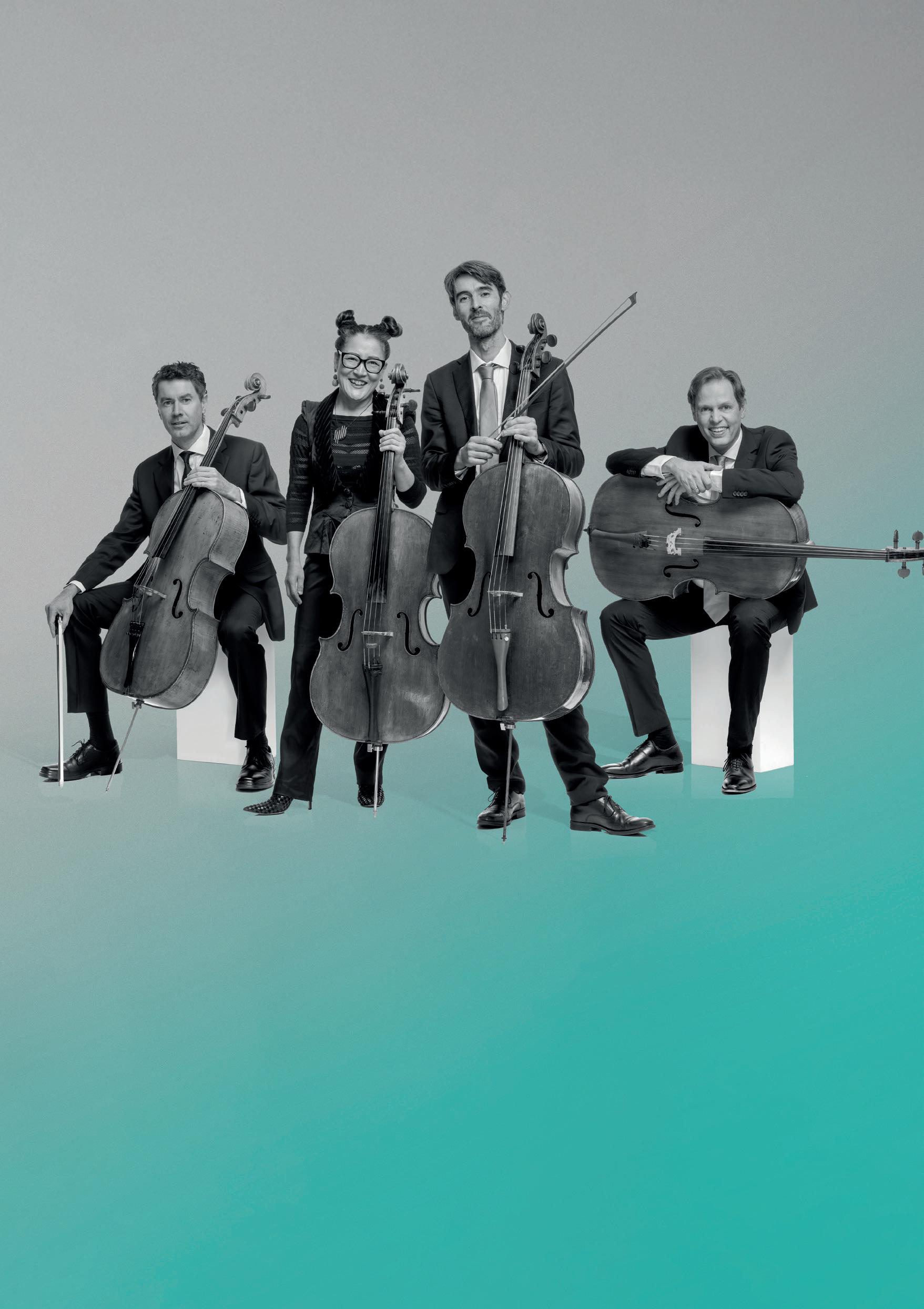
10-13 June 2026

10-13 June 2026

Kindly supported by Eriadne & George Mackintosh and Claire & Anthony Tait

Wednesday 10 June, 7.30pm Webster Memorial Theatre, Arbroath
Thursday 11 June, 7pm Greyhope School and Community Hub, Torry, Aberdeen
Friday 12 June, 7.30pm United Reformed Church, Fraserburgh
Saturday 13 June, 8pm Nairn Community & Arts Centre
VIVALDI Concerto in G minor for two cellos and strings
ARENSKY Variations on a Theme by Tchaikovsky
GIOVANNI SOLLIMA Violoncelles, Vibrez!
Interval of 20 minutes
BRITTEN Three Divertimenti
MENOTTI Suite for two cellos and strings
Philip Higham cello/director
Su-a Lee cello
Donald Gillan cello
Eric de Wit cello
THANK YOU
Our Principal Conductor’s Circle are a special part of our musical family. Their commitment and generosity benefit us all – musicians, audiences and creative learning participants alike.
Annual Fund
James and Patricia Cook
Visiting Artists Fund
Harry and Carol Nimmo
Anne and Matthew Richards
International Touring Fund
Gavin and Kate Gemmell
Learning and Participation Fund
Jo and Alison Elliot
Sabine and Brian Thomson
Productions Fund
Geoff and Mary Ball
Bill and Celia Carman
Christine Lessels
Anne, Tom and Natalie Usher
Scottish Touring Fund
Eriadne and George Mackintosh
Claire and Anthony Tait
New Music Fund
Ken Barker and Martha Vail Barker
Colin and Sue Buchan
David Caldwell
Nick and Kate Thomas
The Donald and Louise MacDonald Principal Conductor's Chair Maxim Emelyanychev
Chorus Director Gregory Batsleer
Anne McFarlane
Principal Viola Max Mandel
Ken Barker and Martha Vail Barker
Viola Steve King
Sir Ewan and Lady Brown
Principal Cello Philip Higham
Nick and Kate Thomas
Sub-Principal Cello Su-a Lee
Ronald and Stella Bowie
Cello Donald Gillan
Professor Sue Lightman
Cello Eric de Wit
Jasmine Macquaker Charitable Fund
Principal Double Bass Jamie Kenny
Erik Lars Hansen and Vanessa C L Chang
Principal Flute André Cebrián
Claire and Mark Urquhart
Sub-Principal Flute Marta Gómez
Judith and David Halkerston
Principal Oboe
The Hedley Gordon Wright Charitable Trust
Sub-Principal Oboe Katherine Bryer
Ulrike and Mark Wilson
Principal Clarinet Maximiliano Martín
Stuart and Alison Paul
Principal Bassoon Cerys Ambrose-Evans
Claire and Anthony Tait
Sub-Principal Bassoon Alison Green
George Rubienski
Principal Horn Kenneth Henderson
Caroline Hahn and Richard Neville-Towle
Timpani / Percussion Louise Lewis Goodwin
Silvia and Andrew Brown






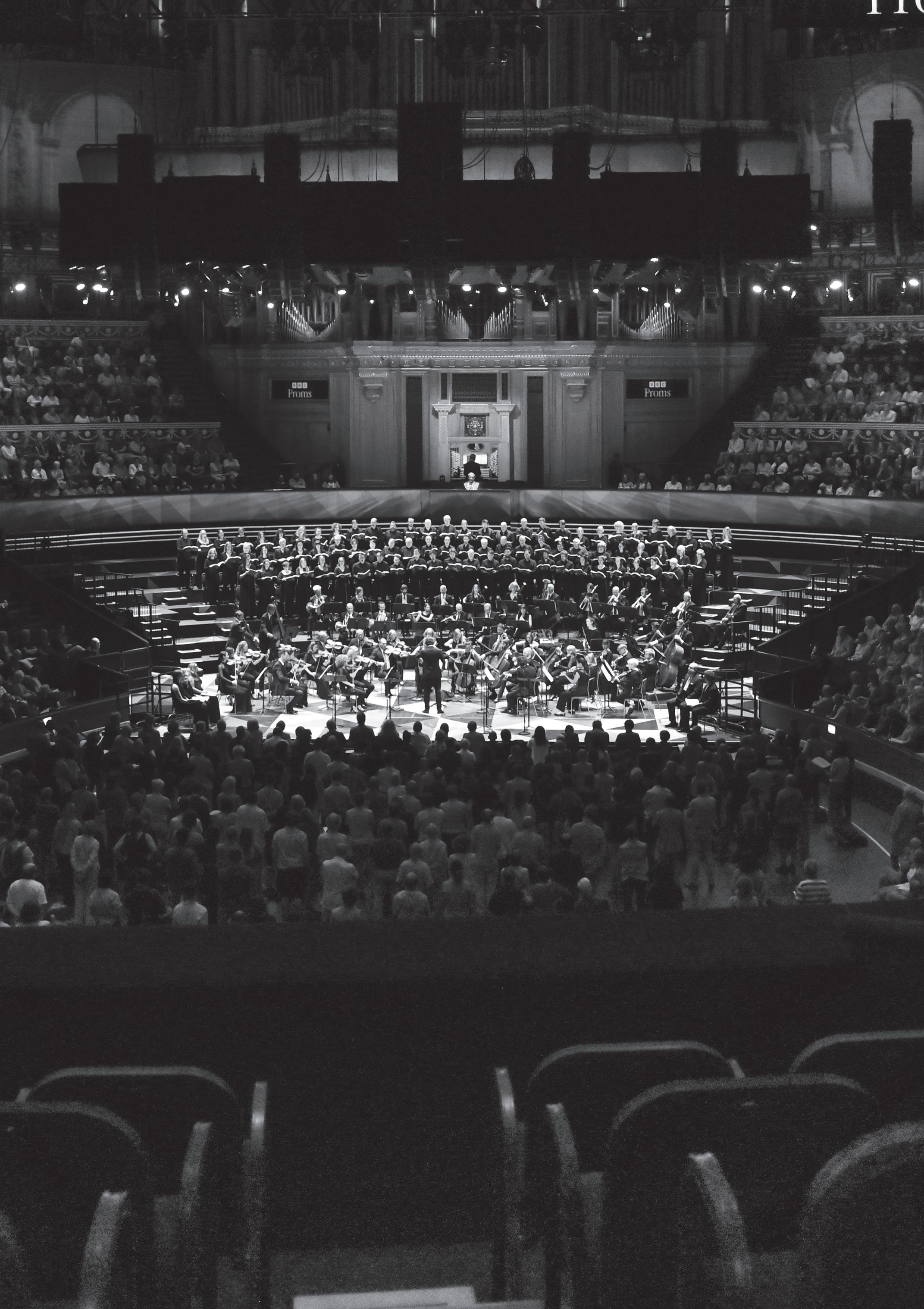
“…an orchestral sound that seemed to gleam from within.”
HM The King Patron
Donald MacDonald CBE
Life President
Joanna Baker CBE Chair
Gavin Reid LVO FRSE Chief Executive
Maxim Emelyanychev
Principal Conductor
Andrew Manze
Principal Guest Conductor
Joseph Swensen
Conductor Emeritus
Gregory Batsleer
Chorus Director
Jay Capperauld
Associate Composer
Information correct at the time of going to print Our Musicians
First Violin
Marie Schreer
Tijmen Huisingh
Amira Bedrush-McDonald
Aisling O’Dea
Fiona Alexander
Sarah Bevan Baker
Kirsty Main
Sian Holding
Second Violin
David López Ibáñez
Hatty Haynes
Wen Wang
Rachel Spencer
Stewart Webster
Emma Baird
Jamie Kenny
Principal Bass
Viola
Felix Tanner
Samantha Hutchins
Elaine Koene
Steve King
Cello
Philip Higham
Su-a Lee
Donald Gillan
Eric de Wit
Bass
Jamie Kenny
Toby Hughes
Theorbo Fábio Fernandes
VIVALDI (1678-1741)
Concerto in G minor for two cellos and strings, RV 531 (c. 1720)
Allegro
Largo
Allegro
ARENSKY (1861-1906)
Variations on a Theme by Tchaikovsky, Op. 35a (1894)
Theme: Moderato
Variation I: Un poco più mosso
Variation II: Allegro non troppo
Variation III: Andantino tranquillo
Variation IV: Vivace
Variation V: Andante
Variation VI: Allegro con spirito
Variation VII: Andante con moto
Coda: Moderato
GIOVANNI SOLLIMA (b.1962)
Violoncelles, Vibrez! (1993)
BRITTEN (1913-1976)
Three Divertimenti (1933, rev. 1936)
March
Waltz
Burlesque
MENOTTI (1911-2007)
Suite for two cellos and strings (1973)
Introduction
Scherzo
Arioso
Finale
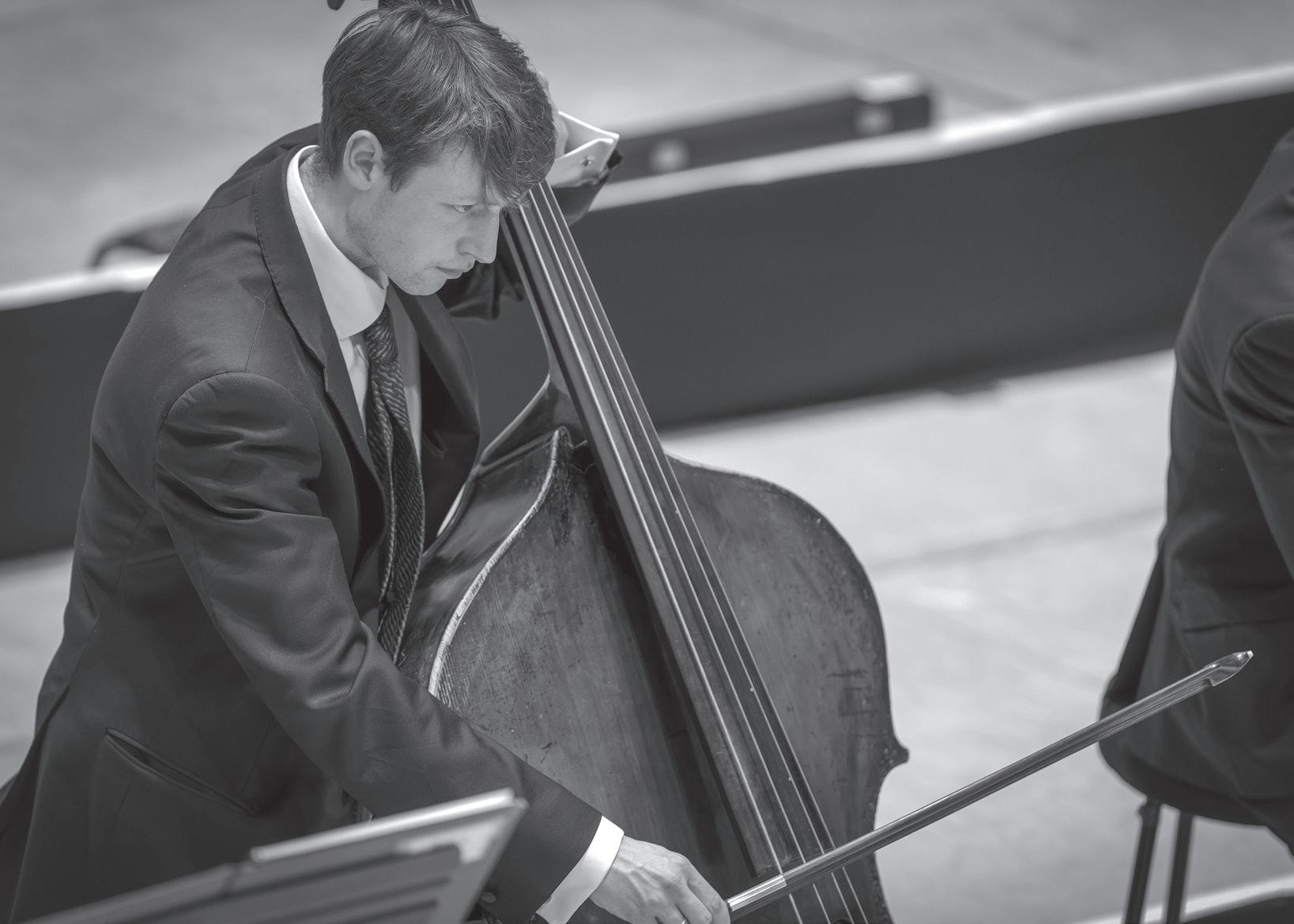
Though violinists might tell you otherwise, it’s actually the cello whose sound is closest to the human voice, in terms of both range and rich expressiveness. Composers down the centuries have known that fact, and exploited it – and though there’s little in tonight’s concert that sets out explicitly to mimic singing, there’s plenty that draws heavily on the cello’s richly emotional capabililties. And, it has to be said, on the collaboration and connection between the Scottish Chamber Orchestra’s own cellists, who join forces for no fewer than three pieces showcasing a cello duo against an orchestra of strings.
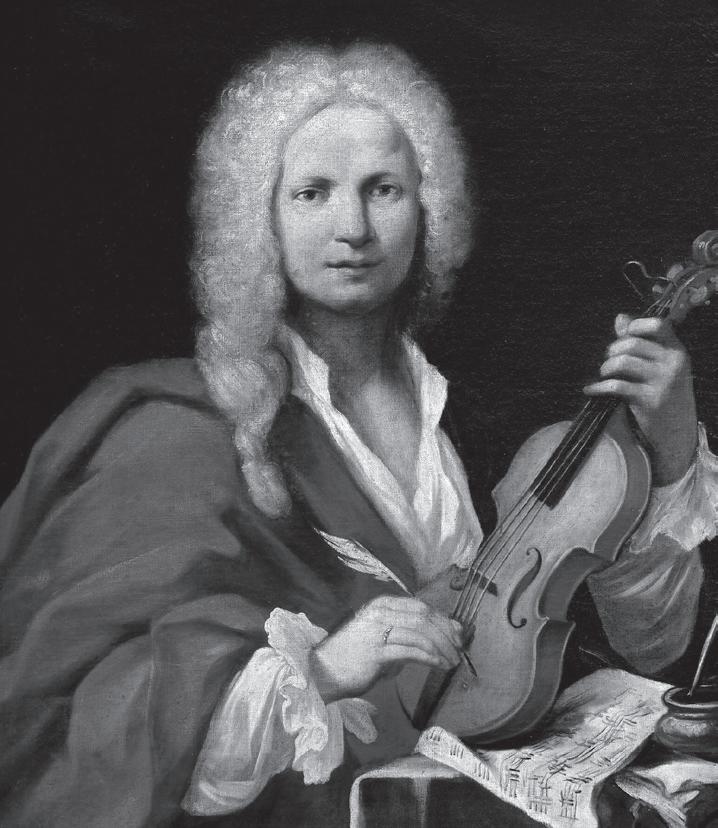
For the first of those double concertos, we look back in time three centuries. With his love of the theatrical and the virtuosic, the prolific, flame-haired priest and composer Antonio Vivaldi was one of the stars of the Baroque, travelling Europe to promote his music and impressing JS Bach, no less, into making arrangements of his music. The son of a violinist at St Mark’s Cathedral in Venice, the young Antonio received lessons from his father from an early age, but was sent to join the priesthood aged 15. Music remained his abiding passion, though: he’s said to have dashed away from the altar to note down musical ideas if they suddenly came to him.
By September 1703, he was in charge of music at Venice’s Ospedale della Pietà, one of the city’s four orphanages for girls (who were in fact mostly the illegitimate daughters of noblemen and their mistresses, hence the substantial ‘anonymous’ financial support the institution received). Vivaldi worked there until 1740, fully exploiting the Pietà’s renowned orchestra and choir in his demanding music – and providing
concertos and choral works for its weekly concerts with astonishing speed.
There must have been some talented cellists among the girls of the Ospedale della Pietà. Of the very many concertos he wrote for performance there, many place the cello firmly in the spotlight, either on its own or in a larger group of soloists, with music that’s at once deep and sonorous yet also sparkling and virtuosic. The G minor Concerto, RV531, is Vivaldi’s sole example for the unusual combination of two cellos (and in fact, it’s only an assumption – though a fairly safe one –that it was written for the Pietà at all), and its low solo instruments and sombre key give it a fascinating darkness that’s rare in Baroque music.
The two cellos make their presence felt right from the very start of the vigorous opening movement in a stomping passage over an immovable note in the bass. In fact,
With his love of the theatrical and the virtuosic, the prolific, flame-haired priest and composer Antonio Vivaldi was one of the stars of the Baroque
it’s just one example of Vivaldi playing with the traditions of Baroque concerto form –he also varies the conventional alternation of solo episodes and orchestral sections to such an extent that the movement seems almost improvised.
The soloists have an elegant, stately solo line in the brief but songful slow movement. The extrovert closing Allegro includes an unforgettable syncopated orchestral theme, which Vivaldi puts through its paces in numerous contrasting keys throughout the movement. After a frenetic passage with scrubbed repeated notes flying back and forth between soloists and orchestra, a quieter, more lyrical passage leads to the Concerto’s resolute conclusion.
We leap forward in time to 1894 for tonight’s next piece, and to a composer who’s probably nowhere near as well known as he should be. Anton Arensky came from
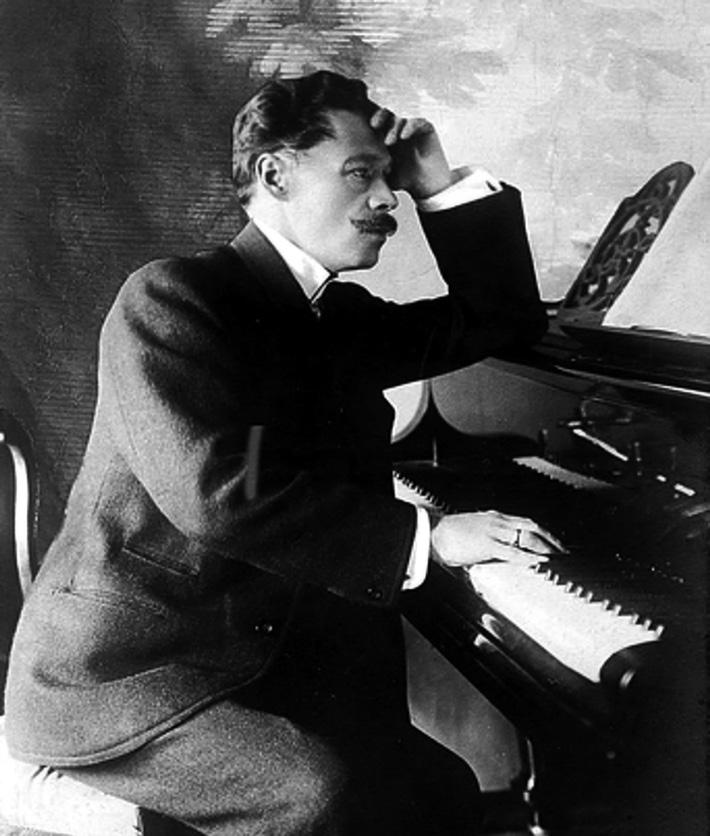
a slightly awkward generation of Russian composers who were a bit younger than Tchaikovsky and Rimsky-Korsakov, but a bit older than Rachmaninov and Stravinsky, and were thereby somewhat overshadowed by all four of these illustrious figures. In fact, Arensky studied with Rimsky-Korsakov at the St Petersburg Conservatoire and went on to follow in the footsteps of Tchaikovsky as a professor at its rival institution, the Moscow Conservatoire. He adored Tchaikovsky’s music, and greatly admired the older man’s contributions to Russian culture. The feelings were reciprocated: Tchaikovsky proved a stalwart supporter of his younger colleague, encouraging his compositions and making sure he was present for their premieres.
For his part, Arensky’s former teacher Rimsky-Korsakov was rather more withering. ‘In his youth, Arensky did not escape some influence from me,’ he observed. ‘Later, the influence came from
It’s only in recent decades that Arensky’s music has found a regular place in concert programmes, allowing today’s listeners to experience his abundant charm and immaculate craftsmanship
Tchaikovsky. He will be quickly forgotten.’ He almost was, and it’s only in recent decades that Arensky’s music has found a regular place in concert programmes, allowing today’s listeners to experience his abundant charm and immaculate craftsmanship.
Tonight’s Variations on a Theme of Tchaikovsky probably counts as one of Arensky’s most popular works today. And as its title suggests, the piece represents an overt tribute to his beloved friend, inspiration and supporter. Arensky was deeply affected by Tchaikovsky’s sudden death in 1893, and the following year took a melody from his mentor’s 16 Children’s Songs – from a song entitled ‘A Legend’ –as the basis for the slow movement of his String Quartet No. 2. It went down so well at the Quartet’s premiere that Arensky quickly rescored the piece for string orchestra, in the version we’ll hear this evening, to take it to broader audiences.
It’s a heartfelt, affectionate tribute to the older man that presents his original song-like theme before transforming it across seven increasingly elaborate variations, and closing with a gentle coda. The theme itself is a wistful melody in the first violins, first set against pizzicato accompaniment that grows smoother and more flowing as the melancholy tune continues. The first variation maintains a similar mood as the theme climbs higher through the orchestra’s instruments, while the second variation erupts with sprightly energy, the theme now heard in the violas and cellos. The lush, passionate third variation moves us into the brighter major mode, while in the fourth variation the theme is fragmented and passed between instruments against urgent off-beat accompaniment. The theme is almost hidden in the bassline in the fifth variation, against which violins and violas trace delicate melodic arabesques, while there’s an almost Vivaldian sense of clarity
Sicilian-born cellist and composer Giovanni Sollima must count as one of the most generous, all-embracing musicians working today
and energy in the stormy figurations of the sixth variation. Arensky turns his theme upside down in the veiled, introspective final variation, while the closing coda takes us back to the beginning, summing up all we’ve just heard before closing thoughtfully with Tchaikovsky’s melody in the cellos and basses.
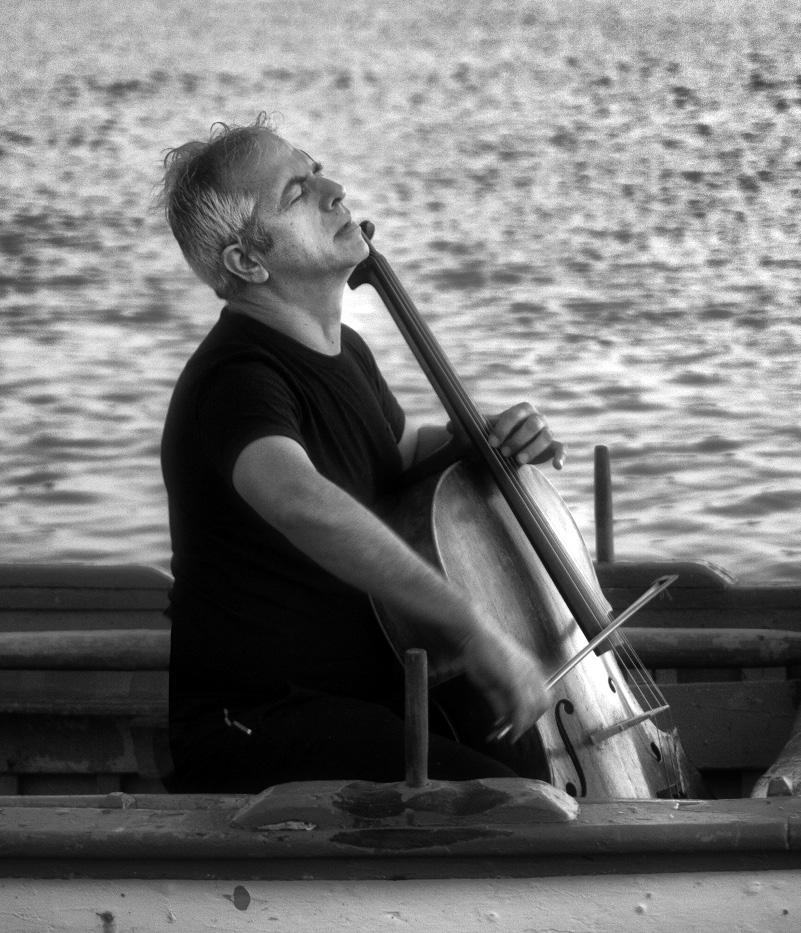
From one musical tribute to another, we leap forward in time almost exactly a century for tonight’s next piece, the second of our works for two cellos and orchestra. Sicilian-born cellist and composer Giovanni Sollima must count as one of the most generous, allembracing musicians working today, taking inspiration from classical music, rock, jazz and Mediterranean folk in works for the concert hall, film, TV and theatre. Blending all those influences into a thoroughly distinctive voice, his style is virtually unclassifiable, but nonetheless immediate and emotionally rich.
Written in 1993, Violoncelles, vibrez! is a tribute to Sollima’s former teacher
Antonio Janigro, which takes its title from an exhortation that Sollima remembers Janigro making repeatedly during lessons. Though it translates literally as ‘cellos, vibrate!’, it’s perhaps better understood as an instruction to play with richness and passion – which is precisely what’s needed in Sollima’s eclectic but deeply felt music. Its two cellists remain silent for the piece’s almost minimalist opening, which builds a sense of expectation, before they burst in with what might feel close to an Argentinian tango. The mood calms for a slower, more emotional section, to which Sollima returns again and again throughout the piece. After soaring, arching melodies, and a furious, rock-flavoured section, it’s the more emotional music that takes the piece to a surprisingly hushed conclusion.
From Sollima’s post-modernist melding of musical influences, we turn to the young
From Sollima’s post-modernist melding of musical influences, we turn to the young Benjamin Britten looking back in time to his school days
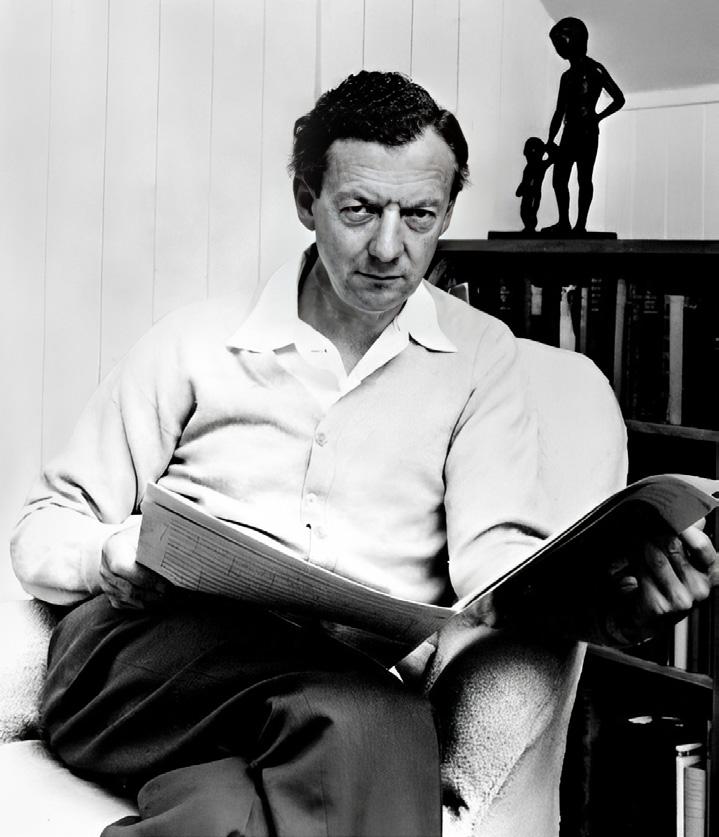
Benjamin Britten looking back in time to his school days. Britten wrote his Three Divertimenti in 1933, when he was in his early 20s and nearing the end of his time as a student at the Royal College of Music in London. The title ‘Divertimenti’ came later, though – in fact, just before the composer revised the trio of short character pieces for their first performance, at London’s Wigmore Hall in February 1936.
Britten originally intended the pieces to be part of a five-movement suite for string quartet portraying friends from his school days, which he planned to call Alla quartetto serioso ‘Go play, boy, play’ (a quote from Shakespeare’s The Winter’s Tale ). In sketches, he even indicated the school activities that the pieces depicted, using the titles ‘P.T.’, ‘At the party’ and ‘Ragging’ – although he later withdrew those specific references. In any case, the pieces provide early examples of styles that Britten would return to time and time
again in his music – the march and waltz in particular. Though originally conceived for string quartet, tonight’s version for string orchestra has been conceived by SCO Principal Cellist Philip Higham.
After its arresting unison call to attention, the March breaks into a more complex texture before its light-footed march proper begins quietly at first, and the violas later have a sardonic melody with distinctive triplets. The deceptively simple melody of the Waltz is passed from instrument to instrument, before a middle section with a yearning tune on the cellos and a return of the opening theme that disappears in a puff of air. The closing Burlesque is a whirlwind of frenetic activity, full of dramatic contrasts and striking colouristic effects.
We close tonight’s concert with the third and final piece for two cellos and orchestra, by another Italian composer –
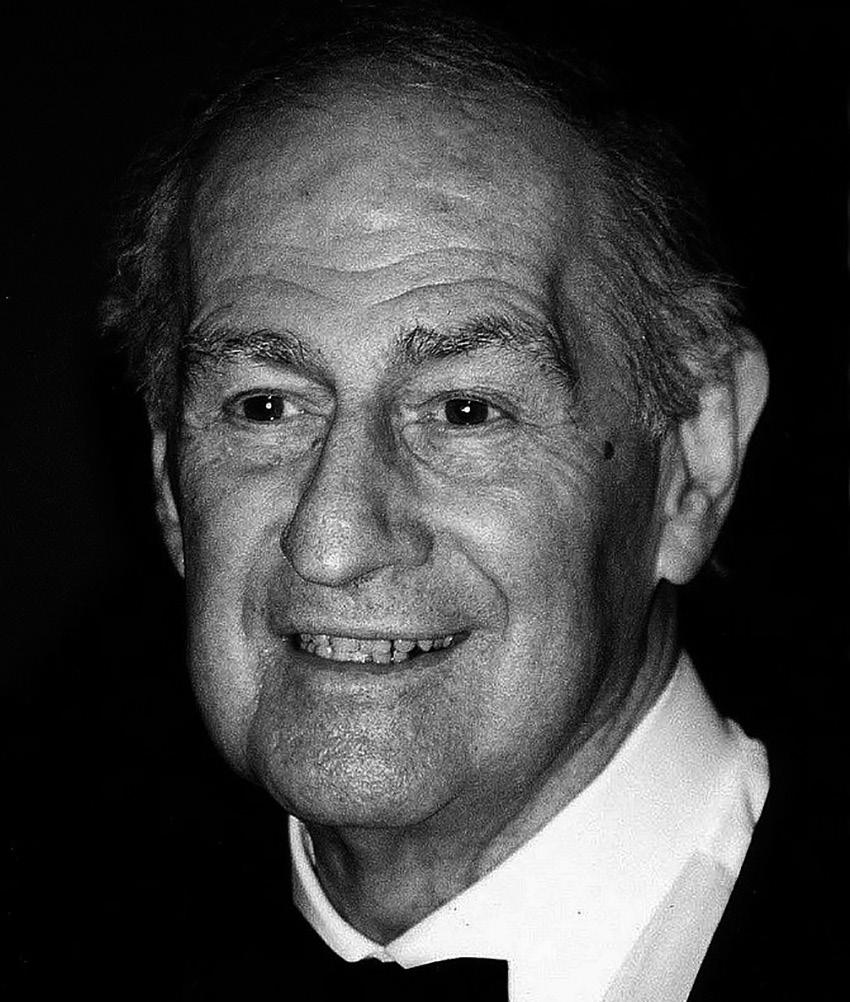
Giancarlo Menotti was born not far from Milan, but moved to the USA to study at Philadelphia’s Curtis Institute of Music and based himself in that country for the rest of his life. Among his classmates were Leonard Bernstein and Samuel Barber
albeit one who lived for most of his life in America, and (as we’ll see) also had strong Scottish connections. Giancarlo Menotti was born not far from Milan, but moved to the USA to study at Philadelphia’s Curtis Institute of Music and based himself in that country for the rest of his life. Among his classmates were Leonard Bernstein and Samuel Barber: the latter would become Menotti’s (almost) lifelong partner, both romantically and professionally across several musical collaborations.
In 1972, when Menotti was in his early 60s, he purchased Yester House, just outside Gifford in East Lothian, which he used as his European base for the rest of his life, also inviting artists for informal house parties and performances in the 18thcentury mansion: the splendid acoustics in its ballroom were one of the reasons he bought the building. After his death in 2007, Menotti was even buried nearby, in Yester Kirk graveyard.
That mix of tradition and innovation is readily apparent in tonight’s closing piece, which began life as a Suite for two cellos and piano in 1973. Menotti wrote it for the Spoleto Festival in Italy, which he’d founded in 1958, and specifically for the great cellist Gregor Piatigorsky and his student Denis Brott – though there’s no distinction in the challenges or prominence between its two cello lines
Menotti is undoubtedly best known for his immense operatic output – he created no fewer than 28 operas across his long career, among which the Christmasthemed Amahl and the Night Visitors is probably his most beloved. But he was also a prolific composer of orchestral and chamber music, maintaining a passionate, immediate, neo-Romantic musical style throughout his career that earnt him quite a lot of negative feedback from music critics more enamoured of challenging modernist styles. Nonetheless, it gives his music a certain timeless quality, with aspects that look back to earlier styles with deep affection alongside more uncompromising elements that are clearly from the 20th century.
That mix of tradition and innovation is readily apparent in tonight’s closing piece, which began life as a Suite for two cellos and piano in 1973. Menotti wrote it for
the Spoleto Festival in Italy, which he’d founded in 1958, and specifically for the great cellist Gregor Piatigorsky and his student Denis Brott – though there’s no distinction in the challenges or prominence between its two cello lines.
With its clipped rhythms and pulsing harmonies, the serious-minded Introduction seems to look back to earlier music, though it spins its melodies in a distinctly modern way. The Scherzo is a scampering dance that sends its soloists running athletically up and down their instruments, while the two cellists spin an elegant, slightly wistful song together in the slower Arioso that follows. Menotti closes with the Suite’s quickest, most exuberant music in the Finale, whose twisting melodies and unpredictable rhythms bring the piece to a vibrant conclusion.
© David Kettle
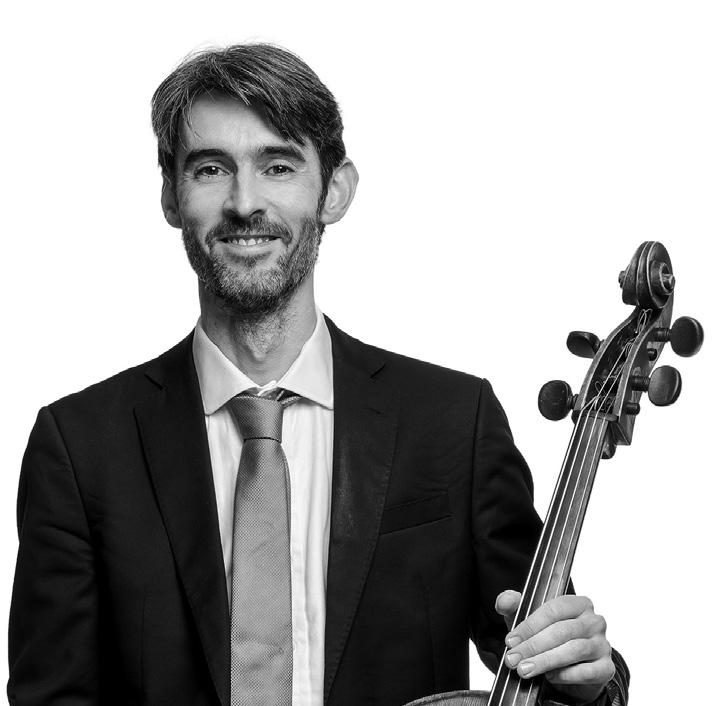
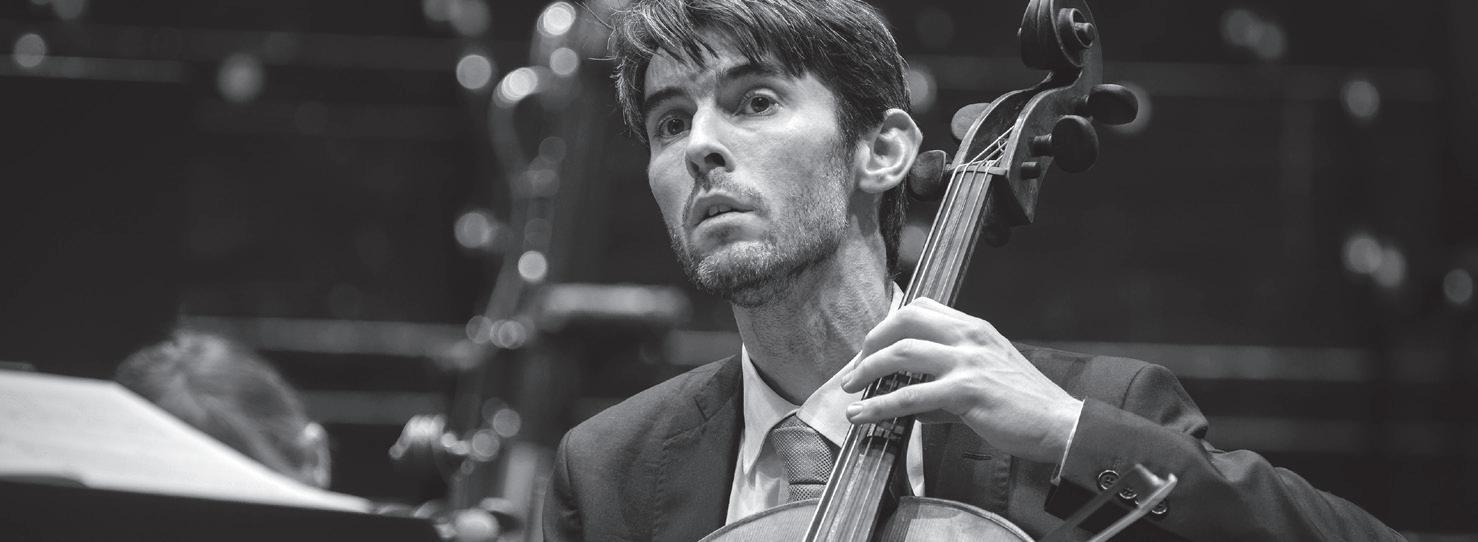
Born in Edinburgh, Philip studied with Ruth Beauchamp at St Mary's Music School and subsequently at the RNCM with Emma Ferrand and Ralph Kirshbaum. He also enjoyed mentoring from Steven Isserlis. In 2008 he became the first UK cellist to win 1st Prize in the Bach Leipzig competition, and followed it with major prizes in 2009 Lutoslawski Competition, and the 2010 Grand Prix Emmanuel Feuermann in Berlin. He was selected for representation by Young Classical Artist Trust between 2009 and 2014.
He has appeared as soloist with the Philharmonia Orchestra, the Hallé Orchestra (broadcast by BBC Radio 3), the Royal Northern Sinfonia and Bournemouth Symphony Orchestra. He has given recitals at the Wigmore Hall, Brighton Festival and Lichfield Festival, and further afield in Germany, Istanbul and Washington DC. In 2014 he performed the complete Bach Suites in Tokyo at the Musashino Cultural Foundation, and again at Wigmore Hall in 2017.
Philip has been described as ‘possessing that rare combination of refined technique with subtle and expressive musicianship… all the qualities of a world-class artist’ (The Strad), and has been praised for his ‘expansive but tender playing’ (Gramophone). His debut recording of the Britten Solo Suites (Delphian, 2013) was named instrumental disc of the month in both Gramophone and BBC Music magazines. He has also released the complete Bach Suites, to critical acclaim.
Philip was appointed Principal Cello of the Scottish Chamber Orchestra in 2016. He plays a fine Milanese cello by Carlo Giuseppe Testore, made in 1697, and is grateful for continued support from Harriet's Trust.
Philip's Chair is kindly supported by The Thomas Family.
For full biography please visit sco.org.uk
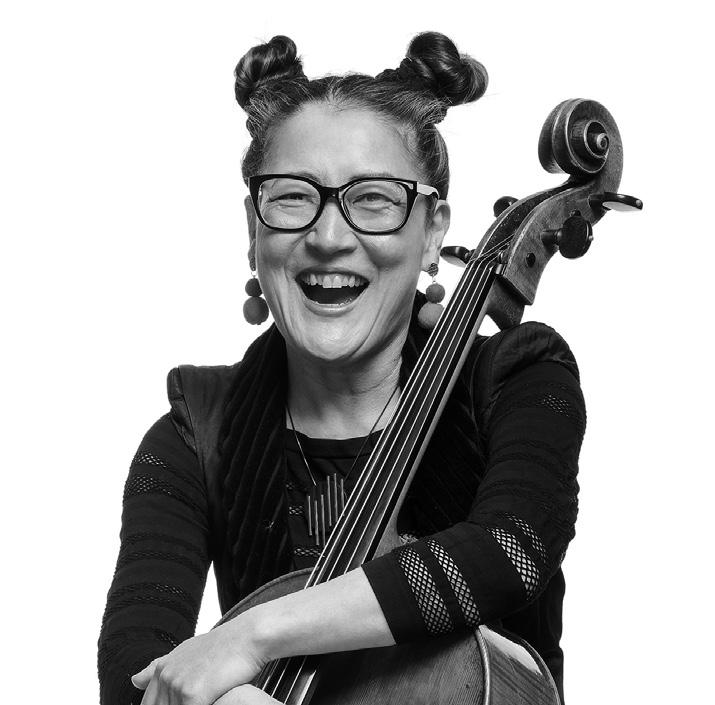
Korean born cellist Su-a Lee is one of the highlights of the Scottish music scene. Celebrated wherever she goes, she stands out for her versatility, popularity, and appetite for musical adventure.
Born in Seoul, Su-a trained at Chetham's School of Music, completing her studies at the Juilliard School in New York, before moving to Scotland to join the SCO. While she is deeply rooted in her Scottish home, Su-a and her cello have appeared all over the world, from South America to the Arctic Circle. They are just as likely to be found in world famous concert halls as they are in Japanese temples, circus tents and waterfalls. She has appeared in recital with her sister, Songa Lee, at Carnegie Hall in New York, as well as in chamber music concerts across Scotland with her SCO colleagues.
Though Su-a spends most of her time playing classical music, she is also very much in demand across a wide musical spectrum – recording on her musical saw for Eric Clapton; improvising with Belgian theatre group Reckless Sleepers; performing diverse repertoire as a founding member of Mr McFall’s Chamber and touring India with the Sarod maestro, Amjad Ali Khan.
With a special passion for working with young musicians, Su-a regularly participates in SCO Creative Learning’s education and community work. She is Patron-in-Chief of the Perth Youth Orchestra and a regular coach for the Benedetti Foundation and the National Youth Orchestras of Scotland.
Su-a Lee is an Associate Member of the Martyn Bennett Trust, and a Trustee of the Boards of the Soundhouse Trust, Nevis Ensemble and Tinderbox Orchestra.
Su-a's Chair is kindly supported by Ronald and Stella Bowie.
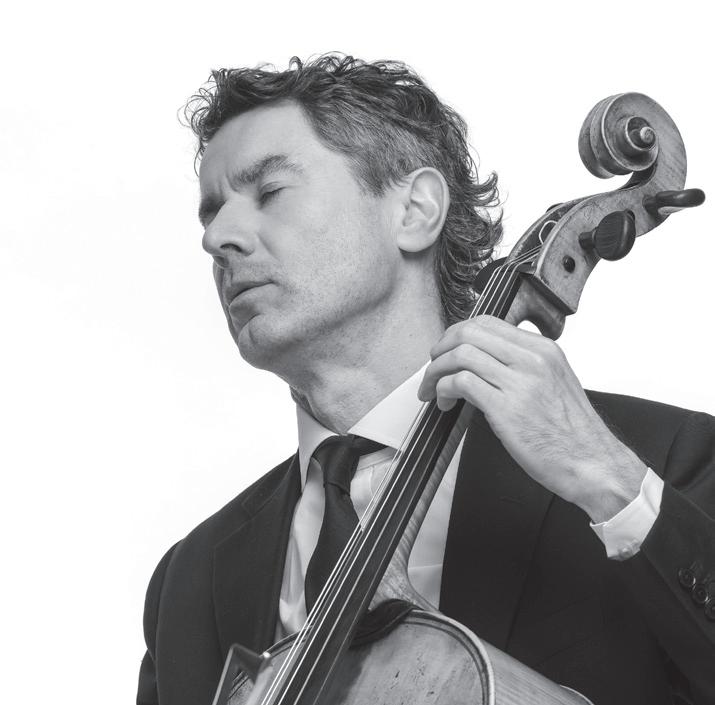
Donald Gillan joined the SCO in 2007. Before that he enjoyed a busy freelance career playing with chamber groups and orchestras including the Scottish, Paragon and Hebrides Ensembles, Northern Sinfonia, BBC SSO and Scottish Opera.
Donald studied with Eileen Croxford and William Pleeth as a scholarship student at the Royal College of Music where he won all the major cello prizes. After leaving the RCM, he won the Muriel Taylor Cello Prize which enabled him to continue post-graduate study with Emma Ferrand and Ralph Kirshbaum at the Royal Northern College of Music.
Donald’s varied career has also included writing music and playing with theatre companies, recording solo cello for film soundtracks, and sessions with numerous pop/folk groups and singers. Tours abroad have taken him as far as Japan and Montreal and he has performed many of the major cello concertos with various orchestras.
Donald plays on an English cello by Thomas Dodd c.1815.
Donald's chair is kindly supported by Professor Sue Lightman.
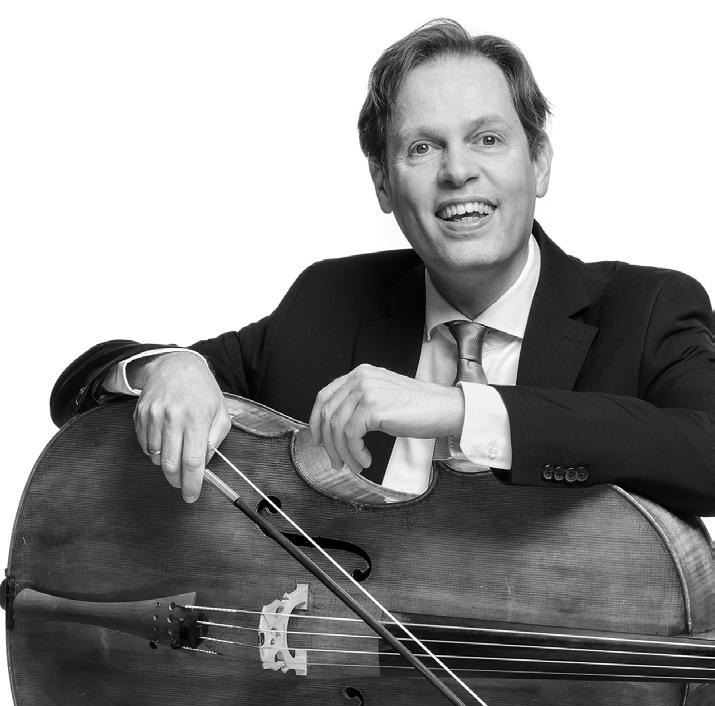
Dutch cellist Eric de Wit studied with Dmitri Ferschtman in Amsterdam and with Richard Lester at the Guildhall School of Music & Drama in London. He also took part in masterclasses with Anner Bylsma, Colin Carr, Steven Isserlis, Frans Helmerson, Ralph Kirshbaum and Heinrich Schiff.
Before moving to Scotland, Eric was a member of the Cristofori Piano Quartet, as well as a regular guest with the Combattimento Consort Amsterdam, the Netherlands Chamber Orchestra, Amsterdam Sinfonietta, ASKO|Schönberg and the Netherlands Radio Chamber Philharmonic.
Eric joined the Scottish Chamber Orchestra as a member in 2010. Besides SCO, he enjoys playing with period instrument groups, including the Dunedin Consort, the Orchestra of the Age of Enlightenment, the Orchestre Révolutionnaire et Romantique and John Eliot Gardiner’s new group, the Constellation Choir and Orchestra.
He performs on a cello made for him by Stephan von Baehr (Paris, 2016).
Eric's Chair is kindly supported by the Jasmine Macquaker Charitable Fund.
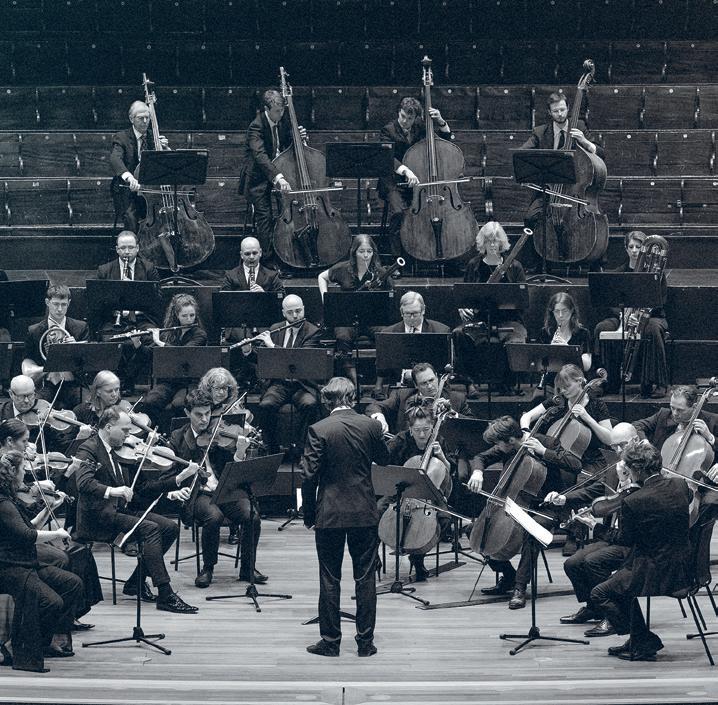
The Scottish Chamber Orchestra (SCO) is one of Scotland’s five National Performing Companies and has been a galvanizing force in Scotland’s music scene since its inception in 1974. The SCO believes that access to world-class music is not a luxury but something that everyone should have the opportunity to participate in, helping individuals and communities everywhere to thrive. Funded by the Scottish Government, City of Edinburgh Council and a community of philanthropic supporters, the SCO has an international reputation for exceptional, idiomatic performances: from mainstream classical music to newly commissioned works, each year its wide-ranging programme of work is presented across the length and breadth of Scotland, overseas and increasingly online.
Equally at home on and off the concert stage, each one of the SCO’s highly talented and creative musicians and staff is passionate about transforming and enhancing lives through the power of music. The SCO’s Creative Learning programme engages people of all ages and backgrounds with a diverse range of projects, concerts, participatory workshops and resources. The SCO’s current five-year Residency in Edinburgh’s Craigmillar builds on the area’s extraordinary history of Community Arts, connecting the local community with a national cultural resource.
An exciting new chapter for the SCO began in September 2019 with the arrival of dynamic young conductor Maxim Emelyanychev as the Orchestra’s Principal Conductor. His tenure has recently been extended until at least 2031. The SCO and Emelyanychev released their first album together (Linn Records) in 2019 to widespread critical acclaim. Their second recording together, of Mendelssohn symphonies, was released in 2023, with Schubert Symphonies Nos 5 and 8 following in 2024.
The SCO also has long-standing associations with many eminent guest conductors and directors including Principal Guest Conductor Andrew Manze, Pekka Kuusisto, François Leleux, Nicola Benedetti, Isabelle van Keulen, Anthony Marwood, Richard Egarr, Mark Wigglesworth, Lorenza Borrani and Conductor Emeritus Joseph Swensen.
The Orchestra’s current Associate Composer is Jay Capperauld. The SCO enjoys close relationships with numerous leading composers and has commissioned around 200 new works, including pieces by Sir James MacMillan, Anna Clyne, Sally Beamish, Martin Suckling, Einojuhani Rautavaara, Karin Rehnqvist, Mark-Anthony Turnage, Nico Muhly and the late Peter Maxwell Davies.
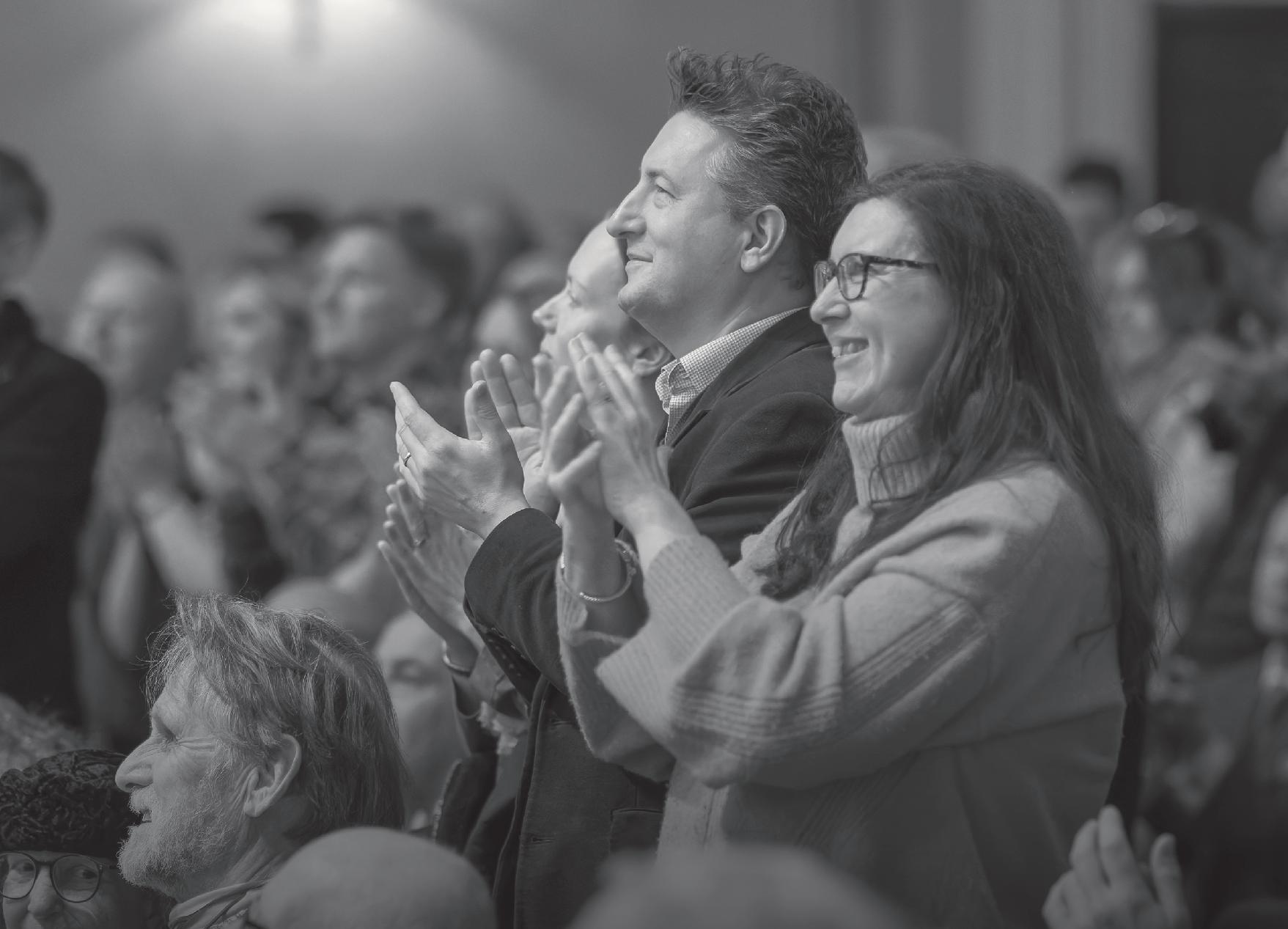
This summer, we are bringing world-class music to 26 towns and cities across Scotland, stretching from Fraserburgh in the northeast to Kirkcudbright in the southwest! The programmes take in everything from firm favourites to a host of lesser-known gems, with several SCO Principals among the soloists.
Your donation will help deepen our connections with local communities, showcase our exceptional musicians, and bring world-class performances to audiences who rarely have the opportunity to experience live orchestral music in their area. For more information on how you can become a regular donor, please get in touch with Hannah on 0131 478 8364 or hannah.wilkinson@sco.org.uk.

The SCO is a charity registered in Scotland No SC015039.
Photo: Christopher Bowen