13-15 May 2026

13-15 May 2026
Kindly supported by Claire and Mark Urquhart
In memory of Brian Schiele
Wednesday 13 May, 7.30pm Perth Concert Hall
Thursday 14 May, 7.30pm Usher Hall, Edinburgh
Friday 15 May, 7.30pm City Halls, Glasgow
SHOSTAKOVICH Symphony No.9
SHOSTAKOVICH Piano Concerto No.1
Interval of 20 minutes
DVOŘÁK Symphony No.9
Maxim Emelyanychev conductor
Steven Osborne piano
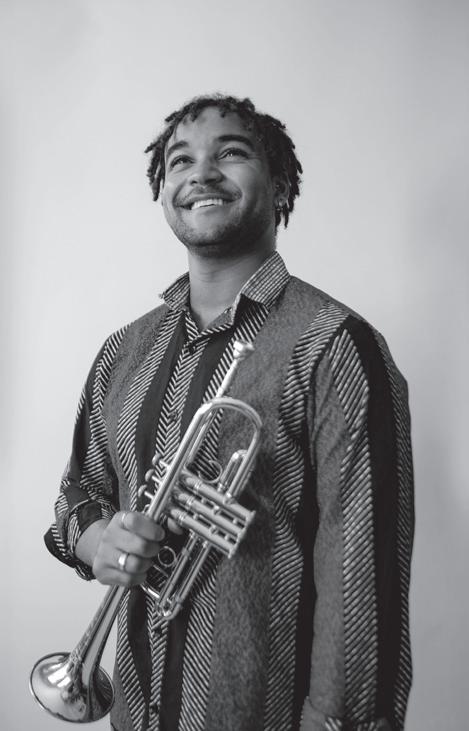
Aaron Azunda Akugbo trumpet
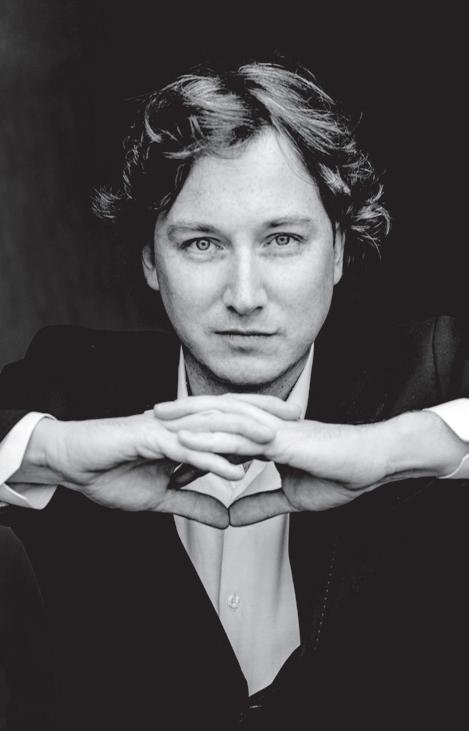
Maxim Emelyanychev
4 Royal Terrace, Edinburgh EH7 5AB
+44 (0)131 557 6800 | info@sco.org.uk | sco.org.uk
The Scottish Chamber Orchestra is a charity registered in Scotland No. SC015039. Company registration No. SC075079.
THANK YOU
Our Principal Conductor’s Circle are a special part of our musical family. Their commitment and generosity benefit us all – musicians, audiences and creative learning participants alike.
Annual Fund
James and Patricia Cook
Visiting Artists Fund
Harry and Carol Nimmo
Anne and Matthew Richards
International Touring Fund
Gavin and Kate Gemmell
Learning and Participation Fund
Jo and Alison Elliot
Sabine and Brian Thomson
CHAIR SPONSORS
Productions Fund
Geoff and Mary Ball
Bill and Celia Carman
Anne, Tom and Natalie Usher
Scottish Touring Fund
Eriadne and George Mackintosh
Claire and Anthony Tait
New Music Fund
Ken Barker and Martha Vail Barker
Colin and Sue Buchan
David Caldwell
The Donald and Louise MacDonald Principal Conductor's Chair Maxim Emelyanychev
Chorus Director Gregory Batsleer
Anne McFarlane
Second Violin Rachel Smith in Memory of J Douglas Home
Principal Viola Max Mandel
Ken Barker and Martha Vail Barker
Viola Brian Schiele
Christine Lessels
Viola Steve King
Sir Ewan and Lady Brown
Principal Cello Philip Higham
The Thomas Family
Sub-Principal Cello Su-a Lee
Ronald and Stella Bowie
Cello Donald Gillan
Professor Sue Lightman
Cello Eric de Wit
Jasmine Macquaker Charitable Fund
Principal Double Bass Jamie Kenny
Erik Lars Hansen and Vanessa C L Chang
Principal Flute André Cebrián
Claire and Mark Urquhart
Sub-Principal Flute Marta Gómez
Judith and David Halkerston
Principal Oboe
The Hedley Gordon Wright Charitable Trust
Sub-Principal Oboe Katherine Bryer
Ulrike and Mark Wilson
Principal Clarinet Maximiliano Martín
Stuart and Alison Paul
Principal Bassoon Cerys Ambrose-Evans
Claire and Anthony Tait
Sub-Principal Bassoon Alison Green
George Rubienski
Principal Horn Kenneth Henderson
Caroline Hahn and Richard Neville-Towle
Timpani / Percussion Louise Lewis Goodwin
Silvia and Andrew Brown






Diamond
The Cockaigne Fund
Malcolm and Avril Gourlay
John and Jane Griffiths
James and Felicity Ivory
George Ritchie
Tom and Natalie Usher
Platinum
E.C. Benton
Michael and Simone Bird
John and Maggie Bolton
Silvia and Andrew Brown
Dr Peter Williamson and Ms Margaret Duffy
David and Elizabeth Hudson
Helen B Jackson
Dr and Mrs Peter Jackson
Dr Daniel Lamont
Graham and Elma Leisk
Professor and Mrs Ludlam
Chris and Gill Masters
Paul Maxwell, in loving memory of Ruth Maxwell
Duncan and Una McGhie
Anne-Marie McQueen
James F Muirhead
Robin and Catherine Parbrook
Jane Peacock in memory of Douglas Peacock
Charles Platt and Jennifer Bidwell
Patrick and Susan Prenter
Mr and Mrs J Reid
The Walter and Janet Reid Charitable Trust
Martin and Mairi Ritchie
Hilary E Ross
Elaine Ross
Sir Muir and Lady Russell
Jill and Brian Sandford
Michael and Elizabeth Sudlow
Robert and Elizabeth Turcan
Alan and Sue Warner
Bill Welsh
Anny and Bobby White
Robert Mackay and Philip Whitley
Finlay and Lynn Williamson
Ruth Woodburn
Gold
Peter Armit
Adam Gaines and Joanna Baker
Elizabeth Brittin
Kate Calder
James Wastle and Glenn Craig
Jo and Christine Danbolt
James and Caroline Denison-Pender
Andrew and Kirsty Desson
David and Sheila Ferrier
Chris and Claire Fletcher
James Friend
Iain Gow
Margaret Green
Christopher and Kathleen Haddow
Catherine Johnstone
Julie and Julian Keanie
Gordon Kirk
Janey and Barrie Lambie
Mike and Karen Mair
Roy and Svend McEwan-Brown
John and Liz Murphy
Tom Pate
Maggie Peatfield
Sarah and Spiro Phanos
Alison and Stephen Rawles
Andrew Robinson
Olivia Robinson
Anne McAlister and Philip Sawyer
Irene Smith
Dr Jonathan Smithers
Ian S Swanson
Ian and Janet Szymanski
John-Paul and Joanna Temperley
Douglas and Sandra Tweddle
Catherine Wilson
Neil and Philippa Woodcock
Georgina Wright
Silver
John Anderson
Roy Alexander
Fiona and Neil Ballantyne
The Batsleer Family
Jack Bogle
Jane Borland
Alan Borthwick
Dinah Bourne
Michael and Jane Boyle
Mary Brady
Paula and Colin Brown
John Brownlie
Laura Buist
Robert Burns
Mr A Campbell
Sheila Colvin
Lorn and Camilla Cowie
Adam and Lesley Cumming
Dr Wilma Dickson
Seona Reid and Cordelia Ditton
Sylvia Dow
Colin Duncan in memory of Norma Duncan
Richard and Cath Dyer
Raymond Ellis
Dr and Mrs Alan Falconer
Sheila Ferguson
Dr William Irvine Fortescue
Dr David Grant
Anne Grindley
Andrew Hadden
J Martin Haldane
Ronnie and Ann Hanna
Roderick Hart
Norman Hazelton
Alistair Hector
Ron and Evelynne Hill
Philip Holman
Clephane Hume
Tim and Anna Ingold
David and Pamela Jenkins
Margaret Mortimer and Ken Jobling
Ross D. Johnstone
James Kelly, in memory of Mairi Kelly
Professor Christopher and Mrs Alison Kelnar
Dr Ian Laing
Geoff Lewis
Dorothy A Lunt
Vincent Macaulay
James McClure in memory of Robert Duncan
Ben McCorkell
Lucy McCorkell
Gavin McCrone
Michael McGarvie
Brian Miller
Alistair Montgomerie
Norma Moore
Andrew Murchison
Pamela Andrews and Alan Norton
Gilly Ogilvy-Wedderburn
Mairi & Ken Paterson
John Peutherer in memory of Audrey Peutherer
James S Potter
Timothy Barnes and Janet Sidaway
Catherine Steel
John and Angela Swales
Takashi and Mikako Taji
C S Weir
Susannah Johnston and Jamie Weir
David and Lucy Wren
Roderick Wylie
We are indebted to everyone acknowledged here who gives philanthropic gifts to the SCO of £300 or greater each year, as well as those who prefer to remain anonymous.
We are also incredibly thankful to the many individuals not listed who are kind enough to support the Orchestra financially on a regular or ad hoc basis. Every single donation makes a difference.
Become a regular donor, from as little as £5 a month, by contacting Hannah Wilkinson on 0131 478 8364 or hannah.wilkinson@sco.org.uk.
“…an orchestral sound that seemed to gleam from within.”
HM The King Patron
Donald MacDonald CBE
Life President
Joanna Baker CBE Chair
Gavin Reid LVO
Chief Executive
Maxim Emelyanychev
Principal Conductor
Andrew Manze
Principal Guest Conductor
Joseph Swensen
Conductor Emeritus
Gregory Batsleer
Chorus Director
Jay Capperauld
Associate Composer
Information correct at the time of going to print Our Musicians
This concert will be played on natural brass/timpani throughout.
First Violin
Sini Simonen
Afonso Fesch
Kana Kawashima
Aisling O’Dea
Amira Bedrush-McDonald
Huw Daniel
Sarah Bevan-Baker
Wen Wang
Amy Cardigan
Second Violin
Lise Aferiat
Michelle Dierx
Jess Hall
Rachel Smith
Kristin Deeken
Catherine James
Kirsty Main
Andrew Roberts
Serena Whitmarsh
Viola
Max Mandel
Francesca Gilbert
Katie Heller
Steve King
Kathryn Jourdan
Mark Brathwaite
Cello
Philip Higham
Su-a Lee
Donald Gillan
Eric de Wit
Niamh Molloy
Kim Vaughan
Bass
Jamie Kenny
Toby Hughes
Ben Havinden-Williams
Maitiú Gaffney
Flute
André Cebrián
Marta Gómez
Alba Vinti López
Piccolo
Marta Gómez
Oboe
Clara Schweinberger
Katherine Bryer
Cor Anglais
Katherine Bryer
Clarinet
Maximiliano Martín
William Stafford
Bassoon
Cerys Ambrose-Evans
Alison Green
Marta Gómez
Sub-Principal Flute
Horn
Kenneth Henderson
Martin Lawrence
Gavin Edwards
Rachel Brady
Trumpet
Peter Franks
Brian McGinley
Trombone
Duncan Wilson
Nigel Cox
Bass Trombone
Alan Adams
Tuba
Craig Anderson
Timpani
Louise Lewis Goodwin
Percussion
Alasdair Kelly
Kate Openshaw
Robbie Bremner
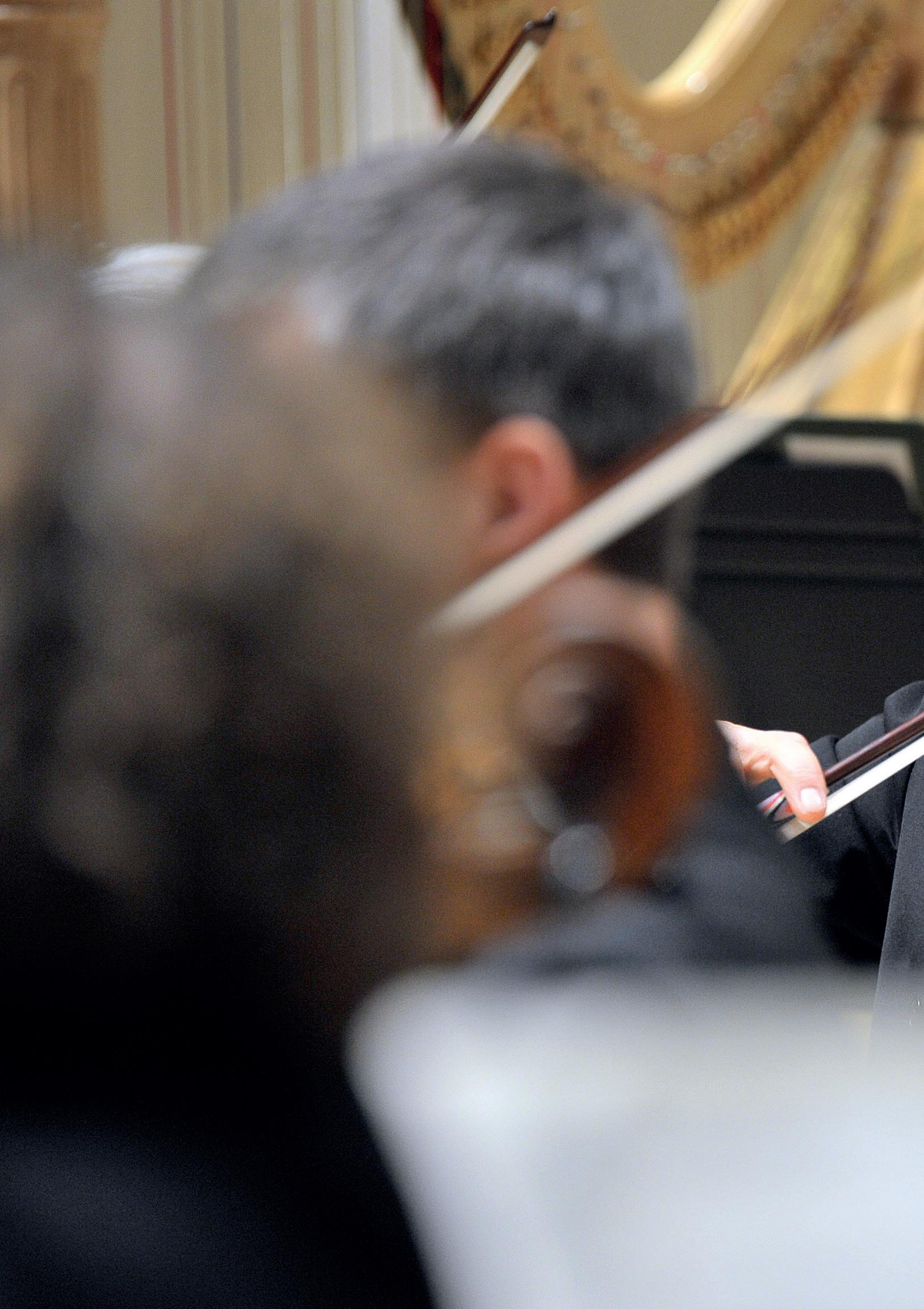
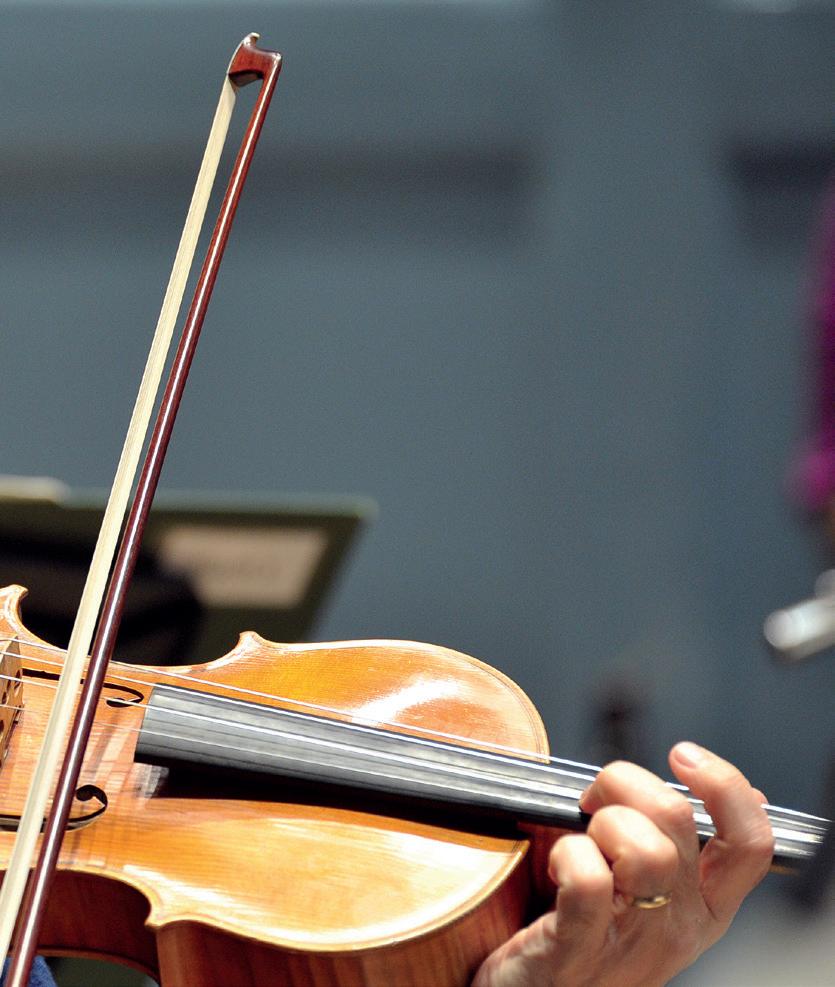
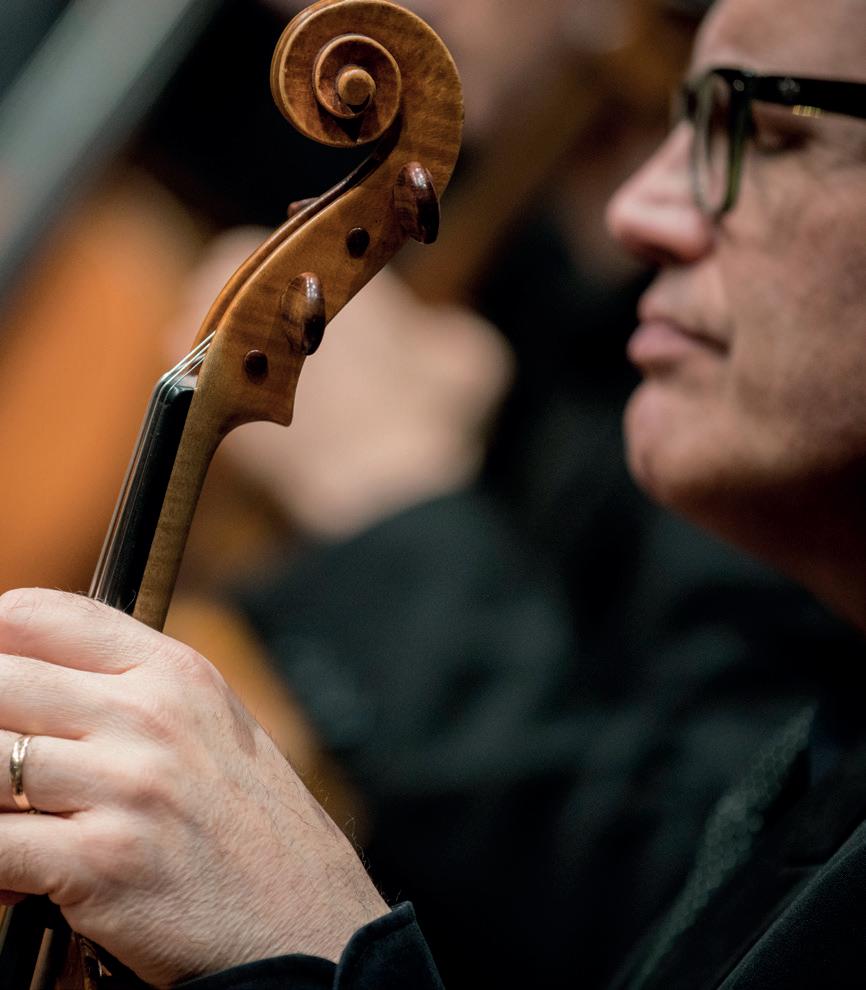
The Scottish Chamber Orchestra is deeply saddened by the death of Brian Schiele, a much-loved violist and one of the longestserving members of the Orchestra. This week we dedicate our concerts in Perth, Edinburgh and Glasgow to Brian’s memory.
Brian was a familiar and valued presence on the SCO platform for more than 30 years, admired by colleagues for his exceptional musicianship, professionalism and quiet generosity of spirit. He brought warmth, integrity and musical sensitivity to the heart of the Orchestra, always open to new ideas and contributing immeasurably both to the collective sound and the trust that underpins great ensemble playing.
Beyond the concert platform, Brian was consistently generous with his time and experience. He played an active role in the development of the SCO over many years and was particularly supportive of younger musicians, offering advice and encouragement at key early stages of their careers. His commitment to shared learning and collaboration reflected values he lived every day.
Brian’s courage over a prolonged period of illness, and his determination to return to playing, were an inspiration to colleagues. He will be remembered with affection, gratitude and deep respect. Our thoughts are with his family, friends and loved ones.
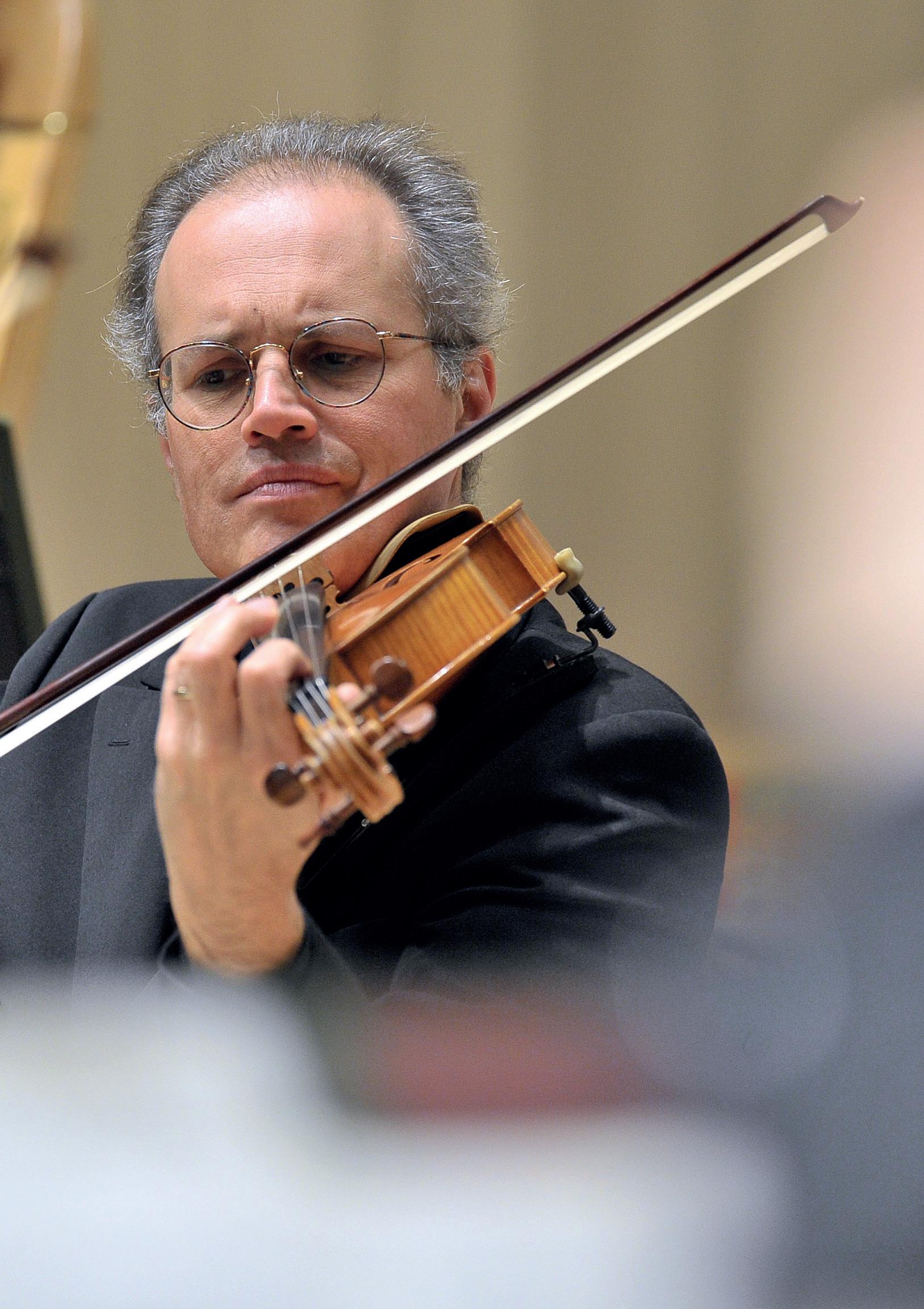
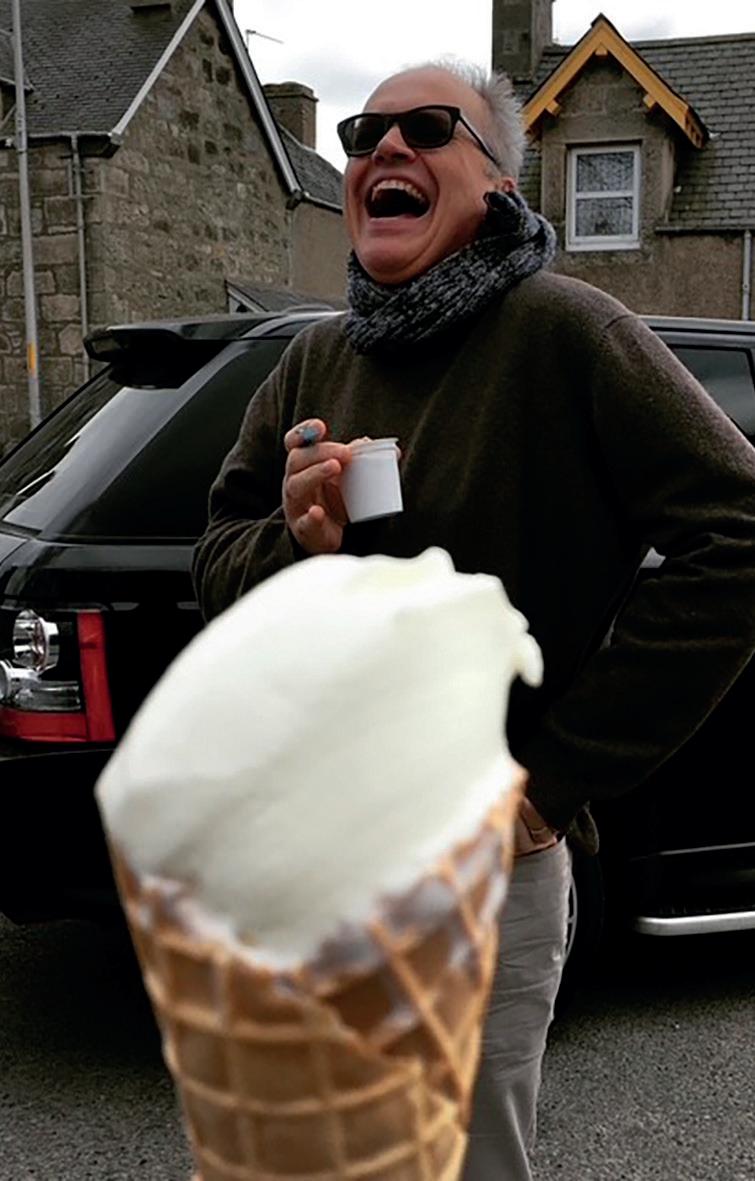
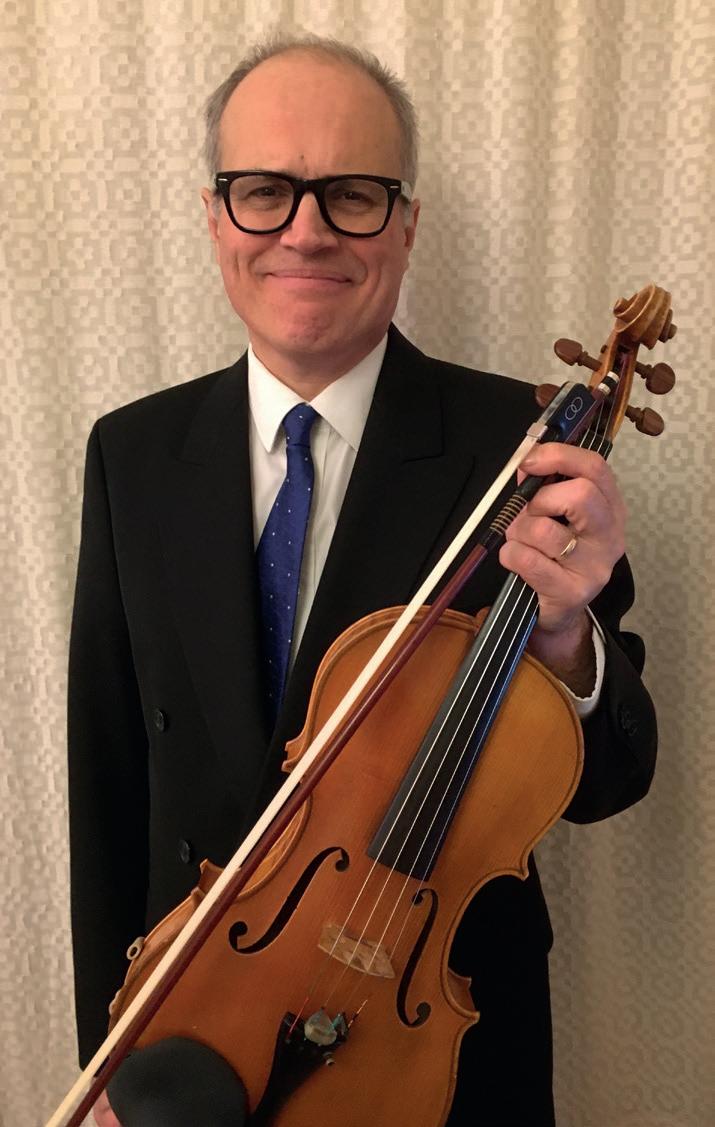
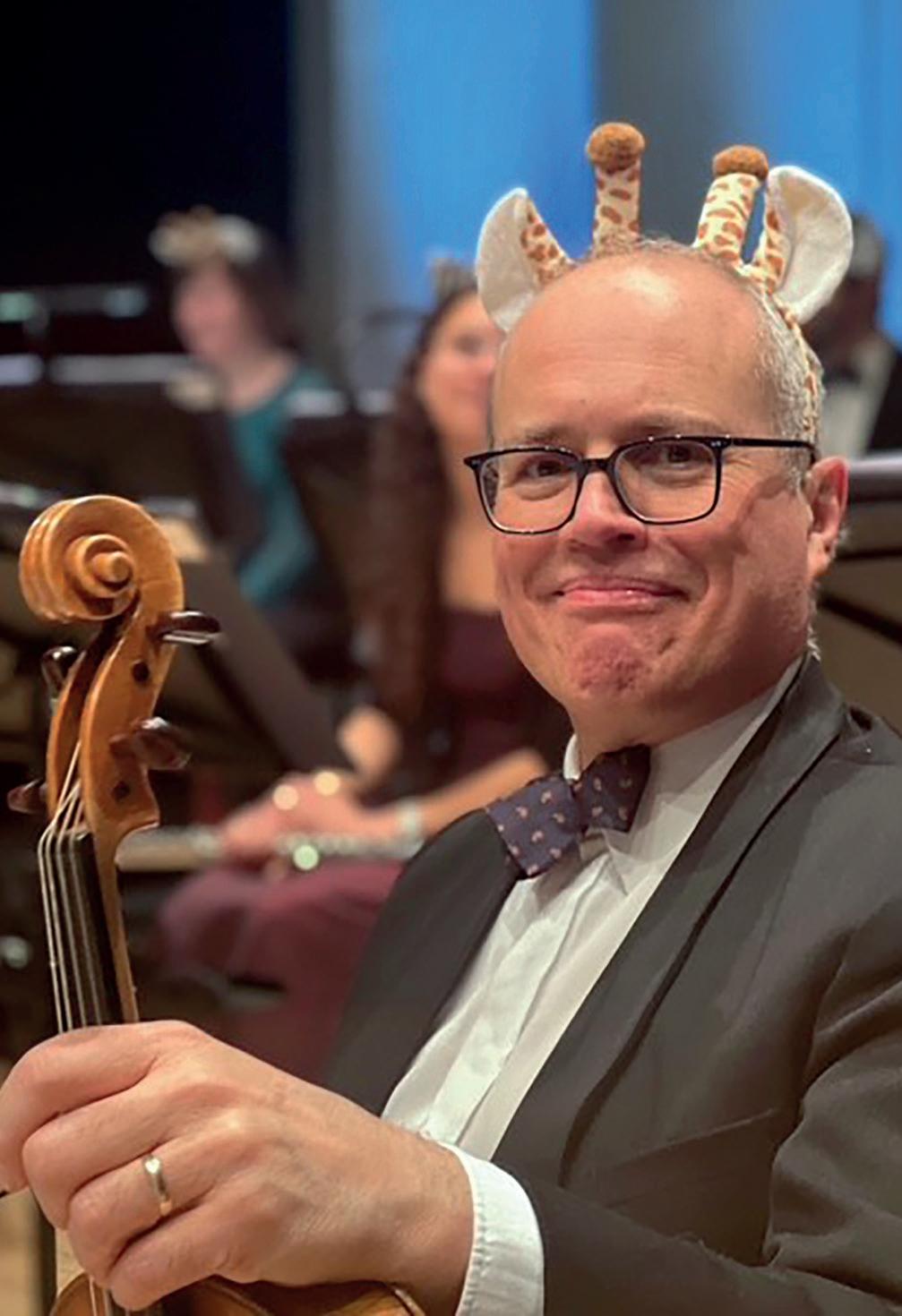
Philip Higham SCO Cello
I used to refer to Brian as a "Man of Requirement" - that is, a colleague who always seemed to be able to miraculously provide whatever one needed (or, usually in my case, had forgotten): black socks, shoes, ties (yes, including the famous green one) but also all manner of instrumental accessories, from nail clippers to bows and even instruments themselves! His willingness to be of help to others was unwavering and exemplary, and went hand in hand with his passion and dedication to working at SCO.
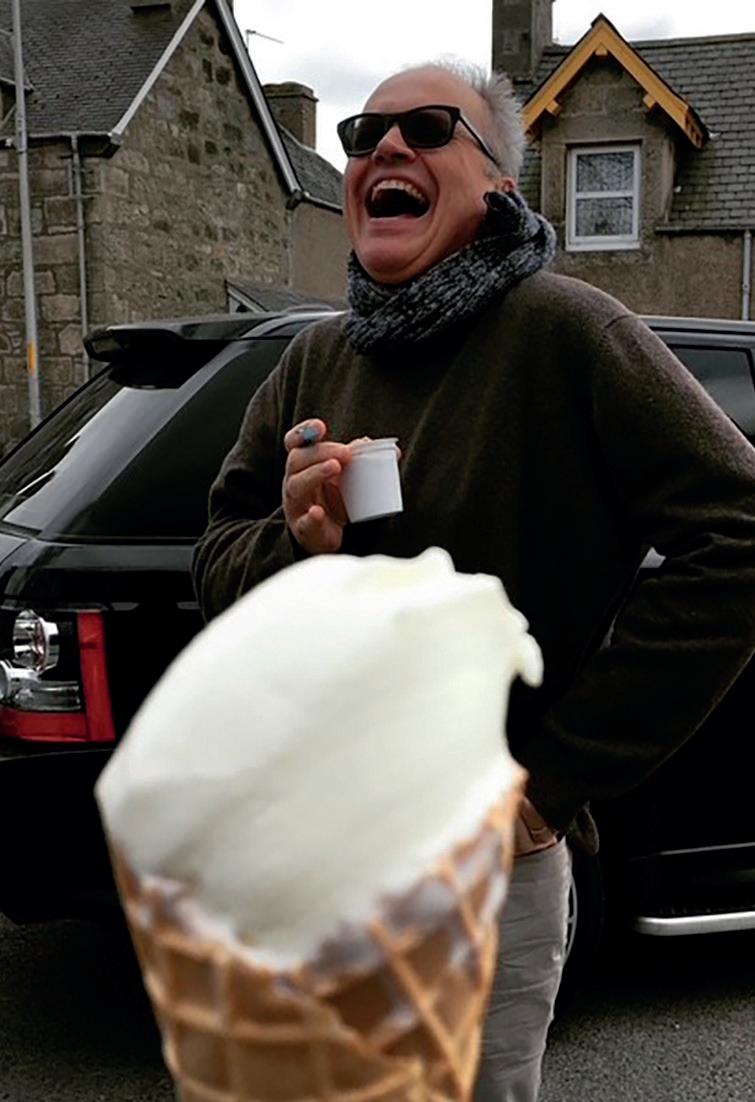
Rachel Smith SCO Second Violin
Brian’s keenness and positivity were so infectious - his laugh rang out above all others. His delight in playing and making musical discoveries (even if he’d played something loads before) was like none other I have ever known. His respect for every human being and passionate curiosity about (actually) everything will always be an inspiration to me. I had the joy of travelling with Brian on many a Highland tour. On one of those trips we traipsed through sheep fields in order to find some elusive standing stones (eventually we found them, along with an Austrian piper band!) and hiked for miles to swim with the seals in freezing water. Brewing tea or coffee in deeply-thought-about scenic locations was always a priority. Thank you, dear Brian, for everything! I will treasure all the wonderful memories.
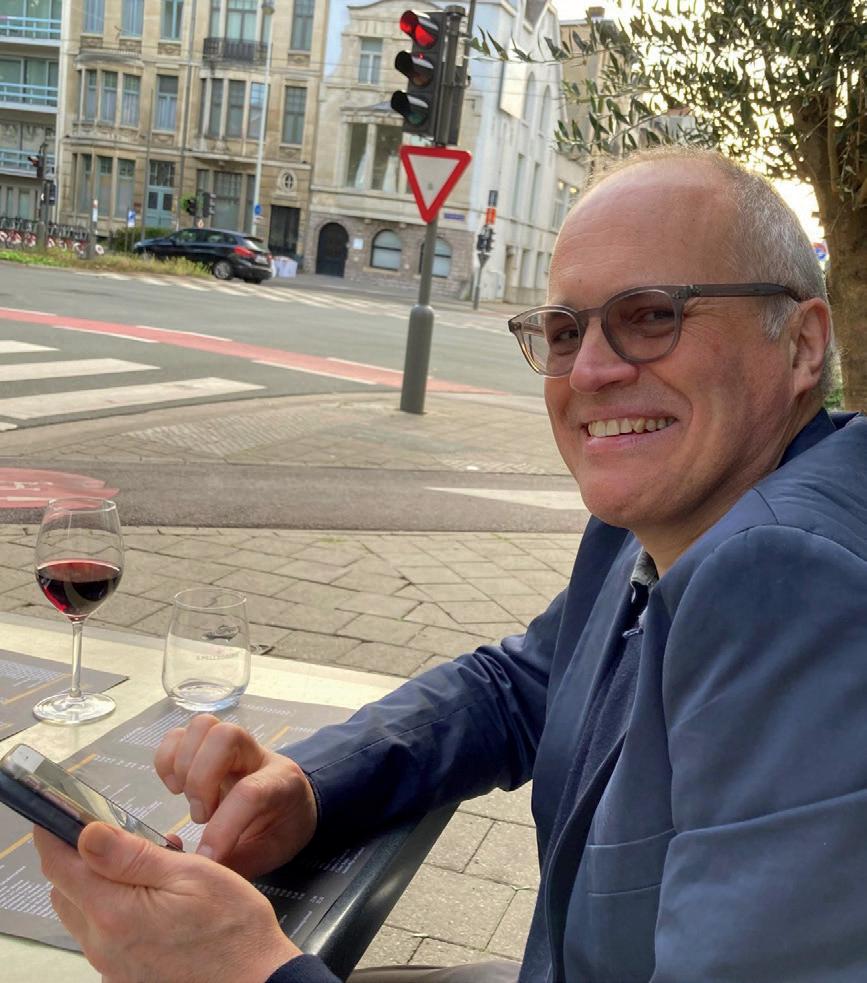
Eric de Wit SCO Cello
Years ago, Brian and I discovered we both shared a (slightly obsessive!) desire to visit local sheet music shops on international tours. After bumping into each other on several occasions, we soon decided to plan our visits together. Going through massive piles of music, he would suddenly appear, beaming, having found something obscure or out of print. Similarly, his enjoyment whilst playing was infectious and inspirational, especially in chamber music - I feel very lucky to have sat next to him so often! His generous spirit will continue to inspire us all.
Brian was always a beacon of smiles and audible chuckles. Such a warm, kind, generous and patient man…an absolute gentleman, but there was also a distinct (and fun) rebellious streak in him. For example, when our SCO men’s dress code changed from all black, to suits and dark muted ties, he insisted on wearing the brightest and shiniest of lime green ties. We all loved this, and when he had to take time off work the viola section decided to take turns to wear his tie at concerts in his absence. This wasn’t contained for long and by the following week all the men in the orchestra wanted to claim their week sporting Brian’s concert tie! It was a special moment when Brian returned to work nine months later and wore his own tie at our concerts. There is a huge gaping hole in our lives, where the larger-than-life, enthusiastic and chuckling Brian inhabited the warmest place in all our hearts.
Alison Green SCO Bassoon
Brian was such an important part of the SCO Tea Dance Ensemble, a group of
nine players giving concerts for people living with dementia. Being an unusual combination of strings, wind and percussion we often play music arranged specially for the group. Brian was a talented arranger of music and I had asked him to produce a piece for the Scottish part of the programme which he did, finishing it just before he died. We made a recording for him and he was straight to the point. ‘Too slow!!’ It is a witty arrangement which gets increasingly raucous and requires Louise to blow a police whistle. We will treasure it , along with all the other music Brian arranged for us. He loved playing with the group and was so enthusiastic about the dementia friendly concerts. I just found a message he sent after one of our concerts ‘Thanks everyone. A really special experience. So glad to be part of it.’
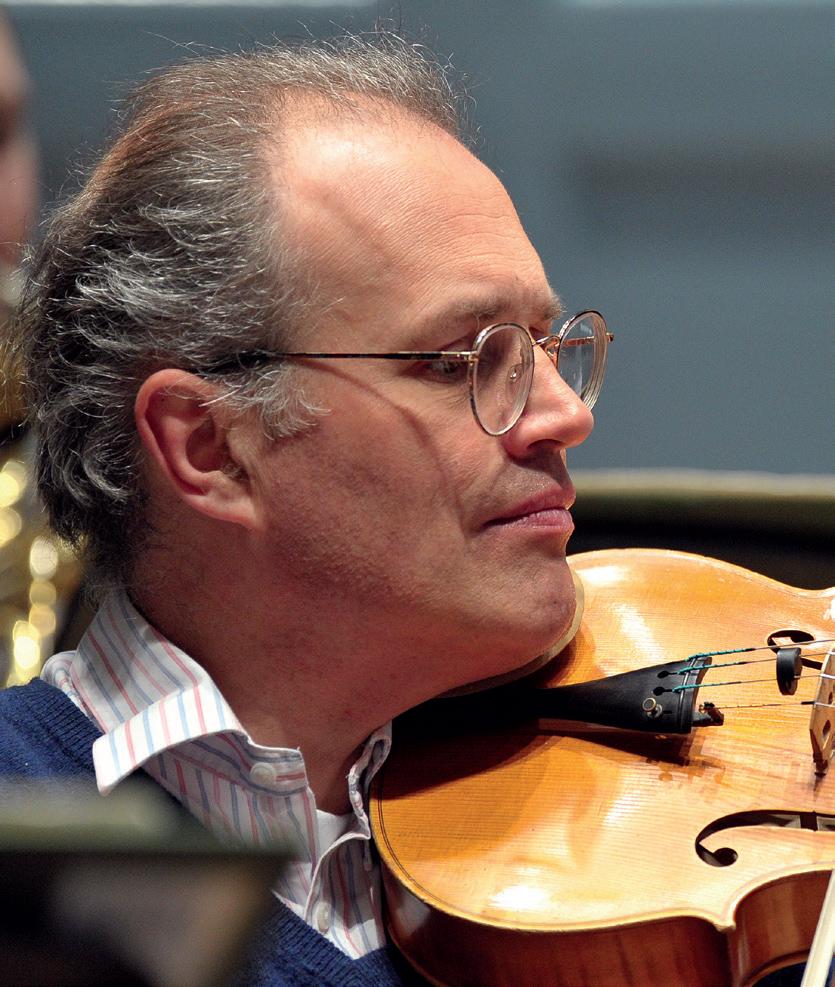
I’m going to talk about a syndicate, one that took place over many years in the SCO, that involved journeys to the many out of town venues requiring car transport. Brian, Robert McFall, and I as driver, would load our things into the car’s boot space to head northwards, southwards, in fact any direction, to arrive in time for a rehearsal and concert. My bass would take up most of that space, possibly Robert’s gear the least, and Brian with just about everything he could summon bar his kitchen sink. Conversation was not short, particularly with Brian and Robert talking about repertoire and forward planning for Mr McFall’s Chamber. My involvement was to drive. But sometimes on long journeys a little something extra would be required, which is where Brian’s ingenuity was forefront. Technical gear to link his podcasts to the car radio, or before that numerous CDs from his collection, would be on hand. And audio books.
As an experiment we started with The Girl with the Dragon Tattoo. Successful. We then tried, with some preliminary discussion, Moby Dick, with its famous three word opening. Very successful and lasting several journeys, though sometimes passengers were asleep. What next? After much discussion we settled on Proust’s À La Recherche du Temps Perdu. All 42 CDs! Over various trips it took us two and a quarter years to reach the end. But what a way to help travel pass, even if sleep catchup was part of the deal. Thank you Brian for providing all the gear over so many years, not to mention conversational inspiration and being a great companion.
If I were asked to sum up Brian in one word it would undoubtedly be “generous”. He was loyal and supportive to colleagues and always made new players feel warmly welcomed. He gave generously to all, whether music, books, lifts, time, pencils,
coffee, gluten-free snacks, advice on geraniums… He was generous in himself, a large presence with a hearty, infectious laugh - we joked about how much space he needed on the platform! His playing too was warm, open and inclusive, radiating beyond the stage, touching the audience. It is so hard to believe he is gone and that generous space is now empty. His unique presence will be sorely missed by all at the SCO.
Ten days before Brian died we spent what was to become our last time together, just the two of us. I was quite moved by this meeting so I wrote to him the following day:
“Brian, I have to tell you that our hour together yesterday was one of the most beautiful hours I’ve ever spent with you. It felt so normal, easy, productive and very representative of the 32+ years that we have spent together as deskies, friends and partners in crime! I feel so fortunate
that the 32 years of our sharing a desk has been simply amazing. Your musical passion, genuine human generosity and humbleness have always been an inspiration and comfort to my being there. All I can say is thank you. Thank you for being a wonderful musician , a wonderful friend , and simply being you.”
Brian improved the lives of those around him just by being himself. He was someone you could always rely on for a smile, a laugh or an interesting chat about music. Generous in every way, he regularly offered me his house as a haven to practise in (mind the rabbit!). Brian seemed entirely ageless to me: simultaneously a wise uncle I could turn to for advice and someone with a youthful enthusiasm and curiosity about the world. On top of that he was a real character - I never had any dull moments in his company! Brian is there in some of the happiest memories from my time in Scotland. He was such an incredibly lovely man.
Robert McFall Former SCO Second Violin
When Brian was first in the Orchestra in the early nineties, I commented to Ann, my wife: “He is actually Argentine but he seems completely English”. Ann, having grown up in Chile, immediately replied: “No, he is typically Argentine – he takes up a lot of space!” His was a large presence – and by the same token he is going to leave a large gap.
Since we retired and moved away from Edinburgh, Brian and his wife, Rebecca, have kindly invited me to stay many times when I’ve needed to come back up here – me valuing their home in leafy Greenbank as a restful haven, especially if I was involved the stress of organising and playing in a Mr McFall’s Chamber event. Brian was a founding member of this SCO splinter group and played in it through its many, sometimes weird, permutations right up until November last year, his first time on stage after his operation for cancer of the jaw the previous March. This was a thirty-year adventure. However, we were also thrown together even more regularly by the fact that, being
South-siders in Edinburgh, we both usually shared lifts with Adrian Bornet whenever we travelled out of town with the SCO (and nearly always with tireless Adrian driving).
Much has been said about the broadness of Brian’s grin and his explosive laugh, about his gourmet tastes in fruit (and, I might add, wild mushrooms) – and above all, his dedication to his family – so I’ll leave these subjects for others. I’d therefore like to end with a couple of anecdotes from the last few weeks, the first exemplifying his dedication to his teaching, the second relating to the firmness of his opinions. Less than a fortnight before his death I rang Brian. He explained that the doctors had given him two months to live – “which was a bit of a shock, really!” – and that he’d therefore spent the morning ringing his pupils and trying to arrange new teachers for them. My final anecdote (exemplifying the firmness of his opinions) is from a conversation after the funeral with Lise Aferiat, friend and former colleague. She is French. Brian once studied French for a year at university. Yes, she said, he did, indeed, once take issue with her over her French usage! Oh, Brian!
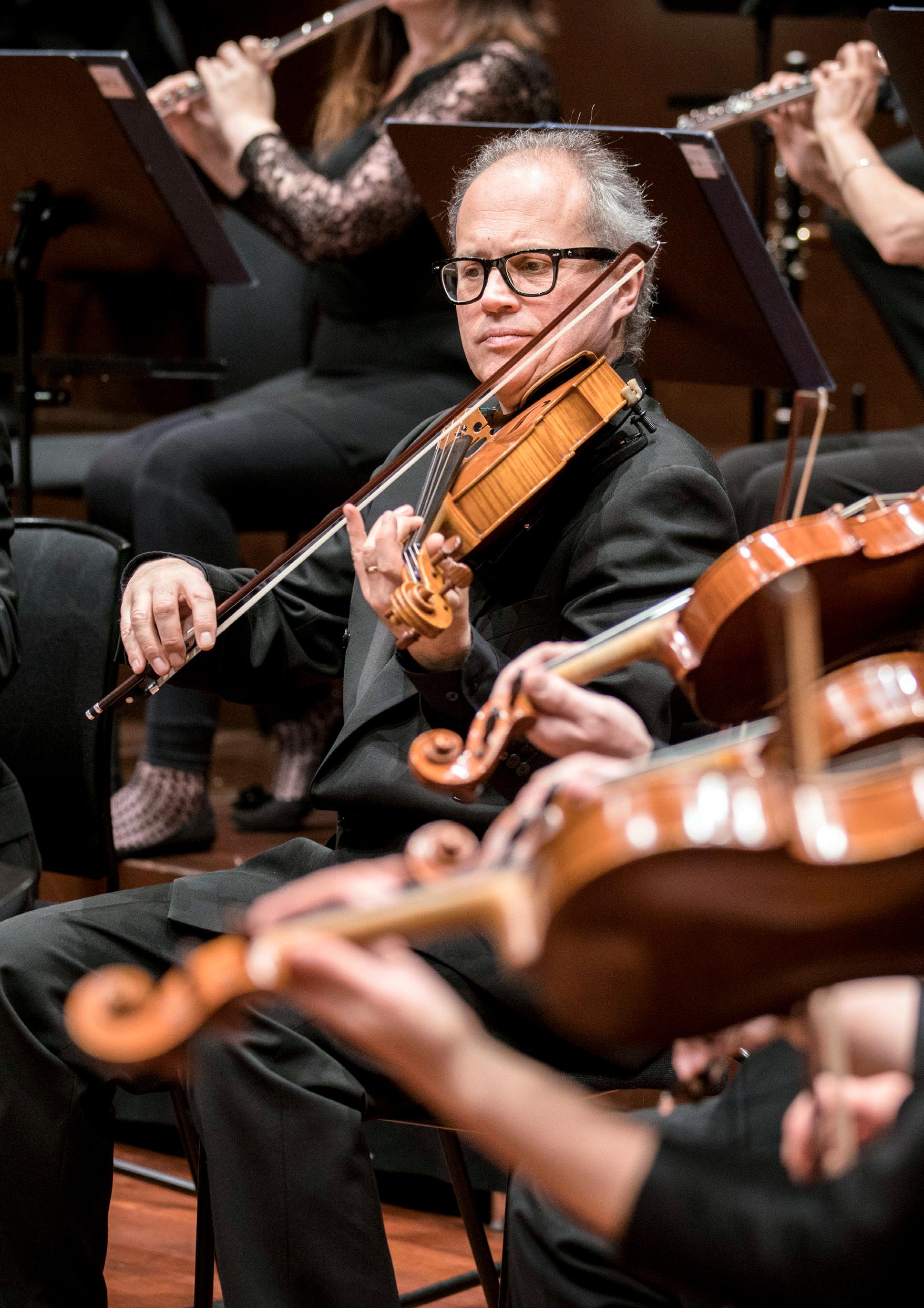
Schiele (1959-2026) In memory of
SHOSTAKOVICH (1906-1975)
Symphony No.9 in E-flat major, Op.70 (1945)
Allegro
Moderato
Presto
Largo
Allegretto
SHOSTAKOVICH (1906-1975)
Piano Concerto No.1, Op.35 (1933)
Allegro moderato
Lento
Moderato
Allegro con brio
DVOŘÁK (1841-1904)
Symphony No.9 in E minor, 'From the New World', Op.95 (1893)
Adagio – Allegro molto
Largo
Molto vivace
Allegro con fuoco
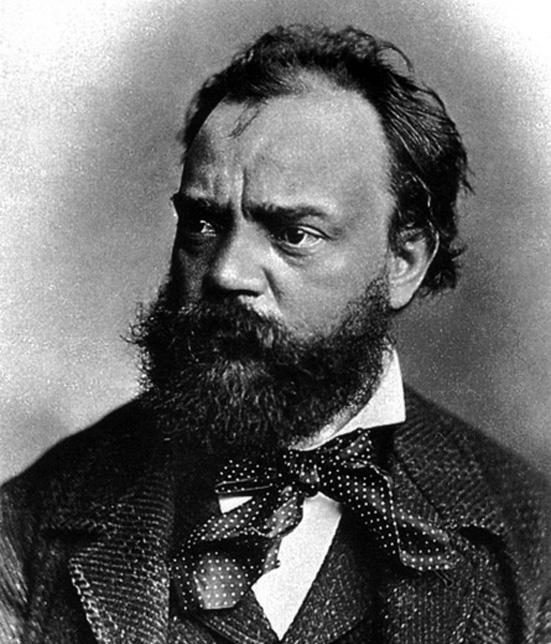
We should probably blame Beethoven. His epic, pioneering Ninth Symphony – written for orchestra, chorus and solo singers, and dealing with nothing less than humankind’s aspirations towards community and solidarity – made such a meteoric impact on music that later composers often approached their own ninth symphonies with trepidation, or with a sense of obligation to attempt something similarly grand. Beethoven’s Ninth isn’t on the bill this evening, but two other ninth symphonies are. And both are just as bold and ambitious in their own, very different ways. While one sets out to do nothing less than celebrate a distinctively American musical style, the other takes a rather unconventional approach to grandiose nationalist celebration – one that caused its composer more than a few headaches following its 1945 premiere.
And for that, we should probably blame Dmitri Shostakovich himself. By 1945, he’d already produced two monumental wartime symphonies. He composed No.7, the ‘Leningrad’, in 1941 while its titular city was being beseiged by German forces, and it brought him enormous international acclaim (once its score had been smuggled out on microfilm). No.8 from 1943 – briefly dubbed the ‘Stalingrad’, though the nickname never stuck – was frowned upon by Soviet authorities for being inappropriately pessimistic, though it’s no less imposing in scale and ambition.
By 1945, the Red Army had expelled Nazi forces from most Soviet territory, and the war – at least for the USSR – was all but won. Shostakovich had already announced that his next symphony would be a grand creation for orchestra, chorus and vocal soloists: he told the Soviet press it would be ‘a symphony of victory with a song of praise’, a work ‘about the greatness of the Russian people, about our
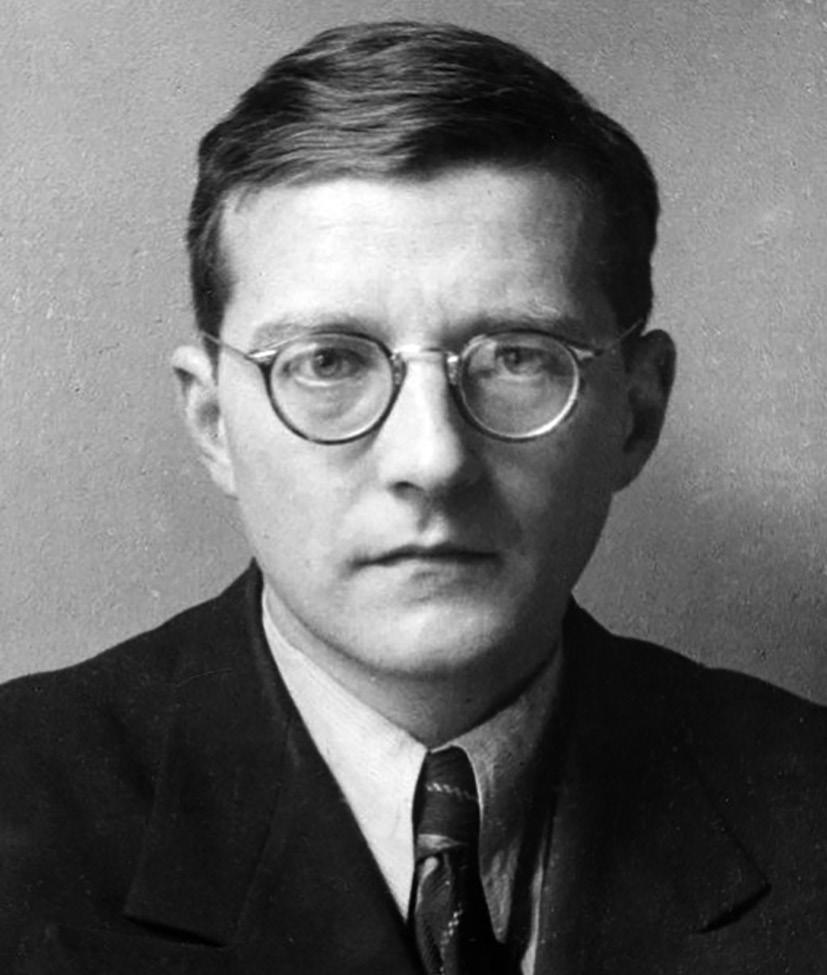
Red Army liberating our native land from the enemy’.
In January 1945 he reiterated that description to his composition students. The scene looked set for an epic utterance that at least seemed to celebrate a Soviet victory over Nazism –and, it has to be said, one that would mark the survival of the Soviet Union itself, whose very future had seemed in doubt just a few years earlier.
After January 1945, however, Shostakovich abruptly stopped work. He resumed in July 1945, and finished the new Symphony by the end of the following month. What he created, however, bore precious little resemblance to the music he’d previously announced.
And it’s at this point that the context of tonight’s concert comes into play. For what Shostakovich produced was far from the epic, patriotic celebration of Soviet values that many had expected – and which he’d
Shostakovich’s Ninth is breezy and witty, compact and concise, filled with mischief and fun – just the kind of music to bring the Scottish Chamber Orchestra’s current Season to a fizzing close.
effectively announced he would write. Instead, Shostakovich’s Ninth is breezy and witty, compact and concise, filled with mischief and fun – just the kind of music to bring the Scottish Chamber Orchestra’s current Season to a fizzing close. Chuckle at the musical high-jinks, enjoy the froth and repartee – then imagine yourself at the Leningrad premiere in November 1945, in a city still deeply traumatised by years of siege, terror and attack, and ask yourself if you’d still feel the same way.
Many did – the Symphony seemed to go down fairly well among the audience at its premiere. It was only afterwards that the Soviet authorities got their teeth into it, attacking its ‘ideological weakness’ and judging that the piece failed to ‘reflect the true spirit of the people of the Soviet Union’. Party line-toeing Soviet musicologist Izrael Nestyev was particularly savage in an article entitled ‘Remarks on the Work of D Shostakovich: Some Thoughts Occasioned
by his Ninth Symphony’, concluding: ‘what remains to be proposed is that the Ninth Symphony is a kind of respite, a light and amusing interlude between Shostakovich’s significant creations, a temporary rejection of great, serious problems for the sake of playful, filigree-trimmed trifles. But is it the right time for a great artist to go on holiday, to take a break from contemporary problems?’
It was hardly the first time that Shostakovich had run into trouble with the Soviet authorities. His 1934 opera Lady Macbeth of Mtsensk drew official denunciation in an article in the Pravda newspaper famously entitled ‘Muddle Instead of Music’, purportedly written by Stalin himself (who’d seen the opera and detested it). The composer’s answer was his Symphony No.5 in 1937, subtitled ‘A Soviet Artist’s Creative Response to Just Criticism’, which flung wide open the perennial question of whether Shostakovich was sincere in his adherence to Party expectations, or whether he was out to subvert and belittle them through sarcasm and barbed humour (a question that’s unlikely ever to be fully answered).
His Symphony No.9 didn’t provoke such immediate condemnation as the opera, but it was undeniably a contributing factor in the chilling denunciation of Shostakovich (among other composers) in the 1948 Zhdanov Decree, which led to his dismissal from his teaching posts at the Moscow and Leningrad conservatoires, removed much of his music from concert programmes, and led him to fear for his life. He wouldn’t write another symphony until after Stalin’s death in 1953, and the work that followed – his Symphony No.10 – is often understood as the composer’s response to the terrors of the Soviet dictator’s reign.
But let’s not get ahead of ourselves. It wasn’t just Soviet officialdom that felt uneasy about Shostakovich’s Ninth Symphony. Even in the West, it was seen as a surprisingly lightweight work for such a weighty time in global history. The New York World-Telegram, for example, concluded a review of the Symphony by saying: ‘the Russian composer should not have expressed his feelings about the defeat of Nazism in such a childish manner.’
What was so surprising and unsettling about the new Symphony? For some it was a surprise, for others a disappointment; for many, however, it was simply a puzzle. There’s no denying that Shostakovich’s own earlier descriptions of a grand, celebratory work were the source of a lot of subsequent head-scratching – but it’s likely, too, that the composer felt obliged at least to acknowledge Soviet expectations, even if he ultimately felt he couldn’t fulfil them. Confronted by a choice between an empty celebration and a more sincere response to the hardships and repression around him, Shostakovich may have simply opted for a third way, in music that had little to do with either of those responses. Like so many questions related to Shostakovich, it’s unlikely we’ll ever know for sure – and, indeed, the very conundrums that his music generates are arguably part of its power and eloquence.
The mischievous violin theme that launches the Symphony’s first movement sets the tone for the whole work, and a raucous trombone later clears the way for the movement’s second main melody, piped on a piccolo. Shostakovich gives his opening section a literal repeat, in the manner of Haydn or Mozart – the only time he does so in any of his symphonies – and goes on to fragment and collide his two opening themes in an
The young Shostakovich’s star was shining brightly, and his confidence and enthusiasm are clearly evident in the Concerto, which seems intent on thumbing its nose at the lavish, lush piano concertos of composers such as Tchaikovsky and Rachmaninov.
increasingly dark central development section. The darkness continues, arguably, when the opening music returns – though it doesn’t stop the composer signing off jauntily.
A melancholy clarinet solo begins the slower second movement, followed by a gently rocking melody for strings, but there’s a distinct sense that all is not well in a movement that remains sparse and restrained until its hushed close. Shostakovich’s final three movements are clearly distinguishable, but are played without a break. First comes a fizzing, dashing third movement, whose playful energy becomes decidedly more demonic as the orchestra’s brass begin to assert themselves. It’s the brass, too, who bring the movement to a juddering halt with a sudden loud chord – which might sound as though we’ve been plunged headlong into the spooky ‘Catacombs’ of Pictures at an Exhibition by Shostakovich’s compatriot, Modest Mussorgsky.
There’s a sense of ineffable stillness to the fourth movement, with an introspective bassoon solo answered by more monumental brass figures – perhaps this is a glimpse of the authentic tragedy that lies beneath the Symphony’s frothy high-jinks. It’s the bassoon, too, that kicks off the final movement, which marks a return to the lightness and brightness of the Symphony’s opening. Its march-like tune returns later, however, with pounding timpani and snare drum rat-a-tatting, offering a somewhat grotesque vision of the military might that was perhaps expected to be celebrated. Just as the music seems to be gathering energy towards a cathartic, emotional close, the movement instead scampers away in dance-like rhythms and a final witty flourish.
We take a break from Ninth Symphonies and hop back a bit more than a decade in Shostakovich’s career for tonight’s next piece. He was just 27 when he sat at the keyboard for the premiere of his First Piano Concerto on 15 October 1933, joined by the Leningrad
Philharmonic Orchestra and conductor Fritz Stiedry. The piece went down a storm, and it was just the latest in a string of successes for the brilliant young composer. He’d already made his mark with his adored First Symphony as a 19-year-old (and had written two more since then). He’d just completed the opera Lady Macbeth of Mtsensk, which would be hailed as a masterpiece when it opened in 1934 (and which would later bring him so much trouble). And he’d also recently married his childhood sweetheart, Nina Varzar.
The young Shostakovich’s star was shining brightly, and his confidence and enthusiasm are clearly evident in the Concerto, which seems intent on thumbing its nose at the lavish, lush piano concertos of composers such as Tchaikovsky and Rachmaninov. Instead, it aims for bracing wit, grinning sarcasm, and a richly coloured tapestry of quotations – from Shostakovich himself, as well as from Beethoven, Tchaikovsky, Rossini and many others.
But what of the Concerto’s unusual scoring – for solo piano, string orchestra, and a lone trumpeter? Shostakovich had originally planned the piece as a fully fledged trumpet concerto for Leningrad Philharmonic trumpeter Alexander Schmidt (who played at the work’s premiere). The composer found it increasingly challenging to write for trumpet alone, however, and the piece later evolved into a double concerto with piano and trumpet as equal partners, before eventually finding its final form as a piano concerto with crucial trumpet contributions. And crucial they are: the trumpet acts as a general mischief-maker in the outer movements, sometimes effectively grabbing material from the pianist’s hands, though the instrument takes on a more serious role in the slow movement.
Shostakovich adopted an unusual fourmovement plan for the Concerto, though his brief third movement is little more than an extended introduction to the hectic finale. He sets out his playful agenda right from the start, with a brilliant piano flourish, then a ‘wrong’ note from the trumpet, together forming an attention-grabbing fanfare. His reflective first main theme, however, is far more sombre, beginning low in the piano, though a feeling of fanfares returns in the more upbeat, dance-like second main theme. After a frenetic central development section, both themes reappear, but trumpet and piano are left alone to bring the movement to a hushed close.
There’s an abrupt change of mood in Shostakovich’s second movement, a ghostly, sinister waltz. The music becomes increasingly passionate, but when the trumpet takes over its main theme towards the end of the movement, it’s with a sense of great pathos, even loneliness. The mood brightens considerably with the miniature third movement, leading directly into the cartoonish whirlwind of the finale, which hurtles by at breakneck speed. A dashing solo piano cadenza leads to a madcap finish, but it’s effectively the trumpet who has the last word.
When asked what his exuberant Concerto meant, Shostakovich refused to be drawn, saying simply: ‘I cannot describe the content of my Concerto with any means other than those with which the Concerto is written.’ It’s a tight-lipped perspective that he’d maintain across the far more probing music with which he’d prod and provoke Soviet strictures later in his career. He’d already earnt a slapped wrist from the authorities for his uncompromisingly modernist opera The Nose in 1930. It was just three years after the premiere of the First Piano Concerto that Shostakovich would feel
the full force of state denunciation following the premiere of Lady Macbeth of Mtsensk The jaunty, jokey, smirking wit of the Concerto wouldn’t last for long.
After opening with a Ninth Symphony that refused to do what was expected of it, we close tonight’s concert with another, one that more than lived up to expectations, both at its 1893 premiere and ever since.
Indeed, Antonín Dvořák’s iconic ‘New World’ Symphony must surely count – alongside such timeless works as Beethoven’s Fifth and Vivaldi’s Four Seasons – as one of classical music’s best-loved and best-known pieces. For anyone of a certain vintage, its richly imagined second movement will be forever associated with Hovis bread, thanks to an iconic 1973 advert from director Ridley Scott (who just six years later would throw us into the very different world of Alien). More recently, the Symphony’s very opening found a perhaps unlikely afterlife as a prominent sample on
Antonín Dvořák’s iconic ‘New World’ Symphony must surely count – alongside such timeless works as Beethoven’s Fifth and Vivaldi’s FourSeasons– as one of classical music’s best-loved and best-known pieces.
the debut album by UK hip-hop project The Streets. With such a rich and varied legacy, and with such strong associations for many listeners, it’s perhaps hard to listen to the ‘New World’ Symphony with fresh ears, and to recognise its achievements in terms of its original aims.
Those aims, in fact, were part of a broader plan to establish and promote a distinctively American style of music – though you may wonder why a proudly Bohemian composer would even be attempting to do that. Dvořák had been tempted to New York in September 1892 by the fabulously wealthy (and fiercely determined) philanthropist Jeanette Thurber, who had established the new National Conservatory of Music of America in the city seven years earlier. By the 1890s, Dvořák was a prominent musical figure in Europe and beyond, with an avowed fascination for the music of his Bohemian homeland, which he’d successfully incorporated into his own works. He was just the right person, Thurber felt, to
do something similar in America, and to forge and disseminate a new, distinctively American style of music.
Dvořák would only last three years in America before severe homesickness (and a substantial cut in his salary) drew him back to Europe. But soon after arriving, he threw himself into teaching, composing and immersing himself in American culture, growing particularly interested in the nation’s ‘folk’ music. He was only able to engage with Native American music through the pages of collections and anthologies. He had a far closer and more direct contact, however, with African-American music, especially through his friendship with Black American student Harry Burleigh, who would sing him spirituals (and would go on to be recognised as an important publisher of similar material, as well as a composer and baritone). Dvořák grew convinced, in fact, that African-American music would itself form the foundation of a distinctively American style, and said so in several prominent newspaper interviews (using terminology that would be unacceptable today): ‘in the Negro melodies of America, I discover all that is needed for a great and noble school of music.’
That said, he also argued that the melodic material in what would become his ‘New World’ Symphony – which he composed between January and May 1893 – was entirely his own, and that he’d stopped short of borrowing or quoting any authentically American melodies in the piece. There’s an uncanny resemblance, all the same, between the first movement’s final theme and the spiritual ‘Swing Low, Sweet Chariot’, though the reference might well have been unconscious. Just how closely Dvořák was able to evoke the world of spirituals, however, was demonstrated when William Fisher, one
of the composer’s students at the National Conservatory, transformed the famous melody of the Symphony’s second movement – the tune that Ridley Scott transported to the north of England to sell bread – into a spiritual, under the title ‘Goin’ Home’.
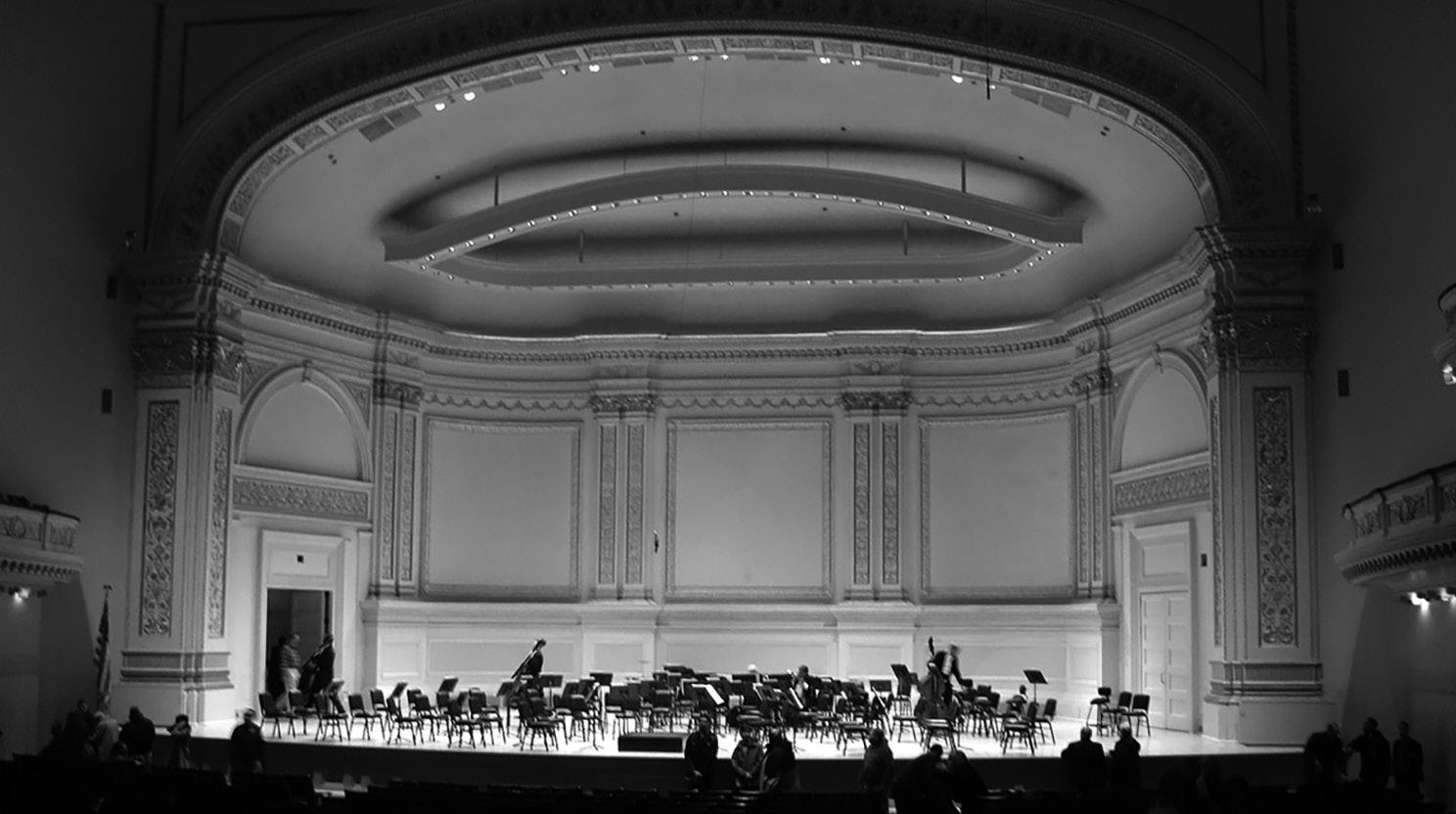
The Symphony’s premiere at Carnegie Hall in December 1893 was a huge triumph for the composer, heralded by a public rehearsal and advance notices in several newspapers, and greeted with cheering and relentless applause after each of its four movements. ‘The success of the Symphony was spectacular,’ the composer wrote to his Berlin publisher, Fritz Simrock. ‘The papers are saying that no composer has ever achieved a triumph such as this. I sat in a box, the auditorium hosted New York’s finest, and people applauded for so long that I had to express my appreciation from my box like a king (don’t laugh!). You know that I prefer to avoid ovations such as this, but I had to do it and make an appearance!’
More importantly, the Symphony served to kick off lengthy discussions about what American music really was, how accurately Dvořák had represented it, and whether he’d even effectively defined it with his Symphony. Those discussions have continued ever since: in his 1966 book The Infinite Variety of Music, no less a figure than Leonard Bernstein set about dispelling any ideas that the Symphony represented American music in any way, arguing that it sounded far more like Dvořák than America.
It’s a fair observation, and one that Dvořák would probably have agreed with. He argued that the Symphony would be ‘fundamentally different from my earlier ones’ because of the influence of America, but also acknowledged its deep roots in the Bohemian-flavoured style
of his previous music. Indeed, the Symphony’s title might give a clue as to the composer’s real intentions. Though it’s generally shortened to ‘New World’, Dvořák actually added the words ‘From the New World’ to conductor Anton Seidl’s score at the premiere, indicating it was less a portrait of America, more a musical postcard conveying impressions and greetings from his new Stateside home.
After a brooding, dramatic slow introduction, the orchestra’s horns announce the first movement’s serious-minded but heroic first theme – a melody that Dvořák will return to again and again to unite all four of the Symphony’s movements. Flutes and oboes later contribute the movement’s gentler, more delicate second main theme, and the third – first heard on a solo flute – becomes the main material that’s explored in the central development section.
The magical succession of chords that launches Dvořák’s slow second movement in
fact act as a smooth transition from the key of the opening movement to the more distant key of the second, though the composer reuses those distinctive harmonies as markers throughout the movement. The hushed opening sets the poignant, introspective tone for the cor anglais’s heartfelt melody that follows, though a solo oboe will later kick off more animated, dance-like music.
After a juddering introduction that’s surely a nod towards Beethoven’s Ninth, Dvořák’s third movement is a heavy-footed scherzo with a dancing theme but also a sense of determination in its rugged rhythms. A new, march-like theme challenges the Symphony’s heroic opening theme for supremacy in the dramatic finale, though the two melodies unite – alongside a distant memory of the second movement’s magical chords – as the Symphony reaches its outspoken but unexpectedly thoughtful conclusion.
© David Kettle
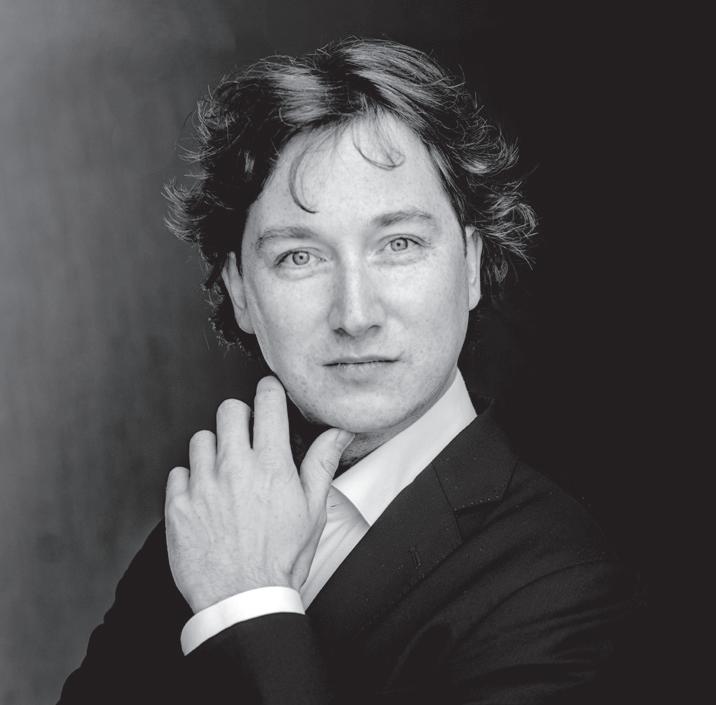
Maxim Emelyanychev has been Principal Conductor of the Scottish Chamber Orchestra since 2019. He is also Chief Conductor of period-instrument orchestra Il Pomo d’Oro, and became Principal Guest Conductor of the Swedish Radio Symphony Orchestra from the 2025/26 Season.
Born in Nizhny Novgorod, Emelyanychev made his conducting debut at the age of 12, and later joined the class of eminent conductor Gennady Rozhdestvensky at the Moscow Conservatoire.
Emelyanychev was initially appointed as the SCO’s Principal Conductor until 2022; the relationship has been extended three times, to 2025, 2028 and most recently to 2031. He has conducted the SCO at the Edinburgh International Festival and the BBC Proms, as well as on several European tours and in concerts right across Scotland. He has also made three recordings with the SCO, of symphonies by Schubert and Mendelssohn (Linn Records).
Emelyanychev has also conducted many international ensembles including the Berlin Philharmonic, Royal Concertgebouw Orchestra, Orchestra dell'Accademia Nazionale di Santa Cecilia, Deutsches Symphonie-Orchester Berlin, Rotterdam Philharmonic Orchestra, Finnish Radio Symphony Orchestra, Seattle Symphony and Orchestra of the Age of Enlightenment. In the opera house, Emelyanychev has conducted Handel’s Rinaldo at Glyndebourne, the same composer’s Agrippina as well as Mozart’s The Magic Flute at the Royal Opera House, Covent Garden, and Mozart’s Die Entführing aus dem Serail at the Opernhaus Zürich. He has also conducted Mozart’s Die Zauberflöte, Così fan tutte and La clemenza di Tito with the SCO at the Edinburgh International Festival. He has collaborated closely with US soprano Joyce DiDonato, including international touring and several recordings.
Among his other recordings are keyboard sonatas by Mozart, and violin sonatas by Brahms with violinist Aylen Pritchin. He has also launched a project to record Mozart’s complete symphonies with Il Pomo d’Oro. In 2019, he won the Critics’ Circle Young Talent Award and an International Opera Award in the newcomer category. He received the 2025 Herbert von Karajan Award at the Salzburg Easter Festival.
For full biography please visit sco.org.uk
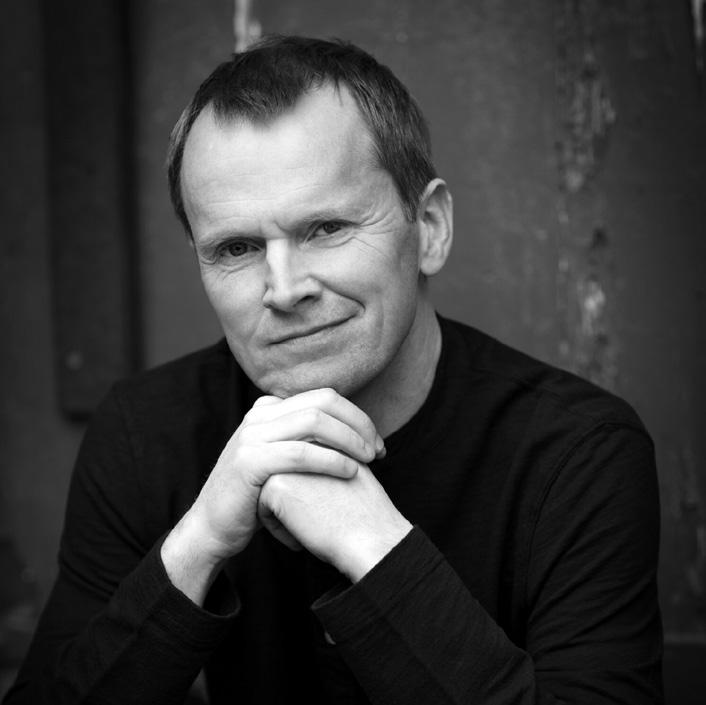
Steven Osborne’s musical insight and integrity underpin idiomatic interpretations of varied repertoire that have won him fans around the world. The extent of his range is demonstrated by his 35 recordings for Hyperion, which have earned numerous awards, and he was made OBE for his services to music in the Queen’s New Year Honours in 2022. The Observer described him as ‘a player in absolute service to the composer’.
A thoughtful and curious musician, he has served as Artist-in-Residence at Wigmore Hall, Antwerp Symphony Orchestra, City of Birmingham Symphony Orchestra and Bath International Music Festival, and has written articles and talks on subjects ranging from stage fright to What does Music Mean?
Orchestral engagements in 25/26 include a tour with the Philharmonia Orchestra (Mozart) and performances with the San Diego Symphony (Beethoven), Malmö Symphony, Royal Philharmonic Orchestra at the Royal Festival Hall (Turangalila) Bournemouth Symphony Orchestra, and the Scottish Chamber Orchestra. His solo recitals take him to New York, Boston, Washington and London whilst his musical partnerships continue with Paul Lewis, Alban Gerhardt and Benjamin Beilman.
Osborne has performed in the world’s most prestigious venues, including the Wiener Konzerthaus, Amsterdam Concertgebouw, Berlin Philharmonie, Hamburg Elbphilharmonie, Suntory Hall and Kennedy Center Washington, and is a regular guest at both Lincoln Center and Wigmore Hall.
For full biography please visit sco.org.uk
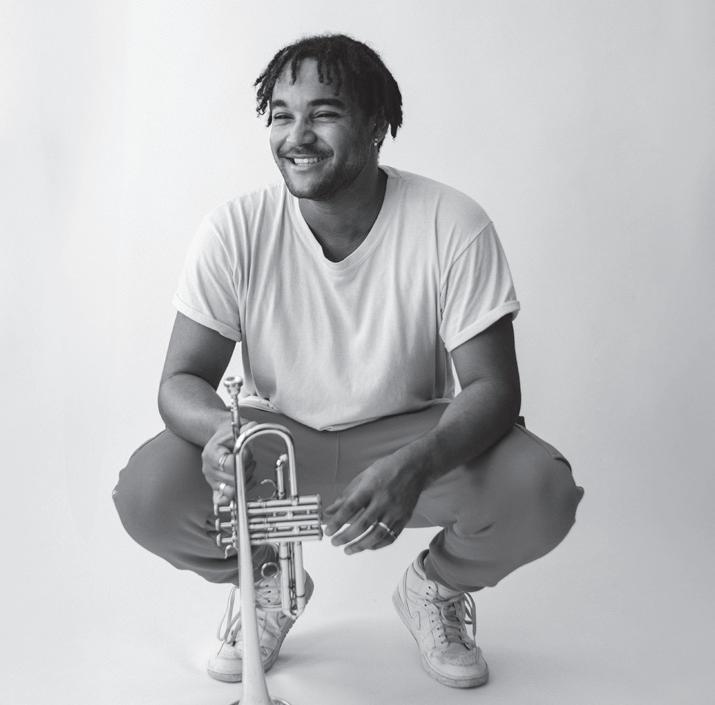
Born in Edinburgh, Nigerian–Scottish trumpeter Aaron Azunda Akugbo is developing a following as a leading exponent of his instrument. He brings a musical breadth to his artistry and while classically trained in both trumpet and singing, cites Louis Armstrong as his biggest musical inspiration. He is a charismatic performer with an abundance of natural humour, which translates into an effortless engagement with colleagues and audiences.
Akugbo made his London concerto debut at the Royal Festival Hall in 2020 and his BBC Proms concerto debut in 2023, performing the Haydn Trumpet Concerto both times with Chineke!, Europe’s first black and minority ethnic orchestra. His concerto performances often feature standard works alongside lesser-known pieces, for example by Eric Erwazen and Florence Price.
Recent highlights include recitals at St George’s, Bristol, and Royal Conservatoire, Glasgow, as well as visits to Bath International, Lichfield, Petworth, Ryedale, Chipping Campden, Bedford Park, St Magnus and Lammermuir festivals and he led the Emerging Talent programme at the 2024 Edinburgh Festival.
For full biography please visit sco.org.uk
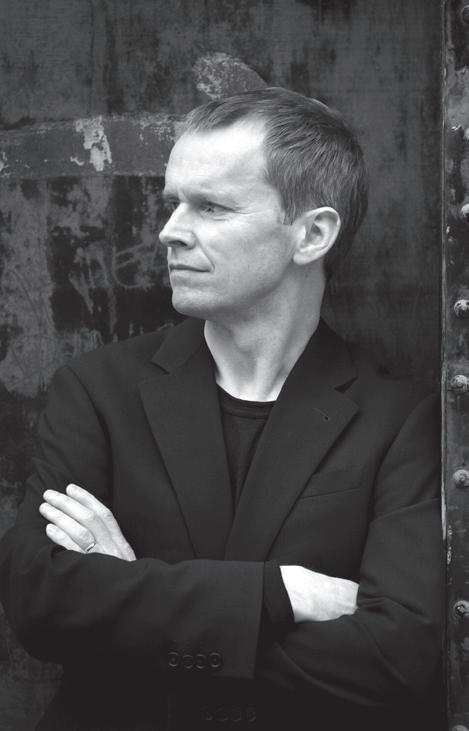
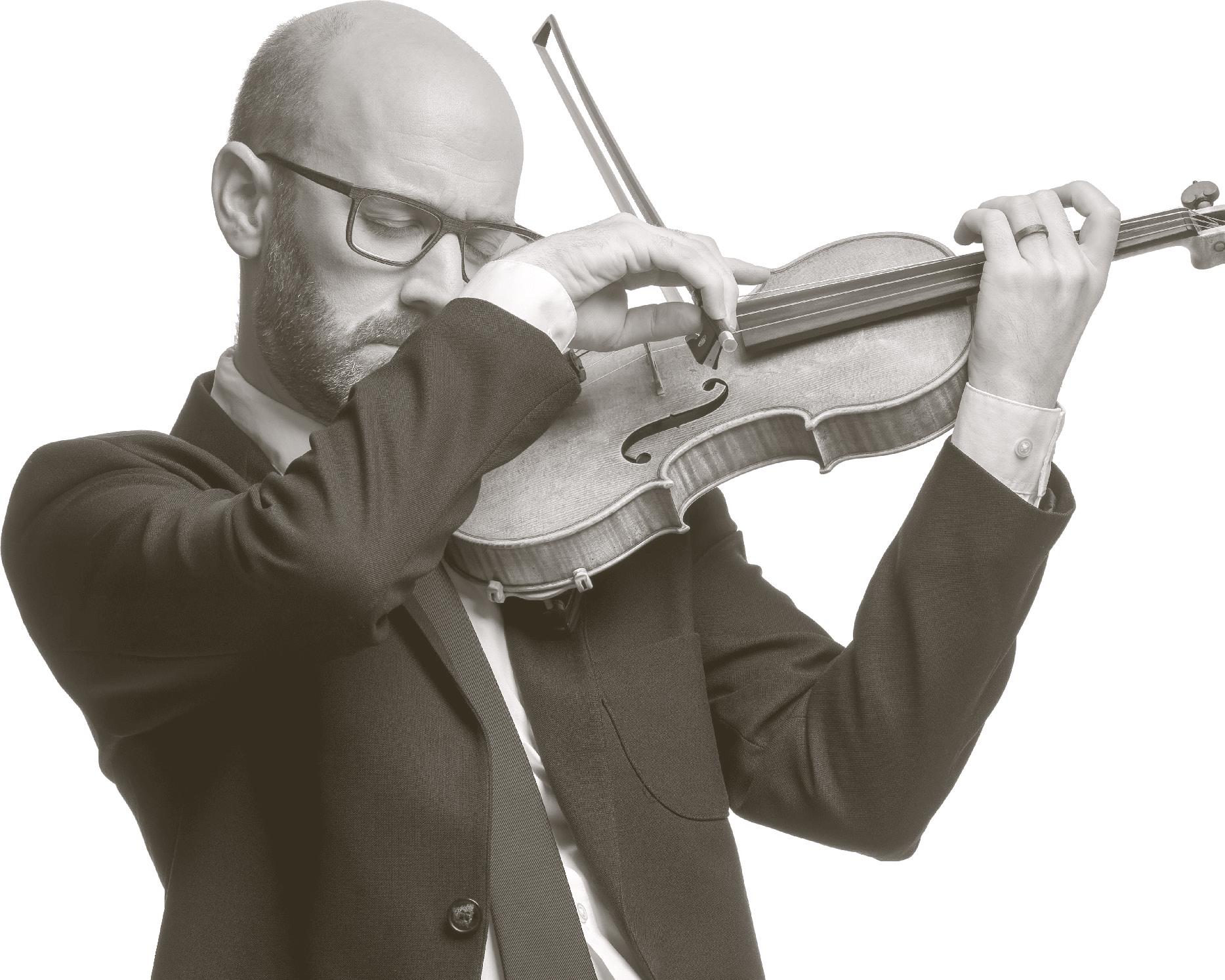
Gordon Bragg Sub-Principal Second Violin
Photo: Christopher Bowen
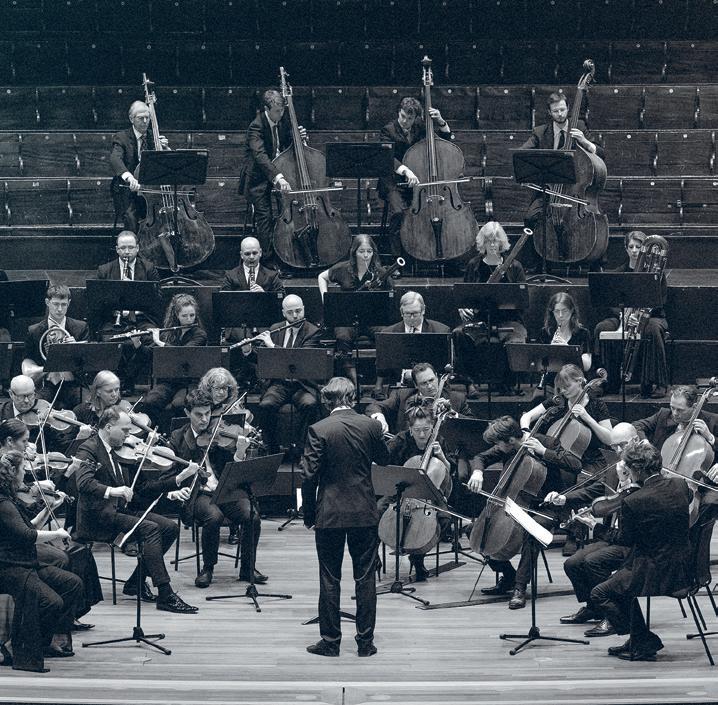
The Scottish Chamber Orchestra (SCO) is one of Scotland’s five National Performing Companies and has been a galvanizing force in Scotland’s music scene since its inception in 1974. The SCO believes that access to world-class music is not a luxury but something that everyone should have the opportunity to participate in, helping individuals and communities everywhere to thrive. Funded by the Scottish Government, City of Edinburgh Council and a community of philanthropic supporters, the SCO has an international reputation for exceptional, idiomatic performances: from mainstream classical music to newly commissioned works, each year its wide-ranging programme of work is presented across the length and breadth of Scotland, overseas and increasingly online.
Equally at home on and off the concert stage, each one of the SCO’s highly talented and creative musicians and staff is passionate about transforming and enhancing lives through the power of music. The SCO’s Creative Learning programme engages people of all ages and backgrounds with a diverse range of projects, concerts, participatory workshops and resources. The SCO’s current five-year Residency in Edinburgh’s Craigmillar builds on the area’s extraordinary history of Community Arts, connecting the local community with a national cultural resource.
An exciting new chapter for the SCO began in September 2019 with the arrival of dynamic young conductor Maxim Emelyanychev as the Orchestra’s Principal Conductor. His tenure has recently been extended until at least 2031. The SCO and Emelyanychev released their first album together (Linn Records) in 2019 to widespread critical acclaim. Their second recording together, of Mendelssohn symphonies, was released in 2023, with Schubert Symphonies Nos 5 and 8 following in 2024.
The SCO also has long-standing associations with many eminent guest conductors and directors including Principal Guest Conductor Andrew Manze, Pekka Kuusisto, François Leleux, Nicola Benedetti, Isabelle van Keulen, Anthony Marwood, Richard Egarr, Mark Wigglesworth, Lorenza Borrani and Conductor Emeritus Joseph Swensen.
The Orchestra’s current Associate Composer is Jay Capperauld. The SCO enjoys close relationships with numerous leading composers and has commissioned around 200 new works, including pieces by Sir James MacMillan, Anna Clyne, Sally Beamish, Martin Suckling, Einojuhani Rautavaara, Karin Rehnqvist, Mark-Anthony Turnage, Nico Muhly and the late Peter Maxwell Davies.
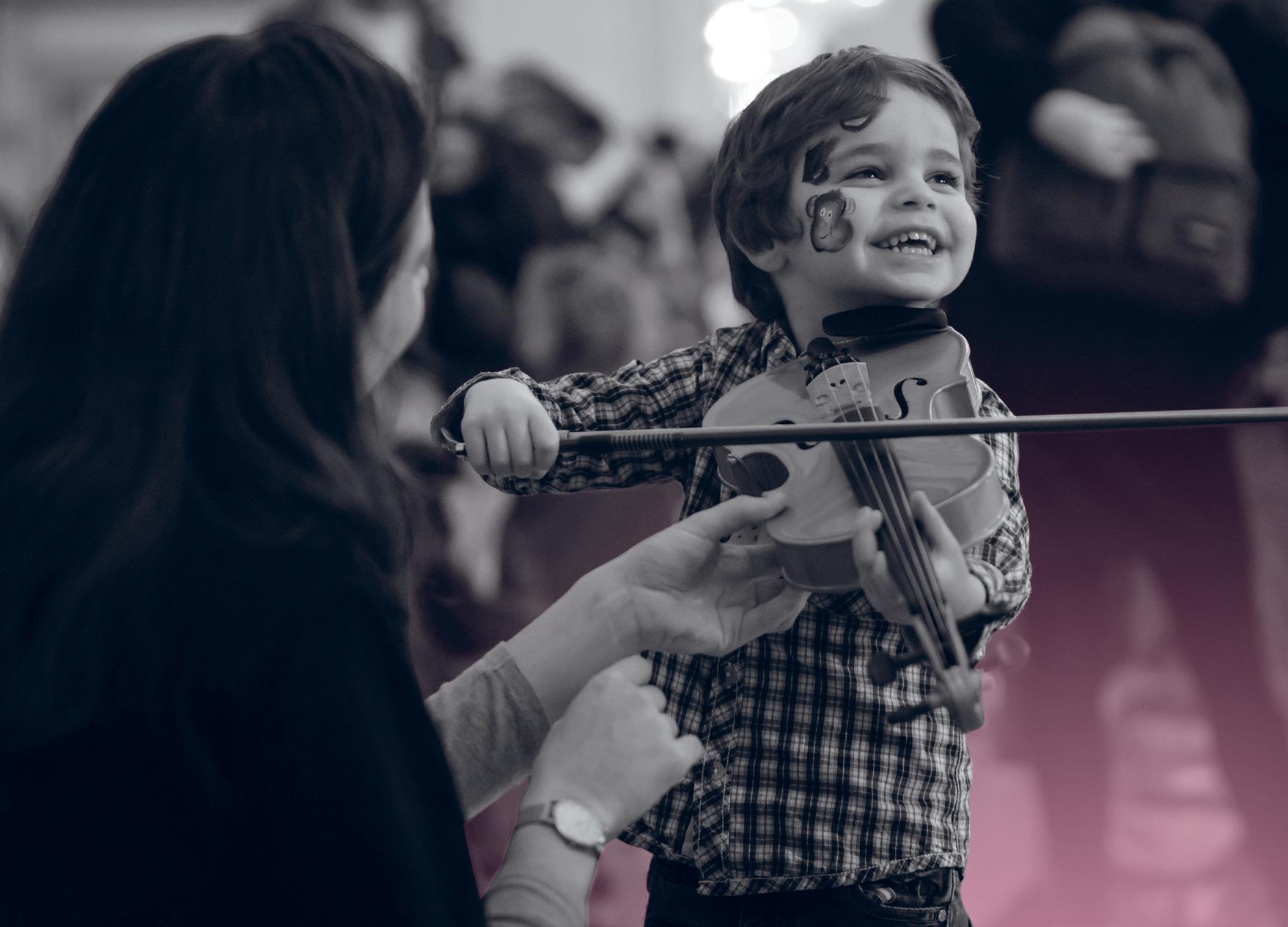

Each year, the SCO must fundraise around £1.2 million to bring extraordinary musical performances to the stage and support groundbreaking education and community initiatives beyond it.
If you share our passion for transforming lives through the power of music and want to be part of our ongoing success, we invite you to join our community of regular donors. Your support, no matter the size, has a profound impact on our work – and as a donor, you’ll enjoy an even closer connection to the Orchestra.
To learn more and support the SCO from as little as £5 per month, please contact Hannah at hannah.wilkinson@sco.org.uk or call 0131 478 8364.
The SCO is a charity registered in Scotland No SC015039.