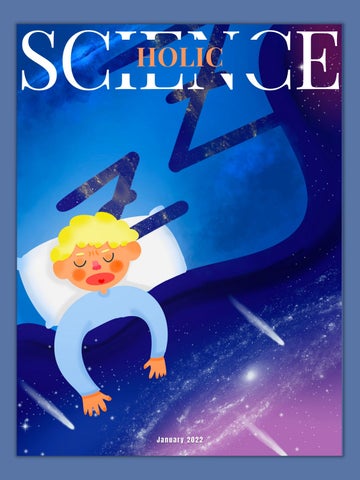
SCIENCE HOLIC
Note From Your
EXECUTIVE DIRECTOR
Dear ScienceHolic Readers, We hope that you are having a great fall term and are enjoying the school year so far! We also want to thank you for your support this past year, especially as the world has been navigating the pandemic. Now, as we approach the winter months, ScienceHolic has some very exciting news to share: our winter seasonal magazine is out! In this edition, you can enjoy reading our featured article about sleep apnea and learn the many reasons why sleeping is important. Then, your curiosity can take you to read about a vast array of other STEM topics, like how humans taste spices, or why you feel itchy. We guarantee that you will find an article that intrigues you! But of course, none of this could have been accomplished without our incredible team. We are extremely grateful to our members for investing their time and energy into making this edition of ScienceHolic possible. Okay, we’ll stop blabbering now and let you dive in. Relax, grab a snack, and enjoy ScienceHolic’s winter seasonal magazine!
Yours Truly,
Joyce
TABLE OF CONTENT
Astronomy, Environment, and Technology The Effect of Pesticide Use The Growing Problem of Space Junk All About Silicon Wafer Production
Biology and Chemistry Using Gene-Based Technology to Revoluntionize Ecosystems What is Antibiotic Resistance Hibernation: Not Just Sleep How do Human Taste Spice Why Do Popside Packagings Sweat?
Health The Inexplicable Snore Music and the Brain Why Do We Itch? What Causes Acne?
Psychology and Medicine Can We Communicate Through Lucid Dreaming The Internal Suffer of Injured Athletes How Neurological Syndromes Damage Your Brain A Range of Color Blindness Born with a Tail
MEET THE TEAM LEADERSHIP Co-founder and Executive director
Joyce Hai
ART team Tiffany Chen
Artistic Director
Serena Yung
Artistic Assistant Director
Senior Artist
Lucy Chen
Senior Artist
Vivian Chen Artist
Tiffany Gao Artist
Jennifer Hu Artist
Kevin Li Artist
Jenny Li Artist
Lalita Ma Artist
Daelah Nicholas Artist
Kaitlyn Stanton Artist
Denise Suarez Artist
Nicole Wang Artist
Susan Wu Artist
Cici Zhang Artist
Gianluca Zhang Artist
Daisy Zheng Artist
Kimberly Arinton
4 | SCIENCEHOLIC EDITION 2022
content team Belinda Lin
Content Director
Ted Isidor
Assistant Director
William Tsay
Senior Writer
Jiahao Wu
Senior Writer
Brandon Chen Writer
Eric Jiang Writer
Nikki Jiang Writer
Hannan Kwon Writer
Andy Lin Writer
Aksha Mia Writer
Brianna Nee Writer
Suhani Patel Writer
Dalin Try Writer
Ellie Wang Writer
kelly Zeng Writer
Jessica Zhang Writer
Mirabel Zou Writer
Website team Chris Tong Website Director
Matthew Chen Member
Kitty Liu Member
Tommy Zhang Member
Thomas Zhou Member
SCIENCEHOLIC EDITION 2022 | 5
editing team
Ken Saito
Editing Director
Cynthia Zhang
Editing Director
Vincent Chang Editor
Tharindi Jayatilake Editor
Katelyn Ma
Peggy Yang
Senior Editor
Yanxi Chen Editor
Jasleen Matharu Editor
Senior Editor
Ivan Feng Editor
Kira Tian Editor
Hanson Xuan Editor
Social Media and Outreach team Stephanie Hu
Social Media Director
Scarlett Chu Communications Director
Chad Cai Member
Winnie Li
Social Media Assistant Director
Jessica Dong Angel Tseng Partnership & HR Director Events & Finance Director
Jeff Jiang Member
6 | SCIENCEHOLIC EDITION 2022
Brandon Ma Member
Karen Li Member
Jacob Liu Member
Environment
THE EFFECTS OF PESTICIDE USE Author: Hannah Kwon Editors: Liane Xu and Jasleen Matharu Artist: Daisy Zheng Pests and insects infiltrating farmer produce are nothing out of the ordinary during the summer. However, by eating plant leaves, burrowing holes in the ground, and transmitting bacterial, viral, or fungal infections to crops, farmers go through hours of gruesome work to remove
pests. Although there are various methods to eradicate these intruders, such as using vegetable oil, dish soap, or rubbing alcohol, most farmers resort to utilizing pesticides for it’s easy and effective properties to protect their plants.
7| SCIENCEHOLIC EDITION 2022
After spraying pesticides onto a plant, the plant absorbs and distributes the chemicals, so when an insect attempts to feed on it, they ingest the pesticides and die. This might seem like an ideal and efficient method, but it comes with numerous risks to human and environmental health as well.
Environment
Firstly, pesticides sprayed on plants could flow as runoff from the farms into nearby streams and rivers and contaminate water sources, increasing chances of harm or death to dependent organisms near the bodies of water. Consequently, this mass die-off of plants and animals can throw the ecosystem off balance. Also, when high concentrations
of nitrate are present in drinking water, it may lead to methemoglobinemia, a fatal illness for newborns. Furthermore, as humans are eating non-organic food smeared with pesticides, small amounts of it slowly accumulate. Even after thoroughly washing them, there would still be some that seeped
through to the inside of the crops. These accumulated pesticides can harm the nervous reproductive, and endocrine systems and lead to cancer, Alzheimer's disease, ADHD, and even birth defects. Also, there are a few groups of insects that are resistant to pesticides and survive. They would then quickly reproduce more and more offspring with the same immunity, rendering the pesticide ineffective. Thus, the farmers have no choice but to switch to a different and more powerful pesticide, intensifying the possible harm done to the environment and our health.
SCIENCEHOLIC EDITION 2022 | 8
ASTRONOMY
THE GROWING PROBLEM OF SPACE JUNK Author: Patrick Lin Editor: Kira Tian Artist: Cici Zhang From tiny flecks of paint caused by surface erosion to large, abandoned satellites, space junk is a growing problem the world has to solve if it wants to continue activity in space. Space junk, usually orbiting the Earth, includes all artificial particles in space. Since space junk can travel at speeds of up to 17,500 miles per hour, it can pose a severe threat to spacecraft, regardless of its size. Still, space junk is largely overlooked when a payload is launched into space. Although many people will never go to space, we still rely on services from space: weather forecasting,
telecommunications, and GPS systems, all of which are threatened by space junk. The Kessler syndrome or collisional cascading is a theoretical scenario where space activity becomes extremely difficult or even impossible to achieve due to an overload of junk in Earth’s orbit. When space junk collides with other space junk, the junk breaks into smaller parts that could increase its potential threat. Despite all this, there has been no real effort to clean up space junk, and there are not many regulations that hold those who created the junk accountable. Thus, space junk continues to increase profusely.
9| SCIENCEHOLIC EDITION 2022
In 2019, India blew up one of its satellites in a missile test. The explosion let out hundreds of pieces of space junk, some of which threatened the International Space Station. In 2007, China also launched a missile on its satellite, and in 1985 and 2008, the US did the same, all of which created more space junk. Some countries and companies have invented devices to remove or prevent space junk. Solutions range from installing devices that control the entry of junk into space to shooting water to slow down junk so it can fall out of orbit. Still, existing laws and
ASTRONOMY
treaties fail to obligate countries to bear the responsibility for the junk they create; other countries also do not feel incentivized to intervene. In the modern world, everyone acts in their self-
interests. However, space junk needs to be addressed by nations in a shared effort because it is universal property. Space junk threatens every country and company that wants to access the
opportunities space creates for them. The removal of space junk currently in orbit and the prevention of more debris released into space are necessary if we want to continue being a spacefaring civilization.
SCIENCEHOLIC EDITION 2022 | 10
technology
ALL ABOUT SILICON WAFER PRODUCTION Author: Roy Xu Editors: Jasleen Matharu and Kira Tian Artist: Serena Yung
In the early 1950s, silicon became the leading material within the transistor industry. Scientists discovered that silicon was a more efficient semiconductor than Germanium because silicon raises the power output while also lowering operating temperature. In 1954, Texas Instruments produced the first commercial silicon transistor, enabling the future development of electronics. The production process begins with silica commercially processed alongside wood, charcoal, and
coal in a heated arc at a temperature of over 1900 °C. In the arc, carbon reduces the silica to silicon. The silicon is then heated above its melting point.
11 | SCIENCEHOLIC EDITION 2022
A seed is also positioned on top of the molten where the crucible of molten silicon will rotate in opposite directions. After obtaining the desired diameter, growth conditions stabilize and a fully grown ingot cools down for slicing. During the slicing process, a diamond edge saw carefully slices the silicon wafers such that they are slightly thicker than the target specification. Finally, after the slicing process, the wafers go through a lapping process to remove saw marks and surface defects before they are cleaned, polished and finalized into a product.
technology Once we have the product, a transistor, a thin-film layer of wiring, and other components will be deposited on top. The thin film will be coated with a photoresist, and the circuit pattern of the photomask will be projected onto it, completing the first layering. This process is repeated several times as other layers form on top of one another, forming an integrated circuit. Once the circuits are deployed within the wafers, they are cut into the desired size and shipped off to clients for installment.
Why is the world short of semiconductors? The market for semiconductors was already unstable before COVID-19 arrived. Under former president Donald Trump, the United States has levied sanctions against several big Chinese companies, including SMIC and Huawei. Despite the pandemic disrupting all semiconductor shipments, demand for new mobile devices, PCs, and data center upgrades surged due to remote work and learning, as well as other stay-at-home trends. With most chipmakers hardly recovering from their initial disruptions caused by the pandemic, the Taiwan Semiconductor manufacturing
company was one of the few that stayed online because its most advanced plants within Taiwan were not affected. However, the current disruption within the market will likely linger around. To resolve this shortage, the Taiwan semiconductor manufacturing company vowed to invest $100 billion to expand its operations in the upcoming years. The Biden administration also announced $50 billion proposals to strengthen America's chipmaking sector. Unfortunately, throwing cash will not resolve any problems as most of the semiconductor market relies on overseas companies.
SCIENCEHOLIC EDITION 2022 | 12
biology
USING GENE-BASED TECHNOLOGY TO REVOLUTIONIZE ECOSYSTEMS Author: Suhani Patel Editor: Kira Tian and Megan Liu Artist: Tiffany Chen Genome engineering technologies have advanced the fields of genetics and biotechnology significantly and have saved entire wild populations and ecosystems. While conservationists have succeeded in restoring some species like the southern white rhino and American bison, the
average risk of extinction for birds, mammals, amphibians, and corals show no sign of decreasing. But what if it was possible to protect our planet’s biodiversity by rewriting the genetic code of plants and animals? Researchers around the world are considering ways to
13 | SCIENCEHOLIC EDITION 2022
employ genetic engineering for conservation purposes. The idea started in 2012 with CRISPR (Clustered Regularly Interspaced Short Palindromic Repeats) technology. This molecular tool was used to make precise changes to the DNA of plants, animals, and microbes. Through CRISPR, scientists have been able to use gene-editing technologies such as gene drives. Gene drives are tiny snippets of DNA that have been tweaked by scientists to change how certain genes and traits are inherited. Typically, a gene has a 50% chance of being passed from a parent to an offspring, but gene drives increase that probability to 95%. Gene drives can directly benefit biodiversity by controlling populations of environmentally damaging invasive species such as rats, cane toads, or lionfish. Unlike most current chemical or biocontrol methods, gene drives target specific species and eradicate invasive populations. An example of
biology this “ecosystem intervention” is to control malaria by altering the genes in Anopheles mosquitoes that transmit the disease. Anti-malarial medicines and insecticides lose effectiveness due to evolving resistance, and a vaccine remains out of reach despite intense research and investment. On the other hand, gene drives can spread genes conferring malaria resistance through the mosquito populations with very few effects on other species. They can also reduce or even eliminate the mosquitoes long enough to eradicate the malaria parasites permanently. The ability to manage ecosystems by altering wild populations will have profound implications between humans and nature. Selective breeding and genome engineering have defined the development of agriculture, human lives, and medicine. But at the same time,
they also have had comparatively little impact on most ecosystems due to domesticated crops and animals’ inability to survive in the wild. With CRISPR gene drives, we may be able to directly alter the traits of or influence the population size of many non-domesticated species that constitute most key players in ecosystems worldwide.
Given the importance of ecosystem integrity, vitality to human flourishing, and the balance of life on our planet, the availability of these techniques will come with tremendous responsibility. The decision of how we can apply CRISPR gene drives will be in our collective hands, which can help save our planet.
SCIENCEHOLIC EDITION 2022 | 14
biology Author: Karen Liu Editor: Vincent Chang Artists: Denise Suarez
ANTIBIOTIC RESISTANCE
Imagine showing up to the emergency room with infections, but every antibiotic the doctors administer is ineffective. The infection rapidly disperses throughout the hospital, spreading to patients and nurses until the whole hospital is infected. This terrifying situation is not just part of the imagination–it can happen as a result of antibiotic resistance. Antibiotic resistance is a growing problem worldwide, especially with the rise of new technology. In the United States, 2.8 million people are infected with some
sort of antibiotic-resistant bacteria each year, and over 35,000 of those people result in death. Antibiotic resistance occurs when bacteria and fungi
15| SCIENCEHOLIC EDITION 2022
develop the ability to defeat the drugs assigned to kill them. How does this happen? We can think about it in terms of natural selection. In a population, certain bacteria can develop mutations that make them resistant to antibiotics. So when an antibiotic is used, most bacteria are killed except the ones with mutations. They survive and pass on their mutation to further generations. Because they have a unique adaptation, they have an increased chance to survive and reproduce. A common misconception is that using antibiotics causes resistant bacteria. This is incorrect because antibiotic use only accelerates the process; the resistance occurs naturally because mutations are random.
biology As bacteria become resistant to antibiotics, scientists constantly develop newer and stronger drugs to kill those bacteria. Unfortunately, the newly created antibiotics will accelerate the process by allowing bacteria with antibiotic resistance mutation to survive and reproduce. Therefore, scientists will once again have to manufacture a new drug that is even stronger. This cycle creates a positive feedback loop that has become a growing problem in our society. Methicillin-resistant Staphylococcus aureus (MRSA)
is currently one of the most common examples of antibiotic-resistant bacteria. It is difficult to treat and is highly contagious. Because MRSA is transmittable through skinthrough-skin contact, it becomes a primary concern in hospitals. Not everyone who carries MRSA has signs of infection, so contaminated hands from one healthcare worker can quickly spread from patient to patient. For instance, a large outbreak of MRSA occurred in three hospitals in East Northamptonshire from 1991 to 1992, where 400 patients were colonized or
infected. To alleviate the problem, people can limit their antibiotic use and only take them if prescribed by a healthcare professional. Preventing infections by regularly washing hands can also help. Most of the time, when antibiotics fail, patients have to be transferred to more expensive machines that are expensive and can be a burden to families financially. Therefore, we should all take action to prevent a postantibiotic era, where even minor infections or injuries can have long-term ramifications.
SCIENCEHOLIC EDITION 2022 | 16
biology
HIBERNATION: NOT JUST SLEEP
Author: Ioannes Salamanes Editors: Ken Saito and Michael Zhu Artist: Gianluca Zhang We’ve all learned that hibernation is a process when animals enter a sleep-like state for the whole winter season. While this is somewhat true, there is more to hibernation than just sleeping. Hibernation is the involuntary biological process where some animals undergo physiological changes like slowed metabolism and a drop in body temperature. Animals hibernate to conserve energy when there is a lack of food during harsh weather conditions. Thus, hibernation is critical for their survival. Many people think hibernation equals sleep, but these are, in fact, two distinct processes. Hibernation can last days, weeks, and months and sleep is a daily, normal process. The largest distinction between sleep and hibernation is brain activity. When we are sleeping, our brain waves change while we cycle through the different stages of sleep but when animals are hibernating, their brain waves are similar to how they are in an awakened state, just slowed down. When waking up from hibernation, animals appear sleep-deprived and need to catch up on deep
sleep. Slowed breathing and heart rate are physiological changes associated with sleep; however, physiological changes are more dramatic during hibernation. Sometimes, the body temperature of certain animals can drop below the freezing point of water, and some animals even stop breathing for over an hour at a time. This happens because the purpose of hibernation is to allow animals to reduce their energy consumption. To fully understand hibernation and why it’s necessary for some animals, we must recognize the difference between endothermic and ectothermic animals. An ectotherm is an animal whose
17| SCIENCEHOLIC EDITION 2022
body temperature depends on the surrounding temperature, and an endotherm is an animal that can regulate its body temperature by creating its own heat. When we think of ‘coldblooded’ animals, we usually think of lizards or snakes. Likewise, we think of birds and mammals as ‘warm-blooded’ animals; however, some fish, insects, and reptiles are actually warm-blooded. Ectotherms use less energy to regulate body temperature, meaning they rely more on environmental conditions. However, endotherms need to produce heat to regulate their body temperature, and rough weather might impact their capability to find food sources.
biology Many endothermic animals enter a state called ‘torpor’ which causes physiological processes to slow down. Animals with the ability to adjust their metabolism and base body temperature are called heterothermic endotherms. Hibernation is a series of periods of torpor that each lasts for multiple days. Some animals go into daily torpor and wake up to forage and feed, while others in hibernation feed off stored food or body fat. Animals that enter daily torpor consume large amounts of energy during the day. Being able to conserve that energy, even for just a few hours a day, can increase the chances of survival on colder nights. Some birds who migrate in the winter will also enter a state of torpor to save energy before taking off. Hibernation is more common than torpor in smaller animals. In fact, small animals that hibernate have a 15% higher survival rate and 50% longer lifespan than other animals of their size who don’t hibernate. This is because
animals in hibernation have less acute senses to see, hear, and smell. “Deep” hibernators are endotherms that are so incapacitated by the metabolic changes that they are almost impossible to awaken during the winter months. During hibernation, animals that have stored food will wake up sporadically to eat and drink. Animals in hibernation can lose about one-quarter of their body weight over the winter, and because of their unconscious state, they are more prone to predation. As a result, animals are weaker when they wake up, so they have to recover quickly to survive. If they do not have enough stored energy, they might not even be able to wake up at all. Although hibernation is seasonal, not all animals
hibernate sleep in the winter and wake up in the spring. Not only do animals that live in cold climates hibernate, but it also occurs in a wide range of animals, from the arctic to tropical regions. Estivation is essentially hibernation in the summer. Animals estivate when the weather gets too hot or dry. Since coldblooded species can’t regulate their body temperature the way mammals and other endotherms can, reptiles brumate instead of hibernate. Brumation is when animals like frogs, snakes, and turtles burrow underground to stay warm. Humans, although we are endotherms, don’t need to hibernate. This is because of our technology and biology that keep us comfortable year-round. But scientists have also looked into the possible benefits of human hibernation.
SCIENCEHOLIC EDITION 2022 | 18
biology
HOW DO HUMANS TASTE SPICE?
Author: Ellie Wang Editors: Vincent Chang and Liane Xu Artist: Denise Suárez Of all the mammals living on this planet, humans and tree shrews are the only two that enjoy eating spicy foods. What’s answered here is how humans taste the spice and what measurements quantify it. Despite the term “tasting spice”, our taste buds are not the structures that detect capsaicin, the chemical compound that causes the hot feeling of spicy foods. The tongue, mouth, and throat contain Transient Receptor Potential Vanilloid subtype 1, or TRPV1. This ion channel is found in sensory neurons throughout our body for detecting temperatures above 42 degrees Celsius and harmful acid. Once it does, it sends signals to the brain, leading to a painfully hot sensation. By binding to TRPV1, capsaicin triggers this process, which is why spicy foods taste hot. Capsaicin doesn’t always act independently, though— certain substances can increase or decrease the hot feeling it creates. For instance, ethanol, a compound found in alcohols, magnifies the feeling by “lowering the temperature at which the capsaicin receptor
activates”, according to BBC Future. As a result, capsaicin can more easily set off the perceived pain linked to TRPV1. On the other hand, milk is known to decrease the hotness of spice. The Sensory Evaluation Center in Penn State’s College of Agricultural Sciences conducted a study comparing the effects of different commercial drinks on subjects’ perceptions of spiciness after drinking a spicy Bloody Mary. It demonstrated
19| SCIENCEHOLIC EDITION 2022
that the protein content of milk is more important than the fat content of milk since there was almost no difference between the effectiveness of whole milk and skim milk. Specifically, a lipophilic, or fat-loving protein called casein found in mammal’s milk binds to capsaicin’s hydrocarbon tail. Approximately 80% of cow’s milk consists of casein, which is how it drastically reduces spiciness.
biology To measure the spiciness of chili peppers, a pharmacologist named Wilbur Scoville created the Scoville scale in 1912. The number represents the level of dilution for the spiciness to vanish, which means that a higher number would correlate with a spicier substance. Pure capsaicin measures at about
16,000,000 average Scoville Heat Units, or SHUs. Chili peppers are much lower on the Scoville scale, though. A common pepper, such as jalapeño, falls around 5,000 SHUs. The spiciest pepper in the world is the Carolina Reaper, which sits at an average of 1,569,000 SHUs. However, the hottest Carolina Reaper to
ever exist, named Smokin’ Ed’s Carolina Reaper, was tested to be 2.2 million SHUs. Many humans crave the hot sensation and pain of spicy foods. Spice is a significant part of human culture globally, and thanks to TRPV1 receptors and substances to enhance or mitigate the feeling, humans get to experience it and control how they do so.
SCIENCEHOLIC EDITION 2022 | 20
chemistry
WHY DO POPSICLE PACKAGINGS SWEAT? Author: Edgar Zhu Editor: Peggy Yang and Michael Zhu Artist: Nicole Wang
In the summertime, there's nothing better than coming home from the sweltering heat, turning on the air conditioner, and pulling a popsicle out of the fridge. The cold of a popsicle quickly takes away the uncomfortable heat, but there's one thing you notice every time
21 | SCIENCEHOLIC EDITION 2022
you eat a popsicle: packaging of the popsicle is always covered with a layer of water droplets. Have you ever thought about the reasons behind it? Is it because the popsicle itself is “sweating” because it's so hot, or is there a leak in the fridge?
chemistry Most matter in the world has three states: solid, liquid, and gas. The interchange of the three forms involves six changes. The processes that include heat absorption and emission are: melting (solid to liquid), vaporization (liquid to gas), sublimation (solid to gas), freezing (liquid to solid), condensation (gas to liquid), and deposition (gas to solid). The sweating of popsicle packaging is the effect of condensation. First of all, why do we want to eat a popsicle after going outside on a hot day? Because we feel uncomfortable
in the hot outdoors, and popsicles are freezing cold when we take them out from the refrigerator. This temperature difference causes us to transfer some of our heat to the popsicles, thereby lowering our body temperature. So, where do some of this heat go? Our cold popsicle absorbs it. Similarly, when a popsicle is taken out of the refrigerator, the packaging of the popsicle has a very low temperature. In contrast, the water vapor in the outside air has a very high
temperature. When the water vapor in the hot air encounters the cold packaging of the popsicle, it undergoes an exothermic process: the heat is transferred to the packaging of the popsicle. When water vapor is cooled, it begins to liquefy. The water vapor, attached to the popsicle packaging, changes from a gas to a liquid, turning from water vapor to a drop of water. So, your popsicle isn't sweating, and your fridge isn't leaking either. The water droplets on the packaging of popsicles come from water vapor in the air around it that sticks to it.
SCIENCEHOLIC EDITION 2022 | 22
health
THE INEXPLICABLE SNORE Author: Belinda Lin Editors: Angela Lin and Michael Zhu Artist: Kimberly Arinton Have you ever been told that you snore when you sleep? You have probably believed that it’s normal, but snoring can actually be a serious sleeping disorder called sleep apnea. This disorder occurs when one has extended periods of pauses in breathing repeatedly in their sleep, affecting the body’s source of oxygen and quality of sleep. Irritability, morning headaches, and excessive tiredness are all symptoms of the three types of sleep apnea — obstructive sleep apnea, central sleep apnea, and complexed sleep apnea.
23 | SCIENCEHOLIC EDITION 2022
health Obstructive sleep apnea (OSA) is the most common type of sleep apnea diagnosed amongst adults, associated with being overweight: a 10% weight gain increases your risk of getting obstructive sleep apnea by 6 times. This results in the thinning of tissues in the mouth and throat which can cause the blockage of the airway during sleep or a state of relaxation. OSA resulting in children are usually from the enlargement of tonsils, adenoids, and overbites. Although less common, birth defects like Pierre-Robin syndrome can cause OSA too. Pierre-Robin syndrome causes children to have a smaller lower jaw, which causes the tongue to
fall back to the throat during sleep. Central sleep apnea (CSA) occurs when your brain does not send proper signals to the muscles that control your breathing, resulting in your body making no effort to breathe. This can cause one to miss several breathing cycles. If the pause in breathing is long enough, it can cause hypoxaemia, or when the percentage of the oxygen in your system drops below normal; and hypercapnia, or when there is a buildup of carbon dioxide. If there continues to be a lack of oxygen, the levels of blood oxygen in the brain cells will decrease, which can lead to
long-term brain damage. Complex sleep apnea occurs when an individual has been diagnosed with both obstructive sleep apnea and central sleep apnea, which, although can be less frequent, is more critical. Although sleep apnea is not curable, it is treatable, and it remains hopeful in that there remains many ways to prevent sleep apnea. Warning signs of sleep apnea include excessive daytime tiredness, loud snoring, observed episodes of times when you stop breathing, abruptly waking up and gasping for air. If you observed these traits early on, a better treatment would be available.
SCIENCEHOLIC EDITION 2022 | 24
health
MUSIC AND THE BRAIN Author: Khwaish Sethiya Editors: Vincent Chang and Angela Lin Artists: Denise Suárez Music is an integral part of our everyday lives. Whether we are winding down after a long day, dancing at a party, or even setting the mood for studying, music is often a complementary accessory. Any genre of music we listen to activates areas in our brain: depending on an individual's experiences and training, each brain gets activated differently, but there is no doubt that music stimulates the human brain. The passage of processing music involves nerve impulses from the ear to the auditory cortex. Music processing takes place in the cochlea, also known as the inner ear, where the
impulse is transmitted along the auditory nerve to the auditory cortex in the temporal lobe. The ear converts the sound waves into signals that the brain can interpret and further process. The pinna, the externally visible part of the ear, transmits sound waves to the ear canal. As these sound waves get transmitted and amplified along the way, the eardrum vibrates too. The cochlea, filled with fluid that stimulates several nerve endings, takes these vibrations and converts them to electrical impulses. These electrical impulses can then be processed as they move to the brain via
25| SCIENCEHOLIC EDITION 2022
the auditory nerve. Looking at the different parts of the brain, we can understand how each reacts to music. The frontal lobe is associated with thinking, decision-making, and planning, and they become more enhanced when listening to music. In the frontal lobe, the prefrontal cortex, Broca’s area, and the motor cortex are also stimulated when music plays: the prefrontal cortex gets activated when the brain begins
health to analyze and interpret rhythms. Broca’s area is associated with language and speech; the lyric parts of songs actuate this. The temporal lobe is crucial for the understanding and interpretation of music, and cortices for speech and language are also found here. This contains the auditory cortex and Wernicke’s area— the auditory cortex plays an important role when the ear needs to analyze the pitch and volume of sound waves, and Wernicke's area is crucial for language comprehension and understanding written notes; for example, when a musician is playing a melody using the music sheet. The occipital lobe is necessary for processing what we see and involves the visual cortex, which reacts to music by producing images associated with the memory with that specific tune. The cerebellum is needed to coordinate movement and physical memory while
also analyzing rhythms. This is important as the muscle memory in musicians does not fade out. The nucleus accumbens is an important part of the brain that connects with music as it is the part that seeks pleasure and reward and is associated with the release of dopamine, a neurotransmitter and chemical messenger crucial for motivation and reward systems, that occurs when someone listens to music. The amygdala is required for the processing and triggering of emotions associated with music. In the hippocampus, music can help with neurogenesis: the production of new neurons, which helps improve memory. The hypothalamus, the region responsible for keeping homeostasis, reacts by reducing heart rate and blood pressure when we listen to pleasurable music. The corpus callosum allows for coordination between the left hemisphere, associated with logic, and the right,
associated with intuition. Lastly, the putamen, a region in the brain, processes rhythm, body movement and can temporarily stop Parkinson’s disease when the patient listens to that music. The effects of playing and listening to music can best be understood by analyzing a musician's brain. Musicians usually have a bigger and more sensitive brain. Their auditory skills and cognitive flexibility are high as areas for auditory processing and cognitive flexibility are larger, and they also have a larger corpus callosum and enhanced abilities. Listening to music lowers the stress hormone cortisol while stimulating the brain hormone oxytocin, which decreases delirium and anxiety. Listening to music also increases brain growth in spheres involving learning, memory, and auditory processing. Different genres of music also help different sections of the brain. Classical music enables dopamine secretion, synaptic function, learning, and memory. Heavy metal allows a sense of identity. Rap music, on the other hand, stimulates emotion, motor function, and language processing. Pop/rock enhances endurance and physical performance. Lastly, jazz often helps in soothing and calming the brain.
SCIENCEHOLIC EDITION 2022 | 26
health
WHY DO WE ITCH? Author: Renee Cao Editors:Kira Tian and Liane Xu Artist: Daelah Nicholas Why do we always want to scratch mosquito bites? The answer is pruritus, or commonly known as an itch. When our skin or nerve cells start getting irritated, we develop the urge to scratch—a vital sensory and self-defense mechanism. Pruritus is a common symptom of many skin disorders. It is stimulated by pruriceptors, nerve endings that sense itches. Inflammation and damage to the skin, mucous, or eye
membranes all stimulate mechanical, thermal, and chemical agents that cause itching. Itches are caused when Cfibers, specialized nerve cells, are activated by their pruriceptors. When C-fibers are stimulated, they bring signals from the nerve to the spinal cord, and then to the brain, resulting in a scratching reflex. The scratching interferes with the sensations caused by the
27 | SCIENCEHOLIC EDITION 2022
pruriceptors, and thus temporarily relieving an itch. When this happens, low-level pain signals are sent to the brain, distracting the brain and releasing serotonin. However, scratching too much can make the skin become more irritated. It might then tear up and develop a lasting infection. In fact, our skin is the sole part of our bodies that experiences itchiness and pain at the same time. Joints, muscles, and
health organs can only feel pain. Itches can be caused by infections such as lice, insect bites, scabies, shaving, and herpes. It can also be caused by allergies and environmental factors like poison ivy. Skin disorders like dandruff,
sunburns, chickenpox, athlete’s foot, and scabs are also common causes of itching. Luckily, there are several remedies for itching. For minor itches, the simplest way would be to not scratch in the first place, as scratching further
intensifies the itching. Placing something cold on top of the itch is also a useful remedy. For more severe itches, use cream or lotion with calamine and hydrocortisone. Other treatments include antihistamines, opioid antagonists, and aspirin.
SCIENCEHOLIC EDITION 2022 | 28
health
WHAT CAUSES ACNE? Author: Jiahao Wu Editors: Peggy Yang, Michael Zhu Artists: Lucy Chen
We panic when pimples and acne start appearing on our faces, rush to apply acne treatment products, and put on face masks, all the while praying that these bumps will go away. However, as we can recall from experience, most products and methods don’t work immediately. Why? Why won’t the pimples go away when you wash them with a benzoyl peroxide cleanser? The basic answer is puberty— hormones. Acne is caused by the imbalance of hormones, which means they need time to go away.
Acne is a skin condition that occurs when your hair follicles are blocked by oil and dead skin cells. Common types of acne include blackheads, whiteheads, and pimples. Although it is most common in teenagers and young adults, it can happen to anyone at any age. There are four main causes of acne: excess sebum (oil) production, hair follicles clogged by dead skin cells and oil, bacteria, and inflammation. Acne usually appears on your face, forehead, chest, upper back, and shoulders because oil production happens mostly in these areas of skin.
29 | SCIENCEHOLIC EDITION 2022
Are there different types of acne? Yes: the difference between a whitehead and a blackhead is whether the pores are closed or not. A whitehead forms when dead cells and oil are trapped under the skin and unable to break out. On the other hand, blackheads that look like dirt stuck in the skin are caused by bacteria and oil that turn dark and oxidize when exposed to the air. Pimples, on the other hand, are red spots with white centers that occur when the blocked hair follicle becomes inflamed or infected. However, other glands on the skin aren’t usually associated with acne.
health What makes acne worse? There are many factors, but hormonal changes during puberty in our teenage years are the most common reason. However, certain medications such as drugs that contain corticosteroids, testosterone, or lithium can also trigger acne. For example, during menstrual cycles, the body will release the testosterone that causes acne to form. Also, diets including fatty and carbohydrate-rich foods may worsen acne. Stress can also exacerbate acne because it triggers the release of hormones and oils in the body. Some acne myths are proved to be false. For example, eating chocolate and greasy
food have almost no effect on acne. Oil-free cosmetics and makeup don’t have much impact on acne either. Hygiene also isn't a major factor causing acne. On the contrary, rubbing your face too hard or cleaning it with harsh soaps and chemicals can irritate your skin and make your pores open up to acneinducing bacterias.
It is essential to take care of your skin and make necessary adjustments to your routine to prevent acne. Using non-irritating products and keeping your hands and phone away from your face will help keep your skin healthy. Consulting a dermatologist before using an unfamiliar skincare product is another way to prevent sudden breakouts.
SCIENCEHOLIC EDITION 2022 | 30
Psychology
CAN WE COMMUNICATE THROUGH LUCID DREAMING? Studies show that 55% of adults have had lucid dreams in their lifetimes and 23% of people lucid dream at least once a month. When lucid dreams occur, dreamers are aware they are dreaming, but remain in the dream state. More interestingly, lucid dreamers are commonly known to be able to control their environment, their actions, and other people in their dreams. Though humans have always had lucid dreams and have studied it since ancient times, its causes and purposes still remain relatively unknown , as even ordinary dreams are still not fully understood. However, it is known that lucid dreaming is associated with REM (rapid eye movement) during sleep. A new study conducted this year by psychology and neuroscience professor of Northwestern University, Ken Paller, reveals that “individuals in REM sleep can interact with an experimenter and engage in real-time communication” and are “capable of comprehending questions, engaging in workingmemory operations, and producing answers.”
Because recalling a dream is often tedious and associated with distorted or forgotten details, Paller and his colleagues wanted to attempt to communicate with people while they are actually dreaming. Doing so could possibly pave the way for scientists to learn more about dreams, their implications, as well as memories and how memory storage depends on dreams. In ordinary dreams, dreamers are unaware that they are dreaming and may accept their dreams as reality. Thus, Paller’s experiment must be conducted while lucid dreaming. This study was conducted by four different teams from France, Germany, the Netherlands, and the US; all four countries introduced different methods of
31 | SCIENCEHOLIC EDITION 2022
Author: Renee Cao Editors: Ken Saito and Michael Zhu Artist: Gianluca Zhang presenting questions and collecting data. There were 36 test subjects: some rarely lucidly dreamed and were trained to lucid dream, some frequently lucid dreamed, and one person who had narcolepsy where they lucidly dreamed constantly. These lucid dreamers had to complete simple math problems, answer yes-or-no questions, and distinguish between visual, tactile, and auditory perceptions. The study was done in both daytime and nighttime and none of the participants were given specific questions beforehand. Responses from the dreamers
Psychology
consisted of facial and/or eye movements that produced physiological signals. All participants were able to maintain two-way communication with researchers. In one experiment, a 19year-old American who has only experienced two lucid dreams before was presented with a math problem. When he was lucid dreaming, he dreamt of his favorite video game, then lost all control of his muscles and heard the sound of blood rushing to his ears. He confirmed that he was in a lucid dream by giving three left-right eye movements (LRLRLR). Then he heard a researcher say the subtraction problem “eight minus six.” In three seconds, he responded with the answer “two” by giving two left-right eye movements (LRLR). When the problem was repeated, he still maintained the same correct answer.
In another case, a 20-yearold French man with narcolepsy was tested. People with narcolepsy are especially useful for lucid dream research; this man reported to have four lucid dreams daily and had incredible lucid dreaming abilities by being able to control dream scenarios easily. He was tested to respond to stimuli by electromyography (EMG) activity of facial muscles—the zygomatic (smiling) and corrugator (frowning) muscles. He thought these facial signals were easier and quicker to produce than the left-right eye movements, as they affected his lucid dreams less. In his first sleeping session, he had to indicate he was lucid dreaming through an LRLR sequence, a corrugator contraction, and a zygomatic contraction. He used either the corrugator or zygomatic contractions to count the number of taps received on his hands, distinguish low and high pitches, answer yes-or-no questions, and distinguish visual light changes. In his second session months later, he had to listen to a female voice say 39 French words and perform certain actions. For instance, when he heard the word “up,” he had to perform two zygomatic contractions; when he heard the word “down,” he had to perform two corrugator contractions.
In Germany, participants learned to decode Morse-code messages for visual (flashing) and auditory (beeping) stimuli beforehand to learn how to solve math problems. For example, “an eye movement from the center of the visual field to the left and back to the center (“left”) corresponds to a Morse code dot, and the reverse eye movement from center to right and back to center (“right”) corresponds to a Morse code dash.” If someone wanted to produce the answer “nine,” they would produce the eye-movement sequence of RRRRL, which would translate to four dashes and one dot. Overall, these recent experiments have provided new insights of how lucid dreaming works, and hopefully, in the near future, we can better understand how dreams play a role in the way our bodies function.
SCIENCEHOLIC EDITION 2022 | 32
Psychology
THE INTERNAL SUFFER OF INJURED ATHLETES When we go see football and basketball games, we often marvel at their athletic skill. But we seem to never care about athletes that are injured midway and have to sit out for a game, a season, or the rest of their career. Read on to find more about the effects of sports injuries on athletes’ mental health.
Author: Branden Chen Editors: Kira Tian and Liane Xu Artist: Aurora Chen
Many people participate in at least one sport, usually for physical and mental benefits. However, athletics is not just a way to get in shape and exercise. Athletes withstand many obstacles throughout their
detrimental experiences for student-athletes and future star sports players. Physical activities are essential to our everyday lives. The human body needs physical activities to stay healthy and
athletic career, regardless of whether their career is four seasons in high school or a D-1 experience in the NCAA. We should understand the extent of the effects of athletics and accommodate for these
33 | SCIENCEHOLIC EDITION 2022
Psychology
maintain wellbeing. Physical activities not only enhance physical health, but they also provide many secondary effects. For example, participating in physical activities at a younger age can benefit psychosocial and personal development and decrease the chances of developing an addiction to alcohol. However, sports are not always sunshine and rainbows. Injuries are inevitable in sports, no matter the level of intensity. These injuries can be caused by a broad range of activities, for example, landing a jump wrong or exerting too much force into a swing. While minor injuries can be treated rather quickly, leaving relatively no impact on the athlete and the sport, the truth is that major injuries are a physical and mental blockade. Severe injuries can trigger serious mental health issues, such as depression, anxiety, eating disorders, and substance abuse. Other emotional responses include isolation, irritation, lack of motivation, anger, and sleep disturbance. But athletes rarely pay attention to coping with these mental changes because they are far too preoccupied with their injuries.
To understand the mindset of student-athletes, put yourself into the shoes of one of them. Imagine this: you are currently a sophomore in college and play D-1 volleyball. Although you are young, your skills demonstrate great potential in playing for the USA team internationally. However, you suffer a major leg injury in the off-season that requires months of rehabilitation and may even end your sports career. From a mental standpoint, that can be highly agonizing and frustrating. A world in which you had your entire life planned ahead of you comes crashing down in a matter of minutes. Understandably, you would feel like a failure or feel immensely frustrated, but you are not alone
with this experience. Many student-athletes share the same story, making it even more important to understand the measures that can be taken. Sports psychologists and physicians understand that an injury can be traumatic to an athlete and realize that emotional responses are entirely normal. Medical professionals must understand this as well because inappropriate reactions can only worsen an athlete’s mental state. As research continues to expand our knowledge of the mental strains of injury on student-athletes, more resources will become available to help student-athletes in their quest to regain passion in their sport.
SCIENCEHOLIC EDITION 2022 | 34
Psychology
HOW NEUROLOGICAL SYNDROMES DAMAGE YOUR BRAIN Millions upon millions of people suffer from neurological syndromes such as anxiety or depression. In 2017, 284 million people were estimated to suffer from clinically diagnosed anxiety. This number, unfortunately, grows every year. Due to chemical imbalances, overstimulation, and under-stimulation in the
brain, these disorders can cause long-term impacts. For example, patients with depression disproportionately suffer from hypoxia, which is a lack of oxygen in their brains, causing potential inflammation and brain cell injury. But what is the difference between feeling anxious and depressed from actually having
35 | SCIENCEHOLIC EDITION 2022
Author: Hanah Gomberg Editor: Jacklynn Nguyen Artist: Kimberly Arinton anxiety and depression? Anxiety causes a disruption of the emotional processing center of the brain, thus compromising the limbic system which consists of the hippocampus, amygdala, hypothalamus, and
Psychology thalamus. On the other hand, feeling anxious is merely a natural response to the world around you; it is usually healthy and is part of human nature. Additionally, depression causes subcortical limbic damage, thus damaging the amygdala, hippocampus, and dorsomedial thalamus. In severe cases of depression, hippocampal volumes have been reported to decrease by 20%, whilst feeling upset or depressed would not
have such drastic impacts. It is important to note that there is no singular way to feel when experiencing anxiety and depression. These are diseases that affect different people at different rates. Some people will feel it very strongly and will need medication to manage it, while others will only feel it mildly and periodically. Although anxiety and depression are statistically shown to stem from the loss of
a loved one, divorce, or other traumatic events, the causes are different for every person. Overall, even though millions of people have anxiety and depression symptoms, causes and severity vary considerably throughout the population. There is also a vast difference between feeling anxious and depressed from actually being diagnosed with the neurological syndrome.
SCIENCEHOLIC EDITION 2022 | 36
Psychology
A RANGE OF COLOR BLINDNESS Author: Ellie Wang Editor: Kira Tian Artist: Nicole Tseng
Color blindness affects about 8% of men and 0.5% of women. Globally, around 300 million people are color blind. While it may be commonplace to think that all colorblind people view the world the same way, there are many types of color blindness; based on the affected person’s genetics, each type of color blindness affects a different selection of colors. First of all, what causes color blindness? In most cases, a person’s chromosomes contain genes relating to the functions of the eyes. Redgreen color blindness is linked to the X chromosome, one of two sex chromosomes that determine one’s biological sex. Males have an XY combination, and females have
an XX combination. Since the condition is X-linked, all X chromosomes must have the affected gene for someone to have red-green color blindness. This is why red-green color blindness predominantly affects males: they only have one X chromosome instead of two. Other forms of color blindness, such as blue-yellow color blindness and complete color blindness, are not passed down through the sex chromosomes, so they affect males and females equally. Genetics are not always the reason for color blindness, though. There are several other causes, including: eye diseases, nervous system diseases, medications, and eye or brain injuries. No matter the cause, the result is an alteration
37 | SCIENCEHOLIC EDITION 2022
of the spectral sensitivity of certain cones in one’s eyes, changing the way these structures receive different wavelengths of light. The most common type of color blindness is red-green color blindness, of which there are two main types: protein and deutan. Protan color blindness involves a change in the Lcones or long-wavelength light cones that perceive red light. With red-green color blindness, L-cones’ spectral sensitivity shifts and perceives shorter wavelengths, making red colors more difficult to see. The protan type can be further separated into protanomaly, a partial L-cone shift, and protanopia, a full L-cone shift. Common symptoms include
Psychology difficulty differentiating greens, yellows, oranges, reds, and browns. In addition, purple appears bluer, pink seems gray, and red looks darker than usual. Approximately 25% of redgreen colorblindness cases consist of protan color blindness. With deutan color blindness, on the other hand, the M-cones that receive medium wavelengths are altered. While they usually perceive green light, they shift to perceive longer wavelengths. Therefore, green becomes redder. This type also has subtypes of deuteranomaly and deuteranopia. Symptoms include difficulty telling apart green and yellow, blue and purple, or between pink and either gray or white. Additionally, green traffic lights could appear pale green or white.
Next, tritan color blindness, or blue-yellow color blindness, rarely happens because of genetics. Aging of the eye or eye diseases are the common causes, so elders are most likely to have tritanomaly or tritanopia. Tritanomaly affects the S-cones that make up a mere 1% of retinal cones. Thus, any change with these cones is sure to change
someone’s sight. S-cones stand for short-wavelength light cones, and they usually perceive blue light. Someone with tritan color blindness will have difficulty seeing blue and differentiating blue and green. Besides these more common types, there are several more types of color blindness. Color blindness is not a singular condition: it has many different sorts and symptoms to be diagnosed. There are few treatments for color blindness, except for age-induced tritan color blindness, but EnChroma glasses are a solution. These glasses do not perfectly correct color vision, as they are designed to block out the colors that the affected cones are overlapping. Still, they significantly increase a colorblind person’s range of color vision, making them one of the best corrections for redgreen colorblindness.
SCIENCEHOLIC EDITION 2022 | 38
medicine
BORN WITH A TAIL
Author: Nikki Jiang Editors: Angela Lin and Peggy Yang Artist: Jenny Li
Mermaid syndrome (sirenomelia) is a rare condition where a newborn’s legs are fused, resembling a mermaid tail. This syndrome affects internal organs and the spine, causing many other health issues and is often fatal at birth. As researchers and doctors learn more about this syndrome, more advancements
39 | SCIENCEHOLIC EDITION 2022
will be made to increase the life expectancy of this syndrome. But as of right now, there is still very little we know about it. The cause of mermaid syndrome is one of the great mysteries to researchers and doctors. Many suspects that gene mutation could be a cause but no specific causes were found so far. In a case report from 2018, the upper body of the baby shows up at completely normal on x-rays and there are no respiratory or cardiovascular diseases linked
medicine
to sirenomelia. For all of the histories taken, the parents have not been exposed to any drugs or previous family illnesses. After taking a history of the pregnancy, no abnormalities were found, leaving researchers with a question mark. Genetically, some people may be more susceptible to their legs fusing at birth. Scientists do know that abnormalities in the circulatory system during early development have a causal relationship with the syndrome. The lower body of a patient showed many abnormalities caused by fused legs. The baby
had a singular large umbilical artery, a sign of mermaid syndrome. There was no presence of a urinary tract, pelvic bone, left kidney, genital organs. The neonate was also missing many bones in the lower body. The main leg bones were present, including both fibula, tibia, and femurs. A major issue for this baby was a lack of ability for stool excretion. Without a urinary tract and an abnormal bladder, secretion is near impossible. Ultimately this baby passed away four days after birth. For now, there are few cures for mermaid syndrome.
Surgery is usually not an option and has the potential for many complications, especially since many babies with mermaid syndrome are prematurely born. Most of the time life expectancies of babies are under five days. Under the rare cases of survival, the quality of life is debatable according to researchers. For now, there is a lack of proper prenatal diagnosis and a series of ethical issues that come along. Many have proposed possible pregnancy termination if mermaid syndrome is detected early. But for now, mermaid syndrome remains a mystery.
SCIENCEHOLIC EDITION 2022 | 40
citation
Astronomy, Environment, and Technology The Effect of Pesticide Use
The Impact of Pests on the Agriculture Industry.” Safeguard Pest Control, https://www.google.com/urlq=https://www.safeguardpestcontrol.co.uk/impact-pests-agricultureindustry/&sa=D&source=editors&ust=1626226340968000&usg=AOvVaw0i20vJhh-2TH3I62cplwsp. Jakuboski, Samantha. “The Dangers of Pesticides.” SciTable, 2011, https://www.nature.com/scitable/blog/green-science/the_dangers_of_pesticides/. “Protecting Water Quality from Agricultural Runoff.” United States Environmental Protection Agency, 2005, https://www.epa.gov/sites/default/files/2015-09/documents/ag_runoff_fact_sheet.pdf.
The Growing Problem of Space Junk
Chappell, Bill. “NASA: Debris From India's Anti-Satellite Test Raised Threat To Space Station.” NPR, NPR, 2 Apr. 2019, www.npr.org/2019/04/02/709032198/nasa-debris-from-indias-anti-satellite-testraised-threat-to-space-station. “Space Debris and Human Spacecraft.” Edited by Mark Garcia, NASA, NASA, 14 Apr. 2015, www.nasa.gov/mission_pages/station/news/orbital_debris.html. Patchen, Chelsea Muñoz. “Regulating the Space Commons: Treating Space Debris as Abandoned Property in Violation of the Outer Space Treaty.” Chicago Journal of International Law, 16 Aug. 2018, cjil.uchicago.edu/publication/regulating-space-commons-treating-space-debris-abandoned-propertyviolation-outer-space.
All About Silicon Wafer Production
Corporation., H. H.-T. (n.d.). 1. Semiconductor manufacturing process. 1. Semiconductor manufacturing process : Hitachi High-Tech GLOBAL. https://www.hitachi-hightech.com/global/products/device/semiconductor/process.html. Sun, L. (2021, April 27). 6 Causes of the Global Semiconductor Shortage. The Motley Fool. https://www.fool.com/investing/2021/04/27/6-causes-of-the-global-semiconductor-shortage/ Silicon Wafer Manufacturing Process. SVMI. (2021, June 30). https://svmi.com/service/silicon-wafer-manufacturingprocess/
Biology and Chemistry
Using Gene-Based Technology to Revoluntionize Ecosystems
Esvelt, K. (2014, July 17). "Gene Drives" And CRISPR Could Revolutionize Ecosystem Management. Scientific American Blog Network. https://blogs.scientificamerican.com/guest-blog/gene-drives-and-crispr-could-revolutionizeecosystem-management/. Moore, A. (2019, June 24). Can Genetic Engineering Save Our Planet's Biodiversity? College of Natural Resources News. https://cnr.ncsu.edu/news/2019/06/the-future-of-conservation-can-genetic-engineering-save-our-planets-biodiversity/. Can the gene editing technology known as CRISPR help reduce biodiversity loss worldwide? Ensia. (n.d.). https://ensia.com/features/crispr-biodiversity-coral-food-agriculture-invasive-species/. Goldman, J. G. (2016, September 14). Harnessing the Power of Gene Drives to Save Wildlife. Scientific American. https://www.scientificamerican.com/article/harnessing-the-power-of-gene-drives-to-save-wildlife/.
What is Antibiotic Resistance
Antibiotic / Antimicrobial Resistance.” Centers for Disease Control and Prevention, Centers for Disease Control and Prevention, 20 July 2020, www.cdc.gov/drugresistance/index.html. “Antibiotic Resistance.” World Health Organization, World Health Organization, www.who.int/news-room/factsheets/detail/antibiotic-resistance. RR;, Cox RA;Conquest C;Mallaghan C;Marples. “A Major Outbreak of Methicillin-Resistant Staphylococcus Aureus Caused by a New Phage-Type (EMRSA-16).” The Journal of Hospital Infection, U.S. National Library of Medicine, pubmed.ncbi.nlm.nih.gov/7759837/.
Hibernation: Not Just Sleep
Novacurious. “Not Just Sleep: All about Hibernation.” Curious, 19 Sept. 2019, www.science.org.au/curious/hibernation . Scholl, Juliann. “Hibernation 101: Facts and Myths.” Sleep.org, 16 Mar. 2021, www.sleep.org/animals-and-hibernating/ . “Why Do Animals Hibernate?” Teatown, 7 Nov. 2018, www.teatown.org/hibernation/#:~:text=During%20hibernation%2C%20an%20animal's%20body,stored%20 energy%20much%20more%20slowly .
How do Human Taste Spice
Hertzberg, Richie. “One Is the Human and the Other, Says a New Study, Is the Tree Shrew.” National Geographic, 23 July 2018, www.nationalgeographic.co.uk/animals/2018/07/only-two-known-mammals-spicy-food. Du, Qian. “The Role of Transient Receptor Potential Vanilloid 1 in Common Diseases of the Digestive Tract and the Cardiovascular and Respiratory System.” Frontiers, 21 Aug. 2019, www.frontiersin.org/articles/10.3389/fphys.2019.01064/full. Greenwood, Veronique. “Food: How Spicy Flavours Trick Your Tongue.” BBC Future, 19 Jan. 2015, www.bbc.com/future/article/20150120-hidden-ways-your-tongue-tastes. Penn State. “Milk: Best Drink to Reduce Burn from Chili Peppers.” ScienceDaily, 25 June 2019, www.sciencedaily.com/releases/2019/06/190625133526.htm. Lewis, Jordan. “Why Does Drinking Milk Ease the Pain of Eating Spicy Food?” Psychology Today, 16 Feb. 2017, www.psychologytoday.com/us/blog/brain-babble/201702/why-does-drinking-milk-ease-the-pain-eating-spicy-food. Team, The Alimentarium. “The Scoville Scale.” Alimentarium, 6 Jan. 2021, www.alimentarium.org/en/magazine/infographics/scoville-scale. Hallock, Betty. “World’s Hottest Pepper Hits 2.2 Million Scoville Heat Units.” Los Angeles Times, 23 Jan. 2016, www.latimes.com/food/dailydish/la-dd-worlds-hottest-pepper-scoville-heat-units-20131226-story.html.
Why Do Popside Packagings Sweat?
Alan Isaacs. Macmillan Encyclopedia :[M]. Hangzhou: Zhejiang People's Publishing House WU Sheng-jun. The fourth state of matter -- plasma state [J]. Classmate Boy, 2004(7):26-27. Guo Qijie. Melting and Solidification [J]. Chinese Journal of Multimedia and Network Teaching (Electronic Edition), 2015(1):19-26.
41| SCIENCEHOLIC EDITION 2022
Health
citation
The Inexplicable Snore
“Sleep Apnea.” Mayo Clinic, Mayo Foundation for Medical Education and Research, 28 July 2020, www.mayoclinic.org/diseases-conditions/sleep-apnea/symptoms-causes/syc-20377631. “Sleep Apnea Symptoms & Warning Signs in Adults.” WebMD, WebMD, www.webmd.com/sleep-disorders/sleep-apnea/symptoms-of-sleep-apnea.
Music and the Brain
Music and the Brain: What Happens When You're Listening to Music. Pegasus Magazine. (n.d.). https://www.ucf.edu/pegasus/your-brain-on-music/#:~:text=%E2%80%9CMusic%20and%20the%20Brain%E2% 80%9D%20explores,brain's%20ability%20to%20produce%20neurons. Weinberger, N. M. (2006, September 1). Music And The Brain. Scientific American. https://www.scientificamerican.com/article/music-and-the-brain-2006-09/. The University of Arizona Global Campus. (2021, March 29). How Does Music Affect Your Brain?: UAGC: University of Arizona Global Campus. UAGC. https://www.uagc.edu/blog/how-does-music-affect-your-brain#:~:text=One%20of %20the%20first%20things,with%20an%20early%20dopamine%20rush. Lehrer, J. (n.d.). The Neuroscience Of Music. Wired. https://www.wired.com/2011/01/the-neuroscience-of-music/. Alban, P. (n.d.). How Music Affects the Brain. Be Brain Fit. https://bebrainfit.com/music-brain/.
Why Do We Itch?
“Why and How Do Body Parts Itch? Why Does It Feel Good to Scratch an Itch?” Scientific American, https://www.scientificamerican.com/article/experts-why-we-itch-and-scratch/. “Why Do We Itch? Why Does Scratching Feel Better?” Healthline, 26 Feb. 2020, https://www.healthline.com/health/whydo-we-itch.
What Causes Acne?
“Acne - Symptoms And Causes.” 2021. Mayo Clinic. https://www.mayoclinic.org/diseases-conditions/acne/symptoms-causes/syc-20368047. Ghahreman, Tanya. “How to Tell the Difference Between Stress Acne and All Other Breakouts.” Byrdie, 27 Jan. 2021, www.byrdie.com/what-is-stress-acne-4775239.
Psychology and Medicine Can We Communicate Through Lucid Dreaming
Konkoly, Karen R., et al. “Real-Time Dialogue between Experimenters and Dreamers during REM Sleep.” Current Biology, Feb. 2021. ScienceDirect, doi:10.1016/j.cub.2021.01.026. “Lucid Dreams: Definition, Techniques, and Benefits.” Sleep Foundation, 30 Oct. 2020, https://www.sleepfoundation.org/dreams/lucid-dreams. “Real-Time Dialogue with a Dreaming Person Is Possible.” ScienceDaily, https://www.sciencedaily.com/releases/2021/02/210218114018.htm. Accessed 9 Apr. 2021.
The Internal Suffer of Injured Athletes
Malm, Christer, et al. “Physical Activity and Sports—Real Health Benefits: A Review with Insight into the Public Health of Sweden.” Sports, vol. 7, no. 5, 23 May 2019, p. 127, www.ncbi.nlm.nih.gov/pmc/articles/PMC6572041/,10.3390/ sports7050127 . Accessed 29 May 2021. Rpowell. “Mind, Body and Sport: How Being Injured Affects Mental Health.” NCAA.org - the Official Site of the NCAA, 5 Nov. 2014, www.ncaa.org/sport-science-institute/mind-body-and-sport-how-being-injured-affects-mental-health. Accessed 29 May 2021.
How Neurological Syndromes Damage Your Brain
Fulghum, D. (2008, June 13). Causes of Depression. Retrieved March 28, 2021, from WebMD website: https://www.webmd.com/depression/guide/causes-depression Can Untreated Anxiety and Depression Damage The Brain? (2020, September 2). Retrieved March 28, 2021, from StoneRidge: Center for Brains website: https://pronghornpsych.com/can-untreated-anxiety-and-depression-harm-the-brain/ Northwestern Medicine Staff. (2020, June 8). The Science of Anxiety (Infographic). Retrieved March 28, 2021, from Northwestern Medicine website: https://www.nm.org/healthbeat/healthy-tips/emotional-health/the-science-of-anxiety Pandya, M., Altinay, M., Malone, D. A., & Anand, A. (2012). Where in the Brain Is Depression? Current Psychiatry Reports, 14(6), 634–642. https://doi.org/10.1007/s11920-012-0322-7 Cafasso, J. (2021, February 8). Chemical Imbalance in the Brain: What You Should Know. Retrieved March 28, 2021, from Healthline website: https://www.healthline.com/health/chemical-imbalance-in-the-brain#:~:text= Neurotransmitters%20are%20natural%20chemicals%20that,chemical%20imbalance%20in%20the%20brain.
A Range of Color Blindness
“Colour Blindness.” Colour Blind Awareness, www.colourblindawareness.org/colourblindness/#:%7E:text=Worldwide%2C%20there%20are%20approximately%20300,different%20causes%20of%20colour%20blindness . Accessed 30 May 2021. “Causes of Color Blindness | National Eye Institute.” National Eye Institute, 26 June 2019, www.nei.nih.gov/learn-about-eyehealth/eye-conditions-and-diseases/color-blindness/causes-color-blindness. “Types of Color Blindness.” What Do Color Blind People See? | EnChroma® Color Blind Glasses – EnChroma, enchroma.com/pages/types-of-color-blindness. Accessed 30 May 2021. “How EnChroma Glasses Work.” EnChroma, enchroma.com/pages/how-enchroma-glasses-work. Accessed 30 May 2021.
Born with a Tail
MediLexicon International. (n.d.). Mermaid syndrome: Symptoms, causes, treatment, outlook, and more. Medical News Today. https://www.medicalnewstoday.com/articles/mermaid-syndrome. Ramphul, K., Mejias, S. G., & Ramphul-Sicharam, Y. (2018, February 20). Mermaid Syndrome: A Case Report in Mauritius. Cureus. https://www.cureus.com/articles/11122-mermaid-syndrome-a-case-report-in-mauritius. Taee, N., Tarhani, F., Goodarzi, M. F., Safdari, M., & Bajelan, A. (2018, October). Mermaid Syndrome: A Case Report of a Rare Congenital Anomaly in Full-Term Neonate with Thumb Deformity. AJP reports. https://www.ncbi.nlm.nih.gov/pmc/articles/PMC6235678/.
SCIENCEHOLIC EDITION 2022 | 42
JOIN US Who are we looking for?
8th to 12th grade students who can commit for at least 2 hrs/week English-speaking students globally Interested in STEM
What are the benefits? Work in a student-led 501(c)3 nonprofit Build your resume & gain volunteer hours and experience! Receive recommendation letters from your directors! If interested, please view our website for more information! Application is open on our website too~ 43| SCIENCEHOLIC EDITION 2022
POSITIONS Content Team
Writers are in charge of producing an article or blog in a 2-week window. Blogs: ~250-500 words Articles:~500-750 words
Editing Team
Editors are in charge of editing 1-2 articles or blogs in a 1-week window. Edit 4 pieces of writing per month in total.
Art Team
Artists are in charge of drawing 3-4 pieces of art for an article or block in a 2-week window.
Social Media Team
Social Media Member: create 3-4 social media captions every month in a 2-week window Graphic Designers: design the posts for the captions in a 2-week window
Outreach Team
Help find guest speakers & judges (for webinars, conference, magazine partnerships, fundraisers, & review) send out 5-8 emails per week
Website Team Help maintain our Wix website upload 8-10 articles/blogs in a 1-week window upload event recordings on the website, YouTube & BiliBili Update the Members' page & Member of the Month Regulate the Discord server
SCIENCEHOLIC EDITION 2022 | 44
DONATE ScienceHolic is dedicated to enhancing teens' knowledge of
different STEM fields. We strive to introduce complicated STEM topics in a manner that is both fun and comprehensible. We also provide various leadership opportunities for students around the world and a chance to earn volunteer hours. Contributions to ScienceHolic, a 501(c)(3) organization, are tax-deductible. Since our organization requires the use of various supplies for daily operation and activities, this donation page has been created to raise funds to invite top-tier professionals and professors working in the STEM fields: formatting our seasonal and special-themed magazine editions and/or helping maintain our website and posts. 100% of the funds collected will go towards supplying our organization. We are very grateful for any possible contributions—no matter the amount—and would like to thank anyone who supports our cause and organization. To find out more about what we do, please go to our website (www.scienceholic.org), contact
us
through
our
(scienceholicmagazine@gmail.com), or dm us on Instagram account (@scienceholicmag). Thank you again for your support and for taking the time to read our articles, blogs, and weekly updates; this all means the world to us! Please consider donating to ScienceHolic and help teens from all around the world gain more exposure to STEM! 45 | SCIENCEHOLIC EDITION 2022