





















































SELBST-KONSTRUKTION — TÉMOIGNAGES — SCRITTURE DEL SÉ

Dover
Portsmouth
St. Helens
Boulogne-sur-Mer
Abbeville
Flixecourt
Amiens
Breteuil
Essonne
Paris
Chantilly
Château-Thierry
Meaux
Champagne-sur-Seine
Épernay
Fontainebleau
Pont de Moret-sur-Loing
Pont-sur-Yonne
Sens Villeneuve-sur-Yonne
Joigny
Auxerre
Vermenton



Châlons-en-Champagne
Bar-le-Duc
Luxembourg
Wittlich
Grevenmacher Igel Trier
Thionville
Metz
Nancy Pont-à-Mousson


Vitteaux
Koblenz
Sankt Goar
Bacharach
Bingen am Rhein
Hochheim am Main
Höchst
Mainz
Mannheim
Frankfurt am Main
Darmstadt
Fort-Louis
Strasbourg
Bœrsch - Saint Léonard
Heidelberg
Eppelheim
Spira Philippsburg
Meissenheim


Dijon
Hohentwiel
Rheinfall Scha hausen
Waldshut-TiengenRheinfall
Reichenau Insel
Konstanz
Basel
Rheinfelden
Bad Säckingen Laufenburg Koblenz
Zürich
Diessenhofen
Stein am Rhein Frauenfeld
Winterthur
Clos de Vougeot
Vosne-Romanée Nuits-Saint-Georges
Beaune
Chalon-sur-Saône
Mâcon de Pany
Bourg-en-Bresse
Lac de Sylans
Châtillon-en-Michaille

Genève






Cerdon Nantua Collonges Vanchy Fort l'Écluse


Bern
Burgdorf
Willisau Huttwil
Luzern Wolhusen
Thun
Spiez Unterseen Interlaken
Grimsel Pass Dam
Oberwald
Münster
Guttannen
Lauterbrunnen Urseren
Sion Sierre Leuk
Martigny
Grengiols Lax


Trient
Vallorcine Mont Blanc
Argentière
Sallanches Chamonix Source de l'Arveyron

Visp Briga

Rapperswil-Jona
Lachen
Schwyz Gersau
Isole Borromee
Brunnen
Flüelen
Altdorf
Göschenen Wassen
Teufelsbrücke
Dazio Grande Airolo Gotthardpass
Pollegio
Magadino
Sesto Calende Arona
Weesen Walenstadt
Bad Ragaz Pfäfers Valens
Chur Reichenau
Bellinzona
Como


Isola
Viamala Thusis
Splügen
Chiavenna
Domaso
Tremezzo
Villa Pliniana

Milano


Herausgegeben von Lorenz Heiligensetzer, Alfred Messerli, Miriam Nicoli, Danièle Tosato-Rigo, Roberto Zaugg Band 8
Stefano Bolla
An Eighteenth-Century
Artistic and Literary Travelogue through the Alps
Schwabe Verlag
Bibliographic information published by the Deutsche Nationalbibliothek
The Deutsche Nationalbibliothek lists this publication in the Deutsche Nationalbibliografie; detailed bibliographic data are available on the Internet at http://dnb.dnb.de.
© 2026 Schwabe Verlag, Schwabe Verlagsgruppe AG, Basel, Schweiz
This work is protected by copyright. No part of it may be reproduced, stored in a retrieval system or transmitted in any form or by any means, electronic, mechanical, photocopying, recording, or otherwise, or translated, without the prior written permission of the publisher. The use of content for the purpose of developing or training AI systems without the consent of the publisher is prohibited.
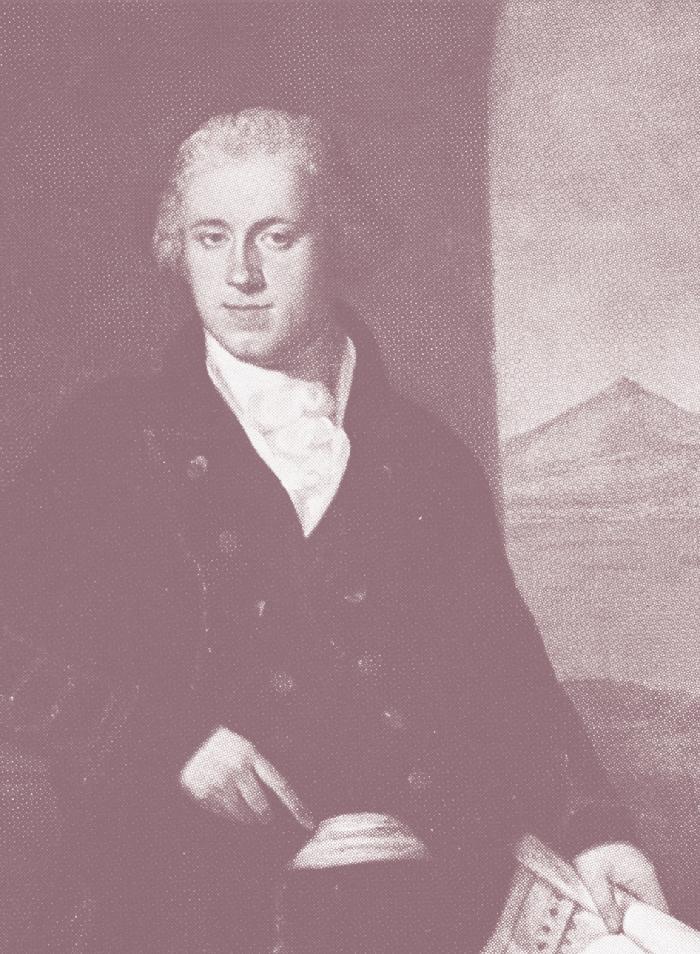
Cover illustration: Angelica Kauffmann, Portrait of Henri Temple, 2nd Viscount Palmerston, 1756, oil on canvas, private collection.
Proofreading: Timothy Simich, Canberra
Cover design: icona basel gmbH, Basel
Cover: Kathrin Strohschnieder, Stroh Designagentur, Oldenburg
Graphic design: icona basel gmbh, Basel
Typesetting: Claudia Wild, Konstanz
Print: Prime Rate Kft., Budapest
Printed in the EU
Manufacturer information: Schwabe Verlagsgruppe AG, St. Alban-Vorstadt 76, CH-4052 Basel, info@schwabeverlag.ch
Responsible person under Art. 16 GPSR: Schwabe Verlag GmbH, Marienstraße 28, D-10117 Berlin, info@schwabeverlag.de
ISBN Print 978-3-7965-5622-7
ISBN e-Book (PDF) 978-3-7965-5623-4
DOI 10.24894/978-3-7965-5623-4
The e-Book has identical page numbers to the print edition (first printing) and supports full-text search. Furthermore, the table of contents is linked to the headings.
rights@schwabe.ch www.schwabe.ch
To my friends Peter Barber and Fernando Ferrari
Most of my published work has arisen from the intellectual curiosity that other writings – whether in the form of books or archival documents—have managed to elicit. Curiosity may be regarded as the primary engine of scholarship and publishing alike. The present study, too, owes its origin to such curiosity: it was prompted by a watercolour view of the small port of Magadino, a typical Ticinese village situated on the shores of Lake Maggiore. Executed in 1770 by an English painter employed by the second Viscount Palmerston during his Alpine tour, the view raised a number of historical questions that I have sought to address over the years with the patience that historical research demands.
The project began ten years ago, when the watercolour arrived at my home from London. Now that the work reaches completion, I am deeply indebted to a number of individuals and institutions. My gratitude first goes to Peter Barber, OBE, Head of Cartographic and Topographic Material at the British Library, whose timely communication of the painting’s appearance on the London art market made this investigation possible.
I also wish to thank Fernando Ferrari for his attentive reading of the first Italian draft and for his incisive critical comments, which proved invaluable during the subsequent stages of revision. My sincere thanks also go to the editors of the book series: Lorenz Heiligensetzer, Alfred Messerli, Miriam Nicoli, Danièle Tosato-Rigo and Roberto Zaugg. Their constructive observations allowed me to refine my argument and expand the interpretive framework of the study.
I am especially grateful to Miriam Nicoli, who closely followed the development of the Italian version; to Yuksel Degabriel, for her work on the transcription of the sources; and to Andrea Hajek, whose translation from Italian into English was conducted with exceptional linguistic precision and cultural sensitivity.
Regarding the illustrative material, the selected views benefited from the professional assessment of Carla Ferriroli, an artist trained at the Accademia Albertina in Turin, whose expertise in traditional printmaking techniques – woodcut, etching, and lithography – also informed my discussion of late-eighteenth-century artistic developments.
My thanks also go to cartographer Gianluca Poletti for his meticulous reconstruction of the Alpine itinerary undertaken by Viscount Palmerston and his draftsman in 1770, providing a reliable cartographic representation of their route. And finally, I extend a word of greeting to the readers themselves, in the hope that they will take pleasure in traveling with me alongside our two English protagonists.
Stefano Bolla
1. The subject: Magadino, two taverns, a harbour and a picturesque landscape
When an observer looks at an image, it does everything it possibly can to hold their attention. Images know well that the human eye sees them, that it reflects them the wrong way around in the blink of an eye, catching only fleeting glimpses, without going much further. A glance is not enough. If they could make themselves heard, images would cry out, “Stop! Take a good look at me!”
“Stop!” This is exactly what the small painting told me, without shouting, the first time I saw it. That’s right, without shouting. It preferred to use a slightly gentler persuasion technique: winks, the nods of understanding. A body of water moves magically across the painting’s watercolour lake, as if to create an unlikely bond between living and painted nature. An inexplicable magic that, like all magic, easily wins the observer’s curiosity and attention, more effectively than a cry would.
But it will not be easy to reconstruct the story of this painting.
The first step is always the most difficult, but the small painting does provide a clue, right there on the threshold of the story: the caption. Just below the landscape is the name of the locality, albeit slightly misspelled: “Mogadino on the lago Maggiore” [Table I]. This minor distortion does not raise any doubts about the toponym and location of Magadino, a village on the shores of Lake Maggiore. The odd wording reveals the artist’s mother tongue (‘on the lago’), suggesting that this is the work of someone who is fluent in English. The landscape provides one final, not irrelevant piece of information: the artist mastered the watercolour technique, which he used to paint this beautiful view of Magadino.
Let’s move to the second step: a British artist has been located in Magadino, but what is he doing there? He is clearly there for work, drawing and painting a landscape with watercolours. But when and how did he get there? Where is he heading? Why is he travelling? Is he alone or in company? It is impossible to answer these questions unless we first establish the date of the watercolour and, by extension, of the artist’s presence in Magadino. There is no doubt that this view of Magadino was painted in the second half of the eighteenth century. This is confirmed by the frame backing paper, which was prepared using a method popular two or three centuries ago, as well as by the watercolour painting style. Armed with paper, pencil and watercolours, the artist took up a position on the lake-shore with a good vantage point, using the language of colours to make it clear that he arrived there early on a cloudless summer morning. But the subject, too, wants to speak. Pencils and watercolours depict a cheerful village, formed by a row of
houses overlooking the lake, where piles of bluish nets – just reclaimed from the water – can be spotted. The shore is bustling with activity: a couple arguing on the doorstep, busy people gathered on the clearing leading to the lake, and fishermen and boatmen on two large moored boats, once called cumballi. Further on, a batèll rowboat is being pushed out to sea by two boatmen, ready to board. Without speculating too much, several of these details allow us to more accurately determine when the artist captured that sunny, hot day. First of all, the old houses overlooking the lake are characteristic of the Magadino of two or three centuries ago. Next, we can see people dressed in old vieu jeu costumes in the spaces between the lake and the houses Finally, it seems that everything in the village revolves around fishing: the traditional boats, the fishermen working with the nets, the boatmen. These details date back two and a half centuries and have long since disappeared from Lake Maggiore. Give or take, we should be somewhere in the second half of the eighteenth century.
To find out more, you must rummage through the pockets of Magadino’s history. What you get is a catalogue of views of Upper Lake Maggiore in drawings, paintings and prints from the sixteenth to the nineteenth century,1 with a total of 11 views of Magadino: five date back to the second half of the eighteenth century, while the remaining six are from the nineteenth century. But Mogadino on the lago Magiore is not included. Is it so rare that it cannot be found? Or has it escaped the attention of historiography, remaining unknown to art historians of the Magadino territory? To be on the safe side, it would be useful to check who painted the known landscapes, if only to see if any British artists are included.
In chronological order, the catalogue first lists Peter Birmann (1758–1844) from Basel. On an unspecified date, Birmann sailed across Lake Maggiore from Lucerne to Magadino, with his artistic tools at hand. During the crossing, he kept his gaze fixed on the bow, looking towards the still distant landing dock, barely perceptible on the uncertain shoreline. Behind him, Monte Ceneri emerged from the ripples and reflections of the water, shrouded in clouds. It is in this restless and gloomy atmosphere that Birmann painted his Vue de Magadin, sketched on the boat and then completed on land using his usual pen and sepia lavis technique [Table II]. The painting thus becomes a game, almost an optical challenge, inviting the observer to find the indistinguishable harbour and drawing them into the artist’s anxiety to finally set foot on land. After Magadino, we may assume that Birmann continued his journey eastwards, towards Comignolo, in order to cross Monte Ceneri, given that he made a painting not far from Magadino, entitled Camignola at the foot of Mount Ceneri. Both works are signed but not dated, although the Rüsch catalogue indicates ‘1781/91’ as the date. But Birmann was in Rome in
1 E. Rüsch, L’Iconografia locarnese: la città e la regione dell’Alto lago Maggiore in disegni, dipinti e stampe dal XVI al XIX secolo, Casagrande, Bellinzona 2003; extract from AST XL (2003), 81–160.
1. The subject: Magadino, two taverns, a harbour and a picturesque landscape
this period. Was he perhaps on his way there in 1781? Or was he, instead, on his way back in 1790, after having lived and worked in the Eternal City for a decade? On 20 May 1789, three artists from Central Switzerland arrived in Magadino by road from Bellinzona: Johann Heinrich Meyer (1755–1829), Johann Conrad Steiner (1757–1828) and Ludwig Hess (1760–1800). The three friends were clearly planning a scenic journey to the lake region, in search of the picturesque places where nature exhibited its innocent charm to artists. Meyer, a copper engraver from Zurich who (re)created landscapes of his own and those of others, particularly for the Helvetischer Almanach, recounts the impressions of their journey in a slim booklet dedicated to his two travel companions, with the predictable title Mahlerische Reise in die Italienische Schweiz. The text is accompanied by 12 prints.2 We have little information about Johann Conrad Steiner. Originally from Winterthur, he too was an engraver, as well as a landscape painter. Ludwig Hess was much better known. The son of a Zurich butcher, he initially followed in his father’s footsteps, although he preferred visiting fairs and livestock markets. In that capacity, he also travelled to the Italian bailiwicks, always armed with paper, a pen, a pencil and watercolours – tools that would take the upper hand when he left his father’s business to focus entirely on landscape painting. “A pupil of Heinrich Wüest around 1778, from 1784 he enjoys the important support of Salomon Gessner” (1730–1788), the famous poet-painter from Zurich. In the meantime, Hess [t]ravels to study the splendour of the Swiss Alps (from 1781) and then stays in Rome (1794). He mainly paints idealised mountain landscapes in a mixed technique on paper with dark primer. His paintings reveal his devotion to nature. After Caspar Wolf, he is one of the main precursors of topographical Alpine painting in pre-Romanticism.3
The graphical result of the trio’s expedition is three prints of views near Magadino, created by Meyer. The first etching exists in two versions, both based on a drawing by Hess, showing some farmhouses in a wooded area on the edge of the Gambarogno road.4 The third etching, based on a drawing by Meyer himself and called Felsenquelle bey Quartino am Locarner-See, is included in the Mahlerische Reise [Table VI].5 The author describes the place as follows:
2 J. H. Meyer, Mahlerische Reise in die Italienische Schweiz, Orell Gessner Füssli, Zurich 1793; R. Martinoni, Viaggiatori del Settecento nella Svizzera italiana, Dadò, Locarno 1989, 301–303; L. Zaza-Sciolli, Due viaggi pittorici verso sud, in: M. Kahn-Rossi (ed.), Itinerari sublimi. Viaggi d’artisti tra il 1750 e il 1850, Skira, Milan 1998, 291–292; G. Ghiringhelli, Ticino nelle vecchie stampe, Casagrande, Bellinzona 2003, n° 108–114.
3 B. Weber, “Hess, Ludwig”, in: Dizionario Storico della Svizzera (DSS), version of 30.08.2006, translated from the German.
4 On the landscape by L. Hess, Bey Viro Magadin am Locarner-See, see G. Ghiringhelli, Ticino, cit., n° 96 and 99; E. Rüsch, Iconografia, cit., n° 9.12.1.
5 On the landscape by J. H. Meyer, see G. Ghiringhelli, Ticino, cit., n°. 111 and E. Rüsch, Iconografia, cit., n° 9.4.1.
The road [before Magadino] comes out to the left from the marshy plain and crosses green pastures and shady beech tree woods. A chapel dedicated to St George sits on a slope, partially hidden by trees; at its base, spring water flows out from the moss-covered rocks to form a small, transparent lake. Just a stone’s throw away are the little houses of Quartino, neatly surrounded by vineyards bathed in the setting sun. When we arrived in Magadino, a village on the shores of Lake Maggiore, dusk was already enveloping the whole region in the grey of night.6
In Magadino, the three artists dined and spent the night in the harbour inn. On their arrival, Meyer described it as follows:
[A] simple kitchen, all black with soot. Individuals with folded arms were sitting quietly in a corner. The innkeeper was standing up, her hair in disarray across her face, which was, illuminated by the flame of the fireplace, from which hung a soapstone on a chain. Rembrandt’s mastery of dark and light could not have created anything more beautiful.
The following day at dawn, the region’s nature appeared to him as a charming model, ready to pose:
Dawn finally came, and the sun illuminated a place that gave painters and draughtsmen an abundance of subjects. The vine clings without order on arbours among the mulberry trees, passing from trunk to trunk, but it is the open view of the lake that is astonishing; now it is tall walnut trees that cast a mysterious shadow and the landscape closes in (see table VII).7 […]. The draughtsman sometimes finds modest rural perspectives, as in [the works of] Everdingen, other times large meadows bathed in splendid morning light, as in [those of] Claude Lorrain or Poussin, or poetic as with Gessner. The artist rarely needs to change or add anything: nature flourishes without compulsion or cultural artifice, thanks to the most fortunate climate one can imagine; it flourishes without art and with a beauty devoid of artifice […].
Meanwhile, the compass of time moves forward to 10 August 1793. The previous morning, Georgiana Cavendish – Duchess of Devonshire (1757–1806) and the first wife of William Cavendish, 5th Duke of Devonshire (1748–1811) – had embarked at Sesto Calende with her close friend, Lady Elisabeth Foster (1759–1824), returning home after a long Grand Tour of Italy. In reality, Georgiana and Elisabeth were a trio, having been in a threesome with Duke William for some time. Following Georgiana’s death on 30 March 1806, Elisabeth took over the position and title of Duchess of Devonshire by marrying the duke on 18 October 1809.8 But let’s not indulge in gossip.
6 This and the subsequent two quotations were translated from J. H. Meyer, Mahlerische Reise, cit., 28–30.
7 Here, J. H. Meyer refers to the etching from his drawing ‘ad nat.’ (from life), entitled Umweit Molinetto am Langensee, catalogued by G. Ghiringhelli, Ticino, cit., n° 111 respectively by E. Rüsch, Iconografia, cit., n° 9.9.1. M. Kahn-Rossi (ed.), Itinerari, cit., 311 n° 374, points out that Meyer’s original drawing in pencil, pen and black ink is kept in the Graphische Sammlung at the Kunsthaus in Zurich.
8 A. Foremann, Georgiana duchesse de Devonshire, Flammarion, Paris 2016.
1. The subject: Magadino, two taverns, a harbour and a picturesque landscape
17
The women crossed Lake Maggiore and reached the port of Magadino on 10 August. Elisabeth was an archaeology enthusiast, publisher of luxury books and an artist, and she made a drawing of the landing cove not too far from the harbour [Table III]. Once she had finished her sketch, the two friends agreed that the air and the environment were too unhealthy to spend the night there, so they hired horses and set off again in the evening, heading for Bellinzona, from where they later continued their journey north, to Lucerne and beyond.
As they made their way over the Gotthard Pass, Elisabeth continued to draw, while Georgiana gathered inspiration and ideas for a poem about it. It is not surprising that their summer adventures would turn into a book: The Passage of the Mountain of saint Gothard. 9 The work was printed in London and went through several reprints, always exclusively under the name of Georgiana Devonshire. The modest and bare first edition of 1798 was followed in 1802 and 1803 by two luxury bilingual editions, in French English and Italian English respectively, each printed in only 50 copies and both without illustrations. It was only after Georgiana’s death and after the title of duchess had passed to Elisabeth that the latter edited a further, fascinating edition, which was printed between 1816 and 1820 in Paris by the renowned lithographer Count Charles-Philibert de Lasteyrie (1759–1849). The result was an extremely faithful reproduction – executed by a calligrapher who displayed incredible patience in his application of the lithographic technique – of the Anglo-French edition published in London in 1802, but with the addition of 20 lithographs taken from Elisabeth’s drawings made during the Gotthard crossing. In this very rare lithographic volume, the first illustration is precisely the lithograph of the harbour of Magadino, taken from the drawing sketched on 10 August 1793 by the future Duchess of Devonshire, Elisabeth Foster [Table III]. There is no doubt that she, the sole survivor of the adventure that began at the Gotthard Pass in 1793, took the initiative to have the only lithographic edition of The Passage of the Mountain of saint Gothard: A Poem / Le Passage du Mont saint-Gothard: Poeme printed in Paris, enriched by the 20 landscapes she had drawn herself.10
Magadino’s natural location at the northern end of Lake Maggiore, formed over the centuries by the lake’s retreat towards the south-west, had favoured the village’s function as a harbour since the late Middle Ages.11 Since then, the harbour
9 G. Cavendish, Duchess of Devonshire, The Passage of the Mountain of Saint Gothard: A Poem, n. ed., London, 1798.
10 For a history of this rare lithographic edition, see S. Bolla, “La magia dei libri: sulle tracce delle due duchesse di Devonshire”, in: Fogli 40, 2019, 53–72. The two duchesses met Henry Temple 2nd Viscount Palmerston in Berne around 21 August 1793, on their way back from Italy. He was travelling in Switzerland after his last Grand Tour (B. Connell, Portrait of a Whig Peer Compiled from the Papers of the Second Viscount Palmerston 1739–1802, Andre Deutsch, London 1957, 291).
11 M. Colombo, “Le strade tra Magadino e Biasca prima della nascita del Cantone Ticino”, in: AERT v. 5.1: Locarnese Bellinzonese Riviera, cantone Ticino, Bellinzona 1999, 288.
was mainly used for the transit of goods from north to south, as the Milanese historian and Jesuit Paolo Morigia (1525–1604) – author of a description of the “worthy qualities of Lake Maggiore” – already noted at the beginning of the seventeenth century:
Magadino is a Villa where there are no houses except for two Inns; this is the head of the Lake on this side, since the Ticino River flows into the Lake between Magadino and Gordola. Merchants of all kinds are taken to this place to embark them in the lake and take them to various other places, and many boats are also unloaded here to take the goods to the lands of the Swiss Lords.12
However, in addition to the traffic of goods, the flow of wayfarers calling at Magadino also grew, especially from the mid-eighteenth century onwards. From then on, the port became a crossroads at the centre of an important traffic network, taking on a dual significance; in addition to its mercantile function, it became renowned as a departure point for leisure travellers, and the number of foreigners arriving in Magadino from all directions increased. Yet, the harbour facilities did not change. Thus, the disorderly and disproportionate influx of goods and travellers grew in what remained a very small space, with people frequently being exposed to the frightening intoxication of chaos. Foreigners visiting the harbour often filled their diaries with surprise and bewilderment. They were surprised to find such an important mercantile harbour crammed into a two-house structure, as if it had suddenly grown in a baby’s cradle,13 and bewildered by the shortcomings of the services offered to travellers by the harbour inn.
Disappointment and inconvenience mounted when the weather was bad. This is what happened to a writer and poet from London, Helen Maria Williams (1759–1827), and her unwary travelling companions in the late spring of 1794. They embarked in Lucerne to reach Magadino, ignoring the boatmen’s advice to postpone the journey until the next day, as a storm was building up on the lake. The forecast indeed manifested itself in the form of a furious storm brewing in the middle of the lake. These are the consequences that the famous writer described in her travel memoirs:
The gale increased with every moment and the boatmen tried to make landfall wherever they could, but their efforts were in vain. We advanced so slowly in our struggle against the waves that we feared we would not reach the shore before nightfall; the people in the boat began to sense the danger and took to the oars, taking turns. After great terror on my part and much labour for my companions […] we reached a remote part of the shore, where, however, it was not possible to land. Sheltered from
12 P. Morigia, Historia della nobiltà, et degne qualità del lago Maggiore, Forni, Bologna 1965 (anastatic reprint, Hieronimo Bordone & Pietro Martire, Milan 1603); P. Frigerio; P. G. Pisoni, Il Verbano del Morigia: un commentario alla Historia verbanese di fra Paolo Morigia, Alberti, Intra 1977.
13 R. Broggini, Magadino 1843–1993, comune, Magadino 1993, 73–79; M. Colombo, Strade, cit., 292.