
School Compliance Service


January 2025
Welcome to The Education Space School Compliance Newsletter
Stay up to date with the latest insights and updates, brought to you by the School Compliance Service at The Education Space Designed for school leaders, business managers, site supervisors, and designated safeguarding leads, it’s your trusted resource for compliance, ensuring the smooth, safe operation of your school This half-termly newsletter provides essential guidance and news on health and safety, cleaning, catering, and safeguarding
Introducing Our New Head of Safeguarding and Compliance
We are delighted to welcome Tashanna as the new Head of Safeguarding and Compliance at The Education Space, following the retirement of Geetha Unnithan late last year Tashanna joins us with extensive experience as a safeguarding, compliance, and education manager, having worked across maintained, independent, and specialist schools, as well as statutory services Her Social Work England registration and years of expertise in compliance make her an invaluable addition to the team
Over the Spring Term, Tashanna will be visiting schools and services to personally meet with leaders and introduce our newly developed Safeguarding SLA This comprehensive offer is designed to support schools, nurseries and colleges in embedding robust safeguarding practices and maintaining compliance with statutory requirements The Safeguarding SLA includes:
● A Safeguarding Culture Survey, helping schools assess their safeguarding environment and identify areas for improvement
● Comprehensive, bespoke 1 5-day safeguarding audits, providing in-depth evaluations of policies, procedures, and practices
● Inclusive DSL training, tailored to equip Designated knowledge to handle their responsibilities confidently
● Access to our safeguarding helpdesk for advice and guidance safeguarding queries and issues - including escalating safeguarding partners
● Annual safeguarding policy reviews, ensuring your policies current and compliant
● Support with managing allegations against staff, providing expert guidance in line with statutory requirements
● Membership in our termly DSL User Group, a collaborative space for sharing best practices, updates, and resources
Tashanna is committed to working collaboratively with schools and services to build strong relationships and provide tailored safeguarding support If you would like to learn more about our safeguarding offer or require support for your setting, please don’t hesitate to reach out to Tashanna Alternatively, have a chat with her when she visits your setting

Safeguarding and the Children’s Wellbeing and Schools Bill: What it Means for Schools and Colleges
The recently announced Children’s Wellbeing and Schools Bill is set to introduce landmark measures aimed at enhancing safeguarding across the education sector This announcement comes in the wake of the tragic case of Sara Sharif, a 10year-old girl removed from school for home education before her death, highlighting the risks posed by unsupervised home-schooling The bill proposes a series of changes designed to improve oversight and intervention, and ensure that key agencies work together to keep children safe, addressing longstanding challenges in consistently identifying and protecting vulnerable children The aim is both simple and fundamental in premise - no child should be allowed to fall through the gaps that exist between agencies.
One of the bill’s most significant proposals is the introduction of a national register of children not attending school This will enable local authorities to track children who are being home-educated or missing from education entirely Alongside this, councils will have increased powers to ensure these children are safe and receiving a suitable education, including the ability to meet with them face-to-face
Another critical measure is the introduction of a unique identifier number for every child, similar to a national insurance number. This innovation will allow better data sharing between schools, social care, health services, and the police By bridging gaps in communication, the system aims to prevent vulnerable children from getting lost between the multitude of systems that exist between and within key agencies The bill also includes provisions to require parental permission for home education if a child is under a child protection plan, ensuring that decisions are made with the child’s safety and welfare in mind

For schools and colleges specifically, the bill also includes plans for free breakfast clubs for all primary school pupils and restrictions on the number of branded uniform items required, easing financial pressures on families Whilst the proposals are widely welcomed by parents and educators alike, at this time, the government has provided little clarity on how these changes will be resourced and implemented
So while we await further specifics, schools and colleges are encouraged to begin preparing by reviewing and updating safeguarding policies, strengthening links with local authorities and other key agencies and ensuring robust attendance monitoring and early intervention strategies (don’t forget to ensure adherence to Working Together to Improve School Attendance 2023) And if you’re planning a uniform revamp it’s advisable to hold off for a little while longer!
Newham Council Allocates Funds to Ensure Critical School Maintenance Projects Move Forward
Newham Council has taken proactive steps to ensure vital maintenance projects across its schools can progress without delay With £1 million of provisional funding set aside, schools can begin planning essential improvement works ahead of the government’s funding announcement expected in March 2025 While the Council hopes to secure the £3 55 million typically allocated by central government for school maintenance, this interim funding ensures that projects like rewiring, boiler replacements, structural repairs, and playground upgrades can be planned and implemented with minimal disruption to pupils’ learning
The projects prioritised for funding address essential infrastructure needs due to aging facilities or potential failures that could disrupt education or pose health and safety risks The Council seems determined to minimise these risks by taking early steps to prepare for repairs and upgrades, and ensure that safe, functional, and thriving environments are available to pupils If you haven’t already booked your 24-25 Health and Safety Audit, or if you’d like to find out more about TEdS’ health and safety services, please don’t hesitate to get in touch with our School Compliance Services team
Fire Risk Assessments in 2025/26
Following the Grenfell Tower fire in June 2017 fire safety has been a major focus for the government with phase 2 of the inquiry being published in September 2024 During this time, fire safety legislation has been under constant review and scrutiny and a number of new laws have been created and several existing ones changed, to reflect a renewed commitment to fire safety across the country Many of these changes are specific to high rise residential buildings so will not be relevant to schools, but several changes have been made with the intention of raising the standards of fire risk assessments across all industries which will have implications for all workplaces
What Has Changed?
Under the new amendments to the Regulatory Reform (Fire Safety) Order 2005, anyone conducting a fire risk assessment must now be considered competent and hold the relevant qualifications and experience The law does not state what specific qualifications are acceptable, but any fire risk assessor should be able to produce a certificate in fire safety & risk management (or the equivalent) on demand You must also keep a record of the name of the person who conducts your fire risk assessment as well as the name of the company that employs them
Additionally a fire risk assessment must now record all findings as opposed to only significant findings under the old regulations

What Do These Changes Mean?
The requirement for risk assessments to be carried out by competent persons is not currently being enforced in order to allow organisations to catch up and assign contractors to carry out the work but it is only a matter of time before everyone will be held to this new standard
If we carry out your fire risk assessment you do not need to do anything, your fire risk assessor is James Davy - a qualified fire engineer with 10 years experience and relevant qualifications If another external contractor carried out your risk assessment you should ensure that they have the relevant qualifications If you carry out your own assessment you must ensure that whoever is doing so has a fire risk assessment qualification which includes an element of fire science, and has experience carrying out similar assessments in complex buildings. You may also notice that fire risk assessments take a little bit longer to carry out, and contain a bit more information while assessors comply with the new recording standards
The government is not finished with fire safety, and it is likely that we will see many more changes to existing laws and standards. We’ll be here to keep you informed as and when that happens.
Rise in Hand, Foot, and Mouth Disease Among Children: Essential Preventative Measures for Schools
In December, there was a notable increase in cases of Hand, Foot, and Mouth Disease (HFMD) among children in Primary Schools and Nurseries within the London Borough of Newham HFMD is a common viral illness that primarily affects young children, characterised by fever, sores in the mouth, and a rash on the hands and feet This recent rise in cases highlights the importance of implementing preventative measures to protect children’s health and wellbeing, maintain a safe school environment, and reduce disruption to education caused by illness
Preventative Measures for Schools:
1 Hand Hygiene
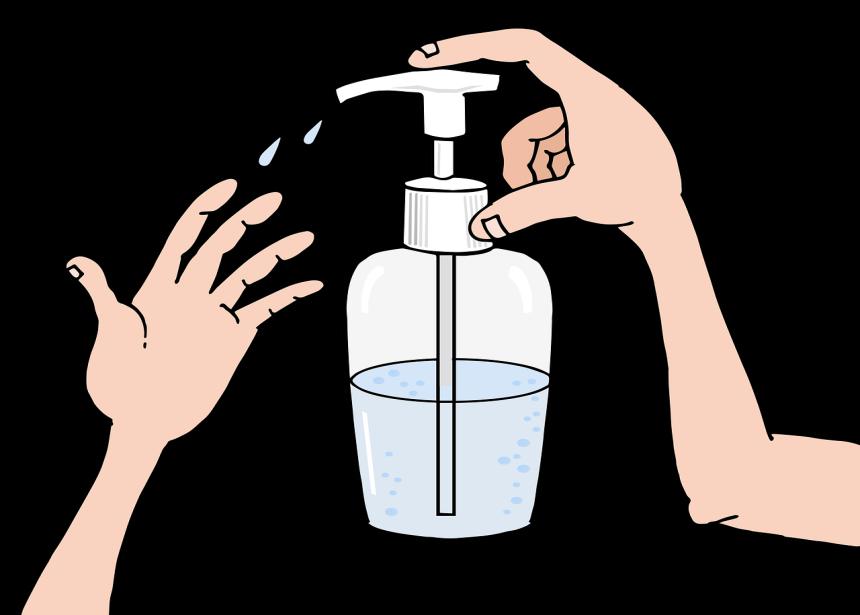
Ensure that children and staff wash their hands frequently with soap and water, especially after using the bathroom, before eating, and after coughing or sneezing When soap and water are unavailable, hand sanitisers can be an effective alternative
2 Respiratory Etiquette
4 Exclusion Policy:
Children with HFMD do not need to stay home from school or nursery unless they are feeling unwell It is not necessary to keep them away until all blisters have healed, as long as they are otherwise healthy However, children showing symptoms of the illness should stay at home until their fever has gone, and they feel well enough to return to their normal activities.

Teach children to cover their mouths and noses with a tissue or their elbow when coughing or sneezing Dispose of tissues properly and wash hands immediately
3 Environmental Cleaning:
Regularly clean and disinfect frequently touched surfaces, such as doorknobs, toys, and classroom equipment, to reduce the risk of virus transmission
5. Parental Communication:
If your setting experiences a rise in HFMD cases, please get in touch with the School Compliance team so that we can support you in notifying parents, without causing undue alarm).
By implementing these measures and closely following public health guidelines, schools can play a vital role in minimising the spread of HFMD. For more detailed information on HFMD, please refer to the NHS guidance: NHS: Hand, Foot, and Mouth Disease
Preparing for the New UK Workplace Recycling Legislation in Educational Settings
In response to the growing need for more sustainable waste management practices, the UK government is introducing new legislation that will affect workplaces, including educational settings, across England The new regulations, effective from 31 March 2025, will require schools and other organisations to ensure that their waste is correctly separated for recycling This change aims to improve recycling rates and reduce contamination, driving the UK towards a more circular economy
What is Changing?
Under the new legislation, schools and other businesses will need to separate their waste into three main categories:
1. Dry Recyclables: This includes paper, card,
2. Food Waste: This covers any leftover food
3. General Waste: All other waste that types of packaging, and non-compostable
Why the Change?
The legislation is part of the UK’s ongoing commitment to reducing landfill waste and increasing recycling rates By ensuring that waste is correctly segregated at the source, the new system is designed to make it easier for waste collectors to manage recyclable materials, which will be processed more efficiently This will not only help reduce the environmental impact but also help educational institutions contribute to the UK' sustainability goals
Key Changes for Educational Settings
For schools, colleges, and universities, this compliance with the new legislation Here’s what
1 Segregation of Waste

One of the primary changes is the need to separate paper and card from other dry recyclables like plastic, metal, and glass If your waste collector collects these materials together, you can continue doing so However, if they are collected separately, your institution will need to ensure that bins are provided for each type of material
2 Clear Labelling and
Colour-Coding
of Bins
To help staff and students easily identify which waste goes into which bin, it’s essential to clearly label or colour-code your recycling bins Consider using the following colours:
● Blue for dry recyclables (paper, card, plastic, glass, and metal)
● Green for food waste
● Black for general waste This will make it easier for everyone in the school to separate waste correctly and reduce contamination, which can undermine the effectiveness of recycling
THE EDUCATION SPACE - SCHOOL COMPLIANCE SERVICES
3 Training and Awareness
Ensuring that staff and students are aware of the new waste segregation rules is crucial It’s important to provide training or informational resources that explain how to separate waste properly Displaying clear signage near bins will also help to remind everyone of the correct procedures
4 Collection and Disposal of Waste Oil
For schools with kitchens or catering services, waste oil should be collected and disposed of in a safe and secure manner Make sure that containers are available for waste oil and that collection services are in place Keeping a record of the disposal process may also be necessary to ensure compliance
5 Food Waste Disposal

Schools must make arrangements for the proper disposal of food waste, ensuring that it is kept separate Food waste should be stored in dedicated bins contamination
6 Regular Audits and Monitoring
To ensure that waste segregation is being carried out correctly, schools should consider conducting regular audits or inspections
This will help identify any areas of noncompliance and provide an opportunity for continuous improvement Monitoring systems could include tracking waste volumes and the effectiveness of recycling efforts
Catering Inspections and the New Legislation
As part of The Education Space’s regular checks, the new recycling legislation will be incorporated into Catering Inspections
means that compliance with the latest waste inspections, ensuring that your school meets the current Catering SLA but would like to get an house catering team complies with food safety please do not hesitate to contact us for more information We can assist with an audit to ensure your catering operations align with both food safety and sustainability requirements
To comply with the new legislation, schools should begin preparing immediately. Here are some steps to take:
● Review your current waste management practices: Identify any gaps in segregation, collection, or disposal methods.
● Contact your waste collection service: Confirm how your waste is currently being collected and whether they can accommodate the new requirements.
● Update your waste disposal infrastructure: Invest in additional or upgraded bins, ensure proper labelling, and consider introducing dedicated food waste containers.
● Educate staff and students: Organise training sessions or awareness campaigns to inform everyone about the new recycling requirements.
● Create a waste management plan: Develop a policy to ensure that your school is fully prepared by the 31 March 2025 deadline.
A Health and Safety School Fatality
We were saddened to learn of a serious fatal incident involving a pupil in Stratford-upon-Avon Sadly, Owen Garnett died two days after choking on a paper towel in school Owen, a sixth form pupil with SEND, suffered from PICA, which is a potentially life threatening eating disorder, where sufferers of this condition have a compulsion to eat things that have no nutritional value
The subsequent Health and Safety Executive (HSE) investigation found that a number of management failures contributed to the incident:
● Staff in Owen’s class had not received relevant training to manage the safety risks and deal with PICA incidents
● A near miss occurred a few days earlier and the school should have investigated the incident and put reasonable steps in place in order so that the incident did not happen again The school did not investigate or implement a risk assessment to prevent the near miss from reoccurring
As a result of these failings, Owen’s life was tragically cut short and the school trust were fined £300,000
This tragic incident serves as a poignant reminder to school leaders and staff of the importance of robust health and safety management, particularly when supporting pupils with additional needs Our experienced Health and Safety Advisor, Tracia Antoine recommends that you take the following action to minimise the likelihood of similar incidents occurring in your setting;
● Ensure all staff working with vulnerable pupils are trained to recognise and respond to specific risks associated with medical or behaviorual needs Schools must also ensure that cover staff are given the same knowledge and advice so that their suitably equipped to manage any arising incidents
● Treat every near miss as an opportunity to prevent future incidents by conducting thorough investigations and implementing corrective actions promptly If you’re unsure about how to initiate this investigative process, reach out to the team here for support
● Regularly review and update risk assessments, particularly following any incidents or near misses, to mitigate foreseeable risks HSE guidance states that when assessing the health and safety risks to individual students is necessary, educational employers should follow a risk management approach

that focuses attention on the real risks; involving employees, students and carers in identifying the individual’s needs and necessary precautions
A proactive approach, including systematically auditing health and safety practices and reviewing near misses, helps identify gaps and ensures ongoing compliance with regulations This is where our Health and Safety SLA can help! Annual audits by the Education Space comprehensively assess your schools health and safety practices, and we provide a full report with practical recommendations to support compliance and service development For more information on HSE compliance and supporting pupils with SEND click here
Safeguarding Word Search
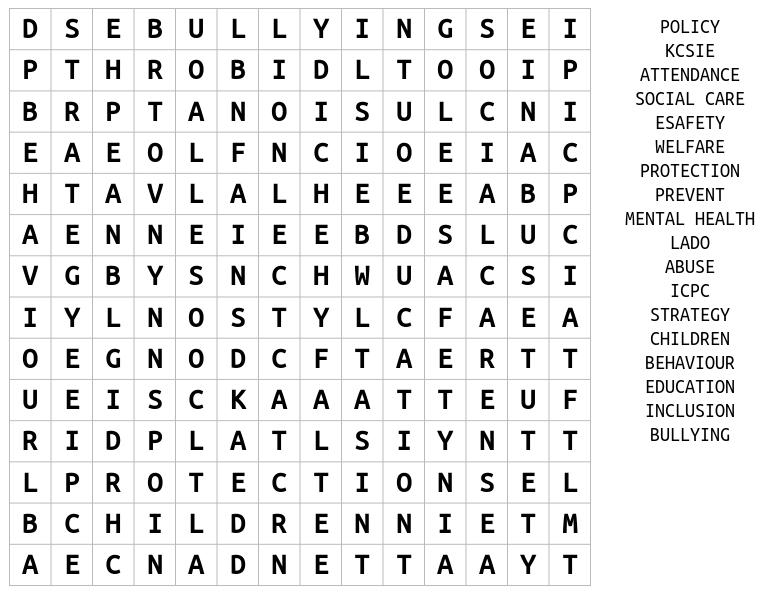
• Policy
• KCSIE
• Attendance
• Social Care
• Esafety
• Welfare
• Protection
• Prevent
• Mental Health
• LADO
• Abuse
• ICPC
• Strategy
• Children
• Behaviour
• Education
• Inclusion
• Bullying

Health and Safety Crossword
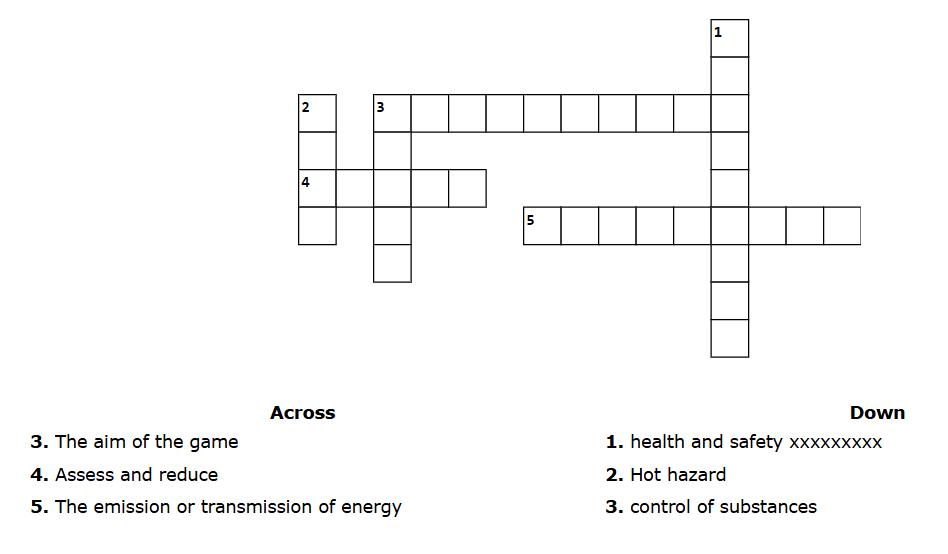
Across
3. The aim of the game
4. Assess and reduce
5. The emission or transmission of energy
Down 1. Health and safety xxxxxxxxx
Hot hazard
Control of substances