
5 minute read
CONCRETE

Concrete Association announced a global climate ambition to drive down the carbon footprint of their operations and products to provide carbon neutral concrete by 2050.
This represents a critical milestone for the industry. It is the first time it has come together globally to state a collective ambition for a carbon neutral future, and we are fully committed to working right across the built environment value chain to deliver this aspiration in a circular economy, whole life context.
2050 Roadmap to a carbon neutral future
Work is well underway to develop a 2050 Roadmap, which will set out the pathway and milestones necessary to achieving our ambition. Producing a Roadmap is a significant and complex undertaking, and we will be among the first industries to do so when we complete ours at the end of the year.
Our Roadmap will outline all the levers across the entire value chain that will be required to reach our goal of carbon neutral concrete. In cement manufacture, this includes the ingredients, kiln technology, new binders and reducing fossil fuel use at every stage. In the use of concrete, we need to look at how we unlock its performance benefits such as its thermal mass, ability to act as a carbon sink, and also how we design buildings that maximize its efficiencies, minimize waste and build in the ability to reuse concrete, or where necessary recycle it.
Recycling and reusing material from demolition sites will play an increasingly important role – concrete’s recyclability is one of its great sustainability benefits, but this means shifting perceptions to see concrete and cement not only as products to be produced, but as crucial components in a circular economy with a broader life-cycle context.
The adoption of policies and practices that encourage the circular economy, particularly recycling of construction materials, should not be contentious and would be eagerly supported by the industry.
As a final measure towards carbon neutrality, some CO2 will need to be captured, re-used if possible, or stored as a last resort – (CCUS). The industry is well on its way with various trials showing the technology works and there are several live projects in North America, China and Europe.
Research and innovation will clearly be key – our Innovandi Research network is bringing together academia and industry from around the world to collaborate to accelerate the development of crucial solutions. Innovandi brings together more than 30 companies from across the cement and concrete industry and supply chain – manufacturers, admixture specialists, and equipment and technology suppliers – along with 40 renowned scientific institutions from across the world.
Corner Cast Project
Cross-sector collaboration
We know we won’t achieve carbon neutral concrete or build a net zero economy alone – such a wide-reaching material that touches all corners of society requires input at multiple levels. We want to work actively and closely across industry, with policymakers, investors, designers, end users and governments to help shape the transformation.
This includes calling for a level-playing field in building material assessment. We believe it is important to accurately and transparently measure all carbon emissions of all potential building materials’ emissions throughout their lifecycle.
We believe concrete is already a highly sustainable building material across its lifetime and with our ambition to make it carbon neutral, we are certain it has a defining role in building the sustainable world of tomorrow.
The industry is making bold changes today that will help us build both the marvels and the practical essentials of the future, to make them stand stronger and last longer and ensure that they’re worthy of the world they’ll represent.
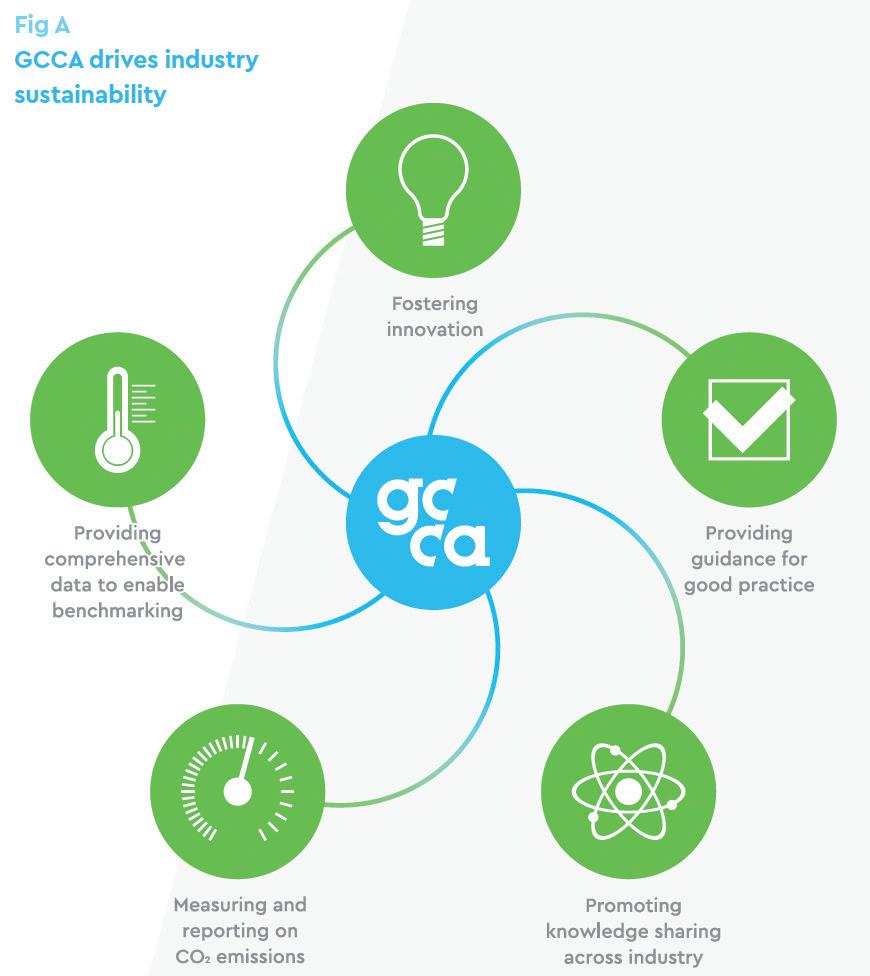
Dr Andrew Minson is Concrete and Sustainable Construction Director at the Global Cement and Concrete Association (GCCA). The GCCA is the trusted, authoritative platform and voice for the cement and concrete sector across the world. Dr Minson leads GCCA’s work promoting the sustainability value of concrete in the future of construction. This includes improving understanding of concrete’s lifecycle and its role in the circular economy. He also leads work with industry partners developing new global sustainability guidelines for concrete. Andrew is a member of the GCCA executive team.
https://gccassociation.org/climate-ambition/
Connected safety
Can next gen fire commissioning expedite new-build and refurb lifecycles asks
Sameer Agrawal
Optimal time and cost performance are fundamental to the success of any construction project. To remain competitive, the construction industry, including building owners, must capitalize on digital technologies that help improve operations across the entire project lifecycle – from design to commissioning. Software provides the potential to accelerate the project lifecycle through to a final, critical stage – fire system commissioning.
The use of mobile apps, robots, artificial intelligence and drones is becoming increasingly commonplace within the construction sector. Connected sites are using cloud technology to enable real-time, remote access to information across many aspects of a project for all relevant parties, the utilization of the right technology at the right time is giving the early adopters a true competitive advantage.
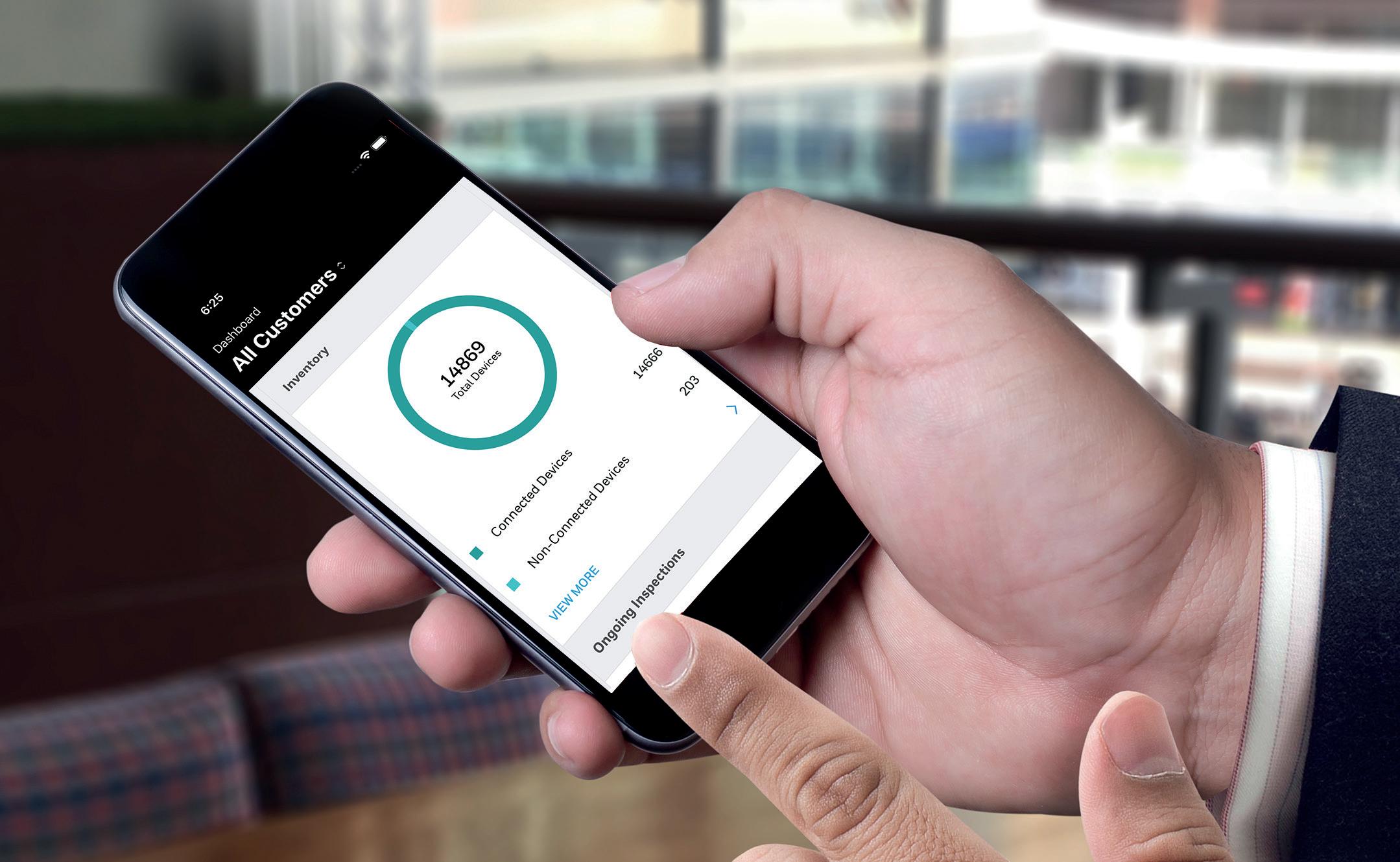
The commissioning of fire systems comes in at the tail end of refurb and construction projects when fire safety teams are often already working against a time deficit. The stakes can be high and is why leading construction firms and building owners are selecting suppliers offering integrated, appbased software to enable efficient building commissioning - by eliminating unnecessary paperwork and man-hours, providing access to real-time data, facilitating remote checks, and enabling effective maintenance for the life of the system.
Through application of digitization principles and Industrial Internet of Things technology, connected fire technology tools make it easier to design, install, test and commission fire systems while helping eliminate errors and manual data entry throughout the process. These tools can improve the delivery of on-time completions and the handover of a compliant system with the relevant reports, saving channel partners – and end users – time and money.
As a result, Systems Integrators can reassure their customers that they are in full alignment with mandated inspection and maintenance requirements. These tools automatically capture the testing activity thereby removing any doubt on which device was tested, when and by whom. It also automatically generates suggested corrective actions and planned maintenance recommendations based upon local regulations.
Commissioning more effectively with less
Especially in today’s environment, organizations across the fire safety value chain face unprecedented challenges, including the need to achieve even more with fewer resources – many facility maintenance teams are working with reduced staff. They also need to manage the challenges of limited access to facilities due to shutdowns and deal effectively with safety incidents, where risks remain the same at any occupancy level.
Honeywell’s Connected Life Safety
