Curriculum Handbook 2027
Contents
Welcome
3 — Welcome
4-12 — Course Structure
Year 7–10 Faculty Courses for Study
15-16 — Course Overview
18-19 — Art
20 — Commerce
22-23 — English
24 — Ethics
26-27 — Health and Physical Education
28-35 — Languages
36-37 — Mathematics
38-44 — Performing Arts - Music, Drama, Dance
45 — Science
46 — Social Studies
47-51 — Technology
Optional and Invited Courses
53 — English for Speakers of other Languages (ESOL)
54 — Athlete Pathway Programme (APP)
55 — Pōhutukawa Enriched Learning Support (PELS)
Kahunui
56-57 — Kahunui
Welcome to the Year 7-10 Curriculum Handbook
This curriculum handbook contains information on all courses, programmes and qualifications offered at St Cuthbert’s from Year 7-10. The courses offered are outlined with a brief description of the course and any additional costs. This information is accurate at the time of publication but might change as a result of staffing requirements or other circumstances.
From Year 7–10 students experience many different subjects so that they can develop literacy, numeracy, technological and social and emotional skills. Specifically, students in Year 7 and 8 complete a wide range of core subjects, including Languages. At Year 9 and 10, the choices are increased to provide students with opportunities to expand their horizons. Art and Performing Arts programmes are developed and technological experiences are widened.
We encourage students in Years 7-10 to select subjects based on what they love, what they're curious about, and where they see their strengths. These years are an opportunity to explore widely before pathways narrow in the Senior School.
At St Cuthbert’s we offer acceleration and enrichment opportunities for multi-level study for some students. Other students need additional support so special programmes are provided for them. They could include students studying courses well above their year level; being involved in enrichment programmes or receiving one-on-one help to improve literacy or numeracy.
Course Structure 2027 - NCEA Pathway
(Level 3)
English with Writing for Publication
Students must complete a course in English until the end of Level 2.
Students must complete a course in Mathematics until the end of Year 11.
Students must complete a course in Science until the end of Year 11. Students choose ONE of Science Studies or Science. Some students can choose a second science Semester Science as an option.
* If you are planning on taking Level 2 Biology, Chemistry or Physics, we recommend Advanced Science.
Social Sciences
Course Structure 2027 - NCEA Pathway
Health and Physical Education
Physical Activity and Wellbeing (compulsory)
Health and Physical Education
and Physical Education
Sport and Exercise Science Sport and Exercise Science (Level 2)
Health Sociology (Level 2)
• Students must complete a course in Health and Physical Education until the end of Year 10.
Sport and Exercise Science (Level 3)
Health Sociology (Level 3)
• The Physical Activity and Wellbeing programmes of Health and Physical Education are compulsory for all Year 11 students.
Languages
and Physical Education
• Year 7 students will study Te Reo Māori for a full year and Chinese, French, Latin and Spanish for a term each.
• Year 8 students will study Te Reo Māori for a full year and TWO languages out of Chinese, French, Latin and Spanish for one semester each.
• From Year 10, Language is not compulsory,
Te Reo Māori
Reo Māori
Reo Māori
Reo Māori Te Reo Māori (Level 2)
Reo Māori (Level 3)
Te Reo Māori
Performing Arts
Course Structure 2027 - NCEA Pathway
Course Structure 2027 - IB Pathway
– Individuals and Societies
Group 4 – Experimental Sciences
Group 5 – Mathematics
Year 7–10
Faculty Courses for Study
Course Overview
Please note that subjects will only run if numbers permit.
In Year 7–10 students enjoy a wide range of experiences including compulsory core classes such as English and Mathematics. They take courses in Technology, Art and Languages.
Year 7 Curriculum
Core
Mathematics, Science, English, Social Sciences, Health and Physical Education
Technology Rotation Food and Nutrition, Computer Science
All students will study the core subjects. Some students will be invited into an accelerated Mathematics programme
All students will study Technology and will spend a half year on each subject
Ethics A specialised programme encompassing philosophy, ethics, worldviews and more
Language Rotation
Chinese, French, Latin, Spanish (term each) plus Te Reo Māori (semester)
Creative Rotation Art, Music, Drama, Dance
Pōhutukawa
All students will study creative arts and spend a half year on each
Enriched Learning Support Invited students will take PELs in place of a language
Year 8 Curriculum
Core
Mathematics, Science, English, Social Sciences, Health and Physical Education
Technology Rotation Digital Textiles, Product Design
All students will study the core subjects. Some students will be invited into an accelerated Mathematics programme
All students will study Technology and will spend a half year on each subject
Ethics A specialised programme encompassing philosophy, ethics, worldviews and more
Language Rotation
Chinese, French, Latin, Spanish (students select two for half a year each) plus Te Reo Māori (semester)
Creative Rotation Art, Music, Drama, Dance.
Athlete Pathway Programme This will be part of the PE Programme
Pōhutukawa
All students will study creative arts and spend a half year on each
Enriched Learning Support Invited students will take PELs in place of a language
Course Overview
Please note that subjects will only run if numbers permit.
Year 9 Curriculum
Core Mathematics, Science, English, Social Sciences, Health and Physical Education
All students will study the core subjects. Some students will be invited into an accelerated Mathematics programme
In addition to these compulsory subjects, students will select option subjects
Must select a Full Year Language
Must select TWO from Technology
Must select TWO from Art and Performing Arts
May Select a further TWO from:
Or a Second Language
Chinese for second language learners, Chinese for heritage speakers, French, Latin, Spanish, Te Reo Māori, PELS, ESOL
Food & Textiles, Digital Technologies, Spatial and Product Design
Art, Dance, Drama, Music, Photography and Graphic Design
Art, Athletics Pathways Programme, Dance, Drama, Digital Technologies, Food & Textiles, Introduction to Commerce OR Financial Literacy, Music, Photography and Graphic Design, Spatial and Product Design
Chinese for second language learners, Chinese for heritage speakers, French, Latin, Spanish, Te Reo Māori
Subjects in italics are invite-only
Year 10 Curriculum
Core
Mathematics, Science, English, Social Sciences, Health and Physical Education
All students will study the core subjects. Some students will be invited into an accelerated Mathematics programme
In addition to these compulsory subjects, students will select option subjects. For any language option, you must have taken the language in Year 9 Students select FOUR full year subjects:
Students MUST select ONE subject from:
Then any THREE from:
Art, Photography and Graphic Design, Dance, Digital Technologies, Drama, Food and Nutrition, Music, Spatial and Product Design, Textiles
Athletic Pathway Programme, Art, Photography and Graphic Design, Commerce, Chinese for second language learners OR Chinese for heritage speakers, Dance, Digital Technologies, Drama, ESOL, Food and Nutrition, French, Latin, Music, PELS, Spanish, Spatial and Product Design, Te Reo Māori, Textiles
Subjects in italics are invite-only
Year 7 and 8
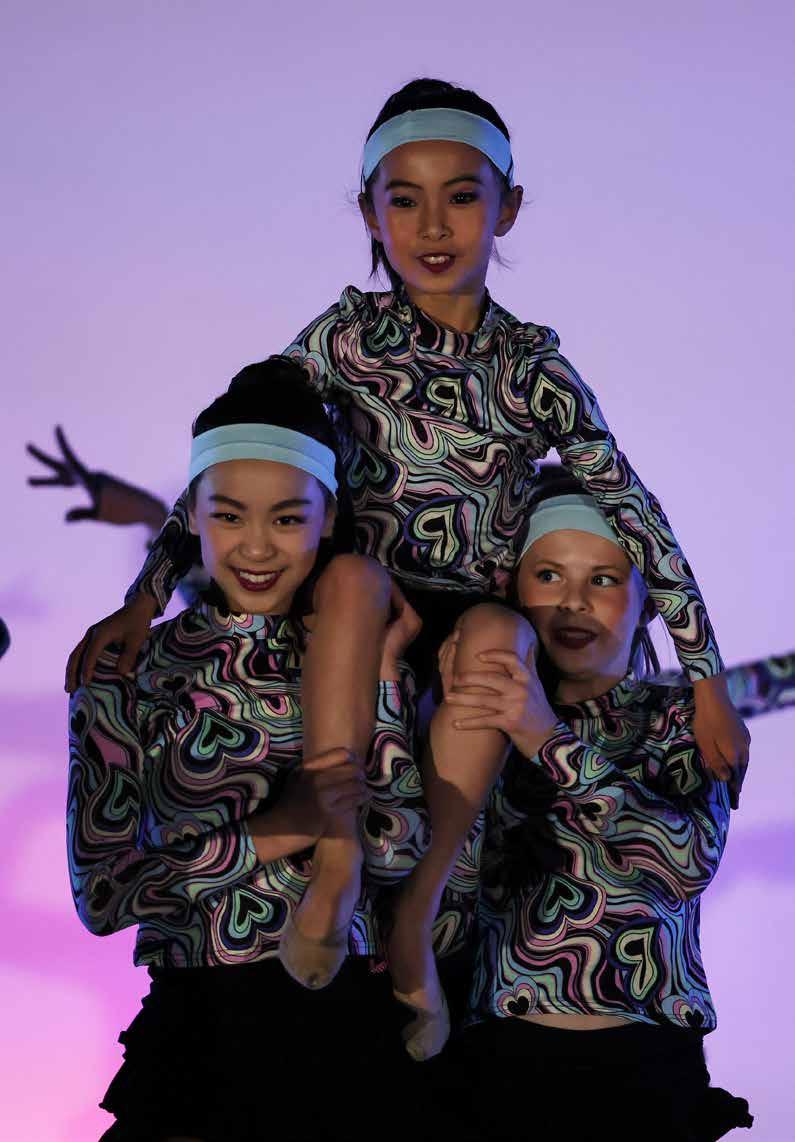
The Year 7 and 8 semester courses encourage students to have fun making artworks in response to a variety of different subject matter. The inspiration of both New Zealand and some overseas artists work is also viewed by students as an interesting way to expand their appreciation of how artists can teach us about the world we live in.
Students will explore interesting new ways of drawing that relate to printmaking and painting units of work and learn to be experimental, take risks and enjoy both realistic and expressive approaches to making art.
Year 7 units include:
• Understanding the elements in making art (line shape, tonal shading, colour etc.) while learning to apply skills to other units of work.
• Explore the theme of Kaitiaki (Guardian) of the sky, forest, or ocean to create a design in printmaking.
• Combine the Kaitiaki into a painting celebrating still life painting and Māori Mythology.
Year 8 units include:
• Mixed media relief printmaking with a focus on the city landscape and iconic architecture
• Photography and painting of still life vintage toy settings using a range of drawing materials, watercolour and acrylic paint techniques
Year 9 Semester Programme
There are two Year 9 half year Semester courses. Students can choose one or both during the year.
Year 9 Art
This course is for students who wish to broaden their skills in formal approaches to drawing, painting, printmaking and sculpture, while learning about artists’ approaches to similar subject matter.
Students will:
• Create art works that explore painting, printmaking and sculptural techniques and materials.
• Appreciate the place artists and cultural contexts have in making art works.
• Enjoy developing personal interpretations of varied subject matter with conventional and experimental drawing, including digital, pencil, charcoal and pen.
Units include:
• Clay Whaktauki – An introduction to ideas and symbols related to identity and sense of place. Combining clay techniques with personal symbolism and developing a personal emblem to be hung as a sculptural installation
• Landscape Painting - Developing painting styles related to local landform features, such as mountains combined with historical contexts and cultural symbolism
• Reduction Colour Lino Printmaking – Explore different ideas about identity through portraiture of people admired for their contributions to society.
Students are issued with an Art kit at an approximate cost of $30.
Year 9 Photography and Graphic Design
This course is for students who wish to explore photography and graphic design, while learning about contemporary artists and techniques used in industry and other art practices.
Students will:
• Create art works that explore techniques related to Photography, including framing, rule of thirds, lighting, focus, scale and narrative sequencing.
• Appreciate the place artists and designers have in making graphic and photographic work.
• Exploring graphic design principles such as balance, colour, repetition, scale and typography to visually communicate an idea.
Units include:
• Photography – Miniature Worlds.
• Character Design – Exploring a design brief with drawing and digital processes.
• Badge Design – Mixed media images that extend from the design brief into a product outcome you can wea.r
Students are issued with an Art Kit at approximately $40
Year 10 Art, Photography and Graphic Design
This course builds on foundational artistic skills across four creative disciplines, balancing hands-on processes with digital tools. By the end of this programme, students will possess a diverse portfolio of work and a deeper understanding of the pathways available in the contemporary art world.
Students will:
• Appreciate the place artists and cultural contexts have in constructing art.
• Learn about new techniques and technology to extend possibilities while developing ideas.
• Take risks, embrace challenges, and enjoy developing individual interpretations of conceptional subject matter.
• Visit an Art Gallery or event to expand knowledge of other artists ways of working.
• Work collaboratively on a site specific sculptural work. Units include:
• Painting: The Party. This unit focuses on the vibrant subject matter of party-themed forms, using celebratory objects to understand light, shape and compositional complexity. Specific acrylic techniques are practiced in depth, including underpainting, blending, impasto, scumbling and glazing. Learning about contemporary artists work will help develop a more personal and individual style of work.
• Printmaking: Science of plants. This unit explores sophisticated methods of intaglio, mono and cyanotype printmaking. From initial linear engraving of various plants into surfaces to final ink pressing, this hands-on process emphasizes shape, negative space, and graphic linear
contrast while producing a series of unique, prints that blend biology, fragility and beauty of plants.
• Photography: A puzzle of light and dark. This unit shifts from casual use of cell phones to creating intentional art using industry standard cameras and photography equipment. Camera mechanics, digital manipulations and studio shooting, while creating a photographic narrative from a selection of themes to produce a range of photographs from the formal to the surreal.
• Design: The Zine. This unit bridges the gap between fine art and graphic design to explore typography, layout design, and visual hierarchy using handmade and digital processes with other related media. Ideas are structured around developing a Zine that communicates with illustration, visual symbols and typography. This work will be entered into a Design competition.
• Sculpture: Collaborative instillation. This unit focuses on working with 3-D form, collaboration and instillation of an artwork for a specific site. Students will think about the relationship between architectural forms and the natural environment.
Students will be issues with an Art Kit at a cost of approximately $100
Commerce
Commerce helps students understand how people, businesses and societies make decisions about money, resources, products and consumers. It combines ideas from Business, Economics, Accounting and Financial Literacy, helping students make sense of the real world and the choices they will face in the future.
In Year 9, students may choose one of two semester courses: Financial Literacy or Introduction to Commerce.
In Year 10, students may continue into a full-year Commerce course that builds on the financial, business and economic ideas introduced in Year 9.
Year 9 Commerce – Financial Literacy
Financial Literacy is designed to help students make informed money decisions before life gets expensive. Students learn how to manage everyday money, understand income, plan for future goals, and make sensible choices around saving, spending, risk and investing. The course uses Banqer High, an online financial simulation, to help students practise financial decision-making in realistic life situations.
Topics covered:
• Debit and credit cards, saving and spending
• Budgeting and making financial choices
• Careers, income and ways people make money
• Renting vs owning property
• General insurance and personal risk insurance
• Investing, the stock market and the stock exchange
• Planning for future financial goals
This course is useful for students who want to understand how to make money, save money, manage risk and plan for their future.
Year 9 Commerce – Introduction to Commerce
Introduction to Commerce gives students a broad foundation in Accounting, Economics, Business and Entrepreneurship as a whole. Students learn how people and businesses make choices when resources are limited, how businesses are created, and how entrepreneurs turn ideas into products or services. The course also introduces students to consumer rights and basic business decision-making, helping them understand how Commerce subjects connect in the Senior School.
Topics covered:
• The basic economic problem: scarcity, choice and limited resources
• How businesses start and operate
• Entrepreneurship and designing a business idea
• Business ownership, including sole traders, partnerships and companies
• Consumer rights and responsibilities when buying
goods and services
• Business decision-making through a practical task where students develop a business idea, consider customer needs, and apply basic business thinking
This course is useful for students who want to understand how businesses work, how ideas become businesses, and how Commerce subjects connect.
Year 10 Commerce
Year 10 Commerce builds on the foundations of Business, Accounting, Economics and Financial Literacy by giving students practical experience in how businesses and markets work. Students learn how people and businesses make decisions when resources are limited, how products are marketed and sold, how businesses measure profit, and how investing can support future financial goals.
Students complete a range of modules across the year, including practical and group-based tasks. The course includes Market Day, where students plan a business, make a useful product, work as a team and sell to real customers. Students also complete a Dragon’s Den-style pitch, where they present a business idea and explain why it is worth supporting.
Topics include:
• Economics: needs and wants, resources, productivity and demand
• Marketing: target markets, market research and the 4Ps
• Market Day: business planning, product creation, teamwork and selling
• Acounting: using an income statement to understand profit and loss
• Investing: property, shares, smaller companies, crypto and investment rules
• Dragon’s Den: pitching a business idea to potential investors
The course is designed around the school’s Kahunui programme. Students are not expected to complete examination modules that they miss while away, reducing unnecessary pressure and keeping the course manageable.
This course is useful for students who want to understand how to read the economy, sell something people want, manage business' money, invest wisely and pitch ideas with confidence.
English Year 7–10
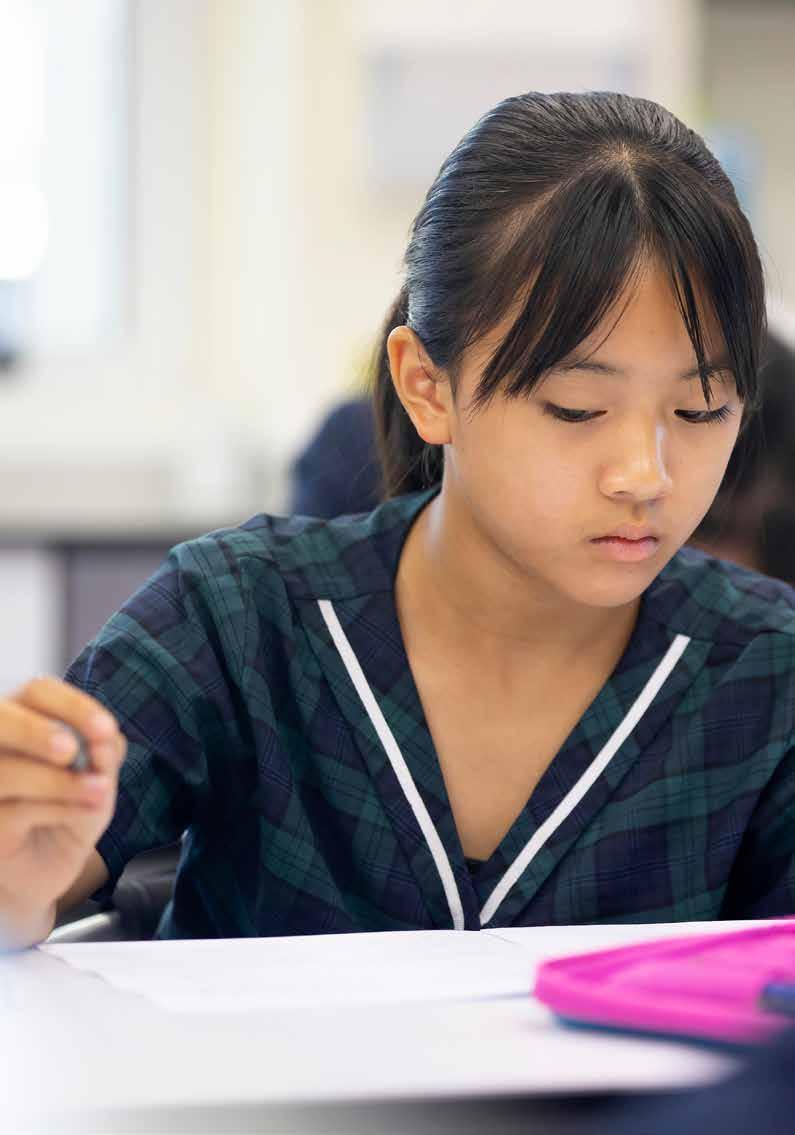
English is the study, use and enjoyment of the English language and its literature, communicated orally, visually, and in writing, for a range of purposes and audiences and in a variety of text forms. The learning of English encompasses learning the language, learning through the language, and learning about the language.
Understanding, using and creating oral, written, and visual texts of increasing complexity is at the heart of English teaching and learning. By engaging with text-based activities, students become increasingly skilled and sophisticated speakers and listeners, writers and readers, presenters and viewers. NZ curriculum document
Year 7
Students entering Year 7 encounter the demands of a greater breadth and depth of content across the curriculum.
Students will gain an increased understanding of:
• Purpose and audience
• Text structure
• Ideas within, across and beyond texts
• How language features are used for effect within and across texts
• How to communicate ideas on a range of topics During the year students will:
• Develop an understanding of the grammar and conventions of English
• Begin to respond critically to, and to think critically about, the conventions of a range of texts, including both fiction and non-fiction
• Explore language through the writing and reading of poetic and transactional texts
• Develop a love of reading and become proficient users of a broad range of information resources – students will keep a reading log
• Understand the importance of communication skills with a focus on developing confidence in the use of voice, delivering speeches and listening
Year 8
Students entering Year 8 will consolidate and build on their knowledge and skills across the curriculum.
During the year students will:
• Be exposed to a variety of written texts, build on their knowledge of written language features and apply close reading skills
• Practise different styles of writing and how to communicate clearly. Grammar, spelling, punctuation and sentence construction will be studied
• Develop verbal communication skills through discussion, speech making and listening
• Study film techniques and explore how these are used to create meaning in a particular text
• Continue to develop their personal reading with regular library times and an electronic reading log
Year 9
In Year 9 students should be able to engage with and enjoy language in all its varieties: understand, respond to and use oral, written and visual language in a range of contexts.
Students will:
• Read a variety of written texts: novels, short stories, poetry and non-fiction. Close reading will help them to think critically and explore language. They will learn how to use the library more effectively
• Study a Shakespeare text in context
• Practise both formal and creative writing and work towards developing clear communication skills. Grammar, spelling, punctuation and sentence construction are important and will be studied
• Contribute to discussion, take part in speech and drama, learn to listen more effectively
• Study aspects of visual texts, and explore how visual features are used to create meaning in static images such as book covers
Assessment:
Assessment will include:
• Creative writing
• Formal writing
• Deliver a speech in a formal situation
• Written examination
• Reading portfolio
Year 10
Students will develop the skills gained in Year 9. A particular focus is understanding, responding to and using oral, written and visual language in a range of contexts. Students will be required to write in a range of nonfiction genres to develop their writing skills and to practise adapting their style to suit the purpose and audience. More formal study of literary genres will include: short stories, non-fiction, novels and poetry, but the emphasis will be on wide reading.
Students will develop essay related skills for use in formal writing and literature analysis, as well as more formal speechmaking skills. They will study a feature film in detail.
Assessment:
Assessment will include:
• Creative writing
• Formal writing
• Deliver a spoken word poetry performance
• Written examination
• Reading and writing portfolio
Year 10 Literacy Testing
The Y10 cohort will be sitting the NCEA literacy co-requisite tests in 2027. These assessments are:
• US32403: Read written texts to understand ideas and information.
• US32405: Write texts to communicate ideas and information.
These common assessment activities will take place during Term 2. Any students who miss the assessments (including the Kahunui Intake away), or who are unsuccessful at attaining the credits, will have an opportunity again in Term 3.
Ethics
Year 7
With an emphasis on our guiding principle, 'By Love Serve', the aim of this compulsory course is to:
• Help students inform and define their perspective and biases
• Guide them to develop critical, wide and caring thoughts about ethical issues in our changing world
• Encourage critical points of view, and challenge their assumptions
• Make reasonable judgments after careful consideration
• Offer an intellectual perspective of the world through exposure to new insights, experiences, and information
• Equip students with the tools required to live a productive and fulfilling life, and provide ways for them to cope with challenges that life inevitably throws at them
• Develop skills in leadership, empathy, gratitude, and mindfulness
Year 7 students attend one lesson per week for a full academic year. The aim is for them to understand how their own worldview acts like a lens that influences their beliefs and assumptions, and that it can change over time as their ethical beliefs develop.
The overarching theme, ‘Foundation Skills and Knowledge’, underpins four key learning areas. In ‘Active Listening and Diversity’, learners experience a sense of belonging to a common humanity, sharing values and responsibilities and being respectful of differences. A study of ‘Religious Celebrations’ helps them to appreciate commonalities, differences, and key celebrations of world religions. A variety of engaging literature is drawn upon in ‘What is a Philosopher?’ to help students begin to develop early conceptual understandings situated in this critical field of study. In Media Literacy, the concept of cognitive bias is explored by students in meaningful contexts. Students examine the ideas of bias, fake news and how media
consumption impacts them.
Year 8
At Year 8 level, students attend lessons once a week for a full academic year. Within the overarching theme of ‘Knowledge, Skills and Values’, they come to understand how knowledge about the world helps people to establish their own values. In ‘Societal Values’, dedicated focus is given to building positive relationships, resilience, and strength of character through core teaching objectives. Students gain insight into early influential thinkers, and are encouraged to develop essential learning skills. They engage with literature related to core values embedded in Christianity, and are introduced to early religious artworks in the Religious Studies component of this course. In Philosophy, they gain knowledge about Early Greek philosophers. They explore ethical questions that require critical thinking and thoughtful reflection, and are introduced to Aristotle’s Virtue Ethics. A range of international issues and their global impacts are investigated by students during their study of Environmental Worldviews.
Students continue with Ethics in Year 11 as it is part of our St Cuthbert's Diploma.
Health and Physical Education Year 7–10
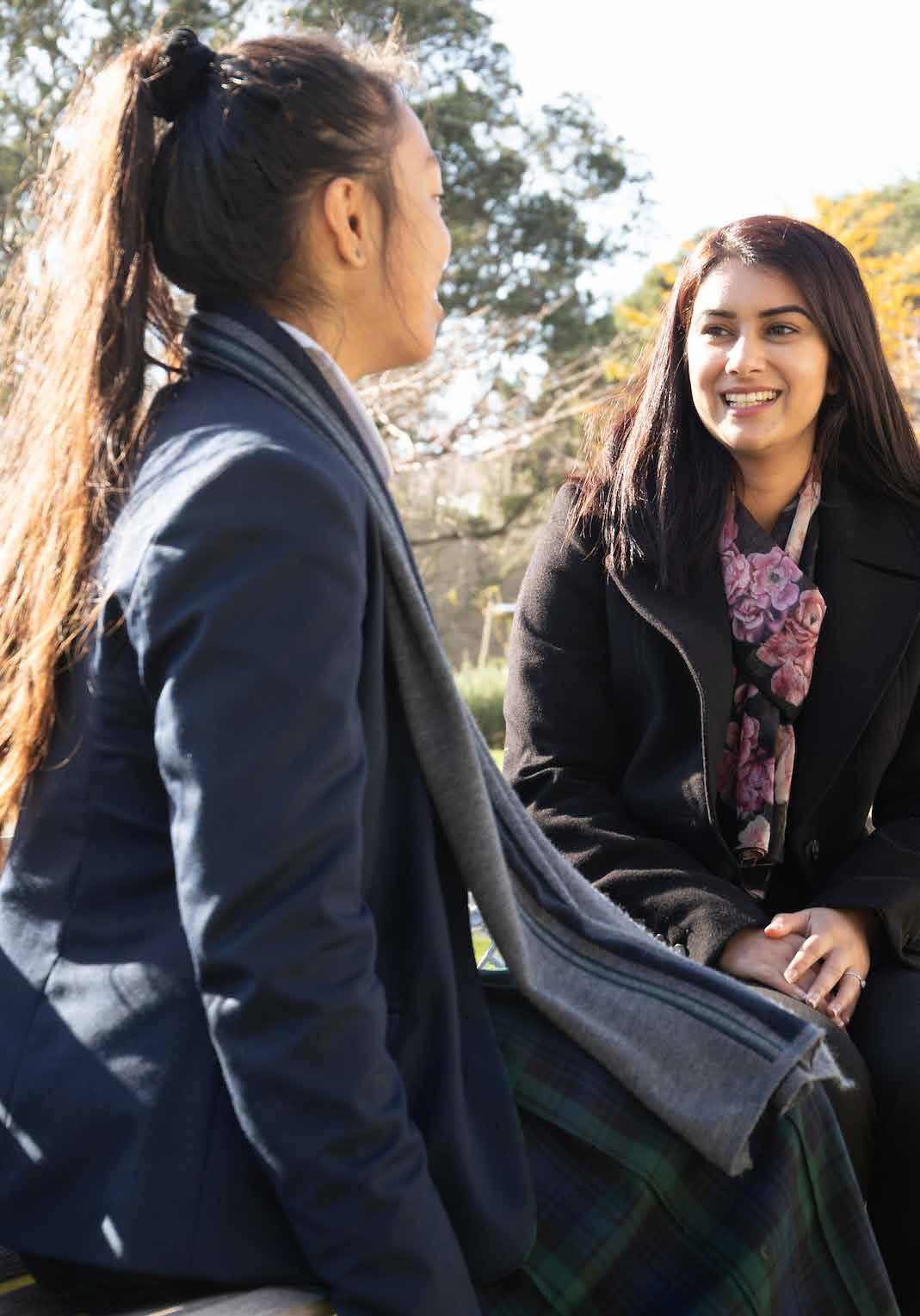
The aim of Health and Physical Education is to foster attitudes and values that endorse healthenhancing practices. The four concepts underpinning the programme are health and wellbeing, attitudes and values, understanding a socio-ecological perspective (relationships and beliefs within family, community and society) and finally a health promotion perspective.
Students are encouraged to develop a positive attitude towards lifelong physical activity as well as gaining knowledge and the personal and interpersonal skills needed for maintaining wellbeing of themselves, of other people, and of society through learning in health-related and movement contexts.
Year 7
Physical Education at Year 7 will help equip students for participation in many physical activities, sports and pursuits through the development of motor skills. This course is also designed to extend the interpersonal skills needed to positively interact with others.
The underlying theme is respect for others. Students will develop observational skills to improve their ability to give feedback and take responsibility for their learning.
Learning contexts include orienteering, creation of warm-ups, fitness, aquatics, gymnastics, athletics, striking games, turbo touch and traditional games.
Health Education at Year 7 is divided into four units: Who am I and how do I connect? This is the first unit of the year and aims to develop a sense of belonging and help students connect to St Cuthbert’s College in a positive, confident and self-assured manner.
• Tipu Ora: Students will gain an understanding of growth, development and changes that occur to our bodies during puberty. It will also provide a foundation for values and attitudes to be expressed in a well-informed manner.
Life Education (Keeping a Balance): Students will identify stressors in their lives and establish strategies to maintain a balanced lifestyle. This unit will be taught in a collaborative manner by outside providers and HPE teachers
Gratitude: Students will gain an understanding of how gratitude can have a physical and psychological effect on themselves and those around them. Students learn how gratitude is a powerful and worthwhile tool to enhance overall well-being.
Year 8
Physical Education at Year 8 will help students to enhance a range of skills and they will learn to apply decision making in an appropriate manner. This course is also designed to foster team building, inclusiveness and effective decision making.
‘The Thinking Player’ is the underlying theme for this year. Students move into more complex situations where strategy is important so that team decision-making becomes a key factor for success.
Learning contexts include fitness, athletics, mini-olympics, basketball, cricket, football, badminton, aquatics and self defence.
Health Education is divided into three units:
Whanaungatanga: Students will unpack characteristics that help maintain a healthy friendship. It will focus on accepting others, diversity and assertive communication.
Sexuality: Building on the Year 7 ‘Tipu Ora’ unit, students will revisit changes during puberty; however, greater emphasis will be on emotional growth, such as considering rights & responsibilities and agencies that provide support.
• Life Education (The Great Brain Robbery): Students will explore how a range of substances impact the brain with a specific focus on the adolescent brain. This unit will be taught in a collaborative manner by outside providers and HPE teachers.
Year 9
Health and Physical Education at Year 9 has a focus on Hauora, teamwork and challenge.
Physical Education is divided into three units:
Together Everyone Achieves More (T.E.A.M): Students will participate in a range of team sports including netball, touch rugby, ultimate frisbee and volleyball. In doing so, they will be given the opportunity to take responsibility and use initiative and relate to others.
• Sport Science in Action: students will enhance their knowledge in a range of concepts whilst they train and participate in the annual Year 9 Aquathon event. Concepts include effective warm-ups and cool-downs, methods of training, principles of training, heart rate training zones and goal setting.
Accept the Challenge: students will build on personal strengths to increase their confidence and ability in gymnastics and an Aquathon event.
Health Education is divided into four units:
• Societal Influences: Students will gain knowledge about communication and peer pressure within relationships. Bullying will also be explored for awareness and understanding of how it may happen and its impacts. Students will also gain knowledge about the impacts of alcohol, smoking, vaping and drug use.
• Taha Hinengaro: Students will gain knowledge about depression and anxiety. Using different tools and resources, they will also explore ways to overcome feeling down.
Sexuality: This unit builds on Year 7 and 8 learning about puberty, contraception and healthy relationships. Students explore adolescent wellbeing, respectful relationships, communication, boundaries and decision-making, while examining how peers, culture, family, and social media influence choices and identity. The unit develops skills to support positive relationships, sexual health and Hauora. Perspectives that Shape Us: Students explore how and why people have different viewpoints or perspectives about an issue. Having personal opinions but also respecting others' will also be explored in the first half of this unit. The latter half will focus on two influential issues that young people face: social media and vaping. Students will research different perspectives and gain an understanding of why differing viewpoints exist.
Year 10
Health and Physical Education at Year 10 has a focus on preparing students to take personal and collective responsibility.
Physical Education is divided into five units:
Adventure Challenge: Students will increase competence, confidence and cooperation during water safety, team building and challenge activities in the lead up to and after Kahunui.
• Strategic Play: Students will devise offensive and defensive strategies to improve play in badminton, lacrosse and other invasion games.
• Dance: Students will apply interpersonal skills when choreographing a creative dance sequence.
• Performance and Leadership: Students will participate and reflect on taster sessions that focus on various Sport Science and Leadership concepts and gain an insight into NCEA Sport & Exercise Science.
• Disabilities: Students will gain awareness about a range of learning and physical disabilities. In doing so, students will consider adaptations they can make to be more inclusive.
Health Education is divided into three units:
• Relationships: Students will explore healthy relationships and debunk perceptions that are based on fantasy such as pornography and social media norms.
• Sexual Health and Safety: Students will gain an awareness and an understanding of common contraceptive methods used in New Zealand. Knowledge about Sexually Transmitted Infections will also frame this unit.
• Making Informed Choices: Students will apply decisionmaking and consider consequences for various topics that may lead to addiction. The topics of focus will include social media, drugs and alcohol.
Languages Year 7–10
Languages are an integral part of the programme offered at Year 7-10.
In Year 7, students will study Te Reo Māori for a semester and four other languages, one per term. These languages are Chinese, French, Latin and Spanish.
In Year 8, students will continue to study Te Reo Māori for a semester. They will choose two of the languages studied in Year 7 and they will study them for two terms each. The languages are Chinese, French, Latin, and Spanish.
In Year 9, students will study at least one language for the entire year. They can choose two languages. The languages offered from Year 9 onwards are Chinese, French, Latin, Spanish and Te Reo Māori. They may continue their Year 8 language, or they may begin a new language or languages.
In Year 10, students may continue the language or languages that they studied in Year 9. Languages cannot be started at Year 10 without the equivalent Year 9 knowledge. Students with significant prior language knowledge will be assessed to
determine the appropriate course and level at the discretion of the HOS and HOF.
Some students will be asked to join the Pōhutukawa Learning Support class (PELs) or the English For Speakers Of Other Languages (ESOL) instead of studying a language if they need additional support in core curriculum areas.
Education Perfect cost: approximately $104.88
(One charge for Maths, English, Science and Languages)
Chinese (Mandarin) Year 7–10
Year 7
The topics include classroom language, numbers, dates, age and culture activities. By the end of the course students will be able to count and write numbers one to ninety-nine in Chinese, understand classroom instructions in Chinese as well as responding in Chinese. Social-cultural aspects such as festivals are an integral part of the course.
Approximate Cost: Booklet $5
Year 8
The Year 8 course is the continuation of the Year 7 course. We will continue to focus on communication and learn some basic Chinese characters. The course will cover topics such as animals, family and food and drink. By the end of the course, the students will be able to communicate in simple Mandarin about themselves. Socio-cultural aspects such as Chinese festivals and customs around family and food are also part of this course.
Approximate Cost: Booklet $5
Year 9 – Second Language Learners
The emphasis of this course is on basic characters and communication. By the end of the course students will be able to recognise some basic characters, and communicate with people in simple Chinese. They will be able to use and respond to classroom instructions in Chinese. Socio-cultural aspects, such as family values, food customs and festivals are an integral part of the course.
The course will cover the following topics: introducing themselves and their family, describing people, daily routine, food and drink, countries and languages, and weather.
Assessment:
Internal assessment:
• Common tests assessing each of the four language skills
• One written internal examination
Recommended prior achievement level:
This course is open to all students irrespective of what languages were studied in Year 8. Remember that a language cannot be started at Year 10 without the equivalent Year 9 knowledge.
Students with significant prior language knowledge will be assessed to determine the appropriate course and level at the discretion of the HOS and HOF.
Approximate Cost: Booklet $5
Year 9 – Chinese for Heritage Speakers
The course is open to students who are fluent in speaking and listening but have no or little knowledge of reading and writing. The topics covered in this course will be the same as Year 9 Chinese, however, with a focus on reading and writing.
Assessment:
Internal assessment:
• Common tests assessing each of the four language skills
• One written internal examination at the end of the year
Recommended prior achievement level:
Students will be assessed to determine the appropriate course and level at the discretion of the HOS and HOF.
Approximate Cost: Booklet $8
Year 10 – Second Language Learners
This course is for those who have studied Chinese in Year 9. Students will develop the acquisition of listening and speaking skills begun in Year 9, as well as the ability to read and write accurately. Topics include school life, shopping, health, hobbies, colours and clothes.
Assessment:
Internal assessment:
• Common tests assessing each of the four language skills
• One written internal examination
Recommended prior achievement level:
Students must have studied this subject at Year 9 or the equivalent level. Otherwise entry to the course will be granted at the discretion of the HOS and HOF.
Students with significant prior language knowledge will be assessed to determine the appropriate course and level at the discretion of the HOS and HOF.
Approximate Cost: Booklet $5
Year 10 – Chinese for Heritage Speakers
This course is a continuation of the Year 9 Chinese for Heritage Speakers or students who are at equivalent level. The topics covered in this course will be the same as Year 10 Chinese, however, with focus on reading and writing.
Assessment:
Internal assessment:
• Common tests assessing each of the four language skills
• One written internal examination at the end of the year
Recommended prior achievement level:
Students must have studied this subject at Year 9 or the equivalent level. Otherwise entry to the course will be granted at the discretion of the HOS and HOF. Students with significant prior language knowledge will be assessed to determine the appropriate course and level at the discretion of the HOS and HOF.
Approximate Cost: Booklet $8
French Year 7–10
Year 7
In Year 7, all students will spend one term learning French. They will learn to talk about themselves, their name, age, where they live, their birthday and their siblings. The language taught will include greetings, numbers up to 40, colours, the alphabet and days of the week and months of the year. They will be working at Level 1 of the New Zealand curriculum.
Year 8
Students in Year 8 French will be following a half year course which builds on the language studied in Year 7. They will focus on developing their language skills (listening, speaking, reading and writing) in the context of familiar situations. By the end of the Year 8 course, they will be able to communicate in French about themselves, their family, friends and pets.
They will also be able to talk about their likes and dislikes (colours, animals, leisure activities and food).
They will learn about aspects of the cultures of Frenchspeaking countries which are linked to the language topics (e.g. Food, housing, sports and music).
Year 9
Level 3 and 4 of the New Zealand Curriculum are covered in Year 9 French. Topics include describing people and what they are wearing, describing your school, giving and following directions, describing your town and planning outings, making holiday plans, talking about food and drink and talking about sport and hobbies.
Cultural topics covered in the course are aspects of life in France and other French speaking countries related to the language topics. This course continues to develop the four essential language skills of listening, speaking, reading and writing.
Assessment:
Two common tests in the four language skills (listening, speaking, reading and writing).
Recommended prior achievement level:
This course is open to all students irrespective of what languages were studied in Year 8. Remember that a language cannot be started at Year 10 without the equivalent Year 9 knowledge.
Students with significant prior language knowledge will be assessed to determine the appropriate course and level at the discretion of the HOS and HOF.
Approximate Cost:
Studio 1 Workbook $8
Active Learn subscription $12 Booklets $10
Year 10
This course is a continuation of Year 9 French, with the emphasis still on the acquisition of listening and speaking skills as well as the ability to read and write accurately in French. The topics cover situations such as leisure activities, the cinema, holidays, what to do when on holiday in Paris, your own identity and regional identity in France, describing your home, food, meals and eating out and talent shows.
Cultural content is linked to the language topics plus extra topics including the French-speaking world and the French Revolution.
Assessment:
Internal assessment includes common tests in some of the four language skills (listening, speaking, reading and writing) towards the end of each module. There are also two internal examinations, which test the four skills.
Recommended prior achievement level:
Students must have studied this subject at Year 9 or equivalent level. Otherwise entry to the course will be granted at the discretion of the HOS and HOF.
Students with significant prior language knowledge will be assessed to determine the appropriate course and level at the discretion of the HOS and HOF.
Approximate cost:
Studio 1 Workbook $8
Active Learn subscription $12
Latin Year 7–10
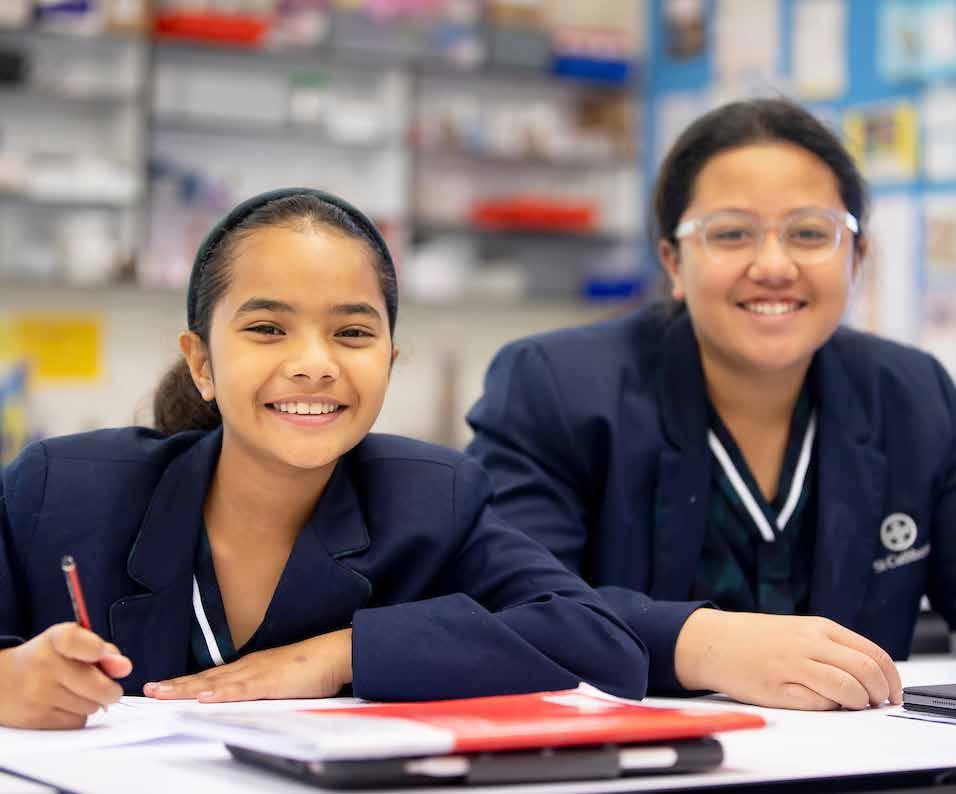
Latin is the language of the ancient Romans. The study of Latin introduces you to the history of western civilisation and the origins of English. Students will learn about not just the language but also the life and civilisation of the Romans.
Year 7
This course offers an introduction to the language and life of the Romans. Students will study:
• The Latin language, including its basic structure and vocabulary
• The life and customs of the Romans, including mythology
• The use of Latin in the modern world, including Harry Potter
• The contribution of Latin to other languages
Year 8
The Year 8 Latin course develops further the language and culture introduced in Year 7. Students will find themselves at once in the vibrant, cosmopolitan city of first-century Rome. They will extend their ability to read simple sentences in Latin by learning a wider range of vocabulary and grammar while negotiating ancient political intrigue, exploring religions old and new, visiting bustling Roman markets, and attending the great chariot races at the Circus Maximus. Students will expand their repertoire of English vocabulary by examining more closely the contribution of Latin words to the English language and continue their exploration of Roman mythology.
Year 9
The Year 9 Latin course follows a semi-factual life story of a real ancient citizen called Caecilius in Pompeii and the adventures of his household before the eruption of Mount Vesuvius.
In following this life story, students will:
• Learn to read and translate Latin
• Understand the grammatical functions of how language works
• Meet a wide range of Latin words
• Discover the connections between Latin and other languages including English
In addition to the study of the Latin language, students will also be introduced to life in the time of the Romans.
They will learn about aspects of their society such as:
• Gladiators
• Slavery
• Education
• The destruction of Pompeii
• Daily life
Latin is a subject for those interested in the origins of their own language and for those wanting to explore the fascinating world of ancient Rome.
This subject will continue to be offered as part of the IB qualification through to Year 13 level.
From 2029, Latin may not be offered by the NZ curriculum. The College is exploring ways to continue to offer Latin with the NZCE.
Year 12 and 13 Classical Studies is also an option for students interested in the ancient world.
Assessment:
Four topic tests and end-of-year examination.
Recommended prior achievement level:
This course is open to all students irrespective of what languages were studied in Year 8. Remember that a language cannot be started at Year 10 without the equivalent Year 9 knowledge.
Students with significant prior language knowledge will be assessed to determine the appropriate course and level at the discretion of the HOS and HOF.
Approximate Cost:
Latin Grammar Workbook $5
Year 10
The Year 10 Latin course consolidates and extends knowledge of Latin acquired in Year 9. It allows students to deepen their understanding of the language and the fascinating culture of the Roman Empire. Students continue the journey of Quintus as he escapes the destruction of Pompeii and travels to Britain and Egypt.
In reading the stories of his adventures, students will:
• Revise and expand their knowledge of Latin grammar and vocabulary
• Further develop their skills in reading and translating Latin
• Acquire a deeper understanding of the relationship between Latin and English
As well as studying the language, students continue to explore the vibrant life of the ancient Romans in different parts of their empire, particularly in Egypt and Britain.
Topics include:
• Glassmaking
• Egyptian mythology
• Hieroglyphs
• Seven Wonders of the World
• Medicine
• Religion
• Magic
This is a course for those wanting to deepen their knowledge of the language and life of the ancient Roman empire.
This subject will continue to be offered as part of the IB qualification through to Year 13 level.
From 2029, Latin may not be offered by the NZ curriculum. The College is exploring ways to continue to offer Latin with the NZCE.
Year 12 and 13 Classical Studies is also an option for students interested in the ancient world.
Assessment:
Four topic tests and end-of-year examination.
Recommended prior achievement level:
Students must have studied this subject at Year 9 or the equivalent level. Otherwise entry to the course will be granted at the discretion of the HOS and HOF.
Students with significant prior language knowledge will be assessed to determine the appropriate course and level at the discretion of the HOS and HOF.
Approximate cost:
Latin Grammar Workbook $5
Spanish Year 7–10
Year 7
All Year 7 students will have the opportunity to do a oneterm course in Spanish. The emphasis is on communication of simple ideas and by the end of the course, students will be able to present themselves.
Students will also be introduced to some aspects of the varied and exciting Hispanic cultures in the world today.
Year 8
Students in Year 8 Spanish will be following a half year course which builds on the language studied in Year 7. They will focus on developing their language skills (listening, speaking, reading and writing), so that by the end of the Year 8 course they will be able to communicate in Spanish about themselves, their family, friends and pets. They will also be able to talk about their likes and dislikes. They will learn about some aspects of the cultures of Spanish-speaking countries, with a focus on Colombia.
Year 9
In this course students are taught to understand simple spoken Spanish in everyday situations and are encouraged to begin to communicate confidently. They learn to share information about themselves, their families and their homes, and through role play and creative work, they also begin to acquire the language skills necessary for a visit to a Spanishspeaking country.
Students are introduced to some aspects of the many varied and exciting Hispanic cultures in the world today, with a focus on Mexico.
Assessment:
Two common tests in the four languages skills (listening, speaking, reading and writing)
Recommended prior achievement level:
This course is open to all students irrespective of what languages were studied in Year 8. Remember that a language cannot be started at Year 10 without the equivalent Year 9 knowledge.
Students with significant prior language knowledge will be assessed to determine the appropriate course and level at the discretion of the HOS and HOF.
Approximate cost:
Viva 2 workbook $15
Year 10
This course encourages an awareness and understanding of present-day life in Spanish-speaking countries and continues to develop the acquisition of listening and speaking skills begun in Year 9, as well as the ability to read and write accurately. Students continue to learn how to communicate confidently. The focus this year is on the transactional language required to travel in a Spanish-speaking country.
There is a wide range of topics which include holidays, shopping and markets, food and festive occasions.
Assessment:
Tests in some of the four languages skills (listening, speaking, reading and writing) towards the end of each module. These are also two internal examinations.
Recommended prior achievement level:
Students must have studied this subject at Year 9 or the equivalent level. Otherwise entry to the course will be granted at the discretion of the HOS and HOF.
Students with significant prior language knowledge will be assessed to determine the appropriate course and level at the discretion of the HOS and HOF.
Approximate cost:
Viva 2 workbook $15.
Te Reo Māori Year 7–10
Year 7
The Year 7 te reo Māori course is a fun and creative introduction to the Māori language, which includes foundational topics such as pronunciation, numbers, colours, modes of transport, describing ourselves, whānau, pepeha and conversational basics. Students learn via a wide range of activities including waiata (song), karakia (prayers/incantations), crafts, games and writing & performing scripts. The topics explored also links to content students are learning in other subjects, enriching the depth of learning across the curriculum.
Year 8
This course flows on from what the students have learned across the course of Year 7. Students will build on their linguistic skills and cultural competency which is intrinsically connected to our environment here in Aotearoa. We will deepen their learning of pepeha and mihi (the language of acknowledgement) as well as learn about family, everyday language, whakataukī (proverbs), kīwaha (colloquialisms) and recreation. We will continue to support students with their pronunciation as needed. In this course students have the opportunity to expand their connection to the Māori world view in a fun, interactive and creative way.
Year 9
Students elevate their ability to understand and communicate in te reo Māori through speaking, listening, reading writing, singing and play. Topics include whānau (family), whakapapa (genealogy), Matariki (Māori New Year), recreational activities, as well as the essentials for conversation and everyday life. Students are also introduced to some aspects of Māori life, both traditional and contemporary.
Assessment:
• Internal assessment – including assignments that test the four essential skills (listening, speaking, reading and writing)
• Two internal examinations aligned to reading and writing strands.
Recommended prior achievement Level
This course is open to all students irrespective of what languages were studied in Year 8. Remember that a language cannot be started at Year 10 without the equivalent Year 9 knowledge. Students with significant prior language knowledge will be assessed to determine the appropriate course and level at the discretion of the HOS and HOF.
Year 10
Flowing on from students' learning in Year 9, this course helps students develop further their ability to speak and write about topics of interest to teenagers. These include arranging to go to the movies, telephone conversations, sports and leisure activities, descriptions of people and food. Students gain an extensive vocabulary and become familiar with structures suitable for everyday communication.
Assessment:
Internal assessment includes assignments that test the four essential skills (listening, speaking, reading and writing) which usually occur after each unit of work. There are two internal written exams.
Recommended prior achievement level
Students must have studied this subject at Year 9 or the equivalent level. Otherwise entry to the course will be granted at the discretion of the HOS and HOF.
Students with significant prior language knowledge will be assessed to determine the appropriate course and level at the discretion of the HOS and HOF.
Mathematics Year 7–10
Mathematics is a core subject and is compulsory for all students. In Year 7-10, students are beginning to use the tools of mathematics – including words, symbols, diagrams, physical models and technology to present their ideas. Student learning and delivery of content is targeted at an appropriate level. Additionally there is the opportunity for carefully selected students to pursue accelerated progression, if necessary.
Year 7 - Phase 3
The skills, concepts and understandings of the content strands of Statistics, Number and Algebra, Geometry and Measurement are developed at the appropriate level for each student. The aim is to ensure students are numerate, have opportunities to be innovative in solving problems and making decisions, and are able to communicate their findings effectively.
A major emphasis is the teaching of mathematics as a sense making process. This is facilitated through developing understanding and encouraging the students to make informed decisions as to what is the most efficient and appropriate strategy to solve mathematical problems.
The Number framework is used to develop students’ knowledge and strategies. Strong knowledge ensures students can broaden their strategy base. Using more advanced strategies helps students to develop their number knowledge.
Financial literacy provides the context in some number and algebra units. Problem solving is taught throughout the year and students participate in the Otago Problem Solving Challenge. The Australasian Problem Solving Mathematical Olympiad is offered as part of the Mathematics Extension Programme. Education Perfect is used as a home study tool to reinforce the in-class programme learning.
Assessment:
Topic Tests or Activities as appropriate.
Year 8 - Phase 3
The skills, concepts and understandings of the content strands of Number and Algebra, Geometry and Measurement, and Statistics are further developed at the appropriate level for each student. Problem solving and communicating mathematical ideas using logic and reasoning remain a key focus in Year 8.
The aim in Year 8 is for all students to be operating at stage eight (level 4 of the Curriculum). Students are grouped based on pre-test data using a range of assessments and supported with PAT data.
Programmes encourage individual and collaborative problem solving as the students become more articulate in their communication of mathematical ideas and formalise concepts. Students continue to participate in the Otago Problem Solving Challenge. The Australian Mathematics Competition and Otago Junior Maths are offered as part of the mathematics extension programme. Education Perfect continues to be used as a home study tool to ensure students get the additional support they need as they become more independent learners.
Assessment:
Topic Tests or Activities as appropriate.
Year 9 - Phase 4
Concept progression is further developed through a range of skills and activities. A problem solving approach is used to develop understanding in Mathematics and Statistics. Numeracy strategies enhance thinking and form a strong link between strands. An emphasis on maintaining and developing skills is balanced with practical applications, investigations and problem solving. Students learn to think mathematically, to reason and to communicate mathematical ideas clearly.
Assessment:
• Internal test on each topic
• One written internal examination
Year 10 - Phase 4
Concept progression continues to be developed through a range of skills and activities. A problem solving approach is used to develop understanding in Mathematics and Statistics, Geometry, Trigonometry, Quadratic Algebra and Graphs. Numeracy strategies are used to encourage fluent skill. Problem solving, developing logic and reasoning and communicating mathematical ideas unify the course and enhance mathematical thinking. Mathematical investigations are used to prepare students for solving unfamiliar problems.
Assessment:
• Internal test on each topic
• One written internal examination
Approximate Costs: Education Perfect - $26 for Years 7, 8, 9 and 10. Workbooks Years 7, 8 and 10 – up to $60 ; Year 9 Textbook – $28. IXL Online Learning – $10.
Mathematics Year 9–10
Year 10 Numeracy: National Common Assessment Task
Standard
32406: Use mathematics and statistics to meet the numeracy demands of a range of situations.
As part of the NCEA review, the Ministry of Education wishes to strengthen foundational Numeracy. This is a mandatory national assessment that became a co-requisite from 2025 and is a requirement for the NCEA qualification.
The Numeracy standard requires students to master the mathematics and statistics content at Level 4 of the New Zealand Curriculum AND interweave this content with mathematical and statistical process ideas.
All students who will be studying Year 10 Mathematics will be entered into this assessment. This will include Year 9 classes who are studying Year 10 Mathematics but will exclude the Year 10 classes studying Year 11 Mathematics.
There will be two opportunities to sit this assessment: one in Term 2 and the other in Term 3.
Any student who is away at Kahunui during the first opportunity, will be able to sit the assessment in Term 3.
All classes will be completing preparation for the Numeracy assessment during class time.
Approximate cost: Workbooks $23 1xL online learning TBC Education Perfect $26.
Performing Arts Year 7–10
The Performing Arts (Dance, Drama and Music) are a compulsory part of the Year 7 and 8 programme.
In Year 9, students can choose to complete a semester course in Dance, Drama and Music. In Year 10, students can choose to complete a full year course in Dance, Drama and Music.
Dance
Dance is a fun and creative subject that develops confident, capable and collaborative learners. Through performance, choreography, and analysis, students explore how movement can be used to communicate ideas, tell stories, express emotions, and connect with diverse cultures and communities.
Students experience a wide range of dance genres and work both independently and collaboratively to create, perform and respond to dance. Alongside developing practical dance skills, students build valuable transferable skills including communication, leadership, creativity, critical thinking, problem-solving, resilience and teamwork.
Dance provides opportunities to engage with professional artists and industry practitioners. Students may attend professional dance performances, work with guest choreographers, and participate in a variety of school and community performance opportunities.
All Dance courses aim to develop:
Creativity
• Confidence
Collaboration
Communication
Critical thinking
Leadership
• Cultural understanding
Resilience
• Self-management
Year 7 Dance
Year 7 Dance introduces students to dance as a creative, physical and expressive art form. Students explore the elements of dance - body, space, time, energy, and relationships - through a variety of practical movement experiences and performance tasks.
The course is designed to be inclusive and accessible to all students, regardless of previous dance experience. Students
learn how movement can communicate ideas, emotions, and stories while developing confidence in performing and creating dance. Through individual and group activities, they begin to develop choreography skills and explore a range of dance styles, cultures, and perspectives.
Year 8 Dance
Year 8 Dance builds on students' understanding of the elements of dance and introduces choreographic devices that help shape movement into meaningful dance works. Students explore how body, space, time, energy and relationships can be manipulated to communicate ideas and emotions through performance and choreography.
The course celebrates diversity and encourages students to learn about and appreciate dance traditions from Aotearoa New Zealand and around the world. Students experience an inclusive learning environment where all ideas, backgrounds and levels of experience are valued. They develop movement vocabulary, performance confidence, and creative thinking while working both independently and collaboratively.
Year 9 Dance (Semester Course)
Year 9 Dance provides an engaging introduction to secondary school dance and is ideal for students who enjoy being active, creative and expressive. The course welcomes students of all abilities and experience levels and promotes an inclusive and supportive environment where every student can succeed.
Students explore a variety of dance genres including Contemporary, Hip Hop, Jazz, Musical Theatre, and Cultural Dance. They develop a deeper understanding of the elements of dance - body, space, time, energy, and relationships and learn how choreographers use these elements alongside
choreographic devices and structures to create engaging and meaningful performances.
Throughout the course, students perform, choreograph, and analyse dance while developing confidence, creativity and artistic awareness. They also investigate influential dancers, choreographers, and dance genres, gaining insight into dance as both an art form and a means of cultural expression.
Dance contributes positively to student wellbeing by fostering self-confidence, self-expression, physical fitness and a sense of belonging. Students develop valuable transferable skills including leadership, communication, collaboration, critical thinking, creativity, resilience, and presentation skills. This course provides an excellent foundation for students considering the Year 10 Full Year Dance course and future study in NCEA Dance.
Year 10 Dance (Full Year Programme)
Year 10 Dance is a specialist course for students who are passionate about dance and wish to further develop their performance, choreography, and analytical skills. The course provides a strong foundation for NCEA Dance while offering rich practical and creative learning experiences within an inclusive and collaborative learning environment.
Students refine their understanding of the elements of dance and explore how body, space, time, energy, and relationships can be manipulated to communicate complex ideas, emotions, and artistic intentions. They study a variety of dance genres including Contemporary, Hip Hop, Jazz, Musical Theatre, and Cultural Dance while developing both technical and expressive performance skills.
Students create original choreography individually and collaboratively, analyse professional dance works, and investigate influential choreographers and dance companies from New Zealand and around the world. Opportunities to attend professional performances and engage with industry professionals through workshops and masterclasses further enrich learning.
As part of the course, students learn and rehearse a dance for performance in the school's Annual Dance Showcase, providing an exciting opportunity to perform on stage and experience the rehearsal and production process. Students may also have opportunities to participate in productions, workshops, competitions and other co-curricular dance activities throughout the year.
The course supports student wellbeing through creativity, self-expression, physical activity, goal setting, and collaborative learning. Students develop highly transferable skills that are valued across all future pathways, including leadership, communication, teamwork, critical thinking, problem-solving, resilience, self-management, creativity, confidence, and cultural understanding.
Year 10 Dance provides an excellent pathway into NCEA Dance and is ideal for students who wish to further develop their skills as performers, choreographers, leaders, and creative thinkers.
Why Choose Dance?
Dance is more than performance. It develops creativity, confidence, leadership, communication, collaboration, critical thinking, and problem-solving skills that are transferable to all areas of learning and future careers. Students develop valuable transferable skills including leadership, communication, collaboration, critical thinking, creativity, resilience, and presentation skills.
Students studying Dance benefit from opportunities to:
• Work with professional dancers, choreographers, and industry practitioners.
• Attend live performances and workshops.
• Develop confidence in public performance and presentation.
• Strengthen teamwork and leadership skills.
• Explore diverse cultures and perspectives through movement.
• Participate in productions, showcases, competitions, and community events.
• Build a strong foundation for NCEA Dance and Scholarship Opportunities.
Dance is a recognised University Entrance subject and provides valuable preparation for pathways in the performing arts, education, health sciences, communications, event management, business, law, leadership, and many other professions. Through Dance, students develop the confidence and skills to succeed both on and off the stage.
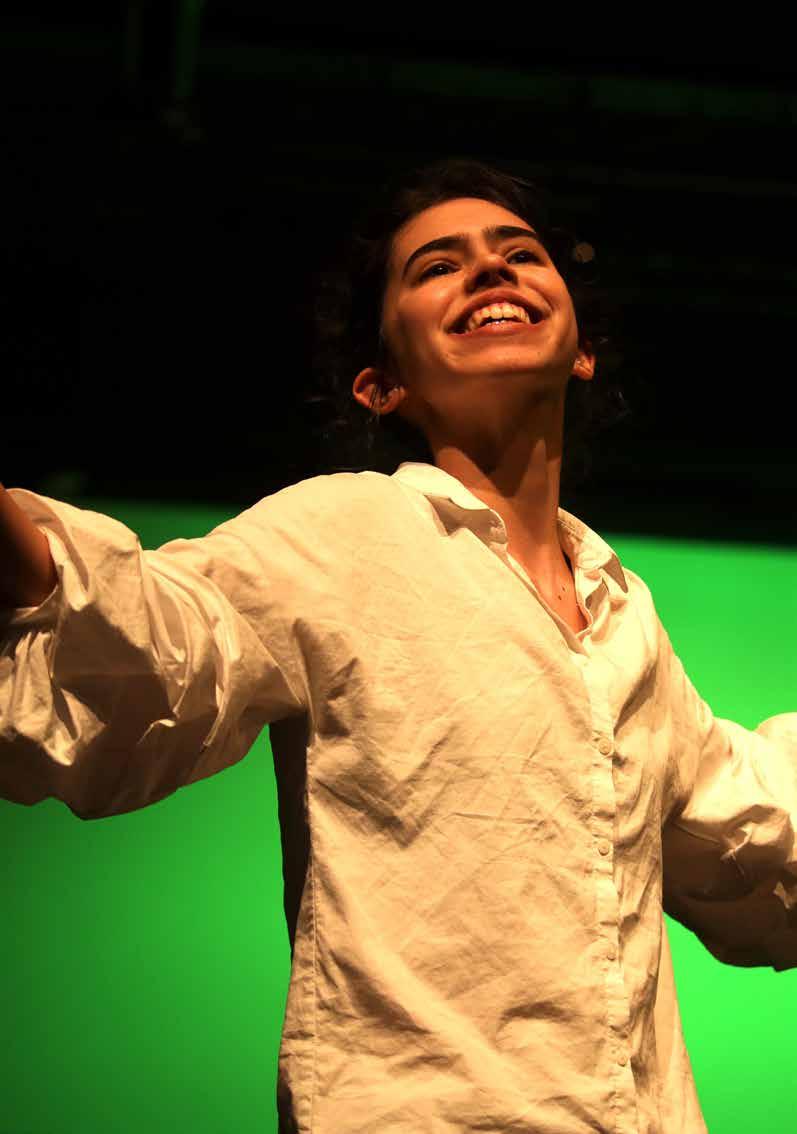
Drama
The exploration of the arts serves as a powerful catalyst for igniting creativity and prompting a dynamic response by engaging the senses, imagination, thinking, and feelings. Through the study of Drama and theatre, students are encouraged to experiment, take risks, and share their ideas with others, which fosters discovery and personal growth. This holistic approach cultivates both theatrical and life skills, leading to the building of confidence, nurturing of creativity, and promotion of collaborative work. Overall, the study of drama and theatre is a transformative experience, offering students a unique opportunity to engage with the world in a more expressive and meaningful way.
Year 7
This course introduces students to the foundations of theatrical performance. Through a variety of practical activities, they explore character, movement, voice, and space. Students engage with a range of drama forms, while developing confidence, collaboration skills, and creativity. This course lays the groundwork for further Drama studies and encourages students to express themselves through storytelling and performance. The semester includes a small class performance of a scripted play where each student takes on an acting role in a class drama.
Year 8
This course further develops the students' command of collaborative improvisation, devised drama, and scripted performance. Students will extend their application of the elements, conventions, and techniques of drama through practical exercises and performance opportunities as they deepen their understanding of dramatic structure and strengthen their ability to work collaboratively and imaginatively. The semester includes a small class scripted performance of a scripted play where each student takes on an acting role.
Year 9 Semester Programme
The Year 9 Semester Programme invites students to explore storytelling through diverse cultural and theatrical traditions as a key approach to learning. Students take on roles, respond to imagined situations, and co-construct meaning within dramatic worlds. This immersive, inquiry-based process allows them to explore real-world themes, test ideas, and reflect on different perspectives in a safe and creative environment. Students also develop ensemble skills, physical and vocal expression, and learn to shape their ideas into compelling performances. Units may include devised theatre, physical theatre, and short scripted work. This course fosters critical and creative thinking and empowers students to find their voice as confident and collaborative young artists.
Year 10 Full Year Programme
The Year 10 course offers an engaging programme that challenges and develops students in theatre. It explores scripted performance alongside a range of theatre forms and styles, including devised theatre. Students participate in a broad curriculum that encompasses popular formats such as Reality T.V, as well as texts from established playwrights. Performance opportunities develop practical skills throughout the year, and a Stage Make-up unit introduces students to theatre technologies. Alongside ensemble work and genre-based scene studies, students take part in a full-class production and contribute to a wider Drama Festival, collaborating with other year levels in a celebration of performance. Designed to strengthen the practical skills of voice, body, movement, and character work, this course prepares students for Year 11 Diploma Drama, NCEA Drama, and IB Theatre, while building confidence, creativity, and collaborative skills.
Music
Music explores sound as both an artistic expression and as an art form. Through the study of music, students will be encouraged to develop skills across all areas in music. The aspects of performance, composition, theory, music history, cultural music and music analysis are explored. Through the medium of music, students will develop resilience, confidence, perseverance and hone their creativity, as well as build on collaborative skills. This gives students the opportunity to engage with the world around them.
Year 7
In Year 7, students will develop their creative skills as well as nurture, develop and hone their understanding of the elements of music, their composing skills and gain an understanding of important composers.
Students will:
• Understanding of time values and rhythmic combinations in composition and performance.
• Reading and writing staff notation that will enable them to compose and perform on classroom musical instruments.
• Awareness of form, timbre and recognition of patterns.
• Understanding of context through the exploration of musical instruments and research on the lives of great composers.
• Listening and recognising musical features such as main musical elements.
Year 8
The core Music programme is intended to give students musical experience through which they can explore and deepen their understanding of musical elements.
Practical classroom experiences address all Arts Curriculum strands in order to develop:
• Confidence and the healthy use of each student’s unique singing voice.
• Aural, music reading/writing, part singing and group musicmaking skills.
• Practical skills and improvisation using classroom Orff instruments (mallet percussion) and ukulele.
• Awareness of form (often through movement), timbre and recognition of patterning.
• Creating/composition skills, digital compositionGarageband, editing, improvisation, sequencing and recording.
Micro musicology units taught in the course may include study of chant, the instruments of the orchestra and composition.
The Year 8 core programme is enriched in the Co-curricular Music programme by Honours Band, Black Watch Strings and Song Squad.
Year 9 Semester Programme
The Year 9 Music Semester course builds on foundational skills developed in previous years, preparing the pathway to studying Music in Year 10-13. The aim of this course is to develop students’ musical knowledge through the exploration of different genres and historical periods — from medieval modes to contemporary popular music — and to apply that knowledge practically through composition, arrangement, and performance.
Over two terms, students will engage with music as both a historical and living art form, developing the analytical skills to understand how music works, the creative skills to make it their own, and the collaborative skills to bring it to performance.
Areas covered:
• The history of rhythm and staff notation: how did we learn to write music?
• Modes and Renaissance, major and minor harmony: exploring why music sounds differently.
• Greensleeves: creating an accompaniment using Sibelius notation software.
• The cultural and historical origins of the blues: structure, blue note.s
• Compose a 12-bar Blues for a small ensemble.
• Group performance of a contemporary song.
Assessment:
• A short theory test
• An original arrangement written in Sibelius
• Composing 12 Bar Blues
• And performing a contemporary song in a small group
Year 10 Full Year Programme
Making and experiencing music at deeper levels is at the heart of the Year 10 Music programme. By the end of this course, students will have developed a comprehensive and rounded understanding of the medium of music. Students will develop skills in performance, composition, music theory and analysis. They will also develop confidence, creativity and collaborative skills.
Students who have completed the Year 9 Full Year Music course, are well prepared for entrance to this course and those who have participated in the Year 9 Full Semester programme and are now keen to formalise their learning, are invited to join this class. The Year 10 Full Year course will offer students the skills required for further study in Music at Years 11 through to 13. Private tuition on an instrument or voice is required and participation in at least one college group is encouraged.
Areas covered:
• Music Performance – performing music as a member of a group.
• Develop and explore the understanding of rhythm through a collaborative percussion performance.
• The art of composing music. Developing composition skills and compose a piece of music based on book characters.
• Music of the Classical and Romantic Eras and a collaborative performance of a work by Beethoven.
• Develop songwriting skills though a group based collaborative year-long song writing project.
• Music in Film - the importance of music in film and how music sets the scene in a film.
Science Year 7–10
Science is an important subject that leads on to a diverse range of career paths. Students are exposed to a wide range of topics, which aim to give a broad understanding and knowledge of the world around them. Students acquire different skills through enquiry that give them the confidence to understand and communicate effectively using correct scientific terminology. This prepares them for aspects of Biology, Chemistry and Physics.
Year 7 and 8
Science aims to develop students’ scientific knowledge and understanding of the world around them. Students are given learning experiences that stimulate curiosity and excitement, both inside and outside the Science laboratory.
Specialist Science teachers aim to give the students the confidence and ability to question Science ideas and work out solutions to problems.
Students cover a wide range of topics from the four strands of the National Curriculum including Chemistry, Energy, Cosmology, Biodiversity, Geology, Sound and Microbes. They also have the opportunity to visit Chelsea Sugar Factory and Tiri Tiri Matangi Island.
All Year 7 and 8 students have the opportunity to explore their own interest within the Science context by completing Science badges.
Year 8 students develop problem-solving skills and undertake an open-ended investigation as part of a Science Fair project.
All Science lessons are taught in a science laboratory.
Year 9
The course aims to develop the students’ knowledge and understanding of a range of scientific concepts in the new curriculum. It also develops scientific attitudes and investigative skills that will lead to a better understanding of their everyday world.
The topics covered at this level include: Plants, Ecosystems, the Human Body, Elements and the Periodic table, Motion and Forces, Earth systems.
Year 9 students will expand their learning with a trip to the Stardome Observatory.
Year 10
The course aims to deepen the students’ knowledge and understanding of a range of scientific concepts. It also develops scientific attitudes and investigative skills that lead students to a better understanding of their everyday world.
The topics covered at this level are the Human Body, Forces and Motion, Geology, Electricity, Acids and Bases, Genetics and Carbon Chemistry. In addition, while the students are at Kahunui, the focus of their Science studies will be in the field of Ecology and Astronomy.
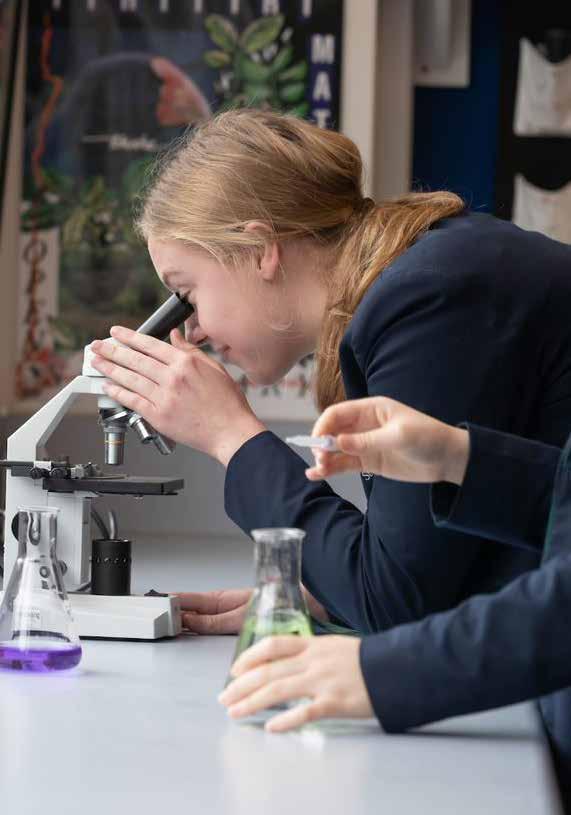
Social Studies Year 7–10
Social Studies is about how societies function and how people can participate as critical, active, informed and responsible citizens. Topics are drawn from Aotearoa New Zealand and the world, from the past, present and future. Through the exploration of these topics, Social Studies helps students develop knowledge, skills and values needed to understand, participate in, and contribute to their communities. Students are also encouraged to critically engage with social issues and develop empathy for diverse perspectives.
Students will also explore the bicultural nature of Aotearoa New Zealand through Te Tiriti O Waitangi, develop an understanding of the economic world, and examine diverse values and perspectives.
The Social Studies programme aims to support students in navigating a changing world and becoming confident, reflective citizens who think critically and act ethically.
Themes across the year levels:
• Year 7: Identity, Place and Belonging
• Year 8: Navigating Change, Challenges and Responsibility
• Year 9: Stand up and be counted
• Year 10: Contentious Decisions
Year 7 and 8
In Years 7 and 8, the Social Studies curriculum introduces students to key concepts about people, place, society, and the environment. Students explore how individual and groups shape and are shaped by their social and physical worlds. Across both year levels, they develop an understanding of:
• How cultures and identities are formed, expressed and preserved over time
• How diverse viewpoints arise from values, traditions, and lived experiences
• How people respond to social and environmental challenges and change
• How relationships with land, resources, and environments influence cooperation, conflict, and responsibilities
• How individuals can act ethically and responsibly within their communities
In Year 7, students explore their sense of belonging within St Cuthbert’s and Aotearoa, studying local history through Tāmaki Makaurau's volcanic landscape, regional geography, and global issues such as girls' access to education in developing countries. The year also includes an introduction to Ancient Egypt.
In Year 8, students investigate cultural traditions and rites of passage, responses to challenges and disasters in Aotearoa, environmental issues, and the responsibilities of food produces and consumers. They also study Ancient Greece, examining its values, briefs, and leadership systems.
Throughout both years, students also stay informed about local, national, and global issues by reading the news weekly and completing comprehension activities.
Year 9 and 10
At Years 9 and 10, Social Studies contributes to students' understanding of:
• Te Tiriti o Waitangi and the rights and responsibilities of bicultural partnership
• How early British migrations to Aotearoa/New Zealand have continuing significance for tangata whenua and communities
• How events have different causes and effects
• Their role in the community and how their decisions can affect political and environmental change
• The causes, impacts and management of geographic issues
• Patterns that connect people, places and environments across the globe
In Year 9, students consider the impact of pandemics, the geography of conflict, power, government, protest and extreme environments. Preparation for both Year 9 camp and Kahunui is undertaken within a social studies context.
In Year 10, students analyse the perspectives surrounding the use of atomic weapons on Japan, the geography of fashion, the New Zealand Wars, and conclude with a focus on modern media.
Assessment:
Students' skills and ability to apply knowledge are assessed through a range of different class-based activities. A focus on developing literacy skills forms a critical part of learning and assessment.
Technology Year 7–10
Technology equips students with the knowledge and practices to thrive as users and creators in a rapidly evolving technological world. Students are taught to understand how products, systems, and processes are developed, adapted, and refined to solve problems within the specialist areas of Digital Technologies, Food and Nutrition, Textiles, and Spatial and Product Design.
Through the study of Technology, students explore how technologies work, how they have changed over time, and how innovation can contribute to more sustainable, inclusive, and future-focused outcomes. Students are encouraged to think critically, work creatively, and build confidence through practical, hands-on learning experiences.
Technology students will develop:
• a broad understanding of how technological outcomes function
• the ability to design and create outcomes that meet the needs of different contexts using applied knowledge and practical skills
• critical thinking and evaluation skills when reflecting on their own and others’ designs and solutions
• confidence in responding to a rapidly changing technological world
• transferable skills and capabilities for future pathways and careers, including those that do not yet exist
Technology
Year 7
Compulsory Semester Courses
Computer Science
In this course, students develop algorithmic thinking and a foundational understanding of the Computer Science principles that underpin Digital Technologies. Students explore how data and binary work, design and program robots to complete a robotics challenge, and use Swift Playgrounds to build their own interactive educational app.
Food and Nutrition
This course focuses on a variety of food preparation methods and develops a wide range of practical cooking skills that empower students to create delicious and nutritious meals. Students learn essential kitchen techniques, safe food handling practices, and effective meal preparation skills through hands-on practical experiences.
The course also explores what it means to make healthy food choices by examining the importance of nutrients and their contribution to overall health and wellbeing. Students investigate the concept of a balanced diet and gain an understanding of how nutrition supports healthy lifestyles. Through practical and theory-based learning, students develop the knowledge and confidence to make informed food choices and prepare meals that contribute positively to their overall health and wellness.
Year 8 Compulsory Semester Courses
In Year 8 students will creatively explore and experiment with product design approaches, the use of materials, electronics, practical workshop skills, and conceptual thinking methods to solve problems.
Digital Textiles
In this creative, hands-on course, Year 8 students will explore the exciting world of Digital and Materials Technology through a range of practical design projects. Students will combine hand drawing and collage, with digital design using threedimensional modelling software Blockbench, to create unique surface patterns. Their designs will then be printed and applied to a sustainable beeswax wrap, encouraging both creativity and environmental awareness.
Students will also investigate simple electronic components and discover how technology can be used in creative ways by designing and constructing a personalised illuminated Matariki banner. Through these projects, students will develop problem-solving skills, creative thinking, and an introductory understanding of e-textiles and digital fabrication.
Product Design
Product Design is a creative, hands-on course where students design and develop real-world products through sketching, modelling, prototyping, and digital design. Students learn to solve problems while considering function, aesthetics, sustainability, materials, and manufacturing processes. Using tools such as Adobe Illustrator and laser-cutting technologies, they create purposeful design outcomes and build practical skills in visual communication, creative thinking, and product development. The course provides a strong foundation for future pathways in Product Design, Industrial Design, Engineering, Architecture, and other creative technology fields.
Year 9
Semester Courses
Food and Textiles
Food - Students will develop their kitchen awareness, food preparation, and cooking skills in preparation for their time at Kahunui in Year 10. Through a range of practical cooking experiences, students will learn safe and hygienic kitchen practices while building confidence in preparing meals independently. They will demonstrate these skills through the preparation of a variety of recipes suitable for both on-site and off-site cooking at Kahunui. The course encourages teamwork, organisation, problem-solving, and an understanding of nutrition and healthy food choices.
Textiles - Students will explore the creative and practical world of textile design through the construction of a personalised drawstring bag. This hands-on project introduces students to textile techniques including appliqué, fabric construction, machine sewing, and safe workshop practices.
Students will learn how to develop and communicate design ideas while creating a functional product that reflects their own identity and creativity. Throughout the project, students will build confidence, independence, and technical skills while experiencing the satisfaction of designing and making a finished textile product they can use and be proud of.
Digital Technologies
Digital Design - Students will explore three-dimensional modelling techniques in Blockbench and design thinking through digitally created outcomes. Students will gain an understanding of working in a three-dimensional space and creating assets for motion graphics. Students will create a portfolio of digital assets that highlight their foundation design and digital application knowledge.
Computer Science - Students will build on their computational thinking skills by designing and developing a physically interactive game using Scratch. Throughout the course, students will explore core programming concepts such as sequencing, selection, loops, variables and events, while learning how these concepts are used to create game mechanics. Students will also experiment with image recognition-based AI features, using camera input and body movement to control elements of their games. They will also be introduced to basic cryptography concepts, exploring how simple ciphers can be used to encode and decode messages. By the end of the course, students will have created a functional interactive game that combines programming, problem-solving, cryptography and emerging AI technology.
Spatial and Product Design
Year 9 Spatial and Product Design is a semester foundationlevel course that introduces students to design thinking, visual communication, and creative problem-solving. The subject provides a pathway through to Year 13 and supports future study in Architecture, Landscape Architecture, Product Design, and Spatial Design.
Students develop skills in sketching, rendering, modelling, and digital design while exploring both product and spatial design projects. Through practical, hands-on learning, they will research, generate ideas, and refine creative solutions to authentic design problems. The course integrates digital tools and design software to help students communicate and present their ideas effectively.
Year 10 Full Year Courses
Digital Technologies
This course combines programming, robotics, digital design and 3D printing in a creative project-based environment. Students will develop both technical and creative skills as they work towards competition-style robotics challenges and performances.
Computer Science focus is on coding, robotics and computational thinking. Students will learn core Python programming concepts such as variables, input, conditional logic, loops and functions, applying these skills to control LEGO SPIKE Prime robots and other robotic platforms, such as Sphero robots. They will use testing, debugging and problemsolving strategies to develop robotic systems that respond to instructions, sensors and performance requirements.
Digital Design focus is on designing, creating and producing digital assets. Students will explore three-dimensional modelling in Blender to create original props, scenery, character pieces or robot attachments that support the theme and narrative of their robotic performance. Selected designs may then be 3D printed and incorporated into the final project.
By the end of the course, students will have built a strong foundation in programming, robotics, digital modelling and 3D printing, while developing a creative outcome that combines technical skill with imaginative design.
Food and Nutrition
New to the range of Full Year options, Food and Nutrition will offer students the opportunity to investigate and apply the design process through the medium of food based products. This course will also look at aspects of designing nutritious meals as well as contributing to the wider community though service projects such as St Cuthbert’s Food from the Heart initiative.
Students will:
• Investigate the top 10 wasted food products in New Zealand and develop innovative ways to put them to better use before their expiry through practical experimentation.
• Design their own burgers based on the results of a range of research techniques that look at cultural palates, existing products and taste profiles and refine them based on authentic stakeholder feedback to produce a final outcome.
• Engage in service opportunities to provide meals for the Food from the Heart initiative.
A highly practical course that aims to engage with all learners, Food and Nutrition is a great stepping stone for further study in Food Development and Design offered in Year 11-13.
Spatial and Product Design
(Previously Design and Visual Communication - DVC)
Year 10 Spatial and Product Design is a full-year course that provides students with a strong foundation for future study in Architecture, Landscape Architecture, Product Design, and Spatial Design. The course focuses on developing creativity, design thinking, and visual communication skills through a range of practical and project-based learning experiences.
Through creative design briefs and hands-on projects, students explore spatial and product design concepts and learn how to communicate ideas effectively from concept through to presentation. Students develop skills in sketching, modelling, and digital visual communication techniques as they generate, refine, and present innovative design solutions.
The course encourages students to solve design problems creatively by exploring divergent ideas and developing innovative design solutions. It also serves as strong preparation for NCEA Spatial and Product Design pathways.
Textiles
Year 10 Textiles is a creative and practical full-year course that allows students to develop confidence, independence, and advanced textile skills through a range of exciting design projects. Throughout the year, students will complete four major projects including a Bucket Hat, Jammies for June service project, Passion Project, and a Digital Sublimation Print project.
Students will explore the full design process from idea development through to construction, while building key skills in sewing, patternmaking, hand-drawn illustration, and digital textile design. They will also learn how to safely and confidently use workshop equipment within a supportive creative environment.
This course encourages innovation, sustainability, and selfexpression while giving students the opportunity to create high-quality textile products they can use, wear, and be proud of. This course will also prepare students looking to take up Year 11 Diploma Textiles.
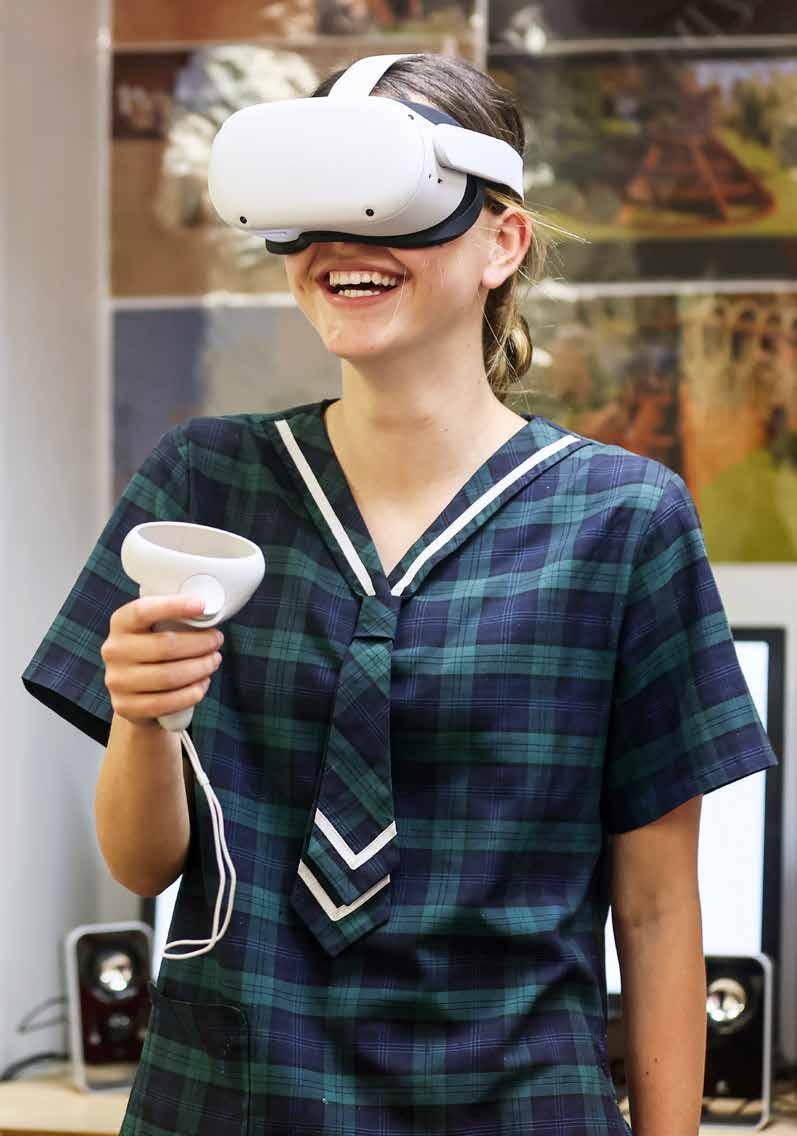
Year 7–10
Optional and Invited Courses
English for Speakers of Other Languages Year
7–10
(for invited students only)
Year 7–10
This course is designed to provide support and assistance to non-native English speakers. There is an emphasis on academic reading, writing, listening, speaking and vocabulary skills across the curriculum to help students to succeed in their mainstream classes.
Participation is by invitation only and some students will be required to take this course. Students will be advised upon enrolment if this is the case.
The grades from this course do not count towards a students overall average for Prize Giving.
Athlete Pathway Programme (by invitation)
Programme Key Objectives
• To build confidence and resilience in our young student athletes.
• To reduce the likelihood of non-contact injuries related to puberty and growth spurts.
• Enhance physical preparation to provide a competitive edge in their chosen sport.
• Long-term education in health and fitness.
Athlete Pathway Programme (APP) Criteria
Years 8-10
Student athletes from Years 8 – 10 must meet the following criteria before submitting their application. Consultation will be made with Sports Department staff and Deans regarding selection into the programme if necessary.
Criteria for Team Sports
1. The sport must be governed by a sporting body that operates within a high-performance sport system.
2. The student athlete must have represented St Cuthbert’s in their sport at the highest level and/or highest year level if the sport is offered at St Cuthbert’s i.e. Year 9 Netball Team 1 or Year 7 Hockey Team 1.
3. If the sport is not on offer at St Cuthbert’s, the student athlete must have reached a suitable level outside of school, and therefore will still be eligible for inclusion.
4. Students new to St Cuthbert’s must still have represented their previous school at the highest year level in their sport.
5. Students must demonstrate commitment, discipline, hard work and display characteristics of sportsmanship.
6. Consultation with all managers in the Sports Department will be made for the final selection process and students may be selected at the discretion of the Director of Sport and/ or APP Manager.
Criteria for Individual Sports
1. All athletes competing in an Individual sport (as opposed to a Team sport), must have represented St Cuthbert’s at their national secondary school event in the previous calendar year.
Academic Interface
All Year 8–10 classes will be a semester option. Students will be grouped into either Semester 1 (Terms 1 and 2), or Semester 2 (Terms 3 and 4), based on other subject options taken.
Year 11–13 students will have access to APP resources in their own time – free periods, lunchtimes and/or after school.
‘We recognize that at this senior level, the sporting commitments of some of our athletes are very high, and therefore we try and provide the appropriate performance and recovery support to meet the requirements of the athlete.’
Note: Application forms can be downloaded from myCollege and must be received by Monday 30 September via email to anna. stanley@stcuthberts.school.nz or a hard copy handed in to the Sports Department.
Pōhutukawa Enriched Learning Support (PELS)
Year 7–10 (by invitation)
This course is designed to meet the needs of students who require additional support across the core curriculum areas.
The PELS classes are designed to support students with developing foundational knowledge of numeracy and literacy. Students are supported to develop strategies for learning and personal organisation; skills which are essential for students to thrive at St Cuthbert’s. Alongside these critical skills, the learning taking place in core subjects will be reinforced to help student experience greater success in their mainstream classes. Time will be spent preparing students for assessments.
Assessments
• Internal assessment only
• No examinations are held in this subject
Recommended prior to achievement level
Participation is by invitation only. However, in some cases, may be compulsory.
Kahunui Year 10
Kahunui offers a unique, place-based curriculum where students learn through real-world experiences in a “classroom without four walls.” The programme combines academic, outdoor, environmental, and social learning in ways that are engaging, meaningful, and connected to the natural environment. Aligned with the New Zealand Curriculum, learning at Kahunui encourages students to become confident, resilient, reflective, and independent young people who are able to contribute positively to their communities and the world around them.
Experiential learning in English, Science, Social Sciences, and Physical Education is delivered through workshops and inquiry projects that bring learning to life. Students take part in experiences such as astronomy, environmental art, journaling and poetry, sustainability action, and exploring the history of the local area. The programme also supports the development of the New Zealand Curriculum key competencies, explicitly managing self, relating to others, participating and contributing. Language learning continues while students are at Kahunui to ensure continuity with their school programme.
A strong focus on wellbeing and relationships sits at the heart of the Kahunui experience. Through a restorative and strengths-based approach, students are supported to develop interpersonal skills, resilience, confidence, and a growth mindset. The Hauora programme helps students build positive communication strategies and healthy wellbeing practices, while the Environmental Sustainability unit encourages students to take meaningful social action through an inquiry framework. Students leave Kahunui with strengthened academic skills, a deeper connection to others and the environment, and increased confidence to face new challenges.