Curriculum Handbook 2027
Year 12 and 13 IB Diploma
Welcome to the Curriculum Handbook
This curriculum handbook contains information on all courses, programmes and qualifications offered at St Cuthbert’s from Year 11-13. The courses offered are outlined with a brief description of the course, assessment methods, any additional costs and recommended prior achievement levels. Information on all courses and qualifications is grouped according to Year 11 St Cuthbert's Diploma, NCEA (Levels 2 and 3) and International Baccalaureate (IB) Diploma (Year 12 and 13) qualifications. This information is accurate at the time of publication but might change as a result of staffing requirements or other circumstances.
Planning for courses in 2027 is very important as students move through the school and eventually beyond St Cuthbert’s to tertiary education. We believe that students should consider their interests, passions and abilities to help them choose their pathways.
At St Cuthbert’s we offer acceleration and enrichment opportunities for multi-level study for some students. Other students need additional support, so special programmes are provided for them. These programmes are available for students across Year 11-13. They could include students studying courses well above their year level; being involved in enrichment programmes or receiving one-on-one help to improve literacy or numeracy.
At Year 11 (St Cuthbert's Diploma) we recommend that students maintain a broad range of subjects with an appropriate level of challenge. This might mean that students study subjects that give them breadth (and
depth) to their learning and help them experience a wide range of opportunities as well as developing skills. Students study six academic subjects, as well as participating in the health and wellbeing programmes offered at the school.
In Year 12 and 13, students will choose either NCEA or IB Diploma. These decisions are personal for each student and advice and guidance is available for every student to ensure they choose the qualification pathway best suited to their personality, skill level and interests.
The HUB programme (Health University and Life Beyond School) runs in Year 12–13 ensuring students experience aspects of university information, women’s health, global citizenship, health and wellbeing and preparation for life beyond school, careers and study skills.
Our curriculum is designed to offer students meaningful choice. While we provide a wide selection of subjects, course offerings are confirmed annually based on student preferences and viable class sizes.
Please note that subjects will only run if numbers permit.
NZQA Scholarships may be taken on either pathway from
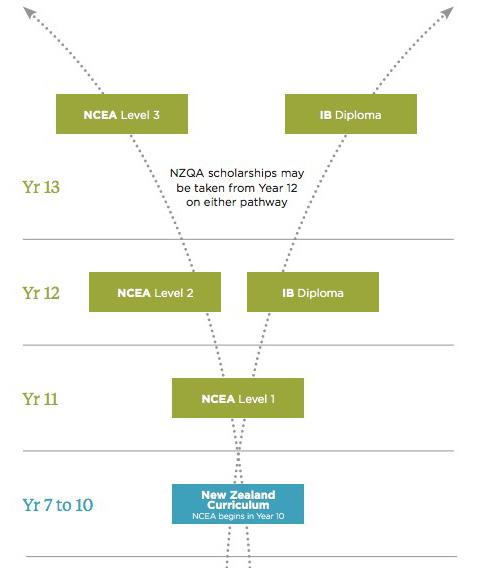
Advice is available for students choosing their courses during Term 3. Students and their parents are advised to discuss their ideas and suggested programmes with any of the following people – all of whom will be able to help with decision making
• Head of Careers
• Year Level Co-ordinators
• Head of Faculties
There will be a number of opportunities available for students and parents to hear more about options at the start of Term 3.
In Term 2 and early Term 3 there are a series of information sessions for students where Heads of Faculties will give a brief overview about courses to students. These talks are held in school time and give students information on what is available for the following year.

What are my skills, talents, abilities and interests?
What subjects am I genuinely interested in?
Which subjects have I succeeded in previously?
There is a follow-up evening in Term 3 when parents and students can hear from teachers about the courses that are available and ask specific questions.
In addition, students can come to talk with the Careers staff in a drop-in programme during the school day –parents are welcome to attend these short meetings to discuss courses for the following year. Students will be sent information about available times and can book appointments to take up these opportunities.
We hope that this handbook will start you thinking about the various avenues open to students in 2027 and beyond.
my talents, and interests?

Which subjects will I need for my future?
Where will each subject lead?
Who can be a sounding board to check I am on the right track?
THINK CAREFULLY ABOUT YOUR SUBJECT CHOICES Decisions made now need to be the subjects you really want to do
Choosing your subjects:
These are some important things to think about when choosing your subjects:
• Consider your abilities – could you do well in these subjects?
• Are you interested in the material being taught in the subject area?
• Will your choices provide you with a range of opportunities so you can study at tertiary institutes?
• Will there be any career implications?
• Who could I discuss this with?
• Is the decision yours?
We encourage you to make your selection at your earliest opportunity as some subjects will reach full capacity and you may be asked to choose an alternative option.
Please Note:
Senior students who are new to a course at Year 12 or 13 or do not meet recommended prior achievement levels must obtain the permission of the Head of Faculty to take that particular course.
Every effort will be made to enable you to take the subject you wish but not every combination can be guaranteed. Some subjects may not be offered if numbers opting for them are too small.
Any students entering selections after the deadline for subject selections may find that some courses are full and that an alternative must be chosen. The same will apply to any student who wishes to change subjects. This will be possible only if courses are not full and the new choices fit the timetable.
NCEA Pathway Overview 2027
NCEA Pathways
Year 11 Diploma Individual Subjects
Either English or English with Writing for Publication Film and Media
Chinese French Latin
Spanish Te Reo Māori
ESOL (Invitation only)
Environmental Science and Geography History Classical Studies
Economics Business Studies Accounting
Science Studies or Science Semeseter Science
Computer Science
Spatial and Product Design
Digital Design
Food Development and Production Textiles
Either Mathematics or Mathematical Studies
Year 12 - Level 2 Individual Subjects
Either English or English Studies or English with Writing for Publication or Film and Media
Māori
Year 13 - Level 3
English Literature Visual English
English with Writing for Publication Film and Media
Māori
Economics Business Studies Accounting Accounting Strategic Business Management
Marketing and Business Management Economics
Production Science Biology Chemistry Physics
Digital Design Food Development & Production Spatial and Product Design Textiles
Maths with Calculus
Maths with Statistics Mathematical Studies
Digital Design Food Development & Production Spatial and Product Design Textiles
Maths with Calculus
Health Sociology Sport and Exercise Science
Health Sociology Sport and Exercise Science
Pohutukawa Enriched Learning Support (invitation only)
A subject printed in BOLD is compulsory.
Scholarship Individual Subjects
English Media Studies
French Spanish Chinese Te Reo Māori
Geography History Classical Studies
Economics Accounting Business Studies
and Space Science
Digital Technologies Spatial and Product Design Technology
Maths with Statistics Mathematical Studies Mathematics Calculus Statistics
Health Sociology Sport and Exercise Science
Health and Physical Education
*Other Subjects may be self-studied
A subject printed in italics is a prerequisite, and at certain levels will require a minimum level of achievement.
IB Pathway Overview 2027
IB Pathways
STCC Diploma Individual Subjects
English or English with Writing Chinese
French Latin Spanish Chinese
Te Reo Māori
Geography History Economics
Business Studies Accounting Classical Studies
Science Semester Science Computer Science
Mathematics or Mathematical Studies
Music Drama Dance Visual Arts Media Studies
IB Year 12/13 Individual Subjects
English Literature (SL/HL)
English Language and Literature (SL/HL)
Chinese Literature (SL/HL)
Language and Culture (SL)
Ab Initio French (SL)
French B (SL/HL) Latin (SL/HL)
Spanish B (SL/HL) English B (HL)
Chinese B: Mandarin (SL/HL)
History (SL/HL)
Economics (SL/HL) Business Management (SL/HL)
Geography (SL/HL)
Environmental Systems and Societies (SL/HL) Psychology (SL/HL) Language & Culture (SL)
Biology (SL/HL)
Chemistry (SL/HL) Physics (SL/HL)
Environmental Systems and Societies (SL/HL) Computer Science (SL/HL)
Mathematics - Analysis and approaches SL/HL
Mathematics - Applications and Interpretation (SL/HL)
Music (SL/HL)
Theatre (SL/HL) Visual Arts (SL/HL) Film and Media (SL/HL)
NCEA Scholarship Individual Subjects IB Group
English Chinese
1. Studies in Language and Literature
French Latin Spanish Chinese 2. Languages
Geography History Economics Accounting
Biology Chemistry Physics Digital Technology
3. Individuals and Societies
4. Experimental Sciences
Calculus Statistics 5. Mathematics
Music Drama Media Studies 6. Arts
A subject printed in BOLD is compulsory. Please note these subjects can only run if numbers permit.
A subject printed in italics is a prerequisite, and at certain levels will require a minimum level of achievement.
Please note that subjects will only run if numbers permit.
NCEA Pathway Course Structure 2027
Students
Students
Biology (Level 2) Biology (Level 3)
Chemistry (Level 2) Chemistry (Level 3) Chemistry
Physics (Level 2) Physics (Level 3) Physics
Students must complete a course in Science until the end of Year 11. Students choose ONE of Science or Science Studies. Some students can choose a second science Semester as an option.
* If you are planning on taking Level 2 Biology, Chemistry or Physics, we recommend Semester Science .
Social Sciences
Social Studies Social Studies Environmental Science and Geography Geography (Level 2) Geography (Level 3)
(Level 2)
(Level 2)
(Level 3)
(Level 3)
NCEA Pathway Course Structure 2027
Health and Physical Education
Activity and Wellbeing (compulsory)
• Students must complete a course in Health and Physical Education until the end of Year 10.
• The Physical Activity and Wellbeing programmes are courses of Health and Physical Education compulsory for all Year 11 students.
Languages
Latin
Spanish Spanish Spanish Spanish Spanish (Level 2) Spanish (Level 3) Spanish
Te Reo Māori Te Reo Māori Te Reo Māori Te Reo Māori
Te Reo Māori (Level 2)
Te Reo Māori (Level 3)
• Year 7 students will study Te Reo Māori for a full year and Chinese, French, Latin and Spanish for a term each.
Te Reo Māori
• Year 8 students will study Te Reo Māori for a full year and TWO languages out of Chinese, French, Latin and Spanish for two terms each.
• Year 9 students must choose one full-year language.
• From Year 10 it is not compulsory, but recommended for IB pathway.
• From 2029 the draft NZ curriculum does not offer Latin in Year 12 & 13. The college is exploring ways to continue to offer Latin within NZCE.
Technology Year 7 - 8
Technology
Year 7
A semester each:
• Food and Nutrition
• Computer Science
Year 8
A semester each:
• Digital Textiles
• Product Design
must choose TWO Sememster courses from this list
and Textiles
Digital Technologies
and Product Design
Performing Arts
IB Pathway Course Structure 2027
Group 1 – Studies in Language and Literature
Group 3 – Individuals and Societies
Year)
9 Semester)
10 Full Year)
9 Semester)
10 Full Year)
Group 4 – Experimental Sciences
Group 5 – Mathematics
Group 6 – Arts
Year 11 St Cuthbert’s Diploma
Courses for Study
St Cuthbert’s Year 11 Diploma
Strong Foundations for Success
Reasons for the Diploma course
• Better preparation for NCEA Levels 2 and 3, the IB Diploma and NZQA Scholarship
• The refreshed NCEA Level 1 is less academically rigorous in most subject areas
• Courses will continue until December
• Students will receive a well-rounded curriculum
Academic Structure
This will consist of 6 subjects, each having 9 periods per 10 day cycle.
Classes to continue to the end of Term 4 with the following key aspects over the year:
• Term 4 Exams
• External provider courses, peer support and service components of 3 days.
Curriculum Enrichment – on timetable time
Eight periods per cycle in class groups to include:
• Health (in classroom: diet, nutrition, stress, relationships)
• Physical Activity (outside classroom)
• Careers
• Ethics Curriculum Enrichment - outside of timetabled lessons
The following requirements must be met in order to receive the Diploma.
Service component
• 30 hours outside school time, organised by student. e.g volunteering at Elizabeth Knox or Everybody Eats
• 5 hours during school time, e.g volunteering in high equity index primary schools in South Auckland
Co-curricular component
• Activity or group outside class time for the school e.g in a sports team, debating team or music group
External provider component
• Duke of Edinburgh Bronze or Silver Award would be optional but encouraged as students will have already fulfilled many of the criteria by completing the Diploma
Academic Subjects
English, Mathematics and Science are compulsory and three additional subjects of the student's choice
A maximum of two subjects from any Learning Area or Faculty, e.g if a student chooses Latin and French, they can not also take Spanish.

Subject List 2027
*Please note these subjects can only run if numbers permit.
Compulsory
• English or English with Writing for Publication
• Mathematics or Mathematics Studies
• Science or Science Studies
Choose 3 from:
• Accounting
• Art (Visual)
• Business Studies
• Chinese
• Classical Studies
• Computer Science
• Dance
• Digital Design
• Drama
• Economics
• Environmental Science and Geography
• Film and Media
• French
• Food Development and Production
• Health Sociology
• History
• Latin
• Music
• Semester Science
• Spanish
• Spatial and Product Design
• Sport and Exercise Science
• Te Reo Māori
• Textiles
Subjects by Invitation only
• English for Speakers of Other Languages (ESOL)
• Pōhutukawa Enriched Learning Support (PELS)
Assessment
Internal Assessments throughout the year.
Term 4 exams
Attendance
95% attendance required with discretion where there are genuine extenuating circumstances
Year 11 St Cuthbert’s Diploma
Compulsory Subjects
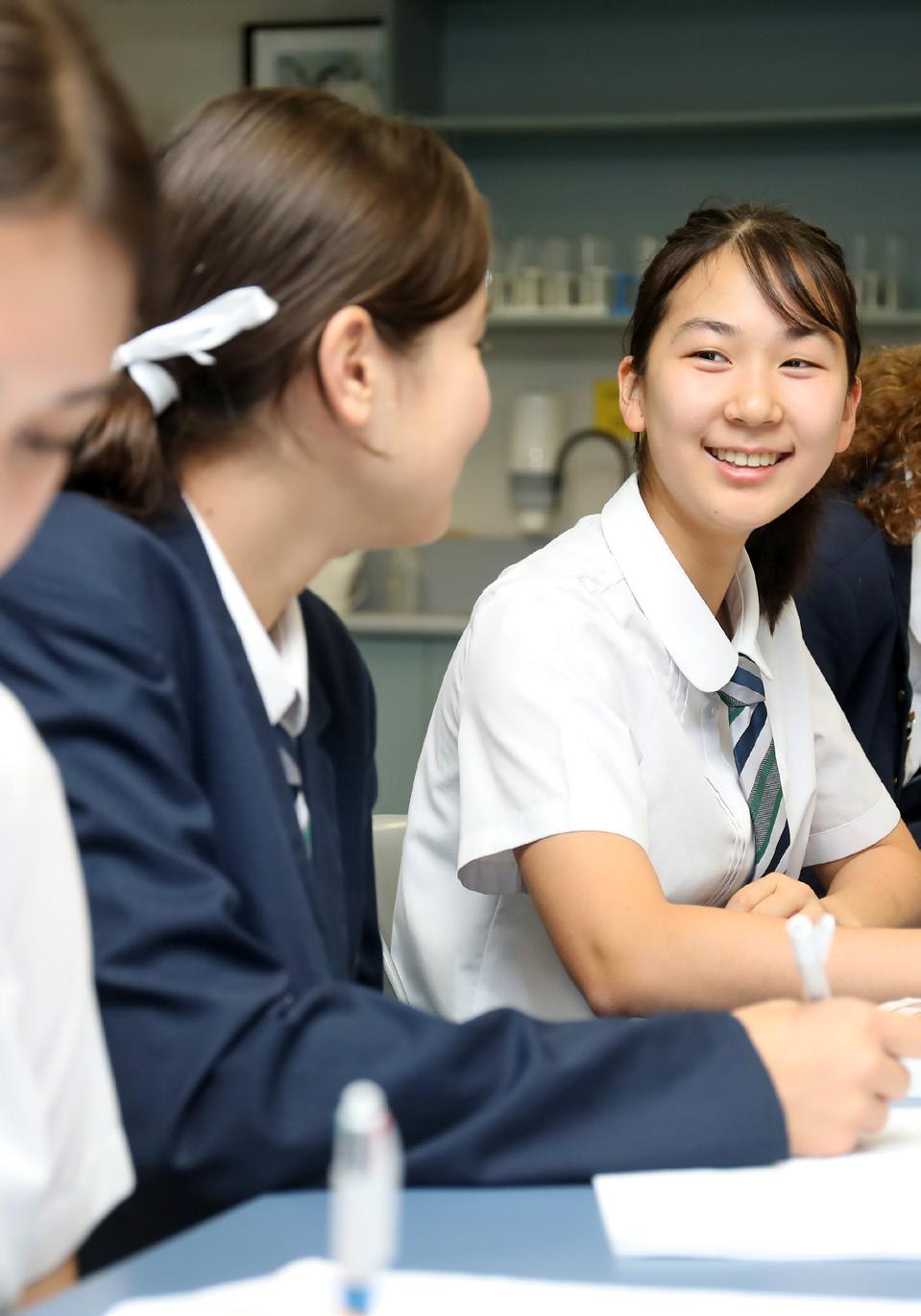
Year 11 English
The aim of the Year 11 English course is to provide students with the knowledge and skills that enable a well-informed, rich, and thoughtful engagement with literary texts. Through the close study of a range of text types, as well as an introduction to Historicist and Structuralist literary analysis, students will become increasingly skilled and sophisticated readers, listeners, writers, and speakers.
With its emphasis on academic English and essay writing, the Year 11 English course also aims to provide a bridge into Year 12 and Year 13 English courses, so that by the end of the year, students will be confident in meeting the challenges and opportunities those courses offer.
In Year 11, students will engage with the following areas:
• Reading for enjoyment
• Close reading
• Critical theory
• Essay writing
• Oracy
English with Writing for Publication
The Year 11 English with Writing for Publication course has the same aims as Year 11 English. It is an academic English programme that combines the close study of literature with the active practice of writing. Students will develop sophisticated skills in literary analysis, critical thinking, oracy, essay writing, creative work and the writer’s craft.
Through engagement with a range of literary and media works and critical perspectives, students will learn both how texts create meaning and how writing can shape and influence audiences. The course places particular emphasis on developing voice, style, and writing for authentic publication opportunities, while providing a strong foundation for Year 12 and 13 English courses.
The central pillars of the English with Writing for Publication are:
Critical study of literature involving studying a range of short stories, poetry, novels, film, Shakespeare and media
Reading as a writer and writer's craft involving the close attention to style, form, and the deliberate construction of language for particular audiences and effects
Rhetoric and Oracy further explore the craft of writing and argumentation, focusing on skills of persuasion in writing and oral presentation
Textual Conversations and Intertextuality will focus on textual connections enriching our understanding of ideas and stories
As with Year 11 English, the focus on literature, language, writing and research, will be excellent preparation for Year 12 and Year 13 English with Writing for Publication, English Literature and IB
Mathematics
This course is designed to prepare students for Year 12 Calculus, Year 12 Statistics or IB Mathematics.
It is a general mathematics course with a focus on the exploration and use of patterns and relationships while developing critical thinking through discussion, reflection, and the synthesising of information.
During the course students will:
• Build on the learning skills needed to succeed in higher levels of mathematics through thinking clearly and communicating mathematical ideas logically.
• Extend and deepen their knowledge and understanding of problem-solving and algebraic thinking.
• Explore patterns and structure, to generalise and predict.
• Learn to create mathematical models for real world contexts, to make a conjecture, to justify and verify.
• Learn to explore and understand data by using statistics and probability tools so that they are able to gain a better understanding of the world around us.
Prerequisite:
• Must have achieved Numeracy CAA in Year 10
• Achieved or better in Algebra
Overall Course grade will be made from: 50% internals and 50% Exam Component
Recommended prior achievement level: If you do not meet the prerequisite, you must discuss your course with the Head of Faculty. Extra Course Costs: Topic Workbooks $45, Electronic textbook $32, Education Perfect Online subscription $40.
Mathematical Studies
This course is designed to prepare students for Year 12 Mathematical Studies.
If you found mathematics challenging in Year 10, this is the course for you. It will help to increase your confidence and skills.
It is a mathematics course with a statistical focus on exploring, communicating findings and making predictions. This will be done while developing critical thinking through discussion, reflection and the synthesising of information.
During the course students will:
• Build on the learning skills needed to succeed in higher levels of Mathematical Studies.
• Strengthen and consolidate Numeracy.
• Use measurement techniques to investigate real world problems.
• Learn to create mathematical models for real world contexts, to make a conjecture, to justify and verify.
• To explore and understand real life data by using statistics and probability tools so that they are able to gain a better understanding of the world around us.
Science
This course is designed to give students a good understanding of the 3 key subject areas of Biology, Chemistry and Physics. The course will be divided equally among each of them, with topics including:
• Physics – Mechanics and Thermodynamics
• Chemistry – Atomic Structure and Chemical Reactions
• Biology – Human Body Systems, Plants and Genetics
This course will enable students to move through to any Year 12 science-based subject; however, for those students who are passionate about science and desire an in-depth understanding: it would be recommended that they choose the Semester Science course(s) as one of their options.
If you are planning on doing Biology, Chemistry or Physics then we recommend that you also do the Semester Science option.
Overall course grade will be made from: 40% internal tests and assessments and 60% Exam Component
Recommended prior achievement level: After discussion with Year 10 Science teacher and Head of Faculty and a minimum of Achieved.
Extra Course Costs: Notes at $65 per student which includes notes and access to Education Perfect
Science Studies
This Science course has been designed to enable students to understand the science that is all around them, including the processes that operate within their bodies. It includes aspects of Biology such as: digestion, circulation, plant growth and microbes. The course explores the importance of chemicals in everyday life such as; kitchen chemistry, cosmetics, and acid-base reactions. It also provides valuable life knowledge relating to the science of driving safely.
The course may play the role of a student’s last experience with Science, or alternatively it could lead into Year 12 Production Science, or at the discretion of the HOF, Year 12 Biology.
Overall course grade will be made from: 70% internal tests and assessments and 30% Exam component.
Extra Course Costs: Notes at $25 per student
Year 11 St Cuthbert’s Diploma
Core
Component
Ethics
With an emphasis on our guiding principle, ‘By Love, Serve ’, the aim of this compulsory enrichment course is to:
• Help students inform and define who they are as a person
• Guide them to make critical, wide and caring thinking about ethical issues in our changing world
• Encourage critical points of view, and challenge their assumptions because of cultural and individual positions that may obscure the way they see others
• Make reasonable judgments
• Offer an intellectual perspective of the world through exposure to new insights, experiences, and information
• Equip students with tools required to live a productive and fulfilling life, and provide ways for them to cope with challenges that life inevitably throws at them
• Develop skills in leadership, empathy, and gratitude
Year 11
Year 11 Ethics forms part of the Y11 Diploma course. Students attend Ethics sessions three times per 10 day cycle for one trimester. They come to understand what it takes to become an increasingly discerning knower as they are invited to think critically and articulate their ideas about ethical issues around the world. By rethinking what they might already know through an exploration of ethical decision making frameworks and theories, students apply their new knowledge in meaningful contexts. In case-based studies, they come to understand the ethical complexities for different groups in society, and develop confidence to evaluate differing perspectives and make informed, reasoned judgements.
Careers
The classroom-based career education programme at Year 11 aims to enable students to explore their interests and aptitudes more formally, using psychometric testing. We also focus on understanding the pathways into careers of interest, and the tertiary systems in New Zealand, Australia, the USA and the UK. We will provide the opportunity for students to:
• Undertake the COPSystem psychometric test. This will help students to increase self-awareness and uncover their professional strengths
• Learn about different selection and application systems for
tertiary institutions and universities, both in New Zealand and overseas
• Research tertiary options and degrees of interest
• Create an Elevator Pitch that explores a career of interest
• Interview someone from a career of interest, to discover more about the nuances of the job and the steps they took to get there
• Apply this learning to the Year 12 curriculum pathway and subject selection
Physical Activity and Wellbeing
The Physical Activity and Wellbeing courses are designed to support students to balance their hauora alongside the academic expectations of the St Cuthbert’s Diploma.
The Physical Activity course allows students to prioritise their taha tinana (physical wellbeing) through regular physical activity. Each term has a different focus:
• Term 1: Community Engagement. Students will connect with the wider school and community through activities such as lawn bowls, games with junior school students and walks to local landmarks.
• Term 2: Fitness. Students will have a choice of fitnessbased activities, such as mountain biking, run club, pool fitness, dance and cooperative games.
• Term 3: Sports Education. Classes will develop knowledge and skills in traditional Māori games such as Tapu Ae, Ti Uru and Ki o Rahi. They will use these skills to compete against other classes in tournaments.
• Term 4: Class Directive. Students will have the opportunity to engage in activities that support a life-long connection to physical movement.
Service
At St Cuthbert's we encourage all students to live our College Motto ‘By Love Serve’ through active service. In doing so, students learn that real leadership is about service to others, and a belief in something beyond themselves. Our service programme teaches students to understand how they have a responsibility to give back to our wider community and to grow to become compassionate and socially engaged global citizens. The Service component of the Year 11 Diploma requires all students to undertake 30
The Wellbeing course builds on skills and knowledge in the Year 7-10 Health programmes.
• Unit 1 - Kaitiaki Hauora - Guardian of Wellbeing. In this unit, students will learn about tools and strategies they can use to protect their well-being. They will explore a range of strategies to resist pressure and gain an awareness of how assertive skills may help in pressure situations.
• Unit 2 - He Tinana Motuhake - A Body That is Unique. This unit will look at assumptions surrounding female hormones and bodies. Students will gain an understanding of how female hormones and the menstrual cycle impact body function. They will also research female hormonal disorders such as Endometriosis and Polycystic Ovarian Syndrome.
• Unit 3 - Nga Take o te Ao - Issues of the World. This unit focuses on the analysis of multiple perspectives related to drugs at both national and global levels. Students will examine and debate a range of contentious issues around substances and sexuality.
hours of community service outside of school hours which they have responsibility to organise for themselves and 5 hours which the College organises as part of the Year 11 Service Days in Term 4. Our Year 11 Services Days will see students volunteering at primary schools in South and West Auckland. This provides our students with a unique learning experience that goes beyond the classroom and College environment.
Year 11 St Cuthbert’s Diploma
Choose 3 Subjects
Accounting
Accounting is one of the key business skills, and the Year 11 course is the best time to develop an understanding of the fundamentals of how accounting data is recorded. This course will develop students’ understanding of the role of Accounting in society and as a financial language. These skills are transferable to managing personal finances later in life.
Year 11 Accounting allows the learner to:
• Gain subject and career flexibility
• Develop lifetime financial literacy tools
• Apply financial knowledge to practical situations
• Analyse and interpret financial information
Year 11 Accounting leads on to NCEA Level 2, 3 and Scholarship Accounting. This course will focus on developing a
foundation knowledge of financial literacy and understanding Accounting as a financial language. This will allow the learners to have a ‘head start’ on the subject in NCEA Level 2.
Art - Visual
Visual Art Year 11 is a foundation course for all the senior programmes in the Visual Arts.
This course is a prerequisite for further study at Level 2 and Level 3- NCEA Practical Art, Painting, Printmaking, Photography, Design or IB Visual Arts.
Students will engage in a variety of art making processes, exploring a range of conventions, and learn about established artistic practices.
In this course students explore oil painting, drawing, printmaking, design principals, digital manipulation, photography, moving image, 3-dimensional constructions, installation, and collaborative works. Students will learn how to critique the work of artists as well as their own work.
The Course supports students to engage in critical thinking, risk-taking, and creative problem-solving. Alongside this they are supported to hone their technical skill and individual approaches to idea generation.
Outline of themed units:
• Still life: drawing into oil painting
• Environmental explorations: drawing and photography with printmaking
• An Animated Journey: drawing with digital art, design, photography and moving image
• 3D investigations: sculpture and installation.
• Curate and exhibit a collection of work
Overall Course grade will be made from: 100% internals
Recommended prior achievement level: Year 10 Art or after a discussion with the Head of Faculty Visual Arts.
Extra Course Costs:
• A senior Art-pack is issued to students with a range of specialist materials at the start of the course at a cost of approximately $200.
• Museum and Gallery visits
• Workshops by visiting artists may also be offered at cost.
Business Studies
The study of business is about how individuals and groups of people, organise, plan, and act to create and develop goods and services to satisfy customers. Studying business enables students to appreciate the issues that challenge businesses and stakeholders. In a rapidly changing world, it is important that citizens are able to make informed and rational decisions about business matters.
The Year 11 Business Studies course focuses the study of small New Zealand businesses, which refers to any business with a maximum of twenty employees, connected to the student’s life. This allows students to demonstrate their understanding of how and why businesses respond to internal and external factors and the consequences of operational decisions.
The key themes are:
• Business formation – describe the advantages and disadvantages of different types of business and the funding options they have available.
• Functions of business – describe the importance of market research, the marketing mix in relation to a target market and different types of production used for goods and/or services.
• People in business - identify effective business communication, outline the rights and responsibilities of the employer and the employee and describe the role and skills
of the entrepreneur.
• Business management - outline the importance of business aims and objectives, why businesses keep financial records, and define different types of business success.
• Business environment- outline how and why business contributes to the development and wellbeing of society, identify the stakeholders of a business as well as environmentally sustainable business practices, legal, economic, and environmental constraints on business. Describe the competition in the local business environment and outline the opportunities for business' arising from global connections.
Students experience some real-world business activities through working in business groups conducting market research, proposing solutions to real problems in society and through other activities. This course provides a foundation to further study in NCEA Business Studies and IB Business Management.
Chinese
This is a continuation of the Year 10 course and preparation for Level 2 Chinese and IB Mandarin B in Year 12 next year. Students learn to read, listen, write and talk about a range of topics including: family, friends and relationships, their city and their country, leisure activities, school exchange, future plans for holidays and cultural activities such as dining at a Chinese restaurant. Students will also learn some Chinese idioms related to the topics covered in the course.
Recommended prior achievement level:
Students must have studied this subject at Year 10 or the equivalent level. Otherwise entry to the course will be granted at the discretion of the HOS and HOF.
Students with significant prior language knowledge will be assessed to determine the appropriate course and level at the discretion of the HOS and HOF.
Extra Course Costs: Education Perfect subscription $40 Booklet: $10 for Chinese for Heritage Assessment
Please note that subjects will only run if numbers permit.
Classical Studies
Classical Studies is the study of the civilisations of ancient Greece and Rome. Classics includes history, culture, society, mythology, art, architecture and literature in translation. In no other subject can you study such a range of topics based around an ancient civilisation which still has a massive influence on society. In this course we will learn about mythological gods and heroes, great (and awful) leaders from ancient Greece and Rome, some incredible works of art and
architecture, and the lives of young women in the ancient world. Classical Studies is a fascinating and often fun subject that helps to develop a range of academic and critical thinking skills useful in your future studies, no matter the subject.
Assessment
Dance
Year 11 Dance Diploma is an exciting and creative course that allows students to grow as performers, choreographers, and confident creative thinkers. In this course, students explore a wide range of dance styles and learn how dance can be used to communicate powerful ideas, emotions, and stories.
Students will develop skills in:
• Performance
• Choreography
• Dance analysis
• Collaboration and leadership
Students take part in practical workshops, group choreography tasks, creative projects, and performances, while building confidence and performance skills in a supportive and energetic environment.
You will have opportunities to:
• Perform in a variety of dance genres
• Create your own choreography
• Work collaboratively with others
• Explore professional dance works and performances
• Use music, costume, lighting, and technology creatively
• Connect with and learn from industry professionals, guest choreographers, and experienced artists
• Develop skills that prepare you for senior Dance and Dance Scholarship pathways
This course is ideal for students who enjoy being creative, working with others, and performing. Whether you already dance regularly or are looking to further develop your confidence and creativity, Year 11 Dance offers an engaging and rewarding experience.
Students will also have the opportunity to perform in the annual Dance Showcase and complete the NCEA Level 2 Achievement Standard:
AS91208 – Perform a theatre dance to communicate understanding of the dance.
Drama
This is a practical, performance-based course where students actively explore the art of theatre-making. They will develop key acting and stagecraft skills as they collaborate on original and scripted performances. Students investigate both traditional and contemporary theatre forms, and bring professionally written plays to life on stage in a class production and a wider Drama festival, working alongside other year levels in a celebration of performance. With a focus on creativity, ensemble work, and critical reflection, this course provides a strong foundation for further study in both NCEA Drama or IB Theatre.
It is important for students to understand that presenting their work to an invited audience is an integral part of the course. As such, students will be required to attend some lunchtime rehearsals throughout the year, as well as after-school rehearsals and performances for certain standards.
Recommended Prior Achievement This course is open to all students.
Assessment
Extra Course Cost:
Viewing professional theatre is an important part of this course and the cost is approximately $150.00.
Economics
This introductory course aims to help learners to:
• Identify situations of scarcity and explain how scarcity leads to choices that have opportunity costs
• Use demand theory to explain consumer choices
• Investigate producers’ decisions about production
• Link supply theory to explain producer choices
• Apply the supply and demand model to demonstrate how the choices of consumers, producers, and government affect society
• Investigate the decision making process and justify personal investment decisions
The course consistently refers to real-life situations and current events. Students have the opportunity to investigate how theory applies to local economic activity through two internally assessed projects.
Environmental Science and Geography
Environmental Science and Geography is the study of the earth and its natural systems. It is concerned with the analysis of the physical and human characteristics of the planet, including landforms, climate, vegetation, soils, water, resources, and biodiversity, as well as the way in which humans interact with and are impacted by these features.
Environmental Science and Geography seeks to explain the spatial patterns and relationships of these elements and to identify the factors that shape them. Ultimately, Environmental Science and Geography enhances our understanding of the world and allows us to make informed decisions about how to best manage and sustain its resources for future generations.
Unit 1:
HAZARD PREPAREDNESS (field trip required)
Unit 2:
BIODIVERSITY
Unit 3:
WATER AND AQUATIC SYSTEMS
Unit 4:
FOOD AND HEALTH
Overall Course grade will be made from: 50% internals and 50% Exam Component
Extra Course Costs: $20 resource booklet Field trip: Approximately $530
Film and Media
The media is a platform for voice that can both empower and disempower. This course will give students the language and critical awareness to explain how media provides a platform for people to express their voice. The course aims to train students to become critical users of the media through learning to distinguish fact from fiction and to engage in creating positive social change through the media.
Students will be able to gain a deeper appreciation for the ways that media art, craft, and conventions are used to create powerful products that affect, persuade, or influence audiences.
The course will cover 4 key aspects of the Media
Representation
Students will analyse representations of different groups in the media to allow us to critically analyse the messages and world around us
• why media representations of societal groups are socially significant
• why media representations of societal groups differ, and how this relates to social context
• the implications of these representations for the societal group, media, and society.
Lights! Camera! Action!
Students will create a film portfolio that showcases their filming and editing skills.
Film Genre
We will examine a film genre and learn the tropes, conventions, and the evolution of this genre.
Analysing Film
Film language and effect will be explored through a range of contexts – social, economic, political, stylistic, narrative, and auteur.
French
This is a continuation of the Year 10 course. Students learn to write and talk about a range of topics including: family, friends and relationships, their city and their country, leisure activities, healthy living, holidays and French speaking countries, cultural activities such as music, festivals and films. Development of reading and listening comprehension skills continues.
Recommended prior achievement level: Students must have studied this subject at Year 10 or the equivalent level. Otherwise, entry to the course will be granted at the discretion of the HOS and HOF.
Overall Course grade will be made from: 50% internals and 50% Exam Component
Extra Course Costs: Education Perfect subscription and student workbook approximately $40, Booklets $5
Health Sociology
This course will consider a range of topical issues and trends relevant to young people in the 21st century. Each will be unpacked and explored through a critical lens, considering a range of perspectives (both at an individual and societal level). Practical experiences will not only enhance understanding but will also provide broader contexts.
Term 1: Fuelling Your Body: Exploring Food, Nutrition and Influences
Students will first learn about the four underlying concepts of the Health Curriculum. This unit will use practical mediums to learn content as it forms the basis of all units covered within the year. Exploring Nutrition focuses on developing an understanding of the reasons why we eat what we eat. Students will explore personal, interpersonal and societal influences on food choices and cultural celebrations that come with them. Guest speakers and nutritionists will provide expert perspectives. Students will also have the chance to experience tasting and eating different foods during their assessment of influences.
Term 2: Taking Charge: Promoting Wellbeing and Taking Action
Students will explore the concept of Health Promotion and link this to a current Health/Wellbeing issue in the school or wider community. Students will gather background research to design and implement a practical Health Promotion action.
Term 3: Smart Choices: Making Health Enhancing Decisions about Drugs (Substances)
This unit analyses both illegal and legal drug use in New Zealand and the effects it has on the wellbeing of teenagers, others and communities. Students will investigate pressure situations around drugs, decision making and the impacts on Hauora. External expert speakers will work with students to inform them of the effects of drugs on the teenage body and why New Zealand has a drug/drinking culture.
Term 4: Resilient Minds: Building Resilience and Mental Wellbeing
Students will develop knowledge and understanding about changes to wellbeing and the resilience to overcoming obstacles. During this unit, students will look at New Zealand role models and their stories that have led them from tragedy to success. Students will explore strategies that help build resilience and self-esteem within themselves, others and society. This unit prepares students for the first Achivement Standard for Level 2 Health.
History
History provides a framework of knowledge that gives an understanding of New Zealand society and an insight into the social, economic, and political issues shaping the world in the twentieth century. There is emphasis on the part individuals and groups have played in past events and a focus on how perspectives on an issue may differ. This subject enhances thinking, reasoning and analytical skills as well as developing specialist inquiry, interpretation and communication skills. History helps students to become global citizens.
The History Diploma course theme is: Forces that have Shaped Society, and focuses on the following topics:
• Racism
• Nationalism
• Feminism
• Socialism
We will explore the lasting consequences of these forces and movements and how they continue to shape our world today. Join us on this journey through history; where we will learn how the study of the past can help us understand the present, and shape our future.
Overall Course grade will be made from: 60% internals and 40% Exam Component
Latin
In Year 11 Latin, students, for the first time, read authentic Latin literature, written more than two thousand years ago. Traditionally, this has been the story of Orpheus, the greatest musician in classical mythology, who travels to the depths of the underworld to rescue his wife, Eurydice, following her death: a story of trial and tribulation, temptation and trust, which continues to resonate with remarkable power in today’s world. At the same time, the Year 11 course develops the vocabulary and grammar learnt
in Years 9 and 10, allowing students to understand and formulate increasingly complex ideas and grammatical structures. The Year 11 course builds on the strengths of NCEA Level 1 – the engagement with authentic Latin literature; the challenge of reading and translating Latin texts – while also focusing more fully on the rich windows Latin writing opens onto the Roman world and integrating further the study of Latin literature and the Latin language.
Overall Course grade will be made from: 50% internals and 50% Exam Component
Recommended prior achievement level:
Students must have studied this subject at Year 10 or the equivalent level. Otherwise entry granted at the discretion of the HOS and HOF.
Students with significant prior language knowledge will be assessed to determine the appropriate course and level at the discretion of the HOS and HOF.
Music
Music is a powerful medium for developing creativity, confidence, collaboration and exploring the many facets of everyday life.
The St Cuthbert’s Music Diploma offers students a diverse and interesting learning experience that will develop and nurture their creative side as well as allow them to develop skills that will prepare them for the future.
Students will:
• Develop their performance skills through solo and group performance
• Develop and harness their composition skills through song writing and instrumental composition
• Enhance their understanding of music through the analysis of Sergei Prokofiev’s ‘Romeo and Juliet’
• Explore music of other cultures through the exploration of cultural music from around the world.
Overall Course grade will be made from: 50% internal components due by the end of Term 3.
Listening Assessment and Analysis to be assessed in Term 4 as an examination
Overall course grade will be made from 50% internals and 50% exam component
Recommended prior achievement level: Students must be taking itinerant or private tuition on an instrument/voice. Some understanding of music theory is recommended.
Semester Science (Option Course)
This course is designed to give students the most in-depth understanding of the sciences and the best preparation for Year 12. The course has been designed to be semester based, whereby students can choose which two sciences comprise the course. Students are to select one different science subject per semester. If you select this course, it will take one of your options. For example,
Semester 1
Biology / Chemistry / Physics
Semester 2
Chemistry / Physics / Biology
For each of the semester courses, the topics that will be taught are:
• Biology – Nervous and Hormonal System, Biotechnology, Micro-organisms and Disease, Human Evolution
• Chemistry – Advanced Chemical Reactions, Quantitative Analysis, Carbon Chemistry and Types of solids
• Physics – And how to do a Physics experiment, Electromagnetism & Waves and Light
Spanish
This course continues to encourage an awareness and understanding of present-day life in Spanish-speaking countries, and to develop the student's skills in an international language. Students will improve their ability to understand written and spoken Spanish and will gain confidence in speaking and writing the language.
There is a wide range of topics, which develops an appreciation of life in Spanish-speaking countries. These include travel and tourism, Hispanic myths and legends, and a study of a Spanish-speaking region, its cuisine and its festivals.
Sport and Exercise Science
This course will expose students to the fundamental knowledge and skills required in Sport and Exercise Science in preparation for L2, L3 and Scholarship. Students will have the opportunity to build and develop their understanding of theoretical concepts through a variety of practical experiences. Critical evaluation and reflective processes of self and others underpin learning experiences in this course.
Term 1: Leadership (Hautūtanga)
Students will plan, deliver and reflect upon selected Leadership Skills that have been implemented throughout both team and coaching opportunities. Students are assessed on how effectively they practically apply their leadership skills and complete written reflections. Tchoukball is the predominant context for term 1.
Term 2: Sport Psychology (Taha Hinengaro)
Students will explore various psychological tools applicable to both their sporting performance and everyday life. They will apply these tools through a series of rogaine events, both in and outside of school, enhancing their practical understanding and use.
The Rogaine performance will run alongside Sports Psychology theory with students assessed on their
navigational and decision-making skills. They will have multiple opportunities to practice across different courses, leading to a final assessment at Cornwall Park. Students must submit written logs demonstrating their comprehension of Sports Psychology concepts.
Term 3: Sports Science (Taha Tinana)
Students will shift focus to the physical aspect of the body where concepts such as; Anatomy, Biomechanics and Exercise Physiology will be unpacked comprehensively. They will choose a specific sport movement or skill and conduct a critical analysis through the lens of each concept.
Term 4: The Journey (Haerenga)
Students will take part in a variety of outdoor activities during the end-of-year camp, including cooking their own meals and leading an educational module. The focus will be on how responsible behaviours influence both physical and emotional safety.
Assessments
25% Leadership, 25% Sports Psychology (15% Theory and 10% Rograine Performance), 40% Sports Science exam, and 10% Camp evaluation.
Te Reo Māori
Māori is the indigenous language of this country. Through this language, students gain an insight into how people lived before settlers arrived and important values and practices that endure today. Students learn via a wide range of activities that encourage peer to peer interactions. The main aim of this course is to equip students with the necessary skills to understand and communicate effectively in this language. Māori prepares students to be fully aware of the traditional and contemporary indigenous contexts within our everchanging society.
This course includes the following topics:
• Tuakiritanga- Identity
• Maramatata- Matariki
• Manaakitanga- Marae
• Ōku wawata- Hopes and aspirations. Possible visit to a marae.
Technology - Computer Science
In this course, students will delve into technical concepts such as software engineering, web infrastructure, computer networking foundations and hardware fundamentals to gain a thorough understanding of the inner workings of the digital world. Through the application of computational thinking, students will learn how to solve problems by writing algorithms, and develop their knowledge of Computer Science principles and programming concepts that create digital technologies. Students will also be introduced to the foundational building blocks of artificial intelligence and machine learning, helping them understand how emerging technologies are shaping the digital age.
By the end of the course, students will be equipped with practical skills and a strong grasp of the core concepts that underpin modern computing, allowing them to apply their
learning to real-world contexts. Students will design and develop digital outcomes such as Python programs, IoT monitoring dashboards and smart IoT systems in contexts such as smart agriculture. They will follow an iterative process to develop digital outcomes using a cycle of testing, refining and retesting. Furthermore, they will apply conventions, usability heuristics and end-user experience principles, which will improve the overall quality of their outcomes. The course will cover text-based programming languages like HTML/CSS, JavaScript and Python.
This course offers students exposure to software and concepts that are commonly found within the industry and serves as a foundation to build the programming knowledge and skills required for Level 2 and 3 NCEA, the IB Computer Science course and preparation for Technology Scholarship.
Overall Course grade will be made from: 40% internals and 60% Exam Component
Recommended Prior Achievement Level: Year 10 Digital Technologies strongly recommended.
Class trip to Tech Week events, e.g. Girls in Games — approximate cost $50 Assessment
Extra Course Costs:
Visits to pop-up exhibits/workshops — approximate cost $50
Technology - Digital Design
This Year 11 course involves developing students’ skills in digital design, exploring emerging technologies (VR, AR and MR) to develop a meaningful immersive experience for the entertainment industries. The course emphasises creativity and innovation, and aims to prepare students to be creators in this rapidly evolving space.
Students will design and develop digital ideas that will enhance their digital design technology competency.
They will learn to create outcomes that address real-world issues or problems. The course also exposes students to industry-standard software and design practices, helping to prepare them for potential careers in this field.
This course is a Digital Technology pathway towards L2 NCEA subject that builds on the curriculum from Year 10 Digital Technologies. There is no IB equivalent.
Overall Course grade will be made from: 50% internals and 50% Exam Component
Assessment
Recommended Prior Achievement Level: Year 10 Digital Technologies is desirable or at the discretion of the Head of Faculty.
Extra Course Costs:
Subscription to online course content and software for digital modelling at a cost of $100 per person. All workshop visit entry and transport costs TBC per visit Personal printing for course work - managed by students Equipment recommended: Laptop with 30GB storage, mouse, drawing tablet, sketching and ideation materials.
Technology - Food Development and Production
This course explores food product innovation and provides students with the practical knowledge, to develop their culinary skills, with a focus on exploring new and innovative food products that meet the needs of a diverse range of consumers. Throughout the year, students will have the opportunity to experiment with different cooking methods, modify and adapt recipes, and develop a well-rounded set of skills that can be applied in a range of contexts, including potential careers in the Hospitality, Food Science and Food Processing Industries.
The topics covered in this course include:
• Food safety and hygiene
• Recipe development and testing; altering everyday recipes for allergies, intolerances and diet choices, crafting a range of suitable dishes everyone can enjoy
• Café Catering and developing dishes suitable for service in the café environment
• Menu planning and design; Developing a High Tea event with a focus on patisserie; creating a range of petit fours using a range of baking techniques
• Beverage preparation; this barista unit includes espresso preparation, milk frothing, latte art, and customer service. Students will have the opportunity to practice these skills and develop their expertise in beverage preparation
• Food marketing and promotion Insta-worthy food using photography techniques
Assessment
Overall Course grade will be made from: 60% internals and 40% Exam Component
Extra Course Costs:
Food Product Research Trip (approximate cost $30 to extend knowledge and skills in Recipe Development unit
Materials/ingredients toward project outcomes $100
Culinary pack $50 (including apron and cap)
MIT Culinary Comp $40 entry fee for selected participants
Technology - Spatial and Product Design (Previously
Design and Visual Communication)
Spatial and Product Design provides students with a variety of three-dimensional design, drawing and digital experiences to assist in developing problem solving strategies, in contexts such as architecture, interiors, product and exhibition design. This course involves extending core design knowledge, modelling techniques, detailed drawing skills and digital tools to cope with the requirements of SPD NCEA and Scholarship. Students will explore and refine design ideas in response to a brief informed by design heritage, using visual techniques to aid a design thinking narrative. The use of visual communication and digital presentation skills will enable students to create compelling and effective designs.
The topics covered in this course include:
• Fundamental skills in visual communication.
• Spatial Design: Students will explore architectural design concepts and learn to generate divergent ideas using design thinking methodologies and creative strategies. Students will use inspiration from a class trip to Brick Bay to create outcomes that are both functional and aesthetically pleasing.
• Product Design: Students explore digital media and fabrication techniques (CAD/digital modelling/3D printing) to develop a stylish cosmetic product outcome.
• Design presentation: Students create a final design to produce a polished promotion of their design outcome. They will learn to communicate their ideas effectively through visual representation to create a cohesive design portfolio and exhibition.
Assessment
Recommended prior achievement level: Year 9 SPD or Year 10 SPD
Overall Course grade will be made from: 60% internals and 40% Portfolio Component
Extra Course Costs:
Personal printing for course work – managed by students
A specialist SPD kit is required for this course: refer to the College stationery list
Subject specific software for digital modelling; $100 per year
Class trip to Brick Bay Sculpture trail; approximate cost $90.00 Students will be invoiced accordingly.
Technology - Textiles
This course deepens students’ understanding of the technological design process through creative, hands-on textile projects. Students will work through stages including ideation, research, prototyping, and production. They will experience opportunities within the fashion industry to excel their knowledge through EOTC.
• Project 1: In a “Project Runway” style challenge, students will learn the fundamentals of garment construction and pattern adaptation. They’ll design and create a garment that meets specific criteria for durability, functionality, and aesthetic appeal.
• Project 2: Students will explore sustainable design by creating an innovative textile using natural and recycled fibres such as wool, flax, and fabric waste. They will apply design and manufacturing skills such as weaving and felting to produce a functional and visually appealing homewares product.
The Year 11 course builds the knowledge and skills needed for success in NCEA Level 2 Technology. Assessment
Overall Course grade will be made from: 60% internals and 40% external portfolio - Look Book.
Recommend prior achievement Level: Year 9 Food and Textiles or Year 10 Textiles
Extra Course Costs:
Personal printing for course work – managed by students.
Personal Materials budget for individual projects
Class trip to a Fashion studio or Textiles Recycle plant – approximate transport cost $50
Course Costs - to cover consumables - materials $50
Trip to ID Dunedin Fashion Week 2027 $1450 (approx)
Year 11 St Cuthbert's Diploma
Subjects by Invitation only
English for Speakers of Other Languages
This course is by invitation only.
This course provides support for students to achieve in their other Year 11 classes, with a particular emphasis on English and Science. This will include reading and writing skills, along with subject-specific vocabulary development. There will also be a focus on critical reading and literacy skills. Interacting in a small group will give students the opportunity to practise their listening and speaking in a low-stress situation.
• The course below is a support course
• The grades below will not count towards Endorsement or Scholars Awards
Overall Course grade will be made from: 100% Internal Assessment
Extra Course Costs: NA
Pōhutukawa Enriched Learning Support (PELS)
Year 11
The primary aim of this course is to support students to experience success in their core subjects. A focus on foundational literacy and numeracy skills is a significant aspect of the course. Students are given the opportunity to develop strategies for effective study, organisation, and planning. Students are provided with additional time to complete assignments for other subjects.
This course is invitation only and in some instances may be compulsory.
• The course below is a support course
• The grades below will not count towards Endorsement or Scholars Awards
Overall Course grade will be made from: 100% Internal Assessment
Extra Course Costs: N/A
* replaced by NCEA Achievement standards to meet literacy requirements
NCEA 2 and 3
Courses for Study
NCEA Course Overview
All students at the school complete the Year 11 Diploma St Cuthbert's Diploma. They can then choose NCEA Level 2 or the IB Diploma.
Level 2
For all subjects in NCEA Level 2 there will be a combination of internal and external assessment.
For a student to be awarded NCEA Level 2 they must achieve 60 credits at level 2 or above plus 10 literacy and 10 numeracy credits.
Level 3
Achievement of NCEA Level 3: 60 credits at Level 3 or above. For UE, Students must gain 14 credits from any of three approved subjects (below) plus 10 literacy and 10 numeracy credits.
For University Entrance students MUST gain the following:
The minimum Requirements to go to a NZ University are:
NCEA Level 3 and Three subjects at Level 3 with 14 credits or more from approved subjects. (All STCC subjects are approved subjects) and Literacy
• 10 credits at Level 2 or above made up of 5 credits in reading and 5 credits in writing. and Numeracy
• 10 credits at Level 1 or above in specific standards.
University of Auckland
Academic English Language Requirement
University of Auckland bachelor's degree programme requirement for all students. To meet the requirement you need
University Entrance Literacy Standard and NCEA - a minimum of 17 credits in English at Level 2 or 3
If unsure - don't drop English
https://auckland.ac.nz/en/students/academic-information/aelr.html
NCEA Course Overview
Approved Subjects
Accounting, Agriculture and Horticulture, Biology, Business Studies, Calculus, Chemistry, Chinese, Classical Studies, Dance, Design (Practical Art), Spatial and Product Design, Digital Technology, Drama, Economics, English, Film and Media, French, Geography, History, Health Sociology, Latin, Mathematics, Production Science, Music Studies, Painting (Practical Art), Photography (Practical Art), Sport and Exercise Science, Physics, Printmaking (Practical Art), Spanish, Statistics, Textiles, Te Reo Māori.
Endorsement of certificates
NCEA certificates can be gained with endorsement at Merit and Excellence levels. Students will require 50 credits at Excellence level to gain NCEA Level 2 or 3 certificates endorsed with Excellence, and 50 credits at Merit (or Merit and Excellence), to gain NCEA Level 2 or 3 certificates endorsed with Merit.
These credits may be gained over more than one year.
Credits at a higher level may count towards the endorsement of a certificate at a lower level.
Course endorsements for NCEA
Strengths in individual subjects are acknowledged with course endorsement at Excellence, Merit or Achieved. Students must gain 14 or more credits at Excellence level for endorsement for Excellence or 14 or more credits at Excellence or Merit level for endorsement at Merit or 14 credits at Achieved or higher for endorsement with Achieved.
At least three of these credits must be from externally assessed standards and three from internally assessed standards.
All credits must be achieved in the same year.
Please
This part of the handbook, is organised firstly, alphabetically by subject and then by Level 2 – 3.
Year 12
In Year 12, students take six subjects, one of which must be English. All students must complete a course in Level 2 English.
There are three options for English available at this level (students must choose one): English with Writing for Publication, English Literature or English Studies.
A wide range of other subjects are offered. These include:
• Accounting
• Art Design
• Art Photography
• Art Practical
• Biology
• Business Studies
• Chemistry
• Chinese
• Classical Studies
• Dance
• Digital Design
• Drama
• Economics
• English for Speakers of Other Languages (restricted entry course)
• Film and Media Studies
• Food Development and Production
• French
• Geography
• Health Sociology
• History
• Latin
• Mathematics (a range of options)
• Music
• Pōhutukawa Enriched Learning Support PELS (restricted entry course)
• Physics
• Production Science
• Spatial and Product Design
• Sport and Exercise Science
• Spanish
• Textiles
• Te Reo Māori
All students will take part in the HUB course (1 period a week). This course at Year 12 includes: aspects of values and philosophy, global citizenship, financial literacy, future sessions (careers and tertiary study) and mind/body sessions.
Year 13
In Year 13, students take five subjects. No subjects are compulsory.
A wide range of subjects are offered. These include:
• Accounting
• Biology
• Business Studies Stragtegic Business Management Marketing and Business Management
• Art Design
• Art Painting
• Art Photography
• Art Printmaking
• Chemistry
• Chinese
• Classical Studies
• Dance
• Digital Design
• Drama
• Economics
• English (a range of options)
• Film and Media Studies
• Food Development and Production
• French
• Geography
• Health Sociology
• History
• Latin
• Music
• Mathematics (a range of options)
• Physics
• Spanish
• Spatial and Product Design
• Sport and Exercise Science
• Production Science
• Textiles
• Te Reo Māori
Specialisation is common at Year 12 and 13 and students should consider carefully the course requirements for their proposed careers or tertiary studies before making their course choices.
Students are advised to discuss option choices with their families, the Head of Careers or their Head of Year to ensure they make considered choices.
Accounting
Accounting is the preparation and communication of financial information about an entity's performance and position. In this subject, ākonga will explore how different types of financial information are reflected in different types of entities. This information enhances the wellbeing of businesses, communities, and individuals.
Level 2
Students will gain the knowledge, skills and experience required to:
• Communicate financial information about an entity's performance and position
• Prepare financial information, and how decision-making can influence the financial sustainability of a business
• Make use of appropriate communication tools such as XERO to process, report and interpret information for small or medium entities
Recommended prior achievement level:
Previous study of Year 11 Accounting is strongly recommended, or at the discretion of the HOF.
Approximate cost:
Workbooks and revision resources are provided through the Commerce Department and will be charged to your College account at the start of the year.
Level 3
NCEA Level 3 Accounting further develops the principles of Accounting by examining the unique features of Accounting for companies and partnerships
Students will gain the knowledge, skills, and experience required to:
• Process transactions and prepare financial statements for companies and partnerships
• Make decisions for entities using break-even graphing and cash budgets
• Calculate the cost of producing a good or service as it flows through the production process
• Analyse a listed company annual report using ratios and percentages to explain the operations and trends of the company
• Prepare a investor report for potential investors
The course is designed to prepare students for a Commerce degree, where in many cases Accounting is a compulsory first year subject.
Recommended prior achievement level:
Achieved or higher in Level 2 Accounting Standards.
Approximate cost:
Workbooks and revision resources are provided through the Commerce Department and will be charged to your College account at the start of the year.
Art – Design
Level 2
Level 2 Design is a specialist Visual Arts course that introduces students to design through creative problem-solving and investigative thinking. Students use both hand-drawing and digital technologies to generate ideas, develop concepts, and produce visual outcomes.
They explore core principles and conventions of graphic design, building skills in layout, image-making, and typography. Students gain confidence using Adobe Photoshop, InDesign, and other digital tools to create and refine their work.
Throughout the year, students develop an individual theme and brief – exploring a range of print-based outcomes such a posters, brochures, signage, and packaging. Research into established and contemporary designers supports visual literacy, creative development, and critical thinking.
This is a practical, process-based course that encourages independent work and builds a strong foundation in contemporary design practice.
(2.2)
AS91315 (2.3) Develop ideas in a related series of drawings
AS91320 (2.4)
Produce a systematic body of work that shows understanding of art making conventions and ideas within design
Approximate cost:
• Students are issued a clearfile. Specialist papers are supplied throughout the year for printing (approximately $25 covers material costs)
• Levels 2 Design students will be charged for digital printing and mounting, at a cost of $45 per board (x2)
• All gallery visits both entry and transport
• Workshops taken by visiting artists will be offered at cost (approximately $50 for a full day)
Level 3
Level 3 Design is a specialist Visual Arts course that emphasises creative problem-solving, independent thinking, and personal expression within the field of design. Students develop their own design brief based on a chosen theme, often exploring relevant social, political, or environmental issues.
The course builds practical and conceptual skills in Adobe Photoshop, InDesign and Illustrator, along with drawing, digital illustration, typography, and layout. Students work through a range of print-based design briefs, which may
include posters, magazine and website layouts, logos, billboards, and other promotional materials.
Throughout the year, students research and analyse contemporary design practice to inform their own work. They are encouraged to refine and extend their ideas through both hand-drawing and digital processes, developing a cohesive and individualised body of work.
* Students that wish to sit Design Scholarship must take the subject at Level 3.
Recommended prior achievement level:
Achieved or better in Level 2 Visual Arts Achievement Standards or at the discretion of the HOF.
Approximate cost:
• Students are issued a clearfile. Specialist papers are supplied throughout the year for printing (approximately $25 covers material costs)
• Levels 3 Design students will be charged for digital printing and mounting, at a cost of $45 per board (x3)
• All gallery visits both entry and transport
• Workshops taken by visiting artists will be offered at cost (approximately $50 for a full day)
Art – Painting
Level 3
Painting is a specialist Visual Arts subject, that builds on Level 2 Practical Art. It is an individualised course, starting from the student’s own selection of subject matter and conceptual exploration. Through a range of tasks students will show an understanding of processes, procedures, materials, and techniques used in Painting. The aim of this course is for students to develop, clarify, extend, and refine their own studio practice.
Students will use multiple drawing approaches to develop ideas towards paintings. Each standard requires students to explore established and contemporary artists as guiding models for their own artmaking practice.
The two Internal standards build towards the folio presentation (3 x A1 boards) that is the externally assessed component of the course. The final folio presentation aims to demonstrate a cohesive and systematic body of skillfully executed painting work.
The methodology and independent focus of this course is similar to tertiary study. The course involves at least one visiting artist workshop and may include gallery visits.
* Students that wish to sit Painting Scholarship must take the Subject at Level 3.
Recommended prior achievement level:
Achieved or better in all Level 2 Practical Art Achievement Standards or at the discretion of the Head of Faculty.
Approximate cost:
• Specialised materials are required for this Course, a pack of materials is issued at the start of the year and students will purchase extra materials as needed. A charge of approximately $100 covers this and NCEA folio costs
• All gallery visits, both entry and transport
• Workshops taken by visiting artists will be offered at cost (approximately $50 for a full day)
Art – Photography
Level 2
Level 2
Photography is a specialist Visual Arts course that introduces students to the art of photography through a practical, hands-on programme. Students develop a strong technical foundation — learning to operate DSLR and mirrorless camera systems, work with studio lighting, and edit using Adobe Photoshop and Lightroom.
Throughout the year, students explore a range of photographic genres that may include still life, portraiture, and documentary work. Each student then develops an individual theme for their external assessment folio, supported by research into contemporary photographers and regular discussion that extends creative and critical skills.
Produce a systematic body of work that shows understanding of art making conventions and ideas within photography
Recommended prior achievement level:
Achieved or better in Year 11 Diploma — Visual Arts, or at the discretion of the Head of Faculty.
Assessment
Approximate cost:
• Students will be given a pack including an SD Card and clear file. Specialist paper is also supplied. A charge of approximately $60 covers this.
• Level 2 Photography student will be charged for digital printing and mounting, at a cost of $45 per board (x2)
• All gallery visits both entry and transport
• Workshops taken by visiting artists will be offered at cost (approximately $50 for a full day)
Art – Photography
Level 3
Level 3 Photography is a specialist Visual Arts course where students are expected to work with a high level of independence and creative ownership. Students develop their own individual programme and thematic direction — working through two internal assessments that build toward their final external folio.
Students continue to build expertise across camera technique including digital SLR and mirrorless systems, studio lighting, and digital editing using Adobe Photoshop and Lightroom, while deepening their understanding of
established and contemporary photographic practices. This research into photographic practice sharpens critical thinking and shapes each student's individual creative direction.
Visiting artist workshops are a regular part of the programme, offering students the opportunity for further extension.
* Students that wish to sit Photography Scholarship must take the subject at Level 3.
Recommended prior achievement level:
Achieved or better in Level 2 Visual Arts Achievement Standards or at the discretion of the Head of Faculty.
Approximate cost:
• Students will be given a pack including an SD Card and clear file. Specialist paper is also supplied. A charge of approximately $60 covers this.
• Level 3 Photography student will be charged for digital printing and mounting, at a cost of $45 per board (x3)
• All gallery visits both entry and transport
• Workshops taken by visiting artists will be offered at cost (approximately $50 for a full day)

Art - Practical
Level 2
At Level 2, students work on individualised programmes, where they select their own subject matter or theme.
Level 2 Practical Art is a broad-based subject including Drawing, Painting and Printmaking. Students study and apply the underpinning procedures and processes within these disciplines. They relate their studio practice to that
of an established artist or genre and engage in critical evaluation.
Students will select two internal and one external standard from the table below, providing 20 credits in total.
The course is an important foundation for any specialist Visual Arts subject at Level 3, Scholarship and/or tertiary level.
(2.2)
(2.4)
Recommended prior achievement level:
Achieved or better in all Year 11 Diploma Visual Arts assessments or at the discretion of the Head of Faculty.
Approximate cost:
• Specialised materials are required for this Course. Students are supplied with a basic Art Kit to start the course. A charge of approximately $150 covers this and the NCEA Folio costs
• Students may also need to purchase materials for themselves to augment the basic kit
• All gallery visits both entry and transport
• Workshops taken by visiting artists will be offered at cost (approximately $50 for a full day)
Other Visual Art Courses for Level 2 and 3:
Other Visual Art courses for Level 2 and 3 can be found under Design, Painting, Photography and Printmaking.

Art – Printmaking
Level 3
Printmaking is a specialist Visual Arts subject, that builds on Level 2 Practical Art. It is an individualised course, starting from the student’s own selection of subject matter and conceptual exploration. Through a range of tasks students will show an understanding of processes, procedures, materials, and techniques used in Printmaking. The aim of this course is for students to develop, clarify, extend, and refine their own studio practice.
Students will use multiple drawing approaches to develop ideas towards print works. Each standard requires students to explore established and contemporary artists as guiding models for their own printmaking practice.
The two Internal standards build towards the folio presentation (3 x A1 boards) that is the externally assessed component of the course. The final folio presentation aims to demonstrate a cohesive and systematic body of skillfully executed printmaking work.
The methodology and independent focus of this course is similar to tertiary study. The course involves at least one visiting artist workshop and may include gallery visits.
* Students that wish to sit Printmaking Scholarship must take the subject at Level 3.
a systematic body of work that integrates conventions and regenerates ideas within printmaking practice
Recommended prior achievement level: Achieved or better in all Level 2 Practical Art Achievement Standards or at the discretion of the Head of Faculty.
Approximate cost:
• Specialised materials are required for this Course – a pack of materials is issued at the start of the year and students will also purchase extra materials as needed. A charge of approximately $150 will cover this and NCEA folio costs
• All gallery visits both entry and transport
• Workshops taken by visiting artists will be offered at cost (approximately $50 for a full day)

Eva Zhang
Biology
Biology is the scientific study of living things. Biologists and students studying biology seek evidence to explain the nature of living things, and to understand where and how life is evolving, how evolution links life processes and ecology, and the impact that humans have on all forms of life.
Through learning in Biology, students discover that life involves interactions at all levels of organisation: cells interact with their environment and with each other, so do organs, organisms and ecosystems. No living thing exists in isolation from its environment.
The Year 12 and 13 Biology programmes are based on three main themes of life processes, ecology and evolution.
Students will learn the language of biology as well as experience the practical and experimental nature of this subject.
The Biology course is not just designed for students wishing to be biologists; it helps students gain a variety of skills including:
• Logical thinking
• Research skills
• Communication
Level 2
This year you will
• Understand organisms’ life processes at the cellular level
• Understand that DNA and the environment interact in gene expression
• Be able to explain how the interaction between ecological factors and natural selection leads to genetic change within populations
• Analyse the biological validity of information presented to the public
• Carry out a practical investigation in a biology context
Recommended prior achievement level: Achieved or higher in Year 11 Diploma Science or Advanced Biology.
Approximate cost: Approximately $36 for a Biology workbook. $40 for Education perfect
Level 3
This course builds on the work covered in Level 2 Biology. It aims to:
• Carry out a practical investigation in a biology context
• Investigate the various ways plants and animals respond to their external environment
Recommended prior achievement level:
Achieved or higher in 14 credits of Level 2 Biology standards.
• Understand how the human body regulates a stable internal environment (homeostatic system)
• Understand evolutionary processes leading to speciation
• Understand new ideas and historical evidence of the biological and cultural evolution of the human species
Approximate cost: Approximately $36 for a Biology Workbook.
Business
Level 2
Students will gain knowledge, skills, and experience to:
• Explore how and why medium to large businesses in New Zealand make operational decisions in response to internal and external factors.
The learning objectives are explored within the context of medium and large businesses of more than 20 employees, of regional or national significance, and connected to students’ lives; for example, listed companies, retail companies with multiple outlets, schools, local government, large corporates, or banks.
Contexts will allow students to:
• Demonstrate their understanding of the internal operations of a large business
• Demonstrate their understanding of how a large business responds to external factors
• Conduct market research for a new or existing product
• Demonstrate understanding of motivational theories
• Demonstrate understanding of cash flow forecasting for a business
There may be day trips within the North Island.
Māori concepts that relate to this achievement standard include:
• tikanga
• pūtake
• tūranga
• kaitiakitanga
• rangatiratanga
Recommended
This course is open to all students, although previous study of Business at Year 11 is an advantage.
Workbooks & revision resources are available through the Commerce Department at cost and will be charged to account.
There may be day trips within the North Island.
Business
Level 3 Business Studies A (Strategic Business Management)
This course focuses on primary industries in a New Zealand and global context with an emphasis on innovation, strategic decision-making, sustainability, human resources, and strategic capital expenditure within primary industries. Students will explore real case studies and contemporary industry challenges while developing analytical and evaluative business skills.
Contexts will allow students to:
• Apply business knowledge to address complex problem(s) in a given global business context
• Demonstrate understanding of how a business that operates in a global context responds strategically to external factors
• Analyse a human resource issue affecting businesses
• Analyse the effect of financing options on a strategic capital expenditure decision for a business
• Analyse how a product meets market needs through innovation in the value chain
The learning objectives are explored within the context of a New Zealand registered business connected to students’ lives operating in global markets (exporters, importers, New Zealand owned multinationals). The business can be small, medium, or large, but should operate in the global market; for example, a New Zealand fashion designer, a web company, an international transport company, dairy company, or an airline company.
Recommended prior achievement level:
This course is open to all students, although previous study of Business at Year 11 or NCEA Level 2 is an advantage.
Approximate cost: Workbooks & revision resources are available through the Commerce Department at cost and will be charged to account.
There may be day trips within the North Island. Students also need start-up capital for their business venture.
Students can only choose one Level 3 Business course.
Level 3 Business Studies B (Marketing and Business Management)
This course has a stronger marketing and consumer focus, exploring branding, product development, market positioning, innovation, and global business strategy. Students will develop practical marketing and strategic thinking skills through real-world business applications and campaigns.
Contexts will allow students to:
• Demonstrate understanding of how internal factors interact within a business that operates in a global context
• Demonstrate understanding of how a business that operates in a global context responds strategically to external factors
• Develop a marketing plan for a new or existing product
• Analyse a human resource issue affecting businesses
The learning objectives are explored within the context of New Zealand registered businesses connected to students’ lives and contemporary global markets. Contexts may include branding, digital marketing, entrepreneurship, sustainability, product innovation, consumer behaviour, and global business strategy. Businesses studied may range from small start-ups to large multinational organisations operating in industries such as fashion, beauty, hospitality, technology, retail, sport, food and beverage, media, and e-commerce.
Note: Students can only choose one Level 3 Business Course.
Recommended prior achievement level:
This course is open to all students, although previous study of Business at Year 11 or NCEA Level 2 is an advantage. Approximate cost:
Workbooks and revision resources are available through the Commerce department at cost and will be charged to account.
Chemistry
Chemistry develops an understanding of the theories that allow us to explain the behaviour of the materials that make up our world – including new materials in the areas of nanotechnology (e.g. carbon fibres), pharmaceuticals (e.g. anti-cancer drugs) and revolutionary new structural materials (e.g. Kevlar).
A knowledge of chemistry is also necessary to understand every day issues such as climate change, genetic modification, forensic evidence and to be able to evaluate the risks associated with a range of chemicals – both naturally occurring and synthetic.
Chemistry is often called the central science as chemical principles underpin both the physical environment in which we live as well as all biological systems. Chemistry is an integral component of many tertiary courses such as medicine, engineering, biochemistry and food technology.
Because of the spiral nature of the curriculum, where understanding is based on concepts developed in previous years, chemistry is not a subject that should be picked up later.
Level 2
Students who intend to continue Chemistry at Year 13 and beyond are expected to take this course, but it is also appropriate for those who are interested in becoming scientifically literate citizens.
This course develops knowledge of the properties and reactions of chemical substances and includes the following topics:
• Redox Reactions
• Quantitative Analysis
• Atomic Structure and Bonding
• Energy Changes and Equilibrium
• Acid-Base Reactions
• Organic Chemistry
Practical work is an important and integral component of the course and includes an investigation into the concentration of a substance present in a consumer product.
Recommended prior achievement level:
An average of Merit or higher in Year 11 Diploma Science or Advanced Chemistry. Approximate
Level 3
This course expands and extends the understanding of fundamental chemical concepts introduced in Level 2 Chemistry.
It is designed to provide the understanding necessary for those who intend to undertake tertiary level studies in a wide range of disciplines requiring chemistry, such as medicine and engineering. However, it also provides an opportunity to discuss the importance and impact of chemistry on everyday life.
Practical work continues throughout the year as an important and integral component of the course. Along with three external assessments that align with Level 2, Two internal assessments are also offered : one investigating Electrochemistry to understand how batteries function, and another using Spectroscopic methods to identify organic compounds.
understanding of equilibrium principles in aqueous systems
Recommended prior achievement level: Merit or better in at least 12 credits of Level 2 Chemistry Achievement Standards 91165 must be included.
Approximate cost: Level 3 laboratory manual and course notes $40
Chinese (Mandarin)
Level 2
This course aims to deepen students’ awareness and understanding of the people and culture of China, and to foster independent learning and a desire for further language learning. In addition to revising and extending the work covered in previous levels, students will further develop all language skills with the emphasis on the communicative use of language. Increased vocabulary and more grammatical structures are introduced so students can
achieve more complex tasks such as discussing plans and expressing feelings and opinions.
Topics studied include:
• Spring Festival
• Part-time job
• Health and lifestyle
• Exchange students
Recommended prior achievement level:
Students must have achieved Year 11 Chinese Diploma Course.
Students with significant prior language knowledge will be assessed to determine the appropriate course and level at the discretion of the HOS and HOF.
Approximate cost:
Level 3
This course continues to develop the student’s ability to communicate in Chinese by continued practice of the essential language skills. Students study a range of topics which include Chinese Festival, future plans, media and technology and exchange students. Students will
also study literary works and are encouraged to read extensively on their own. Internal assessment activities include a portfolio of interactions and a portfolio of written work. Reading comprehension skills and listening comprehension skills are assessed externally.
Write a variety of text types in clear Chinese to co-explore and justify varied ideas and perspectives
Recommended prior achievement level:
Students must have achieved 15 credits in Level 2 Chinese.
Students with significant prior language knowledge will be assessed to determine the appropriate course and level at the discretion of the HOS and HOF.
Approximate cost: Education Perfect $40
Classical Studies
Classical Studies is the study of aspects of the ancient Greek and Roman civilisations, including their mythology, literature, art, architecture, archaeology, religion, philosophy, history and society. The Year 12 and 13 Classical Studies courses offer a fascinating insight into the ancient world which provided the foundation of western civilisation as well as some of the most famous examples of artistic, creative and intellectual endeavours. The study of this subject deepens the minds of students and enriches their thinking while developing skills in independent reflection and critical analysis.
Level 2
This course centres on the classical Greek world by studying topics of wide appeal and particular importance. We examine some of the most celebrated works of western literature and art as well as the rich world of classical mythology and history.
The Level 2 topics include:
• Mythology: the famous gods, heroes and mythological stories of the classical world plus the legendary Trojan War
• Literature: Greek tragedy, stage plays dramatising the dreadful fate of Oedipus and his family
• Art and Architecture: the buildings of the Acropolis in Athens and the sculpture of the ancient Greek world from its early beginnings and development over time
• History: the Golden Age of classical Athens – the pinnacle of Greek civilisation
Recommended prior achievement level: This course is open to all students.
Approximate cost: $15
Level 3
This course centres on the ancient Roman empire which spread at its height from Britain to North Africa and Asia Minor through a series of conquests and expansion. It is a time full of fascinating individuals who contributed to the drama of the political world, as well as the development of some of the most famous and enduring works of art, architecture and literature which have left a profound mark on our own modern world.
The Year 13 course focuses on the following three topics:
• History: the life and times of Augustus, the first Roman emperor who brought peace and prosperity to the empire after years of instability and infighting
• Art and Architecture: the buildings and sculpture from around the Roman empire including the famous Colosseum and Pantheon as well as other works of particular significance
• Literature: selections from the Aeneid, a national epic of Rome which tells the famous story of the founding of the Roman people Recommended
Dance
Level 2 (University Entrance Approved Subject)
Year 12
Dance is an engaging and highly practical course for students who enjoy performing, choreographing, collaborating, and expressing ideas through movement.
Students will explore a variety of dance styles and develop skills in:
• Performance
• Choreography
• Dance analysis
• Creativity and collaboration
Throughout the year, students will create original choreography, perform both teacher-taught and student-created works, and analyse professional dance
performances from New Zealand and international dance companies.
The course encourages creativity, confidence, communication, and critical thinking while giving students opportunities to perform in the annual Dance Showcase and other performance events.
Students will also learn how choreographers use movement, music, costume, lighting, relationships, and production elements to communicate meaning and intention.
Students will have opportunities to connect with and learn from industry professionals, guest choreographers, and experienced artists from the dance and performing arts sector.
Dance is a University Entrance approved subject that supports pathways into the arts, education, performance, health, events, and creative industries, while also developing valuable transferable skills such as teamwork, leadership, problem-solving, and self-confidence.
Recommended prior achievement level:
No prior dance experience is required — just a willingness to participate, move, and create.
Approximate Costs (optional): Live performance tickets: Approximately $50
Level 3 (University Entrance Approved Subject)
Year 13 Dance is an exciting and creative course for students who are passionate about performance, choreography, leadership, and artistic expression. Students refine their technical and creative skills while developing confidence, independence, and their own choreographic voice.
The course offers opportunities to:
• Choreograph original dance works
• Develop leadership and collaboration skills
• Analyse professional dance performances
• Perform in the annual Dance Showcase
• Connect with and learn from industry professionals, guest choreographers, and experienced artists from the dance sector
Students explore how choreography, movement,
Recommended prior achievement level:
Completion of Level 2 Dance is helpful but not essential. Open to students with a passion for movement, creativity, and performance.
music, production, and performance work together to communicate meaning and intention. Through both practical and written work, students develop creativity, critical thinking, communication, and problem-solving skills.
Level 3 Dance is ideal for students interested in:
• Dance and performance
• Creative industries and the arts
• Leadership and collaboration
• Education, events, and communication pathways
Dance also helps students develop valuable transferable skills including teamwork, leadership, problem-solving, communication, and self-confidence.
Level 3 Dance is a University Entrance approved subject with literacy credits available through the external examination.
Approximate Costs (optional): Live
Drama
Level 2
This University Entrance course focuses on performance and creative independence. Students will explore theatre through a dedicated class production performed for a live audience, as well as engage with complex characters and scripts through focused scene studies. Students write their own plays to be performed for a public audience, and study live theatre to understand how meaning is constructed on stage. This course blends theory and practice, helping students refine their performance skills and artistic voice.
Throughout the course, students are encouraged to take creative risks and explore the full scope of their expressive potential. As they move between performer, playwright, and audience member, they gain a deeper understanding of how theatre speaks to society — and how their own work can communicate ideas, perspectives, and emotion. Through the creative process, students begin to define their own artistic identity, experiment with style and intention, and engage critically with both their own work and the work of others.
This course also builds a strong foundation of transferable skills: collaboration, self-management, empathy, adaptability, critical thinking, and confidence in public presentation. These capabilities are relevant not just in the arts, but in any future path that values clear communication, creativity, and the ability to work dynamically with others. Whether students are considering the performing arts or other fields such as education, health, leadership, or law, Drama equips them with tools to think deeply, speak confidently, and lead compassionately.
It is important for students to understand that presenting their work to an invited audience is an integral part of the course. As such, students will be required to attend some lunchtime rehearsals throughout the year, as well as afterschool rehearsals and performances for certain standards.
Recommended prior achievement level:
This course is open to all students.
Approximate cost:
Viewing professional theatre is an integral part of this course and the cost is approximately $150.
Level 3
In this University Entrance Level Drama Course, students will develop as performers, devisers, and critical thinkers. They will take on substantial roles in both scripted and original works, deepen their understanding of theatre forms, and explore sophisticated performance techniques with intention and nuance. Through ensemble work and live performance, students will engage with psychological realism and practitioner-based approaches to character, deconstructing motivations, relationships, and subtext to bring emotionally rich portrayals to life.
Scene work from contemporary New Zealand and international plays will form a cornerstone of the course, allowing students to explore current issues, varied theatrical styles, and the creative process of the professional actor. Students will also have opportunities to devise original theatre and contribute their voices to a wider creative dialogue, responding to the social and cultural contexts that shape performance.
While this course provides ideal preparation for tertiary study in the performing arts, its value reaches far beyond the stage. Drama fosters vital, transferable life skills
that are essential for success in today's world—including resilience, empathy, collaboration, adaptability, and confidence under pressure. Students learn how to lead a group, communicate ideas clearly, give and receive feedback, and work dynamically with others — attributes that are highly prized across professions in leadership, law, healthcare, education, creative industries, public service, and more.
Students also explore the real-world pathways available in the performing arts, including acting for stage and screen, directing, writing, design, and arts administration. They are encouraged to consider how the skills they are developing can be applied to both artistic and non-artistic futures, and to think critically about the role of storytelling in shaping the world around them.
It is essential to note that students must be prepared to present their work to an invited audience as part of this course. They will also be expected to attend lunchtime rehearsals throughout the year and participate in after-school performances for certain performance standards.
Recommended prior achievement level:
Level 2 Drama is highly recommended to achieve well in this class.
Approximate cost:
Viewing professional theatre is an integral part of this course and the cost is approximately $150.
Economics
Level 2
This course aims to help learners to:
• Investigate macroeconomic concepts and models
• Identify and explain the causes of contemporary economic issues (e.g. inflation, international trade, economic growth and unemployment)
• Explain the effects of macroeconomic issues on various groups in New Zealand society
Students process, analyse and extrapolate statistical data relating to contemporary economic issues in an internally assessed project.
Assessment
Recommended prior achievement level:
This course is open to all students, although previous study of Economics at Year 11 is an advantage.
Approximate cost:
Workbooks and revision resources are available through the Commerce Department at cost and will be charged to the student's account.
Level 3
This course aims to help learners:
• Use microeconomic concepts (e.g. marginal utility, demand and supply curves, elasticity, or deadweight losses) to illustrate the efficiency of markets
• Use microeconomic concepts (e.g. marginal cost and revenue, profit maximisation, normal profits, perfect competition, monopoly, or allocative efficiency) to derive the levels of profit, output and efficiency of different market structures
• Analyse the New Zealand economy using macroeconomic models (e.g. aggregate supply and demand) in relation to domestic and international influences
• Assess appropriateness/impact of government policies that relate to stabilisation and/or economic development
Recommended prior achievement level:
Previous study of Year 11 or Level 2 Economics.
Approximate cost:
Workbooks and revision resources are available through the Commerce Department at cost and will be charged to the student's account.
Level 2
In Year 12 students have three different options to cater for the interests and aspirations of individual students. Students can select from one of the following:
A. ENGLISH LITERATURE
In this course, language, literature and writing will be emphasised. A Shakespeare play, short written texts, and a feature-length film will be studied. The internal assessment includes creating a writing portfolio and analysing connections across texts.
• A – English Literature
• B – English Studies
• C – English with Writing for Publication
B.ENGLISH STUDIES
This course is designed to support students in achieving their Level 2 Literacy requirements while building confidence in English. It is recommended for students who find English challenging and benefit from a more supported, structured classroom environment.
The course focuses on developing essential reading and writing skills, helping students to strengthen their ability to understand texts and express ideas clearly. With targeted guidance and regular feedback, students will build the skills needed to succeed in assessments and improve overall confidence in English.
Students will engage with a range of learning activities, including:
• Close viewing of film
• Reading and responding to written texts and novels
• Developing essay writing skills
If you typically get Achieved grades in English, this course is likely to be a good fit for you.
Please discuss with your class teacher your suitability for this course before choosing this option.
C. ENGLISH WITH WRITING FOR PUBLICATION
This Year 12 course is an academic English programme that combines the close study of language and literature with the active practice of writing. Through the close study of a range of literary and non-fiction texts, students will explore how language, structure, and writer’s craft shape meaning and influence audiences. Students will continue to develop sophisticated skills in literary analysis, research and critical thinking, oracy, essay writing, and portfolio work.
The course places emphasis on writing as both craft and process. Students will develop their own writing across a range of forms and styles, with opportunities to write for authentic audiences and publication.
With emphasis also on academic English, critical thinking, and purposeful writing, the course provides a strong foundation for Year 13 English while encouraging students to develop confidence, originality, and an individual voice.
Internal assessments include creating a writing portfolio, a special research study and an optional TED talk or connections essay.
The central pillars of 12 English Literature with Writing for Publication are:
Critical study of literature involves studying a range of short stories, poetry, novels, film, Shakespeare and media writing.
Reading as a writer and writer's craft involves close attention to style, form, rhetoric, and the deliberate construction of language for particular audiences and effects.
Rhetoric and oracy exploring the craft of argumentation, persuasion, and spoken communication across a range of contexts and audiences. An optional TED talk is also available.
Textual conversations and intertextuality focuses on textual connections enriching our understanding of ideas and stories.
Independent inquiry and critical reflection provides opportunities for sustained research, analytical writing, and personal interpretation
Course Entry Requirements: Achievement level of Merit and above is highly recommended for this
Level 3
In Year 13 students have three different options to cater for the interests and aspirations of individual students. Students can select from one of the following:
A. ENGLISH LITERATURE
In this course, language, literature and writing will be emphasised. A Shakespeare play, short written texts, a novel and a feature-length film will be studied. The internal assessment includes close viewing a film, using critical texts to understand a studied text and delivering an oral presentation.
• A – English Literature • B – Visual English • C – English with Writing for Publication
B. VISUAL ENGLISH
This course explores English through film, allowing students to examine key aspects of the human experience and understand how ideas, themes, and messages are constructed on screen.
Students will develop skills in both visual analysis and creation, learning to interpret film techniques while crafting their own visual essay responses. The course blends creative and academic thinking, making it particularly suited to visual learners.
This course does not include the study of Shakespeare or Unfamiliar Written Texts.
Assessments include:
• Connections across film texts
• Create a video essay
• Close viewing of film
• Written Text Essay (Exam)
• Visual Text essay (exam)
C. ENGLISH WITH WRITING FOR PUBLICATION
The Year 13 course builds on the analytical, critical, and creative foundations established in Year 12. This is a course is designed for students committed to academic English, independent inquiry, and the craft of writing.
Students engage in critical literary studies while developing a sophisticated writing portfolio for authentic audiences and publication opportunities. Internal assessments include a critical text study, seminar, close viewing and a writing portfolio. This course is suited for the study of Scholarship English.
The central pillars of the 13 English Literature with Writing for Publication Programme are:
Critical study of literature nvolving in-depth analysis of Shakespeare, novels, short stories, poetry, literary essays, film, and a range of contemporary and canonical texts
Reading as a writer and writer's craft, involving close attention to style, form, rhetoric, and the deliberate construction of language for particular audiences and effects. This includes a writing portfolio
Rhetoric and oracy involving constructing sophisticated arguments and communicating ideas effectively in both written and spoken forms
Textual conversations and intertextuality focusing on relationships, influences, and tensions between texts across different contexts
Independent inquiry and critical reflection with opportunities for sustained research, analytical writing, and personal interpretation Course
English for Speakers of Other Languages
(Restricted entry course)
Recommended prior achievement level: Participation is by invitation only and some students will be required to take this course. Students will be advised upon enrolment.
Year 12 ESOL
This course is designed to provide support and assistance to non-native English speakers at Year 12. There is an emphasis on academic reading, writing, listening, speaking and vocabulary skills across the curriculum to help students to succeed in their mainstream classes.
Assessment: Class Assessment
Please note that subjects will only run if numbers permit.
Film and Media Studies
Studying the media provides a framework to access, analyse, evaluate and create messages in a variety of forms. As citizens of the world, we need to actively be able to decode the messages presented to us in the media and understand the different interpretations that messages can have.
Media Studies is also about the active exploration, analysis, creation, and enjoyment of the media. This course is essentially a balance between academic writing and hands-on production experience using industry standard.
Level 2
Film and Media Studies examines the dynamic role of the media in society and how the media constructs messages about individuals, communities, and cultures. This course develops students’ critical understanding of the mass media which is a core component in shaping their understanding of the world and gaining media literacy.
It is also about learning industry standard production skills to create media texts through a 10 week project where students design, plan and produce their own music video to a professional standard. All training using DSLR cameras and Adobe Editing programme is provided on the course.
Skills and knowledge developed in this course are relevant in many other subject areas and areas of employment. It is essentially a balance between academic writing and handson production experience.
The course content and knowledge will be enhanced and extended through workshops with resident Filmmakers in Residence and guest speakers.
Key components of the Film and Media course are:
• Film Genre: Students will study a selection of independent and studio films and television series to examine changes over time of the female protagonist from a damsel in distress to a powerful agent of change
• Narrrative: How are texts constructed? Students will examine how different types of film texts are created through conflict, setting, characterisation and structure
• Video Killed the Radio Star: Students will design and plan a concept for a music video
• Lights! Camera! Action! Students will plan, script and produce their own short film production
• Write Now: Students will learn the art of adaptation by writing their own short film script using industry standard software and learning the secrets of great screenwriters.
• Ethical Issues: Students will examine ethical issues in the media and create a video essay to demonstrate their understanding.
Level 3
Film and Media Studies examines the dynamic role of the media in society. This course builds on, and extends, the Level 2 Film and Media course - but is also able to be taken without prior experience.
The course content and knowledge will be enhanced and extended through workshops with resident Filmmakers in Residence and keynotes by notable successful directors.
The key components of Film and Media will be examined through the following areas:
• Lights! Camera! Action: Students will plan, script and produce their own short film production
• A short course on scriptwriting for film that teaches students how to effectively structure and develop a short film script to production level
• Genre Study: An indepth story of how our films explore the zeitgeist of our times and address issues of power and patriarchy in our society
• Demonstrate understanding of films through applying a feminist, post colonial, race and marxist lens to uncover meaning and establishing a framework to critically examine Media texts
French
Level 2
The course aims to deepen students’ awareness and understanding of the lives and culture of French-speaking people, and to foster independent learning and a desire for further language learning. In addition to revising and extending the work covered in previous levels, students will further develop all language skills and the emphasis on the communicative use of language continues. Increased vocabulary and more grammatical structures are introduced so students can achieve more complex tasks such as discussing plans and expressing feelings and opinions.
Topics studied include:
• Young People – relationships, rights and responsibilities
• Healthy Lifestyles
• Education and Career Options
• The Influence of the Media
• Popular Culture - film, music and fashion
Internal assessment activities include an oral presentation and a portfolio of written work.
External assessments include Reading Comprehension and Listening Comprehension.
Recommended prior achievement level: Students must have achieved the Year 11 Diploma Course. Students with significant prior language knowledge will be assessed to determine the appropriate course and level at the discretion of the HOS and HOF.
Approximate cost:
Level 3
Students will study a range of spoken, written and/ or visual French texts and explore and justify varied perspectives through a variety of oral and written tasks.
Themes include France today, the environment, politics, education and the world of work. Students will also study literary works and a film and are encouraged to read extensively on their own.
Internal assessment activities include a portfolio of interactions and a portfolio of written work. Reading comprehension skills and listening comprehension skills are assessed externally.
Recommended prior achievement level:
Students must have achieved 19 credits at Level 2.
Students with significant prior language knowledge will be assessed to determine the appropriate course and level at the discretion of the HOS and HOF.
Approximate cost: Education Perfect $40
Geography
Level 2
Geography equips students with the tools they need to make sense of the world around them — from the natural processes shaping our physical environment to the human decisions that influence communities and places near and far. Through a balanced programme of physical and human geography topics, students develop a rich set of transferable skills: gathering and interpreting data, applying spatial thinking using digital mapping technology, evaluating competing perspectives, and communicating well-reasoned conclusions. Students explore the patterns and processes that shape our natural and social environments, and examine sustainability challenges facing communities at local, national, and global scales. Geography builds both subject knowledge and the critical thinking skills valued across all areas of study, preparing students to engage thoughtfully with the complex issues shaping our world today.
Unit 1: COASTAL PROCESSES (FIELD TRIP REQUIRED)
Unit 2: SKILLS
Unit 3: G.I.S CRIME IN CHICAGO
Unit 4:
MARITIME PIRACY
Unit 5:
DIFFERENCES IN DEVELOPMENT
Recommended prior achievement level: This course is open to all students.
Approximate cost: Workbook costs $20.
Level 3
Geography equips students with the tools they need to make sense of the world around them — from the natural processes shaping our physical environment to the human decisions that influence communities and places near and far. Through a balanced programme of physical and human geography topics, students develop a rich set of transferable skills: gathering and interpreting data, applying spatial thinking using digital mapping technology, evaluating competing perspectives, and communicating well-reasoned conclusions. Students explore the patterns and processes that shape our natural and social environments, and examine sustainability challenges facing communities at local, national, and global scales. Geography builds both subject knowledge and the critical thinking skills valued across all areas of study, preparing students to engage thoughtfully with the complex issues shaping our world today.
Unit 1: INTERNAL MIGRATION IN CHINA
Unit 2: SKILLS
Unit 3: SUSTAINABLE TOURISM (field trip involved)
Unit 4: HUMAN TRAFFICKING
Unit 5: CORAL REEFS
Recommended prior achievement level: This course is open to all students.
Approximate cost: Workbook costs $20.00. School Trip: $900.00 (this may change)
Health Sociology
Level 2
This course builds on the foundations of Year 11 Diploma Health Sociology and provides a new senior pathway into Level 3 NCEA Health Education. It offers deeper exploration of societal health issues at both national and global levels, focusing on topical issues and trends relevant to young people. These will be critically examined from multiple perspectives, considering impacts at both individual and societal levels.
Term 1
Evaluate factors that influence people’s ability to manage change
This term focuses on resilience, mindset, and human behaviour. The achievement standard involves evaluating factors that influence people’s ability to manage change. For the assessment, students will complete a ‘Resilient Role Models’ task, where they interview a person who has overcome obstacles in their life and identify the key factors that supported their ability to navigate change.
Term 2
Take action to enhance an aspect of people’s well-being within the school or wider community
This term focuses on taking action to enhance an aspect of wellbeing within the wider community. Building on the Year 11 Diploma Health assessment, where students developed action plans and goals, this standard requires students to
work collaboratively on a group action plan within the wider community. The project will be implemented over six weeks, aiming to create a positive impact on community wellbeing.
Term 3
Analyse issues related to sexuality and gender to develop strategies for addressing the issues
This achievement standard involves analysing issues related to sexuality and gender and developing strategies to address them. Students will examine the influences on gender and sexual identity, exploring how these impact people, relationships and cultural norms within society. The analysis will consider a range of personal, interpersonal, and societal factors relevant to these issues.
Term 4
Analyse an interpersonal issue(s) that places personal safety at risk
This achievement standard focuses on preparation for the exam, analysing interpersonal issues that place personal safety at risk. Students will investigate power imbalances, such as those involving discrimination, intimidation, victimisation, harassment, and bullying. Through scenario analysis, students will explain the consequences for the wellbeing of all people involved and identify strategies that promote safety and enhance wellbeing.
Health Sociology
Level 3
Level 3 Health Sociology is a new senior course that focuses on broader societal issues, encouraging students to move beyond personal health and critically analyse wellbeing at community and population levels. Students investigate health issues affecting wellbeing in New Zealand and internationally while developing research, critical thinking, and analytical skills. The course examines the social, cultural, ethical, and political factors that influence health outcomes. Topics include vaping as a New Zealand health issue, stress management practices used in Aotearoa New Zealand, the ethical debate surrounding Doctor-Assisted Euthanasia, and international health issues such as disease outbreaks and healthcare inequality. Students evaluate differing perspectives, analyse impacts on wellbeing, and explore strategies to improve health outcomes for individuals and communities.
Term 1
Analyse a New Zealand Health Issue
In this unit, students explore a health issue affecting young people in Aotearoa New Zealand. The focus is on vaping and why it has become so common, especially amongst teens. Students unpack the influences behind vaping at personal, interpersonal, and societal levels, including friends, social media, and wider trends. Investigating what’s really going on in New Zealand, how vaping impacts wellbeing, and why it matters for individuals and communities will be a big part of this standard. Students then take it a step further by developing practical strategies to reduce harm and create fairer, healthier outcomes for everyone.
Term 2
Evaluate Health Practices Currently used in New Zealand
This standard focuses on a common health issue, stress, and how it is managed in Aotearoa New Zealand. Students will research a range of health practices used to treat stress, including Western Scientific Medicine, such as counselling, talking therapies, and medication, as well as Complementary approaches, such as aromatherapy, naturopathy, and
homeopathy. Traditional approaches are also included, such as rongoā Māori and other culturally based healing practices. The aim is to understand how each approach works, what the process involves, and how effective they are for different people. Students will compare the advantages and disadvantages and consider which treatment is most suitable, giving reasons for their opinion.
Term 3
Analyse a Contemporary Ethical Issue in Relation to Wellbeing
In this unit, students explore a real-world issue that people strongly disagree about. The focus is on Doctor-Assisted Euthanasia and the complex ethical questions it raises for individuals, families and society. Students examine different perspectives, including personal beliefs, cultural values and legal viewpoints and consider why this issue creates tough dilemmas with no easy answers. They explore how current practices impact the well-being of those directly involved, the people around them and society as a whole.
Term 4
Analyse an International Health Issue
In this unit, students investigate a global health issue that is currently affecting people’s lives around the world. Topics could include areas like sexual and reproductive health, disease outbreaks, immunisation, or differences in life expectancy between countries. Students explore what’s really driving the issue, from culture and access to healthcare, to money, power and global systems and how it impacts people’s wellbeing on a large scale. They’ll also think critically about fairness and inequality and develop realistic strategies that could improve outcomes and make a difference worldwide.
Recommended prior achievement level:
This course is open to all students who have completed Level 2 Health Sociology, or at the discretion of the Head of Faculty, Health and Physical Education.
History
Level 2
The theme of the course is A World Divided: Conflict and Ideology 1917–1990. The theme will be taught through the study of the following topics:
• The Russian Revolution 1917
• World War II 1939–1945
• The Fourth Labour Government of New Zealand 1984–1990
Field trips could include a trip to North Head and the Navy Museum.
Recommended prior achievement level: This course is open to all students.
Level 3
Struggles for Sovereignty is the theme of the Year 13 course. The theme will be taught through the study of the following topics:
• The Invasion of Waikato 1863
• The Cold War
• The creation of Israel 1948 The field trip will involve a tour of the Waikato battlefields.
Recommended prior achievement level: This course is open to all students.
HUB Years 12-13
Course Outline:
One period per week, HUB (Health, University and Life Beyond School) delivers a whole approach to learning for students that promotes self-development, wellbeing, and preparation for life beyond school. Prioritising wellbeing seeks to bring balance to the demands of assessmentdriven learning. Careers education forms a significant component of HUB, with future-focused tertiary and career seminars, workshops, and pathway guidance.
The aim of this course is to:
• Encourage critical and reflective thinking about issues that affect students in a changing world
• Encourage thoughtful consideration of ethical and social issues
• Promote safe, responsible, and informed digital citizenship
• Provide strategies to manage challenge, change, and increasing independence
• Equip students with the knowledge and skills required for a productive and fulfilling life
• Develop effective communication and interpersonal skills
• Encourage students to maintain a healthy body and mind
• Provide opportunities to build confidence and personal safety awareness through self-defence education
• Provide opportunities to build leadership capability and personal agency
• Provide opportunities through programmes such as Teen Talks to develop understanding of healthy relationships, consent, communication, and positive decision-making
• Prepare students for life beyond the College through career development, tertiary planning, and pathway exploration
• Support students to confidently transition to tertiary study, employment, and other pathways
• Develop financial literacy, including understanding student finance and independent living
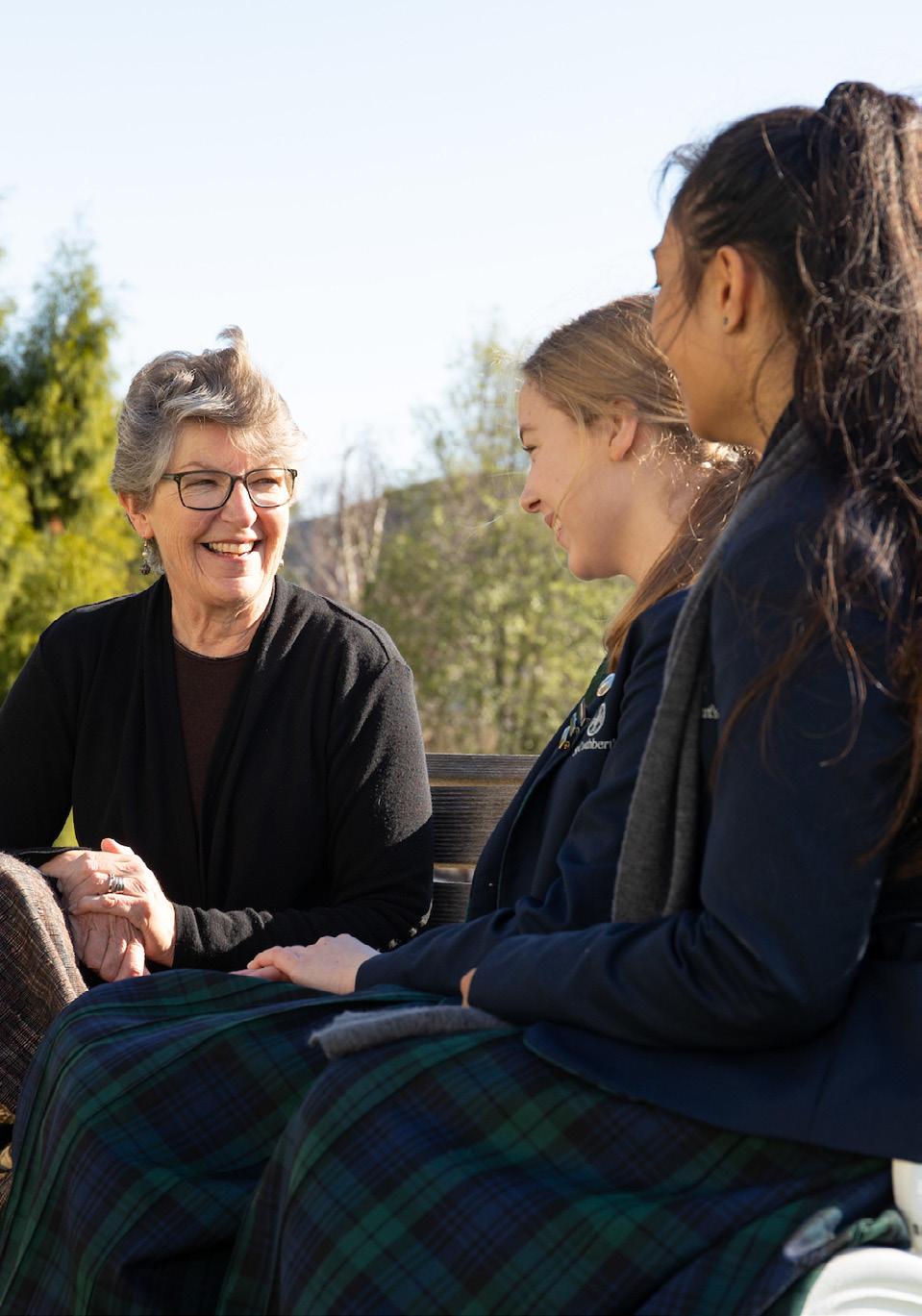
Latin
The senior Latin courses focus primarily on the richly vibrant and varied range of literature written by the Romans, which is timeless in its appeal and universal in its themes. Their literature included everything from grand epic poetry about the origins of the Roman people to intimately personal poetry between lovers, from sharp-witted satire about life in the city of Rome to plays about famous stories from their mythological past. These courses allow students to appreciate the artistry and creativity of these works in their original language, while at the same time engaging in debate and discussion about their literary merit. Students will enhance their skills in critical thinking and literary analysis as well as improve their own skill in writing eloquently in English.
Level 2
This course provides the opportunity for students to read and translate extracts about Lucretia whose death brought about the downfall of the last Roman King and the beginning of the Roman Republic. In the second half of the year we will read love poetry by Catullus, a personal and passionate account of his relationships.
The course is supported throughout the year by a systematic revision of linguistic skills as well as regular practice of translation and comprehension.
Recommended prior achievement level:
Students must have achieved the Year 11 Latin Course. Students with significant prior language knowledge will be assessed to determine the appropriate course and level at the discretion of the HOS and HOF.
Approximate cost: Grammar and Literature Workbooks $10.
Education Perfect $40
Level 3
This course provides the opportunity for students to read and translate extracts about Lucretia whose death brought about the downfall of the last Roman King and the beginning of the Roman Republic. In the second half of the year we will read love poetry by Catullus, a personal and
passionate account of his relationships. The course is supported throughout the year by a systematic revision of linguistic skills as well as regular practice of translation and comprehension.
Recommended prior achievement level:
Students must have achieved 17 credits in Level 2 Latin. Students with significant prior language knowledge will be assessed to determine the appropriate course and level at the discretion of the HOS and HOF.
Approximate cost: Grammar and Literature Workbooks $10.
Education Perfect $40
Mathematics
Level 2
In Year 12, students have three different options to cater for the interests and aspirations of individual students. Students can select from one of the following:
A – MATHEMATICAL STUDIES:
If you are working at Achievement level in Year 11 and find Mathematics challenging, but would like to continue with Mathematics and Statistics, this is the course for you. This is an academic course covering a number of topics in common with both the 12MSTN and 12MCAN courses, with a focus on Statistics. This course leads to 13MASN, which aims to help students gain University Entrance.
• A – Mathematical Studies
• B – Mathematics (Statistics)
• C – Mathematics (Calculus)
Recommended prior achievement level:
Achieved or better in at least three standards in Year 11 Diploma Mathematics. or Mathematics Studies.
Approximate cost: Workbook $65 Education Perfect online Subscription $40
B – MATHEMATICS (STATISTICS):
This course provides the prerequisites for the Year 13 Statistics courses. Level 2 Statistics is an academic course designed for students with sound numeracy skills who enjoy working with data and solving real-world problems.
Note: This course cannot be taken in conjunction with Year 12 MCAN.
Recommended prior achievement level: Merit or better in Year 11 Statistics and Achieved in all other standards. If you do not meet the prerequisites you must discuss your with the Head of Faculty.
Approximate cost: Workbooks: $50 Education Perfect online subscription: $40 Textbook: $32
Mathematics
C - MATHEMATICS (CALCULUS):
This is an academic course that requires fluency in algebraic skills. It is recommended for students who intend to study Calculus at Level 3 or accelerated students who will study IB AAHL or AIHL. Using Mathematics to model practical situations is a unifying theme.
Note: This course cannot be taken in conjunction with 12 MSTN.
Prerequisite:
Students should be attaining a minimum a Merit in Algebra and Graphs in the Exam components of Year 11 to take Calculus in Level 2.
Recommended prior achievement level: Merit or better in Year 11 Algebra, Tables and Graphs and achieved in all others. If you do not meet the prerequisites you must discuss your course with the Head of Faculty.
Approximate Costs: Workbooks $50, Electronic textbook $32, Education Perfect online Subscription $40
Level 3
In Year 13 students have four different options available to meet individual interests and aspirations. Students can select from the following:
• A – Mathematical Studies
• B – Calculus
• C – Statistics
• D – Mathematics
Note: Students can choose to take both from Calculus and Statistics.
A – MATHEMATICAL STUDIES:
Level 3 Mathematical studies is an academic course designed to help students gain university entrance. The content covers a broad range of Mathematics skills with a strong focus on Statistics. Three of the standards (two internal and one external) are in common with the 13MST course. Technology will be used extensively in this course to gain up-to-date understanding of mathematical models and statistical methods.
Note: This course cannot be taken in conjunction with 13MATN and 13MSTN.
Recommended prior achievement level: Successful completion of a Level 2 Mathematical course.
Approximate cost: Workbooks $50, Education Perfect online subscription $40
Mathematics
B – CALCULUS
This is an academic course for students with a major interest in pure Mathematics, Computer Science, the Physical Sciences, Engineering, Economics and any field where Mathematical analysis is a valuable tool. Students should have strong Algebra skills from Year 12, as these are essential for progress in all the Achievement Standards.
Prerequisite:
Students should be attaining a minimum of Merit in the Externals in Level 2 Algebra and Calculus to take Level 3 Calculus.
Note: This course cannot be taken in conjunction with 13 MATN.
Recommended prior achievement level: Merit or better in 2.2, 2.6 and 2.7 Mathematics Achievement Standards. If you do not meet the prerequisites, you must discuss your course with the Head of Faculty.
Approximate cost:
Workbooks $30, Electronic Textbook $32, Education Perfect online subscription $40
C – STATISTICS
This course provides the statistical background needed for tertiary study in Statistics, Biological and Social Sciences, Medicine, Business and any field where data collection/ analysis are important.
Probability theory and statistical distributions are covered. Students will learn how to use software, apply statistical
Recommended prior achievement level:
Merit or better in at least two of 2.9 / 2.12 and 3.9 Mathematics Achievement Standards. Students who do not meet the prerequisites must discuss their course with the Head of Faculty.
methods to analyse data and reach valid conclusions. Students will develop the ability to critically evaluate databased claims in the media.
Note: This course cannot be taken in conjunction with 13 MATN and 13MASN.
Approximate cost: Workbooks $55 Education Perfect online subscription $40 Textbook $30.
Mathematics
D – MATHEMATICS
This course incorporates standards from both Mathematics and Statistics. It is designed to prepare students for compulsory Stage 1 Mathematics papers at tertiary level in both areas and leave options open for the future.
Students develop skills in using Statistics to reach valid conclusions and critique statistical reports in the media. The techniques of differentiation are studied in Calculus.
Note: This course cannot be taken in conjunction with 13 MCAN, 13MSTN and 13MASN.
Recommended prior achievement level: Merit or better in at least two of 2.2, 2.6, 2.7, and 2.12
Mathematics Achievement Standards. Students who do not meet the prerequisites must discuss their course with the Head of Faculty.
Approximate cost: Workbooks $50, Electronic Textbook $30, Education Perfect online subscription $40
Music
Level 2
This course covers a range of musical skills. Students are able to tailor make their course though choosing a variety of standards that cover the areas of performance, composition, music analysis, music theory and research. This will allow them to develop and nurture their creativity.
Some standards will be compulsory, others will be optional. Students are expected to take at least five of the standards offered.
The Musical Knowledge standard includes an in depth study of two music works
ensemble skills by performing a substantial piece of
Recommended prior achievement level:
The course is open to students who are involved in music making and have secure reading skills. Private tuition on an instrument or voice is required and participation in at least one College musical group is expected.
Approximate cost:
Students in this class are given priority to attend various concerts and shows. Costs vary and attendance is optional.
Level 3
This course covers the areas of performance, composition, music analysis, music theory and research. Students can create their own programme through choosing a variety of standards. This course builds on Level 2, and will give students the ability to explore their creative side as well as build on their collaborative, analysis, and composition skills.
Some standards are compulsory and others are optional. Students are expected to take at least five of the standards offered.
The music work standard involves an in-depth study of ‘The Planets’ by Gustav Holst.
Recommended prior achievement level:
Open to all students. Those who have not completed Year 11 or Level 2 Music are welcome to join this course. Private tuition on an instrument or voice is required for those entering the performance standard and participation in at least one College musical group is expected from all participants.
Approximate cost:
Students in this class are given priority to attend various concerts and shows which become available. Costs vary and attendance is optional.
Physics
Physics is known as the fundamental science. It is the investigation of how the universe works and involves the study of everything from the very small, (photons, quarks and leptons) to the really big (black holes, stars, and galaxies) and everything in between.
Physics is about matter and energy, and that’s really all there is (or so we think).
The Physics course is not just designed for students wishing to be physicists. It helps students gain a variety of skills including:
• Logical thinking
• Problem solving
• Communication As well as gaining a better appreciation of the beauty of the physical world from rainbows to lightning.
We emphasise the practical and experimental nature of physics and stress the understanding of concepts rather than rote learning.
Some of our students go on to do degrees in Physics (Nanotechnology, Medical Physics, Laser Physics, etc.)
Physics is also a required or recommended course in university degrees including Engineering, Medicine, Architecture, Veterinary, and Food Technology.
Level 2
The Level 2 physics course builds on the concepts studied in Year 11 physics with some new topics including Nuclear Physics. In this course you will find out:
• How the eye produces images.
• How light waves can interfere to produce darkness.
• How nuclear radiation is used in medicine.
• The best angle to throw a ball.
• How you can make electricity with a skipping rope. Students should have a reasonable ability in Mathematics.
Assessment
Recommended prior achievement level: An average of Merit or higher in Year 11 Diploma Science or Advanced Physics.
Approximate cost: Course books $35.00.
Physics
Level 3
The Level 3 Physics course builds on the concepts studied in Year 12 Physics with some new topics including Quantum Physics and Relativity.
In this course you will find out:
• Why musical instruments sound different.
• How rainbow glasses work.
• Why moving clocks run slow.
• Why you don't fall off at the top of a roller coaster.
• Why you can get an electric shock from a camera.
• How the charging pad for a cell phone works.
Students should have a reasonable ability in Mathematics. Practical work is an essential part of Physics and this is emphasised on a field trip to Rainbow's End. Assessment
Recommended prior achievement level:
Students entering this course should have reached Merit level in two of the three external Level 2 Physics standards.
Costs:
Course books $35.00
Pōhutukawa Enriched Learning Support (PELS)
(restricted entry course)
Level 2
The primary aim of this course is to support students who are enrolled in five NCEA Level 2 subjects to achieve their credits in these subjects.
To this end, students are provided with extra time and support to complete class work and assessments. Subject specialist teachers across subjects are timetabled to support this class. The subjects offered are tailored to each class. There is a strong emphasis on increasing personal responsibility for learning and developing study skills.
Assessment: No examinations are held in this subject.
Production Science
Production Science is an integrated subject bringing in aspects of biology, business, the environment and agriculture/horticulture. Students will look at ways in which New Zealand produces and markets primary products now and in the future. Production science looks at the science behind how we produce and process our primary products. Students will gain an understanding of New Zealand’s role in feeding the world.
Students will also understand the industries that drive New Zealand’s economy and have a greater understanding of the processes behind how products move from the farm to the table. The course is mainly internally based.
Level 2 Production Science
The Level 2 programme of Production Science builds on the Level 1 programme using skills and knowledge gained to carry out investigations and research. The programme moves on from being a purely science based course and starts to look at how value is added to primary products and how this is marketed to consumers.
• We investigate how environmental factors affect growth in micro-organisms and plants.
• We examine the potential uses of new organisms and how these organisms could be marketed
• We look at how environmental factors influences management practices
• We also examine the environmental impact of dairy production
There will be two field trips in 2026. A visit to a dairy farm and a visit to the Mystery Creek Field Days.
Recommended prior achievement level: This course is open to all students.
Level 3 Production Science
The Level 3 programme of Production Science looks at the demands made by consumers and how these impact decisions made by growers and producers. We will also look at how producers and processors add value to their products.
• Students will carry out an investigation looking at attributes of apples and what producers and processors do to ensure their products satisfy these attributes
• Students will look at how market forces affect the supply and demand of our primary products
• Students also look at the impact on the environment of our production systems, such as our dairy industry
• Students will examine the potential impacts of climate change on agriculture and our economy
There will be two field trips in 2026.
A visit to a range of primary produces including a dairy farm and a kiwifruit orchard and a visit to the Mystery Creek Field Days.
Recommended prior achievement level: This course is open to all students.
Spanish
Level 2
This course aims to deepen students’ awareness and understanding of the lives of Spanish-speaking people, with particular reference to present-day Spain. Students are encouraged to communicate confidently in Spanish. They are taught to understand spoken and written
language and to express their own ideas in conversation and writing. Their appreciation of the many varied and exciting Hispanic cultures continues to be developed through a range of topics including a region in Spain, Art, and Film.
Assessment
A selection of four standards; two internal and two external
Recommended prior achievement level: Students must have achieved the Year 11 Diploma in this subject.
Students with significant prior language knowledge will be assessed to determine the appropriate course and level at the discretion of the HOS and HOF.
Approximate Cost: Education Perfect $40
Level 3
This course continues to develop students' ability to communicate confidently in Spanish through further practice of the essential language skills. Students study a range of topics which include the environment and leisure
and tourism in a Spanish-speaking country. They build on their understanding of Hispanic cultures through Literature and Film.
Assessment
A selection of four standards; two internal and two external
understanding of a variety of extended written and/or visual Spanish texts
(3.5) Write a variety of text types in clear Spanish to explore and justify varied ideas and perspectives
Recommended prior achievement level: Students must have achieved 19 Level 2 credits. Students with significant prior language knowledge will be assessed to determine the appropriate course and level at the discretion of the HOS and HOF.
Approximate cost: Education Perfect $40
Sport and Exercise Science
Level 2
The broad theme for the year is 'Focus on Leadership’. Students are given the opportunity to take on a variety of roles. Personal experience in each module will develop a foundation of knowledge, which can be transferred into leadership situations involving others. Study at this level involves:
Term 1:
• 2.6 Leadership
• 2.7 Safety Management
Applying and reflecting on Leadership and Safety Management Strategies from experiences prior to and during a three-day camp in Rotorua, whereby students lead their peers in either the kayaking, mountain biking, or paintball contexts
Term 2:
• 2.3 Training Programmes
• 2.4 Practical Performance
Applying biophysical principles (exercise physiology, methods of training, principles of training, sport psychology) to training for the 'Tough Girl Mud Run Challenge'.
Term 3:
• 2.2 Skill Learning
• 2.4 Practical Performance
Applying biophysical principles (anatomy, biomechanics, skill learning theory, sport psychology) to learning trampolining skills and developing a trampoline routine.
Recommended prior achievement level:
This course is open to all students who completed Level 1 Sport and Exercise Science or at the discretion of the Head of Faculty of Health and Physical Education. Approximate
Please note:
Level 3
The broad theme for the year is 'Critical Thinking'. This involves thinking critically about how a wide range of biophysical principles and sociocultural factors impact upon practical experiences that are on trend, fun and varied. Much of the learning is personalised. Study at this level involves:
Term 1:
• 3.8 Leadership
Applying and reflecting on Contemporary Leadership Principles prior to and during an 'amazing race' style event around Auckland City and Devonport. Leadership by whitewater rafting instructors will also be examined.
• 3.7 Safety Management
Analysing a range of safety management issues associated with whitewater rafting. This includes personal experience at Vector Wero Whitewater Rafting, and two New Zealand incident report scenarios.
Term 2:
• 3.3 Muscular Conditioning
Developing, completing, and evaluating a muscular conditioning programme that is reflective of personal sporting goals and associated with 3 days of learning at AUT Millennium Institute of Sport; 2 days of which is an overnight camp.
Term 3:
• 3.1 Lifelong Wellbeing
Evaluating past, current, and future personal physical activity experiences in conjunction with a range of recreational activities during the term. Devising strategies to promote being active in the future for lifelong wellbeing.
Term 1-4:
• 3.4 Personal Performance
Performing to nationally developed standards in a chosen sport/physical activity, at the discretion of the teacher.
Recommended prior achievement level:
Please note:
Te Reo Māori
Level 2
This course builds on from Level 1 and includes the following topics:
• Tūrangawaewe: Identity and ancestral links
• Tangata Rongonui: Talking about someone famous
• Matariki: Learning about the maramataka, health & wellbeing
• Te Whakauora i reo: the history of Te Reo Meori
• Pūrākau: Retelling an indigenous myth or legend
• Possible visit to a local Marae
2.2
AS91285
2.3:
2.4: AS91287
This standard involves listening to a text read aloud in Te Reo Māori and answering questions.
Korero kia whakamahi i te reo o te ao torotoro.
This standard involves preparing and giving a spoken presentation in Te Reo Māori.
Pānui kia mōhio ki te reo o tōna ao torotoro.
This standard requires the student to answer questions regarding selected texts from the exploratory world.
Tuhi i te reo o te ao torotoro.
This standard requires the student to write a formal essay on a topic from the exploratory world.
Recommended prior achievement level:
Students must have achieved 24 credits in Te Reo Māori.
Students with significant prior language knowledge will be assessed to determine the appropriate course and level at the discretion of the HOS and Head of Faculty.
Approximate cost:
Possible marae trip $150. Education Perfect $40
Whakarongo kia mōhio ki te reo o te ao torotoro.
Level 3
This course builds on from Level 1 and 2 and includes the following topics:
• Rautaki Reo: Investigating a language revitalisation strategy
• Take Rangatahi: Discussing an issue to do with youth
3.1 AS91650
3.2
Reo Māori and answering questions.
Korero kia whakamahi i te reo o te ao whānui. This
preparing and giving a spoken presentation in Te Reo Māori.
3.3
3.4 AS91653
Pānui kia mōhio ki te reo Māori o te ao whānui. This standard requires the student to answer questions regarding selected text from the exploratory world.
Tuhi i te reo o te ao whānui. This achievement
requires the student to write a formal essay on a topic from the exploratory world.
Recommended prior achievement level:
Students must have achieved 24 Level 2 credits in Te Reo Māori.
Students with significant prior language knowledge will be assessed to determine the appropriate course and level at the discretion of the HOS and HOF.
• Wawata: Identifying one’s dreams and aspirations for the future
• Taupatupatu: Debating a relevant topic
• Mana Motuhake: Maori and Politics
Approximate cost: Possible marae trip $150. Education Perfect $40
Whakarongo kia mōhio ki te reo o te a
whānui.
Technology - Digital Design
Level 2
This course requires students to engage in a structured technological practice to develop and implement a digital technology-based solution. Students will design and build 2D digital experiences using professional tools such as Photoshop and Unity.
A key focus of the course is on planning, researching, designing, producing, and evaluating an outcome that responds to a real-world need or opportunity. Students will interact with real stakeholders, conduct user testing on multiple devices and incorporate feedback into the development process.
The course supports a range of learning styles through a range of classroom activities, including written, verbal, and visual communication, creative thinking, problem-solving, and collaborative learning.
Students may develop skills in the following areas
• Design and programming
• Project management and planning
• Creativity and Problem Solving
• Multimedia Content Creation
Assessment
(this is an indication of the probable standards, these are awaiting final confirmation and release by the Ministry of Education)
Recommended prior achievement level:
This course is open to all students. Previous study in Year 11 Diploma Computer Science or Spatial and Product Design at achieved level or better, or at the discretion of the Head of Faculty.
Extra Course Costs:
Subscription to online course content and software for digital modelling at a cost of $100 per person. All workshop visit entry and transport costs TBC per visit Personal printing for course work - managed by students Equipment recommended: Laptop with 30GB storage, mouse, drawing tablet, sketching and ideation materials.
Level 3
This course requires students to undertake technological practice in order to develop and implement a digital technology-based solution. Students will engage in the process of developing a brief, solution design, production and evaluation.
Students will research a context; they will identify their own issue on which to focus and work with specific stakeholders to solve a problem by creating a technological solution.
This course caters for a variety of learning styles through a range of classroom activities including written, verbal and visual communication, creative thinking, problem solving and collaborative learning. At this level the tasks are openended and students are able to specialise in an area of technological innovation that is of personal interest.
Students may develop skills in the following areas:
• Ideation and innovation
• Project management and planning
• Creativity and problem solving
• Product design and prototyping
• Programming
(a selection of the following standards dependent on the student’s chosen context and project)
Recommended prior achievement level:
Level 2 NCEA in Digital Design or at the discretion of the Head of Faculty.
materials. Assessment
Extra Course Costs:
Subscription to online course content and software for digital modelling at a cost of $100 per person.
All workshop visit entry and transport costs TBC per visit
Personal printing for course work - managed by students
Equipment recommended: Laptop with 30GB storage, mouse, drawing tablet,
and
Technology - Food Development and Production
In this course, students will explore the concepts, processes and ethical considerations involved in the production of food and cosmetic products, to gain valuable practical skills and insights into these industries.
Level 2
The key topics include:
• Confectionary: Brief Development: Students will be required to research and design a range of chocolate bonbons to meet the requirements of stakeholder of their choosing.
Prototype Development and Trialing: Students will then conduct a range of trialing and testing of chocolate making techniques and ingresients to develop a viable final product that meets the specifiactions of their stakeholder.
Implement Advanced proceedures: Students must document the required proceedures and testing used to create their prototype to enable their product to be replicated successfully.
• Cosmetics: Understand Advanced concepts used in processing: Students will investigate a range of common ingredients and processes used in the soap making industry. They will then apply their learning to demonstrtae their understanding.
External Sustainability: Students will conduct a research report on the sustainability in design, looking at the Life Cycle of existing products and conducting their own Analysis on one of the products they created during the course.
Recommended Prior Achievement Level:
This course is open to all students
Approximate cost:
• Course Cost $100 toward project materials/ingredients.
• $50 Culinary Pack (hat and apron) for new students
• $50 MIT Culinary Comp for interested participants
• $30 Chocolate Research trip
In this course, students will develop an edible product that meets a food based issue and solves or assists a stakeholder who has direct experience with this problem. This could include restricted diets, using organic produce, products for specific menus etc.
Students will work closely with stakeholders and conduct a number of practical tests and trials during the development of their product to experience the extent of the commercial design process first hand.
Level 3
The key topics include:
• Brief Development: Students will be required to find a real world, accessible stakeholder to work with throughout the year who will be able to provide valuable feedback during the development of their product. Working with their stakeholders they will be able to define the issue, research the issue, provide an opportunity, build a set of specifications and develop a viable brief which they will pursue throughout the year.
• Testing and Data Analysis of Complex procedures: Students will be required to demonstrate the execution
of a range of complex procedures that they will test and analyse the outcomes of to determine the success of their trials. This information then becomes the foundation of their practical food development outcome.
• Prototyping product for Fitness for Purpose: Once successful complex procedures have been established, students will consolidate their knowledge and skills to produce a viable edible end product that meets the initial brief and determined specifications.
Recommended Prior Achievement Level:
Achieved or better in Level 2 Food and processing Technology is desirable or at the discretion of the Head of Faculty.
Approximate cost:
• Course cost $100 toward project materials/ingredients
• Food Product Research Trip $30
• $50 MIT Culinary Competition for interested participants
• Culinary Pack $50 (New Students only)
Technology - Spatial and Product Design (Previously
Design and Visual Communication)
Level 2
This course builds on the design thinking and visual techniques established in Year 11. During the year, students will undertake two design projects requiring the use of specialist spatial and product design knowledge, independent project management and detailed visual communication techniques. Students will be encouraged to be creative in their design exploration, challenge and refine their own design practice and present their solutions digitally with flair.
The topics covered by this course include:
• Product Design: Students will use sketching and digital fabrication techniques to develop a flat-pack lighting product.
• Spatial Design: Students will design a Visitor Pavilion for Mangawhau.
• Presentation Design: Students will design and produce a presentation of one of their outcomes above. Skills taught will include layout and composition techniques and use of Adobe applications.
Recommended prior achievement level: Year 11 Diploma in SPD or at the discretion of the Head of Faculty.
Approximate cost:
• Personal printing for course work – managed by students.
• A specialist SPD kit is required for this course: refer to the College stationery list
• Subject specific software for digital modeling: $100 per year
• Class trip to Maungawhau approximate cost $30.00
Students will be invoiced accordingly
Level 3
This course extends knowledge and skills established in Year 11 & Year 12, applying these to more individualised projects from a variety of three-dimensional design contexts. Well-articulated communication of ideas and design thinking through experimentation and refined visual techniques are key aspects to the subject at this level.
Students will compile a design portfolio that will show that they have creatively worked through a human-centred design process and will provide appropriate material for entry applications to design related courses such as Architecture, Industrial, Landscape and Spatial design.
*Students choose whether to do spatial or product design
Recommended prior achievement level:
Year 11 Diploma in DVC merit level or achieved or better in Level 2 NCEA DVC or at the discretion of the Head of Faculty.
Approximate cost:
• Personal printing for course work – managed by students.
• A specialist kit is required for this course: refer to the College stationery list
• Subject specific software for digital modeling: $100 per year
• Class trip to Huia, Waitakere Ranges approximate cost $90.00
Students will be invoiced accordingly
Technology - Textiles
Level 2
This course challenges students to address real-world issues in the fashion industry, with a focus on sustainability and climate impact. Students are challenged with two projects that will encourage innovative solutions by rethinking materials and processes. Students will explore through fibre manipulation the transformation of waste and natural fibres such as wool into felted and woven textiles suitable for futuristic footwear. This course fosters creative, practical, and ethical design thinking for the future of fashion.
Students who take this Level 2 course will build the knowledge and skills required for success in NCEA Level 3 Technology.
advanced Adaptations to a pattern to change the structural and style features of a design.
Recommended prior achievement level: Students must have studied Textiles at Level 1. or at the discretion of the Head of Subject.
Scholarship:
Scholarship Technology is also available to students who have a strong project.
Approximate cost: Personal printing for course work – managed by students. Students are expected to source their own materials for the construction of their final outcomes.
Trip to ID Dunedin Fashion Week 2027, approximate cost $1450.
Level 3
This is a highly independent course that has been designed to provide a gateway to tertiary level Fashion Design. Students identify an authentic need or opportunity within the fashion industry which becomes their design brief for a major project. Contexts can range anywhere from
sportswear using smart fibers to adaptive clothing for disabilities, to renewable fashion. Students will gain skills in complex pattern drafting and construction. There will be options for students to engage with industry practices directly through EOTC opportunities.
Recommended prior achievement level:
Students must have studied this subject at Level 1 (M+) Diploma or Level 2 or at the discretion of the Head of Subject.
Scholarship:
Scholarship Technology is also available to students.
Assessment
Approximate cost:
Personal printing for course work – managed by students. Students are expected to source their own materials for the construction of their final outcomes.
Trip to ID Dunedin Fashion Week 2027, approximate cost $1450.
Year 12 and 13 IB Diploma
Courses for Study
Year 12 and 13 IB Diploma - Course Overview
The IB Diploma is a two year course for students in Year 12 and 13. The IB Diploma is recognised in New Zealand and overseas to gain entry into university. Diploma students take six subjects (across six distinct groups).
A typical IB Diploma course:
IB Fees and Examination Fees
All IB students will be charged an additional approx $1,000pa on their school fees. This is to cover all additional costs to run the programme, including IB registration and administration fees and extra examination invigilators.
Examination costs (Year 13 only) given are approximate as they are dependent on current exchange rates and prevailing courier costs for examination script delivery.
• Per subject
• Courier
SGD$152.50 x 6
NZD$360
For a full course of six examination subjects and all Core components, the total fee is expected to be approximately $1400, and invoices will be sent out after students have been registered for their examinations.
NOTE: Courier costs are based on each subject requiring 2 papers, with HL subjects requiring 3. These must be couriered in individual subject and level (HL and SL) packets to the UK immediately after each examination.
Programme
A key feature of the IB programme is that it encourages a well-rounded education from a range of different subject groups:
1. Language
2. Language Acquisition
3. Individuals and Societies
4. Experimental Sciences
5. Mathematics and Computer Science
6. The Arts
It also extends students through the core of the programme, and these contribute to the overall grade total.
Students must write a 4000 word Extended Essay, complete a course in Theory of Knowledge (TOK) and participate in a number of Creativity, Activity and Service projects (CAS).
University of Auckland Academic English Language Requirement
You must have been awarded the full IB Diploma. With this IB Diploma, you must achieve a minimum of 24 points (i.e. an average of 4 in all subjects).
An IB Diploma completed with the following, satisfies the literacy and numeracy requirements for University Entrance: English a Language A at either Higher or Standard Level * Any mathematics subject https://auckland.ac.nz/en/students/academic-information/aelr.html
* The University will also accept English Language B at Higher Level, with a minimum grade of 5, as satisfying the Literacy requirement for UE.
Please note: Some programmes/degrees have additional entry requirements.
Year 12 and 13 IB Diploma – Course Overview
A variety of subject selection options are available with the following requirements:
• Six subjects must be selected
• One Group 1 Language is required
• One Group 2 Language is required, unless two Group 1 are selected
• One Group 5 is required
• Group 6 is optional, and if not selected, a second subject can be selected from Groups 1 - 4
• For Groups 3 and 4, generally one of each is selected, although there are other options regarding ESS (environmental systems and societies) which could count for either Group, or both
• For Group 1 and 3, generally one of each is selected, although there are other options regarding Language and Culture which could count for either group, or both
• All Diploma courses are completed over two years. Most courses are offered at both Higher Level and Standard Level
• Three subjects are studied at Standard Level and three at Higher Level, which require a greater degree of specialisation
• Students will decide which subjects they will study at a Higher Level at the end of the second term in Year 12
• Students studying the IB Diploma Programme are also eligible to sit the New Zealand Scholarship examinations in both Year 12 and 13 in some subjects over the two years and involves both student initiated and school initiated projects and activities.
Theory of Knowledge (TOK)
The Theory of Knowledge course is a central component of the International Baccalaureate Diploma. The aim of the course is to develop the student’s potential as inquirers who will engage actively with the various forms of knowledge found throughout the IB programme. TOK encourages critical thinking about knowledge itself. Throughout the course, students will enhance their awareness of what they consider facts, beliefs and/ or opinion and the various ways that they come by this knowledge. Students are encouraged to think about the strengths and limitations of different ways of knowing, which include reason, emotion, sense perception and language, when analysing different areas of knowledge (natural sciences, human sciences, history, art, ethics and mathematics).
HUB
Course Outline:
One period per week, HUB (Health, University and Life Beyond School) delivers a whole approach to learning for students that promotes self-development, wellbeing, and preparation for life beyond school. Prioritising wellbeing seeks to bring balance to the demands of assessment-driven learning. Careers education forms a significant component of HUB, with future-focused tertiary and career seminars, workshops, and pathway guidance.
TOK Assessment Requirements:
• Internal – exhibition
• External – 1600 word essay
Creativity, Activity and Service (CAS)
CAS is an integral part of the Diploma Programme, and involves experiential learning which challenges the student and balances the rigour of the academic programme. It runs for 18 months over the two years and involves projects and activities organised by students or by the school. Students need to be involved in a variety of activities for all three areas of CAS as well as completing a long term project.
CAS Assessment Requirements:
• Internal – at least 90 reflections over 18 months
Extended Essay (EE)
In the Extended Essay students conduct original research and investigate a topic of special interest for one of their subjects. They must write an essay of 4,000 words. This programme involves 40 hours of private study over two years. Students are allocated a supervisor to mentor them through the essay process.
EE Assessment Requirements:
• External – 4000 word essay (40 marks)
• Completion of reflections
Students in IB will also participate in the HUB programme
The HUB programme is a programme for every student in the Senior School. This course is delivered each week to every student.
At Year 12-13, students will participate in HUB in cohort groups. These years will focus on maintaining healthy minds and bodies; recognising different ways of seeing the world through guest speakers on ethics and philosophy; developing financially literate citizens; preparing for future careers and life beyond the school; creating successful study habits; relaxation techniques and preparing students for leadership in the school and beyond.
Please note that subjects will only run if numbers permit.
The aim of this course is to:
• Encourage critical and reflective thinking about issues that affect students in a changing world
• Encourage thoughtful consideration of ethical and social issues
• Promote safe, responsible, and informed digital citizenship
• Provide strategies to manage challenge, change, and
increasing independence
• Equip students with the knowledge and skills required for a productive and fulfilling life
• Develop effective communication and interpersonal skills
• Encourage students to maintain a healthy body and mind
• Provide opportunities to build confidence and personal safety awareness through self-defence education
• Provide opportunities to build leadership capability and personal agency
• Provide opportunities through programmes such as Teen Talks to develop understanding of healthy relationships, consent, communication, and positive decision-making
• Prepare students for life beyond the College through career development, tertiary planning, and pathway exploration
• Support students to confidently transition to tertiary study, employment, and other pathways
• Develop financial literacy, including understanding student finance and independent living
Award of the IB Diploma
Core Requirements
• Students must study six subjects, plus the three core subjects—EE, TOK and CAS. They must accumulate no fewer than 24 points from assessment in these subjects, in addition to grade stipulations.
• They must meet all of the additional requirements (see below)
• Students who successfully meet these conditions will be awarded the diploma.
• Students who take the diploma in multiple languages may be eligible for a bilingual diploma.
The IB diploma is awarded based on performance across all parts of the DP.
• Each subject is graded 1–7, with 7 being the highest grade.
• These grades are also used as points (that is, 7 points for a grade 7, 6 points for a grade 6, and so on) in determining if the diploma can be awarded.
• TOK and the EE are graded A–E, with A being the highest grade. These two grades are then combined in the diploma points matrix to contribute between 0 and 3 points to the total.
• CAS is not assessed but must be completed in order to pass the diploma.
• The overall maximum points from subject grades, TOK and the EE is therefore 45: ((6 × 7) + 3).
• The minimum threshold for the award of the diploma is 24 points. If a student scores less than 24 points, the diploma is not awarded.
• Additional requirements
There are a number of additional requirements for the award of the diploma.
• CAS requirements have been met.
• There is no “N” awarded for TOK, the EE or for a contributing subject.
• There is no grade E awarded for TOK and/or the EE.
• There is no grade 1 awarded in a subject/level.
• There are no more than two grade 2s awarded (SL or HL).
• There are no more than three grade 3s or below awarded (SL or HL).
• The student has gained 12 points or more on HL subjects. (For students who register for four HL subjects, the three highest grades count.)
• The student has gained 9 points or more on SL subjects. (Students who register for two SL subjects must gain at least 5 points at SL.)
• The student has not received a penalty for academic misconduct from the Final Award Committee.
Bilingual diploma
In addition, students who have completed these conditions through multiple languages may be eligible for a bilingual diploma.
A bilingual diploma will be awarded to a successful student who fulfils one or more of the following criteria.
• Completion of two languages selected from the studies in language and literature subject group with the award of a grade 3 or higher in both languages.
• Completion of one of the subjects from the individuals and societies, or sciences subject groups in a language that is not the same as the student’s nominated studies in language and literature language. The student must attain a grade 3 or higher in both the studies in language and literature language and the subject from individuals and societies, or sciences subject groups.
Pilot subjects and interdisciplinary subjects can contribute to the award of a bilingual diploma, provided the above conditions are met.
The following cannot contribute to the award of a bilingual diploma.
• An extended essay
• A school-based syllabus
• A subject taken by a student in addition to the six subjects for the diploma (“additional subjects”)
Group 6: Arts - Visual
Level:
HL and SL
Course outline:
The Visual Arts course is a creative, practice-based course. Students work in the classroom as they would in an art studio and are encouraged to engage, transform and emerge a young artists. Learning and teaching experiences are shaped by inquiry and focused on authentic engagement in art-making.
During the two years of the course, students are supported and guided to deepen their understanding of the visual arts and become increasingly more independent in their art-making practice.
Art-making as inquiry is the centre of the syllabus.
Learning through three core areas – create, connect and communicate.
In developing their own inquiry students will have the opportunity to explore a wide range of art making forms including drawing, painting, printmaking, sculpture, photography, moving image and mixed media works.
In the second year of the course students plan and curate an exhibition of their work.
Near the end of the course students submit three digital assessment tasks to evidence their learning.
Assessments
inquiries portfolio: The student selects and organises visual evidence of their personal investigations, discoveries and creations, supported by critical reflections.
Connections study: The study presents visual and written evidence of connections between their own work and other artists.
Art-making inquiries portfolio: The student selects and organises visual evidence of their personal investigations, discoveries and creations, supported by critical reflections.
Artist project: This is a stand-alone task focused on the student creating and situating in context an artwork that they ideate and realise a part of a project of their choice.
A short video curated by the student shows where and how the project artwork was realised to communicate with the audience in the chosen context.
Selected resolved artworks: A coherent body of 5 resolved works selected from wider production. Accompanied by a written rationale and artwork texts to articulate artistic intentions.
Recommended prior achievement level:
Year 11 Diploma in Visual Arts achieved level. Or at the discretion of the Head of Faculty.
Approximate cost:
• Specialist materials are required for this course. A base kit of materials will be provided at the start of the course at a cost of approximately $100. Students can top up this kit with supplies from our department shop as needed.
• In the second year of the course students will have to pay for printing, framing or mounting of their own artworks. Alongside this there will be a charge of approximately $75 towards the exhibition set up.
• A contribution towards the cost of gallery visits, entry and transport will be charged as appropriate.
• Workshops taken by visiting artists will be offered at cost (normally $50 for full day) Students will be invoiced accordingly
Group 4: Biology
Level:
HL or SL
Course outline:
This course is organised around four rich themes — Unity and Diversity, Form and Function, Interaction and Interdependence, and Continuity and Change — the course takes you on a journey from the molecular level all the way up to ecosystems. You'll explore the chemistry of life (water, carbohydrates, DNA), the inner workings of cells and membranes, the physiology of organisms, and the big-picture forces of evolution, biodiversity, and conservation. Higher Level students go even deeper, investigating the origins of cells, viral biology, cladistics, and more.
Biology at the IB level is far more than memorising facts. You'll think and work like a real scientist — designing experiments, analysing data, and tackling unfamiliar problems with creativity and resilience. A hands-on experimental programme (40–60 hours, depending on level) sits at the heart of the course, including a collaborative sciences project and your own individual scientific investigation. These experiences build genuine laboratory skills and the kind of independent, enquiring mindset that universities love.
Recommended prior achievement level: HL Merits or higher in Year 11 Diploma Semester Science or Core Science.
Group 3: Business Management
Level:
HL or SL
Course outline:
The Business Management course is designed to develop students’ knowledge and understanding of business management theories, as well as their ability to apply a range of tools and techniques.
Students learn to analyse, discuss and evaluate business activities at local, national and international levels. The course covers a range of organisations from all sectors, as well as the socio-cultural and economic contexts in which those organisations operate.
The course encourages the appreciation of ethical concerns at both a local and global level. It aims to develop relevant and transferable skills, including the
ability to: think critically; make ethically sound and well-informed decisions; appreciate the pace, nature and significance of change; think strategically; and undertake long term planning, analysis and evaluation. The course also develops subject-specific skills, such as financial analysis.
The course covers Business Organisations and Environment, Human Resource Management, Finance and Accounts, Marketing and Operations Management.
Recommended prior achievement level:
This course is open to all students, Year 11 Business or Accounting recommended.
Workbooks and revision resources are available through the Commerce Department at cost and will be charged to account.
Group 4: Chemistry
Level:
HL or SL
Course outline:
Chemistry is an experimental science that combines academic study with the acquisition of practical and investigational skills.
IB Chemistry primarily involves identifying patterns that help to explain matter at the microscopic level and understand the structure and reactivity in various types of reactions. Emphasis is placed on scientific investigation, data analysis, and real-world application, with the aim of fostering critical thinking, intercultural understanding, and scientific literacy.
Standard Level (SL)
IB Chemistry SL provides students with a foundational understanding of key chemical principles including atomic structure and bonding, change in energy and rate and exchange of protons and electrons. The course is suitable for students who are interested in the sciences but may not intend to pursue science at a university level. It requires strong mathematical reasoning and a commitment to regular study and practice.
Higher Level (HL)
IB Chemistry HL covers all SL content in greater depth and includes additional advanced topics. HL students are expected to master more complex calculations, analyse experimental data critically, and explore additional areas of chemistry in greater detail. This level prepares students for university-level science and is ideal for students aiming to pursue careers in science, medicine, engineering, environmental sciences or related fields. HL demands a higher level of independent learning, analytical thinking, and academic discipline..
Internal Assessment (IA)
The Internal Assessment (IA) is an individual scientific investigation that contributes 20% of the final IB Chemistry grade. Students design and carry out an experiment on a topic of their choice, applying the scientific method to gather and analyse data. The IA encourages independence, creativity, and reflection, as students explore a real-world chemical concept in depth. It is assessed internally by the teacher and moderated externally by the IB.
Recommended prior achievement level:
Success in Year 11 Diploma Semester Science course, Merit or above, is highly recommended. Skills in problem solving and quantitative mathematics are required.
SL: Merit or above from Year 11 Semester Chemistry and Excellence in Year 11 Maths
HL: Merit or above from Year 11 Semester Chemistry and Excellence in Year 11 Maths
Approximate cost: Workbook $40 yearly
Group 1: Chinese
Level:
HL or SL
Course outline:
Literature will be studied in mother tongue Chinese. This course provides an opportunity for students to continue to develop oral and written skills in their mother tongue.
This literature course introduces the critical study and interpretation of written texts from a wide range of literary genres.
Over the two years, the number of texts studied will be seven at Standard Level and 10 at Higher Level.
Recommended prior achievement level:
All students will be assessed in terms of their level and suitability for this course according to IB regulations at the judgement of the HOS and HOF. In general, students will be expected to have a high degree of fluency in all four language skills and an understanding of Chinese cultural history.
Group 2: Chinese
Level:
HL or SL
Course outline:
Chinese B is offered at Standard Level and Higher Level. Students continue to explore and develop their use of the Chinese language through a variety of stimulating topics and texts to gain a deeper understanding of the language. The focus on cultural awareness in an international context and a wide range of language activities in a variety of registers will help students reach the highest proficiency possible in the language.
Recommended prior achievement level:
All students will be assessed in terms of their level and suitability for this course according to IB regulations at the judgement of the HOS and HOF. In general, students will be expected to have achieved Excellence grades in all standards in Year 11, as well as have the ability to write independently and accurately.
Group 4: Computer Science
Level:
HL or SL
Course outline:
In this course, students develop a strong understanding of the principles that underpin modern digital systems. They will study programming, computational thinking, databases, computer networking and machine learning as a foundation for understanding artificial intelligence and the technologies shaping the digital world.
Students will learn to analyse problems, design algorithms and develop solutions using a text-based programming language. They will also explore how data is stored, organised and queried through databases, how computer systems communicate through networks and how machine learning can be used to identify patterns and support decision-making.
The course combines theory with practical problemsolving and prepares students to design, develop and
evaluate digital solutions. It supports students who are interested in software engineering, data science, cybersecurity, artificial intelligence, digital technologies and other computing-related pathways.
Overall course grade will be made from:
Standard Level:
Paper 1: 35%
Paper 2: 35%
Internal Assessment: 30%
Higher Level:
Paper 1: 40%
Paper 2: 40%
Internal Assessment: 20%
Recommended prior achievement level: Completion of Year 11 Computer Science
Approximate cost: Industry visits/workshops – TBC costs.
Group 3: Economics
Course outline:
This course aims to enable learners to evaluate the economic world in which they live, apply economic concepts to real-world problems and participate effectively as economic decision-makers in the local, national and global context. Microeconomic and macroeconomic models are used to analyse allocation problems faced by consumers, producers, governments, financial institutions and international organisations. There is a strong emphasis
on internationalism. The economic development unit analyses developing economies and critically evaluates the relationship that the developed economies have with them. Students have the opportunity to investigate how theory applies to current economic events through three internally assessed commentaries. IB Economics provides a good foundation for economics, business management, marketing and other related courses at university.
Recommended prior achievement level:
This course is open to all students, Year 11 Economics recommended.
Approximate cost:
Workbooks and revision resources are available through the Commerce Department at cost and will be charged to account.
Group 1: English Literature
Level:
HL or SL
Course outline:
The English programme aims to encourage a personal appreciation of literature and develop an understanding of the techniques involved in literary criticism. Students will be introduced to a range of
literary works of different periods, genres, styles and contexts. Over the two years, the number of texts studied will be seven at Standard Level and ten at Higher Level.
Prior achievement level (for HL):
Students should have achieved at least one Merit in an essay-based assessment in Year 11, and at least a Merit or above for the Unfamiliar Texts paper in the Year 11 examination. Students should have achieved a Merit or above for the Year 11 Reading Passport.
Scholarship:
Students completing this IB course will have to complete additional study to cover the examination material should they wish to present for the NZQA Scholarship examination. This may involve timetabled tutorials or working independently. All students taking Higher Level should sit the NZQA Scholarship examination.
Group 1: English Language and Literature
Level: HL or SL
Course outline:
In this course, students study a wide range of literary and non-literary texts in a variety of media. Students will investigate the nature of language itself and the ways in which it shapes and is influenced by identity and culture. Approaches to study in the course will be wide ranging and can include literary theory, sociolinguistics, media studies and discourse analysis.
SL students are required to study four literary works and a number of non-literary texts that is the equivalent in teaching and learning time, whereas HL students are required to study six literary works and a number of non-literary texts that is the equivalent in teaching and learning time.
Prior achievement level (for HL):
Students should have achieved at least one Merit in an essay-based assessment in Year 11, and at least a Merit or above for the Unfamiliar Texts paper in the Year 11 examination.
Group 2: English B
Level:
HL only
Course outline:
English B is only available to students studying it as a second language AND studying a language other than English in Group 1.
Students continue to explore and develop their use of the English language through a variety of stimulating topics and texts to gain a deeper understanding of the language.
The focus on cultural awareness in an international context and a wide range of language activities in a variety of registers will help students reach the highest proficiency possible in the language.
The syllabus includes five core topics (Identities, Experiences, Social Organisation, Human Ingenuity and Sharing the Planet) .
HL students will be examining challenging material in a wider range of registers and will also study two works of literature.
All students will be assessed in terms of their level and suitability for this course according to IB regulations at the judgement of the HOS and HOF.
Group 3 or 4: Environmental Systems and Societies
Level:
SL or HL
Course outline:
The main purpose of this course is to provide students with a coherent perspective of the inter-relationships between environmental systems and societies. Environmental issues are both global and local in their extent and this course reflects that. The course emphasises that we all live on one planet Earth, yet use much more than one Earth’s worth of resources. This is obviously not sustainable. This course is designed as a broad survey of the relationship between science, society and the natural worlds. The course aims to improve our understanding of how scientists conduct
their work. Environmental issues affecting the globe will be covered – such as climate change, water scarcity and population growth – and the consequential pressure on the planet. The course is both practical and classroom based with emphasis on students gaining first-hand understanding of the environment through classroom work and laboratory work as well as field work. Students will also learn from visiting speakers who will be invited in to talk with the students about issues that concern people in the local area and globally. This course is offered in Group 3 or 4.
Paper 1: Students will be provided with data in a variety of forms relating to a specific, previously unseen case study. Questions will be based on the analysis and evaluation of the data in the case study. All questions are compulsory.
Section A: is made up of short answer and data-based questions.
Section B: requires students to answer structured essay questions. There is a limited amount of choice.
The individual investigation is an open-ended task in which the student gathers and analyse data to answer their own formulated research question. The outcome of the individual investigation will be assessed through the form of a written report. The maximum overall word count for the report is 3000 words.
Recommended prior achievement level: This course is open to all students.
Approximate cost: Possible 3 day trip aprox $500.00.
Group 6: Film and Media
Level:
HL and SL
Course outline:
The course focus is on creativity, innovation and theoretical analysis. Film is both a powerful communication medium and an art form. The Diploma Programme film course aims to develop students’ skills so that they become adept in both interpreting and making film texts.
In this course you will:
• Compare and contrast filmmakers, their films and their various cultural contexts in order to further the understanding of particular areas of film focus
• Develop creativity and innovation through collaboration with others in the creation of film projects
• Examine film as an art form, including exploring the evolution of film across time and culture.
• Examine the roles and portrayals of women in film.
film (max. 7 mins). Project report (max. 2,000 words) and list of sources.
Recommended prior achievement level: This course is open to all students.
Group 2: Ab Initio French
Level: SL only
Course outline:
This course is designed to provide students with the skills to communicate successfully in an environment where French is spoken. It will allow the students to expand their awareness of the world and foster respect for cultural diversity. The students will engage in reading, writing, listening and speaking activities in French within a culturally appropriate context. The course fosters intercultural understanding and global engagement.
The Ab Initio French course is organised into five themes:
• Identities
• Experiences
• Human ingenuity
• Social organisation
• Sharing the planet
Recommended prior achievement level:
This is a language acquisition course designed for students with no prior experience of French or those with very limited exposure to the language. Students must not have done French in the preceding two years.
All students will be assessed in terms of their level and suitability for this course according to IB regulations at the judgement of the HOS and HOF.
Approximate cost: Panorama Workbook $20. Education Perfect $30.
Group 2: French B
Level:
HL and SL
Course outline:
French B is offered at Standard Level and High Level. Students continue to explore and develop their use of the French language through a variety of stimulating topics and texts to gain a deeper understanding of the language.
The focus on cultural awareness in an international context and a wide range of language activities in a variety of registers will help students reach the highest proficiency possible in the language.
The French B course is organised into five themes:
• Identities
• Experiences
• Human ingenuity
• Social organisation
• Sharing the planet.
HL students will be examining more challenging material in a wider range of registers and will also study two works of literature.
Recommended prior achievement level: Merit or Excellence endorsement in Year 11 Diploma.
Any student who wishes to take this subject and does not meet this achievement level is encouraged to discuss their option choices with the HOS.
All students will be assessed in terms of their level and suitability for this course according to IB regulations at the judgement of the HOS and HOF. Approximate
Group 3: Geography
Level:
HL or SL
Course outline:
This course enables students to make informed judgements about a range of contemporary human and environmental issues such as urbanisation, population growth, climate change and environmental quality.
Geographic perspectives—global change
• Population distribution—changing population
• Global climate—vulnerability and resilience
• Global resource consumption and security
Geographic perspectives—global interactions
• Power, places and networks
• Human development and diversity
• Global risks and resilience
Geographic themes—seven options
Two options are studied at SL, and three at HL (chosen from the list below)
• Extreme environments
• Leisure, tourism and sport
• Food and health
• Urban environments
• Freshwater - drainage basins
• Oceans and coastal margins
• Geophysical hazards
The course has a compulsory field work component.
Recommended prior achievement level: This course is open to all students.
Approximate cost: Possible 3 day trip $600.00.
Group 3: History
Level:
HL or SL
Both Standard and Higher Level students will study:
• The Meiji Restoration 1853-1894
• North Korea 1948-2011
• East Germany 1949-1990
• The Russian Federation 1985-1999
Additionally, Higher Level students will undertake a more in-depth study of:
• The USSR and Post-Soviet Russia 1945-2020
• Europe during and after the Cold War 1945-2020
Recommended prior achievement level: Achieved endorsement gained in Year 11 History or English.
Group 3: Language and Culture
Level: SL
Course outline:
The Language and Culture course explores how our linguistic and cultural practices shape our identities and how we, both as individuals and communities, influence these practices. By studying language through the lenses of identity, context, power, and change, students will understand how language interacts with society and culture.
In this course, students will:
• Examine the role of language in shaping cultural practices and social values
• Study how languages and cultures influence each other
• Compare and contrast different languages and cultural contexts
• Investigate why certain language varieties are considered standard or superior
• Explore key focus areas such as Language Endangerment and Revitalisation or Language and Belonging
This course provides a deep understanding of the connections between language, culture, and society, preparing students for thoughtful engagement in a diverse world.
Paper 1:
Paper 2:
This paper focuses on the introductory unit and on the lingustic ethnographies studied and consists of an extract from an unseen ethnography. Students answer three compulsory questions based on it.
The paper consists of four questions, each one based on one of the central concepts of the course. In response to one of those questions, students write a comparative essay based on two works, two bodies of work or a work and a body of work studied as part of the course. The comparative essay must include references to the contexts of production of the material studied and support from theoretical elements studied during the course.
On the basis of the work done in the language and culture diary, students present an autoethnographic text focused on an inquiry question related to one of the two topics studied, which demonstrates personal, reflexive and reflective engagement with the topic. Each student should submit a 1500-word autoethnographic text which uses evidence from the language and culture diary to engage in an exploration of the chosen inquiry question and evidence understanding of it. The examples from the diary can be multimodal. They can also be multilingual if care is taken by the student to make accessible to the external moderators any text that is in a language other than the response language.
Autoethnography: a story of the self in culture
Group 2: Latin
Level:
HL or SL
Course outline:
This course provides an opportunity for students to study Latin literature in depth and detail and to develop their skills in translation, comprehension, and critical analysis. It is divided into three main components for SL students, with an additional, fourth element for HL students.
• Translation, reading comprehension, and critical analysis of a range of Latin texts in both poetry and prose.
• Literature focusing on epic poetry and Roman history with a focus on meaning, contexts, and literary appreciation.
• Internal Assessment: Research on any aspect of the classical world as decided by the student.
• Composition (HL only): The writing of an original
Recommended prior achievement level: Merit or Excellence endorsement in Year 11 Diploma.
Any student who wishes to take this subject and does not meet this achievement level is encouraged to discuss their option choices with the HOS.
All students will be assessed in terms of their level and suitability for this course according to IB regulations at the judgement of the HOS and HOF.
100-word composition in Latin, together with an explanatory commentary on the composition. The study of these components is supported by regular revision of vocabulary and grammatical structures. By the end of the course, students will have developed skills in critical thinking and close analysis as well as an appreciation of the wider value of Latin literature.
Approximate cost: Grammar and Literature Workbooks $10. Education Perfect $40
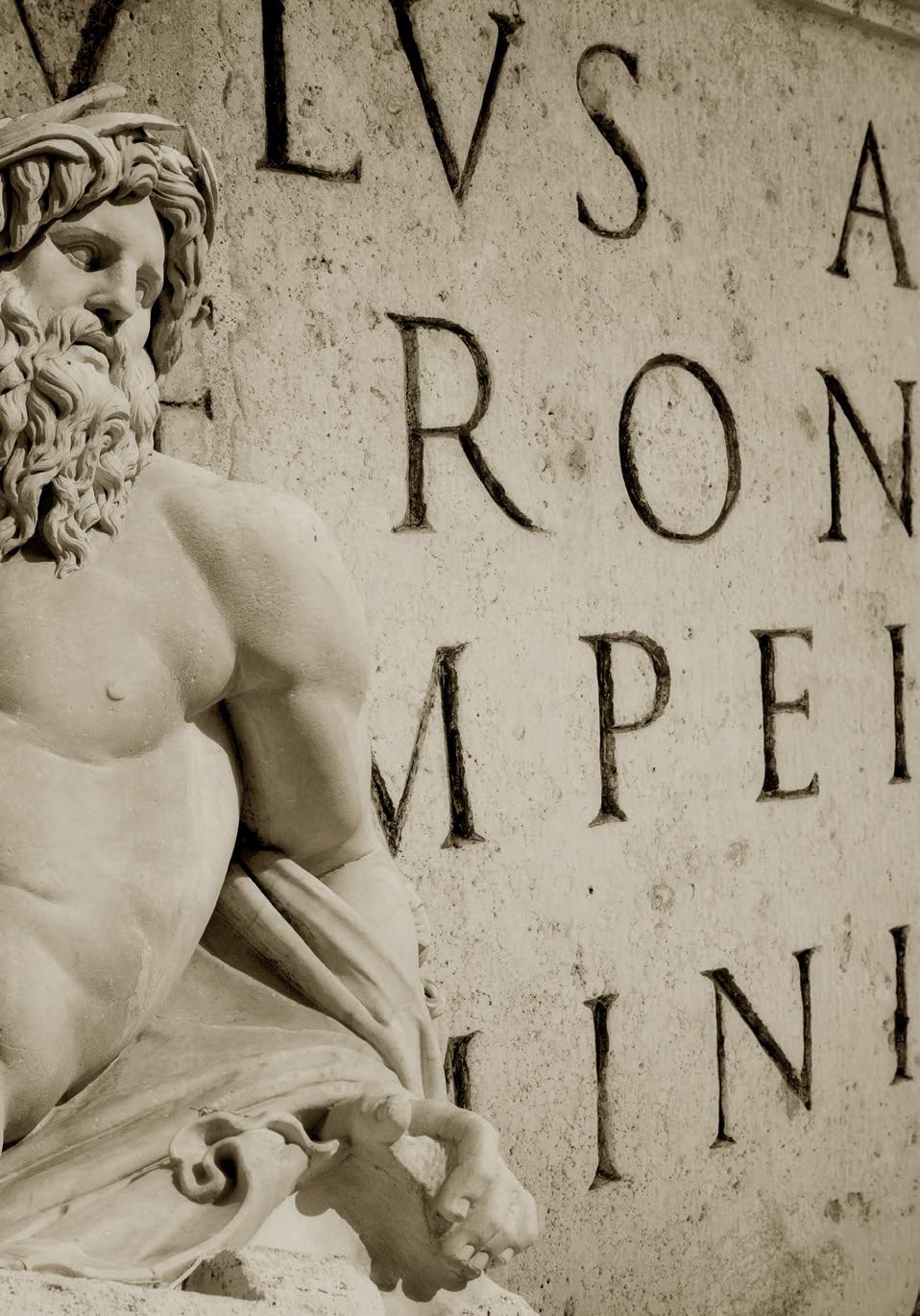
Group 5: Mathematics AA
In IB all students are required to undertake a Mathematics course as part of their learning programme. There are two courses, both taught at Higher Level (HL) and Standard Level (SL):
A. Mathematics: analysis and approaches
Level:
HL and SL
Course outline:
This course has a calculus focus. Students who choose Mathematics: analysis and approaches at SL or HL should be comfortable in the manipulation of algebraic expressions and enjoy the recognition of patterns and understand the mathematical generalisation of these patterns. Students who wish to take Mathematics: analysis and approaches at HL will have strong algebraic skills and the ability to understand simple proof. They will be students who enjoy the satisfaction from solving challenging problems. It is for students interested in
Mathematics, Engineering, Physical Sciences and some Economics.
Recommended prior achievement level:
HL AA - Students must have completed Level 2 (MCAN) Calculus to enrol in HL, and attain a minimum of Merit in the External Standards Algebra and Calculus. Entry from Level 1 must have attained Excellence in all Level 1 Diploma assessments. Additional to this must have met a minimum standard in an entry test
For SL: Merit level or better in Year 11 Algebra and Tables, Equations and Graphs Achievement Standards.
Approximate cost:
Electronic Textbooks SL $84 HL $92 Yr12 IB Ed Perfect $40
Group 5: Mathematics AI
B. Mathematics: applications and interpretation
Level:
HL and SL
Course outline:
Students who choose Mathematics: applications and interpretation at SL or HL should enjoy seeing mathematics used in real-world contexts and to solve real-world problems. This course emphasises the meaning of mathematics in context by focusing on topics that are often used as applications or in mathematical modelling. To give this understanding a firm base, this course also includes topics that are traditionally part of a preuniversity Mathematics course such as Calculus and Statistics. Mathematics: applications and interpretation will develop mathematical thinking, often in the context of a practical problem and using technology to justify
conjectures. Students who wish to take Mathematics: applications and interpretation at higher level will have good algebraic and calculus skills. They will be students who get pleasure and satisfaction when exploring challenging problems and who are comfortable to undertake this exploration using technology. The course is for students interested in Social Sciences, Natural Sciences, Medicine, Statistics, Business, some Economics, Psychology and Design.
Note: Curriculum changes to this course pending 2027.
Recommended prior achievement level:
HL AA - Students must have completed Level 2 (MCAN) Calculus to enrol in HL, and attain a minimum of Merit in the External Standards Algebra and Calculus. Entry from Level 1 must have attained Excellence in all Level 1 Diploma assessments. Additional to this must have met a minimum standard in an entry test
For SL: Achieved Level or better in all Year 11 Diploma topic assessment or approval from HOF.
Approximate Costs:
Group 6: Music
Level:
HL and SL
Course outline:
HL Music is suitable for specialist music students with an interest in solo and/or composition.
SL Music will appeal to many sorts of musicians with a requirement for one of:
• Composition and/or Improvisation.
• Solo Performance and/or Ensemble.
Exploring Music in Context
SL and HL students will engage with a diverse range of music that will broaden their musical horizons and provide stimuli to expand their own music making.
Written work demonstrating engagement with and understanding of diverse musical material.
Practical exercises in creating and performing.
Presenting Music
SL and HL students learn to practise and prepare finished pieces of music that will be performed or presented to an audience (Composition and Performance).
Students submit a collection of works demonstrating engagement with diverse material from four areas of inquiry.
• Programme notes
• Presenting as a creator: composition and/or improvisation
• Presenting as a performer: solo and/or ensemble
Experimenting with Music
Written work in the form of a report that explores different areas of music.
Practical musical evidence of the experimentation process in creating and performing.
The Contemporary Music-Maker
For the HL component, students plan and collaboratively create a project that draws on the competencies, skills and processes in all the musical roles of the music course and is inspired by real-life practices of music making.
Approximate cost:
Students choosing Solo Performing or Group Performing must be taking private instrumental/voice tuition.
Recommended prior achievement level:
Higher Level (HL): Level 1 Diploma with an endorsement with merit. Completion of NCEA Level 1 Music will prepare students well for success in Music HL. Students who have not completed this prerequisite may be allowed to enter the course should their level of musicianship be of an exceptionally high standard. This will be at the discretion of the Head of Subject – Music.
Standard Level (SL): Completion of the Level 1 Diploma will prepare students well for success in Music SL. Students who have not completed NCEA Level 1 but are active and involved musicians may be admitted at the discretion of the Head of Subject – Music.
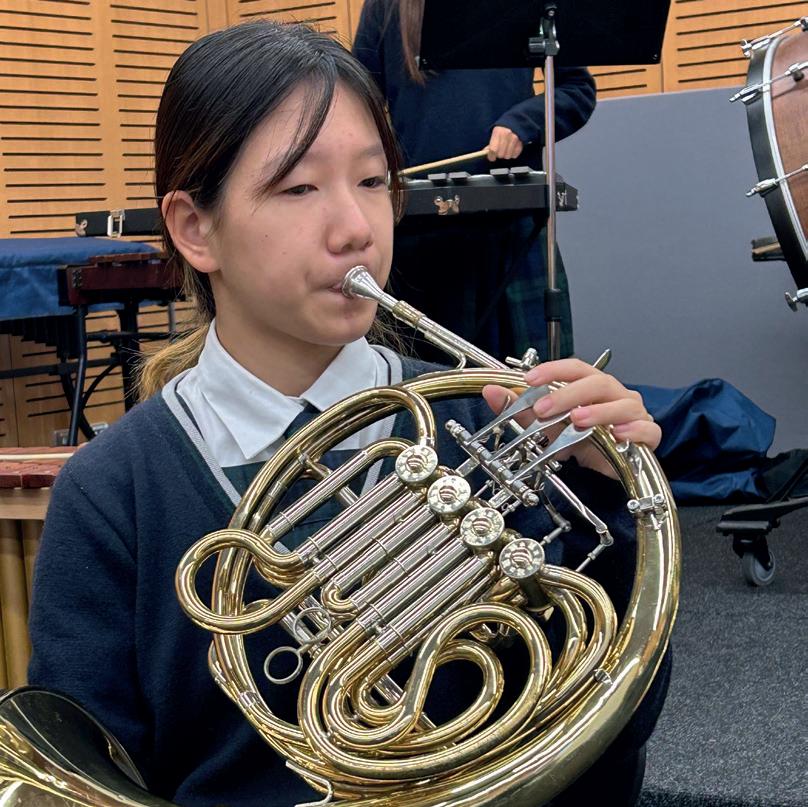
Group 4: Physics
Level: HL or SL
Course outline:
This course will enable students to develop an understanding of the physical world and the concepts that explain it. You will gain experimental skills and scientific knowledge relating to a range of physics content areas including Mechanics, Waves, Thermal Physics, Electromagnetism, and Atomic and Nuclear Physics.
Recommended prior achievement level: Merit or higher in Year 11 Diploma Semester Science or Core Science.
Approximate cost: Workbooks $40
Group 3: Psychology
Level: HL or SL
Course outline: Why study Psychology?
Psychology is all around you and touches on every aspect of your life! Who you are now, how you will be in the future, how you interact with family, friends, and strangers. These are all things that psychology can help you better understand.
This course aims to develop knowledge and understanding of psychological concepts, including models and theories. Students will learn to think critically and creatively about behaviour and cognitive processes. They will engage with problems facing individuals, groups and societies using psychological understanding and skills. Students learn to understand the biological, cognitive and sociocultural influences on human behaviour as well as research methodology.
The Biological approach attributes physiological explanations to a behaviour. It looks at brain structures, levels of neurotransmitters, hormones, genetics and evolution.
The Cognitive Approach looks at the way we mentally see the world. Instead of focusing on brain structures, it looks at actual mental processes like memory or schemas.
The Sociocultural Approach examines how our environment and culture play a part in our behaviour.
Research methodology will involve students investigating different research designs and research methods, and develop an understanding of how data is collected, analysed and interpreted.
The Psychology course is not just designed for students wishing to be psychologists. It helps students gain a variety of skills including:
• Communication
• Critical thinking
• Research skills
Recommended prior achievement level: This course is open to all students.
Approximate cost: Workbooks $30
Group 2: Spanish
Level:
HL or SL
Course outline:
This programme gives students the opportunity to reach a high level of proficiency in one of the most widely-spoken languages in the world. Students will gain a greater awareness of Hispanic cultures, as well as advancing their linguistic skills. Students will learn to express themselves with greater fluency and accuracy, both orally and on paper.
The focus is on learning about Spain and Latin America in a geographical, historical, social and cultural context. HL students will have the opportunity to study literary texts during both years of the course, and all students will learn how to manipulate texts in Spanish, and will deal with a broad range of themes, including media, the environment, art and architecture and film.
Recommended prior achievement level: Merit or Excellence endorsement in Year 11 Diploma. Any student who wishes to take this subject and does not meet this achievement level is encouraged to discuss their option choices with the HOS.
All students will be assessed in terms of their level and suitability for this course according to IB regulations at the judgement of the HOS and HOF.
Group 6: Theatre
Level:
HL and SL
Course outline:
IB Theatre is a rigorous two-year academic course that explores theatre as a global and cultural practice. Students study a range of theatre traditions, research theatrical innovators, and experiment with performance techniques. Core assignments include a Research Presentation, a Production Proposal, a Collaborative Project, and for HL students, a Solo Performance.
The course prioritises analysis, experimentation, and reflection, helping students grow as both scholars and artists. No previous performance experience is required – just curiosity and commitment.
Recommended prior achievement level: This course is open to all students.
Approximate cost:
Viewing professional theatre is an integral part of this course and the cost is approximately $100.00. Attending weekend workshops is also an important part of this programme and it is estimated that the cost for these opportunities would be approximately $100.00.
NCEA Scholarship
Courses for Study
Scholarship Overview
Scholarship
Scholarship is offered in a range of subjects. Students may enter for one or more Scholarship examinations.
St Cuthbert’s has a process to manage and assist students entering for the Scholarship examinations. Students are asked to contact the Head of Faculty or the Subject they are interested in. Students will be given advice on this from staff. Scholarship classes for most subjects are timetabled approximately one period per week, outside of class time.
Both NCEA and IB students are encouraged to consider Scholarship.
Selection of Dux / IB or NCEA
Selection of the Dux is based on a student achieving top grades and placings across her subjects, including New Zealand Scholarship.
Results from end of year school practice examinations for Scholarship will contribute towards the selection process. Scholarship results gained in the previous year will not be eligible for consideration. The Senior Leadership Team may review these criteria from time to time.
Please note that subjects will only run if numbers permit.
Subjects can be self-studied
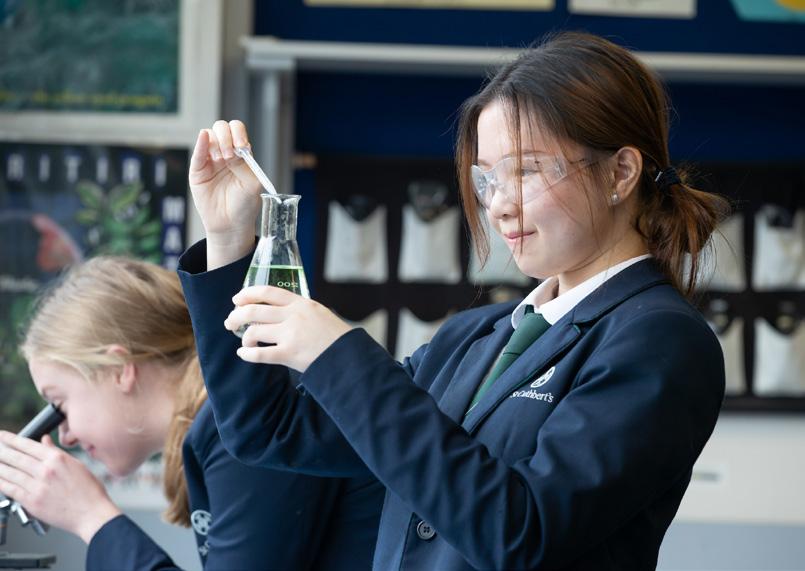
Accounting
Course outline:
Scholarship Accounting typically covers a range of topics, including financial accounting, management accounting, decision making and current affairs.
The Scholarship student in Accounting will be one who is able to demonstrate extension knowledge of the topics
Art - Design
Course outline:
The Visual Arts Scholarship in Design is intended for the highest achieving students in their final year of secondary school.
Scholarship is a distinct qualification, and for this reason the assessment of Scholarship is separate from the level three Achievement Standard.
Scholarship requires students to complete a new and original body of work to accompany the folio produced for level three.
Students are asked to extend their individually conceived proposal with evidence that they have applied analytical, critical and reflective thinking.
Students are encouraged to work independently and to apply and in-depth and lateral approach. Outcomes are often very personal and may employ skills, techniques and knowledge from across other disciplines within the visual arts.
The Scholarship programme is delivered weekly after school or in a lunchtime slot. In addition to this we offer several specialist workshops taken by experts and
covered at NCEA Level 2 and 3 as well as an awareness of broader accounting issues.
Recommended prior achievement level:
At least two Achievement Standards at Excellence level in the NCEA Level 2 Accounting course.
practitioners from within the visual arts.
Assessment:
8 Page flip file linked to the 3.4 folio assessment for NCEA.
Recommended prior achievement level:
• Students must take NCEA Level 3 Design Achievement Standard 3.4 in the year they are attempting Scholarship. This 14 credit externally assessed folio [A1 X 3] must be submitted along with their eight page A3 Scholarship flip-file presentation.
• It is not possible to sit Visual Arts Scholarship Standard from the IB programme or Level 2.
• It is expected any student attempting Scholarship should have successfully studied Visual Arts in Year 11 and 12.
Art - Painting
Course outline:
The Visual Arts Scholarship Performance Standard is intended for the highest achieving art students in their final year of secondary school. Scholarship is a distinct qualification, and for this reason assessment of Scholarship is separate from assessment of Level 3 Achievement Standards.
The body of work required for the Scholarship Standard is a selection of workbook extracts showing the proposal, plan or framework for a three panel folio. This folio must have been submitted also for NCEA Achievement Standard 3.4 and only students of the highest calibre will be encouraged to apply for the Visual Arts Scholarship. Students are expected to present an individually conceived and driven proposal with evidence that they have applied analytical, critical and reflective processes in the generation of their own original work. The methodology and independent focus of study at this level is similar to tertiary.
The Painting Scholarship programme is delivered in a weekly after school and/or lunchtime slot. In addition to this we offer a number of specialist workshops as well as an introductory cross-discipline workshop. These workshops give students an opportunity to discuss their work, one on one, with experts and practitioners.
Art - Photography
Course outline:
The Visual Arts Scholarship Performance Standard is intended for the highest achieving Art students in their final year of secondary school. Scholarship is a distinct qualification, and for this reason assessment of Scholarship is separate from assessment of Level 3 Achievement Standards.
The body of work required for the Scholarship Standard is a selection of workbook extracts showing the proposal, plan or framework for a three panel folio. This folio must have been submitted also for NCEA Achievement Standard 3.4 and only students of the highest calibre will be encouraged to apply for the Visual Arts Scholarship. Students are expected to present an individually conceived and driven proposal with evidence that they have applied analytical, critical and reflective processes in the generation of their own original work. The methodology and independent focus of study at this level is similar to tertiary.
The Photography Scholarship programme is delivered in a weekly after school and/or lunchtime slot. In addition to this we offer a number of specialist workshops and an introductory cross-discipline workshop. These workshops give students an opportunity to discuss their work, one on one, with experts and practitioners.
Assessment:
An 8 page clearfile of development work (much like an artists sketchbook) that reflects on and extends from the 3.4 NCEA Folio.
Recommended prior achievement level:
Students must take NCEA Level 3 Painting Achievement Standard 3.4 in the year they are attempting Scholarship. This 14 credit externally assessed folio [A1 X 3] must be submitted along with their 8 page A3 Scholarship flip-file presentation.
It is not possible to sit Visual Arts Scholarship Standard from the IB programme or Level 2.
It is expected any student attempting Scholarship should have successfully studied Visual Arts in Year 11 and 12.
Course outline:
An 8 page clearfile of developmental work that reflects on and extends from the 3.4 NCEA Folio.
Recommended prior practical achievement level:
Recommended prior Achievement level – Scholarship Photography
Students must take NCEA Level 3 Photography Achievement Standard 3.4 in the year they are attempting Scholarship. This 14 credit externally assessed folio [A1 X 3] must be submitted along with their 8 page A3 Scholarship flip-file presentation.
It is not possible to sit Visual Arts Scholarship Standard from the IB programme or Level 2.
It is expected any student attempting Scholarship should have successfully studied Visual Arts in NCEA in Year 12.
Art - Printmaking
Course outline:
The Visual Arts Scholarship Performance Standard is intended for the highest achieving art students in their final year of secondary school. Scholarship is a distinct qualification, and for this reason assessment of Scholarship is separate from assessment of Level 3 Achievement Standards.
The body of work required for the Scholarship Standard is a selection of workbook extracts showing the proposal, plan or framework for a three panel folio. This folio must have been submitted also for NCEA Achievement Standard 3.4 and only students of the highest calibre will be encouraged to apply for the Visual Arts Scholarship. Students are expected to present an individually conceived and driven proposal with evidence that they have applied analytical, critical and reflective processes in the generation of their own original work. The methodology and independent focus of study at this level is similar to tertiary.
The Printmaking Scholarship programme is delivered in a weekly lunchtime slot or after school. In addition to this we offer a number of specialist workshops as well as an introductory cross-discipline workshop. These workshops give students an opportunity to discuss their work, one on one, with experts and practitioners.
Art History
Course outline:
Art History Scholarship requires students to make perceptive connections between ideas and viewpoints about art and artists across wide cultural contexts. Students should be able to make independent reflections and extend fluently their understanding and insights about the questions we ask about art in our lives. The examination can be based on Level
Biology
Course outline:
Biology Scholarship is an examination that requires students to analyse biological contexts using ecological, genetic, and evolutionary concepts. They will integrate their biological knowledge from Level 2 and Level 3 Biology into their essays.
Scholarship students are expected to demonstrate high level critical thinking. They will need to integrate, synthesise and apply highly developed knowledge, skills and understanding to complex situations.
Scholarship students must be prepared to attend weekly tutorial classes, complete additional reading and extra assignments. The tutorials will take place before school or at a lunchtime.
Course outline:
An 8 page clearfile of development work. (much like an artists sketchbook) that reflects on and extends from 3.4 NCEA Folio.
Recommended prior practical achievement level:
Students must take NCEA Level 3 Printmaking Achievement Standard 3.4 in the year they are attempting Scholarship. This 14 credit externally assessed folio [A1 X 3] must be submitted along with their 8 page A3 Scholarship flip-file presentation.
It is not possible to sit Visual Arts Scholarship Standard from the IB programme or Level 2.
It is expected any student attempting Scholarship should have successfully studied Visual Arts in Year 11 and 12.
3 content, but students are encouraged to research works of their own interest and expand knowledge from visits to galleries and art events.
Approximate cost:
Optional extension weekend trips may be offered for art events. Students can attend at their own expense.
Recommended prior achievement level:
• NCEA students - at least two Achievement Standards at Excellence level in the Level 2 Biology external examinations.
• IB Students - the Scholarship course will involve considerable extra work and reading in your own time as the NZQA syllabus is considerably different.
• It is recommended that IB students enter Scholarship in Year 12.
Business Studies
Business Studies is officially included in the NZQA Scholarship subject list starting in 2027. The exam is designed for topperforming Year 13 students and will test high-level critical thinking, integration of business concepts, and complex strategic analysis.
Calculus
Course outline:
Students must be able to think innovatively and use a combination of techniques and concepts to solve complex problems in unfamiliar contexts.
The course requires a high level of critical thinking, logical development and clarity communicating ideas. It builds on what must be already very sound algebra and calculus skills. Students must also have the ability to generalise situations and be confident expressing abstract ideas symbolically.
All students considering Calculus Scholarship must be taking Level 3 MCAN or IB HL Math.
Chemistry
Course outline:
Scholarship Chemistry students are expected to demonstrate a high level of ability in integration and applying chemical knowledge, principles, and skills to a range of unfamiliar and complex situations. Students must be prepared to consistently engage in independent learning, including additional reading, completion of extra assignments, and attendance at weekly tutorial sessions.
Students considering Scholarship are expected to discuss their suitability with their Chemistry teacher and/or the Head of Chemistry.
Recommended prior practical achievement level:
Students must take the Level 3 NCEA Chemistry course or Higher Level IB Chemistry. As the IB curriculum differs from the Scholarship syllabus, IB students will need to take personal responsibility for learning some concepts to an
Recommended prior practical achievement level:
NCEA - must be studying or have already studied NCEA Level 3 Calculus or Level 2 Calculus with approval from the Head of Subject. At least 4 Excellence grades in Year 12 (Level 2) or be taking Year 13 (Level 3) Calculus.
NCEA level, prior to attending Scholarship classes on that topic area.
Entry to the Scholarship teaching programme will be at the discretion of the Head of Chemistry, but will be guided by the following criteria:
• For students currently taking NCEA Level 2 Chemistry –at least two Excellence grades in the Level 2 Chemistry external Achievement Standards and/or a GPA of 75% or higher in the Term 4 school Chemistry Exam is expected.
• For IB students, an overall weighted mark of 75% or higher in the Term 4 school exam is expected.
Chinese
Course outline:
Scholarship Chinese is an examination that is designed to test the student’s ability to effectively communicate with perception and insight and create meaning in Chinese and English. The topics are often on issues such as the differences between Chinese and Western cultures, the way to look at your own culture, language and social problems. Students are required to use a wide variety of complex structures and vocabulary that will be integrated into a synthesised response. The course will cover a range of activities to develop essay writing skills as well as speaking skills, to help students
Classical Studies
Course outline:
The student will use their knowledge of Classical Studies to demonstrate their ability to think critically about the ideas and values of the classical world. They will communicate their understanding through the use of primary and secondary source evidence in a range of integrated contexts, which may include history, literature, philosophy, architecture and / or art. The course demands high levels of content knowledge, deep levels of critical analysis and a willingness to develop original ideas beyond the Level 3 course. This must be communicated in an articulate and eloquent style of writing which develops a logical sequence of ideas and a clarity of thought. Students must be committed to working independently outside class and contributing to discussions during class.
learn how to assemble ideas in a logical, clear, concise and coherent manner. Students will learn how to develop a fully integrated, fluent discussion and argument through analysis and evaluation, independent reflection and extrapolation.
Recommended prior achievement level:
Students must be able to evaluate critically, develop an argument and communicate ideas effectively in an illustrated essay format.
Students must have at least four years study of the language and achieved Excellences in Level 2 Chinese.
Assessment:
The examination will have two sections. In the first section, students will select two topics out of Augustus, Roman Art and Architecture and Virgil’s Aeneid. For each topic they will answer one of the two questions. In the second section, students select one topic out of Roman culture and identity or Roman empire and power. For their selected topic, students will be required to analyse and interpret unfamiliar sources of evidence such as extracts and images.
Recommended prior achievement level:
• Students must be studying the Level 3 course.
• If students take Level 2 Classical Studies, at least 18 credits at Merit or Excellence level in this course.
• If students did not take Level 2 Classical Studies, at least 18 credits at Merit or Excellence level in English.
Computer Science (Digital Technologies)
Course outline:
The student will use their knowledge of digital technology, including computational thinking, to develop, design, synthesise, integrate and critically reflect on digital technology solutions, to address problems.
Assessment:
The examination will have three complex questions that require:
• Algorithmic comprehension and decomposition.
• Algorithm development and implementation.
• Critical reflection and analysis.
Dance
Course outline:
Scholarship Dance is an advanced course designed for highly motivated dancers who demonstrate excellence in performance, choreography, critical thinking, and creative inquiry. Students work closely with the Dance teacher and independently to extend their understanding of dance beyond the Level 3 curriculum.
The course encourages students to develop:
• Sophisticated choreographic and performance skills
• Originality and artistic voice
• Critical analysis and evaluation of dance works and practice
• In-depth understanding of dance theories, processes, and conventions
• The ability to justify artistic choices using evidence and informed discussion
Students engage in practical exploration, research, reflective writing, and analytical discussion throughout the year. A strong emphasis is placed on creativity, risk-taking, refinement, and independent learning.
Recommended prior achievement level:
• IB Computer Science students can take Scholarship Digital Technologies at the discretion and in consultation with the Head of Faculty.
• Students with Excellence in Year 11 Diploma Computer Science may be considered at the discretion of the Head of Faculty.
Students will also have opportunities to connect with and learn from industry professionals, choreographers, dancers, and artists working within the professional dance sector.
Assessment is based on the development of an ongoing written and practical portfolio that documents choreographic processes, performance development, analysis, research, and reflective thinking across the year.
Recommended prior practical achievement level: Level 2 Dance
Recommended prior achievement level: Students must be taking Level 3 Dance.
Drama
Course outline:
Available to students taking NCEA Level 3 Drama, Scholarship Drama challenges students to create and present three contrasting solo performances, supported by oral justifications and critical responses. Students will demonstrate an understanding of theatre in Aotearoa and explore their own artistic perspectives. This course is designed for highly motivated students ready to extend themselves creatively and analytically beyond the curriculum.
Economics
Course outline:
The Scholarship student in Economics will be one who is able to communicate a sophisticated economic analysis in a contemporary New Zealand context. They will also demonstrate an awareness of economics in a broader context and independent thought.
The course will cover strategies for approaching the various sections of the Scholarship Economics examination.
English
Course outline:
A Scholarship student in English will be the one who reads widely and keenly and is able to demonstrate extensive knowledge of texts and methods used in crafting them. They will also able to engage critically with ideas and construct independent coherent and persuasive arguments.
Students will complete three essays, selecting one question from each of the following sections: Close Reading of Unfamiliar Texts, Responding to Literature and Language, and Exploring Issues in Literature and Language.
French
Course outline:
Scholarship French is an examination that is designed to test the students’ ability to demonstrate their understanding of spoken and written texts through written and spoken responses. Students will demonstrate high level analytical skills and critical thinking through logical and clear responses, using complex and accurate language fluently.
The course will include a range of activities to develop analytical and critical thinking skills as well as developing language skills, based on texts and discussions on world issues.
Recommended prior achievement level:
All students considering scholarship must discuss this with the Head of Drama.
It is expected the student would have either Merits or Excellence grades gained in Level 2 Achievement Standards.
Recommended prior achievement level:
• Excellence for at least one of 2.2 or 2.3 (external) or equivalent in Year 12 IB.
• All students considering Scholarship must discuss this individually with the Head of Subject.
Recommended prior achievement level:
• Merit or Excellence grades gained in Level 2 Achievement Standards or the equivalent in Year 12 IB.
• Year 11 and 12 students may be admitted to the Scholarship programme at the discretion of their class teacher and /or the Head of Faculty.
Students will need to show a commitment to the course in terms of attendance and completion of tasks. Students are encouraged to read extensively on their own.
Film and Media
Course outline:
This course is designed for highly motivated students who read and watch a wide range of films and texts. The course challenges students to think critically about the relationship between the media and society, closely analyse texts, assess audience behaviour, and global influences. Alongside this, they will reflect on their own media production work, analysing the decisions, processes, and techniques that shape meaning.
This course suits students who are strong writers, passionate about film, curious, engaged, and willing to challenge themselves.
Recommended prior achievement level:
Students must be independent learners, strong essay writers, and be committed to watching films and other texts outside of the class time.
Assessment:
A 2 hour external written examination which includes a written response in French to a spoken text in French and a written response in English to a written text in French. Following the written tasks, students will have 10 minutes to prepare an oral response of 3-4 minutes in French to a question linked to one of the texts from the written examination.
Geography
Course outline:
Scholarship Geography is an examination that is designed to test students' ability to demonstrate their understanding of a range of geographic perspectives and understandings about a geographic issue or problem. These are often “big picture” issues such as pollution, climate change, migration and water scarcity. Students are required to use their geographic knowledge, skills, ideas, and understanding to support their answers.
The course will cover a range of activities to develop critical thinking skills, to help students learn how to analyse new situations and to extrapolate into the future to solve problems facing the world. Students will learn how to develop a fully integrated, fluent discussion and argument in relation to a geographic context. The geographic context is generally indicated at the end of the year.
Recommended prior practical achievement level:
For NCEA students: Excellence grades in all NCEA Level 2 Achievement standards.
For IB students: at the discretion of the HOS Senior French, with achievement over 80% in Year 12 IB Term 4 examination and Term 4 oral assessment.
Recommended prior achievement level:
Students must be able to evaluate critically, develop an argument and communicate ideas effectively in an illustrated essay format.
Students must take the Level 2 or Level 3 course or take IB Geography or Environmental Systems and Societies.
History
Course outline:
The Scholarship History examination assesses the ability of students to convey their own independent argument about an historical idea or theme in extended pieces of writing. The theme changes each year. Previous themes include relationships between workers, employers, and the state, the role of the individual in shaping historical events and treaties and indigenous peoples. Students will use examples from their history course to write about the theme. The examination requires students to interpret sources and use key ideas from those sources to build their argument. They must also judge sources and critique the writing of historians.
The Scholarship History course will teach students how to approach questions, analyse and judge sources, develop an argument and to incorporate evidence effectively into a written response. Our lessons will be focused on the yearly theme but will draw on examples covered in all senior History courses. Students will be expected to discuss ideas in order to develop the depth of understanding required at this level.
Latin
Course outline:
This course demands a strong knowledge and understanding of Latin grammar and vocabulary to produce a fluent English translation of challenging Latin prose and poetry. In addition, the student will be expected to engage in deep levels of critical thinking and sophisticated analysis of the literature in terms of language, style, literary techniques, metrical effects and content.
Recommended prior achievement level:
Students should be taking a senior History course and achieving at Excellence level or IB grade 6.
Students not taking a senior History course can take Scholarship History at the discretion of the Head of History.
They must have demonstrated an excellent level of achievement in English or another Social Science discipline.
Assessment:
There will be one passage of prose and one passage of poetry. Each passage has one question requiring translation and one question requiring literary analysis. An introduction to each passage is given in English.
Recommended prior achievement level:
At least 3 standards achieved at Excellence in Level 2 Latin.
For IB students, at least 20/30 in Paper 1 of the Term 4 Year 12 IB school examination.
Music
Course outline:
Scholarship Music is a practical based course. Students create a portfolio of work choosing from one of the three Music disciplines; Performance, Composition or Musicology. This portfolio, is supported with a critical reflective analysis essay that discusses their work. This course is designed for students who wish to explore Music and develop their performance, composition or analysis skills.
Assessment:
A portfolio of work from either Performance, Composition or Musicology. A critical reflective analysis essay.
Recommended prior practical achievement level:
All students considering Scholarship Music, must discuss this with the Head of Music.
An advanced level of Music understanding and ability is required. Performance students are required to be at Grade 8 or above.
Students must have taken Level 2 Music and/or be taking Level 3 Music.
Health and Physical Education
Course outline:
Assessment for Scholarship Physical Education and Health will be in the form of a report. Candidates will self-select a suitable topic from provided research articles to produce the report. The report will be a critical analysis and evaluation of an aspect or aspects drawn from the Health and Physical Education curriculum at Level 8 and will be supported by an organised collection of evidence.
Scholarship Health and Physical Education candidates are expected to use knowledge of health and physical education to critically evaluate information related to physical activity. Candidates are expected to demonstrate high level understanding and ideas through the application of biophysical principles and socio-cultural factors drawn from their own learning experiences in, through and about, human body movement. Candidates are expected to demonstrate high-level critical thinking, abstraction and generalisation, and to integrate and synthesise ideas into the critical examination of their topic.
The course will help students to think critically, gather research on their topic, develop a structure for the report, apply knowledge, skills and understanding and integrate their own experiences into the report. The course will prepare students so they are able to write concise and meaningful paragraphs with logical development and convincing communication of ideas.
Recommended prior achievement level:
Students should be taking NCEA Level 3 Sport and Exercise Science currently. Students should have attained Excellence in all Level 2 Sport and Exercise Science internally assessed standards with the exception of the performance standard AS91330 (PE2.4). Other students may take Scholarship Physical Education and Health at the discretion of the Head of Faculty of Health and Physical Education.
Course outline:
The Physics Scholarship examination is based on the NCEA Level 2 and Level 3 courses. The content is similar to the higher level IB course.
Scholarship students are expected to demonstrate high level critical thinking, abstraction and generalisation, and to integrate, synthesise and apply knowledge, skills, understanding and ideas to complex situations.
Scholarship students must be prepared to regularly complete extra assignments and attend weekly tutorial classes before school.
Spanish
Course outline:
The Scholarship Spanish course is designed to test the student’s ability to demonstrate understanding of spoken and written texts through written and spoken responses. The course focuses on material that stimulates knowledge and encourages critical thinking.
Recommended prior achievement level: NCEA students – at least two Achievement Standards at Excellence level in the Level 2 Physics external examinations.
IB students – students should achieve over 70% in the Year 12 school IB Physics examination.
Assessment:
A two-hour written external examination which comprises a written response in Spanish to a spoken text in Spanish and a written response in English to a written text in Spanish. Following the written tasks students prepare an oral response to a question based on the material in the written examination.
Recommended prior practical achievement level:
For NCEA students: Endorsement with Excellence at Level 2.
For IB students: at the discretion of the Head of Subject.
Spatial and Product Design
Course outline:
The Scholarship student will use knowledge of Spatial and Product Design to explore and develop design ideas through creative processes that integrate knowledge and skills, and are expressed visually, applying presentation techniques and principles.
Students who enter SPD Scholarship are required to demonstrate a higher level of critical and creative design thinking to explore and develop design ideas. The student will demonstrate extensive skills and knowledge in spatial or product design that is expressed visually, applying presentation techniques and principles.
(Previously Design and Visual Communication)
Recommended prior achievement level:
• NCEA students should be taking SPD at Level 2 or Level 3 to partake in SPD Scholarship.
• IB students considering Scholarship SPD must discuss this with the Head of Faculty. Students with excellence in Year 11 Diploma SPD may be considered at the discretion of the Head of Faculty.
Statistics
Course outline:
Scholarship Statistics candidates are expected to demonstrate high-level critical thinking skills. They must be able to generalise, synthesise and apply knowledge to complex situations.
The course explores the content of all seven Level 3 Statistics achievement standards. There is a focus on statistical investigation, statistical literacy and probability. Students will strengthen their skills in data analysis and interpretation, in real life contexts. They will use knowledge of Statistics to apply statistical and probability concepts and methods to complex problems in contexts which may be unfamiliar.
By taking Scholarship Statistics, students will develop critical thinking skills to interpret statistical reports and visualisations and learn how to clearly communicate concepts and findings.
Te Reo Māori
Course outline:
The Scholarship Te Reo Māori course includes engaging with contemporary and traditional literature, current events and metaphorical language.
Technology
Course outline:
Students in the following Technology subjects; Food Development and Production, Digital Design and Textiles are eligible to sit Technology Scholarship.
Scholarship students will use knowledge of technology to demonstrate synthesis, integration, justification, and critical reflection on technological experiences.
Recommended prior practical achievement level:
Students should be taking NCEA Level 3 Statistics concurrently or have completed the NCEA L3 Statistics course in a previous year.
Students should have attained at least a Merit in the externally assessed AS 91267 Apply Probability Methods in Solving Problems standard.
Any student in Year 11 or above may attend the tutorials for the scholarship statistics.
Approximate cost:
Workbook $25.00
Recommended prior practical achievement level:
Students must have achieved 24 Level 3 credits in Te Reo Māori.
Recommended prior achievement level:
• It is expected any student attempting Technology Scholarship should be studying their specialist Technology subject in Year 12 or Year 13.
• IB students can take Technology Scholarship at the discretion and in consultation with the Head of Faculty.
Other Information
Qualifications Overview
NCEA
To gain NCEA certificates, students must reach a set total number of credits, made up from Achievement Standards. This is similar to the way university degrees are awarded. NCEA can be awarded at Level 2 or 3.
NCEA Level 2 Certificate
Students must earn 60 credits at Level 2 or higher.
NCEA Level 3 Certificate
Students must earn 60 credits at Level 3, or above.
Students can gain NCEA certificates endorsed with Merit or Excellence according to the number of these grades they attain overall.
School leavers are able to build on their NCEA at polytechnics, universities, wānanga, colleges of education and private training institutions. NCEA is used for University Entrance selection and for limited entry courses at the tertiary level.
Literacy and Numeracy Co-requisites (or CAA)
From 2028 Level 2 NCEA is being replaced with the New Zealand Certificate of Education (NZACE). Students in Year 9 in 2026 will be the first to undertake this new qualification. Students will also need to pass specific literacy and numeracy standards in order to be awarded Level 1, 2 or 3 or University Entrance.
Students will typically sit these in Year 10.
Frequently Asked Questions
1. Is NCEA accepted at overseas universities?
Yes. Students from St Cuthbert’s have been accepted at leading international universities such as Yale, Duke, Brown and the University of Edinburgh.
2. Do students with NCEA get acceptance to limited entry university courses? Yes.
3. Does NCEA report failure?
The Record of Achievement does not record Not Achieved results or standard not assessed grades. The Result Notice available from mid to late January will record all results, including Not Achieved, for both external and internal standards.
4. Does NCEA recognise high achievement?
Achievement across all courses is recognised with certificates at all levels endorsed with Excellence and Merit (as well as achieved or not achieved). The endorsements serve many purposes: they will motivate students and provide universities and employers with clear, concise benchmarks. The Scholarship level provides recognition of very high achievement.
Qualifications Overview
International Baccalaureate
The IB Diploma programme is a two-year course of study for students aged 16 - 19 leading to final examinations and an internationally recognised qualification. It provides a compromise between early specialisation preferred in some national systems and the greater breadth found in others.
The programme emphasises the importance of high academic standards, the international nature of knowledge, critical thinking, active citizenship and cultural understanding. It encourages students to become active, compassionate and lifelong learners who understand that other people, with their differences, can also be right.
The IB Diploma programme is suitable for students who are highly motivated, well organised, interested in developing their thinking skills and have a dedicated approach to study. It is accessible to average or above average students who possess these attributes while at the same time enables gifted students to demonstrate their talents.
Group Subjects Offered at St Cuthbert’s
Language and Culture SL
Chinese HL/SL
Group 1: Languages A1
Group 2: Learned Language
Group 3: Individuals and Societies
English Literature HL/SL
Chinese A – Literature HL/SL
English Language and Literature HL/SL
French B HL/SL
Spanish B HL/SL
Latin HL/SL
French Ab Initio
English B HL
Chinese B – Mandarin HL/SL
Language and Culture SL
Business Management HL/SL
Economics HL/SL
Geography HL/SL
History HL/SL
Environmental Systems and Societies HL/SL
Psychology HL/SL
Biology HL/SL
Chemistry HL/SL
Group 4: Experimental Sciences
Group 5: Mathematics
Group 6: The Arts
Design Technology SL
Physics HL/SL
Environmental Systems and Societies HL/SL
Computer Science HL/SL
Mathematics Analysis and Applications HL/SL
Mathematics Applications and Interpretation
HL/SL
Visual Arts HL/SL
Music HL/SL
Theatre Arts HL/SL
Film HL/SL
The two-year course
Students study six subjects, an Extended Essay, a Theory of Knowledge course and CAS, where they participate in Creativity, Activity and Service. In addition to six subjects, students also engage in the core, which consists of normally three of the six subjects are studied at higher level (HL), equivalent to 240 teaching hours over the two years. The remaining three subjects are studied at standard level (SL), equivalent to 150 teaching hours over the two years. Many of the HL courses are at a similar standard to first year university courses.
Students must choose one subject from each group. Note: instead of a Group 6 subject, a candidate may select an additional subject from Groups 1 - 4.
Assessment
Classroom teachers and IB examiners work in partnership to ensure that students have ample opportunity to demonstrate what they have learned and that they are able to communicate this. A variety of assessment methods is used to acknowledge both the content and the process of academic achievement and to take into account differing learning styles and cultural patterns.
The three main components of assessment:
1. External examinations which are externally marked and each marker is moderated by a mark/remark method.
2. Tasks which are internally supervised with the guidance of the teacher over a period of time but marked by external examiners.
3. Internal assessment where the candidate’s work is marked by the teacher with this marking being subjected to external moderation.
Almost all courses have an internally assessed component. Specialised forms of assessment are used in subjects such as visual arts, music and foreign languages. Examinations tend to form the basis of the assessment for most courses because of their high levels of objectivity and reliability. Internally assessed work usually counts for a minimum of 20% and maximum of 50% of the final grade in a subject.
Results
The grading system used by IBO is criterion based, rather than norm referenced. This means there is no fixed percentage of each grade.
Each examined subject is graded on a scale of one (minimum) to seven (maximum). Generally each assessment component is awarded marks. The total of the component marks are used to award the subject grade.
In order to be awarded the IB Diploma a student must meet defined standards and conditions, including a minimum total of 24 points overall, of which a minimum of 12 is required for HL, and the satisfactory completion of the core requirements: Theory of Knowledge, the Extended Essay and Creativity, Activity and Service.
The maximum score of 45 includes three points for the core.
Frequently Asked Questions
1. Will students still be able to do NCEA in Year 12 and 13?
Most New Zealand schools offering the IB Diploma programme also offer NCEA at Levels 2 and 3. Students complete Year 11 and then choose the qualification pathway most suited to their needs. During Year 12 it is possible to change from the Diploma programme to NCEA if the course is proving difficult. This does not happen often. It is not possible to change from NCEA to IB in Year 12.
2. Why does St Cuthbert’s offer this qualification?
The International Baccalaureate qualification was chosen because it strongly supports our goal for our teaching and learning programmes: to develop students into successful, autonomous, independent learners who are able to think critically, caringly and creatively. In addition to this, its philosophy aligns closely with the values and beliefs articulated in our school Compass. With increasing numbers of our students seeking entrance to international universities we must ensure that we offer a world class education - one that embodies the multidimensional nature of the school and its mission, which is to create remarkable futures for our young women. Hence as part of this commitment, there is a need to make sure that the qualifications we are offering are the right ones for the school. This means ensuring that they address the identified needs of providing classroom programmes that open tertiary doors and enable our girls to thrive in the global society in which they live.
3. What will it cost?
As mentioned on page 173 a fee of $500 is charged to each student selecting the IB Diploma. This is charged in Term 2 of Year 12. Registration fees for the IB examinations are approximately NZ $1,400 depending on the exchange rate. This is charged to the student’s account in Term 2 of Year 13. A fee of $360 per candidate is also charged for examination paper courier costs. This is charged in Term 3 of Year 13.
4. What is ab initio?
This is an international languages course where the student has had little or no previous experience of the language.
At the school, French is offered as the ab initio language. All students will be assessed in terms of their level and suitability for this course according to IB regulations at the judgement of the HOS and HOF.
5. What subjects that the school currently offers are not included in the IB qualification? Accounting, Dance, Digital Design, Food Development and Production, Spatial and Product Design, Textiles, Photography, Classical Studies, Physical Education and Te Reo are not offered in IB.
6. What happens if my daughter decides the Diploma programme is not for her?
Students studying for the IB Diploma are able to opt into the NCEA qualification at any time during Year 12. The school has a strong pastoral guidance system which supports all students in making the most appropriate decisions about assessment and qualifications.
Qualifications Overview
NZQA Schlolarship Awards
The New Zealand Qualifications Award Scholarship is a monetary award to recognise the very top scholars throughout the country. It is a challenging and rigorous examination with only 3% of those entered for NCEA Level 3 gaining the award.
This assessment extends the best secondary students and enables the top scholars throughout the country to be identified and acknowledged. Students are expected to synthesise and integrate concepts, and to apply higher-level thinking based on in-school and independent learning. Scholarship is an award and as such does not generate credits towards NCEA.
Both NCEA and IB students can sit the NZ Scholarship examinations. All students who gain a Scholarship will receive a monetary award.
The Scholarship awards are:
• Prime Minister’s Award for Academic Excellence: The top student in New Zealand in the Scholarship examinations
• Premier Award: The very top five to ten scholars who achieve Outstanding Scholarships in three subjects – $10,000 each year for three years. The number of recipients for this award is restricted
• Outstanding Scholar Award: The next top 40-60 candidates who achieve three Scholarship subjects with at least two Outstanding performances or more than three Scholarships with at least one at Outstanding –$5,000 each year for three years
• Scholarship Award: For those students who achieve Scholarship standards in three or more subjects –$2,000 each year for three years
• Top Subject Scholar Award: The top subject achiever in each Scholarship subject – $2,000 each year for three years
• Single Subject Award: Candidates who achieve the Scholarship standard in up to two subjects – a one-off payment of $500 per subject
To be eligible for these awards candidates must sit all Scholarship examinations in the same year. To receive these financial awards students must be enrolled in tertiary study in New Zealand in the years they receive monetary awards and maintain a ‘B’ average. Foreign fee paying students are not eligible for the financial awards. There is no compassionate consideration provision for the Scholarship examinations.
Student Commitment
Level 2 and 3 students are encouraged to consider Scholarship in subjects they are attaining all Excellence credits in.
Scholarship candidates at St Cuthbert’s attend Scholarship tutorials and are expected to have a high level of commitment to their study and be prepared to complete additional work beyond these timetabled classes. Scholarship demands that students synthesise and integrate concepts and apply a higher-level of thinking than that required at Level 3 of the NCEA. They must be self-directed and take responsibility for their learning.
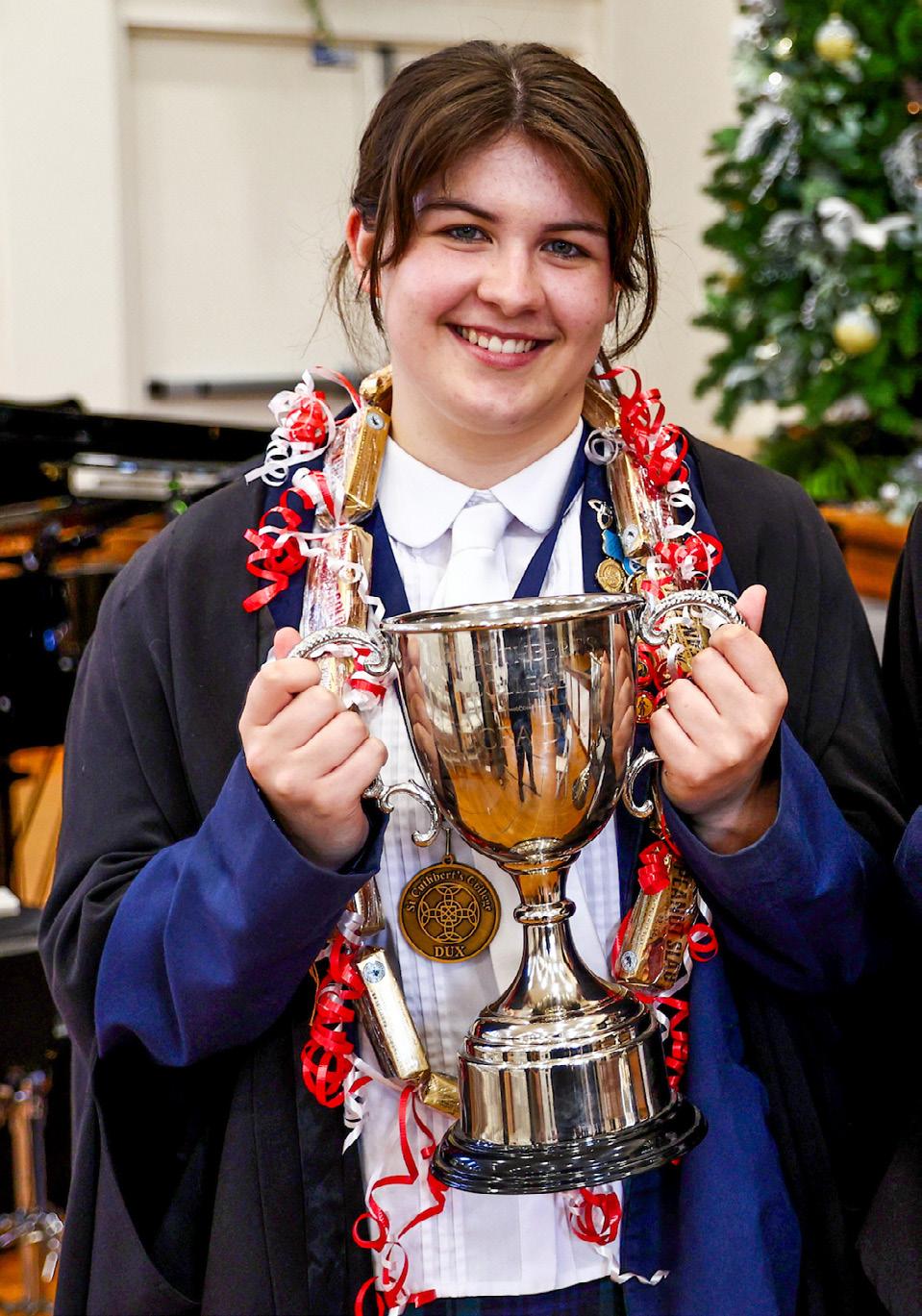
University Entrance
A Guide To University Entrance
Entry to degree-level programmes
NCEA
Numeracy:
10 credits at Level 1 or above made up of co-requisite Level 1
Numeracy or certain achievement standards.
Literacy:
Five credits in reading and five credits in writing at Level 2 or above from specific standards.
Level 3:
Achievement of NCEA Level 3, requires 60 credits at Level 3.
Students must gain 14 credits from each of three approved subjects.
Approved Subjects:
Accounting, Agriculture and Horticulture, Biology, Business Studies, Calculus, Chemistry, Chinese, Classical Studies, Construction and Mechanical Technologies, Cook Islands Māori, Dance, Design (Practical Art), Design and Visual Communication, Digital Technology, Drama, Earth and Space Science, Economics, Education for Sustainability, English, Film and Media, French, Geography, German, Health Education, History, History of Art, Home Economics, Indonesian, Japanese, Korean, Latin, Mathematics, Music Studies, Painting (Practical Art), Photography (Practical Art), Physical Education, Physics, Printmaking (Practical Art), Processing Technologies, Religious Studies, Samoan, Science, Sculpture (Practical Art), Spanish, Social Studies, Statistics, Technology, Textiles, te reo Māori, te reo Rangatira, Tongan.
International Baccalaureate
A student will gain University Entrance if they are awarded the full International Baccalaureate Diploma with a minimum of 24 points.
To gain admission to a degree course at a New Zealand University
1. You must meet the University Entrance Standard.
2. You may be required to attain a “rank score” to gain entrance to most universities.
3. You may need to meet other requirements, depending on the degree you intend to study. For example, you may be required to study certain subjects while at school and gain a specific number of credits in these subjects, have an interview or complete a portfolio, audition or CV. Students need to visit relevant tertiary websites to check selection criteria. Hard copies of prospectuses are also available from the Careers Centre.
4. Discretionary Entrance refers to the entry standard required of Year 12 (NCEA Level 2) applicants to university. Discretionary Entrance for students studying IB is on a case by case basis. Contact University Liaison Staff.
Academic English language requirement at University of Auckland
The University of Auckland has introduced an academic English language requirement for entry into all undergraduate programmes. This applies to all domestic students and this requirement is 17 Level 2 credits in Literacy or English.
A Guide to University Entrance
International students who are applying on the basis of a New Zealand secondary school qualification. In addition to the University Entrance literacy standard, students will require:
NCEA: A minimum of 17 credits in English in Level 2 and/ or Level 3.
IB: International Baccalaureate Diploma with 26 points. If students do not meet this requirement but otherwise qualify for admission, you can meet the Academic English Language requirement by passing an academic English language course at the University of Auckland in their first year of study.
Calculating your rank score using NCEA results
Your NCEA rank score is calculated using your best 80 credits at Level 3 from up to five approved subjects. You will gain four points for each Excellence credit, three points for each Merit credit and two points for each achieved credit. You cannot include more than 24 credits from any one subject.
NCEA
and IB: Entry to overseas universities
Students wishing to apply for overseas universities (whether as New Zealand citizens or citizens of other countries) need to check entrance criteria very carefully. The responsibility lies with the student, but Head of Careers or their Careers Counsellor are happy to assist with research. The IB Diploma and NCEA Level 3 qualification are both recognised by all New Zealand and overseas universities.
NCEA and IB: Entry to overseas universities
Applications for university residential college and tertiary scholarships for IB candidates are based on a provisional predicted grade. This grade is generated from data for all IB internal assessments and IB College examination results. The predicted grade is confidential and cannot be released to the student.
Information
for parents and students
Tertiary websites www.careers.govt.nz www.nzqa.govt.nz
Career Development
Making decisions about which subjects to take and plans for future tertiary training and career pathways can be challenging. The staff in our Careers Department are available to assist girls as they move through the Senior School and into the world beyond.
One of the key components to making good decisions involves knowing yourself well. Understanding your strengths, personality traits, values and life experiences help build self-awareness.
Exploration of possible opportunities is also essential. Our career mentoring and guest speaker programme will provide the chance for girls to meet professionals who are working in areas that they are interested in.
Career education will also support girls’ development, facilitating learning about future opportunities and providing tools and information to equip girls as they make decisions about the future.
Year 13 Making decisions and taking action
Year 12 Exploring options
Year 11 Developing self-awareness and exposure to opportunities
Year 10 Building the foundation
Guide to choosing school subjects
Individual careers appointments for all students in Year 13. Careers Department presentations on university applications for NZ and overseas, tertiary scholarships, halls of residence applications, financing tertiary study (within HUB). University presentations - NZ and overseas. University course planning workshops for NZ universities.
St Cuthbert's Careerwise website Careers Breakfast and Careers Evening. Support with tertiary scholarship applications.
Individual careers appointments for all students in Year 12. Careers Speakers Series (HUB).
HUB Careers assemblies and Careers Evening. Presentations about university life and future career pathways.
St Cuthbert's Careerwise website
Career education programme – personal portfolio development, exploration projects, tertiary study research, curriculum pathways information and subject selection. Annual Careers Evening.
St Cuthbert's Careerwise website
Career education programme - the future world of work, career assessments, career research, subject selection.
St Cuthbert's Careerwise website
Information can be found on the College's Careerwise website stcuthberts.careerwise.school/page/53
Careers appointments
At Year 12 and 13, students have individual career appointments. Year 13 students are invited to an interview by their career counsellor in Term 1. Year 12 and 13 students are also able to book appointments directly via Careerwise. Year 12 students are invited to an interview from the beginning of Term 2. Parents are welcome to attend these appointments.
Subject selection appointments
In Term 3, shorter subject selection appointments are available for students in Years 10–12.
Location of Careers team
We are located in The Future Pathways Centre beside The Wells block.