When loving where you live means protecting what makes it home .
Connecting You to Nature is published by SCCF, a nonprofit 501 (c)(3) founded in 1967 on Sanibel Island, Florida. Through stories about how we fulfill our mission to protect and care for Southwest Florida’s coastal ecosystems, we hope to deepen your understanding of how our land, water, and wildlife depend on our stewardship.
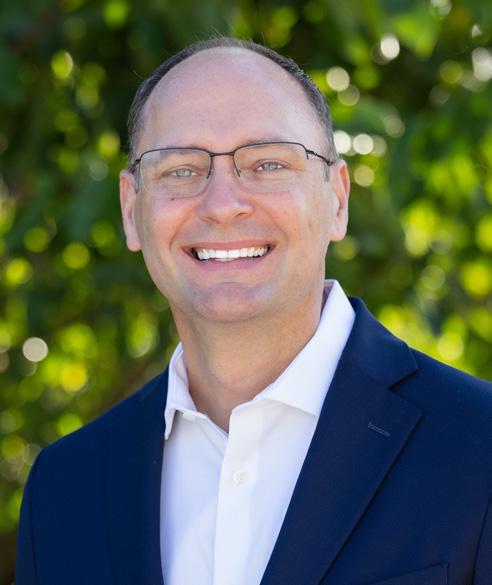
James Evans, CEO Barbara Linstrom, Editor
CONTRIBUTING WRITERS
Denise Blough, Matt DePaolis, Jenny Evans, Chris Lechowicz, Eric Milbrandt, Ph.D., Kealy Pfau, Shannon Rivard, Kelly Sloan
CONTRIBUTING PHOTOGRAPHERS
Iris Aloia Shane Antalick, Doug Cook, Larry Masters, David Meardon, Milissa Sprecher
OPEN TO THE PUBLIC
Native Landscapes & Garden Center at Bailey Homestead Preserve 1300 Periwinkle Way (239) 472-1932
Sanibel Sea School 455 Periwinkle Way info@sanibelseaschool.org (239) 472-8585
Main Office (239) 472-2329
SCCF Sea Turtle Hotline (978) 728-3663
Shorebird Inquiries shorebirds@sccf.org
www.sccf.org | info@sccf.org
P.O. Box 839, Sanibel, FL 33957
Join Us with Conservation in Action
It might have come to you while reading our most recent annual report, passing the billboard near the causeway, watching a video on your social media feed, or perhaps just talking to an SCCF Trustee or a member of our hardworking staff. In all these ways — and many more — we have been asking our members and neighbors to join us through our conservation-in-action efforts. There are so many ways to do that, and we encourage you to read about some of them in this magazine. We also encourage you to consider this:
A powerful and personal way to discover conservation in action is to invest in our missiondriven work with your own tax-deductible contribution. Your support is essential to preserving and protecting this place we call home — for each other now and for future generations. Discover your own conservation power by renewing or perhaps even increasing your support. Using the enclosed donation envelope or contributing online can help you do just that. We will be incredibly grateful if you do.
If you have questions, including about gifts of securities or donations by ACH transfer, please contact SCCF Development Director Cheryl Giattini at 239-822-6121 or cgiattini@sccf.org.
Thank you in advance for your consideration of this heartfelt request.
Dear Friends and Neighbors,
For nearly 60 years, SCCF has succeeded in protecting and caring for our coastal ecosystems not only because of the science, education, and advocacy we do, but because of how engaged our community is in supporting and actively taking part in our work.
At the core of our success are individuals like you who give generously of your time, talents, and treasure to ensure that what makes these islands so special is protected for future generations.
James Evans, CEO
In this issue of Connecting You to Nature, we feature some notable ways we are advancing our mission through conservation in action.
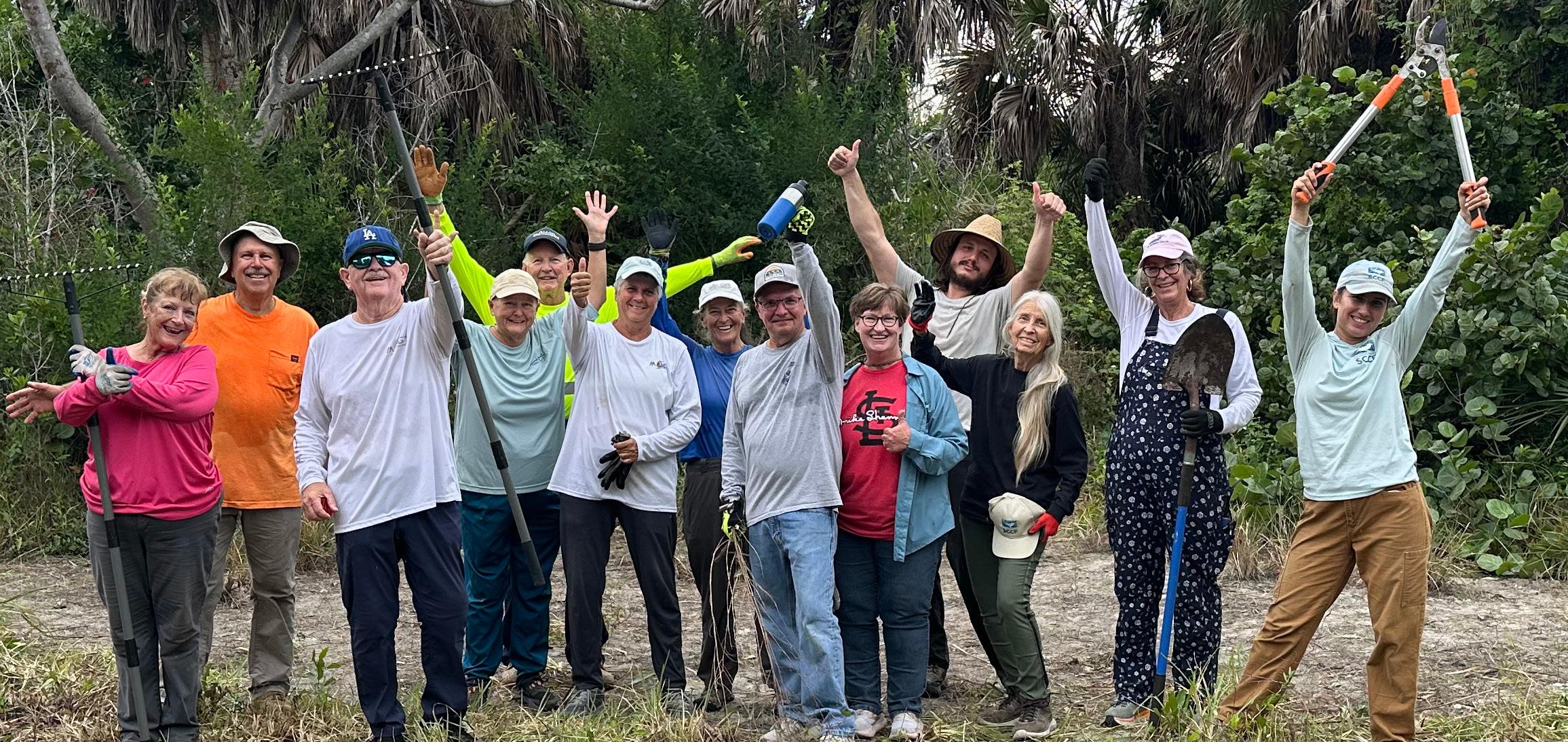
You’ll learn what motivates our volunteers, who are enhancing native habitat for our gopher tortoises, monitoring nesting activity of our precious shorebirds and beloved sea turtles, and networking to prevent the poaching of our prized box turtles.
We also shine a spotlight on our Sanibel Sea School’s Chance to Sea program, which allows our community partners to give thousands of landlocked kids in our region the opportunity to fall in love with the ocean as they learn the importance of protecting it.
I hope you will be inspired by how our community is sharing the responsibility to preserve a Southwest Florida that we will be proud to pass on to our children.
Our Marine Lab’s role as a trusted, responsive leader in water quality research is also highlighted. A $578,000 EPA grant that is helping us protect seagrass came about thanks to observations from fishing guides who reported smothering algae growth to our scientists.
We also give thanks to our community partners who helped us launch the Preserving Paradise program, which provides field education to empower regional business leaders to become effective water quality ambassadors and advocates.
And right here at home on Sanibel and Captiva, we invite new residents to carry the torch of protecting our sanctuary islands through a day-long environmental orientation program offered three times per season.
We are grateful to our amazing supporters, hard-working and dedicated staff and volunteers, and talented Board of Trustees who make our work possible. We could not do this without you!
Thank you for being a member of the SCCF Family. We look forward to working with you as stewards and active participants in conserving this extraordinary place.
Sincerely,
James Evans Chief Executive Officer
A Community-Powered Effort to Protect Sanibel’s Gopher Tortoises
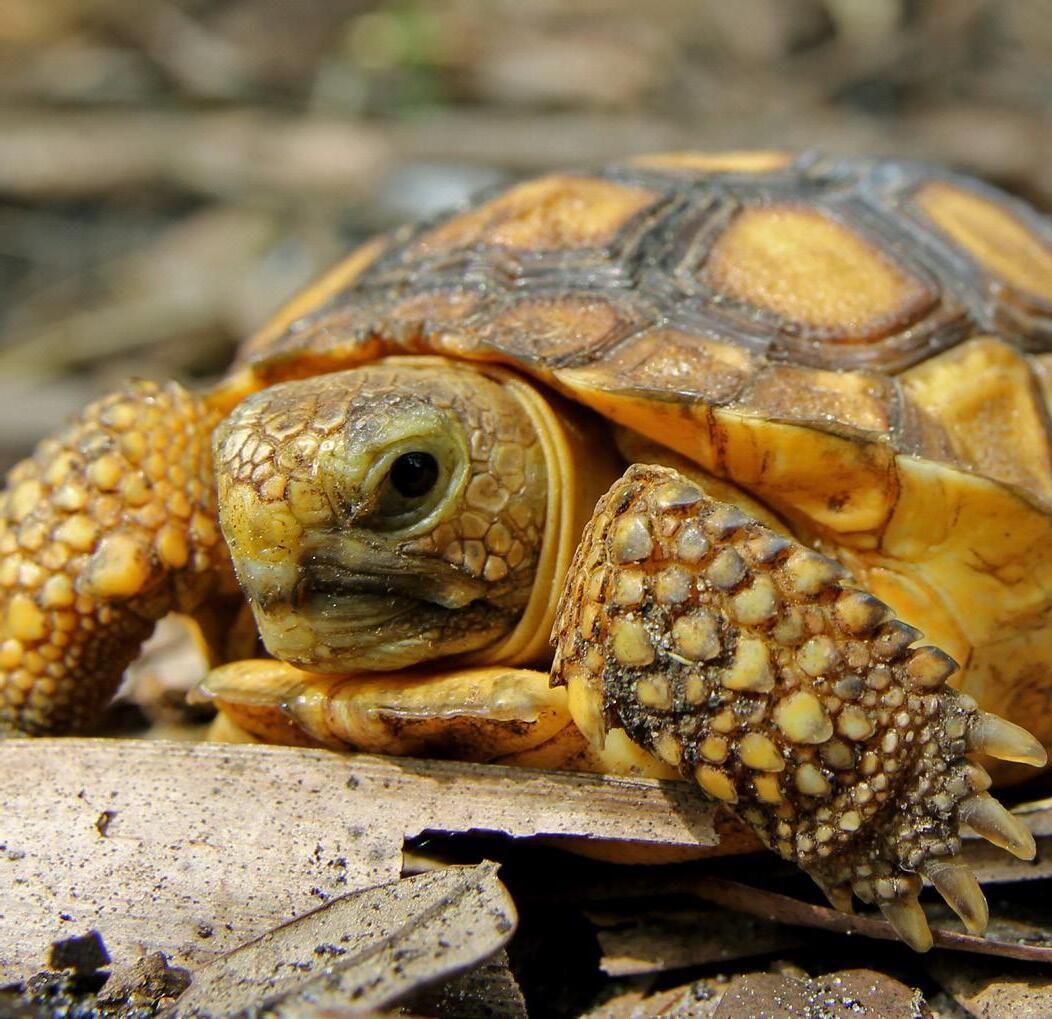
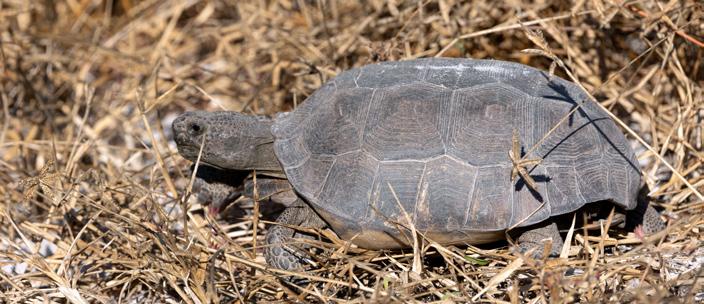
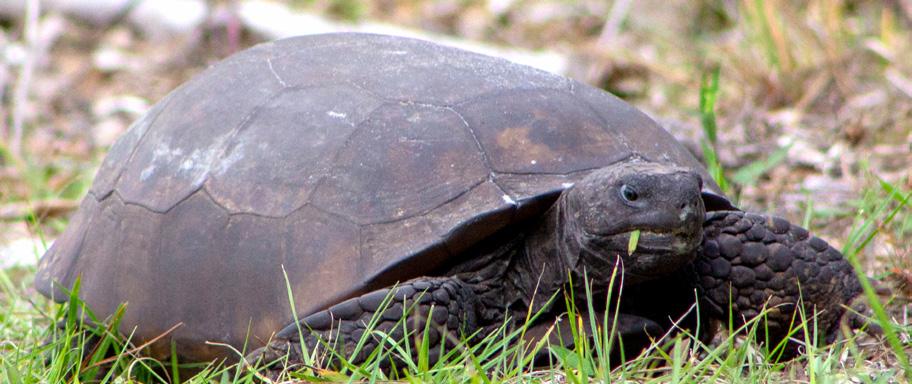
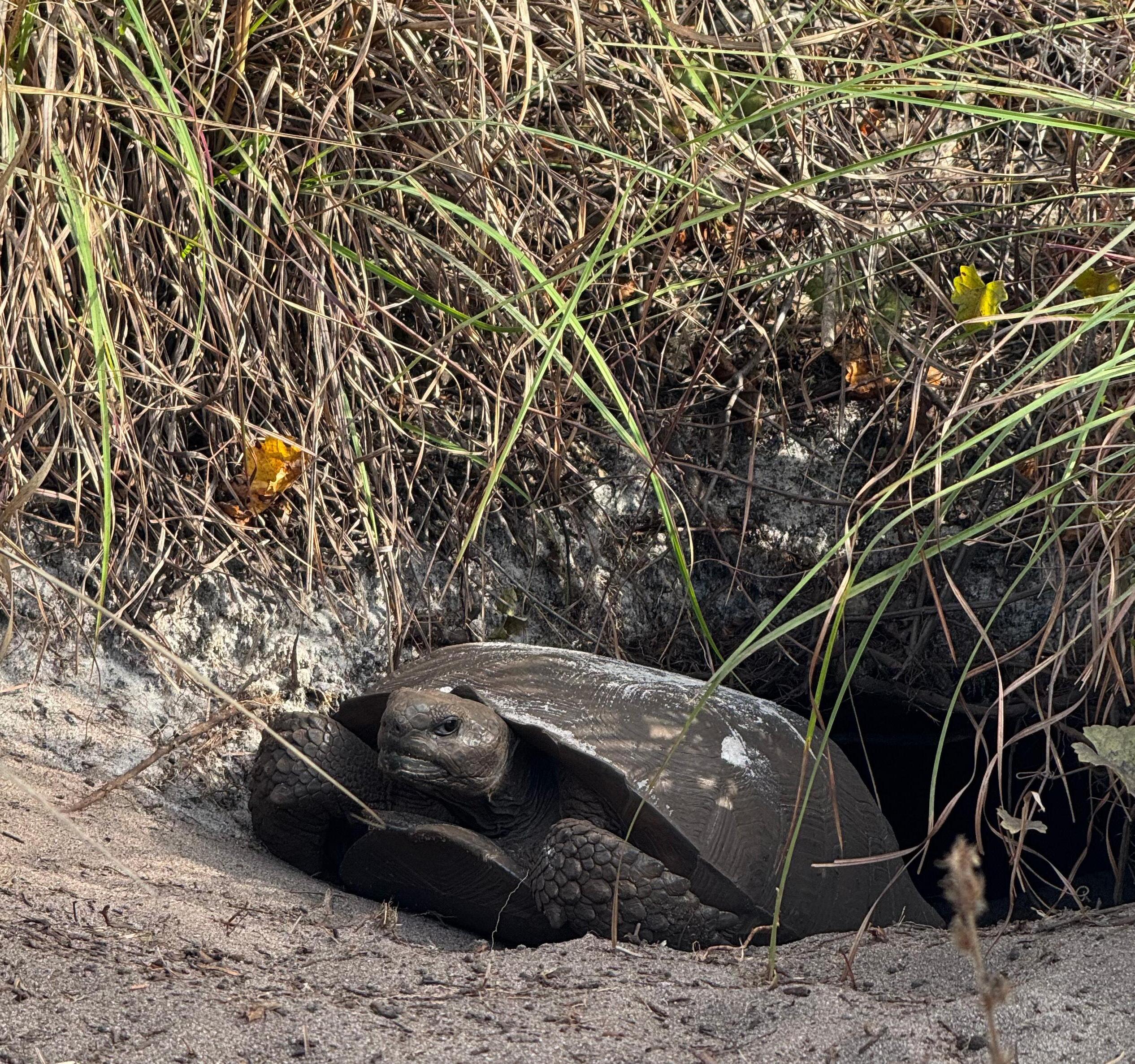
Sanibel Island’s relationship with gopher tortoises (Gopherus polyphemus) goes back centuries, rooted in the island’s natural geology and ecology. Historically, Sanibel was a mosaic of elevated sand ridges, interspersed with lower wetland swales.
These high, dry ridges were prime gopher tortoise habitat: open, sunny areas with sparse tree cover and plenty of low shrubs and grasses. Natural fires and occasional storm overwash kept the landscape largely a grassland, preventing tall woody vegetation that can choke out tortoise habitat.
But beginning in the 1950s, development dramatically altered this balance. Mosquito ditching and a new weir system created permanent freshwater bodies for the first time in Sanibel’s 6,000-year history. Without the cleansing force of regular fires, dense woody plants quickly spread across formerly open ridges.
Recognizing these changes, SCCF began monitoring burrows across two preserves in 2000, expanding to five preserves by 2007. Each fall, biologists assess burrow activity, which is an important indicator of population health.
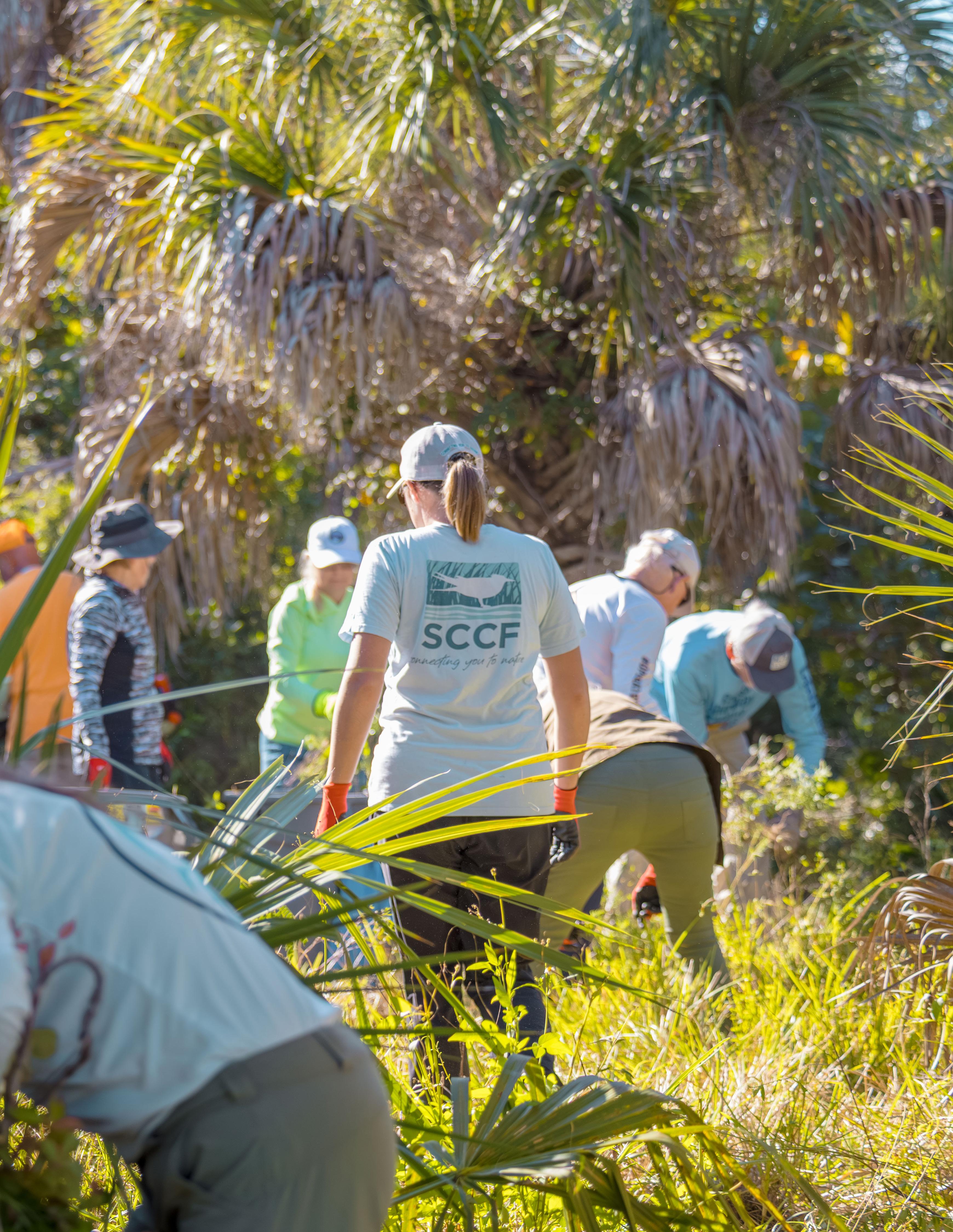
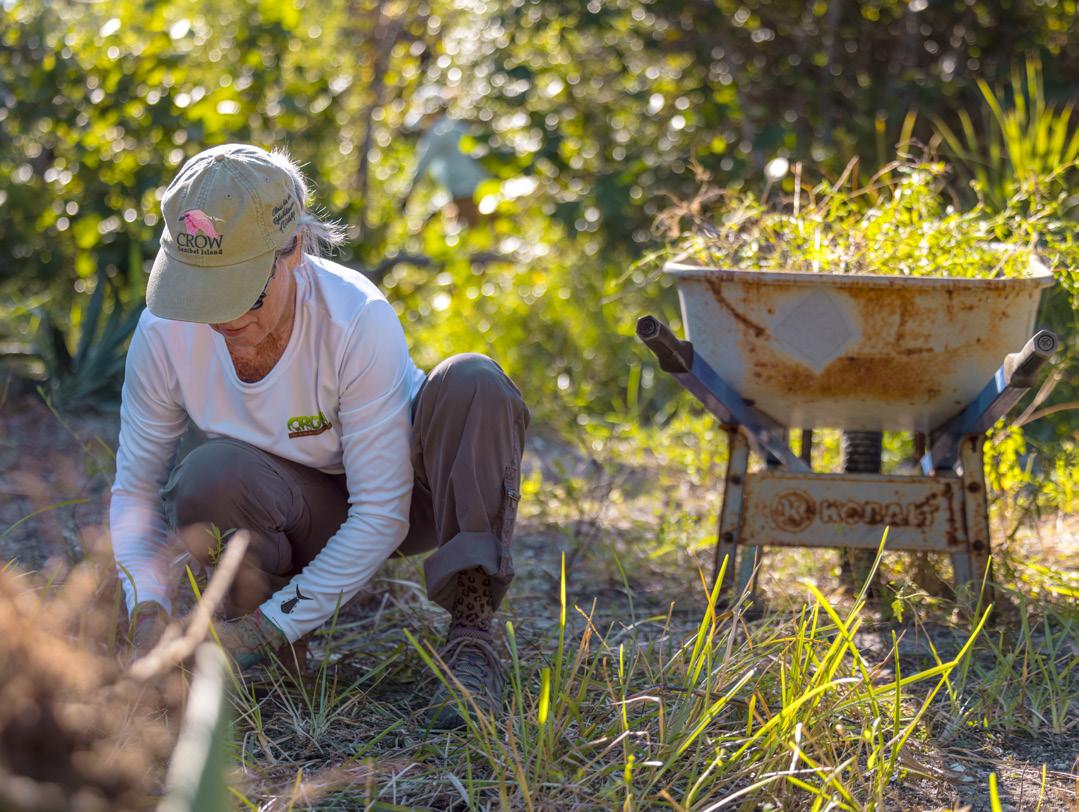
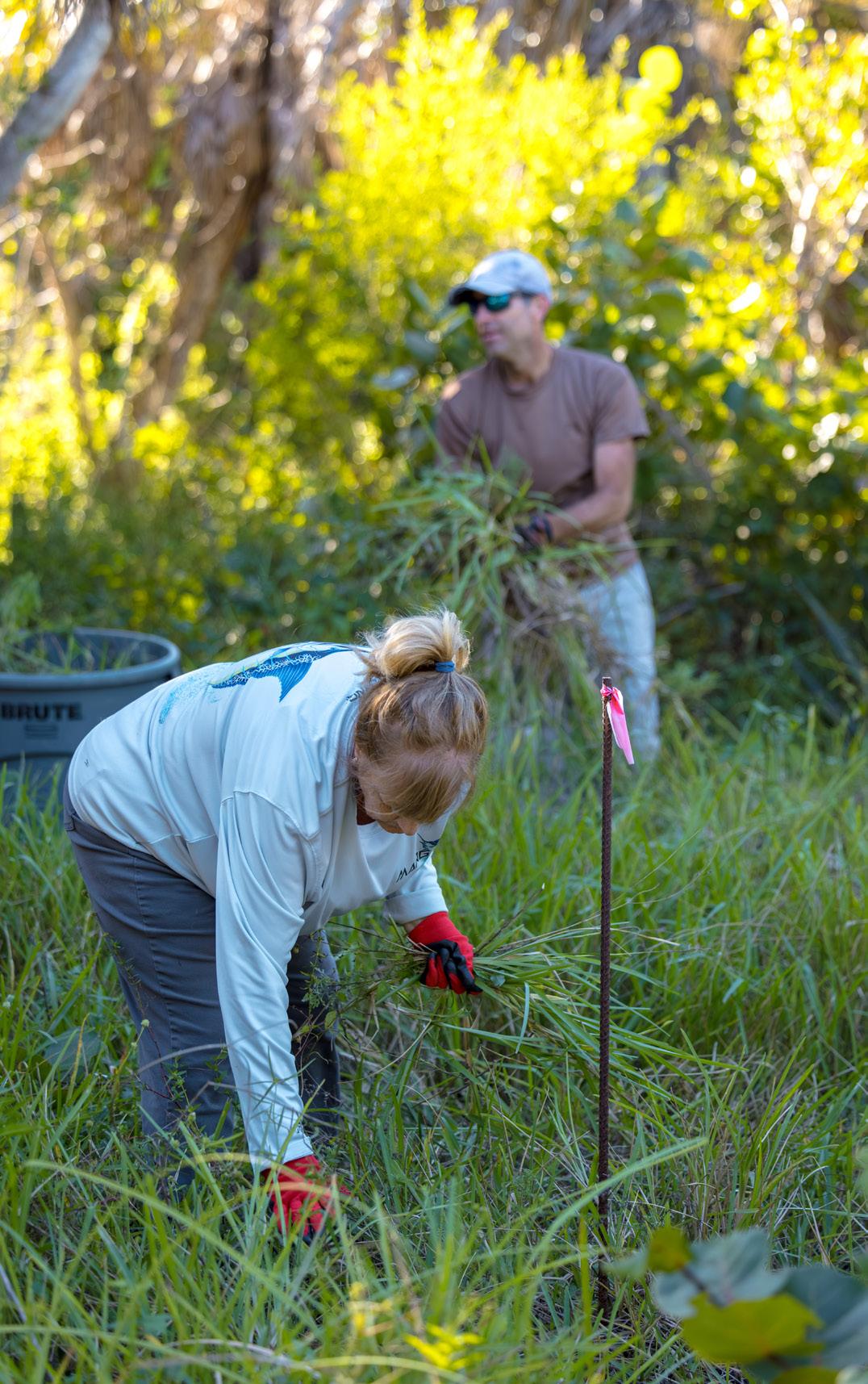
“We launched the Gopher Tortoise Habitat Enhancement Project in November not just as a restoration effort, but as a weekly invitation for residents and visitors to come together for a shared purpose,” says Coastal Watch Director Kealy Pfau.
The need for active restoration became unmistakable after Hurricanes Ian, Helene, and Milton. Areas that once supported thriving gopher tortoise populations were suddenly smothered in invasive species and storm debris.
Burrow counts reflected the severity of the impact: from 157 active burrows before Hurricane Ian down to fewer than 20 after the 2024 hurricanes.
continued >
Jennifer Nichols
I had never been in this SCCF preserve before the volunteering event. It was amazing to see the gopher tortoise habitat, and how much vegetation had been growing since the hurricanes was shocking. These poor gopher tortoises didn't have anywhere to make their burrows! I'm so happy to be able to volunteer my time to help make this habitat suitable and to make long-term habitats for gopher tortoises that need to be relocated and make Sanibel their home. It's so special.
Chery Day
It is so exciting to be a part of this restoration project. It is rewarding knowing that the work volunteers are doing will give these beautiful creatures a better chance to thrive. Also, volunteers are not only learning about gopher tortoise habitats but are learning to identify invasive plants and, more importantly, how to properly remove and dispose of this unwanted vegetation. That is ONE of the many reasons I enjoy volunteering for SCCF. Not only is the work rewarding, but the knowledge you gain is invaluable.
It became clear that tortoises no longer had access to the open sandy soils, sunlight, and native food sources they needed to survive. The message was undeniable: the tortoises needed help, and they needed it fast.
In true Sanibel fashion, the community stepped up.
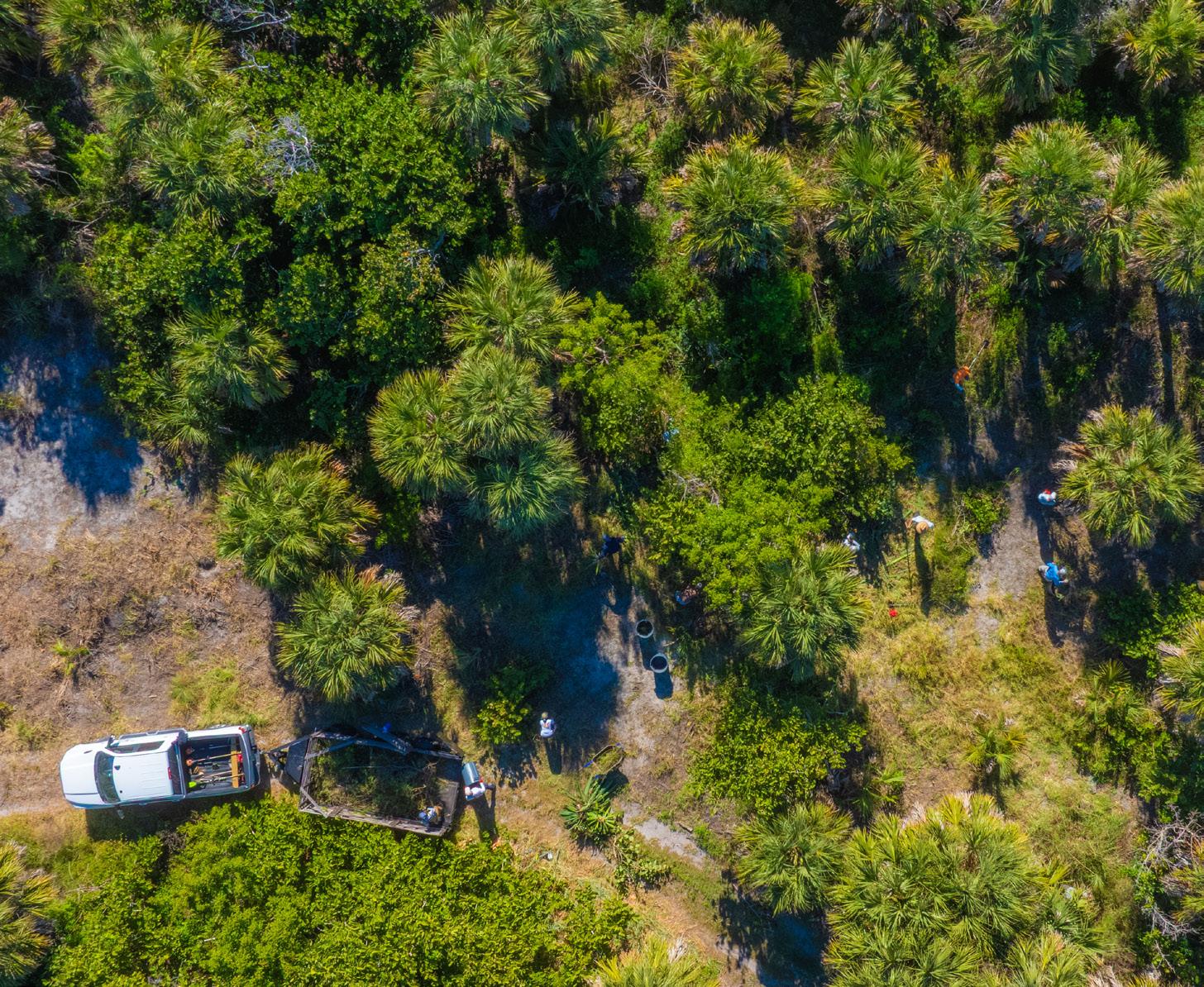
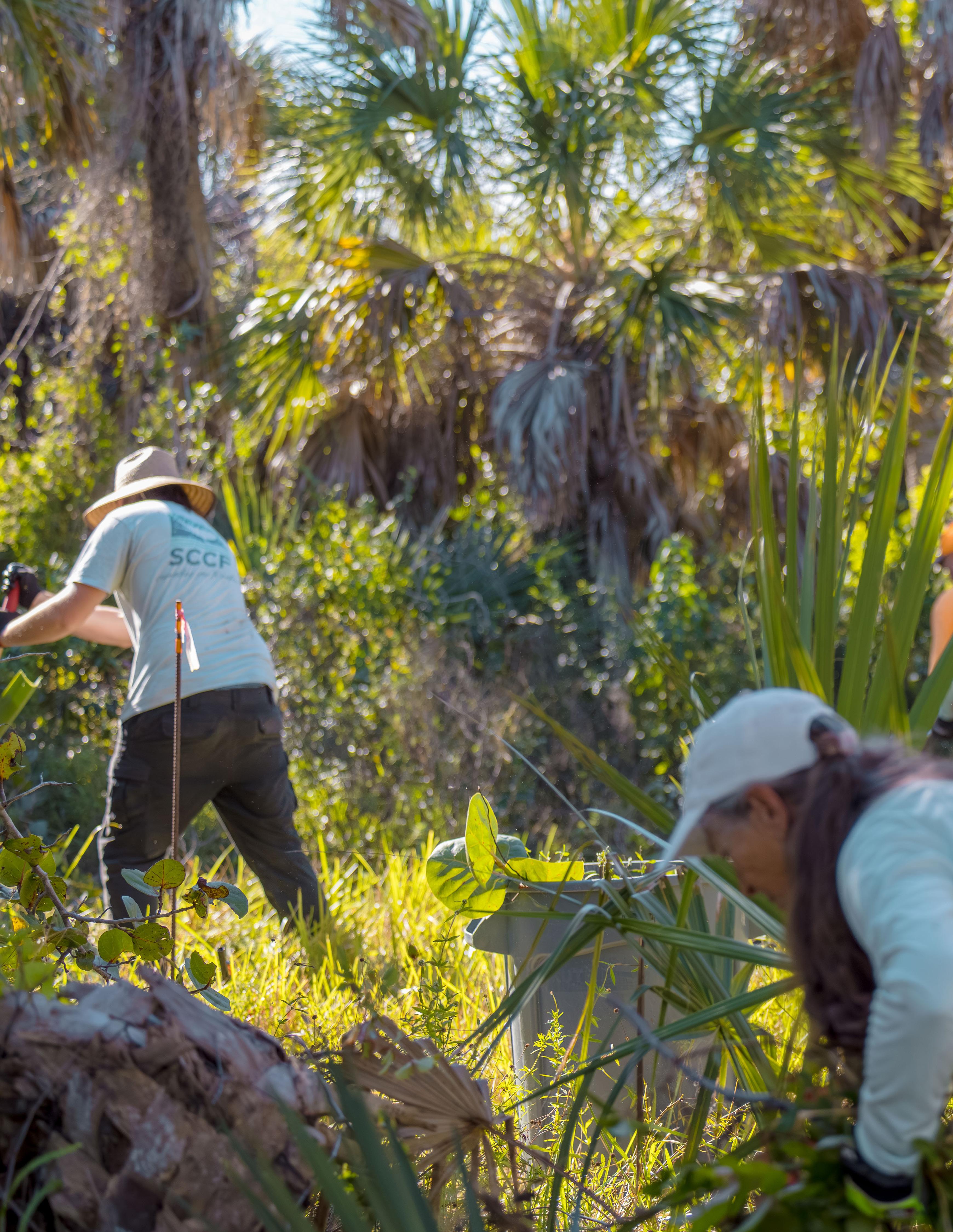
Starting with a 0.75-acre area at the C.R. Johnston Preserve, which is closed to the public as a wildlife protection area, volunteers are working every Thursday
morning, side by side with staff, to pull invasive plants, reopen sunny, sandy spaces, and replant native vegetation. These weekly volunteer events are transforming more than habitat; they’re strengthening the bonds between people and the natural world around them.
The project’s short-term goals are clear: expand habitat, improve vegetation health, and encourage new burrow activity. Long-term, SCCF aims to meet the standards needed to accept relocated
tortoises from areas threatened by development, giving even more animals a safe place to call home.
“This project is a reminder of what makes our coastal community special: when the islands face a challenge, our people rise together to meet it,” said Pfau. “This is conservation in action, which is rooted in science, sustained by volunteers, and essential to protecting one of Southwest Florida’s most important species.”
What Can You Do to Help Gopher Tortoises?
Slow Down! Plant Native!
Walks
Box Turtles Protected by Network of Volunteers
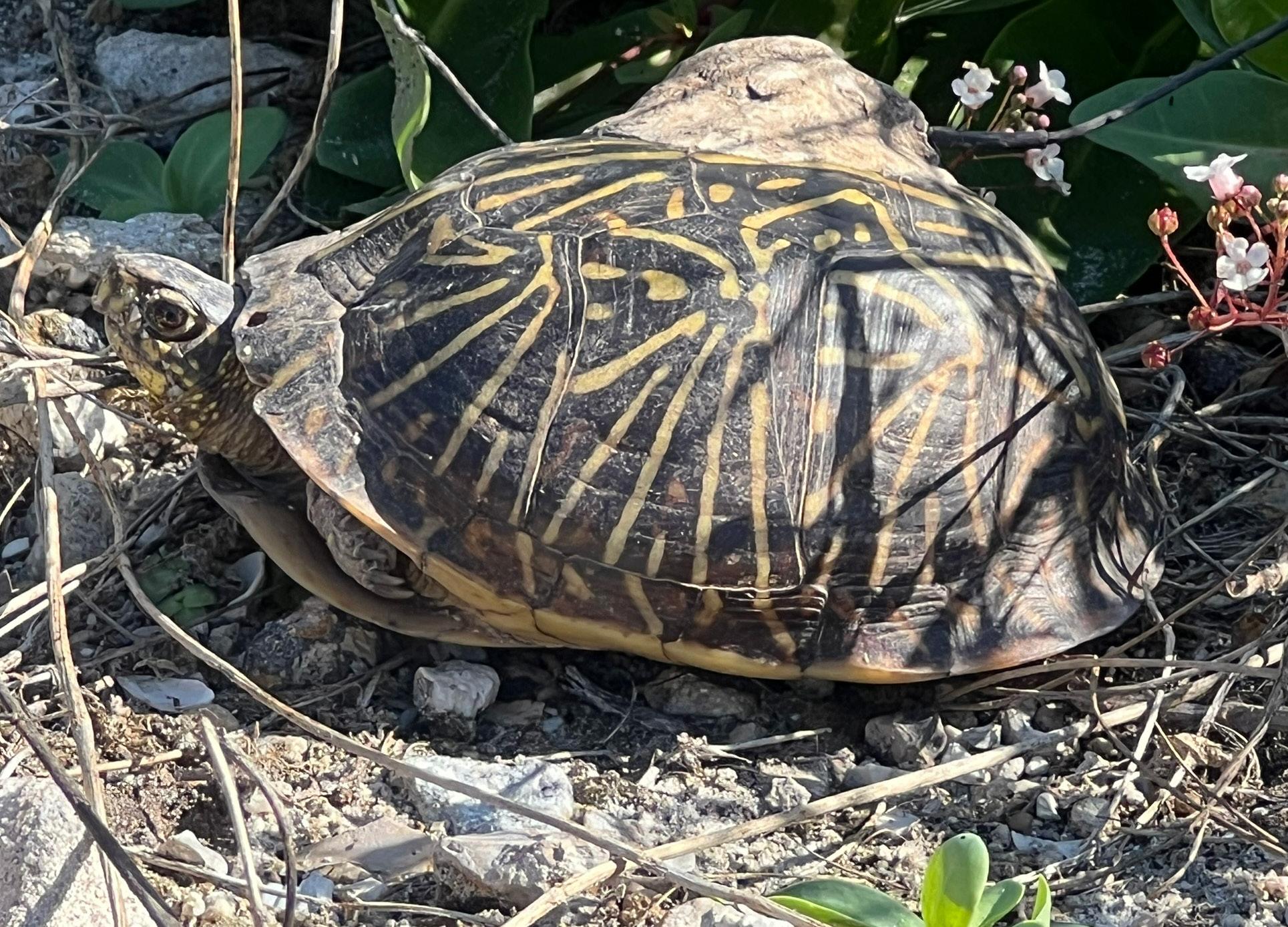
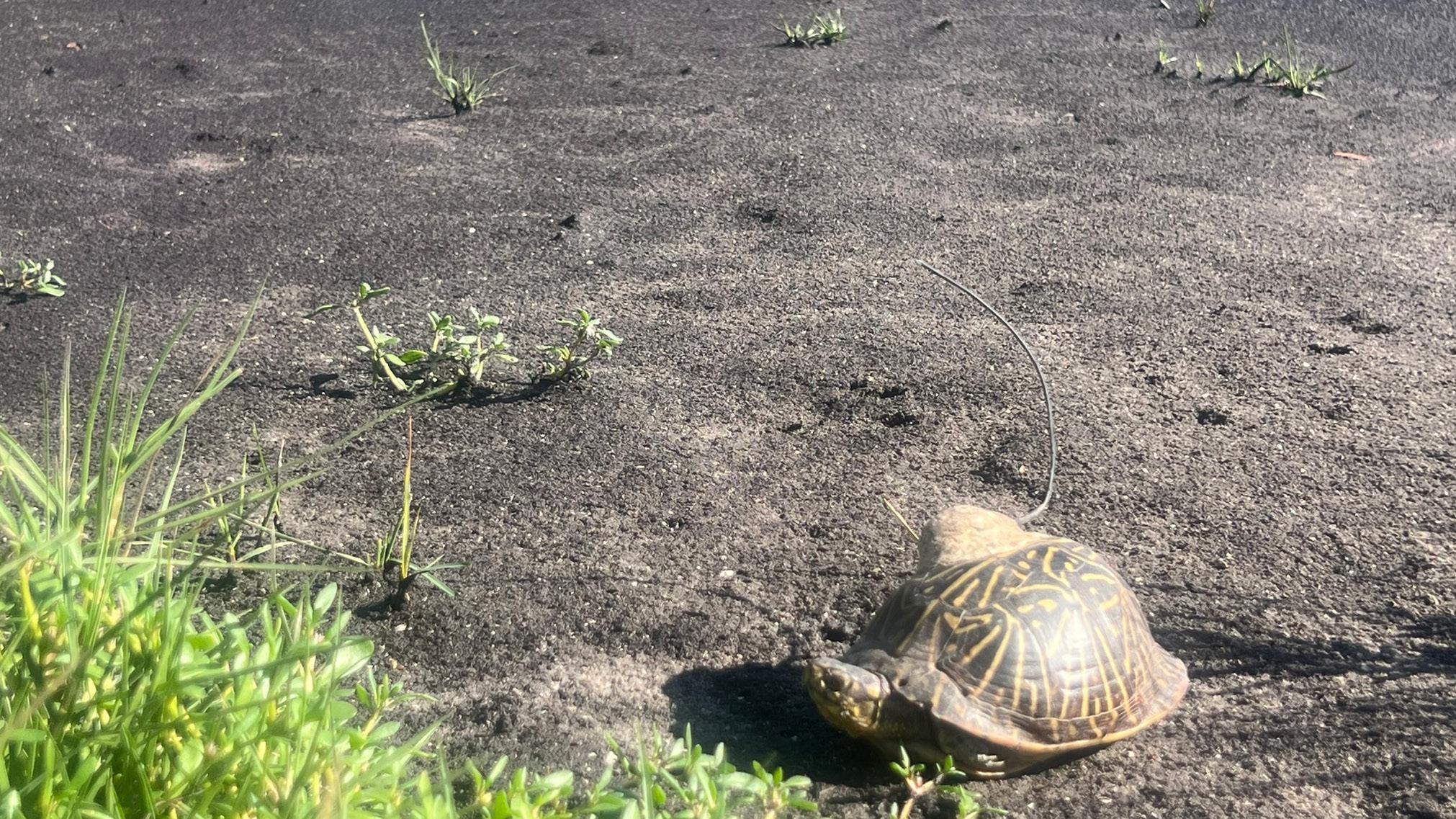
SCCF’s Florida box turtle (Terrapene bauri) research began in 2002 to gather baseline data on the island’s box turtle population.
“It was at the time the first reports of the Asian turtle crisis were published, as well as a noticeable increase in turtle exports from the U.S,” said Wildlife & Habitat Management Director Chris Lechowicz.
Today, box turtles (Terrapene) are the top poached and trafficked turtle species in the United States and Mexico, where they are smuggled to Asia.
With an average lifespan of 60 years, Florida box turtles lay a relatively low number of eggs each year over the course of their adult lives.
“Removal of adults from the wild has cataclysmic effects on the population years down the road,” he said.
Did You Know?
SCCF’s priority and efforts to gather data and mark box turtles escalated in 2019, when the largest turtle trafficking bust ever to occur in Florida involved turtles from Sanibel and other locations in Lee and Charlotte counties.
“We formed the SCCF Terrestrial and Freshwater Turtle Volunteer Group shortly afterwards to get the help of the community in the stewardship of our turtle populations on the island,” said Lechowicz.
“Residents
and businesses around the islands report unmarked turtles so they can be added to our database, and report recaptures of marked turtles so we can track their movements and growth, and deter poaching.”
— Chris Lechowicz, Wildlife & Habitat Management Director
Please report unmarked and marked box turtles to boxturtle@sccf.org.
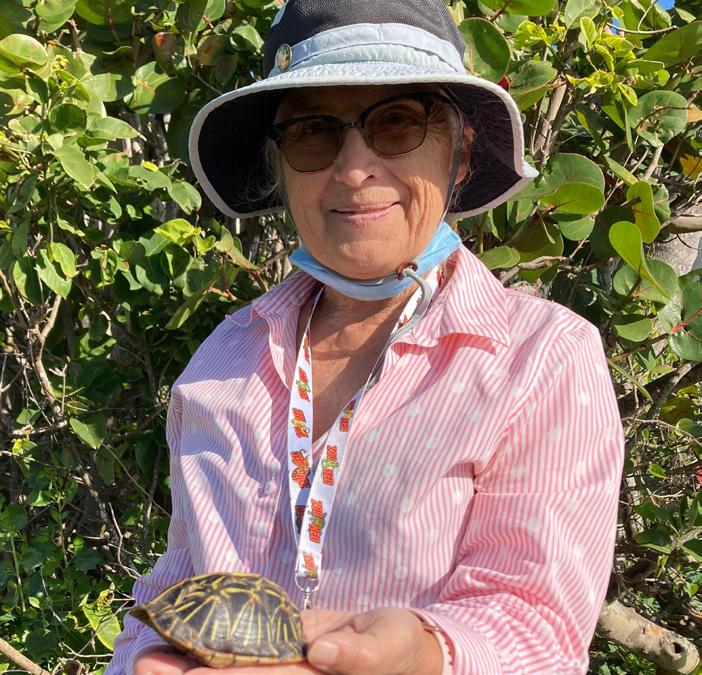
Kay Sadighi, Volunteer
Turtles and tortoises are represented by 365 species worldwide and have surpassed primates as the most at-risk vertebrate group for extinction, with over half considered endangered. This is due to habitat loss, harvesting for food and traditional medicine, the international pet trade, and road mortality.
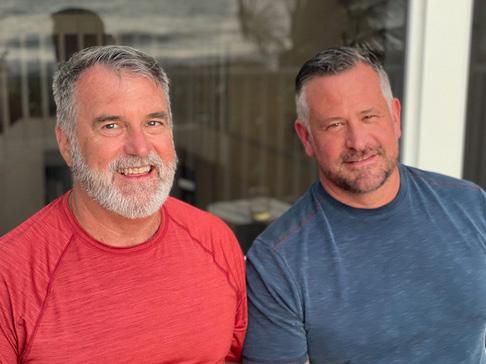
“We are glad to participate in the SCCF's effort to understand and protect our islands’ box turtles.”
— Peter Williamson and Patrick Swift, Volunteers
Celebrating our Dedicated Volunteers
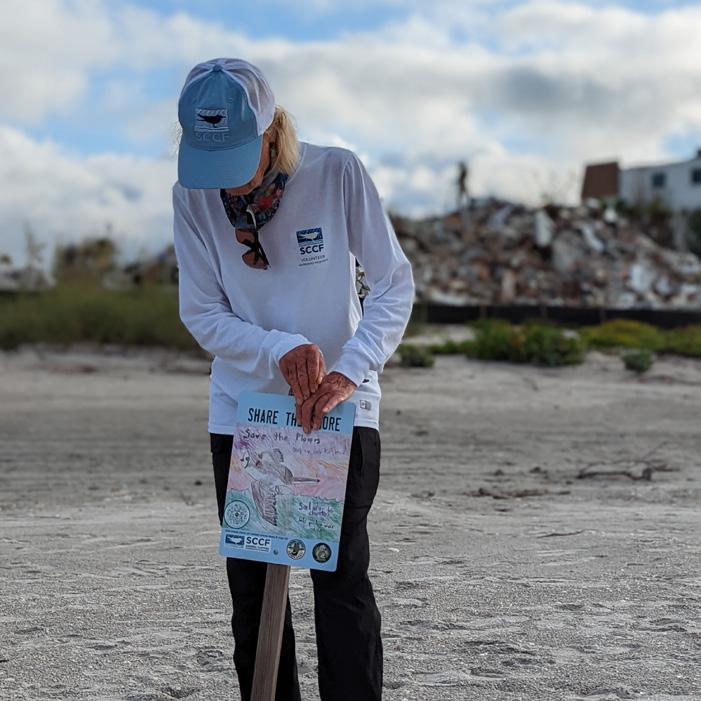
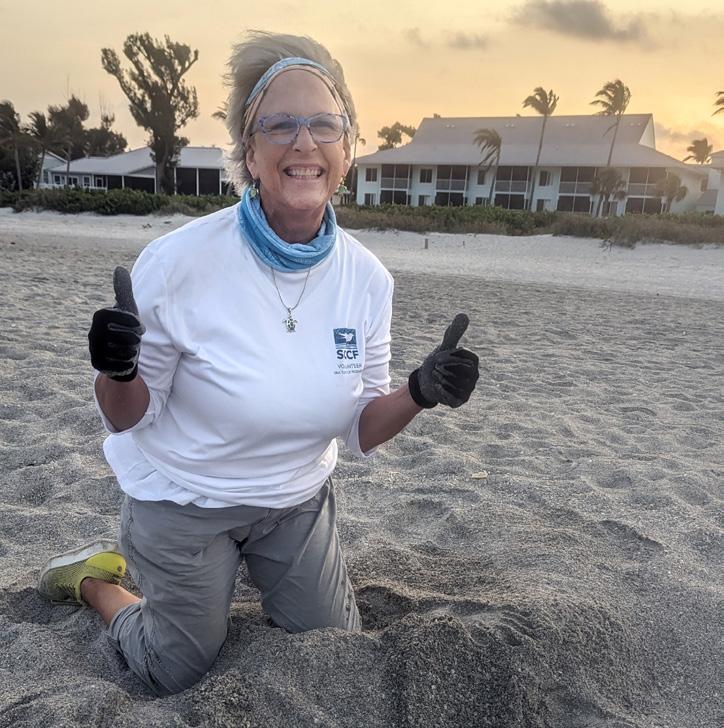
Over the course of a year, nearly 100 volunteers observe our beloved coastal wildlife, helping our biologists and beachgoers protect and care for what makes our islands so special.
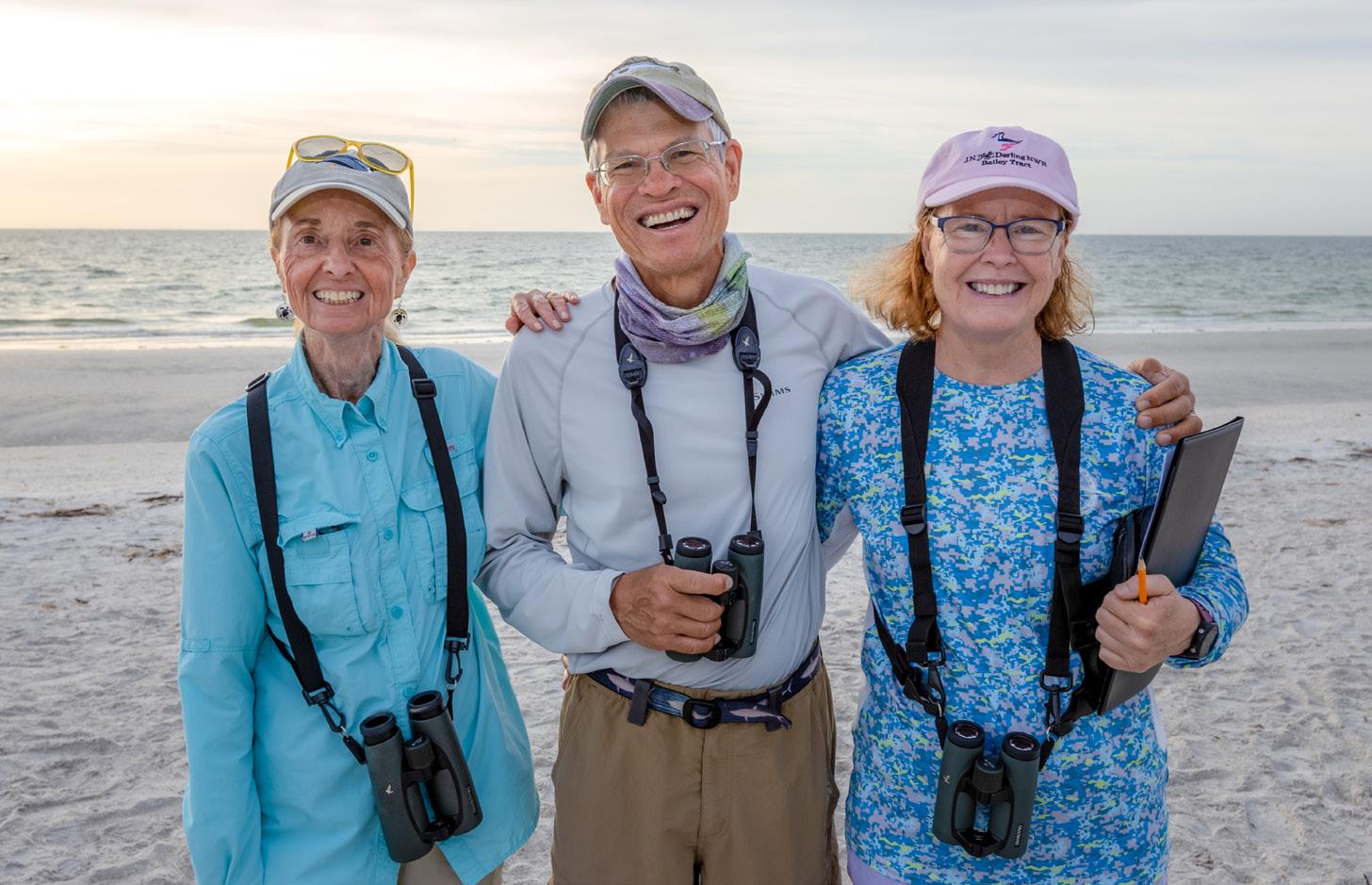
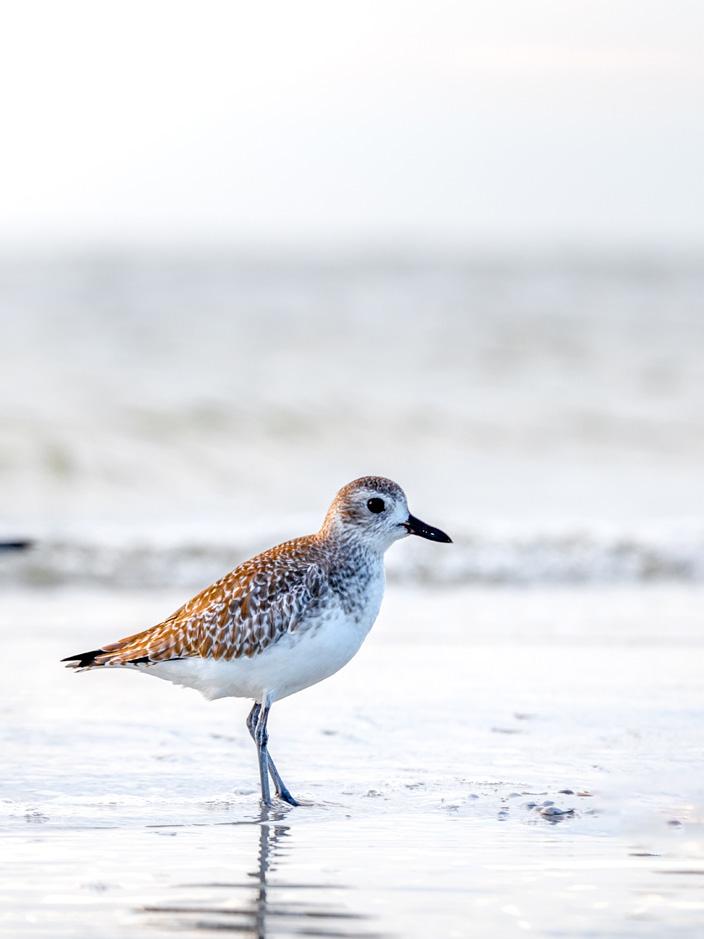
On a regular basis, volunteers help SCCF biologists monitor dozens of species of breeding and nonbreeding shorebirds and seabirds on Sanibel, Captiva, and nearby sites to document nesting activity, nest success, and population trends.
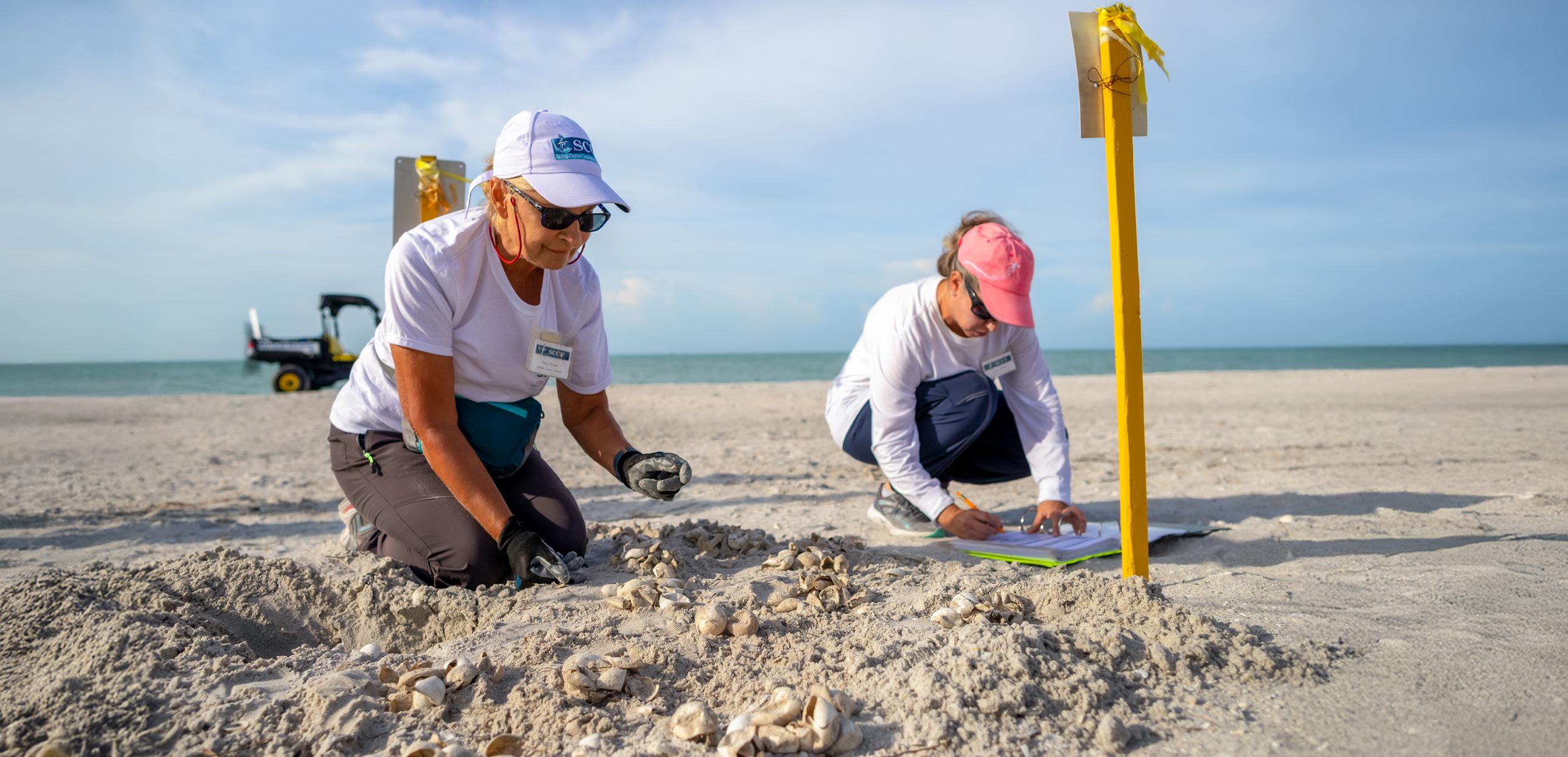
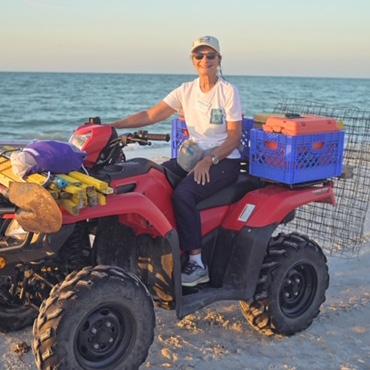
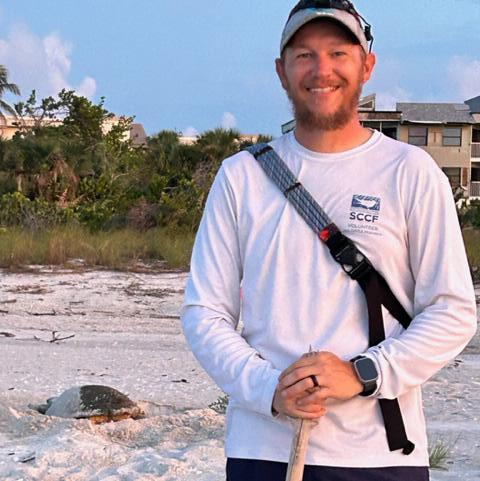
From April through the end of October, volunteers patrol and survey 18 miles of beachfront on Sanibel and Captiva every
morning, looking for sea turtle nesting activity. They also mark, screen, and monitor confirmed nests, and record hatch data. These volunteers also provide critical public outreach: educating beachgoers and community members about the threats sea turtles and shorebirds endure and how to reduce risks to nests and hatchlings.
“Our conservation work is a success because our amazing volunteers show up day after day, season after season. Their commitment ensures that there's a future for sea turtles, shorebirds, and all wildlife on our islands,” says Kelly Sloan, SCCF Coastal Wildlife Director.
Volunteers
share what motivates them.
Susan Beittel
After vacationing on Sanibel as a “birder” for many years, my goal was to retire here and volunteer on the snowy plover patrol. My commitment to the SCCF shorebird patrol began in 2012, a decision rooted in my deep love for birds and a desire to make a difference in Sanibel’s conservation efforts. How rewarding it has been to see snowy plover chicks hatch and colonies of least terns thrive after a very challenging nesting season. As a volunteer, I’ve also met many like-minded folks who share my interests.
Jason Garrison
My drive to volunteer with SCCF comes from my belief that protecting our coastline is our responsibility. When I’m out on the beach checking turtle nests or working on coastal restoration, it’s a reminder that nothing about this place is guaranteed. It depends on people who are willing to step up, show up, and take care of it.
thank you
Irene Nolan
Volunteering with SCCF for the past 25 years has been such a fun and rewarding experience, working alongside other volunteers and staff while building lasting friendships. Over the years, we’ve enjoyed tremendous success, and I’ve seen a tenfold increase in the number of sea turtles on our beaches.
Robin Kirk
Moving to Sanibel years ago was solely to volunteer with SCCF’s sea turtle conservation program, not realizing the doors that would open to countless other opportunities to volunteer — from native plants, to shorebirds, land turtles, amphibians, bats, bald eagles, bird counts, water quality — the list is endless. It’s a thrill and honor to be a part, as a volunteer, of SCCF’s purpose to protect and preserve Sanibel and Captiva’s fragile ecosystem and surrounding watersheds.
To inquire about volunteering opportunities, email volunteer@sccf.org or visit sccf.org/volunteering.
Learn how you can help protect sea turtles and shorebirds.
Ocean Love for Landlocked Kids
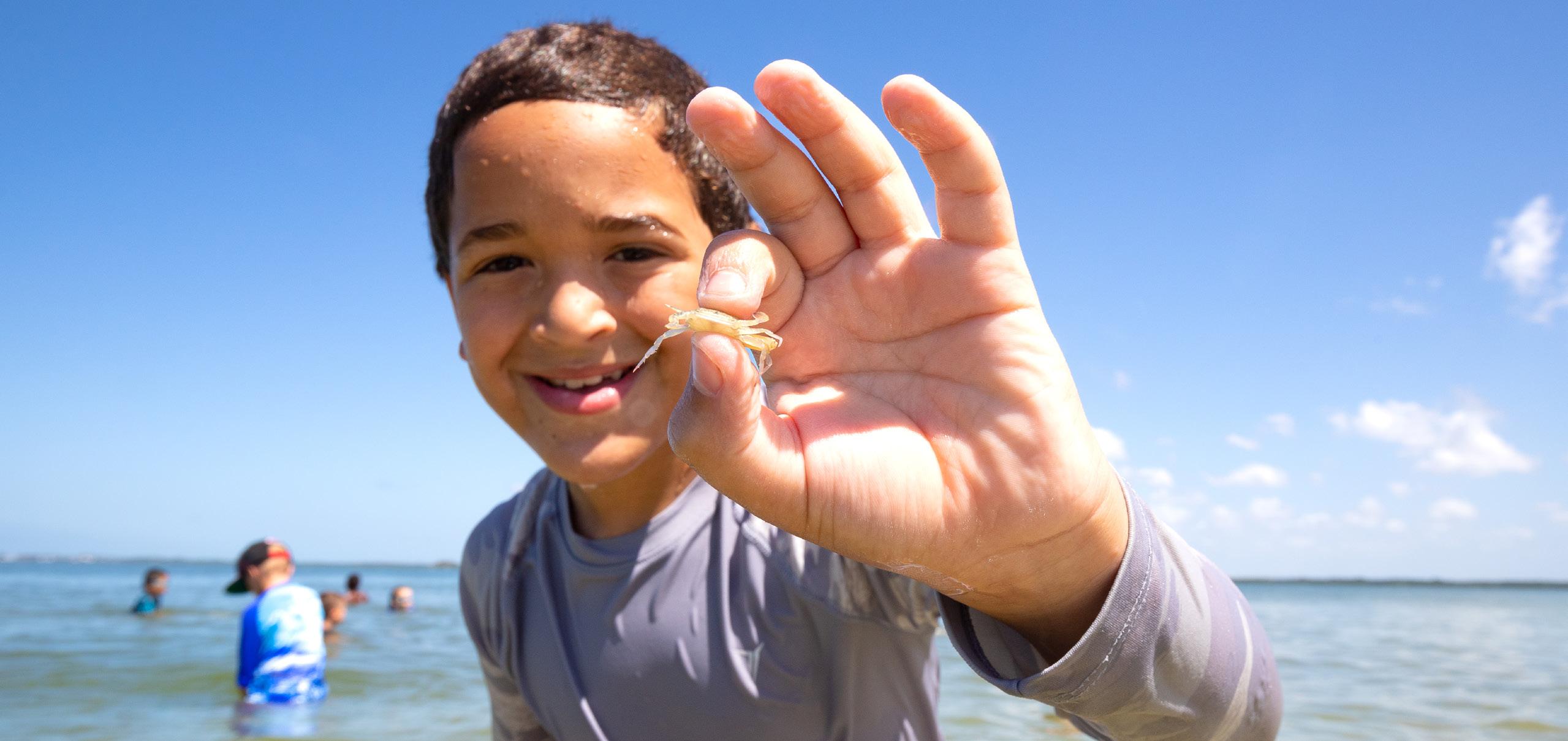
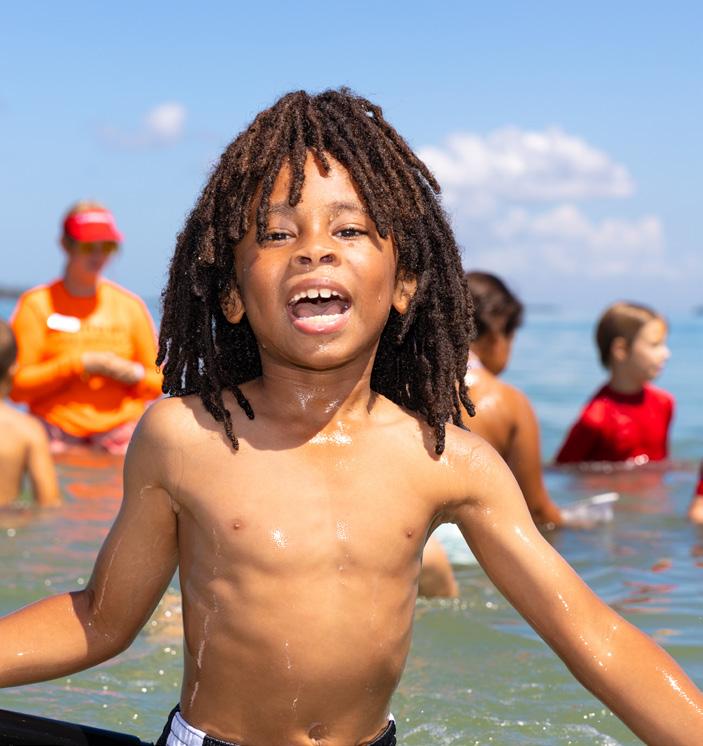
At Sanibel Sea School, our mission is simple but profound: to improve the ocean’s future, one person at a time. We believe that when young people truly connect with the coast, they grow into adults who care for it. Childhood nature experiences are strongly linked to pro-environmental attitudes later in life.
But the pathway isn’t as simple as “learn a fact, change a behavior.” Real change requires immersive and meaningful experiences — what educators call systems and action knowledge. Knowing what a fish is (systems knowledge) isn’t enough. Learning how to snorkel and identify a fish (action knowledge) and doing so responsibly builds connection
“We know that nature education isn’t only good for the environment; it’s also good for kids themselves. Time spent outdoors supports children’s physical, emotional, and psychological wellbeing,” says Sanibel Sea School Director Shannon Rivard.
Since Sanibel Sea School Joined SCCF in 2020
205 scholarships for children to attend daily programs
450 scholarships for children to participate in weekly camps, which equate to $139,367 in financial support
Field trips to the beach for 4,654 students, many from Title 1 schools
Meaningful experiences for 4,438 landlocked children in the region
46 No Child Left on Shore trips for 1,012 students/youth in partnership with Captiva Cruises
and wonder. Those are the ingredients that inspire lasting stewardship.
The ocean provides a naturally calming environment — waves regulate breathing, open horizons, reduce stress, and spark moments of curiosity and joy. For many children, these social-emotional benefits are life-changing: they feel more confident, more capable, and more connected.
Yet thousands of children in Southwest Florida, though they live just miles from the shore, rarely get to experience it in a meaningful way. Barriers like transportation, cost, abilities, and access make the coast feel farther away than it is.
“We believe that a healthy ocean requires all children to develop these connections. Equity and inclusion are foundational to our mission,” adds Sanibel Sea School Director Shannon Rivard.
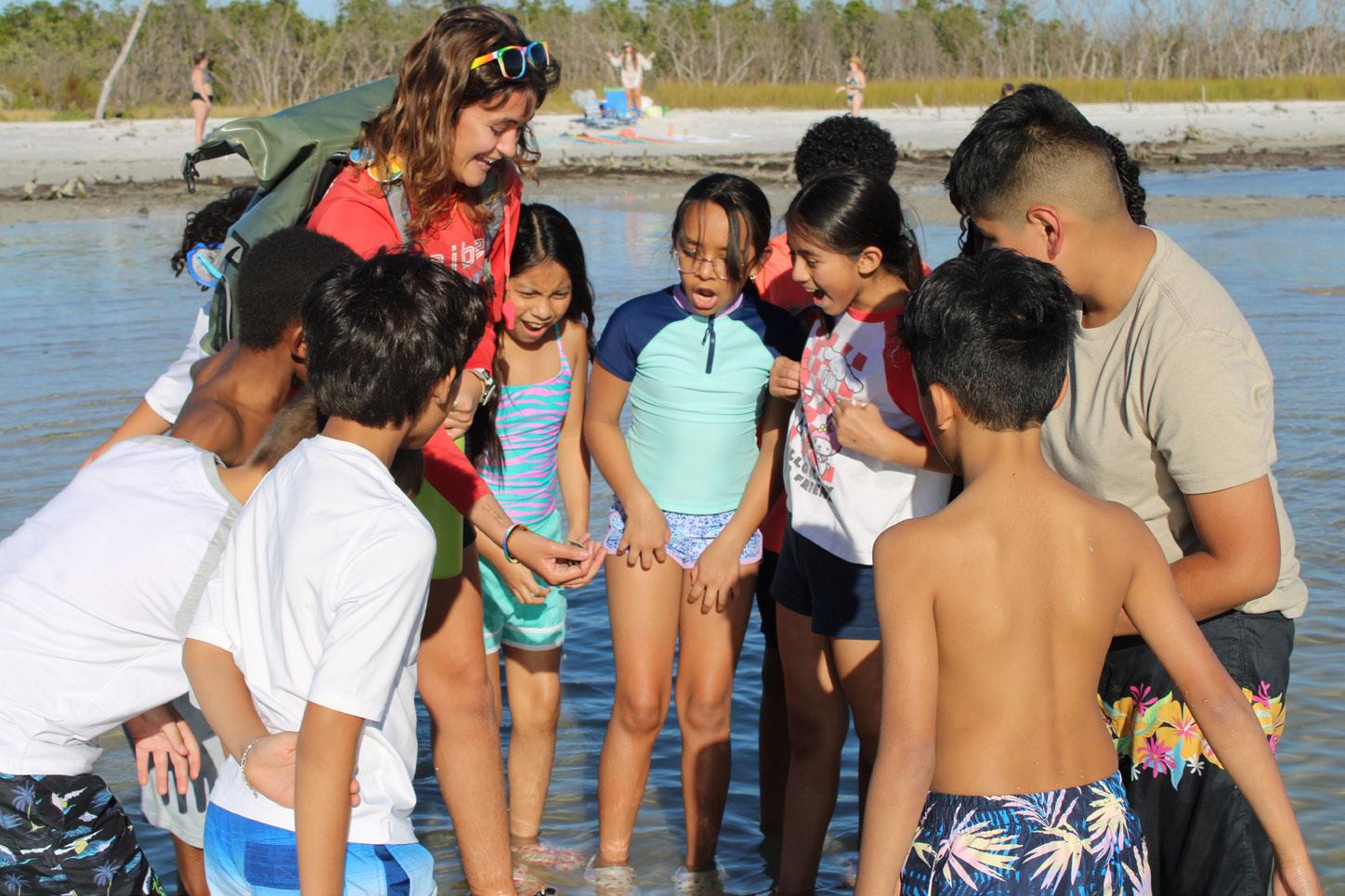
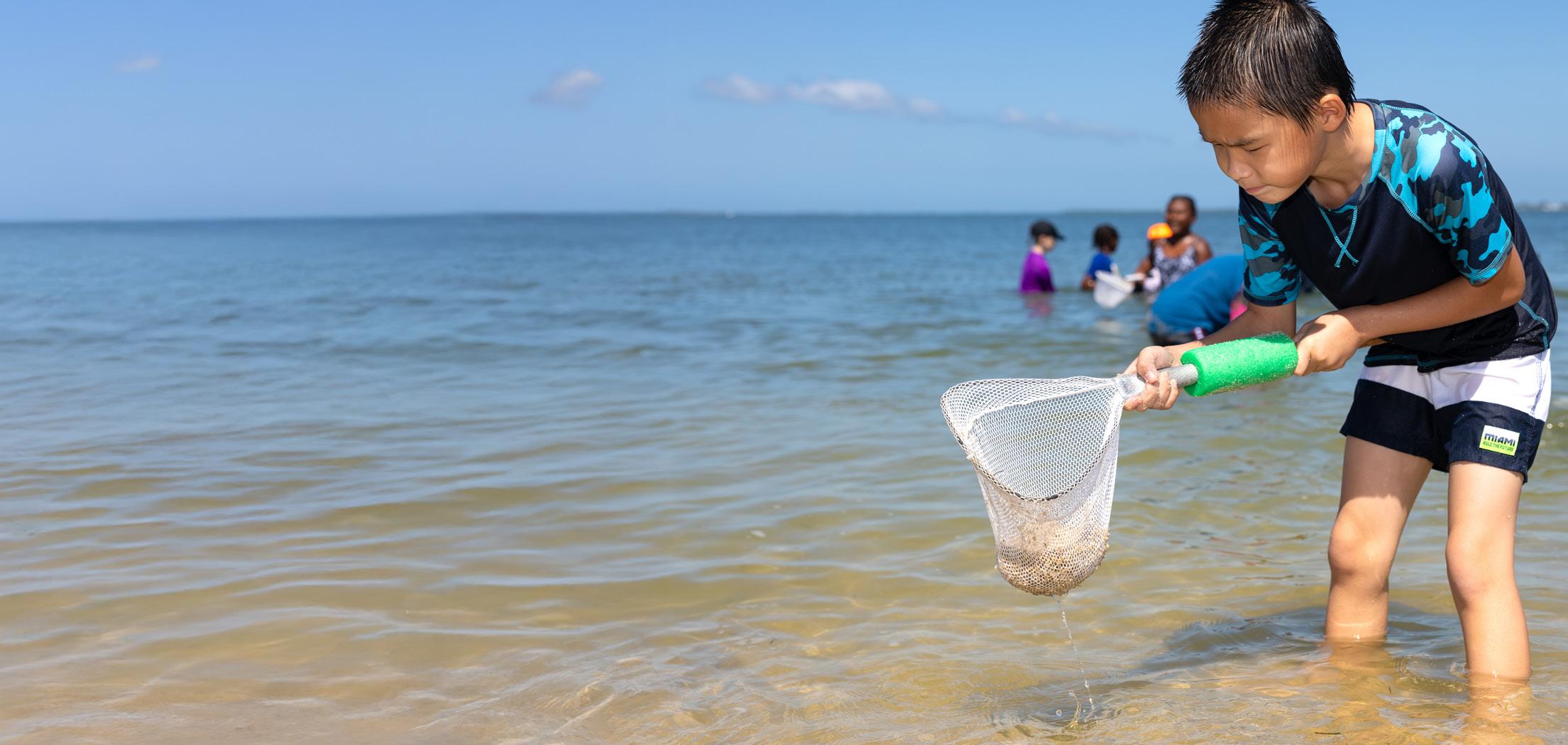
From this belief, A Chance to Sea was born. Through community center visits, classroom lessons, beach field trips, hands-on boat excursions through No Child Left on Shore, and free Community Day camps, Sanibel Sea School brings high-quality ocean education to kids who may have never dipped a toe in saltwater. Every program is free or donorsupported, ensuring families face no financial barriers.
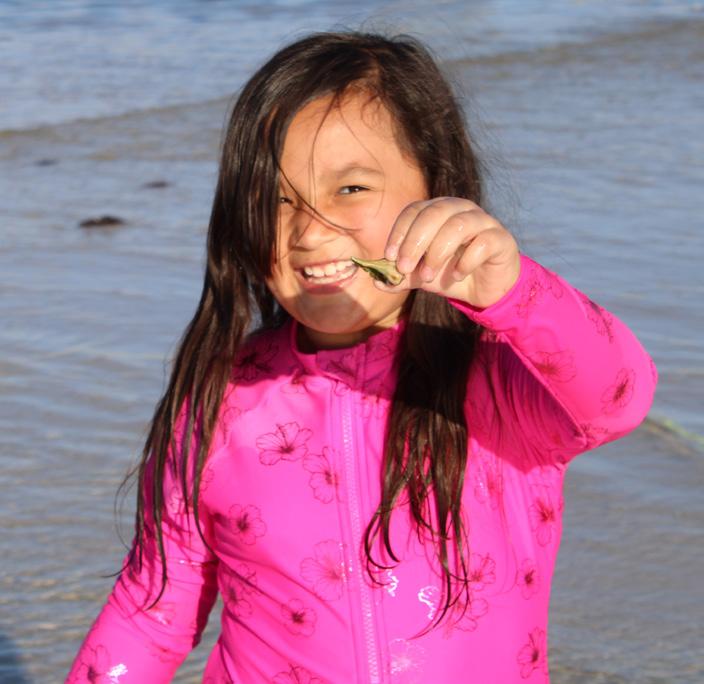
“We customize programming to our partners’ needs and schedules,” Rivard says. “At the top of our list of priorities is ensuring that children have an immersive, transformative experience. When a child catches their first wave, holds a whelk, or spots a dolphin from the bow of a boat, something shifts. Their world expands. Their confidence grows. And, most importantly, a relationship with the ocean begins — one strong enough to shape their choices and its future.”
Because every child deserves A Chance to
Sea .
To support this program, please visit:
Reports of Loss of Seagrass in Matlacha Pass Prompt Major Study
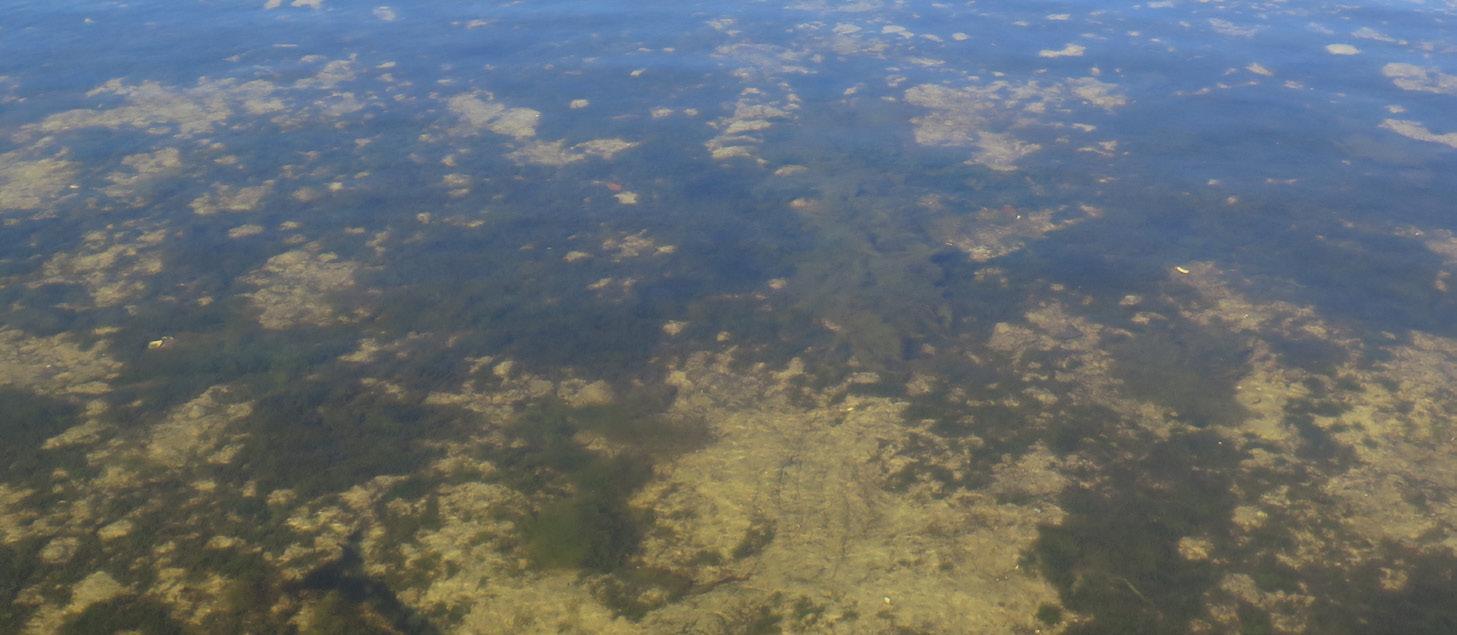
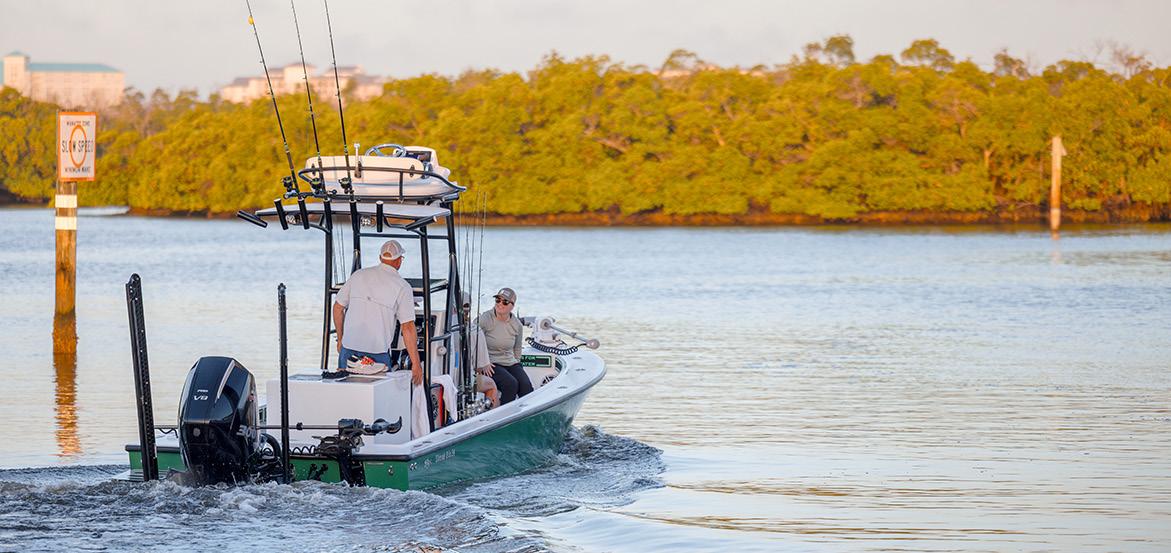
Thanks to the observations of regional fishing guides, SCCF’s Marine Lab is conducting a 5-year study funded by the EPA to investigate the causes of seagrass loss due to excessive macroalgae growth.
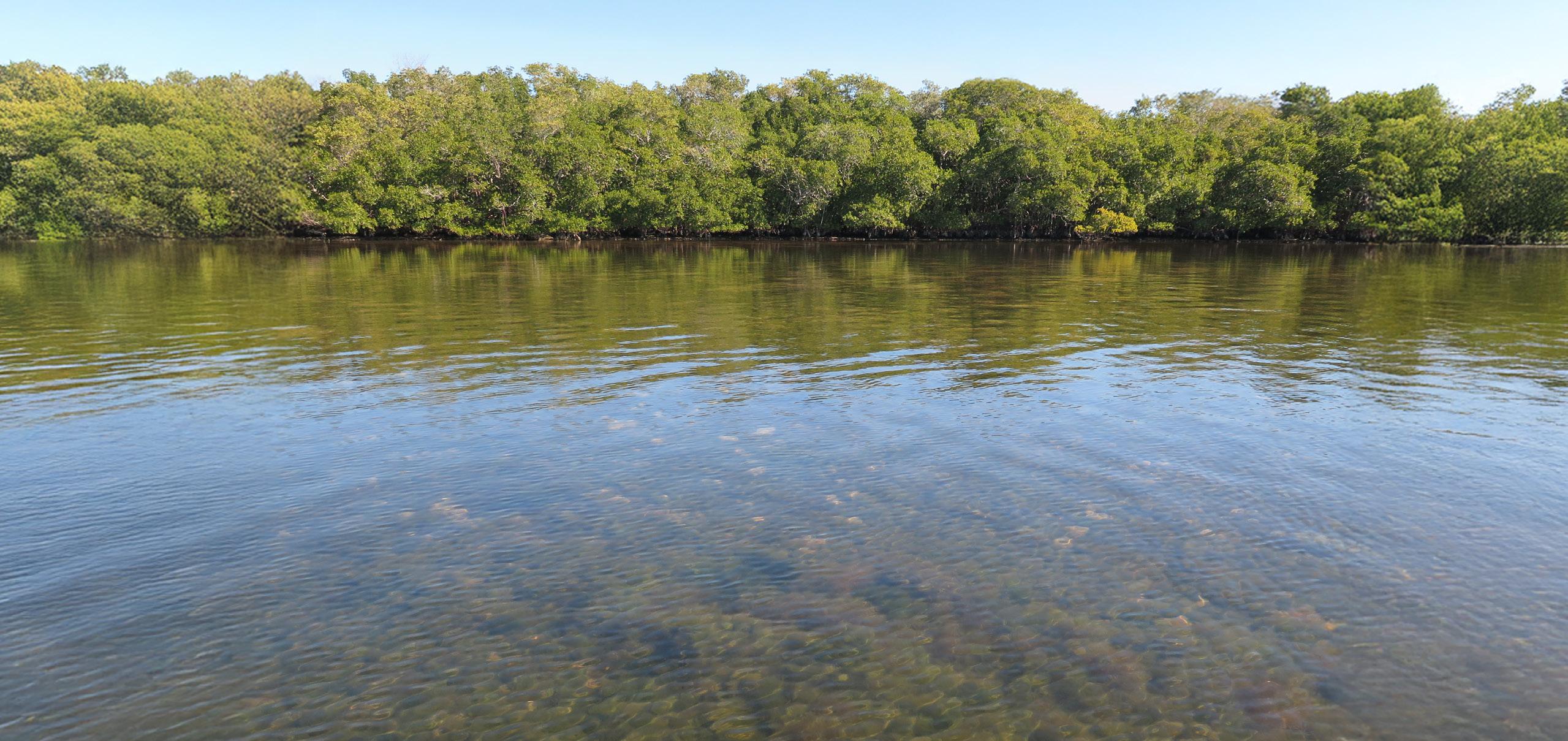
San Carlos Bay, Matlacha Pass, and Pine Island Sound have over 41,000 acres of seagrass, which thrives in higher salinity, clear, and shallow water.
However, many of these areas have been listed as impaired for total nutrients because of runoff, fertilizer, and animal waste. These waterways include J.N. “Ding” Darling National Wildlife Refuge, Pine Island Sound Aquatic Preserve, and Matlacha Pass Aquatic Preserve.
“A few years ago, in our routine monitoring of seagrass within the Refuge, we noticed a transformation along Wildlife Drive
where seagrass was replaced with carpets of green macroalgae,” said Marine Lab Director Eric Milbrandt, Ph.D. “Several fishing guides noticed a similar transformation at many of their favorite places in Matlacha Pass.”
Scientists at the Marine Lab had assumed the macroalgae were localized to the area around Wildlife Drive, where the hydrology was altered.
Hydrological changes over the last decade have allowed direct exchange of water within the Cape Coral canal system, with the removal of the Ceitus and Chiquita boat locks. These hydrologic
“Seagrass in our region play an important role in supporting our local fisheries, stabilizing the sediments, and in maintaining water quality.”
— Eric Milbrandt, Ph.D. Marine Lab Director
Please report sightings of excessive algae:
Macroalgae
changes have occurred during an active decade of major hurricanes, warmer water temperatures, and severe red tide blooms.
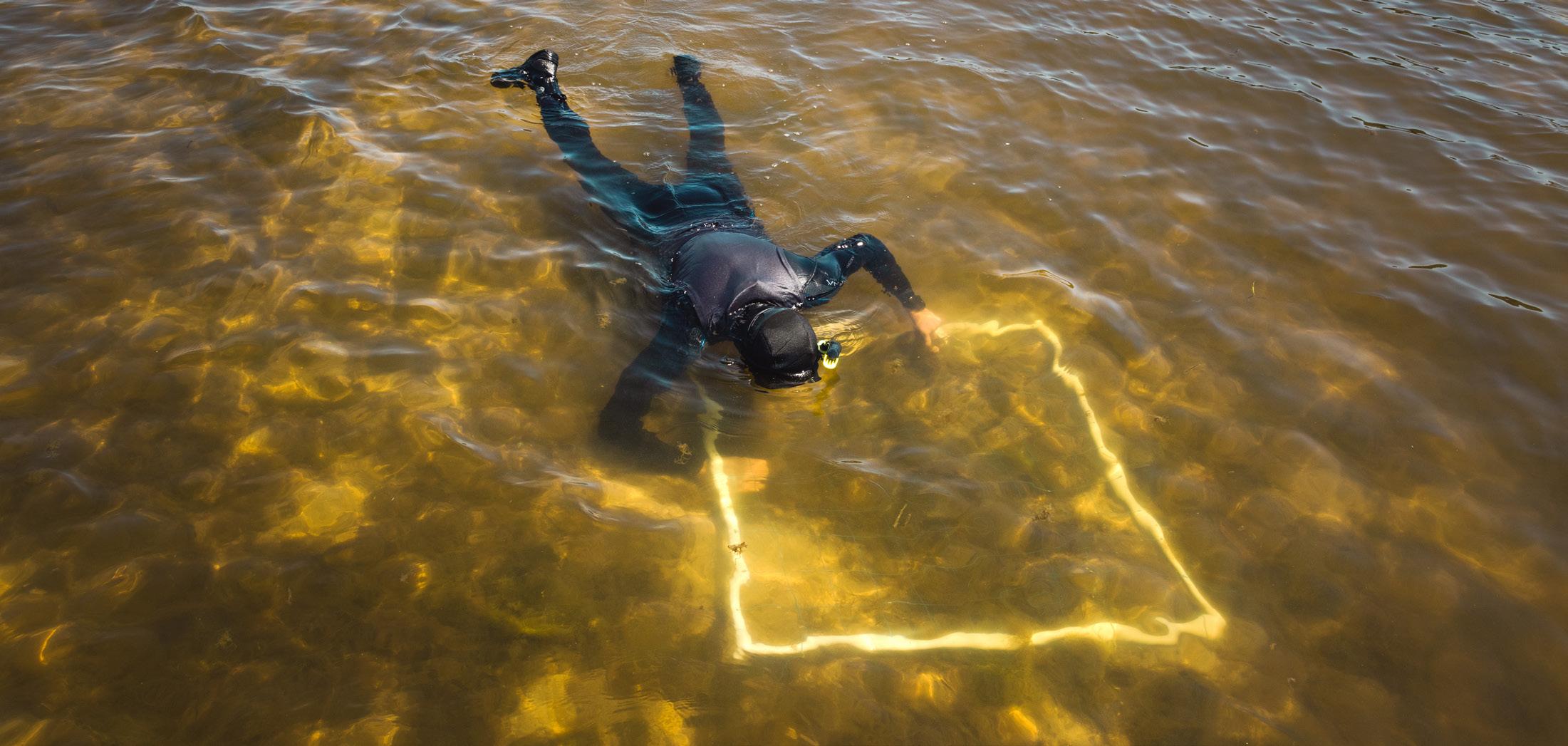
“When similar observations were reported regionally, we identified a grant opportunity with the EPA to expand our sampling from 10 sites within the Refuge to include over 60 sites in Matlacha Pass, Pine Island Sound, and San Carlos Bay,” said Milbrandt.
The $578,394 study is funded through the EPA’s Region 4 South Florida Initiative, which focuses on water quality, algae blooms, and other issues in the estuaries of South Florida.
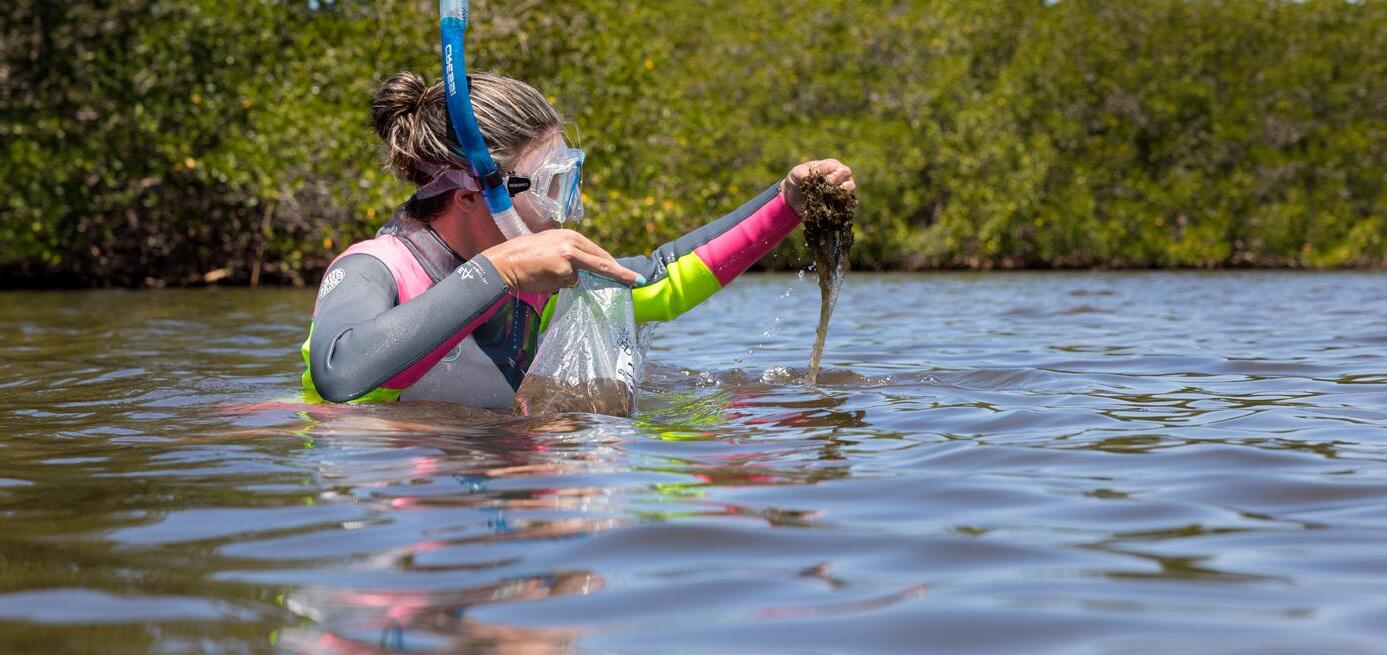
“Starting in 2024, we identified 60 sites to collect macroalgae and measure seagrass health. One half of the sites were in areas with seagrass losses, and one half was in areas with seagrass,” he explained.
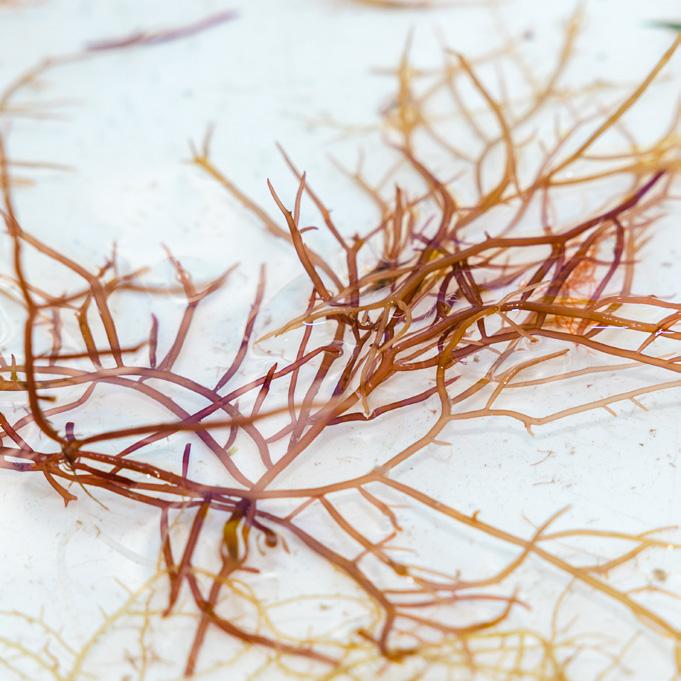
Early results suggest that wetter years (2024) allow the filamentous algae to expand because of lower salinities. During drier years (2025), the diversity of macroalgae increases, and there is less mat-forming algae and more branching red algae.
The 5-year study will continue through March 2028.
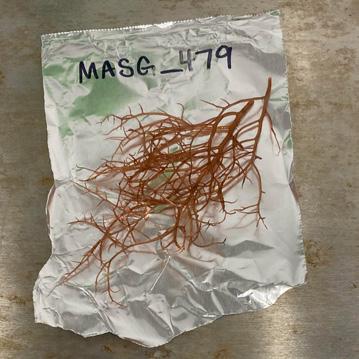
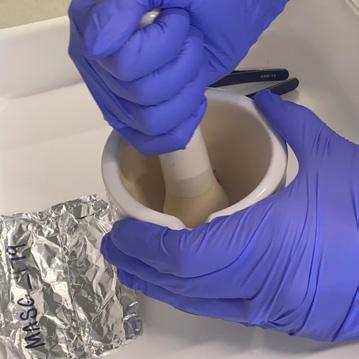
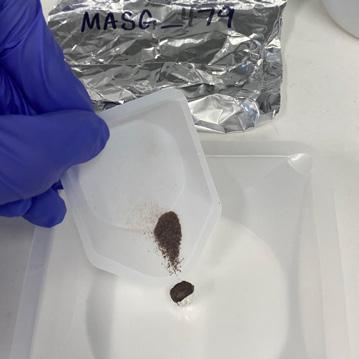
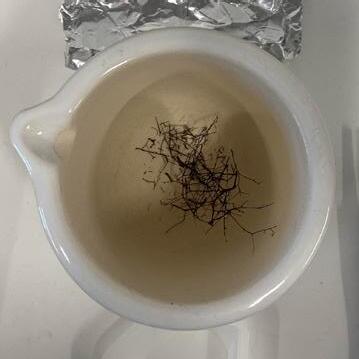
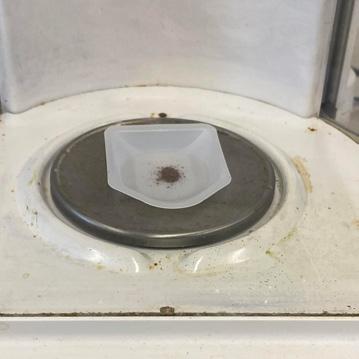
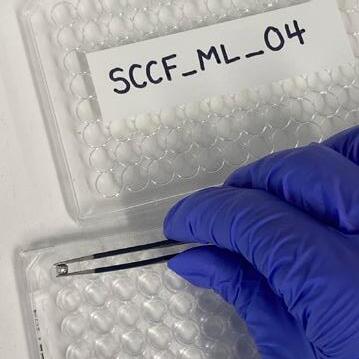
Macroalgae is collected and brought back to the lab for identification. After identifying and drying the algae in the oven, the sample is weighed and prepped for stable isotope analysis. Stable isotope analysis can be used to identify the source of nitrogen — fertilizer or wastewater.
While it’s clear that clean water is vital to a healthy environment in Southwest Florida, it is also the lifeblood of a healthy economy. Understanding the inherent connection between our waters and our businesses builds effective advocates. When the business community speaks up for clean water, decision-makers listen.
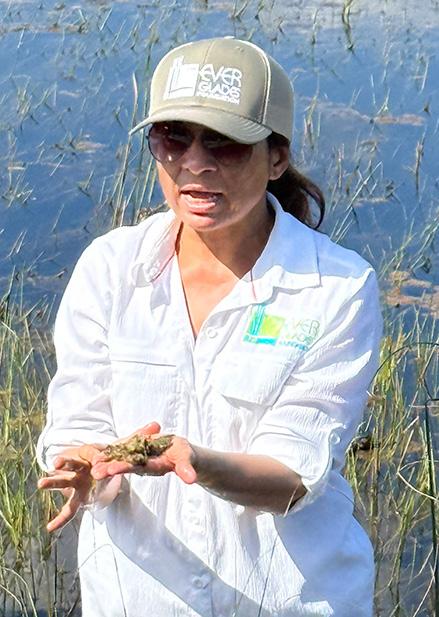
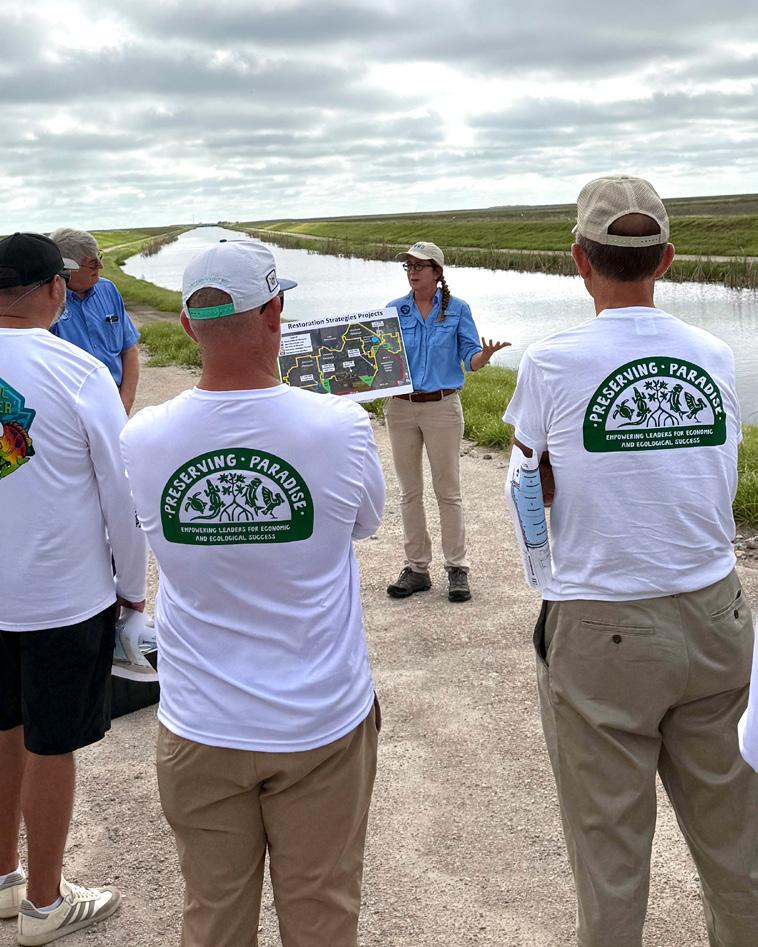
That’s why SCCF proudly partnered with Captains for Clean Water, the Everglades Foundation, and the SanCap Chamber in 2024 to launch the annual Preserving Paradise program as an effort to immerse business leaders in water quality science and policy.
“Inviting business and community leaders to join us in water quality advocacy is a key tool for helping us protect Southwest Florida’s ecosystems, communities, and economies,” said SCCF Environmental Policy Director Matt DePaolis.
The innovative Preserving Paradise program ran for a second time in 2025 with an eager cohort of 23 professionals representing real estate, banking, landscape architecture, public education, marketing, and more.
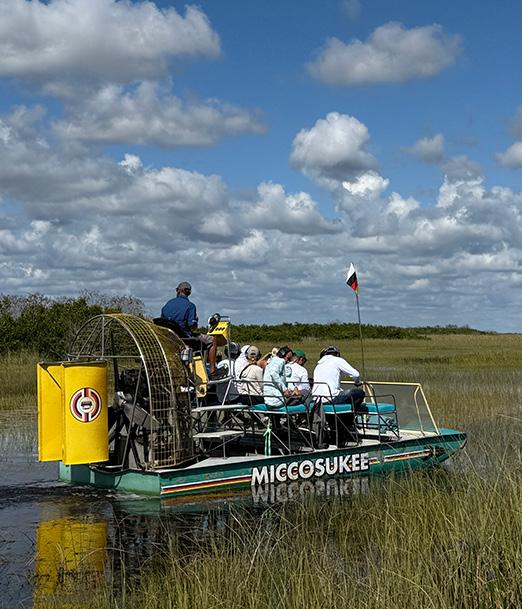
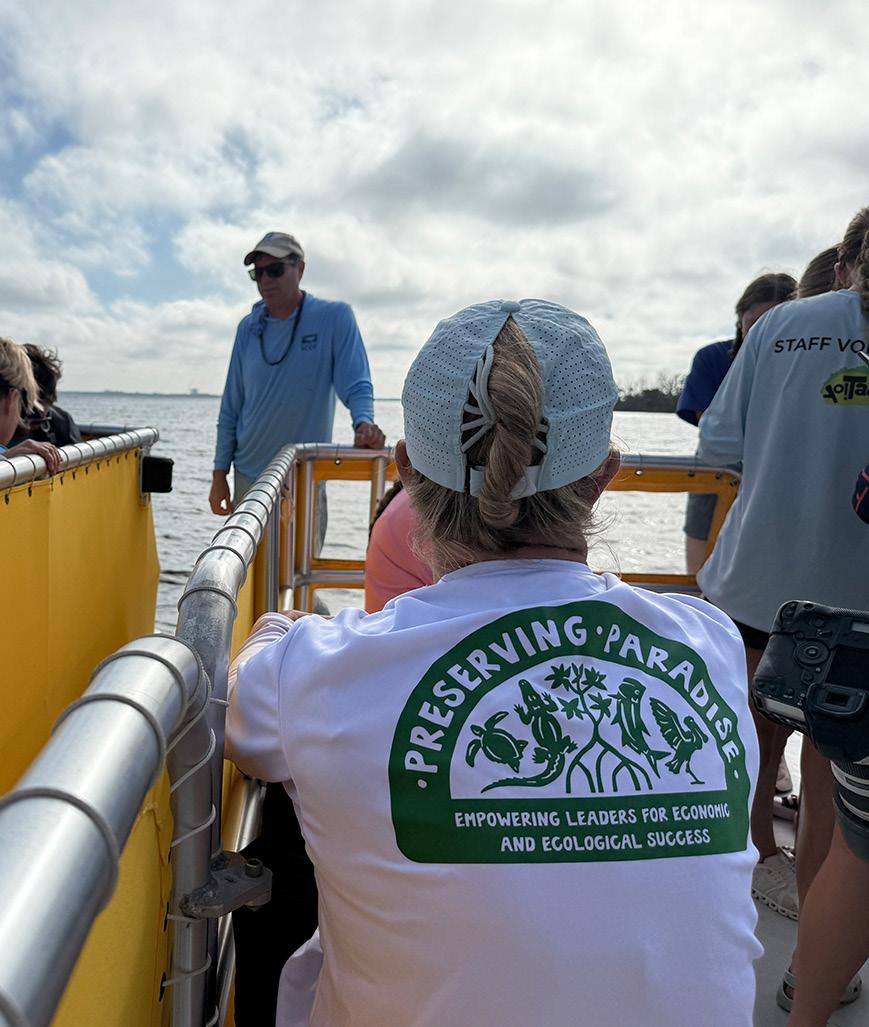
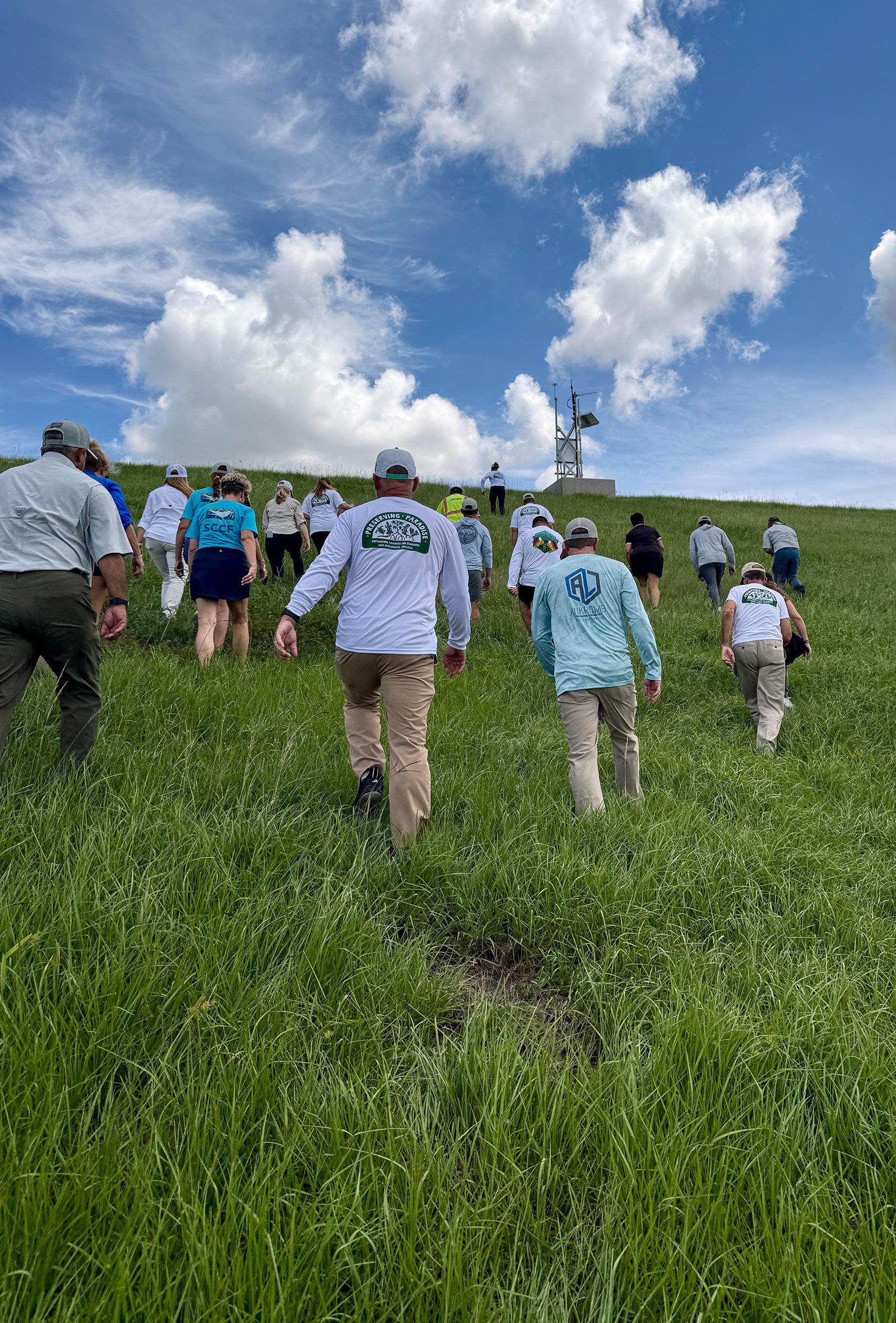
Every two weeks, experts from each partner organization met with the group to lead classroom sessions and field excursions that got the participants up close and personal with the components that impact the water system in Southwest Florida, including Lake Okeechobee releases, nutrient pollution, Everglades restoration, and local, state, and national politics.
“We traveled to sites of Everglades restoration, toured our estuary, unpacked the economics of harmful algal blooms, explored the politics of repairing the Everglades, and bonded over the importance of clean water.”
— Matt DePaolis, Policy Director
Preserving Paradise Empowers Water Quality Advocates
Each session fostered connections and further inspired participants to use their businesses and professional networks to educate and advocate for clean water.
“We are proud to have offered the 2025 Preserving Paradise cohort a front-row seat to the fight for improved water quality in Southwest Florida,” said SCCF Policy Associate Allie Pecenka. “We had an outstanding group of participants this year and look forward to the impact they will make.”
FROM THE PARTICIPANTS
“As a local landscape architect, I already felt like I knew quite a bit about the local and coastal environment and water quality issues, but I was incredibly surprised at all the different players and components at play that contribute to our water quality. There’s no one lever that we need to pull — we need to be pulling multiple levers all at the same time, all in unison, all with a unified goal.”
— Leigh Gevelinger, founder of Coastal Vista Design
“The most important thing we’ve learned is understanding how big the water system is, how many people that it affects, and what seems to be almost an insurmountable past to fix it. Yet when you break it down, you learn that it’s achievable, one goal a time.”
— Jason Cohen of Cohen Sales, LLC
“I would say the most impactful experience is finding my voice — understanding that I don’t have to be an expert to exercise my voice in a powerful way. I plan to find ways to educate our customers, our clients, so that they can also have the fire to protect our waters and exercise their voices, so we can build that momentum.”
— Patience Jennings of Select Vacation Properties
Immersing New Residents In Our Ecosystems
Understanding Sanibel and Captiva's environmental history and unique ecosystems has always been central to SCCF's mission and its community support. Islanders choose to live and visit our islands because they are amazed by how well we protect and care for our land, water, and wildlife.
Our Environmental Orientation for New Residents and Businesses program helps newcomers become acquainted with the environmental features and conservation ethos that define the islands. Started in 1986 by former Education Director Kristie Anders, the program has evolved to address current environmental challenges and community needs.
The current program — offered three times each year — emerged following an influx of new residents during the COVID pandemic. SCCF recognized the need to welcome new neighbors, immerse them in the island's natural systems, and introduce them to our conservation-in-action mission. Anyone new to Sanibel, Captiva, or North Captiva over the last two years is eligible to sign up for this free day of immersive education.
“Immersing new islanders and business professionals in a fullday experience is essential,” says Adult Education Director Jenny Evans. “Because understanding
our ecosystems isn't just about observation; it's about grasping how research, policy, and community action work together to protect what makes these islands extraordinary.”
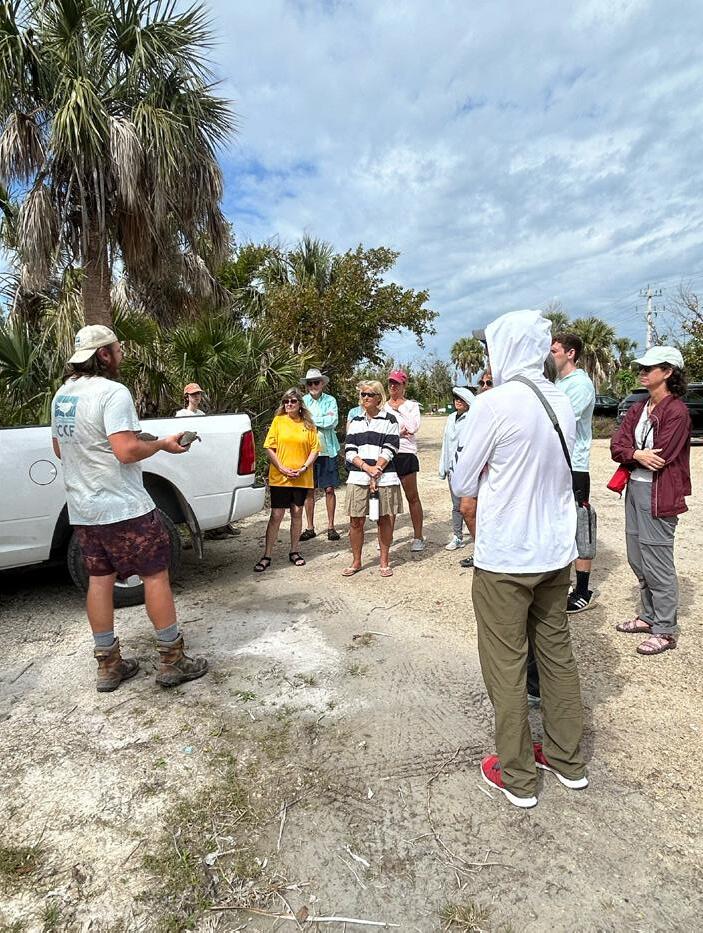
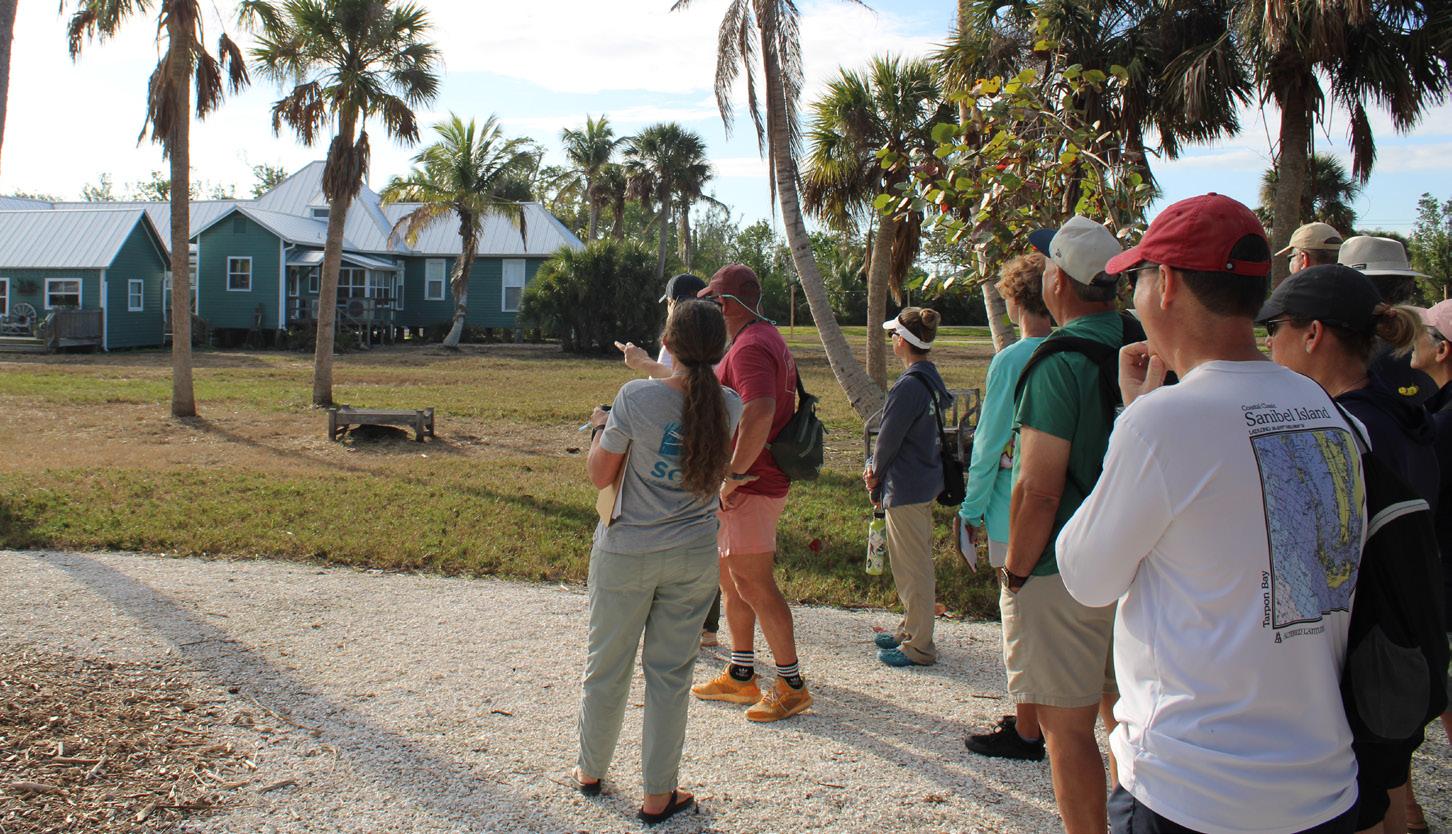
Beginning at our Bailey Homestead Preserve, participants explore the island's conservation history and learn about land management and backyard landscaping practices that support wildlife habitats. They tour native demonstration gardens, observing pollinators and blooming plants while learning about the Native Landscapes & Garden Center.
At our Marine Laboratory on Tarpon Bay, they discover how water quality data drives environmental policy and advances scientific understanding. Environmental Policy staff explain advocacy efforts for Everglades restoration and Lake Okeechobee water management that protect the Caloosahatchee River and local estuaries, and how residents can join these efforts.
The Coastal Wildlife team
shares insights into sea turtle and shorebird monitoring programs, while the Wildlife and Habitat Management team teaches about wildlife conservation, land management, and the unique challenges facing barrier island wildlife.
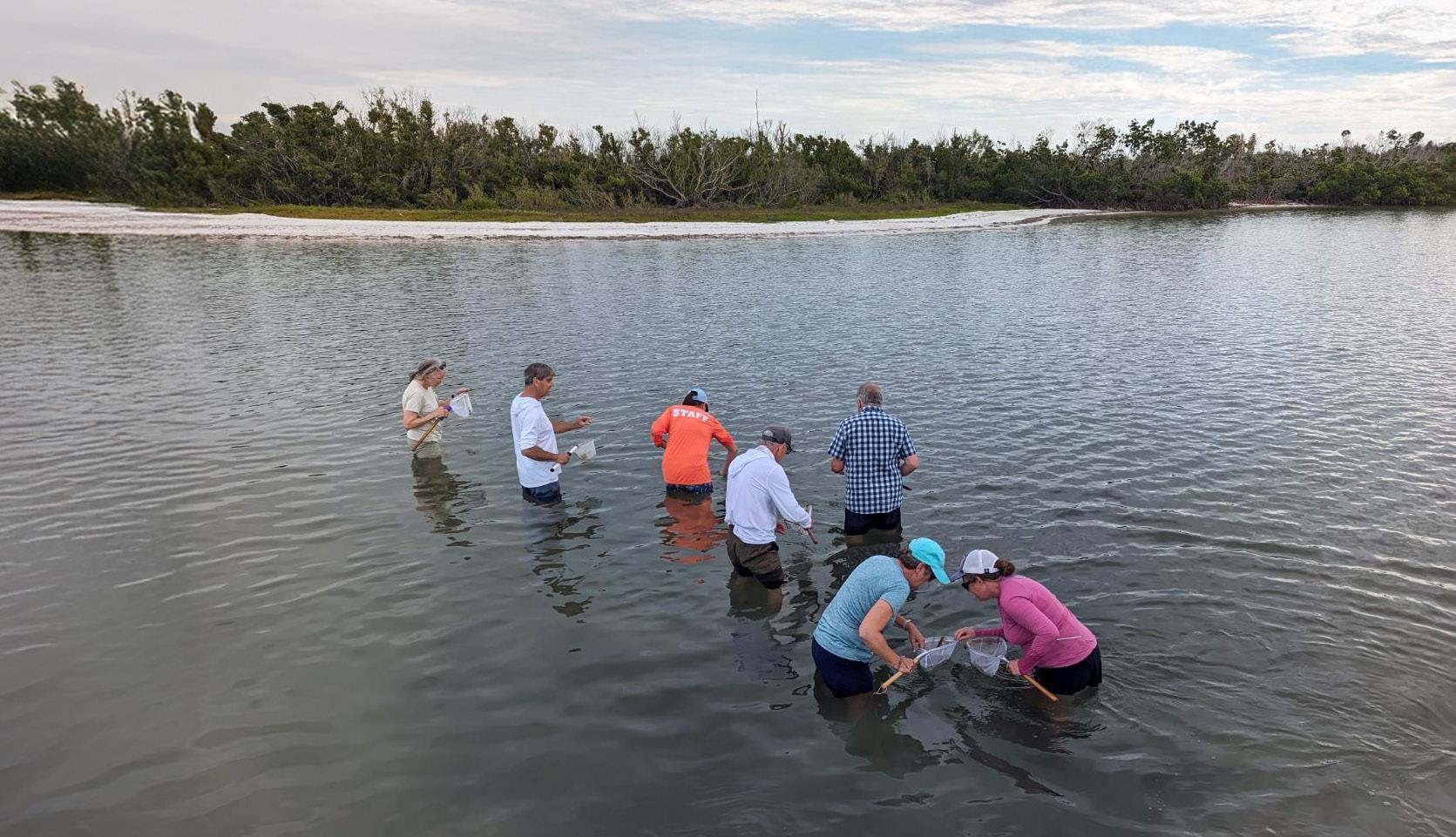
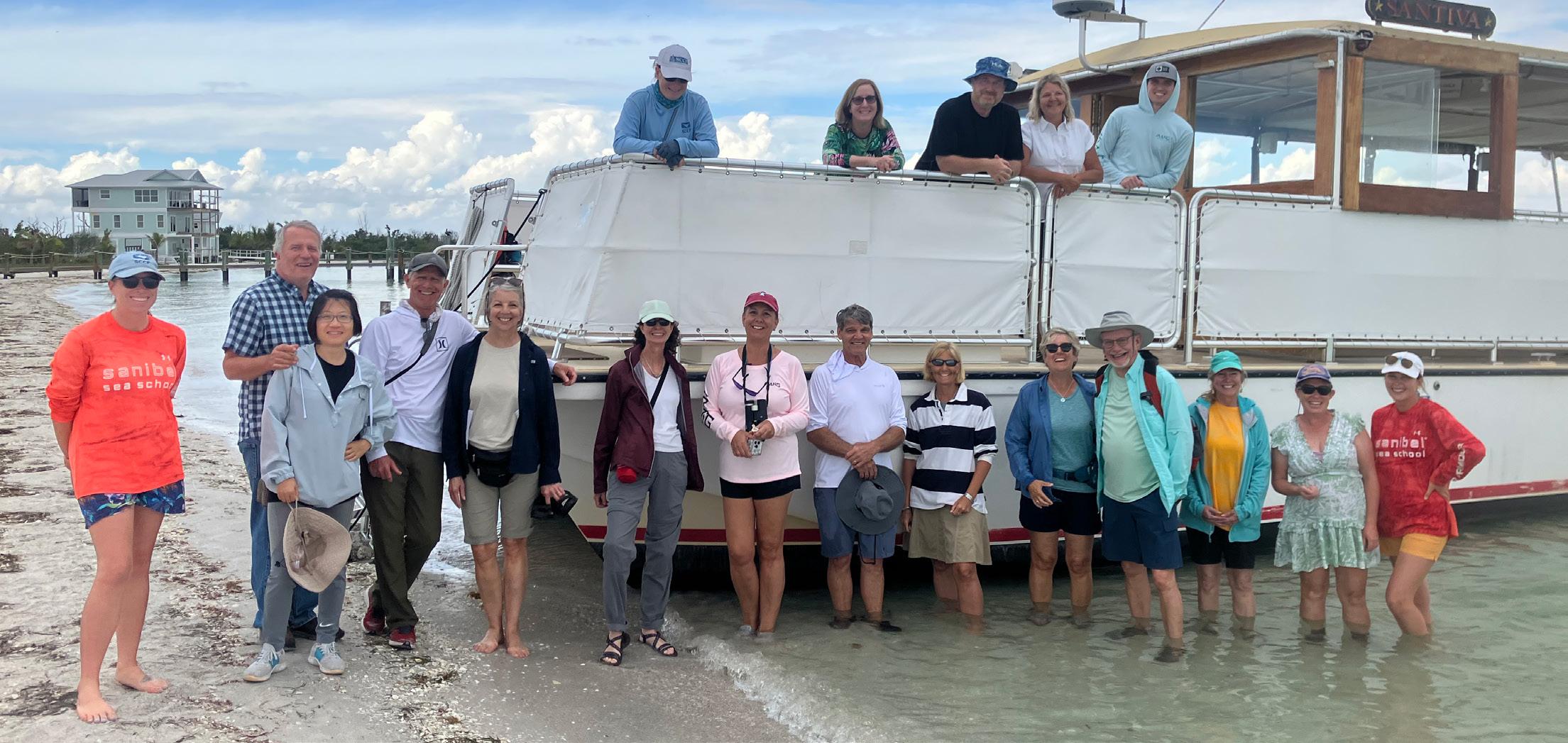
After a group lunch, participants take to the water with SCCF's partner, Captiva Cruises, for a firsthand look at Pine Island Sound. They learn about volunteer opportunities for oyster and mangrove restoration work through Coastal Watch, and dip net for creatures in seagrass beds with Sanibel Sea School.
By day's end, new residents have experienced Sanibel's ecosystems firsthand, grasped the science protecting them, and know how to actively participate in preserving our island's future.
Learn more:
“…understanding our ecosystems isn't just about observation; it's about grasping how research, policy, and community action work together to protect what makes these islands extraordinary.”