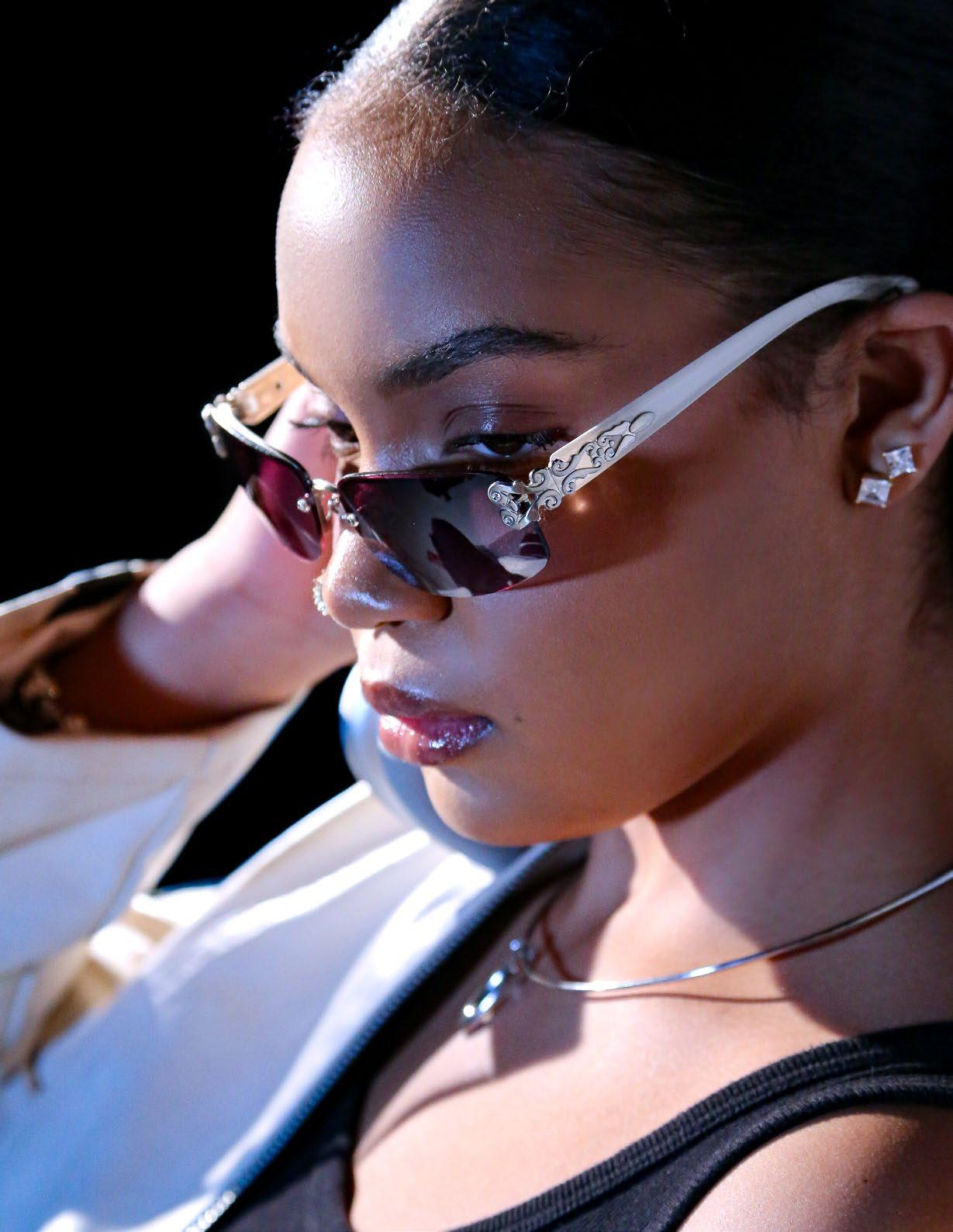
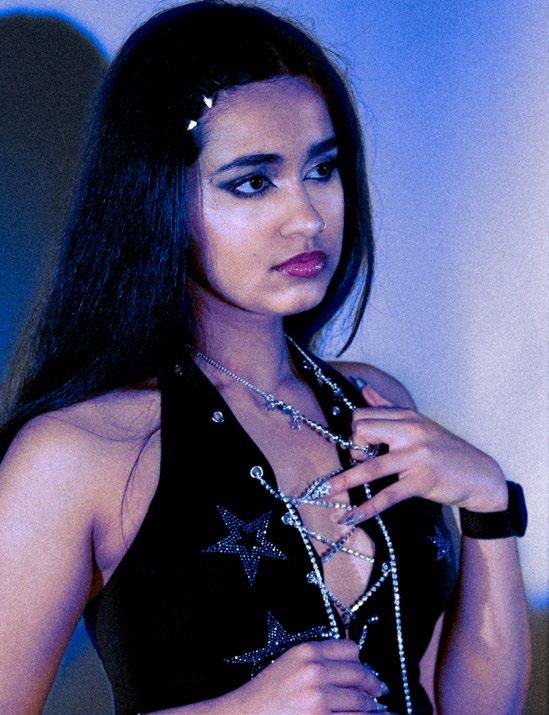
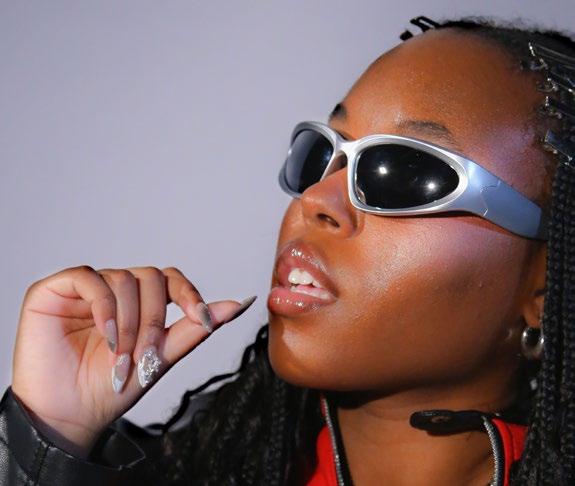
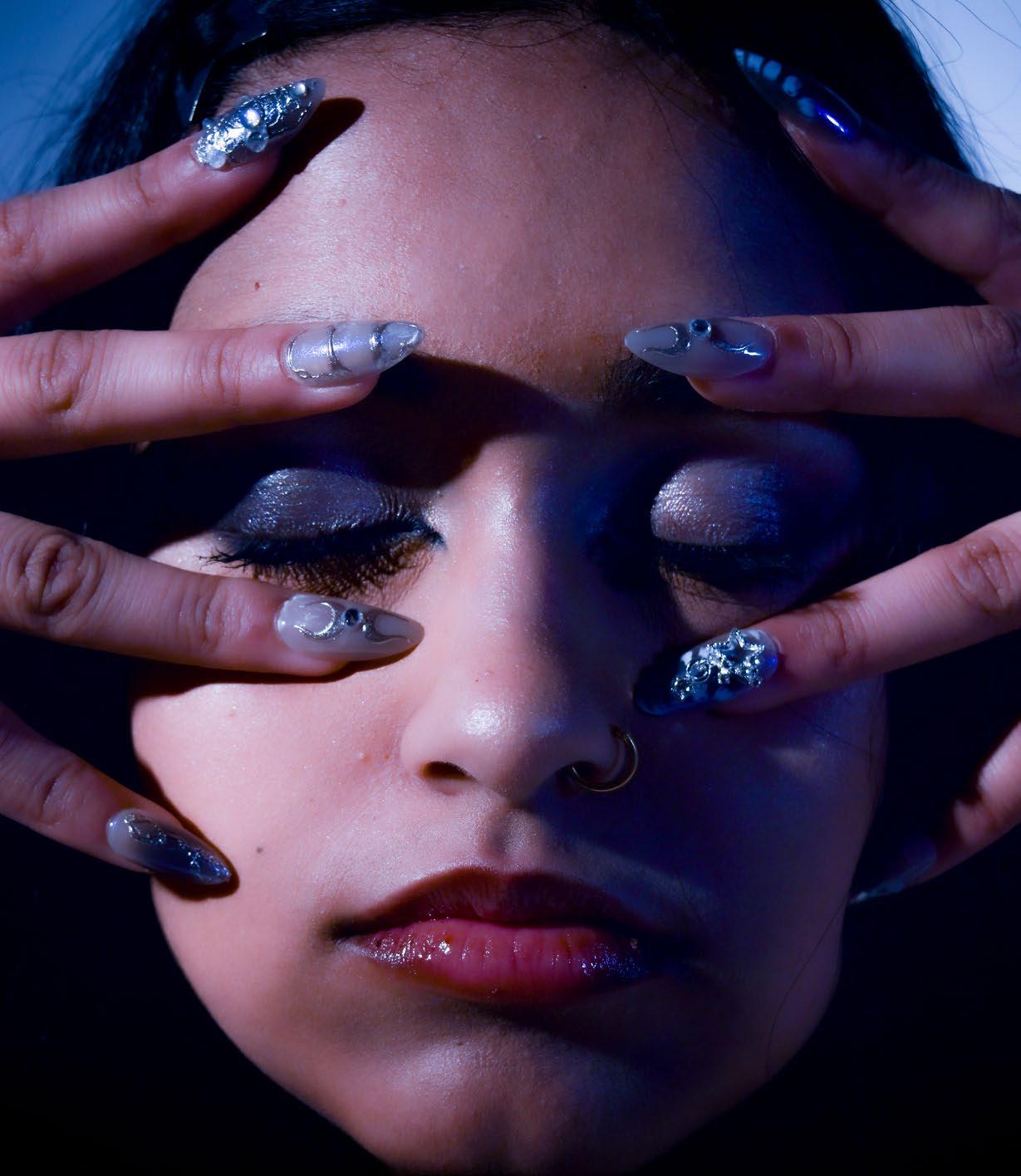
EXECUTIVE
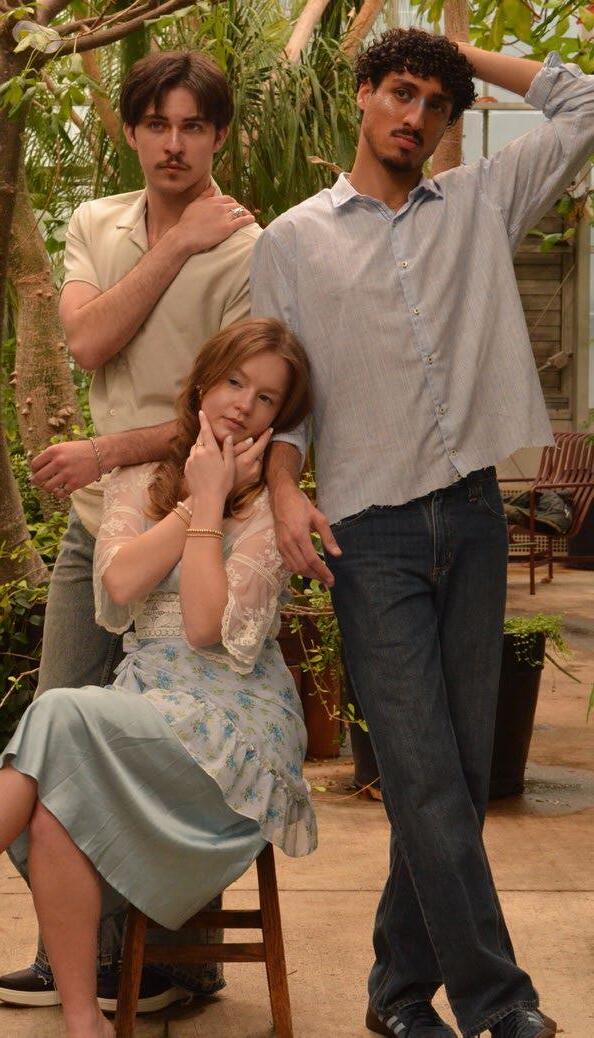
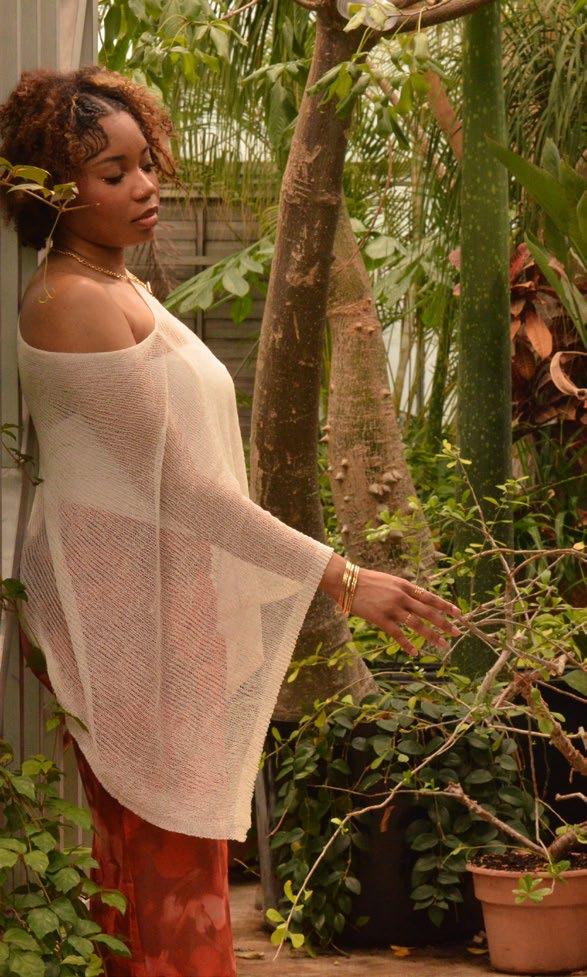
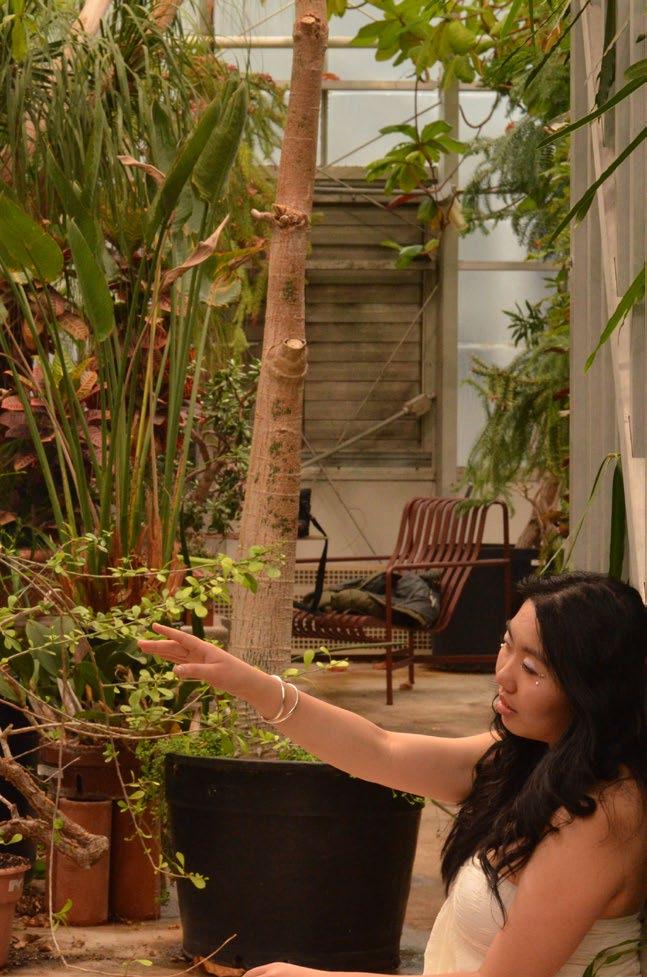
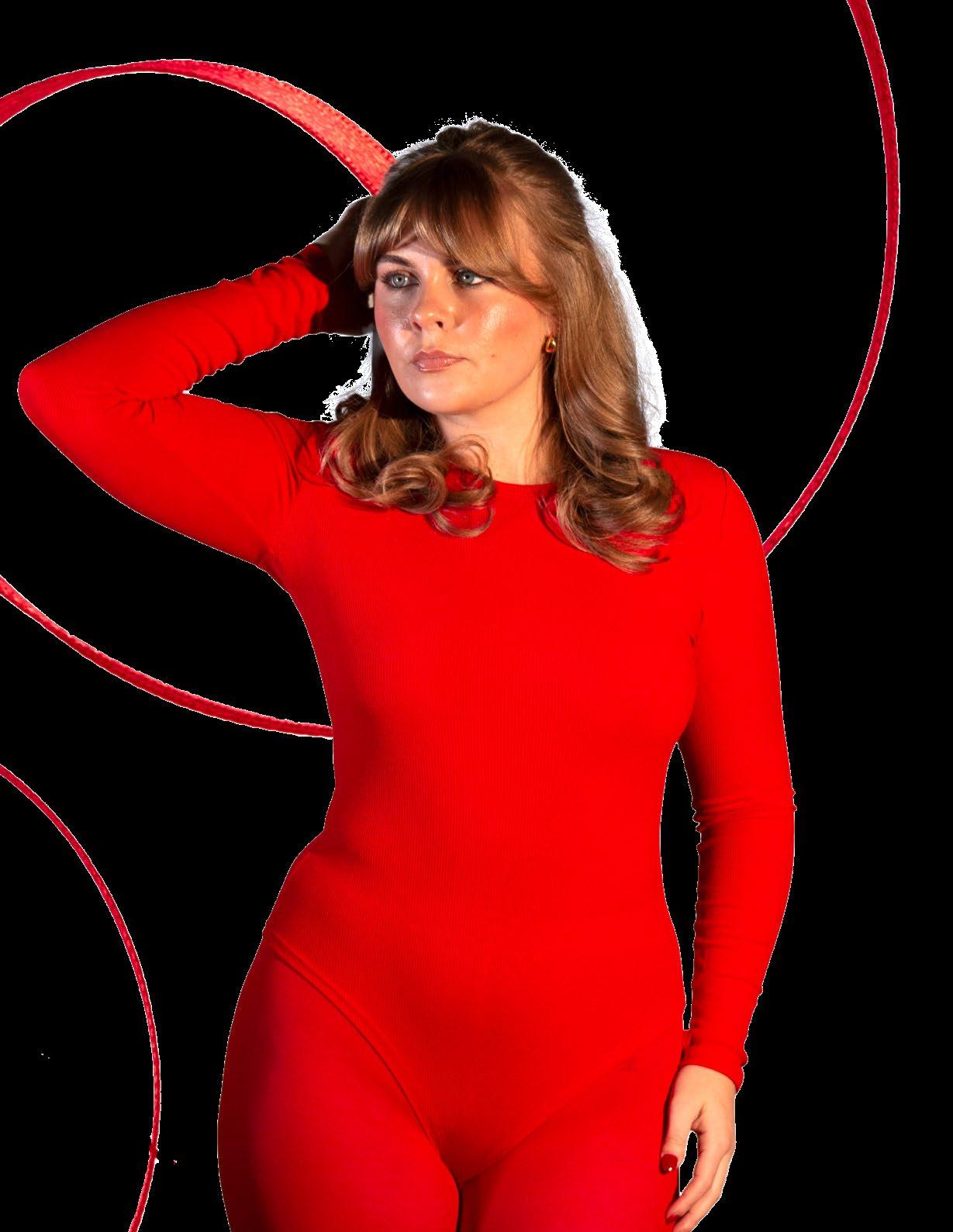
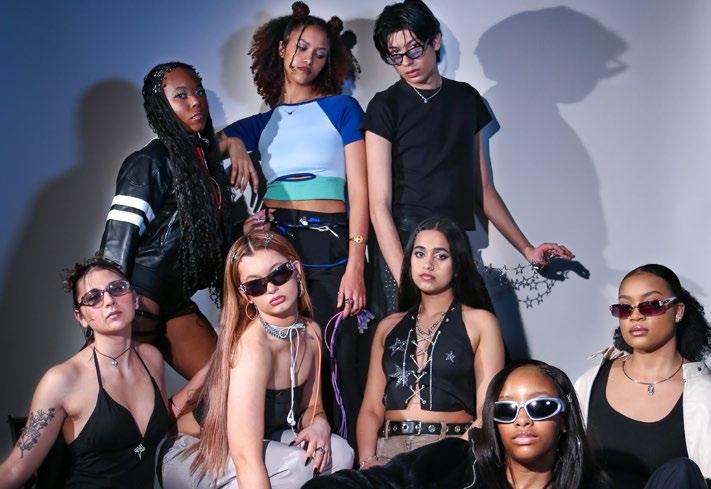
Abby Nocera Assistant Graphic Design Director
Maggie Gu Secretary Summer Neds Treasurer
Mia Schwind Social Media Director
Sammy Chavez Marketing Director
Jasmine Freeman DEI Chair
Sabrina Li Events Chair
Addison Kennedy Graphic Design Director
Olivia Schweinhagen Writing Director
Maggie Harkins Photography Director
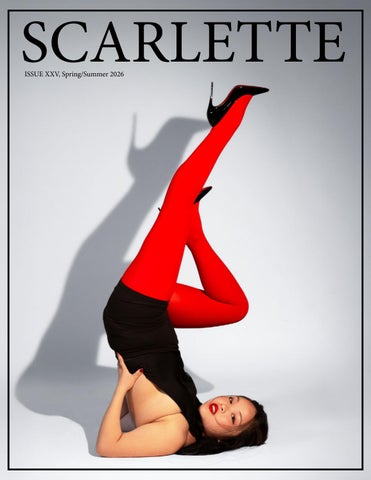
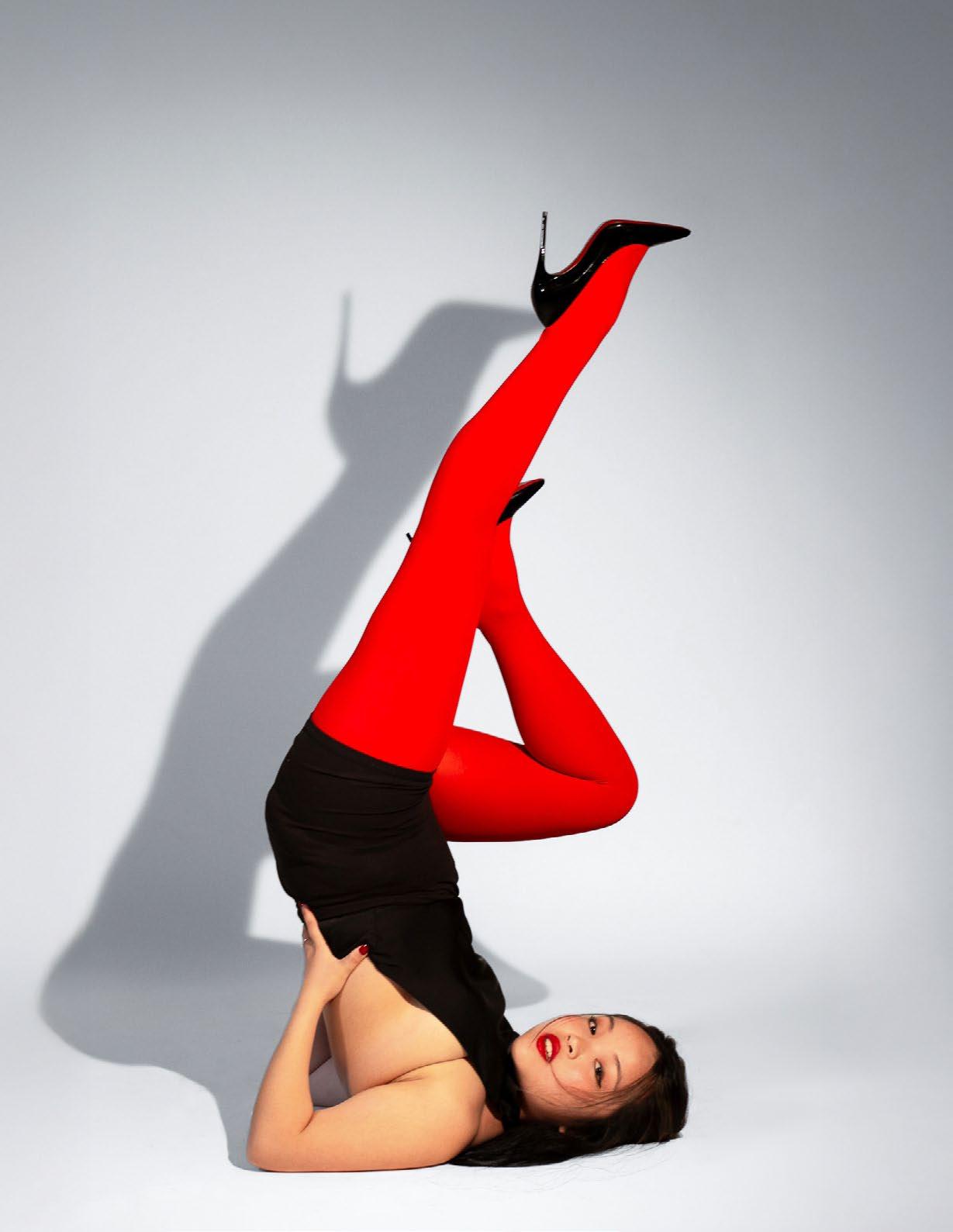
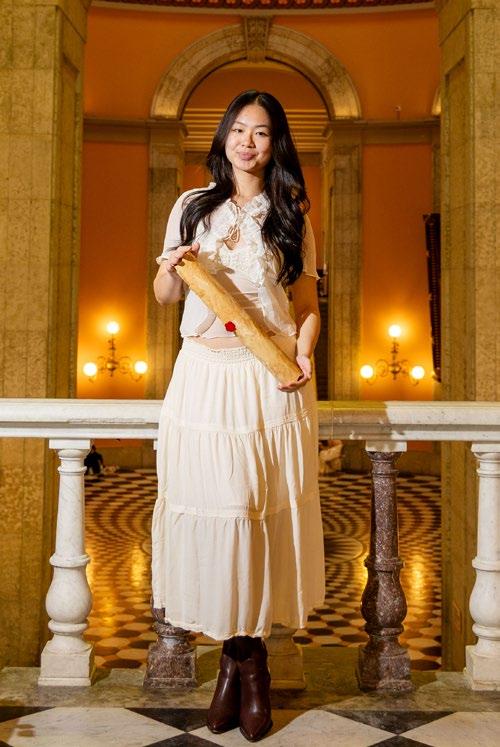
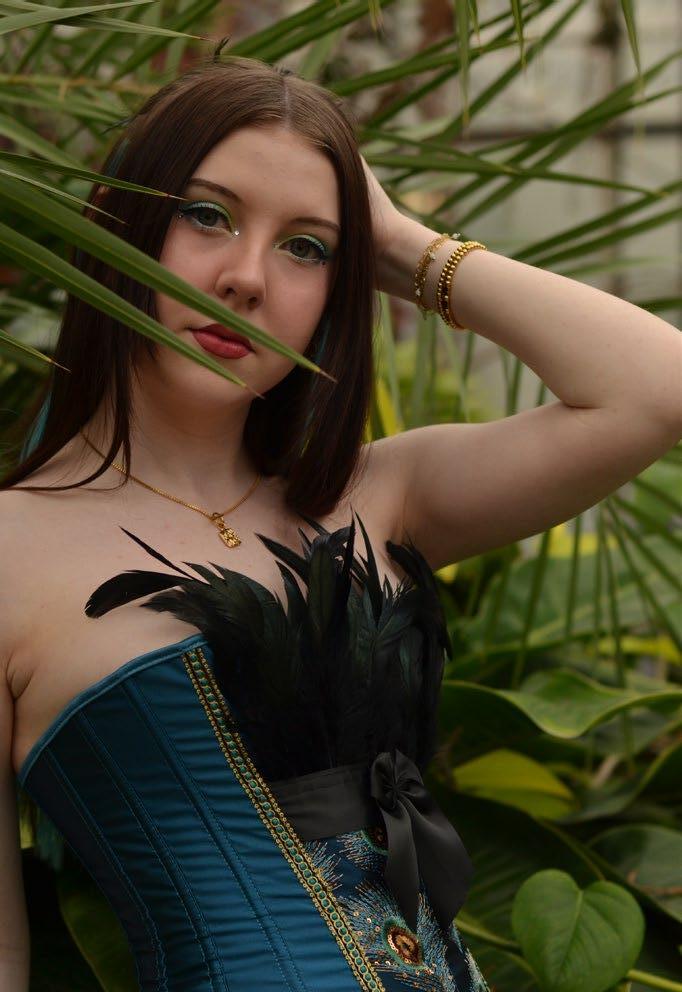
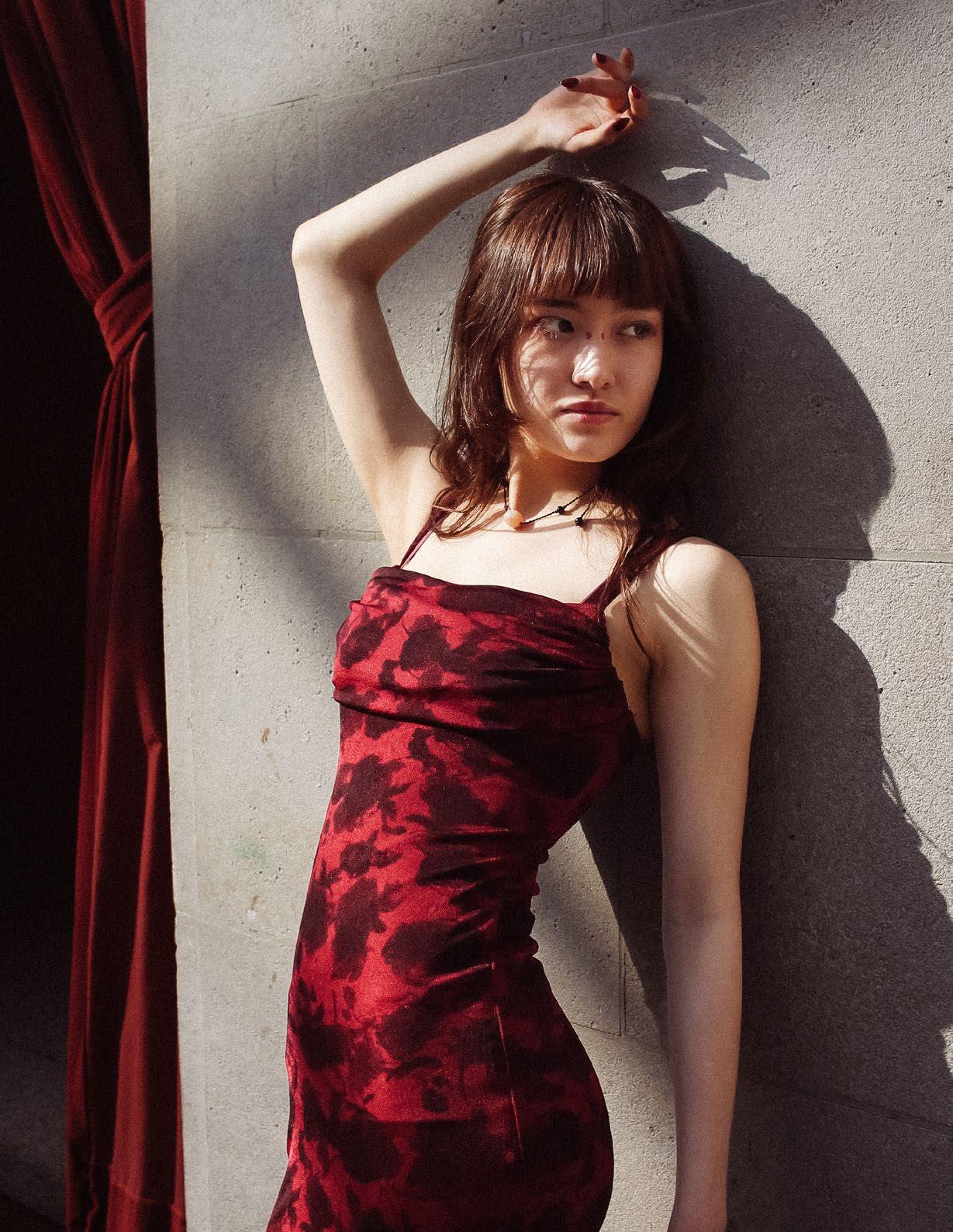
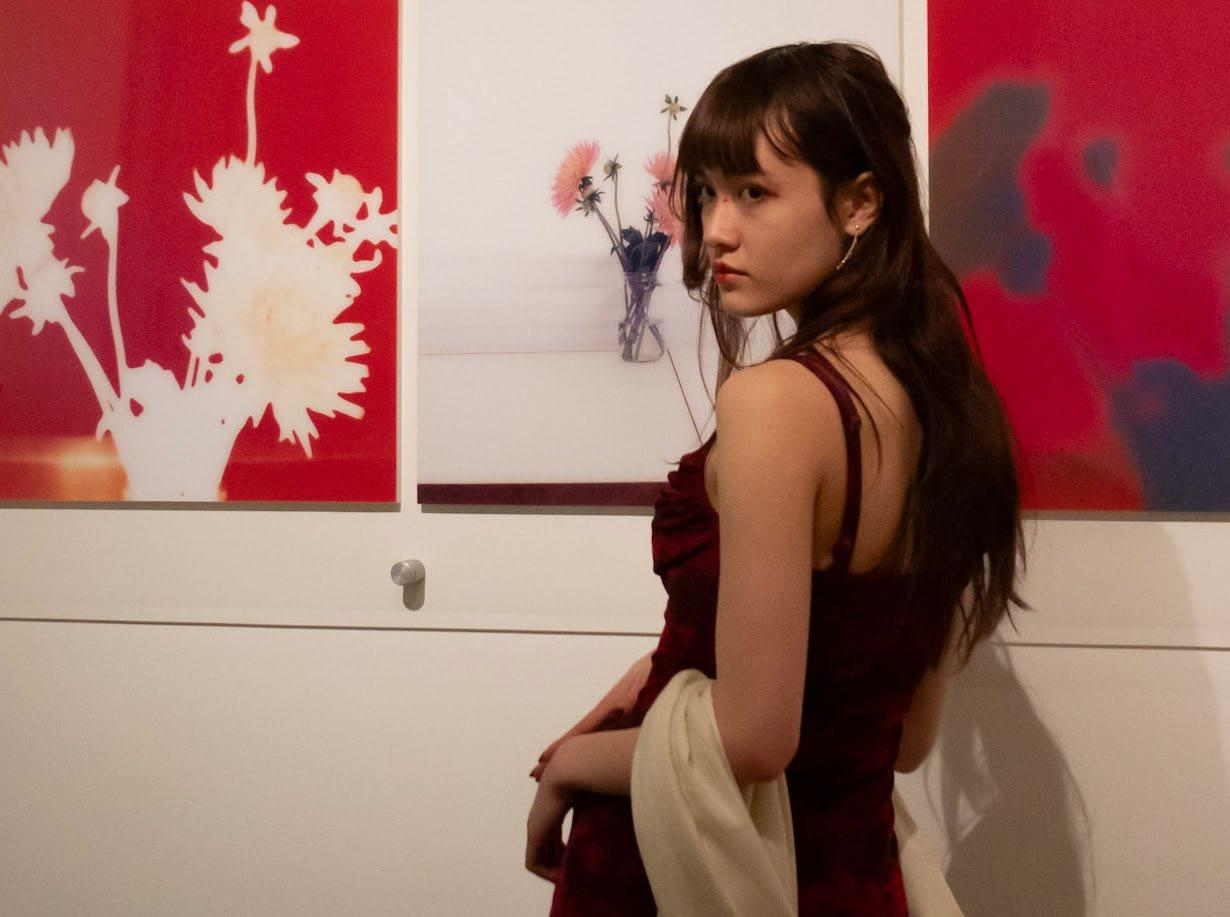
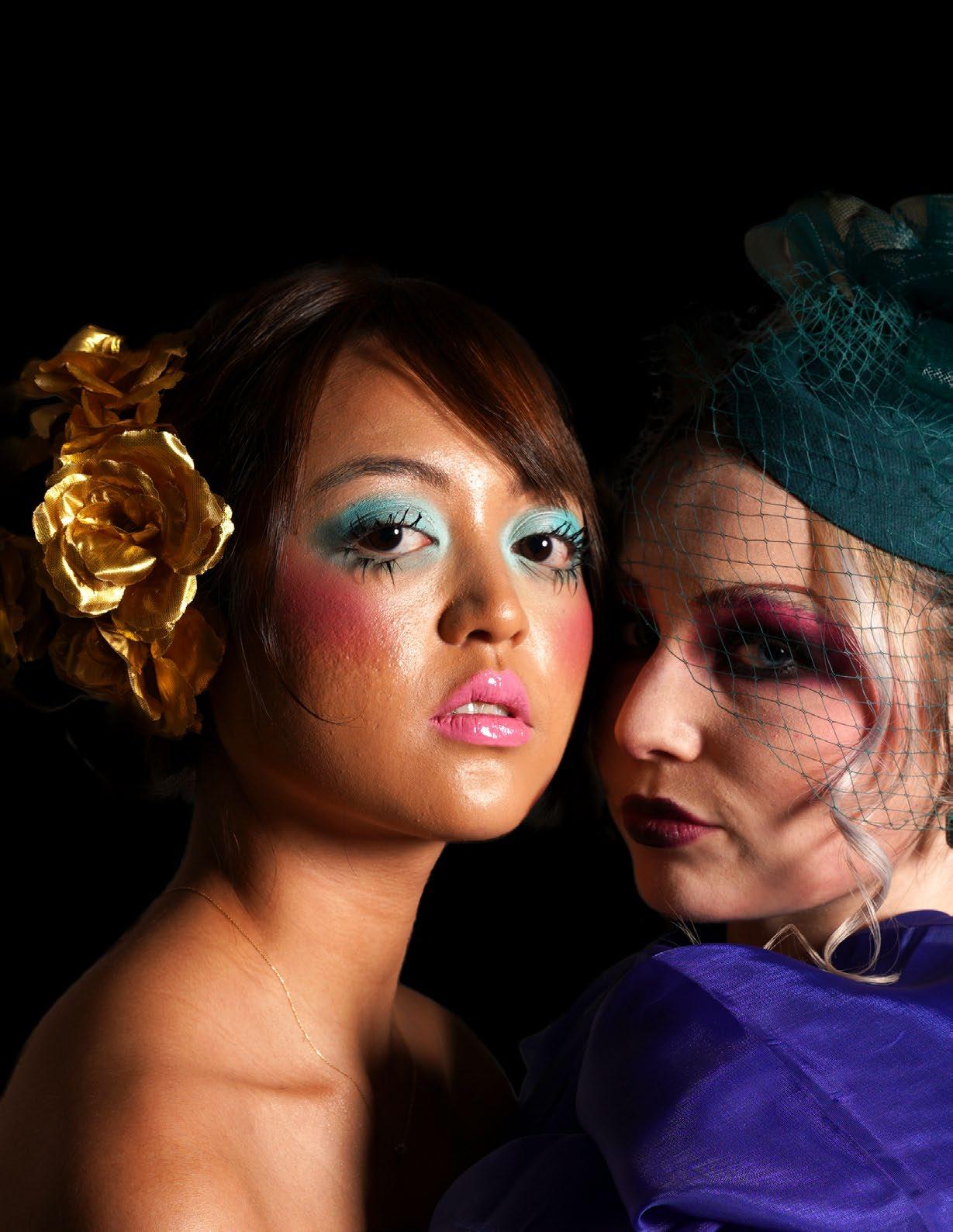
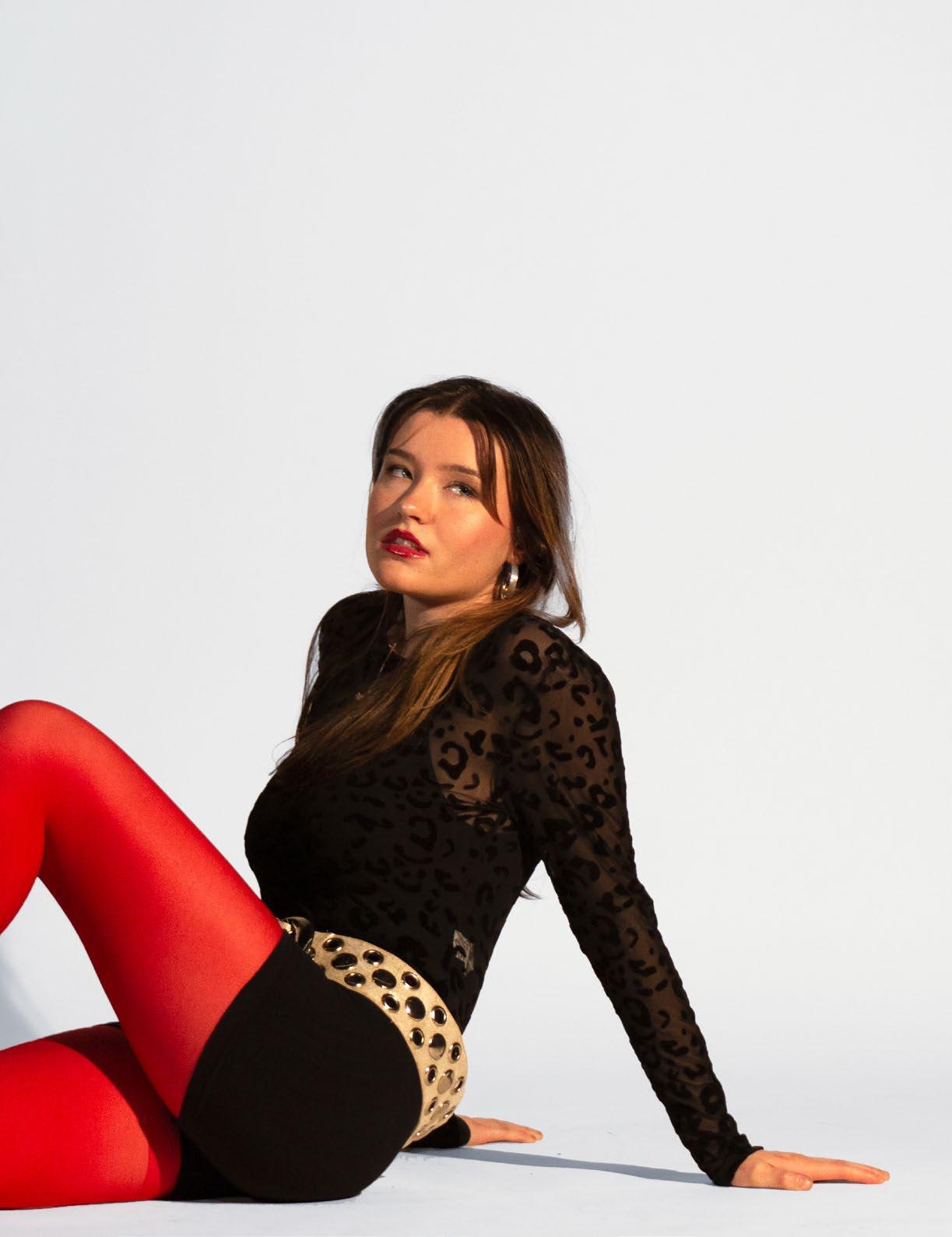
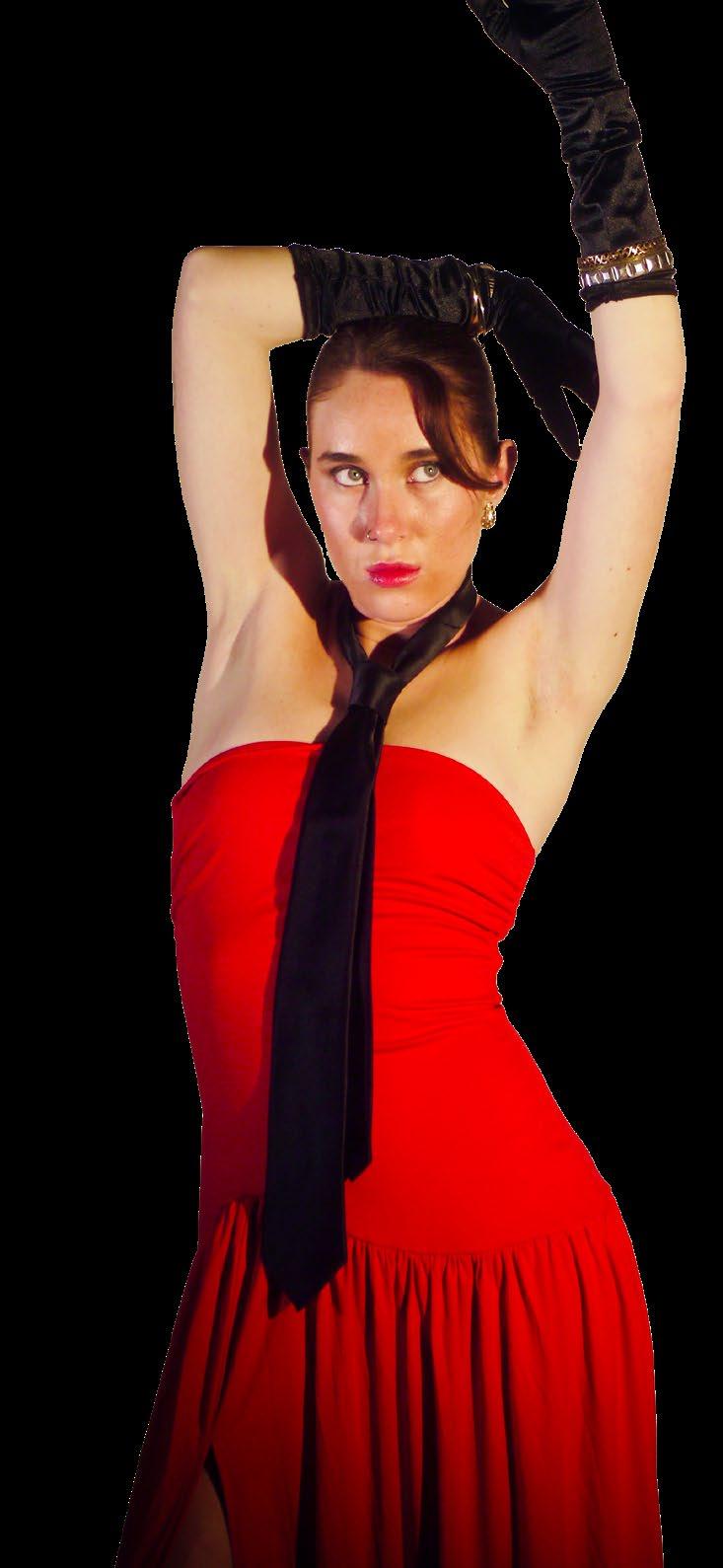
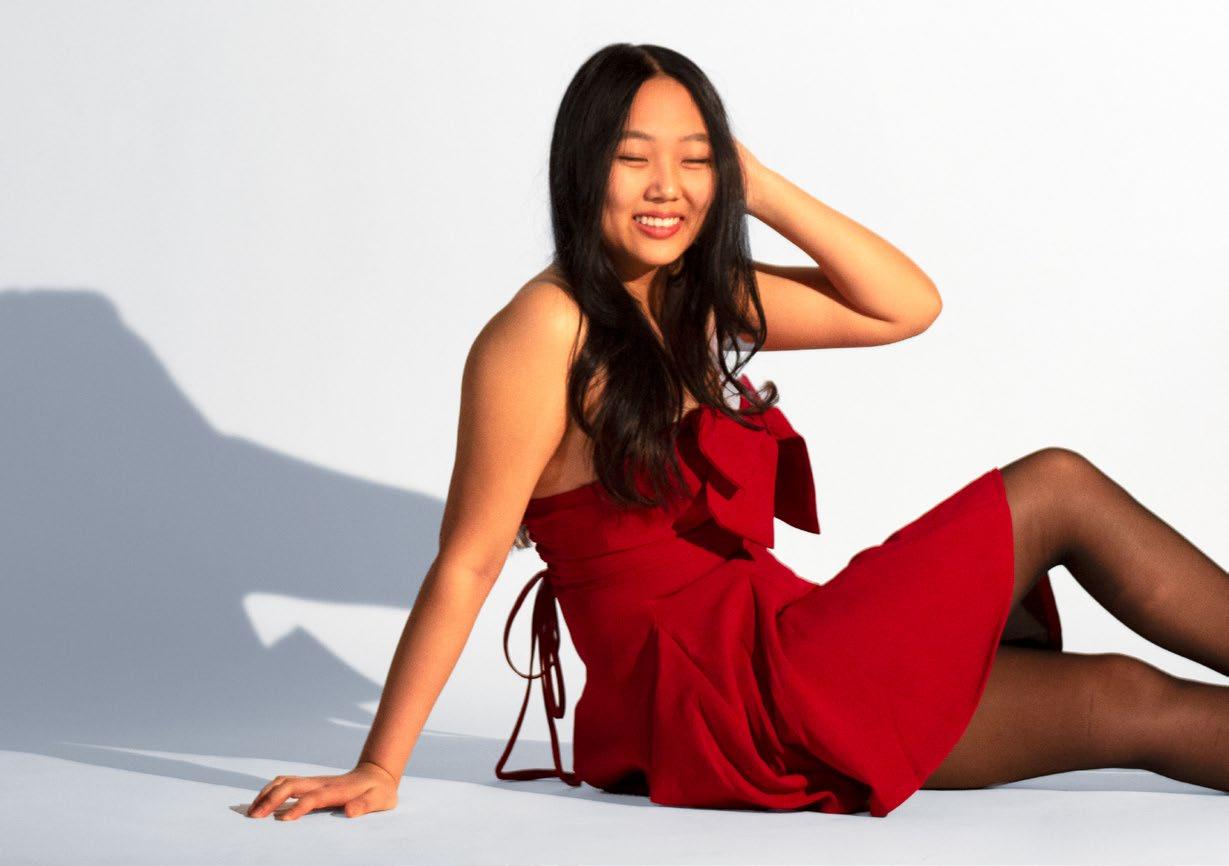
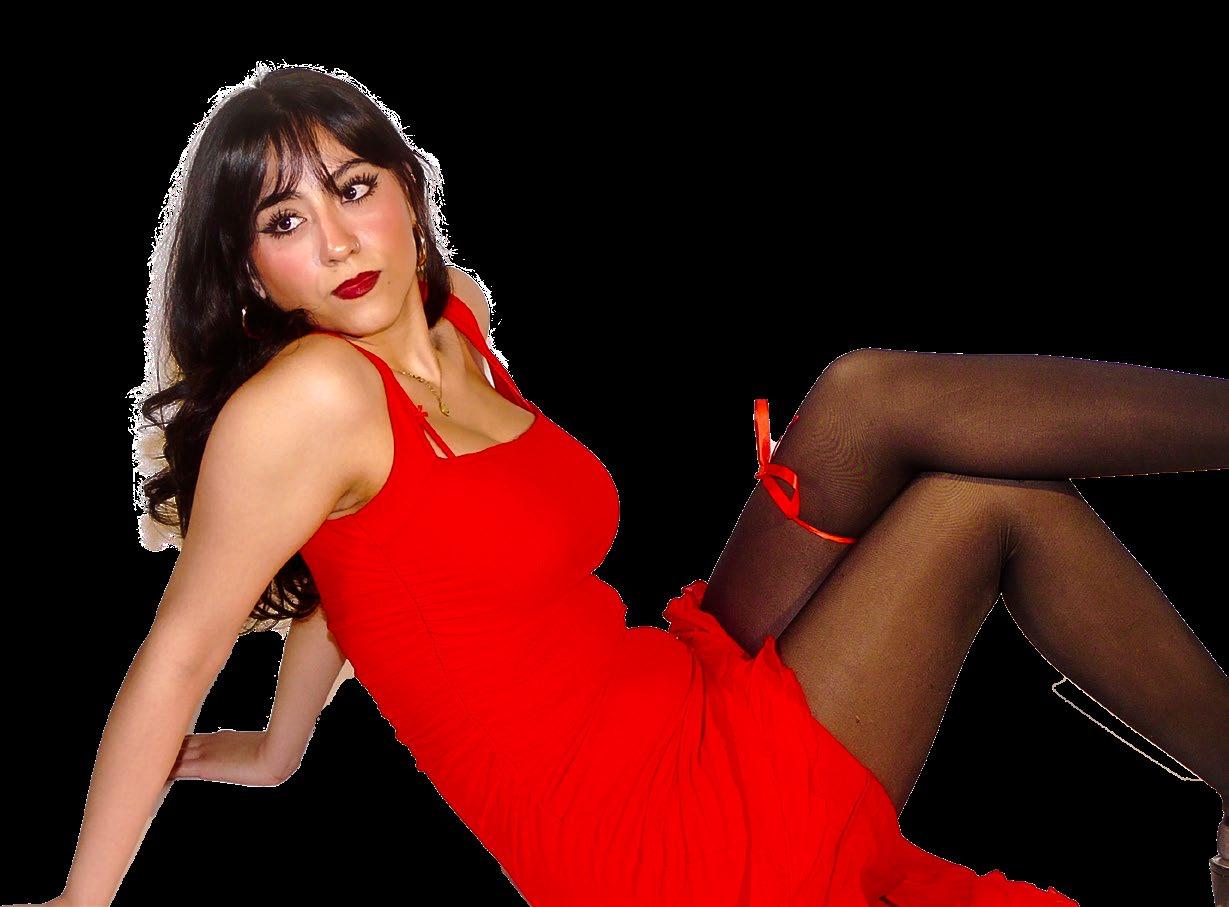
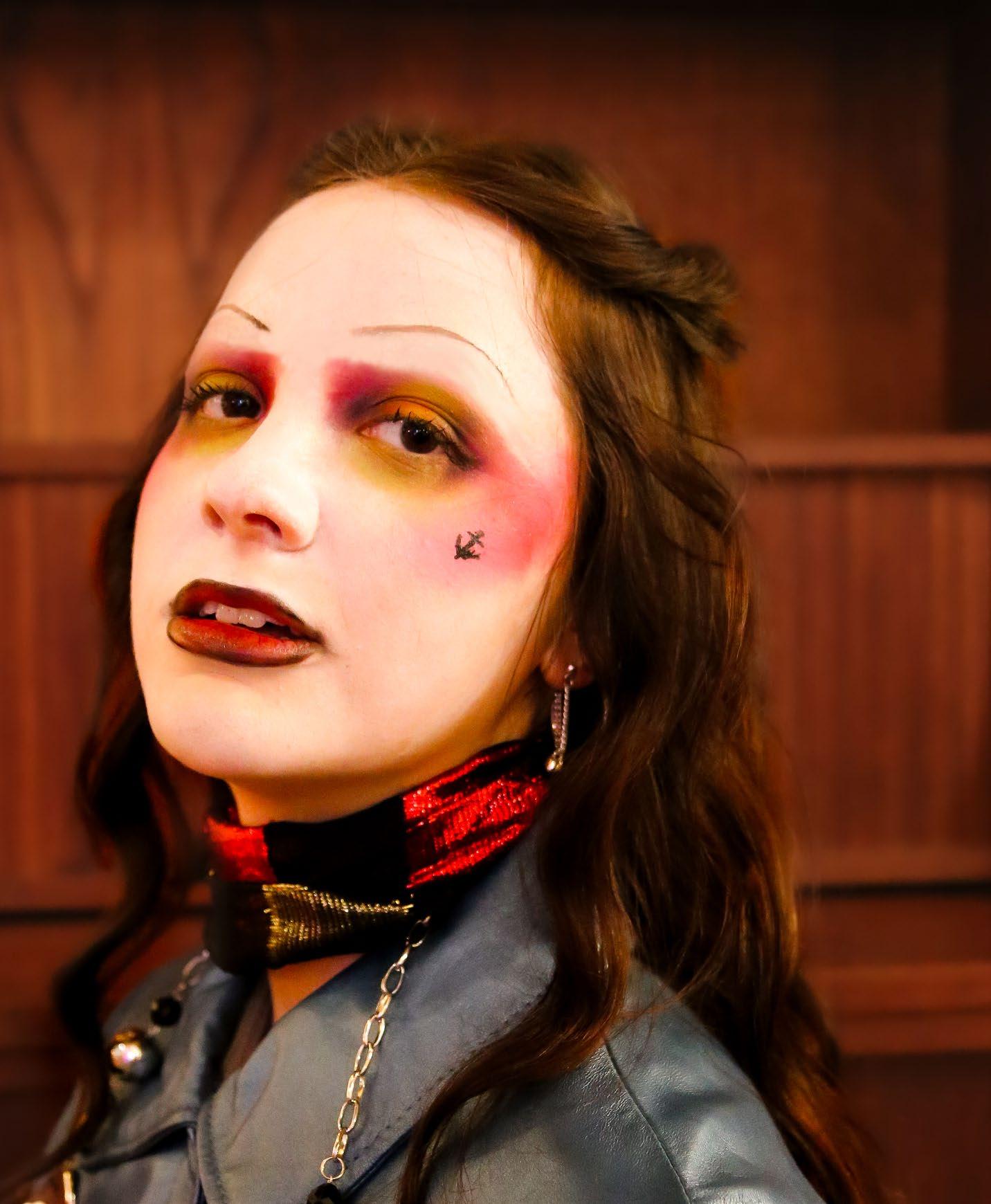
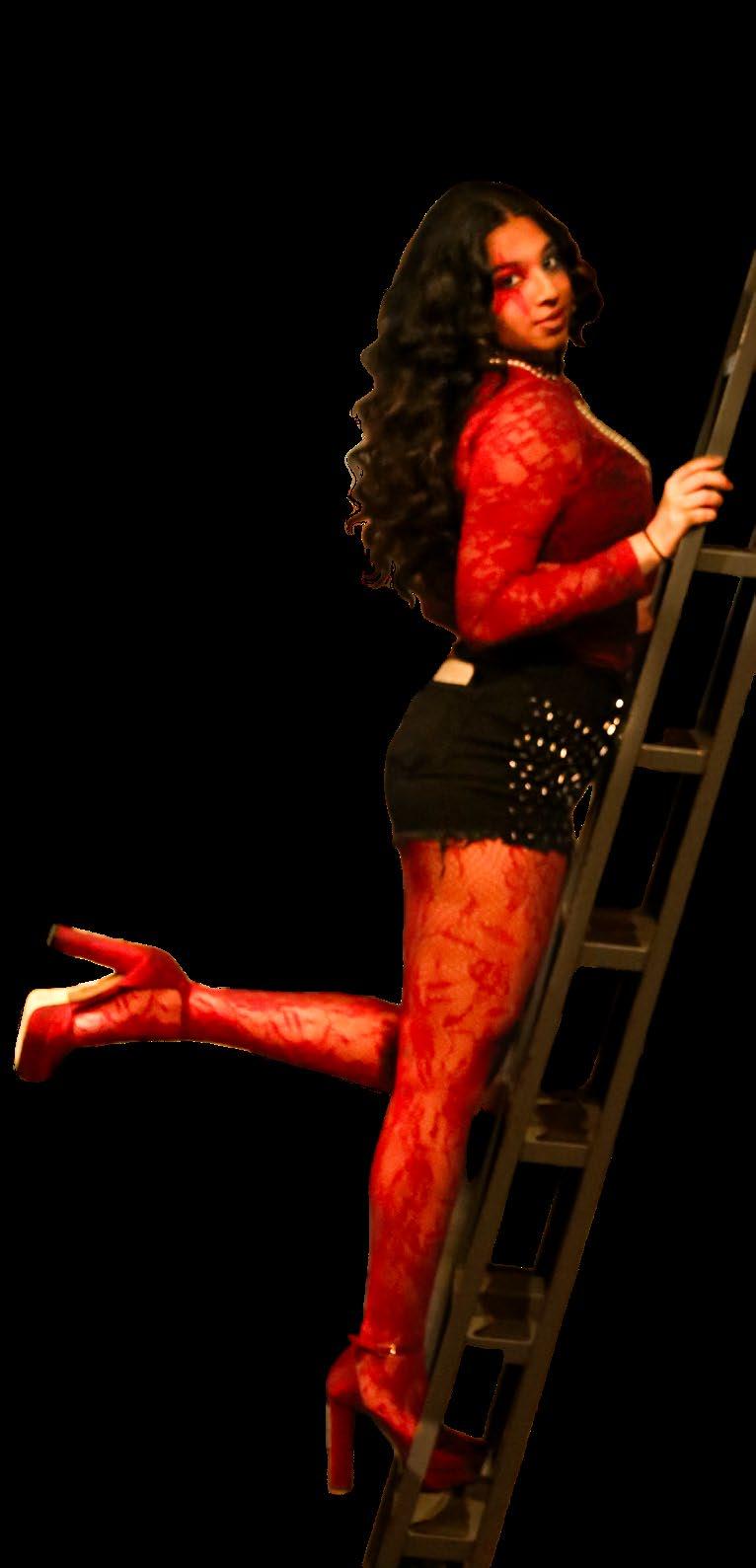
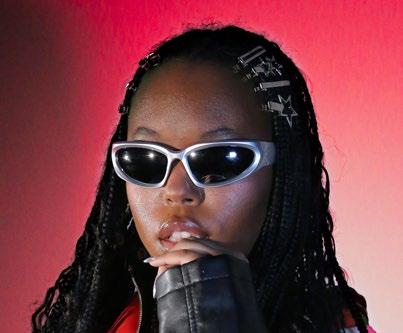
FRONT COVER: Summer Neds [Valentino Red] Photo Credit: Abby Nocera
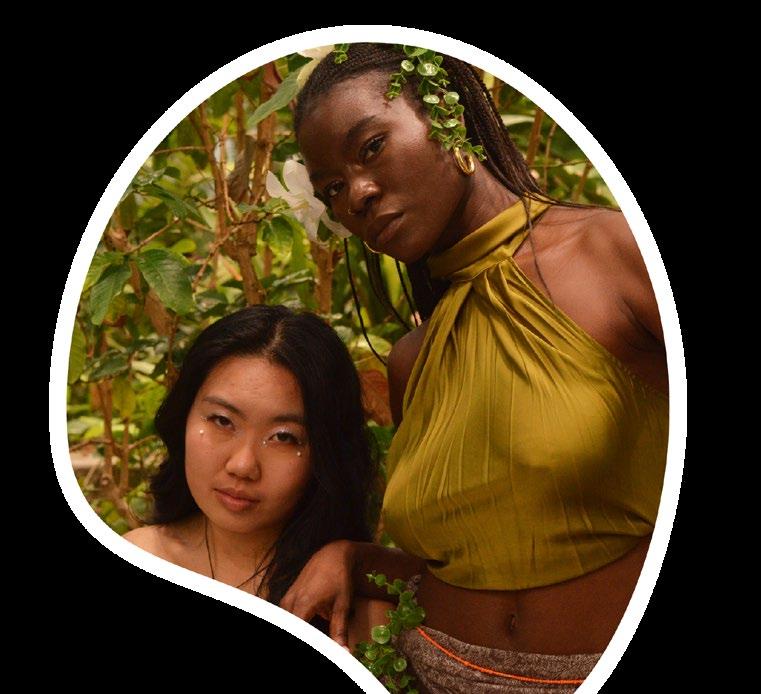
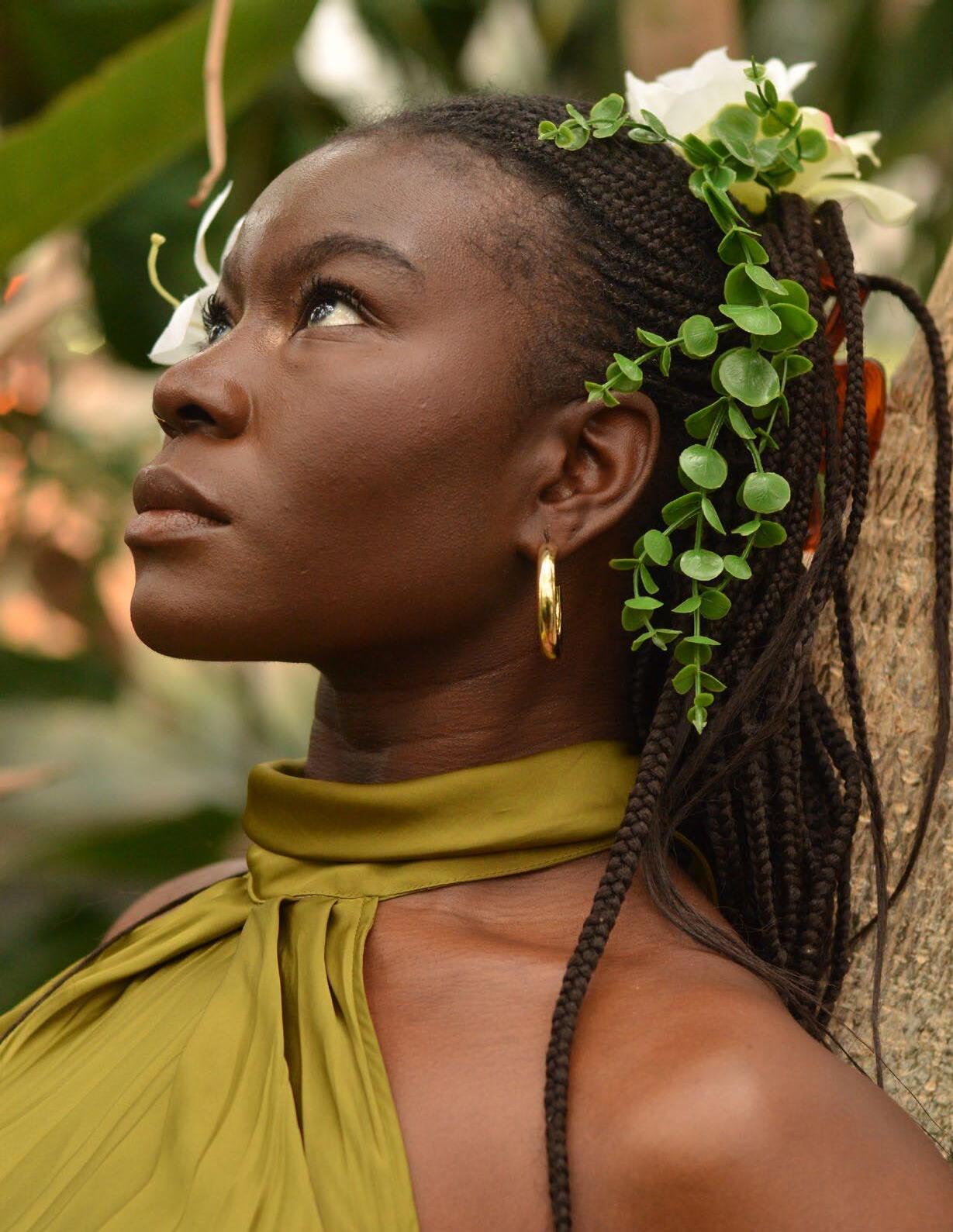
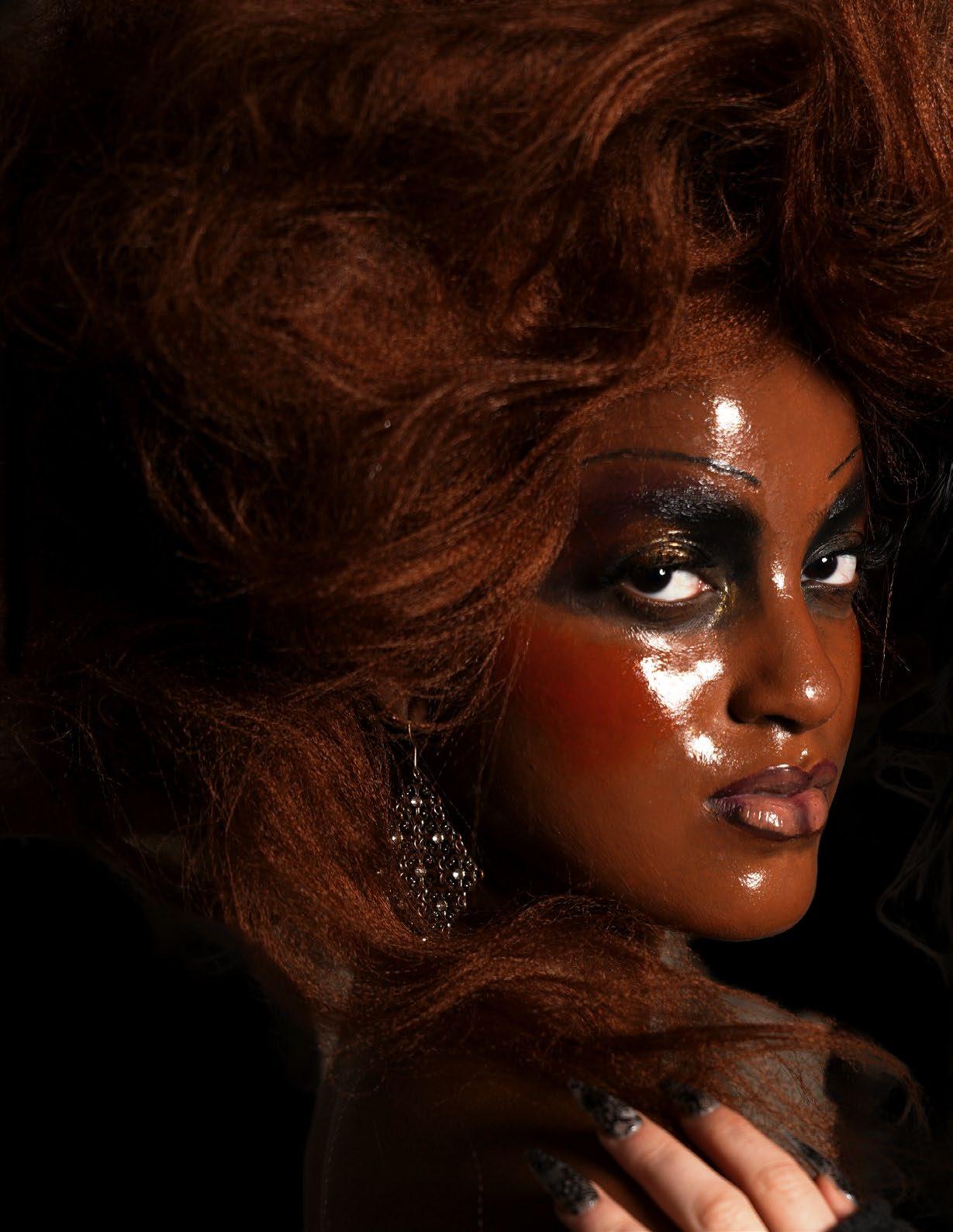
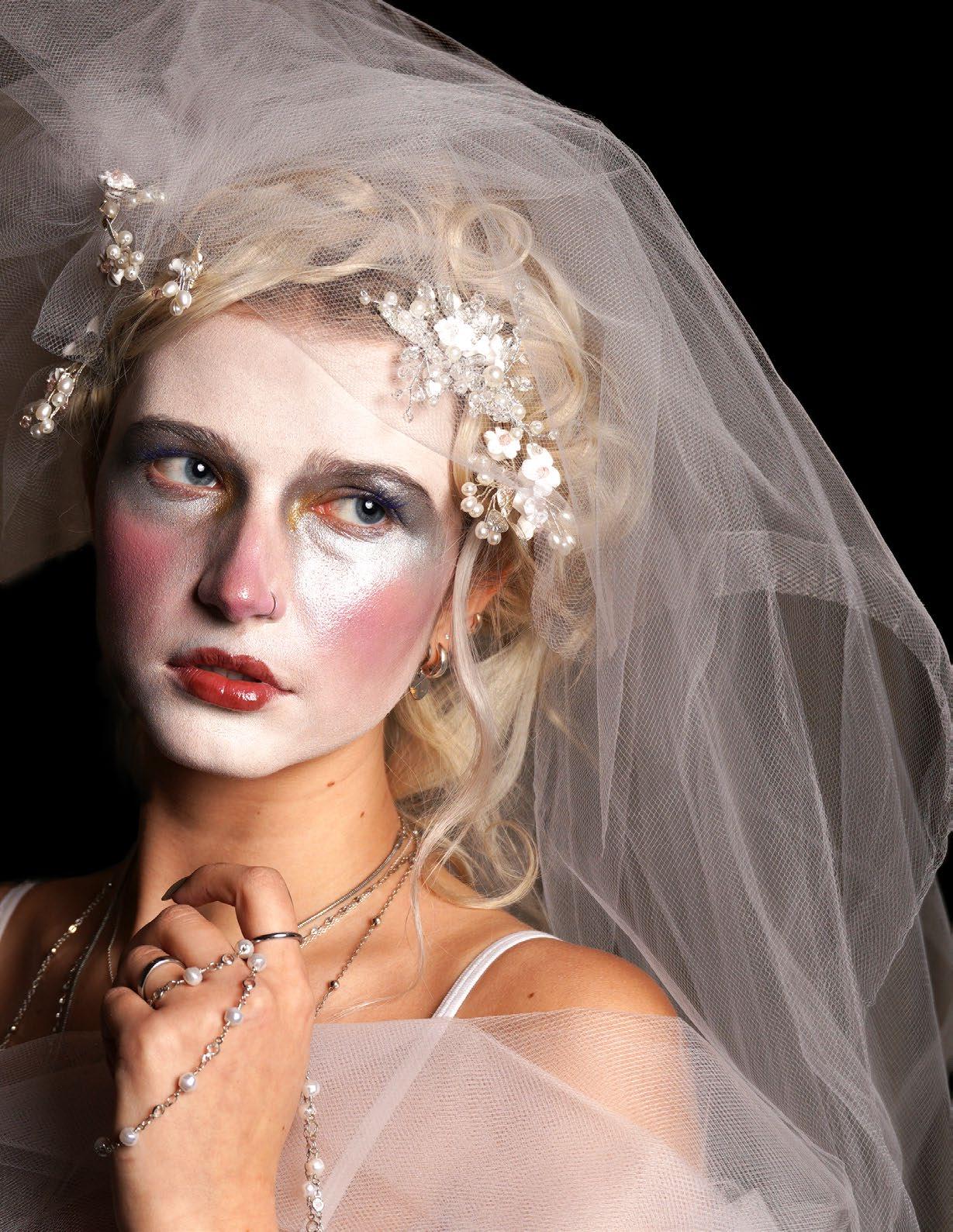
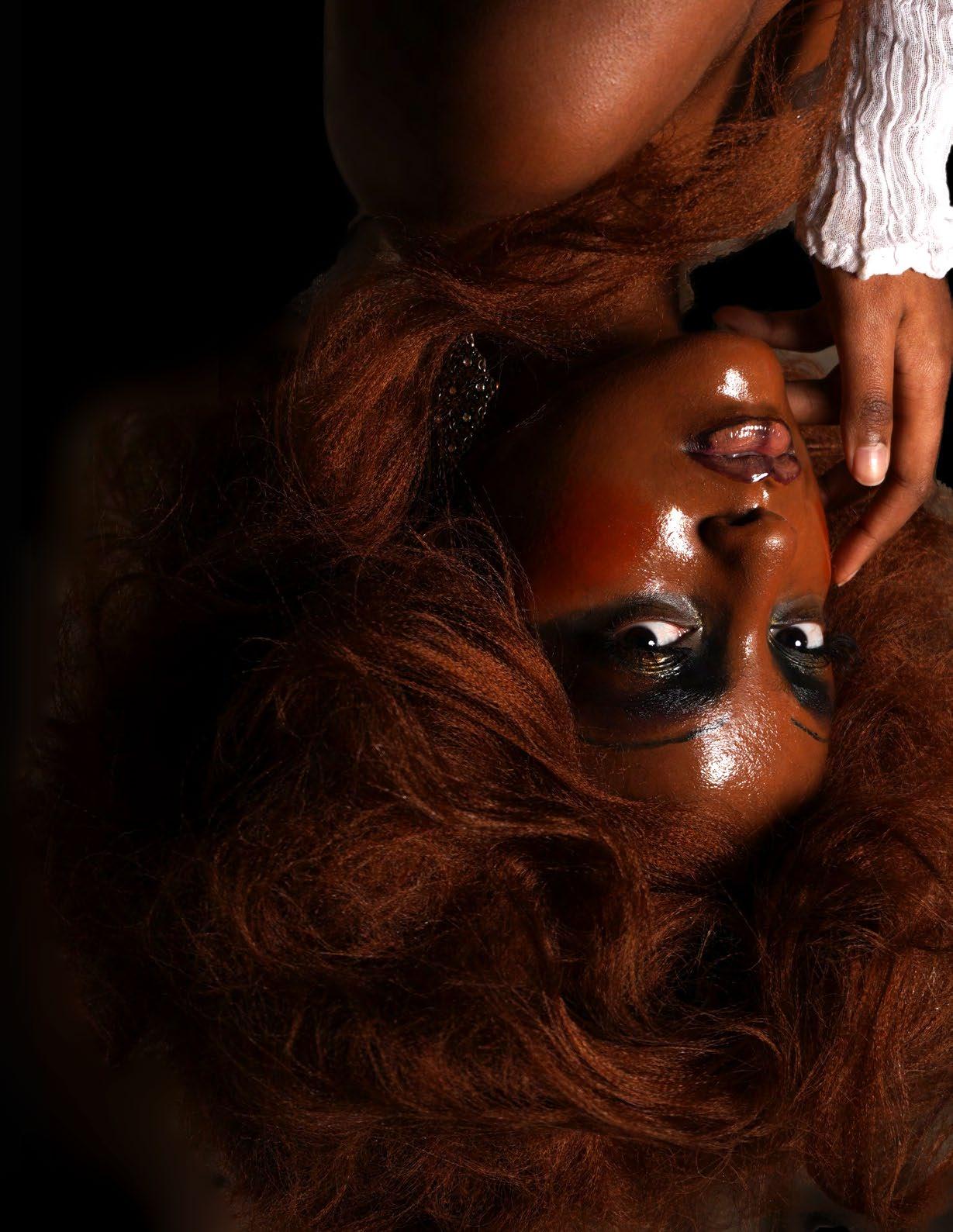
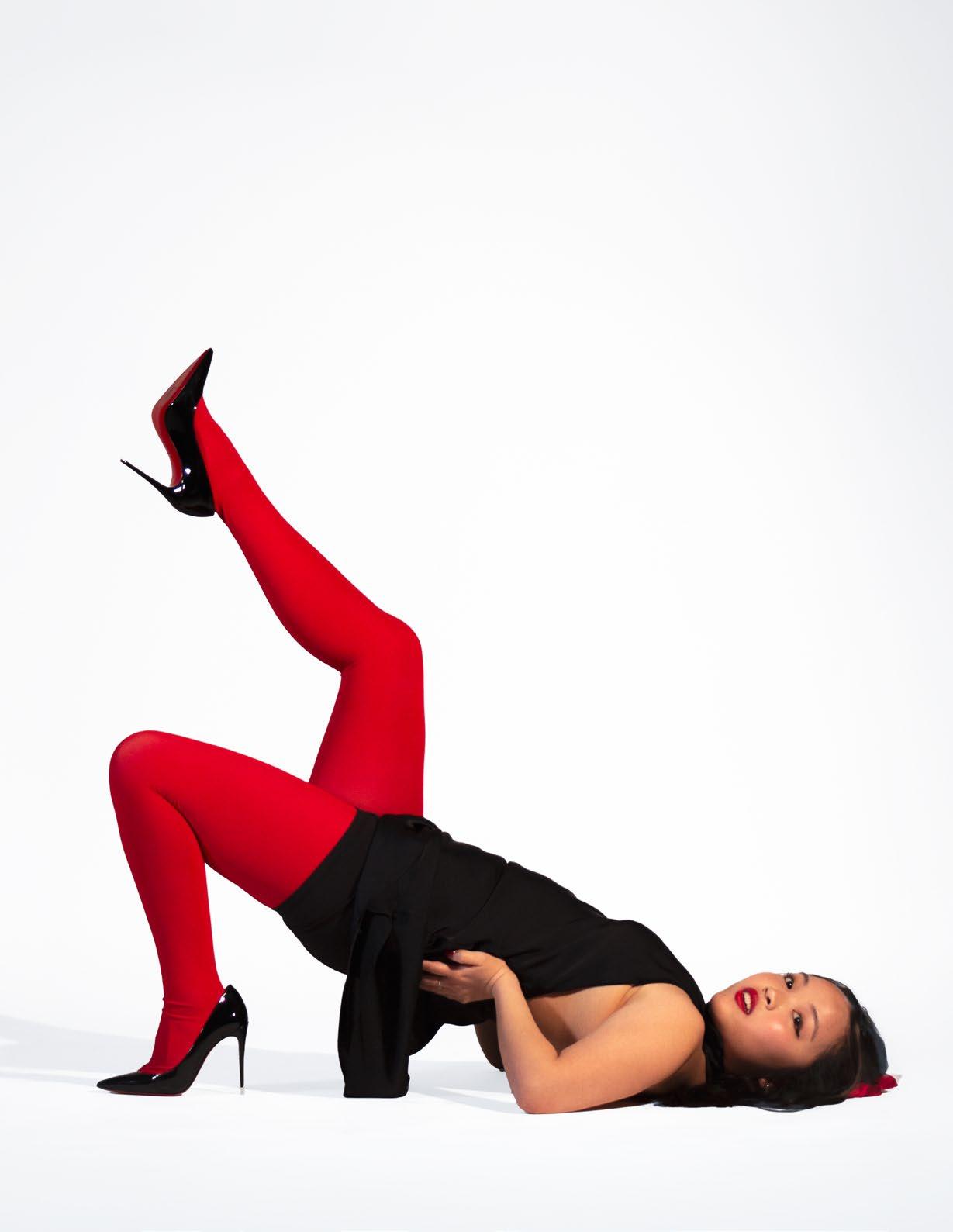
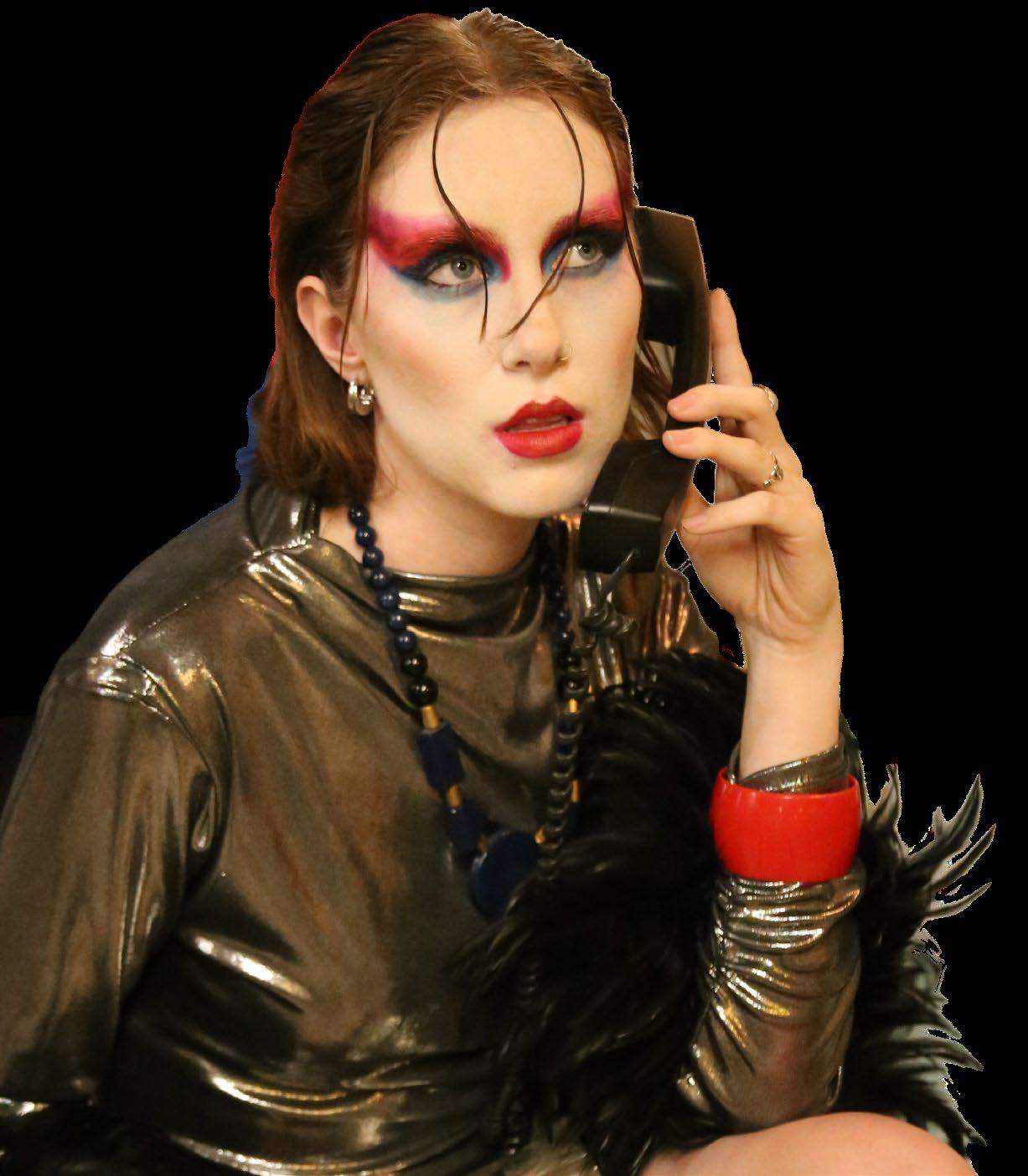
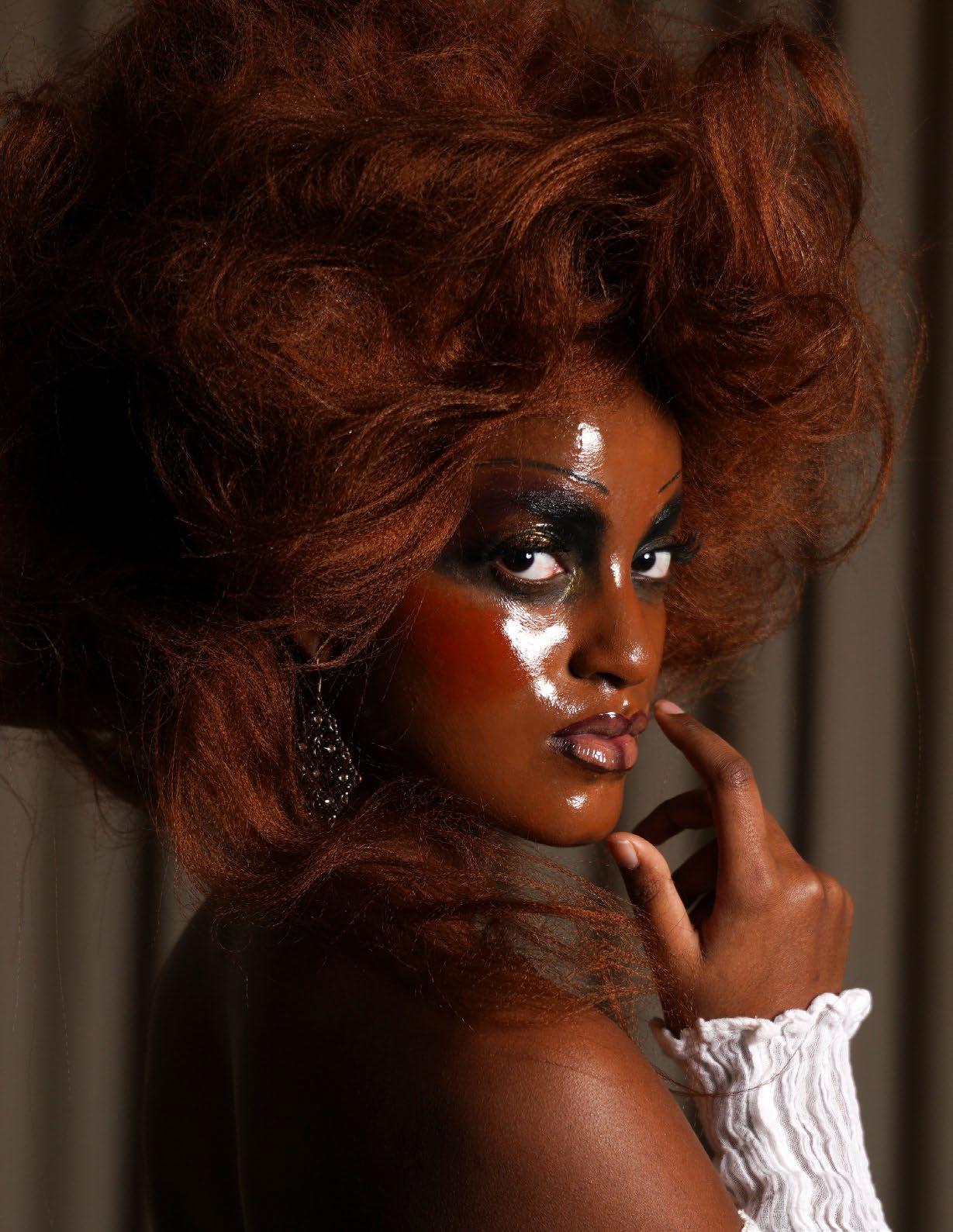
BACK COVER: Ethiopia Jegol [The World of Pat McGrath] Photo Credit: Logan St. Hilaire
Author: Alicia Tate
Photographer: Sandra Fu
Layout: Addison Kennedy
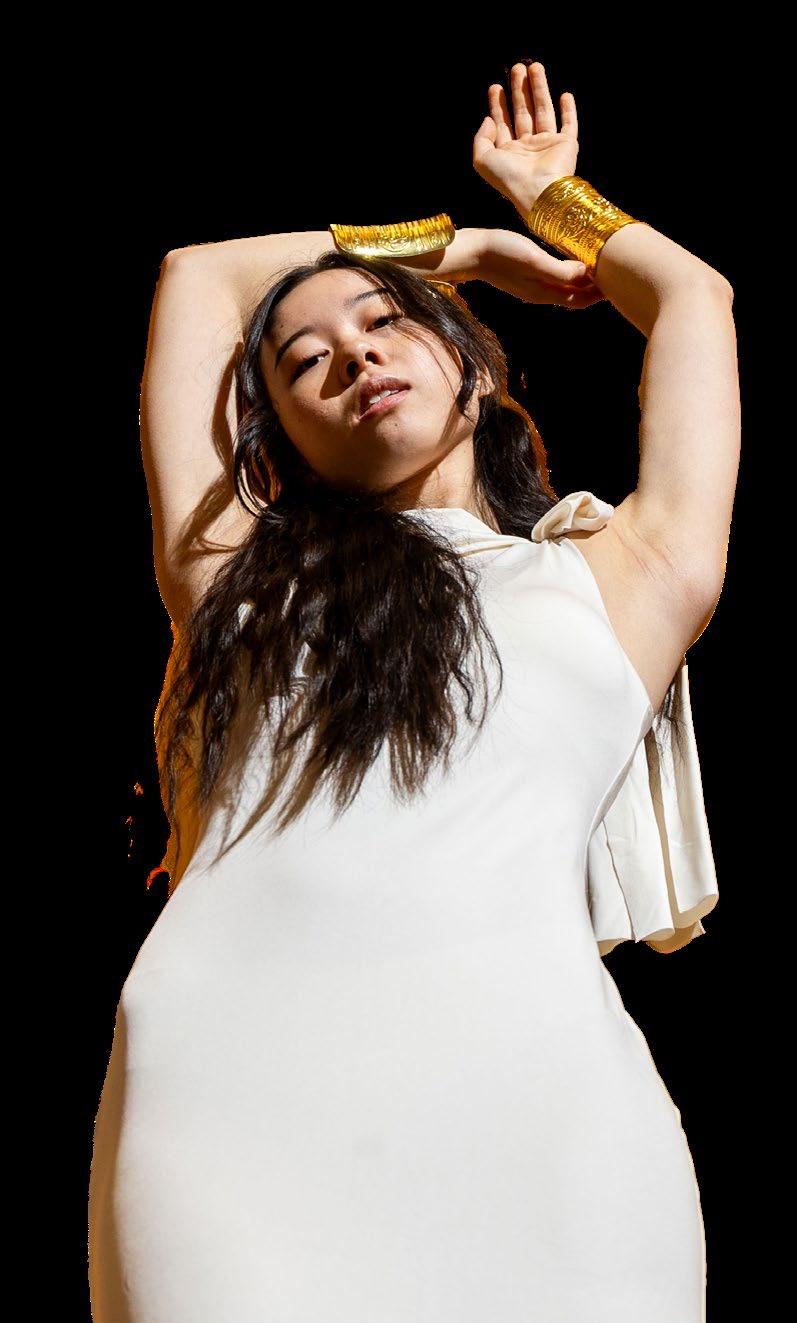
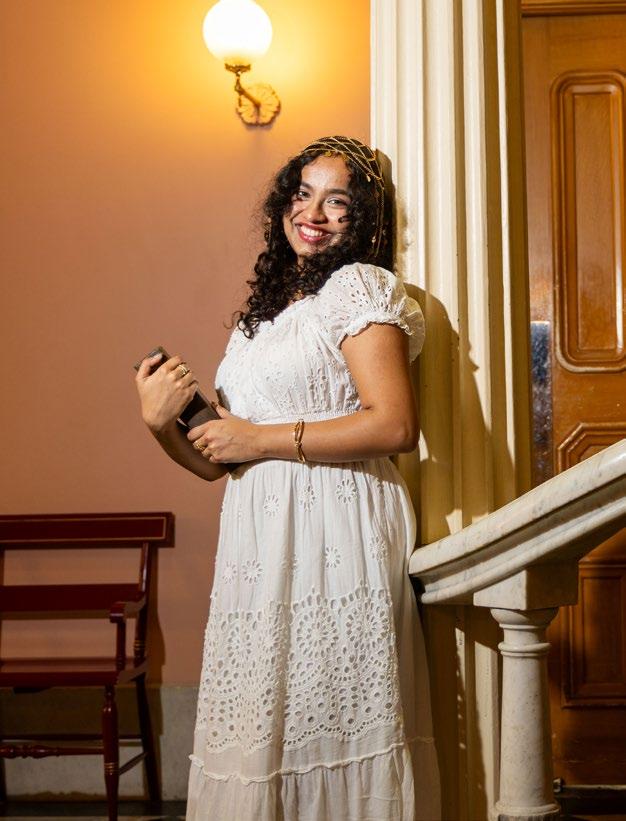
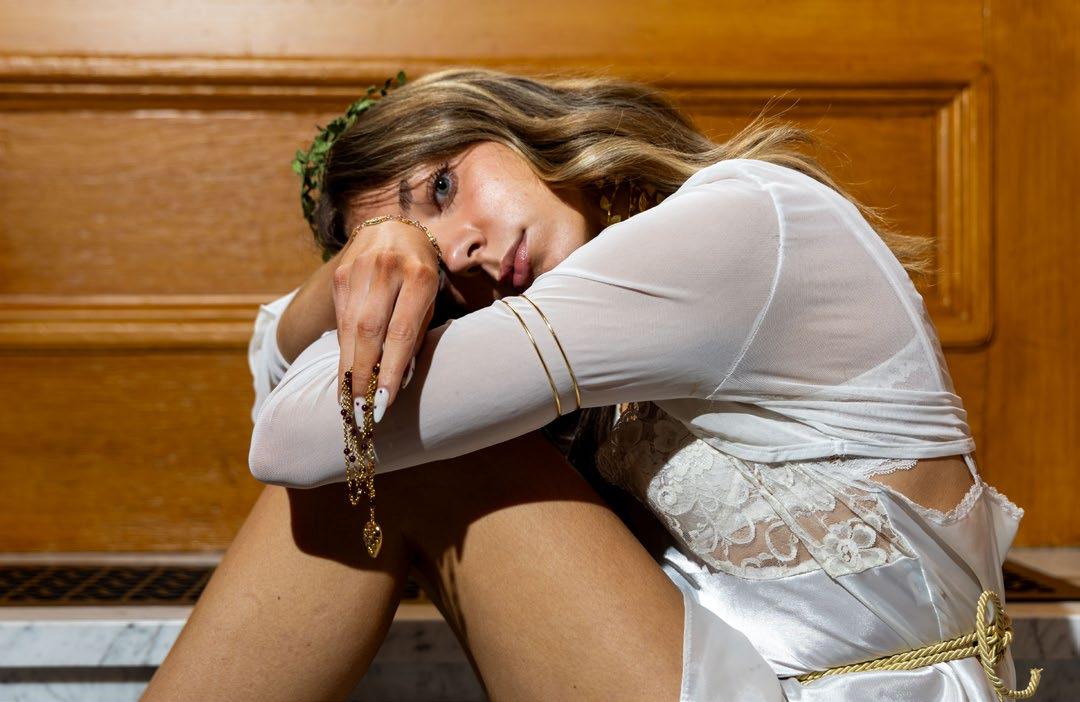
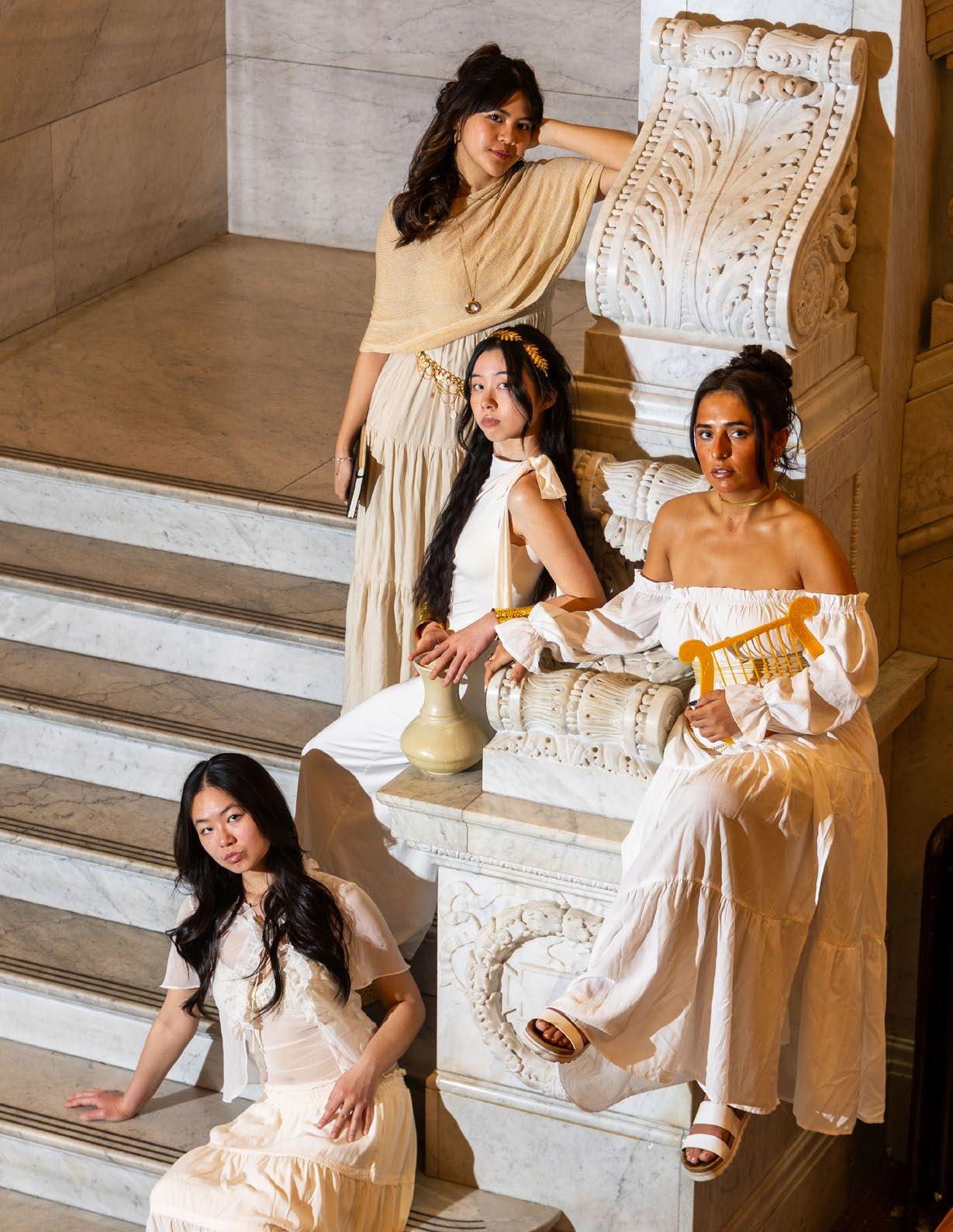
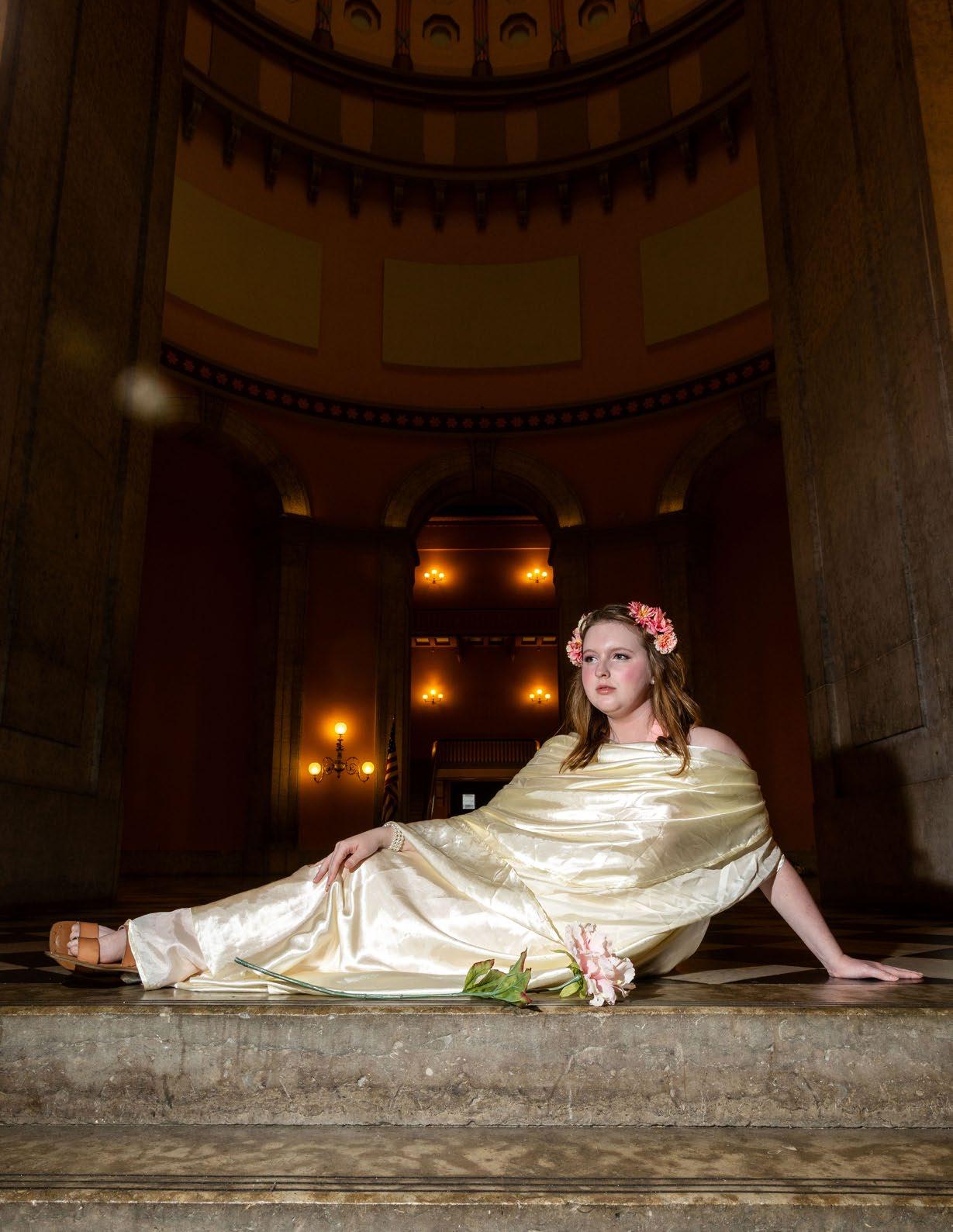
The art of the Nine Muses transcends time, and each of them personify a different aspect of creative expression. But who are the Muses, and how are their representations of art still being expressed in the 21st century?
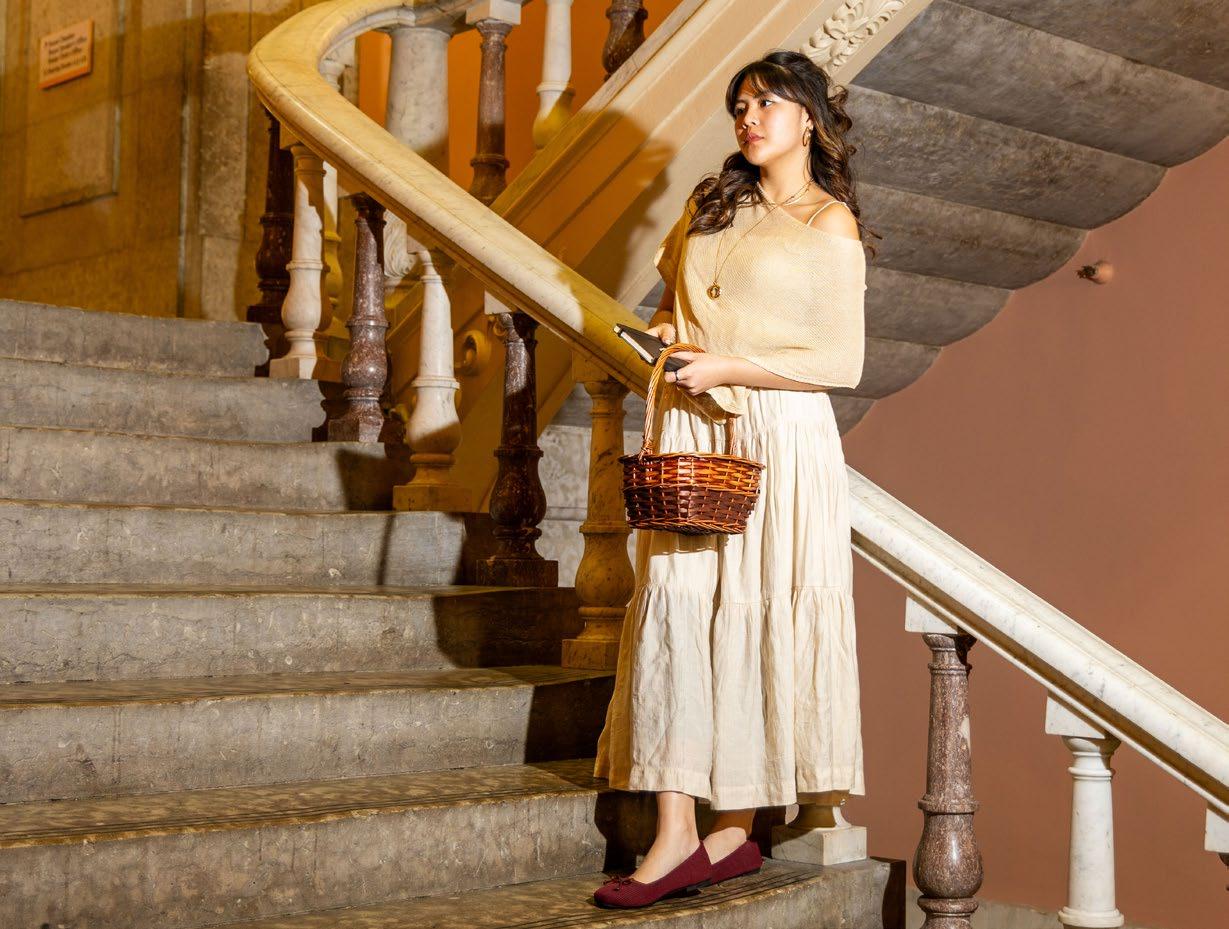
According to Medium, Calliope is the oldest of her sisters and the muse of epic poetry, often seen with a writing tablet and stylus. Her art tells stories of adventure and heroism, and she is the source of tales of mighty kings, fearless knights and conquests of the gods.
Photo Credit: Sandra Fu
Poetry is a powerful tool that can be used to entertain and inspire, and epic poetry takes courage and imagination to new heights. In today’s world, the muse of epic poetry would be similar to a fiction author, such as Stephen King, who continue to practice the art of writing stories that display courage.
Clio is the muse of history, preserving the past and reinforcing the knowledge that is gained from rediscovering history. She roamed the lands with scrolls and tablets, carrying her stories of the past with her and sharing them with others.
History may not typically be viewed as a form of art, but much of the great art of our time is centered around history — they’ll always be intertwined.
Photo Credit: Sandra Fu
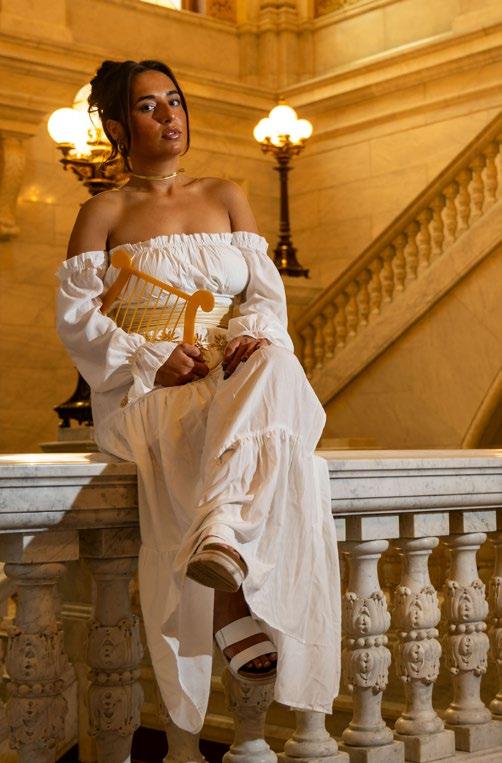
Erato is the muse of lyric and erotic poetry, and she symbolizes love and romance. Usually found holding either a lyre or love arrows, her art is, simply put, melodic. As written previously, poetry is an art used as a tool to inspire, and erotic poetry inspires passion and promotes sexual liberation. Erato’s art could be seen today through romance authors, such as Stephen Meyer and Andre Acimen, as well as singers whose lyrics embody that of love and devotion.
Euterpe is the muse of music, and her discovery of instruments led to her serenading the gods with her art. She inspires others to create and to express themselves through the production of sound.
Music can transform in so many ways through different genres, styles and subgenres. Music as an art form has an incredibly wide range, allowing creators to freely use art as an expression of self.
Photo Credit: Sandra Fu
Melpomene is the muse of tragedy. Represented by a weapon or mask, she inspires tragic drama, often relating to storytelling and song. Tragedy is almost always associated with a negative connotation, but through story and song, tragedy can seem almost beautiful. It relates to the lives of the people who consume it, and the mellow way that it is written soothes and relates.
In today’s world, tragic drama can be expressed through melancholic art, stories or through song, a great example being Mitski.
Polyhymia is the muse of sacred poetry, hymns and eloquence, and she is known for her poised demeanor, displaying class and promoting academic excellence. Her art is demonstrated through religious hymns and professional writing, displaying a traditional — but refreshing — way of expressing art. In our modern day, this is executed by religious musicians and technical writers.
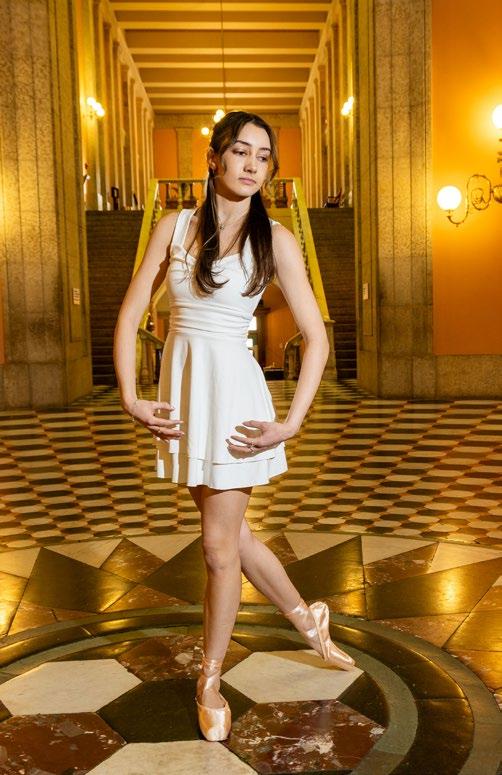
Terpischore is the muse of dance, and she is often seen holding a lyre, inspiring art through movement. Dance, just like music, has transformed and advanced as it’s been performed throughout the years. Today, dance has multiple genres and styles, and it can be expressed in many ways by a diverse selection of performers.
Thalia is the muse of comedy, and she’s represented by a shepherd’s staff and a mask, similar to Malpome. She displays the juxtaposition between the two muses and the characteristics they represent: joy and melancholy.
Thalia inspires people to express themselves through comedic writing and speech, indulging in something that can be hard to find in today’s world: the art of play.
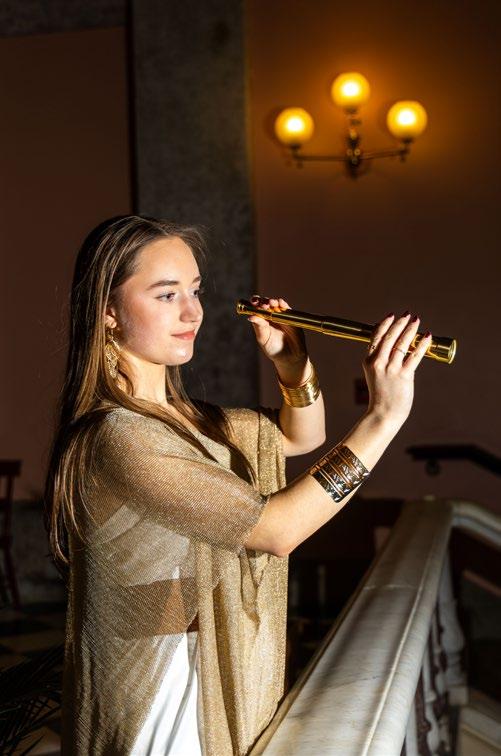
Photo Credit: Sandra Fu
Lastly, Urania is the muse of astronomy, seen with a compass and globe, discoverer of science and space. Her passion for discovery inspires people to seek knowledge and experiment with exploration in their own lives. Modern day exploration can be scientific or emotional, relating to the arts or studies in STEM.
The Nine Muses all portray different areas of the arts and sciences, demonstrating the beauty between the humanities and scientific exploration. As time passes, art and science transforms into different genres and new discoveries. No matter the changes they may undergo, they will always have been inspired by the Muses.
Shoot Leads: Jasmine Freeman & Sabrina Li | Models: Allison Ho, Belle Atkins, Evelyn Cassady, Jolie Austen, Lily Layne, Methni Ariyawansa, Sierra Hudson, Sophie Wu, Yu Liu | Hair: Brooke Barnwell | Stylists: Juliana Sobecks & Vivian Wang
Author: Sabrina Li
Photographer: Sneha Mukherjee
Layout: Charlotte Conn, Eleanor Winemiller, Addison Kennedy
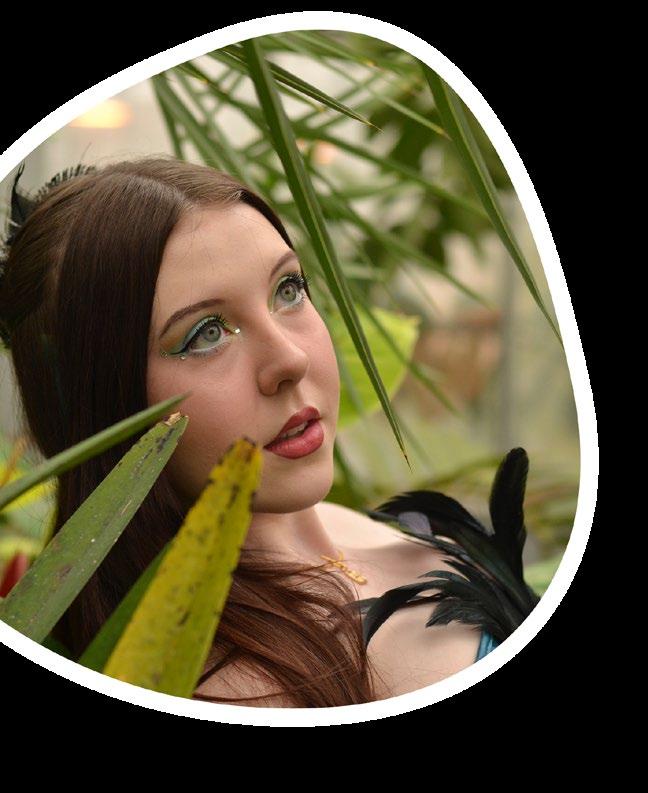
When we think of muses, we usually imagine something striking, effortless and almost otherworldly. Inspiration feels spontaneous and appears fully formed. But we have to retrace our steps back to the root of our world.
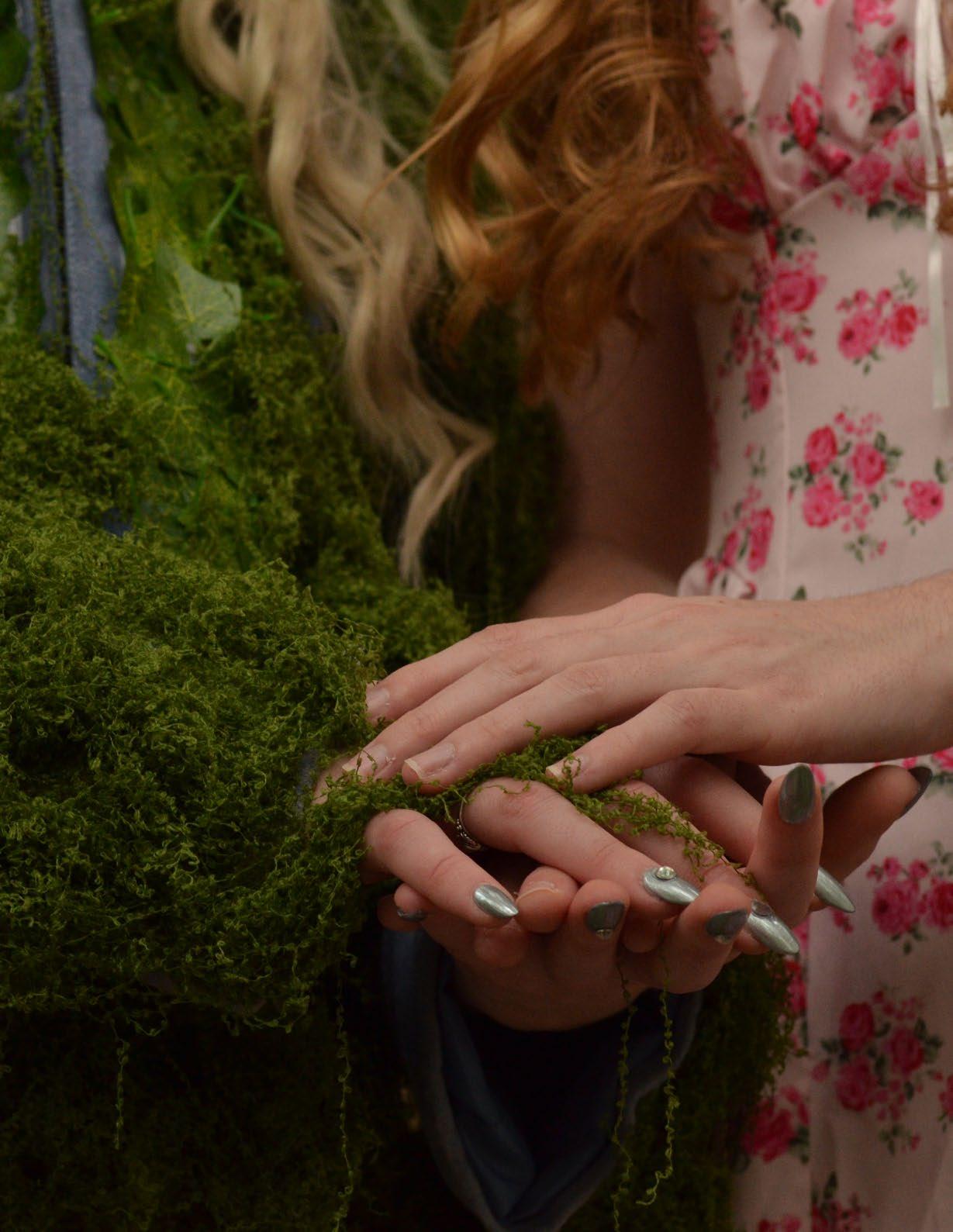
Every bloom, every vine and every shift in color is the result of an entire ecosystem working together.
An ecosystem doesn’t rely on one dominant force — it survives because of the web of life that works under the surface.
There is structure beneath softness; history beneath beauty; effort beneath ease. When we approach this concept visually, we focus less on creating exaggerated personas and more on representation and presence. We explore how people occupy space when they feel aligned with their environment.
Photo Credit: Sneha Mukherjee
In an ecosystem, nothing exists purely for display. Every component has a role, even if it is not immediately visible. This parallels the way inspiration works in real life. Confidence is supported by vulnerability. Expression is informed by memory. Growth is sustained by reflection. What appears effortless is often the result of something steady and unseen.
The botanical garden offers a gentle reminder that growth is not linear. More than that, it’s rarely even visible. What we see at surface level is supported by the quiet development underneath. The most compelling ideas are not manufactured overnight, but cultivated through experiences, influenced by the environment and strengthened through time.
There is also an inherent sense of timing in any living system — not everything peaks at once, and not everything is meant to. Some growth is immediate and visible; some requires seasons of quiet development. The issue arises when we begin comparing timelines — when we measure our progress against someone standing in a completely different environment.
Photo Credit: Sneha Mukherjee
In a garden, different plants respond to different conditions. Some thrive in direct light, while others require shade. Some bloom early in the season; others reach their fullest expression much later. None of them are wrong for the timing of their growth; they are simply responding to what surrounds them.
We rarely offer ourselves that same understanding.
Comparison can feel constant, especially in creative spaces. It is easy to look at someone else’s visibility; someone else’s success; someone else’s moment, and question whether you are falling behind.
experiences, your preparation and your internal readiness.
Coming from nature, inspiration moves away from perfection and towards wholeness. A muse is not a single trait amplified for attention.
Muses are complex in motion, shaped by their surroundings and shaping them in return.
Photo Credit: Sneha Mukherjee
By framing the muse as an ecosystem, we acknowledge that inspiration is relational. It is influenced by place, by people and by atmosphere.
It is sustained through care and intention. And like any system that thrives, it requires balance.
Photo Credit: Sneha Mukherjee
A muse is not something you become in one moment. Take the time to grow into it gradually, collectively and with the depth you deserve.
In a world that moves quickly and celebrates instant results, choosing patience can feel radical. But like any thriving ecosystem, sustainable growth cannot be rushed. It must be supported, nurtured and given time.
Shoot Lead: Sammy Chavez | Models: Alicia Tate, Charlotte Conn, Christian Chalkias, Emma Erlenbusch, Emmy Daniel, Mia Ross, Nyungnee Miller, Sabrina Li, Sultan Alshaye | Assistant Shoot Lead: Kate Flanagan | Hair & Makeup: Sammy Chavez
Photo
Author: Kaia Lewis
Photographers: Maggie Harkins & Sandra Fu assisted by Averie Ison
Layout: Haylie DiCarlo
art can be inspired by a muse, but art can also be the muse. Many artists find inspiration through their passions, then allowing that passion to fuel their work. In short, people can experience art that then emboldens them to create their own.
Photo Credit: Averie Ison
Photo Credit: Averie Ison
Photo Credit: Sandra Fu
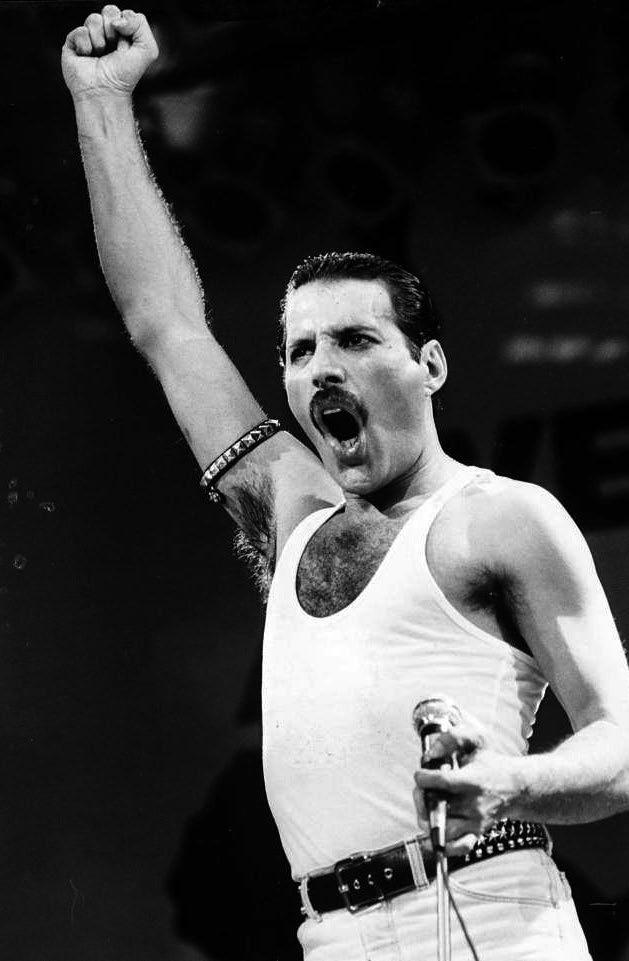
NOT A CONCERT YOUR SEEING BUT A FASHION SHOW
Freddie Mercury performing with the band Queen at the Live Aid concert at Wembley Stadium, 1985
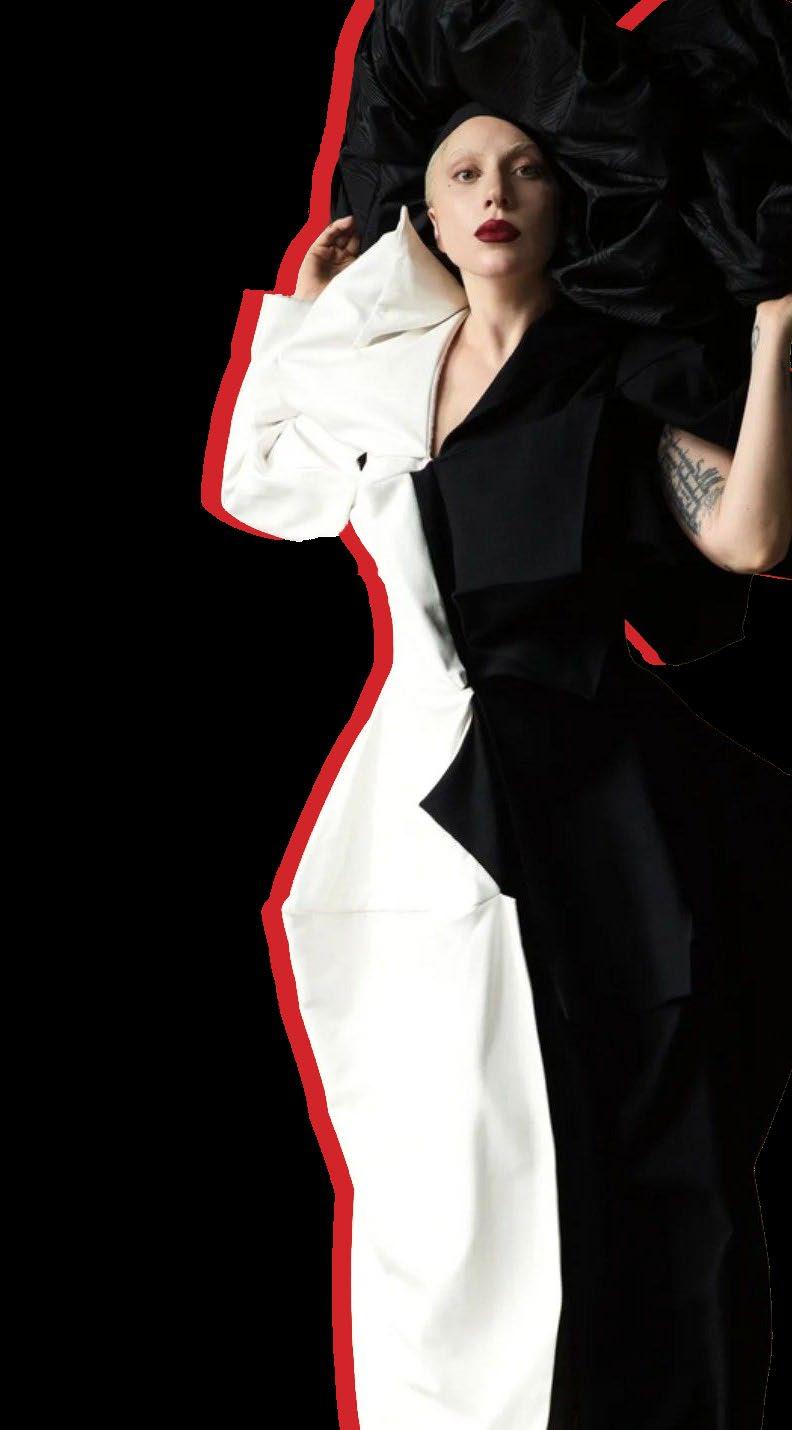
Gaga cemented herself as a pop culture icon in both music and fashion, acting as a muse for designers and other artists.
This is seen clearly in pop’s most recent (midwest) princesses, Chappell Roan. Roan — born Kayleigh Rose Amstutz — has credited Gaga as an inspiration for her style and stage presence, as stated by Collider, citing Gaga’s confidence and connection with her audience as something to emulate.
Gaga has always been an advocate for the LGBTQ+ community. Similarly, Roan, who is queer, herself, and a proud supporter of the LGBTQ+ community, stated in an interview with Zane Lowe for Apple Music that she wanted her upcoming music to be more experimental — like Gaga’s fifth album, “Joanne.”
“Joanne,” having received mixed reviews from the true Gaga heads, is simultaneously celebrated for its more stripped back sound and vulnerable lyricism.
Roan said she thinks one of the most admirable things an artist could do was to show they have other sides, and for her, stepping away briefly from her usual pop songs and releasing “The Giver,” was a way to do that. But before the shift from pop into country, People Magazine says that Roan credits watching the Queen biopic “Bohemian Rhapsody,” starring Rami Malek, as something that made her really want to delve into pop music. Roan has also taken inspiration from Bowie — Chappell Roan is a stage persona the same way Bowie’s Ziggy Stardust was.
These 4 muses and pop culture icons have made a few things clear to their audiences: Everything is a bit more connected than you first think, individualism is key, reinvention — or never sticking to the same script — is highly encouraged and fashion and music are deeply intertwined. And of course, drag and queer culture are things we all can love, even if we didn’t explicitly know we loved it before. Who do you have to thank for these life lessons? The muses and icons that bring them from the LGBTQ+ community into the forefront of popular culture over the decades.
Photography viaChappell Roan's Instagram
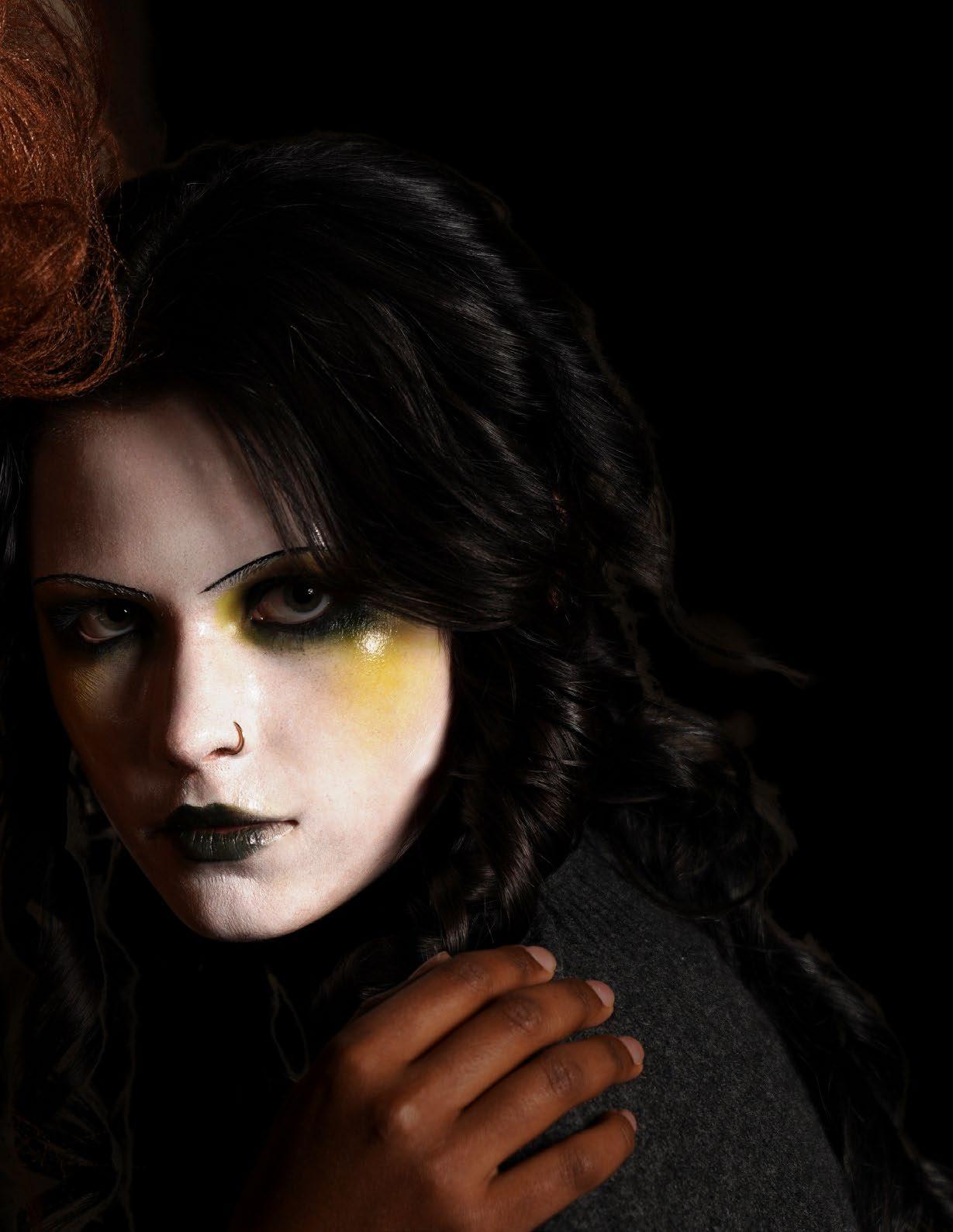
Ethiopia Jegol and Abby Nocera modeling a look inspired by ohn Galliano’s Maison Margiela Spring 2024 Couture collection. Makeup by Tyler Whitten (IG: @beautyxtyler) and Hailee Haarrington (IG: @illua.beauty) .
Author: Olivia Schweinhagen
Photographer: Logan St. Hilaire
Layout: Abby Nocera
Dame Pat McGrath is the most influential make-up artist in the world. If you know makeup, you know the name —“McGrath” has become one of the most well-known makeup artists to ever do it, her brand, “Pat McGrath Labs,” echoing just as loudly as her yearslong legacy.
Today, McGrath stands tall upon a massive collection of accolades, having developed a cosmetics line for Giorgio Armani, been named Global Cosmetics Creative Design Director for Procter & Gamble and worked with the biggest names in celebrity, according to Vogue—think Sarah Jessica Parker, Oprah Winfrey and Madonna.
Long before her designs would ever grace the red carpet of major events like the Met Gala or the Oscars, McGrath was born in 1970 in Northampton, England, a small town where her creativity knew no bounds.
According to an article from The Guardian, she was raised by Jean, the Jamaican immigrant and single mother who saw the potential in her daughter from the very beginning: “‘She would stand in front of the TV and we’d have to guess what she’d done differently with her eyes,’” McGrath told The Guardian, lovingly nodding to her mom’s dedication to her success. “‘She always put on a full face of makeup then got in the bath to get that dewy finish. It was next level, but this is where I got my makeup tips from – at seven years old!’”
Jean’s expertise didn’t stop at makeup, though. When McGrath was young, the would-be beauty guru took her years of professional dress-making experience and led McGrath around town, stopping first so that they could look at Vogue patterns, and then marching to “where all the fabric buyers sold their remnants,” said The Guardian. Not just looking for a good time, McGrath’s dedication was great and it was constant. There was always something driving the search.
“‘There was no makeup for women of colour,’” McGrath told The Guardian. “‘NOTHING. That’s what my mother’s search was all about. When we were out shopping we were always looking for a product that, probably by accident rather than design, worked for us.’”
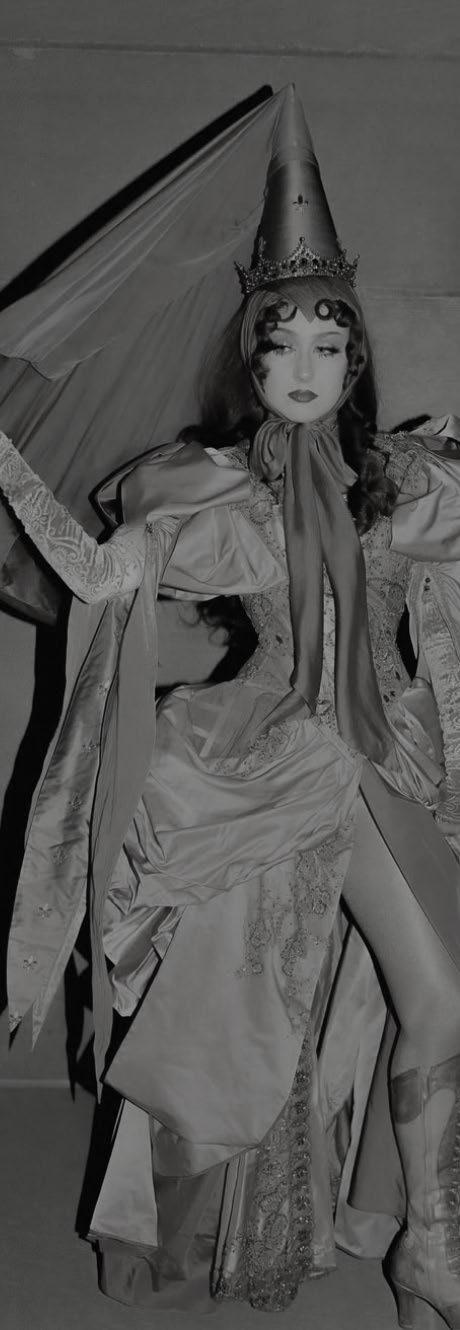
Averie Ison modeling a look inspired by John Galliano’s fall/winter 2009 “Beautifully Iced Maidens” ready-to-wear collection for Dior. Makeup by Zöe McWhorter (IG: @skinandcomb).
Shekinah Tuazon modeling a look inspired by John Galliano, spring/summer 2008. Makeup by Cayla Weston (IG: @missweston._). Morgan Cartwright modeling a look inspired by Zendaya’s 2024 Met Gala “The Garden of Time” look. Makeup by Jessica Guy (IG: @justjessstyling).
Of course, this is exactly what spurred such a love for the brighter things in life. Knowing that most makeup, especially in the 80s, was marketed towards white women, McGrath developed her career in understanding the exact opposite: she searched far and wide for what would pop on dark skin, creating designs for the people of color who had been utterly overlooked in the past.
McGrath’s story is one of love, family and dedication to her craft. And now, the artist has reached unimaginable heights, working with stars like Zendaya and Cate Blanchett while building a brand valued at over $1 billion, according to The New York Times.
McGrath is a muse of her own making, and Scarlette Magazine is thrilled to honor her with a photoshoot dedicated to her incredible artistry.
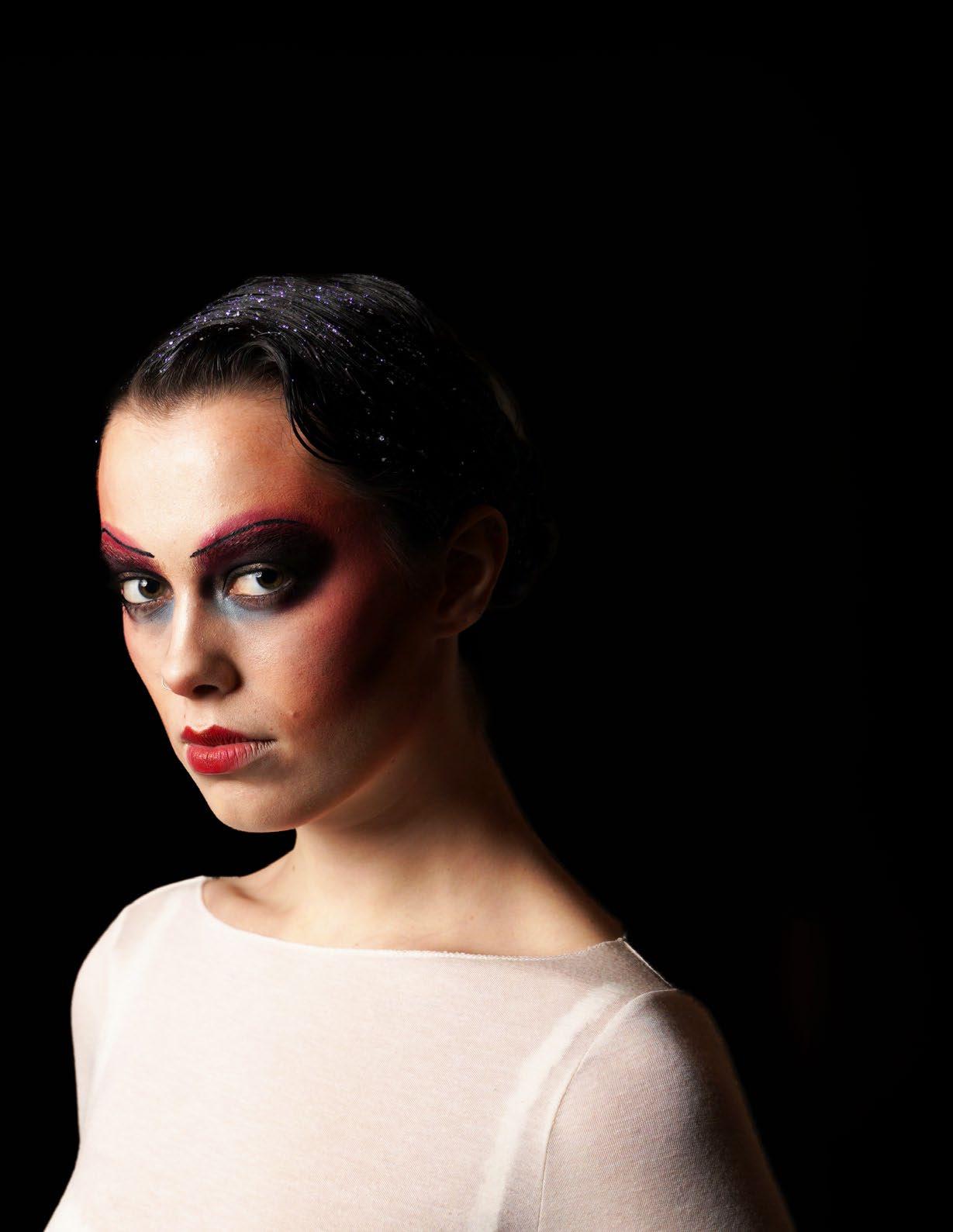
Working to cover as much of the star’s career as possible, our six models chose their favorite McGrath makeup looks to recreate. Some chose simplicity: Shekinah Tuazon went with a John Galliano spring/summer look from 2008, achieved by makeup artist (MUA) Cayla Weston. Others desired McGrath’s iconic “glass skin” appearance: Ethiopia Jegol and Scarlette Assistant Graphic Design Director Abby Nocera, working with MUA Hailee Harrington, used the same show for inspiration, opting for looks from John Galliano’s Maison Margiela Spring 2024 Couture collection.
Tyler Whitten completed the look for Jegol’s “glass skin” aesthetic. To her, makeup is about flexibility and thinking outside of the box: “I watched the Maison Margiela 2024 show maybe 20 times to understand how to approach the Pat McGrath-inspired looks for the models. I was drawn to the glass skin inspo…Since the Pat McGrath glass skin spray wasn’t available yet, I found a face mask that helped me achieve that high-shine editorial look.”
“What inspires me most about Pat McGrath is how she fully commits to a vision and understands the emotion her work needs to communicate,” Whitten said. “The balance of artistry and storytelling is what I strive to embody in my own creative process. I hope that when people see this project, they feel the story that we built together.”
The other looks were nothing short of
Scarlette President Averie Ison handpicked a presentation that screams “ice princess,” taking from John Galliano’s fall/ winter 2009 “Beautifully Iced Maidens” ready-to-wear collection for Dior.
Zöe McWhorter, the makeup artist for Ison, knows that makeup is more than meets the eye: “McGrath is known for pulling inspiration from the individuality of her models,” McWhorter said. “I hope to one day create a world, like McGrath, worth celebrating—one where my model feels excited to wear the world we have created equally.”
Madeline Schmidt modeling a look inspired by John Galliano spring/summer 2011 collection.
Makeup by Jessica Guy (IG: @justjessstyling).
Morgan Cartwright chose what might be the most well-known McGrath look of late, with MUAs Jessica Guy and Brooke Barnwell recreating Zendaya’s Met Gala 2024 makeup for the model. The theme was “The Garden of Time,” according to an article from Vogue. Cartwright achieved brilliance in a dark lip, haunting eyeshadow and flawless brows that reached all the way to her temples.
Lastly, model Madeline Schmidt went full doll, using Guy and Barnwell’s artistry to embrace McGrath’s love of contrast and irregular features. She selected a look from the John Galliano spring/summer 2011 collection.
While it can be fun to celebrate celebrities for their great makeup looks or clothing choices, it’s crucial to recognize the faces behind the camera. With each celebrity step-out, whether it’s onto a red carpet or the sidewalk in front of their apartment, remember that there are countless faces that prepared them for the outside world, making them up, dressing them and fixing any fly-aways.
The muse can certainly be the creation, but more often than not, it’s the creator. McGrath is the blueprint.
When in doubt, turn to what drives you, inspires you and pushes you forward—and certainly don’t be afraid to stand out. As Mcgrath once said, “‘It’s about pushing boundaries. I believe absolutely, the world wants something different. People want back their individuality.’”
Shoot Lead: Averie Ison | Models: Abby Nocera, Averie Ison, Ethiopia Jegol, Madeline Schmidt, Morgan Cartwright, Shekinah Tuazon | Hair & Makeup: Brooke Barnwell, Cayla Weston, Hailee Harrington, Jessica Guy, Tyler Whitten, Zöe McWhorter
Author: Sierra Hudson
Photographers: Abby Nocera & Ellis Berry
Layout: Jada Davis
Photo Credit: Abby Nocera
This seemingly unimportant figure would go on to become one of fashion’s most iconic designers, shaping a legendary house and a lasting legacy. This is the story of the man behind the name and the house he built.
Valentino was always fascinated with fashion. According to “The Little Book of Valentino: The Story of the Iconic Fashion House,” as a young boy, he was captivated by evening gowns and loved sketching. At the age of 7, he went to the cinema with his sister and watched films starring Ava Gardner and Judy Garland.
Enamored with their fabulous attire, he was inspired to enroll in the École des BeauxArts in Paris. This was extremely ambitious — the French fashion scene wasn’t exactly welcoming to foreigners — but in true Valentino fashion, he succeeded.
Following his education, he returned to Italy and set up his label in Rome, where it remained until his retirement. The lifestyle of people living in Rome during the 1950s and 1960s was called “La Dolce Vita,” meaning “the sweet life” in Italian. This referred to the experiences of being in Rome at this time,
Photo Credit: Ellis Berry
This dress started it all. Valentino’s love affair with the color red began at a young age when he saw the legendary opera, “Carmen.” The set of this opera was mostly red, influencing Valentino to make the hue a part of his life. He began mixing fabrics in various reds and complementary colors, eventually resulting in what we know today as the beloved “Valentino Red.”
As Valentino became a worldwide phenomenon, so did his color. The shade became so iconic that it now has its own Pantone color code. Officially named Red 2035 by Pantone, this color blends carmine — a shade of magenta — with orange. The result? A poppy-like, fiery red that is both versatile and bold.
Photo Credit: Abby Nocera
Ever since Valentino’s debut “Ibis” collection in 1959, he has debuted a red dress in every single one of his collections. Even when he retired, other creative directors were tasked with continuing the legacy: there is still a red dress in every collection released from the fashion house.
Many celebrities have worn Valentino Red gowns for award shows, including Jennifer Aniston, who wore the iconic Fiesta dress in 2004, Anne Hathaway at the 2002 Academy Awards and Jackie Kennedy in the 1960s. Jackie Onassis (formerly Jackie Kennedy) helped to establish Valentino as both an individual in the fashion industry and a reputable fashion house. After Valentino did work for Jackie Kennedy and was introduced to the American audience, his demand went up, with his first American store opening up in 1970. Many more American celebrities became Valentino clients — Brooke Shields being an example — as well as notable British figures such as Emma Watson, Audrey Hepburn and Princess Diana.
The documentary titled “Valentino: The Last Emperor” followed Valentino, his business partner Giancarlo Giammetti and their design team as they organized the Valentino 45th anniversary celebration and the Spring 2008 Couture Collection. Featuring a fashion show and a museum exhibit at the Ara Pacis Museum in Rome, this celebration sparked rumors of retirement — would this be Valentino’s last show?
Photo Credit: Abby Nocera
Photo Credit:
Highlighting his journey through the fashion industry, the collection featured 200 (mostly white) outfits, representing the designer’s famous Spring 1968 “White Collection.” These were offset by — what else? — Valentino Red.
The museum exhibit held 300 mannequins wearing, you guessed it, white and red gowns. The exhibit was beautifully executed, with mannequins in red gowns on either side of the room, arranged on various elevated surfaces, and mannequins in white gowns on the flat surface in the middle. They created a pleasing contrast that equally represented the two colors that have had the biggest impact on Valentino’s life.
In the final minutes of his Winter 2008 Haute Couture Collection show, Valentino
Known as the Last Emperor of fashion, according to an article from Vanity Fair, Valentino is seen as the last old-school designer who valued structured, elegant designs rather than deconstructed or overly trendy ones. He didn’t sexualize women; instead, his work made them confident and beautiful. Across a 45-year career, he created thousands of pieces, mostly womenswear, and his garments reveal the true artist within.
Valentino Garavani passed away peacefully in Rome on Jan. 16, 2026, but his legacy lives on through his fashion house and the creative directors who have taken up the torch. In 2019, the Valentino “Born in Roma” perfume was released by creative director Pierpaolo Piccioli. The name of this perfume represents the fashion house’s birth in Rome, as well as Valentino Garavani’s love for the city.
While Valentino may have been born in Voghera, Italy, he died in the place he loved most, Rome, leaving a legacy that won’t soon be forgotten. We’ll leave you with Valentino’s most cherished belief, the same thing that drove his career, designs and passion: “I know what women want. They want to be beautiful.”
Shoot Lead: Mia Schwind assisted by Kate Flanagan | Models: Ava Barrett, Heartly Phipps, Maddy Bellisari, Maggie Gu, Mia Schwind, Sherry Lam, Summer Neds | Hair & Makeup: Sammy Chavez
Author: Kat Gallaugher
Photographers: Jupiter Justice, Marin Zbawiony, Shreya Jain
Layout: Ruby McGrievy
Photo
Photo Credit: Marin Zbawiony
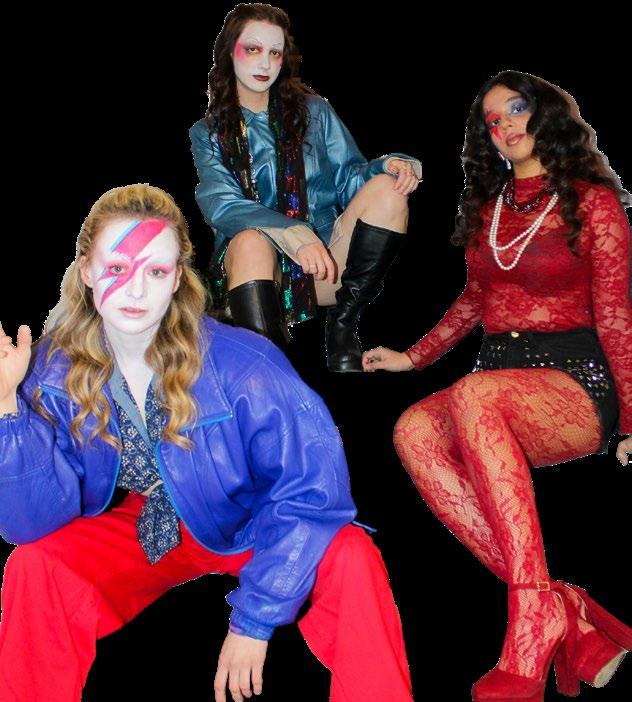
efore Harry Styles donned a skirt on the cover of Vogue and Lady Gaga wore bedazzled jumpsuits and meat dresses, there was David Bowie, star-studded and the ultimate original.
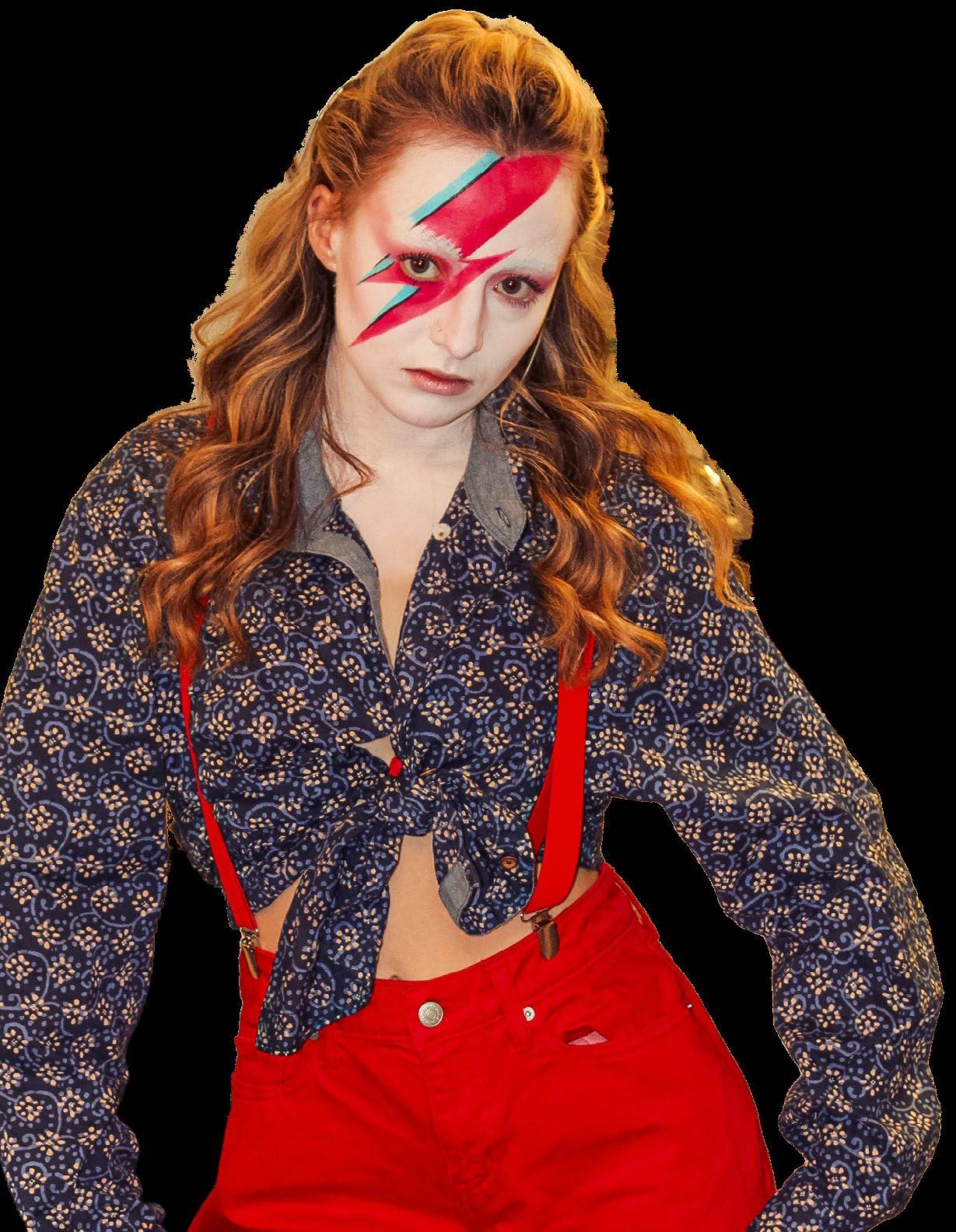
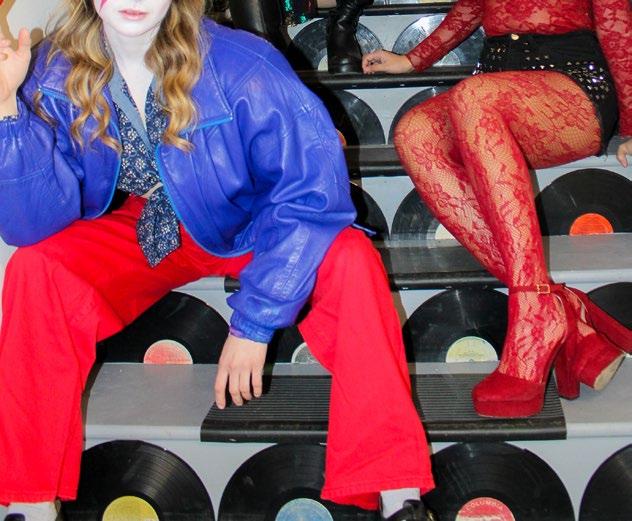
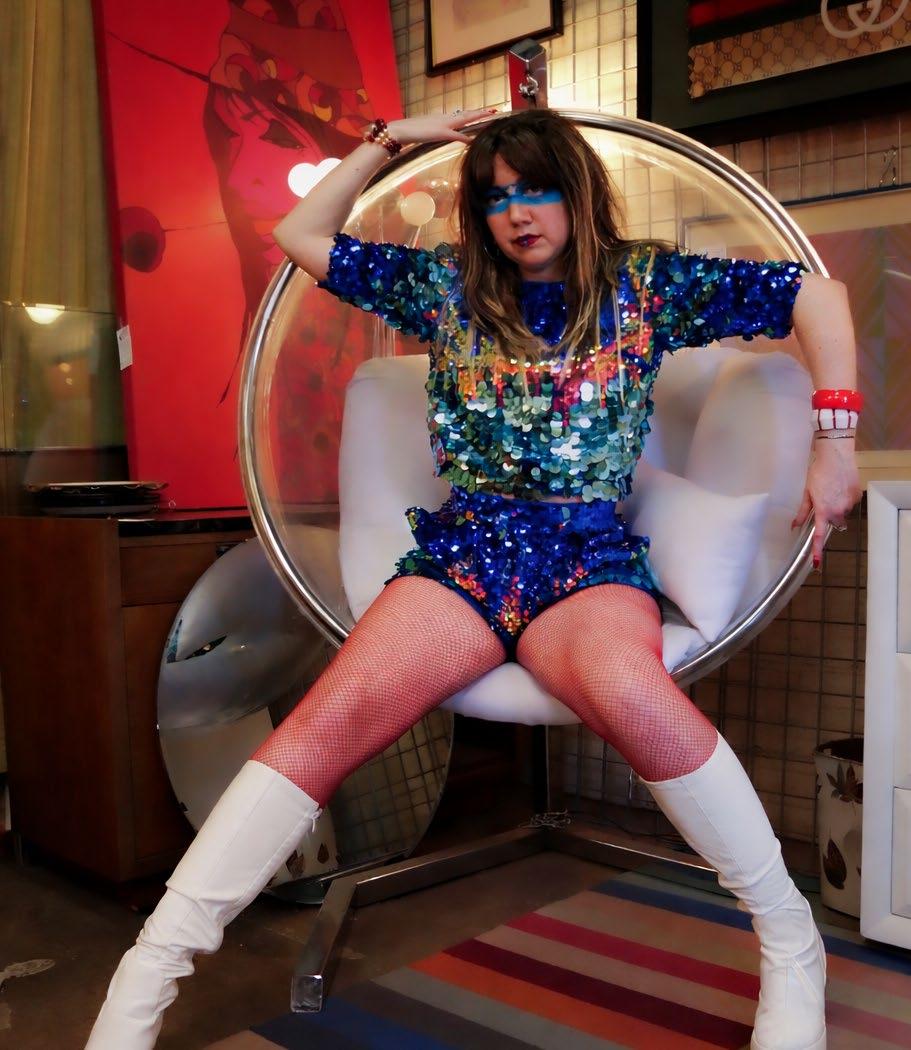
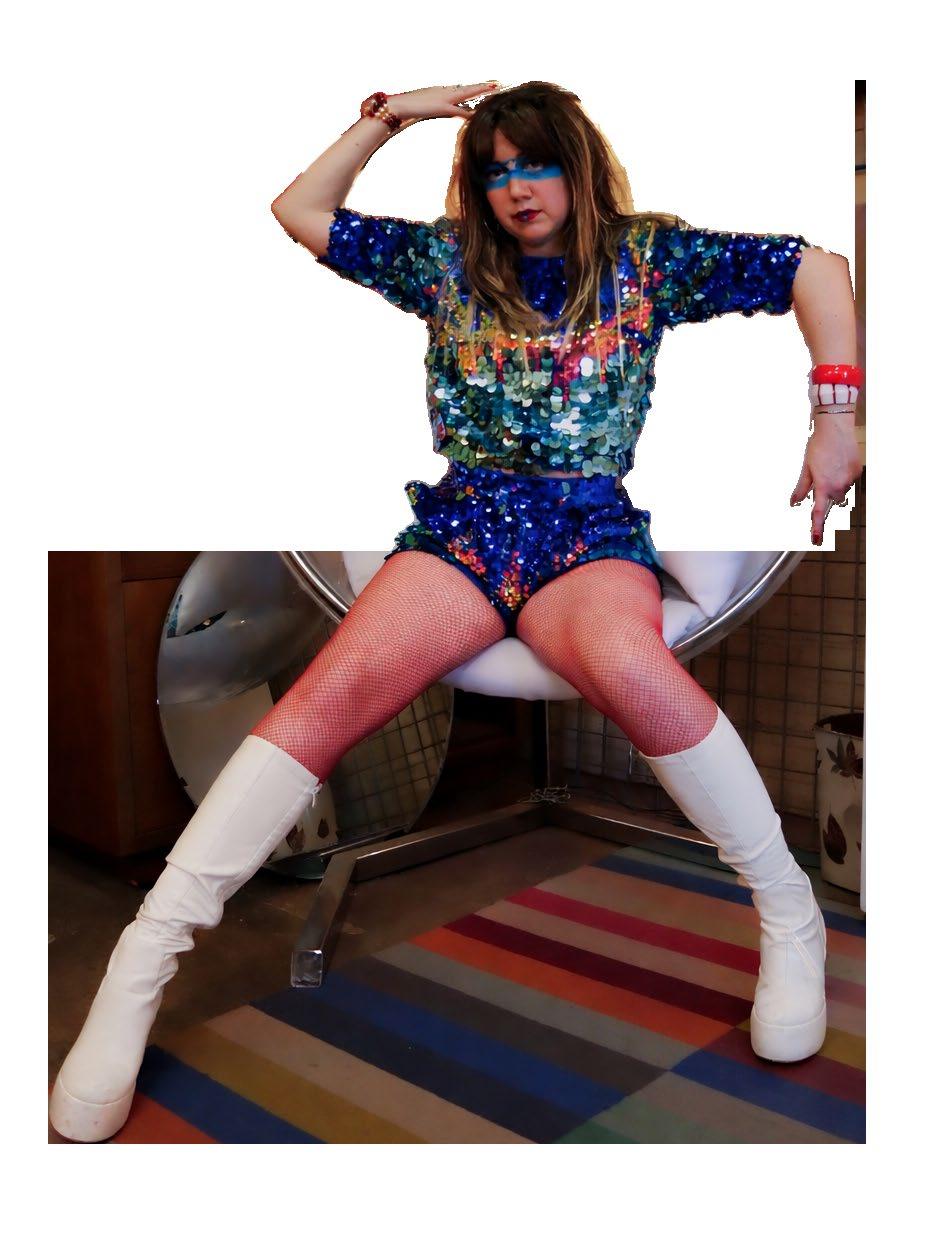
Red hair ablaze and unafraid of self expression, Bowie used his Glam Rock style and “The Rise and Fall of Ziggy Stardust and the Spiders from Mars” and “Aladdin Sane” eras to establish his credibility as a muse in the modern world. He was androgynous, otherworldly and seemingly doomed, the absolute best of a late 20th century rock star. But what inspired Ziggy Stardust, himself? Who created the cultural icon that is “Bowie?”
Enter Kansai Yamamoto (1944-2020), a Japanese fashion designer known for his “Kabuki” designs, the style commonly found as a theatrical portrayal of the wealthy elite, according to an article from The Cut. Yamamoto, obsessed with Japanese “irezumi” tattoos, projected his fascination onto the identity of Ziggy Stardust, adding to everything the character was: theatrical, extravagant and dramatic — in other words, perfectly Bowie.
Before Bowie and Yamamoto’s relationship began, Yamamoto was already a fashion pioneer, being the first Japanese designer to walk the runway in London Fashion Week in 1971, according to Rolling Stone. He is most well known, however, for his impact on Bowie’s Ziggy Stardust and Aladdin
David Bowie (1947-2016), musician and song writer, always knew who Ziggy Stardust was meant to be: a queer, androgynous alien, sent down from Mars as a messiah to save the people of Earth.
“Ziggy is advised in a dream by the infinites to write the coming of a starman … this amazing spaceman who will be coming down to save the Earth,” Bowie explained to William S. Burroughs in an interview with Rolling Stone. Prior to meeting Yamamoto, Bowie already had a concept of the Ziggy Stardust, drawing on mime training and his desire or theatricality.
Photo Credit: Jupiter Justice
Photo Credit: Shreya Jain
“Ziggy is advised in a dream by the infinites to write the coming of a starman … this amazing spaceman who will be coming down to save the Earth,” Bowie explained to William S. Burroughs in an interview with Rolling Stone. Prior to meeting Yamamoto, Bowie already had a concept of the Ziggy Stardust, drawing on mime training and his desire for theatricality.
In an interview with executive Joe Smith in 1988, Bowie said that “[Ziggy Stardust] was half out of sky-fi rock and half out of the Japanese theater…the clothes were at that time simply outrageous...nobody had seen anything like that before.”
When Bowie and Yamamoto first met, Bowie couldn’t actually afford the designer’s work — he could afford a knock-off of Yamamoto’s shoes from a local cobbler, though. The first piece of Yamamoto’s that Bowie purchased was a leather romper he called a “silly bunny costume,” according to archival project “David Bowie is the subject” from the Victoria and Albert Museum.
It wasn’t until 1972, when Bowie could finally commission pieces from Yamamoto, that their relationship began to bloom, resulting in a beautiful partnership between the two artists.
Bowie was heavily inspired by the hikinuki, a quick costume change on stage that appealed to the identity and ostentatious nature of Ziggy, according to Kevin Cann, the author of “David Bowie: Any Day Now; The London Years, 1947–1974.” The influence of Japanese fashion was deeply important for the characterization of Ziggy, making the style and aesthetics feel even more unreachable and awe-inspiring to western audiences.
Bowie and Yamamoto were true trailblazers.
Yamamoto would dress Bowie in unique silhouettes, tights, kimonos and satin boots — both quite provocative and alluring to the unsuspecting western audience. This can also be seen in Bowie’s wigs and makeup during the era, according to Simeran Maxwell’s “Performing fashion/fashioning performance: Kansai Yamamoto, David Bowie and Ziggy Stardust.”
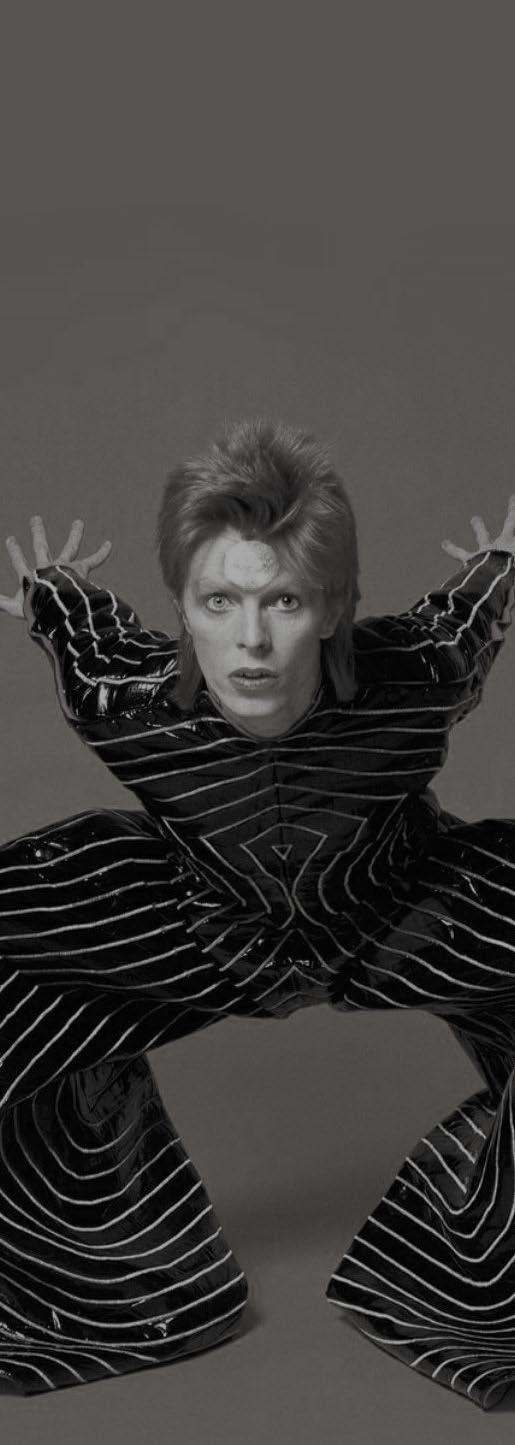
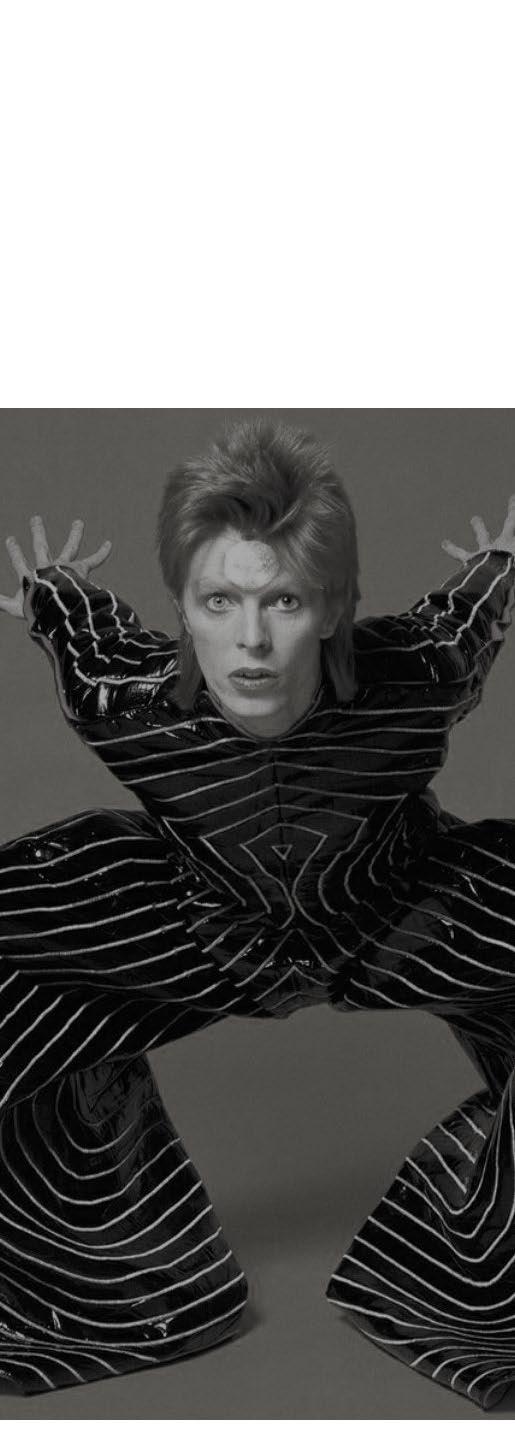
Yamamoto was responsible for some of Bowie’s most iconic and revolutionary looks, a prime example being Bowie’s Tokyo Pop jumpsuit. Long sleeved and high collared with extremely dramatic, wide and rounded legs, the jumpsuit uses its black background and symmetrical white stitching to make a statement. Constructed from synthetic rubber, the jumpsuit is one which will absolutely have a long legacy.
Yamamoto helped Bowie explore the performance of gender and sexuality within fashion. According to an article from The Cut, he said he approached dressing Bowie in the same way he approached dressing a woman: “I found David’s aesthetic and interest in transcending gender boundaries shockingly beautiful.”
Another famous jumpsuit from this era, known as the “Hands Jumpsuit,” features a brown knit material with gold glittery pants. The right leg is cropped into Bowie’s beloved mini shorts and sits under an inspiring criss cross pattern, while his right arm hosts a matching arm band. Over Bowie’s chest sit two golden hands with black nail polish, placed possessively over his chest.
Even more of Yamamoto’s Japanese influence can be seen in a piece of Bowie’s — white drapery, made of satin and wool, dragging on the floor and adorned with Japanese calligraphy. This is a wonderful example of the collaboration between these two artists.
“Both of us were very aggressive about new creations,” Yamamoto said in “Performing Glam Rock: Gender and Theatricality in Popular Music.” “David Bowie was Basra in a Western way, and I am the Japanese way.”
His invocation of the Japanese term “basara,” which means having a rebellious, flamboyant nature, demonstrates how they were not simply designer and client, but co-conspirators in the art and protest of glam rock.
Before artists used gender non-conformity as art and before museums borrowed from subcultures, Bowie and Yamamoto demonstrated how fashion and music could be exaggerated and made into narrative — and, of course, that the stage could be a site of radical self expression.
Photo Credit: Marin Zbawiony
Photo Credit: Jupiter Justice
Author: Reegan Davis
Photographers: Jupiter Justice & Shreya Jain
Layout: Emerson Lepicki
New Year’s Eve brings new opportunities and beginnings. It is a day to celebrate the year people had and the year that they’re going into — with drinking and dancing, of course. But for those ringing in the new year on Dec. 31, 1999, it was a day of fear. Entering a new millennium brought a sense of impending doom and technological panic across the globe.
It started with a seemingly small software glitch. In older computer programs, years were represented by their last two digits. This led to fears that technological systems would interpret “00” as “1900” instead of “2000,” according to EBSCO.
People imagined a world where computer systems completely shut down, and anxieties peaked globally in face of losing entire national systems.
Photo Credit: Shreya Jain
Photo Credit: Jupiter Justice
Photo Credit: Shreya Jain
Photo Credit: Jupiter Justice
Photo Credit: Jupiter Justice
Photo Credit: Shreya Jain
Blackouts. Bank systems shutting down. Medical systems collapsing. As far as they knew, the equipment that was single-handedly running society would collapse. It wasn’t uncommon for people to refer to this as “the end of the world as we know it,” according to NPR.
This clearly did not happen — a small misunderstanding had simply been turned into mass panic, right before our eyes.
Entering the year 2000 didn’t call for an apocalyptic shutdown.
Photo Credit: Jupiter Justice
Photos
Scarlette
Y2K fashion consisted of bold, colorful and futuristic trends, and the style was so prominent in the early 2000s that it recently resurfaced in our current era.
Common Y2K trends included low-rise jeans, ballet flats, skirts, cargo pants, statement jewelry, sunglasses and fun tops. Funky patterns and glittery sequins reigned supreme. In short, it was an era of fun.
Celebrities and red carpet looks are an absolute time capsule of fashion in this time period. Paris Hilton never hit the runway without a tracksuit or trucker hat. Britney Spears always rocked low rise jeans and a crop top.
People had switched from the more grungy and minimalist 90s look into ultramodern, bling-based attire. Plaid skirts turned to denim and sweaters were traded in for graphic tees. Accessories were everything to a 2000s look.
While the 2000s were a progressive era for passion, it was also a time where technological development was accelerating. Physical technology, such as phones and computers, were advancing at an alarming rate, and digital spaces like videogames and social media were gaining popularity, too.
Photo Credits: Shreya Jain
Photo Credit: Jupiter Justice
Photo Credit: Jupiter Justice
Phones have transformed — once used as devices with a sole purpose to call and text, phones can now hold an entire world. One that you can fit in your pocket.
Cellphones weren’t the only forms of technology advancing. The MacBook was released in 2006, replacing the iBook and PowerBook with its sleek design, according to MacHistory. Technology was moving away from chunky, boxy looks into easily-portable devices with narrow structures.
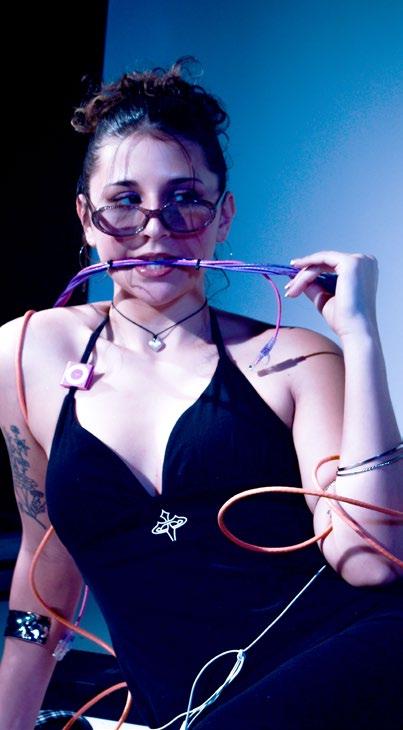
The idea that fashion, art and technology are deeply interconnected is not a new one. And as technology continues to advance and transform, fashion will do the same, seen here with Y2Kinspired outfits and wires. In all seriousness, the world can be a dark place. Why not tap into something light every once in a while?
Photo Credit: Jupiter Justice
Photo Credit: Jupiter Justice
Photo Credits: Shreya Jain
Shoot leads: Abby Nocera assisted by Jupiter Justice | Models: Alex Padilla, Chenai Mutsago, Haylie DiCarlo, Jasmine Freeman, Lexi Korff, Maylatt Eyassu, Pragalya Arumugam, Shaniya Slaughter | Stylist: Gracie Puhalj | Hair & Makeup: Vani Modi
Photo Credits: Jupiter Justice
Photo Credits: Shreya Jain
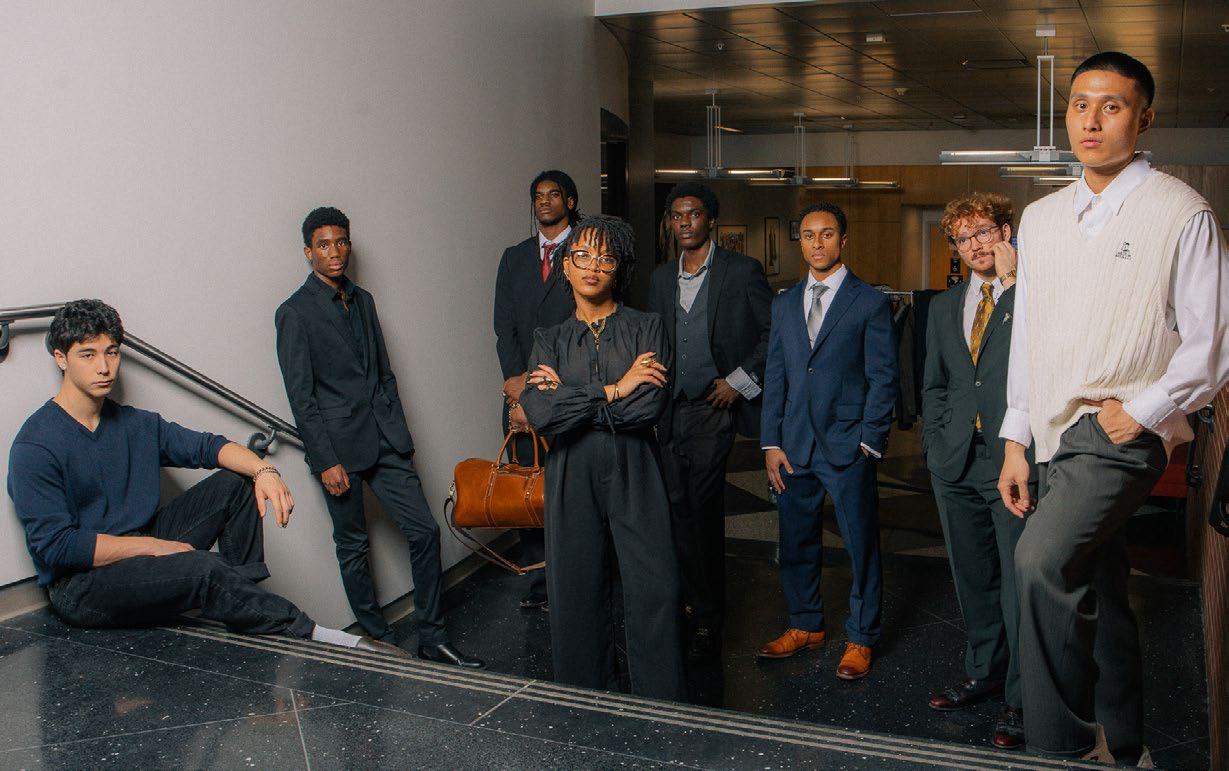
he Ohio State University is known for its strong Buckeye community and the wide range of resources available to support student success. Among these resources is the Monda Student Resource Center (MSRC), which houses the Reid Family Career Closet on the first floor of the Younkin Success Center on
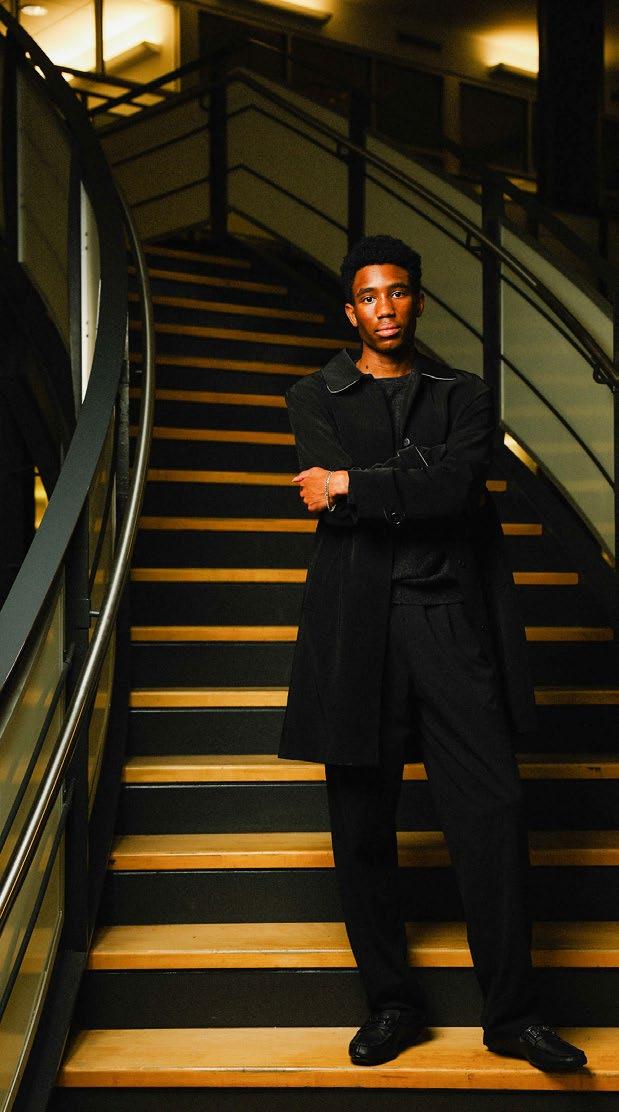
The Career Closet provides students at OSU with access to professional clothing for important occasions like job interviews, internships, networking events, class presentations and conferences.
With more than 6,000 items in its inventory, the Closet offers a variety of options including business attire, medical apparel, agriculture-related clothing and other professional wear. Students can schedule appointments or stop in during open hours, where trained student volunteers assist them to find clothes that fit both their needs and their career goals.
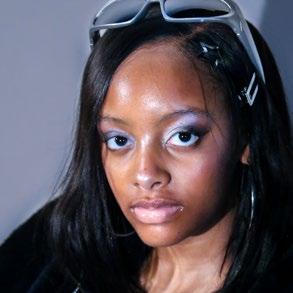
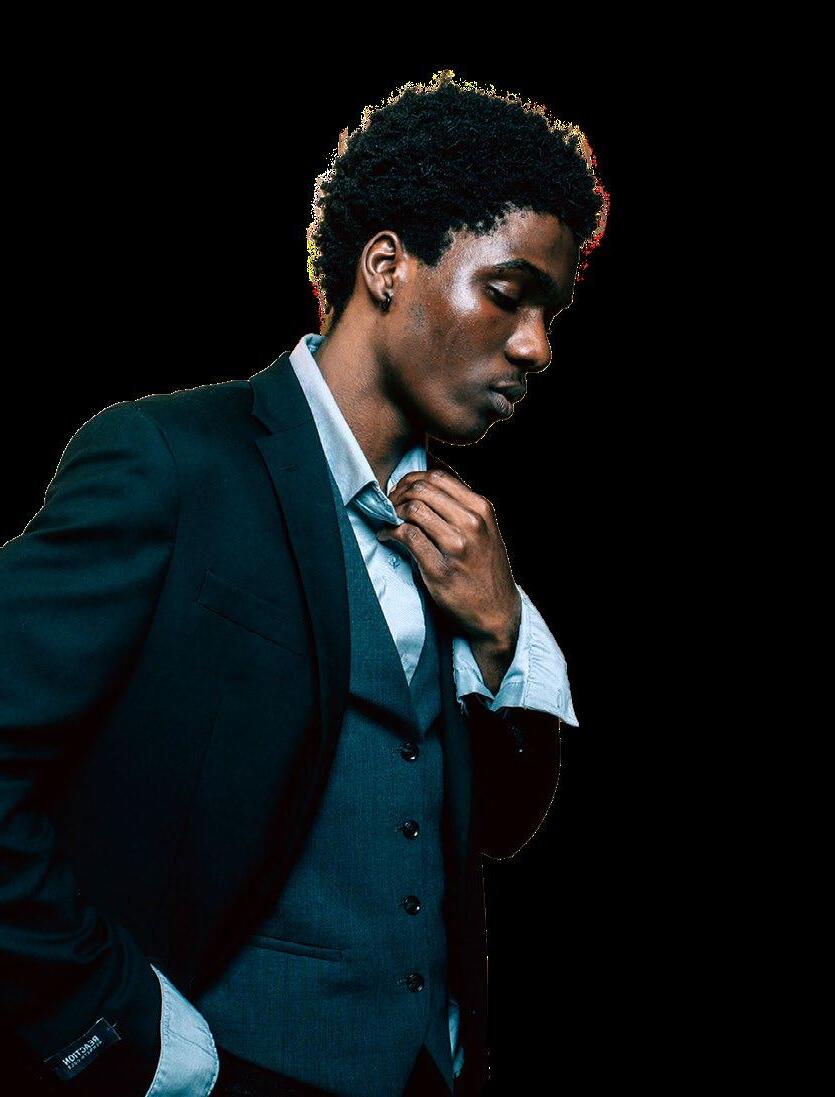
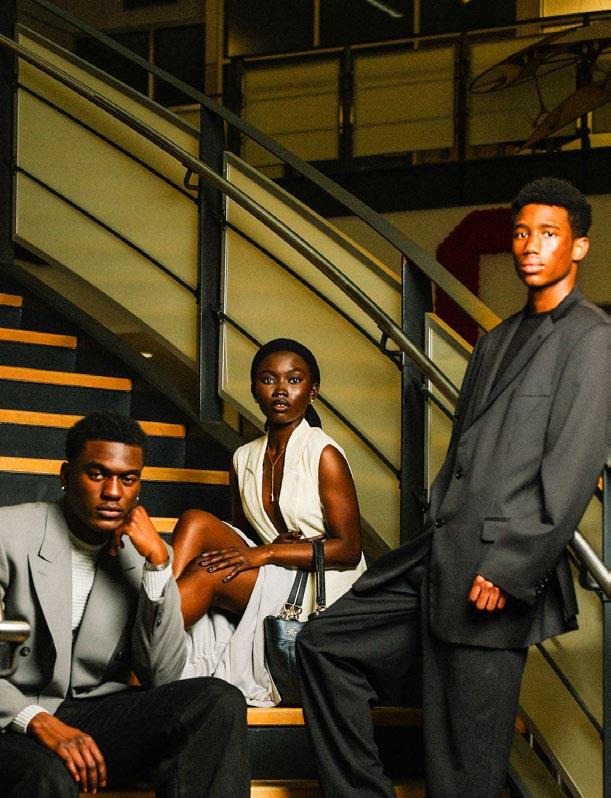
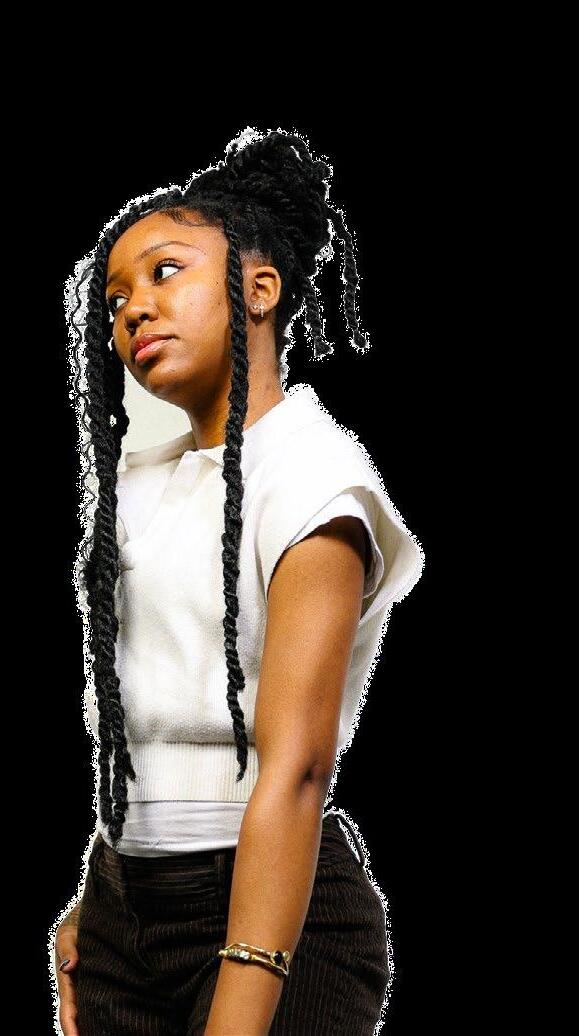
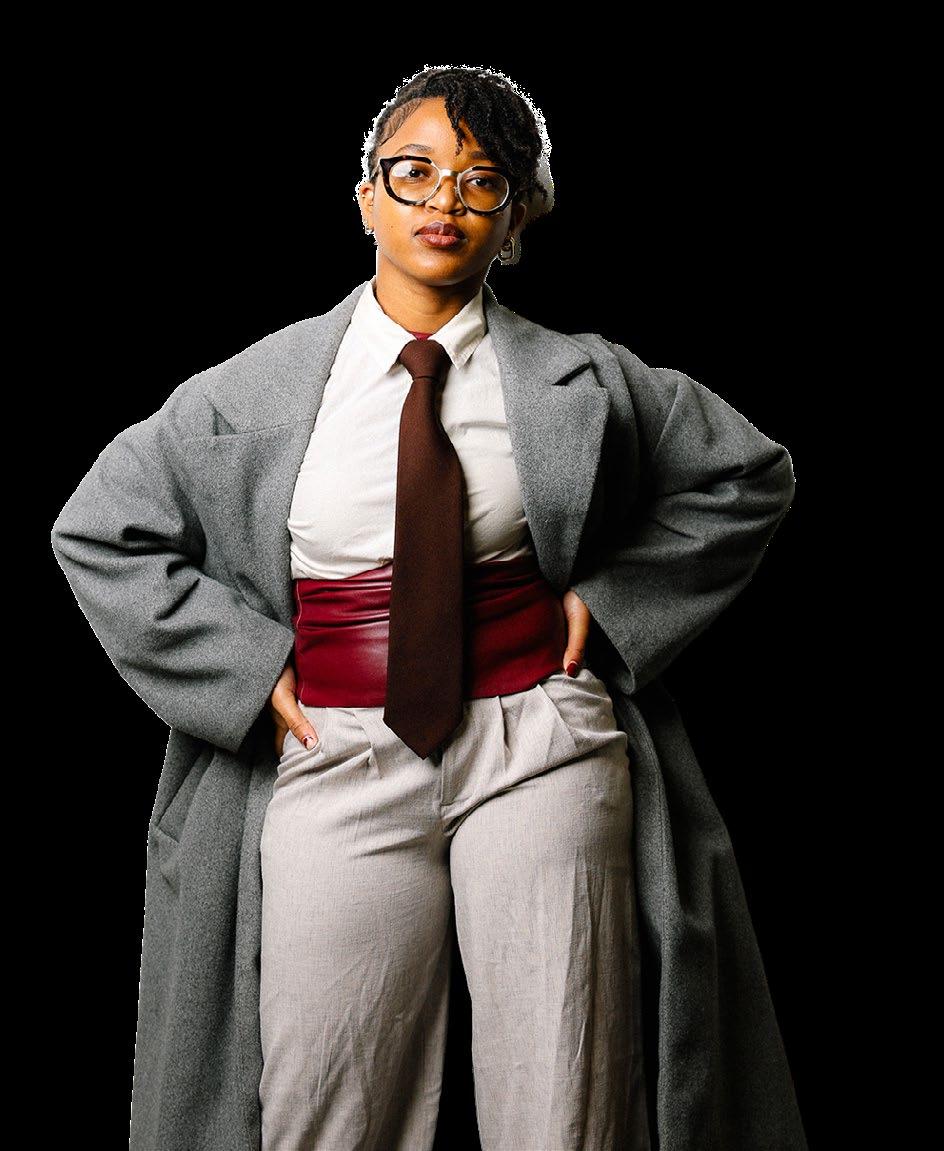
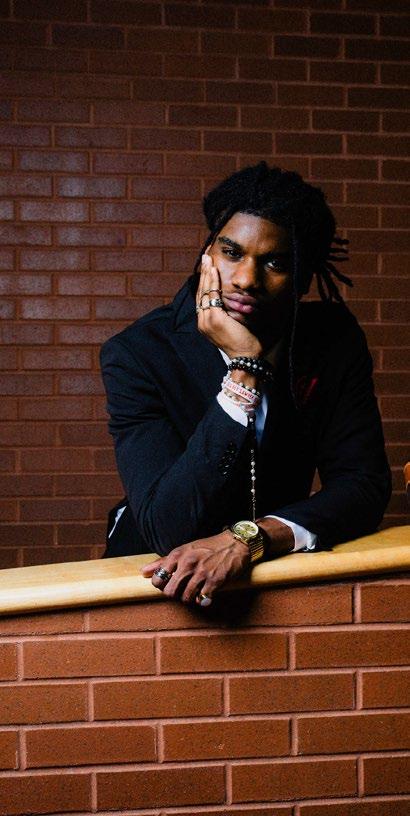
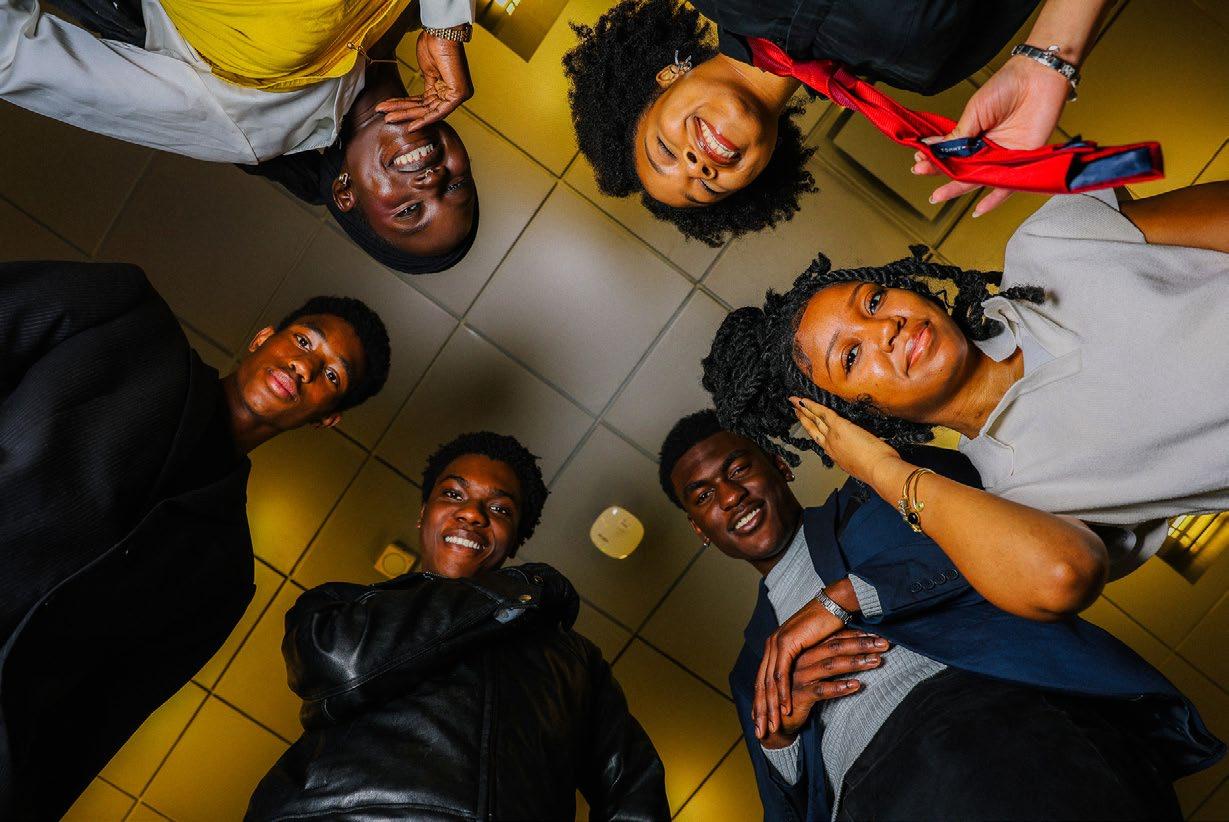
James McKee, Jeremiah Boateng, Pete Gyimah Morgan Cartwright & Vani Modi
While the Career Closet is now a permanent fixture within the MSRC, it did not always operate this way. Originally part of Buckeye Careers, the program began as a temporary pop-up shop designed to provide students with professional attire. Over time, the demand for the service grew, leading to the creation of a dedicated showroom space that now allows students access to the closet year-round, Monday through Friday.
The resource not only helps students prepare for professional opportunities but also addresses students’ basic needs. The Closet provides clothing suitable for various weather conditions, ensuring students can attend class comfortably and confidently. Ultimately, the Career Closet aims to remove barriers and help Buckeyes feel prepared for success, in both academic and professional settings.
Morgan Vibbert, Associate Director of the MSRC, had much to say about the Career Closet, how it functions and the ways it supports Ohio State students.
According to Vibbert, scheduling an appointment provides students with more access to resources than simply dropping in. By visiting the Career Closet website, students can schedule appointments, view available sizes and inventory, learn about donors and better understand how the program operates.
“A big piece for students to know…is it is all free for them and they get to keep [the clothes]. They don’t have to return any of it,” Vibbert said. “So that makes it a more personal experience.”
For Vibbert, it’s all about sustainability. Students are permitted up to 10 items per visit, and because the Closet is open Monday through Friday, they are able to return throughout the week to continue building their professional wardrobe.
Looking and feeling confident often go hand in hand, especially in professional environments. Whether a student is preparing for an interview, attending a networking event or beginning an internship, feeling comfortable and confident in what they are wearing makes a meaningful difference.
Vibbert emphasized the financial benefit of the program as well, saying that “students can save or supplement their financial cost of being at a big-time institution by not having to shop online or in store… Rather, utilize the free resources on campus and then use your money elsewhere for friends, bills or the personal things you would rather spend your money on.”
Confidence is another key outcome of the Career Closet experience. Vibbert said that the way someone dresses can influence how they present themselves in professional settings.
“When you are dressed for the part that you are seeking, you're more likely to be speaking in a way that you deserve and are worthy of this role,” Vibbert said. “It allows a sense of confidence in yourself…you are prepared.”
The Career Closet is continuing to expand its opportunities for student involvement. Vibbert shared that the program is currently looking for student stylists and plans to pilot a student stylist program for Fashion and Retail Studies (FRS) students in fall 2026.
By participating in these roles, students will be able to gain handson experience in styling while helping others who may be unsure about their personal style or how to dress professionally.
The program will also offer styling guides (courtesy of Professor Tasha Lewis’s Fashion Promotion class) and advice to further support students in building confidence in their appearance. Through these initiatives, the Career Closet hopes to strengthen its mission of “Buckeyes helping Buckeyes.”
Looking ahead, the Closet is exploring additional services that could further support students, including the possibility of tailoring services that would allow students to adjust clothing for a better feel.
These resources reflect the university’s broader effort to support student success through community collaboration and shared support across campus departments, programs and student organizations. Visit the Career Closet today and find your best fit.
Shoot Lead: Bridgette Agbodza | Models: Ahja Dias, Ayomide Adesokan, Fiona Uwumugisha, Heru Jones, Jacob Harmon, Khytarri Sarfino, Nolan Shih, Rohan Ansari, Samuel Ifakorede, Sanaa Kamau, Sasha Gurevich, Will Haverland, Zander Yang | Stylists: Aliyse Stokes, Bridgette Agbodza, Dilys Gyimah, Julian Page, Mia Schwind, Yeshe Mamo | Special Thanks to BRAG OSU and MSRC OSU Closet
ISSUE XXV, Spring/Summer 2026