
ETNIKA ANANTARA – A luxury glass house designed without boundaries between indoors and outdoors, offering a unique connection to nature while maintaining premium comfort and energy-efficient living.
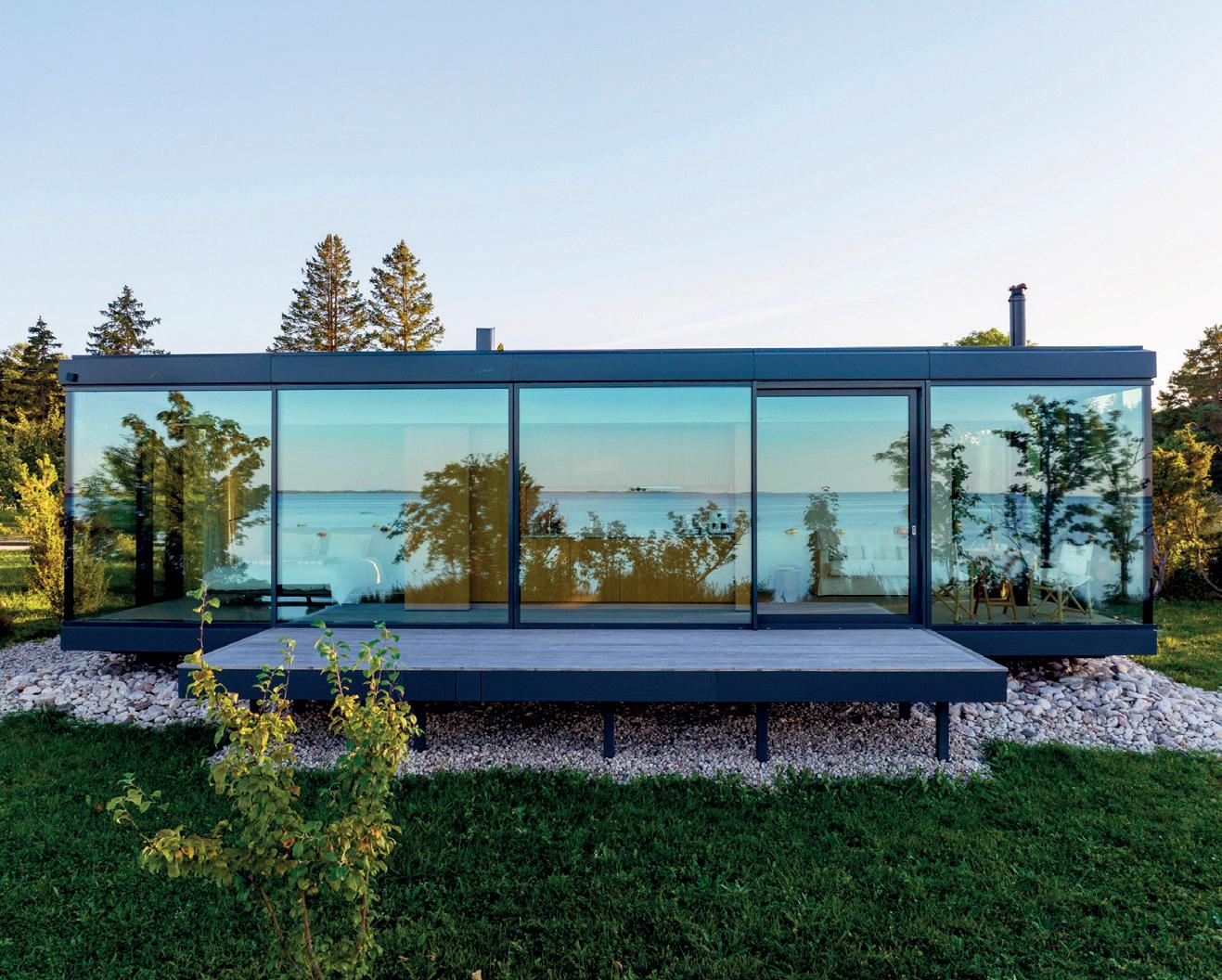
ETNIKA ANANTARA – A luxury glass house designed without boundaries between indoors and outdoors, offering a unique connection to nature while maintaining premium comfort and energy-efficient living.
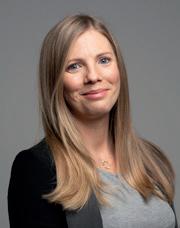
Dear reader,
A couple of years ago, I relocated to Denmark’s west coast. It was quite a change from Trondheim, my previous home, and even more so from London, where I spent most of my adult life. Nonetheless, I have quickly grown fond of the strong sense of community, the open landscape and a life far removed from the hustle and bustle, shaped instead by the sea and fjord.
In this month’s cover feature, I explore why the wild waves, open nature and slower pace of life in my new home region are attracting a new kind of traveller. People looking not just for nature, but for organised outdoor experiences, good food and comfort as a way to slow down and recentre.
With summer holidays upon us, the theme of slowing down continues through our two other special features as well. The first presents an enticing selection of Nordic reads to inspire your summer
reading. The second explores some of the most spectacular train journeys through Scandinavia.
Even our special theme focuses on one of the very best ways to slow down: yarn and knitting. In it, we meet several passionate Norwegian yarn and knitwear manufacturers.
Elsewhere in the issue, we explore a range of attractions, places to eat and Scandinavian design stories, from Faroese sheepskin to a new way to organise and display your music.
As always, we hope you enjoy reading this issue of Scan Magazine as much as we enjoyed making it.

Signe Hansen, Editor
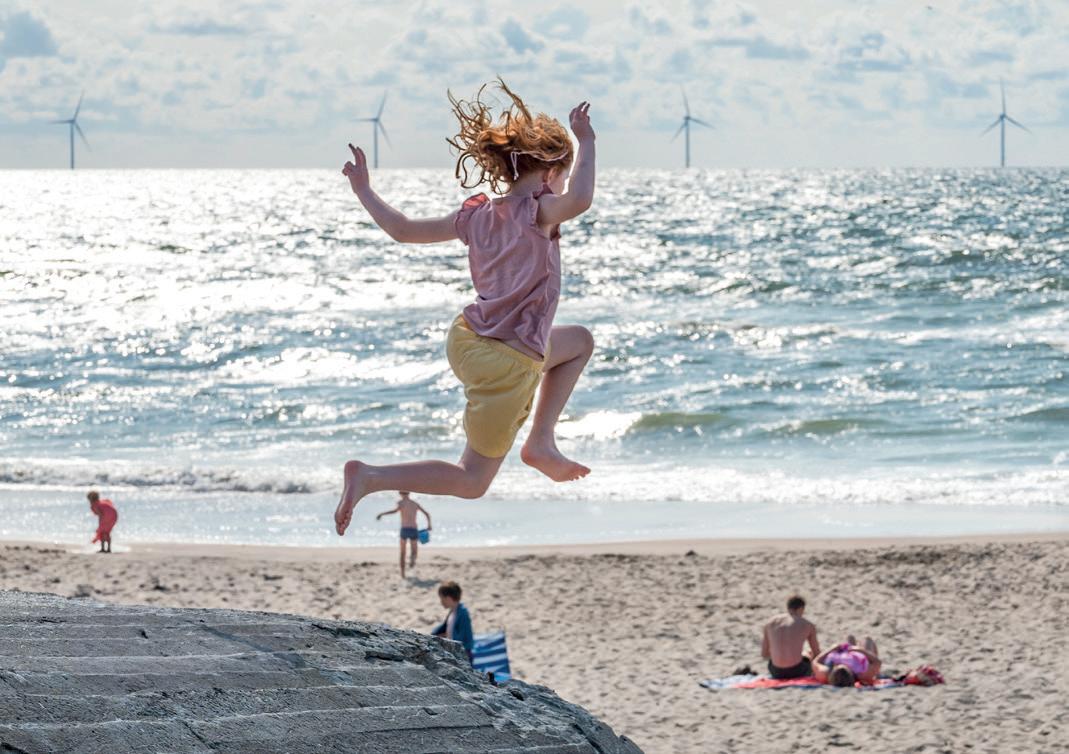
6 Waves, dunes and new energy on Denmark’s west coast
In this issue’s cover feature, we visit Denmark’s west coast, where waves, wide beaches and spectacular dunes have long attracted holidaymakers looking for a no-frills rental-home holiday. Today, destinations along the coastline are developing new energy, with more activities, culinary experiences and local initiatives that combine the area’s raw nature with greater comfort and accessibility.
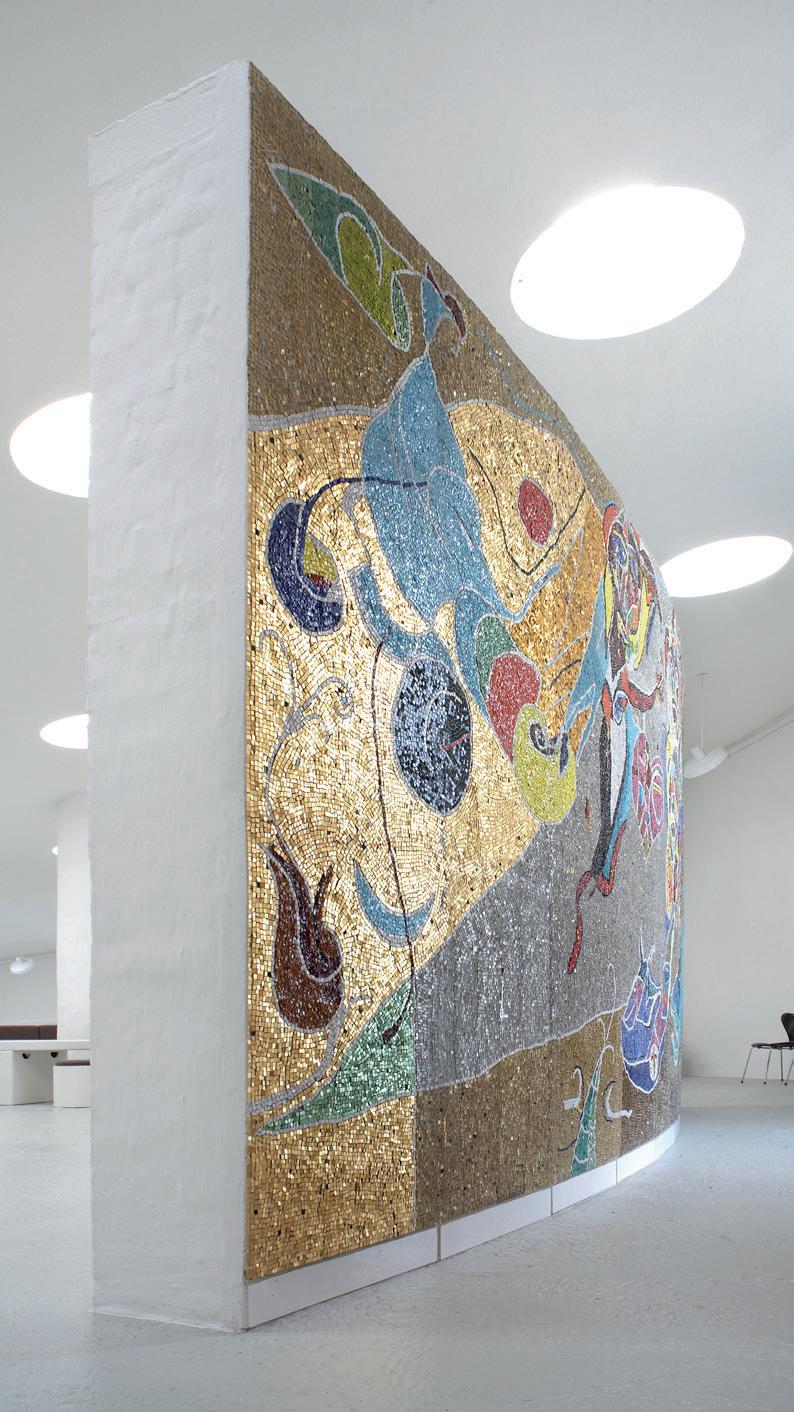
12 Sheepskin design, music displays and slow-travel essentials
From a Danish company specialising in stylish Faroese sheepskin to a new way of displaying and organising your music, this month’s design pages are full of Nordic minimalism in different shapes and forms. We also explore a new tiny-house concept, ideal for a Scandinavian mountainside plot, as well as a selection of travel companions that bring laid-back style wherever you go.
28 Beer awards and a light summer salad
Our in-house beer expert, Malin Norman, praises Argentine-style beer celebrations. Meanwhile, plant-based food blogger Katharina Kjeldgaard shares her recipe for a nutritious yet light summer salad bursting with flavour.
34 The best of Nordic yarn and knitwear Integral to the nation’s culture, knitting has never gone out of fashion in Norway. Perhaps that is because the tradition has never stopped evolving. In this theme, we explore a number of yarn manufacturers, knitwear designers and brands. –and offer plenty of inspiration for those tempted to pick up a pair of knitting needles.
49
30
Summer reading from the north
In this special feature, we dive into the world of books, with a selection of engaging reads by Nordic authors. This is the place to start if you are looking for a holiday read to get lost in.
46
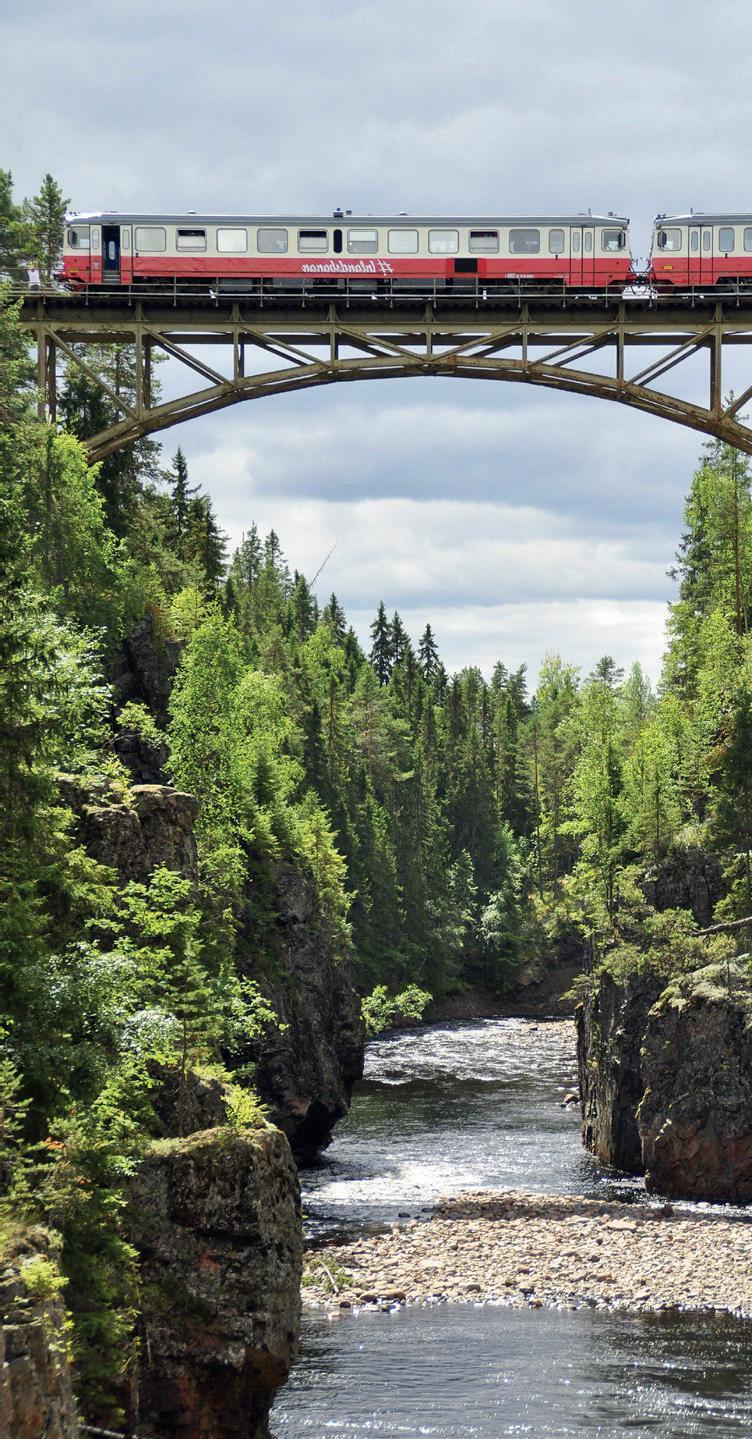
Spectacular train journeys
For travellers drawn to mountains, fjords, forests and slow travel, there is no better way to explore Scandinavia than by rail. Whether in summer or winter, dramatic landscapes and impressive railway engineering are part of the experience on the routes presented in this feature.
24 A view from the sky
For this month’s travel highlight, we head high above Norway’s Gudbrandsdalen valley to Eagle Nest Eco Lodge, a secluded retreat rooted in silence, space and nature. Perched on a mountaintop, the lodge invites guests to slow down, disconnect and experience the landscape on a more personal level.
90 Culture – events, music and film highlights Where to go and what to experience this month? Our Culture Calendar rounds up arts events across the Nordics, music columnist Karl Batterbee recommends new Nordic pop numbers to sing along to, and illustrator Maria Smedstad considers the advantages of having green hair as a teenager. Meanwhile, film and TV columnist Anders Lorenzen looks at the Scandinavian Dogme manifesto in the age of AI.
While Denmark’s west coast has long been loved and feared for its wild side, visitors are increasingly discovering another dimension to it. The old respect for the sea and the nofrills holiday culture that once shaped the coastline have given way to new energy. Today, visitors surf the waves, explore national parks and embrace a slower pace of life, while local entrepreneurs add to the region’s appeal with surf centres, gourmet coffee and distinctive food experiences.
By Signe Hansen
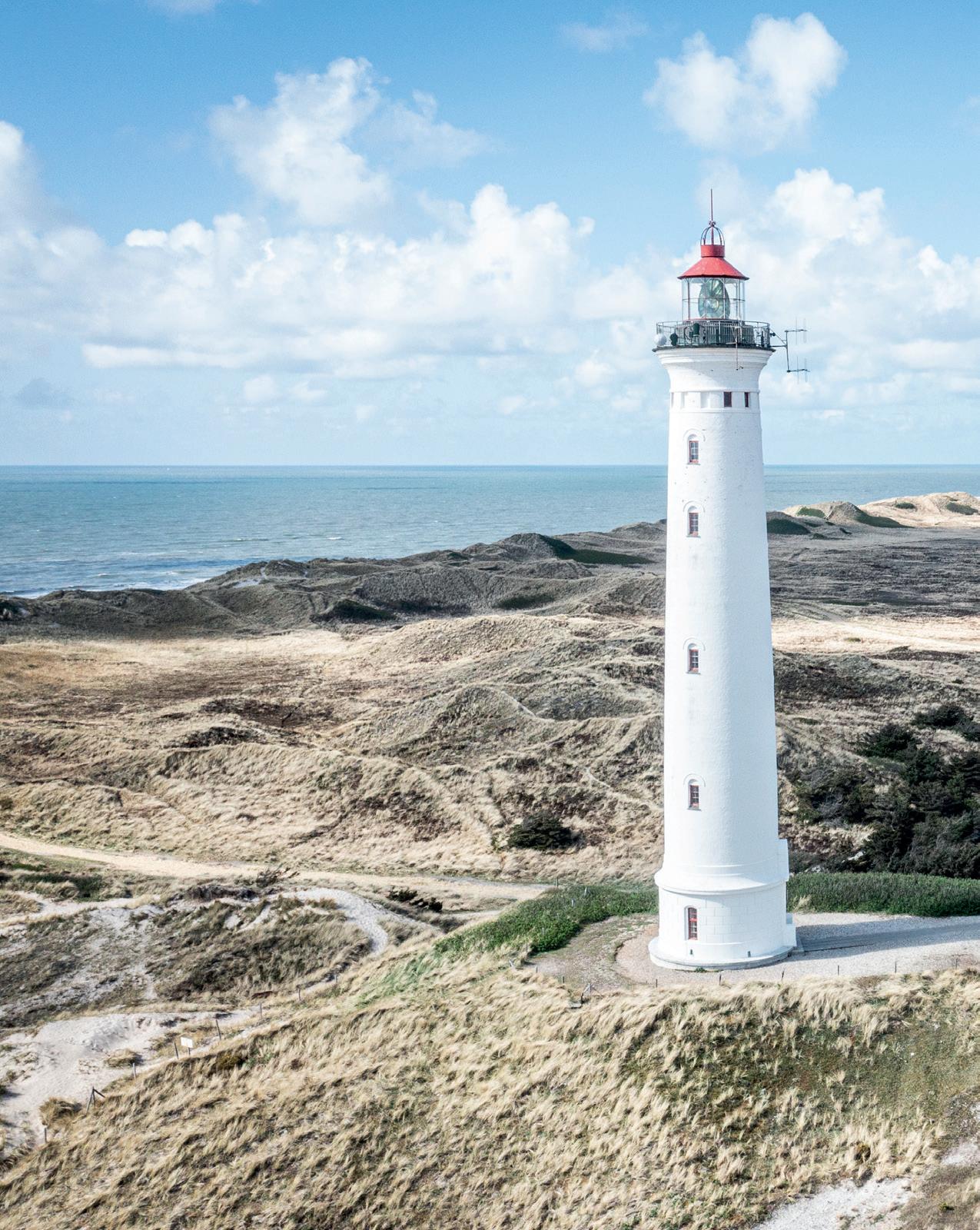
For more than half a century, German and Scandinavian families have been visiting the Danish west coast to enjoy its wide beaches and rental holiday homes. Today, the children of the first generation are returning, and with them has followed a push to combine the area’s raw nature with refined hospitality, making it easier for visitors and locals alike to slow down and appreciate what has always been there.
One of the people drawn to that combination is Majken Graver, director of Visit Vesterhavet. “For me, it’s about the
space, the scale and the quiet,” she says. “When you stand on the beach on the west coast, you feel wonderfully insignificant. Whatever you’ve been worrying about suddenly matters a little less.”
That sense of space is still the coast’s strongest draw, but the offer around it has changed. Martin Backs, Graver’s colleague and a native of Hvide Sande – a town with a unique location on a narrow strip of land between Ringkøbing Fjord and the North Sea – explains: “Almost everyone comes because of the raw nature. But the cultural offers, out-
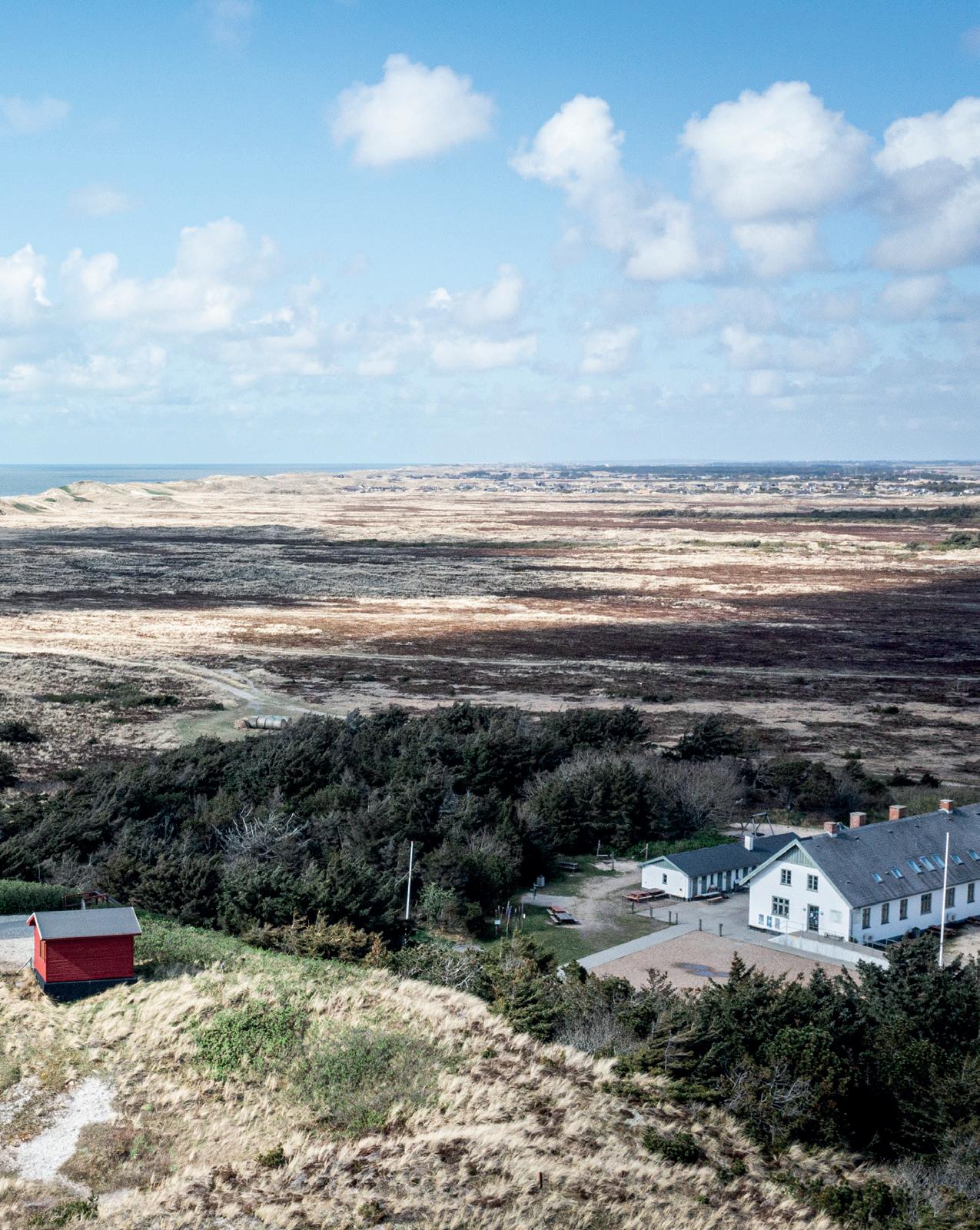
door activities and other guest experiences are what make people stay longer and come back.”
While the west coast’s nature has always been magnificent, many travellers have lacked obvious ways into it. In recent years, national parks and organised outdoor activities have given visitors routes, stories and practical support that make the landscape easier to explore.
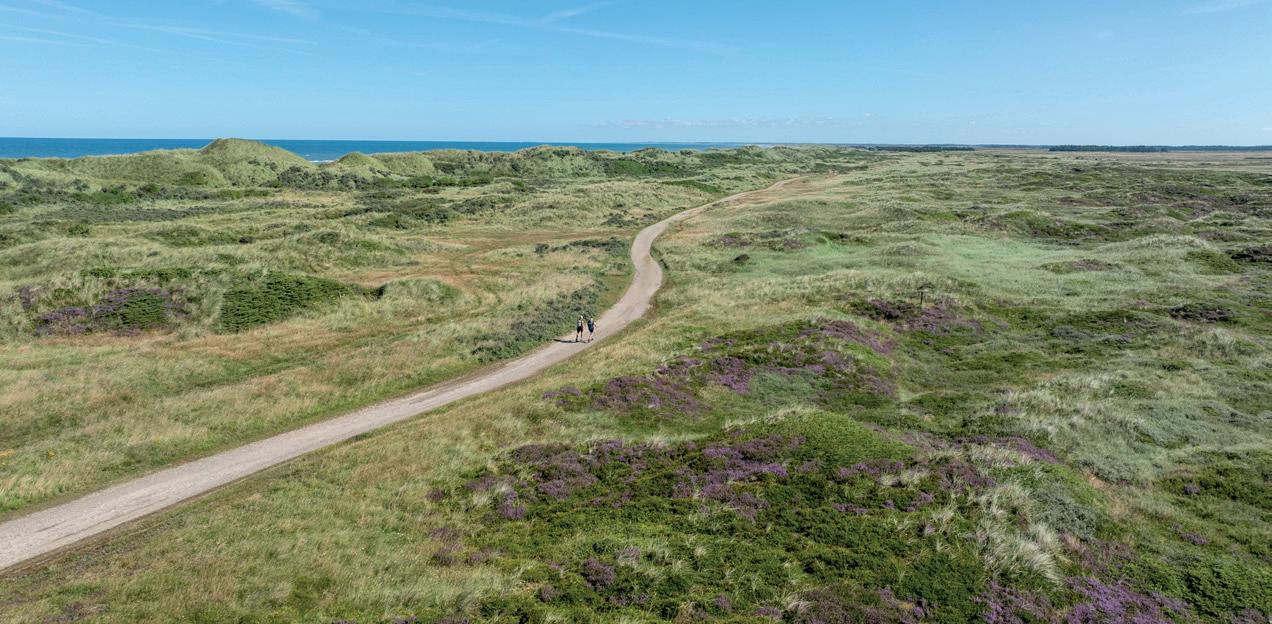
The first Danish national park was Thy National Park, where dune heath, red
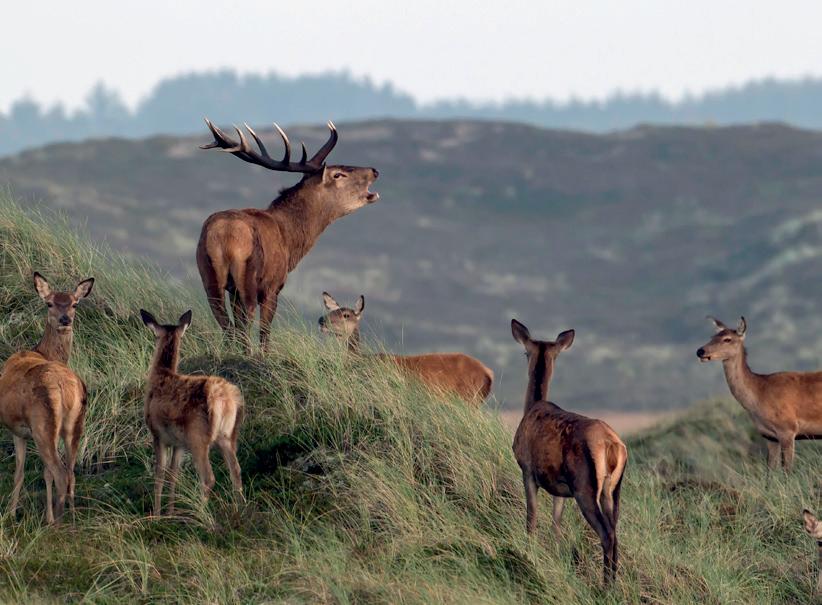
deer, wind-shaped landscapes, surfing, food culture and history sit side by side. With an extensive network of hiking and cycling routes, the park has turned one of Denmark’s most elemental landscapes into something visitors can move through without losing its rawness.
Further south, the Wadden Sea offers a different kind of drama. Here, the landscape is never fixed. Tides withdraw to reveal the seabed, birds move with the water, and light shifts across mudflats, islands and wide beaches. Yet the very scale that makes this UNESCO-listed landscape so extraordinary can also make it difficult to read. Expanded and reopened in an award-winning building in 2017, The wadden Sea center helps visitors find their way into it, with activities ranging from guided walks and oyster safaris to sailing trips and seal safaris.
Alongside the national parks, local entrepreneurs have made the region more accessible to visitors new to nature-based travel. Among them is Stine Holm from VesterhavsCaminoen, which she and her boyfriend started straight out of secondary school. Their first trips began in 2019, and from there, the concept grew quickly.
Today, many guests are first-time hikers. They want nature, but not necessarily a primitive experience. Accommodation, maps, luggage transport, food guides and practical support are part of the appeal. “We help people get out and into themselves,” says Holm. “Some walk because they need time to reflect, to be together in another way, or simply to feel themselves again.”
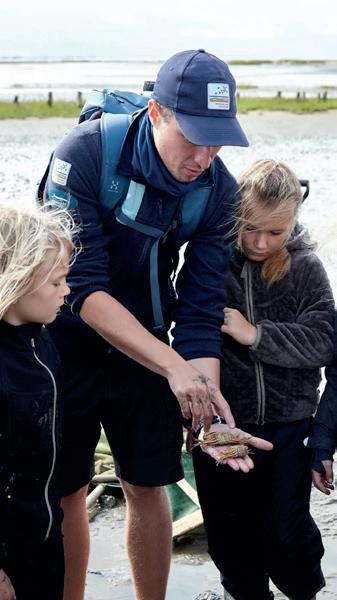
The clientele has also broadened. What began largely with older couples has expanded to include younger travellers, friends and solo walkers, some drawn by shelters and a more raw, outdoor feel –but still with comfort and security close at hand. “Many are looking for unique and authentic experiences,” says Holm. “They want to get out to places they wouldn’t necessarily find on their own.”
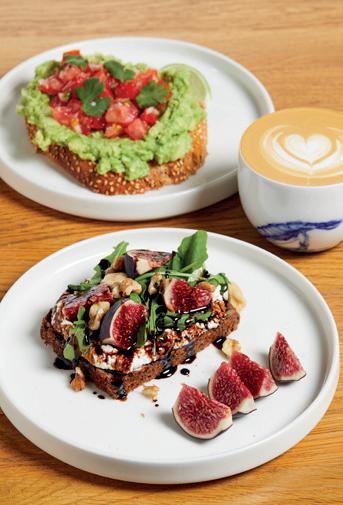
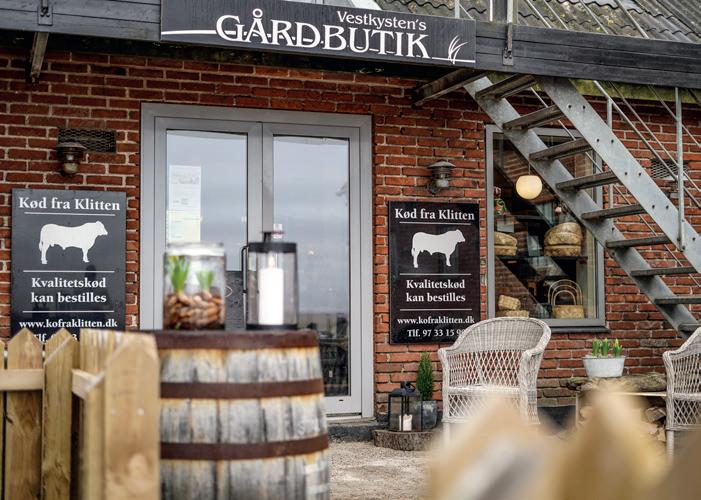
While the west coast’s landscape and nature have long been recognised as major attractions, many visitors have also associated the area with simple summer houses, cold floors, board games and home cooking. Today, however, modern and luxurious summer houses continue to increase in number, new accommodation options are emerging, and the food scene has become part of the wider coastal experience. It now ranges from farm shops and bakeries to Asian-inspired restaurants, Nordic cuisine and proper coffee.
That change can be followed down the coast. In Thy, Michelin-starred Restaurant TRI in Agger has helped place the far northern stretch of the west coast on
Denmark’s culinary map. Further south, around Ringkøbing, the old market town is no longer only a practical stop between the beach and a holiday house, but also home to local craft outlets, established eateries, newer restaurants and an indulgent spa.
In Hvide Sande, a town long defined by fishing, the shift feels especially vivid. Here, the newly opened Restaurant RI10 brings a refined approach to local fish and west-coast ingredients. Named after a fishing cutter that capsized in the 1980s, when three fishermen lost their lives, the restaurant also recalls a time when the sea was a dangerous but vital source of income.
The change is visible at a more everyday level too. Coffee bars such as Twenty Twenty Coffee have made a proper cup of coffee part of the rhythm of the town. “The fact that I can walk down and buy a barista coffee in Hvide Sande says something,” says Graver, director of Visit Vesterhavet.
“A few years ago, many would never have imagined that anyone would pay more than 20 kroner for a cup of coffee.”
Holm from VesterhavsCaminoen sees the same expectation among walkers. They come for the open coast, planned routes, good accommodation and proper meals. “They have high expectations,” she says. “We first thought the trips should be as cheap as possible, but we found out that our guests want quality.”
If food, cafés and organised hikes have changed how visitors stay on the west coast, surfing has changed how they meet the sea. For generations, the North Sea was something to work, respect and sometimes fear. Today, it is also something people enter for play, freedom and community.
Up north, Klitmøller has long been known as Cold Hawaii, Denmark’s most famous surf destination and a benchmark for seri-
ous wave surfers. Further south, however, other places have their own appeal.
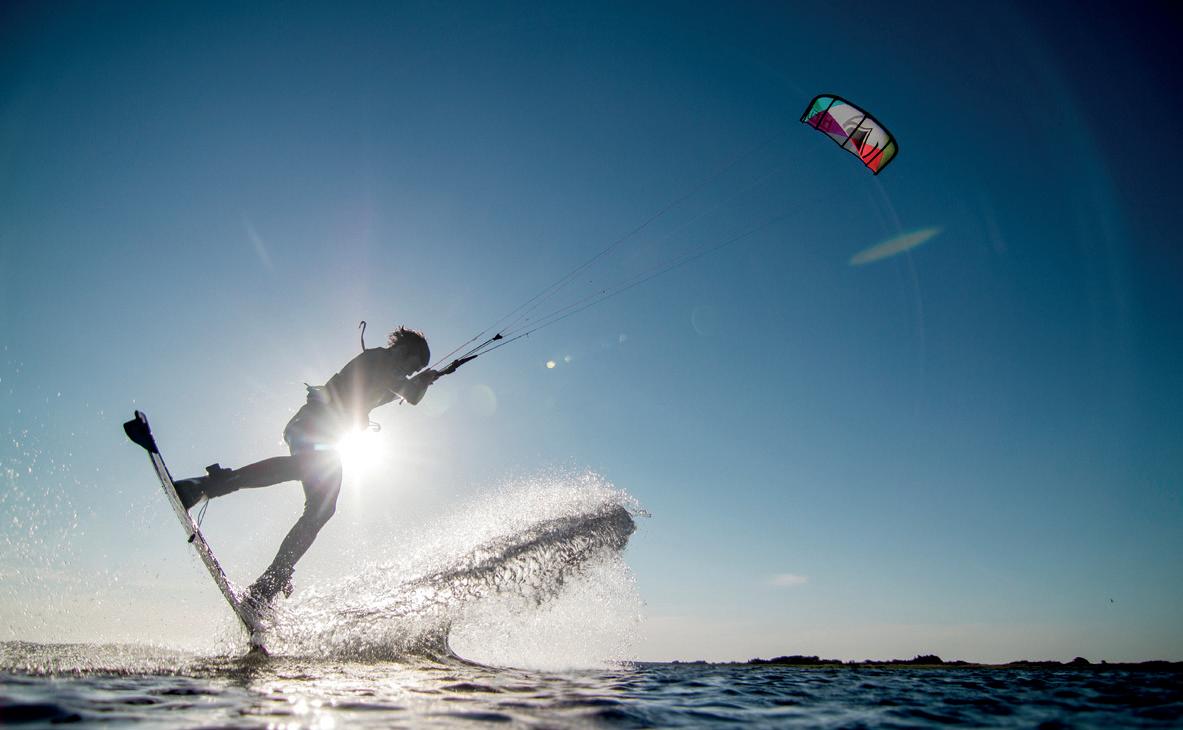
In Hvide Sande, the combination of the North Sea on one side and Ringkøbing Fjord on the other offers a unique setup. There are waves for those who want them, but also shallow, flatter water where beginners, families and children can windsurf and kitesurf without feeling thrown straight into the deep end.
Daniel Mirecki, chair of Hvide Sande Surf Club, explains, “As a windsurfer, this is number one,” he says. “You have the North Sea on one side if you’re into waves, and the fjord with many different spots that work in different wind directions.”
For locals, the change is also cultural. The sea that once represented danger and livelihood has become a reason to move here, stay here, and bring up children here. Martin from Visit Vesterhavet describes how people from outside helped locals see the coast differently. “Those
of us who grew up here saw the sea as something big and dangerous,” he says. “Then people came from outside and said: you live in the best place – you have the Nordic region’s biggest playground.”
Mirecki sees the same shift in the surf club. What began with just a handful of members has grown to around 120 in a town of about 3,000. “It’s not only the crazy newcomers and holiday makers,” he says. “Some of the real locals have also discovered it.”
Visit, and you might end up staying
For some, the west coast remains a place to visit for a week or two, to breathe out, walk further than planned, eat well and return home with sand still turning up in bags and shoes. For others, the pull becomes harder to leave behind.
That was the case for Graver. Originally from the Aarhus area, she stayed in a small house in Hvide Sande during the first Covid lockdown in 2020. “My sons were the ones who asked, ‘Why don’t we
just move to Hvide Sande?’” she recalls. “I told them there would be nothing for them to do, but they just said that if it didn’t work out, we could move back. So, we took the step – and they were happy. Instead of sitting around watching YouTube videos, they were out surfing all the time.”
In its own way, Mirecki’s story follows the same current. Chair of Hvide Sande Surf Club, he grew up in Ringkøbing, later lived in Frederiksberg, and moved west with his family to be closer to the water. His son surfs, too. What once drew mainly holidaymakers now also draws people looking for a different everyday life – one with wind in it, but also community, schools, cafés, clubs, sports and room to move.
For Graver, that is the deeper promise of the place. “The west coast has so much of what people take medicine for,” she says with a laugh. “Fresh air, nature, movement and good company. We’re simply outside more – whatever the weather, you go down to the beach.”
It is a fitting final image of the coast today: still wild, still windy, but with more ways in, more reasons to stay, and a growing sense that calm is found not despite the wildness, but through it.
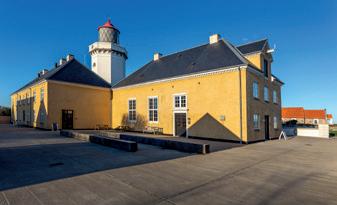
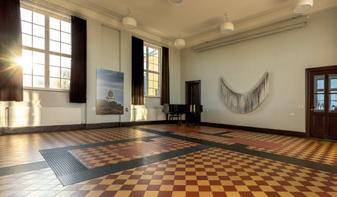
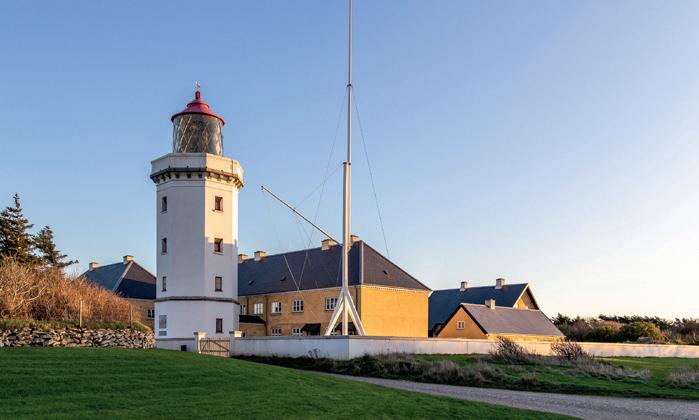
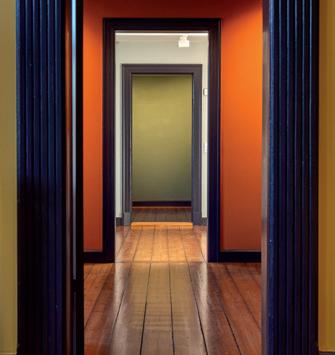
Waking up in the assistants’ quarters of Denmark’s oldest west coast lighthouse is something few forget. Perched above Hanstholm, with the North Sea on one side and Thy National Park on the other, the holiday flats at The North Atlantic Lighthouse offer a rare chance to stay inside coastal history, with art, culinary experiences and wild nature just outside the door.
By Signe Hansen | Photos: P+P Arkitekter & Thomas Illemann
The flats are part of the listed lighthouse complex, where lighthouse staff and their families once lived. Today, they offer an atmospheric base for one of Denmark’s most distinctive coastal landscapes and one of Thy’s most unusual cultural destinations.
“Everyone says the same thing: ‘I didn’t know you could actually stay here.’ But once they’ve experienced it, they always come back,” says general manager and lighthouse keeper, Simon Toftdahl Olesen. “Actually, many guests often book again right after leaving.”
Built in 1843 and fully restored in 2017, the lighthouse was once the most powerful in the world. It stands between the national park and Denmark’s largest fish landing port. Guests can climb the lighthouse, follow heather-lined paths, or head towards Hanstholm’s harbour, where food is part of the experience.
The dining scene ranges from Hanstholm Madbar, “a kind of mix between a hipster hangout and a local fisherman’s diner,” as Olesen calls it, to the lighthouse’s own seasonal café and restaurant, run by chefs with Michelin experience and focused on local produce.
In summer 2026, the lighthouse’s exhibition space presents Festen for fiskene, bringing five major artists – Erland Knudssøn Madsen, Kirsten Klein, Kurt Tegtmeier, Steen Folmer Jensen and Tróndur Patursson – together. Running from 6 June to 30 August, the exhibition pays tribute to the legendary Nordatlantiske Nætter of the 1980s: wild, visionary gatherings on the edge of the sea, where poets, musicians, chefs and artists from across the North Atlantic turned Hanstholm into a cultural meeting point. “This is the biggest exhibition we have ever created here. It will span the machine hall, assistants’ building,
courtyard and lighthouse garden, with major artists and a strong local anchoring,” says Olesen. “Moreover, it opens a door into Hanstholm’s history for our visitors, with information in Danish, German and English.”
For couples, families and anyone drawn to nature, culture and food, the exhibition adds an extra layer to what is already a distinctive getaway shaped by history, coastal life and the wide horizon of the west coast heather.
www.hanstholmfyr.dk
Facebook: detnordatlantiskefyr Instagram: @detnordatlantiskefyr
While some people jet from one Instagram-worthy sight to the next, Scandinavians’ love for hygge, nature and family time calls for a slower, more grounded way of holidaying. In the north, summer is the time to slow down, explore and enjoy life – in style, of course. Below, we present a selection of Scandinavian summer essentials, perfect for just that.
By Signe Hansen | Press photos
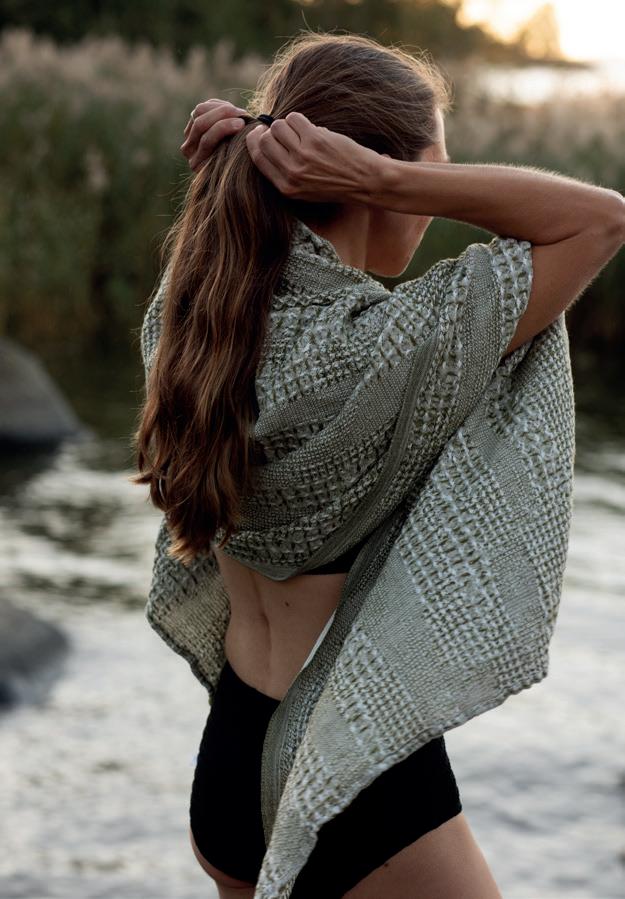
Inspired by the movement of water,
and sea foam, KUOHU is the first pattern created for
by French textile designer
Made from
own linen-Tencel material, the towel combines the natural absorbency of linen with the softness and environmentally responsible qualities of Tencel, resulting in a lightweight, quick-drying and beautifully textured design. Generously sized yet easy to pack, it is a fitting travel companion for anyone who wants to make the most of slow summer days by the water.
Price: EUR 79.90
www.lapuankankurit.fi
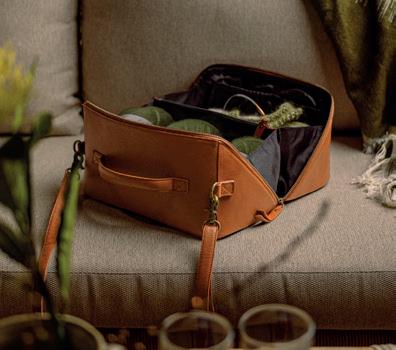
With a series of project bags in genuine, ethically sourced leather, Danish lifestyle brand MUUD has quickly become a favourite for makers who want to bring their project with them wherever they go, whether lounging on the beach or tuning out the noise of a busy travel hub. With an adjustable and detachable shoulder strap, two spacious compartments and a smaller zip pocket, the Cleo Midi bag makes it easy to separate yarn and keep smaller items close at hand. In other words, it is the perfect travel accessory for those who knit and crochet to slow down on the go.
Price: DKK 999 www.muudstore.com
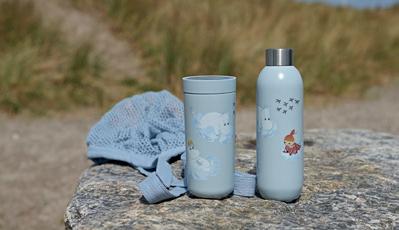
Keep Cool water bottle – Stelton
With more than half a century of creating stylish design staples, Danish design icon Stelton is an obvious choice for coolness in both function and form. Its Keep Cool water bottle is designed by the Italian design duo DebiasiSandri and made with 90 per cent recycled steel. Available in a variety of colours, it is a practical companion for summer days on the move. Adding an extra touch of Scandinavian summer mysticism, the Moomin version has won our hearts.
From: DKK 139 www.stelton.dk
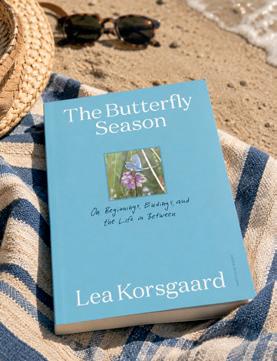
The Butterfly Season – Lea Korsgaard
Having time to read a full book, front to back, is one of the true luxuries of a slow-travel holiday, and for a book that truly encourages its reader to slow down and ponder the wonder of life, The Butterfly Season by Danish author Lea Korsgaard is the perfect pick. Of course, it does not hurt that the book’s cover also oozes a distinctly Scandinavian minimalist aesthetic.
From: GBP 23 www.penguin.co.uk

Sun Face Oil – Rudolph Care
Whether at home or away, Sun Face Oil SPF 25 from Danish skincare brand Rudolph Care combines luxurious daily facial care with broad-spectrum protection against the sun’s UVA and UVB rays. Rich and nourishing yet light on the skin, the oil is formulated with algae extract and oils from rosehip, sea buckthorn and almond to add moisture, softness and glow. Dermatologically tested, Nordic Swan Ecolabelled and certified with the Vegan Trademark, it is a refined summer essential for radiant skin with built-in SPF.
Price: EUR 70 www.rudolphcare.com
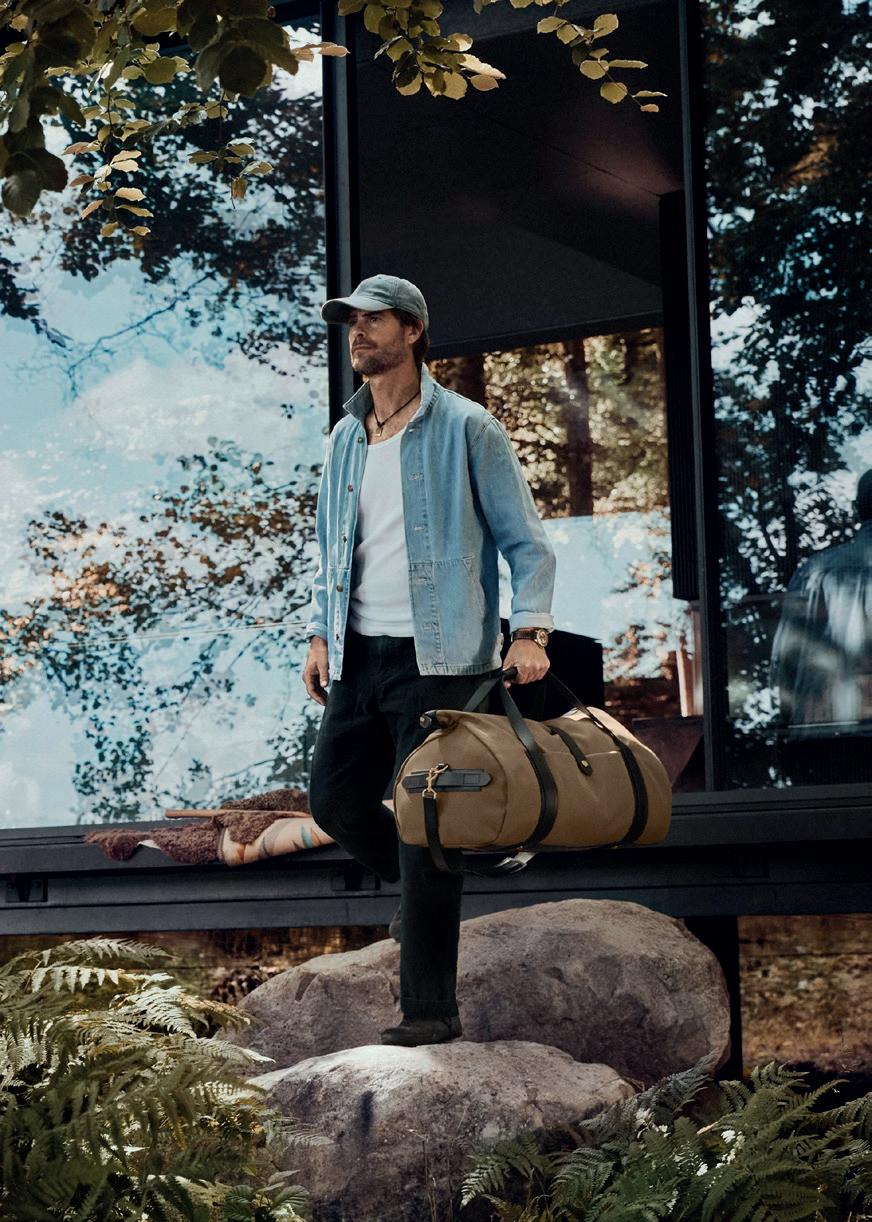
Explorer weekend bag – Mismo
With ample space and a casually elegant look, this weekend bag from Copenhagen-based Mismo makes travelling in style both easy and practical. An effortless, stylish look may not be all there is to a relaxed journey, but it makes a difference, especially when paired with the durability and functionality that define Mismo’s bags. With handles for carrying the bag by hand or over the shoulder, as well as a detachable shoulder strap when it is fully packed, the M/S Explorer is a practical companion whether you are heading on a short spa getaway or a week in the wilderness.
Price: DKK 7,800 www.mismo.dk
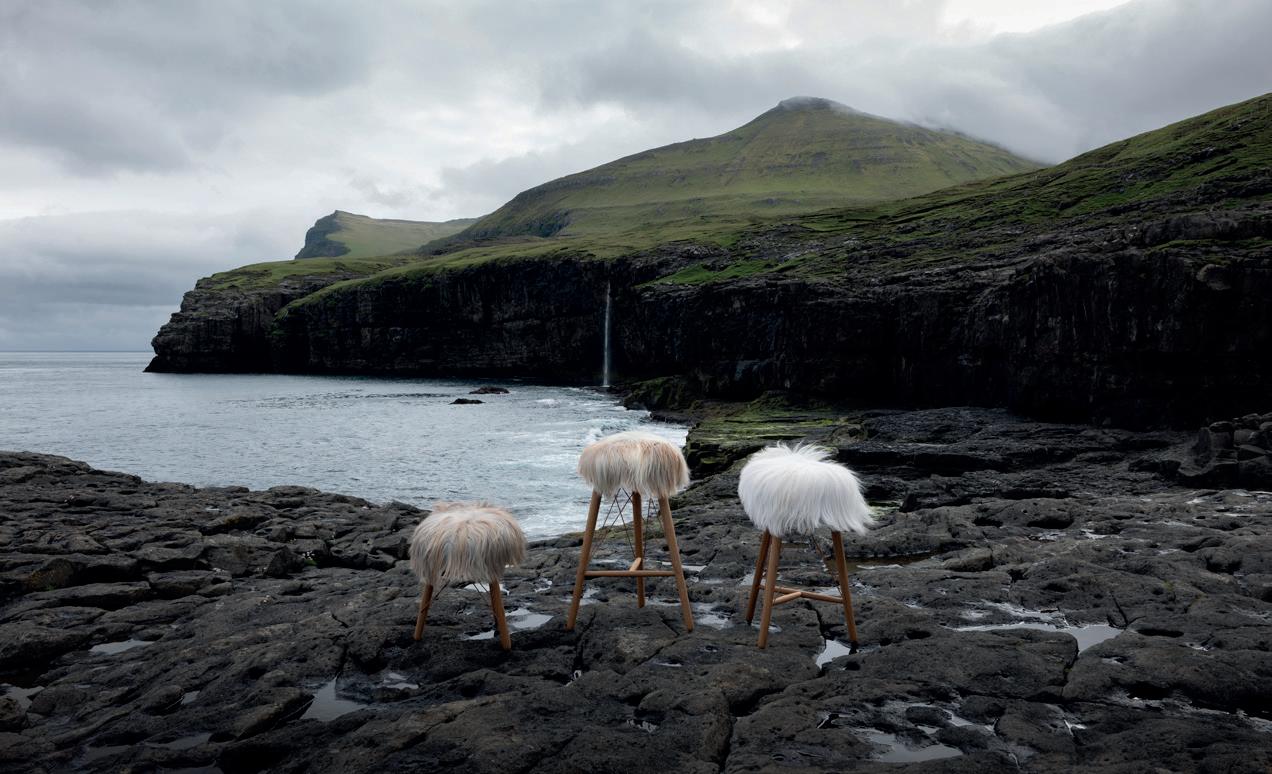
Founded on a fascination with Faroese sheepskins and the landscapes that shape them, SEYÐUR 62°N brings a rawer, more tactile note to Nordic interiors. Now, with the launch of RÓ, the Danish design company extends that vision into furniture, uniting Faroese skins, Danish craftsmanship, and North Atlantic heritage in one chair.
By Signe Hansen | Photos: SEYÐUR 62°N
Though RÓ is new, it feels rooted in something older. The chair is the first piece in SEYÐUR 62°N’s The North Atlantic Collection and is inspired by the Greenlandic hunter’s chair, interpreted through Faroese sheepskin, oak, leather and Danish cabinetmaking. Developed through a carefully considered collaboration with Lovewood, it comes in three heights, carrying the same simple expression across the collection.
“For us, it was never about recreating the past, but about carrying it forward in a
contemporary form,” says founder and owner of SEYÐUR 62°N, Ann Jacobsen. “The inspiration comes from Greenland, the skins from the Faroe Islands, and the furniture is built on Danish craftsmanship. In that way, RÓ brings together materials, cultural heritage and craft traditions from across the North Atlantic.”
The strict geometry of the frame gives room for the character of the skin. No two Faroese sheepskins are alike, and therefore no two chairs will be identical. “We wanted the materials to speak for themselves rather than add unnecessary details,” says Jacobsen. “Nature’s own variations become part of the design.”
The idea for SEYÐUR 62°N began on Jacobsen’s first trip to the Faroe Islands.
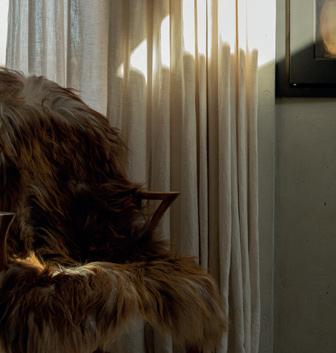
She had seen many sheepskins before, but the Faroese skins made a different impression. Their natural colours, structure and variation seemed shaped by the Faroese landscape itself.
“I still remember standing there with a Faroese skin in my hands,” she says. “It felt as if nature had created a small work of art. But it was not only the skins I fell in love with; it was also the Faroe Islands, the sheep, the way of life and the respect for the resources around them.”
That feeling connected with Jacobsen’s background in Thy, where she grew up surrounded by sea, wind and open landscapes. To her, Thy and the Faroe Islands share more than a visual kinship; they share a way of living with nature.
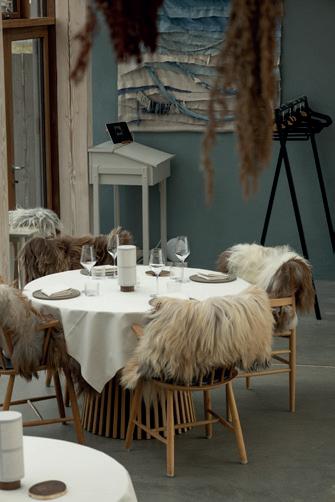
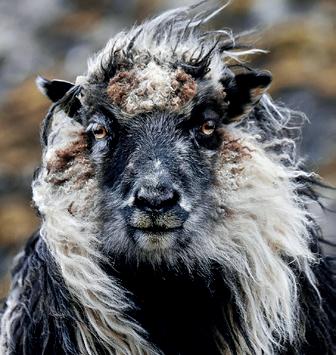
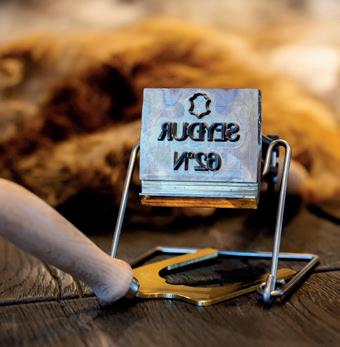
In the Faroe Islands, sheep are woven into everyday life, culture and history. Living freely in the North Atlantic landscape, they are part of a long tradition in which the whole animal is used, with the skins forming a natural by-product of local food culture. For Jacobsen, the selection and presentation of the skins are guided by respect for nature, its beauty, and its variation. Each skin is personally selected, left undyed, and marked with the brand’s own stamp of authenticity and quality.
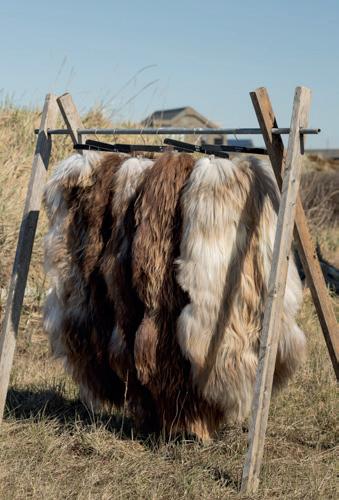
The colours range from cream to grey, brown and black, with patterns and structures created by nature rather than production. “You cannot manufacture that kind of beauty,” says Jacobsen. “You can create products, but you cannot create
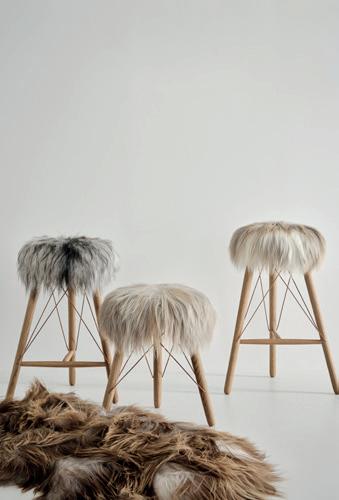
what nature has shaped over generations through climate, landscape and life.”
A journey of connection
In collaboration with Lotte Hertz of Wertz by Hertz, SEYÐUR 62°N works to show how Faroese sheepskins can be used in modern interiors – from private homes to hotels and restaurants – adding texture, depth and natural warmth to clean Nordic lines. With RÓ, that ambition extends to furniture, while The North Atlantic Collection explores links among natural materials, craft, and design across the region.
“In a world of fast trends and mass production, many people are looking back towards something real: materials with origin, craftsmanship with care, and products with a story behind them,” says Jacobsen.
For JSEYÐUR 62°N, the journey is still developing. The trips to the Faroe Islands remain essential, and Greenland is now part of the story through RÓ. “For us, the collection is about bringing together elements that naturally belong together,” Jacobsen concludes. “Our journey has only just begun.”
www.62n.dk
Facebook: Seydur62n
Instagram: @seydur62n
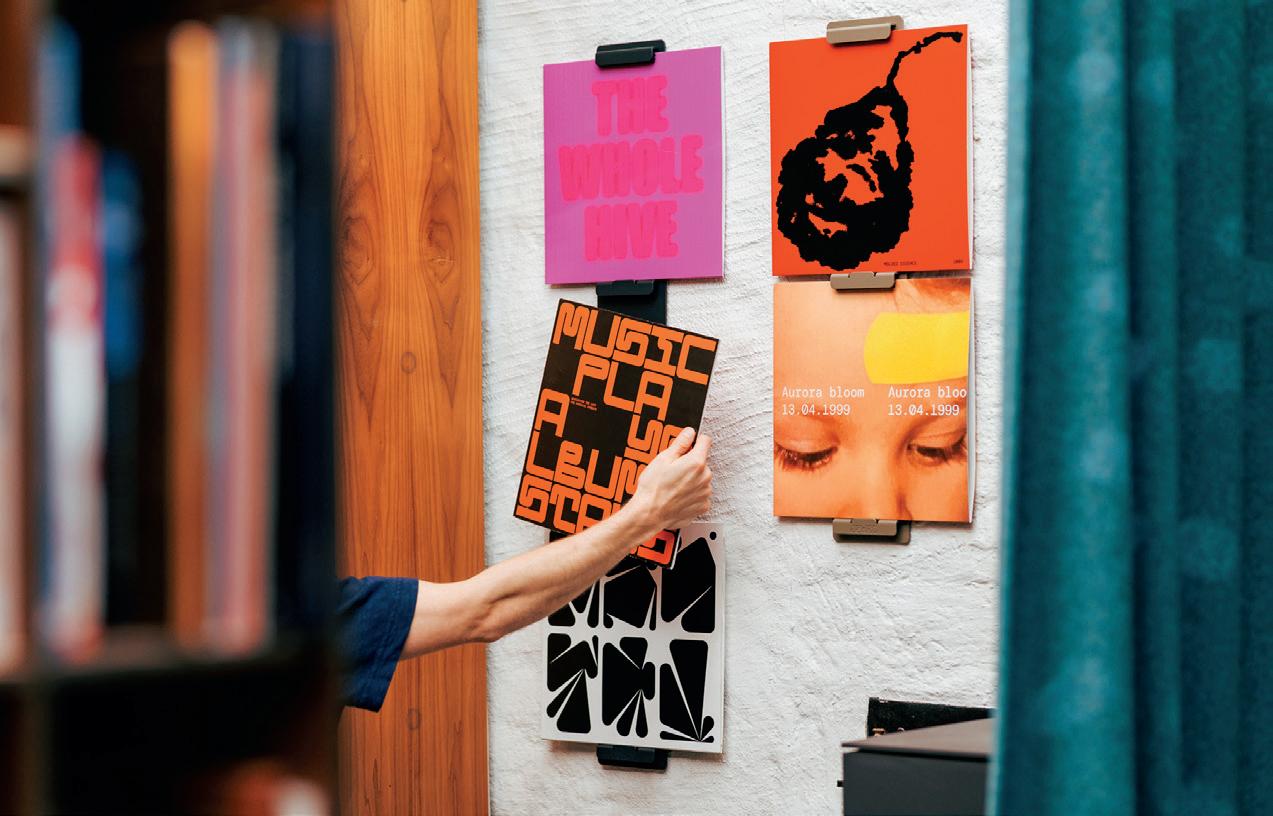
In an age of artificial intelligence, hyper-consumerism and unprecedented screen time, many people are turning back to analogue formats. With the renewed appeal of CDs and vinyl, Norwegian company Jewelmade makes it easier to display and organise favourite albums through Jewel, a series of precision-engineered displays designed for music lovers.
By Celina Tran | Photos: Jewelmade
Today, most people’s everyday interaction with music happens on streaming platforms, where songs, artists and albums can easily blend into one another. Younger generations, fed up with excessive and overwhelming stimulation, are finding a renewed pull towards the tangible formats they grew up with or have rediscovered.
For founder and product designer Marius Brandl, the idea is partly about giving physical music its place again. “We’re all heavily shaped by the music that sur-
rounds us, so at Jewel we wanted to make products that honour this relationship, especially to physical music,” he says.
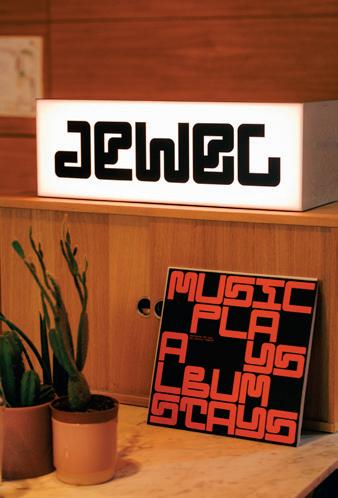
Named after the old CD jewel case, Jewel is a series of handcrafted and precision-engineered displays that celebrate favourite music in physical format. CD and LP collections can be difficult to sort through and keep track of, but the displays offer a simple way to organise and showcase selected albums. “It gives you the opportunity to really think about what you want to listen to that week,
making you slow down, appreciate and create a ritual out of reconnecting with the music around you,” says Brandl.
An analogue adventure
The idea for Jewel was first born in Copenhagen in the 1990s, where Brandl, an avid music fan and CD collector, was studying at the time. At a party, he found himself looking at a pile of CDs scattered across a table. “I remember the moment vividly, looking at the covers on the table and thinking, ‘Why isn’t there a way to showcase CD covers as they were meant to be experienced – by looking, listening and engaging with them at the same time?’” he says.
Throughout his studies, Brandl brainstormed and developed prototypes, but eventually left the idea until he revisited it in 2023 with Kjetil G. Larsen, his close
friend and investor. “Over a two-year period, I spent a lot of time in and out of hospital and found myself stuck in a hospital bed or on the sofa at home. I decided to spend that time working through dozens of sketchbooks with ways to solve and develop the design further – on paper at least – until the right construction finally clicked,” he says.
With design contributions from Sebastian Hungerer and Julius Winger along the way, the team produced countless refinements and versions until Jewel came to life. Today, the displays are available in different sizes and colours as wall-mounted or freestanding design pieces for anyone who wants to give physical music a more visible place at home.
The range now includes five different products for CDs, available in recycled PMMA acrylic or aluminium. “We’re also continuously moving towards and finding even greener materials,” says Brandl. For vinyl, Jewelmade has seven products in steel or aluminium, and is preparing to launch a new LP product called The Capsule in October, designed for both retail and private displays.
More than just a display
While analogue formats are back in fashion, they cannot compete with the sheer scale of streaming platforms. Still, Brandl
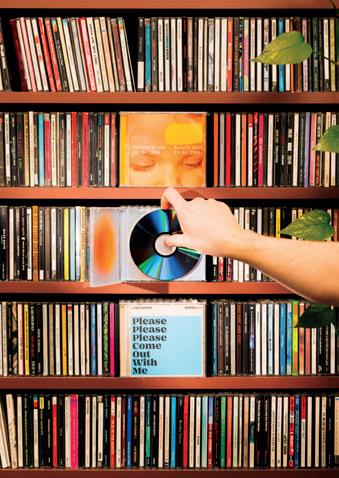
is confident that LPs, and also CDs, are here to stay. “Plenty of people said it was a hopeless effort to make a design for physical music, but to us, albums aren’t just about music and sound; they carry stories, memories and emotions, making them timeless and invaluable. They were a defining part of our upbringing and lives, and the return to physical formats is a way for younger generations to reconnect with the past too,” he says.
Certified Made in Norway, Jewelmade has its eyes set on the horizon. The company has international design protection
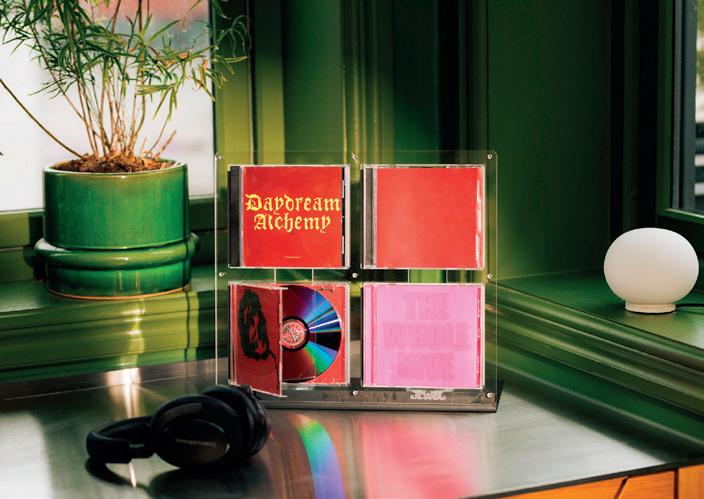
through the patent board and quality certifications in Norway, Europe and the US, and is also extending to Japan, a major market for audiophiles. “We know that the buyers of our displays are people who are especially invested in music, so it was important to us to provide a premium product made from the very best materials, built to last,” says Brandl.
While a CD display sounds like a simple enough product to develop, no one has solved the practical challenge quite like Jewelmade. With its design, each CD case can clasp into the display, be opened and shut fully, and remain securely hung on the wall. The design won four prizes at the Norwegian Visuelt Awards, received more nominations than any other product, and is now also displayed and used at Universal Music Group (UMG) in Oslo.
“One of our dreams is that our products will find their way to other UMG offices and to important and vibrant music lovers all over the world soon too. Opening our first physical Jewel shop in Tokyo or New York is also on our to-do list. And when it’s on that list, it will happen,” says Brandl.
www.jewelmade.com
Facebook: Jewelmade
Instagram: @jewelmade.oslo
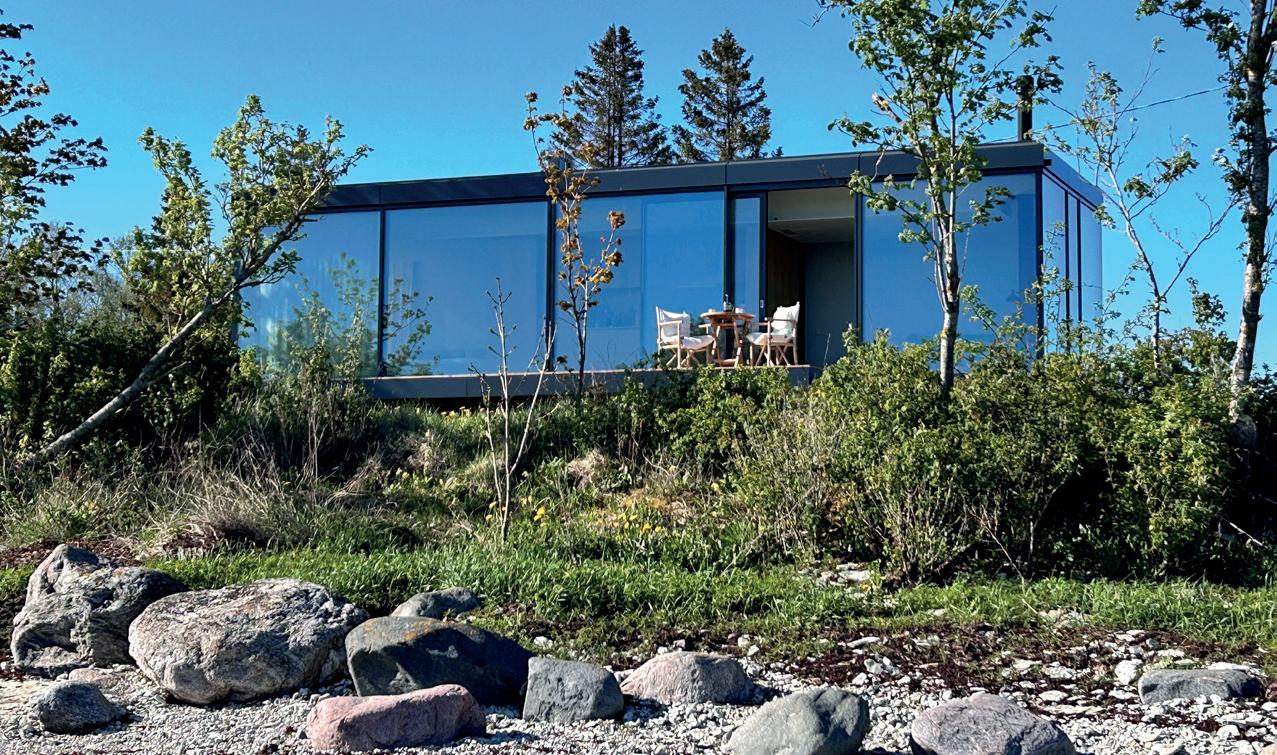
Estonia-based company ETNIKA HOME creates design-led retreats for buyers who want a lifestyle shaped by freedom, nature and contemporary architecture, rather than just a place to stay. From its panoramic glass house to its compact wooden cabin, the brand offers two distinctive ways to live closer to the landscape without compromising comfort, craftsmanship or style.
By Nane Steinhoff I Photos: Etnika Home
There is a particular kind of luxury that has less to do with excess than with space, light and a meaningful connection to the outdoors. That is the territory ETNIKA HOME has made its own. As Rasmus Hirtentreu, founder of ETNIKA HOME, puts it: “Our initial idea was to develop unique architectural products that could serve both as private retreats and as the foundation for premium nature resorts.” Since the company foundation, this idea has flourished into a tangible lifestyle brand centred around freedom, nature and contemporary architecture, all brought together by the company philosophy of ‘Living Wild & Free’.
Luxury without borders
At the centre of that philosophy stands ETNIKA ANANTARA, the brand’s original concept and flagship glass house.
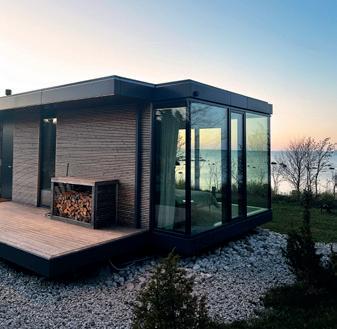
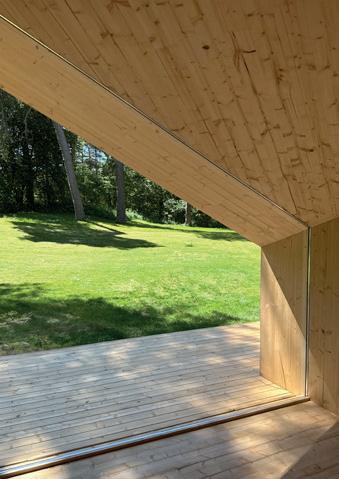
Designed without boundaries between indoors and outdoors, ANANTARA uses floor-to-ceiling glazing to create a striking sense of immersion in nature while still maintaining privacy and premium comfort. Spacious planning, clean architectural lines and refined finishes make it
feel less like a tiny house and more like a high-design retreat.
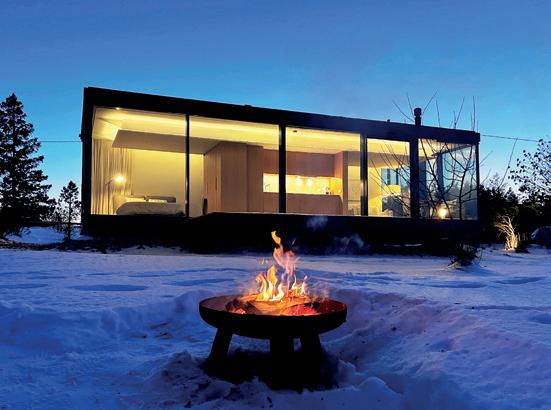
Its appeal lies not only in appearance, but in performance as sustainability is a core value for ETNIKA HOME. In ANANTARA that translates into high-performance insulation, triple-glazed glass and modern heating and cooling systems that minimise energy use while maximising yearround comfort. “ANANTARA occupies the premium end of the tiny-house market, combining striking architecture with high-end comfort and performance,” says Hirtentreu. “It’s therefore usually called the ‘Lamborghini of tiny houses’.”
For buyers, ANANTARA offers flexibility as well as presence. The house is assembled on-site in a range of settings, from private land and forest plots to waterfront locations, resort destinations and tourism developments, which allows for greater customisation options that are subject to local planning rules, site access and utility connections. As a turnkey solution, with a living area of approximately 50 square metres, it is priced at around 200,000 euro plus transportation.
Simple. Timeless. Free.
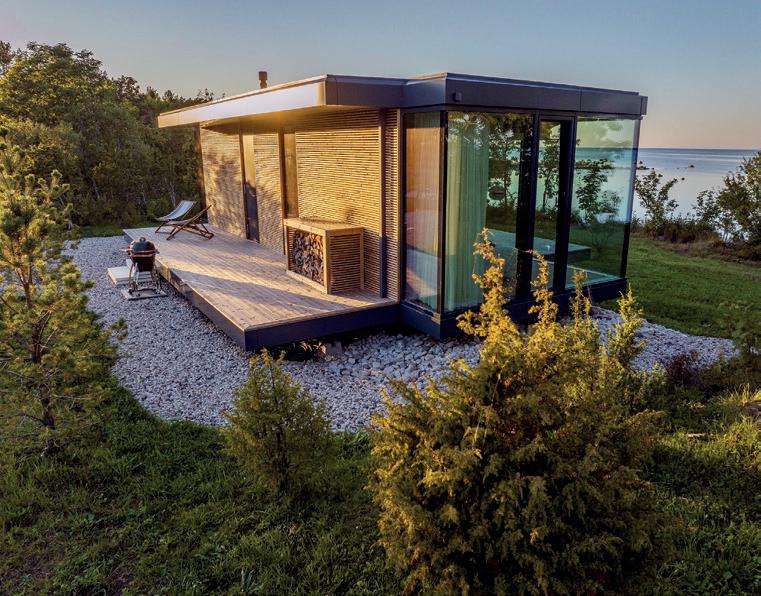
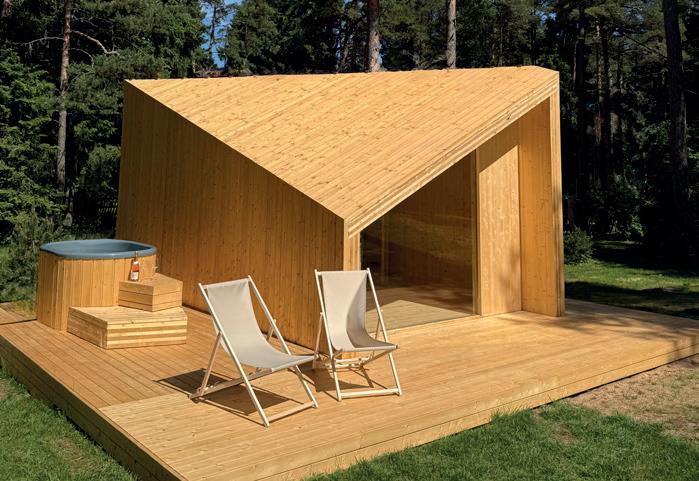
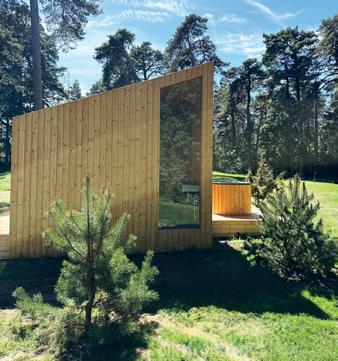
ETNIKA HOME now complements their first flagship product with ETNIKA ZEN, a smaller and more accessible house. Delivered as a single-piece unit for efficient installation, ZEN brings a distinctly Scandinavian atmosphere to compact living and proves that a modest footprint can still feel generous when the planning is smart. Developed alongside architects and built from cross-laminated timber and high-quality Estonian wood, ZEN reflects the brand’s more natural, pared-back approach to sustainability. The result is a durable, environmentally conscious cabin with a low footprint that has all the necessary amenities for comfortable living.
ZEN is also available as a cosy wooden sauna cabin, combining a sauna, washroom and relaxation area within one compact and beautifully designed building. Built from sustainable timber and natural materials, it offers an authentic and eco-friendly wellness experience that embraces the traditions of Nordic sauna culture. A warm wooden interior and fireplace create the perfect setting for relaxation and year-round enjoyment.
Like ANANTARA, ZEN can be placed in a wide variety of locations, with local regulations and connections determining the final setup. In Estonia, due to its size, it can even be built without a traditional building permit. Delivered as a complete unit, the
turnkey solution starts at approximately 50,000 euro plus transportation for a living space of 19.9 square metres, giving a different customer segment access to an ETNIKA HOME.
Designed and manufactured in Estonia, both products reflect the country’s reputation for innovative engineering, sustainable steel and timber construction, and reliable craftsmanship. ETNIKA HOME works closely with experienced engineering and manufacturing partners to ensure that every project meets the highest standards. “Our goal is to combine innovative design with practical engineering solutions that stand the test of time,” says Kaido Karula, technical director of ETNIKA HOME.
First try it, love it, then own it
A key part of the proposition is that buyers do not have to imagine the concept from afar. ETNIKA HOME’s holiday homes in Estonia, beside the Baltic Sea, serve as demonstration houses. Through the company’s website, visitors can easily book a stay using an interactive calendar and experience ETNIKA HOME products in a real-life setting before making an ownership decision.
Looking ahead, ETNIKA HOME aims to expand beyond private ownership by partnering with investors, landowners and hospitality operators to develop
ETNIKA Resorts – distinctive naturebased destinations and hospitality concepts across Europe, built around the company’s lifestyle philosophy and architectural concepts.
“ETNIKA HOME is building more than tiny houses,” says Riin Uuspõld, head of resort management at ETNIKA HOME. “Our vision is to create exceptional destinations where people can experience a unique connection with nature, design and well-being – whether as guests, homeowners or investment partners.”
Designed in Estonia. Delivered worldwide.
www.etnikahome.com
Instagram: @etnika.home
LinkedIn: Etnika Home
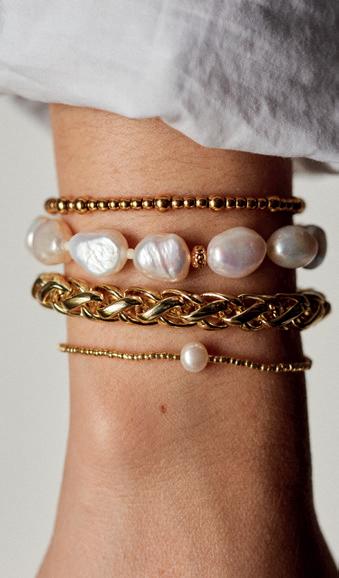
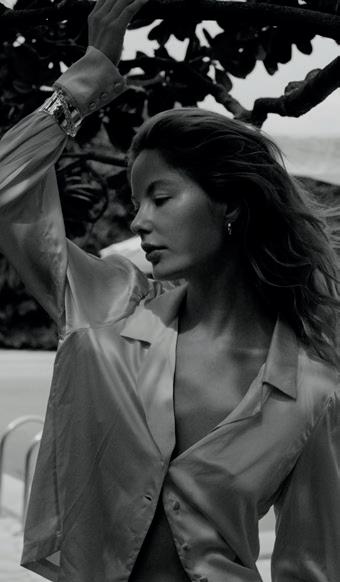
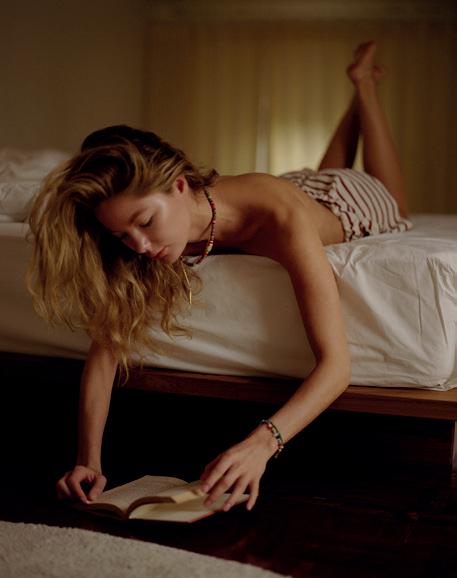
Nordic design is known for simplicity, quality and quiet confidence. Through its carefully curated online store, Finnish boutique W Design brings together jewellery, fashion and homeware from distinctive Nordic labels, helping smaller design names reach customers beyond their local markets and into homes around the world.
By Molly McPharlin | Photos: Anni Lu
Founded in 2021, W Design was created to offer a carefully edited selection of Nordic jewellery, fashion and homeware in one place. “Every item is thoughtfully chosen,” says owner Marja Wirenius. “W Design is a boutique where quality, individuality and timeless style are at the heart of everything we do.”
W Design carries selected brands from across the Nordic region, including Danish jewellery designers Anni Lu and Jane Kønig and Finnish jewellery label Karo Koru. Design and creation take place in the Nordics and several other countries, including Portugal, Austria and the US. The store is especially interested in brands with a distinctive perspective and strong visual identity. Sustainability and responsible production also influence which brands Wirenius chooses to carry.
“Finnish-born jewellery designer Karo Kangas, for example, handcrafts her pieces in Los Angeles,” says Wirenius. “Her work combines bold expression, craftsmanship and an international outlook that fits with our philosophy.”
Design has a long tradition in the Nordic countries and is often viewed as an integral part of everyday life. “Simplicity,
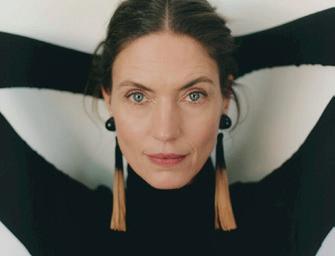
functionality, quality and a close connection to nature are values that are important to many designers in the region,” Wirenius says. “I believe these qualities are what make Nordic design so appealing.”
www.wdesignfinland.com
Facebook: W Design
Instagram: @wdesignfinland
Though primarily an online store, W Design also participates in selected events, pop-ups and collaborations. This year, it will take part in Helsinki Design Week at the Cable Factory in Helsinki on 29 and 30 August.
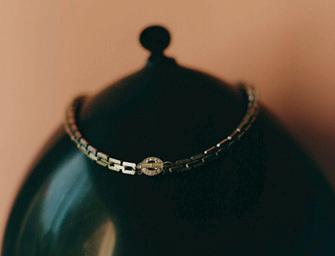
Sun-drenched days, salt-kissed hair and endless horizons of blue – July is the month for escaping to the coast. Whether spending long afternoons on a boat, exploring charming harbour towns or simply unwinding by the water, this season’s essentials are all about effortless elegance and easy versatility.
By Celina Tran | Press photos
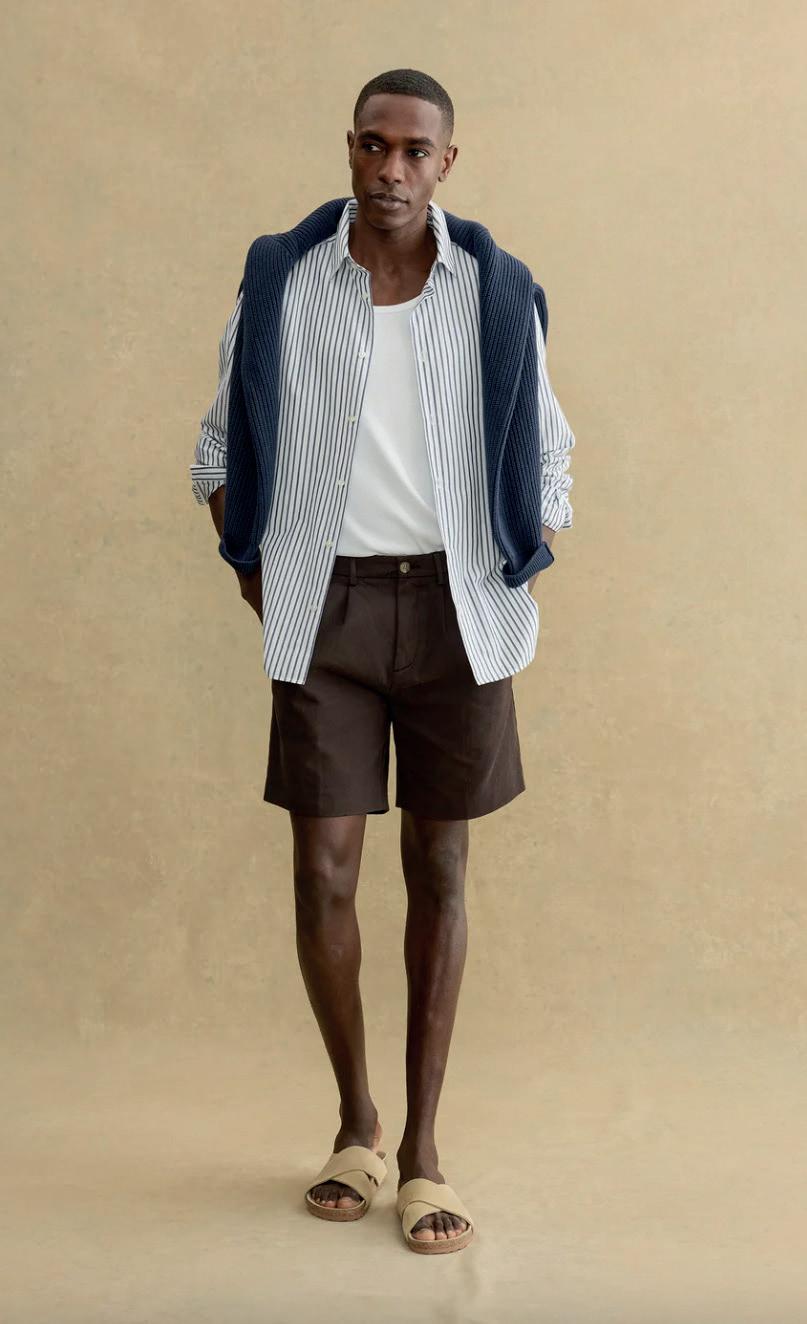
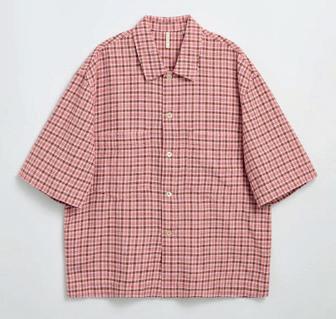
As evenings become cooler and the breeze picks up, lightweight layers come into their own. Copenhagen-based Sunflower’s checked overshirt delivers a relaxed silhouette with a refined finish, making it ideal for slipping on after a day at the beach or lake.
Adam overshirt in 690 pink check, EUR 201.95 eu.hellosunflower.com
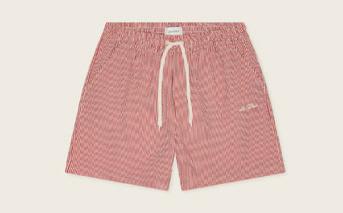
Whether you are heading for a morning swim or spending the day poolside, striped swim shorts are a summer classic. Les Deux updates the look with lightweight recycled seersucker fabric and timeless pinstripes, creating a pair suited to both a dip in the ocean and a stroll along the promenade with a simple tank top or t-shirt thrown on afterwards.
Stripe seersucker swim shorts in rhubarb red, EUR 69 www.lesdeux.com
Clean lines, breathable fabrics and understated design define Scandinavian summer dressing. These tailored cotton shorts offer a polished alternative to casual beachwear while remaining relaxed enough for sightseeing, long lunches and leisurely afternoons at a summer cabin.
Porter cotton shorts in dark brown, EUR 120 www.adaysmarch.com
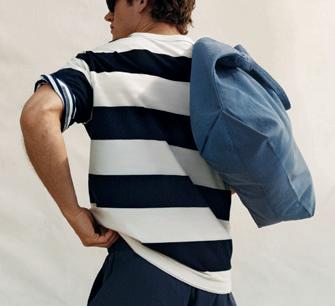
No summer wardrobe is complete without a striped t-shirt. Evoking classic maritime style, this relaxed cotton version feels tailor-made for coastal escapes. Pair it with swim shorts, tailored shorts or lightweight trousers for a timeless holiday look that never goes out of fashion.
Relaxed cotton t-shirt in blue/white, EUR 29 www.arket.com
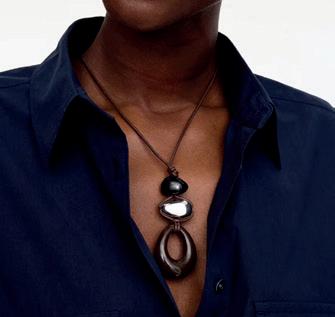
Inspired by natural textures, this pendant necklace feels perfectly at home in a coastal summer wardrobe. The leather cord and bead detailing bring a subtle bohemian touch, adding character to everything from breezy linen shirts to simple beachwear.
Bead pendant cord necklace in brown, EUR 25 www.arket.com
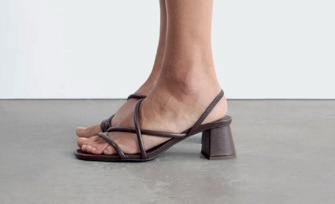
From Italian cobbled side streets to sunset dinners overlooking the sea, a pair of elegant sandals is a summer essential. These minimalist leather heels strike the right balance between comfort and sophistication, making them an easy choice for summer evenings, dinners out and days when you want to dress up.
Strappy block heel sandals in dark brown, EUR 99 www.stories.com
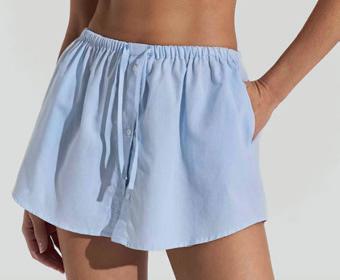
Every holiday wardrobe needs a throw-on piece that effortlessly bridges beach days and evenings out. Made from lightweight organic cotton, Seaquelle’s Oxford mini skirt is the kind of versatile staple you will reach for again and again. Wear it over swimwear for lunch by the harbour or style it with knitwear and sandals as the temperature cools after sunset. Seaside Oxford mini skirt, EUR 158 www.seaquelle.com

Long days by the water call for swimwear that is as practical as it is flattering. Scampi’s reversible bikini set offers two looks in one, making it the perfect travel companion when suitcase space is limited. The Puglia bikini bottom can be adjusted to create different silhouettes, while the Bari top is designed to stay comfortably in place whether you are swimming, sailing or simply soaking up the sunshine – practical, versatile and undeniably chic.
Bari bikini top – reversible, SEK 760 Puglia bikini bottom – reversible, SEK 795 www.scampiswimwear.com
In an era where luxury increasingly means space rather than spectacle, the most sought-after escapes are often the quietest ones. A new definition of indulgence has emerged, one that centres on privacy instead of excess, as well as authenticity and a meaningful connection to nature.
By Celina Tran | Photos: Eagle Nest Eco Lodge
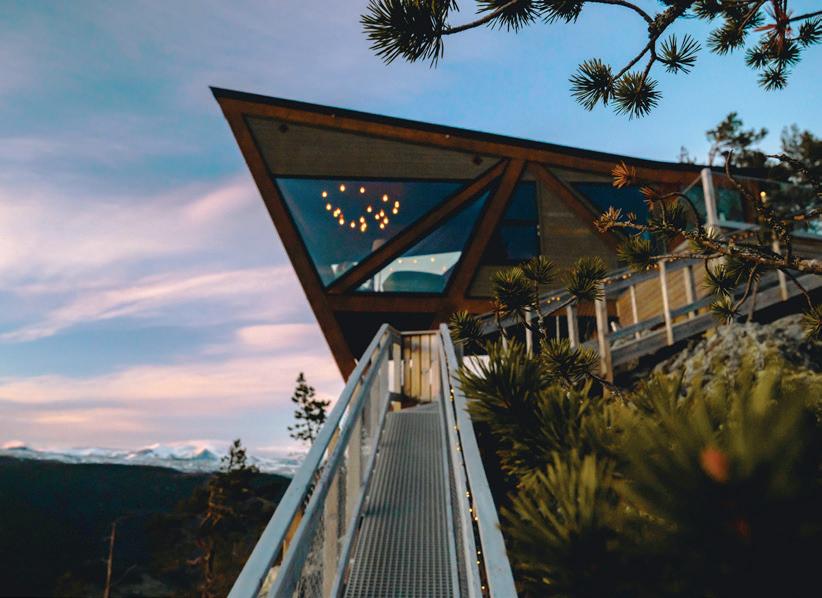
Hidden high above Norway’s Gudbrandsdalen valley, Eagle Nest Eco Lodge welcomes those seeking a place to slow down, disconnect and experience nature in a more personal way. Perched dramatically on a mountaintop near Otta, the lodge offers a kind of luxury that feels both contemporary and deeply rooted in its surroundings. There are no grand entrances or crowded hotel spaces here. Instead, there is silence, open sky and a feeling of complete seclusion.
901 metres above sea level on Sershaugen, Eagle Nest Eco Lodge overlooks some of Norway’s most spectacular landscapes. From its elevated position,
guests can take in sweeping views towards Rondane, Dovrefjell and Jotunheimen, while valleys, rivers and traditional mountain landscapes stretch out below. Depending on the season, the panorama changes continuously, from snow-covered peaks and dramatic winter skies to the soft greens and golden hues of summer and autumn.
A lodge that hovers between mountain and sky
What makes Eagle Nest Eco Lodge particularly distinctive is that the landscape never feels like a backdrop, but rather becomes part of the experience itself. “Eagle Nest Eco Lodge is our dream
that became reality,” says founder Ingrid Tho. “We wanted to create a place where guests could experience nature, tranquillity, luxury and local history in a completely unique way.”
The idea first emerged during the spring of 2020, during Norway’s pandemic lockdown. Covid meant that Ingrid and her
co-founder, Geir Lyftingsmo, suddenly found the time and space to think differently. For years they had considered creating something unique connected to the mountain landscape surrounding the Øvre Tho family farm, but now the vision began to take shape in earnest. “For us, the story is really about the impossible becoming possible,” Tho explains.
While the mountaintop location offered spectacular views, it also created significant practical challenges. There was no traditional construction road leading to the site, meaning that building materials and equipment had to be transported across snow-covered terrain. The construction itself was equally demanding, requiring parts of the structure to extend
dramatically out over the mountainside. After eight intense months of work, the vision became reality, and the first guests arrived in September 2021.
A fairy tale of your own Designed by Tho and Lyftingsmo themselves, Eagle Nest Eco Lodge blends contemporary comfort with local his-
tory and craftsmanship. Inspiration was drawn from traditional building methods and cultural heritage from Gudbrandsdalen, creating interiors that feel sophisticated while remaining connected to place.
Throughout the lodge, details tell stories about the region – timber from the owners’ own forest has been incorporated into the construction, while local slate and reclaimed historical elements contribute texture and character. “We wanted guests to feel both the luxury and the history,” says Tho. “To create something beautiful, personal and connected to the place itself.”
Nothing feels decorative for the sake of appearance alone; every material and detail appears to have purpose. As a result, the space feels less like checking into a hotel and more like arriving at a private retreat.
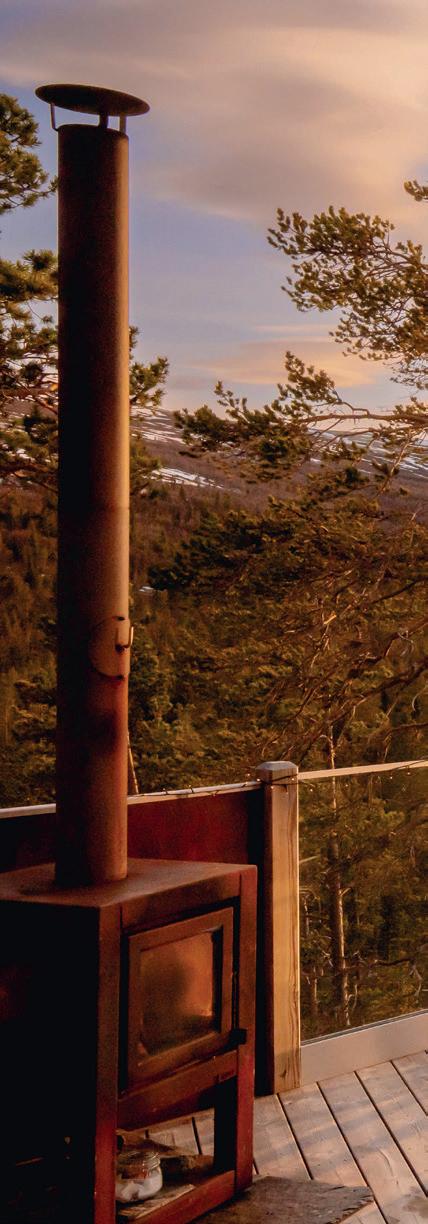
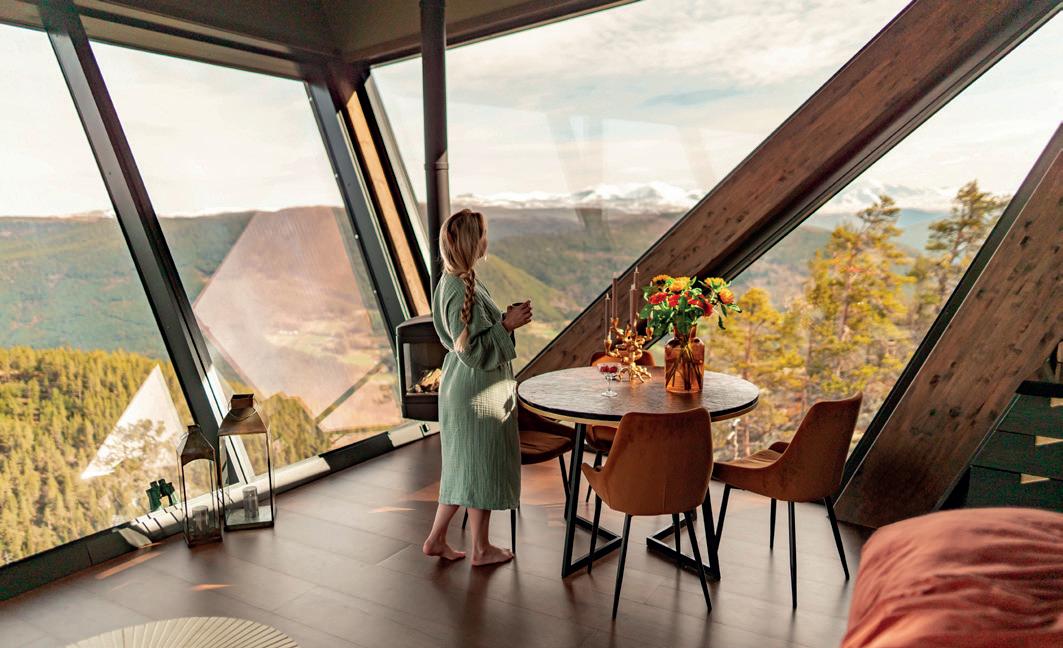
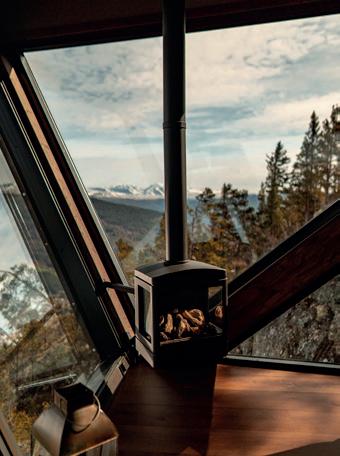
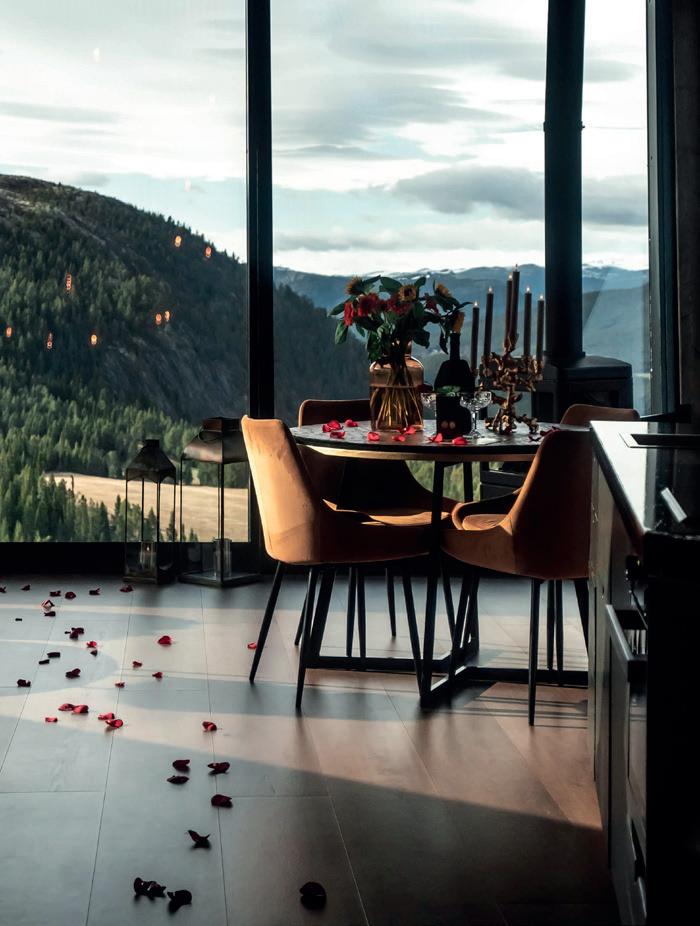
The panoramic windows create an almost uninterrupted connection between indoors and outdoors, allowing the mountain landscape to dominate the
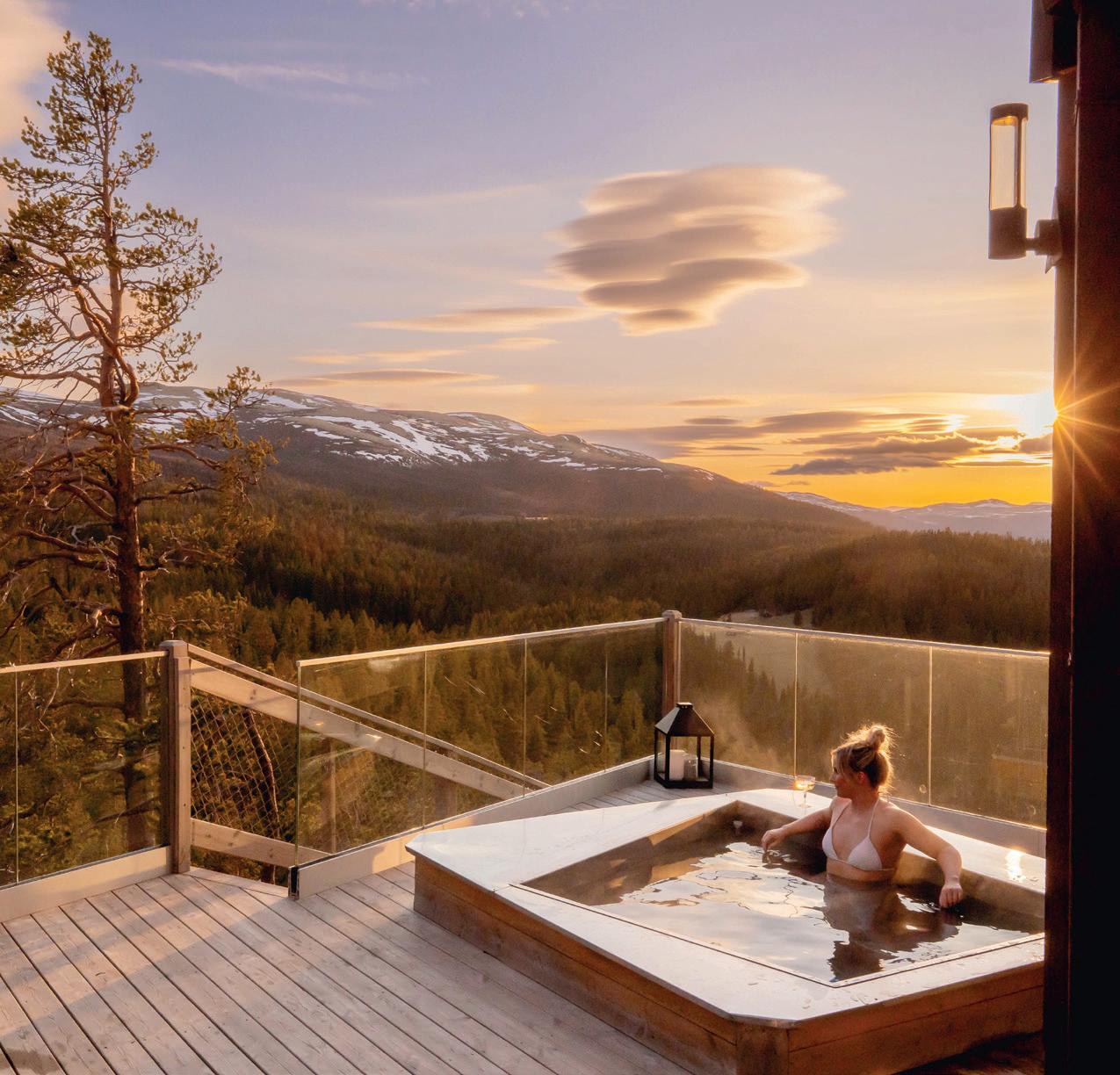
experience. Guests can watch weather systems move across distant peaks, follow changing light throughout the day and observe the shifting colours of the valley below. On the terrace, a hot tub offers perhaps the most memorable seat
in the house. As daylight fades and stars emerge above the mountains, the sense of remoteness sinks in.
“We want guests to feel as though they have arrived at their own little Soria Mo-
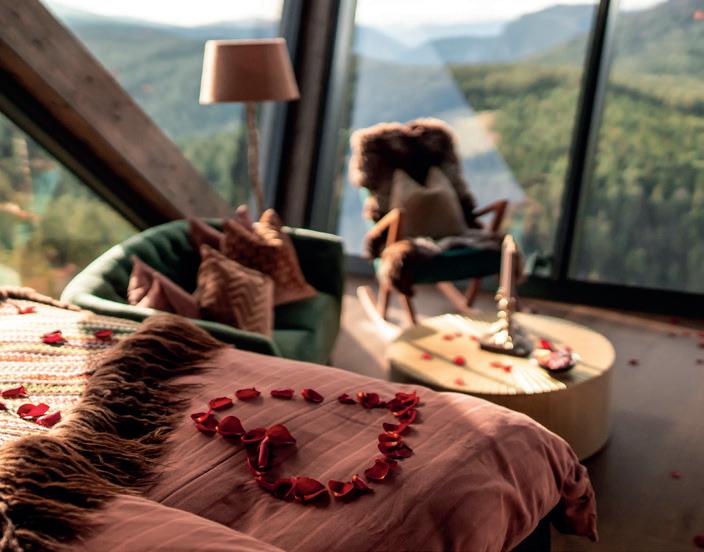
ria from the fairytale, a place that feels both magical and real.”
Rest, relaxation, and…rafting?
Modern travel increasingly revolves around experiences that create genuine restoration rather than simply offering distraction. While there are activities and adventures available nearby, there is no pressure to constantly do more. “Some guests choose to spend most of their stay simply enjoying the view, but the area also has plenty of walks to offer.”
For those seeking local thrills, the Gudbrandsdalen region offers opportunities ranging from hiking and mountain trails to larger adventures including rafting in
Sjoa and excursions into Rondane and Jotunheimen. Seasonal activities such as cycling, winter sledding and mountain walks provide additional ways to explore the area.
Tailored mountain spa experiences can also be arranged, combining yoga, massage and the restorative qualities of the surrounding landscape.
In the lodge itself, guests have access to a well-equipped kitchen with a fridge and oven, allowing them to prepare meals at their own pace. Breakfast and Gudbrandsdal tapas can also be arranged in advance and ready on arrival. “We make these ourselves using our own products and locally sourced ingredients from the Gudbrandsdal region,” says Tho.
For guests who want to explore the area’s food culture further, the lodge also recommends local stops such as Dølakjøtt Delikatesse in Otta, Brimi Sæter, Andre Etasje in Vågå, Bakeriet i Lom, Avdemsbue in Lesja, Heidal Ysteri and Skåbu Fjellhotell.
So, if you are looking for a break where peace and nature, but also luxury go hand in hand, why not look to the clouds? Eagle Nest Eco Lodge may be just the respite you need.
www.eaglenestecolodge.no
Facebook: Eagle Nest Eco Lodge
Instagram: @eaglenesteco
From time to time, people tell me that beer competitions are not important. “That’s rubbish,” I think to myself. If you have ever attended a beer awards ceremony, you will have seen just how significant they are. Similar to Argentine football fans, known to go bananas when their country wins, the beer competitions in Argentina know how to put on a show and celebrate their brewers in style.
By Malin Norman
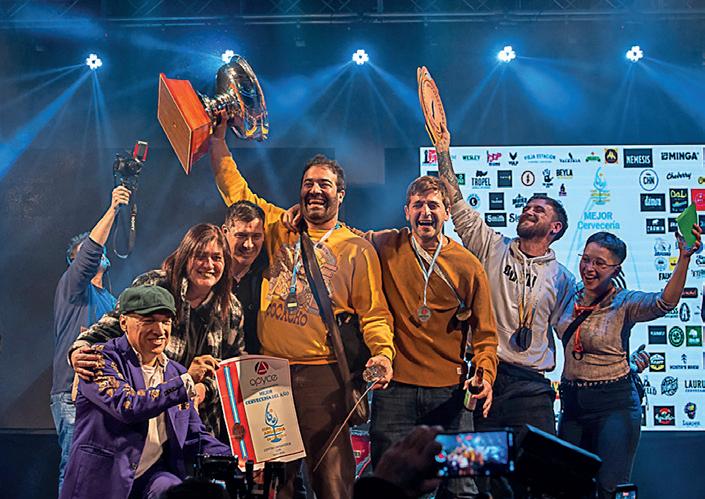
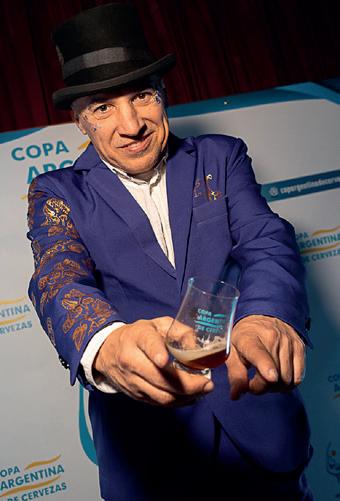
Let me set the scene. Imagine finding yourself in the middle of a party with around 800 people mingling and enjoying free beers. The host appears, dressed as a circus director in a purple suit with gold details and a top hat, glittery makeup and a cheeky smile. After him comes a clown –don’t be scared – and more circus-themed characters. The music is pumping, a drone sweeps over the crowds, and a TV crew is interviewing members of the audience. The anticipation is building and then, boom, the action begins on stage.
What on earth is happening, you might wonder? This, my friends, is how they celebrate their brewers in Argentina. In May, I was one of the beer judges at Copa Argentina de Cervezas and South Beer Cup, two competitions run in parallel, in Buenos Aires. Whilst South Beer Cup honours the best of South
American beers, Copa Argentina – the larger of the two – focuses on national beers, and winners in both competitions were revealed during a spectacular gala.
At a relentless speed, medals were announced. Brewers stormed to the stage, received their award, cheered as if they had won the Olympics, and the audience went crazy. Photographers got their pics and then the next medal was announced, and the next, and the next. More than ten years ago, I attended the awards ceremony for these competitions and, truth be told, this was my main reason for pursuing beer judging. Who would not want to be a part of this extravaganza?
Now to all Scandinavian breweries, pretty please enter your beers into competitions, national and international – so that
the world can see how good they are, and so that the brewers can get the recognition they deserve. And to any doubters, go to a beer awards ceremony and see for yourself. Surely, you too will be convinced that this is not only a celebration of the brewers’ skills and hard work, but a moment to party together – Argentine style.
This is the kind of salad I love serving on warm days when the food should feel light but still satisfying.
By Katharina Kjeldgaard
The black beluga lentils make it filling without being heavy, while strawberries, cucumber and avocado keep it fresh and summery. Perfect for lunch in the garden or as part of an easy summer dinner.
Tip: The salad can easily be varied according to the season and your taste. Swap the strawberries for peaches, watermelon or raspberries, use mozzarella or another cheese instead of salad cheese, and try pine nuts, almonds or sunflower seeds instead of pumpkin seeds.
Amount: 4-6 people
Easy to make Time: 35
Ingredients:
Vinaigrette
3 tbsp olive oil
2 tbsp white wine vinegar
1 tbsp honey
2 tsp mustard juice of ½ lemon
¼ tsp flaky salt
½ tsp ground pepper
Fried pumpkin seeds
1 tbsp olive oil
40 g pumpkin seeds
½ tsp flaky salt
Instructions:
Salad
100 g little gem lettuce
50 g arugula/rocket
2 small cucumbers
1 avocado
200 g strawberries
100 g salad cheese
50 g dried beluga lentils / black lentils
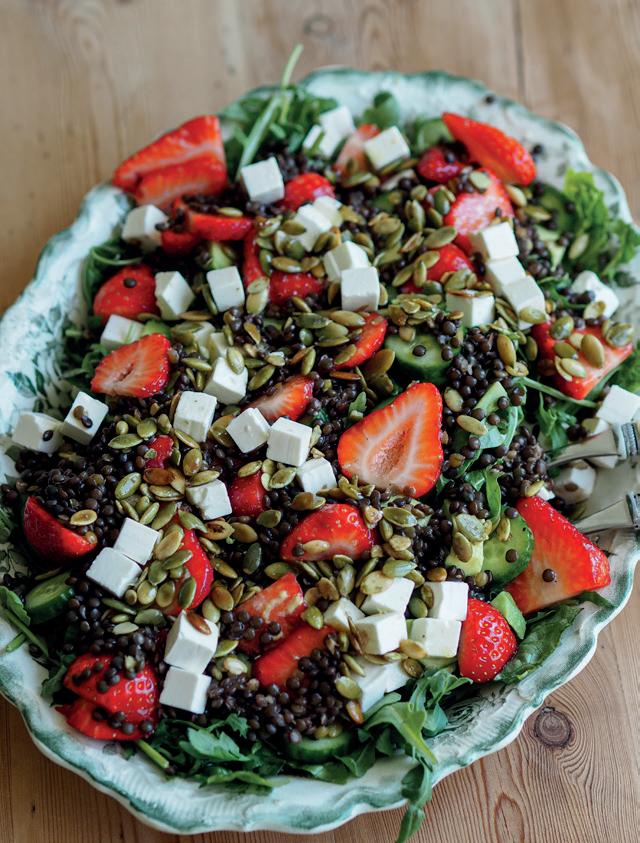
5. Prepare the strawberries, avocado, and cucumber. Remove the green tops from the strawberries and slice them. Halve the avocado, remove the stone, and dice the flesh. Slice the cucumber.
6. Drain the cooked beluga lentils and rinse them under cold water to cool down. Scatter them over the salad together with the cucumber, strawberries, avocado, and salad cheese.
7. Finish with the toasted pumpkin seeds and pour the dressing over the salad just before serving.
1. Cook the beluga lentils according to the instructions on the package. This typically takes 20–25 minutes.
2. Now make the dressing. Add the olive oil, white wine vinegar, honey, mustard, and lemon juice to a small bowl and stir well. Taste and adjust with a little more vinegar if you want it tangier, or a little more honey if you want it sweeter. You can also put everything in a small jar with a lid and shake it well. The dressing can easily be made well in advance.
3. Next, prepare the pumpkin seeds. Heat a frying pan over medium-high heat with the olive oil and fry the seeds for about 3–4 minutes. Keep an eye on them, as they can burn quickly. Turn off the heat and sprinkle with flaky salt. Transfer them to a plate and leave to cool.
4. While they cool, continue with the salad. Wash the little gem lettuce and arugula thoroughly and cut them into bite-sized strips. Arrange them at the bottom of a large serving platter or deep bowl.
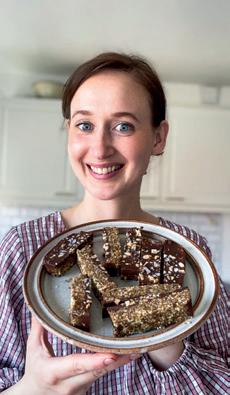
Katharina Kjeldgaard is a Danish food blogger, influencer and cookbook author from Copenhagen. Her blog is one of the most-read vegetarian food blogs in Denmark, always focused on locally sourced ingredients, full of delicious recipes and never boring. She has three little kids and loves going to markets, being in nature – and cooking with all kinds of vegetables and legumes.
Blog: beetrootbakery.dk Instagram: @Beetrootbakery
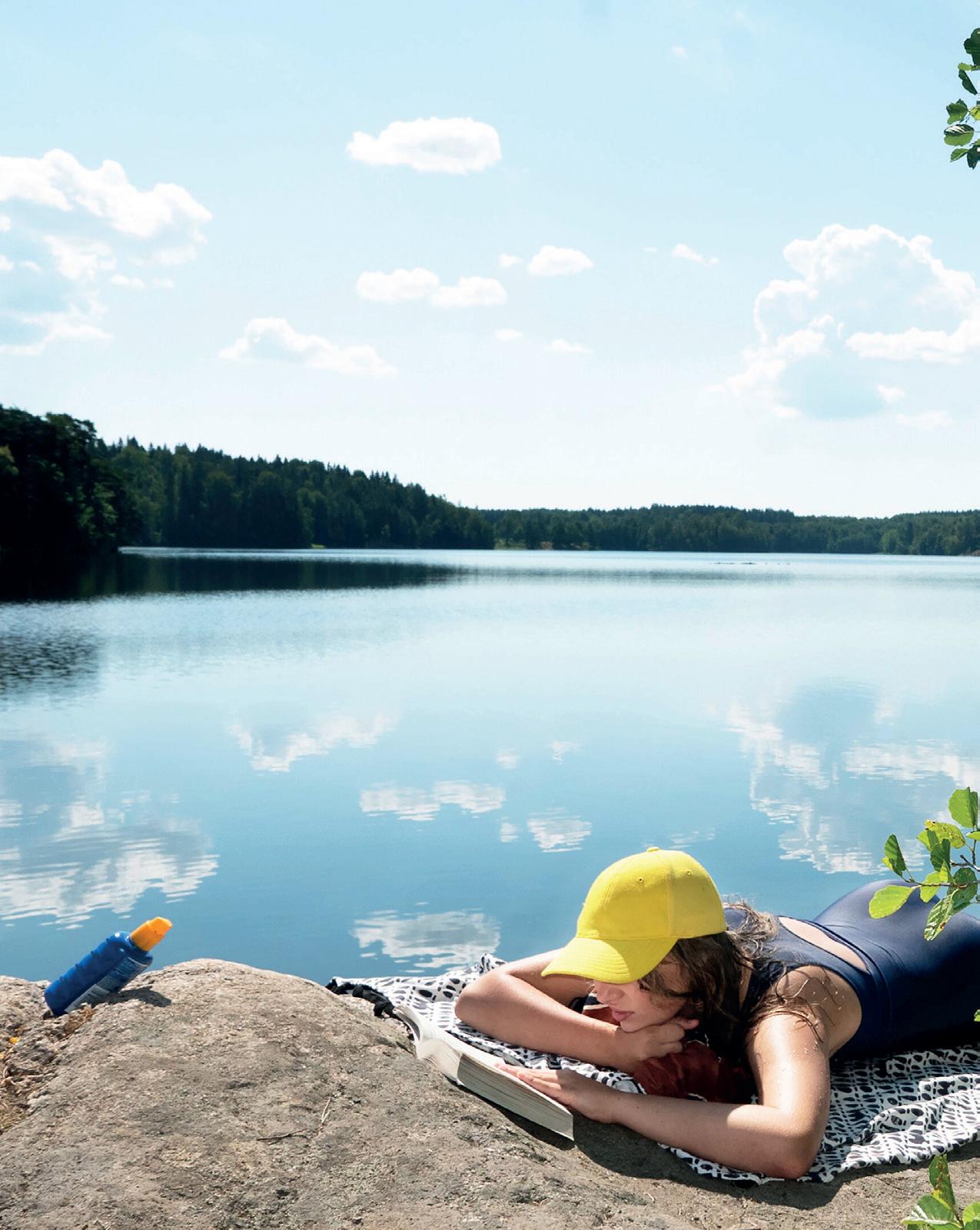
According to the largest online bookstore in the Nordic region, Adlibris, seven out of ten Swedes feel better when they read, and four out of five see books as a form of mental recovery. For some well-deserved, relaxing moments with a good book this summer, look no further than these recommendations.
By Malin Norman | Photo: Ulf Lundin, Imagebank.sweden.se
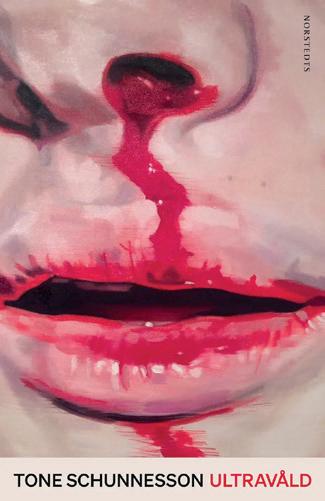
Ultravåld by Tone Schunnesson
Ultravåld by novelist, playwright and cultural commentator Tone Schunnesson is one of the most hyped books this summer. Set in the late 1990s, Schunnesson’s third novel tells the story of a dysfunctional family in a run-down castle. Whilst older brother Jarl dreams of glamour, younger sister Eddie dreams of spending time with her brother. When their father walks out, their mother loses her footing. A distinctive literary voice of her generation, Schunnesson explores inheritance, trauma and loyalty. In the wait for an English translation, check out her second novel, Days & Days & Days (translated from the Swedish by Saksia Vogel). This study of success and destruction, dependence and betrayal, celebrity and anonymity was shortlisted for the EU Prize for Literature in 2021.

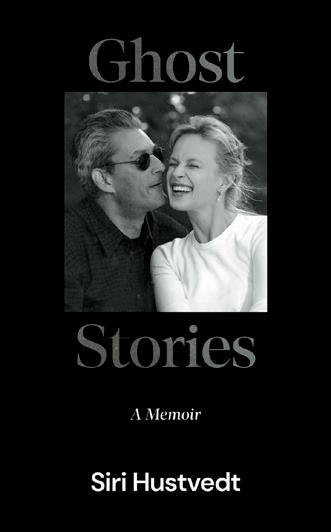
Stories by Siri Hustvedt
Siri Hustvedt’s new book is a deeply moving and unforgettable memoir of love and grief.
Described as her most personal work yet, Ghost Stories was written in the aftermath of the death of her husband, writer Paul Auster. One of the most anticipated books of 2026, it includes memories from their more than 40 years together, with a mix of journal entries, emails, notes and love letters. Interwoven in the book is also Paul Auster’s last piece of writing, the first 35 pages of what he intended as a small book of letters to their grandson.
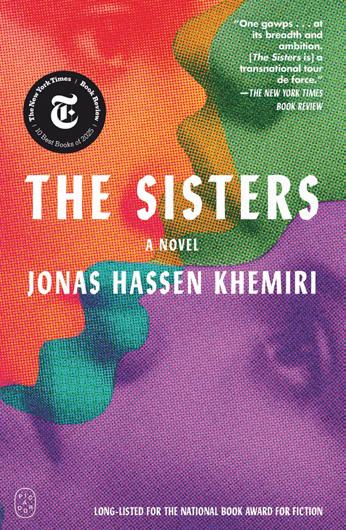
The Sisters by Jonas Hassen Khemiri
Spanning several continents, Jonas Hassen Khemiri’s The Sisters is a story of sibling rivalry and the complexities of mixed heritage. The three sisters in this family saga –Ina, Evelyn, and Anastasia – move into the neighbourhood of Jonas, and he realises their connection to his family. The Sisters was named one of the 10 Best Books of 2025 by New York Times and long-listed for the 2025 National Book Award for Fiction. The recipient of the Cullman Fellowship at the New York Public Library in 2021, Hassen Khemiri is one of Sweden’s most praised authors at the moment, and his novels have been translated into more than 35 languages.
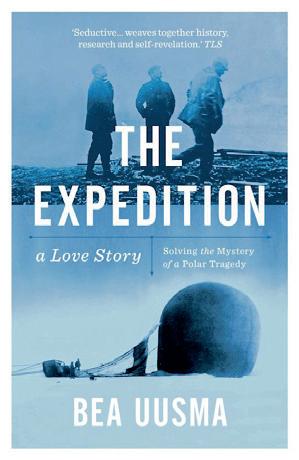
The Expedition by Bea Uusma Physician and author Bea Uusma has dedicated decades to solving the mystery of the Andrée expedition – three men who set out in a hydrogen balloon bound for the North Pole in 1897, never to return. Published in 2013, her first book The Expedition became a best-seller and was awarded the August Prize, Sweden’s most prestigious literary award, in the non-fiction category. A deep-dive into the failed expedition, the book is also about Bea herself and why she became obsessed in following in its footsteps. Uusma’s standalone continuation, called Vitön, was published last year and also won the August Prize for non-fiction.
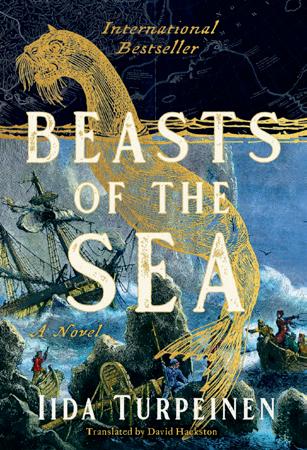
Considered the most internationally successful Finnish debut novel, Iida Turpeinen’s Beasts of the Sea (translated from the Finnish by David Hackston) has already been translated into 28 languages. The book is an adventure through three centuries of scientific exploration – more specifically Steller’s sea cow, which went extinct only 27 years after its discovery. A tale of grand ambition and the quest for knowledge, it also dives into the urge to resurrect what has been destroyed by human ambitions. “Reading Beasts of the Sea is like finding a dusty, forgotten book in an attic and opening the Narnia wardrobe straight into history,” says writer Sandra Beijer in her review.
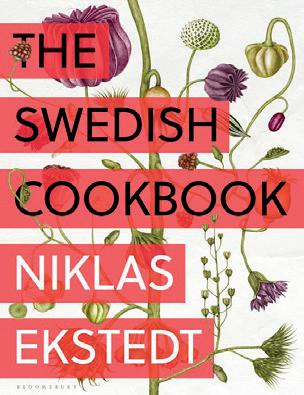
The Swedish Cookbook by Niklas Ekstedt
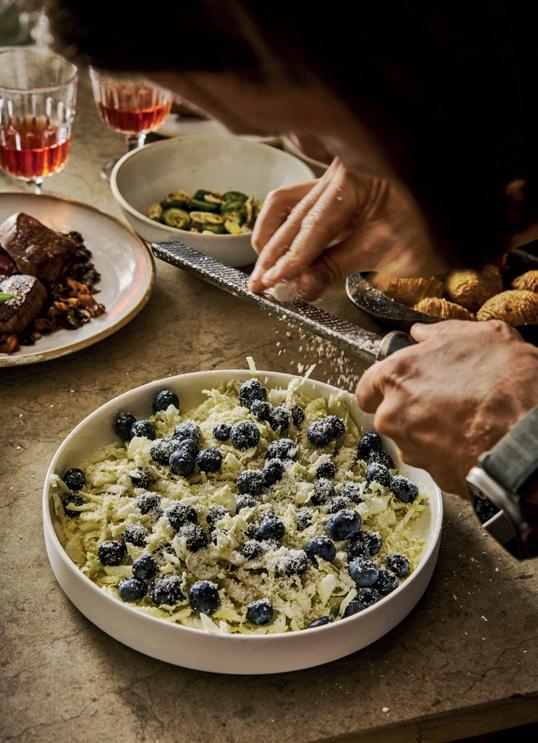
In The Swedish Cookbook, Michelin-starred chef Niklas Ekstedt brings fuss-free Scandinavian recipes to our kitchens. Following the philosophy of lagom, meaning balanced or just right, Ekstedt shares some of his best recipes, for both classic everyday meals and more special occasions with a modern twist. You will find for instance Swedish meatballs with potatoes and pressed cucumber, gravlax, pickled herring and Danish open-faced sandwiches, as well as more unexpected combinations, such as cabbage salad with blueberries and shaved frozen feta cheese. And for anyone with a sweet tooth, there is a whole chapter on the art of fika.
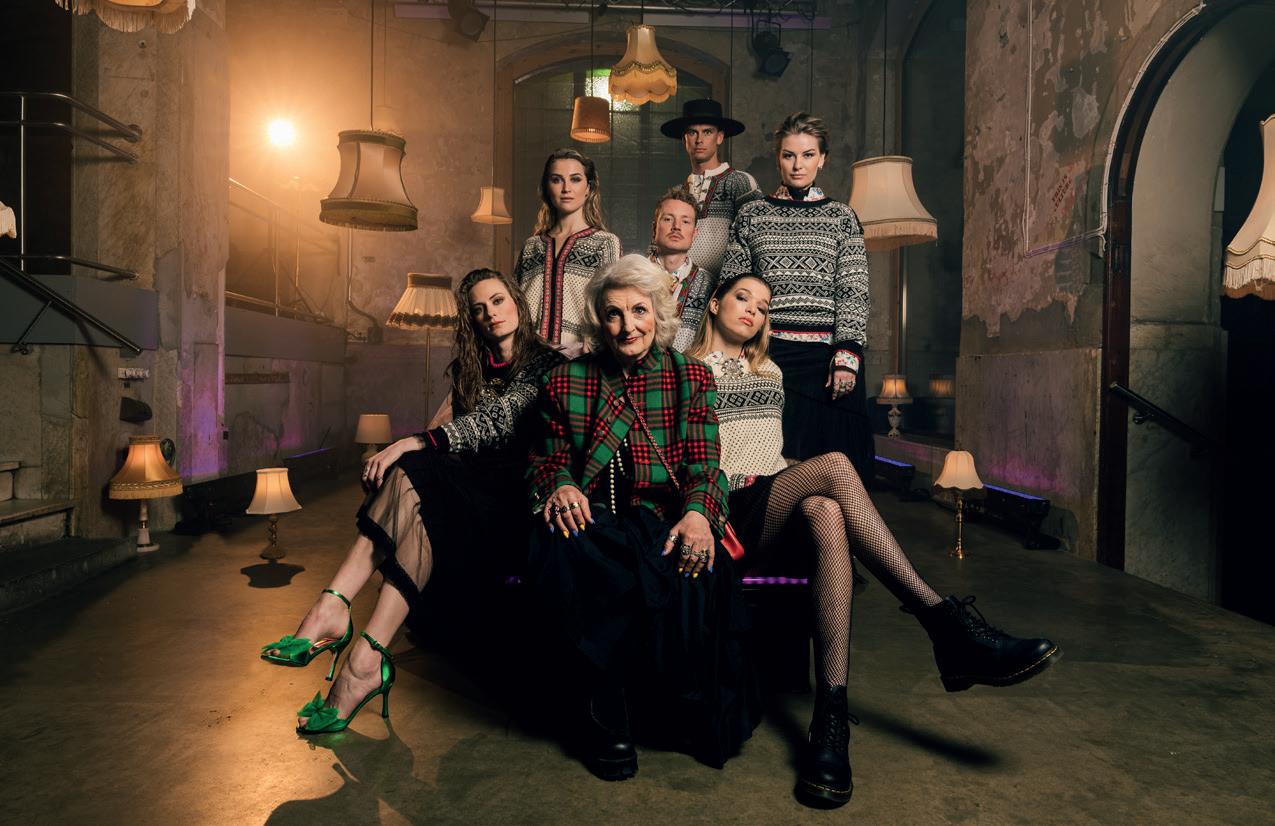
In Norway, knitting has never really gone out of fashion. Sweaters take shape on buses, in cafés and at universities, and babies often leave hospital wrapped in garments handmade by grandmothers. But while knitting elsewhere in Europe is still associated with nostalgia, House of Yarn believes that the craft is ready for a bold new chapter.
By Celina Tran | Photos: House of Yarn
As the Nordic region’s leading supplier of hand-knitting yarn and accessories, House of Yarn has built its identity around four distinct brands: Dale Garn, Gjestal Garn, Du Store Alpakka and the newest addition, Bæstmor. Together, they are described as four sisters raised in the same house, each with her own personality and style.
“The four brands share the same roots and craftsmanship, but they all have very different identities,” says Lene Vikingstad, brand manager at House of Yarn.
At the centre of the company’s international ambitions stands Bæstmor, the younger sister determined to challenge perceptions of knitting.
Launched in 2024, Bæstmor (grandma) was created to bring Norwegian knitting culture to a global audience through a more fashion-driven lens. The brand
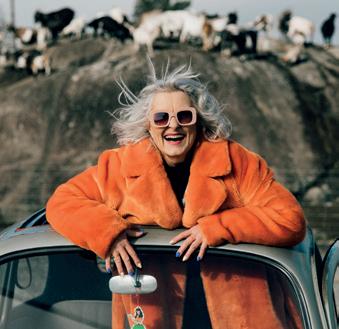
combines traditional craftsmanship with bold colour palettes, luxury fibres and catwalk-inspired styling.
The name itself is a tribute to the women who carried knitting traditions through generations. Yet, Bæstmor is far from a stereotypical grandmother figure. Instead, Vikingstad describes her as a blend of the classic Norwegian grandmother and fashion icon Vivienne Westwood –rebellious, eccentric and worldly. “She’s the grandmother who’s travelled everywhere,” Vikingstad says. “She’s had karaoke nights in Kampala, date nights in Dublin and seen fashion week in New York before coming home to knit.”
This personality runs through the brand’s collections. Traditional Norwegian patterns are reimagined in mohair, alpaca and cashmere, while classic knitwear silhouettes appear in unexpected colours inspired by international fashion houses. The goal is not simply to preserve tradition, but to modernise it. “We want
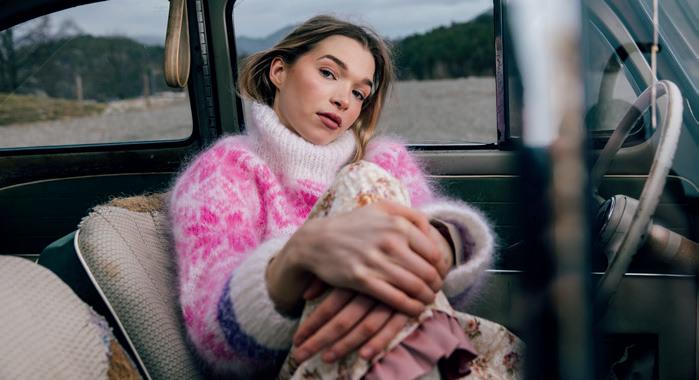
to bring knitting culture forward,” says Vikingstad. “In Norway, knitting is actually cool. Young people knit on the bus, at the cinema and in cafés. It’s creative, social and fashionable.”
Bæstmor also reflects the changing role of knitting itself. Rather than being seen as old-fashioned, handmade knitwear has become part of a broader movement towards individuality, creativity and sustainability.
While Bæstmor is the rebellious newcomer, each House of Yarn brand represents a different side of Norwegian knitting culture.
Dale Garn, founded in 1879, is the elegant traditionalist. Deeply connected to Norway’s textile heritage, the brand has shaped many of the country’s iconic knitwear patterns and remains known for its use of premium natural fibres and timeless craftsmanship.
Gjestal Garn represents practical, everyday knitting. Established in 1937, it focuses on durable yarns designed for real life; garments made to withstand harsh weather, active children and years of wear. “Gjestal Garn has provided yarn for one of Norway’s biggest chain stores from the very beginning, Sparkjøp.”
Du Store Alpakka, meanwhile, is the adventurous global sister. Now Northern Europe’s leading alpaca specialist, the brand works closely with suppliers in
Peru and supports the Mirasol School, which provides education for children in local alpaca-herding communities. “Du Store Alpakka was started by two Norwegians specialising in alpaca wool and allows us not only to finance the Mirasol School but also to create workplaces. Shepherding, wool cleaning and colouring, and spinning are all based in a small, local Peruvian area.”
Together, the four brands allow House of Yarn to balance heritage with innovation while speaking to very different audiences.
Reinventing the knitting business
House of Yarn itself has changed significantly in recent years. Five years ago, the company operated much more traditionally, producing seasonal catalogues and in-house collections. Today, the business works more like a modern fashion company driven by trends, collaborations and
cultural relevance. “You can’t just release a collection and hope it works,” says Vikingstad. “We collaborate much more closely now and pay closer attention to what people are actually looking for.”
The company has increasingly embraced modern marketing strategies, placing knitting into contemporary culture through partnerships with influencers, athletes and media personalities. During the Olympics, House of Yarn even sent yarn to international athletes, promoting knitting as a calming and meditative activity. At the same time, the company is actively exploring new technologies, including AI, to communicate with future generations in new ways.
Having established itself as Scandinavia’s largest yarn wholesaler, House of Yarn is now focused on international growth, with Bæstmor leading the way. Vikingstad believes that Norway’s knitting culture has unique export potential, particularly at a time when younger generations are rediscovering handmade fashion. “In Norway, knitting is fashion, not old-fashioned,” she says. “We want to take that culture with us to the rest of the world.”
With its mix of heritage, rebellion and Scandinavian creativity, House of Yarn and Bæstmor are not simply selling yarn, but a new vision of knitting culture, one where tradition and trend exist side by side.
www.houseofyarn.no
Facebook: House of Yarn
Instagram: @houseofyarn_norway
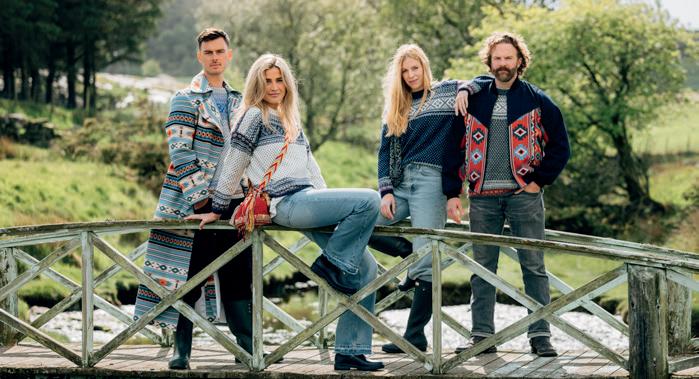
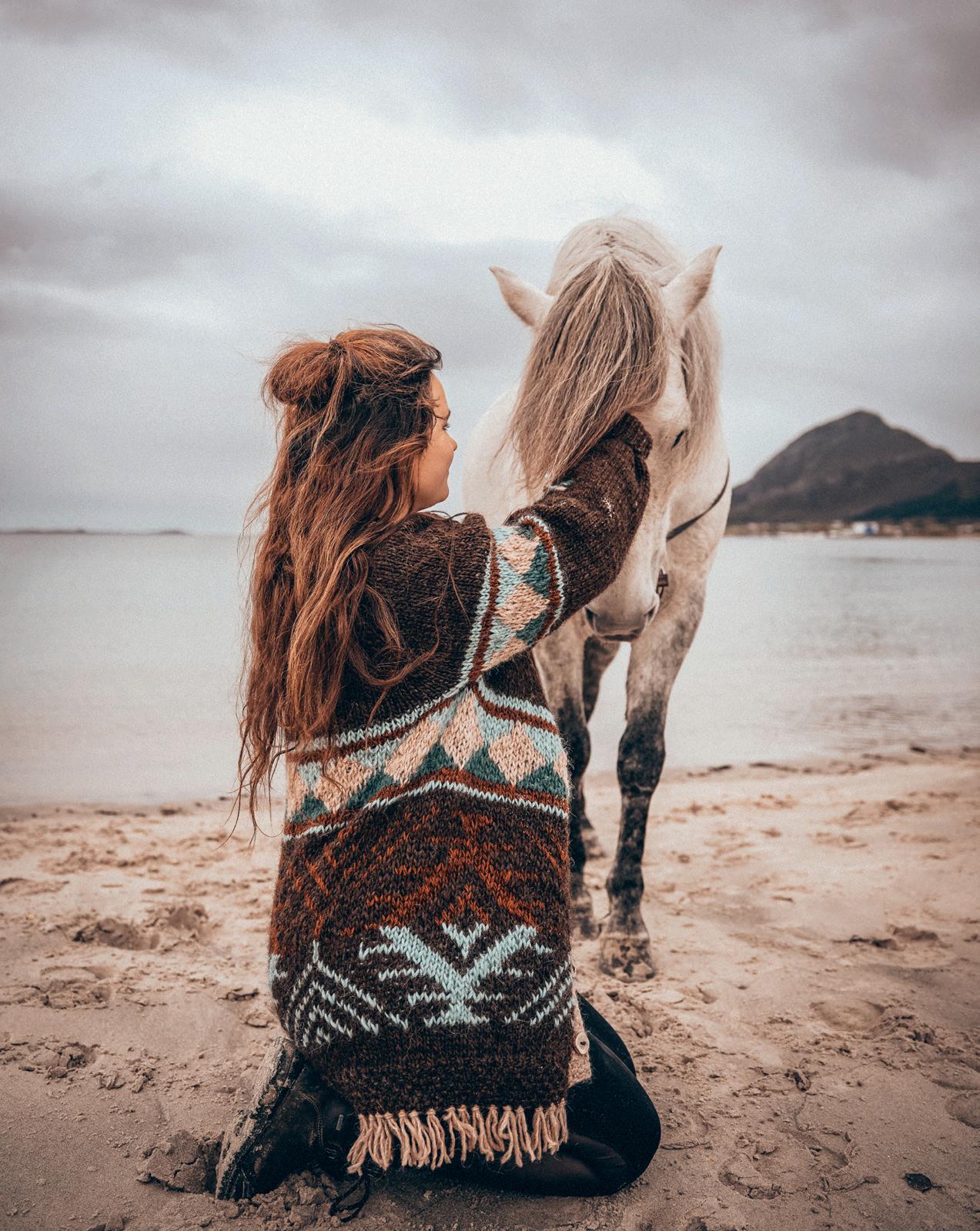
From a best-selling wilderness sweater to an international knitting community, designer Linka Neumann has built a brand rooted in nature, Nordic wool and practical knitwear made to last.
By Celina Tran | Photos: Linka Neumann
The story of Linka Neumann begins not in a fashion studio, but in the Norwegian outdoors. “I exist as much outdoors as I do with knitting needles in my hands,” she says. “That’s really where the whole Linka Neumann universe comes from.”
Surrounded by forests, mountains and changing seasons, she found inspiration for the colourful wool jumpers and outdoor garments that would eventually make her a household name among knitters. Today, her designs are sold around the world, and her online community numbers in the tens of thousands, but the heart of the business remains unchanged: a love of nature, wool and handmade craftsmanship.
The woolly road Linka’s journey began in her mid-twenties, when she became completely hooked on knitting. What started as a hobby soon developed into a creative obsession, leading her to experiment with colours, patterns and techniques. A turning point came in 2017 with the creation of Villmarksgenseren (the wilderness sweater), a distinctive design featuring paw-print motifs that would become her signature piece. The sweater quickly gained popularity and remains one of the brand’s bestsellers today. “Soon after, I was invited to write a book, and I remember thinking that there was no way I could do it,” she says. “But of course I said yes.”
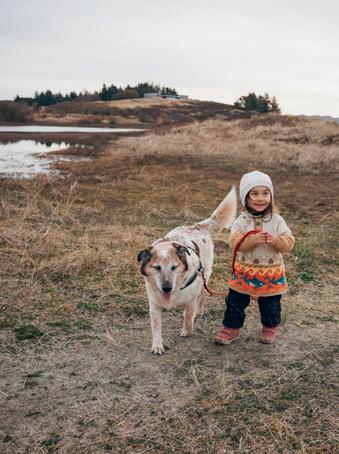
Released during the pandemic, when interest in knitting surged worldwide, the book became an immediate success and stayed on bestseller lists for 32 weeks. Five more books followed, and before long, knitting had become her life. “In 2020, Waqas suggested that we open an online store. To be honest, I thought it was a terrible idea, but he worked so hard and believed in it so strongly that before long, we found ourselves running both a web shop and a yarn warehouse.”
Waqas also suggested selling yarn kits, which Linka initially disagreed with, thinking that people would prefer to choose
their own yarns. “How wrong I was,” she says. “People loved the kits!”
At the time, however, neither Linka nor her husband, Waqas, worked in the knitting industry. Both held full-time jobs in healthcare while building the business in their spare time. “We spent evenings at the library after work. I worked on designs and books while Waqas built the technical side of the business,” she says. “The idea behind the shop has always been to make it easy for customers to get exactly what they need to knit the wilderness-inspired garments they see on Instagram.”
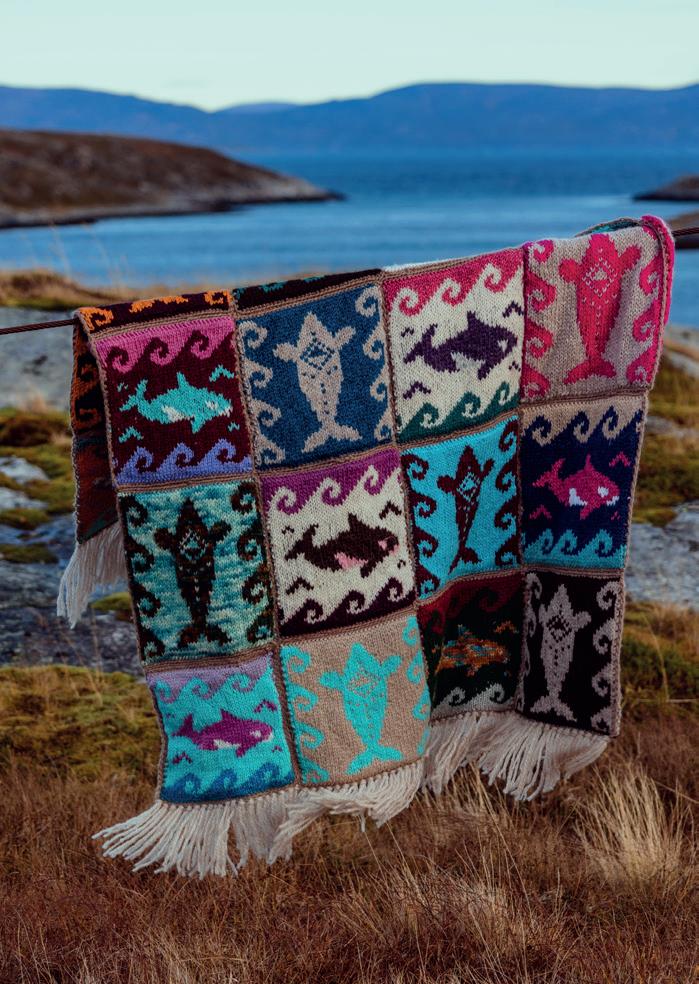
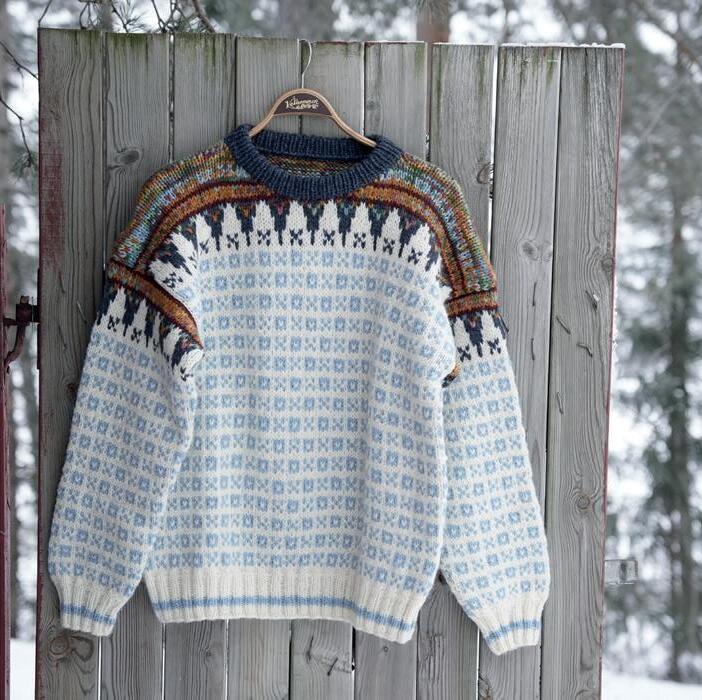
Eventually, the business grew enough for Linka to leave her job in the health sector and focus fully on knitting and design.
What began as a handful of knitting patterns has grown into something much larger than a business. Along the way, Linka found herself at the centre of a thriving community united by a love of wool, the outdoors and creativity.
As interest in her designs grew, so did the number of questions from knitters seeking advice and encouragement. Realising that they could not possibly help everyone themselves, Linka and her team created a Facebook group where knitters could connect with one another. Today, that group has grown to almost 62,000 members. “The community brings so much passion and knowledge,” she says. “It would be much less fun without them.”
Alongside her husband, Waqas, and a small core team that helps manage
customer service, marketing and daily operations, Linka works closely with a dedicated group of volunteer test knitters aged from 16 to nearly 80 to refine each design before publication.
What sets Linka Neumann apart is the focus on practical knitwear designed for real outdoor use. Instead of following short-lived trends, Linka creates garments intended for hiking, camping and everyday life in the Nordic climate. Comfort, durability and functionality are central to every design. “I design the clothes I want to wear myself,” she says. “These are garments meant to be used.”
Signature patterns such as Villmarksgenseren, Alasuq, Hopi and Harila are all knitted in authentic Norwegian and Icelandic wool, and the materials are chosen for their ability to retain warmth, regulate temperature and withstand years of wear. This also connects naturally with the environmental responsibility of a business built around natural fibres and the outdoors.
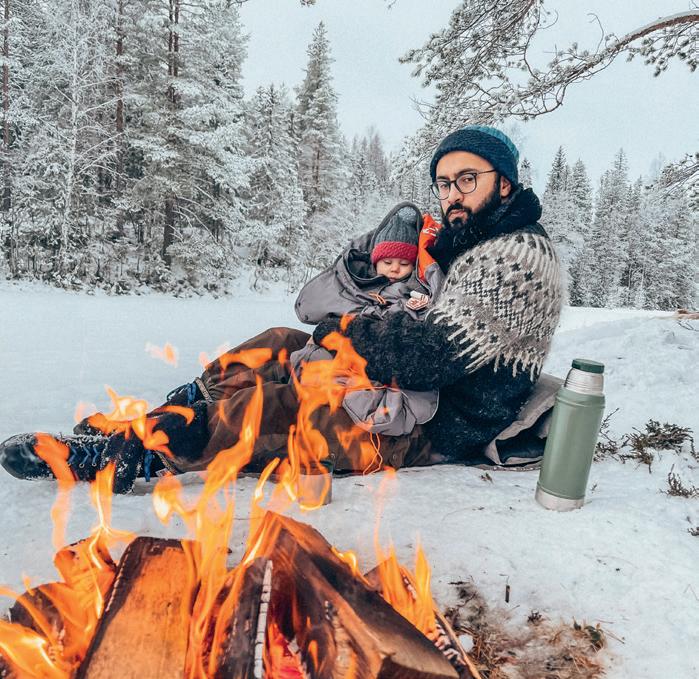
“Unlike synthetic fibres, these natural materials are renewable, durable and designed to last for decades,” she says. “And while it’s a long process, there’s something beautiful, not to mention sustainable, about making a garment yourself, caring for it and using it for many years.”
Colour has also become a hallmark of the brand. At a time when muted tones dominated much of the knitting world, Linka embraced bold combinations inspired by nature and traditional Nordic aesthetics.
While the business remains firmly grounded in Nordic traditions, its ambitions are increasingly international. Digital patterns are now available in English, and customers can order yarn and knitting kits throughout Europe, North America and Australia.
For knitwear fans who do not knit themselves, Linka Neumann launched LinkaWear, a collection of ready-made wool sweaters in late 2025. “We also wanted to make it possible for people to enjoy high-quality wool and design without needing to knit themselves. Not everyone has the time, hands or opportunity to make a full sweater, but everyone deserves the warmth and quality of good wool.”
www.linkaneumann.com
Facebook: Linkaneumann.com
Instagram: @linka.neumann
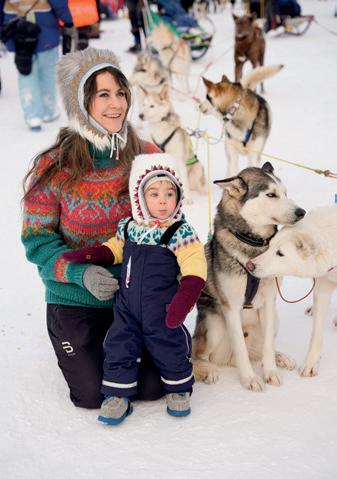
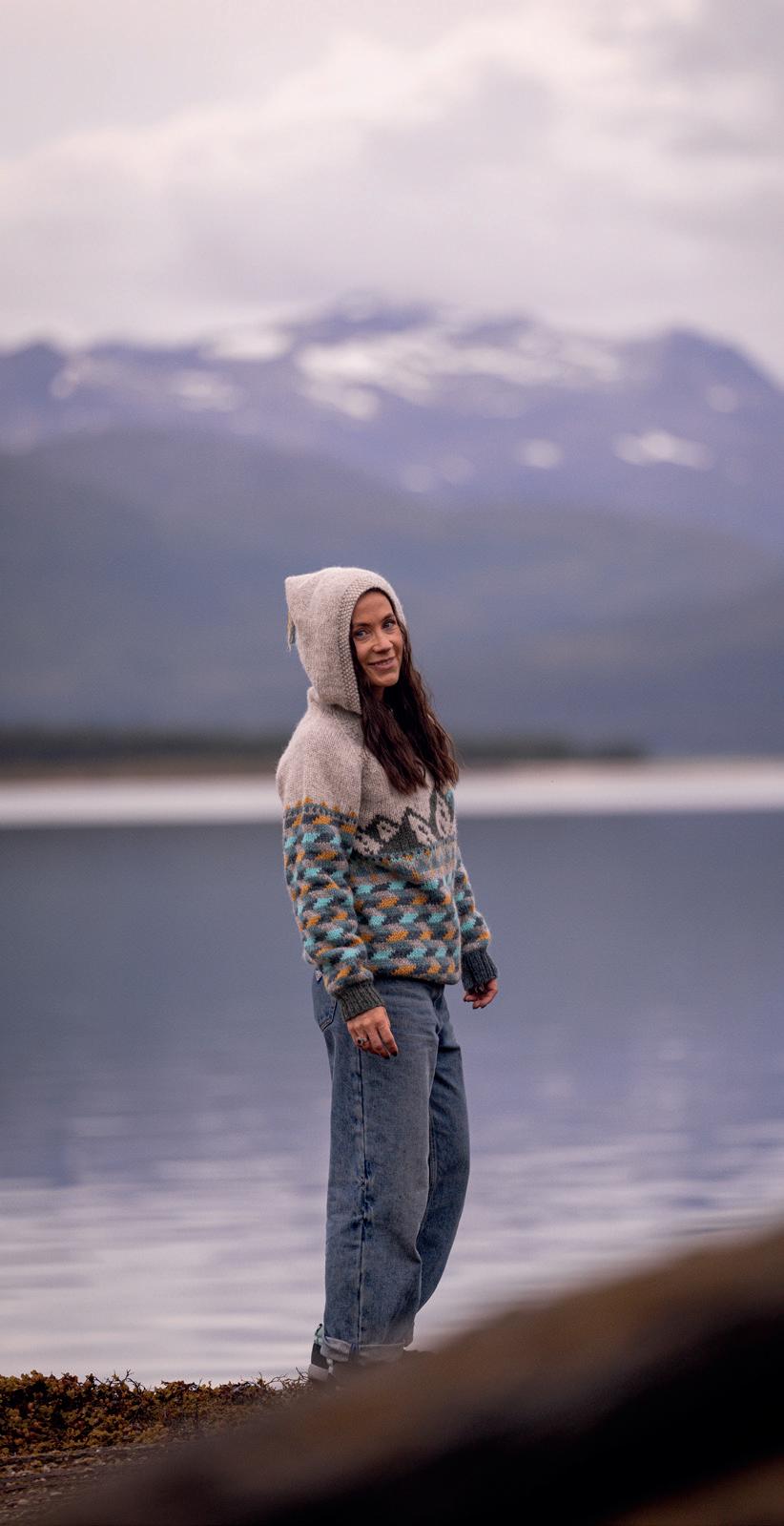
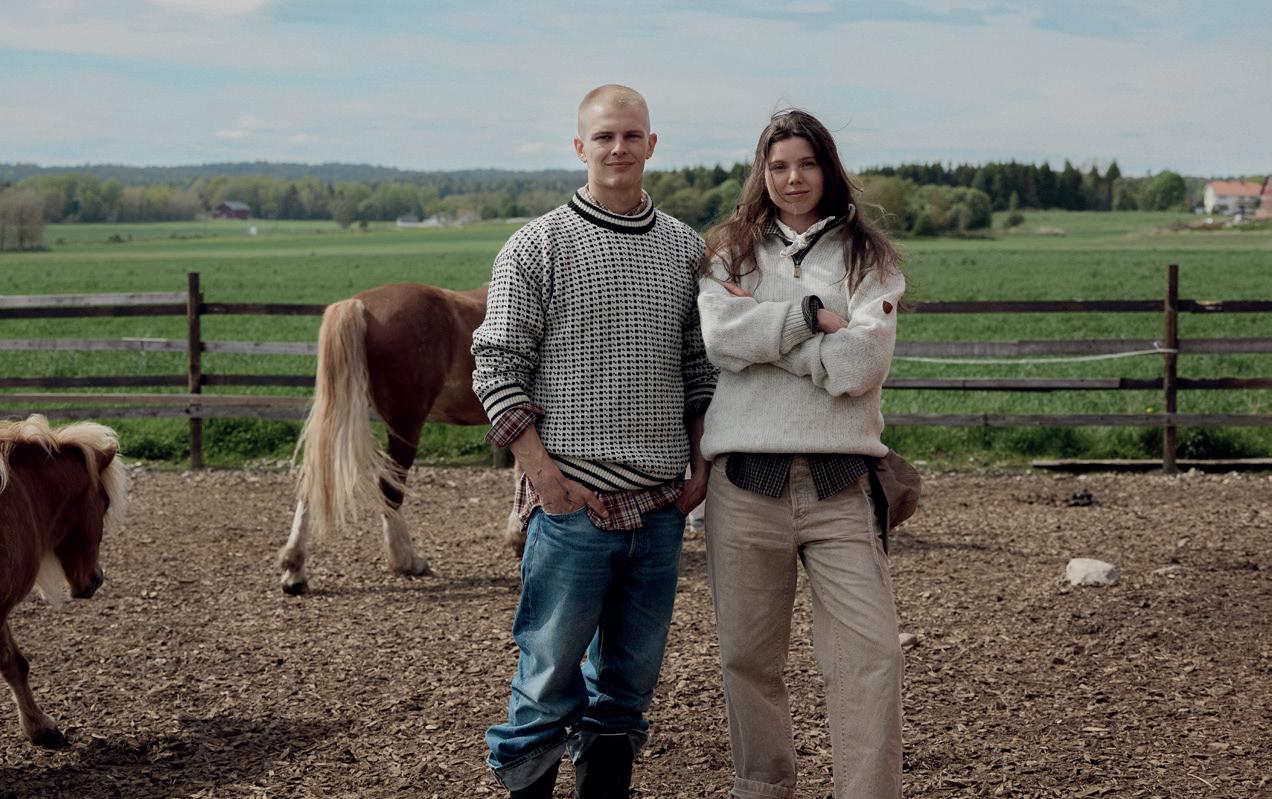
Long before wool became associated with conscious consumption and timeless design, Bråtens was built around a simple idea: clothing should work. Established in 1955, the Norwegian brand began by creating wool garments for people who needed warmth, reliability, and protection in demanding conditions.
By Thea Johansen | Photos: Markus Mjaaland
The journey started with wool socks made for the Norwegian Armed Forces and the Sirius Sledge Patrol in Greenland – products designed for some of the world’s harshest environments. While Bråtens has expanded its collection over the years, the foundation remains unchanged: creating garments built for warmth, purpose, and durability.
Good clothing should serve a purpose. It should work, endure, and become something people return to year after year. “The most important thing is respect for function, raw materials and craftsmanship,” says Petter Nordli, managing di-
rector of Loxy AS, which Bråtens became a part of in 2018.
That philosophy continues to guide Bråtens today. What sets the brand apart is not only the products themselves, but the care behind them. By maintaining close control over the production process, Bråtens can track each step from material selection to the finished garment. It is a way to ensure that quality is not left to chance, but built into every product.
Norwegian wool and craftsmanship
At the heart of Bråtens lies Norwegian wool – a material shaped by Norway’s
landscapes, climate, and traditions. It is a fibre developed through demanding conditions, giving it natural strength, resilience, and durability. “Norwegian wool is shaped by a climate with great contrasts and challenging conditions,” says Nordli.
This is what makes it particularly suited for garments that are meant to be used. Its structure, insulation and durability allow it to perform outdoors while remaining relevant in everyday life. For Bråtens, wool is not just a material but a connection to Norwegian nature and the practical traditions that have shaped the brand for more than 70 years.
Different fibres are chosen for different purposes. Norwegian wool provides strength where durability is essential, while merino wool offers softness and comfort. The principle is simple: selecting the right fibre for the right vocation.
This attention to detail also extends to transparency. As consumers increasingly want to understand where products come from, knowing the story behind a garment becomes part of its value. For Bråtens, long-lasting quality begins with trust in both the materials and the process behind them.
For Bråtens, creating garments that last has never been a passing trend. It has always been part of the brand’s identity. “Instead of following fast trend cycles, we focus on timeless designs, quality materials and functional products that continue to feel relevant many years after they are purchased,” says Nordli.
This mindset shapes both development and design. Inspiration comes from nature, traditional patterns, and classic silhouettes, not tied to a single season but created to remain relevant over time. The goal is not only durability, but garments people continue to choose because they still feel right.
That longevity is also reflected in how Bråtens views everyday use. The best garments are not limited to one setting; they move naturally through different parts of life. “A sweater should be able to be used in the mountains, at work and around the dinner table,” says Nordli.
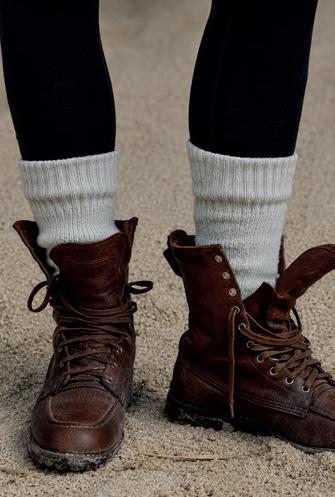
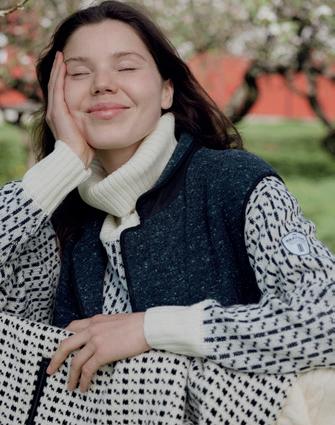
This reflects the modern Bråtens customer. The brand’s heritage may come from extreme conditions, but its purpose is much broader. It is for people who value practical, reliable clothing – whether they work outdoors, spend time in nature or simply want garments that can be used for years.
A living part of Norwegian identity
Bråtens is also closely connected to Norwegian cultural traditions. Patterns such as Marius® and Islender are not simply design elements, but part of a history that continues to evolve. “We see ourselves as caretakers of a tradition that still has great value,” says Nordli.
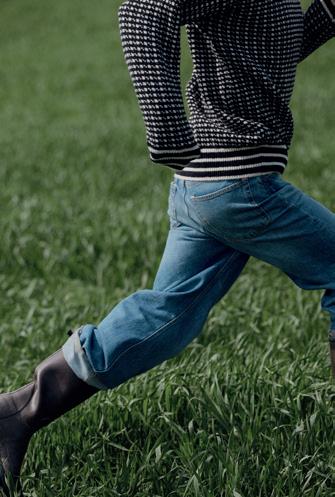
For Bråtens, protecting this heritage does not mean keeping it unchanged. It means allowing it to remain relevant for new generations while respecting where it came from.
The brand sees itself as part of a wider Norwegian tradition built around practicality, craftsmanship and a close relationship with nature. “We don’t want to be a fashion brand first and foremost, but a brand that has a natural place in people’s everyday lives,” says Nordli.
Continuing the story
As Bråtens enters a new chapter with a renewed visual identity and a more accessible expression, the focus is on bringing the story to more people without losing what made the brand meaningful in the first place. “We want the brand to feel warm, down-to-earth and accessible, while still communicating the quality and experience behind more than 70 years of wool production,” says Nordli.
The future may bring new customers and new markets, but the foundation remains the same. For Bråtens, the essentials remain unchanged: Norwegian wool, function, craftsmanship and garments made to last.
www.bratens.no
Instagram: @bratens_ull
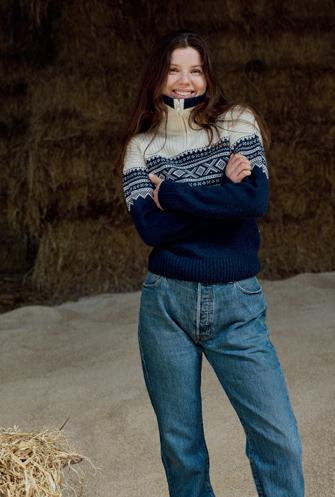
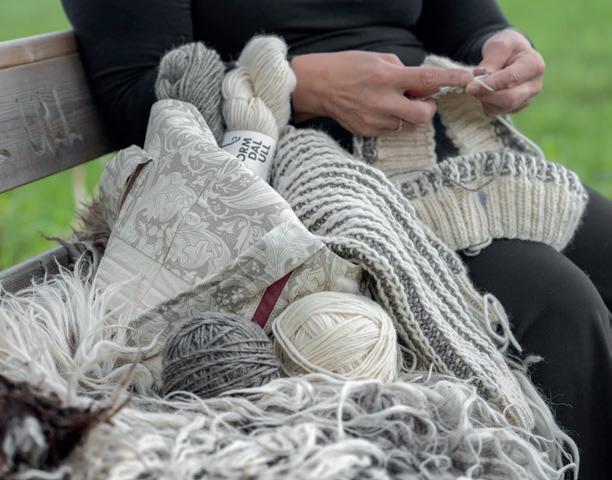
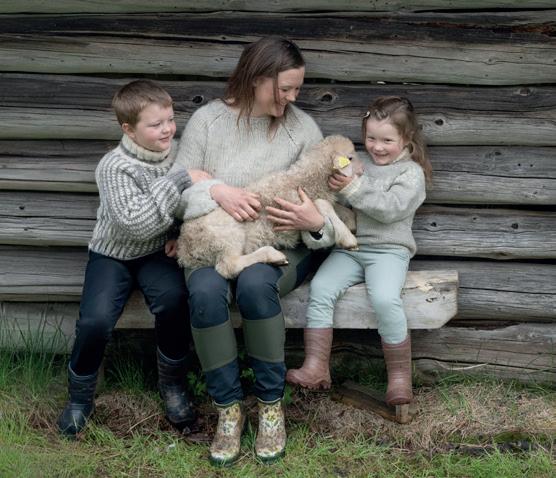
Set against the dramatic backdrop of Helgeland in Northern Norway, Stormdal Ull is both a spinning mill and a celebration of local resources, traditional craftsmanship, and sustainable production.
By Celina Tran | Photos: Kjell Sommerseth
In the picturesque village of Storvoll, just south of the Arctic Circle and at the gateway to Saltfjellet-Svartisen National Park, Stormdal Ull is Norway’s northernmost spinning mill and the only one of its kind in the region.
The founders, Maja Sætermo and Silja Storvoll, had a shared idea born from a passion for wool, sheep, and rural traditions. Both founders grew up on small farms and began questioning why Northern Norway had no spinning mill of its own and why Norwegian wool often had to be sent abroad for washing and processing. Their answer was to create a fully Norwegian production chain, handling everything from raw fleece to finished yarn. “We wanted to show that high-quality yarn could be made entirely in Norway,” says Sætermo. “There are hands at work throughout the whole process, from the sheep farmer to the knitter.”
The company produces a wide range of yarns, from airy single-ply qualities to
fine two-ply yarns. One of its most popular products, Ullhøsa, combines wool from traditional Norwegian Spæl sheep and Norwegian White Sheep, creating a durable yet soft yarn ideal for socks and everyday garments. Customers often notice one feature in particular: softness.
“People ask if it’s really pure wool because it feels so soft,” Sætermo explains. Stormdal Ull is also committed to showcasing the natural beauty of wool. The yarn is generally left undyed, allowing the sheep’s natural colours to shine through. Black yarn comes from black sheep, brown from brown sheep, creating a palette that reflects the landscapes where the animals graze.
The spinning mill has become a destination in its own right. Visitors can watch the machinery in action, browse yarn and knitting patterns, or sit down for coffee and cinnamon buns. Workshops in hand spinning, plant dyeing and traditional crafts attract participants from across Norway.
Looking ahead, the founders hope to expand production while continuing to advocate for clearer labelling of Norwegian yarn. Although small-scale Norwegian manufacturing cannot compete with imported yarn on price, Stormdal Ull believes that consumers increasingly value transparency, quality, and local production.
In a region where wool has sustained communities for generations, the company is ensuring that tradition continues to thrive in a modern world. For visitors to Helgeland, Stormdal Ull offers a close look at how local wool can become part of a living, modern craft tradition.
www.stormdalull.no
Facebook: Stormdal Ull
Instagram: @stormdalull
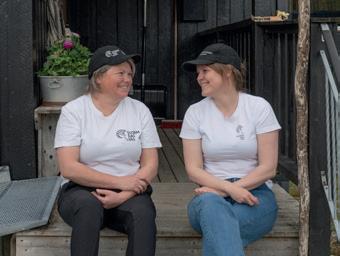

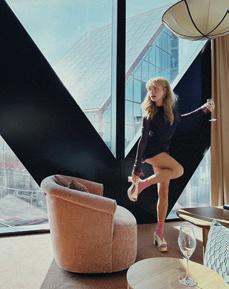



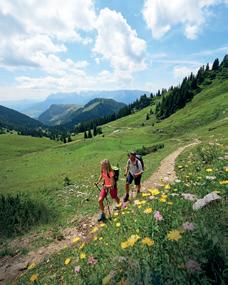

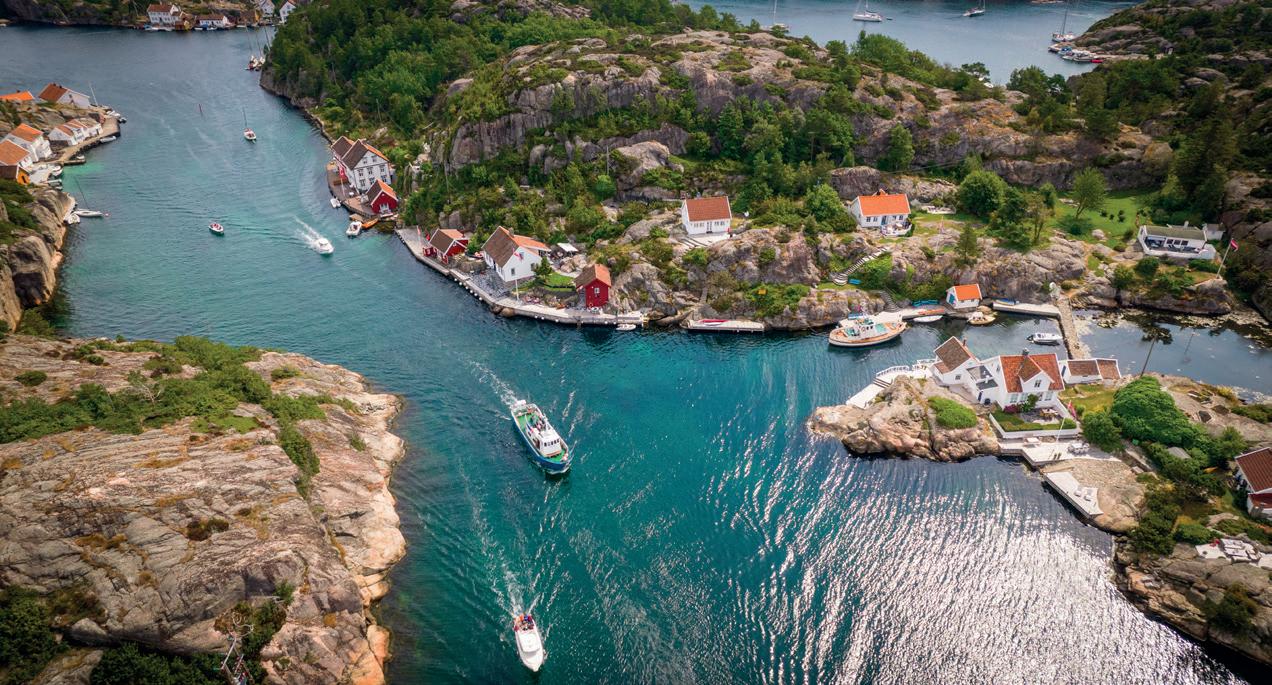
With its mild coastal climate, easy access to striking nature and a slower pace of travel, Southern Norway has long been a cherished summer destination. Yet the region offers far more than sunny days by the sea. All year round, the region invites travellers to explore art, heritage, food, coastal landscapes and living traditions, all within short distances.
By Celina Tran
With white wooden towns, dramatic coastlines and deep-rooted traditions, Norway’s southern region reveals a gentler side of the country. Beyond the familiar coastal charm, art emerges from old industrial spaces, history lingers on cobbled streets and in mountain hotels, and Norwegian nature shapes life here. For couples and curious travellers, Southern Norway offers a cultural journey where city life, coast and mountain traditions meet with ease.
“Southern Norway is truly a year-round region,” says Hege Nevestad, general manager at Visit Sørlandet. “With its short distances, you can easily get from
the coast and archipelago to Setesdal’s mountains and skiing trails, with or without a car.”
Whether you want to feel the soft salt air of Skagerrak, witness Kristiansand’s bus-
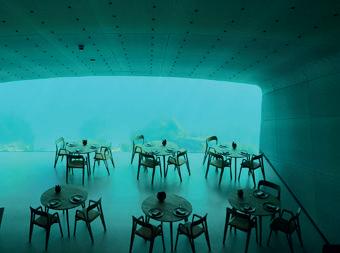
tling art scene, or descend beneath the ocean for an underwater dinner, Southern Norway has everything you might seek for your next adventure.
Art, heritage and living traditions
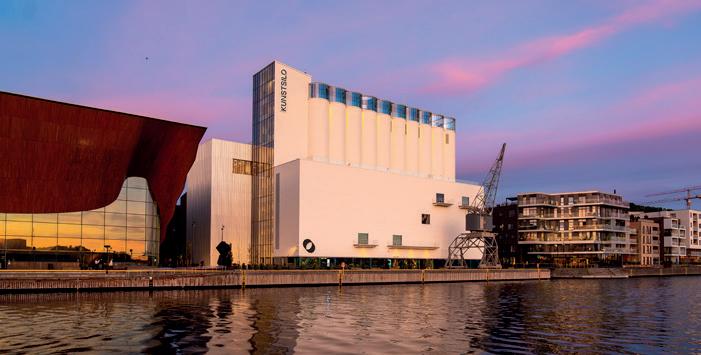
At the heart of Southern Norway’s cultural renaissance stands Kunstsilo in Kristiansand. Housed in a striking former grain silo, Kunstsilo was named the World’s Most Beautiful Museum at Prix Versailles 2025, one of the world’s most renowned design and architecture awards. Inside, visitors encounter an impressive collection of Nordic modernist art, presented in a space where architecture and creativity come together.
Creativity also thrives elsewhere in Southern Norway. Once home to young Henrik Ibsen, where he wrote his first play, Catilina, the Ibsen Museum is a modest apothecary that offers visitors insight into the formative years of one of the world’s most influential playwrights.
“The apothecary setting is complete with his original writing desk and herb garden. With his 200th birthday coming in 2028, the museum in Grimstad is becoming an increasingly important cultural landmark,” says Nevestad.
She adds: “For museum lovers, there’s also KUBEN Aust-Agder Museum and Archives in Arendal, a modern museum that showcases the region’s maritime heritage, local stories and identity.”
If you are seeking a more immersive cultural stay, however, Sølvgarden Hotell & Feriesenter brings traditional craftsmanship into focus. Rooted in Setesdal’s renowned silverwork heritage, the hotel celebrates local design and folklore, offering guests a chance to experience Norwegian traditions up close.
Setesdal itself is a beautiful valley steeped in living culture. Known for its UNESCO-listed traditional music and dance, national costumes, and storytelling heritage, it is a place where both nature and culture meet. On the valley’s accessible landscape, Nevestad says; “It’s also a great place to go hiking, for hiking enthusiasts and beginners alike. Setesdal offers great views without being too demanding, and there are plenty of opportunities for different activities.”
From windswept lighthouses to underwater dining
The majestic peaks of Setesdal are only the beginning of the region’s nature experiences. One can of course not forget the mighty coastline, which so often defines
Southern Norway. Here, iconic lighthouses tower against the North Sea.
Lindesnes Lighthouse is Norway’s oldest lighthouse station and marks the country’s southernmost mainland point. Here, waves crash against rugged rocks while views of raw nature stretch out on the horizon. Further west, the beautiful Lista Lighthouse offers a more tranquil, coastal charm. As Nevestad notes; “Lista Lighthouse is surrounded by open landscapes, wide beaches and rich birdlife, making it ideal for long walks, birdwatching and windswept seaside escapes.”
And while the sea and its towering coastal guardians are quite a sight, there is also adventure beneath – quite literally. Europe’s only underwater restaurant, Under, combines fine dining with marine observation. With local ingredients such as sea truffles, clams and kelp, its seasonal tento 12-course tasting menu is designed
to be a culinary journey in a panoramic setting. “Guests descend five metres below sea level to dine and are surrounded by very real underwater scenery as they do. It’s probably one of the region’s most unique experiences,” says Nevestad.
If windy coasts and underwater exploration are not quite what you are looking for, there is always the beloved Flekkefjordbanen rail biking, which offers a unique, gentle way to explore the landscape. Cycling along a disused railway line, travellers pass through tunnels, over bridges and alongside lakes, all at their own pace –an experience that perfectly captures Southern Norway’s unhurried spirit.
It is also part of a broader sense of calm. “Best of all is that you avoid mass tourism here,” says Nevestad. “There’s a sense of calm. People take their time, talk to you, and for many, that slower pace is exactly what they’re looking for.”
In Southern Norway, the boundaries between art, nature and heritage blur. A lighthouse becomes a cultural landmark, a hotel becomes a story of craftsmanship, and a landscape becomes a source of inspiration. The region is both a collection of sights and a connected experience. Its greatest appeal, however, might not be the many attractions, but the warm and welcoming atmosphere.
www.visitsorlandet.com
Facebook: Visit Southern Norway
Instagram: @VisitSouthernNorway
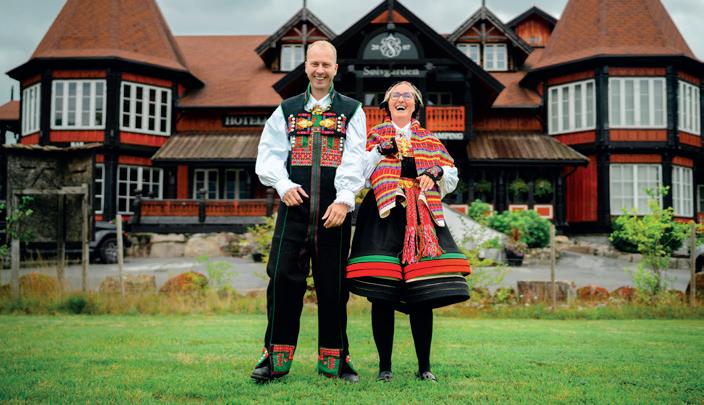
Some of Scandinavia’s most spectacular scenery lies far from motorways and flight paths. For travellers drawn to mountains, fjords, forests and lakes, there is no better way to explore than by rail.
By Joseph Phelan
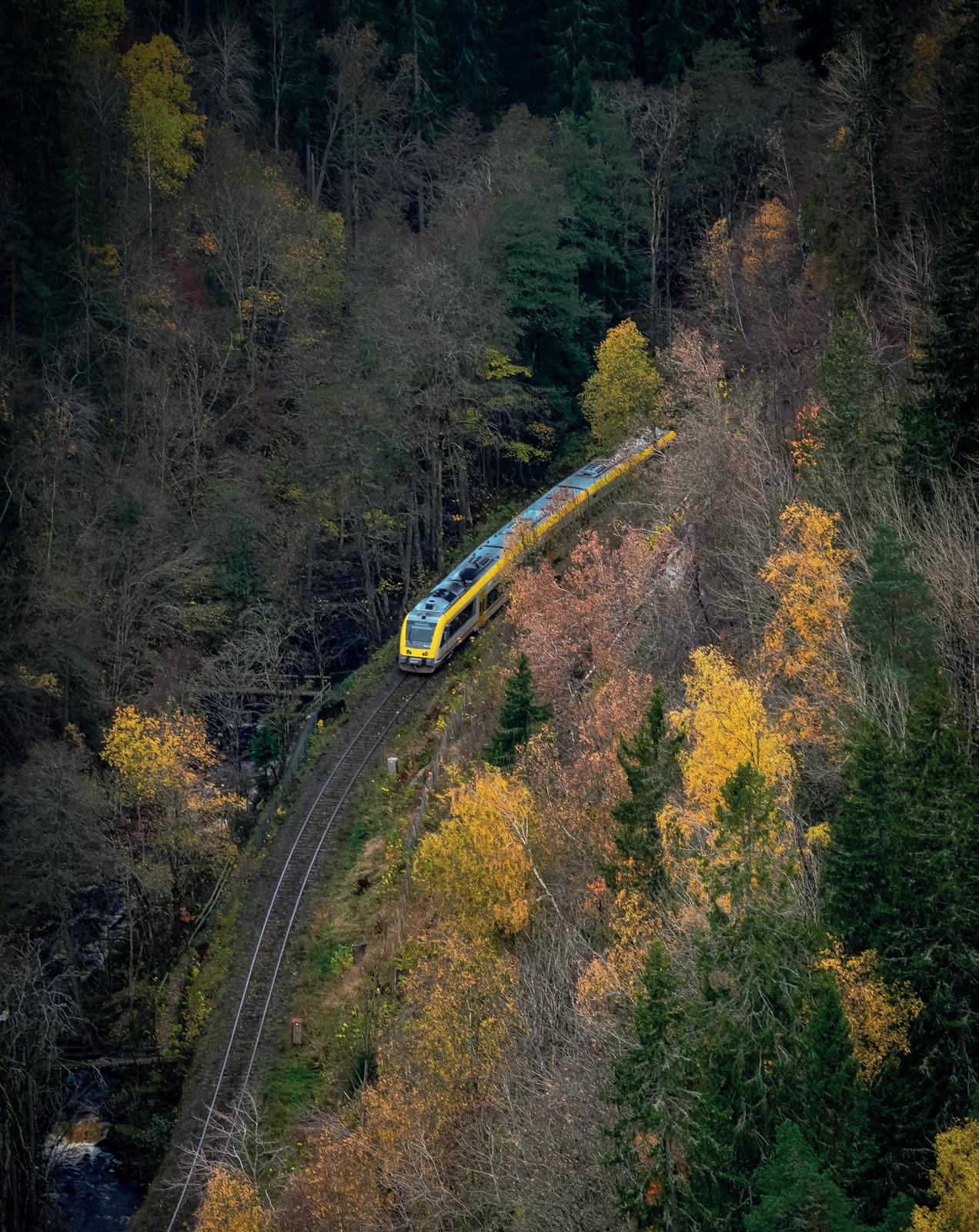
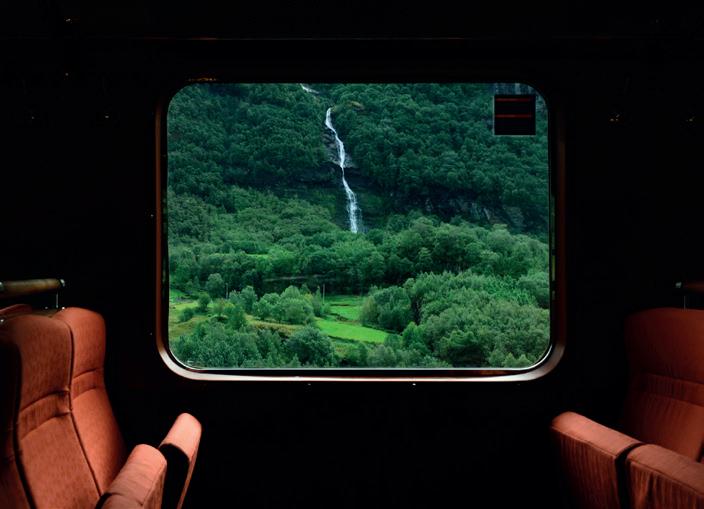
Scandinavia’s railways reach places few other forms of transport can access: villages at the head of fjords, Arctic mining towns, and solitary platforms deep in the forested interior. Frequently ranked among the world’s greatest rail journeys, these iconic routes are triumphs of human ingenuity. They represent decades of daring engineering that forged steel tracks through unforgiving mountains, treacherous wetlands, and vast, frozen wilderness.
Scandinavia’s railways were built to connect a vast, varied landscape. Conquering its most inaccessible terrain required blasting tunnels through granite, spanning gorges with arched bridges, and driving lines over mountain plateaus that, for much of the year, are buried in snow.
Elsewhere, the work was less dramatic but no less gruelling: tracks had to cut through forests and valleys, stretching across long distances where the geography was gentler, but the sheer scale was arguably greater.
Much of this development took place during the late 19th and early 20th centuries, when railway construction relied on large itinerant workforces. In remote mountain regions, temporary camps and barracks were often built from scratch to house workers for months at a time, forming
short-lived settlements that moved with the progress of the track.
A masterpiece of engineering
Of all the lines this era produced, few are as remarkable as the Flåm Railway (Flåmsbana) in Norway. Started in 1923 and completed in 1940, it runs for just 20 kilometres from the fjordside village of Flåm to Myrdal in the high mountains.
In that short distance, it climbs around 865 metres, following a route that ranks among the steepest standard-gauge railway lines in the world.
The construction was a triumph of manual labour and explosives: of the line’s 20 tunnels, 18 were dug without machinery. The most ingenious is undoubtedly the Vendetunnelen, which spirals in a figure of eight through the mountain to let the train gain height on the steepest stretch.
The line passes through steep valleys and tight mountain passes where waterfalls drop directly from the rock face. At Kjosfossen, it slows to a stop so that passengers can step out onto a platform beside the torrent as it crashes into the gorge below.
Though built as a practical connection between fjord and high mountain railway, it has become one of Norway’s most popular rail journeys, with the route’s dramatic terrain drawing close to one million visitors every year.
Further north, the Ofoten Line was created out of industrial necessity. Built at the turn of the twentieth century to carry iron
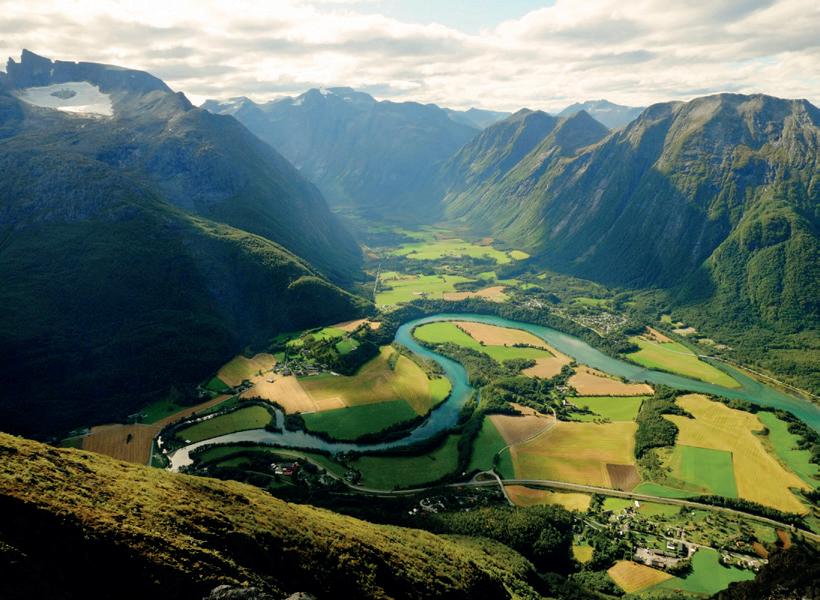
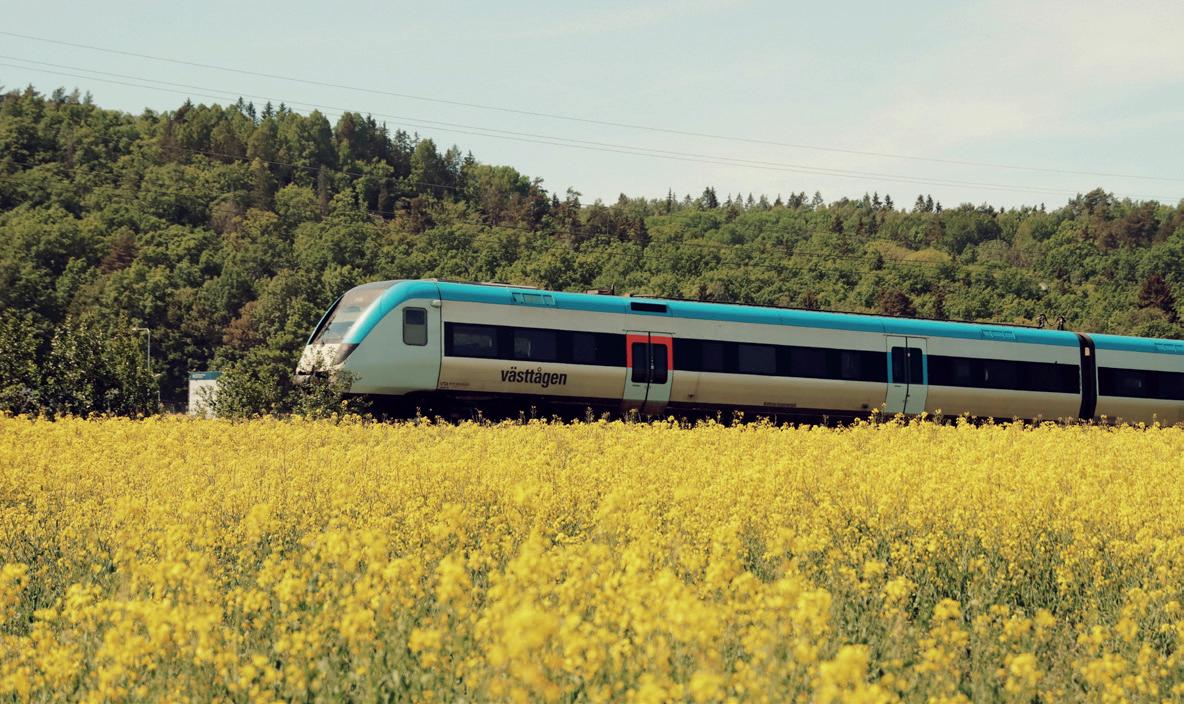
ore from the mines of Kiruna in Swedish Lapland to the ice-free port of Narvik, it passes through some of the most dramatic mountain scenery in Scandinavia.
Construction, completed in 1902, relied on thousands of workers carving tunnels, bridges and track beds through the mountains to make the route possible. More than a century on, the line still performs its original task, but also doubles up as a route that rewards passengers with incredible views of fjords, Arctic mountains and, in winter, the Northern Lights.
If Flåm and Ofoten are defined by dramatic engineering and extreme terrain, Sweden’s Inlandsbanan offers a longer, more winding journey through vast stretches of forest, lakes, wetlands and remote settlements.
Running the length of Sweden’s interior, the Inlandsbanan follows the country’s inland spine from Kristinehamn in the south to Gällivare in the north, and at
1,288 kilometres this is the longest rail route in the country.
When the final stretch opened in 1937, the inauguration ceremony was held not in Stockholm, but in Jokkmokk, a tiny town in the northern interior that is a vital hub for the Sámi people, the only indigenous people recognised in the European Union.
It was a deliberate move designed to shine a spotlight on the part of Sweden that the line existed to serve. King Gustaf V travelled north for the festivities and spoke of the railway as something he believed would play a major role in uniting the country. For the formerly isolated towns along the route, such as Vilhelmina, Arvidsjaur and Sorsele, it did just that,
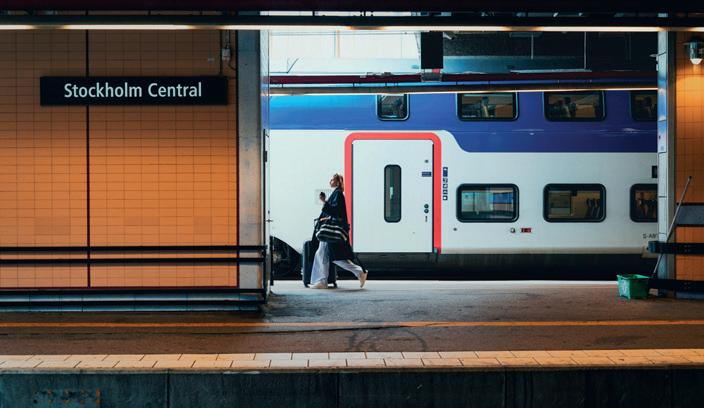
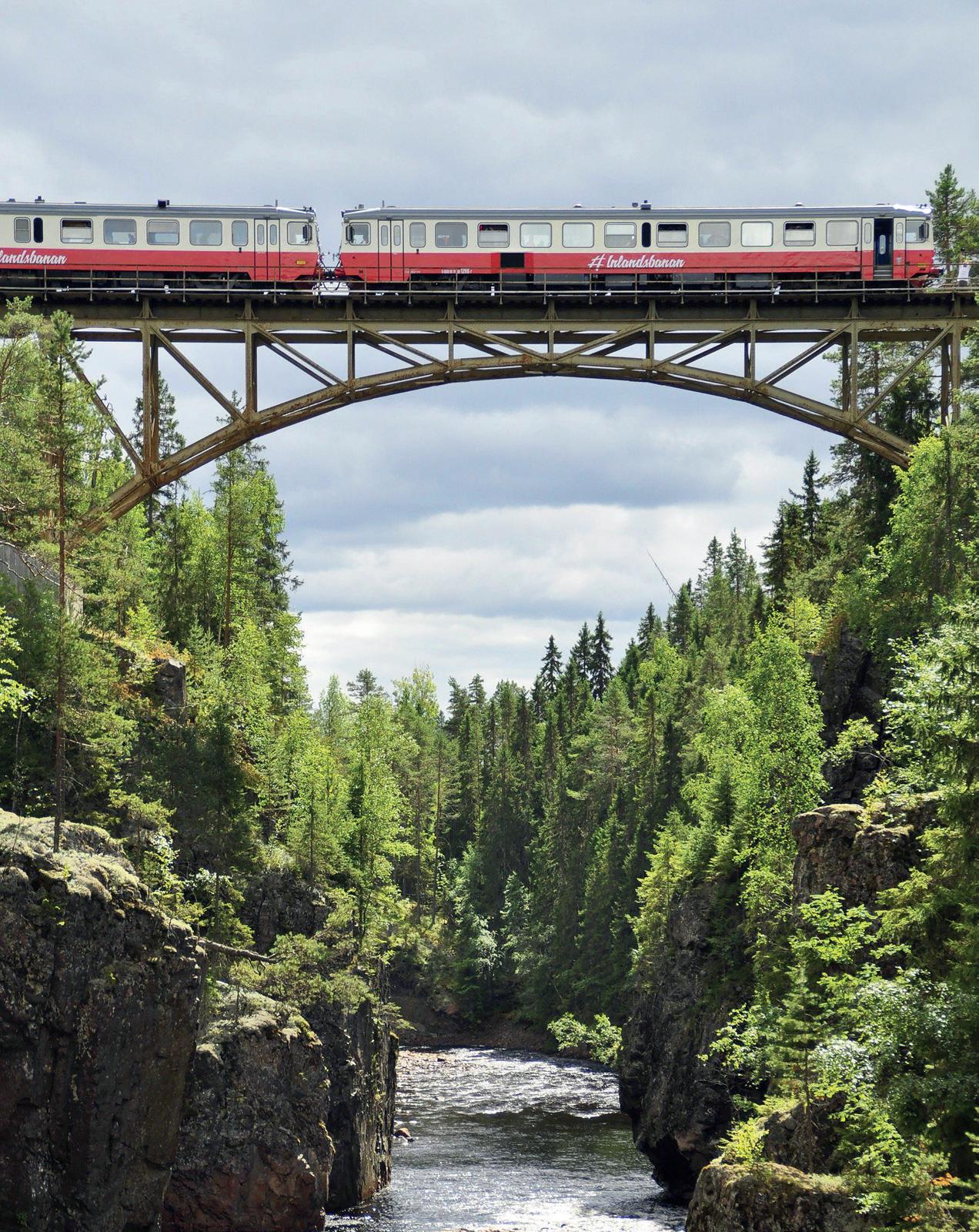
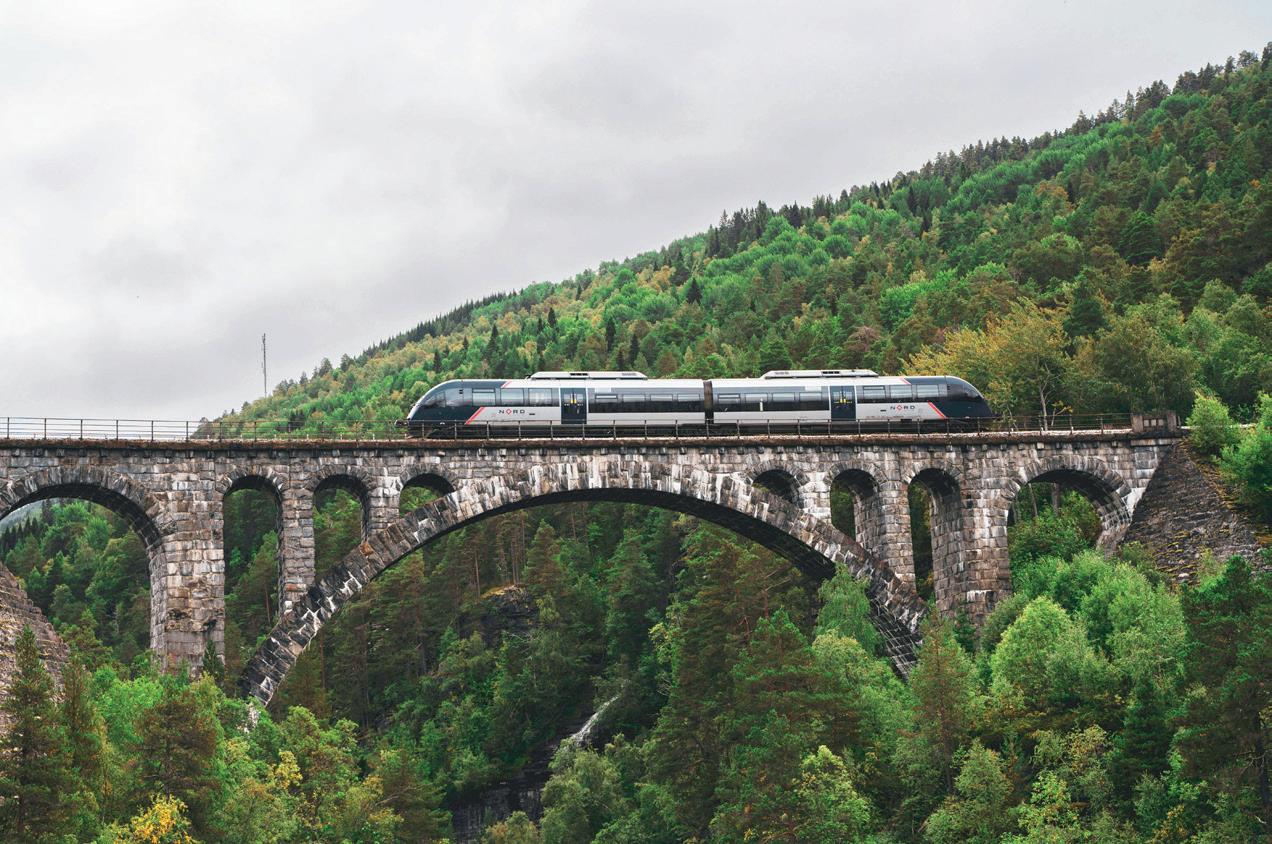
opening a connection to the rest of Sweden that had never previously existed.
Creating connections
Norway’s Dovre Railway, fondly nicknamed ‘the trail of the trolls’, links the present-day capital Oslo with Trondheim, the country’s historic Viking seat of royal power, across 548 kilometres of track. Its meandering route passes farmland, lakes, rivers, deep forests, narrow valleys, and the high, treeless passes of the Dovre Mountains.
The Rauma Railway, also in Norway, packs comparable drama into a fraction of the distance. Beginning at the village of Dombås, it follows the valley gouged out by the River Rauma, offering magnificent views of the crags, peaks and plateaus that border the tracks.
Further down the line, just beyond the village of Verma, the train slides into the horseshoe-shaped Stavem Tunnel, which
loops back on itself inside the mountain to shed height, before crossing the Kylling Bridge, the most photographed section of the route. Beyond this, it passes Trollveggen, or Troll Wall, which is the tallest vertical rock face in Europe, before arriving at Åndalsnes, on the shores of the beautiful Romsdalsfjord.
Beyond the views, there is also a practical argument for taking the train. Rail is already among the lowest-carbon ways to travel, and in Scandinavia it is cleaner still: the networks are heavily electrified, and the electricity comes largely from hydropower and other renewables.
Consequently, traversing the region by train produces a small fraction of the emissions of the equivalent journey by air. In a part of the world where the environment is taken seriously (Sweden has even coined the term flygskam, or flight shame, for the guilt of boarding a plane),
the ability to travel more sustainably has obvious appeal.
This mindful approach to travel extends beyond the environment and into the region’s cultural fabric. The Danish concept of hygge is often described as taking pleasure in life’s quieter moments –comfort, company and contentment away from the rush of everyday life. A long train journey through Scandinavia lends itself naturally to that mindset. Hours spent watching forests, mountains and lakes drift past the window are not time lost, but time reclaimed, whether spent in conversation, reading a book or simply observing the landscape unfold.
Perhaps that is why rail travel feels so well suited to this part of the world. Train journeys connect cities and communities, but they also afford travellers time: time to observe, reflect and appreciate what exists just beyond the carriage window.
Between Geiranger and Trollstigen, in the small village of Linge in Valldal, fruit trees climb the hillsides above the fjord. Lingebakken has belonged to the same family for six generations, with fruit growing shaping both the landscape and everyday life. Today, visitors can bring a taste of Lingebakken home in the form of cider, juice and fresh fruit.
“It was my great-great-grandfather who first came here,” says Elida Brenna Linge, who runs Lingebakken with her partner, Peje Engström. “There’s always been fruit growing here.”
Sheltered by the surrounding mountains, Linge enjoys a mild microclimate and a longer growing season than many nearby places.
After Linge and Engström took over the farm in 2017, Engström drew on his years
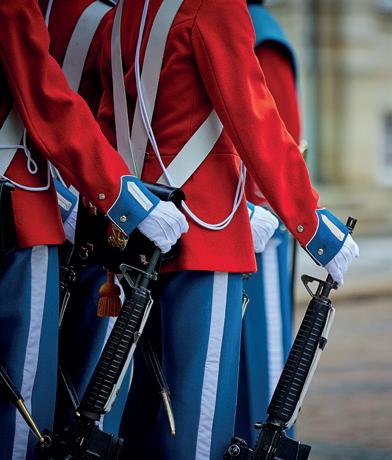
in France to introduce cider production at Lingebakken. Since then, they have planted around 4,500 fruit trees and expanded the production of cider and juice made from their own apples and other fruit.
“It’s nice to think that our ancestors cultivated the same soil,” says Linge. That connection to the land still shapes daily life at Lingebakken, where the seasons set the pace. Spring brings thousands of blossoms, while summer fills the farm with harvest-
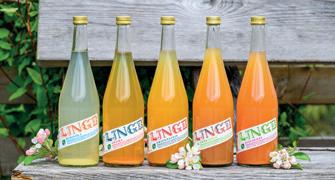
By Thea Johansen | Photos: Falkeblikk
ing, visitors and production. “The best thing is to walk straight out into the orchard and be surrounded by thousands of wild flowers,” says Engström.
Visitors are welcome to stop by the farm shop for fruit, juice and cider, while tastings can be arranged in advance. “We try to give people a taste of Linge,” says Linge.
Lingebakken.no Facebook: Lingebakken frukt & sider Instagram: @Lingebakken
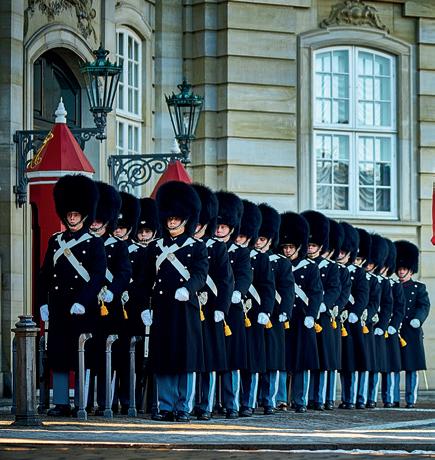
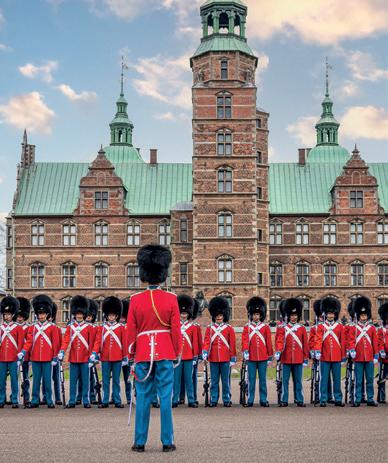
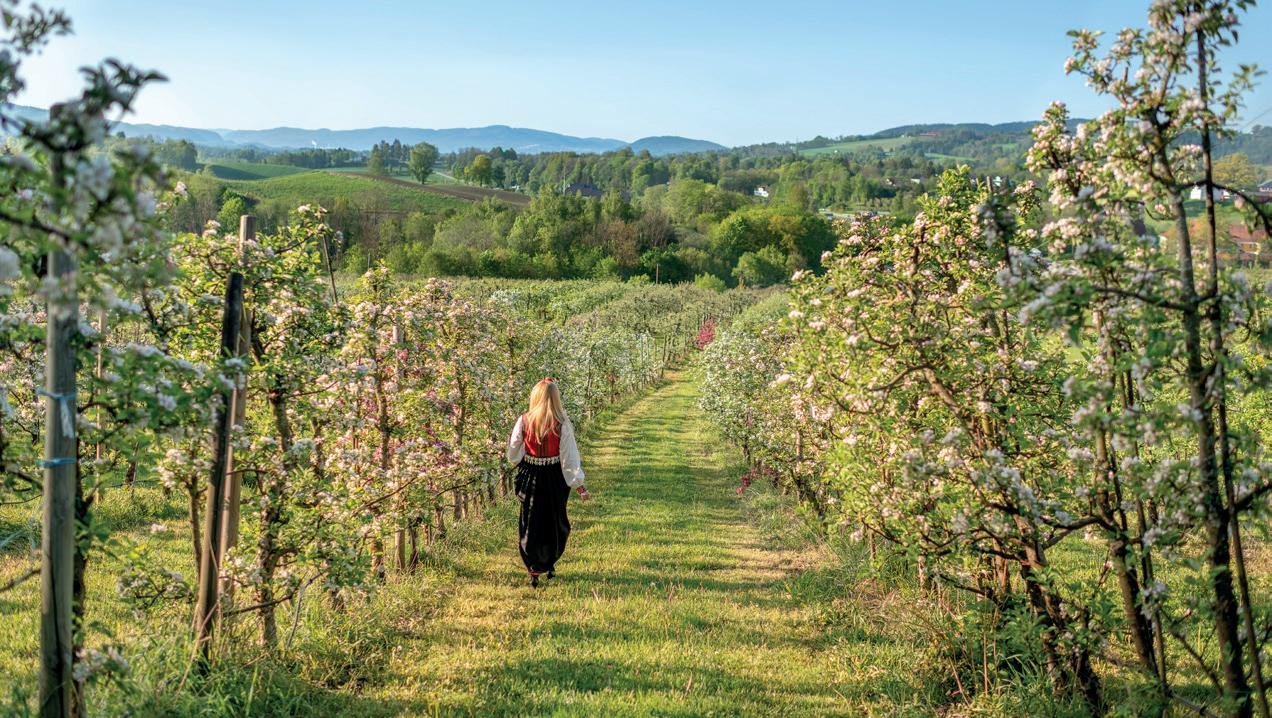
Set among the rolling orchards of the fertile Lier valley, Egge Gård has spent nearly three decades quietly redefining Norwegian fruit and craft beverages. Today, it is an internationally recognised pioneer in cider, ice cider and alcohol-free premium drinks.
By Andri Papanicolas | Photos: Vibeke Glosli
From award-winning ciders to Norway’s first alcohol-free ice cider, Egge Gård, just outside Oslo, continues to push Nordic craft drinks onto the international stage, one apple at a time. The story began in 1997 with apple juice production. Located in one of Norway’s best fruit-growing regions, the farm initially focused on pressing apples from both its own orchards and neighbouring farms.
“Lier was once the largest apple-producing municipality in Norway,” explains CEO at Egge Gård, Gunn Turi Ådnegard. “There are still many fruit growers here today, and we work closely together.”
Pioneers within the field
What started as a local sustainability initiative soon evolved into something
much bigger. In 2005, Norwegian legislation finally allowed small-scale alcohol production on farms, and Egge Gård became the very first farm in the country
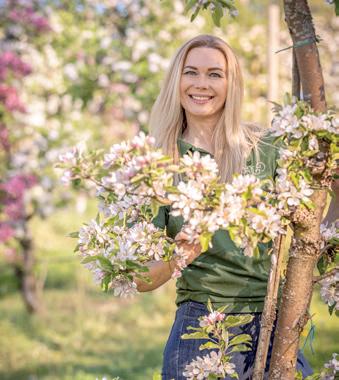
Gunn-Turi Ådnegård.
to seize the opportunity. “We were the first in Norway to start producing alcohol from a farm after the law changed,” she explains. “It felt like a natural continuation of the farm’s history.”
To develop its cider production, the farm brought in a specialist from Normandy, France, introducing the traditional method used in Champagne production. Even today, its sparkling ciders are still crafted using the same labour-intensive process, where the bottles mature on the lees for a full year before being hand-finished. “It gives the cider finer bubbles and a richer flavour profile,” Ådnegard explains. “Most cider producers simply add carbonation, but our bubbles develop naturally in the bottle.”
That dedication to craftsmanship has earned Egge Gård widespread recognition in recent years. Over the past two years alone, the farm has won awards for Norway’s best apple juice, Norway’s best wine, and Norway’s best ice cider.
Internationally, its products have also impressed judges at CiderWorld in Frankfurt, which is often considered the cider world championship. Here, Egge Gård has taken home both gold and silver medals for its products. The signature ice cider, Iseple, was awarded Best in Category at the prestigious competition.
Reflecting the Norwegian climate
Ice cider itself remains a relatively young category in Norway, despite its growing popularity in recent years. Egge Gård was the first producer in the country to create it back in 2010, helping to establish Norwegian ice cider as a recognised premium product internationally.
The process is as fascinating as the result.
Fresh apple juice is frozen at extremely low temperatures, then slowly thawed, allowing only the concentrated essence of the apple to be extracted. “It’s pure apple flavour, sweetness and acidity without the water,” Ådnegard says. “It becomes this intense explosion of flavour.” The result is a dessert wine unlike anything else: sweet yet sharply fresh, with vibrant acidity that pairs beautifully with creamy desserts, tropical flavours and blue cheese.
Norwegian climate conditions also play an important role in shaping the final taste.
While warm summer days help the fruit ripen, the cold nights of inland eastern Norway preserve acidity and complexity. “It’s similar to wild berries grown in the
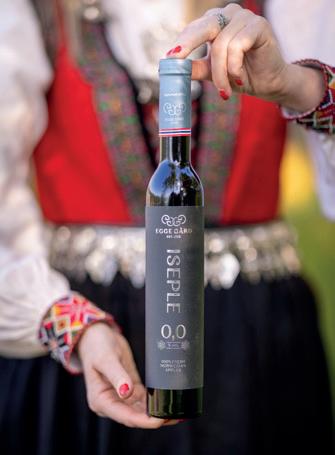
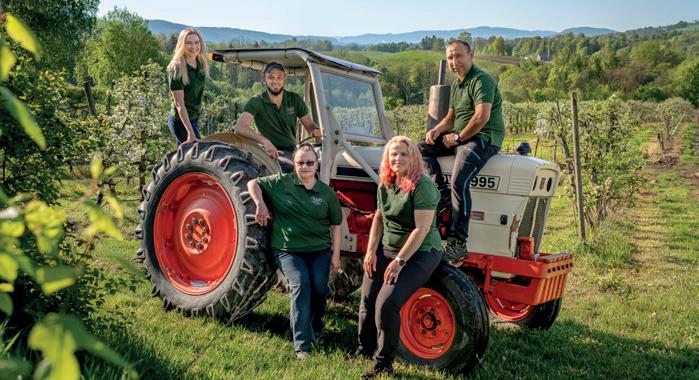
mountains,” Ådnegard continues. “The tougher growing conditions create more concentrated flavours.”
This balance between sweetness and acidity has become one of the defining characteristics of Norwegian cider and fruit wine production, something that Egge Gård believes international visitors increasingly recognise.
The farm’s latest innovation may be its boldest yet. In late 2025, Egge Gård launched what it believes to be the world’s first alcohol-free ice cider. As the demand for premium alcohol-free alternatives continues to grow globally, the team realised that one category was still missing from the market: a true non-alcoholic dessert wine experience.
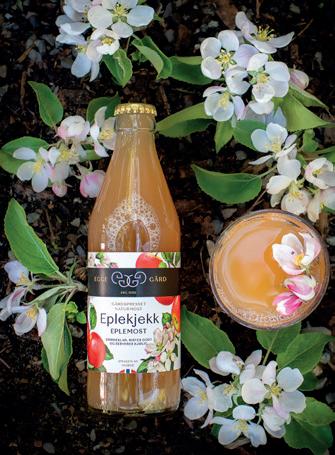
“There were alcohol-free sparkling wines and cocktails, but no alcohol-free ice cider,” the CEO explains. “So, we decided to create it ourselves.” The response exceeded expectations. What they expected to sell over the course of a year sold out in just two months, with exports already expanding into Sweden.
Despite growing international attention, Egge Gård remains remarkably handson. The production team consists of just a handful of full-time staff, supported by returning seasonal workers during harvest season. Every apple is still hand-picked.
The farm also maintains strong ties to the local community. Private customers regularly bring apples from their own gardens to be pressed into personalised juice bottles featuring custom labels and family photos, a tradition that has become surprisingly popular. “There’s always a story connected to someone’s apple tree,” she says. “We love being part of that.”
For Egge Gård, the ambition moving forward remains simple: continue producing world-class quality while bringing Norwegian cider culture to a wider audience. “We hope international visitors leave with the understanding that Norway can create incredible products from nature,” Ådnegard concludes. “We really do have something unique to offer.”
www.egge.as
Facebook: Eggegaard
Instagram: @Eggegaard
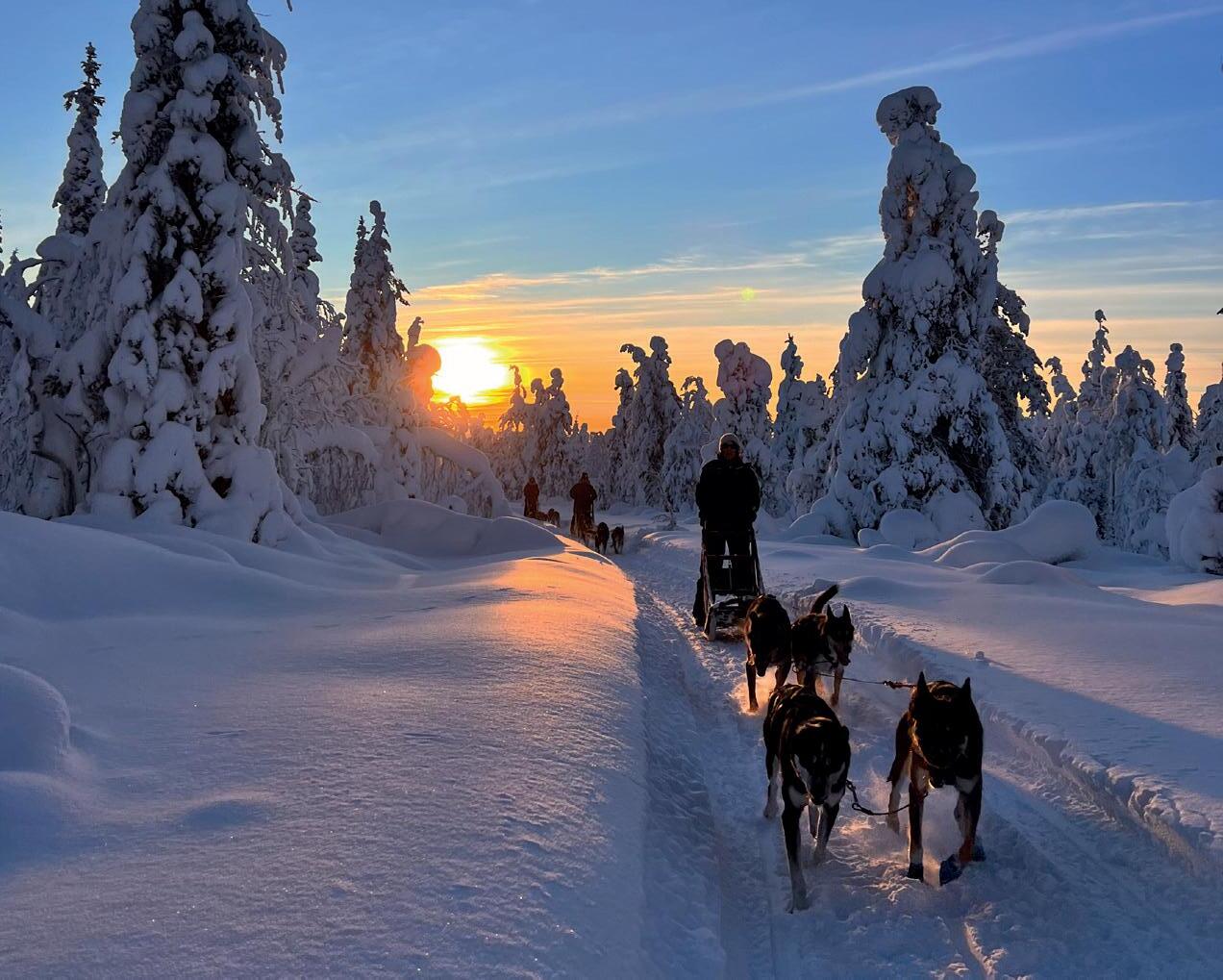
A dog-sled tour is one of the classic ways to experience Finnish Lapland. Since 2011, Powerun Adventures has organised safe husky safaris near the Swedish border, around 150 kilometres inside the Arctic Circle. Whether self-drive or guideled, in winter or summer, the family-run company creates experiences shaped by its dogs, the surrounding landscape and years of racing expertise.
By Molly McPharlin | Photos: Powerun Adventures
A family company owned by two passionate dog-sledders and animal lovers, Riku and Sanna Setälä, Powerun Adventures’ roots lie in racing. Both Setäläs began racing dogs from an early age as a hobby. Their interests grew into a career as they gained knowledge in areas such as animal welfare, nutrition and training, eventually opening Powerun Adventures 15 years ago.
A variety of tours and activities on offer The company offers tours and other dog-related activities. In winter, its busiest season, this includes tours of 10 to 40 kilometres. In summer, cart rides, husky hiking, puppy walks and kennel visits are also on offer. Besides running Powerun, the Setäläs still participate in long-distance races of 250 to 600 kilometres in Lapland and Finnmark,
spending several days on the trail with their dogs. They are among the leading teams in Finland and the Nordic region.
For people not familiar with huskies, excitement is one of the first things guests sense as they step out of their car at Powerun. “We harness the dogs and make the teams ready just before our guests arrive,” says Sanna. “They’re jumping against the harness and looking forward to starting.” After a briefing and driving instructions, it is time to hop on the sled and get going. “Even with the briefing, the beginning always comes as a bit of a surprise – how much you need to control the speed and make sure the sled and the dogs are under control.”
The tour begins on forest trails. “After starting, we head to a hillier section where it’s time to help the dogs go uphill and use the brake going downhill,” says Sanna. “We swap drivers at the halfway mark, so that everyone gets a chance to enjoy the ride sitting in the sled and looking around. After the tour, the dogs are taken care of first, and then we all sit down by the fireplace in our kota, or wooden teepee, to drink warm blueberry juice and learn more about the dogs’ way of life.” When the dogs are a bit calmer, guests can interact with them. People often notice how well-behaved and calm they are, even with strangers.
An ideal way to take in the landscape
The landscape around Powerun Adventures is an ideal area for dog sports. “The forests around us include great trails, and
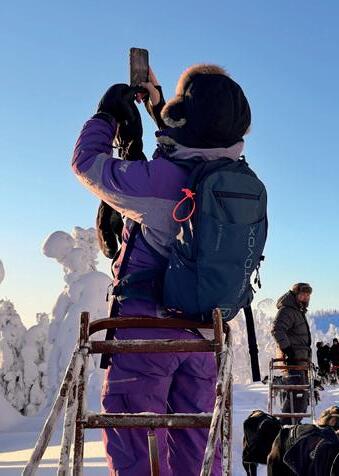
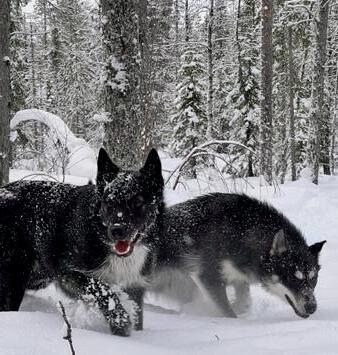
there is a very nice lake about one and a half kilometres away which offers the perfect location for swimming,” says Sanna. “The highest peak closest to us, Niesakero, is surrounded by a beautiful oldgrowth pine forest. We can view it from our yard. On our 20-kilometre tour, we cross over large moorlands with a magnificent view of Ylläs, the highest mountain in the country accessible by ski lift.”
Powerun Adventures has planned safari adventures for visitors from all over the world, even from as far away as Tahiti and New Caledonia. “For many of our guests, it’s their first time in the Arctic region and it can take them a little while to adjust to the climate,” says Sanna. “We collaborate with local companies, hotels and tour operators to make sure visitors have the best experience while
they’re in the region.” This can include families with children, who are welcome to join the 10-kilometre tour, and guests with disabilities, who can enjoy a safe experience sitting in the guide’s sled. The Setäläs prioritise safety before anything else. “It’s not recommended, for example, to take a child under four out during the coldest periods of the year in December or January. For guests, it’s important to let us know about any specific requirements before arrival so that we’re able to ensure a safe trip for all.”
The Setäläs have been involved with Green Activities, a sustainability programme for activity operators, and gained a certification in animal welfare in 2023, which they renew annually. “The dogs’ welfare has been our priority from the beginning,” says Sanna. “Their high quality of life is recognised by our guests. We spend a lot of time with them, raising them from the time they are puppies and teaching them basic skills. Everyone can see how happy our dogs are to run and exercise, simply enjoying the life of a dog and being part of a pack. Developing a good relationship with them is what makes our tours so successful.”
www.powerun.fi
Facebook: Powerun Adventures
Instagram: @power_adventures
Tripadvisor: Powerun Adventures
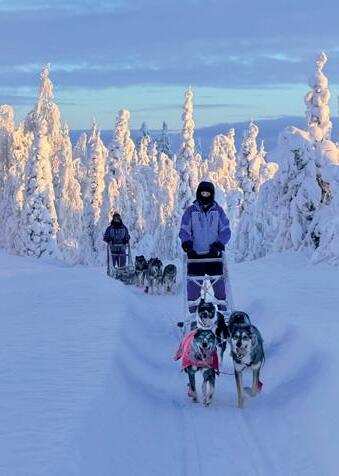

For decades, the skincare industry has focused on creating products that can survive warehouses, shipping routes and years on store shelves. In Stockholm, one Swedish company is asking a different question, challenging the norm of the skincare industry: what would happen if skincare was developed primarily for the skin itself?
Photos: Skinome
That idea has helped Skinome become one of the Nordic region’s most talkedabout skincare innovators and has recently earned the company a nomination for the Nordic Scaleup Awards, which recognises some of the most innovative growth companies in the Nordics.
Walk into most beauty stores, and you will find products designed to remain stable for years. Long shelf life has become an industry standard, enabling
products to be manufactured in large volumes, shipped globally and stored for extended periods before reaching consumers. But according to Swedish skin researcher and Skinome founder Dr Johanna Gillbro, that approach raises an important question: “If a product is designed to survive years of storage, how does that influence the formulation itself? And even more, how does that influence the skin?” The answer became the starting point for Skinome.
Founded in Stockholm, the company has spent years challenging conventional thinking around skincare development. Instead of beginning with the requirements of manufacturing, distribution and shelf life, Skinome starts with the biology of the skin. The result is a fundamentally different approach to skincare.
Products are produced in small batches in Sweden. They are formulated without preservatives and unnecessary additives. Many are stored cold to maintain freshness and stability. Some active ingredients are kept separate until the moment of application, when they are activated in the user’s hand. Skinome has even gone so far as to put the production date on the packaging.
These decisions may seem unusual in an industry built around convenience and long shelf life. For Skinome, they are a natural consequence of a simple principle: develop products for the skin, not for the shelf.
Innovation in skincare is often associated with new ingredients, trends or marketing concepts. Instead, Skinome has focused on rethinking how skincare is made. The company has pioneered a category it calls freshly made skincare and has developed technologies designed to maintain ingredient quality and performance until the moment of use. Among its innovations are formulations containing live probiotics, produced and handled in ways that help preserve viability, and water-free technologies that keep sensitive ingredients stable until they are mixed and applied.
The company has also invested heavily in research on the skin microbiome, an area that has attracted growing scientific interest over the past decade. Rather than viewing skin as a surface to be treated, Skinome sees it as a living ecosystem that should be supported
and respected. This philosophy has attracted a growing audience of consumers looking for effective skincare with fewer ingredients, fewer additives, and a stronger scientific foundation.
Skinome’s headquarters and laboratory are located in Hornstull, Stockholm, where research, product development and innovation continue to take place under one roof. Despite competing in a global industry dominated by multinational corporations, the company remains committed to local development and manufacturing. That combination of scientific ambition and Swedish innovation has earned increasing international attention.
Earlier this year, Skinome was nominated for the Nordic Scaleup Awards, recognising companies shaping the future of Nordic business and innovation. For Johanna Gillbro, however, recognition is not the goal. “The most exciting thing is that our understanding of the skin is evolving rapidly,” she says. “As we learn more, we have an opportunity to rethink old assumptions and create skincare that works
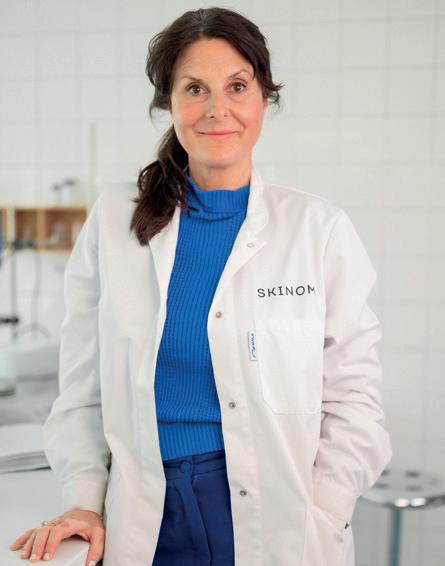
in closer harmony with how the skin actually functions.”
In an industry built around tradition, Skinome is betting that the future belongs to companies willing to challenge it. And from a small laboratory in Stockholm, that future may already be taking shape.
www.skinome.com
Facebook: skinome.official
Instagram: @skinome.official
How Skinome challenges conventional skincare:
• Products made in small batches in Sweden
• No unnecessary additives
• Many products stored cold to maintain freshness
• Active ingredients activated at the moment of use
• Research-driven development led by skin researcher Dr Johanna Gillbro
• Focus on supporting the skin microbiome
• Clinical studies conducted on all major innovations
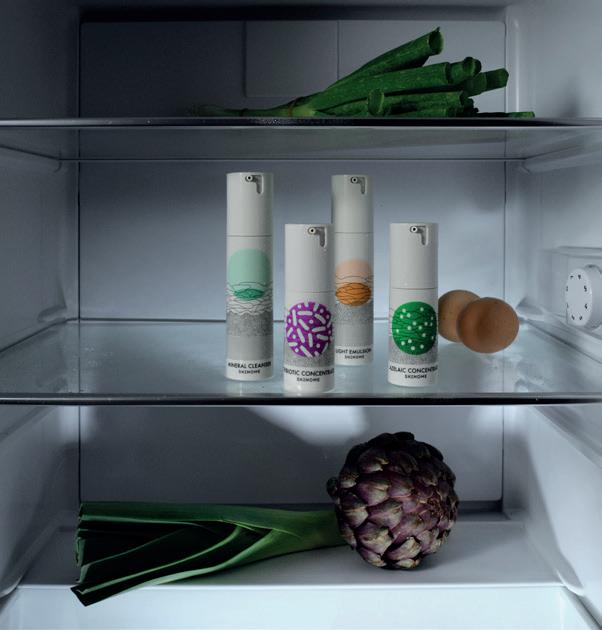



Swedish haircare brand WHY NOT was born from demand within the professional hair industry: repeated requests from hairdressers looking for products that delivered reliable results without compromising on quality. Today, the brand combines professional performance, Scandinavian quality and award-winning design in products used by hairdressers and consumers across the globe.
By Nina Bressler | Photos: WHY NOT
WHY NOT was created by professional hairdressers who repeatedly experienced that existing products failed to deliver optimal results. Though originating in Scandinavia, the brand has gone global and become a powerhouse for hair products around the world, with an extensive range spanning styling and care to colouring and bleaching. “WHY NOT was created to solve a genuine challenge rather than to follow a market trend: to deliver products that meet the highest standards in ingredients and performance,” says Sofia Jackson, marketing manager. “Through a powerful blend of nourishing and strengthening components, our products leave coloured or lightened hair feeling healthier than before the treatment – which is quite a remarkable feat in professional hair care.”
The company has grown quickly, but the team remains agile through a strong core
team and a large network of professional hairdressers who serve as an active testing and evaluation panel. New products are developed through close collaboration between hairdressers, stylists, consumers and product developers, ensuring that they perform equally well in a professional salon environment and at home.
The concept of a Scandinavian salon secret reflects the brand’s distinctive interpretation of luxury. “For us, Scandinavian luxury is rooted in quality, well-being, and the ability to transform everyday routines into moments of self-care, rather than excess. This means paying as much attention to formulation, fragrance, and sensory experience as to performance and results,” Jackson continues.
Quality influences every stage of the process. All haircare, styling and body prod-
ucts are manufactured in Sweden using carefully selected ingredients. The products are developed to meet not only the strict European standards of today, but also the regulations of the future.
Design is equally important. WHY NOT has received international awards for its packaging and brand identity, reflecting the company’s belief that exceptional products deserve exceptional presentation. The ambition is clear: to continue setting the benchmark for professional haircare while staying true to the Scandinavian salon heritage from which the brand was born.
www.whynothair.com Instagram: @whynot_haircare_official

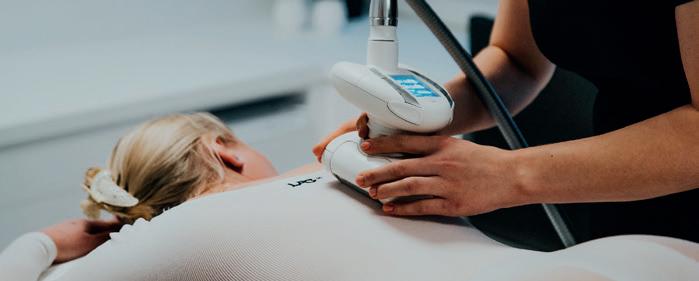

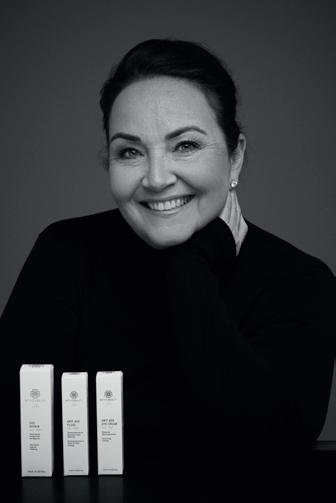
When Elisabeth Lein opened Beth’s Beauty in Bygdøy Allé in 1990, the beauty industry looked very different. Professional skincare products were limited, treatment options were fewer, and the connection between skin health and overall well-being was rarely discussed. More than three decades later, Beth’s has grown from a traditional beauty salon into a multidisciplinary centre where medical expertise, professional skincare and personal care come together.
By Thea Johansen | Photos: Beth’s Beauty
Today, Beth’s consists of several locations and more than 140 employees, including doctors, nurses, gynaecologists, skin therapists and other specialists. “We want people to feel seen, heard and cared for,” says Lein. A principle still reflected in the company’s personal approach. During the interview, Lein is driving back from visiting a customer at home. It is not something she does every day, but when circumstances call for it, she still makes the trip herself.
Across its locations, Beth’s Beauty offers everything from traditional beauty and skincare treatments to aesthetic medicine, advanced laser treatments and selected hairdressing services. Customers can also access professional skincare products through the company’s online store. At the same time, the company has expanded its medical offering, with
consultations, laboratory testing and support for concerns ranging from acne and hair loss to hormonal challenges and menopause.
That broader perspective has become one of the hallmarks of Beth’s. “What perhaps sets us apart the most is the combination of medical expertise, modern technology and personal follow-up,” says Lein. Rather than simply addressing symptoms, the team works to understand the underlying causes of a concern.
For Lein, some of the most meaningful moments come from seeing how that approach affects people’s lives. She recalls parents returning to thank the team after helping teenagers struggling with severe acne regain the confidence to return to school. “For us, skin health is about more than what you see,” she says.
Beth’s is now entering a new chapter through a partnership with Grand Hotel Oslo. Following an extensive renovation, the hotel’s spa will reopen in December 2026 under Beth’s management. With treatment rooms, lounge areas, outdoor terraces and a generous pool area, the new spa aims to become a destination for well-being and lifestyle in the heart of the capital.
More than 35 years after opening her first salon, helping people feel comfortable in their own skin remains at the heart of Beth’s Beauty – a philosophy that continues to shape its next chapter.
beths.no Instagram: @bethsbeautycenter / @beths_medispa
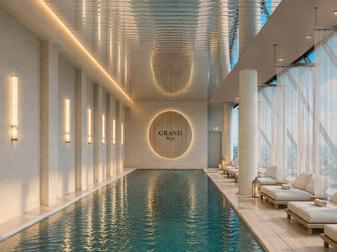
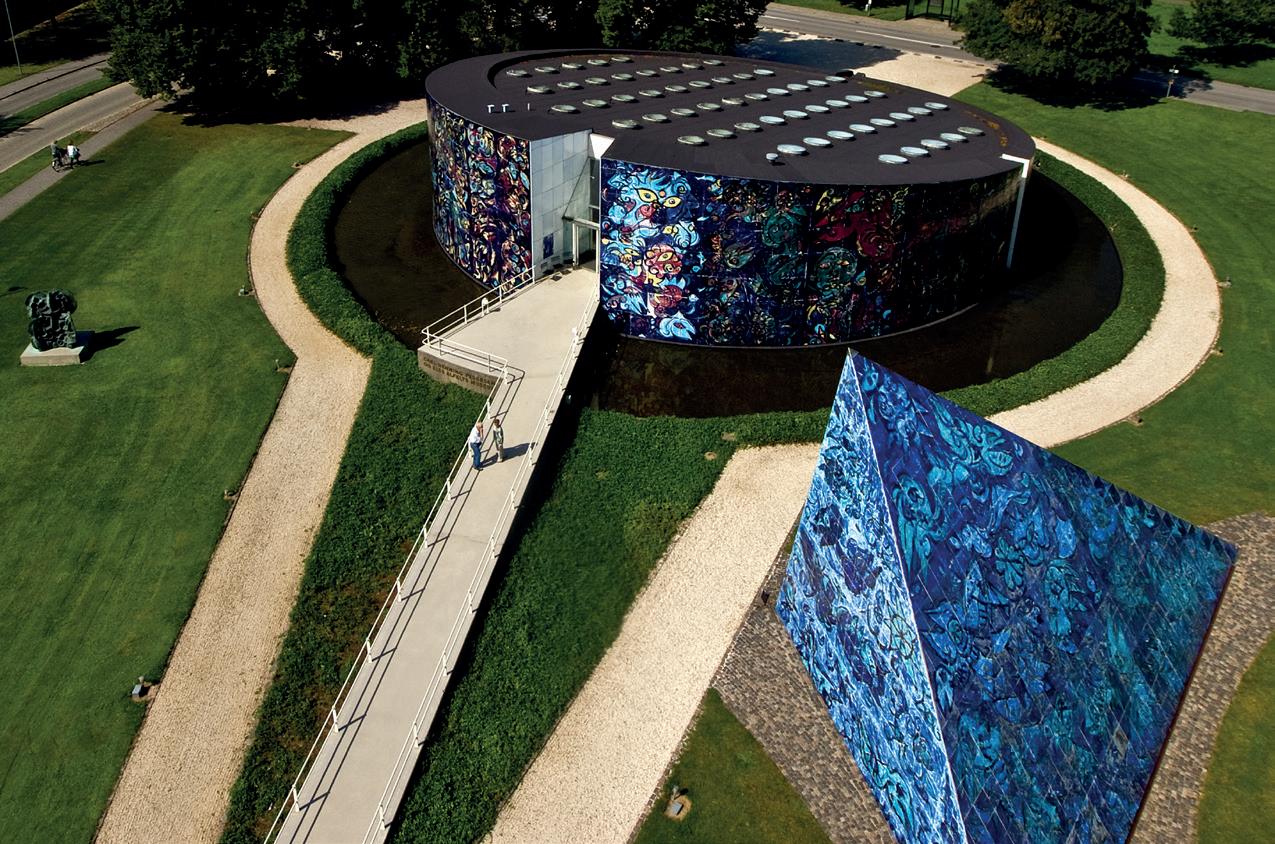
In the heart of Jutland lies a place where art, fantasy and architecture merge with captivating results. In 2026, Carl-Henning Pedersen & Else Alfelt Museum in Herning celebrates its 50th anniversary with a programme centred on accessibility – from unseen works and a travelling exhibition to a new sound installation created together with local people with disabilities and mental health challenges.
By Signe Hansen
Even before stepping inside, visitors at the Carl-Henning Pedersen & Else Alfelt Museum are greeted by spectacular colour displays and immersive art experiences. Created by Carl-Henning Pedersen, the museum’s mosaic facade and vast ceramic mural transcend the boundaries between art, exterior and architecture.
For museum director Lotte Korshøj, the museum’s anniversary is an opportunity
not only to look back, but to return to the founding idea behind the museum. “The strongest thing about the museum is still Carl-Henning Pedersen’s burning wish for art to go out and live,” she says. “He believed that art has an important role to play in society, but for it to have that role, it has to be accessible where people are.”
That ambition runs through the entire anniversary year. It is present in A Gift to the
People, where 67 works by Carl-Henning Pedersen are shown to the public for the first time, in the museum’s work to make its collection and archives digitally available, and in the new immersive sound work UNKNOWN KNOWN, which gives space to voices rarely heard in art institutions.
Dreams cannot be sold
Created as part of the post-war COBRA movement, the vivid, imaginative works of Pedersen and Alfelt continue to resonate far beyond Denmark’s borders. The two artists met in Elsinore in the early 1930s and married shortly after. It was Alfelt who introduced Pedersen to painting, and together they developed unique yet complementary artistic languages.
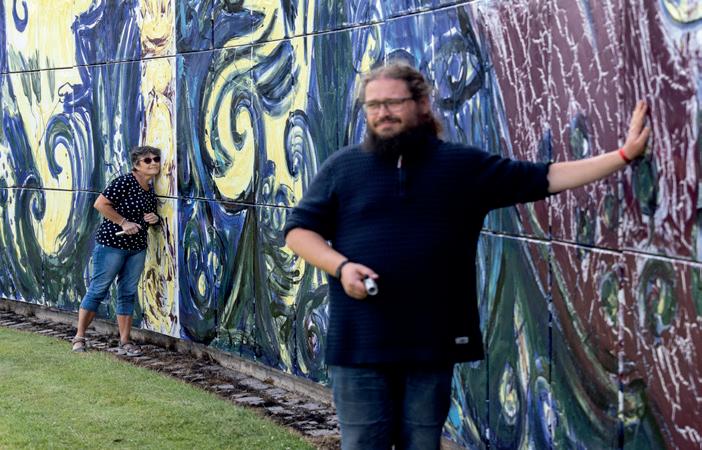
Pedersen became known for his colourful, spontaneous works populated with fantastical figures, animals and symbols. His style was deeply rooted in the idea that art should spring from the subconscious and the free imagination. Else Alfelt, meanwhile, was inspired by
nature and spirituality, creating luminous, poetic works of mountains, stars and inner landscapes.
Founded in 1976, the museum was created thanks to Carl-Henning Pedersen’s wish to donate his art to the public. In
the 1960s, he offered 1,000 of his works to any municipality willing to build a museum around them. When Else Alfelt passed away before its opening, her works were added to the collection, forming a unique artistic dialogue between the two.
Today, the museum houses more than 6,000 works by Pedersen and Alfelt, all intended for popular enjoyment rather than exclusive exhibitions. Pedersen once said that one cannot sell one’s dreams. “For him, it was important that there was no equal sign between economy, market forces and making art,” explains Korshøj. “He did not create for anyone else, and he did not want others to tell him what to make more of because it sold well. I think it almost physically hurt him to sell his works.”
Instead, he imagined something closer to libraries for art: places where works could circulate, be experienced, returned and shared. A Gift to the People
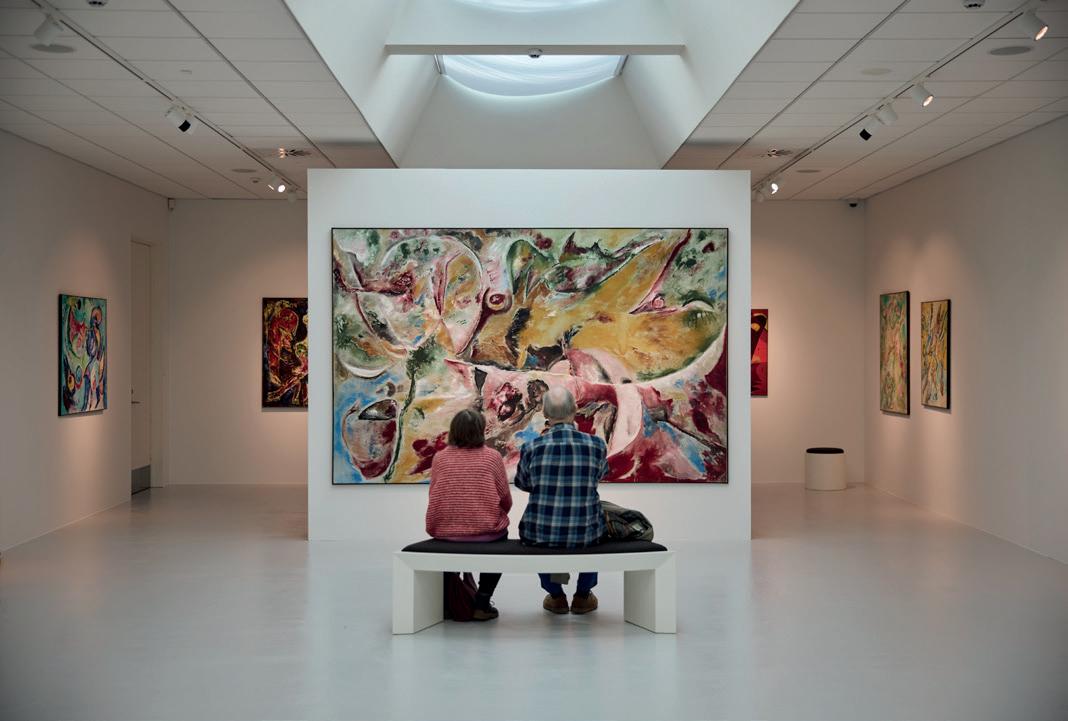
carries that idea forward by bringing hidden works back into public life.
A gift from the archives
Opening in 2026, the exhibition presents 67 previously unseen works by Carl-Henning Pedersen – paintings that had been packed away for decades. The great number of works that still remain unseen is both astonishing and revealing. Pedersen painted almost obsessively throughout his life and, according to Korshøj, could create up to five works a day. Eventually, the sheer number of paintings became impossible to accommodate. Works were taken off their stretchers, rolled, stacked and stored, partly because the artist found it difficult to part with them.
“There are a thousand stories you could tell in connection with an anniversary,” says Korshøj. “But what I find interesting is that the place where Carl-Henning stood, surrounded by all those works, is in many ways where we still stand today. There are still stacks of works that have not seen the light of day.”
The works have been registered, photographed and carefully treated by conservators. Some bear signs of time and
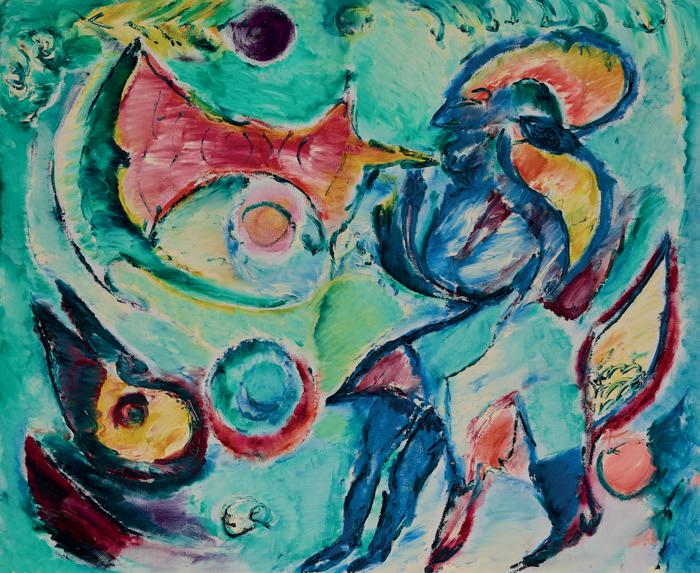
storage, yet that vulnerability is part of their story.
Voices from the unknown
The anniversary year also expands the idea of access through sound. UNKNOWN KNOWN is an immersive sound work
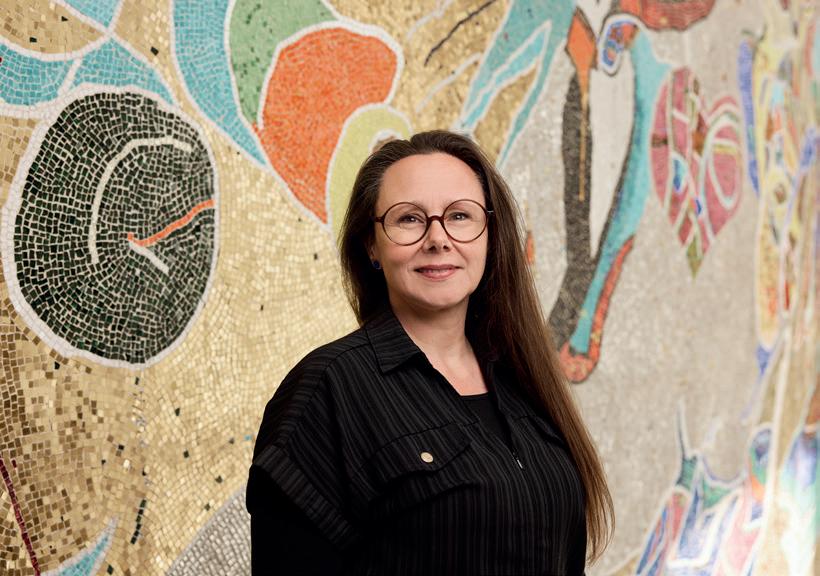
created by musicians Lars Greve and Lis Raabjerg Kruse from Resonerende Rum in close collaboration with local people with disabilities and mental health challenges. Installed in the Angli courtyard, the work enters into direct dialogue with Pedersen’s monumental ceramic relief, surrounding visitors with a 360-degree sound universe under the open sky.
For Korshøj, the project continues the same line of thought that shaped the museum’s founding. Pedersen’s mural was originally given to shirt manufacturer Aage Damgaard’s Angli factory on the condition that it should remain publicly accessible.
“With UNKNOWN KNOWN, accessibility becomes more than physical access,” says Korshøj. “It is also about who gets the opportunity to mirror themselves in art, and who is allowed to be heard. Here, citizens from the disability and psychiatry area are given the microphone and the space they deserve.”
The response has already been strong. At the launch, some of the participants performed with the musicians in the courtyard. “There was a calm that settled over
them while they were part of the work,” says Korshøj. “For those of us who experienced it, it was deeply moving.”
Art travelling out into the world
The museum’s anniversary is also marked beyond Herning. Around 150 works from the collection can currently be experienced in Dimensionen der Freiheit at Kunsthalle St. Annen in Lübeck, Germany. The exhibition opened last year at Kunstsilo in Kristiansand, Norway, under the title Cosmic Dimensions, and is part of a five-year travelling exhibition that brings Pedersen and Alfelt to international audiences.
With works by both Pedersen and Alfelt, the exhibition situates their artistic partnership within a wider European context and underscores the continued relevance of COBRA’s vision of freedom, imagination and artistic exchange across borders. For the museum, the travelling exhibition is another expression of its founder’s intention. “It makes no sense for 6,000 works to remain in our basement,” says Korshøj. “They have to go out and live.”
www.chpeamuseum.dk
Facebook: Carl-Henning Pedersen & Else Alfelt Museum
Instagram: @chpeamuseum
Facts
Carl-Henning Pedersen (1913-2007) and Else Alfelt (1910-1974) were key figures in Danish modernism and the international COBRA movement.
The Carl-Henning Pedersen & Else Alfelt Museum opened in Herning in 1976 and today houses more than 6,000 works by the two artists. In 2026, the museum celebrates its 50th anniversary with accessibility as the central theme.
The anniversary exhibition A Gift to the People presents 67 previously unseen works by Carl-Henning Pedersen.
The sound work UNKNOWN KNOWN is installed in the Angli courtyard, in dialogue with Pedersen’s monumental mural Imagination’s Play around the Wheel of Life.
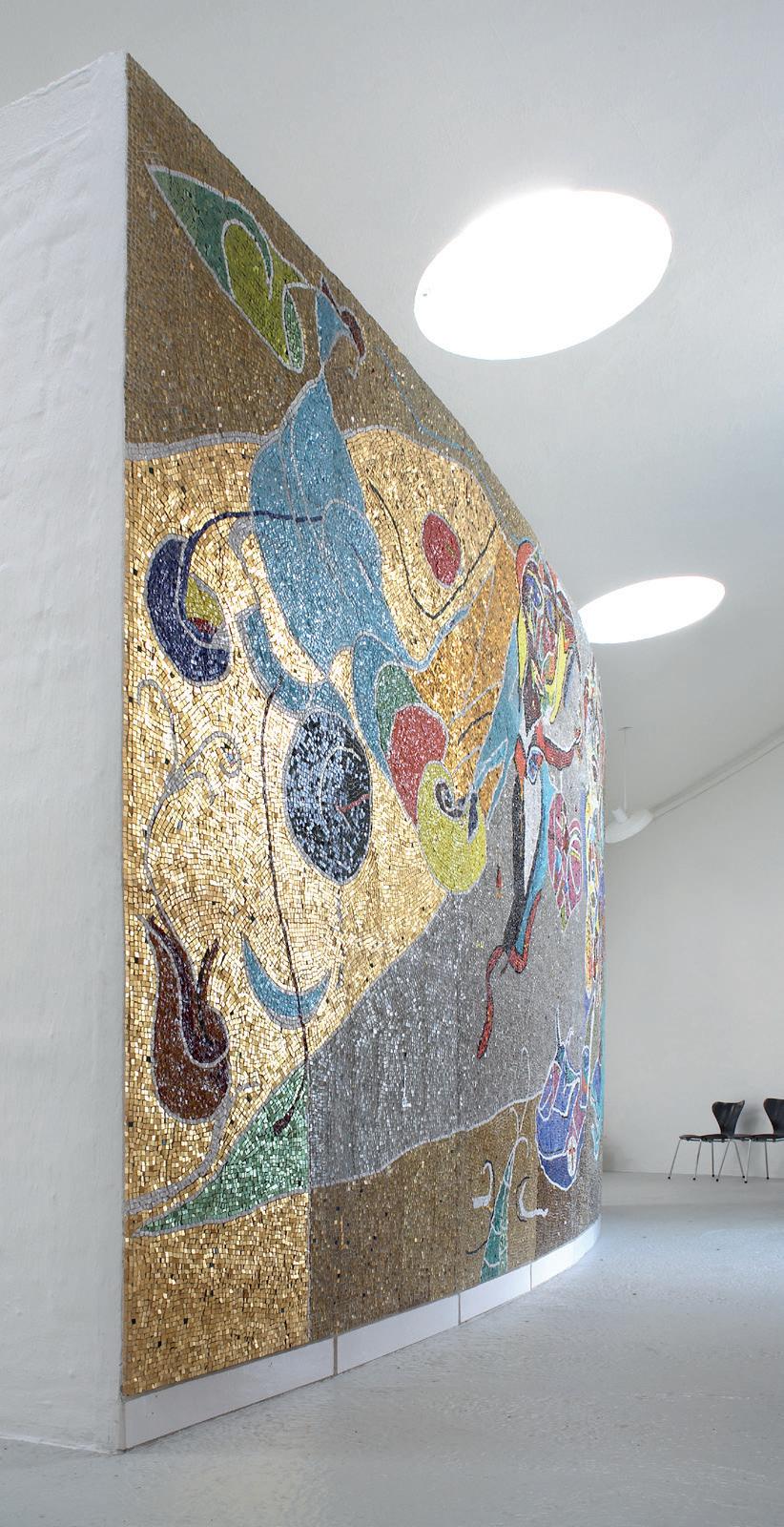
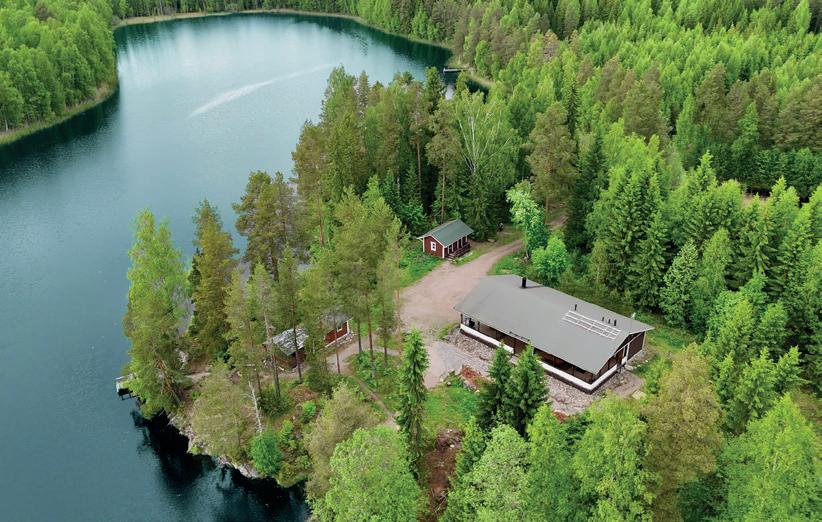
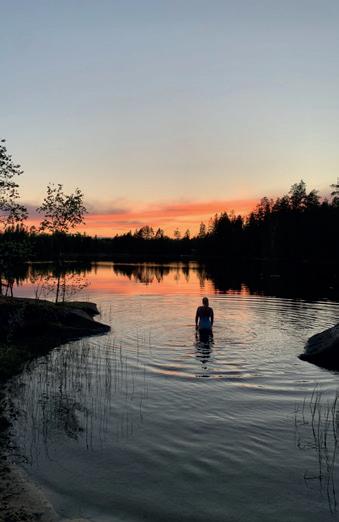
A favourite Finnish pastime is retreating to the countryside, close to water and forests. Located in Häme, in southern Finland, Jokirannantila Estate offers visitors the opportunity to experience an authentic Finnish getaway in one of its private, modern, and comfortable holiday homes.
By Molly McPharlin | Photos: Satu Kekola and Lauri Valkeinen
Owned by the Vainikkala family for over one hundred years, Jokirannantila is run by Timo Vainikkala and his wife Meriitta. The estate comprises five separate holiday homes dotted around pristine lakes with small private beaches, saunas, and jetties. “As hosts, we’re located a short drive away and on hand for guests 24/7,” says Meritta Walden-Vainikkala. “Our visitors love the modern design and comforts of our accommodation and the peacefulness of the surroundings. Many are repeat visitors, and one popular attraction is that pets are allowed in all our homes.”
Three of the villas are spacious enough for larger groups of around eight to ten guests and include large terraces. One is a particularly secluded luxury home on the island of Lammassaari, where there are no other buildings. Two smaller homes
are well suited to intimate gatherings or family stays. Throughout, the interiors follow a clean, modern and comfortable Nordic style, while all accommodation includes rowing boats, sports equipment, books and toys for younger guests.
When it comes to the tranquillity of the area, this can be enjoyed outside and inside all year round. “In summer, there are forests walks, and numerous places for picking berries and mushrooms,” says Walden-Vainikkala. “In winter, you can ski, skate and enjoy the sauna, and afterwards, a dip in the water is enjoyable whether it’s sunny or snowy.” Many visitors also enjoy daily rowing or fishing trips on the lakes. But despite the secluded atmosphere, stores, cafés and modern conveniences are only a 30-minute drive away.
For those looking for a bit of culture or city life, museums, galleries and theatres are awaiting in Tampere and Jyväskylä. Moreover, the nearby town of Mänttä is a well-known centre for art and culture and offers numerous possibilities for trying local cuisine.
In short, Joikrannantila allows guests to truly relax and enjoy themselves, says Walden-Vainikkala. “We love this area and are happy to share it with our guests, ensuring they have beautiful homes to enjoy and a comfortable stay. It’s what we do best.”
www.jokirannantila.fi
Facebook: Jokirannan lomat
Instagram: @jokirannanlomat
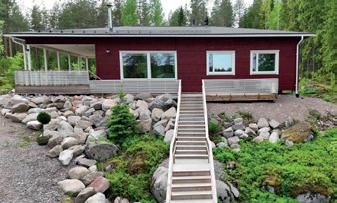
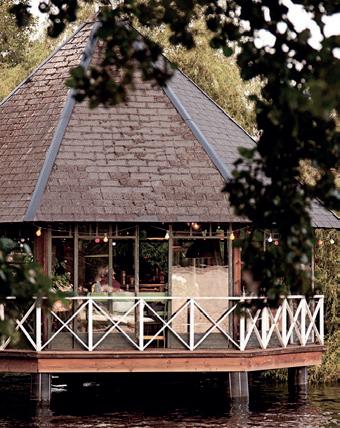
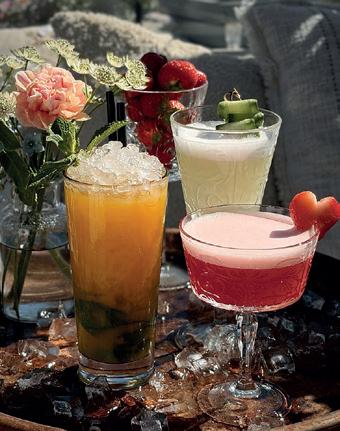
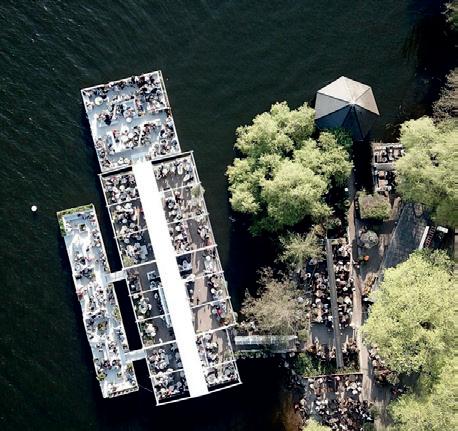
Only a stone’s throw from the capital’s impressive City Hall, in one of Stockholm’s best waterfront locations, sits summer restaurant Mälarpaviljongen. More than a restaurant, it is a mission, a meeting place and one of the Swedish capital’s most loved summer destinations. Here is why.
By Linnéa Mitchell | Photos: Mälarpaviljongen
The site has a long history – the mile-long south waterside of Kungsholmen (King’s Island) was created during the Second World War as part of a greener city landscape initiative. A small pavilion café, still standing today, became the embryo of today’s restaurant.
The summer destination is owned by Arto Winter, who took over 22 years ago. Since then, it has grown into a sprawling venue with 700 seats spread across three floating barges on Lake Mälaren, framed by an elaborately tended garden bursting with colour from spring through to late summer. “It’s a moment of holiday in the middle of the city,” says Winter. “A beautiful natural setting, a fantastic garden, and a welcoming atmosphere for everyone.”
That spirit of inclusion is at the core of everything Mälarpaviljongen does. Soon after opening, Arto hired the restaurant’s first LGBTQ+ asylum seeker – a young man who had fled Uganda. That single
act of solidarity sparked an idea. Together with author Jonas Gardell and QX editor-in-chief Jon Voss, Arto founded the Rainbow Foundation in 2014, an organisation supporting LGBTQ+ rights internationally. Since then, Mälarpaviljongen has continued to employ asylum seekers, believing that work is one of the most powerful forms of integration.
The connection between restaurant and foundation is tangible. For over a decade, a share of the profit on every bottle of Mälarpaviljongen’s own rosé and white wine has gone directly to the Rainbow Foundation. A new sparkling wine, Ikonica, is set to launch this summer – and will continue that tradition.
Flying the rainbow flag proudly, Mälarpaviljongen welcomes everyone. The crowd is famously mixed – from the LGBTQ+ community, friends, families and colleagues, to curious visitors from around the world, especially since Condé
Nast Traveler put it on the map. Live music, DJs, and an annual Pride celebration round off a season that runs from early April to late September.
The menu is equally inviting: classic Swedish fish dishes, chargrilled meats, burgers, cocktails, and, of course, chilled rosé. With its beautiful milieu, important mission, and inspiring meeting place, Mälarpaviljongen really is the perfect cocktail.
malarpaviljongen.se
Facebook: Mälarpaviljongen
Instagram: @malarpaviljongen
Mälarpaviljongen, Norr Mälarstrand, Stockholm. Open April–September.
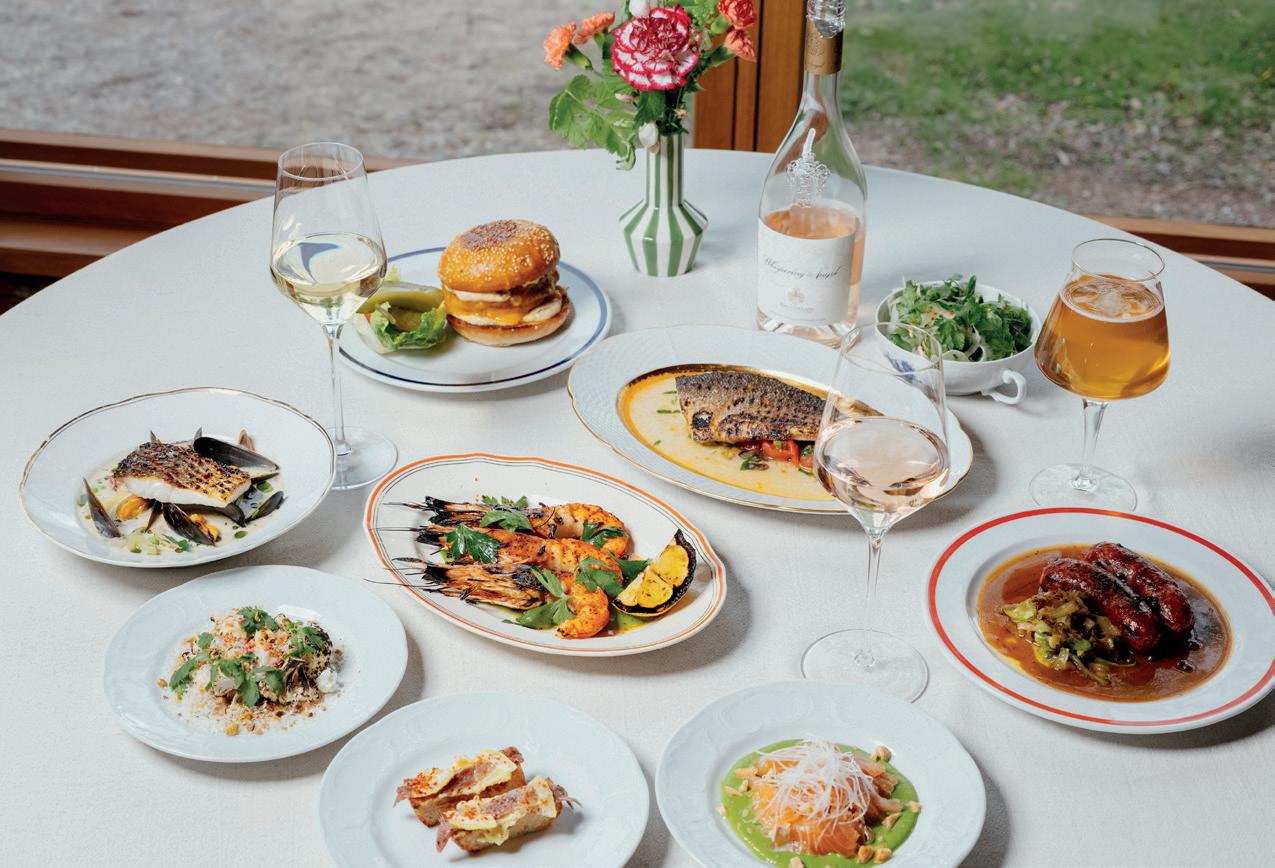
Across from Kruununhaka, one of central Helsinki’s most picturesque neighbourhoods, Tervasaari (Tar Island) is a small recreational island connected to the city by a pedestrian causeway. With views of the sea, the Finnish icebreakers and Uspenski Cathedral in nearby Katajanokka, it is now home to Rogue Rouge, a restaurant serving an appealing mix of Finnish and French cuisine and classic home cooking.
By Molly McPharlin | Photos: Jens Zitting
Rogue Rouge is the creation of Kimmo Kuusrainen and Joona Havisalmi, two Finnish restaurateurs with an extensive background working in restaurants across the city. “This is our first restaurant together,” says Kuusrainen. “The name refers to both the former red warehouse
that houses the restaurant and to us, Joona and me. We’re a bit of a pair of rogues ourselves. Our ambition is quite simple: to serve food and drink that feel right for the occasion, whether that’s a platter of doughnuts and Champagne on Vappu (the First of May celebration in Finland),
or freshly caught perch with new potatoes in summer. We want every meal to belong naturally to the moment.”
A former warehouse with character
Renovated a few years ago, the warehouse was a passion project of Finnish actor Jasper Pääkkönen, also the mastermind behind Löyly, a contemporary landmark building, sauna complex and restaurant which opened in Helsinki in 2016. “When the opportunity arose for new restaurateurs to take over the space, we had to embrace the challenge,” says Kuusrainen. “Its maritime setting gives
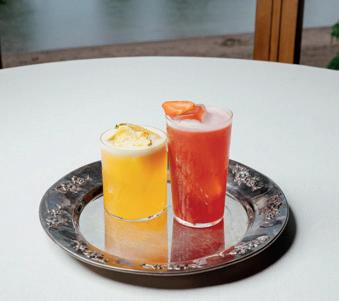
the area a character of its own, a feeling of being away from the city even when you’re right in the centre of it. In Finland, the weather plays a defining role in how people spend their time. Our space offers both a spacious terrace for those seeking sun, and cosy interiors where guests can enjoy a meal and watch an autumn storm or winter snowfall.”
Having worked in many different kinds of restaurants, the pair had a good idea of what they wanted Rogue Rouge to be. “I started washing dishes in a lunch place during the summer as a teenager. I’ve worked in everything from the iconic Helsinki Hotel Kalastajatorppa to small, privately owned restaurants like Hans Välimäki’s Bistro Bardot. We’re trying to take the best practices of we’ve experienced from them all and incorporate into Rogue Rouge,” says Joona Havisalmi.
An oasis in the city centre
From the moment they visited the space for the first time, the two knew that they were going to go for it. “We both got our
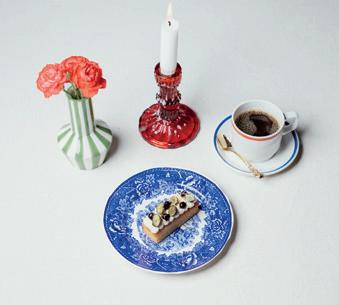
socks knocked off by the beauty of the island, the sea view and the vibe that the 100-year-old building had to offer,” says Havisalmi. “Without even asking Kimmo, I knew we were going to say yes.” Rogue Rouge opened in May 2026 and has had a promising first few months.
Rogue Rouge is in the centre of Tervasaari. A walking path winding through trees and lush greenery around the small island gives a 360-degree view of the sea. The restaurant houses an original log fireplace with a glass wall that offers a water view from every seat in the restaurant. The terrace faces onto the park, where guests can enjoy long Finnish summer days over a meal. The full menu is served both inside and outside.
French cooking, Finnish ingredients
Kuusrainen and Havisalmi both agree that Rogue Rouge is a place to have fun. “We want people to enjoy great wine, food and cocktails,” says Kuusrainen. “Rogue Rouge combines a French kitchen with Finnish ingredients and local
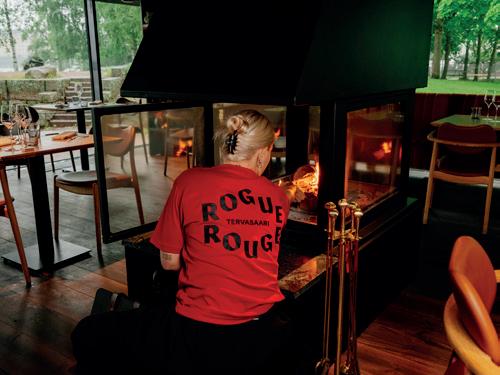
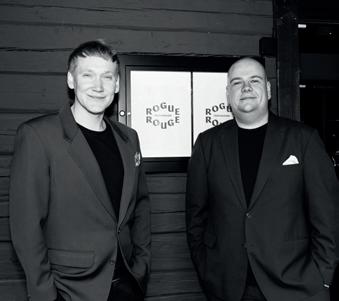
twists. We include seasonal Finnish products on the menu as much as we can. We focus a lot on fish and seafood. For example, our fish and seafood soup is a combination of Finnish salmon soup, bouillabaisse from France and chowder from the US. It has been very well received so far.” Vegetarian and meat dishes are available as well.
Although they take cooking and service seriously, Kuusrainen and Havisalmi insist that they are not very serious themselves. They hope Rogue Rouge will attract more activities in Tervasaari – live music, a sauna scene and an international clientele. But, says Kuusrainen; “We just want people who visit us to feel welcome, heard and respected. To make them smile and laugh, and share moments with loved ones. We’re just the platform for people to enjoy life. As the great Marco Pierre White said, ‘Serve your food hot, serve it quick, and let Mother Nature be the artist.’”
roguerouge.fi
Instagram: @roguerouge.hki
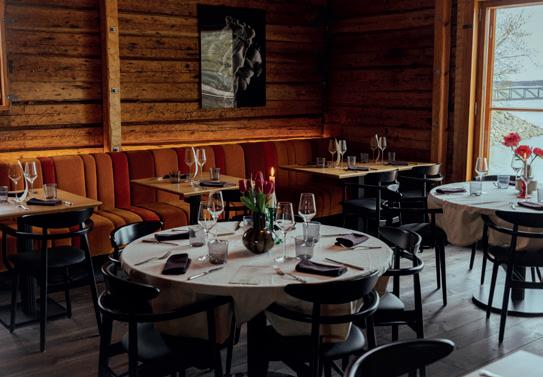
One of Sweden’s most prestigious steakhouses celebrates its 60th anniversary this year. Mando Steakhouse & Bar is nothing less than an institution, with its iconic copper interior, diverse clientele, and nearly two million plank steaks served. When in Malmö, make sure not to miss this restaurant with its well-deserved cult status.
By Malin Norman | Photos: Mando Steakhouse & Bar
In an ever-changing world, Mando Steakhouse & Bar in Malmö is somewhat of a reassuring constant. Established in 1966, the restaurant takes pride in its heritage. “At Mando, you’re in safe hands,” says Marco Antonio, co-owner since 2002. “Here, our customers always know what to expect and they won’t leave disappointed.”
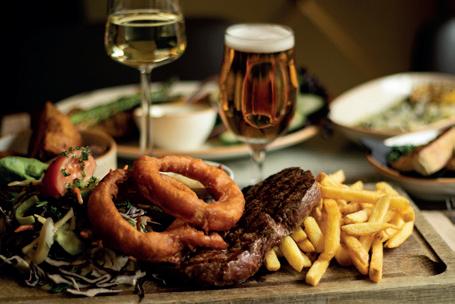
Mando’s founder, Tore Lauritzson, was a well-known entrepreneur. His restaurant in the heart of Malmö, with elegant copper décor by interior designer Yngve Elland and bar stools designed by the legendary Arne Jacobsen, attracted attention from the media and celebrities, and quickly established a loyal and diverse local following.
The menu at Mando has remained pretty much unchanged, still with a focus on serving high-quality locally sourced meat. “We only use premium local produce, mostly from farms in the Skåne region, and we tenderise the meat ourselves,” says Marco Antonio.
The famous Mandoplankan, a steak served on an oak board, is a sure hit. In fact, this dish has been a highlight on the menu since 1975. Currently, around 1.7
million juicy sirloin steaks have been prepared and served on wooden boards with the restaurant’s own béarnaise sauce, fresh mixed salad, crispy onion rings and golden fries.
“Our history is an important part of the concept, and admittedly we haven’t made many drastic changes over the years,” says Marco Antonio. “But we’re also looking to the future with anticipation. For instance, we have fantastic sommeliers and a curated wine list, and we also offer a range of popular weekly cocktails. It’s all about managing, improving and refining Mando for the future.”
This year, Mando celebrates its 60th anniversary. Customers can expect a cult-worthy celebration, for instance with special offerings during Malmö Pride from 1 to 4 July, Malmöfestivalen from 7 to 14 August, and, of course, on the restaurant’s actual anniversary, 12 October.
mandosteakhouse.com
Facebook: Mando Steakhouse & Bar
Instagram: @mandosteakhouse
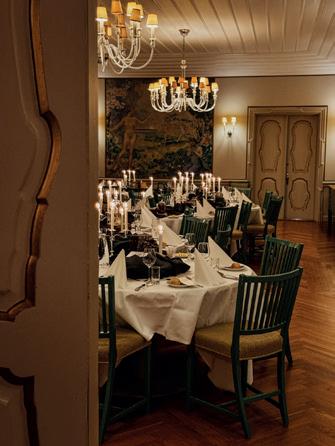
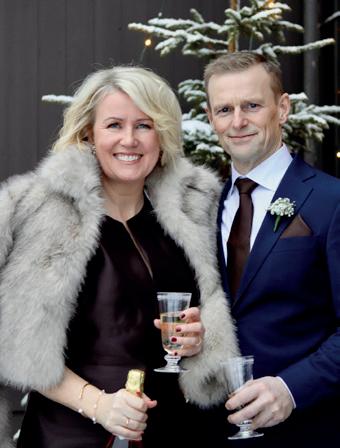
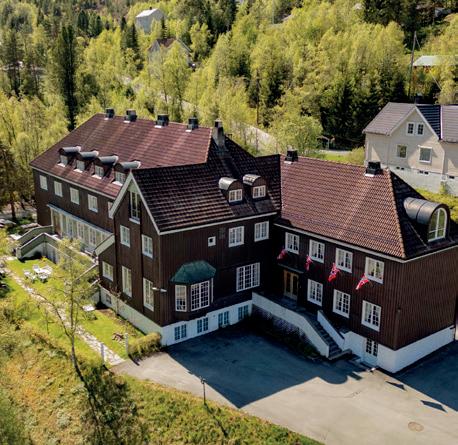
Set in the historic mining community of Løkken Verk in central Norway, Orkla Gjestebolig offers a destination where heritage, hospitality and modern comfort all come together naturally.
By Celina Tran
Surrounded by a landscape shaped by more than 300 years of mining history, the elegant guest house that is Orkla Gjestebolig welcomes conference guests, wedding parties and visitors seeking memorable experiences in extraordinary surroundings.
It was originally constructed in 1916 by Orkla Grube Aktiebolag and has since occupied an important place in the story of Løkken Verk. For many years, it was known as Orkla Hotell, and functioned as a gathering place for both local residents and visitors. Important meetings were held here, celebrations took place within its walls, and the house became a social hub in the community. Today, the historic property continues to play a meaningful role while preserving its rich cultural significance.
“Orkla Gjestebolig is an industrial heritage landmark,” says Siv Åse Syrstad, managing director of Orkla Herd. “Our role today
is to create activity in the house and communicate the rich history of both Orkla and Løkken Verk.”
When arriving at the guest house, visitors step into a stately yet inviting atmosphere. The property offers 25 guest rooms alongside meeting facilities, a banquet hall and several comfortable lounges that create spaces for both larger and more intimate gatherings. While Orkla Gjestebolig has a strong focus on the corporate market, providing ideal settings for seminars, meetings and company retreats, it has also become a sought-after destination for private celebrations. “We facilitate celebrations, conferences and events in beautiful surroundings,” Syrstad explains. “We are also an ideal location for anniversaries and different kinds of celebrations, and the perfect wedding destination.”
Food is essential to the experience. Rather than offering a standard concept, each menu is tailored according to the event
and the guests themselves. Seasonal ingredients, local traditions and modern flavours form the basis of every culinary experience. “At Orkla Gjestebolig, great food experiences are at the centre of everything we do,” says Syrstad. “We tailor every menu to each occasion.”
Whether for a peaceful escape or a memorable celebration, Orkla Gjestebolig offers warm hospitality, attentive personal service and a setting rooted in local history. In doing so, it continues to support the surrounding community while preserving an important part of Norway’s cultural heritage.
www.lokkenverk.no
Facebook: Orkla Herd Instagram: @orklagjestebolig
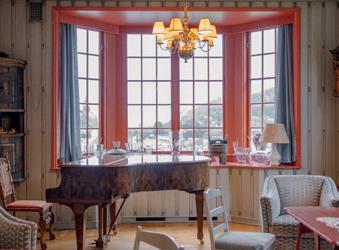
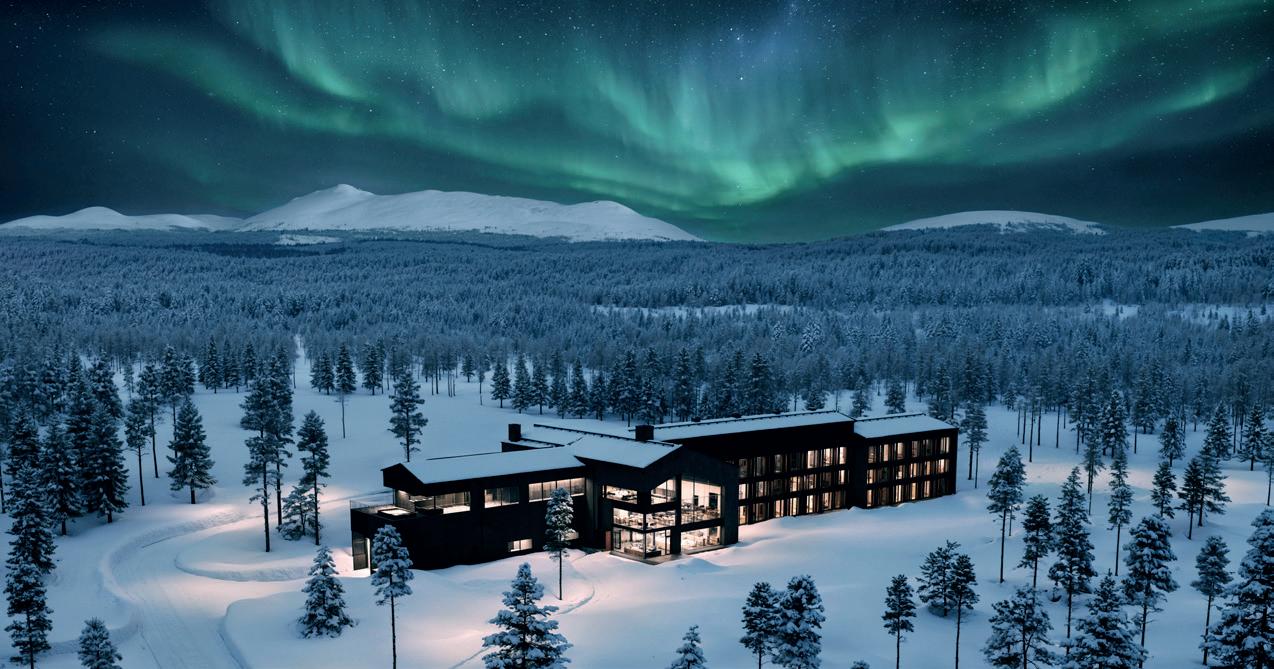
Opening in northern Finland in December 2026, Arcora Boutique Hotel & Villas brings together refined accommodation, private villas, dining, wellness and guided Arctic experiences in the lakeside village of Torassieppi. Owned by Harriniva Hotels & Safaris, a family-run travel company , the aim is not simply to offer accommodation, but a complete luxury experience built around Lapland’s nature, silence, purity and Arctic atmosphere.
By Molly McPharlin | Images: Arcora Boutique Hotel & Villas
Arcora Boutique Hotel & Villas is located in Torassieppi, about 17 kilometres from the centre of Muonio and close to Pallas-Yllästunturi National Park.
The Arcora concept combines boutique suites, private villas, a restaurant led by an award-winning chef, an artisan bakery and wellness facilities. “Our aim is not simply to offer accommodation, but a complete luxury experience built around Lapland’s nature, silence, purity and local character,” says Joonas Saarinen, head of marketing at Harriniva.
A destination built around nature Lapland’s nature will be at the heart of Arcora, with the fells of Lapland
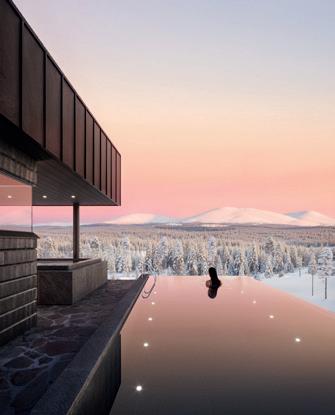
surrounding the property and Pallas-Yllästunturi National Park nearby. During winter, visitors can enjoy reindeer safaris, husky tours, snowmobiling and snowshoeing, while summer brings hiking, swimming in quiet lakes, sauna and the midnight sun. As Saarinen puts it, these are all ways to connect with the local way of life.
Calm Nordic design and a relaxed atmosphere guide the interiors at Arcora Boutique Hotel and its villas. Details are carefully considered, from soft textiles and lighting to a strong connection with the surrounding natural landscape. The aim, Saarinen says, is to create private, peaceful spaces. “We want guests to be able to experience Lapland’s nature up close while enjoying complete comfort. Arcora will be suitable for anyone looking for a refined and quietly luxurious experience in Lapland – couples, friends, families and travellers who value privacy.” Accommodation includes floorto-ceiling windows with views into the
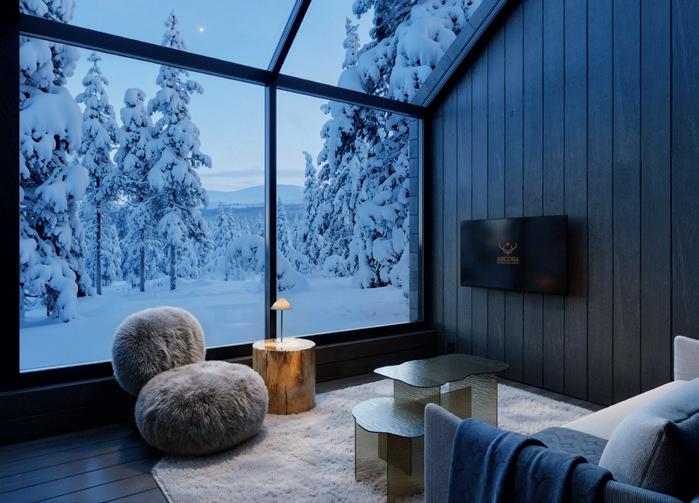
Nordic landscape. Selected suites and villas include private saunas, while all accommodation features refined Nordic design, premium amenities and Arctic gear for different activities. Most guided experiences can begin directly at or near the resort, with selected excursions arranged with a short transfer.
Dining shaped by Lapland’s seasons
Arcora’s culinary offering will also open in December 2026, led by acclaimed Finnish chef Arto Rastas. Inspired by local northern ingredients and craftsmanship, the dining options will include Arcora Lobby Bar & Bakery, serving
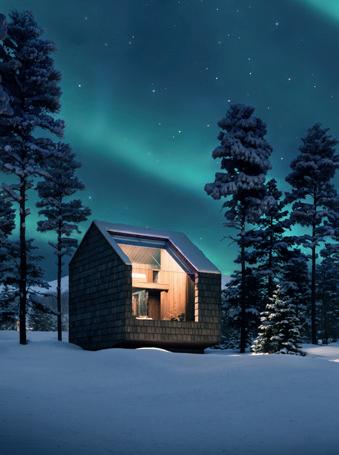
freshly baked artisan breads and pastries, Pyry Champagne Bar, overlooking the surrounding landscape and forests, and Restaurant 8, the main restaurant concept inspired by Lapland’s eight seasons. “The aim is to create a restaurant experience that is an essential part of Arcora’s luxury concept, not simply an additional hotel service,” says Saarinen.
An escape from urban life
Arcora’s location is part of its appeal. Set in Torassieppi in Muonio, north of the Arctic Circle, the hotel can be reached via Kittilä Airport, about 50 minutes away by car, or Enontekiö Arctic
Airport in Hetta, around an hour’s drive. Its distance from larger towns is not a drawback, Saarinen says, but central to the experience: a place where guests can encounter the way of life in the fells of Lapland, the history of reindeer herding, local nature and the rhythm of the Arctic seasons. “The cultural strength of the area lies in its heritage, relationship with nature and peaceful surroundings,” he says.
The hotel and villas are designed for international and domestic luxury travellers seeking privacy, tranquillity, high-quality accommodation and a complete Lapland experience. Guests are expected to arrive from around the world to experience Lapland’s nature.
“The UK is an especially important market for Lapland travel, and Arcora will appeal to travellers looking for a highend alternative to more traditional luxury destinations,” says Saarinen.
In the future, the goal is to build Arcora into one of Lapland’s most distinctive resorts – a place where international and domestic guests can experience Lapland’s nature, silence and seasons in a refined way, while remaining genuinely connected to the local environment.
www.arcora.fi
Facebook: arcoraboutiquehotelandvillas
Instagram: @arcora_lapland
YouTube: @arcoralapland
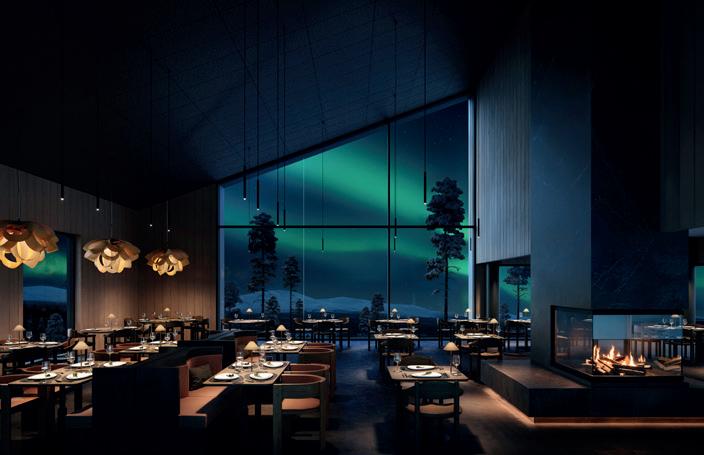
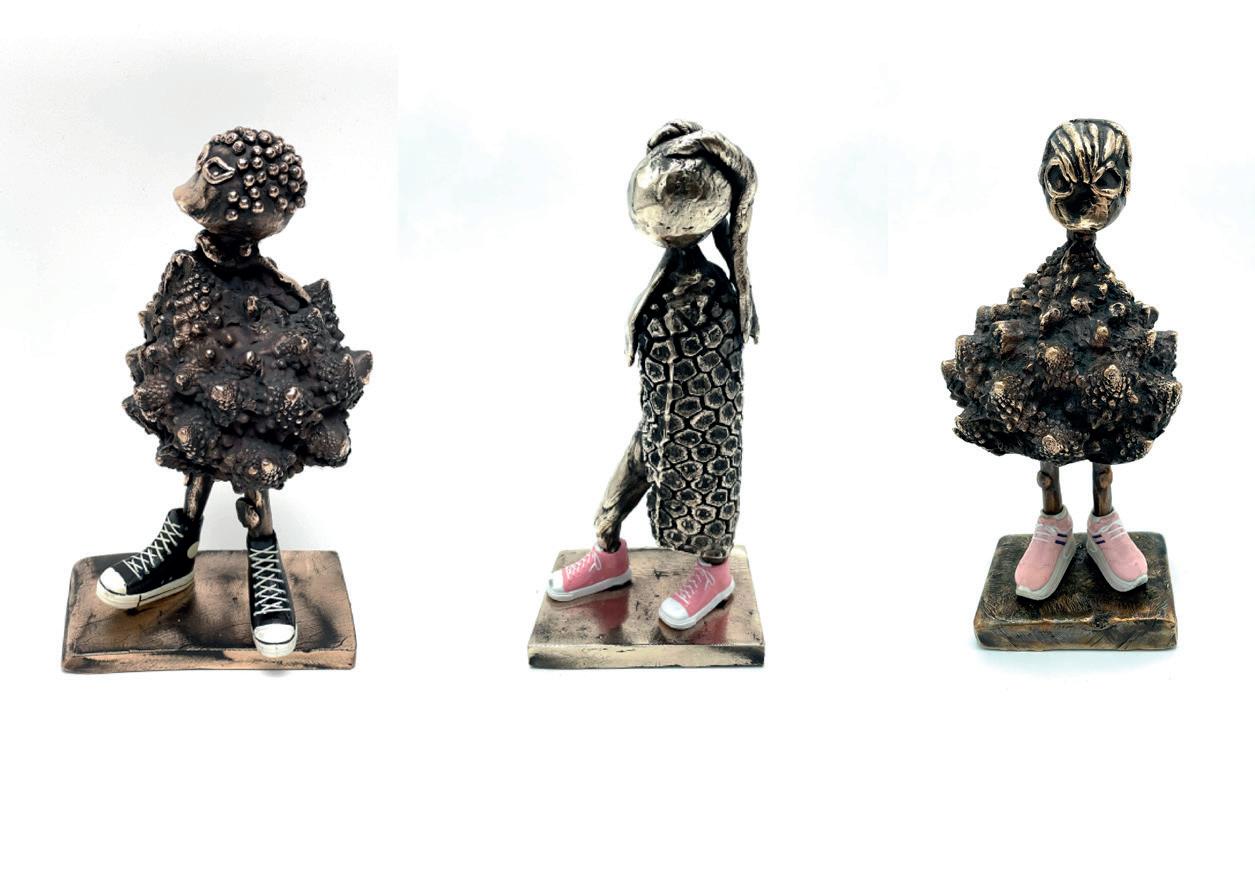
Charlotte Tønder believes that every sculpture will one day stand alone with its story. That belief demands exceptional craftsmanship – and a commitment to creating art that truly means something.
By Signe Hansen | Photos: Charlotte Tønder
Most artists spend a lifetime refining their craft. Charlotte Tønder chose to expand hers. Today, she works full-time as an artist, exhibiting through galleries in Denmark and internationally. Already an established visual artist, she made one of the boldest decisions of her career later in life by learning and mastering the demanding craft of bronze casting. For Tønder, however, bronze is never just about the material – it is about creating stories that endure and inspire long after her sculptures leave the studio.
For more than 25 years, Tønder has worked with art, first as a painter alongside a career in sales and later as a gallerist and artist in her own right. Yet her
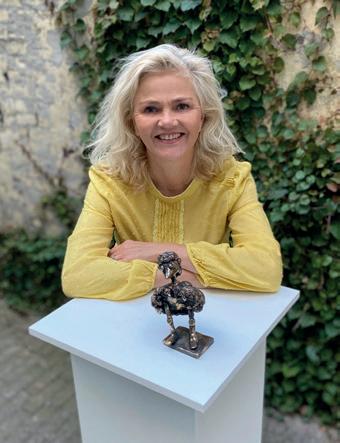
debut as a bronze sculptor came relatively late in life. Rather than seeing it as a limitation, she threw herself into a new, physically demanding craft with curiosity and determination. For her, the move into bronze is also a reminder that age does not have to narrow ambition. It can open a new chapter. “Bronze has its own will,” she says. “It’s hard, dangerous and physically demanding, but that resistance is part of what attracts me.”
Although she still paints, bronze has become the centre of gravity. “Painting has a softer, more feminine process,” she says. “With bronze, it’s 1,200 degrees, fire, angle grinders, polishing, smoke and bronze dust. It’s hard on the body, and there’s something a bit badass about it as a woman.”
High-intensity tools and molten metal
Becoming a bronze artist is not straightforward. There is no formal bronze
school, and aspiring artists have to learn directly from the few bronze casters willing to share their methods.
Tønder’s own route into bronze began when she met an artist who became her mentor and introduced her to the demanding craft of casting. Over the past eight years, she has immersed herself in the process, first working with the traditional cire perdue, or lost-wax, technique, and now increasingly with sand casting, which gives her a more direct and spontaneous way of working.
The shift to bronze casting also led to a larger change in her artistic career. After 12 years as a gallerist for other artists and her own art, she decided to close the gallery in the centre of Copenhagen and move her studio to her home in Gentofte. “I closed the gallery business because I wanted to concentrate on being an artist and go deeper into the processes,” she explains.
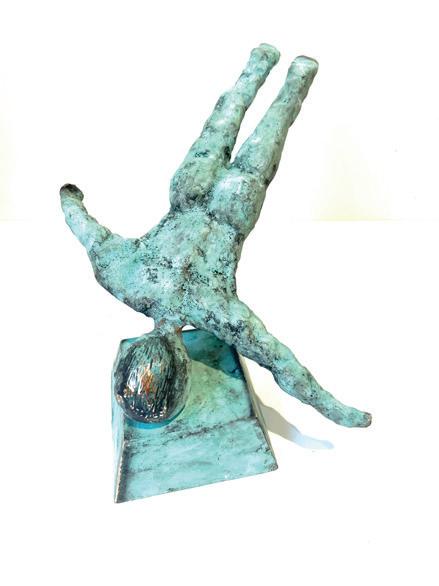
fund. The initiative brought a wide range of art into the beautiful church rooms, where spectators could view both the art and the churches from the inside.
Tønder’s sculptures appeal to a broad audience of collectors and art lovers. Through galleries, international exhibitions and social media, her work reaches people who are drawn to its unique blend of humour, strength and storytelling.
The lasting nature of bronze remains at the heart of Tønder’s fascination with the material. In a time shaped by speed, social media and fleeting impressions, she is drawn to a medium that can outlast both the artist and the moment. “Bronze can stand for posterity,” she says. “It’s a metal that lasts, and I have enormous respect for that. A work will one day stand alone with its story, and that obliges me to make good craftsmanship, and to want something with my art.”
Tønder’s artistic career extends far beyond her studio. Alongside numerous gallery exhibitions and international art fairs, she has completed prestigious commissions for organisations including Danske Bank’s art association and Steno Diabetes Center Copenhagen. She is also the founder of Kunst i Kirke, an ambitious four-year cultural initiative that brought together 10 churches and around 80 artists with support from Gentofte Municipality’s cultural
Tønder’s bronze figures often balance classical form with something contemporary and playful. Some works carry the body language of movement and courage; others use humour to loosen the historical weight of the material. She has made figures in sneakers, running, jumping or leaning into the unknown, using bronze to capture both physical energy and psychological states.
Although bronze has become the main focus of her practice, Tønder still paints.
For Tønder, that obligation is not heavy in a negative sense. It is what gives the work meaning. Her sculptures may carry humour, strength, vulnerability or social reflection, but beneath them is a clear wish to create something that touches people and keeps living with them.
Explore more: www.charlottetoender.dk
Facebook: Charlottetoender
Instagram: @gallerycharlottetoender
Mobile: +45 2224 1199
E-mail: galleri@charlottetoender.dk
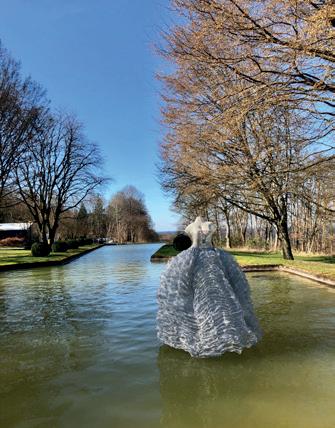
As a sculptor artist, creative and project leader, Lisa Abelsson moves fluidly between the roles, just like her art. Her practice spans iron and aluminium, blending hard industrial form with soft, historically charged references to clothing, dance and human presence. From castle residencies to major outdoor installations, her work is rooted in both personal memory and a deep engagement with art history and lived experience.
By Nina Bressler | Photos: Lisa Abelsson
After starting her artistic journey relatively late, while raising three children, she gradually found her way into sculpture through life drawing sessions while living in Stockholm. What began as curiosity evolved into a sustained practice in sculpture, eventually leading her to a career with exhibitions across Sweden. Early influences include classical sculpture such as Rodin, as well as black-and-white film imagery and 1950s fashion – aesthetics she has injected into her distinctive artistic expression.
Her signature works combine iron torsos with flowing aluminium dresses, creating striking contrasts between strength and fragility. The bodies are rendered in hard iron, while the garments appear light, often mistaken for fabric at first sight though built from aluminium thread. The materi-
als are intentional: aluminium resists outdoor conditions, allowing the sculptures to exist in public space over time. The result is a visual tension between hard and soft, where shadows, movement and detail become central.
A strong interest in dance, flamenco and opera informs her work, especially in pieces highlighting strong, self-reliant women. “There’s a consistent thread running across all of my work: it’s about using sculpture as storytelling, where every dress, body and gesture carries a human history beneath its surface. Art is about life and my art is about the human experience, by capturing our essence in shape and sculpture,” says artist Lisa Abelsson.
Recent years have been busy, with exhibitions at galleries across Sweden and
a major outdoor display at Norrvikens Trädgårdar in Båstad on the Swedish west coast. 2026 will continue in a similar manner, with a major exhibition at Österlens Museum running from 29 November to 15 February 2027, with further exhibitions at Kiviks Konsthall and Ulriksdals Trädgård starting in September.
www.lisaabelsson.com Instagram: @lisaabelssonart
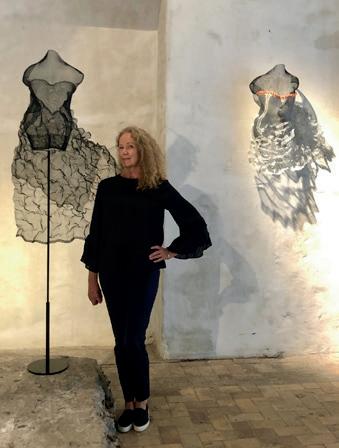
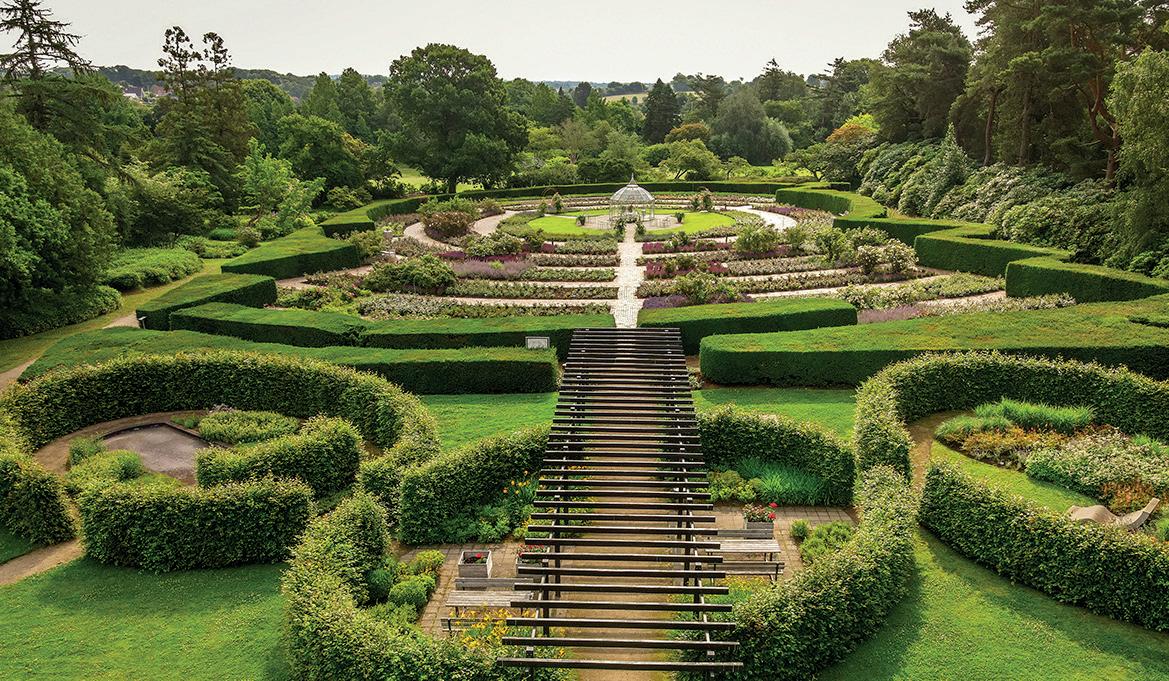
In Kolding, visitors can travel from Japan to North America without leaving southern Denmark. Geografisk Have is a 14-hectare botanical garden where thousands of trees, shrubs and flowers are arranged according to their geographical origin. With prize-winning roses, rhododendrons, camellias, playgrounds and animals, it is both a living plant collection and an unusually family-friendly green escape.
By Signe Hansen | Photos: Geografisk Have
The roots of Geografisk Have go back more than a century, to Danish plant pioneer Aksel Olsen. Fascinated by the many unfamiliar plant species being discovered in East Asia, he began testing whether plants from distant regions could survive the changing Scandinavian climate. His main ambition was to give Danes access to a wider variety of plants for their gardens, helping plant interest and gardening joy take root and grow.
Inspired by other gardens, he arranged the plants geographically, allowing visitors to move through the world by following the garden’s winding paths. One moment, visitors can wander through the calm of the Japanese garden; the next, they are standing among tall conifers in the North American area or exploring plants from China, Korea and South America. “What is so fantastic about the
collection is that no two days are the same,” says director Lene Holm. “There are always new plants in bloom, new colours in the trees, or something happening in the animal enclosure.”
Although Geografisk Have is a serious botanical garden, it is not only for plant specialists. Around a quarter of its visitors are children, and the park includes playgrounds, a popular animal enclosure
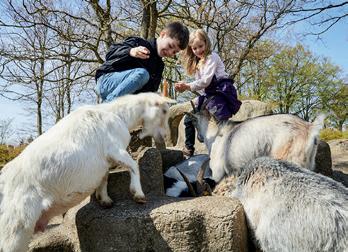
with goats and Kolding Miniby, a miniature version of the town as it looked in the 1860s.
The feature attracting the most attention, however, is the rose garden, which draws visitors throughout July and well into August. “It is an absolute pearl in the garden,” says Holm. “People come for the colours and the scent, but also to sit down with a coffee and simply enjoy it.”
Earlier in the year, the camellia collection brings spring into the greenhouse in February and March, while the many rhododendrons extend the flowering season from late winter into summer.
Despite its advanced age, the garden continues to develop and renew. In 2027, a new sustainable main building, Den Grønne Portal, is set to open, providing better facilities for visitors yearround. For Holm, the aim is simple: to make it easier for more people to discover a garden that changes with every season.
www.geografiskhave.dk
Facebook: Geografisk Have
Instagram: @geografisk_have
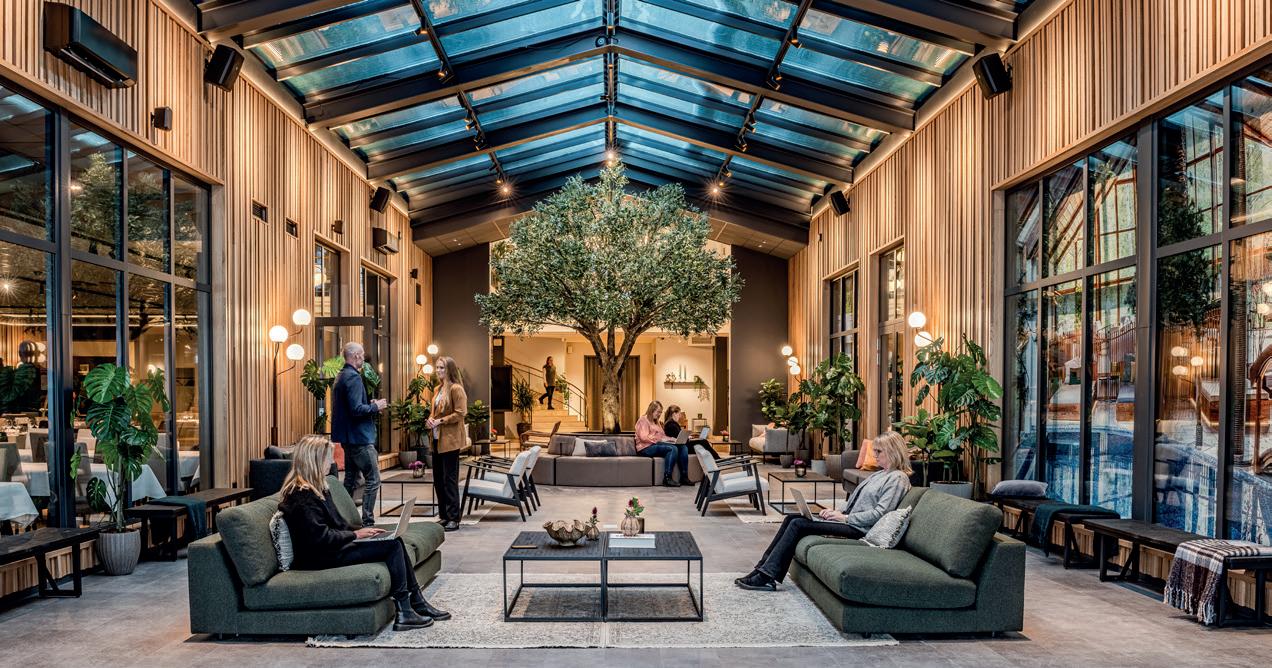
Two of Sweden’s leading conference hotels offer premium meeting experiences. While Nova Park Conference is modern, efficient and currently expanding with developments including a new glass lounge, the smaller and cosier Steningevik is beautifully located by Lake Mälaren, for a more serene stay. What they have in common is a focus on quality, food and attentive service – for fruitful and memorable conferences.
By Malin Norman
Located a short drive from Arlanda Airport, Nova Park Conference meets all the modern requirements that meeting participants could possibly have. “Nova Park is an ideal conference facility for meetings, whether it’s just about getting away from the office or gathering colleagues from all over the world,” says Magnus Ericsson, CEO at Nova Park and Steningevik.
“We have conference rooms for both small and large groups, smart technology that works smoothly, dinners and meals
that make your mouth water, fun events and kick-offs, and last but not least: our fantastic, creative and professional staff who do everything they can to ensure that your company hosts a conference you won’t soon forget.”
Built in 1990, Nova Park is continuously developing its facilities. In an ongoing three-phase development, its impressive new glass lounge and restaurant have already opened, with space for up to 300 guests. Next year, two new conference rooms and a space for socialising
will open, and after that, another 65 hotel rooms will be added. “Even though these are turbulent times in the world, we’ll continue to develop our concept and keep investing for the future,” says Ericsson.
The 4 Star Superior hotel has 117 guest rooms and can accommodate up to 300 participants in the meeting rooms. At Nova Park, the approach is that nothing is impossible: care, warmth and guest satisfaction are at the core. “Our goal is to always exceed your expectations,” says Ericsson. “You’ll notice this in details such as the temperature in the venue, the puffy pillows in the room or the real berries in the jam. Things that might be hard to put your finger on, but that make all the difference.”
Nova Park’s spa, the Water Lounge, is an oasis of calm. Guests can relax in the
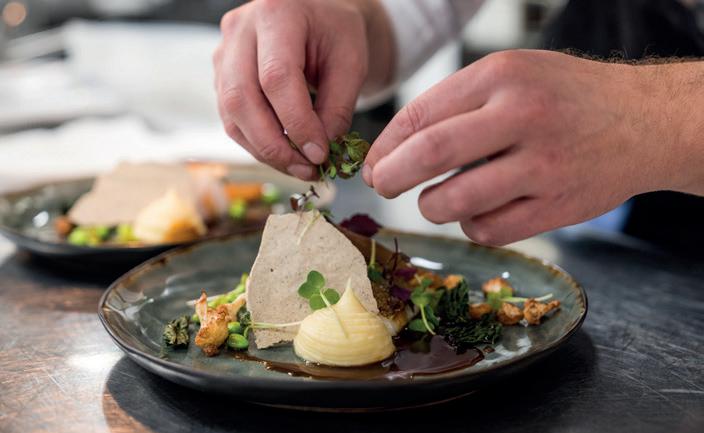
lake-shaped pool, enjoy the hammam sauna or the indoor and outdoor Jacuzzi after the day’s conference, or just relax by the five-metre-high fireplace. The Water Lounge is also a flexible conference room and many groups choose to hold the last meeting of the day there, in a tranquil environment that creates a positive feeling and cohesion in the group.
The hotel’s ice bar is also a much-appreciated, and perhaps unusual, meeting place with a constant temperature of minus seven degrees.
Peace and quiet at Steningevik
The slightly smaller Steningevik is an extraordinary conference hotel, where the peace and quiet of the beautiful
surroundings by Lake Mälaren inspire guests. With 61 guest rooms and capacity of up to 100 people in the meeting facility, this hotel is the perfect place for more intimate conferences, just eight minutes from Arlanda Airport.
“Steningevik has everything from wellplanned conference rooms to elaborate world-class meals, homemade treats, a relaxing spa, and a comfortable bed to sleep in,” says Ericsson. The CEO is particularly proud of Steningevik’s culinary offerings. “Our chefs and dining room team aim to serve new flavours and memories to last a lifetime. We know that good food is crucial to the success of a conference, and regardless of size we serve a fantastic dining experience with influences from around the world.”
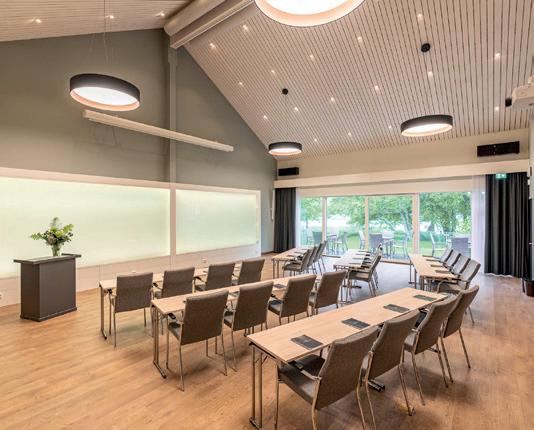
“We love being part of inspiring meetings between people,” adds Ericsson. “There are many reasons to choose us, but the most important is that Steningevik probably has Sweden’s most satisfied conference guests.”
Believing in the future of conferences
No doubt, Nova Park and Steningevik are managed by a team of experienced experts. “Over the years, we’ve hosted thousands of conferences, so we do know what you need,” says Ericsson, and adds: “With us, meetings are about more than just agendas and notes. They’re about energy, focus, and the feeling of being in the right place. So, we create environments where ideas can flourish, teams can find new strength, and creativity can flow freely.”
novapark.se
Facebook: Nova Park Conference
Instagram: @novaparkconference
steningevik.se
Facebook: Steningevik
Instagram: @steningevik
With their convenient location close to Stockholm and Arlanda Airport, Nova Park and Steningevik guarantee conference experiences that are as memorable as they are productive. Both hotels are 4 Star Superior classified and also hold the highest classification at Safe Hotels.
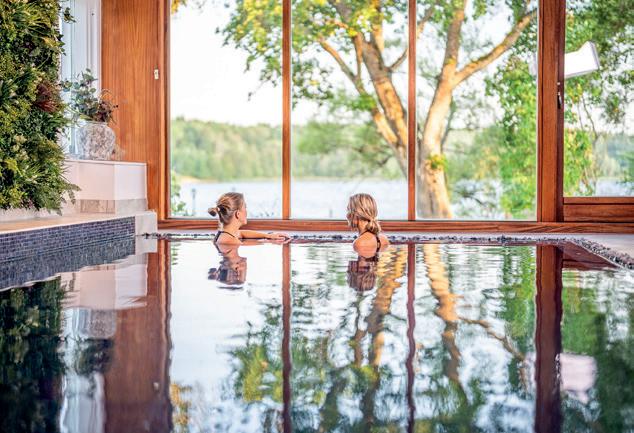
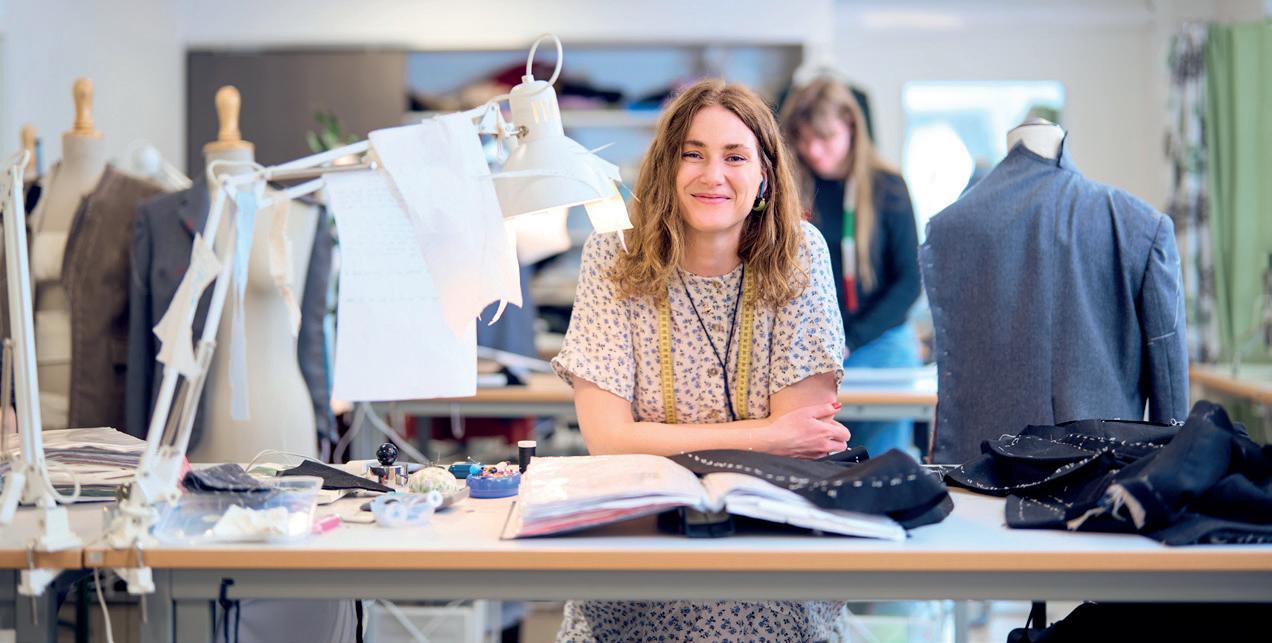
The Academy of Cutting and Tailoring, Stockholms Tillskärarakademi, has a long history, deep traditions and extensive experience, yet remains highly relevant today. As a leading school in pattern construction, sewing, tailoring and design, it continues to play an important role in the textile industry’s sustainable development.
By Malin Norman | Photos: Stockholms Tillskärarakademi
Founded in 1913 by Elvira Harms, a driven entrepreneur with a passion for craft, Stockholms Tillskärarakademi offers both basic and more advanced educational programmes and courses in textiles, design and fashion.
“Our school is still driven by that same joy of developing, preserving and teaching craftsmanship, design, sewing and construction to our students,” says Annika Westborg Arenander, director and principal. “Aimed at both beginners and professionals, we have a number of different programmes and shorter courses. Regardless of what you choose to study, you will learn the skills while we give you
the tools and opportunities to develop your creativity.”
Sustainability integrated in the teaching
Fashion design needs a sustainable approach and at Stockholms Tillskärarakademi, sustainability has long been an
integral part of the educational content –with a conscious commitment to providing the knowledge needed to challenge and change the industry.
“The textile industry is undergoing an exciting development and it’s important for us to be a part of that,” says Westborg Arenander. “By including circular design, digitalisation and materials knowledge in our programmes and courses, students are given the tools to understand and work based on the changes currently taking place in the industry, not just in Sweden but globally.”
For instance, students can learn about 3D visualisation in fashion. “New digital working methods to reduce material use during the production process are absolutely necessary for a more sustainable fashion industry,” emphasises the principal. “3D visualisation in pattern construction is quite remarkable. By creating digi-
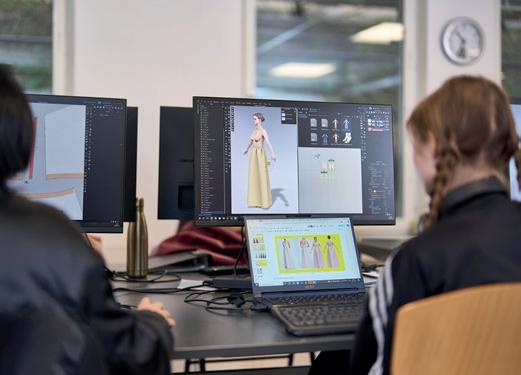
tal prototypes you can see the fit, material and pattern change. It gives a realistic overview, and you can see if something works or not, before actually making the garment. How amazing is that?”
Working with sustainability and digitalisation does not mean moving away from craftsmanship, however. Westborg Arenander explains: “By combining traditional craftsmanship with new technology and circular thinking, students are prepared to step into an industry in rapid change.”
It is clear that understanding materials, the design process, practical skills and repair is central to making more sustainable choices. For instance, the course Tailor - Women’s and Dressmak-
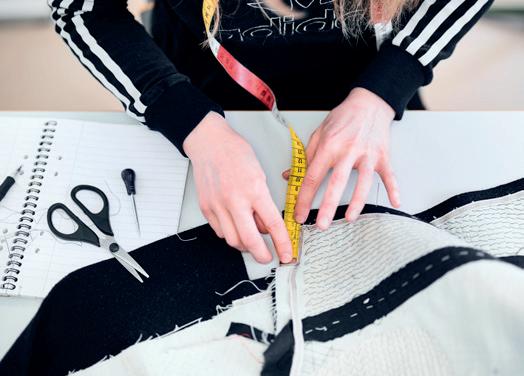
ing emphasises artisanal methods and long-term durability, which is in line with promoting reuse and repair.
Thanks to close collaboration with business communities, relevant partners and guest lecturers in the industry, the school maintains high quality and relevance, and provides insights into sustainable working methods in practice. One example is reSTArt, a remake project in the undergraduate Pattern Design and Design programme, where unsaleable garments from Oscar Jacobson’s Sustain store are redesigned and returned to the shop floor with a new expression.
Having educated the Swedish textile industry for more than 100 years, Stock-
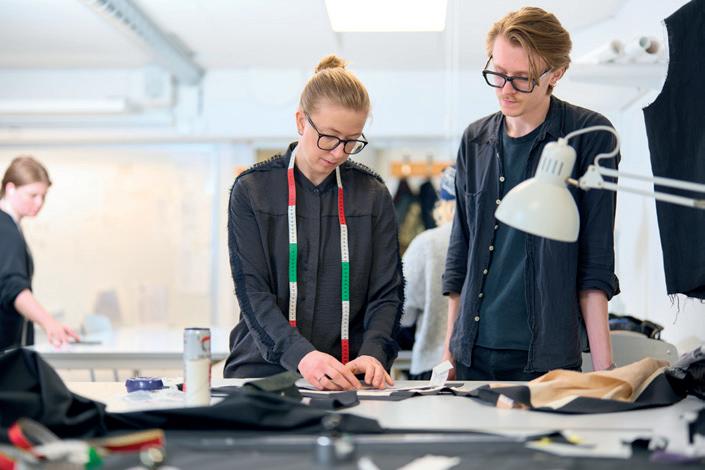
holms Tillskärarakademi remains a relevant partner. If you dream of a future in the fashion industry, this is where to start your career.
With the school’s programmes and courses as a base, there are a number of different professional roles in the fashion industry available, depending on study area. Graduates have gone on to work as pattern designers, buyers, fashion designers, stylists and women’s tailors.
“Our teaching aims to give students an understanding of the development of the textile industry and the opportunities that come with the transition,” adds Westborg Arenander. “Whether they work with new materials, digital tools or classic craftsmanship, they should be able to navigate an industry where sustainability is a basic requirement.”
www.tillskararakademin.com
Facebook: Tillskärarakademin
Instagram: @tillskararakademin
Educational programmes at Stockholms Tillskärarakademi:
- Pattern construction and design
- Design process – fashion
- Pattern designer
- Tailor – women’s and dress
Stockholms Tillskärarakademi also offers shorter courses in for instance fashion design, sewing, and pattern construction.
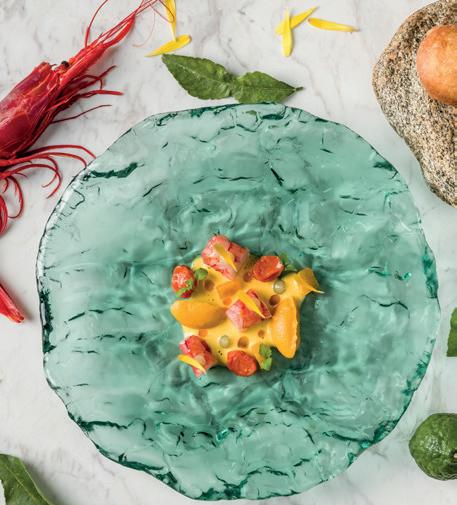
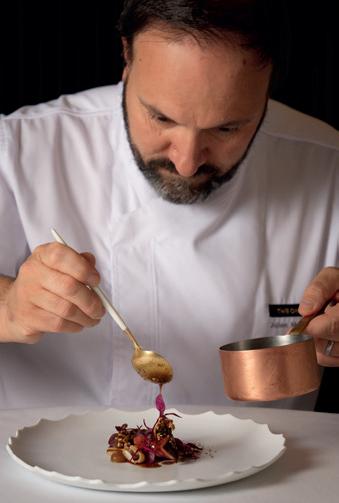
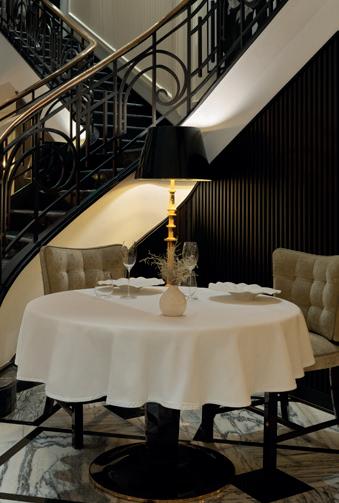
Set within the five-star hotel The One Monumental Palace, Le Monument restaurant brings the soul of Portuguese gastronomy to the heart of Porto. With its Michelin star, immersive ambiance, and culinary artistry, Le Monument offers guests an exciting voyage across Portugal’s terroir and tradition on their plates.
By Nane Steinhoff | Photos: The One Monumental Palace, Le Monument
From the outset, Le Monument distinguishes itself with a thoughtful approach. Guests are welcomed by name, then guided to a dedicated transition space where images of the Douro Region introduce the restaurant’s cultural roots, before guests begin their meals in the main restaurant, which combines the building’s historic architecture with a modern, comfortable atmosphere.
The chosen materials and lighting highlight the restaurant’s heritage while maintaining an inviting feel that balances tradition with contemporary design and timeless elegance. Another highlight is the kitchen ritual in a breathtaking Art Deco setting, offering guests an intimate introduction to the chef and a behind-thescenes look.
At the core of Le Monument’s culinary offering are curated tasting menus conceived as sensory voyages through Portugal. Each chapter within these menus pays tribute to the country’s diverse terroir, celebrating seasonal products sourced directly from their regions of origin. French chef Julien Montbabut and his team approach Portuguese flavours as a continuous exploration, blending traditional soul with modern technical precision.
At the opening of the meal, guests are treated to a trio of amuse-bouches with biological olive oil and artisanal breads to focus on pure product origins. Julien Montbabut explains: “This initial trio of amuse-bouches sets a high standard for what follows: an approachable yet ele-
vated journey through the Portuguese terroir. And, in line with recent global trends and the increasing availability of high-quality products, we offer a non-alcoholic pairing option.”
Among signature dishes, the Vila do Conde Brown Crab stands out. “The crab is hand-selected by a dedicated local fisherman from the shores of Vila do Conde and delivered directly to the Le Monument kitchen to ensure peerless freshness,” says Montbabut. And, to ensure that every dish is also a reflection of respect for nature, sustainability, local sourcing, waste reduction and the use of seasonal produce stand at the core of Le Monument’s philosophy.
Le Monument invites international travellers and locals alike to discover the essence of Portugal – one unforgettable menu at a time.
www.hotelstheone.com/en/portohotels/the-one-monumental-palace Instagram: @theonemonumentalpalace
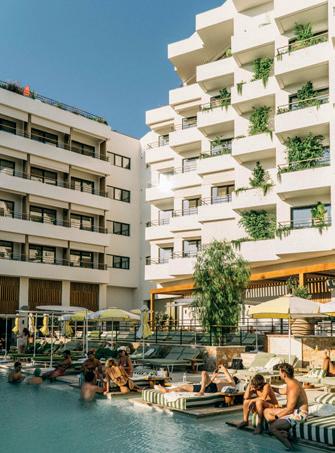
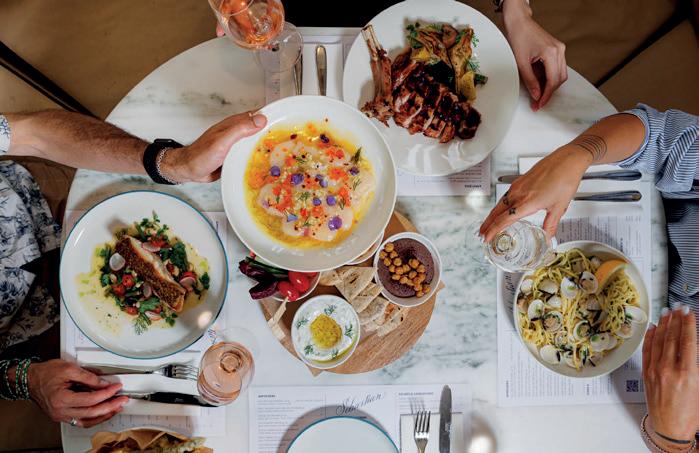
With its poolside culture, rooftop dining, art-led interiors and relaxed Riviera mood, Ace Hotel & Swim Club Athens brings a different kind of city stay to the Greek capital. Opened in Glyfada in September 2024, the hotel reimagines the former Phoenix Hotel as a lifestyle destination for travellers and Athenians alike – a place where modernist architecture, contemporary hospitality and the ancient capital merge to create a timeless vibe.
By Signe Hansen
Set between the beaches of Attica and the urban pull of Athens, the hotel has the perfect location for anyone wishing to explore the capital’s offerings without leaving the sea behind. However, the ambition, explains general manager George Tsantirakis, was not simply to open another hotel, but to transform a well-known 1970s property into a neighbourhood hub. “A lifestyle hotel is a hospitality platform for guests and locals alike, rather than just a room to spend the night,” he says.
That idea is visible in the building itself. Preserving much of the old Fenix Hotel’s architectural character, Ace Hotel & Swim Club Athens pays homage to post-war Greek modernism, with sharp internal balconies and 1970s bones. The renovation has been matched with a strong art programme featuring 18 artists, mostly local, working across sculpture, murals
and painting. “I would not be exaggerating to say that the hotel is an architectural destination,” says Tsantirakis.
The atmosphere is equally important. Rather than drawing guests only to their rooms, the hotel encourages them to move through a series of lively, social spaces: the lobby, the pool, Sebastian bistro, Good Chemistry coffee shop and the rooftop restaurant and lounge, Sora. “Our guest ecosystem is defined by a very fluid crowd,” says Tsantirakis. “We bring together international creative travellers, design-focused guests, locals, remote workers and weekend seekers from Athens.”
At the centre of it all is the Swim Club, open to both hotel guests and day visitors. Here, Ace’s well-known lobby culture has been moved outdoors into
the Athens sun, with wellness, poolside rituals, DJ sets with internationally renowned musicians and sunset events shaping the day. “The Swim Club is not just an amenity,” says Tsantirakis. “It is the heart and soul of the hotel.”
The culinary programme follows the same local logic. Sebastian serves Mediterranean dishes shaped by seasonal Greek produce, while Sora brings PanAsian dining, cocktails, music and Riviera views to the rooftop. “A hotel should not just exist in a place,” says Tsantirakis. “It should be made of that place.”
www.acehotel.com/athens
Instagram: @acehotelathens
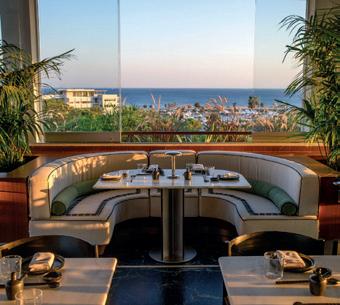
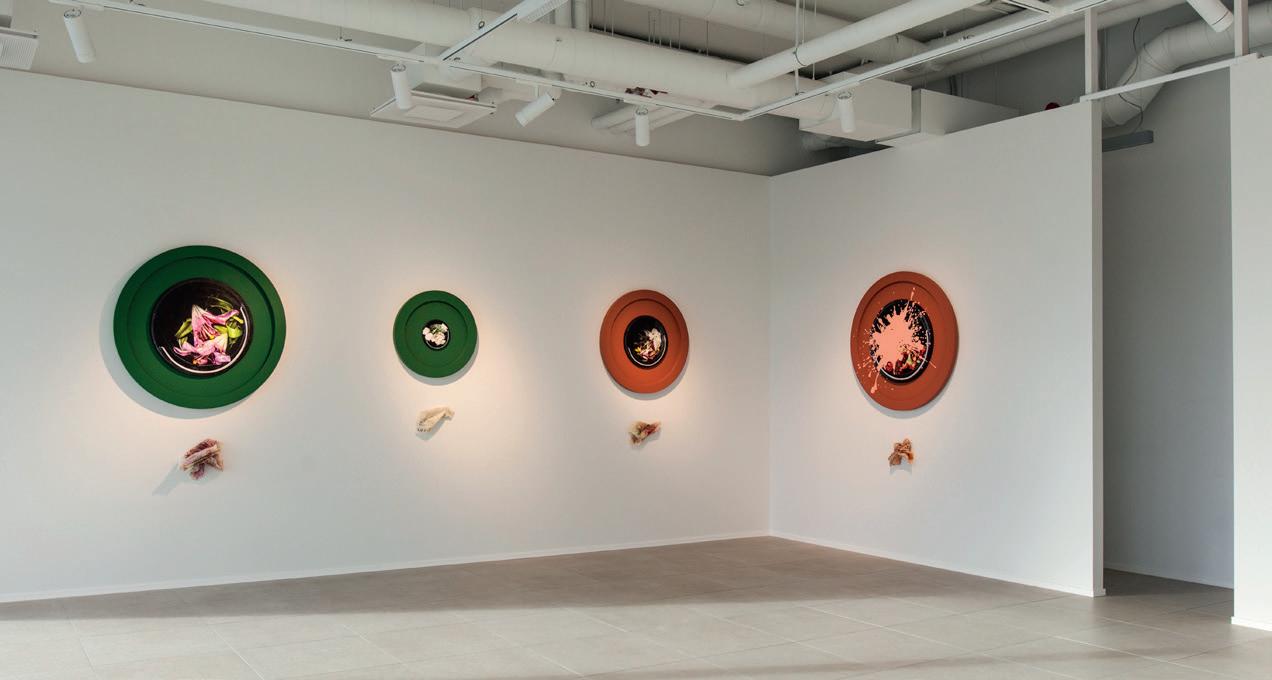
Estonia has a strong generation of contemporary artists whose work deserves sustained visibility, both locally and internationally. In response to this need, Tütar gallery opened its doors in Tallinn in May 2023, with a solo exhibition by painter Katrin Piile. This summer and autumn, Tütar tempts with a diverse programme of must-see exhibitions.
By Malin Norman
The idea behind Tütar gallery was not simply to add another exhibition space, but to build a gallery that works closely with artists over time – through exhibitions, collector relationships, curatorial dialogue and international presentations. The name Tütar, meaning daughter in Estonian, also carries importance.
“Tütar suggests a younger generation, but also lineage – a relationship with what came before,” says Mailis Timmi, founder and director of the gallery. “We’re interested in artists who understand history, material and technique, but who also speak from the present. Tütar is still a young gallery, but the ambition is longterm: to create a serious platform for art-
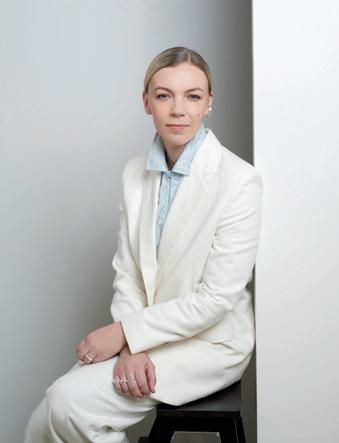
ists whose practices can travel beyond Estonia without losing their specificity.”
What makes Tütar special is the combination of intimacy and ambition. “We’re not trying to be a large, anonymous white cube,” says Timmi. “The gallery is a focused space where visitors can have a direct encounter with the work, but the programme is built with an international horizon.”
Tütar mainly partners with younger-generation Estonian artists, while also opening the programme to artists and practices that expand the conversation around contemporary art in Estonia. Its programme reflects that ambition, presenting artists in Estonia and abroad through exhibitions, audience programmes and international platforms.
Rather than being shaped by a single aesthetic or artistic tendency, the programme spans a broad spectrum of practices, in-
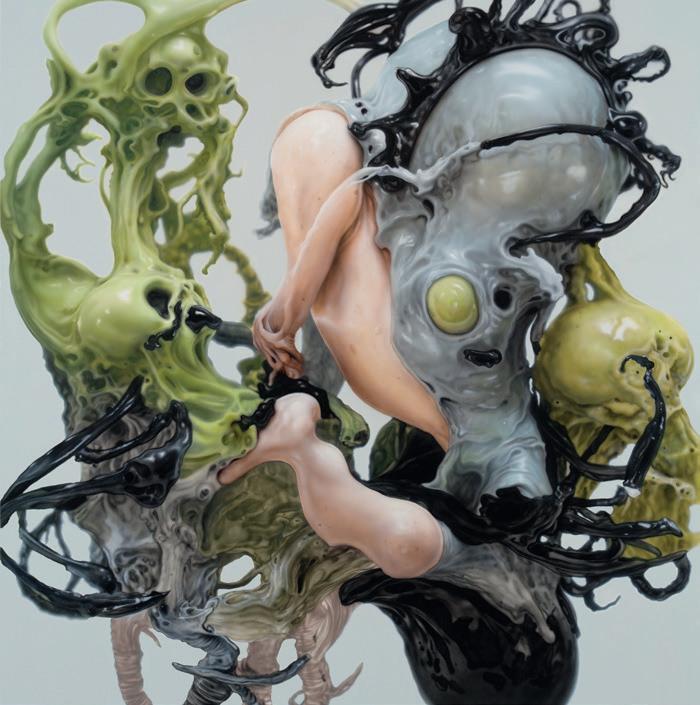
cluding technically demanding paintings, photography, installations, conceptual works, and more experimental forms of expression. Exhibitions are carefully curated, revealing layers of meaning beneath their visual clarity.
summer and Foto Tallinn 2026
An active summer programme awaits. From 2 to 5 July, Tütar will participate in Riga Contemporary at Hanzas Perons in Riga, Latvia. Here, the gallery will present works by Mihkel Maripuu from his exhibition ALTERIX, which explores points of contact between technological and organic worlds.
Tütar will also be represented at KIKUMU Festival, which takes place from 9 to 12 July in Jäneda, with works by Urmas Lüüs, Angela Maasalu and Kärt Hammer. KIKUMU brings together cinema, art and music. “For us, this is an interesting context because art is presented outside the usual gallery environment, in dialogue with music, film, architecture and nature,” says Timmi.
In September, Tütar will introduce painter August Sai, who has been a distinctive voice in Estonian painting but recently has had a quieter period. “Sai’s return gives audiences the chance to see where his painting has moved after this pause,” says Timmi. “There’s always a particular charge around an artist coming back to
public view: you’re not only seeing new works, but also a changed relationship to time, practice and visibility.”
Also in September, Tütar will participate in Foto Tallinn 2026 with Estonian photo and installation artist Dénes Farkas. The fair takes place from 18 to 20 September at Kai Art Center and focuses on contemporary photographic art. Farkas’s installation Nothing Makes Sense, first developed for Reykjavík’s Sequences Festival, has been reinterpreted as a flexible wallbased display of more than 50 A4 photographic prints. The work draws on literary references and photographic research in global seed banks in Svalbard, Lebanon and St. Petersburg, reflecting on systems of preservation under fragile conditions.
Katrin Piile at Art Cologne
Internationally, Tütar will also participate in Art Cologne, in the Neumarkt section, presenting new works by Katrin Piile from her Nothing Blooms Always – After Still Life series. “Piile’s works are a powerful introduction to the kind of painting we’re interested in: technically precise, visually seductive, but not decorative,” adds Timmi. “The motif of discarded flowers is familiar and beautiful at first glance, but it quickly becomes a reflection on impermanence, consumption and value.”
www.tutar.ee
Facebook: Tütar Gallery
Instagram: @tutar.gallery

By Signe Hansen | Photo: Zemgale Planning Region
One main result is a joint water tourism map for Zemgale and Aukštaitija. Covering 24 rivers and 84 routes, it gathers local knowledge into one practical planning tool for experienced paddlers, families and first-time boaters.
an interwar tradition and links walking and cycling routes between Labanoras and Kulionys. Reserved for pedestrians and cyclists, it offers a shortcut through protected nature while supporting slower, more sustainable travel.
For travellers, the result is a more connected way to experience quiet rivers, for-
The work is also visible on the ground. In Jēkabpils Municipality, three mobile boat docks have been installed along the Daugava, while recreational areas are being developed. In Aizkraukle Municipality, five rest areas have been created along the Suseja and Mēmele rivers. Both municipalities have hosted boating events on the Daugava, opening up the river’s scenery, history and outdoor life to locals and visitors. In Lithuania, the new ferry across Lake Aisetas in Labanoras Regional Park revives Rivers do not stop at national borders, and neither does WaterTour. Funded through the EU’s Interreg programme, the project brings together partners from Latvia and Lithuania –including Zemgale, Aizkraukle, Jēkabpils and Aukštaitija – to make the border region easier, safer and more inspiring to explore by boat, bike and on foot.
ested landscapes, lakes, towns, docks and rest areas – and to see how much of Zemgale and Aukštaitija landscapes is best discovered from the water.
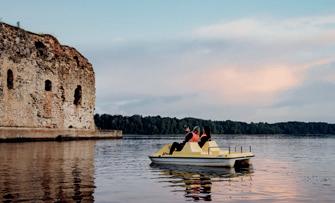

This publication has been produced within the framework of project LL-00134 “Promotion of sustainable water tourism in the Latvia-Lithuania cross-border region, involving local entrepreneurs and communities” (WaterTour), co-financed by the European Union’s Interreg VI-A Latvia-Lithuania Programme 2021-2027. The Aizkraukle Municipality is solely responsible for its content, and it may not reflect the official position of the European Union.
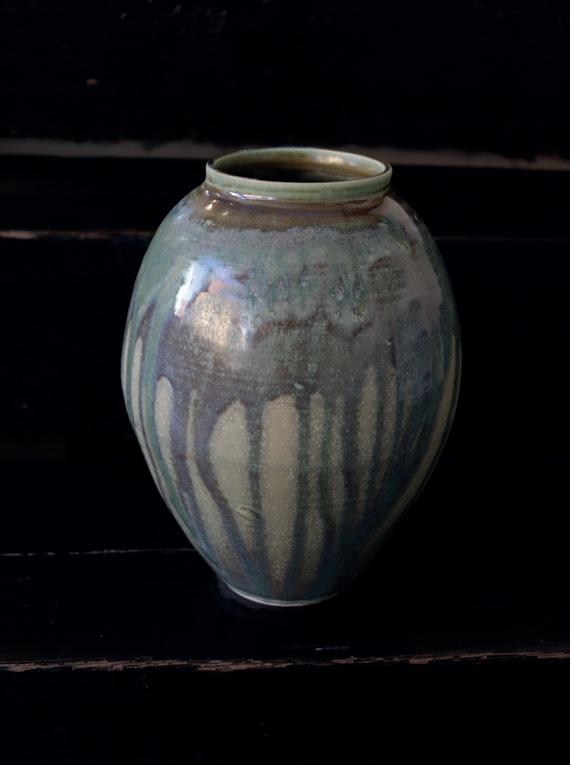

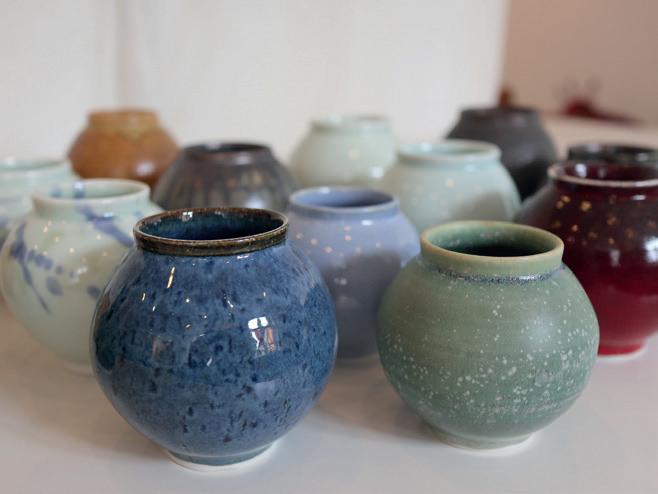
Grouting in offshore wind refers to the process of pumping a high-strength, specialised cement mixture into the gaps between steel foundation elements to lock them together, which securely transfers the massive physical loads to the seabed and ensures longterm structural integrity.
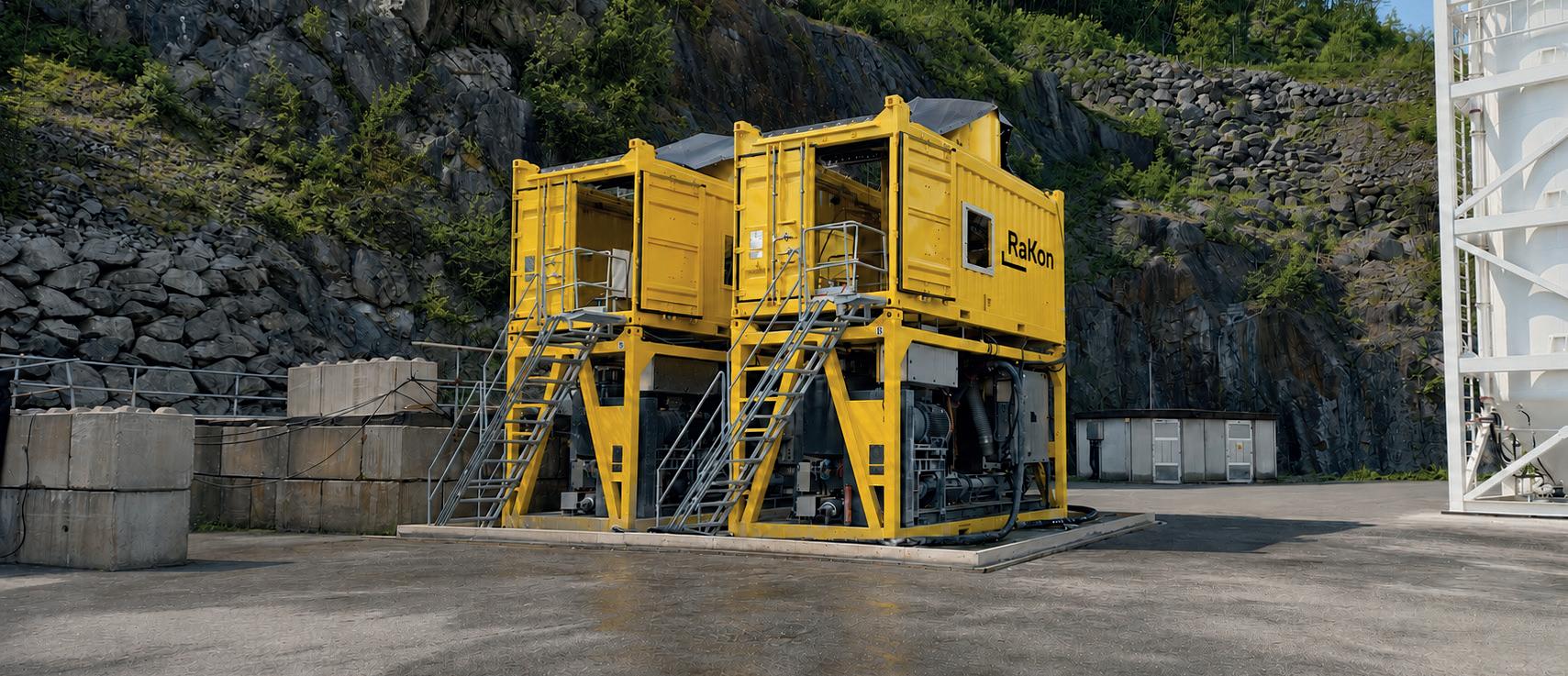
With roots in the Norwegian offshore industry, RaKon is a specialist offshore grouting contractor, delivering advanced grouting solutions for offshore wind and energy projects. Over the years, the company has developed a highly skilled offshore workforce, a strong safety culture and a reputation for quality and reliable project execution.
By Malin Norman | Photos: RaKon
“Being part of AF Gruppen, one of Norway’s leading industrial and contracting groups, provides access to extensive offshore experience, established management systems, financial strength and a strong culture built around safety, quality and operational excellence,” explains Joakim Navestad Hansen, division manager. “This combination allows us to act with the agility of a specialist contractor, while benefiting from the resources and expertise of a larger organisation.”
A few years ago, RaKon identified offshore wind as a natural growth area: a rapidly expanding market, limited competition within offshore grouting, and an opportunity to leverage offshore concrete expertise in a new segment. Since then, the company has invested heavily in equipment development, testing facilities, industry partnerships and customer relationships.
“Today, we have established a dedicated offshore wind division and positioned ourselves as a specialist offshore grouting contractor, with our own RJM mixing technology, which is one of the most advanced on the market, fabricated offshore-certified silos and are actively bidding for projects across Europe and other international offshore wind markets,” says Navestad Hansen. “As there are currently very few offshore wind projects being developed in Norway, our primary focus is international.”
This summer is an important period for RaKon’s offshore wind initiative. “One of our key priorities is the full-scale demonstration of our RJM mixing technology, where selected customers and industry stakeholders will be invited to see the system in operation,” says Navestad Hansen. “This represents an important milestone as we move from
development and testing into commercial deployment.”
RaKon is also continuing its qualification processes with leading grout material suppliers and expanding its engagement with offshore wind developers and installation contractors across Europe. “We view offshore wind not as a future opportunity, but as a market that is scaling right now, and our ambition is to become a leading offshore grouting contractor in Northern Europe,” Navestad Hansen says, and adds: “More broadly, our focus for 2026 is to secure our first offshore wind grouting project, establish a strong reference case and build the foundation for long-term growth in the offshore wind market.”
rakon.no

A flooded basement, a damaged warehouse, a road washed away after heavy rainfall. Across the world, extreme weather events are becoming more frequent, creating new challenges for communities, businesses, insurers, and property owners. The question is no longer whether climate risk exist, but how accurately it can be understood before disaster strikes. For 7Analytics, that challenge is at the heart of everything they do.
By Thea Johansen | Photos: 7Analytics
Founded in 2020 by four geologists with backgrounds in the oil and gas industry, the company specialises in flood-risk modelling. What began as a local venture in Bergen, Europe’s rain capital, has grown into an international business with offices in Norway, Denmark, the United Kingdom, and the United States. Today, 7Analytics works with insurers, banks, asset owners, and organisations seeking a better understanding of climate-related risk. “Flood risk affects entire value chains,” says co-founder Jonas Aas Torland.
The company’s expertise lies in understanding something deceptively sim-
ple: where water will go when heavy rain falls. Rather than assessing flood risk across broad geographical zones,
7Analytics evaluates individual buildings. With a multidisciplinary team of geologists, hydrologists, and data engineers, the company combines historical insurance records, geodata, terrain analysis, and machine learning and AI to estimate how water is likely to move through a landscape and what that means for a specific property during extreme weather events.
“Imagine standing at the window of a building, taking in the surroundings,” says Torland. “Our models will see that image and much more. We analyse the terrain around it, where water will flow, what the surface consists of, potential barriers, and what has happened to similar locations during previous weather events.”
Tackling a growing challenge
That level of detail has become increasingly important. While flooding is often associated with overflowing rivers, a significant share of weather-related damage comes from surface water
flooding caused by intense rainfall. As cities become more densely developed, with more hard surfaces and fewer natural drainage areas, and as extreme weather becomes more frequent, the challenge continues to grow.
One of 7Analytics’ defining features is its focus on data quality. While traditional flood models often rely on broader terrain grids, the company’s models operate at a much higher resolution, incorporating detailed terrain and landuse data that is continuously updated to reflect changing environments.
In urban areas, small details can prove decisive. Kerbs, pavements, minor depressions in the terrain, and other seemingly insignificant features can determine whether water flows safely away or accumulates around a building. “Small details make all the difference,” says Torland.
The company combines detailed terrain data with historical damage records and machine learning to identify patterns across large datasets. This makes it possible to predict flood exposure at building level and estimate how much water may accumulate around a property during extreme rainfall.
For customers, the applications are wide-ranging. Insurance companies use the data to assess risk, price policies, and provide early warnings. Banks use
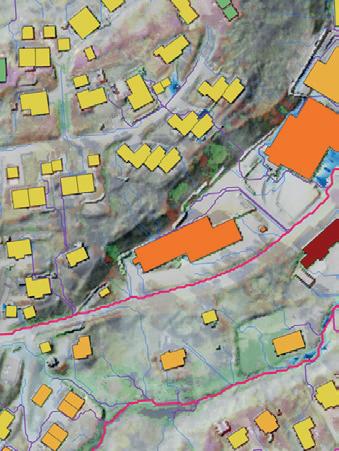

it to better understand climate-related risks within their portfolios, while asset owners and businesses use the insights to protect sites, plan operations, and improve resilience.
The technology is also being applied internationally. In the United States, 7Analytics delivers real-time flood warnings to organisations including hospitals, energy companies, and large property owners, helping them prepare before an event unfolds.
Although the company now operates internationally, its foundations remain firmly rooted in Norway. “Rain is in our DNA,” says Torland.
With more than two metres of precipitation a year, Bergen is often referred to as the rain capital of Europe and the birthplace of modern weather science –a legacy that continues today through companies such as StormGeo, a key partner to 7Analytics. Yet, according to Torland, Norway’s greatest advantage lies in something even broader: its extraordinary geographical diversity. Within a relatively small country, the landscape shifts from steep mountains and deep fjords to rivers, valleys, coastal areas, urban environments, and flatter inland terrain – offering a unique foundation for understanding how water behaves across different environments.
The company’s models were originally developed using Norwegian terrain and geodata, creating a foundation that has proven valuable internationally. “One of the most rewarding discoveries has been seeing how transferable they are to other countries,” says Torland.
As climate change continues to reshape weather patterns, the need for accurate flood-risk information is only expected to increase. Five years ago, few organisations had access to this type of data. Today, insurers, banks, property owners, and public authorities are increasingly incorporating physical climate risk into their decision-making.
Looking ahead, 7Analytics aims to expand its modelling capabilities and support more organisations in adapting to an increasingly uncertain climate. The ambition is not only to understand tomorrow’s risks, but to help society prepare for them.
For the company, this ambition is captured in a single phrase: “Exploring future landscapes – understanding tomorrow.” The world is getting wetter. The storms are getting wilder. And the gap between those who know where the water will go — and those who don’t — is becoming one of the most consequential divides in modern risk management.
www.7analytics.ai
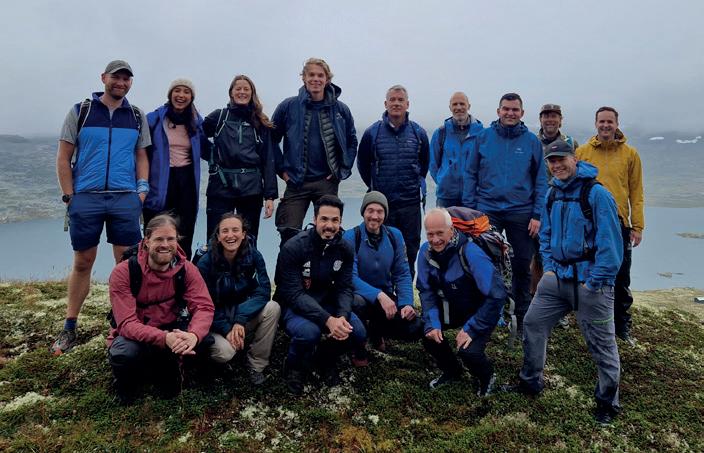
Hans-Henrik Nielsen, co-developer of the 3-Point Playbook, shares the principles behind the successful investment strategy and a case study of the Swedish Instalco stock.
By Hans-Henrik Nielsen, MyStockScanner.com
A Swedish growth case on the radar: systematic analysis of Instalco
In a volatile stock market, discipline is often the difference between success and failure. Having a firmly defined strategy that you execute on every single trade is essential. At MyStockScanner, we have refined our investment approach over the years into what we call the 3-Point Playbook.
The strategy is built around three non-negotiable questions that a stock must answer “yes” to before it finds its way into the portfolio:
1. Is it a quality company? (Fundamental data)
2. Is there attractive potential? (Valuation)
3. Is the timing optimal? (Technical momentum)
Below, I review a current case on the Swedish company Instalco.
1. Is Instalco a quality company?
When we assess quality, we remove the gut feeling and let the data speak. We look for companies with a solid track record and positive future prospects.
Instalco currently scores 76 out of 100 in our quality score, where 100 is the best. This is quite good. Earnings have fallen slightly recently, but both earnings and revenue are projected to increase nicely in the coming years. Return on capital has been slightly declining, but on the other hand, cash flow is very strong.
Instalco does not rank 100 per cent at the top in terms of quality and financial strength, but they possess good enough quality for us to proceed to question number two.
2. Is there good potential in the stock?
Quality alone is not enough; the price must also be right. We use our proprietary value graph to look 1–2 years into the future. Here, we compare analysts’ expected earnings against the historical
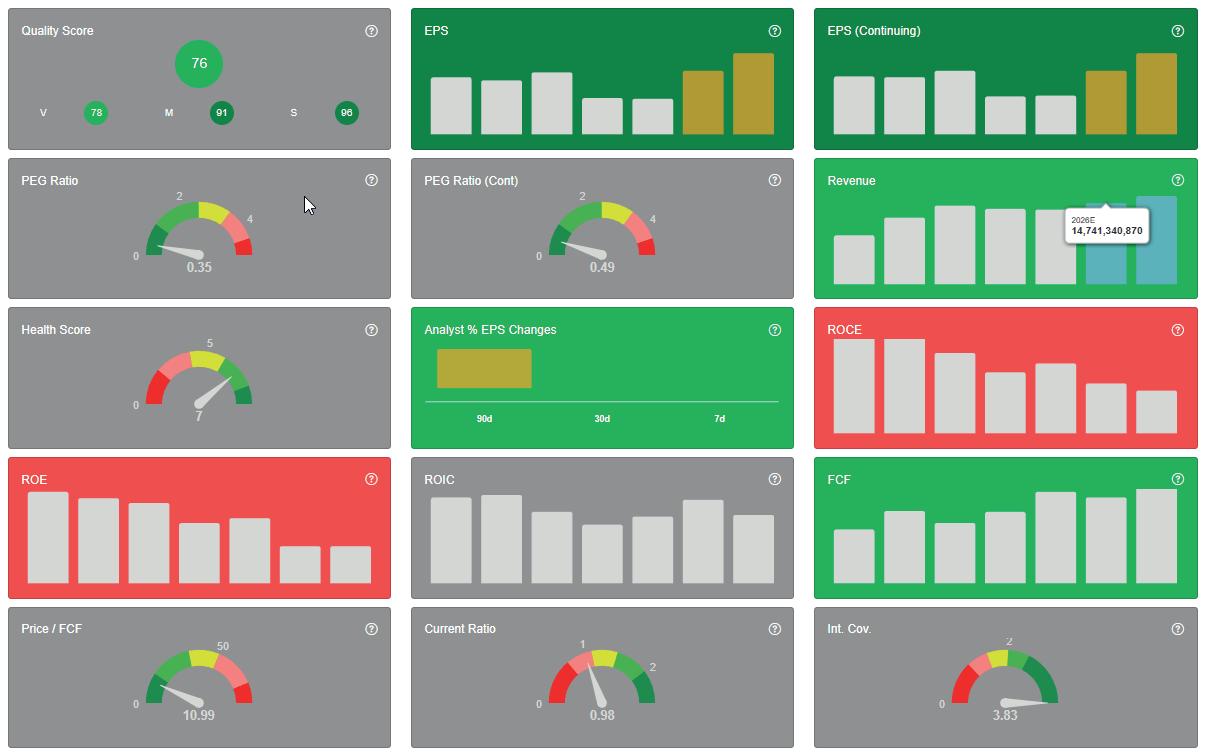
Disclaimer: Investment involves risk. Past performance is not indicative of future results. Consult with a financial advisor before making investment decisions.
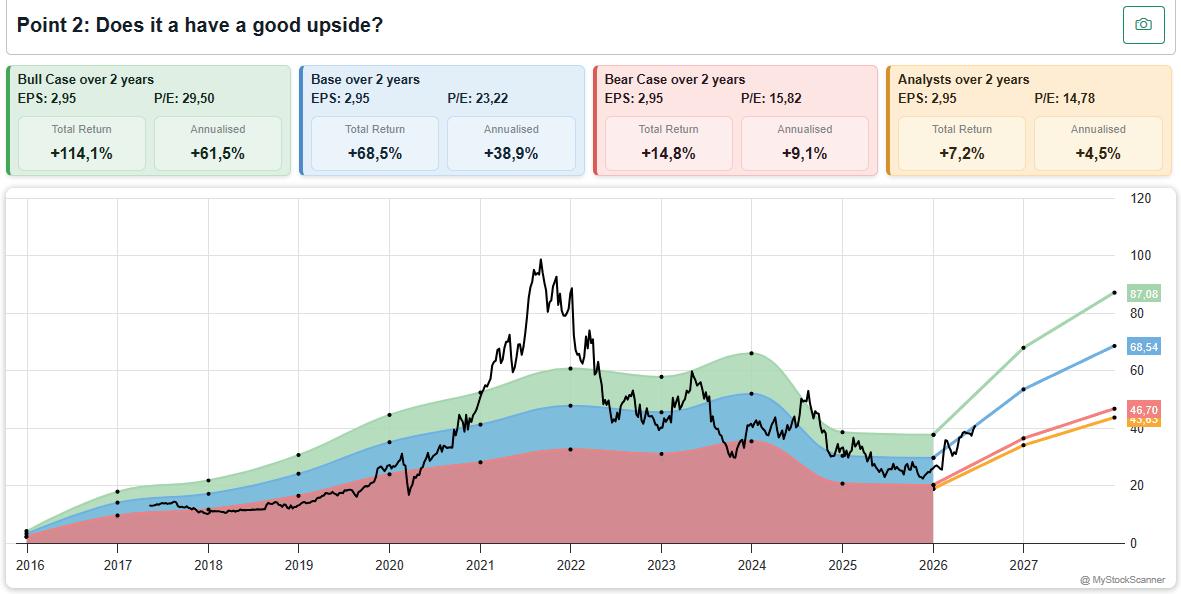
multiples (P/E ratios) that the market has previously been willing to pay for the stock.
For Instalco, analysts expect earnings of 2.95 in EPS by the end of 2027. When we multiply this by our three different P/E scenarios, we get the following potential for the stock:
• Bear case: +13.6%
• Standard case: +66.7%
• Bull case: +111.8%
While historical returns are never a guarantee, the spread indicates an asymmetrical risk/reward profile with significant upside. There is no guarantee that these returns will become a reality, but they indicate a good, solid case with strong upside.
3. Is the timing optimal?
Even the best stock can lie stagnant for years if the market is looking the other way. Therefore, we only buy into stocks that exhibit an established uptrend.
When we look at Instalco, the stock is in a really good trend. The two MTI indicators at the bottom are green, and the indicator in the background is also green. All of this paints a picture of a stock with explosive potential.
The stock has also just broken above a so-called resistance area (the light green block), which is a strong buy signal.
Instalco is not the stock that scores the highest in quality, but it is quite solid. On the other hand, it has fantastic potential
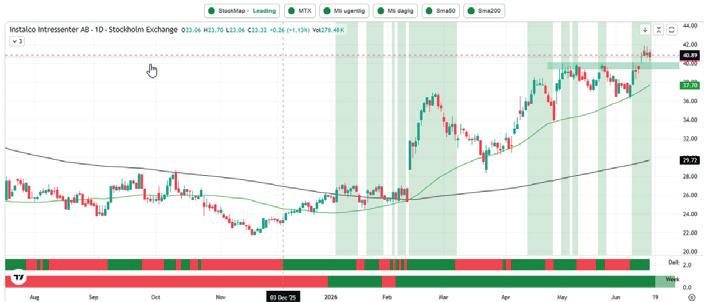
and good timing on the chart. We find that a stock like this is a very exciting candidate.
We do not currently hold the stock in our model portfolio – a portfolio that in 2025 alone generated a return of 34.5% by following this exact, stringent 3-PointPlaybook model. However, it could very well end up on the shortlist.
3 other exciting Nordic stocks
• Sweden: Plejd
• Finland: Harvia
• Denmark: SP Group
Hans-Henrik Nielsen
Co-owner of MyStockScanner. Together with British Fintech expert Liam Flavelle, he developed the analysis tool 3-Point Playbook. The tool is available to private investors via membership.

Hans-Henrik has traded stocks since 1987 and has spent the last 15 years teaching thousands of private investors how to achieve stable returns with peace of mind through a solid strategy and the right tools.
In 2025, the 3-Point Playbook Model Portfolio on MyStockScanner delivered a return of 34.48%.
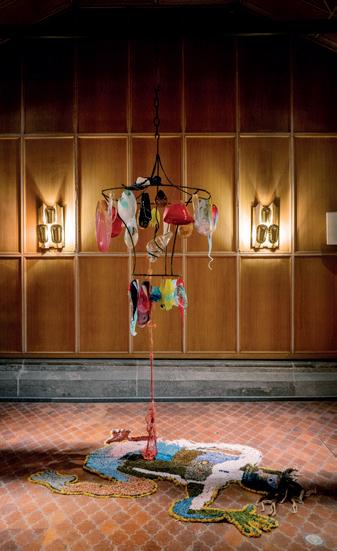
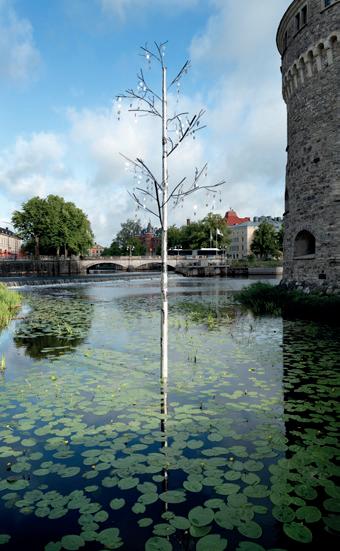
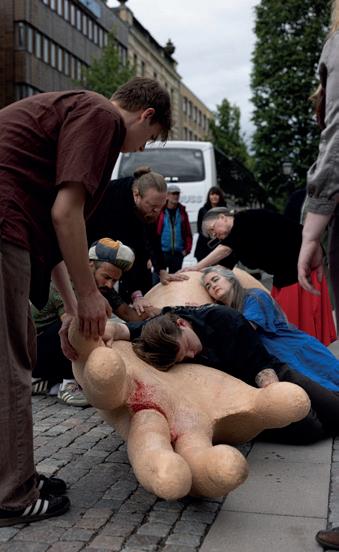
The biennial OpenArt transforms Örebro’s city centre with thought-provoking contemporary art. The 10th edition takes place between 13 June and 6 September, with a focus on collective processes, democratic expressions and sustainability.
By Malin Norman
Initiated in 2008, OpenArt is a platform where urban space meets art and its visitors in a lively conversation. OpenArt started as a project run by Örebro Konsthall but has always been an exhibition taking place in the urban space.
“OpenArt 2026 explores a time filled with questions, uncertainty and change,” says Johan Jedebert, exhibition producer. “Here, art becomes a place to begin searching for new ways of thinking about how we care for ourselves, each other, and our shared future.”
The artworks are created through collaboration and invite participation, offering moments that can surprise, puz-
zle, and playfully defy expectations. “OpenArt 2026 reminds us that participation is the foundation of democracy, through open processes, shared knowledge, and cooperation,” elaborates Jedebert. “The exhibition doesn’t hold all the answers; instead, it’s an ongoing conversation where your perspective and your questions belong.”
Over 12 weeks this summer, OpenArt once again transforms Örebro’s city centre with thought-provoking sculptures, installations and performances, as well as workshops and guided tours. “Art is everywhere and everyone talks about art during the biennial,” smiles Jedebert. “For
our 10th anniversary edition, we’re hoping to offer something unexpected, for art lovers but also for those who don’t usually visit art galleries and exhibitions.”
The artist selection has been developed collaboratively by OpenArt’s exhibition producers and the Art Unit. To broaden the perspective, different jury groups were invited to take part in the selection process. These jury groups were the Children’s Jury, made up of children aged nine to 11 from a local school in Örebro, and the People’s Jury, comprising 11 Örebro residents of different ages.
openart.se Facebook: openartsweden Instagram: @openartsweden
13 June and 6 September 2026.
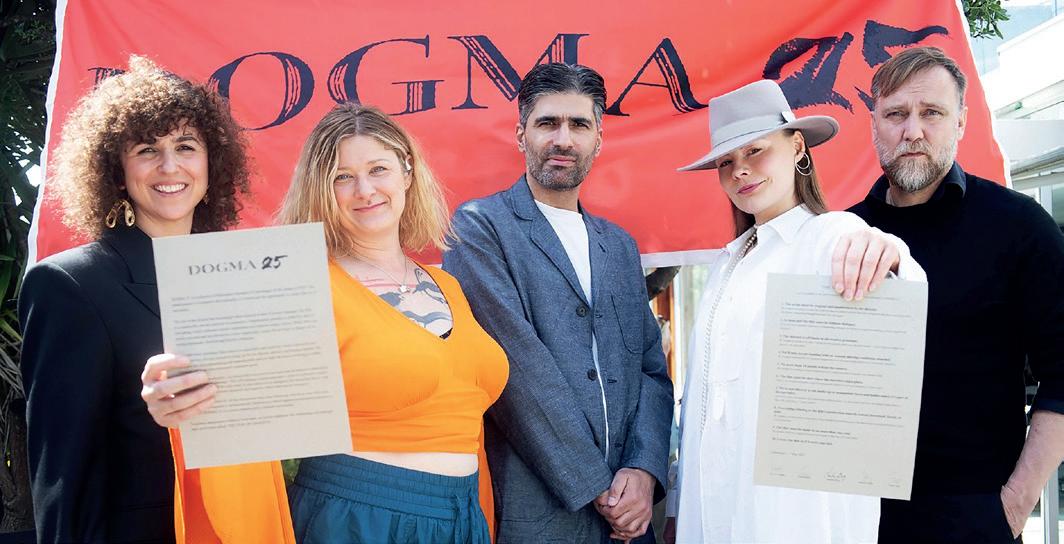
By Anders Lorenzen
Thirty years after Dogme 95 challenged mainstream cinema, a new Nordic-led collective has revived the spirit of the manifesto. Dogma 25 arrives in an age of algorithms and artificial visual expression, with a renewed promise to protect the flawed, human imprint of film.
Remember Dogme 95? Launched in Denmark in the mid-1990s, the experimental film movement was seen by some sceptics as amateur filmmaking, but its impact quickly reached far beyond Denmark.
The original collective was founded in 1995 by four Danish directors: Lars von Trier, Thomas Vinterberg, Søren Kragh-Jacobsen and Kristian Levring. Their vow of chastity set out strict rules for Dogme 95 productions: no director credit, hand-held camera, colour only, no artificial lighting, and a story that took place where it was filmed.
The movement was a rebellion against Hollywood-style filmmaking and a call for story, performance and creative discipline over technical spectacle. Its most famous early examples were von Trier’s The Idiots and Vinterberg’s The Celebration, which helped carry the concept to an international audience. While von Trier was already well known, The Celebration propelled Vinterberg onto the global stage.
Dogme 30 years later
In 2025, 30 years after the original manifesto, a modernised concept was launched: Dogma 25. Still driven by Nordic filmmakers, the new collective has a more international profile. It consists of Danish-Egyptian director May el-Toukhy, Swedish directors Milad Alami and Isabella Eklöf, Danish director Annika Berg and Danish artist Jesper Just.
The collective has released its own manifesto and a new vow of chastity, with the aim of asserting the artistic value of film and creating work rooted in cinematic craft. As the manifesto puts it, Dogma 25 stands up for the “flawed, distinct, and human imprint” at a time when formulaic films based on algorithms and artificial visual expression are gaining traction.
The project is being realised in collaboration with Zentropa, DR and Nordisk Film Distribution, providing a framework for films made under the new rules. Since the collective was formed, other interna-
tional names have joined, and Netflix has also come on board for the Nordic region, with the films set to appear on the platform after their theatrical release.
The first Dogma 25 feature is Isabella Eklöf’s Mr. Nawashi, described as a BDSM love story. It is currently in production, with theatrical release expected in 2027.
Get some poolside pop from the Nordics on your radar before you step out into the heat this July. Scan Magazine has got the Scandipop recommendations you need.
Lifted from her latest album SUOMI SOIMAAN, a superb new song from Vesta, one of Finland’s most acclaimed talents, has revealed itself to be a thoroughly enchanting experience to press play on. Starting off like something from ABBA’s The Visitors album and flirting with that intense sound throughout, Helmi has got all the elements to become a Nordic pop classic, too.
Sweden’s Maria Jane Smith follows up last year’s release of her debut album with a brand-new single that pays homage to her favourite radio-pop of the ’90s, from The Cranberries to Natalie Imbruglia. And as tributes to eras and genres go, Leave My Head really couldn’t have been crafted any more perfectly – an absolute credit to both her songwriting and her passion for music.
If you’re a fan of the era, you’ll pick up most of the references contained here.
Finnish newcomer Roosa has followed up her beautiful debut single Elämä Jatkuu with the inevitable ‘Big Pop Moment’. Kultakehykset is single number two and instantly cements her as one of Finland’s most essential to listen out for. Think Tate McRae paired with the finest in Nordic melody composition.
Swedish music legend Lykke Li is out with her latest album The Afterparty, her sixth to date. Along with its lead single Lucky Again, which was featured in Scan Magazine a few months back, there’s another big ol’ Scandipop highlight from the collection of songs. She describes Happy Now as sounding like The Prodigy
All I wanted as a teenager was to attend a forest rave and have green hair. I felt that this would communicate to the world that, despite my shyness, there was a vaguely interesting person inside. Sadly, green hair dye and raves were in short supply in northern Sweden. So instead, I spray-painted some t-shirts with the letter T (for Techno…), dyed my mousy-blonde hair a darker shade of mousy blonde, and cut it into a bob. “You look like a mushroom,” the class bully declared, which unfortunately was true.
This makeover did little to elevate my status as a short introvert, and while my much taller girlfriends gained boyfriends and makeup skills, I was busy panicking over my seemingly incurable tendency to blush at any kind of social interaction, such as buying a bus ticket. If I had been hoping for a fresh start in the UK, I was mistaken, at least at first. My English teacher wrote a letter of introduc-
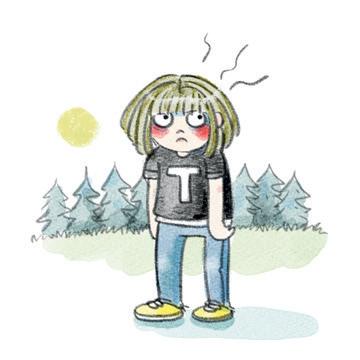
tion in which she described me as timid. This (after using a dictionary to translate it) felt like a humiliating blow, adding to my general sense of humiliation. And, my new school uniform meant that I couldn’t even wear my spray-painted T-shirts anymore.
Some salvation came with my discovery of makeup, more specifically, the type of
By Karl Batterbee
and ABBA had a baby and it simply won’t stop crying. Having heard/read that, you might find it difficult to think of anything else. Do have a go, though.
www.scandipop.co.uk
By Maria Smedstad
all-covering face paste that removes any hint of natural skin. Underneath this, I could blush away to my heart’s content, while remaining an impenetrable, greenish beige. This went some way to make up for the earlier lack of green hair and raves. In hindsight, I wonder whether either would really have done much for my self-esteem. After all, looking like a small mushroom at a forest rave might not have been the best idea.
Maria Smedstad moved to the UK from Sweden in 1994. She received a degree in Illustration in 2001, before settling in the capital as a freelance cartoonist, creating the autobiographical cartoon Em. Maria writes a column on the trials and tribulations of life as a Swede in the UK.
The Copenhagen Jazz Festival has been held since 1979 and is thus one of Copenhagen’s oldest and most beloved music institutions.
www.jazz.dk
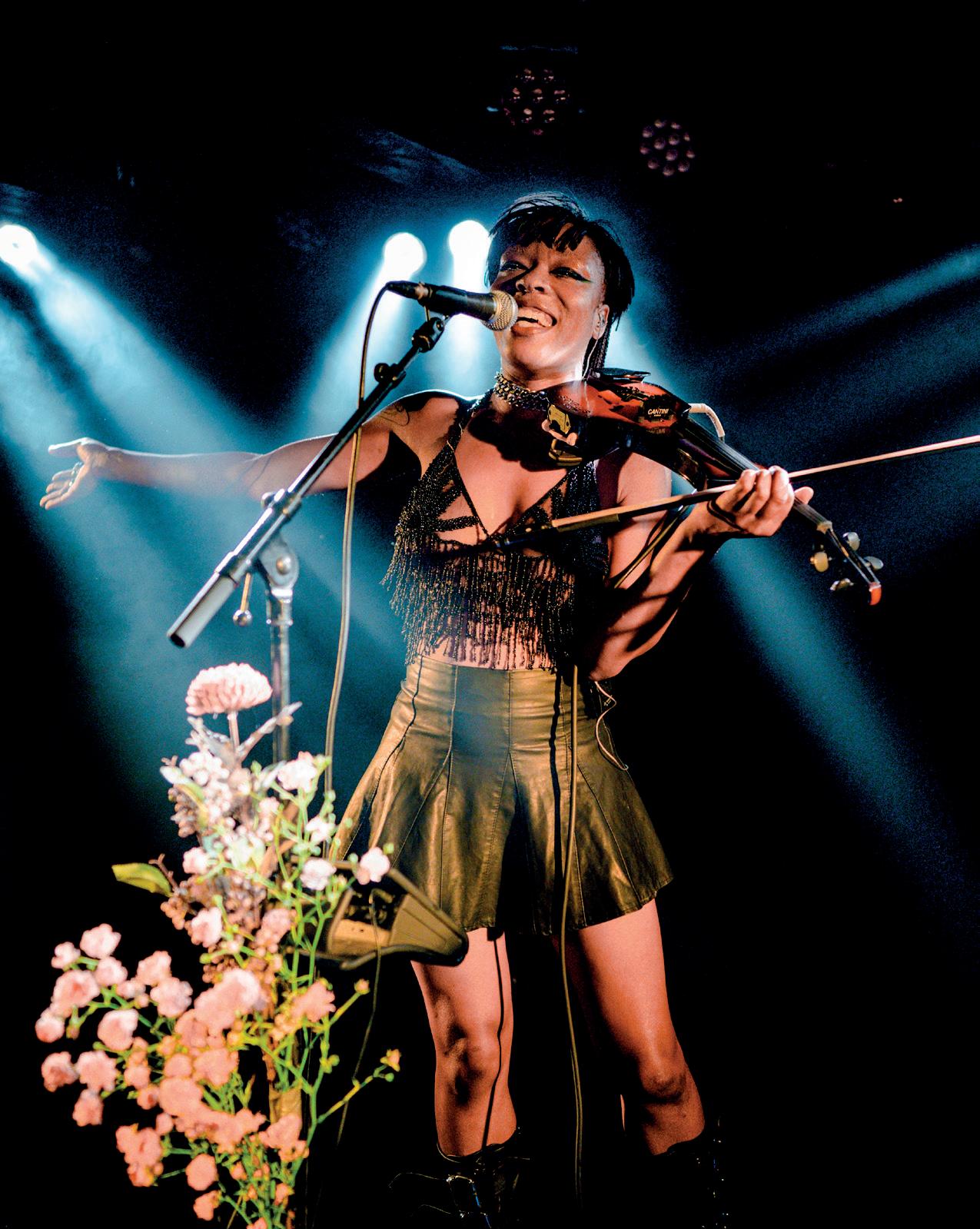
Scandinavian Culture Calendar: July 2026
From jazz to soul, from theatre festivals to free Finnish festivals and from LEGO dinosaurs to a Bad Bunny, here’s all you need to know about where to go and what to see across the Nordics in July.
By Karl Batterbee
It’s more than 250,000 people that make Copenhagen Jazz Festival one of the biggest, inclusive jazz events of its kind in Europe. The city of Copenhagen comes alive with jazz in the streets, city squares, clubs and concert halls, when this vibrant festival comes to town each summer. The Copenhagen Jazz Festival has been held since 1979 and is thus one of Copenhagen’s oldest and most beloved music institutions. The festival also presents different themes, each of which represents an alternative approach to the genre, in all its possible and impossible forms!
During the ten days of the festival, more than 1,200 concerts are presented on over 120 stages around the city. Together, these concerts are visited by more than 200,000 happy attendees annually.
Copenhagen, Denmark www.jazz.dk
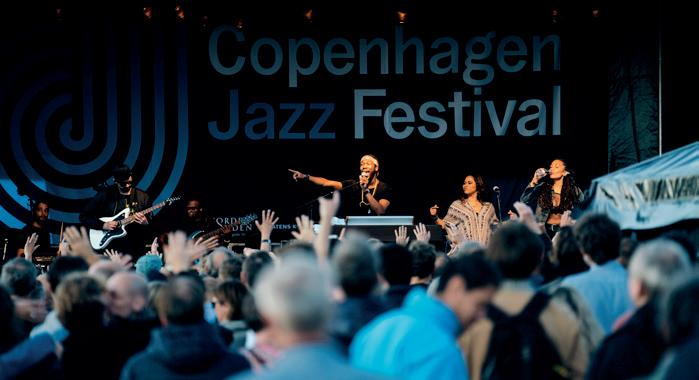
One of Sweden’s most iconic voices will be treating audiences to an extra-special show this month. For attendees, a summer’s night can be spent on Idöborg in the Stockholm archipelago, setting mu-

sic to those beautiful views that are synonymous with the region. Hailed as the Swedish soul queen, Sabina Ddumba has been wowing music listeners for over a decade now, winning a Swedish Grammy Award and seeing her most popular hits reach platinum status. The evening in July has the option to combine her concert by the sea at sunset with a grill buffet at Strandbaren and an overnight stay. And Sabina isn’t the only artist taking the stage on Idöborg this summer; the Ögonblicket concert series will also feature shows by the likes of Uno Svenningson and Titiyo.
Stockholm, Sweden www.idoborg.se/events
Bad Bunny is currently out on his blockbuster DeBÍ TiRAR Más FOTos world tour and his only Nordic dates are happening this month! The critically-acclaimed superstar arrives at Solna’s Strawberry Arena in Sweden on 10 and 11 July, transforming his huge album of the same name into an immersive experience that celebrates Bad Bunny’s roots and Puerto Rican heritage. The tour comes at a defining juncture in the artist’s career, following the success of his sixth album, which became the first non-English language album to have all of its songs chart inside the Billboard Hot 100 for three consecutive weeks. This is gonna be the hottest ticket in Sverige this summer!
Stockholm, Sweden www.depuertoricopalmundo.com

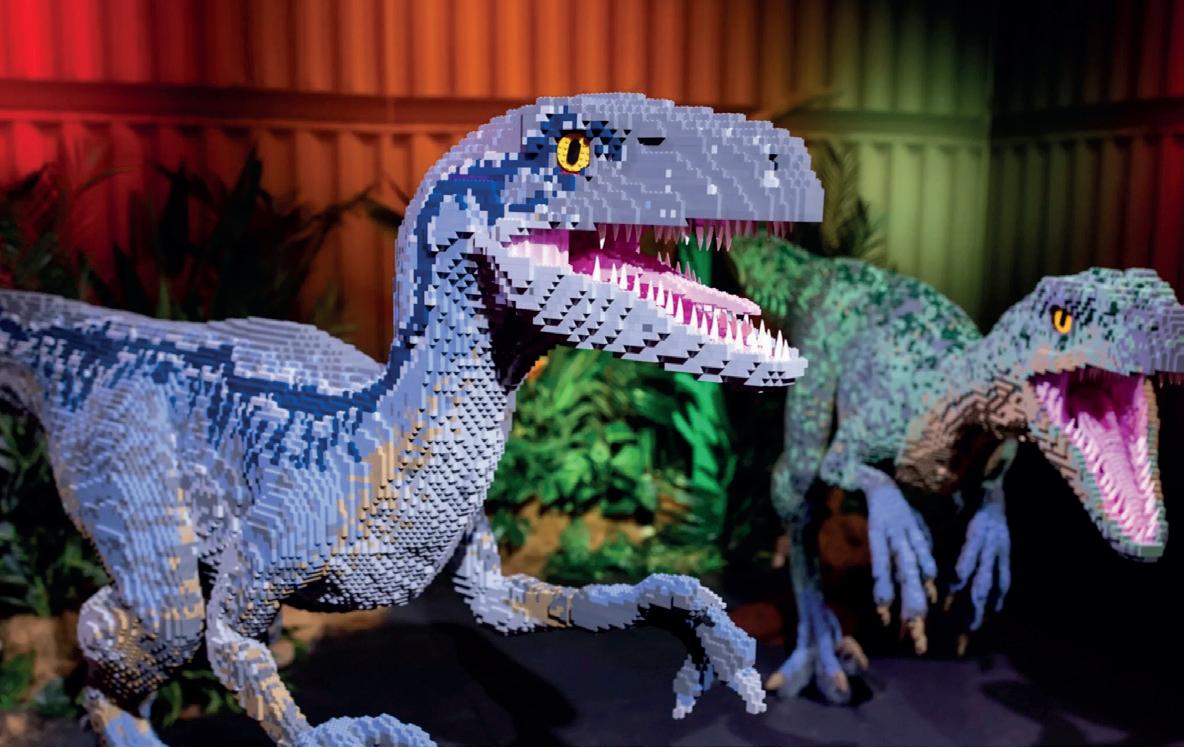
LEGO® Jurassic World: The Exhibition (until 6 September)
After arriving in Helsinki in June, LEGO Jurassic World: The Exhibition takes up residency at Malmi Ice Hall until September, promising families a weatherproof day out. The exhibition takes visitors into the realm of Jurassic World, where the adventure familiar from the films is brought to life with more than six million LEGO bricks. You can walk through the iconic Jurassic World gates, explore the setting of a groundbreaking laboratory and encounter impressive LEGO dinosaur models, including triceratops, velociraptors and the almighty T-Rex. Attendees can take part in dinosaur-themed building activities, mystery mosaics, island building and creating their own hybrid dinosaurs. LEGO Jurassic World: The Exhibition has already attracted more than 1.2 million visitors worldwide and arrived in Helsinki directly from Paris. Helsinki, Finland www.legojurassicworldtheexhibition.fi/en
Nature of Sound (19 July)
Nature of Sound is back again! Everyone is invited to come join this free one-day festival in the serene oasis of Lapinlahti,
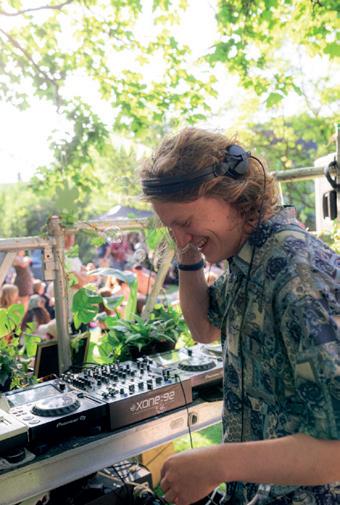
Helsinki on Sunday 19 July. Having by now earned its reputation as a good-vibesonly experience, Nature of Sound will this summer continue to offer its trademark celebration of culture, community and music, with a warm welcome extended to all for a fourth-year running. Festival-goers can enjoy live performances from local bands and funked-up sets by popular DJs, as well as workshops, arts and crafts, plus local food and drinks. The experience is open from midday until 10pm. Helsinki, Finland www.subterra.fi/nature-of-sound
PASSAGE Festival has very quickly become one of Northern Europe’s largest international street theatre festivals. Every year, the festival brings fans of the genre from across the world to Helsingø, transforming the urban space into a playful and vibrant stage. The fes-
tival presents world-class international and Danish artists, and during the period you can experience a cornucopia of contemporary circus, some spectacular street theatre and experimental performing-arts side by side. This makes the festival something truly special that can be experienced by everyone: families with children, tourists and, of course, experienced theatre-goers. Helsingør, Denmark www.passagefestival.nu
The largest Pride celebration in Northern Europe has been around since 1998 and festivities will now once again be spread across the Swedish capital at the end of the month. As well as Pride Park in Slakthusområdet, which features a whole host of music talent performing for festival-goers, the Pride Parade on the Saturday is the obvious highlight of the celebrations. With around 50,000 participants in attendance, it’s a joyful and colourful manifestation for equal human rights and a demonstration of everybody’s right to love and be who they want to be. The parade marches through central Stockholm and everyone is welcome to come along and watch.
Stockholm, Sweden www.stockholmpride.org

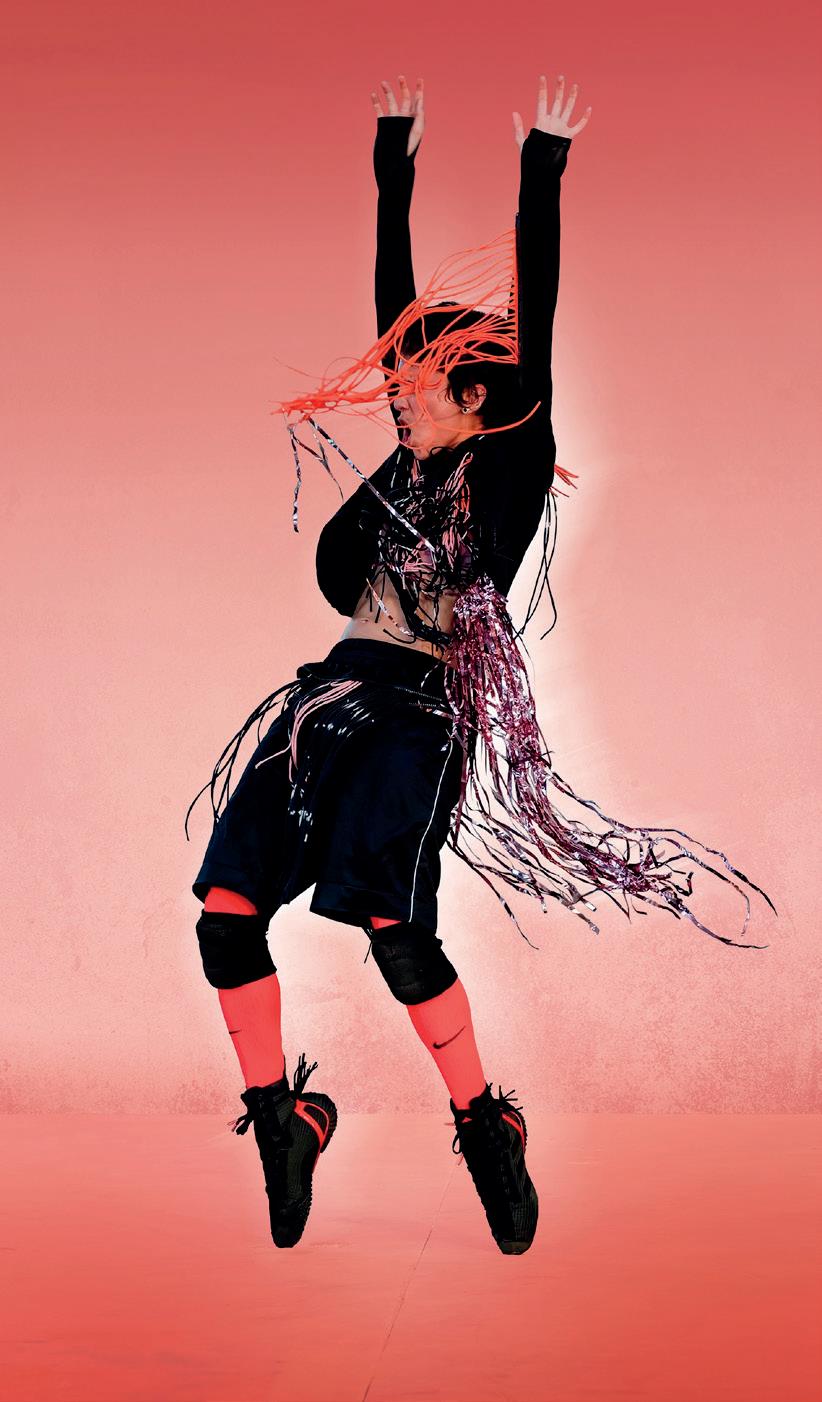
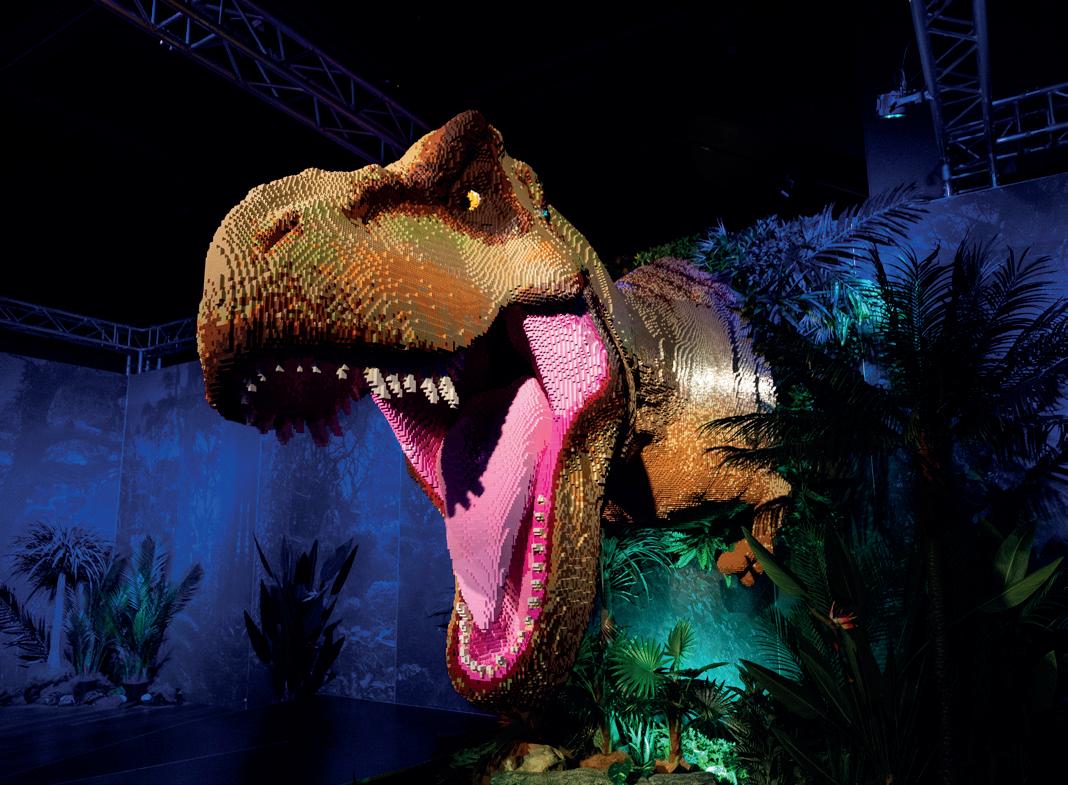
Scan Magazine Issue 192 July 2026
Published 07.2026
ISSN 1757-9589
Published by
Scan Client Publishing
Executive Editor
Thomas Winther
Creative Director
Mads E. Petersen
Editor
Signe Hansen
Copy-editor
Malin Norman
Graphic Designer
Mercedes Moulia
Cover Photo
Flying October @Visit Vesterhavet
Contributors
Anders Lorenzen
Andri Papanicolas
Celina Tran
Hans Henrik Nielsen
Joseph Phelan
Karl Batterbee
Katharina Kjeldgaard
Linnea Mitchell
Malin Norman
Maria Smedstad
Molly McPharlin
Nane Steinhoff
Nina Bressler
Signe Hansen
Thea Johansen
Sales & Key Account Managers
Emma Fabritius Nørregaard
Evelina Duned
Mette Tonnessen
Veronica Rafteseth
Advertising marketing@scanmagazine.co.uk
To Subscribe scanmagazine.co.uk/subscribe
Scan Magazine Ltd
3rd floor, News Building, 3 London Bridge Street, London SE1 9SG, United Kingdom www.scanclientpublishing.com info@scanmagazine.co.uk www.scanmagazine.co.uk
© All rights reserved. Material contained in this publication may not be reproduced, in whole or in part, without prior permission of Scan Magazine Ltd.
Scan Magazine® is a registered trademark of Scan Magazine Ltd.
This magazine contains advertorials/promotional articles