

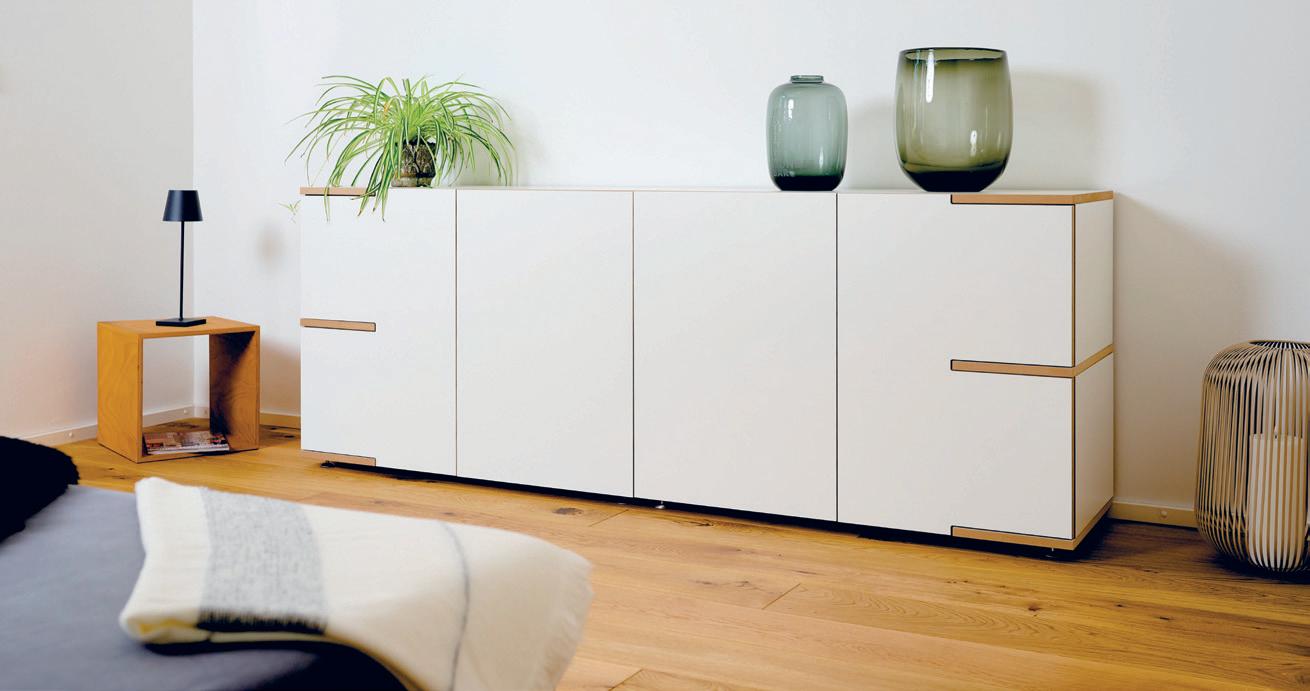


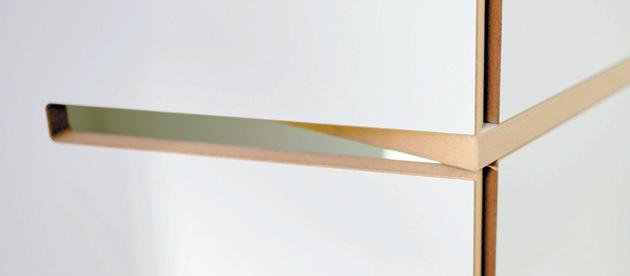
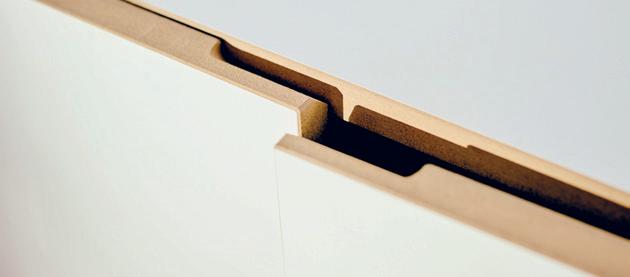
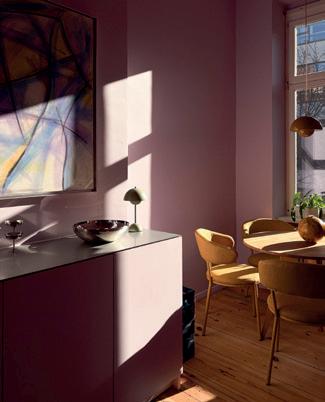
The multiple award-winning sideboard Tojo-stau is available in nine different sizes and finds its individual use through this variety. There are three different widths to choose from, each in three height variants. Tojo-stau is also perfect for moving and becomes a longlasting companion – whether in the living room, dining room, or office.
The doors can be opened by a grip recess milled at the top, which supports the reduced design. The sides and outer doors are visually interrupted by the shelf‘s edges and illustrate the shelf heights, also suitable for file folders. As flat-pack furniture and optimized in terms of components, the sideboard can be assembled and disassembled by one person without tools. Only for the attachment of the hinges the use of a tool is necessary.
Tojo-stau was designed to be as minimal as possible but in order to fulfill its function. The focus is on the reduced variety of individual parts.
With the arrival of spring, we’re excited to bring you a fresh edition filled with inspiration for the season ahead. As the days grow longer and vibrant colours begin to bloom, this issue celebrates remarkable people, places and ideas.
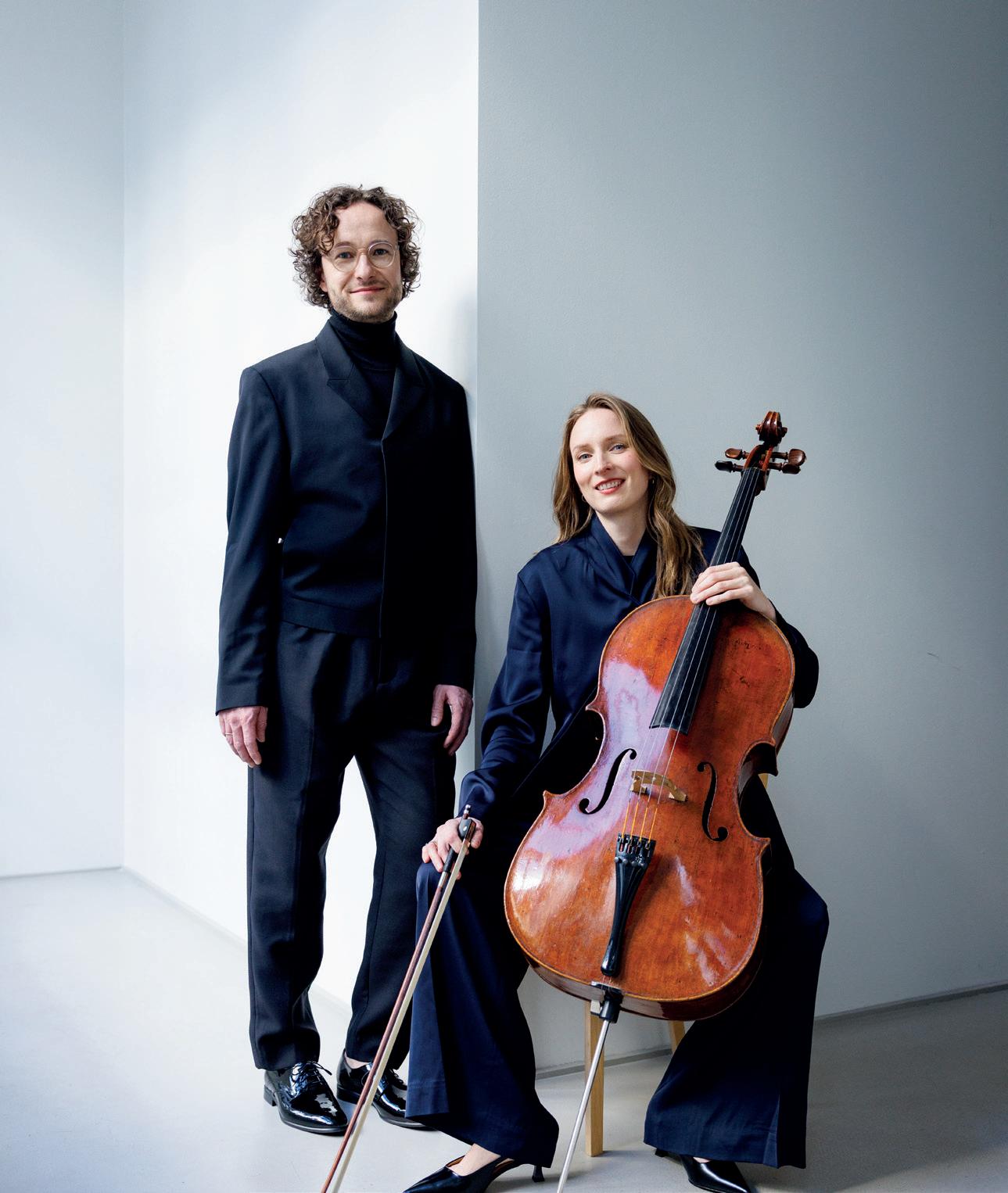
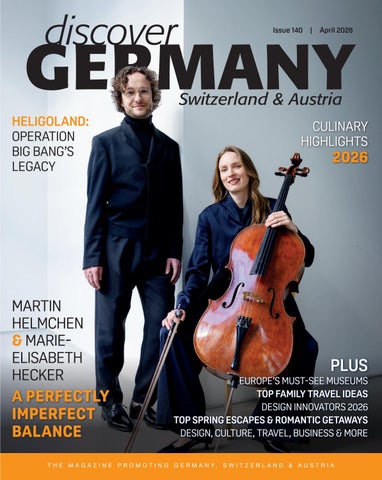
We begin with acclaimed musicians MarieElisabeth Hecker and Martin Helmchen, whose harmonious approach to both music and family life offers insight into creativity and balance. We further dive into the world of aquatic-inspired art, where innovative painters and photographers transform water’s beauty into captivating masterpieces. Our roundup of top design innovators introduces companies and products that spark lifestyle inspiration, while culinary highlights showcase exceptional restaurants and tempting flavours for every palate.
Travel enthusiasts will also find plenty to love in this issue: from Europe’s must-see museums and exclusive romantic getaways to captivating international spring escapes, our special features are
designed to inspire your next adventure. Raise a glass to German beer traditions, discover Heligoland – an island where history and leisure intertwine, embrace a cycling route through the Dolomites, and find exciting travel ideas for the entire family that promise fun and lasting memories.
Last but not least, I'm pleased to announce a new regular column alongside our current columnist line-up. From this issue onwards, Kaddie Rothe, the founder of GOALGIRLS*, a female-first creative agency, will celebrate women-led businesses and spotlight entrepreneurs who are reshaping the industry.
Thank you for joining us as we welcome spring.
Sit back, relax and thank you for reading!
Nane Steinhoff Editor
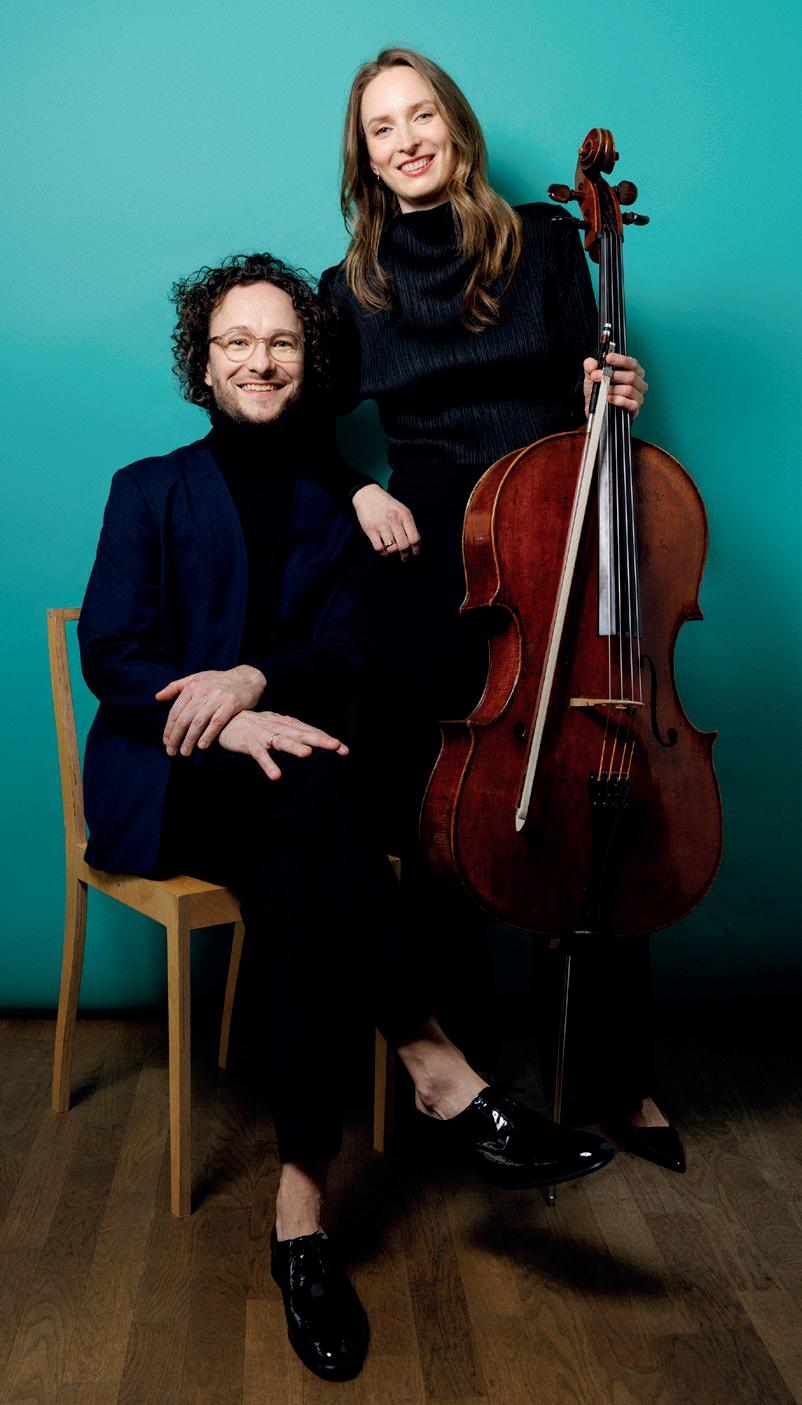
48 CELLIST MARIE-ELISABETH HECKER & PIANIST MARTIN HELMCHEN
Acclaimed German pianist Martin Helmchen and top cellist Marie-Elisabeth Hecker live and work together with their four children. With two highly regarded new albums under their belt and more to come, the musicians reveal how a life between recordings and concert tours, home and family becomes the perfectly imperfect balance.
16 BEAUTIFUL WORLD ON THE WATER
Explore how water shapes art as we meet some innovative painters and photographers who have dedicated their life to transforming aquatic environments into inspirational artworks.
26 TOP DESIGN INNOVATORS 2026
Meet some inspiring companies and their products for lifestyle and design inspiration.
36 CULINARY HIGHLIGHTS 2026
Step into the exceptional world of restaurants and tasty products in this special theme.
54 DISCOVER EUROPE’S MUST-SEE MUSEUMS
We explore Europe’s top museum highlights of 2026, to get you inspired for your next trip abroad.
80 EXCLUSIVE ROMANTIC GETAWAYS – SPECIAL MOMENT FOR TWO
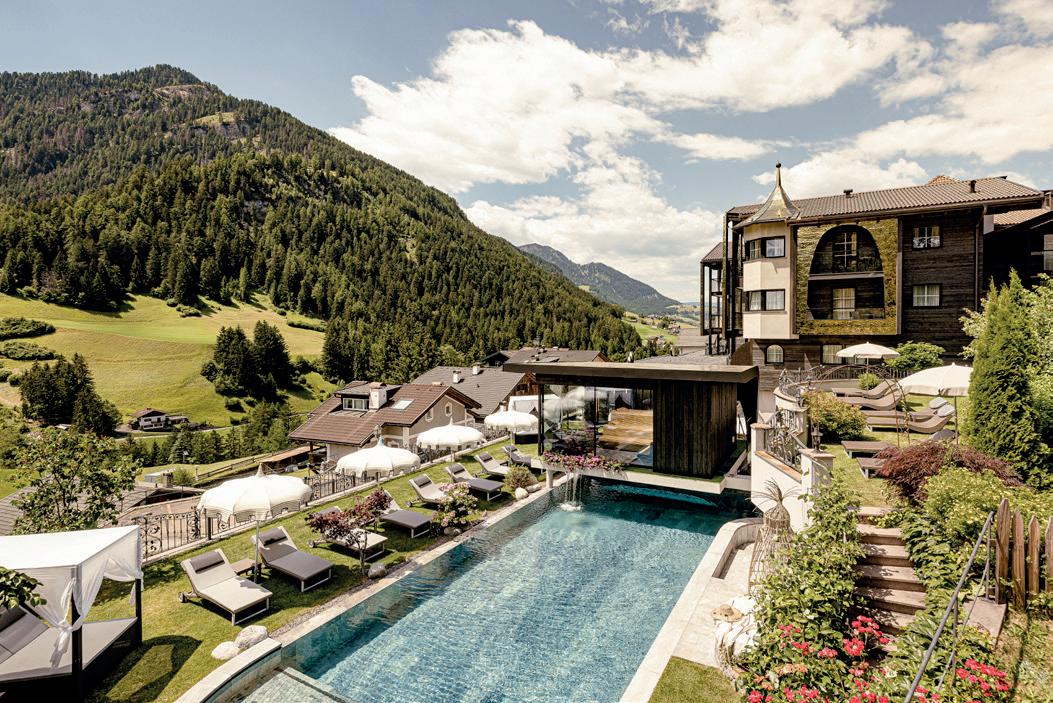
Searching for the perfect setting to celebrate romance? Charming hotels and exclusive accommodations across Germany offer unique backdrops for unforgettable moments.
94 TOP INTERNATIONAL SPRING ESCAPES
Discover some of the most captivating international escapes for your next spring trip.
44 RAISE A GLASS TO TRADITION
When you think of German beer, you probably think of a busy beer garden in Bavaria, or a bitter bottled variety from up north, but when it comes to variety and heritage, the state of BadenWürttemberg should be on every beer enthusiast’s travel list.
68 THE ISLAND WITH HOLES IN IT
Heligoland, once a military stronghold marked by history’s largest non-nuclear explosion, now balances its turbulent past with a thriving holiday scene, prompting journalist Xander Brett to explore whether its history or leisure appeal truly defines the island today.
74 PEDALLING THROUGH PARADISE
Framed by the UNESCO World Heritage Dolomites, Alta Badia provides the ideal starting point for discovering the famous Dolomite passes, true symbols of cycling history.
104 TOP FAMILY TRAVEL IDEAS
Searching for inspiration for your next family adventure? Explore a selection of destinations and experiences across the DACH region that promises fun, excitement and lasting memories for travellers of all ages.
6 DEDICATED TO DESIGN AND FASHION
Trendy design items, innovative architects and unique fashion pieces in our Design section.
68 TRAVEL
Hotels, aesthetic medicine experts, and exciting destinations – our Travel section gives you some much-needed travel tips.
116 DISCOVER HER POWER COLUMN
A new GOALGIRLS* column about women building businesses differently.
122 CULTURE CALENDAR
Discover Germany, Austria & Switzerland’s Culture Calendar is your perfect guide to what not to miss in April.
128 SECRET BERLIN COLUMN
Cornelia Brelowski explores Berlin’s famous cherry blossoms and other spring spectacles.
130 BARBARA GEIER COLUMN
Barbara Geier writes about Thuringia, Germany’s hidden gem for affordable feasts and rich heritage.
Throughout its new Spring/Summer collections, the German Betty Barclay Group with its Betty & Co brand presents ready-to-wear looks at their smartest. Relaxed silhouettes and modern prints define the style, while the colour palette ranges from bold shades to delicate pastels and soft neutrals. Graphic designs, innovative knit textures, and small details such as brooches or buttons give the outfits character – perfect for spring and summer outfits that stand out.
EDITOR’S PICKS I PRESS IMAGES BY BETTY BARCLAY GROUP GMBH & CO. KG/BETTY & CO
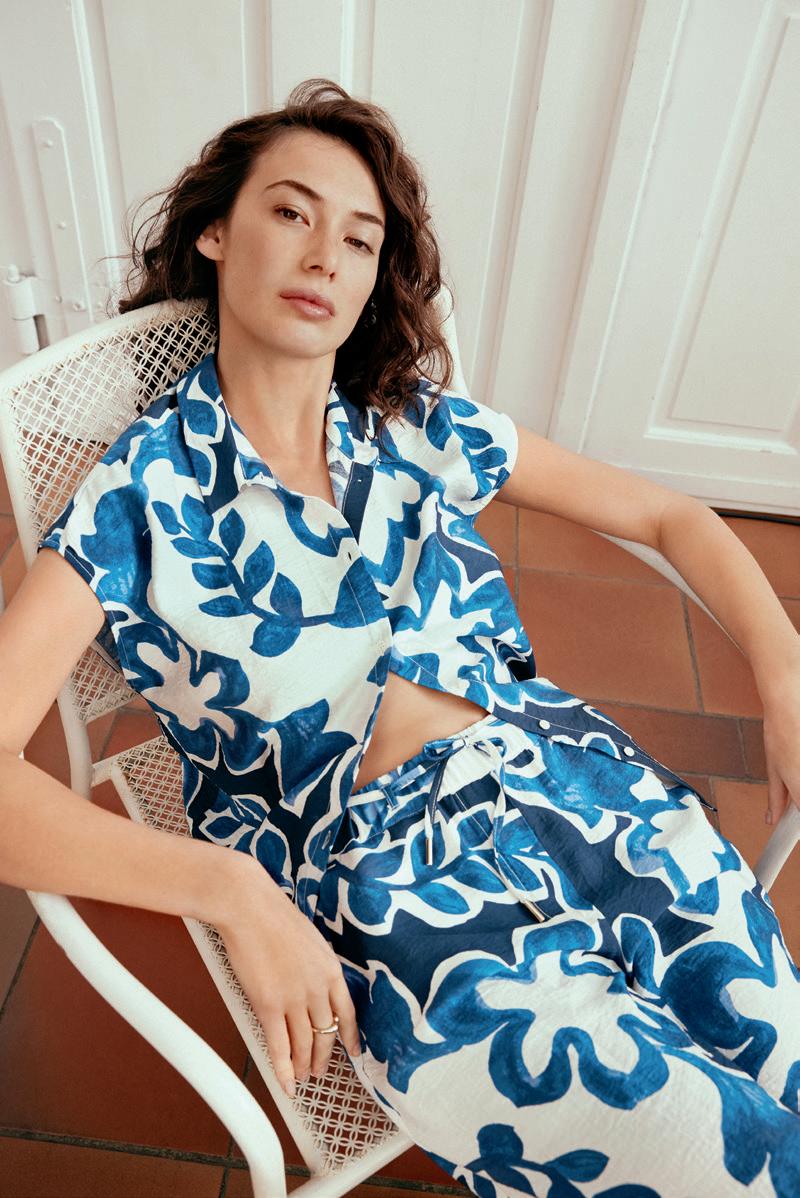
Make a statement with this cool co-ord set, perfect for spring and summer days. Whether heading to the beach or meeting some friends in town for a coffee, the relaxed, flowy fit and fun pattern make this set a delight to wear. Shirt £53, trousers £70. www.thefashionstory.com/de/betty-co
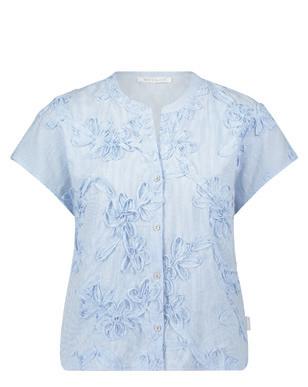
Pastel blue, mini stripes and elegant decorations make this short-sleeve shirt a perfect addition to any wardrobe. £70. www.thefashionstory.com/de/betty-co
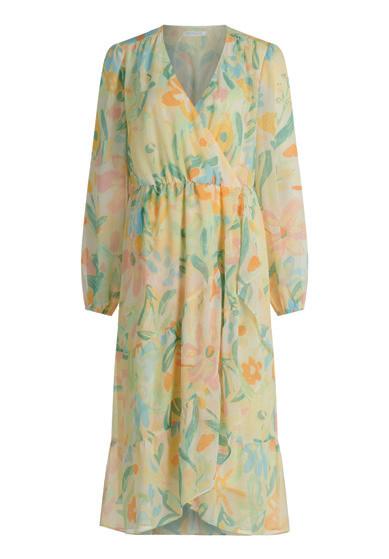
Pastel yellow stands out as one of this year’s key trend colours, and this elegant wrap dress is a wonderful example of how to wear it. Adorned with a refined floral print, the dress not only highlights the season’s palette but also brings a gentle, cheerful feel to your wardrobe. Its flattering silhouette and delicate detailing make it ideal for both daytime outings and special occasions. £123. www.thefashionstory.com/de/betty-co
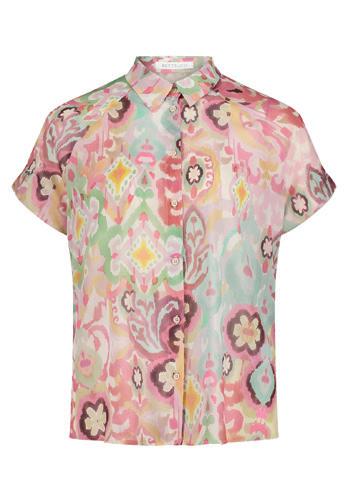
Soft pinks meet yellows, greens and blues. We introduce: your spring staple! Combine with a pair of light jeans and you have an effortless outfit that is sure to stand out. £61.
www.thefashionstory.com/de/betty-co
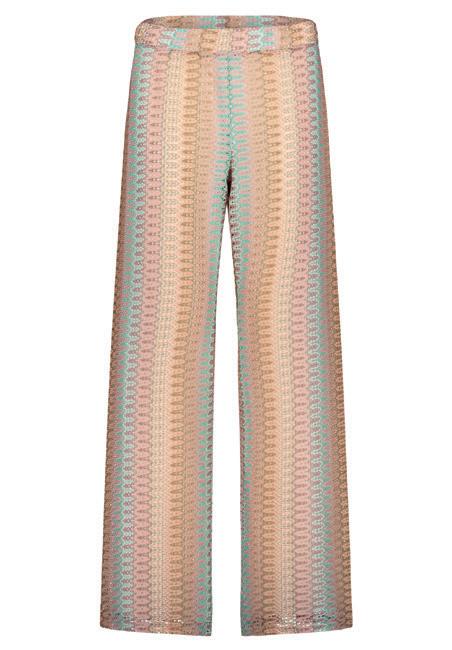
Reminding us of the ‘70s, these crochet pants will make any outfit choice that little bit brighter. With their soft pastel tones, they are perfectly in style this spring. £79.
www.thefashionstory.com/de/betty-co
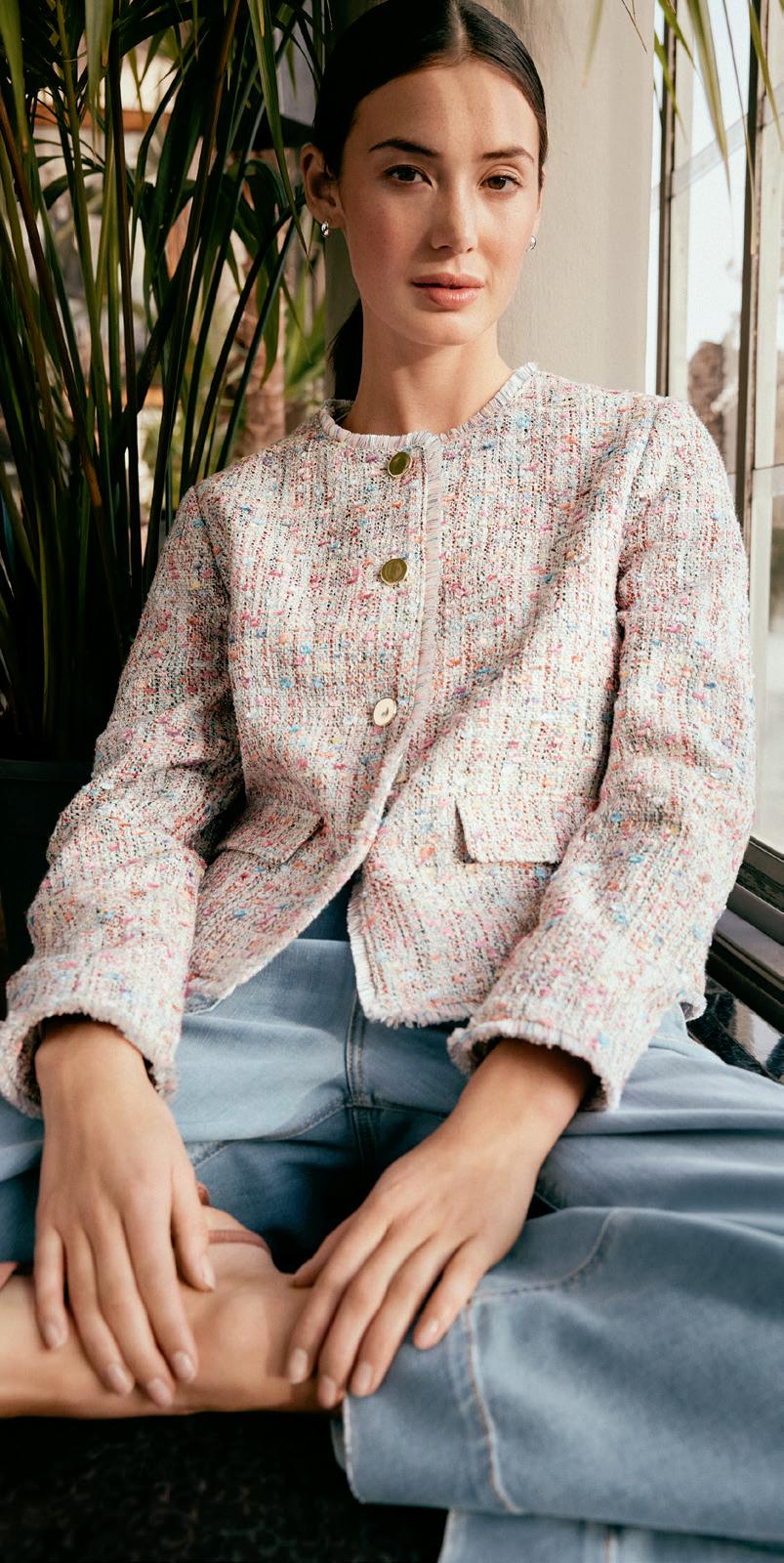
This outfit demonstrates how casual style can embody a feminine touch. It blends femininity with smart, relaxed fashion choices, making it suitable both for daily wear and memorable occasions. Jeans £88, jacket £132.
www.thefashionstory.com/de/betty-co
Spring has well and truly arrived, and accompanying it is the emergence of a captivating interior design movement: pastel haze. Perfect for Easter and beyond, this trend reimagines spring’s classic palette, softening hues like powder blue, pistachio, blush, butter yellow and lilac into elegant, understated tones. The result is a delicate, diffused effect that is fresh and sophisticated, steering clear of any excessive sweetness. The gentle colours offer a subtle lift that never feels overpowering. When layered in similar shades or teamed with crisp neutrals, they produce a serene, contemporary look that is perfectly suited for the brighter days ahead.
EDITOR’S PICKS I IMAGES: PRESS LOFT
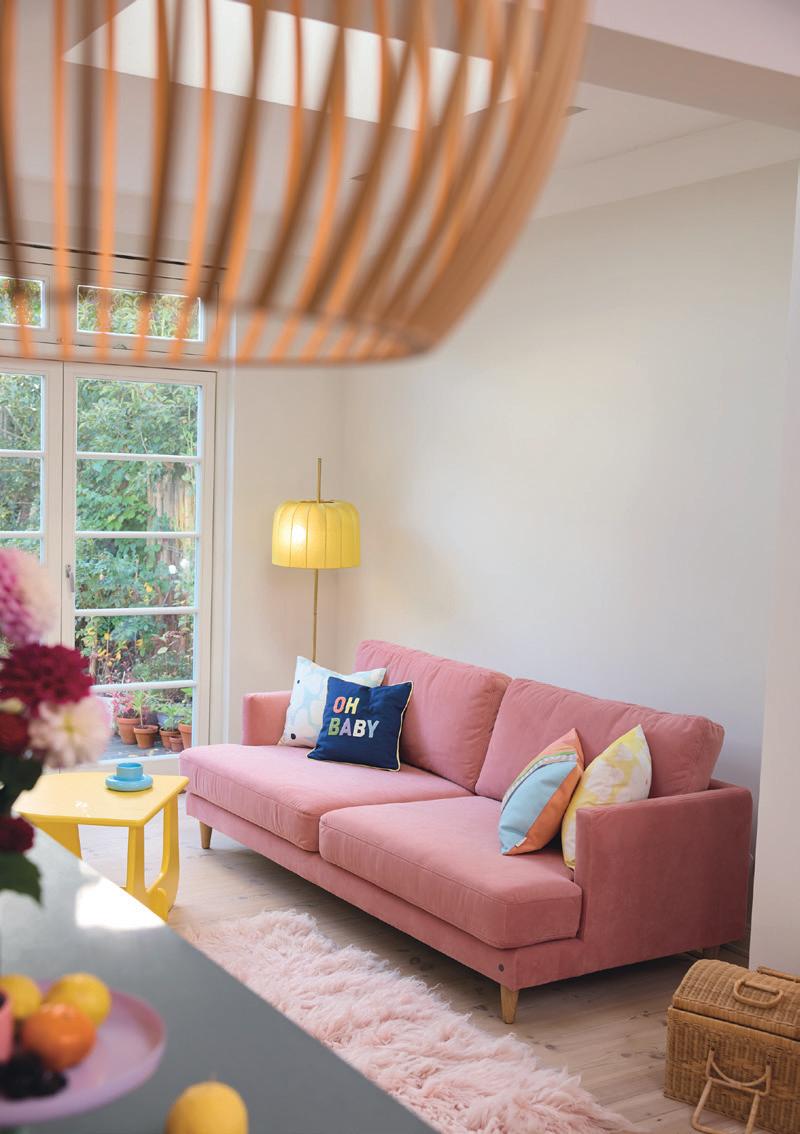
Experience the charm of pastel interiors with Tom Tailor’s WESTCOAST sofa, showcased here in beautiful blossom pink. With its sleek silhouette, tapered wooden legs and plush cushions, this sofa brings a classic yet versatile flair to any living space. Adding a burst of colour, the ORGANIC side table shines in a lively yellow shade, making it a perfect accent piece. Sofa (220cm x 98cm) from £1,529, side table from £304. www.otto.de or www.home24.de
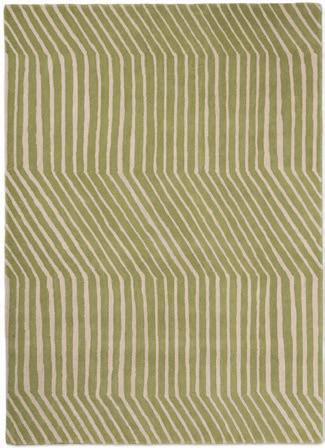
The Kalasääski rug, designed by Finnish design house Marimekko, will bring colour and happiness into any home with its light green shade. Made from high-quality New Zealand wool, it also guarantees the highest quality possible. £644. www.traumteppich.com/de
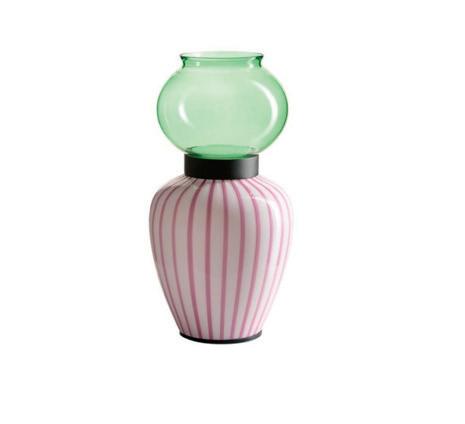
Pastel meets art deco – the Layla table lamp in ruby and emerald. It features a vase-shaped design, and a lamp that is made of blown glass. Layla is perfect for adding a touch of charm and colour to any living space. £1,085. www.nedgis.com
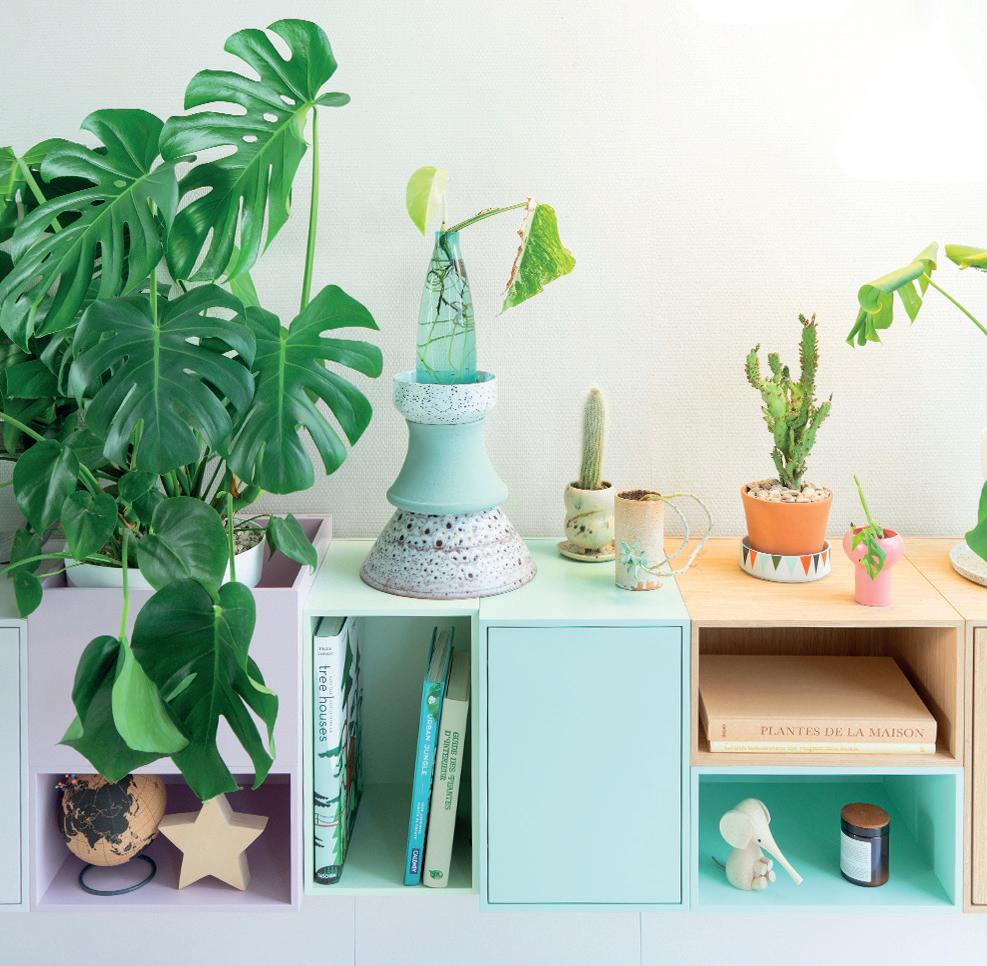
The innovative Cubit shelving system, or sideboard, features premium modules that can be put together effortlessly. No tools required. This modular furniture lets you expand and reconfigure it whenever you want. Express your creativity by mixing and matching the modules to create a setup that fits your needs. One module from around £86. www.cubit-shop.com
The Finn blanket from RIEMA BIO is a beautifully soft cotton throw, crafted entirely from 100 per cent organic cotton in a cheerful yellow shade. Made exclusively in Germany, it is OEKO-TEX certified, ensuring a cosy and safe feeling for everyday use. Measuring a generous 140cm x 200cm, it is also available in a range of other vibrant colours. £105. www.riema-germany.de


Add a hint of Mediterranean elegance to your space with the exquisite, hand-woven Sicilia ceramic baskets. Each timeless piece is carefully crafted by hand in a Portuguese workshop renowned for its rich heritage in ceramic weaving. £61. www.ferrum-living.de
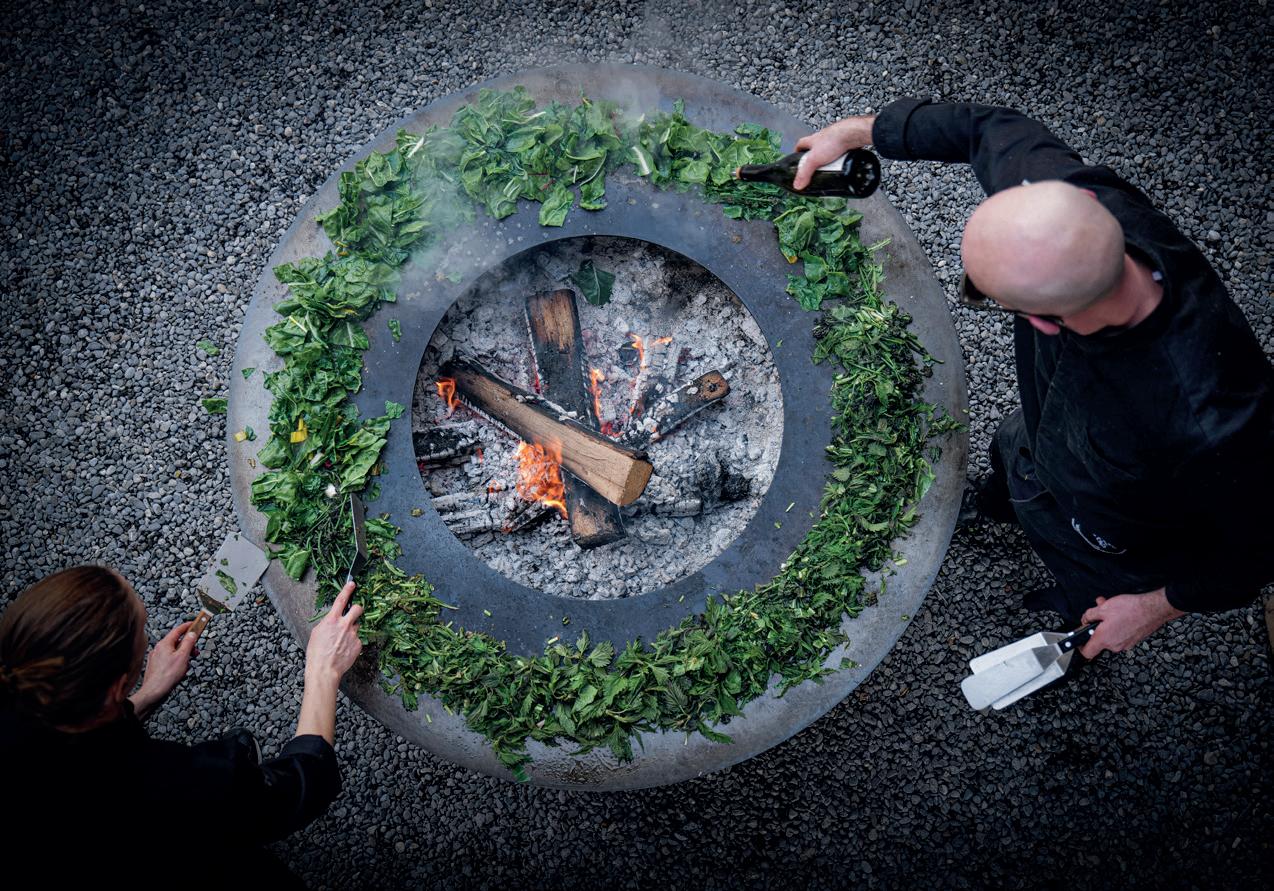
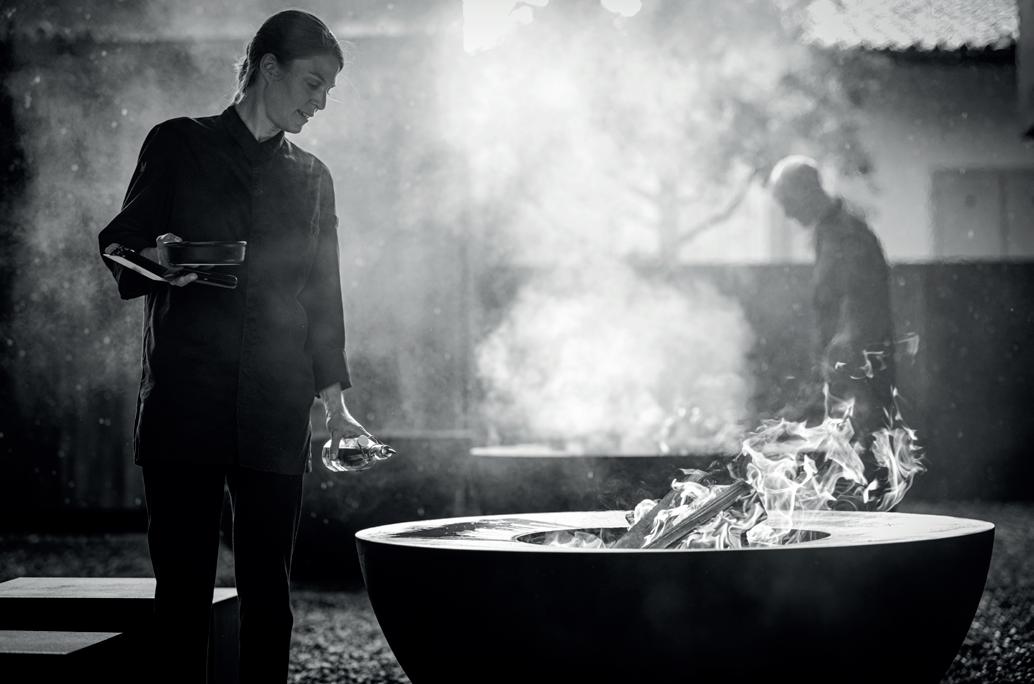
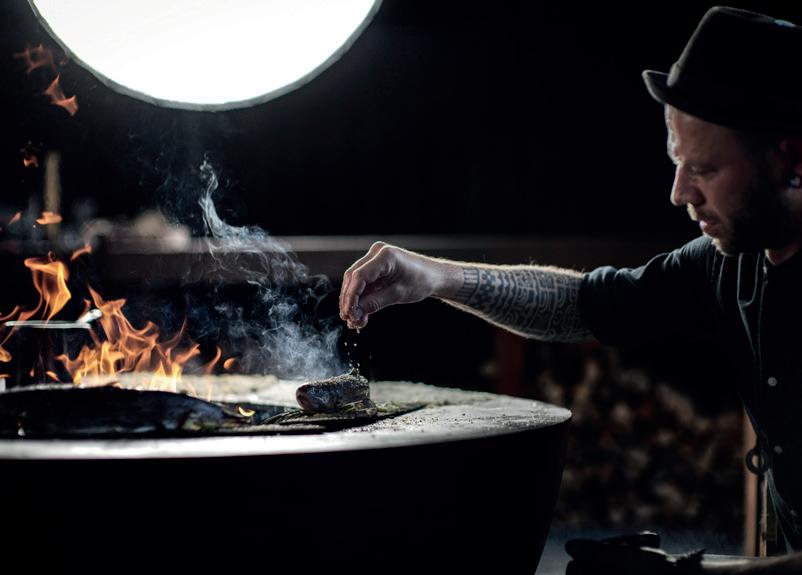
Sculptural reduction and healthy barbecuing mark Feuerring® by Andreas Reichlin – for a both authentic and aesthetic culinary experience through which even the most simple ingredients begin to shine.
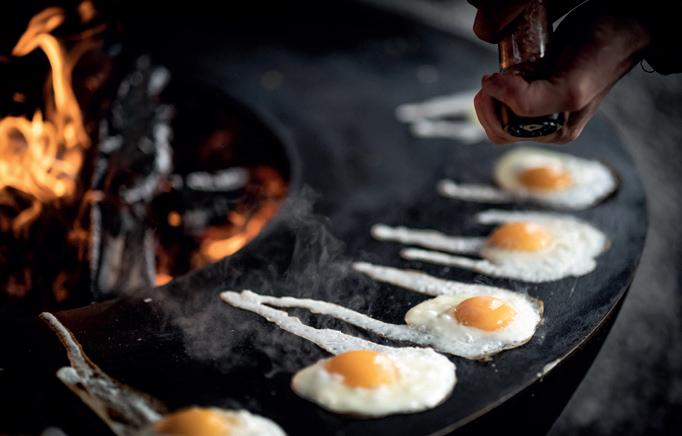
“Simply Shine” is indeed the latest motto for Reichlin: Feuerring (fire ring) and its patented, indirect grilling technique makes cooking outdoors a healthy, communal experience, both for private and professional chefs. The trained sculptor developed Feuerring to present the classic barbecuing culture with an attractive alternative, because in the past, the half-burnt food of a classic BBQ had merely given him tummy aches. “Why should the women be preparing salads in the kitchen, while the men stand around tending to smoky sausages?” laughs Reichlin. Instead, Feuerring offers a mutual, slow cooking experience with a broad palette of healthy dishes, while simple ingredients unfold a completely new consistency and taste. From meat and fish to a wide variety of vegetables; from fried eggs to marinated winter cabbage through
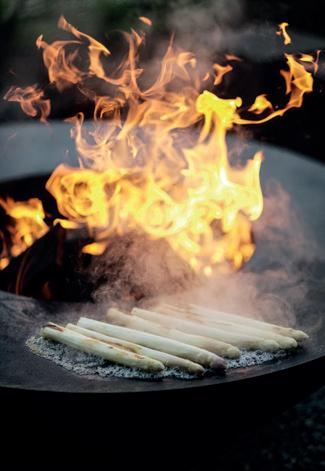
to sourdough bread, everything is possible –without any accessories.
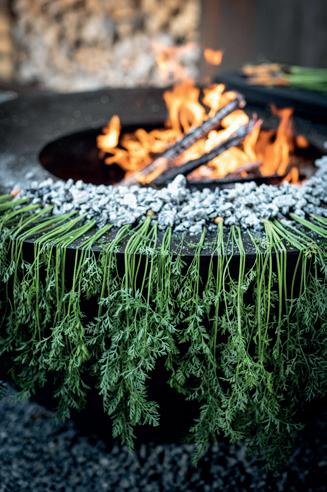
The reduced aesthetics of the sculpture are mirrored in the simplicity of the ingredients and technique, which even serves the high end gastronomy scene: Swiss star chef Stefan Wiesner, dubbed The Wizard, regularly uses eight of Reichlin’s fire rings for his experience-based culinary events. The Luna Grande in particular serves upscale dining outfits, however also Gastro Luna and Tulip in their various sizes are popular with chefs. The proportions of the models meanwhile always remain the same: for each type and scale, the ring width is ¼ of the diameter. That is why the temperature of the inner ring is always around 300ºC, while that of the outer ring can vary according to width. On Feuerring, you can for example cook meat on the inner rim, fish in the middle, while vegetables gently simmer on the outer rim. Thus, even
Skulpturale Reduktion und gesundes ‚Grillieren’ kennzeichnen den Feuerring ® von Andreas Reichlin – für eine authentisch-ästhetische Kulinarik mit der auch die einfachsten Zutaten ‚brillieren’ können.
„Einfach Brilllieren”, heißt denn auch das neueste Motto für Reichlin; denn der originale Feuerring verhilft mit seiner indirekten Grilltechnik auf dem Außenring der bereits 2009 patentierten Grillskulptur sowohl privat als auch in der Gastronomie zu einem gesunden Gemeinschaftserlebnis. Der gelernte Bildhauer entwickelte die Skulptur unter anderem, um der Grillkultur eine neue, attraktivere Alternative zu bieten; denn in der Vergangenheit hatten ihm die klassisch verrauchten Grillabende lediglich Magengrimmen verursacht: „Ich hielt eigentlich nie viel von der klassischen Grillkultur und dem damit verbundenen Männlichkeitswahn”, lacht Reichlin. „Warum sollen die Frauen in der Küche den Salat machen, während die Männer draußen auf verrauchtes Grillgut warten?“
Der Feuerring bietet indes die Chance zum gemeinschaftlichen Kocherlebnis mit einer breiten Palette an gesund gegarten Gerichten,
deren Zutaten auf dem Ring eine ganz andere Konsistenz und Geschmacksfülle entfalten, als zum Beispiel in der Pfanne. Von Fleisch über Fisch zu verschiedensten Gemüsearten; vom Spiegelei, das auf dem Feuerring regelrecht zum ‚Eicatcher’ wird, über marinierten Winterkohl bis hin zu im Bauch der Schale gebackenem Sauerteigbrot ist alles dabei – und das praktisch ohne Zubehör.
Die Reduktion der Skulptur spiegelt sich in der Einfachheit der Zutaten wider, aus denen auch im professionellem Bereich kulinarische Hochkultur wird – zum Beispiel beim Sternekoch und „Hexer” Stefan Wiesner, dessen Erlebnisgastronomie mit mittlerweile acht Feuerringen zelebriert wird. Insbesondere der Feuerring Luna Grande eignet sich für die gehobene Gastronomie; doch werden hier auch die Gastro Luna und Tulip in verschiedenen Ausführungen verwendet. Unabhängig von der Größe bleiben die Proportionen der Modelle immer gleich: Bei jeder Skalierung beträgt die Ringbreite jeweils ¼ des Durchmessers. So bleiben auch
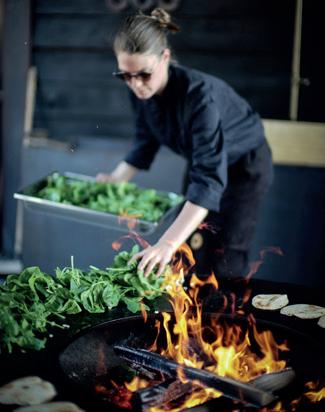
spinach can become a culinary sensation, marvels Reichlin: “You add a touch of olive oil, then water, season it to taste with a little veggie broth and salt, and voilá – a palatable delight in supernatural hues!” From polenta to risotto, Feuerring offers delectable veggie dishes, all without the help of pot or pan.
Reichlin reports further small wonders created with simple ingredients: “Just yesterday, we had a film crew here, and after a rather exhausting shoot, I invited them for a simple ratatouille with beer around the fire ring. In the end, the sweet potatoes came out of the embers – an incredible taste from the slightly charred skin to the caramelised outer flesh through to the pulpy heart in bright orange which can be spooned out. The filmmaker, who until now did not even like sweet potatoes, tried a bite – and was immediately enthusiastic!” After Feuerring, guests simply do not want to return to their Teflon pan, says Reichlin, who is known to even fry crispy kale chips on the rim.
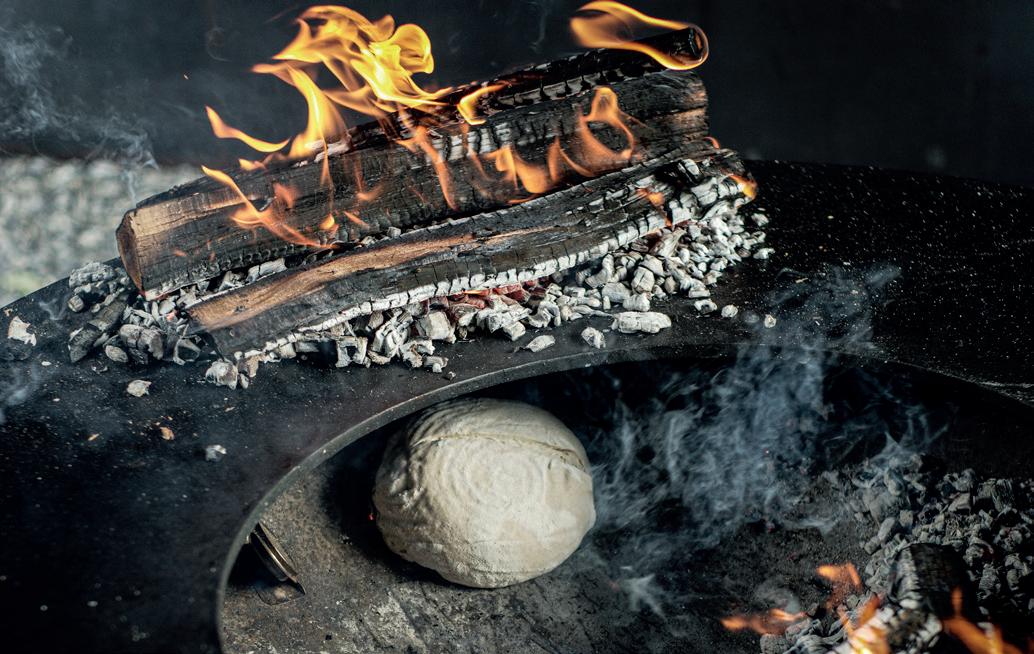
And what about baking? Easy, says the sculptor, because for baking you use the bowl of Feuerring, just like in case of a roast chicken. To this end, the embers are being
scooped out of the bowl and put on the rim, while the bread form is placed right in the belly. And the principle is always the same: all you need is Feuerring and some wood –the endless palette of accessories that, say, sellers of copies offer, remains redundant when it comes to the original. Reichlin explains how for example Feuerring pizza or tarte flambé comes to perfection through creating a combination of upper and lower heat by pulling some logs out of the fire and positioning them V-shaped on the ring.
Many other new interesting recipes have just become available through the new photo book Krautkopf|Feuerring by food bloggers Susann Propst and Yannic Schon, who create all their Feuerring dishes with ingredients grown in their own garden. The high-quality book was published directly by Feuerring GmbH: “It’s a book about cooking around the fire, about simplicity, aesthetics and enjoying delicious meals in the moment.”
Simplicity and aesthetics determine not only the sculpture, but also the act of cooking itself. And last but not least, the deeply connecting aspect of communal preparation is equally important. “The fire ring has an incredibly grounding energy,” says Reichlin. It takes about 45 minutes to get the fire going –and this period alone lets people slow down: “Be it the baby who stares into the fire from its father’s arm or stressed out guests and friends – everybody experiences a sense of calm. And then, they can explore the joy of healthy barbequing, with ingredients which may have never before tasted this way! Around Feuerring, everything becomes a new experience.”
www.feuerring.ch
die Temperaturen am Innenrand mit 300º C jeweils gleich; während die an den Außenrändern je nach Ringbreite variieren können: Je breiter der Ring, desto mehr unterschiedliche Temperaturzonen entstehen; zum Beispiel um am Innenrand das Fleisch zu garen, mittig den Fisch und am Außenrand das Gemüse. Selbst Spinat wird auf dem Feuerring zu einer kulinarischen Sensation, erzählt Reichlin: „Du startest mit ein wenig Oliven-Öl, dann kommen etwas Wasser und Gemüsebrühe dazu, und am Schluss wird etwas Salz darüber gesprenkelt – ein Genuss in übernatürlicher Farbe.” Von Polenta bis Risotto sind für Vegetarier auch viele komplette Gemüsegerichte auf dem Feuerring möglich, ganz ohne Topf oder Pfanne.
Reichlin berichtet von anderen ‚kleinen Wundern’ mit einfachsten Zutaten: „Erst gestern hatten wir eine Filmcrew da, und nach dem sehr anstrengenden Shooting lud ich dann zu Ratatouille und Bier am Feuerring. Am Ende kamen die Süßkartoffeln aus der Glut – ein unglaubliches Geschmackserlebnis zum Auslöffeln – von der leicht verkohlten Außenhaut über die karamellisierte äußere Schicht bis zum Herz des leuchtenden Fruchtfleisches. Der Filmemacher, der eigentlich nichts von Süßkartoffeln hält, wagte einen Bissen und war sofort begeistert!” Gäste wollen nach dem Feuerring-Erlebnis nicht mehr zur Teflonpfanne zurück, berichtet Reichlin, der auch schon einmal knusprige Gemüsechips aus dem Schweizer ‚Federkohl’ auf dem Ring zubereitet.
Und wie sieht es mit dem Backen aus? Wunderbar, so Reichlin, denn zum Backen wird
genau wie für das Brathähnchen die Glut aus dem Inneren auf den Ringrand geholt, und die Form oder der Topf direkt in die Schale des Feuerrings platziert. Und immer gilt das Prinzip: Es braucht nur den Feuerring und das Holz – die endlose Palette des oft von PlagiatAnbietern angepriesenen Zubehörs entfällt. „Das einzige was wir extra entwickelt haben, sind lange Lederhandschuhe, die Dir erlauben, in die Schale zu greifen, um etwa Holzscheite herauszuholen”, erklärt Reichlin. Er schwärmt im Anschluss vom Flammkuchen und der Feuerring-Pizza, die durch die Kombination von Unter- und Oberhitze zustande kommen:
Die Oberhitze entsteht in dem Falle durch auf den Ring zeigerförmig aufgelegte Scheite, die zuvor dem Feuer entnommen werden. Viele Rezepte sind in dem frisch erschienenen kulinarischen Bildband Krautkopf|Feuerring der Fotoblogger Susann Propst und Yannic Schon zu entdecken, die alle Zutaten selbst in ihrem Garten ziehen. Das gebundene Buch wurde mit hochwertigen Materialien gefertigt und direkt über die Feuerring GmbH verlegt: „Es ist ein Buch über das Kochen im Kreis des Feuers, über Einfachheit, Ästhetik und den Genuss im Moment.”
Einfachheit und Ästhetik bestimmen also nicht nur die Skulptur, sondern auch das Kochen an sich; und nicht zuletzt zählt der verbindende Aspekt der gemeinschaftlichen Zubereitung. „Der Feuerring bringt eine unglaubliche Erdung”, so Reichlin. Es dauert seine 45 Minuten, bis das Holz durchgeglüht ist –und schon in dieser Zeit kommen die Menschen zur Ruhe. „Ob es das einjährige Kind ist, das auf dem Arm des Vaters ins Feuer schaut, oder die vom Alltag gestressten Gäste und Freunde – jeder erfährt am Feuerring eine Erdung. Und viele entdecken die Freude am gesunden ‚Brillieren’ und genießen selbst Zutaten, die sie früher nie mochten. Alles wird neu erfahren und entdeckt!”

“SLEEP
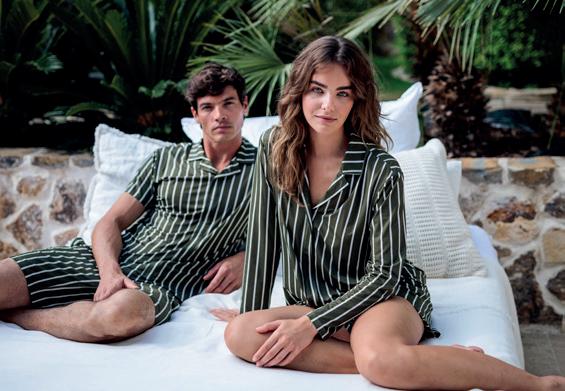
While sportswear has long embraced high-tech innovation, sleepwear has remained largely unchanged for decades. This is precisely where Dagsmejan steps in. The Zurich-based company is driven by a clear mission: to create sleepwear specifically designed to meet the needs of the sleeping body – scientifically developed, independently tested and entirely manufactured in Europe.
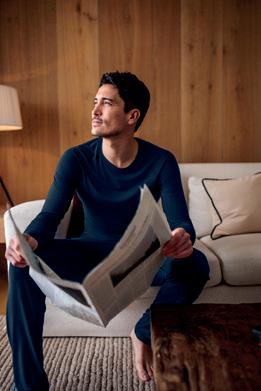
Dagsmejan’s founder, Andreas Lenzhofer, recognised early on the untapped potential in optimising the body’s sleep climate. Working alongside material scientists, textile engineers and sleep researchers, his company develops a new generation of functional sleepwear. Innovative natural fibres support the body’s natural thermoregulation, offering exceptional breathability and effective moisture management. The result is a balanced sleep environment and noticeably more restorative rest.
Dagsmejan combines textile engineering with a Scandinavianinspired aesthetic: clean lines, premium materials and uncompromising comfort. Sustainable, resource-conscious fabrics and full European production underline the quality promise of the internationallypositioned Swiss brand.
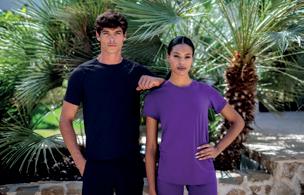
Today, the range includes five specialised collections, from ultra-light summer sleepwear to temperature-regulating styles for cooler nights. Additionally, Dasgmejan offers a travel and lounge line as well as carefully designed sleep accessories, including blackout masks and functional sleep socks.
Recommended by leading sleep experts, Dagsmejan is also trusted by elite sports teams such as the Swiss national ice hockey team and Tudor Pro Cycling – because true recovery begins in the night.
www.dagsmejan.com
„SLEEP
Während Sportbekleidung längst Hightech-Standards erfüllt, blieb Sleepwear über Jahrzehnte erstaunlich unverändert. Genau hier setzt Dagsmejan an. Das junge Unternehmen aus Zürich verfolgt eine klare Mission: Sleepwear, die gezielt auf die Bedürfnisse des schlafenden Körpers abgestimmt ist – wissenschaftlich fundiert, unabhängig getestet und komplett in Europa hergestellt.
Dagsmejan-Gründer Andreas Lenzhofer erkannte früh, welches Potenzial in der Optimierung des Schlafklimas liegt. Gemeinsam mit Materialwissenschaftlern, Textilingenieuren und Schlafforschern entstand eine neue Generation funktionaler Sleepwear: Innovative Naturfasern unterstützen die natürliche Thermoregulation, sorgen für hohe Atmungsaktivität und ein effizientes Feuchtigkeitsmanagement. Das Ergebnis ist ein ausgeglichenes Schlafklima und spürbar erholsamer Schlaf.
Dabei verbindet Dagsmejan textile Ingenieurskunst mit skandinavisch inspirierter Ästhetik: klare Linien, hochwertige Materialien, kompromissloser Komfort. Nachhaltige, ressourcenschonende Stoffe und eine vollständige Produktion in Europa unterstreichen den Qualitätsanspruch der international ausgerichteten Marke.
Heute umfasst das Sortiment fünf spezialisierte Kollektionen – von ultraleichter Sommer-Sleepwear bis hin zu wärmeregulierenden Modellen für kühlere Nächte. Ergänzt wird das Angebot durch eine Travel- und Lounge-Linie sowie ausgewählte Schlaf-Accessoires wie Black-Out-Masken oder funktionelle Schlafsocken.
Von führenden Schlafexperten empfohlen, vertrauen auch Elite-Sportteams, wie zum Beispiel die Schweizer EishockeyNationalmannschaft und Tudor Pro Cycling, auf die Produkte, denn Regeneration beginnt bereits im Schlaf.
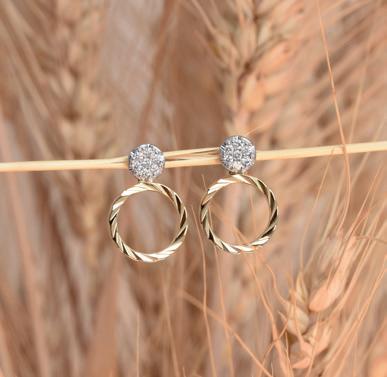
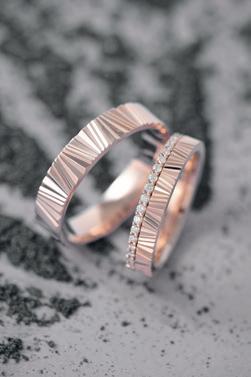
Inspirational design, perfect forms, individual configurations and extraordinary stone settings – this is the heart of international jewellery brand acredo.
A wedding ring is more than just jewellery. It is a promise and a symbol of wishes and dreams. Using a unique configurator, acredo enables couples to design a ring that embraces their very own personal love story. A wide selection of precious metals from warm rose gold to platinum, 13 different surface textures, diamonds or coloured gemstones, and personal engravings make every ring a distinctive piece.
In addition to engagement and wedding rings, acredo creates unique jewellery pieces. The latest ring collection ECLIPSE for men is inspired by the solar eclipse – a moment in which light and darkness conjoin. Black diamonds and precise black lines create a striking contrast and make the rings ideal for men with an individual style.
Founded in 2008, acredo is the number one international brand for high-quality, individually designed rings ‘Made in Germany’ with over 100 points of sale in 14 countries. Harmony and aesthetics are always the focus. The jewellery pieces are crafted with great attention to detail in the RJC-certified (Responsible Jewellery Council) egf manufactory in Pforzheim and meet high standards regarding sustainability and ethics. Since 2022, it uses 100 per cent recycled gold, silver and platinum for its ring alloys that are cast in-house.
A ring from acredo is more than jewellery – it stands for permanence, love and responsibility.
www.acredo-trauringe.de
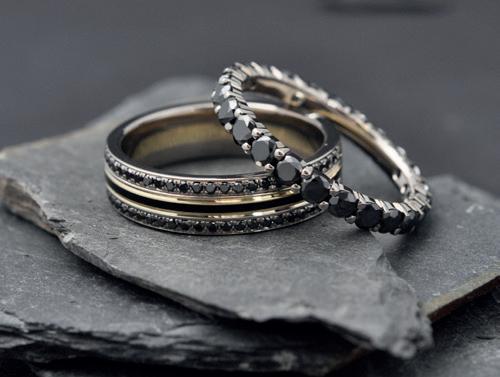
Inspirierendes Design, perfekte Formen, individuelle Konfiguration und außergewöhnliche Steinbesätze – das ist das Herz der internationalen Schmuckmarke acredo.
Ein Trauring ist mehr als nur ein Schmuckstück. Er ist ein Versprechen und symbolisiert Wünsche und Träume. acredo ermöglicht es Paaren, mit einem Konfigurator einen Ring zu gestalten, der ihrer ganz persönlichen Liebesgeschichte gerecht wird. Eine große Auswahl an Edelmetallen, vom warmen Rotgold bis hin zu Platin, 13 verschiedene Oberflächenstrukturen, Diamanten oder farbige Edelsteine sowie persönliche Gravuren machen jeden Ring zu einem unverwechselbaren Unikat.
Neben Verlobungs- und Trauringen bietet acredo auch besondere Schmuckstücke. Die neueste Ringkollektion ECLIPSE für Männer ist von der Sonnenfinsternis inspiriert – einem Moment, in dem sich Licht und Dunkelheit begegnen. Schwarze Brillanten und präzise schwarze Linien erzeugen einen markanten Kontrast und machen die Ringe zur idealen Wahl für Männer mit individuellem Stil.
Gegründet im Jahr 2008, ist acredo heute die internationale Marke für hochwertige, individuell gestaltete Ringe „Made in Germany” mit über 100 Verkaufspunkten in 14 Ländern. Harmonie und Ästhetik des Designs stehen dabei stets im Mittelpunkt. Die Schmuckstücke werden mit viel Liebe zum Detail in der RJC-zertifizierten (Responsible Jewellery Council) egf Manufaktur in Pforzheim gefertigt und erfüllen hohe Standards in Bezug auf Nachhaltigkeit und Ethik. So werden beispielsweise seit 2022 die Legierungen für alle Ringe aus 100 Prozent recyceltem Gold, Silber und Platin hergestellt und sogar im eigenen Haus gegossen.
Ein Ring von acredo ist mehr als ein Schmuckstück – er steht für Beständigkeit, Liebe und Verantwortung.

Water has always captivated the human imagination. Its tranquility, power, and endless beauty inspire countless stories, designs and artworks. In this special theme, we invite you to explore how water and the ocean shape art as we meet some innovative painters and photographers who have dedicated their life to transforming aquatic environments into stunning, inspirational artworks.
PHOTOS: UNSPLASH

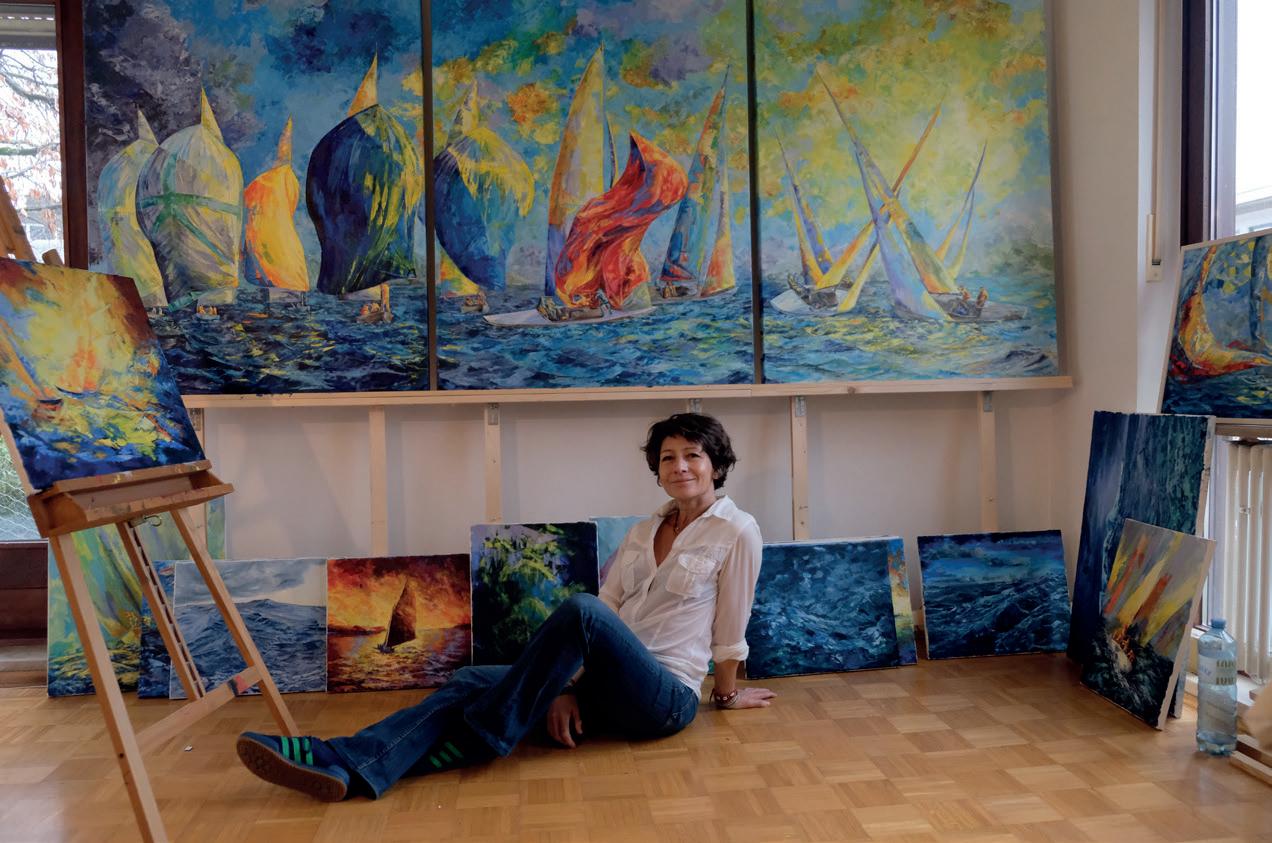
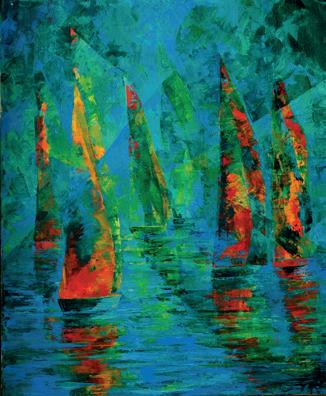
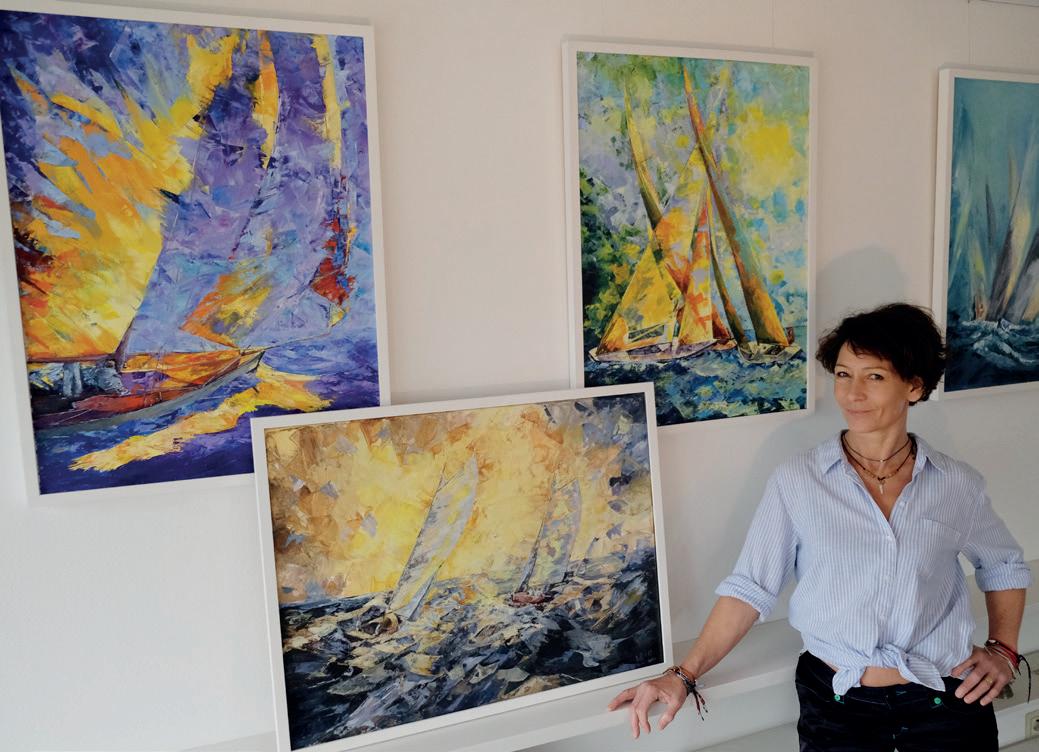
In her work, artist Alia Alexandra Lammel uniquely captures the sea’s untamed power and the vastness of the ocean. Her art is the result of an extraordinary life journey that has taken her around the world and across the oceans.
Anyone who engages with Alia Alexandra Lammel's paintings can practically feel the salt in the air and the sound of the waves. The sea is her central motif, but not as a postcard-perfect idyll; rather, as a vibrant, sometimes untamed element. Lammel’s credo "to feel the sea and its energy" runs like a thread through her artistic career.
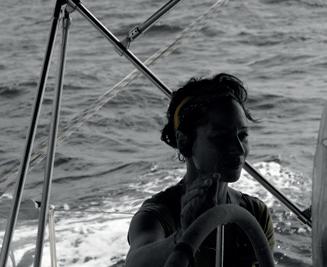
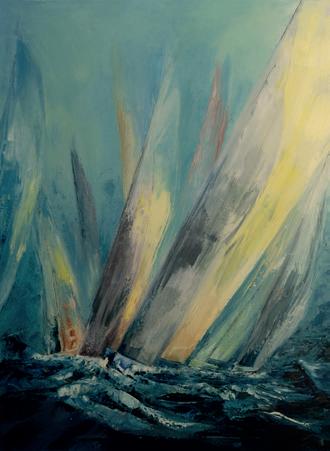
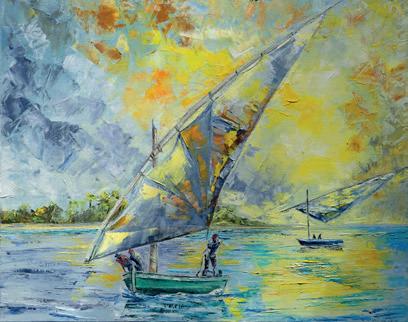
Some of her works are created on board. She says: “For me, sailing and painting are two sides of the same coin: both begin with vastness and infinity – the sea or the canvas. The sailboat, as a plaything of nature on the water, is a metaphor for the beauty and power of nature. This is precisely where my visual language is fed – colours, light and shadow, contrasts, movement.” Sailing is both a source and an inspiration: “On the vastness of the oceans, surrounded by water and the deep blue, you come back to
what is essential. This is the feeling I want to convey through my art.”
Behind the artist is an extraordinary personality. Alia Alexandra Lammel is curious, adventurous, and full of energy. Her openness to new experiences, coupled with a deep love of nature, is reflected in all her works. She explains: “The many facets of the sea inspire
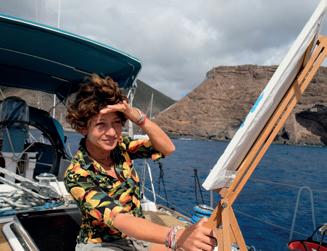
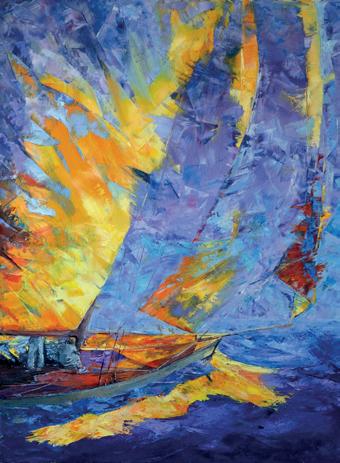
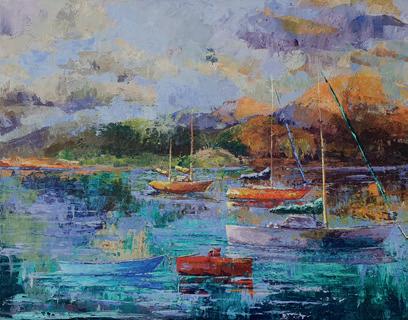
my paintings. Like a wave pushing a ship from behind, my palette knife glides across the canvas. The reflections of the clouds, the landscape, the water's surface, the sun's rays, the immeasurable vastness and depth of the sea, the light and shadow of nature form my palette – from dark and menacing to colourful, bright, and luminous.”
The artist has been drawing since childhood, studied stage and costume design, and gained international experience as a lecturer, art director and editor. Since 2016, she has dedicated herself to painting as an independent artist, inspired by the sea, wind and sailing. "I had a strong connection to sailing from a young age through my parents and grandparents," says Lammel. "I discovered and fell in love with sailing on the Bavarian lakes."
Lammel uses oil and acrylic paints on canvas as her artistic medium. A key stylistic device is the palette knife technique, which allows her to create structures and layers reminiscent of the movement and diversity of water. With
Alia Alexandra Lammel ist eine Künstlerin, die es versteht, die unbändige Kraft des Meeres und die Weite des Ozeans auf einzigartige Weise in ihren Werken einzufangen. Ihre Kunst ist das Ergebnis einer außergewöhnlichen Lebensreise, die sie durch die Welt und über die Meere geführt hat.
Wer sich auf eine Begegnung mit den Bildern von Alia Alexandra Lammel einlässt, spürt förmlich das Salz in der Luft und das Rauschen der Wellen. Das Meer ist ihr zentrales Motiv, aber nicht als postkartenhaftes Idyll, sondern als lebendiges, manchmal ungezähmtes Element. „Das Meer und seine Energie zu spüren” – dieses Credo durchzieht Lammels künstlerische Laufbahn wie ein roter Faden.
Ihre Werke entstehen zum Teil direkt an Bord. Sie sagt: „Segeln und Malen sind für mich zwei Seiten derselben Sache: beides beginnt mit einer großen Weite und Unendlichkeit – dem Meer oder der Leinwand. Das Segelboot als Spielball der Natur auf dem Wasser ist für mich eine Metapher für die Schönheit und Macht der Natur. Genau daraus speist sich meine Bildsprache – Farben, Licht und Schatten, Kontraste, Bewegung.” Dabei ist Segeln Quelle und Inspiration: „Auf der Weite der Ozeane, umgeben von Wasser und einem tiefen Blau, bringt einen zurück zum Wesentlichen. Dieses Gefühl möchte ich durch meine Kunst vermitteln.”
DIE KUNST, DAS LEBEN ZU UMARMEN
Hinter der Künstlerin steht eine außergewöhnliche Persönlichkeit. Alia Alexandra Lammel ist neugierig, abenteuerlustig und voller Tatendrang. Ihre Offenheit für Neues, gepaart mit einer tiefen Liebe zur Natur, spiegelt sich in all ihren Werken wider. Sie erklärt: „Die vielen Facetten des Meeres inspirieren meine Gemälde. Wie eine Welle, die das Schiff von hinten anschiebt, gleitet mein Spachtel über die Leinwand. Die Spiegelungen der Wolken, der Landschaft, Reflexionen des Wassers, die Sonnenstrahlen, die unermessliche Weite und Tiefe des Meeres, das
Licht und der Schatten der Natur bilden meine Palette – von dunkel und bedrohlich bis farbenfroh, hell und leuchtend.”
Die Künstlerin hat von klein auf gezeichnet, studierte Bühnen- und Kostümbild, und sammelte internationale Erfahrungen als Dozentin, Art Direktorin und Redakteurin. Seit 2016 widmet sie sich als unabhängige Künstlerin der Malerei, inspiriert von Meer, Wind und Segelsport. „Ein intensiver Bezug zum Segeln war von klein auf durch meine Eltern und Grosseltern gegeben”, sagt Lammel. “So lernte ich auf den bayerischen Seen den Segelsport kennen und lieben.”
Als künstlerisches Medium verwendet Lammel Öl- und Acrylfarben auf Leinwand. Ein zentrales Stilmittel ist dabei die Spachteltechnik. Sie erlaubt es ihr, Strukturen und Schichtungen zu schaffen, die an die Bewegung und Vielfalt des Wassers erinnern. Mit kräftigen, oft kontrastreichen Farben und dynamischen Formen bringt sie die Energie und Unberechenbarkeit des Meeres auf die Leinwand. „Dadurch kann ich die Farbe schwungvoll und intensiv auftragen und so die Kraft und Dynamik der Natur in die Spachtel über gehen lassen”, so Lammel. „Das passt zu meinem Thema, weil es Wellen, Windkanten und Lichtreflexe körperlich macht – wie eine Spur, die über die Leinwand „segelt”.
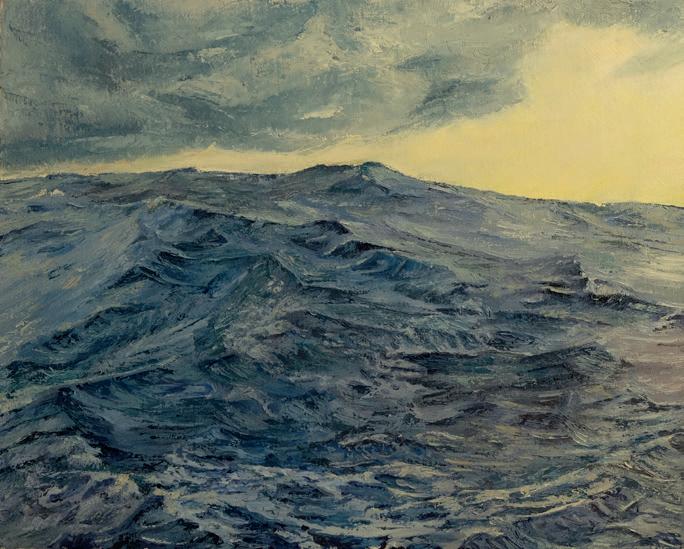
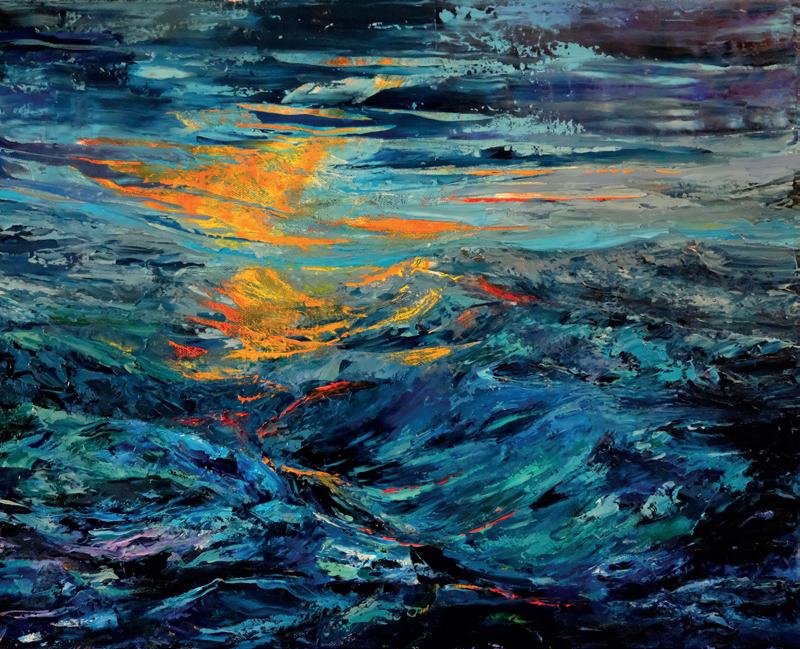
bold, often contrasting colours and dynamic forms, she brings the sea’s energy and unpredictability to the canvas. "This allows me to apply the paint with vigour and intensity, letting the power and dynamism of nature flow into the palette knife. This suits my subject matter because it makes waves, wind edges, and light reflections tangible – like a trail sailing across the canvas," says Lammel.
Lammel's creative work takes place both in her studio in Munich and in her studio on board. These two workspaces could hardly be more different, yet they complement each other perfectly. While the Munich studio offers space for reflection, planning and technical development, the studio on board is characterised by spontaneity and immediate inspiration from its surroundings. This duality lends her art an extraordinary depth and complexity.
Lammel's perhaps most astonishing project to date is painting on board her boat during her circumnavigation of the globe from 2019 to 2025, for which she and her partner, along with their cat Coco, covered 37,522 nautical miles. This journey was not only a sporting and logistical adventure, but also an artistic
experiment. Under changing weather conditions, with constantly new impressions and challenges, she created works that translate her experiences into colour and form – much like a travel diary.
“The most memorable moments are often not the spectacular ones, but the quiet ones: nights when the horizon disappears, the ship glides over dark water and suddenly
everything fluoresces – marine life of all kinds and dolphins whose shimmering trails can be seen from afar. This experience – vastness above me, vastness below me – is the core of why I paint,” says Lammel.
Alia Alexandra Lammel's work has garnered international attention; her paintings have been shown at the Florence Biennale and in renowned galleries and exhibitions. Her sailing achievements have also been featured in prominent publications such as the magazines Yacht and Segeln
Alia Alexandra Lammel's work combines a spirit of adventure, artistic finesse, and a deep connection to nature. Her pieces are characterised by authenticity and expressiveness –and invite viewers to embrace the magic of the sea and their own dreams.
www.alexandra-lammel.art
Instagram: @alexandralammel
Exhibitions 2026: 17-19 July, ARTe Konstanz 23-27 September, Interboot Friedrichshafen 23-25 October, ARTe Burg Stettenfels
ZWISCHEN MÜNCHEN UND DEM BORDLEBEN
Lammels kreatives Schaffen findet sowohl in ihrem Atelier in München als auch im „Atelier an Bord” statt. Diese beiden Arbeitsorte könnten unterschiedlicher kaum sein und doch ergänzen sie sich perfekt. Während das Atelier in München Raum für Reflexion, Planung und technische Ausarbeitung bietet, ist das Atelier an Bord geprägt von Spontanität und unmittelbarer Inspiration durch die Umgebung. Diese Dualität verleiht ihrer Kunst eine außergewöhnliche Tiefe und Vielschichtigkeit.
Lammels bisher vielleicht außergewöhnlichstes Projekt ist das Malen an Bord während ihrer Weltumsegelung von 2019 bis 2025, für die sie und ihr Partner, samt Katze Coco, 37.522 Seemeilen zurücklegten. Diese Reise war nicht nur ein sportliches und logistisches Abenteuer, sondern auch ein künstlerisches Experiment. Unter wechselnden Wetterbedingungen, mit ständig neuen Eindrücken und Herausforderungen, entstanden Werke, die das Erlebte in Farbe und Form übersetzen –wie ein Reisetagebuch.
„Die eindrücklichsten Momente sind oft nicht die spektakulären, sondern die stillen: Nächte, in denen der Horizont verschwindet, das Schiff über dunkles Wasser gleitet und plötzlich alles fluoresziert – Meereslebewesen aller Art und Delfine, deren schimmernde Spur man schon von Weitem sieht. Diese Erfahrung – Weite über mir, Weite unter mir – ist für mich der Kern dessen, warum ich male”, so Lammel.
Alia Alexandra Lammels Schaffen findet internationale Beachtung; gezeigt werden ihre Bilder etwa auf der Biennale in Florenz und in renommierten Galerien und Ausstellungen. Ihre seglerischen Leistungen wurden zudem in bekannten Medien wie der Yacht und dem Magazin Segeln vorgestellt.
Alia Alexandra Lammel vereint in ihrem Schaffen Abenteuergeist, künstlerische Finesse und eine tiefe Verbundenheit zur Natur. Ihre Werke sind geprägt von Authentizität und Ausdrucksstärke – und laden dazu ein, sich auf die Magie des Meeres und seine eigenen Träume einzulassen.
www.alexandra-lammel.art Instagram: @alexandralammel
Ausstellungen 2026: 17.-19. Juli, ARTe Konstanz 23.-27. September, Interboot Friedrichshafen 23.-25. Oktober, ARTe Burg Stettenfels
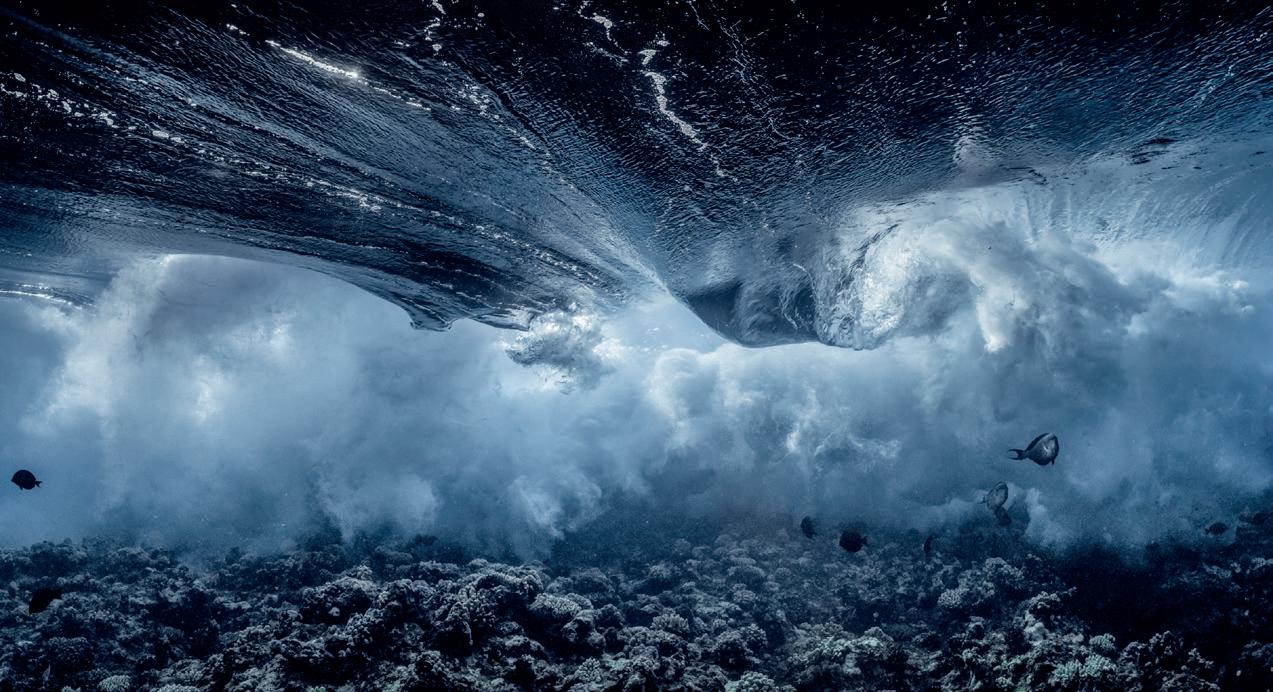
Underwater photography is typically associated with wildlife or documentary work. The work of photographer Alexej Sachov moves the genre in a different direction. Operating entirely on scuba dives, he uses the underwater environment not simply as subject matter but as a conceptual medium, producing images that explore themes of the origin, evolvement and survival of life.
Alexej’s relationship with water began in childhood. He remembers snow, frozen lakes and simple everyday encounters with water. “My earliest memories include snow everywhere, the joy of sliding on ice and even water that once carried away my favourite toy car,” he laughs. “But what stayed with me most was the warmth of being bathed by my parents as a child. That feeling of calm and comfort in water would later shape everything that I create.”
Consequently, Sachov’s work is defined by immersion in the literal sense. Every photograph in his artistic portfolio is created below the surface. “No one can call you when there’s a whole mass of water between you and the world,” he says. “Below the surface, the pressure of everyday life disappears and you can
simply observe, drifting weightless through an underwater cosmos.”
For the artist, water provides both practical and symbolic distance from the distractions of modern life, as visualised in The Hidden World. But it also carries deeper meaning. “Life on Earth began in water, and for me that
is deeply symbolic,” Alexej explains. “It’s the most flexible element. One that can create images on its own, even without anyone’s direct intervention.”
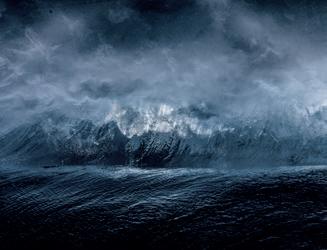
Although water appears in every image, Sachov is careful not to describe it as the central character of his work. Instead, it functions as a tool for visualising broader ideas. “In my work, water is more of a symbol than a protagonist,” he stresses. “As I work primarily in conceptual art, I’m focused on realising an idea rather than simply portraying water in all its beauty.”
His projects demonstrate this approach clearly. In The Blood, water becomes a vehicle for exploring themes of war, suffering and passion. In The True Magic, it symbolises rebirth and renewal. Other series, including Mood Changes of the Sea and The Edge, examine emotional states through the shifting character of light, reflection and movement underwater.
Unterwasserfotografie wird meist mit Tieraufnahmen oder Dokumentationen in Verbindung gebracht. Anders bei den Arbeiten des Fotografen Alexej Sachov. Seine Bilder entstehen ausschließlich während Tauchgängen, die Unterwasserwelt dient ihm dabei nicht als Motiv, sondern als konzeptuelles Medium. Alexejs Fotografien kreisen um Themen wie Ursprung, Entwicklung und Fortbestand des Lebens.
Sachovs Beziehung zum Wasser begann bereits in der Kindheit. Er erinnert sich an Schnee, zugefrorene Seen und an alltägliche Begegnungen mit Wasser. „Zu meinen frühesten Erinnerungen gehören Schnee, die Freude, über Eis zu schlittern und auch Wasser, das einmal mein Lieblingsspielzeugauto fortschwemmte“, erinnert sich lachend. „Am stärksten aber ist mir die Wärme in Erinnerung geblieben, wenn mich meine Eltern als Kind badeten. Dieses Gefühl von Ruhe und Geborgenheit im Wasser prägt bis heute alles, was ich erschaffe.“
Folgerichtig ist Sachovs Arbeit im wörtlichen Sinne von vollständigem Eintauchen geprägt. Jedes seiner Fotos entsteht unter Wasser. „Das Wasser zwischen Dir und der Oberfläche schirmt Dich ab“, schwärmt der Fotograf. „Unter der Oberfläche verschwindet der Druck des Alltags. Man kann einfach beobachten und schwerelos durch den Unterwasserkosmos treiben.“
Für den Künstler schafft Wasser sowohl eine praktische als auch eine symbolische Distanz zu den Ablenkungen des modernen Lebens, wie etwa in seiner Serie The Hidden World verdeutlicht. Gleichzeitig hat Wasser für ihn eine tiefere Bedeutung. „Das Leben auf der Erde begann im Wasser, und das ist für mich sehr symbolisch“, erklärt Sachov. „Es ist das flexibelste Element. Eines, das sogar ohne direkte äußere Eingriffe Bilder entstehen lassen kann.“
WASSER ALS KONZEPT, NICHT ALS MOTIV Obwohl das Element Wasser in jedem Bild präsent ist, versteht Sachov es nicht als die Hauptfigur seiner Arbeit. Vielmehr fungiert es als Werkzeug, um größere Konzepte sichtbar zu machen. „In meinen Arbeiten ist Wasser eher Symbol als Protagonist“, betont er. „Da ich vor allem konzeptuell arbeite, geht es mir vor allem darum, eine Idee umzusetzen und nicht darum, die Schönheit des Wassers zu zeigen.“
Das verdeutlichen seine Projekte eindrücklich. In der Serie The Blood wird Wasser zum Medium für Themen wie Krieg, Leiden und Leidenschaft. In The True Magic steht es für Wiedergeburt und Erneuerung. Andere Reihen, darunter Mood Changes of the Sea und The Edge, untersuchen emotionale Zustände an-
hand der wechselnden Qualitäten von Licht, Spiegelung und Bewegung unter Wasser.
Wasser verändert ständig seine physikalischen Eigenschaften. Ruhige Oberflächen, turbulente Strömungen oder Wellen bestimmen die Sprache eines Bildes. „Diese Dualität ist ein wiederkehrendes Motiv in meinen Arbeiten“, erklärt Sachov. „Durch Stille, Bewegung und die abstrakte Schönheit von Reflexionen kann Wasser die Stimmung eines Bildes sofort verändern. Es ist so vielfältig, dass es menschliche Emotionen spiegeln kann.“
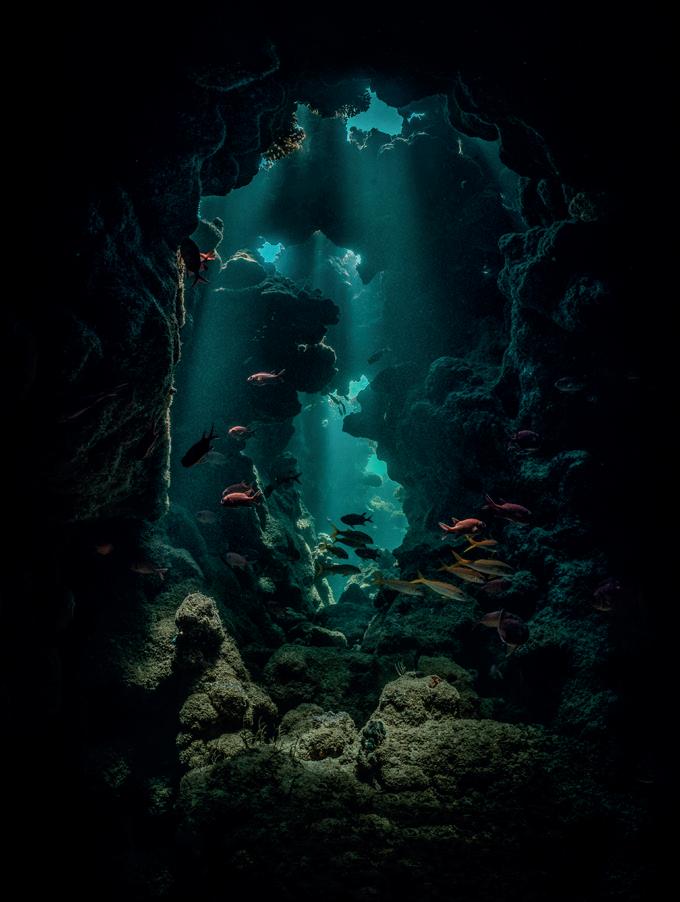

Water constantly changes physical properties. Calm surfaces, turbulent currents or waves allow to shape the narrative of an image. “This duality is another recurring theme in my work. Water can easily transform the mood through stillness, movement and the abstract beauty of reflections,” Sachov explains. “Water is so diverse that it can reflect a person’s emotions.”
Despite careful preparation, unpredictability remains central to Sachov’s work. So, while Alexej’s concept or series will determine the location and equipment choices before a dive, the environment itself often introduces
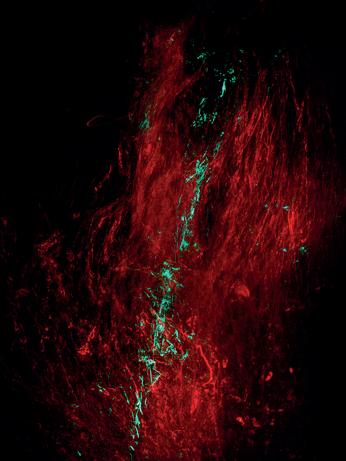
new ideas. Lighting and colour present constant obstacles. Water absorbs light rapidly, with reds and warmer tones fading first as depth increases. The water column also reduces sharpness and makes accurate illumination difficult.
“Both the subject and the photographer are constantly in motion,” adds Alexej. “Colours fade with depth, the water column distorts the scene and lighting becomes much harder to control.” Sachov works digitally, capturing large numbers of frames during dives. “During the dive, I always keep my eyes open for new inspiration or motifs,” Sachov says. “Sometimes that’s how entirely new projects begin.”

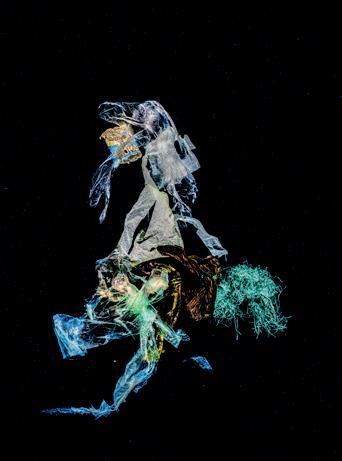
Selection and editing therefore become an important part of the artistic process. “Sometimes you shoot for an entire week and initially don’t see anything special,” he admits. “Then, six months later, after colour correction or a closer look, you realise that there is a very interesting image there.”
In recent years, Sachov has expanded his practice to include environmental themes. One example is Chronicles of an Emerging Diversity, a project exploring the fragile balance between beauty and destruction in marine ecosystems.
Among his recent works, The Jewel of Nature #1 from his ongoing coral series holds particular significance. “I love each of my works differently,” he says, “but right now that piece feels like an important milestone in an artistic exploration that has taken about five years.” Sachov’s prints can be explored this April in New York, at The Photography Show presented by AIPAD, and again in Basel during Art Basel week in June.
Looking ahead, he intends to continue exploring the visual and conceptual possibilities of water. “The beauty of nature and life, the way it emerges, evolves and survives, that’s the thread connecting all of my projects,” Alexej concludes.
“And water sits at the very heart of that process.”
www.sachov-art.com

DIE HERAUSFORDERUNGEN DER UNTERWASSERFOTOGRAFIE
Trotz sorgfältiger Vorbereitung bleibt Unvorhersehbarkeit ein zentraler Bestandteil von Sachovs Arbeit. Zwar ist es das Konzept einer Serie, das vor dem Tauchgang Ort und Ausrüstung bestimmt, doch oft bringt die Umgebung selbst neue Ideen hervor. Licht und Farbe stellen dabei besondere Herausforderungen dar: Wasser absorbiert Licht sehr schnell, rote und warme Farbtöne verschwinden mit zunehmender Tiefe zuerst. Zugleich mindert Wasser die Schärfe eines Motivs und erschwert eine präzise Ausleuchtung.
„Sowohl das Motiv als auch der Fotograf sind ständig in Bewegung“, fügt Sachov hinzu. „Mit zunehmender Tiefe verblassen die Farben, das Wasser verzerrt die Szenerie, und das Licht lässt sich viel schwieriger kontrollieren.” Der Fotograf arbeitet digital und nimmt während eines Tauchgangs sehr viele Bilder auf. „Beim Tauchen halte ich die Augen nach neuen Inspirationen oder Motiven offen“, sagt er. „So entstehen manchmal ganz neue Projekte.“
Die Auswahl und Nachbearbeitung wird daher zu einem entscheidenden Teil des künstlerischen Prozesses. „Manchmal fotografiere ich eine ganze Woche lang und sehe zunächst nichts Besonderes“, so Sachov. „Und sechs Monate später, nach einer Farbkorrektur oder bei genauerem Hinsehen, entdecke ich plötzlich ein interessantes Detail.“
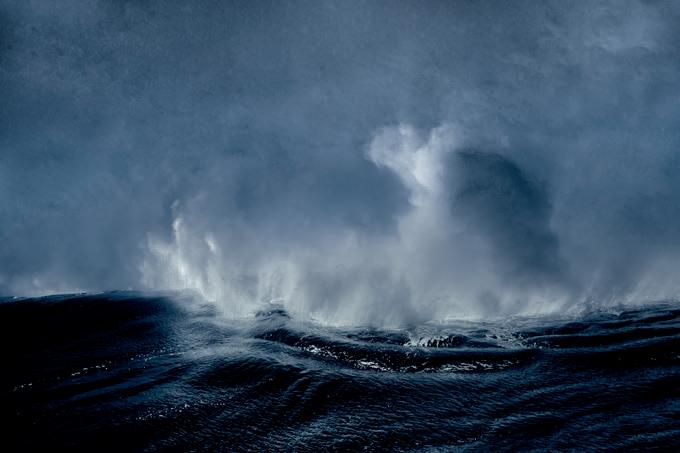
In den vergangenen Jahren hat Sachov seine Arbeit zunehmend um ökologische Themen erweitert. Wie zum Beispiel das Projekt Chronicles of an Emerging Diversity, das das fragile Gleichgewicht zwischen Schönheit und Zerstörung in marinen Ökosystemen thematisiert.
Unter seinen jüngeren Arbeiten hebt er besonders The Jewel of Nature #1 aus seiner fortlaufenden Korallenserie hervor. „Ich liebe jedes meiner Werke auf eine andere Weise“, sagt er. „Aber im Moment fühlt sich dieses Bild wie ein wichtiger Meilenstein einer künstlerischen Suche an, die mich seit

etwa fünf Jahren begleitet.” Sachovs Drucke sind im April in New York auf der Messe The Photography Show presented by AIPAD und im Juni während der Art Basel-Woche in Basel zu sehen.
Auch künftig will der Fotograf die visuellen und konzeptuellen Möglichkeiten des Wassers weiter ausloten. „Die Schönheit der Natur und des Lebens, wie es entsteht, sich entwickelt und überlebt, das ist der rote Faden, der all meine Projekte verbindet“, schließt
Alexej. „Und Wasser steht im Zentrum dieses Prozesses.“
www.sachov-art.com

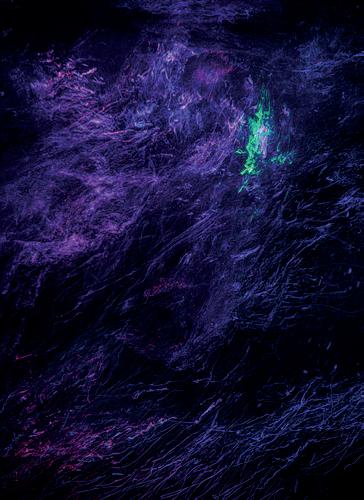
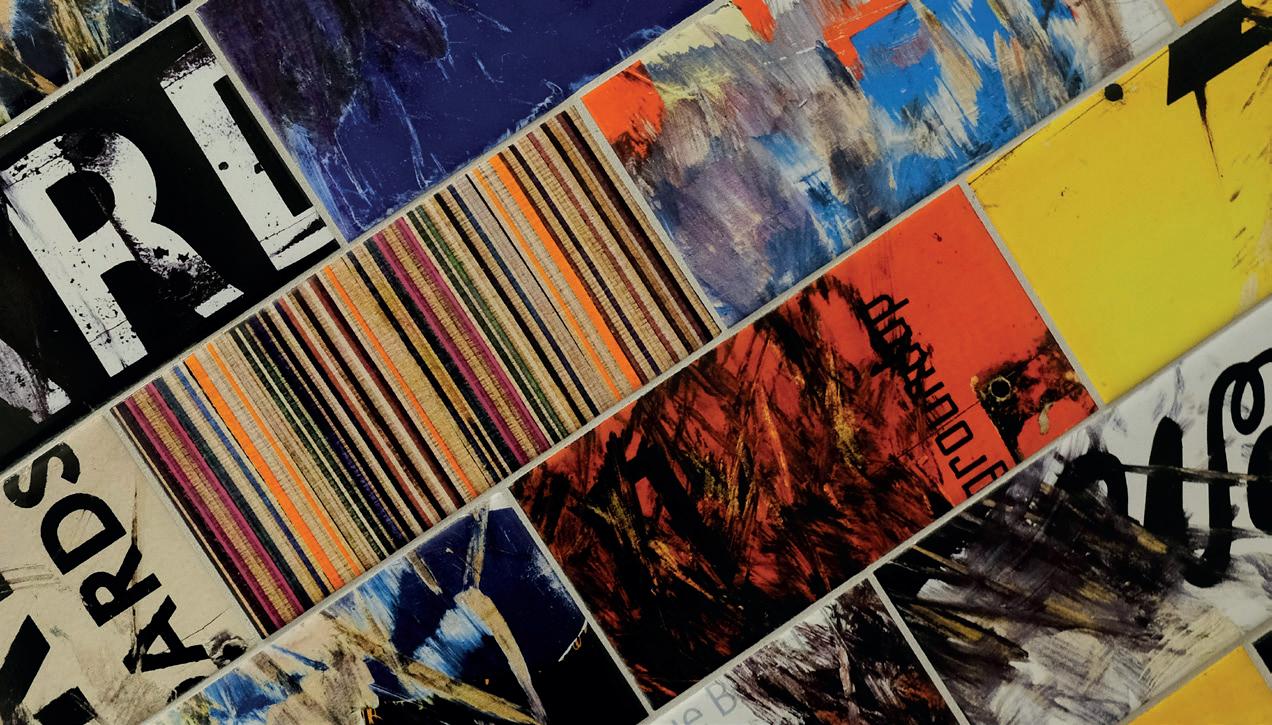
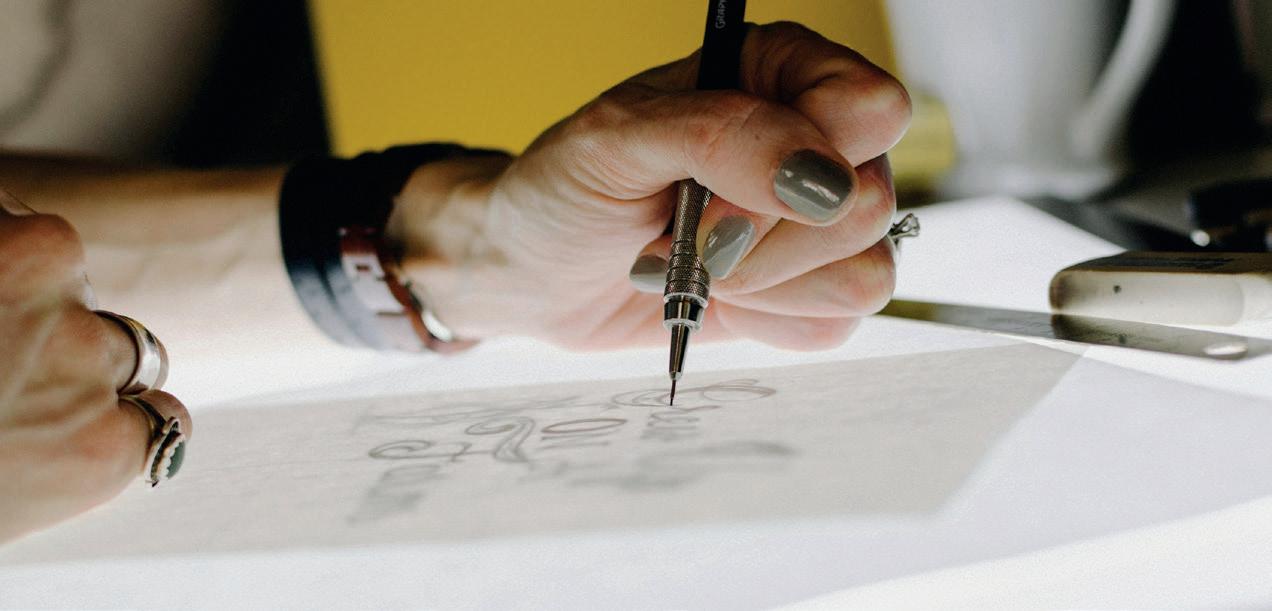
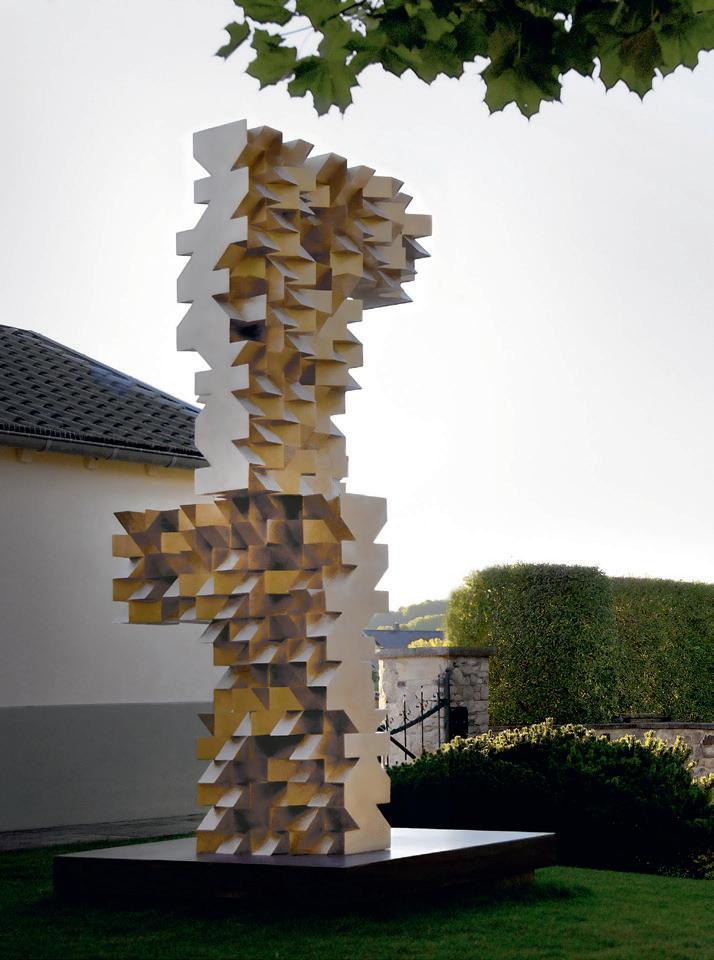
For lifestyle and design inspiration for 2026, read the following special theme and meet some inspiring companies and their products.
PHOTOS: UNSPLASH
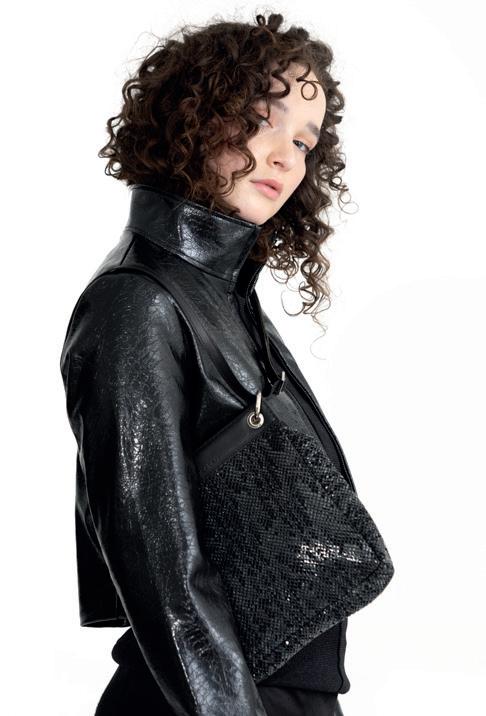
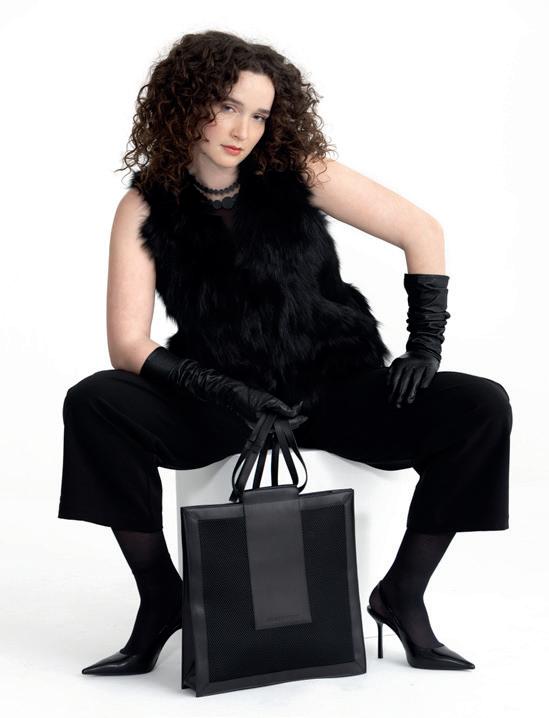
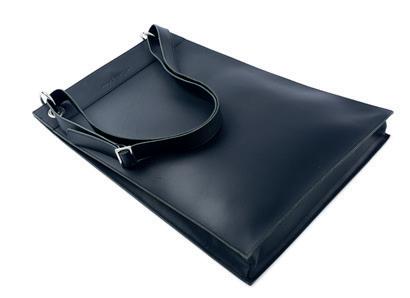
We can own objects. Or we can form an almost symbiotic bond with them. The bags created by the label macharten clearly belong to the latter category. Since 2003, architect and designer Monika Assem has been crafting accessories that she fondly refers to as small houses. A fitting description as her designs are rooted in architectural thinking, where structure, proportion and material exist in deliberate balance.
Timeless rather than trend-led, pared back yet sensuous, macharten pieces are defined by geometric clarity, distinctive material combinations and precise construction. “I’m always searching for aesthetics in both small and large things,” Monika Assem says. She has a talent for recognising beauty that might otherwise remain in the background and bringing it into focus.
The collection began with industrial felt in bold colours, later expanding to velvety cowhide, refined salmon leather and, more recently, innovative combinations of airmesh and leather that create striking lightness. Minimal stainless steel elements – eyelets, rings and fastenings – hold each piece together. The construction never dominates – instead, the design reads as a cohesive whole. Alongside handbags, the range in-
cludes wallets, small leather goods, belts and jewellery. Even here, sustainability guides the process: offcuts from production are repurposed for the jewellery line.
For Monika Assem, quality always outweighs quantity. Each piece is meticulously handcrafted in a small, family-run factory in the northern part of Germany. Only vegetable tanned and dyed leather is used. Production volumes remain intentionally low to avoid overstock, and repairs are offered even years later – a clear commitment to longevity and slow fashion. Waiting a little longer for a macharten piece is simply part of its value.
Recognition has followed. The brand has received awards including the Designpreis Form, the Hessian State Prize and the Red Dot. The leather models Bess, Brenda and Bo
have been added to the permanent collection of the Museum of Applied Arts in Frankfurt.
Perhaps the most meaningful endorsement comes from customers who describe their bags as trusted companions. Over time, each macharten piece develops a personal narrative. Signs of wear become memories. A charming companion becomes a loyal, lifelong friend.
www.macharten.com
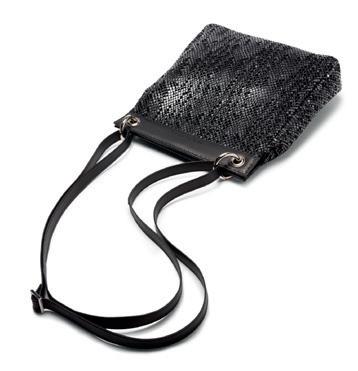
Man kann Dinge besitzen. Oder man kann mit ihnen eine Art Symbiose eingehen. Die Taschen des Labels macharten gehören eindeutig zur zweiten Kategorie. Seit 2003 entwirft die Architektin und Designerin Monika Assem Accessoires, die sie selbst augenzwinkernd als „kleine Häuser” bezeichnet. Und tatsächlich: Ihre Entwürfe folgen einem architektonischen Denken.
Zeitlos statt trendgetrieben, puristisch und zugleich sinnlich: Die Accessoires des Labels macharten zeichnen sich durch geometrische Klarheit, besondere Materialkombinationen und eine präzise Fügung aus. „Ich bin immer auf der Suche nach „Ästhetik” in den kleinen wie den großen Dingen”, erzählt Designerin Monika Assem. Sie hat einen besonderen Blick für „Schönes”, das vielleicht noch in zweiter Reihe steht und von ihr ins Rampenlicht gerückt wird.
Begonnen mit Industriefilz in kräftigen Farben, kamen samtiges Rindleder, feines Lachsleder und zuletzt innovative Kombinationen aus Airmesh und Leder hinzu, die außergewöhnliche Leichtigkeit ermöglichen. Geschlossen und gehalten werden die zeitlosen Taschen durch reduzierte Edelstahl-Elemente wie Ösen, Ringe oder Schließen. Die Konstruktion tritt in den Hintergrund, das Design wirkt als harmonisches Ganzes. Neben den Taschen gibt es
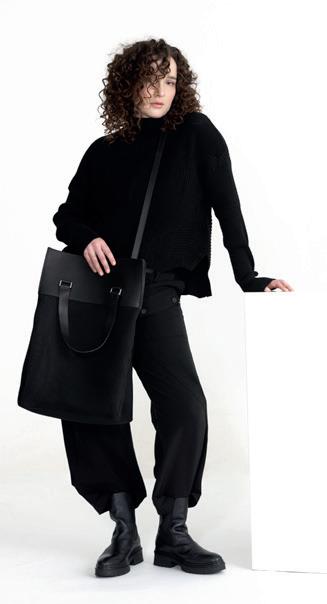
Portemonnaies, Täschchen, Gürtel und sogar Schmuck aus Leder. Selbst hier zeigt sich der nachhaltige Ansatz, denn für die Schmuckstücke werden Verschnittreste weiterverwendet.
Für Monika Assem steht Qualität über Quantität. Gefertigt werden alle Modelle in aufwendiger Handarbeit in einer kleinen, familiengeführten Manufaktur in Nordrhein-Westfalen. Verarbeitet wird ausschließlich pflanzlich gegerbtes und gefärbtes Leder. Überproduktion wird vermieden, Lagerbestände sind bewusst klein und Reparaturen sind auch nach vielen Jahren selbstverständlich – ein klares Bekenntnis zu Slow Fashion und Langlebigkeit. Wer sich für eine macharten Tasche entscheidet, nimmt kurze Wartezeiten gerne in Kauf.
Dass dieser Ansatz überzeugt, zeigen nicht nur Auszeichnungen wie der Designpreis Form, der Hessische Staatspreis oder der red dot. Auch
Museen wurden aufmerksam: Die Ledermodelle Bess, Brenda und Bo sind Teil der ständigen Sammlung des Museums für angewandte Kunst in Frankfurt am Main.
Doch das schönste Lob kommt von den Kundinnen und Kunden, die ihre Taschen als treue Begleiterinnen beschreiben. Jedes macharten Modell entwickelt im Dialog mit seiner Trägerin oder seinem Träger eine eigene Geschichte. Gebrauchsspuren werden zu Erinnerungen. Aus einer unwiderstehlichen Wegbegleiterin wird eine treue, lebenslange Freundin.
www.macharten.com

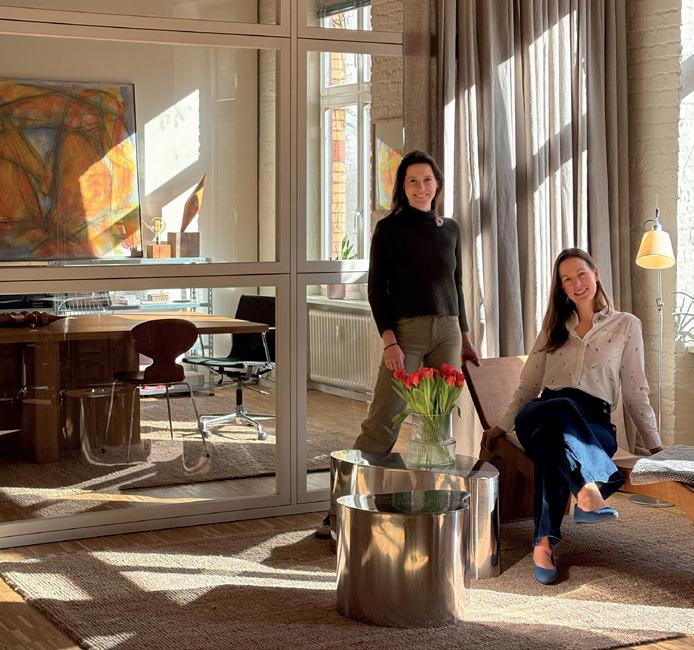
Katharina Konrad & Anna Lina Schumacher bieten erlebbares, persönliches Design mit Substanz in Zeiten der Beliebigkeit.
Als Full-Service-Agentur steht das frauengeführte, interdisziplinäre Berliner Studio für umfassendes Unternehmens-Design mit dem Fokus auf Dreidimensionalität: „Wir denken räumlich, und bieten alles, was für die Kommunikation nötig ist – vom Logo über die Buchgestaltung bis hin zu Interiors“, erklärt Anna Lina Schumacher. „Obwohl wir KI durchaus im Geschäftsalltag nutzen, geht es uns bei unseren Design-Formaten zuallererst um den Menschen.“ Katharina Konrad fügt hinzu: „Ich spreche öfters von ‚la famiglia‘, wenn es um unser Unternehmen geht. Wir sind mit den einzelnen Teilen unseres Netzwerks nämlich extrem stark verzahnt, teils sogar auf familiärer Ebene.“ Diese verbindliche Atmosphäre schafft im Zusammenhang mit dem Rundum-Service nicht zuletzt auch für die Auftraggeber*innen ein Gefühl des Aufgehobenseins.
Kennengelernt haben sich die Designerinnen bei der gemeinsamen Arbeit für eine
Düsseldorfer Werbeagentur: „Wir haben es von Kolleginnen über Freundschaft bis hin zu Geschäftspartnerinnen geschafft“, erklärt Konrad, die heute mit Schumachers Bruder verheiratet ist. „In unseren ersten Jahren in der Agentur mussten wir auf extrem kleiner Fläche zusammenarbeiten und kennen uns und unsere Eigenheiten daher sowohl im Arbeitsleben als auch im Privatleben sehr
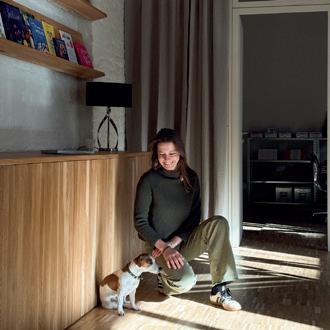
gut!“ Konrads Vater Jörn fertigt für die Firma Designermöbel, wobei die Nachhaltigkeit für den Künstler und Theatertischler eine Selbstverständlichkeit darstellt: „Mein Vater hat für seine Arbeit schon immer alte Materialien neu aufbereitet“, erklärt Konrad. Tatsächlich macht sich die Nachhaltigkeit bei Jungrad auf allen Ebenen bemerkbar: Zum einen werden für jedes Projekt regionale Gewerke eingebunden. Und selbst auf der Metaebene kann sich Jungrad nachhaltig positiv auf eine gesamte Unternehmenskultur auswirken; so geschehen für ein Lieblingsprojekt der beiden Gründerinnen, das Haus der Möglichkeiten für den SVBW.
BRAND-IDENTIFIKATION UND UNTERNEHMENSWERBUNG AUF MENSCHLICHER BASIS
„Eines unserer innovativsten Projekte im Bereich Mitarbeiterkommunikation und Raumkonzept (Haus der Möglichkeiten) entstand in Zusammenarbeit mit dem Sparkassenverband Baden-Württemberg (SVBW)“, erklärt Konrad. „Gerade im Zeitalter von KI gewinnen reale, erlebbare Formate für Mitarbeitende
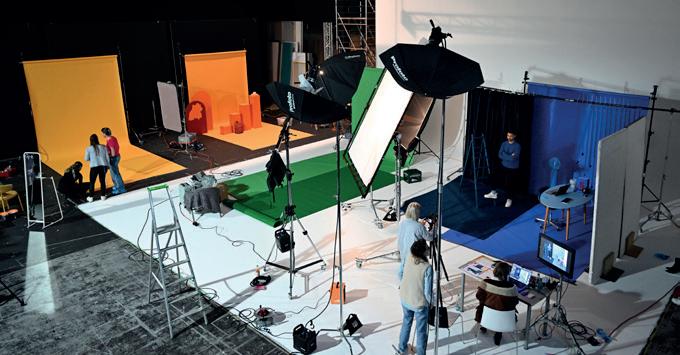
an Bedeutung: Solche Kampagnen wirken nicht nur über Bilder, sondern vor allem über Wertschätzung, gemeinsames Erleben und Identifikation.“ Für das Projekt wurden ganze Fotosets aufgebaut und vorab Gespräche mit den Mitarbeitenden verschiedenster Teams und Hierarchiestrukturen durchgeführt – für eine reale, erlebbare Unternehmenskultur mit hohem Identifikationsfaktor: „Anstelle von KIgenerierten Sets und Bildern mit Models haben wir uns direkt mit den Mitarbeitenden der verschiedenen Abteilungen des Hauses auseinandergesetzt“, berichtet Schumacher. „Dazu gehörten auch solche, die zunächst gar nicht mitmachen wollten“, erinnert sich Konrad. „Doch am Ende waren alle sehr glücklich mit den Shootings und haben die Sets noch im Nachhinein für Selfies genutzt. Und bis heute werden Treffen organisiert, die ohne unsere Arbeit niemals stattgefunden hätten!“ Ein derartiger Schub für die Unternehmenskultur und Mitarbeitenden-Motivation wäre durch eine KI-generierte Kampagne schwerlich möglich. Schumacher fasst zusammen: „Am Ende geht es ja doch immer ums Gesehen werden; die unterschiedlichen Qualitäten und Talente des Einzelnen sichtbar zu machen. Erst die Wertschätzung und Einbindung der Mitarbeiter*innen führt zu einer positiven Unternehmenskultur und Identifikation.“ Auch im eigenen Büro stehen diese bei Jungrad ganz oben.
FEMALE LEADERSHIP UND FIRMENKULTUR
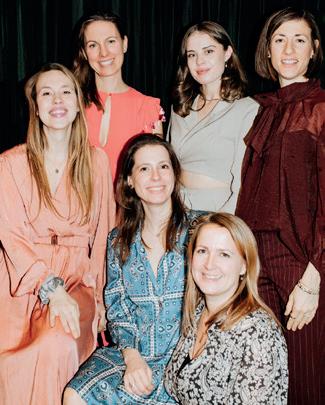
Das frauengeführte Unternehmen hat sich auf natürliche Weise entwickelt und ist seit der Gründung im Jahr 2014 auf 6 Mitarbeiterinnen angewachsen, die zum Teil ihre Karriere im Unternehmen vom ersten Praktikum an Schritt für Schritt selbst gestalten konnten.
Anna Lina Schumacher ist zudem mittlerweile stolze Mutter von 7-jährigen Zwillingen: „Das ist durchaus eine Herausforderung, die es im Geschäftsalltag zu meistern und balancieren gilt“, erklärt die Gründerin. Konrad wirft ein: „Viele unserer Bewerber*innen suchen gezielt nach frauengeführten Unternehmen und wundern sich dann, dass es im Schnitt davon nur so wenige gibt. Diese sind dann besonders froh, uns gefunden zu haben!“
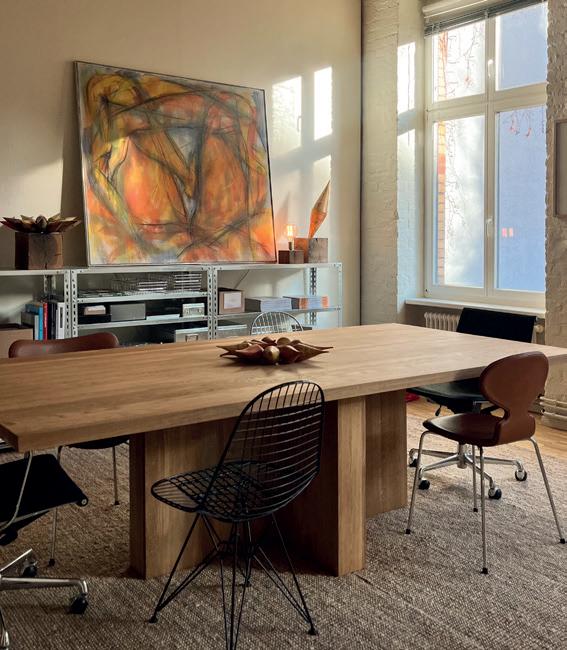
Durch einen Umzug innerhalb der pittoresken Sophienstraße in Mitte wurde kürzlich noch einmal kreatives Inhouse-Potential freigesetzt. Die beiden Designerinnen sind sehr stolz auf ihr neues Interior in einem Hinterhof-Loft mit Feigenbaum davor: „Wir haben die verschiedenen Räume durch unterschiedliche Farbkonzepte gekennzeichnet, denn die Kraft der Farben liegt uns besonders am Herzen“, so Konrad. So gibt es bei Jungrad einen reduziert und neutral gehaltenen Präsentationsraum mit natürlichen Materialien, in dem die spezifische Qualität und Atmosphäre einer Firmen-
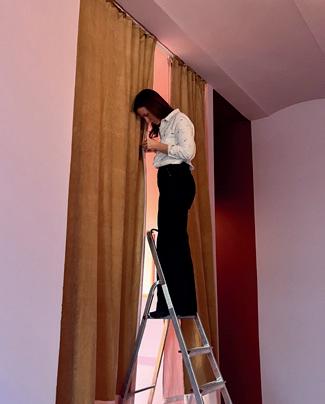
Kampagne sich voll entfalten und sichtbar gemacht werden kann. Der Kommunikationsraum ist im Gegenzug farbenfroh-anregend gestaltet, inklusive Kunstwerken in starken Grundfarben an den Wänden. „Dann gibt es noch unseren Rückzugsraum, unsere Nook“, erklärt Konrad. Dieser hat rosafarbene Wände, die nach dem gemeinsamen Brainstorming die innere Beruhigung und Konzentration fördern. Vom neuen Studio aus bedient Jungrad Kund*innen nicht nur mit persönlicher Komplettbetreuung; hier werden auch Events gefeiert – als nächstes an der Reihe sind eine Vernissage und eine Buchpräsentation.
Seit neuestem gibt es für Jungrad durch eine neue Mitarbeiterin ein zweites Standbein in Leipzig, erklärt Schumacher: „Unser rein frauengeführtes Unternehmen ist schon immer natürlich gewachsen und so darf es auch weiterwachsen – natürlich und mit viel Leidenschaft!“
www.jungrad.de
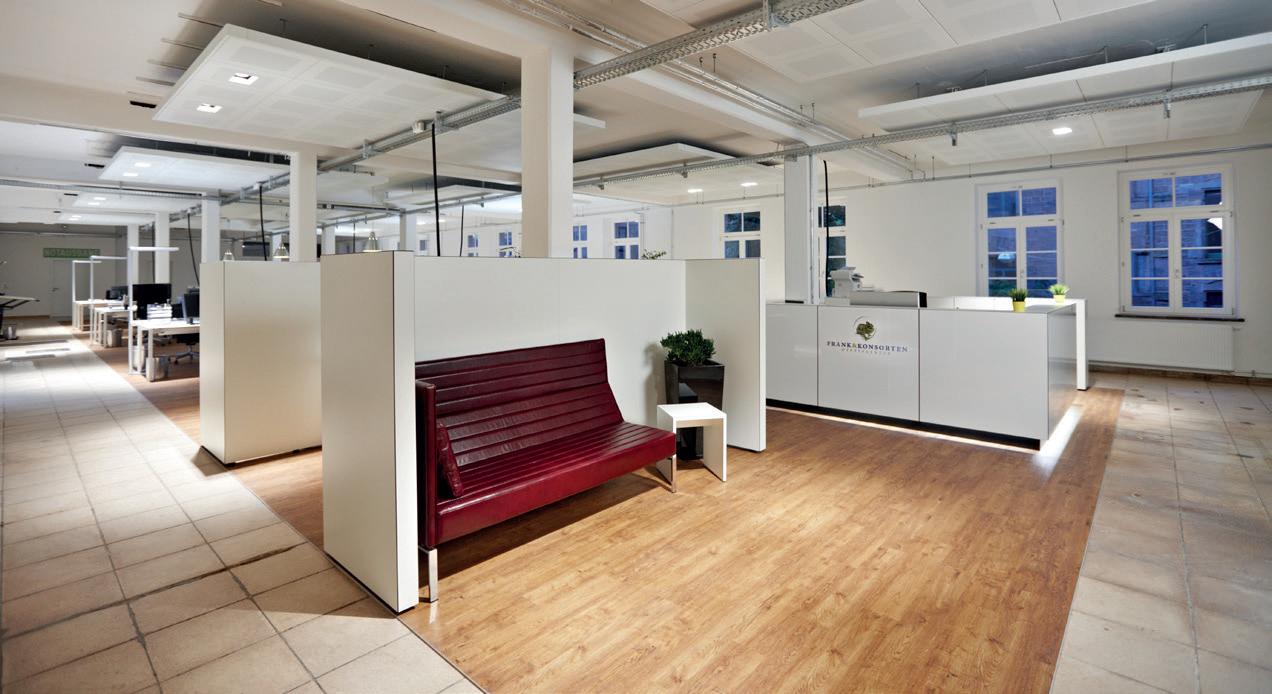
Markenführung ist komplex: Zwischen digitaler Transformation, Fachkräftemangel und dem wachsenden Einfluss künstlicher Intelligenz stehen Unternehmen vor der Herausforderung, sichtbar zu bleiben, ohne dabei austauschbar zu werden.
Als Jürgen Frank 1996 in Lahr ein Büro für Grafik-Design gründete, war Markenkommunikation vor allem eine Frage von Gestaltung und Wiedererkennbarkeit. Fast drei Jahrzehnte später begleitet Frank & Konsorten Unternehmen nicht mehr nur bei Designfragen, sondern bei wichtigen Transformationsprozessen, die von der Positionierung über digitale Strategien bis hin zu KIgestützten Marketinglösungen reichen.
BERATUNG MIT SUBSTANZ
Als Full-Service-Agentur überzeugt Frank & Konsorten mit einem Leistungsportfolio, das über strategische Markenführung, Kommunikation bis hin zu Marketing reicht. Was unterscheidet sie von anderen Agenturen?
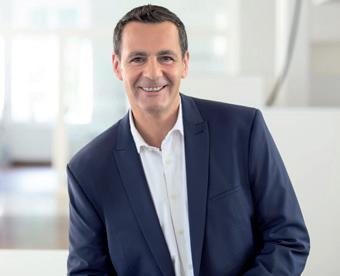
„Der maßgebliche Unterschied liegt in unserer sehr zielgerichteten Beratung und der strukturierten Projektabwicklung“, betont Alexander Gottselig, der dieses Jahr die Ge-
schäftsführung von Gründer Jürgen Frank übernommen hat. „Wir sind keine Showmaker. Uns ist wichtig, dass der Kunde ehrliche, gute Arbeit bekommt.“
Bevor es also um Farben, Formate oder Kampagnenmotive geht, steht also immer die Analyse der momentanen Situation. Das Team betrachtet Unternehmen eingehend
aus der Perspektive der Zielgruppen, analysiert Markt und Wettbewerb, definiert die Marke und das Branding, entwickelt eine tragfähige Strategie und setzt die Maßnahmen akribisch um. „Wir hinterfragen Dinge, die unsere Kunden vielleicht noch nicht im Blick haben oder bisher aus einem anderen Blickwinkel gesehen haben“, so Gottselig.
Das Leistungsspektrum ist breit gefächert. Im Kern stehen Strategie, Konzeption und Kreation, also wirkungsstarke Gesamtkonzepte, Kampagnen, Leitbilder, Slogans und Storyboards. Hinzu kommen Corporate Design und Visual Identity, vom Aufbau bis zur crossmedialen Umsetzung einer konsistenten Markenwelt, analog wie digital.
Ein weiterer Schwerpunkt liegt auf Events und Markenerlebnissen, etwa bei Messeauftritten im In- und Ausland. Im Bereich Technologie und Produktion setzt die Agentur auf moderne Standards, darunter auch KI-basierte Softwarelösungen. Strategisches Marketing, Mar-
kenführung und Corporate Communications inklusive Medienarbeit und Krisenkommunikation ergänzen das Portfolio ebenso wie Konzepte zur digitalen Transformation.
„Wir verdichten Marketing- und Markenziele und führen Unternehmens-, Vertriebs- und Marketingstrategien stringent zusammen“, erklärt Gottselig. „Marken dürfen nicht stehen bleiben. Sie müssen sich mit dem Unternehmen weiterentwickeln!“
VIELFALT ALS PRINZIP
So breitgefächert das Leistungsspektrum, so vielfältig sind die Kund:innen, mit denen Frank & Konsorten zusammenarbeitet. Die Agentur betreut kleine, mittlere und große B2B- und B2C-Unternehmen aus allen Bereichen auf regionalen, nationalen und internationalen Märkten. „Wir haben uns absichtlich nicht festgelegt“, erklärt der Geschäftsführer. „Wir begreifen Vielfalt als Vorteil. Wir lernen ständig Neues und können diese Erfahrungen wiederum für andere Kunden nutzbar machen.“
Die Zusammenarbeit mit ihren Kund:innen ist bei Frank & Konsorten immer langfristig angelegt, viele Unternehmen arbeiten von Anfang an mit der Agentur zusammen. Regelmäßige persönliche Gespräche gehören zum Selbstverständnis der Agentur. „Unser Ziel ist es, mit unseren Kunden im kontinuierlichen Austausch zu bleiben und frühzeitig zu erkennen, welche Themen aktuell sind und wo Handlungsbedarf besteht.“
ZWISCHEN FACHKRÄFTEMANGEL UND RECHTLICHEN ANFORDERUNGEN
Zu einer der größeren Herausforderungen, mit denen Unternehmen derzeit konfrontiert sind, gehört für Gottselig die Mitarbeitergewinnung. „Das Thema hat in den vergangenen zehn Jahren massiv an Bedeutung gewonnen“, ist er sich sicher. „Arbeitgebermarken zu schärfen
und glaubwürdig zu kommunizieren, gehört deshalb zunehmend zu einem unserer wichtigsten Aufgabenfelder.”
Auch digitale Kanäle und Online-Marketing haben stark an Bedeutung gewonnen. Gleichzeitig steigen die Anforderungen beispielsweise durch die DSGVO oder Anforderungen an Barrierefreiheit und rechtliche Sicherheit. „Diese Themen werden zunehmend komplexer. Wir sind durch unsere Partner und Kooperationen hier sehr gut aufgestellt und können unseren Kund:innen viele Sorgen nehmen oder zumindest kompetent begleiten.“
KI – CHANCE UND HERAUSFORDERUNG
Neue Rechtssprechungen, Technologien, aber auch Trends behält die Agentur klar im Blick. „Rechtliche Vorgaben müssen wir natürlich umsetzen. Trends sehen wir allerdings mit gemischten Gefühlen. Wir glauben, dass man nicht auf jeden Zug aufspringen muss“, so Gottselig.
Und wie steht der Experte zum Thema KI? Segen oder Fluch? „Beides! Künstliche Intelligenz sehe ich differenziert: als Werkzeug mit großem Potenzial, zugleich aber auch als Risiko
für Austauschbarkeit. Durch KI-Anwendungen droht Kommunikation zu einem Einheitsbrei zu werden“, warnt er. „Unser Ziel ist es deshalb, persönliche, menschliche Marketingkommunikation zu betreiben, die aus der Masse heraussticht.“
TEAMARBEIT
Das Herzstück von Frank & Konsorten ist das zwölfköpfige Team. Für jeden Kunden werden Teams gebildet, sodass eine kontinuierliche Betreuung gewährleistet ist. Alle Mitarbeitenden sind fest angestellt und arbeiten vor Ort in der Agentur. „Bewusst nicht im Homeoffice”, betont Gottselig. „Der direkte Austausch unter den Kolleg:innen ist für uns zentral. Wir glauben, dass er uns nicht nur kreativer, sondern auch schneller und flexibler macht. Unsere Fehlerquote ist entsprechend niedrig, was unsere Kund:innen sehr schätzen.“
KONTINUIERLICHE ENTWICKLUNG
Was rät der Geschäftsführer Unternehmen, die ihre Marke strategisch weiterentwickeln möchten? „Konsequent bleiben! Gerade wenn Marketingbudgets gekürzt werden, verwässert sich oft der visuelle Auftritt. Das passt dann irgendwann nicht mehr zum Unternehmen. Und natürlich sollte sich das Corporate Design kontinuierlich mit dem Unternehmen weiterentwickeln, damit es weiterhin stimmig zum Unternehmen passt.”
Unternehmer:innen, die ihre Marke in diesem Sinne konsequent weiterentwickeln und strategisch schärfen möchten, finden in Frank & Konsorten einen erfahrenen Partner, der sie auf diesem Weg klar und strukturiert begleitet.
www.frank-konsorten.de
Designer Wulf Mohrmann does not chase trends – he searches for possibilities. His work begins with the material and gains momentum where rational thinking reaches its limits.
Mohrmann’s practice sits at the intersection of craft, concept and experiment, always driven by the ambition not merely to furnish spaces, but to give them character. His path into design, however, was far from linear.
“I was equally drawn to other fields, such as music,” he recalls. “My first real encounter with design came during my apprenticeship as a carpenter. That laid the foundation for my understanding of materials. Afterwards, I studied design, which opened up intellectual doors into the many different areas of industrial design.” Today, his work draws on a distinctly interdisciplinary pool of inspiration. Architecture, haute couture and product design all inform his thinking. Peter Zumthor, Alexander McQueen and Konstantin Grcic are among the figures he describes as key influences.
Since 2005, Mohrmann has worked with private and business clients in furniture development and interior design, including
MetaDesign, Rösch Office and public institutions such as the State Police of Hesse. He regards furniture as functional tools with sculptural presence. They structure, define and shape spaces without dominating them.
He describes his creative signature as being rooted in a strong desire for freedom: “Situational freedom has always been important to me. It gave me the greatest possible degree of self-determination.” Like a pop musician reinventing himself from album to album, he seeks constant evolution. The voice remains recognisable, but form, context and expression continue to shift.
With his creative method Interim Objects, Mohrmann has developed a distinctive approach that pushes material to its limits until its physical properties begin to dictate the outcome. “At that point, rationality is no longer required, and it becomes possible to create things that have never been seen before,” he explains. “Create Unseen Things” is
both his claim and a manifesto for the unconventional.
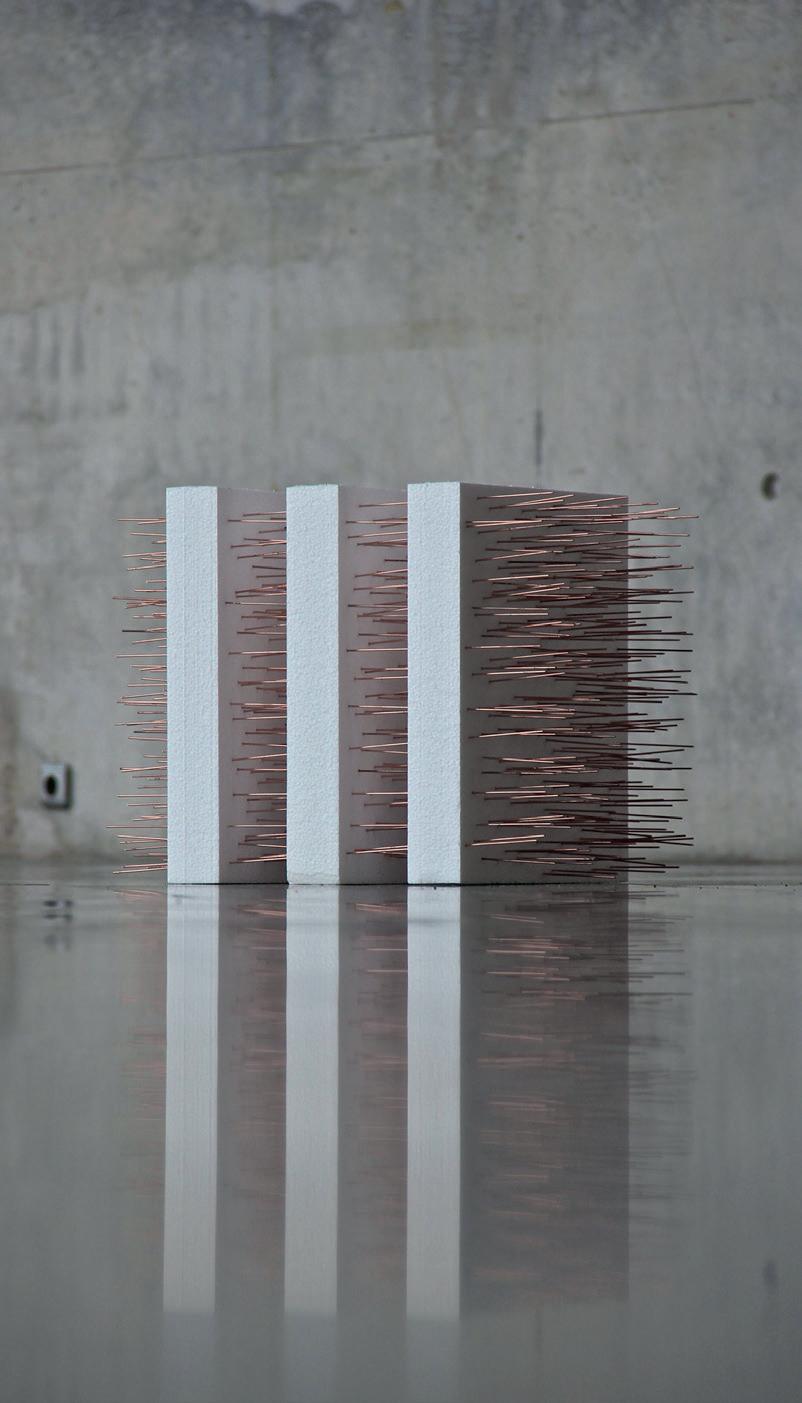
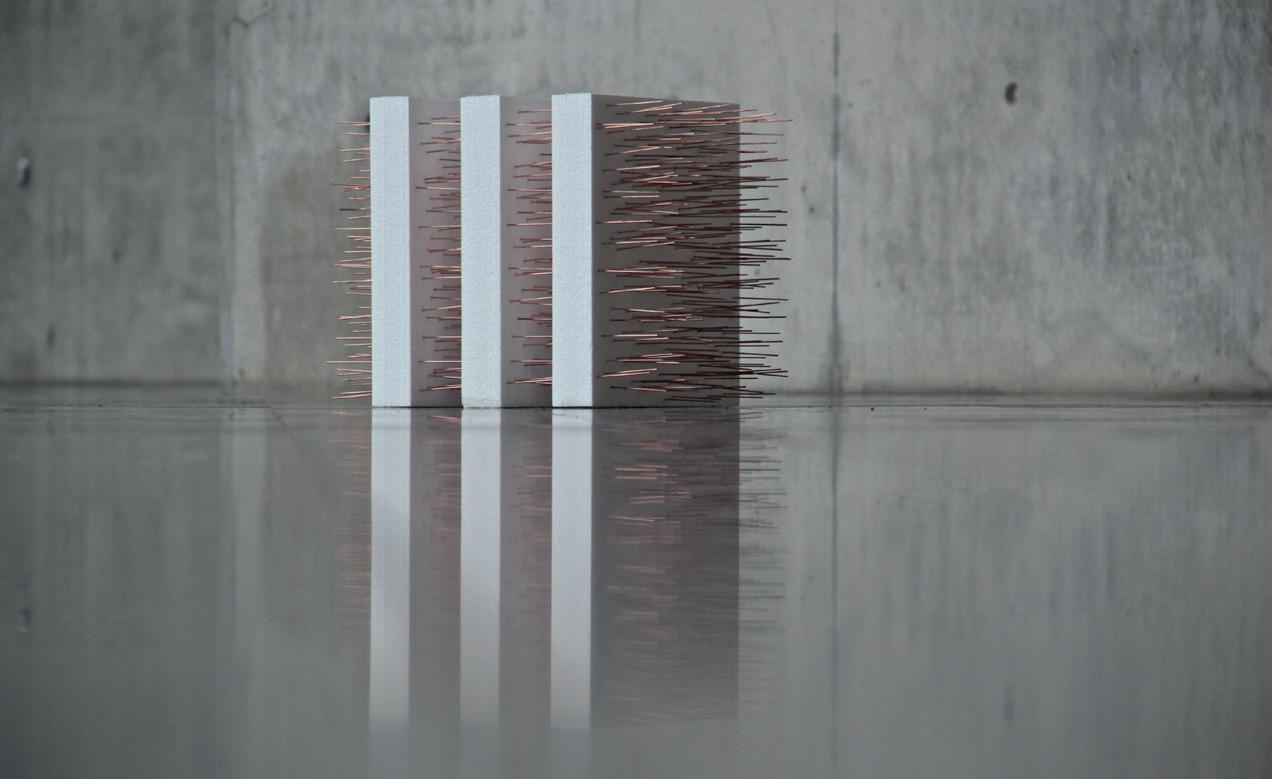
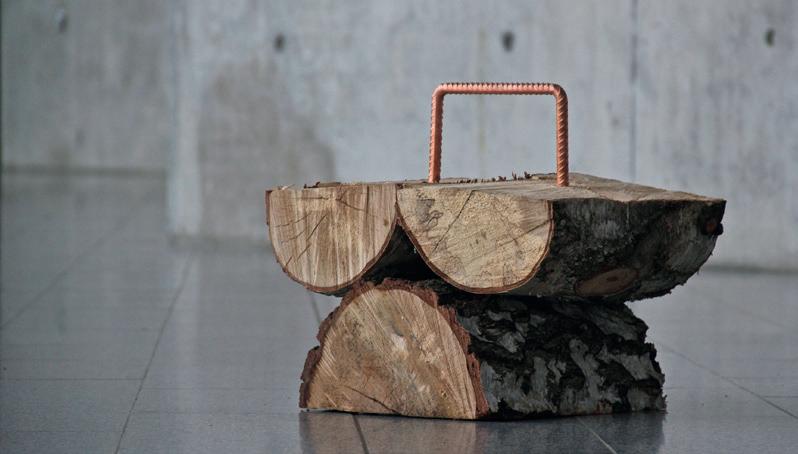
A striking example is Object 3/11 from the Interim Objects series (2011): three sheets of polystyrene held together with wire –light, stable, intellectual and carrying a subtle punk attitude. From 18 April to 20 May 2026, the piece will be on show in the exhibition SITZEN MACHEN at the German Design Museum in Berlin.
An invitation to an exhibition concept that stands out for its bold spirit of experimentation and its rich thematic diversity.
www.wulfmohrmann.com
Designer Wulf Mohrmann sucht nicht nach Trends, sondern nach Möglichkeiten. Seine Gestaltung beginnt beim Material – und gewinnt an Kraft, wenn Rationalität an ihre Grenzen stößt.
Die Arbeiten von Designer Wulf Mohrmann bewegen sich zwischen Handwerk, Konzept und Experiment – immer mit dem Anspruch, Räume nicht nur auszustatten, sondern ihnen Charakter zu verleihen. Der Weg dorthin war allerdings alles andere als linear.
„Ich habe auch gern andere Themen wie Musik bearbeitet“, erinnert er sich zurück. „Die erste Berührung mit Design hatte ich in meiner Tischlerlehre. Die war der Grundstein für mein Materialgefühl. Danach schloss sich ein Designstudium an, das gedankliche Türen zu den verschiedensten Bereichen der industriellen Gestaltung öffnete.” Heute speist sich seine
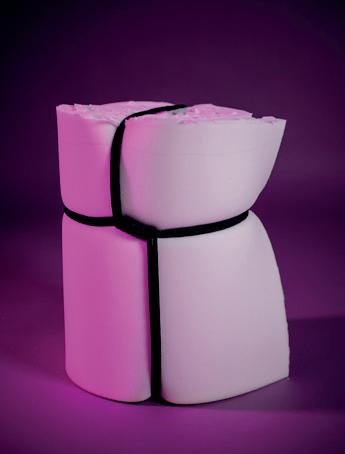
Arbeit aus einem interdisziplinären Inspirationspool: Architektur, Haute Couture und Produktdesign fließen selbstverständlich ein. Peter Zumthor, Alexander McQueen oder Konstantin Grcic zählen zu seinen prägenden Einflüssen.
Seit 2005 arbeitet Mohrmann für Privatpersonen und Geschäftskunden in den Bereichen Möbelentwicklung und Interior, darunter MetaDesign, Rösch Office sowie staatliche Einrichtungen wie die Landespolizei Hessen. Dabei versteht er Möbel als funktionale Werkzeuge mit gestalterischer Kraft. Sie strukturieren, definieren und prägen Räume – ohne sich aufzudrängen.
Seine gestalterische Handschrift beschreibt er mit einem starken Bedürfnis nach Freiheit: „Situative Freiheit war immer wichtig für mich. Das gab mir ein Maximum an Selbstbestimmtheit.” Wie ein Popmusiker, der sich mit jedem Album neu erfindet, sucht er die kontinuierliche Weiterentwicklung. Die Stimme bleibt, doch Form, Kontext und Ausdruck verändern sich.
Mit der Kreativtechnik Interim Objects hat der Designer einen eigenen methodischen Ansatz entwickelt. Hier wird Material bis an seine Grenzen geführt, bis physikalische Eigenschaften den Prozess bestimmen. „Rationalität ist dann nicht mehr gefragt und somit ist es möglich, Dinge zu schaffen, die ungesehen sind“, erklärt er. „Create Unseen Things” lautet der Claim und ist Plädoyer für das Ungesehene und Unkonventionelle.
Ein prägnantes Beispiel ist Objekt 3/11 aus der Serie Interim Objects 2011: Drei Styroporplatten, mit Drähten verbunden – leicht, stabil, intellektuell und mit einer klaren Punkattitüde. Vom 18.April bis 20. Mai 2026 ist das Werk in der Ausstellung SITZEN MACHEN im Deutschen Design Museum in Berlin zu sehen.
Eine Einladung zu einem Ausstellungskonzept, das mit Mut zum Experimentieren und inhaltlicher Vielfalt überzeugt.
www.wulfmohrmann.com
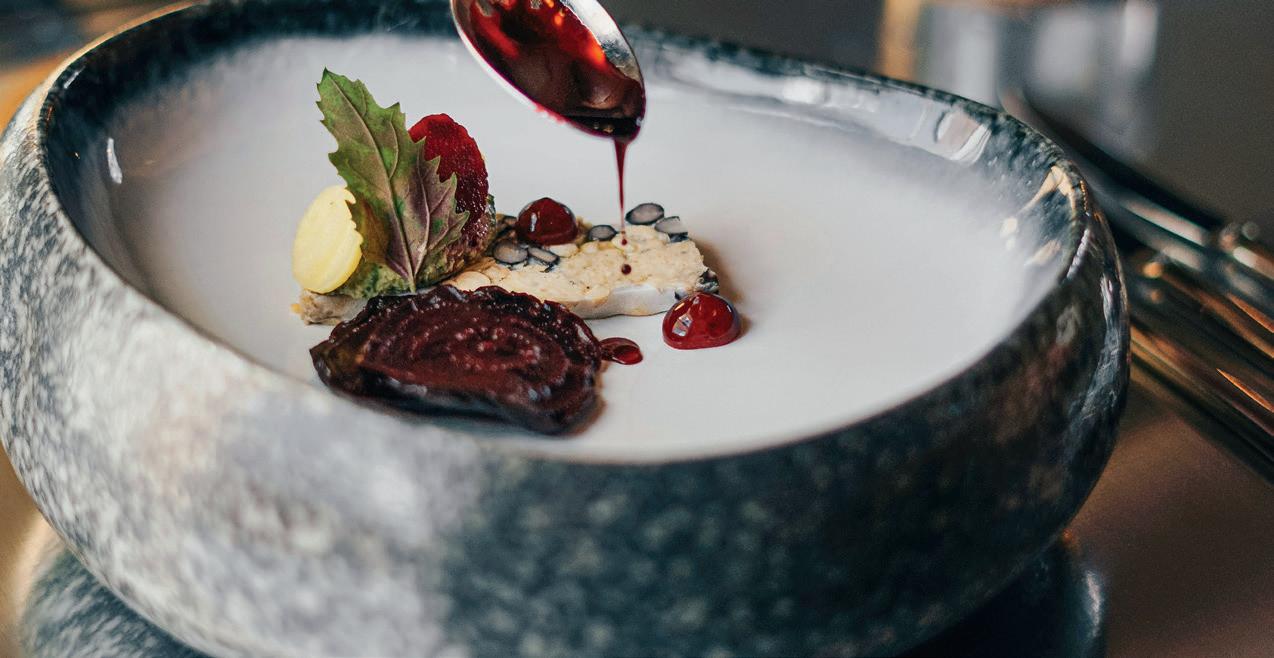
Step into the exceptional world of restaurants and tasty products on the following pages. Savour creative menus, the freshest seasonal ingredients, and memorable culinary moments as we meet some of the creative culinary minds of the DACH region.
PHOTOS: UNSPLASH
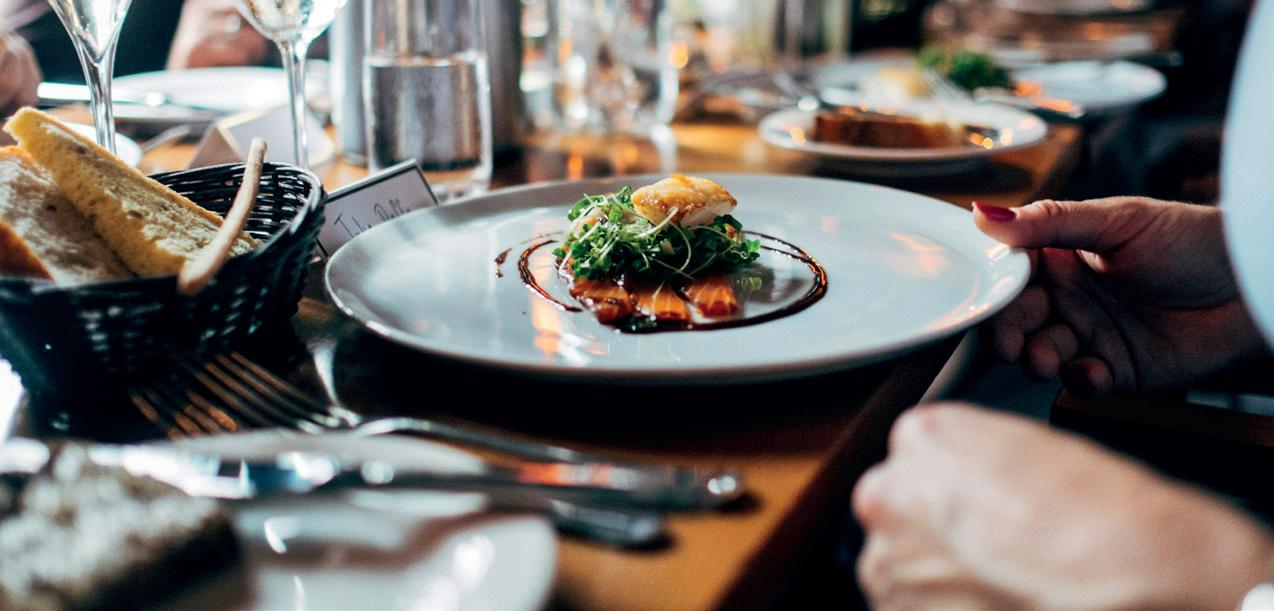
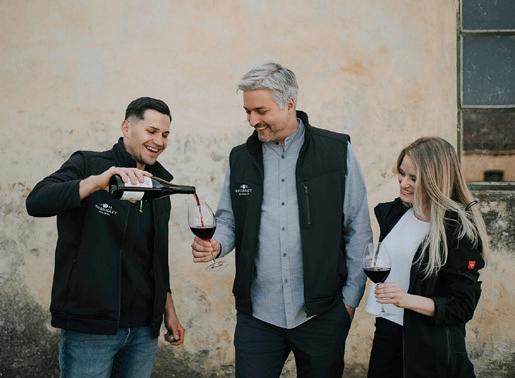
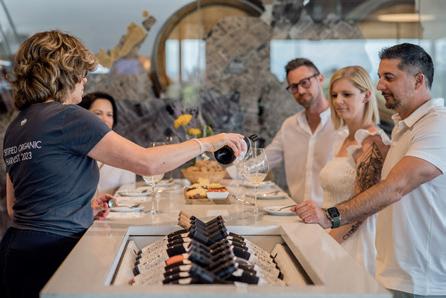
At Esterházy Winery, history, heritage and forward-thinking winemaking come together to create organic wines full of character.
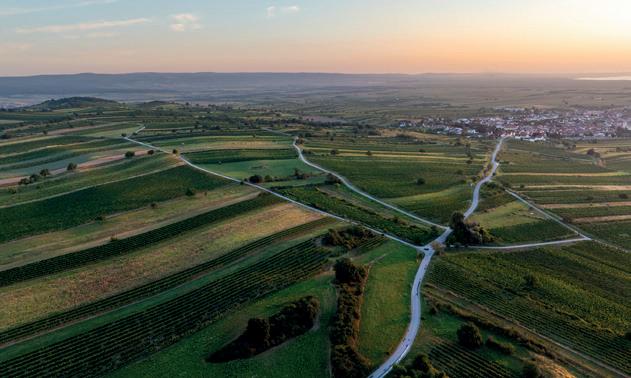
On Leithaberg, in the northern Burgenland region, centuriesold winemaking tradition meets contemporary innovation. Esterházy Winery looks back on more than 300 years of viticultural history and is today one of the defining producers of a region known for authentic, mineraldriven origin wines. “We combine tradition with consistently sustainable viticulture and work every year to reveal the character of Leithaberg with increasing precision,” emphasises winery director Wolfgang Hewarth.
Leithaberg, shaped by limestone and mica schist, offers ideal conditions for wines with tension, elegance and depth. Precise soil analyses, diverse microclimates, and a clear understanding of each vineyard site make it possible to express the terroir in a nuanced way.
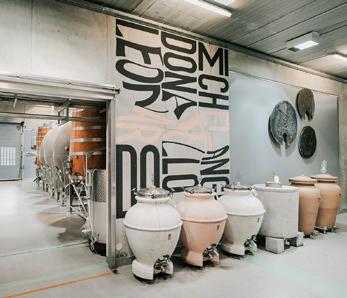
Sustainability is far more than a buzzword. Since 2023, the vineyard has been certified organic — a step that promotes biodiversity and strengthens the resilience of the vines. A deliberate avoidance of irrigation, gentle pruning, and an inhouse composting system all contribute to the vines aging healthily. The goal is to reach 100 years or more.
The focus lies on Grüner Veltliner, Chardonnay, Pinot Blanc, Blaufränkisch, and Pinot Noir. Each of these grape varieties reflects the minerality of Leithaberg in its own distinctive and always elegant way. The wines are matured in oak barrels sourced from the estate’s own Leithaberg forest, complemented by clay amphorae and concrete eggs containing basalt from Esterházy’s
own basalt quarry. The result is a harmonious interplay of origin, craftsmanship, and contemporary wine interpretation.
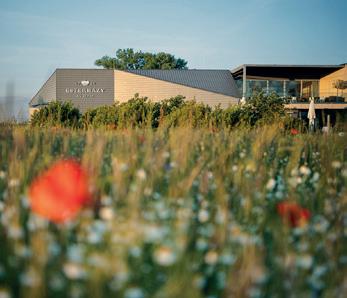
Just a few minutes from Esterházy Palace, the winery in Trausdorf welcomes visitors for cellar tours, guided tastings, and culinary experiences — a place where three centuries of wine knowledge come to life.
www.esterhazywein.at/en
Save 15% online with the code discovergermany.
Simply scan and savour a journey into the flavours of Leithaberg.


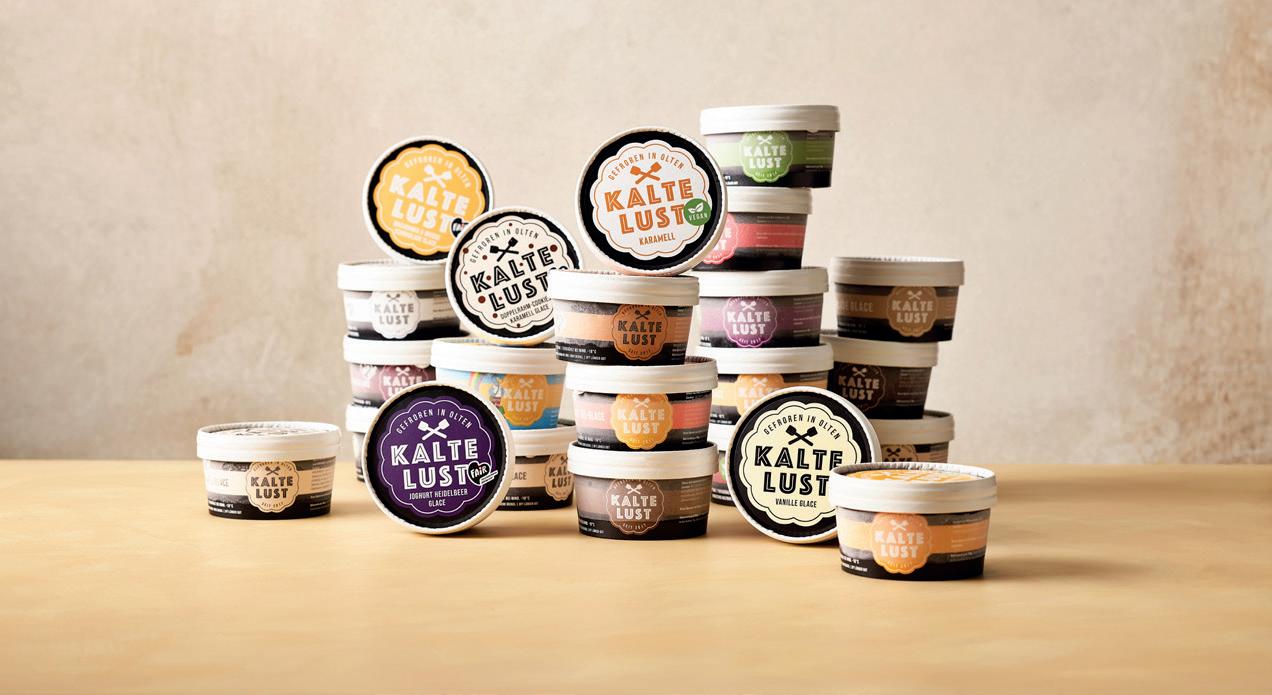
When three chefs meet and share the same dream, great things can happen! Such was the case when Dominique Mattenberger, Darko Bosnjak and Florian Stähli met during their training at Gstaad Palace. From the very beginning, they shared a passion for culinary art and high-quality food.
“We wanted to create an ice cream that reflects joy, naturalness and quality – values that define the Swiss way of life,” explains co-founder Dominique. “And we wanted it to be produced sustainably and fairly, giving everyone involved a good feeling,” adds Darko.
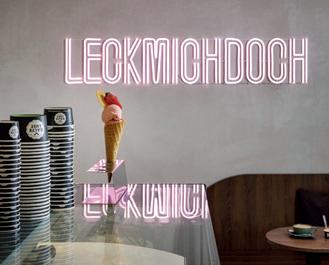
In 2017, the three chefs founded their ice cream factory, KALTE LUST, and have been delighting even the most discerning gourmets ever since. “Our ice cream,” says Florian, “stands for pure, unpretentious flavour. Our customers often tell us that our ice cream tastes real. A compliment that makes us and our entire team incredibly proud.”
Their secret? True craftsmanship and top-quality natural ingredients, such as organic Jersey milk from Madiswil and Lützelflüh, strawberries from Madiswil and haskap berries from Hellbühl. “We know many of our producers personally,” says Darko, “and we source pistachios directly from Sicily, while vanilla and chocolate come from fair and responsible suppliers.” Each ice cream variety is pasteurised, carefully ma-
tured and quick-frozen to ensure a perfect balance between flavour and texture. “But the most important ingredients will always be handcraft and our passion for good food,” emphasise the three founders.
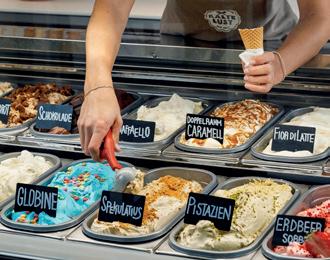
Flavours such as vanilla, chocolate and pistachio are classic favourites. Yet KALTE LUST would not be KALTE LUST without cre-
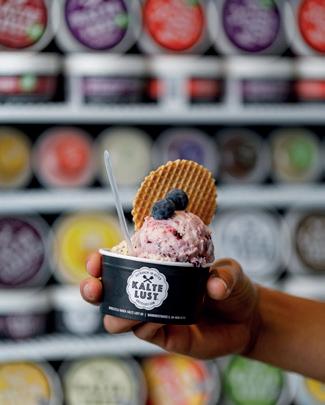
ations like double cream–cookie–caramel or Amarena cherry with chocolate: bestsellers that have conquered the hearts of ice cream lovers and are now available in larger Coop stores across Switzerland.
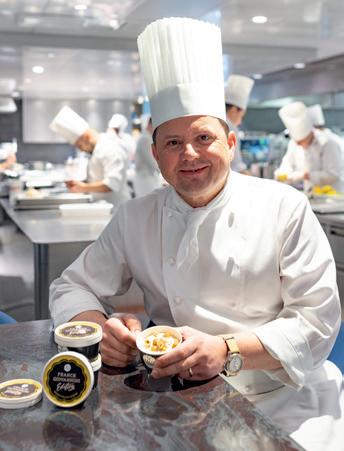
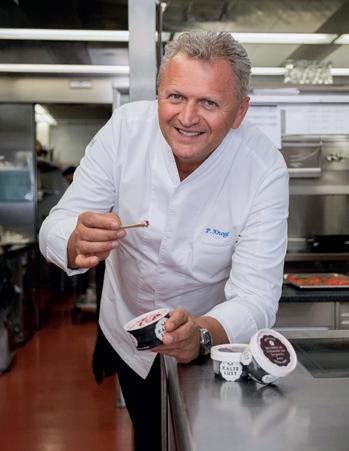
The summer season brings refreshing sorbets as well as the brand’s signature monthly specials, born from spontaneous ideas or developed in collaboration with top chefs such as Peter Knogl and Franck Giovannini.
“If all of us like a particular flavour, we know that it’s very likely to be a hit,” Florian says with a laugh.
Looking ahead, KALTE LUST has ambitious plans: new creative limited editions, including a collaboration with Switzerland’s most highly decorated female chef, expanding its presence nationwide, securing new retail partners and opening new locations, such as in Aarau in summer 2026.
The brand also remains a welcome guest at events, festivals and private celebrations. For the KALTE LUST team, ice cream is far more than a dessert. “Ice cream is the zest for live in a scoop. And this feeling is what we want to share,” concludes Dominique.
www.kaltelust.ch
Wenn drei Köche sich treffen und den gleichen Traum träumen, kann daraus Großes werden! So geschehen bei Dominique Mattenberger, Darko Bosnjak und Florian Stähli, die sich im Gstaad Palace während ihrer Kochlehre kennenlernten. Von Anfang an verband die drei ihre Leidenschaft für Genuss und hochwertige Lebensmittel.
„Wir wollten ein Eis herstellen, das Freude am Genuss, Natürlichkeit und Qualität widerspiegelt – Werte, die das Schweizer Lebensgefühl prägen”, erklärt Mitgründer Dominique. „Unser Eis sollte außerdem nachhaltig und fair sein und allen Beteiligten ein gutes Gefühl geben”, ergänzt Darko.
2017 gründeten die drei Köche ihre Eismanufaktur KALTE LUST und überzeugen seitdem auch die kritischsten Gaumen. „Unser Eis”, so Florian, „steht für puren Geschmack ohne Chichi. Unsere Kund:innen sagen oft, dass unser Eis einfach echt schmecke. Das ist ein Kompliment, das uns und unser Team besonders stolz macht.”
Das Geheimnis? Echte Handarbeit und hochwertige, natürliche Zutaten wie zum Beispiel Bio-Jersey-Milch aus Madiswil und Lützelflüh, Erdbeeren aus Madiswil, Haskap-Beeren aus Hellbühl. „Wir kennen viele Produzenten persönlich”, so Darko. Pistazien kauft das Team von KALTE LUST direkt in Sizilien, Vanille und Schokolade stammen aus fairen, verantwortungsvollen Quellen. Jede Eissorte wird
pasteurisiert, sorgfältig gereift und schockgefroren, damit Aroma und Struktur perfekt harmonieren. „Die wichtigste Zutat bleibt aber immer Handarbeit und unsere Leidenschaft für Gutes”, betonen die drei Gründer.
Sorten wie Vanille, Schokolade und Pistazie gehören zu den Klassikern. Doch KALTE LUST wäre nicht KALTE LUST ohne Kreationen wie Doppelrahm-Cookies-Karamell oder Sauerkirsche: Bestseller, die die Herzen der Genießer:innen im Sturm erobert haben und inzwischen in grösseren Coop-Filialen in der ganzen Schweiz erhältlich sind.
Typisch sind im Sommer nicht nur die erfrischenden Sorbets, sondern auch die monatlichen Spezialsorten, entwickelt aus spontanen Ideen oder in Zusammenarbeit mit Spitzenköchen wie Peter Knogl oder Franck Giovannini. „Wenn uns ein Geschmack alle begeistert, weiss das Team: Diese Sorte hat gute Chancen”, sagt Florian lachend.
Für die nächsten Jahre hat die Eismanufaktur KALTE LUST viel vor: neue kreative Limited
Editions, darunter eine Kooperation mit der höchstdotierten Köchin der Schweiz, der Ausbau der Präsenz im ganzen Land, Gewinn neuer Vertriebspartner:innen und die Eröffnung weiterer Standorte, etwa in Aarau ab Sommer 2026.
Zudem bleibt die Marke ein gern gesehener Gast bei Events, Festivals und privaten Feiern. Denn Eis ist für das Team von KALTE LUST mehr als ein Dessert: „Eis ist Lebensfreude in Kugelform. Und genau die möchten wir weitergeben”, schließt Dominique.
www.kaltelust.ch
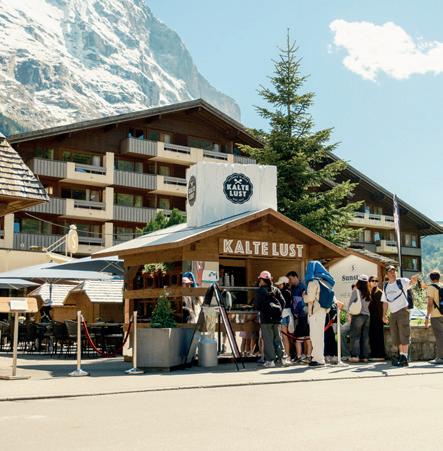
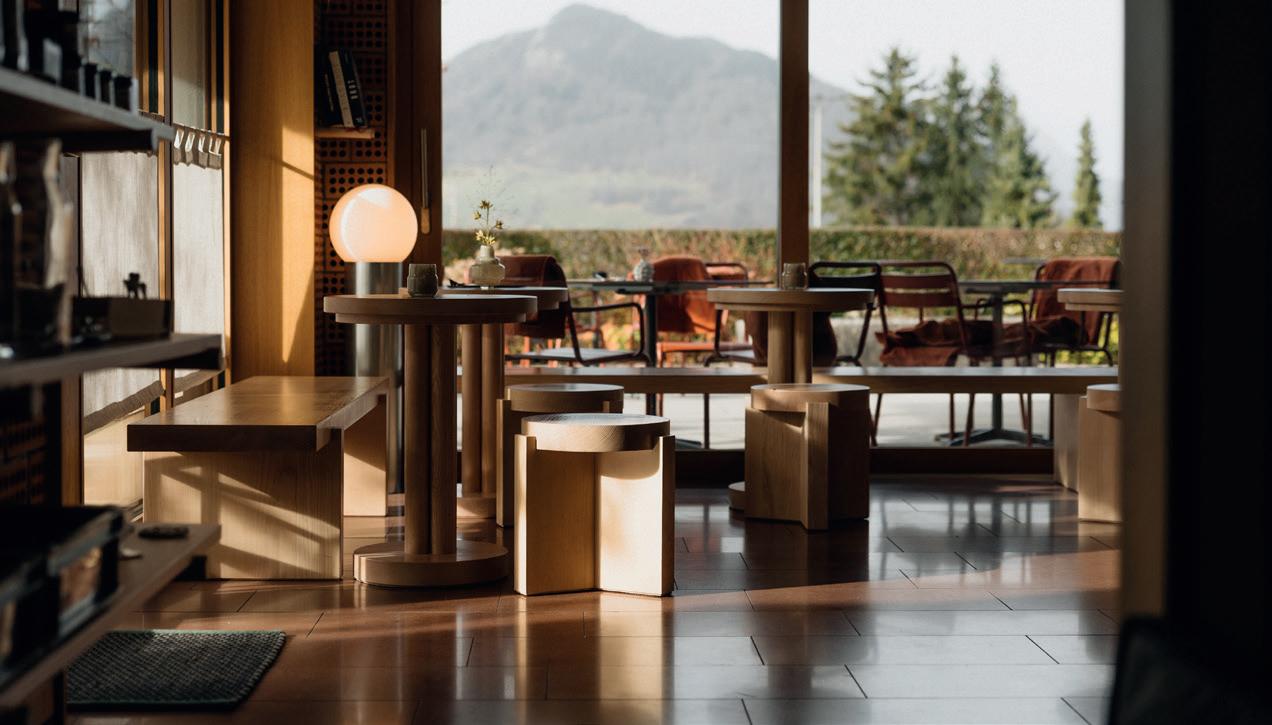
Restaurant Magdalena in Rickenbach in Switzerland is not just a restaurant, but a culinary revolution. As the first vegetarian 2-star Michelin restaurant in Europe, it sets new standards for enjoyment and sustainability, and offers breathtaking views of the Alps.
Founders Adriana Hartmann, Dominik Hartmann (head chef) and Marco Appert (managing director) are not only a well-coordinated team, but also friends since childhood. "We always wanted to open a restaurant," says Marco. Together with Dominik's wife Adriana, the idea for Magdalena matured, and the vision was quickly realised in their hometown. Just five months after opening, Magdalena was awarded two Michelin stars. Later, it received 18 Gault Millau points and the Green Michelin Star for sustainability.
For head chef Dominik, one thing is paramount: "Taste, taste, and more taste." His modern cuisine thrives on freshness, depth and complexity. He experiments with acidity, bold flavours, and bitter and sweet notes, ensuring that every dish is a surprise and an adventure. He developed many of his techniques himself because "this kind of cooking with vegetables was almost non-existent." It is no wonder that Gault&Millau has already named him a "sauce god," Discovery of the Year (2021), and Rising Star of the Year (2023 and 2025).
All dishes and menus focus on vegetables because, as Marco explains: "It's much more fun to prepare vegetables." To guarantee seasonality, the menus are constantly updated but, according to Marco and Dominik, there is one signature dish: Magdalena bread with sourdough and Albula potatoes. In the morning, the in-house micro-bakery also offers six delicious products, like croissants or pain au chocolat.
Sustainability is not a trend at Magdalena; it is a lived conviction. "We source almost everything from the region and have our own garden with over 50 herbs and flowers. In addition, we have virtually no food waste," says Dominik. You will not find meat or fish at Magdalena, because vegetables offer "far more textures and different consistencies."
Besides the cuisine, Magdalena impresses with its cosy yet modern living room ambiance and spectacular views of the Alps. Original artwork by Adriana, a large panoramic window front, and the chic furnishings featur-
ing listed, 700-year-old wood create a special atmosphere that combines modern elements with traditional ones. "Perched at the foot of the Grosser Mythen mountain, we have the best views of the Alps, and Lake Lucerne and Lake Lauerz," Marco concludes.
www.restaurant-magdalena.ch
View.
Restaurant Magdalena im schweizerischen Rickenbach ist nicht nur ein Restaurant, sondern eine kulinarische Revolution: Als erstes vegetarisches 2-Sterne-MichelinRestaurant Europas setzt es neue Maßstäbe für Genuss und Nachhaltigkeit – inklusive atemberaubendem Blick auf die Alpen.
Die Gründer Adriana Hartmann, Dominik Hartmann (Head Chef) und Marco Appert (Geschäftsführer) sind nicht nur ein eingespieltes Team, sondern seit Kindertagen Freunde. „Wir wollten schon immer ein Restaurant eröffnen", sagt Marco. Zusammen mit Dominiks Frau Adriana reifte die Idee für das Magdalena und schnell wurde die Vision im eigenen Heimatort verwirklicht. Bereits fünf Monate nach der Eröffnung wurde das Magdalena mit zwei Michelin-Sternen eingestuft. Später folgten 18 Gault Millau Punkte und der Grüne MichelinStern für Nachhaltigkeit.
Im Mittelpunkt steht für Head Chef Dominik vor allem eines: „Geschmack, Geschmack und nochmals Geschmack." Seine moderne Küche lebt von Frische, Tiefe und Komplexität. Er experimentiert mit Säure, viel Power, sowie bitteren und süßen Noten, so dass jedes Gericht überrascht und zum Abenteuer wird. Viele seiner Techniken hat er selbst entwickelt, denn „diese Art von Kochen mit Gemüse gab es fast nicht.” Nicht umsonst wurde er vom GaultMillau schon als „Saucengott", als Ent-
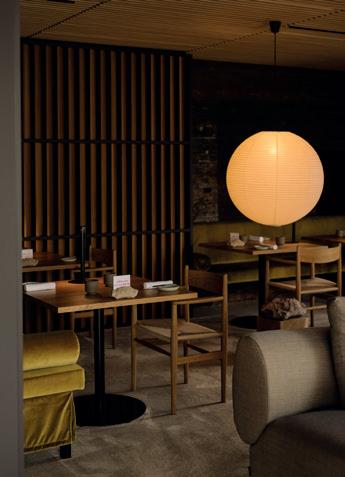
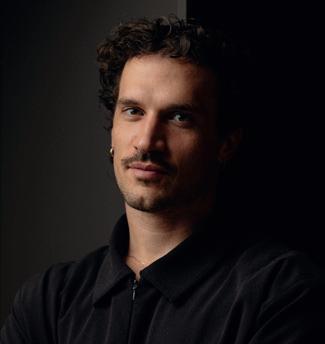
deckung des Jahres (2021), sowie Aufsteiger des Jahres (2023 und 2025) bezeichnet.
Bei allen Gerichten und Menüs steht Gemüse stets im Mittelpunkt. Marco erklärt: „Es macht viel mehr Spass Gemüse zuzubereiten.” Um Saisonalität zu garantieren, werden die vielschichtigen Menüs stets aktualisiert.
Ein Signature Dish gibt es aber laut Marco und Dominik doch: Das Magdalena Brot mit
Sauerteig und Albulakartoffeln. Am Morgen kredenzt die hauseigene Mikrobäckerei zudem sechs leckere Produkte, wie zum Beispiel Croissant oder Pain au Chocolat.
Nachhaltigkeit ist im Magdalena kein Trend, sondern gelebte Überzeugung: „Wir beziehen fast alles aus der Region und haben einen eigenen Garten mit über 50 Kräutern und Blumen. Zusätzlich haben wir praktisch keine Lebensmittelverschwendung”, sagt Dominik. Fleisch und Fisch sucht man im Magdalena vergeblich, denn Gemüse bietet „viel mehr Strukturen und unterschiedliche Konsistenzen.”
Neben der Küche begeistert das Magdalena mit seinem gemütlichem und doch modernem Wohnzimmer-Ambiente und der spektakulären Aussicht auf die Alpen. Originalkunst von Adriana, eine grosse Panoramafensterfront und die schicke Einrichtung mit denkmalgeschütztem, 700 Jahre altem Holz schaffen eine besondere Atmosphäre, die moderne Elemente mit Traditionellem kombiniert. „Erhöht, am Fusse des grossen Mythens gelegen, haben wir die beste Aussicht auf die Alpen und den Vierwaldstättersee und Lauerzersee”, sagt Marco abschliessend.
www.restaurant-magdalena.ch
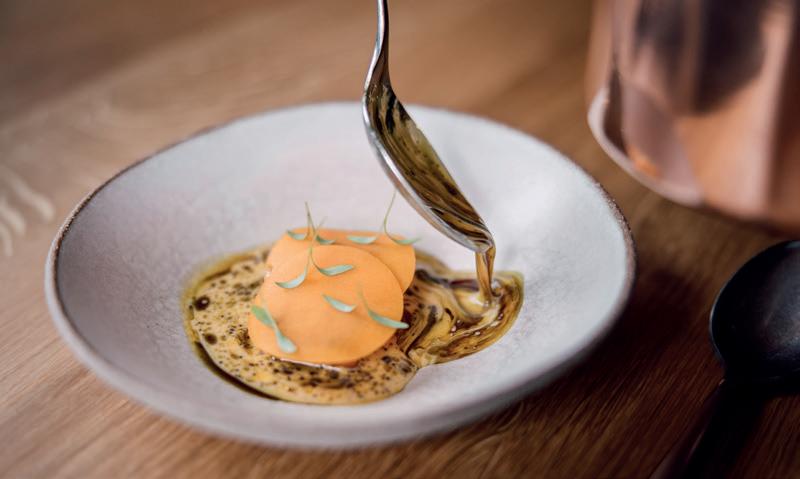
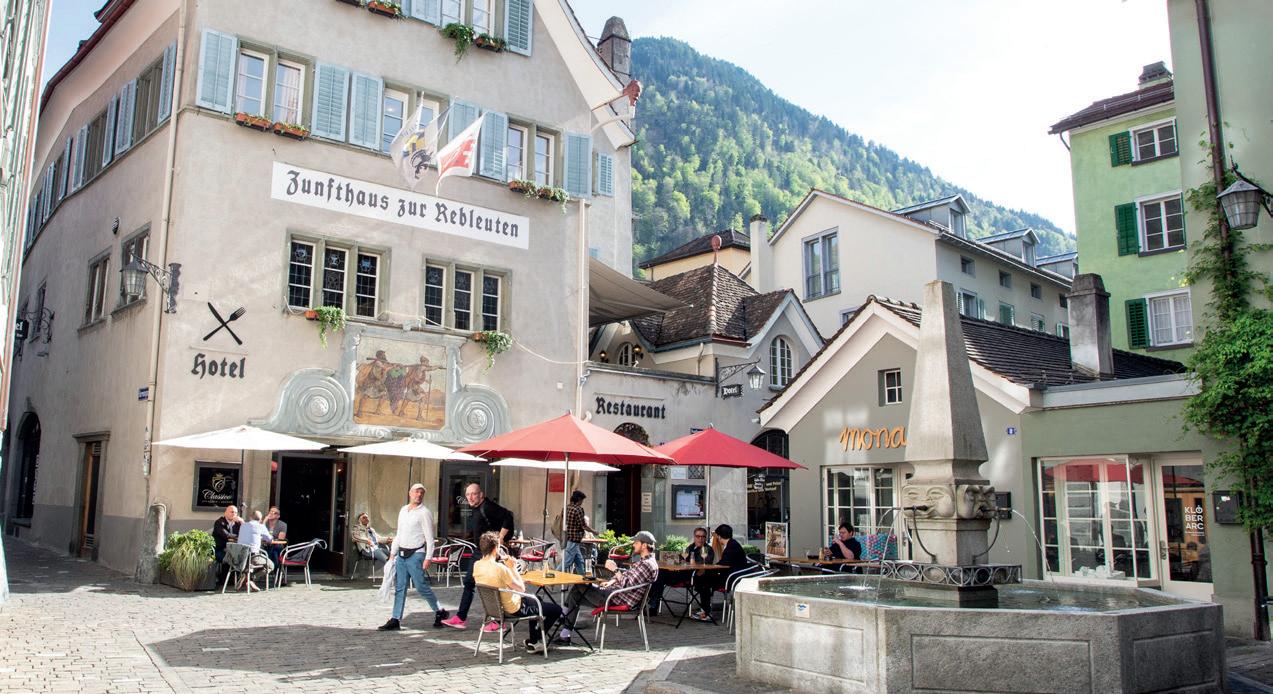
In the heart of Chur's old town stands Zunfthaus zur Rebleuten, a hotel and restaurant that blends tradition with modernity. In this interview, Jacqueline and Marco Rudolph, who have been running the establishment with passion since 2017, explain what makes Zunfthaus so special.
“We took over the hotel and restaurant in June 2017,” reports Marco Rudolph, enthusiastically explaining that the building boasts a rich history. “Chur suffered two major fires, and the house was rebuilt for the second time in 1682. Thus, it has a long history and has officially been a tavern since 1916.” Anyone who visits is stepping into a house from the 17th century. The wooden ceiling of the guildhall, for example, is a listed historical monument, and, according to Jacqueline Rudolph, “you feel transported back in time.”
The hotel's unique, relaxed atmosphere is further enhanced by its 13 lovingly furnished and cosy rooms, which invite guests to linger. On the culinary front, Zunfthaus focuses on a refined blend of Swiss and Grisons cuisine: "Here, traditional Swiss and Grisons dishes meet modern ideas: rooted in tradi-
tion, yet not stuffy, freshly interpreted, and served with a touch of humour," says Marco Rudolph. Guests can look forward to classics such as Boeuf Bourguignon made with Urmeiner Wagyu beef and Capunet, influences of Nouvelle Cuisine, and a dash of modern flair. Wherever possible, the ingredients are sourced regionally or from Switzerland.
According to the hosts, the salad with bacon, croutons, and egg, the smoked salmon from
Lostallo, the false snails, and, for a sweet finish, the Vazercrème are among the guests' favourite dishes. Just like the dishes, the à la carte restaurant's premises also offer variety: in addition to the guild room, there is the guild hall for banquets and breakfast for hotel guests, two terraces, and the fireplace room with a lounge area.
“We want to offer our guests the highest quality in a relaxed atmosphere,” says Marco Rudolph, succinctly summarising the hotel's philosophy. And it is precisely for this reason that the traditional hotel and restaurant is the only gastronomic establishment in the Grisons capital to be an active member of the Guild of Established Swiss Restaurateurs – an award bestowed upon only one per cent of Swiss gastronomic businesses.
Passion, history and enjoyment make Zunfthaus zur Rebleuten a unique address in Chur.
www.rebleutenchur.ch
Mitten in der Altstadt von Chur steht das Zunfthaus zur Rebleuten, ein Hotel-Restaurant, das Tradition und Moderne vereint. Seit 2017 führen Jacqueline und Marco Rudolph das Haus mit Herzblut. Im Interview erzählen die beiden Gastgeber, was das Zunfthaus so aussergewöhnlich macht und worauf sich Gäste freuen dürfen.
„Wir haben das Hotel und Restaurant im Juni 2017 übernommen“, berichtet Marco Rudolph und schwärmt, dass das Gebäude auf eine bewegte Vergangenheit zurückblickt: „Chur hatte zwei grosse Brände und das Haus wurde 1682 zum zweiten Mal wieder aufgebaut. Das Haus hat somit eine lange Geschichte und ist seit 1916 offiziell eine Gaststube.” Wer hier einkehrt, taucht also in ein Haus aus dem 17. Jahrhundert ein. Die Holzdecke der Zunftstube steht zum Beispiel unter Denkmalschutz und „man fühlt sich“, laut Jacqueline Rudolph „um Jahre zurückversetzt.”
Die besondere ungezwungene Atmosphäre des Hauses wird auch durch die 13 liebevoll eingerichteten und gemütlichen Hotelzimmer betont, die zum Verweilen einladen. Kulinarisch setzt das Zunfthaus auf eine raffinierte Mischung aus Schweizer und Bündner Küche: „Bei uns trifft die Schweizer und Bündner Küche von gestern auf die Ideen von heute: tra-
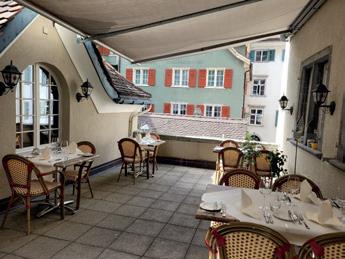
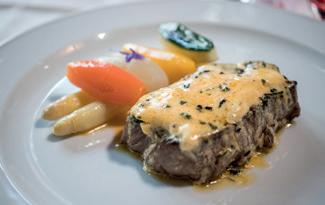
ditionsbewusst, aber nicht verstaubt, frisch interpretiert und mit einem Augenzwinkern serviert”, sagt Marco Rudolph. Die Gäste dürfen sich auf Klassiker wie Boeuf Bourguignon vom Urmeiner Wagyu Beef und Capunet, Einflüsse der Nouvelle Cuisine und eine Portion Mut zur Moderne freuen. Die Produkte stammen, wo immer möglich, aus der Region oder aus der Schweiz – „weil guter Geschmack bekanntlich nahe liegt.”
Laut den Gastgebern zählen der Marktfrauensalat mit Speck, Crôuton und Ei, geräucherter
Lachs aus Lostallo, die „falschen Schnecken” und als süsser Abschluss die Vazercrème zu den Lieblingsgerichten der Gäste. Genau wie die Gerichte bieten auch die Räumlichkeiten des à-la-carte Restaurants Vielfalt: Zu der Zunftstube kommt der Zunftsaal für Bankette und das Frühstück für Hotelgäste, zwei Terrassen sowie das Kaminzimmer mit Cheminée-Lounge.
„Wir möchten unseren Gästen in ungezwungener Atmosphäre höchste Qualität liefern”, bringt Marco Rudolph die Philosophie des Hauses auf den Punkt. Und genau dafür darf sich das traditionsreiche Hotel und Restaurant als einziges gastronomische Unternehmen in der Bündner Hauptstadt als aktives Mitglied der Gilde der etablierten Schweizer Gastronomen bezeichnen – eine Auszeichnung, die lediglich einem Prozent der Schweizer Gastronomiebetriebe zuteilwird.
Leidenschaft, Geschichte und Genuss machen das Zunfthaus zur Rebleuten also zu einer einzigartigen Adresse in Chur.
www.rebleutenchur.ch
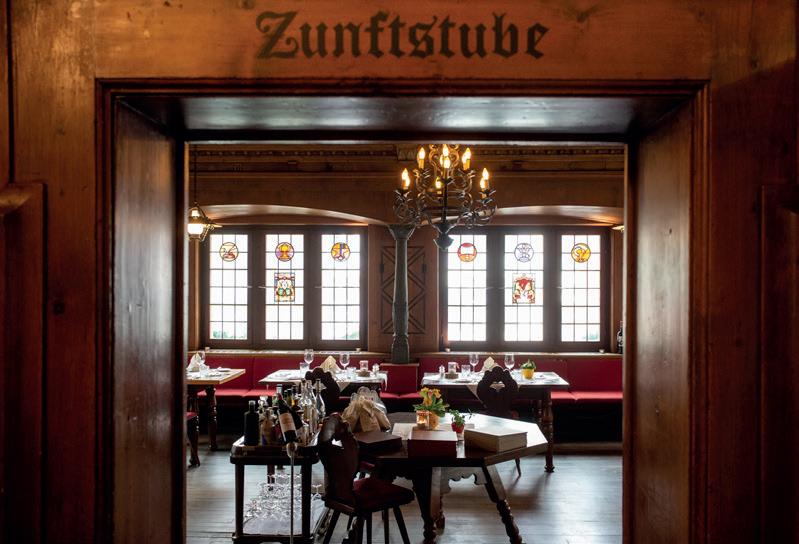
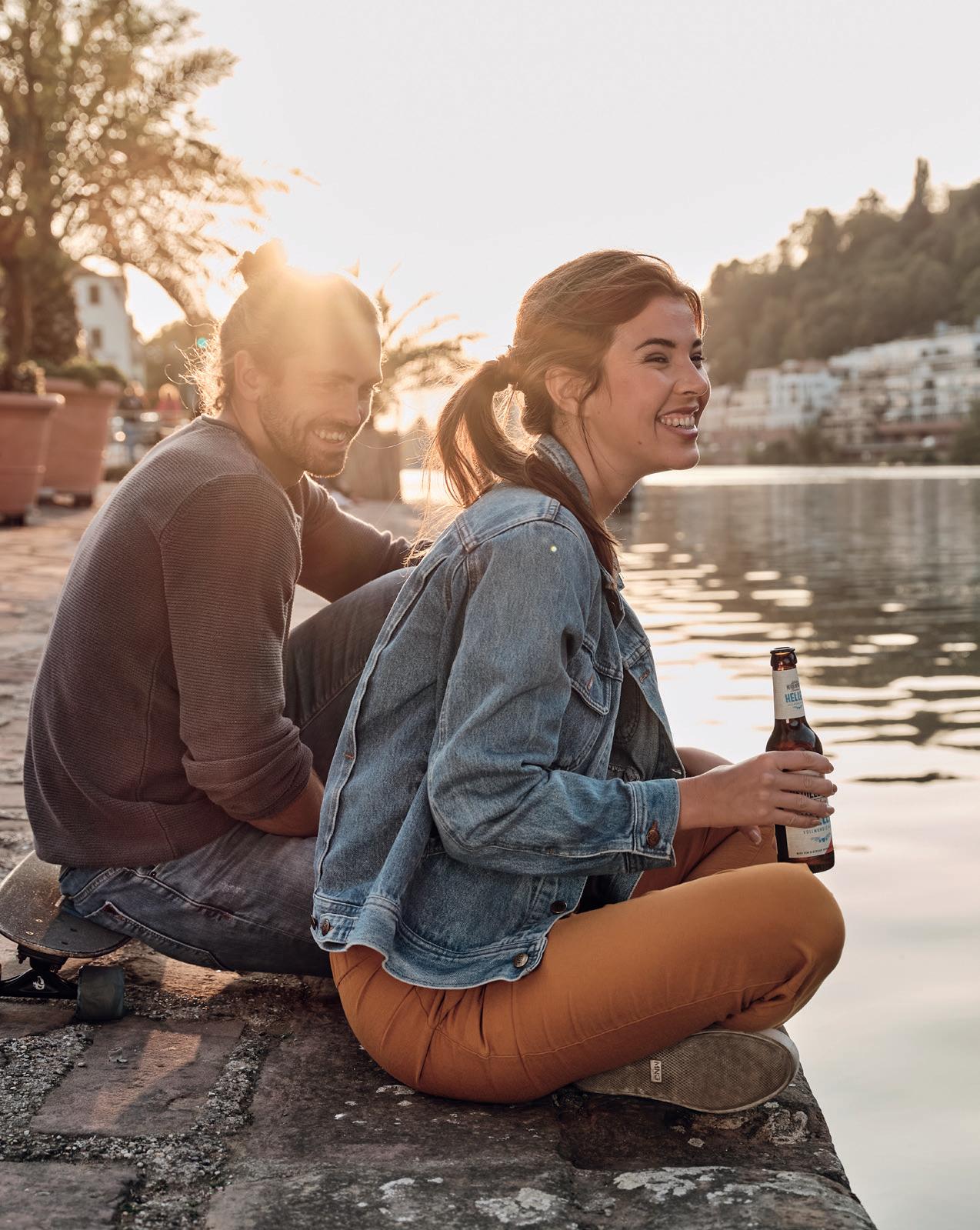
When you think of German beer, you probably think of a busy beer garden in Bavaria, or a bitter bottled variety from up north, but when it comes to variety and heritage, the state of Baden-Württemberg should be on every beer enthusiast’s travel list.
TEXT: NANE STEINHOFF
Beer brewing in Baden-Württemberg boasts a rich history that stretches back to the Middle Ages, when monasteries and small local breweries first began crafting unique regional beers. Over centuries, the area developed a distinctive brewing culture, influenced by both Swabian and Baden traditions, resulting in a wide array of beer styles and flavours. The introduction of the Reinheitsgebot, or German Beer Purity Law, in the 16th century further shaped the region’s brewing techniques, ensuring quality and consistency that continue to define Baden-Württemberg's breweries today.
Baden-Württemberg’s breweries are renowned for their creativity and dedication to tradition. From crisp pilsners and malty bocks to refreshing wheat beers, the region offers a spectrum of flavours that cater to every palate. Smaller craft breweries have emerged alongside historic family-run establishments, blending modern innovation with centuries-old recipes to produce distinctive brews. Local specialties such as Schwabenbräu, Rothaus, and Alpirsbacher are beloved by residents and visitors alike.
The area’s brewing heritage is celebrated throughout the year at lively festivals and beer gardens. Events like the Cannstatter Volksfest in Stuttgart and the Badisches Oktoberfest showcase the best of Baden-Württemberg’s beer culture, pairing local brews with hearty regional cuisine. And for those wanting to delve even deeper into seasonal beers and learn more about brewing techniques, while
experiencing the warm hospitality the region is so known for, a multitude of breweries and beer and culinary travel ideas are on offer too. In Germany's beer-loving south, numerous hiking, walking and cycling trails make it possible to experience the beer production process from hop cultivation to the brewing process and bottling.
Situated at an altitude of 1,000 metres between fir and pine trees, the Baden State Brewery Rothaus (Badische Staatsbrauerei Rothaus) offers its guests tasty beers as
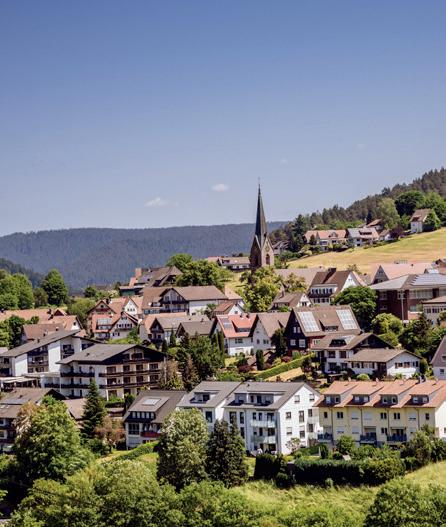
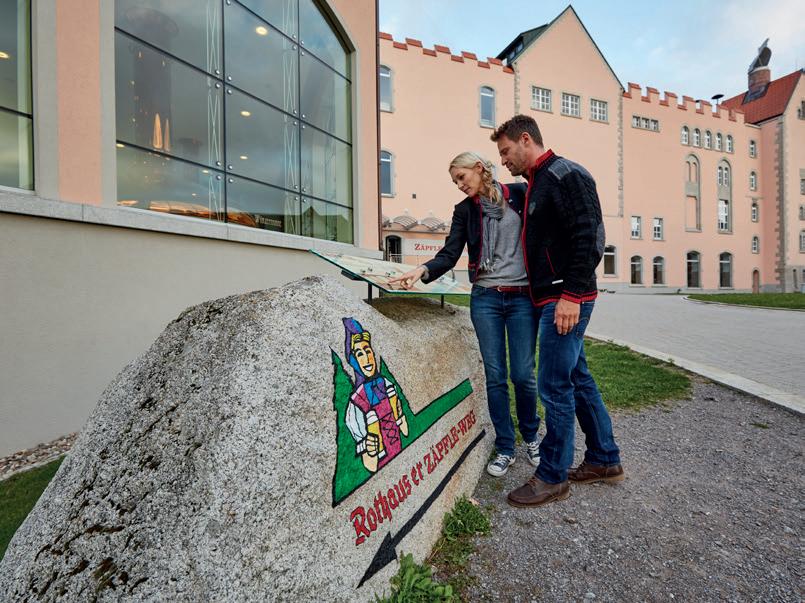
well as breathtaking views. As one of the highest-altitude beer producers in Europe, the brewery capitalises on its remarkable location with an engaging beer-themed educational trail. The Zäpfle Trail, named after its famous Tannenzäpfle beer, is a leisurely hour-long walk around the brewery, leading through beautiful scenery and past numerous informative stations. Starting at the source of the natural brewing water, the trail takes visitors past the brewhouse and offers insights into the work in the yeast and fermentation cellars. The breathtaking view of the bottling plant, which processes 60,000 bottles per hour, is the highlight of this circular route, which comprises nine stages. Afterwards, guests can enjoy sparkling drinks and hearty food in the beer garden.
The Zäpfle Trail, named after its famous Tannenzäpfle beer, is a leisurely hour-long walk around the brewery, leading through beautiful scenery and past numerous informative stations. Starting at the source of the natural brewing water, the trail takes visitors past the brewhouse and offers insights into the work in the yeast and fermentation cellars. The breathtaking view of the bottling plant, which processes 60,000 bottles per hour, is the highlight of this circular route, which comprises nine stages.
It is well known that Baiersbronn is not only a great place to eat, but also to hike. Now, this Black Forest town has also embraced the theme of beer, offering a unique guided beer hike several times a year. It all begins at the monastery church in Klosterreichenbach, where each hiker is equipped with a traditional earthenware beer mug. Then the hike begins. The seven-kilometre route
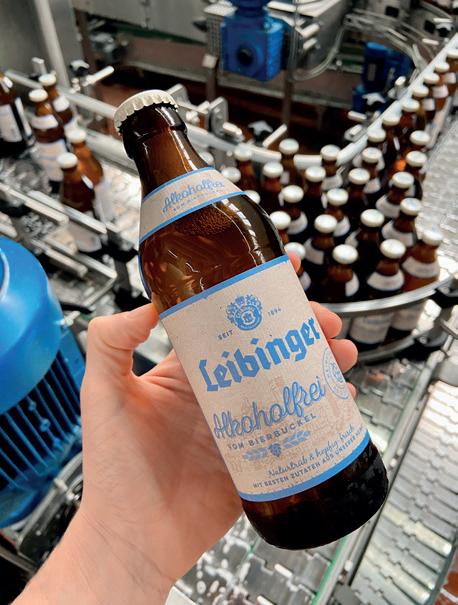
alone, winding through forests and past ponds, is a delight. Four beer tastings at carefully selected rest stops and the many fascinating stories about beer production make the hike a particularly entertaining experience. When hiking guide "Hardy" Hartmut John distributes the midday snack, the hikers are well-prepared for enjoying the beer and confidently navigating the moderately difficult trail.
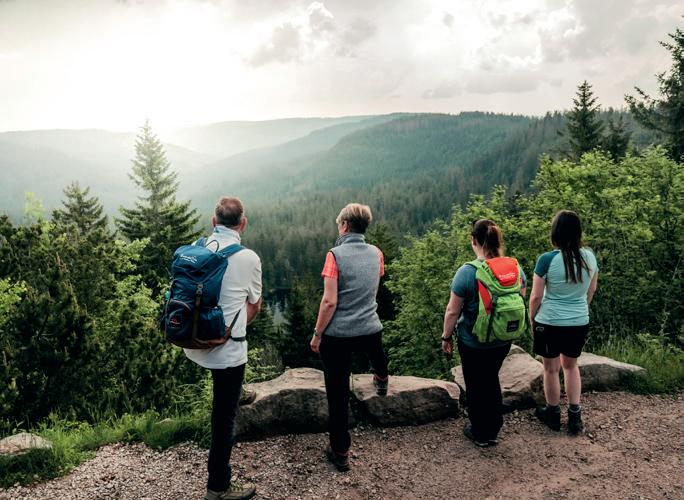
Karlsruhe was once home to numerous breweries. While the city has lost its status as Germany's third-largest beer producer, it still ranks among Germany's beer capitals, boasting two major breweries: Hatz-Moninger and Hoepfner. The many microbreweries in and around Karlsruhe are particularly appealing to beer enthusiasts. Vogelbräu, established in 1985, is one of the oldest microbreweries in Germany. Karlsruhe offers three entertaining guided tours exploring the city's brewing history. These informative walks and bike rides also provide ample opportunity for enjoyment – there are plenty of places to stop for refreshments.
Germany's southernmost hop-growing region, Tettnang, lies near Lake Constance. It is one of the leading producers of premium hops and is prized by brewers worldwide. Following the motto ‘From Farmer to Brewer’, the hop trail leads from the Tettnang Hop Museum past hop gardens and orchards to the Kronen Brewery. Along the way, information panels provide interesting facts about hop cultivation and brewing. Every two years, Tettnang hosts a Hop Hiking Day, where breweries from six beer villages offer
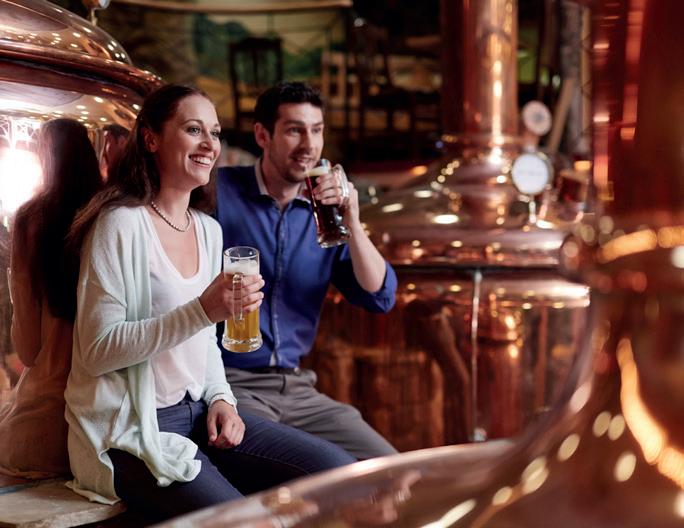
tastings of their beers accompanied by live music. Those who prefer to travel by bicycle can enjoy the well-signposted Tettnang Hop Loop. This 42-kilometre circular cycling route leads through forests, idyllic valleys, expansive orchards and hop gardens, and offers magnificent views of the surrounding countryside and, of course, the splendid
baroque Tettnang Castle. The starting and ending point of the tour is Eriskirch, where free maps are also available.
For anyone seeking authentic tastes and hospitality in the heart of Germany’s beer country, Baden-Württemberg is sure to leave a lasting impression.

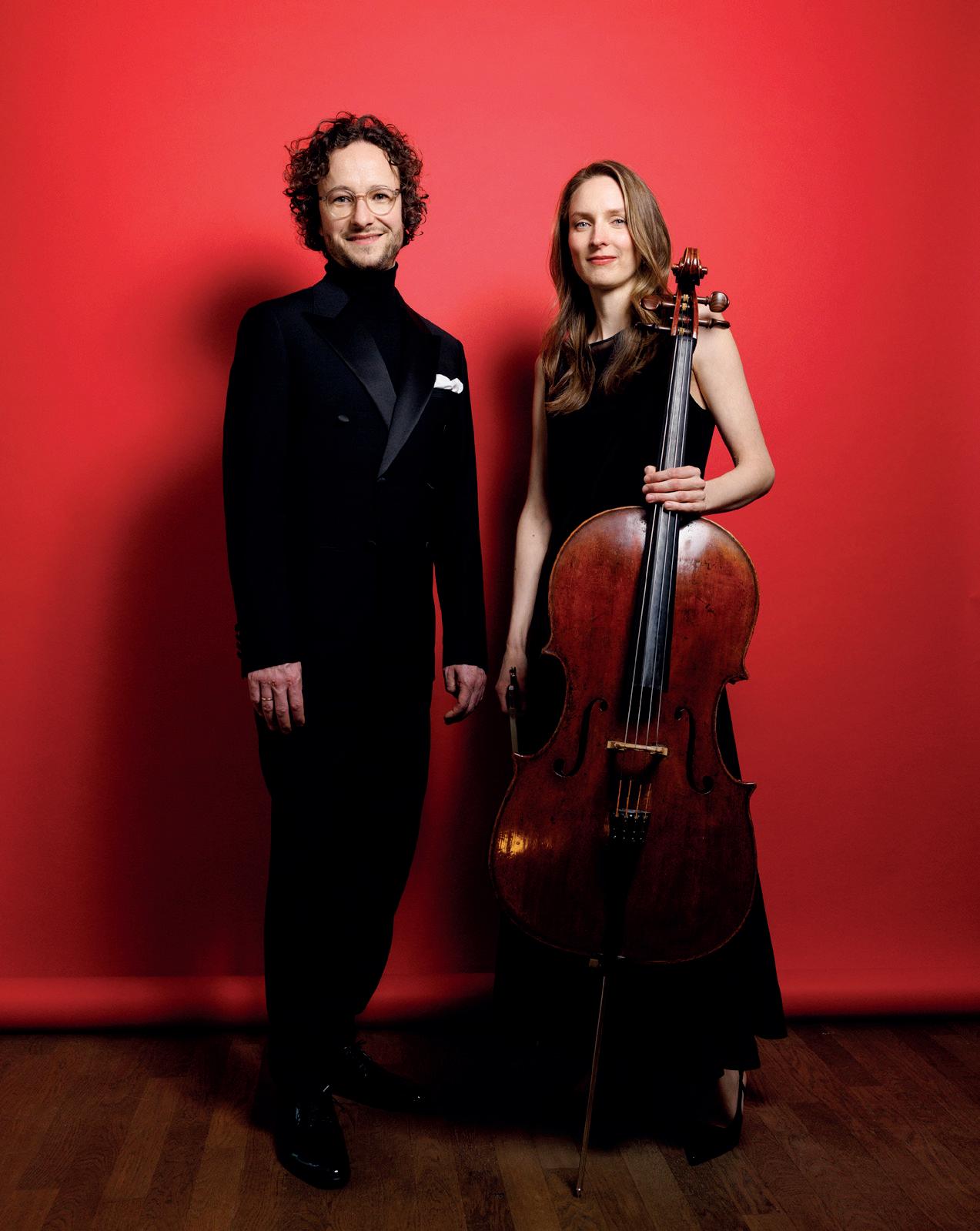
Acclaimed German pianist Martin Helmchen and top cellist Marie-Elisabeth Hecker live and work together with their four children in the Brandenburg region, halfway between Dresden and Berlin. With two highly regarded new albums under their belt and more to come in the near future, the musicians reveal how a life between recordings and concert tours, home and family becomes the perfectly imperfect balance they both do not want to go without at this point in their lives.
TEXT: CORNELIA BRELOWSKI I PHOTOS: PETER RIGAUD
“As freelancing musicians, we enjoy being able to choose the exact spot where we want to live as a family,” says Martin Helmchen, who recently surpassed Lang Lang in the classical music charts with his new album Schubert: Piano Sonatas Vol.1, a first of four recordings honouring Franz Schubert’s lesser known works by highlighting and completing his socalled unfinished sonatas. The couple left Berlin after their first child was born, choosing the quieter countryside over the capital and freely combining family life and music without the endless distractions of the city. “It’s the freedom that drew us here,” says Martin, “freedom and nature.” Both relish in the privilege to have the picturesque Spreewald region as well as local culture nearby, the latter of which they passionately and frequently enhance with house concerts and chamber music projects,
through to heading the International Chamber Music Festival Fliessen as part of Brandenburg Summer Concerts.
“When we first met, it was under purely professional circumstances in Kronberg/ Taunus,” recalls Marie-Elisabeth, who was studying at the Kronberg Academy at the time, an internationally unique school for the world’s most talented young musicians, where both still regularly perform and record. “It must have been 2006 when we had our first public appearance together, at the Kammermusikfest Lockenhaus,” MarieElisabeth continues, while Martin adds: “In a way, we have been each other’s fans from the very beginning, even while still watching the other from afar!” Today, this is expressed in a very practical way by consulting each
other as mentors before putting anything out for the public. “I would never play anything on stage or for a recording, which she hasn’t listened to first,” Martin states.
The couple’s long-time respect for each other’s work has resulted in many joint projects as well, such as the aforementioned recent album From Eastern Europe. The recording cherishes the musicians’ deep connection with Russian and Eastern European mentors, musicians and composers, from which they drew much inspiration from the very beginnings of their respective paths. “Nowadays, it isn’t always easy to split the political from the cultural,” says Martin, and his wife adds: “We wanted to share our gratitude as well as highlight what unites our cultures rather than what’s dividing them.” The album includes cello and piano sonatas by Shostakovich, Schnittke, Prokofiev, Rachmaninov, and Weinberg, as well as Stravinsky’s Suite Italienne
The musicians’ mutual love for chamber music preceded their romantic connection and is still being practised in their Brandenburg home on a frequent basis. “It’s one of my personal wells of recreation,”
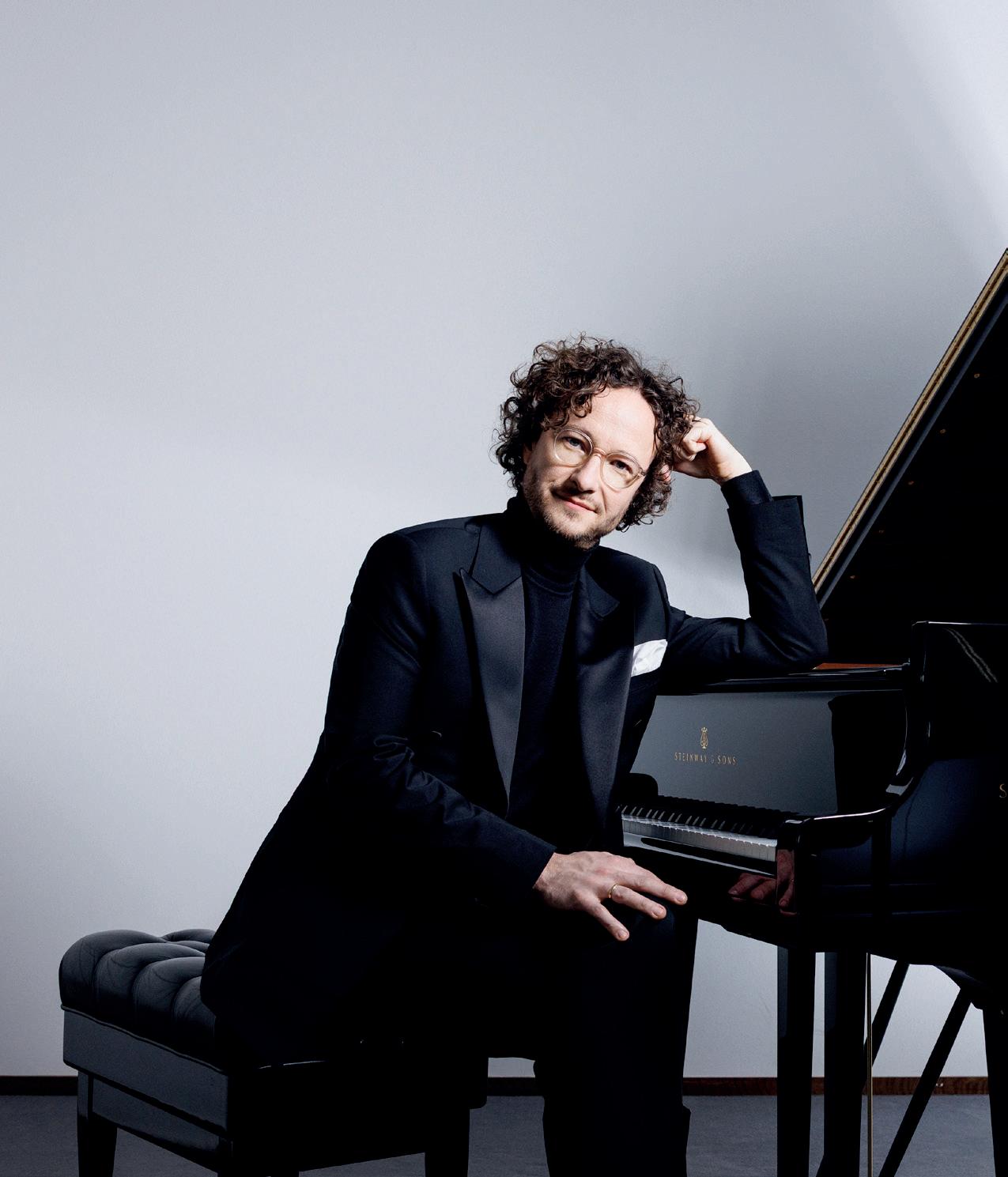
reveals Marie-Elisabeth, who sometimes can feel a little overwhelmed by juggling kids and home, trying to meet her own and others’ high expectations of mothering while also pursuing her own projects. “For me,” Martin laughs, “the concert tours often become my personal recreation time, as there’s always a little room around the performances to venture out, see new places and fill my batteries!”
While his tours and recordings must be both exhausting and rewarding in equal parts for Martin Helmchen, we were wondering what drove him to his latest passion project of recording all of Schubert’s piano sonatas, including the so-called unfinished ones. As mentioned above, Schubert: Piano Sonatas Vol.1 has just been released as a first album of four, with the last one expected to conclude the cycle in 2028. Martin explains:
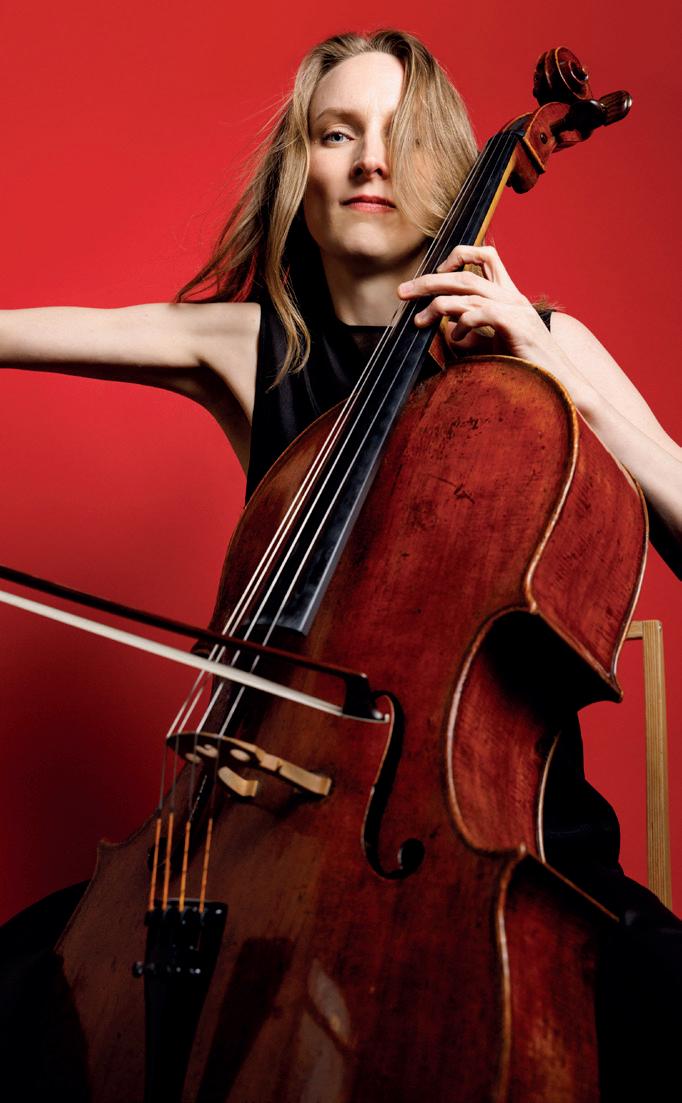
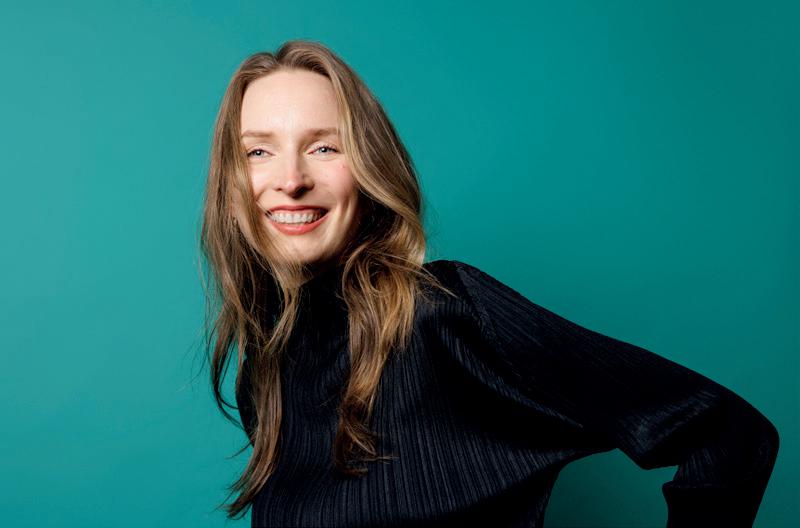
“Franz Schubert was immensely underrated during his lifetime, thus low in income, and it may as well often have been pure pressure and lack of resources which made him use both sides of a sheet, or even stop a sonata at that point where anyone knows how it will end (usually by repeating the first part). Seen from that perspective, it’s almost shameful how few recordings exist of these sonatas to date, just because they had been deemed unfinished. The man was probably so full of new ideas all the time, that he couldn’t waste any energy on filling in the obvious bits!” There are 20 sonatas in total, to be released in increments through a collection of four albums – “rather a grand tour,” as Martin puts it. The two musicians share this kind of passion for challenging, almost analytical projects. Following From Eastern Europe, they have already embarked on another large project at the time of our interview, recording Beethoven’s entire works for Piano&Cello across his various composing phases – aimed to conclude in the Beethoven Year 2027.
As for live concerts, a different interpretation of perfection applies, fuelled by the fact of the live audience being right there in the same room. Marie-Elisabeth explains: “While we study a piece at home, we already prepare for that moment when we can let it become pure music without any distraction interfering. To this end, we need to know
both piece and composer so well, that they become part of us – we create a set world within which we can be free. And the audience always picks up on that magical moment, when everything becomes all about the music! It’s not so much about technique, yet more about bringing across what you want to express musically, at that exact moment. That’s what creates a special connection with the audience and in my opinion also makes for a perfect concert.”
Martin agrees: “During practice, you discover and get to know a piece more and more, which in itself can be quite exciting. Within the given parameters, you’re able to both honour the composition and add something to it – that something coming from your very own personality, just like an actor or actress does on stage. Unlike jazz performers, classical musicians deliver a piece note by note – and because of all the upfront preparation, we’re able to inhabit the piece in a way that we can play with it and interpret it every single time anew. While honouring a composed piece, you can still use your own voice for a deep and complex expression.”
Marie-Elisabeth concludes: “In a way, we lend the composer our own voice.”
And how does all of this prep work and practising go together with having four kids in the house? “Well, right now it’s basically 24/7 of pure chaos,” laughs Martin. “But we know that this phase of our life is temporary, and there will be quieter times coming somewhere down the line. For now, this is our life as we want it.” His wife adds: “You know, we’ve just had one of these days when Martin would take the kids outside, and I got my time for practise. Then he came back and I did something with them in the house, and he would go practise in turn. And in the evening, we all came together for board games – a perfect day!”
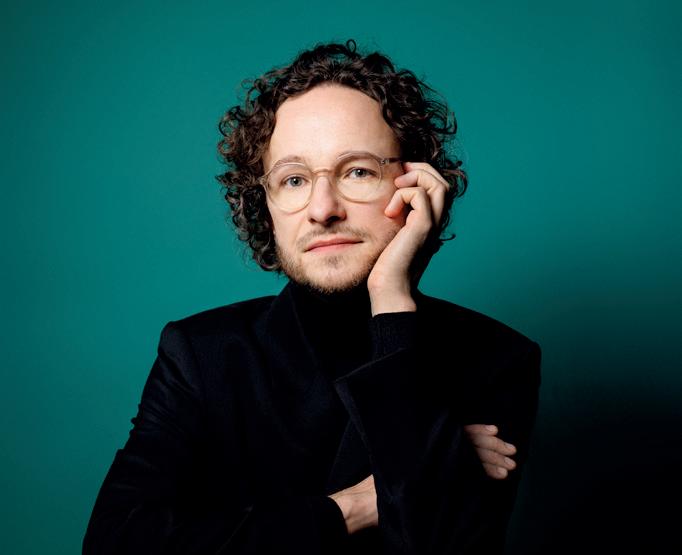
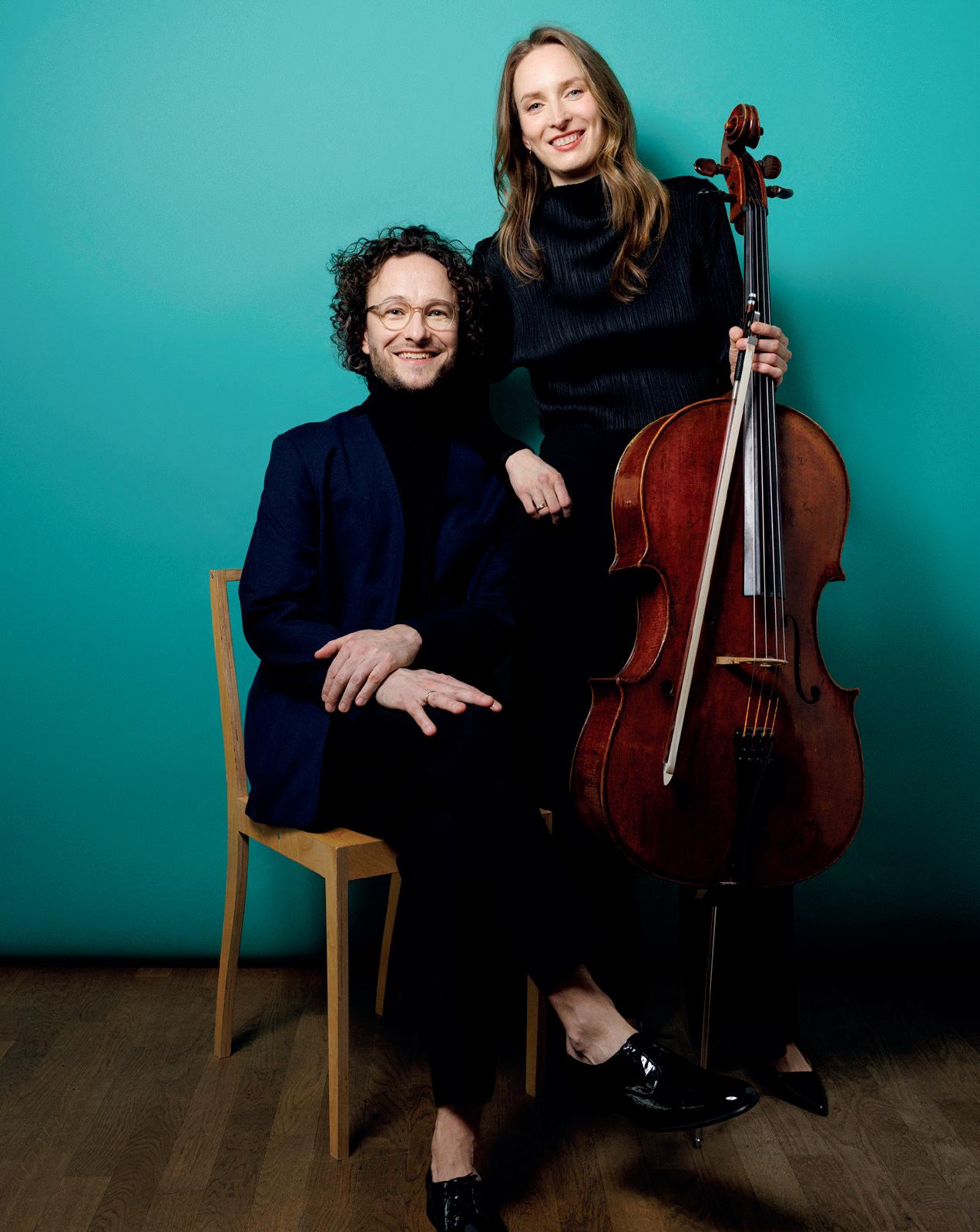
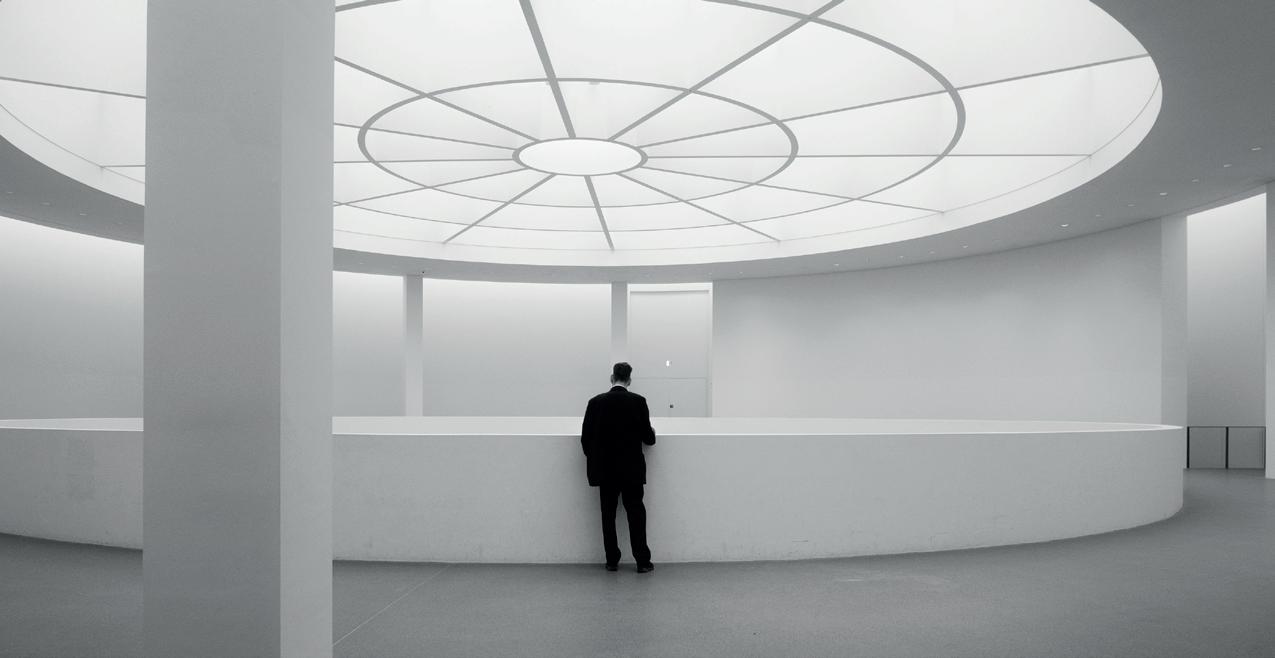
As much of 2026 still lies ahead of us, so do numerous fantastic new exhibitions and museum highlights across Europe. In the following special theme, we explore some of the region’s top museum highlights of 2026 to get you inspired on your next trip abroad.
PHOTOS: UNSPLASH
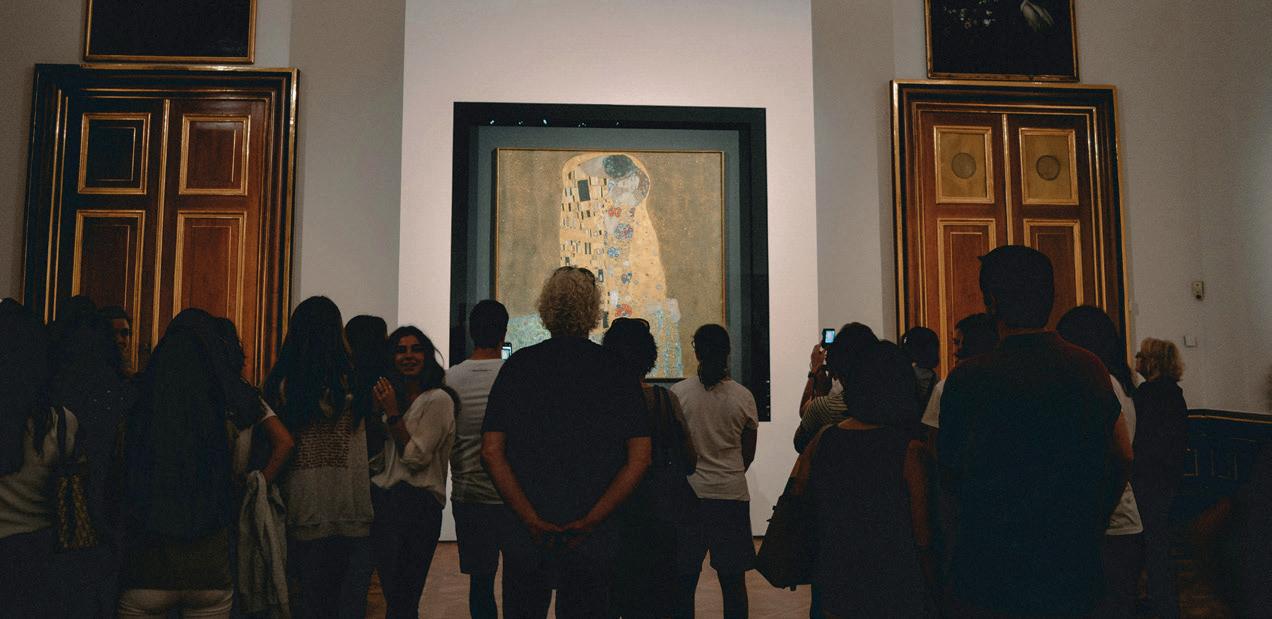
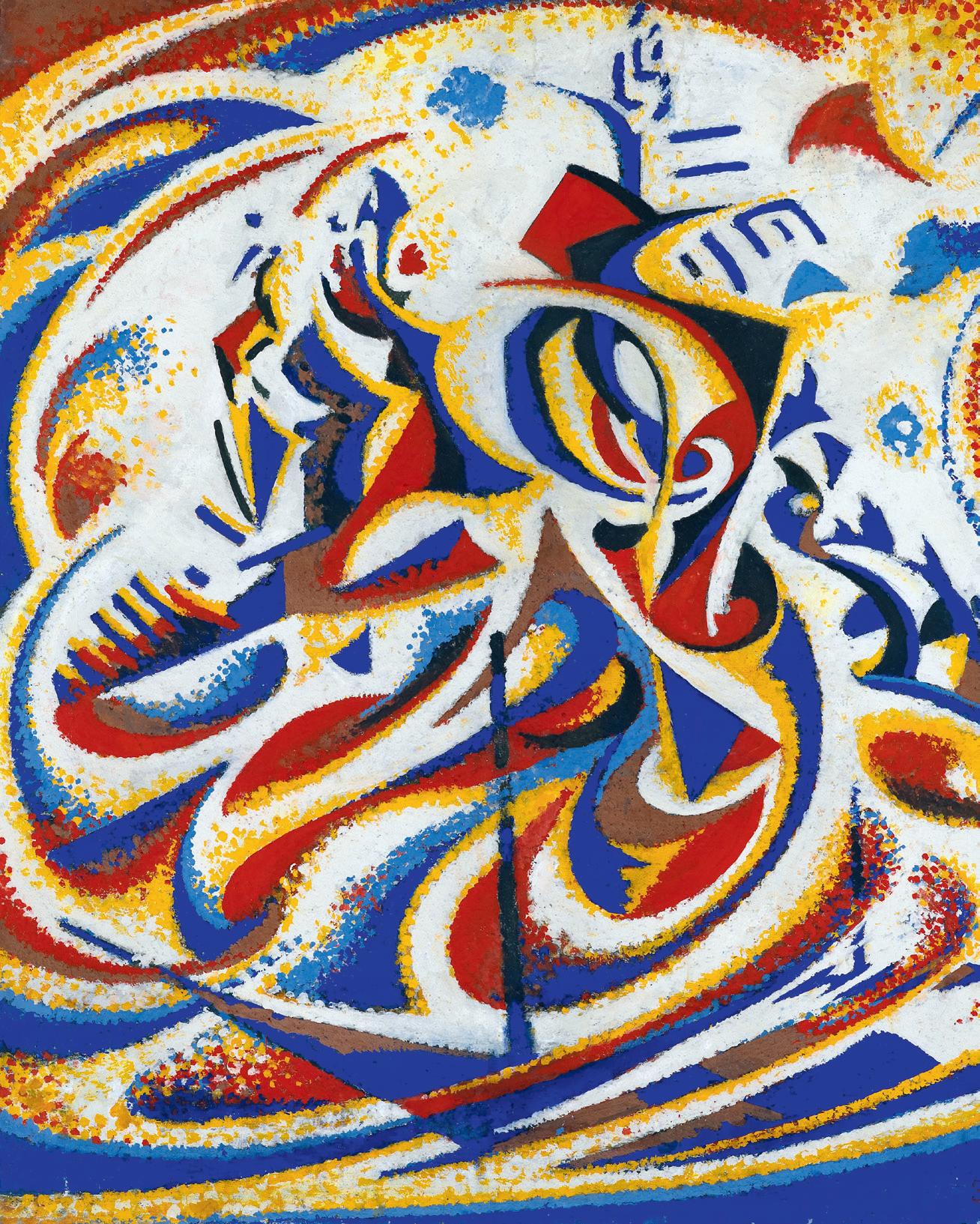
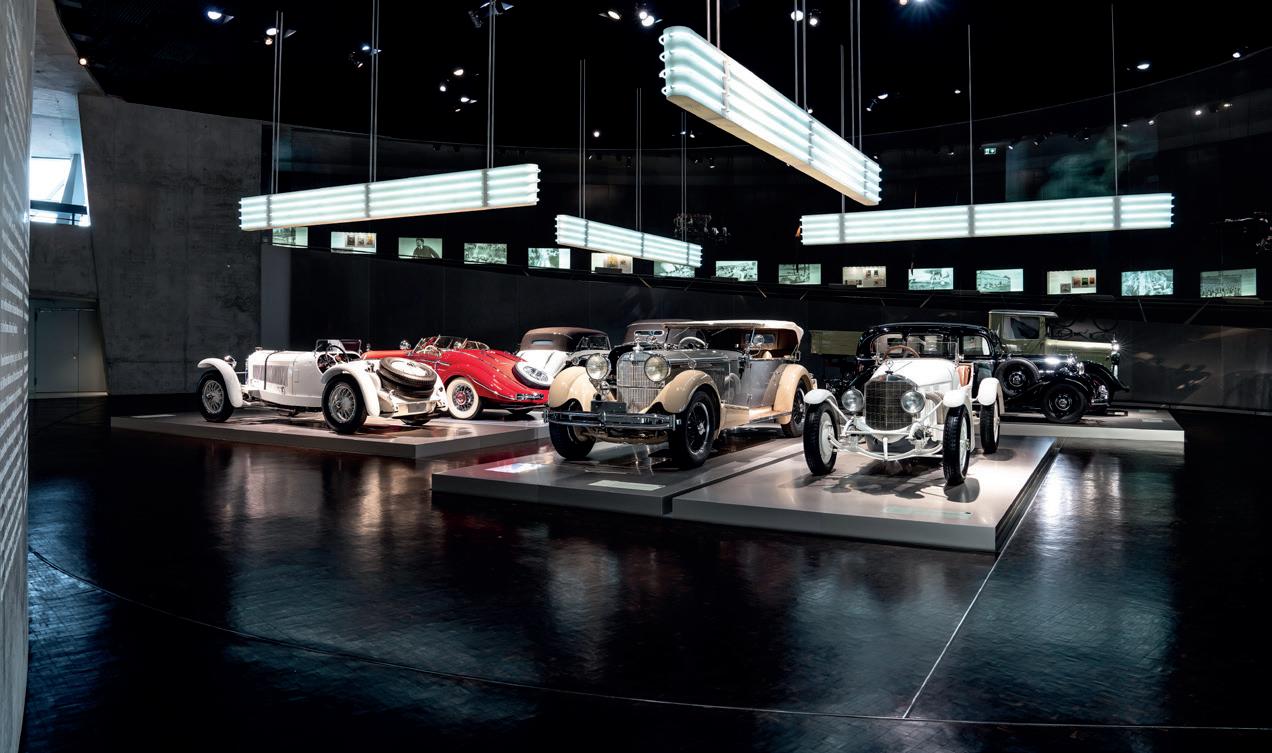
Four anniversaries, one location. In 2026, the Mercedes-Benz Museum celebrates its 20th anniversary, alongside 100 years of Mercedes-Benz, 130 years of commercial vehicles and 140 years of the automobile. A year that seamlessly connects past and future – and promises numerous highlights.
A visit to the Mercedes-Benz Museum in Stuttgart does not just offer a traditional museum tour: across nine levels and 16,500 square metres of exhibition space, an impressive journey through 140 years of automotive history unfolds – from the invention of the first automobile in 1886 to visionary mobility concepts of the future.
The architecture of the museum is a statement in and of itself. The spectacular building, designed in the form of a double helix, symbolises progress and motion. Inside, two intertwining tours guide visitors through the exhibition. The Legend rooms recount the history of the Mercedes-Benz brand in chronological order, while the Collection rooms focus on thematic highlights, featuring everyday heroes such as fire and rescue vehicles as well as automotive icons and vehicles once owned by celebrities.
With around 160 vehicles and more than 1,500 exhibits in total, the museum offers
an impressive diversity. Highlights include legendary models such as the Benz Patent Motor Car, the 300 SL Gullwing, and the spectacular presentation of the Silver Arrows on a steeply banked curve. Interactive stations such as the Pit stop about Formula 1 add an additional dynamic dimension to the experience.
The popularity of this concept is reflected in the visitor numbers: in 2025, the museum welcomed a record number of 945,716 visitors. Since opening in 2006, more than 14 million people from around the world have visited the Mercedes-Benz Museum.
A particular new highlight will be the special exhibition 130 Years of Commercial Vehicles, opening on 28 June 2026. It presents rarely shown icons from the history of MercedesBenz Vans and Mercedes-Benz Trucks. In addition, a varied events programme featuring formats such as Classics & Coffee, Family Day, Urban Culture and Open-Air Cinema will
provide further highlights throughout the anniversary year.
Whether automotive enthusiasts, families or architecture lovers, the Mercedes-Benz Museum combines technology, design and contemporary history into an impressive overall experience that not only brings the past to life but also makes the path towards the mobility of tomorrow visible.”
Mercedes-Benz Museum
Mercedesstr. 100 70372 Stuttgart, Germany
Further information online at: mercedes-benz.com/museum

FOLLOW ON SOCIAL MEDIA instagram.com/ mercedesbenzmuseum facebook.com/ mercedesbenzmuseum

Information about the Mercedes-Benz Museum on your smartphone:

Vier Jubiläen, ein Ort: 2026 feiert das Mercedes-Benz Museum 20 Jahre Bestehen und zugleich 100 Jahre Mercedes-Benz, 130 Jahre Nutzfahrzeuge sowie 140 Jahre Automobilgeschichte. Ein Jahr, das Vergangenheit und Zukunft eindrucksvoll verbindet –und mit vielen Sternstunden lockt.
Bei einem Besuch im Mercedes-Benz Museum in Stuttgart erwartet einen nicht bloß der klassische Museumsrundgang: Auf neun Ebenen und 16.500 Quadratmetern Ausstellungsfläche entfaltet sich eine eindrucksvolle Zeitreise durch 140 Jahre Automobilgeschichte von der Erfindung des ersten Automobils 1886 bis zu visionären Mobilitätskonzepten der Zukunft.
Bereits die Architektur des Hauses ist ein klares Statement: Der spektakuläre Bau in Form einer Doppelhelix symbolisiert Fortschritt und Bewegung. Im Inneren führen zwei miteinander verbundene Rundgänge durch die Ausstellung. Die Mythos-Räume erzählen chronologisch die Geschichte der Marke Mercedes-Benz, während die CollectionsRäume thematische Schwerpunkte setzen, was Alltagshelden wie Feuerwehr- und Rettungsfahrzeuge, aber auch Automobilikonen und Prominentenfahrzeuge beinhaltet.
Mit rund 160 Fahrzeugen und insgesamt über 1.500 Exponaten bietet das Museum eine
beeindruckende Vielfalt. Zu den Höhepunkten zählen legendäre Modelle wie der Benz Patent-Motorwagen, der 300 SL ‚Flügeltürer‘ oder die spektakulär inszenierten Silberpfeile in einer Steilkurve. Interaktive Stationen wie der Pit Stop zur Formel 1 sorgen zusätzlich für ein lebendiges Erlebnis.
Dass dieses Konzept begeistert, zeigen die Besucherzahlen: 2025 verzeichnete das Museum mit 945.716 Gästen einen neuen Rekord. Insgesamt haben seit der Eröffnung 2006 über 14 Millionen Menschen aus aller Welt das Museum besucht.
Ein besonderes, neues Highlight wird die neue Sonderausstellung 130 Jahre Nutzfahrzeuge sein, die am 28. Juni 2026 eröffnet wird. Sie präsentiert selten gezeigte Ikonen aus der Geschichte von Mercedes-Benz Vans und Mercedes-Benz Trucks. Darüber hinaus sorgt ein abwechslungsreiches Veranstaltungsprogramm mit Formaten wie Classics & Coffee, Familientag, Stadtkultur und dem
Open-Air Kino für zusätzliche Highlights im Jubiläumsjahr.
Ob Automobilenthusiasten, Familien oder Architekturinteressierte: das Mercedes-Benz Museum verbindet Technik, Design und Zeitgeschichte zu einem eindrucksvollen Gesamterlebnis, das nicht nur die Vergangenheit lebendig macht, sondern auch den Weg in die Mobilität von morgen sichtbar werden lässt.
Mercedes-Benz Museum
Mercedesstr. 100 70372 Stuttgart, Germany
Mehr Infos unter: mercedes-benz.com/museum
FOLG UNS AUF SOCIAL MEDIA instagram.com/ mercedesbenzmuseum facebook.com/ mercedesbenzmuseum
Informationen über das Mercedes-Benz Museum auf dem Smartphone:
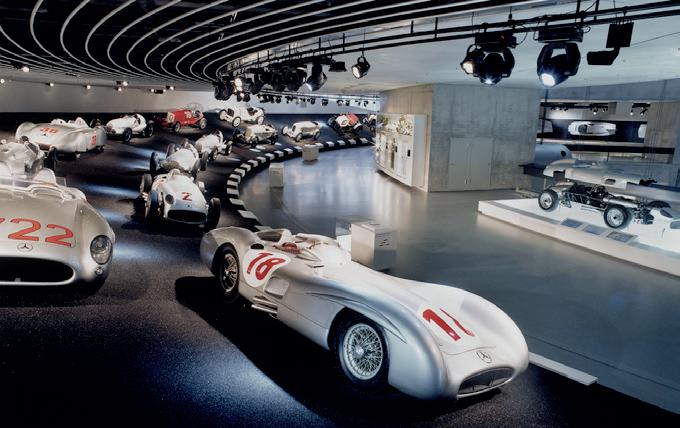
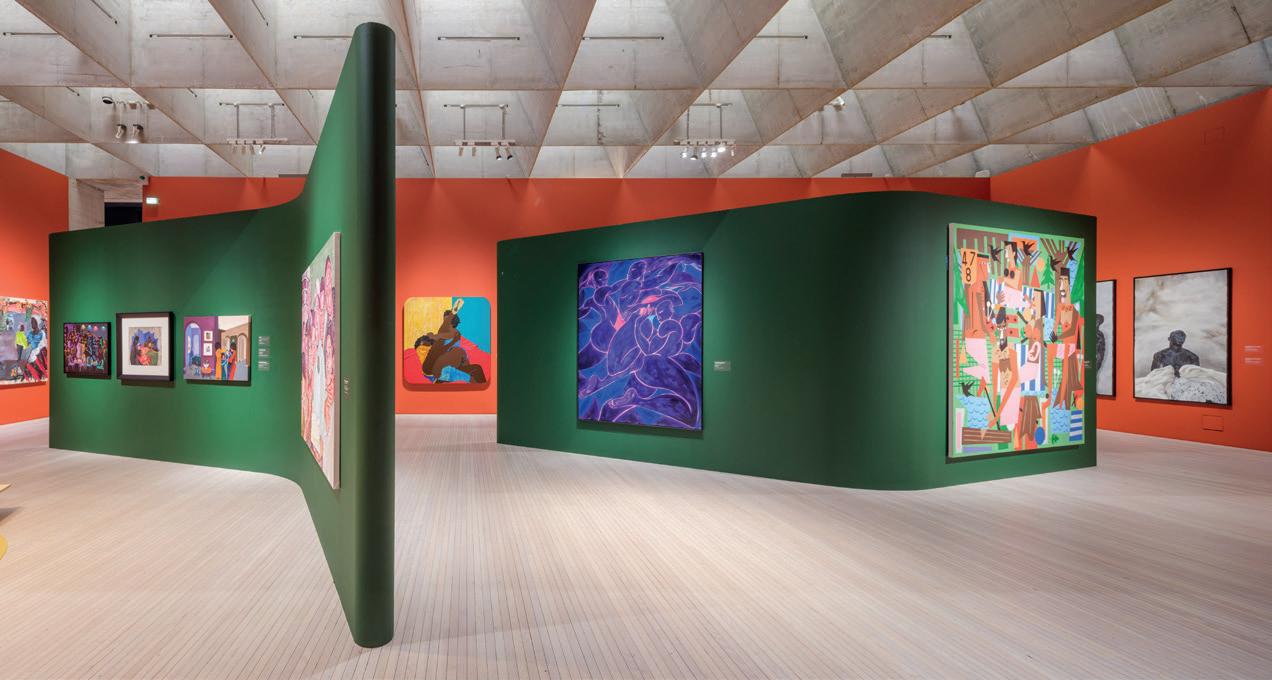
Set in the heart of lively Stockholm, Liljevalchs is a magnet for anyone passionate about contemporary art. This celebrated museum, famous for its ever-changing exhibitions, its long tradition of presenting both emerging and internationally recognised artists and its impact on Sweden’s art scene, invites visitors to dive deep into contemporary creativity.
Liljevalchs owes its existence to Carl Fredrik Liljevalch Jr., a Swedish businessman and patron of the arts whose vision still resonates today. After he passed away in 1909, Liljevalch Jr. left a generous fortune, requesting that what remained after his charitable gifts be used to create an art hall. According to his friends, he had expressed a wish to see a permanent exhibition space for contemporary art in Stockholm. With help from his close circle – including Prince Eugen, who secured the site on Djurgården – Liljevalchs opened in 1916, quickly becoming Stockholm’s go-to spot for contemporary art.
Liljevalchs’ story is one of ongoing transformation. As Joanna Sandell Wright, director of Liljevalchs, puts it: “Liljevalchs is exciting be-
cause it’s both the oldest and the newest art hall in Sweden.” Its original building, opened in 1916, now stands alongside a striking new addition designed by Wingårdh Architects, unveiled in 2021. This expansion made Liljevalchs the largest publicly funded art institution in Sweden. Leadership has also brought fresh energy: Joanna Sandell Wright, the
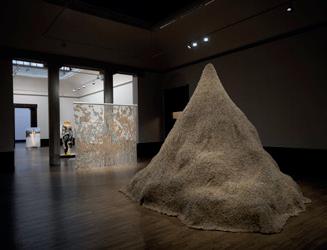
museum’s first female director, has pushed Liljevalchs onto the international stage with daring exhibitions and a commitment to inviting a wider audience.
For instance, at Liljevalchs, visitors can look forward to “the most experimental art that Sweden has to offer,” according to Sandell Wright. An example is the large-scale solo exhibition by artist Ylva Snöfrid, who invites her audience to dreamy midsummer night’s parties and exhibition clubbing events. Among Liljevalchs’ most talked-about exhibitions, When We See Us – A Century of Black Figuration in Painting stands out. Curated by the late Koyo Kouoh, this exhibition highlights the museum’s global outlook and its connection to major events like the Venice Biennale of 2026, where many featured artists are also participating. “The exhibition challenges traditional Eurocentric narratives by refusing to place oppression at the forefront, instead celebrating Black perspectives and experiences,” summarises Sandell Wright the landmark exhibition, which has received international
Mitten im pulsierenden Stockholm gelegen, ist das Liljevalchs ein Magnet für alle, die sich für zeitgenössische Kunst begeistern. Dieses renommierte Museum, bekannt für seine wechselnden Ausstellungen, seine lange Tradition, sowohl aufstrebende als auch international anerkannte Künstler zu präsentieren, und seinen Einfluss auf die schwedische Kunstszene, lädt Besucher ein, tief in die Welt der zeitgenössischen Kreativität einzutauchen.
Liljevalchs verdankt seine Existenz Carl Fredrik Liljevalch Jr., einem schwedischen Geschäftsmann und Kunstmäzen, dessen Vision bis heute nachwirkt. Nach seinem Tod im Jahr 1909 hinterließ Liljevalch Jr. ein großzügiges Vermögen mit der Verfügung, dass der nach seinen wohltätigen Zuwendungen verbleibende Betrag für den Bau einer Kunsthalle verwendet werden sollte. Seinen Freunden zufolge hatte er den Wunsch geäußert, „einen permanenten Ausstellungsraum für zeitgenössische Kunst in Stockholm zu schaffen.” Mit der Unterstützung seines engsten Umfelds – darunter Prinz Eugen, der das Grundstück auf Djurgården sicherstellte – eröffnete Liljevalchs 1916 und avancierte schnell zu Stockholms wichtigstem Anlaufpunkt für zeitgenössische Kunst.
DIE GRENZEN SPRENGEN
Die Geschichte des Liljevalchs ist durch ständigen Wandel gekennzeichnet. Joanna
Ausstellungsansicht, Vårsalongen 2026. Foto: Jean-Baptiste Béranger
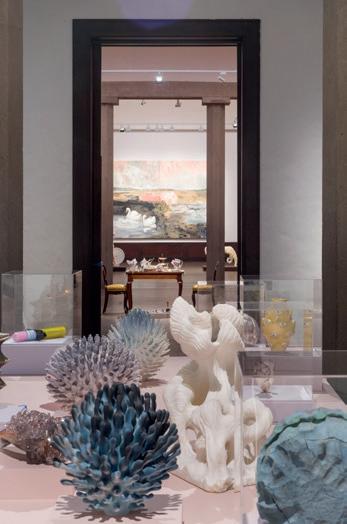
Sandell Wright, Direktorin des Liljevalchs, formuliert es so: „Das Liljevalchs ist spannend, weil es sowohl die älteste als auch die neueste Kunsthalle Schwedens ist.” Das ursprüngliche Gebäude, eröffnet 1916, steht heute neben einem markanten Neubau von Wingårdh Architects, der 2021 eingeweiht wurde. Durch diese Erweiterung wurde das Liljevalchs zur größten öffentlich finanzierten Kunstinstitution Schwedens. Auch die Führung hat frischen Wind gebracht: Joanna Sandell Wright, die erste weibliche Direktorin des Museums, hat das Liljevalchs mit gewagten Ausstellungen und dem Bestreben, ein breiteres Publikum anzusprechen, international bekannt gemacht.
Im Liljevalchs erwartet die Besucher laut Sandell Wright „die experimentellste Kunst Schwedens“. Ein Beispiel dafür ist die groß angelegte Einzelausstellung der Künstlerin
Ylva Snöfrid, die ihr Publikum zu verträumten Mittsommernachtspartys und AusstellungsClubbing-Events einlädt. Unter den meistdiskutierten Ausstellungen des Liljevalchs sticht When We See Us – A Century of Black Figuration in Painting besonders hervor. Kuratiert von der verstorbenen Koyo Kouoh, unterstreicht diese Ausstellung die globale Ausrichtung des Museums und seine Verbindung zu bedeutenden Ereignissen wie der diesjährigen Biennale von Venedig, an der viele der vertretenen Künstler ebenfalls teilnehmen. „Die Ausstellung stellt traditionelle eurozentrische Narrative in Frage, indem sie die Unterdrückung nicht in den Vordergrund rückt, sondern stattdessen Schwarze Perspektiven und Erfahrungen feiert”, fasst Sandell Wright die wegweisende, international gefeierte Ausstellung zusammen. Mit über 148 Werken aus institutionellen und privaten Leihgaben aus 16 Ländern umspannt die Ausstellung ein Jahrhundert kreativen Schaffens schwarzer Künstler. Es stellt diese Werke in einen Dialog mit zeitgenössischen Denkern, Schriftstellern und Dichtern und konzentriert sich dabei auf die Freude und Widerstandsfähigkeit, die in der schwarzen Kultur zu finden sind.
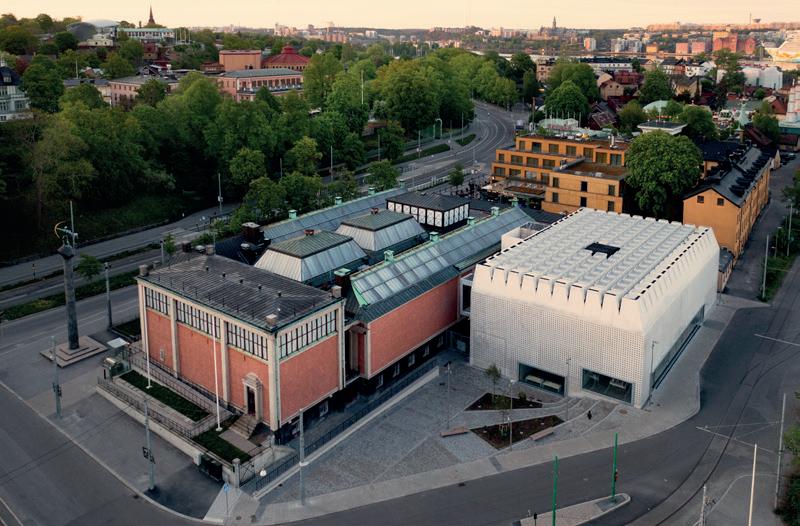
acclaim. Bringing together over 148 works from institutional and private lenders across 16 countries, the exhibition spans a century of creative output by Black artists worldwide. It places these works in conversation with contemporary thinkers, writers, and poets, focussing on the joy and resilience found in Black culture.
Besides international exhibitions, Liljevalchs also puts special emphasis on promoting local artists. Most notably with Vårsalongen (the Spring Salon), an annual juried exhibition which has kicked off Stockholm’s art year each spring for over a century, making it Sweden’s longest-running continuous art show. Established in 1921, Vårsalongen has grown into a vibrant annual celebration of artistic talent which welcomes creators from all walks of life and artistic disciplines. Vårsalongen’s 2026 edition has admitted 255 artists, which is the highest number since the 1950s. Every artwork featured is available for purchase, with
prices determined by the artists themselves. Drawing in close to 100,000 visitors each year, Vårsalongen stands out as a major cultural event, providing artists with exceptional visibility, while attendees are treated to a diverse array of works, including painting, sculpture, video, ceramics, textiles, and more.
In a world that is constantly changing, showcasing contemporary art is important for many reasons, as Sandell Wright explains: “Showing contemporary art is essential because it keeps culture alive and relevant. It brings the voices of today’s artists into public conversation and creates a meeting place where audiences can encounter ideas that challenge, inspire and expand how we see the world.” She continues: “Contemporary artists respond directly to the world we live in, and exhibitions create a space where audiences can encounter new perspectives, questions and ideas.”
More than just a gallery, Liljevalchs serves as a gathering place for both artists and visitors from diverse backgrounds, striving to make contemporary art accessible and relevant to people from all walks of life. This welcoming spirit ensures that every visitor can find something to connect with and take home, reinforcing the museum’s ambition to be a vibrant, inclusive hub for creative expression.
For anyone eager to see Swedish culture in a new light, Liljevalchs promises a visit that is both inspiring and memorable.
www.liljevalchs.se
When We See Us: A Century of Black Figuration in Painting – until 30 August 2026
Vårsalongen – until 3 May 2026
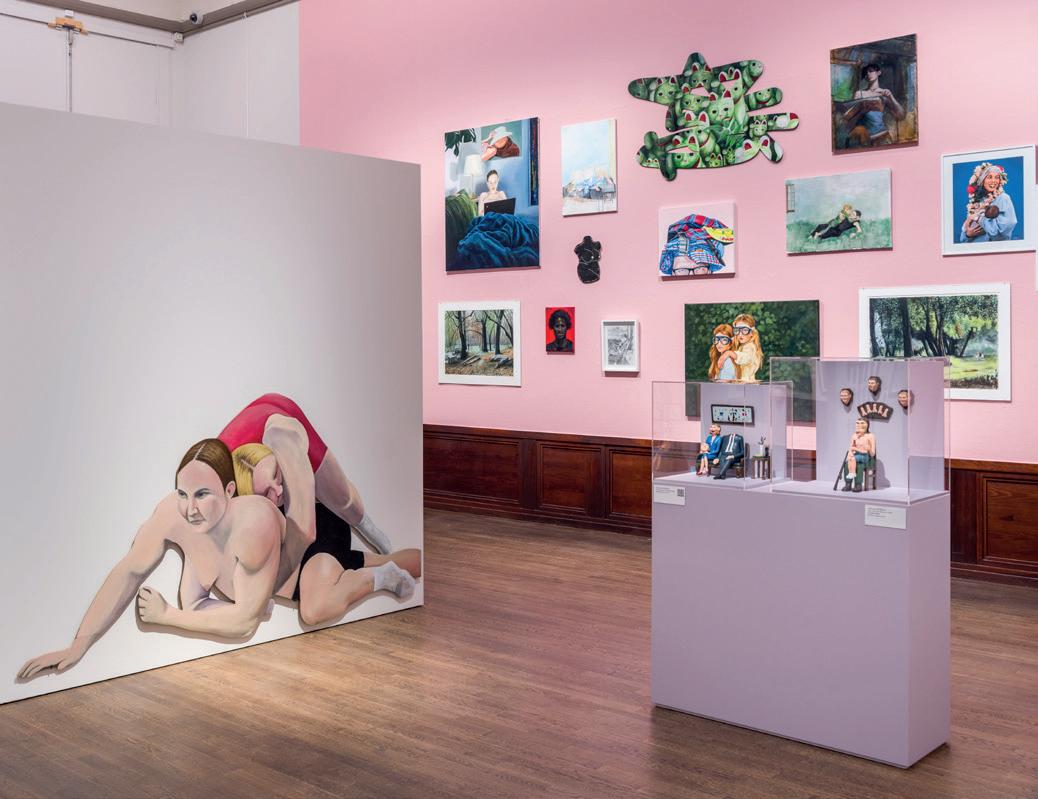
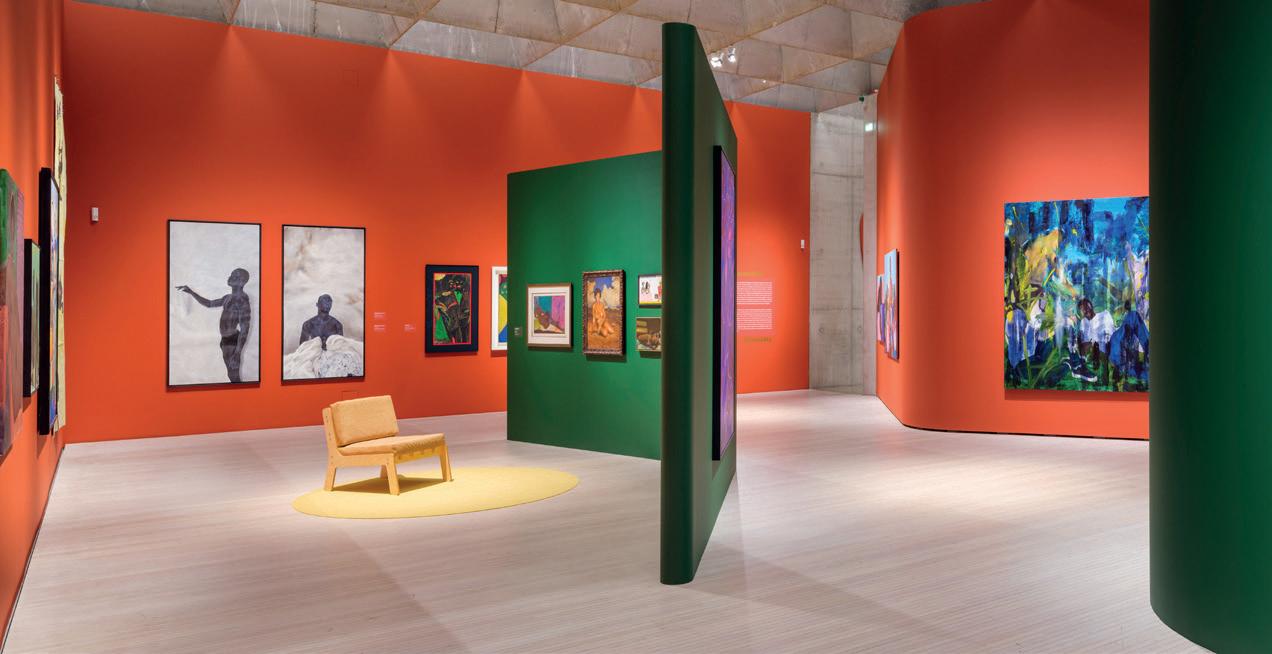
Neben internationalen Ausstellungen legt Liljevalchs besonderen Wert auf die Förderung lokaler Künstler. Allen voran mit dem Vårsalongen (Frühlingssalon), einer jährlich stattfindenden, jurierten Ausstellung, die seit über einem Jahrhundert den Stockholmer Kunstkalender einläutet und damit Schwedens älteste ununterbrochene Kunstausstellung ist. Der 1921 gegründete Vårsalongen hat sich zu einem lebendigen jährlichen Fest der Kunst entwickelt, das Kreative aus allen Lebensbereichen und künstlerischen Disziplinen willkommen heißt. Die diesjährige Ausgabe präsentiert 255 Künstler – die höchste Teilnehmerzahl seit den 1950er Jahren. Alle ausgestellten Kunstwerke können erworben werden; die Preise werden von den Künstlern selbst festgelegt. Mit jährlich fast 100.000 Besuchern gilt der Vårsalongen als bedeutendes Kulturereignis, das Künstlern außergewöhnliche Sichtbarkeit bietet und den Besuchern ein vielfältiges Spektrum an Werken präsentiert.
KULTUR AM LEBEN ERHALTEN
In einer Welt im ständigen Wandel ist die Präsentation zeitgenössischer Kunst aus vielen Gründen wichtig, wie Sandell Wright erklärt: „Zeitgenössische Kunst zu zeigen ist unerlässlich, weil sie Kultur lebendig und relevant hält. Sie bringt die Stimmen heutiger Künstler in den öffentlichen Diskurs ein und schafft einen Ort der Begegnung, an dem das Publikum Ideen finden kann, die unsere Weltsicht
herausfordern, inspirieren und erweitern.” Sie fährt fort: „Zeitgenössische Künstler reagieren direkt auf die Welt, in der wir leben, und Ausstellungen schaffen einen Raum, in dem das Publikum neue Perspektiven, Fragen und Ideen entdecken kann.”
Mehr als nur eine Galerie ist Liljevalchs ein Treffpunkt für Künstler und Besucher unterschiedlichster Herkunft. Das Museum hat sich zum Ziel gesetzt, zeitgenössische Kunst für Menschen aus allen Lebensbereichen zugänglich und relevant zu machen. Diese einladende Atmosphäre sorgt dafür, dass jeder Gast etwas findet, das ihn berührt. So wird der Anspruch des Museums unterstrichen,
ein lebendiger und inklusiver Ort für kreativen Ausdruck zu sein.
Für alle, die die schwedische Kultur aus einer neuen Perspektive erleben möchten, verspricht Liljevalchs einen inspirierenden und unvergesslichen Besuch.
www.liljevalchs.se
When We See Us: A Century of Black Figuration in Painting – bis 30. August 2026
Vårsalongen – bis 3. Mai 2026
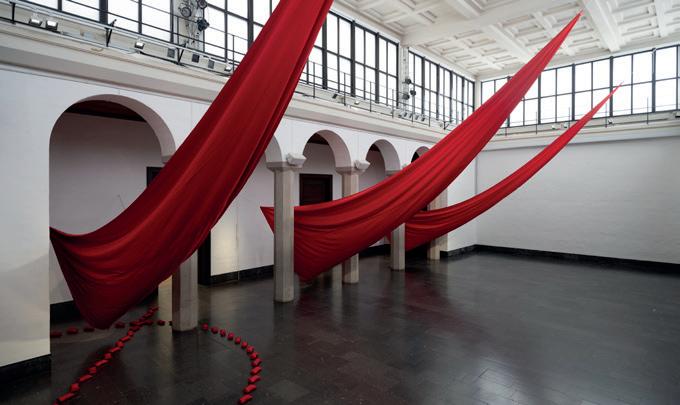
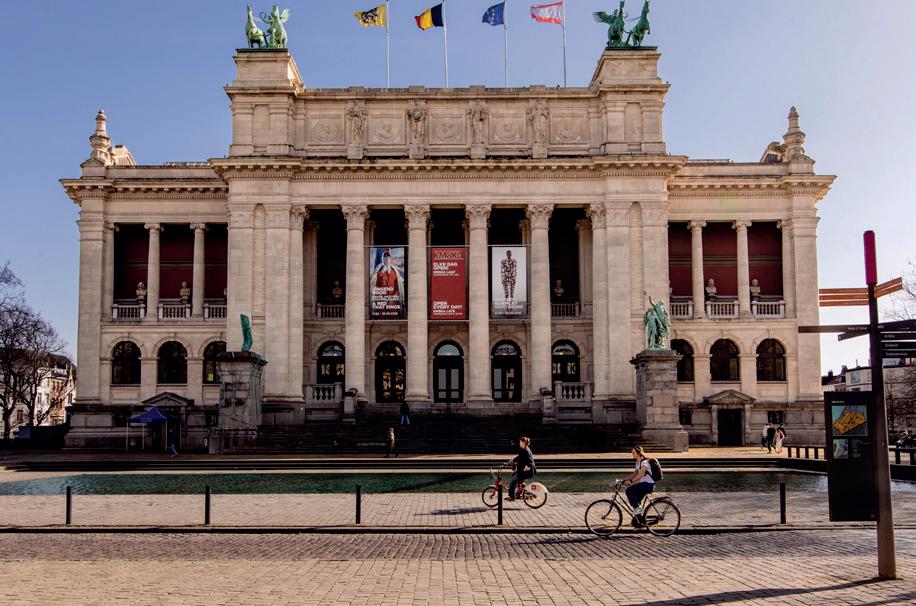
In a city celebrated for fashion, diamonds and Baroque grandeur, the Royal Museum of Fine Arts Antwerp (KMSKA) stands apart as a cultural lighthouse. This spring, the museum is not merely presenting exhibitions, it is highlighting art in all its forms.
Upon arrival, visitors are struck by the bold fusion of 19th century architecture and modern elements, the result of a thorough renovation lasting over ten years and completed in 2022. Connecting eight centuries of art, KMSKA is once again fully open, offering access to masterpieces ranging from Flemish Primitives to Expressionists and contemporary artists. It also houses the world’s largest collections of Belgian modernist pioneers James Ensor, Rik Wouters and Jules Schmalzigaug.
This spring and summer, KMSKA once again invites visitors to do a deep dive into all art has to offer. Colour dominates in A Red that Sings. Masterpieces by Ensor, Wouters and Schmalzigaug (11 April – 30 August 2026). The works of Belgium’s great colourists pulse with vermilion reds, electric blues and sunlit yellows. These artists used colour almost musically, revealing the rhythm of their art.
Contemporary sculptures and monumental installations rise above the galleries in Antony
Gormley. Geestgrond (23 May – 20 September 2026), the largest solo exhibition in continental Europe by the renowned British artist. Powerful installations enter into dialogue with the historic collection, fundamentally exploring human existence in what promises to be a compelling encounter.
As one of few museums in Flanders with its own conservation studio and recognised high-level scientific status, KMSKA is dedicated to exploring and sharing knowledge. This spirit takes centre stage in the Rubens Gallery, where visitors can watch restorers live at work on Peter Paul Rubens’ Adoration of the Magi as part of Studio Rubens. Advanced research is also revealing new insights into Rubens’ technique, workshop and pigments.
The exhibition In Full Bloom quite literally makes spring blossom. For 11 days, florists reinterpret artworks as ephemeral installations in vibrant flower displays, while KMSKA x YOUNG FASHION DESIGNERS celebrates
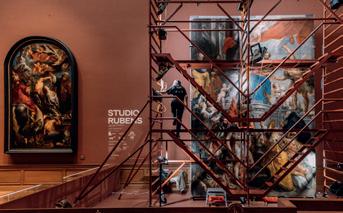
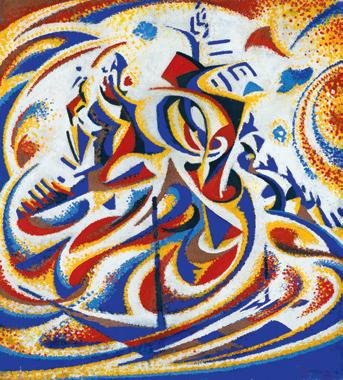
Antwerp Fashion Year by placing contemporary fashion into dialogue with the museum’s artistic tradition.
For a different art experience, Thursday evenings offer a special kind of magic included in a museum ticket: during KMSKA LATE, the museum’s doors remain open until 10pm. Enjoy live music, performances, cocktails and more in a unique setting.
This spring, KMSKA proves that great museums do more than preserve the past. Here, art is not only displayed, but experienced in vivid, approachable and thoroughly contemporary ways.
www.kmska.be/en
In einer Stadt, die für Mode, Diamanten und barocke Pracht bekannt ist, setzt das Königliche Museum der Schönen Künste Antwerpen (KMSKA) einen eigenen kulturellen Akzent. In diesem Frühjahr präsentiert das Museum nicht nur Ausstellungen. Es rückt die Vielfalt des künstlerischen Ausdrucks in den Mittelpunkt.
Schon beim Betreten fällt die markante Verbindung aus Architektur des 19. Jahrhunderts und zeitgenössischen Elementen ins Auge. Sie ist das Ergebnis einer umfassenden, mehr als zehnjährigen Renovierung, die 2022 abgeschlossen wurde. Heute ist das KMSKA mit seinen acht Jahrhunderten Kunstgeschichte wieder vollständig zugänglich. Besucher:innen begegnen hier Meisterwerken von den Flämischen Primitiven bis zu Expressionisten und zeitgenössischen Künstler:innen. Zudem beherbergt das Museum die weltweit größten Sammlungen der belgischen Modernisten James Ensor, Rik Wouters und Jules Schmalzigaug.
Auch in diesem Frühling und Sommer lädt das KMSKA dazu ein, Kunst in all ihren Facetten zu entdecken. Im Mittelpunkt der Ausstellung A Red that Sings. Masterpieces by Ensor, Wouters und Schmalzigaug (11. April – 30. August 2026) steht die Kraft der Farbe. Die Werke der großen belgischen Koloristen leuchten in Zinnoberrot, strahlenden Blautönen und sonnigem Gelb. Die Farben entfalten fast eine musikalische Qualität und machen den Rhythmus der Kunstwerke erkennbar.
Mit Antony Gormley. Geestgrond (23. Mai –20. September 2026) zeigt das Museum die größte Einzelausstellung des renommierten britischen Künstlers auf dem europäischen
Festland. Monumentale Installationen treten in einen Dialog mit der historischen Sammlung und stellen in diesem spannenden Aufeinandertreffen grundlegende Fragen nach der menschlichen Existenz.
Als eines der wenigen Museen in Flandern mit eigenem Restaurierungsatelier und anerkanntem wissenschaftlichen Status versteht sich das KMSKA auch als Ort der Forschung und Wissensvermittlung. In der RubensGalerie können Besucher:innen den Restaurator:innen daher live bei der Arbeit zusehen: Im Rahmen von Studio Rubens wird Peter Paul Rubens’ Anbetung der Könige untersucht und restauriert. Neue wissenschaftliche Analysen liefern dabei zusätzliche Erkenntnisse zu Rubens’ Technik, seiner Werkstatt und den verwendeten Pigmenten.
Die Ausstellung In Full Bloom lässt den Frühling im Museum buchstäblich aufblühen. 11 Tage lang interpretieren Florist:innen ausgewählte Werke in Form temporärer Blumeninstallationen neu. Parallel dazu feiert KMSKA x YOUNG FASHION DESIGNERS das Antwerp Fashion Year und lässt zeitgenössische Mode mit der künstlerischen Tradition des Hauses in Dialog treten.
Eine besondere Atmosphäre bietet der Donnerstagabend: Während KMSKA LATE bleibt
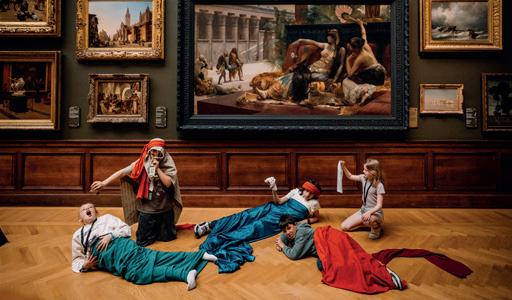
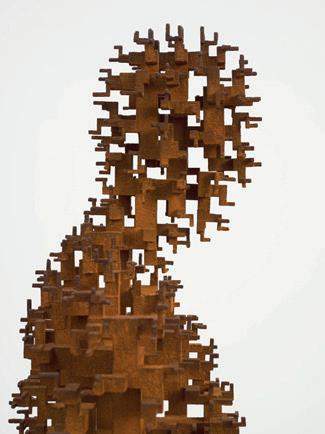
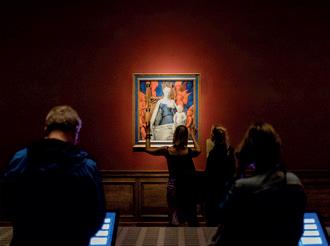
das Museum bis 22 Uhr geöffnet. LiveMusik, Performances, Cocktails und vieles mehr schaffen ein magisches Kulturerlebnis, das bereits im regulären Museumsticket enthalten ist.
Das KMSKA zeigt in diesem Frühjahr eindrucksvoll, dass Museen heute mehr sind als Orte, die die Vergangenheit bewahren. In Antwerpen wird Kunst nicht nur gezeigt, sondern lebendig vermittelt: zeitgemäß, zugänglich und nah am Publikum.
www.kmska.be/en
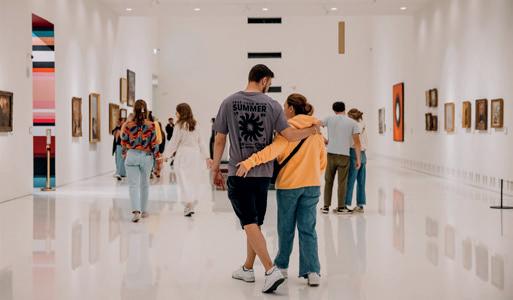
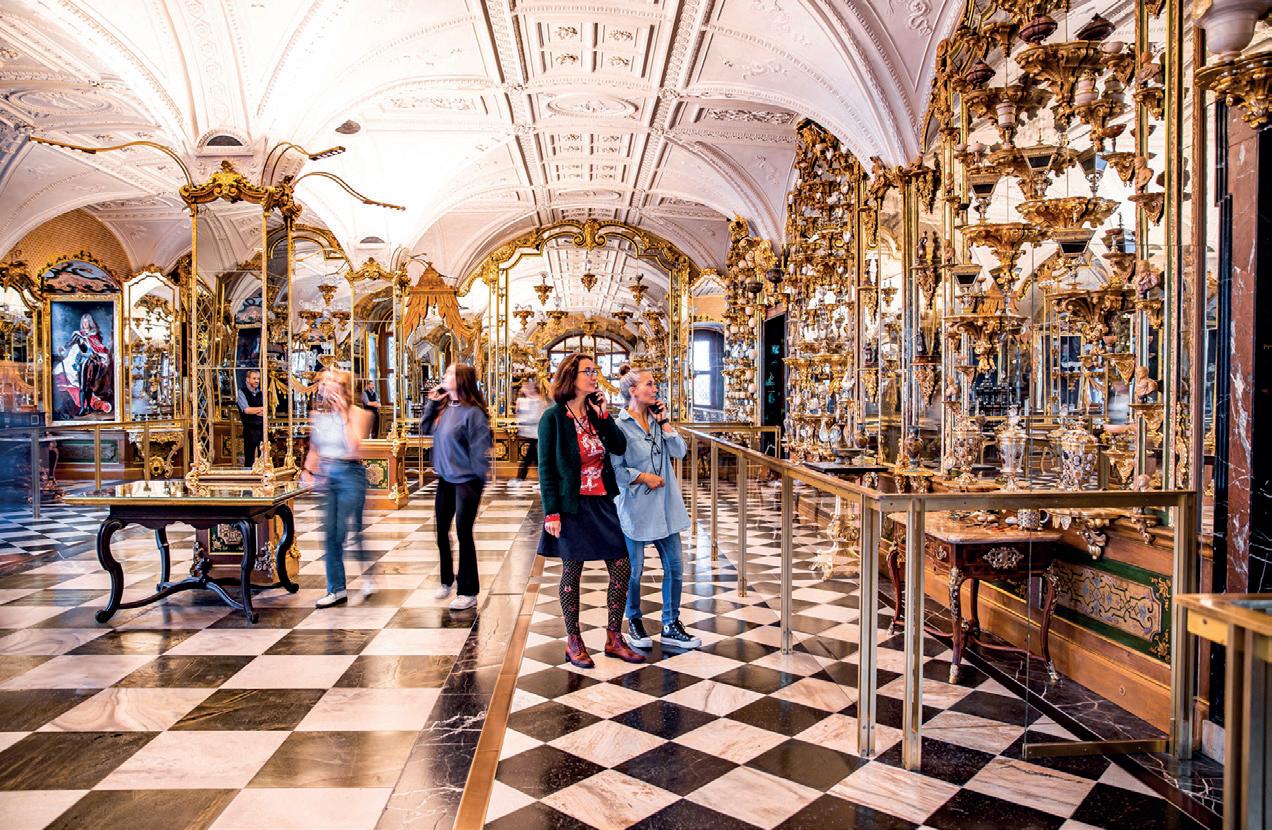
Staatlichen Kunstsammlungen Dresden (Dresden State Art Collections) is a vibrant museum association dedicated to European art history, with roots stretching back to the 16th century. This spring, Residenzschloss Dresden (Royal Palace) celebrates two milestones: the completion of its new staterooms and the unveiling of a spectacular new permanent exhibition, further enriching this centre of art and scholarship.
Dresden, once a centre of Baroque splendour, is home to one of the oldest and most important museum networks in Europe.
Staatliche Kunstsammlungen Dresden (SKD) includes 15 museums whose origins trace back to the Elector's art chamber of 1560, founded out of a passion for collecting technological marvels as well as precious and curious objects. From the desire not only to preserve these treasures but also to make them publicly accessible, an institution arose that continues to fascinate and inspire to this day.
The thematic diversity of the SKD is unparalleled and unique. Its 15 museums, with diverse collections spanning all eras and fields, offer an immense range of objects and artworks of the highest quality – from antiquity to modernity, from sculpture and painting to technological marvels.
Gemäldegalerie Alte Meister (Old Masters Picture Gallery) in the Semper Building at the Zwinger Palace is world-famous, housing works by Rembrandt, Vermeer and Titian.
Raphael's legendary "Sistine Madonna" is one of the collection's icons.
A central location in the history of the SKD is the Royal Palace, whose collections originated in the 16th century in the armoury and coin cabinet of the Saxon rulers, and where the Elector's art chamber also originated. Initially conceived as a universal collection, its focus was on technical devices, instruments and automata – signs of an era that valued both inventiveness and beauty. The treasures were presented to the public early on, which gave Dresden its reputation as an open-minded centre for art.
A jewel of a special kind is the Grüne Gewölbe or Green Vault in the Royal Palace – one of the richest treasuries in Europe.
Die Staatlichen Kunstsammlungen Dresden (SKD) sind ein lebendiger Museumsverbund europäischer Kunstgeschichte, dessen Wurzeln bis ins 16. Jahrhundert zurückreichen. In diesem Frühjahr feiert das Dresdner Residenzschloss mit der baulichen Vollendung der Festetage und einer spektakulären neuen Dauerausstellung zwei Meilensteine, die diesen Ort der Kunst und Wissenschaft bereichern.
Dresden, einst Zentrum barocker Prachtentfaltung, ist heute Heimat eines der ältesten und bedeutendsten Museumsverbünde Europas. Die SKD umfassen 15 Museen, deren Ursprung auf die kurfürstliche Kunstkammer von 1560 zurückgeht, gegründet aus der Lust am Sammeln technischer Wunderwerke, sowie kostbarer und kurioser Objekte. Aus dem Wunsch, diese Preziosen nicht nur zu bewahren, sondern auch öffentlich zugänglich zu machen, entstand eine Institution, die bis heute fasziniert und inspiriert.
VIELFALT, QUALITÄT UND INNOVATION
Die thematische Vielfalt der SKD ist in ihrer Art unvergleichlich und einzigartig. Die 15 Häuser mit ihren unterschiedlichen Sammlungen aus allen Epochen und Bereichen bieten eine immense Bandbreite an Objekten und Kunstwerken von höchster Qualität – von der Antike bis
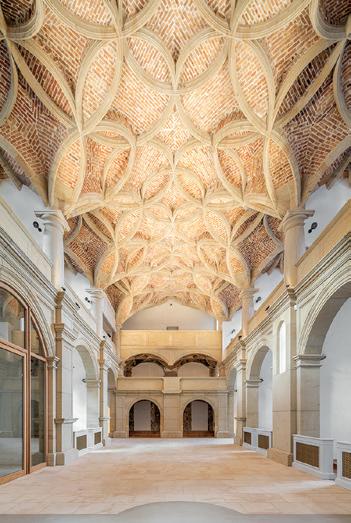
zur Moderne, von Skulptur über Malerei bis zu technischen Wunderwerken.
Weltberühmt ist die Gemäldegalerie Alte Meister im Semperbau am Zwinger mit Werken von Rembrandt, Vermeer und Tizian. Die legendäre „Sixtinische Madonna" von Raffael zählt zu den Ikonen der Sammlung.
Ein zentraler Ort der SKD-Geschichte ist das Residenzschloss, dessen Sammlungen ihren Ursprung im 16. Jahrhundert in der Rüstkammer und dem Münzkabinett der sächsischen Herrscher hatten und wo auch die kurfürstliche Kunstkammer entstand. Zunächst als Universalsammlung konzipiert, lag ihr Schwerpunkt auf technischen Geräten, Instrumenten und Automaten – Zeichen einer Zeit, die Erfindungsgeist und Schönheit gleichermaßen schätzte. Schon früh wurden die Schätze der Öffentlich-
keit präsentiert, was Dresden den Ruf eines aufgeschlossenen Kunstortes verlieh.
Ein Juwel besonderer Art ist das Grüne Gewölbe im Residenzschloss – eine der reichsten Schatzkammern Europas. Während das Historische Grüne Gewölbe mit seinen prachtvoll rekonstruierten Räumen den Glanz des barocken Hofes lebendig werden lässt, offenbart das Neue Grüne Gewölbe in innovativ gestalteten, spiegelfreien Vitrinen kostbarste Kunstwerke aus Gold, Silber, Edelsteinen und Emaille in unmittelbarer Nähe.
Die entscheidende Erweiterung verdankt das Residenzschloss August dem Starken (1670–1733), Kurfürst von Sachsen und König von Polen. Inspiriert vom Glanz des französischen Sonnenkönigs Louis XIV. schuf er das Grüne Gewölbe, die Skulpturensammlung und das Kupferstich-Kabinett, sammelte Porzellan und andere Kostbarkeiten mit Leidenschaft und legte den Grundstein für die Museumsstruktur, die bis heute in Dresden lebendig ist. Sein Sohn August III. verfolgte diese Tradition weiter und führte die Gemäldegalerie so in die
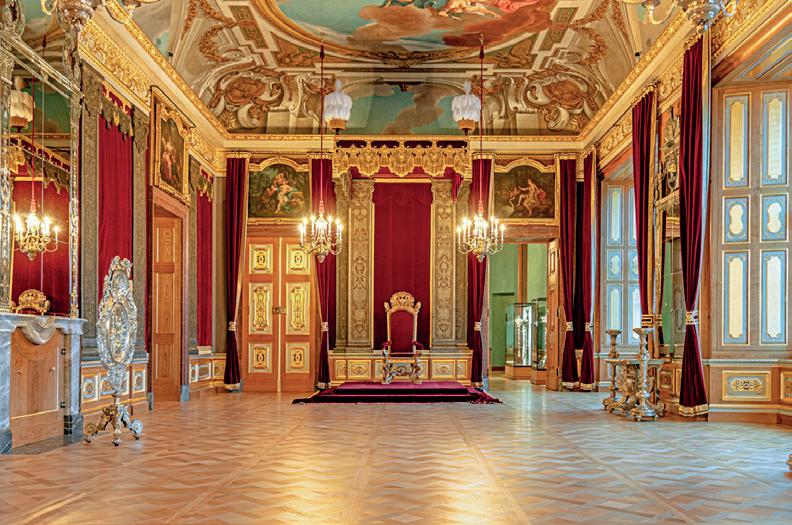
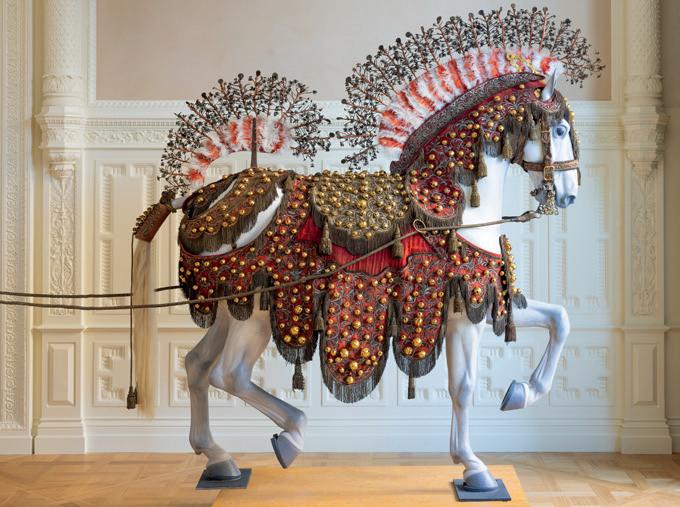
While the Historic Green Vault, with its magnificently reconstructed rooms, brings the splendour of the Baroque court to life, the New Green Vault reveals the most precious works of art made of gold, silver, precious stones and enamel in innovatively designed, glare-free display cases, all within easy reach.
The Royal Palace owes its decisive expansion to Augustus the Strong (1670–1733), Elector of Saxony and King of Poland. Inspired by the splendour of the French Sun King, Louis XIV, he created the Green Vault, the sculpture collection, and the print room, passionately collecting porcelain and other treasures and laying the foundation for the museum structure that remains vibrant in Dresden to this day. His son, Augustus III, continued this tradition and elevated the Picture Gallery to the top tier of European art. Today, in addition to
the Green Vault, the Royal Palace houses the Rüstkammer (Armoury), the Münzkabinett (Coin Cabinet), and the Kupferstich-Kabinett (Museum of Prints).
With the grand opening of the Festetage (state rooms) in April 2026, the decades-long reconstruction of the Royal Palace following the destruction of World War II will near its completion. The finishing of the Propositionssaal (Proposition Hall) and the Große Ballsaale (Grand Ballroom) in the north wing represents a significant milestone. From April onwards, the Englische Treppe (English Staircase), once the heart of courtly life, will again lead visitors, as in days gone by, into an impressive sequence of magnificent state rooms: from the Giant Hall with its monumental tournament scenes, through the Queen's
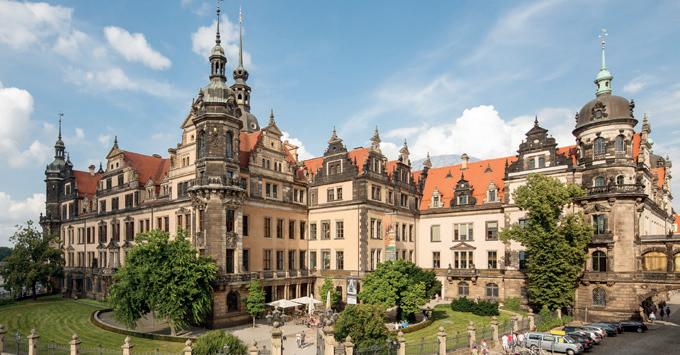
Audience Chamber and the Small Ballroom, to the Grand Ballroom, the Porcelain Cabinet, and the Proposition Hall. This last room forms the culmination and transition into the baroque state rooms of Augustus the Strong – a new circuit that artfully blends history and the present.
A particular highlight is the new permanent exhibition “Masks and Crowns: Festival Culture and the Representation of Power at the Dresden Court”, which will open on 22 April 2026, in the newly opened halls of the north wing. Here, unique artifacts of courtly festival culture and the representation of power will be presented – priceless works from the Renaissance and Baroque periods, painstakingly restored and on display for the first time in over 80 years. Nowhere else has such a wealth of magnificent props, garments, ceremonial weapons, riding equipment, and insignia of power been preserved, created for imaginative masquerades, themed balls, and coronation ceremonies, which have found an ideal setting in the restored and reconstructed state rooms. The exhibition thus illuminates how power and splendour were celebrated at the Saxon court and offers a fascinating glimpse into European cultural history.
The SKD is not resting on its laurels, but rather, in addition to its permanent exhibitions, is providing fresh perspectives with an ambitious special exhibition program. Current highlights include exhibitions such as “Paula Modersohn-Becker and Edvard Munch: The Big Questions of Life” (Albtertinum, 8 February 2026 – 31 May 2026) and “Correggio: Movingly Human” (Zwinger, 19 September 2026 – 10 January 2027). These exhibitions offer a wide range of experiences for families, international visitors and art lovers. Digital tours, accessible formats, and creative workshops make art education both contemporary and inclusive.
A visit to Dresden is more worthwhile than ever today, as the museum network sees itself as a vibrant place that preserves art and brings it closer to a broad audience. In this way, the Dresden State Art Collections become a forum for dialogue, innovation, and cultural exchange.
www.skd.museum
europäische Spitzenklasse. Heute befinden sich im Residenzschloss neben dem Grünen Gewölbe die Rüstkammer, das Münzkabinett und das Kupferstich-Kabinett.
VOLLENDUNG UND VISION
Mit der feierlichen Eröffnung der Festetage im April 2026 nähert sich die jahrzehntelange bauliche Wiederherstellung des Dresdner Residenzschlosses nach den Zerstörungen im Zweiten Weltkrieg ihrem Abschluss. Die Vollendung des Propositionssaales und des Großen Ballsaales im Nordflügel stellt dabei einen wichtigen Meilenstein dar. Die Englische
Treppe, einst Herzstück höfischen Lebens, führt ab April wieder wie in vergangenen Zeiten in eine eindrucksvolle Abfolge prächtiger Festsäle: Vom Riesensaal mit seinen monumentalen Turnierszenen über das Audienzzimmer der Königin und den Kleinen Ballsaal bis zum Großen Ballsaal, Porzellankabinett und Propositionssaal. Dieser bildet den Abschluss und Übergang in die barocken Paraderäume Augusts des Starken – ein neuer Rundgang, der Geschichte und Gegenwart kunstvoll verbindet.
Ein besonderes Highlight ist die neue Dauerausstellung „Masken und Kronen. Festkultur
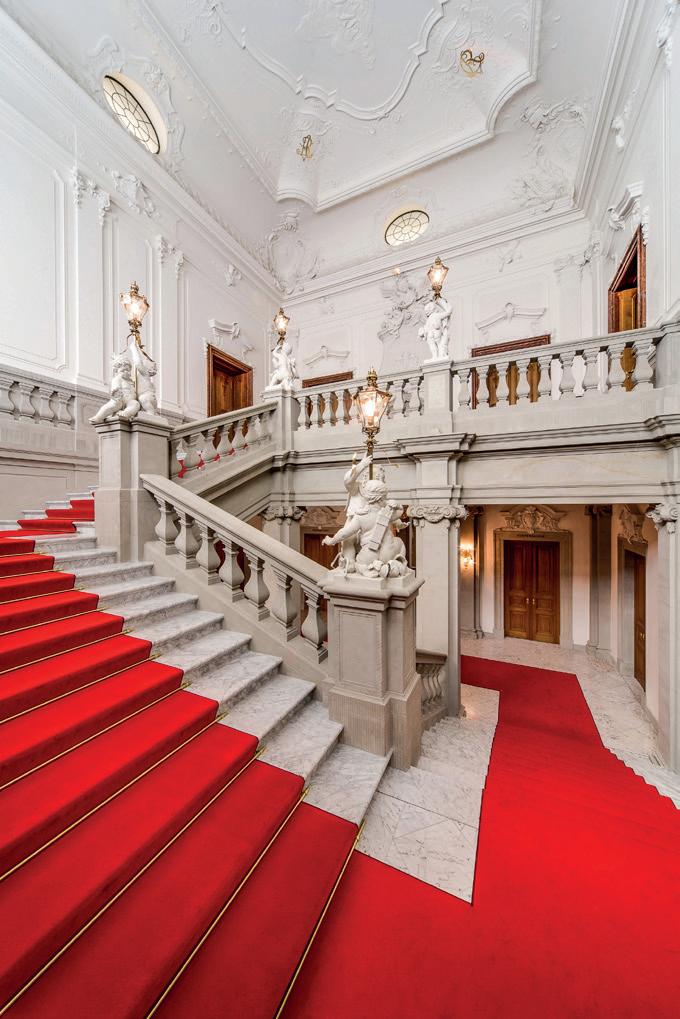
und Machtrepräsentation am Dresdner Hof", die ab 22. April 2026 in den neu eröffneten Sälen im Nordflügel zu sehen ist. Hier werden einzigartige Zeugnisse höfischer Festkultur und Machtrepräsentation präsentiert – kostbarste Werke aus Renaissance und Barock, die aufwendig restauriert wurden und nach über 80 Jahren erstmals wieder ausgestellt sind. Nirgendwo sonst haben sich in ähnlicher Fülle derart prunkvolle Requisiten, Gewänder, Prunkwaffen, Reitzeuge und Machtinsignien erhalten, entstanden für fantasievolle Maskeraden, thematische Bälle und Krönungsinszenierungen, die in den restaurierten und rekonstruierten Festsälen einen idealen Rahmen erhalten haben. So beleuchtet die Ausstellung, wie Macht und Pracht am sächsischen Hof gefeiert wurden und bietet einen faszinierenden Blick auf die europäische Kulturgeschichte.
DIE SKD ALS LEBENDIGER ORT
Die SKD ruhen sich nicht auf ihrem Erbe aus, sondern sorgen mit einem ambitionierten Sonderausstellungsprogramm zusätzlich zu den Dauerausstellungen für frische Perspektiven. Zu den aktuellen Höhepunkten zählen Ausstellungen wie „Paula Modersohn-Becker und Edvard Munch. Die großen Fragen des Lebens" (Albtertinum, 08.02.2026 – 31.05.2026) oder „Correggio. Berührend menschlich" (Zwinger, 19.09.2026 – 10.01.2027). Sie bieten Familien, internationalen Besuchenden und Kunstliebhabern ein breites Spektrum. Digitale Führungen, barrierefreie Formate und Kreativworkshops machen Kunstvermittlung gleichzeitig zeitgemäß und inklusiv.
Ein Besuch in Dresden lohnt sich heute mehr denn je, denn der Musemsverbund versteht sich als lebendiger Ort, der Kunst bewahrt und einem breiten Publikum nahebringt. So werden die Staatlichen Kunstsammlungen Dresden zu einem Forum für Dialog, Innovation und kulturellen Austausch.
www.skd.museum
Heligoland, once a military stronghold marked by history’s largest non-nuclear explosion, now balances its turbulent past with a thriving holiday scene, prompting journalist Xander Brett to explore whether its history or leisure appeal truly defines the island today.
TEXT: XANDER BRETT
It is a clear day but, surveying the horizon near two blue footprints that suggested a selfie spot, there is no sign of the mainland. Metal arrows point to various unobservable locations. Berlin, for instance, and the town of Cuxhaven from which I had set off. That is about 65 kilometres away.
Heligoland is a tiny, unexpected landmass in the middle of the North Sea. More precisely, it is a dot with dents in it. Indeed, before my eyes alight on the horizon, they meet the result of an explosion that sought to destroy a network of military installations that had turned a former and present-day holiday haven into a fortress.
So large was the Royal Navy’s explosion of Friday 18 April 1947 – rather unimaginatively titled Operation Big Bang – some feared the entire island would be blown sky high. As it turned out, only the southern tip was left with the real scars of lasting damage. It is there that an enormous grass-filled crater is today the preserve of hikers and dog walkers. As I ascend steps beside it, I meet an ambulance creeping downhill. The island’s medical centre is located nearby.
At the top of the hill, I find Jens Kohlenberg, who learned about the explosion during numerous visits to the island. He insists, however, that the primary purpose of his trips has been to soak up Heligoland’s tranquillity.
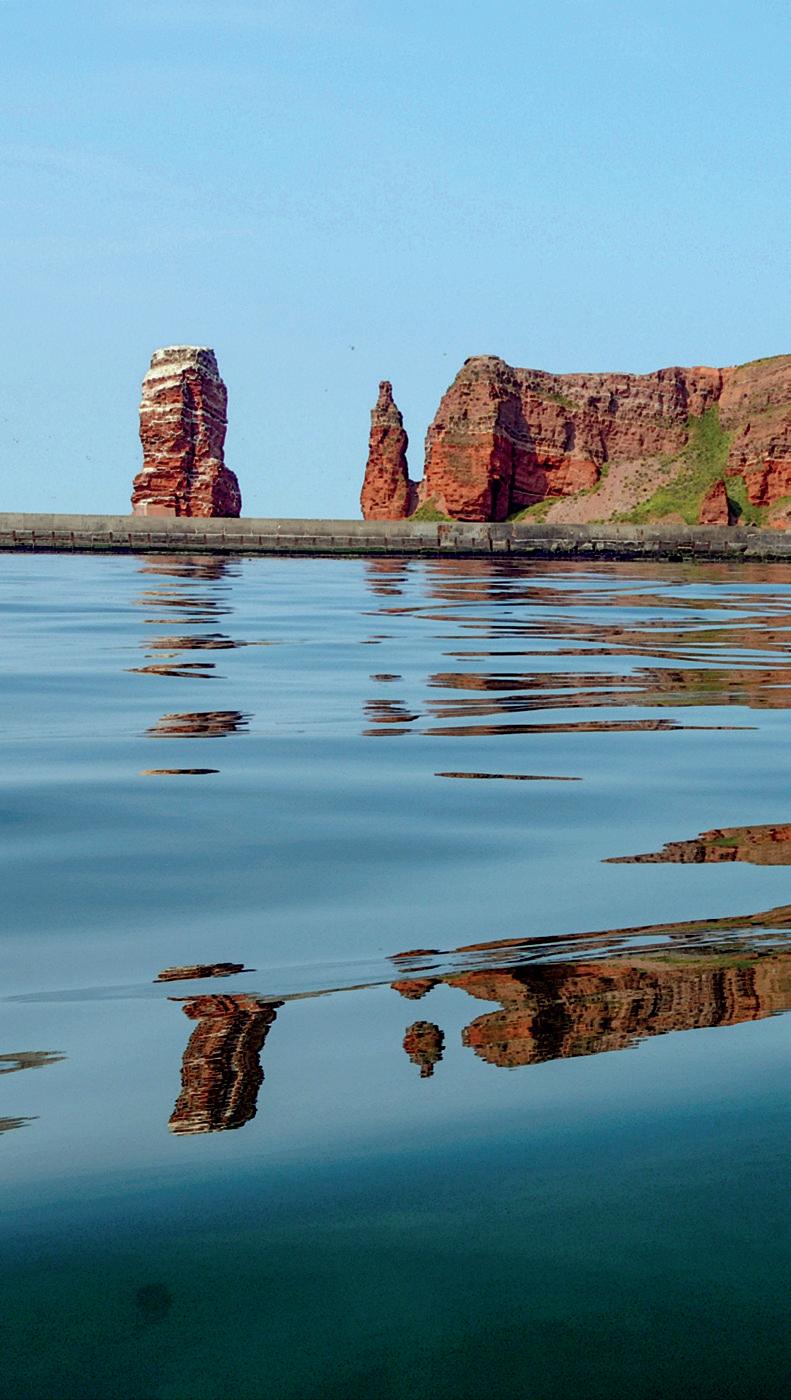

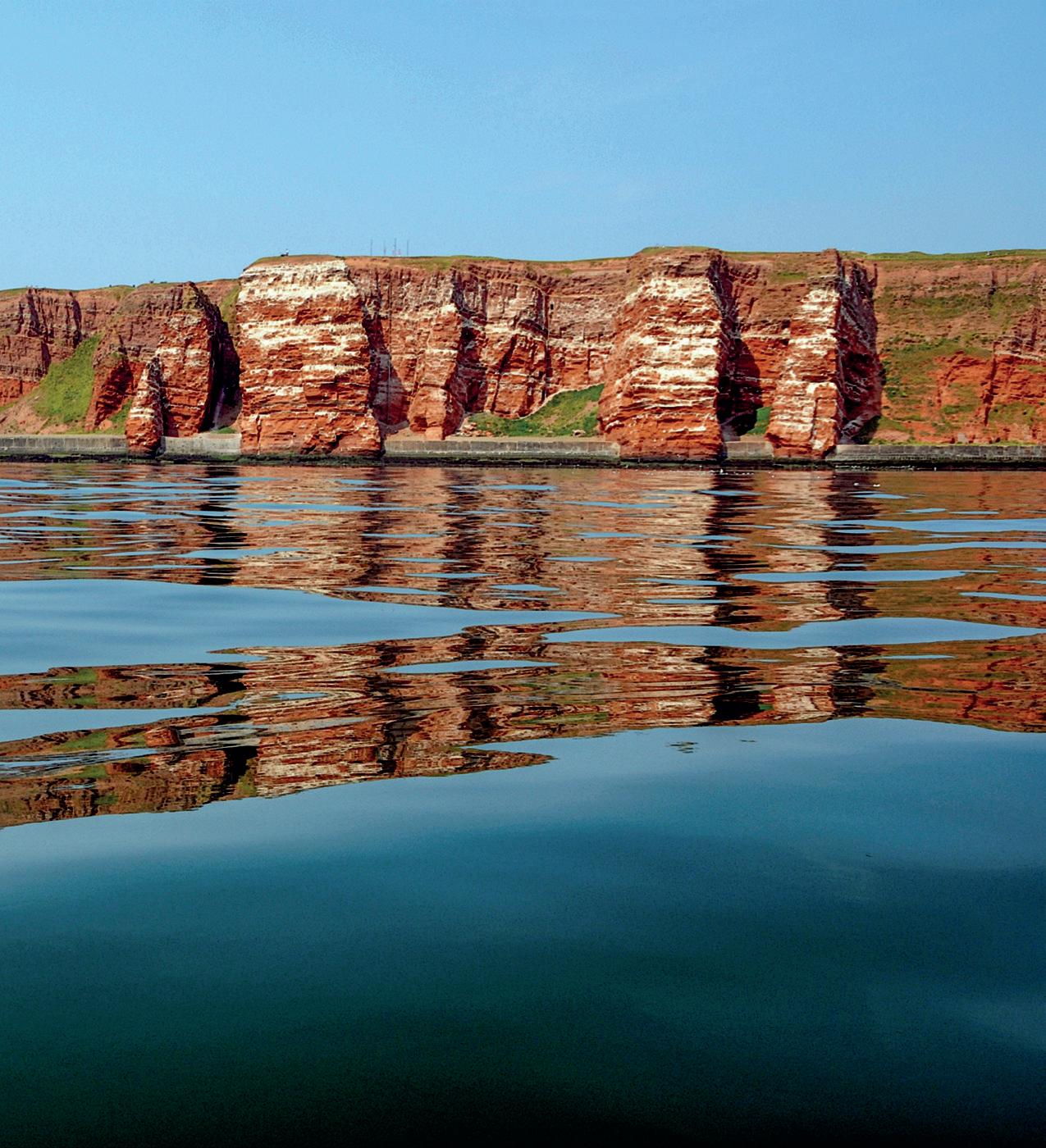
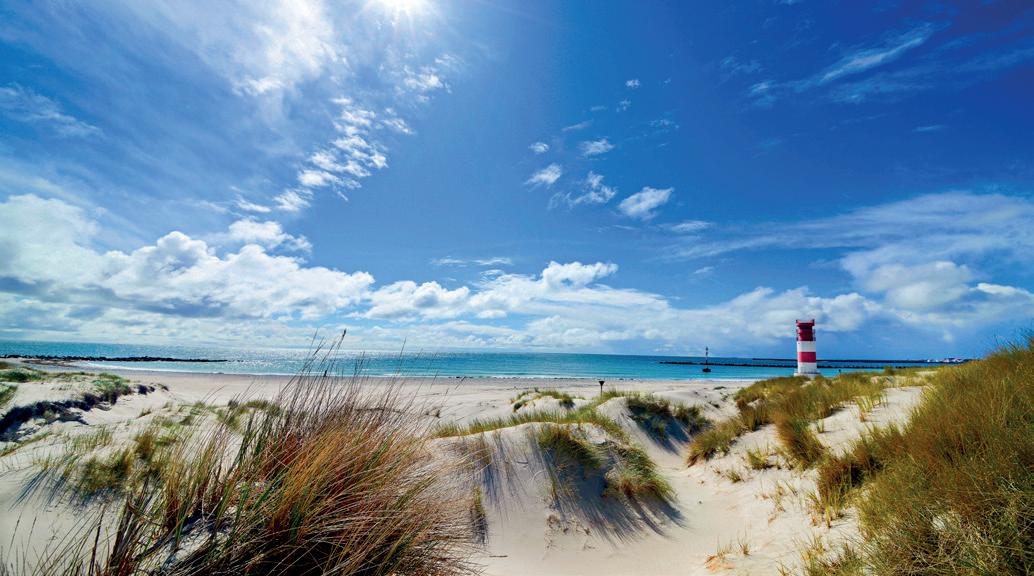
“When the tourist ships depart,” he explains, “you leave the rest of the world behind. It’s magic. The more you visit, the more you get to know the inhabitants. You become one with the island.”
Kohlenberg and I are among Heligoland’s annual swarm of visitors. The island houses a regular population of just over 1,000, some of whom speak a North Frisian dialect unique to the outcrop. The smaller, sandier and much
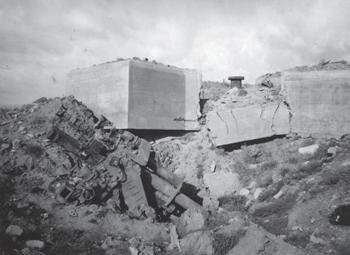
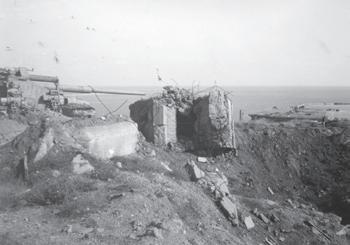
flatter island of Düne lies just over a narrow straight. It is accessible via a 6 euro return ferry trip and is occupied largely by an airport. A proposal to join the two islands via a land bridge was rejected in 2011.
Heligoland has its own green, red and white flag, and, returning to the mainland, I face customs officers, presumably thanks to its duty-free shopping opportunities. Politically speaking, however, there is not much sepa-
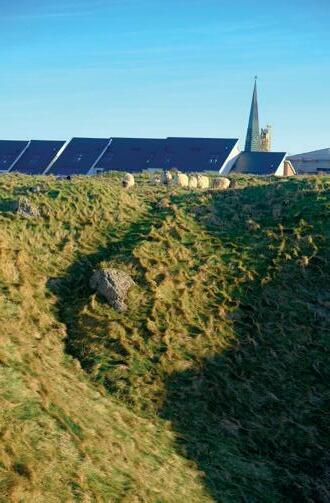
rating it from the mainland. Both Düne and the main island are part of the state of Schleswig-Holstein. It was here, in the early 1840s, that August Heinrich Hoffmann von Fallersleben wrote the lyrics to what would in time be adopted as Germany’s national anthem.
Back then, though, when Hoffmann von Fallersleben was holiday, the island was under British rule, having been ceded to Britain by Denmark in the Treaty of Kiel, an annexation ratified by the Treaty of Paris. For some, Heligoland became a political refuge. For others, it served as a tranquil escape from a rapidly industrialising continent. Things changed in 1890, when a newly unified Germany was handed the islands in the Heligoland-Zanzibar Treaty. It was not long until a naval base sprang up on the island.
The civilian population was evacuated during the First World War, when gun emplacements were positioned along the cliffs. Inhabitants could return as the war ended, but barely two decades later the military base was reactivated. The Nazi government even initiated what it called Project Hummerschere, aimed at reclaiming land lost to erosion.
“You’re not so much visiting a battlefield as the ruins of the Anglo-German past,” says Jan Rüger, author of the book Heligoland: Britain,
Germany, and the Struggle for the North Sea
“The island was fought over, but it wasn’t a battlefield in the way that many military tourists may be familiar with after visits to Normandy and the like. British soldiers only really landed on the island when there was no resistance.”
Outside Heligoland’s museum sits an unexploded Tallboy bomb dropped by British forces on Thursday 19 April 1945. Rüger suggests not only visiting that Museum Helgoland, but also the Oberland, where gun emplacements were inserted into the cliffs and where now there is a path to follow, with spots to gather information and get a sense of the lay of the land in times gone by.
“It’s a recent thing for people to tour remnants of the conflict,” Rüger continues. “In the 1950s and 60s, the island was rebuilt as a decidedly pacifist tourist resort that was meant to look like Denmark or Sweden. It has only really been since the 1990s that there has been interest in excavating and making former military sites accessible.”
The occasional history buff aside, Rüger says that touring past battlefields “isn’t such a big thing” for the German public and is instead
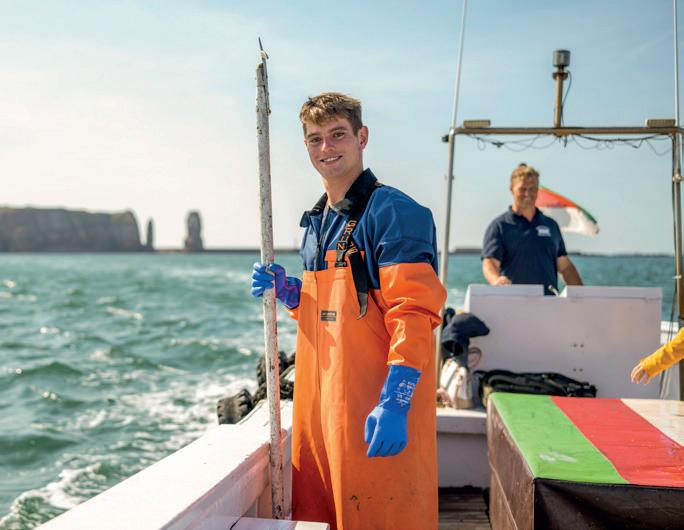
“more of an Anglo-American pastime.” Many readers of Rüger’s book, indeed, are British and American, and some have written to tell him that they have visited the island and found touring former military sites interesting. Often, Rüger explains, those visitors hold a personal connection to the island, often
through a parent, grandparent or great-grandparent who was engaged in military operations around the island.
Despite the arrival of such visitors, however, and despite increased interest in Heligoland’s not so distant history, if it was not for waves
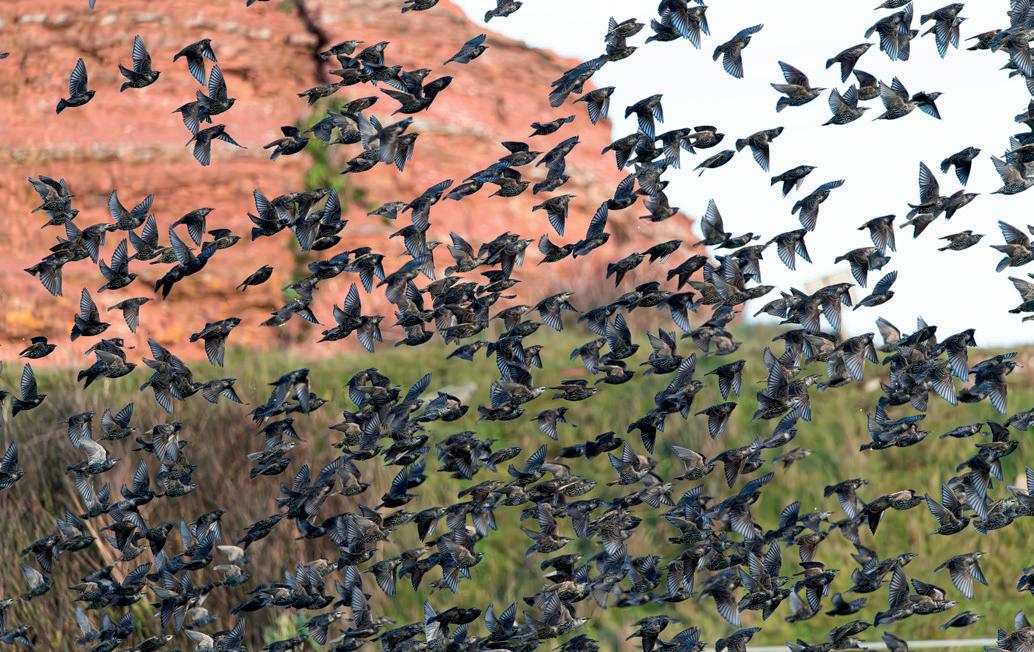
of visitors necessitating a higher proportion of souvenir shops, the settlement in Heligoland’s south would simply resemble any other small northern European town.
A tall transmission tower overlooks multicoloured structures. Just behind it sits a lighthouse: reportedly the only building to survive the 1947 explosion. The red rock Lange Anna (Tall Anna), a 47-metre-high stack – Heligoland’s most recognisable landmark – sits at the island’s northern tip, sheltered by a breakwater.
A walk around both Heligoland and Düne can be completed in a few hours, and the speed with which one can tour the destination means that I am far from the only tourist making a day trip from the mainland. I had opted for a catamaran from Hamburg that picked me up in Cuxhaven before pushing on to Heligoland, docking about 75 minutes later. Hoists were engaged as luggage was unloaded – a routine that had presumably gone unchanged for decades.
“It was huge until the 1980s,” says Rüger, when asked whether the fact that Heligo-
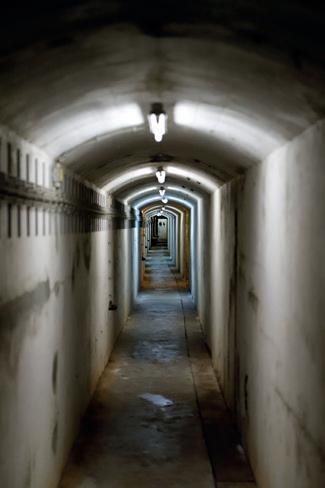
land was tossed between three powers in the 19th century, and the fact that it was the birthplace of the national anthem’s lyrics, allows it to occupy a place of significance in the German national psyche. “There was a boom period in the 1960s when very large numbers of West German visitors went over to the island,” he explains. “They went to en-
joy duty-free discounts and sit on the beach, of course, but they were also there because they thought the island mattered.”
Heligoland is still a tourist hotspot but few, surely, are there out of patriotic duty. Its rhythm is quieter today and it has fallen back to a state it enjoyed before the Napoleonic Wars, when the tiny – if strategically located – island was heaved onto the European stage.
“In August 1990,” says Rüger, “when the centenary of the cession of the island from Britain to Germany was celebrated, it wasn’t a huge deal in the German media. It was a local event, whereas in the 1950s or 60s, it would’ve been a national event broadcast everywhere.” But, while the island’s symbolic presence might have faded, reminders of its history remain impossible to ignore. The gaping gash of a crater – explosive damage – still greets passengers as ferries dock.
Heligoland is a small island that played a large part in history. History buffs or not, it is only natural that visitors should be inquisitive about its peculiar wartime and peacetime past.
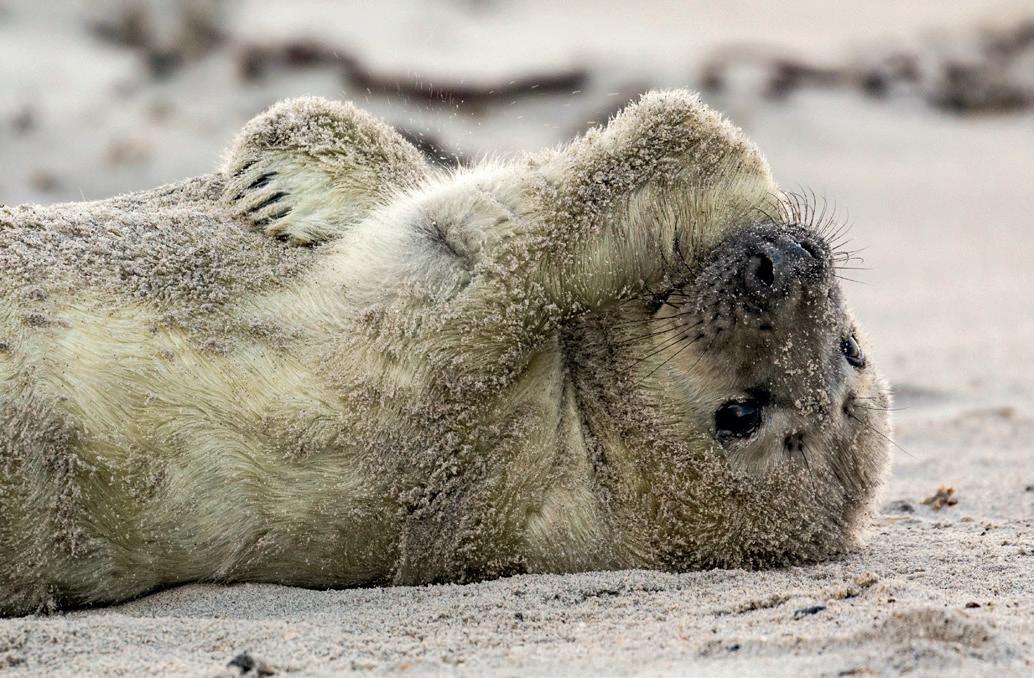
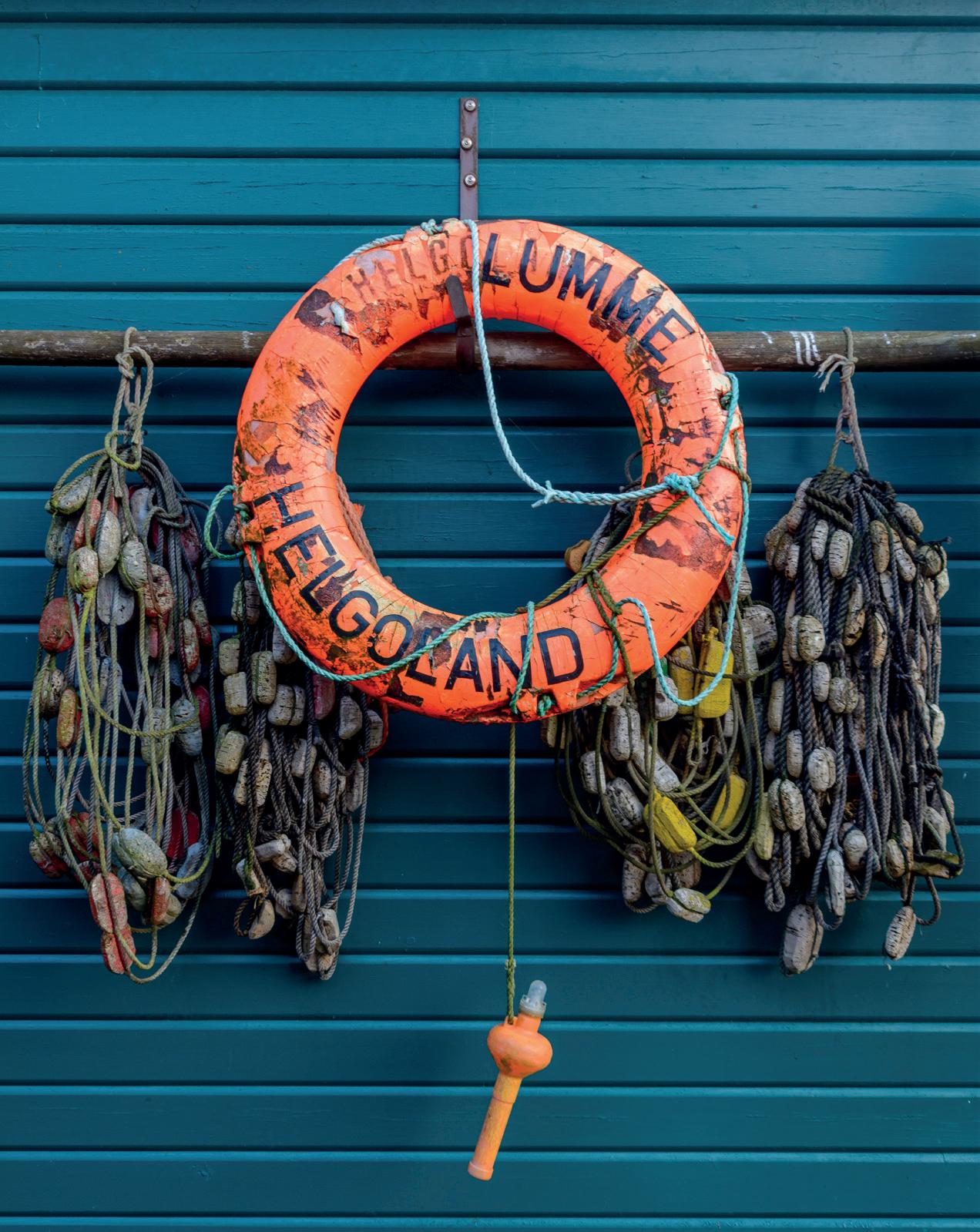
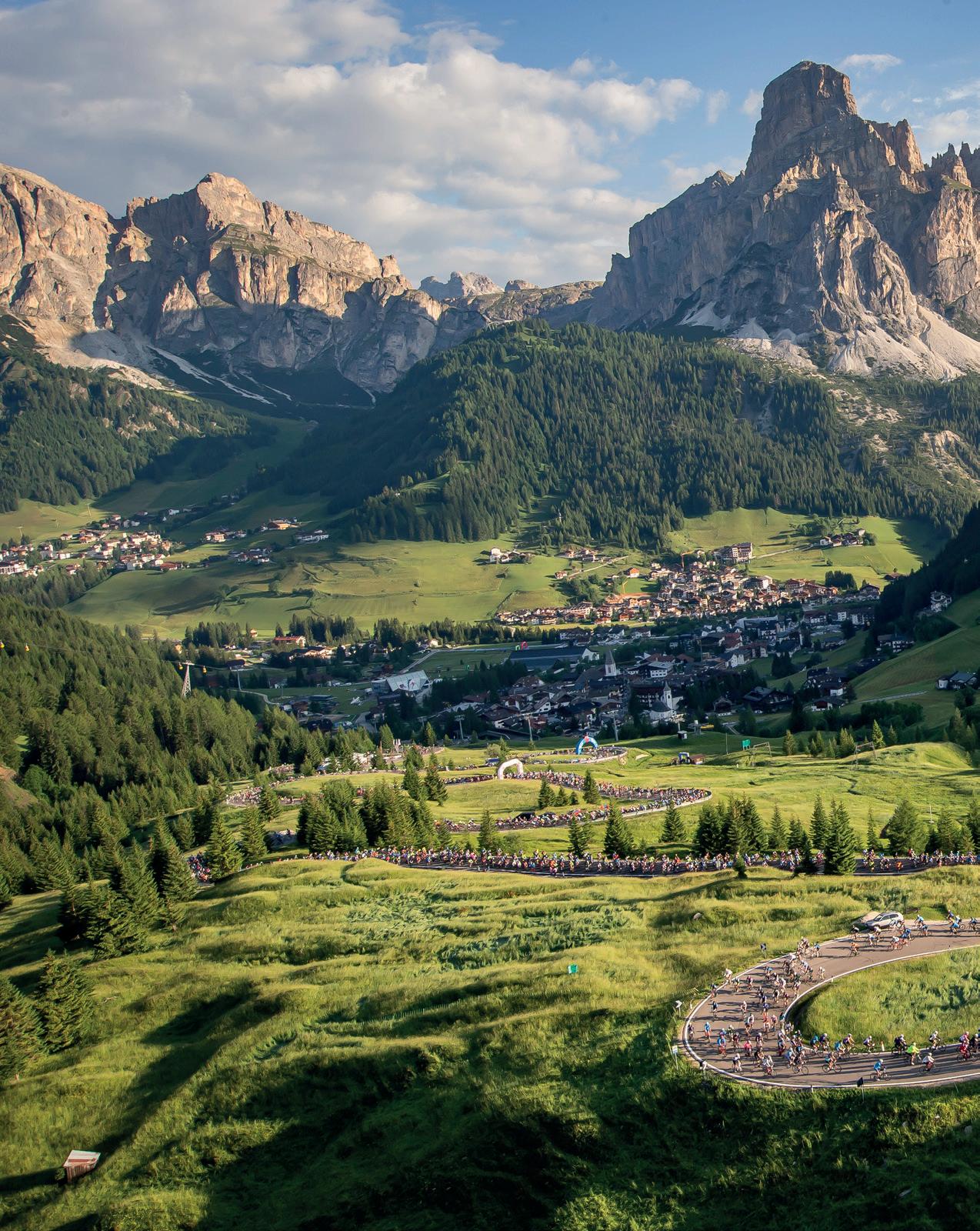
Alta Badia is a destination that offers unforgettable experiences for all cycling enthusiasts. Framed by the UNESCO World Heritage Dolomites, it provides the ideal starting point for discovering the famous Dolomite passes, true symbols of cycling history. Major events such as Maratona dles Dolomites-Enel, Sellaronda Bike Day and Dolomites Bike Day further enhance the region's appeal, making it a true paradise for cyclists.
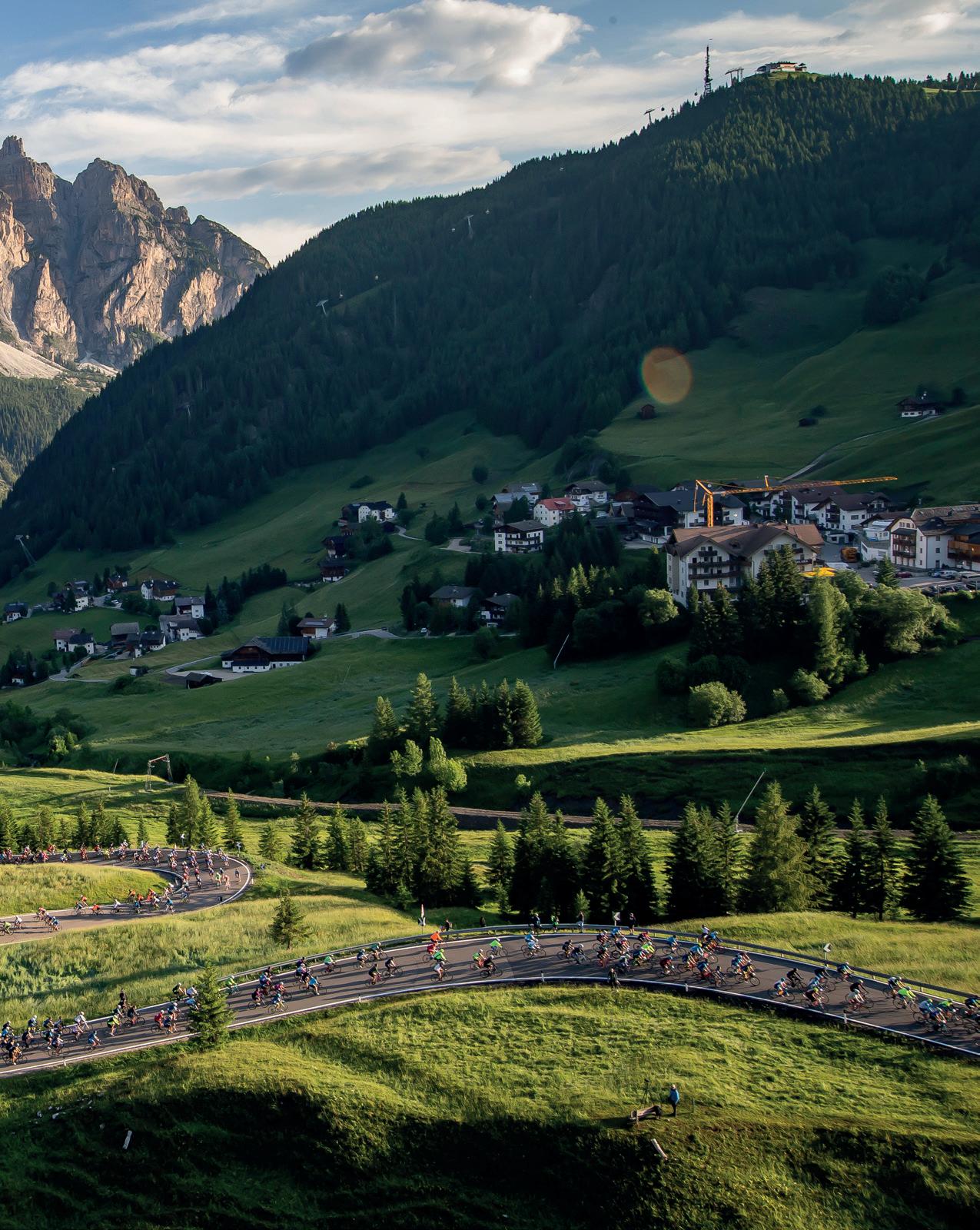
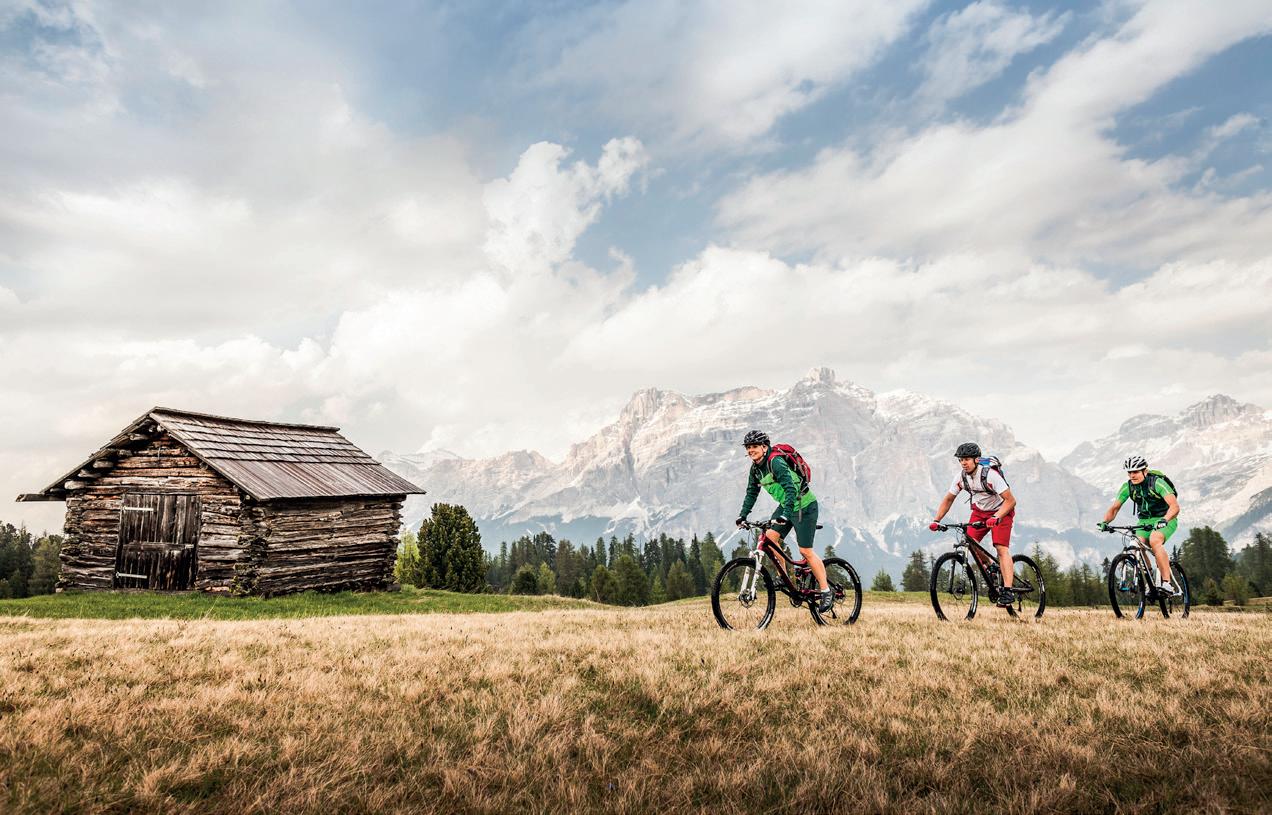
Alta Badia, usually known as a premier, familyfriendly ski region in the South Tyrolean Dolomites in Italy, also has a lot to offer in summer for bike enthusiasts. Whether you prefer road cycling, mountain biking or e-biking, you will find diverse routes for every fitness level here. Cycling in these valleys is an experience that goes far beyond the sport itself: spectacular vistas, local culture, culinary traditions, and a growing focus on sustainability all contribute to the experience. In recent years, Alta Badia has established itself as a top destination for discerning cyclists. Its strategic location, wide selection of routes of varying difficulty, and the opportunity to ride legendary cycling roads make the region a must-visit. From here, you can tackle iconic passes like the Pordoi Pass, Sella Pass, Gardena Pass, Fedaia Pass, Valparola Pass, Falzarego Pass, and Giau Pass, all the way to the famous Tre Cime di Lavaredo (Three Peaks).
On 5 July, the famous Maratona dles Dolomites-Enel will be held for the 39th time, with 32,400 applications from 85 na-
tions received. The Granfondo race attracts cyclists from all over the world annually and is considered the queen of European cycling events. This year's theme is ‘Pax’ (peace). "The Maratona is exactly that: thousands of stories intersecting, where the mountain is a symbol of equality. We are small, but our task is great: to think about peace, to talk about it, and to act on it... we do it by pedalling. Because peace is a dream we can achieve, a path we can walk together," explains Michil Costa, president of Maratona dles Dolomites-Enel.
The main attractions, as always, are the Dolomite passes of Campolongo, Sella, Pordoi, Gardena, Giau, Falzarego, and Valparola. Furthermore, the three traffic-free routes remain unchanged: the classic Maratona, a 138-kilometre-long route with 4,230 metres of elevation gain; the medium route, a 106-kilometre route with 3,130 metres of elevation gain; and the Sellaronda route, a 55-kilometre route with 1,780 metres of elevation gain. The pre-Maratona cycling week has been redesigned and expanded,
with an even richer programme this year. For example, new guided bike tours and activities for cyclists and their families are on offer. Those who did not secure a starting place can purchase one of the 200 bib numbers at a higher price on 19 March at www. maratona.it, for which the proceeds will go to charity.
June and July are proving to be indispensable months for cycling enthusiasts: The events in Alta Badia once again combine spectacular panoramas with a strong focus on sustainability. For three days, the famous Dolomite passes are closed to motorised traffic, offering everyone the opportunity to cycle in complete freedom, including those not participating in the renowned Maratona dles Dolomites-Enel.
The Bike Days are non-competitive events and open to everyone without registration. The routes partially follow the Maratona route and include some of the most iconic climbs in the Dolomites.
On Saturday 6 June, the traditional Sellaronda Bike Day returns, with the closure of the passes around the Sella Group. The event will also be repeated on 12 September. From 8.30am to 4.00pm, cyclists of all abilities can tackle the counter-clockwise route: 53 kilometres with an elevation gain of 1,637 metres, nestled in a unique landscape.
On 20 June, the Dolomites Bike Day further takes place, focussing on the Campolongo, Falzarego, and Valparola passes, sites of legendary achievements in cycling. The route starts in Alta Badia, reaches Arabba and the Livinallongo valley via the Campolongo Pass, continues to the Falzarego and Valparola Passes, and then passes through San Cassiano, La Villa, and Corvara before completing the loop.
For this summer, Alta Badia is renewing its Bike Guided Tours programme, offering five weekly rides during June and July. The schedule includes a series of guided excursions
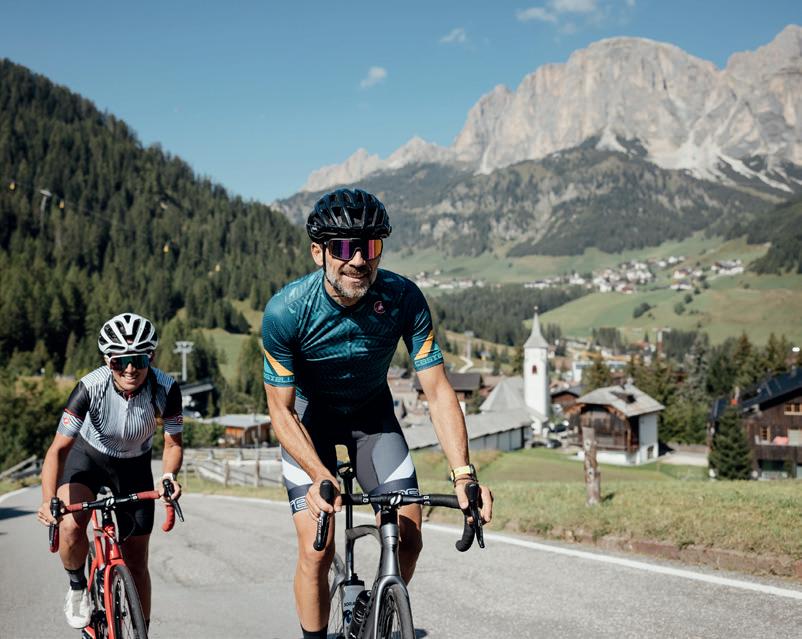
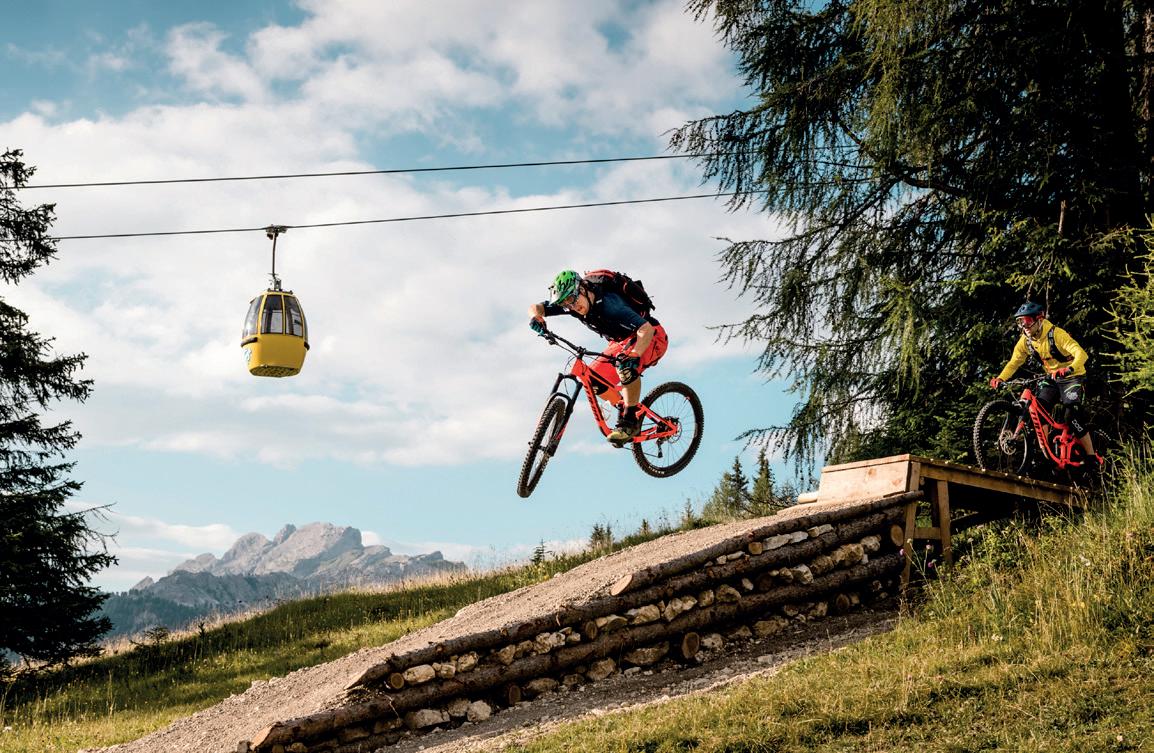
designed to discover some of the most impressive routes in the Dolomites. From Monday to Friday, each day is dedicated to a different tour, led by experienced local cycling guides, to conquer the mountain passes and iconic locations of the region. Among the suggested destinations are the famous Sellaronda, Passo Fedaia, and Passo Giau.
Furthermore, the innovative e-bike sharing service makes it even easier to discover Alta Badia. The electric pedal assist makes it easy to reach the region's most beautiful viewpoints, as well as the three parks of the Movimënt area at an altitude of 2,000 metres. The e-bikes make even the most challenging climbs accessible and offer an experience suitable for both experienced cyclists and those who simply want to enjoy the Dolomite landscape at a relaxed pace. The bikes can be rented and returned at the mountain stations of the Col Alto, Piz La Ila, and Piz Sorega lifts. In addition, state-of-theart models are available in sports shops and rental stores in the valley for those who prefer to start directly from the valley floor. Another advantage is the option of transporting the e-bikes on the lifts, making it easy to travel between different villages without using a car, for a sustainable and enjoyable experience.
Alta Badia stands out as a premier destination for cyclists of all disciplines, offering an extensive network of routes and services that cater to every type of rider. Nestled in the vibrant landscape of the South Tyrolean Dolomites, the area is a playground for mountain bikers, with vast off-road trails immersed in colourful vegetation. Whether you are an enthusiast of enduro, freeride, or touring, the region provides a wealth of tracks of varying difficulty, including the adrenaline-charged Bike Beats Movimënt flow trails, complete with berms and jumps, which are also part of the prestigious Gravity Card network giving access to 30 of Europe’s top bike parks. These trails, accessible by both mountain and e-bike, are situated on the high plateau at 2,000 metres, with lifts facilitating easy bike transport.
Alta Badia also serves as the ideal starting point for the legendary Sellaronda circuit, where lifts allow riders to effortlessly gain altitude and enjoy breathtaking descents on singletracks designed specifically for MTBs, with expert guides recommended for the journey. In recent years, gravel biking has become increasingly popular, allowing riders to leave the tarmac behind and explore scenic gravel paths through forests and alpine
meadows at the foot of the UNESCO-listed Dolomites. The area offers numerous gravel routes, including tours past traditional Ladin farmsteads and through the charming village of La Val, mixing asphalt and gravel as they trace lesser-known but captivating tracks beside nature parks like FanesSenes-Prags and Puez-Geisler.
Another panoramic route leads from Badia to the Armentara meadows beneath the imposing Heiligkreuz massif. Alta Badia’s bike Friendly ethos is reflected in its comprehensive services – from detailed route maps at tourist offices and personalised guided tours tailored to all ability levels, to partnerships with hotels, bike rentals, repair shops, and cyclist-friendly restaurants and mountain huts. Certified Bike Expert and Bike Friendly establishments provide secure bike storage, repair facilities, laundry service, hearty breakfasts, and energy-boosting afternoon snacks, while lifts enable free bike transport, ensuring a comfortable, seamless cycling experience for all.
So, whether you crave exhilarating climbs, tranquil trails, or the simple joy of cycling amid awe-inspiring peaks, Alta Badia invites you to discover your own path, and pedal into a paradise you will be sure to never forget.
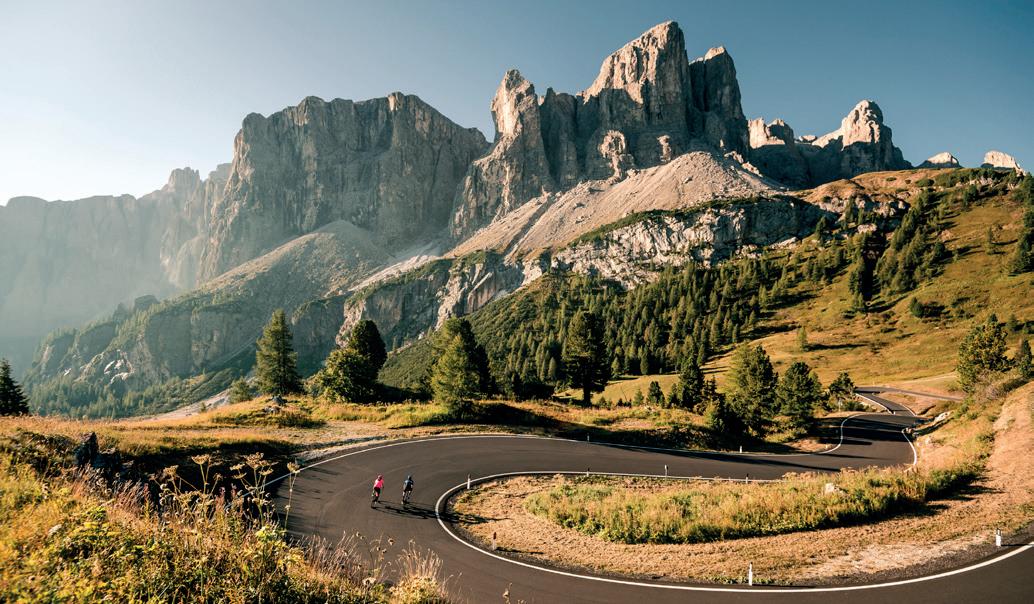

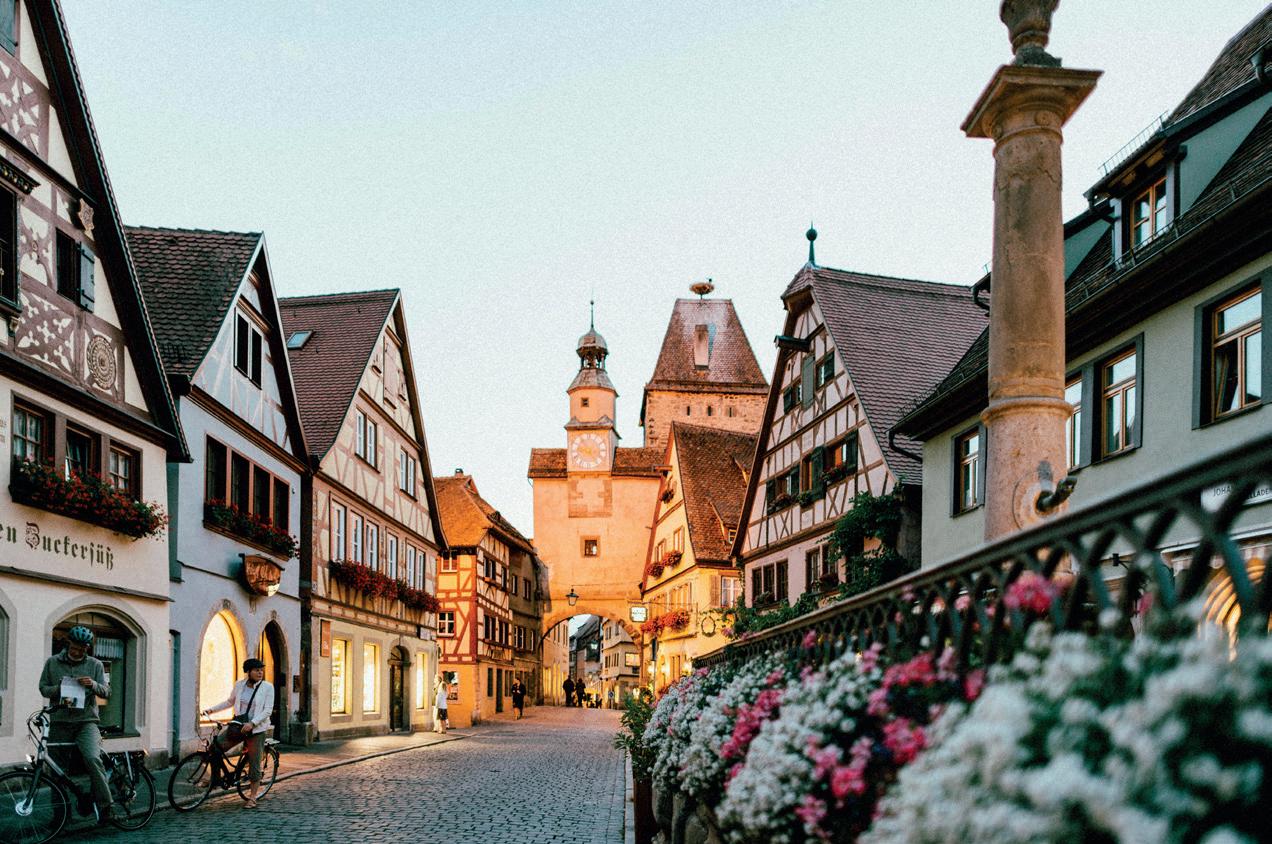
Searching for the perfect setting to celebrate romance? Charming hotels and exclusive accommodations across Germany offer unique backdrops for unforgettable moments – whether you are planning a proposal, anniversary, or simply a getaway for two.
Gerade in den ruhigeren Jahreszeiten zeigt sich, wie wohltuend die Weite der Nordsee sein kann. Der zwölf Kilometer lange Sandstrand lädt zu ausgedehnten Spaziergängen ein, bei denen der Wind den Kopf frei pustet und Gespräche wieder Raum bekommen. Zurück im Hotel Zweite Heimat wartet Wärme – im wahrsten Sinne des Wortes.
heißem Dampf in der Teesauna, Außensauna, Infrarotkabine, Hängeliegen und Massagesesseln oder im Strand Spa mit Dampfbad, Biosauna und Eisbrunnen findet jeder sein persönliches Entspannungsritual. Wer sich zusätzlich verwöhnen lassen möchte, bucht eine Massage-Anwendung.
Kulinarisch wählen Gäste zwischen feiner norddeutscher Küche im ‚Esszimmer‘ und
Besonders für Paare geschaffen sind die ‚Großen Stuben für Deichgrafen‘. Auf großzügigen 84 Quadratmetern verbinden sie Wohnlichkeit mit Komfort: ein separater Schlafbereich, ein großer Wohnraum mit Sofa, Balkon –auf Wunsch mit Meerblick – sowie eine eigene Sauna und Whirlwanne. An kühleren Tagen wird das Zimmer selbst zum Rückzugsort, in dem man sich fast wie zu Hause fühlt. Auch die beiden Spa-Bereiche setzen unterschiedliche Akzente: Im Land Spa mit Zwischen Dünen, Deich und weitem Horizont befindet sich ein kleines Juwel für echte Zweisamkeit: Das Hotel Zweite Heimat in St. Peter-Ording bietet den perfekten Rahmen für eine kleine Auszeit zu zweit. Einfach ankommen, durchatmen und gemeinsam neue Energie tanken.
friesischen Klassikern ohne Schnickschnack im ‚Pesel‘. Oder sie genießen ein gemeinsames Abendbrot ganz privat auf dem Zimmer, serviert im Picknickkorb. Ein Platz am Kamin oder draußen in der Hängeschaukel mit Infrarotwärme runden den Tag wunderbar ab.
Die Nordsee mag rau sein. Doch genau darin liegt ihr Zauber. Und vielleicht auch die schönste Form von Romantik.
www.hotel-zweiteheimat.de
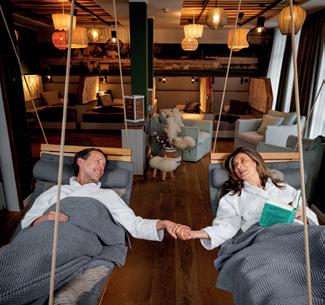
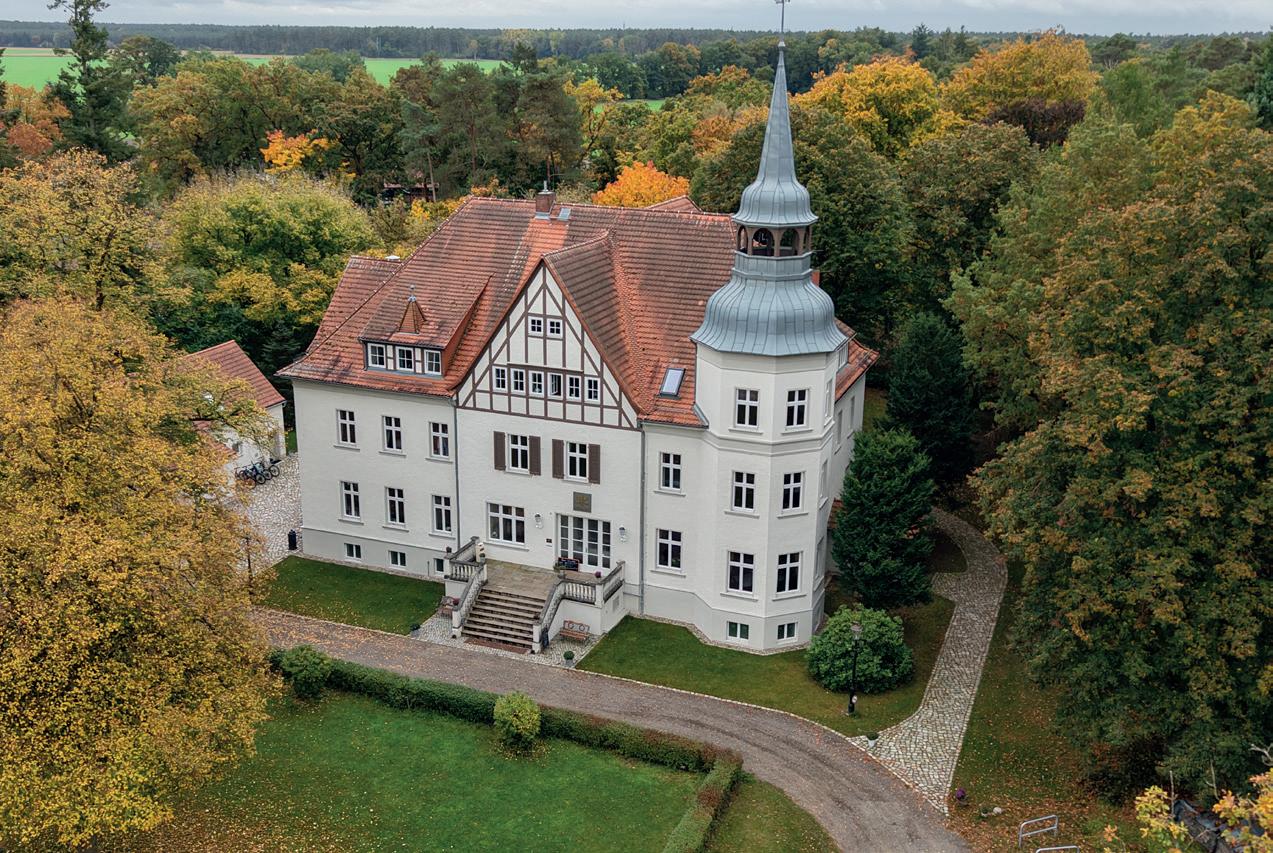
Schloss Sigrön ist ein kleines, familiengeführtes Hotel mit Restaurant und Campingplatz in der Elbtalaue, umgeben von der urtümlichen Landschaft der Prignitz.
Das verwunschene Schlosshotel am Rand von Bad Wilsnack bietet eine einzigartige Mischung von Historie, Moderne und Natur: „Durch unsere Waldlage am Naturschutzgebiet herrscht eine unvorstellbare Ruhe und beste Luftqualität“, erklärt die studierte Betriebswirtin Svenja Schwarte. Sie und ihr Mann Wolfgang haben sich mit dem Schlosshotel einen Lebenstraum erfüllt: Nach Abschluss einer dreijährigen Sanierungs- und Umbauphase von Gelände und Schloss wurden zu Ostern 2024 erstmalig die Pforten geöffnet. Entstanden sind ein charmantes 4-Sterne Boutique-Hotel mit hochwertig und stilvoll eingerichteten Suiten, Appartements und weitere, individuelle Unterkünfte wie den Tiny Häusern, den heimeligen Zirkuswagen und nicht zuletzt dem hochwertig ausgestatteten neuen Campingplatz. Ein großzügiger Saunabereich im Schlosskeller und ein beheizbarer Holzpool runden das Angebot ab. „Vom Bio-Außenpool aus genießt man einen
weiten Blick in die unberührte Landschaft, wo auch unsere eigenen Alpakas weiden“, erläutert Svenja Schwarte. Auch kulinarisch ist Schloss Sigrön bestens aufgestellt: Tagsüber versorgt das Café seine Gäste mit leckeren, selbstgebackenen Kuchen und herzlichem Service, wobei insbesondere die Gartenterrasse sehr beliebt ist. Am Abend laden ein hervorragendes Restaurant und die gemütliche Bar zum Gaumenschmaus.
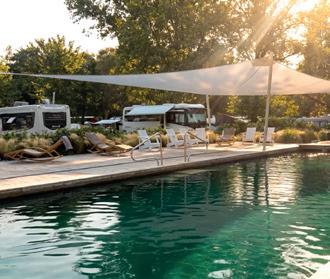
STÜCK FÜR STÜCK GEWACHSEN
Das umfangreiche Projekt wuchs Stück für Stück zum heutigen Gesamtkonzept von Schloss und Anlage: „Zum anfänglichen Café-Betrieb kamen sukzessive die Hotelzimmer, Appartements und der Campingplatz hinzu. Nach Fertigstellung der Zirkuswagen und Tiny Häuser sind wir seit 2025 voll einsatzbereit und freuen uns täglich auf unsere Gäste!“ Dies sind vor allem naturverbundene Menschen, die Ruhe und das Besondere suchen; sehr häufig auch Paare: „Unsere Gäste setzen auf Qualität, Individualität und eine gute Küche für ihre romantische Auszeit.“
Die liebevoll und sehr individuell eingerichteten Suiten stehen bereits ab €160 pro Nacht zur Verfügung. Alle Zimmer verfügen über schnelles WLAN und Smart-TV. Für Wellness sorgt ein großzügiger Saunabereich im Keller des Schlosses; hinzu kommt der attraktive Außenpool: Perfekt nach einem langen Tag mit Spaziergängen in der Natur.
BIO-HOLZPOOL: SCHWIMMEN OHNE CHEMIE
Mit Blick in die weite Landschaft lädt der große Holzpool zur Erfrischung ohne Chemie ein. Abends lässt sich von der Pool-Terrasse aus der Sonnenuntergang genießen, was ihn für viele Gäste zum Lieblingsort macht. Je nach Außentemperatur wird das Wasser von Mai bis Oktober angenehm beheizt.
SUPERIOR CAMPING MIT WOHLFÜHLFAKTOR
Großzügige Stellplätze mit 120-180 qm Fläche bieten am Schloss Sigrön viel Platz für Wohnmobile oder Wohnwagen jeder Größe. Schnelles WLAN, Wasser- und Grauwasseranschluss direkt am Platz sowie 5 kWh Strom pro Nacht sind inklusive. Hinzu kommt die freie Nutzung der Sauna und des beheizbaren Holz-Außenpools. Für Elektrofahrzeuge besteht eine öffentliche Lademöglichkeit auf den PKW-Parkplätzen des Schlosses und zusätzlich auf ausgewählten Camping-Stellplätzen. Abgesehen vom zentral gelegenen, modernen Waschhaus sind ausgewählte Stellplätze mit Privatbädern direkt auf dem eigenen Stellplatz buchbar. Zusätzlich gibt es einen morgendlichen Brötchenservice oder nach Anmeldung ein komplettes Frühstück im Schlosscafé.
TINY HÄUSER UND AUTHENTISCHE ZIRKUSWAGEN
Die modernen Tiny Häuser liegen direkt am Wald und sind wahre Raumwunder aus Wohn-Essbereich, Schlaf- und Badezimmer. Eine voll verglaste Front öffnet die Aussicht auf die weitläufige, unberührte Natur, während die private Terrasse den nötigen Raum für Rückzug bietet – mit direktem Blick auf friedlich weidende Alpakas. Die restaurierten
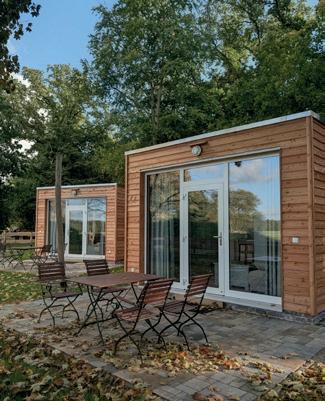
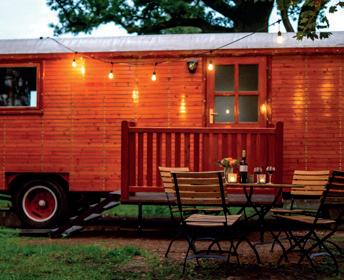
Zirkuswagen beherbergten einmal Clowns und Artisten und stammen aus einer alten Leipziger Zirkusdynastie. Das Chassis ist jeweils im Originalzustand; der Innenausbau inklusive kleinem Bad jedoch ist komplett neu und lädt zum Verweilen ein.
Im Frühstückscafé startet der Tag ganz entspannt. Am Nachmittag genießt man in herrlichem Ambiente auf der Gartenterrasse Kaffee und Kuchen oder erfrischende Eiskreationen. „Wir betreiben übrigens eine kleine Imkerei und stellen unseren eigenen Honig her“, berichtet Svenja Schwarte stolz. Am Abend lädt das Schlossrestaurant mit saisonal ausgewählten Gerichten zur kulinarischen Entdeckungsreise. Gern richtet das Ehepaar Schwarte auch Familienfeiern oder Firmenevents für bis zu 70 Personen aus. Nach dem Essen gibt es für die einen den kühlen Drink auf der Gartenterrasse – andere lassen den Tag in gemütlicher Atmosphäre im Kaminzimmer oder an der Bar ausklingen.
‚Jetzt sind sie komplett verrückt geworden!‘ war nur eine der Reaktionen, die Svenja und
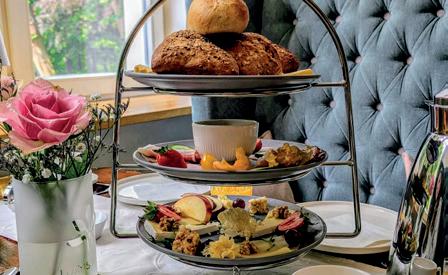
Wolfgang Schwarte von Freunden und Familie hörten, als sie damals von ihrem Plan erzählten, aus einem verwilderten Gelände mit sanierungsbedürftigem Jagdschloss einen Campingplatz mit Hotel zu machen. Doch die Zweifel überließen sie den anderen: „Es fühlte sich vom ersten Moment an richtig an, diesem wunderbaren Ort wieder Leben einzuhauchen.“ Heute ist die Familie Schwarte stolz darauf, was trotz aller Widrigkeiten entstanden ist: „Ein grünes Paradies, wie wir es uns nicht besser hätten erträumen können.“ Das Entrepreneur-Ehepaar hat auch weiterhin ständig neue Ideen, erzählt Wolfgang Schwarte: Die Ausgestaltung des Schlossparks und ein großes Gewächshaus im historischen Stil sind zum Beispiel noch für dieses Jahr geplant.
Doch nach Fertigstellung der Bauarbeiten liegt der Fokus nun vor allem auf dem Wohlfühlfaktor für Besucher: „Die schönste Belohnung für uns ist es, die Begeisterung unserer Gäste zu spüren und das Leuchten in ihren Augen zu sehen!“
www.schloss-sigroen.de
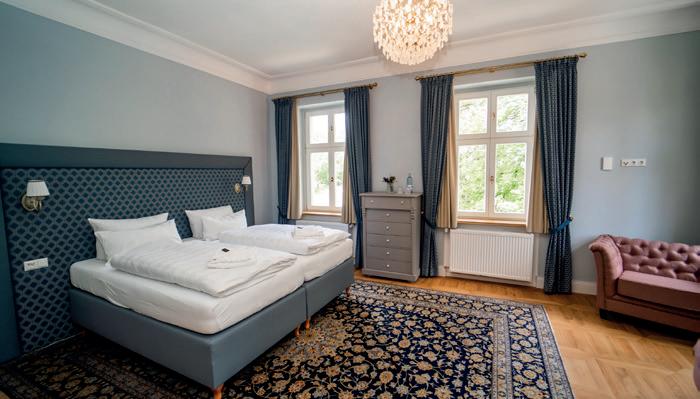
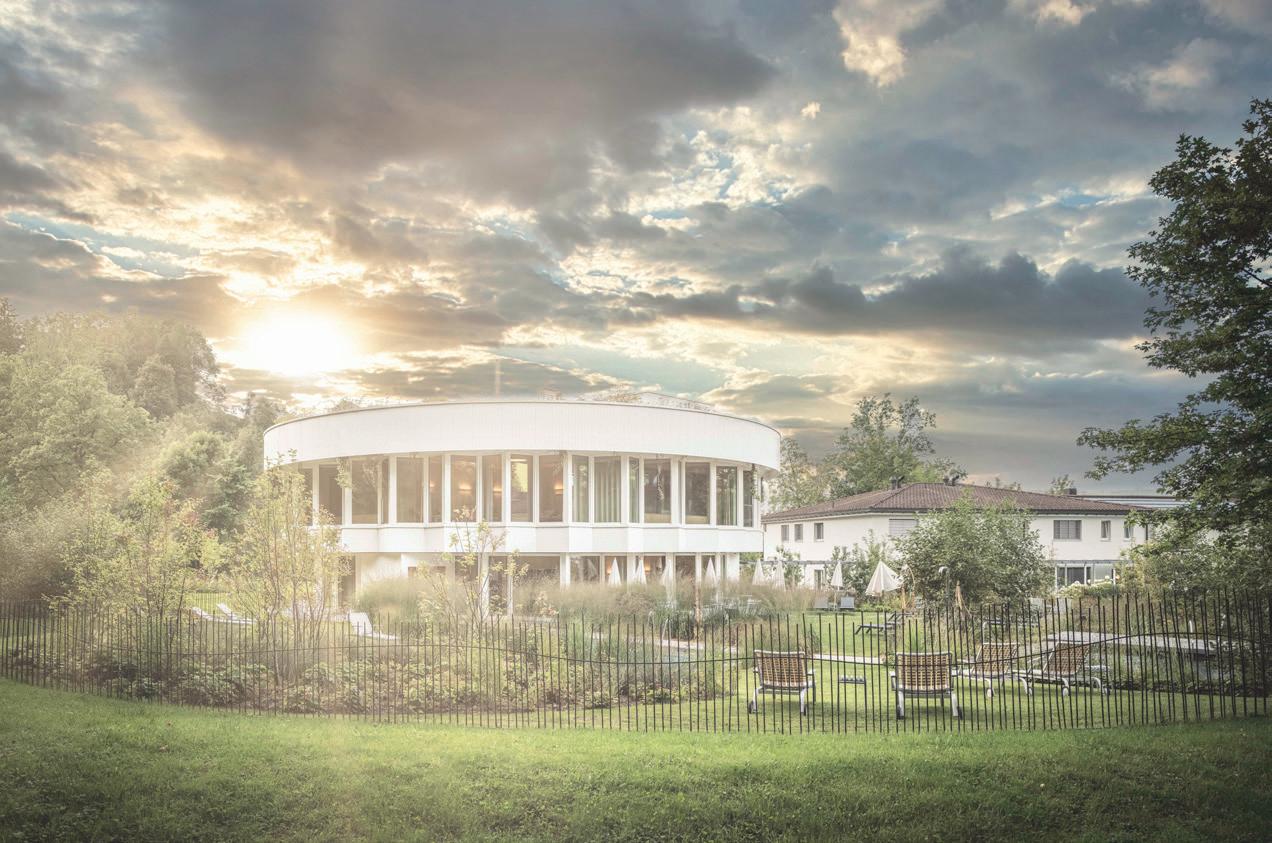
Those who visit Appenzell will discover not only one of the most picturesque regions in Switzerland, but also a special retreat: Resort Hof Weissbad. Nestled at the foot of the Alpstein mountains, this traditional hotel impresses with its combination of modern architecture, warm hospitality, and a wide range of offerings for body and mind.
At Resort Hof Weissbad, guests can choose between two accommodation options: the modern Lodge Hof Weissbad and the four-star superior Hotel Hof Weissbad. Both combine relaxation and activity with thoughtful details, first-class comfort, and an all-inclusive package that makes one’s stay particularly easy.
Visitors can enjoy walks in the Glandenstein, strolls through the Appenzell village, and hikes in the Alpstein mountains, all while experiencing the vibrant local culture and traditions unique to the region.
APPENZELL HEALTH
The resort’s health centre combines medical expertise with holistic regeneration to create a top-class medical wellness concept. "Here, people who consciously strengthen their
health, want to achieve their ideal weight sustainably, or feel more vital and energetic, will find the ideal conditions," says Thomas Möderndorfer, director of the health centre.
The health and wellness offerings at Resort Hof Weissbad range from prevention and regeneration to targeted strengthening. Appenzell Health is based on four interconnected pillars: nutrition, relaxation, exercise, and mindfulness. Guests who wish to proactively strengthen their health will find individualised programmes rather than standard solutions. "Personal needs and goals are at the heart of everything we do. We don't offer a one-size-fits-all programme; instead, we create a personalised health journey, tailored to each guest's individual needs, focusing on areas such as stress reduction, improved sleep, metabolism, vitality, or sustainable habits," explains Möderndorfer.
Depending on the package, diagnostic and therapeutic elements such as cardio scans, altitude training (IHT/IHHT), Omega 3 analysis, and selected complementary medicine approaches are integrated. Medical support is individualised, empathetic, and always geared towards the resources and potential of the guests.
Wer das Appenzellerland besucht, entdeckt nicht nur eine der malerischsten Regionen der Schweiz, sondern einen besonderen Rückzugsort: Das Resort Hof Weissbad. Eingebettet am Fusse des Alpsteins begeistert das traditionsreiche Hotel mit seiner Kombination aus moderner Architektur, herzlicher Gastfreundschaft und einem breiten Angebot für Körper und Geist.
Im Resort Hof Weissbad erwarten Gäste zwei Unterkunftswelten: die moderne Lodge Hof Weissbad und das Vier-Sterne-Superior Hotel Hof Weissbad. Beide vereinen Entspannung und Aktivität – mit liebevollen Details, erstklassigem Komfort und einem Rundumsorglos-Paket, das den Aufenthalt besonders leicht macht.
Wer die Region rund um das Resort entdecken möchte, findet abwechslungsreiche Möglichkeiten: Spaziergänge im Glandenstein, Bummeln durch das ursprüngliche Dorf Appenzell sowie ausgedehnte Wanderungen im Alpstein mit den bekannten Berggasthäusern Aescher und Schäfler. Dazu kommt, was das Appenzellerland so einzigartig macht: eine Kultur, die
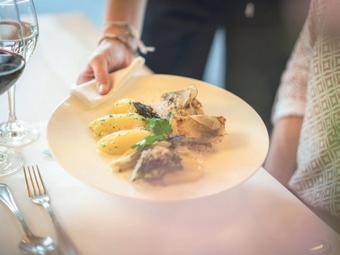
noch heute gelebt wird – und ein Brauchtum, den man nicht nur sieht, sondern spürt.
Das dem Resort angeschlossene Gesundheitszentrum verbindet medizinische Kompetenz mit ganzheitlicher Regeneration zu einem Medical Wellness Konzept der Extraklasse. „Bei uns finden Menschen, die ihre Gesundheit bewusst stärken, ihr Wohlfühlgewicht nachhaltig finden oder sich vitaler und leistungsfähiger fühlen möchten, die idealen Bedingungen”, sagt Thomas Möderndorfer, Direktor Gesundheitszentrum.
Das Gesundheitsangebot des Resort Hof Weissbad reicht von Prävention und Rege-
neration bis zur gezielten Stärkung. ‚Appenzell Health’ ist gestützt auf den 4 Säulen, die ineinandergreifen: Ernährung, Entspannung, Bewegung und Bewusstsein. Gäste, die also präventiv ihre Gesundheit stärken möchten, finden hier individuelle Programme statt Standardlösungen, da das entwickelte Programm auch über den Aufenthalt hinauswirken soll. „Im Zentrum stehen persönliche Bedürfnisse und Ziele. Wir bieten kein ‚Programm von der Stange‘, sondern es entsteht ein persönlicher Gesundheitsweg – je nach Ausgangslage mit Fokus auf zum Beispiel Stressabbau, besseren Schlaf, Stoffwechsel, Vitalität oder nachhaltige Gewohnheiten“, so Möderndorfer.
Je nach Package werden diagnostische und therapeutische Elemente wie Cardioscan, Höhen-Training (IHT/IHHT), Omega 3 Analyse und ausgewählte komplementärmedizinische Ansätze integriert. Die medizinische Begleitung ist individuell, empathisch und orientiert sich stets an den Ressourcen und Potenzialen der Gäste.
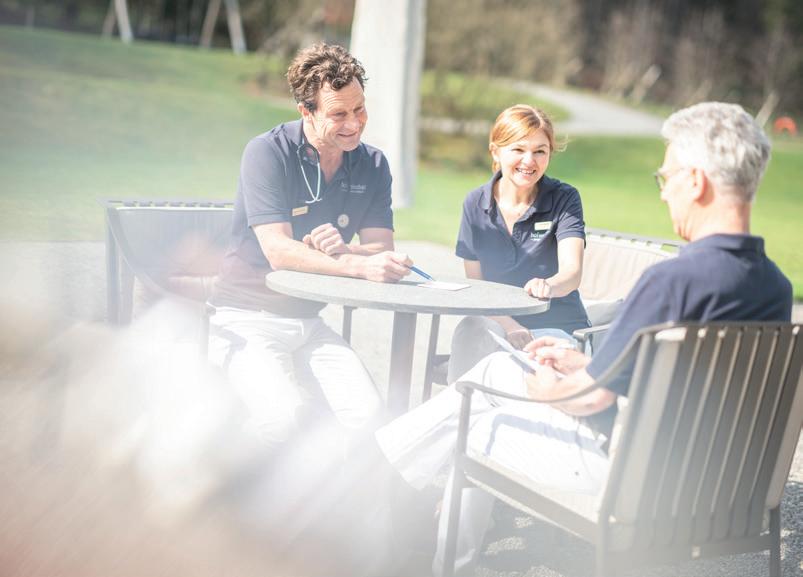
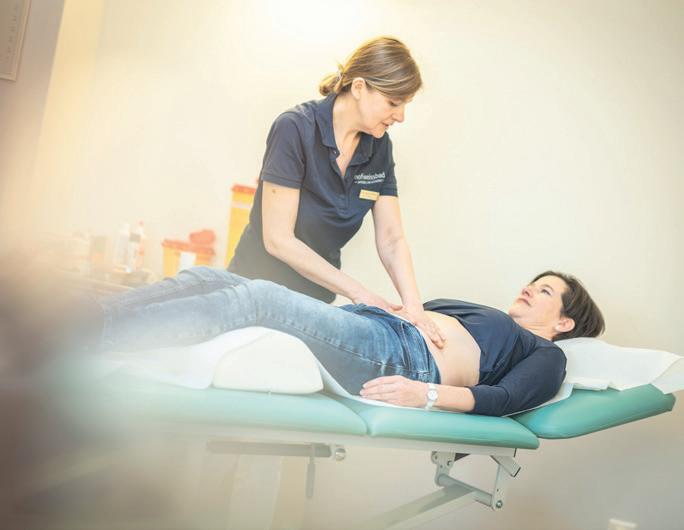
A health coach further provides detailed nutrition analyses, cooking classes, and tailored dietary advice, with the cuisine accommodating all allergies and dietary needs for lasting results. Relaxation options include meditation, spa treatments, sports massages, and the new bathing and sauna facility featuring relaxation and fitness areas, outdoor pools, multiple saunas, and a vitality lounge. The movement and therapy team assists with rehabilitation, prevention, and performance improvement, both at the resort and in the revitalising Alpstein region.
A special highlight: Resort Hof Weissbad is Switzerland’s only certified F.X. Mayr® Center. Nutritional knowledge and modern as well as naturopathic approaches therefore play a central role at the resort. Food becomes a gentle tool for energy, lightness, and inner peace – without the rhetoric of deprivation, but with expertise and enjoyment.
CRAFTSMANSHIP, TRADITION AND INNOVATION
It is no wonder, then, that much at Resort Hof Weissbad revolves around the joy of good food. For three decades, head chef Käthi Fässler has shaped the resort's culinary profile. In 2026, she will celebrate her 30th anniversary. "Käthi Fässler is a chef with heart and soul and outstanding skills," rave Susanne and Elias Leu, directors and hosts of Resort Hof Weissbad. "She understands how
to combine top-class gastronomy with downto-earth charm."
The hallmark of the entire kitchen team is their ability to seamlessly transition between everyday classics like Rösti, Käsespätzle, and Appenzeller specialties, and refined ingredients in the gourmet menu. More than 400 dishes pass through Fässler's hands daily; it is no wonder, then, that her cuisine was honoured with the title Chef of the Year in 2009 and consistently earns 16 Gault Millau points. The menus in the restaurants change daily, and the option to create your own courses is particularly popular. Another highlight: the six-course gourmet menu.
The kitchen team works closely with local producers to guarantee short supply chains and fresh ingredients. At Hof Weissbad, cooking is mindful and resource-efficient; a principle practiced throughout the entire resort. Käthi Fässler also places great emphasis on developing young talent: for almost 30 years, she has trained at least three apprentices annually, giving her young chefs space to grow.
The culinary offerings are spread across several locations: the architecturally striking main restaurant Flickflauder, the elegant Veranda, and the traditional Schotten-SeppStube. The rustic Hofkäserei-Chalet (farmhouse cheese dairy chalet) is ideal for corporate or private celebrations. The modern,
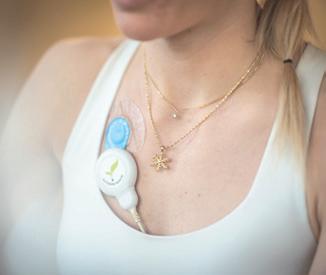
renovated small farmhouse is also suitable for banquets with a private chef or private kitchen parties for up to 14 people, while the Blumenwerkstatt (flower workshop with inhouse floristry) offers banquets for up to 20 people amidst fresh flowers and plants.
Whether one is seeking indulgence, culture, or holistic well-being, Resort Hof Weissbad resort consistently surprises and delights its guests. Authentic, stylish, and brimming with joie de vivre, Switzerland reveals its most beautiful side here.
www.hofweissbad.ch/en
Retreat 2026: Gestärkt durch die Wechseljahre (strengthened by menopause)
6-10 May 2026 (4 nights)
Holistic empowerment during a formative phase of life.
Partner: JIVITA – Centre for Integrative Medicine
Content: Retreat for women in periand menopause. Medically sound guidance and advice, integrative medicine approaches, practical tips on nutrition, exercise and stress management, complementary treatments, and time for regeneration
Price: CHF 4,649 per person (according to offer)
www.hofweissbad.ch/angebote/ retreat-gestaerkt-durch-diewechseljahre
Discover Germany, Austria & Switzerland readers receive a special discount. Simply enter the code DISCOVER when booking.
Im Bereich Ernährung bietet ein Gesundheitscoach umfassende Analysen, Kochkurse und individuelle Ernährungsberatung. Die Küche des Resorts passt sich allen Allergie- und Kurvorschriften der Gäste an und garantiert so nachhaltige Ergebnisse. Für Entspannung sorgen Meditationen, Spa- und Wellnessbehandlungen, Sportmassagen sowie der neue Bade- und Saunahaus-Komplex mit Ruhe- und Fitnessräumen, Aussenpools, verschiedenen Saunen und einer Vital-Lounge. Das erfahrene Bewegungs- und Therapieteam unterstützt Gäste bei Rehabilitation, Prävention und Leistungssteigerung – sowohl im Resort als auch in der Kraft spendenden Natur des Alpsteins.
Ein besonderes Highlight: Das Resort Hof Weissbad ist das einzige zertifizierte F.X. Mayr® Zentrum in der Schweiz. Ernährungswissen und moderne sowie naturheilkundliche Ansätze spielen somit im Resort eine tragende Rolle. Essen wird zum sanften Werkzeug für Energie, Leichtigkeit und innere Ruhe – ohne Verzichtsrhetorik, dafür mit Know-how und Genuss.
HANDWERK, TRADITION UND INNOVATION
Kein Wunder also, dass sich im Resort Hof Weissbad vieles um die Freude am guten Essen dreht. Seit drei Jahrzehnten prägt Küchenchefin Käthi Fässler das kulinarische Profil des
Resorts. 2026 feiert sie ihr 30-jähriges Jubiläum. „Käthi Fässler ist eine Köchin mit Herz und Verstand und herausragenden Fähigkeiten”, schwärmen Susanne und Elias Leu, Direktion & Gastgeber vom Resort Hof Weissbad. „Sie versteht es, Spitzengastronomie mit Bodenständigkeit zu verbinden.”
Das Markenzeichen des gesamten Küchenteams ist, zwischen Alltagsklassikern wie Rösti, Käsespätzli und Appenzeller Spezialitäten hin zu feinen Produkten im Gourmet-Menü zu wechseln. Täglich gehen mehr als 400 Gerichte über Fässlers Pass; es scheint also kein Wunder, dass ihre Küche bereits 2009 mit dem Titel ‚Köchin des Jahres’ geehrt wurde und konstant mit 16 Gault Millau Punkten überzeugt. Die Menüs in den Restaurants wechseln täglich und besonders beliebt ist die Möglichkeit, die Gänge selbst zusammen stellen zu können. Ein weiteres Highlight: Das 6-Gang-Gourmetmenü.
Das Küchenteam arbeitet eng mit lokalen Produzenten zusammen, um kurze Lieferwege und frische Zutaten zu garantieren. Food Waste? Fehlanzeige! Im Hof Weissbad wird achtsam und ressourcenschonend gekocht; ein Prinzip, das im gesamten Resort gelebt wird. Nachwuchsförderung wird bei Käthi Fässler ausserdem grossgeschrieben: Sie ist eine her-
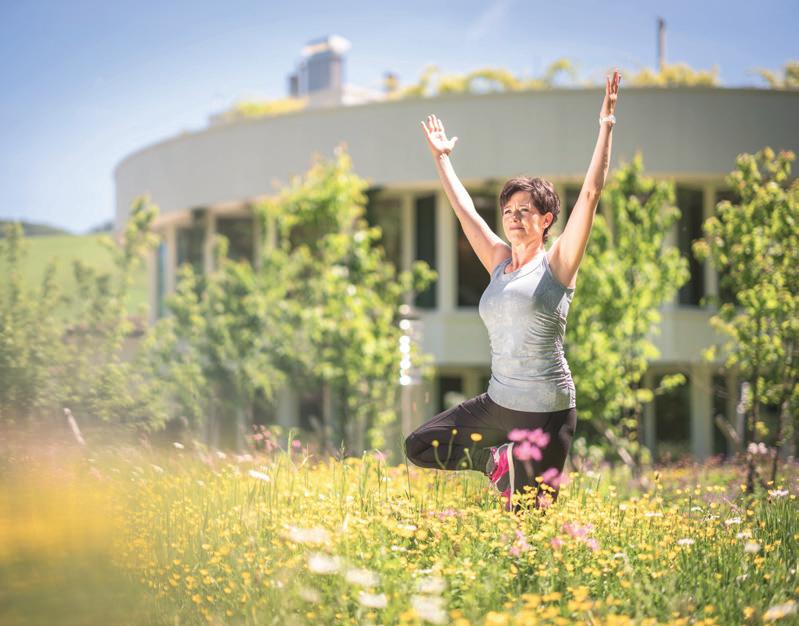
vorragende Ausbildnerin, die ihren jungen Talenten Raum gibt und deren Entwicklung prägt. Seit fast 30 Jahren bildet sie jährlich mindestens drei Lernende aus.
Das kulinarische Angebot verteilt sich auf mehrere Locations: Das architektonisch auffallende Hauptrestaurant Flickflauder, die elegante Veranda und die traditionsreiche Schotten-SeppStube. Für Firmen- oder private Feiern bietet sich das urige Hofkäserei-Chalet an. Das modern ausgebaute kleine Hofhaus eignet sich zudem für Bankette mit Privatkoch oder private Küchenparties für bis zu 14 Personen, während in der Blumenwerkstatt (hauseigene Floristik) inmitten von frischen Blumen und Pflanzen Bankette für bis zu 20 Personen angeboten werden.
Ob Genuss, Kultur oder ganzheitliches Wohlbefinden, das Resort Hof Weissbad versteht es, seine Gäste immer wieder zu überraschen und zu begeistern. Authentisch, stilvoll und voller Lebensfreude zeigt sich die Schweiz hier von ihrer schönsten Seite.
www.hofweissbad.ch
Retreat 2026: ,Gestärkt durch die Wechseljahre’
06. - 10. Mai 2026 (4 Nächte) Ganzheitliche Stärkung in einer prägenden Lebensphase.
Begleitung und Partner: JIVITA –Zentrum für integrative Medizin
Inhalt: Retreat für Frauen in der Peri- & Menopause. Ärztlich fundierte Impulse und Beratung, integrativmedizinische Ansätze, praxisnahe Tipps zu Ernährung, Bewegung und Stressregulation, ergänzende Anwendungen sowie Zeit für Regeneration
Preis: CHF 4’649 pro Person (gemäss Angebot)
www.hofweissbad.ch/angebote/ retreat-gestaerkt-durch-diewechseljahre
Discover Germany, Austria & Switzerland Leser erhalten einen Sonderrabatt. Einfach beim Buchungscode DISCOVER eingeben.
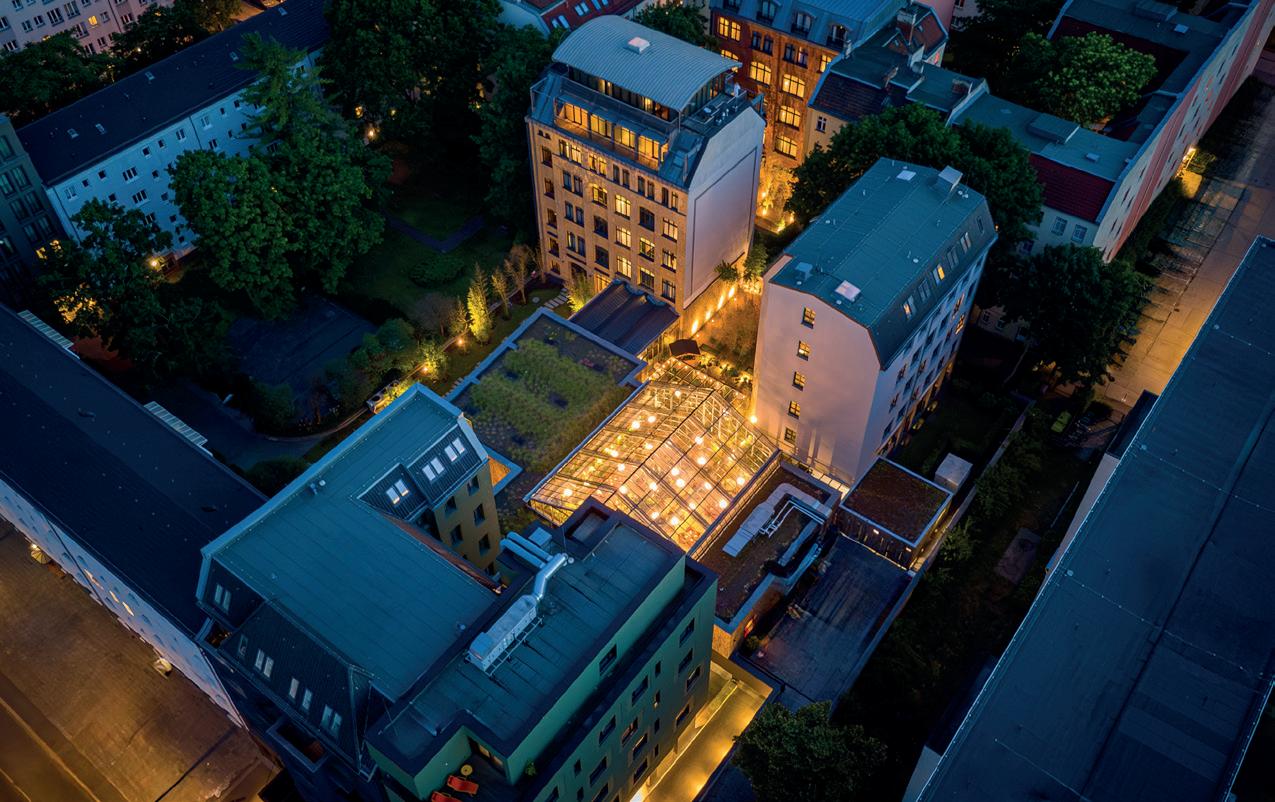
In the heart of Friedrichshain-Kreuzberg, one of the capital's most vibrant districts, the sly Berlin hotel consciously forges its own path. This city hotel cleverly combines design, personality, and the Berlin lifestyle, resulting in an urban retreat right in the centre of Berlin.
Berlin is Germany’s most visited city, which means that visitors naturally have a wide selection of accommodation options. However, the trend shows that visitors increasingly desire more personality and individuality from their hotels. For those visitors, the sly Berlin might be the perfect city hotel – personal, individual, and located in the heart of trendy Friedrichshain-Kreuzberg, one of Berlin's most vibrant and culturally diverse districts.
“sly Berlin was born from the idea of creating a modern city hotel that is more than just a classic place to stay,” explains Philipp Christensen, sly Berlin’s general manager. “Our goal was to combine design, high-quality cuisine, and an authentic Berlin lifestyle into a holistic experience.” The guiding principle ‘Dive in, be free, and rediscover Berlin’s urban life’ permeates the entire hotel and guests are encouraged to feel like an East Berlin local –immersed in the city’s creative energy, yet far
removed from the hustle and bustle. “While Friedrichshain pulsates outside, you find peace here,” says Christensen. “That’s also precisely where our personal understanding of service lies: attentive, approachable, and with genuine presence.”
Architecturally, the sly blends modern design with Berlin's history. Created from historic buildings and typical Berlin courtyard architecture, the hotel preserves the raw character of Friedrichshain-Kreuzberg and translates it into a contemporary aesthetic.
sly Berlin offers its guests 150 individually designed rooms in six categories. The rooms are characterised by the preservation of traditional architectural elements such as arched windows and bay windows, and feature high-quality oak parquet flooring as well as state-of-the-art amenities including kingsize beds, designer furniture, underfloor
heating, rain showers, and air conditioning. Some rooms also have a Juliet balcony or a private terrace.
Another highlight is the rooftop sauna with views over Berlin. Flexible conference rooms are also available for meetings and workshops. The hotel's centrepiece is the light-filled greenhouse restaurant with its large glass roof, which serves modern Berlin cuisine and specialties from the robata grill.
For those seeking a city hotel that does not exaggerate urbanity but makes it tangible and at the same time pleasantly slows things down, sly Berlin might just be the perfect retreat.
www.sly-berlin.com
Inmitten von Friedrichshain-Kreuzberg, einem der lebendigsten Bezirke der Hauptstadt, hat mit dem sly Berlin ein Hotel eröffnet, das bewusst neue Wege geht. Das Stadthotel vereint Design, Persönlichkeit und Berliner Lebensgefühl und wird so zu einem urbanen Rückzugsort mitten in Berlin.
Berlin ist die meistbesuchte Stadt Deutschlands. Klar, dass Besucher*innen dadurch eine große Auswahl an Unterkünften haben. Der Trend zeigt aber, dass sich Besucher zunehmend mehr Persönlichkeit und Individualität von ihrem Hotel wünschen. Wer Berlin also authentisch erleben und stilvoll wohnen möchte, findet im sly Berlin das perfekte Stadthotel – persönlich, individuell und mitten im angesagten Friedrichshain-Kreuzberg, einer der lebendigsten und kulturell vielfältigsten Bezirke Berlins.
„Das sly Berlin entstand aus der Idee, ein modernes Stadthotel zu schaffen, das mehr ist als ein klassischer Aufenthaltsort“, erklärt Philipp Christensen, General Manager des sly Berlin. „Unser Ziel war es, Design, hochwertige Gastronomie und ein authentisches Berliner Lebensgefühl zu einem ganzheitlichen Erlebnis zu verbinden.“ Das Leitmotiv ‚Tauch ab, sei frei und entdecke das urbane Leben Berlins aufs Neue‘ zieht sich durch das gesamte Haus. Gäste sollen sich wie ein ‚East Berlin Local‘ fühlen – ein-
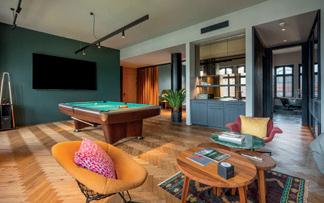
gebettet in die kreative, internationale Energie der Stadt, aber fernab vom Trubel. „Während draußen Friedrichshain pulsiert, entsteht hier ein Ort, an dem man ankommt und zur Ruhe kommt“, so Christensen. „Genau darin liegt auch unser persönliches Serviceverständnis: aufmerksam, nahbar und mit echter Präsenz.“
Architektonisch verbindet das sly modernes Design mit der Geschichte Berlins. Entstanden aus historischen Altbauten und typischer Berliner Hinterhofarchitektur, bewahrt das Hotel den rauen Charakter von Friedrichshain-Kreuzberg und übersetzt ihn in eine zeitgemäße Ästhetik.
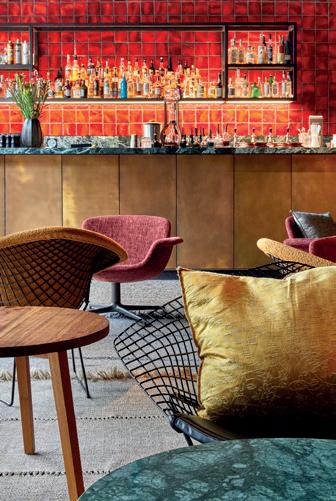
Das sly Berlin bietet seinen Gästen 150 individuell gestaltete Zimmer in sechs Kategorien. Die Zimmer zeichnen sich durch die Erhaltung traditioneller Altbauelemente wie Rundbögen und Erker aus und begeistern mit hochwertigem Eichenparkett, sowie modernster Ausstattung wie KingsizeBetten, Designer-Möbel, Fußbodenheizung, Regendusche, Klimaanlage und NespressoMaschine. Einige der Zimmer verfügen außerdem über einen französischen Balkon oder eine eigene Terrasse.
Ein weiteres Highlight ist die Rooftop-Sauna mit Blick über die Dächer Berlins. Zudem stehen flexible Konferenzräume für Meetings und Workshops zur Verfügung. Das Herzstück des Hotels bildet das lichtdurchflutete Gewächshaus-Restaurant mit großem Glasdach, das als Treffpunkt mit besonderer Atmosphäre gilt und moderne Berliner Küche und Spezialitäten vom Robata-Grill kredenzt.
Für diejenigen, die also ein Stadthotel suchen, das Urbanität nicht überhöht, sondern erlebbar und gleichzeitig wohltuend entschleunigt, ist das sly der perfekte Rückzugsort.
www.sly-berlin.com
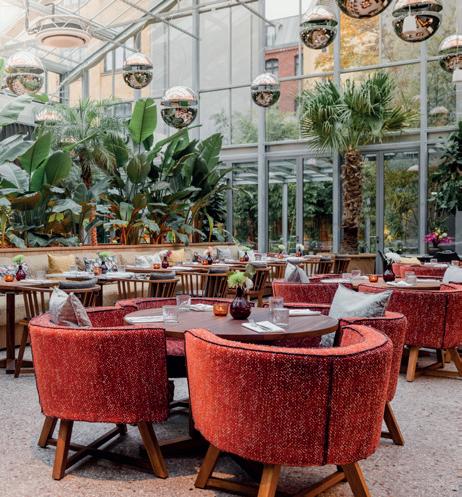
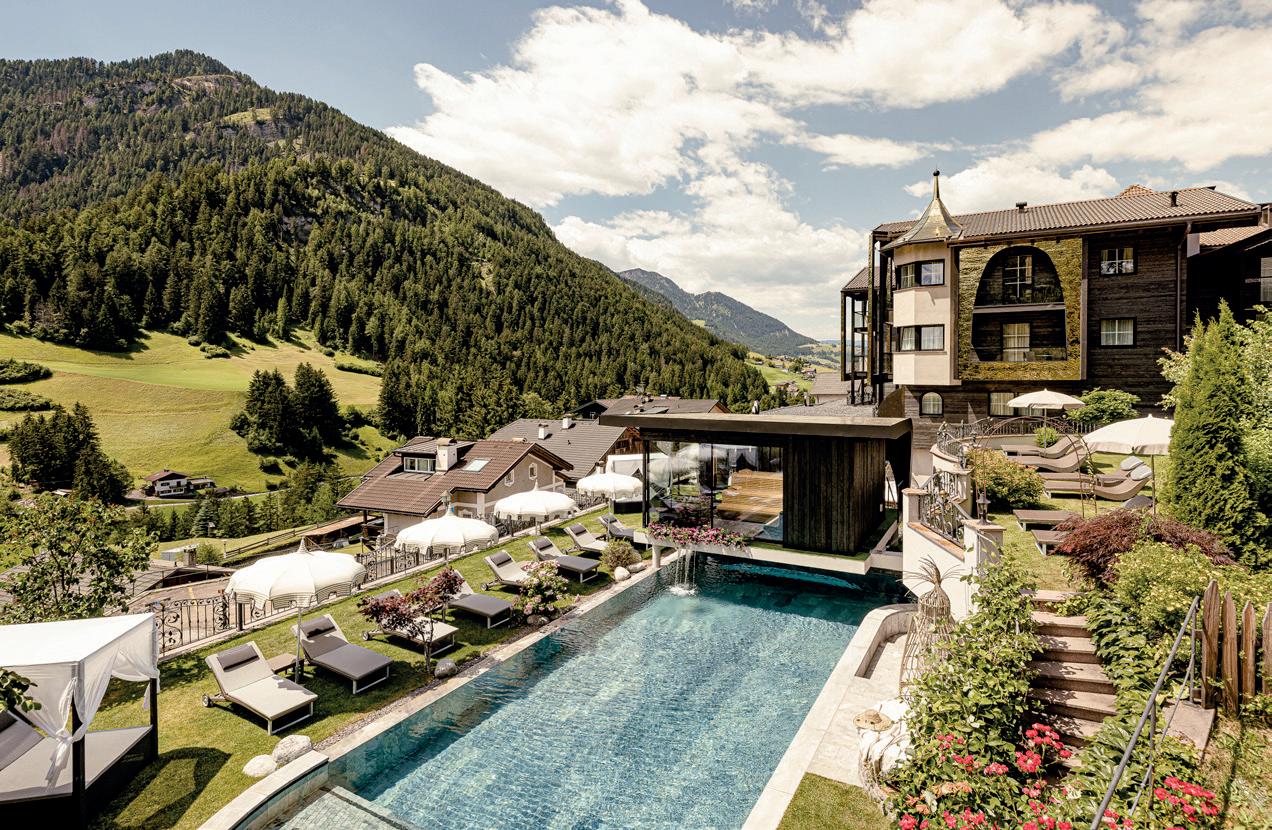
Nestled in Val Gardena, amidst majestic peaks and alpine beauty, the 5-star adultsonly Alpin Garden Luxury Maison & SPA unfolds as a place that offers far more than mere accommodation. It is a home brimming with inspiration, luxury and a personal touch, created to provide travellers seeking to escape their everyday lives with the most wonderful time of the year.
Anyone entering the Alpin Garden immediately senses that it is not about standards, but about individuality, authenticity, and the feeling of having arrived. It all began in 1971 when Alberta and Karl Hofer opened the small Garni Garden for the winter season. "My mother cared for the guests with great warmth, while my father pursued his passion for woodcarving," recalls Markus Hofer, the current host. The family spirit shaped the establishment from the very beginning, and even as a child, Markus helped his mother with breakfast service. This is how
his love for hospitality was awakened early and grew steadily.
At just 25 years old, he took over the family hotel and, through several construction phases, transformed it with diligence, courage, and vision into today's Alpin Garden Luxury Maison & SPA. "A luxurious retreat where I could realise my passion for detail and my penchant for the extraordinary with a touch of eccentricity." To this day, he finds joy in continually redesigning the Alpin Garden and incorporating creative ideas. "This is how our
haven in the heart of the Dolomites came to be – created to offer guests the most wonderful time of the year."
The unique atmosphere at Alpin Garden is relaxed, stylish, personal, and yet luxurious. Eccentric, extraordinary, and style-conscious –at the same time connected to nature and deeply rooted in its homeland. "Here, you should simply be yourself," says Markus Hofer.
As an adults-only hotel, the Alpin Garden prioritises a relaxed atmosphere and discretion. At the same time, the hotel impresses with its personalised service, where the wishes of each individual guest are always the focus. Furthermore, the ambiance is a harmonious blend of modern design and
Im Grödner Tal, eingebettet zwischen majestätischen Gipfeln und alpiner Schönheit, entfaltet sich das 5-Sterne Adults-Only Alpin Garden Luxury Maison & SPA als ein Ort, der weit mehr bietet als bloße Unterkunft. Es ist ein Zuhause voller Inspiration, Luxus und persönlicher Note – geschaffen, um Reisenden, die ihren Alltag hinter sich lassen wollen, die schönste Zeit des Jahres zu bereiten.
Wer das Alpin Garden betritt, spürt sofort, dass es hier nicht um Standards, sondern um Individualität, Authentizität und das Gefühl, angekommen zu sein, geht. Alles begann 1971 als Alberta und Karl Hofer zur Wintersaison das kleine Garni Garden eröffneten. „Meine Mutter kümmerte sich mit viel Herzlichkeit um die Gäste, während mein Vater seiner Leidenschaft, der Holzschnitzerei, nachging,“ erinnert sich Markus Hofer, der heutige Gastgeber. Der Familiengeist prägte das Haus von Anfang an und schon als Kind half Markus seiner Mutter beim Frühstücksservice. So wurde die Liebe zur Gastronomie früh geweckt und wuchs stetig.
Mit nur 25 Jahren übernimmt er das Familienhaus und verwandelt es, in mehreren Bauphasen, mit Fleiß, Mut und Vision, in das heutige Alpin Garden Luxury Maison & SPA. „Ein luxuriöses Refugium, in dem ich meine Leiden-
schaft für Details und meine Vorliebe für das Besondere mit einem Hauch von Exzentrik verwirklichen konnte.“ Bis heute erfüllt ihn es mit Freude, das Alpin Garden immer wieder neu zu gestalten und kreative Ideen einfließen zu lassen. „So entstand ein Rückzugsort im Herzen der Dolomiten – geschaffen, um Gästen die schönste Zeit des Jahres zu bereiten.“
ALLES DARF, NICHTS MUSS
Dieses Leitmotiv des Hauses spiegelt die spezielle Atmosphäre im Alpin Garden wider, die ungezwungen, stilvoll, persönlich und dennoch luxuriös wirkt. Exzentrisch, außergewöhnlich und stilbewusst – zugleich naturverbunden und der Heimat tief verwurzelt. „Hier sollst Du einfach Du selbst sein dürfen“, sagt Markus Hofer.
Im Alpin Garden steht als Adults-Only-Hotel eine entspannte Atmosphäre und Diskretion im Mittelpunkt. Gleichzeitig überzeugt das
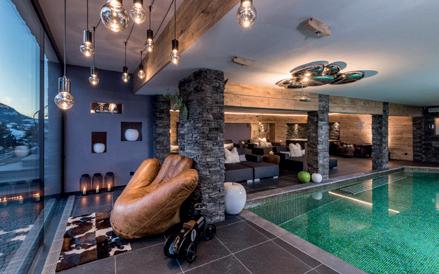
Haus durch einen individuellen Service, bei dem die Wünsche jedes einzelnen Gastes stets im Fokus stehen. Zudem ist das Ambiente eine harmonische Verbindung aus Moderne und alpiner Tradition. „Gold zieht sich als elegantes Konzept durch das gesamte Haus und verleiht den Räumlichkeiten Wärme, Charakter und eine subtile Exklusivität“, so Markus Hofer. Die Zimmer zeigen die vielfältige Seele des Hauses, von traditionell-alpinen Räumen mit Bauernofen bis hin zu Open-Space-Suiten mit Whirl-Badewanne. Immer inklusive: liebevolle Details, Komfort, Geborgenheit und ein besonderes Wohlfühlgefühl.
VOLLKOMMENE ERHOLUNG
Im Wellness- und SPA-Bereich entfaltet sich das Konzept von Luxus und Entspannung auf höchstem Niveau. Der 24 Stunden täglich geöffnete Indoor-Pool und Whirlpool, der Außenpool mit Gartenbereich sowie die verschiedenen Saunen und stilvollen Ruhezonen schaffen Rückzugsorte für jede Stimmung. Ein neues Highlight im SPA-Bereich ist die schwebende finnische Sauna mit Panorama-Ausblick auf die Langkofel- und die Sellagruppe, markante Gebirgsstöcke in den Dolomiten. „Jeder Gast
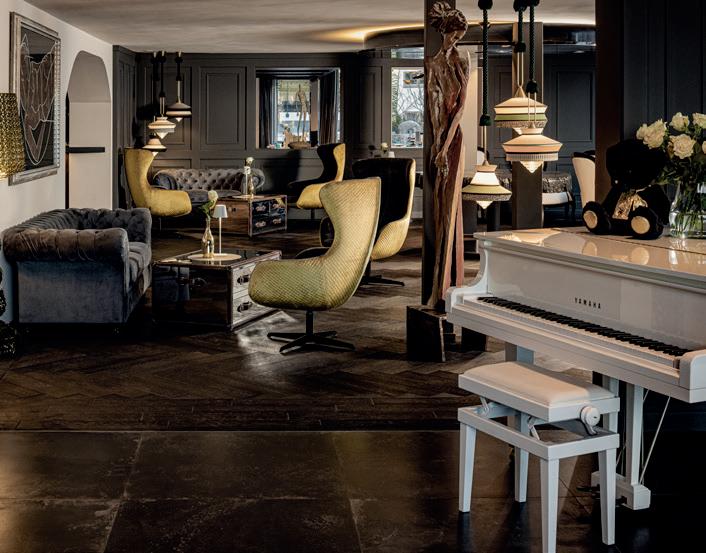
alpine tradition. "Gold is an elegant concept that runs throughout the entire hotel, lending the rooms warmth, character, and a subtle exclusivity," says Markus Hofer. The rooms reflect the hotel's diverse character, ranging from traditional alpine rooms with wood-burning stoves to open-plan suites with whirlpool bathtubs. Always included: thoughtful details, comfort, a sense of security, and a special feeling of well-being.
In the wellness and spa area, the concept of luxury and relaxation unfolds at the highest level. The indoor pool and whirlpool, open 24 hours a day, the outdoor pool with garden area, as well as the various saunas and stylish relaxation zones, offer retreats for every mood. A new highlight in the spa area is the suspended Finnish sauna with panoramic views of the striking Langkofel and Sella mountain groups in the Dolomites. "Every guest will find their own personal favourite spot or cosy retreat here," says Markus Hofer.
As the Alpin Garden is an adults-only hotel (for guests 14 years and older), the spa area remains pleasantly quiet and exclusive. The beauty farm also offers classic massages, facials, aesthetic treatments, and romantic couples' programmes.
Located in the heart of Val Gardena, the Alpin Garden is also the perfect starting point for hikes, mountain tours, and outdoor activities. A free shuttle service, guided ski days in winter, and a diverse activity programme ensure
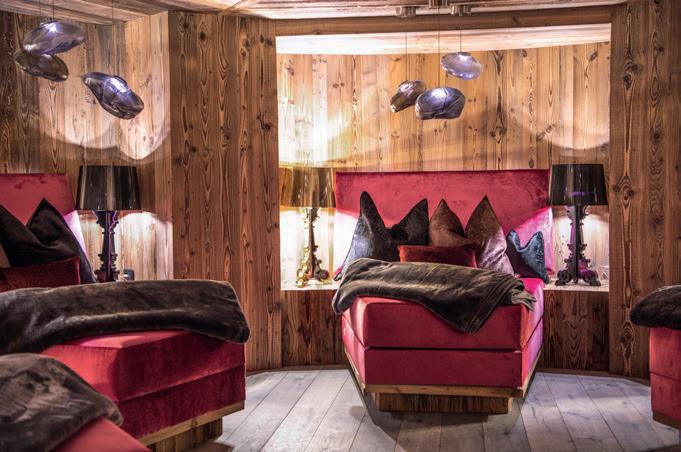
that every guest can indulge their individual preferences – and four-legged companions are welcome too.
In addition to its first-class wellness offerings, the Alpin Garden Luxury Maison & SPA pampers its guests with exceptional culinary experiences. Chef Andrea Alfinelli combines classic Italian traditions with modern refinement in the hotel’s elegant restaurant, offering creative cuisine of the highest gastronomic standard. Here, in an alpine style with contemporary design, he and his kitchen team serve both local and international dishes prepared with fresh, high-quality ingredients. "My culinary experience has its roots in the world of Michelin-starred restaurants," says Alfinelli. "For me, cooking is a continu-
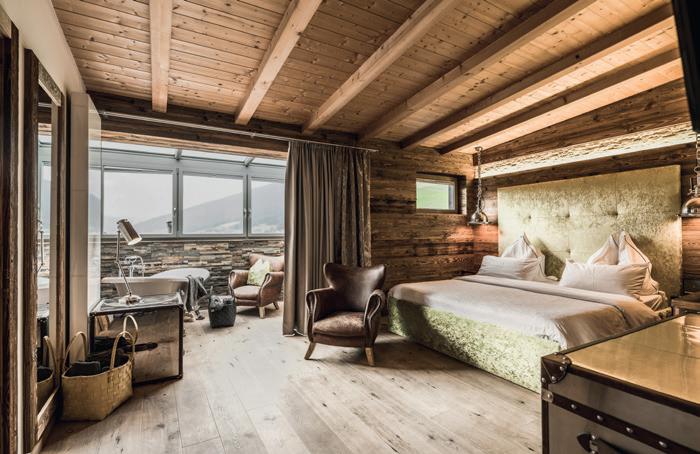
ous journey in search of surprising flavours and combinations."
In addition to the main restaurant, guests can relax in the stylish Golden Bar and choose from a selection of masterfully mixed Italian cocktails, aperitifs and fine wines, or linger in the Artist Lounge, where breathtaking mountain views accompany drinks and culinary delights.
Those seeking a stylish hideaway where hospitality, indulgence, design and wellness merge into an invitation to enjoy the best things in life will find their perfect destination at the Alpin Garden Luxury Maison & SPA.
www.alpingarden.com/en
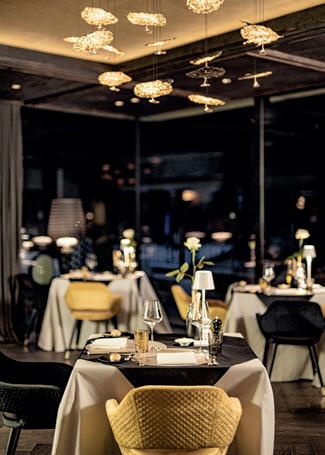
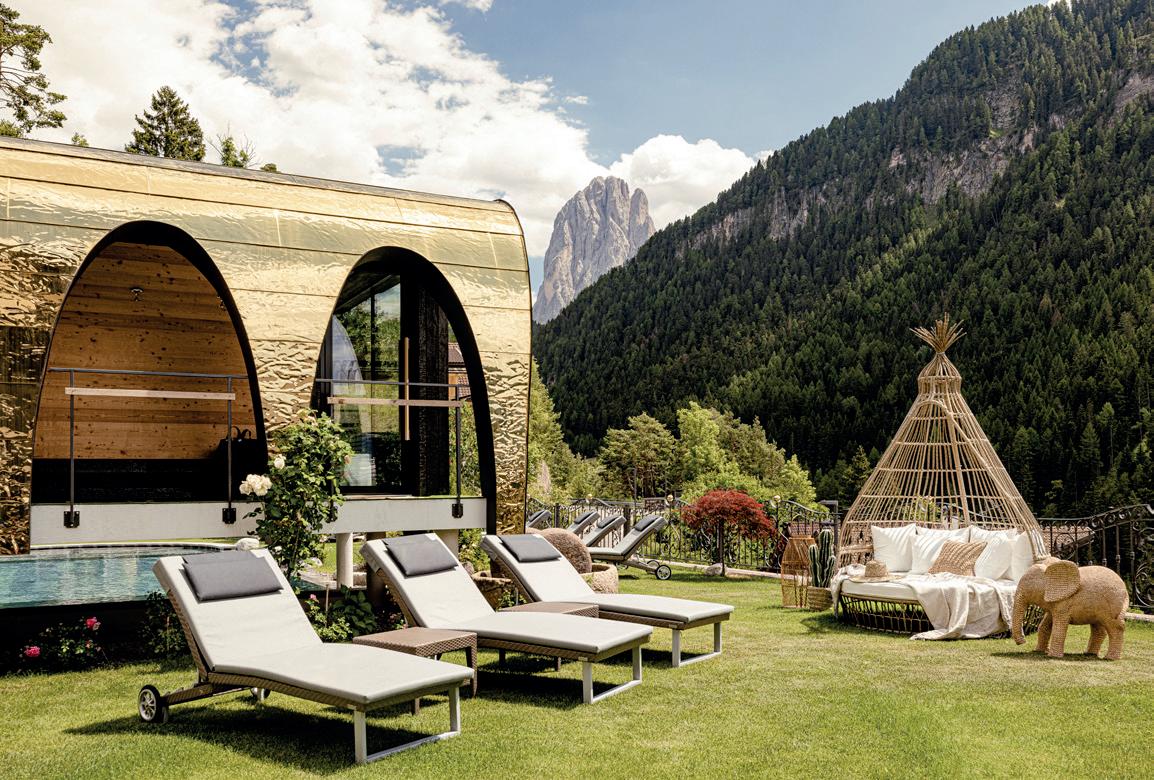
findet hier seinen ganz persönlichen Lieblingsoder Kuschelplatz“, sagt Markus Hofer.
Da das Alpin Garden ein Adults-Only-Hotel (ab 14 Jahren) ist, bleibt es im SPA-Bereich stets angenehm ruhig und exklusiv. In der Beauty Farm stehen ausserdem klassische Massagen, Gesichtsbehandlungen, ästhetische Anwendungen und romantische Pärchenprogramme auf dem Programm.
Die Lage im Herzen des Grödner Tals macht das Alpin Garden zudem zum perfekten Ausgangspunkt für Wanderungen, Bergtouren und Outdoor-Aktivitäten. Ein kostenloser ShuttleService, geführte Skitage im Winter und ein abwechslungsreiches Aktivprogramm sorgen dafür, dass jeder Gast seine individuellen Vorlieben ausleben kann – und auch vierbeinige Begleiter sind willkommen.
Neben dem erstklassigen Wellness-Angebot, verwöhnt das Alpin Garden Luxury Maison & SPA seine Gäste mit außergewöhnlichen
kulinarischen Erlebnissen. Chefkoch Andrea Alfinelli verbindet im eleganten Gröden Restaurant klassische italienische Traditionen mit moderner Raffinesse und bietet eine kreative Küche, die auf höchstem gastronomischem Niveau angesiedelt ist. Hier im alpinen Stil mit zeitgenössischem Design kredenzen er und sein Küchenteam sowohl lokale als auch internationale Gerichte, die aus frischen, hochwertigen Zutaten zubereitet werden. „Meine kulinarische Erfahrung hat ihre Wurzeln in den Sternewelten der Gastronomie“, so Alfinelli. „Kochen ist für mich eine kontinuierliche Reise auf der Suche nach überraschenden Geschmacksrichtungen und Kombinationen.“
Neben dem Hauptrestaurant können Gäste in der stilvollen Golden Bar entspannen und aus einer Auswahl an meisterhaft gemixten italienischen Cocktails, Aperitifs und edlen Weinen wählen oder in der Panoramakünstlerlounge verweilen, wo atemberaubende Bergblicke Getränke und kulinarische Köstlichkeiten begleiten.
Wer nach einem Hideaway mit Stil sucht, wo Gastfreundschaft, Genuss, Design und Wellness zu einer Einladung, die schönsten Seiten des Lebens zu genießen, verschmelzen, findet im Alpin Garden Luxury Maison & SPA seine perfekte Destination.
www.alpingarden.com
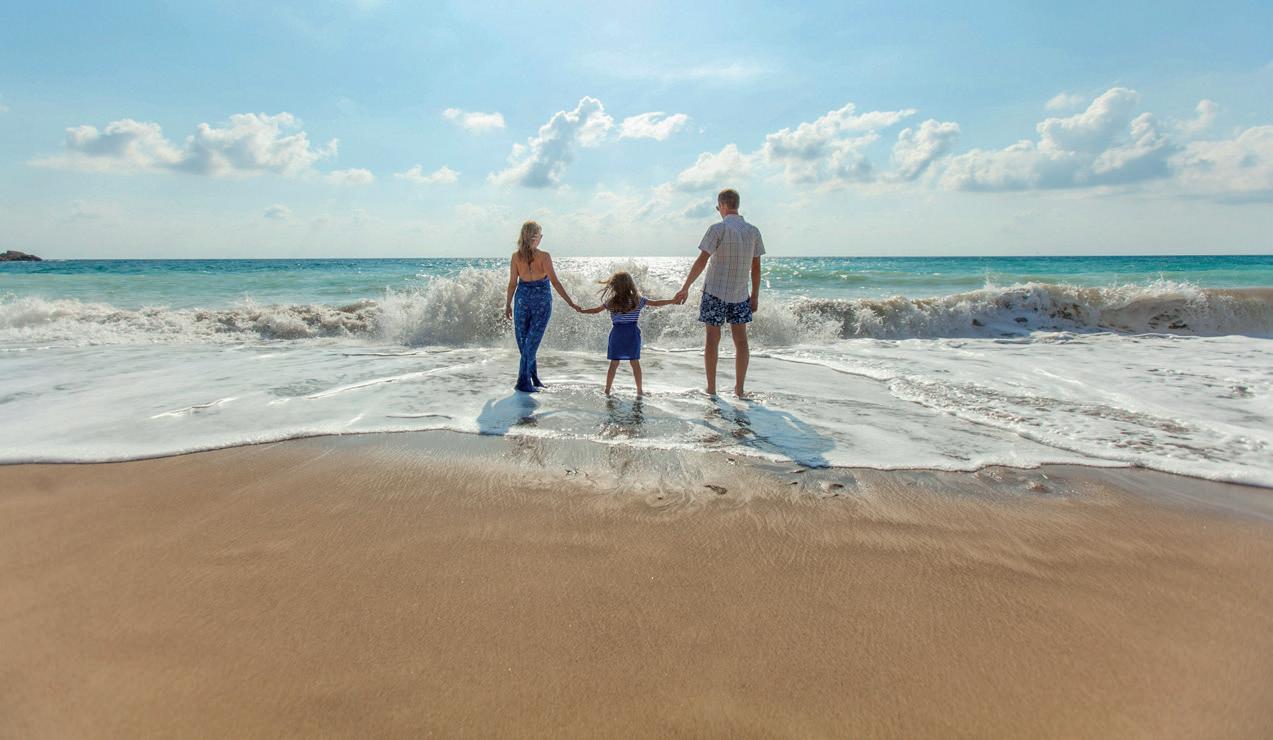
As the world awakens from winter’s chill, spring offers the perfect opportunity to venture abroad and experience nature’s renewal in remarkable destinations. This special theme invites you to discover some of the most captivating international escapes where blooming landscapes, vibrant cultures, and rejuvenating experiences combine to create unforgettable journeys that combine adventure, relaxation and inspiration.
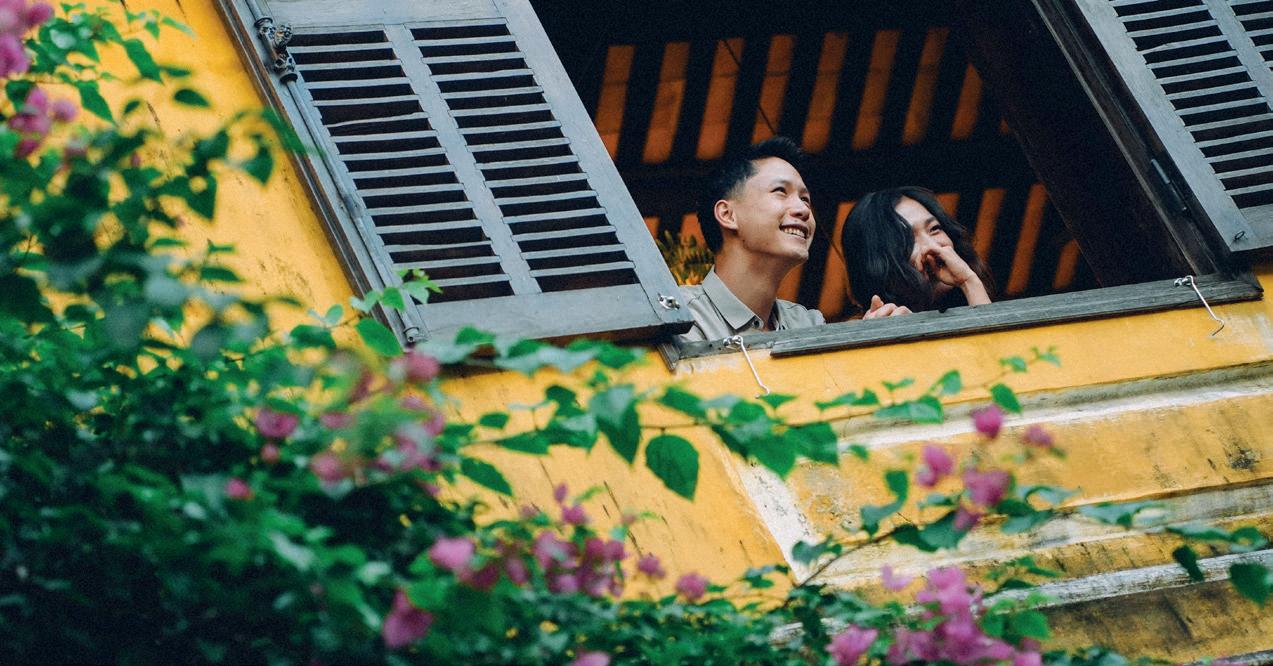

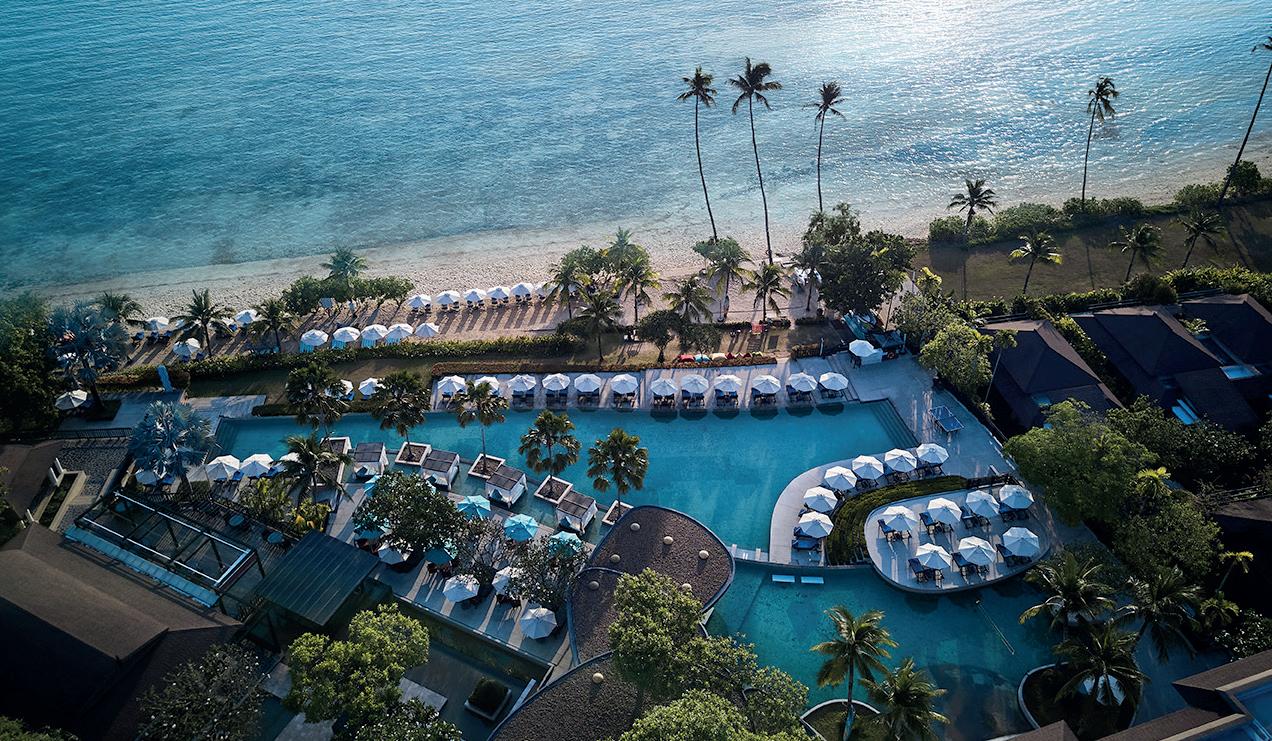
Tucked away on Phuket’s peaceful southeastern edge, the 5-star Pullman Phuket Panwa Beach Resort delivers a blend of laidback luxury and authentic Thai hospitality. The setting is nothing short of stunning: ringed by lush greenery, with the Andaman Sea shimmering at its doorstep, the resort feels like a hidden retreat, yet remains conveniently close to Phuket’s most exciting attractions.
When you think of Phuket, the bustling nightlife and international airport probably first spring to mind. However, on the southeastern part of the Thai island, visitors find privacy, solitude and lush nature in Pullman Phuket Panwa Beach Resort. Known all around the globe as a tropical paradise with stunning beaches, vibrant culture and rich history, Phuket boasts everything from colourful streets in Phuket Town to hiking trails, water sport activities like snorkelling and scuba diving, as well as boat trips to nearby islands such as the famous Phi Phi Islands. “Phuket’s warm hospitality and year-round tropical cli-
mate make it a must-visit destination,” says Vincent Delsol, general manager.
From the very first step inside the resort, the mood is set by the team’s friendly smiles and an atmosphere that is both upscale and inviting. The resort’s roots run deep in the philosophy of offering more than just a beautiful place to sleep, as it was designed to cater for special moments and memories.
For those seeking 5-star facilities while wanting to explore all that Phuket has to offer with-
in a short driving distance, Pullman Phuket Panwa Beach Resort offers 211 modern, thoughtfully curated rooms, family rooms, and suites for guests to choose from, all styled with a nod to Thai design elements. The 29 Beachfront Pool Villas, in particular, are showstoppers. Here, guests can wake up just steps from the sea. Equipped with a sun terrace under swaying palm trees and a private pool, the 150-square-metre villa seamlessly integrates separate living and sleeping areas and offers unprecedented privacy.
From the first rays of dawn until the hush of night, guests are invited to savour exquisite culinary delights across sophisticated restaurants, a fun beach club, an elegant Thai culinary dinner experience on the terrace,
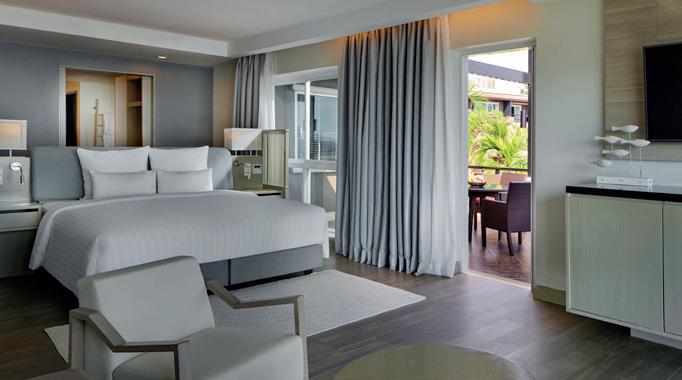
and a stylish bar. "We further elevate this culinary experience by offering guests the indulgence of gourmet meals delivered directly to their private sanctuaries at any hour of the day or night," shares Pimpisa Sukpasert, director of marketing and communication.
The award-winning Tamarind Restaurant, with its beachfront location, has earned a reputation for its creative menu that offers a seamless mix of Southern Thai favourites and classic Western comforts. The ingredients are fresh, the flavours bold, and the setting always atmospheric. Whether sharing a romantic table as the sky glows pink during the sunset or bringing the family together for a quick meal, Tamarind’s kitchen is sure to bring excellence to the plate with every dish.
Wellness seekers find their bliss at Talay Spa, a calming oasis which offers everything
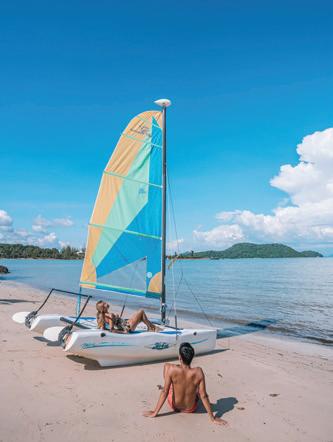
from traditional Thai massages to soothing body scrubs and aromatherapy rituals. With skilled therapists and peaceful surroundings, relaxation is all but guaranteed. “Spa treatments are based on traditional Thai and Chinese concepts of the five elements: wood, fire, earth, metal, and water,” explains Sukpasert.
If adventure is more your style, the sheltered bay right in front of the hotel is a playground for water sports. Activities like stand-up paddleboarding, kayaking, eFoiling, and Hobie Cat sailing all can be booked at the resort.
The resort’s immersive and unique Marine Walks during low tide are a highlight for anyone curious about the vibrant marine life just off the resort, in Makham Bay. “During these walks, guests get the chance to see
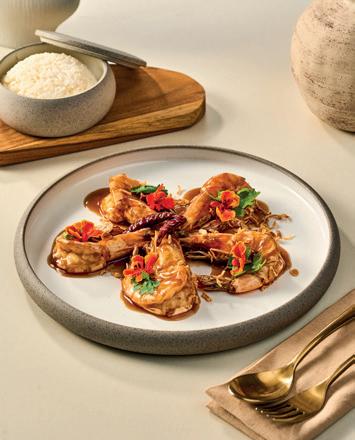
marine life up close and personal, all while learning about the over 100 sea species living in the area,” says Delsol. “It’s not just fun; it’s a chance to engage with the environment in a way that sticks with you long after you’ve left.”
The resort’s commitment to sustainability and eco-conscious adventures shines through in activities such as the Marine Walks – one of the reasons why Pullman Phuket Panwa Beach Resort has been recognised with the Green Globe certification for its environmentally conscious initiatives.
Among its most inspiring initiatives is the Baby Shark Nursery, a collaboration with the Phuket Marine Biological Center. This project seeks to help restore the local bamboo shark population. Guests can join daily workshops with the resort’s own marine biologist to learn more about this charismatic shark.
At Pullman Phuket Panwa Beach Resort, it is easy to feel worlds away from it all, yet the colour and energy of Phuket Old Town and its lively markets are always in reach. It is this combination of peaceful escape, local adventure and sustainability that sets Pullman Phuket Panwa Beach Resort truly apart. In an age when memorable hospitality is something of a rarity, this resort in the Panwa area stands out as a place where luxury is genuine, nature is cherished, and every stay feels uniquely yours.
www.pullmanphuketpanwa.com
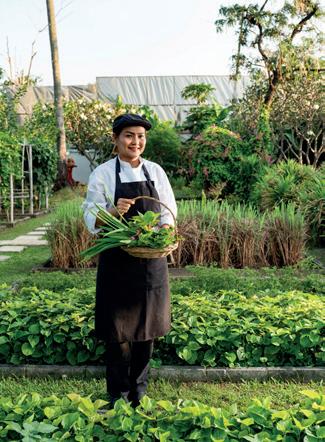
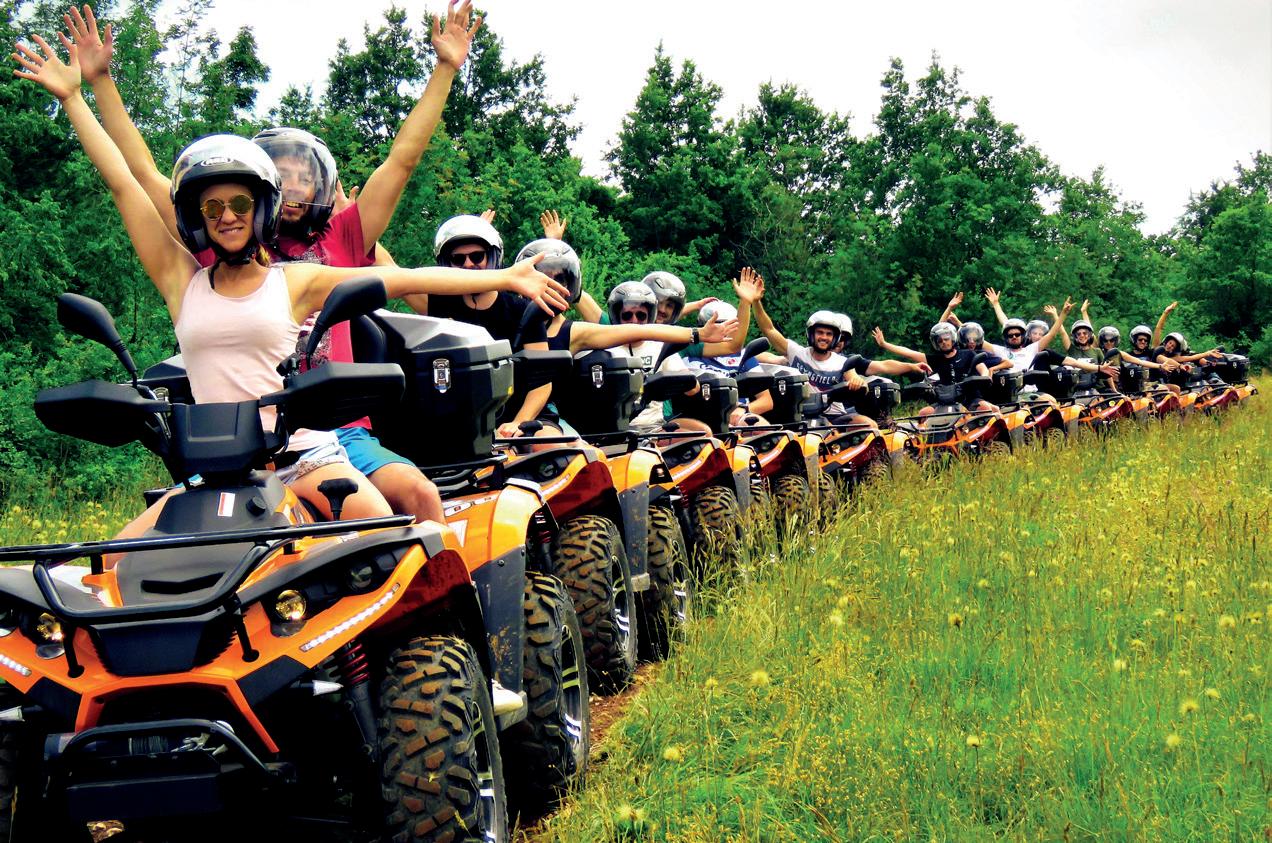
In today’s travel landscape, experiences matter more than ever. Travellers are no longer content with simply seeing a destination – they want to feel it, move through it and connect with it in meaningful ways. This is where 365.tours comes in: a curated online marketplace designed to make discovering and booking outdoor adventures both seamless and reliable.
The story of 365.tours does not begin in a boardroom but, fittingly, on the water. The platform was created by the Croatian tech company OtoTrak, globally recognised since 2017 for developing the world’s first cloudbased tracking and remote-control system for jet skis. “Through years of working closely with rental operators, listening to their challenges, and developing solutions that improve both safety and efficiency, one thing became very clear: the industry needed more than hardware and software. It needed visibility,” says CEO Ivan Otulić.
Many activity providers are small, often family-run businesses. Their expertise lies in delivering exceptional experiences, not in managing digital marketing campaigns or building sophisticated booking systems. In
fact, a significant number do not even operate a website.
“That’s where 365.tours steps in,” Otulić explains. “As a marketplace, we give operators a professional space to present their activities, while we take care of the marketing, digital presence and customer acquisition. Instead of worrying about online advertis-
ing, search engines or booking systems, they can focus entirely on running their tours and welcoming guests.”
Today, 365.tours offers a carefully selected portfolio of outdoor and adventure activities across Croatia, Malta, Cyprus, Greece and the UAE. From jet ski and boat excursions to quad and buggy off-road tours, guided kayak trips and parasailing, the platform specialises in immersive, active experiences.
What sets these activities apart is the way they connect travellers to the destination. Rather than passive sightseeing, guests may find themselves riding along a coastline at sunrise, discovering hidden coves accessible only by sea, exploring inland trails rarely seen by mass tourism, or joining smallgroup tours led by passionate local experts.
“These are experiences that combine adrenaline with authenticity,” Otulić adds. “In short,
In der heutigen Reisewelt zählen Erlebnisse mehr denn je. Destinationen werden nicht mehr nur besucht, sondern wollen aktiv erfahren werden. Genau hier setzt 365.tours an: als kuratierter Online-Marktplatz, der Outdoor-Abenteuer sichtbar macht und Buchungen einfach und verlässlich organisiert.
Die Geschichte von 365.tours beginnt nicht in einem Konferenzraum, sondern – passenderweise – auf dem Wasser: Die Plattform wurde vom kroatischen Technologieunternehmen OtoTrak gegründet, das seit 2017 weltweit für die Entwicklung des ersten cloudbasierten Tracking- und Fernsteuerungssystems für Jetskis bekannt ist. „Durch die jahrelange enge Zusammenarbeit mit Anbietern von Wassersportaktivitäten, das intensive Zuhören bei ihren täglichen Herausforderungen und die Entwicklung von Lösungen für mehr Sicherheit und Effizienz wurde uns eines klar: Die Branche brauchte mehr als nur Hardware und Software. Sie brauchte Sichtbarkeit”, sagt CEO Ivan Otulić.
Viele Anbieter von Freizeit- und Outdooraktivitäten sind kleine, oft familiengeführte Betriebe. Ihre Stärke liegt darin, besondere Erlebnisse zu schaffen und nicht, digitale Marketingstrategien zu entwickeln oder komplexe Buchungssysteme aufzusetzen. Viele von ihnen haben tatsächlich gar keine eigene Website.
„Genau hier kommt 365.tours ins Spiel”, erklärt Otulić. „Als Marktplatz bieten wir Anbie-
tern einen professionellen Rahmen, um ihre Aktivitäten zu präsentieren, während wir uns um Marketing, digitale Präsenz und Kundengewinnung kümmern. Statt sich mit OnlineWerbung, Suchmaschinen oder Buchungssystemen beschäftigen zu müssen, können sie sich voll und ganz auf ihre Touren und ihre Gäste konzentrieren.”
KURATIERTE OUTDOOR-ERLEBNISSE IN EUROPA
Heute umfasst das Angebot von 365. tours eine sorgfältig ausgewählte Auswahl an Outdoor- und Abenteueraktivitäten in Kroatien, Malta, Zypern, Griechenland und den Vereinigten Arabischen Emiraten. Von JetskiSafaris und Bootsausflügen über Quad- und Buggy-Offroad-Touren bis hin zu geführten Kajaktouren und Parasailing – die Plattform steht für aktive, immersive Erlebnisse.
Was diese Angebote besonders macht, ist ihre Nähe zur Destination. Statt passiver Sightseeing-Programme erleben Gäste etwa eine Fahrt entlang der Küste im Morgengrauen, entdecken versteckte Buchten, die
nur vom Meer aus zugänglich sind, erkunden abgelegene Wege fernab des Massentourismus oder nehmen an Kleingruppentouren mit engagierten lokalen Experten teil.
„Das sind Erlebnisse, die Adrenalin mit Authentizität verbinden”, so Otulić. „Kurz gesagt: Unsere Kunden können aktive Abenteuer mit echter lokaler Expertise erwarten – professionell organisiert und unkompliziert online buchbar.”
Der Fokus auf lokale Partnerschaften ist dabei zentral. Viele der gelisteten Anbieter verfügen über jahrzehntelange Erfahrung und fundierte regionale Kenntnisse. Das Ergebnis sind persönliche, sorgfältig konzipierte Aktivitäten statt anonymer Massenangebote.
SICHERHEIT, VERLÄSSLICHKEIT UND PERSÖNLICHER SERVICE
Sicherheit ist ein unverzichtbares Auswahlkriterium bei der Partnerwahl von 365.tours. Die langjährige Zusammenarbeit im Rahmen von OtoTrak hat ein tiefes Verständnis für professionelle Standards, Wartung von Ausrüstung und betriebliche Abläufe im Wassersport- und Abenteuertourismus geschaffen.
Neben der Sicherheit spielen Professionalität und Zuverlässigkeit eine entscheidende
customers can expect active experiences with authentic local expertise, professionally organised through easy online booking.”
The emphasis on local partnerships remains central. Many operators featured on the platform have decades of experience and deep knowledge of their region. This results in personal, well-crafted activities rather than anonymous mass-tourism packages.
Safety is a non-negotiable criterion when selecting partners. Years of collaboration through OtoTrak have provided deep insight
into professional standards, equipment maintenance and operational procedures required in water sports and adventure tourism.
Beyond safety, professionalism and reliability are essential. For travellers, the experience is designed to be simple and trustworthy. “When it comes to reliability, we focus on clarity and communication,” Otulić explains. “Each experience listed on 365.tours provides transparent information about duration, pricing, requirements, and what guests can expect.”
Perhaps most importantly, there is real human support behind the platform. “We don’t
simply connect a traveller to an operator and step away,” he adds. “Every booking is carefully followed, from confirmation to realisation, to ensure that everything runs smoothly. If a guest has a question or needs assistance, they’re not speaking to a chatbot – they have access to human, responsive support that genuinely cares.”
Looking ahead, the company’s ambition is not to become an all-encompassing travel giant, but to remain curated as Otulić emphasises: “Specialisation is our strength. We see 365.tours growing in two key directions: first, geographic expansion. While Croatia remains our core market, the long-term goal is to connect outdoor activity providers across multiple destinations where the sea and adventure are central to the travel experience. Second, deeper partnerships with operators.”
He adds: “Ultimately, our vision is simple: to make discovering and booking water sport experiences effortless for travellers, and sustainable and rewarding for the operators who create them.”
www.365.tours

Rolle. Für Reisende ist die Nutzung der Plattform bewusst einfach und vertrauenswürdig gestaltet. „Wenn es um Verlässlichkeit geht, setzen wir auf klare Kommunikation”, erklärt Otulić. „Jede auf 365.tours angebotene Aktivität enthält transparente Informationen zu Dauer, Preis, Voraussetzungen und Ablauf.”
Besonders wichtig ist zudem der menschliche Faktor. „Wir bringen Reisende nicht einfach mit einem Anbieter zusammen und ziehen uns dann zurück”, betont er. „Jede Buchung wird von der Bestätigung bis zur Durchführung begleitet, um sicherzustellen,
dass alles reibungslos verläuft. Wenn ein Gast eine Frage hat oder Unterstützung benötigt, spricht er nicht mit einem Chatbot, sondern erhält persönlichen, engagierten Support.”
365.tours geht es nicht darum in Zukunft eine allumfassende Reiseplattform zu werden, sondern man will bewusst spezialisiert bleiben, wie Otulić betont: „Spezialisierung ist unsere Stärke. Wir sehen uns in zwei zentralen Richtungen wachsen: erstens durch geografische Expansion. Während Kroatien unser
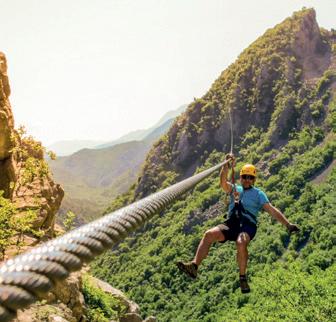
Kernmarkt bleibt, möchten wir langfristig Outdoor-Anbieter in weiteren Destinationen vernetzen, in denen Meer und Abenteuer eine zentrale Rolle spielen. Zweitens durch vertiefte Partnerschaften mit Anbietern.”
Er ergänzt: „Letztlich ist unsere Vision einfach: Die Entdeckung und Buchung von Wassersport-Erlebnissen für Reisende mühelos zu gestalten – und gleichzeitig nachhaltig und lohnend für die Anbieter, die diese Erlebnisse möglich machen.”
www.365.tours
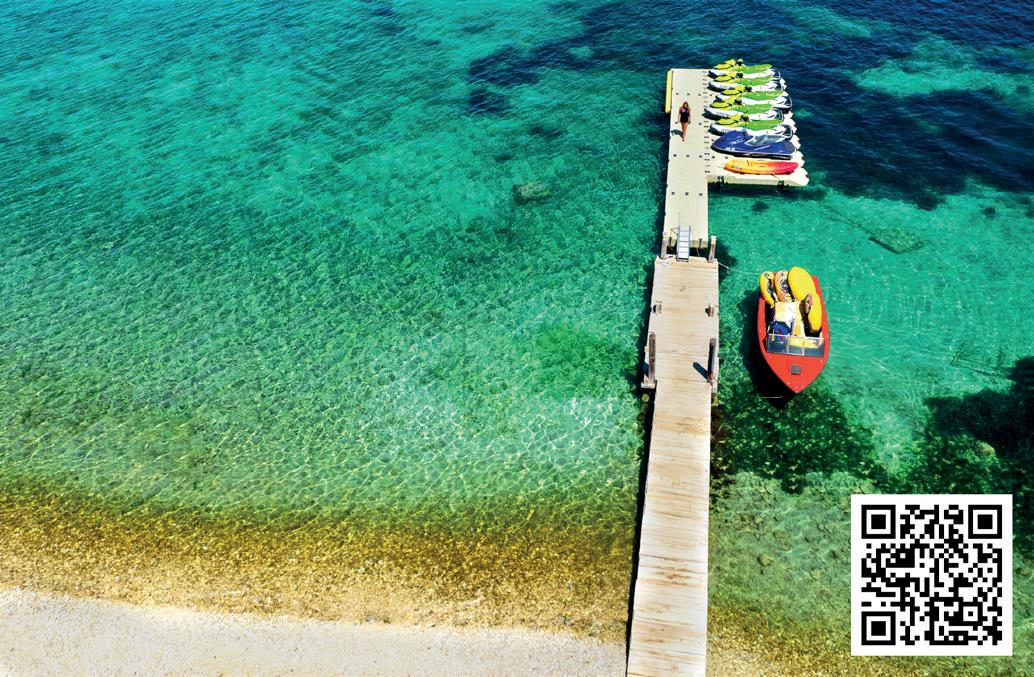
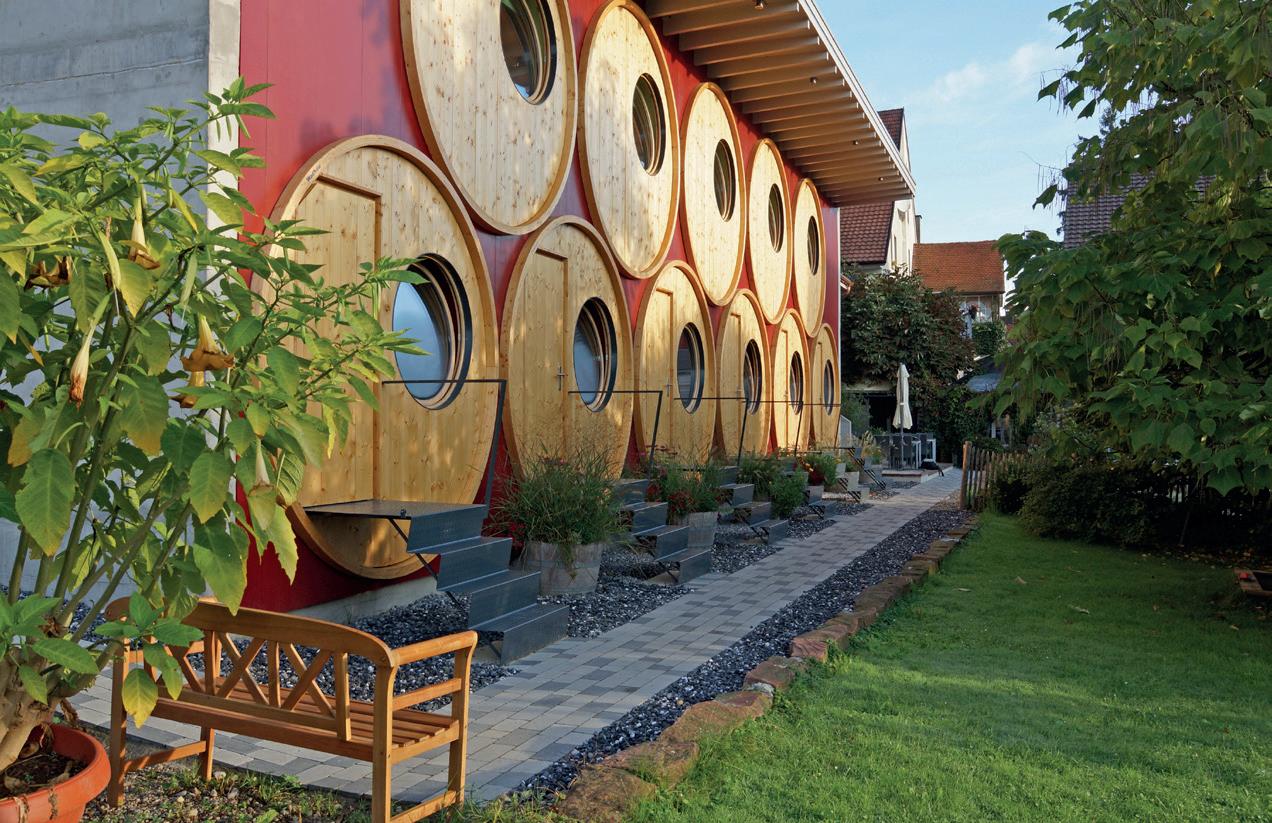
Set in the largest continuous wine-growing region in German-speaking Switzerland is a place where everything revolves around wine – right down to where you sleep. Weinfasshotel Rüedi combines rural charm with a truly unusual concept: guests spend the night in spaciously converted wine barrels.
The inspiration for this unique accommodation came about in a very typical winemaker fashion during a get-together with colleagues over one or two bottles of wine. While looking for suitable accommodation, Moni and Andreas Rüedi had the fabulous idea of turning real oak barrels into guest rooms for the party venue on their estate. The response was overwhelming, even though comfort was fairly basic at first: small compartments, sleeping bags and shared showers.
It soon became clear to the couple that the concept had real potential. “With the aim of creating a three-star experience, we built eleven barrels to full hotel-room standard –double bed, WC, shower, TV and a view of the garden. Our wine-loving guests enjoy our region, our wines and our very special way of staying overnight,” explains passionate vintner Andreas Rüedi.
Arriving at Weinfasshotel for the first time means stepping into a beautiful scenery of gentle vineyards, charming villages and unspoilt nature. As a certified nature park hotel, it is the perfect starting point for hiking and cycling tours. Rüedi adds: “The nearby Black Forest, the Rhine Falls and Lake Constance are just 30 minutes away by car, making this an excellent base for exploring. As a family of winemakers, it’s also important to us to bring this most beautiful profession closer to our guests and to foster an understanding of why preserving these traditions matters.” Wine tastings are naturally part of the experience, as are personal conversations in a warm, family atmosphere.
Guests particularly appreciate the tranquillity of the region, the rural charm and the genuine feeling of being welcome. And, of course, the excellent wines that can be tasted
everywhere. The fact that Weinfasshotel is regularly fully booked from spring through to autumn speaks for itself. Plans for further expansion are already in the works.
Weinfasshotel Rüedi is a truly special place where wine culture can quite literally be experienced even while you sleep – a must for any wine lover.
www.rueedi-ferien.ch
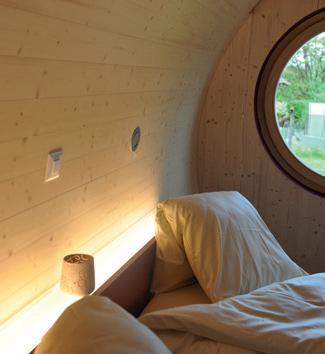
Mitten im größten zusammenhängenden Weinbaugebiet der Deutschschweiz liegt ein Ort, an dem sich alles um den Wein dreht – bis hin zur Übernachtung. Das Weinfasshotel Rüedi verbindet ländlichen Charme mit einer außergewöhnlichen Idee: Gäste schlafen in großzügig ausgebauten Weinfässern.
Die Inspiration für diese einzigartige Unterkunft entstand, ganz typisch für Winzer, bei einer Zusammenkunft unter Kollegen mit einer oder zwei Flaschen Wein. Auf der Suche nach einer passenden Übernachtungsmöglichkeit war das für Moni und Andreas Rüedi die zündende Idee, für den hauseigenen Partyraum echte Eichenfässer als Gästezimmer zu nutzen. Die Resonanz war überwältigend, auch wenn der Komfort anfangs noch schlicht war: kleine Abteile, Schlafsack, Gemeinschaftsduschen.
Schnell wurde den beiden klar, dass das Konzept Potenzial hat. „Mit dem Ziel, das Erlebnis 3-Sterne-tauglich zu machen realisierten wir 11 Fässer mit Hotelzimmer-Standard. Doppelbett, WC, Dusche, TV und Blick in den Garten. Unsere weinaffinen Gäste genießen unsere Region, unsere Weine und unsere sehr spezielle Übernachtungsmöglichkeit“, erzählt Herzblut-Winzer Andreas Rüedi.
Wer zum ersten Mal im Weinfasshotel ankommt, taucht ein in eine herrliche Landschaft mit sanften Weinbergen, schmucken
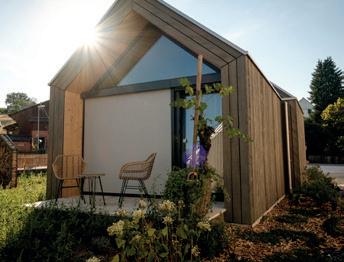
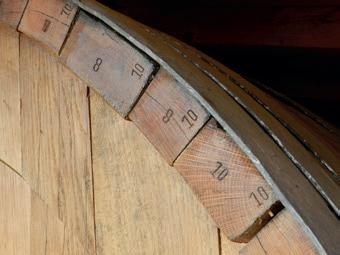
Dörfern und viel ursprünglicher Natur. Als Naturpark-Hotel ist das Weinfasshotel ein idealer Ausgangspunkt für Wanderungen und Bike-Touren. Rüedi fügt hinzu: „Der nahe gelegene Schwarzwald, der Rheinfall und der Bodensee sind nur 30 Autominuten von uns entfernt. So sind wir ein toller Ausgangspunkt für Erkundungen. Als Winzer-Familie ist es uns auch ein Anliegen, unseren Gästen diesen wohl schönsten Beruf näher zu bringen und das Verständnis für den Erhalt dieser Strukturen zu fördern.“ Weinproben gehören ebenso dazu wie persönliche Gespräche in familiärer Atmosphäre.
Gäste schätzen vor allem die Ruhe der Region, den ländlichen Charme und das Gefühl, willkommen zu sein. Und natürlich die feinen Weine, die überall degustiert werden können. Dass das Weinfasshotel von Frühling bis Herbst regelmäßig ausgebucht ist, spricht für sich. Ideen für eine Erweiterung gibt es bereits.
Das Weinfasshotel Rüedi ist ein rundum besonderer Ort, an dem die Weinkultur selbst
im Schlaf erlebbar wird. Ein Muss für jeden Wein-Liebhaber.
www.rueedi-ferien.ch
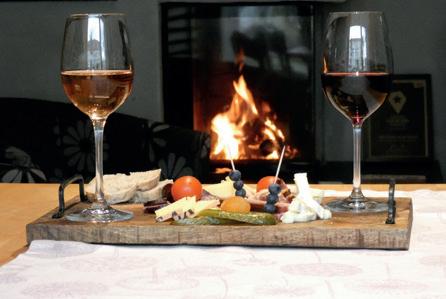
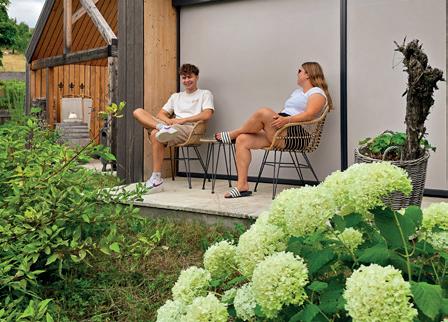
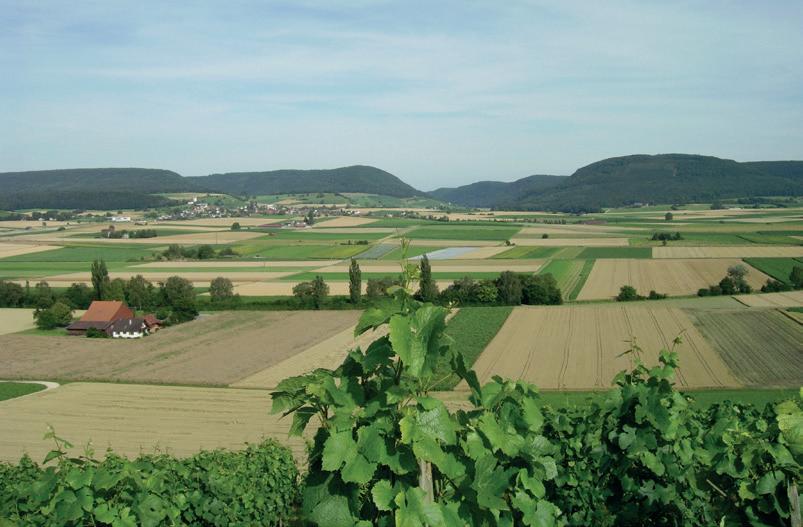
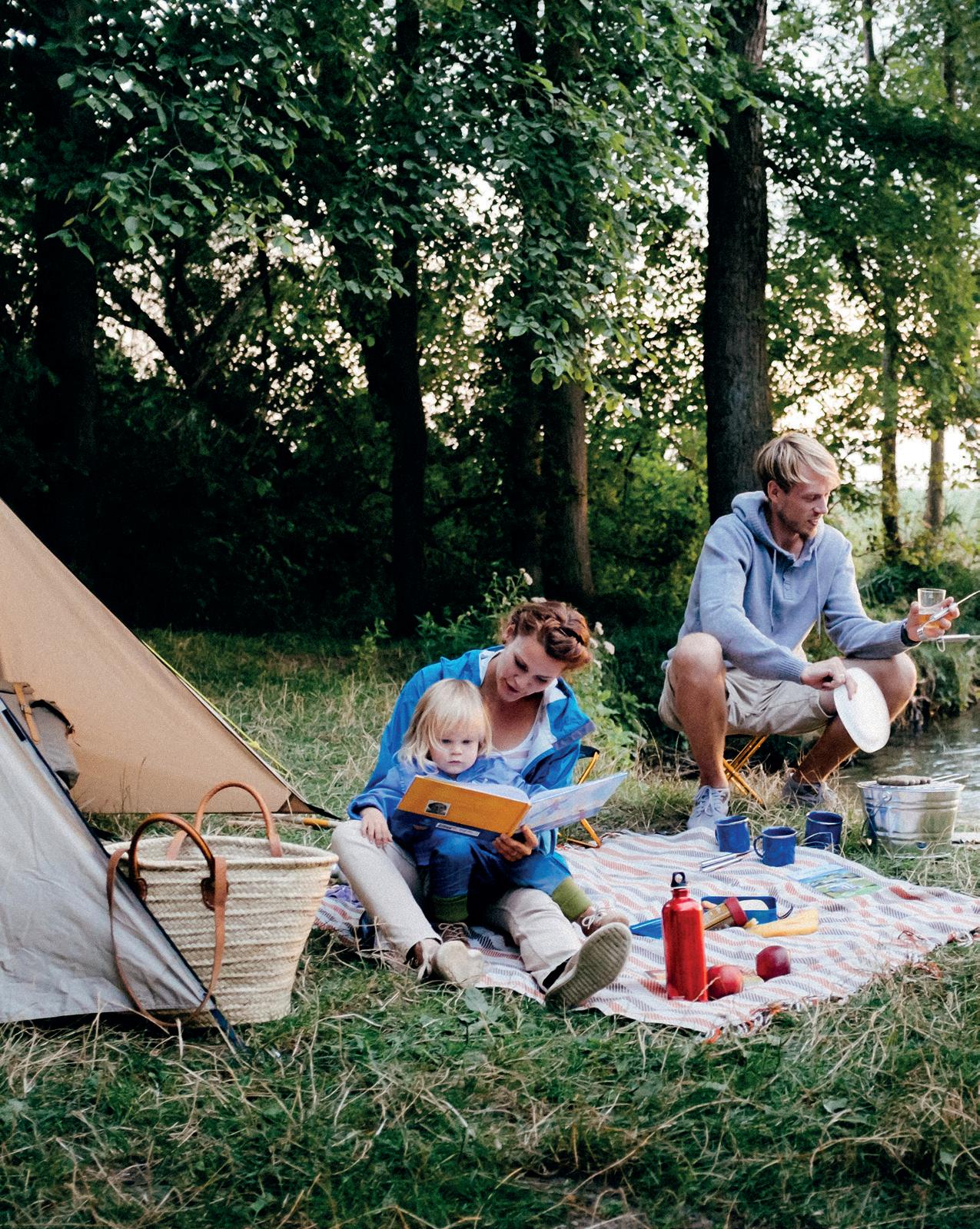
Looking to create lifelong memories with your loved ones? Germany is the ideal destination for fun-filled family escapes, blending cultural treasures, natural wonders, and thrilling attractions. Whether you are travelling with toddlers, teens or grandparents, dive into our top five family-friendly travel selection in Germany, to get inspired for your next family adventure.
TEXT: NANE STEINHOFF
Family-friendly travels in Germany is booming. And rightly so – taking a break with the entire family is a great way to grow closer, experience new things, and expand everyone’s minds. In Germany, according to two recent studies – Hilton’s 2024 Trends Report and a TUI survey – 71.1 per cent of German travellers prefer to go on vacation with their core family. Furthermore, 17.8 per cent of travellers said that they would include grandparents in their vacation plans. These figures show that multigenerational travel is growing in popularity, while family-friendly options that also cater to younger demographics are on the rise.
Germany as a country also heavily advocates for family-friendly travels. As an example,
many long-distance trains have special family and toddler compartments with playing areas. Furthermore, many hotels and resorts offer dedicated family packages, kids’ clubs, and child-friendly facilities, ensuring comfort and entertainment for younger travellers. Additionally, attractions such as museums, theme parks and outdoor recreation areas often provide special programmes or discounted admission for families, making it easier to plan engaging activities together. To get you inspired, we will take a look at five great things to do and cities to visit as a family in Germany.
Down south, in Bavaria, Augsburg stands out as one of Germany’s most welcoming cities for family travel, blending history
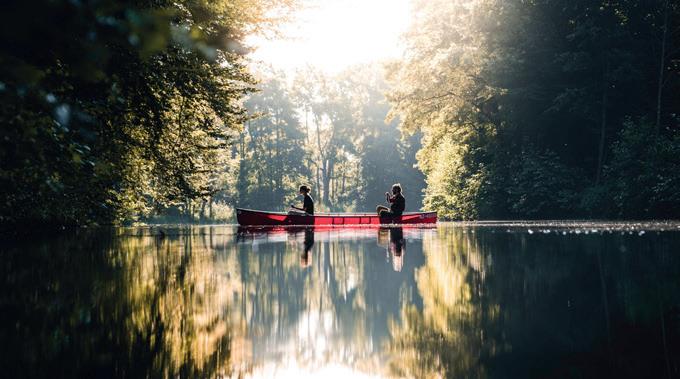
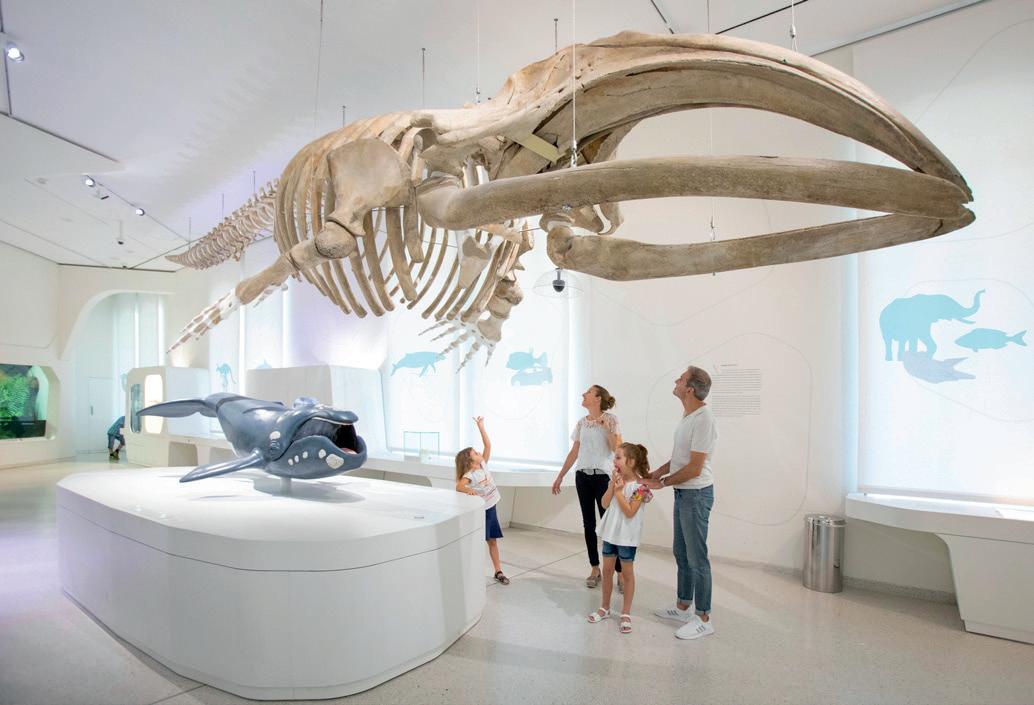
with vibrant entertainment options for all ages. The city’s Puppet Theatre Museum is a must-see, enchanting children and adults alike with famous characters from the beloved Augsburg puppet theatre and offering interactive exhibits. For those who prefer a touch of nature, the Butterfly Pavilion in the Botanical Garden lets families marvel at colourful butterflies and explore lush surroundings. Augsburg’s commitment to family-friendly experiences extends beyond attractions; interactive adventure worlds and trails, such as the fire brigade experience at Martini Park and Siebentischwald forest’s animal and nature paths, provide hands-on learning and outdoor fun. With welcoming hotels, easy transportation and plenty of child-focused activities, Augsburg creates lasting memories for families seeking both adventure and relaxation.
HAMBURG – A PARADISE FOR TRAIN FANS
Are you a train fan? Then the Miniatur Wunderland, the world’s largest model railway, is a magical destination for you and your children. Located in Hamburg’s Speicherstadt, it features detailed miniature land-
scapes and bustling cities, sparking kids’ imagination. Interactive buttons let young visitors control trains and scenes, offering a hands-on experience that is both educational and fun for the whole family. Beyond the famous Miniatur Wunderland, Hamburg offers plenty of other engaging activities for families. The city’s Tierpark Hagenbeck
is a beloved zoo featuring exotic animals and a tropical aquarium, perfect for kids and adults alike. For a fun day outdoors, Planten un Blomen park provides playgrounds, water features, and beautiful gardens ideal for picnics and relaxation. Families can further explore maritime history at the International Maritime Museum or enjoy interactive ex-
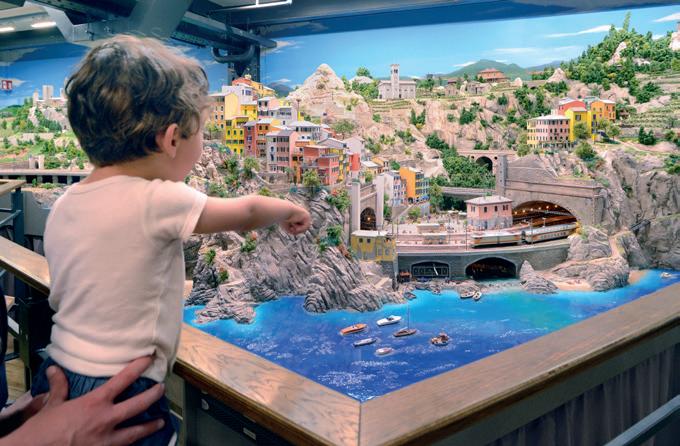
hibits at the Hamburg Dungeon. Boat tours along the Elbe River are a unique way to see the city, and local cafes often cater to young visitors with play areas and children’s menus.
For those seeking solitude, Müritz National Park, which lies to the east of Lake Müritz in Mecklenburg-Vorpommern, boasts over 130 lakes, ancient beech forests and mysterious moors. Camping and kayaking or canoeing in this region offer an ideal blend of adventure and relaxation for families with children. With gentle waters perfect for beginners, kids can safely learn to paddle while parents enjoy the scenic beauty of Germany’s largest lake district. The surrounding nature provides ample opportunities for wildlife spotting, swimming and picnics along the riverbanks, making each day a new discovery. Evenings spent around a campfire under the stars foster family bonding and create cherished memories, while the flexibility of camping allows families to set their own pace and fully immerse themselves in the great outdoors.
Nestled along Germany’s Baltic Sea coastline, Scharbeutz is a delightful destination for families seeking a blend of relaxation and adventure. The town’s main attraction is its beautiful sandy beach, stretching for miles and offering calm, shallow waters
that are perfect for young children to swim and play safely. Families can spend the day building sandcastles, renting pedal boats, or strolling along the lively promenade where ice cream stands and playgrounds dot the shoreline. In summer, the beach buzzes with activity, from volleyball tournaments to
family-friendly water sports lessons, ensuring fun for all ages.
Situated directly on the beach, Scharbeutz’s Ostsee Therme is a perfect spot for family fun, featuring indoor and outdoor pools, thrilling water slides, and a special children’s area with interactive play features. Parents can relax in the saunas or wellness zones while kids splash and explore. On top of that, just a short drive away, Hansa Park stands out as one of Germany’s top amusement parks. This seaside theme park offers a variety of rides and shows specifically designed for families, including gentle carousels, exciting roller coasters, and captivating live performances. The park’s Adventure Land and Children’s World areas feature interactive attractions tailored to younger visitors, while older children and teens will enjoy thrilling rides such as the water roller coaster and high-speed loops. Seasonal events like pirate and cowboy shows add extra excitement to the visit. With plenty of shaded picnic spots, child-friendly restaurants and thoughtful amenities, a trip to Scharbeutz and Hansa Park guarantees memorable family moments and a stress-free vacation.
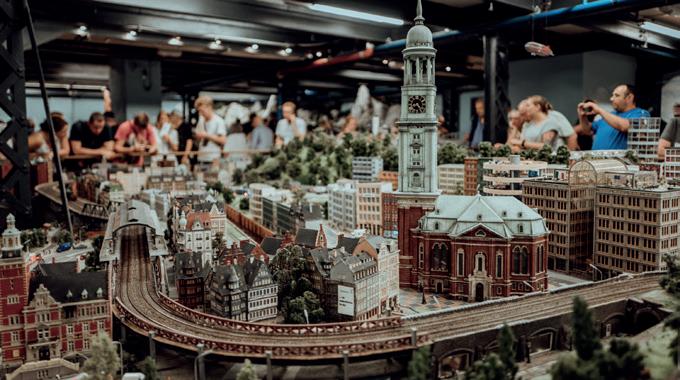
Located in southwestern Germany, Karlsruhe is a vibrant and approachable city that offers families a welcoming atmosphere paired with diverse activities for all ages. The city’s spacious parks, such as the sprawling Schlossgarten and Zoological City Garden, provide ample opportunities for picnics, play and wildlife encounters, making outdoor adventures easily accessible. Children can enjoy interactive exhibits at the State Museum
of Baden, explore hands-on science at the Center for Art and Media (ZKM), learn about natural history at the State Museum of Natural History, or marvel at the playful fountains and modern playgrounds dotted throughout the city. Karlsruhe’s well-organised public transport system ensures easy navigation for families, and many attractions offer discounted family tickets. The city also hosts seasonal festivals that cater to younger visitors, such as the lively Christmas market and summer music events.
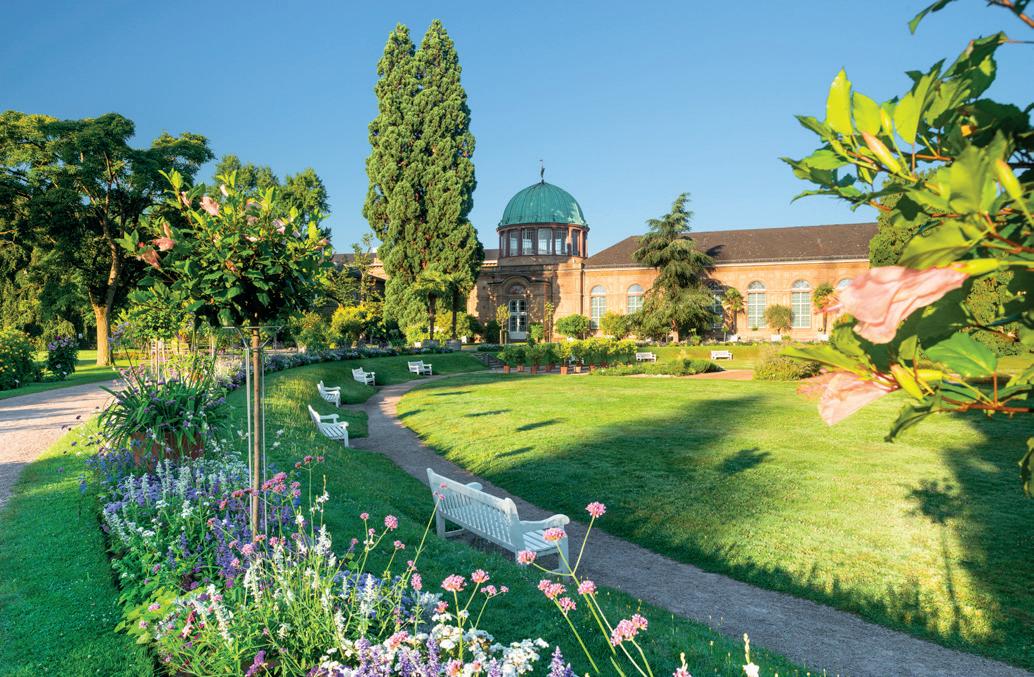
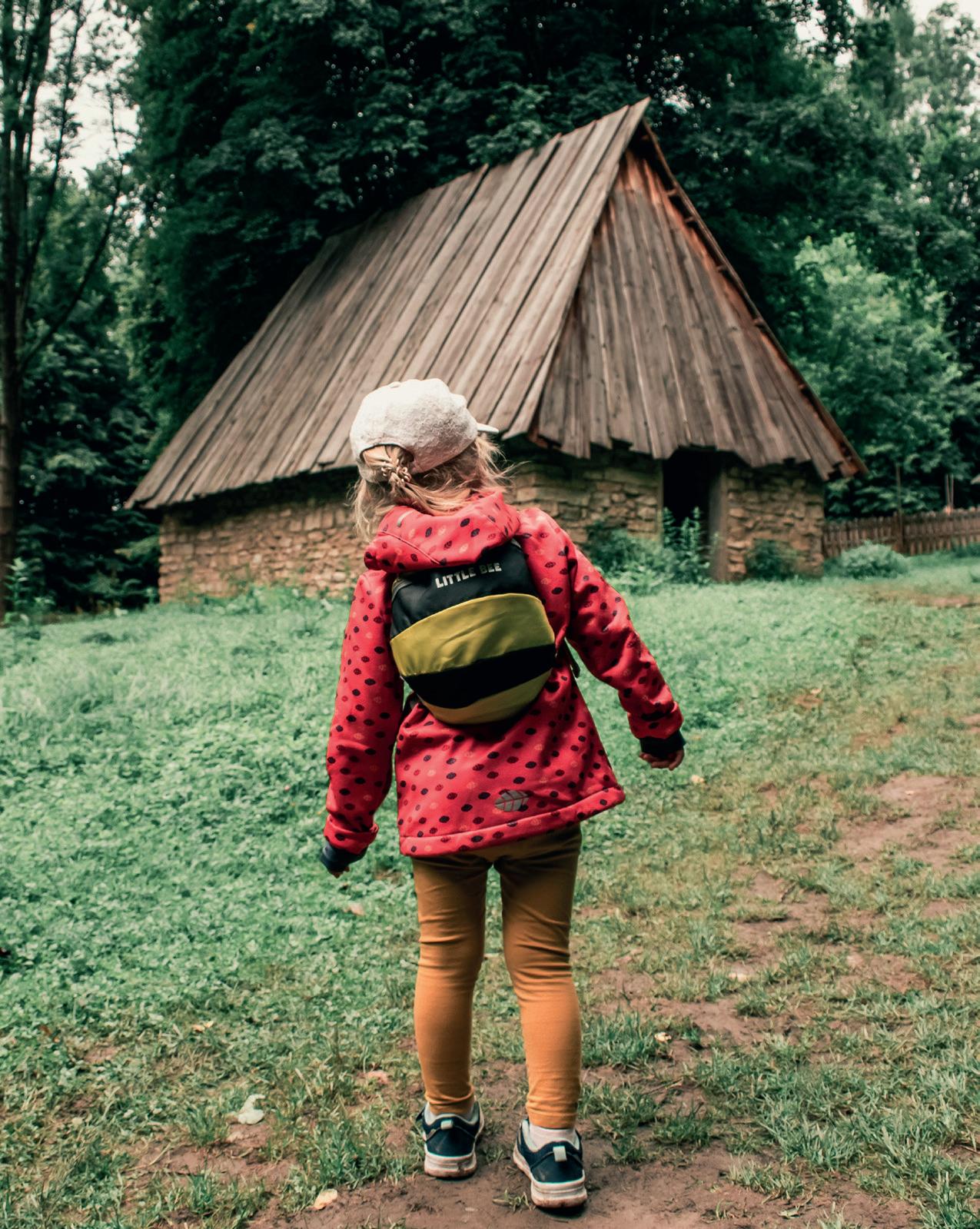
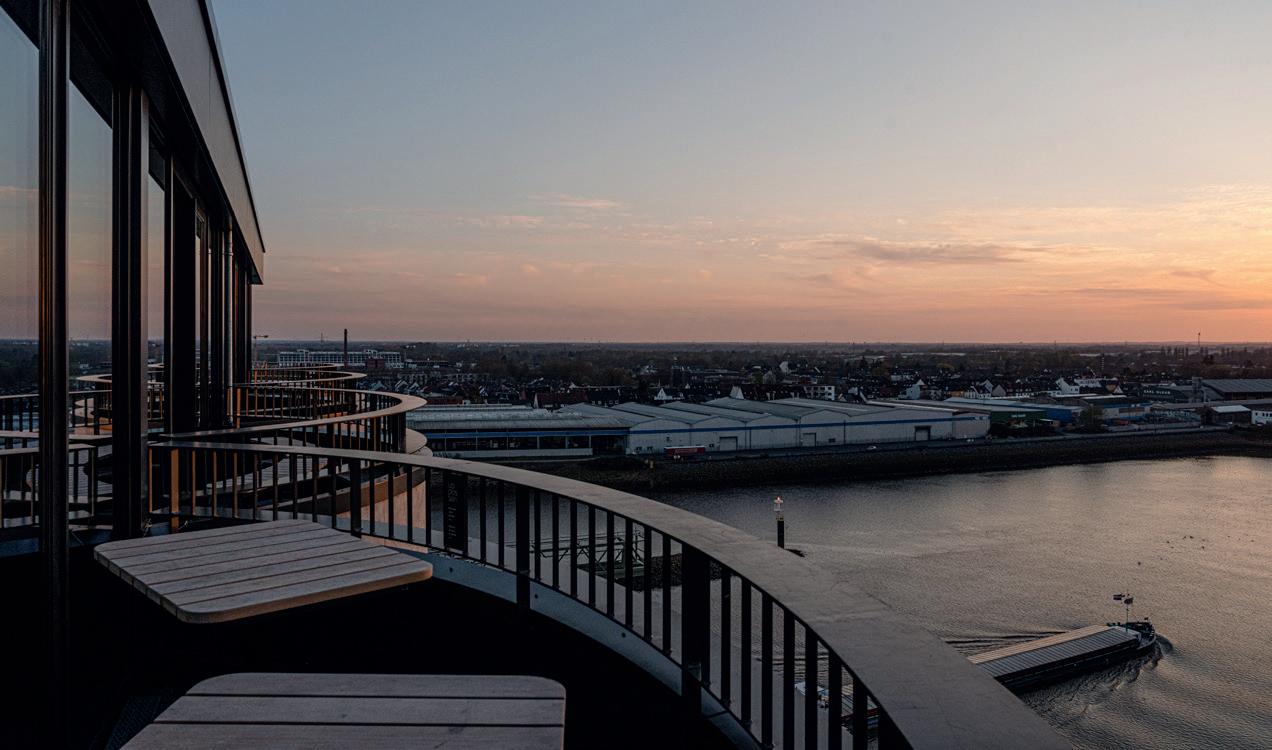
John & Will Silo-Hotel on Bremen’s Überseeinsel looks back on a fascinating history. Originally a warehouse for corn and grain for breakfast cereals, the building has been transformed into an extraordinary hotel with high standards regarding hospitality and sustainability.
Germany’s first hotel in a former grain silo with its 117 semi-circular and circular rooms and the tower suite offer a unique ambiance. The rooms combine industrial charm with Balinese interior design, sustainable materials, and views across the river. “The building is certainly the most outstanding feature, in addition the atmosphere is very familial and relaxed,” says managing director Babette Kierchhoff. “We have a young, dedicated team that strongly identifies with the hotel.”
Furthermore, John & Will offers exclusive event spaces, including rooms with a private bar, a permanently installed pizza oven, and spectacular views over the city. The hotel sees itself as part of the city and has established events like Barception Beats and Feierabend specifically for residents.
“Bremen is a city of short distances, with a great cultural and gastronomic scene,
research hubs, and plenty of greenery,” says Kierchhoff. “John & Will is located by the Weser shore, and the city centre can be reached by bike or foot in about 20 minutes.”
With the Überseestadt, a completely new urban development is emerging around the hotel providing space for living and working, culture and leisure. In this context, the John & Will hotel is a flagship project. Already during the first planning phase in 2018, developers placed great importance on preserving the building’s original character. Sustainability was also in focus.
“For our furnishings we used durable materials, and when choosing our partners we rely on certified and local products and short supply chains,” explains Babette Kierchhoff. For its energy concept, the hotel relies on renewable energy: for heating and cooling a 5-megawatt river water heat pump extracts water from the
Weser, which is heated to the desired temperature using solar and wind power.
During sunny or windy periods, warm water is stored in insulated thermal tanks, while cold water is retained in the form of ice slurry to compensate for windless or cloudy days. A final fun fact: even if the natural Weser water is only 0°C, it is still used as heating source.
www.johnandwill-hotel.com
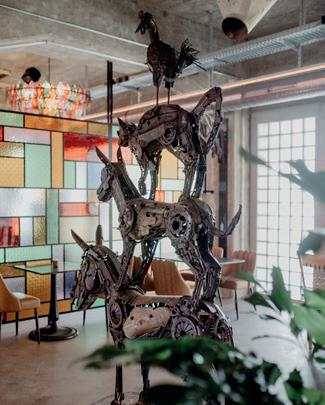
Das John & Will Silo-Hotel auf der Bremer Überseeinsel blickt auf eine faszinierende Geschichte zurück. Ursprünglich ein Speicher, in dem Mais und Getreide für Frühstücksflocken gelagert wurde, hat sich das Gebäude in ein außergewöhnliches Hotel mit hohen Standards hinsichtlich Gastfreundschaft und Nachhaltigkeit verwandelt.
Das deutschlandweit erste Hotel in einem ehemaligen Getreidespeicher bietet mit seinen 117 halb- und kreisrunden Zimmern und Turmsuite ein einmaliges Ambiente. Die Zimmer verbinden Industriecharme mit balinesischem Interieur, nachhaltigen Materialien und Weserblick. „Sicher ist das Gebäude das speziellste am Hotel, zudem ist die Atmosphäre im Haus sehr familiär und entspannt“, sagt Geschäftsführerin Babette Kierchhoff. „Wir haben ein junges, engagiertes Team, das sich sehr mit dem Haus identifiziert.”
Zudem bietet das John & Will exklusive Veranstaltungsräume, darunter Räume mit besonderen Extras wie einer eigenen Bar, festinstalliertem Pizza-Ofen und spektakulärem Blick über die Stadt. Das John & Will versteht sich als Teil der Stadt und hat Events wie ‚Barception Beats’ und den ‚Feierabend’ speziell für Bremer:innen etabliert.
NEUES QUARTIER UND SPANNENDE
AUSFLUGSZIELE IN DER HANSE-STADT „Bremen ist eine Stadt der kurzen Wege, mit einer guten kulturellen Szene, Wissenswelten,
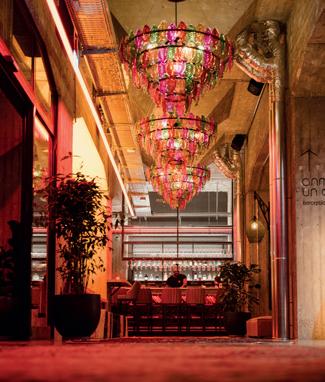
starkem gastronomischen Angebot und viel Grün”, sagt Kierchhoff. „Das John & Will liegt direkt an der Weser und vom Hotel aus kann man mit dem Fahrrad oder auch zu Fuß entlang des Flusses in 20 Minuten in die Innenstadt spazieren.“
Rund um das Hotel entsteht zudem mit der Überseestadt ein komplett neues Stadtquartier, das Raum bietet zum Leben und Arbei-
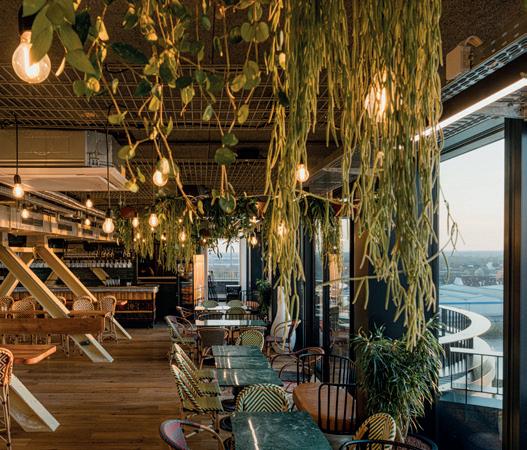
ten, für Kultur und Freizeit. Das John & Will ist in diesem Kontext ein Leuchtturmprojekt.
Bereits bei der Planung des Silo-Hotels 2018 legten die Entwickler großen Wert darauf, den Originalcharakter des Gebäudes zu erhalten. Das Thema Nachhaltigkeit stand dabei ebenfalls im Mittelpunkt.
NACHHALTIGKEIT IM HERZEN, MODERNE TECHNOLOGIE IM KOPF
„Wir haben bei der Einrichtung auf sehr langlebige Materialen geachtet und setzen bei der Auswahl der Partner auf zertifizierte und lokale Produkte und kurze Lieferwege”, erklärt Babette Kierchhoff. Beim Energiekonzept setzt das Hotel auf erneuerbare Energiequellen: Die 5-Megawatt-Flusswasser-Wärmepumpe entnimmt zum Heizen und Kühlen Wasser aus der Weser, das mit Strom aus Solar- und Windenergie auf die gewünschte Temperatur erwärmt wird.
Für Zeiten von Flauten und verhangenem Himmel wird während sonnigen oder windigen Zeiten heißes Wasser in gedämmten Wärmetanks und kaltes Wasser in Form von Eisbrei gespeichert. Ein Fun Fact zum Schluss: Sogar bei 0 °C Wassertemperatur kann das John & Will das Weserwasser zum Heizen nutzen.
www.johnandwill-hotel.com
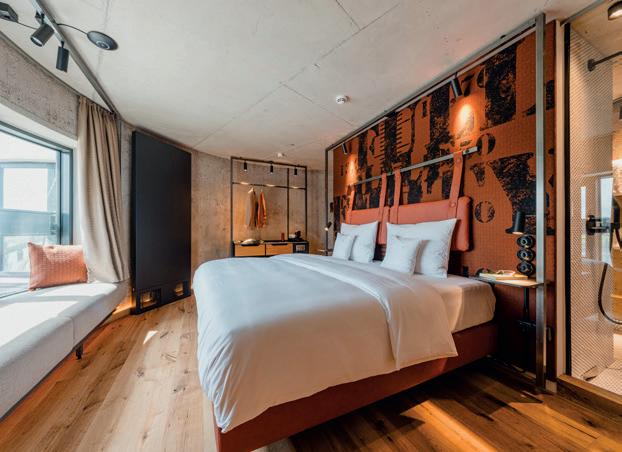
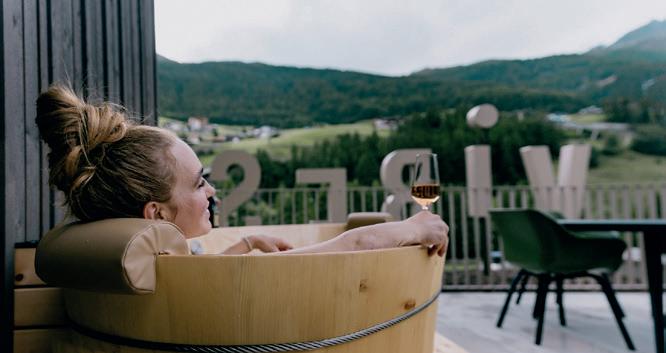
Just a five-minute walk from the Gaislachkogl cable car yet wonderfully peaceful, ViBES in Sölden serves as the perfect homebase for those who love mountains, outdoor adventures and design. Behind the concept are hosts Vreni and Roland –passionate mountain sports enthusiasts – with a vision to create a place that offers inspiration, energy and relaxation under one roof.
The five premium apartments combine modern comfort with alpine character. Natural wood, harmonious materials and custom-made furniture create a warm, inviting atmosphere. One striking feature: the walls themselves become works of art, reflecting the dramatic landscape of the Ötztal Alps.
Spacious balconies and terraces invite guests to enjoy the afternoon sun, share a meal together or relax in the outdoor bathtub while marvelling at the breathtaking mountain views. High-quality, fully equipped kitchens provide everything needed for leisurely evenings, while the penthouse also features a private sauna with panoramic views.
Bike, ski and hiking adventures start right outside the door –perfect for active travellers. The stylish bike and ski room, complete with workbench, laundry station and a drinking fountain carved from Ötztal granite, quickly becomes a meeting point after a day in the mountains.
ViBES hosts Vreni and Roland are true locals and happily share their insider tips on restaurants, events and mountain sports. Through their own ski and bike school, they can also organise guided tours for every level. It does not get much more authentic than that.
www.vibes-soelden.at

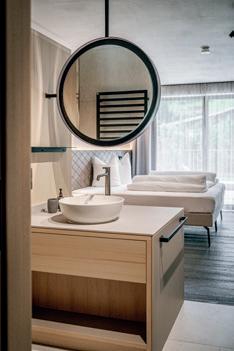
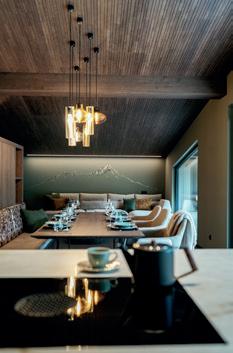
Nur fünf Gehminuten von der Gaislachkoglbahn entfernt und dennoch wunderbar ruhig gelegen, bietet das ViBES in Sölden die perfekte Homebase für alle, die Berge, Bewegung und Design lieben. Hinter dem Konzept stehen die Gastgeber Vreni und Roland – selbst begeisterte Bergsportler – mit der Vision, einen Ort zu schaffen, der Inspiration, Energie und Entspannung zugleich bietet.
Die fünf Premium-Apartments verbinden modernen Komfort mit alpinem Charakter. Viel Naturholz, harmonische Materialien und individuell gefertigte Möbel schaffen eine warme Atmosphäre. Besonders auffällig: Die Wände selbst werden zur Kunst und spiegeln die eindrucksvolle Landschaft der Ötztaler Alpen wider.
Großzügige Balkone und Terrassen laden dazu ein, die Nachmittagssonne zu genießen, gemeinsam zu essen oder in der Outdoorbadewanne mit grandiosem Blick auf die Berge zu entspannen. Hochwertige, komplett ausgestattete Küchen bieten beste Voraussetzungen für genussvolle Abende, und im Penthouse wartet zusätzlich eine private Sauna mit Panoramablick.
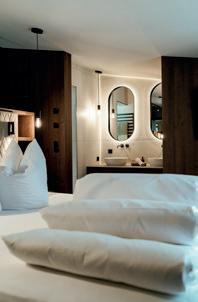
Bike-, Ski- und Wandertouren starten direkt vor dem Haus – perfekt für Aktivurlauber. Der stylische Bike- und Skiraum mit Werkbank, Waschstation und Trinkbrunnen aus Ötztaler Granit wird schnell zum Treffpunkt nach dem Sport.
Die ViBES-Gastgeber Vreni und Roland sind zudem echte Locals und teilen gern Insider-Tipps rund um Kulinarik, Events und Bergsport. Über ihre eigene Ski- und Bikeschule organisieren sie außerdem geführte Touren für jedes Level. Authentischer geht es kaum.
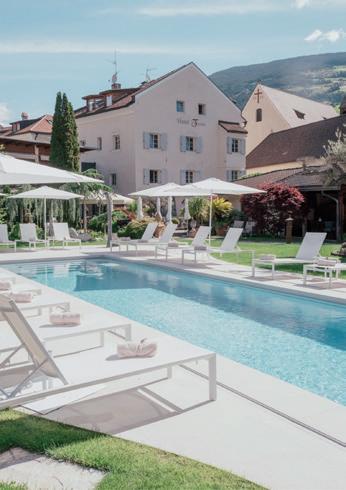
Located in the heart of Brixen, yet offering a peaceful retreat, Hotel Traube combines historical flair with modern amenities and warm hospitality.
Located in the former convent of St. Catherine, the family-run hotel was once part of a Poor Clare convent. Since 1975, the Weissensteiner family has managed the building, aiming to preserve the historic structure while offering guests a tranquil retreat with monastic charm.
Located in the heart of Brixen's old town, the boutique hotel offers a unique garden with a Mediterranean flair, a pool, a whirlpool, and a pool bar – all within historic walls. The hotel features individually designed, modernly furnished rooms and a high-quality breakfast with regional products as well as fruits, vegetables and herbs from its own garden.
Guests can look also forward to authentic South Tyrolean hospitality and a combination of culture, nature and relaxation. Furthermore, the hotel includes the family-run restaurant Traubenwirt, located near the cathedral square. Here, South Tyrolean tradition, highquality ingredients, and modern gastronomy create a unique culinary experience.
Brixen itself impresses with its medieval old town, numerous cultural events and diverse leisure activities such as hiking, cycling and excursions to the Plose – a perfect mix of culture, enjoyment and nature experience.
Zentral in der Stadt und dennoch ruhig gelegen, vereint das Hotel Traube in Brixen historischen Flair mit modernen Annehmlichkeiten und herzlicher Gastfreundschaft.
Das familiengeführte Hotel befindet sich im ehemaligen Stiftshaus zur Heiligen Katharina, das früher Teil eines Klarissinnenklosters war. Seit 1975 wird das Gebäude von der Familie Weissensteiner geführt, die das historische Bauwerk erhalten und gleichzeitig Gästen einen ruhigen Rückzugsort mit klösterlichem Charme bieten wollte.
Direkt in der Brixner Altstadt finden Gäste hinter historischen Mauern einen einzigartigen Garten mit mediterranem Flair, Pool, Whirlpool und Poolbar. Das Boutiquehotel bietet individuell gestaltete, modern ausgestattete Zimmer, und ein hochwertiges Frühstück mit regionalen Produkten und Obst, Gemüse und Kräutern aus dem eigenen Garten.
Gleichzeitig dürfen sich Gäste auf authentische Südtiroler Gastfreundschaft und eine Kombination aus Kultur, Natur und Erholung freuen. Zum Hotel gehört außerdem das Restaurant Traubenwirt, das ebenfalls von der Familie geführt wird und sich in der Nähe des Domplatzes befindet. Dort verbinden sich Südtiroler Tradition, hochwertige Zutaten und moderne Gastronomie zu einem besonderen kulinarischen Erlebnis.
Brixen selbst begeistert mit seiner mittelalterlichen Altstadt, zahlreichen Kulturveranstaltungen und abwechslungsreichen Freizeitmöglichkeiten wie Wandern, Radfahren und Ausflügen zur Plose – eine perfekte Mischung aus Kultur, Genuss und Naturerlebnis.
www.hotelbrixen.it
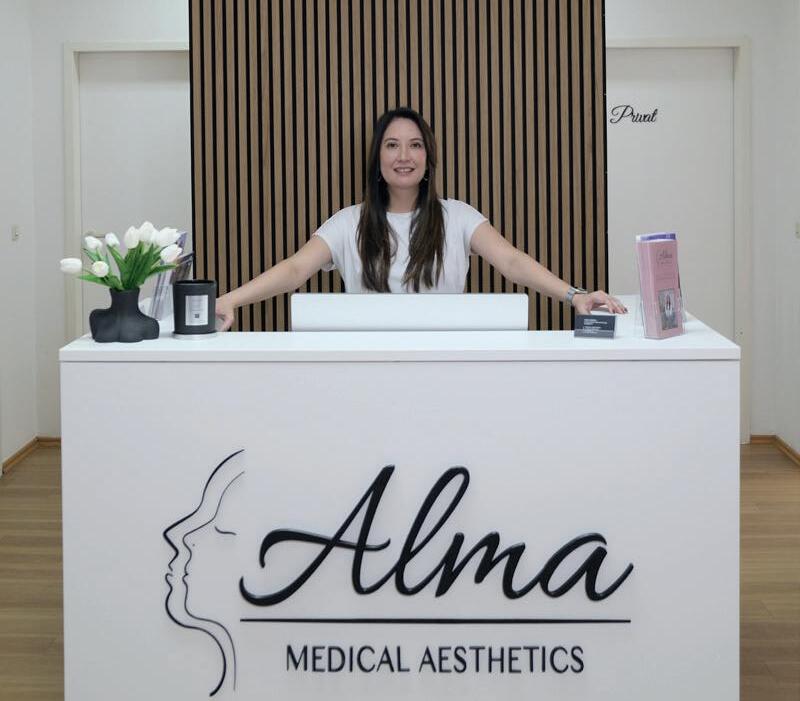
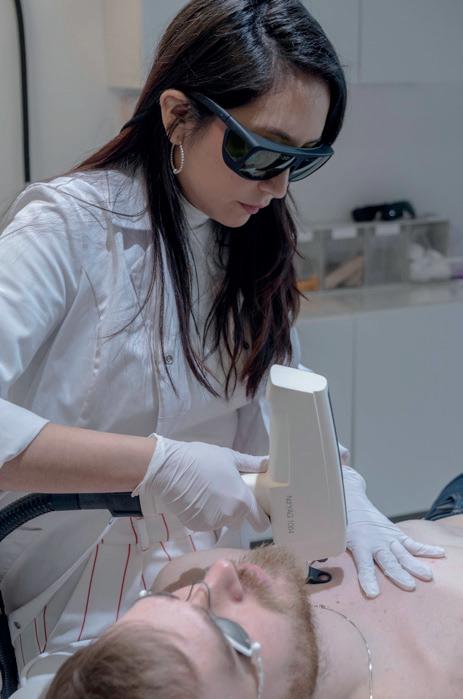
It is a prejudice that aesthetic medicine is superficial or a vanity project. For many people, it can be life changing – by giving them more confidence or eliminating health issues that impact their everyday life. Alma Medical Aesthetics in Nuremberg stands for ethical medicine where beauty is as important as a person’s self and individuality.
It is understandable that when people hear the term aesthetic medicine, they immediately associate it with trends, social media, or imposed beauty standards. Aesthetic medicine is often linked to the public image or the pursuit of exaggerated transformation. “However, that is not the only way to understand it,” says Dr. Maria Cordova, who established Alma Medical Aesthetics in 2021 and has specialised on minimally invasive aesthetic treatments – from botulinum toxin, dermal fillers and skin rejuvenation therapies to laser treatments and tattoo removal.
Dr. Maria Cordova often tackles health issues that are considered cosmetic, such as melasma, spider veins, hyperhidrosis, scars or pigment disorders. For many pa-
tients, though, these have a huge impact on how they perceive themselves. Therefore, treatments can preserve and re-establish patients’ identity and confidence.
The clinic is named Alma, the Spanish word for soul: “It represents the intangible part of the human being, the part that cannot be injected, filled, or shaped with technology.” The name is also a connection to Dr. Cordova’s roots. “I come from Perú and I’m part of a Latin American culture where aesthetics holds a visible place in social life,” she explains. Beauty standards are often more defined and celebrated, but also very demanding. “Growing up in that environment allowed me to understand both the power and the pressure of beauty ideals,”
she says. “I learned that behind every desire for change is a personal story, and that aesthetics is not merely about appearance, but also about self-esteem, belonging, and confidence.”
After practising in Germany for more than ten years, Dr. Maria Cordova discovered an enriching contrast in how Germans and Latin Americans perceive beauty. “In Germany, beauty is conceived as a subtle harmony that respects individual identity.” Between Latin American sensitivity and the more reserved German vision, Dr. Maria Cordova found her own medical approach.
Her conclusion: “Responsible aesthetic medicine is not about chasing an external ideal, but about accompanying each person through a holistic process; not about transforming faces, but about preserving identity and restoring confidence.”
www.faltenunterspritzungnuernberg.de
Es ist ein Vorurteil, dass ästhetische Medizin oberflächlich ist oder lediglich mit Eitelkeit zu tun hat. Für viele Menschen kann sie lebensverändernd sein – indem sie ihnen mehr Selbstvertrauen gibt oder gesundheitliche Probleme beseitigt, die ihren Alltag beeinträchtigen. Alma Medical Aesthetics in Nürnberg steht für ethische Medizin, bei der Schönheit genauso wichtig ist wie Individualität und Selbstvertrauen.
Es ist nicht verwunderlich, dass Menschen beim Begriff „ästhetische Medizin“ an Trends, soziale Medien oder falsche Schönheitsideale denken. Ästhetische Medizin wird oft mit dem öffentlichen Image oder übertriebener Transformation in Verbindung gebracht. „Das ist jedoch nicht das einzige Verständnis von ästhetischer Medizin“, sagt Dr. Maria Cordova, die Alma Medical Aesthetics 2021 gründete und sich auf minimalinvasive ästhetische Behandlungen spezialisiert hat, darunter Botulinumtoxin, Dermal-Fillern, Hautverjüngungstherapien, Laserbehandlungen und Tattooentfernungen.
Dr. Maria Cordova befasst sich oft mit gesundheitlichen Problemen wie Melasma, Besenreiser, Hyperhidrose, Narben oder Pigmentstörungen, die viele Menschen als „kosmetisch“ wahrnehmen. Für Patienten haben sie jedoch einen enormen Einfluss auf ihre
Selbstwahrnehmung. Diese zu behandeln kann die Identität und das Selbstvertrauen bewahren und wiederherstellen.
Die Klinik trägt den Namen „Alma“, das spanische Wort für „Seele“: „Es steht für den immateriellen Teil des Menschen, den Teil, der nicht injiziert, aufgefüllt oder durch Technologie geformt werden kann.“ Für Dr. Cordova ist der Name zudem eine Verbindung zu ihren Wurzeln. „Ich stamme aus Peru und bin Teil der lateinamerikanischen Kultur, in der Ästhetik einen sichtbaren Platz im sozialen Leben einnimmt“, erklärt sie. Schönheitsstandards seien oft fester definiert und würden mehr gefeiert, üben aber auch mehr Druck aus. „Da ich in diesem Umfeld aufgewachsen bin, verstehe ich sowohl die Kraft als auch den Druck von Schönheitsidealen“, sagt sie. „Ich habe
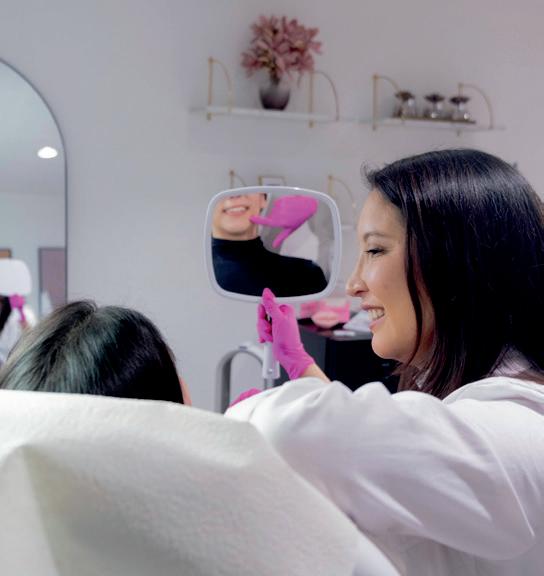
gelernt, dass hinter jedem Wunsch nach Veränderung eine persönliche Geschichte steckt. Ästhetik betrifft nicht nur Äußerlichkeiten, sondern auch das Selbstwert- und Zugehörigkeitsgefühl.“
Nach über zehnjähriger Tätigkeit in Deutschland entdeckte Dr. Maria Cordova einen bereichernden Kontrast in der Art und Weise, wie Deutsche und Lateinamerikaner Schönheit wahrnehmen. „In Deutschland wird Schönheit als eine subtile Harmonie begriffen, die die Individualität respektiert.“ Zwischen der lateinamerikanischen Sensibilität und der zurückhaltenden deutschen Vision fand Dr. Maria Cordova ihren eigenen medizinischen Ansatz.
Ihr Fazit: „Bei einer verantwortungsbewussten ästhetischen Medizin geht es nicht darum, einem äußeren Ideal hinterherzujagen, sondern darum Menschen durch einen ganzheitlichen Prozess zu begleiten; nicht darum, Gesichter zu verändern, sondern Identität zu bewahren und Selbstvertrauen wiederherzustellen.“
www.faltenunterspritzungnuernberg.de
The most interesting companies right now are being built by women who stopped trying to fit in. A new GOALGIRLS* column about women building businesses differently.
TEXT & INTERVIEW: KADDIE ROTHE, GOALGIRLS* | PHOTOS: DELIA BAUM
There are many interviews with inspiring female founders. Most begin with the same questions, and end with the same answers. But a business doesn’t change through perfect answers. A business changes through people who question the rules.
That’s exactly what DISCOVER HER POWER is about. Women who don’t try to fit into the system but rethink it from a female perspective. A column by GOALGIRLS* featuring founders who shift markets and rewrite narratives.
MEET TOYAH DIEBEL & BUTTZ
A FOUNDER WHO DOESN’T ASK FOR PERMISSION
For the first edition, we spoke with Toyah Diebel, founder of BUTTZ. BUTTZ is an underwear upgrade for women – modern, innovative and made for 'everybooty'. At first glance, it looks like a classic consumer product. It isn’t.
For decades, markets around women’s bodies have been designed by people who don’t experience those bodies themselves. Toyah questions that logic. Not with slogans. With a company.
Kaddie Rothe: Where does your girl power come from, Toyah?
Toyah Diebel: “I’m pretty persistent. And I don’t believe in humility as a business strategy. I believe that you have to want things out loud: growth, influence, money, visibility. Because one of the oldest expectations placed on women in business is still humility. Be ambitious – but not too loud. Be successful – but not too proud. But if you want to change something, you’re allowed to want it. And to want it visibly.”
Kaddie Rothe: If your business were a movement – what would it destroy?
Toyah Diebel: “We should destroy the idea that women’s bodies constantly need fixing. The industry thrives on making us believe that we’re not meeting society’s expectations: stomach too soft, butt too flat, body too old. And then we buy products that promise to fix it. Everyone likes optimising themselves – me too. But I don’t want to do it from a place of insecurity that companies have planted in me. Maybe one of the most radical ideas in business is simply this: stop constantly telling women what’s wrong with them.”
Kaddie Rothe: What would be different if more women ran companies?
Toyah Diebel: “Over 90 per cent of venture capital still goes to male founding teams. Not necessarily because they build better companies, but because the capital itself is almost exclusively managed by men. People invest in what they understand. If more women built companies – and more women decided where capital goes –entirely different business models would suddenly be taken seriously.”
Toyah Diebel isn’t just building a brand with BUTTZ, she’s shifting a perspective. Products for women’s bodies are not a niche market. They’re one of the most underestimated markets in business.
You would like to see more women empowered? Check out @heygoalgirls on Instagram to find out more.

This column in three learnings: Humility is not a business strategy. Women’s bodies are not a niche market.
Capital decides who gets visibility.
And one more thing: Women build companies differently. That’s not the problem. That’s the advantage.
GOALGIRLS* is an international FLINTA* creative collective and agency. Follow on @heygoalgirls
Would you like to be featured next? Visibility grows when we share it –so here’s how you take this stage:
1. Share a post from @buttz.de or your thoughts on this interview in your Instagram story
2. Tag in your story: @buttz.de @heygoalgirls
This stage belongs to women who claim it.
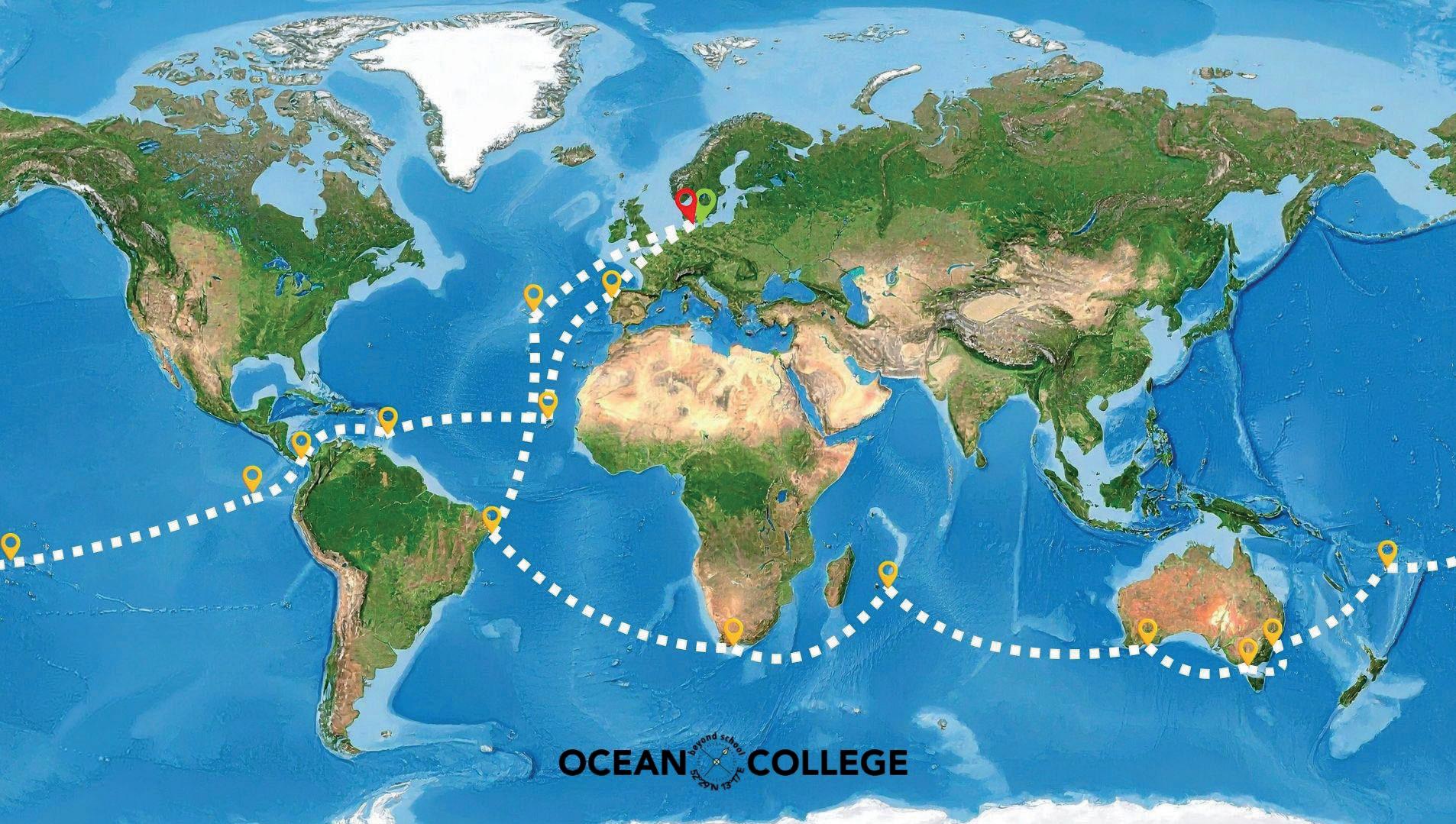
For more than 50 years, the Clipper DJS e. V. association has been offering weekly sailing trips on the Baltic Sea during the summer months aboard its four tall ships. Participants actively take part in the onboard operations during sail training, setting sails, maneuvering, navigating, and thus experiencing and learning traditional seamanship as it has been practiced in shipping for decades.
Together with a school provider, young people can also stay on board for 6 months and cross the Atlantic twice. During this time, they take part in school lessons, onboard operations, expeditions, and project work. In 2027, Clipper DJS plans a world circumnavigation based on this model. Anyone interested in sailing ships, traditional seamanship, and team adventure can find detailed information on the Internet at www.clipper-djs.org.
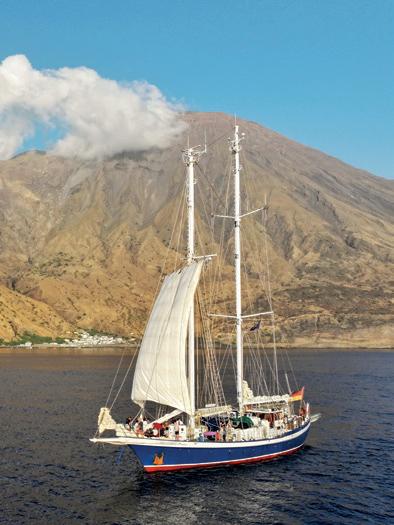
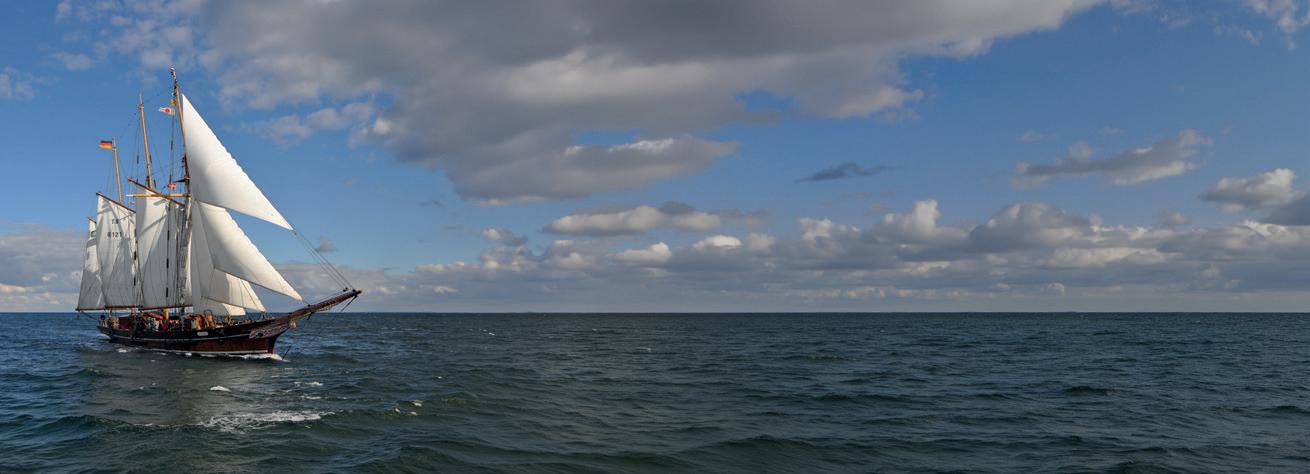
Auf seinen 4 Großseglern bietet der Verein Clipper DJS e. V. seit mehr als 50 Jahren im Sommerhalbjahr wöchentliche Segeltörns auf der Ostsee an. Mitreisende nehmen beim Sail Training aktiv am Bordbetrieb teil, setzen Segel, manövrieren, navigieren, erleben und erlernen so traditionelle Seemannschaft, wie sie über Jahrzehnte in der Seefahrt üblich war. Gemeinsam mit einem Schulträger können Jugendliche auch für 6 Monate an Bord bleiben und dabei zweimal den Atlantik überqueren. In dieser Zeit nehmen sie am Schulunterricht, am Bordbetrieb, an Expeditionen und Projektarbeiten teil. 2027 plant Clipper DJS nach diesem Vorbild eine Weltumsegelung. Wer sich für Segelschiffe, Seemannschaft und Abenteuer im Team interessiert, findet ausführlich Informationen darüber im Internet unter www.clipper-djs.org.

Sub-Saharan Africa faces a double challenge: while economic development across the region becomes ever more urgent, climate change intensifies existing inequalities between African nations and the industrialised world.
VoltaViewAfrica delivers solutions that enable growth without creating new dependencies. As a spin-off from the Fraunhofer Gesellschaft, the non-profit organisation develops decentralised concepts for renewable energy and sustainable mobility. “We don’t just sell technology. We create the keys that unlock Africa’s sustainable future,” professor Wolfgang Schade introduces the organisation. The physicist is a professor at Clausthal University of Technology, as well as co-founder and CEO of VoltaViewAfrica.
“The fundamental prerequisite for economic development is electricity,” explains professor Schade. In Sub-Saharan Africa, 86 per cent of people in rural areas have no reliable access to power. Without energy, however, a key element for progress and prosperity is missing.
VoltaViewAfrica therefore pursues a decentralised approach for Sub-Saharan Africa.
“There is no comprehensive grid like in Europe. Electricity must be generated where it is needed.” This is facilitated by SodiumX, specially developed energy storage systems with sodium-ion batteries that store solar power and make it available regardless of time of day or weather conditions, even
on water. The potential of this development, both energetically and ecologically, is demonstrated in Tanzania.
In the Mwanza region, the fisheries hub on the southern shores of Lake Victoria, a living lab, a pilot station for electric fishing boats and modern aquaculture, has been established. Solar energy, SodiumX batteries and electric propulsion systems come together in a pilot fleet of eleven electric fishing boats. Operating under a Boat as a Service rental model, the fleet demonstrates that the solution is both technically viable and economically sustainable.
In addition, sensors installed in fish cages continuously measure water temperature, oxygen levels and nitrate and nitrite concentrations. This enables optimised feeding, the protection of fish stocks and avoids over-fertilisation. Electric propulsions also prevent oil and petrol from entering the water, thereby safeguarding
Subsahara-Afrika steht vor einer doppelten Herausforderung: Während die wirtschaftliche Entwicklung der Länder immer dringlicher wird, verschärft der Klimawandel bestehende Ungleichheiten zwischen den afrikanischen Staaten und den Industrienationen.
VoltaViewAfrica überzeugt mit Lösungen, die Wachstum ermöglichen, ohne neue Abhängigkeiten zu schaffen. Als Ausgründung aus der Fraunhofer-Gesellschaft entwickelt die gemeinnützige Organisation dezentrale Konzepte für erneuerbare Energie und nachhaltige Mobilität. „We don’t just sell technology, we create the keys that unlock Africa’s sustainable future”, stellt Prof. Wolfgang Schade die Organisation vor. Der Physiker ist Professor an der Technischen Universität Clausthal und Mitbegründer und CEO von VoltaViewAfrica.
DEZENTRALE ENERGIE
„Die Grundvoraussetzung von wirtschaftlicher Entwicklung ist Elektrizität”, erklärt Prof. Schade. In Subsahara-Afrika haben 86 Prozent der Menschen im ländlichen Raum keinen verlässlichen Zugang zu Strom. Ohne Energie fehlt allerdings ein zentraler Baustein für Fortschritt und Wohlstand.
VoltaViewAfrica setzt deshalb auf einen konsequent dezentralen Ansatz. „Es gibt kein flächendeckendes Netz wie in Europa. Strom muss
genau dort erzeugt werden, wo er gebraucht wird.” Möglich wird das durch SodiumX, eigens entwickelte Energiespeicher mit Natrium-Ionen Batterien, die Solarenergie speichern und unabhängig von Tageszeit oder Wetter verfügbar machen, selbst auf dem Wasser. Das Potenzial dieser Entwicklung, sowohl auf energetischer als auch auf ökologischer Ebene, zeigt sich eindrücklich in Tansania:
MODELLREGION VIKTORIASEE
In der Gegend um Mwanza, dem Fischereizentrum im Süden des Viktoriasees, ist ein Living Lab, eine Pilotstation für elektrische Fischerboote und moderne Aquakultur, entstanden: Solarenergie, SodiumX-Batterien und elektrische Antriebe. Eine Pilotflotte von elf E-Fischerbooten zeigt im Leihmodell ‚Boat as a Service', dass diese Lösung technisch und wirtschaftlich tragfähig ist. Zusätzlich messen Sensoren in den Fischkäfigen der Aquakultur kontinuierlich Temperatur, Sauerstoff- sowie Nitrat- und Nitritwerte im Wasser. So lassen sich Fütterung optimieren, Überdüngung vermeiden und Fischbestände schützen. E-Antriebe verhin-
dern zudem, dass Öl und Benzin ins Wasser gelangen. So wird das sensible Ökosystem des Viktoriasees nachhaltig gesichert.
„Schätzungen zufolge fahren etwa 100.000 Fischerboote auf dem Viktoriasee, die meisten mit ineffizienten Zweitaktmotoren. Ein Liter Benzin verursacht 2,4 Kilogramm CO₂, jedes Boot produziert etwa zehn Tonnen pro Jahr, insgesamt also rund eine Million Tonnen”, rechnet Schade vor. Zum Vergleich: Ein großes Stahlwerk in Deutschland kommt auf circa drei Millionen Tonnen jährlich.
PARTNERSCHAFT ALS PRINZIP
Möglich wurde dieses Projekt durch einen privaten Großsponsor und die Unterstützung des Niedersächsischen Umweltministeriums. In Kooperation mit der St. Augustine University of Tanzania (SAUT) wird zudem lokales Fachpersonal ausgebildet. Ein wichtiger Schritt für die langfristige Wirkung vor Ort ist die Ausbildung lokaler Kompetenz.
Gerade hier wird deutlich, was VoltaViewAfrica von klassischen Infrastrukturprojekten unterscheidet: Es geht nicht um das bloße Installieren von Technik, sondern um nachhaltige Teilhabe. „Wir stellen nicht einfach etwas hin”, betont

the sensitive ecosystem of Lake Victoria in the long term.
“Estimates suggest that around 100,000 fishing boats operate on Lake Victoria, most equipped with inefficient two-stroke engines,” Schade recounts. “One litre of petrol produces 2.4 kilograms of CO₂. Each boat emits roughly ten tons per year; in total, around one million tons annually.” By comparison, a large steelworks in Germany emits approximately three million tons per year.
The project was facilitated by a major private sponsor and the support of the Lower Saxony Ministry for the Environment. In cooperation with St Augustine University of Tanzania (SAUT), local specialists are being trained on site. A crucial step towards ensuring longterm impact in the region.
This is where VoltaViewAfrica distinguishes itself from traditional infrastructure projects. The aim is not simply the installation of technology, but the implementation of sustainable participation. “We don’t just implement technology and leave,” Schade stresses. “We actively involve the community in our projects and share our knowledge.”
At the same time, the organisation works closely with local enterprises such as ASOBO Mobility in the field of electric boats and AQUACOM in sustainable fish farming. The result is not merely technical solutions,
but long-term structures that promote regional added value and entrepreneurial independence.
While these concepts are compelling, finances remains the greatest challenge. “Our ideas for solar power and battery systems receive widespread support. But the important question is: who will bear the initial investment costs?” notes the CEO.
As many people locally cannot finance the infrastructure themselves, VoltaViewAfrica relies on flexible models such as Battery as a Service and Boat as a Service. Yet these too require initial private or public investment. “As a Fraunhofer spin-off, we possess the necessary expertise and scientific excellence,” Schade stresses. “What we need are the financial resources to implement our solutions.”
For professor Schade, timing is crucial. “Climate is not a local phenomenon,” he says. “Current studies indicate that by 2050, the African continent will be home to the largest

population in the world. If we want sustainable transport concepts, we must act now!” While China is investing heavily in infrastructure in East Africa, Schade believes European engagement is lagging behind. Electrifying mobility, including on water, is a key lever. At the same time, fish remains the primary source of protein for many people in the region. “Sustainable fishing and responsible aquaculture are therefore not only ecological issues, but social ones as well.”
“Stopping climate change is a global responsibility. Africa must not be overlooked,” Schade urges. An investment in VoltaViewAfrica is more than financial support. It is a strategic commitment to climate protection, economic stability and global responsibility. The organisation combines scientific excellence from Fraunhofer research with implementation in Sub-Saharan Africa: decentralised solar energy, electric mobility on water and digital monitoring systems. Every euro invested has multiple effects. It reduces CO₂ emissions, protects fragile ecosystems, strengthens local value chains, transfers knowledge and creates jobs. Instead of short-term aid, VoltaViewAfrica facilitates a scalable model with measurable impact.
The objectives are clearly defined: by 2028, 200 fishing boats are to be electrified, four additional sites established in Tanzania and Kenya and 300 fish cages equipped with sensor technology to sustainably improve water quality. “Whether through private donations, investors or public funding, those who invest today do not merely support innovative technology, but actively shape the sustainable development of a continent that will be decisive for the global climate balance and the economic future,” Schade concludes.
www.voltaviewafrica.org
Schade, „sondern beziehen die Community aktiv in unsere Projekte ein und geben unser Wissen weiter”.
Gleichzeitig arbeitet die Organisation eng mit lokalen Unternehmen wie ASOBO Mobility im Bereich E-Boote und AQUACOM im nachhaltigen Fisch-Farming zusammen. So entstehen nicht nur technische Lösungen, sondern langfristige Strukturen, die regionale Wertschöpfung und unternehmerische Eigenständigkeit fördern.
HANDELN! JETZT!
So überzeugend die Konzepte sind, die größte Herausforderung bleibt die Finanzierung. „Wir stoßen mit unseren Ideen zu Solarstrom und Batterien auf viel Zustimmung. Aber entscheidend ist die Frage: Wer trägt die Anfangsinvestitionen?”, so der CEO.
Da viele Menschen vor Ort die Infrastruktur nicht selbst finanzieren können, setzt
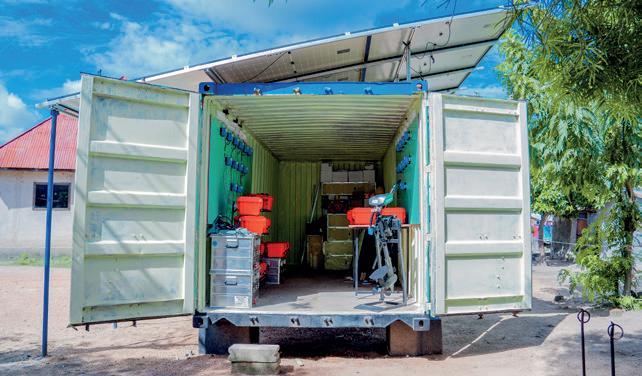
VoltaViewAfrica auf flexible Modelle wie ‚Battery as a Service’ oder ‚Boat as a Service’. Doch auch diese benötigen zunächst private oder öffentliche Investoren. „Als FraunhoferAusgründung verfügen wir über das notwendig Know-how und wissenschaftliche Exzellenz”, betont Schade. „Was wir brauchen, sind die finanziellen Mittel, um unsere Lösungen zu realisieren.”
Für Prof. Schade ist klar: Der Zeitpunkt ist entscheidend. „Klima ist nicht lokal”, sagt er. „Aktuellen Studien zufolge werden 2050 auf dem afrikanischen Kontinent die meisten Menschen leben. Wenn wir nachhaltige Verkehrskonzepte wollen, müssen wir jetzt handeln!” Während China in Ostafrika massiv in Infrastruktur investiert, sieht Schade noch zu wenig europäisches Engagement. Die Elektrifizierung von Mobilität, auch auf dem Wasser, ist dabei ein zentraler Hebel. Gleichzeitig bleibt Fisch die wichtigste Proteinquelle vieler Menschen in der Region. „Nachhaltiger
Fischfang und verantwortungsvolle Aquakultur sind daher nicht nur ökologische, sondern auch soziale Aufgaben.”
LOHNENDES INVESTMENT
„Den Klimawandel aufzuhalten ist eine globale Aufgabe. Afrika darf dabei nicht vergessen werden”, betont Schade. Eine Investition in VoltaViewAfrica ist mehr als finanzielle Unterstützung. Sie ist ein strategisches Engagement für Klimaschutz, wirtschaftliche Stabilität und globale Verantwortung. Die Organisation verbindet wissenschaftliche Exzellenz aus der Fraunhofer-Forschung mit konkreter Umsetzung vor Ort in SubsaharaAfrika: dezentrale Solarenergie, elektrische Mobilität auf dem Wasser und digitale Monitoringsysteme. Jeder investierte Euro wirkt mehrfach. Er reduziert CO₂-Emissionen, schützt sensible Ökosysteme, stärkt lokale Wertschöpfungsketten, gibt Wissen weiter und schafft Arbeitsplätze. Statt kurzfristiger Hilfe entsteht ein skalierbares Modell mit messbarer Wirkung.
Die Ziele sind klar definiert: Bis 2028 sollen 200 Fischerboote elektrifiziert, vier weitere Standorte in Tansania und Kenia aufgebaut und 300 Fischkäfige mit Sensorik ausgestattet werden, um die Wasserqualität nachhaltig zu verbessern. „Egal ob private Spender, Investoren oder öffentliche Gelder — wer heute investiert, fördert nicht nur innovative Technologie, sondern gestaltet aktiv die nachhaltige Entwicklung eines Kontinents, der für die globale Klimabilanz und die wirtschaftliche Zukunft entscheidend sein wird,” betont Schade.
www.voltaviewafrica.org
April bursts with lots of colour and a welcome dose of fresh air. From spring festivals and blossom-filled gardens to sporting highlights and many traditional fun fairs, the month is all about shaking off winter for good and stepping back into the buzz of the season.
TEXT: MARILENA STRACKE
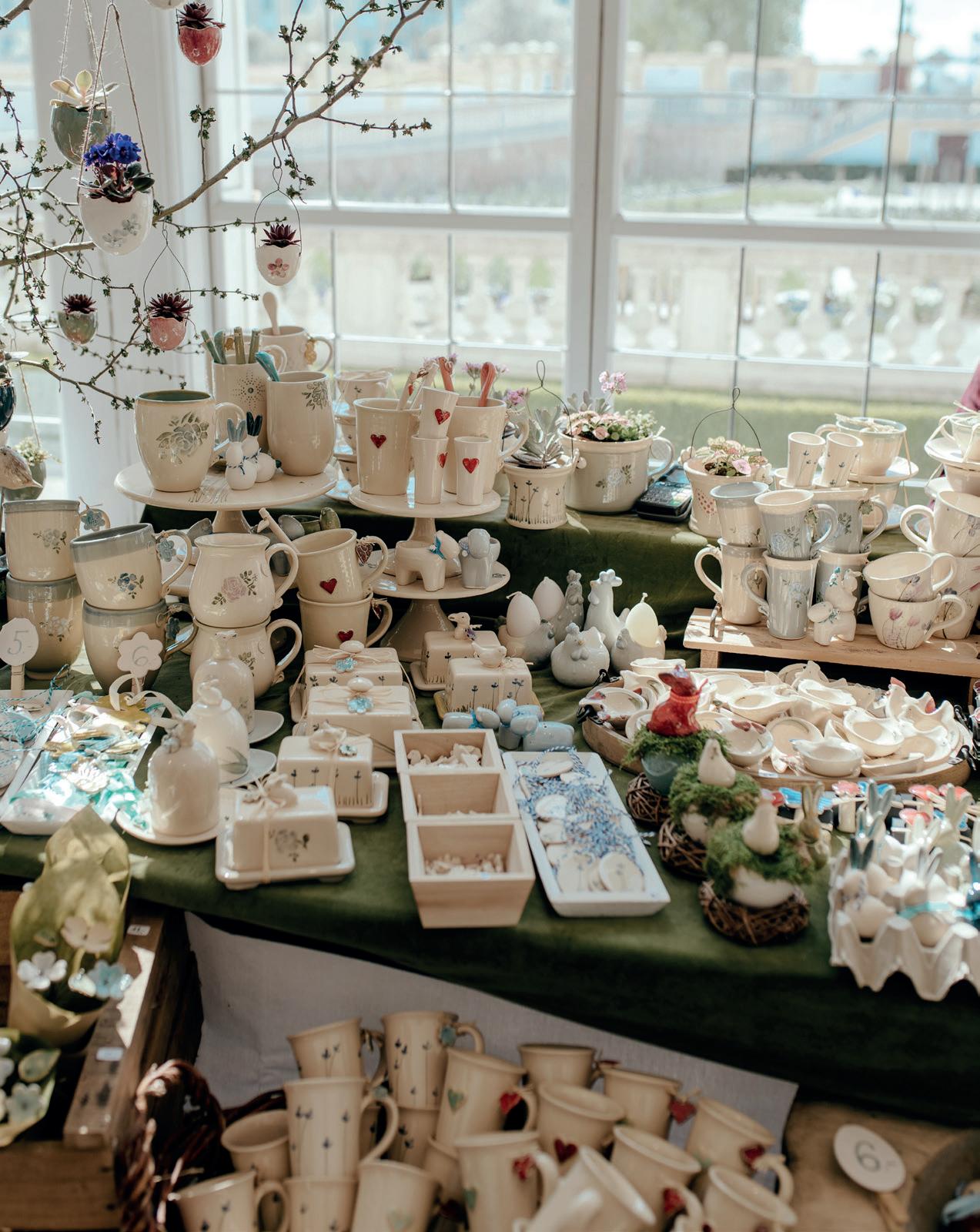
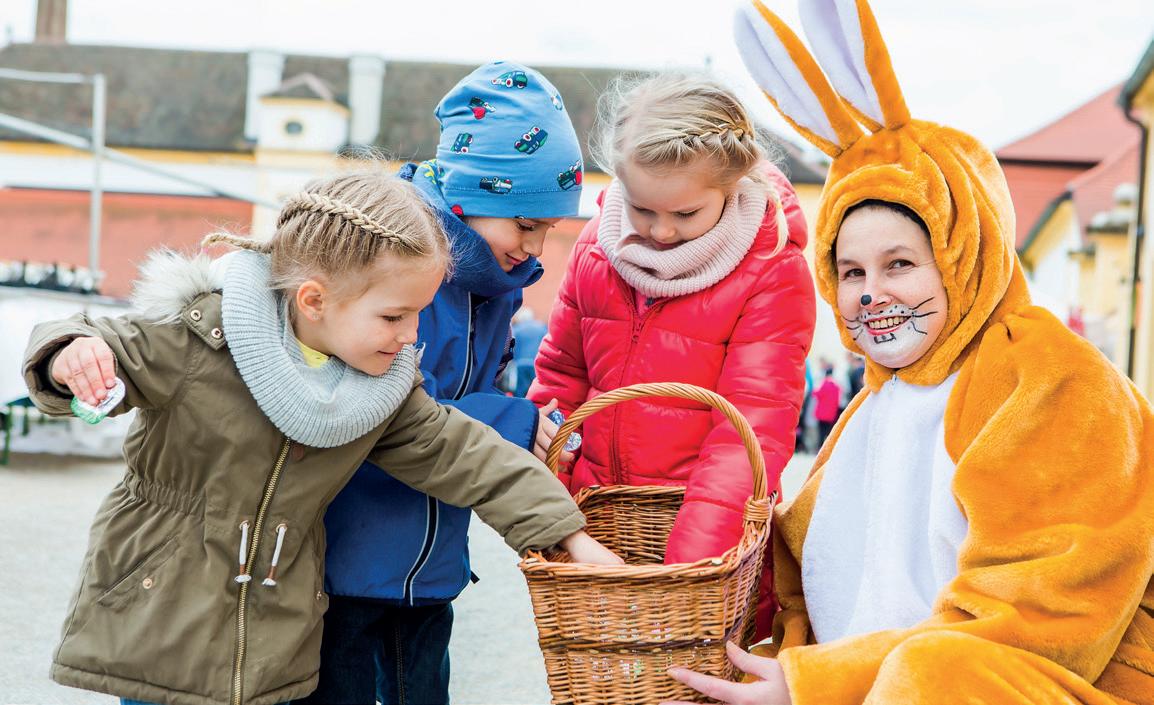
EASTER MARKET AT SCHÖNBRUNN CASTLE, VIENNA (25 MARCH – 19 APRIL)
The Easter and Spring Market in the courtyard of Schönbrunn Palace brings seasonal charm to Vienna with around 70 stalls showcasing decorated eggs, traditional crafts and regional delicacies. A straw maze, carousel and children’s workshops add to the festive atmosphere, making it a lovely spring outing for local families and visitors alike.
www.schoenbrunn.at/veranstaltungen
SPRING FUN FAIR AT KURT-SCHUMACHERDAMM, BERLIN (28 MARCH – 3 MAY)
Berlin’s Spring Fun Fair brings classic fairground thrills back to the capital with rollercoasters, bumper cars and towering Ferris wheels lighting up the season. Alongside adrenaline-fuelled rides, visitors can indulge in roasted almonds, bratwurst and candyfloss for the full nostalgic experience.
A special highlight for families: Wednesdays are discount days, with rides offered at half price.
www.berlin.de/events
BLOSSOM FESTIVAL, BERLIN (11 – 12 APRIL)
Berlin’s Cherry Blossom Festival at Gärten der Welt lights up spring with a breathtaking sea of pink and white sakura amongst the park’s themed gardens. This year the event also celebrates the 20th anniversary of the beloved Korean Garden as visitors enjoy cultural performances, Asian-inspired food and family-friendly activities under the blossoms. The dreamy weekend feels a world away from the city streets.
www.berlin.de/events
ZURICH (12 APRIL)
The Zurich Marathon is one of Switzerland’s most scenic sporting highlights, guiding runners along the shores of Lake Zurich and through the historic city centre. With marathon, half-marathon and relay options, it welcomes ambitious athletes and enthusiastic amateurs alike to kick off the season in style. Fast, flat and internationally respected, the spring race pairs sporting ambition with postcard-worthy views. www.zuerichmarathon.ch
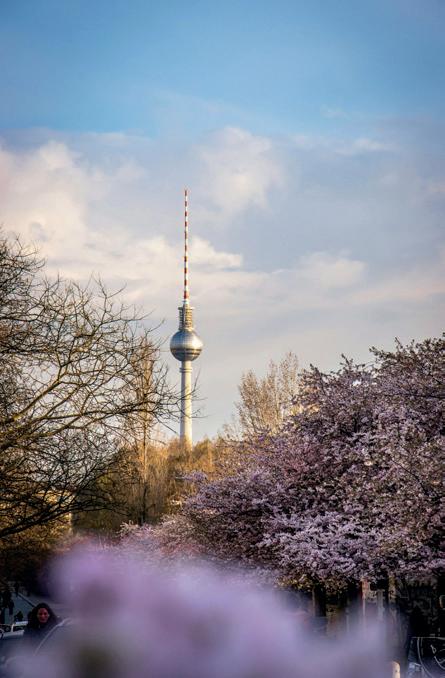
(16 – 19 APRIL)
FIBO is the world’s leading fitness, wellness and health trade show, returning to Cologne’s Exhibition Centre for four days of cutting-edge innovation and industry networking. It brings together thousands of global brands, trainers, tech pioneers and fitness professionals to showcase the latest trends in training equipment, well-being and active lifestyles. Whether you’re after smart fitness tech, expert talks or the newest products shaping the future of health, FIBO is where the industry meets. www.fibo.com
(17 – 20 APRIL)
The Sechseläuten Spring Festival in Zurich is a centuries-old celebration of the end of winter and the arrival of spring, deeply rooted in the city’s medieval guild traditions. The highlight is the dramatic burning of the Böögg, a giant snowman effigy whose head is filled with fireworks – legend says that
the quicker it explodes, the better the coming summer will be. Festivities also include colourful processions of guilds in historic costume, lively parades and a buzzing atmosphere that makes it one of Switzerland’s most unique cultural events.
www.sechselaeuten.ch
10 MAY)
Munich’s Frühlingsfest on the Theresienwiese is the city’s iconic spring festival and a warm-up to Oktoberfest with a distinctly Bavarian twist. Expect two huge beer tents, delicious local food, live music, lively parades and more than 100 fairground rides and attractions to keep the mood upbeat. Whether here for the classic pretzels and Maß, the colourful flea market or just the festive atmosphere, it’s a big-hearted celebration of spring in true Munich style.
www.fruehlingsfest-muenchen.bayern/ spring-fest-munich
Record Store Day has long since become a fixture in Berlin’s music calendar, with independent record shops across the city joining the global celebration of vinyl culture. Expect exclusive releases, special editions and plenty of crate-digging as Berlin’s indie music specialists open their doors to collectors and curious newcomers alike. It’s the perfect excuse to rediscover the magic of record stores and the community that keeps them alive. www.recordstoredaygermany.de
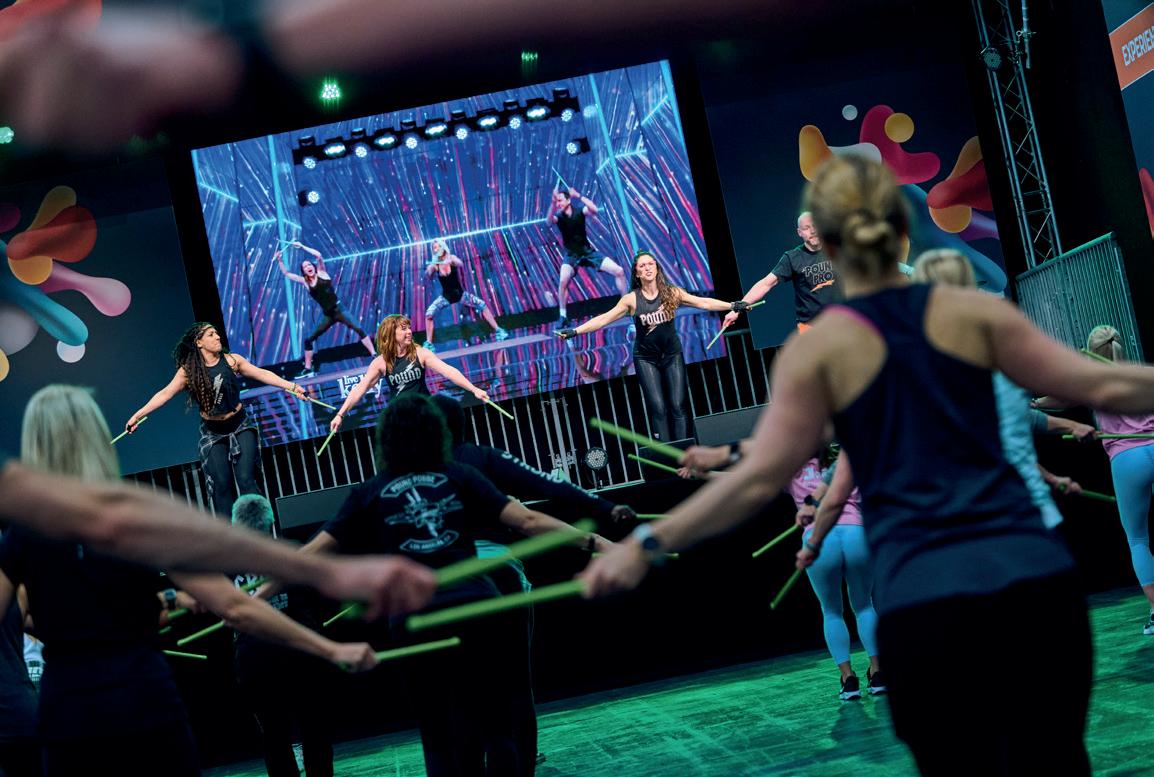
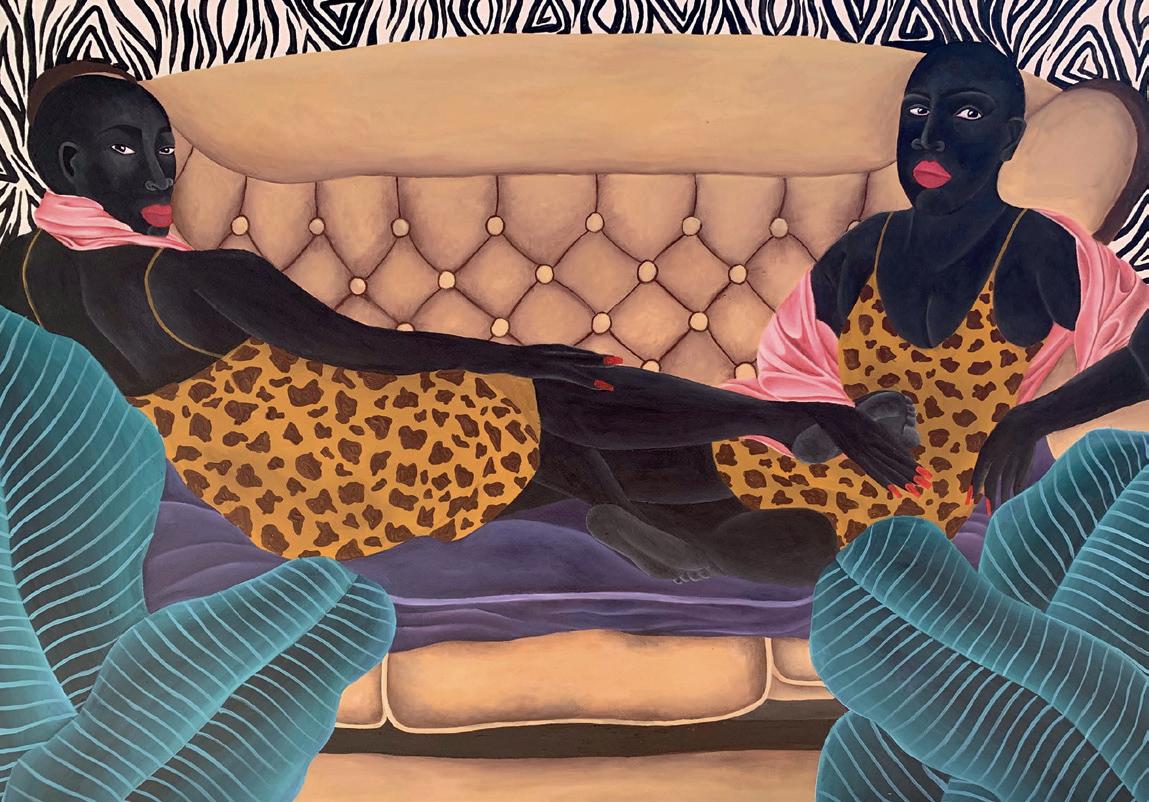

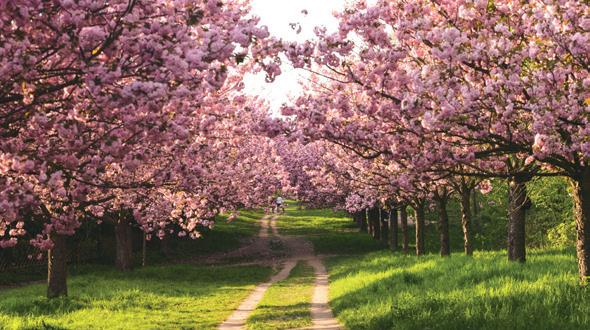
One cannot stress it enough: Berlin spring, when it finally comes, arrives with a bang. Once the Berlinale is behind us, the weather reliably turns from permafrost-like conditions to warmth and sunshine – and with it come blossoms, spreading surreal beauty all over town.
TEXT: CORNELIA BRELOWSKI
Each year in April, the most impressive blooming spectacle (apart from the linden trees that traditionally line Berlin’s streets) springs from the various types of cherry trees, which have become especially popular ever since the fall of the Wall. This is largely thanks to the generosity of the Japanese people, who raised funds to help the oncedivided residents find a sense of calm and peace as they embraced reunification.
Substantial parts of the former Wall Trail (Mauerweg) are thus lined with cherry trees of different variations that explode into bloom one stretch after the other, starting in March. When the first blossoms fall in the spring breeze near Schwedter Steg bridge, a kind of miraculous pink snowfall lets people raise their phones again, and again. The next stretch follows underneath the Bösebrücke bridge, where the first checkpoint at Bornholmer Straße opened during the night of 9 November in 1989, initiating the fall of the Wall. Here, the blooming cherry trees form a sort of pink roof – as their crowns have since themselves united up in the air, growing together from both sides of the path. Further north, on the district border between Pankow and Wedding, there are
another 120 cherry trees, which can be easily reached from the Wollankstraße S-Bahn station by following the railway line towards Bürgerpark Pankow. Another 32 are located on Vesaliusstraße, north of the Pankow-Heinersdorf overground station.
It comes as no surprise, that both Japanese tourists and Berliners use these opportunities for photographs – including many wedding couples. To the Japanese, the cherry flower, or sakura, is a symbol of good luck. By now, Berlin launches its own sakura events in grateful retribution; for example at the Gärten der Welt (Gardens of the World) on the weekend of 25-26 April. The gardens are situated in the former East Berlin borough of Marzahn and are not to be missed out on in springtime. For two days, you can experience a true sakura event right here, without having to travel to Japan.
We have an actual German saying that goes: "Sometimes, good things are much closer than you think,” which dates back to Goethe’s poem memories: "Do you want to keep wandering? / Look, goodness is so close. / Just learn to seize happiness, / because happiness is always there." In Berlin spring, the above
is actually true, especially after the city’s notoriously long and harsh winter months. For more blossoming joy, you can also walk under cherry trees by the Landwehrkanal at Maybachufer in Kreuzberg, as well as in Wiener Straße right by Görlitzer Park. Cherry blossoms represent beauty, transience and new beginnings in Japanese culture. Why not experience it in Berlin this year?
Brelowski is a writer and journalist who lives in Berlin. With her main field of interest being art and design, she enjoys observing her history-laden home town in all its quirky detail and ever-changing shape and culture. Apart from writing, the author also engages in English language theatre, the art of which she learned in London.
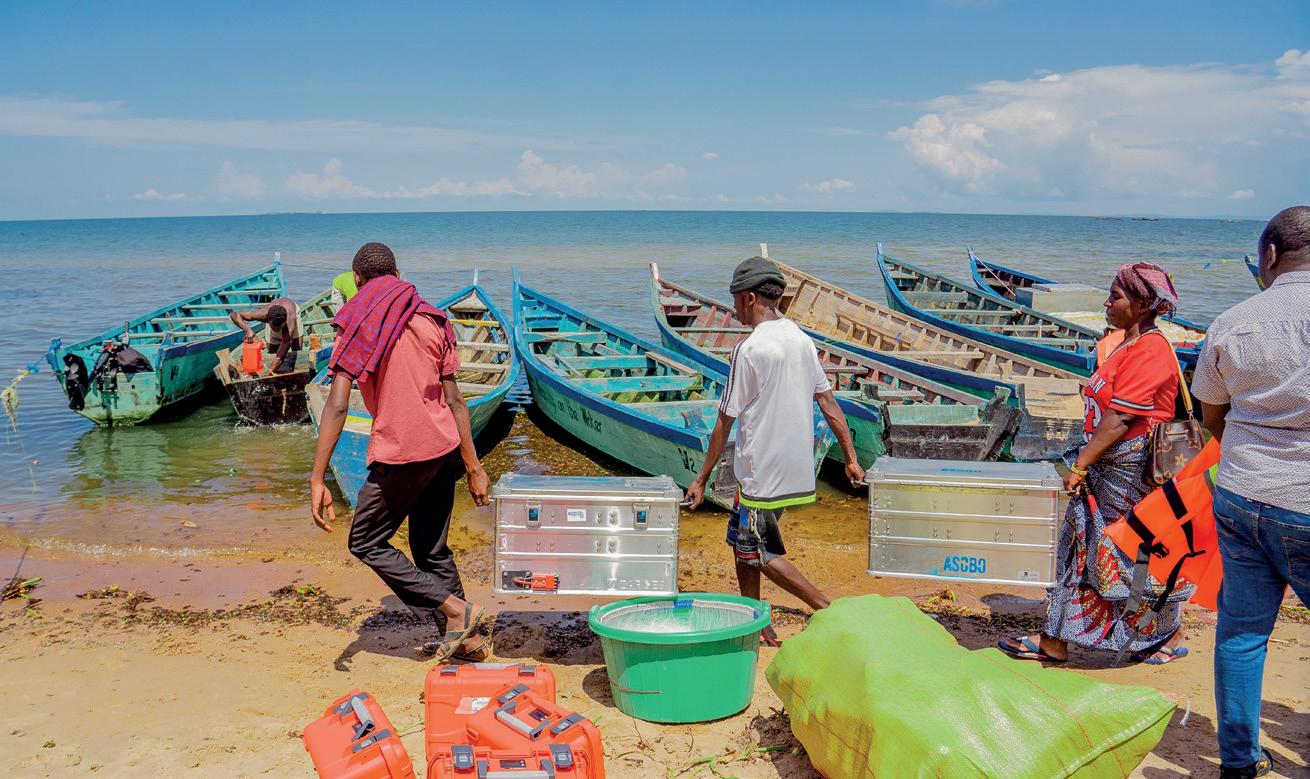
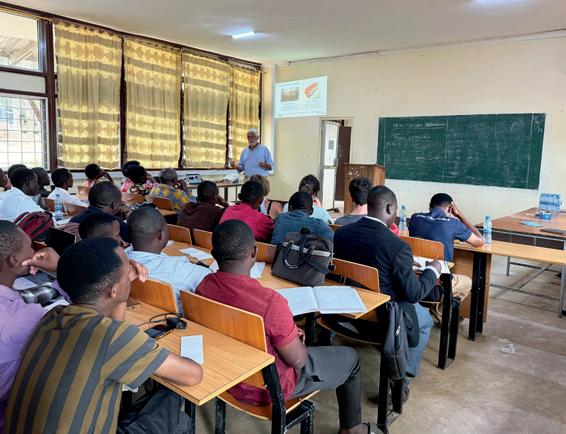
VoltaViewAfrica, born from Germany´s Fraunhofer research organization and developed together with African universities, engineers and local communities creates decentralised solutions where traditional infrastructure has never existed. Solar energy is produced locally, stored in innovative SodiumX batteries and used to power electric boats, sustainable cooling systems and intelligent water monitoring.
But the true innovation is not technology alone.
It is partnership.
„We don´t just sell technology. We create the keys that unlock Africa´s sustainable future“.


So, where in Germany do you think dining out makes the smallest dent in your wallet? Apparently, it’s in the federal state of Thuringia. According to data from startup Meoton, the average price for a dish here comes in at 10.91 euro. For the analysis, Meoton reviewed menus from around 30,000 different types of food service establishments to calculate average prices for 12 dishes and 14 drinks, including German classics such as schnitzel, tiramisu (yes, that’s a German classic by now) and beer.
But why am I telling you all this? Frankly, I was just looking for a hook to sing the praises of Thuringia, a somewhat undiscovered destination in Germany, and figured, affordable food might not be the worst draw. Admittedly, until one very hot summer more than ten years ago when I spent a few days in Thuringia, it wasn’t necessarily on my touristic map. But during those sweltering days, there were enough “I had no idea this is so nice/interesting/worthwhile” moments for me to realise that I had seriously underestimated how much this region has to offer.
What makes it particularly interesting is that, despite being one of the smaller German states by population, Thuringia has played a disproportionately important role in German history, culture, philosophy, and science. So,
Discover Germany Issue 140 April 2026
Published 04.2026 ISSN 2051-7718
Published by Scan Magazine Ltd.
Print H2Print
Executive Editor Thomas Winther
Creative Director
Mads E. Petersen
Editor
Nane Steinhoff
Copy-Editor
Malin Norman
Graphic Designer
Mercedes Moulia
Contributors
Barbara Geier
there’s lots to see and discover for curious minds. Take Weimar, a small town of around 65,000 people, which lent its name to the short-lived Weimar Republic as its constituent assembly took place there. A somewhat unlikely birthplace for a revolutionary design school whose “form follows function” credo has become a core principle of some of the most successful brands of modern life. But that’s exactly what Weimar is as the Bauhaus was established there in 1919. Today, the legacy is kept alive with the Bauhaus University and Bauhaus Museum.
Not enough, as Weimar had become a centre of German culture and intellectual life in the late 18th, early 19th century – a period known as Weimar Classicism – it attracted big names and great minds such as Goethe and Schiller. I enjoyed touring the Goethe Museum, the writer’s former residence, much more than expected. Goethe’s Garden House in the town’s Park an der Ilm was equally delightful as is the park itself – and I could go on. About Belvedere Palace set on a hill overlooking Weimar where I found some much needed shade wandering yet another beautiful park, or about Erfurt, Thuringia’s capital a 15 minute train ride from Weimar, which is a well-preserved medieval city. And I haven’t even started on Wartburg Castle, towering
Jessica Holzhausen
Kaddie Rothe / GOALGIRLS*
Marilena Stracke
Silke Henkele
Xander Brett
Cover Photo
© Peter Rigaud
Sales & Key Account Managers
Esther Nainggolan
Julia Freisinger
Sophie Blecha
Cornelia Brelowski
above the Thuringian Forest and a central symbol of German history (or just come for the panoramic views).
Whatever floats your boat, I just thought I’d give you some alternative ideas for a potential summer break to Germany. Done.
www.germanyiswunderbar.com
tourism guide and blog that was set up together with UK travel writer Andrew Eames in 2010.
Publisher: SCAN CLIENT PUBLISHING SCAN MAGAZINE LTD
The News Building, 3 London Bridge Street, SE1 9SG, London
Phone: +44 (0)870 933 0423
Fax: +44 (0)870 933 0421
Email: info@discovergermany.com www.discovergermany.com
© All rights reserved. Material contained in this publication may not be reproduced, in whole or in part, without prior permission of Scan Group – a trading name of Scan Magazine Ltd.
This magazine contains advertorials/ promotional articles.